

Expressive Language
30 Evidence-Based Speech Production & Language Expression Interventions — from single words to full narratives. Subdomain B3 | Pinnacle Blooms Network® | 21M+ sessions delivered.
Domain B: Communication
Subdomain B3
NCAEP 2020 Evidence Base

B-176
Technique 01 of 30
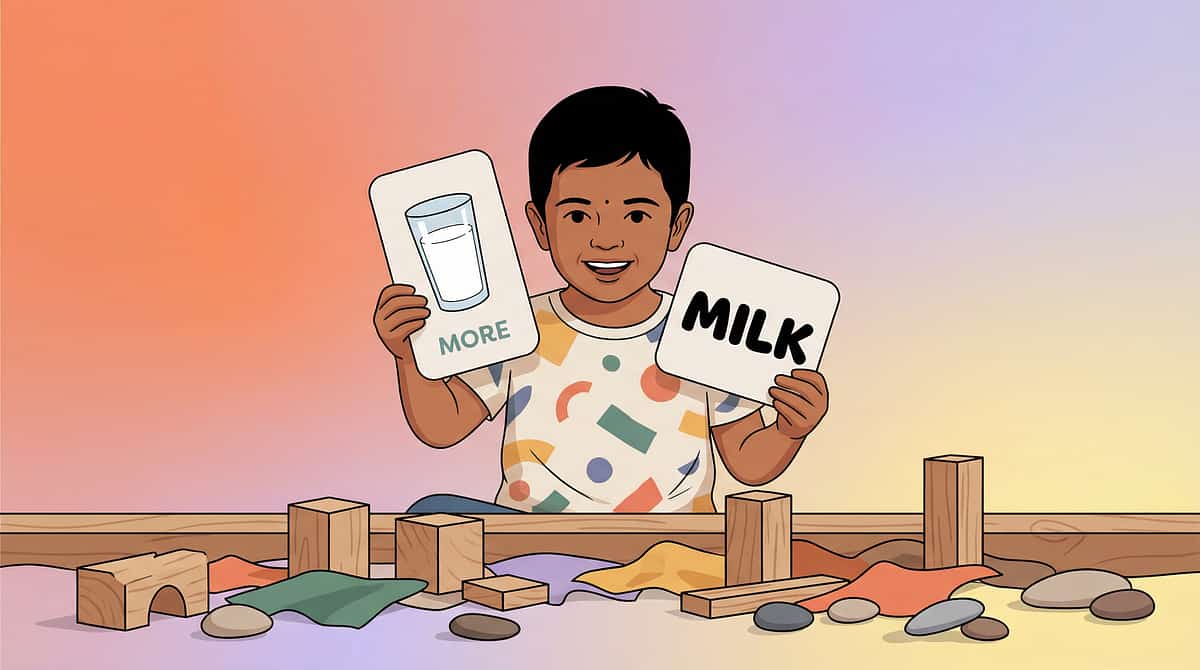
Uses Only Single Words
"Milk." "Ball." "Mama." One word at a time. They CAN speak — but only in isolated labels. "I want milk please" is beyond reach. The world of sentences, requests, and conversations is locked behind a one-word wall. You celebrate every word — and ache for a sentence.
The Neuroscience
Single-word production requires lexical retrieval + phonological encoding + motor execution. Combining words into phrases adds syntactic processing (Broca's area generating word order), morphological processing (adding tense, plurals), and working memory. The jump from one word to two is not a small step — it is a qualitative leap in neural processing.
Evidence Level
📊Level I — Enhanced Milieu Teaching (EMT) and focused stimulation specifically target the single-word-to-phrase transition. Modelling two-word combinations during natural routines produces generalized phrase use. PMC10955541 | NCAEP 2020 | ASHA
What You'll Learn
- The developmental bridge: single word → two-word → phrase → sentence
- Expansion technique: child says "milk" → you say "WANT milk" or "MORE milk"
- Choosing the right second word to pair (action + object, modifier + object)
- Environmental arrangement for two-word opportunities
- Why modelling beats drilling for word combination
- Gestalt Language Processing: if child scripts phrases, they may be on a DIFFERENT (not delayed) path
Lead Professionals
🗣️ SLP · 📋 ABA (EMT/PRT) | SpEd
B-177
Technique 02 of 30
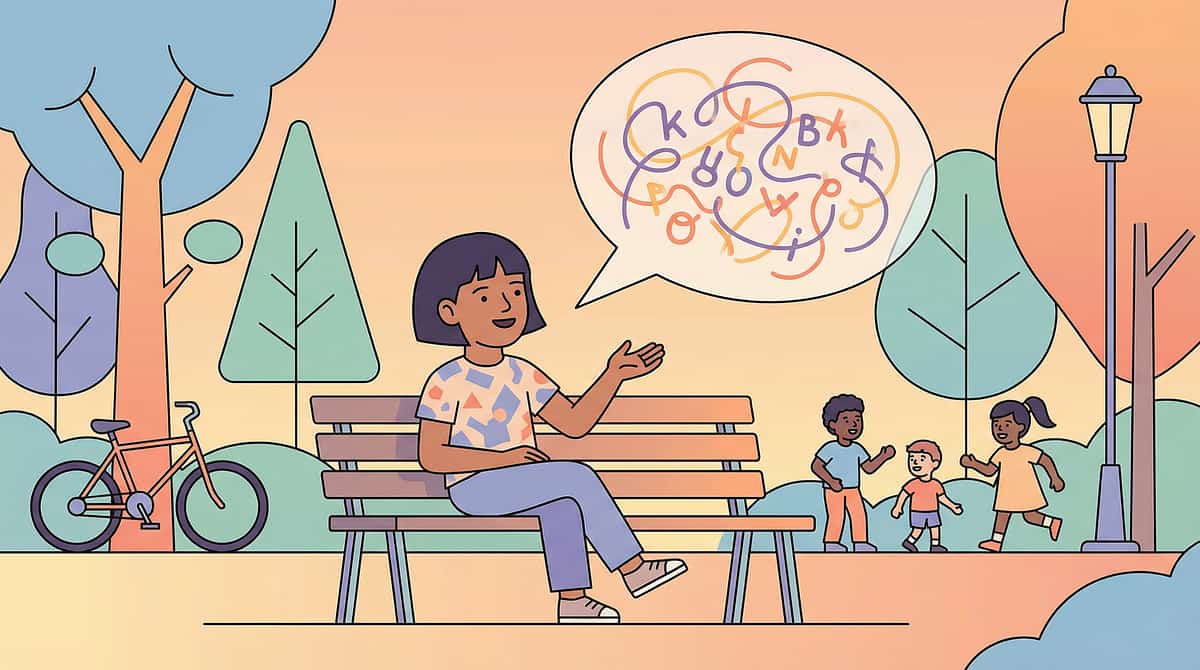
Unclear Speech
They TALK. They have words, even sentences. But nobody can understand them — not the teacher, not the grandparents, not the shopkeeper. Only you can "translate." They have language, but it's trapped behind a wall of unintelligible sounds.
The Neuroscience
Speech clarity depends on accurate phonological representations (knowing which sounds make up a word), motor planning (coordinating 100+ muscles of face, tongue, jaw, palate, and larynx), and motor execution. Unclear speech may result from phonological disorder, childhood apraxia of speech (CAS), dysarthria, or a combination of these.
Evidence Level
📊Level I — Articulation/phonological therapy within SLP. NCAEP 2020 | ASHA | CAS guidelines
What You'll Learn
- Speech intelligibility assessment — which sounds are affected?
- Differentiating phonological disorder vs. apraxia vs. dysarthria
- Articulation practice hierarchy: sound → syllable → word → phrase → sentence → conversation
- Home practice strategies (10 minutes daily makes a measurable difference)
- When to suspect childhood apraxia of speech (CAS)
- Indian language considerations: Hindi, Telugu, Tamil phoneme differences

B-178
Technique 03 of 30
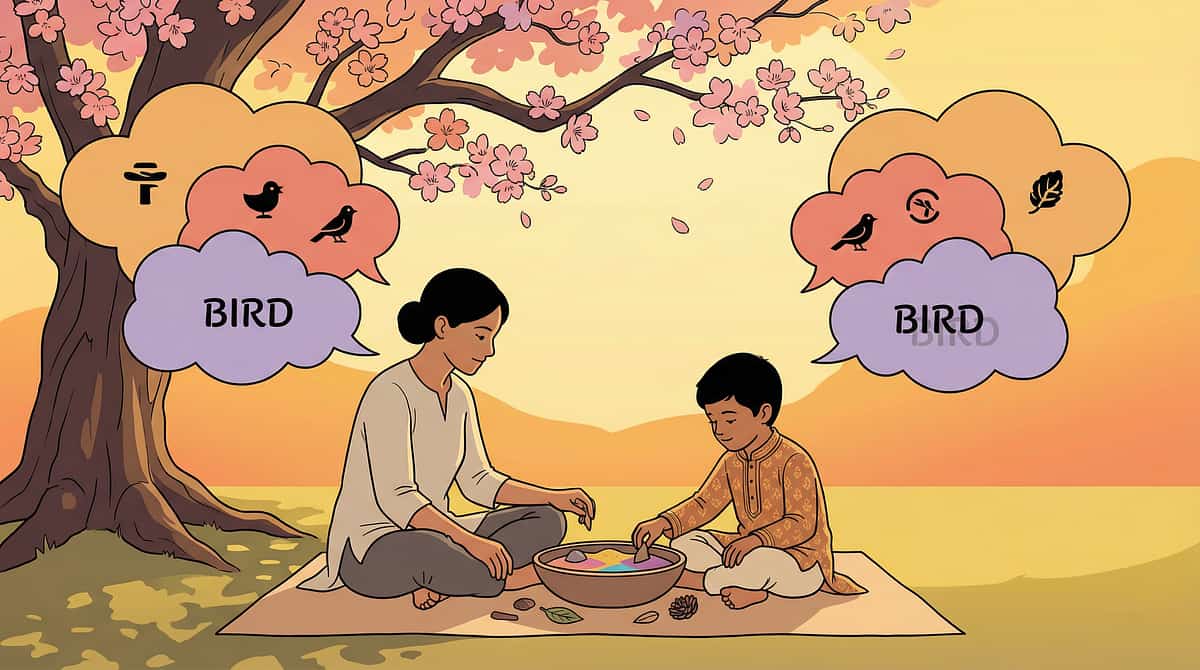
Uses Gestures Only
They point. They pull. They reach. They push away. Their communication is entirely gestural — effective, but limited. Beyond the pre-verbal phase (B1), they've built a robust gesture system, but words haven't followed. Their hands do all the talking.
The Neuroscience
Gesture production and word production share neural circuitry in the left inferior frontal gyrus but use different output pathways — manual motor cortex for gestures, orofacial motor cortex for speech. When the speech motor pathway is more challenging (as in apraxia or motor speech delay), the brain routes communication through gestures because it's more efficient. The intervention: DON'T remove gestures — ADD voice to them.
Evidence Level
📊Level I — Gesture-to-speech transition within SLP. Total communication research. NCAEP 2020
What You'll Learn
- Why removing gestures DELAYS speech — never withhold the gestural channel
- Pairing gesture + vocalization: always model words alongside gestures
- Vocal imitation games to activate speech motor pathways
- When to introduce AAC alongside the gestural system
- Building: gesture → gesture + sound → word
- Gesture as a permanent communication supplement — not a sign of failure
B-179
Technique 04 of 30
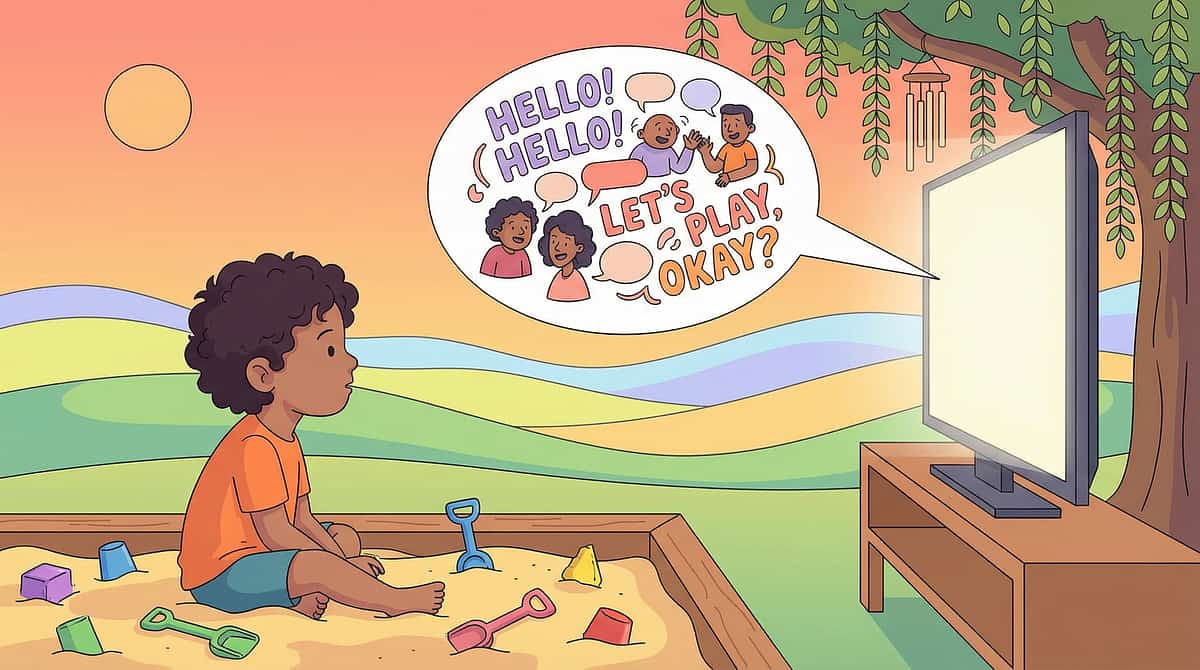
Immediate Echolalia
"What's your name?" → "What's your name?" They repeat your words back — immediately, precisely, with your exact intonation. It frustrates teachers. But it IS language processing. They're holding your words in mind and reproducing them — and that is the beginning of something remarkable.
The Neuroscience
Immediate echolalia engages auditory processing, phonological memory (holding the entire phrase), and speech motor reproduction. What it bypasses: semantic processing — understanding what the words mean. The child has a powerful auditory-to-motor speech pathway, but the semantic comprehension pathway hasn't connected yet. Immediate echolalia is a processing strategy, not a disorder.
Evidence Level
📊Level I — Echolalia as language development stage (GLP, Blanc 2012). NCAEP 2020 | NLA research | PMC10955541
What You'll Learn
- Understanding echolalia as language LEARNING — Stage 1 of Gestalt Language Processing
- Responding to echoed phrases with the ANSWER (not "don't repeat me")
- Modelling shorter phrases the child CAN use functionally
- Transitioning: echoed phrase → modified phrase → self-generated phrase
- Why punishing echolalia damages language development
- GLP stages: whole gestalts → mitigated → recombined → novel language
B-180
Technique 05 of 30
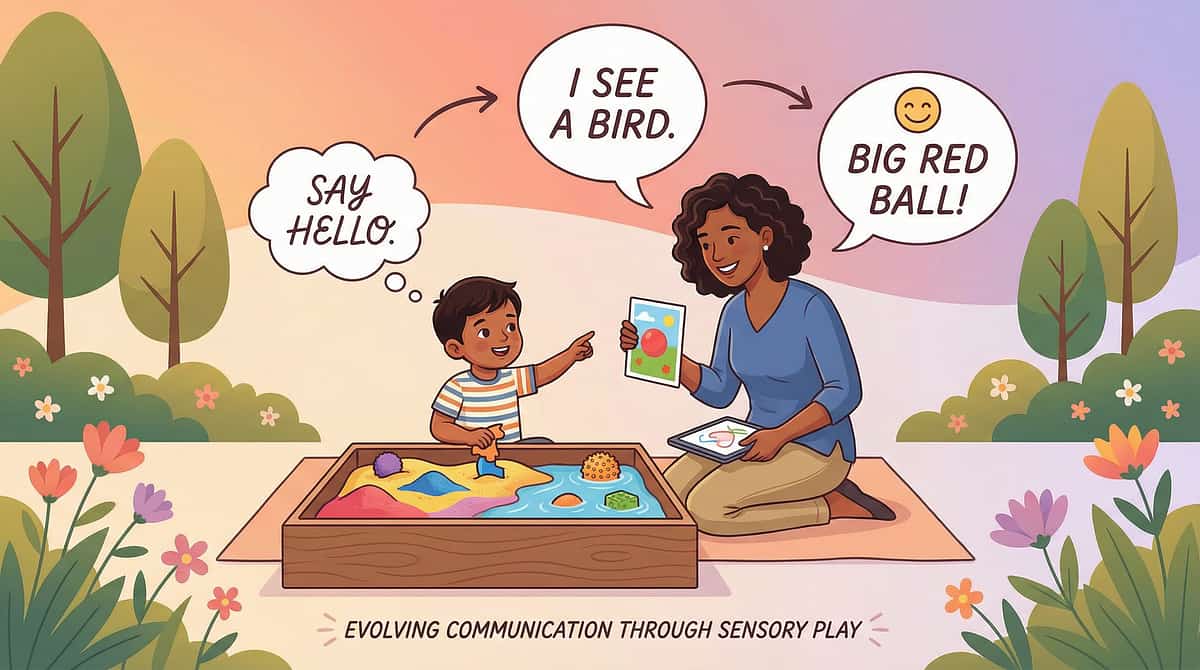
Delayed Echolalia
"Swiper no swiping!" — said when they want something to stop. They quote entire YouTube videos. Recite Peppa Pig dialogue hours later. Script from overheard conversations. It's not meaningless repetition — it's their language library, deliberately deployed.
The Neuroscience
Delayed echolalia demonstrates exceptional auditory memory (storing entire phrase/scripts), phonological precision (reproducing them accurately), and — critically — FUNCTIONAL intent. "Swiper no swiping" = "I want this to stop." The meaning is there, encoded in borrowed language. The hippocampus stores the whole phrase; the prefrontal cortex deploys it when contextually relevant.
Evidence Level
📊Level I — GLP-informed echolalia intervention. NLA (Blanc 2012) | NCAEP 2020
What You'll Learn
- Mapping script to function: "What does this script MEAN to them?"
- Script-to-original-language bridging techniques
- Providing alternative phrases for the same communicative function
- GLP Stage 2: mitigating gestalts — shortening scripts into usable chunks
- Using scripts as teaching moments, not correction targets
- The power of scripting: recognizing it IS real communication
B-181
Technique 06 of 30
Making Echolalia Functional
You've accepted that echolalia is communication. Now: how do you help it evolve? How do you take borrowed phrases and transform them into flexible, self-generated language? This technique bridges the paradigm shift — from "stop repeating" to "let's use this as a springboard."
Each stage involves the prefrontal cortex breaking down stored wholes into component parts — the reverse of analytical language learners who build up from single words to sentences. This is a different developmental path, not a slower one.
What You'll Learn
- GLP stages assessment: where is your child right now?
- Stage-appropriate language modelling strategies
- Breaking scripts into usable, recombineable chunks
- Creating a "language chunk library" for the child
Evidence Level
📊Level I — GLP-informed SLP intervention. NLA (Blanc 2012) | NCAEP 2020 | Meaningful Speech research
Key Action
Find an NLA/GLP-trained SLP in your area — this specialized approach reaches children that traditional methods don't.

B-182
Technique 07 of 30
Can't Answer Questions
"What did you do at school today?" Silence. Or echo. Or just one word: "school." They may fully understand the question (receptive skill intact) but cannot formulate an answer (expressive bottleneck). The disconnect between comprehension and production is the most frustrating gap in expressive language — they know, but can't tell.
The Neuroscience
Answering a question requires comprehension (Wernicke's area), memory retrieval (hippocampus), semantic selection (which information from memory is relevant?), syntactic assembly (constructing the answer), and speech production — all within a 2–3 second social window. The bottleneck is typically at semantic selection or syntactic assembly.
Evidence Level
📊Level I — Question-answer training within SLP + ABA. NCAEP 2020
What You'll Learn
- Question hierarchy: yes/no → what → where → who → when → why → how
- Visual answer supports and choice boards for each question type
- Scaffolding answers: fill-in-the-blank → sentence starter → independent response
- Processing time: wait before prompting — silence is not failure
- Teaching answer FORMULAS for the most common question types
- School and family daily question practice routines
B-183
Technique 08 of 30
Can't Ask for Help
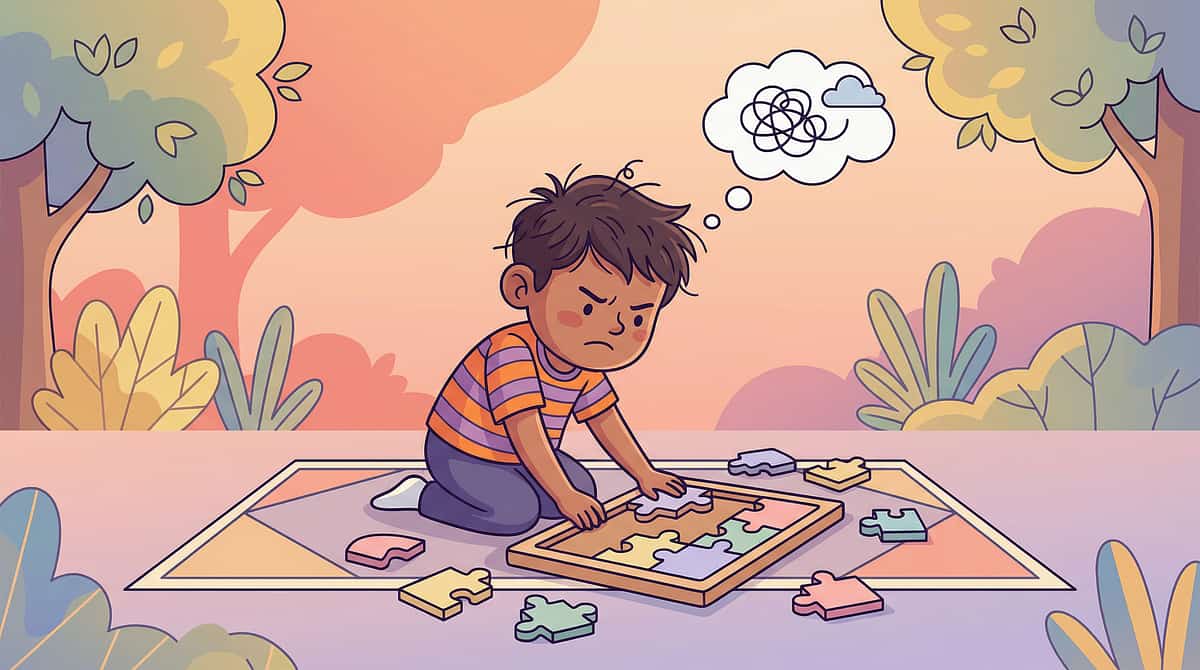
The puzzle piece won't fit. The jar won't open. The shoe is stuck. They struggle silently, escalate to frustration, then meltdown — all because they couldn't produce three words: "Help me please." The ability to recruit adult assistance verbally is a survival skill, and its absence makes every challenge a crisis.
The Neuroscience
Requesting help requires metacognition (recognizing "I can't do this"), social awareness (someone else CAN help), communicative planning (formulating the request), and emotional regulation (managing frustration long enough to communicate). The prefrontal cortex must coordinate all four systems simultaneously — under the stress of the failed task.
Evidence Level
📊Level I — Functional communication training for help-seeking. NCAEP 2020
What You'll Learn
- Teaching "help" as a priority word, sign, or picture — the most important functional word
- Creating daily help-needed opportunities: tightly closed containers, out-of-reach items
- Modelling help-seeking BEFORE frustration escalates
- "Help" button or card as an always-available communication tool
- Building from one-word "help" → "help please" → "can you help me with ___?"
- School-based help-seeking protocol for teachers and aides
B-184
Technique 09 of 30
Word Finding Difficulty
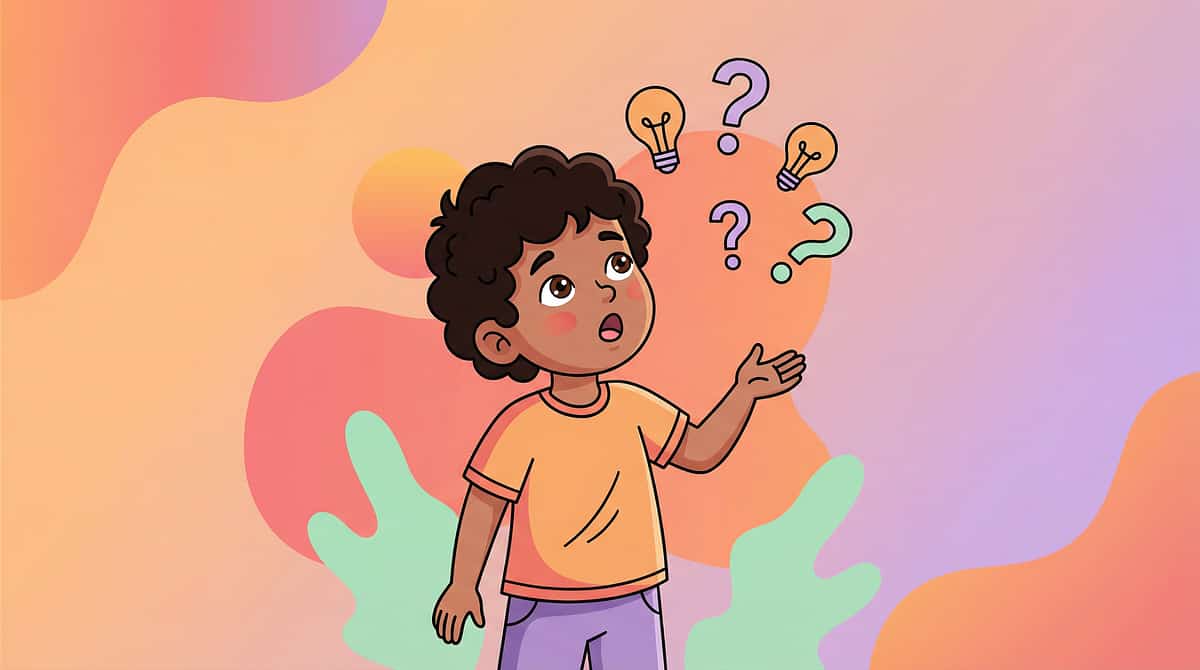
They know the word. It's in there. You can see them searching — eyes up, mouth opening and closing, sometimes a frustration sound. "The thing... the... you know..." The word is on the tip of their tongue but the retrieval pathway is blocked. They substitute ("that round thing" for "ball") or give up entirely.
The Neuroscience
Word retrieval (anomia) occurs when the semantic representation is intact — the child knows the concept — but the phonological form (the sound-pattern of the word) cannot be accessed quickly enough. The arcuate fasciculus route from the temporal lobe to Broca's area is slow or weak. The connection exists; it just needs strengthening and cueing support.
Evidence Level
📊Level I — Word retrieval intervention within SLP. NCAEP 2020 | ASHA
What You'll Learn
- Semantic cueing strategies: "It's a fruit, it's yellow, you peel it..."
- Phonological cueing: "It starts with 'buh'..."
- Word association networks — building stronger connections in semantic memory
- Category-based vocabulary strengthening exercises
- Circumlocution as a VALID strategy: describing when you can't name
- When word-finding difficulty signals language disorder vs. typical tip-of-tongue
B-185
Technique 10 of 30
Pronoun Reversal
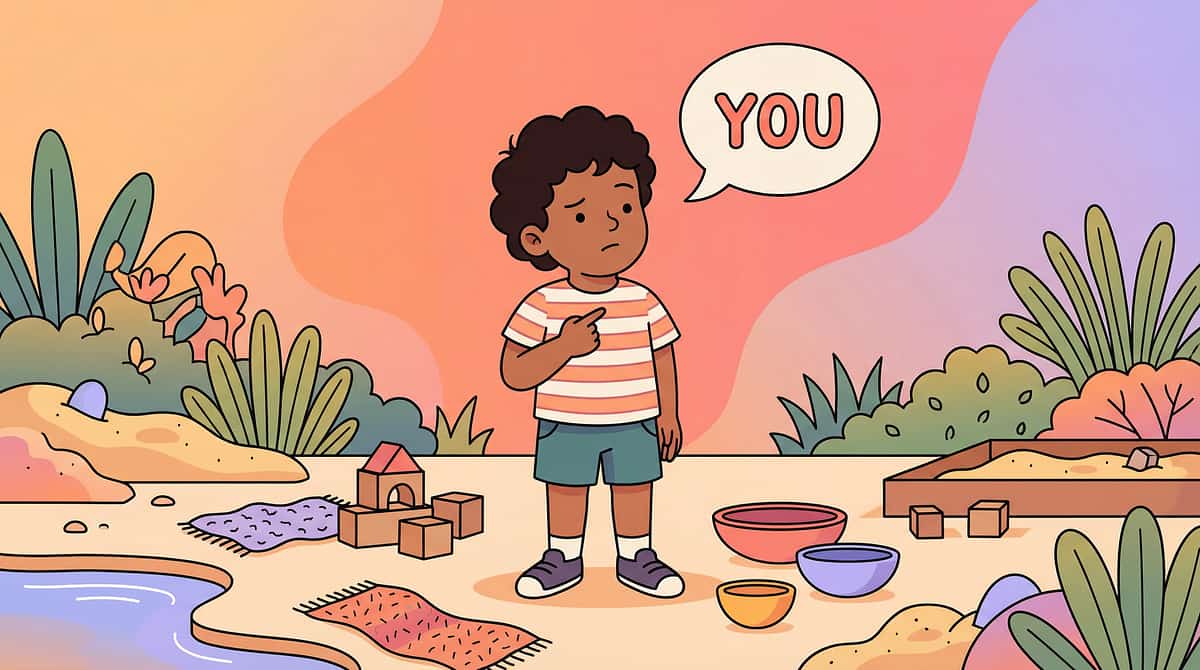
"You want milk" — meaning "I want milk." "She is going" — meaning "I am going." They use your pronouns instead of their own. This is not carelessness — it's a window into how they acquired language, and a direct clue about Gestalt Language Processing at work.
The Neuroscience
Pronoun reversal reveals the perspective-taking challenge in production. The child learned "you want milk" (what YOU said to THEM when offering milk) and stored it as a whole gestalt associated with wanting milk. When they want milk, they retrieve and reproduce the stored gestalt — including the original pronouns. In GLP terms, this is Stage 1. Resolution requires breaking the gestalt into components and reassembling with correct pronouns.
Evidence Level
📊Level I — Pronoun intervention within SLP + GLP framework. NCAEP 2020 | NLA
What You'll Learn
- Why pronoun reversal is a CLUE to Gestalt Language Processing — not a random error
- Modelling from the child's perspective: say "I want milk" as if you're the child
- Photo and video-based pronoun practice with self-referencing activities
- Mirror work and self-narration activities for pronoun anchoring
- When pronoun reversal resolves naturally vs. when intervention is needed
B-186
Technique 11 of 30
Can't Describe Events
"What happened at school?" Silence. Not because nothing happened — but because translating a lived experience into a verbal narrative requires memory retrieval, event sequencing, vocabulary selection, grammar assembly, and perspective organization. Each is a separate cognitive task. Together, they're overwhelming.
The Neuroscience
Event narration is among the most complex expressive language tasks — requiring episodic memory (hippocampus), temporal sequencing (prefrontal cortex), semantic selection (temporal lobe), syntactic construction (Broca's area), and pragmatic organization (how much detail does the listener need?). All systems must operate simultaneously in real time.
Evidence Level
📊Level I — Narrative intervention within SLP. NCAEP 2020
What You'll Learn
- Visual event scripts: first → then → next → last with pictures
- Story grammar framework: who, where, what happened, how they felt
- Photo-based retelling: take photos during events for later narration
- Scaffolded narration: you start, they fill in details
- Daily event journal to build event-description habits
- Progressing from 2-event to multi-event narratives over time
B-187
Technique 12 of 30
Jargon Speech
They talk — a LOT. With intonation, rhythm, and expression. It sounds like language. It has the music of conversation. But the words aren't words. It's beautiful, expressive gibberish — fluent in a language only they understand.
The Neuroscience
Jargon speech indicates that prosodic and intonation patterns (right hemisphere) and speech motor execution (motor cortex) are intact — but phonological accuracy (left hemisphere) is lagging. The child has the MELODY of language without the WORDS. This is a positive sign: the suprasegmental layer (rhythm, stress, intonation) is the foundation on which clear words will be built.
Evidence Level
📊Level I — Phonological clarity intervention + targeted vocabulary. NCAEP 2020 | ASHA
What You'll Learn
- Jargon as a developmental stage — not regression or cause for alarm
- Inserting real words into jargon streams during natural interaction
- Modelling clear single words during jargon "conversations"
- "Key word" strategy: targeting 1–2 clear words per utterance
- Celebrating the communicative intent behind jargon — the drive to speak
- Progression: jargon → jargon with real words → mostly real words → clear speech

B-188
Technique 13 of 30
Verb Tense Difficulty
"I go school yesterday." "He eated the food." "She is play." Verb tenses — the grammatical system that encodes time — are jumbled. Past, present, future, progressive, perfect: each requires a specific grammatical transformation the child's language system hasn't yet automated.
The Neuroscience
Verb tense marking is a grammatical morphology operation processed in Broca's area. The brain must select the correct tense (temporal reference), apply the morphological rule (add -ed, -ing, or change the vowel), and integrate it into the sentence while maintaining speech fluency. Regular vs. irregular verbs add further complexity. For multilingual Indian children, tense systems differ across Hindi, Telugu, Tamil, and English — creating additional processing load.
Evidence Level
📊Level I — Morphological intervention within SLP. NCAEP 2020
What You'll Learn
- Tense hierarchy: present progressive (-ing) → regular past (-ed) → irregular past → future → complex
- Visual timeline tools for teaching temporal concepts
- "Now / Before / Later" as a child-friendly framework
- Recasting errors naturally: child says "I go" → you say "You WENT!"
- Bilingual tense considerations for Indian families and multilingual homes
- Grammar through narrative and play — not drills
B-189
Technique 14 of 30
Can't Express Needs
They can label objects but can't say "I need the toilet." They can name foods but can't say "I'm hungry." The gap between vocabulary knowledge and functional need expression — between knowing the words and deploying them under real-time internal pressure — is one of the most urgent expressive challenges in daily life.
The Neuroscience
Functional need expression requires the prefrontal cortex to detect an internal state (interoception), match it to a communication goal, select appropriate vocabulary, construct a socially appropriate request, and produce it under the time pressure of the need. When any link is weak, the child defaults to behavior — crying, pulling, melting down — instead of language.
Evidence Level
📊Level I — Functional communication training. NCAEP 2020
What You'll Learn
- Core need vocabulary: toilet, hungry, thirsty, tired, hurt, help, stop, more, done
- Visual need cards that are always accessible — on the body, on the wall, on a device
- Scripted requests for the most common everyday needs
- Practice during NON-urgent moments so the skill is ready when it's urgent
- Building from prompted → independent need expression over time
- Emergency communication protocol for school and outings
B-190
Technique 15 of 30
Expanding Limited Vocabulary
They have 20 words. Maybe 50. The same words, recycled. Meanwhile, same-age peers have thousands. Every new concept requires a new word — and new words come painfully slowly. The vocabulary gap widens every month without targeted intervention.
The Neuroscience
Vocabulary growth requires repeated exposure (temporal lobe encoding), meaningful context (hippocampal memory formation), and retrieval practice (strengthening lexical access pathways). Typically developing children need 3–5 exposures in context to acquire a word. Children with ASD may need 20–50+ exposures for the same word to become productive vocabulary — making intentional, high-frequency teaching essential.
Evidence Level
📊Level I — Vocabulary intervention within SLP + naturalistic teaching. NCAEP 2020
What You'll Learn
- Vocabulary selection priority: high-frequency, high-motivation, high-function words FIRST
- Naturalistic vocabulary teaching embedded in daily routines — not flashcard drills
- The 10-exposures-per-day strategy for target words
- Category-based vocabulary expansion for faster growth
- Using the child's own interests as a vocabulary vehicle
- Vocabulary tracking: measuring growth weekly to guide intervention

B-191
Technique 16 of 30
Monotone Speech
They speak — but flat. No rise for questions. No fall for statements. No excitement, no sadness, no surprise in their voice. Every sentence sounds the same. Listeners struggle to detect emotion, intent, or emphasis. The content is there — but the music is missing.
The Neuroscience
Speech prosody — melody, stress, intonation, rhythm — is processed primarily in the RIGHT hemisphere, a different system than the left-hemisphere word and grammar processing. In ASD, right-hemisphere prosodic processing can be atypical, resulting in flat intonation (reduced pitch variation), unusual stress patterns, and monotonic delivery. The child has the words but not the music of communication.
Evidence Level
📊Level I–II — Prosody intervention within SLP. NCAEP 2020 | Prosody research in ASD
What You'll Learn
- Prosody awareness activities: high/low pitch, loud/soft, fast/slow
- Exaggerated modelling: parents use EXTRA prosody as an auditory model
- Music-based prosody activities — singing is prosody practice
- Emotion-prosody mapping: "A happy voice sounds like THIS"
- Recording and playback for self-monitoring
- Drama and acting as prosody practice in a safe, fun context

B-192
Technique 17 of 30
Can't Describe Feelings
They're crying and you ask "What's wrong?" and they can't tell you. Not because they don't feel it — but because translating an internal emotional state into words requires interoception (detecting the feeling), emotion vocabulary (knowing the word), and expressive language (producing the sentence). Three systems, all challenged at once.
The Neuroscience
Emotion expression builds on interoception, emotion word understanding, and productive language. The insular cortex must identify the body state, the anterior cingulate categorize it as an emotion, the temporal lobe retrieve the label, and Broca's area build the sentence. Saying "I feel ___ because ___" is the most demanding expressive language task — and the most important for wellbeing.
Evidence Level
📊Level I — Emotional expression within SLP + Zones of Regulation. NCAEP 2020
What You'll Learn
- Emotion vocabulary production — not just recognition, but expressive use
- "I feel ___ because ___" sentence framework as a daily tool
- Visual emotion check-ins with verbal response requirement
- Body sensation → emotion label → verbal expression chain
- Social stories about expressing feelings in safe, appropriate ways
- Zones of Regulation verbal component: naming the zone aloud
B-193
Technique 18 of 30
Scripted-Only Speech
They can recite entire movie scenes. They can quote books perfectly. But ask an original question and there's silence. Their speech is 95% borrowed — scripts from TV, YouTube, adults, books. They can REPRODUCE language beautifully — but cannot yet GENERATE it independently.
The Neuroscience
Scripted speech is Gestalt Language Processing at Stage 1–2 (Blanc, 2012). The child acquires language as whole units and deploys them situationally. The developmental trajectory: using scripts → modifying scripts → combining script fragments → generating novel utterances. This is NOT "stuck" — it is a different developmental pathway with its own progression timeline and enormous potential.
Evidence Level
📊Level I — GLP-informed intervention. NLA (Blanc 2012) | NCAEP 2020
What You'll Learn
- Scripted speech as Stage 1–2 GLP — a valid communication strategy, not a disorder
- Modelling slightly MODIFIED versions of their scripts to introduce flexibility
- Creating new scripts for unscripted situations the child frequently encounters
- Building flexibility: mixing chunks from different scripts to form novel phrases
- Transition pathway: scripted → semi-scripted → generative language
- Finding an NLA/GLP-informed SLP for specialized support
B-194
Technique 19 of 30
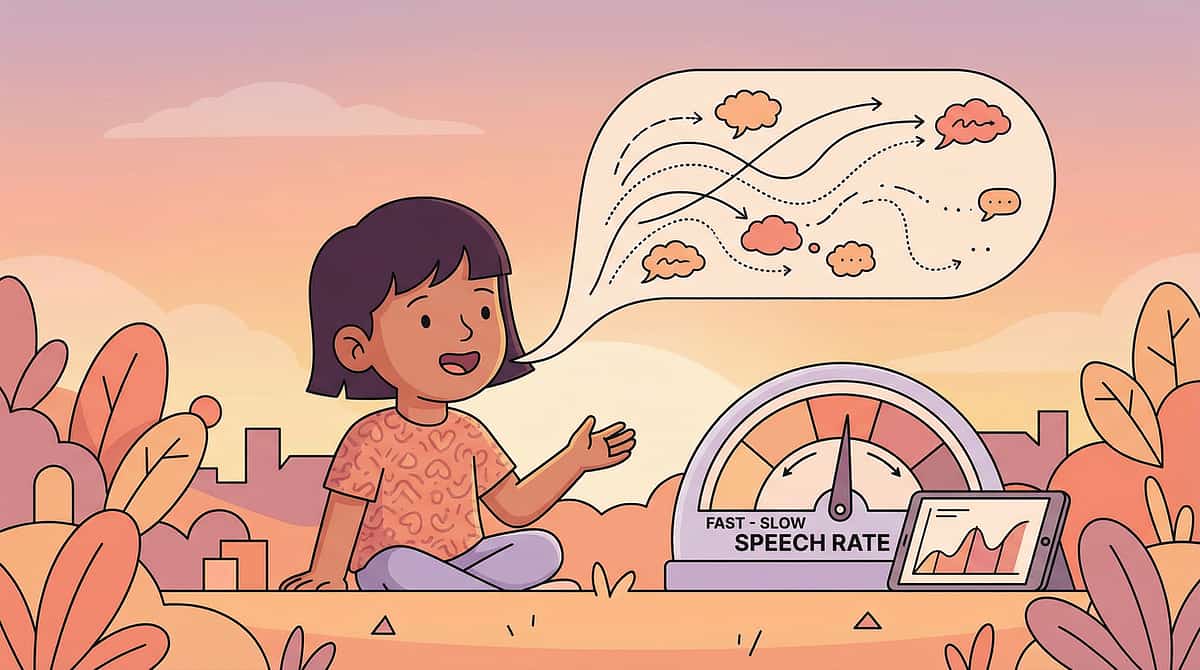
Speech Rate Problems
Too fast — words tumble out in a rush nobody can follow. Too slow — each word takes seconds and listeners lose patience. Or variable — fast-slow-fast without pattern. The rate of speech is the vehicle that carries words, and when it's miscalibrated, communication crashes.
The Neuroscience
Speech rate is controlled by the cerebellum (timing), supplementary motor area (rhythm), and basal ganglia (motor sequencing). Excessively fast speech (tachylalia) may indicate motor planning that outpaces articulatory precision. Excessively slow speech may indicate apraxic motor planning difficulty or word retrieval delays that create hesitations throughout an utterance.
Evidence Level
📊Level I–II — Speech rate intervention within SLP. NCAEP 2020
What You'll Learn
- Rate identification: too fast vs. too slow vs. variable — each needs a different approach
- Pacing boards as visual tools to physically regulate speech rate
- Metronome-based practice for rhythm regulation
- "Turtle talk" (deliberately slow) vs. "race talk" (fast) awareness games
- Recording and self-monitoring — children respond well to hearing themselves
- Breath control and phrasing techniques for sustained rate regulation
B-195
Technique 20 of 30
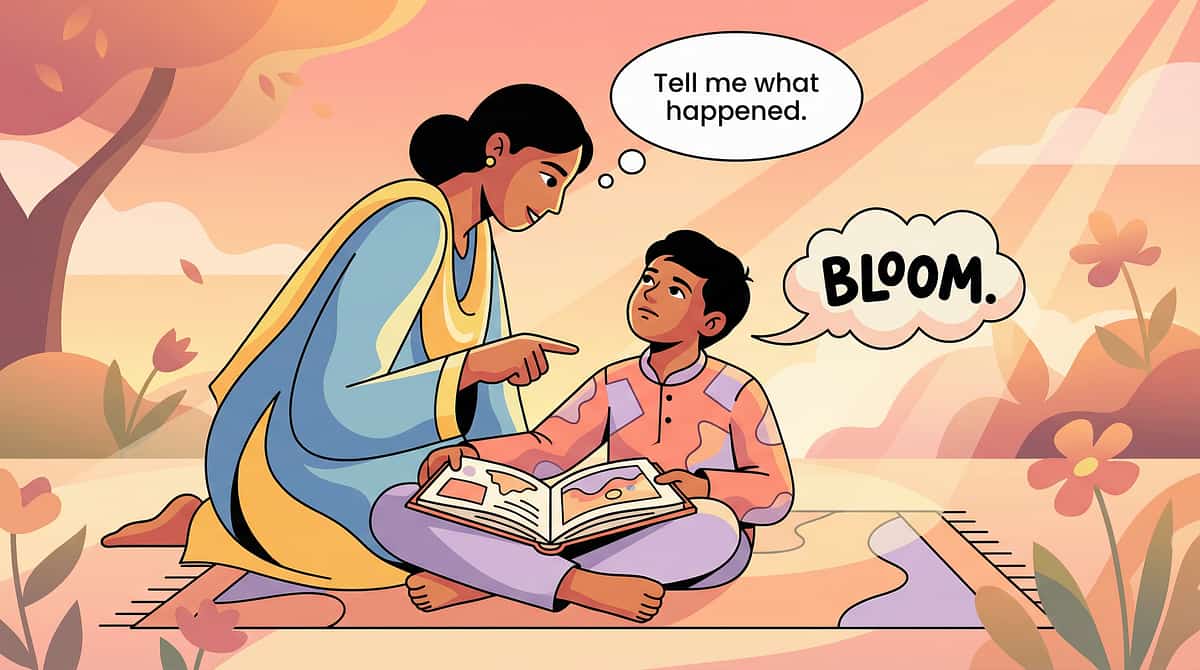
Can't Retell Stories
You read them a story. "Tell me what happened." Silence, fragments, or one detail from the middle. Story retelling is the gold standard of expressive language assessment — because it requires everything simultaneously: memory, sequencing, vocabulary, grammar, and narrative organization.
The Neuroscience
Story retelling demands the full expressive language network: episodic memory retrieval, temporal ordering, character tracking, causal reasoning, vocabulary selection, grammatical assembly, and discourse management — all in real-time production. It is the Mount Everest of expressive language tasks, and the one most sensitive to the full range of language abilities.
Evidence Level
📊Level I — Narrative retelling intervention within SLP. NCAEP 2020
What You'll Learn
- Story grammar markers: character, setting, problem, plan, action, ending
- Visual story maps to scaffold the retelling structure
- Sequencing card support for ordering story events
- Scaffolded retelling: you tell part, they tell part — gradually releasing support
- Simple → complex story progression over weeks and months
- Indian stories as retelling material: Panchatantra adaptations and local folk tales
B-196
Technique 21 of 30
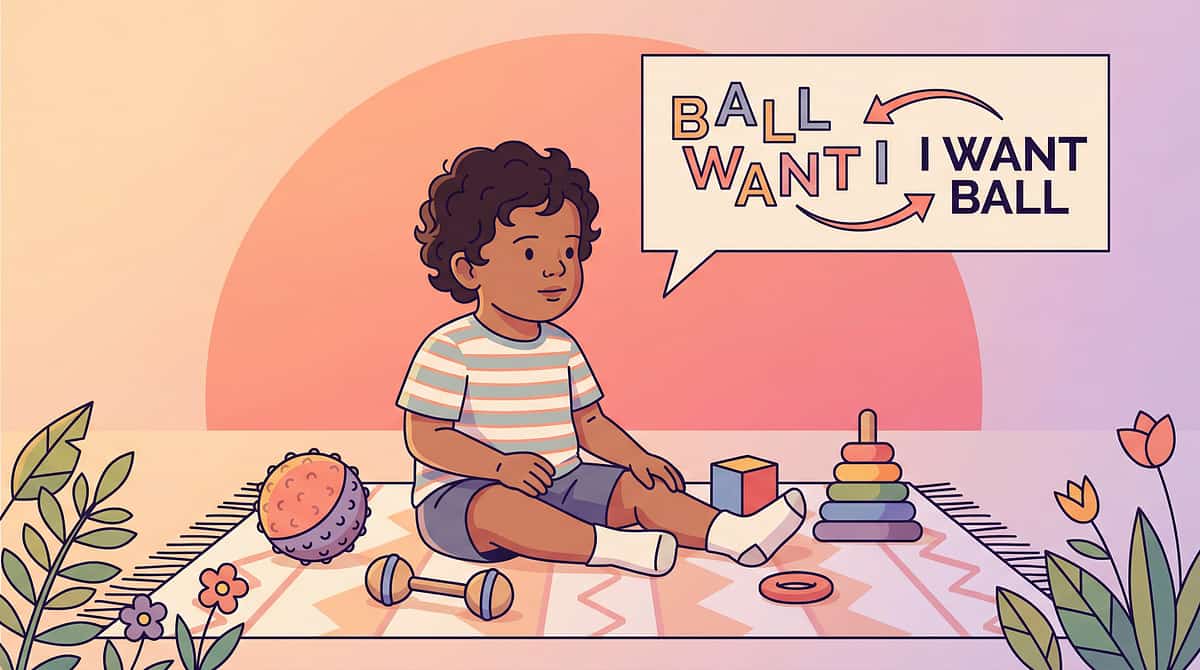
Word Order Difficulty
"Ball want I." "Going school he." "Water give me." The words are right but the ORDER is wrong. English requires Subject-Verb-Object. Hindi uses Subject-Object-Verb. For bilingual Indian children, word order confusion compounds when two languages with different syntactic structures coexist in the same mind.
The Neuroscience
Word order (syntax) is processed in Broca's area and the left inferior frontal gyrus. The brain must apply language-specific word order rules while constructing the sentence. For bilingual children, the brain maintains two syntactic systems that can interfere with each other — producing cross-linguistic word order errors that are developmental, not disordered — and must be understood in bilingual context.
Evidence Level
📊Level I — Syntactic intervention within SLP. NCAEP 2020
What You'll Learn
- Word order teaching with visual sentence strips that can be physically rearranged
- Color-coded word categories: who = green, action = red, what = blue
- Recasting word order errors naturally in conversation — not correction, but modelling
- Bilingual word order awareness: Hindi SOV vs. English SVO
- Sentence building activities that make grammar tactile and visual
- When word order errors reflect bilingual language influence vs. language disorder
B-197
Technique 22 of 30
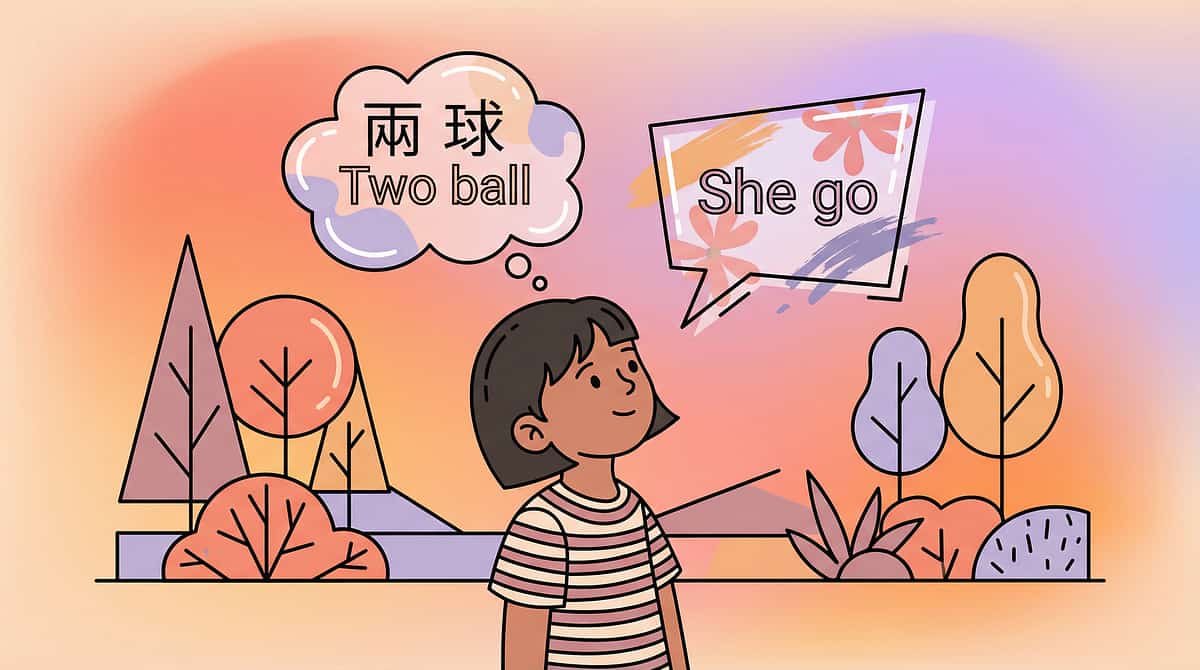
Grammar and Plurals
"Two ball." "She go." "The mouses." "I goed." Grammatical morphemes — plurals (-s), possessives ('s), past tense (-ed), articles (a/the) — are the small markers that make language sound right. Their absence makes speech sound telegraphic and immature, and widens the gap with same-age peers.
The Neuroscience
Grammatical morphemes are processed in Broca's area and the left inferior frontal gyrus as rules applied to word forms. Regular morphology (add -s, add -ed) requires rule application. Irregular morphology (go→went, mouse→mice) requires item-specific retrieval from memory. Both systems can be independently delayed, and each requires its own targeted approach.
Evidence Level
📊Level I — Morphological intervention within SLP. NCAEP 2020
What You'll Learn
- Morpheme acquisition hierarchy: present progressive → plurals → possessives → past tense → articles
- Focused stimulation for target morphemes: flood the environment with the target form
- Recasting as the primary teaching strategy — respond with the correct form, not a correction
- Visual grammar supports: pictures, charts, and manipulatives
- Bilingual grammar considerations for Indian multilingual families
- When and how to select which morphemes to target in therapy
B-198
Technique 23 of 30
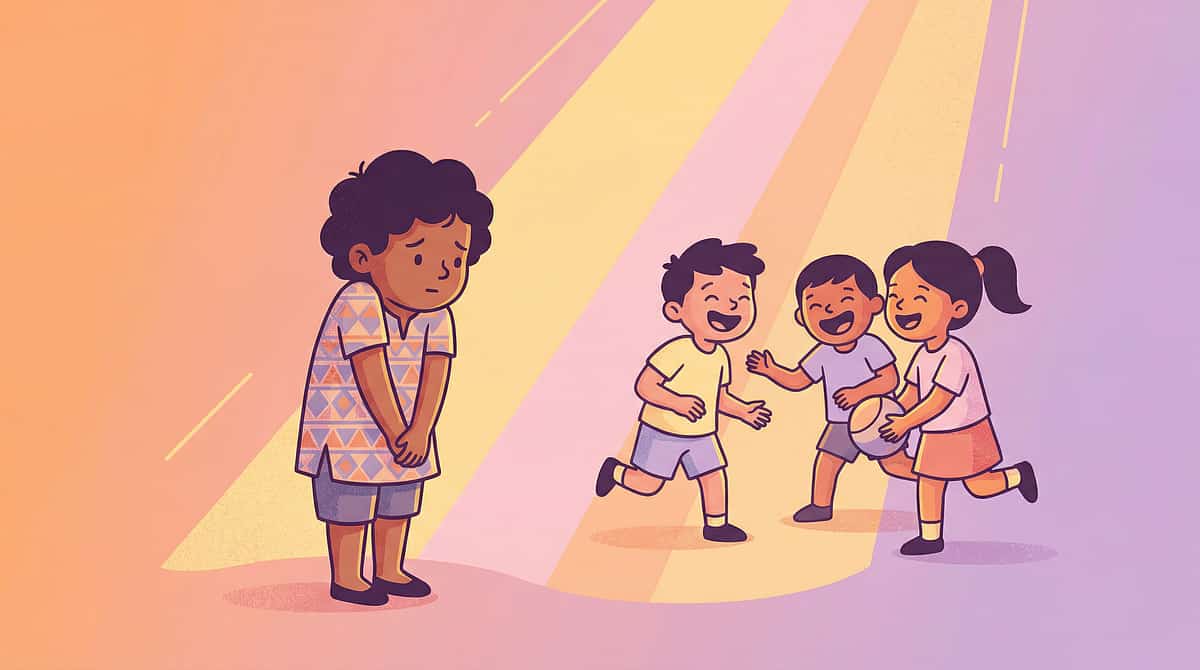
Can't Initiate Communication
They respond when spoken to — sometimes. But they NEVER start a conversation. Never walk up and say something unprompted. Never comment, share, or ask. All communication is reactive. The initiation drive — "I have something to tell you" — is missing from their communicative repertoire.
The Neuroscience
Communication initiation requires internal drive (ventral tegmental area/reward system), idea formulation (prefrontal cortex), audience assessment (who to talk to), social approach (overriding social anxiety), and linguistic execution — all before the first word. Initiation is the hardest communication act because it has no external prompt: the child must be internally motivated to CREATE a communicative moment from nothing.
Evidence Level
📊Level I — PRT motivation procedures + initiation training. NCAEP 2020 | PRT research
What You'll Learn
- Environmental arrangement that creates natural initiation opportunities
- The waiting strategy: don't fill every silence — leave SPACE for initiation to emerge
- Commenting models: adults initiate comments frequently as a language model
- Initiation reinforcement: respond enthusiastically to ANY unprompted communication
- Structured initiation practice: greeting scripts, conversation starters, show-and-tell
- Building from 1 initiation per day → 5 → 10+ through systematic reinforcement
B-199
Technique 24 of 30
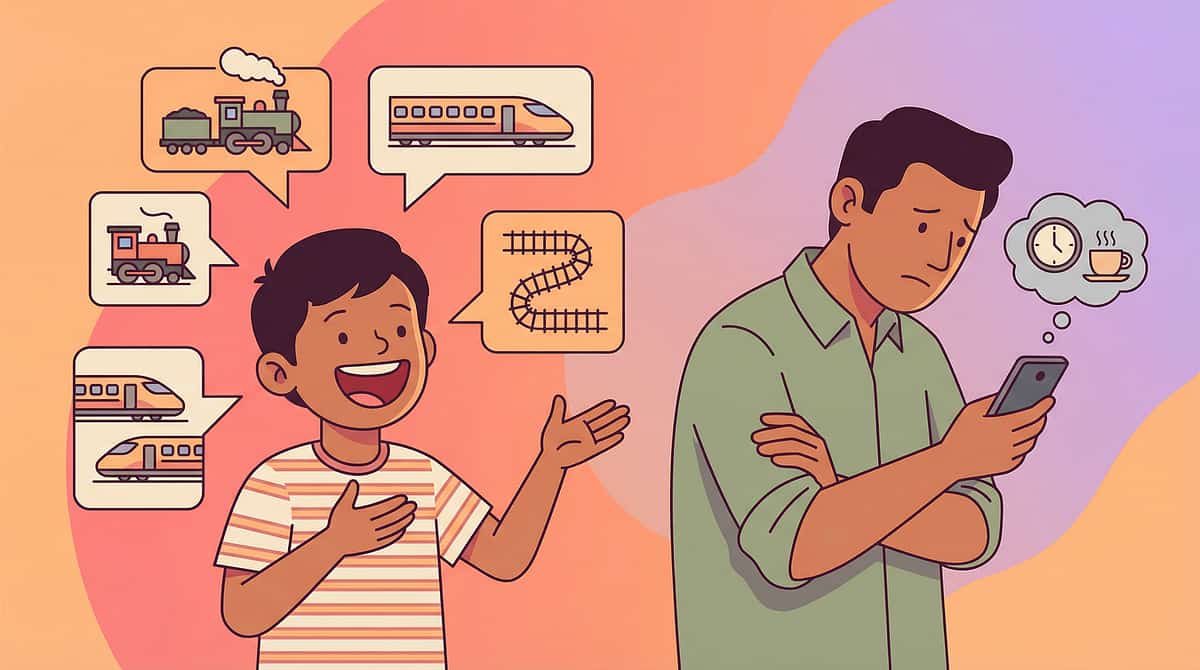
Only Talks About Interests
Trains. Every conversation becomes trains. Every question answered with trains. They have fluent expressive language — but only about one topic. With strangers, they launch into a 20-minute monologue on train schedules. Other children walk away. Adults smile politely then disengage.
The Neuroscience
Restricted interests in ASD involve hyperactivation of the reward system (nucleus accumbens) for the preferred topic. Talking about the interest is self-reinforcing — each utterance about trains produces dopamine. Talking about other topics produces comparatively less reward, making topic-switching effortful and intrinsically unsatisfying. The solution is not suppression — it's expansion and bridging.
Evidence Level
📊Level I — Topic expansion + social communication skills training. NCAEP 2020
What You'll Learn
- Interest as a BRIDGE, not a barrier: use trains to teach other concepts and skills
- Turn-taking about topics: my topic, then your topic — structured practice
- "Topic traffic light" visual: green = go, yellow = listener losing interest, red = change topic
- Expanding topic vocabulary into adjacent domains
- Social rules for monologuing — taught explicitly and with compassion
- Interest as career and academic strength — celebrating the depth of focus
B-200
Technique 25 of 30
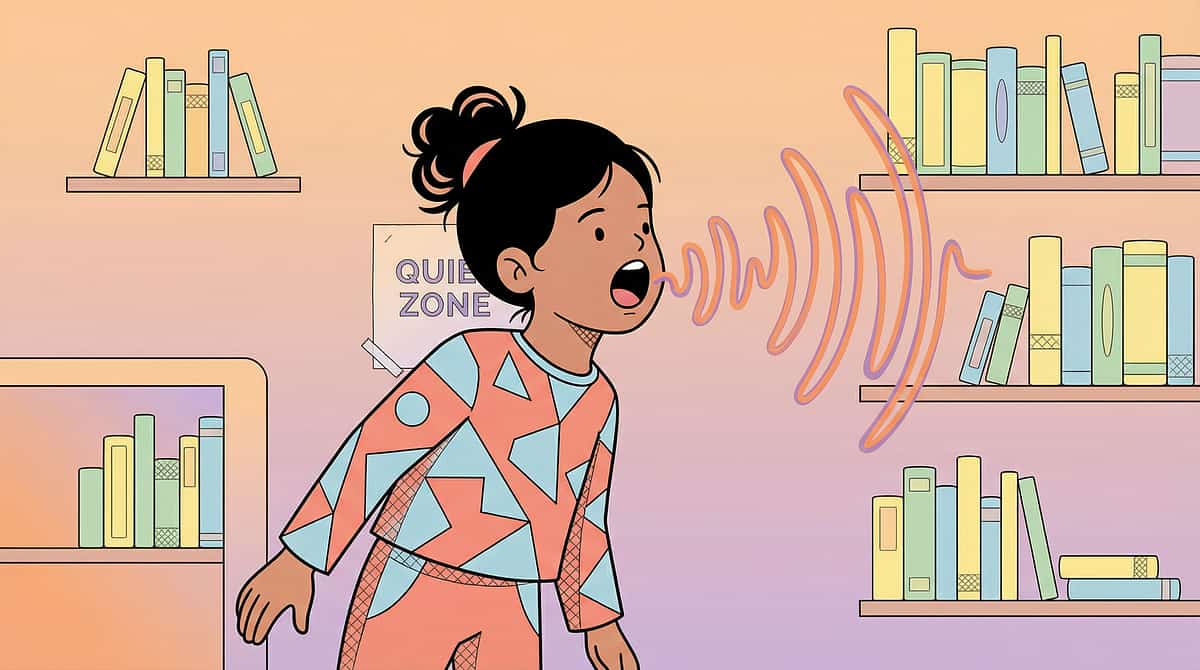
Volume Control
They SHOUT in the library. Whisper in the playground. Talk at full volume during prayer at the temple. The volume dial is broken — they can't calibrate their voice to the environment. It's socially conspicuous, exhausting for everyone, and often leads to embarrassment and social exclusion.
The Neuroscience
Voice volume regulation requires auditory self-monitoring (hearing your own voice accurately), proprioceptive feedback from laryngeal and respiratory muscles, environmental assessment (how loud is this setting?), and real-time adjustment. When auditory self-monitoring is weak — the child doesn't accurately perceive their own volume — calibration fails regardless of motivation to comply.
Evidence Level
📊Level I–II — Voice volume intervention within SLP. NCAEP 2020
What You'll Learn
- Visual volume scale (1–5) with environmental matches for each level
- "Inside voice / outside voice" teaching with contextual practice in real settings
- Self-monitoring strategies and self-regulation cues
- Volume meter apps as real-time biofeedback tools
- Social stories about volume matching in different environments
- Temple, library, and classroom-specific volume protocols
B-201
Technique 26 of 30
Building Two-Word Phrases
"More milk." "Big ball." "Want cookie." "Mama go." Two words combined into a unit of meaning. This is the birth of grammar — the moment the child moves from labelling individual things to communicating the relationships between concepts. Every two-word combination is a milestone worth celebrating.
The Neuroscience
Two-word combinations represent the emergence of syntax — Broca's area beginning to apply word-order rules. The brain must hold Word 1 in working memory while planning and producing Word 2. Early combinations (agent + action, action + object, modifier + noun, recurrence + object) each represent a different semantic relationship — and a different cognitive achievement.
Evidence Level
📊Level I — Two-word combination training within SLP + EMT. NCAEP 2020
What You'll Learn
- Two-word combination types: more + X, big + X, want + X, go + X, no + X
- Expansion technique: child says "ball" → you say "THROW ball" or "BIG ball"
- Choosing high-frequency, high-motivation two-word targets for the child
- Visual phrase strips as tactile, visual learning tools
- Daily routine two-word practice: embedded in snack, bath, play, and transitions
- Celebrating every combination attempt — the try is the win
B-202
Technique 27 of 30
Building Sentences
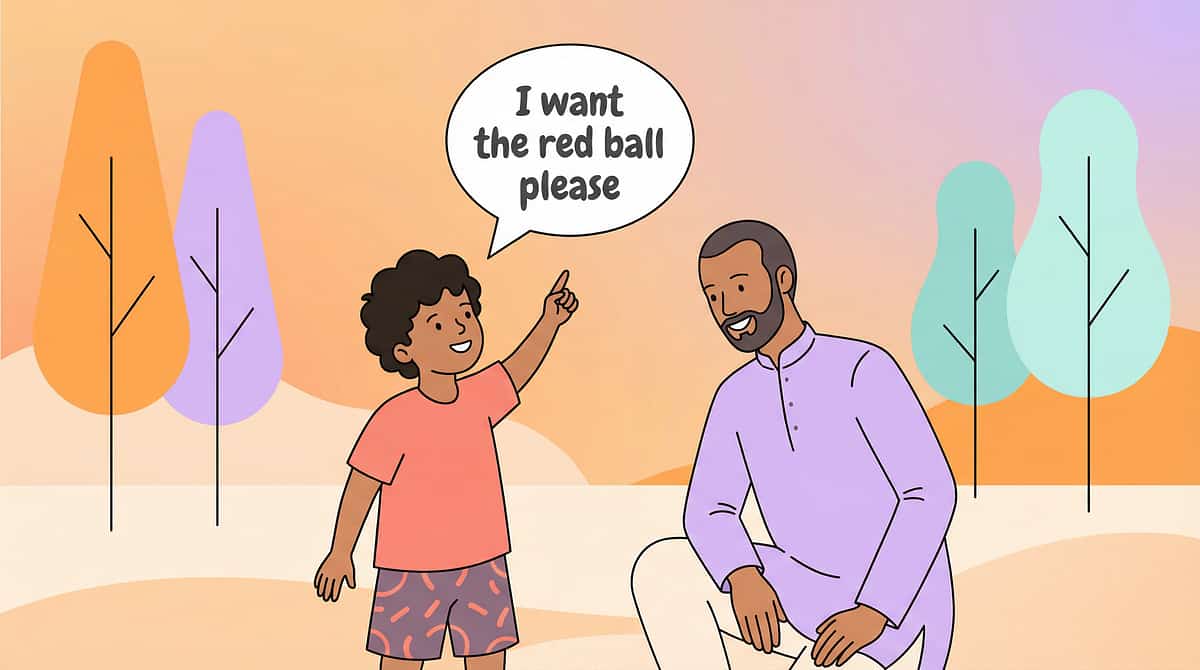
"I want the red ball please." "Mama is going to the shop." The leap from telegram-style phrases to full sentences transforms every interaction. This is where language becomes truly functional for complex communication — the gateway to conversation, explanation, and connection.
The Neuroscience
Sentence construction requires full Broca's area activation — applying syntactic rules (word order), morphological rules (tense, agreement, articles), and semantic coherence. The sentence must be planned before production begins, held in working memory during execution, and self-monitored during output. Full sentences require the entire left-hemisphere language network operating together in real time.
Evidence Level
📊Level I — Sentence construction within SLP. NCAEP 2020
What You'll Learn
- Sentence building hierarchy: 2-word → 3-word → 4+ word → complex sentences
- Visual sentence strips with color coding for each word category
- Carrier phrases as scaffolds: "I want ___," "I see ___," "It is ___"
- Expanding sentences: adding adjectives, prepositions, and adverbs progressively
- Self-correction strategies without pressure or shame
- Bridging from structured practice to spontaneous conversational sentence use
B-203
Technique 28 of 30
Teaching Question Forms
They can answer questions (sometimes) — but can't ASK them. "What is that?" "Where are we going?" "Why is she crying?" Questions are the engine of curiosity and active learning. Without the ability to formulate questions, the child cannot explore their world through language — they can only receive it.
The Neuroscience
Question formation requires syntactic transformation — inverting word order (You are going → Are you going?) or inserting a question word (Where are you going?). This is among the most complex grammatical operations, requiring Broca's area to apply transformation rules to an underlying declarative structure. Motivation to ask requires curiosity and the social awareness that someone else holds desired information.
Evidence Level
📊Level I — Question formulation within SLP. NCAEP 2020
What You'll Learn
- Question hierarchy: yes/no → what → where → who → when → why → how
- Visual question word cards as permanent reference tools
- Question scripts for daily routines: "What is this?" "Can I have ___?"
- Creating information gaps so the child MUST ask to find out — genuine motivation
- Curiosity cultivation activities that build the drive to inquire
- Question games: 20 Questions, I Spy with question forms, mystery boxes

B-204
Technique 29 of 30
Narrative Skills
Beyond retelling stories — CREATING narratives. Telling about their day. Describing what happened at the park. Explaining a problem. Sharing a joke. Narrative is language at its most powerful: turning lived experience into shareable stories. Without it, social connection through shared experience remains fundamentally limited.
The Neuroscience
Narrative production integrates episodic memory (content), temporal sequencing (order), causal reasoning (why events connect), perspective-taking (what does the listener need to know?), vocabulary and grammar (language tools), and pragmatics (how to structure for this particular audience). It is the pinnacle of expressive language — and the latest skill to fully develop in every child.
Evidence Level
📊Level I — Narrative intervention within SLP. NCAEP 2020
What You'll Learn
- Story grammar elements as a narrative framework: who, where, problem, feeling, action, end
- Personal narrative building: start with "today" stories before moving to memory stories
- Photo-supported narration using the child's own photographs
- Narrative scaffolding levels: from full support to independent storytelling
- Audience awareness: teaching what the listener needs to know
- Indian cultural storytelling traditions as rich, motivating practice contexts
B-205
Technique 30 of 30
Commenting Skills
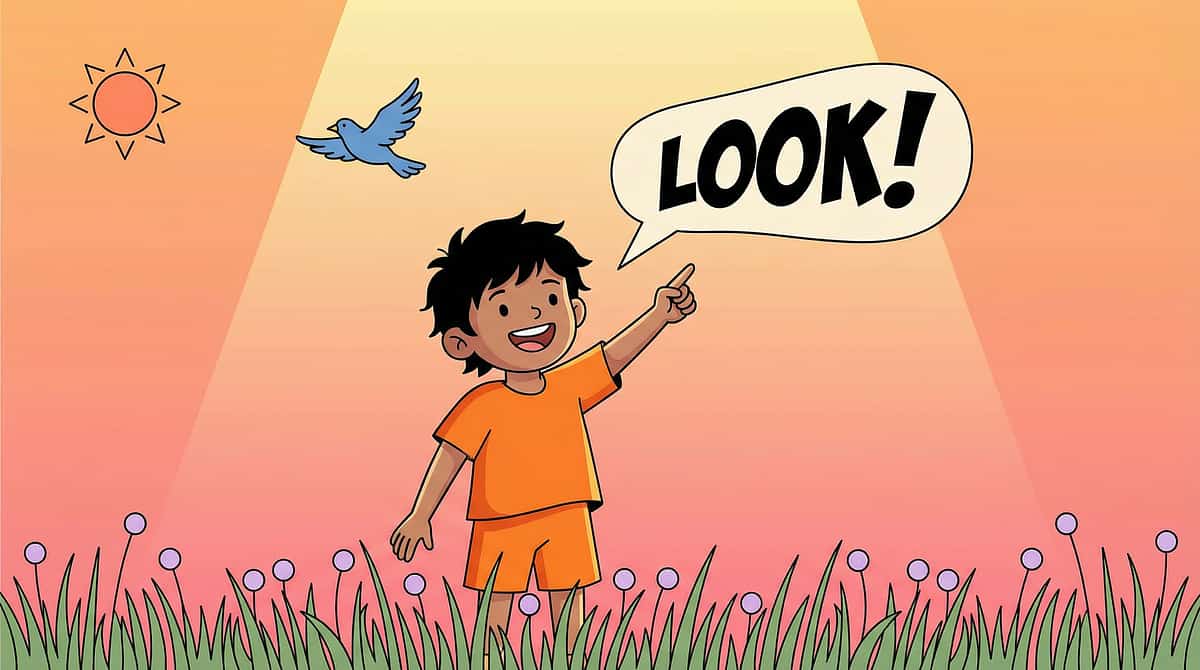
"Look, a bird!" "This is yummy!" "That's funny!" They request. They protest. But they don't COMMENT. Commenting — the spontaneous sharing of observations, opinions, and reactions — is the social glue of human interaction. The language that connects people beyond needs and demands. Without commenting, every conversation stays transactional.
The Neuroscience
Commenting is DECLARATIVE communication — the most socially advanced communicative function. Unlike requesting (motivated by need) or protesting (motivated by aversion), commenting is motivated purely by social sharing: the desire to connect through shared experience. It requires the social reward system (finding sharing rewarding), joint attention, expressive vocabulary, and pragmatic awareness. Commenting emerges when ALL earlier communication systems are functional — making it both the last to arrive and the most socially powerful.
Evidence Level
📊Level I — Commenting and declarative language within JASPER, ESDM, and social communication interventions. NCAEP 2020 | PMC10955541
What You'll Learn
- Why commenting is the LAST communicative function to develop — and why it matters most
- Modelling frequent commenting: parents narrate observations constantly as a model
- "I see..." "I like..." "Look at..." comment starters as daily language scaffolds
- Creating comment-worthy moments: surprising, interesting, and funny events
- Reinforcing ANY spontaneous comment enthusiastically — this is the holy grail
- Building from one-word comments → full-sentence observations over time
Lead Professionals
🗣️ SLP · 📋 ABA (PRT/JASPER) | SpEd · Psychology
Preview of expressive language Therapy Material
Below is a visual preview of expressive language therapy material. The pages shown help educators, therapists, and caregivers understand the structure and content of the resource before use. Materials should be used under appropriate professional guidance.
Link copied!