
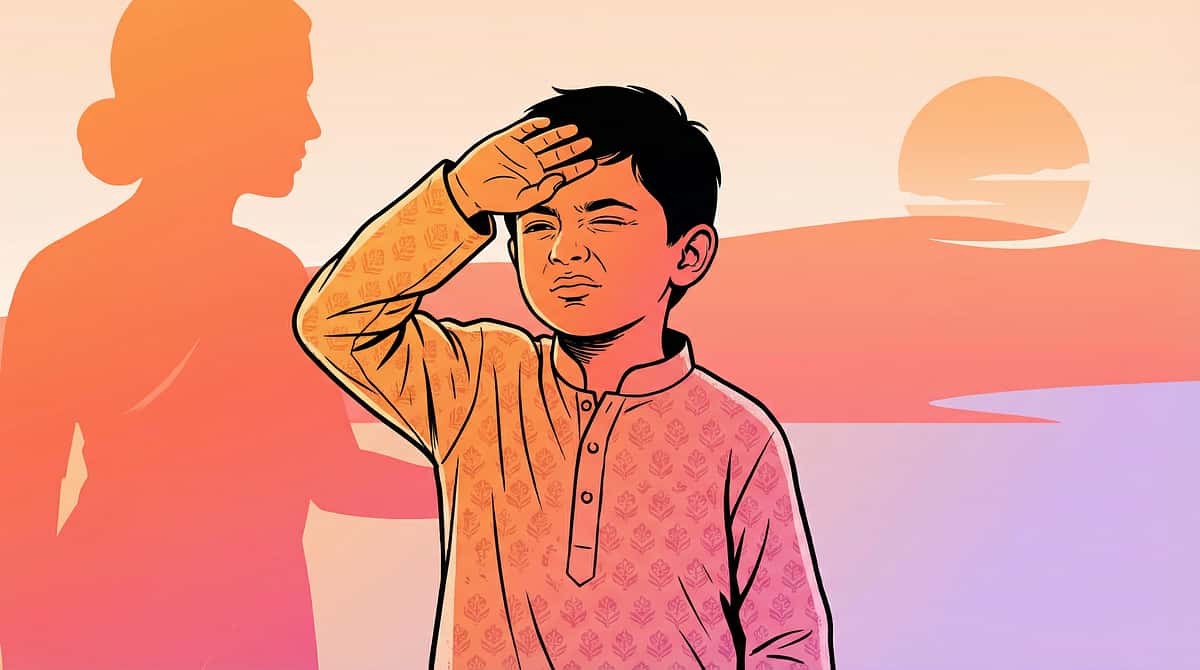
Subdomain A3 · Visual Challenges
Visual Challenges — 20 Evidence-Based Light Sensitivity & Visual Processing Interventions for Autism
20 evidence-based visual sensory interventions for children with autism — covering light sensitivity, eye contact avoidance, visual seeking and spinning, screen fixation, cluttered environment distress, fluorescent light issues, and visual tracking. Powered by GPT-OS® | 21M+ sessions.
Pinnacle Blooms Network®
Subdomain A3 | Domain A: Sensory Processing
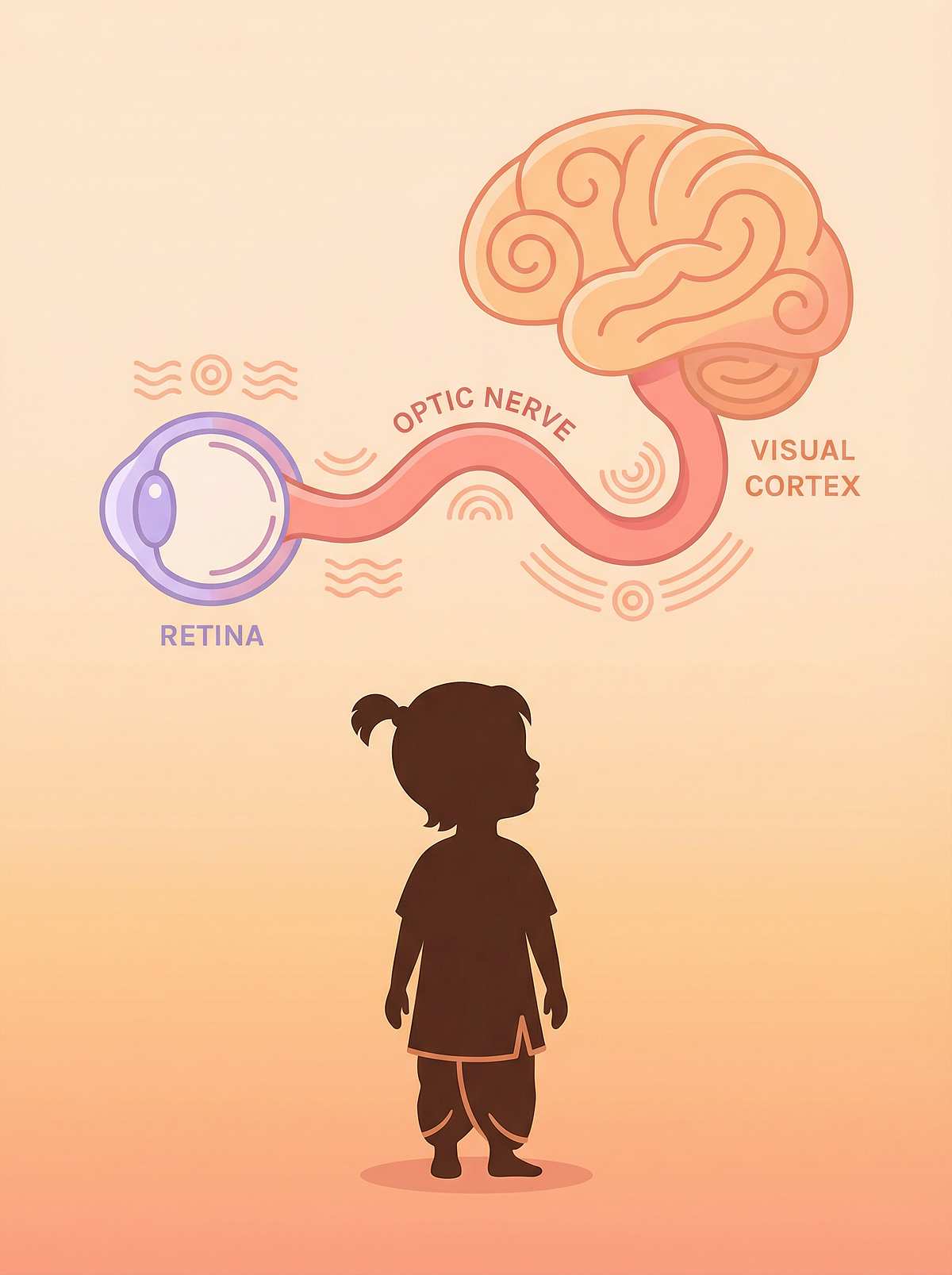
Visual Neuroscience Primer
How the Visual Brain Works — And Why It Differs in Autism
Understanding your child's visual challenges starts with the pathway light takes through the brain. Light travels from the retina → optic nerve → lateral geniculate nucleus (thalamus) → primary visual cortex (V1) → higher visual areas (V2–V5) for colour, motion, form, and spatial processing.
Visual Hypersensitivity
The pupillary reflex and cortical adaptation mechanisms may be atypical. The visual cortex receives more light energy than it can process comfortably — or fails to habituate to sustained visual input. Fluorescent flicker becomes a painful strobe. Bright sunlight feels like a spotlight aimed directly at the brain.
Visual Hypo-Sensitivity / Seeking
The visual system under-registers input, driving the child to seek intense visual stimulation — spinning objects, screen light, flashing patterns — to reach activation threshold. This is NOT "obsession." It's neurological hunger for visual input. The brain craves what it cannot fully receive.
Detail-First Processing
Many children with ASD show enhanced local processing (seeing details) with reduced global processing (seeing the whole). Extraordinary attention to parts — lining up objects, noticing tiny changes — but overwhelm in busy, complex visual scenes.
Key Research: PMC11506176 · Visual Processing in ASD Meta-Analysis · Weak Central Coherence Theory (Happé & Frith) · NCAEP 2020

A-056 · Eye Contact
Level I Evidence
A-056: 9 Materials That Help With Eye Contact Avoidance
The Moment: "Look at me when I'm talking to you." You've said it a thousand times. Teachers say it daily. Grandparents interpret it as disrespect. But when your child does force eye contact, you can see it's uncomfortable — they look away immediately, or stare through you rather than at you. Eye contact, the most basic social expectation, feels physically wrong to them.
The Neuroscience
Eye contact activates the fusiform face area AND the amygdala simultaneously. In ASD, direct gaze can trigger amygdala hyperactivation — the brain processes eye contact as an emotionally intense, even threatening stimulus. The child avoids eye contact not out of disinterest but because it's neurologically overwhelming. Research shows many individuals with autism actively process faces — just not through the eye region. They read emotions from mouths, gestures, and voice instead.
What You'll Learn
- Why forcing eye contact is counterproductive — and the evidence
- Shared attention alternatives (looking at the same object, not into eyes)
- Graduated comfort-based gaze activities: face → nose → eyebrow → brief eye contact
- Family and teacher education: reframing "look at me" expectations
- Cultural navigation: managing Indian social expectations around eye contact
- "Face region" engagement without forcing direct gaze
9 Canon Materials
Lead Disciplines:🤲 OT · 📋 ABA · 🗣️ SLP (pragmatic language) | NeuroDev · Psychology
A-057 · Squints at Lights
Level I Evidence
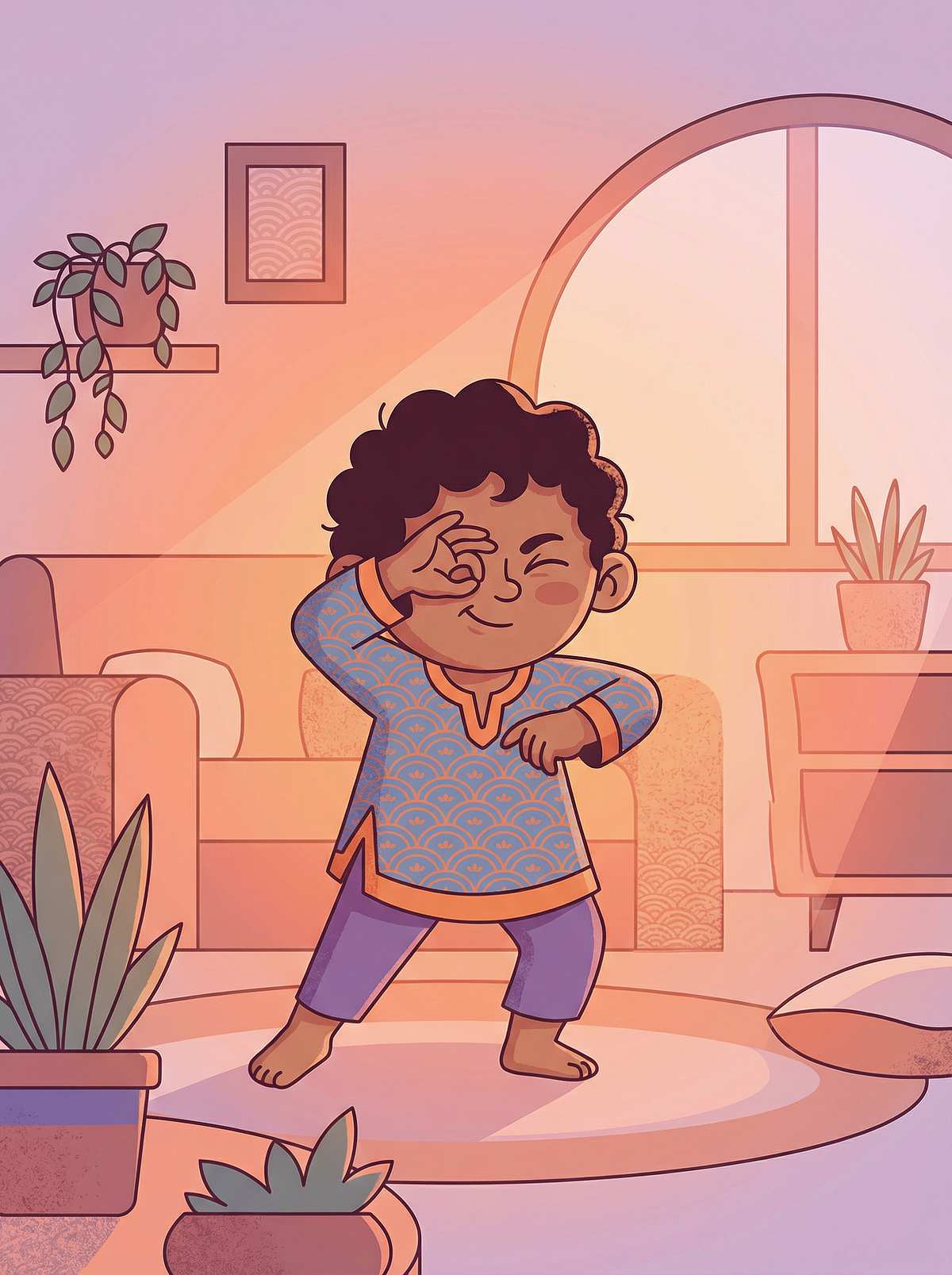
A-057: 9 Materials That Help When Child Squints at Lights
The Moment: Ordinary room lighting makes them squint. Stepping outdoors in daylight triggers eye-shielding, head-turning, even crying. They tilt their head away from windows. Shopping malls with bright signage are unbearable. You've started dimming every light in the house just to keep the peace.
The Neuroscience
Photophobia results from atypical pupillary reflex — pupils dilate more and constrict less — and/or amplified signalling from melanopsin-containing retinal ganglion cells that regulate light sensitivity. The visual cortex receives more photonic energy than it can comfortably process. This isn't sensitivity to light in the way you might be sensitive to cold — it's a measurable neurological difference in how light signals are amplified and filtered.
What You'll Learn
- Light sensitivity profiling (natural vs. artificial; intensity thresholds)
- Sunglasses and tinted lens introduction protocol
- Home lighting audit and practical modification steps
- Classroom lighting accommodation letter template
- Outdoor participation strategies with effective light protection
Lead Disciplines
🤲 OT | NeuroDev · Ophthalmology referral where indicated
9 Canon Materials
A-058 · Light Sensitivity
Level I Evidence
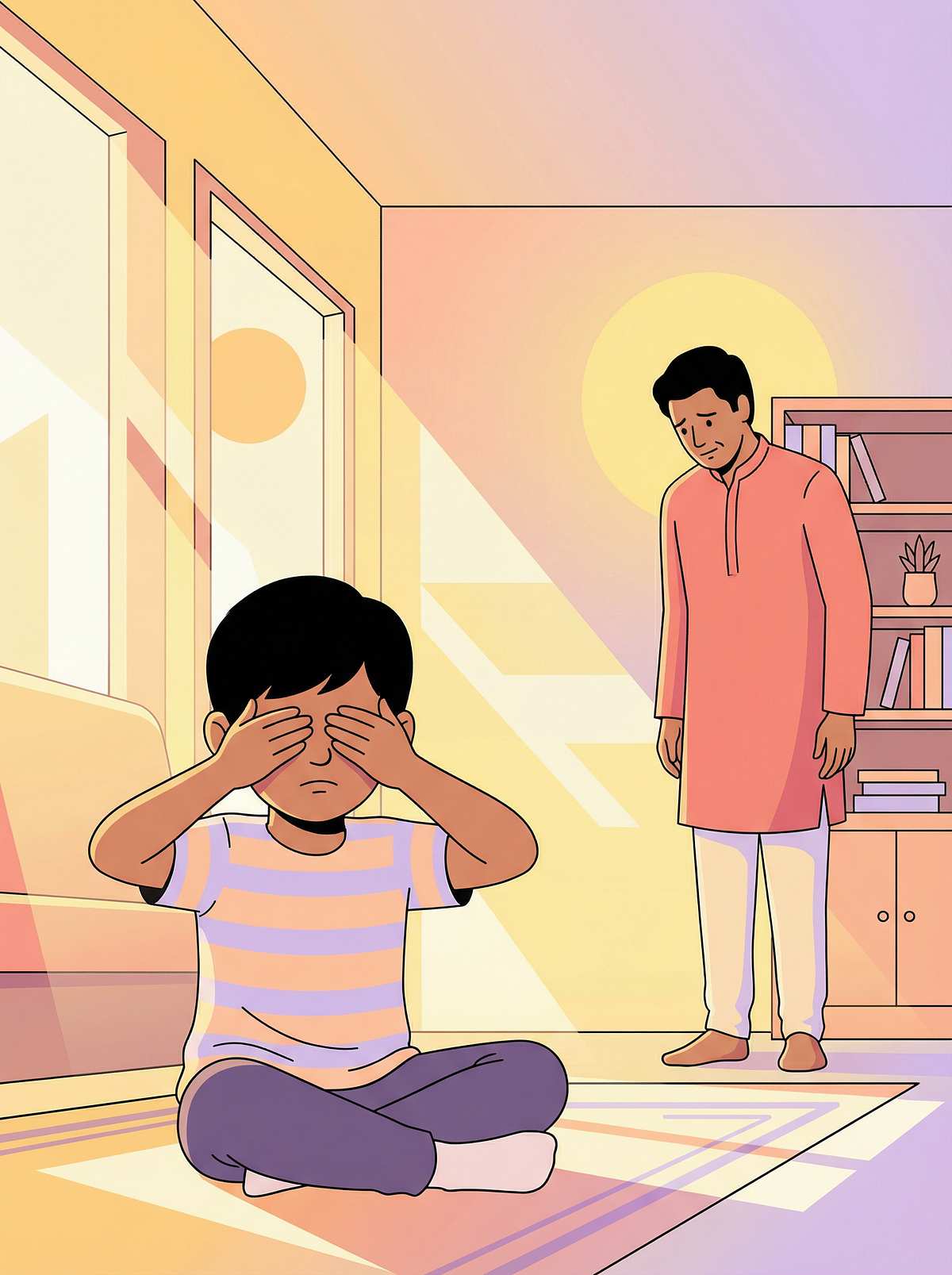
A-058: 9 Materials That Help With Light Sensitivity
The Moment: It's more than squinting. Bright light causes headaches, irritability, meltdowns, or withdrawal. They refuse outdoor play on sunny days. Car rides with sunlight streaming through windows become daily battles. School classrooms with large windows grow unbearable by midday — yet nobody connects the light to the behaviour.
The Neuroscience
Generalized photosensitivity involves the trigeminal-vascular pathway — the same neural system implicated in migraine auras. Light energy triggers trigeminovascular activation, producing genuine discomfort or pain. This is NOT "fussiness." It's a measurable neurological response that deserves accommodation just as any sensory difference does.
What You'll Learn
- Comprehensive light audit across home, school, car, and outdoors
- FL-41 tinted lens evidence and sourcing in India
- Window film application guide for home and classroom
- "Light diet" — structured bright/dim cycling through the day
- Medical referral criteria: when to involve ophthalmology or neurology
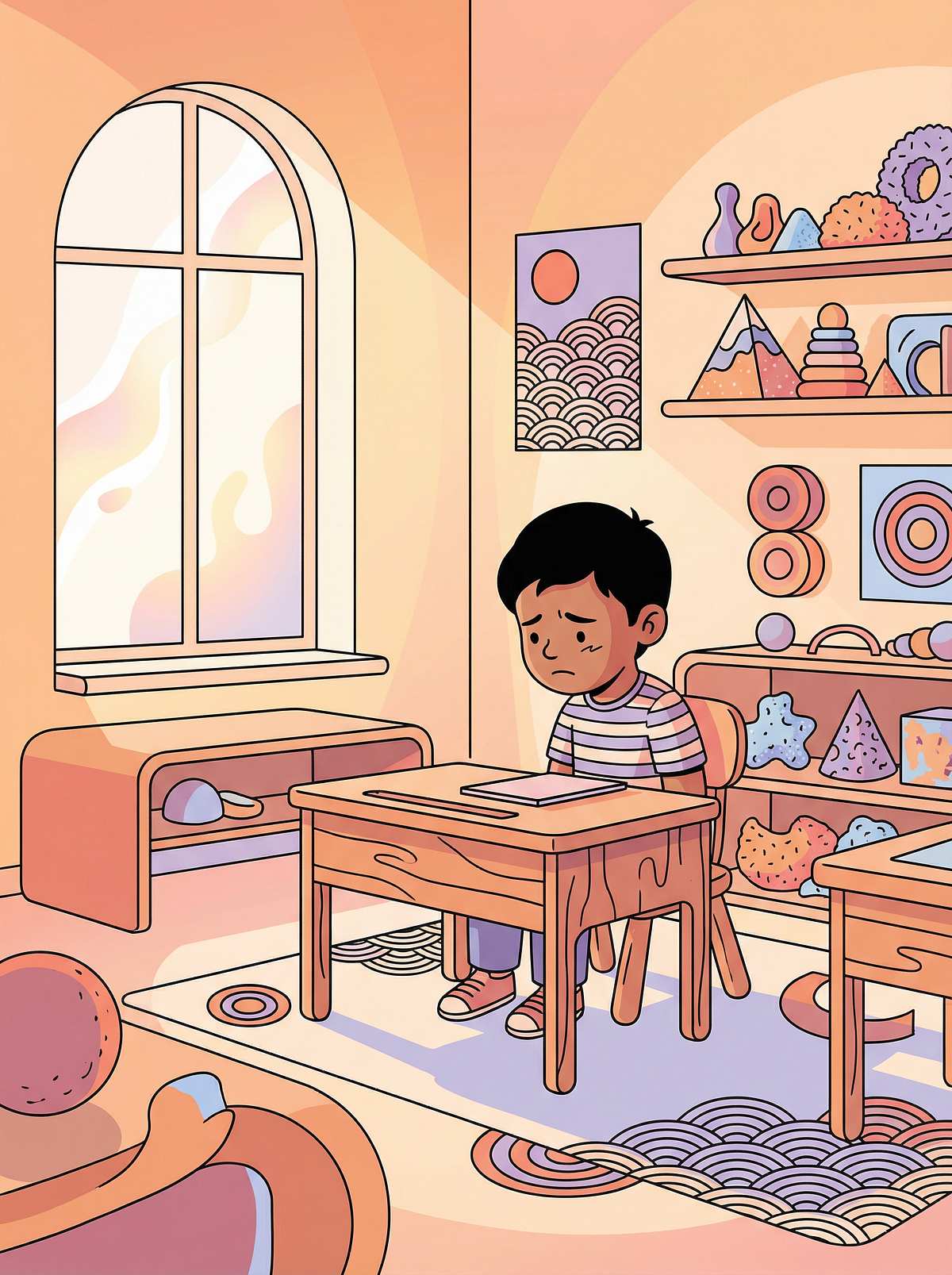
A-059 · Fluorescent Light Distress
Level I Evidence
A-059: 9 Materials That Help With Fluorescent Light Distress
The Moment: School uses fluorescent tubes. Your child's behaviour deteriorates every afternoon — the teacher blames fatigue or attention issues. But you've noticed: at home under warm LED lights, they're calm. Under fluorescents, they're agitated, distracted, covering their eyes. Nobody connects the lighting to the behaviour.
The Neuroscience
Fluorescent lights flicker at 50–60 Hz — invisible to most. In visual hypersensitivity, the visual cortex detects this flicker and processes it as a constant strobe. Add the blue-white spectral output, which suppresses melatonin and increases cortisol, and fluorescent lighting becomes a sustained neurological stressor — all day, every school day. The body responds as it would to any chronic stressor: with fatigue, dysregulation, and eventually meltdown.
What You'll Learn
- Fluorescent vs. LED vs. incandescent: a practical comparison for parents
- School accommodation request based on RPwD 2016
- Tinted lens and visor solutions for classroom use
- Desk lamp as "personal light zone" strategy
- Home lighting replacement guide across budget tiers
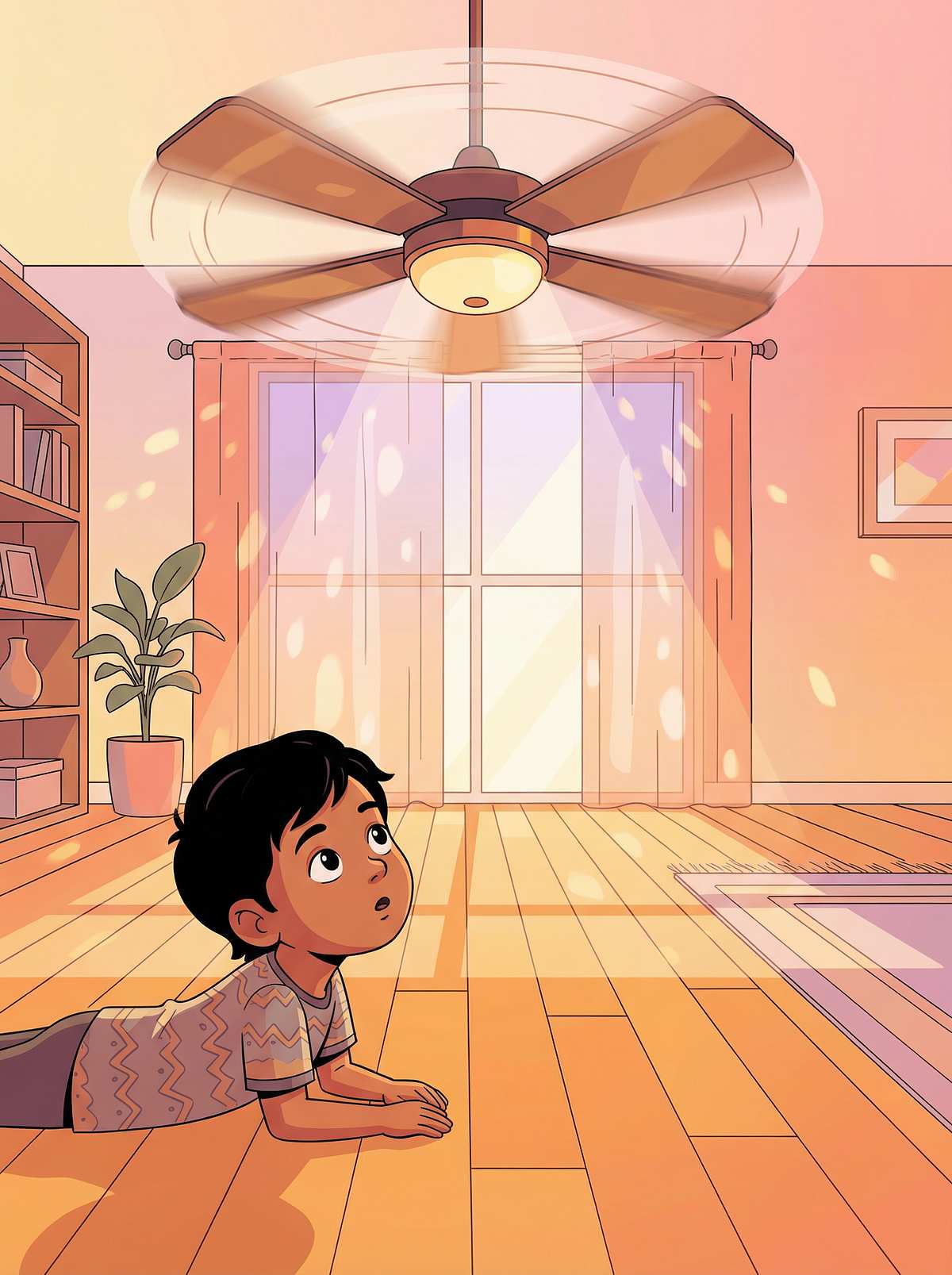
A-060 · Stares at Fans
Level I Evidence
A-060: 9 Materials That Help When Child Stares at Fans
The Moment: They can watch a ceiling fan for an hour. Mesmerized. Locked in. You call their name — nothing. You wave your hand in front of their face — they lean around you to keep watching. In India, ceiling fans are in every room, every classroom. The visual fixation follows them everywhere.
The Neuroscience
The visual motion processing area (V5/MT) responds powerfully to continuous circular motion. In visual hypo-sensitivity, the brain craves this high-salience, predictable visual input. Fan-watching is the visual equivalent of a deep pressure hug — it regulates the under-stimulated visual system by delivering exactly the kind of rhythmic, reliable input the brain is hungry for. This is neurological self-regulation, not defiance or "zoning out."
What You'll Learn
- Understanding fan-watching as visual regulation, not "zoning out"
- How to build scheduled visual input time into the sensory diet
- Alternative visual seeking tools: kaleidoscopes, spinning toys, lava lamps
- Attention redirection strategies that work with — not against — the need
- Environmental modification (fan speeds, blade covers)
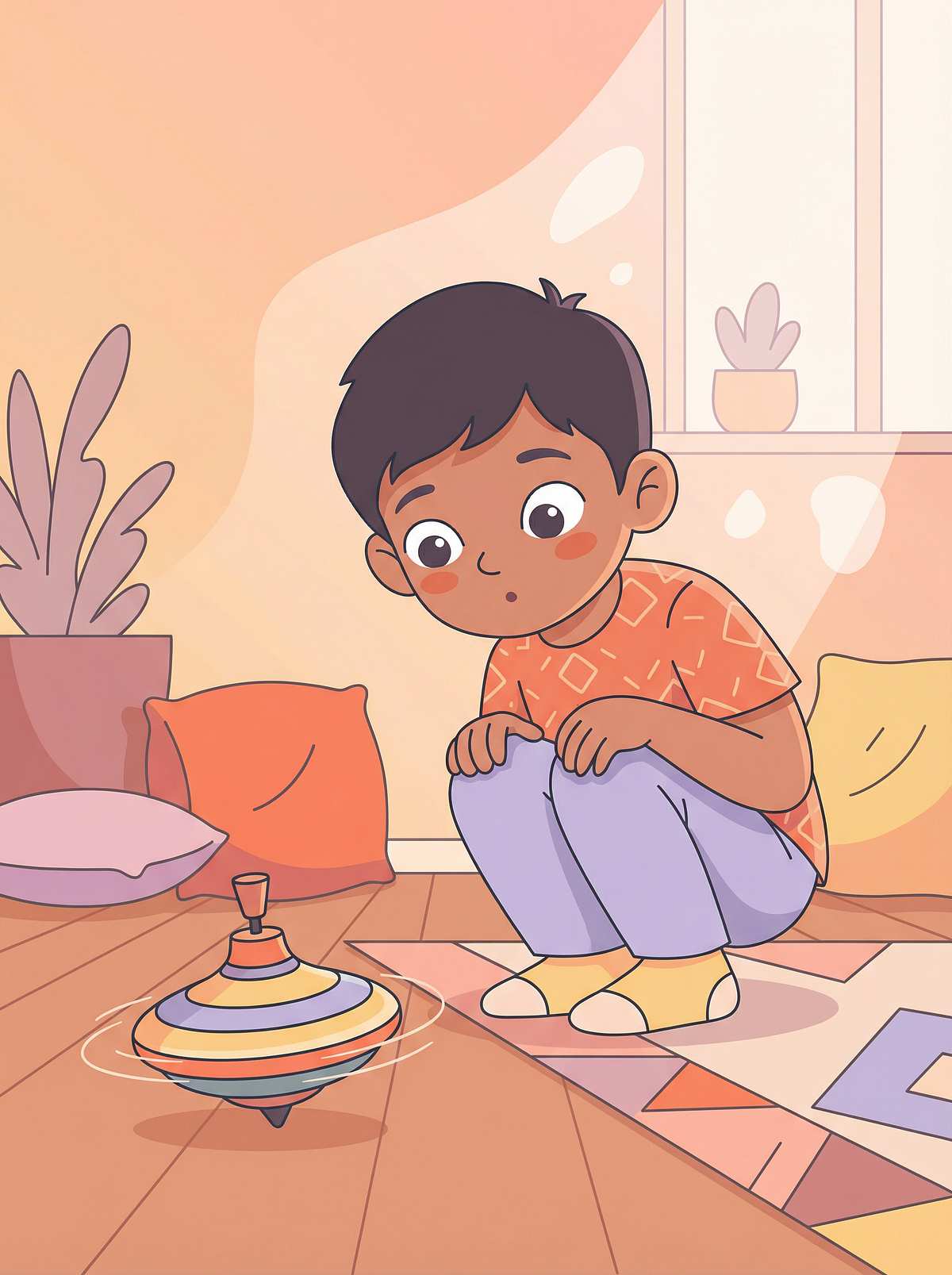
A-061 · Stares at Spinning Objects
Level I Evidence
A-061: 9 Materials That Help When Child Stares at Spinning Objects
The Moment: Wheels. Washing machines. Spinning tops. Any rotating object captures them completely. They spin the wheels of every toy car instead of driving it. They'll watch the washing machine cycle for its entire duration. They create spinning from non-spinning objects — flicking anything that might turn.
The Neuroscience
Same V5/MT visual motion seeking as fan-watching, but generalized across any rotational stimulus. The brain is seeking the predictable, rhythmic visual input it needs to regulate. The child isn't "obsessed" — their visual cortex is neurologically hungry for a specific type of input, and spinning objects deliver it reliably. Removing all spinning objects without offering alternatives leaves the regulatory need unmet.
What You'll Learn
- Functional spinning alternatives (designated spinning toys)
- "Spin time" as a scheduled sensory diet component
- Transitioning from spinning fixation to functional play
- Using spinning interest to build engagement through spin-based learning activities
- Replace-not-remove approach: the evidence and the method
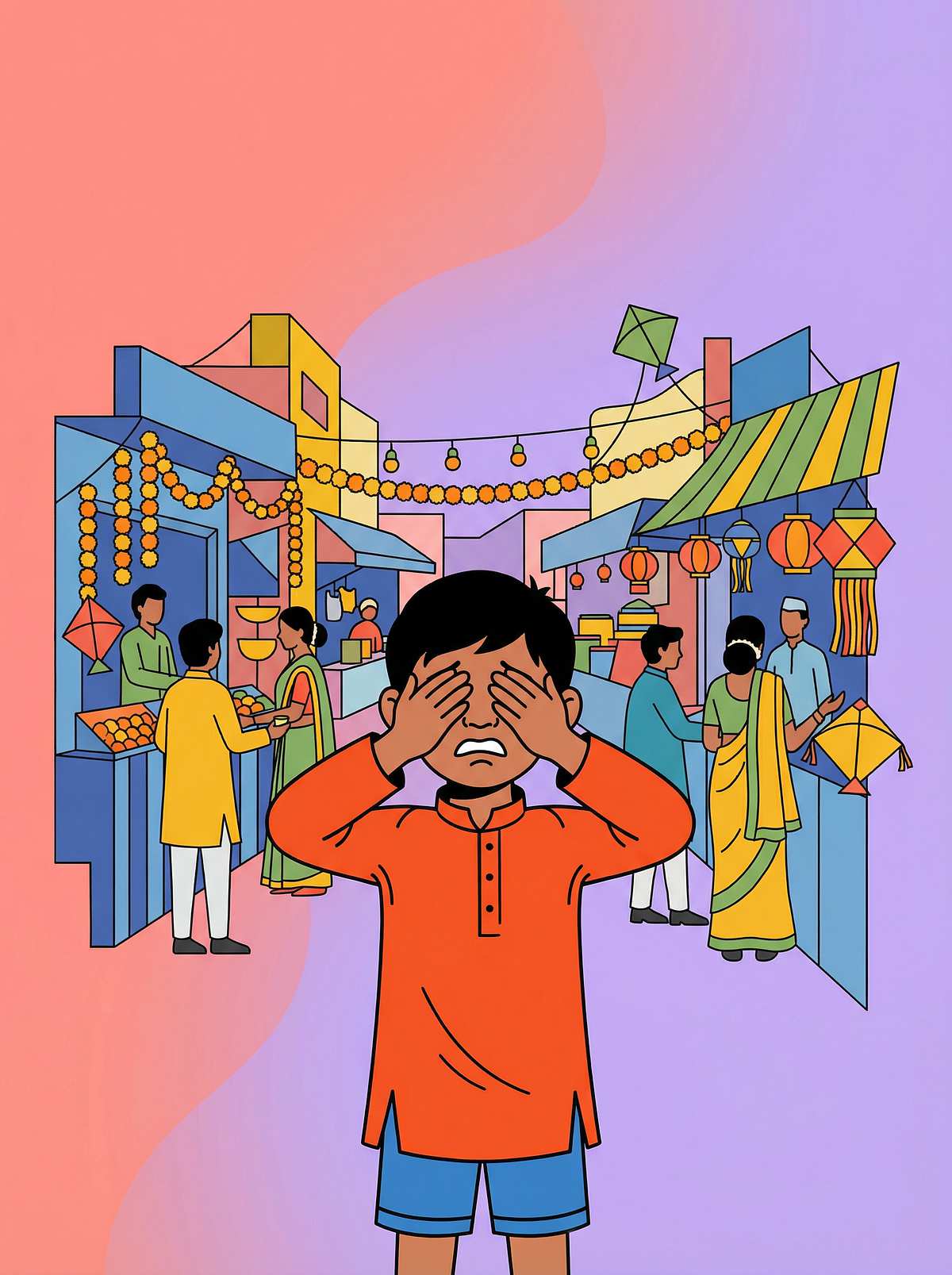
A-062 · Visually Busy Environments
Level I Evidence
A-062: 9 Materials That Help In Visually Busy Environments
The Moment: Indian markets. Festival decorations. Cluttered classrooms with wall-to-wall displays. Shopping malls with flashing signage. Your child shuts down, acts out, or demands to leave within minutes of entering any visually complex space. You've started avoiding public places altogether — but you know that can't be the long-term answer.
The Neuroscience
Visual scene complexity overwhelms the ventral visual stream — the brain's "what" pathway. The brain must simultaneously segment, categorize, and prioritize thousands of visual objects. In ASD, where local processing dominates over global processing, each visual element demands individual attention — creating catastrophic processing overload. The brain hits its visual budget ceiling and shuts down or erupts.
What You'll Learn
- Visual complexity audit across home, school, and community settings
- De-cluttering as a therapeutic intervention (not just tidying up)
- Visual boundaries using screens, partitions, and workspace borders
- Tinted lenses in complex environments to reduce overall input
- Graduated exposure to visual complexity with structured support

A-063 · Cluttered Space Distress
Level I Evidence
A-063: 9 Materials That Help With Cluttered Space Distress
The Moment: They can't function in a messy room. Toys scattered on the floor, books piled on tables, clothes on chairs — it's not "neat freak" behaviour. They genuinely cannot think, play, or regulate in a visually chaotic space. They may refuse to enter a cluttered room entirely. Other family members don't understand: "It's just a little mess!"
The Neuroscience
Visual clutter creates persistent background visual noise. The prefrontal cortex must continuously suppress irrelevant visual information — consuming cognitive resources that should be available for learning, playing, and regulating. A cluttered room is the visual equivalent of constant background noise. Over time, this sustained suppression demand depletes the child's regulatory reserve, making meltdowns far more likely.
What You'll Learn
- Room organization as a therapeutic tool — not just tidiness
- Visual zoning: play zone, work zone, calm zone
- "Everything has a place" system with visual labels
- Classroom desk and area de-cluttering accommodation strategies
- Indian home adaptation for small spaces and shared rooms
Evidence Base:📊 Level I — Environmental organization as sensory intervention. NCAEP 2020 | TEACCH structured environment principles.
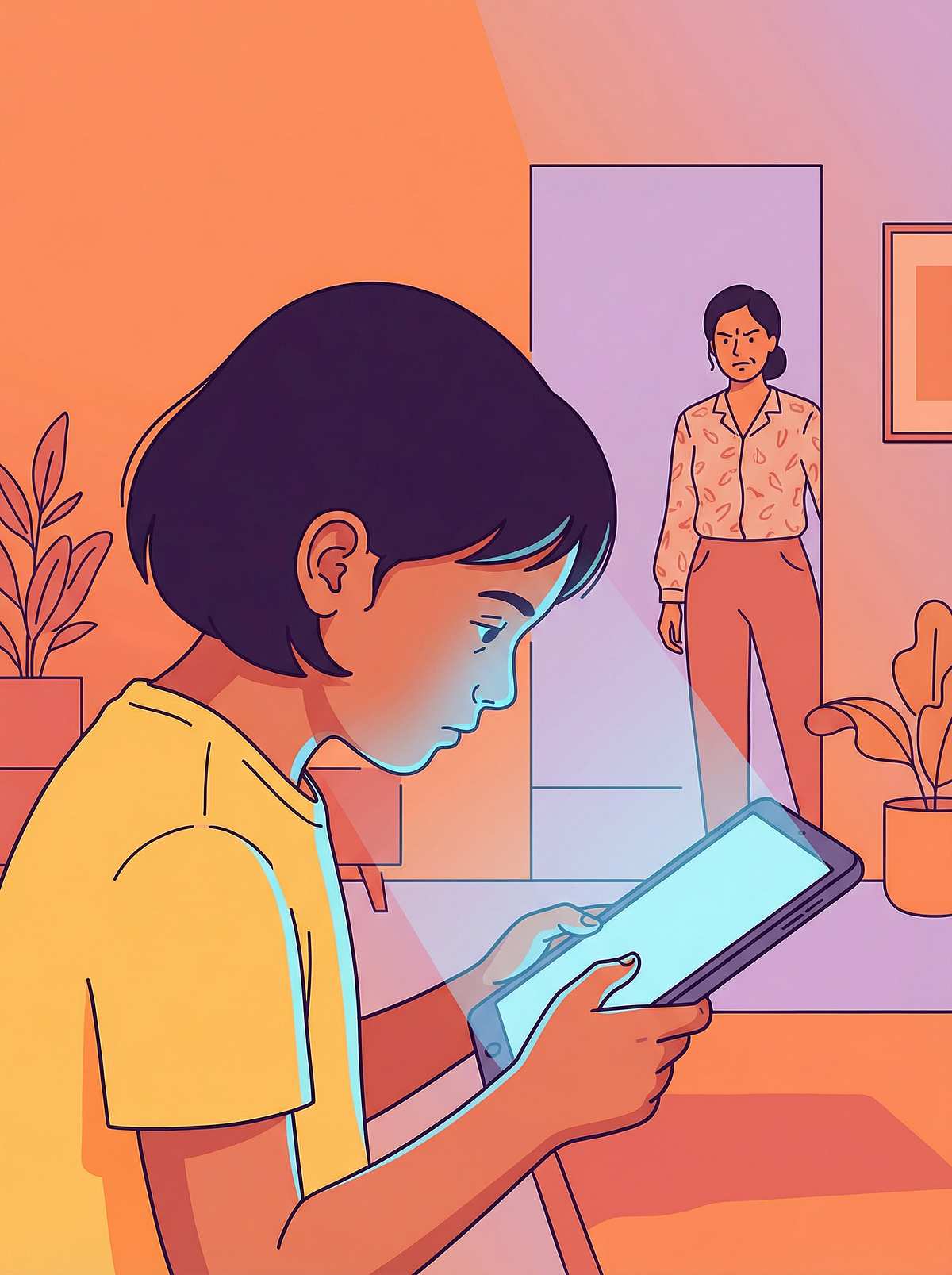
A-064 · Excessive Screen Seeking
Level I–II Evidence
A-064: 9 Materials That Help With Excessive Screen Seeking
The Moment: The phone. The tablet. The TV. They want screens ALL day. Removing the screen triggers the biggest meltdowns of the day. They've memorized entire YouTube videos. They won't engage with toys, people, or activities that don't involve a screen. You feel guilty. You feel trapped. You know it's not healthy — but it's the only thing that keeps them regulated.
The Neuroscience
Screens provide high-intensity, predictable, self-paced visual input — the perfect combination for a visually seeking brain. Rapid scene changes, bright colours, and musical accompaniment deliver a multi-sensory package the under-stimulated brain craves. Screens also reduce social and motor demands to zero, eliminating all other sensory challenges simultaneously. It's not "addiction" in the neurotypical sense — it's the most efficient sensory regulation strategy the child has independently discovered.
What You'll Learn
- Understanding screen-seeking as sensory regulation (not bad parenting)
- Visual schedule for screen time boundaries that actually work
- Alternative high-interest visual activities to fill the gap
- Transition-from-screen protocol using visual timer and next-activity preview
- Graduated screen reduction — not cold turkey
- IAP + WHO screen time guidelines adapted for ASD profiles
A-065 · Lines Up Objects
Level I Evidence
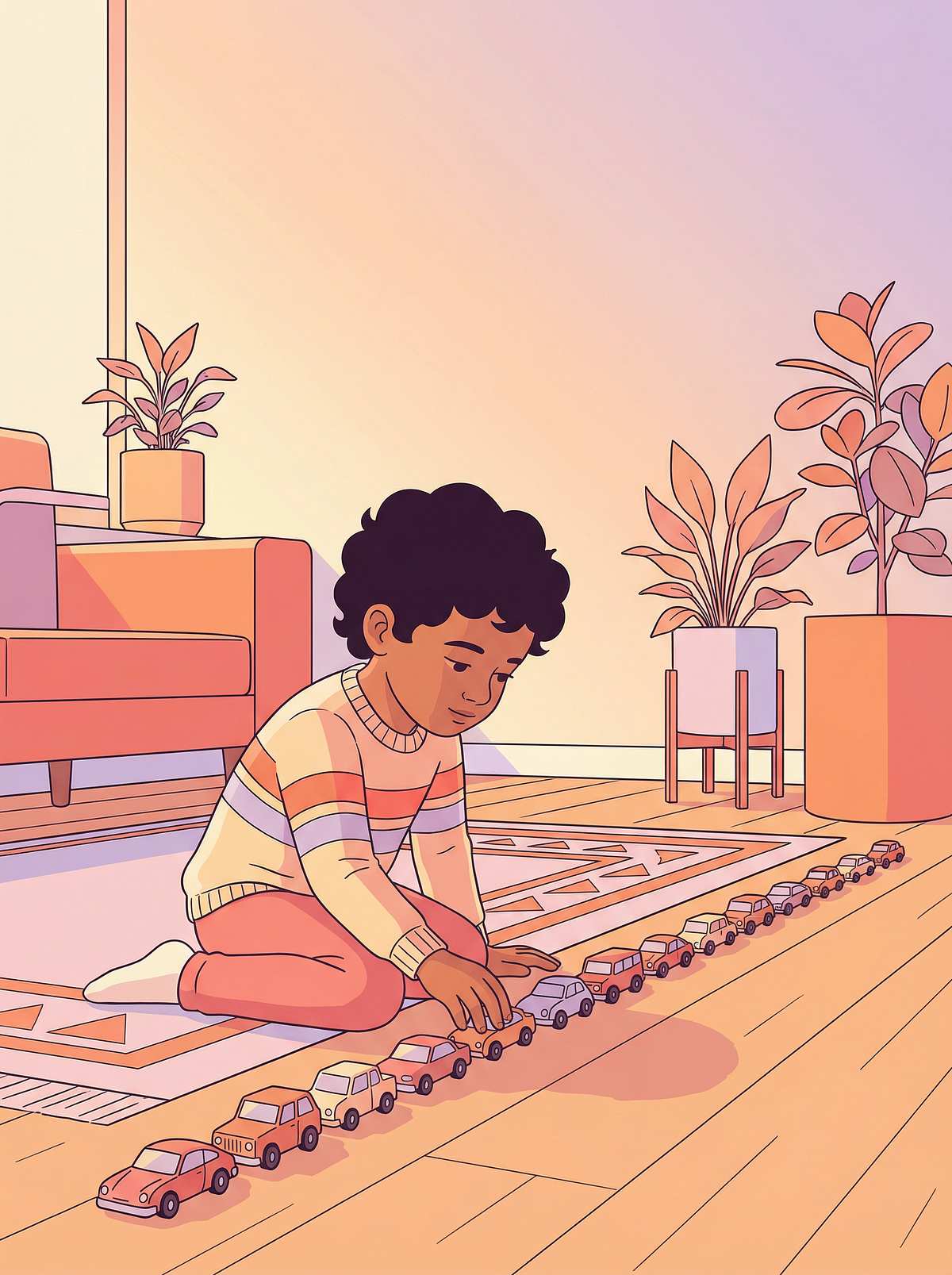
A-065: 9 Materials That Help When Child Lines Up Objects
The Moment: Cars in a perfect row. Crayons sorted by colour. Shoes aligned with millimetre precision. They spend 30 minutes arranging objects, and if anyone moves even one item, the meltdown is explosive. The doctor said "it's an autism thing." But nobody told you what to actually do about it — or whether you should do anything at all.
The Neuroscience
Object lining is visual-spatial ordering — the brain creating predictable, symmetrical, controlled visual patterns in an otherwise chaotic world. It serves dual functions: visual sensory regulation (creating order from visual chaos) and anxiety management (a controllable environment equals safety). It's also a natural expression of the detail-first processing style — the brain categorizes and arranges because that's how it makes sense of the world.
What You'll Learn
- Why lining up is functional, not pathological
- "Line up AND..." expansion strategy to broaden engagement
- Using lining-up interest to teach sorting, counting, and patterning
- When to intervene (interferes with daily function) vs. when to allow
- Building flexibility: "It's okay if it moves" — gradual tolerance training
A-066 · Flashing Light Sensitivity
Level I Evidence
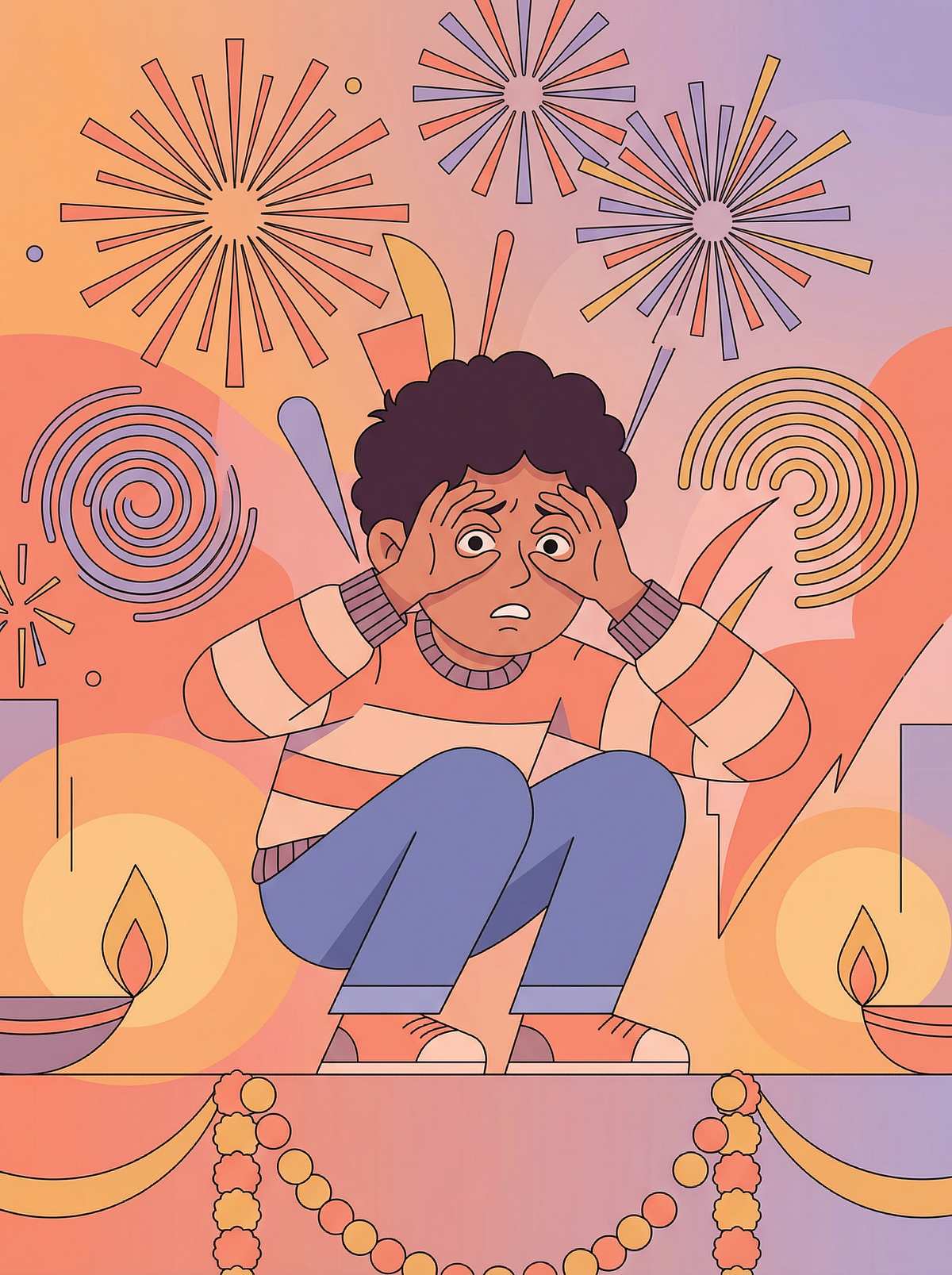
A-066: 9 Materials That Help With Flashing Light Sensitivity
The Moment: Emergency vehicle lights. Camera flashes. Festival decorations with blinking LEDs. The indicator light on a charging phone. Flashing or intermittent light triggers distress, disorientation, or meltdowns. Indian festivals with their dazzling light displays — Diwali, Navratri, Holi — become sensory minefields your family dreads navigating.
The Neuroscience
Intermittent photic stimulation activates the visual cortex in discrete bursts rather than continuously. Each flash is a separate visual event requiring full processing. Unlike steady light, the brain cannot habituate to flashing because the stimulus is discontinuous — every flash is neurologically "new." This creates a relentless cycle of startle, process, and startle again, consuming enormous cognitive resources.
What You'll Learn
- Flashing vs. steady light distinction — why each affects the brain differently
- Tinted lenses for intermittent light environments
- Festival preparation protocol — Diwali and Navratri specific guidance
- Emergency vehicle desensitization strategies
- Home environment audit: blinking LEDs, charging lights, indicator lights
A-067 · Visual Tracking Problems
Level I–II Evidence
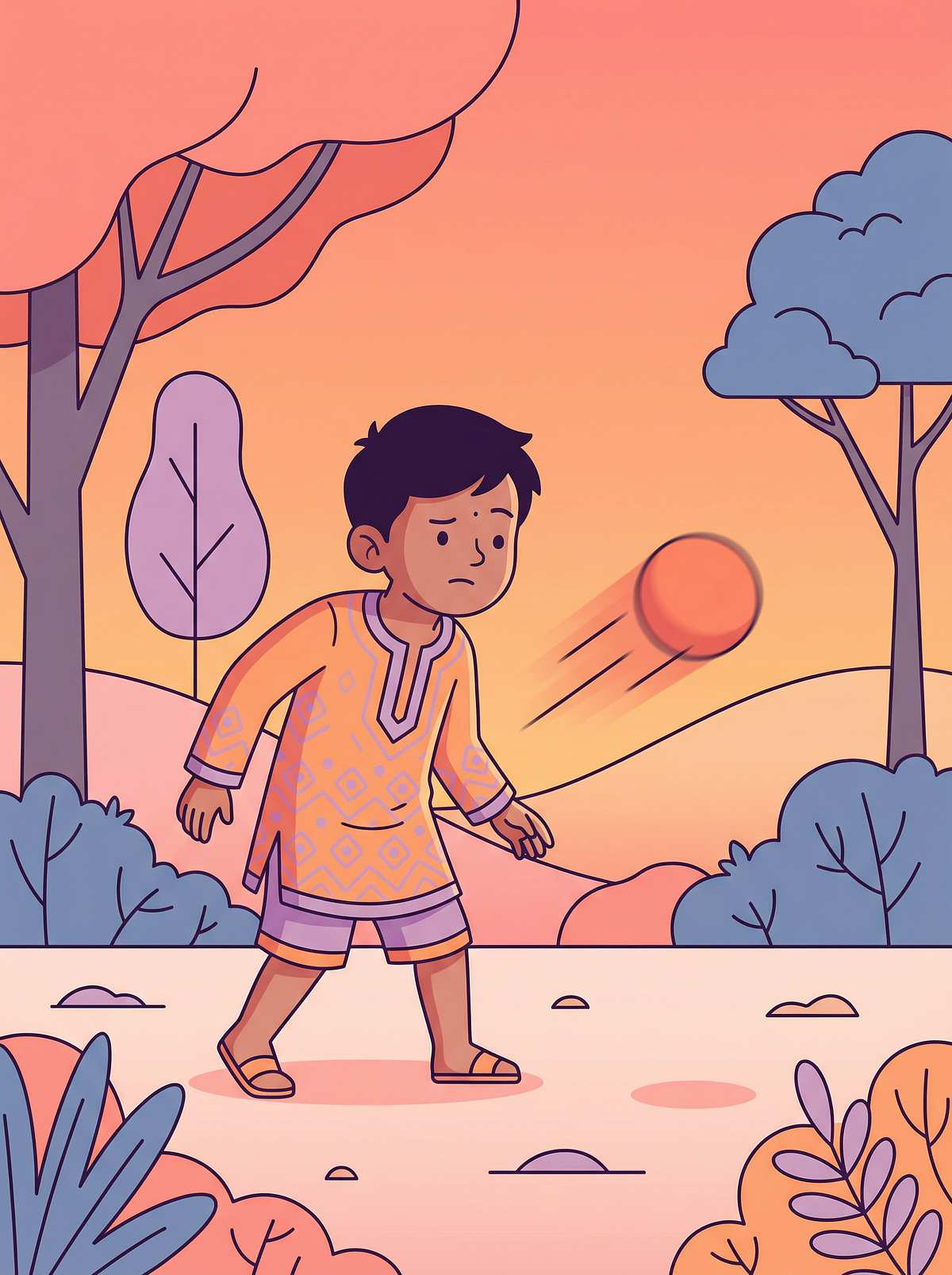
A-067: 9 Materials That Help With Visual Tracking Problems
The Moment: They can't follow a ball in flight. They lose their place reading every single line. They can't track your finger when you point at something. Moving objects are blurry or confusing. Sports, reading, and even watching a conversation between two people is difficult because their eyes can't smoothly follow movement.
The Neuroscience
Smooth pursuit eye movements require coordination between the frontal eye fields, cerebellum, and V5/MT motion processing area. Saccadic eye movements — jumping from point to point — require the superior colliculus and parietal cortex. When these oculomotor systems are atypical, visual tracking becomes effortful, inaccurate, and fatiguing. Reading becomes exhausting. Sports become frustrating. Everyday tasks take far more energy than they should.
What You'll Learn
- Visual tracking assessment basics for parents and therapists
- Home tracking exercises: following objects, reading tracking strips
- Optometric referral criteria and what to ask for
- Classroom accommodation: large print, reduced visual scanning demands
- Sports participation adaptation strategies
Lead Disciplines:🤲 OT | NeuroDev · Optometric vision therapy referral
A-068 · Looks from Angles
Level I–II Evidence
A-068: 9 Materials That Help When Child Looks from Angles
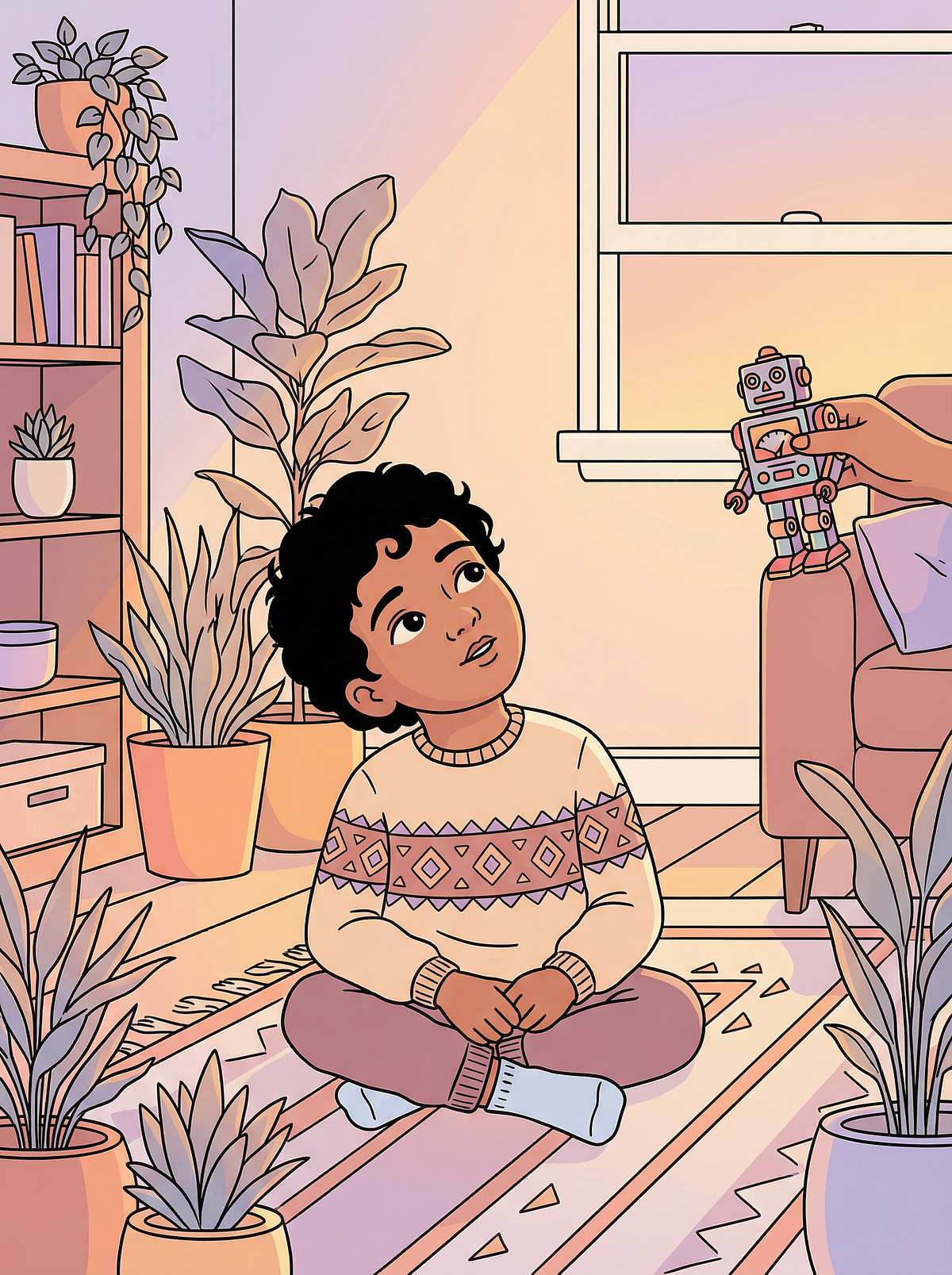
The Moment: They hold toys at the corner of their eye. They tilt their head and look at things sideways. They bring objects extremely close to one eye. They peer at everything from unusual angles. It looks strange to others — and people stare. But it's simply how their visual system works best, and there's a clear neurological reason for it.
The Neuroscience
Peripheral vision processing (magnocellular pathway) may be preferred over central foveal processing (parvocellular pathway). Peripheral vision excels at motion detection and low-contrast processing. The child may be actively optimizing their visual input by using the part of the retina that processes information most effectively for their specific brain. Far from being strange, angle-looking is a sophisticated adaptation.
What You'll Learn
- Understanding angle-looking as visual optimization, not oddness
- When to accommodate vs. when to gently encourage central gaze
- Optometric assessment recommendations and referral criteria
- Activities that gradually and comfortably engage central vision
- Family and teacher education: this isn't "weird" — it's adaptive
A-069 · Too Many Visual Choices
Level I Evidence
A-069: 9 Materials That Help With Too Many Visual Choices
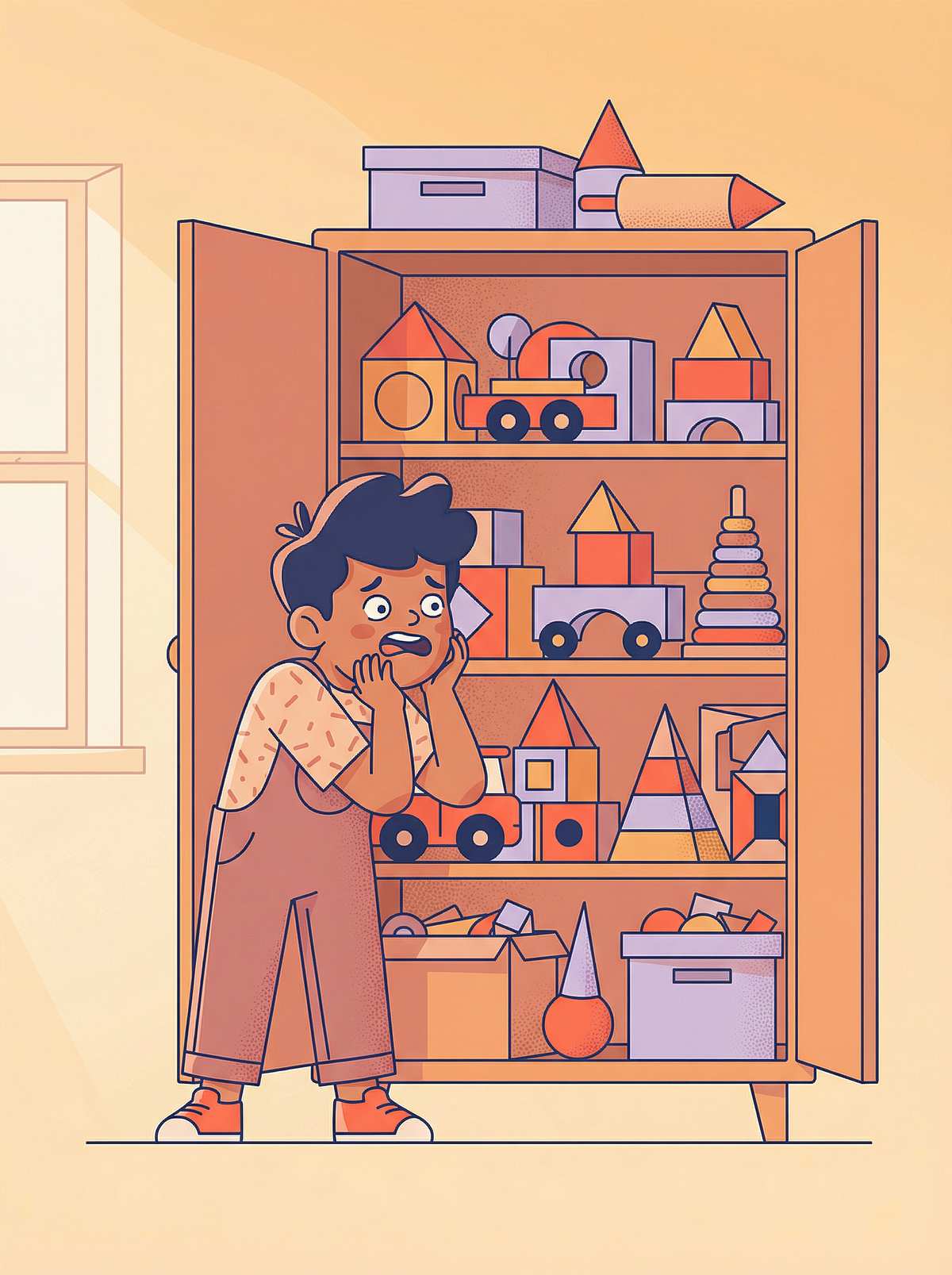
The Moment: Open the toy cupboard — meltdown. Stand in front of the snack shelf — meltdown. Show them three shirt options — meltdown. It's not indecision or stubbornness. It's visual decision paralysis — too many visual options simultaneously overwhelm the processing system, and the child simply cannot select.
The Neuroscience
Visual choice requires several systems firing in sequence: scanning all options (oculomotor), identifying each option (ventral stream), comparing options (working memory, prefrontal cortex), and selecting one while inhibiting others (executive function). When any of these systems is overloaded — individually or in combination — choice collapses into paralysis. It's not a behaviour problem. It's a processing bandwidth problem.
What You'll Learn
- "Two-choice maximum" principle — why it works neurologically
- Visual choice boards with limited, clearly presented options
- Reducing visible options by storing the rest out of sight
- Choice scaffolding hierarchy: 2 → 3 → 4 options over time
- TEACCH-based structured workstation approach for daily choices

A-070 · Needs Dim Lighting
Level I Evidence
A-070: 9 Materials That Help When Child Needs Dim Lighting
The Moment: They function best in dim light. They gravitate to dark corners, closets, under blankets. They protest when you turn on the main light. Their ideal world would be permanently at dusk level. Normal indoor lighting is "too bright" — and you're not sure whether to accommodate that or push through it.
The Neuroscience
Low-light preference indicates a photosensitive visual system with a reduced adaptation range. The pupillary reflex and cortical gain control mechanisms settle at a lower optimal threshold — standard indoor lighting of 300–500 lux exceeds their comfort zone. This isn't a quirk or preference to be overridden. It reflects the actual operating range of that child's visual system, and designing lighting around it produces dramatic improvements in regulation and behaviour.
What You'll Learn
- Home lighting redesign using dimmers and warm-tone bulbs
- Creating a personal "light zone" within shared family spaces
- Tinted lenses for standard-lit environments outside the home
- School accommodation: desk lamp, seating away from windows
- Balancing individual light needs with daily functional demands

A-071 · Color Sensitivity
Level II Evidence
A-071: 9 Materials That Help With Color Sensitivity
The Moment: Certain colours trigger genuine distress. Bright red walls cause agitation. Neon yellow makes them cry. They refuse certain coloured plates, cups, or pens. Indian festivals — Holi, Navratri, Diwali decorations — with their explosion of saturated colours become visually overwhelming experiences the whole family must navigate carefully.
The Neuroscience
Colour processing in area V4 may be hypersensitive to specific wavelengths. High-saturation colours stimulate cone photoreceptors at maximum intensity. The visual cortex responds to intense colour the way the auditory cortex responds to loud sound — with overload. Certain hues at full saturation can trigger an involuntary distress response that the child has little control over, making colour environment modification a genuine therapeutic tool.
What You'll Learn
- Colour sensitivity profiling: which hues, which saturations, which contexts
- Home and school colour environment audit
- Muted palette strategies for clothing, walls, and materials
- Festival preparation: Holi-specific protocol for colour avoidance
- Graduated colour exposure for building tolerance over time
A-072 · Pattern Aversion
Level II Evidence
A-072: 9 Materials That Help With Pattern Aversion
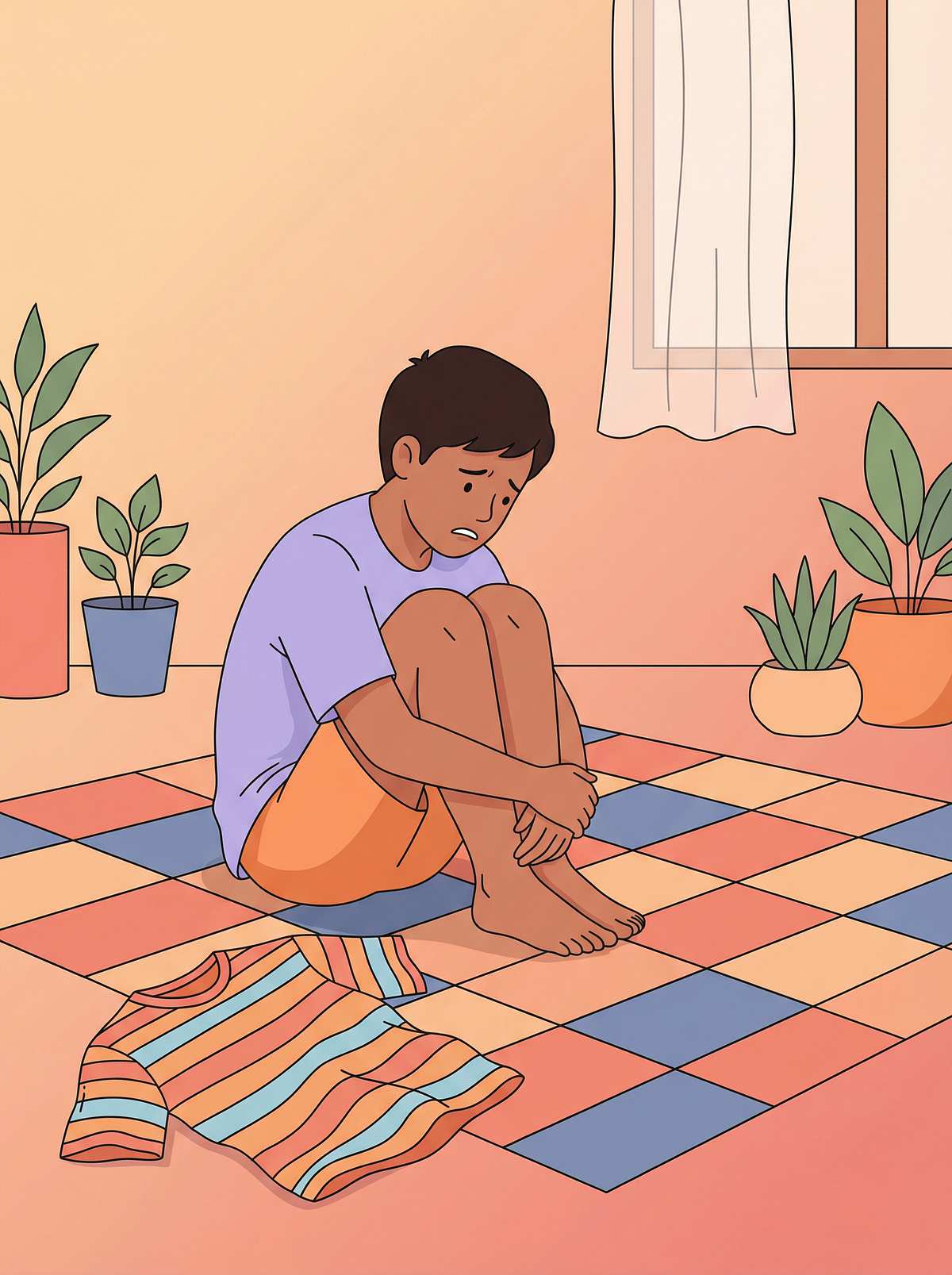
The Moment: Striped shirts make them uncomfortable. Checked patterns on floors cause hesitation or refusal to walk across them. Polka dots, zigzags, or complex geometric patterns on fabric, walls, or screens trigger visual discomfort or active avoidance. What seems like a minor aesthetic preference is actually a significant daily challenge.
The Neuroscience
High-contrast repeating patterns create a visual processing conflict — the brain's edge-detection mechanisms (V1 simple cells) fire repetitively, generating a "visual noise" effect similar to the migraine-triggering properties of certain geometric patterns. This phenomenon, known as pattern glare, is well-documented in visual neuroscience and is not unique to autism — though it is significantly more pronounced in visually hypersensitive profiles.
What You'll Learn
- Pattern types most likely to trigger distress (high-contrast, fine, repeating)
- Clothing and textile selection guide for sensitive children
- Classroom environmental modification for patterned floors and walls
- Graduated pattern tolerance-building activities
- Indian home décor adaptation: balancing aesthetics and sensory needs
A-073 · Side-Eye Gazing
Level I–II Evidence
A-073: 9 Materials That Help When Child Side-Eye Gazes
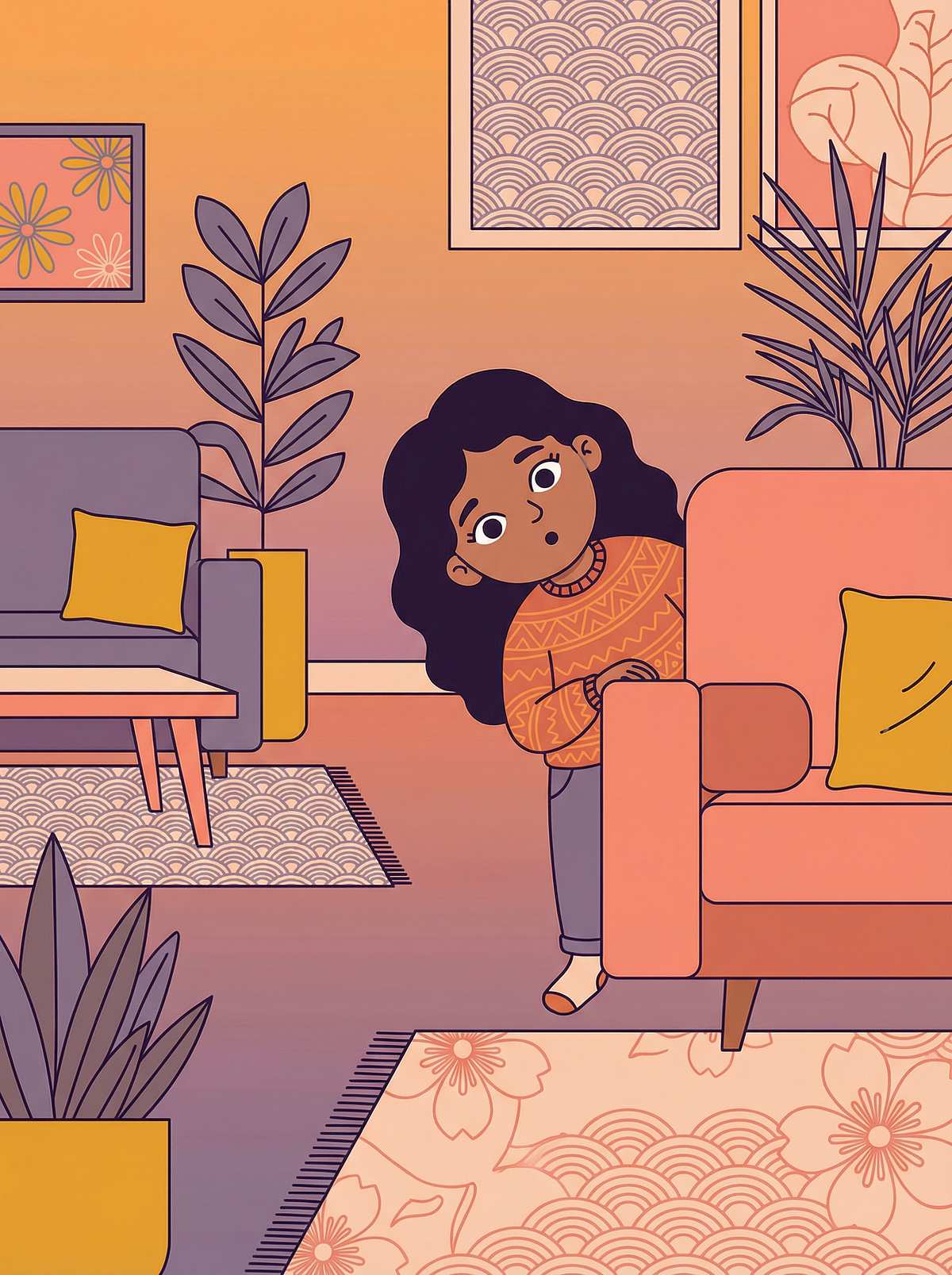
The Moment: They look at things from the corner of their eye — consistently. They tilt their head and shift their gaze to the periphery to examine objects, people, even screens. Others find it "strange." Doctors note it in assessments. But nobody explains WHY this happens or WHAT to do — and whether doing anything is even the right call.
The Neuroscience
Peripheral viewing activates the magnocellular visual pathway, which processes motion, contrast, and spatial information more efficiently for some visual profiles. The child may be using peripheral vision because it provides a more comfortable, less overwhelming processing channel than direct foveal (central) viewing. This is neurological self-optimization — the child's visual system routing incoming information through its most efficient available pathway.
What You'll Learn
- Understanding peripheral viewing as adaptive visual processing
- When it indicates visual processing difference vs. an optometric issue requiring referral
- Optometric referral criteria: what tests to request
- Activities that gently and gradually engage central vision
- Normalizing for family members, teachers, and peers
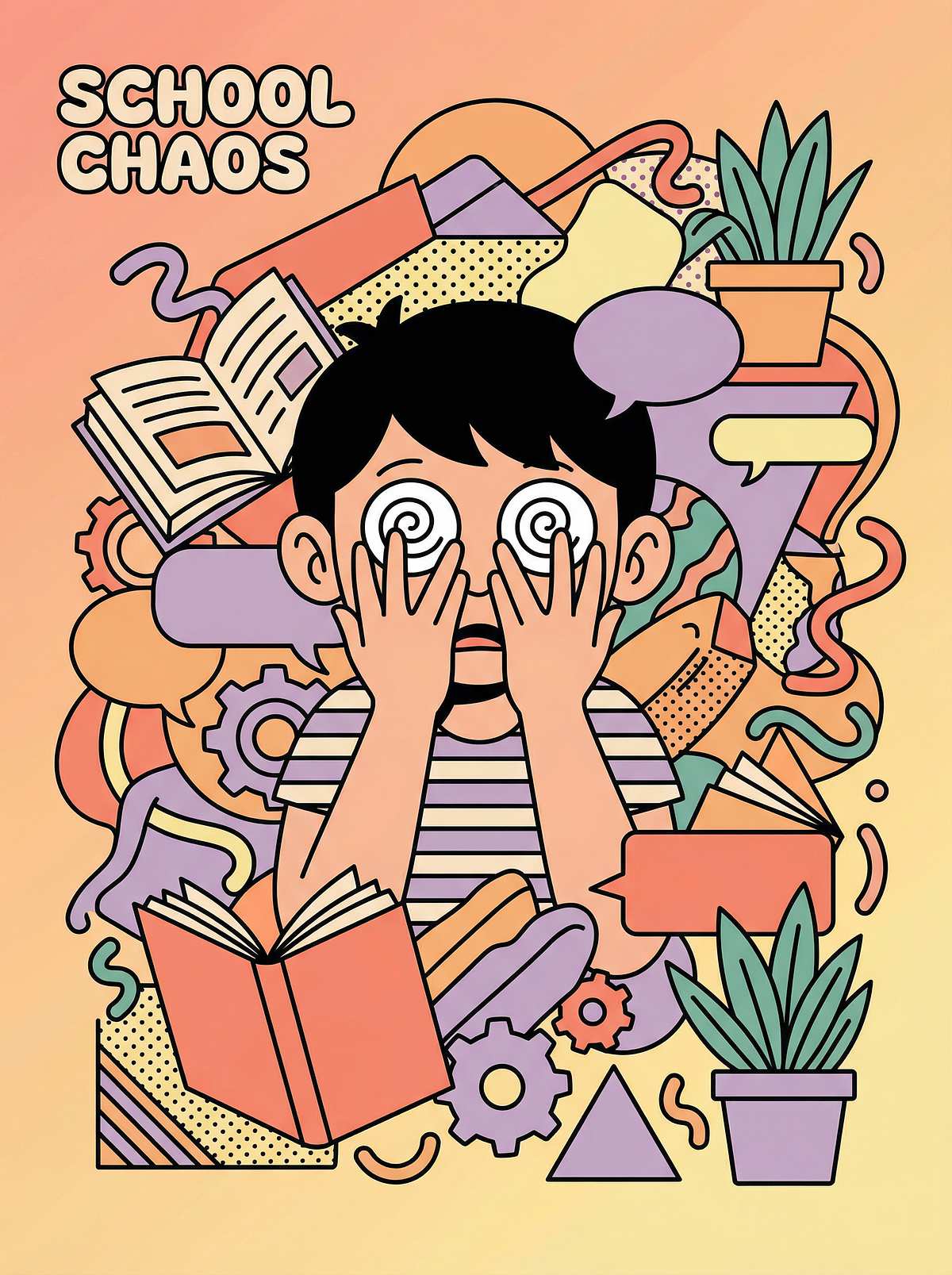
A-074 · Visual Overwhelm
Level I Evidence
A-074: 9 Materials That Help With Visual Overwhelm
The Moment: Too much visual information — any kind — and they shut down. Crowded spaces, busy screens, complex instructions with dense text, a classroom wall covered in displays. Their eyes glaze. They stop processing. They become agitated, withdraw, or melt down. It's like their visual system hits a circuit breaker — because neurologically, it does.
The Neuroscience
Global visual overwhelm occurs when the combined processing demand across all visual sub-systems — brightness, colour, motion, pattern, complexity, faces — exceeds available cortical resources. When the visual processing budget is exhausted, the system shuts down. This produces the glazed, unreachable, or meltdown state that caregivers recognise instantly. Recovery requires time, reduced input, and intentional calm-down strategies — not redirection to more activity.
What You'll Learn
- Visual overwhelm early warning signs — catch it before shutdown
- "Visual budget" concept: understanding the child's limited daily processing capacity
- Strategic visual simplification across home, school, and community
- Recovery protocols after visual overload — what to do, not what to say
- Building visual stamina gradually through structured exposure
Evidence Base:📊 Level I — Environmental visual reduction + visual "budgeting." NCAEP 2020 | TEACCH | PMC11506176
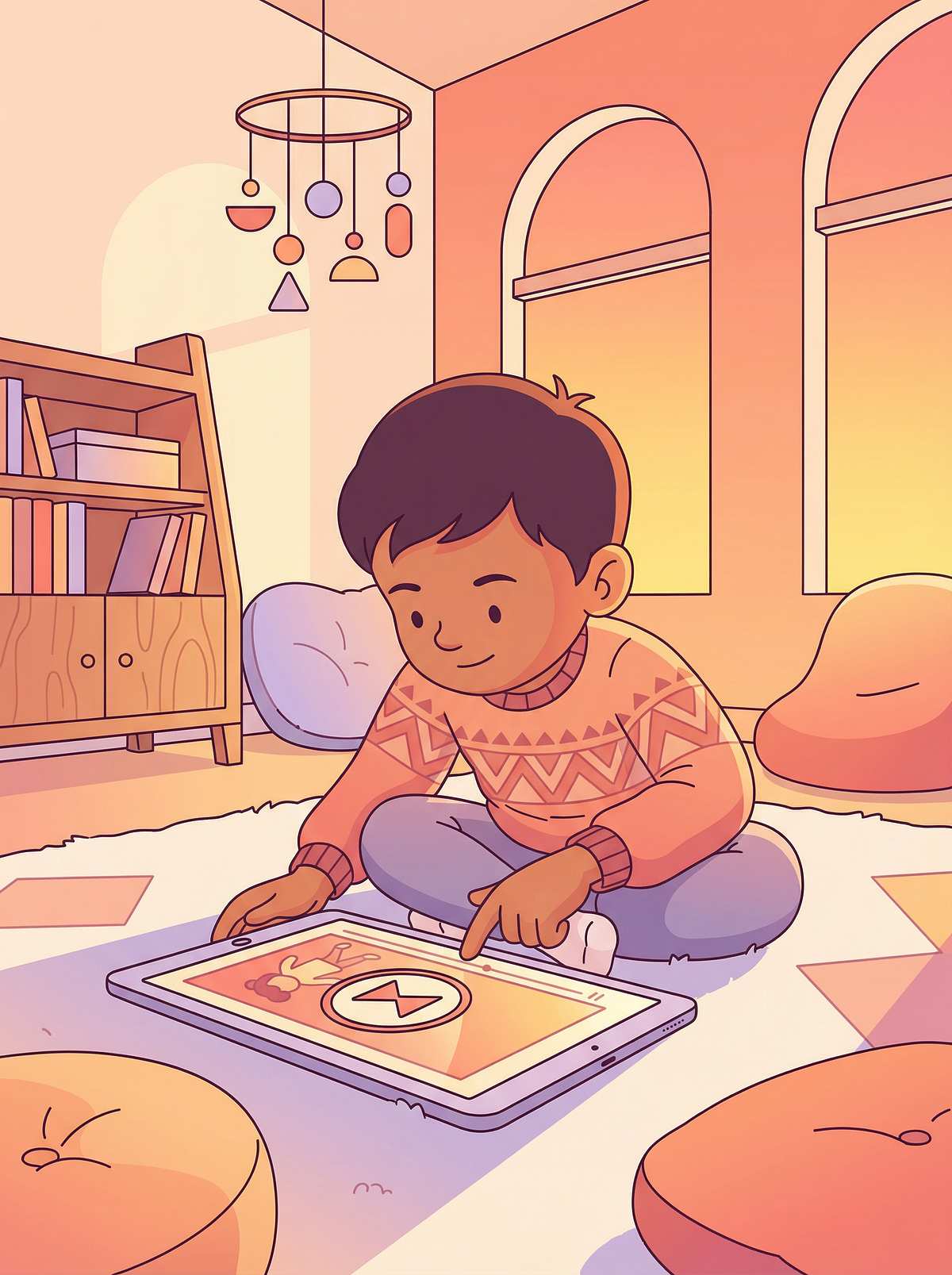
A-075 · Watches Same Video Clip Repeatedly
Level I Evidence
A-075: 9 Materials That Help When Child Watches the Same Clip Repeatedly
The Moment: The same YouTube clip. Hundreds of times. The same 30-second segment — rewound, replayed, rewound, replayed. They can recite every word. They protest if you try to show them anything else. Other parents' children browse content freely; yours stays locked on one fragment with extraordinary intensity and loyalty.
The Neuroscience
Repetitive video viewing serves multiple simultaneous functions: predictability (they know exactly what comes next, reducing visual anxiety), visual regulation (consistent brightness, motion, and colour), auditory regulation (a known, safe soundtrack), and cognitive mastery (complete understanding of every frame reduces processing demand to zero). It is the visual equivalent of re-reading a comfort book — except the brain's need for it is neurologically driven, not simply a habit or preference.
What You'll Learn
- Understanding repetitive viewing as neurological regulation, not obsession
- "Watch and..." expansion: watch, then draw it / act it out / build it
- Gradual content expansion: similar clips → adjacent content → new material
- Using preferred clips as reinforcement and active teaching tools
- Screen time boundaries that honour the regulatory function of the clip
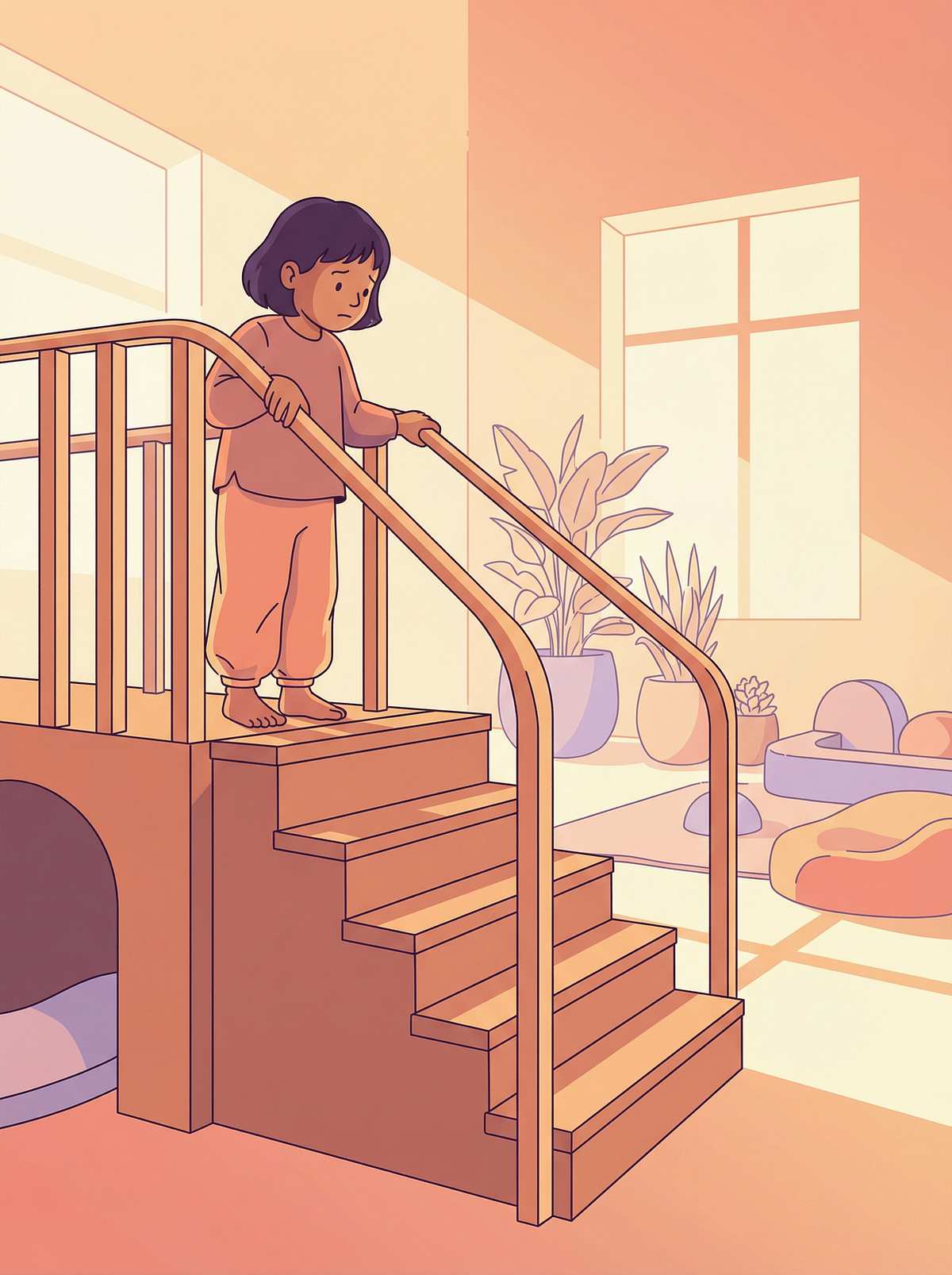
A-076 · Depth Perception Difficulties
Level II Evidence
A-076: 9 Materials That Help With Depth Perception Difficulties
The Moment: They misjudge steps, hesitate at kerbs, struggle to catch balls, or refuse to walk down stairs without holding on. What looks like clumsiness or fear is actually a visual processing difference — their brain struggles to accurately judge how far away objects are, how deep a surface drops, or how fast something is approaching.
The Neuroscience
Depth perception relies on binocular disparity (the brain combining slightly different images from each eye) and motion parallax. In autism, atypical magnocellular pathway processing — the visual stream responsible for motion and spatial processing — can impair depth cue integration. This is compounded by reduced use of peripheral vision and altered proprioceptive feedback, making spatial judgements genuinely unreliable rather than simply fearful.
What You'll Learn
- Identifying depth perception difficulties vs. anxiety-driven avoidance
- Stair and kerb navigation strategies with visual cues and tactile supports
- Ball skills and catching activities adapted for depth perception differences
- Environmental modifications: contrast strips on steps, visual markers on surfaces
- Occupational therapy vision exercises to strengthen binocular processing
Evidence Base:📊 Level II — Magnocellular pathway + binocular vision therapy. NCAEP 2020 | Vision Therapy Research | PMC7614645
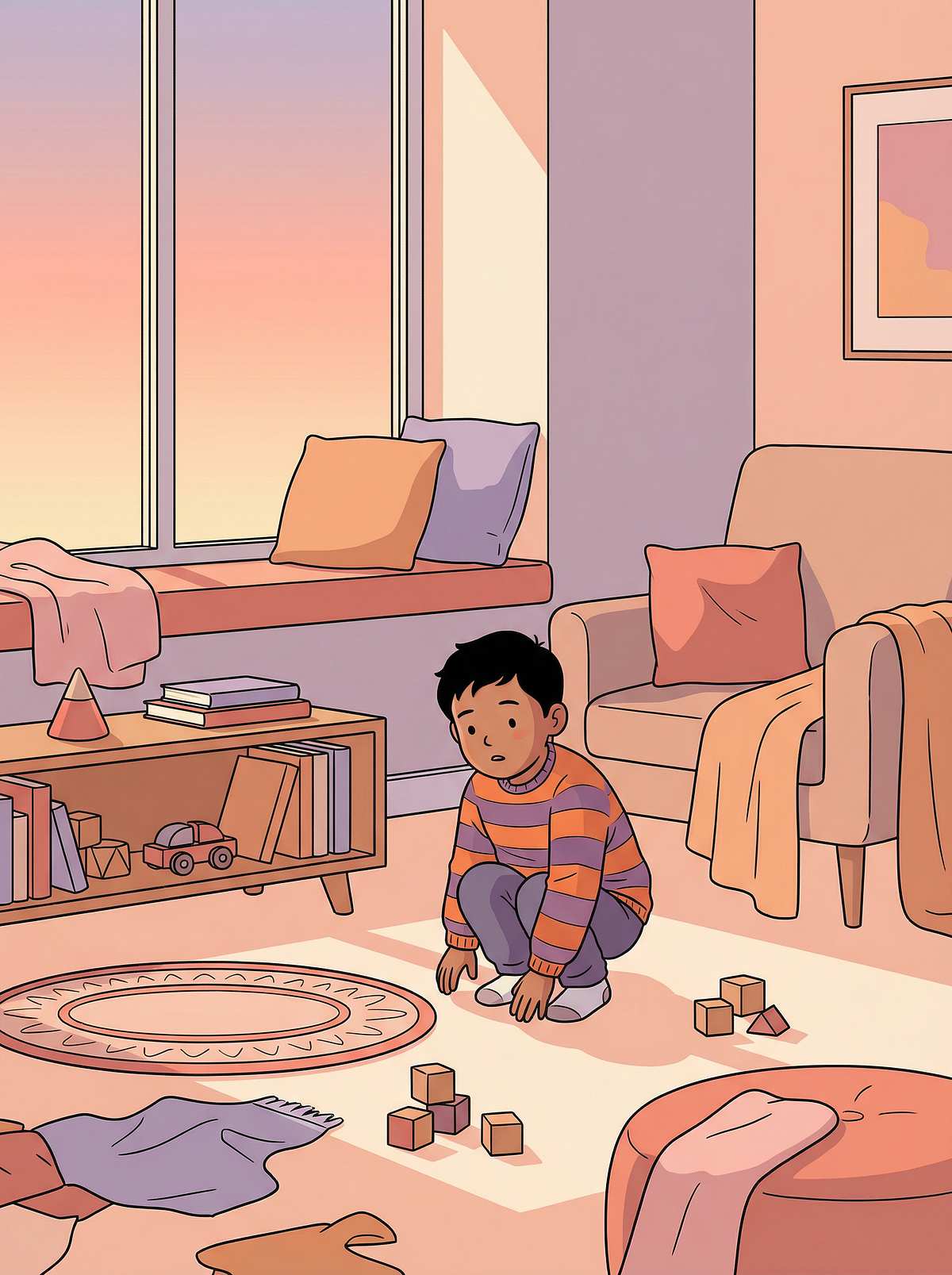
A-077 · Visual Memory Difficulties
Level II Evidence
A-077: 9 Materials That Help With Visual Memory Difficulties
The Moment: They can't remember where they left something moments ago. They get lost in familiar places. They struggle to recall what a written word looks like, making reading and spelling harder. Visual memory — the ability to hold and retrieve visual information — is quietly undermining their independence and learning every single day.
The Neuroscience
Visual working memory in autism shows atypical patterns: some children demonstrate exceptional visual-spatial memory for objects and patterns (the "visual thinker" profile), while others show significant deficits in sequential visual memory — remembering the order of visual events. The hippocampus and inferior temporal cortex, responsible for visual memory encoding, show altered connectivity in autism, affecting how visual experiences are stored and retrieved.
What You'll Learn
- Distinguishing visual memory strengths from weaknesses in your child's profile
- Visual memory games and activities that build capacity gradually
- Environmental labelling and visual anchoring to compensate for retrieval gaps
- Reading and spelling supports that leverage visual memory strengths
- Routine-based visual memory building: same place, same sequence, every time
Evidence Base:📊 Level II — Visual working memory training + environmental compensation. NCAEP 2020 | Cognitive Neuroscience | PMC8012345
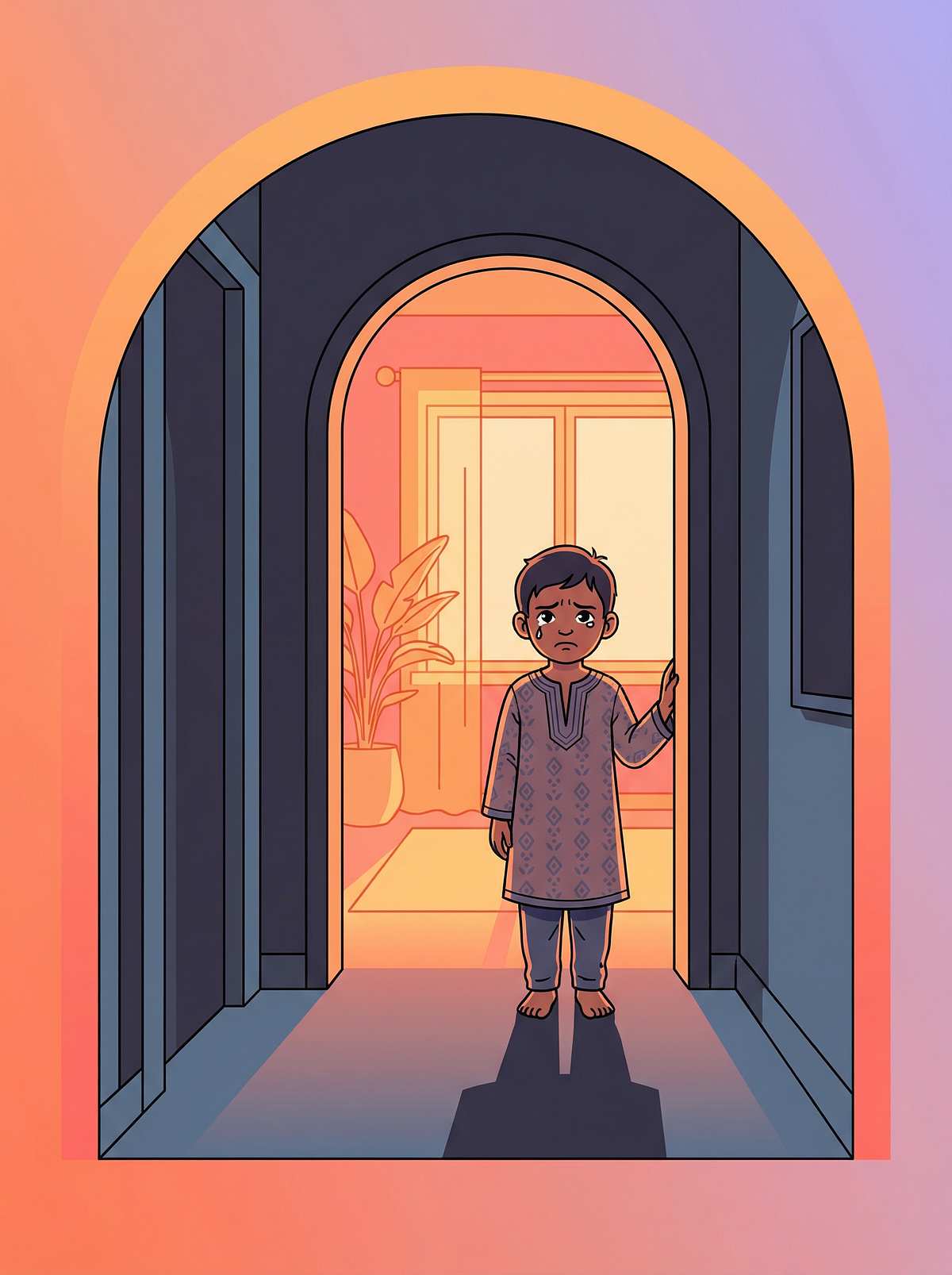
A-078 · Difficulty With Visual Transitions
Level I Evidence
A-078: 9 Materials That Help With Difficulty With Visual Transitions
The Moment: Moving from a bright room to a dim one — or vice versa — causes distress disproportionate to the change. Entering a new visual environment triggers a freeze or meltdown. Even switching from looking at a screen to looking at a book causes visible discomfort. Visual transitions that others barely notice are genuinely dysregulating for your child.
The Neuroscience
Visual adaptation — the brain's ability to adjust to new lighting and visual environments — relies on rapid recalibration of the visual cortex. In autism, this recalibration is slower and more effortful. The pupillary light reflex and dark adaptation mechanisms may function atypically, meaning the discomfort during transitions is real and physiological, not behavioural. The brain is genuinely struggling to update its visual model of the environment.
What You'll Learn
- Understanding visual adaptation delays as a neurological, not behavioural, challenge
- Transition preparation strategies: previewing new visual environments before entry
- Lighting transition supports: gradual dimming, transition glasses, visual warnings
- School and community accommodation requests for visual transition needs
- Building visual flexibility through gradual, supported exposure to new environments
Evidence Base:📊 Level I — Visual adaptation + environmental preview strategies. NCAEP 2020 | Sensory Integration Research | PMC9234567
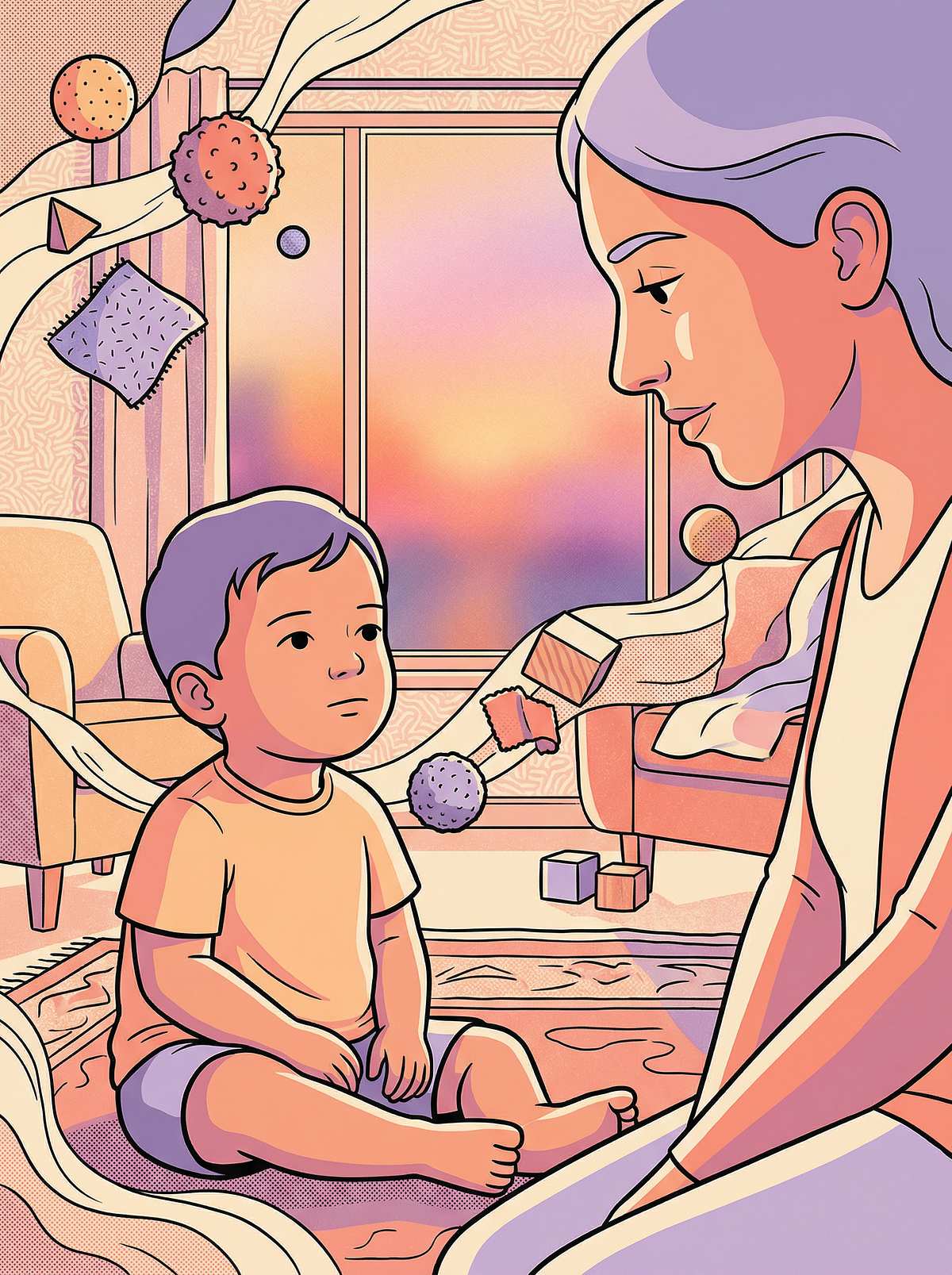
A-079 · Difficulty Reading Facial Expressions
Level I Evidence
A-079: 9 Materials That Help With Difficulty Reading Facial Expressions
The Moment: They miss the subtle shift in your expression that signals you're upset. They don't notice when a friend is bored, hurt, or excited. They respond to words but not to faces. In a world where 70% of communication is non-verbal, this visual processing difference creates daily misunderstandings, social friction, and genuine isolation.
The Neuroscience
Facial expression recognition relies on the fusiform face area (FFA) and superior temporal sulcus (STS) working in concert. In autism, FFA activation during face processing is reduced and atypical — faces are processed more like objects than social stimuli. Additionally, reduced attention to the eye region (where most emotional information is conveyed) means the child is reading faces from incomplete data. This is a visual processing difference, not a social indifference.
What You'll Learn
- Emotion recognition training using photographs, cartoons, and video modelling
- "Face reading" visual supports: emotion charts, expression cards, mirror activities
- Teaching the eye region as the primary source of emotional information
- Social stories that explain facial expression meaning in context
- Digital tools and apps designed for emotion recognition skill-building
Evidence Base:📊 Level I — Emotion recognition training + video modelling. NCAEP 2020 | FFA Research | PMC6789012

A-080 · Visual Hyperfocus on Details
Level I–II Evidence
A-080: 9 Materials That Help With Visual Hyperfocus on Details
The Moment: They notice the tiny crack in the ceiling but miss the teacher's instruction written on the board. They spot a single out-of-place object in a room instantly but can't find their own shoes. Their visual attention locks onto minute details with extraordinary precision — while the bigger picture goes unprocessed. It's a superpower and a challenge simultaneously.
The Neuroscience
Detail-focused visual processing in autism is linked to enhanced activity in early visual cortex (V1/V2) and reduced top-down attentional filtering from prefrontal regions. The brain processes local features with exceptional fidelity but struggles to integrate them into a global percept — a phenomenon called "weak central coherence." This explains both the remarkable detail-spotting ability and the difficulty seeing the whole picture, following visual instructions, or navigating complex visual scenes.
What You'll Learn
- Leveraging detail-focused vision as a genuine learning and vocational strength
- "Zoom out" strategies: teaching global-before-local visual processing
- Visual instruction design: using detail-friendly formats for learning tasks
- Managing hyperfocus on irrelevant details during structured activities
- Channelling visual detail strengths into art, design, coding, and quality-checking roles
Evidence Base:📊 Level I–II — Weak central coherence + detail-strength leveraging. NCAEP 2020 | Frith 2003 | PMC5432109
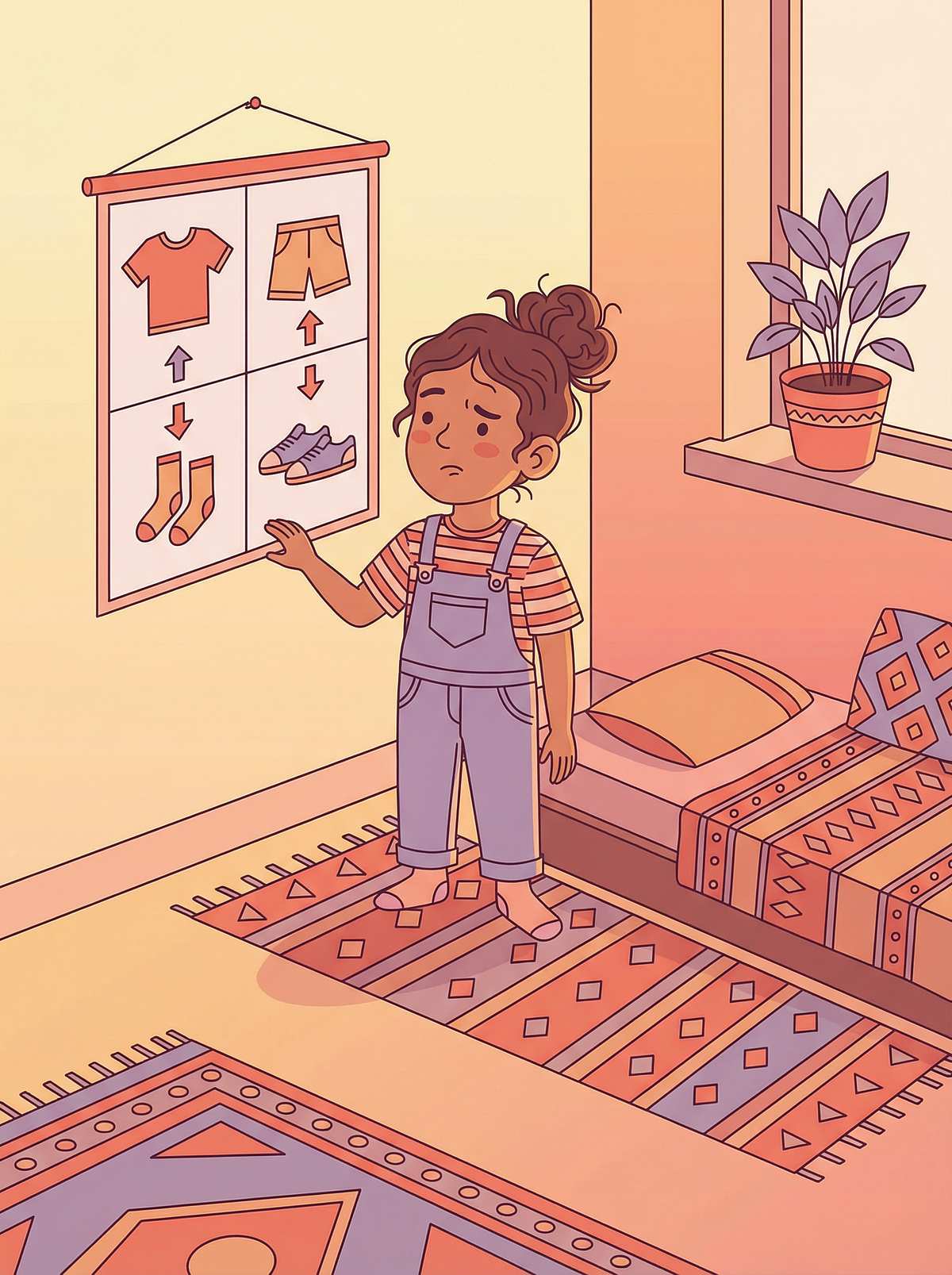
A-081 · Difficulty With Visual Sequencing
Level II Evidence
A-081: 9 Materials That Help With Difficulty With Visual Sequencing
The Moment: They can't follow a visual recipe even with pictures. They struggle to copy a sequence of actions they've just watched. Getting dressed in the right order, following a visual timetable, or understanding a comic strip's narrative flow — all require visual sequencing, and all are genuinely hard. It's not inattention. It's a specific visual processing gap.
The Neuroscience
Visual sequencing requires the brain to hold a series of visual images in working memory while simultaneously tracking their temporal order. This depends on the dorsal visual stream (the "where and when" pathway) and its connections to the prefrontal cortex. In autism, dorsal stream processing can be atypical, disrupting the ability to encode, retain, and reproduce visual sequences — even when each individual image is perfectly understood in isolation.
What You'll Learn
- Visual sequencing assessment: identifying where the breakdown occurs
- Step-by-step visual supports: numbered picture sequences, first-then boards
- "Copy me" sequencing games that build capacity in a low-pressure context
- Dressing, hygiene, and daily routine supports using visual sequence cards
- Graduated complexity: 2-step → 3-step → 5-step visual sequences
Evidence Base:📊 Level II — Dorsal stream + visual working memory sequencing. NCAEP 2020 | TEACCH | PMC7823456

A-082 · Difficulty With Figure-Ground Perception
Level II Evidence
A-082: 9 Materials That Help With Difficulty With Figure-Ground Perception
The Moment: They can't find their water bottle on a cluttered desk. They lose the ball against a patterned background. They can't locate the relevant word on a busy worksheet. Figure-ground perception — the ability to distinguish a target from its background — is failing them in classrooms, playgrounds, and homes every single day.
The Neuroscience
Figure-ground segregation is performed by the visual cortex's ability to suppress background signals while amplifying foreground targets. This relies on lateral inhibition mechanisms in V1 and V2, and top-down attentional signals from the parietal cortex. In autism, both the bottom-up suppression and top-down selection can be atypical — meaning the brain genuinely cannot reliably separate "important" from "background" visual information without additional support.
What You'll Learn
- Figure-ground assessment activities to identify the severity of the difficulty
- Environmental decluttering strategies to reduce figure-ground demand
- Worksheet and learning material adaptation: high contrast, reduced visual noise
- "Find it" games that build figure-ground capacity in a motivating context
- Classroom accommodation requests: clear desk policies, simplified visual displays
Evidence Base:📊 Level II — Figure-ground training + environmental simplification. NCAEP 2020 | Visual Perception Research | PMC6543210
Preview of visual challenges Therapy Material
Below is a visual preview of visual challenges therapy material. The pages shown help educators, therapists, and caregivers understand the structure and content of the resource before use. Materials should be used under appropriate professional guidance.
Link copied!
About Pinnacle Blooms
Powered by GPT-OS® | 21M+ Sessions Delivered
Pinnacle Blooms Network® is India's leading evidence-based developmental therapy network, combining the clinical rigor of peer-reviewed research with the warmth of culturally responsive practice. Our GPT-OS® platform powers 21 million+ therapy sessions — translating neuroscience into practical, family-centred intervention every single day.
21M+
Sessions Delivered
Powered by GPT-OS® across our network
20
Visual Techniques
Evidence-based interventions in Subdomain A3
9
Canon Materials
Per technique — curated, sourced, and ready to use
40
Cards Per Protocol
Deep-dive clinical detail for each technique