

G-621 · Card 01
Teaching How to Play
The moment: They sit in a room full of toys and do nothing. Or they hold one object and stare. You've bought every toy. Nothing works. The devastating realization: my child doesn't know HOW to play — and play must be explicitly, systematically taught.
The Neuroscience
Neurotypical children learn play through observation, imitation, exploration, and social modeling. In ASD, each pathway may be impaired: reduced observational learning, impaired imitation, reduced exploration drive, and limited social modeling. Play must be taught the same way academic skills are taught.
What You'll Learn
- Assess WHERE the child is on the play developmental ladder
- Start AT their level — not where you want them to be
- Model → prompt → reinforce: the play teaching sequence
- Three rules: FOLLOW the child's interest, JOIN their play, EXPAND by one step
- Playing WITH vs. playing FOR — participate, don't perform
- Schedule 20–30 minutes of structured play daily
Evidence Level I: Play-based intervention with explicit play teaching. NCAEP 2020 | Floortime/DIR | PRT · Lead: ABA (PRT/NBI) · Psychology (DIR/Floortime) | SpEd · OT · SLP
G-622 · Card 02
Single Interest Only
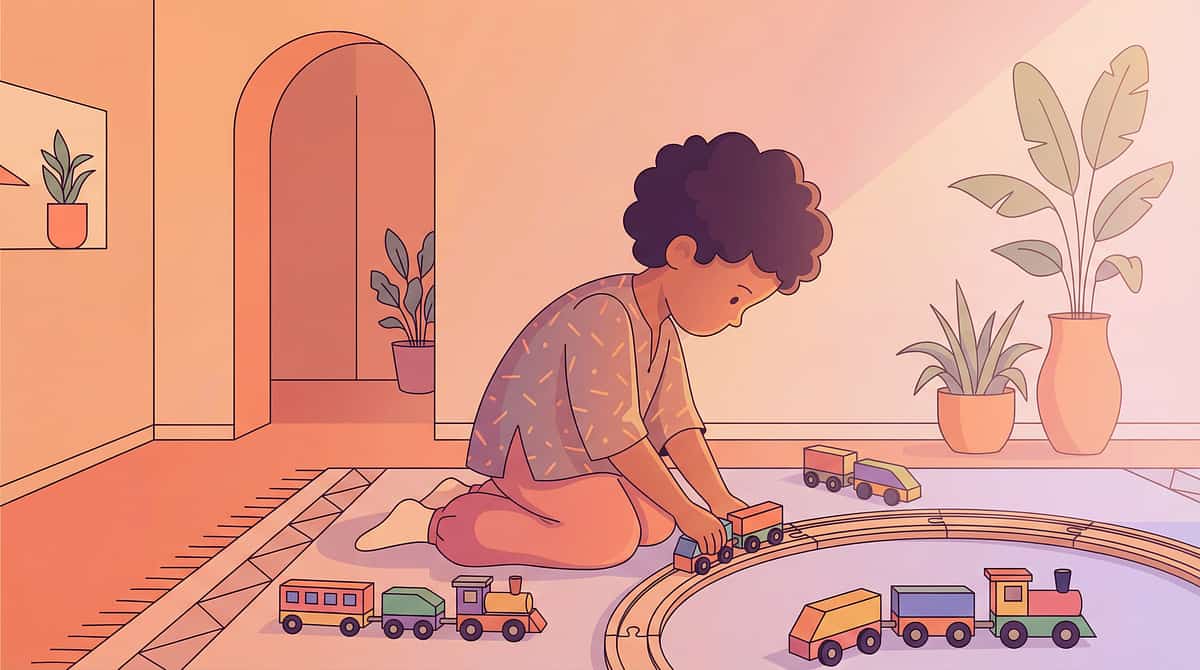
The moment: Trains. ONLY trains. Every book, every video, every toy, every conversation — trains. Single interest dominance is one of the most recognizable ASD patterns, and one of the most commonly mismanaged. The instinct is to fight it. The evidence says: use it.
The neuroscience: Restricted interests activate the reward system (nucleus accumbens) MORE intensely than varied stimuli. The brain finds the special interest maximally rewarding — and everything else comparatively unrewarding. This isn't stubbornness; it's differential reward sensitivity. The interest produces dopamine that other activities simply can't match.
What You'll Learn
- Use the interest — don't fight it. Special interests are BRIDGES, not barriers
- Embed learning IN the interest: train counting = maths, train books = reading
- Interest expansion: train → vehicles → travel → maps (gradual widening)
- Interest as social connector: find other interest-matched children
- Only restrict if the interest causes harm or completely blocks daily functioning
Evidence Level I: Interest-based intervention (PRT) + gradual expansion. NCAEP 2020
G-623 · Card 03
Pretend Play
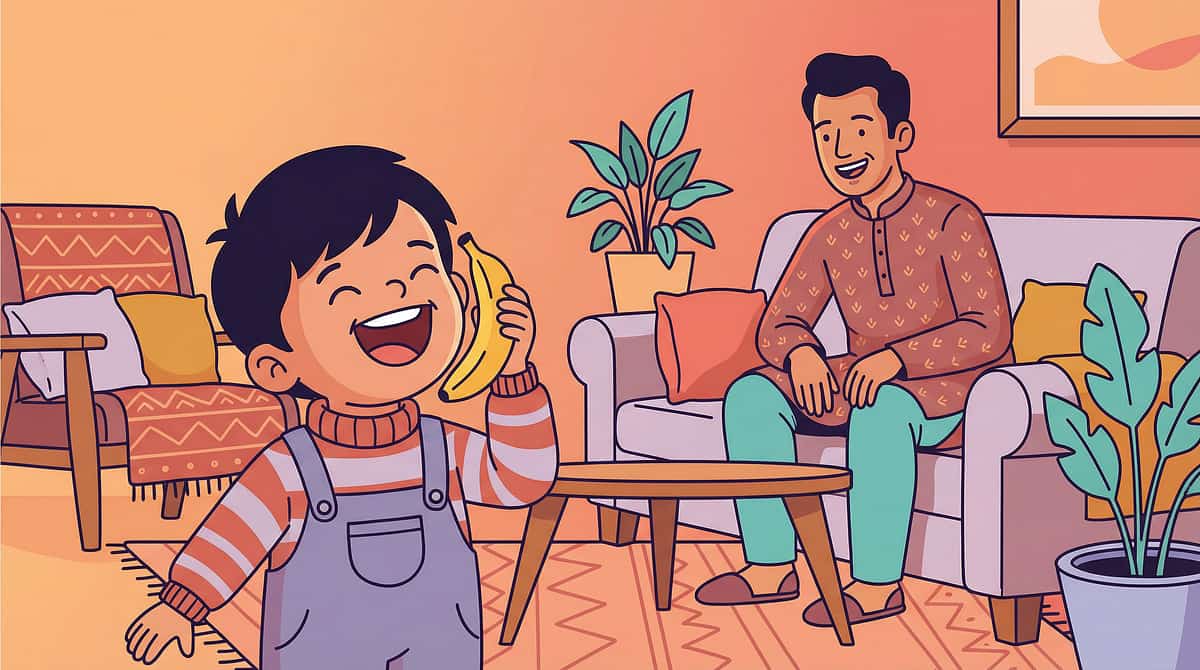
The milestone card. Pretend play — making a banana a phone, feeding a doll, driving an invisible car — is the developmental watershed. It signals that the child can hold mental representations: thinking about something that isn't there. This cognitive leap underpins language, empathy, and flexible thinking.
Functional Play
Push car, stack blocks, roll ball — using objects for their intended purpose
Self-Directed Pretend
Pretend to eat, pretend to sleep — acting as if
Other-Directed Pretend
Feed the doll, put teddy to sleep — extending pretend to others
Object Substitution
Block = phone, stick = spoon — one object stands for another
Role Play
Be the doctor, be the shopkeeper — full scenario immersion
Evidence Level I: Explicit pretend play teaching. NCAEP 2020 | Floortime
G-624 · Card 04
Imaginative Play
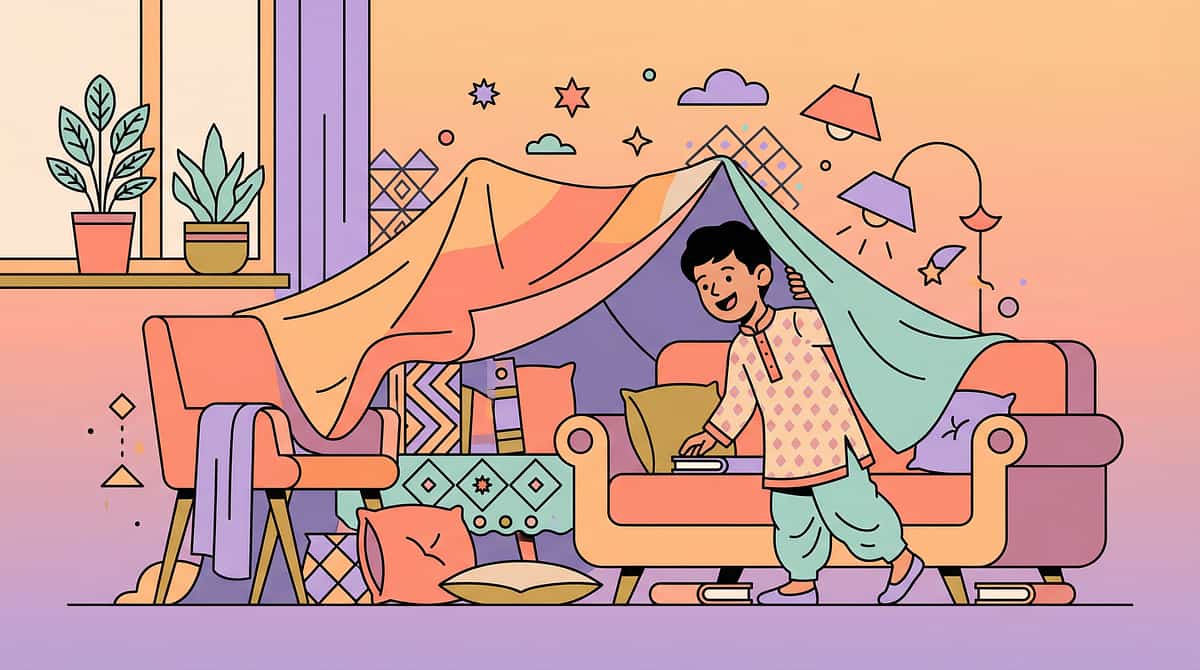
The moment: Beyond pretend — to IMAGINATION. Building a fort and it's a spaceship. Drawing a picture and it's a kingdom. Creating stories with figures. Imagination is pretend play at its highest — the child generates novelty from their own mind.
Many ASD children develop rich imaginative worlds centered on their special interests. The imagination isn't absent — it may be channeled differently, and the clinician's role is to gently expand its reach.
Evidence Level I: Creative play facilitation. NCAEP 2020
Imagination Scaffolding Techniques
- Provide the START: "The teddy bear woke up and..." — child continues
- Story props: dress-up clothes, miniature worlds (dollhouses, farm sets)
- Building as imagination: "What did you build? What does it do? Who lives there?"
- Drawing stories: draw a character → "What's their name? Where do they live?"
- Indian imaginative play: mythological role play (Ramayana, Krishna), festival re-enactment
G-625 + G-626 · Card 05 · Grouped
Lines Up Toys & Unusual Toy Use
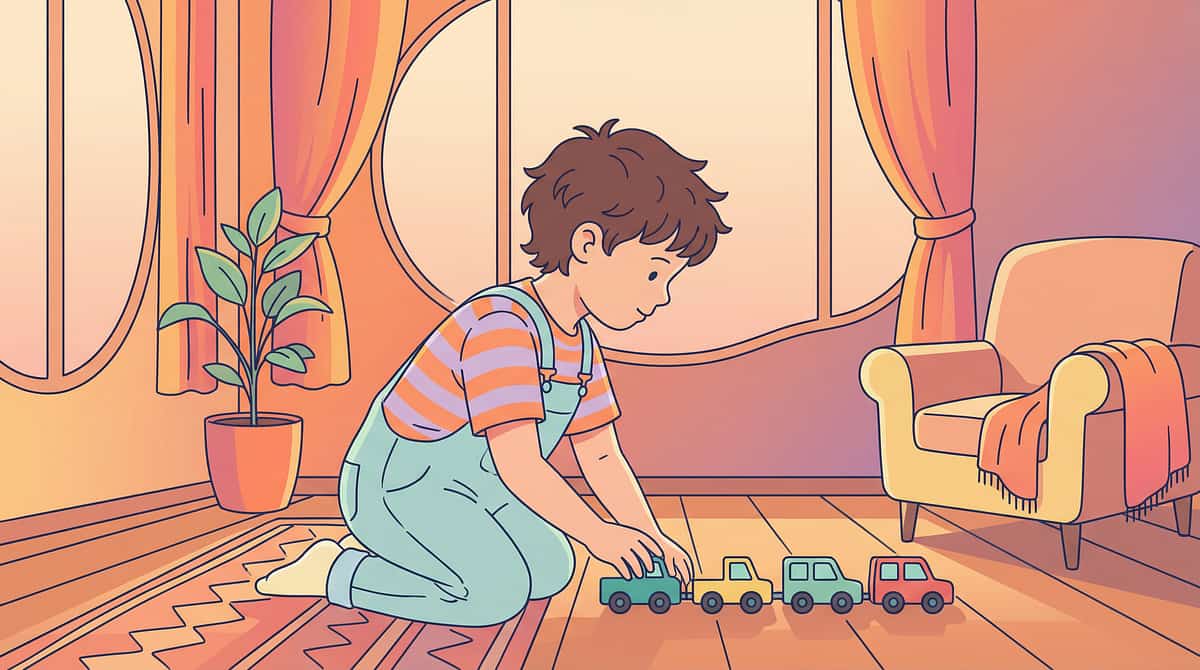
The cars are in a PERFECT line. Or the wheels spin endlessly. These are not "wrong" — they are the child's CURRENT play level. Understanding why these patterns occur tells you exactly how to expand them.
G-625 — Lines Up Toys
The neuroscience: Basal ganglia pattern creation — imposing ORDER on the environment produces predictability and calm. This is the same neural system that drives routine insistence. Lining up IS ordering — a genuine cognitive activity, not meaningless repetition.
Expansion path: Join the line → add one different item → create a PATTERN → line becomes a train → train goes on a journey (functional → pretend)
G-626 — Unusual Toy Use
The neuroscience: Sensory exploration — the child is investigating the SENSORY PROPERTIES of objects (visual patterns, rotational movement, sound) rather than functional purpose. A starting point, not a dead end.
Expansion path: Join the sensory exploration → add function ("The spinning wheel is a pizza oven!") → model functional use ALONGSIDE sensory use
The key question: "What is the child getting from this?" — then provide that same input in EXPANDED form. Never stop the current play. JOIN it, then expand by one step.
G-627 · Card 06
Age-Appropriate Play
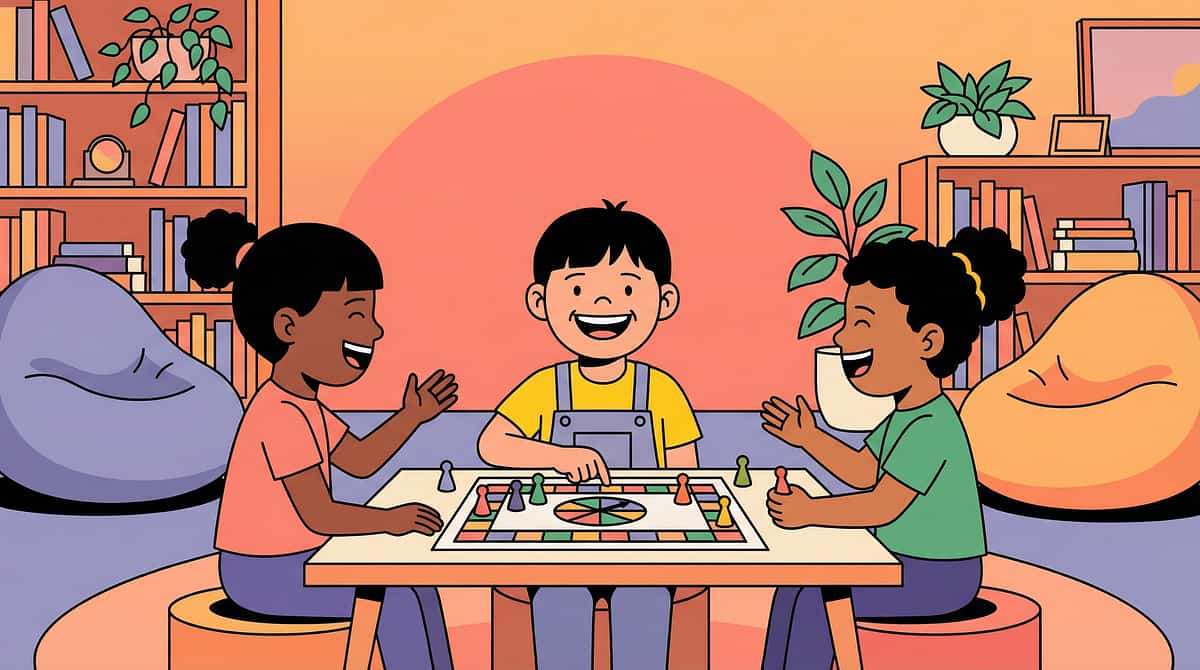
The moment: They're 7 but play like a 2-year-old. Age-appropriate play matters for social inclusion — peers reject play that seems "babyish." But developmentally appropriate play matters for learning. The tension: meeting the child where they ARE vs. what peers expect.
The Core Principle
Play age reflects DEVELOPMENTAL age, not chronological age. Pushing play beyond developmental capacity leads to failure, then avoidance. But keeping play below social expectations leads to peer exclusion.
Solution: Build developmental skills using age-appropriate MATERIALS — a 7-year-old builds with Lego instead of stacking rings, even if the skill being practiced is the same.
What You'll Learn
- Age-appropriate materials that target younger developmental skills
- Peer observation: what are same-age children actually playing?
- Bridging: connect current interests to age-appropriate formats
- When developmental play IS appropriate (home vs. school settings)
- Grading materials to honor both development and social context
Evidence Level I: Developmentally graded, age-appropriate play. NCAEP 2020
G-628 + G-629 · Card 07 · Grouped
Independent Play & Self-Entertainment
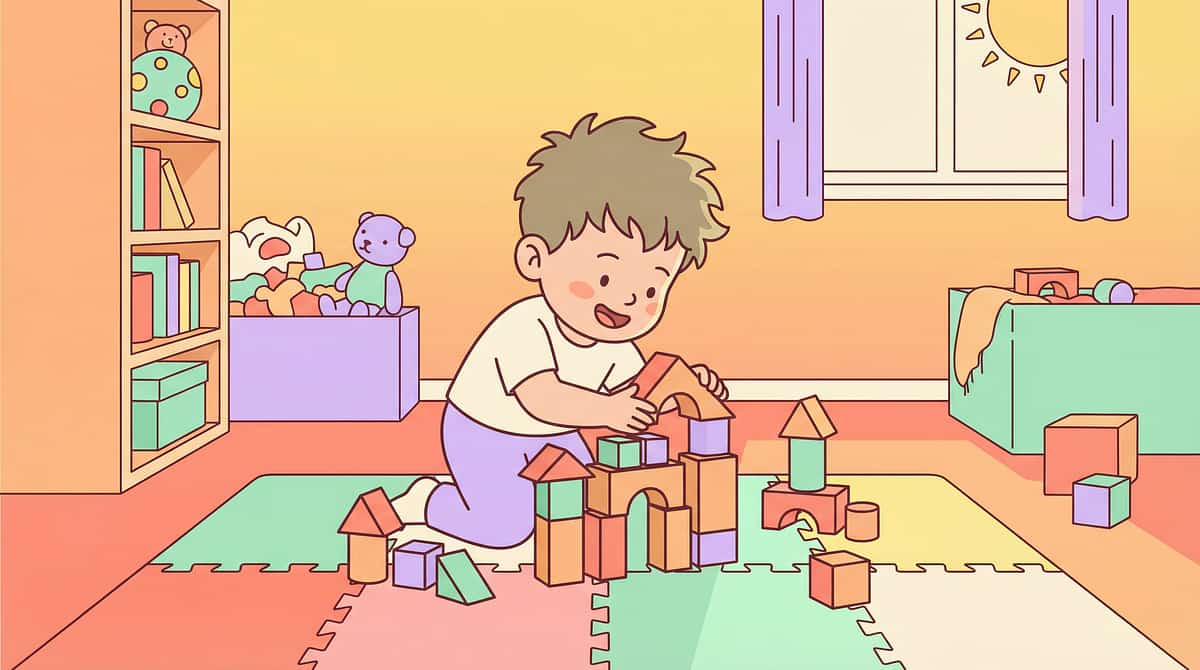
Can't play alone for even 5 minutes. Constantly needs an adult directing, participating, validating. Independent play — the ability to occupy oneself meaningfully WITHOUT adult involvement — is essential for child development, caregiver respite, school performance, and future adult leisure.
G-628 — Independent Play
- Full participation → reduce verbal input → physical presence without participation → independent
- Play menu: visual choice board of 5–10 activities
- Timed independence: 2 minutes alone → 5 → 10 → 15 → 20+
- Activity bins: pre-prepared, one bin per activity — open and play
G-629 — Self-Entertainment
- Build activity REPERTOIRE: knowing WHAT to do + initiating WITHOUT prompting
- Self-entertainment list: 10+ activities the child CAN do alone → rotate weekly
- Structured alone-play time: same time daily, visual timer showing duration
- Reinforce independence attempts immediately and enthusiastically
Evidence Level I: Independent play building + choice-making. NCAEP 2020
G-630 · Card 08
Adult-Dependent Play
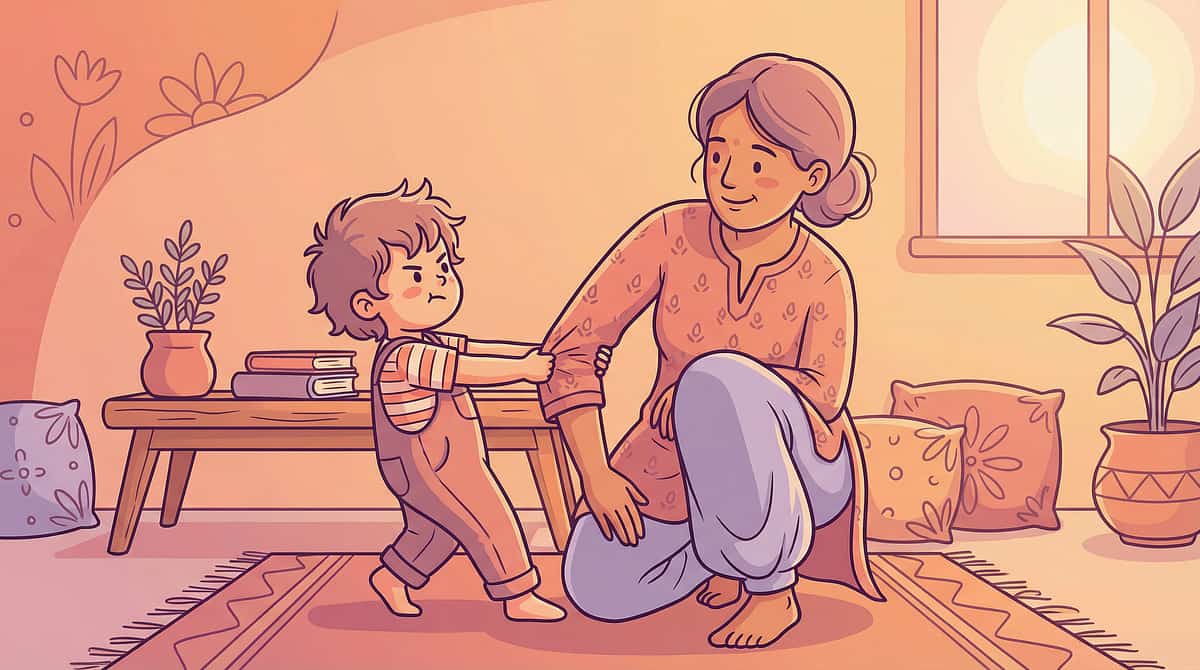
The moment: "Play with me. Play with me. PLAY WITH ME." The child cannot play unless an adult is directing, narrating, or participating in every moment. The adult is exhausted. The child is dependent. Breaking this pattern requires systematic fading of adult involvement while building child confidence and intrinsic motivation.
The child has learned that play = adult involvement. The adult provides initiation, scaffolding, regulation, and social reward. Removing any element causes play to collapse. Fading must be gradual — reducing ONE element at a time, across weeks rather than days.
Evidence Level I: Prompt fading in play. NCAEP 2020
The Fading Protocol
Full Participation
Adult actively plays alongside child
Reduce Verbal Input
Adult present but narrates less
Presence Without Participation
"I'll watch you play" as a bridge step
Nearby, Not Involved
Adult in same room, engaged elsewhere
Independent Play
Child sustains play without adult in room
G-631 + G-633 · Card 09 · Grouped
Turn-Taking Games & Card Games
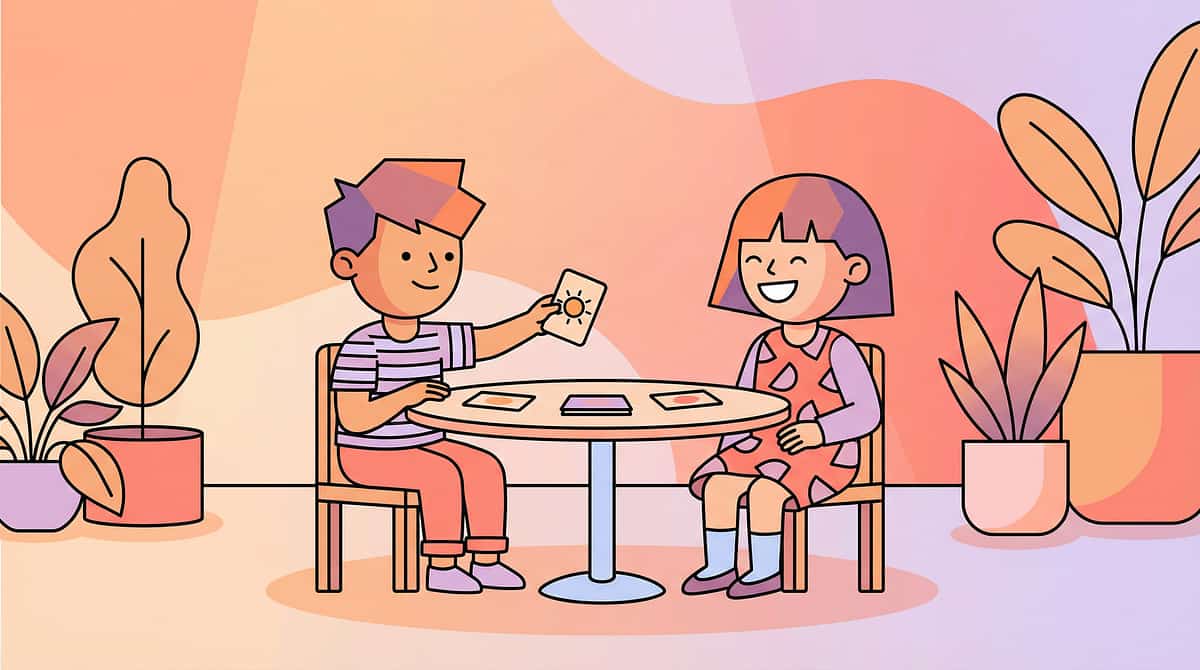
"My turn. Your turn." The foundation of all social play. Turn-taking requires waiting (inhibiting the impulse to go NOW), monitoring (tracking whose turn it is), and sharing control (accepting that the other person acts on THEIR turn). Card games add hand management, rule memory, and strategic thinking.
G-631 — Turn-Taking Progression
- Physical turn-taking: rolling a ball back and forth
- Toy turn-taking: my turn to press, your turn
- Simple games: matching, simple board games
- Complex games: strategy and planning
- Visual turn indicator: physical object passed (the person holding the star takes their turn)
- Indian games: Antakshari, Ludo, Carrom — natural turn-taking practice
G-633 — Card Game Progression
- Matching: Snap, Memory (visual discrimination)
- Go Fish (asking, waiting, responding)
- UNO (hand management + social rules)
- Complex card games (strategy + social reading)
- Working memory: remembering rules AND hand simultaneously
Evidence Level I: Turn-taking as social skill building. NCAEP 2020
G-632 · Card 10
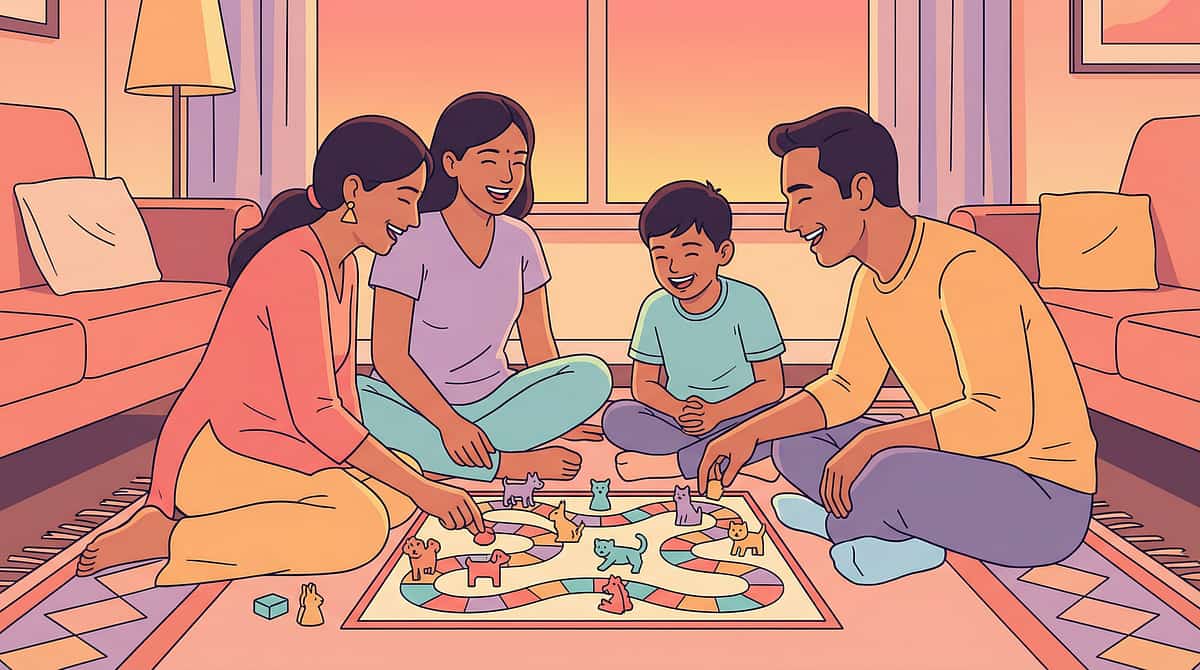
Board Games
Board games are the highest form of structured social play — rules, turns, strategy, winning, losing, and sustained social interaction for 15–60 minutes. Board game competence is a social inclusion tool. The family that plays board games together creates predictable, positive social time.
Luck-Only Games
Snakes & Ladders, Ludo — no strategy needed, ideal entry point. India's national obsession makes Ludo the perfect ASD starter game.
Light Strategy Games
Connect 4, Guess Who — some planning required. Begin reading opponent cues and making intentional choices.
Full Strategy Games
Monopoly, Chess — working memory, executive planning, emotional regulation, and social cognition all at once. A cognitive workout in disguise.
Evidence Level I: Game-based social skills. NCAEP 2020 · Pro tip: start with modified rules (shorter games, fewer rules, cooperative versions) before advancing to competitive play.
G-635 + G-636 · Card 11 · Grouped
Screen Time Reduction & Screen Transitions
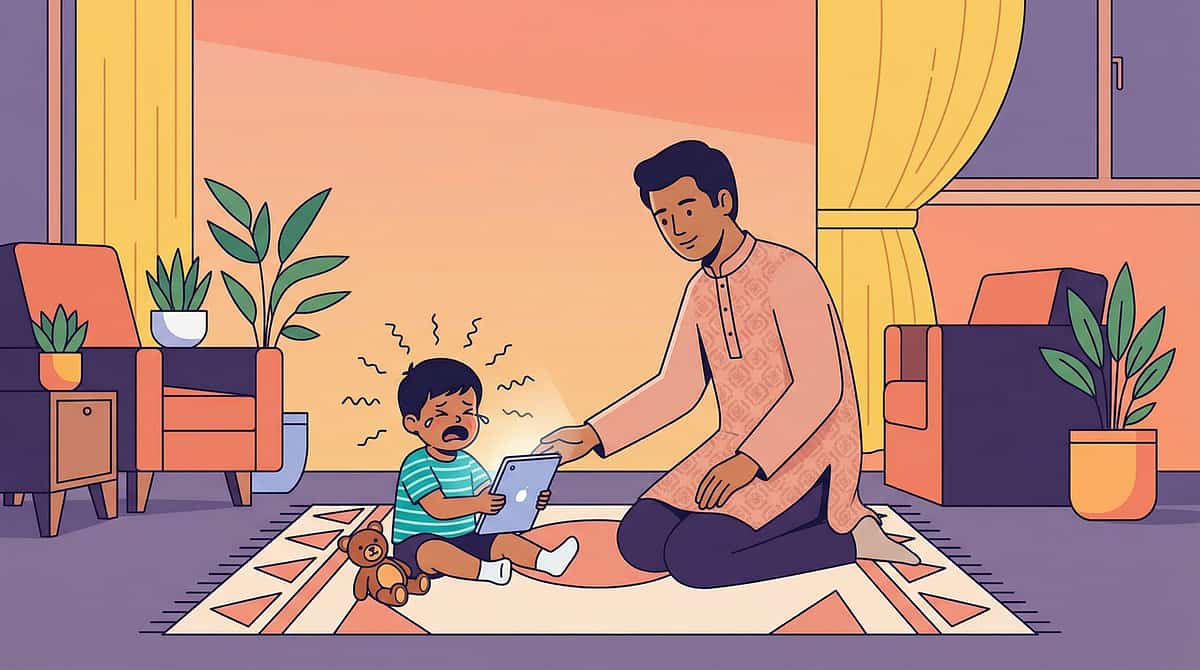
The screen goes off. The meltdown begins. Screen engagement in ASD is amplified — screens provide predictable, controllable, visually rich, socially undemanding input. Reducing screen time AND managing screen-to-activity transitions are two of the hardest parental challenges in the entire domain.
Why Screens Are So Powerful
Screens deliver high dopamine (rapid reward), preferred visual stimulation, perfect predictability, and zero social demand. The ASD brain finds this combination maximally rewarding. Transitioning from the screen means leaving maximum reward and entering an unpredictable, socially demanding, sensorily variable world. That gap drives the meltdown.
G-635 — Screen Reduction
- Gradual reduction — NOT sudden removal
- Replacement activities MUST be in place before reducing screen time
- Visual screen schedule: "Screen time is 4:00–4:30"
- Screen-free zones: dining table, bedroom
G-636 — Screen Transitions
- Visual timer during screen time ("5 minutes left")
- Verbal countdown before ending
- FIRST screen THEN preferred activity (not screen then homework)
- Alternative high-dopamine activities ready: trampoline, water play, preferred toy
Evidence Level I: Screen management + transition support. NCAEP 2020
G-634 · Card 12
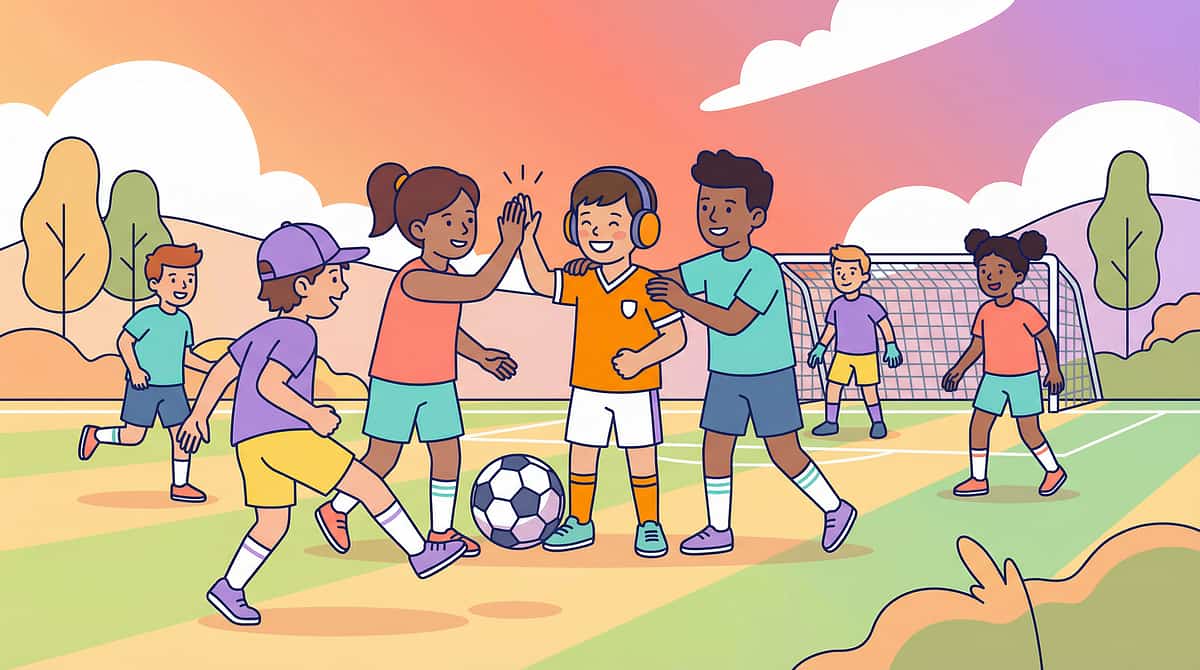
Sports & Team Games
PE class. The team is picked. Yours is last. Sports require motor skills, rule comprehension, team coordination, spatial awareness, and real-time social communication — all simultaneously, under time pressure. Each challenge is independently significant in ASD; combined, they can make team sports feel overwhelming.
1
Individual Sports
Swimming, cycling, martial arts, running, gymnastics — no social coordination required
2
Paired Sports
Badminton, table tennis — one partner, structured turns, limited communication
3
Small Team
Adapted team activities with 3–4 players, defined roles
4
Full Team
Cricket, kabaddi — full social coordination after solid foundation
Evidence Level I: Adapted sports + individual sport pathways. NCAEP 2020 · Pre-teach ALL rules before playing — social stories, video walkthroughs, and dry runs before the real game.
G-637 · Card 13
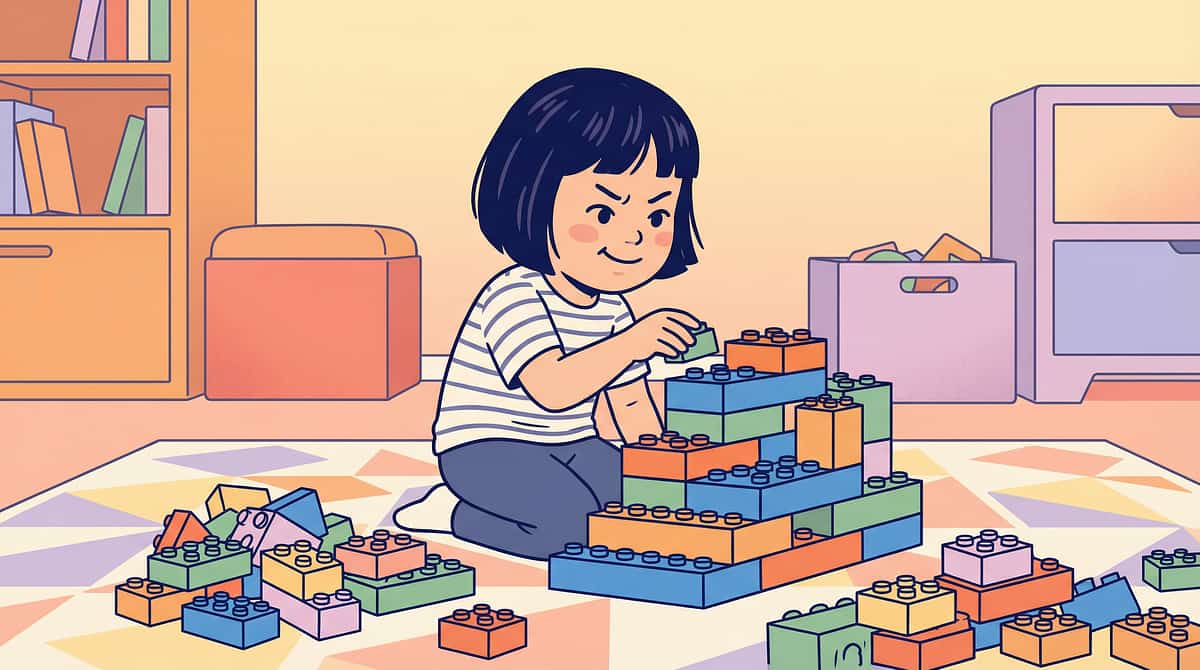
Constructive Play
The moment: Building something. Creating a product. Constructive play — blocks, Lego, train tracks, puzzles, crafts — combines fine motor skill, spatial reasoning, planning, and the profound satisfaction of a completed creation. Many children with autism EXCEL at constructive play; it becomes a strength-based pathway into social engagement.
The predictability of construction (follow instructions = get result) appeals to the ASD preference for order and systems. Constructive play can serve as the entry point to collaborative social play — "build together" is a natural cooperative goal.
Evidence Level I: Constructive play as developmental skill. NCAEP 2020
Construction Progression
Stacking
Simple tower building, cause-effect
Simple Assembly
Duplo, large interlocking pieces
Complex Assembly
Lego sets, instruction-following
Free Building
Building from imagination, no instructions
Cooperative Construction
Build together — social entry through shared project
G-638 · Card 14
Symbolic Play
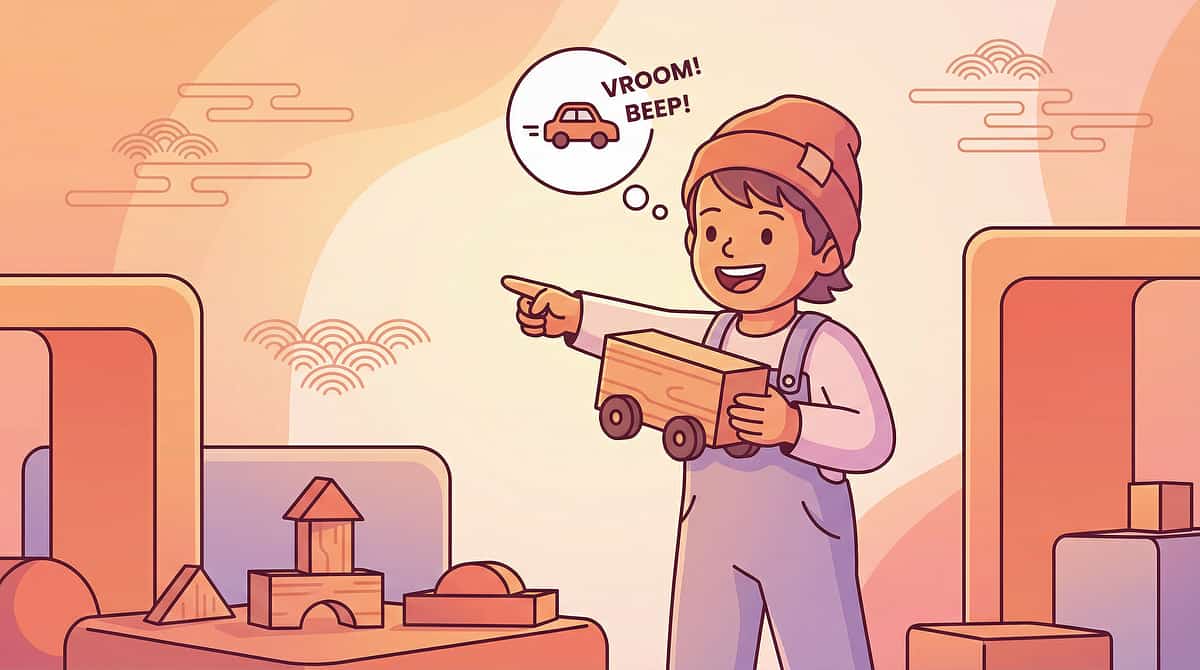
The block is NOT a block — it's a CAR. The stick is a sword. The box is a house. Symbolic play signals the emergence of symbolic thinking — the same cognitive ability that underlies language (words are symbols for objects), literacy (letters are symbols for sounds), and mathematics (numbers are symbols for quantities). Teaching symbolic play actively supports language development.
Similar Substitutions
Toy car = real car — high resemblance, easy first step
Less Similar
Block = car — child must hold dual representation
Dissimilar
Stick = car — imagination fills the gap
Invisible Objects
Pretend to hold and drive a car — pure symbolic cognition
Narrate every substitution: "This block is our car! Vroom vroom!" Indian cultural anchors: playing house (ghar-ghar), playing shop (dukaan-dukaan) — deeply familiar pretend contexts that scaffold symbolic thinking naturally.
Evidence Level I: Symbolic play intervention. NCAEP 2020
G-639 + G-640 · Card 15 · Grouped
Functional Play & Exploratory Play
Before pretend comes FUNCTION. Before function comes EXPLORATION. These are the FIRST play stages — and where many children with autism need to begin. Starting here is not a setback; it is meeting the child exactly where they are and building upward from a solid foundation.
G-639 — Functional Play
Using objects for their intended purpose: push car, stack blocks, roll ball, feed doll. This is object-concept linking — building the knowledge that underpins all symbolic play later.
Teaching sequence: Model → hand-over-hand → prompt → independent
Indian early toys: dandiya (musical), matka (container play), ghungroo (cause-effect sound)
G-640 — Exploratory Play
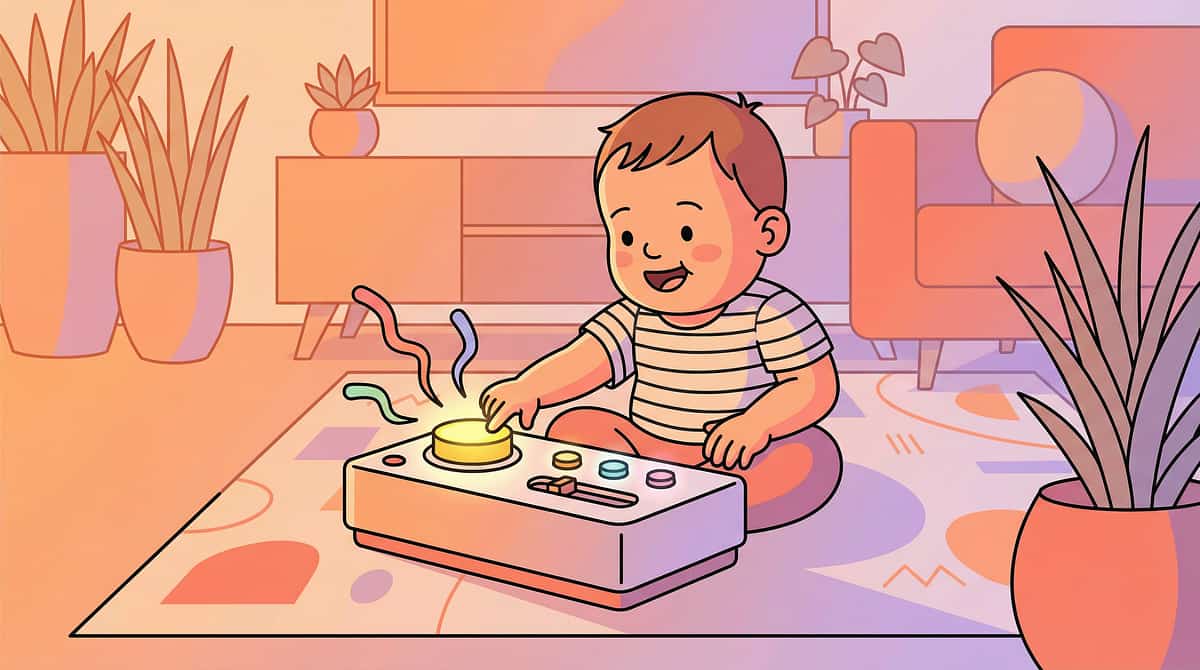
Discovering what objects DO: shake rattle → hear sound, push button → light comes on. Cause-effect learning activates dopamine each time the child discovers "I did THAT." This sense of agency is foundational to all motivation and intentional behavior.
Activities: Cause-effect toys, sensory exploration (texture, sound, visual), container play (in-out, dump-fill)
Evidence Level I: Early play intervention. NCAEP 2020
G-641 · Card 16
Sensory Play
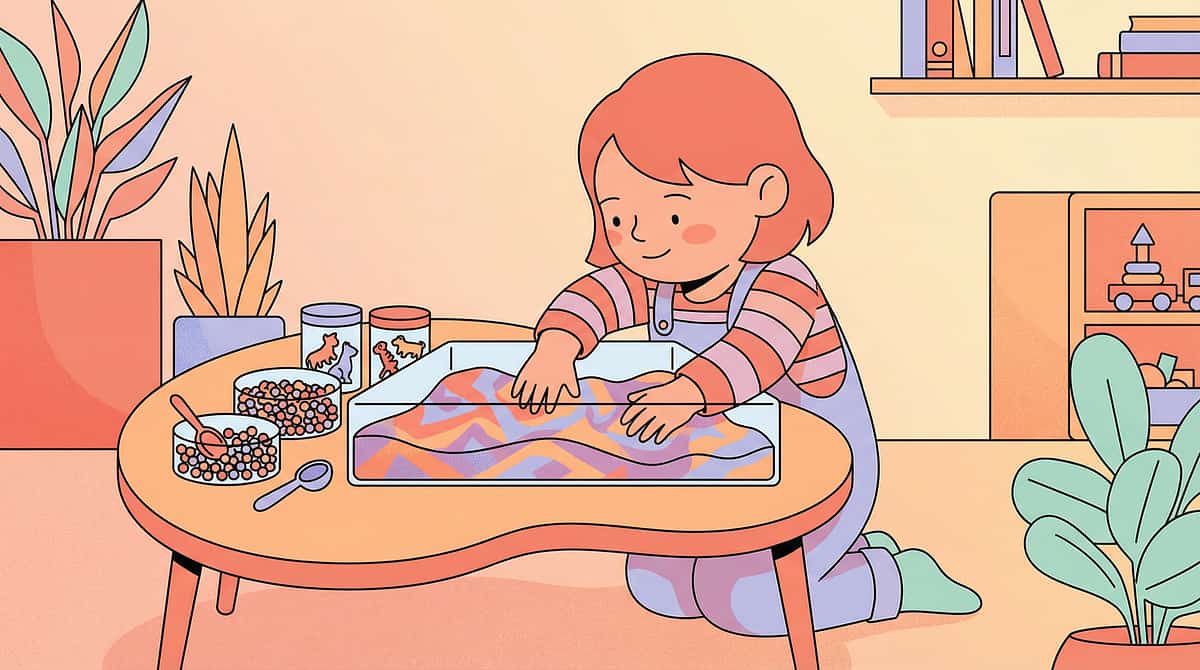
The bridge between sensory processing and play development. Sensory play — designed to provide rich sensory input — serves a dual purpose: sensory regulation AND play skill building. Sensory bins, water play, messy play, and movement play all regulate the nervous system WHILE building engagement capacity.
Tactile Input
Textures from rice, beans, water beads, kinetic sand, finger paint — builds tactile tolerance and fine motor awareness
Proprioceptive Input
Resistance and weight from digging, pushing, carrying heavy materials — regulates arousal and calms
Vestibular Input
Movement, swinging, rocking — organizes the nervous system and prepares the child for learning
Visual Input
Colors, patterns, light effects — visually engaging materials sustain attention and spark curiosity
₹0 Sensory Play: Kitchen items — rice, dal, flour, water, and containers make a complete sensory bin. No specialist materials required.
Evidence Level I: Sensory-based play intervention. NCAEP 2020
G-642 · Card 17
Cause-Effect Play
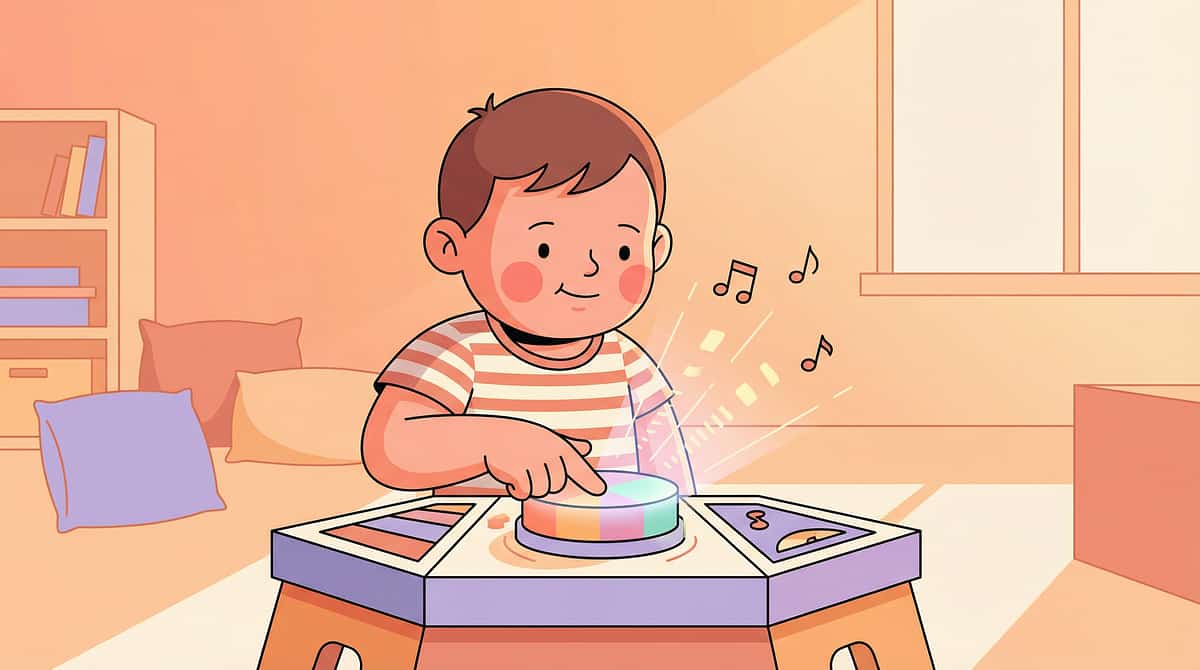
The moment: I push. It lights up. I pull. It moves. I press. It plays music. Cause-effect play is the earliest cognitive play — the discovery that MY actions produce results. This understanding is the foundation of all learning: agency, intentionality, and environmental control.
The ASD brain processes immediate, predictable, consistent feedback best — exactly what cause-effect toys provide. This predictability makes cause-effect play the ideal FIRST play entry point for children who are not yet engaging with other toys.
Evidence Level I: Cause-effect as foundational play and learning. NCAEP 2020
Cause-Effect Progression
- Simple: Push button → music plays
- Sequenced: Sequence of actions → result
- Social: My action → YOUR response ("When YOU push, I clap!")
Toy & Activity Ideas
- Pop-up toys, musical instruments, light switches
- Water wheel, ball runs, drums
- Switch-activated toys for motor-limited children
- Indian cause-effect: ghungroo (shake → sound), dhol (hit → sound), diya (blow → out)
G-643 + G-644 · Card 18 · Grouped
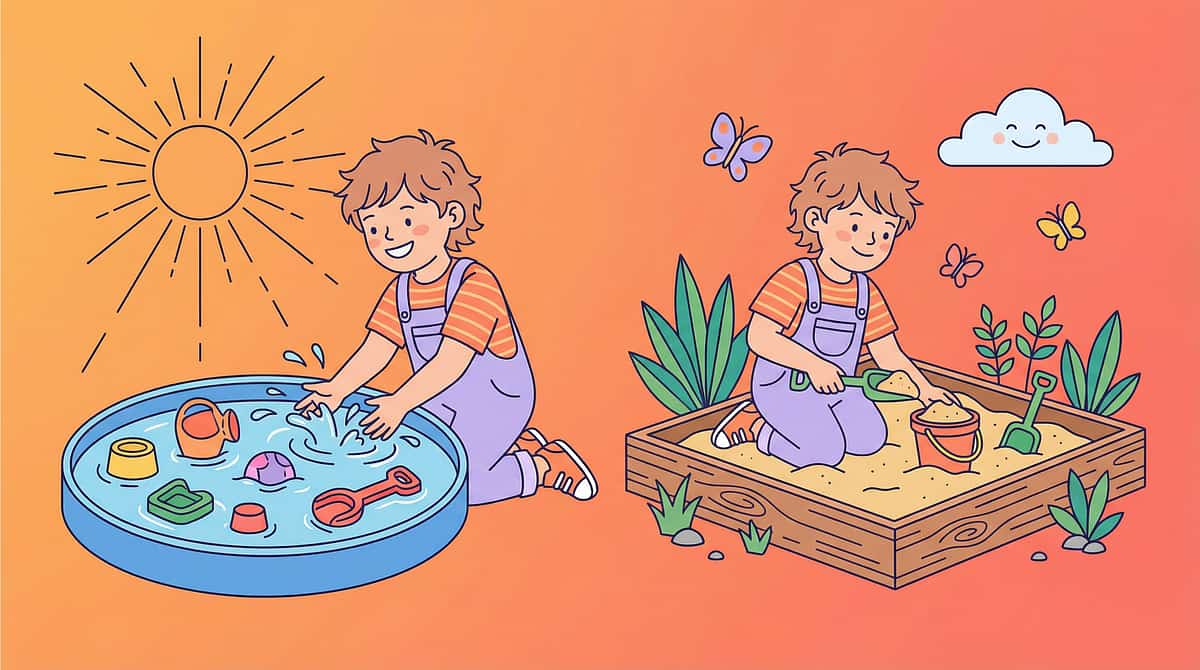
Water Play & Sand Play
Two of the most universal and therapeutic play materials — water and sand. Both provide rich sensory input, both are open-ended (no "wrong" way to play), both scale from simple pouring to complex building, and both are available for ₹0. They are among the most accessible and effective sensory play tools available.
G-643 — Water Play
Water provides temperature, tactile, visual, and auditory input — and CALMS through deep-pressure immersion (parasympathetic activation).
- Pouring, scooping, squirting (spray bottle builds hand strength)
- Floating and sinking experiments
- Bubble making, water wheel, color mixing
- Defensive introduction: touch with ONE finger → brief hand immersion → full play
G-644 — Sand Play
Sand provides textured tactile input, proprioceptive resistance, and moldable construction — graded from dry sand (lighter touch) to wet sand (deeper pressure).
- Digging, pouring, moulding (wet sand), hiding objects (treasure hunt)
- Drawing in sand — fine motor and creative expression
- Indoor alternatives: sand tray, rice as sand substitute
- Indian context: beach sand, river-bank play, rangoli sand, kolam powder
Evidence Level I: Sensory play intervention. NCAEP 2020
G-645 · Card 19
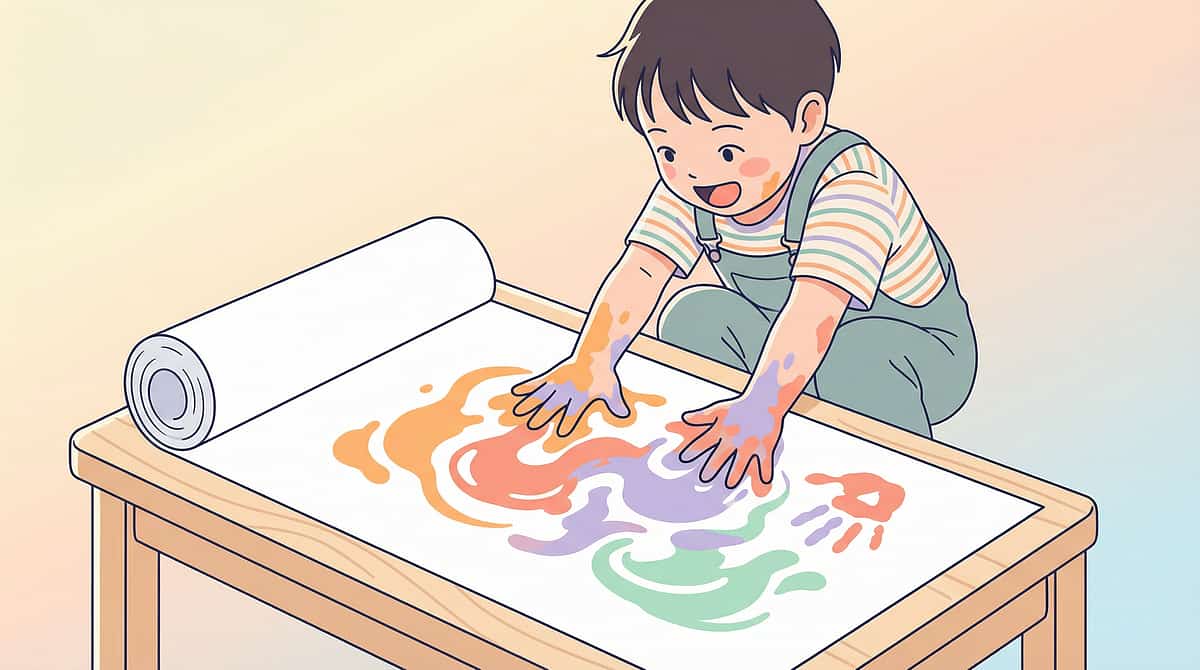
Messy Play Introduction
Finger paint. Shaving cream. Mud. Slime. Messy play is the tactile-defensive child's nightmare and the tactile-seeking child's paradise. For avoidant children, messy play desensitization is a core OT goal — repeated exposure literally rewires tactile processing thresholds over time.
Tools-First Approach
Spoons, cups, and sticks allow exploration with NO hand contact → ONE finger → full hand. Always keep hand-washing access visible. Make clean-up part of the activity, not a punishment.
₹0 Messy Play
Atta dough, rice, dal, mud, leaves, and water are all you need. Tactile tolerance is built through consistency of exposure, not cost of materials.
Evidence Level I: Sensory-based fine motor + tactile tolerance. NCAEP 2020
G-647 + G-648 · Card 20 · Grouped
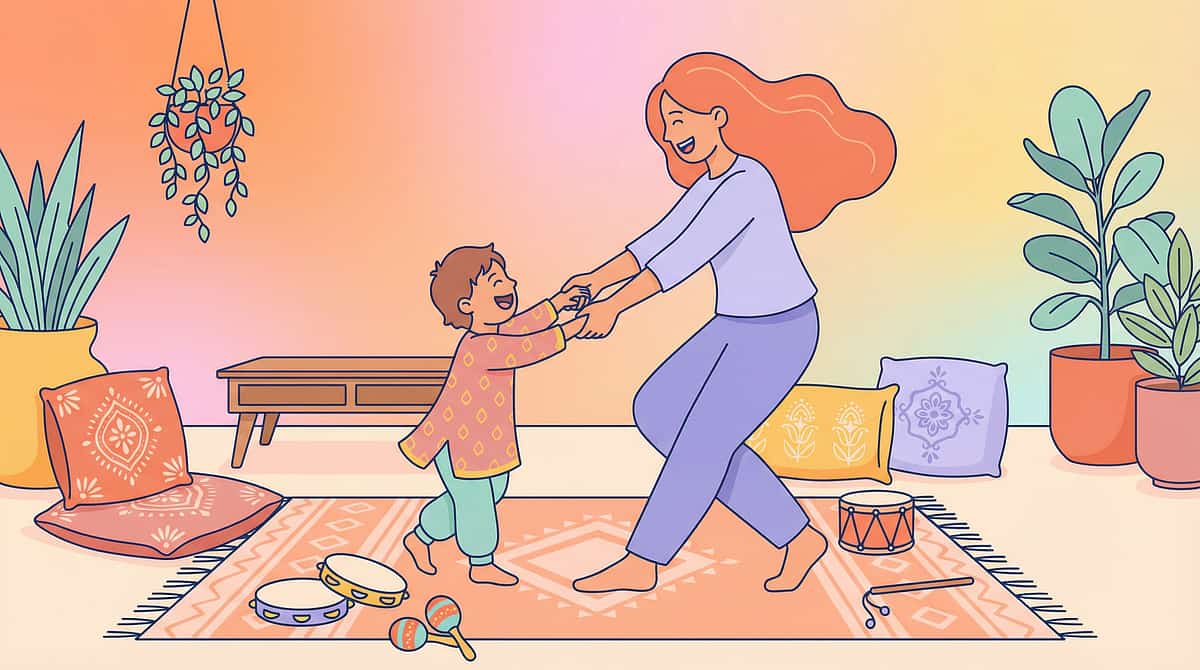
Music Play & Movement Play
Music starts and the body WANTS to move. Music play and movement play are inseparable — rhythm drives movement, movement creates rhythm. Together they provide auditory processing, motor coordination, sensory regulation, social participation, emotional expression, and pure joy. Music activates more brain regions simultaneously than almost any other activity.
G-647 — Music Play
- Instrument exploration: drums, shakers, xylophone, bells
- Action songs: Head Shoulders, Wheels on the Bus
- Rhythm games and listening activities
- Singing together — voice as instrument
- Indian music: dhol, tabla, dandiya, devotional music for calming
G-648 — Movement Play
- Dancing, running games, obstacle courses
- Yoga, trampoline, swinging — vestibular + proprioceptive
- Freeze dance, musical chairs — music + movement combined
- Bollywood dancing as movement motivator
- Garba and dandiya for festive social movement play
Evidence Level I: Music therapy + movement-based intervention. NCAEP 2020
G-646 · Card 21
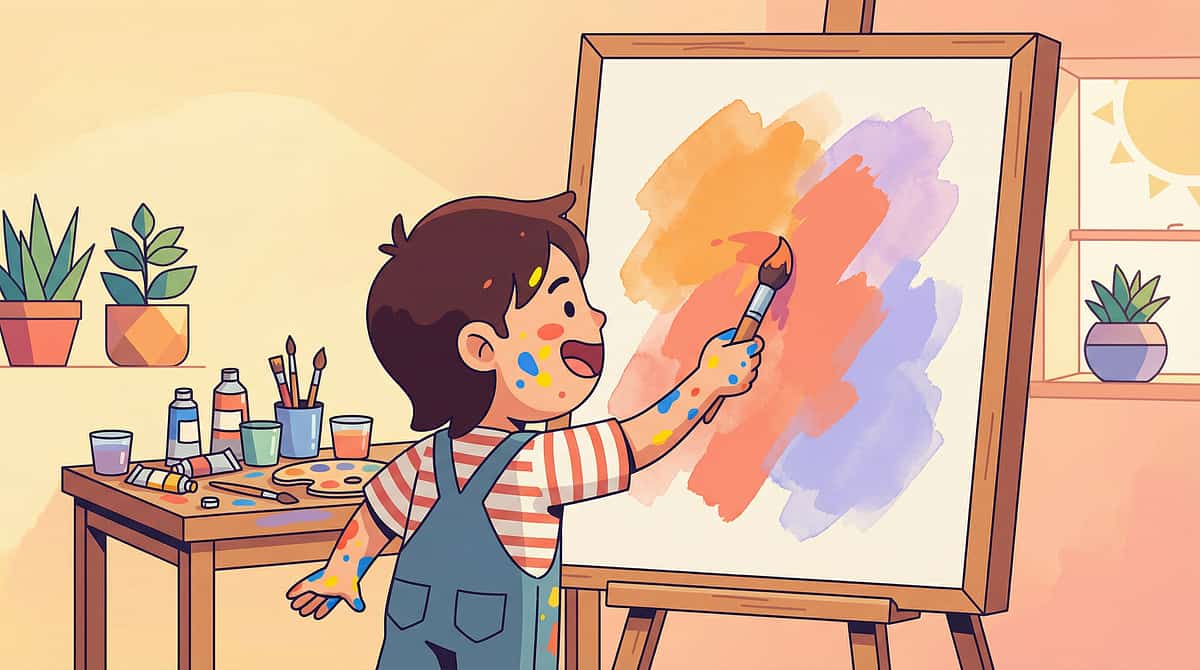
Art & Craft Play
Painting, collage, clay modeling, stamping, printing — art play builds fine motor skill, sensory processing, creativity, and self-expression simultaneously. Art has no "wrong" — freeing for children who experience constant correction elsewhere. Process-focused art (the MAKING, not the product) reduces performance anxiety and enables genuine exploration.
Finger Painting
Direct tactile engagement, no tool barrier
Brush Painting
Tool management, color mixing
Stamping & Collage
Tearing, pasting, creating from found materials
Drawing & Clay
Self-directed expression, three-dimensional modeling
Mixed Media
Combining materials, expanding creative vocabulary
Indian craft anchors: Diwali lamp painting, Holi colour play, rakhi making, kite decoration, kolam and rangoli patterns — culturally rich, naturally motivating, and beautifully suited to art-as-play.
Evidence Level I: Art-based therapy + fine motor. NCAEP 2020
G-651 + G-652 · Card 22 · Grouped
Floortime Approach & Special Interests
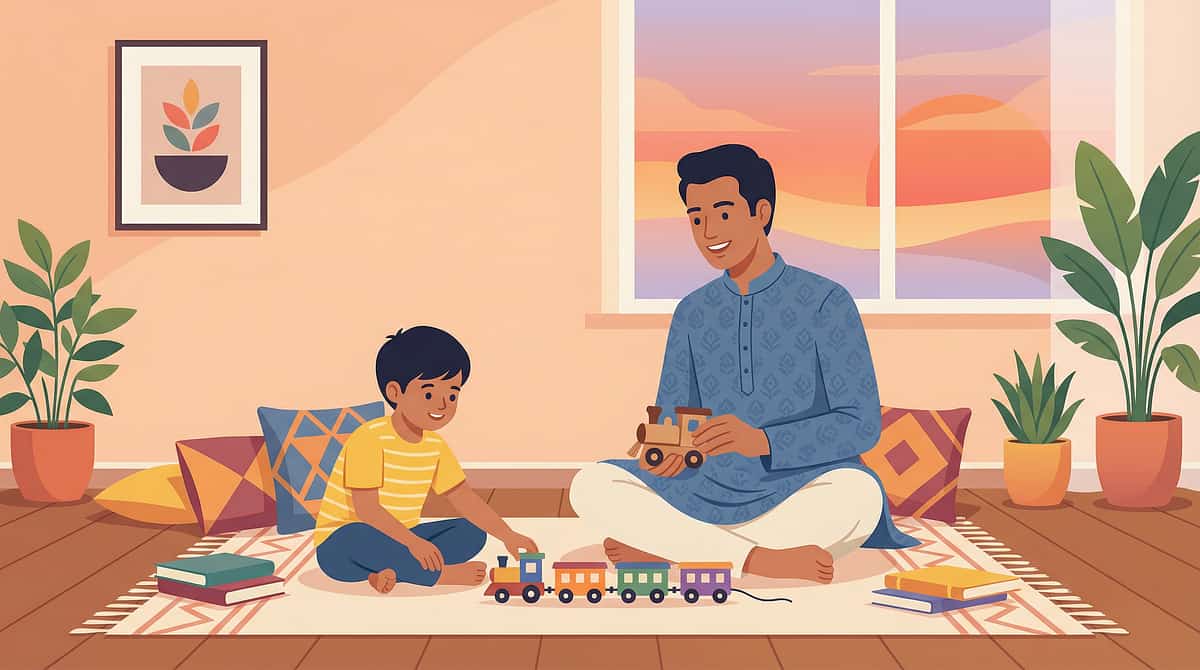
Two relationship-based approaches, paired together. Floortime (DIR): get on the FLOOR, follow the child's lead, join THEIR world, and gently expand from within. Special interests: USE what the child loves as the vehicle for ALL learning and connection. Both share one core principle — enter the child's world first. Expand from there.
G-651 — Floortime Basics
- Follow the child's lead → join their play
- Create playful obstruction: gentle, joyful challenges
- Expand circles of communication one interaction at a time
- 20 minutes daily on the floor, following THEIR agenda
- Indian context: floor-based play culture is already a natural Floortime setting
G-652 — Special Interest Integration
- Trains? Math with trains, reading about trains, social stories about trains
- Play dates at a train museum or themed location
- Interest as reward: "After homework, 10 minutes of [interest]"
- Interest as social bridge: find interest-matched peers and groups
- The reward system fires maximally for the interest — learning embedded IN it hijacks maximum motivation
Evidence Level I: DIR/Floortime + interest-based intervention (PRT). NCAEP 2020 | Greenspan DIR
G-649 · Card 23
Outdoor Play
The moment: Outside. Grass, wind, sun, space, noise, unpredictability. Outdoor play provides gross motor opportunity, natural multi-sensory input, vitamin D, cardiovascular fitness, and exposure to the uncontrolled sensory world that the child must learn to navigate. Natural environments calm — "green exercise" research consistently shows reduced arousal in nature settings.
Evidence Level I: Outdoor play + nature-based intervention. NCAEP 2020
Outdoor Readiness & Activities
- Sensory preparation: sunglasses, hat, comfortable clothing
- Structured outdoor play: plan specific activities, not just "go outside"
- Playground navigation: pre-visit at quiet times to build familiarity
- Nature play: garden exploration, mud kitchen, leaf collection, bug watching
- Minimum 30 minutes daily outdoor time
- Indian context: evening park play (cooler), terrace play, balcony gardening, temple compound spaces, nature walks
G-653 + G-654 · Card 24 · Grouped
Play Date Preparation & Support
"A play date." The most terrifying and most hopeful words for an autism parent. Play dates activate every ASD challenge simultaneously — social communication, sensory processing in another's environment, flexible play, sharing, and sustained social engagement for 1–2 hours. Success requires preparation, environmental control, and adult scaffolding.
G-653 — Preparation
- Select the peer carefully: patient, kind, similar interest if possible
- Prepare the child: social story + visual schedule of the play date
- Set the environment: preferred toys out, sensory safe space available
- Plan activities: structured play before unstructured
- Indian context: cousins as natural, familiar play date partners
G-654 — During & After
- Adult nearby — not hovering, but available
- Scaffold interactions: "Show Rohan your trains!"
- Intervene at the FIRST sign of overwhelm — before meltdown
- START SHORT: 30 minutes → extend as success builds
- Positive review afterward: "You shared your Lego! That was amazing!"
Evidence Level I: Structured social skills practice. NCAEP 2020
G-650 · Card 25
Quiet Play Options
Why Quiet Play Matters
Not all play is active. Quiet play — reading, puzzles, drawing, sorting, building, sensory bottles — provides regulatory calm after active play, sustained attention practice, independent play building, and transition support before bed or school.
Quiet play activates sustained attention networks without the arousal demand of active play. It is REGULATION through engagement — the child is active but calm. A parasympathetic play mode that is essential for wind-down routines and self-regulation development.
Quiet Play Menu
- Puzzles, books, drawing and coloring
- Sorting activities, sensory bottles, Lego
- Card matching, sticker activities, listening to music
- Aim for 5–10 activities the child CAN do quietly alone
- Use as a transition tool: after school, before bed
- Indian context: rangoli patterns, mandala coloring, prayer bead counting, quiet listening
Evidence Level I: Leisure skill development. NCAEP 2020
G-655 · Card 26
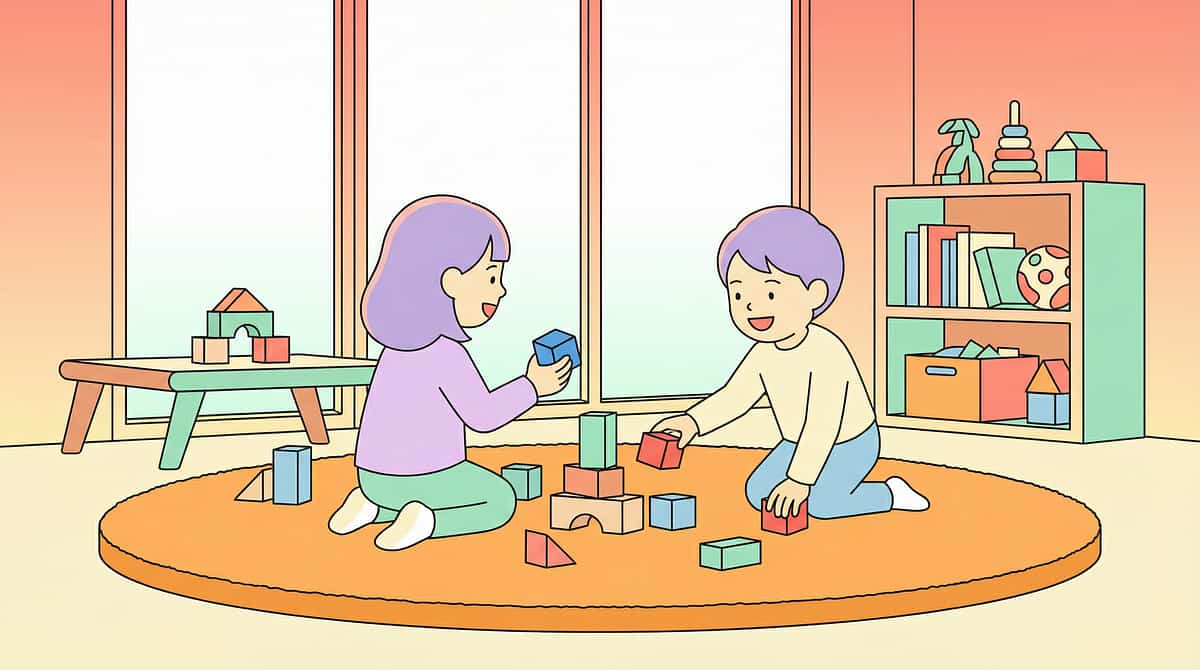
Parallel to Interactive Play
They play BESIDE other children — but not WITH them. Parallel play: same activity, same space, zero interaction. The bridge from parallel to interactive is one of the most important social transitions in autism — moving from "near" to "with." Each step must be built carefully, one small bridge at a time.
The adult serves as the social bridge — physically positioned between children, narrating connections, and facilitating interactions at just the right moment. Structured activities with built-in interaction requirements (games requiring two players) accelerate this transition naturally.
Evidence Level I: Social play facilitation. NCAEP 2020
G-656 · Card 27
Play Expansion
Same play. Same sequence. Same outcome. Every time. Play expansion — adding new elements, new steps, new themes to existing play — challenges the basal ganglia's preference for sameness. The child plays "restaurant" but it's always the same order, same customer, same food. Expanding play = expanding flexible thinking.
The Expansion Method
- Join existing, comfortable play first
- Add ONE new element: "Oh no, the restaurant ran out of rice! What else can we cook?"
- If accepted, add another new element next session
- Types: new characters, new settings, new problems, new endings, new materials
- Timing: expand AFTER comfort — never during initial engagement
Playful Sabotage
Playful disruption ("The dinosaur stole the train!") requires the child to RESPOND to novelty — building flexibility from within the familiar play context. The surprise must be playful, never distressing. The adult reads the child's window of tolerance carefully.
Evidence Level I: Play expansion within developmental play therapy. NCAEP 2020
G-657 · Card 28
Play Flexibility
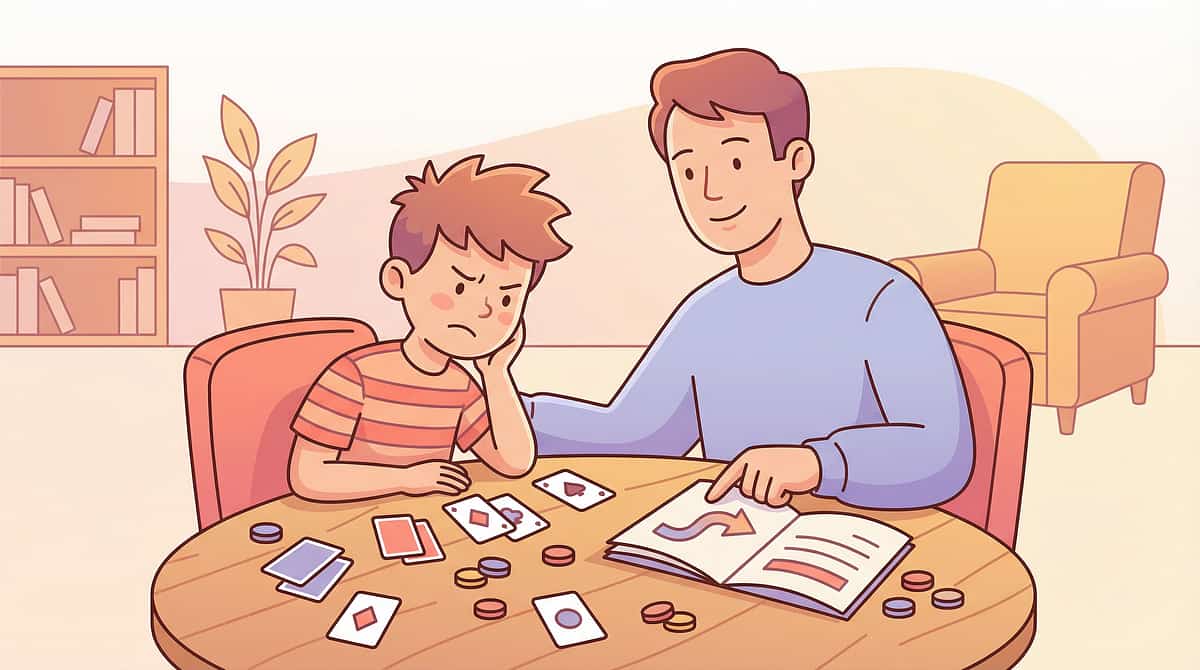
The bridge is in the wrong place. The wrong person is the driver. The rules changed mid-game. MELTDOWN. Play flexibility — tolerating changes, adapting, accepting someone else's idea — is the social key that unlocks cooperative play. Rigid play = solitary play. Flexible play = social play. This is one of the most clinically significant targets in the entire subdomain.
Low-Stakes Changes
Start with color of a block, which character goes first — minimal emotional investment, maximum safety
Mid-Stakes Changes
Which route to take, who has which role — moderate flexibility required
High-Stakes Changes
Who gets to be the leader, changing the outcome — deep PFC-level flexibility
- "What ELSE could happen?" games and multiple-ending stories build flexibility narratively
- Mid-game rule changes: play a game, then change ONE rule halfway through
- "Your idea first, then my idea" — turn-based ideation as flexibility practice
- Celebrate flexibility explicitly: "You changed your plan and it STILL worked! That's being flexible!"
Evidence Level I: Cognitive flexibility within play. NCAEP 2020
G-658 + G-659 · Card 29 · Grouped
Game Rule Understanding & Winning and Losing
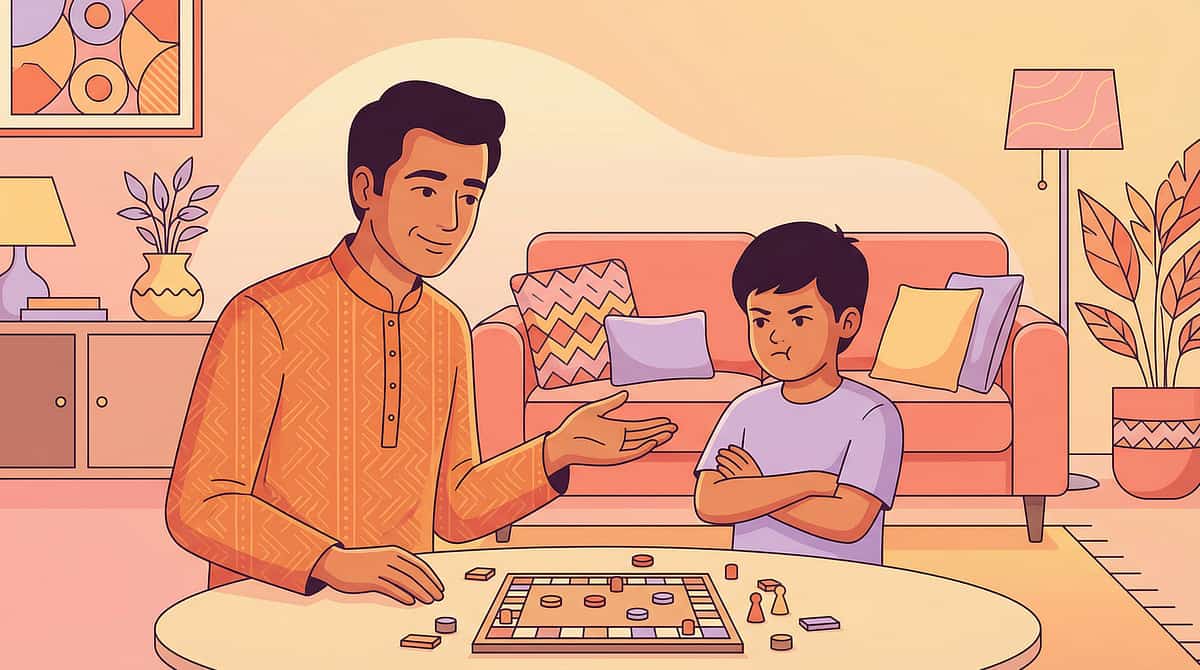
Rules don't make sense. Or rules are ABSOLUTE and anyone who bends them is "cheating." AND: losing is devastating — flipping the board, crying for hours, refusing to play again. Game rule comprehension and emotional regulation around winning and losing are the TWO GATEKEEPERS to all structured social play.
G-658 — Rule Teaching
- Visual rule cards for each specific game
- Practice rules BEFORE playing — not during
- Simplified rules initially (fewer at once)
- Rules may be interpreted differently by different people — cognitive flexibility required
Game Progression
- Cooperative games: everyone wins together
- Games of chance: luck, not skill — no one to blame for losing
- Competitive games: after solid foundation
G-659 — Winning & Losing
- Social stories: "Sometimes I Win, Sometimes I Lose"
- Practice with family FIRST — safe, supportive environment
- "Good sport" language: "Good game!" + handshake ritual
- Adult modeling: lose gracefully in front of child, narrate feelings aloud
- "I lost! I'm disappointed — but that's okay. Let's play again!"
- Indian context: cricket as national game = winning/losing practice built into culture
Evidence Level I: Game skills + emotional regulation. NCAEP 2020
Preview of play skills Therapy Material
Below is a visual preview of play skills therapy material. The pages shown help educators, therapists, and caregivers understand the structure and content of the resource before use. Materials should be used under appropriate professional guidance.
Link copied!
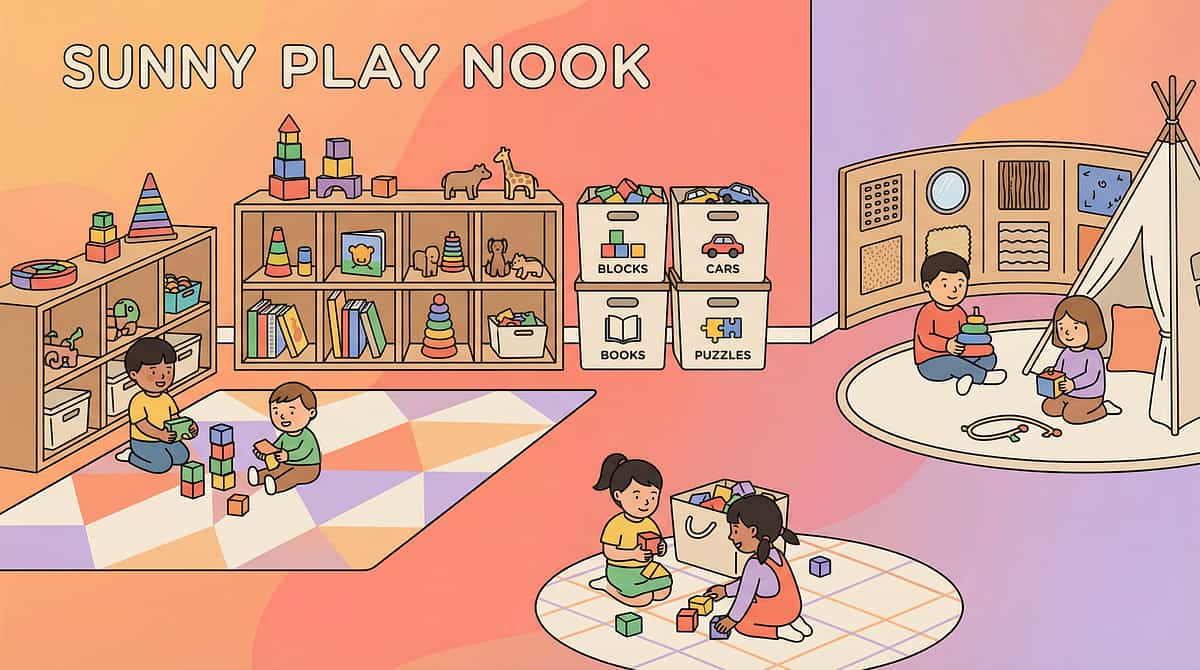
G-660 · Card 30
Creating Play Spaces
The capstone of Subdomain G1. The environment enables or prevents play. A well-designed play space — organized, sensory-friendly, accessible, inviting — does half the therapeutic work. The space says: "Come play. Everything you need is here. You can do this."
Visual Clarity
Organized spaces reduce cognitive load. Label bins by activity type: building, art, pretend, sensory. Keep only 5–7 toys out at once; rotate weekly for novelty and simplicity.
Sensory Regulation
Soft lighting, manageable noise levels, comfortable textures underfoot. A sensory safe space within the play area — somewhere the child can regulate if overwhelmed.
Accessibility
Materials at child height, easy to reach and return independently. The space should invite autonomy — the child can initiate play without adult setup.
Play Zones
Active play zone, quiet play zone, sensory zone, creative zone. Even in small Indian homes — a corner, a mat, a shelf — defines a play space that signals "this is where we play."
Indian home context: Small spaces → creative use of floor space, balcony, and terrace. Collapsible, storable play setups. Mat-based play (culturally familiar floor seating). In joint families, shared play spaces need consistent rules across all caregivers.
Evidence Level I: Environmental design for play. NCAEP 2020 · Lead: ABA (PRT/NBI) · Psychology (DIR/Floortime) · OT | SpEd · SLP · NeuroDev