185 Materials That Help With Pronoun Reversal
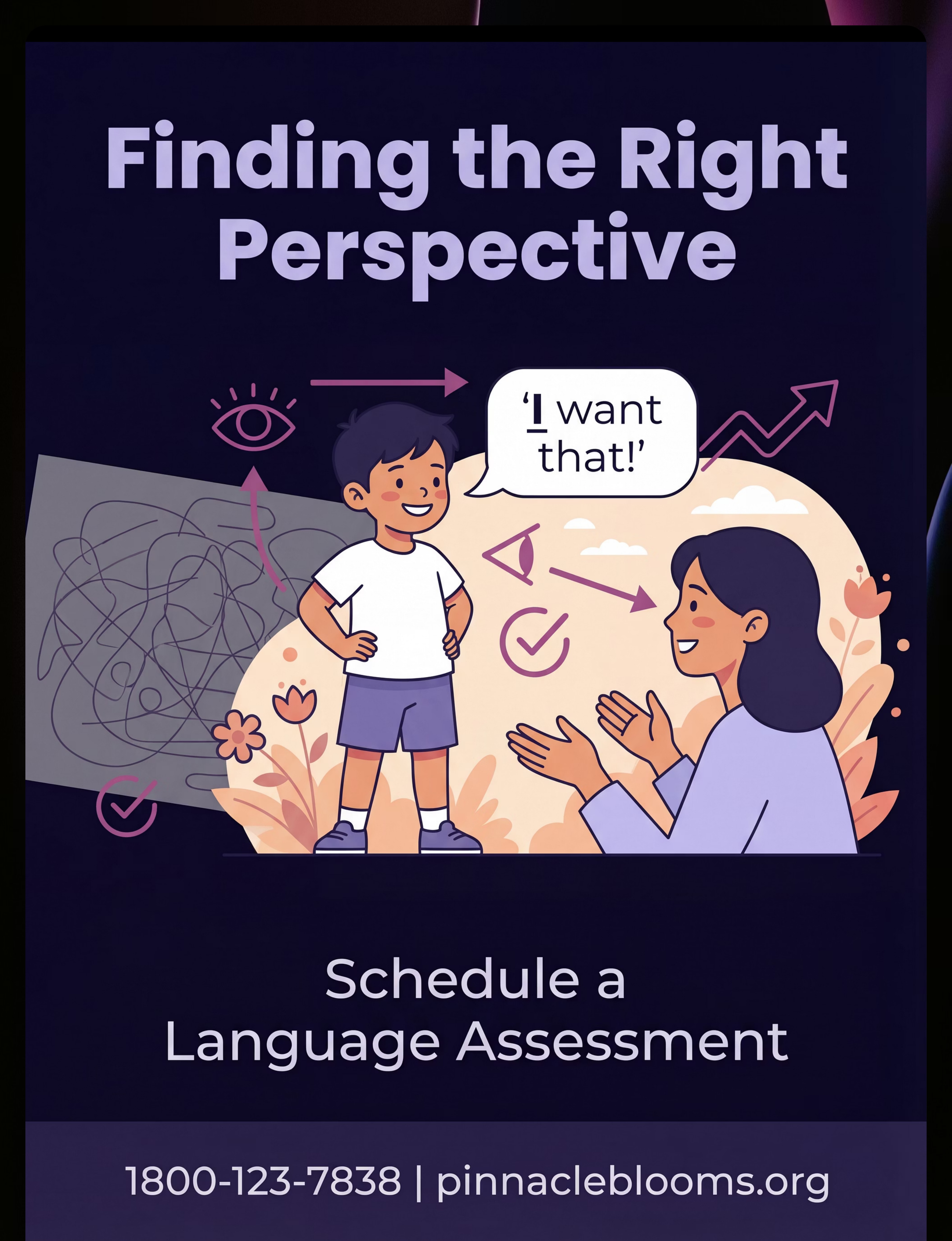
"You want water." She meant I want water.
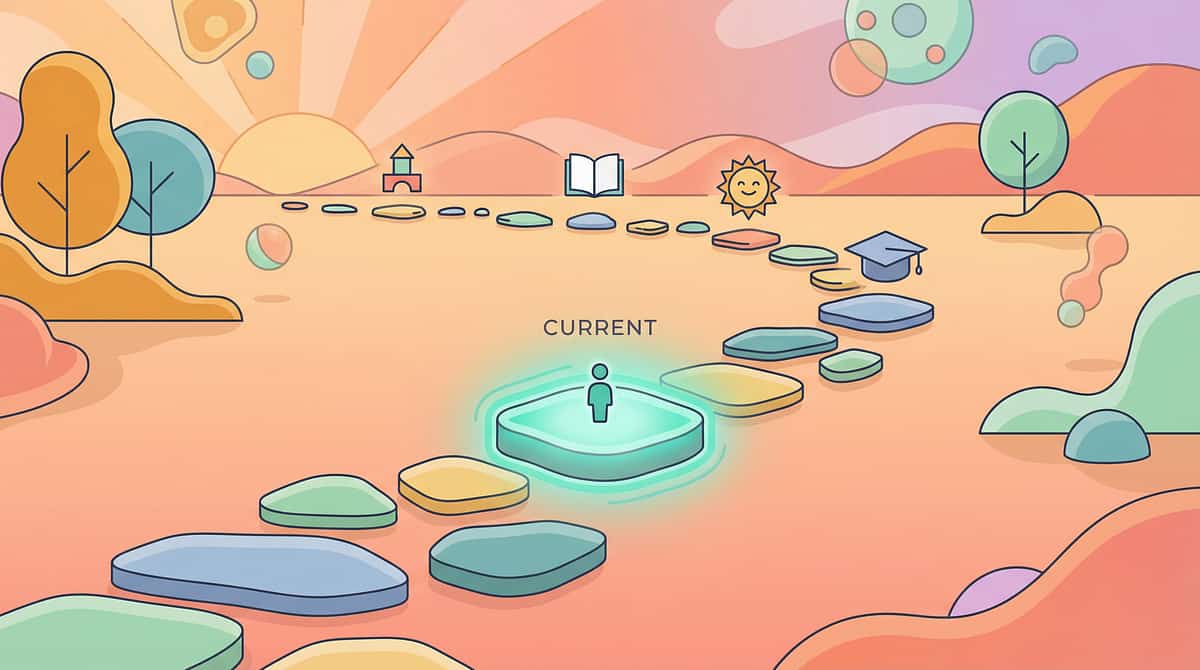
She's not confused about what she wants. She's navigating a language map where 'I' and 'you' don't yet anchor to the right person — and that map can be redrawn.
ACT I — THE EMOTIONAL ENTRY
You Are Not Failing. You Are Not Alone.
"He says 'you' when he means 'me.' The teachers think he doesn't understand — but he understands everything. He just gets the pronouns backwards." — Parent, Pinnacle Network
When your child reaches for a glass and says "you want water" — that moment carries a complicated weight. Love, confusion, and quiet worry all arrive at once. But here is what that moment actually means: your child has listened carefully, memorized language precisely, and reproduced it faithfully. The challenge is not comprehension. It is perspective-anchoring — and it is one of the most documented, most treatable language differences in autism.
🏷 B-185
Pronoun Reversal Intervention
Domain B
Social Communication
Age Range
2–8 years (benefits to age 12+)
Validated
SLP + ABA + SpEd + NeuroDev Consortium

📞 FREE National Autism Helpline: 9100 181 181 | 16+ languages | 24×7
ACT I — CARD 02
Millions of Families Navigate This Exact Moment.
Pronoun reversal — also called pronoun confusion or pronominal reversal — is not rare, and it is not random. Among children on the autism spectrum, reversal of first-person pronouns ("I/me") and second-person pronouns ("you") is among the most documented early language differences. You are among millions of families navigating this. And targeted intervention works.
50–75%
Pronoun Reversal Rate
Children with ASD who show pronoun reversal at some point in language development
1 in 36
ASD Prevalence
Children diagnosed with ASD globally (CDC, 2023) — India est. 1 in 66 children
97%+
Improvement Rate
Pinnacle-measured improvement across the Communication Readiness Index

India Context: India has an estimated 18 million children with autism spectrum conditions. Pronoun reversal is one of the top 5 language concerns reported to Pinnacle Blooms Network® centers. You are not alone — and you are not without resources.

📞9100 181 181 — "Call for a FREE language screening in your language."
ACT I — CARD 03 | NeuroDev Pediatrics
It's a Perspective-Mapping Difference, Not a Comprehension Failure.
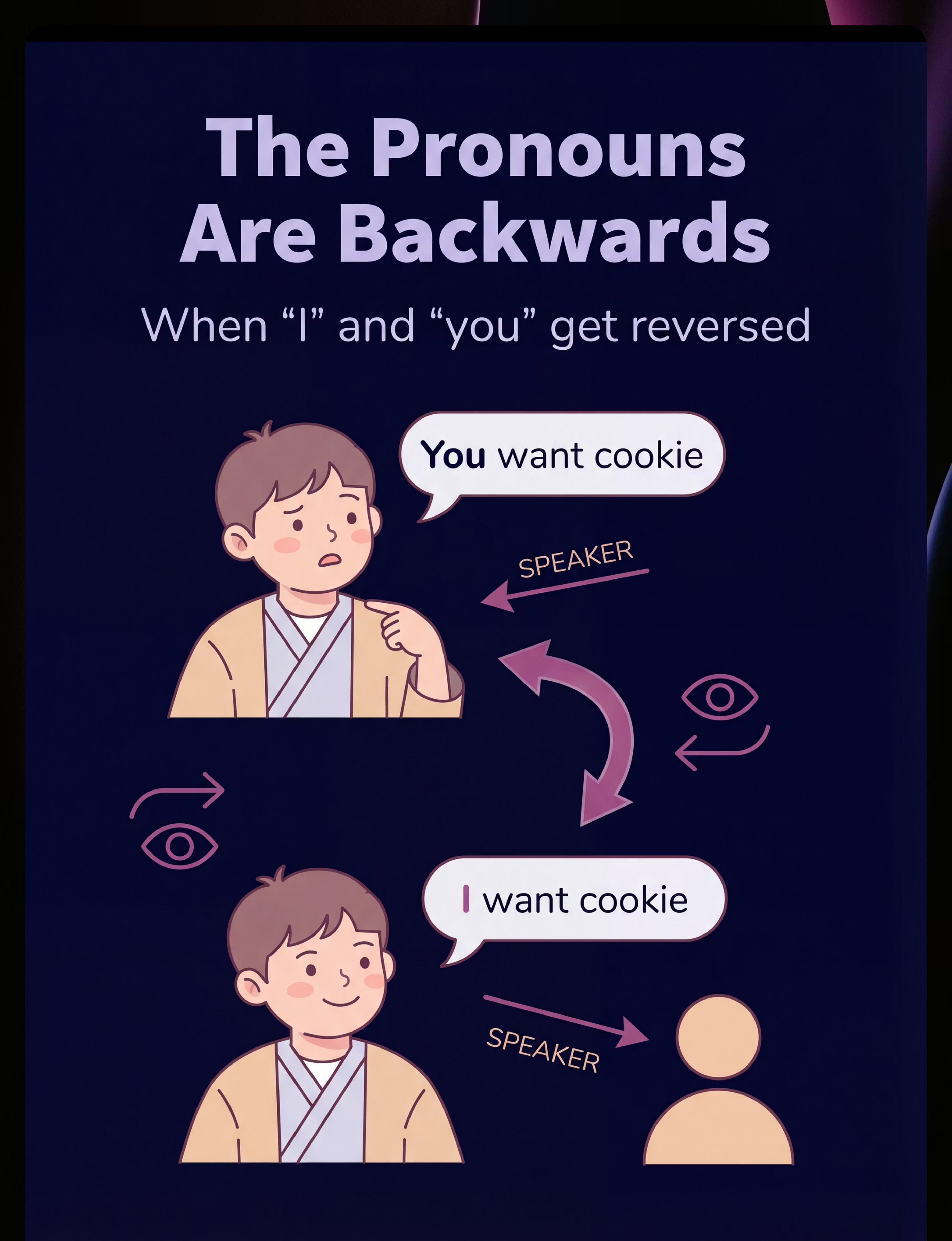
When your child says "you want water" while pointing to themselves, they are demonstrating something remarkable: they have perfectly encoded the phrase as it was spoken to them — including the pronoun. This is called echolalia-based pronoun reversal — and it reveals that your child is listening, memorizing, and reproducing language with precision.
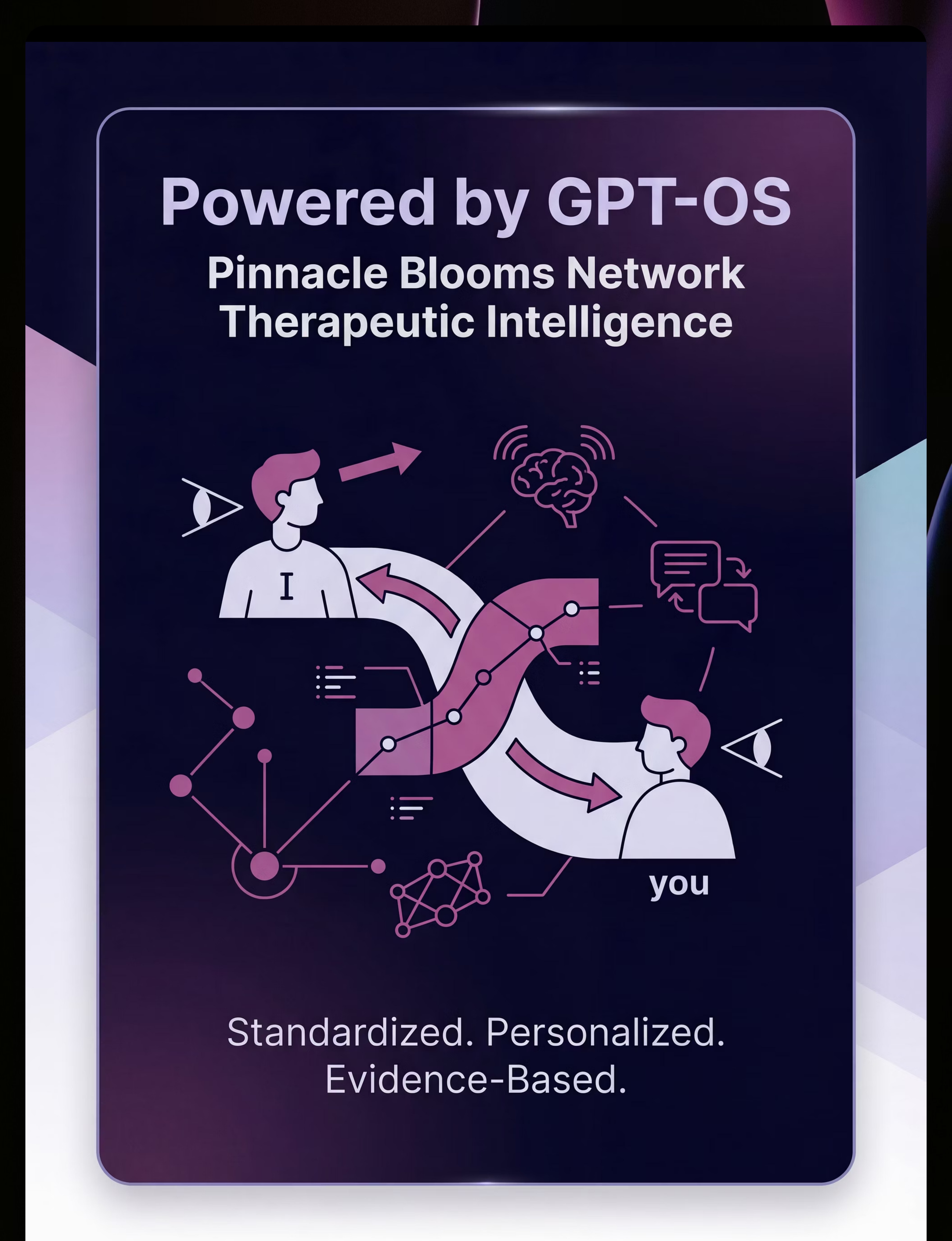
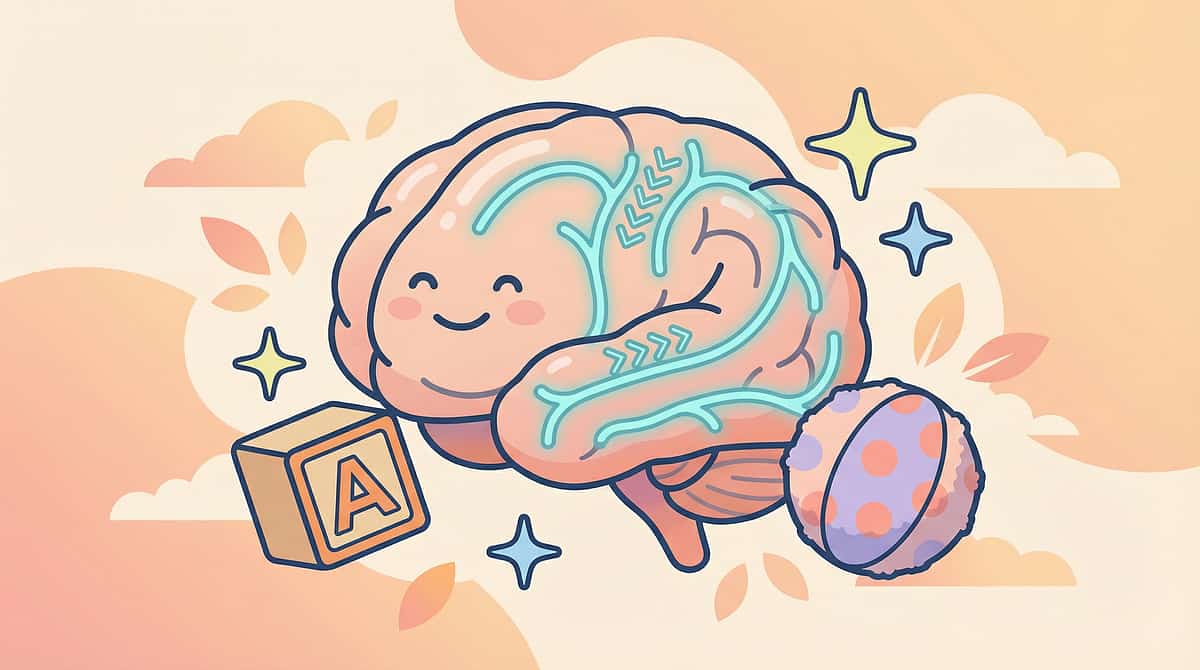
Typically developing children, through thousands of conversational exchanges, build a neurological anchor that says "I = the one currently speaking." This anchor requires the brain to track who is speaking at every moment, remap the same word ("you") to different referents depending on position, and integrate self-concept into real-time language production. For many children with autism, the mirror neuron system — which underpins social perspective-taking — processes this shift differently.
Broca's Area
Language production — functioning correctly ✓
Mirror Neuron System
Perspective-taking — actively developing through intervention
Medial Prefrontal Cortex
Self-referential language — training in progress through B-185

Key Insight: This is a wiring configuration difference, not a language comprehension deficit. Your child knows what they want. They are speaking accurately from the perspective of the person who taught them the phrase. The intervention re-anchors "I" to the speaker's body and awareness.
ACT I — CARD 05 | Evidence Grade
Clinically Validated. Home-Applicable. Parent-Proven.
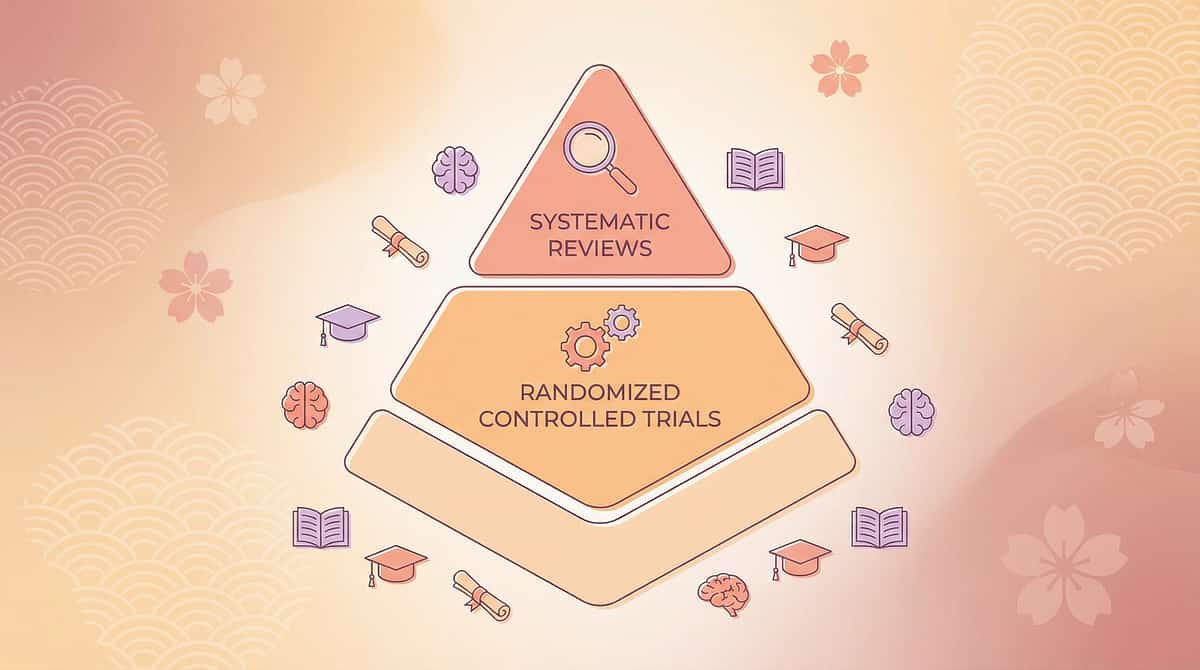
Evidence Grade: ★★★★☆ Level II Evidence — Multiple RCTs + Systematic Reviews. Nine specific material categories — each with peer-reviewed support — are used by Pinnacle SLPs across 70+ centers. This is not experimental. This is applied clinical science, delivered at home.
Study
Key Finding
Source
NCAEP EBP Report (2020)
Video modeling + naturalistic developmental intervention = evidence-based for pronoun goals
NCAEP 2020
Systematic Review (Children, 2024)
SLP + ABA integrated pronoun intervention shows significant improvement in 8–16 weeks
PMC11506176
Tager-Flusberg (2001)
Structured pronoun training with mirror feedback shows measurable gains in 3–6 weeks
Autism Research Journal
Padmanabha et al. India (2019)
Home-based language interventions: significant caregiver-delivered outcomes
DOI:10.1007/s12098-018-2747-4
PRISMA Meta-Analysis (2024)
Multimodal communication intervention (visual + kinesthetic + video) highest effect size
PMC10955541
ACT II — THE KNOWLEDGE TRANSFER
The Technique: What It Is
Formal Name: Pronoun Reversal Intervention via Multimodal Perspective-Anchoring
Parent-Friendly Alias: The "Mirror-Map Method" — helping your child's brain find where "I" lives.
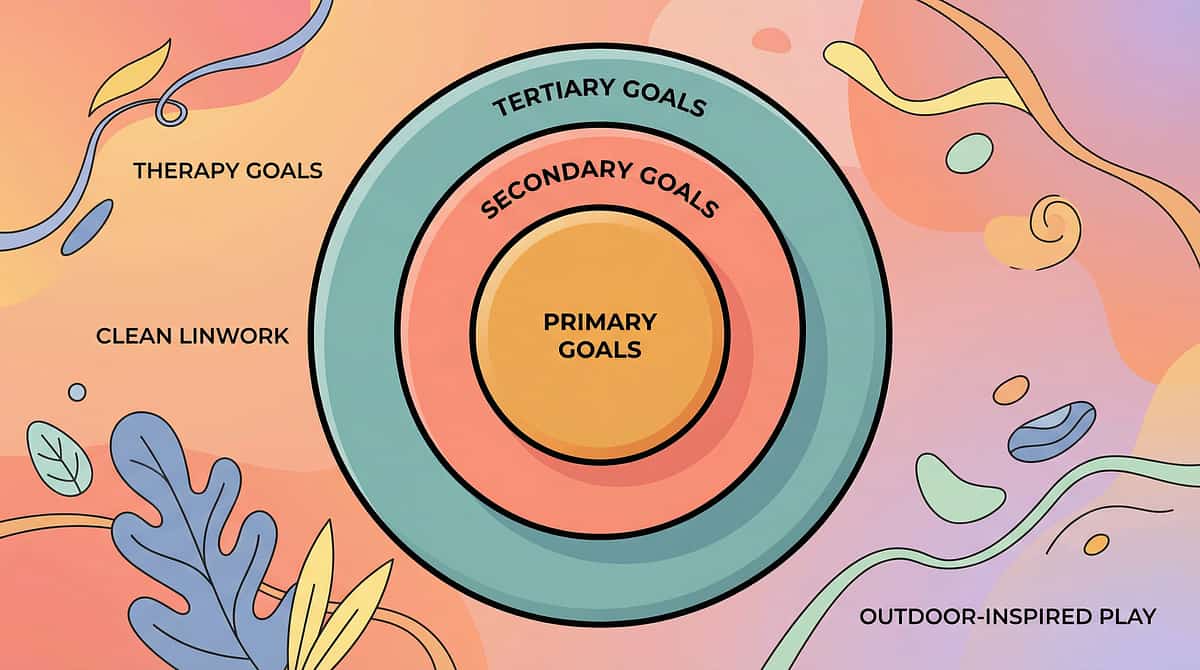
Pronoun reversal intervention is a structured, evidence-based speech-language therapy approach designed to help children with autism establish a stable neurological anchor for first-person pronouns ("I," "me," "my," "mine"). The technique works by pairing body awareness, visual self-reference, conversational turn-taking, and immediate reinforcement to re-route language production through self-perspective rather than echoed other-perspective. It is not drilling — it is rewiring, through play, repetition, and relationship.
Age Range
2–8 years (benefits documented to age 12+)
Session Duration
10–20 minutes
Frequency
3–5 times per week
Setting
Home, therapy room, naturalistic play
Lead Discipline
SLP (primary), ABA (reinforcement), SpEd (generalization)

This Technique Crosses Therapy Boundaries Because the Brain Doesn't Organize by Therapy Type.

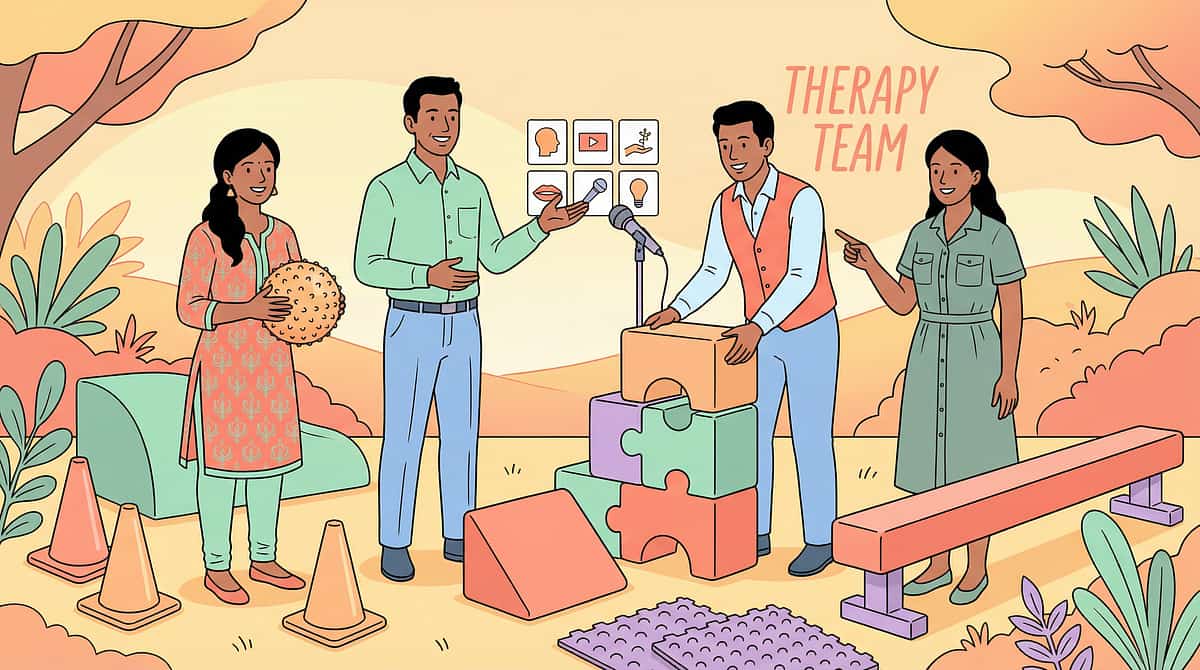
ACT II — CARD 07 | FusionModule™ SLP — Primary Lead Designs the pronoun hierarchy, selects materials, calibrates difficulty, establishes baseline and progress benchmarks. ABA / BCBA Designs the reinforcement schedule, tracks discrete trial data, shapes approximations toward correct pronoun use. Special Educator Generalizes pronoun use into academic contexts: "I am reading," "my book," classroom identity and self-reference. Occupational Therapist Body-awareness techniques that anchor self-concept through proprioceptive input before language tasks begin. NeuroDev Pediatrics Rules out other differentials, monitors developmental trajectory, coordinates across school and clinic teams. Parent / Caregiver EverydayTherapyProgramme™ delivery: 3–5 daily micro-sessions using home materials — the most consistent therapist your child has. "Your SLP designs the map. Your ABA therapist builds the road. Your SpEd teacher extends it to school. You — the parent — are the terrain this road travels through every single day." 📞 9100 181 181 — "Which therapy does my child need? Ask us FREE."

What This Technique Targets

ACT II — CARD 08 | SLP + ABA When your child shifts from "you want" to "I want" in even 2 out of 10 trials — that is the neural pathway beginning to form. Celebrate it. The center target drives everything: once first-person pronoun accuracy is established in structured settings, conversational perspective-shifting and academic self-reference follow naturally in the months ahead.
ACT II — CARD 09 | Primary Materials
9 Materials. Clinically Mapped. Parent-Ready.
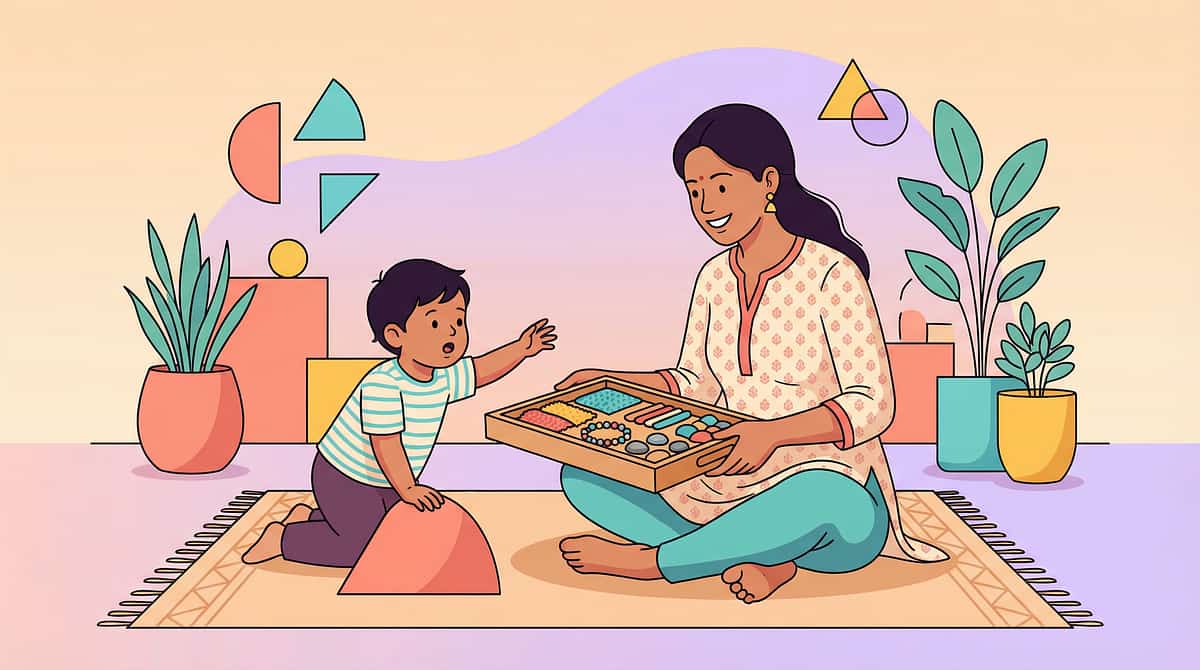
Below are the 9 canonical material categories used across Pinnacle SLP sessions for B-185. Each has a commercial option and a ₹0 DIY equivalent. Total setup cost: ₹1,500–4,500 for a comprehensive kit | ₹0–500 for the zero-cost DIY version.
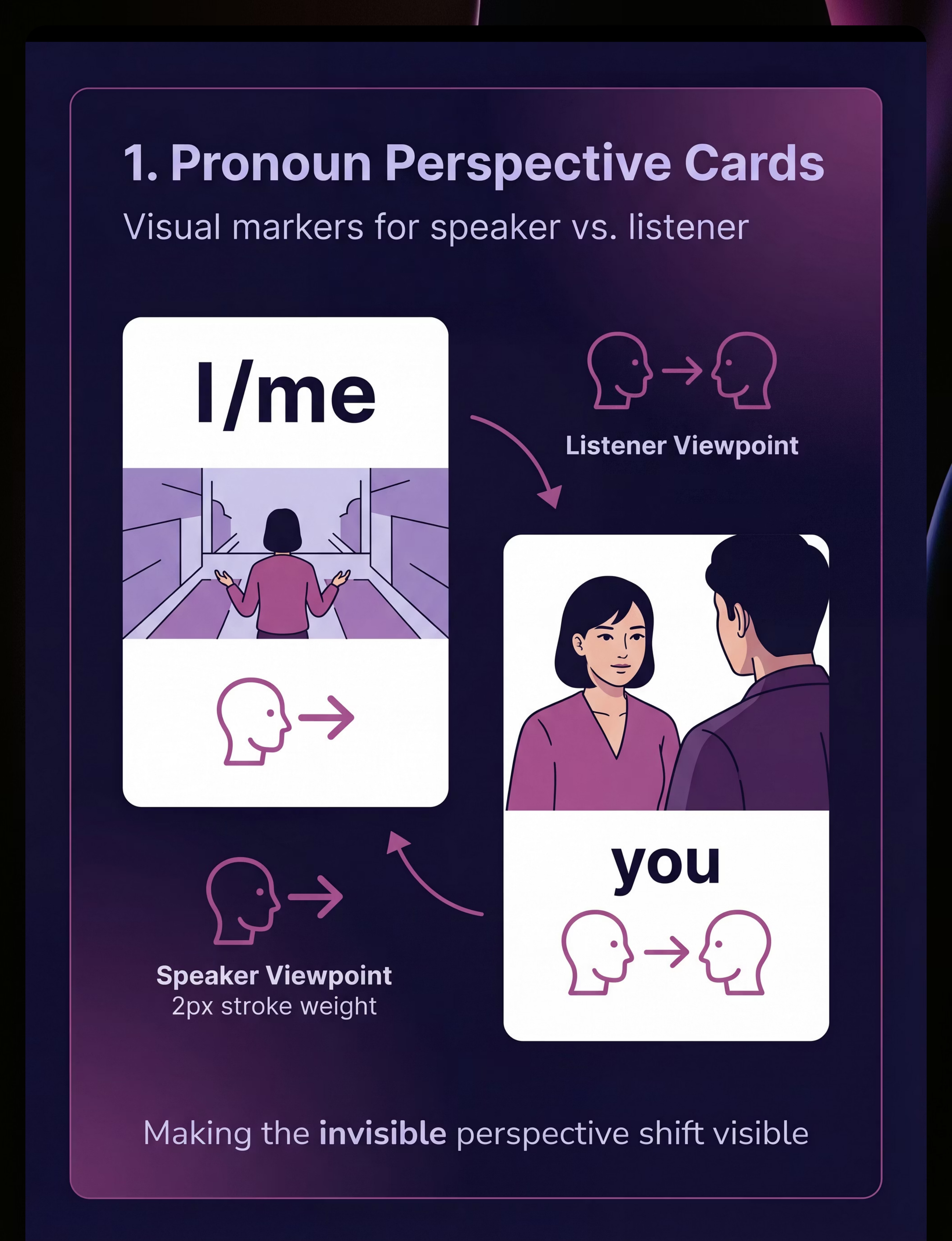
Pronoun Perspective Cards
Visual cards showing "I/me" (self-facing arrow) and "you" (other-facing arrow). Makes speaker vs. listener perspective visible and concrete. ₹200–500 | DIY: index card + marker.
Mirrors (Full-Length or Table-Top)
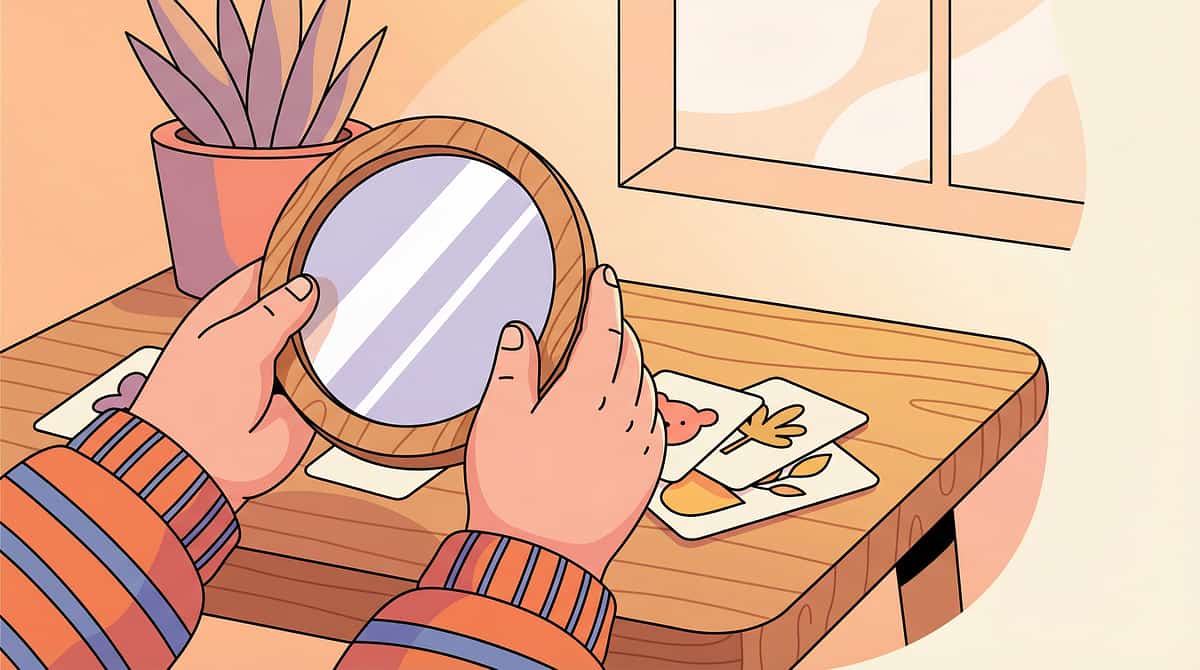
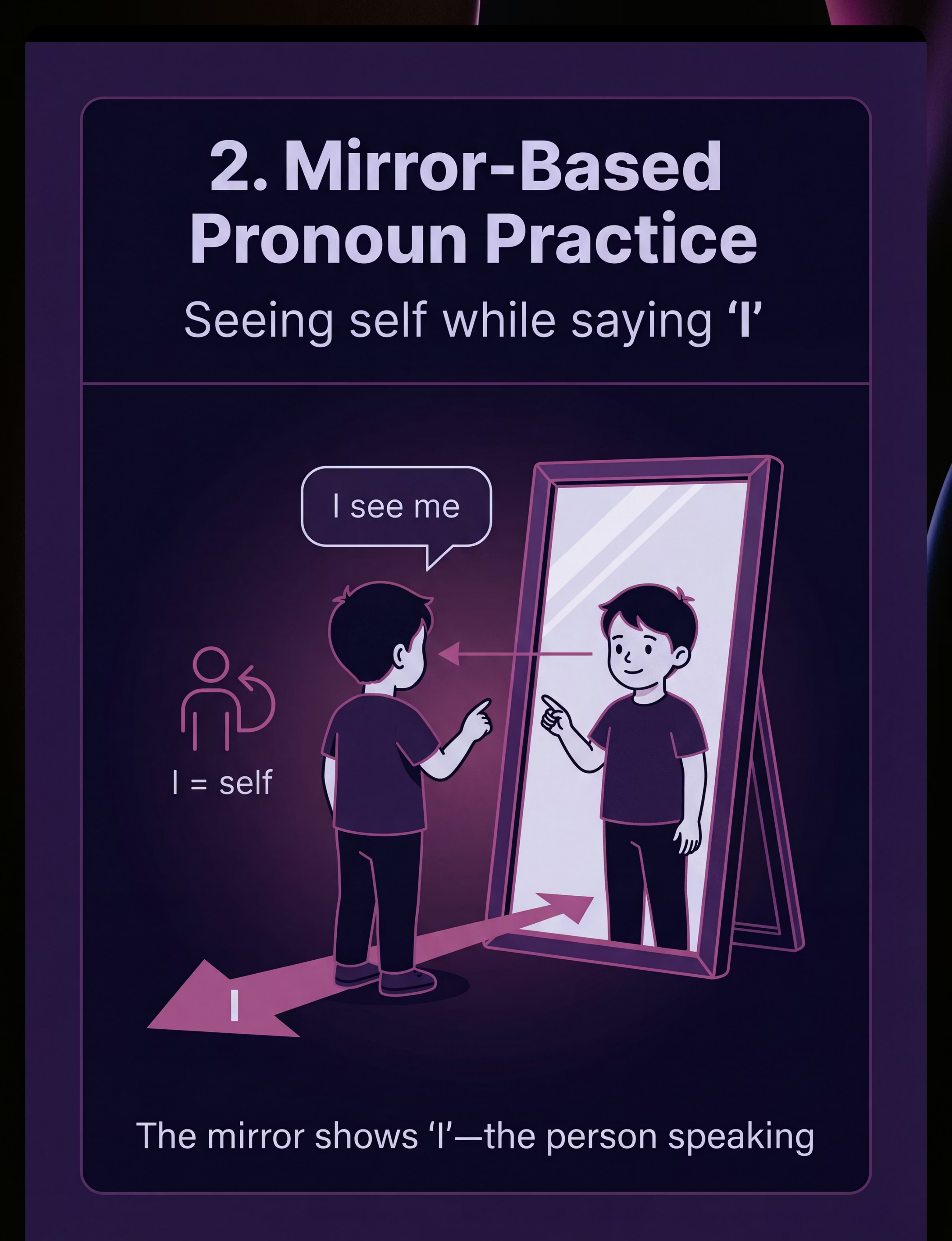
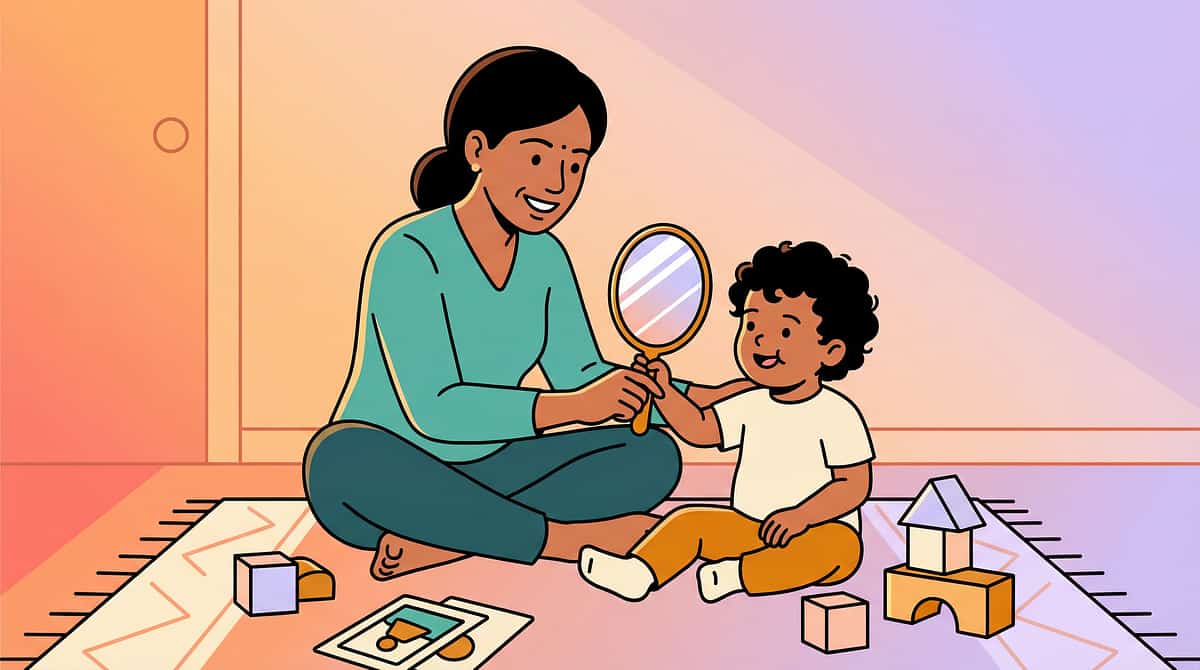
Child sees themselves while saying "I." Visual-self anchors the pronoun: "I = the person you see in the mirror." ₹300–1,500 | DIY: any household mirror.
Family Photo Sets (Printed / Laminated)
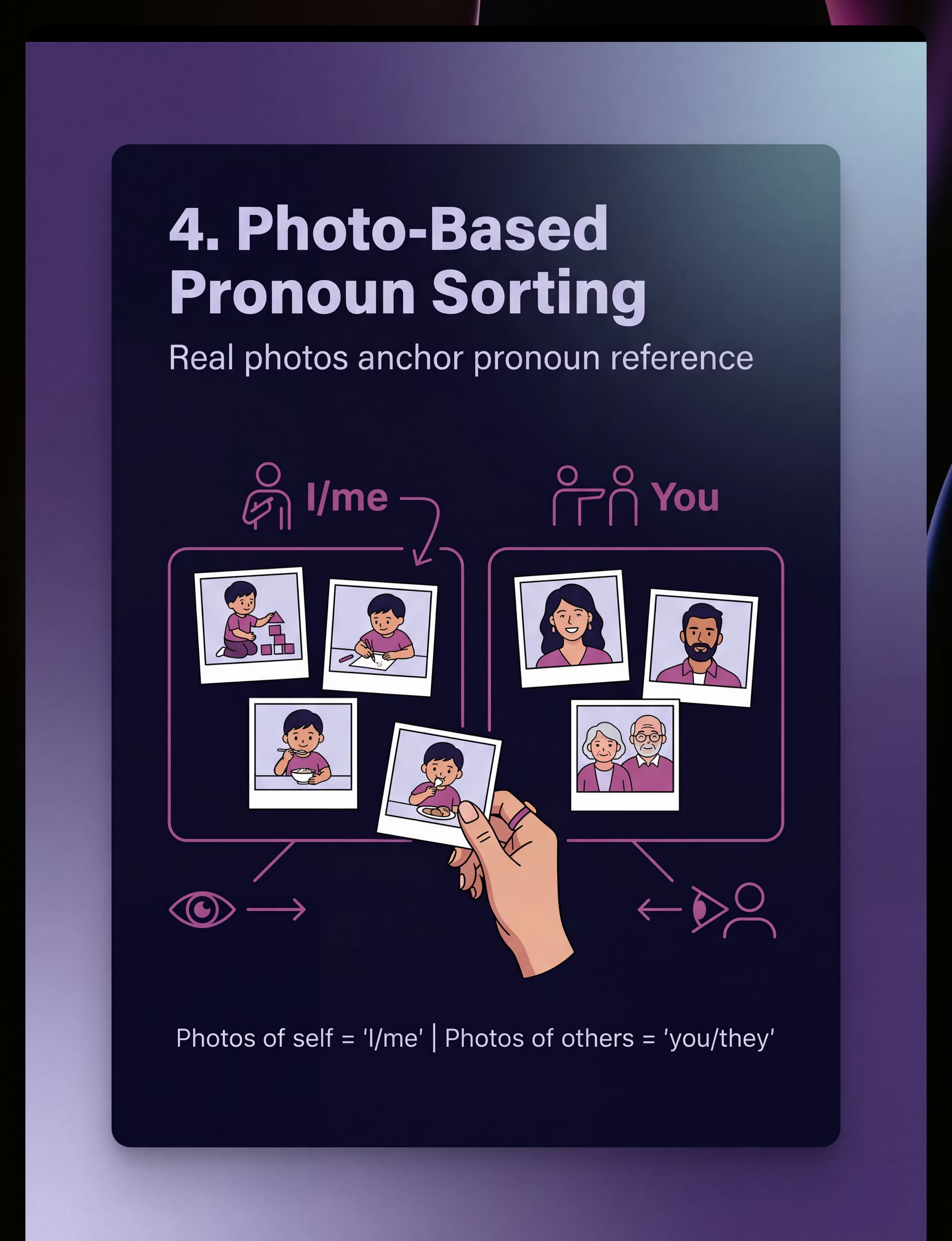
Real photos of child + family members. Child sorts: "This is me (I/me)" vs. "This is you." Concrete visual referents for abstract pronouns. ₹50–200 printing cost.
Hand Puppets (2-character sets)
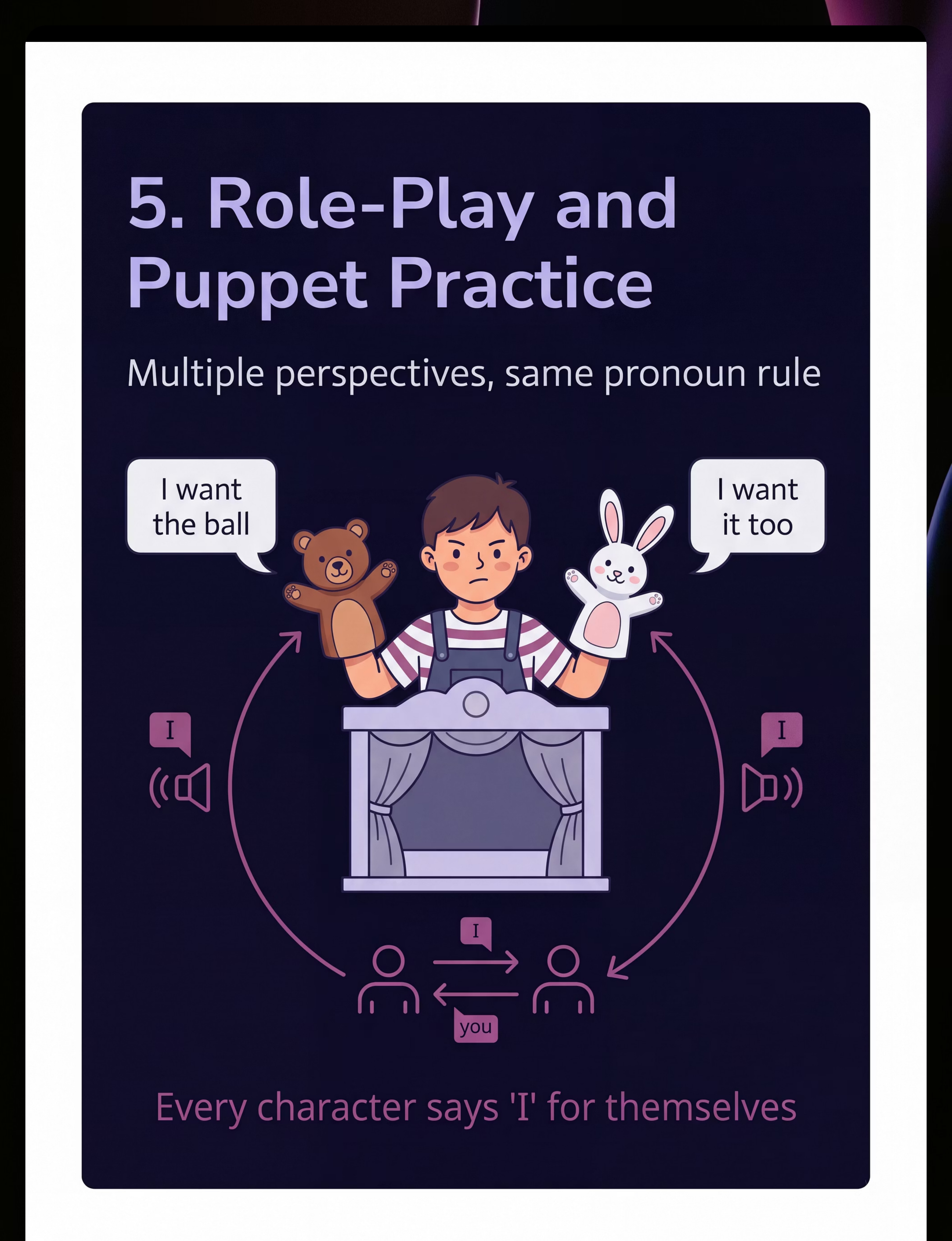
Two puppets = two perspectives. Each puppet says "I" for themselves. Shows pronoun as character-dependent, not fixed. ₹300–800 | DIY: old socks + marker-drawn faces.
Turn-Taking Board Games
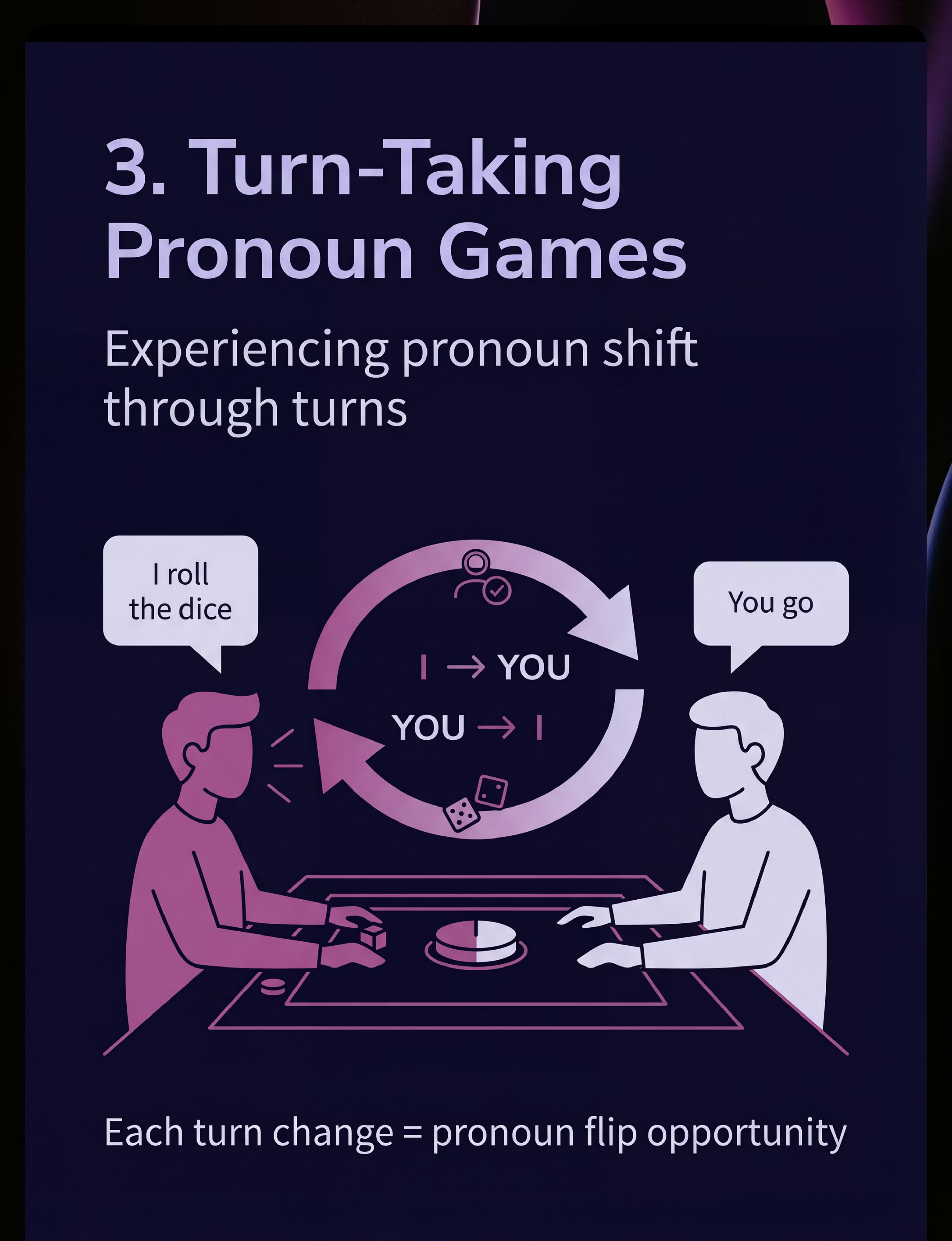
Each turn requires stating "I roll" / "you roll." Live pronoun-shifting practice embedded in play. ₹400–1,200 | DIY: any board game + pronoun narration rule.
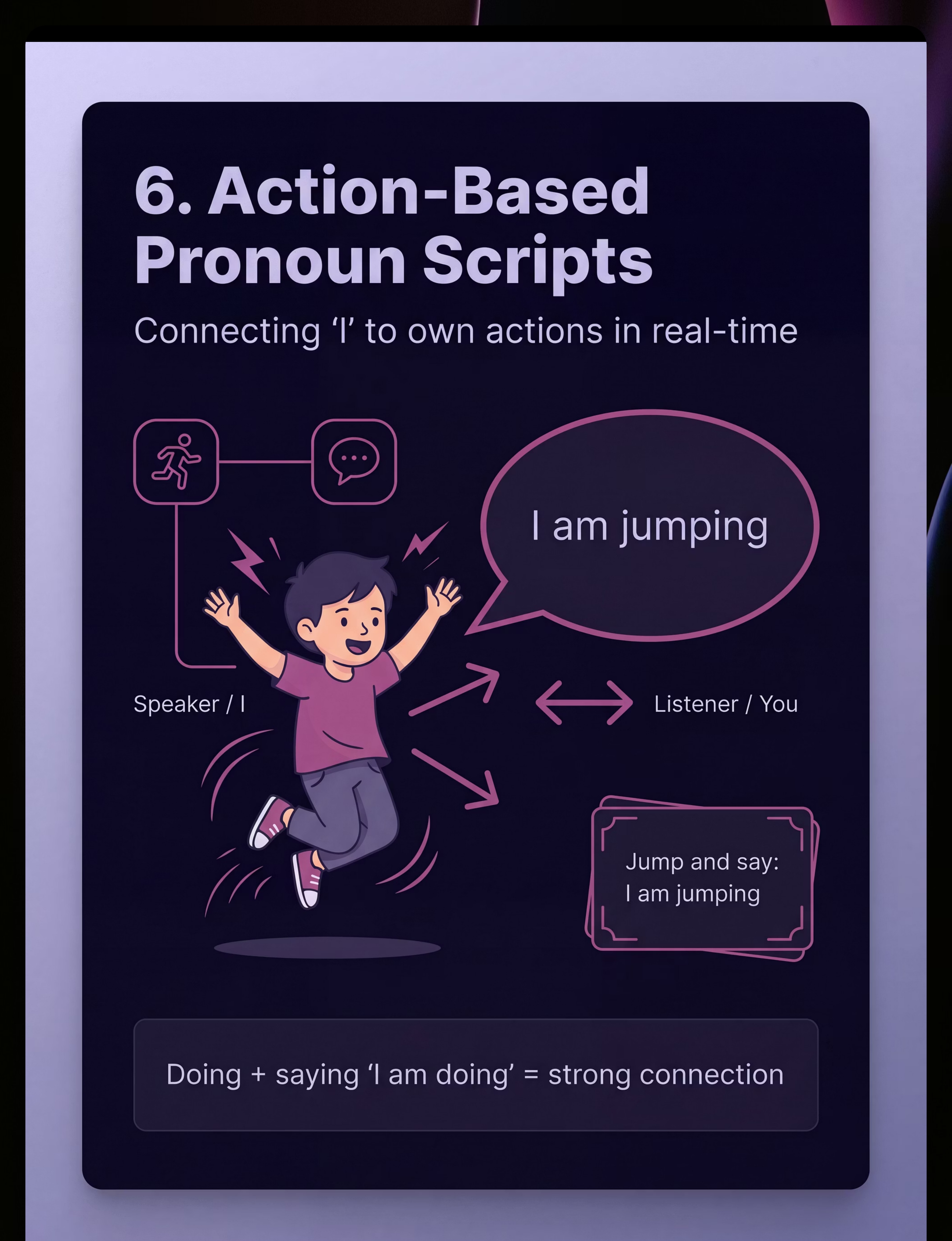
Action Script Cards
Cards showing action + prompt: "I am ___-ing" paired with physical action. Doing + saying = strong pronoun-body anchor. ₹150–400 | DIY: print action pictures + write scripts.
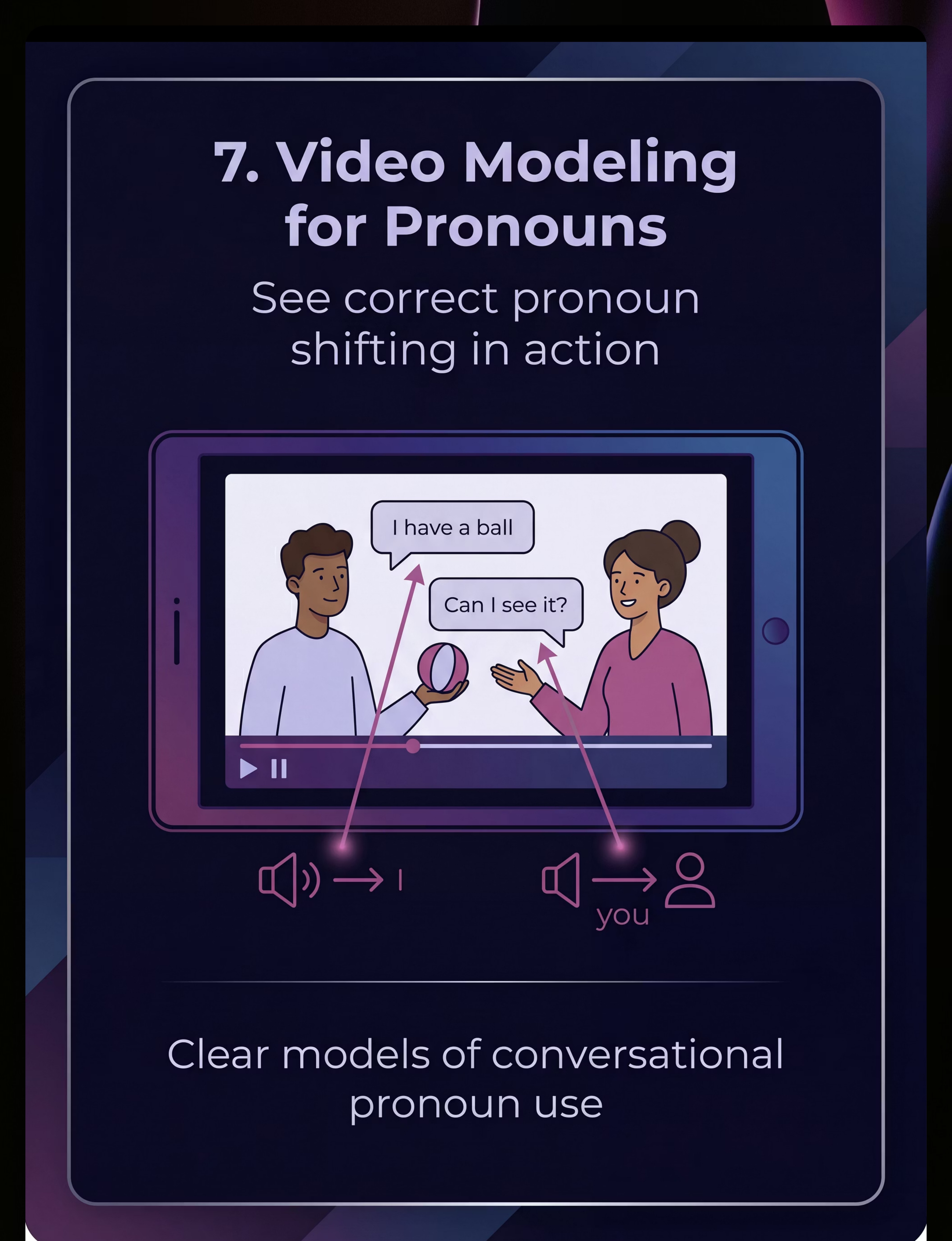
Tablet / Device for Video Modeling
Videos showing correct pronoun use in naturalistic conversation. Child watches, then imitates. NCAEP evidence-based practice. ₹0 (existing device) or ₹3,000–8,000.
Reward Stickers ✓ Canon Active
1800+ Reward Stickers — Ideal for Teachers and Parents. Immediate tangible reinforcement for correct pronoun use. ₹364 | Buy on Amazon.in
Reward Jar / Token Economy ✓ Canon Active
The Rosette Imprint Reward Jar. Token economy system — correct pronoun = token earned. Accumulate 5 tokens = preferred activity. ₹589 | Buy on Amazon.in

📞9100 181 181 — "Need help sourcing materials? We'll guide you."
ACT II — CARD 10 | DIY Alternatives
Every Material Has a ₹0 Version. No Child's Progress Should Wait for a Purchase.
Clinical Material
₹0 DIY Equivalent
Why It Works
Pronoun Perspective Cards
Write "I →" and "You ←" on index cards with arrows pointing to each person
Same visual anchor, identical functional mechanism
Therapy Mirror
Bathroom mirror, phone selfie camera, any reflective surface
Self-visual is the mechanism, not the mirror brand
Laminated Photo Cards
Phone photos + clear plastic sleeve + sticky tape
Real family photos have higher motivational value than stock images
Hand Puppets
Old socks + marker-drawn faces
Puppet as "character" is what matters, not puppet quality
Action Script Cards
Paper + pen + magazine cutouts
The word-picture pairing is the intervention
Turn-Taking Games
Dice + any counter game + pronoun narration rule
The rule is the therapy, not the game
Video Modeling
YouTube: search "pronoun practice children SLP"
Video + narration = same modality
Reinforcement Menu
Verbal praise + sticker chart drawn on paper
Immediate specific praise is highest-value reinforcer

Zero-Cost Full Session: Phone selfie camera (mirror) + printed family photo + two socks with faces (puppets) + paper script cards + verbal praise = Complete pronoun session at ₹0.

WHO/UNICEF Equity Note: Per WHO Nurturing Care Framework (2018): Effective early intervention is context-responsive and not contingent on access to clinical materials. These techniques have been validated in low-resource settings across 54 countries. Your home, your relationship, and your consistency are the most powerful therapy tools that exist.
ACT II — CARD 11 | Safety First
Read This Before Every Session. It Takes 60 Seconds. It Matters.
🔴 DO NOT PROCEED IF
  • Child is in meltdown, severe distress, or post-meltdown recovery (within 30 min)
  • Child shows signs of illness (fever, ear pain, headache — all affect language output)
  • Session would feel like drilling, punishment, or forced repetition
  • Child has shown regression in multiple domains simultaneously
🟡 MODIFY SESSION IF
  • Child is tired — shorten to 5 min, use highest-preference materials only
  • Child is resistant to mirror work — switch to photo cards instead
  • Child is in high-stimulation state — do proprioceptive input first (5 min)
  • Child uses old pattern despite weeks of practice — return to easier hierarchy step
🟢 OPTIMAL CONDITIONS
  • Child is fed, rested, calm, and in a regulated state
  • 60–90 minutes after last meal
  • Preferred activity or object is available as reinforcer
  • No competing demands during session
  • You are calm — your nervous system regulates theirs

🛑 STOP IMMEDIATELY IF: Child becomes physically aggressive or self-injurious during language tasks | Child shows acute anxiety (hyperventilation, non-stop crying, complete shutdown) | Child repeats only the reversal despite 10+ weeks of consistent practice with no change whatsoever.
Material Safety: Mirror — use acrylic safety mirrors with young children, secure against tipping. Puppets — check for button eyes/detachable parts (choking hazard under age 3). Photo cards — laminate or use clear sleeves; chewing/tearing is common and safe.

📞9100 181 181 — "Unsure whether to proceed? Call us — we'll assess together."
ACT II — CARD 12 | OT + SLP
Spatial Precision Prevents 80% of Session Failures. Set This Up Before You Call Your Child.
The Ideal Setup
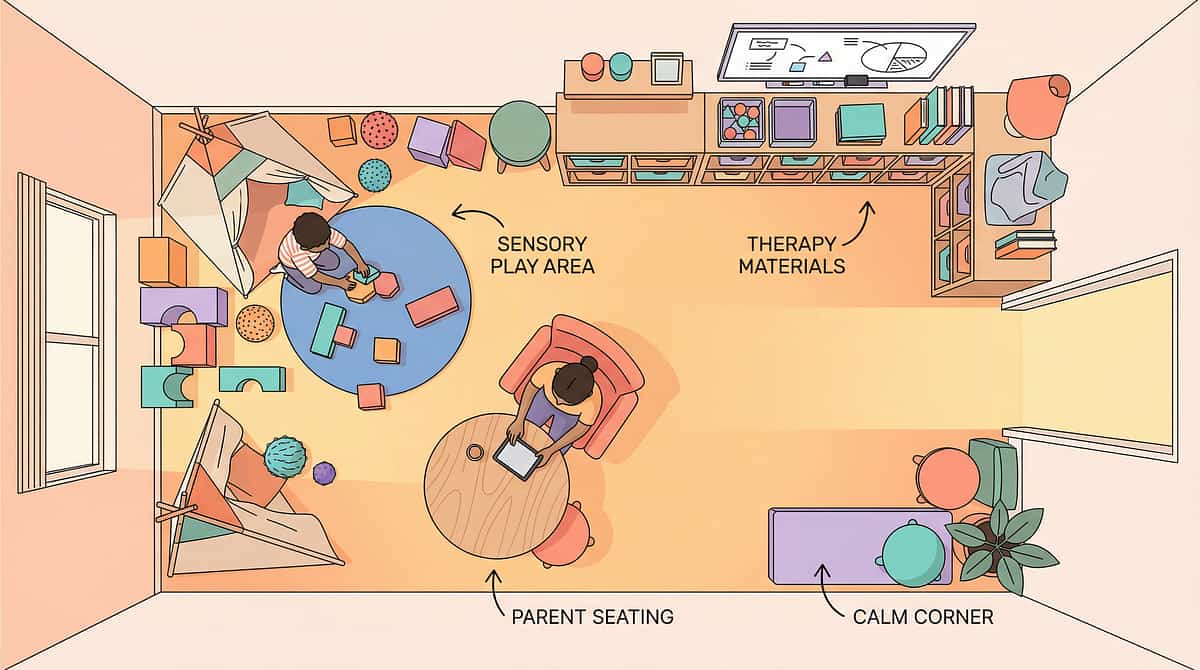
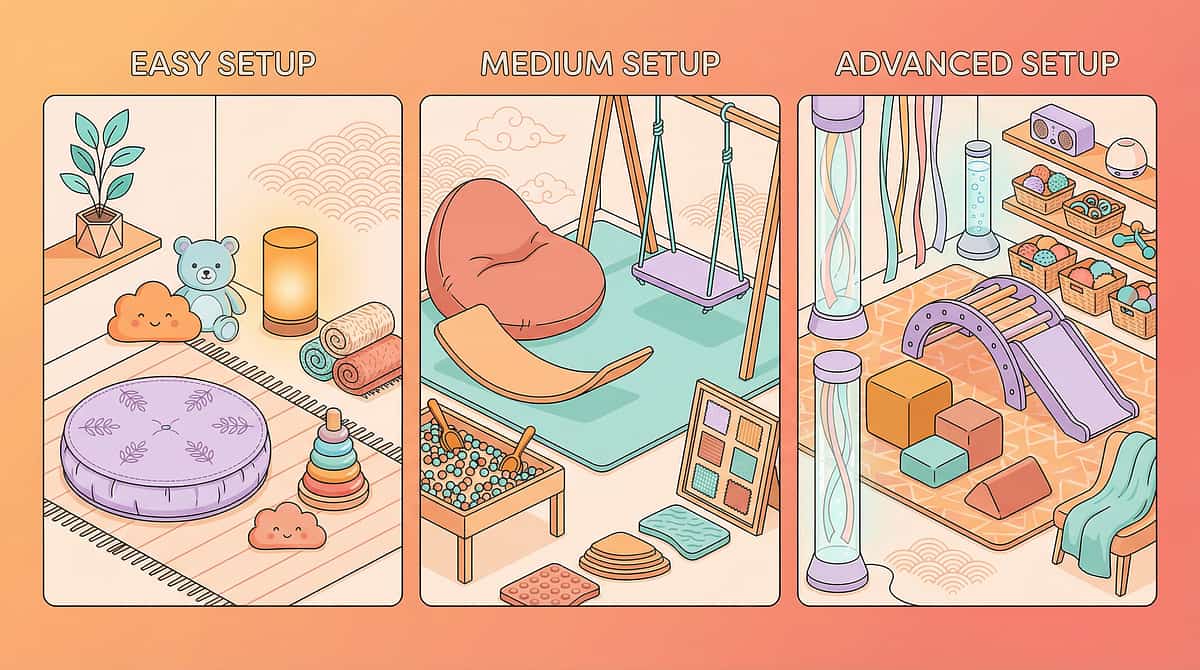
Quiet room with soft natural light. Mirror at child eye-level if using mirror method. You sit beside or slightly behind — never towering over. Materials to your right. Reinforcer within reach. Visual timer visible to child.
Give a 2-minute warning: "In 2 minutes, we're going to do our talking game." Use a visual timer they can see.
Setup Checklist
  • Quiet room — TV off, siblings managed (5–10 min protected time)
  • Soft natural light (harsh overhead light increases dysregulation)
  • Mirror positioned at child eye-level
  • Photo cards pre-sorted before child arrives
  • Reinforcers chosen and accessible
  • Visual timer set (10-minute initial sessions)
  • Phone on silent
  • Script card in hand — not on phone screen
What to Remove
  • Other toys not part of session
  • Loud or flashing devices
  • Siblings (or give them a quiet independent task)
Is Your Child Ready? The 60-Second Readiness Check.

ACT III — THE EXECUTION The best session is one that starts right. Before every session, run through these six observable indicators. This is not subjective — each check has a clear green, yellow, or red signal. Check Observable Indicator ✅ Go ⚠️ Modify ❌ Postpone Fed Child ate at least 90 min ago Normal meal Light snack Hungry/nauseous Rested Not within 30 min of waking Fully awake Slightly drowsy Just woken Regulated No meltdown in last 60 min Calm Recovering Active distress Illness-free No fever, ear pain, illness signs Healthy Mild cold Fever/pain Engaged Child responds to name Yes Intermittent Unresponsive Available No competing dominant interest Yes Manageable Cannot redirect ✅ 5–6 Greens GO — Run the full session as planned ⚠️ 3–4 Greens MODIFY — Reduce to 5-minute mirror game only ❌ 2 or Fewer POSTPONE — Offer a regulation activity; re-assess in 30 min
① The Invitation — Every Session Begins With an Invitation, Not a Demand.

ACT III — STEP 1 OF 6 "Hey [name], I have something fun. Want to see?" [Bring out ONE preferred material] "We're going to play the talking game. You go first." Body Language Guidance Get to child's eye level — sit or crouch, do not stand over them Warm, relaxed face — your anxiety about the technique communicates immediately Offer the material at their eye line, not above Wait 10 seconds for a response before re-offering Acceptance Cues ✅ Child reaches for material Child looks at material with interest Child moves toward you Child says anything — even "you want puppet" (acceptance with reversal — perfect start) Resistance Response Pushes material away → place nearby, do not remove; give 30 seconds. Walks away → follow playfully, offer differently. Complete disinterest → switch to higher-preference material; recheck readiness. Timing: 30–60 seconds. If no engagement after 90 seconds, the session is not ready to start.

ACT III — STEP 2 OF 6
② The Engagement — Now Introduce the Pronoun Task, Gently Embedded in Play.
If Using Mirror
Point to child in mirror: "Who's that?" → "Yes! That's [name]. That's YOU!" → "And when [name] talks... [name] says 'I.' Watch — I want the ball." → Hand to child: "Now you — say 'I want ___'"
If Using Photo Cards
Show child's photo: "Who is this?" → "That's [name]!" → "[Name] is ME when I talk. I say 'I.'" Show parent photo → "When Mama talks, Mama says 'I.' When [name] talks, [name] says 'I.'"
If Using Puppets
Bear puppet (bear voice): "I want the ball!" Bunny puppet: "I want it too!" → "Every character says 'I' for themselves. What do YOU say?"
Child Response
What It Means
Your Response
Says "I want ___"
Ideal — pathway firing
Immediate reinforcement! Sticker now!
Says "want ___" (partial)
Acceptable approximation
Praise + model full form
Says "you want ___"
Expected echolalic form
Calm, neutral: "Almost! Say 'I want ___'"
No response
Prompt level too high
Point to chest while saying "I"
Timing: 1–3 minutes of engagement phase. First correct or partial-correct attempt → sticker on chart immediately.
ACT III — STEP 3 OF 6 | The Core Action
③ The Therapeutic Action — This Is Where Pronoun Re-Anchoring Happens.
Select ONE action per session and rotate across sessions. Each action uses a different sensory channel to anchor "I" to the child's self-concept.
Action A — Mirror Technique
Child sits at mirror. Parent behind. Parent points to child's reflection: "That is I. When you talk — you say 'I.'" Child touches own chest: "I want ___." Key: both people say "I" while looking at their OWN reflection. The mirror makes perspective visible.
Action B — Photo Sorting
Spread 6 photos: 3 of child, 3 of family. Child sorts: "I/me" pile (own photos) vs. "You/They" pile (others). For each "I" photo, child says: "That is ME. I am [action]." Reinforce correct first-person narration immediately.
Action C — Puppet Perspective
Parent operates one puppet; child operates the other. Rule: "Each puppet says 'I' only for themselves." Script: Puppet A: "I want the cookie." Puppet B: "I want it too!" Child's puppet practices "I want ___" through character.
Action D — Action Scripts
Child performs an action (jump, clap, spin). Immediately: child says "I am jumping." Parent models if needed. The proprioceptive-kinesthetic coupling of body action + "I" is the mechanism. Most powerful for kinesthetic learners.

Common Execution Errors to Avoid: Correcting in frustrated tone — kills motivation. Drilling same trial 10 times — switch after 3–5 trials. Asking "Can you say 'I'?" — creates demand avoidance; use elicitation instead. Accepting echolalic "you want" without gentle modeling.

📞9100 181 181 — "Watch this live with a Pinnacle SLP — call now."
ACT III — STEP 4 OF 6
④ Repeat & Vary — 3 Good Repetitions Beat 10 Forced Ones. Every Time.
Repetition Target
3–8 elicited correct (or approximated) pronoun uses per session. Do NOT target a fixed number — target quality of engagement. The session that ends while the child still wants more is the session that builds the fastest.
Session Dosage
3–5 sessions per week. 8–16 weeks to measurable goal achievement.
Hierarchy Prompt System
  1. Full model: "Say 'I want the ball'"
  1. Partial model: "Say 'I want the ___'" [fill-in]
  1. Cloze prompt: "I want the ___?" [child fills]
  1. Expectant look: hold material, wait
  1. Independent: child initiates unprompted
Satiation Indicators — Begin Cool-Down When:
  • Child starts imitating without attention to task
  • Child reaches for other toys
  • Eye contact drops significantly
  • Child physically tries to leave activity

Every correct or approximated first-person production creates synaptic strengthening of the "I = me" pathway. Forced, distressed productions create avoidance conditioning. Stay within the child's window of engagement.
ACT III — STEP 5 OF 6 | ABA/BCBA
⑤ Reinforce & Celebrate — Timing Matters More Than Magnitude. Within 3 Seconds. Every Time.
"YES! You said 'I'! I LOVE that! [Name] said 'I want the ball' — that was PERFECT!" [Deliver sticker/token immediately — within 3 seconds]

Why 3 Seconds: The ABA principle of contiguous reinforcement — the child's brain must connect the behavior (saying "I") with the consequence (praise/reward) within a 3-second window for the neural connection to strengthen. After 5+ seconds, the brain does not reliably associate the reinforcer with the correct behavior.
Reinforcer Type
Examples
When to Use
Social (highest value)
"Yes! Amazing! High five! Woohoo!"
Every single correct trial
Tangible ✓ Canon Active
Reward sticker ₹364
Every 2–3 correct trials
Token Economy ✓ Canon Active
Token in Reward Jar ₹589
Accumulate 5 tokens = preferred activity
Activity
Extra 2 min of preferred activity
Milestone moments
Natural consequence
Said "I want juice" correctly → gets the juice
Most powerful natural reinforcer

Celebrate the attempt, not just the success: If the child says "you want ball" but then self-corrects to "I want ball" → maximum reinforcement. That self-correction is the neural pathway firing correctly. That IS the goal behavior.
ACT III — STEP 6 OF 6 | OT + SLP
⑥ The Cool-Down — No Session Ends Abruptly. The Transition Is Part of the Therapy.
"Two more turns, then all done for today." [After 2 turns] "We're all done with our talking game! You did amazing today!"
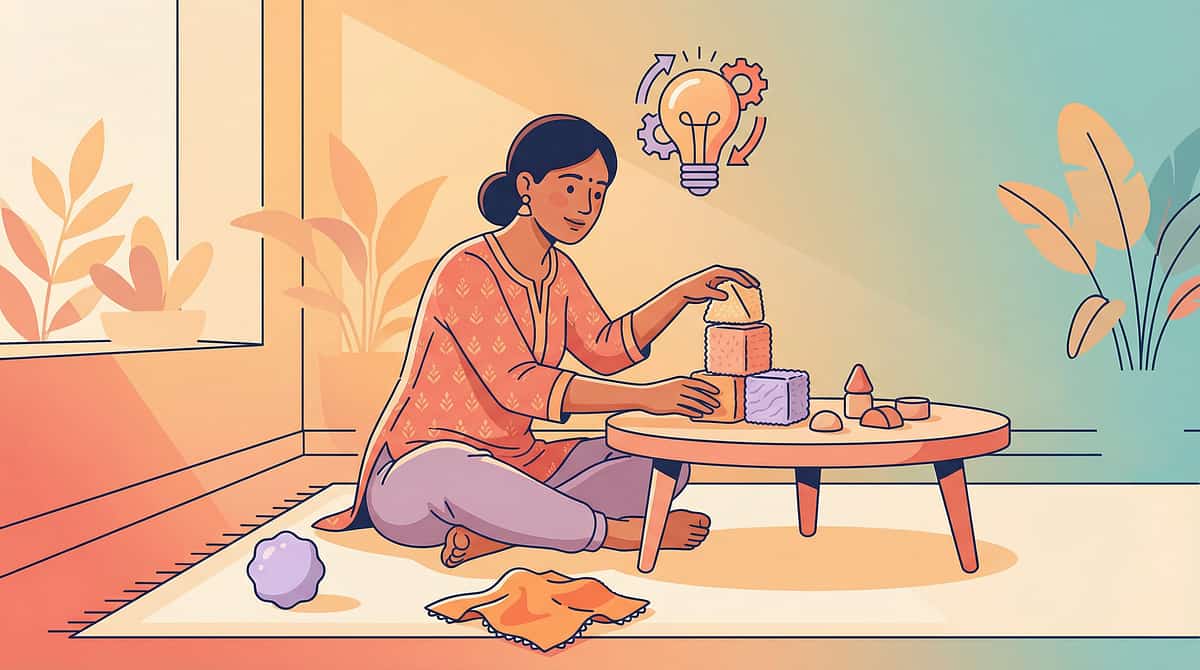
01
Pack Up Together
Child participates if able: "Help me put the cards in the box." This builds ownership and transitions ownership from therapist to child.
02
Preferred Undemanding Activity
1–2 minutes of favourite toy or book. No structured demands. The brain is consolidating what it just practiced.
03
Transition Cue
"After this, we're going to [next activity]." Give a visual or verbal bridge to what comes next. Predictability builds safety and trust.

If Child Resists Ending: This is a positive sign — it means the activity was preferred! "You want more! We'll do MORE tomorrow. Two more turns today — that's all." Maintain the limit warmly. And do not load another structured activity immediately after — allow 5–10 minutes of free play for consolidation.
ACT III — CARD 20 | Data Capture
Capture the Data: Right Now. 60 Seconds of Data Today = Months of Insight Tomorrow.
The 3-Field Pinnacle Session Log
Date: ________ | Time: ________ | Duration: ___ min
Correct "I" uses today (circle):
0   1   2   3   4   5   6   7   8   9   10+
Child's best moment today:
_________________________________
Energy level (circle): LOW   MEDIUM   HIGH
Notes (optional): _________________
Why Tracking Matters
You don't need perfect data. You need consistent data. Even a single number — "3 correct I-uses today" — tracked across 20 sessions creates a learning curve that your Pinnacle therapist can analyze to personalize your next phase.
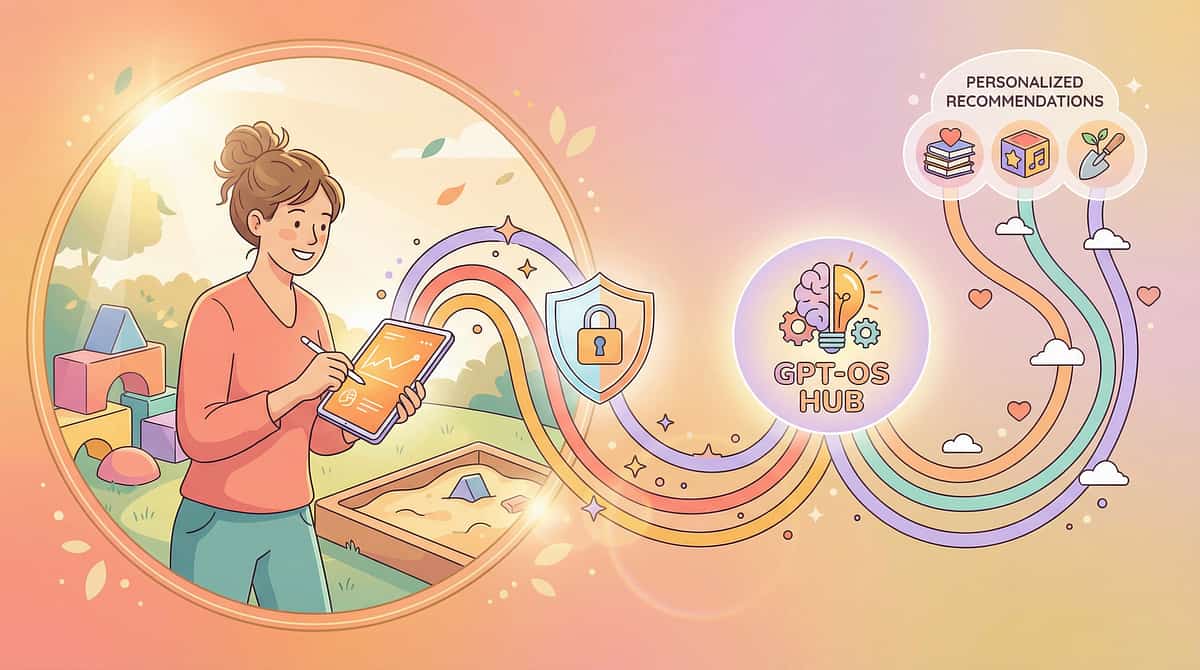
What GPT-OS® Does With This Data
Your session data feeds the Communication Readiness Index, updating your child's AbilityScore® and informing the next recommended technique in their personalized progression pathway.
  • Speed of correct pronoun acquisition → informs next hierarchy step
  • Which material produced most correct responses → personalizes recommendations
  • Session frequency pattern → sends adherence support prompts
📞9100 181 181 — "Questions about tracking? We'll explain it together."
ACT III — CARD 21 | Troubleshooting
When It's Not Working: Not Working Is Information. Here's What to Do With It.
Symptom
Why It Happens
What to Do
Child consistently echoes "you want" despite 4+ weeks
Echolalia is strong; self-perspective anchor not yet formed
Switch to Action Scripts — body movement + "I am ___-ing" is more concrete
Child avoids mirror completely
Mirror may trigger self-awareness discomfort
Remove mirror entirely; use photo cards as substitute
Child uses name instead of "I" ("Arjun wants")
Stage between reversal and correct use — this is PROGRESS
Accept name use; model "I" immediately after; reinforce both
Child is correct at home but reverses at school
Generalization hasn't occurred yet
Share card scripts with teacher; practice in school uniform for context
Child uses "I" for 2 weeks then reverts
Regression during developmental stress (new sibling, illness, transition)
Restart from Level 1 — no blame, no disappointment expressed
Reinforcers stop working
Satiation — the reward has lost value
Rotate reinforcers; conduct preference assessment
Parent feels frustrated and it shows
Children with autism read emotional state acutely
Take 2-minute break. Your calm is the most powerful therapeutic tool.

When to Escalate — Call the Helpline:
• No measurable progress after 10–12 weeks of 3× weekly consistent sessions
• Child begins to associate language sessions with distress
• Reversal is expanding to other pronouns (he/she confusion emerging)

📞9100 181 181 — "Describe what's happening. We'll troubleshoot together."
ACT III — CARD 22 | Personalization
Personalise It: This Technique Has a Version for Every Child. Find Yours.
Visual Learner
Best Material: Photo Cards + Mirror
Heavy visual input; laminate everything for durability and sensory preference.
Kinesthetic Mover
Best Material: Action Scripts
Do EVERY pronoun while performing a physical action — jump, clap, spin, touch.
Verbal / Echolalic
Best Material: Script Cards with blanks
Cloze technique: "I want the ___" — let the child complete the phrase.
Low Verbal
Best Material: Mirror + AAC device
Pair pronoun cards with device symbols — the body points, the device speaks.
Social / Relational
Best Material: Turn-Taking Games + Puppets
Make every session a "game" with parent as partner — relationship is the reinforcer.
Age
Focus
Target Language
Ages 2–3
Single target, maximum reinforcement
"I want ___" only
Ages 4–5
Add possessives
"My/mine — That is MY ball. It is MINE."
Ages 6–8
Add third-person + self-correction awareness
"She said she wants..." + catching own errors
Ages 8+
Meta-awareness — teach the explicit rule
"I = the person speaking right now"

Cultural Adaptation: In many Indian languages, first-person markers are verb-embedded ("main chahta hoon") rather than standalone pronouns. For bilingual families, work with your Pinnacle SLP to align home language pronoun targets with English/school language targets simultaneously.
ACT IV — THE PROGRESS ARC
Week 1–2: You Are Building the Foundation — Not Yet Seeing the Building.
15%
Progress: Week 1–2
Foundation phase — tolerance, participation, and first correct echoes are the real wins here.
What Progress Looks Like in Week 1–2
  • Child tolerates session materials without resistance
  • Child makes eye contact during mirror/photo card activities
  • Child echoes "I want ___" immediately after parent model
  • Parent and child have found a preferred material and session structure
  • Data shows at least 2–3 elicited "I" productions per session
What Is NOT Expected Yet
  • Spontaneous unprompted "I" use (too early)
  • Generalization to school or other settings
  • Complete elimination of reversal
Parent Emotional Preparation
Don't count how many times the reversal still happens. Count how many times the correct form was elicited — even with full modeling. That count going from 0 to 3 is measurable neural change.

📞9100 181 181 — If 0 progress in Week 2, review readiness checklist, check preferred material selection, call for live troubleshooting.
ACT IV — CARD 24 | Week 3–4
Week 3–4: The Neural Pathway Is Forming. Watch for These Signals.
40%
Progress: Week 3–4
Consolidation phase — the self-correction signal appears and the pathway begins competing with the old pattern.
Child anticipates the session positively
Runs to get the puppet. Brings you the photo cards. The activity itself is now preferred — a powerful intrinsic motivator.
The Self-Correction Signal
Child starts to say "you want..." pauses, then says "I want..." — even once. A self-correction means the child's brain has TWO pathways. The intervention is now a competition between them. You are winning. Keep going.
Name-Based Self-Reference Emerging
Child begins using name-for-self ("Arjun wants") → this is the precursor stage to "I." It is progress, not regression. Accept and model immediately after.
Parent Milestone
By week 4, most parents report: "I feel like I know what I'm doing." That shift — from uncertainty to competence — is itself a therapeutic outcome. Your confidence transmits directly to your child.
ACT IV — CARD 25 | Mastery
Week 5–8: Mastery Is Reliable, Self-Initiated, Context-Appropriate Use.
75%
Progress: Week 5–8
Mastery phase — SLP clinical benchmark: 80% accuracy across 3 consecutive sessions.
Mastery Indicators
  • Uses "I want ___" correctly in 8/10 elicited opportunities without prompting
  • Uses "me/my/mine" correctly in structured play
  • Occasionally uses "I" spontaneously in daily life
  • Self-corrects pronoun reversals without parent prompt
Generalization Targets
  • Practice in at least 2 environments: home + one other (grandparents', park)
  • Practice with at least 2 communication partners: parent + one other
  • Practice across at least 2 activities: session + one naturalistic daily activity
Note for Indian Families: Pronoun mastery in a bilingual context (English + regional language) may take 2–4 additional weeks. This is not a delay — it is the brain managing two linguistic systems simultaneously. Both languages' first-person forms benefit from the same anchoring work.
ACT IV — CARD 26 | Celebration
Celebrate This Milestone. You Did This.

🏆[Child's Name] said "I" today. That's not just a pronoun. That's a window opening in their brain. That's you — showing up, every day, with the puppet, the mirror, the photo cards. That's the EverydayTherapyProgramme™ at work. This is real. This happened. Write it down.
Print a Certificate
Download a "First I Said I" certificate from pinnacleblooms.org — let your child hold it, show it, keep it.
Share With Grandparents
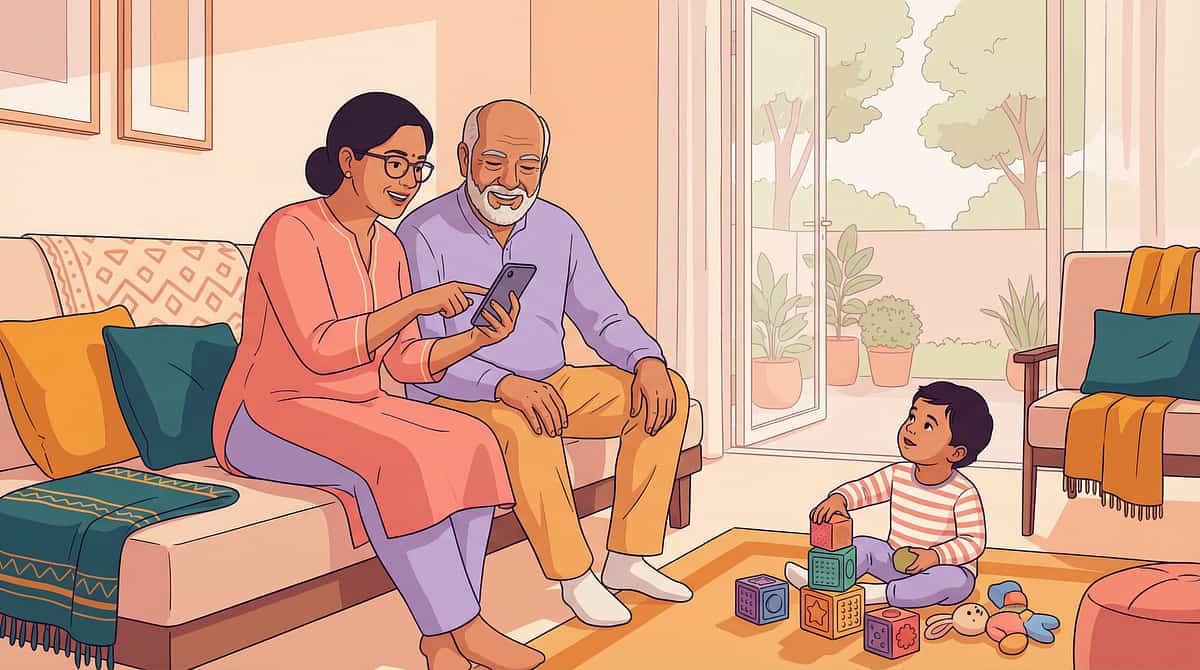
Let the child show them the pronoun game. Witnessing the achievement reinforces the child's self-concept as a communicator.
Journal This Moment
"Today [Date], [Name] said 'I want ___' for the first time. The material that worked was [___]. The moment happened when [___]. I felt [___]." This entry will matter enormously — to you and your child — years from now.

📞9100 181 181 — "Ready for the next technique? Call us."
ACT IV — CARD 27 | Safety Alert
Red Flags: When to Pause. Trust Your Instincts.
Red Flag
What It Looks Like
Action
Who to Call
Language regression
Child loses previously achieved language skills across domains
Stop intervention immediately; contact Pinnacle
📞 9100 181 181
Increased distress
Child shows anxiety before sessions, not just resistance
Session redesign needed
📞 9100 181 181
No change across 10 weeks
Zero measurable progress despite 3× weekly consistent sessions
Formal SLP reassessment required
Nearest Pinnacle center
Pronoun confusion expanding
New pronoun errors (he/she confusion emerging)
Diagnostic reassessment
NeuroDev + SLP
Self-injurious behavior
During or after language tasks
Stop sessions — seek immediate clinical consultation
Emergency clinical
Social withdrawal
Avoiding communication partner more generally
FusionModule™ team review
ABA + SLP + NeuroDev
Self-resolve
Attempt mild issue resolution at session.
Modify Session
Adjust plan using Card 22 guidance.
Teleconsultation
Call 9100 181 181 for expert advice.
Clinic Visit
Attend nearest Pinnacle center for review.
You know your child better than any research paper does. If something about their response to this technique feels wrong — not just hard, but wrong — that is clinical data. Pause. Call. Ask.

📞9100 181 181 — 24×7 | 16+ languages | FREE | "Your call is clinical data."
ACT IV — CARD 28 | Progression Pathway
B-185 Is One Step in a Complete Communication Journey.
Current Technique Prerequisite
B-158 (Pronoun Confusion) — understanding that pronouns shift by perspective. Complete or parallel this before expecting B-185 mastery.
Next Recommended Techniques
  • If "I" mastered, next: "my/mine" → Pronoun Generalization protocol (B-186)
  • If self-correction present → Perspective-Taking Level 1 (B-201)
  • If third-person confusion → He/She/They Accuracy (B-190)
Long-Term Goal This Feeds: Full first- and second-person pronoun mastery enables narrative language, self-advocacy, peer interaction, academic language production, and Theory of Mind development — the full arc of social communication.
ACT IV — CARD 29 | Related Techniques
B-185 Belongs to a Family of Connected Techniques.
B-158 — Pronoun Confusion (General)
Prerequisite foundation — understanding that pronouns shift by speaker perspective. Begin here if reversal is mixed with general pronoun uncertainty.
techniques.pinnacleblooms.org
B-186 — Pronoun Generalization Across Partners
Next step after reversal mastery — extending correct "I/you/my" use across different communication partners, environments, and contexts.
B-201 — Perspective-Taking Level 1
The cognitive underpinning of pronoun understanding — understanding that other people have different perspectives, knowledge, and experiences.
B-195 — Third-Person Pronoun Accuracy
He/she/they development — extends the same anchoring work to third-person reference, a natural next step after first-person mastery.
B-210 — Theory of Mind: Foundational
The deep cognitive root of pronoun use — understanding that others have different mental states. Pronoun mastery and ToM develop in parallel.
B-221 — Conversational Reciprocity
Pronoun use in back-and-forth conversation — the full application of everything learned in B-185 across real-time social exchange.
Domain B Navigation: ← B-184  |  B-185 ← YOU ARE HERE  |  B-186 →
ACT IV — CARD 30 | Full Developmental Map
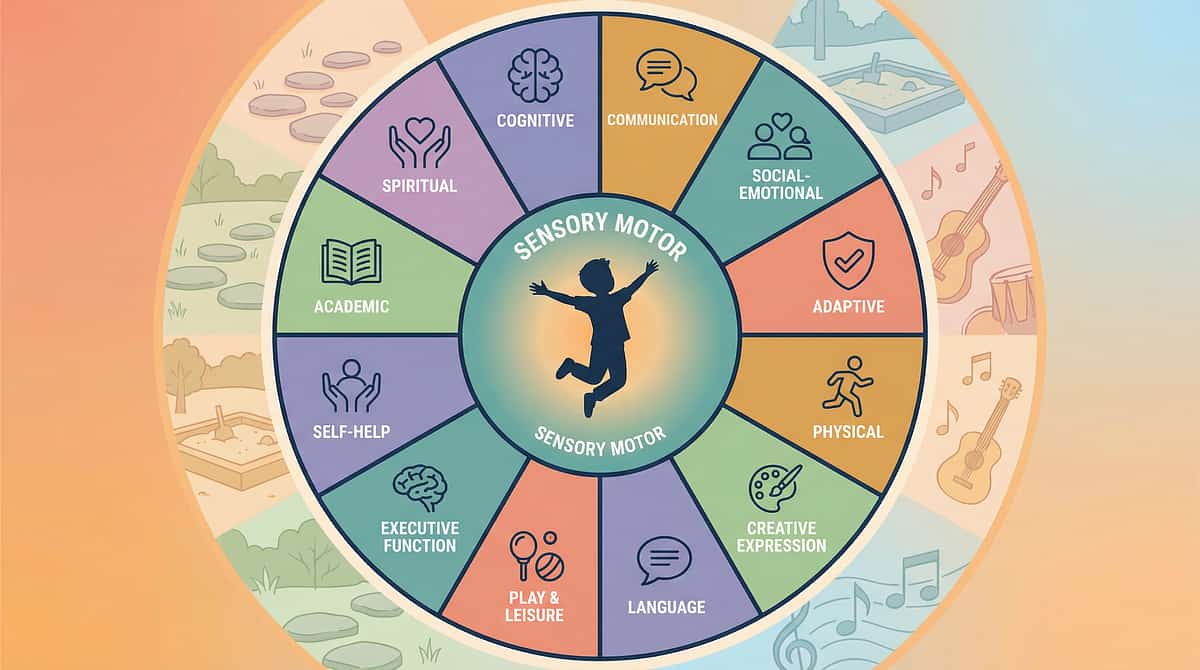
B-185 Is One Technique. Your Child's Development Is 12 Interconnected Domains.

You Are in Domain B: Social Communication. This domain contains 200+ techniques covering receptive language, expressive language, pragmatics, AAC, social scripts, perspective-taking, and conversational reciprocity. B-185 is one powerful node in a much larger map.
Domain A — Sensory Processing
Sensory regulation directly affects language output quality. A child in sensory distress cannot access the language system effectively.
Domain C — Emotional Regulation
Emotional regulation capacity determines how much cognitive effort is available for communication tasks like pronoun anchoring.
Domain D — Behavioral Flexibility
Behavioral flexibility supports perspective-shifting — the ability to see that "I" means different things from different speakers.
ACT V — COMMUNITY & ECOSYSTEM
Families Who've Been Here. They Started Exactly Where You Are.
Aditya's Story — Hyderabad
Before: "Aditya (4 years) would say 'you want chips' every time he wanted a snack. Teachers interpreted this as confusion about wants — but he knew exactly what he wanted."
After Week 8: "Aditya said 'I want the red car.' I had to step out of the room to cry. He said 'I.' Just 'I.' We had been working toward that one word for 8 months." — Mother, Pinnacle Hyderabad Center
Priya's Story — Bengaluru
Before: "My daughter (6 years) referred to herself entirely by name — 'Priya wants water,' 'Priya is scared.' The school was concerned."
After 6 weeks of B-185: "Her teacher told us last week she said 'I finished my work.' She came home and told us: 'I said I.'" — Father, Pinnacle Bengaluru Network
"Pronoun reversal is not a comprehension failure — it is a perspective-anchoring challenge. When I see a child begin to self-correct from 'you want' to 'I want' — even partially — I see the mirror neuron system doing the work it was always capable of doing. These children do not have a language problem. They have a language map that needs recalibration. And it recalibrates. Consistently." — Sr. Speech-Language Pathologist, Pinnacle Blooms Network®
Illustrative narratives from Pinnacle clinical records. Details anonymized. Outcomes vary by individual child profile, intervention consistency, and clinical factors.
ACT V — CARD 32 | Community
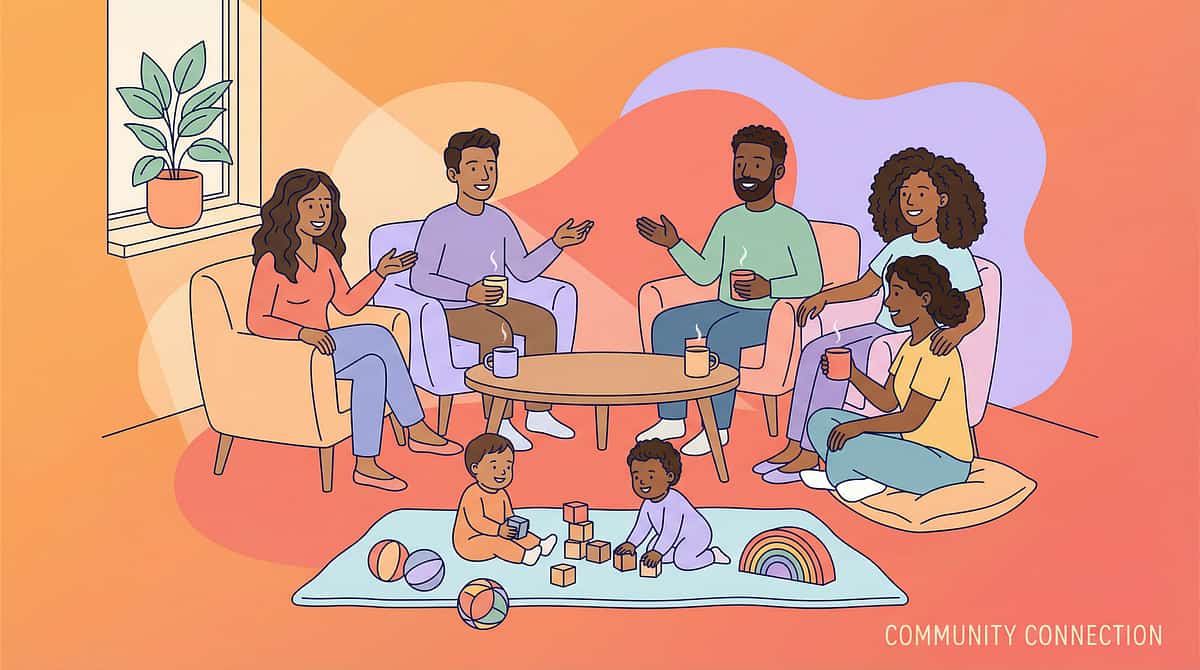
Connect With Other Parents. Isolation Is the Enemy of Adherence.
Channel
Purpose
How to Join
WhatsApp Group
B-Domain parents: real-time support, shared wins, troubleshooting together
Call 9100 181 181 → request "Communication Parents Group"
Pinnacle Online Forum
Longer questions, shared resources, parent-to-parent guidance
pinnacleblooms.org/community
Local Center Parent Group
In-person meetups, observed sessions, peer learning
Find nearest center: pinnacleblooms.org/centers
Peer Mentoring
Match with experienced parent 12+ months ahead in their journey
Request via helpline

WHO Nurturing Care Framework (2018): Community engagement is a core component of effective early intervention. Children develop in communities, not in isolation — and so do parents.

"Your week 8 success story is someone else's week 1 hope." The parent reading Card 01 right now at 11pm needs to know what you know: this works. It takes time. But it works.
📞9100 181 181
ACT V — CARD 33 | Professional Support
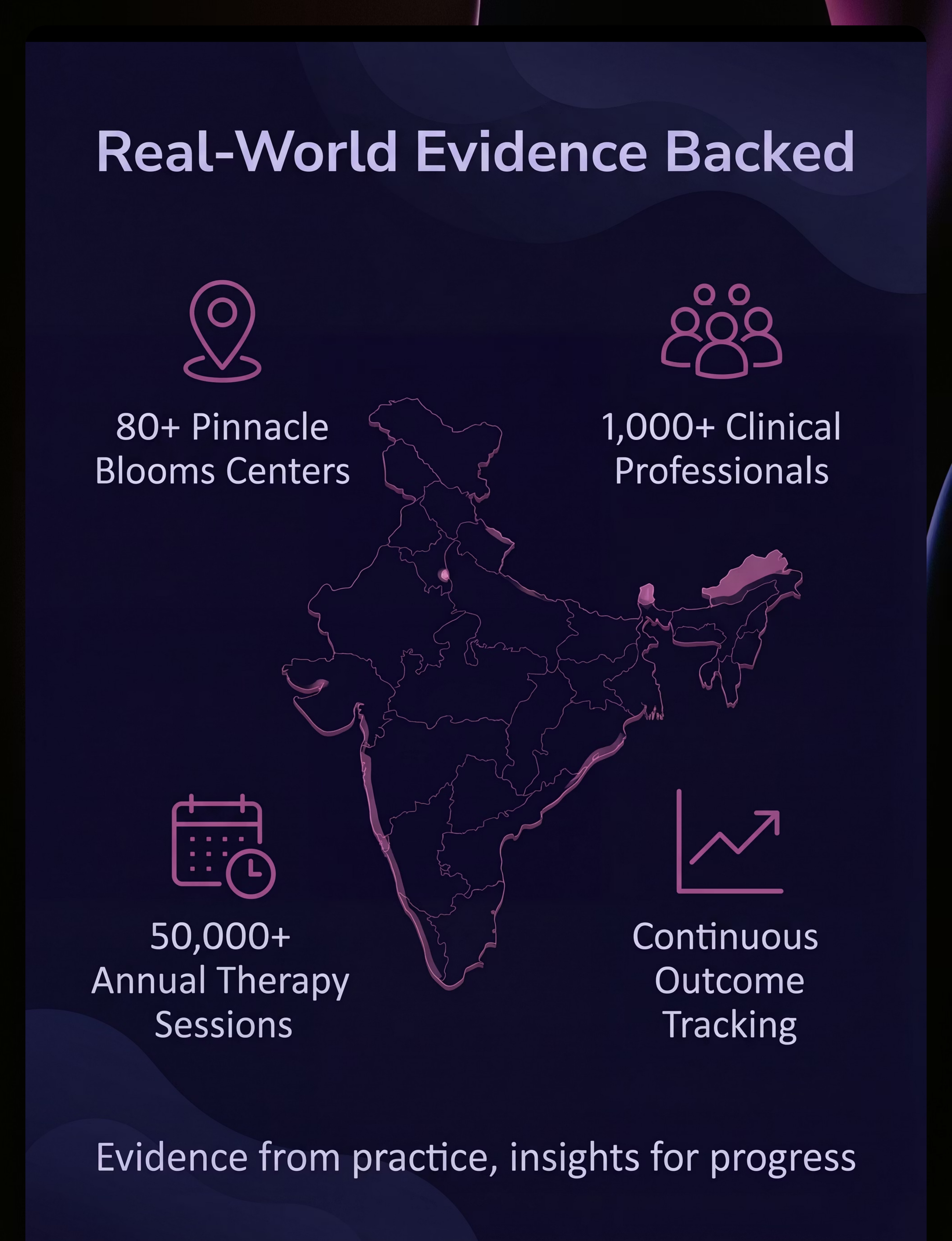
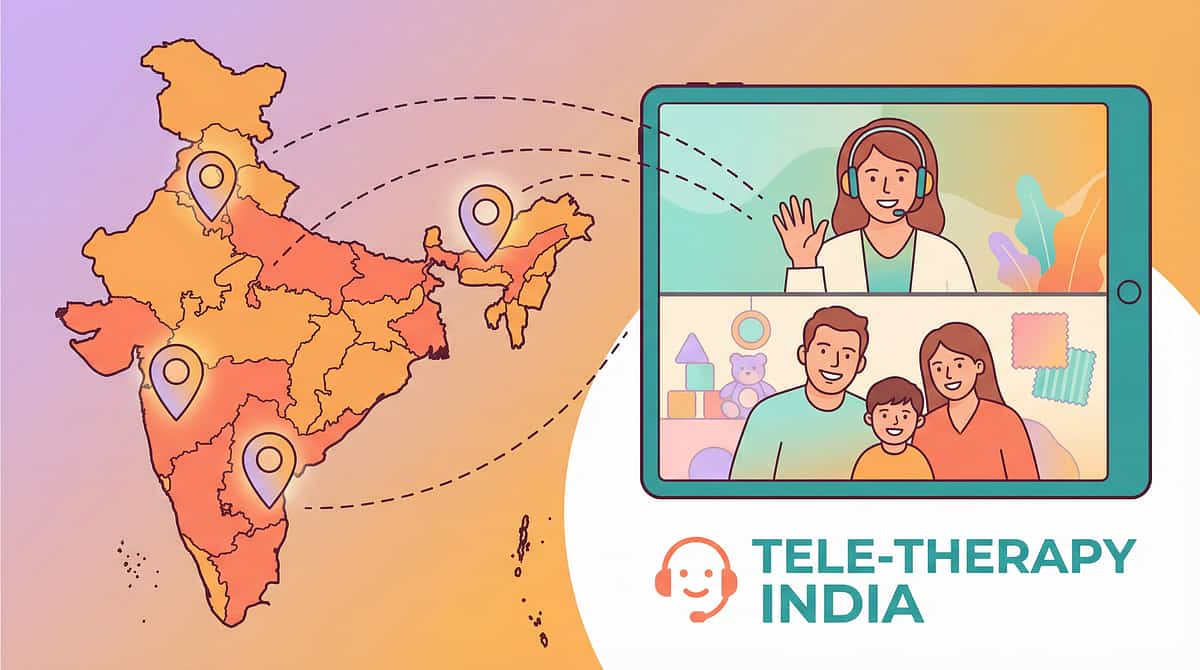
Professional Support at Pinnacle. 70+ Centers. 1,000+ Clinicians. One System — GPT-OS®.
Need
Service
How to Access
"Is my child's pronoun use concerning?"
FREE assessment call
📞 9100 181 181
"I need a formal SLP evaluation"
AbilityScore® Assessment
pinnacleblooms.org/book
"My child needs ongoing therapy"
Weekly SLP sessions + EverydayTherapyProgramme™
Nearest center booking
"I want to check my home program"
Parent coaching session
Teleconsultation available
"I'm in a city with no Pinnacle center"
Online SLP sessions
pinnacleblooms.org/online

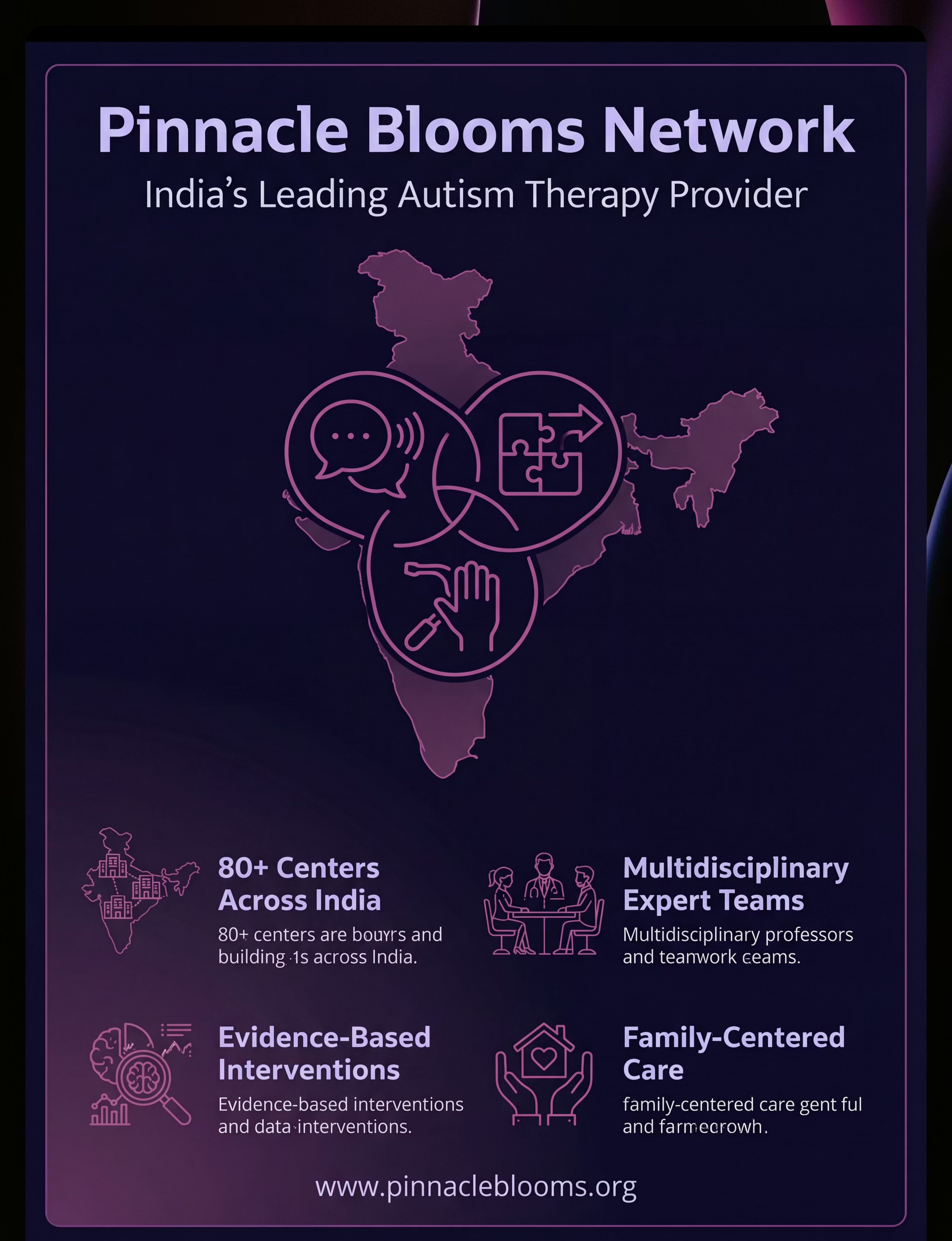
Network Note: All 70+ Pinnacle centers operate under a single GPT-OS® clinical system. The SLP in Mumbai and the SLP in Visakhapatnam are working from the same evidence base, the same protocol library, and the same data platform. Your child's records travel with them across the network.

📞9100 181 181 — FREE | 16+ languages | 24×7 | No referral needed
ACT V — CARD 34 | Research Library
The Research Library: The Science Behind Every Card.
Evidence Level
Study
Key Finding
Access
Systematic Review
PMC11506176 (2024)
SLP + ABA intervention evidence-based for communication goals in ASD
Meta-Analysis
PMC10955541 (2024)
24 studies: communication + social + adaptive behavior outcomes
RCT
DOI:10.1007/s12098-018-2747-4
Home-based language intervention in Indian children: significant outcomes
WHO Framework
NCF 2018
Early caregiver-delivered intervention underpins communication development
EBP Report
NCAEP 2020
Video modeling + naturalistic instruction = Level 1 EBP for pronoun goals
Frontiers Neurosci
DOI:10.3389/fnint.2020.556660
Neurological basis for SLP intervention in ASD perspective-taking
ACT V — CARD 35 | GPT-OS® Technology
Your Session Data Doesn't Disappear. It Drives Your Child's Next Step.
Recommend Technique
Suggest new methods based on performance.
Update AbilityScore
Adjust the user's overall ability metric.
Update Readiness
Calculate the latest readiness score.
Submit Session
Log user activity and performance data.
What GPT-OS® Learns
  • Speed of correct pronoun acquisition → informs next hierarchy step
  • Which material produced most correct responses → personalizes material recommendation
  • Session frequency pattern → sends adherence support prompts
Privacy Assurances
  • All data stored within India (data sovereignty)
  • DPDP Act 2023 compliant
  • No sale or sharing of child health data
  • Parent controls all data visibility and sharing
Your Data Helps Every Child Like Yours
20 million sessions of aggregated anonymized data from 70+ centers trains TherapeuticAI® to make better recommendations for families with similar profiles. Your consistency in tracking makes every family after you more supported.

📞9100 181 181 | pinnacleblooms.org/gpt-os
ACT V — CARD 36 | Watch the Reel
Watch the Reel: 9 Materials That Help With Pronoun Reversal
Reel ID: B-185 | Series: Social Communication Series | Domain: B — Social Communication | Row in 999 Reels Master: 239

Watch: "9 Materials That Help With Pronoun Reversal" — B-185 Reel | Duration: ~90 seconds | SLP-presented | Subtitled in English | pinnacleblooms.org/reels/B-185
Pronoun Perspective Cards
Mirror-Based Practice
Photo Sorting
Puppets
Turn-Taking Games
Action Scripts
Video Modeling
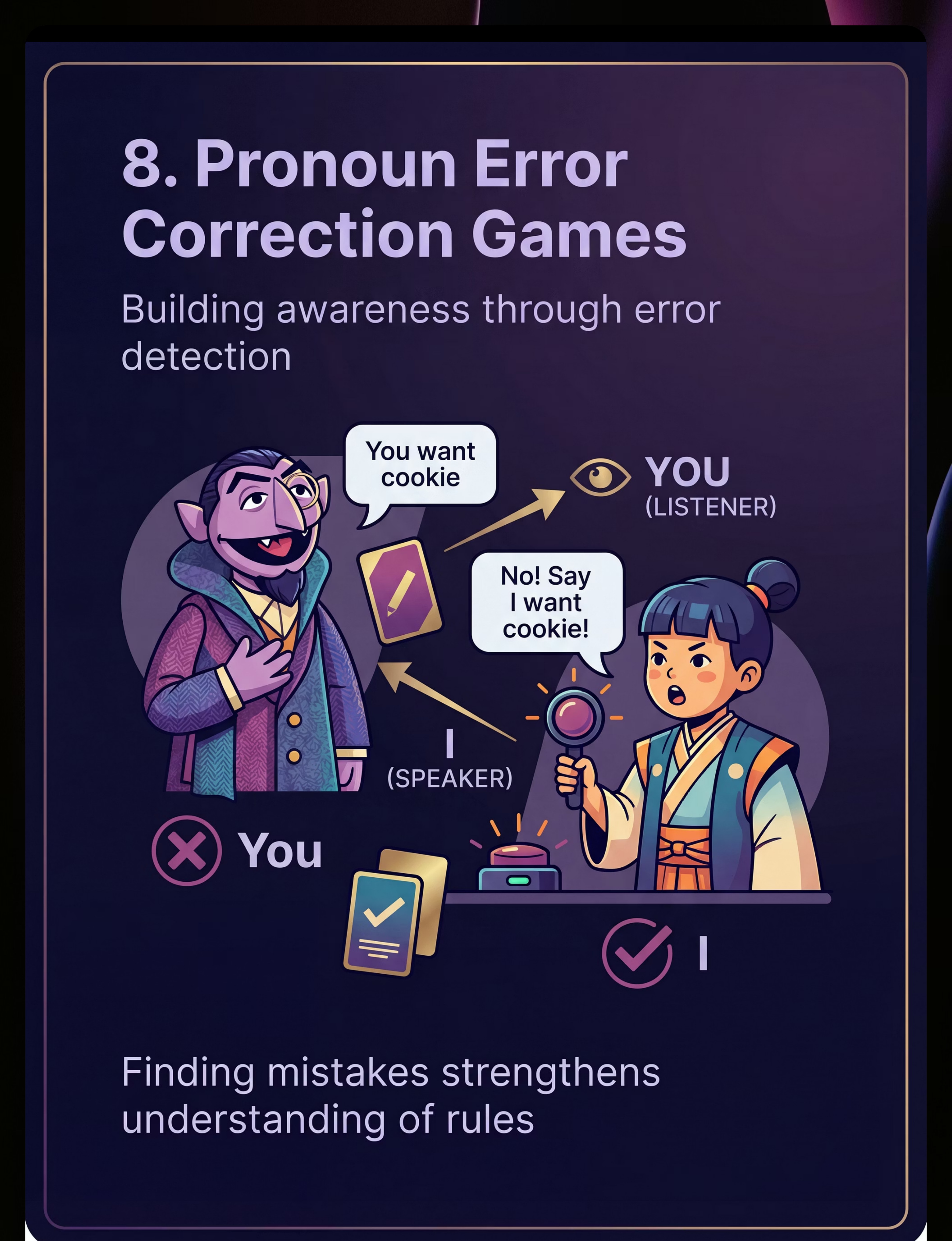
Error Detection Games
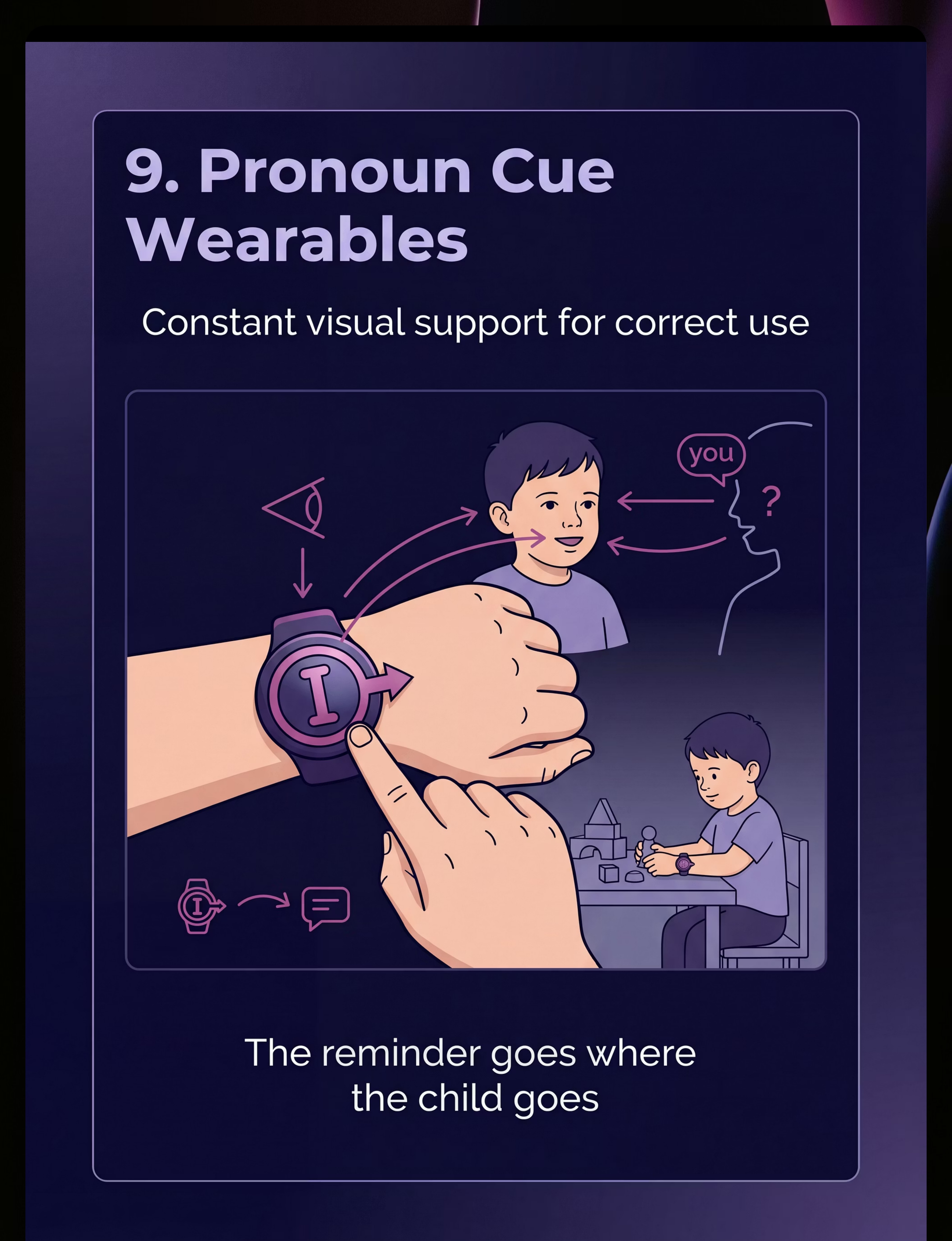
Pronoun Cue Wearables
Related Reel: Also watch B-158 — 9 Materials That Help With Pronoun Confusion. This Reel is part of the Pinnacle 999 Reels Library — the world's largest SLP-validated social media content library for autism therapy guidance.
ACT V — CARD 37 | Share
Share This With Your Family. The Grandmother Who Doesn't Understand. The Teacher Who Needs to See This.
This page can become the most important resource your family's support system has ever encountered. Grandparents who wonder why the child "talks funny." Teachers who need to understand this is neurological, not laziness. Extended family who want to help but don't know how.

What to say when you share: "[Name] has been working on something called pronoun reversal — when they say 'you' instead of 'I.' This page explains exactly what it is and what we're doing about it. Please read it before you see them next — especially the brain science on Card 3."
📱 WhatsApp
Share directly to family groups and support communities
📘 Facebook
Share to autism parent communities and family pages
📧 Email
Send to school IEP team, extended family, support network
🔗 Copy Link
techniques.pinnacleblooms.org/social-communication/pronoun-reversal-B-185

📄 Download: B-185 Family Education Sheet — printable, one page, jargon-free. Share at: school IEP meetings | family gatherings | WhatsApp family groups.

📞9100 181 181
ACT VI — THE CLOSE & LOOP
FAQ: The 8 Questions Every Parent Asks About Pronoun Reversal.
Will my child always have pronoun reversal?
Most children with autism who receive structured pronoun intervention achieve functional first-person pronoun use. Timelines vary — some in 8 weeks, others need 6–12 months. The determinants are age of intervention, session consistency, and absence of language regression. Pronoun reversal not addressed rarely resolves spontaneously in ASD.
Is pronoun reversal only in autism?
It is strongly associated with autism (50–75% of speaking children with ASD) and can occasionally appear in late talkers or children with other language processing differences. Persistence beyond age 4 without intervention is a clinical flag for ASD evaluation if not already diagnosed.
My child's teacher says it's "just a phase." Should I be concerned?
In typical development, children briefly reverse pronouns around ages 2–2.5. However, persistent reversal beyond age 3 — especially with other ASD characteristics — is a specific clinical pattern requiring SLP assessment. Trust your instinct. Call 9100 181 181 for a FREE screening.
Can I do this myself without a therapist?
The techniques here are parent-deliverable with guidance. However, a foundational SLP assessment establishes the correct hierarchy level, appropriate materials, and measurable targets. Think of yourself as the daily delivery system for a plan co-designed with your therapist.
1
My child is 8. Is it too late?
No. While the most rapid gains occur in the 2–6 window, structured pronoun intervention at age 8, 10, and beyond has produced significant improvements across the Pinnacle network. Older children often benefit from more explicit rule-teaching in addition to activity-based methods. Call 9100 181 181 for age-appropriate protocol guidance.
2
My child speaks only in our regional language at home. Can this still work?
Yes. The core mechanism — pairing body awareness with first-person linguistic marker — works across languages. Work with your Pinnacle SLP to map the equivalent first-person pronoun structures in your home language. Bilingual pronoun work is a specialized area; our SLPs are trained for this.
3
We've been doing this for 3 weeks. I don't see any progress. Should I stop?
Three weeks is too early to assess effectiveness. The evidence base shows measurable change at the 6–8 week mark with consistent 3× weekly sessions. Review Card 13 (readiness), Card 21 (troubleshooting), and call 9100 181 181 for a live session review before considering stopping.
4
What's the difference between B-158 (Pronoun Confusion) and B-185 (Pronoun Reversal)?
B-158 addresses general pronoun confusion — uncertainty about which pronoun belongs to whom. B-185 specifically addresses the systematic reversal pattern where "I" and "you" are swapped consistently — a specific linguistic signature of echolalia-based pronoun acquisition. B-158 is often the prerequisite for B-185.
Still have questions?📞 Call 9100 181 181 | 📧care@pinnacleblooms.org | pinnacleblooms.org
ACT VI — START NOW
The Session That Changes Everything Starts With One Button.
You have the knowledge. You have the materials — or the ability to make them. You have the relationship, which is the most powerful therapeutic tool in existence. The technique is ready. Your child is waiting. The next step takes 10 minutes and can begin today with materials you have at home.
💬 SLP
Speech-Language Pathologist
🎯 ABA/BCBA
Applied Behavior Analyst
📚 SpEd
Special Educator
🤲 OT
Occupational Therapist
🧠 NeuroDev
Developmental Pediatrics
👶 Pediatrics
Pediatric Medicine
⬡ Validated by Pinnacle Blooms Consortium | OT • SLP • ABA/BCBA • SpEd • NeuroDev • Pediatrics

Preview of 9 materials that help with pronoun reversal Therapy Material

Below is a visual preview of 9 materials that help with pronoun reversal therapy material. The pages shown help educators, therapists, and caregivers understand the structure and content of the resource before use. Materials should be used under appropriate professional guidance.
Page 1
Page 2
Page 3
Page 4
Page 5
Page 6
Page 7
Page 8
Page 9
Page 10
Page 11
Page 12
Page 13
Page 14
Page 15
Page 16
Page 17
Page 18
Page 19
Page 20
Link copied!
The Pinnacle Promise
"From fear to mastery. One technique at a time. 70,000+ techniques. 20 million sessions. 97%+ measured improvement. Every technique on this platform was designed by a consortium of clinicians, validated by research, and refined by the parents who use it every day. Your child is not a case. They are a person with a developmental journey. We built this system for them — and for you." — Pinnacle Blooms Network®
GPT-OS®
Clinical intelligence platform
AbilityScore®
Developmental profiling system
TherapeuticAI®
Personalized technique engine
EverydayTherapyProgramme™
Parent-delivered daily intervention
FusionModule™
Multi-disciplinary coordination

📞 FREE National Autism Helpline: 9100 181 181 | 16+ languages | 24×7 | No referral needed
care@pinnacleblooms.org | pinnacleblooms.org

Medical Disclaimer: This content is educational and informational. It does not replace assessment, diagnosis, or treatment by a licensed speech-language pathologist or physician. Pronoun intervention should be individualized based on comprehensive assessment. If you are concerned about your child's language development, consult a qualified professional. Individual outcomes vary based on child profile, intervention consistency, and clinical factors.
© 2025 Pinnacle Blooms Network®, a unit of Bharath Healthcare Laboratories Pvt. Ltd. All rights reserved. GPT-OS®, AbilityScore®, TherapeuticAI®, EverydayTherapyProgramme™, FusionModule™, and Pinnacle Blooms Network® are registered trademarks/proprietary systems of Bharath Healthcare Laboratories Pvt. Ltd.
CIN: U74999TG2016PTC113063 | DPIIT: DIPP8651 (Govt. of India) | MSME: Udyog Aadhaar TS20F0009606 | GSTIN: 36AAGCB9722P1Z2