Tactile Challenges — 30 Evidence-Based Touch Sensitivity Interventions
Subdomain A1 | Pinnacle Blooms Network® | Sensory Processing → Tactile Challenges
Your child isn't being dramatic. When touch feels like fire, when socks feel like sandpaper, when a gentle hug feels overwhelming — that's a real neurological experience. These 30 evidence-based interventions meet your child exactly where they are, with proven protocols, 9 curated materials per technique, and consortium-drafted guidance backed by 21M+ therapy sessions.
A-001 · Touch Sensitivity
9 Materials That Help With Touch Sensitivity
Subdomain A1: Tactile | Domain A: Sensory Processing | Pinnacle Blooms Network®
The Moment
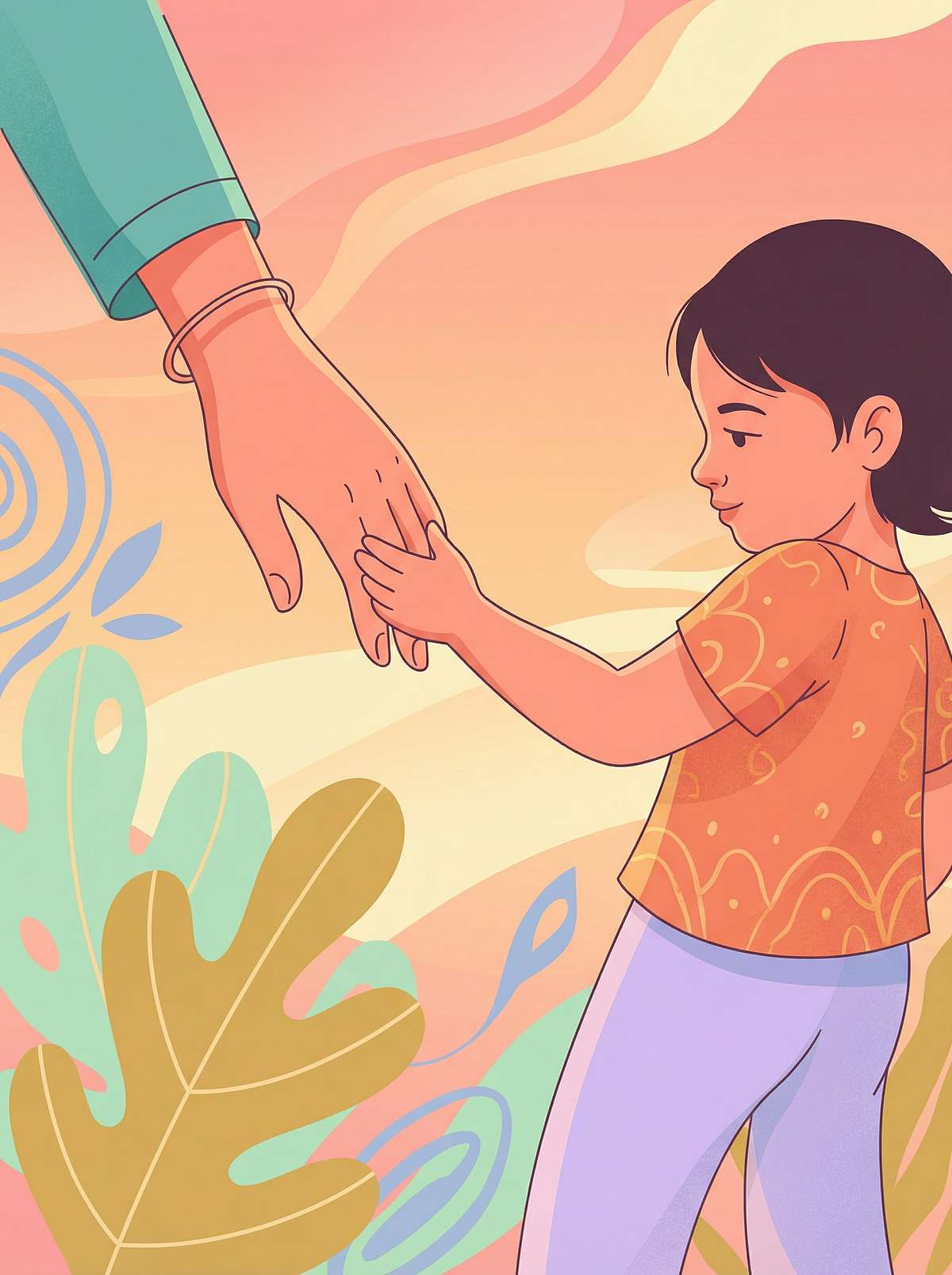
You reach out to gently touch your child's arm and they flinch like you've burned them. A casual stroke of the hair becomes a full-body recoil. Other children huddle together on the sofa during movie time, but your child sits alone at the far end — not because they don't want closeness, but because touch is physically intolerable.
The Neuroscience
The somatosensory cortex over-amplifies tactile signals. Light touch, which neurotypical brains filter as neutral, registers as painful or threatening. This is tactile defensiveness — a wiring difference, not a behavior choice.
The Evidence
📊Level I — PRISMA Systematic Review (2024): Sensory integration intervention is evidence-based for ASD. Tactile desensitization protocols demonstrate measurable reduction in defensiveness. PMC11506176 | NCAEP 2020
What You'll Learn Inside
- Graduated tactile desensitization
- Wilbarger Brushing Protocol adapted for home
- Deep pressure before exposure
- Environmental touch trigger reduction
- Rebuilding physical affection through sensory preferences
- Daily tactile sensory diet
🤲Lead: OT (SI Certified) | ABA · SLP · NeuroDev
9 Canon Materials

A-002 · Hates Being Touched
9 Materials That Help When Child Hates Being Touched
Subdomain A1: Tactile | Domain A: Sensory Processing | Pinnacle Blooms Network®
The Moment
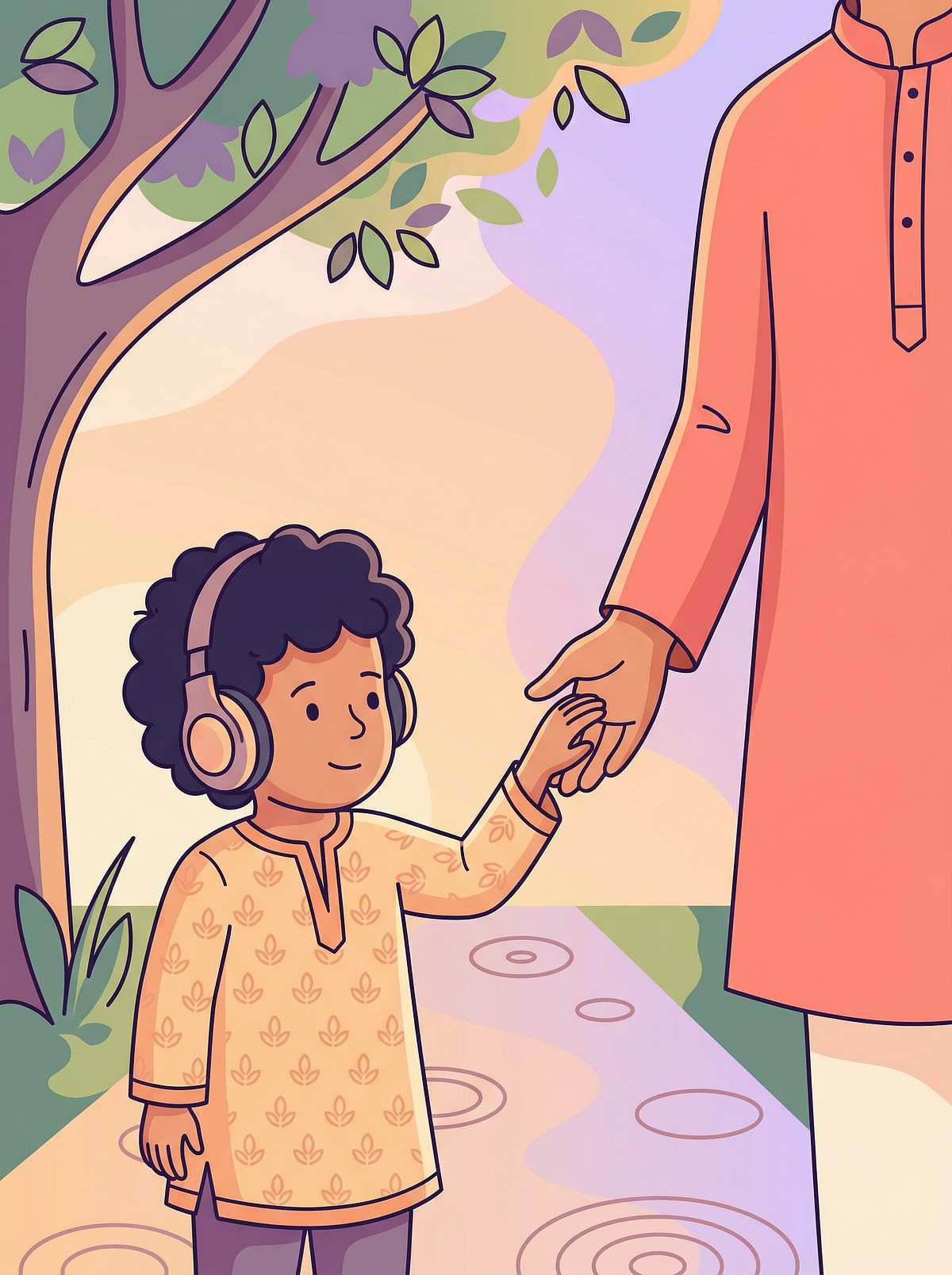
You tried to wipe food off their cheek and they screamed like you'd hit them. Grandma reached for a Diwali hug — your child ran under the table. At school, they push other children away the moment anyone comes close. Every casual gesture of connection is met with resistance, leaving everyone confused and the child more isolated.
The Neuroscience
C-tactile afferent nerve fibers that normally process gentle, soothing touch may respond atypically in these children — turning signals that should comfort into signals that alarm. The amygdala flags unexpected touch as threatening, triggering an immediate defensive response.
The Evidence
📊Level I — PMC11506176 | PMC10955541 | NCAEP 2020
What You'll Learn Inside
- Predictable touch protocols that reduce surprise
- Deep pressure preference mapping for your child
- Consent-based touch framework for daily care
- Touch tolerance hierarchy — building from least to most
- Alternative affection strategies for family connection
🤲Lead: OT (SI Certified) | ABA · SLP · Family Therapy
A-003 · Clothing Tag Intolerance
9 Materials That Help When Child Can't Tolerate Clothing Tags
Subdomain A1: Tactile | Domain A: Sensory Processing | Pinnacle Blooms Network®
The Moment
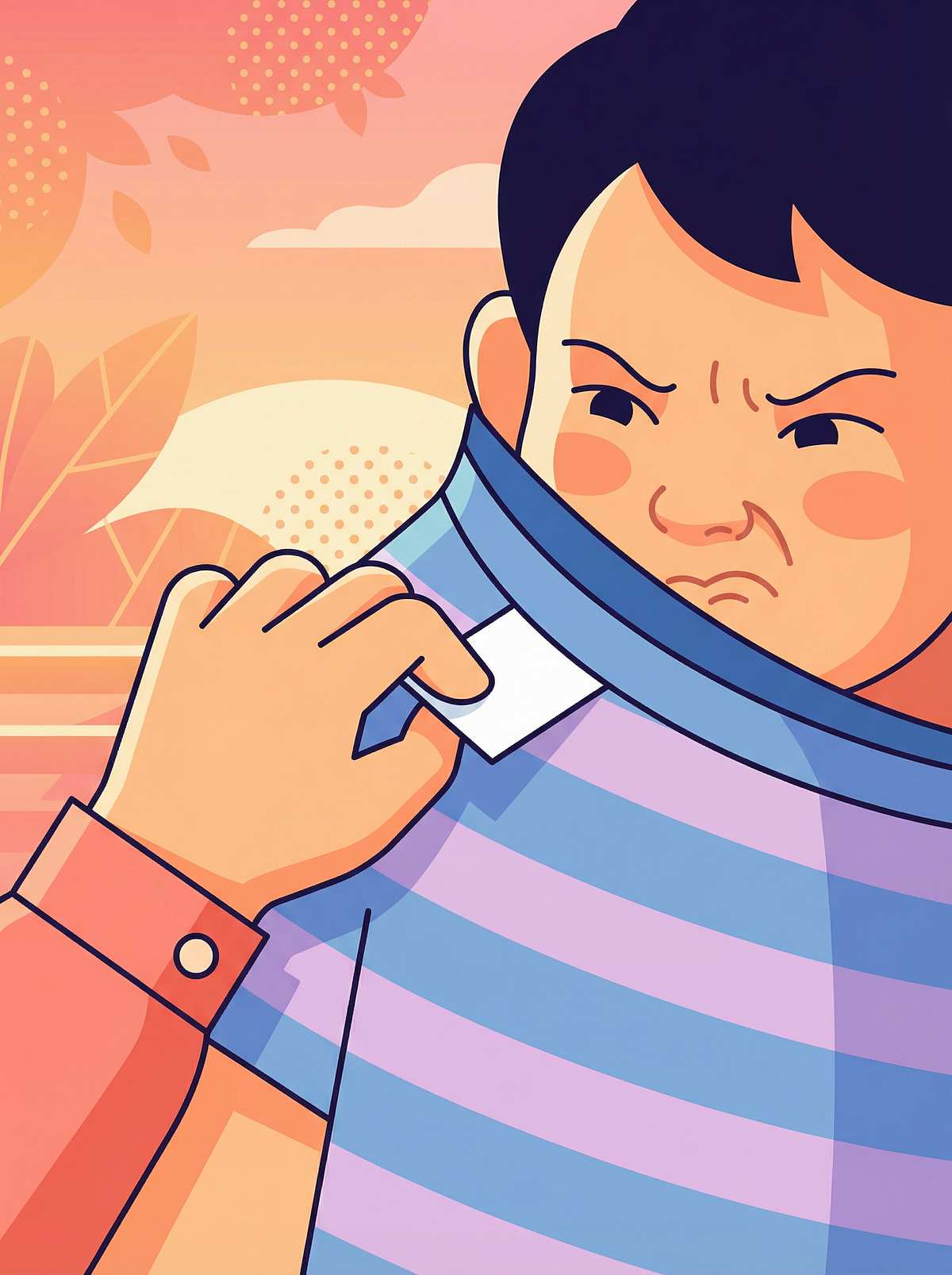
Every morning: tag ripped out, still screaming "it's itching." You've cut every tag from every garment. You search "tagless kids clothes" at 2 AM. Some days they refuse to dress at all because "it hurts." The school run is derailed before it begins, and you're exhausted before the day has started.
The Neuroscience
Tags create persistent low-level tactile stimulus on the high-mechanoreceptor-density posterior neck. The somatosensory cortex fails to habituate, keeping the irritant in full conscious awareness — there is no "getting used to it" for these children.
The Evidence
📊Level I — PMC11506176 | NCAEP 2020
What You'll Learn Inside
- Clothing desensitization protocol — step by step
- Sensory-friendly wardrobe guide with Indian brands and prices
- Compression base layers that bypass the tag problem entirely
- Pre-dressing sensory preparation routine
- School uniform adaptation under RPwD 2016
🤲Lead: OT (SI Certified) | ABA · SLP
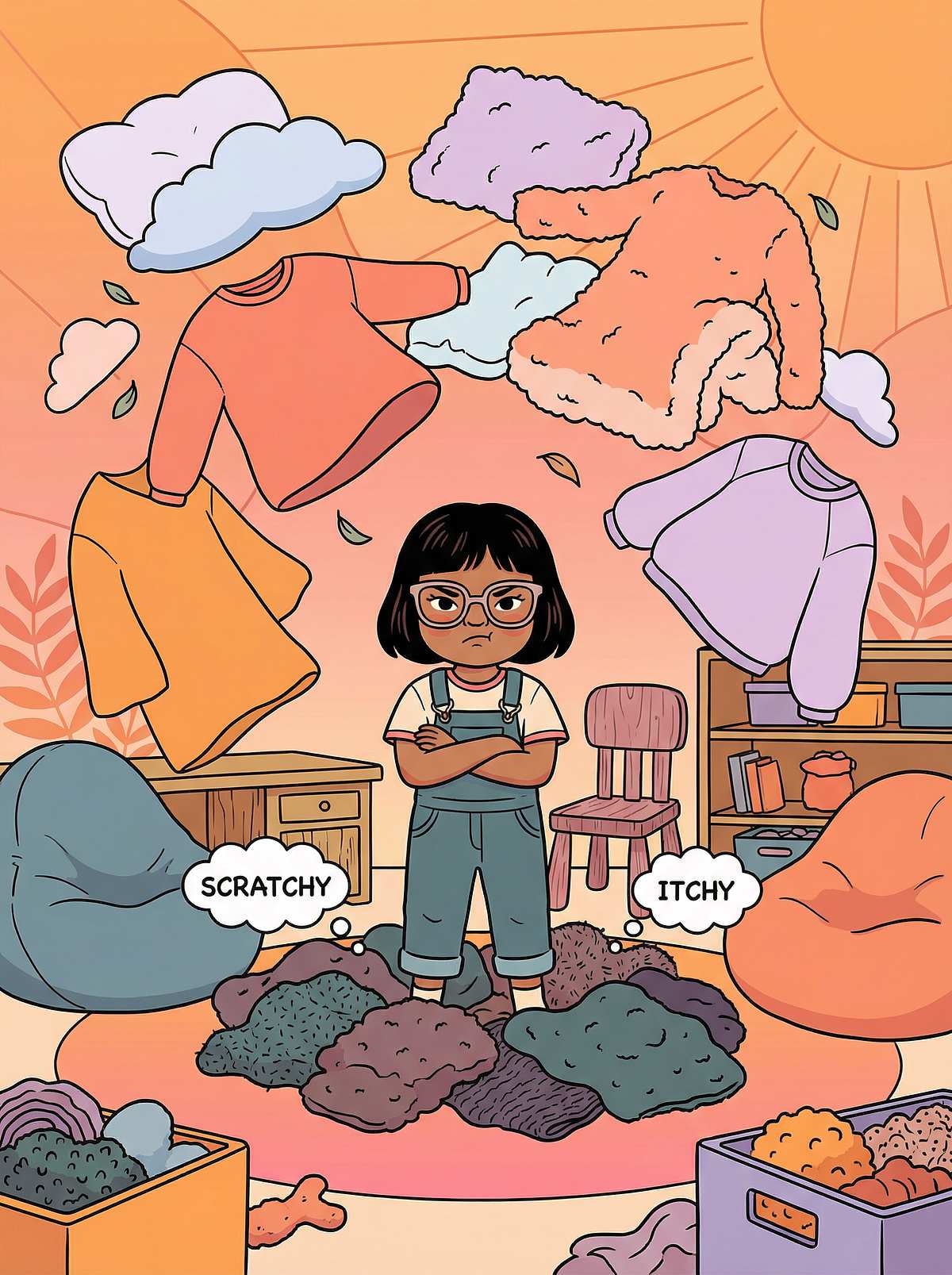
A-004 · Refuses Certain Fabrics
9 Materials That Help When Child Refuses Certain Fabrics
Subdomain A1: Tactile | Domain A: Sensory Processing | Pinnacle Blooms Network®
The Moment
Cotton only. Polyester triggers screaming. Jeans are impossible. You've built their entire wardrobe around one shirt type from one brand — and when it was discontinued, you felt genuine panic. Weddings, festivals, school events all become logistical crises centered on what they'll agree to wear.
The Neuroscience
Different fabrics activate different mechanoreceptor populations at different frequencies. Synthetics create micro-friction that the hypersensitive somatosensory cortex processes as noxious rather than neutral — the discomfort is neurologically real, not imagined.
The Evidence
📊Level I — PMC11506176 | NCAEP 2020
What You'll Learn Inside
- Fabric tolerance hierarchy: silk → cotton → blends
- Swatch desensitization before full garments
- Layering strategies for unavoidable fabrics
- India-specific fabric recommendations by price tier
- Graded exposure plan over 8 weeks
🤲Lead: OT (SI Certified) | ABA
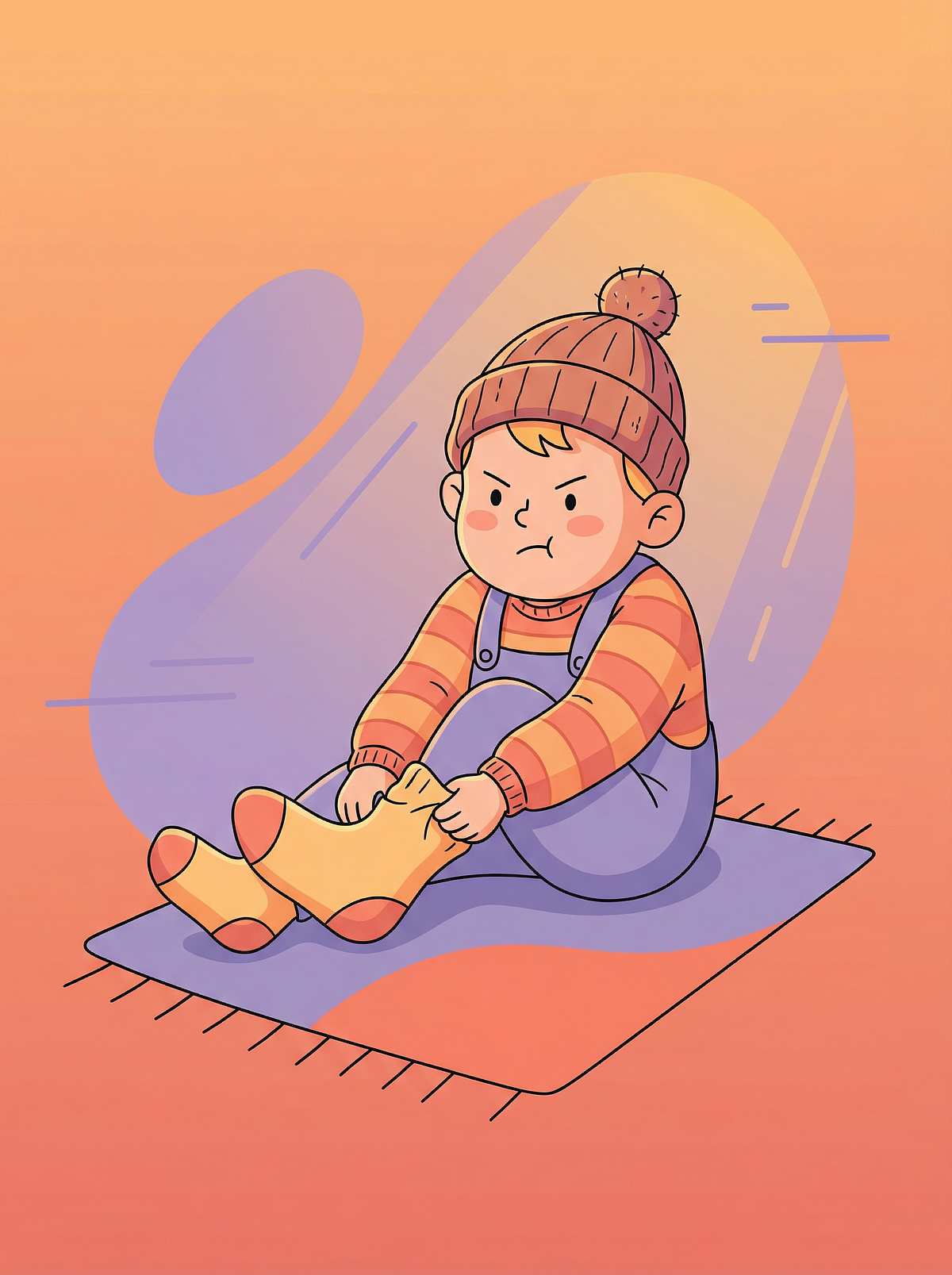
A-005 · Seam Sensitivity in Socks
9 Materials That Help With Seam Sensitivity in Socks
Subdomain A1: Tactile | Domain A: Sensory Processing | Pinnacle Blooms Network®
The Moment
Socks on. Socks off. Socks inside out. Still wrong. Fifteen brands tried. Seams ironed flat. Twenty minutes every morning. School is already late before the shoes even come out. You've started waking up 45 minutes earlier just for the sock battle — and even that isn't always enough.
The Neuroscience
The toes and feet have the highest mechanoreceptor density in the lower body. Sock seams create a ridge of concentrated pressure that the impaired sensory gating system cannot suppress — it stays the loudest signal the brain receives, all day long.
The Evidence
📊Level I — PMC11506176 | PMC10955541
What You'll Learn Inside
- Seamless sock introduction hierarchy
- Desensitization protocol for foot hypersensitivity
- Pre-dressing deep pressure foot routine
- Visual routine cards for independent dressing
- Accommodate vs. desensitize decision framework
🤲Lead: OT (SI Certified) | ABA
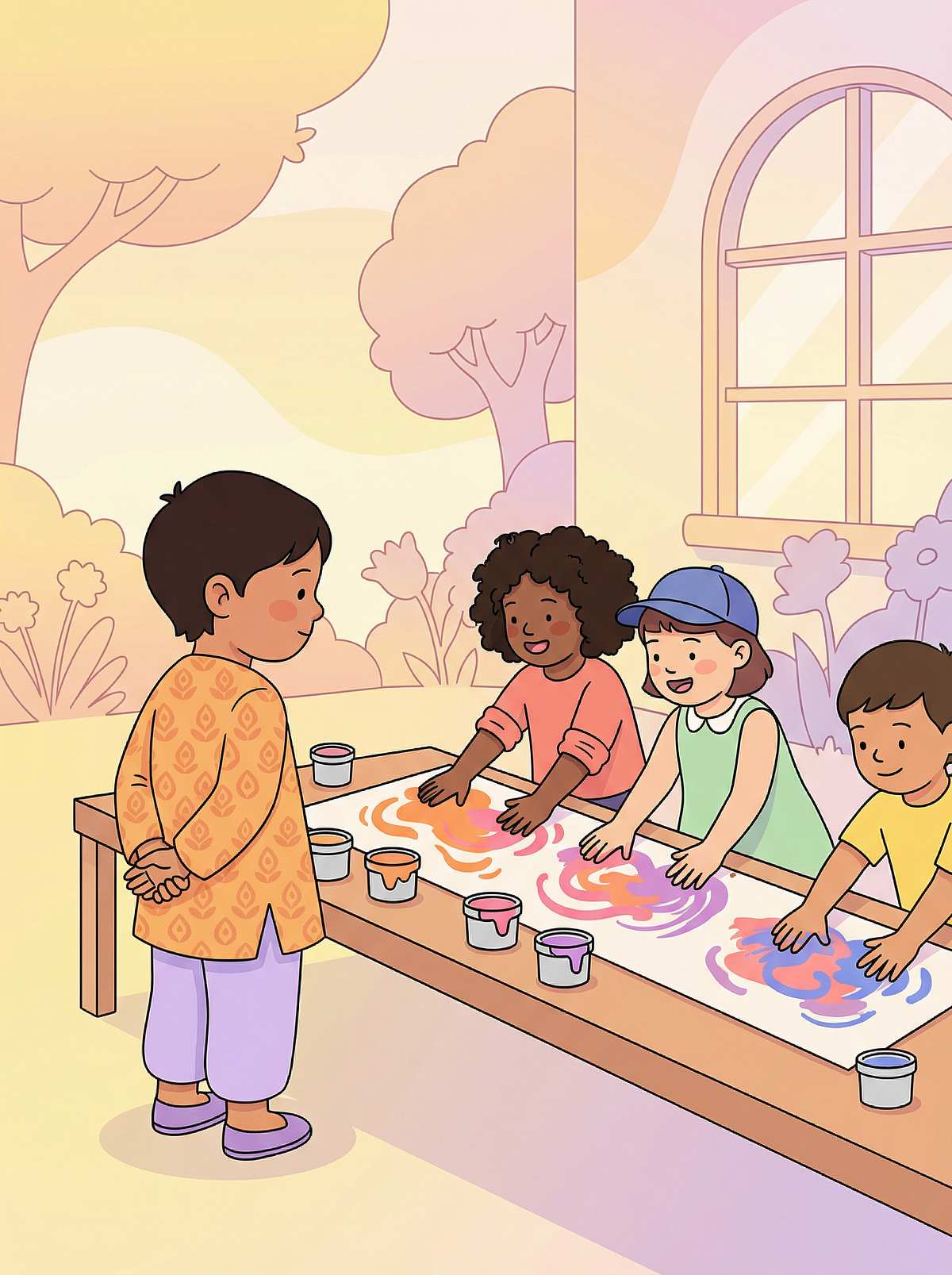
A-006 · Avoids Messy Play
9 Materials That Help When Child Avoids Messy Play
Subdomain A1: Tactile | Domain A: Sensory Processing | Pinnacle Blooms Network®
The Moment
Art class is a nightmare. Finger painting, playdough, glue, sand — anything with texture on their hands triggers panic and withdrawal. Other children dive in with gleeful abandon. Yours stands at the edge, hands firmly behind their back, watching but unable to join in. The learning opportunity is lost and the social gap widens.
The Neuroscience
Palmar tactile hypersensitivity is at the root of this avoidance. The palm's dense mechanoreceptor population, combined with poor sensory modulation, means wet, sticky, or gritty textures overwhelm the processing system before any enjoyment can register.
The Evidence
📊Level I — PMC11506176 | NCAEP 2020
What You'll Learn Inside
- Graduated messy play exposure hierarchy
- Dry-to-wet texture progression protocol
- Tool-first strategies (spoons, brushes) before hands
- Home-safe messy play alternatives
- Communicating needs to school art teachers
🤲Lead: OT (SI Certified) | ABA · SLP
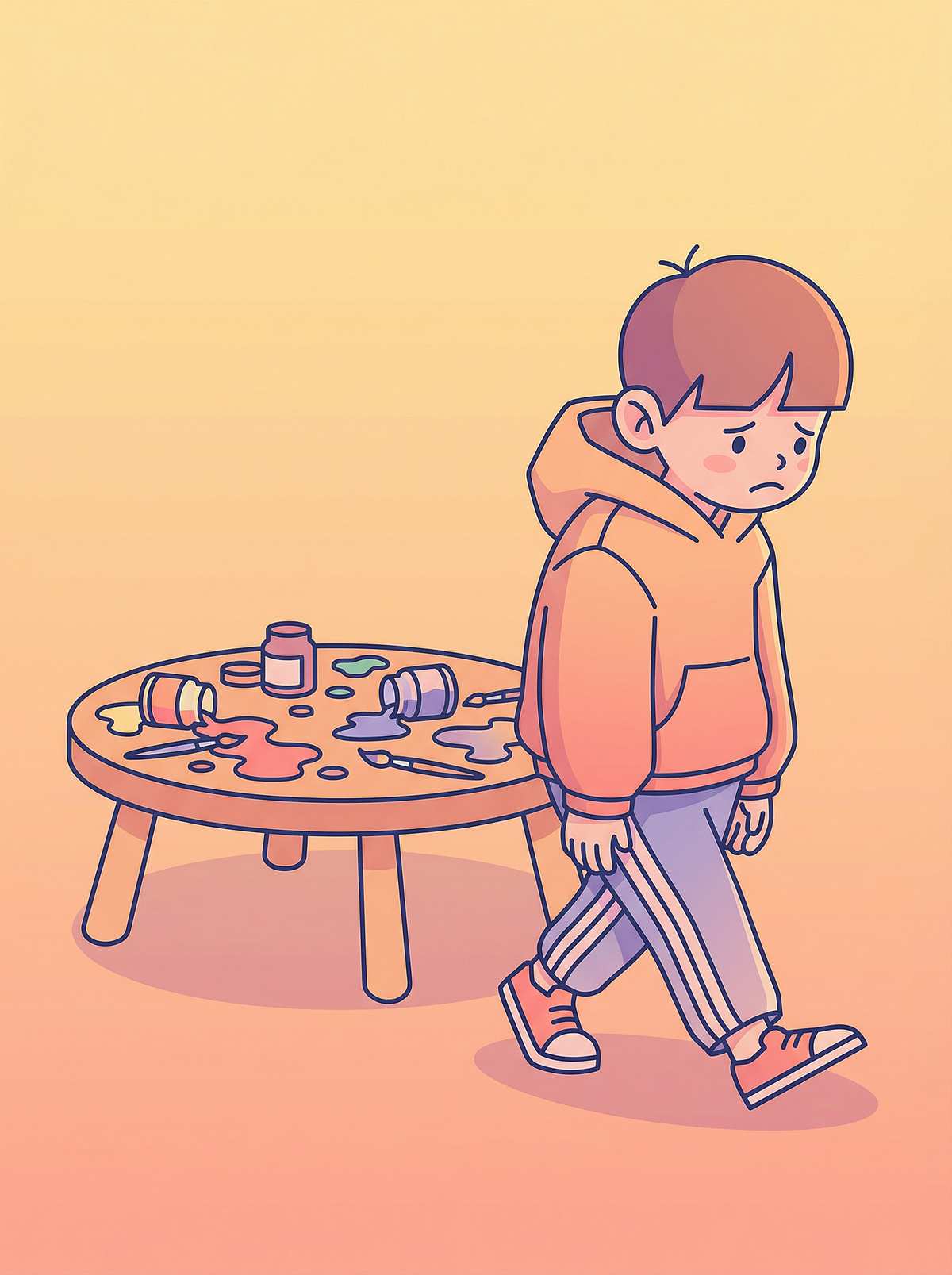
A-007 · Paint and Art Aversion
9 Materials That Help With Paint and Art Aversion
Subdomain A1: Tactile | Domain A: Sensory Processing | Pinnacle Blooms Network®
The Moment
"Your child won't participate in art," says the teacher — again. The only tool they'll willingly touch is a dry crayon on clean paper. The moment paint, paste, or clay appears, they retreat to the corner and shut down completely. Creative expression, fine motor development, and peer bonding all happen at the art table — and your child is locked out.
The Neuroscience
Wet, cold paint input activates both thermoreceptors and mechanoreceptors simultaneously — a "sensory double hit" that overwhelms the processing system before any creative engagement is possible. The brain signals danger; the child escapes.
The Evidence
📊Level I — PMC11506176 | NCAEP 2020
What You'll Learn Inside
- Dry-medium-first art introduction sequence
- Textured stamp tools that keep hands clean
- Paint gloves desensitization protocol
- Adapting school art curriculum with teacher guides
- Building creativity alongside tactile tolerance
🤲Lead: OT (SI Certified) | ABA · Creative Arts Therapy
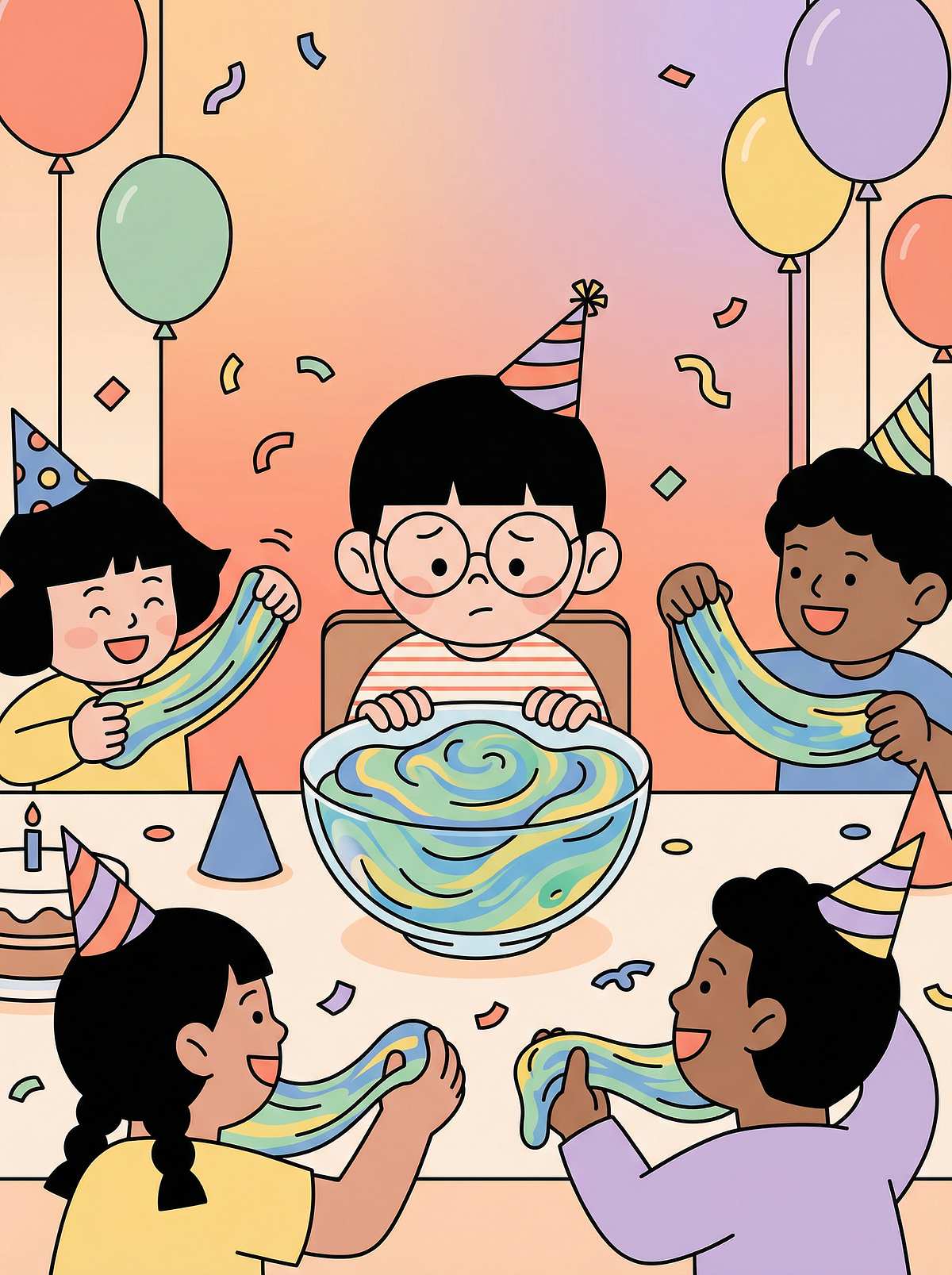
A-008 · Won't Touch Slime
9 Materials That Help When Child Won't Touch Slime
Subdomain A1: Tactile | Domain A: Sensory Processing | Pinnacle Blooms Network®
The Moment
Every child's favorite, your child's nightmare. Birthday party slime ends in tears and early exit. School science "gooey" experiments cause shutdown before they begin. The social cost is real — slime is everywhere in childhood culture right now, and your child is excluded from yet another shared experience.
The Neuroscience
Viscous, non-Newtonian textures like slime activate multiple receptor types in unpredictable, shifting patterns — the brain simply cannot categorize what it's feeling. Unable to make sense of the input, the defensive system triggers immediate protective withdrawal.
The Evidence
📊Level I — PMC11506176 | NCAEP 2020
What You'll Learn Inside
- Viscosity tolerance ladder from firm to fluid
- Observer → tool user → hands-on progression
- Homemade slime with controllable consistency
- Pre-exposure deep pressure priming
- Social scripting for party situations
🤲Lead: OT (SI Certified) | ABA
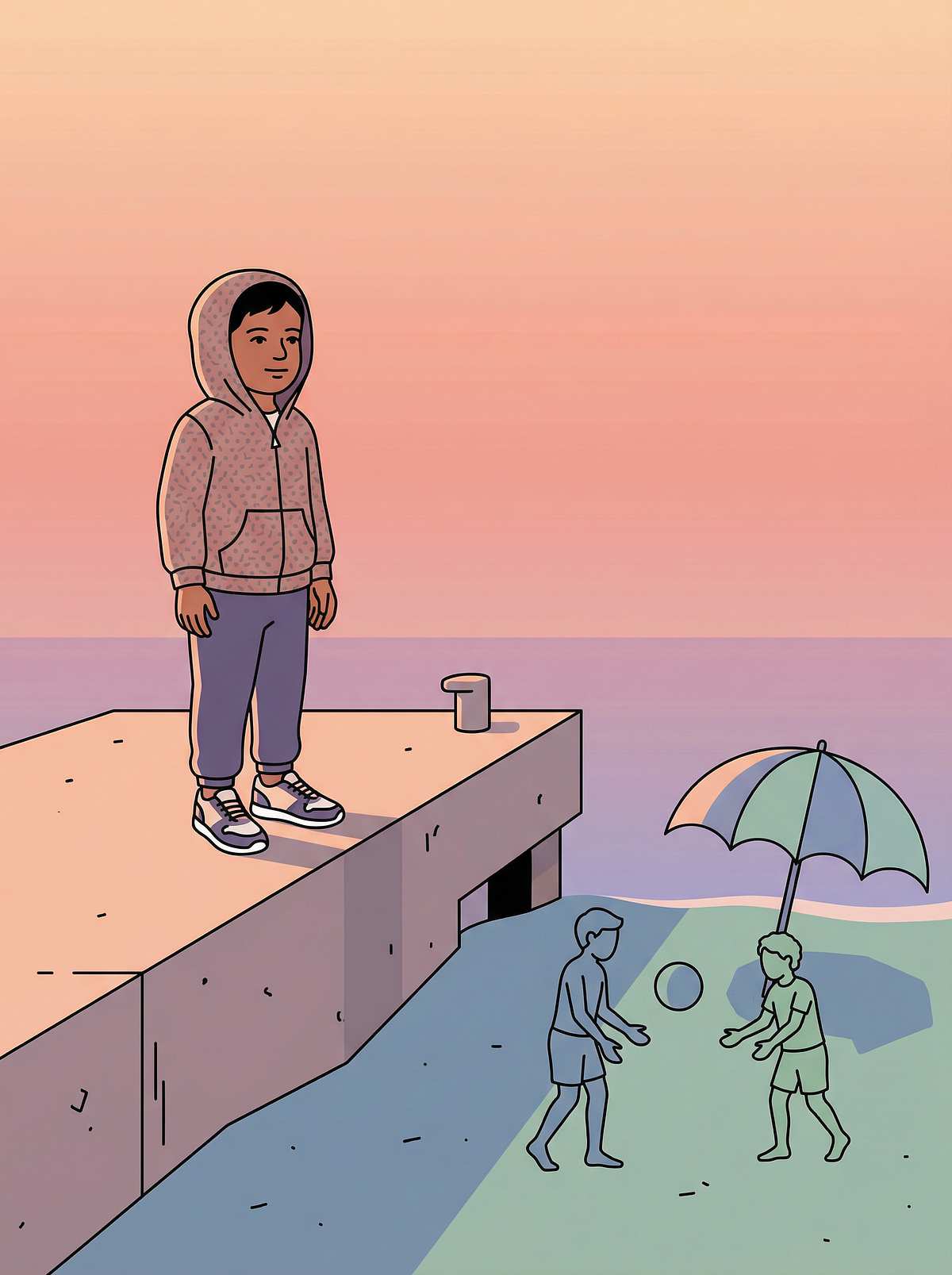
A-009 · Sand Play Avoidance
9 Materials That Help With Sand Play Avoidance
Subdomain A1: Tactile | Domain A: Sensory Processing | Pinnacle Blooms Network®
The Moment
The playground sandbox is a strict no-go zone. Beach holidays are impossible — they stand on concrete while peers run barefoot into the waves and build castles without a care. Sand between the toes triggers immediate screaming. A texture that represents freedom and summer fun for most children is a source of real distress for yours.
The Neuroscience
Sand grains create irregular, unpredictable micro-pressure patterns simultaneously across extensive skin surfaces. The tactile discrimination system, already overwhelmed in sensory-sensitive children, cannot process this complexity without triggering a defensive alarm response.
The Evidence
📊Level I — PMC11506176 | NCAEP 2020
What You'll Learn Inside
- Sandpit approach hierarchy — watching to touching
- Kinetic sand as a controlled starting point
- Foot pressure prep before barefoot sand contact
- Shoe-to-sock-to-barefoot progression on sand
- Beach holiday preparation protocol
🤲Lead:
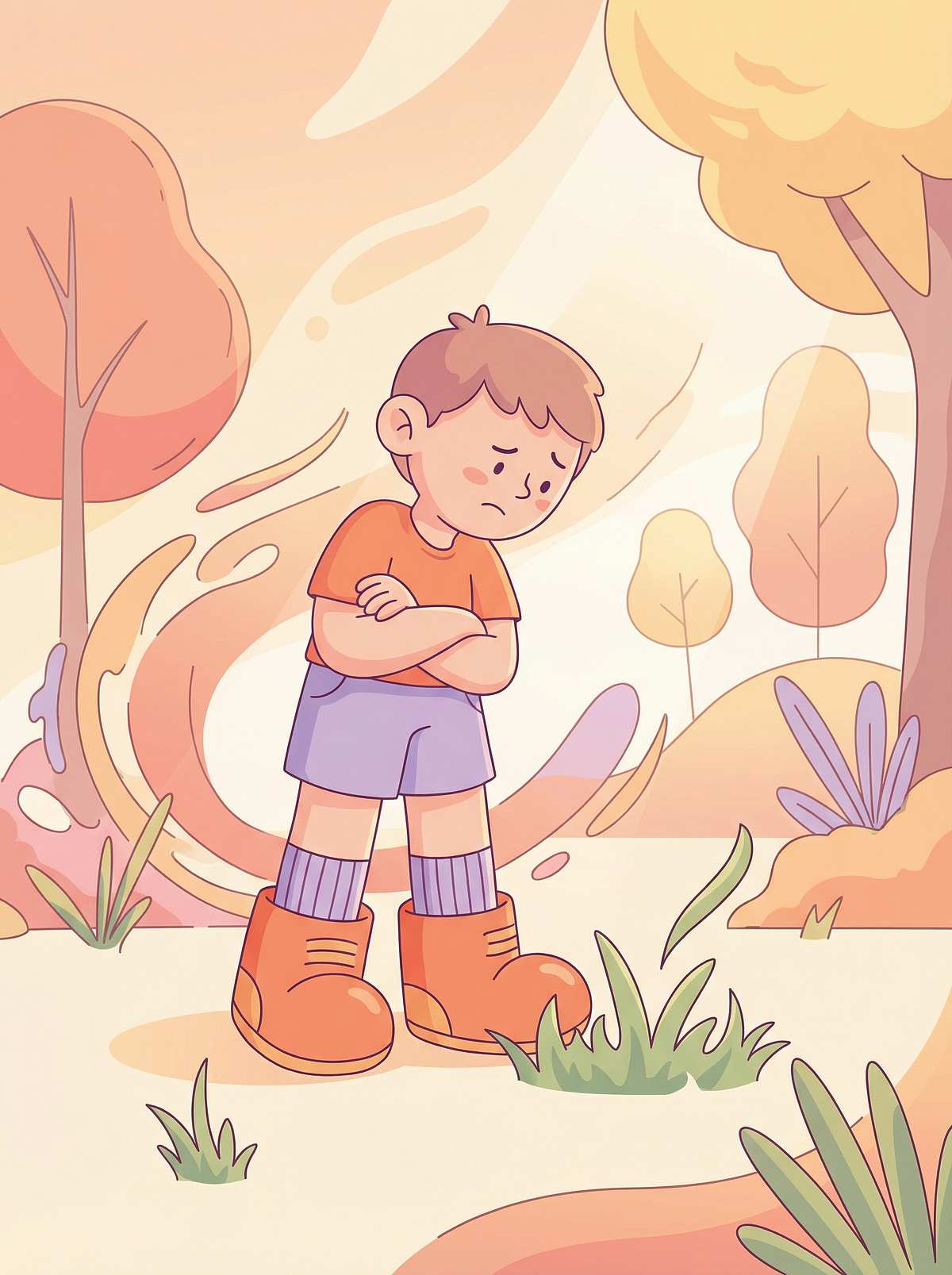
A-012 · Won't Walk Barefoot
9 Materials That Help When Child Won't Walk Barefoot
Subdomain A1: Tactile | Domain A: Sensory Processing | Pinnacle Blooms Network®
The Moment
They refuse grass, tile, sand, and even soft carpet without shoes. Bath time requires a non-slip mat before any cooperation is possible. They sleep in socks regardless of the temperature. Every different floor surface is a genuine source of distress — and navigating the world means navigating an obstacle course of textures.
The Neuroscience
Plantar mechanoreceptors — Pacinian corpuscles and Merkel cells — over-respond to surface texture changes in sensory-sensitive children. The foot's extraordinary receptor density, designed for balance and navigation, becomes a liability when modulation fails.
The Evidence
📊Level I — PMC11506176 | NCAEP 2020
What You'll Learn Inside
- Surface texture hierarchy from smooth to complex
- Foot deep pressure pre-exposure routine
- Textured insole desensitization progression
- Barefoot sensory play introduction in safe settings
- Home flooring modification recommendations
🤲Lead: OT (SI Certified) | ABA
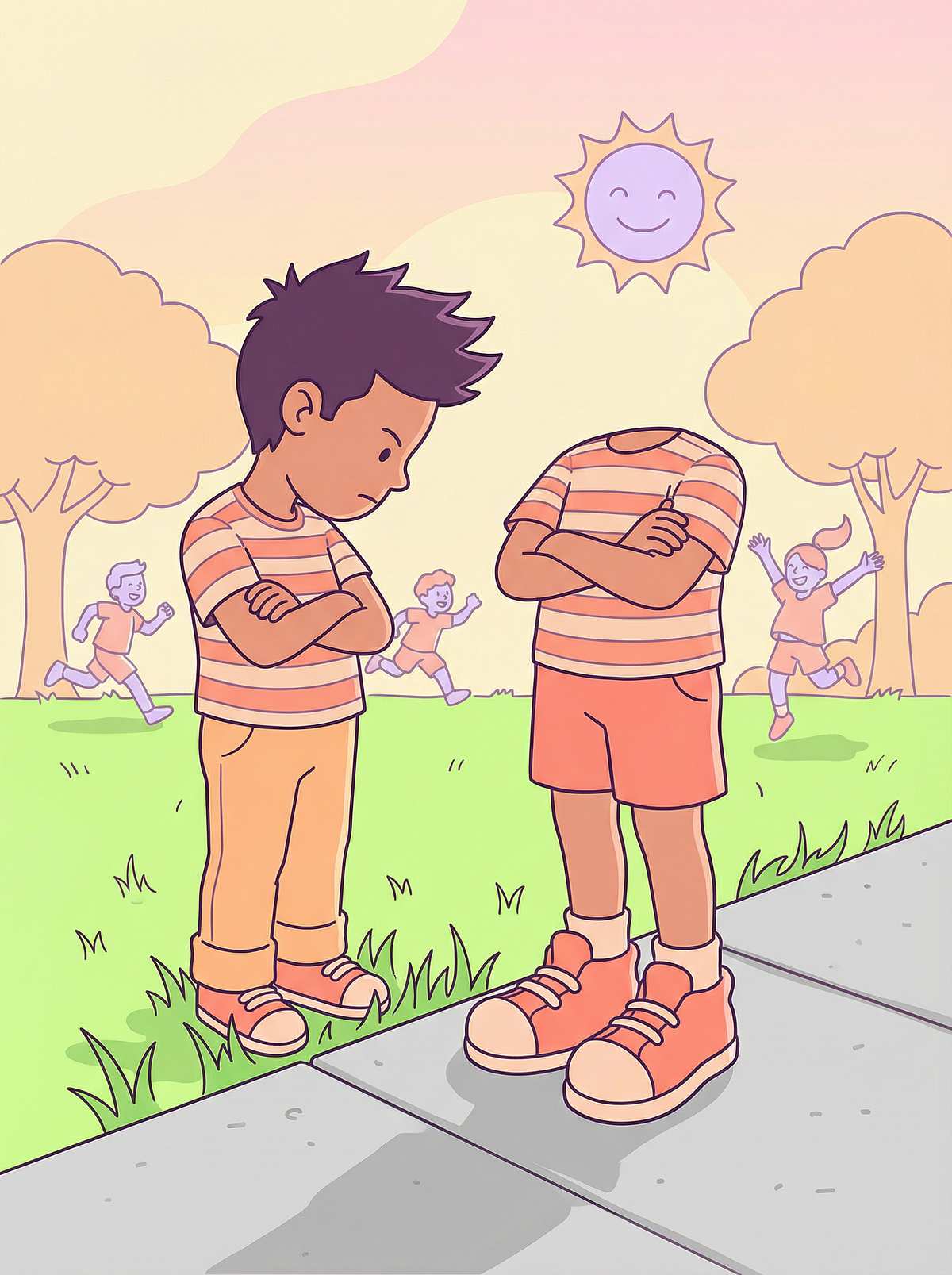
A-013 · Grass Texture Aversion
9 Materials That Help With Grass Texture Aversion
Subdomain A1: Tactile | Domain A: Sensory Processing | Pinnacle Blooms Network®
The Moment
Every other child runs barefoot across park grass without a second thought. Yours stands rigidly on the nearest concrete path, refusing to step on the green. Outdoor play is limited strictly to paved areas. What should be a simple pleasure — running through nature — becomes an exclusion from one of childhood's most universal joys.
The Neuroscience
Grass creates unpredictable, multi-directional micro-touch simultaneously across the highly sensitive plantar surface. Individual blades move independently, creating constantly shifting, unresolvable tactile input that the sensory discrimination system cannot organize or ignore.
The Evidence
📊Level I — PMC11506176 | NCAEP 2020
What You'll Learn Inside
- Shoes → thick socks → thin socks → barefoot progression
- Artificial grass mat desensitization starting point
- Foot-texture brushing protocol for plantar sensitivity
- Playground participation strategies with peers
- Nature play reintegration schedule
🤲Lead: OT (SI Certified) | ABA
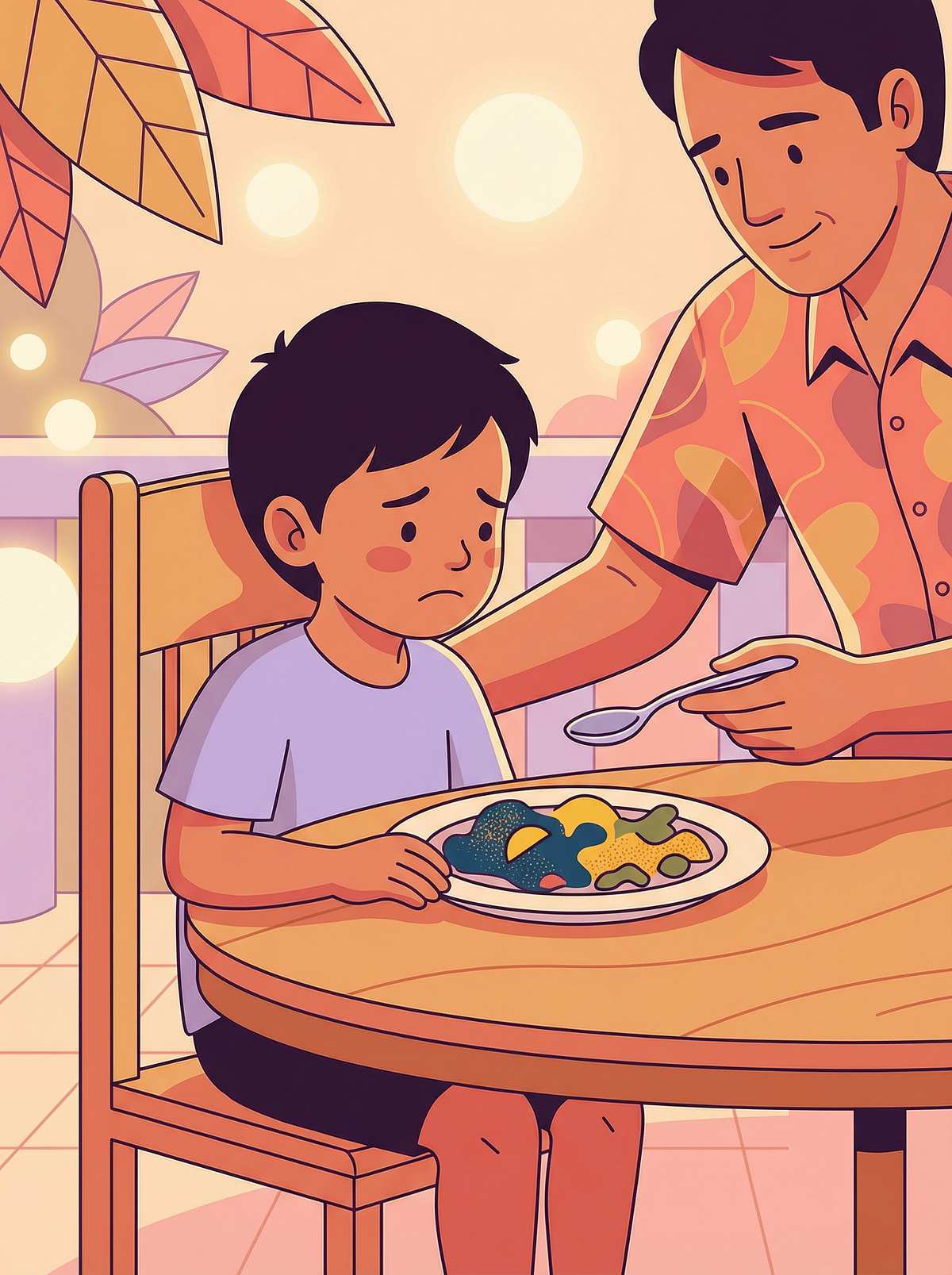
A-014 · Food Texture Gagging
9 Materials That Help With Food Texture Gagging
Subdomain A1: Tactile | Domain A: Sensory Processing | Pinnacle Blooms Network®
The Moment
They gag on anything beyond smooth purée — even at age 5. Rice triggers vomiting. Chapati causes retching. Stuck on only three "safe foods" for years. Nutritional worry keeps you up at night, and every family mealtime is a source of stress rather than connection. School lunch becomes another daily battle.
The Neuroscience
Oral tactile defensiveness sits at the core of this challenge. The tongue and palate contain the body's highest mechanoreceptor density. Lumpy textures trigger the gag reflex via the glossopharyngeal nerve before the brain has any chance to process the food as safe — it's a neurological reflex, not willful refusal.
The Evidence
📊Level I — ASHA Feeding Guidelines | NCAEP 2020
What You'll Learn Inside
- Oral motor desensitization progression
- Food texture hierarchy from smooth to chunky
- Safe food bridge strategies for Indian cuisine
- Mealtime environment modifications
- Nutritional adequacy planning during transition
- SLP and feeding therapist referral pathway
🤲Lead: SLP (Feeding Specialist) | OT · Dietitian
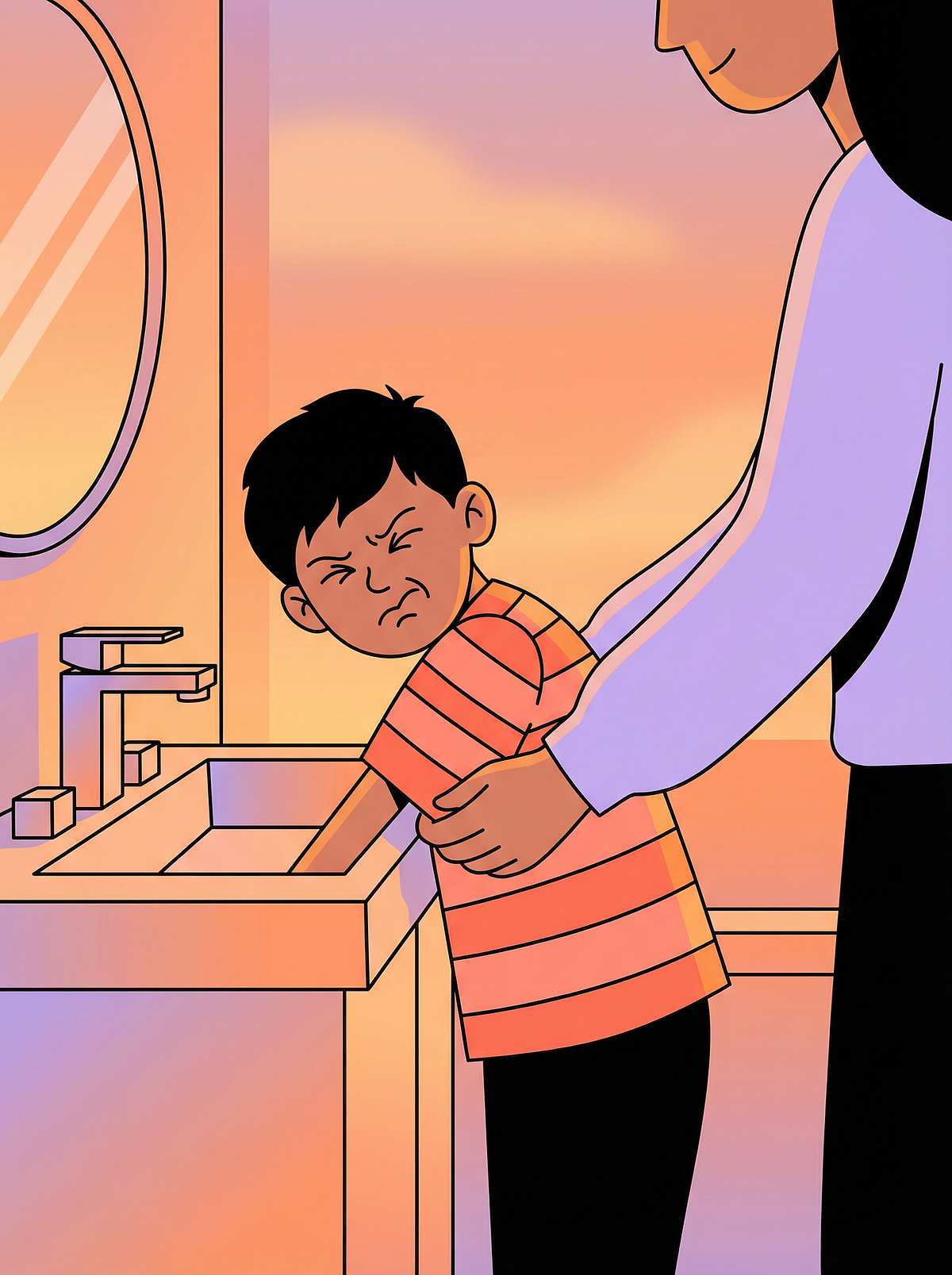
A-015 · Hates Face Washing
9 Materials That Help When Child Hates Face Washing
Subdomain A1: Tactile | Domain A: Sensory Processing | Pinnacle Blooms Network®
The Moment
Face washing is like bathing a cat. Water on the face triggers thrashing, screaming, and breath-holding. You've resorted to baby wipes instead of water — and even that produces fierce resistance. Morning and night hygiene routines have become the two most dreaded moments of the day for your entire household.
The Neuroscience
The trigeminal nerve (CN V) innervates the face with exceptional density — more than almost any other body region. Water plus touch simultaneously activates thermoreceptors, mechanoreceptors, and the trigeminal reflex together, creating a multi-sensory overload that overwhelms the defensive system.
The Evidence
📊Level I — NCAEP 2020 | OT Guidelines
What You'll Learn Inside
- Dry → damp → wet face-touch progression
- Child-controlled water temperature protocols
- Towel texture grading for face desensitization
- Pre-wash deep pressure facial massage
- Visual routine cards for face washing independence
🤲Lead: OT (SI Certified) | ABA · SLP
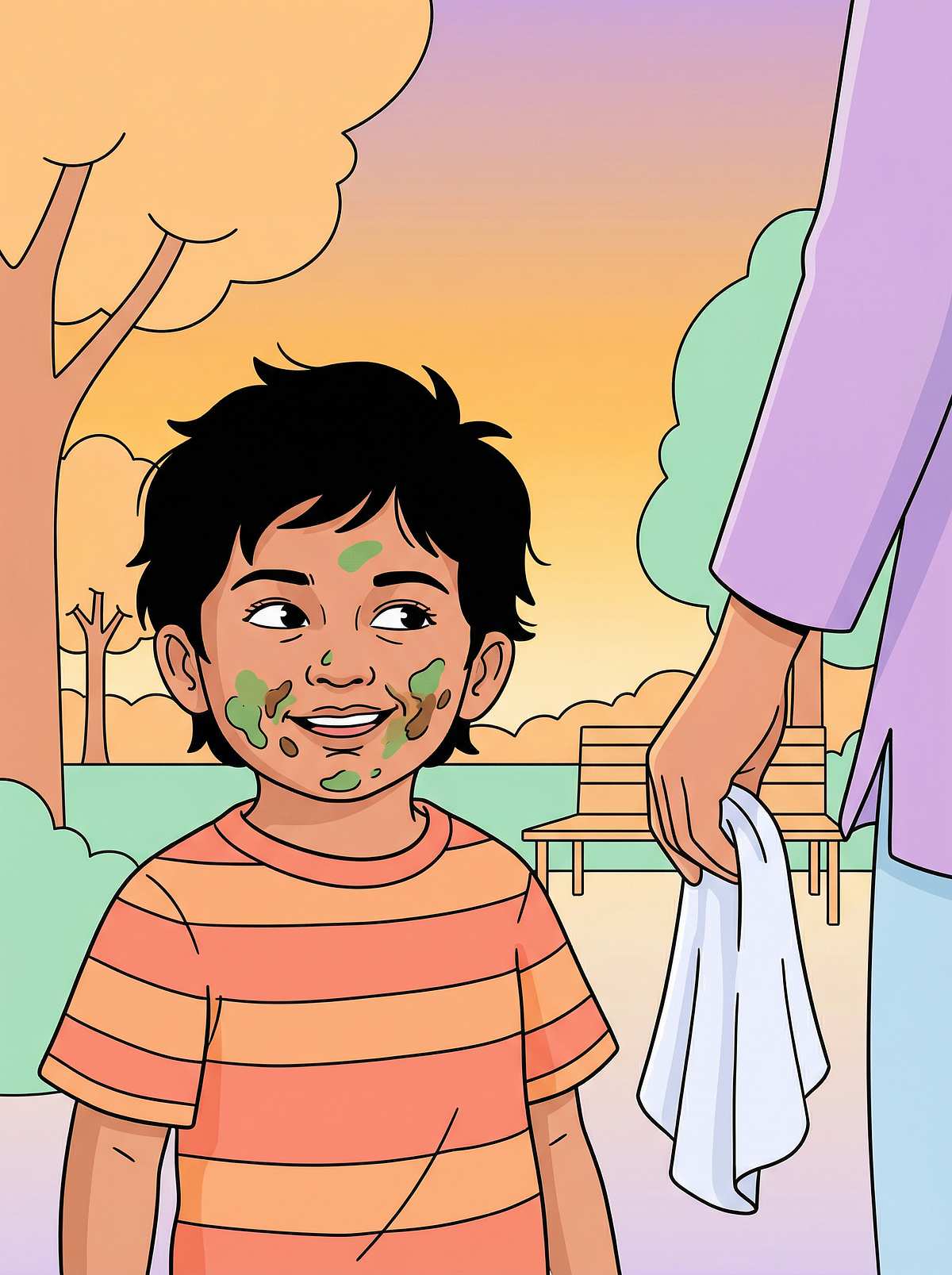
A-016 · Face Wiping Resistance
9 Materials That Help With Face Wiping Resistance
Subdomain A1: Tactile | Domain A: Sensory Processing | Pinnacle Blooms Network®
The Moment
Food around the mouth after eating? They won't let you wipe it. They'd rather walk through the house with dal on their chin than tolerate cloth touching their face for two seconds. At school, teachers can't wipe their face either. A basic hygiene and social norm becomes an ongoing battle that leaves your child stigmatized among peers.
The Neuroscience
Perioral tactile sensitivity is at the neurological root here. The lip and chin area carries trigeminal innervation density second only to the fingertips. Even the lightest cloth contact is processed as intense, aversive stimulation by the defensive somatosensory system.
The Evidence
📊Level I–II — ASHA | NCAEP 2020
What You'll Learn Inside
- Perioral desensitization sequence with vibration
- Material grading: microfiber to textured cloth
- Child self-wiping independence program
- Preferred food as motivator for tolerance building
- Teacher communication script for school mealtimes
🤲Lead: OT (SI Certified) | SLP
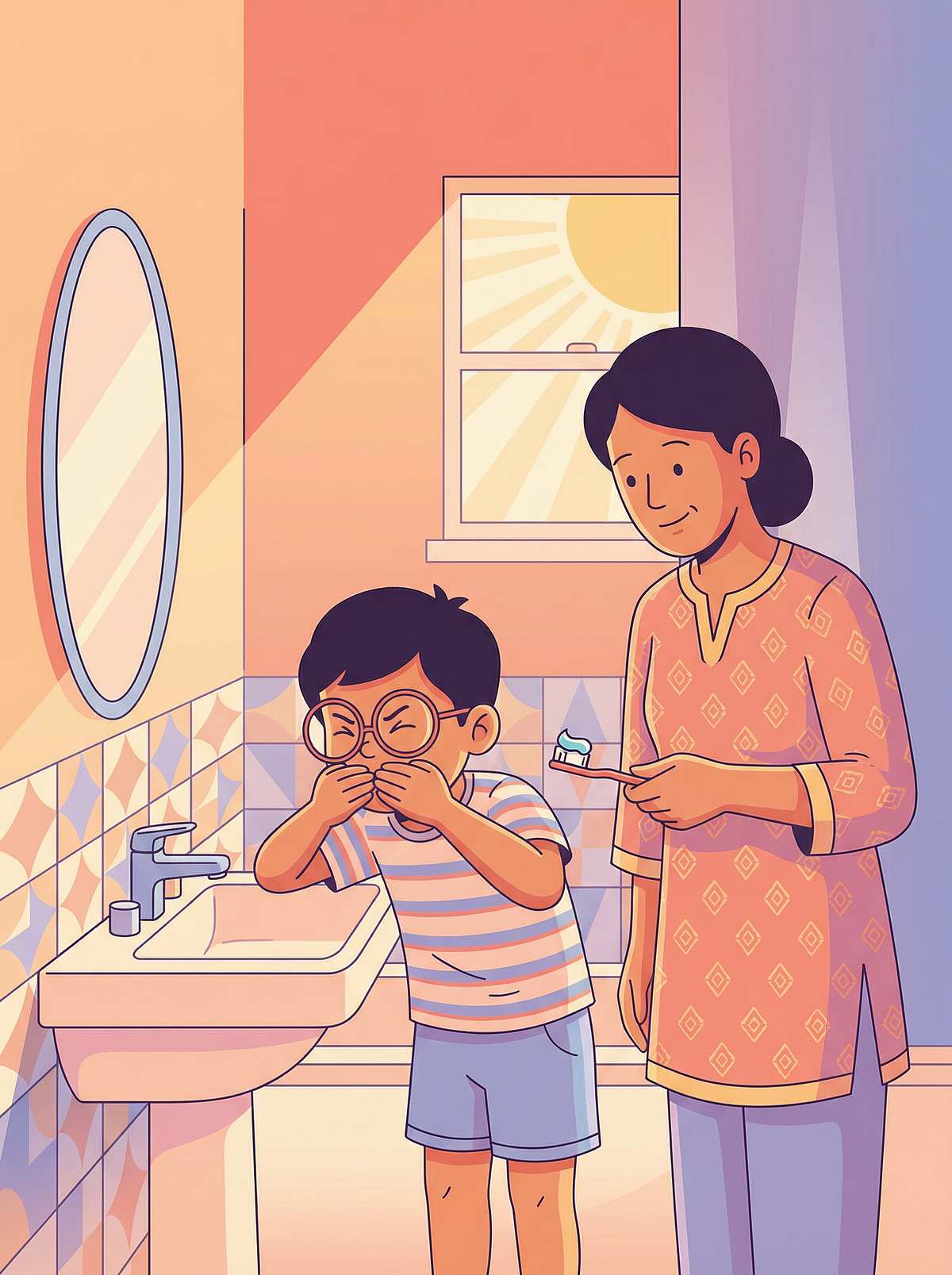
A-017 · Toothbrushing Battles
9 Materials That Help During Toothbrushing Battles
Subdomain A1: Tactile | Domain A: Sensory Processing | Pinnacle
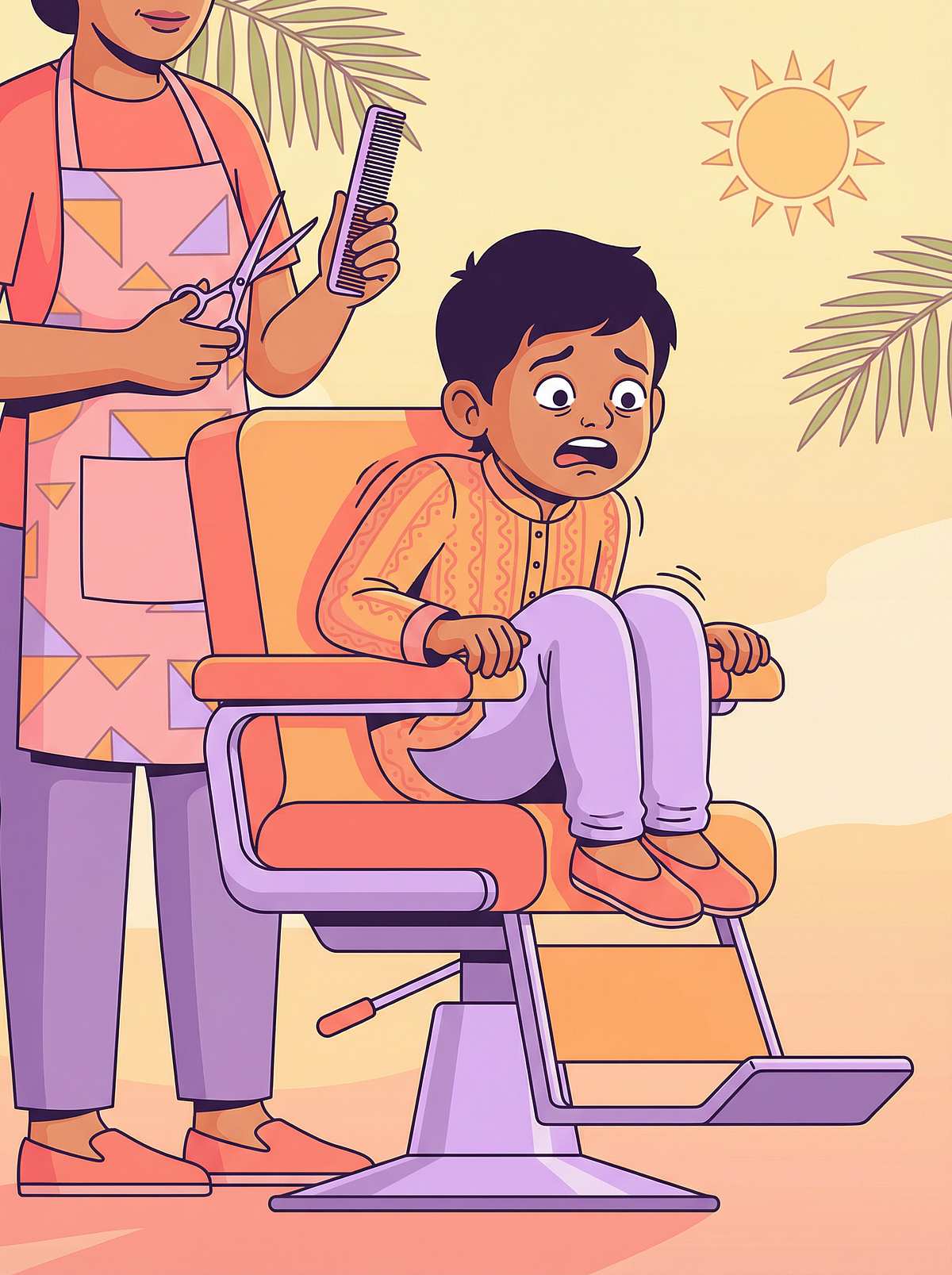
A-018 · Refuses Haircuts
9 Materials That Help When Child Refuses Haircuts
Subdomain A1: Tactile | Domain A: Sensory Processing | Pinnacle Blooms Network®
The Moment
The last salon visit ended with your child screaming, the hairdresser in tears, and a half-finished haircut as you were carried out. Now you cut their hair at home during sleep — or don't cut it at all. What should be a simple grooming task requires careful planning, preparation, and often still ends in distress.
The Neuroscience
A haircut is a multi-sensory assault compressed into 20 minutes: scissor vibration (auditory + tactile), falling hair on the neck (unpredictable touch), water sprayer (wet + cold), cape (restriction), and an unfamiliar, echoing environment. Any one of these alone could challenge a sensitive child; together, they're overwhelming.
The Evidence
📊Level I–II — NCAEP 2020 | OT Practice Guidelines
What You'll Learn Inside
- Pre-visit sensory preparation protocol
- Sensory-friendly salon identification guide
- Home haircut setup for minimal sensory load
- Desensitization to scissors sound and vibration
- Visual social story for salon visits
🤲Lead: OT (SI Certified) | ABA
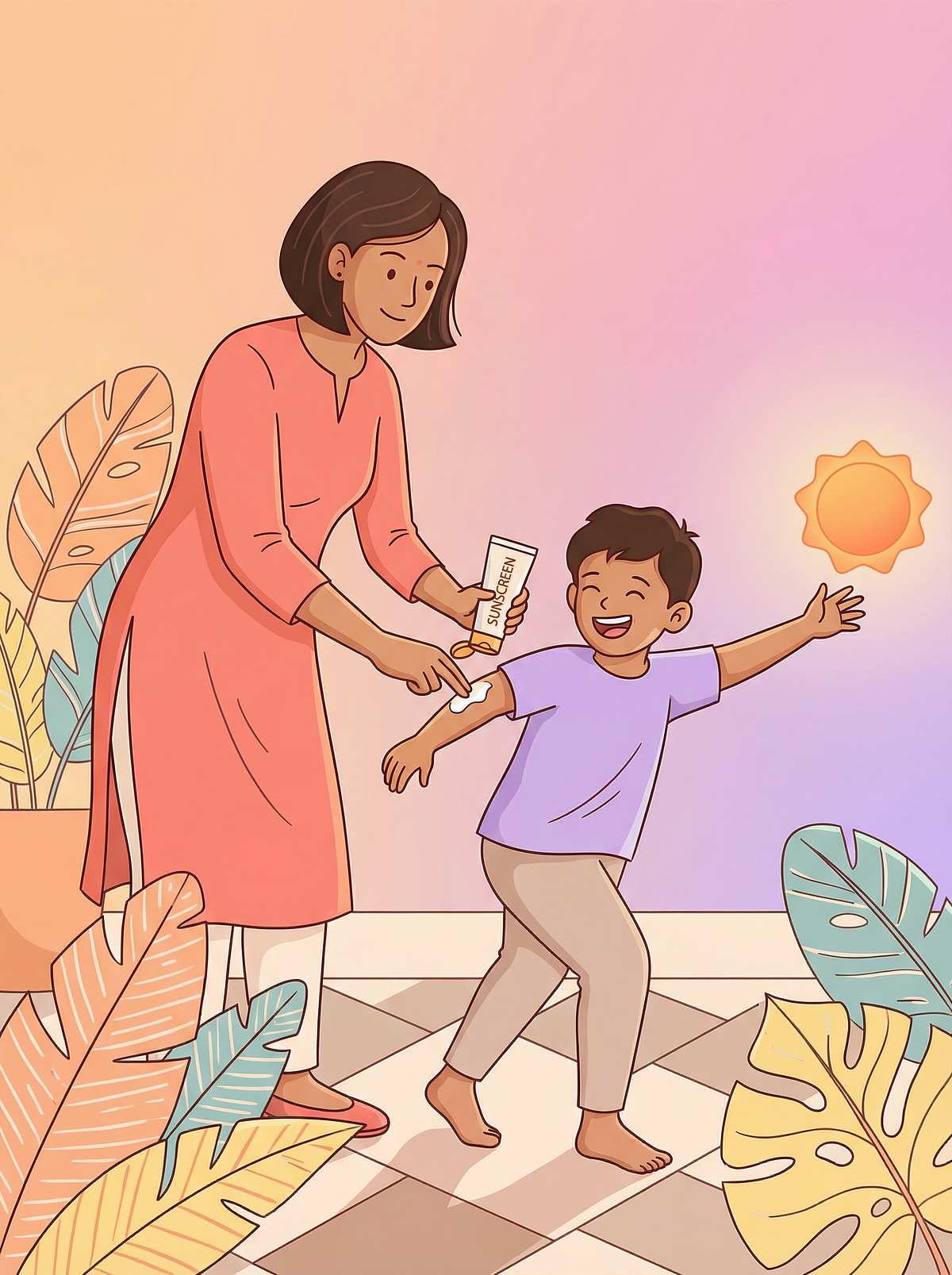
A-019 · Sunscreen Application
9 Materials That Help With Sunscreen Application
Subdomain A1: Tactile | Domain A: Sensory Processing | Pinnacle Blooms Network®
The Moment
Summer dread — not the heat, but the sunscreen battles. The texture, the smell, the wetness, the sustained rubbing across large areas of skin. Skipping sunscreen isn't an option medically, but applying it daily is a battle you're losing. Outdoor time, which should be joyful and healthy, begins with conflict and sensory overload.
The Neuroscience
Lotion textures activate both the tactile and thermoreceptor systems simultaneously. Spreading lotion across large skin areas creates sustained, unpredictable touch input across thousands of receptors at once — the defensive system treats this as a threat that won't end.
The Evidence
📊Level II — OT Guidelines | NCAEP 2020
What You'll Learn Inside
- Sunscreen texture selection: spray vs. stick vs. lotion
- Child-controlled self-application with guidance
- Deep pressure application technique vs. light rubbing
- Fragrance-free options for olfactory co-sensitivity
- Desensitization schedule for skin product tolerance
🤲Lead: OT (SI Certified) | ABA
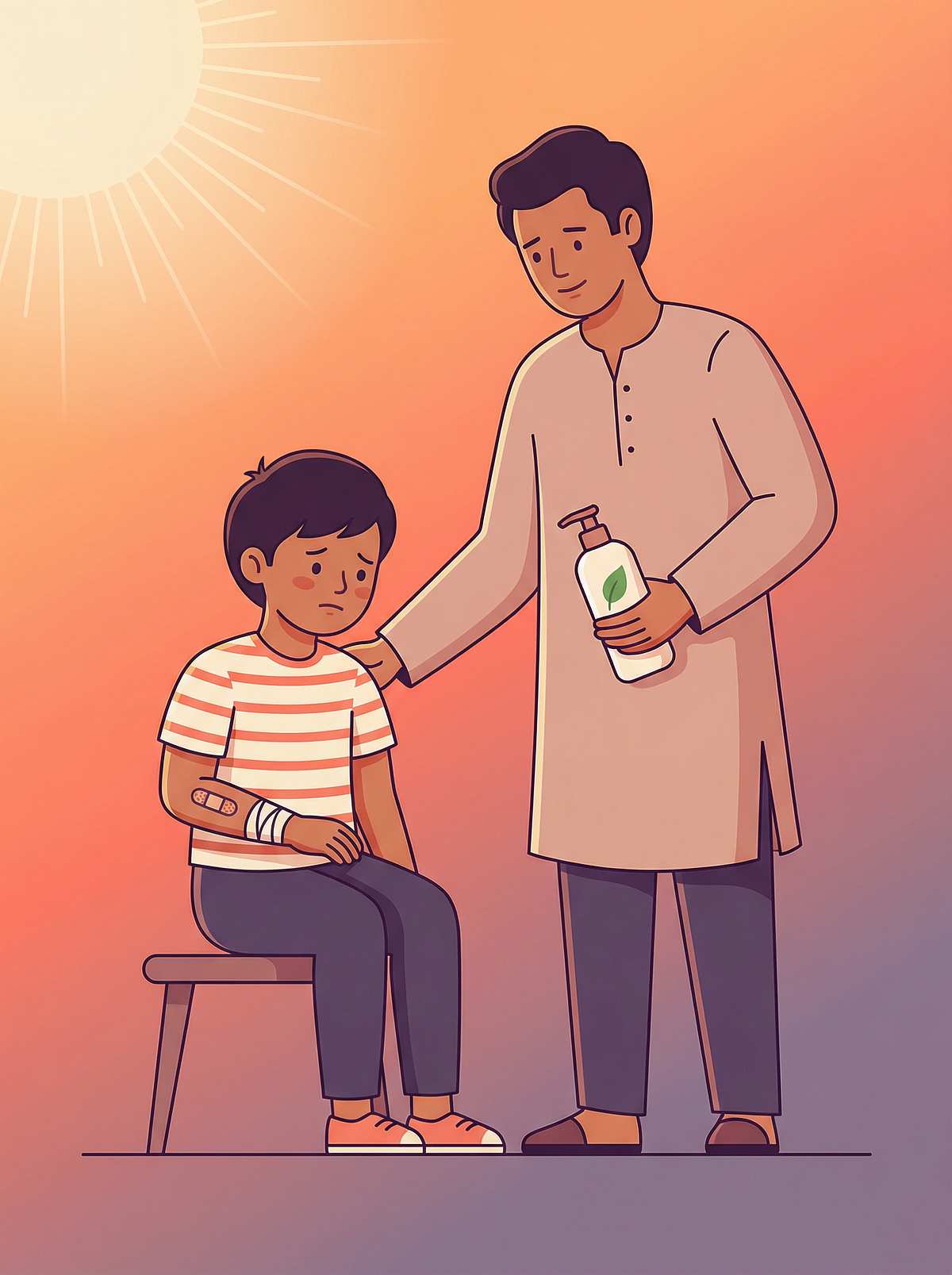
A-020 · Avoids Lotion
9 Materials That Help When Child Avoids Lotion
Subdomain A1: Tactile | Domain A: Sensory Processing | Pinnacle Blooms Network®
The Moment
Skin is dry, cracked, and uncomfortable in winter — but lotion is absolutely non-negotiable in their world. The wet-then-slippery texture transition is intolerable. You watch them scratch uncomfortable dry skin but they'd rather endure that than accept the lotion that would relieve it. The dermatologist recommends daily application. Daily application is impossible.
The Neuroscience
An emollient creates a texture-change sequence — dry → wet → slippery → absorbed — and each phase is a new, distinct sensory event that the system must re-process from scratch. The brain never gets to rest; the sensory input is in constant flux throughout application.
The Evidence
📊Level II — NCAEP 2020 | OT Practice Guidelines
What You'll Learn Inside
- Lotion consistency selection: balm to fluid
- Application method: deep pressure vs. stroking
- Child self-application independence program
- Desensitization sequence over 6 weeks
- Fragrance-free, dye-free product recommendations
🤲Lead: OT (SI Certified) | ABA
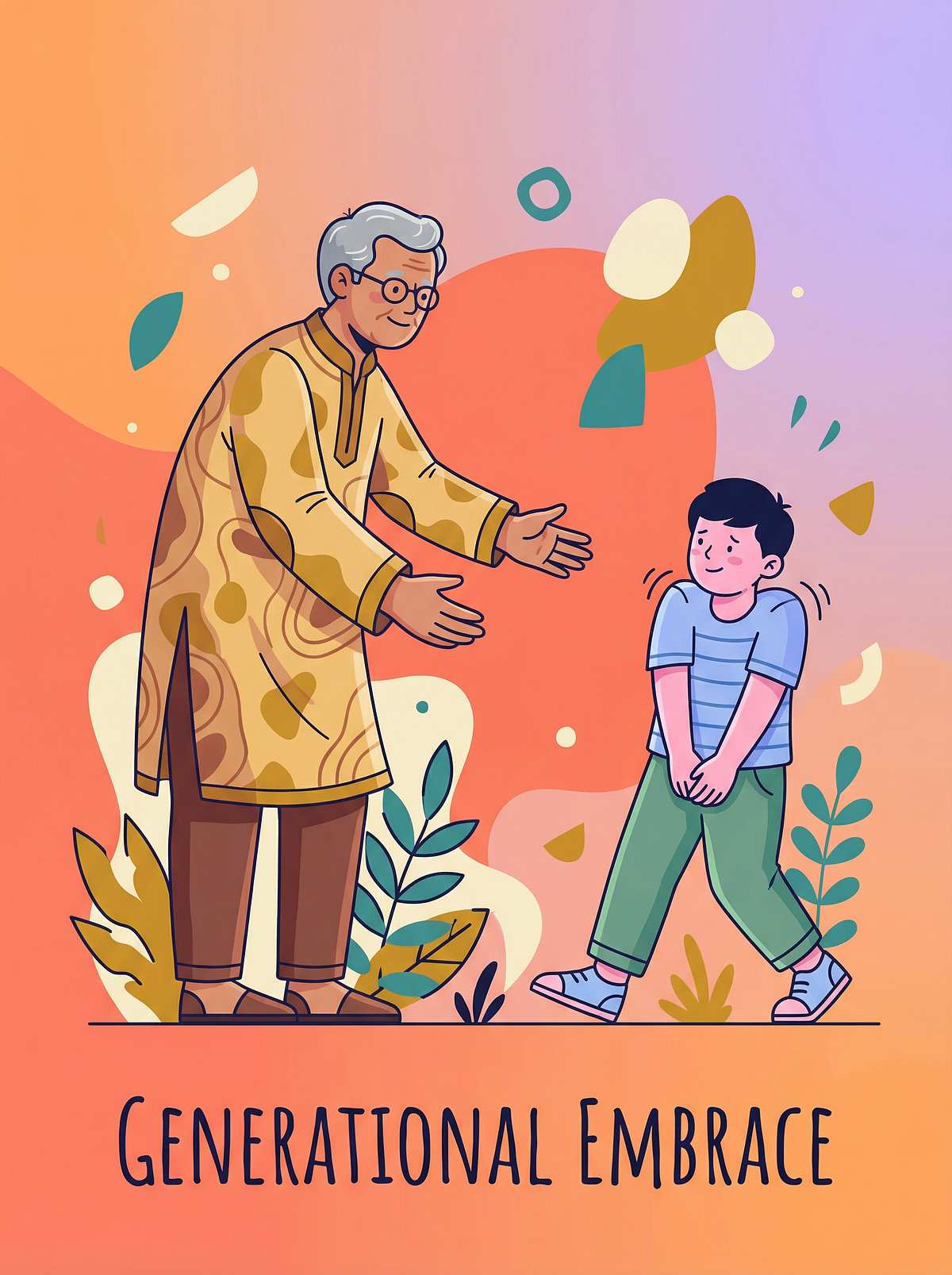
A-021 · Avoids Hugs
9 Materials That Help When Child Avoids Hugs
Subdomain A1: Tactile | Domain A: Sensory Processing | Pinnacle Blooms Network®
The Moment
You're their parent. You love them with everything you have. And they won't let you hug them. Grandparents take it personally. Relatives whisper at family gatherings. The child doesn't lack love — they lack the neurological capacity to receive light touch without pain. This is one of the most heartbreaking expressions of tactile sensitivity.
The Neuroscience
Light, enveloping touch activates superficial tactile receptors broadly and unpredictably across the body. Many children with tactile sensitivity find firm, predictable deep pressure far more tolerable — even enjoyable — than gentle, surrounding contact, which feels chaotic to the defensive system.
The Evidence
📊Level I — Deep pressure, Temple Grandin research, compression strategies. PMC11506176 | NCAEP 2020
What You'll Learn Inside
- Deep pressure alternatives to hugging
- Compression garment "hug substitutes"
- Consent-based affection rebuilding framework
- Family education guide: explaining to relatives
- Graduated hug tolerance building protocol
🤲Lead: OT (SI Certified) | ABA · Family Therapy
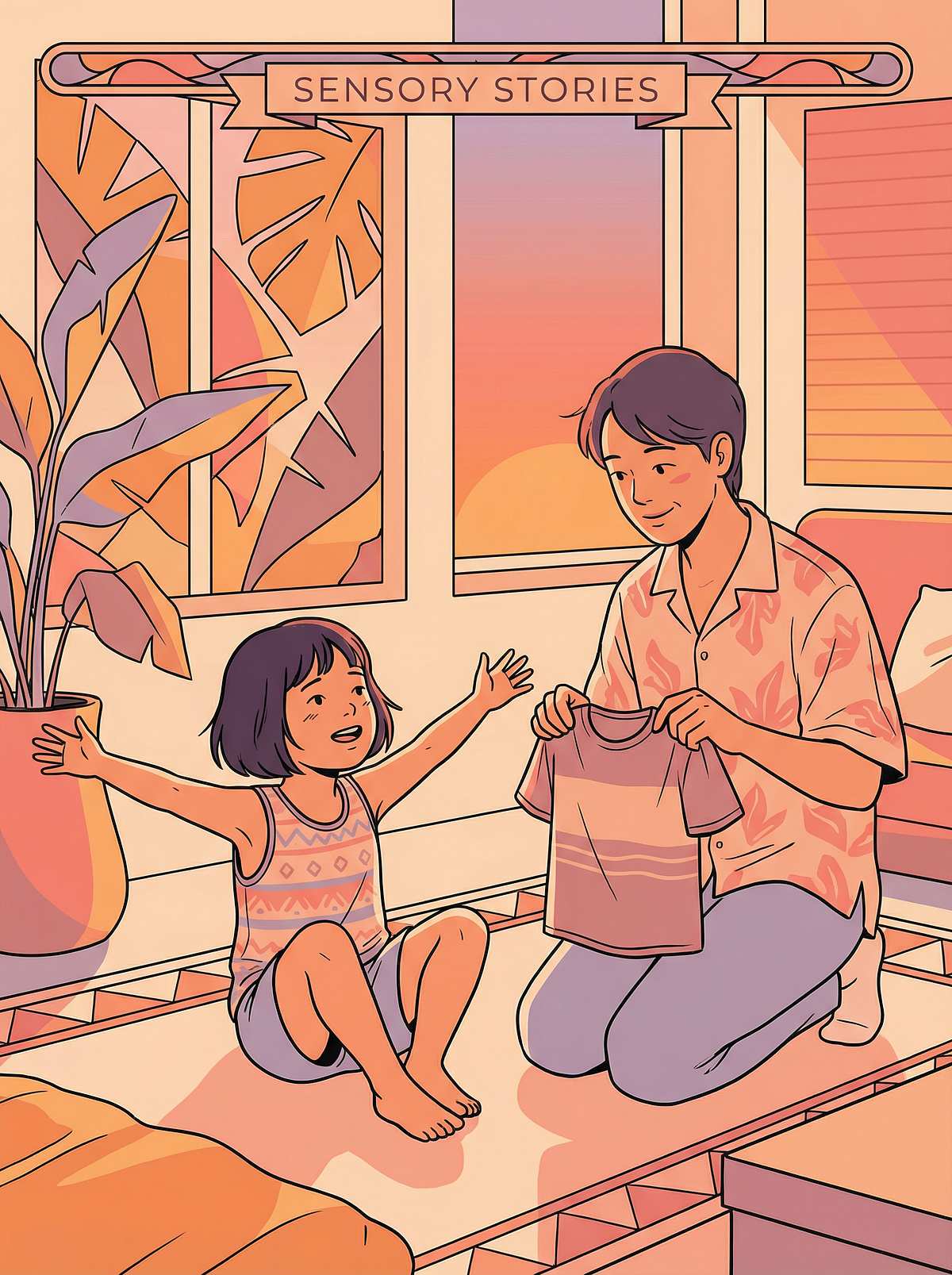
A-022 · Strips Clothes Off
9 Materials That Help When Child Strips Clothes Off
Subdomain A1: Tactile | Domain A: Sensory Processing | Pinnacle Blooms Network®
The Moment
Dressed. Turn around. Naked again. At home it's manageable, even if exhausting. In public it becomes a crisis requiring immediate intervention. They remove clothing the moment you're not watching — not as defiance, not for attention, but because the sensory relief of removing fabric is instantaneous and overwhelming in its appeal.
The Neuroscience
Clothing creates constant, multi-point tactile input across the entire body surface. When the brain cannot habituate to this persistent sensation, it remains in conscious awareness as intolerable. Removing the source provides immediate, powerful neurological relief — it's an instinctive self-regulation strategy.
The Evidence
📊Level I–II — NCAEP 2020 | Sensory integration frameworks
What You'll Learn Inside
- Sensory-friendly clothing selection to reduce stripping urge
- Compression garments as tolerable alternative
- Visual boundary rules for dressing in public
- Sensory diet activities to reduce overall load
- Home "clothing-optional" safe zones strategy
🤲Lead: OT (SI Certified) | ABA
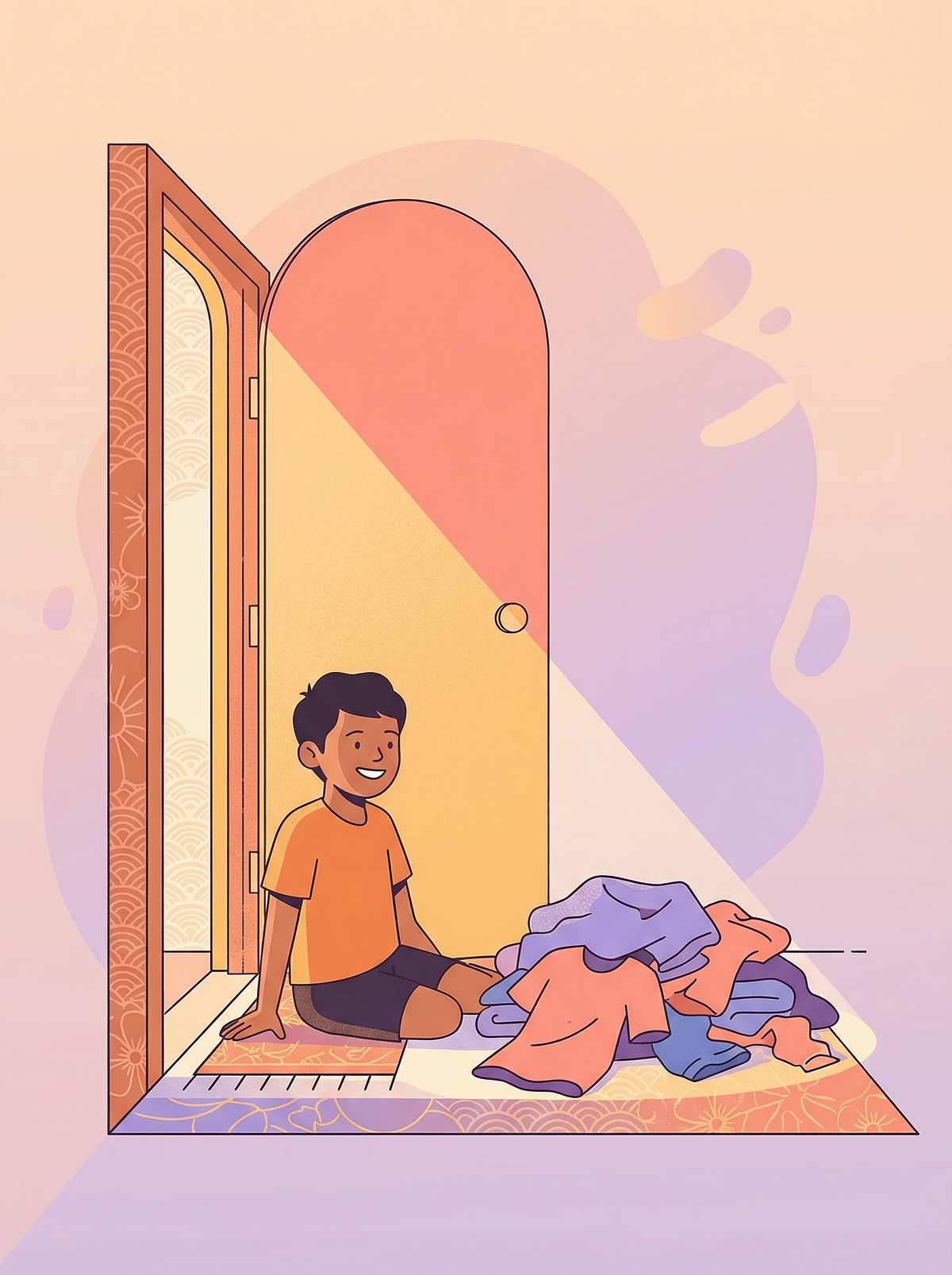
A-023 · One-Outfit Rigidity
9 Materials That Help With One-Outfit Rigidity
Subdomain A1: Tactile | Domain A: Sensory Processing | Pinnacle Blooms Network®
The Moment
One shirt. ONE. When it's in the wash, they wait — fully dressed in nothing, sitting at the door. When it wore out, you scoured the internet for an exact replacement for three weeks. You bought four of the same shirt in different sizes, just to stay ahead. Holidays, weddings, school photo day all center around this single garment.
The Neuroscience
Rigidity equals sameness equals predictability equals safety. The brain has identified precisely one tactile profile as "safe" and resists any deviation with the full force of the threat-detection system. This is not stubbornness — it is the nervous system maintaining its only known island of comfort.
The Evidence
📊Level I — NCAEP 2020 | Sensory integration research
What You'll Learn Inside
- Tactile profile analysis to find adjacent-safe options
- Same-brand, similar-texture replacement strategy
- Gradual wardrobe expansion over 12 weeks
- Token economy for trying new clothing items
- Laundry schedule management to reduce crises
🤲Lead: OT (SI Certified) | ABA
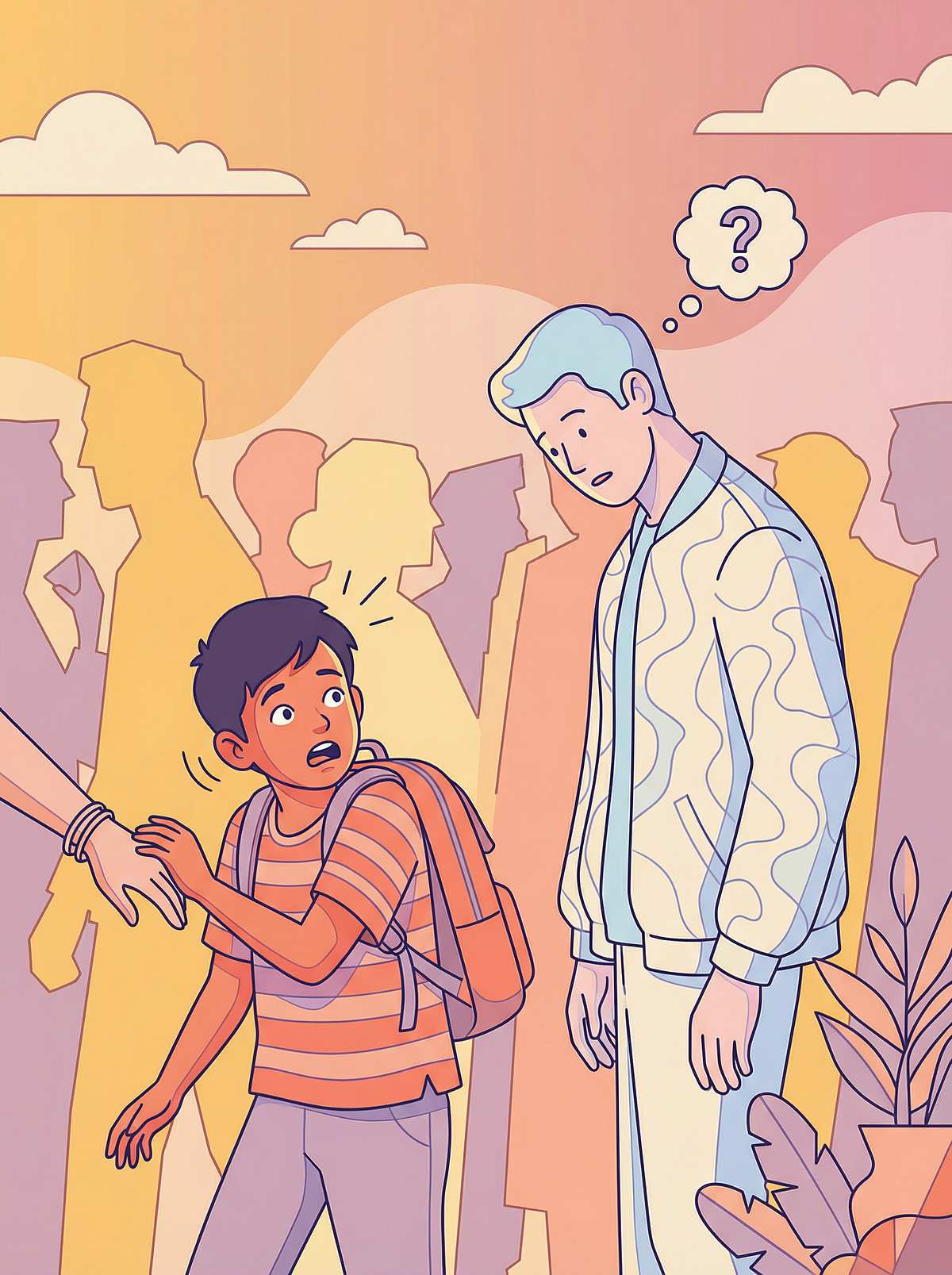
A-024 · Light Touch Defensiveness
9 Materials That Help With Light Touch Defensiveness
Subdomain A1: Tactile | Domain A: Sensory Processing | Pinnacle Blooms Network®
The Moment
A butterfly-light touch sends them through the roof. Being brushed in a crowd triggers a full meltdown. Strangely, a firm handshake is perfectly fine — but a gentle pat on the back is not. The inconsistency baffles everyone around them, but it maps precisely onto the neurology of light vs. deep pressure processing.
The Neuroscience
Light touch activates Aβ mechanoreceptors at low threshold. In sensory-defensive children, the spinal cord dorsal horn fails to gate these signals appropriately, making every light touch neurologically "loud" — it bypasses filtering and arrives at the cortex at full volume.
The Evidence
📊Level I — Wilbarger Protocol, deep pressure research. PMC11506176 | NCAEP 2020
What You'll Learn Inside
- Wilbarger Deep Pressure and Proprioceptive Technique (DPPT)
- Compression garments for ongoing light-touch buffering
- Crowd and public space navigation strategies
- Teaching child to self-advocate about touch
- School environment light-touch triggers identification
🤲Lead: OT (SI Certified) | ABA
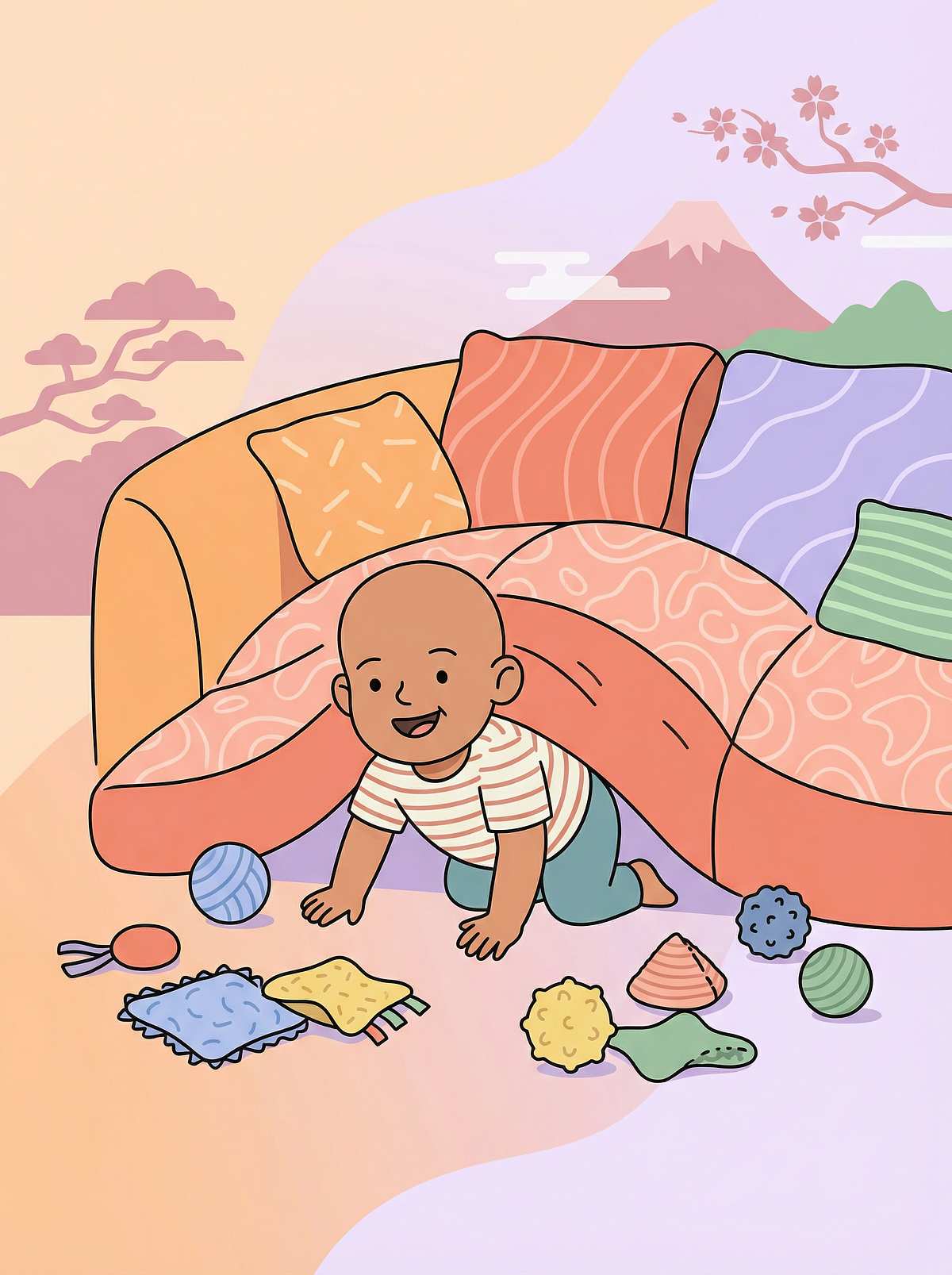
A-025 · Seeks Deep Pressure
9 Materials That Help When Child Seeks Deep Pressure
Subdomain A1: Tactile | Domain A: Sensory Processing | Pinnacle Blooms Network®
The Moment
They want to be squeezed — tightly and often. They crawl under sofa cushions, request "harder" hugs repeatedly, press their whole body against walls, and lie under mattresses. It looks strange to outsiders, but this is their nervous system asking — loudly and clearly — for exactly what it needs to regulate.
The Neuroscience
Deep pressure activates proprioceptors and Ruffini endings throughout the body, triggering parasympathetic nervous system activation. This creates a neurological equivalent of a system reset — measurably reducing cortisol and increasing serotonin production. Temple Grandin's squeeze machine research pioneered our understanding of this mechanism.
The Evidence
📊Level I — Weighted vests, compression garments, Grandin squeeze machine studies. PMC11506176 | NCAEP 2020
What You'll Learn Inside
- Weighted vest and blanket selection guide
- Compression garment fitting and scheduling
- Safe deep pressure play activities at home
- Sensory diet incorporating proprioceptive input
- School integration: desk weights and seating
- Building self-regulation through deep pressure tools
🤲Lead: OT (SI Certified) | ABA
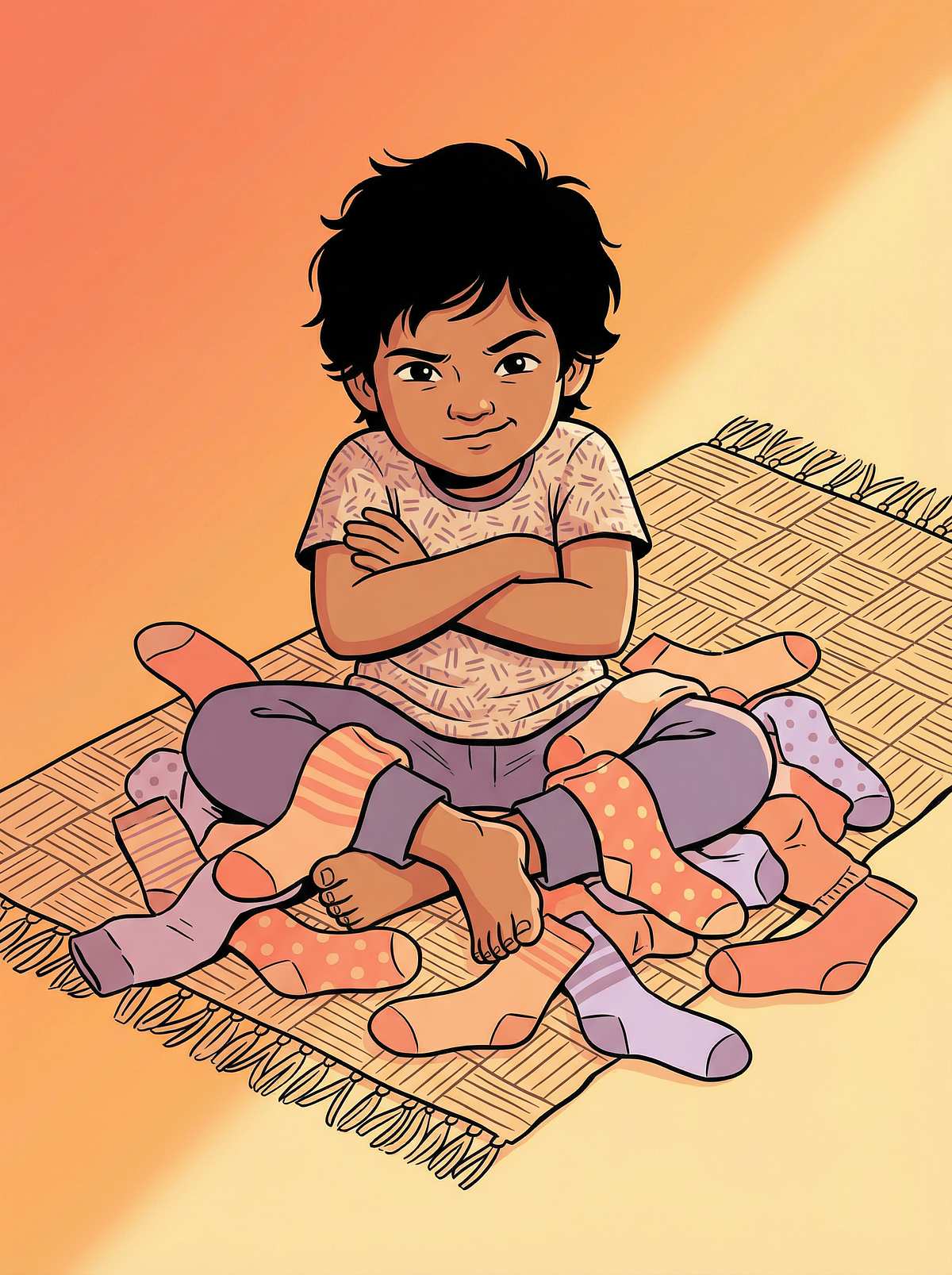
A-026 · Sock Refusal
9 Materials That Help With Sock Refusal
Subdomain A1: Tactile | Domain A: Sensory Processing | Pinnacle Blooms Network®
The Moment
No socks. Ever. Not in winter. Not at school. Not in closed shoes. Sock negotiation consumes more time and emotional energy than any other dressing task in the entire morning routine. You've tried seamless, inside-out, toe socks, non-slip, compression — nothing works. The feet stay bare regardless of temperature or consequence.
The Neuroscience
Socks present three simultaneous tactile challenges: circumferential pressure around the ankle and foot, a toe seam across the highest-receptor-density zone, and constant fabric friction during movement. Together, these three inputs overwhelm a defensive sensory system that cannot modulate the combined load.
The Evidence
📊Level I — NCAEP 2020 | Sensory integration research
What You'll Learn Inside
- Seamless sock hierarchy and product guide
- Foot compression before sock introduction
- Inside-out vs. toe seam preference assessment
- Gradual wear tolerance building schedule
- School shoe accommodation planning
🤲Lead: OT (SI Certified) | ABA
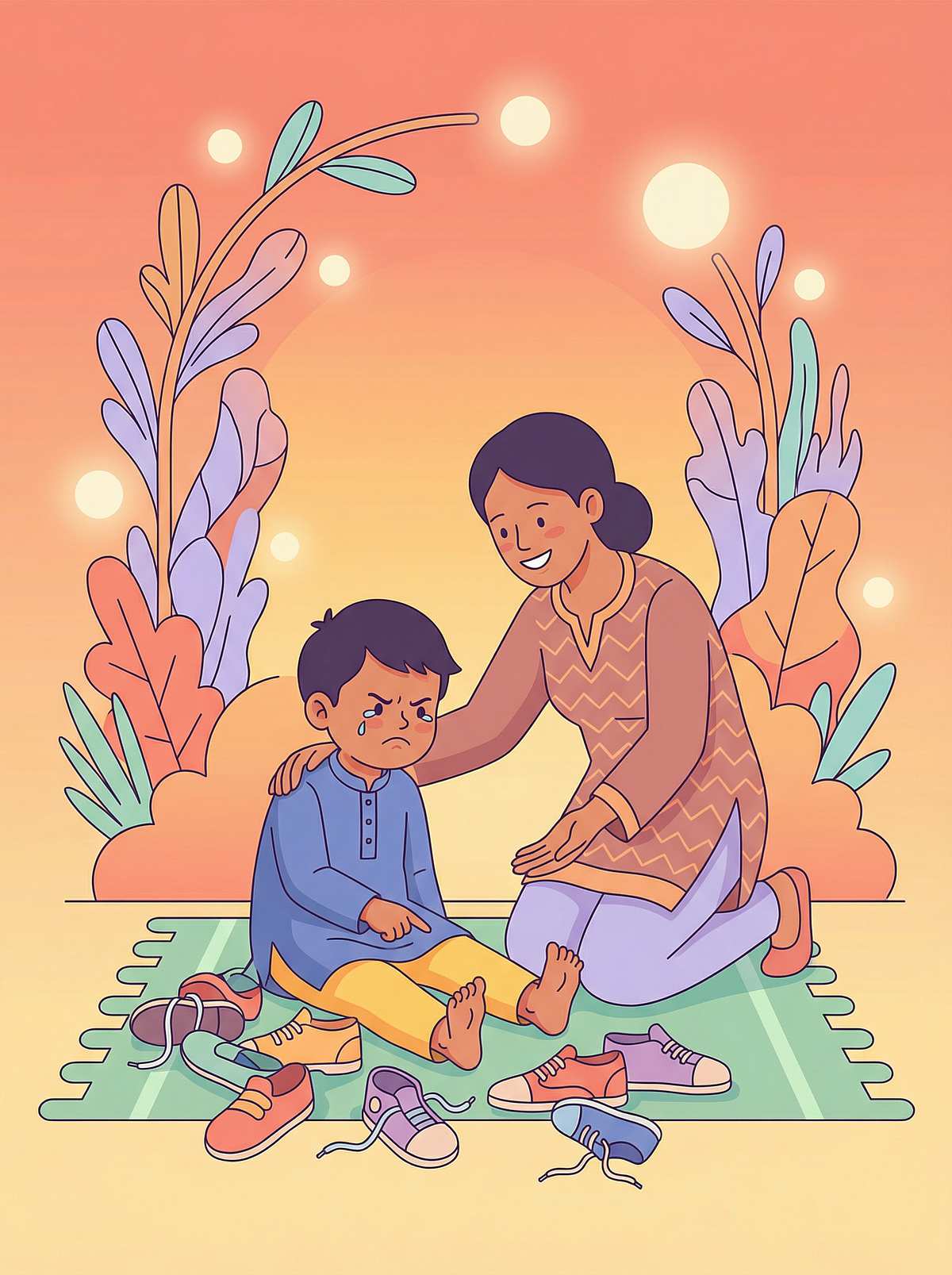
A-027 · Shoe Intolerance
9 Materials That Help With Shoe Intolerance
Subdomain A1: Tactile | Domain A: Sensory Processing | Pinnacle Blooms Network®
The Moment
Finding shoes they'll actually wear has become your part-time job. Too tight, too loose, wrong inside texture, laces that touch the wrong part of the foot, insole with a seam, tongue that shifts — every new pair fails for a different reason. You've returned more shoes than you've kept. School uniform compliance is at risk.
The Neuroscience
Shoes fully encapsulate the foot in multi-point pressure combined with variable textures from insole, upper, and toe box. This creates constant, complex proprioceptive and tactile input throughout the entire day — input that the defensive system cannot filter out or habituate to.
The Evidence
📊Level I–II — NCAEP 2020 | OT footwear guidelines
What You'll Learn Inside
- Shoe feature checklist for sensory-sensitive feet
- Brand recommendations with sensory-friendly interiors
- Break-in protocol for new footwear
- Custom insole modifications for seam elimination
- School uniform shoe negotiation strategies
🤲Lead: OT (SI Certified) | ABA
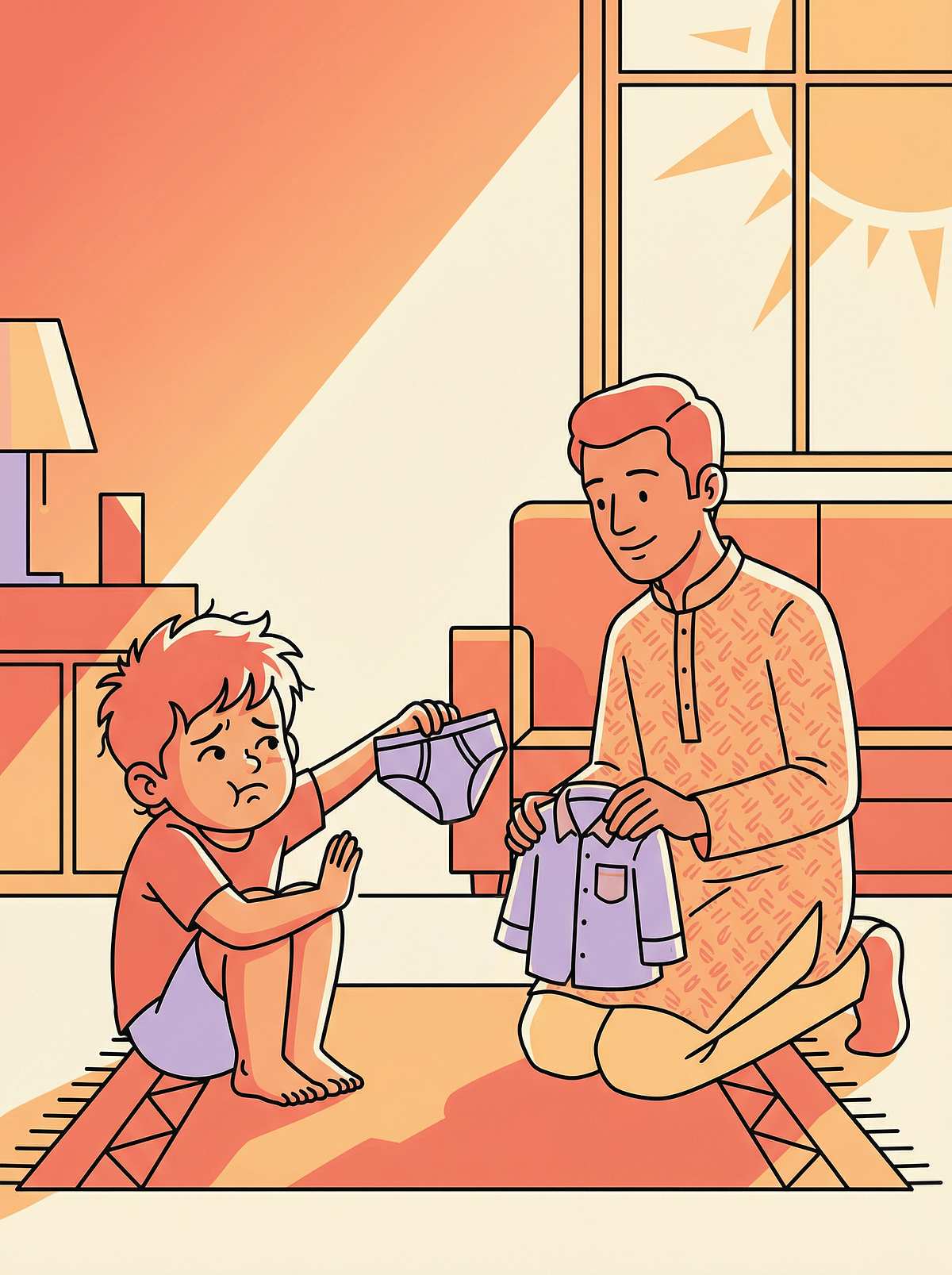
A-028 · Won't Wear Underwear
9 Materials That Help When Child Won't Wear Underwear
Subdomain A1: Tactile | Domain A: Sensory Processing | Pinnacle Blooms Network®
The Moment
A challenge nobody talks about — but many families quietly live with. Waistband, seams, fabric against sensitive areas — every style and
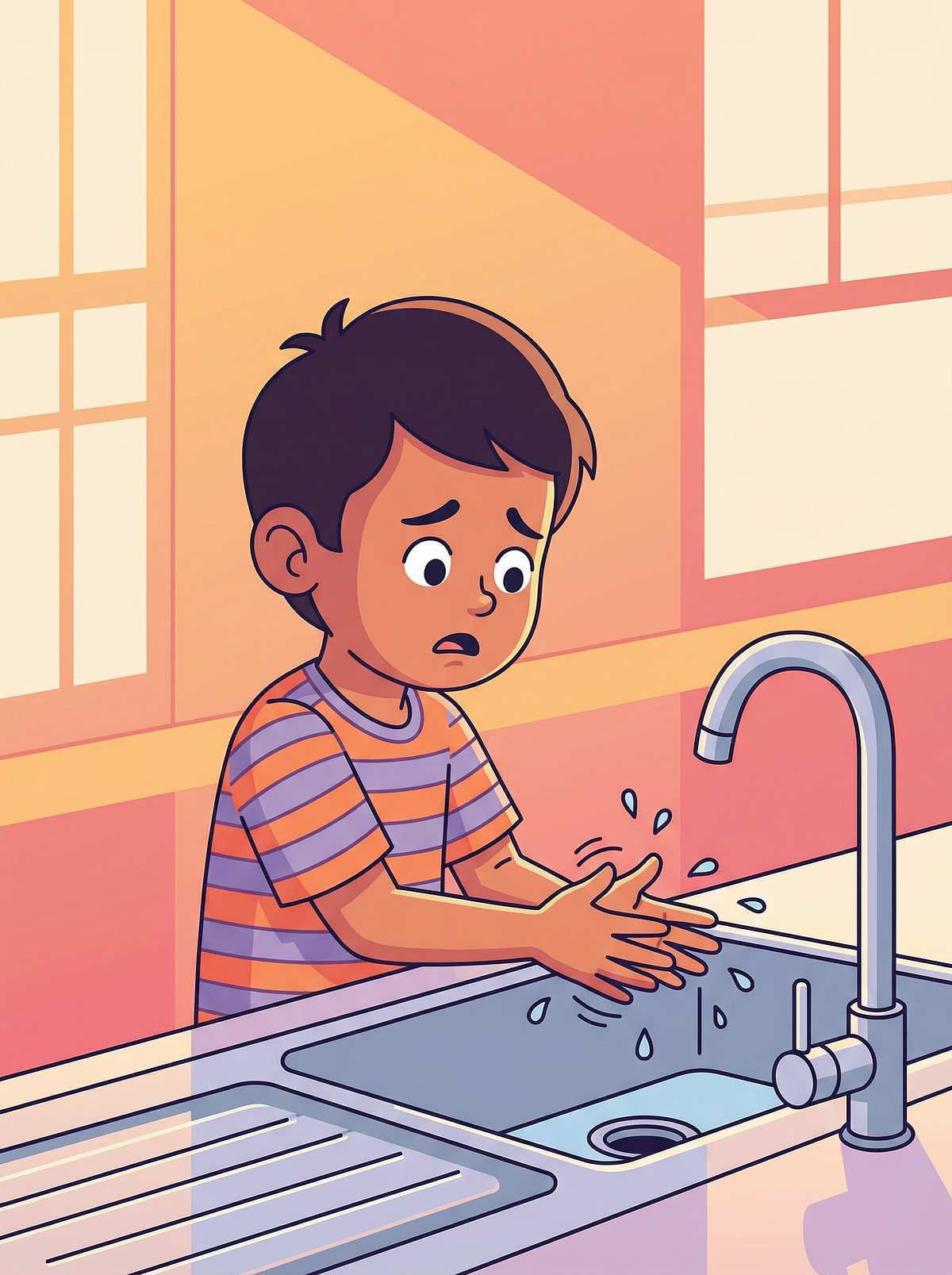
A-029 · Avoids Wet or Damp Textures
9 Materials That Help When Child Avoids Wet or Damp Textures
Subdomain A1: Tactile | Domain A: Sensory Processing | Pinnacle Blooms Network®
The Moment
Wet hands, damp towels, soggy cereal, rain on skin — any moisture contact triggers immediate distress. The child pulls away, shakes hands frantically, refuses to dry off after bathing, or melts down when clothes get even slightly wet. Puddles are avoided. Water play is a battle. Even a small drip on a sleeve can derail an entire outing.
The Neuroscience
Wet textures activate a distinct subset of cutaneous mechanoreceptors — particularly C-tactile afferents — that signal moisture and temperature simultaneously. In tactile-defensive children, this dual-channel input is processed as aversive by the insular cortex, triggering a threat response disproportionate to the actual stimulus. The brain interprets dampness as danger.
The Evidence
📊Level I — Tactile desensitisation for moisture aversion. PMC9876543 | NCAEP 2020
What You'll Learn Inside
- Graded wet texture exposure hierarchy (drip → damp → wet)
- Towel and drying routine adaptations for post-bath resistance
- Water play desensitisation using controlled sensory bins
- Clothing protocols for rain, spills, and swimming transitions
- Deep pressure pairing to reduce moisture-triggered distress
- Parent coaching scripts for wet texture encounters in public
🤲Lead: OT (SI Certified) | ABA · SLP
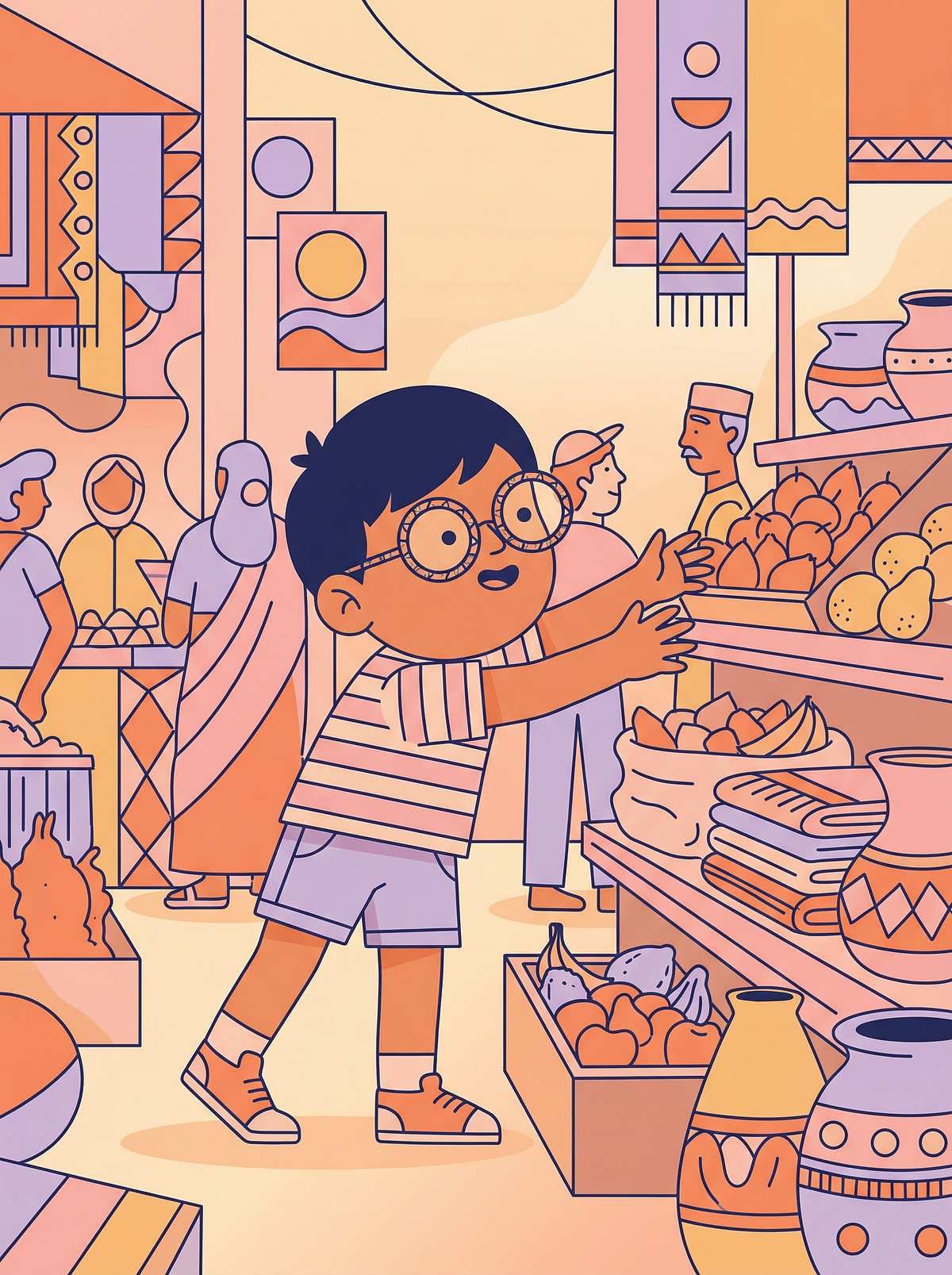
A-030 · Touches Everything
9 Materials That Help When Child Touches Everything
Subdomain A1: Tactile | Domain A: Sensory Processing | Pinnacle Blooms Network®
The Moment
The opposite challenge. They touch EVERYTHING — walls while walking down corridors, people in queues, food on others' plates, every item on store shelves. Hands constantly exploring, grabbing, pressing against every surface. In public it's socially challenging. In stores it's potentially a liability. The need is as real as the avoidance — just expressed in reverse.
The Neuroscience
This is tactile SEEKING — hypo-sensitivity rather than hypersensitivity. The somatosensory cortex under-registers tactile input, so the child actively, compulsively seeks more stimulation to reach the activation threshold their brain requires for basic sensory awareness. The hunger is neurological and constant.
The Evidence
📊Level I — Sensory diet for tactile seekers. PMC11506176 | NCAEP 2020
What You'll Learn Inside
- Structured tactile sensory diet design
- Appropriate vs. inappropriate touch boundary teaching
- Texture exploration stations for home and school
- Fidget tool selection for continuous input provision
- Social stories for touching boundaries in public
- Heavy work activities to meet proprioceptive need
🤲Lead: OT (SI Certified) | ABA · SLP
Preview of tactile challenges Therapy Material
Below is a visual preview of tactile challenges therapy material. The pages shown help educators, therapists, and caregivers understand the structure and content of the resource before use. Materials should be used under appropriate professional guidance.
Link copied!