

Emotional Regulation
45 Evidence-Based Interventions for Meltdowns, Calming & Coping in Autism — Subdomain C1 | Pinnacle Blooms Network®
Subdomain C1
Domain C: Social-Emotional
21M+ Sessions

What Is Emotional Regulation?
Emotional regulation is the brain's ability to detect, identify, evaluate, and respond to emotional states — returning to baseline after distress. In autism, five neural computations can each be disrupted: interoception, emotion labelling, self-monitoring, cognitive flexibility, and coping strategy execution.
🧠 Amygdala
Emotional alarm — fires too easily in ASD, treating benign stimuli as threats
💡 Prefrontal Cortex
The "regulator" — PFC-amygdala connection is REDUCED in ASD, weakening the calming signal
⚡ ACC
Mismatch detector — fires when expected ≠ actual, triggering most meltdowns
🔄 HPA Axis
Cortisol stress response — atypical patterns in ASD (hyper- or hypo-responsive)
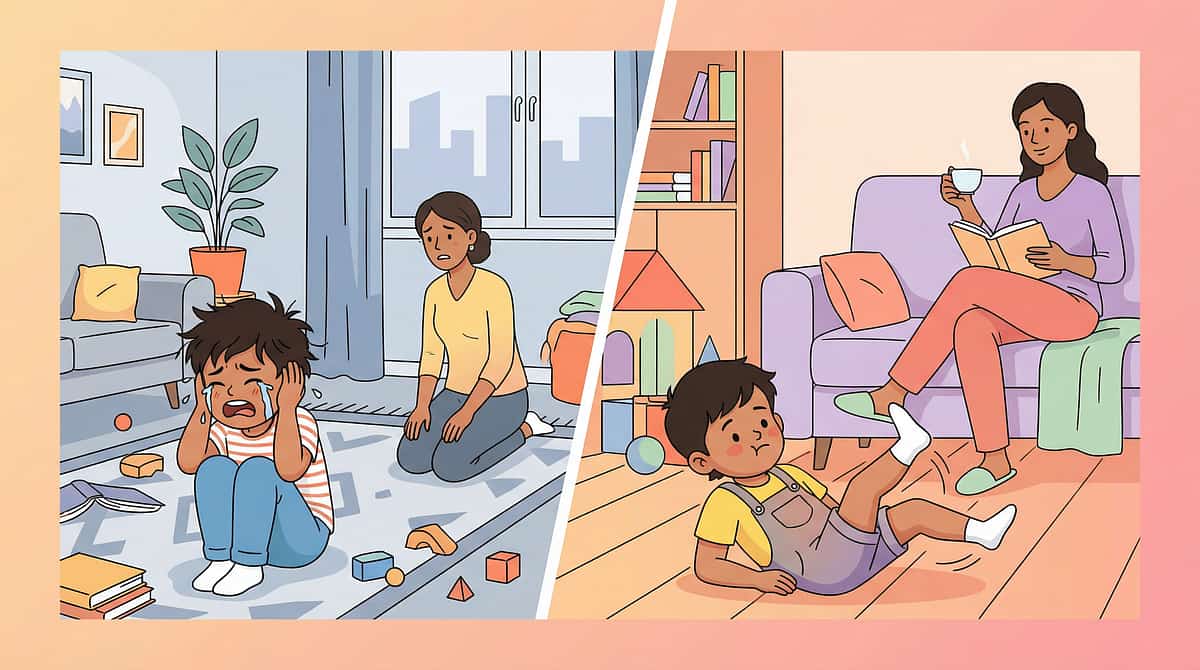
Meltdown vs. Tantrum — The Distinction That Changes Everything
Meltdown — Neurological Crisis
The PFC is OFFLINE. The child cannot access reason, language, or coping. They are in neurological survival mode. The amygdala is running the show. Cortisol is flooding. They CANNOT hear instructions or use strategies.
Intervention: Co-regulation only. Your calm nervous system is their external regulator.
Tantrum — Goal-Directed Behaviour
The child retains executive function. Behaviour is purposeful — to obtain or avoid something. The PFC is still online. The child CAN make decisions, respond to consequences, and modulate behaviour.
Intervention: Behavioural strategies apply. Boundaries, natural consequences, and redirection are appropriate.
Key Research: PMC11506176 | PMC9978394 | NCAEP 2020 | Zones of Regulation (Kuypers) | Polyvagal Theory (Porges) | WHO NCF 2018

C-231 · C-232
9 Materials That Help With Frequent Meltdowns & Understanding Triggers
Frequent Meltdowns: The Overwhelmed System
Three meltdowns before breakfast. Two at school. One on the auto-rickshaw home. Another at bath time. Your life is measured in meltdowns — predicting them, surviving them, recovering from them. Frequent meltdowns signal a chronically overwhelmed regulation system: amygdala firing too often, PFC-amygdala modulation too weak, threshold for overflow too low.
Reducing frequency requires working both sides — reducing environmental triggers AND building the child's regulation capacity. Proactive strategies reduce meltdown frequency far more effectively than reactive ones. Trigger identification and modification alone produces a 40–60% reduction (PMC9978394 | NCAEP 2020).
ABC Tracking
Antecedent → Behaviour → Consequence — identify the 20% of triggers causing 80% of meltdowns
Proactive Strategies
Sensory diet, predictable schedules, transition warnings — prevent, not just manage
Daily Regulation Schedule
Sensory breaks + predictability + decompression windows built into every day
Understanding Meltdown Triggers: It Didn't Come Out of Nowhere
"It came out of nowhere." Except it didn't. Every meltdown has an antecedent — sensory overload, unexpected change, demand too fast, hunger, fatigue, transition, or loss of a preferred item. The ACC detects mismatch between expectation and reality; when that mismatch exceeds the PFC's capacity to reframe it, the amygdala fires. Understanding triggers is the first and most powerful step to reducing meltdowns.
9 Canon Materials:Calm-Down Kit · Visual Schedule · Emotion Cards · Visual Timer · Weighted Blanket · Noise-Reducing Headphones · Social Stories · First-Then Board · Fidget Set

C-233 · C-234
9 Materials That Help Spotting Early Warning Signs & During Active Meltdowns
Every child has precursors — warning signs before a meltdown, and specific needs during an active meltdown. Understanding these phases allows for timely intervention and effective support.
Spotting Early Warning Signs (C-233)
Every meltdown has a prodrome — a window of 2–20 minutes where intervention is still possible. Warning signs are child-specific: increased stimming, voice pitch changes, skin flushing, pacing, repetitive questioning, withdrawal, or rigid posturing. The autonomic "escalation ramp" is your intervention window — once the amygdala fully hijacks the PFC, de-escalation becomes impossible.
Intervening at yellow (not red) is the single most effective timing strategy in meltdown prevention. Learning your child's unique early warning signs transforms reactive crisis management into proactive de-escalation.
Observe Prodrome
Identify child-specific warning signs (stimming, voice, flushing, pacing, questioning, withdrawal).
Intervention Window
Act within the 2-20 minute window when PFC is partially online.
Prevent Crisis
Early intervention prevents a full neurological crisis.
During Active Meltdowns (C-234)
The PFC is offline. The child cannot hear instructions, access language, or use strategies. Your only tool is co-regulation — your calm nervous system as their external regulator. Reduce stimulation. Don't demand. Don't reason. Don't threaten. Stay present, stay calm, stay safe. The meltdown will end. Your job is to shorten it and prevent harm.
PFC Offline
Child cannot process instructions or language.
Co-regulate
Use your calm nervous system as their external regulator.
Reduce & Avoid
Reduce stimulation; avoid demands, reasoning, threats.
Stay Present
Remain calm, present, and ensure safety until it passes.
Research citations: Polyvagal Theory (Porges) | NCAEP 2020 | PMC11506176

C-235
9 Materials That Help With Post-Meltdown Recovery
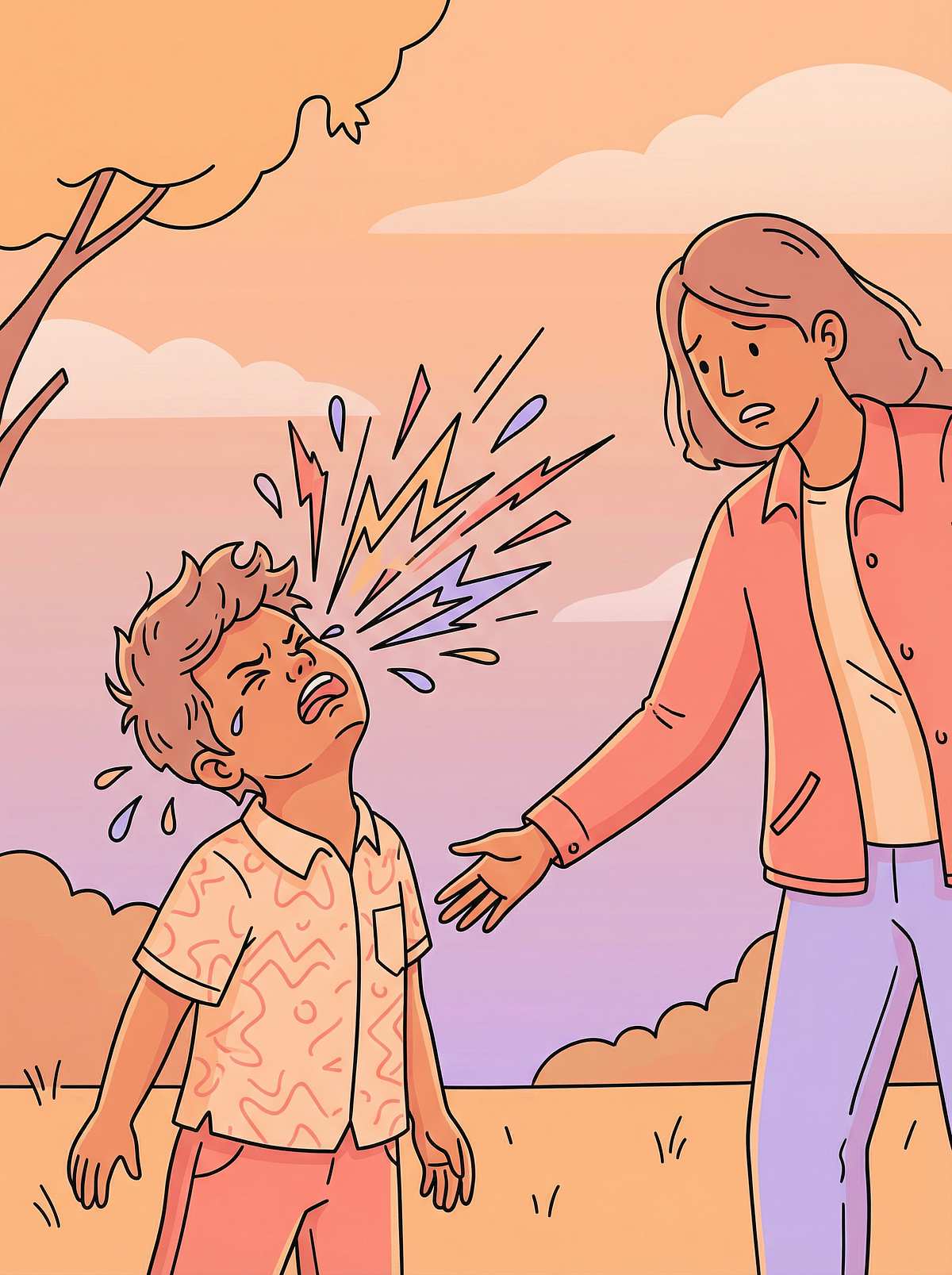
The storm has passed. They're exhausted. You're exhausted. What happens in the next 40 minutes determines everything — whether the child stores "meltdowns = punishment and shame" or "meltdowns = comfort and reconnection." Post-meltdown cortisol remains elevated for 20–40 minutes (the refractory period). The PFC is slowly rebooting. Emotional memory consolidation is happening right now.
Wait
Do NOT process or debrief immediately. Wait 20–40 minutes for cortisol to clear and PFC to come back online.
Reconnect
Physical recovery first — water, snack, rest. Reconnection before any instruction or discussion.
Reflect (Later)
When both child and parent are calm, briefly and gently revisit what happened — without blame.
Repair
Restore safety and relationship. Teach self-compassion. Parent self-care is equally non-negotiable.
C-236 · C-237
9 Materials That Help When a Child Explodes Instantly & Can't Calm Down
Explodes Instantly (C-236)
Zero to meltdown in under 3 seconds. No visible warning. No escalation ramp. The intervention window is essentially non-existent — but that doesn't mean there was no buildup. Instant explosions are almost always cumulative: the child appeared calm but was already at orange or red internally. One final stimulus triggered an apparent "instant" explosion.
The key to addressing instant escalation is working proactively throughout the day — reducing cumulative sensory and emotional load before it reaches the invisible threshold. You cannot catch what you cannot see; you CAN reduce what fills the cup before it overflows.
Identify Hidden Triggers
Map the full day for cumulative sensory, demand, social, and physiological loads
Proactive Sensory Regulation
Scheduled heavy work, proprioceptive input, and sensory breaks throughout the day — before the cup fills
Medication Evaluation
When rapid escalation is chronic and severe, consult with NeuroDev/Psychiatry regarding threshold regulation
Can't Calm Down (C-237)
The meltdown started 45 minutes ago. It should be over. It isn't. The child is stuck in a dysregulation loop — cortisol still flooding, amygdala still firing, PFC still offline. Extended meltdowns signal either very high cumulative load, sensory environment still triggering, or insufficient co-regulation support. The child is not choosing to stay upset. They are neurologically unable to exit the state without help.
Co-regulate
Provide gentle, predictable external regulation (calm voice, deep breathing, gentle touch if welcome).
Reduce Sensory Load
Dim lights, reduce noise, offer comforting textures to create a safe space.
Validate & Wait
Acknowledge their distress without judgment. Patience is key for their nervous system to reset.
Research citations: PMC9978394 | Polyvagal Theory (Porges) | NCAEP 2020

C-238 · C-239
9 Materials That Help With Crying Over Small Things & Extreme Change Reactions
The banana broke in half. Tears. The blue cup is in the dishwasher. Tears. The sock seam moved. Tears. Family says "overreacting." They're not — their emotional calibration is set differently. "Small" is always relative. When the ACC detects a mismatch between expectation (whole banana) and reality (broken banana), distress is proportional to perceived significance — and in ASD, the rigid prediction system amplifies every discrepancy.
Validate First
Acknowledge the emotion BEFORE offering solutions — "I can see that really upset you"
Size-of-Problem Scaling
Teach a 1–5 scale matching problem size to reaction size with concrete, relatable examples
Expectation Flexibility
Practice "sometimes things are different" in low-stakes situations to build tolerance gradually
The class was supposed to have art. Instead: assembly. The shop was supposed to be open — it's closed. Unexpected change triggers the ACC (anterior cingulate cortex) — the brain's mismatch detector. In ASD, the ACC fires intensely when expected ≠ actual. The bigger the expectation, the bigger the mismatch signal, the bigger the emotional response. Predictability is not a preference — it is a neurological need.
Mismatch Triggers
Unexpected changes activate the brain's "mismatch detector" (ACC)
Intensified Response
In ASD, the ACC reacts intensely when expectations don't match reality
Magnitude Matters
Greater discrepancy between expectation and reality causes bigger emotional responses
Predictability is Key
For some, predictability is a neurological need, not just a preference
Research citations: PMC11506176 | NCAEP 2020 | WHO NCF 2018

C-240 · C-241
9 Materials That Help When a Child Hits & Kicks When Upset
When frustration or overwhelm strikes, a child's limbs can become weapons. Hitting and kicking are often involuntary motor discharges of overwhelming internal pressure, not a choice. The amygdala fires, the prefrontal cortex (PFC)—which normally inhibits impulses—goes offline, and the motor cortex executes a discharge pattern. This behavior is the emotional expression itself, a primitive output for an overwhelming internal state. Intervention must address the underlying regulation failure, not just the behavior (NCAEP 2020 | PMC9978394 | Polyvagal Theory (Porges)).
Intervening When Hitting Occurs
Functional Analysis
What function does hitting serve? Escape? Attention? Sensory input? The function determines the replacement.
Replacement Behaviours
Teach alternatives like hitting a pillow, squeezing a ball, or using words. Practice during calm, not crisis.
Antecedent Modification
Reduce the demand, frustration trigger, or sensory load BEFORE the hitting occurs.
Intervening When Kicking Occurs
Understand the Impulse
Kicking often follows the same neurological pattern as hitting, serving as a lower-body motor discharge of overwhelming emotion.
Safe Discharge Alternatives
Redirect the motor impulse to safe targets like kicking a cushion, stomping feet firmly, or using a crash pad.
Proactive Regulation
Identify and minimize triggers that lead to dysregulation, providing tools to self-regulate before the impulse escalates.
⚠️Severe or frequent aggression toward others requires urgent BCBA referral. Call 9100 181 181 for support.

C-242 · C-243
9 Materials That Help When a Child Bites & Throws Things
When a Child Bites When Angry
Teeth as a weapon — biting people, objects, or self during emotional flooding. Biting provides intense proprioceptive and oral sensory input that can temporarily regulate an overwhelmed nervous system. It is both a motor discharge AND a sensory-seeking behaviour. The jaw muscles are among the strongest in the body; the sensory feedback from biting is powerful. Intervention must address both the regulation failure and the sensory need.
Sensory Biting
Occurs during calm or neutral states. Rhythmic, exploratory. Targets objects or own body. Function: jaw proprioception. Intervention: Chew tool, oral sensory diet
Emotional Biting
Occurs during visible distress. Directed at others. Escalates with emotional intensity. Function: emotional discharge, communication of extreme distress. Intervention: FCT + replacement + safety protocol
When a Child Throws Things
Objects become projectiles — toys, plates, books, anything within reach. Throwing is a high-force motor discharge that provides vestibular and proprioceptive feedback. Like hitting and kicking, it is a PFC-offline motor discharge pattern. The force of throwing correlates with the intensity of the emotional flooding. Safe throwing alternatives (beanbags into a basket, soft balls at a target) can redirect the motor impulse constructively.
Motor Discharge
High-force output providing vestibular and proprioceptive feedback.
Intervention
Redirect impulse with safe alternatives: beanbags into basket, soft balls at target.
⚠️Frequent biting of others requires urgent BCBA referral. Call 9100 181 181.
Research citations: NCAEP 2020 | PMC9978394 | Sensory Integration Theory (Ayres)

C-244 · C-245
9 Materials That Help With Screaming Episodes & Self-Injury During Upset
Screaming Episodes (C-244)
Sustained, high-pitched, ear-splitting. In Indian apartment buildings, neighbours hear everything. At the temple, everyone stares. In the auto-rickshaw, the driver panics. Screaming is activated by the periaqueductal gray (brainstem) — bypassing cortical processing entirely. It is the most primitive distress call, persisting when verbal emotional language hasn't developed or when arousal exceeds language threshold.
Piercing, sustained screaming during emotional flooding. Screaming is a vagal discharge — the autonomic nervous system releasing overwhelming activation through the vocal cords. It is not manipulation. It is not attention-seeking. It is a neurological pressure valve. The volume and duration correlate with the intensity of the dysregulation. Reducing screaming requires reducing the underlying dysregulation, not suppressing the vocal discharge.
Function Analysis
Communication? Sensory input? Emotional discharge? Each function requires a targeted replacement strategy
Vocal Replacement Hierarchy
Scream → loud vocal ("ahhhh") → word ("stop") → sentence ("I need help") — build the ladder step by step
Pain Rule-Out
Persistent screaming without obvious emotional trigger — always rule out pain, especially with non-verbal children
Self-Injury During Upset (C-245)
They hit their own head. Bite their hand. Bang against the wall. During emotional distress, violent self-directed behaviour signals extreme dysregulation AND often a sensory need — the intense proprioceptive input from self-injury can temporarily regulate an overwhelmed nervous system. This is a clinical priority.
Any self-injurious behaviour requires immediate professional assessment. Safety first, always.
Recognize Dysregulation
Self-injury signals extreme emotional overwhelm, not defiance or manipulation.
Address Sensory Needs
Intense proprioceptive input is often sought for temporary self-regulation.
Prioritize Safety
Immediate professional assessment is crucial for any self-injurious behavior.
Research citations: NCAEP 2020 | PMC11506176 | Polyvagal Theory (Porges)

C-246 · C-247
9 Materials That Help When a Child Shuts Down & Withdraws
When a Child Shuts Down
The opposite of meltdown — but equally serious. Silent. Still. Unresponsive. Eyes glazed. They disappear inside themselves. No noise, no disruption — but the nervous system is in full dorsal vagal shutdown (Polyvagal Theory). The PFC is offline not through explosion but through collapse. The child is not ignoring you. They are neurologically unreachable. Gentle, patient co-regulation — not demands — is the only path back.
Recognise Shutdown
Glazed eyes, unresponsiveness, stillness after a stressful period — this is NOT calm.
Create Safety
Reduce all environmental demands. Dim lights, reduce noise, offer soft sensory input without expectation.
Gentle Connection
Quiet presence. Soft voice. No questions or demands. "I'm here."
Gradual Return
Safety → Connection → Engagement → Activity. Do not rush any stage.
When a Child Withdraws
They retreat under the table. Into the corner. Behind the sofa. Into their room. Withdrawal is an active coping strategy — the child is seeking to reduce sensory and social input to manageable levels. Unlike shutdown (involuntary), withdrawal can be voluntary and adaptive. The child is self-regulating by reducing stimulation. Respect the withdrawal. Create a safe withdrawal space. Don't force re-engagement before they're ready.
Observe Cues
Notice early signs of overstimulation or discomfort that lead to withdrawal.
Respect Space
Allow the child to withdraw. Do not punish or force re-engagement when they are trying to self-regulate.
Safe Retreat
Designate and equip a comfortable, low-stimulus "safe space" for voluntary withdrawal.
Invitational Re-engagement
Offer gentle invitations to rejoin activities without pressure, waiting for their readiness.
Research citations: Polyvagal Theory (Porges) | NCAEP 2020 | PMC9978394.

C-248 · C-249
9 Materials That Help With Inappropriate Laughing & Identifying Emotions
Inappropriate Laughing
Someone falls — they laugh. You scold — they giggle. Another child cries — they smile. This looks callous. It is not. The emotional expression system is mis-mapped — the internal emotional state does not match the external expression. Nervous laughter is a common autonomic response to anxiety or confusion. The child may feel distress internally while expressing laughter externally. Teaching the mapping between internal states and appropriate expressions is the intervention.
Punishing inappropriate laughter increases anxiety — which increases laughter — creating a punishing loop that harms both the child and the relationship. The intervention is emotional-context matching training, not correction or consequence.
Teach Mapping
Connect internal feelings to appropriate external expressions.
Validate Distress
Acknowledge underlying anxiety or confusion, not the laughter.
Context Training
Help match reactions to social and emotional situations.
Clinical note: Persistent inappropriate laughter without clear emotional mapping should prompt neurological evaluation — gelastic seizures can present similarly and must be ruled out.
Identifying Emotions
Before a child can regulate an emotion, they must be able to identify it. Interoception — the sense of the body's internal state — is often atypical in ASD. The child may feel physical sensations (tight chest, hot face, fast heartbeat) without being able to label them as "angry" or "scared." Emotion identification is the foundation of all emotional regulation. Without it, no regulation strategy can be applied.
Body Scan Awareness
Help children notice physical sensations linked to emotions.
Emotion Vocabulary
Introduce and label a wide range of feelings with words.
Visual Cues
Use emotion charts and facial expressions to teach identification.
Research citations: PMC11506176 | Zones of Regulation (Kuypers) | NCAEP 2020
C-250 · C-251
9 Materials That Help Expressing Feelings Verbally & With Extreme Mood Swings
They CAN identify the feeling with support — but cannot tell you. "I feel ___ because ___" requires three simultaneous processes: emotion identification, expressive language, and causal reasoning. Each is independently challenging in ASD; demanding all three together is like asking someone to juggle while balancing on one foot.
The "I feel ___ because ___" frame provides a scaffold that removes the cognitive architecture requirement — the child fills in two slots rather than constructing a sentence from scratch. Begin prompted, aim for independence.
Emotion + Cause Frame
"I feel ___ because ___" — visual card always available during learning phase
Real-Time Narration
Adult narrates child's emotions in the moment: "You look frustrated because the puzzle is hard"
Beyond Basic 6
Expand from 6 core emotions to 20+ nuanced words as the child's vocabulary grows
Laughing one minute, sobbing the next. Ecstatic then furious in 30 seconds. An emotional rollercoaster with no visible track. The ventromedial PFC — responsible for mood stability and emotional continuity — shows atypical connectivity in ASD. Mood shifts are rapid, intense, and often triggered by stimuli that seem invisible to observers. The child is not being dramatic. Their emotional state genuinely shifts that fast.
Practice in Calm
Build verbal expression skills during calm states, not during active distress.
Identify Triggers
Recognize and address the "invisible" stimuli that rapidly shift emotional states.
Atypical Connectivity
Understand that rapid mood shifts are a neurological reality, not intentional dramatics.
Research citations: PMC11506176 | NCAEP 2020 | Zones of Regulation (Kuypers)

C-252 · C-253
9 Materials That Help With After-School Collapse & Waiting Difficulty
After-School Collapse
At school — held together. Barely. Walk through the front door — EXPLODE. School says "they're fine here." You know otherwise. This is after-school restraint collapse (Loewen Nair): all PFC resources spent maintaining regulation during school hours. By dismissal, PFC is depleted, cortisol is high, and reserves are empty. Home is safety — and safety is permission to collapse.
They collapse because home is safe. It is a compliment to the relationship, not a failure of parenting. Indian school environments — crowded classrooms, rigid schedules, high sensory load, minimal accommodations — amplify the regulatory burden enormously.
First 30 Minutes
Zero demands. Sensory access. Food. Quiet. No questions about school. This is non-negotiable decompression time.
Transition Zone
Create a predictable decompression ritual at the threshold — shoes off, snack ready, calm space available
School Communication
Advocate for in-school regulation breaks under RPwD 2016 — reducing school-day load reduces home collapse severity
Waiting Difficulty
"Wait 5 minutes." Impossible. "Stand in line." Meltdown. Waiting is a demand on four simultaneous executive functions: impulse inhibition (right inferior frontal gyrus), working memory (holding the goal in mind), time perception (estimating duration), and frustration tolerance (managing the discomfort of delay). In ASD, all four are typically impaired. Waiting is not a simple request — it is a complex executive demand.
Visual Timers
Use concrete indicators like sand timers or countdown apps to make wait times tangible and understandable.
Pre-Computation
Verbally rehearse "first-then" statements and describe upcoming events to help hold the goal in mind.
Engaging Distractions
Provide planned activities, fidget toys, or books to help manage discomfort during unavoidable waits.
Research citations: NCAEP 2020 | PMC9978394 | Executive Function research (Barkley).

C-254 · C-255
9 Materials That Help With Delayed Gratification & When a Child Can't Lose
Research Citations: NCAEP 2020 | PMC9978394 | Executive Function research (Barkley)
Delayed Gratification
"If you finish your homework, you can have ice cream." They cannot hold the future reward in mind long enough to power through the present demand. The classic marshmallow test — but with a neurological explanation. Working memory (holding the future reward) and impulse inhibition (resisting the present urge) are both impaired in ASD. Delayed gratification is not a character flaw — it is an executive function deficit. The "hot" limbic system (I want it NOW) dominates over the "cool" PFC system (I'll wait for more). Token economies bridge this gap by making the future visible in the present — each token is a concrete, physical representation of progress toward a reward that can be seen, touched, and tracked.
Token Systems
Each token earned = one step closer to reward. Start with 2-token systems, build to 10+
Visual Tracking
The reward must be visible throughout — a photo, a progress bar, the actual item in a clear container
Celebrate Waiting
Make successful waiting a big deal — "You waited! You did it!" reinforces the emerging neural pathway
When a Child Can't Lose
Board game. They're losing. Table flipped. Cards everywhere. Game ruined. They cannot tolerate losing — not at games, races, or any competitive activity. Every loss is catastrophic. The amygdala interprets losing as a genuine threat. The emotional response is proportionate to that threat signal, not to the actual stakes of the game. Winning and losing are social-emotional skills that must be explicitly taught, not assumed.
Teach Coping Skills
Introduce strategies for managing frustration and disappointment before, during, and after games.
Practice Losing
Create low-stakes opportunities to lose, focusing on effort and sportsmanship, not just winning.
Emphasize Process
Shift focus from outcome to participation, learning, and fun during competitive activities.

C-256 · C-257
9 Materials That Help With Perfectionism Meltdowns & When Mistakes Devastate
The drawing isn't perfect — tear it up. The colouring went outside the line — meltdown. The handwriting isn't neat enough — refuse to continue. Perfectionism in ASD reflects rigid thinking (one right way), intolerance of imperfection (amygdala threat response to "wrong"), and often a deep fear of judgment. The standard is internally set and absolute. Anything below it triggers genuine distress.
A small error — wrong answer, spilled drink, mispronounced word — produces catastrophic emotional response. Tears, shutdown, rage, refusal to continue. Mistakes activate the same threat response as danger. The ACC fires intensely at the mismatch between intended and actual outcome. The child is not overreacting — they are experiencing genuine neurological distress. Growth mindset interventions must be taught explicitly and repeatedly during calm states.
Perfectionism Meltdowns
Perfect vs. Good Enough Scale
Visual scale from 1 (complete mess) to 10 (perfect) — teach that 7/10 is wonderful and praiseworthy
Deliberate Imperfection
Model intentional mistakes with a positive response — "Oops! That's okay, I'll keep going!"
Effort Over Product
Praise the process, the persistence, the trying — never only the outcome
When Mistakes Devastate
Normalize Errors
Teach that mistakes are learning opportunities; frame them as "not yet" moments. (Growth Mindset - Dweck)
Mistake Protocol
Establish a routine for mistakes: acknowledge, repair (if needed), learn, move on.
Coping Strategies
Practice calm-down techniques (deep breaths, sensory input) for the distress that accompanies errors. (NCAEP 2020)
Focus on Progress
Highlight incremental improvements rather than fixating on the 'perfect' final outcome. (PMC11506176)

C-258 · C-259
9 Materials That Help With Criticism Sensitivity & Rigid Thinking
**Criticism Sensitivity (C-258):** A gentle correction — "Try holding the pencil this way" — produces tears or shutdown. Any feedback, no matter how constructive, is received as an attack. The threat detection system (amygdala) interprets criticism as danger. The emotional response is automatic and intense. The child is not being dramatic — they are experiencing a genuine threat response. Feedback must be reframed, scaffolded, and delivered with extreme care.
**Rigid Thinking (C-259):** Rules are absolute. Routines are unbreakable. "But that's not how we do it." "It HAS to be blue." Thinking in absolutes — one way, one answer, one truth — with no flexibility for alternatives. The prefrontal cortex's cognitive flexibility function is impaired. The child is not being stubborn — they are neurologically unable to shift mental set without support. Flexibility must be explicitly taught through graduated exposure to "different."
Criticism Sensitivity Interventions
Sandwich Feedback
Positive observation + specific correction + positive encouragement — always in this order
Pre-Frame Corrections
"I'm going to help you make this even better" before any correction — changes the brain's threat prediction
Desensitisation
Practice receiving small, neutral corrections during calm practice activities until the amygdala response habituates
Clinical note: Severe RSD may indicate ADHD co-occurrence. Screen and refer to NeuroDev if persistent.
Rigid Thinking Interventions
Graduated Exposure to Novelty
Slowly introduce small changes to routines or expectations to build tolerance and flexibility.
Teach "Thinking Flexibly"
Explicitly teach and practice generating alternative solutions, perspectives, or ways of doing things.
Offer Meaningful Choices
Provide limited, meaningful choices to empower and subtly introduce the concept of alternatives.
Research citations: NCAEP 2020 | PMC9978394 | Cognitive Flexibility research.

C-260 · C-261
9 Materials That Help With All-or-Nothing Thinking & Catastrophizing
"I can't do ANYTHING right." "EVERYONE hates me." "It ALWAYS goes wrong." "This is the WORST day EVER." This reflects all-or-nothing thinking, where the prefrontal cortex's nuanced evaluation function is bypassed, and the amygdala's binary threat/safe assessment dominates. Everything is either perfect or catastrophic, with no grey areas. Relatedly, catastrophizing occurs when a small problem ("My life is ruined!") or minor change ("EVERYTHING is destroyed!") is amplified to maximum catastrophe. The brain genuinely experiences the small problem as catastrophic, matching internal experience with external reaction. Both thought patterns require explicit teaching of the grey zone and cognitive reframing.
Addressing All-or-Nothing Thinking
1–10 Scaling
"How bad is it REALLY? 10 is the worst thing ever. Is this a 10... or maybe a 4?" — forces spectrum thinking
Language Replacement
"Sometimes" replacing "always/never" — gentle, consistent, non-shaming correction of absolute language
Visual Spectrum Tools
Draw the spectrum from 0–10 with real examples anchoring each end — make the continuum concrete
Addressing Catastrophizing
Thought Defusion
Teach phrases like "I'm having the thought that..." to create distance from overwhelming thoughts.
Reality Check
Prompt questions like "What's the *actual* worst-case scenario?" vs. "What's the *most likely* outcome?"
Problem-Solving Steps
Break down the perceived catastrophe into small, actionable steps rather than global doom.
Research citations: CBT for ASD | NCAEP 2020 | PMC11506176

C-262 · C-263
9 Materials That Help Building Self-Soothing & Calm-Down Skills
They can't calm themselves without you. Every distress requires your physical presence, your voice, your touch. Self-soothing — the ability to independently return to calm — is the ultimate goal of all emotional regulation intervention. It develops through repeated co-regulation experiences where the child's nervous system learns to replicate the calm state internally. You are building their internal regulator by being their external one.
The progression: Co-regulated → Prompted → Independent. Each stage requires mastery before moving forward, and regression under stress is normal and expected.
Co-Regulated
Parent fully present — calm voice, slow breathing, physical nearness. Child borrows your calm.
Prompted
Parent nearby with verbal or visual prompts: "What tool could you use?" Child begins selecting strategies.
Independent
Child identifies own arousal, selects strategy, implements it, returns to calm — without external support.
Deep breathing. Counting to 10. Squeezing a stress ball. Using a calm-down bottle. These are the specific techniques that bridge between "I'm getting upset" and "I'm calm." Calm-down skills are the practical toolkit of emotional regulation. They must be taught during calm states, practiced repeatedly, and made accessible during distress through visual cues, physical tools, and environmental supports.
Research citations:
- Zones of Regulation (Kuypers)
- NCAEP 2020
- Polyvagal Theory (Porges)

C-264
9 Materials That Help Creating Calm Spaces
Every child needs a place to go when the world is too much. Not a punishment corner. Not a time-out chair. A chosen, safe, sensory-regulated space where they can retreat, decompress, and return when ready. The calm space is an external nervous system support — environmental design that directly affects the autonomic state.
Design Principles
Dim lighting → reduced visual arousal
Enclosed space → proprioceptive containment
Soft textures → tactile calming
Reduced noise → auditory decompression
Child's favourite sensory items → predictable comfort
Enclosed space → proprioceptive containment
Soft textures → tactile calming
Reduced noise → auditory decompression
Child's favourite sensory items → predictable comfort
Budget: Free to ₹5,000 — a corner of a bedroom with a bedsheet draped over it and two cushions is enough.
Rules That Make It Work
- Always available — never locked or denied
- Never a punishment — only a refuge
- Child's choice to enter and exit
- No questions or demands inside
- Portable version available for outings

C-265 · C-266
9 Materials That Help With Transition Meltdowns & Unexpected Change
Managing Transition Meltdowns
"Time to stop playing." Meltdown. "Let's go." Meltdown. "Bath time." Meltdown. Every shift from one activity to another is an emotional earthquake. Transitions demand simultaneous disengagement from the current activity (loss), mental preparation for the next (uncertainty), and motor initiation (executive demand). In ASD, all three are impaired. These processes produce enormous regulatory load.
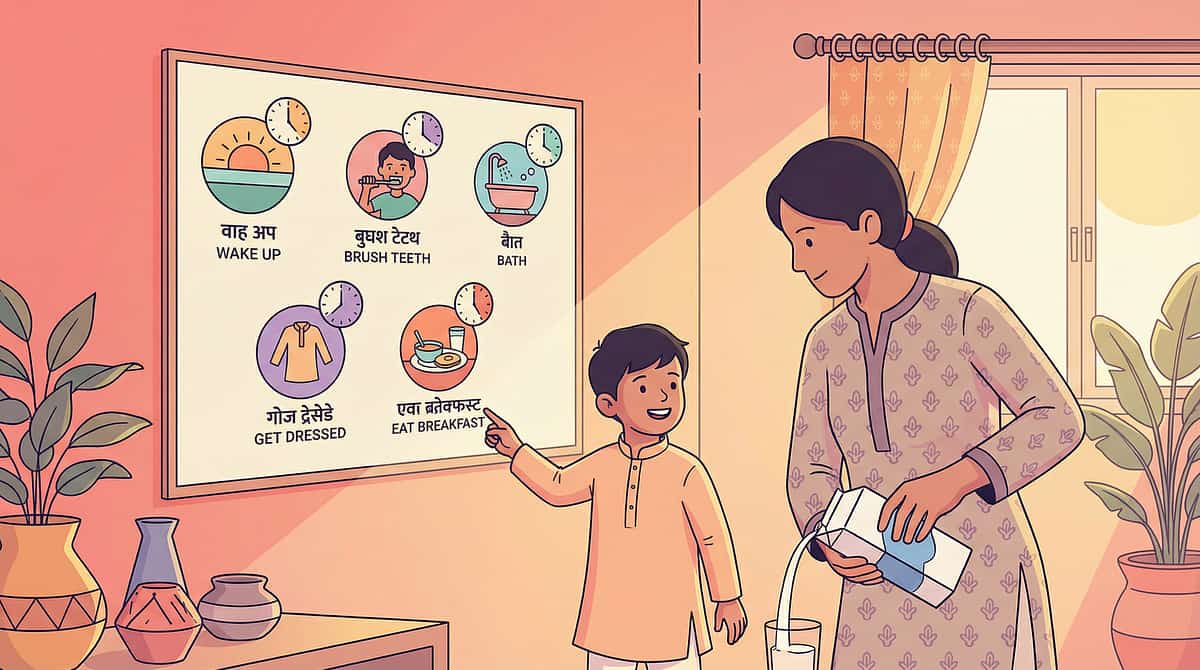
Visual Schedules
Predictability removes surprise — "I know what's coming next" reduces the brain's mismatch signal.
Countdown Warnings
e.g., 5 min → 2 min → 1 min → "time to finish" — never surprise a child into a transition.
Transition Objects
Take something FROM the current activity TO the next one — bridges the neurological gap between contexts.
First-Then Boards
Simple visual aids that clearly outline the sequence of activities, reinforcing expectations.
Navigating Unexpected Change
The class was supposed to have art. Instead: assembly. The shop was supposed to be open — it's closed. Papa was supposed to come home at 6 — he's late. Unexpected change triggers the ACC — the brain's mismatch detector. In ASD, the ACC fires intensely when expected ≠ actual. The bigger the expectation, the bigger the mismatch signal, the bigger the emotional response. Predictability is not a preference — it is a neurological need.
Establish Predictability
Consistent routines and clear communication reduce the brain's mismatch detection (NCAEP 2020).
Prepare for Change
Discuss potential changes beforehand and practice flexible thinking (PMC9978394).
Teach Emotional Regulation
Utilize frameworks like Zones of Regulation (Kuypers) to help children identify and manage their feelings.
C-267 · C-268
9 Materials That Help With Routine Disruption & Building Flexibility
The morning routine must be: wake, bathroom, brush teeth, milk, get dressed — in that exact order. If ANY step changes, the entire day collapses. Routines are neurological scaffolding — they reduce the executive demand of daily life by making sequences automatic. When the routine breaks, the executive system must suddenly engage for every step. In ASD, this demand is overwhelming. Routines are not rigidity — they are coping infrastructure.
Indian cultural life — festivals, family visits, weddings, illness, travel — makes routine disruption inevitable. The goal is building portable routine structures that survive real-world variability.
Building flexibility is the master skill underlying transitions, unexpected change, and routine disruption. Flexibility is the meta-skill of emotional regulation — the ability to accept alternatives, tolerate "different," and shift mental set without crisis. It is built gradually through graduated exposure to small, predictable changes — "flexibility practice" — starting with tiny variations and expanding tolerance over time. Flexibility cannot be demanded; it must be grown.
Research citations: NCAEP 2020 | PMC9978394 | Cognitive Flexibility research.
Visual Routine Cards
Portable, flexible routine cards that can be reordered — the structure is maintained even when the context changes.
Predictable Disruptions
Prepare for festivals, travel, family visits in advance with social stories and visual pre-warnings.
Recovery Protocol
What to do WHEN the routine breaks — having a plan B reduces the secondary distress of "now what?".
Flexibility Practice
Graduated exposure to small, predictable changes to build tolerance for alternatives and different outcomes.
"Accepting Different" Stories
Social narratives that normalize and celebrate variations in plans, helping to shift mental set.

C-269 · C-270
9 Materials That Help With End-of-Activity Upset & Public Meltdowns
Preferred activity ending is one of the most common daily triggers — because it demands simultaneous disengagement from a highly rewarding state AND transition to something less preferred. The dopamine drop from ending a preferred activity is real and intense. Visual timers, countdowns, and transition objects bridge the gap. Public meltdowns compound the neurological crisis with social judgment, sensory overload (crowds, noise, lights), and parental anxiety — which the child's nervous system detects and amplifies. The public setting is often the trigger, not just the location. Prevention through preparation is the primary strategy.
Research citations: NCAEP 2020 | PMC9978394 | Polyvagal Theory (Porges).
End-of-Activity Upset
Visual Countdown
5 minute → 2 minute → 1 minute timer warnings before preferred activity ends — no surprise endings
"All Done" Ritual
Consistent, predictable ending sequence — child knows what "ending" looks and feels like
"Save and Return"
For interrupted activities: "We'll save this and come back to it at 5pm" — preserves access, reduces loss
Transition TO Good
End one activity by moving to something else the child enjoys — reduce the contrast between preferred and next
Public Meltdowns
Pre-emptive Planning
Discuss expectations, identify triggers, and pack comfort items/distractions before going out.
Sensory Shielding
Use noise-canceling headphones, sunglasses, or find quiet zones to minimize sensory overload.
Scheduled Breaks
Plan regular, short breaks in a calmer environment to prevent accumulation of overwhelm.
Parental Regulation
Practice self-calming techniques and have pre-planned responses to social judgment to reduce anxiety.
C-271
9 Materials That Help Teaching Emotion Words
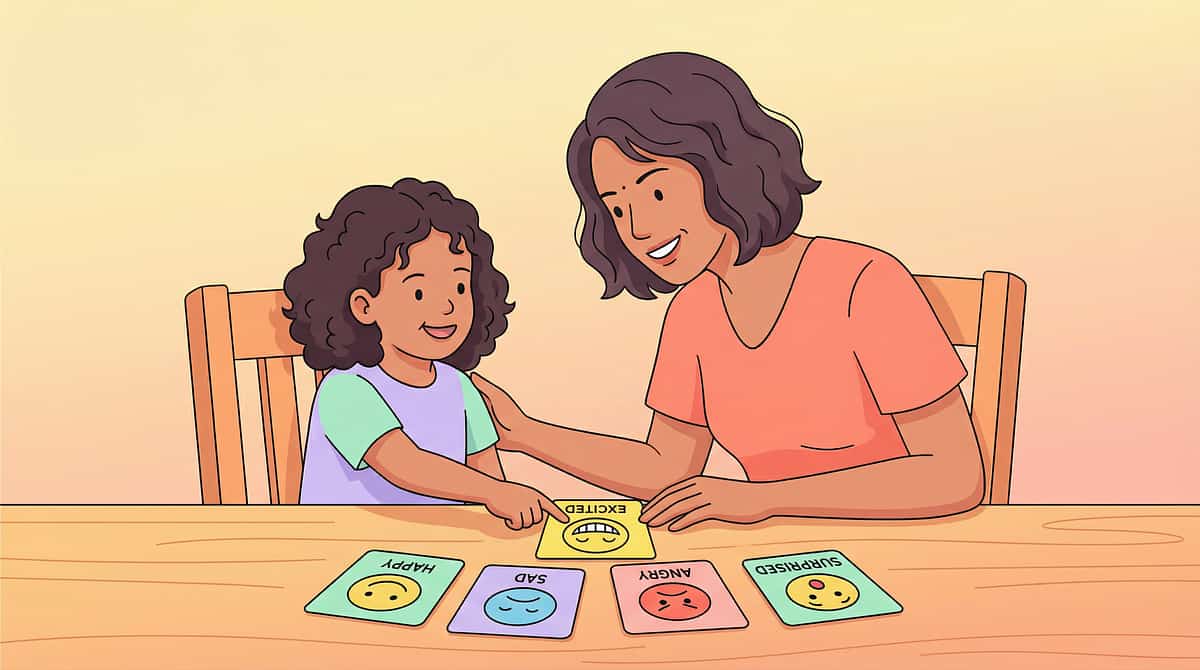
Beyond the basic 6 — happy, sad, angry, scared, surprised, disgusted — to nuanced emotional language: frustrated, disappointed, embarrassed, jealous, overwhelmed, calm, anxious, proud, confused. Emotion vocabulary is the bridge between internal experience and external communication. Without words for emotions, the child cannot ask for help, explain their state, or access verbal coping strategies. Emotion word teaching is foundational to all regulation work.
Basic 6
Photos of real faces. Body sensations linked to each word. Daily narration: "You look happy!"
Intermediate 12
Frustrated, nervous, proud, embarrassed, excited, worried — taught through video clips and real-life moments
Advanced Vocabulary
Overwhelmed, disappointed, jealous, nostalgic, relieved — personalised emotion dictionary built over months
Bilingual Integration
Teach emotion words in Hindi/Telugu/Tamil AND English — the child's full linguistic repertoire
The interoceptive system in ASD is often atypical — the child may feel physical sensations (tight chest, hot face, fast heartbeat) without being able to label them. Emotion words give those sensations a name. Naming an emotion activates the PFC and reduces amygdala firing — the act of labelling itself is regulatory (affect labelling research, Lieberman et al.).
9 Canon Materials:
- Emotion Cards
- Feelings Faces
- Social Stories
- Emotion Thermometer
- Zones of Regulation Kit
- Mirror (for facial expression practice)
- Emotion Journals
- Video Modelling clips
- Bilingual Emotion Posters
Research citations: Lieberman et al. (Affect Labelling) | Zones of Regulation (Kuypers) | NCAEP 2020 | PMC11506176
C-272
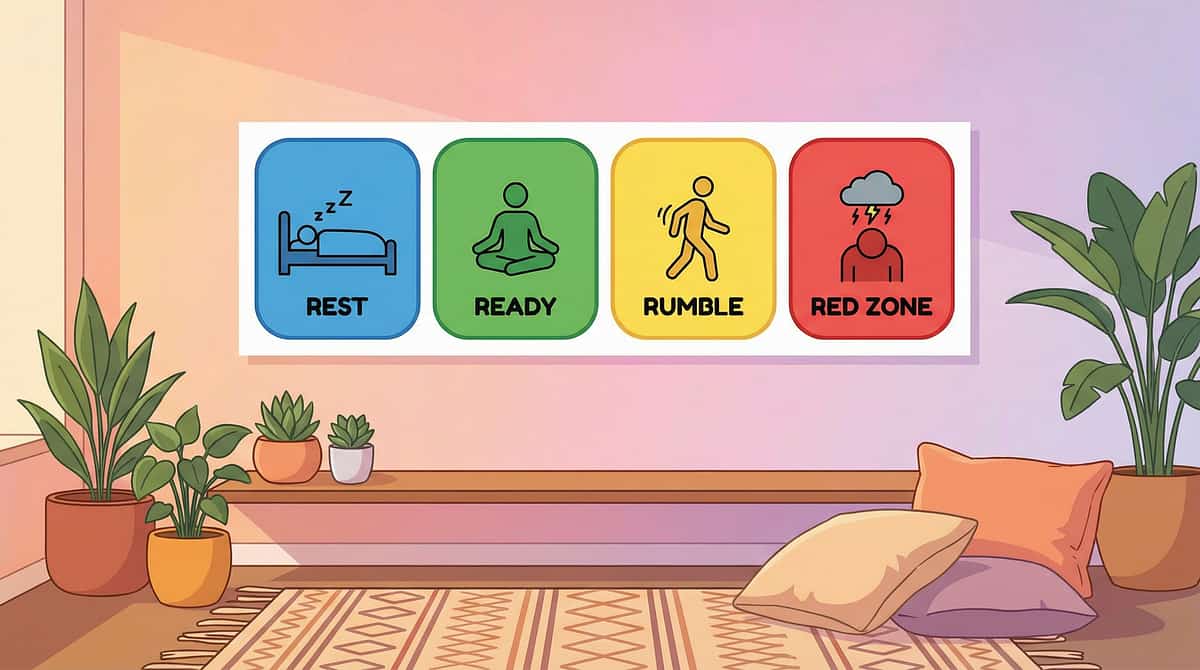
9 Materials That Help With Zones of Regulation
The most widely used emotional regulation framework in autism intervention worldwide. Four colour-coded zones map arousal levels to colours — an external representation of the autonomic nervous system state. The Zones give children a shared language for their internal states and a framework for choosing regulation strategies. Used in 40+ countries, validated across ASD populations. Simple. Visual. Powerful.
The Zones work because they solve the interoception problem. The child cannot reliably detect their internal state — but they CAN learn to match their body sensations to a colour. Once they can say "I'm in the Yellow Zone," they can access the Yellow Zone strategy menu. The colour becomes the bridge between internal experience and regulatory action.
🔵 Blue Zone
Low energy — sad, tired, sick, bored. Dorsal vagal state. Needs gentle activation. Strategies: movement, music, snack, sensory input.
🟢 Green Zone
Ready to learn — calm, happy, focused. Ventral vagal. Optimal regulation state. The goal. Strategies: maintain with sensory diet and routine.
🟡 Yellow Zone
Heightened — frustrated, anxious, silly, excited. Sympathetic activation beginning. Coping tools needed NOW before escalation to Red. Strategies: deep breathing, fidget, movement break, calm-down kit.
🔴 Red Zone
Extreme — rage, terror, meltdown, elation. Sympathetic + dorsal vagal overwhelm. PFC offline. Co-regulation only. No demands. No reasoning. Safety first.
01
Introduce the Zones during calm (Green Zone) time only
02
Build Zone identification with photos, body maps, and real-life examples
03
Create a personalised Zone chart with the child's own triggers and strategies
04
Practice Zone check-ins daily — "What Zone are you in right now?"
05
Build a strategy menu for each Zone — the child's personal regulation toolkit
9 Canon Materials:
- Zones of Regulation Kit
- Emotion Cards
- Visual Schedule
- Calm-Down Kit
- Fidget Set
- Weighted Blanket
- Visual Timer
- Social Stories
- First-Then Board
Research citations: Zones of Regulation (Kuypers, 2011) | NCAEP 2020 | PMC11506176 | Polyvagal Theory (Porges)
C-273
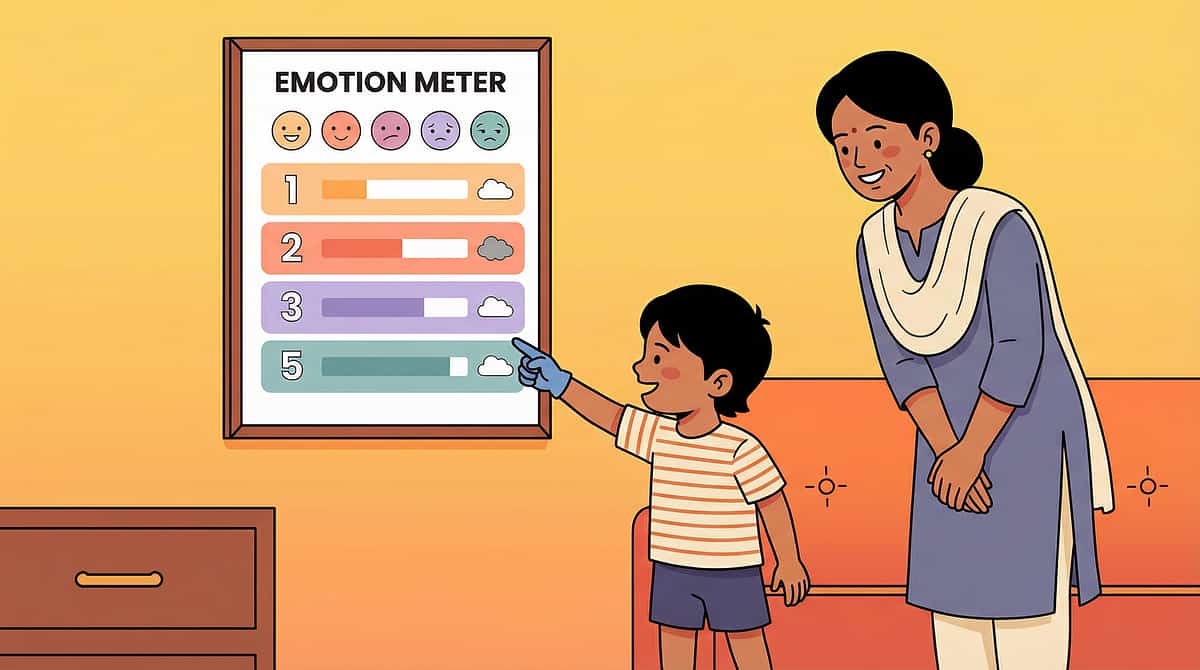
9 Materials That Help With the Emotional Thermometer
A 1-to-5 (or 1-to-10) visual scale of emotional intensity. 1 = calm. 5 = maximum. The thermometer teaches that emotions have degrees — not just on/off. "I'm at a 3" is more actionable than "I'm upset." The visual scale externalises the internal state, making it visible and discussable. Children can learn to self-monitor their thermometer level and apply strategies before reaching the red zone.
The thermometer works because it bridges interoception (body awareness) and metacognition (self-monitoring). It gives the child a concrete, visual language for intensity — something that is otherwise invisible and overwhelming. When a child can say "I'm at a 4," the adult can respond proportionately. When the child can self-monitor to "I'm at a 3 — I need my calm-down kit," they are self-regulating.
🟢 Level 1
Calm — Body relaxed, breathing easy, ready to learn
🟡 Level 2
A little upset — Slight tension, minor irritation, manageable
🟠 Level 3
Getting upset — Noticeable distress, coping tools needed NOW
🔴 Level 4
Very upset — Significant dysregulation, adult support needed
🚨 Level 5
Maximum — Full meltdown/shutdown, co-regulation only
9 Canon Materials:
- Visual Thermometer Poster
- Emotion Cards
- Calm-Down Kit
- Zones of Regulation Kit
- Fidget Set
- Weighted Blanket
- Visual Timer
- First-Then Board
- Reward Charts
Research citations: Zones of Regulation (Kuypers) | NCAEP 2020 | PMC11506176 | Interoception research (Craig)

C-274
9 Materials That Help Building Coping Strategies
The comprehensive coping strategy framework — the integration of everything. Self-soothing (C-262), calm-down skills (C-263), calm spaces (C-264), Zones of Regulation (C-272), and the Emotional Thermometer (C-273) converge here into a single, personalised coping toolkit. Each child needs their own coping menu — strategies that work for their specific sensory profile, regulation pattern, and preferences. The toolkit is built collaboratively, practiced during calm states, and made accessible during distress.
A coping strategy only works if the child can access it during dysregulation. This means: the strategy must be practiced hundreds of times during calm states, the tools must be physically present and visible, the child must have chosen the strategies themselves (ownership = compliance), and the adult must prompt — not demand — strategy use during distress. Coping strategies are not magic. They are skills. Skills require practice.
Self-Soothing (C-262)
Independent return to calm. The internal regulator built through co-regulation. Rocking, humming, deep pressure, favourite object.
Calm-Down Skills (C-263)
The practical toolkit: deep breathing, counting, squeeze ball, calm-down bottle, progressive muscle relaxation.
Calm Spaces (C-264)
The physical environment: a designated, chosen, safe sensory space the child retreats to — not a punishment, a refuge.
Zones of Regulation (C-272)
The framework: identifying which Zone they're in and selecting the matching strategy from their personal menu.
Emotional Thermometer (C-273)
The intensity gauge: knowing they're at a 3 and need to act NOW, before reaching 5.
Building the toolkit
Step 1: Assess the child's sensory profile — what calms THIS child specifically?
Step 2: Co-create the coping menu with the child during calm time
Step 3: Make tools physically accessible — calm-down kit, visual menu on the wall
Step 4: Practice each strategy during calm states — 10+ repetitions before distress
Step 5: Prompt (don't demand) strategy use during early dysregulation (Yellow Zone)
Step 6: Review and refine — what worked? What didn't? Update the menu regularly.
9 Canon Materials:
- Calm-Down Kit
- Zones of Regulation Kit
- Emotion Cards
- Visual Timer
- Weighted Blanket
- Fidget Set
- Social Stories
- First-Then Board
- Reward Charts
Research citations: Zones of Regulation (Kuypers) | NCAEP 2020 | PMC11506176 | Polyvagal Theory (Porges) | Sensory Integration Theory (Ayres)
Preview of emotional regulation Therapy Material
Below is a visual preview of emotional regulation therapy material. The pages shown help educators, therapists, and caregivers understand the structure and content of the resource before use. Materials should be used under appropriate professional guidance.
Link copied!