
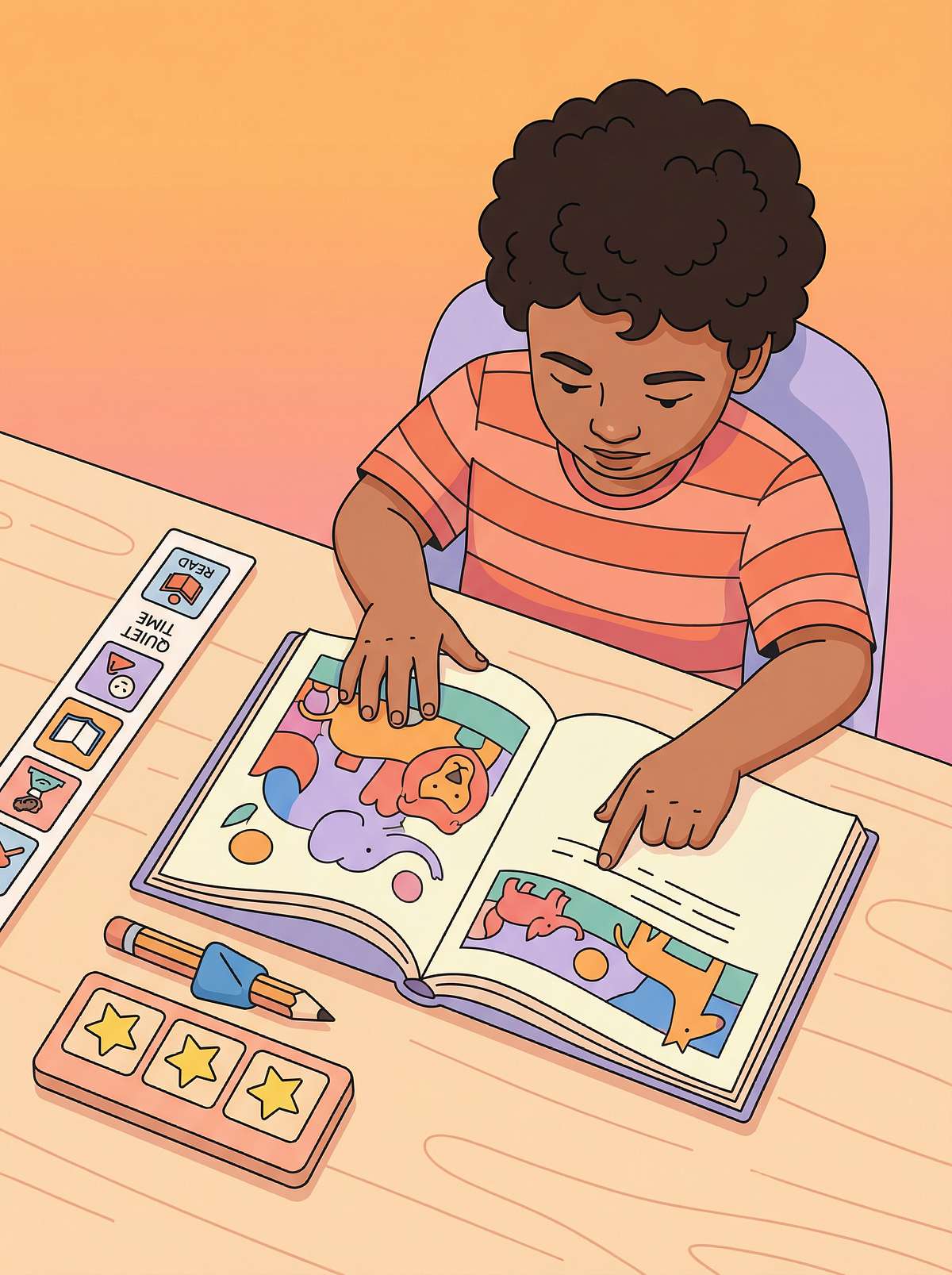
Academic Skills — 30 Evidence-Based Interventions for Autism
Pre-literacy · Pre-numeracy · Reading · Writing · Math · Executive Function · Assistive Technology · Multi-Sensory Learning · Academic Confidence
Subdomain H2 | Domain H: School & Community
Pinnacle Blooms Network®

The Academic Access Principle
The Spiky Profile: Matching Instruction to the Learning Profile
The Core Insight
Academic difficulty in ASD is rarely about intelligence. It's about ACCESS — the instruction method, the output demand, the sensory environment, the social context, and the executive function requirements. A child may read at age 3 but not comprehend what they read. Another solves complex math mentally but can't write the answer. A third memorizes every textbook fact but fails the exam because the question was phrased differently.
Change the ACCESS, and the learning appears.
ASD Cognitive Strengths to Leverage
- Visual-spatial processing: Geometry, maps, diagrams — teach VISUAL first
- Systemising: Rules, patterns, categories — present academics as SYSTEMS
- Rote memory: Facts, sequences, formulas — memorization-based learning
- Detail focus: Accuracy, precision, error detection — quality over speed
- Special interest depth: Profound learning within interest areas — embed academics IN interests
Challenges to Support
- Executive function · Working memory · Processing speed
- Generalisation · Abstract reasoning · Handwriting
H-731 · Pre-Literacy Skills
Level I Evidence · NCAEP 2020
9 Materials That Help With Pre-Literacy Skills
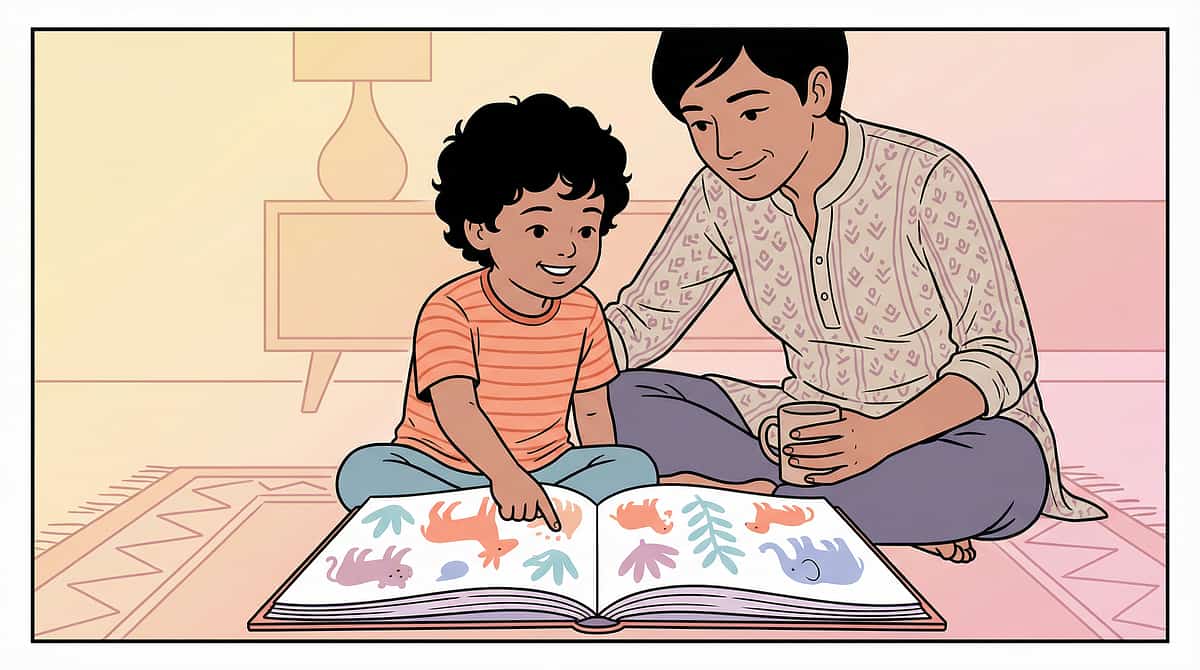
Before reading comes book awareness (holding, turning pages), print awareness (text carries meaning, left-to-right), phonological awareness (hearing sounds in words), vocabulary (knowing enough words to understand text), and narrative understanding (stories have a beginning, middle, and end). Pre-literacy is the cognitive scaffolding beneath reading. Build it strong, and reading arrives naturally.
The Neuroscience
Pre-literacy integrates visual processing (fusiform gyrus), auditory processing (superior temporal gyrus), language comprehension (Wernicke's area), and sequential processing (frontal eye fields). The brain creates a reading network by connecting visual, auditory, and language systems. Pre-literacy activities build these connections before formal instruction begins.
What You'll Learn
- Shared reading: 15 minutes daily — the most powerful pre-literacy activity
- Environmental print: "Find the M on the menu" (functional literacy)
- Phonological awareness: rhyming games, syllable clapping, initial sound games
- Story comprehension: "What happened first? Then what?"
- Indian multilingual context: build pre-literacy in the child's dominant language first
9 Canon Materials
Lead: SpEd · ABA | SLP · OT · Psychology · NeuroDev

H-732 · Pre-Numeracy Skills
Level I Evidence · NCAEP 2020
9 Materials That Help With Pre-Numeracy Skills
Before arithmetic comes one-to-one correspondence, more/less/same, spatial concepts (in/on/under), seriation (ordering by size), and pattern recognition. Mathematics IS pattern recognition — and pattern recognition is often an ASD strength. Pre-numeracy harnesses this strength before formal math instruction begins.
The Neuroscience
Mathematical reasoning centers on the intraparietal sulcus — the brain's "number area." Numerical magnitude processing, spatial reasoning, and pattern detection converge in the parietal cortex, often a relative strength in ASD. Pre-numeracy builds the conceptual foundation: understanding that numbers represent quantities, not just symbols.
What You'll Learn
- More/less/same: concrete object comparison always first
- One-to-one correspondence: each object = one count
- Seriation: big-to-small ordering tasks
- Spatial language: in, on, under, next to, between
- Pattern recognition: AB, ABC, AABB sequences
- Indian context: measuring cooking ingredients, counting coins (₹1, ₹5, ₹10), market shopping as math
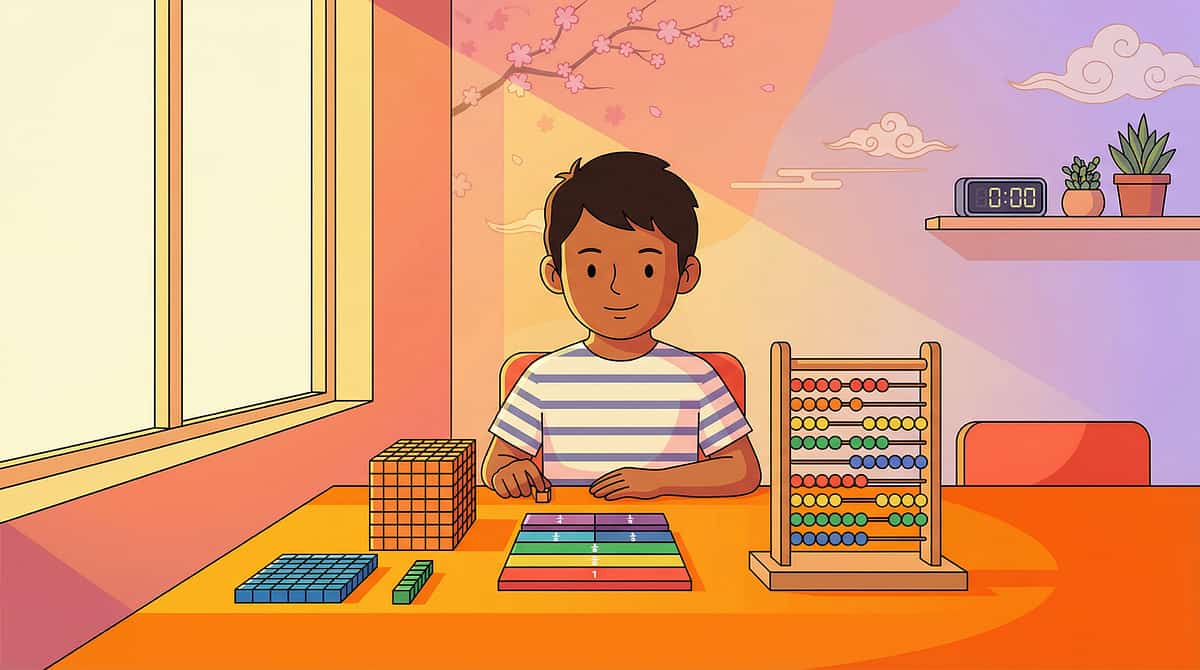
Concrete manipulatives ALWAYS precede pictorial and abstract representations — blocks, beads, counters, and everyday kitchen items are the ideal starting tools.

H-733 · Letter Learning
Level I Evidence · NCAEP 2020
9 Materials That Help With Letter Learning
Twenty-six letters. Each one a unique visual symbol that maps to a sound — or sounds. Letter learning bridges letter recognition into the academic context, moving from identification to mastery for reading and writing. Multi-sensory instruction builds all pathways simultaneously, creating stronger and more durable letter knowledge.
The most effective letter instruction engages every sensory channel at once — visual, auditory, motor, and tactile — so the memory trace lives in multiple brain networks and can be retrieved through any pathway.
Key Teaching Strategies
- Teach by formation groups, not alphabetical order (c, o, a, d, g share similar strokes)
- One letter at a time — mastery before next introduction
- Letter-of-the-week programme with immersive daily activities
- Consistent letter sounds before letter names
Indian Context
- English alphabet + Hindi varnamala / regional script — sequence instruction carefully
- Don't teach all scripts simultaneously — establish one firmly before introducing the second
- Use culturally familiar words and images for letter associations
H-734 · Sound Learning
Level I Evidence · NCAEP 2020
9 Materials That Help With Sound Learning
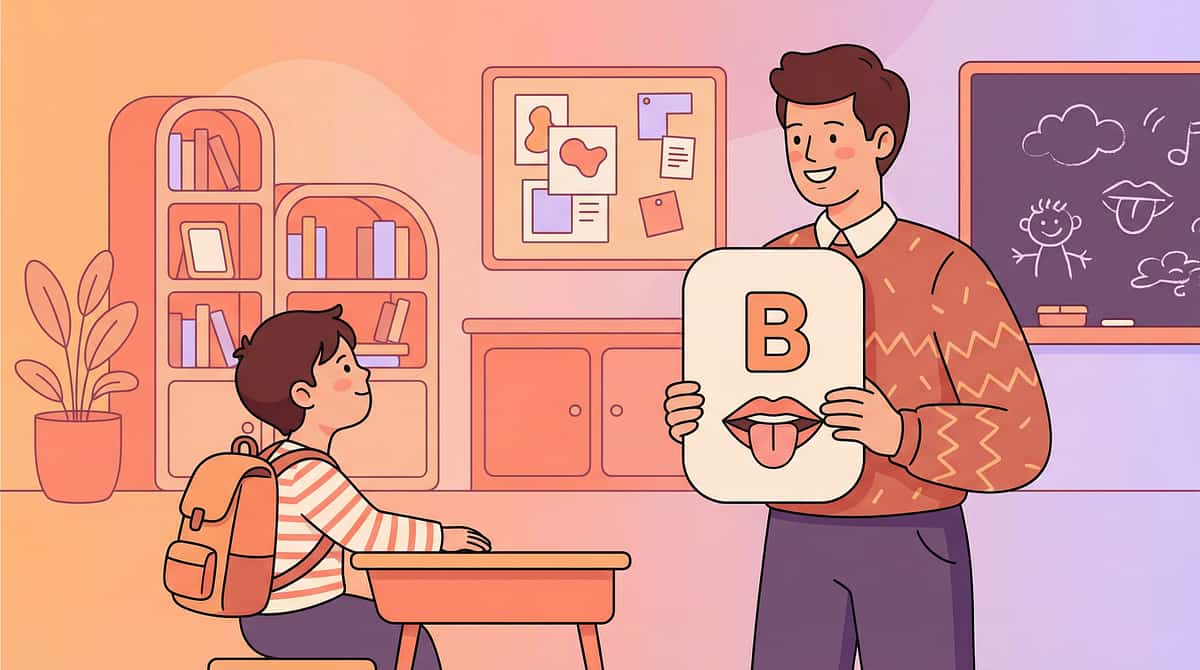
Phonics — the auditory partner to letter learning. Each letter makes a sound. Some make multiple sounds. Some sounds need multiple letters (sh, ch, th). Sound learning is typically harder than letter learning in ASD because it requires auditory processing — often the weaker channel. Visual support is essential every step of the way.
The Neuroscience
Phonological processing: superior temporal gyrus (discriminating speech sounds), phonological working memory (holding sounds while blending), and phonemic awareness (recognizing that words are made of individual sounds). Auditory processing differences in ASD mean phonics may require more practice and more visual support than typical instruction provides.
Sound Teaching Sequence
- Pair EVERY sound with a visual (letter card, mouth position photo, gesture)
- Sound discrimination: "same or different?" (bat/pat), initial sounds ("What starts with /b/?")
- Blending: /c/ + /a/ + /t/ = cat (slow → fast progression)
- Segmenting: "cat" = /c/ + /a/ + /t/ (whole → parts)
- Indian multilingual phonics: address English sounds absent in Hindi/regional languages (th, v/w distinction) and Hindi aspirated consonants not present in English
H-735 · Number Learning
Level I Evidence · NCAEP 2020
9 Materials That Help With Number Learning
Numbers 0–20, then beyond. Many children with ASD can count to 100 by rote memory but cannot give you 5 objects on request. Bridging rote counting to conceptual understanding is the central teaching challenge — and the key to genuine mathematical competence.
The CPA Teaching Approach
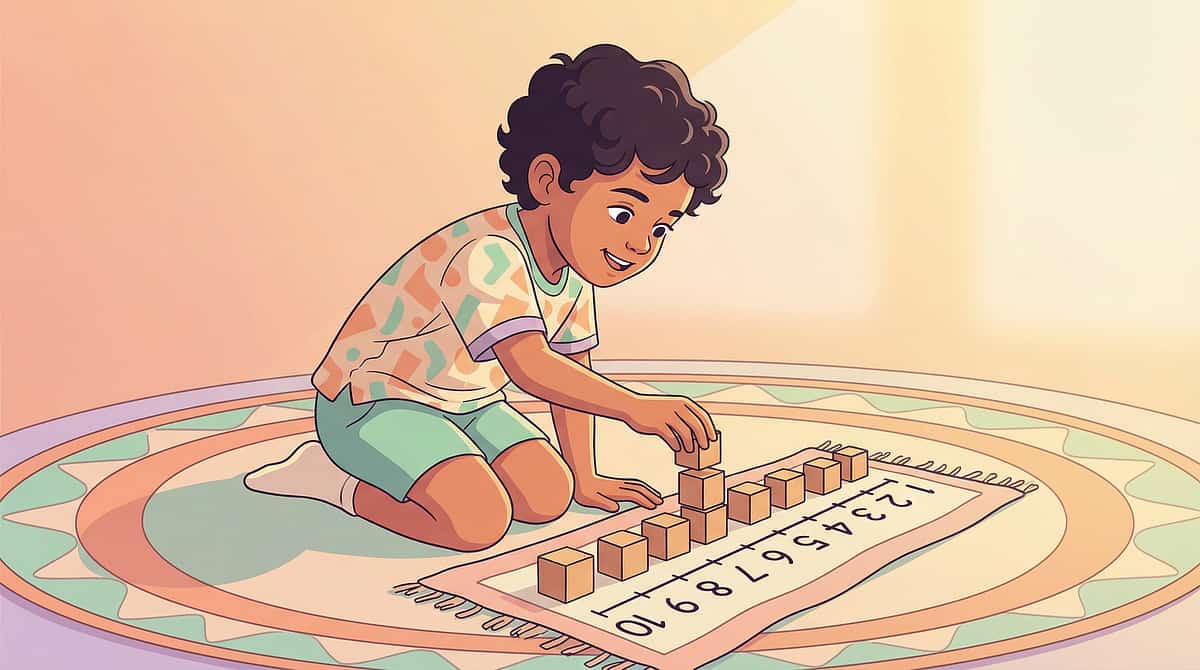
- Concrete: 5 physical blocks the child can touch and move
- Pictorial: 5 drawn pictures or dots on paper
- Abstract: the numeral "5" as a symbol
Every number concept moves through all three stages. Never rush to abstract before the concrete is solid.
Cardinality & One-to-One Correspondence
- Touch and count each object individually — one tag per item
- Cardinality principle: "How many?" = the LAST number stated
- Number lines: visual representation of order and magnitude
- Indian context: Hindi numbers alongside English, abacus tradition as concrete tool

H-736 · Counting Practice
Level I Evidence · NCAEP 2020
9 Materials That Help With Counting Practice
Beyond rote counting → functional counting. Counting practice moves from sequence recitation to real-world application: counting objects, counting money, counting steps, counting people. Functional counting is a life skill — not just an academic one. Five counting principles must each be explicitly taught for children with ASD, as they do not absorb them incidentally the way neurotypical children often do.
1
Stable Order
Numbers always in the same sequence, every time
2
One-to-One
One count assigned to each and every object
3
Cardinality
The last number said equals the total amount
4
Abstraction
Anything and everything can be counted
5
Order Irrelevance
Count in any direction — same result every time
Indian context: Market shopping as math practice (₹5 + ₹10 = ?), festival preparation counting (how many diyas? how many rangoli colors?), skip counting through songs leveraging rote memory strength — counting in 2s, 5s, and 10s.

H-737 · Beginning Reading
Level I Evidence · NCAEP 2020
9 Materials That Help With Beginning Reading
Letters become words. Words become sentences. The child is reading. Beginning reading in ASD may happen early (hyperlexia), on time, or late — each pathway requires different support. Decoding (sounding out words) is the mechanical skill. Comprehension (understanding what you read) is the cognitive skill. They develop separately in ASD, and this distinction shapes every instructional decision.
The Neuroscience
Reading builds a circuit: visual word recognition (ventral occipitotemporal cortex — "Visual Word Form Area") + phonological decoding (temporoparietal junction) + semantic access (temporal cortex) + working memory (PFC — holding meaning across a sentence). In ASD, decoding may be strong while comprehension lags — or the reverse. Neither profile should be assumed.
What You'll Learn
- Systematic phonics: sound-by-sound decoding instruction
- Sight words: high-frequency words memorised whole (leverage rote memory strength)
- Reading fluency: repeated reading of the same text builds automaticity
- Comprehension scaffolding FROM the start: read → ask questions → discuss
- Reading motivation: interest-based books, meaningful choice in reading material
- Indian context: dominant language first — Hindi/regional reading before or alongside English
H-738 · Reading Comprehension
Level I Evidence · NCAEP 2020
9 Materials That Help With Reading Comprehension
They read every word fluently. Ask what happened in the story — blank stare. The gap between decoding and comprehension is one of the most common academic profiles in ASD. Comprehension requires vocabulary knowledge, working memory, inference ability, and central coherence — skills that need explicit, structured teaching rather than assumed development.
Five Evidence-Based Comprehension Strategies
Visualise
Picture what is happening in the text
Predict
What will happen next? Use clues from text
Question
Who, what, why, where, when — explicitly taught
Summarise
What was it ABOUT? Main idea, not details
Connect
Does this remind you of anything you know?
The Neuroscience
Comprehension requires vocabulary knowledge (temporal cortex), working memory (PFC — holding sentence meaning while reading the next), inference (PFC — reading "between the lines"), and central coherence (integrating details into main idea — often a relative challenge in ASD). The detail-focused ASD processing style excels at facts but may miss the big picture.
Tools That Help
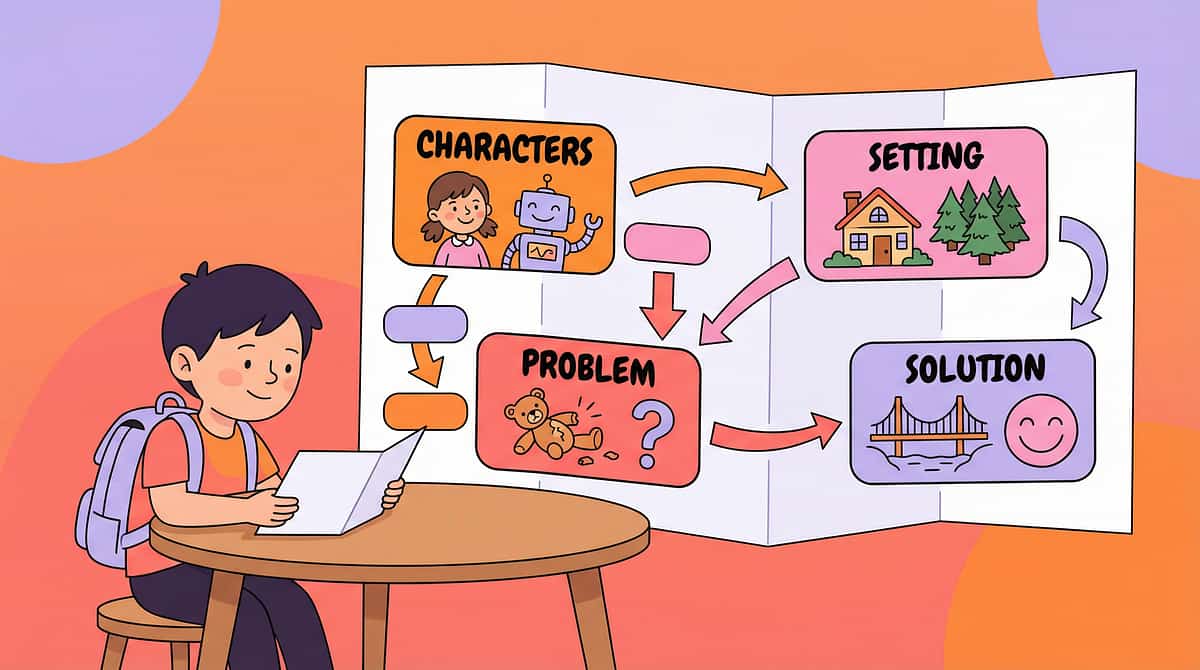
- Story maps: characters, setting, problem, solution
- Main idea webs: graphic organisers for central themes
- Sentence stems: "The text says ___, so I think ___"
- Indian context: CBSE/ICSE comprehension passage format, Hindi/English mixed practice

H-739 · Hyperlexia Support
Level I Evidence · NCAEP 2020
9 Materials That Help With Hyperlexia Support
Reading at age 2 or 3. Fluent decoding of adult-level text. But understanding? Minimal. Hyperlexia — precocious decoding ability far ahead of comprehension — occurs in 6–20% of children with ASD. It is both a strength and a trap: the child appears academically gifted because they "read," but is not understanding what they decode. Adults often assume comprehension matches decoding. It doesn't.
The Neuroscience
In hyperlexia, the Visual Word Form Area develops precociously — the brain becomes an exceptional pattern-matching machine for written words. But the semantic connection (words → meaning) and inferential processing (PFC — reading between lines) lag behind. The child processes text as visual pattern, not as communication.
The Intervention Principle
Never restrict reading. Use hyperlexic decoding as the BRIDGE to comprehension, not a skill to suppress. The strength IS the access route.
- Use text as a teaching tool: written instructions may be understood better than verbal
- Pair EVERY reading session with comprehension questions and visualisation
- Written social stories leverage the strength for social learning
- Always CHECK comprehension explicitly: "Tell me what that means in your own words"
- Reading-to-learn: use hyperlexic decoding to access content across ALL subjects
H-740 · Math Concepts
Level I Evidence · NCAEP 2020
9 Materials That Help With Math Concepts
Addition. Subtraction. Multiplication. Place value. Fractions. Mathematics beyond counting — from number to operation to concept. Mathematics is fundamentally about patterns and rules, aligning deeply with the ASD systemising brain. Many children with ASD are gifted mathematicians when given the right instructional approach.
ASD Strengths in Mathematics
- Pattern recognition → algebra, sequences, geometry
- Rule following → operations, formulas, procedures
- Precision → accuracy, error checking, proofs
- Systemising → mathematical structures as systems
Where Support Is Needed
- Word problems: language demand layered on math demand
- Multi-step calculations: working memory load management
- Abstract concepts: fractions, negative numbers — anchor to concrete first
- Indian context: Vedic math techniques, mental math tradition, board exam preparation
H-741 · Writing Skills
Level I Evidence · NCAEP 2020
9 Materials That Help With Writing Skills
Writing is the most demanding academic task — requiring simultaneous engagement of idea generation, language formulation, spelling, handwriting, punctuation, grammar, and self-monitoring. Every system at maximum load. No wonder children with ASD resist writing. The motor demand of handwriting competes with content generation for limited working memory resources. Brilliant ideas may be trapped because the hand is consuming all available cognitive bandwidth.
Separate the Components
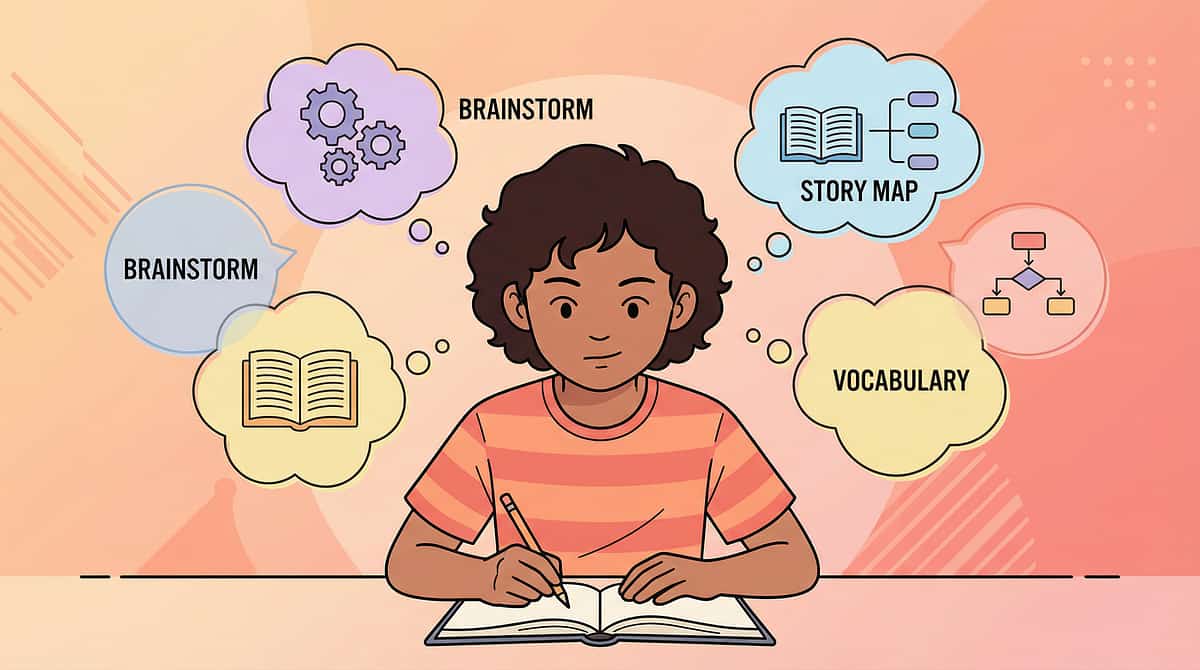
Teach idea generation separately from writing. Brainstorm verbally first, THEN write. Remove the simultaneous demand.
Graphic Organisers
Planning templates before writing — who, what, where, when, why — reduce the cognitive load of composing from scratch.
Reduce Motor Load
Typing, voice-to-text, and scribe options remove the handwriting bottleneck, allowing cognitive output to flow freely.
Sentence Starters
Structured frames like "The character felt ___ because ___" scaffold language formulation while maintaining the child's voice.
H-742 · Handwriting at School
Level I Evidence · NCAEP 2020
9 Materials That Help With Handwriting at School
School handwriting isn't just forming letters — it's producing academic output through the hand for 5–6 hours daily, under time pressure, while simultaneously processing new information. The child who writes neatly for 5 minutes may produce illegible work by the end of a 30-minute essay. This is not carelessness — it's motor fatigue compounding with cognitive fatigue.
Accommodations That Work
- Reduced written output: Answer 5 questions, not 10 — same learning, less writing demand
- Extra time: Compensates for slower motor execution speed
- Scribe for long tasks: Child dictates, adult writes — content remains the child's
- Typing alternative: Laptop or tablet replaces pen for extended writing
- Oral examination: Demonstrates knowledge without written output demand
Adapted Tools & Indian Context
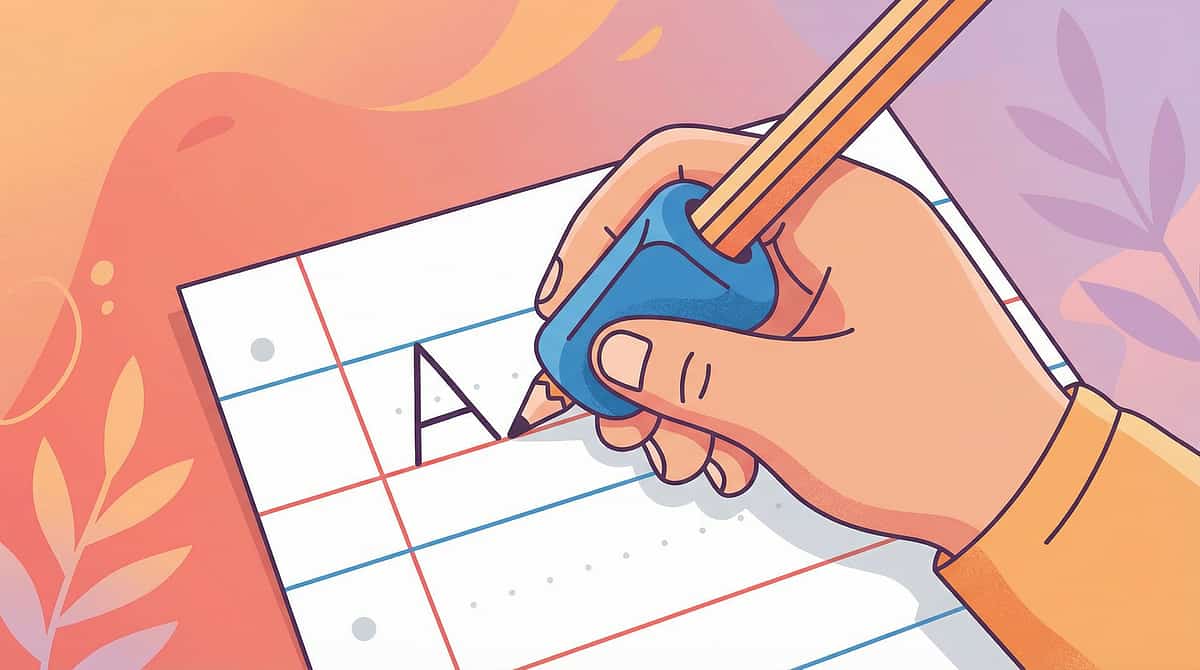
- Pencil grip, slant board, highlighted paper, weighted pen
- Board copying: seat near board, or provide desk-level copy sheet instead
- RPwD 2016 provisions: Computer use in exams, extra time, scribe — apply early with documentation
- Indian school context: heavy writing load, board copying demands, four-line notebook requirements — all addressable through formal accommodation
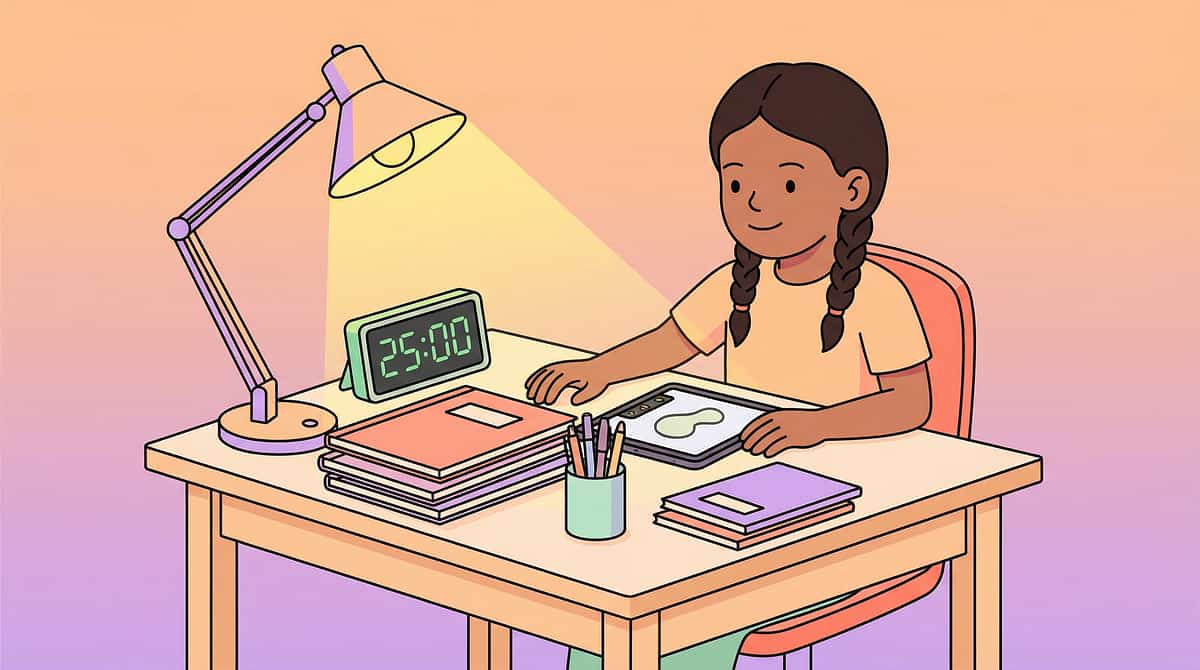
H-743–744 · Homework
Level I Evidence · NCAEP 2020
9 Materials That Help With Homework (Time & Battles)
After 6–8 hours of maximum effort at school, the child arrives home depleted — and is expected to do more of what exhausted them. When homework consistently causes meltdowns, the homework system needs to change — not the child.
The Neuroscience
After-school PFC function is at its lowest point of the day, depleted from 6–8 hours of school demands. Homework requires planning, organising, and self-monitoring — exactly when these resources are empty. The after-school meltdown and the homework battle are often the same problem: demanding PFC output from a depleted PFC.
The child refusing homework is NOT being lazy. Their nervous system is communicating: "I cannot do this right now." Forcing through this state does not produce learning — it produces trauma.
The Structured Homework Approach
- Decompression FIRST: 30–60 minutes of recovery before any homework begins
- Consistent homework station: same location, organised, distraction-free, all materials ready
- Time-boxed sessions: "Work for 20 minutes" — not "finish everything"
- Break rhythm: 10 minutes work → 5 minutes break → repeat
- Homework modification: Advocate for reduced load under RPwD 2016 if needed
When Homework Battles Escalate
- Less quantity: Same concepts, fewer problems — learning is preserved, demand is reduced
- Choice: Which assignment first? Restores a sense of autonomy
- Alternative output: Verbal instead of written, drawn instead of written
- If homework consistently takes more than 1 hour for primary age → formal accommodation request
- Parent script: "I see this is hard. Let's do 5 more minutes and then take a break."
- Rule #1: Homework should NEVER destroy family wellbeing
- Indian context: heavy homework culture + tuition → prioritize essential tasks, realistic load; parent expectation management, teacher communication about realistic load
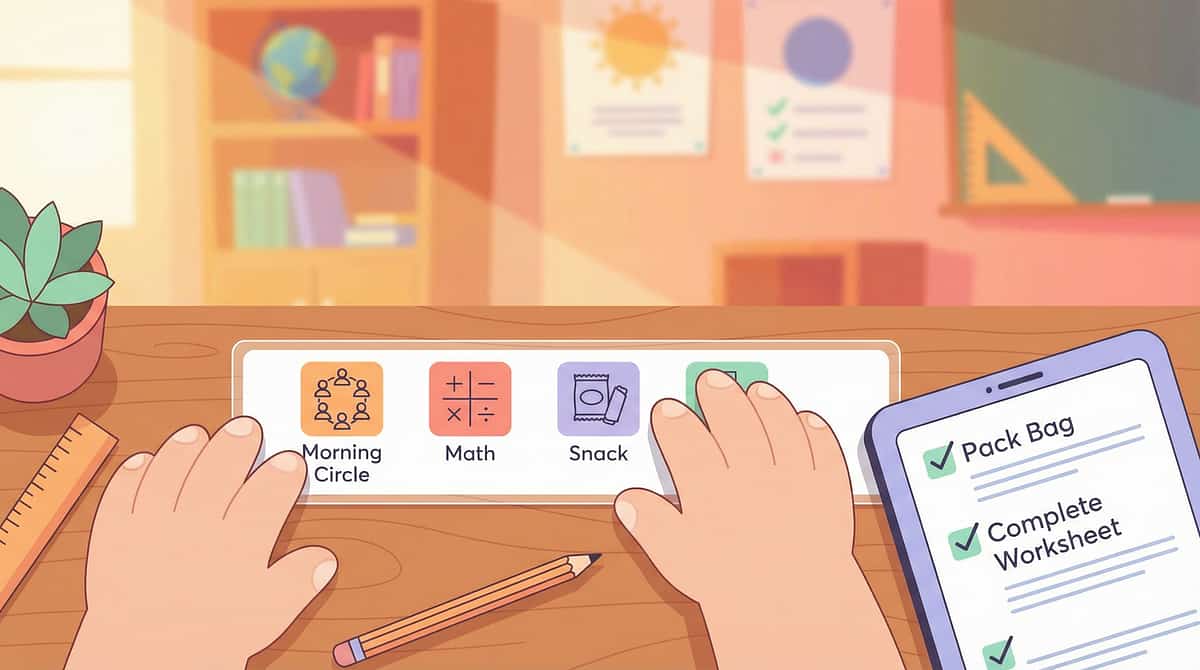
H-745 · Executive Function at School
Level I Evidence · NCAEP 2020
9 Materials That Help With Executive Function at School
Every school task requires EF: starting work (initiation), knowing what to do (planning), staying on task (sustained attention), finishing (task completion), switching subjects (cognitive flexibility), and managing materials (organisation). EF challenges look like "won't start," "loses everything," "can't finish," "can't switch" — these are neural patterns, not motivational choices.
The PFC Under Load
The prefrontal cortex manages initiation, planning, working memory, self-monitoring, time management, and organisation — all simultaneously while also processing academic content. Cognitive overload leads to EF failure. Providing external supports reduces the load, freeing cognitive capacity for actual learning.
EF Supports at School
- Visual schedules, checklists, timers, graphic organisers
- TEACCH work systems: structured independent work with clear start/finish
- Teacher strategies: chunk assignments, provide written instructions, check understanding, allow processing time
- Student tools: planner, colour-coded folders, desk strip schedule
- Indian context: advocate for EF accommodation alongside academic accommodation in the school IEP
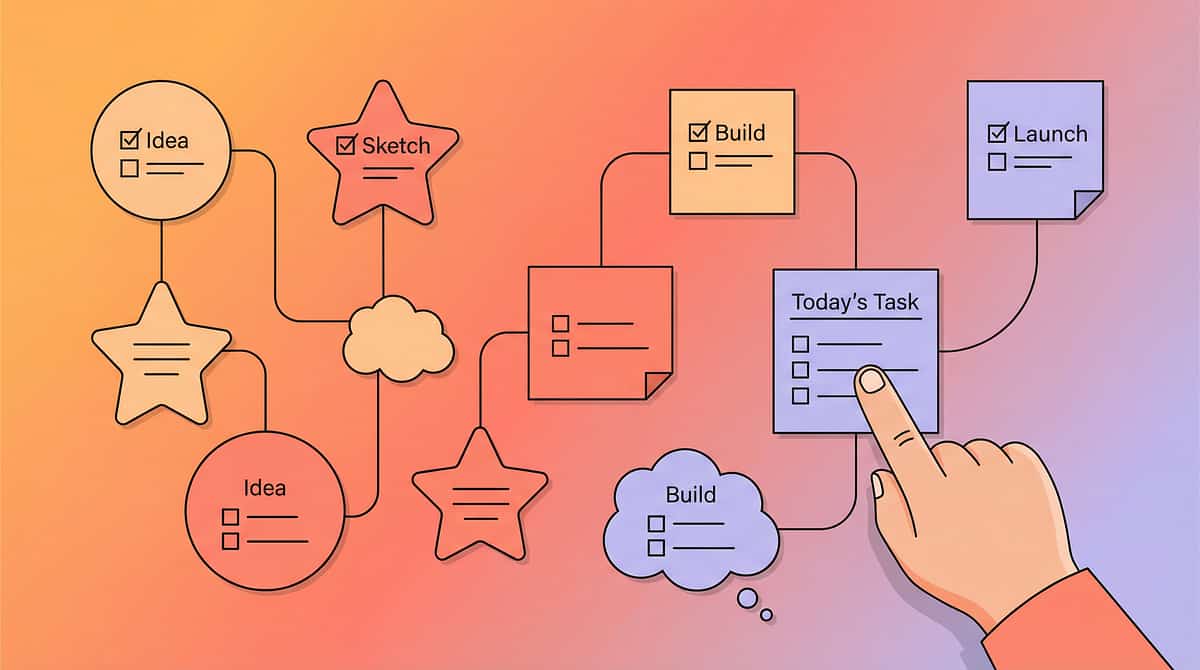
H-746 · Planning & Organisation
Level I Evidence · NCAEP 2020
9 Materials That Help With Planning and Organization
The long-term project. The assignment due next week. The exam in 10 days. Planning and organisation over time — not just within a single task — is the advanced EF skill that determines academic success in middle school and beyond. Prospective memory (remembering to do something in the future) and temporal estimation (how long will this take?) are often inaccurate in ASD and must be scaffolded externally.
Planning Tools
- Backward planning: Start from deadline, work backward to today's task
- Visual project timeline: wall chart showing each step with its deadline
- Weekly planning session: Sunday review of all upcoming tasks
- Assignment tracker: visual board showing all pending work by subject
Indian Academic Context
- Exam timetable planning: visual countdown for half-yearly and annual exams
- Syllabus coverage tracking: visual check-off of completed chapters
- Coaching and tuition integration: coordinate planning across school, home, and tuition center
- Board exam timelines: CBSE/ICSE preparation requires structured planning months in advance
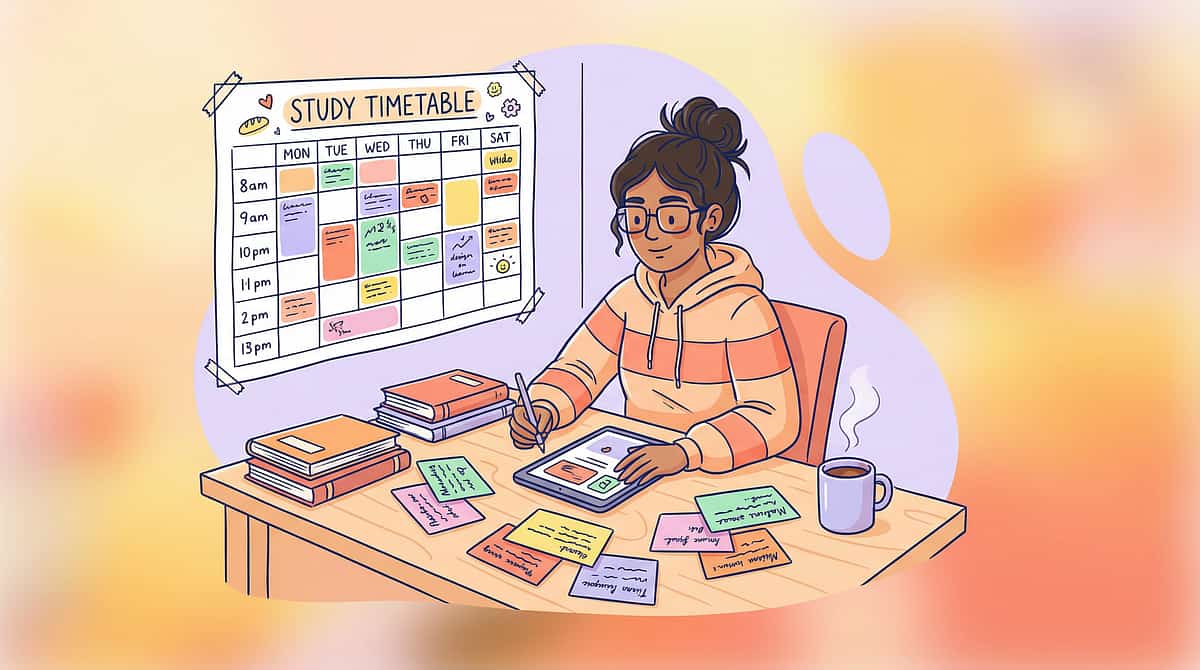
H-747 · Test Preparation
Level I Evidence · NCAEP 2020
9 Materials That Help With Test Preparation
The exam is coming. Anxiety builds. The child knows the material but doesn't know how to prepare. Or they study by re-reading (ineffective) instead of active recall (effective). Test preparation is a skill — one that must be explicitly taught, practiced, and systematically supported.
Effective vs. Ineffective Study
Active Recall ✓
Flashcards, practice tests, teach-back — forces retrieval, builds memory strength
Spaced Repetition ✓
Reviewing at increasing intervals — efficient, durable, exam-ready
Passive Re-Reading ✗
Creates familiarity without retrieval strength — does not prepare for exams
Study Structure
- Visual study timetable: spaced practice across days (don't cram)
- Consistent study environment: quiet, organised, all materials ready
- Mind maps and summarisation for visual learners
- Anxiety management: relaxation before study, break rhythm, confidence-building practice tests
- Indian context: Previous year board exam papers, coaching culture alignment, question paper format practice, rote memory strength channelled effectively

H-748 · Test Taking
Level I Evidence · NCAEP 2020
9 Materials That Help With Test Taking
They know the answers. The exam paper arrives and — blank. Test taking is a separate skill from knowledge. It requires reading questions carefully under stress, managing time across the paper, formulating answers, and performing despite anxiety. Exam accommodations don't give unfair advantage — they level the playing field by reducing the stress-performance gap.
The Neuroscience of Exam Anxiety
Cortisol surge → PFC function decreases → working memory capacity drops → retrieval of studied material fails. The child literally cannot access what they know because stress is shutting down the retrieval system. This is a physiological barrier, not a knowledge gap.
RPwD 2016 Exam Accommodations
- Extra time: Standard = time + 20 minutes per hour
- Separate room: Reduced auditory and visual distraction
- Reader: Questions read aloud to the student
- Scribe: Student dictates, scribe writes answers
- Computer use: Typing replaces handwriting for extended answers
- CBSE, ICSE, and state board provisions — apply EARLY with full documentation
Test-taking strategies: read ALL questions first, start with easiest, skip and return to difficult questions, check work at the end. Practice these strategies during home practice tests — under timed, realistic conditions.

Loading...
H-750 · Focus in Classroom
Level I Evidence · NCAEP 2020
9 Materials That Help With Focus in Classroom
The classroom is the most distracting environment a child with ASD will encounter — 30–40 children, visual displays covering every wall, noise, movement, multiple simultaneous stimuli. Maintaining focus here is exponentially harder than 1:1 at home. In ASD, the attentional filter may be less selective — processing ALL stimuli rather than filtering to the relevant one. The result is overwhelm rather than focus.

Preferential Seating
Near the teacher, away from windows and doors — reduces competing stimuli, improves proximity to instruction

Sensory Tools
Noise-cancelling headphones for independent work, study carrel (side screens on desk), wobble cushion, fidget under desk
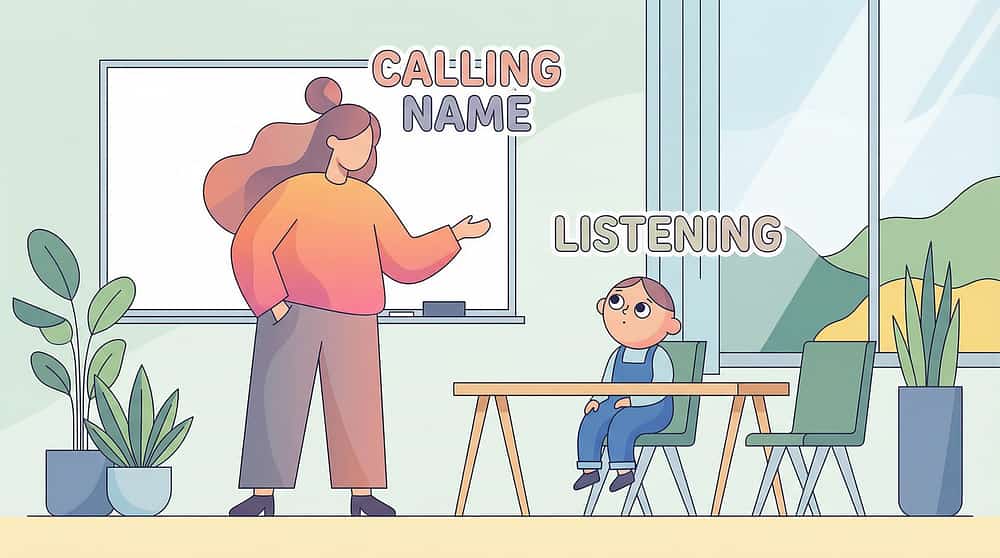
Teacher Strategies
Use name before instruction ("Arjun, look here"), reduce verbal instruction length, check understanding, allow processing time after each direction

H-751 · Curriculum Modifications
Level I Evidence · NCAEP 2020
9 Materials That Help With Curriculum Modifications
The curriculum as written may not be accessible to the ASD learner — but the concepts within it can be. Curriculum modification adjusts HOW content is presented, HOW mastery is demonstrated, and WHAT volume is required — without lowering cognitive expectations. The goal is access, not reduction of learning potential.
Input Modifications
- Simplified language: same concept, clearer instructions
- Visual instructions: diagrams, icons, step-by-step charts
- Pre-teaching vocabulary before the lesson
- Reduced volume: 5 problems, not 20 — same skill practice, less fatigue
Output Modifications & Indian Context
- Verbal instead of written response, drawing instead of essay
- Multiple choice instead of open-ended answer
- RPwD 2016: Legal right to reasonable accommodation in Indian schools
- IEP development: document modifications formally, review annually
- NIOS as alternative board pathway for students requiring significant modification

H-752 · Assistive Technology
Level I Evidence · NCAEP 2020
9 Materials That Help With Assistive Technology
Technology that removes barriers. Text-to-speech reads text aloud — bypassing decoding difficulty. Speech-to-text types what the child says — bypassing handwriting. AT doesn't do the thinking — it removes the barrier between thinking and output. The child's cognitive contribution remains entirely their own.
Text-to-Speech
Read&Write, Google TTS — bypasses decoding bottleneck; content reaches comprehension centres through auditory pathway
Speech-to-Text
Google Voice Typing, dictation — bypasses motor cortex demand; content flows from language centres directly to screen
Calculator & Spell-Check
Reduces arithmetic and spelling load — focuses cognitive demand on concepts, not computation or memorisation
Device-Based Learning
Tablet or laptop as primary output tool — graphic organiser software, audiobooks, word prediction apps
Indian context: Smartphone as AT device (available and affordable), Google Translate for multilingual support, government AT schemes, RPwD 2016 provisions for technology use in examinations.
H-753 · Visual Learning Supports
Level I Evidence · NCAEP 2020
9 Materials That Help With Visual Learning Supports
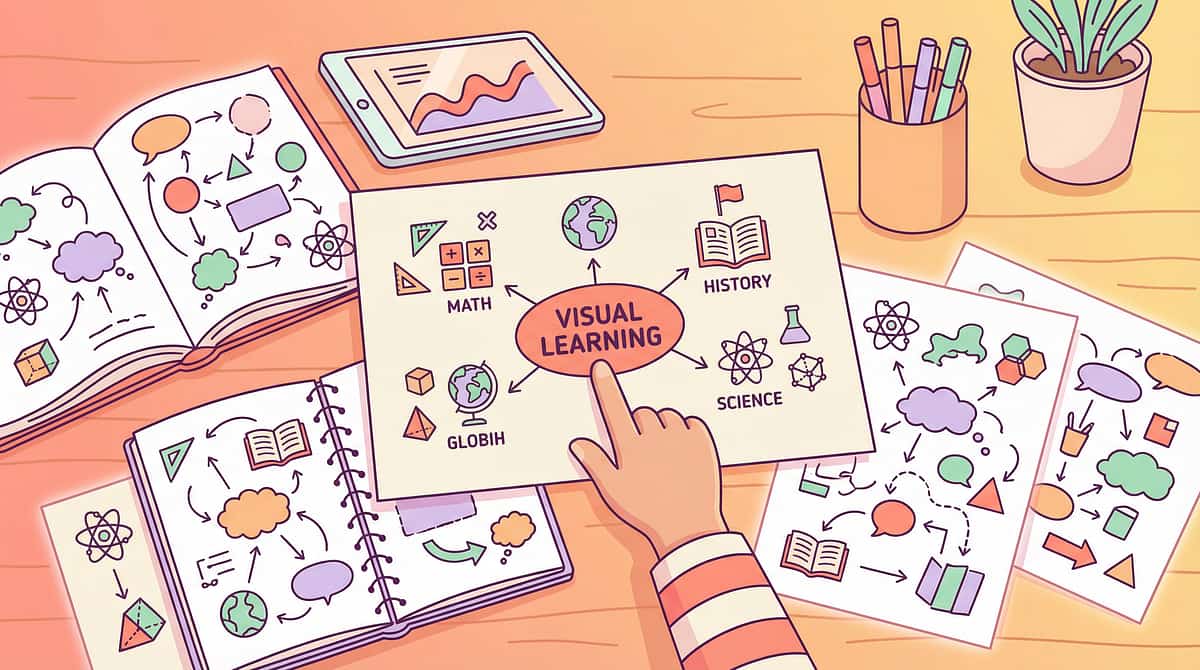
"Show me" works when "tell me" doesn't. Visual learning supports — diagrams, charts, mind maps, graphic organisers, visual instructions, colour-coded notes — leverage the ASD visual processing strength for academic access. Visual information persists (you can look again), is concrete (not fleeting like spoken words), and can be processed at the child's own pace.
The Visual Processing Advantage
Parietal and occipital cortex processing is often more efficient than auditory-language processing in ASD. Unlike spoken instruction, which disappears as it's delivered, visual information remains available for re-processing. Teaching visually means teaching through the strong channel — and this alone can transform academic access.
Visual Tools by Subject
- English/Reading: Story maps, Venn diagrams, character webs, vocabulary cards
- Math: Number lines, hundred charts, fraction bars, visual models
- Science: Diagram-based explanation, observation charts, experiment step cards
- History: Timelines, cause-effect charts, map-based learning
- Revision: Colour-coded summary sheets, mind maps for exam preparation
- Indian school context: visual revision sheets for board exam preparation, diagram-based answers in science and geography
H-754 · Hands-On Learning
Level I Evidence · NCAEP 2020
9 Materials That Help With Hands-On Learning
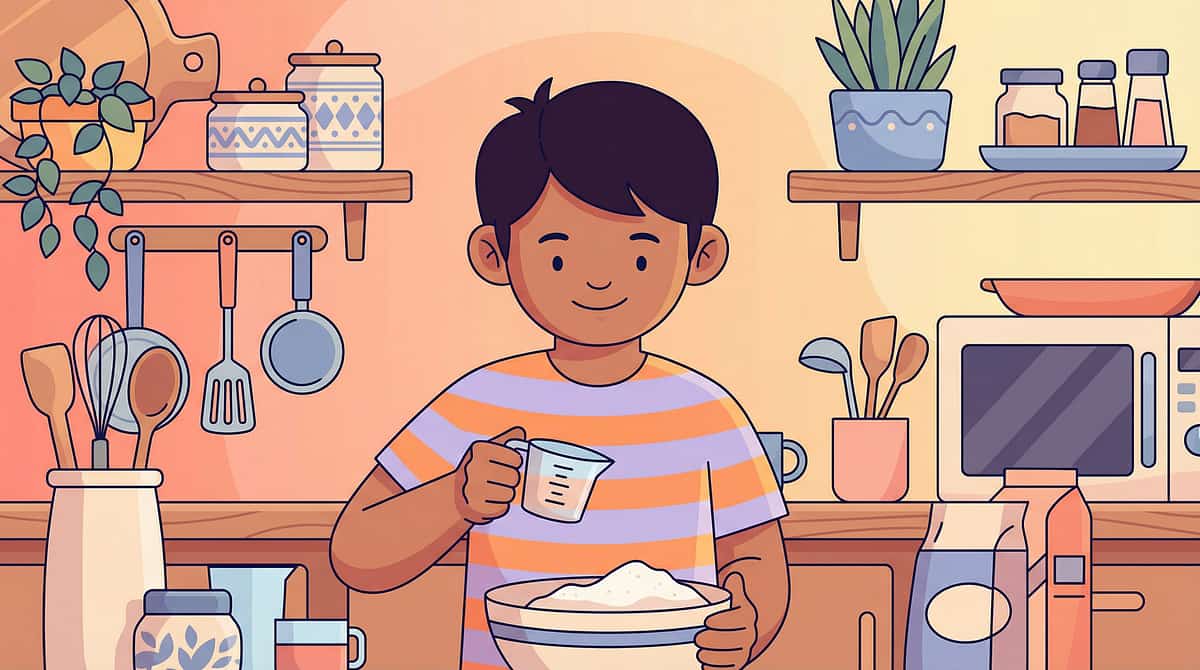
Learning by doing. Manipulatives in math, experiments in science, building models, cooking measurements, real-world application. Hands-on learning — concrete before abstract, doing before memorising, experiencing before conceptualising — creates memory traces that abstract instruction alone cannot replicate.
The Neuroscience
Multi-modal encoding: when learning involves motor action (handling objects) + visual input + auditory input, the memory trace is stronger because it's encoded in multiple brain systems simultaneously. Concrete experience creates the foundation that abstract concepts can later attach to.
Hands-On by Subject
- Math: Manipulatives, measuring with ruler/scales, cooking fractions
- Science: Experiments, nature observation, model building
- Language: Letter tiles, word building, story props, puppets
- Social Studies: Maps, timeline construction, diorama projects
Indian Context
- Kitchen math: Measuring ingredients (½ cup, ¼ cup), counting chapatis, weighing vegetables
- Garden science: Plant growth observation, seed-to-plant sequence
- Festival learning: Diya counting, rangoli geometry, Dussehra map work
- NEP 2020 alignment: Experiential learning as a core pedagogical principle
H-755 · Multi-Sensory Learning
Level I Evidence · NCAEP 2020
9 Materials That Help With Multi-Sensory Learning
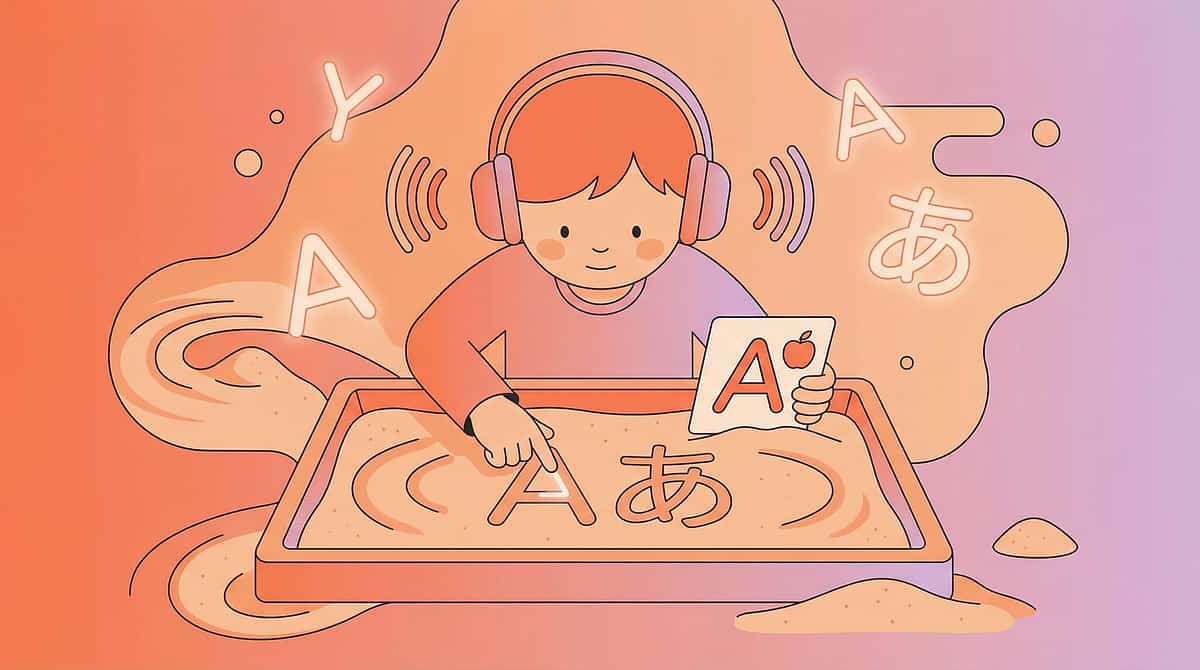
SEE it. HEAR it. SAY it. DO it. FEEL it. Multi-sensory learning engages all input channels simultaneously — creating the strongest memory traces. The Orton-Gillingham approach for reading. The Montessori method for math. Sensory writing in sand trays and textured letters. Every sense recruited as a learning channel creates multiple backup systems for memory retrieval.
Visual
Letter cards, number charts, colour-coded text, diagram-based instruction
Auditory
Letter sounds, musical math, rhymes, verbal discussion, audio recordings
Tactile
Textured letters, sand trays, clay formation, manipulative objects
Kinesthetic
Writing in air, movement-based learning, whole-body letter formation
Indian Montessori tradition: Sandpaper letters, golden beads for place value, sensorial materials for math concepts — all directly applicable and culturally familiar in many Indian early childhood settings.
H-756 · Movement-Based Learning
Level I Evidence · NCAEP 2020
9 Materials That Help With Movement-Based Learning
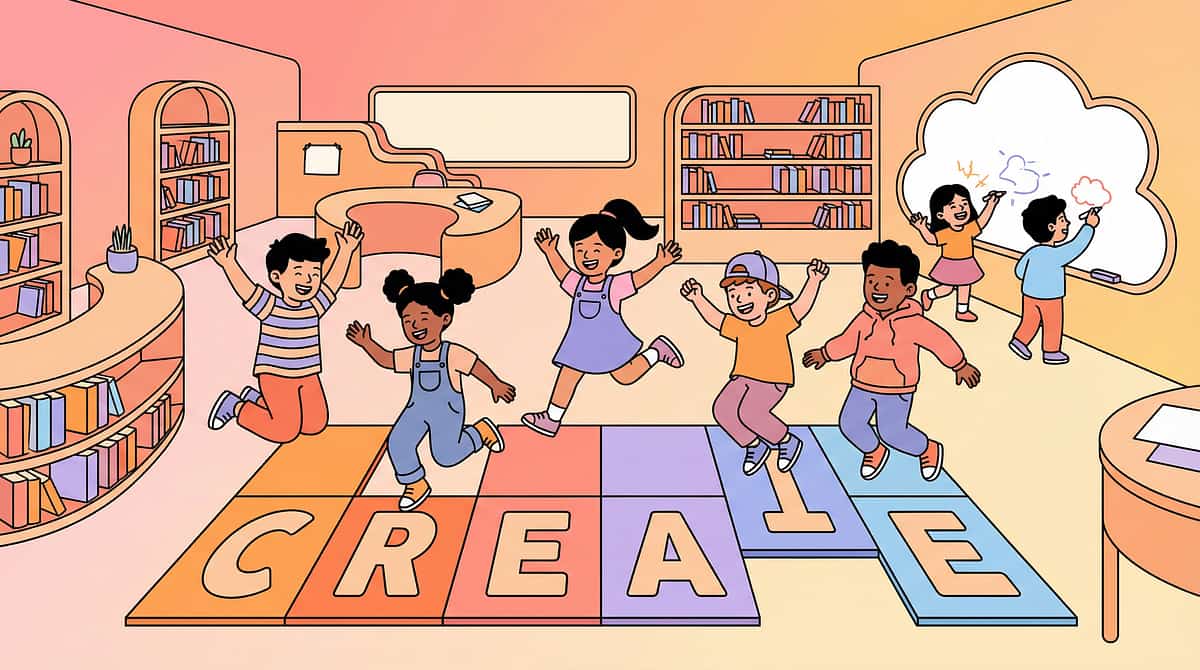
Learning while moving. Spelling words while jumping on each letter. Math facts while bouncing a ball. History timelines by walking along a floor map. Movement-based learning combines motor activation (arousal and attention boost) with academic content — the body carrying the learning into a form of memory that seated instruction cannot reach.
The Neuroscience
Physical activity increases dopamine and norepinephrine (attention neurotransmitters), activates the reticular activating system (alertness), and creates motor-encoded memory traces in procedural memory. Learning that involves the body is remembered differently and often more durably than seated learning alone.
Movement Academics in Practice
- Spelling hopscotch: Jump on letters to spell target words
- Math relay: Run to the correct answer card on the wall
- Word scavenger hunt: Find target words hidden around the room
- Timeline walk: Walk along historical events laid on the floor
- Science body movements: Act out photosynthesis, the water cycle
- Indian movement learning: yoga-based learning (one pose per concept), action rhymes for younger children

H-749 & H-757 · Interest-Based Learning
Level I Evidence · NCAEP 2020
9 Materials That Help With Interest-Based Learning
The motivational key to academics. Special interests as academic vehicles: trains → math (counting cars, measuring tracks, calculating speed), dinosaurs → reading (nonfiction books, research), space → science, Minecraft → geometry. Interest-based learning is not a workaround — it is optimal instruction for the ASD learning profile. The special interest becomes the medium through which ALL curriculum content is delivered.
Why It Works Neurologically
The dopamine system provides continuous motivational fuel → attention is automatic (no PFC effort needed for engagement) → working memory capacity increases (motivated brain processes more) → memory encoding is enhanced (emotionally charged content is remembered better). The reward system fires at maximum for special interests — producing faster, deeper, more durable learning than non-interest instruction.
Interest Mapping in Practice
- List every child interest → map to EACH school subject
- Cricket example: Math (scoring, averages, run rates), English (match reports, commentary), Science (physics of bowling), Geography (international cricket countries)
- Share interest mapping with teachers — request interest-based examples in class
- Curriculum map × interest map → lesson plans embedding curriculum goals IN interest contexts
- All-subject approach: math through interest, reading through interest, writing about interest
- Student-led projects: deep exploration of interest with academic skill application
- Teacher collaboration: share interest mapping, request interest-based examples and exam problems
Indian Context
Cricket, mythology, trains, space — culturally popular interests with rich academic connections across every subject. NEP 2020 project-based learning alignment, interest-integrated board exam preparation, inquiry-based learning model.
H-758 · Twice-Exceptional Kids
Level I Evidence · NCAEP 2020
9 Materials That Help With Twice-Exceptional Kids
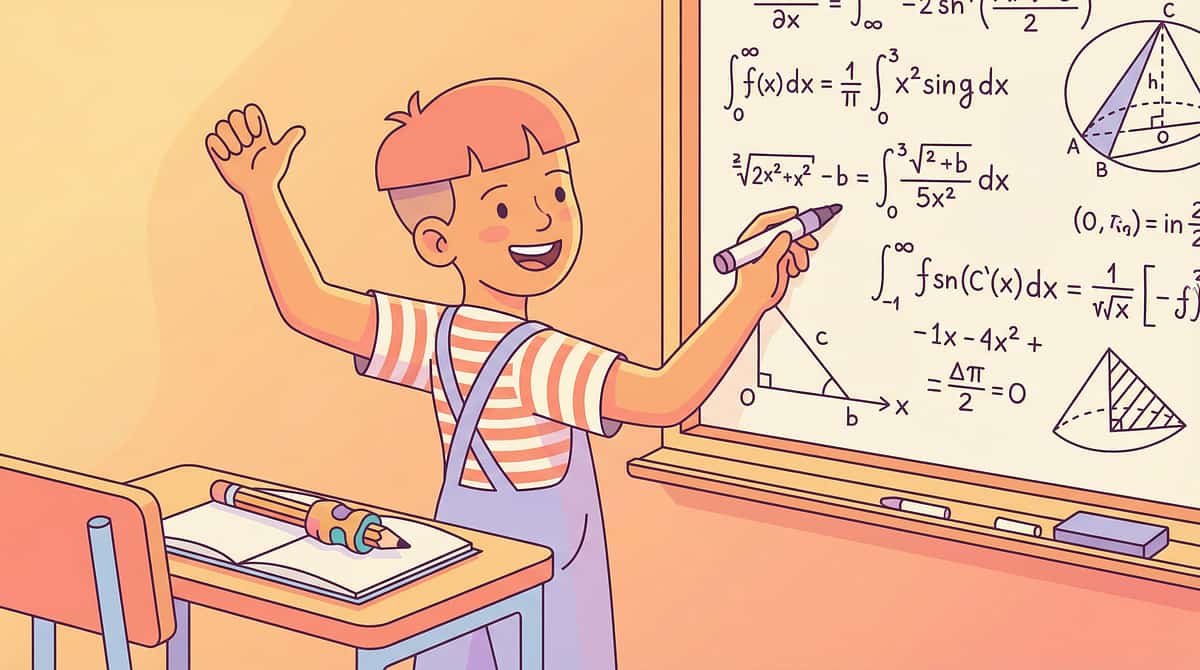
Gifted AND autistic. Exceptional ability in one domain AND significant challenges in another. The child who solves algebraic equations but can't tie their shoes. Who reads encyclopedias but can't write a sentence. Twice-exceptional (2e) is the most misunderstood academic profile — too "smart" for special education support, too "different" for gifted programs. Both sides of the profile deserve equal attention.
The Dual Support Principle
- CHALLENGE the strengths: gifted-level content in areas of giftedness
- SUPPORT the challenges: full accommodations for deficit areas
- Acceleration + accommodation: advanced math content WITH handwriting accommodation
- IQ assessment: subtest scatter (verbal-performance gap) often identifies 2e profile
Emotional Support & Indian Context
- 2e children experience intense frustration: they know they're smart but can't show it
- Validate the disparity: "Your ideas are brilliant — we're finding the best way for them to come out"
- Indian context: competitive exam culture may highlight giftedness while missing ASD diagnosis; board exam accommodation combined with advanced content is both possible and legal
H-759 · Academic Confidence
Level I Evidence · NCAEP 2020
9 Materials That Help With Academic Confidence
"I'm stupid." "I can't do math." "Everyone is smarter than me." Academic confidence — the belief that you can learn — predicts academic achievement more than actual ability. Children with ASD who've experienced repeated failure develop learned helplessness: "Why try? I'll just fail again." Reversing this pattern is one of the most urgent interventions in the academic skills toolkit.
The Neuroscience of Learned Helplessness
Repeated failure → amygdala associates academic tasks with THREAT → avoidance behaviour (won't start, won't try, gives up immediately). Reversing it: success experiences → dopamine reward → rewriting the association: academic task → I CAN → success → more effort. The success must come first — confidence follows achievement, not the other way around.
Success Engineering Strategies
- Start achievable: Slightly below current level → guaranteed success → gradually increase
- Growth mindset language: "Your brain grew today" — not "You're so smart"
- Effort praise: "You worked so hard on that!" — process, not product
- Error normalisation: "Mistakes mean your brain is learning something new"
- Strength portfolio: Collect visual evidence of what the child CAN do
- Indian context: shift from marks-based to growth-based feedback, celebrate progress not just rank
Preview of academic skills Therapy Material
Below is a visual preview of academic skills therapy material. The pages shown help educators, therapists, and caregivers understand the structure and content of the resource before use. Materials should be used under appropriate professional guidance.
Link copied!

H-760 · Celebrating Academic Wins
Subdomain H2 Capstone · NCAEP 2020
9 Materials That Help With Celebrating Academic Wins
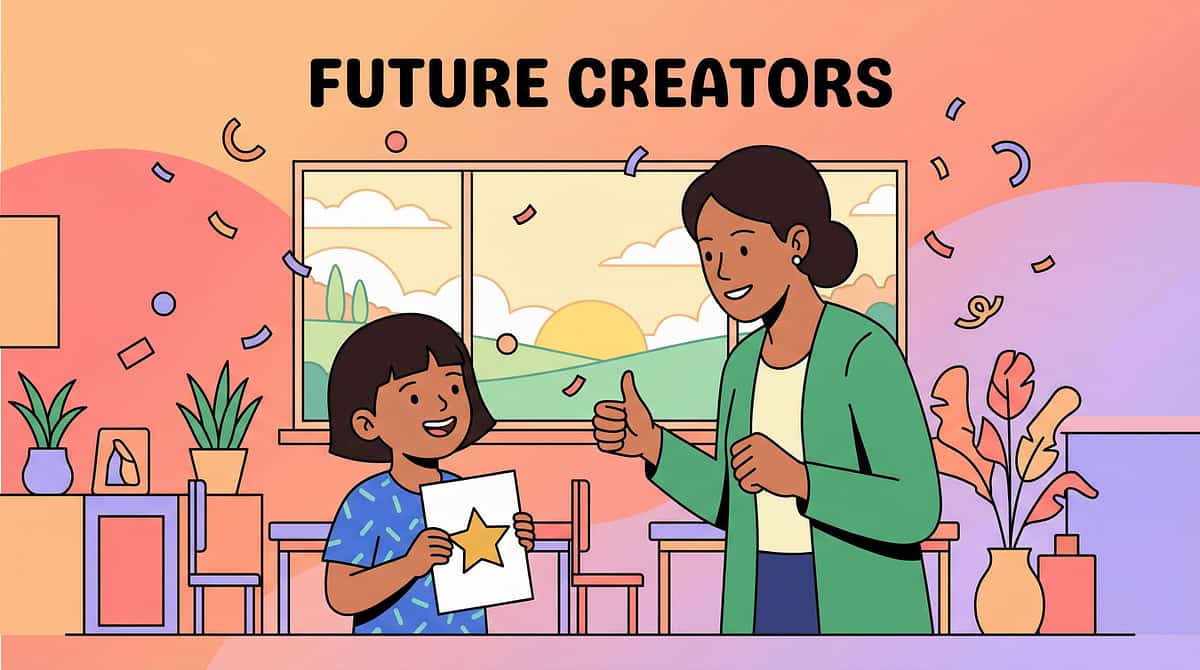
The capstone of Subdomain H2 and Domain H. Celebrating what the child achieves — not measured against peers, not against "grade level," but against their own starting point. The child who reads one word today who couldn't yesterday. The child who writes their name for the first time. The child who solves a problem independently. Every win counts. Every win is celebrated.
The Neuroscience
Celebration → dopamine release → reward association with academic effort → increased motivation → more effort → more achievement. The cycle of success requires that success is noticed, acknowledged, and celebrated. Consistent celebration builds the neural association: school work → positive outcome → want to do more.
Celebration Methods
- Specific verbal praise: "You read three new words today!"
- Token systems and progress charts: visual evidence of growth
- Portfolio of best work: collected over time, reviewed together
- Sharing with family: "Guess what I did today!" — phone call to grandparent
9 Canon Materials
Lead: SpEd · ABA · Psychology | OT · SLP · NeuroDev
"The question is never Can this child learn? — it's Have we found the right way to teach them?"