

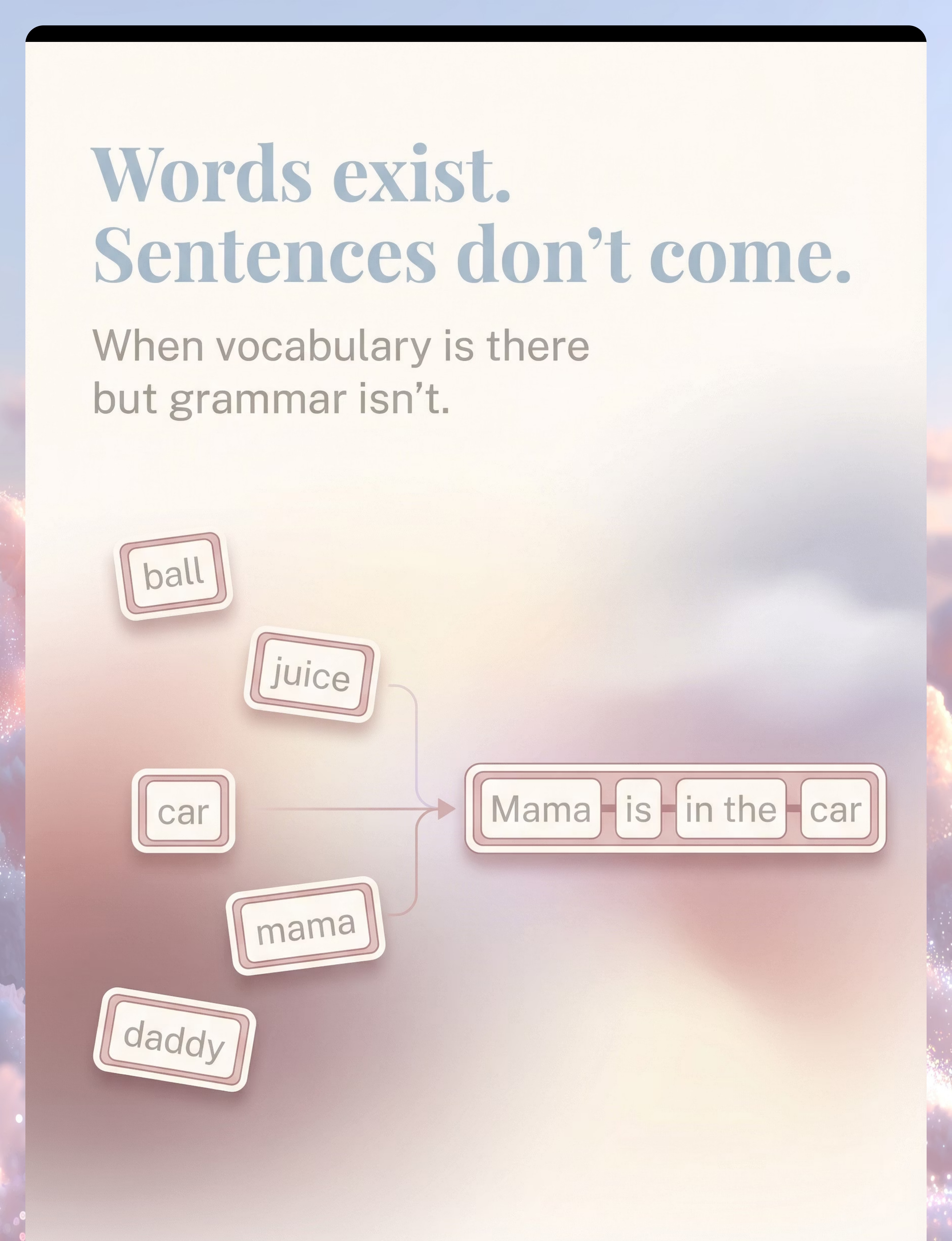
Words Exist. Sentences Don't Come.
When vocabulary is there but grammar isn't — this technique changes everything.

Words Exist. Sentences Don't Come.
It's breakfast time. Your four-year-old points at his empty cup and says "juice." Just juice. You know he means "I want more juice, please" — because you've learned to decode his single words into full thoughts. When he sees you reaching for your car keys, he says "Mama car." Not "Mama is going in the car." Just two words, side by side, unconnected.
He has hundreds of words. He can name every animal in his picture books, every color, every shape. His pediatrician was pleased with his vocabulary. But the words won't connect. They won't form sentences. They exist in isolation — beautiful building blocks with no blueprint for how to stack them.
"Having words is only half the journey. The invisible rules that combine words into sentences can be made visible — and when grammar becomes something your child can see, touch, and build, sentences follow." — Pinnacle Blooms Consortium
Pinnacle Blooms Network®
GPT-OS® Therapy Intelligence

You Are Not Alone — The Numbers
Sentence building difficulties are among the most common language challenges in childhood. Research consistently demonstrates that structured, visual approaches to teaching grammar produce measurable gains in sentence complexity, length, and accuracy.
7–10%
of all children
experience developmental language disorder affecting sentence construction (Tomblin et al., 1997; Bishop et al., 2017)
50–70%
of children with autism
demonstrate significant expressive syntax delays even when vocabulary is age-appropriate (Tager-Flusberg et al., 2005)
80%+
show improvement
with structured visual-spatial approaches to syntax intervention (Ebbels, 2007; Bryan, 1997 — Colorful Semantics evidence base)
Across the world, millions of families navigate this exact challenge — a child who has the words but cannot combine them into sentences. This is not rare. This is not unusual. And this is not something your child will simply "grow out of" without the right scaffolding. The gap between vocabulary and sentence construction is a specific, identifiable, and treatable skill deficit. You are among millions of families. And the path forward is mapped.

What's Happening in Your Child's Brain
This is a wiring difference, not a behavior choice.
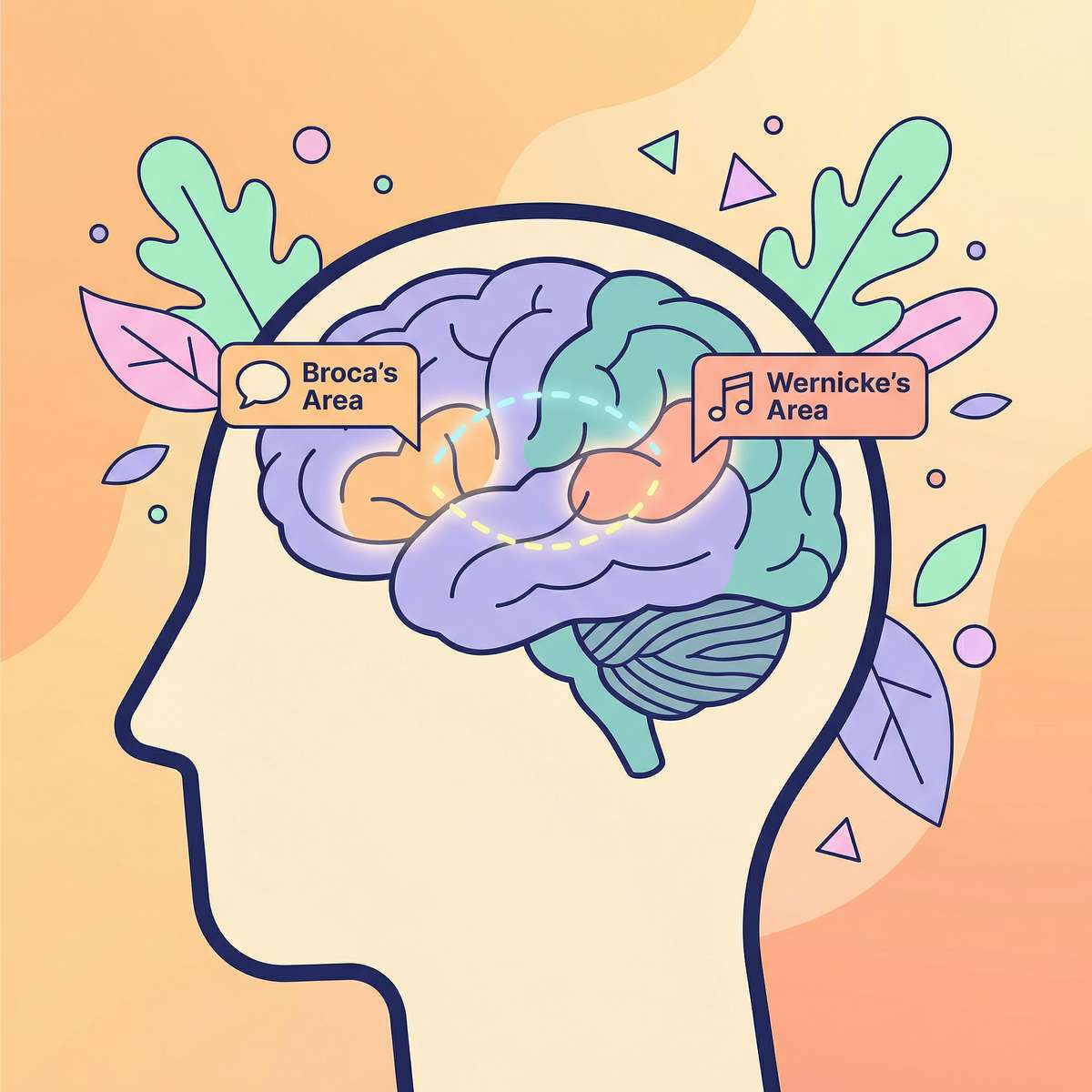
Vocabulary Storage — Working Well
Your child's brain has successfully stored hundreds of word meanings in the temporal lobe — particularly in Wernicke's area. This is why they can label objects, name colors, and identify animals. The dictionary is full.
Grammatical Assembly — Needs Support
Combining words into sentences requires a different brain system — primarily Broca's area in the left frontal lobe. This region handles syntax: the rules for ordering words, adding grammatical markers, and constructing sentence structures. In your child, this assembly system needs explicit scaffolding.
The Bridge We Build
The arcuate fasciculus connects comprehension to production in real time. Visual-structural materials create an external scaffold for this internal process — giving the brain a visible template to follow while neural pathways strengthen.
"Grammar is invisible. These materials make it visible. When children can see sentence structure, their brains learn to build it." — Pinnacle Blooms SLP Division

Where This Sits in Development
Your child is here. Here is where we're heading.
12–18 Months: Single Words
"Ball," "Mama," "juice" — single words representing whole ideas. The dictionary begins.
18–24 Months: Two-Word Combos
"More juice," "Daddy car" — first evidence of emerging grammar. Two words combined meaningfully.
24–30 Months: Telegraphic Speech ⬅ Many Delays Are Here
"Daddy go work" — content words present, grammatical words missing. The message exists but grammar scaffolding hasn't formed.
30–36 Months: Simple Sentences
"Daddy is going to work" — complete sentences with grammatical markers (is, the, a, -ing, -ed) emerge.
36–48 Months: Complex Sentences
"I want a cookie because I'm hungry" — compound and complex sentences with conjunctions and embedded clauses.
Sentence building difficulties often co-occur with receptive-expressive language gaps, motor speech difficulties (apraxia), working memory limitations, and social communication differences in autism spectrum conditions. This timeline is mapped against WHO Care for Child Development milestones. Your child's position on this timeline is a waypoint, not a destination.
The Evidence Behind This Technique
Clinically validated. Home-applicable. Parent-proven.
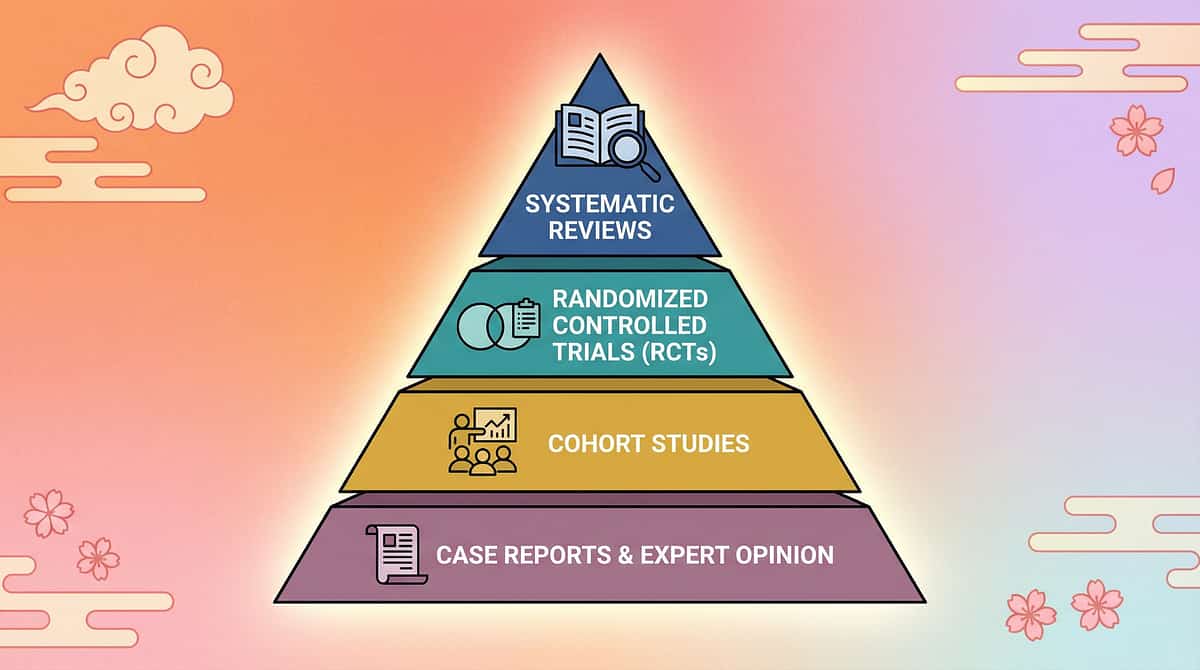
LEVEL I–II Evidence
Systematic Reviews + Controlled Studies
Colorful Semantics — Bryan (1997)
Multiple replications showing significant gains in sentence length and complexity for autism populations. Evidence Level II.
Shape Coding — Ebbels (2007)
Demonstrated significant improvements in grammatical accuracy for school-aged children with SLI. Evidence Level II.
Visual Supports — NCAEP (2020)
Visual supports classified as evidence-based practice for autism across 56 studies. Evidence Level I — Systematic Review.
Parent-Delivered Intervention — Roberts & Kaiser (2011)
Meta-analysis demonstrating parent-implemented language intervention effectiveness. Evidence Level I.
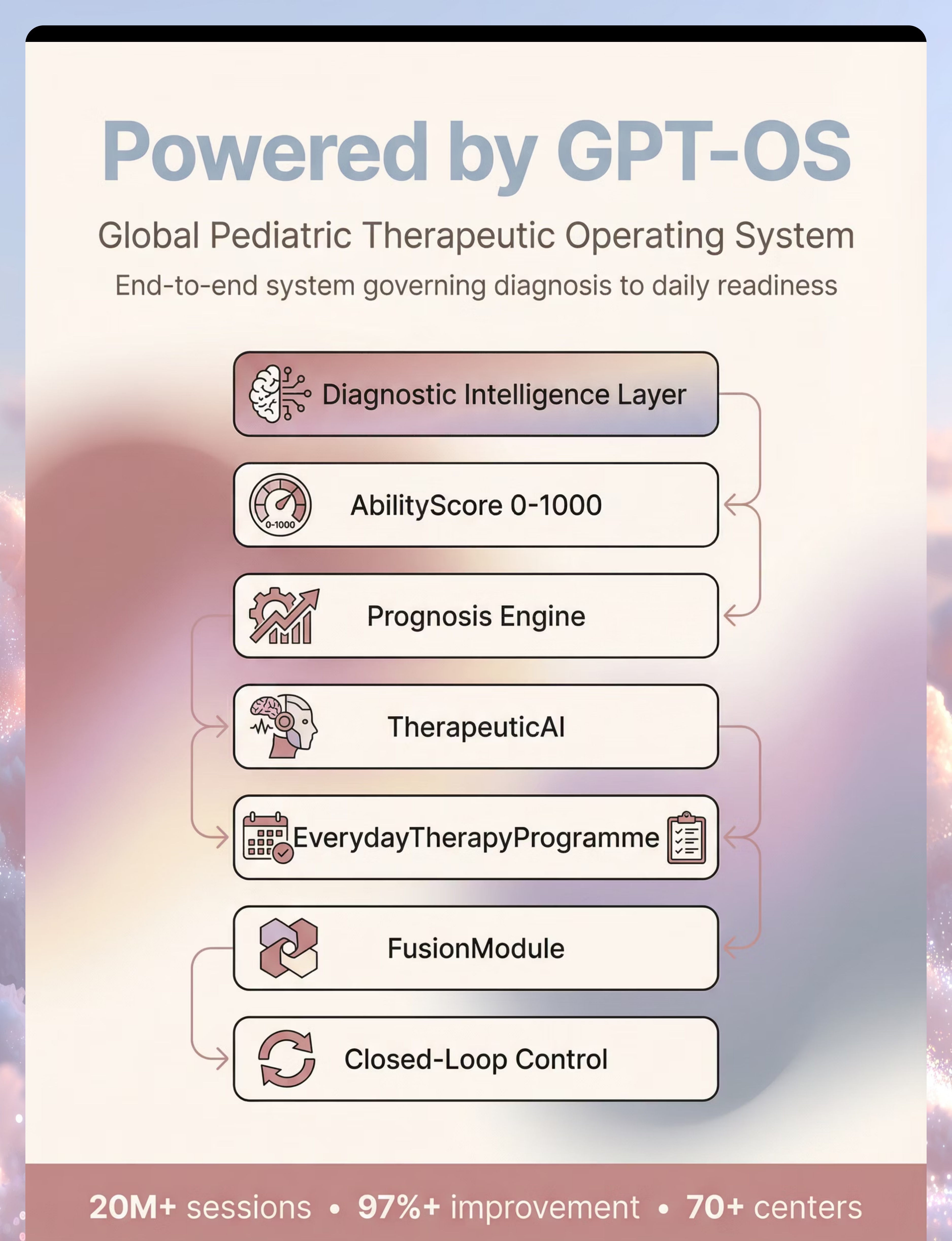
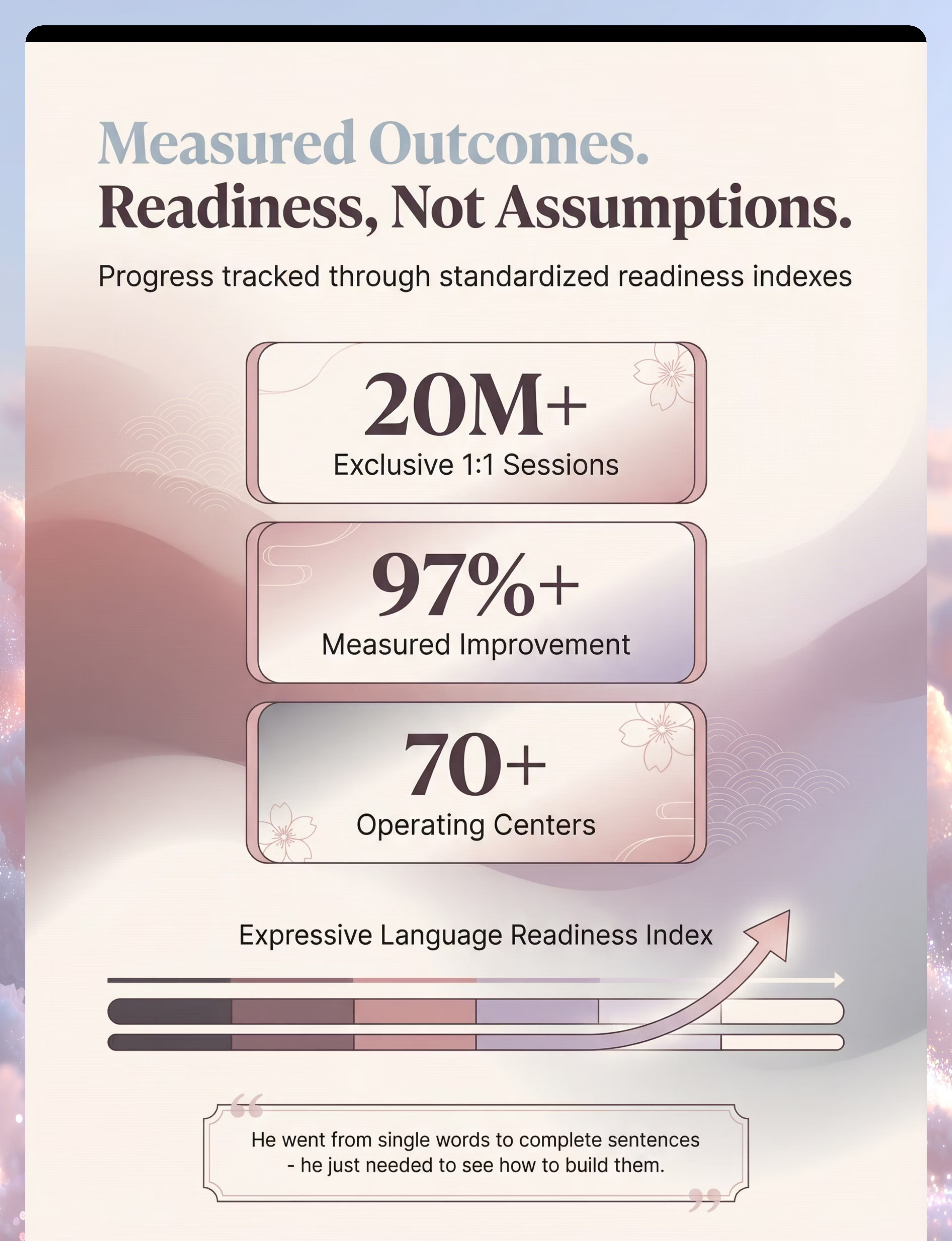
Pinnacle Real-World Evidence: 20M+ exclusive 1:1 therapy sessions across 70+ centers. 97%+ measured improvement across one or more readiness indexes, tracked through the Expressive Language Readiness Index and Syntactic Development Index within GPT-OS®.
Sentence Building Using Visual-Structural Materials
Parent-Friendly Name: "See It, Build It, Say It"
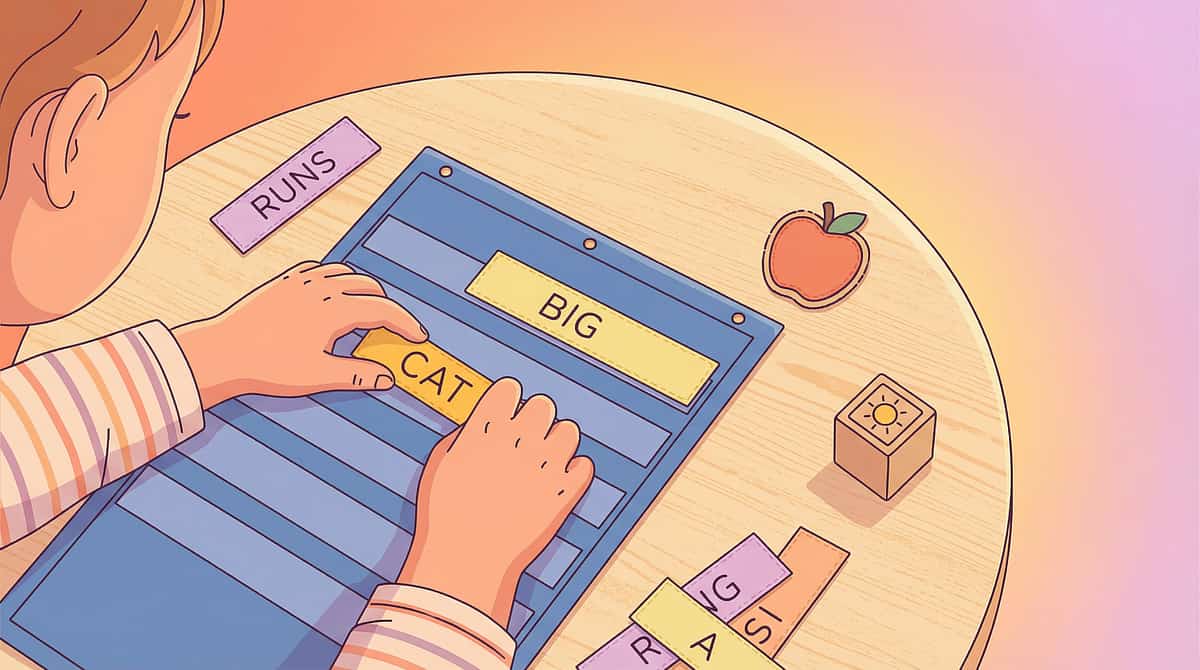
Sentence building using visual-structural materials is an evidence-based intervention that teaches children to construct grammatically correct sentences by making the invisible rules of grammar visible, tangible, and manipulable. Instead of relying on children to absorb grammatical rules from the language environment, this technique uses color-coded cards, sentence strips, pocket charts, magnetic boards, word blocks, picture communication systems, and digital tools to show children how words combine into sentences — piece by piece, left to right.
The child physically builds sentences they can see and touch before being asked to say them. Over time, the external visual scaffold becomes an internal grammatical system, and the child begins producing sentences independently.
🏷️ Domain
Speech-Language Pathology | Expressive Language | Syntax & Grammar
👶 Age Range
2–10 years
⏱️ Session Duration
10–20 minutes | Minimum 3×/week
📍 Setting
Home + Therapy + School
Who Uses This Technique
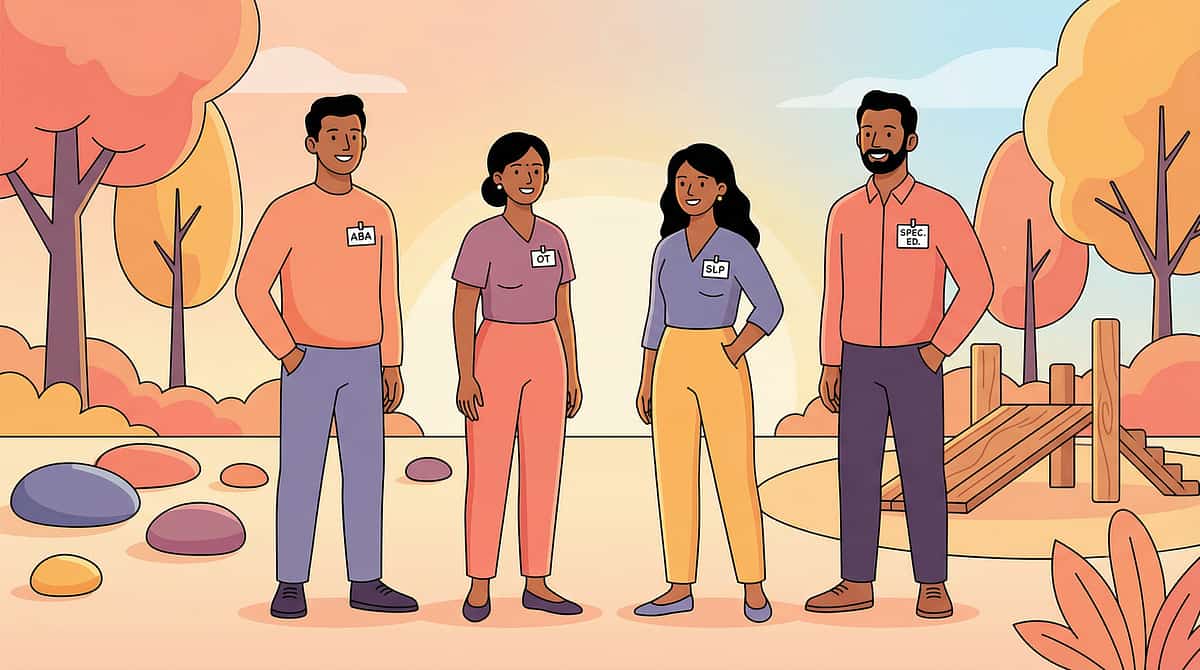
This technique crosses therapy boundaries because the brain doesn't organize by therapy type. When multiple disciplines coordinate around sentence building, the child receives consistent scaffolding across therapy, home, and school — and consistency is what builds neural pathways.
Speech-Language Pathologist (Primary Lead)
The SLP designs grammatical targets, selects appropriate scaffold levels, and systematically fades support as the child internalizes sentence patterns. They monitor mean length of utterance (MLU) and grammatical accuracy.
Applied Behavior Analyst (BCBA)
The BCBA applies discrete trial training and natural environment teaching principles. They design reinforcement schedules, use prompt hierarchies, and ensure generalization of sentence skills across settings.
Occupational Therapist
The OT addresses fine motor skills for manipulating cards and blocks, visual-motor integration for left-to-right sequencing, and sensory regulation for sustained attention during language activities.
Special Educator
The Special Educator integrates sentence building into academic activities — structured writing, reading comprehension responses, classroom participation, and narrative tasks.
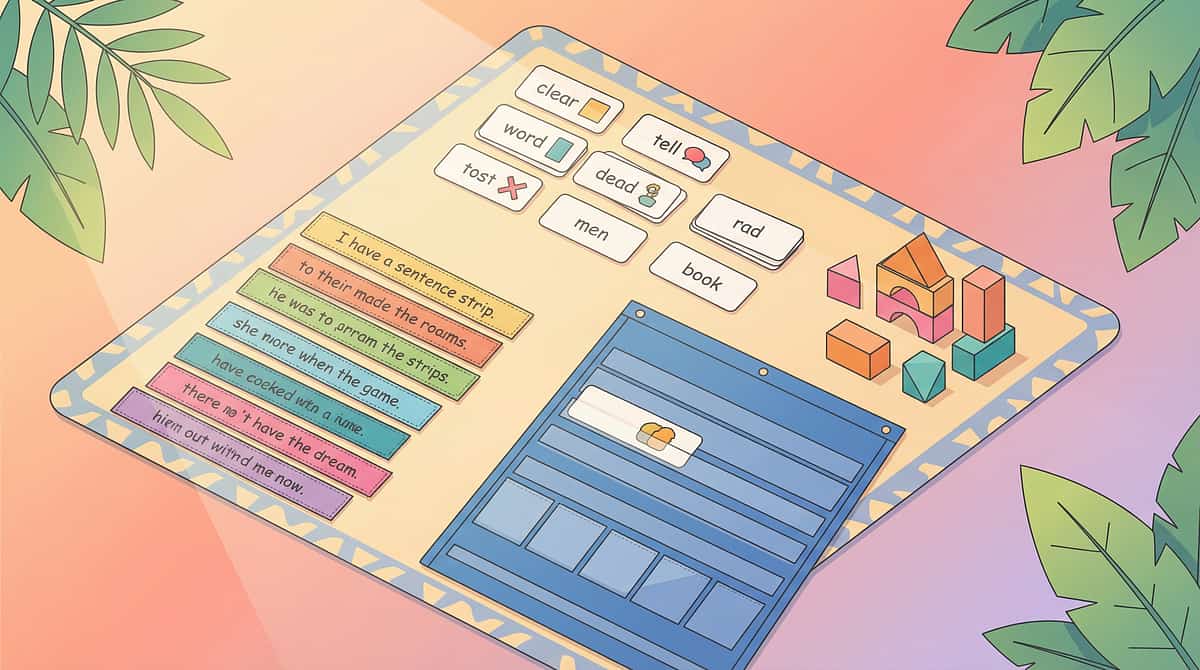
What This Targets
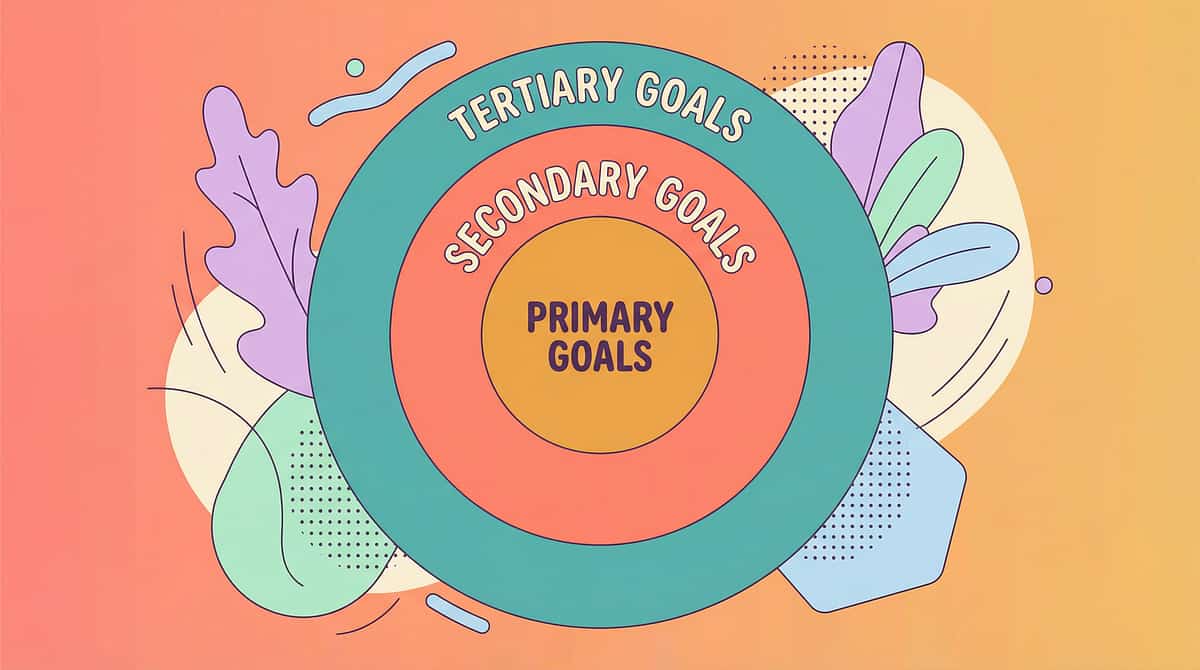
This isn't a random activity. It's a precision tool with primary, secondary, and tertiary therapeutic targets.
🎯 Primary: Sentence Construction
Combining words into grammatically correct sentences, correct word order, grammatical morpheme use (is, the, a, -ing, -ed, plurals), and increasing mean length of utterance (MLU).
🎯 Secondary: Language Formulation
Organizing thoughts into linguistic structures before speaking, reducing word-finding blocks, improving narrative sequencing, and building question formulation skills.
🎯 Tertiary: Academic & Social Readiness
Classroom verbal participation, written language foundation, peer conversation entry and maintenance, and reduced frustration from communication avoidance.

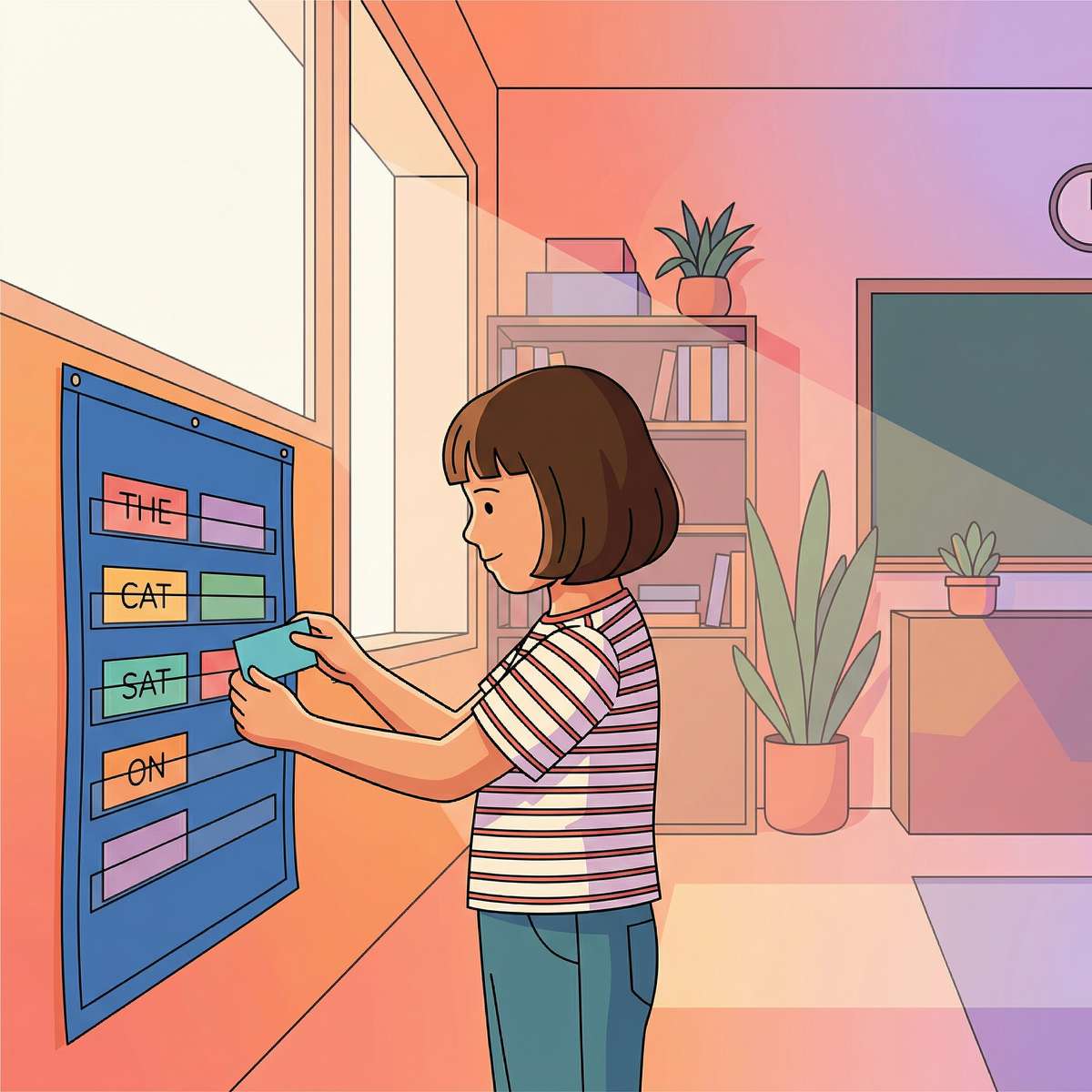
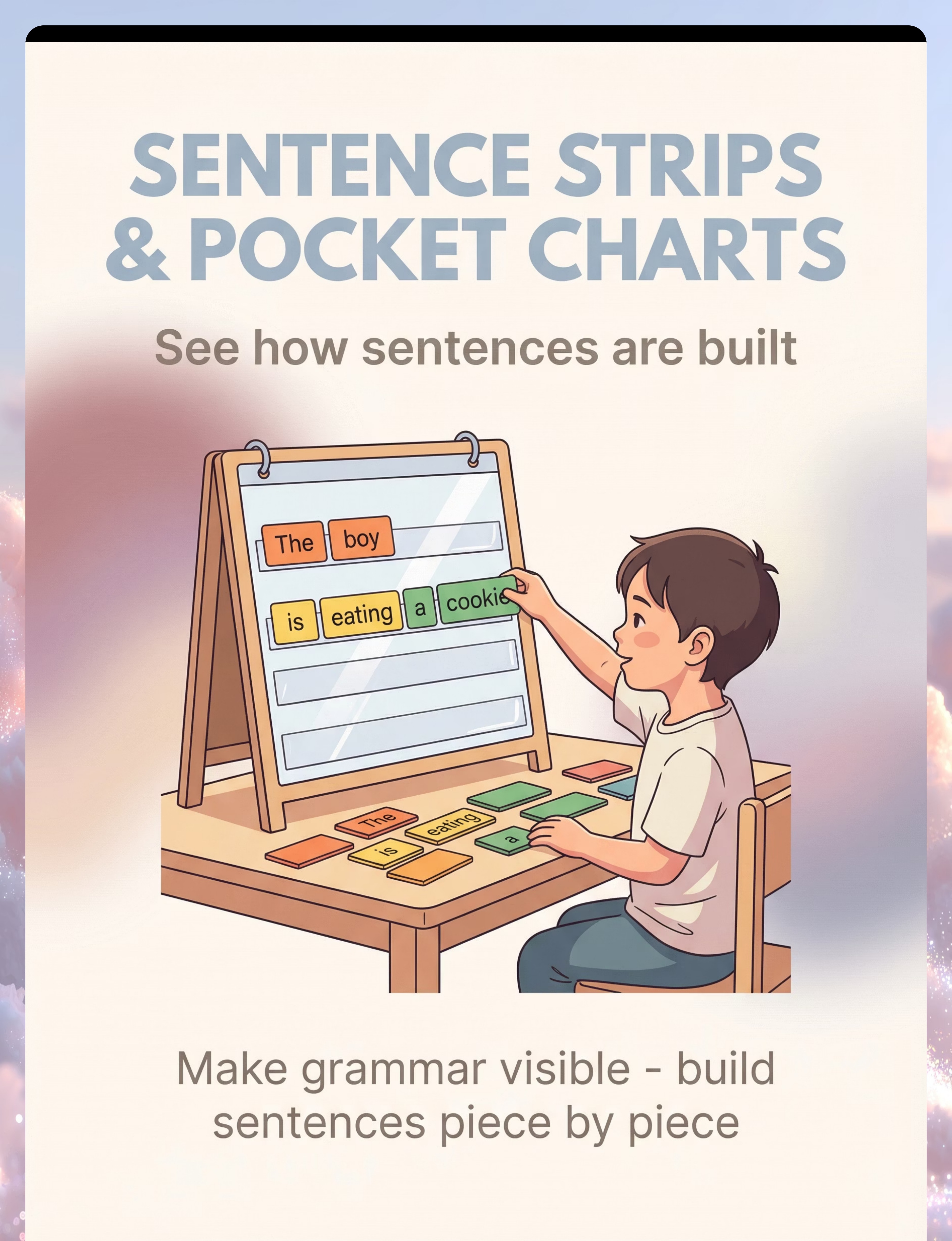
Material 1: Sentence Building Strips & Pocket Charts
Language Expansion & Vocabulary Building
What It Does
Makes sentence structure visible and tangible. Pocket charts hold word cards in left-to-right sequence. Color-coded strips indicate different parts of speech — nouns in one color, verbs in another, adjectives in a third. Children physically place words in order, experiencing sentence construction as a hands-on activity.
The visual-spatial layout supports working memory, and physical manipulation engages motor learning alongside language learning.
"Sentences that can be seen can be understood. Physical construction teaches what verbal instruction can't — the left-to-right, piece-by-piece logic of how language works."
Price Range: $5–$25 | Search: "sentence building pocket chart" | DIY available — see Card 11
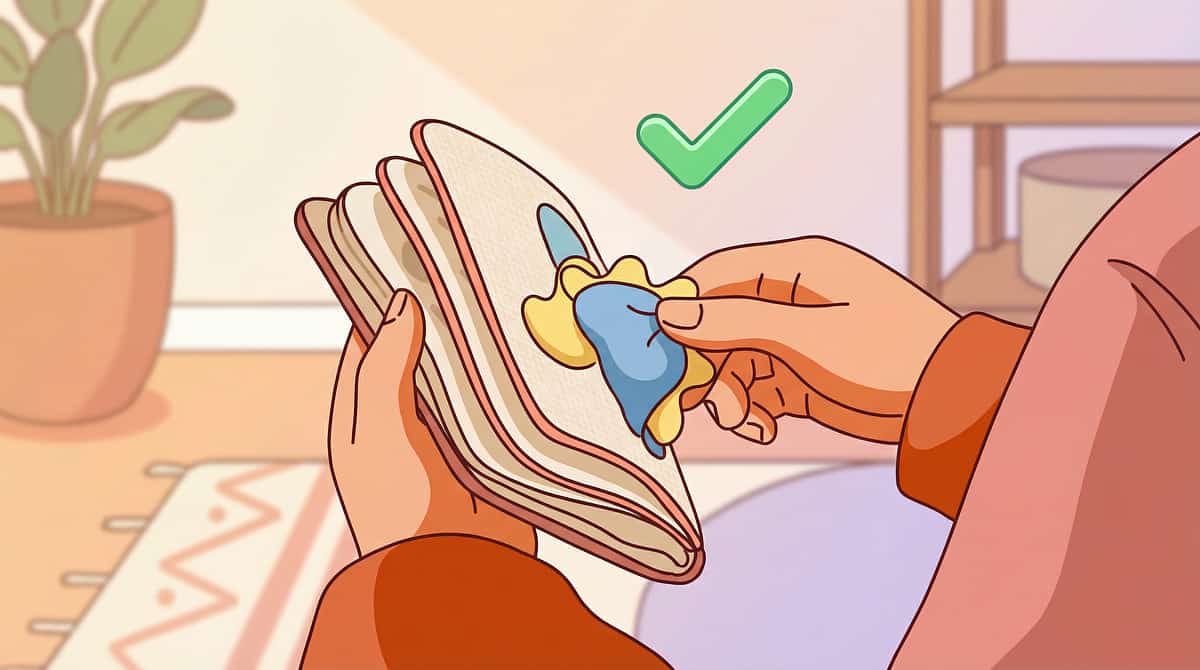
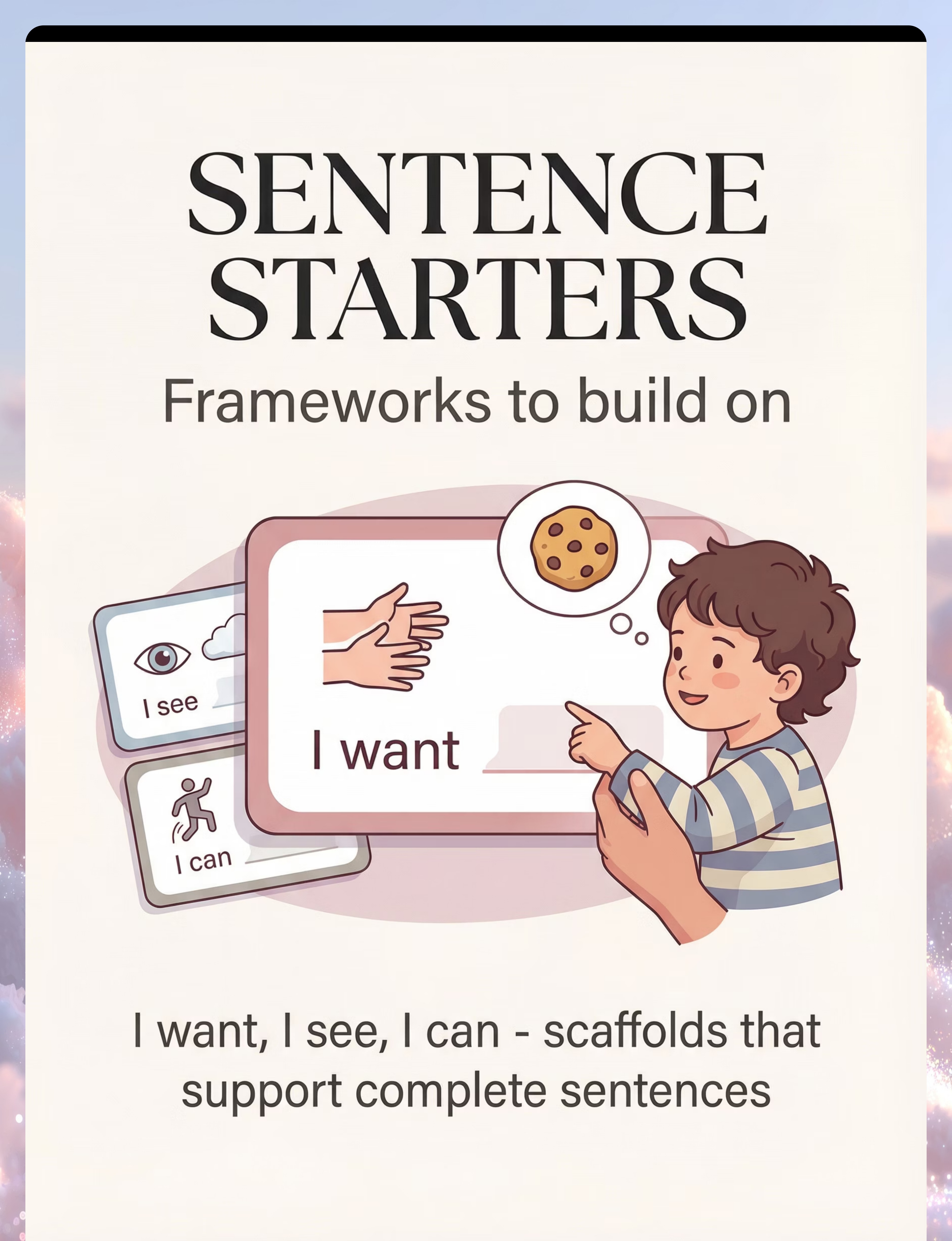
Material 2: Visual Sentence Starters & Carrier Phrases
Conversation & Visual Supports
What It Does
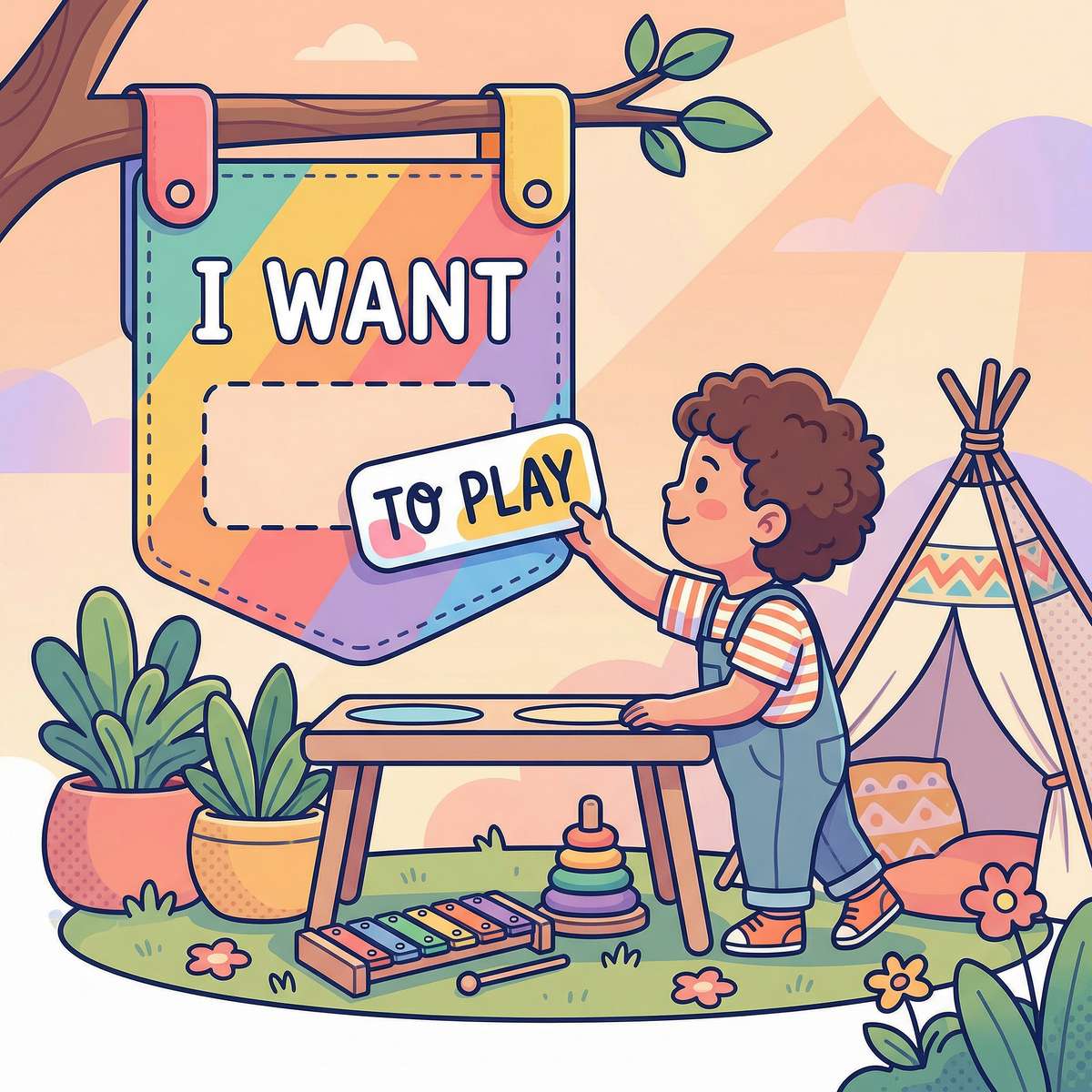
Provides the beginning framework children complete, reducing the cognitive load of constructing entire sentences from scratch. Carrier phrases like "I want ___," "I see ___," "The ___ is ___," or "I can ___" give children a grammatical scaffold.
With the structure provided, children only need to add the variable content. Over time, these scaffolds become internalized — the child begins generating the carrier phrase themselves before anyone prompts them.
"When the scaffold is provided, the child can focus on content rather than struggling with structure. Success with supported sentences builds toward independent production."
Price Range: $3–$15 | Search: "sentence starter cards children" | DIY available — see Card 11

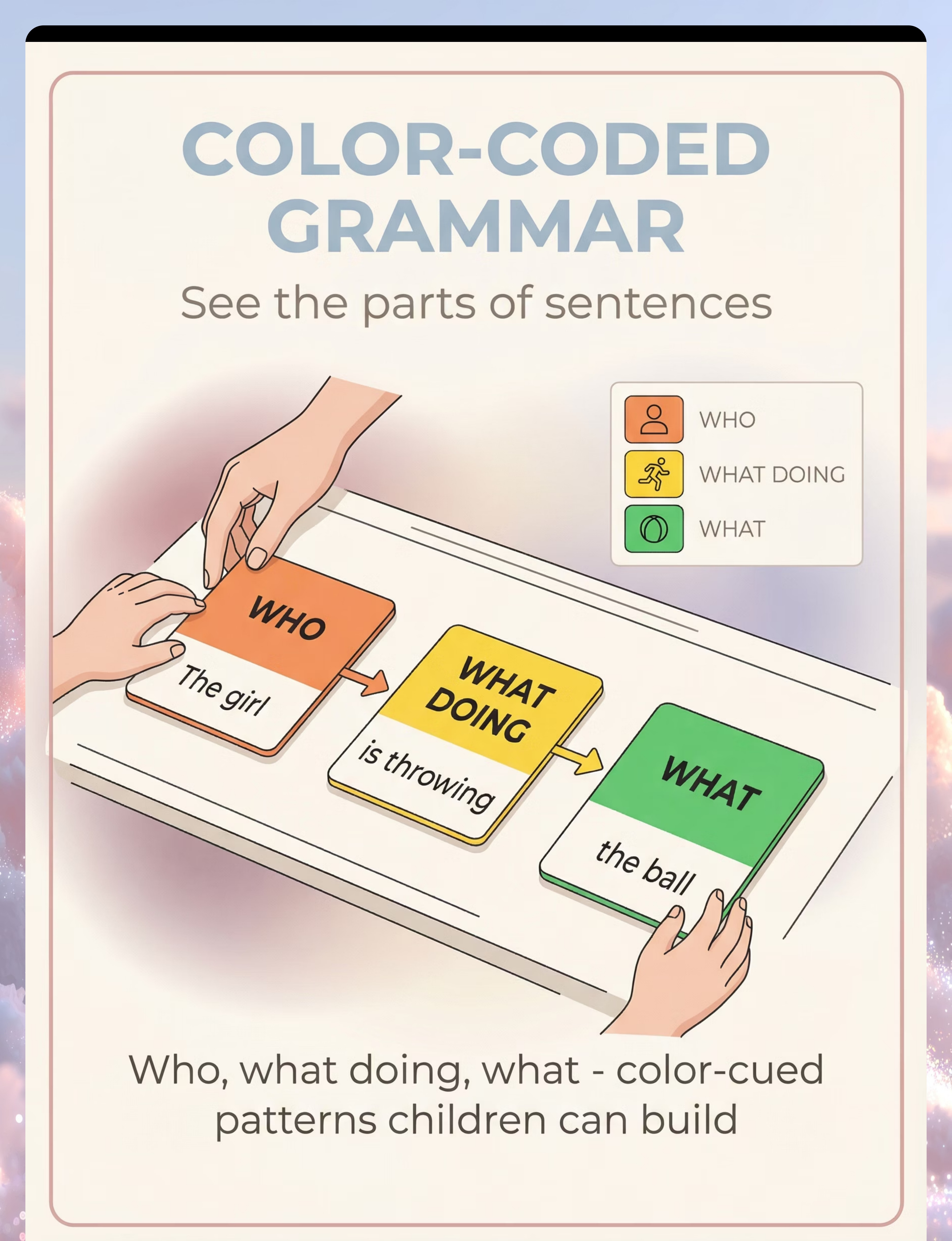
Material 3: Color-Coded Grammar Systems
Colorful Semantics
Shape Coding
🟠 Orange — WHO
Subject of the sentence — the person or animal performing the action
🟡 Yellow — WHAT DOING
Verb — the action or state being performed
🟢 Green — WHAT
Object — what or who the action is directed at
This visual-spatial organization makes the abstract structure of grammar concrete and memorable. Research by Bryan (1997) and Ebbels (2007) demonstrates significant effectiveness. Children learn to build sentences by following the color sequence. Grammar is invisible until it's color-coded.
Consider color blindness when selecting color systems. Shape coding (different shapes per grammatical role) can supplement color for accessibility.

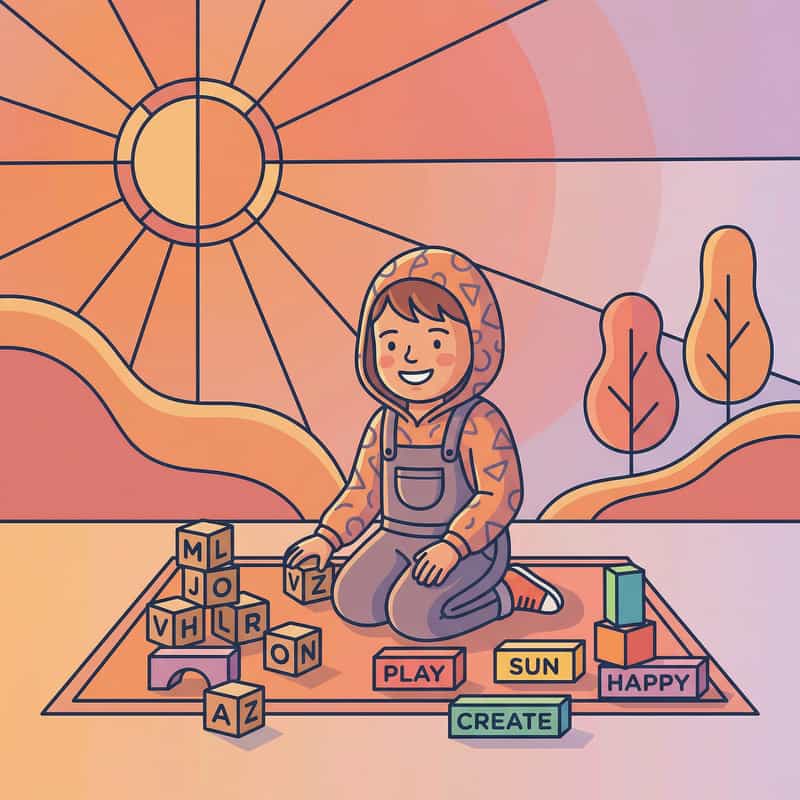
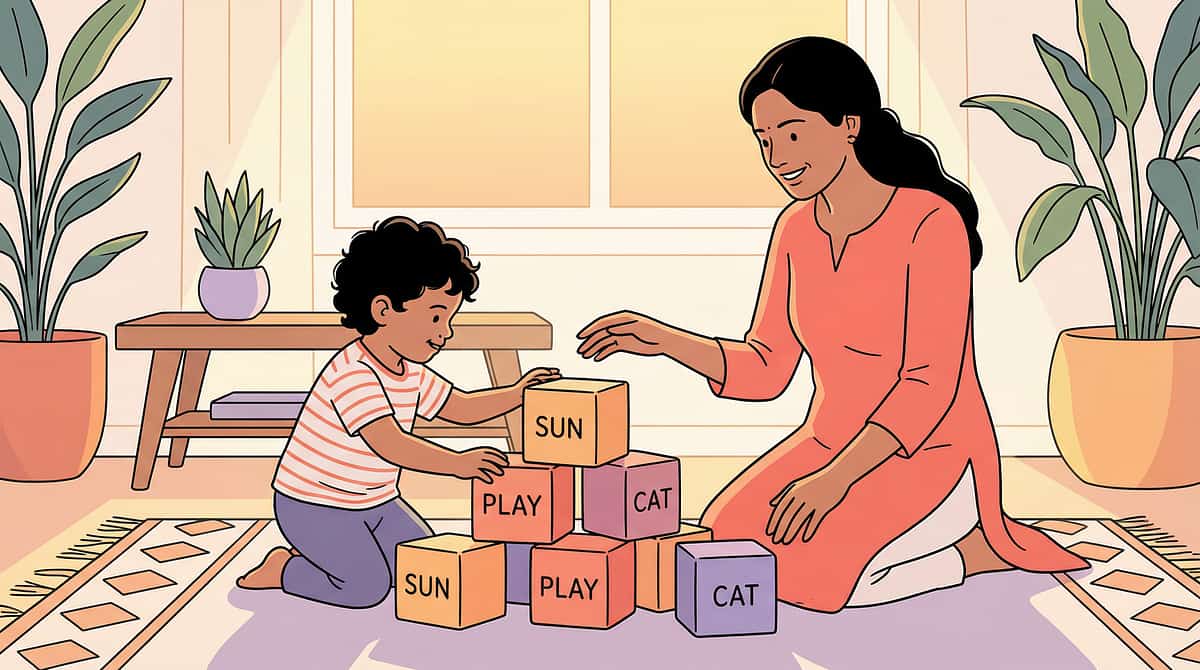
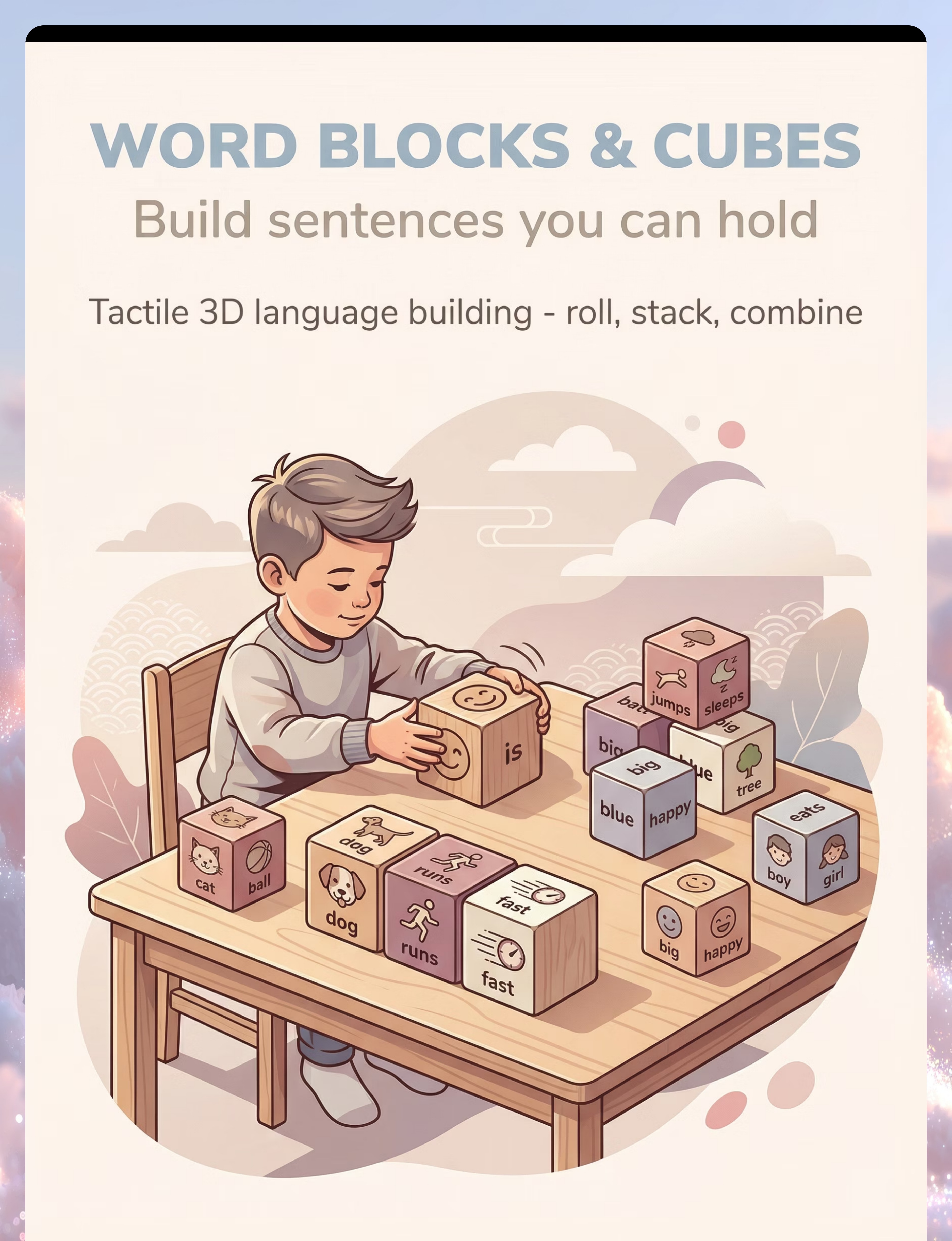
Material 4: Manipulative Word Blocks & Cubes
Language Expansion & Vocabulary Building
What It Does
Adds three-dimensional, tactile engagement to sentence building. Unlike flat cards, blocks can be physically stacked, lined up, and manipulated — engaging kinesthetic learning alongside visual and auditory processing.
Children roll cubes to generate sentence elements randomly (subject cube, action cube, object cube), then combine them into sentences. The game-like quality significantly increases engagement — especially for children who resist structured practice.
"When language becomes something to hold and move, learning engages the whole body. Three-dimensional construction builds three-dimensional understanding."
Ensure blocks are age-appropriate size — no choking hazards. Supervise use with children under 3.
Price Range: $7–$25 | Search: "sentence building blocks children"

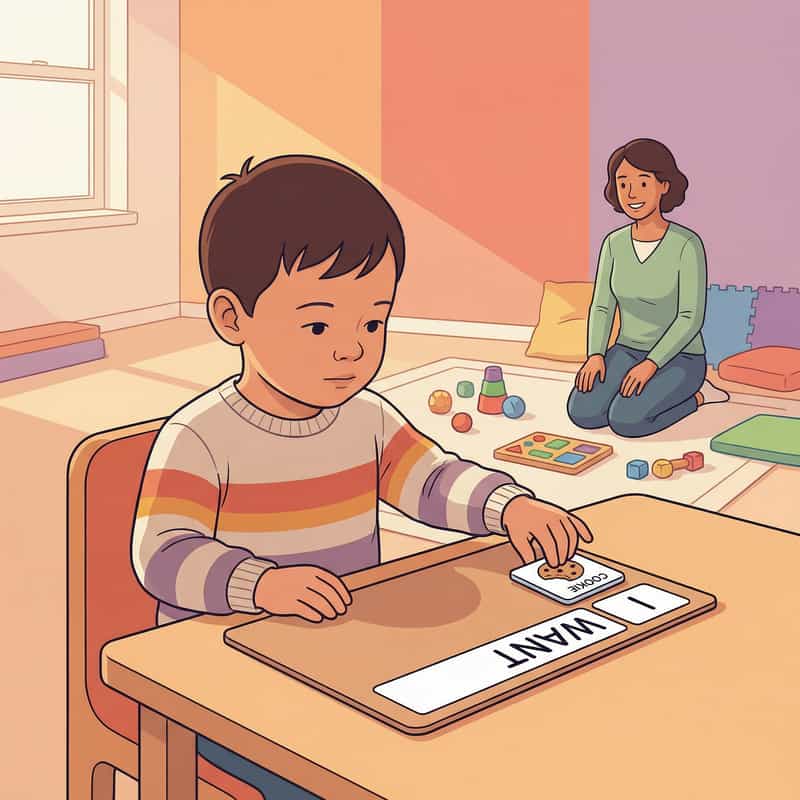
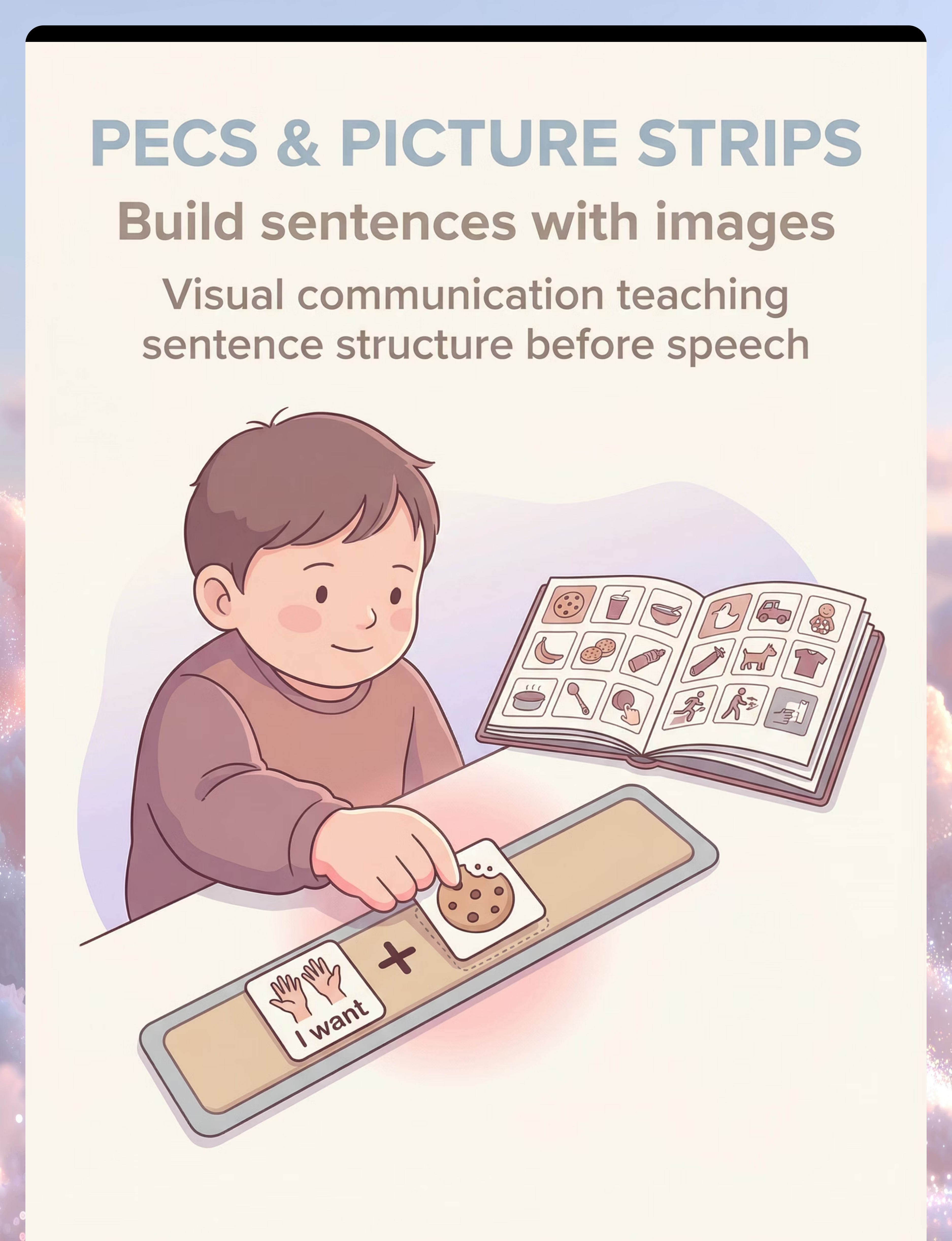
Material 5: PECS & Picture Sentence Strips
AAC & Communication Systems
What It Does
Uses images to represent words, allowing children to construct sentences visually before or instead of verbalizing. The child selects picture symbols and arranges them on a sentence strip. This reduces verbal production demand while teaching sentence structure.
PECS Phase IV specifically targets sentence construction. As verbal skills develop, the picture strip serves as a visual prompt for spoken production — a powerful bridge between understanding and expression.
"Pictures can carry grammatical structure just as words do. Children who struggle to speak sentences can learn to build them visually — and that learning transfers to verbal production."
Small PECS pieces are choking hazards for young children. Supervise closely. Ensure Velcro is securely attached. Initial PECS training should ideally be guided by a trained SLP or BCBA.
Price Range: $15–$80 | Search: "PECS communication system"
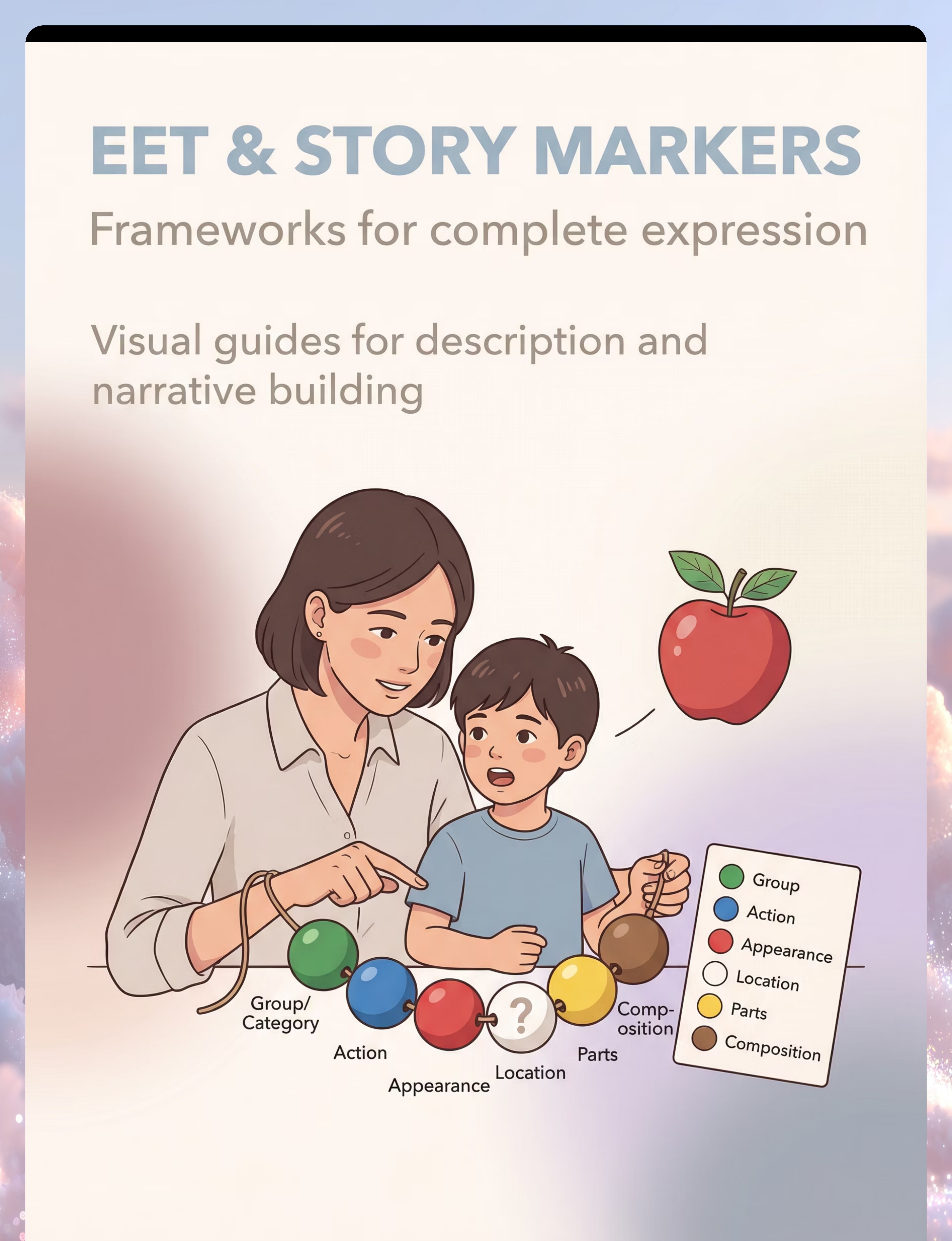
Material 6: Expanding Expression Tool (EET) & Story Grammar Markers
Language Expansion & Vocabulary Building
What It Does
The EET uses a visual strand of colored beads, each representing a semantic feature: group, action, appearance, location, parts, composition, association. Children describe objects by addressing each bead systematically, expanding single-word labels into multi-element sentences.
Story Grammar Markers use visual icons for narrative elements (character, setting, problem, feeling, action, ending) — bridging from sentences to full stories.
"Complete expression requires addressing multiple elements. When a visual tool sequences these elements, children learn to build sentences that don't stop after one word."
Beads can be choking hazards. Ensure appropriate size and supervision. Consider alternative visuals (laminated cards) for children under 3.
Price Range: $12–$50 | Search: "expanding expression tool therapy" | DIY option: thread colored beads onto a shoelace, total cost under $3
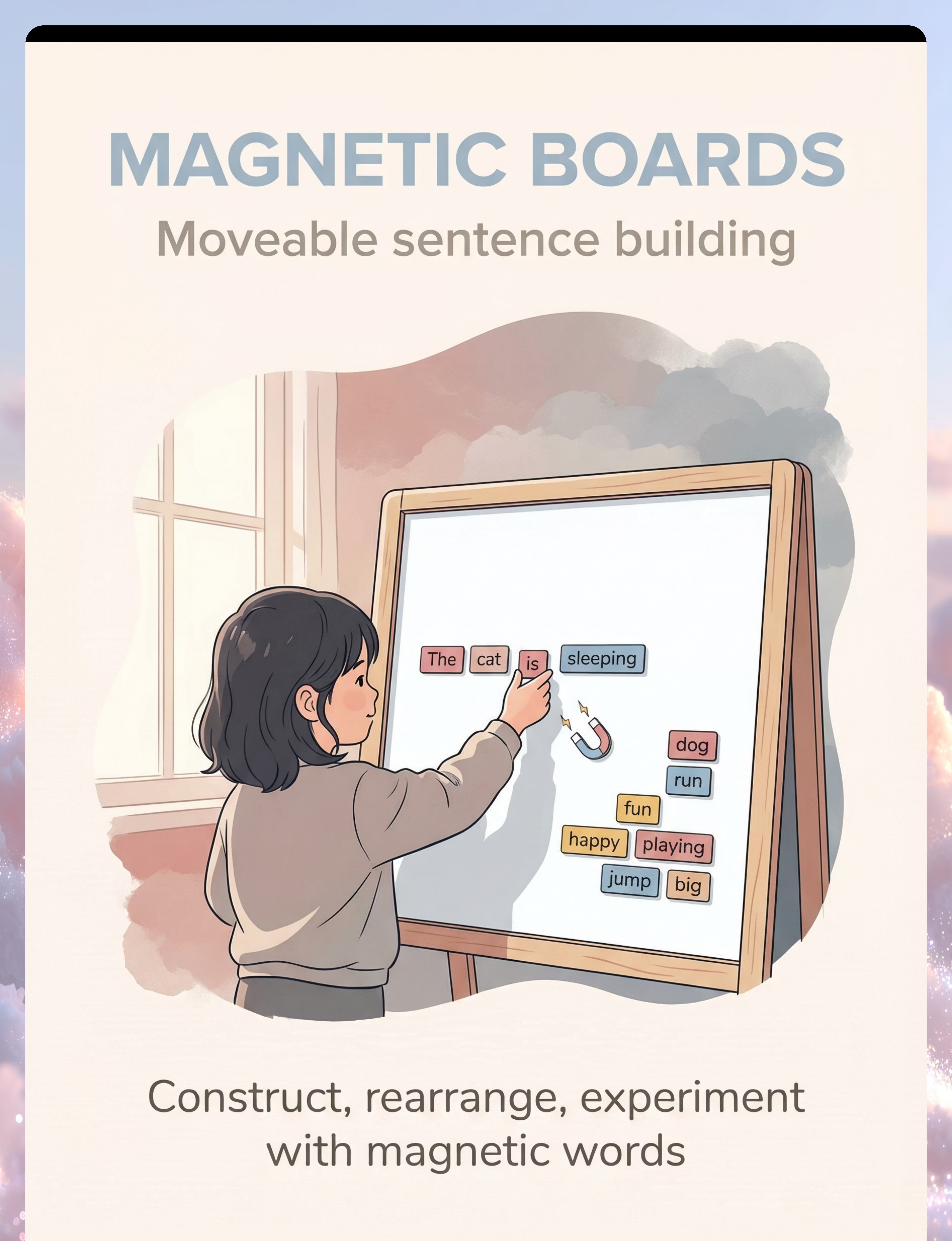
Material 7: Magnetic Sentence Building Boards
Language Expansion & Vocabulary Building

What It Does
Combines the tactile satisfaction of manipulating pieces with the flexibility of rearranging words on a vertical or horizontal surface. Word magnets can be moved, combined, and reorganized easily — and can be used on refrigerators, whiteboards, or portable surfaces, making sentence building accessible throughout the day.
The magnetic connection provides subtle tactile feedback. When sentences can be built, rebuilt, and rearranged, language becomes a creative construction activity — not a test of memory.
Important: Small magnets can be dangerous if swallowed — multiple magnets can attract through intestinal walls causing serious injury. Use only LARGE, thick magnets. Supervise closely with young children.
Price Range: $8–$35 | Search: "magnetic sentence building set" | Your refrigerator is already a sentence building board
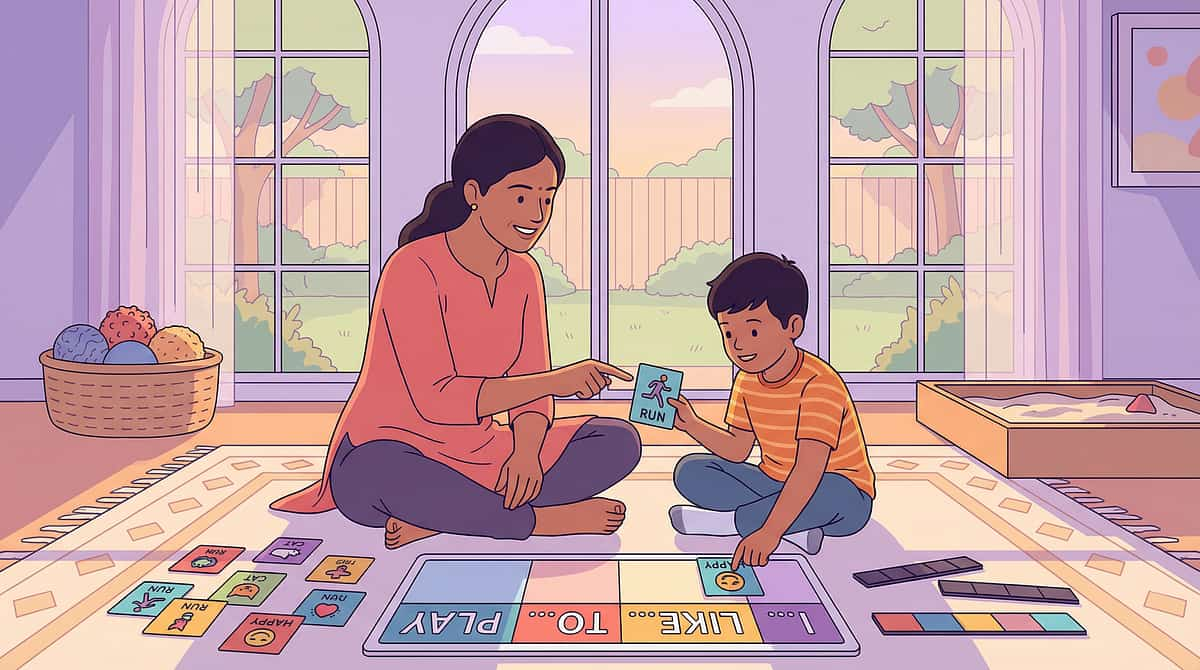
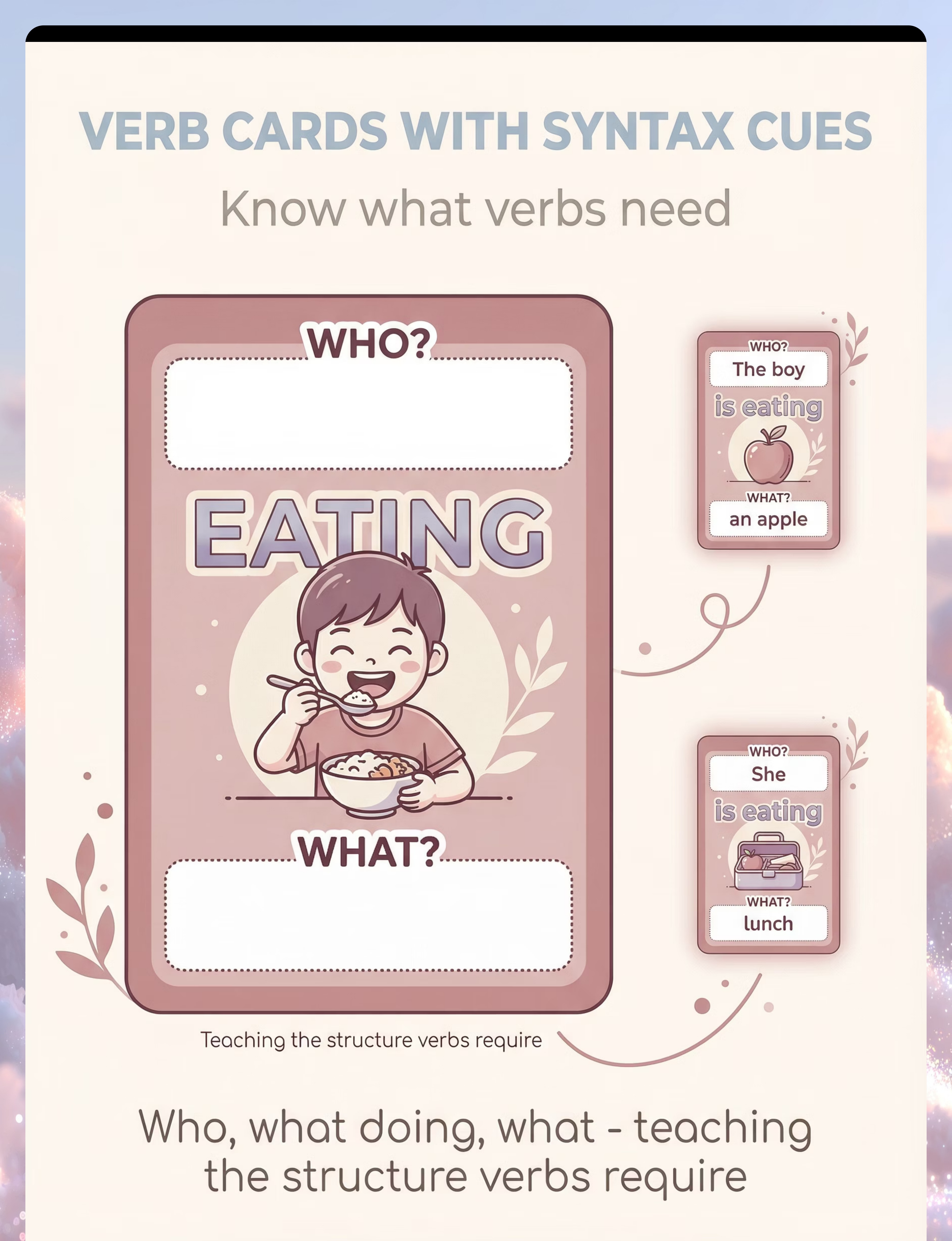
Material 8: Verb Cards with Syntax Cues
Language Expansion & Vocabulary Building
What It Does
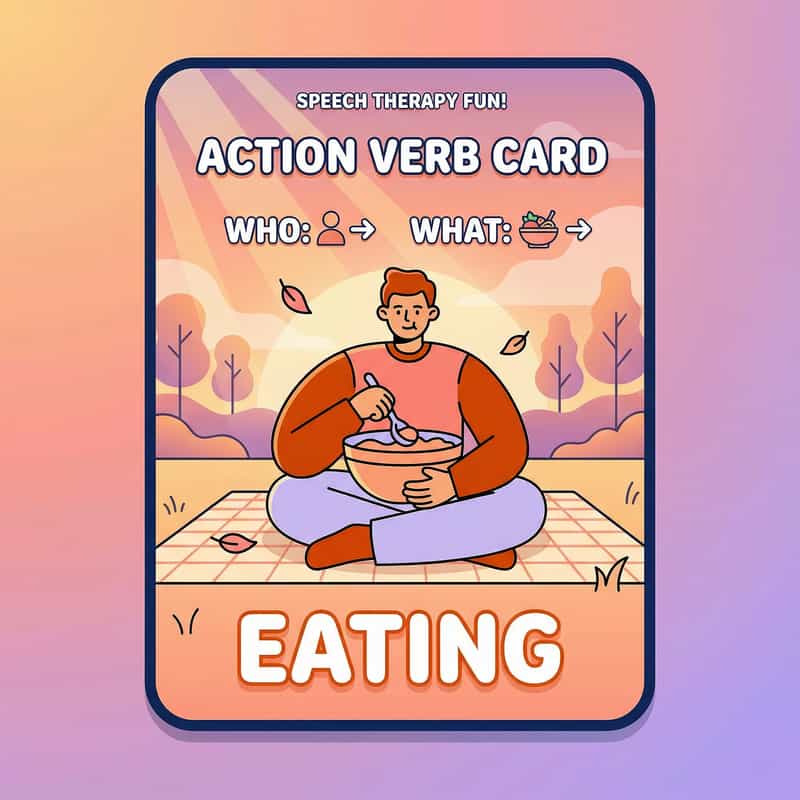
Verbs are the engine of sentences — they determine what other elements are needed. Verb cards with embedded syntax cues show children what each verb "requires." Visual cues on the card show: "someone EATING something" with spaces indicating subject and object.
This teaches verb argument structure — the understanding that an eating event needs a WHO and a WHAT. Action cards with tense markers teach verb conjugation, adding a crucial layer of grammatical knowledge.
"Verbs don't stand alone — they need partners. When children understand what each action word requires, they build sentences that don't leave partners missing."
Price Range: $5–$20 | Search: "action verb cards speech therapy" | DIY: draw action images, add "who?" and "what?" boxes with arrows

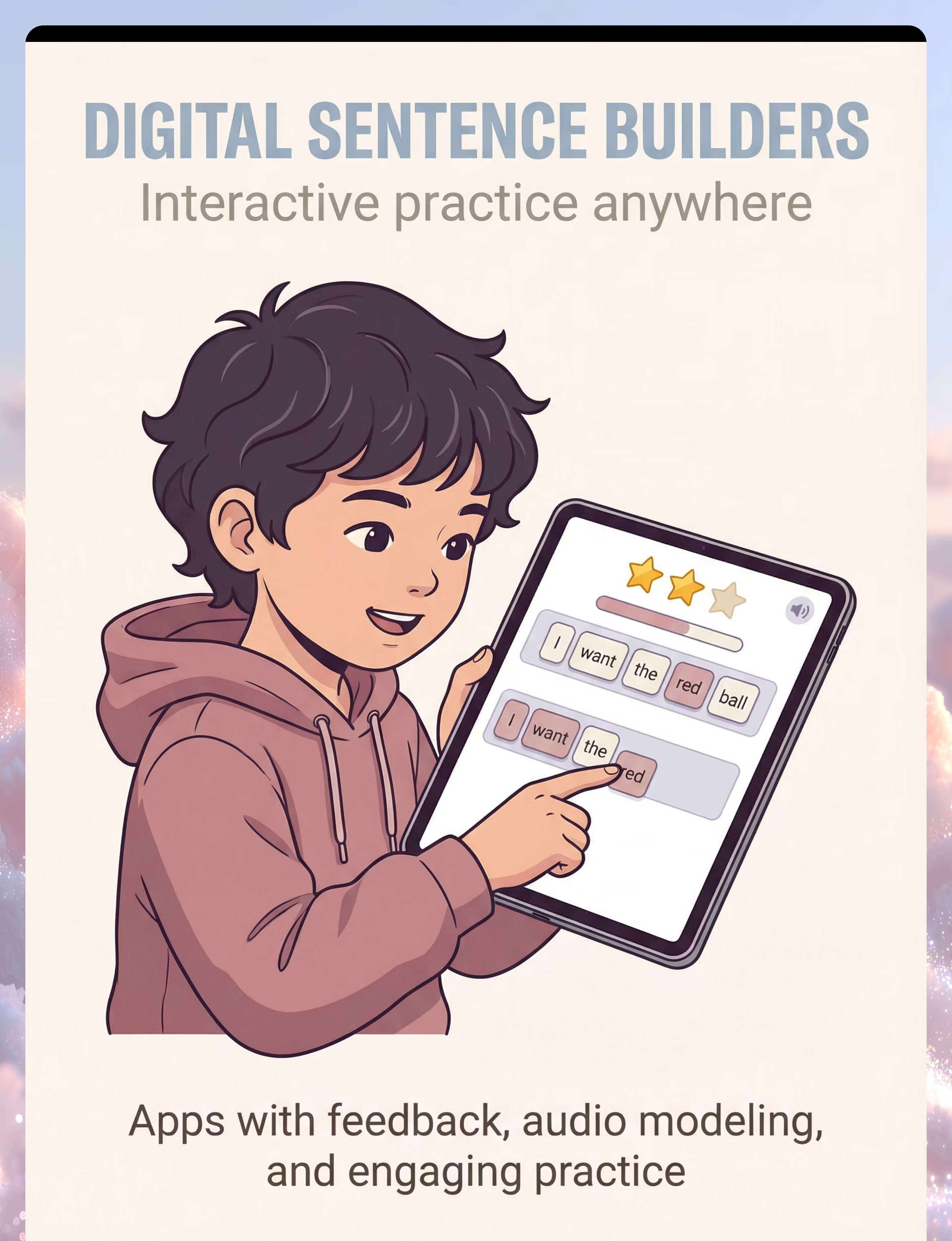
Material 9: Interactive Apps & Digital Sentence Builders
Conversation & Visual Supports
What It Does
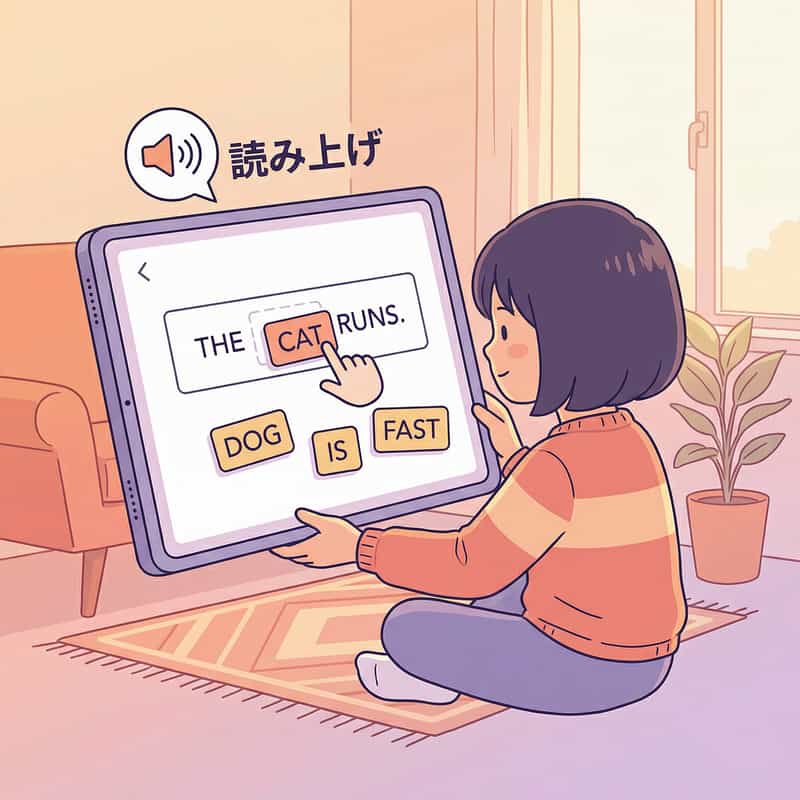
Brings sentence construction into the medium many children find most engaging. Well-designed apps provide visual sentence building with drag-and-drop word assembly, immediate feedback, audio modeling of completed sentences, and gamified motivation. Children hear their constructed sentences read aloud, connecting visual structure to auditory output.
"When children find apps engaging, that engagement can serve language learning. The key is choosing apps that teach structure, not just vocabulary — and pairing digital practice with human conversation."
Monitor screen time. Digital tools supplement but do not replace human interaction for language development.
Recommended Apps: Sentence Builder (Mobile Education Store), Language Builder, TouchChat
Price: Free to $30/year | Search App Store/Google Play: "sentence builder app children"

DIY & Zero-Cost Alternatives
Not every family can order materials online. Every family can start this technique TODAY with household items. This is the WHO/UNICEF inclusion principle in action — the therapeutic principle is the same whether the card costs $20 or $0.20.
🛒 Buy This | 🔨 Make This at Home | |
Pocket chart set ($10–$25) | Clear plastic shoe organizer hung on wall — each pocket holds a word card | |
Sentence starter cards ($3–$15) | Index cards + marker: write "I want ___", "I see ___" with hand-drawn icons. Laminate with clear tape. | |
Colorful Semantics kit ($15–$35) | Orange/yellow/green sticky notes or colored paper cut into cards. Consistent colors, unlimited use. | |
Word cubes ($7–$25) | Cover wooden blocks or cardboard dice with paper. Write or glue pictures on each face. | |
PECS starter kit ($15–$80) | Print or draw pictures on cardstock. Attach small Velcro dots. Make sentence strip from cardboard. | |
EET bead strand ($12–$50) | Thread colored beads onto a shoelace — one per category. Total cost: under $3. | |
Magnetic word set ($8–$35) | Write words on paper, attach to refrigerator with magnets. Your fridge IS a sentence board. | |
Verb card set ($5–$20) | Draw or print action images. Add "who?" and "what?" boxes with arrows. Laminate with clear tape. | |
Premium app subscription ($30/year) | Many free apps exist — Sentence Builder Lite, Language Builder Free |
The brain doesn't distinguish between purchased and handmade scaffolds. What matters is consistency of use, not cost of materials.

🔴🟡🟢 Safety First — Before You Begin
Read this card completely before your first session.
🔴 Do NOT Proceed If:
Child is in acute distress, meltdown, or severe dysregulation. Child is ill, feverish, or in pain. Any materials have sharp edges or small loose pieces accessible to a child who mouths objects. Child had a seizure in the past 24 hours — consult physician first.
🟡 Modify the Session If:
Child is tired, hungry, or overstimulated — shorten to 5 minutes. Child is resistant — offer choice between two materials. Child shows frustration signs — reduce difficulty immediately. Success must always be achievable.
🟢 Proceed When:
Child is fed, rested, and regulated. Environment is quiet and free from competing stimulation. Materials are prepared before the child sits down. YOU are calm — your emotional state transfers to your child.
⚠️ Material Safety: Word blocks, magnetic pieces, small cards, and EET beads are ALL choking hazards for children who mouth objects. Use only age-appropriate sizes. Multiple small magnets are DANGEROUS if swallowed — they can attract through intestinal walls. Use only large, thick magnets and never leave unattended.
🛑Stop immediately and consult a professional if your child becomes severely distressed during sessions consistently (3+ sessions), shows regression in language skills, or develops new avoidance behaviors around communication.
📞FREE National Autism Helpline: 9100 181 181 (16+ languages, 24×7) | 🌐 pinnacleblooms.org
Set Up Your Space
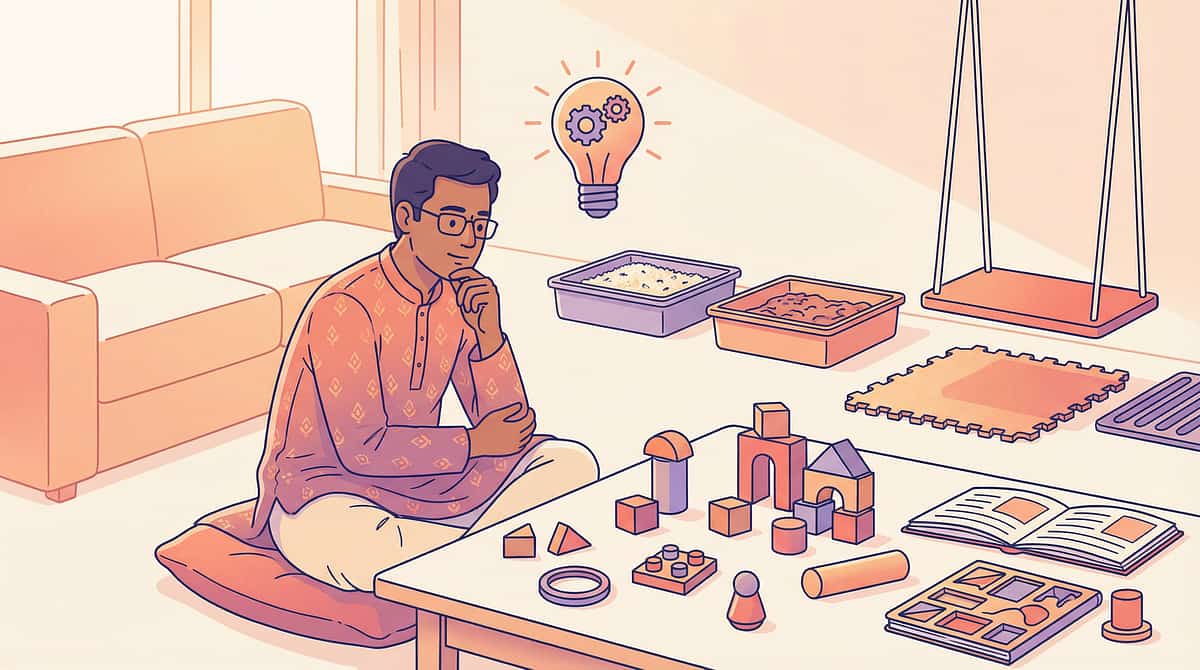
Spatial precision prevents 80% of session failures. Set up everything before your child sits down.
Child's Position
Seated at table or on floor mat. Chair allows feet flat on floor. Child faces the sentence building surface (table, board, or pocket chart).
Parent's Position
Seated at 90-degree angle to child — not across, but beside. This allows you to see what the child sees and model from the same visual perspective. You are a co-builder, not an examiner.
Materials Position
Organized BEFORE the child sits. Word cards sorted by category/color. Sentence strip at child's eye level. Only materials for this session are visible — everything else stored away.
Remove Distractions
Turn off television. Silence phones. Remove competing toys. Remove siblings' materials from view. The space should say "this is our sentence building time."
💡 Lighting
Bright enough to see card text. Natural light preferred.
🔊 Sound
Quiet. No background music — language processing requires auditory bandwidth.
⏱️ Timer
Start with 5 minutes. Build gradually toward 15–20 minutes.
💧 Water
Always available. Language work is cognitively demanding.
Is Your Child Ready? — 60-Second Readiness Check
The best session is one that starts right. Run through this checklist before every session.
✅ Body Check
Child is fed (not hungry), rested (not exhausted), and healthy (not ill)? → YES: Proceed | NO: Postpone to next available window
✅ Regulation Check
Child is in a calm-alert state — not in meltdown, not hyperactive, not withdrawn? → YES: Proceed | NO: Do 5 minutes of calming activity first (deep pressure, quiet music), then reassess
✅ Attention Check
Child can sit for at least 2–3 minutes with a preferred activity? → YES: Proceed | NO: Modify — use floor-based setup; plan 5-minute micro-session
✅ Motivation Check
Child shows some interest when you bring out materials? → YES: Proceed | NO: Pair materials with preferred item first
🟢 All YES
Full session (10–20 min). Proceed to Step 1: The Invitation.
🟡 1–2 NO
Modified session (5–10 min). Simplify to 1 material, 3–5 sentences.
🔴 3+ NO
Postpone. Do a calming/connecting activity. Try again later today.
"One successful 5-minute session is worth more than a failed 20-minute attempt."

Step 1 — The Invitation
⏱️ 30–60 seconds
Every protocol begins with an invitation, not a command. Bring out ONE material with an air of playful discovery — not like a test, like a game.
What to Say
"Hey [child's name]! Look what we have today! These are our sentence cards. We're going to build sentences together — like building blocks, but with words! Want to help me build something?"
Body Language
Lean in slightly. Smile. Gesture toward materials. Touch the materials yourself first. Keep your voice light and playful — not instructional.
Acceptance Looks Like:
- Child approaches the materials
- Child touches or picks up a piece
- Child makes eye contact with you or the materials
- Child sits in the designated spot
- Child says a word or points
If There Is Resistance:
❌ Child turns away → Place one card near their current activity. Wait 30 seconds. Don't push.
❌ Child says "no" → "That's okay! I'll build one myself." Start building and narrate enthusiastically. The child often joins within 1–2 minutes.
❌ Child throws materials → Calmly pick up. "We'll try later." No negative reaction.

Step 2 — The Engagement
⏱️ 1–3 minutes
Deepen the interaction by introducing the sentence building concept with a simple demonstration. Now that the child is at the table and interested, demonstrate using your chosen material.
Lay Out the Cards
Place three color-coded cards face up: ORANGE (WHO), YELLOW (WHAT DOING), GREEN (WHAT). Say: "Watch me build a sentence!"
Build It Out Loud
Pick up ORANGE: "The boy..." [place left]. YELLOW: "...is eating..." [middle]. GREEN: "...a cookie!" [right]. Run your finger left to right: "The boy is eating a cookie! I built a sentence!"
Invite the Child
"Now YOUR turn! Pick a WHO card — the orange one!" Slow pace. Each card placed deliberately with a pause. Use the same color system consistently — always, every session.
The MOMENT the child touches a card or makes any attempt to participate: "Great job! You picked the [color] card!" — Immediate, specific, enthusiastic reinforcement.

Step 3 — The Therapeutic Action (Core Session)
⏱️ 5–10 minutes
This is the main event — where sentences get built. Start at the level matching your child right now.
Level 1: Two-Word Combinations
For children currently using single words. Target: Agent + Action ("Daddy eats") or Action + Object ("Want cookie"). Lay out 2 color categories. Offer child a choice between 2 cards. Child selects or you guide hand-over-hand. Place, combine, and model: "Boy eating!" Wait 3 seconds for any verbalization — celebrate any approximation.
Level 2: Simple Sentences
For children producing 2-word combinations. Target: Subject + Verb + Object ("The boy is eating a cookie"). Guide child through all 3 color categories. Model the complete sentence while pointing. Add grammatical function words: "the," "is," "a" on grey/white cards. Build toward: "The + [who] + is + [doing] + a/the + [what]."
Level 3: Expanded Sentences
For children producing simple sentences. Start with a Level 2 sentence, then ask expansion questions: "What kind of cookie? Where is he eating?" Child adds descriptor cards (RED for describing) and location cards (BLUE for where). Build toward: "The big boy is eating a chocolate cookie at the table."
Common error: Going too fast. Slow down — each card gets 3–5 seconds of attention. Never correct by saying "wrong." Say: "Let's check — the boy comes first!" Re-model alongside.

Step 4 — Repeat & Vary
⏱️ 3–5 minutes
Target: 5–10 sentences per session
3 good reps are worth more than 10 forced reps. Keep the structure — change the content to keep it fresh and engaging.
Swap the Characters
"The boy is eating a cookie" → "The girl is eating a cookie" → "Mama is eating a cookie." Silly sentences with unexpected subjects increase engagement.
Swap the Actions
"The boy is eating a cookie" → "The boy is holding a cookie" → "The boy is dropping a cookie!" Keep subject and object stable while varying the verb.
Make It Personal
Use family members' names and daily activities. "Papa is cooking dinner." "Baby is sleeping on the bed." Personal relevance dramatically increases motivation and generalization.
Make It Silly
"The dog is driving a car!" Nonsensical sentences are powerful. Children who resist structured practice will engage with absurdity — and the grammatical structure is still being practiced.
Watch for satiation indicators: decreased response speed, looking away, body tension increasing, or direct communication of "all done." When you see these signs → move immediately to Step 5.

Step 5 — Reinforce & Celebrate
⏱️ 1–2 minutes
Celebrate the attempt, not just the success. Reinforcement must be immediate (within 3 seconds), specific, enthusiastic, and consistent across every session.
Reinforcement Scripts
For card placement: "You built a sentence! Look at that — [read the sentence aloud while pointing]. YOU made that sentence!"
For verbalization attempt: "You said it! I heard you say '[child's approximation]'! That was a sentence! Amazing!"
For effort when struggling: "I know that was tricky. You tried, and trying is how we learn. Let's celebrate trying!"
Natural Reinforcement
The most powerful reinforcement is functional success. When the child builds "I want cookie" and you immediately give them a cookie — the sentence worked. Language becomes a tool for getting what they want. This is the ultimate reinforcement.
Token Economy
If your child responds to token systems: award one token per sentence built. After a set number of tokens, child earns a preferred activity. Visual token board should be visible during the session.
Step 6 — The Cool-Down
⏱️ 1–2 minutes
No session ends abruptly. A consistent closing ritual signals the end of "sentence time" and builds predictability — which supports future participation.
If the Child Resists Ending
This is a positive problem! "You love building sentences! That's wonderful. We'll do MORE tomorrow. Right now, we're going to [preferred activity]." Stick to the plan — consistency teaches that sessions have a beginning and an end.
If Transitions Are Difficult
Use a visual timer for the last 2 minutes of future sessions. Show "2 minutes left" → "1 minute left" → "All done" visual sequence. Countdown timers reduce transition difficulty significantly for most children.
Capture the Data — Right Now
⏱️ 60 seconds after session ends
60 seconds of data now saves hours of guessing later. Record these three data points within one minute of ending the session.
Sentences Built
How many sentences did your child build or help build today? Record the number.
Longest Sentence
What was the longest sentence produced, with or without support? Record the number of words.
Independence Level
Rate 1–5: (1) Full hand-over-hand guidance → (3) Verbal prompt only → (5) Independent sentence building without any prompting.
In Week 4, when you wonder "is this working?" — you'll have data. You'll see that in Week 1, your child built 3 sentences with full guidance (Level 1) and the longest was 2 words. By Week 4, they're building 8 sentences with verbal prompts (Level 3) and the longest is 5 words. Data makes invisible growth visible.
📊Record via: Quick note on your phone | Tally sheet on the refrigerator | GPT-OS® in-app tracker at pinnacleblooms.org/tracker

What If It Didn't Go as Planned?
Session abandonment is not failure — it's data. Here are seven common problems with evidence-based solutions.
"My child won't sit down to do this."
Why: The activity may feel like a "test." Fix: Start during a preferred activity. Build ONE sentence about what they're already doing. No table required initially.
"My child just throws the cards."
Why: Overwhelm or "I don't understand what you want." Fix: Reduce to 2 cards only. Build the sentence yourself. Hand ONE card directly to the child's hand and show exactly where it goes.
"My child builds the sentence but won't say it."
Why: Completely normal in early stages. The visual-structural learning is happening. Fix: Don't force verbal production. YOU say the sentence. Over time — sometimes weeks — the child will join in.
"My child puts cards in the wrong order."
Why: The grammatical rule hasn't been learned yet — which is exactly why you're doing this. Fix: Don't say "wrong." Re-model the correct order alongside. Color cues will help over time.
"My child only builds the same sentence over and over."
Why: Repetition reduces cognitive load — this is skill consolidation. Fix: Allow 3–4 repetitions, then gently swap ONE element: "This time, instead of cookie, let's pick a different food!"
"Skills don't generalize outside sessions."
Why: Generalization requires deliberate bridges. Fix: Use sentence starters in natural contexts throughout the day — meals, play, bath time. Carry a few visual cue cards in your bag.
"My child seemed to regress."
Why: Regression during skill acquisition is normal and often precedes a leap. Fix: Go back one level. If regression persists beyond 2 weeks, consult your SLP.
Adapt & Personalize
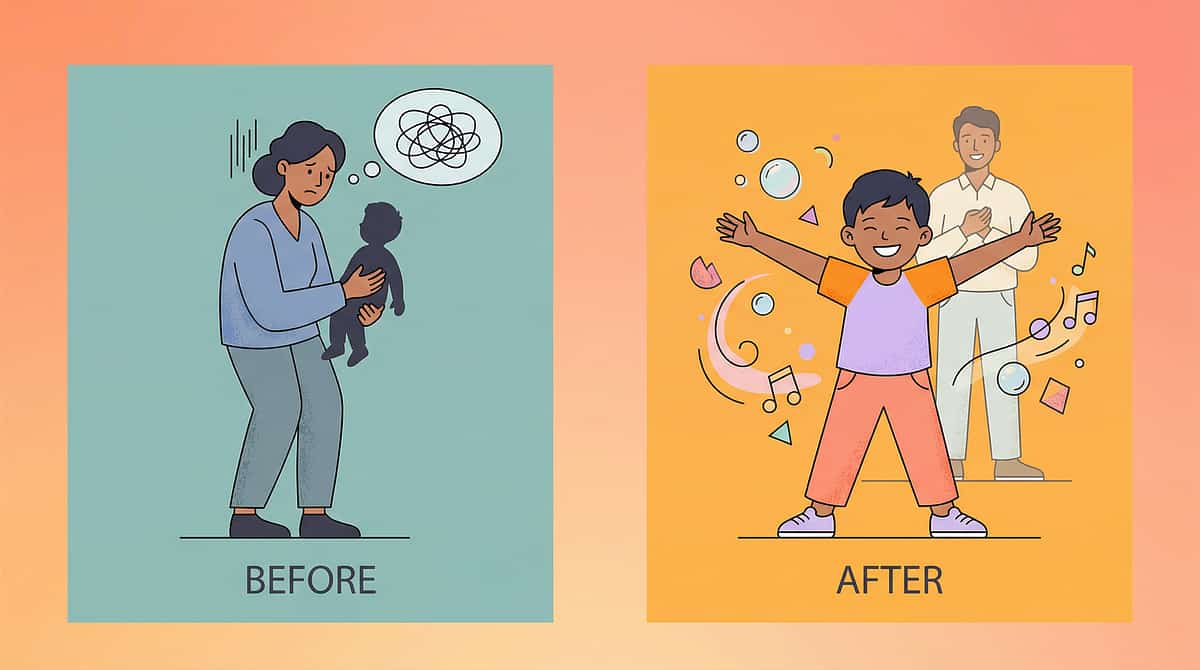
No two children are identical. These modifications ensure the technique meets your child where they are.
Child Who Mouths Everything
Use ONLY large, laminated flat cards. Pocket chart at eye level eliminates need to handle small pieces. Digital apps may be appropriate alternative. No blocks, magnets, or beads.
Child with Motor Difficulties
Larger cards with easier grip. Velcro instead of magnets (easier to place). Parent places cards with verbal direction from child. OT collaboration for adapted materials.
Child on the Autism Spectrum
Use special interests as vocabulary content. Predictable routine: same opening, closing, every session. Visual schedule showing session steps. Consider AAC integration if verbal production is very limited.
Kinesthetic Learner
Word blocks and cubes first. Full-body sentence building: tape word cards on the floor, child walks the sentence left to right. Magnetic boards for satisfying physical feedback.
Older Child (Ages 7–10)
Use age-appropriate vocabulary. Frame as "grammar detective" or "sentence architect." Digital sentence builders feel more age-appropriate. Connect to writing goals — "building sentences makes writing easier."
Age 2–3
5 minutes max
Age 3–5
5–10 minutes
Age 5–7
10–15 minutes
Age 7–10
15–20 minutes
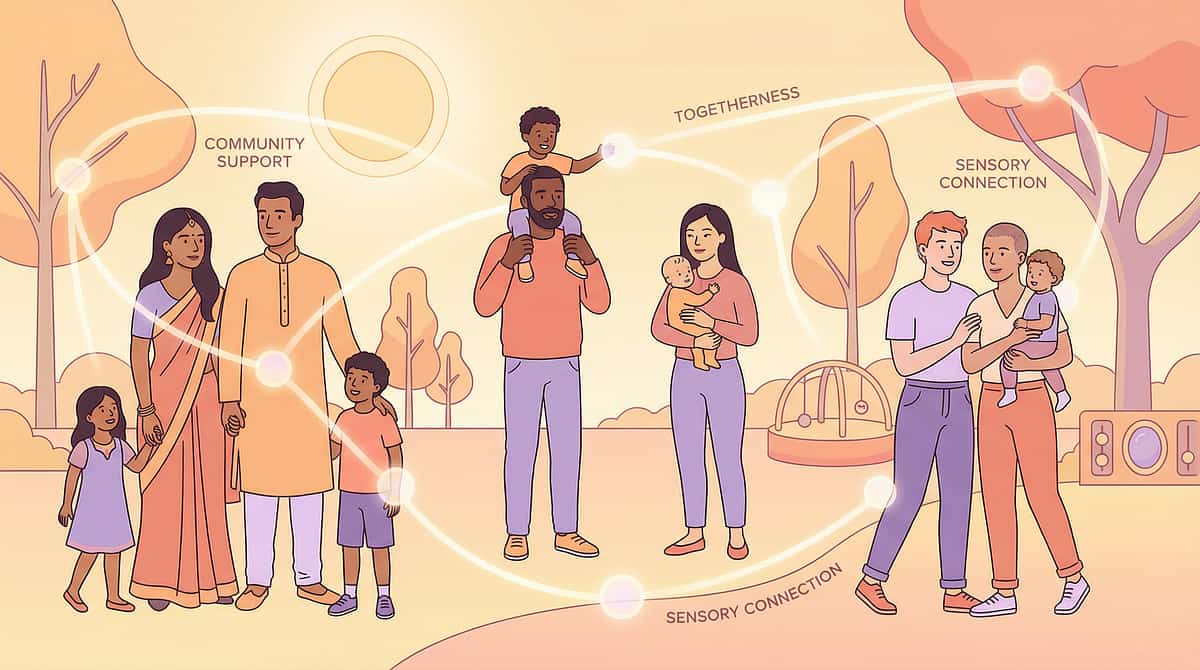
Week 1–2: What to Expect
In the first two weeks, the most important thing is building tolerance and familiarity. If your child sits, looks, touches, and tries — Week 1–2 is a success. The foundation is being laid.
✅ What You May See
- Increased tolerance for the activity (sits longer, less resistance)
- Emerging interest in the materials (reaches for cards, sorts by color)
- Familiarization with the routine (knows what happens next)
- Imitation of your sentence reading (mouths along, echoes words)
- Reduction in frustration around the activity
❌ What You Will Probably Not See Yet
- Independent sentence building
- Spontaneous sentence use in daily life
- Dramatic increase in sentence length
- Consistent verbalization of built sentences
This is normal. Neural pathway formation takes repetition. If your child tolerates the activity for 2 minutes longer this week than last week — that is real, measurable progress.
"Is this working? Am I doing it right?" These thoughts are universal in Week 1–2. Stay the course. The data you're collecting will answer these questions in Week 4. Trust the process.
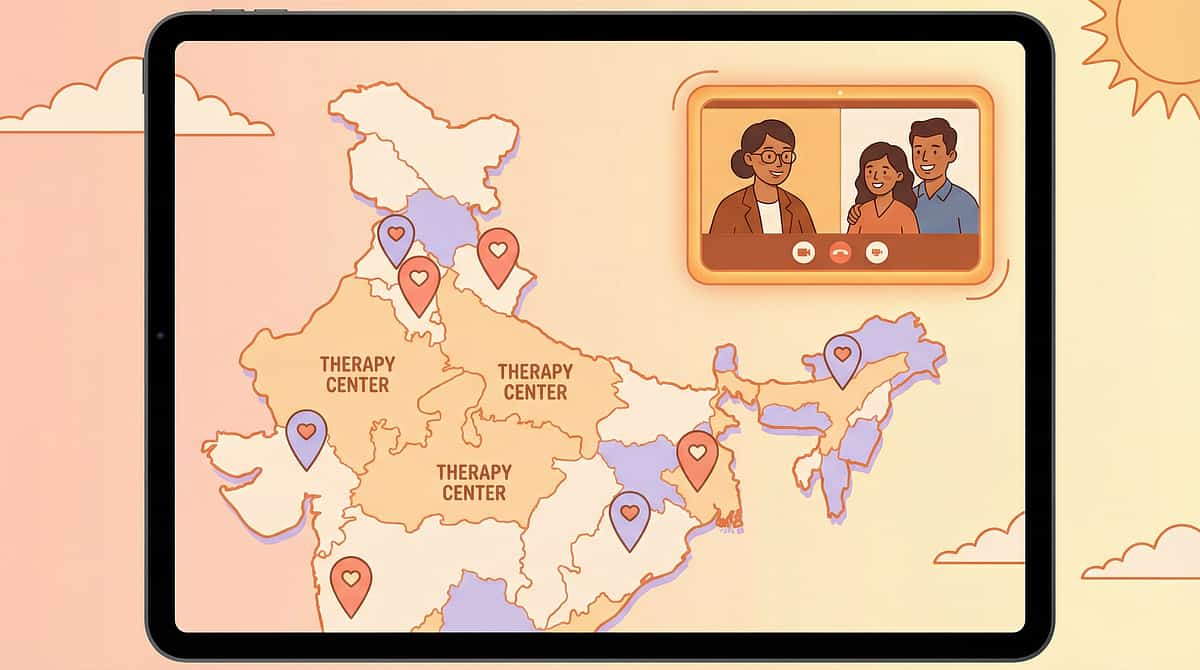
Week 3–4: Consolidation Signs
By Week 3–4, you should start seeing evidence that the technique is taking root. Look for these consolidation indicators:
Anticipation
Child goes to the table, asks for cards, or shows excitement when they see the materials being prepared — without any prompting from you.
Self-Monitoring Emerging
Child begins correcting their own card placement. Child protests when you model an incorrect sentence ("No! Boy eating, not eating boy!") — this is a huge sign of internalization.
Sentence Length Increasing
Average sentence length increases by 1–2 words. Child occasionally verbalizes parts of built sentences spontaneously.
Generalization Seeds Appearing
You notice the child using two-word combinations more frequently in daily life — not just at the table. The skills are beginning to travel.
If your child is consistently building sentences at their current level with verbal prompts only (Level 3–4) for 3+ consecutive sessions → Move to the next sentence complexity level.
"You may notice you're more confident too. The scripts feel natural now. You're reading your child's cues faster. You ARE becoming a home therapist."
Week 5–8: Mastery Indicators
🏅 Mastery Level
When you see these indicators consistently, this level is mastered and it's time to progress.
Independent Building
Child builds sentences at current level independently (Level 4–5) for 5+ consecutive sessions without physical or verbal prompts.
Generalization
Child uses similar sentence structures in daily conversation — not just at the sentence building table. Skills have transferred to natural contexts.
Maintenance
Even after 2–3 days without practice, child returns to the same skill level. The pathway is stable, not session-dependent.
Self-Correction
Child corrects own word order or missing elements without any prompting. Internal grammar monitoring is online.
Level 1 Mastery
Consistent 2-word combinations in spontaneous speech
Level 2 Mastery
Simple S+V+O sentences with grammatical markers in spontaneous speech
Level 3 Mastery
Expanded sentences with modifiers and prepositional phrases
Level 4 Mastery
Complex sentences with conjunctions ("because," "and," "but," "when")
"Mastery doesn't mean perfection. It means the skill is available — reliably, independently, and across settings."
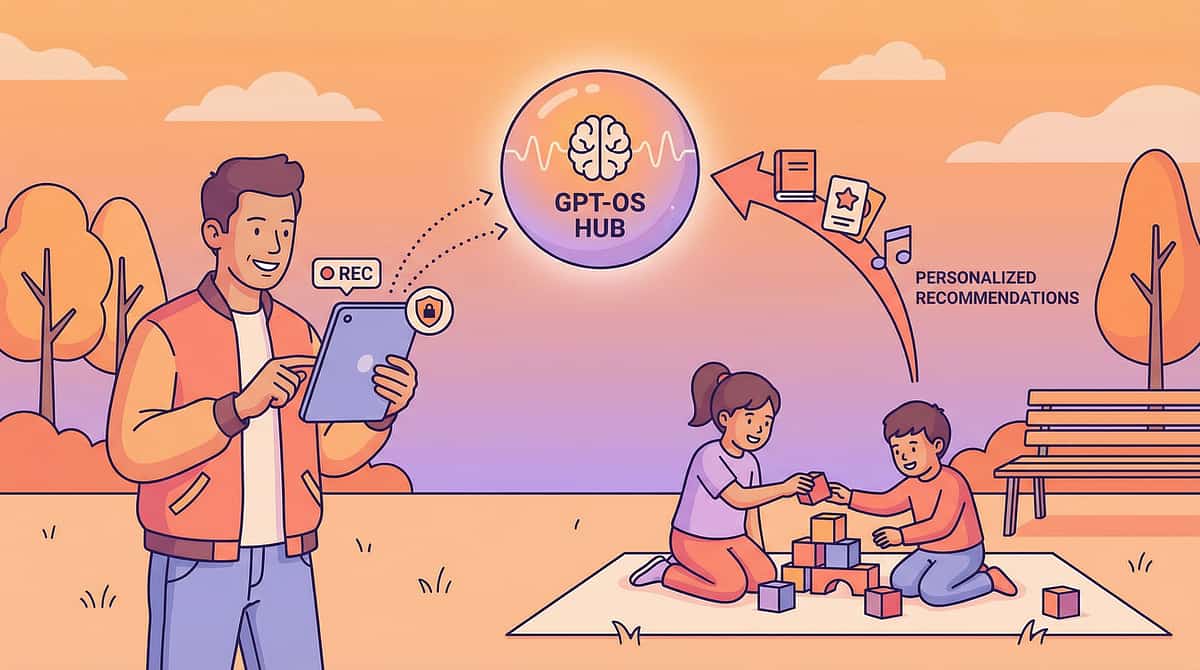
🎉 Celebrate This Win
Pause here. Right now. Before moving to the next technique, the next level, the next goal — pause and recognize what just happened.
Your child arrived at this page with words that wouldn't connect. And you — not a trained therapist, not a specialist — sat down with color-coded cards and pocket charts. You modeled sentences day after day. You celebrated every two-word combination like it was a graduation speech. You held the space for learning when it was slow, when it was frustrating, when you wondered if any of this was working.
Your child builds sentences now. Because you built the scaffold.
📸 Photo Moment
Take a photo of your child's best sentence strip. Date it. Frame it. This is a milestone.
📓 Journal Entry
Write down today's date and what your child can do now. Future-you will want to remember this day.
👨👩👧 Family Celebration
Tell your partner, grandparents, family. Let them hear the sentences. Share the pride widely.
📱 Share Your Story
Your success story is someone else's hope. Consider sharing with other families navigating this journey.
"From fear to mastery. One technique at a time." — The Pinnacle Blooms Consortium
🚩 Red Flags — When to Pause and Seek Guidance
Trust your instincts — if something feels wrong, pause and ask. These are the key warning signs that indicate professional consultation is needed.
🚩 No Progress After 6–8 Weeks
Child remains at the same sentence level despite daily consistent sessions. May indicate: underlying receptive language deficit, hearing concern, or motor speech difficulty (apraxia). Action: Request comprehensive speech-language evaluation.
🚩 Regression in Overall Communication
Child is using FEWER words than before starting the technique. Withdrawn from communication attempts. Action: Stop current approach. Consult SLP immediately. Do NOT wait.
🚩 Severe Behavioral Response
Consistent meltdowns, self-injury, or extreme avoidance triggered by sentence building across 5+ sessions despite all modifications. Action: Stop all structured language activities. Consult BCBA and SLP together.
🚩 No Verbal Attempts After 8+ Weeks
Child expertly places cards but makes zero verbalization attempts. May indicate: motor speech disorder (childhood apraxia of speech). Action: Request motor speech evaluation and consider AAC integration.
🚩 Hearing Concerns
Child doesn't respond to verbal models, relies entirely on visual cues, turns head to one side. Hearing loss should be the FIRST factor evaluated for any child with language delay. Action: Request audiological evaluation immediately.
📞FREE National Autism Helpline: 9100 181 181 (16+ languages, 24×7) | 🌐 pinnacleblooms.org
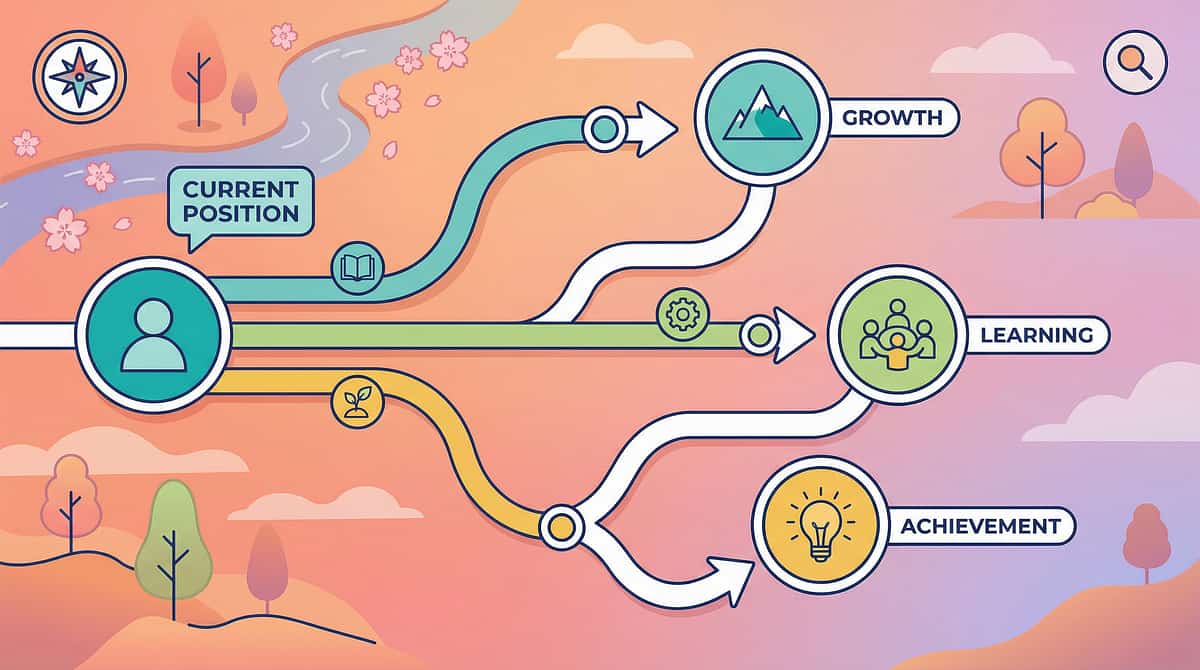
The Progression Pathway — Your Developmental GPS
Where you were. Where you are. Where you're heading.
What Came Before
- B-200: Materials That Help With Limited Vocabulary
- B-201: Materials That Help With Word Retrieval
Vocabulary must exist before sentences can be built.
Next Steps — Choose Your Path
- Path A: B-203 Following Directions — receptive language alongside expressive
- Path B: B-210 Narrative Language — from sentences to stories
- Path C: B-204 Answering Questions — sentence skills in functional conversation

Related Techniques in Speech-Language & Expressive Language
You may already own materials for these techniques. Each builds on or alongside sentence construction skills.
B-200: Limited Vocabulary
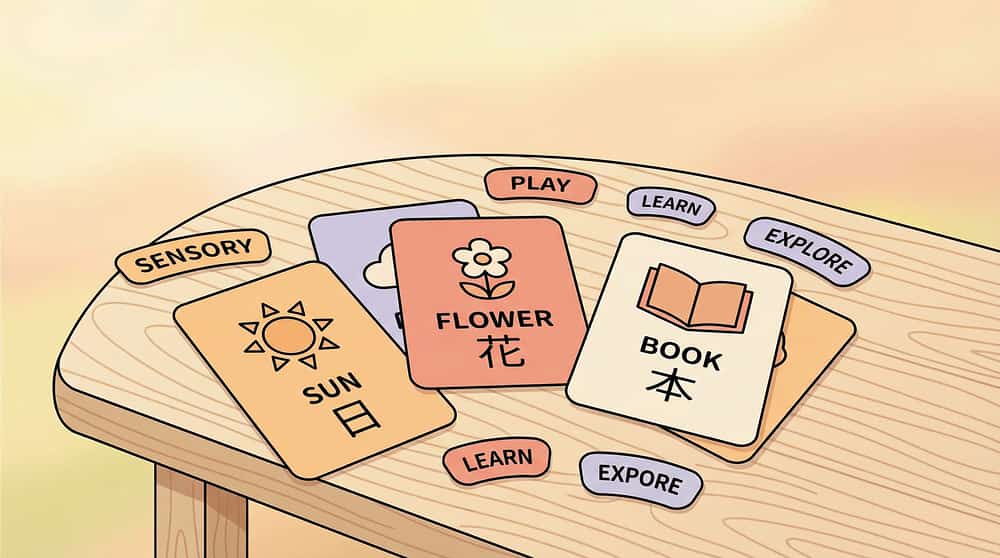
Difficulty: Intro | Flashcards, object labels, vocabulary boards. Strengthens the foundation for sentence building.
B-201: Word Retrieval
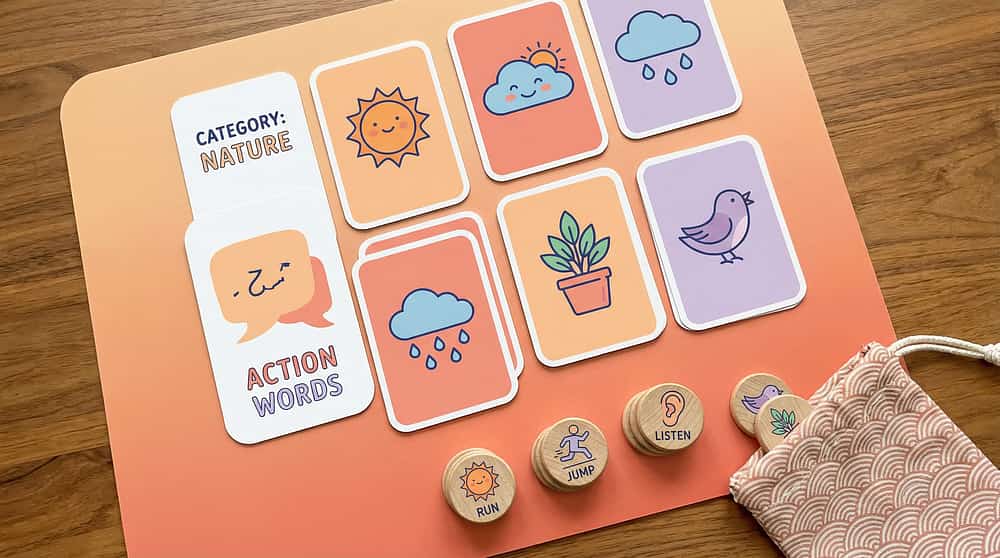
Difficulty: Intro | Category cards, word association games. When the child knows words but can't access them quickly during sentences.
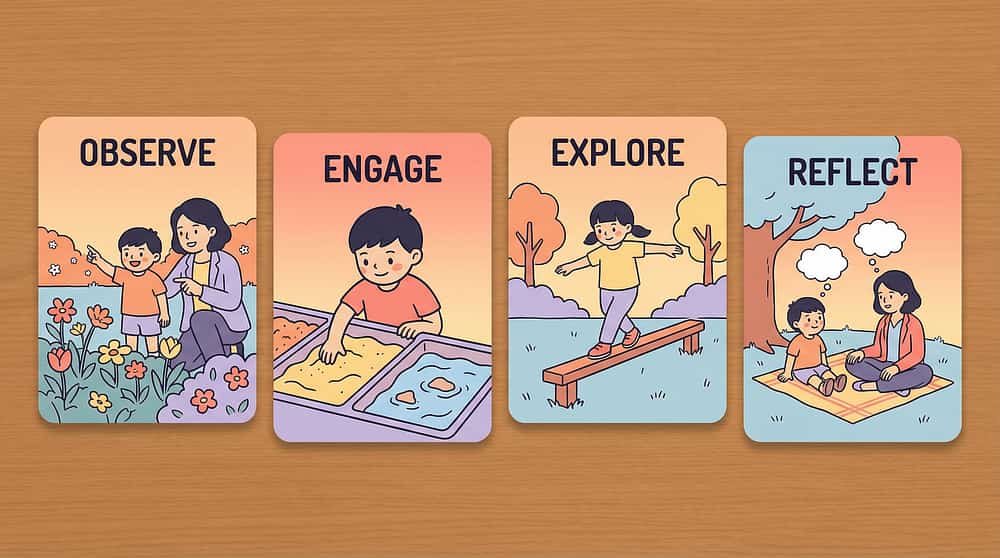
B-203: Following Directions
Difficulty: Core | Sequential task cards, visual direction strips. Builds receptive language alongside expressive sentence skills.
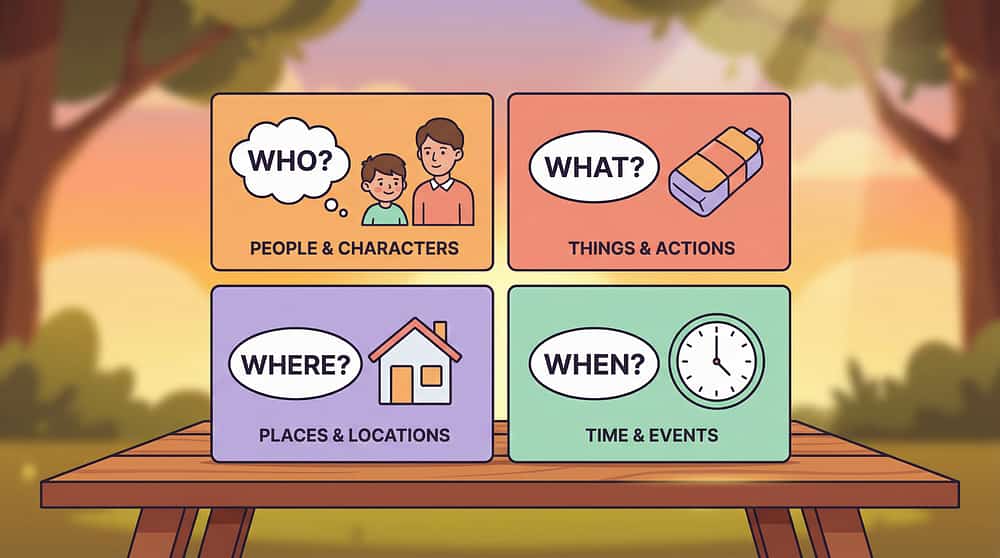
B-204: Answering Questions
Difficulty: Core | Question word visuals, response frames. Turns sentence building into functional conversation.
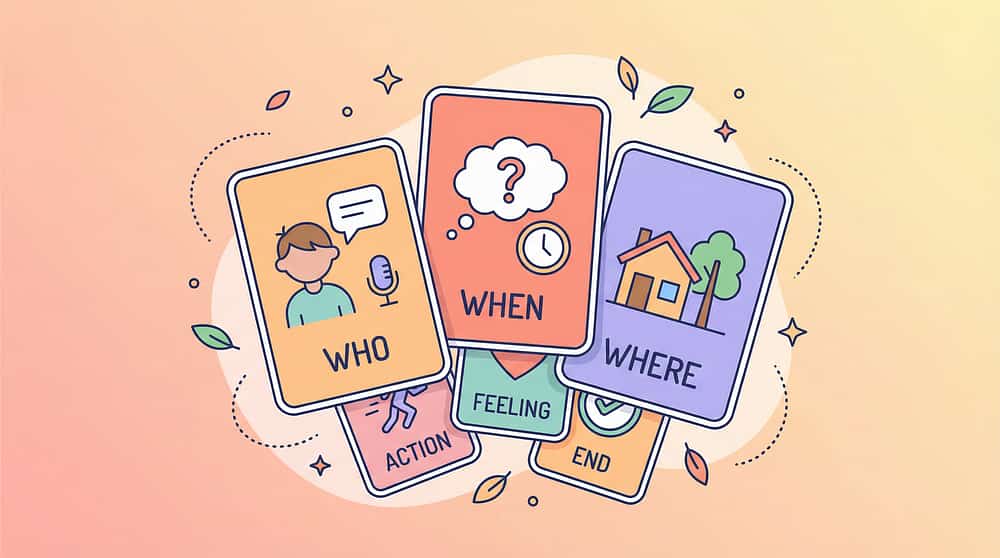
B-210: Narrative Language
Difficulty: Advanced | Story Grammar Markers, narrative frameworks. From sentences to stories — the next level of connected language.
K-1200: Language Development
Difficulty: Parent Education | Deep-dive into how expressive language develops and when to be concerned.

Your Child's Full Developmental Map
This technique is one piece of a larger plan. Sentence building sits within Domain B: Communication & Language — and connects to every other domain of development.
Domain B Connections Within Language
Sentence building (B-202) connects to vocabulary (B-200), word retrieval (B-201), direction following (B-203), question answering (B-204), and narrative skills (B-210).
Cross-Domain Connections
Laterally connects to Domain C (social communication requires sentences), Domain E (academic language requires grammatical competence), and Domain J (writing builds directly on oral sentence skills).
When enrolled in the Pinnacle ecosystem, this technique is tracked within your child's personalized developmental profile through the Expressive Language Readiness Index and Syntactic Development Index within GPT-OS®.
Families Who've Been Here
From 2-Word Phrases to Complex Sentences — 6 Months
"My son had hundreds of words but couldn't put them together. 'Ball.' 'Juice.' 'Daddy car.' Just fragments. We started with sentence strips and pocket charts — physically building sentences he could see. He started building sentences with the cards, then saying them while pointing, then saying them without the cards. Within six months, he went from two-word phrases to 'I want to play with the red ball' and 'Daddy is going to work in his car.'"
— Parent, Pinnacle Network | Starting Level: 2-word combinations | 6 months | Final Level: 8–10 word complex sentences
Grammar Came Through the Magnets — 4 Months
"My daughter would say 'dog big run' when she meant 'the big dog is running.' The magnetic board on our refrigerator became her favorite thing. She would build sentences about everything — what she ate, what she saw, what she wanted. The grammar came through the magnets. Now she's telling me stories about her school day in complete sentences."
— Parent, Pinnacle Network | Starting Level: Telegraphic speech | 4 months | Final Level: Simple-to-expanded sentences
Illustrative cases. Outcomes vary by child profile, severity, consistency of implementation, and co-occurring conditions.
Connect With Other Parents
Isolation is the enemy of consistency. When you connect with other families navigating the same challenge, you gain strategies, support, and the knowledge that you are not alone. Your experience helps others — consider sharing your journey.
Language Development Parent WhatsApp Group
Connect in real time with parents navigating the same sentence building journey. Share wins, ask questions, and find community support.
Pinnacle Parent Community Forum
Moderated forum with topic threads on materials, sessions, troubleshooting, and milestones. pinnacleblooms.org/community
Peer Mentoring Program
Connect with an experienced parent who has navigated sentence building challenges. Real-world guidance from someone who has been exactly where you are. pinnacleblooms.org/mentoring
Local Pinnacle Parent Meetups
Find meetups at your nearest Pinnacle center. In-person connection with local families, guided by trained parent facilitators.

Your Professional Support Team
Home + Clinic = Maximum Impact. Professional guidance accelerates what home practice makes possible.
🗣️ Speech-Language Therapy
Comprehensive evaluation and ongoing intervention targeting sentence construction, grammatical accuracy, and mean length of utterance.
🧩 ABA Therapy
Structured behavior-analytic approaches to language acquisition, prompt hierarchies, reinforcement systems, and generalization programming.
🤲 Occupational Therapy
Sensory-motor support for sustained attention, material manipulation, and optimal arousal state for language learning.
🩺 NeuroDevelopmental Assessment
Comprehensive developmental evaluation within GPT-OS® Diagnostic Intelligence Layer. Understands the full picture guiding intervention.
📞Call FREE: 9100 181 181 (16+ languages, 24×7) | 🌐 Book online: pinnacleblooms.org/book | 📱 Teleconsultation available for remote families worldwide
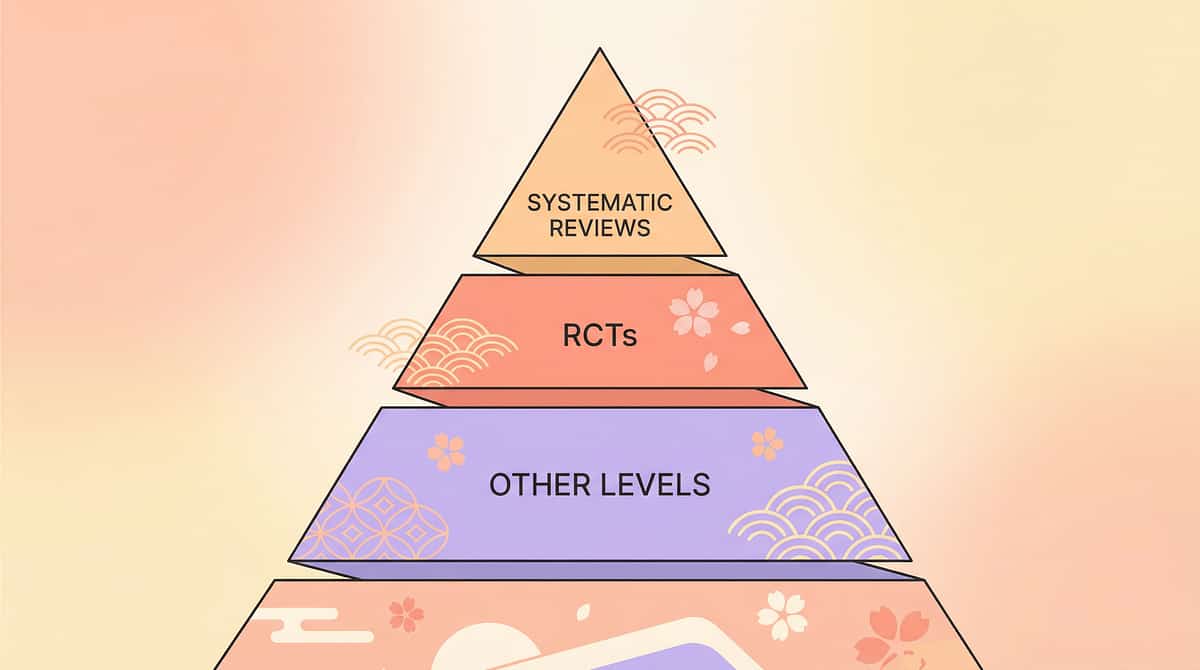
The Research Library
Deeper reading for the curious parent and clinician. All references are publicly accessible.
📚 NCAEP Systematic Review (2020) — Level I
Visual supports classified as evidence-based practice for autism across 56 studies. National Clearinghouse on Autism Evidence and Practice. ncaep.fpg.unc.edu
📚 Bryan, A. (1997) — Colorful Semantics — Level II
Colourful Semantics: Thematic role therapy. Multiple replications showing significant gains in sentence length and complexity using color-coded grammar approach.
📚 Ebbels, S.H. (2007) — Shape Coding — Level II
Teaching grammar to school-aged children with SLI using Shape Coding. Child Language Teaching and Therapy, 23(1), 1–15. DOI: 10.1177/0265659007073873
📚 Roberts & Kaiser (2011) — Meta-Analysis — Level I
Parent-implemented language interventions. American Journal of Speech-Language Pathology, 20(1), 47–61. Confirms parent-delivered effectiveness. DOI: 10.1044/1058-0360(2010/09-0067)
📚 WHO/UNICEF Nurturing Care Framework (2018) — Level I
Establishes caregiver-delivered intervention as foundation for developmental outcomes. nurturing-care.org/ncf-for-ecd/ | PMC9978394
📊 Pinnacle Blooms Real-World Evidence
20M+ exclusive 1:1 therapy sessions. 97%+ measured improvement. Tracked through GPT-OS® Expressive Language Readiness Index. pinnacleblooms.org
Additional references: ASHA Evidence Maps | Cochrane Reviews | PubMed: PMC11506176 | PMC10955541

How GPT-OS® Uses Your Data
Your data helps every child like yours — while remaining fully protected and private.
What GPT-OS® Learns
- How quickly children at different starting levels progress through sentence complexity stages
- Which materials produce the fastest gains for specific child profiles
- Optimal session frequency and duration for sentence building
- Common stall points and which modifications resolve them
- Generalization timelines from structured to spontaneous sentence use
Privacy Protections
- All child data encrypted and anonymized for population-level analysis
- Individual data accessible only to you and your clinical team
- Compliant with data protection regulations
- ISO/IEC 27001 Information Security management
- No data sold to third parties — ever
When 100,000 families record sentence building data, GPT-OS® identifies patterns invisible to any individual clinician — which material combinations work best for specific AbilityScore® profiles, which age windows show the fastest response, and which co-occurring conditions modify expected timelines. Your data improves recommendations for every family that follows.
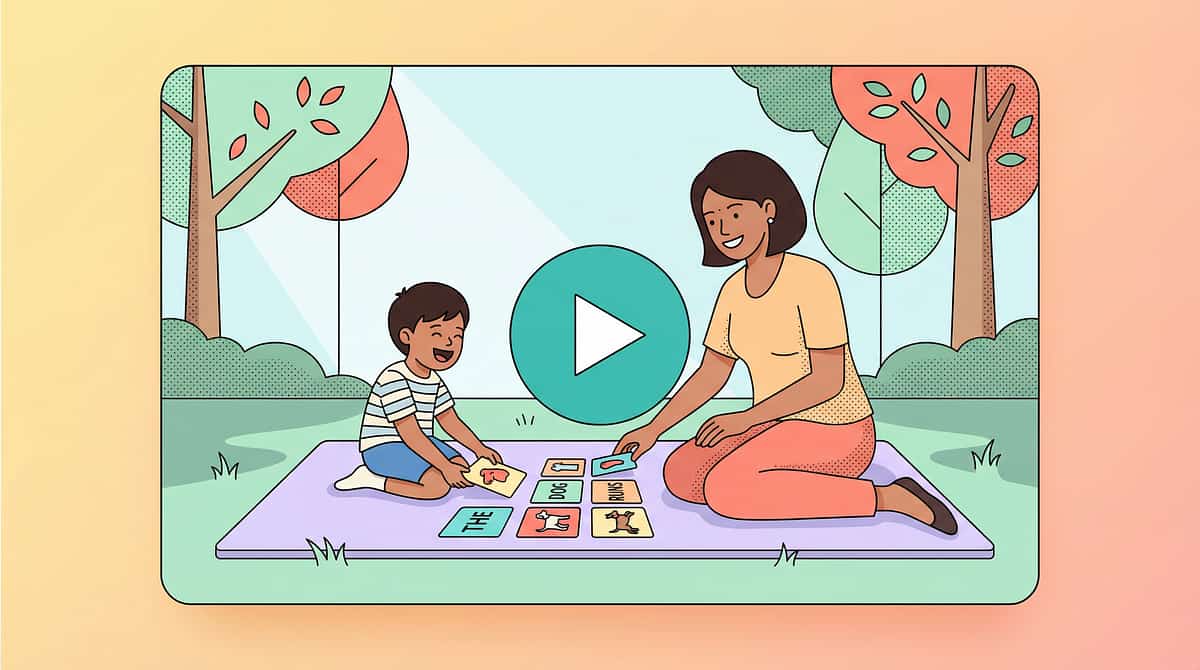
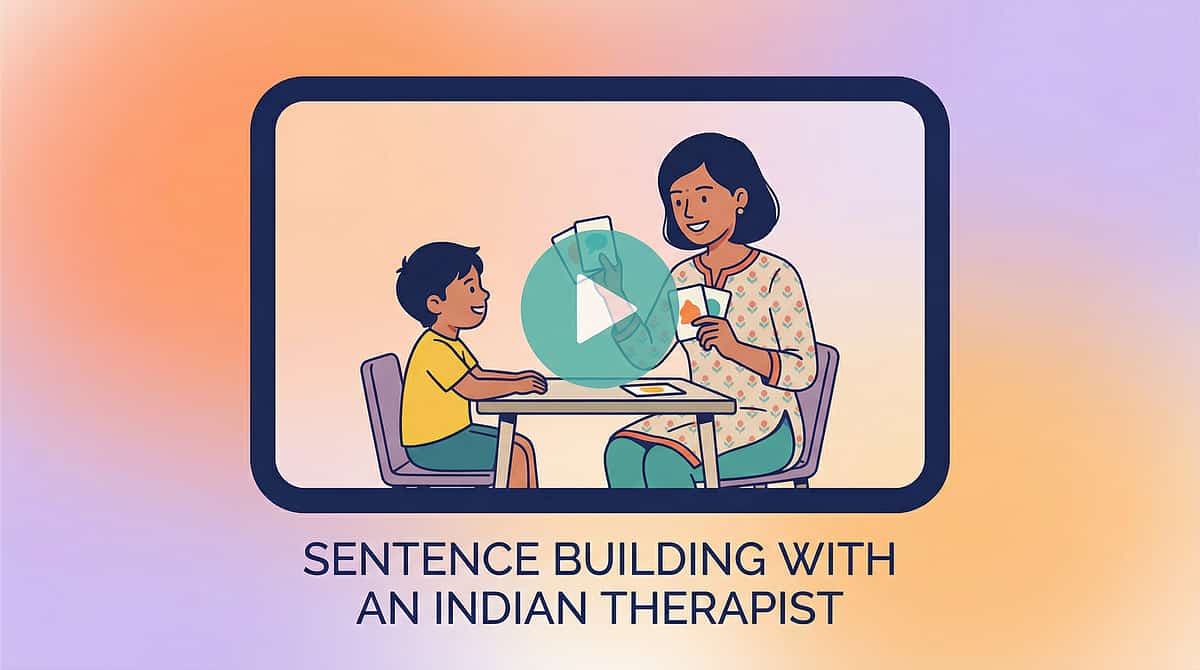
Watch the Reel — 9 Materials That Help Building Sentences
Reel ID: B-202
Language & Communication Solutions — Episode 202
This 75-second Reel walks through all 9 materials featured on this page, with a Pinnacle therapist demonstrating each one. Visual, quick, and shareable — designed to give you a complete overview of every material before you dive into the full protocol.
Sentence Strips & Pocket Charts
Visual Sentence Starters
Color-Coded Grammar (Colorful Semantics)
Word Blocks & Cubes
PECS & Picture Strips
EET & Story Grammar Markers
Magnetic Boards
Verb Cards with Syntax Cues
Digital Sentence Builders

Share This With Your Family
Consistency across caregivers multiplies impact. When grandparents, teachers, and other caregivers understand the approach, your child gets consistent scaffolding everywhere they go — and that consistency is what builds neural pathways.
Explain to Grandparents
"[Child's name] is learning to build sentences using color-coded cards. Orange = WHO (the person), Yellow = WHAT DOING (the action), Green = WHAT (the object). You can help by: (1) Using simple sentences when you talk to them, (2) Expanding their words — if they say 'ball,' you say 'You want the BALL,' (3) Pointing to the sentence cards if they're available. Don't correct — just model. Thank you for being part of this!"
Teacher Communication Template
"Dear [Teacher], [Child's name] is working on building sentences using visual-structural materials at home and in speech therapy. They respond well to sentence starters ('I want ___'), color-coded grammar cues, and extra time for verbal responses. You can support by: accepting shorter sentences as progress, providing visual sentence frames when possible, and celebrating any multi-word attempts."

Frequently Asked Questions
Answers to the questions parents and caregivers ask most often about sentence building.
At what age should my child be forming sentences?
Most children produce two-word combinations by 18–24 months, simple sentences by 30–36 months, and complex sentences by 36–48 months. If your child has adequate vocabulary but is not combining words into sentences by age 3, a speech-language evaluation is recommended.
My child understands everything but can't say sentences. Is that normal?
A gap between receptive language (understanding) and expressive language (production) is common in many developmental profiles. This gap is actually positive — it means the foundation for understanding sentence structure exists. Visual-structural materials help bridge the gap.
Will my child become dependent on visual cards and never speak without them?
No. Visual supports are scaffolds, not crutches. Research consistently shows they are systematically faded as skills internalize. Children progress from building with cards → reading aloud → glancing at cards → fully independent production. This is exactly how training wheels work.
Can I use this if my child is non-verbal?
Yes — with modification. PECS and picture sentence strips (Material 5) are specifically designed for children who are non-verbal or minimally verbal. The visual sentence construction teaches structure even without verbal output. Consult with an SLP or BCBA for AAC integration.

Frequently Asked Questions — Continued
Is this technique effective for children with autism specifically?
Yes. Visual supports are classified as evidence-based practice for autism (NCAEP, 2020). Many children on the autism spectrum are strong visual learners, making visual-structural sentence building particularly effective. The structured, predictable nature of color-coded systems also aligns well with autistic learning preferences.
Can I do this without a therapist, or do I need professional guidance?
You can absolutely begin at home using the protocol described on this page. Many families see significant progress with consistent home implementation. However, an SLP can assess your child's specific profile, identify the optimal starting level, and address co-occurring challenges. We recommend professional evaluation alongside home practice for best outcomes.
My child is bilingual. Does that affect sentence building?
Bilingualism does NOT cause language delay. However, sentence structures differ across languages, and bilingual children may show patterns that look like errors in one language but are transfer effects from the other. Use consistent grammar scaffolds within each language separately. Consult an SLP with bilingual expertise for specific guidance.
How long should each session be?
Start with 5 minutes and build gradually. Most effective sessions are 10–20 minutes for school-age children. Short, daily sessions are more effective than long, infrequent ones. Quality of engagement matters more than duration — always end before the child is done, not after.

Your Next Step — Start Now
You've read the science. You've seen the materials. You've learned the protocol. In 20 minutes, your child will have built their first visual sentence.
🟢 Start This Technique Today
Begin with the Readiness Check. Follow Steps 1–6. Use any ONE of the 9 materials — even a handmade version. Your child's first sentence strip awaits.
🔵 Book a Professional Consultation
Get personalized guidance from a Pinnacle SLP. First consultation includes AbilityScore® assessment. Available in-center, teleconsultation, or home visit. 📞 9100 181 181
🟡 Explore the Next Technique
Ready for the next step in your child's language journey? B-203: Following Directions builds directly on the sentence skills developed here. techniques.pinnacleblooms.org/speech-language/following-directions
🗣️ SLP
🧩 BCBA
🤲 OT
📚 SpEd
🩺 NeuroDev
Preview of 9 materials that help building sentences Therapy Material
Below is a visual preview of 9 materials that help building sentences therapy material. The pages shown help educators, therapists, and caregivers understand the structure and content of the resource before use. Materials should be used under appropriate professional guidance.



Link copied!

The Pinnacle Promise
"From fear to mastery. One technique at a time."
Your child arrived at this page with words that wouldn't connect. You now hold the blueprint — 9 materials, a step-by-step protocol, and the evidence of 20M+ therapy sessions showing that when grammar becomes visible, sentences become buildable.
This page is one of 70,000+ intervention technique pages within the Pinnacle GPT-OS® ecosystem — the largest structured pediatric intervention knowledge base on Earth. Every page is consortium-drafted, evidence-linked, parent-empowering, and designed to transform your home into a therapeutic environment.
🔗 Explore More Techniques
🔗 Next Recommended: B-203 Following Directions
🔗 Pinnacle Blooms Network Home
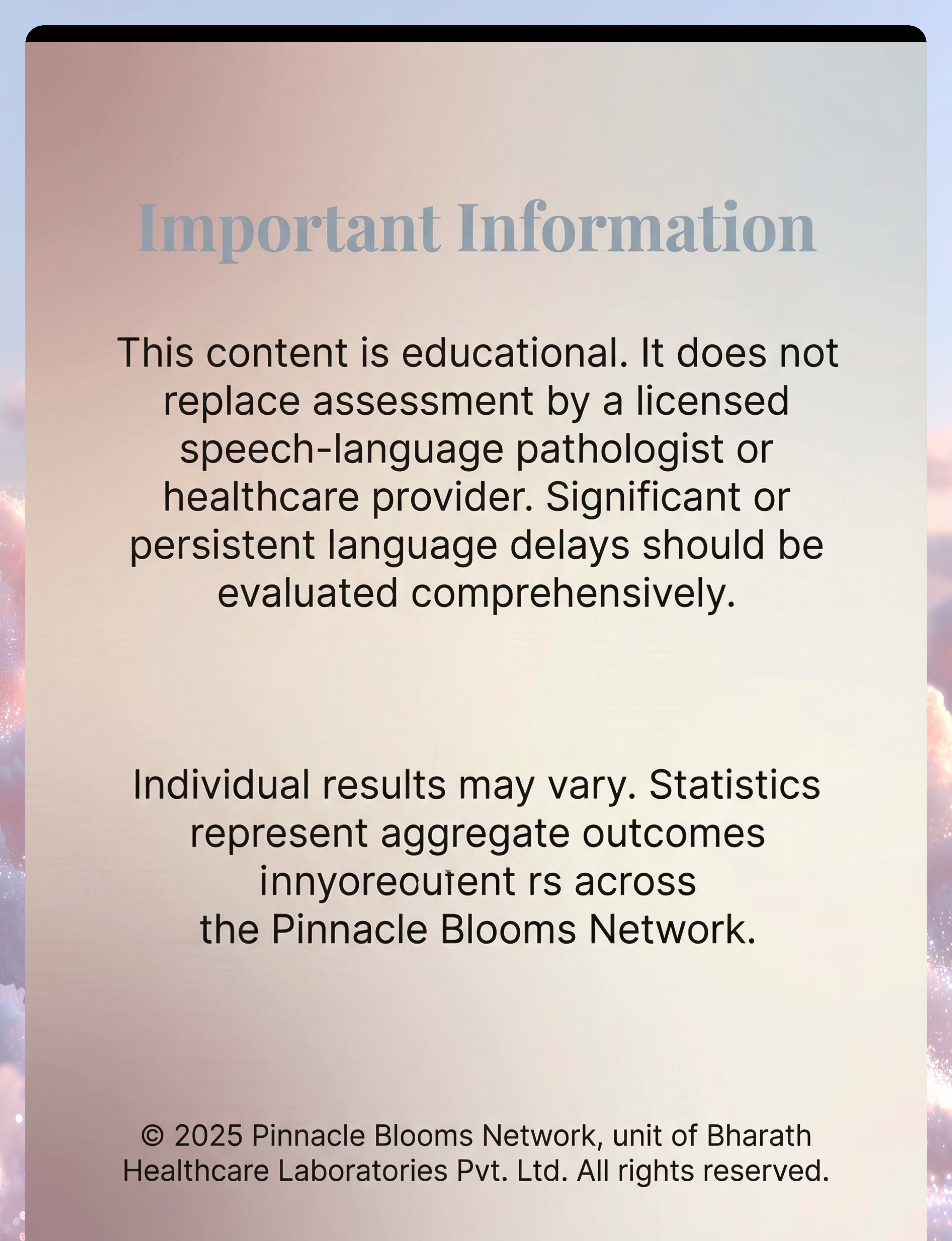
Medical Disclaimer: This content is educational and does not replace assessment by a licensed speech-language pathologist or healthcare provider. Significant or persistent language delays should be evaluated comprehensively. Individual results may vary. Statistics represent aggregate outcomes across the Pinnacle Blooms Network.
CIN: U74999TG2016PTC113063 | DPIIT: DIPP8651 | MSME: TS20F0009606 | GSTIN: 36AAGCB9722P1Z2
© 2025 Pinnacle Blooms Network®, unit of Bharath Healthcare Laboratories Pvt. Ltd. All rights reserved. Powered by GPT-OS® — Global Pediatric Therapeutic Operating System. Patents filed across 160+ countries.
📞 FREE National Autism Helpline: 9100 181 181 (16+ languages, 24×7) | 🌐pinnacleblooms.org | techniques.pinnacleblooms.org