Receptive Language
Subdomain B2 | Domain B: Communication | Pinnacle Blooms Network®
25 evidence-based interventions for children with autism who struggle to understand spoken language — from following instructions and Wh-questions to auditory memory and listening skills. Every technique is grounded in neuroscience, built for real families, and backed by Level I evidence.

The Invisible Half of Communication
Receptive language is the ability to understand spoken, signed, or visual language. It precedes expressive language in development — and it's the half nobody sees struggling. A child who speaks in full sentences may understand far fewer words than they can produce. This gap between expression and comprehension is one of the most dangerous misconceptions in autism.
The Comprehension Pathway
Auditory Cortex → Wernicke's Area → Angular Gyrus → Prefrontal Cortex
Each stage must succeed for a child to hear, decode, and act on a single sentence.
In ASD, Four Key Challenges Emerge
- Processing speed — the brain decodes language slower than speech is delivered
- Literal processing — figurative language is taken at face value
- Auditory working memory — instructions "fall off" before they can be processed
- Gestalt processing — language is processed as whole chunks, not individual words
B-151
Doesn't Follow Instructions
Subdomain B2: Receptive Language | Domain B: Communication | Pinnacle Blooms Network®
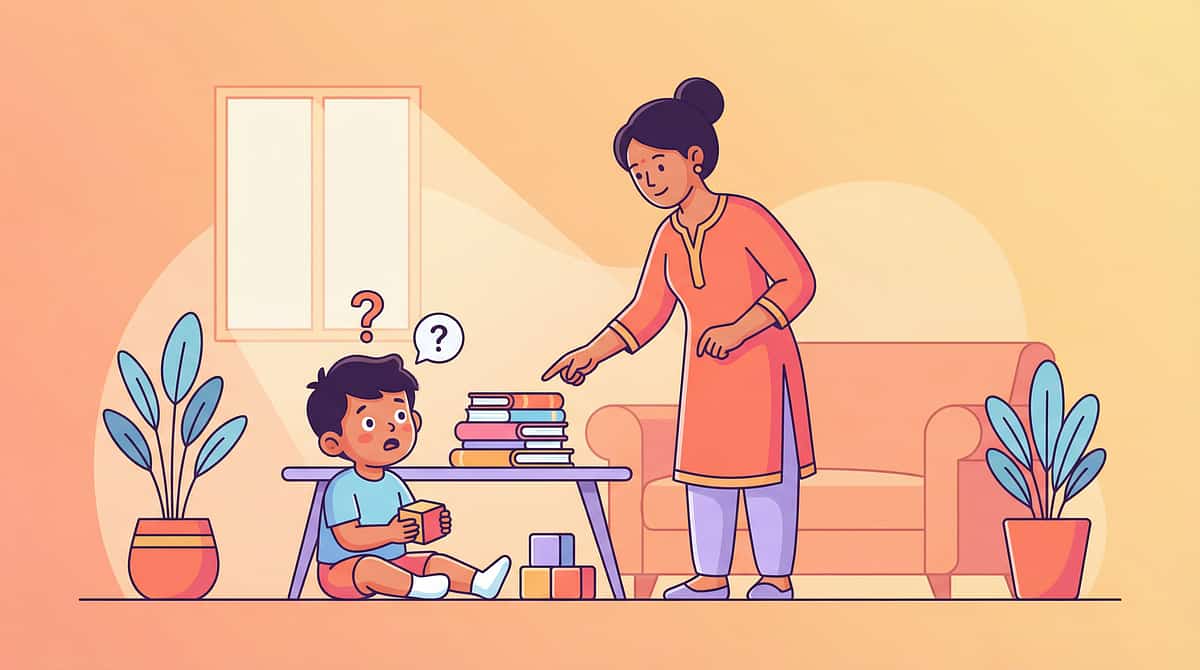
"Put your shoes by the door." Nothing happens. "Sit down and open your book." They sit — but don't open the book. Teachers say non-compliant. Families say stubborn. But you've seen the look — the blank stare, the processing attempt, the failure to decode. They're not refusing. They don't understand.
The Neuroscience
Following a single instruction taxes six neural systems simultaneously: auditory processing, lexical access, syntactic parsing, working memory, sequencing, and motor planning. A two-step instruction doubles the load. Three steps? Neurological overload.
Evidence Level
📊Level I — Visual supports paired with verbal instructions produce significantly better comprehension than verbal alone. ABA discrete trial training for receptive identification is among the most researched interventions. PMC10955541 | NCAEP 2020 | ASHA
What You'll Learn
- Instruction complexity hierarchy (1-step → 2-step → 3-step → conditional)
- Visual pairing: SHOW while you TELL
- Processing time: the 10-second rule
- Simplification strategies (fewer words = more comprehension)
- Environmental cues that support understanding
- Teacher accommodation letter (RPwD 2016)
9 Canon Materials
🗣️ SLP · 📋 ABA | SpEd · OT
B-152
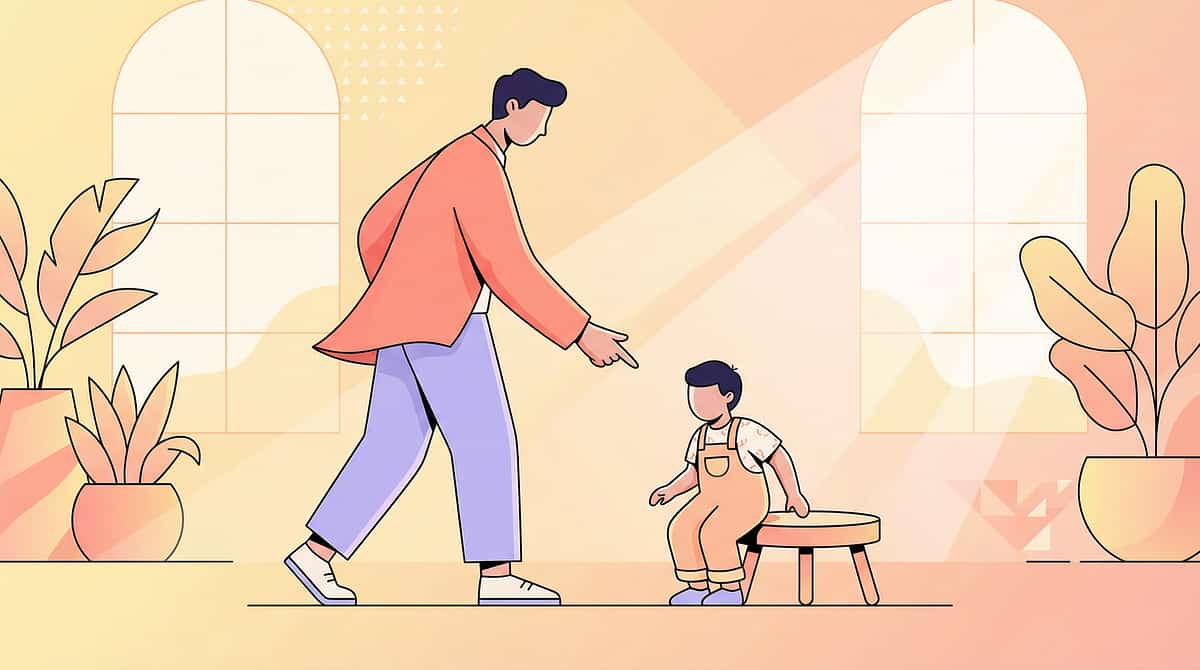
Doesn't Understand
Subdomain B2: Receptive Language | Domain B: Communication
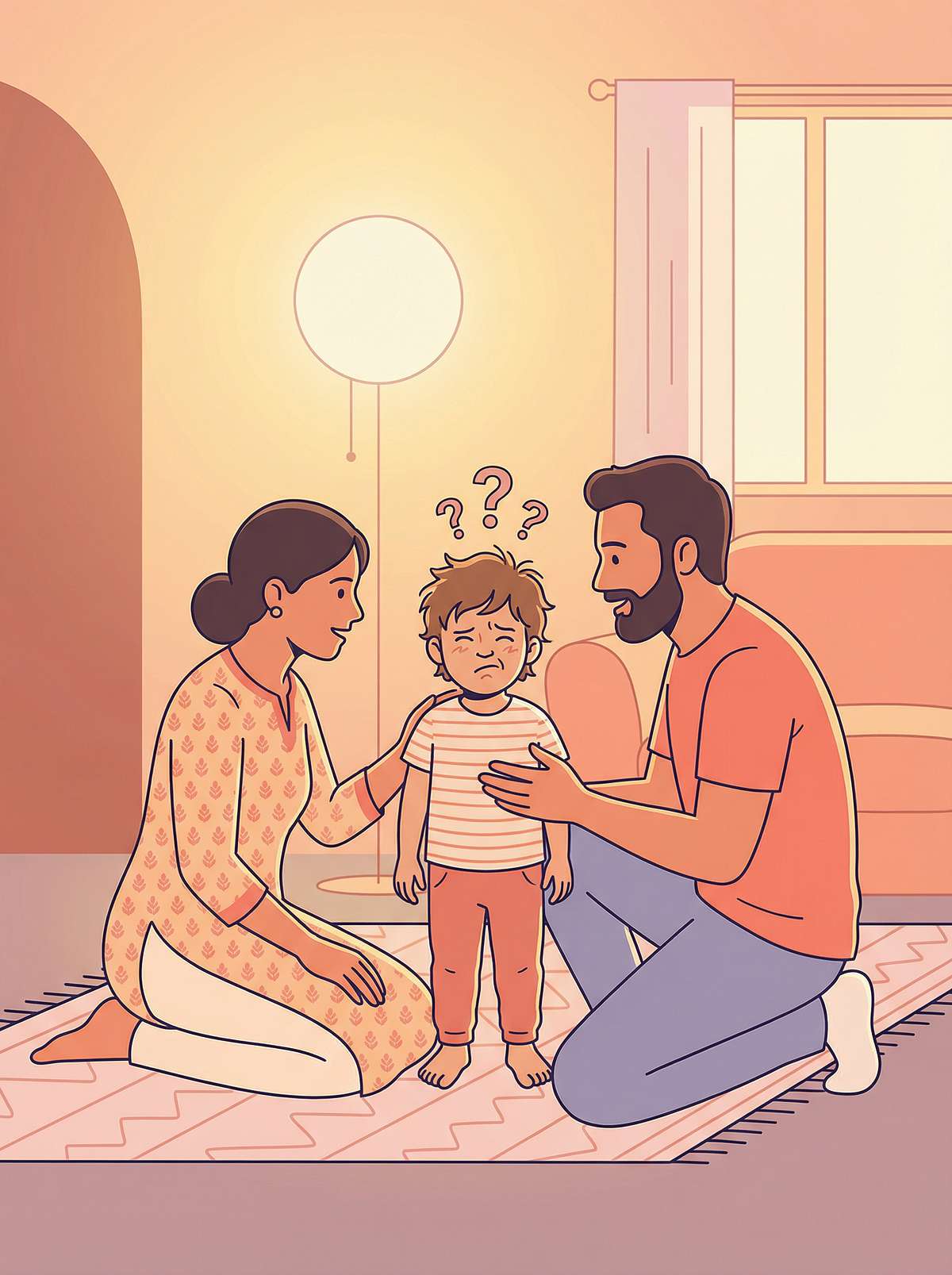
You speak in simple sentences and they look through you. Not ignoring — they genuinely don't understand the words. You've switched to shorter sentences. You've spoken louder. Nothing helps consistently. The language that fills every interaction between every other parent and child is a foreign language to yours.
The Neuroscience
Generalized receptive language delay means the entire comprehension pipeline — from auditory processing through Wernicke's area to semantic networks — is developing on a different timeline. A child who scripts full sentences from YouTube may understand far fewer words than they can produce. Receptive language can lag years behind expressive language.
Evidence Level
📊Level I — Comprehensive receptive language intervention. NCAEP 2020 | PMC10955541
What You'll Learn
- Receptive language age assessment (where are they NOW?)
- Meeting the child at THEIR comprehension level
- Visual support for every verbal interaction
- Environmental language enrichment
- "Less talk, more show" parent strategy
- Total communication approach (words + pictures + gestures + signs)
B-153
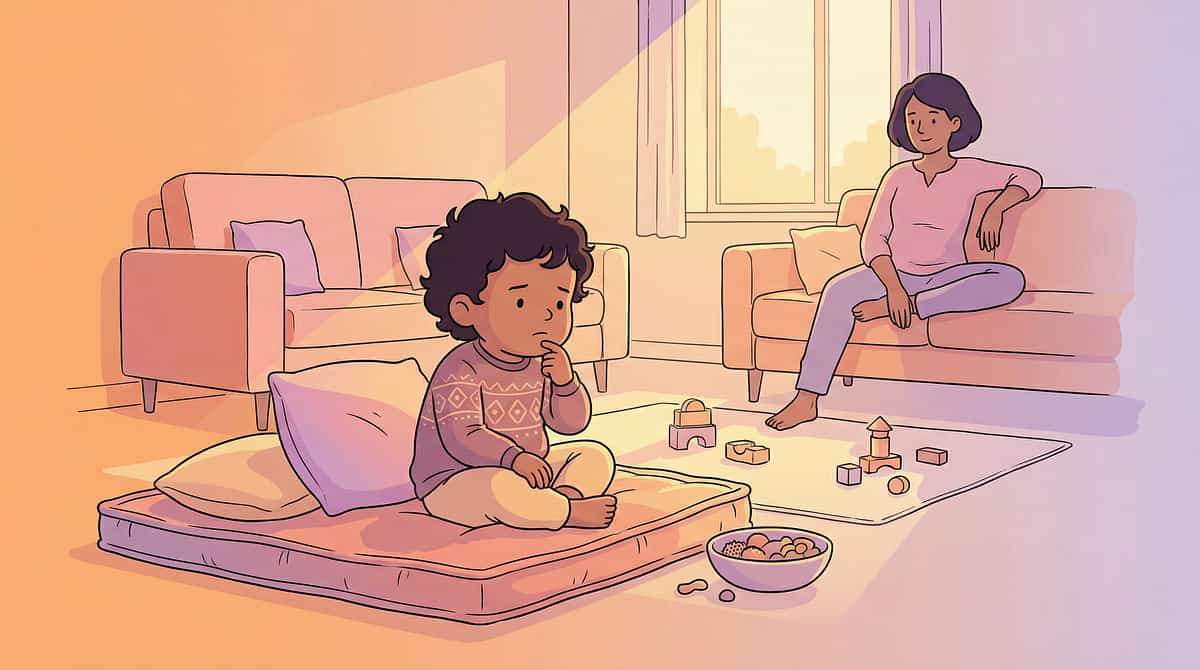
Needs Gestures to Understand
Subdomain B2: Receptive Language | Domain B: Communication
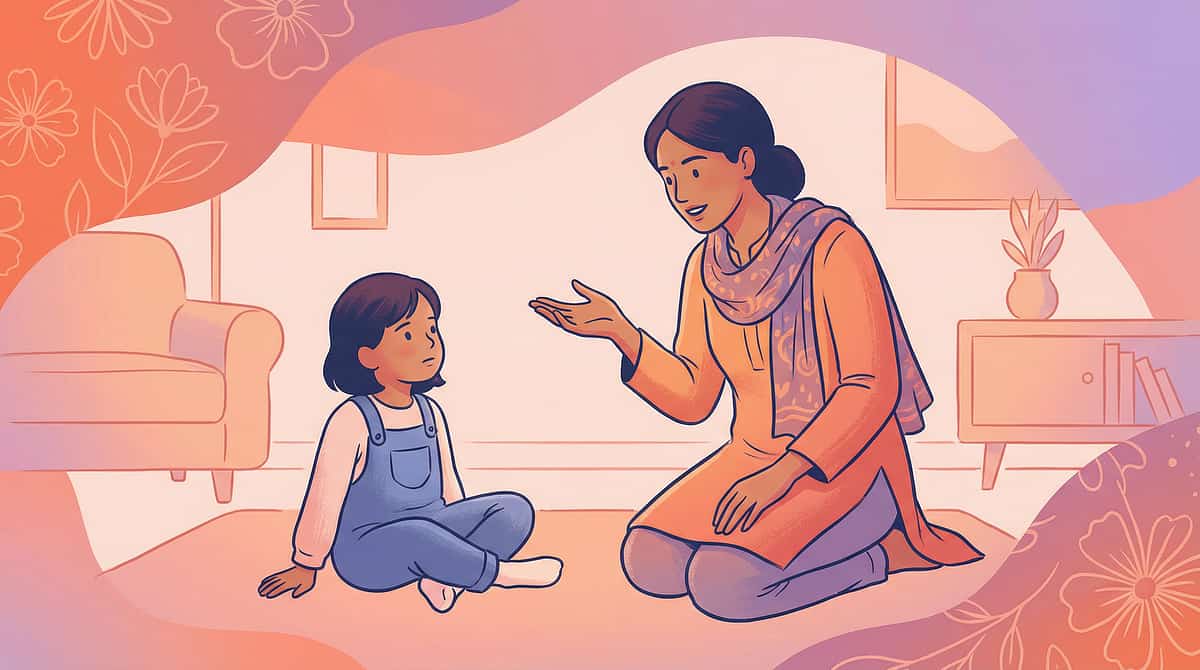
"Come here" only works if you wave them over. "Sit down" only works if you point at the chair. Without the gesture, the words are noise. They understand your body, not your words. This isn't a failure — it's a developmental position the intervention is designed to bridge.
The Neuroscience
The child is processing communication through the visuospatial system (superior parietal cortex) rather than the auditory-linguistic system (Wernicke's area). Gestural comprehension develops BEFORE verbal comprehension — this child's brain is still in the gesture-dominant phase. The goal is to bridge gesture understanding into word understanding through systematic pairing and fading.
Evidence Level
📊Level I — Gesture fading + verbal comprehension building. NCAEP 2020 | ASHA
What You'll Learn
- Why gesture dependence is developmental — not permanent
- Gesture + word pairing (always pair, never gesture alone)
- Graduated gesture fading (full → partial → verbal only)
- Using gesture as a bridge, not a crutch
- Assessing which words they understand WITHOUT gestures
- Natural gesture reduction timeline
B-154
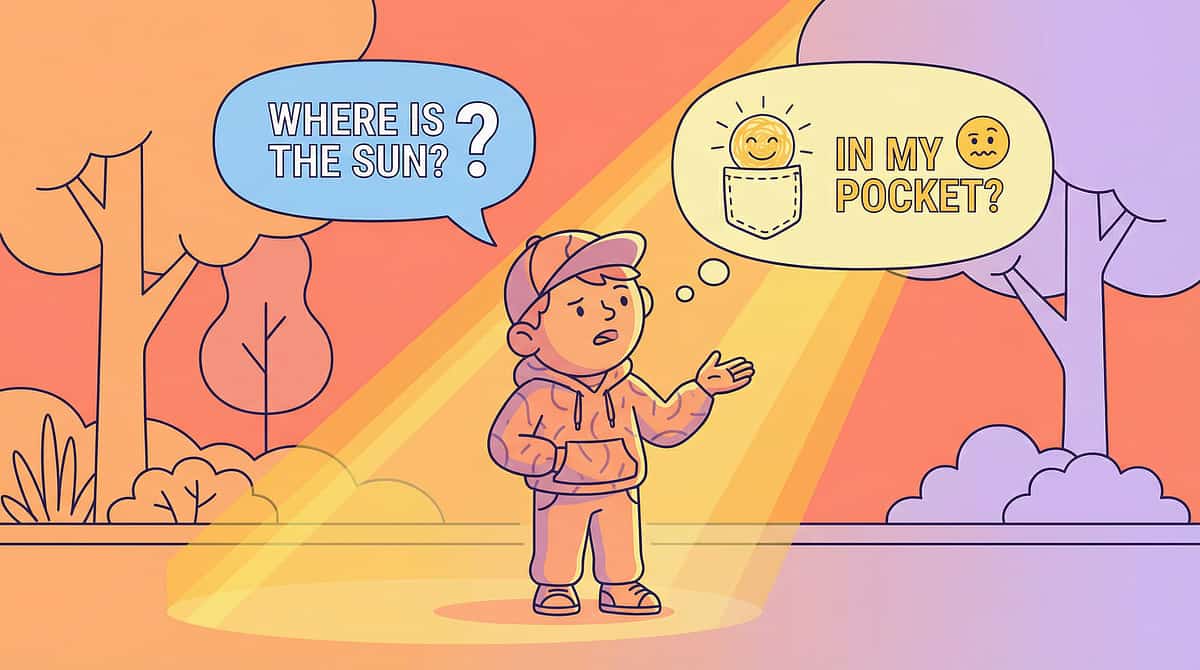
Delayed Response to Questions
Subdomain B2: Receptive Language | Domain B: Communication
"What do you want for breakfast?" Silence. You wait. You ask again. Then, 15 seconds later — "Dosa." They DID understand. They just needed TIME. Teachers don't wait. Family doesn't wait. The world moves at conversation speed, and their processing speed is half-conversation. So they're always "too late," and everyone assumes they didn't understand.
The Neuroscience
Auditory processing speed involves auditory decoding (temporal cortex), semantic processing (Wernicke's area), response formulation (Broca's/PFC), and motor execution. When any stage is slower than typical, the total response time extends beyond the social "acceptable window" of 2–3 seconds. The child is processing, not ignoring.
Evidence Level
📊Level I — Processing time accommodation + auditory processing intervention. NCAEP 2020 | ASHA
What You'll Learn
- The 10-second rule: ask once, wait 10 full seconds
- Why repeating the question RESETS their processing clock
- Visual question supports (showing the question)
- Teacher/family training: "they need time, not repetition"
- Building processing speed through structured practice
- Classroom accommodations for slow processors
B-155
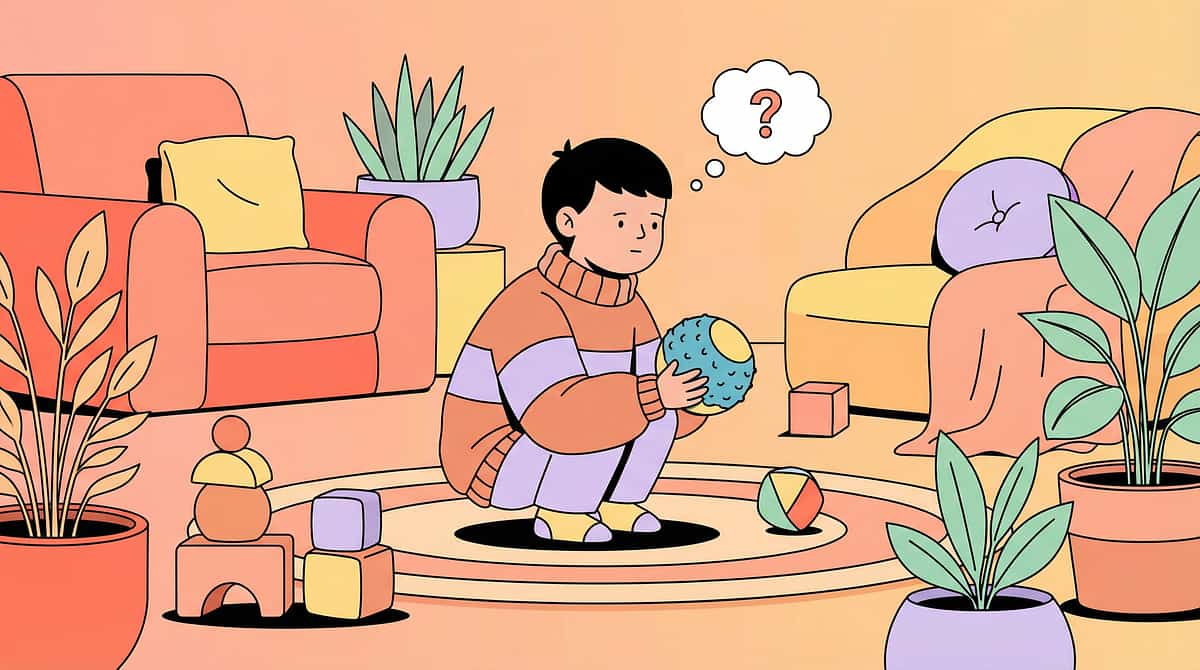
Wh-Question Confusion
Subdomain B2: Receptive Language | Domain B: Communication
"What are you eating?" → "School." "Where are you going?" → "Rice." "Who is that?" → "Blue." They answer — but to the wrong question. Wh-words look and sound similar but each requires a completely different category of answer. The child can't distinguish between them yet.
The Neuroscience
Wh-questions are linguistically complex: each wh-word specifies a different semantic category for the answer. The angular gyrus must decode the wh-word and activate the correct semantic network. When this mapping is unclear, the child echoes, guesses, or gives a learned response regardless of the question type asked.
Evidence Level
📊Level I — Wh-question training within SLP and ABA. NCAEP 2020 | ASHA
What You'll Learn
- Wh-question hierarchy: what → where → who → what doing → whose → when → why → how
- Visual wh-question boards (colour-coded by question type)
- One-wh-at-a-time mastery approach
- Contrasting questions to build discrimination
- Natural context teaching
- Generalization from structured to conversation
B-156
Two-Step Direction Difficulty
Subdomain B2: Receptive Language | Domain B: Communication
"Pick up the ball AND put it on the table." They pick up the ball. Then look at you. The second instruction — gone. Evaporated. Working memory couldn't hold "put it on the table" while executing "pick up the ball." Every two-step instruction becomes a single-step execution with a lost second half.
The Neuroscience
Multi-step instructions tax the phonological loop (auditory working memory) — the brain must HOLD the second instruction while executing the first. Auditory working memory capacity in ASD can be 40–60% below age expectations. Two-step instructions require approximately 2× the working memory of one-step instructions.
Evidence Level
📊Level I — Working memory + sequential instruction training. NCAEP 2020
What You'll Learn
- Working memory assessment (how many steps CAN they hold?)
- Visual step-by-step supports
- Chunking: deliver one step, wait for completion, deliver next
- Working memory exercises through sequential games
- "First… then…" visual structure
- Building from 1-step → 2-step → 3-step over weeks/months

B-157
Literal Understanding
Subdomain B2: Receptive Language | Domain B: Communication
"Hold on." They grab your hand. "It's raining cats and dogs." They look at the sky for animals. "Break a leg." They're terrified. Every idiom, metaphor, and figure of speech is processed as a concrete, literal statement. In a world that speaks in metaphors, your child hears only the dictionary definition.
The Neuroscience
Literal processing results from the brain defaulting to left-hemisphere, semantic-dictionary processing without engaging the right hemisphere's figurative-language network. Non-literal language requires detecting that literal meaning doesn't fit context — and in ASD, that first detection step often fails. So the literal interpretation persists unchallenged.
Evidence Level
📊Level I–II — Figurative language intervention within SLP + social cognition. NCAEP 2020 | Figurative language in ASD research
What You'll Learn
- Common Indian English idioms that cause confusion
- "What they say vs. what they mean" visual teaching
- Idiom dictionary creation (personalised, illustrated)
- Social context reading for non-literal interpretation
- Family awareness: simplifying figurative language at home
- Sarcasm, humor, and exaggeration — explicit teaching
B-158
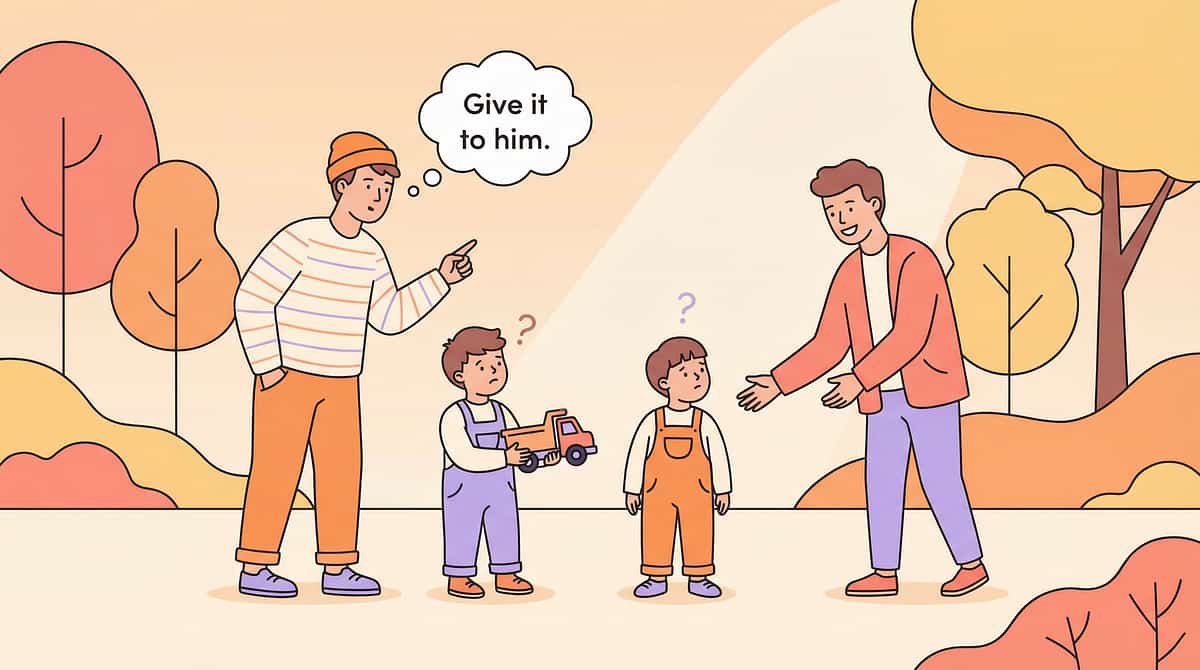
Pronoun Confusion
Subdomain B2: Receptive Language | Domain B: Communication
"Give it to HER" — they give it to him. "That's YOUR cup" — they think it's yours. They say "you want water" when they mean "I want water." Pronouns — the shape-shifters of language that change meaning depending on who's speaking — are a comprehension minefield.
The Neuroscience
Pronouns are deictic — their meaning changes based on the speaker's perspective. "I" means ME when I say it, but YOU when you say it. This perspective-shifting requires theory of mind computation. The temporal-parietal junction, which processes perspective differences, shows atypical activation in ASD — making pronoun comprehension one of the most persistent language challenges.
Evidence Level
📊Level I — Pronoun intervention within SLP. NCAEP 2020 | ASHA
What You'll Learn
- Pronoun hierarchy: I/you → he/she → they/we → possessives → reflexives
- Physical role-play for perspective (swap seats, swap pronouns)
- Photo-based pronoun teaching
- Mirror + camera activities for I/you distinction
- Why pronoun reversal is a COMPREHENSION issue, not expression
- Bilingual considerations for Indian families (Hindi/Telugu pronoun systems)
B-159
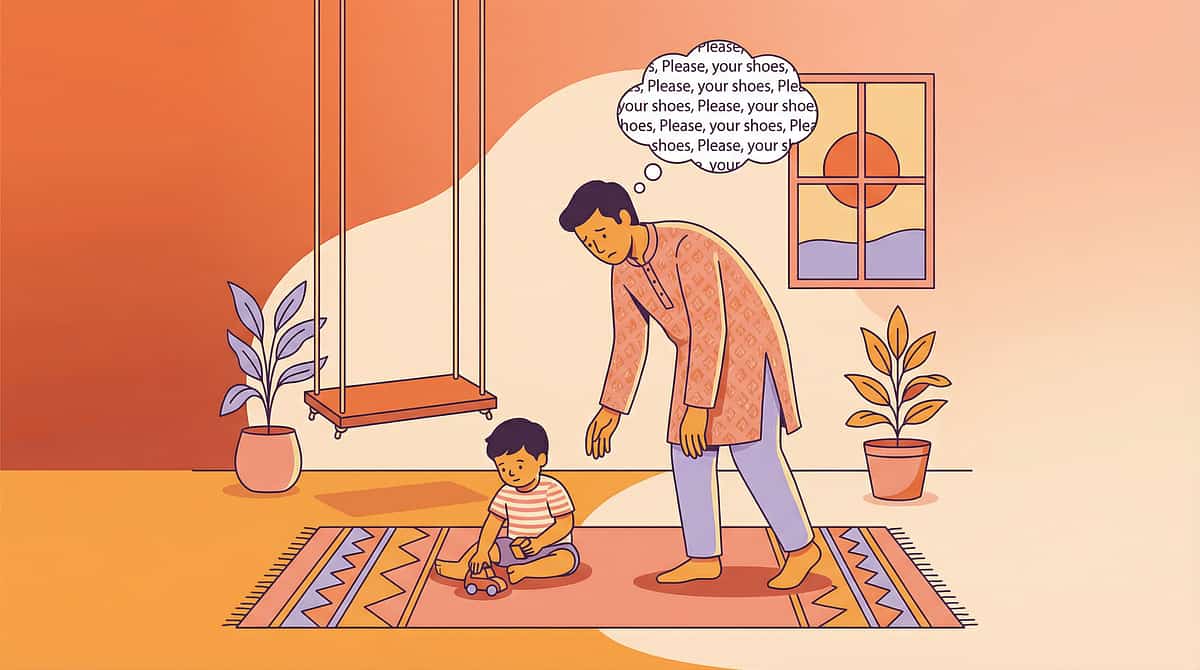
Instructions Need Repeating
Subdomain B2: Receptive Language | Domain B: Communication
Once is never enough. Every instruction needs to be said twice, three times, sometimes five times before it registers. Teachers are frustrated. You're exhausted. But the child isn't ignoring — the first time the instruction enters their auditory system, it simply doesn't "stick." This is auditory memory encoding, not defiance.
The Neuroscience
Instruction repetition need reflects reduced auditory encoding efficiency — the first presentation doesn't create a strong enough memory trace in the phonological loop. Paradoxically, repeating the instruction in the same words works better than rephrasing, which creates a NEW trace instead of strengthening the existing one.
Evidence Level
📊Level I — Auditory memory intervention + visual support. NCAEP 2020
What You'll Learn
- The paradox of repetition (same words — don't rephrase)
- Gaining attention BEFORE giving the instruction
- Visual anchoring (written/picture instruction as permanent reference)
- Signal-to-noise optimization (reduce background noise)
- "Tell me what I said" comprehension check strategy
- Building auditory encoding through structured exercises
B-160
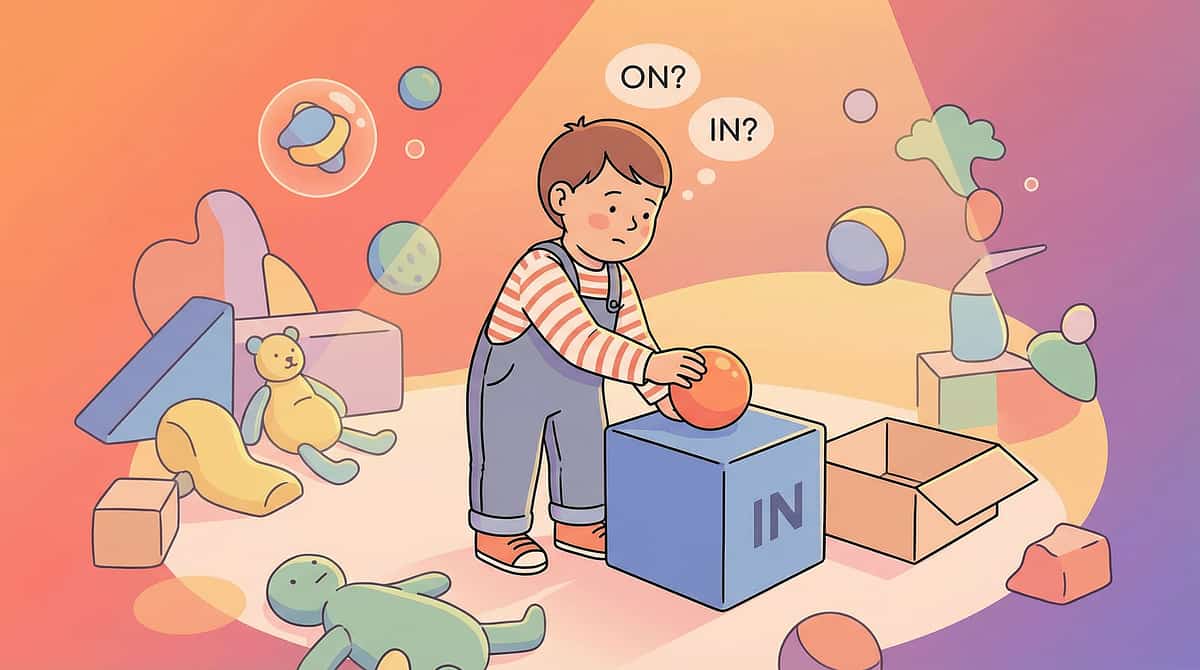
Preposition Understanding
Subdomain B2: Receptive Language | Domain B: Communication
"Put the ball IN the box." They put it ON. "Stand BEHIND the chair." They stand BESIDE it. The tiny words that describe spatial relationships — in, on, under, behind, beside, between — are a comprehension black hole. These are arguably the most cognitively dense words in any language.
The Neuroscience
Prepositions encode spatial relationships, processed by the posterior parietal cortex (spatial processing) in coordination with Wernicke's area (language). The child must decode the preposition word, mentally represent the spatial relationship, and map it onto the physical world — three separate cognitive operations compressed into one tiny word.
Evidence Level
📊Level I — Preposition training within SLP + ABA receptive programmes. NCAEP 2020
What You'll Learn
- Preposition hierarchy: in/on → under → next to → behind/in front → between
- Physical manipulation teaching (child moves the objects themselves)
- Body-based preposition games ("YOU stand IN the box")
- Visual preposition cards for home and classroom
- Contrast teaching (in vs. on vs. under simultaneously)
- Generalization from objects to real environments

B-161
Object Identification
Subdomain B2: Receptive Language | Domain B: Communication
"Show me the cup." Blank look. "Where's the ball?" They don't scan the room. The basic receptive vocabulary — matching words to objects — has gaps that make every instruction harder. Each word-object pairing is a neural connection that must be explicitly built through repeated exposure and reinforcement.
The Neuroscience
Object identification requires matching an auditory word-form (temporal lobe) to a visual/conceptual representation (temporal-parietal cortex). Typically developing children learn ~10 new words per day through incidental exposure. Children with ASD often need 10× the exposures for each word to "stick" — making structured, repeated practice essential.
Evidence Level
📊Level I — Receptive identification / listener responding is among the most researched ABA targets. NCAEP 2020
What You'll Learn
- Receptive vocabulary assessment tools
- High-frequency first words (Indian context: roti, chai, paani, ghar)
- 3D objects → 2D pictures → spoken word progression
- Error correction procedures for teaching
- Generalization across multiple contexts and settings
- Building from 10 → 50 → 100 → 200+ word receptive vocabulary
B-162
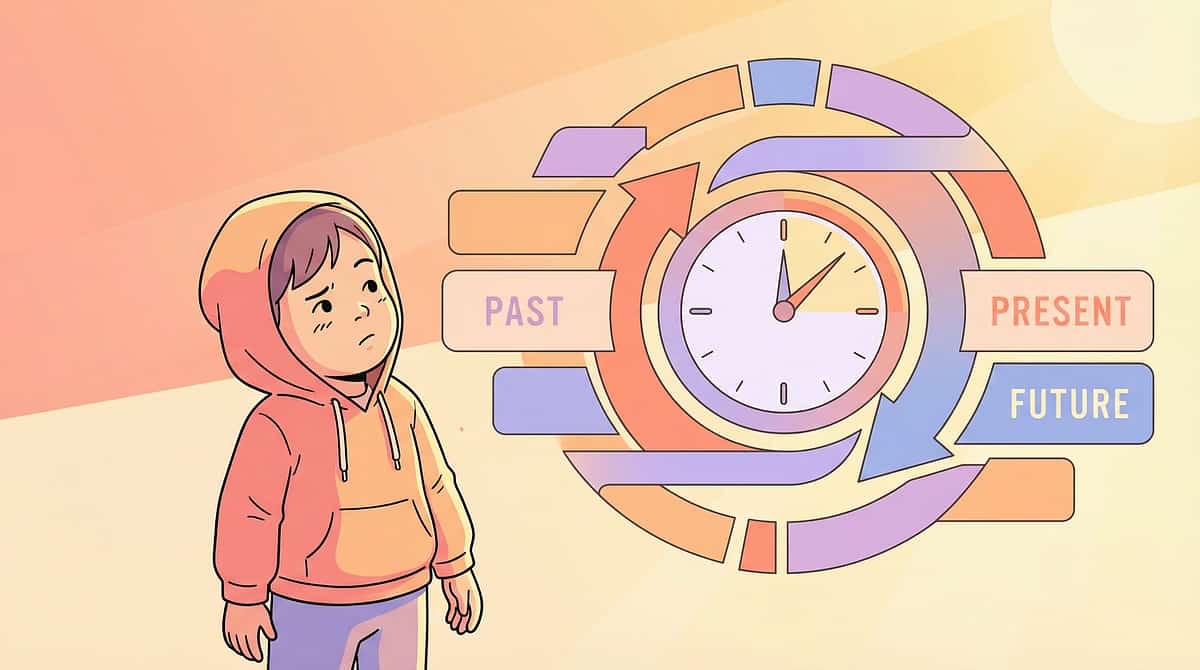
Time Concept Understanding
Subdomain B2: Receptive Language | Domain B: Communication
"We'll go to the park AFTER lunch." "WAIT five minutes." "That was YESTERDAY." Time words are invisible — they don't point to anything you can see or touch. Your child lives in an eternal NOW, and every reference to past, future, or duration creates confusion.
The Neuroscience
Time concept understanding requires the most abstract form of language comprehension. Time is not perceivable through any sense — it exists only as a concept. The right prefrontal cortex and insular cortex process temporal representations, while the hippocampus sequences events in time. For a brain excelling at concrete, present-moment processing, abstract temporal language is among the most challenging targets.
Evidence Level
📊Level I–II — Time concept teaching within SLP + visual supports. NCAEP 2020
What You'll Learn
- Visual time representations (timers, schedules, calendars)
- First/then boards as time scaffolds
- Past/present/future visual timeline
- Duration concepts using visual timers
- Sequence concepts: first → next → last
- Indian daily routine anchors ("after school," "before dinner")
B-163
Story Sequence Understanding
Subdomain B2: Receptive Language | Domain B: Communication
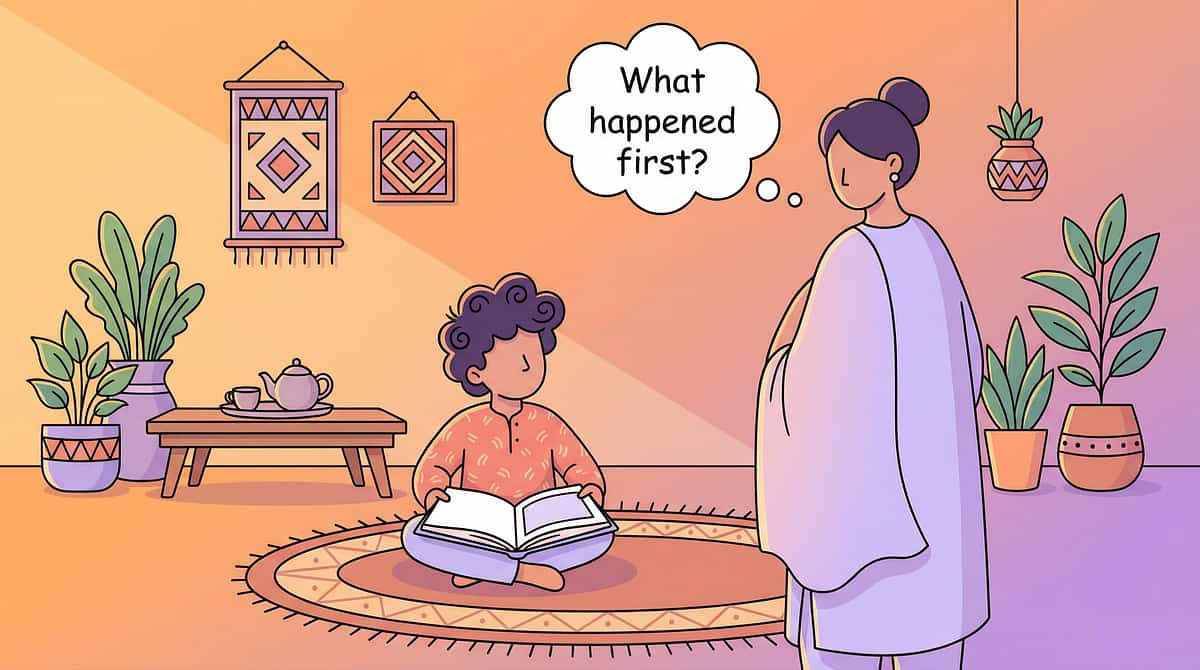
You read a simple story. "What happened first?" Blank stare. "What happened next?" Same answer as before. The ability to track a narrative sequence — first, then, next, finally — is missing, making stories, conversations, and daily routines harder to follow at every turn.
The Neuroscience
Narrative comprehension requires temporal sequencing (hippocampus), working memory (holding early events while processing later ones), causal reasoning (understanding why events connect), and character tracking (who did what). This is multi-system language processing at its most demanding — and one of the richest intervention targets available.
Evidence Level
📊Level I — Sequencing and narrative intervention within SLP. NCAEP 2020
What You'll Learn
- 2-step → 3-step → 4-step sequence card progressions
- Visual story maps as comprehension anchors
- Acting out stories physically for embodied understanding
- "First-next-last" language framework
- Retelling with picture support
- Indian stories adapted for sequencing (Panchatantra, daily life)
B-164
Emotion Word Understanding
Subdomain B2: Receptive Language | Domain B: Communication
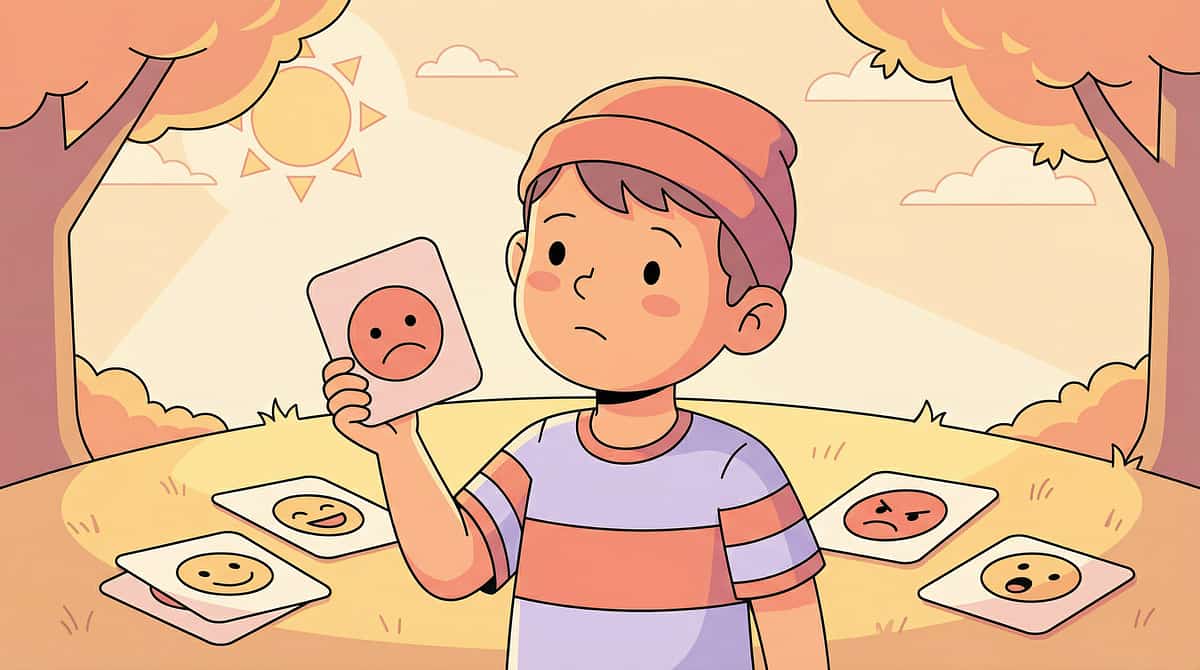
"Are you happy?" They don't know what "happy" means as a word connected to a feeling. "She looks sad." They can't match the word to the facial expression. Emotion words — the vocabulary of inner life — are among the most abstract words in any language, and among the hardest for a child with ASD to decode.
The Neuroscience
Emotion words link language (temporal lobe) to interoception (insular cortex) to facial recognition (fusiform face area) to social cognition (medial prefrontal cortex). Understanding "sad" requires knowing the word, recognizing the facial expression, AND connecting both to an internal body sensation. If interoception is also impaired, this becomes a triple challenge.
Evidence Level
📊Level I — Emotion vocabulary within SLP + social cognition programmes. NCAEP 2020
What You'll Learn
- Core emotion vocabulary: happy, sad, angry, scared → more complex emotions
- Photo + illustration emotion matching activities
- Body sensation + facial expression + word pairing
- Social stories with an emotion focus
- Video-based emotion identification practice
- Zone of Regulation vocabulary integration
B-165
Yes/No Question Confusion
Subdomain B2: Receptive Language | Domain B: Communication
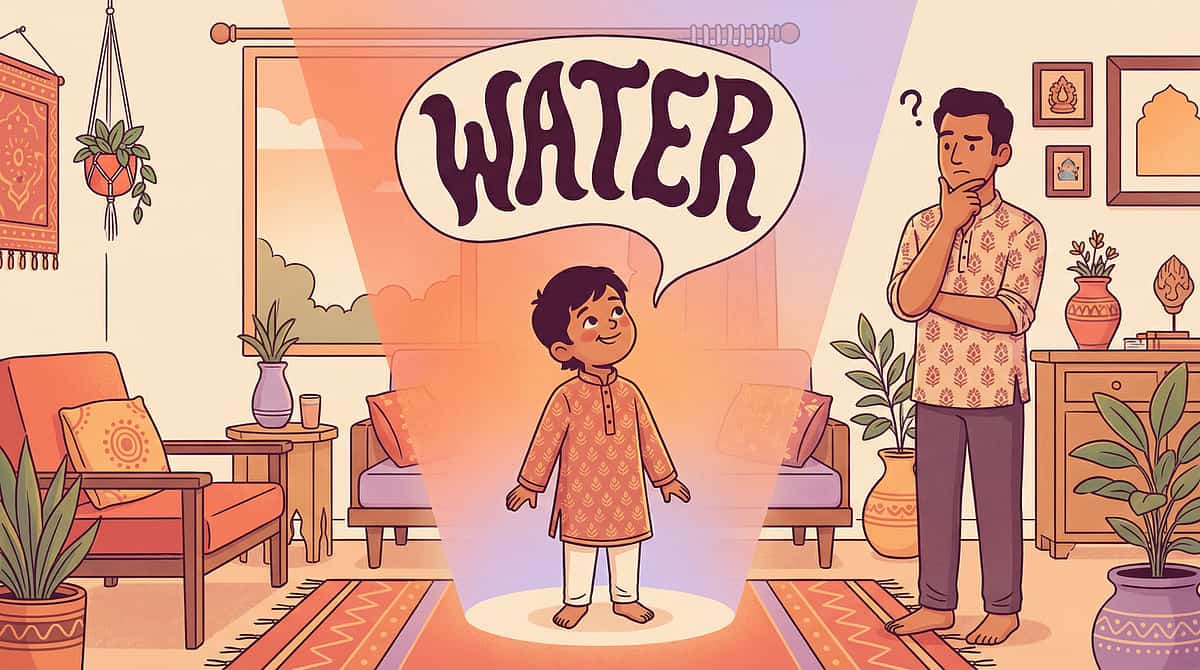
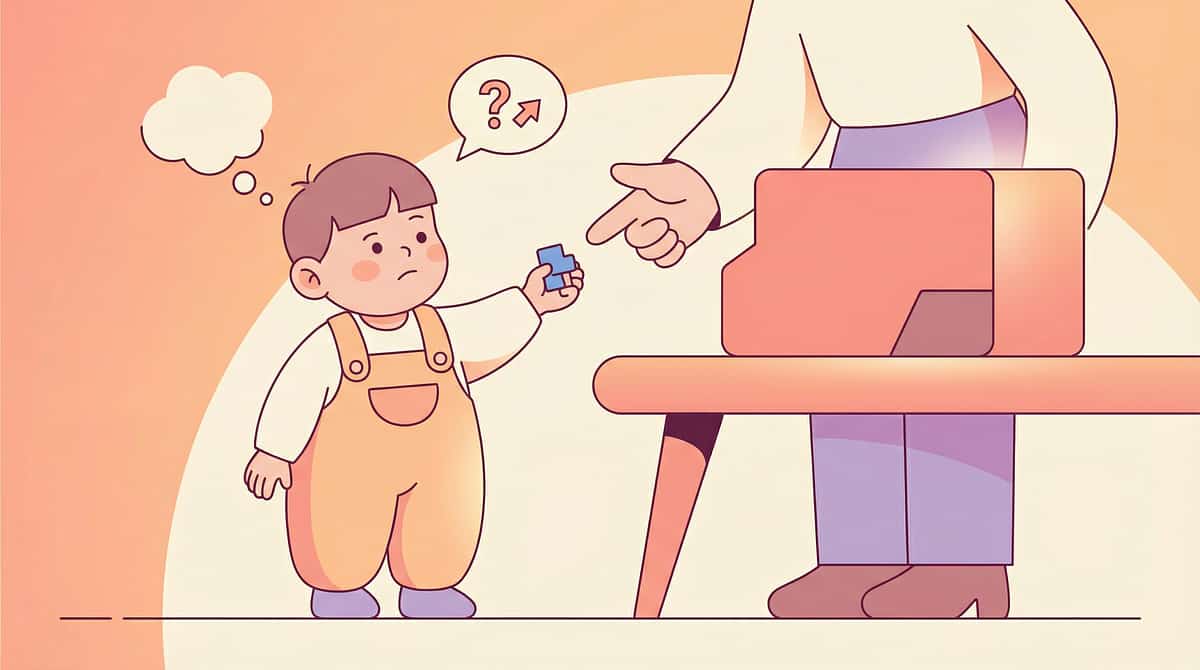
"Do you want water?" → "Water." (Echo, not answer.) "Is this a dog?" (showing cat) → "Yes." The simplest question format in any language — yes or no — produces unreliable answers. You can never trust a "yes" or "no" from your child, making every decision a guessing game.
The Neuroscience
Yes/no questions require understanding the proposition, evaluating it against reality, and selecting the correct response. Acquiescence bias — saying "yes" to everything — is common when the child doesn't understand the question. "Yes" is the safer social response. Echolalia (repeating the last word) is another processing-failure indicator to watch for.
Evidence Level
📊Level I — Yes/no discrimination training. NCAEP 2020 | ABA DTT protocols
What You'll Learn
- Teaching "yes" and "no" as CONCEPTS, not just words
- Visual yes/no cards for structured practice
- Known-answer questions first (show cookie → "Do you want this?")
- Building from obvious → non-obvious questions
- Detecting acquiescence (testing with absurd questions)
- Head nod/shake teaching for nonverbal children
B-166
Comparative Concepts
Subdomain B2: Receptive Language | Domain B: Communication
"Give me the BIGGER one." They give the smaller. "Which is LONGER?" Guessing. Comparative language — bigger/smaller, more/less, taller/shorter — requires understanding that two things differ along a dimension. Abstract. Relative. Invisible. And requiring relational reasoning the brain must be explicitly taught.
The Neuroscience
Comparative concepts require relational reasoning — processing two items relative to each other along a single dimension. The parietal cortex (magnitude processing) and prefrontal cortex (relational comparison) must coordinate. The word "bigger" has no fixed meaning — it depends entirely on what's being compared, making it one of the most abstract early language targets.
Evidence Level
📊Level I — Concept teaching within SLP + early academics. NCAEP 2020
What You'll Learn
- Concrete-first teaching using physical objects with obvious differences
- One dimension at a time: size only, then length, then quantity
- Contrast teaching: THIS is big, THIS is small — side by side
- Graduated difficulty from obvious to subtle differences
- Indian daily life comparisons (roti sizes, fruit quantities)
B-167
Negation Understanding
Subdomain B2: Receptive Language | Domain B: Communication
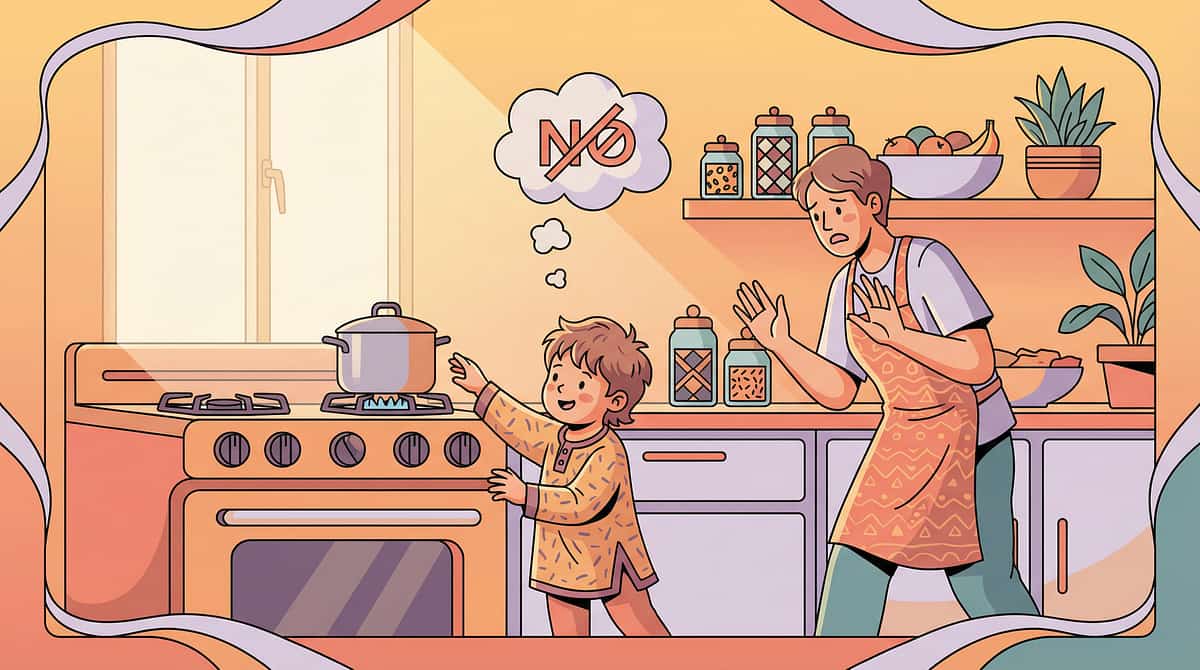
"DON'T touch the stove." They touch it. "NO running." They run. It's not defiance — they heard "touch the stove" and "running." The "don't" and "no" didn't register as modifiers. They processed the action word but missed the negation.
The Neuroscience
Negation is linguistically complex: the brain must process the positive statement, then REVERSE it. Neuroimaging shows negation involves an additional processing step in the left inferior frontal gyrus. For children with processing delays, the negation word may be processed AFTER the action word has already been executed — making "don't" instructions reliably counterproductive.
Evidence Level
📊Level I — Negation teaching within SLP. NCAEP 2020
What You'll Learn
- Why "don't" instructions consistently backfire
- Positive reframing ("Hands down" instead of "Don't touch")
- Teaching "no" as a concept (not this object, not this action)
- Visual "stop" signals paired with negation language
- Negation comprehension hierarchy
- Family coaching: replacing negative instructions with positive alternatives

B-168
Category Understanding
Subdomain B2: Receptive Language | Domain B: Communication
"Give me an ANIMAL." Blank stare. They know "dog" and "cat" individually — but the concept that dog + cat + elephant + fish are all "animals" hasn't formed. Categories — the mental filing system that organizes ALL knowledge — are incomplete.
The Neuroscience
Categorical thinking requires the brain to identify shared abstract features across different items and group them under a superordinate label. This involves the anterior temporal lobe (semantic hub theory) coordinating with the prefrontal cortex. Children with ASD often show strong item-level knowledge but weak category-level organization — they know each tree but can't see the forest.
Evidence Level
📊Level I — Categorization within SLP + cognitive programmes. NCAEP 2020
What You'll Learn
- Category hierarchy: basic objects → categories → subcategories
- Sorting activities with physical objects
- Feature analysis ("What do animals have in common?")
- Indian daily life categories: vegetables, fruits, clothes, vehicles
- Category games families can play at home
- Building from 3 → 5 → 10+ items per category
B-169
Action Word Understanding
Subdomain B2: Receptive Language | Domain B: Communication
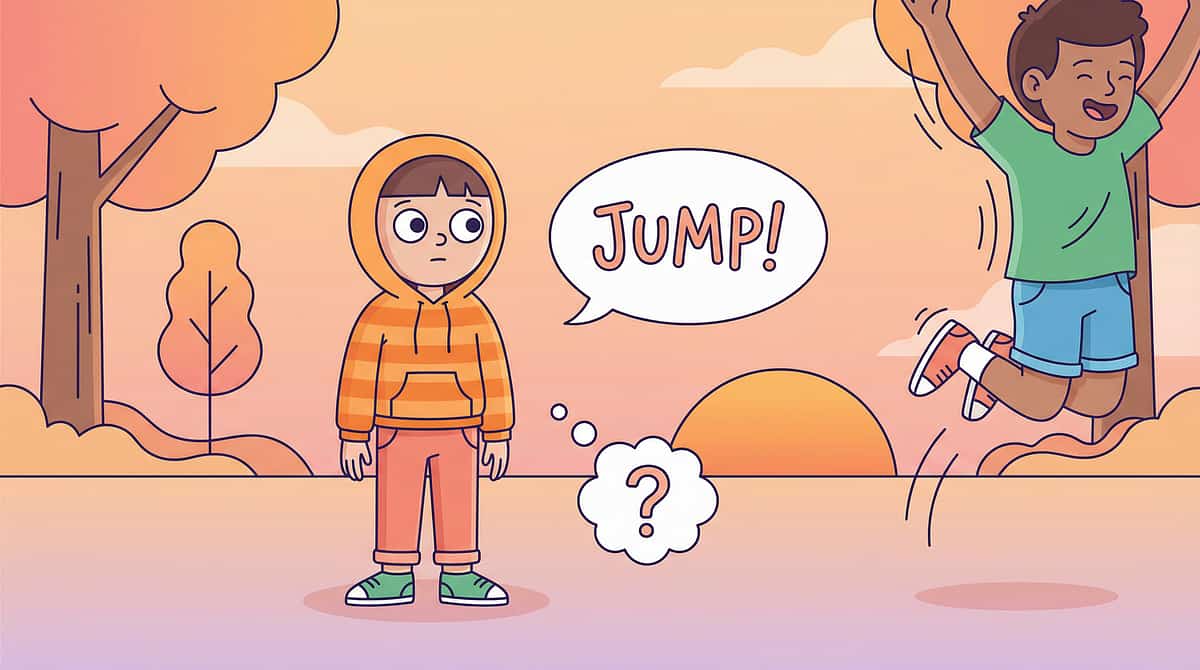
"JUMP!" They stand still. "CLAP!" They stare. They know object names (ball, cup, shoe) but verbs — the words that describe what things DO — are missing from their comprehension. Without action words, instructions are impossible and sentences are incomprehensible.
The Neuroscience
Verb comprehension requires different neural processing than noun comprehension. Nouns activate the temporal lobe (object recognition). Verbs activate the frontal and parietal cortices (motor planning, action representation). Understanding "jump" requires the brain to simulate the motor act internally — and this motor-language connection may be atypically wired in ASD.
Evidence Level
📊Level I — Verb/action word training within SLP + ABA. NCAEP 2020
What You'll Learn
- Action word teaching through DOING (child performs the action)
- Video-based action word identification
- Action word vocabulary priority list
- Balancing verbs vs. nouns in teaching sessions
- Combining nouns + verbs for early sentence comprehension
- Indian daily routine action words (khana, peena, sona, khelna)
B-170
Adjective Understanding
Subdomain B2: Receptive Language | Domain B: Communication
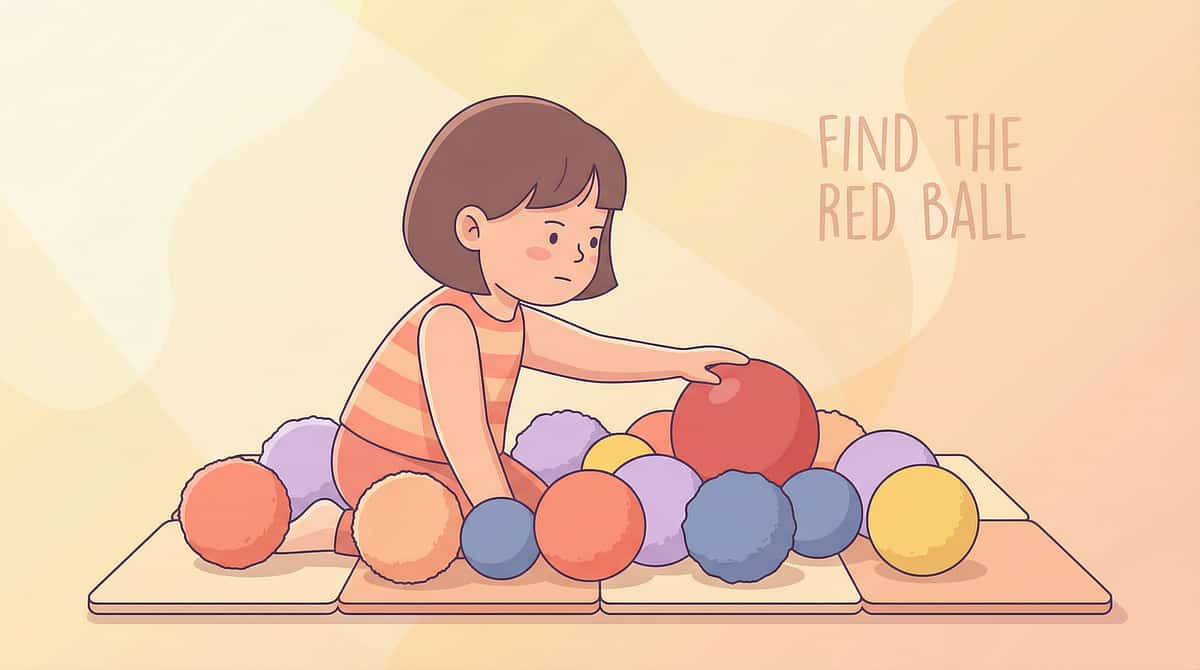
"Give me the RED ball." They give you any ball. "I want the BIG cup." They grab the nearest cup. Adjectives — the descriptive words that specify WHICH object — aren't being processed. Without adjective comprehension, every instruction about a specific item fails before it begins.
The Neuroscience
Adjective comprehension requires processing two concepts simultaneously (the object + the attribute) and combining them to identify the specific target. This requires the brain to hold "ball" in working memory while applying the "red" filter — a dual-processing task that taxes the prefrontal cortex's working memory capacity significantly.
Evidence Level
📊Level I — Descriptor/attribute teaching within SLP + ABA. NCAEP 2020
What You'll Learn
- Adjective hierarchy: colour → size → shape → texture → temperature
- Contrast sets: red ball vs. blue ball (same noun, different adjective)
- Sorting by attributes as structured practice
- Building adjective + noun combinations
- Multi-attribute descriptions (big red ball)
- Describing objects in Indian daily contexts

B-171
Quantity Concepts
Subdomain B2: Receptive Language | Domain B: Communication
"Take TWO biscuits." They take a handful. "Give me ONE." They give three. "Do you want MORE?" They don't understand that "more" means "additional." Quantity — one, two, many, more, less, all, none — is abstract mathematical language embedded in everyday communication.
The Neuroscience
Quantity processing engages the intraparietal sulcus (number sense) and prefrontal cortex (applying quantity rules to language). The brain must map linguistic labels (one, two, more, less) onto magnitude representations. This is a cross-domain computation — language meets mathematics — and both systems must be functional and connected for success.
Evidence Level
📊Level I — Quantity concept teaching within SLP + early numeracy. NCAEP 2020
What You'll Learn
- Quantity hierarchy: one/many → one/two/three → more/less → all/none
- Concrete counting with real objects from daily life
- Quantity in daily routines (one roti, two chapatis)
- "More" as the first quantity concept to teach
- Visual quantity representations for home and classroom
- Building from concrete to abstract quantity understanding
B-172
Spatial Concepts
Subdomain B2: Receptive Language | Domain B: Communication
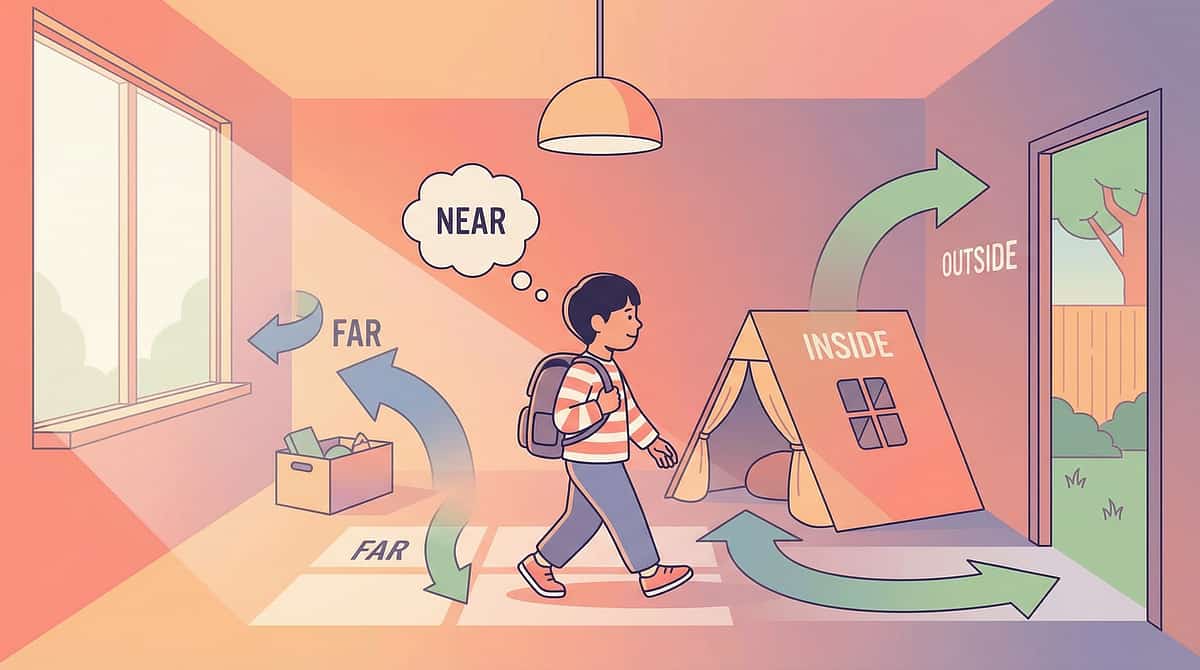
Near/far. High/low. Left/right. Here/there. Inside/outside. Spatial language encodes a child's position in the physical world — and without it, navigation, instructions, and daily routines become confusing. This technique covers the full range of spatial language beyond basic prepositions, including body-relative mapping like left and right.
The Neuroscience
Spatial concept processing relies heavily on the posterior parietal cortex (spatial representation) and hippocampus (spatial memory). Left/right discrimination is particularly challenging because it requires body-relative spatial mapping — understanding that "left" depends on which direction you're facing, making it a late-developing and explicitly teachable concept.
Evidence Level
📊Level I — Spatial concept teaching within SLP. NCAEP 2020
What You'll Learn
- Spatial concept hierarchy from simple to complex
- Body-based spatial learning through movement
- Obstacle courses as immersive spatial language practice
- Indian home spatial vocabulary in natural contexts
- Left/right teaching strategies for body-relative mapping
- Generalization of spatial concepts across environments
B-173
Temporal Concepts
Subdomain B2: Receptive Language | Domain B: Communication
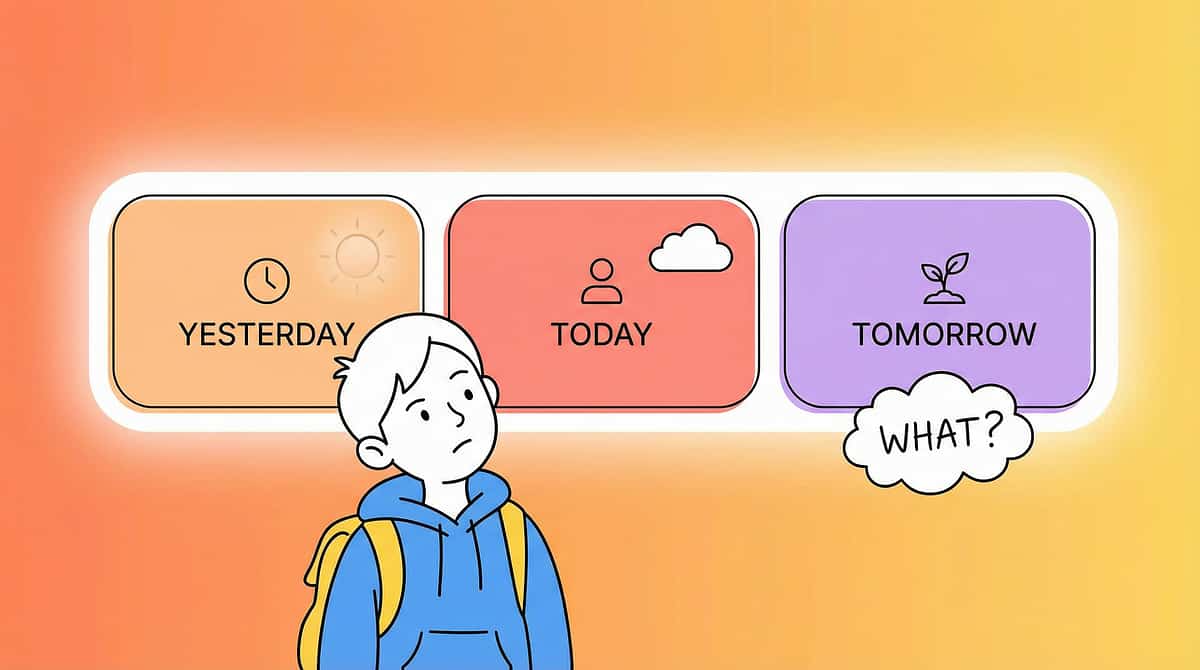
Before/after. First/then/next/last. Yesterday/today/tomorrow. Morning/afternoon/night. Soon/later/eventually. The language of time is entirely abstract — and for a child living in the concrete present, every temporal word is a puzzle without a picture. These are among the last language concepts to develop in any child.
The Neuroscience
Temporal concept processing involves the right prefrontal cortex (temporal ordering), cerebellum (internal timing), and hippocampus (episodic memory for past / prospective memory for future). These are among the LAST language concepts to develop in typically developing children (ages 5–7) — and may be significantly delayed in ASD. This makes them a high-priority, explicitly taught target.
Evidence Level
📊Level I–II — Temporal language teaching within SLP. NCAEP 2020
What You'll Learn
- Temporal concept hierarchy from simple to abstract
- Visual timeline as a daily anchor tool
- Before/after teaching using familiar daily routines
- Calendar skills as applied temporal language practice
- First-then boards → full visual schedules progression
- Indian cultural time anchors (puja time, school time, dinner time)
B-174
Building Listening Skills
Subdomain B2: Receptive Language | Domain B: Communication
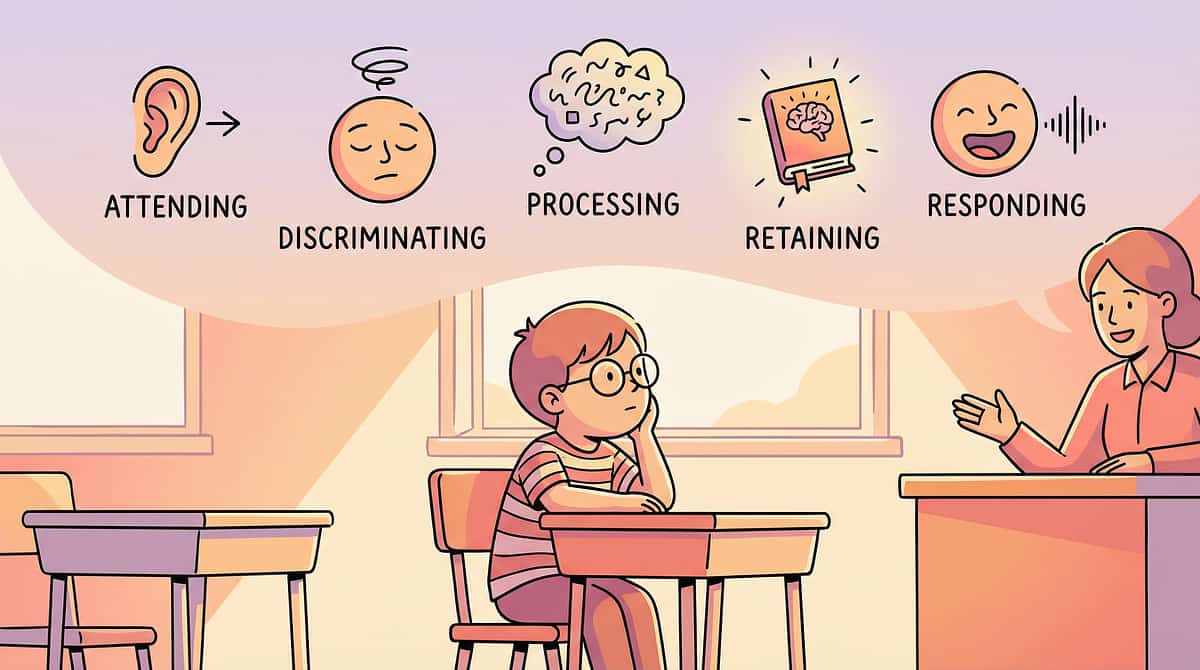
"They don't listen." The most common complaint from teachers and families — but listening is not a single skill. It's a cascade: attending (orienting to the speaker), discriminating (isolating speech from noise), processing (decoding the message), retaining (holding it in memory), and responding (acting on what was heard). The child who "doesn't listen" may be failing at any one of these five stages.
The Neuroscience
Listening engages the full auditory processing pathway PLUS attentional networks (frontoparietal system), working memory (dorsolateral PFC), and executive function (inhibiting competing stimuli). Each stage is a potential point of failure — and the intervention must identify WHERE in the listening cascade the breakdown occurs to target that specific stage effectively.
Evidence Level
📊Level I — Listening skills intervention. NCAEP 2020 | ASHA auditory processing guidelines
What You'll Learn
- 5-stage listening assessment (where does the breakdown occur?)
- Attention-getting strategies BEFORE speaking
- Signal-to-noise ratio optimization in classroom and home
- Listening games targeting each stage individually
- Classroom accommodations for listening challenges
- "Whole body listening" visual framework: eyes looking, ears listening, body still, brain thinking
B-175
Auditory Memory
Subdomain B2: Receptive Language | Domain B: Communication
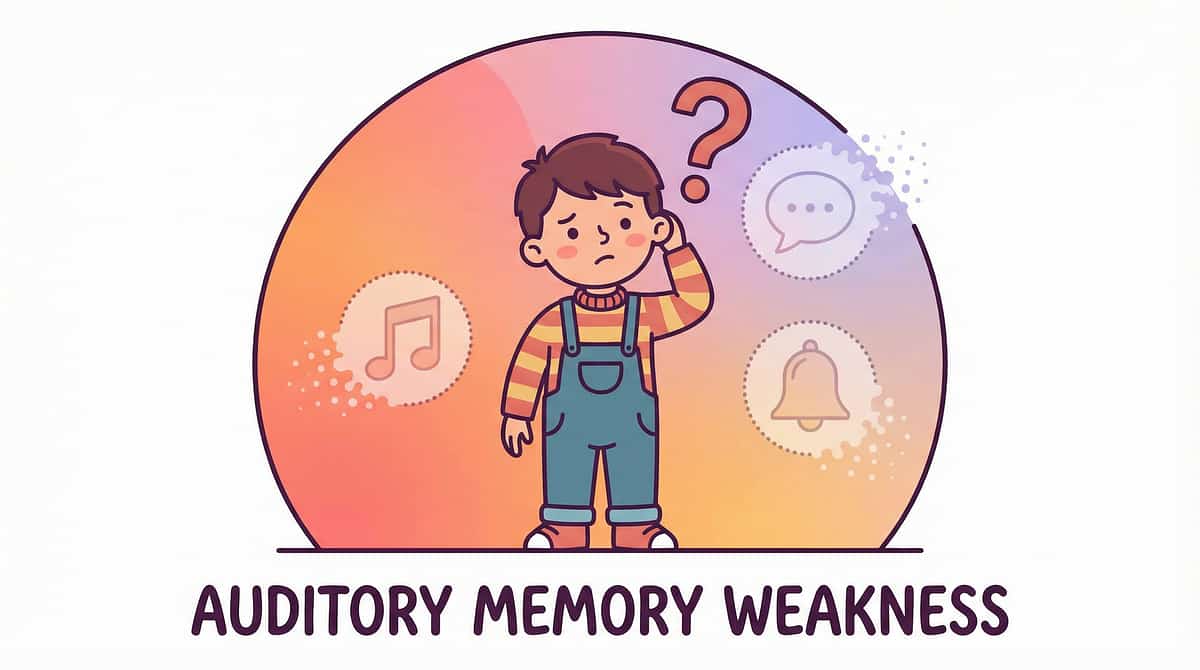
You tell them a phone number — gone. You give them a list of three things to get — they remember one. The teacher reads a paragraph and asks questions — they remember only the last sentence. Auditory memory is the invisible foundation of all receptive language. When it's weak, everything built on it is unstable.
The Neuroscience
Auditory memory operates through the phonological loop (Baddeley & Hitch model) — a temporary auditory store + articulatory rehearsal system in the left inferior frontal gyrus and temporal-parietal junction. The phonological loop holds approximately 2 seconds of audio information. When this loop is weak, spoken information decays before it can be processed, encoded, or acted upon. This is the hidden bottleneck behind most receptive language failures.
Evidence Level
📊Level I — Auditory memory training within SLP. NCAEP 2020 | Working memory research in ASD
What You'll Learn
- Auditory memory span assessment (how many items can they hold?)
- Sequential memory games: clapping patterns, word lists, instruction chains
- Chunking strategy (grouping information to reduce memory load)
- Visual support as external memory aid
- Building span from 1 → 2 → 3 → 4+ items progressively
- Classroom strategies for auditory memory weakness
9 Canon Materials
🗣️ SLP · 📋 ABA | SpEd · Psychology (neuropsych assessment if severe)
All 25 Receptive Language Techniques — Quick Reference
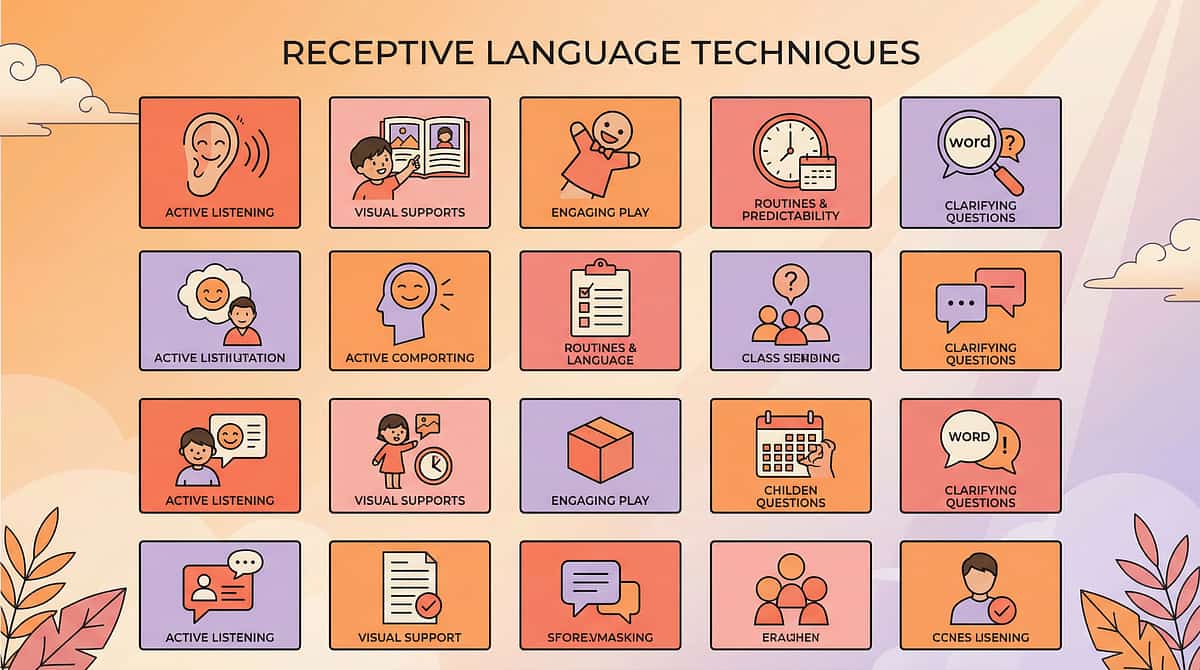
Every technique in Subdomain B2 is grounded in neuroscience, mapped to Level I evidence, and built for the real contexts Indian families and therapists navigate every day. Use this index to navigate directly to any technique.
B-152
B-158
B-166
B-171
B-172
B-173
B-175
Why Pinnacle Blooms Network®
21M+
Sessions Delivered
Across all communication and developmental domains
97%+
Improvement Rate
Reported by families following structured intervention
25
Evidence-Based Techniques
In this subdomain alone, each mapped to NCAEP 2020
9
Canon Materials
Per technique — curated, researched, and clinically validated
Every intervention on this platform is grounded in peer-reviewed research, designed for the Indian family context, and structured so that parents, therapists, and school program leads can all use them effectively. Receptive language is the invisible half of communication — and Pinnacle Blooms makes it visible, teachable, and achievable.
Preview of receptive language Therapy Material
Below is a visual preview of receptive language therapy material. The pages shown help educators, therapists, and caregivers understand the structure and content of the resource before use. Materials should be used under appropriate professional guidance.
Link copied!
Ready to Begin?
Explore the full Subdomain B2 library, connect with a specialist, or navigate to adjacent domains. Every child's comprehension journey is unique — and every step forward matters.
← B1: Pre-Verbal
↑ Domain B
B3: Expressive →
Pinnacle Blooms Network® | GPT-OS® | interventions.pinnacleblooms.org | interventions.pinnacleblooms.org/communication/receptive-language