
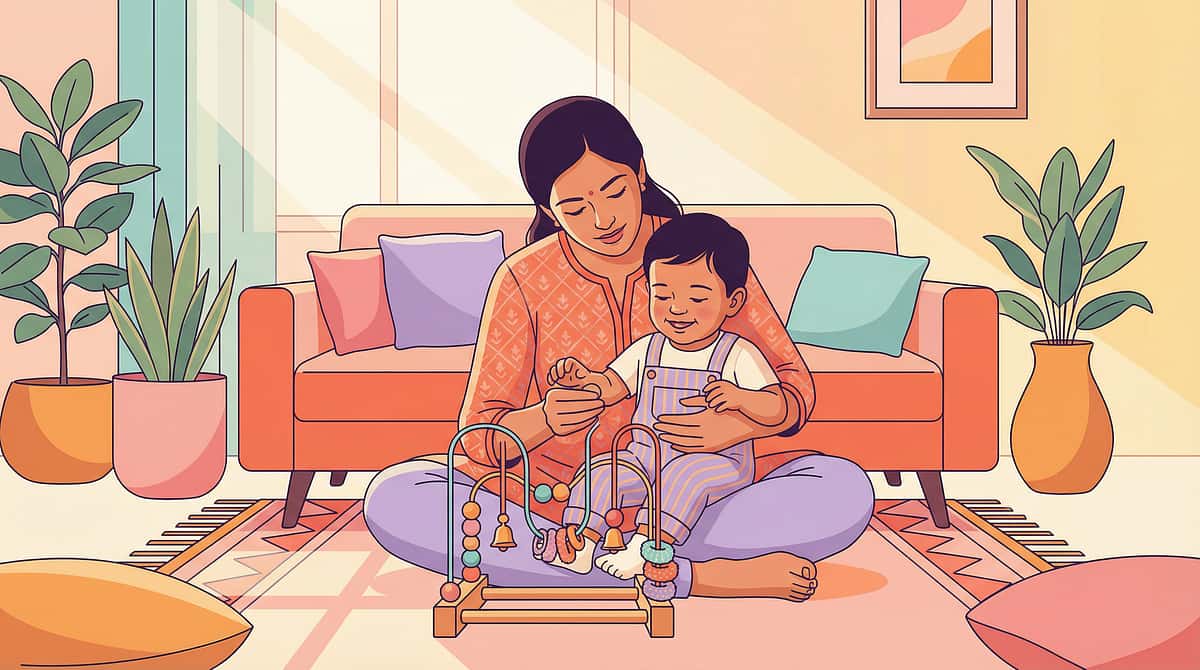
"...Nothing."

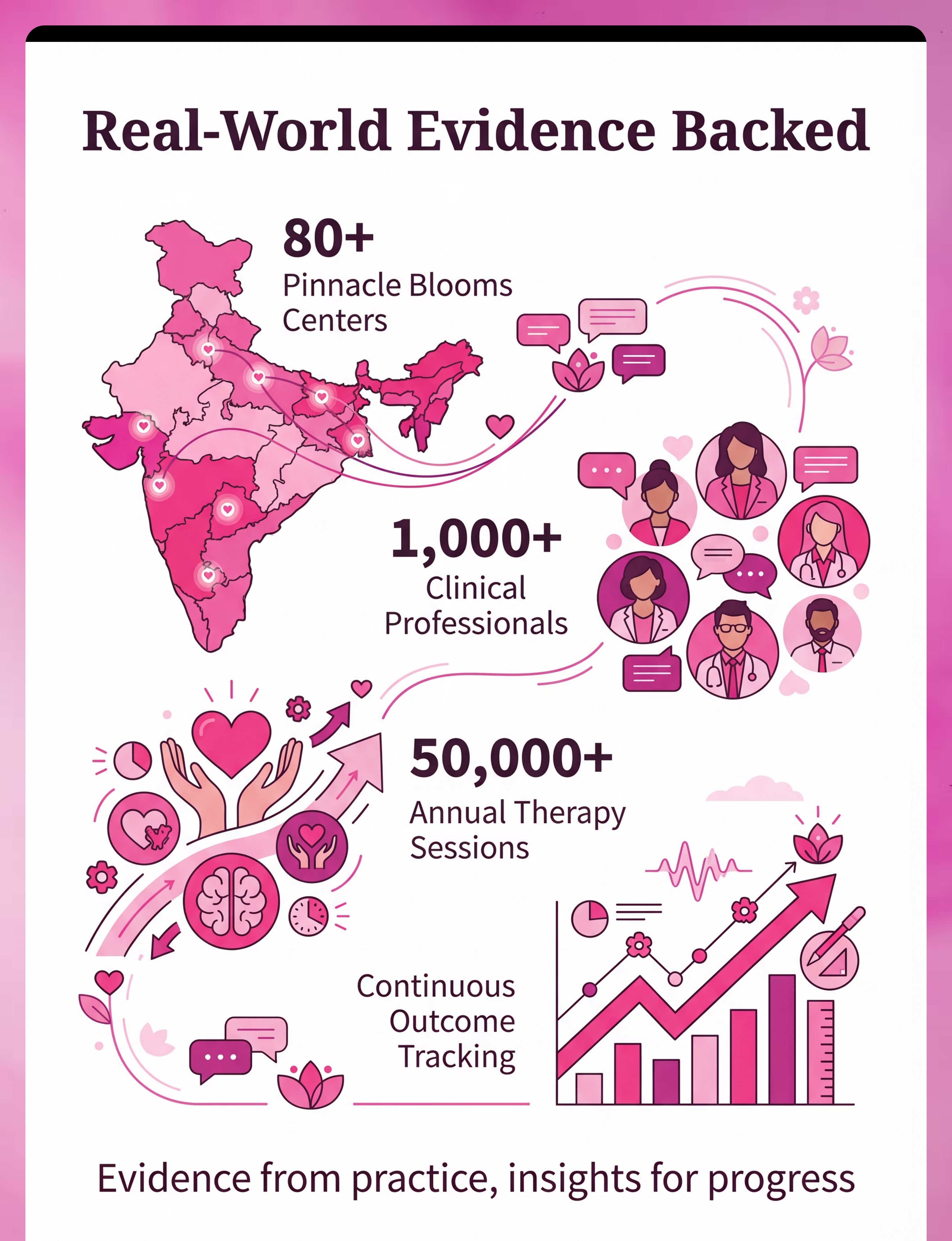
You are among 18 million+ families in India navigating exactly this challenge. Across 70+ Pinnacle centers and 21 million therapy sessions, narrative language difficulty — specifically the inability to describe events, retell stories, or answer "what happened?" questions — represents the most frequently reported functional communication concern among SLP referrals in the 4–8 year age band.

This Isn't Defiance. This Is Neuroscience.
The Science What's Happening in the Brain When your child can't describe an event, here is what their brain is being asked to do — simultaneously: Hippocampus Episodic Memory Retrieval — digging out the right moment Left Prefrontal Cortex Temporal Sequencing — arranging moments in the right time order Broca's + Wernicke's Area Language Formulation — finding words for people, places, and actions Working Memory Holding the story while speaking it simultaneously Pragmatic Processing "What does my listener need to know?" — audience awareness In Plain English When you ask "What happened today?" you are asking your child to execute six simultaneous cognitive processes: Dig into memory and pull out the right moment Arrange those moments in correct time order Find the right words for people, places, and actions Build grammatically correct sentences Hold the whole story in mind while also speaking it Judge what YOU need to know vs. what they can skip For neurotypical children, this automation happens invisibly. For children with narrative language differences, each step is effortful — sometimes exhausting. The shrug isn't unwillingness. It's overload. "This is a wiring difference, not a behavior choice." — Pinnacle Blooms Consortium, SLP Division
- Sensory Processing Differences (SPD Foundation, 2023)
- Working Memory Challenges
- Pragmatic Language Delay
- Difficulty with Question Comprehension
- Limited Pretend Play (→ see B-187)

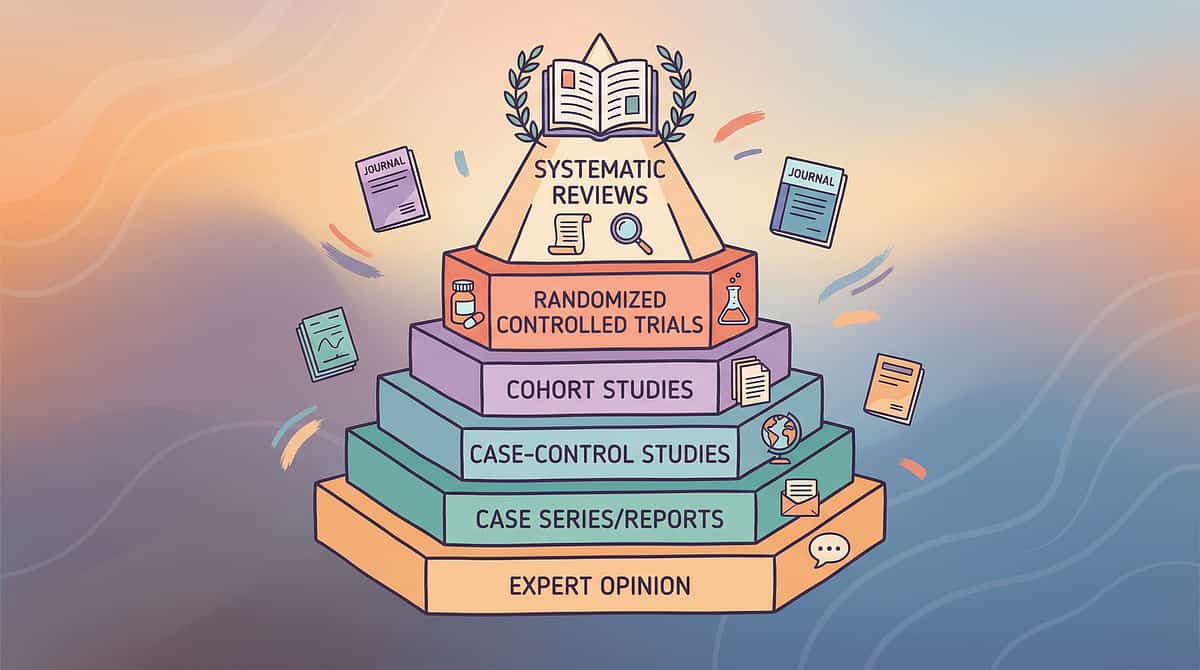
Spencer & Petersen (2018) | Narrative intervention produces significant gains in story grammar and event description across ASD + DLD populations | |
NCAEP (2020) | Visual supports + video modeling = evidence-based for autism narrative intervention | |
WHO CCD Package (2023) | Caregiver-implemented language facilitation produces outcomes equivalent to clinical delivery when properly scaffolded | |
Pinnacle RWE (2024) | 97%+ measured improvement in Communication Readiness Index when narrative materials protocol followed consistently across 8 weeks |
"These materials are not experimental. They represent the clinical consensus of speech-language pathology's most evidence-supported approach to narrative language development — now translated for home execution." — Pinnacle Blooms Consortium, CRO Division
- NeuroDev Pediatrics: Screens narrative milestones as part of developmental surveillance
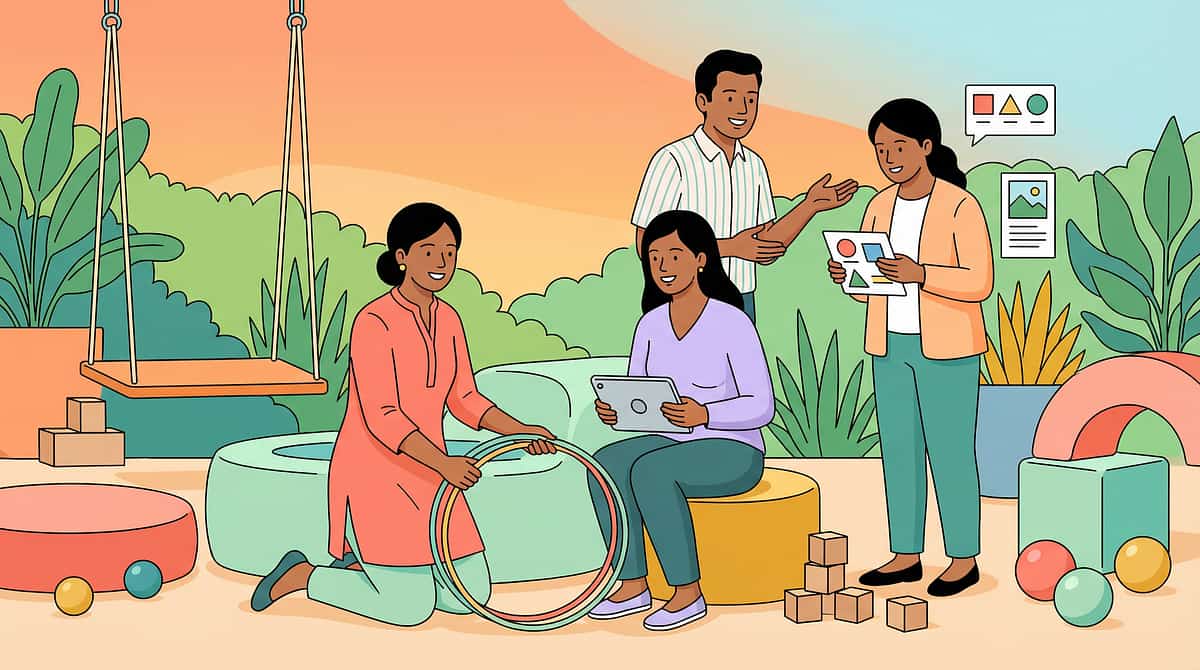
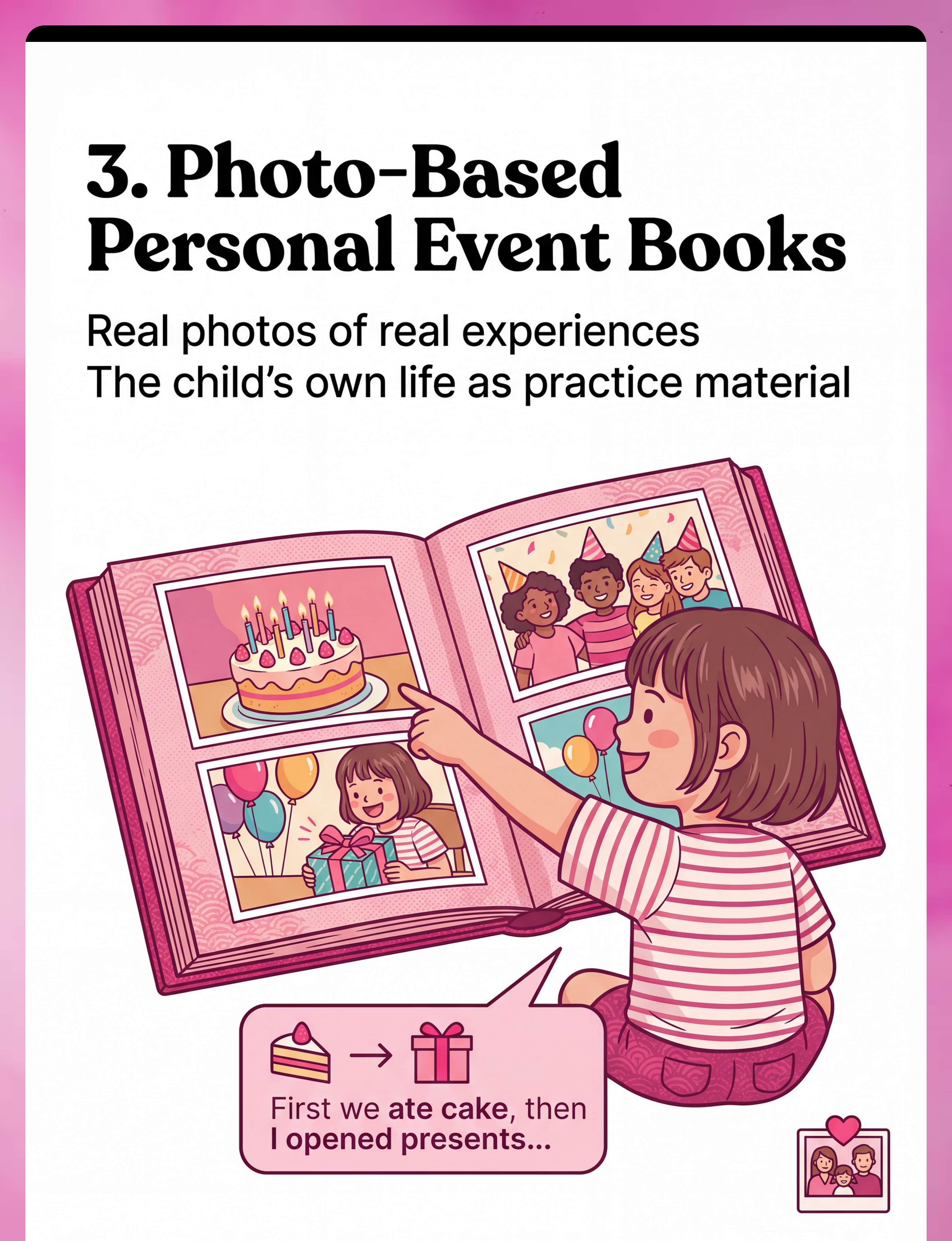
- Parents + Caregivers: Primary delivery agents for all 9 materials in home settings
- Teachers + Shadow Educators: Extend classroom narrative practice
# | Target | What You'll See Changing | |
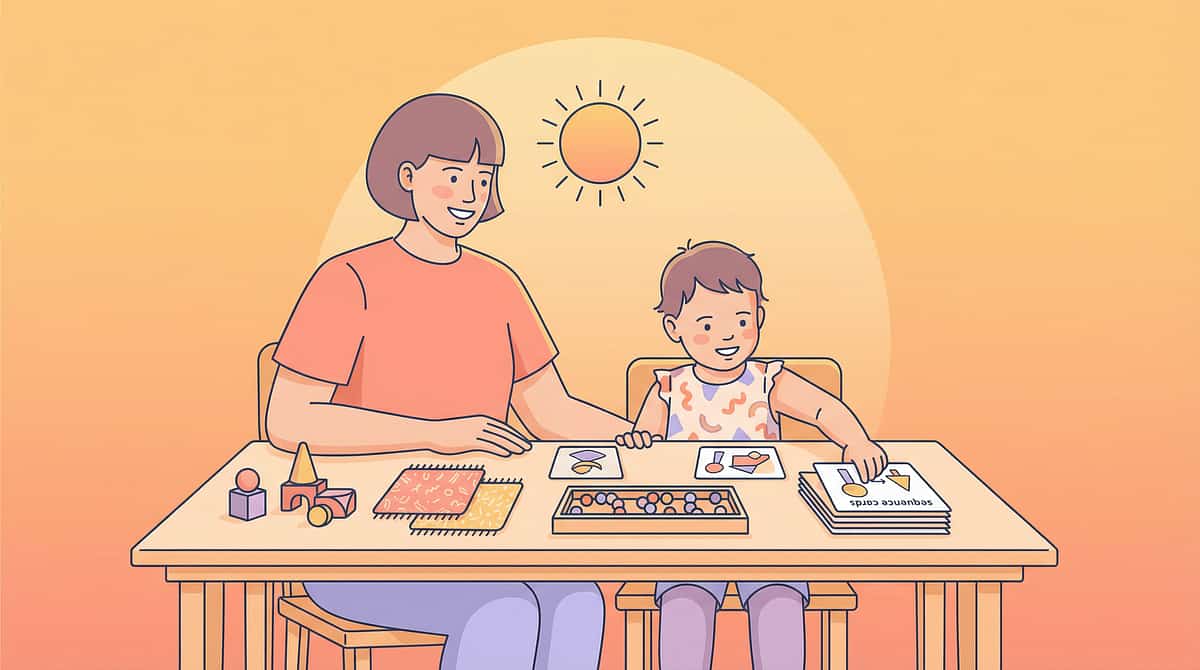
1 | Episodic Memory Retrieval | Child begins to recall and reference past events unprompted | |
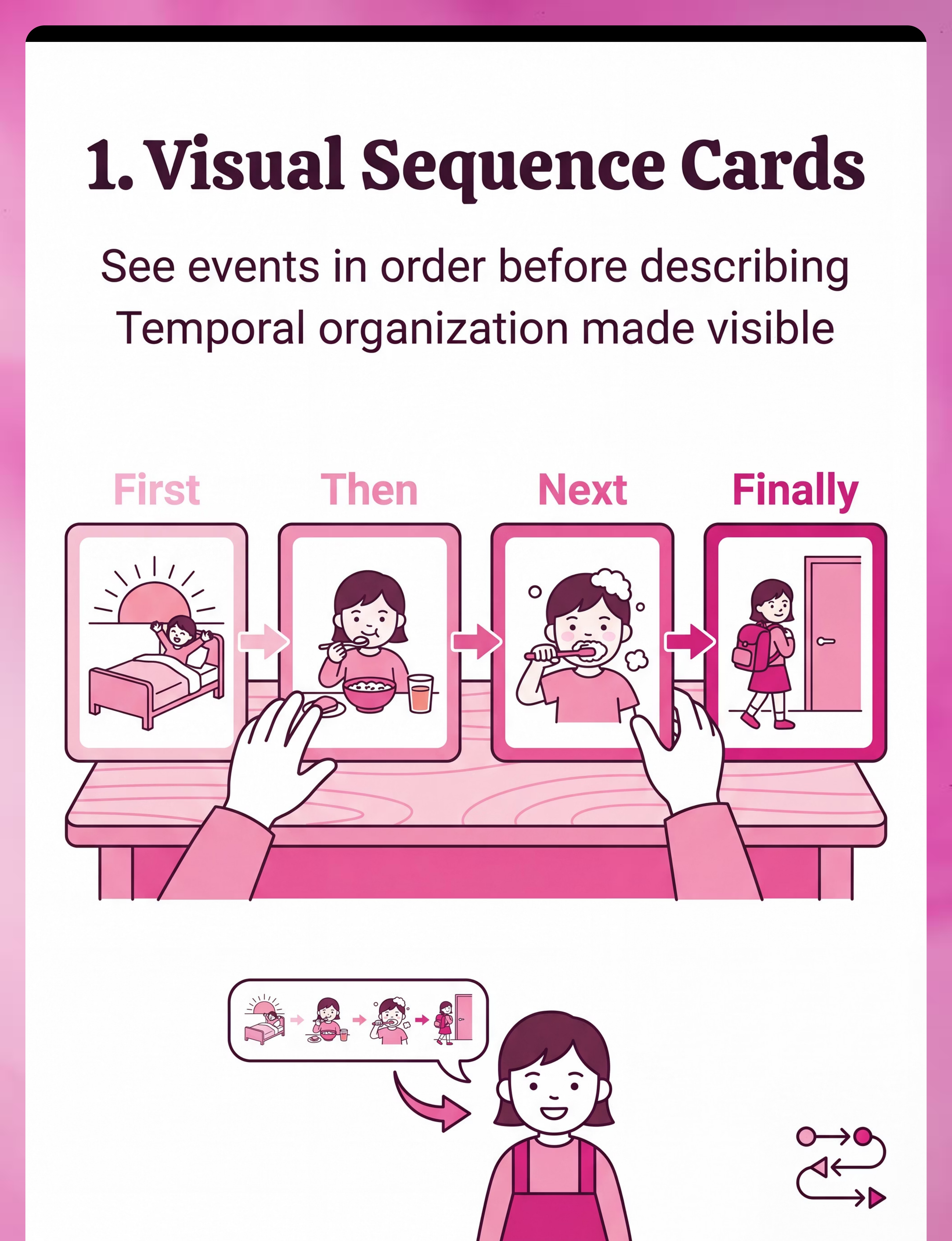
2 | Temporal Sequencing | "First... then... finally" emerges in the child's language | |
3 | Vocabulary Access | More specific nouns, action verbs, and location words appear | |
4 | Sentence Formulation | Sentences grow from 2-word to multi-clause descriptions | |
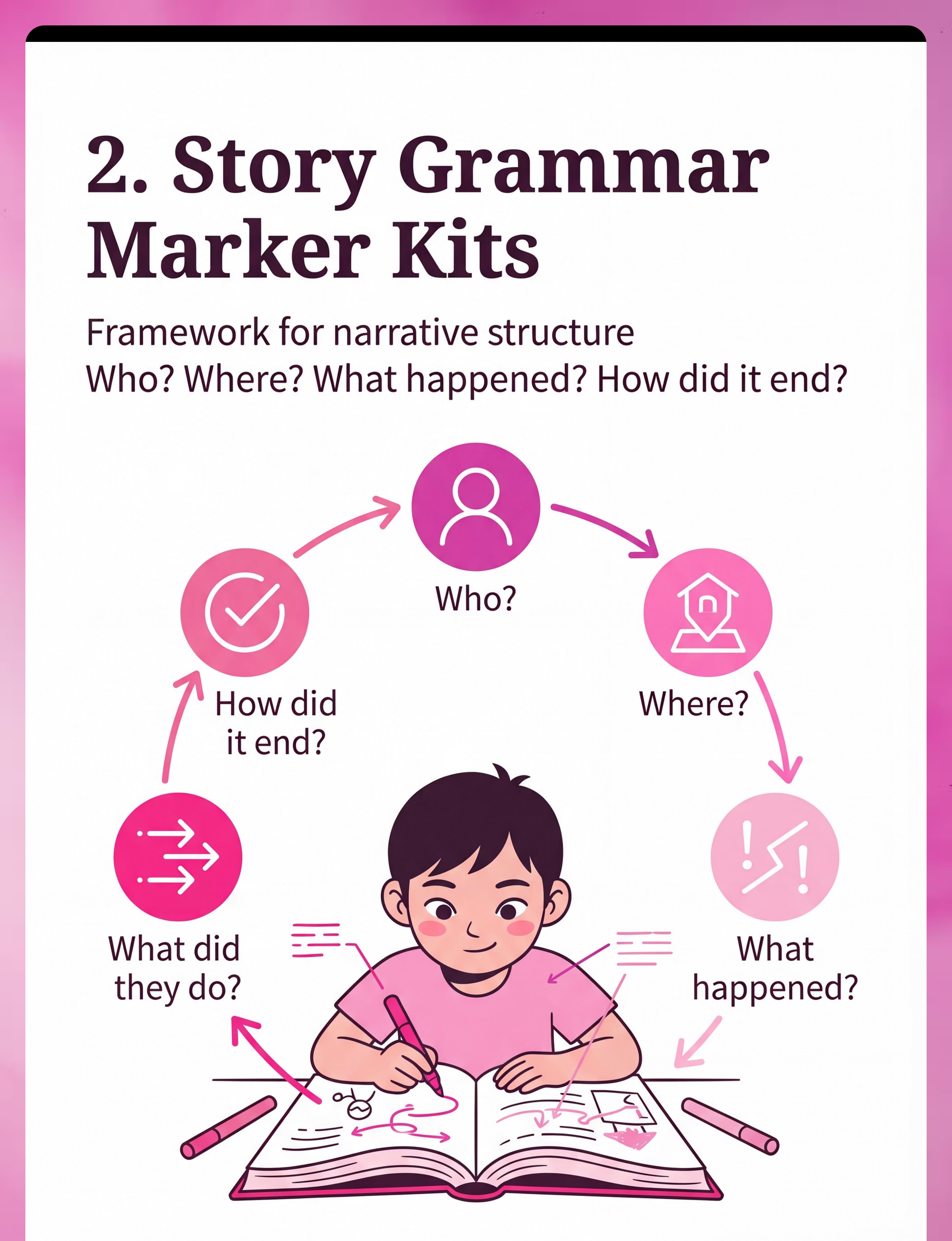
5 | Story Grammar Structure | Child's descriptions gain a beginning, middle, and end | |
6 | Pragmatic Awareness | Child begins to adjust story for listener ("You weren't there, so...") |
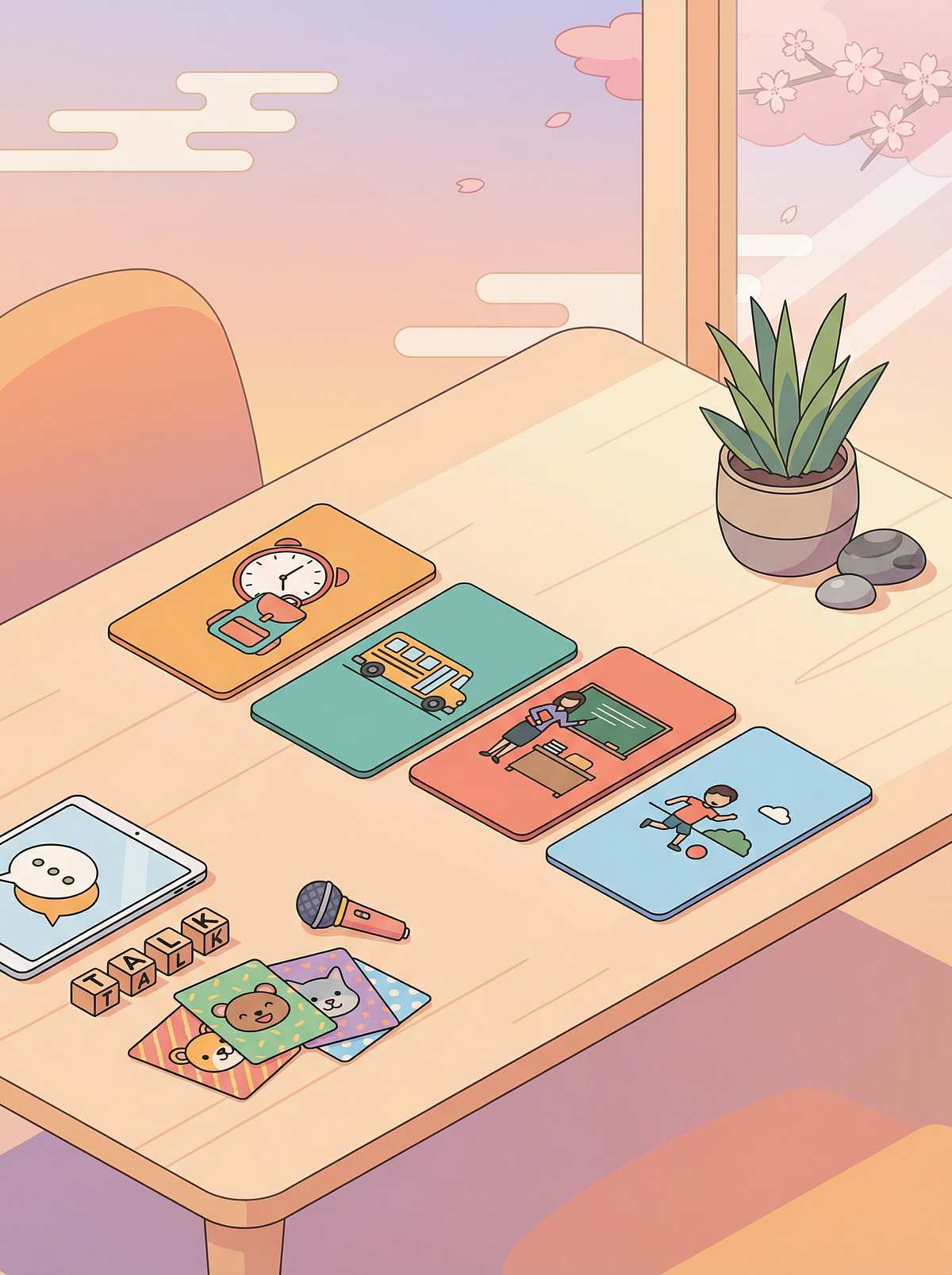
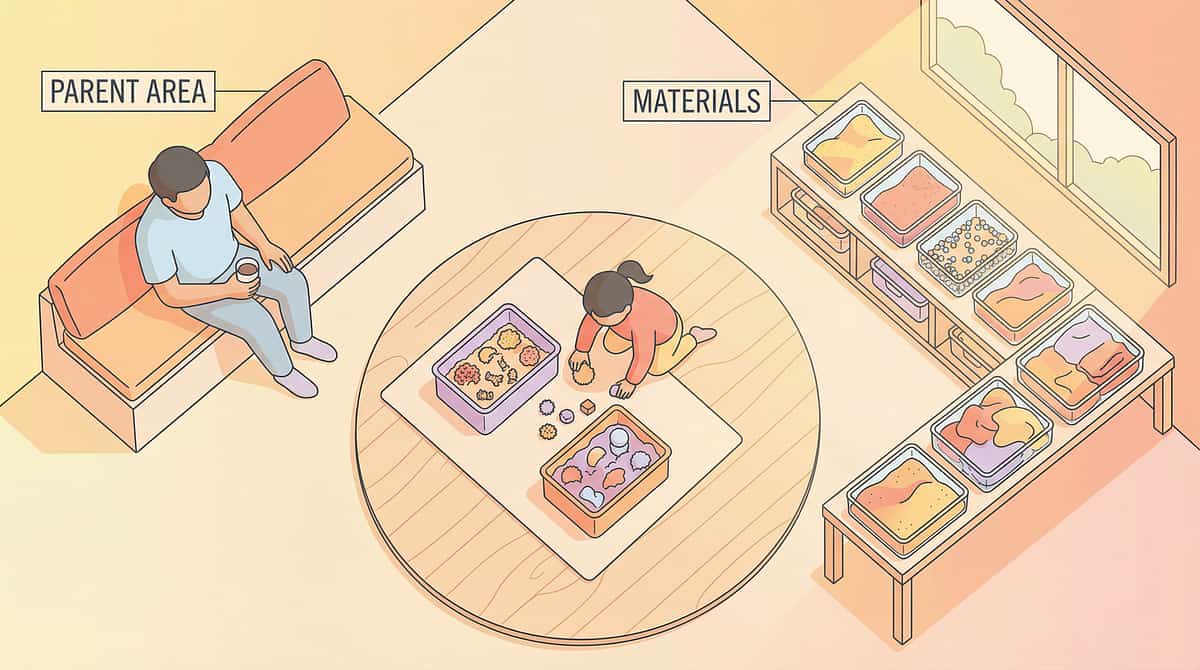
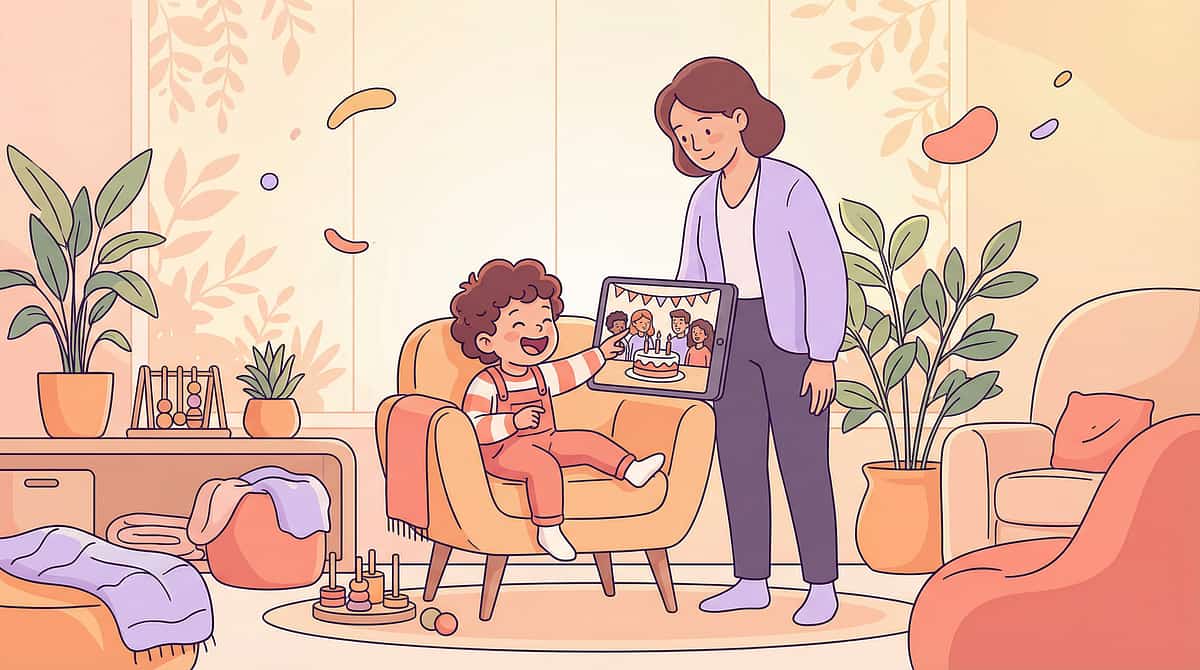
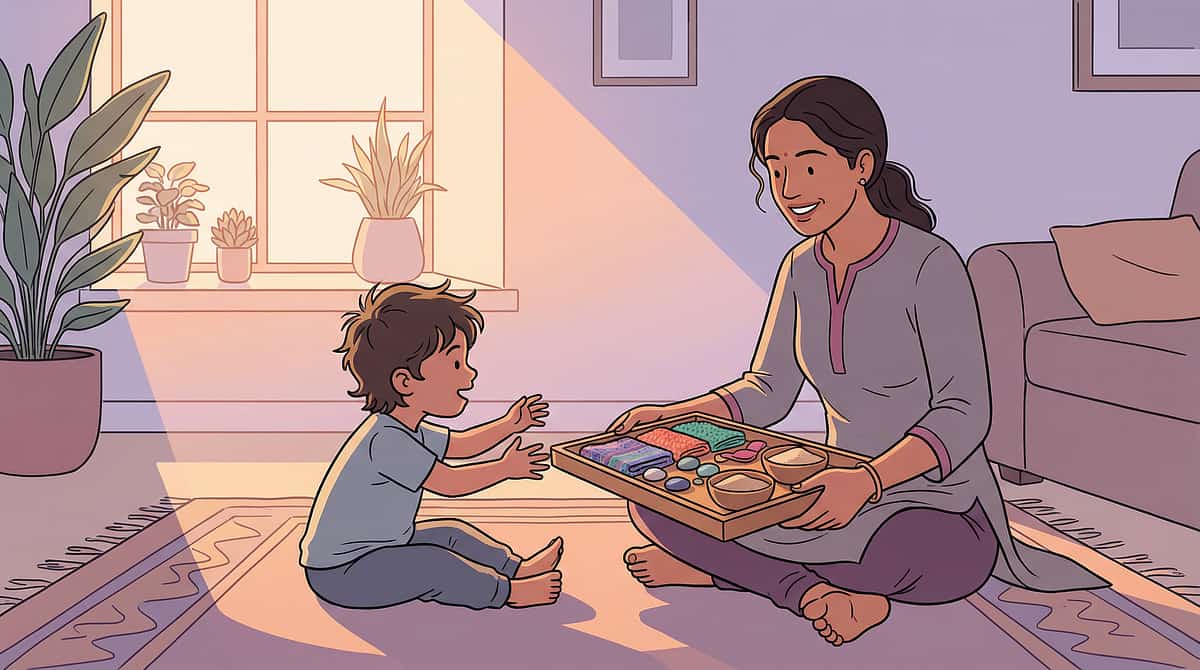
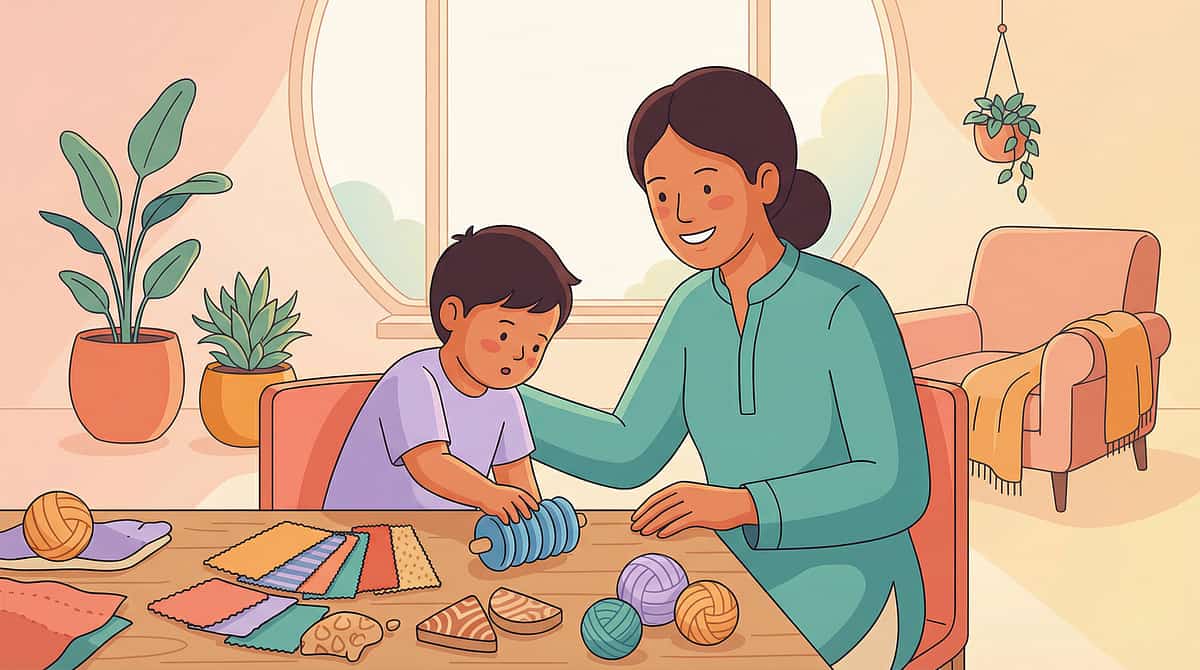
Every Material Has a Zero-Cost Version — By Design
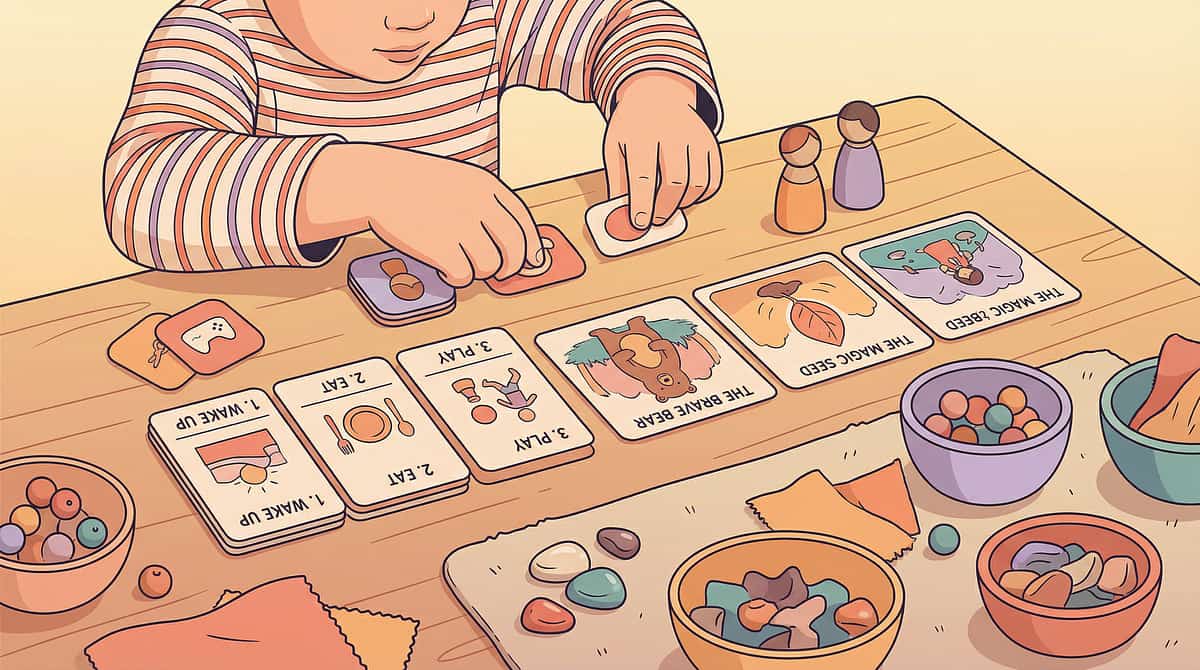
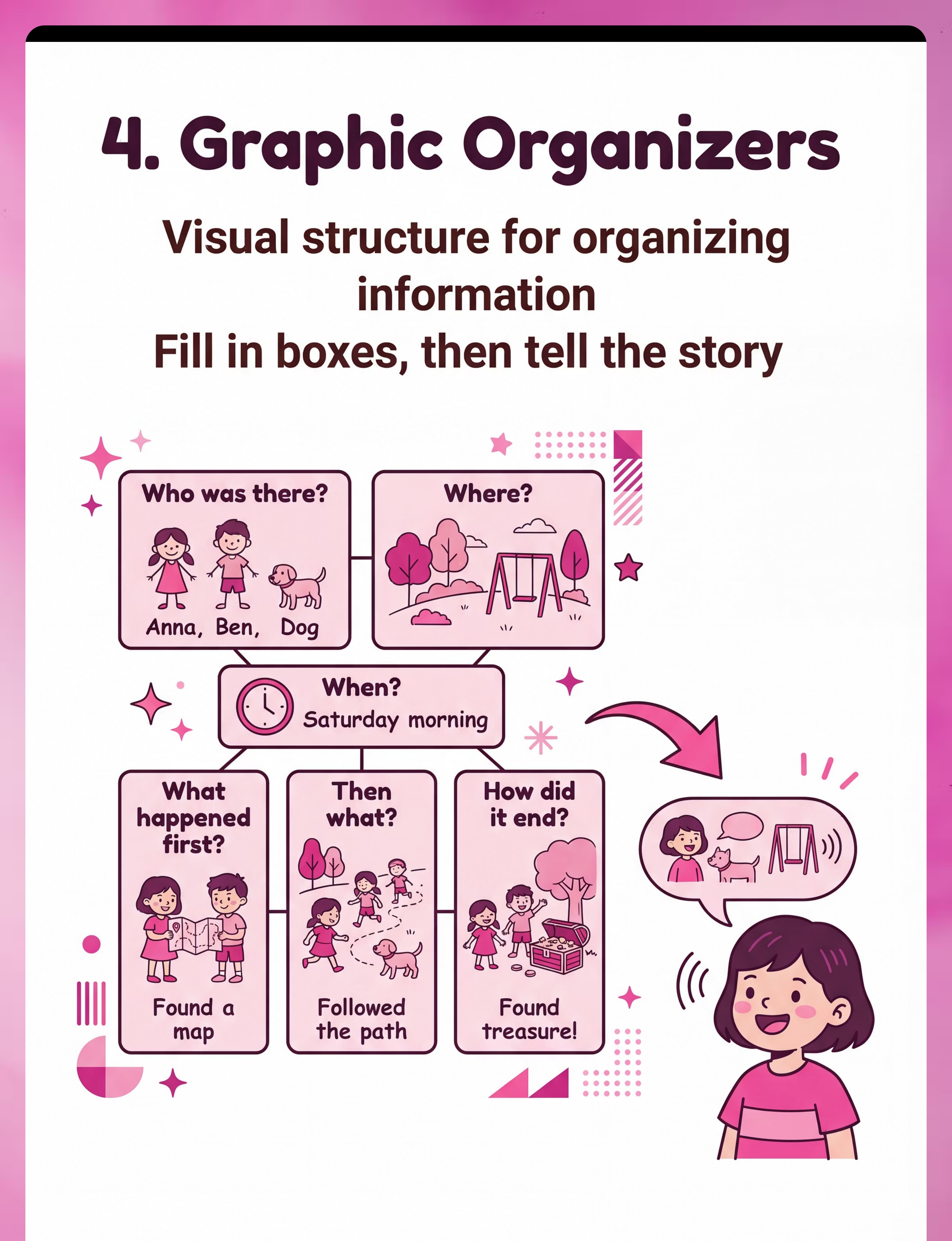
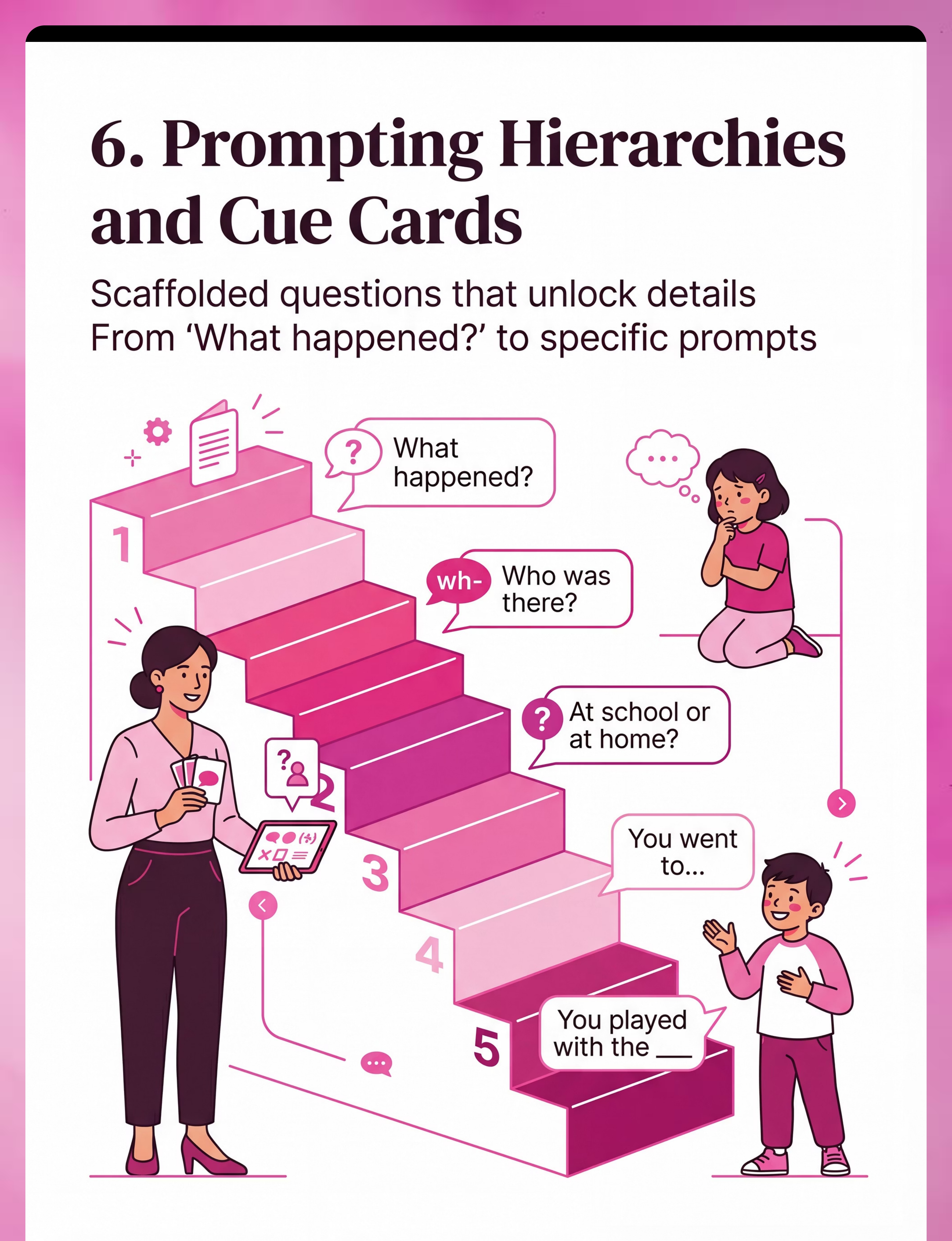
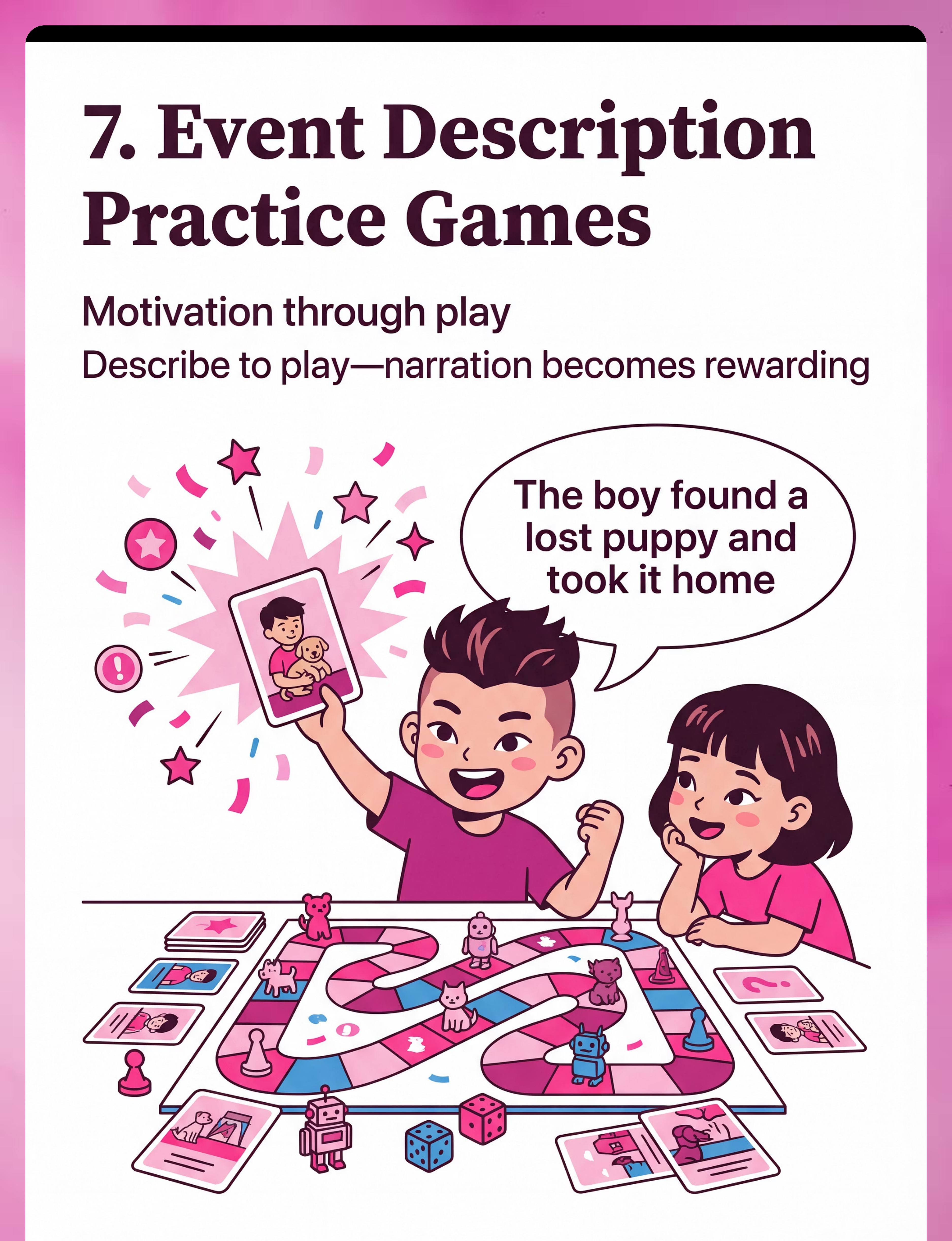
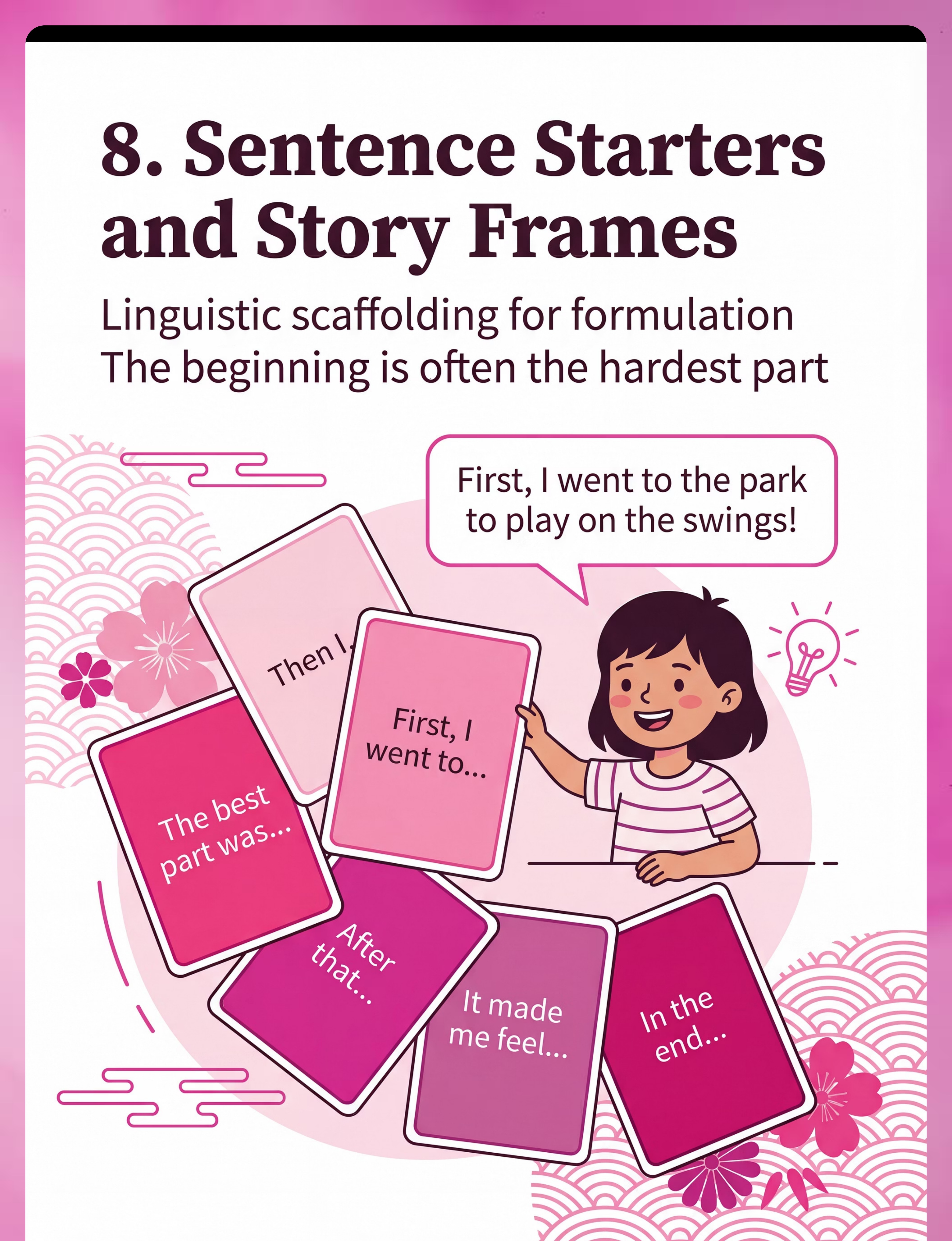
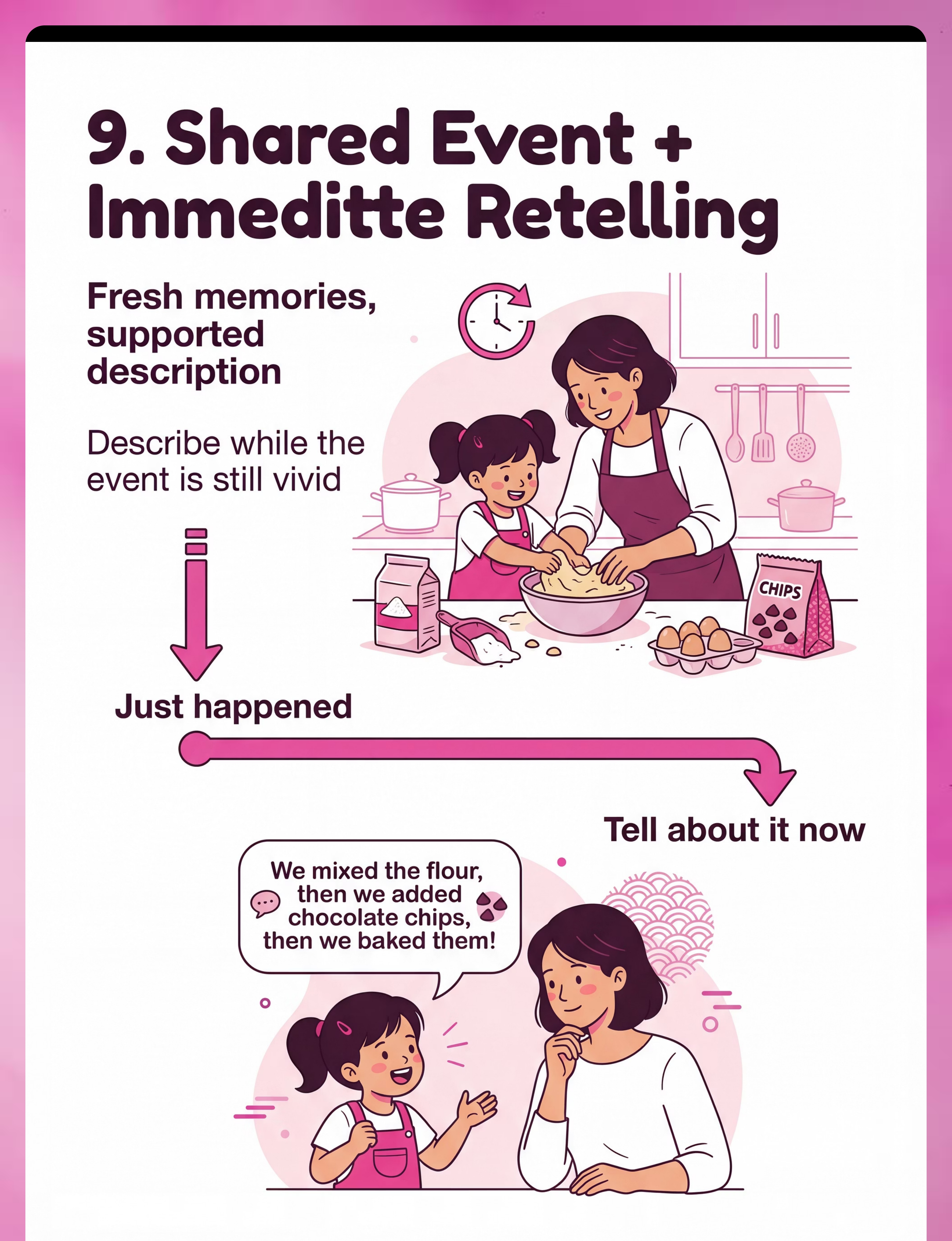
Equity + Access This page follows the WHO/UNICEF equity principle: every child deserves access to evidence-based intervention regardless of economic circumstance. All 9 materials have been designed with a ₹0 household alternative. Material Buy Version ₹0 DIY Version Why It Works Just as Well Sequence Cards Pre-printed sets ₹300–600 Print-and-cut your own photos in order The scaffold is temporal structure — not the card quality Story Grammar Kits Commercial kit ₹400–800 5 drawn icons: person, house, !, arrow, smiley Icons carry the structure, not the cost Personal Photo Books Printed album ₹200–500 Phone gallery organized by date Digital photos are equally effective as visual anchors Graphic Organizers Laminated sheets ₹100–300 Draw boxes with a pencil right now The spatial structure is the tool — paper works perfectly Video Playback Tablet Same phone — no upgrade needed Phone camera video is identical in therapeutic value Prompting Cards Printed set ₹100–200 Handwrite 5 questions on index cards The prompting hierarchy is the skill — medium is irrelevant Description Games Board game ₹300–600 Dice + 10 homemade "describe this event" cards Game structure is the motivator — not production value Sentence Starters Card deck ₹100–250 Write 8 starters on popsicle sticks The linguistic scaffold works on any surface Shared Retelling Activity kit ₹0–200 Any household activity + "Let's tell someone what we did!" The freshness of the memory is the material — free
- Child is showing signs of medical distress, fever, or acute illness
- Child has had a severe meltdown in the last 2 hours
- You are angry, exhausted, or emotionally dysregulated yourself
- The environment cannot be made quiet and distraction-free
- Child is currently experiencing acute anxiety about a specific event
- Child is tired but not distressed — use only 1 material, shorter session
- Child resists the chosen material — switch to Video Playback or Photo Books
- Child is hyperactive — begin with Shared Retelling of a JUST-completed activity
- You're new to this — start with only Material 9 for the first 3 days
- Child is fed, rested, and in a calm-to-alert state
- Space is quiet with minimal visual distractions
- You have 10–20 minutes of uninterrupted time
- The event you're asking about happened TODAY
- You are calm, patient, and ready to celebrate ANY narrative attempt — even 2 words
- Remove all screens from view (TV off, tablets face-down)
- Select ONE event to discuss — ideally from TODAY
- Pre-arrange materials in order of use
- Have photos or video ready on a single device
- Ensure the child has had a snack and drink
- Set a visual timer if child benefits from predictability
- Have your prompting cue card where YOU can see it
- Position yourself BESIDE the child — never across a table
- Child looks at the material
- Child reaches toward it
- Child smiles or shows interest
- Child moves closer to you
- Child makes ANY verbal or non-verbal reference to the event
Wait. Silence is processing — not failure. Count to 10 before prompting.
Let the child point, touch, gesture — ANY response is narration beginning.
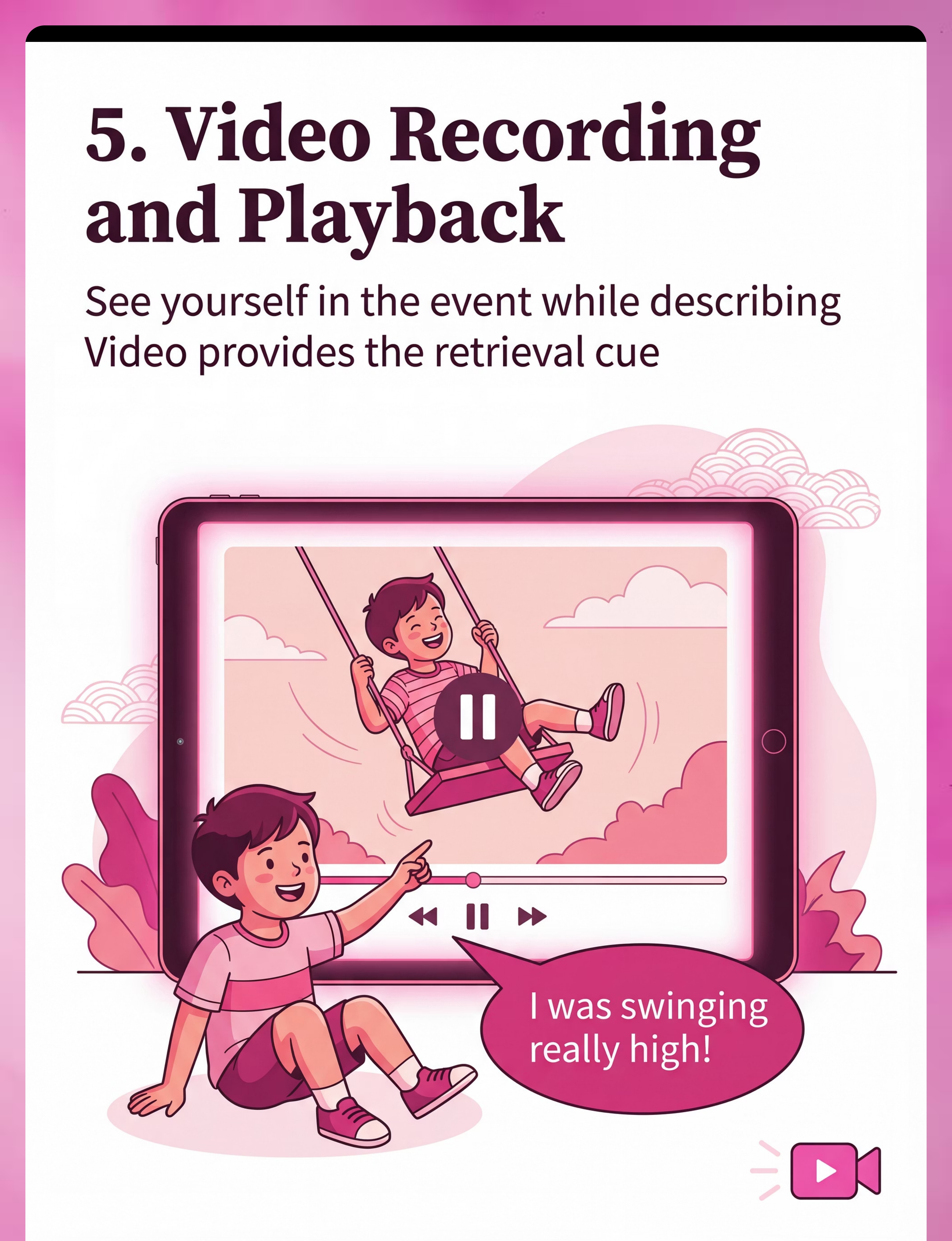
Pause at key moments. Let the child narrate the video.
Fan the cards out. Let the child choose — choice = agency = engagement.
Error | Why It Happens | Fix | |
Asking too many questions too fast | Parent anxiety | One question, then WAIT. Count to 15. Silence ≠ failure. | |
Moving on before child responds | Discomfort with silence | Stay. The answer is processing. | |
Correcting the child's version | Accuracy reflex | The child's version IS the narrative. Don't correct — extend. | |
Expecting full sentences immediately | Unrealistic baseline | One word + pointing = 100% valid narration in early weeks. |

- Week 1–2: 1–2 exchanges per session (build tolerance)
- Week 3–4: 2–3 exchanges per session (build fluency)
- Week 5–8: 3–5 exchanges per session (build independence)

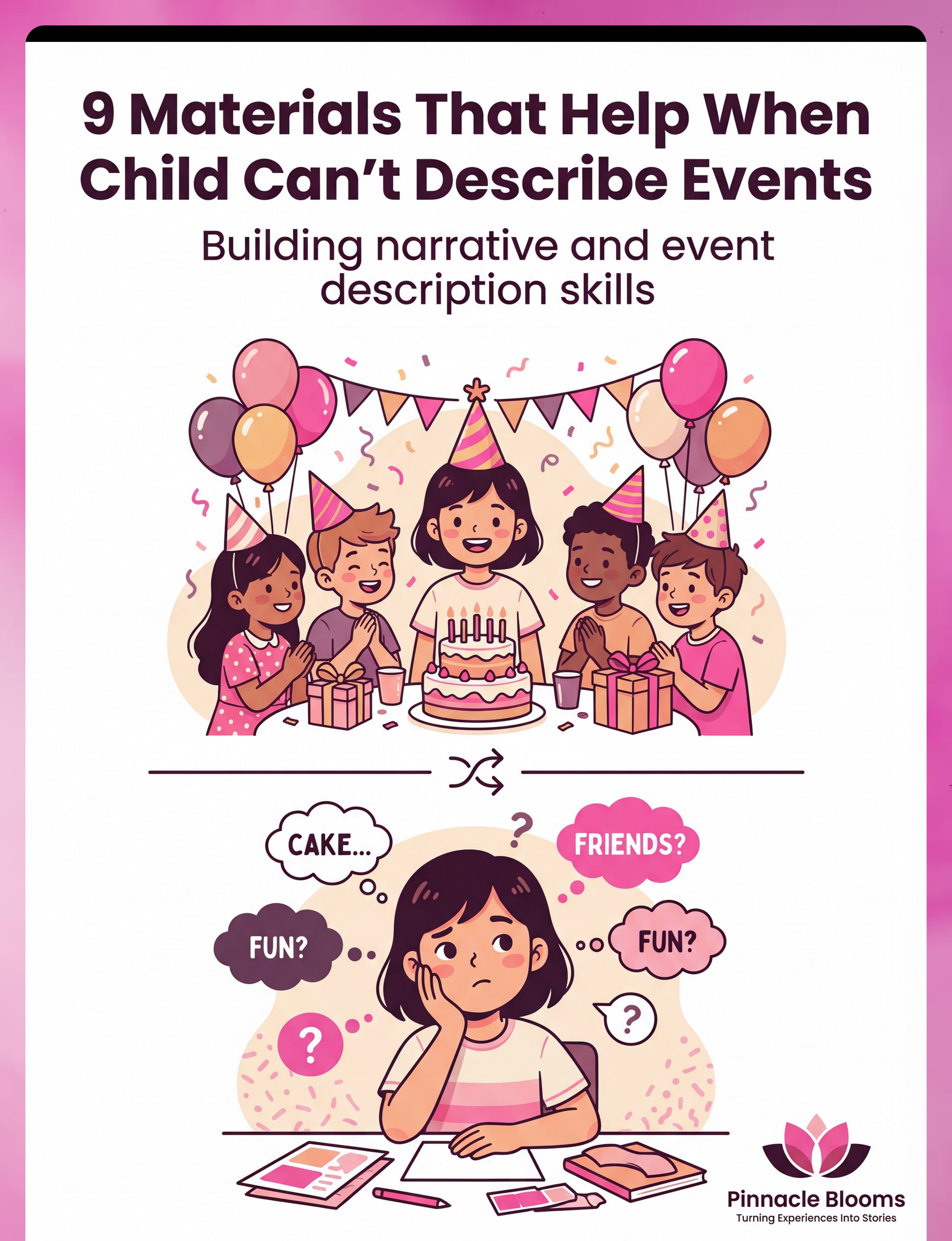
✅Right:"You just told me THREE things about the birthday party! You said there was cake, and friends, and presents. That's a real story — and YOU told it!"
- The Rosette Imprint Reward Jar ₹589 | Buy — Tangible reward system for sustained narrative effort
- 1800+ Reward Stickers ₹364 | Buy — Sticker chart for each successful narrative session
- Natural Praise — "I'm so proud of you. You told me your story." (Free. Always available.)
- Story Star Chart: Each narrative attempt earns a star. 5 stars = special activity.
Celebrate the ATTEMPT, not just the success. A child who says "I don't know... cake?" has attempted narration. That attempt DESERVES reinforcement — it is the seed of every story they will ever tell.

Fix: Next session — do NOT introduce materials first. Have a simple, shared activity first (5 minutes of preferred play). After activity: "Should we tell someone what we just did?" Present as option, not task.
Fix: Drop to Video Playback (Material 5). "Look at you! What are you doing in this video?" One word is 100% valid narration.
Fix: This is DATA. Next session: use Sequence Cards (Material 1) to physically ORDER the story before asking for verbal narration.
Fix: Normal. Restart with: "That's interesting — let's look at the pictures together." The child's version is their experienced truth. Your job is to extend, not correct.
Fix: IMMEDIATELY de-escalate. "It's okay — we don't have to talk about it." Switch to a positive, recent event. Do not revisit the distressing event without professional support.
Fix: 3 minutes is a valid session in the early weeks. Record it. Celebrate that you did it. Build by 60 seconds per week. Consistency over duration.
- Use only photos — no sequence cards (familiar > abstract)
- Discuss events from the SAME DAY only
- Accept pointing + 1 word as complete narration
- Keep session to 5 minutes maximum
- Use video playback as the only material
- Retell to a stuffed animal instead of a real person
- Events from earlier in the week (longer temporal gap)
- Request 3-part story: beginning, middle, end
- Add emotional language: "How did you feel when...?"
- Retell to a video message (send to grandparent)
- Introduce new vocabulary while narrating
- Generalize to classroom/school events (unfamiliar audience)
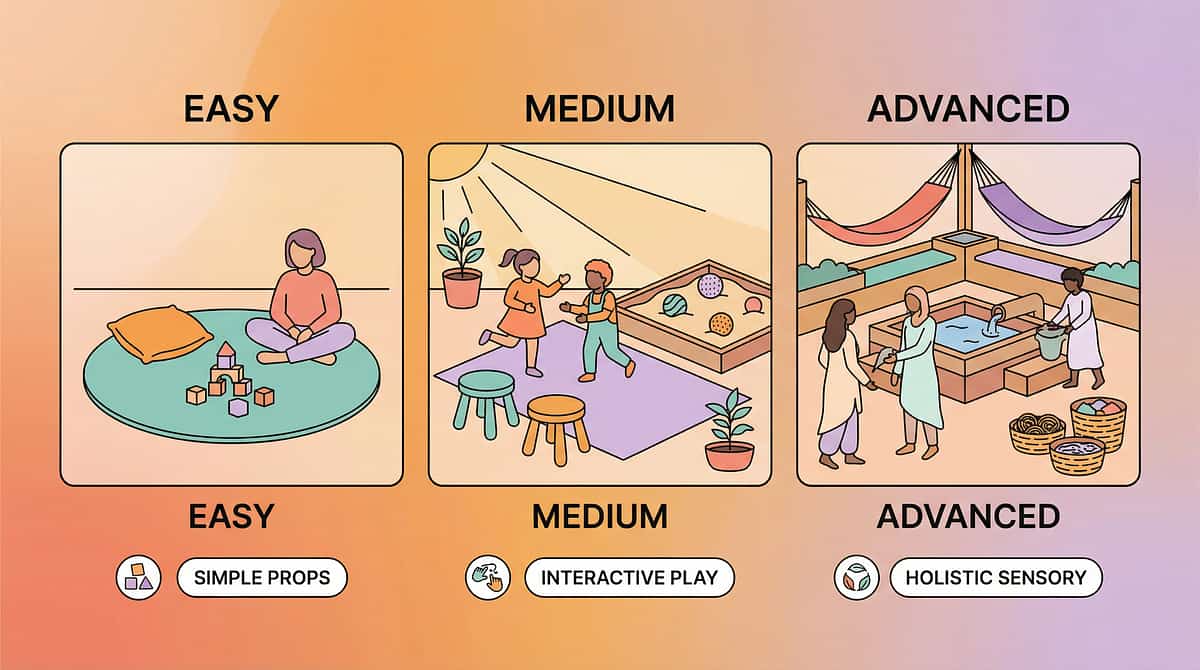
- Age 3–4: Only Materials 3 (photos) and 9 (shared retelling). Single-word narration accepted.
- Age 5–6: Add Materials 1 (sequence) and 5 (video). 2–3 word phrases targeted.
- Age 7–8: Full 9-material toolkit available. Story grammar + graphic organizers appropriate.
- Age 9–10: Focus on generalization — narrative competence across unfamiliar listeners and delayed events.
Child Profile | Best Starting Materials | Approach | |
Strong visual learner | Materials 1, 3, 4 | Visual-first, verbal-second | |
Strong auditory learner | Materials 5, 8, 9 | Spoken frame + fill-in | |
Sensory seeker (movement) | Material 9 (active first) | Do activity → retell immediately | |
Sensory avoider (touch) | Materials 5, 8 (no tactile) | Screen-based + verbal scaffold | |
Highly motivated by reward | Material 7 (games) | Games-first approach | |
Language emerging (2-word stage) | Materials 5, 9 | 1-word narration is the target | |
Language intermediate (phrases) | Materials 1, 6 | Sequence + prompted expansion | |
Language conversational | Materials 2, 4, 8 | Story grammar + written scaffold |
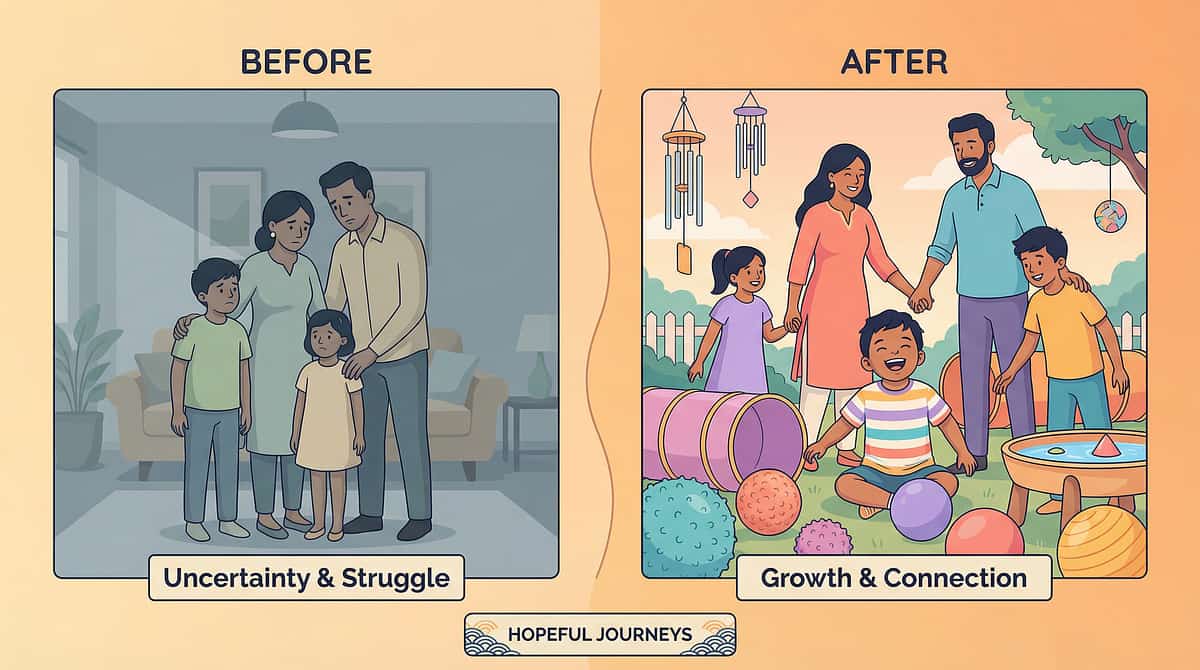
The First Two Weeks Are About Tolerance, Not Mastery
📈 Week 1–2 Progress Milestone Week 1–2 of your B-186 journey ✅ What Progress Looks Like in Week 1–2 Child accepts the presence of the materials (doesn't push them away) Child looks at photos or sequence cards without being directed Child makes any sound, point, or gesture when asked about an event Duration of engagement increases from <2 minutes to 3–5 minutes Child does NOT become distressed when the session begins You (parent) feel 5% more confident in how to ask than Day 1 ❌ What Is NOT Progress Yet Spontaneous storytelling has NOT emerged yet — and that's normal Accurate sequencing is NOT the target yet Full sentences are NOT expected in this phase Generalization to other settings has NOT started yet "If your child tolerates the materials for 3 seconds longer in Week 2 than in Week 1 — that is measurable neural progress. Record it." These weeks can feel discouraging. The child's narrative output may look identical from Day 1 to Day 14. This is normal — the first two weeks are building the TRUST that this activity is safe, predictable, and not an interrogation.
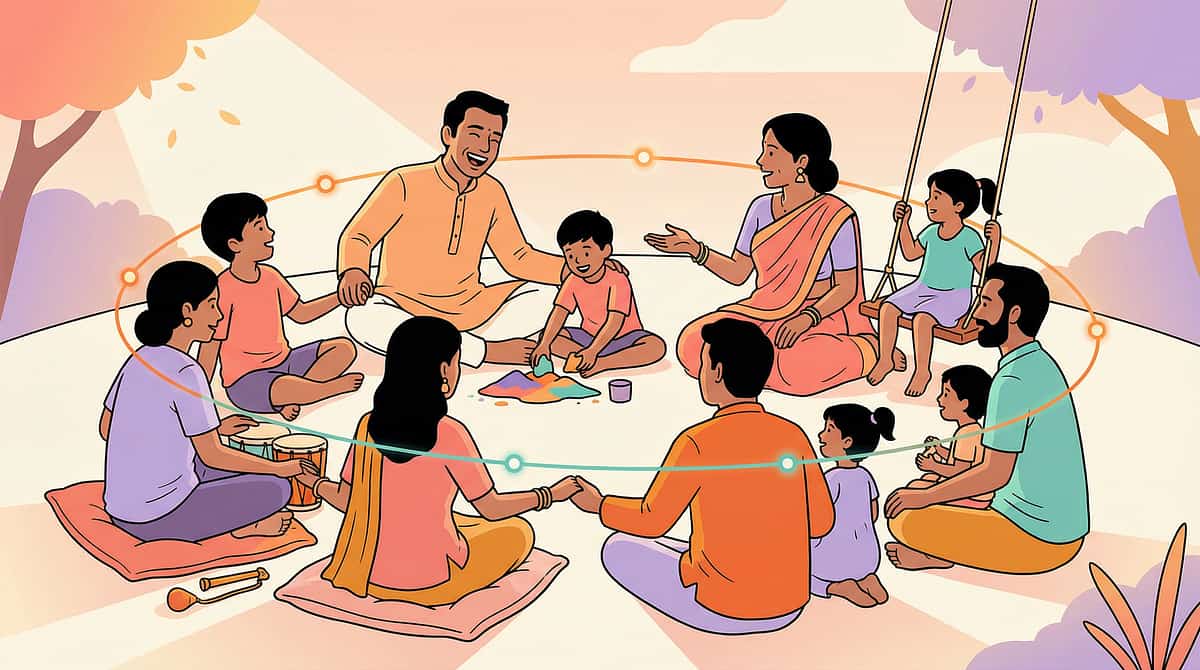
"By Week 4, you will likely notice that YOU have changed too. You ask better questions. You wait longer. You celebrate differently. That parental shift is as important as the child's progress."
For weeks, you sat beside your child and asked "what happened today?" and waited. You waited through the silence. You celebrated the shrug followed by one word. You changed how you ask, how you listen, and how you celebrate small steps.
And now your child tells you about their day.
That is not a small thing. For a child who once could not find the words for their own experience — that is everything.
You are the evidence-based intervention. You showed up.
Silence at the dinner table.
Isolation from your child's inner world.
"Mama, guess what happened today!"
Shared stories, shared memories, shared life.

Action: Teleconsult with Pinnacle SLP for assessment — may indicate a more complex processing barrier.
Action: OT assessment for visual perceptual processing.
Action: Pause immediately. Consult NeuroDev/Pediatrician. May indicate significant life event, sensory overload, or medical issue.
Action: Do NOT continue. Seek professional evaluation urgently.
Action: Stop gently. Do not probe. Contact a professional immediately.
Action: NeuroDev Pediatrics consultation.
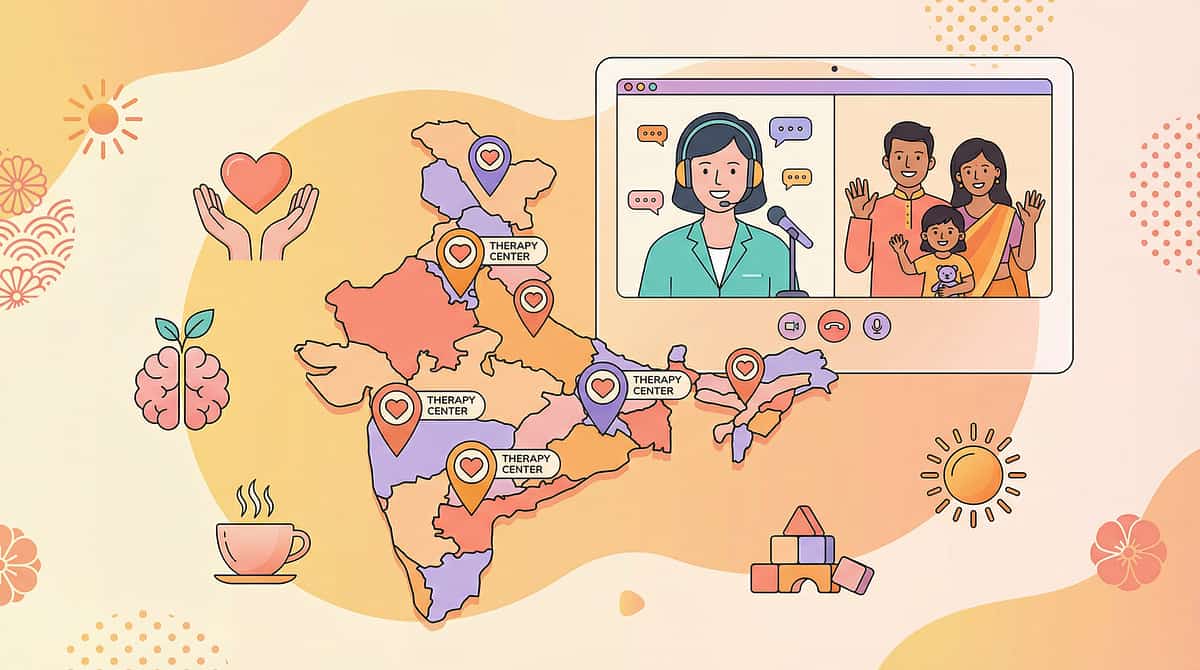
Find Your Nearest Pinnacle Center
Escalation Pathway: Home resolution → Pinnacle Teleconsult → Center visit → NeuroDev Pediatrics
[INTRO]
📋 Visual Cards
✅ You have these materials
[CORE]
📝 Story Frames
✅ You have these materials
[CORE]
🗣️ Pronoun Cards
🛒 Get these
[CORE]
🎭 Prop Kits
🛒 Get these
[CORE]
⏱️ Timer + Cards
🛒 Get these
[ADVANCED]
❓ Question Cards
🛒 Get these
- → Academic literacy (Domain F)
- → Social participation (Domain H)
- → Emotional self-expression (Domain C)
9100 181 181 | 16 Languages | 24×7 | No appointment needed. No cost.
Call or WhatsApp now.
Preview of 9 materials that help when child cant describe events Therapy Material
Below is a visual preview of 9 materials that help when child cant describe events therapy material. The pages shown help educators, therapists, and caregivers understand the structure and content of the resource before use. Materials should be used under appropriate professional guidance.


"From fear to mastery. One technique at a time." — The Pinnacle Blooms Consortium
CRO • WHO/UNICEF Aligned • GPT-OS® Powered
CIN: U74999TG2016PTC113063 | DPIIT: DIPP8651 | MSME: TS20F0009606 | GSTIN: 36AAGCB9722P1Z2
techniques.pinnacleblooms.org | care@pinnacleblooms.org