
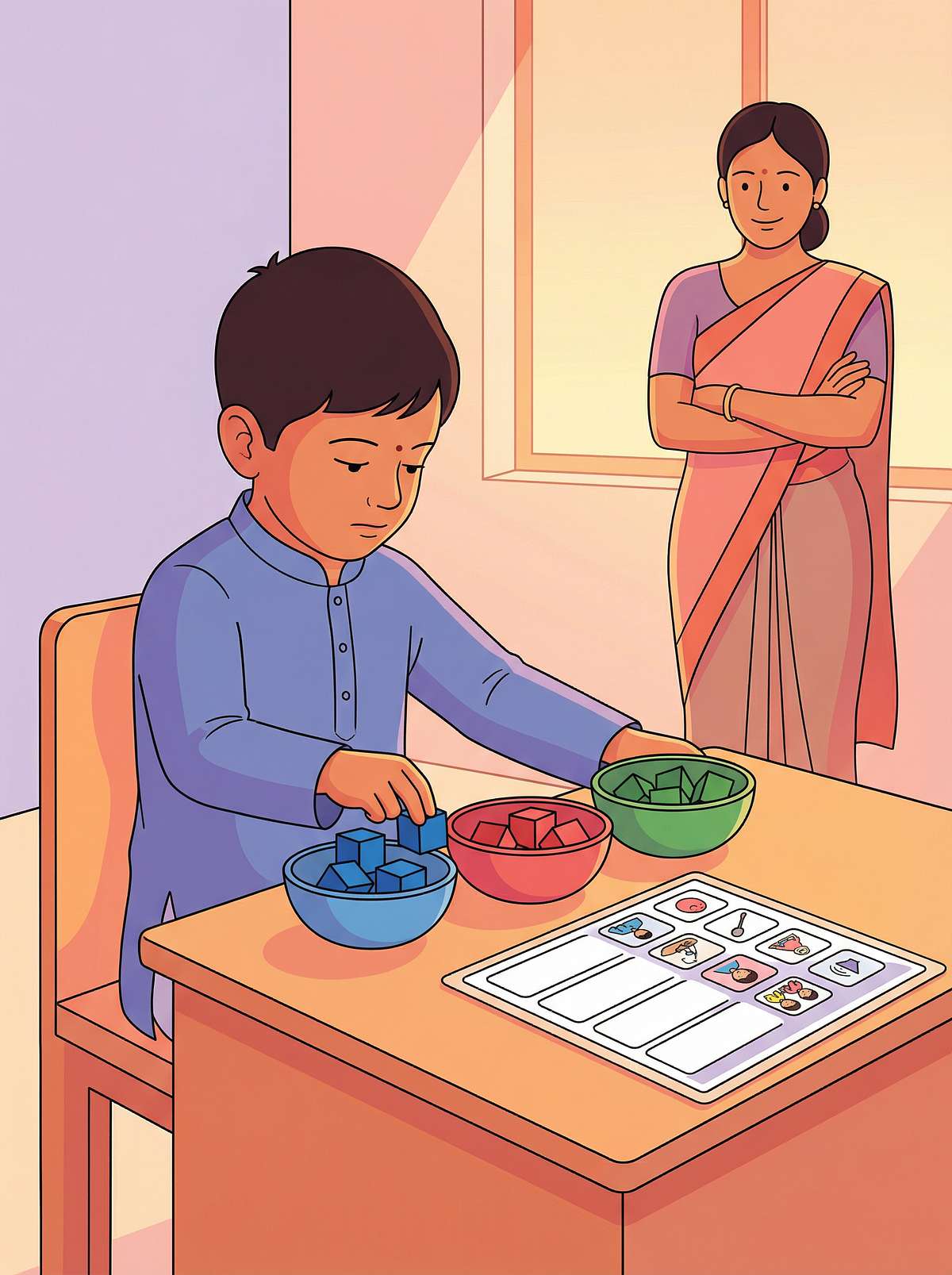
Cognitive & Learning
40 Evidence-Based Interventions for Attention, Memory, Problem-Solving, Pre-Academic Skills & Executive Function in Autism | Subdomain G2 · Pinnacle Blooms Network®
Domain G: Play & Leisure
G-661 to G-700
21M+ Sessions

The Neuroscience Foundation
Cognition in Autism: A Spiky — Not Uniform — Profile
ASD is not an intellectual disability — it is a cognitive difference. The ASD brain shows areas of extraordinary strength alongside genuine challenges. Understanding this spiky profile is the starting point for every effective intervention in Subdomain G2.
Cognitive Strengths to Leverage
- Visual-spatial processing — teach visually first
- Pattern recognition — often outperforms neurotypical peers
- Systemising — present information as rules and systems
- Rote memory — excellent for facts, sequences, scripts
- Detail focus — powerful for matching, sorting, categorisation
- Special interest depth — profound learning within interest domains
Cognitive Challenges to Support
- Executive function — planning, organisation, flexibility
- Generalisation — learning in one context, applying in another
- Abstract thinking — concepts without concrete referents
- Processing speed — more time needed, not less intelligence
- Auditory processing — verbal instructions harder than visual
- Central coherence — the big picture vs. details
The question is never "Can this child learn?" — it is "How does this child learn best?" Every technique in G2 is designed to answer that question with evidence, tools, and practical strategies.
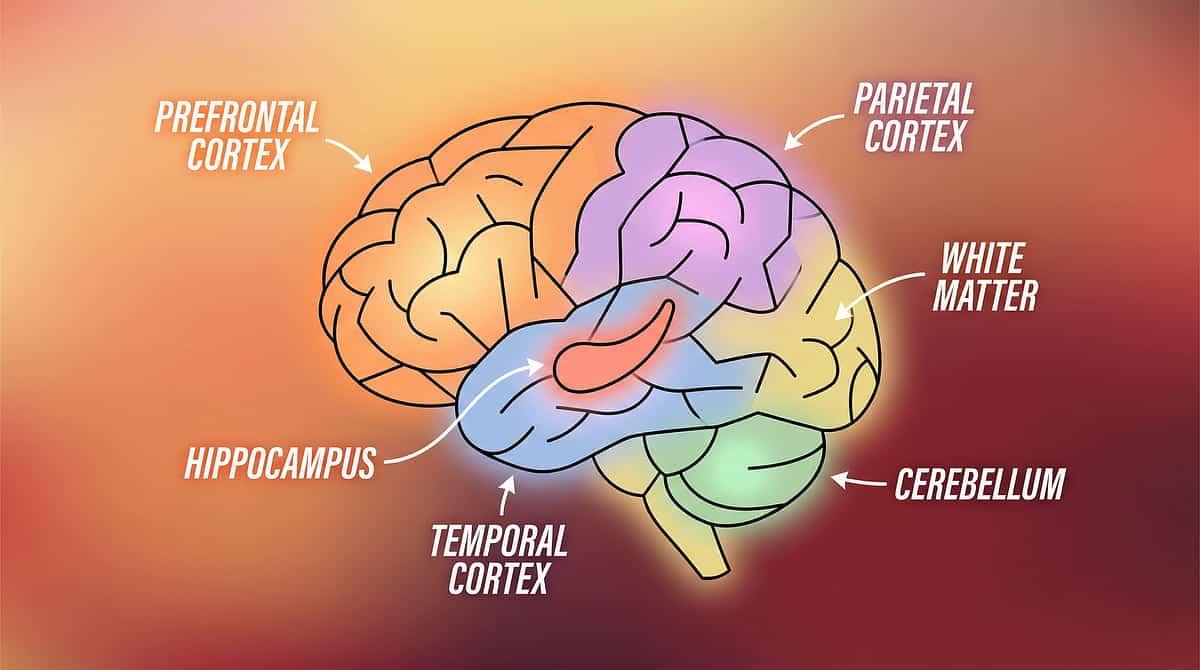
The Cognitive Brain in ASD
Six Brain Regions — Understanding the Neuroscience
Six key brain systems shape the cognitive profile of ASD. Knowing which region drives which function helps clinicians and educators build targeted, effective interventions.
Prefrontal Cortex
Executive function headquarters: planning, working memory, inhibition, flexible thinking. PFC maturation is delayed in ASD — the most impactful cognitive feature.
Hippocampus
Memory encoding and retrieval. Rote memory is often a strength. Episodic and contextual memory may be weaker.
Parietal Cortex
Visual-spatial processing, pattern recognition, mathematical reasoning. Often a strength — the basis for puzzle ability and visual learning.
Temporal Cortex
Auditory processing, language comprehension, category formation. Slower verbal processing → visual instruction preferred.
Cerebellum
Beyond motor — contributes to cognitive timing, sequencing, and processing speed. Cerebellar differences → processing speed challenges.
White Matter
Global under-connectivity with local over-connectivity → excellent at details, challenged at integrating across domains.

Section 1
Attention & Task Skills · Cards 01–06
Attention & Task Skills
The gateway to all learning. Before any cognitive skill can be taught, a child must be able to direct attention, stay on task, and complete structured work. This section covers the foundational attention and engagement skills that make every subsequent intervention possible.
G-661: Attention Skills
Directing and sustaining attention to relevant stimuli — the first gate to learning.
G-662: Focus & Concentration
Staying engaged and producing output — deeper than attention, more demanding cognitively.
G-663: Sitting for Tasks
Postural and behavioural readiness — the physical prerequisite for all structured instruction.
G-664: Task Completion
Starting AND finishing — the skill that transforms instruction into acquired learning.
G-665: Following Directions
Processing, holding, and executing verbal and visual instructions across increasing complexity.
G-666: Imitation Skills
The primary learning channel — reopening the observe-and-copy pathway through explicit teaching.
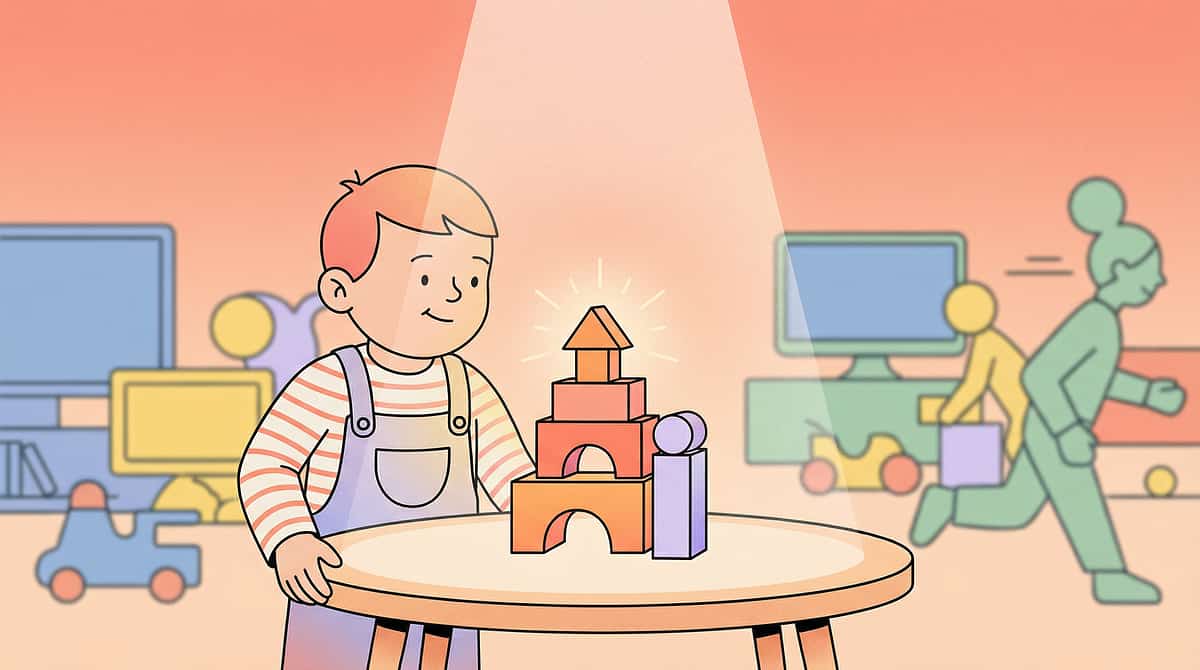
G-661 + G-662
Grouped · Attention & Task Skills
G-661 & G-662: Attention Skills / Focus & Concentration
Attention is the gate — Focus is staying through the gate — Concentration is doing work while staying. These two foundational skills are the first prerequisites for all learning in ASD.
G-661: Attention Skills
The Four Components:
- Alerting (reticular activating system)
- Orienting (parietal cortex — reduced for social stimuli in ASD)
- Sustaining (PFC + norepinephrine — limited on non-preferred tasks)
- Shifting (PFC + anterior cingulate — often slow in ASD)
Strategy
- Start with preferred activities → embed non-preferred within preferred.
- Grade sustained attention: 30 sec → 1 min → 2 → 5 → 10 minutes.
- Movement breaks between demands.
G-662: Focus & Concentration
The Focus Formula
- PFC sustained activation
- Dopaminergic drive (task must generate reward)
- Norepinephrine arousal (optimal zone)
- Sensory filtering (blocking distractions)
Strategies
- Reduce visual/auditory clutter
- Sensory diet before focus tasks
- Visual timer
- First-Then board
- Match task difficulty to ZPD
Evidence Level I — Attention training + environmental modification. NCAEP 2020 | PMC10955541
📋 ABA (DTT/NBI) · SpEd · 🧠 Psychology | OT · SLP · NeuroDev

G-663 + G-664
Grouped · Task Engagement Skills
G-663 & G-664: Sitting for Tasks / Task Completion
They won't sit. Or they sit but don't start. Or they start but don't finish. Sitting for tasks and completing them are the two behavioural prerequisites for ALL learning. Without task sitting, no instruction is possible. Without task completion, no skill is acquired. Together, these form the complete engagement loop.
G-663: Sitting for Tasks
Postural endurance + sensory regulation + inhibition of movement impulse. Start with just 30 seconds of sitting as success. Appropriate seating (feet flat, wobble cushion if needed). Gradual increase over weeks and months. Celebrate every moment of successful sitting.
G-664: Task Completion
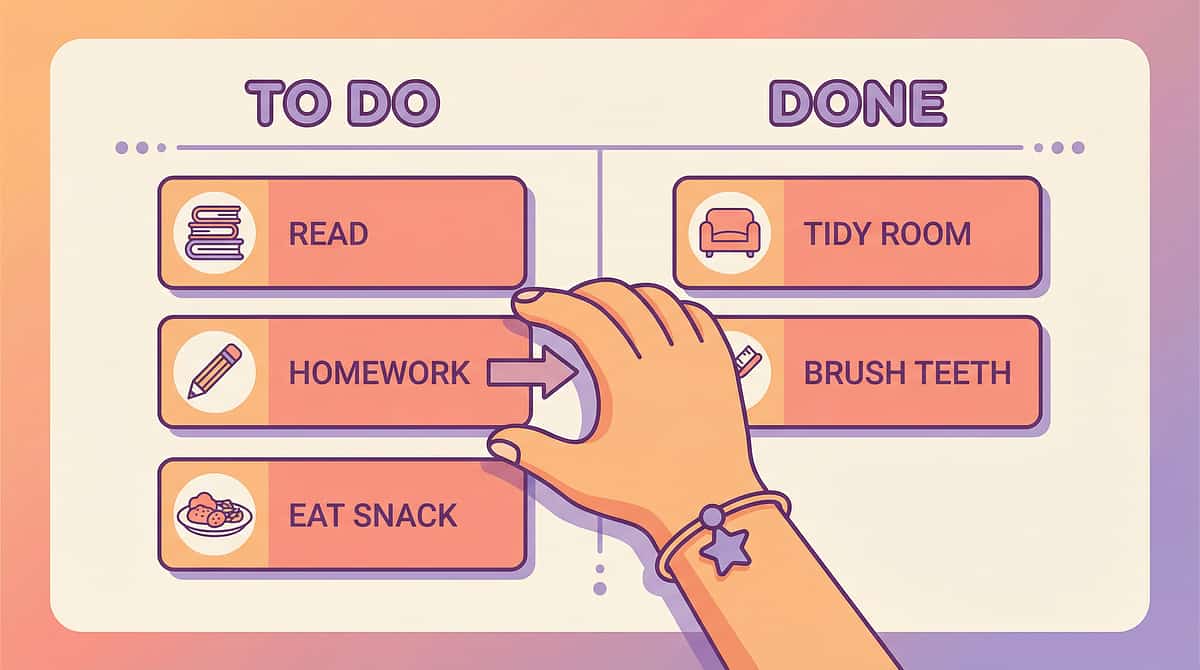
TEACCH work system: visual left-to-right: "to do" box → work area → "finished" box. Child sees progress. Start with 1-minute tasks. Break tasks into visible chunks. "Finished" is the reward word. First-Then: "First finish puzzle, THEN trampoline."
Sustained attention + working memory + motivation + frustration tolerance must ALL be active simultaneously for task completion to occur. The TEACCH work system provides external scaffolding for every one of these demands.
Evidence Level I — Structured work systems (TEACCH) + reinforcement. NCAEP 2020

G-665 + G-666
Grouped · Attention & Task Skills
G-665 & G-666: Following Directions / Imitation Skills
Two foundational learning channels: Following Directions — executing what you're told; Imitation — copying what you see. Together they form the complete input pathway for all structured learning in ASD.
G-665: Following Directions
Requires auditory processing, language comprehension, working memory, sequencing, and motor execution. Progression: 1-step → 2-step → 3-step → multi-step. Simplify language: short, clear, concrete. Visual direction cards. Wait time: give instruction → wait 5–10 seconds. Check understanding: "Show me what to do first."
G-666: Imitation Skills
The primary learning channel. Teaching sequence: model → prompt (physical guidance if needed) → fade prompt → independent. Four levels: Object Imitation (most concrete), Motor Imitation (gross → fine → oral motor), Vocal Imitation (bridge to communication), Social Imitation (copy peers in natural settings). Extend from immediate to delayed imitation.
Evidence Level I — Receptive instruction training + Imitation training as foundational skill. NCAEP 2020
Lead Professionals: ABA (DTT/NBI) · SpEd · Psychology | OT · SLP

G-667 + G-668
Grouped · Foundational Cognitive Operations
G-667 & G-668: Matching Skills / Sorting Skills
The foundational cognitive operations. Matching: "This is the SAME as that." Sorting: "These BELONG together." Every higher cognitive skill builds on matching and sorting — categorisation, reading, mathematics, and science all rest on these foundations. And crucially: these are often ASD strengths — leverage them.
Matching Progression
- Identical objects → identical pictures
- Object to picture → picture to picture
- Related items (non-identical)
- Concept matching (by function, category)
Sorting Progression
- Sort by one attribute: colour
- Sort by shape, then size
- Sort by function or category
- Multiple attributes simultaneously
Indian Context: ₹0 Activities
- Dal sorting (different lentils)
- Spice sorting by colour and smell
- Vegetable and fruit sorting
- Coin sorting by denomination
Sorting requires identifying the RULE (colour? shape? size? function?) — explicit rule identification aligns precisely with the ASD systemising strength. These activities also serve as calming, predictable, rule-based tasks that satisfy the pattern-seeking brain.
Evidence Level I — Discrete Trial Teaching (DTT) for matching/sorting. NCAEP 2020
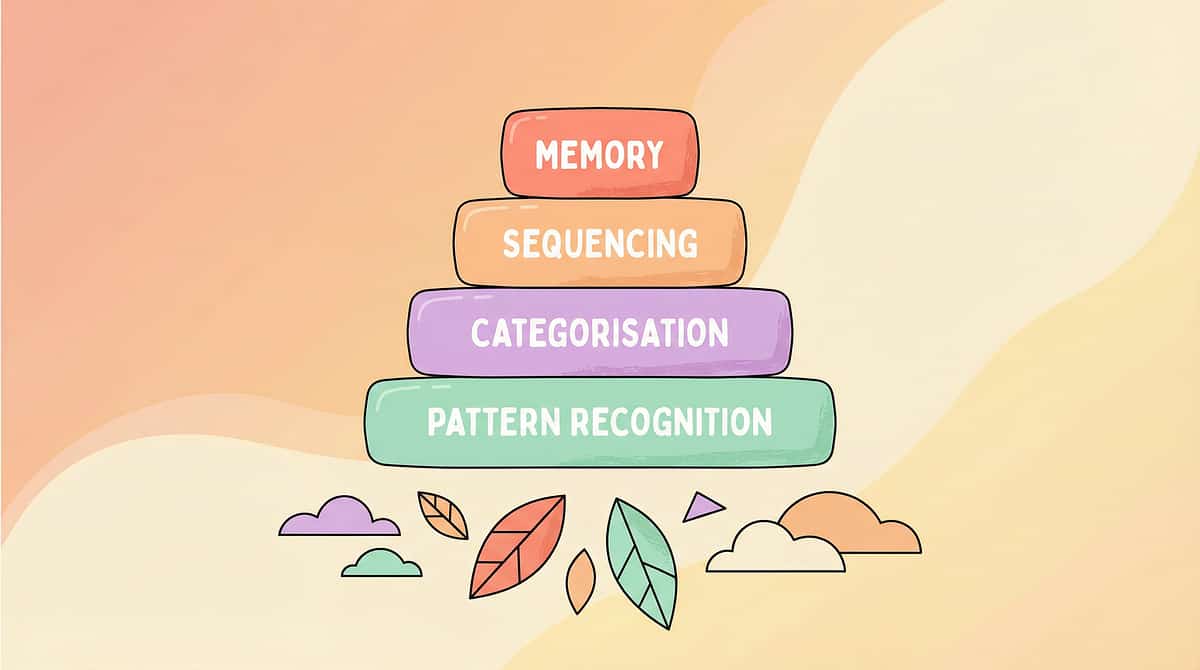
Section 2
Cognitive Building Blocks · Cards 07–14
Cognitive Building Blocks
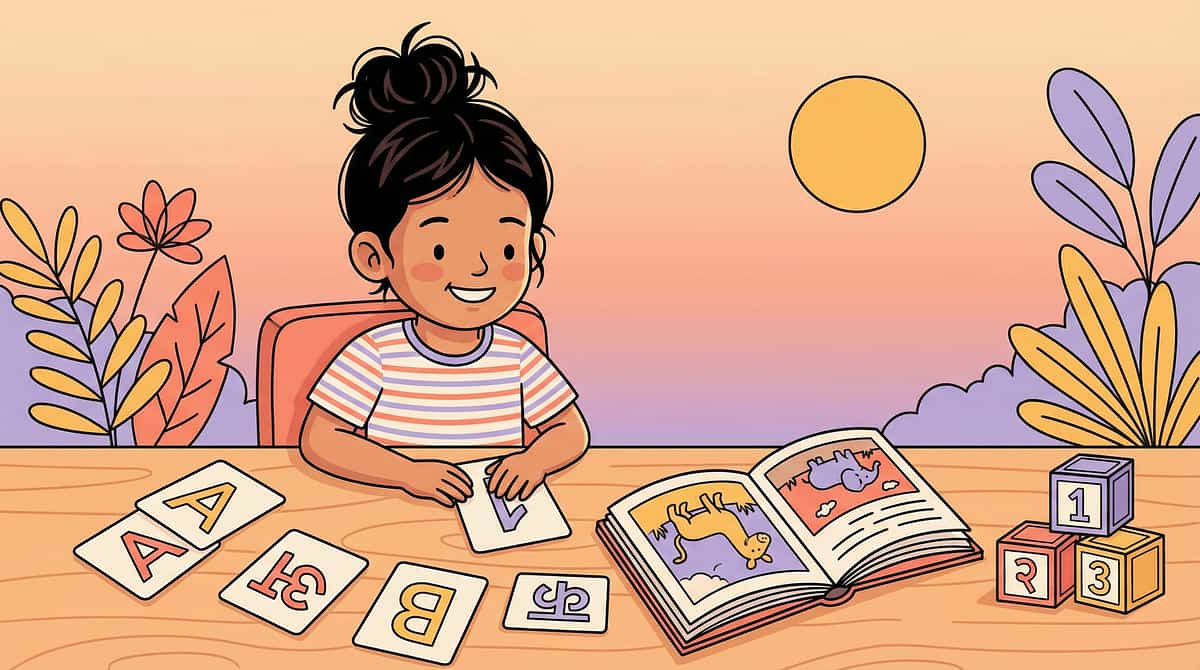
From foundational operations to higher-order reasoning: this section builds the cognitive architecture that underpins academic learning, daily problem-solving, and flexible thinking. Each skill adds a layer to the child's growing cognitive repertoire.
G-669: Categorisation
Beyond sorting by appearance — grouping by shared conceptual features
G-671 + G-674: Pattern Recognition / Cause & Effect
Two relational reasoning skills — often ASD strengths to be leveraged
G-670: Sequencing
Ordered steps — the foundation of routines, storytelling, maths, and procedures
G-672: Memory Skills
The spiky memory profile — rote strength, working memory support
G-676 + G-677: Colour / Shape Recognition
Visual concept identification — often a powerful ASD strength
G-673: Problem Solving
The highest cognitive function — identify, generate, try, evaluate
G-679 + G-680: Counting / Number Recognition
The dual foundations of numeracy — sequence memory meets quantity understanding
G-675: Object Permanence
The earliest cognitive milestone — things exist even when unseen
G-669 + G-670
Grouped · Cognitive Building Blocks
G-669 & G-670: Categorisation / Sequencing
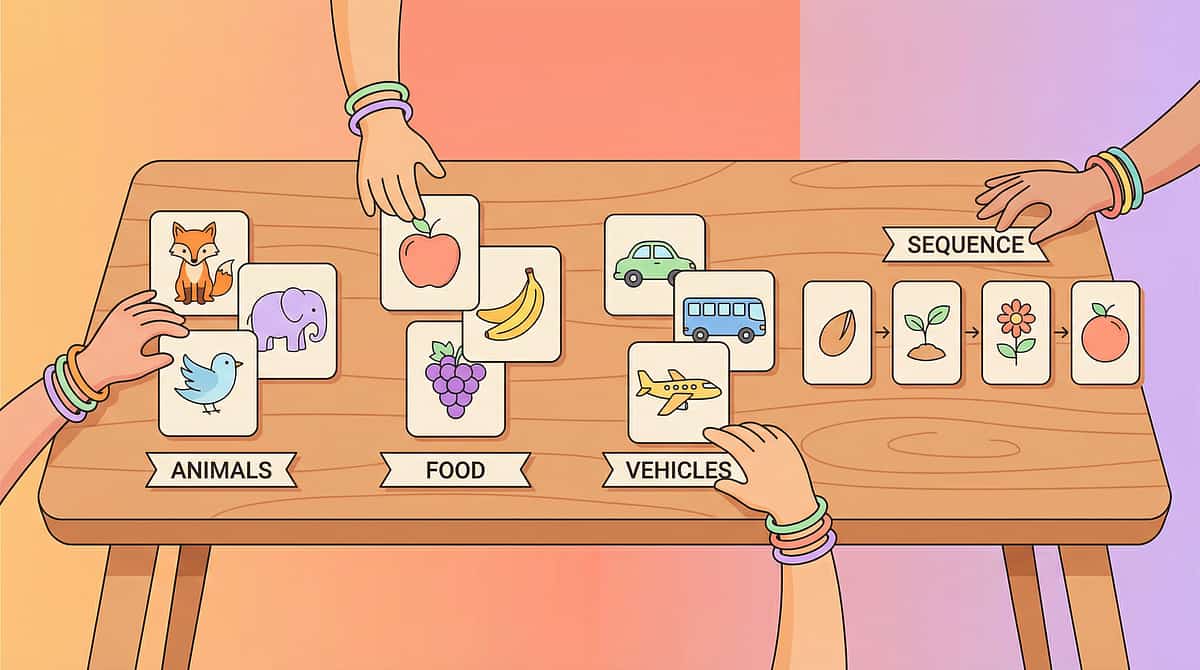
Categorisation: grouping items by shared conceptual features — the cognitive leap from perception to thinking. Sequencing: understanding and executing ordered steps — the foundation of routines, storytelling, mathematics, and every procedural task.
G-669: Categorisation
Progression: Concrete categories (animals, food, clothing, vehicles) → Functional categories (things that cut, things you wear) → Abstract categories (living/non-living, feelings, time). Teaching: sorting INTO categories → naming the category. Indian cultural categories: festival items (Diwali, Holi, Eid), kitchen items (dal, spices, vessels), puja items.
G-670: Sequencing
Progression: 2-step → 3-step → 4+ step sequences. Visual sequence cards for daily routines, story retelling, cooking steps. Temporal language: first, then, next, last, before, after. Sequential processing is often a strength when visual — always lead with visual sequence cards before verbal-only instructions.
Evidence Level I — Categorisation + Sequencing within cognitive/language programmes. NCAEP 2020
G-671 + G-674
Grouped · Relational Reasoning
G-671 & G-674: Pattern Recognition / Cause and Effect
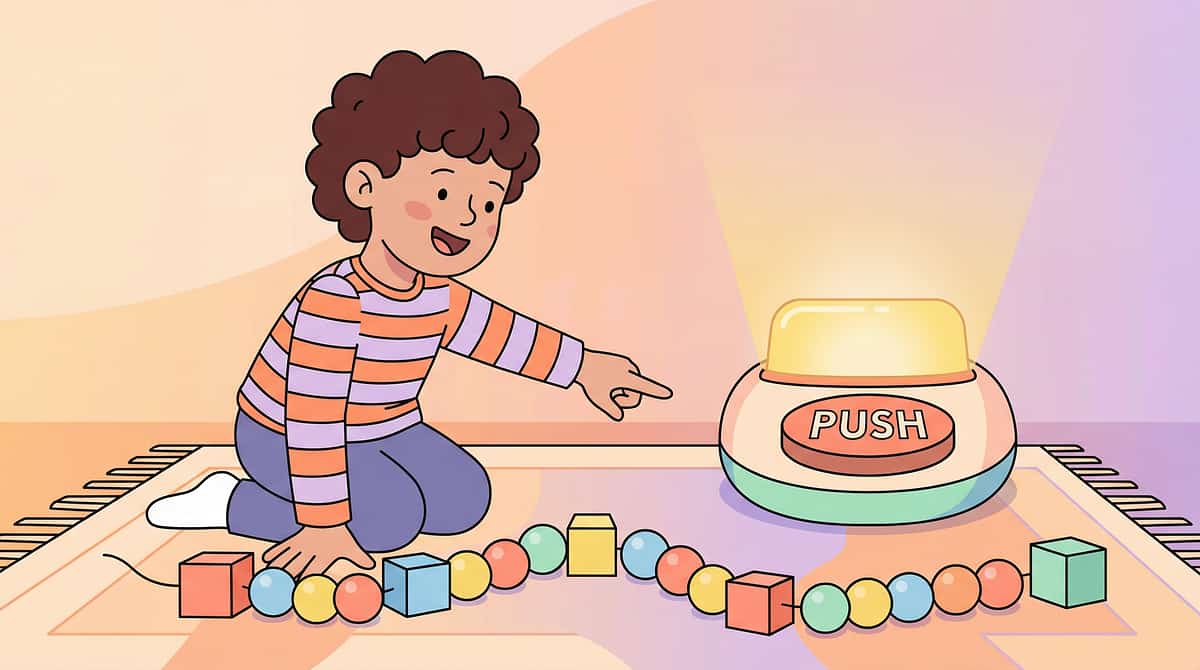
Two relational reasoning skills — and two areas where many ASD children genuinely excel. Pattern recognition: "What comes NEXT?" Cause-effect: "THIS happened BECAUSE of THAT." Both leverage the systemising brain at its best.
Pattern Recognition (G-671)
Parietal cortex detects regularity in visual, auditory, and numerical sequences. ASD children often outperform neurotypical peers on pattern tasks. Activities: colour patterns, shape patterns, number patterns, sound patterns. Indian connection: rangoli, kolam, mehndi — culturally embedded pattern work.
Cause and Effect (G-674)
PFC temporal reasoning links events across time. Concrete cause-effect is often strong (push button → light). Social cause-effect ("I said this and she felt sad") is harder. Teach concrete first → gradually social. Science experiments are powerful cause-effect explorations.
Pattern as PREDICTION tool: "What comes next?" teaches the child to anticipate, plan, and feel competent in a world that often feels unpredictable. Use this as a confidence builder alongside skill development.
Evidence Level I — Pattern + causal reasoning within cognitive programmes. NCAEP 2020
G-672 + G-673
Grouped · Cognitive Building Blocks
G-672 & G-673: Memory Skills / Problem Solving
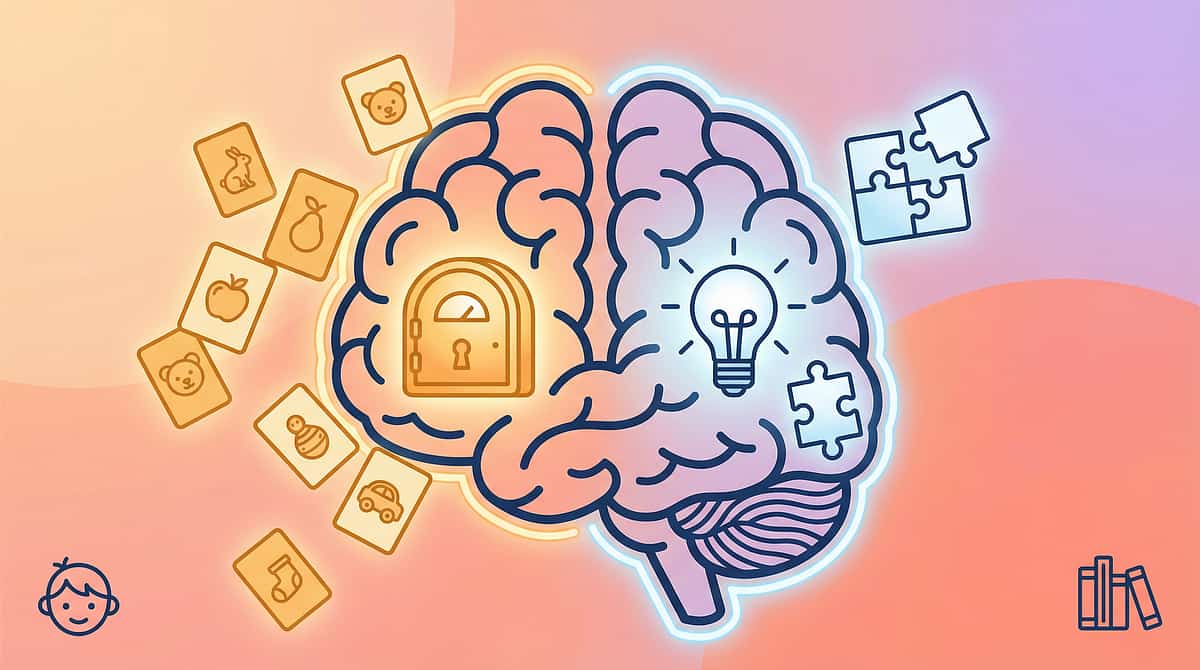
The spiky memory profile meets the highest cognitive function. Memory: knowing WHICH type is strong and building around it. Problem Solving: systematically teaching the brain to identify, generate, try, and evaluate — even when flexibility is challenging.
G-672: Memory Skills
Leverage Rote Strength
- Songs for facts (multiplication, days of week)
- Scripts for social situations
- Memorised sequences for daily routines
- Indian tradition: shlokas/verses — rote memory is culturally valued
Support Working Memory
- Visual aids — never rely solely on verbal memory
- Written lists and checklists, external reminders
- Memory games (matching pairs, Kim's game)
- Chunking: break information into smaller memorable groups
G-673: Problem Solving — Five-step process: Identify the Problem → Generate Solutions → Select an Option → Try It → Did It Work?
Progression
- Concrete physical (puzzle doesn't fit → try different piece)
- Daily living (can't reach → get a stool)
- Social (friend is sad → how can I help?)
- Abstract (what would happen if...?)
MODEL problem-solving aloud: "Hmm, this doesn't fit. Let me try turning it. Still no. Let me try another piece."
Evidence Level I — Memory support strategies + Problem-solving within cognitive programmes. NCAEP 2020

G-676 + G-677
Grouped · Visual Concept Identification
G-676 & G-677: Colour Recognition / Shape Recognition
Red. Blue. Circle. Square. The first concepts every child learns — and the building blocks of visual discrimination, categorisation, and pre-academic skills. Colour and shape recognition are often ASD strengths — visual processing power applied to concrete, rule-based categories.
Colour Teaching
Start with 2 highly contrasting colours → add one at a time → match → sort → name → apply in real world
Shape Teaching
Circle → square → triangle → rectangle → complex shapes. Multi-sensory: playdough, painting, building
Indian Integration
Holi colours, rangoli shapes, kolam geometry, festival colour significance — culturally embedded learning
Teaching sequence for both: receptive identification ("Show me red") → expressive naming ("What colour?") → application ("Find all the red things in the room"). Both are bottom-up visual processing tasks — a natural entry point for the visual ASD learner.
Evidence Level I — DTT for concept teaching. NCAEP 2020

G-679 + G-680
Grouped · Early Numeracy
G-679 & G-680: Counting Skills / Number Recognition
One, two, three — the gateway to mathematics. Rote counting is often a strength (sequential memory). But understanding that "3" MEANS three objects requires explicit, structured teaching. These are the dual foundations of numeracy.
Counting Progression (G-679)
Rote Sequence
1-2-3... (sequential memory — often strong)
One-to-One Correspondence
Touch each object, count each once
Cardinality
"How many?" = the last number counted
Counting with Purpose
"Give me 3 blocks" — functional counting
Number Recognition (G-680)
Visual pattern matching (parietal cortex) — symbol-to-quantity mapping. Numeral cards, match numeral to quantity.
Concrete → Abstract: real objects → pictures → numerals → mental maths. A child may count to 100 but not understand that 5 objects = "five" — these are different cognitive skills.
Indian Maths Context
- Abacus tradition and finger counting
- Vedic maths principles
- Tamil/Hindi number systems alongside English
Evidence Level I — Numeracy within structured teaching. NCAEP 2020
G-675 + G-678
Grouped · Cognitive Building Blocks
G-675 & G-678: Object Permanence / Size Concepts
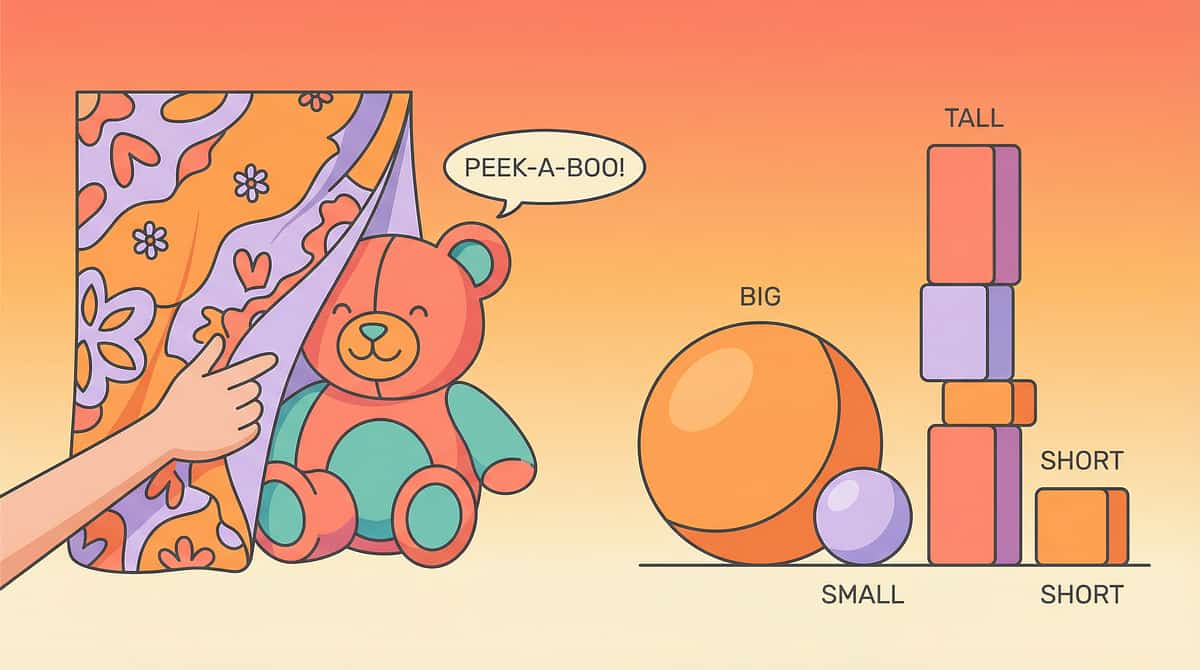
From the earliest cognitive milestone to comparative reasoning: Object Permanence underpins all representational thinking and emotional security. Size Concepts build the comparative thinking that is a critical stepping stone to mathematical reasoning.
G-675: Object Permanence
The earliest cognitive milestone (typically 8–12 months). Five-level progression: Peek-a-Boo (face disappears and returns) → Partial Cover (toy partially hidden — child can see part) → Full Cover (toy fully hidden — child searches without visual cue) → Hidden with Delay (adds memory demand) → Displaced (moved while hidden — most advanced). Practical importance: knowing food exists in a closed container, knowing parent is in the next room, understanding that the school day ends and home time comes.
G-678: Size Concepts
Big/small, long/short, tall/short, thick/thin, heavy/light. Start with EXTREME differences (basketball vs. marble) → gradually reduce the difference. Teach one concept pair at a time to mastery. Multi-sensory: hold, feel, lift (weight), measure. Real-world India: "Which chapati is bigger?" "Who is taller, you or Amma?" Comparison language: bigger THAN, smaller THAN, same size AS.
Evidence Level I — Cognitive milestone facilitation + Concept teaching within structured programmes. NCAEP 2020
Section 3
Pre-Academic Skills · Cards 15–20
Pre-Academic Skills
Building the cognitive and conceptual foundations for formal learning — literacy, numeracy, vocabulary, reasoning, and abstract thinking. These skills bridge the gap between early cognitive development and classroom readiness.
G-681 + G-682: Letter Recognition & Phonics
The literacy gateway — visual letter knowledge meets auditory sound mapping
G-678: Size Concepts
Comparative thinking on a continuum — big, small, long, short, tall, thin
G-683: Pre-Reading Skills
Book awareness, print concepts, story comprehension, phonological awareness
G-686 + G-687: Vocabulary & Category Naming
Word power — the strongest predictor of academic success at age 5
G-684: Pre-Math Skills
Conceptual foundations beneath arithmetic: comparison, spatial, seriation, sets
G-689 + G-691: Reasoning & Abstract Thinking
Higher-order cognition: drawing conclusions, understanding concepts without concrete referents
G-681 + G-682
Grouped · Early Literacy
G-681 & G-682: Letter Recognition / Phonics Basics
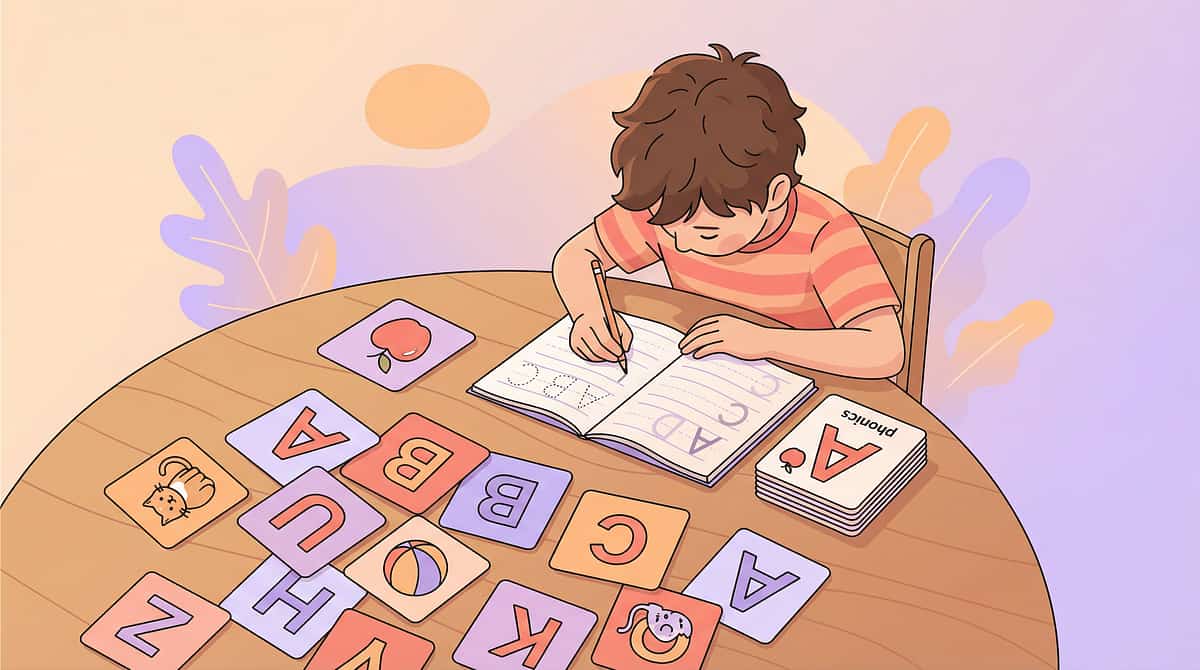
The literacy gateway. Letter recognition (knowing what each letter looks like) and phonics (knowing what each letter sounds like) are the twin pillars of reading. Visual letter recognition is often an ASD strength — pattern matching applied to print. Phonics — the auditory component — may require more support.
Letter Recognition (G-681)
- Letter-of-the-week: see, trace, build, find
- Alphabet puzzles and magnetic letters
- Environmental print ("Find the M on the menu")
- Sandpaper letters (Montessori multi-sensory)
- Letter formation in sand/salt tray
Phonics Basics (G-682)
- Letter-sound pairing — the visual-auditory bridge
- Initial sound identification ("What sound does 'ball' start with?")
- Phonological awareness games
- Letter songs for multi-modal encoding
Indian Multilingual Context
English + Hindi + regional script demands — teach ONE script to automaticity before adding another. Build phonological awareness in the dominant language first, then transfer the concept.
Evidence Level I — Explicit literacy instruction. NCAEP 2020

G-683 + G-684
Grouped · Pre-Academic Skills
G-683 & G-684: Pre-Reading Skills / Pre-Math Skills
The twin academic foundations. Pre-Reading: the rich set of skills that must be in place before formal decoding can succeed. Pre-Math: the conceptual foundation beneath arithmetic — making number operations meaningful, not just procedural.
G-683: Pre-Reading Skills
Book Handling
Hold correctly, turn pages front to back — the physical foundations of literacy
Print Awareness
Text goes left-to-right, top-to-bottom — point to text while reading together
Shared Reading
Daily read-aloud — the single most powerful pre-reading activity
Story Comprehension
"What happened?" "Who is that?" "What's next?" — building narrative understanding
Environmental Print
Reading signs, labels, logos — functional literacy in the real world
Indian literacy context: bilingual book exposure, picture books in regional language, and environmental print in multiple scripts (Hindi, English, regional) all contribute to rich pre-literacy development when used consistently.
G-684: Pre-Math Skills
More/Less/Same
Concrete comparison using real objects — always before symbols
Spatial Concepts
Positional language: in, on, under, beside, between — the language of mathematics
Seriation
Order objects by size — foundational number sense
Sets & Conservation
Group and count; amount stays the same even if arrangement changes
Mathematics is fundamentally pattern-based — aligning beautifully with the ASD systemising strength. Indian pre-math: measuring ingredients while cooking, market shopping (counting, comparing prices).
Evidence Level I — Pre-literacy + Pre-math within early intervention. NCAEP 2020
G-686 + G-687
Grouped · Word Knowledge
G-686 & G-687: Vocabulary Building / Category Naming
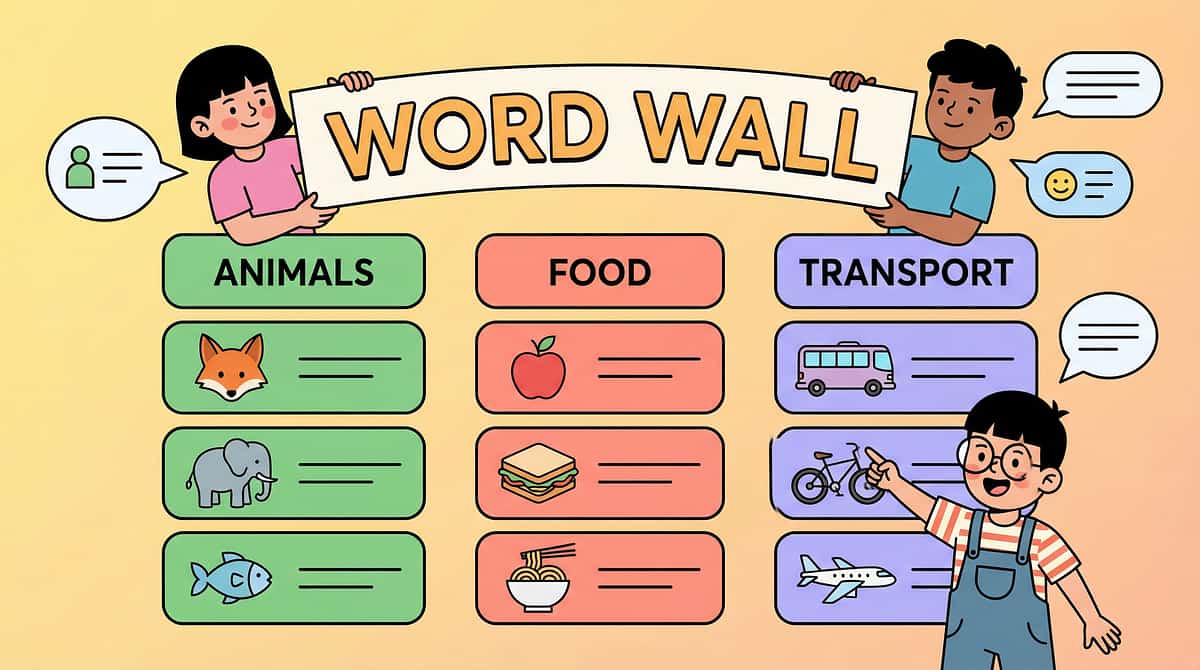
Words are the tools of thinking. Vocabulary size at age 5 is one of the strongest predictors of academic success. Vocabulary building and category naming together build the word power that drives comprehension, expression, and learning — deeper semantic networks mean faster, richer thinking.
Vocabulary Building (G-686)
- Label EVERYTHING — narrate the environment constantly
- Themed vocabulary: this week, kitchen words
- Visual vocabulary cards with images
- Reading as vocabulary exposure — every shared book builds word knowledge
- Indian multilingual: build vocabulary in dominant language first, then transfer concepts
Category Naming (G-687)
- "Name all the animals you know" → timed challenges
- Expand categories: food → Indian food → breakfast food
- Word webs: connect related words visually (dog → pet → animal → living thing)
- Category fluency reflects semantic network EFFICIENCY
Evidence Level I — Vocabulary intervention within language/cognitive programmes. NCAEP 2020

G-689 + G-691
Grouped · Higher-Order Cognition
G-689 & G-691: Reasoning Skills / Abstract Thinking
Two of the most advanced cognitive skills — and two of the most rewarding to develop. Reasoning: drawing conclusions from evidence ("The ground is wet. It must have rained."). Abstract thinking: understanding concepts without concrete referents — time, fairness, friendship, probability.
Reasoning (G-689)
- "Why?" questions — start with physical causes
- Prediction games: "What will happen if...?"
- Detective games (following clues to a conclusion)
- Logic puzzles appropriate to age and level
- Indian story-based reasoning: Panchatantra, adapted Aesop's fables
Abstract Thinking (G-691)
PFC at MAXIMUM demand — operating entirely in the symbolic/conceptual realm. Strategy: ANCHOR abstract to concrete, then gradually abstract.
- "Fair" = everyone gets the same number of cookies (concrete) → "Fair" = treating people equally (abstract)
- Time on a visual timeline
- Emotions on a feelings thermometer
- Probability on a pie chart
ASD cognitive profile: CONCRETE reasoning often strong (if-then rules), ABSTRACT reasoning often delayed (metaphor, inference, ambiguity). Always scaffold from concrete to abstract. Evidence Level I — Higher-order cognitive intervention. NCAEP 2020
Section 4
Executive Function & Learning Systems · Cards 21–30
Executive Function & Learning Systems
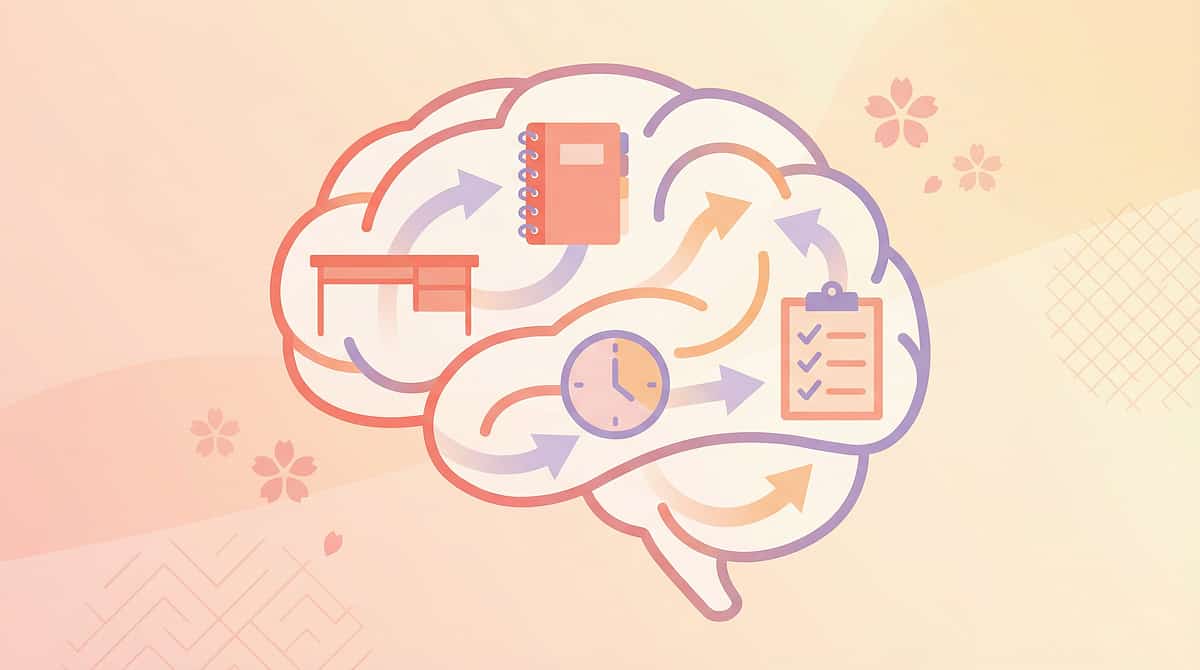
The CEO of the brain — and the most impactful cognitive domain in ASD. This section addresses the higher-order systems that organise, manage, and direct all other cognitive functions: concept development, executive function, generalisation, flexible thinking, organisation, working memory, processing speed, and learning readiness.
PFC maturation is delayed in ASD, explaining why executive function challenges are so prominent in young children. The interventions in this section teach the brain's CEO skills — not through direct instruction alone, but through external scaffolding that gradually becomes internal.
G-685 + G-688
Grouped · Executive Function & Learning Systems
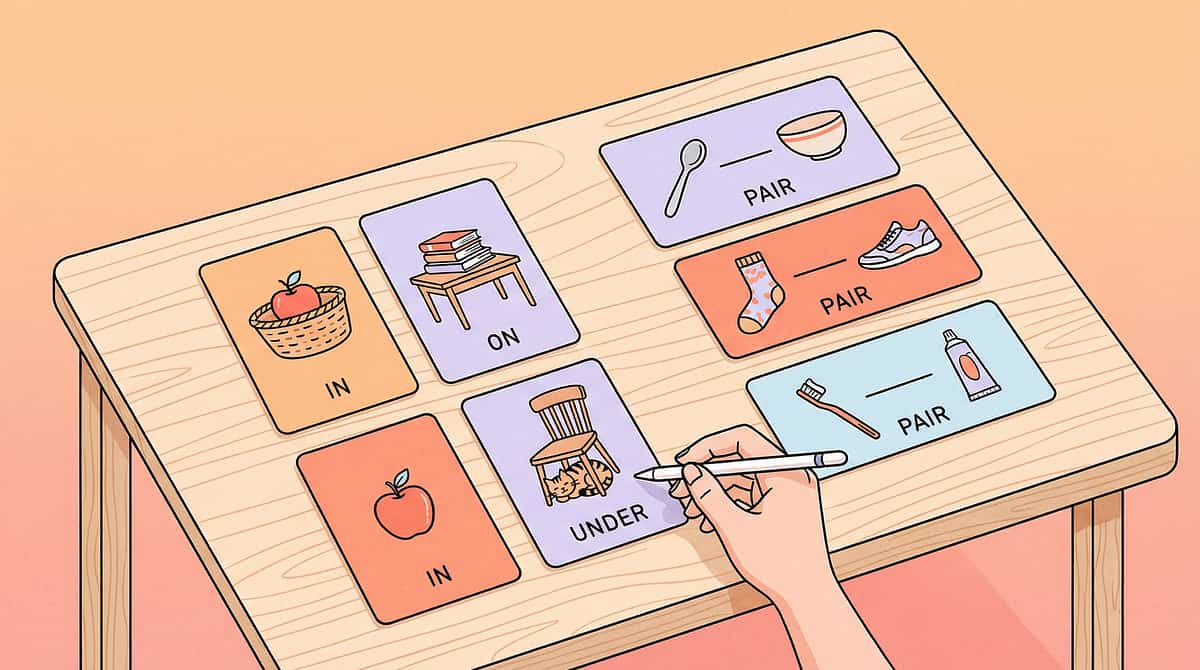
G-685 & G-688: Concept Development / Association Skills
Concepts are the thinking units of cognition — every word represents one. Associations are the links between them — building the conceptual web that underlies language comprehension, problem-solving, and real-world navigation.
G-685: Concept Development
- Spatial (in, on, under, beside, between — "Put it IN the bowl")
- Temporal (before, after, first, last, yesterday, tomorrow — visual timeline makes time concrete)
- Quantity (more, less, all, some, none — always teach with physical objects)
- Quality (hot/cold, big/small, hard/soft, loud/quiet — multi-sensory teaching: feel, compare, label, apply)
Teaching requires multiple examples AND non-examples: "This is ON the table. This is NOT on the table — it's UNDER."
G-688: Association Skills
- Co-occurrence (items that appear together: spoon + bowl)
- Functional (items used for the same purpose: spoon + fork = eating utensils)
- Location (items belonging to the same place: bed → bedroom)
- Temporal (items connected by sequence: breakfast → school → lunch)
Teaching: "What goes together?" picture pairs, functional associations ("What do you use to eat?"), association games, build from known to less obvious (pencil → paper → eraser → school bag).
Evidence Level I — Concept teaching + Associative learning within cognitive/language programmes. NCAEP 2020
G-693 + G-694
Grouped · Executive Function Core
G-693 & G-694: Executive Function / Planning Skills
The executive brain. Executive function is the CEO of the brain — managing, organising, directing all other cognitive systems. Planning is EF's most visible product: "What do I need to do? In what order? What do I need? How long will it take?" EF challenges affect everything: academics, self-care, social interaction, behaviour.
External EF Supports
- Visual schedules — external organisation (what's happening and when)
- Checklists — external working memory (nothing forgotten)
- Timers — external time management (how long left)
- First-Then boards — external planning (this then that)
- Colour-coded folders — external organisation system
Teaching Planning (G-694)
The Goal-Plan-Do-Check framework — visual and systematic:
- "What do we need?" — gather resources
- "What do we do first?" — sequence steps
- "What comes next?" — maintain the plan
- "Are we done?" — evaluate completion
Cooking as EF exercise: gathering ingredients = planning, following recipe = sequencing, timing = monitoring, tasting = evaluating. A complete EF workout in every meal.
Evidence Level I — Executive function intervention. NCAEP 2020
G-690 + G-692
Grouped · Executive Function & Learning Systems
G-690 & G-692: Generalisation / Flexible Thinking
The two most critical transfer skills in ASD. Generalisation: ensuring skills learned in therapy function in the real world. Flexible Thinking: the ability to shift perspective, consider alternatives, and adapt when things don't go as expected.
G-690: Generalisation
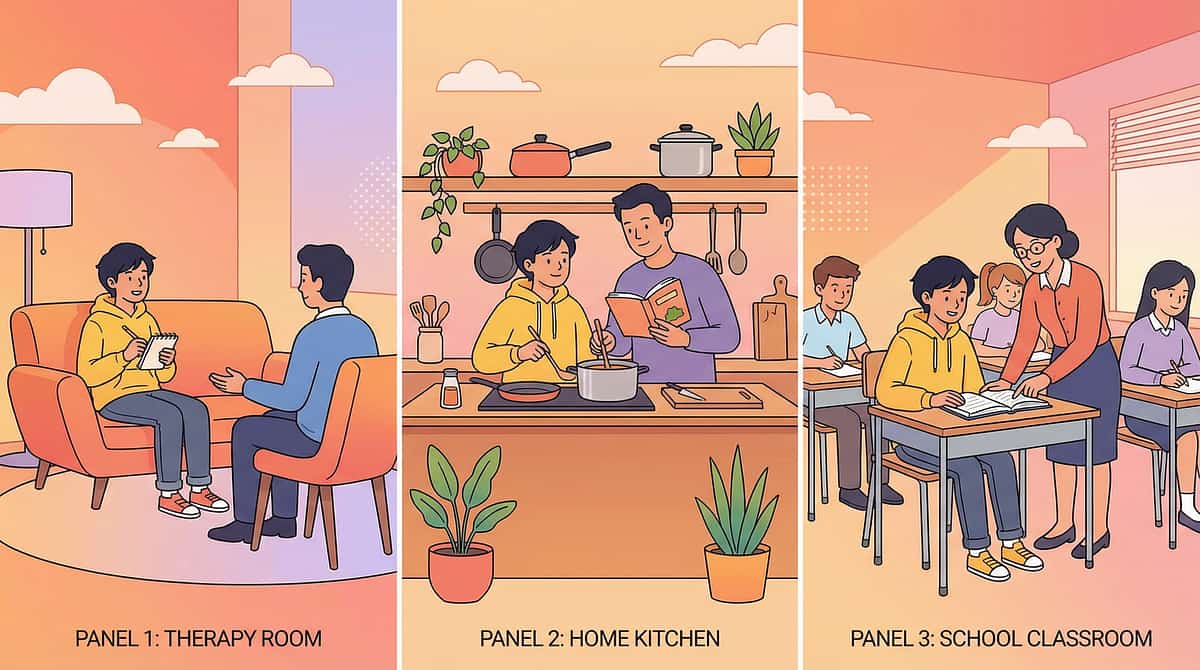
The critical challenge: they can do it at the therapy table, with their therapist, in that room — but nowhere else. Programme for generalisation from day one — not after mastery.
Four dimensions:
- Multiple People: teach with therapist + parent + sibling + teacher from the start
- Multiple Settings: therapy room + home + community — vary the environment deliberately
- Multiple Materials: not always the same cards — use varied objects, pictures, and real items
- Natural Environment Teaching: teach IN the context where the skill will be used — NET from day one
Test deliberately: "Can they do it HERE? With HER? Using THESE materials?"
G-692: Flexible Thinking
Flexible vs. Stuck Thinking: visualise the brain as stretchy vs. rigid — a concrete metaphor children can understand. "Your way AND my way are both okay" vs. "There is ONLY one right way."
Activities:
- "What ELSE could this be?" (object alternatives game)
- multiple solutions to one problem (celebrate all valid answers)
- rule-changing games (play → change ONE rule mid-game)
- Plan A/Plan B visual board for dealing with changes
Catch and praise every flexible moment, however small.
Evidence Level I — Generalisation programming + Cognitive flexibility training. NCAEP 2020

G-695 + G-696
Grouped · Executive Function & Learning Systems
G-695 & G-696: Organisation Skills / Working Memory
The external scaffolding and the internal bottleneck. Organisation Skills: when the PFC's organisational circuitry is inefficient, external systems must compensate. Working Memory: the cognitive RAM that predicts academic achievement more accurately than IQ.
G-695: Organisation Skills
Three domains: Physical Organisation (everything has a PLACE — labelled, visible; colour-coded systems: red folder = maths, blue = English), Time Organisation (visual schedule, clock awareness, time estimation practice — "How long will this take?"), Bag-Packing Checklist ("Before school: bag? Tiffin? Water bottle? Homework? Pencil box?" — visual checklist makes independence possible in the Indian school context).
Information organisation: graphic organisers, visual note-taking, mind maps.
G-696: Working Memory
The dorsolateral PFC is the brain's RAM. Typical adults hold 7±2 items; ASD children may hold fewer. Every task requiring holding AND processing simultaneously taxes this limited resource: following multi-step directions, mental arithmetic, reading comprehension, conversation.
Two strategies: Reduce the Load (shorter instructions one step at a time, visual aids, written reminders and checklists) and Build the Capacity (memory games: sequence recall, backward digit span; chunking: phone number in pairs; N-back tasks; Indian classroom accommodation: request written/visual backup).
Evidence Level I — Organisational support + Working memory support + training. NCAEP 2020

G-697 + G-700
Grouped · Executive Function & Learning Systems · Capstone
G-697 & G-700: Processing Speed / Learning Readiness
Processing Speed: they KNOW the answer — they just need more time. Learning Readiness: the capstone of Subdomain G2 — the combined capacity that bridges all 40 techniques to school readiness.
G-697: Processing Speed
The ASD brain arrives at the same conclusion — just later. The intelligence is there. The speed is different. Accommodation is not a favour — it is a right.
Neuroscience: white matter under-connectivity means information travels through longer, less direct pathways — trading speed for accuracy.
- Extended time — RPwD 2016 right for school and board exams
- Reduced workload — same concepts, fewer problems
- No timed tests unless speed is specifically assessed
- Pre-teaching — see material before class
- Beat your OWN time — not peers
- CBSE/ICSE/state board provisions for extra time — document and advocate
G-700: Learning Readiness
The capstone of Subdomain G2 and the bridge to school. Learning readiness is NOT about chronological age — it is about the convergence of cognitive, communication, motor, sensory, and behavioural foundations.
Readiness checklist: attending (5+ minutes) · sitting for tasks · following 2-step directions · imitating · matching · sorting · requesting · waiting · transitioning · tolerating a group setting. Indian school entry is age-based, not readiness-based — advocate for developmental readiness assessment for every child who needs it.
9 Canon Materials: Visual Schedule, Cause-Effect Toys, Fine Motor Kit, Sensory Play Materials, Reward Charts, First-Then Board, Visual Timer, Social Stories, Communication Board.
Evidence Level I — Processing speed accommodation + Learning readiness facilitation. NCAEP 2020
Lead Professionals: SpEd · ABA · Psychology | OT · SLP · NeuroDev
G-698 + G-699
Grouped · Processing Modalities
G-698 & G-699: Visual Perception / Auditory Processing
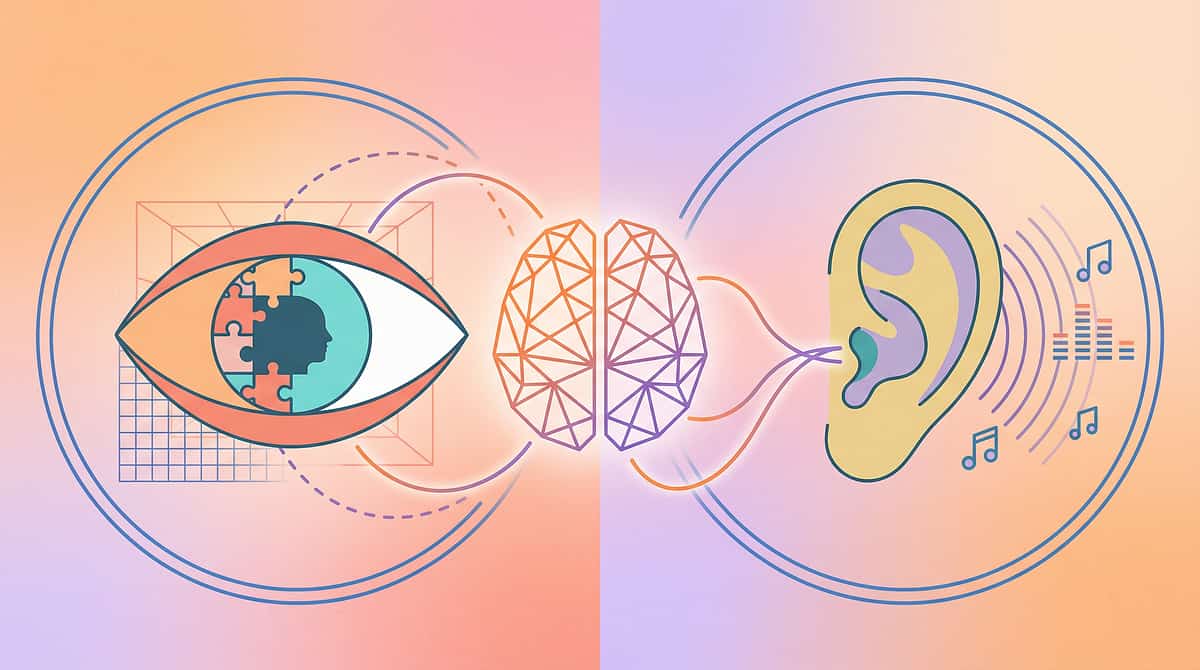
The two input channels. Visual perception: how the brain interprets what the eyes see. Auditory processing: how the brain interprets what the ears hear. ASD typically presents with strong visual, weaker auditory. Teaching strategy: lead with visual, support the auditory.
Visual Perception (G-698) — Often STRONG
Parietal + occipital cortex: figure-ground discrimination, visual closure, spatial relationships, visual memory. Leverage for learning.
Activities: hidden pictures, puzzles, mazes, spot-the-difference, I Spy, figure-ground worksheets, visual tracking games
Auditory Processing (G-699) — Often WEAKER
Temporal cortex: speech sound discrimination, auditory figure-ground (hearing speech in noise), auditory memory, auditory sequencing. Support with visual.
Supports: reduce background noise, face the child when speaking, pair verbal with visual, repeat/rephrase, auditory discrimination games (same/different sounds)
Indian classroom context: noisy environments, large class sizes → preferential seating near the front, visual instruction supplements, and written directions for all children who need them. Teaching through the strong channel while building the weaker one is the evidence-based approach.
Evidence Level I — Perceptual skill building. NCAEP 2020

Cognition in ASD is Not Less — It Is Different
The spiky cognitive profile means extraordinary strengths exist alongside genuine challenges. The most effective teaching leverages the strengths to support the challenges. Visual learner? Teach visually first. Pattern thinker? Teach through patterns. Systemiser? Present information as systems with rules.
Visual Learner
Lead with pictures, diagrams, and visual schedules before introducing verbal instruction
Pattern Thinker
Present concepts as patterns and systems — the brain lights up with recognition
Detail Focuser
Use the exceptional detail focus for matching, sorting, and categorisation tasks
Rote Memory Strength
Leverage memorised sequences, songs, and scripts as learning vehicles
Special Interest Depth
Embed target skills within the child's deepest area of interest for maximum engagement
"The question is never 'Can this child learn?' — it is 'How does this child learn best?' Every answer to that question lives in Subdomain G2."
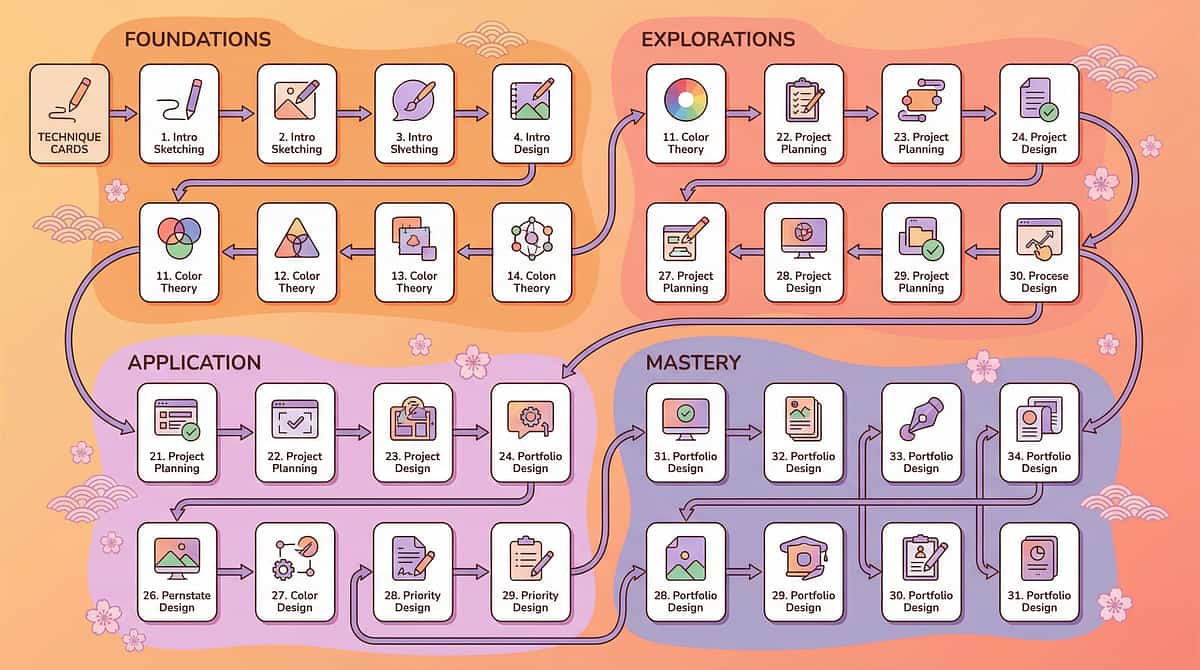
All 40 Techniques
Subdomain G2 Complete Map
Subdomain G2: Complete Technique Index
All 40 evidence-based cognitive and learning interventions, organised by section. Each technique links to a dedicated 40-card technique page with 9 canon therapy materials.
Code | Technique | Section | |
G-661 | Attention Skills | Section 1: Attention & Task Skills | |
G-662 | Focus and Concentration | Section 1: Attention & Task Skills | |
G-663 | Sitting for Tasks | Section 1: Attention & Task Skills | |
G-664 | Task Completion | Section 1: Attention & Task Skills | |
G-665 | Following Directions | Section 1: Attention & Task Skills | |
G-666 | Imitation Skills | Section 1: Attention & Task Skills | |
G-667 | Matching Skills | Section 1: Attention & Task Skills | |
G-668 | Sorting Skills | Section 1: Attention & Task Skills | |
G-669 | Categorisation | Section 2: Cognitive Building Blocks | |
G-670 | Sequencing | Section 2: Cognitive Building Blocks | |
G-671 | Pattern Recognition | Section 2: Cognitive Building Blocks | |
G-672 | Memory Skills | Section 2: Cognitive Building Blocks | |
G-673 | Problem Solving | Section 2: Cognitive Building Blocks | |
G-674 | Cause and Effect | Section 2: Cognitive Building Blocks | |
G-675 | Object Permanence | Section 2: Cognitive Building Blocks | |
G-676 | Colour Recognition | Section 2: Cognitive Building Blocks | |
G-677 | Shape Recognition | Section 2: Cognitive Building Blocks | |
G-678 | Size Concepts | Section 3: Pre-Academic Skills | |
G-679 | Counting Skills | Section 3: Pre-Academic Skills | |
G-680 | Number Recognition | Section 3: Pre-Academic Skills | |
G-681 | Letter Recognition | Section 3: Pre-Academic Skills | |
G-682 | Phonics Basics | Section 3: Pre-Academic Skills | |
G-683 | Pre-Reading Skills | Section 3: Pre-Academic Skills | |
G-684 | Pre-Math Skills | Section 3: Pre-Academic Skills | |
G-685 | Concept Development | Section 4: Executive Function & Learning Systems | |
G-686 | Vocabulary Building | Section 3: Pre-Academic Skills | |
G-687 | Category Naming | Section 3: Pre-Academic Skills | |
G-688 | Association Skills | Section 4: Executive Function & Learning Systems | |
G-689 | Reasoning Skills | Section 3: Pre-Academic Skills | |
G-690 | Generalisation | Section 4: Executive Function & Learning Systems | |
G-691 | Abstract Thinking | Section 3: Pre-Academic Skills | |
G-692 | Flexible Thinking | Section 4: Executive Function & Learning Systems | |
G-693 | Executive Function | Section 4: Executive Function & Learning Systems | |
G-694 | Planning Skills | Section 4: Executive Function & Learning Systems | |
G-695 | Organisation Skills | Section 4: Executive Function & Learning Systems | |
G-696 | Working Memory | Section 4: Executive Function & Learning Systems | |
G-697 | Processing Speed | Section 4: Executive Function & Learning Systems | |
G-698 | Visual Perception | Section 4: Executive Function & Learning Systems | |
G-699 | Auditory Processing | Section 4: Executive Function & Learning Systems | |
G-700 | Learning Readiness | Section 4: Executive Function & Learning Systems |
Preview of cognitive learning Therapy Material
Below is a visual preview of cognitive learning therapy material. The pages shown help educators, therapists, and caregivers understand the structure and content of the resource before use. Materials should be used under appropriate professional guidance.
Link copied!
Domain G: Complete
Domain G: Play & Leisure — Both Subdomains Complete
Subdomain G2 completes Domain G: Play & Leisure — 80 evidence-based techniques across play skills and cognitive-learning interventions for children with autism. Each technique is supported by 9 canon therapy materials and a dedicated 40-card technique page.
80
Total Techniques
G1: Play Skills + G2: Cognitive & Learning
40
G2 Techniques
G-661 to G-700 — Cognitive & Learning
9
Materials Per Technique
360 canon material recommendations in G2 alone
21M+
Sessions
Pinnacle Blooms Network® GPT-OS® sessions to date
G1: Play Skills ✅ Complete
G-621 to G-660 · 40 Techniques · 30 Cards
G2: Cognitive & Learning ✅ Complete
G-661 to G-700 · 40 Techniques · 30 Cards
Next: Domain H →
Breadcrumb:Home → Play & Leisure (G) → Cognitive & Learning (G2)
Canonical URL:interventions.pinnacleblooms.org/play-and-leisure/cognitive-and-learning | Schema: MedicalWebPage + CollectionPage | hreflang: en-IN, en | GPT-OS® Pinnacle Blooms Network® | 9100 181 181