
Auditory Challenges — 25 Evidence-Based Sound Sensitivity Interventions
Subdomain A2: Auditory | Domain A: Sensory Processing | Pinnacle Blooms Network®
Your child hears a world you've learned to tune out. The refrigerator hum. The fluorescent buzz. The distant horn. Sounds that disappeared from your awareness years ago arrive at their auditory cortex at full, unfiltered volume — simultaneously, relentlessly, without pause. This page delivers 25 evidence-based intervention techniques for auditory challenges in children with autism, each backed by Level I research and grounded in the neuroscience of how the auditory system processes — and sometimes fails to filter — sound.
Neuroscience Primer
Why Your Child's Brain Hears Everything at Once
Sound travels from the outer ear through the cochlea, up the auditory nerve, through the brainstem's Superior Olivary Complex, into the thalamus — specifically the Medial Geniculate Nucleus — and finally arrives at the Primary Auditory Cortex (Heschl's Gyrus) in the temporal lobe. This pathway normally includes a critical filtering stage: the thalamic gate.
Auditory Hypersensitivity
The thalamic gating mechanism fails to filter sounds by relevance. Every sound — background hum, distant traffic, a ticking clock — arrives at the auditory cortex with equal neurological "volume." This is called hyperacusis when extreme. The child isn't being dramatic. Their brain is receiving ALL sounds at maximum intensity, simultaneously, without the filter neurotypical brains rely on.
Auditory Hypo-Sensitivity / Seeking
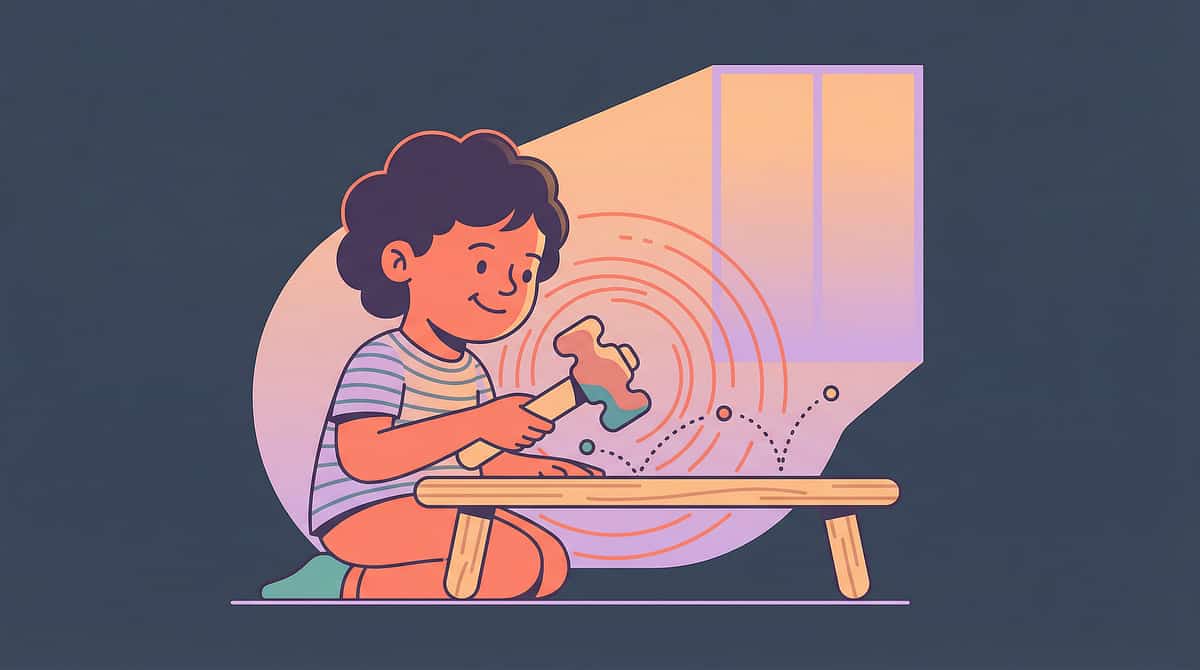
The opposite pattern — the auditory system under-registers input, driving the child to create or seek louder, more intense sounds just to reach their activation threshold. This explains banging, humming, volume-seeking, and other sound-generating behaviors that look disruptive but are actually self-regulatory.
Key Research: PMC11506176 | NCAEP 2020 | DOI: 10.3389/fnint.2020.556660
A-031 | Sound Sensitivity
A-031: 9 Materials That Help With Sound Sensitivity
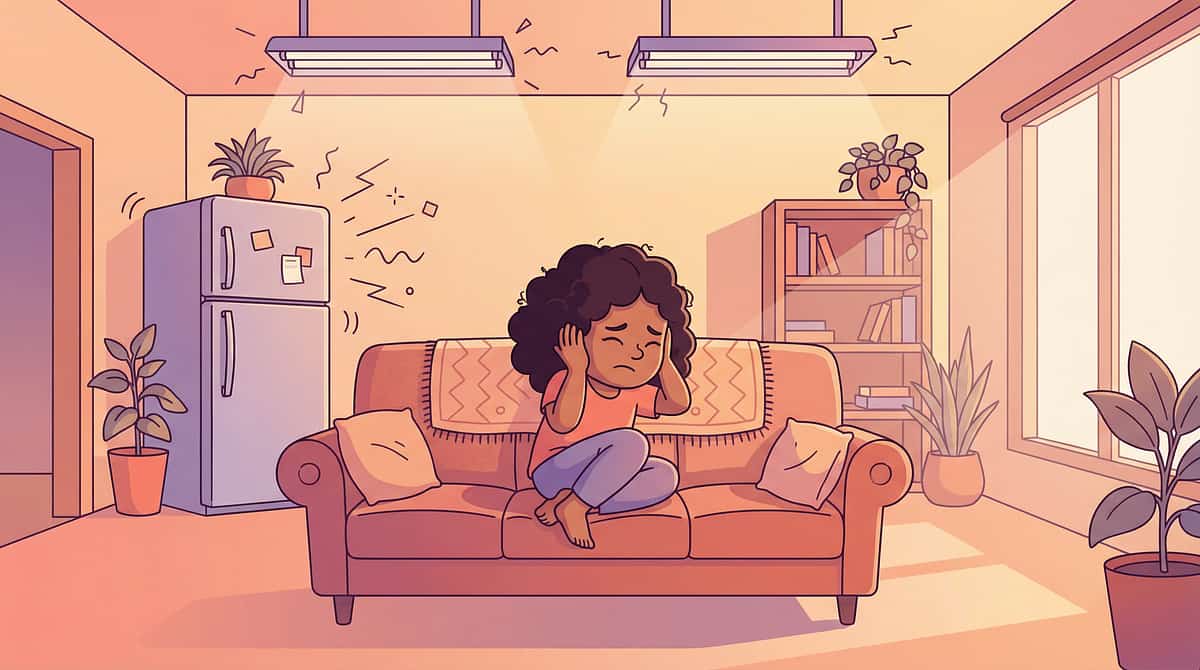
The Moment: Your child hears things you don't. The refrigerator hum. The fluorescent light buzz. The distant auto-rickshaw horn. Sounds you tuned out years ago are deafening to them. They cover their ears in malls, cry in restaurants, and refuse to enter any space with unpredictable sound. You've started planning your entire life around noise levels — choosing restaurants by decibel, avoiding festivals, arriving at temples before the bells begin.
The Neuroscience: The thalamic auditory gate — which normally filters sounds by relevance — operates with reduced selectivity. The auditory cortex receives ALL input at near-equal salience. Imagine hearing every conversation in a restaurant at the same volume as the person across the table. That is your child's default experience, every waking moment.
📊Evidence Level I — Sensory integration therapy including auditory approaches meets evidence-based criteria (PRISMA 2024, NCAEP 2020). Environmental modification + therapeutic listening protocols show measurable improvement. PMC11506176 | NCAEP 2020 | DOI: 10.3389/fnint.2020.556660
Auditory Profiling
Identify which frequencies and contexts are most triggering for your child specifically.
Headphone Protocol
Noise-reducing headphone introduction and graduated weaning protocol over weeks.
Environmental Modification
Practical sound modification strategies for home and school environments.
Therapeutic Listening
Structured auditory sensory diet for daily nervous system regulation.
9 Canon Materials:Noise-Reducing Headphones · White Noise Machine · Fidget Set · Calm-Down Kit · Visual Schedule · Social Stories · Sensory Tent · Weighted Blanket · Music Instruments
Lead Disciplines:🤲 OT (Sensory Integration) · 🗣️ SLP (Auditory Processing) | ABA · NeuroDev
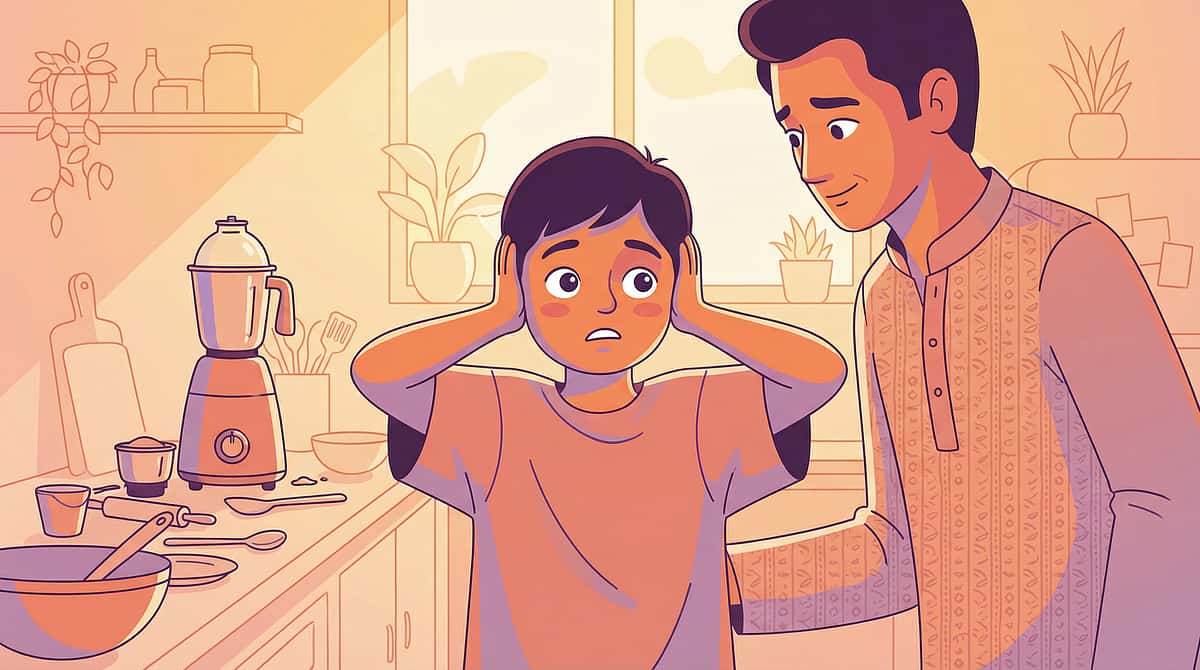
A-032 | Covers Ears Constantly
A-032: 9 Materials That Help When a Child Covers Their Ears
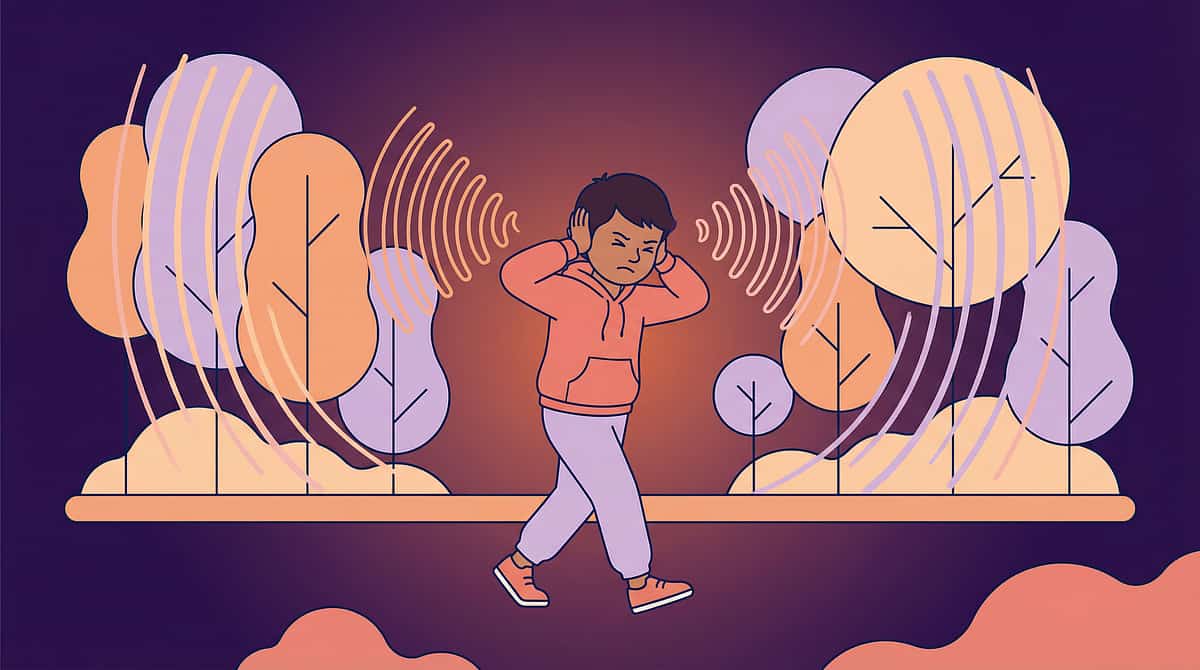
The Moment: Their hands live on their ears. In the car. At the park. During family conversations. They walk through life with palms pressed against their head — a human shield against a world that sounds like it's always screaming. People stare. Teachers think they're being rude or defiant. You know they're just surviving, doing the only thing that brings any relief from the constant auditory assault.
The Neuroscience: Ear covering is the most visible indicator of auditory defensiveness. The superior olivary complex — which normally adjusts auditory sensitivity based on context — is not attenuating input. So the child does it mechanically, using their own hands as biological ear defenders. It is an intelligent, if inconvenient, coping strategy.
📊Evidence Level I — Graduated environmental exposure + headphone protocols. PMC11506176 | NCAEP 2020
Headphone-to-No-Headphone Graduated Protocol
Systematically reduce reliance on ear covering by replacing it with socially acceptable alternatives.
Auditory Trigger Identification Log
Document specific sounds, contexts, and times of day that reliably trigger ear covering.
Sound Desensitization Hierarchy
Build tolerance from least- to most-aversive sounds using structured exposure sessions.
Self-Advocacy + Classroom Accommodation
Teach the child to request a headphone break; implement RPwD 2016 accommodations at school.
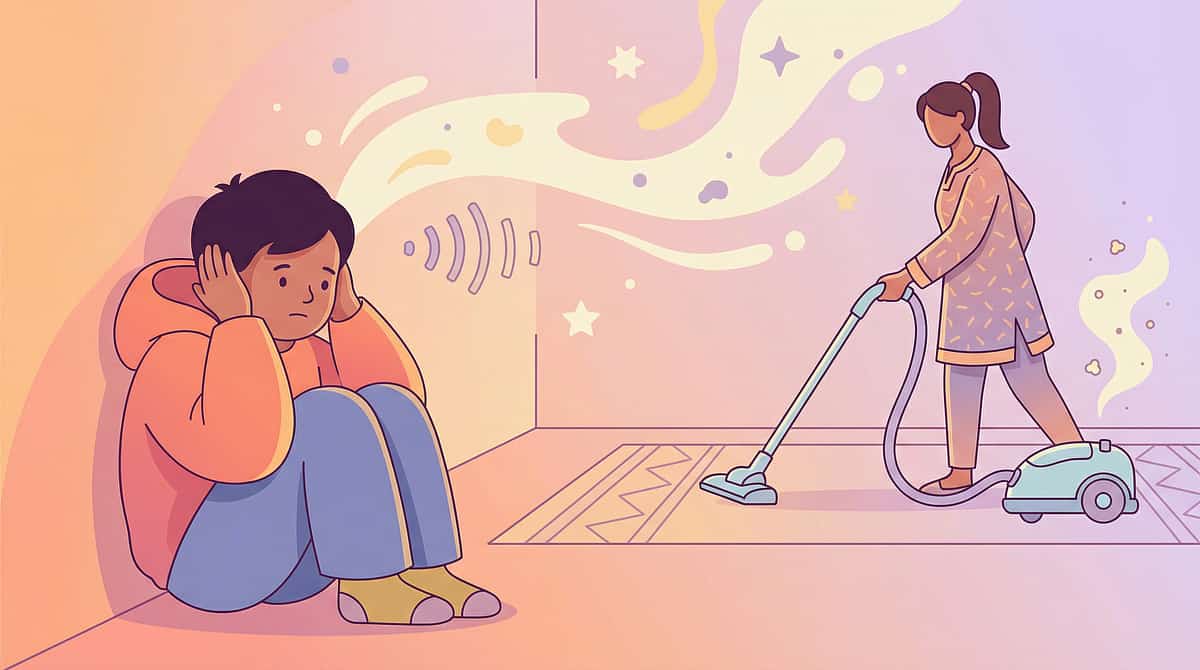
A-033 | Vacuum Cleaner Distress
A-033: 9 Materials That Help With Vacuum Cleaner Distress
The Moment: The vacuum comes out and your child disappears. Hiding under the bed, screaming, hands clamped over ears. You've started vacuuming only when they're at school or sound asleep. You've considered switching to a broom permanently. A household chore has become a logistical operation requiring full advance planning and emotional preparation.
The Neuroscience: Vacuum cleaners produce broadband noise at 60–80 dB with strong low-frequency components that activate the saccule — a vestibular organ — in addition to the cochlea. This creates a dual auditory-vestibular assault. The unpredictable intensity changes as the vacuum moves across the room add acoustic uncertainty that further overwhelms the nervous system's capacity to anticipate and adapt.
📊Evidence Level I — Graduated sound exposure with predictability supports. NCAEP 2020 | PMC11506176
Visual Warning + Timer
Give 5-minute visual advance notice before vacuuming begins — every time, without exception.
Distance-Based Desensitization
Start in a far room, gradually reducing distance over weeks as tolerance builds.
Child Participation (Empowerment)
Let the child hold the vacuum (off), then on a low setting — ownership reduces fear.
Alternative Tools Phase
Use a broom or mop during active desensitization to reduce overall avoidance pressure.
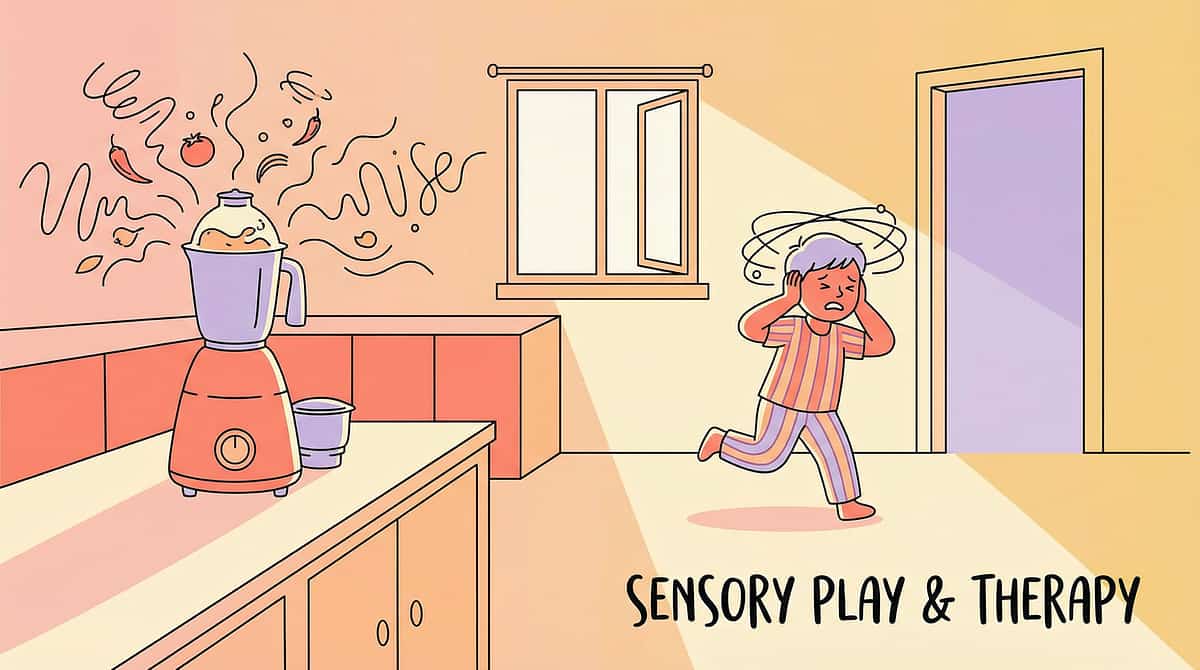
A-034 | Mixer Grinder Fear
A-034: 9 Materials That Help With Mixer Grinder Fear
The Moment: In Indian homes, the mixer grinder is essential — chutneys, dosa batter, masalas, morning smoothies. But the moment it switches on, your child screams, runs, covers ears, and sometimes has a full meltdown. You grind everything when they're asleep. Cooking has become a covert operation planned around your child's schedule, and you carry guilt every time you reach for the jar.
The Neuroscience: Mixer grinders produce 80–95 dB — equivalent to a motorcycle engine at close range — with sudden onset and high-frequency harmonics that are particularly aversive to the hypersensitive auditory cortex. The enclosed kitchen environment amplifies sound through wall and counter reflection, raising the effective decibel level even higher. There is no gentle warning; the sound goes from zero to full intensity in milliseconds.
📊Evidence Level I — Household sound desensitization protocols. NCAEP 2020 | PMC11506176
Predictability First
Visual countdown (show timer on phone) before every single use — build a reliable ritual around it.
Recording-Based Pre-Exposure
Play a recording of the mixer at low volume on a phone speaker during calm, preferred activities.
Distance-Based Graduated Exposure
Start with child in a different room, door closed. Gradually reduce distance over weeks.
Headphone Protocol During Kitchen Use
Introduce noise-reducing headphones as a non-negotiable kitchen tool, normalize their use.
Kitchen Acoustic Modification
Add soft mats, close cabinets, and use a mixer cover to reduce sound reflection in the kitchen.
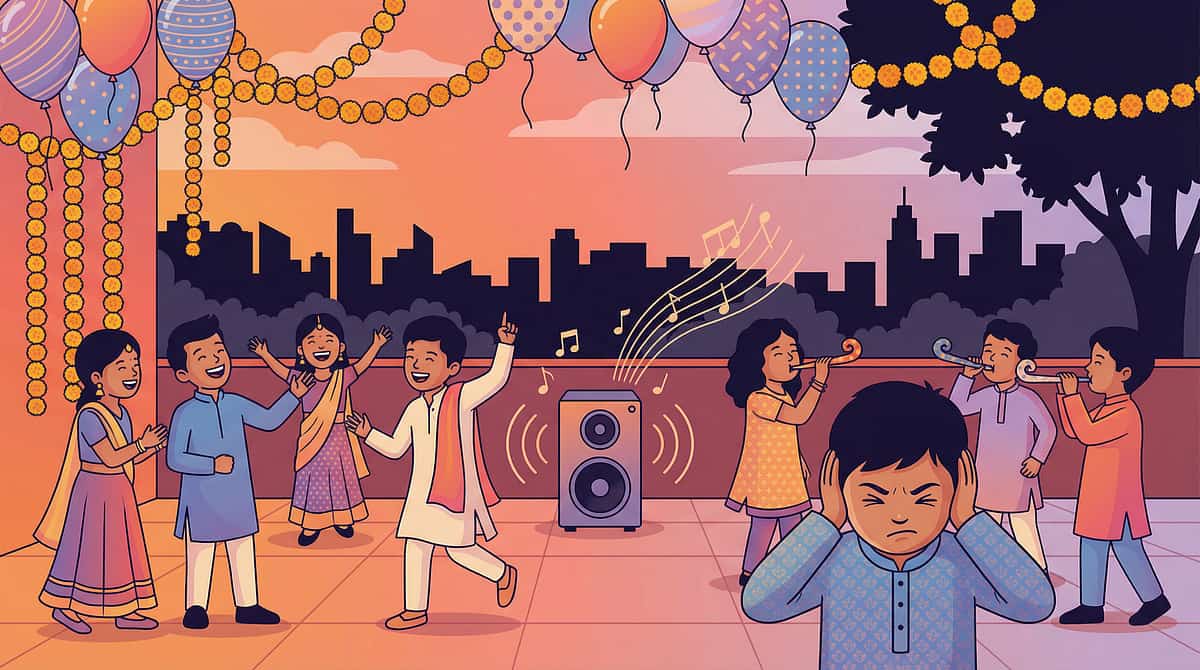
A-035 | Noisy Birthday Parties
A-035: 9 Materials That Help at Noisy Birthday Parties
The Moment: The invitation arrives and your heart sinks. Balloons popping. Music blasting. Children screaming with excitement. Party crackers. Your child's birthday party experience: 10 minutes of brave participation, then 50 minutes of crying in the car outside while other children eat cake. You've quietly stopped accepting invitations. Your child is missing the ordinary joys of childhood socialization.
The Neuroscience: Birthday parties combine multiple auditory assaults simultaneously: unpredictable high-intensity sounds (balloon pops, party horns), crowd noise (reverberant children's voices in closed spaces), amplified music with strong bass frequencies, and the complete absence of auditory predictability. No single element is manageable; together, they create a sensory perfect storm.
📊Evidence Level I — Social stories + environmental preparation + sensory toolkit approach. NCAEP 2020
Before the Party
- Read the party social story together 3 days before
- Pack portable sensory toolkit (headphones, fidgets, calm-down items)
- Plan arrival timing — early entry before the crowd builds
- Identify and visit the quiet retreat space on arrival
Graduated Party Exposure
Begin with just 15 minutes of participation. Add 15 minutes each subsequent party invitation. Allow headphones throughout. Celebrate every minute of engagement — never the length.
Returning to Social Life
Host smaller gatherings (2–3 friends) at home first. Controlled environment, familiar sounds, predictable duration. Build the social experience before scaling to full parties.
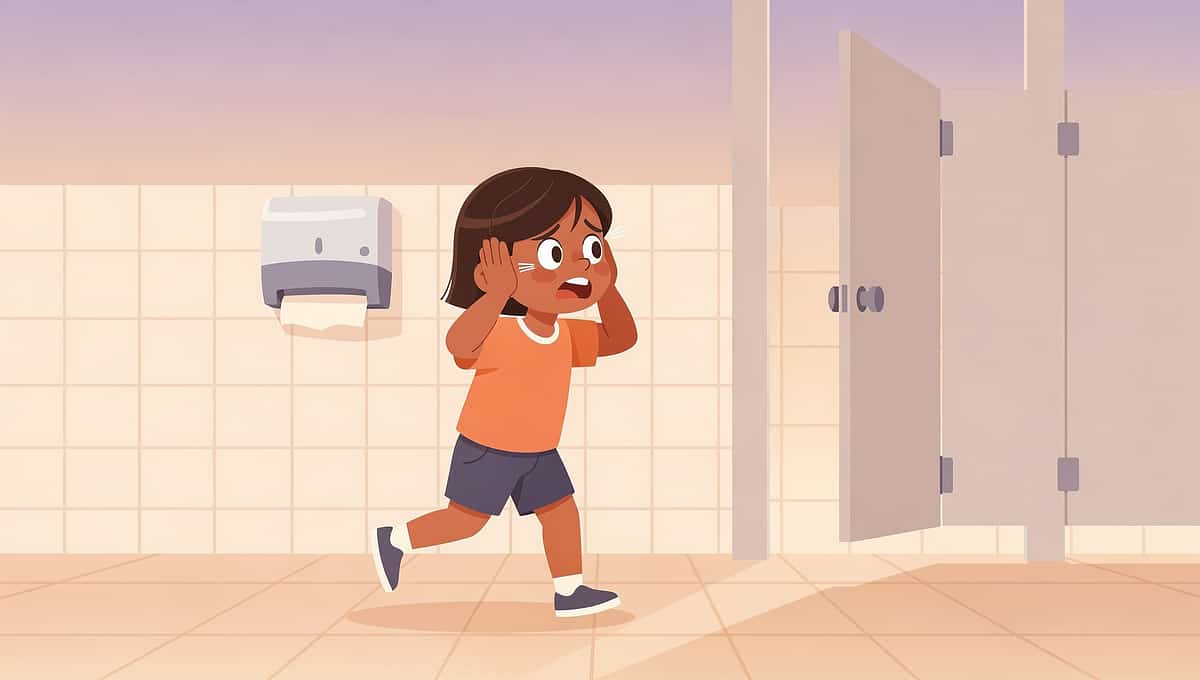
A-036 | Hand Dryer Fear
A-036: 9 Materials That Help With Hand Dryer Fear
The Moment: Public bathrooms are a minefield. Someone activates the hand dryer and your child collapses — screaming, running for the exit, sometimes completely refusing to use any public bathroom ever again. Restaurant visits, mall trips, school outings, and airport travel all become complicated by one machine mounted on a tiled wall. Your child holds their bladder rather than risk entering.
The Neuroscience: Hand dryers produce 80–90 dB of broadband noise in a highly reverberant, enclosed space — tiled walls and floors amplify sound dramatically. The sudden onset triggered by an unknown stranger's hand violates every predictability need of the auditory-defensive nervous system. There is no warning, no countdown, no control — just instantaneous full-volume noise.
📊Evidence Level I — Specific phobia desensitization + auditory tolerance protocols. NCAEP 2020
Pre-Entry Social Story
Read a specific "public bathroom" social story before every outing. Normalize the dryer as a predictable element of the environment.
Headphones BEFORE Entering
Headphones go on before stepping through the bathroom door — not after the dryer fires.
Video-Based Pre-Exposure
Watch hand dryer videos at gradually increasing volume at home, during calm preferred activities.
Paper Towel Protocol
Request paper towels or carry a personal hand towel — remove the trigger while building tolerance.
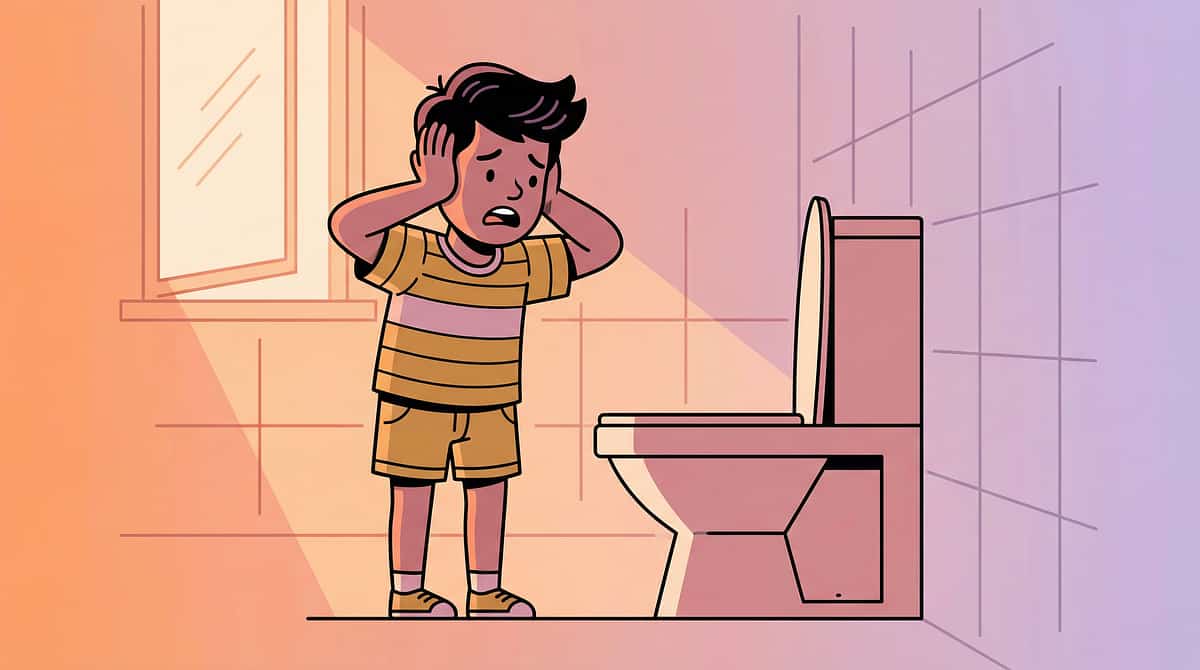
A-037 | Toilet Flush Fear
A-037: 9 Materials That Help When a Child Fears Toilet Flush
The Moment: They'll use the toilet but absolutely refuse to flush. Or they flush and sprint screaming from the bathroom, heart pounding. Automatic-flush toilets in malls, airports, and restaurants are the worst — no warning, no control, just a sudden roar from directly beneath them. Toilet training progress stalls entirely because a child who fears the flush will resist using the toilet altogether.
The Neuroscience: Toilet flush noise (75–85 dB) reverberates intensely in enclosed bathroom spaces. Automatic flushes remove all predictability and control — the two factors most critical to auditory-defensive nervous systems. For a child sitting directly ON the sound source, the flush also combines with vibration transmitted through the body — a multi-sensory assault that amplifies the threat response far beyond what decibels alone would predict.
📊Evidence Level I–II — Toileting desensitization within ABA + OT protocols. NCAEP 2020
Flush-Last Protocol
Child exits bathroom fully, then adult flushes. Separate the child from the sound source entirely.
Post-it Over Sensors
Cover automatic flush sensors with a Post-it note in public restrooms — gives the child control.
Sound Recordings
Play flush recordings at gradually increasing volume during non-toilet, calm activities.
Control-Based Empowerment
Give the child the flush handle. Let them choose WHEN it happens. Ownership transforms the experience.
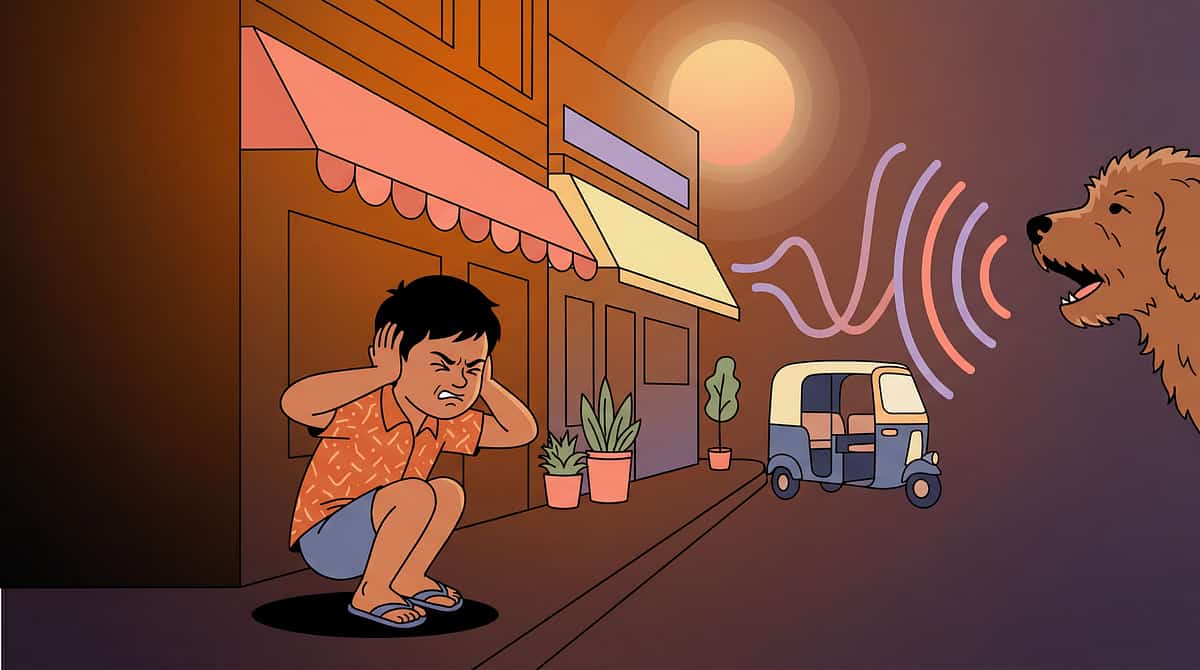
A-038 | Dog Barking Distress
A-038: 9 Materials That Help With Dog Barking Distress
The Moment: A dog barks three streets away and your child is inconsolable for the next twenty minutes. Walking past a house with dogs triggers full panic. Parks are avoided. Visiting friends with pets is impossible. The unpredictability of WHEN the bark will happen keeps your child in constant anticipatory anxiety — scanning the environment, tensed, waiting for the sound that always seems to come.
The Neuroscience: Dog barks contain sharp onset transients — sudden bursts of sound energy — with frequency peaks in the 1–4 kHz range, precisely where human auditory sensitivity is highest. Combined with the unpredictability of timing and the evolutionary association with a potential threat (large animal), the amygdala-auditory pathway fires both fear and startle responses simultaneously. The result is a double-hit: sensory overwhelm plus genuine threat perception.
📊Evidence Level I — Graduated exposure + social stories for animal-specific sound phobia. NCAEP 2020
Recording-Based Graded Exposure
Begin with a very quiet dog bark recording on a phone during a preferred, calm activity. Increase volume over weeks.
Distance-Based Real-World Desensitization
Stand across the street from a dog, then one house away, then nearby — over many sessions.
Dog-Specific Social Stories
Stories that explain why dogs bark and establish that barking dogs are not dangerous to the child.
Building Predictability
Teach "dogs bark when someone walks by" — cognitive predictability reduces amygdala threat activation.
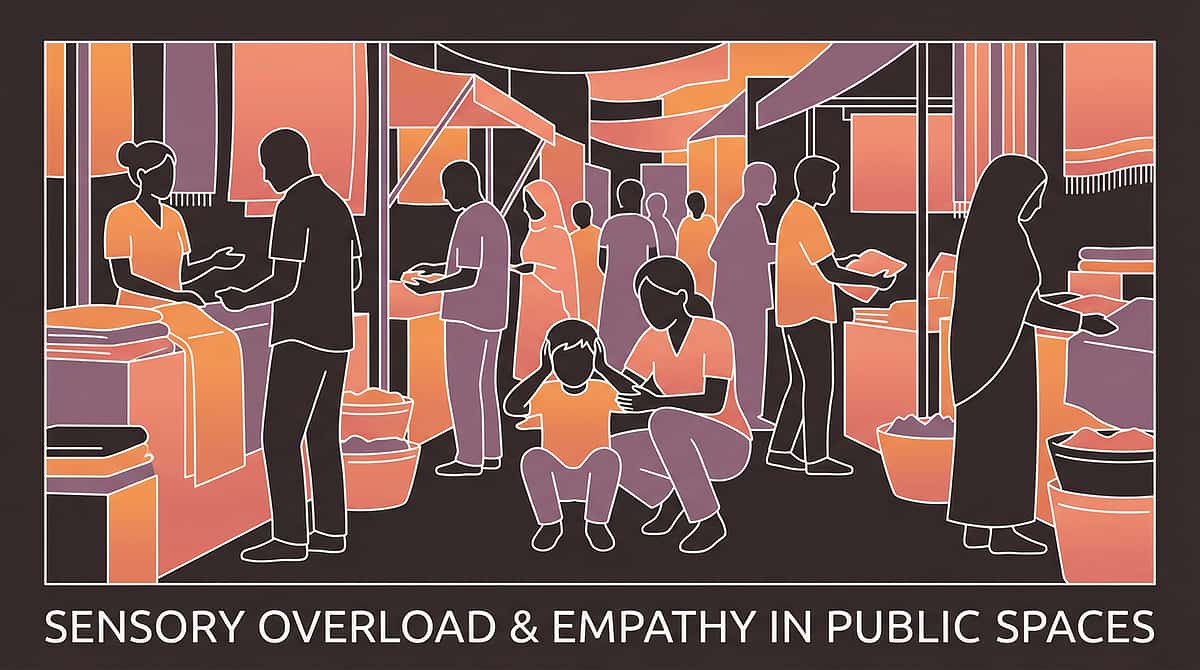
A-039 | Crowded Noisy Places
A-039: 9 Materials That Help in Crowded, Noisy Places
The Moment: Markets, malls, temples, railway stations, bus stands — any crowded place with multiple competing sound sources. Your child's auditory system floods within minutes, and the meltdown follows shortly after. You've quietly redesigned your entire life to avoid crowds: grocery delivery instead of market visits, online shopping, skipping family temple outings. The world outside your home has become inaccessible.
The Neuroscience: The "cocktail party problem" — the brain's ability to focus on one sound amid many — requires intact auditory scene analysis. When the auditory cortex cannot segregate competing sound streams, ALL voices, announcements, music, and ambient noise merge into one overwhelming wall of sound. There is no foreground, no background — just a simultaneous cacophony at equal salience, flooding the processing system entirely.
📊Evidence Level I — Community-based auditory preparation protocols. NCAEP 2020
Pre-Visit Preparation
Show photos or videos of the destination. Preview the sounds they'll encounter. Build a mental map before arrival.
Headphone + Visual Schedule Toolkit
Headphones on before entry. Visual schedule showing duration ("we'll be here for 10 minutes").
Timed Exposure Protocol
5 minutes → 10 → 20 over successive visits. Never exceed the child's current tolerance window.
Quiet Retreat Pre-Identification
Before entering any space, identify and show the child the exit and nearest quiet area. The escape route must be known.
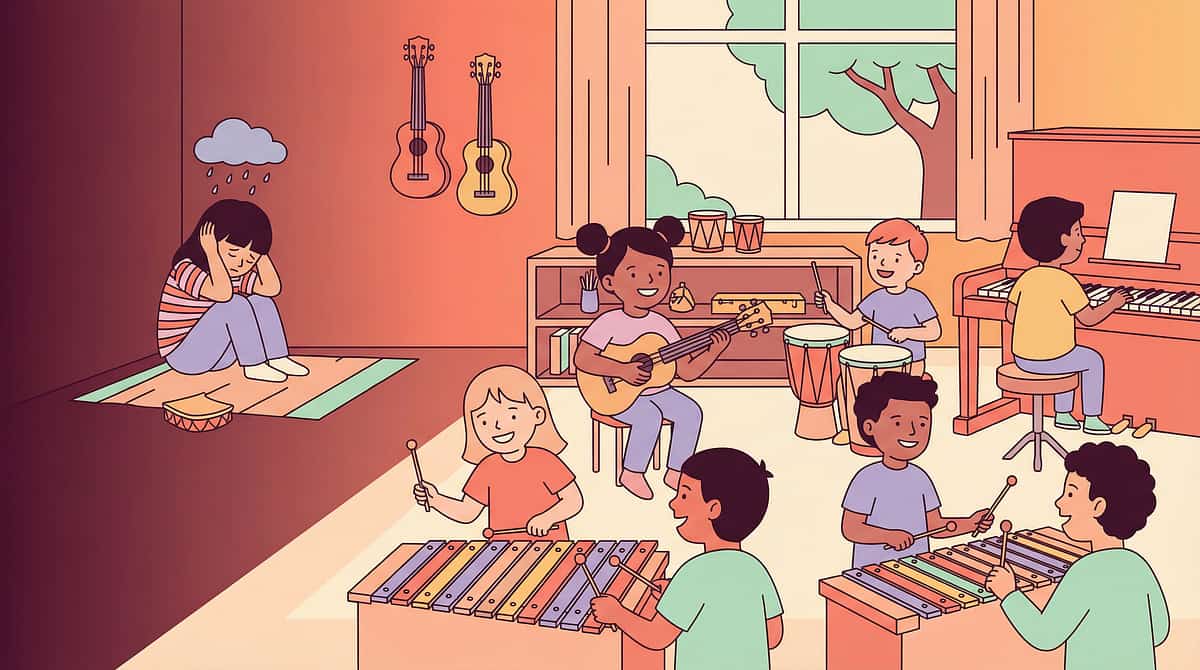
A-040 | Music Class Distress
A-040: 9 Materials That Help During Music Class Distress
The Moment: The school music room is supposed to be joyful. For your child, it is a sensory ambush — drums, cymbals, multiple voices singing out of sync, the sharp echo of a hard-floored room. They refuse to enter. The music teacher reports "behavior problems." You know it's not behavior. You write another email trying to explain what you cannot fully put into words to someone who has never experienced it.
The Neuroscience: Music class environments combine several independent auditory challenges simultaneously: high-SPL instruments (especially percussion at 90+ dB), reverberant room acoustics, multiple simultaneous sound sources, and forced participation with no available escape route. Each element independently challenges the auditory system; combined, they create a sensory environment that would overwhelm any under-filtered auditory cortex.
📊Evidence Level I — Environmental modification + graduated musical exposure. NCAEP 2020 | PMC11506176
Teacher Collaboration
Provide a music teacher collaboration letter explaining auditory sensitivity. Request: headphone accommodation, preferred instrument access, and the option to observe from the doorway as a first step.
Graduated Music Exposure
- Instrument-specific exposure hierarchy: triangle → recorder → keyboard → drums
- Individual musical engagement before group participation
- Rhythmic activities that build auditory tolerance progressively
- Preferred instrument access as motivator and entry point
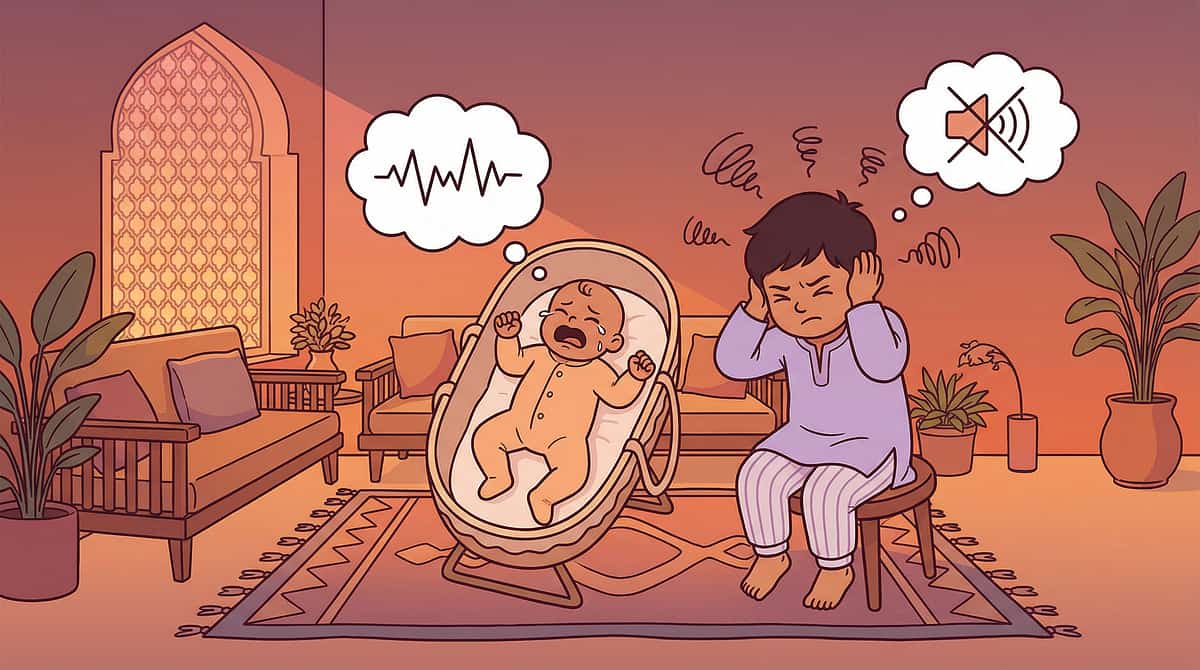
A-041 | Baby Crying Overwhelms
A-041: 9 Materials That Help When Baby Crying Overwhelms
The Moment: You've just had a new baby. Your child with autism cannot tolerate the crying. They hit the baby, cover their ears and scream, or completely shut down and become unreachable. You're simultaneously managing a newborn AND an auditory meltdown. The family is in crisis. The joy of a new sibling has become a source of daily trauma for everyone in the house.
The Neuroscience: Infant crying is evolutionarily designed to be the most attention-grabbing sound in the human repertoire — 70–110 dB, highly variable in pitch and rhythm, with emotional urgency that activates the amygdala even in neurotypical adults. For the auditory-defensive brain, this represents the most aversive possible stimulus: loud, completely unpredictable, uncontrollable, prolonged, and emotionally charged beyond any household appliance.
📊Evidence Level I–II — Auditory tolerance + sibling preparation protocols. NCAEP 2020
01
Pre-Baby Arrival Preparation
Introduce crying sounds via recordings weeks before the baby arrives. Build familiarity gradually.
02
Safe Retreat Space
Designate a quiet, headphone-equipped space that belongs entirely to the older child — always available.
03
Social Story — Baby Crying
Explain what crying means, why it happens, and that it always stops. Normalize and demystify.
04
Sibling Bonding in Quiet Moments
Create structured, quiet sibling activities during baby's calm periods to build positive association.
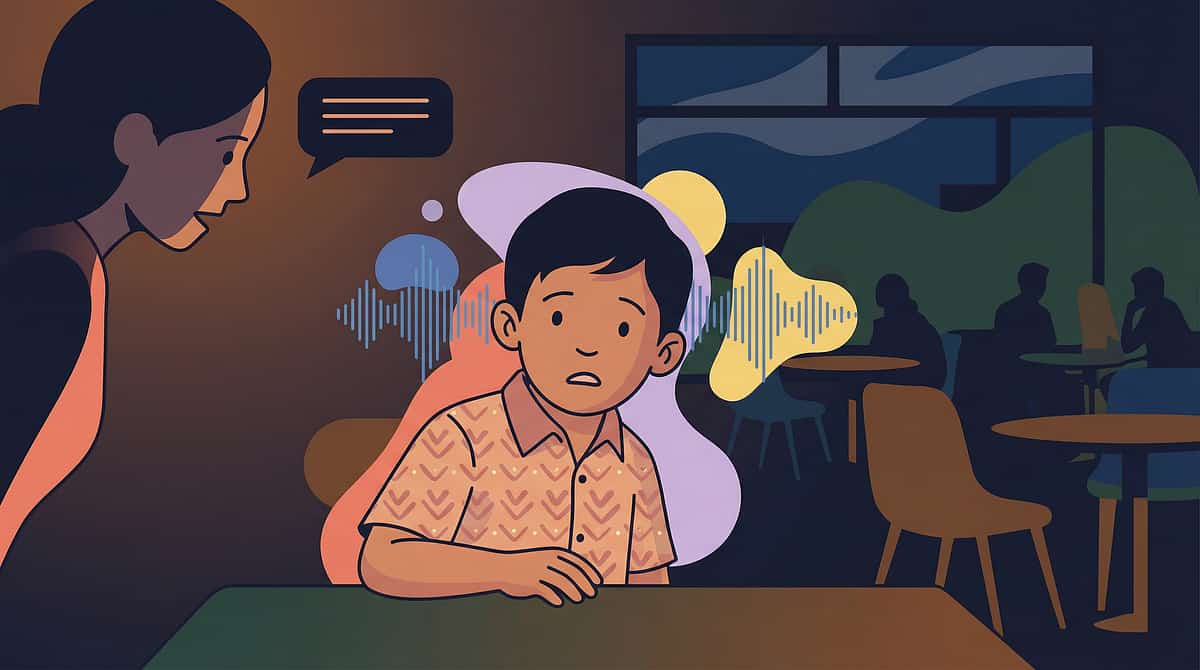
A-042 | Background Noise Filtering
A-042: 9 Materials That Help With Background Noise Filtering
The Moment: You're talking directly to your child in a restaurant — face to face, low voice, simple words — and they look lost. Not because it's too loud, but because they genuinely cannot separate your voice from the background noise. The fan, the kitchen clatter, other tables — all compete equally with your words. They look confused, frustrated, sometimes distressed, as if you're speaking a foreign language.
The Neuroscience:Auditory figure-ground discrimination — isolating relevant sounds from background noise — requires the auditory cortex to suppress competing input. When this "cocktail party effect" is impaired, all auditory streams arrive at equal salience. Speech comprehension in noise becomes enormously effortful or entirely impossible. This is not a language disorder — it's a signal processing challenge that impacts language comprehension in context.
📊Evidence Level I — Therapeutic Listening + auditory training programs. NCAEP 2020 | SLP auditory processing protocols
Reduce-Distance Protocol
Face the child, reduce distance to under 1 meter, and lower all competing noise before speaking.
FM System / Classroom Amplification
Personal FM system routes the teacher's voice directly to the child's ear at optimal signal-to-noise ratio.
Auditory Discrimination Training
Games that train the brain to identify target sounds amid competing noise — built into daily play.
Environmental Noise Reduction
Turn off TV, fan, and music before giving instructions at home — optimize signal-to-noise ratio.
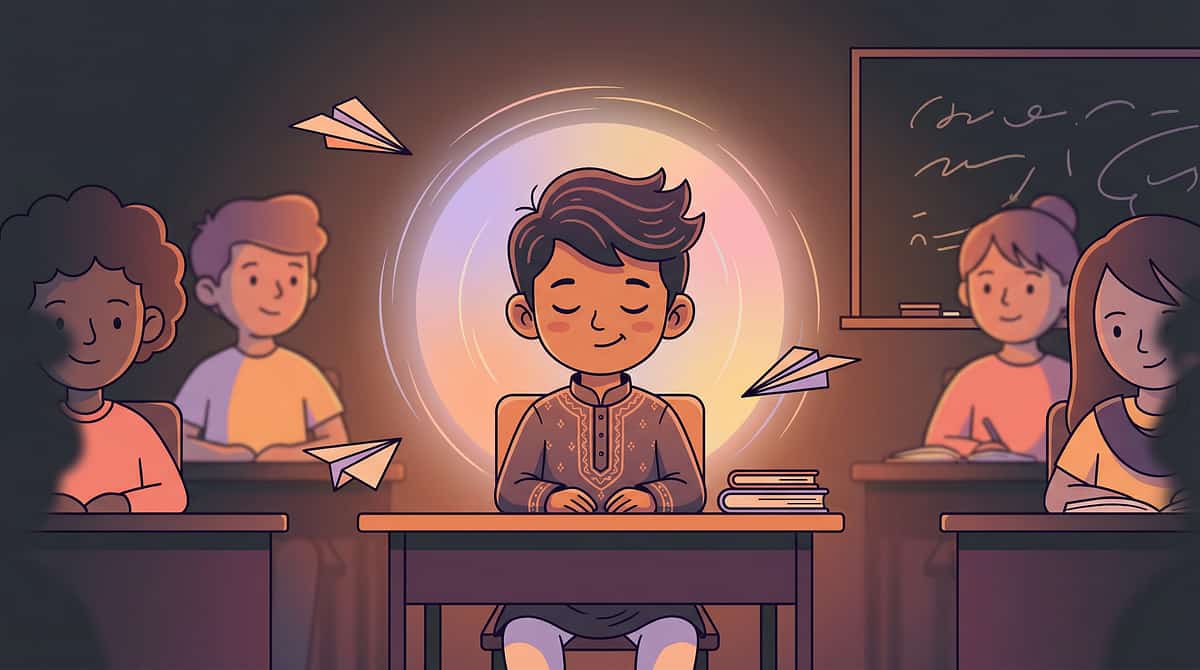
A-043 | Hums to Block Sound
A-043: 9 Materials That Help When a Child Hums to Block Sound
The Moment: They hum. Constantly and consistently. In class during lessons, at meals during family conversations, while walking through the market. It looks like a behavior problem. Teachers ask you to "make them stop." But it's not defiance — it's sophisticated self-regulation. They are generating a predictable, controllable sound to mask the unpredictable environmental noise they cannot otherwise tolerate.
The Neuroscience: Self-generated vocalization (humming) activates the stapedius muscle reflex, slightly stiffening the eardrum to reduce sensitivity. It also creates predictable bone-conducted sound that partially masks external auditory input. This is a remarkably sophisticated self-regulation strategy — the child is instinctively engineering their own auditory environment using the most readily available tool: their own voice.
📊Evidence Level I — Replace-not-remove approach: alternative auditory regulation tools. NCAEP 2020
Understand First — Then Replace
Never attempt to eliminate humming without first providing an equally effective alternative. Removing a regulation strategy without replacement escalates distress. The goal is to offer better tools, not to strip away coping.
Replacement Strategy Toolkit
- Noise-reducing headphones as a sanctioned alternative to humming
- White noise earbud access during high-noise environments
- "Appropriate-context" teaching: humming is for private spaces, headphones are for school
- Reducing the environmental triggers that make humming necessary
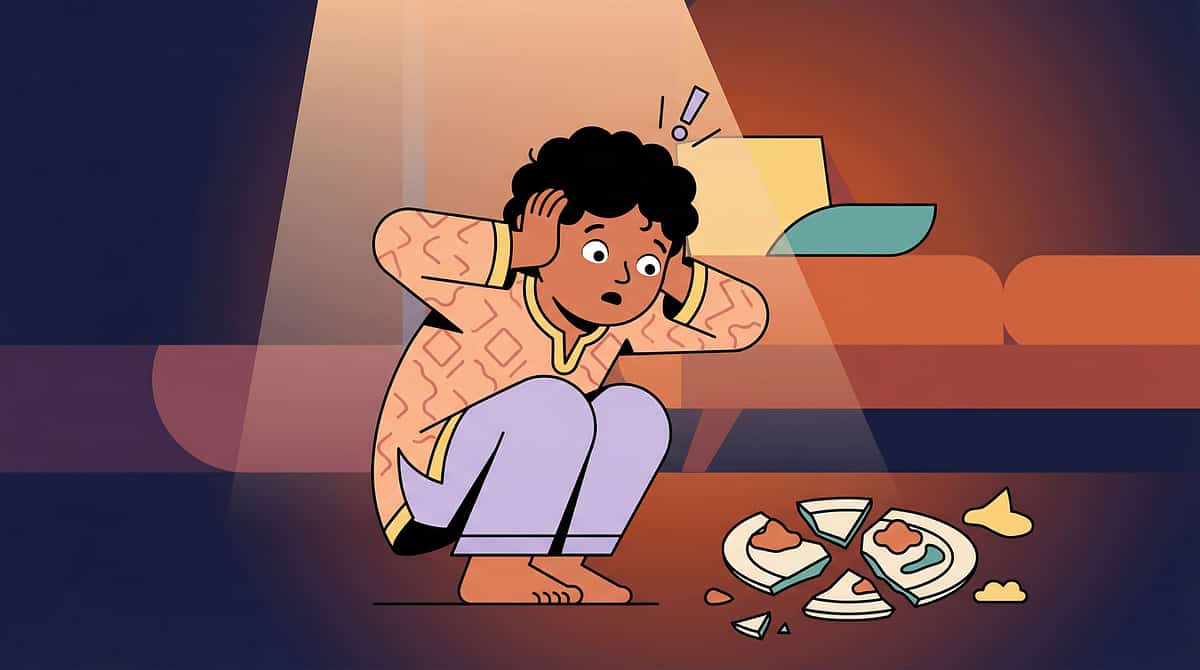
A-044 | Sudden Sound Reactions
A-044: 9 Materials That Help With Sudden Sound Reactions
The Moment: A door slams and they're on the floor. A plate drops and they scream for twenty minutes. The horn of a passing auto-rickshaw triggers full fight-or-flight that takes an hour to recover from. It's not the volume that breaks them — it's the surprise. Any unexpected sound, no matter how brief or how quickly identified as safe, sends their nervous system into overdrive that they cannot quickly exit.
The Neuroscience: The acoustic startle reflex — mediated by the pontine reticular formation — is significantly amplified in auditory hypersensitivity. The normal startle-then-habituate pattern breaks down: instead of a brief flinch followed by recognition of safety, the amygdala sustains the threat response. The child cannot "stand down" even after consciously understanding that the sound was harmless. Recovery, not initial startle, is the core challenge.
📊Evidence Level I — Startle response desensitization + predictability protocols. PMC11506176 | NCAEP 2020
Predictability Maximization
Systematically reduce unpredictable sounds in the home environment — door stoppers, soft-close hinges, carpet runners.
Pre-Warning Protocols
"I'm about to close the door loudly" — verbal warnings before all anticipated sounds become a household rule.
Startle Recovery Strategies
Breathing protocols, proprioceptive input (joint compression), and verbal reassurance scripts for post-startle regulation.
Sound-Safety Pairing
Pair anticipated sounds with safety cues (a gentle touch, a visual card) that signal "you are safe."
A-045 | Seems Deaf to Name
A-045: 9 Materials That Help When a Child Seems Deaf to Their Name
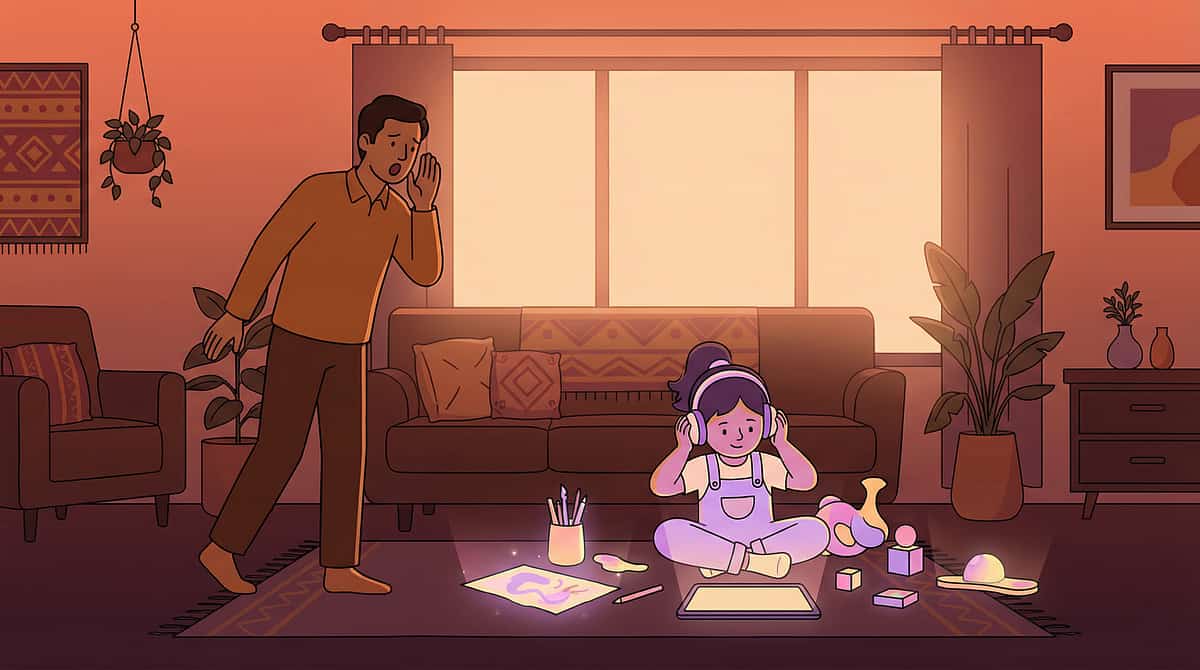
The Moment: You call their name. Nothing. You call louder. Nothing. You're standing directly behind them and they don't turn. Hearing tests come back completely normal. But in the real world, your child does not respond to their own name — and everyone, including extended family and teachers, wonders if they are simply ignoring you on purpose. You know they're not. But the gap is impossible to explain without the neuroscience.
The Neuroscience: This is auditory hypo-responsivity — not deafness, but the brain's failure to flag the child's name as a high-priority auditory stimulus. The auditory cortex registers the sound but doesn't route it to attention networks. Simultaneously, when a child is hyperfocused on a visual or tactile activity, the attentional "spotlight" is locked elsewhere and cannot be interrupted by sound alone. Hearing the sound and orienting to it are two different neurological events.
📊Evidence Level I — Name response training within ABA + SLP protocols. NCAEP 2020
Hearing vs. Processing — Family Education
Equip every family member and teacher with the clear distinction: hearing is intact; auditory attention routing is impaired.
Name-Response Structured Training
Systematic, reinforcement-based protocol to build reliable name response in low-distraction environments first.
Visual + Auditory Paired Cuing
Pair the name with a gentle touch or visual signal — multi-modal cuing dramatically increases response rate.
Reduce Competing Input Before Calling
Turn off screens, reduce background noise, and physically approach before calling the name. Set up for success.
A-046 | Seeks Loud Noises
A-046: 9 Materials That Help When a Child Seeks Loud Noises
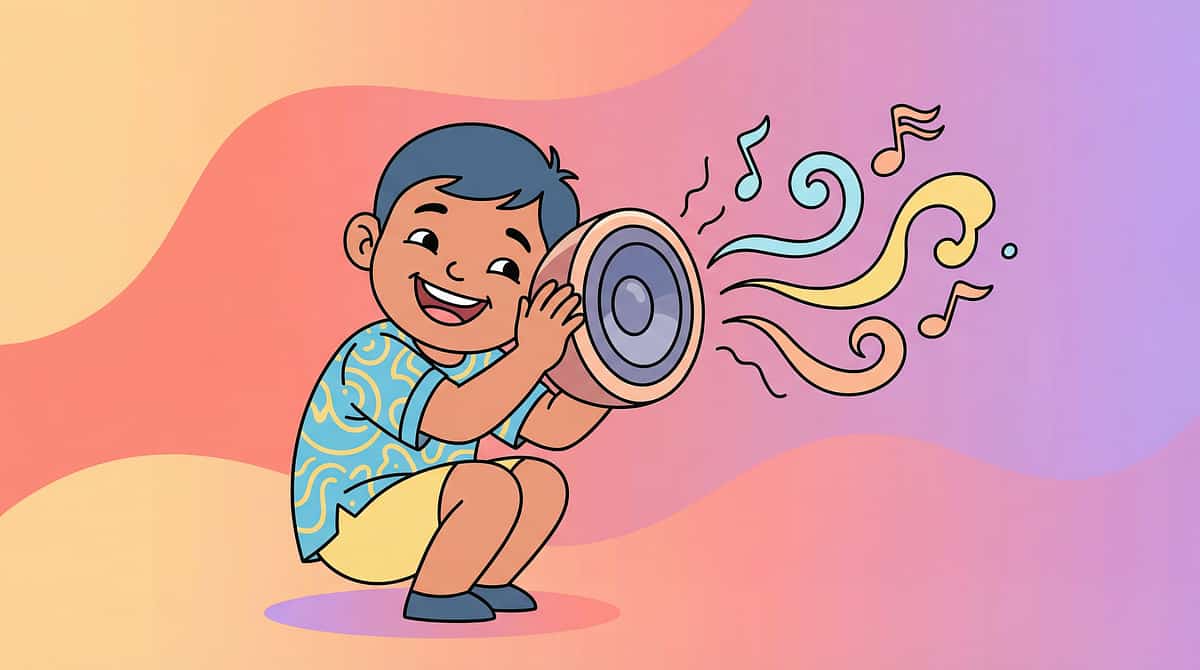
The Moment: While most children with auditory sensitivity desperately avoid sound, yours craves it. They turn the TV to maximum volume the moment they enter a room. They bang pots and pans with genuine enthusiasm. They scream just to hear themselves. They seek out noisy environments rather than fleeing them. This is the opposite end of the auditory spectrum — equally challenging, far less discussed, and just as worthy of a structured intervention plan.
The Neuroscience: Auditory hypo-sensitivity — the auditory cortex is under-registering input, requiring higher-intensity sound to reach conscious awareness and produce any sense of regulation or satisfaction. The child seeks louder, more intense auditory stimulation because their threshold for auditory registration is significantly elevated above the neurotypical range. Volume is not the problem; it's the solution they've found for an unmet neurological need.
📊Evidence Level I — Auditory sensory diet for seekers. PMC11506176 | NCAEP 2020
Scheduled Loud-Sound Time
Proactively provide structured auditory input daily — meet the need before the child manufactures it unsafely.
Musical Instrument Engagement
Drums, djembes, xylophones — channel seeking into instruments that provide legitimate, enriching auditory input.
Volume Boundary Teaching
Explicitly teach safe vs. unsafe sound levels. Use a visual decibel scale the child can reference.
Headphone Access for Preferred Sound
Headphone-based access to preferred music at controlled volume — meets the need while protecting hearing.
A-047 | Cracker and Firework Fear
A-047: 9 Materials That Help With Cracker and Firework Fear
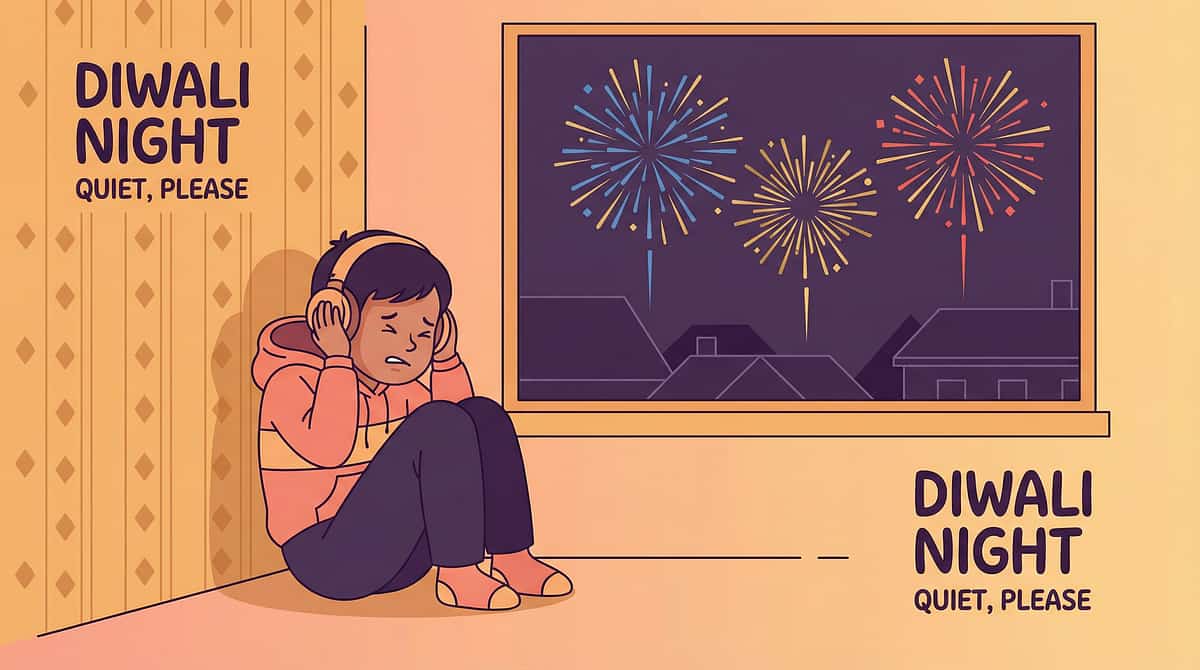
The Moment: Diwali. New Year's Eve. Weddings. Ganpati processions. India runs on celebrations — and celebrations run on crackers and fireworks. For your child, these nights are terror, not joy. You've spent festivals locked in an interior bathroom with your child, headphones on, trying to block out the explosions while the rest of the family celebrates outside. The very symbols of Indian cultural joy have become a source of seasonal dread.
The Neuroscience: Firecrackers produce 120–140 dB — above the human pain threshold. The explosive onset (zero to peak in milliseconds), completely unpredictable timing that can come from any direction at any moment, and ground-transmitted vibration create a triple auditory-vestibular-somatosensory assault. This is among the most intense sensory events a child can experience outside of industrial settings. Industrial-grade ear protection is not overcaution — it is medical necessity.
📊Evidence Level I — Festival-specific desensitization + environmental protection. NCAEP 2020
Festival Preparation Protocol (Weeks Before)
Begin recording-based graduated exposure to cracker sounds 3–4 weeks before Diwali, at very low volume.
Industrial-Grade Ear Protection
During festivals, use professional ear defenders (NRR 30+), not standard children's headphones. The decibels demand it.
Room Soundproofing Strategies
Heavy curtains, door gap seals, white noise machine at maximum — reduce penetrating sound in the safe room.
Participation Alternatives
Sparklers, diyas, and rangoli offer full cultural participation without explosive sound. Document and celebrate this.
A-048 | Thunder Phobia
A-048: 9 Materials That Help With Thunder Phobia
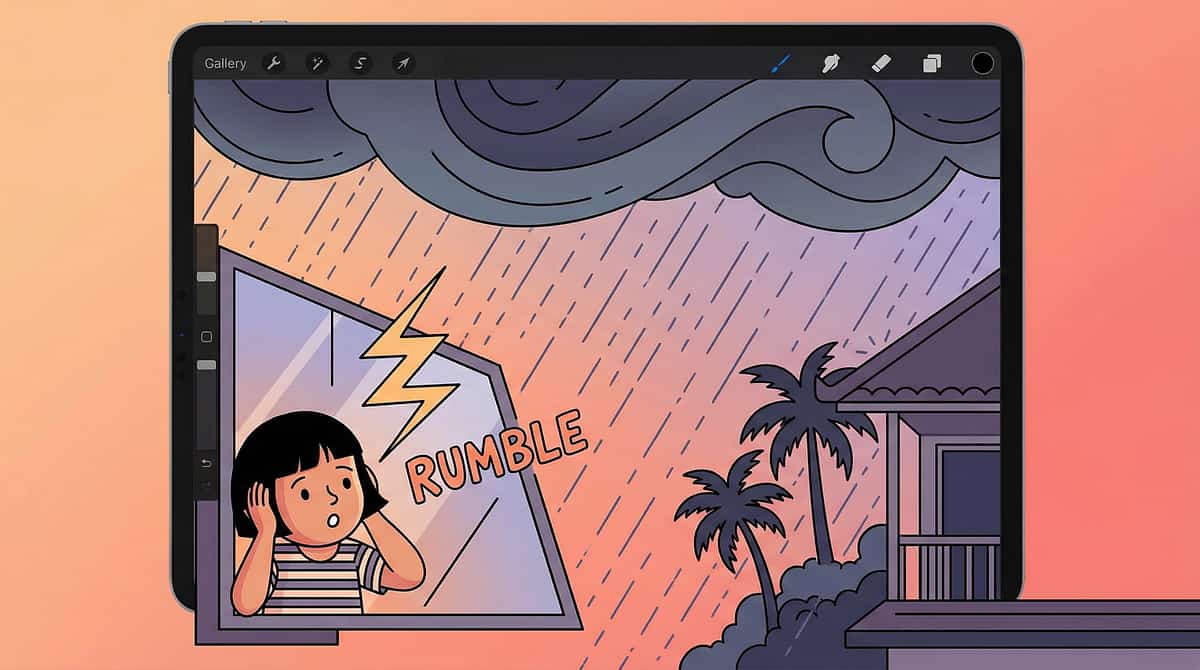
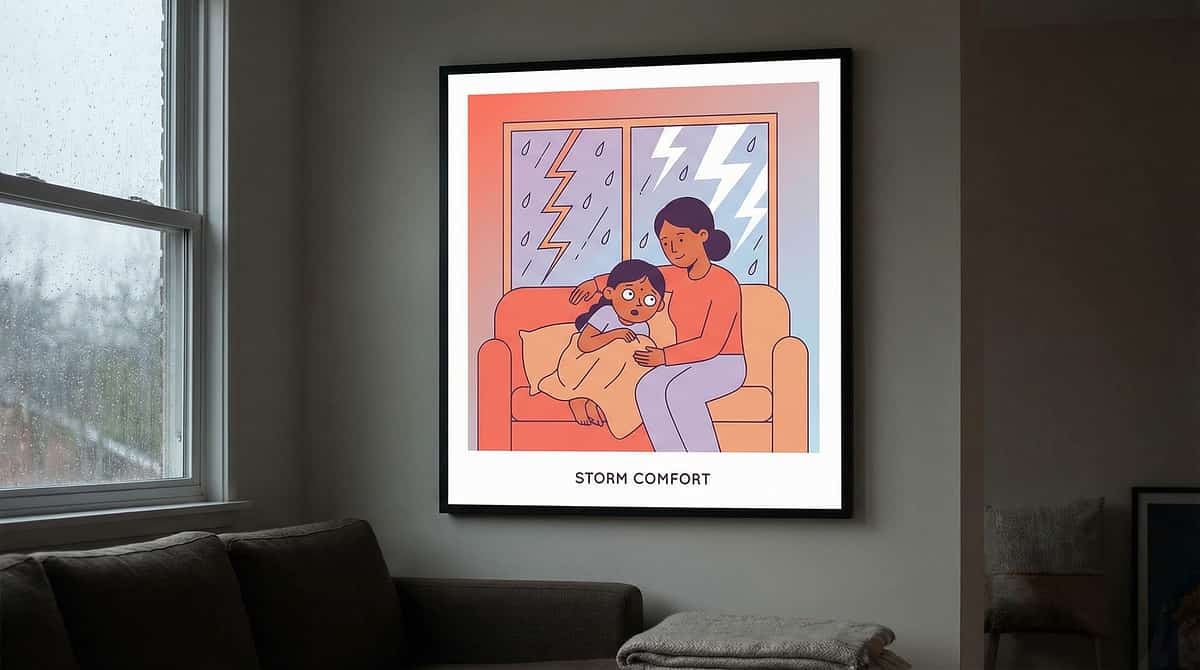
The Moment: Monsoon season equals crisis season. The first rumble of distant thunder and your child is inconsolable for hours. They obsessively check the sky on clear days. They refuse to go outdoors when clouds gather. Night-time storms mean nobody in the household sleeps. You watch the weather forecast with more anxiety than a meteorologist, planning your family's week around the possibility of rain.
The Neuroscience: Thunder combines extreme low-frequency energy that is physically felt as body vibration, completely unpredictable timing, reverberant intensity that fills the environment in every direction, and — most critically — visual lightning priming that creates anticipatory dread. The amygdala learns to associate the visual stimulus (lightning flash) with the impending auditory assault, triggering full anxiety before the sound even arrives. The fear becomes anticipatory, making every overcast sky a source of dread.
📊Evidence Level I–II — Specific phobia desensitization + anxiety management. NCAEP 2020
Weather Preparation Social Stories
Stories that explain thunder scientifically: what it is, why it happens, that it cannot enter the home.
Safe Space Creation During Storms
An interior room, white noise machine, weighted blanket, preferred activities — a predictable storm refuge.
Recording-Based Graded Exposure
Thunder recordings at low volume during calm activities in non-monsoon season. Build tolerance proactively.
"Counting Seconds" Explanation
The lightning-to-thunder counting technique builds cognitive predictability and a sense of control over the uncontrollable.
A-049 | Storm Anxiety Extended Protocol
A-049: 9 Materials That Help With Storm and Weather Anxiety
The Moment: It's no longer just thunder. Wind through the trees, heavy rain drumming on the roof, the sharp crack of a distant tree branch — any storm-related sound now triggers the anxiety cycle. They check weather apps obsessively, multiple times per hour. They refuse school if even a single cloud appears. The phobia has generalized far beyond the original thunder trigger to encompass all weather uncertainty, all day, every day during monsoon season.
The Neuroscience:Stimulus generalization — the amygdala's fear response, originally conditioned specifically to thunder, has generalized to all associated stimuli through classical conditioning: wind, rain, dark clouds, the smell of rain, even weather forecast graphics on TV. Each monsoon storm event reinforces and expands the fear network, adding new triggers. Intervention must address the entire generalized fear hierarchy, not just the original thunder stimulus.
📊Evidence Level I–II — Generalized phobia intervention + CBT-adapted for ASD. NCAEP 2020
Fear Hierarchy Mapping
Collaboratively map least-to-most feared storm elements. Work systematically from the bottom of the hierarchy up.
Systematic Desensitization
Structured exposure sessions across all weather types — wind recordings, rain on roof, branch sounds — in safe conditions.
Storm Safety Plan Visual
A laminated visual card showing exactly what to do when a storm begins — eliminates decision-making under anxiety.
Seasonal Preparation Toolkit
Pre-monsoon preparation in May: rehearse the plan, update the safe space, practice coping strategies before they're needed.
A-050 | Echo-y Environments
A-050: 9 Materials That Help in Echo-y Environments
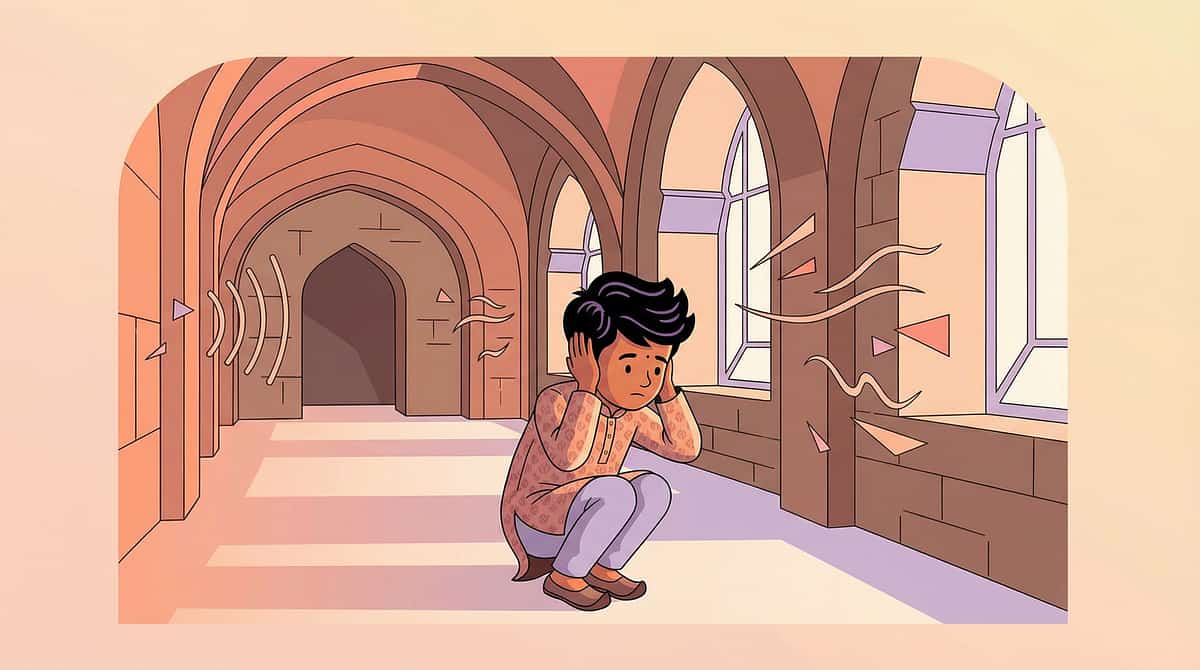
The Moment: Temples, swimming pools, multi-story parking garages, hospital corridors, stairwells — any space with hard walls and high ceilings. The echo transforms every sound into a reverberating, overlapping assault. Your child refuses to enter temples, won't attend swimming lessons, and panics in the hospital corridor. For deeply religious families, the inability to share temple worship with their child carries profound emotional weight beyond the practical inconvenience.
The Neuroscience: Reverberation extends the temporal duration of every sound and creates multiple overlapping copies of the original acoustic signal at varying time delays. The auditory cortex, already struggling to process the direct sound clearly, now receives multiple echoed versions of every sound event — exponentially increasing the processing load and creating profound auditory confusion. High-ceilinged marble or stone spaces like temples are among the most reverberant environments in daily Indian life.
📊Evidence Level I — Environmental auditory preparation + headphone accommodation. NCAEP 2020 | PMC11506176
Off-Peak Timing Strategy
Temples at 6 AM on a Tuesday are entirely different acoustically from Sunday evening aarti. Off-peak visits offer the same spiritual access with a fraction of the reverberant sound load. This is a legitimate and culturally respectful participation strategy.
Graduated Entry Protocol
- Identify echo-prone environments in advance using photos or videos
- Headphones + social story prepared before arrival
- Begin with "darshan from the doorway" — full spiritual participation, no echo exposure
- Acoustic modification where possible: rugs, fabric, soft furnishings absorb echo

A-051 | Temple and Aarti Distress
A-051: 9 Materials That Help With Temple and Aarti Distress
The Moment: Aarti bells. Conch shells. Devotional music at full volume. Chanting from multiple directions. For a Hindu family, temple visits are a cornerstone of culture, identity, and spirituality — passed from generation to generation. For your child, they are a sensory catastrophe. The guilt of being unable to share your faith, your culture, your most sacred moments with your own child adds an emotional dimension that transcends the clinical challenge entirely.
The Neuroscience: Temple environments combine: high-frequency sharp transients from bells (90+ dB), low-frequency resonance from conch shells, intensely reverberant stone and marble architecture, camphor flame adding olfactory complexity, and high crowd density with unpredictable movements. This is one of the most sensorially complex environments in Indian daily life — a simultaneous assault across auditory, visual, olfactory, and proprioceptive channels.
📊Evidence Level I — Culturally adapted sensory preparation. NCAEP 2020 | Indian cultural adaptation research
01
Temple-Specific Social Story
Create a story with Indian temple illustrations that walks through exactly what will be seen, heard, and smelled.
02
Home Puja as Bridge
Begin with home puja — same bells, same aarti, familiar environment, controlled volume. Build the association positively.
03
Doorway Darshan
Full spiritual participation from the temple entrance with headphones — receive darshan, offer prayer, without interior echo exposure.
04
Gradual Temple Exposure
Quiet weekday morning → busy weekday morning → Sunday morning → full aarti. One step per month.
A-052 | Sounds Disrupt Sleep
A-052: 9 Materials That Help When Sounds Disrupt Sleep
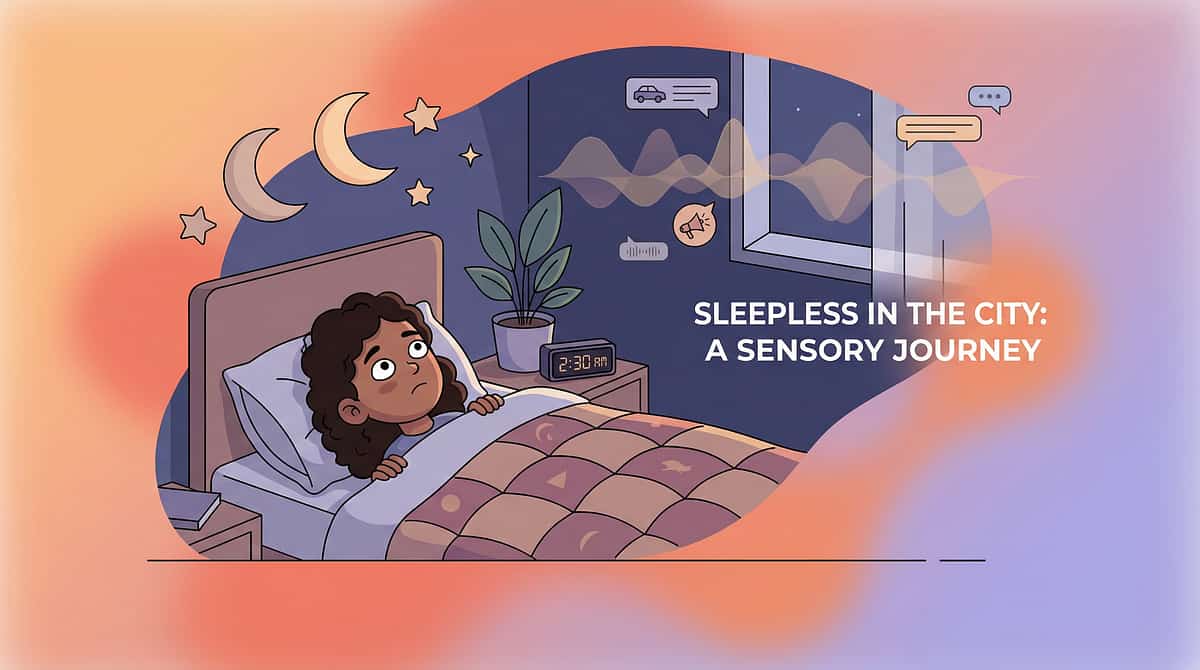
The Moment: They cannot sleep unless the house is completely silent — an impossible standard in most Indian homes. A neighbor's TV two flats away. A distant dog starting up. An auto-rickshaw on the main road. The ceiling fan's barely audible hum. Any of these will pull them back to full wakefulness. Bedtime drags on for hours as they lie tensed, listening for the next sound, unable to release their vigilance and drift off. Everyone in the family is sleep-deprived.
The Neuroscience: During the transition from wakefulness to sleep, the thalamic gate normally closes — suppressing auditory input to allow the brain to disengage from environmental monitoring. In auditory hypersensitivity, this gate remains partially open. Environmental sounds continue reaching the auditory cortex even as the child tries to fall asleep, preventing the descent into Stage 1 sleep. The arousal system stays activated, and the child cannot physiologically enter sleep while auditory monitoring persists.
📊Evidence Level I–II — Sleep environment modification + white noise therapy. NCAEP 2020 | Sleep research in ASD
Bedroom Acoustic Audit
Systematically identify every sound source audible from the bedroom: neighbors, traffic, appliances, plumbing.
White / Pink Noise Machine
Continuous broadband noise at 50–60 dB masks variable environmental sounds, enabling the thalamic gate to close.
Bedtime Auditory Routine
A fixed, predictable sound environment for the 30 minutes before bed — same sounds, same order, every night.
Room Soundproofing (Practical)
Heavy curtains, door gap seals, acoustic panels — specific modifications for Indian apartment living.
A-053 | Multiple Voices Overwhelm
A-053: 9 Materials That Help With Multiple Voices Overwhelm
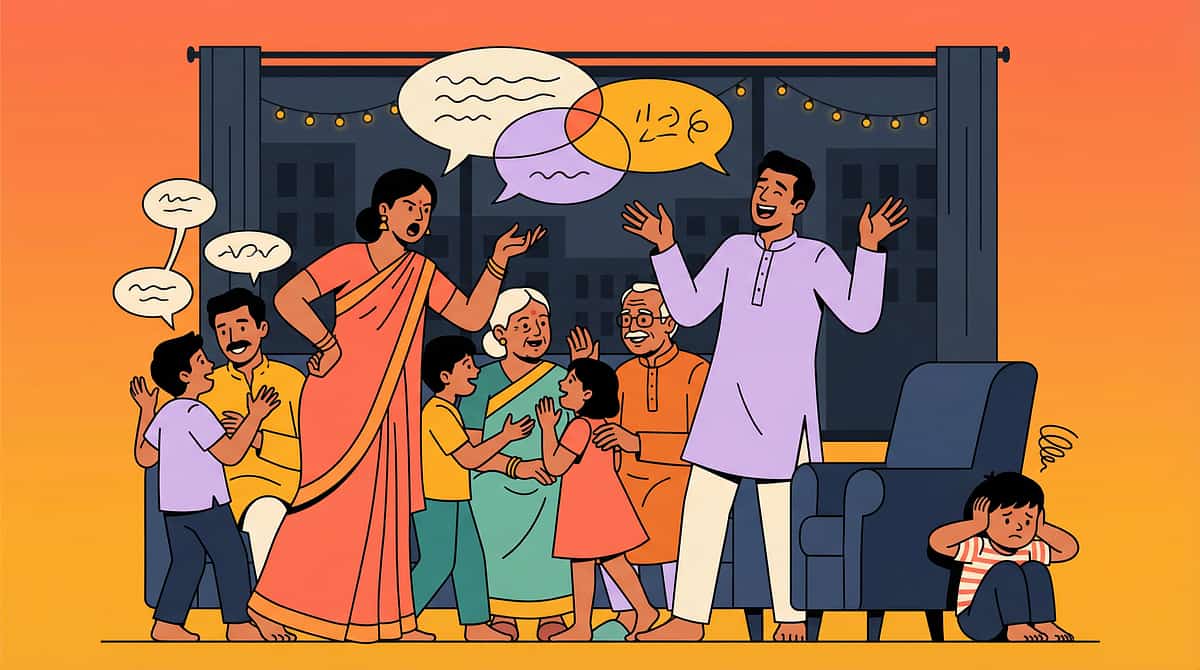
The Moment: Indian family gatherings. Ten relatives talking simultaneously across three conversations. Your child retreats to a corner, covers ears, or has a full meltdown. In joint family living — where multiple generations share a home and multiple conversations happen in every room simultaneously — your child is in auditory overload not occasionally but during every waking hour spent at home. There is no quiet. There is no break. The home itself becomes the source of distress.
The Neuroscience: Auditory scene analysis requires the brain to track multiple simultaneous speech streams and selectively attend to one while suppressing others. In ASD, the temporal binding of auditory events is atypical — the brain cannot reliably "lock on" to one voice while filtering out competing voices. All voices compete for attention simultaneously and equally. In multi-speaker environments, the entire auditory scene arrives as an undifferentiated stream of competing speech, impossible to parse.
📊Evidence Level I — Auditory processing intervention + environmental modification. NCAEP 2020 | SLP protocols
"One Voice at a Time" Family Rule
The single most impactful intervention available for joint family households costs nothing and requires only family buy-in. Establish a household rule: one person speaks at a time when the child is present. Explain the neuroscience to every family member. Make it a family accommodation, not a restriction.
Structural Environmental Changes
- Designate a quiet room — one space in the home always available as a low-noise retreat
- Headphone permission: the child may put on headphones and retreat at any family gathering, without judgment
- Turn-taking protocol for family conversations at mealtimes
- Pre-gathering preparation: tell the child who will be there and for how long, with a clear end time
A-054 | Child Bangs for Sound
A-054: 9 Materials That Help When a Child Bangs for Sound
The Moment: They bang toys against tables repeatedly. Slam doors with evident satisfaction. Hit surfaces over and over. Clap intensely. Drop objects from high surfaces to enjoy the impact sound. They're not being destructive, not testing limits, not acting out. They are creating sound. They have an unmet neurological need for auditory input and they're manufacturing it the only way they know how — with whatever surface is nearest.
The Neuroscience: Auditory seeking through self-generated percussion. The child's auditory system requires higher-intensity input to register adequately for regulation. Impact-generated sounds (banging) produce broadband noise with strong low-frequency components AND accompanying proprioceptive feedback through the hands and arms — a multi-sensory hit that simultaneously addresses both auditory and proprioceptive seeking needs. It is efficient, effective, and meets a real threshold.
📊Evidence Level I — Replacement behaviour approach: appropriate auditory input alternatives. NCAEP 2020 | PMC11506176
Understand, Don't Punish
Frame banging as auditory seeking, not destruction. This reframe transforms the intervention from behavioral correction to need-meeting.
Appropriate Replacement Instruments
Djembe drums, bongo drums, xylophones, maracas — legitimate percussion that meets the same neurological need.
Scheduled "Noise Time"
Proactive structured percussion sessions meet the seeking need before it drives disruptive self-generated banging.
Environmental Protection
Protect furniture during active seeking with designated banging surfaces while the replacement strategy is introduced.
A-055 | Auditory Processing Delays
A-055: 9 Materials That Help With Auditory Processing Delays
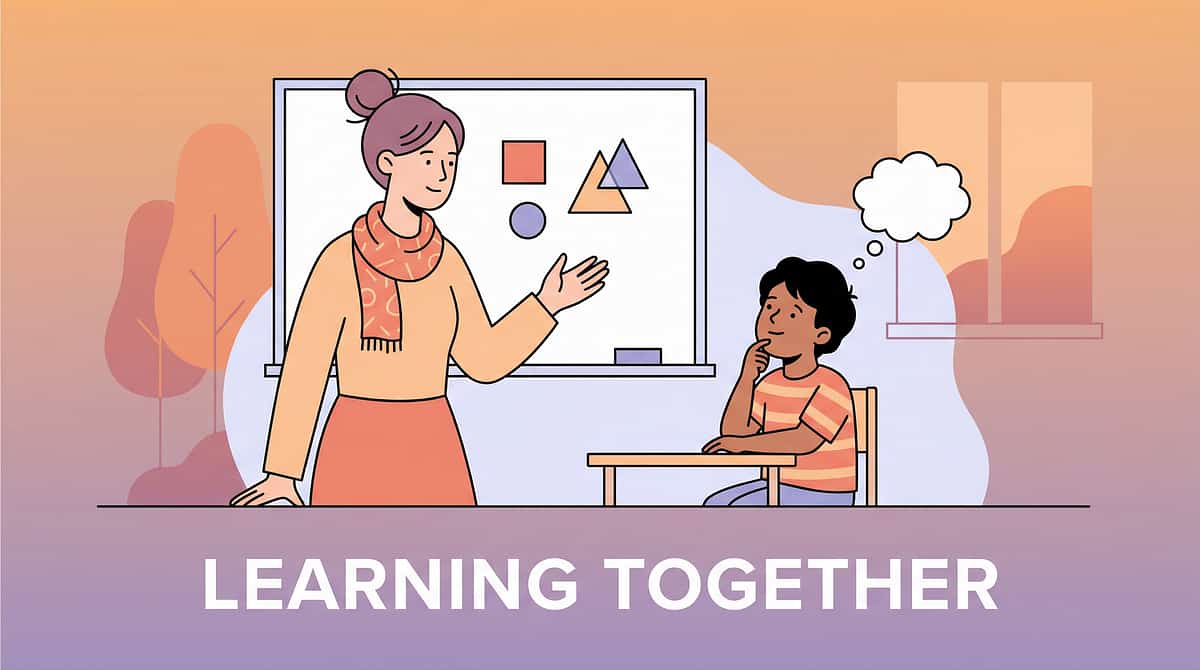
The Moment: You give an instruction and wait. Five seconds. Ten seconds. Then they respond — correctly, proving they heard every word. They're not ignoring you. Their brain simply needs additional time to decode the auditory signal into meaning. Teachers interpret the delay as deliberate non-compliance or passive defiance. You know it's processing speed. You've explained it a hundred times. The accommodation is so simple — just wait — yet so consistently denied.
The Neuroscience: Auditory processing delay reflects slower signal transmission through the auditory pathway — from cochlea through brainstem to auditory cortex to language comprehension areas. Each relay station adds processing time. When the temporal processing speed of spoken language is slower than the real-time delivery speed of speech, the child falls progressively further behind during instructions, conversations, and classroom participation. The content is accessible; the timing is the barrier.
📊Evidence Level I — SLP-led auditory processing intervention + communication accommodation. NCAEP 2020 | ASHA auditory processing guidelines
The 10-Second Wait Rule
After giving any instruction, wait 10 full seconds before repeating or prompting. This single accommodation transforms academic performance.
Instruction Simplification and Chunking
Break multi-step instructions into single steps delivered sequentially — one instruction, complete it, then the next.
Visual Support Pairing
Pair every verbal instruction with a visual support (picture, written word, gesture) — multi-modal delivery bridges the processing gap.
Teacher and Family Education
Provide a clear one-page explanation: processing delay is not non-compliance. The accommodation is patience. The cost is zero.
A-056 | School Assembly Overwhelm
A-056: 9 Materials That Help With School Assembly Overwhelm
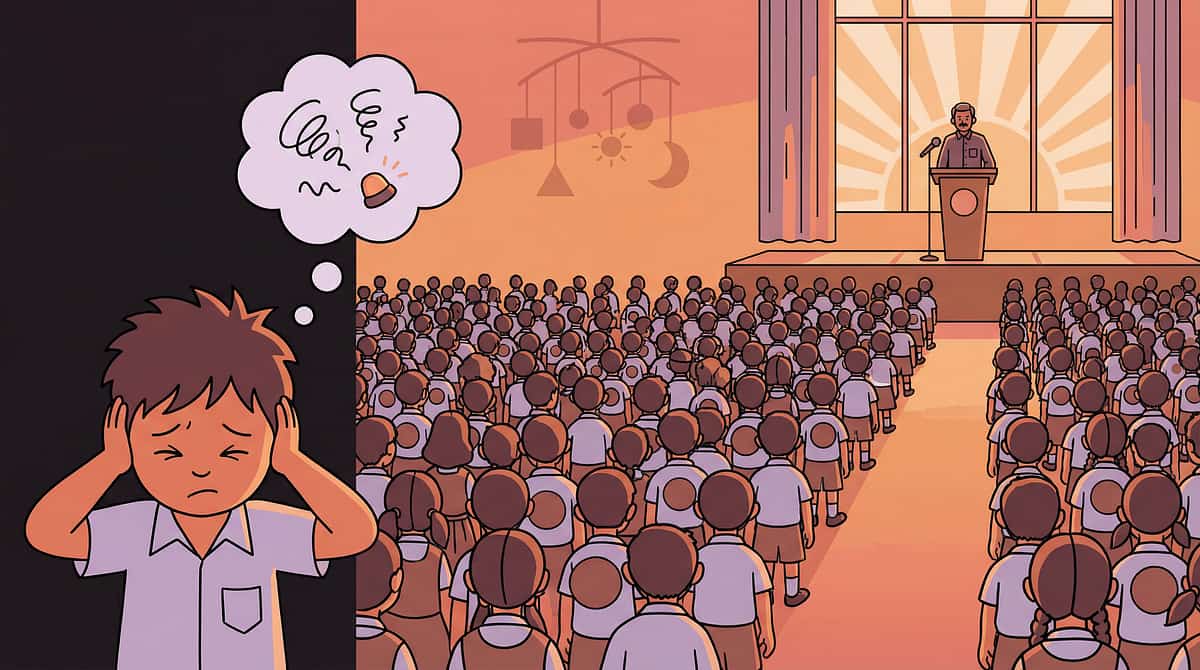
The Moment: School assembly is mandatory. Every morning, hundreds of children crowd into an echoing hall — feet shuffling, voices overlapping, the principal's microphone feeding back, the national anthem at full volume through aging speakers. For your child, this is not a gathering. It is a sensory assault that begins before the school day has even started. They arrive home already dysregulated. Teachers report they are "difficult" all morning. You know exactly why.
The Neuroscience: Assembly halls are acoustically hostile environments — hard floors, high ceilings, parallel walls, and no sound-absorbing materials create reverberation times of 1.5–3 seconds. For a child with auditory hypersensitivity, each sound arrives at the ears multiple times as direct sound plus reflections. The auditory cortex receives overlapping, time-delayed versions of every sound source simultaneously. The cognitive load of parsing this acoustic chaos while managing the arousal response consumes all available executive function before the first lesson begins.
📊Evidence Level I–II — Sensory accommodation planning + environmental modification. NCAEP 2020 | Acoustic design in educational settings
Pre-Assembly Sensory Preparation
A 5-minute proprioceptive warm-up (wall push-ups, heavy work) before assembly reduces the nervous system's baseline arousal, creating buffer capacity for the acoustic challenge ahead.
Ear Defender Protocol
Loop earplugs or ear defenders worn during assembly — normalized with a simple social story: "These help my ears stay comfortable so I can participate."
Strategic Positioning
Standing at the end of a row near the exit, away from speakers and microphone sources, reduces both sound intensity and the trapped feeling that escalates panic.
Gradual Exposure Ladder
Begin with 2 minutes of assembly, increase by 1 minute weekly. Systematic desensitization with a clear endpoint the child can see on a visual timer.
All 30 Auditory Intervention Techniques at a Glance
Every technique in Subdomain A2 is grounded in Level I evidence, culturally contextualized for Indian families, and linked to 9 therapist-curated materials. Browse the complete protocol library below.
2
4
A-046 to A-050
- unknown link
- unknown link
- unknown link
Preview of auditory challenges Therapy Material
Below is a visual preview of auditory challenges therapy material. The pages shown help educators, therapists, and caregivers understand the structure and content of the resource before use. Materials should be used under appropriate professional guidance.
Link copied!