
Interoception, Smell & Taste Challenges
10 evidence-based interventions for children with autism — covering hunger recognition, bathroom signals, temperature awareness, pain recognition, emotional body mapping, smell sensitivity, sniffing, perfume aversion, flavour seeking, and object licking. Subdomain A6 | Pinnacle Blooms Network®
Subdomain A6
Domain A: Sensory Processing
21M+ Sessions
A-111 · Interoception
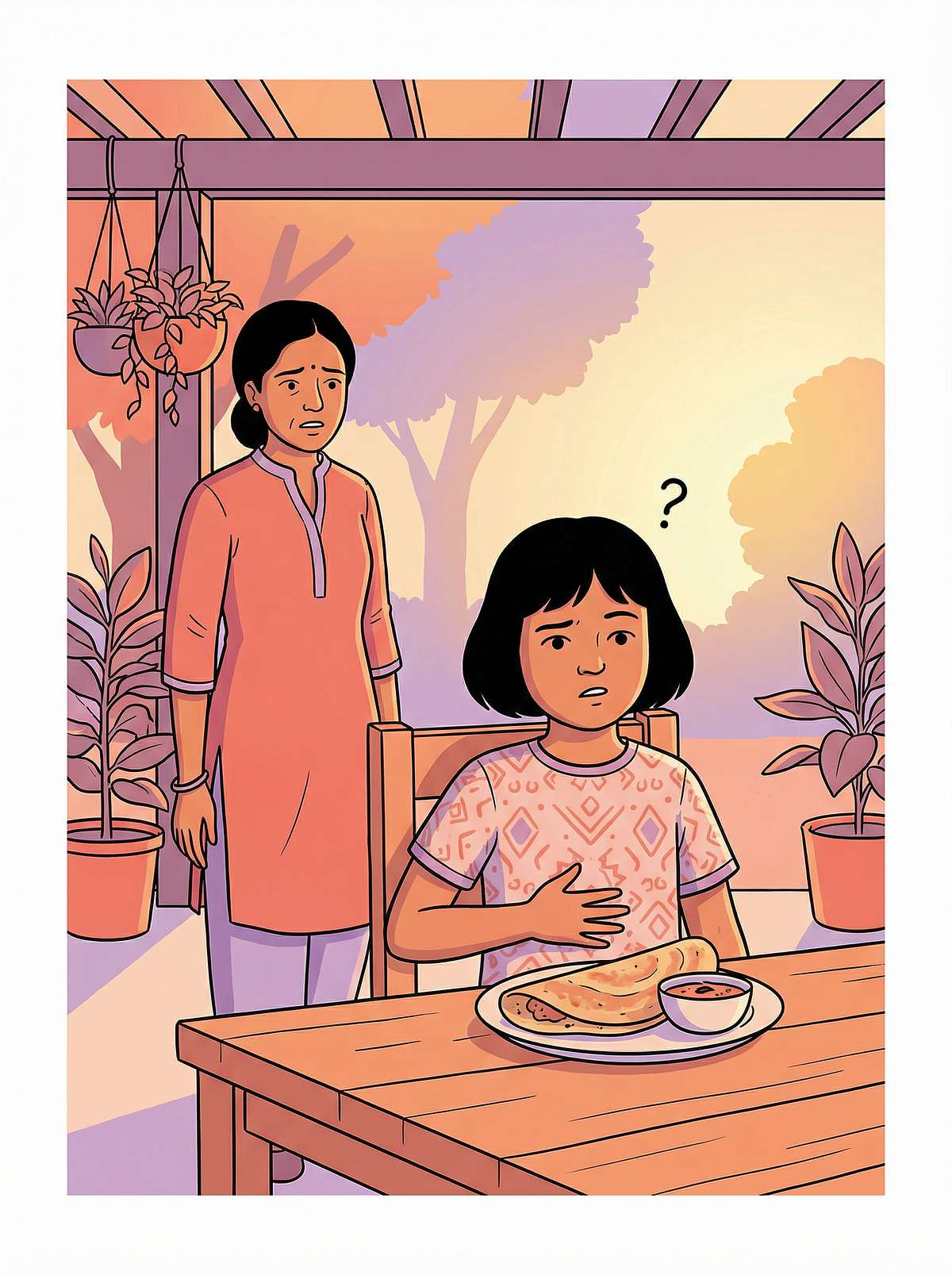
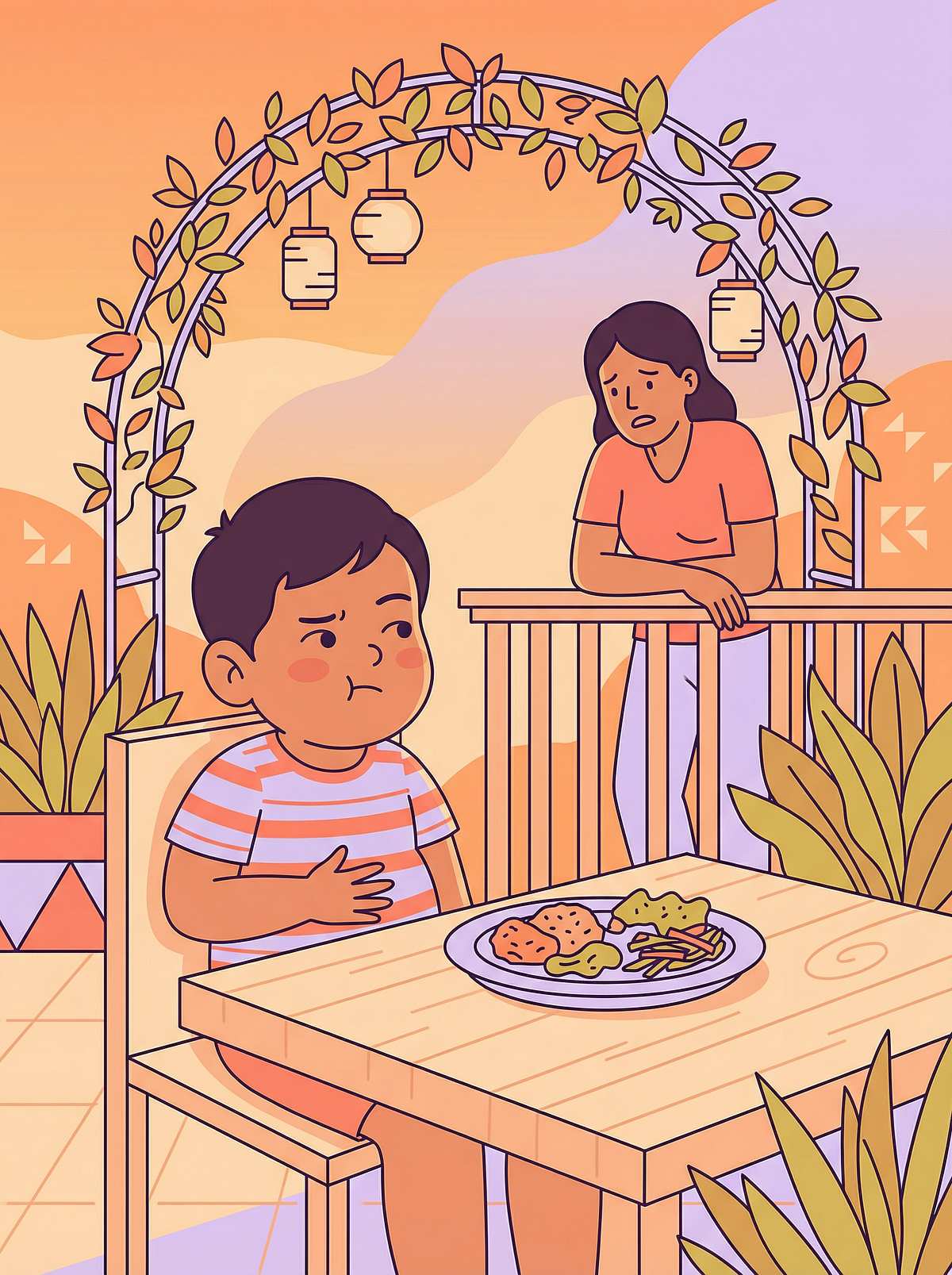
Hunger Signal Recognition
Your child never says "I'm hungry." They go from zero to meltdown — and you've learned the meltdown means they needed to eat two hours ago. Or the opposite: they eat and eat and never say "I'm full," because their brain doesn't register satiety. You've become their external hunger clock.
The Neuroscience
Hunger signals originate from stretch receptors in the stomach wall and hormonal signals (ghrelin, leptin) that travel via the vagus nerve to the nucleus tractus solitarius, then to the insular cortex for conscious awareness. When interoceptive processing is atypical, these signals either don't reach conscious awareness or arrive only at extreme levels.
Level I–II Evidence
What You'll Learn
- Interoceptive awareness activities — body scanning and stomach check-ins
- Visual hunger scale (1–5 with body illustrations)
- Scheduled eating as external scaffold while building internal awareness
- "My body is telling me…" language framework
- Hunger vs. thirst vs. anxiety differentiation
- Mealtime structure that compensates for missing hunger cues
🤲 OT
Interoception specialist lead
🗣️ SLP
Feeding support
📊 ABA
Behaviour & scheduling
🍽️ Nutrition
Mealtime planning
9 Canon Materials: Visual Schedule System · Emotion Cards · Social Stories · Body Awareness Charts · Food Exploration Tools · Visual Timer · Communication Board · First-Then Board · Calm-Down Kit
A-112 · Interoception
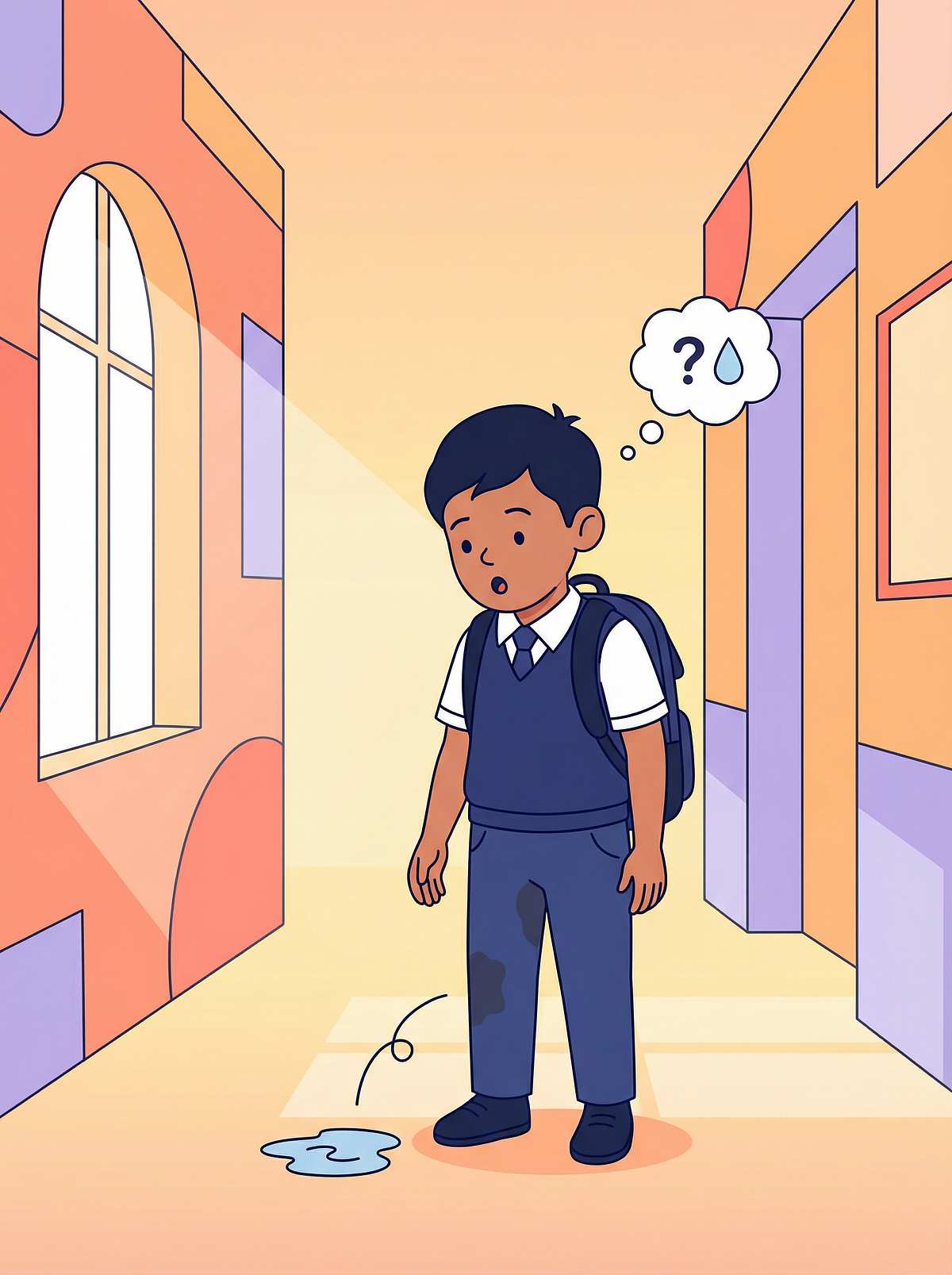
Bathroom Signal Recognition
They don't feel it coming. No warning. No squirming. No verbal cue. One moment they're fine, the next there's an accident — at age 6, 7, 8, or beyond. Toilet training stalls not because they won't go, but because they genuinely cannot feel when their bladder is full or their bowels are ready. You've been told "they'll get it eventually." It's been years.
The Neuroscience
Bladder and bowel fullness signals travel from pelvic organ stretch receptors via the pelvic splanchnic nerves to the sacral spinal cord, then to the pontine micturition centre and insular cortex. In interoceptive hypo-awareness, the signal either doesn't reach consciousness or arrives only at extreme fullness — too late for the child to respond.
Level I Evidence
What You'll Learn
- Scheduled toileting as external scaffold
- Interoceptive body check-ins ("check your body — does your tummy feel full?")
- Visual bathroom schedule with timer
- Private body awareness activities
- Night-time management strategies
- When medical assessment is needed (enuresis/encopresis workup)

A-113 · Interoception
Can't Feel Temperature
They walk outside in a Delhi winter wearing shorts and don't shiver. They put their hand under scalding water and don't flinch. They drink tea that's too hot and burn their tongue — repeatedly. Temperature, one of the body's most basic safety signals, isn't reaching their brain. This is not defiance. It is a sensory gap that demands caregiver vigilance.
The Neuroscience
Thermoreceptors in the skin feed into the spinothalamic tract → thalamus → insular cortex for temperature awareness. The child's body may be thermoregulating (sweating, shivering) but they don't feel the temperature change — so they don't take action. Hypothalamic thermoregulation operates separately from conscious temperature perception.
Level I–II Evidence
What You'll Learn
- Temperature safety audit — home hot water limiters and kitchen safeguards
- "Touch, check, ask" protocol for hot and cold surfaces
- Visual temperature guides (thermometer-to-clothing charts)
- Seasonal dressing visual schedules for Indian climate zones
- Caregiver vigilance protocols until awareness develops
- When to assess for peripheral neuropathy (medical referral)
A-114 · Interoception
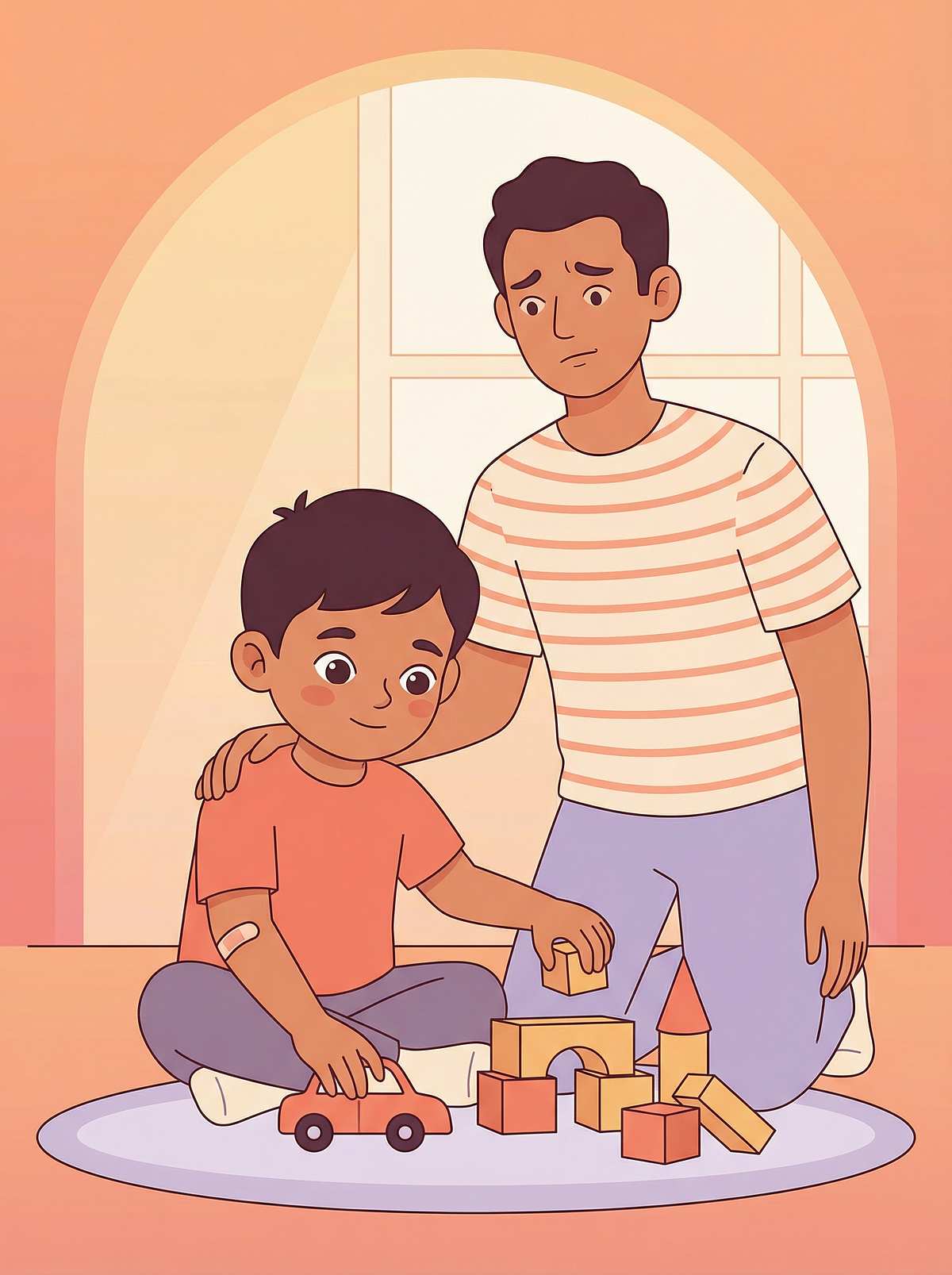
Pain Recognition
They fell and broke their arm and didn't cry. You discovered a severe ear infection only during a routine doctor visit — they'd shown no sign of pain. They walk on a sprained ankle without limping. The paediatrician says "high pain threshold." But it's not threshold — they genuinely don't feel it. Pain is the body's alarm system, and their alarm is muted. That terrifies you. It should.
The Neuroscience
Pain signals travel via nociceptors → Aδ and C fibres → dorsal horn of spinal cord → spinothalamic tract → thalamus → somatosensory cortex AND insular cortex. When insular cortex processing is atypical, the nociceptive signal may reach the brain but fail to generate conscious pain awareness. The body detects the injury — healing begins — but the experience of pain never reaches consciousness.
Level I–II Evidence
What You'll Learn
- Daily body check protocols — visual body scan for injuries
- Teaching pain vocabulary and injury reporting
- Pain scale adapted for interoceptive differences
- Caregiver injury surveillance (checking for injuries the child won't report)
- Medical alert: informing all healthcare providers about pain insensitivity
- School nurse and teacher notification protocol
- Emergency signs parents must monitor since child won't self-report
⚠️ Safety Priority: Pain insensitivity is a medical safety concern. Inform all treating clinicians, school staff, and emergency contacts. Never assume absence of pain means absence of injury.
A-115 · Interoception
Emotion Body Awareness
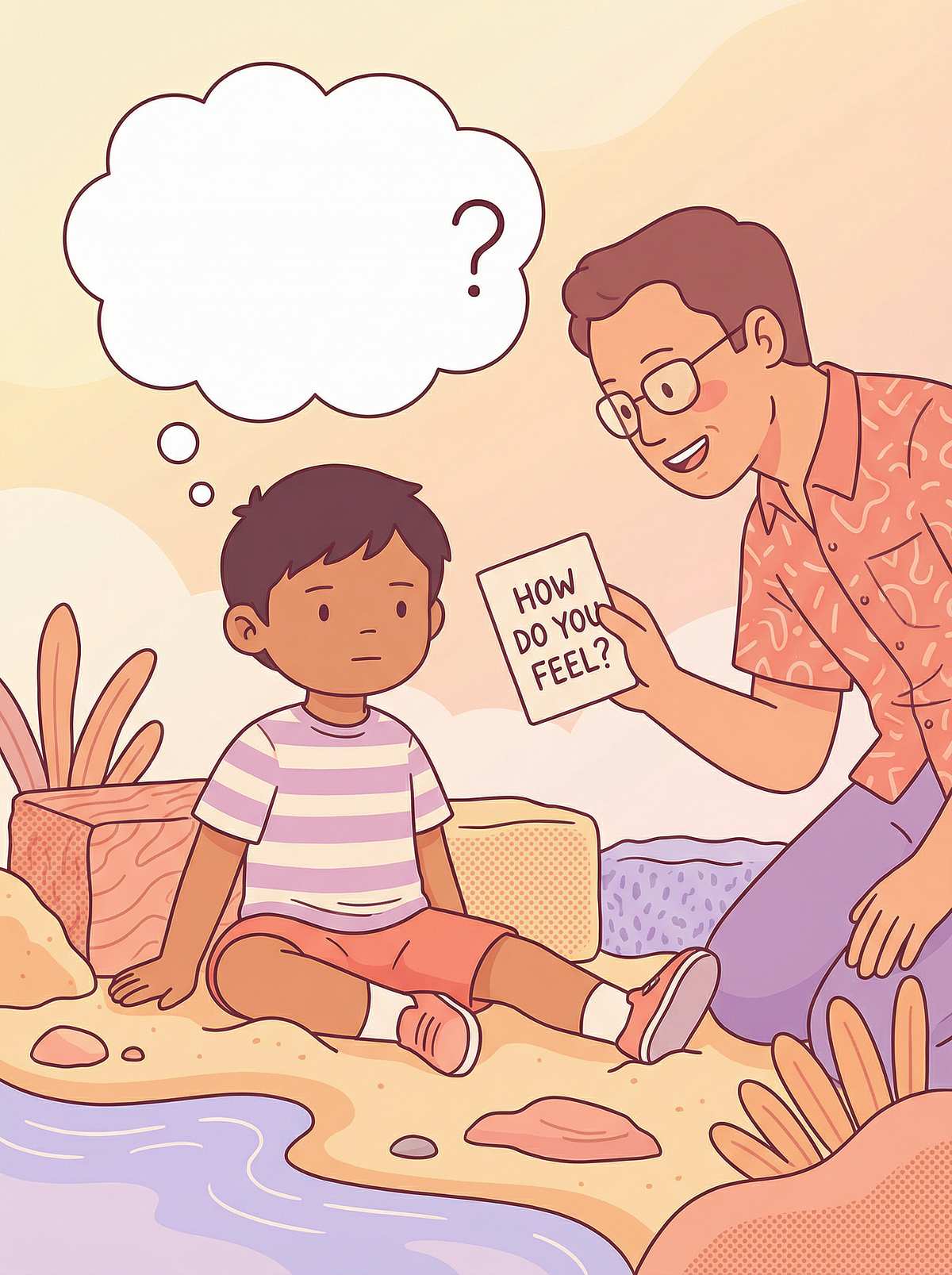
"How do you feel?" Blank stare. They can't answer — not because they don't have feelings, but because they can't detect the body sensations that tell us what we're feeling. They don't notice the racing heart of anxiety. The stomach butterflies of excitement. The chest tightness of sadness. The physical foundations of emotional awareness are invisible to them.
The Neuroscience
Emotional awareness is built on interoception. The James-Lange theory of emotion — supported by modern neuroscience — holds that we detect body changes first (heart racing, muscles tensing, stomach churning), then the brain labels the emotion. When interoception is impaired, the first step fails, and the entire emotional awareness cascade is disrupted. Emotional regulation difficulties in ASD are often interoceptive at their root.
Level I Evidence
What You'll Learn
- Body-emotion mapping ("When I'm angry, my fists get tight")
- Interoceptive awareness activities — heartbeat detection, breathing awareness, muscle tension scanning
- Emotion thermometer with body-sensation anchors
- "My body is telling me" daily practice
- Zones of Regulation with interoceptive foundation
- Building the bridge: body signal → emotion label → regulation strategy
Detect
Notice physical body sensations like heartbeat and breathing changes
Label
Match the body sensation to an emotion word or picture
Regulate
Apply a strategy matched to the emotion identified
A-116 · Olfactory
Gags at Smells
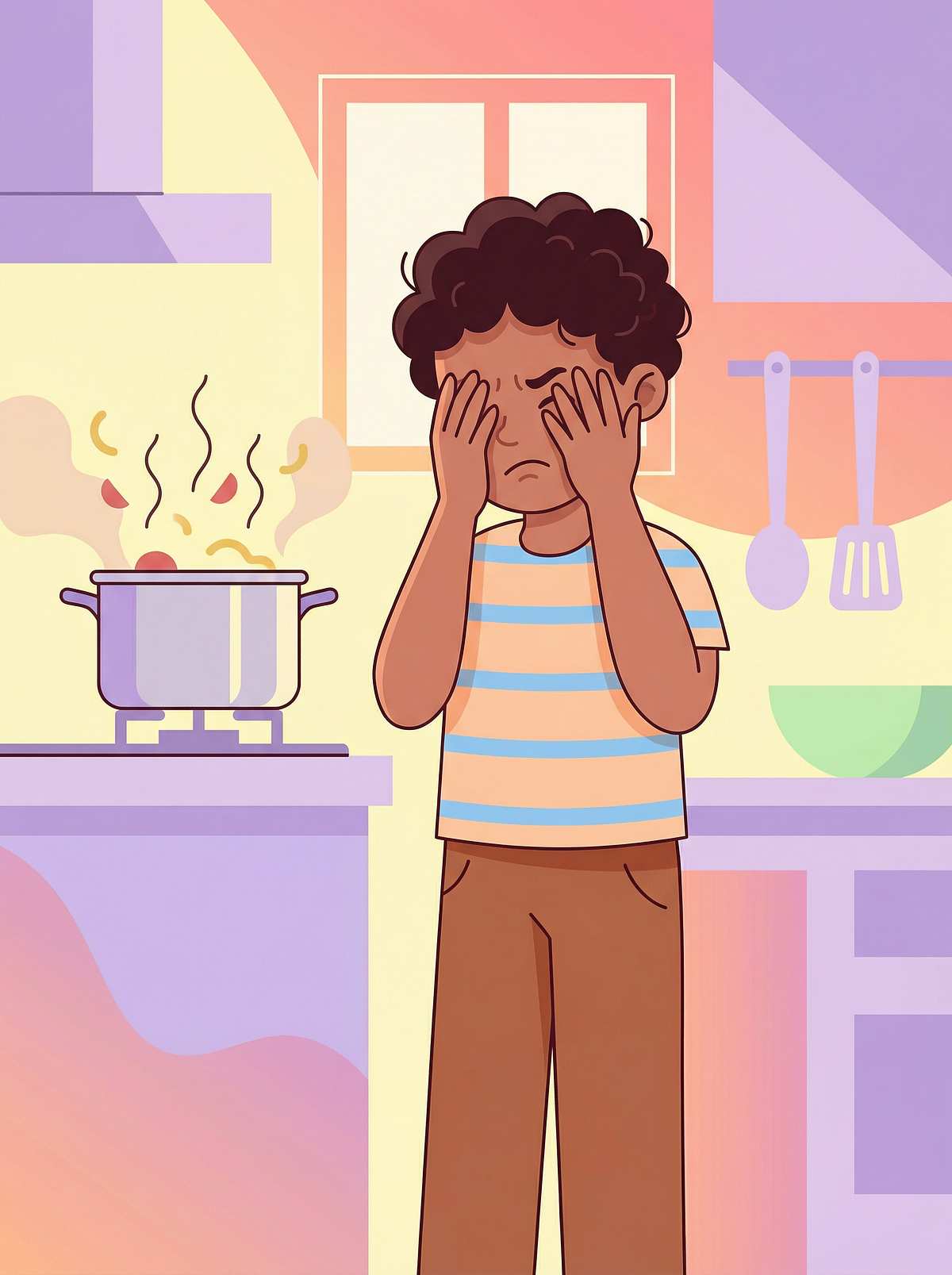
The kitchen. The bathroom. The neighbour's cooking. Incense at the temple. Perfume on a relative. They gag, retch, sometimes vomit. Smells that you barely notice cause a full physical response. Indian homes are rich in olfactory input — spices, agarbatti, camphor, cooking oil, jasmine — and your child cannot tolerate any of it. Mealtimes, religious observances, and family visits are all affected.
The Neuroscience
Olfactory hypersensitivity means the olfactory receptors detect odour molecules at a lower threshold than typical. Because the olfactory pathway bypasses the thalamus and projects directly to the amygdala and piriform cortex, there is no sensory gate between nose and emotional brain. Every smell arrives at the emotion centre unfiltered — and for a hypersensitive system, routine odours trigger the full disgust and nausea pathway.
Level I–II Evidence
What You'll Learn
- Smell sensitivity profiling — which odours, which intensities
- Kitchen ventilation strategies for Indian cooking
- "Smell shield" — personal scent applied to wrist or collar as masking agent
- Temple and religious accommodation (arriving after camphor, sitting near door)
- Graduated olfactory exposure hierarchy
- Meal preparation timing to reduce cooking odour exposure

A-117 · Olfactory
Sniffs Everything
They sniff people, food, objects, furniture, walls, the ground. Before touching anything, they smell it. They bury their nose in your hair. They sniff new people. It's socially alarming — especially in Indian culture where personal space is already complex. But they're not being rude. They're using their nose as a primary sensory exploration tool.
The Neuroscience
Olfactory seeking means the brain uses smell as its primary environmental scanning system. Because olfactory input connects directly to the hippocampus (memory) and amygdala (safety assessment), sniffing may be the child's fastest method for evaluating whether an object, person, or environment is safe and familiar. For some children, the olfactory system is more reliable than vision or touch — so the brain defaults to "smell first, then decide."
Level I Evidence
What You'll Learn
- Understanding sniffing as environmental scanning — not "weird" behaviour
- Structured smell exploration activities using sensory smell bottles
- Appropriate-context boundaries ("sniffing is for smell bottles, not people")
- Using olfactory interest for engagement and learning
- Scent-based reward systems
- Social awareness: when sniffing impacts peer relationships
A-118 · Olfactory
Perfume Sensitivity
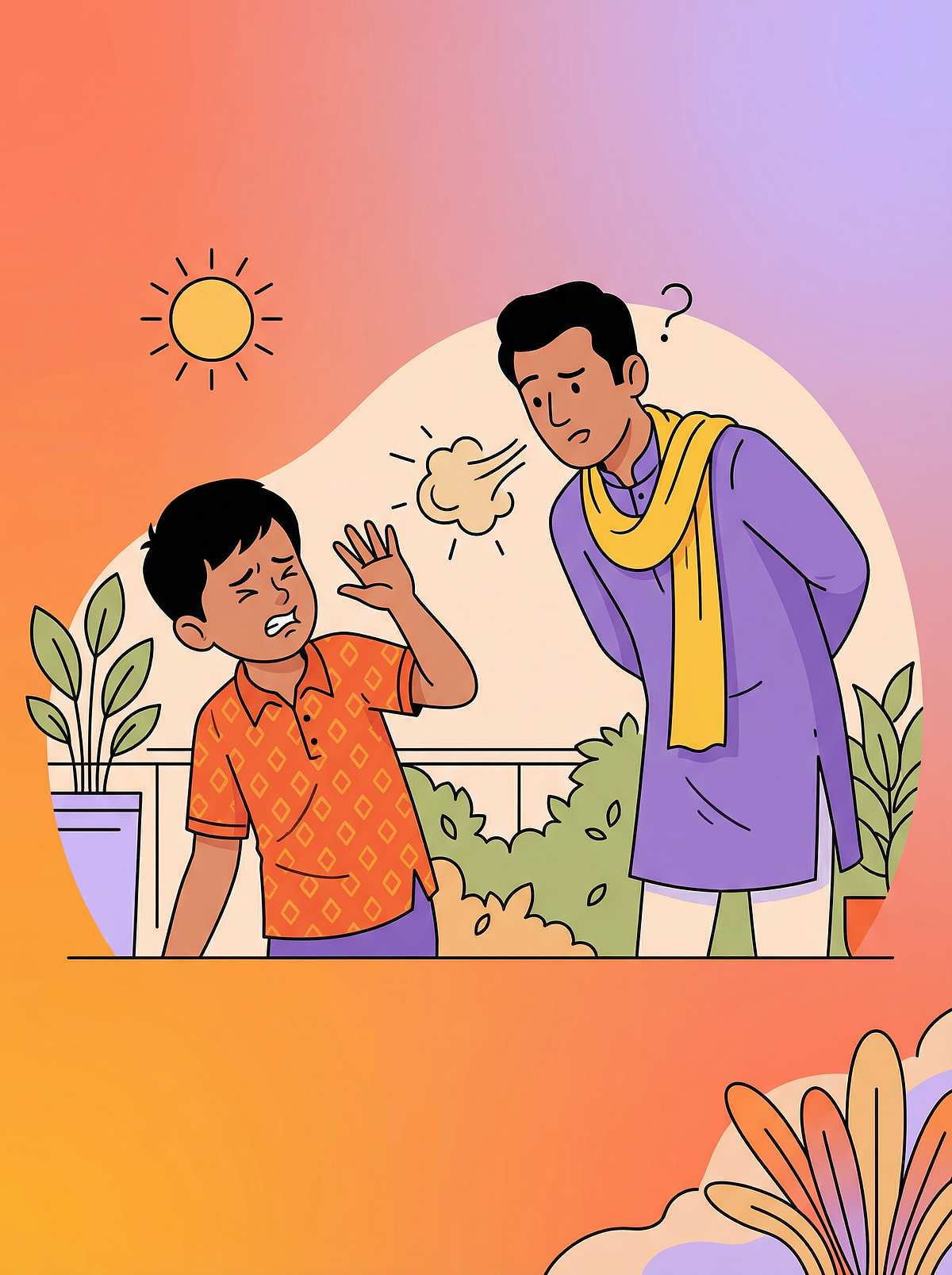
Aunty arrives wearing perfume and your child runs. The school teacher's deodorant makes them gag at their desk. Hair oil on grandma triggers avoidance. In India, personal fragrances are deeply cultural — jasmine garlands, attar, sandalwood, hair oil, talcum powder. Your child's olfactory sensitivity collides with social expectations at every family gathering, creating tension that is exhausting for everyone.
The Neuroscience
Synthetic fragrances contain volatile organic compounds (VOCs) that activate olfactory receptors across multiple receptor types simultaneously. The chemical complexity of perfumes creates a "broadband" olfactory signal — the equivalent of auditory noise. Natural fragrances like jasmine and sandalwood have simpler molecular profiles but can be equally intense for the hypersensitive olfactory system. There is no thalamic filter to dampen the response.
Level II Evidence
What You'll Learn
- Family education: requesting fragrance-free visits — scripts included
- Personal "scent shield" for the child (preferred mild scent on collar)
- Classroom fragrance-free zone request letter
- Social story for family gatherings ("some people wear perfume")
- Graduated exposure where clinically appropriately
- Indian cultural navigation — fragrance expectations at weddings, temples, and festivals

A-119 · Gustatory
Seeks Strong Flavours
They douse everything in chilli sauce. They eat raw lemons. They lick salt from the shaker. They want the spiciest, sourest, most intensely flavoured food available — and reject anything "bland." In India, this can initially seem normal (Indian food is flavourful), but the intensity they seek goes far beyond cultural norms. They eat green chillies like snacks.
The Neuroscience
Gustatory seeking means taste buds are under-registering flavour input, requiring higher concentrations of salt, sour, spicy, or bitter to reach the activation threshold. Capsaicin (chilli) additionally triggers pain receptors on the tongue, adding nociceptive input that provides the oral sensory intensity the brain craves. These children genuinely need that intensity to taste anything — it is not a preference, it is a sensory requirement.
Level I–II Evidence
What You'll Learn
- Flavour intensity hierarchy — building from preferred strong to gradually milder
- Structured "flavour exploration" activities
- Oral motor tools that provide non-food oral sensation
- Balancing flavour seeking with nutritional completeness
- Indian cuisine as an advantage — natural spice variety for graduated exposure
- When flavour seeking indicates zinc deficiency or other medical cause (paediatric referral)
A-120 · Gustatory
Licks Objects
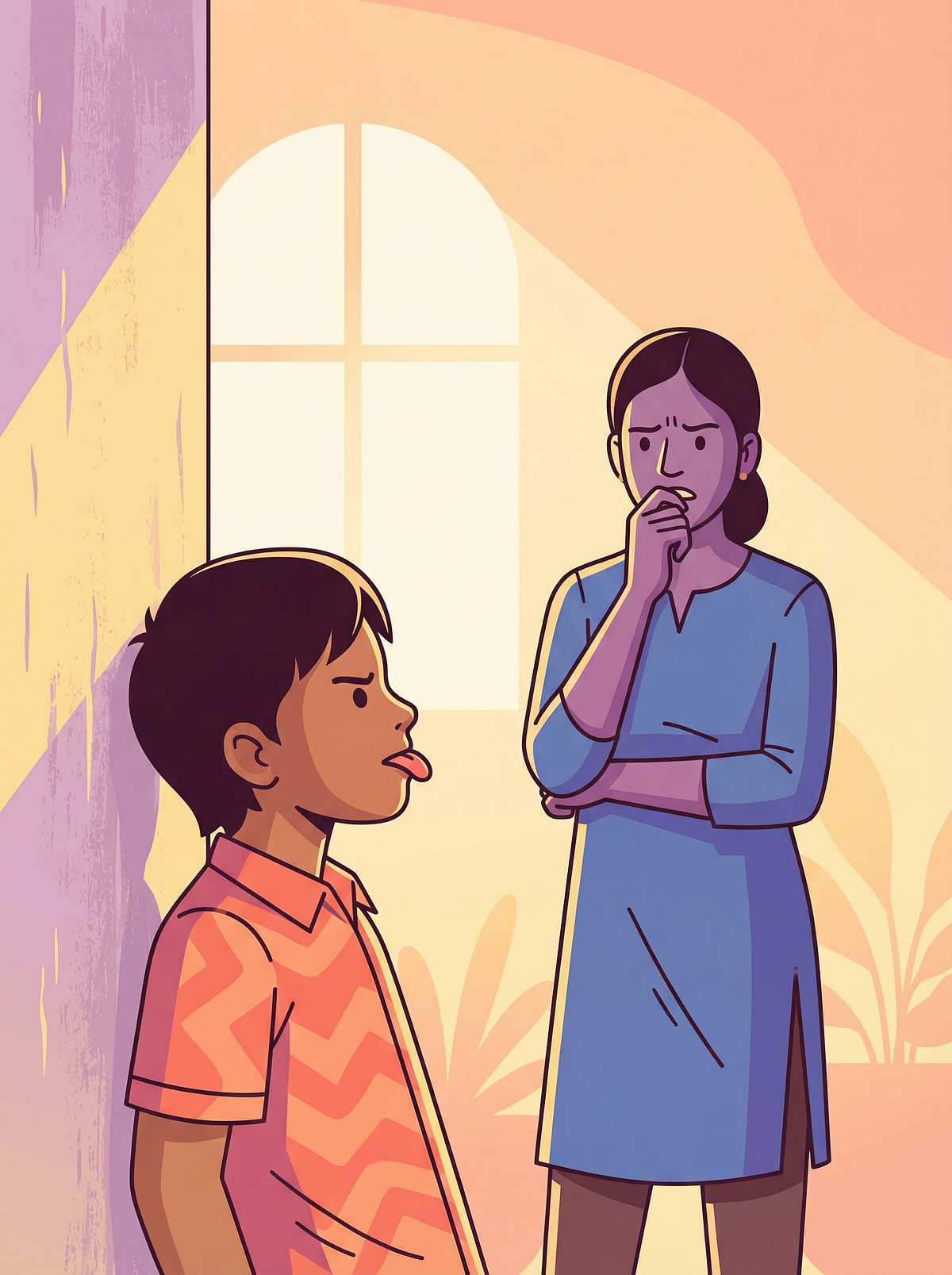
Windows. Walls. Toys. Table surfaces. Handrails. Floors. They lick them — in public, at school, at the park. It's a hygiene challenge and a social minefield. You carry hand sanitiser and wet wipes everywhere. Teachers are alarmed. Other parents are unsettled. You know it's sensory. But that doesn't make it easier to manage in the real world — and the safety risks are real.
The Neuroscience
Licking combines gustatory input (taste), oral tactile input (texture via tongue), and olfactory input (smell at close range) — a triple sensory exploration tool. The tongue has the highest tactile receptor density of any external body surface. For children who under-register oral sensory input, licking is the most data-rich sensory sampling available. It is the equivalent of a neurotypical child touching and looking at something — but done through the mouth.
Level I Evidence
What You'll Learn
- Safe oral sensory alternatives — chew tools, flavoured items, texture exploration foods
- "Licking is for food" boundary teaching with visual supports
- Hygiene protocol: what to do immediately after object licking
- Environmental safety — cleaning products, lead paint, chemicals (Indian home hazard awareness)
- Oral sensory diet to satisfy the underlying need
- When licking indicates pica (eating non-food items → medical referral)
9 Canon Materials:Oral Motor Chews · Vibrating Oral Tools · Food Exploration Tools · Straws (Specialty) · Blowing / Whistling Tools · Tactile Sensory Kit · Social Stories · Fidget Set · Calm-Down Kit
🗣️ SLP
Oral motor and feeding lead
🤲 OT
Sensory integration support
📊 ABA
Behaviour and context teaching
👶 Paediatrics
Medical referral if pica suspected

A-121 · Gustatory
Food Texture Refusal
They will eat only smooth foods. Or only crunchy foods. Or only dry foods. Nothing wet, nothing mixed, nothing where textures combine. Dal touching rice is a crisis. A single lump in mashed potato means the whole plate is rejected. In India, where food is love and refusing food is deeply personal, this creates daily family conflict — and real nutritional risk.
The Neuroscience
Oral tactile processing determines how the tongue, palate, and cheeks interpret texture, temperature, and consistency. When the oral sensory system is hypersensitive, unexpected or mixed textures trigger a genuine gag reflex — not a behavioural choice. The brain's threat detection system (amygdala) classifies certain textures as dangerous, activating a full defensive response. This is why "just try it" doesn't work: the child is not being stubborn — they are experiencing a real neurological alarm.
Level I Evidence
What You'll Learn
- Texture hierarchy: building from accepted to tolerated to new textures
- Food chaining — expanding diet one small step at a time
- Oral desensitisation techniques before meals
- Separating foods on the plate (visual and tactile boundaries)
- Indian food adaptations: smooth dal, dry roti variations, texture-modified sabzi
- When texture refusal indicates a feeding disorder requiring SLP referral
9 Canon Materials:Food Exploration Tools · Oral Motor Chews · Vibrating Oral Tools · Textured Spoons · Visual Schedule System · Social Stories · First-Then Board · Calm-Down Kit · Fidget Set
SLP
Feeding therapy lead
OT
Oral sensory integration
Nutrition
Diet adequacy monitoring
Paediatrics
Growth and nutrition review

A-122 · Proprioception
Crashes Into Everything
They run into walls. They crash into siblings. They throw themselves onto furniture. They hug too hard, push too hard, stomp when they walk. It looks like aggression or carelessness — but it isn't. They are seeking deep pressure input because their body doesn't know where it is in space without it. Every crash is the nervous system asking: "Am I real? Am I here?"
The Neuroscience
Proprioception is the sense of body position and movement, detected by muscle spindles, Golgi tendon organs, and joint receptors. When proprioceptive processing is under-responsive, the brain receives insufficient feedback about body position, force, and movement. Crashing, pushing, and heavy impact provide intense proprioceptive input that temporarily satisfies the nervous system's need for body-awareness data. This is called proprioceptive seeking — a self-regulatory behaviour, not a behavioural problem.
Level I Evidence
What You'll Learn
- Heavy work activities: carrying, pushing, pulling, climbing
- Proprioceptive diet — scheduled input throughout the day
- Safe crashing alternatives: crash pads, body socks, weighted blankets
- Reducing accidental injury while meeting the sensory need
- Indian home adaptations: floor-based heavy work, wall push-ups, carrying groceries
- Distinguishing proprioceptive seeking from aggression for teachers and family
9 Canon Materials:Crash Pad · Body Sock · Weighted Blanket · Resistance Bands · Therapy Ball · Proprioceptive Vest · Fidget Set · Sensory Swing · Calm-Down Kit
🤲 OT
Proprioceptive integration lead
🏃 Physio
Movement and motor planning
📊 ABA
Behaviour differentiation
🏫 School
Classroom heavy work breaks
A-123 · Proprioception
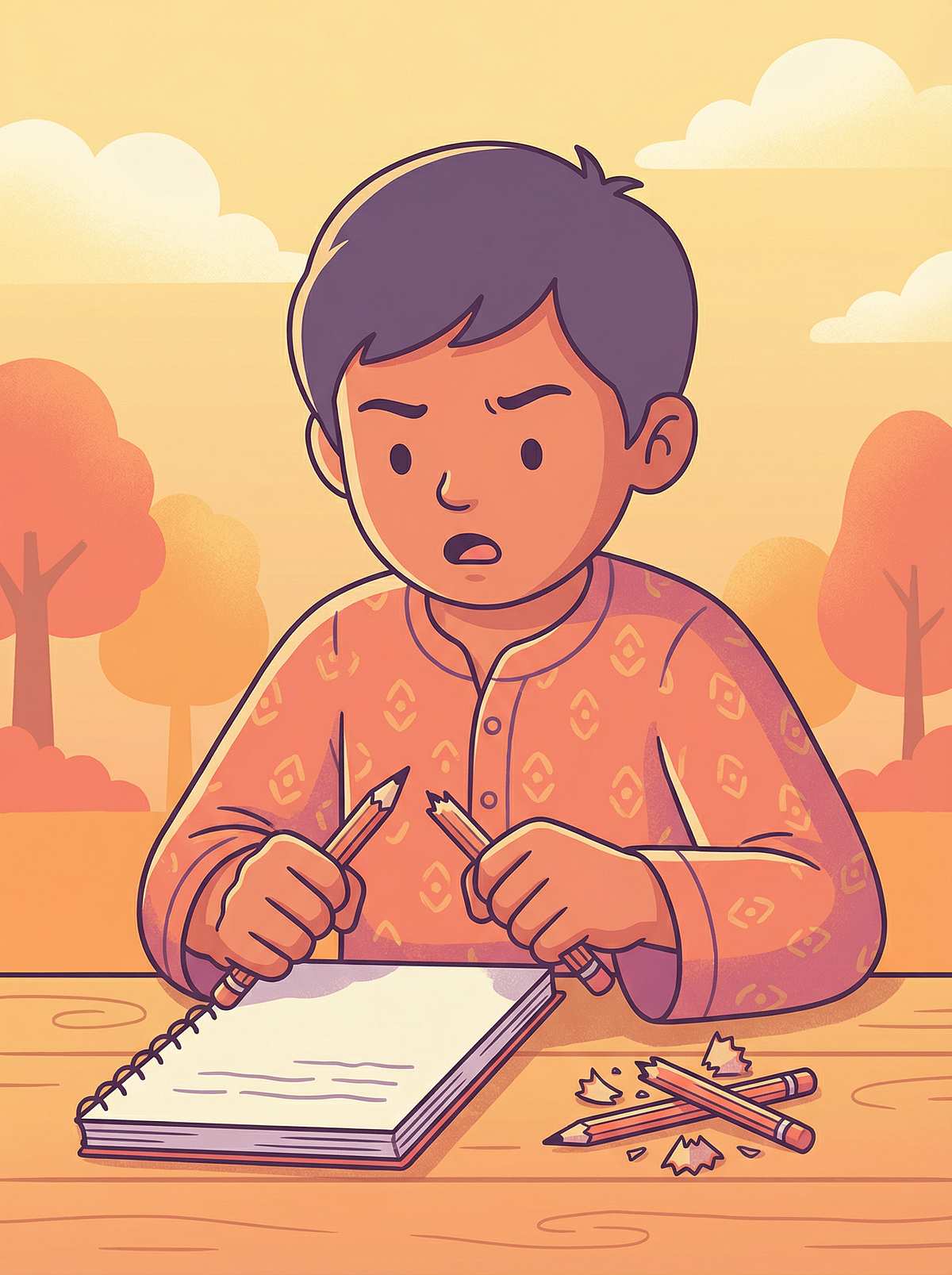
Doesn't Know Own Strength
They break pencils constantly. They tear pages when writing. They squeeze the dog too hard. They hurt friends during play — not on purpose, but because they genuinely cannot calibrate how much force they're using. Every hug is a vice grip. Every handshake is a crush. They don't feel it the way others do, so they keep adding pressure until they get feedback — and by then, it's too much.
The Neuroscience
Force calibration depends on proprioceptive feedback from muscle spindles and Golgi tendon organs, which signal how much tension a muscle is generating. When proprioceptive processing is under-responsive, the brain doesn't receive accurate force feedback, so the child continues increasing pressure to get a signal. This is called proprioceptive hyposensitivity — the child isn't choosing to be rough; their nervous system is operating with a broken force gauge.
Level I Evidence
What You'll Learn
- Force calibration activities: egg-and-spoon, water pouring, clay work
- Proprioceptive input before fine motor tasks to "prime" the system
- Visual and tactile feedback tools for force awareness
- Teaching "butterfly touch" vs "bear hug" with concrete practice
- Protecting relationships: explaining to siblings, friends, and extended family
- Pencil grips and adaptive tools for writing force control
9 Canon Materials:Pencil Grips · Therapy Putty · Resistance Bands · Weighted Blanket · Body Sock · Fidget Set · Therapy Ball · Tactile Sensory Kit · Calm-Down Kit
🤲 OT
Proprioceptive and fine motor lead
🏃 Physio
Gross motor force calibration
📊 ABA
Social skills and peer safety
🏫 School
Classroom tool adaptations

A-124 · Proprioception
Slumps and Slouches
They can't sit upright. They drape themselves over the desk, slide off chairs, lean against walls, lie on the floor during activities. Teachers call it laziness. Family calls it bad posture. But their core muscles aren't getting the proprioceptive feedback needed to maintain position against gravity. Sitting up straight requires constant sensory effort that their nervous system cannot sustain.
The Neuroscience
Postural control depends on continuous proprioceptive feedback from the spine, hips, and core muscles, integrated with vestibular input from the inner ear. When proprioceptive processing is insufficient, the brain cannot maintain the constant micro-adjustments needed for upright posture. The child slumps not from laziness but because their nervous system lacks the sensory data to sustain antigravity posture. This is often compounded by low muscle tone (hypotonia), which is common in sensory processing differences.
Level I–II Evidence
What You'll Learn
- Core strengthening through proprioceptive activities (not just exercise)
- Seating adaptations: wobble cushions, therapy balls, floor seating
- Heavy work before seated tasks to prime postural muscles
- Indian classroom adaptations: floor sitting with back support
- Distinguishing low tone from proprioceptive seeking from fatigue
- When slumping indicates hypotonia requiring physiotherapy assessment
9 Canon Materials:Wobble Cushion · Therapy Ball · Body Sock · Weighted Blanket · Resistance Bands · Proprioceptive Vest · Fidget Set · Sensory Swing · Calm-Down Kit
🤲 OT
Postural and sensory integration
🏃 Physio
Core strength and tone assessment
🏫 School
Seating and desk adaptations
👶 Paediatrics
Hypotonia screening
A-125 · Vestibular
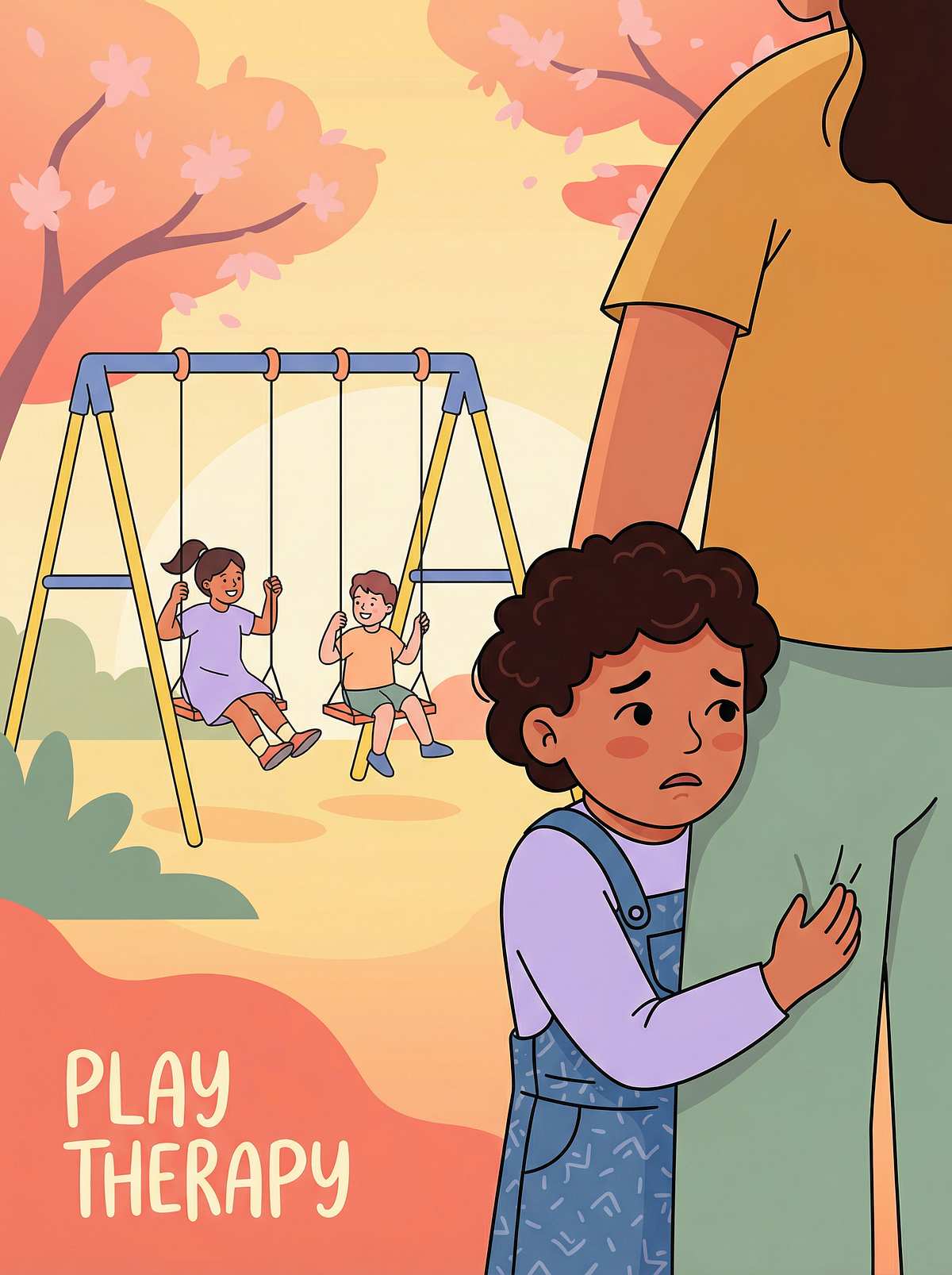
Fears Feet Leaving the Ground
Swings terrify them. Escalators are a crisis. Being picked up causes panic. Tilting their head back to rinse hair in the shower triggers screaming. Any situation where their feet leave the ground — or their head changes position — produces genuine fear and distress. It's not drama. Their vestibular system is sending danger signals that feel as real as falling off a cliff.
The Neuroscience
The vestibular system, housed in the inner ear, detects head position, linear movement, and rotational movement. When the vestibular system is hypersensitive (gravitational insecurity), even small changes in head position or loss of ground contact trigger an extreme threat response via the amygdala. The brain interprets normal movement as dangerous falling. This is one of the most distressing sensory experiences — the child cannot be reasoned out of it because the fear is neurologically generated, not cognitively chosen.
Level I Evidence
What You'll Learn
- Graded vestibular exposure: starting with feet-on-ground movement
- Proprioceptive input before vestibular activities to provide grounding
- Hair washing adaptations: recline vs. forward lean, shower caps
- Escalator and stair strategies for community access
- Communicating gravitational insecurity to family and school
- When vestibular hypersensitivity requires specialist OT assessment
9 Canon Materials:Sensory Swing · Therapy Ball · Wobble Cushion · Body Sock · Weighted Blanket · Crash Pad · Resistance Bands · Visual Schedule System · Calm-Down Kit
🤲 OT
Vestibular integration specialist
🏃 Physio
Movement grading and balance
👶 Paediatrics
Rule out inner ear pathology
🧠 Psychology
Anxiety differentiation

A-126 · Vestibular
Spins and Rocks Constantly
They spin in circles until you're dizzy just watching. They rock back and forth on the chair, on the floor, in bed. They swing their head. They never seem to get dizzy. While other children stop spinning after a few turns, they could go for minutes. This isn't stimming for the sake of it — it's the nervous system seeking vestibular input it isn't getting enough of.
The Neuroscience
Vestibular seeking occurs when the vestibular system is under-responsive — it requires more intense or prolonged input to register movement. The semicircular canals detect rotational movement; when they under-respond, the brain craves spinning to generate sufficient vestibular signal. Notably, children who seek vestibular input often show reduced post-rotary nystagmus (the normal eye movement after spinning stops) — a clinical sign of vestibular hyposensitivity. Rocking activates the otolith organs, which detect linear movement and gravity.
Level I Evidence
What You'll Learn
- Safe spinning alternatives: sensory swings, spinning chairs, rocking chairs
- Vestibular diet: scheduled movement breaks throughout the day
- Rocking substitutes for classroom and home settings
- Using vestibular input strategically before focus-demanding tasks
- Indian home adaptations: jhula (traditional swing), floor rocking activities
- When spinning/rocking indicates a need for formal vestibular assessment
9 Canon Materials:Sensory Swing · Wobble Cushion · Therapy Ball · Body Sock · Crash Pad · Resistance Bands · Weighted Blanket · Fidget Set · Calm-Down Kit
🤲 OT
Vestibular integration specialist
🏃 Physio
Movement and balance programme
📊 ABA
Behaviour function analysis
🏫 School
Movement break scheduling
A-127 · Auditory
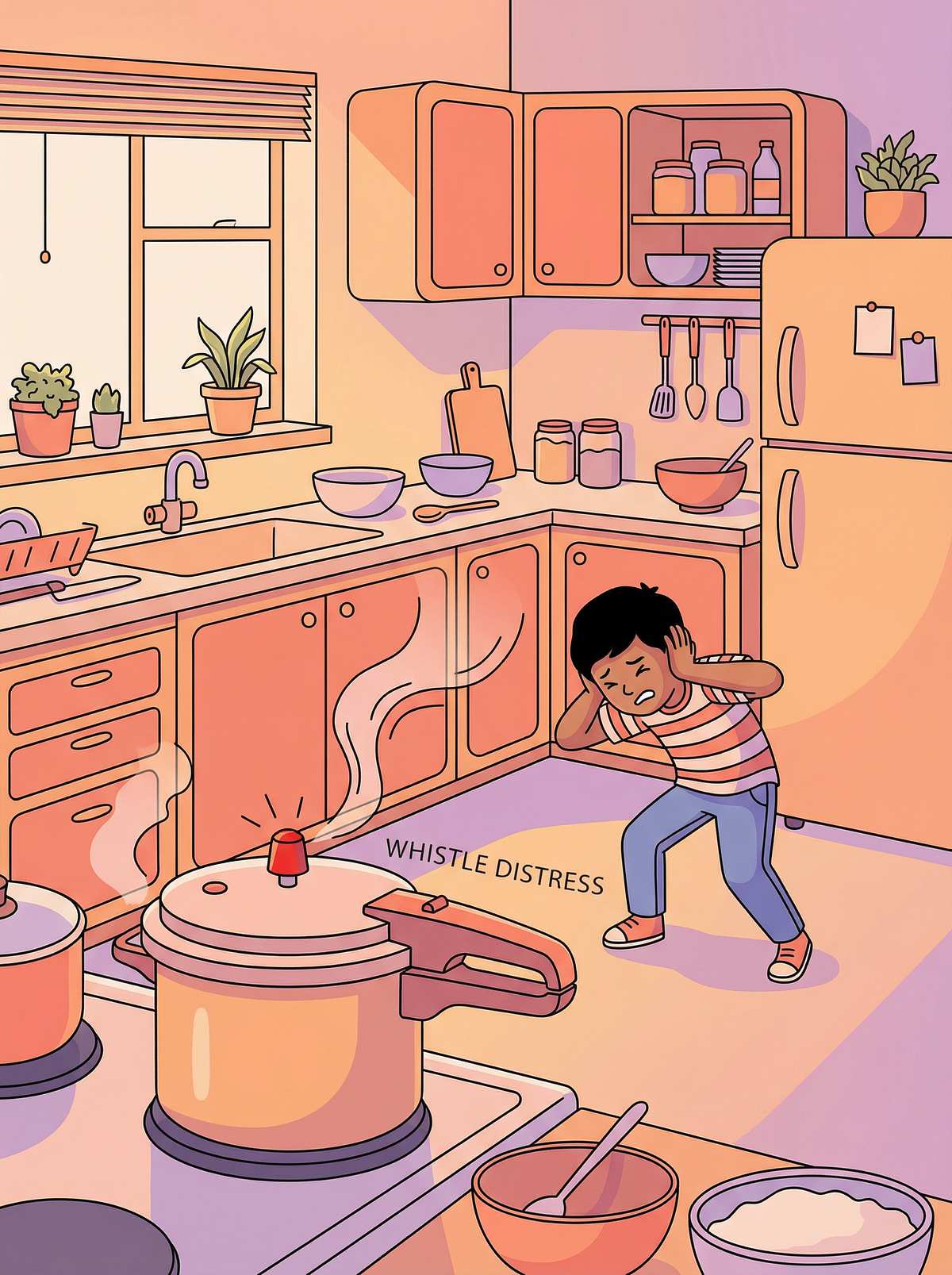
Covers Ears at Everyday Sounds
The pressure cooker. The blender. A dog barking two streets away. The school bell. A baby crying in a restaurant. They cover their ears, scream, cry, or bolt. Sounds that are background noise to everyone else are physically painful to them. In India — where noise is constant, festivals are loud, and traffic never stops — this is a daily survival challenge.
The Neuroscience
Auditory hypersensitivity (hyperacusis) occurs when the auditory cortex and limbic system fail to habituate to non-threatening sounds. Normally, the brain's descending auditory pathways suppress irrelevant sounds — a process called auditory gating. When gating is impaired, all sounds arrive at full volume with equal threat priority. The stapedius muscle reflex, which normally dampens loud sounds, may also be under-functioning. The result: the child's auditory world is like living with the volume permanently at maximum, with no mute button.
Level I Evidence
What You'll Learn
- Noise-cancelling headphones: when to use, how to introduce, avoiding dependency
- Auditory desensitisation: gradual exposure to tolerated sound levels
- Sound mapping the home and school environment
- Indian festival and event preparation strategies (Diwali, weddings, school events)
- Ear defenders vs. noise-cancelling: which for which situation
- When auditory sensitivity indicates auditory processing disorder (APD)
9 Canon Materials:Noise-Cancelling Headphones · Ear Defenders · White Noise Machine · Calm-Down Kit · Visual Schedule System · Social Stories · Fidget Set · Weighted Blanket · Communication Board
🤲 OT
Sensory integration and auditory diet
👂 Audiologist
Auditory processing assessment
📊 ABA
Desensitisation programming
🏫 School
Classroom acoustic accommodations
A-128 · Auditory
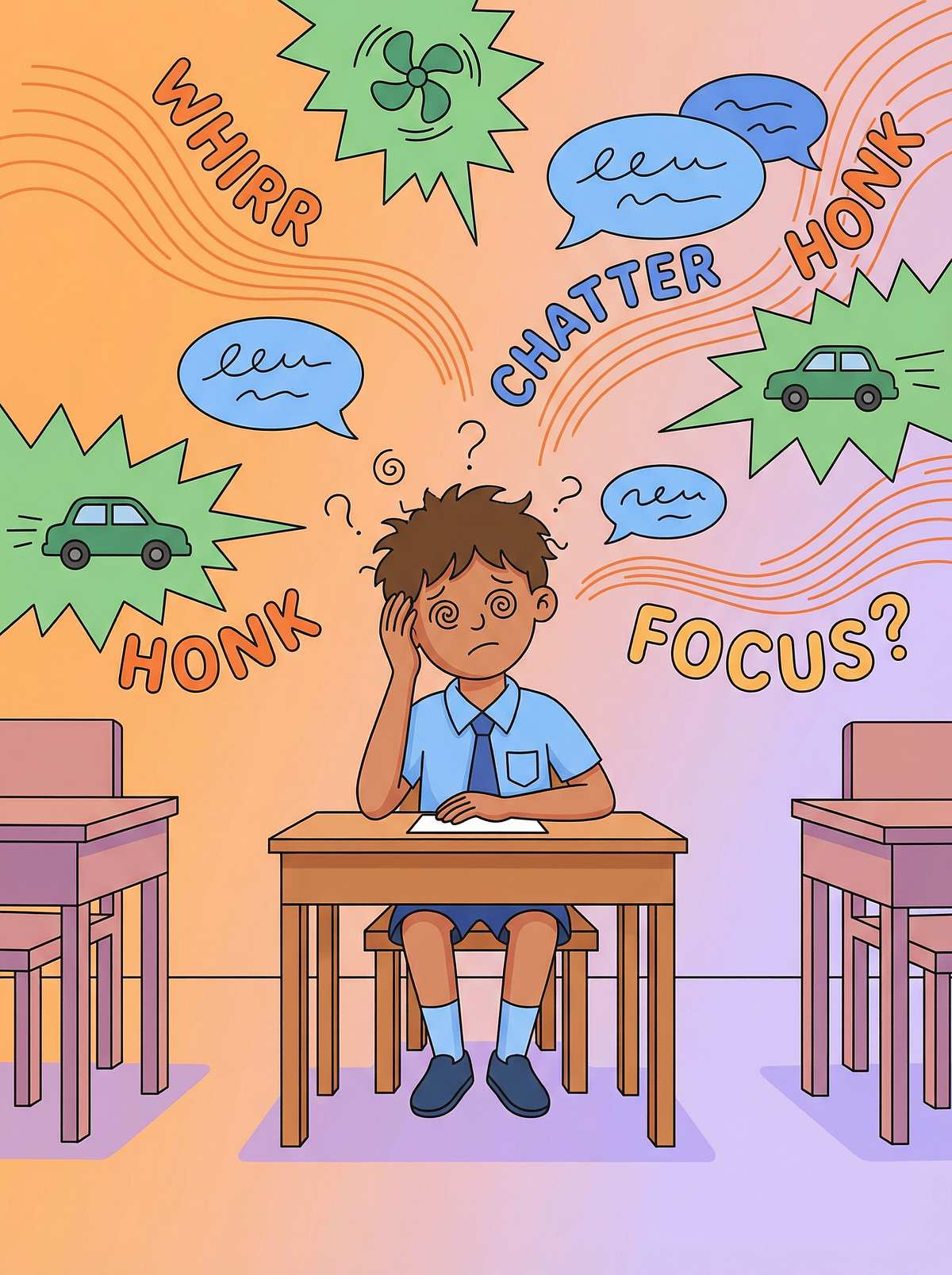
Can't Filter Background Noise
The teacher is talking. The fan is humming. Someone is whispering three rows back. A car passes outside. To most children, the teacher's voice is foreground and everything else is background. To your child, it's all foreground — equally loud, equally demanding. They can't follow instructions in a noisy classroom not because they aren't listening, but because their brain cannot decide what to listen to.
The Neuroscience
Auditory figure-ground discrimination is the ability to separate a target sound from background noise. This depends on the auditory cortex's ability to apply selective attention — amplifying relevant signals and suppressing irrelevant ones. In auditory processing differences, this filtering mechanism is impaired. The inferior colliculus and auditory cortex fail to apply the normal signal-to-noise enhancement, meaning all sounds compete equally for attention. This is distinct from hearing loss — the child hears everything; they just cannot prioritise it.
Level I–II Evidence
What You'll Learn
- Preferential seating: front-centre positioning away from noise sources
- FM systems and sound-field amplification for classrooms
- Reducing background noise at home during learning and conversation
- Visual supports to compensate for auditory processing load
- Indian classroom realities: open windows, fans, corridor noise — practical strategies
- Formal auditory processing disorder (APD) assessment pathway
9 Canon Materials:Noise-Cancelling Headphones · White Noise Machine · Ear Defenders · Visual Schedule System · Communication Board · Social Stories · Fidget Set · Calm-Down Kit · First-Then Board
👂 Audiologist
APD assessment and management
🤲 OT
Sensory integration support
🗣️ SLP
Listening and language processing
🏫 School
Acoustic and seating accommodations
A-129 · Auditory
Mishears or Misprocesses Words
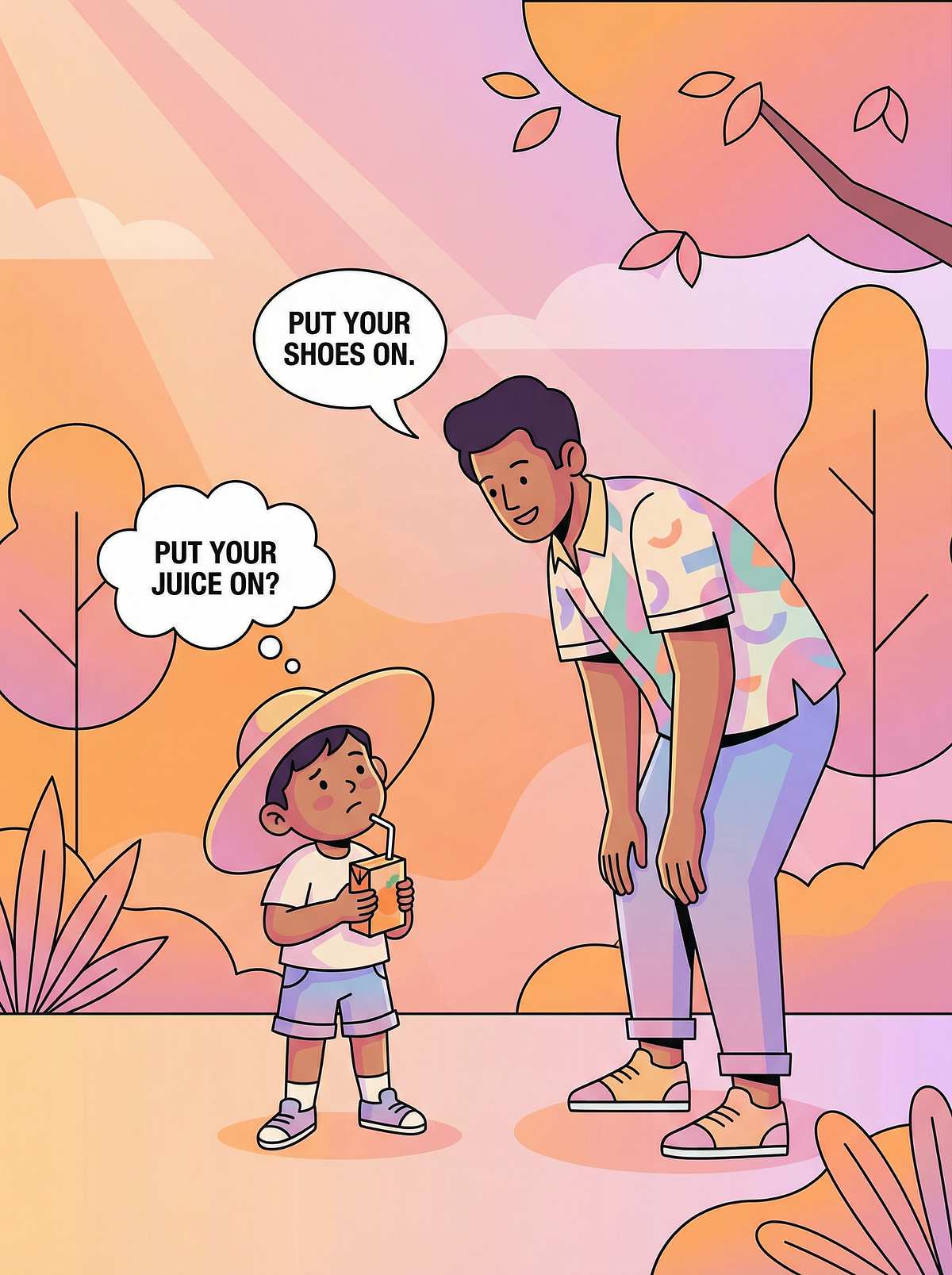
You say "Put your shoes on." They hear "Put your juice on." You say "It's time for school." They hear something entirely different and respond to what they thought you said. They're not ignoring you. They're not being difficult. The words are arriving at their ears correctly — but somewhere between the ear and the brain, the message is getting scrambled.
The Neuroscience
Auditory processing involves not just hearing but decoding — the brain must segment continuous speech into phonemes, map them to known words, and extract meaning in real time. When temporal processing (the speed of auditory decoding) is impaired, fast speech or similar-sounding words get confused. The auditory cortex's phonological processing centres — particularly in the left hemisphere — may process speech too slowly or inaccurately. This is central auditory processing disorder (CAPD), distinct from hearing loss and often missed in standard hearing tests.
Level I–II Evidence
What You'll Learn
- Slowing speech rate and using clear articulation at home
- Pairing verbal instructions with visual supports (written, pictorial)
- Checking for understanding without shaming: "Can you tell me what I said?"
- Reducing competing auditory input during instructions
- Phonological awareness activities to strengthen auditory decoding
- CAPD assessment pathway and what to expect from an audiologist
9 Canon Materials:Communication Board · Visual Schedule System · Social Stories · Noise-Cancelling Headphones · White Noise Machine · First-Then Board · Emotion Cards · Calm-Down Kit · Fidget Set
👂 Audiologist
CAPD assessment lead
🗣️ SLP
Phonological processing therapy
🤲 OT
Sensory integration support
🏫 School
Verbal instruction accommodations

A-130 · Visual
Overwhelmed by Visual Clutter
A busy classroom wall covered in charts, posters, and displays. A crowded market. A colourful birthday party. A screen with too many elements. They shut down, melt down, or simply cannot function. What looks like a rich, stimulating environment to you is visual chaos to them — every element competing for attention simultaneously, with no hierarchy, no filter, no rest.
The Neuroscience
Visual processing involves not just seeing but organising — the brain must apply figure-ground discrimination, selective attention, and visual filtering to extract relevant information from a complex scene. When the visual cortex's filtering mechanisms are impaired, all visual elements arrive with equal salience. The brain's attentional systems (prefrontal cortex, superior colliculus) cannot suppress irrelevant visual input, creating a state of visual overload. This is particularly taxing because vision is the dominant sense — it consumes approximately 30% of the cortex.
Level I–II Evidence
What You'll Learn
- Decluttering the learning environment: what to remove, what to keep
- Visual boundaries: using colour, tape, and physical dividers to reduce clutter
- Reducing visual complexity on worksheets and screens
- Indian home and classroom adaptations: managing colourful, busy environments
- Sunglasses and tinted lenses: when they help and when to seek assessment
- When visual overload indicates visual processing disorder requiring assessment
9 Canon Materials:Visual Schedule System · Communication Board · First-Then Board · Social Stories · Fidget Set · Calm-Down Kit · Weighted Blanket · Noise-Cancelling Headphones · Emotion Cards
🤲 OT
Visual processing and sensory integration
👁️ Optometrist
Visual processing assessment
🏫 School
Classroom environment modifications
📊 ABA
Environmental arrangement strategies

A-131 · Visual
Stares at Lights or Spinning Objects
They stare at ceiling fans for minutes. They're transfixed by sunlight through leaves. They hold objects up to the light and rotate them. They seek out flickering screens, spinning wheels, and reflective surfaces. While other children glance and move on, they are locked in — unable to disengage. It looks like zoning out. It's actually intense visual seeking.
The Neuroscience
Visual seeking behaviour occurs when the visual system is under-responsive to standard environmental input. The brain's visual cortex craves high-contrast, high-movement, or high-luminance stimuli to generate sufficient neural activation. Flickering light activates the magnocellular pathway (motion and contrast detection) intensely, providing the visual system with the strong input it needs. Spinning objects combine visual motion with predictable pattern — both highly activating for an under-responsive visual system. This is visual stimming: self-regulation through visual input.
Level I–II Evidence
What You'll Learn
- Safe visual seeking alternatives: lava lamps, fibre optic lights, liquid motion toys
- Using visual interest as a motivator and engagement tool
- Reducing unsafe visual seeking (staring at sun, screens at close range)
- Visual sensory diet: scheduled visual input throughout the day
- Distinguishing visual seeking from absence seizures (important medical distinction)
- When to request an EEG if staring episodes are frequent and unresponsive
9 Canon Materials:Fibre Optic Light · Lava Lamp · Liquid Motion Toy · Light Panel · Spinning Top Set · Visual Schedule System · Fidget Set · Calm-Down Kit · Social Stories
OT
Visual sensory diet planning
Optometrist
Visual processing assessment
Paediatrics
Seizure rule-out if indicated
ABA
Behaviour function and safe alternatives
A-132 · Tactile
Hates Being Touched
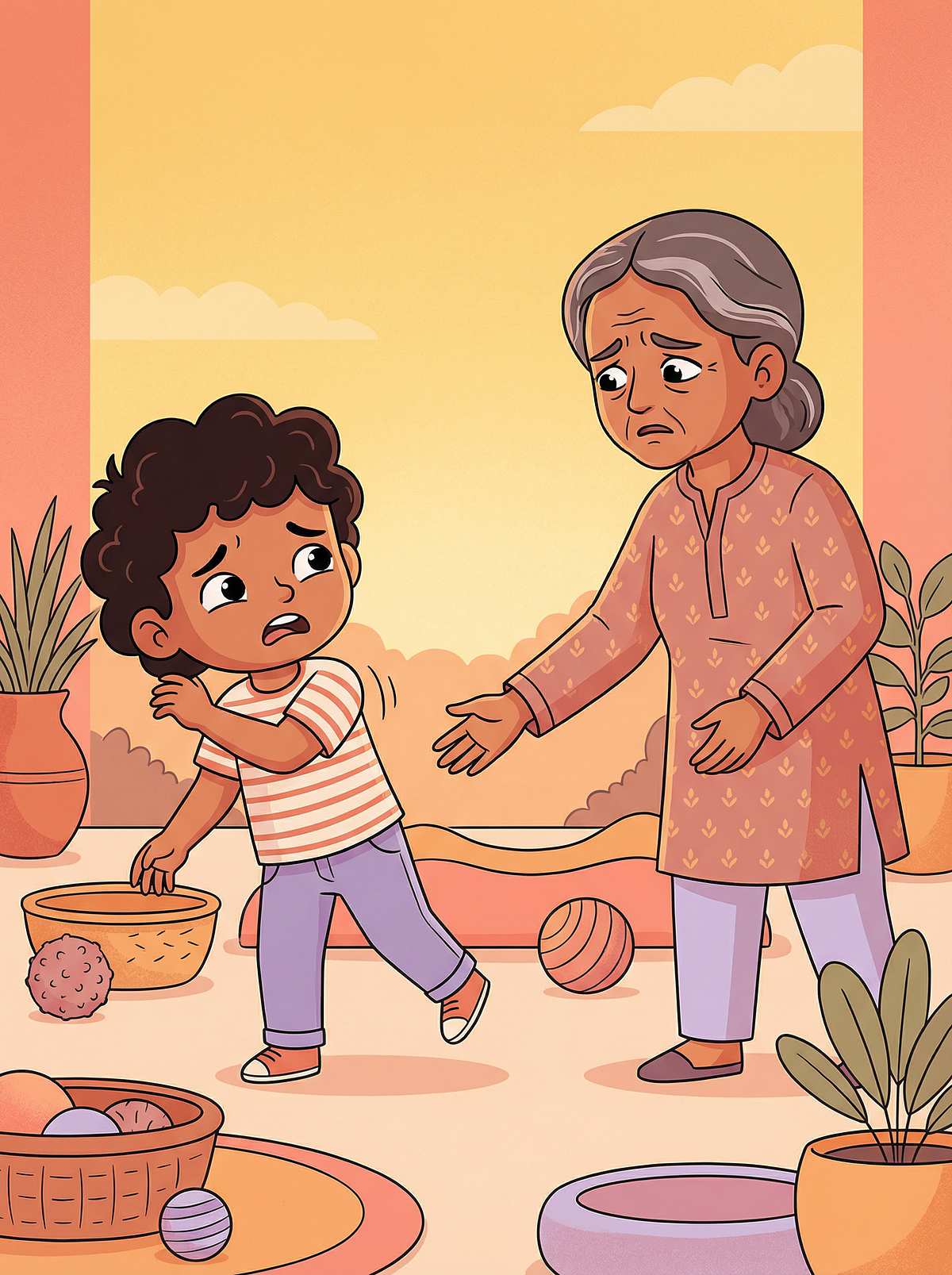
A pat on the back sends them into a rage. A tag in a shirt is unbearable. Someone brushing past them in a corridor triggers a meltdown. They pull away from hugs. They flinch at unexpected touch. In India, where physical affection — touching feet, cheek pinching, hair ruffling — is a cultural expression of love, this creates profound family pain. Relatives feel rejected. Parents feel helpless. The child feels constantly assaulted.
The Neuroscience
Tactile defensiveness occurs when the somatosensory cortex and limbic system over-respond to light touch input. The skin contains two types of touch receptors: discriminative (A-beta fibres, precise location) and protective (C fibres and A-delta fibres, threat detection). In tactile defensiveness, the protective system is over-activated — light touch triggers the same threat response as a painful stimulus. Unexpected touch is particularly activating because it bypasses the brain's predictive processing, which normally dampens sensory responses to anticipated input.
Level I Evidence
What You'll Learn
- Deep pressure vs. light touch: why firm hugs are tolerated but gentle pats aren't
- Wilbarger Brushing Protocol: evidence-based tactile desensitisation
- Clothing adaptations: seamless socks, tagless shirts, soft fabrics
- Teaching "ask before touching" to family and extended family
- Indian cultural context: navigating cheek pinching, foot touching, and physical greetings
- Self-advocacy: helping the child communicate touch preferences
9 Canon Materials:Weighted Blanket · Body Sock · Tactile Sensory Kit · Therapy Brush · Compression Vest · Fidget Set · Calm-Down Kit · Social Stories · Emotion Cards
🤲 OT
Tactile desensitisation specialist
📊 ABA
Social skills and boundary teaching
🧠 Psychology
Family and relationship support
🏫 School
Peer interaction and PE adaptations

A-133 · Tactile
Seeks Constant Touch and Pressure
They press themselves against walls. They want to be wrapped tightly in blankets. They ask for squeezes constantly. They sit on your lap even when they're too big for it. They lean on people, press their face into cushions, and seek out tight spaces. They're not being clingy — they're seeking the deep pressure input their nervous system needs to feel regulated and present.
The Neuroscience
Deep pressure touch activates the parasympathetic nervous system, reducing cortisol and increasing serotonin and dopamine — the neurochemical basis of why weighted blankets and firm hugs feel calming. When the tactile system is under-responsive to light touch, the brain seeks deep pressure (proprioceptive-tactile input) as a more reliable regulatory signal. The Ruffini endings in the skin, which respond to sustained pressure and skin stretch, are particularly activated by deep pressure — and their activation has a measurable calming effect on the autonomic nervous system.
Level I Evidence
What You'll Learn
- Deep pressure tools: weighted blankets, compression vests, body socks
- Proprioceptive-tactile activities: bear hugs, sandwich games, rolling in blankets
- Scheduled deep pressure input throughout the day
- Teaching the child to request pressure appropriately
- Indian home adaptations: floor sleeping with heavy quilts (razai), tight swaddling techniques
- When deep pressure seeking indicates a need for sensory integration therapy
9 Canon Materials:Weighted Blanket · Compression Vest · Body Sock · Therapy Brush · Crash Pad · Resistance Bands · Fidget Set · Calm-Down Kit · Sensory Swing
🤲 OT
Sensory integration and deep pressure protocol
📊 ABA
Appropriate requesting and self-regulation
🧠 Psychology
Attachment and regulation support
🏫 School
Classroom pressure tools and breaks
A-134 · Tactile
Hates Hair Washing and Grooming
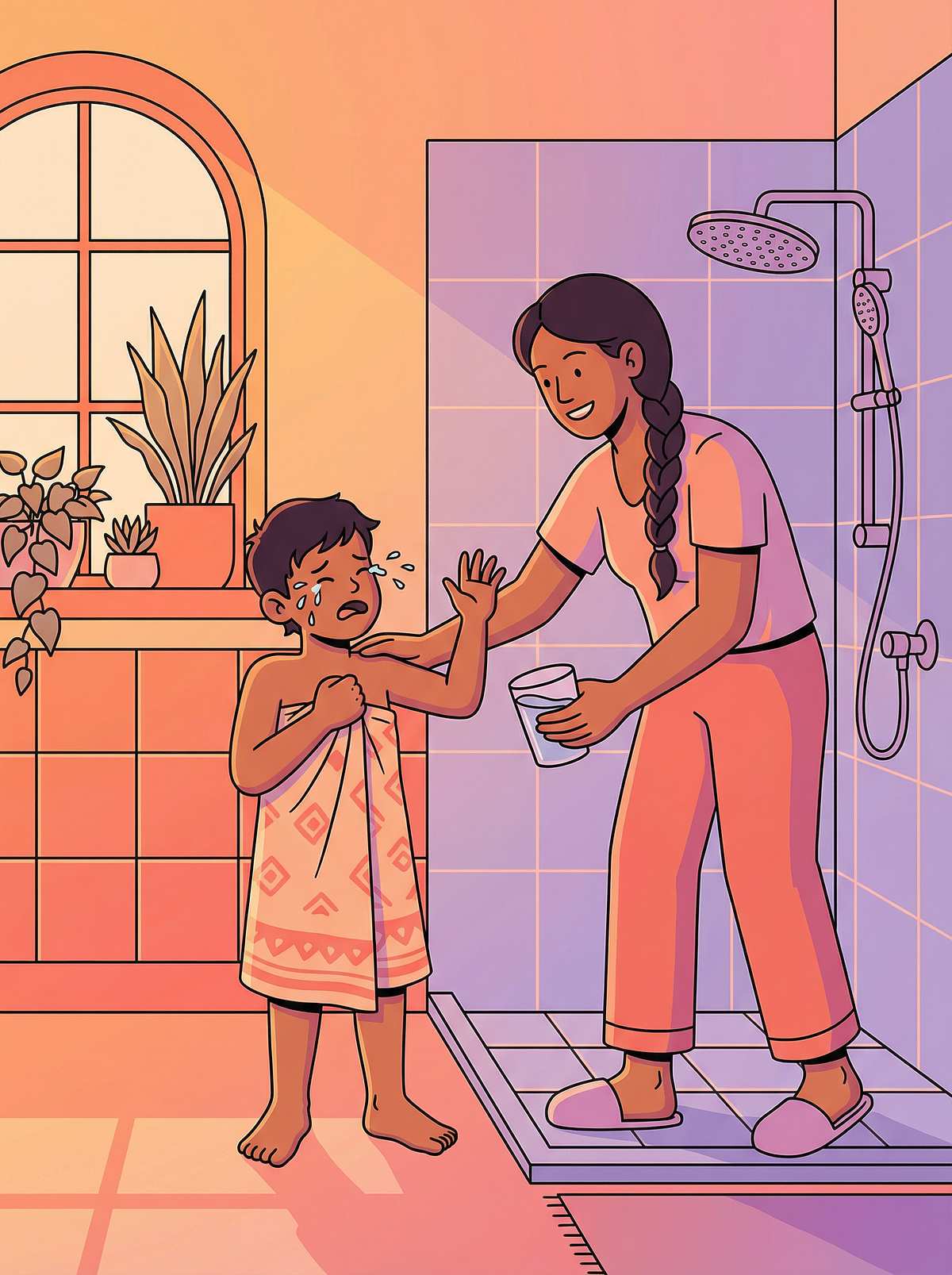
Haircuts are a two-person job. Nail cutting ends in tears. Hair washing is a battle every single time. Tooth brushing causes gagging. Face washing is refused. These aren't tantrums about not wanting to do something — they are genuine sensory pain events. The scalp, face, and mouth are among the most densely innervated areas of the body. For a child with tactile hypersensitivity, grooming is not self-care. It's an assault.
The Neuroscience
The scalp, face, and oral cavity have the highest density of tactile receptors in the body — reflected in the disproportionately large representation of these areas in the somatosensory cortex (the sensory homunculus). When tactile hypersensitivity is present, grooming activities activate the protective touch system intensely. Water temperature changes, the scraping sensation of a comb, the vibration of clippers, and the pressure of nail cutting all generate threat signals that the brain cannot habituate to. The anticipatory anxiety compounds the actual sensory experience.
Level I Evidence
What You'll Learn
- Desensitisation sequence for hair washing: step-by-step graded approach
- Haircut preparation: social stories, practice visits, sensory-friendly salons
- Nail cutting strategies: timing, positioning, distraction, and gradual tolerance
- Tooth brushing: electric vs. manual, flavour-free toothpaste, oral desensitisation
- Indian grooming context: oil massage (champi), threading, and cultural grooming practices
- Building a grooming routine that minimises sensory distress
9 Canon Materials:Therapy Brush · Tactile Sensory Kit · Oral Motor Chews · Vibrating Oral Tools · Social Stories · Visual Schedule System · Calm-Down Kit · First-Then Board · Weighted Blanket
🤲 OT
Tactile desensitisation and grooming protocol
🗣️ SLP
Oral desensitisation for tooth brushing
📊 ABA
Routine building and compliance
🧠 Psychology
Anticipatory anxiety management
A-135 · Tactile
Clothing Sensitivities
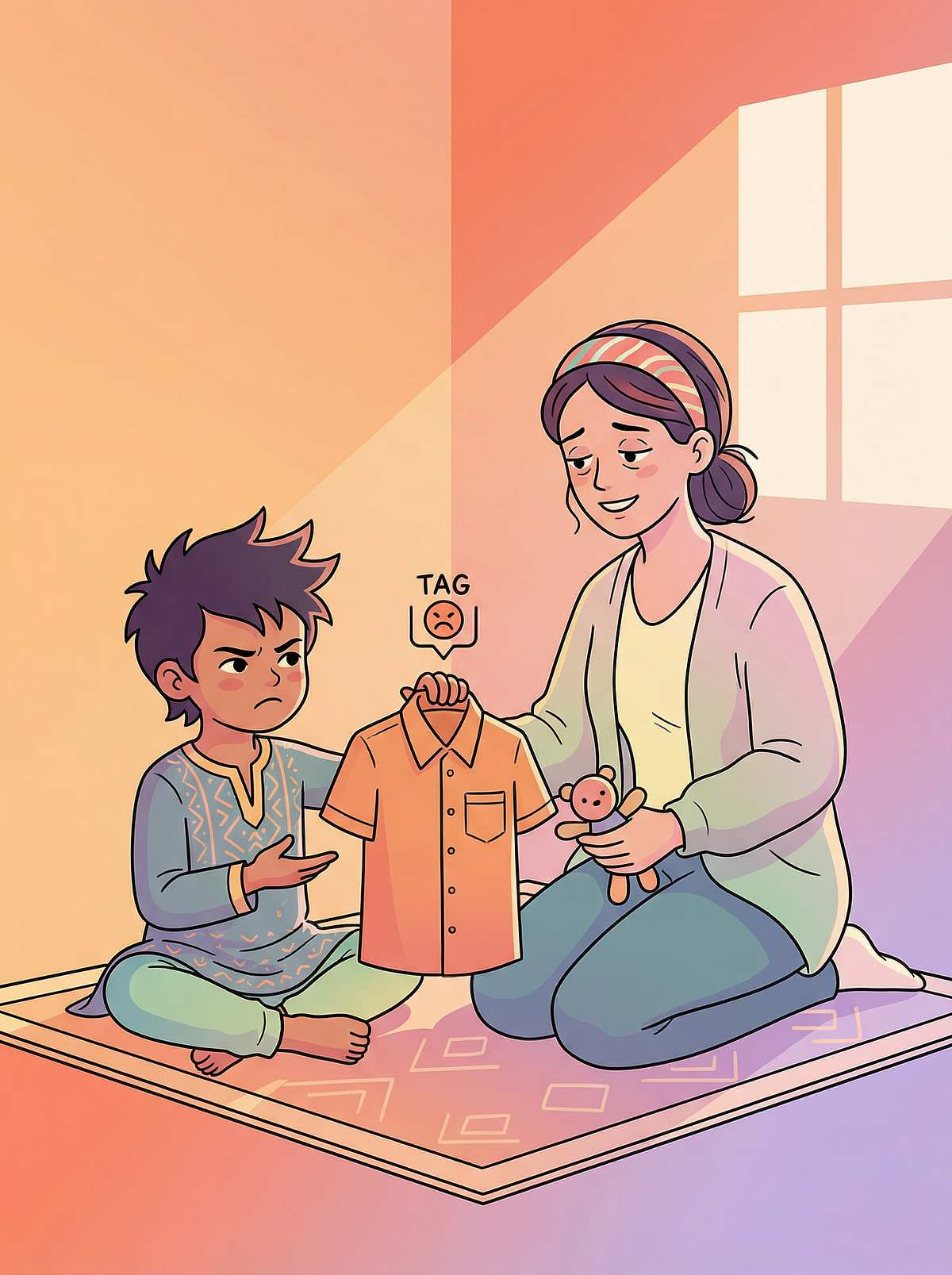
The seam in the sock. The label at the back of the shirt. The waistband of the trousers. The texture of the school uniform fabric. Getting dressed is a 45-minute ordeal every morning. They strip off clothes the moment they get home. They refuse to wear anything new. They have three acceptable outfits and will wear them on rotation regardless of weather, occasion, or social expectation. This is not stubbornness. This is survival.
The Neuroscience
Clothing sensitivity is a form of tactile hypersensitivity where the skin's protective touch receptors (C fibres) are over-activated by sustained, low-level tactile input — the kind produced by fabric against skin. Unlike acute touch, clothing provides constant, unavoidable stimulation. The brain cannot habituate to it because it never stops. Seams, labels, and tight waistbands create localised pressure and friction that activate nociceptive pathways — the same pathways used for pain. For the child, wearing uncomfortable clothing is the equivalent of wearing something that is continuously hurting them.
Level I Evidence
What You'll Learn
- Identifying the specific sensory properties that cause distress (seams, texture, tightness)
- Seamless clothing sources and adaptations available in India
- Label removal and inside-out wearing strategies
- School uniform negotiations: letters for schools, fabric substitutions
- Gradual desensitisation to new fabrics and clothing types
- Dressing routine structure to reduce morning conflict
9 Canon Materials:Seamless Socks · Compression Vest · Therapy Brush · Tactile Sensory Kit · Weighted Blanket · Body Sock · Visual Schedule System · Social Stories · Calm-Down Kit
🤲 OT
Tactile desensitisation and clothing protocol
📊 ABA
Routine and compliance support
🏫 School
Uniform accommodation letters
🧠 Psychology
Morning routine anxiety management

A-136 · Multi-Sensory
Sensory Meltdowns
It looks like a tantrum. It isn't. A tantrum is goal-directed — the child wants something and is using behaviour to get it. A sensory meltdown is a neurological event — the sensory system has exceeded its capacity, the brain has entered fight-or-flight, and the child has lost voluntary control. They are not choosing this. They cannot stop it. And the worst thing you can do is try to reason with them while it's happening.
The Neuroscience
A sensory meltdown occurs when cumulative sensory input exceeds the nervous system's regulatory capacity — a concept called the sensory threshold. The amygdala triggers a full threat response: cortisol and adrenaline flood the system, the prefrontal cortex (responsible for reasoning and self-control) goes offline, and the child enters a survival state. This is not a choice. The brain's executive function is genuinely unavailable during a meltdown. Recovery requires the nervous system to return to baseline — which takes time, not words.
Level I Evidence
What You'll Learn
- Meltdown vs. tantrum: the clinical distinction and why it matters
- The meltdown cycle: build-up, peak, and recovery — and what to do at each stage
- Identifying your child's personal sensory triggers and early warning signs
- Creating a sensory safe space at home and school
- What NOT to do during a meltdown (and why it makes it worse)
- Post-meltdown recovery: co-regulation, not consequences
9 Canon Materials:Calm-Down Kit · Weighted Blanket · Noise-Cancelling Headphones · Fidget Set · Body Sock · Emotion Cards · Visual Schedule System · Social Stories · Communication Board
🤲 OT
Sensory regulation and meltdown prevention
📊 ABA
Functional behaviour assessment
🧠 Psychology
Family coping and co-regulation
🏫 School
Crisis plan and safe space setup
A-137 · Multi-Sensory
Sensory Shutdown
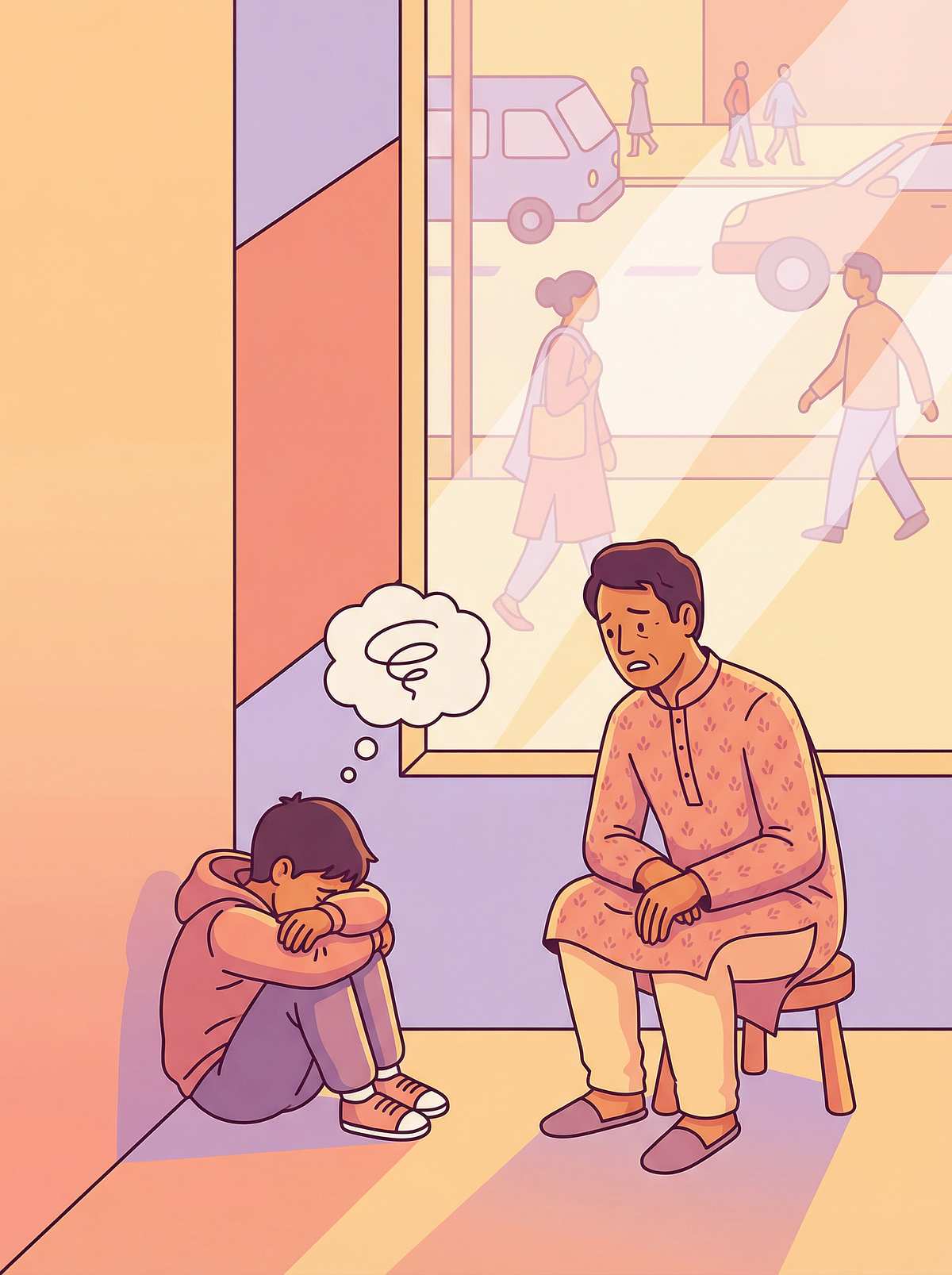
They go quiet. They stop responding. They stare blankly. They curl up. They put their head down. They seem to disappear inside themselves. This is not the dramatic meltdown — this is the silent one. Sensory shutdown is what happens when the nervous system's only remaining option is to stop processing entirely. It's the brain's emergency brake. And it's just as serious as a meltdown — it's just invisible.
The Neuroscience
Sensory shutdown (also called sensory collapse or freeze response) occurs when the nervous system activates the dorsal vagal branch of the autonomic nervous system — the most primitive survival response. Unlike the fight-or-flight response (sympathetic activation), the freeze response involves a dramatic reduction in arousal, heart rate, and responsiveness. The brain essentially disconnects from external input to protect itself from further overload. This is the polyvagal "shutdown" state described by Stephen Porges — a genuine neurological protective mechanism, not a behavioural choice.
Level I–II Evidence
What You'll Learn
- Recognising shutdown vs. meltdown vs. dissociation
- What to do (and not do) during a shutdown episode
- Gentle re-engagement strategies: proprioceptive input, quiet presence, slow breathing
- Identifying the sensory load that preceded the shutdown
- Building a sensory diet to prevent shutdown through proactive regulation
- When shutdown episodes require psychological or neurological assessment
9 Canon Materials:Weighted Blanket · Calm-Down Kit · Body Sock · Fidget Set · Noise-Cancelling Headphones · Emotion Cards · Visual Schedule System · Social Stories · Communication Board
🤲 OT
Sensory regulation and arousal modulation
🧠 Psychology
Polyvagal and trauma-informed support
📊 ABA
Antecedent analysis and prevention
👶 Paediatrics
Neurological assessment if frequent

A-138 · Multi-Sensory
Difficulty in Public Places
Malls. Markets. Weddings. Temples. Restaurants. Airports. Any place with crowds, noise, smells, and unpredictability. What other families do casually — a trip to the bazaar, a family wedding, a restaurant birthday — requires military-level planning for you. And even then, it can fall apart. The world was not designed for your child's nervous system. But there are ways to navigate it.
The Neuroscience
Public environments present a multi-sensory assault: simultaneous auditory, visual, olfactory, tactile, and vestibular input, all unpredictable and uncontrollable. The nervous system's regulatory capacity — already limited in sensory processing differences — is overwhelmed by the sheer volume and unpredictability of input. Unpredictability is particularly activating because the brain's predictive processing system cannot prepare for what's coming, keeping the threat-detection system (amygdala) in a state of constant high alert. The result is rapid escalation toward meltdown or shutdown.
Level I–II Evidence
What You'll Learn
- Pre-outing preparation: social stories, visual schedules, and sensory previewing
- Sensory toolkit for outings: what to carry, when to use it
- Exit strategies: planning escape routes and safe spaces in advance
- Graded community exposure: building tolerance step by step
- Indian context: navigating weddings, temples, markets, and family events
- When to decline events — and how to communicate this to family without guilt
9 Canon Materials:Noise-Cancelling Headphones · Calm-Down Kit · Weighted Blanket · Fidget Set · Visual Schedule System · Social Stories · Communication Board · Emotion Cards · First-Then Board
🤲 OT
Community participation and sensory diet
📊 ABA
Community-based behaviour support
🧠 Psychology
Family stress and coping strategies
🏫 School
School trip and excursion planning
Preview of interoception smell taste Therapy Material
Below is a visual preview of interoception smell taste therapy material. The pages shown help educators, therapists, and caregivers understand the structure and content of the resource before use. Materials should be used under appropriate professional guidance.
Link copied!
A-139 · Multi-Sensory
Building a Sensory Diet
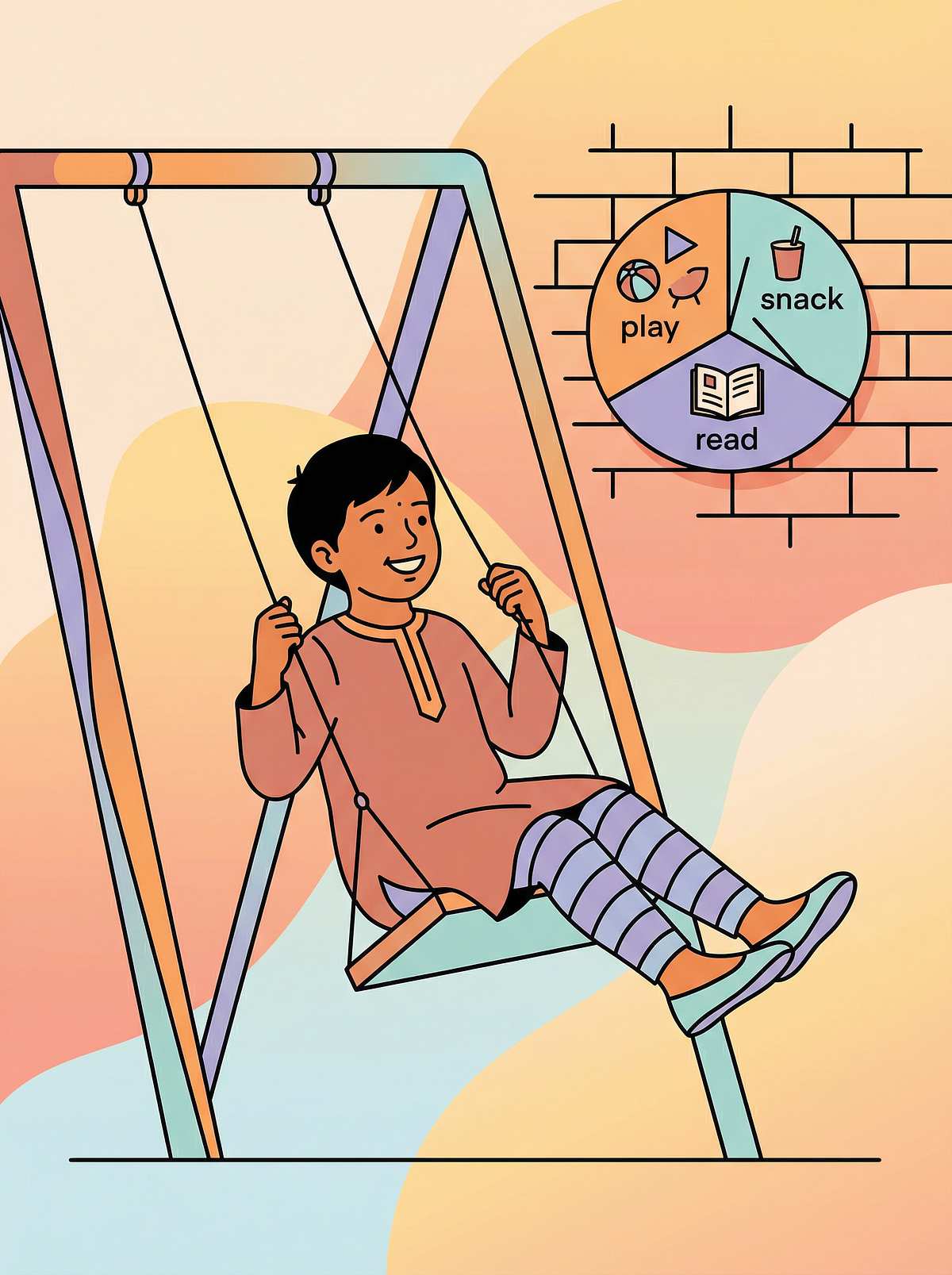
A sensory diet is not about food. It is a personalised, scheduled programme of sensory activities designed to keep the nervous system regulated throughout the day — preventing the build-up that leads to meltdowns, shutdowns, and dysregulation. Think of it as the sensory equivalent of eating regular meals: without it, the nervous system gets hungry, irritable, and eventually crashes.
The Neuroscience
The sensory diet concept, developed by OT Patricia Wilbarger, is grounded in the principle of sensory homeostasis — the nervous system's need for a regulated level of arousal to function optimally. Too little input leads to under-arousal (shutdown, inattention, seeking behaviours). Too much leads to over-arousal (meltdowns, anxiety, aggression). A sensory diet provides the right type and amount of sensory input at the right times to maintain the nervous system in its optimal arousal window — the zone where learning, communication, and self-regulation are possible.
Level I Evidence
What You'll Learn
- How to assess your child's sensory profile: seeking vs. avoiding across all 8 senses
- Designing a personalised sensory diet: morning, school, afternoon, and evening
- Heavy work, proprioceptive, vestibular, and tactile activities for each time of day
- Indian home adaptations: using everyday activities as sensory diet components
- Communicating the sensory diet to school, grandparents, and caregivers
- Monitoring and adjusting the diet as the child's needs change
9 Canon Materials:Weighted Blanket · Sensory Swing · Therapy Ball · Wobble Cushion · Body Sock · Crash Pad · Fidget Set · Calm-Down Kit · Visual Schedule System
🤲 OT
Sensory diet design and review
📊 ABA
Schedule integration and compliance
🏫 School
School-based sensory diet implementation
🧠 Psychology
Family education and sustainability