

From Monologue to Dialogue: 9 Materials That Help When Your Child Only Talks About Their Interests
Dinosaurs. Trains. Minecraft. Pokémon. No matter what your family is discussing, the conversation circles back — and your brilliant, passionate child hasn't noticed that everyone else checked out three minutes ago. You found the right place.
Social Communication Series
Ages 4–12
Evidence-Based
Consortium Validated: SLP • ABA • OT • SpEd • NeuroDev | Domain: Pragmatics & Reciprocity | Setting: Home
You Are Not Alone: The Numbers
You are not the only family navigating this. The numbers tell a story of millions — across continents, cultures, and languages. What feels isolating in your living room is a shared experience in households around the world.
65–80%
Restricted Interests
of children on the autism spectrum display restricted, repetitive patterns of interest that impact conversational reciprocity (PRISMA Systematic Review, Children, 2024 — PMC11506176).
1 in 100
Global Prevalence
children worldwide are diagnosed with autism spectrum disorder, per WHO global estimates — placing restricted interest patterns among the most common social communication challenges in pediatric populations globally.
4.2M+
Families in India
families in India alone are navigating autism-related communication challenges. Your experience is shared across 70+ countries where Pinnacle families are finding answers.
These are not cherry-picked numbers. They come from systematic reviews published in peer-reviewed journals and population-level WHO data. References: PMC11506176 | PMC10955541 | WHO Global Autism Prevalence Estimates (2023) | DOI: 10.12998/wjcc.v12.i7.1260

What's Happening in Your Child's Brain
Your child isn't being rude. Their brain is wired differently — and understanding the wiring changes everything.
The Neuroscience
The prefrontal cortex, responsible for cognitive flexibility and topic-shifting, develops at different rates in autistic children. The superior temporal sulcus — which processes social cues like facial expressions and gaze direction — operates on a different frequency.
Three neurological systems interact when your child monologues: the reward circuitry (preferred topics activate dopamine pathways, creating genuine pleasure), the executive function network (difficulty shifting away from rewarding topics), and the social cognition network (reduced detection of listener disengagement cues).
The Parent Translation
This is a wiring difference, not a behavior choice. Your child's passion is neurologically real — their brain genuinely lights up when they talk about their interest. Think of it as a radio tuned strongly to their favorite station, with the volume so high they can't hear the other stations trying to break through.
"Their passion is real. Their joy is real. What needs development is the ability to read the room and share the conversational space."
References: DOI: 10.3389/fnint.2020.556660 (Frontiers in Integrative Neuroscience, 2020)

Where This Sits in Development
Restricted topic focus with impaired conversational reciprocity doesn't appear out of nowhere. Here is where it sits on the developmental map — and where purposeful intervention makes the biggest difference.
Ages 2–3
Parallel play; topic sharing not yet expected. Repetitive interests are developmentally typical.
Ages 3–4
Emerging joint attention. Typically developing children begin referencing others' interests. Early signs of monologue patterns may appear.
Ages 4–6 ★
Conversational reciprocity is expected by neurotypical developmental standards. Peers begin noticing topic dominance. Social exclusion may begin subtly.
Ages 6–9 ★
The gap widens. Neurotypical peers engage in sophisticated topic negotiation. This is the critical intervention window.
Ages 9–12
Without intervention, monologue patterns calcify. With intervention, children can build remarkable flexibility while retaining their genuine expertise.
"Your child is here. Here is where we're heading — not away from their passion, but toward sharing it in ways that build connection."
References: PMC9978394 | WHO/UNICEF CCD Package (2023) | UNICEF MICS Developmental Indicators

The Evidence Behind This Technique
This is not anecdotal guidance. Every material and protocol in this page is grounded in peer-reviewed research, clinical consensus, and systematic review — validated across multiple therapeutic disciplines.
🛡️ Evidence Grade: Level I–II
Supported by systematic reviews, randomized controlled trials, and clinical consensus. 16 articles from 2013–2023 confirm social communication interventions incorporating interest-based approaches meet criteria for evidence-based practice (PRISMA Review, PMC11506176).
🔬 Key Finding
Interventions that leverage restricted interests as motivational bridges — rather than eliminating them — show significantly stronger outcomes across social participation, conversational reciprocity, and peer relationship measures.
🇮🇳 Indian Evidence
Home-based interventions administered by parents, when structured with clear protocols and visual supports, demonstrated significant outcomes in Indian pediatric populations (Indian Journal of Pediatrics, 2019).
✅ Consortium Validated
Social Stories and Video Modeling are classified as evidence-based practices (NCAEP, 2020). Visual supports and structured turn-taking are recommended across OT, SLP, and ABA literature.
References: PMC11506176 | PMC10955541 | DOI: 10.1007/s12098-018-2747-4 | NCAEP Evidence-Based Practices Report (2020) | Attwood, T. (2007) | Winner, M.G. (2007) | Gray, C. (2015)
The Technique: What It Is
Domain B — Social Communication
Ages 4–12
15–20 min/session
Technique Name
Restricted Topic Flexibility Intervention Using Structured Conversation Materials
Parent-Friendly Alias: "From Monologue to Dialogue" — Building Conversation Balance Around Your Child's Passions
What It Is
A structured, multi-material approach that teaches children to share conversational space while honoring their genuine interests. Using 9 evidence-based materials, parents guide children through a progressive skill-building sequence: first recognizing that others have different interests, then learning to detect listener engagement signals, then practicing topic flexibility, and finally using their passions as bridges to reciprocal connection.
What It Is NOT
This is not about eliminating your child's interests. Their passion for dinosaurs, trains, Minecraft, or any preferred topic is a genuine strength — deep knowledge, sustained attention, potential career path. The goal is flexibility around the interest, not elimination of it.
At a Glance
Sub-Domain: Pragmatics & Reciprocity (SOC-PRG)
Age Range: 4–12 years
Session Duration: 15–20 minutes
Frequency: Daily practice, 3–5x per week minimum
Setting: Home (primary), School (generalization)
Canon Categories: Social Skills Cards • Conversation Visual Supports • Turn-Taking Games • Visual Timer • Social Stories • Perspective-Taking Games • Emotion Cards

Who Uses This Technique
"This technique crosses therapy boundaries because the brain doesn't organize by therapy type."
🗣️ Speech-Language Pathologist (SLP) — PRIMARY LEAD
The SLP targets conversational reciprocity, pragmatic language skills, topic maintenance and shifting, and question formulation. They design conversation balance protocols and monitor linguistic markers of progress — from monologue-dominant speech to spontaneous questions about others' interests.
🧩 Board Certified Behavior Analyst (BCBA/ABA)
The ABA therapist designs reinforcement systems that motivate topic flexibility, identifies the function of the restricted topic behavior (anxiety reduction? sensory pleasure? social script?), and creates systematic reinforcement schedules that fade as natural social reinforcement takes over.
📚 Special Educator (SpEd)
The Special Educator adapts conversation materials for classroom generalization, creates social stories tailored to school contexts, and coordinates with classroom teachers to extend topic flexibility into peer interactions during group work and recess.
🧠 NeuroDevelopmental Pediatrician
The NeuroDev physician evaluates underlying mechanisms — whether restricted topic focus relates to anxiety, executive function differences, or theory of mind development. Medical guidance ensures intervention targets the correct root cause.
References: DOI: 10.1080/17549507.2022.2141327 (Int J Speech-Lang Pathol, 2022)
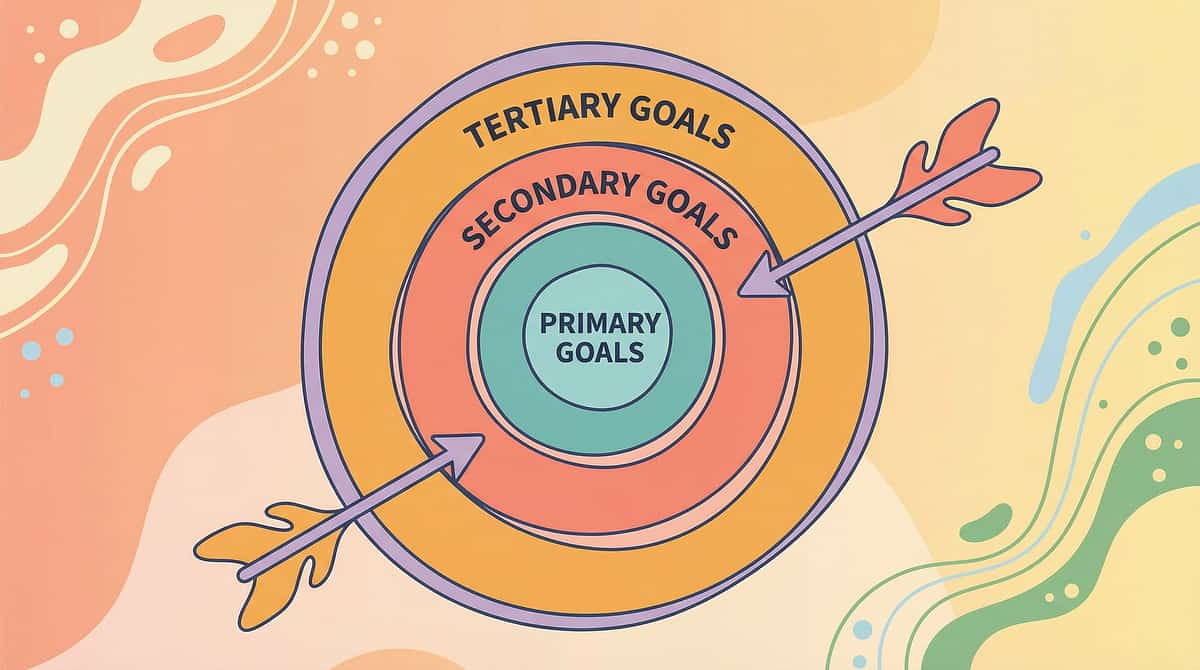
What This Technique Targets
Every session works across multiple levels simultaneously — from moment-to-moment conversational behavior to long-term developmental gains in social participation and executive function.
Observable Behavior Indicators
Monologue duration decreases from 5+ minutes to 1–2 minutes before self-checking. Child asks at least 1 question per conversational exchange. Child notices and responds to at least 2 of 5 disengagement signals. Child uses bridging language ("That reminds me of..." "It's kind of like...") to connect topics.
References: PMC10955541 — Meta-analysis: social communication interventions effectively promoted social skills (primary), adaptive behavior (secondary), and perspective-taking (tertiary).

What You Need: The 9 Primary Materials
Each of the 9 materials below is mapped to the Pinnacle 128 Canon Materials system. Together they form a complete, progressive skill-building toolkit — from basic turn-taking concepts to self-reinforcing reward systems.
# | Material | Canon Category | Price (INR) | |
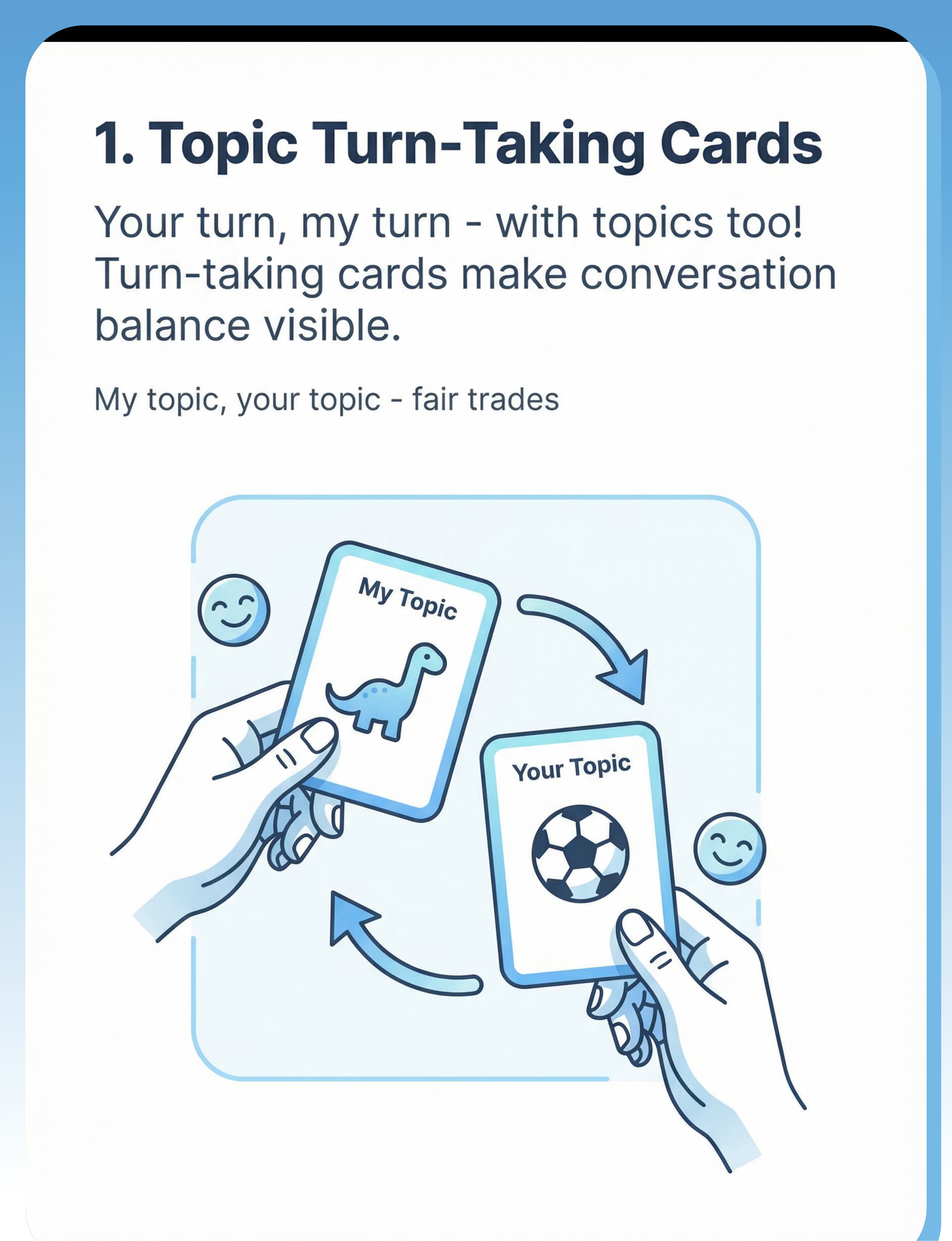
1 | Topic Turn-Taking Cards & Conversation Balance Visuals | Turn-Taking Games • Conversation Visual Supports | ₹150–400 | |
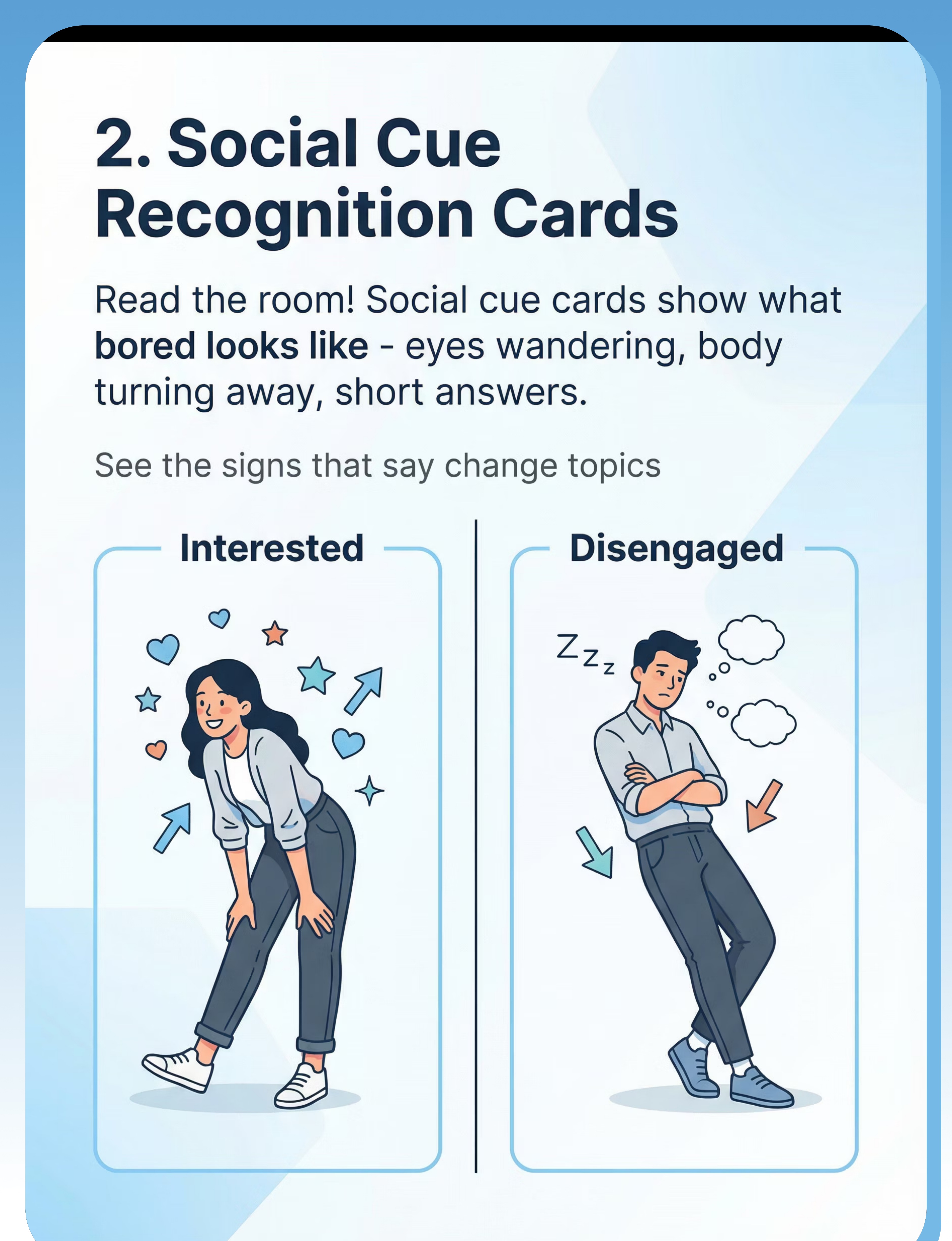
2 | Social Cue Recognition Cards & Listener Feeling Charts | Social Skills Cards • Emotion Cards | ₹200–500 | |
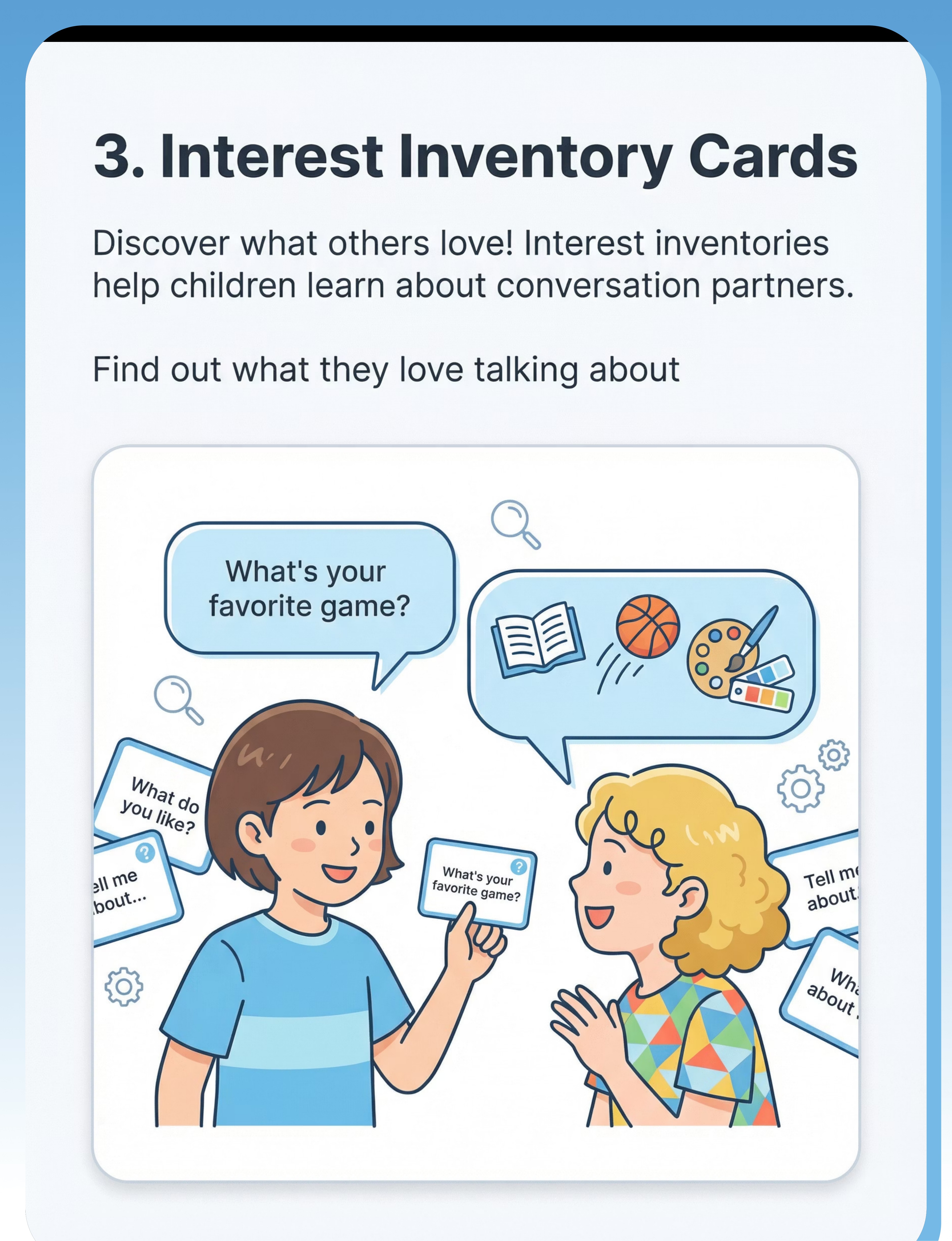
3 | Interest Inventory Cards & Getting-to-Know-You Materials | Social Skills Cards/Scenarios | ₹150–350 | |
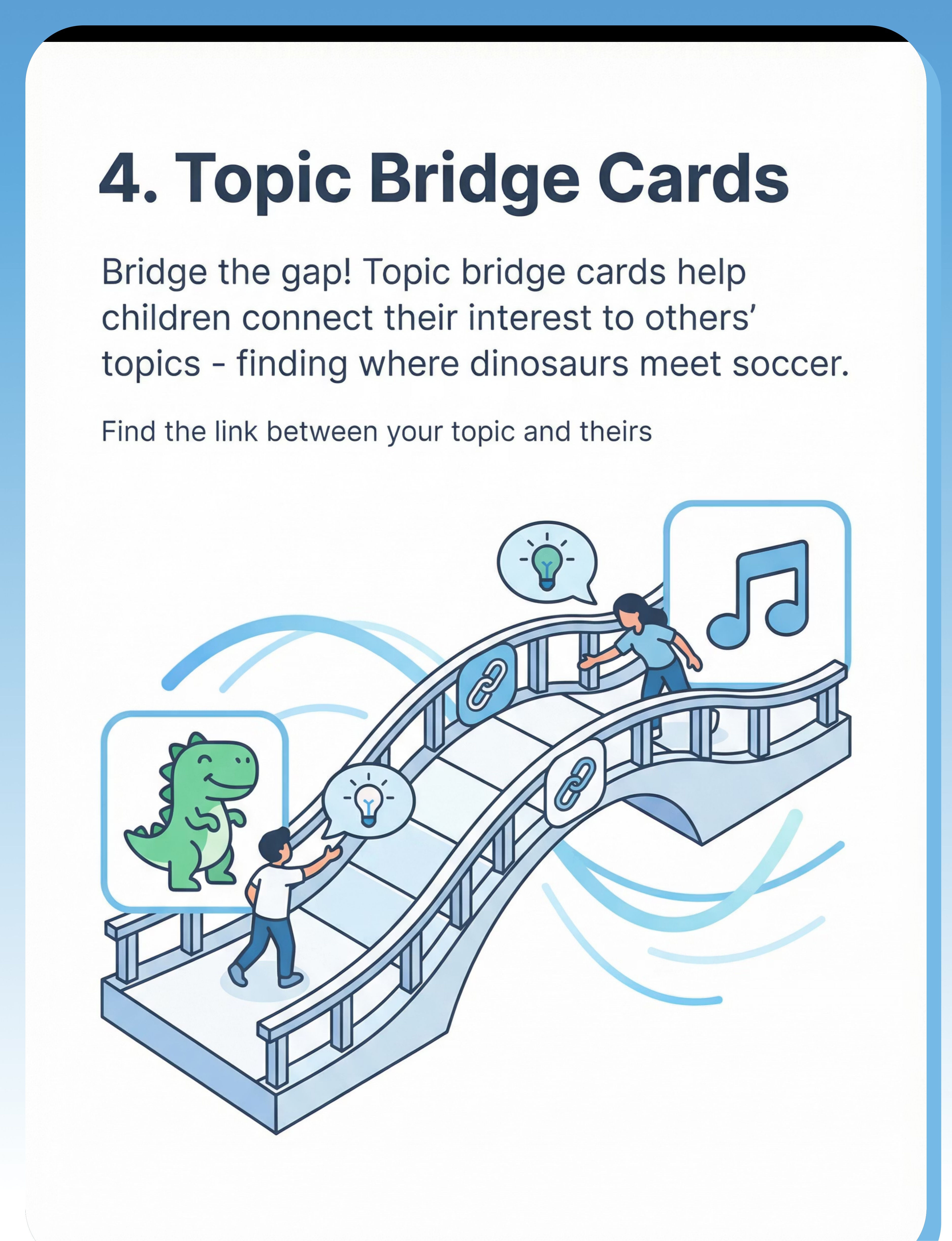
4 | Topic Bridge Cards & Connection-Making Materials | Conversation Visual Supports | ₹200–450 | |
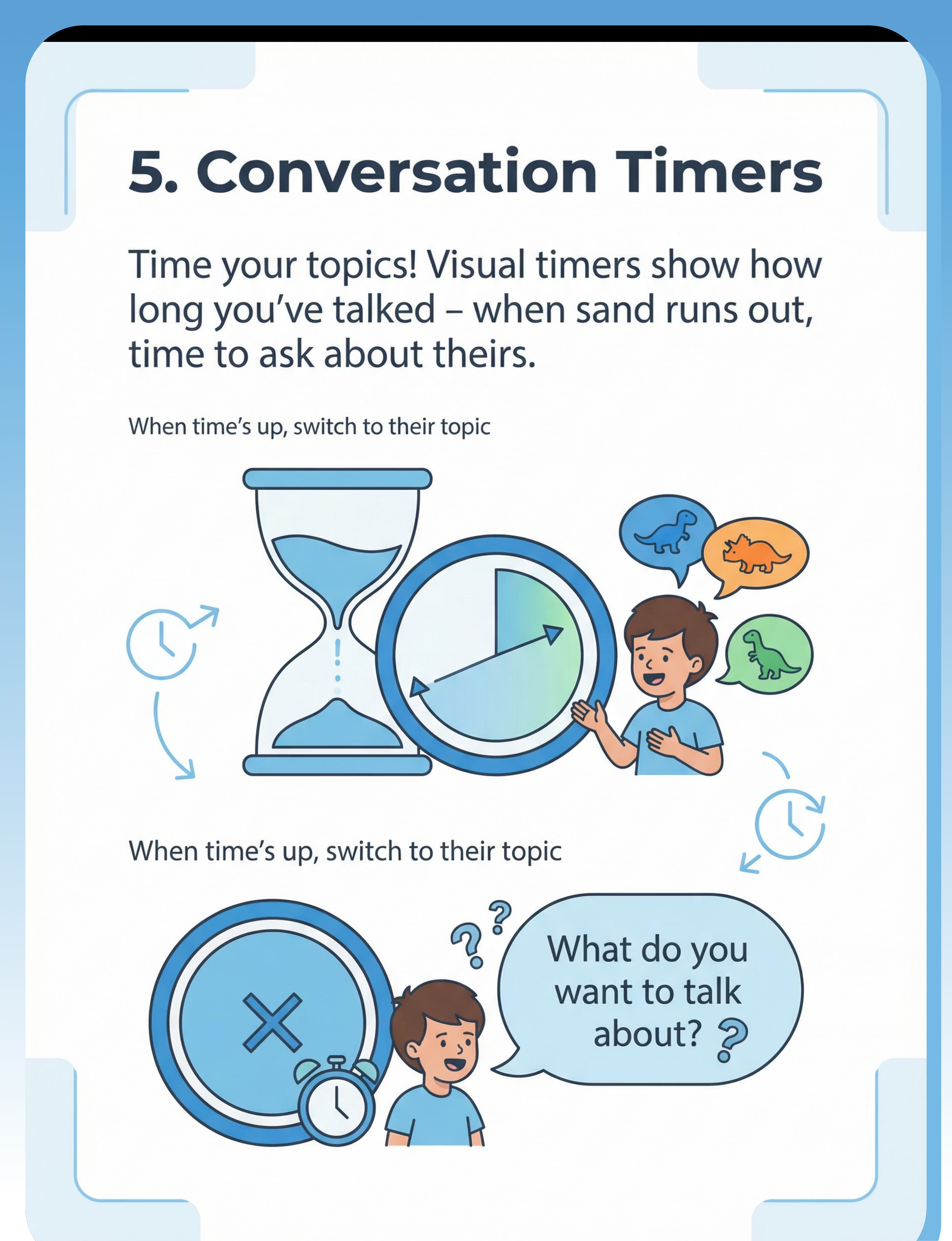
5 | Conversation Timer & Topic Time Visuals | Visual Timer | ₹200–500 | |
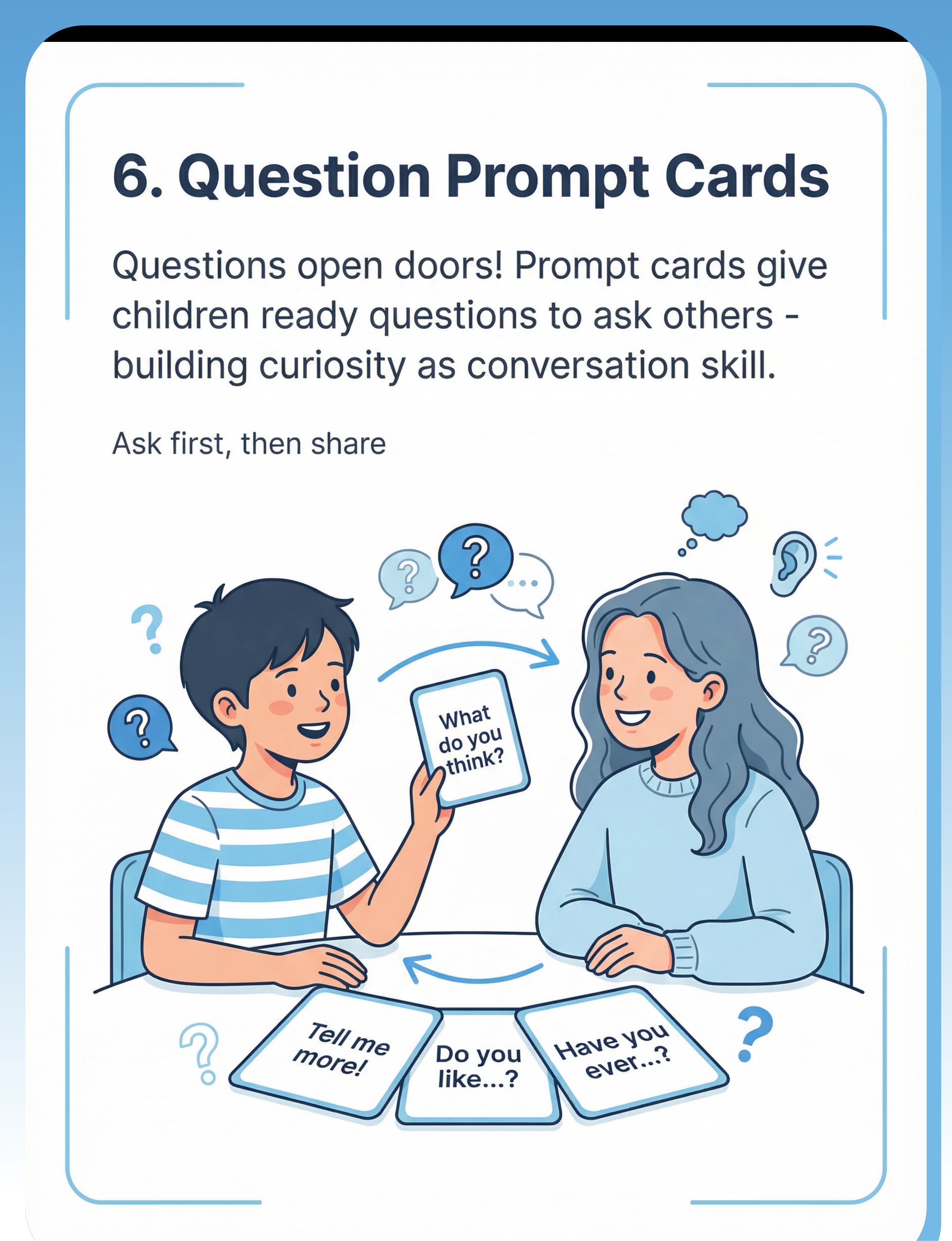
6 | Question Prompt Cards & Curiosity Builders | Social Skills Cards/Scenarios | ₹150–350 | |
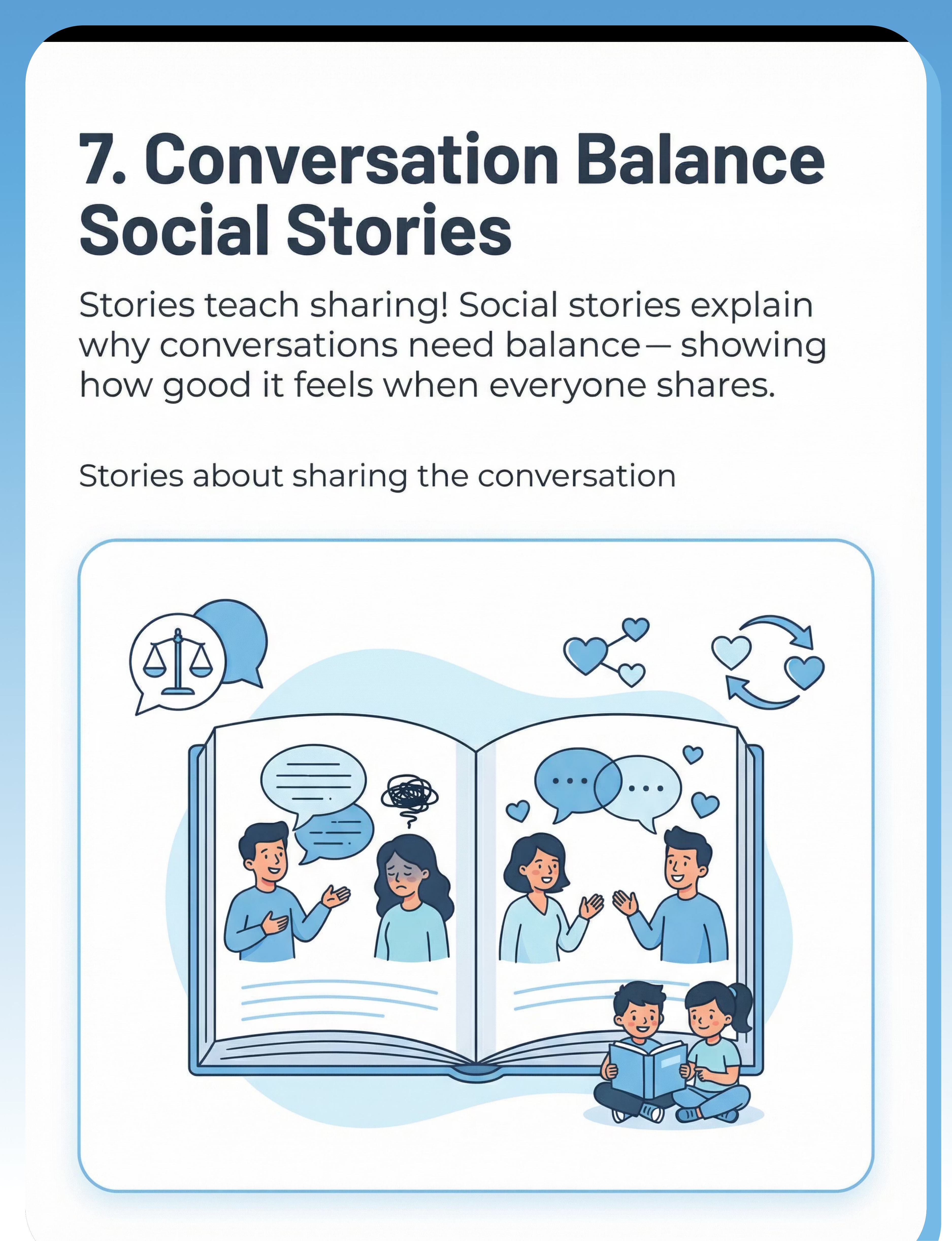
7 | Social Stories About Conversation Balance | Social Stories/Narrative Supports | ₹200–500 | |
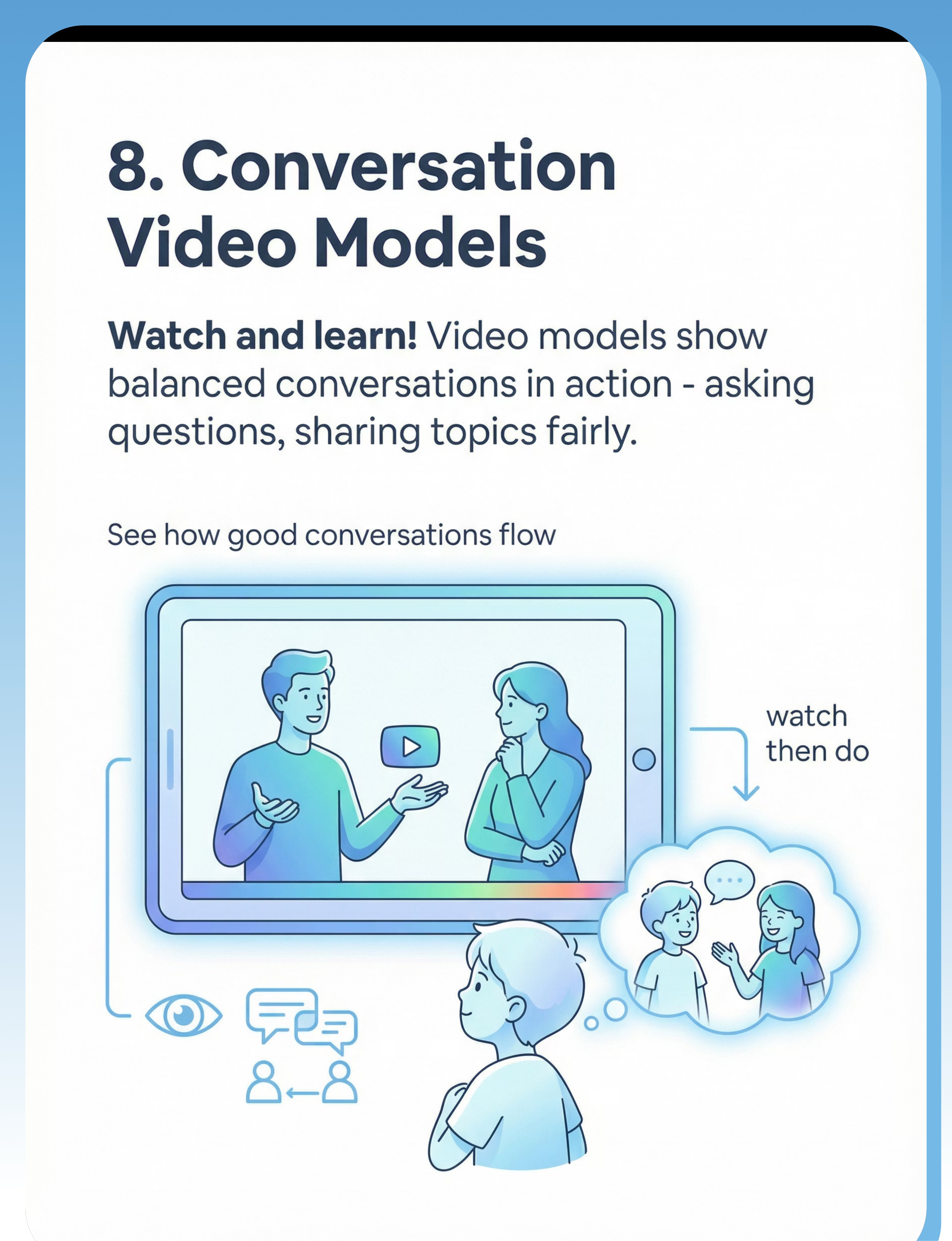
8 | Video Modeling of Balanced Conversations | Perspective-Taking/Theory of Mind | ₹0–600 | |
9 | Interest-Based Reward Systems & Topic Flexibility Reinforcement | Behavior Support — Reinforcement Menus | ₹100–300 |
Total Investment: ₹1,500–4,000 for comprehensive setup. Essential Starters (budget-limited): Materials 1, 2, and 6. Pinnacle Recommends: Skillmatics Card Game — Train of Thought (₹339) • Jolly Kids Picture Talk & Conversation Cards (₹310) • Emotion Flash Cards • Social Skills Story Books • Sand Timers • Be the Difference: 40+ Ideas for Kids (₹687)
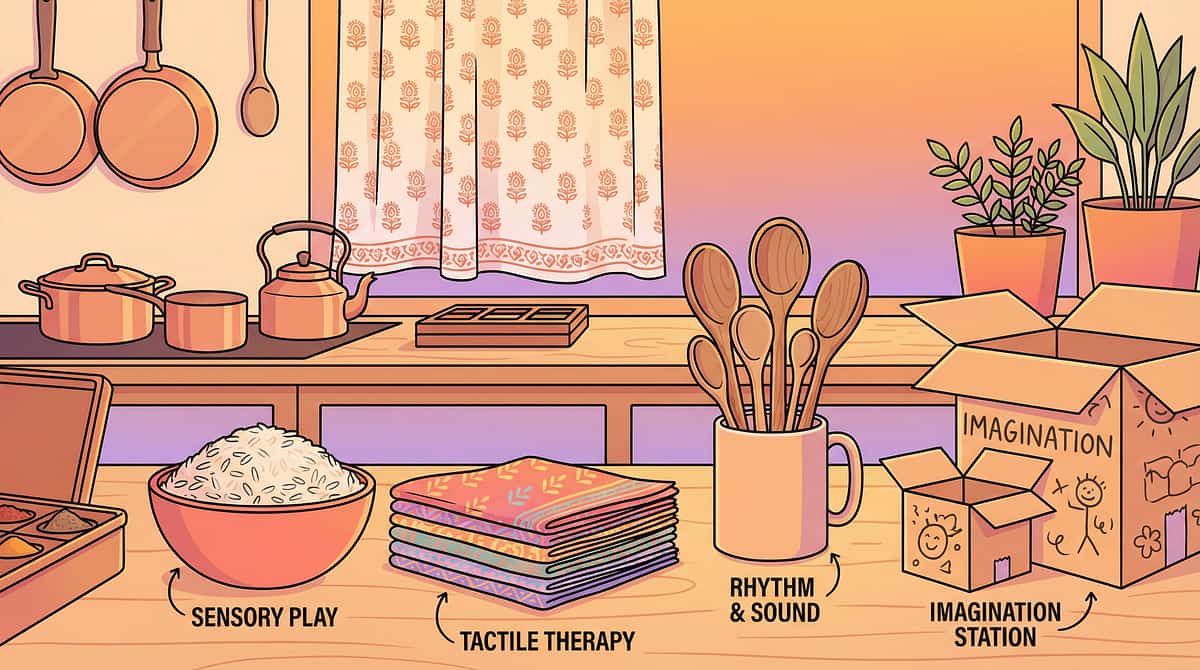
DIY & Substitute Options
Not every family can order from Amazon. Not every village has same-day delivery. This card ensures every parent, regardless of economic status, can start this technique TODAY with household items. The WHO/UNICEF principle in action: context-specific, equity-focused interventions work.
# | Material | Buy This | Make This (₹0) | |
1 | Topic Turn-Taking Cards | Commercial conversation cards (₹150–400) | Cut index cards. Write "MY TOPIC TURN" and "YOUR TOPIC TURN." Decorate with stickers. Use a kitchen timer for each turn. | |
2 | Social Cue Recognition Cards | Printed emotion/body language cards (₹200–500) | Cut photos from magazines showing "interested" vs "bored" body language. Paste on cardboard. | |
3 | Interest Inventory Cards | Getting-to-know-you card sets (₹150–350) | Write on paper strips: "What's your favorite...?" Keep an "Interest Journal" — a small notebook about friends' likes. | |
4 | Topic Bridge Cards | Connection-making card sets (₹200–450) | Practice at dinner: "How could dinosaurs relate to cooking?" Accept ALL creative bridges. | |
5 | Conversation Timer | Sand timer or visual countdown (₹200–500) | Use any phone timer. Start generous (3–5 minutes per topic). When it rings: "What do YOU want to talk about?" | |
6 | Question Prompt Cards | Curiosity builder card sets (₹150–350) | Write question starters on sticky notes: "What do you think about...?" Stick around the house. | |
7 | Social Stories | Published social story books (₹200–500) | Write a personalized story with your child's name and their specific interest. | |
8 | Video Models | Conversation skills programs (₹0–600) | Record balanced conversations between family members. Free YouTube social skills videos exist. | |
9 | Reward System | Token boards and charts (₹100–300) | Draw a chart on paper: Asking a question = 1 star. Listening for 2 minutes = 2 stars. 10 stars = special interest time. |
References: PMC9978394 | WHO NCF Handbook (2022) — The CCD Package implemented across 54 LMICs demonstrates that household-material-based interventions produce measurable outcomes.

Safety First: Before You Begin
Every powerful intervention requires clear safety parameters. Before starting any session, review this traffic-light system designed to protect your child's trust and your relationship.
🔴 Contraindications — Do NOT Begin If:
Child is in acute emotional distress or mid-meltdown. Child has had a significant change in routine or caregiver within the last 48 hours. You are feeling frustrated or impatient — your emotional state transfers directly. Interest content involves violence or self-harm themes — consult a professional first.
🟡 Caution — Approach With Care:
Never eliminate or ban the preferred interest. Banning their topic creates anxiety and intensifies behavior. Never shame your child for their passion. Never force abrupt topic changes without first teaching the skills. Don't expect perfect balance — aim for improvement, not perfection. Don't make the timer punitive.
🟢 Optimal Conditions:
Child is calm, fed, rested, and regulated. Environment is quiet with minimal distractions. You have 15–20 minutes of uninterrupted time. You are emotionally regulated and patient. A conversation partner is available. The preferred topic materials are accessible — the interest is the BRIDGE, not the barrier.
RED LINE — STOP IF YOU SEE: Child becomes extremely distressed when topic is changed • Child refuses all interaction unless on their topic • Aggressive behavior when conversation is redirected • Signs of shutdown (going completely silent, withdrawing physically). "Trust your instincts — if something feels wrong, pause and ask."
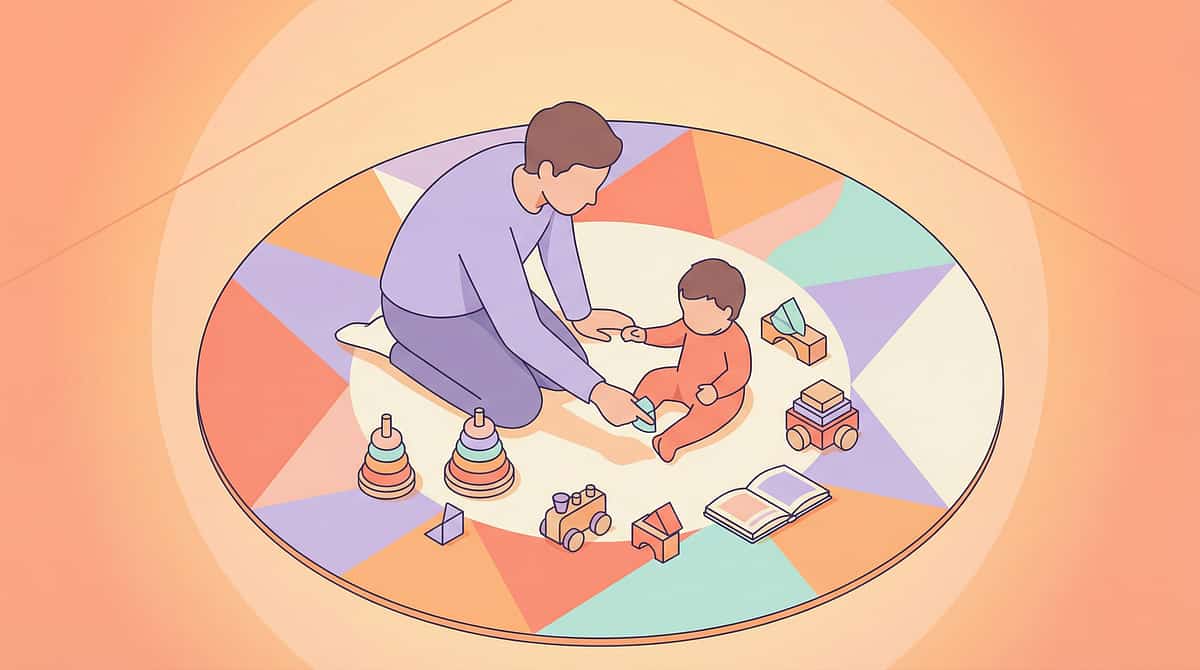
Setting Up Your Space
Your environment matters as much as your materials. The 5-minute setup protocol below ensures every session starts from a position of safety, comfort, and readiness — for both you and your child.
The 5-Minute Setup Protocol
Space: Choose a comfortable, familiar area — kitchen table, living room floor, child's room. Avoid associating this with clinical settings. This should feel like a family activity, not an intervention.
Materials: Start with ONE material per session — do not overwhelm. Week 1–2: Topic Turn-Taking Cards (Material 1). Add materials progressively.
Conversation Partner: You (parent) are the first practice partner. Once skills emerge at home, expand to siblings, then extended family, then peers.
Interest Material: Have the child's preferred topic items nearby. This is counterintuitive but essential — the interest is the BRIDGE, not the barrier.
Environmental Signal: Create a consistent "conversation practice" signal — a specific placemat, a conversation mascot toy, or a simple "It's Talk Time!" visual card.
Pre-Session Checklist
☑️ Timer set (3–5 minutes for first sessions)
☑️ Turn-taking cards or today's material visible
☑️ Child's preferred topic items accessible
☑️ Your phone on silent
☑️ Other family members informed (no interruptions)
☑️ A "topic you want to share" ready — model reciprocity
☑️ Reward chart posted if using Material 9
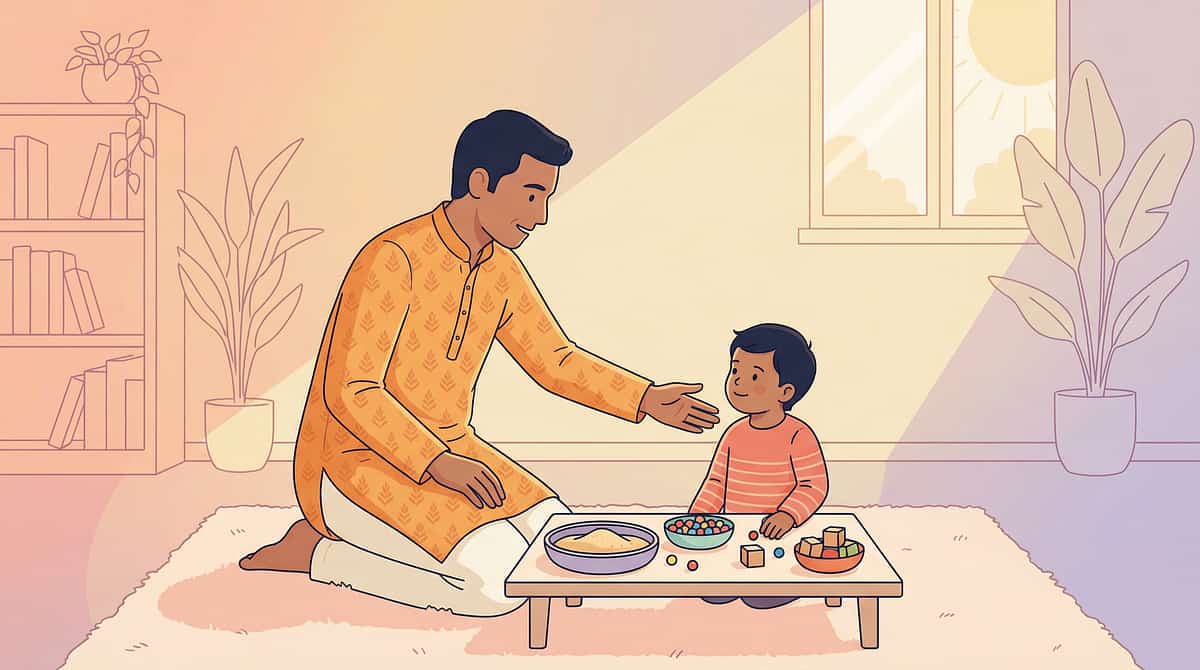
Step 1: Readiness Check
Step 1 of 7
Before you begin, run this 30-second readiness check. A poor session is worse than no session. Your child learns from experience quality, not frequency alone.
Child Readiness
Eyes: alert, not glazed or avoidant? ✅
Body: relaxed, not rigid or agitated? ✅
Voice: speaking (even on their topic), not silent or crying? ✅
State: not hungry, tired, or in post-meltdown recovery? ✅
Body: relaxed, not rigid or agitated? ✅
Voice: speaking (even on their topic), not silent or crying? ✅
State: not hungry, tired, or in post-meltdown recovery? ✅
Parent Readiness
Patience meter: at least 7/10? ✅
Time available: 15–20 minutes with no interruptions? ✅
Emotional state: calm, warm, curious — not frustrated? ✅
Time available: 15–20 minutes with no interruptions? ✅
Emotional state: calm, warm, curious — not frustrated? ✅
Environment Readiness
Space is quiet and comfortable? ✅
Materials are visible and ready? ✅
Potential interruptions managed? ✅
Materials are visible and ready? ✅
Potential interruptions managed? ✅
"3 good sessions are worth more than 10 forced ones. If any check is 🔴 — postpone. Your child learns from experience quality, not frequency alone."

Step 2: The Invitation
Step 2 of 7
The invitation is everything. The way you open the session sets the emotional tone for everything that follows. Frame it as a game, not a lesson — and always start WITH their topic, not against it.
❌ This Is NOT the Invitation:
- "We need to practice conversations."
- "You need to learn to talk about other things."
- "Stop talking about dinosaurs all the time."
✅ This IS the Invitation:
- "Hey, I found something cool — want to play a new talking game with me?"
- "I have a challenge for us — I bet we can learn something new about each other today!"
- "Want to trade topics? I'll listen to yours if you listen to mine — like trading cards!"
The Opening Script (customize to your child): "I love how much you know about [dinosaurs/trains/Minecraft]. You're basically an expert! Today I want to try something fun — we're going to trade topics like trading cards. You get to teach me about YOUR favorite thing, and then I get to teach you about MY favorite thing. Ready?"
References: PMC11506176 — Engagement quality in early interaction predicts intervention adherence and outcomes.
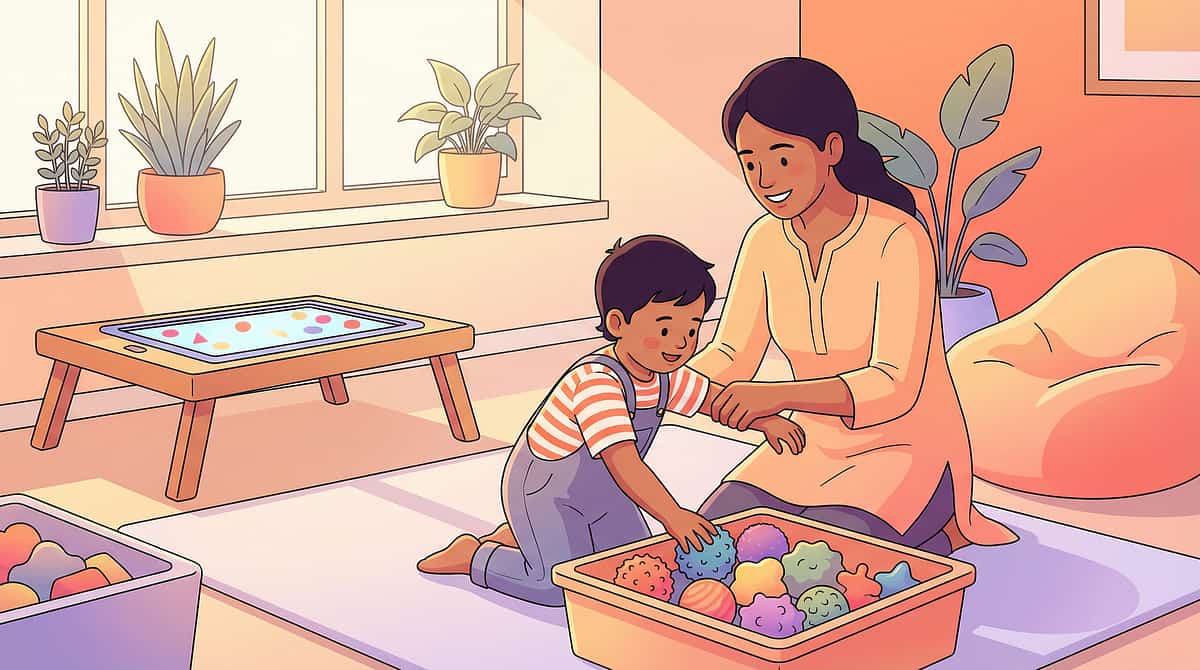
Step 3: The Engagement Warm-Up
Step 3 of 7
Minutes 1–5
Start by genuinely engaging with your child's preferred topic. This serves two purposes: it validates their interest (trust-building) and creates a reference point for reciprocity — "I listened to yours — now it's my turn."
Set the timer for 3 minutes (visible to the child)
Show the "Your Topic Turn" card and say: "It's YOUR topic time! Tell me about [interest]. I'm listening."
ACTUALLY listen — then ask one genuine follow-up question
Your authentic curiosity teaches more than any card. Model the behavior you want to see.
When the timer ends, transition warmly
"That was amazing! I learned [specific thing]. Now — MY turn!"
What you're teaching without saying it: Conversations have structure (my turn, your turn). Time is shared fairly. Both people's topics matter. Listening precedes sharing.
If your child engages willingly with the timer and turn concept, proceed to Step 4. If they resist — see Card 21 (Troubleshooting).
If your child engages willingly with the timer and turn concept, proceed to Step 4. If they resist — see Card 21 (Troubleshooting).
References: Reinforcement scheduling from ABA literature | PMC11506176
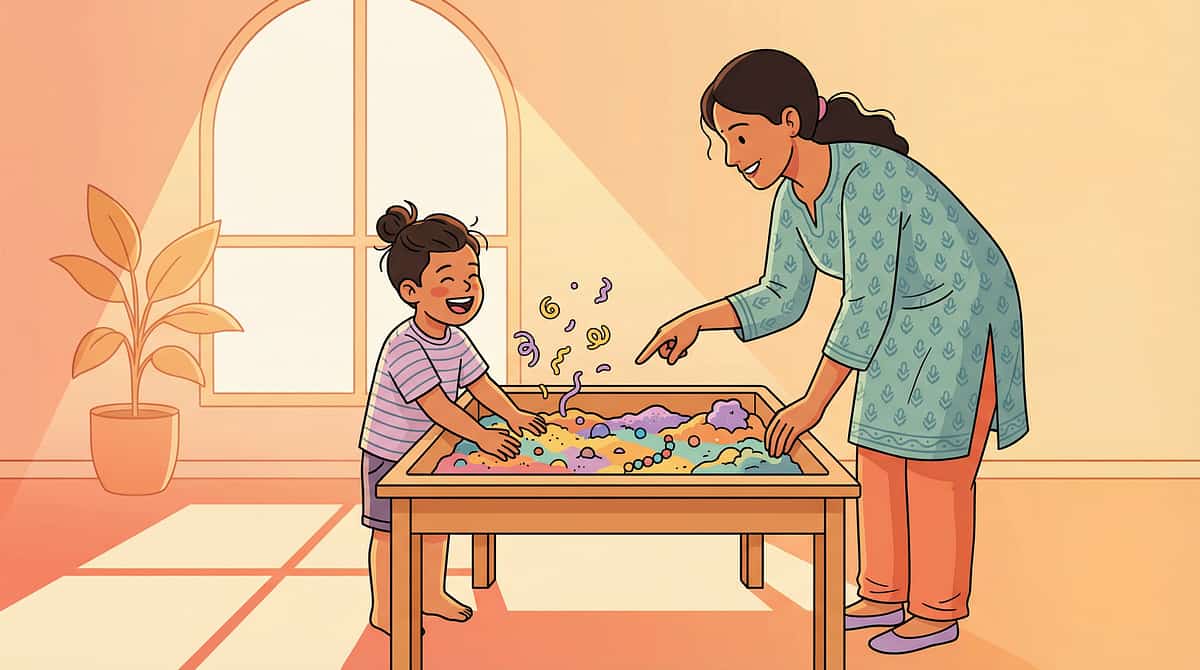
Step 4: The Therapeutic Action
Step 4 of 7
Minutes 5–12
This is the primary therapeutic event — the moment your child practices topic flexibility. Keep this the heart of every session.
A. Topic Exchange (Material 1 — Turn-Taking Cards)
Timer rings → Show "My Topic Turn" card → Share YOUR topic for 2–3 minutes → Model: ask your child "What do you think about that?" → Listen to their response, even if they bridge back to their topic → Celebrate ANY relevant response to your topic.
B. Social Cue Practice (Material 2 — Social Cue Cards)
During your topic time, demonstrate "interested" body language, then briefly show "bored" signals (look away, short answers). Ask: "Did you notice what changed? What did my body do?" Practice identifying interested vs. disengaged in pictures, then in real-time.
C. Question Practice (Material 6 — Question Prompt Cards)
Give your child a question card: "What do you think about...?" or "Tell me more about..." They ask YOU the question → You answer enthusiastically → Model: "Great question! Now ask me another one!"
🟢 Ideal Response
Asks questions, shows interest, makes topic bridges.
🟡 Acceptable
Tolerates your topic, answers briefly, doesn't redirect.
🔴 Concerning
Refuses to engage, becomes distressed, shuts down entirely — see troubleshooting.
References: PMC10955541 — Core therapeutic action occupies 40–60% of session time.
Step 5: Repeat & Vary
Step 5 of 7
Aim for 3 complete topic exchanges per session. Three good exchanges with genuine engagement are worth more than ten forced rotations. Build your material progression week by week.
Week 1
Turn-Taking Cards only — focus on the basic exchange concept.
Week 2
Add Social Cue Cards — "Let's see if we can spot when someone is bored."
Week 3
Add Question Prompt Cards — "Let's play the question game."
Week 4
Add Topic Bridge Cards — "Let's find where dinosaurs meet cooking!"
Week 5
Add Interest Inventory Cards — "Let's learn 3 new things about each other."
Week 6–8
Add Conversation Timer with reduced intervals → Social Stories → Video Modeling. Interest-Based Reward System underlays all weeks.
Satiation Indicators — When Your Child Has Had Enough: Response quality drops (one-word answers) • Body language shifts (fidgeting, looking away) • Direct statements: "I don't want to play anymore" • Increased redirection attempts to preferred topic. "3 good reps > 10 forced reps." End on a positive exchange. Duration: 3–5 minutes total for repetition.

Step 6: Reinforce & Celebrate
Step 6 of 7
Timing matters more than magnitude. Celebrate immediately, specifically, and enthusiastically. The preferred interest is the reward — flexibility becomes the path to passion.
When child asks a question about your topic:
"WOW! You just asked me about MY favorite thing! That made me feel so happy. You're becoming an amazing conversation partner."
When child notices a social cue:
"You spotted that I was looking away! That's exactly right — that means it's time to check in. Brilliant detective work."
When child uses a topic bridge:
"You just connected dinosaurs to cooking — 'dinosaurs were probably picky eaters!' That's genius-level conversation bridging!"
Material 9 — Interest-Based Reward System (Point Values):
1 point
Asking a question about someone else's topic
2 points
Listening for 2 minutes to a non-preferred topic
3 points
Noticing a social cue without prompting
3 points
Making a genuine topic bridge
10 points =
15 minutes of uninterrupted preferred-topic time (validated, not withheld)
References: PMC11506176 — Reinforcement scheduling from ABA literature.
Step 7: The Cool-Down
Step 7 of 7
Minutes 15–20
The session should never end on a correction or a forced topic change. It ends on connection — with your child's interest honored, their effort celebrated, and their trust intact.
The Cool-Down Script
"That was a great conversation practice! You learned [specific thing about my topic] and I learned [specific thing about their topic]. Now — you've earned your expert time. Tell me the coolest thing about [their interest] that I don't know yet."
Why This Matters
Ending with their preferred topic reinforces that their interest is respected. It associates conversation practice with positive outcomes. The child learns: flexibility = more connection, not less passion.
Post-Session Checklist
- Update reward chart if using Material 9
- Note any breakthroughs (for data tracking)
- Physical affection if welcomed (hug, high-five)
- "Same time tomorrow?" — consistency signal

Data Capture: Your Tracking System
Two minutes of tracking after each session builds the evidence base that shows your child's real progress — and tells you when to adapt. Small gains are real gains.
Metric | Today's Score | |
Number of questions child asked about MY topic | ___/3 | |
Seconds/minutes child tolerated non-preferred topic | __:__ | |
Social cues noticed (without prompting) | ___/5 | |
Topic bridges attempted | ___/3 | |
Session mood (child): 😊😐😟 | ___ | |
Session mood (parent): 😊😐😟 | ___ | |
Material used today | ___ |
GPT-OS® Progression Stages — Social Participation Index:
Stage 1: Monologue-Dominant
Talks only about own interest
Stage 2: Prompted Topic Shifts
Changes topic with explicit cue
Stage 3: Spontaneous Questions
Asks about others' interests sometimes
Stage 4: Balanced Reciprocity
Shares and inquires across contexts
Stage 5: Generalized Flexibility
Adapts conversation to different partners and settings
Troubleshooting: When It's Not Working
Every child hits bumps. Every parent feels stuck. These solutions come from thousands of real sessions — match your challenge to the strategy below.
"My child refuses to stop talking about their topic."
Start with shorter turn times (1 minute your topic, 3 minutes theirs). Gradually equalize. Don't force — negotiate: "You get 3 minutes of dinosaurs, I get 1 minute of cooking. Fair?"
"My child gets upset when the timer goes off."
Give a 30-second warning: "Timer is almost done — finish your best dinosaur fact!" Transition with a bridge. Don't make the timer punitive.
"My child asks questions but doesn't listen to answers."
This is progress! They're performing the behavior before internalizing it. Add Material 2 (Social Cue Cards) — practice what "interested listening" looks like.
"My child bridges EVERYTHING back to their topic."
Initially, celebrate ALL bridges — even forced ones. "Dinosaurs ate plants! Like salad!" — That IS a bridge. Gradually raise the bar over weeks.
"It works at home but not at school."
Expected. Generalization is a separate skill. Share the Teacher Communication Template (Card 37) with the classroom teacher. Ask them to use the same visual cues.
"My child has no interest in other people's topics at all."
Start with Interest Inventory Cards (Material 3) — treat it as a detective game: "Your mission: find out 3 things your classmate likes." Genuine curiosity is built, not born.
If no progress after 8–10 weeks of consistent daily practice → consult your SLP or psychologist. The technique may need professional calibration.
FREE National Autism Helpline: 9100 181 181
FREE National Autism Helpline: 9100 181 181
Make It Your Own: Personalization
No two children are the same. Adjust difficulty, session length, and approach to match your child's profile — and remember, every version of this technique is valid and effective when applied consistently.
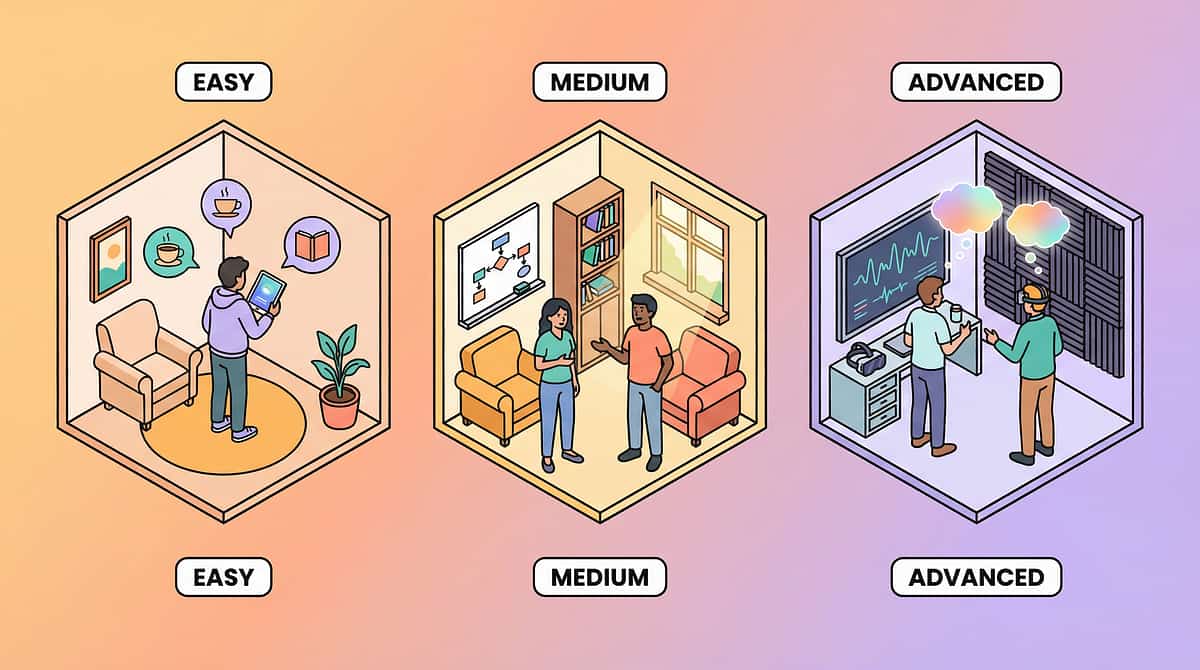
🟢 Easier Version (Ages 4–6 / Hard Days)
Reduce to 2 exchanges per session. Use 5-minute topic turns (generous). Focus ONLY on Material 1 (Turn-Taking Cards). Accept any topic engagement as success. Skip social cue practice — just do turn-taking.
🔵 Standard Version (Ages 6–9)
3 exchanges per session. 3-minute topic turns. Rotate 2–3 materials per week. Practice social cue recognition. Use reward system.
🟣 Advanced Version (Ages 9–12)
Extend to 5+ exchanges. 2-minute or unstructured turns. Introduce peer practice partners. Focus on subtle social cues (tone shifts, pause patterns). Fade external rewards toward natural social reinforcement.
Profile-Based Variations:
The Anxious Monologuer
Talks about their topic to manage anxiety. → Address anxiety first. Ensure the preferred topic remains a safe haven. Add relaxation before topic shifts. Never force abrupt changes.
The Expert Lecturer
Has deep knowledge, wants to teach everyone. → Channel the expertise: "Teach me ONE thing, then I'll teach you ONE thing." Validate the knowledge while building exchange.
The Scripted Repeater
Repeats the same facts or scripts about their topic. → Use Material 4 (Topic Bridge Cards) to expand the repertoire WITHIN their interest before bridging to new topics.

Week 1–2: What to Expect
Progress Arc
~15% Complete
In weeks 1–2, do NOT expect balanced conversations. That is not the goal yet. What you're building in these first sessions is tolerance — and tolerance is the foundation everything else rests on.
✅ What "Progress" Looks Like Now
- Your child tolerates the timer without meltdown (even if unhappy)
- Your child holds the "Your Topic Turn" card without throwing it
- Your child answers ONE question about a non-preferred topic (even "I don't know")
- Your child allows you to talk for 60 seconds about your topic (even while fidgeting)
- Session mood trends from 😟 to 😐
⏳ Not Progress Yet (Too Early)
- Spontaneous questions about your interests
- Noticing social cues independently
- Topic bridges
- Enjoying non-preferred topics
"If your child tolerates your topic for 30 seconds longer than last week — that's real progress."
Parent Emotional Preparation: You will feel like it's not working. You will hear about dinosaurs 400 times this week. The neural pathways for conversational flexibility are forming beneath behaviors you can't see yet. Trust the process.
References: PMC11506176 — Intervention outcomes emerge across 8–12 week timelines. Early-phase indicators focus on tolerance and participation.

Week 3–4: Consolidation Signs
Progress Arc
~40% Complete
The consolidation phase. Watch for these signals — they are evidence that neural pathway formation is underway beneath the surface of daily practice.
Your child reaches for the turn-taking cards before you do
Your child starts to self-time ("My turn is almost done, right?")
Your child asks ONE genuine question per session about a non-preferred topic
Reduced resistance to topic shifts — compliance is evolving toward willingness
Generalization Seeds — Early Signals of Transfer:
At the dinner table, your child pauses their monologue to look at a sibling.
Your child asks a family member "What did YOU do today?" — prompted or not.
Your child uses bridging language ("That's kind of like...").
When to Increase: Add a second material if only using one. Reduce topic turn time by 30 seconds. Introduce a sibling as conversation partner.
Parent Milestone: "You may notice you're more confident too."
Parent Milestone: "You may notice you're more confident too."
References: Neuroplasticity evidence — synaptic strengthening through repeated structured input follows predictable timelines in pediatric populations.

Week 5–8: Mastery Indicators
Progress Arc
~75% Complete
This is where structured practice becomes natural behavior. Watch for these specific, observable, measurable criteria that signal your child has genuinely internalized conversational reciprocity.
Mastery Criteria
☐ Child spontaneously asks 2+ questions per conversation about partner's interests
☐ Child detects at least 3 of 5 disengagement signals without prompting
☐ Child uses topic bridges naturally ("Speaking of which...")
☐ Child self-monitors monologue duration
☐ Session mood is consistently 😊 for both child and parent
☐ Child detects at least 3 of 5 disengagement signals without prompting
☐ Child uses topic bridges naturally ("Speaking of which...")
☐ Child self-monitors monologue duration
☐ Session mood is consistently 😊 for both child and parent
Generalization Indicators
☐ Conversational reciprocity appearing with peers (not just parents)
☐ Topic flexibility in unstructured settings (playground, family gatherings)
☐ Teacher reports improved classroom participation
☐ Sibling interactions include genuine topic exchange
☐ Topic flexibility in unstructured settings (playground, family gatherings)
☐ Teacher reports improved classroom participation
☐ Sibling interactions include genuine topic exchange
Maintenance Check
Does the skill persist when you stop using the timer? When the cards aren't visible? When you're not explicitly prompting? If yes — the behavior has generalized beyond structured practice.
🏆 MASTERY UNLOCKED when 4+ criteria are met consistently for 2 weeks.
References: PMC10955541 | BACB mastery criteria standards — measurable outcomes across social communication domains.
Celebrate This Win
"You did this. Your child grew because of your commitment."
Remember Card 01? The dinner table where nobody was making eye contact? The monologue about Velociraptors that nobody could redirect? Look where you are now.
Your child asks about YOUR day. Your child notices when a sibling looks away. Your child bridges their passion to someone else's world. Your child still loves dinosaurs — but now they also love the feeling of someone asking, "Tell me more about what you think?"
Celebration Suggestion
Host an "Expert Lecture Night" — let your child teach the family about their interest for an extended, uninterrupted session where everyone asks genuine questions. This honors their passion while demonstrating that the family values what makes them unique.
📸 Document This Milestone
Take a photo of your child engaging in reciprocal conversation. Write down the first spontaneous question they asked about someone else's interest. Date it. This is evidence of neural change — and it belongs to you and your child.
Red Flags: When to Pause
Home intervention is powerful — and it has limits. These six signals indicate that professional support is needed alongside (or before) continued home practice. Trust your instincts.
🚩 Complete inability to engage with any other topic
After 4+ weeks of consistent practice, if your child cannot tolerate even 30 seconds of a non-preferred topic, underlying anxiety or rigidity may require professional assessment.
🚩 Extreme distress when topic is changed by others
Crying, screaming, shutting down, or aggression when someone naturally shifts the conversation suggests the restricted interest serves an anxiety-regulation function requiring clinical attention.
🚩 Interest interferes with ALL daily functioning
If the child cannot eat, sleep, attend school, or interact with family without returning to one topic, the intensity exceeds what home intervention can address alone.
🚩 No social relationships remaining
If peers have fully disengaged and the child has zero social connections, professional social skills group therapy is indicated alongside home practice.
🚩 Interest content is concerning
If the preferred topic involves violence, death, or inappropriate content suggesting emotional disturbance, consult a psychologist before continuing.
🚩 Regression after initial progress
If your child was improving and suddenly returns to monologue-dominant patterns, investigate potential stressors — school changes, family disruption, or medical issues.
Escalation Pathway: Self-resolve (adjust technique difficulty) → Teleconsult with Pinnacle SLP → In-clinic assessment → Comprehensive evaluation
FREE National Autism Helpline: 9100 181 181 (24x7, 16+ languages)
FREE National Autism Helpline: 9100 181 181 (24x7, 16+ languages)
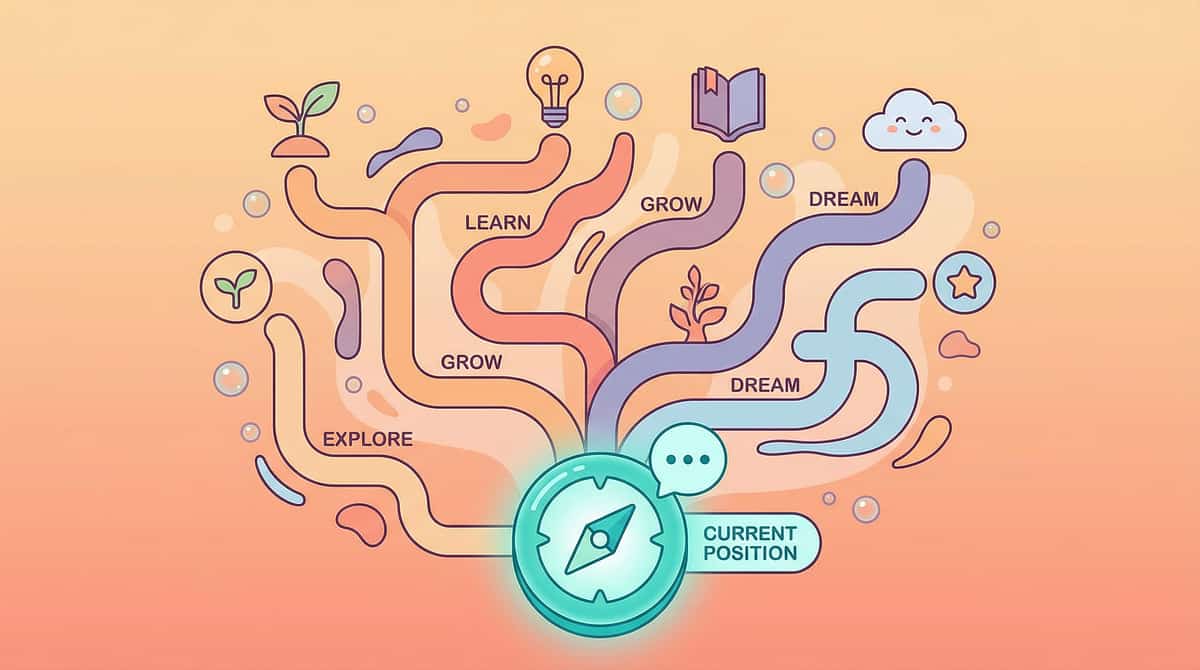
The Progression Pathway
B-199 doesn't stand alone. It sits within a carefully sequenced developmental pathway — with prerequisite skills that set the stage, and next-level techniques that carry your child forward.
Path A — Social Cues Remain Difficult
→ B-205: "Materials That Help When Child Misses Social Cues"
Path B — Topic Maintenance Wavers
→ B-201: "Materials That Help When Child Can't Maintain Topic Appropriately"
Path C — Perspective-Taking Lags
→ B-210: "Materials That Help With Difficulty With Perspective-Taking"
Lateral Alternative
↔ B-215: "Materials That Help When Child Interrupts Frequently" — focus on impulse control as an alternative entry point
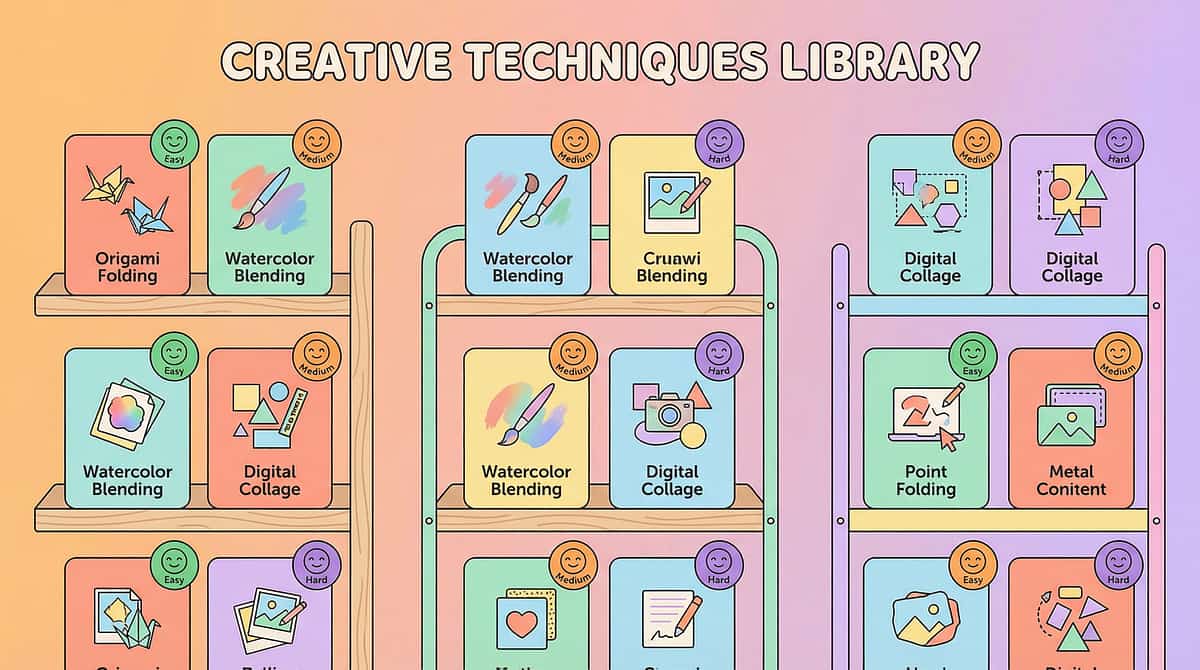
Related Techniques
This technique is one node in a comprehensive network of 999 evidence-based intervention reels. Every related technique below shares an underlying mechanism with B-199 — explore them to build the most complete intervention plan for your child.
Code | Focus | Link | |
B-197 | Grammar and Plurals | ||
B-198 | Can't Initiate Conversations | ||
B-199 | Only Talks About Interests (YOU ARE HERE) | — | |
B-200 | Following Multi-Step Directions | ||
B-201 | Can't Maintain Topic | ||
B-205 | Misses Social Cues | ||
B-210 | Difficulty with Perspective-Taking | ||
B-215 | Interrupts Frequently |
Parent Support Reels:
K-881
Parents After Diagnosis
K-903
Therapy Carryover at Home
K-920
Leveraging Interests for Connection
K-935
Social Skills Practice at Home
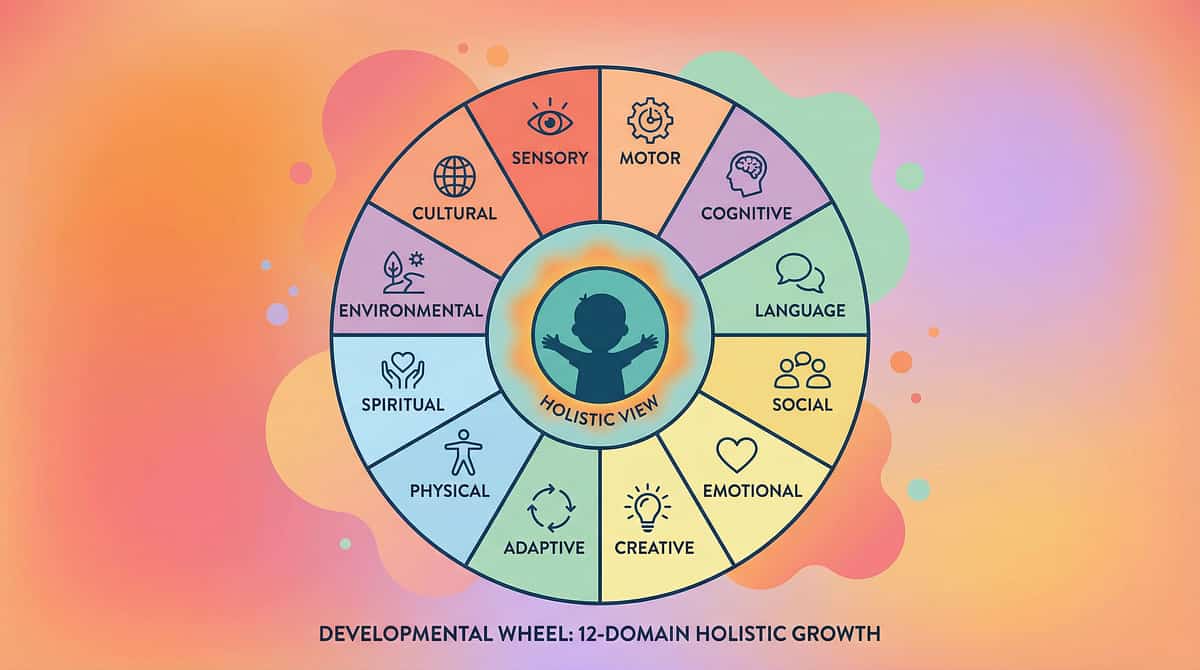
The Full Developmental Map
This technique (B-199) sits within a comprehensive developmental map spanning 250 techniques in the Conversation & Pragmatic Skills Series alone. Every technique connects forward to the next milestone and laterally to related skill areas.
Within Domain B — Your Child's Journey Through Pragmatics & Reciprocity:
The 2.8 million evidence-linked knowledge units across the complete Pinnacle technique library ensure that wherever your child is, there is a validated next step waiting.
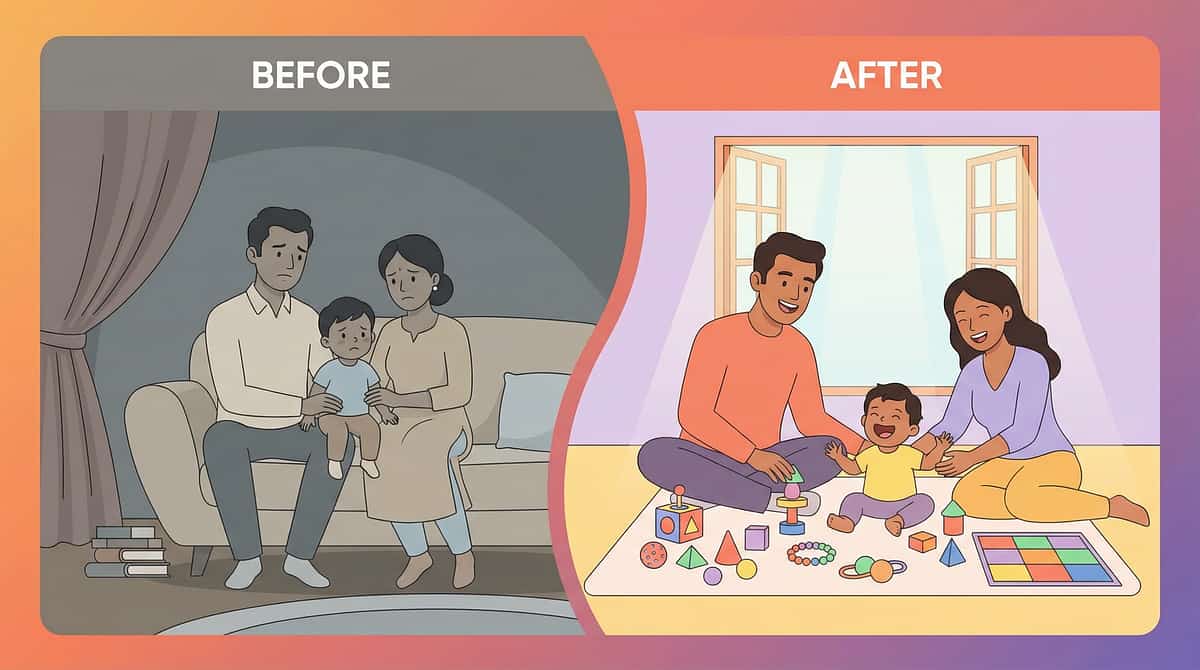
Parent Stories: You're Not Alone
"He asked his cousin what SHE wanted to play. First time ever. We both cried." — Parent, Pinnacle Network (Illustrative case; outcomes vary by child profile.)
Week 0
"Every dinner conversation is about Minecraft. His sister has started eating in her room. I feel like I'm losing my family to one topic."
Week 3
"He held the timer without throwing it. He let me talk about my garden for 45 seconds. Small, but I almost cried."
Week 6
"He asked his sister, 'What's your favorite color?' She was so shocked she didn't answer for 10 seconds. Then he said 'Mine is green because Creepers are green.' IT'S A BRIDGE."
Week 8
"At his cousin's birthday party, he asked three different children what games they liked. THREE. Unprompted. His uncle said, 'What happened to him?' I said, 'We practiced.'"
Your story is next. The Pinnacle community of families across 70+ countries navigates this journey together.

Connect with Support
You don't have to do this alone. Whether you need a quick answer at 2 a.m., a specialist consultation, or a community of parents who truly understand — these channels are here for you.
📞 Pinnacle Support Channels
FREE National Autism Helpline: 9100 181 181
(24x7, 16+ languages)
(24x7, 16+ languages)
Email:care@pinnacleblooms.org
Website: pinnacleblooms.org
Professional Support:
- Request an AbilityScore® Assessment for your child's baseline and trajectory
- Book a teleconsultation with a Pinnacle SLP specializing in pragmatics
- Locate your nearest Pinnacle center (70+ across India)
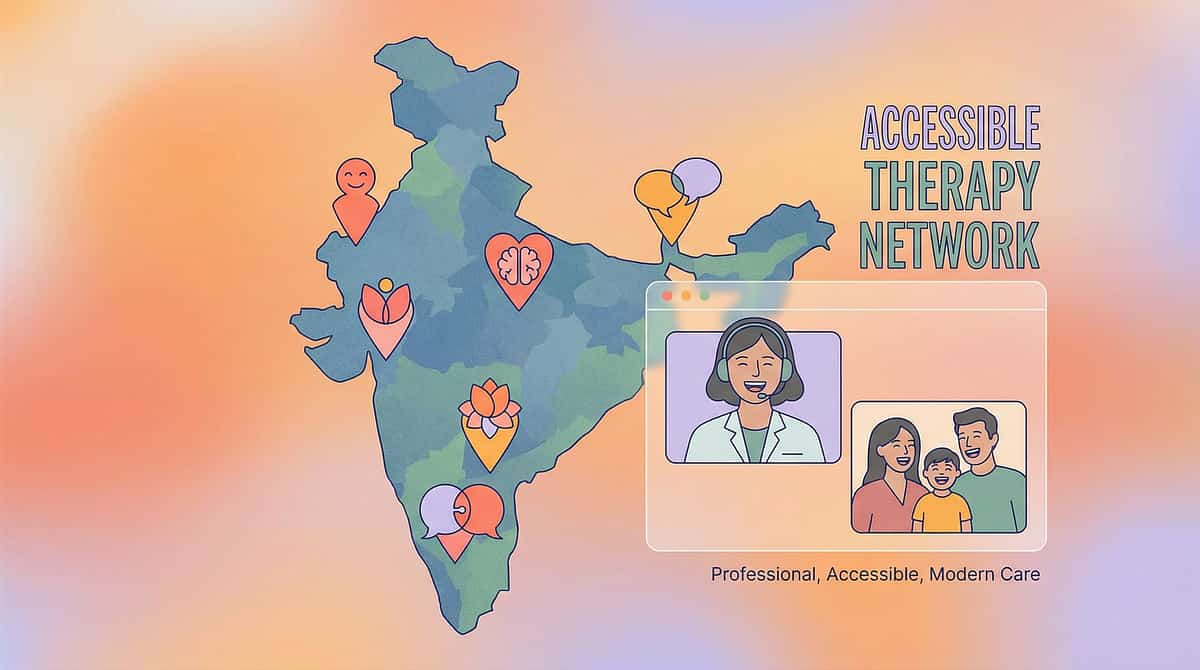
When to Seek Professional Help
This home technique is powerful — AND it has limits. Knowing when to escalate is a sign of wisdom, not failure. Professional support unlocks layers of diagnostic precision and therapeutic coordination that no home protocol can replicate alone.
Seek Assessment If:
No progress after 8–10 weeks of consistent daily intervention • Social isolation is severe • Underlying anxiety about topic shifts is extreme • Aggressive behavior when redirected • Interest content is concerning • You need formal AbilityScore® documentation for school accommodations
What a Professional Adds:
Diagnostic Intelligence Layer assessment (591+ structured observations across 349 skills) • AbilityScore® universal developmental score (0–1000) • FusionModule™ coordination across speech, behavioral, and social skills • Pragmatic Language Assessment • Peer-group social skills practice not available at home
Pinnacle Center Network:
70+ centers operating under GPT-OS® standards with measurable accountability. Every center delivers the same evidence-based protocol — whether in Hyderabad, Bangalore, Chennai, or any location in the network.
📞 9100 181 181 — FREE, 24x7, 16+ languages. One call connects you to a specialist who understands exactly what you're navigating.
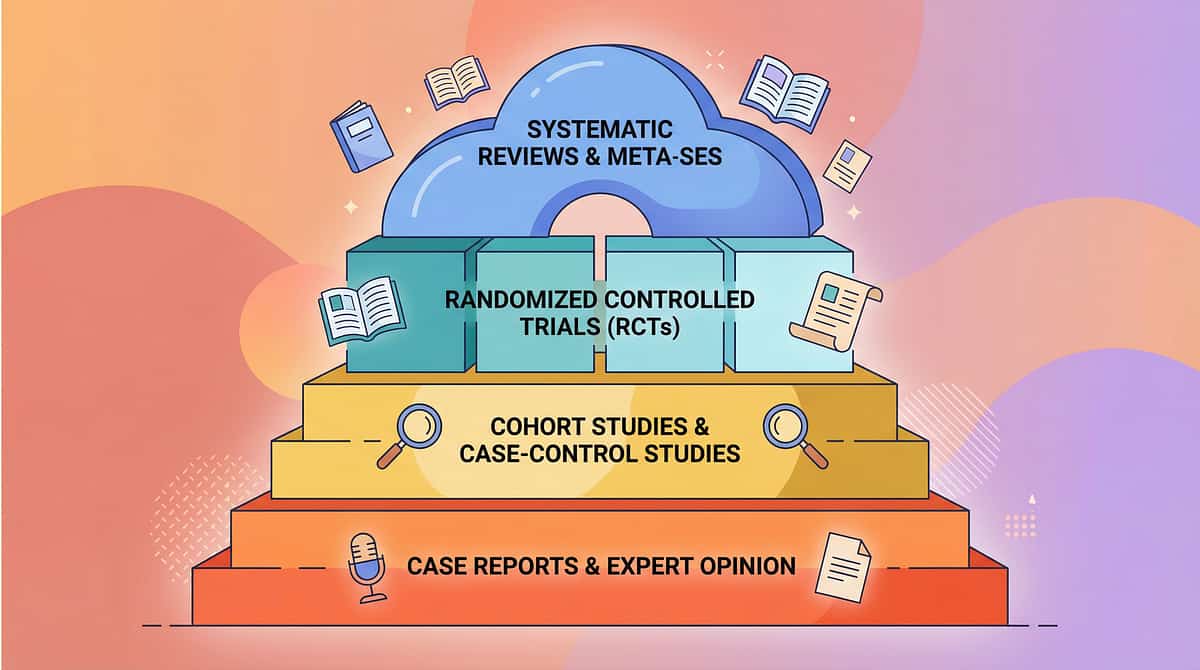
The Research Foundation
This technique stands on a foundation of peer-reviewed evidence. Every protocol, every material recommendation, every safety guideline is traceable to a specific published source.
PRISMA Systematic Review (Children, 2024)
16 articles from 2013–2023 confirm social communication interventions incorporating interest-based approaches meet criteria for evidence-based practice for children with ASD. Restricted interest-based approaches show particular promise. 📎 PMC11506176
Meta-Analysis: Social Communication Outcomes (World J Clin Cases, 2024)
Across 24 studies, interventions targeting conversational reciprocity effectively promoted social skills, adaptive behavior, and perspective-taking. 📎 PMC10955541 | DOI: 10.12998/wjcc.v12.i7.1260
WHO Care for Child Development Package (2023)
Age-specific, caregiver-delivered interventions implemented across 54 LMICs. Household-material-based approaches demonstrated efficacy across diverse socioeconomic contexts. 📎 PMC9978394
Indian RCT — Home-Based Interventions (Indian J Pediatr, 2019)
Parent-administered social communication interventions demonstrated significant outcomes in Indian pediatric populations with structured protocols. 📎 DOI: 10.1007/s12098-018-2747-4
NCAEP Evidence-Based Practices Report (2020)
Social Stories and Video Modeling classified as evidence-based practices for autism. Visual supports and structured turn-taking are recommended across OT, SLP, and ABA literature. 📎 ncaep.fpg.unc.edu
Foundational Clinical Texts
Attwood, T. (2007). The Complete Guide to Asperger's Syndrome. • Winner, M.G. (2007). Thinking About You Thinking About Me. • Gray, C. (2015). The New Social Story Book. • SPD Foundation — spdfoundation.net
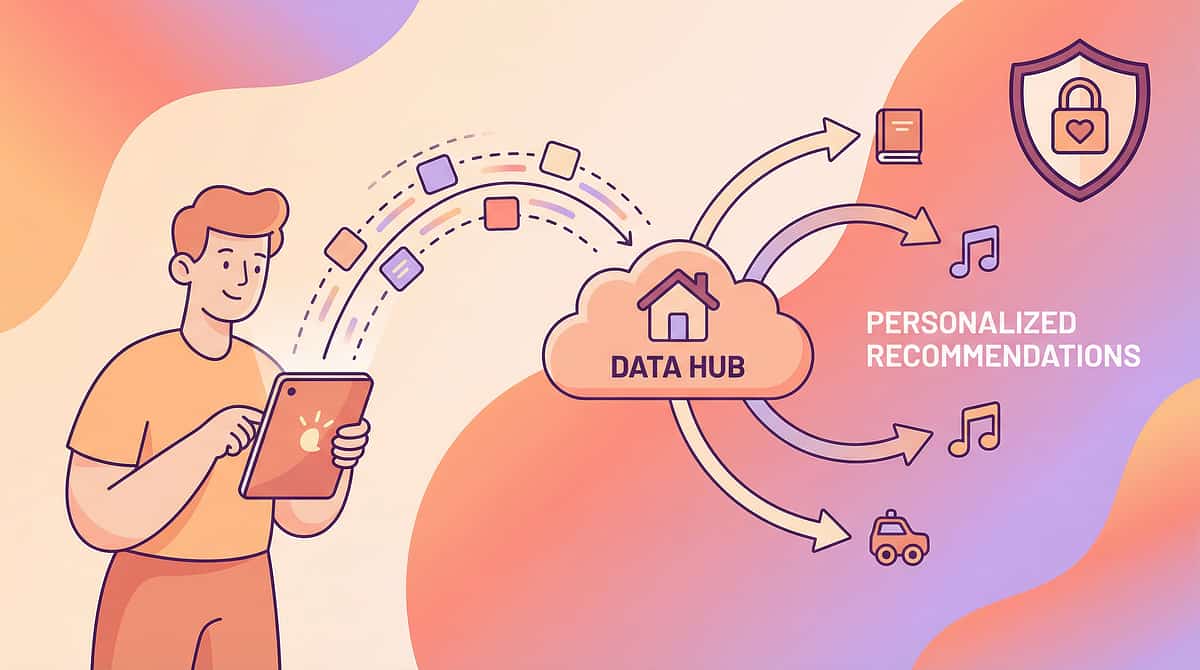
Powered by GPT-OS®
Global Pediatric Therapeutic Operating System
This technique page is not an isolated resource. It exists within GPT-OS® — the end-to-end operating system governing diagnosis, prognosis, therapy design, execution, monitoring, and readiness outcomes in child development.
Diagnostic Intelligence Layer
591+ structured observations across 349 skills and 79 developmental abilities
AbilityScore®
A patented universal developmental score (0–1000) — baseline, severity, and longitudinal change
Prognosis Engine
Predictive developmental trajectories from 20M+ real therapy sessions
TherapeuticAI®
Therapy focus, intensity, sequencing, and reinforcement logic — under licensed human clinical authority
EverydayTherapyProgramme™
Clinical plans translated into daily home-executable micro-interventions
FusionModule™
Speech, OT, behavior, SpEd, and medical inputs converged into a single therapeutic pathway
"This is not software. This is therapeutic infrastructure." — 20M+ 1:1 sessions • 97%+ measured improvement • 70+ centers • Kids from 70+ countries • Patents filed across 160+ countries
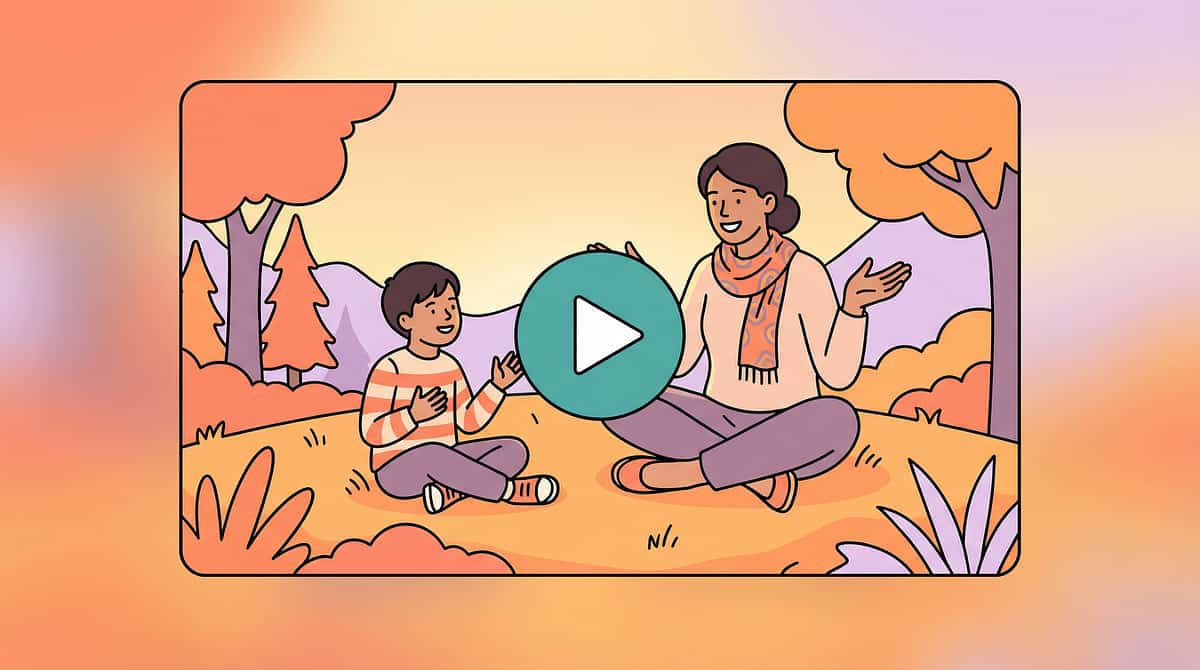
Watch the Reel: B-199
The Reel introduces the 9 materials with live demonstrations. This technique page teaches you exactly how to use them. Together, they form a complete learning system.
📹 Reel B-199
"9 Materials That Help When Child Only Talks About Interests"
Social Communication Solutions Series — Episode 199
Domain: Social Communication — Pragmatics & Reciprocity
Duration: 75–85 seconds
A Pinnacle therapist walks you through all 9 materials — from topic turn-taking cards to interest-based reward systems — with live demonstrations of each material in action with a child.
Related Reels in This Series:
B-198: "9 Materials That Help When Child Can't Initiate"
B-200: "9 Materials That Help With Following Multi-Step Directions"
B-201: "9 Materials That Help When Child Can't Maintain Topic"
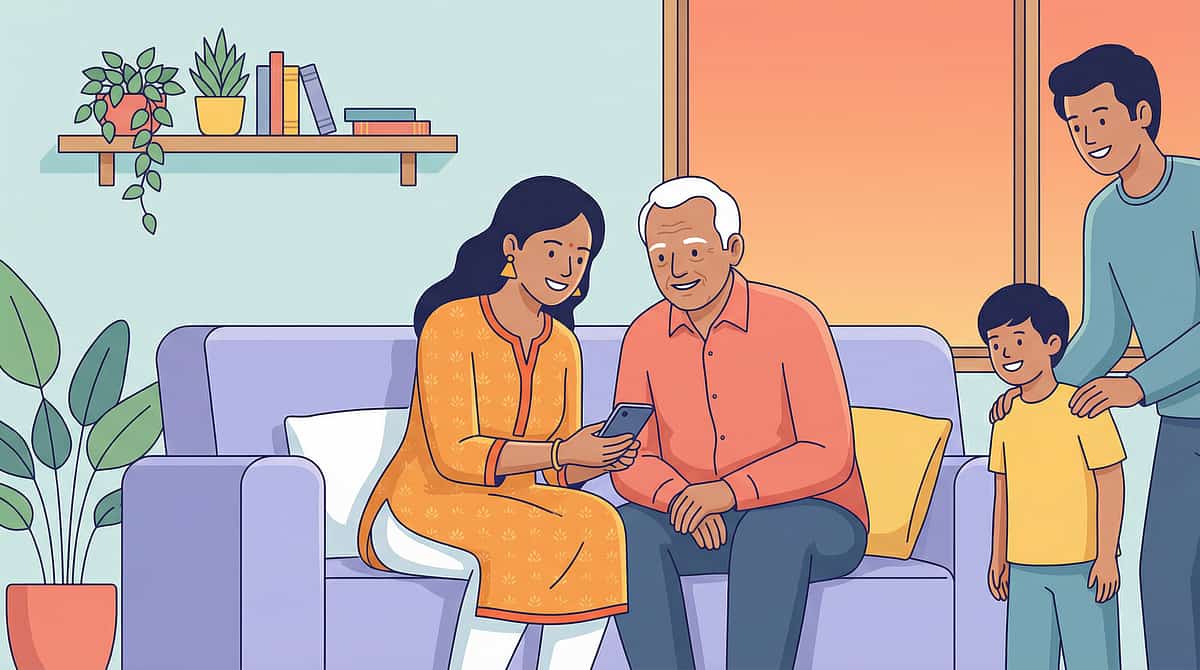
Share This with Your Family
If only one caregiver practices, the impact is limited. When the whole family aligns — parents, grandparents, siblings, teachers — transformation accelerates. Consistency across caregivers multiplies impact.
📋 Family Quick Guide
"Your child is learning to share conversations. Here's how you can help: When they start talking about [interest], listen for 3 minutes, then say 'My turn!' and share something about YOUR day. If they ask you a question — celebrate it! That's the goal."
👴 Explain to Grandparents
"[Child's name] is working on conversation balance. We're not stopping them from talking about [dinosaurs]. We're teaching them to ask about OTHER people's interests too. You can help by: (1) Asking them what they think about YOUR favorite thing, (2) Celebrating when they ask YOU a question, (3) Being patient — this is brain-building work."
🏫 Teacher Communication Template
"Dear [Teacher], [Child's name] is working on conversational reciprocity — specifically, building flexibility around preferred topics. At home we use topic turn-taking cards and question prompts. If you could reinforce this by occasionally asking [child] to share what a CLASSMATE likes, and celebrating when they ask peers questions, it would support generalization. Happy to discuss further."
References: PMC9978394 — WHO CCD Package emphasizes multi-caregiver training as critical for intervention generalization.
Frequently Asked Questions
Should I stop my child from talking about their interest entirely?
Absolutely not. Their passion is a genuine strength — deep knowledge, sustained attention, and potential expertise. The goal is flexibility AROUND the interest, not elimination of it. Their topic becomes the reward for practicing reciprocity.
What if my child gets angry when I suggest changing topics?
This is expected, especially in weeks 1–2. Start with generous time limits (5 minutes on their topic, 1 minute on yours). Use the timer as a neutral external cue — it's not YOU stopping them, it's the timer. Always transition with a bridge, not an abrupt stop.
How long until I see real progress?
Most families report noticeable changes by weeks 3–4. Meaningful reciprocity typically emerges by weeks 5–8. If no progress after 8–10 weeks of consistent daily practice, consult a professional.
Can I use these materials without an autism diagnosis?
Yes. Restricted topic focus occurs across neurological profiles. Any child who struggles with conversational reciprocity can benefit from structured practice with these materials.
Which material should I start with if I can only afford one?
Topic Turn-Taking Cards (Material 1). They're the lowest cost (₹150–400, or free DIY) and establish the foundational concept that conversations have structure and balance.
Will this work for teenagers?
The materials are designed for ages 4–12. For teenagers, the principles remain valid but the materials need age-appropriate adaptation. Consult a Pinnacle SLP for adolescent-specific protocols.
Is regression after a good week normal?
Yes. Regression is typical during illness, routine changes, or stressful periods. Return to the easier version (Card 22) during regression periods and rebuild from there.
What if my child is verbal but avoids conversation altogether?
This technique is designed for children who DO talk — just about one topic. If your child avoids all conversation, see B-198 (Can't Initiate Conversations) as the prerequisite technique.

Your Next Step: Start Now
You've read the evidence. You understand the science. You have the materials, the protocol, the timeline, and the troubleshooting guide. There is only one thing left to do.
🟢 Start This Technique Today
Launch a structured, guided practice session with GPT-OS® support. Step-by-step, personalized to your child's profile.
🔵 Book a Consultation
Schedule a teleconsultation or in-center assessment with a Pinnacle SLP specializing in pragmatics and social communication.
📞 9100 181 181 | pinnacleblooms.org/teleconsult →
⚪ Explore Next Technique
Continue your journey through the Social Communication pathway with B-200: Following Multi-Step Directions.
Validated by the Pinnacle Blooms Consortium: SLP • ABA • OT • SpEd • NeuroDev
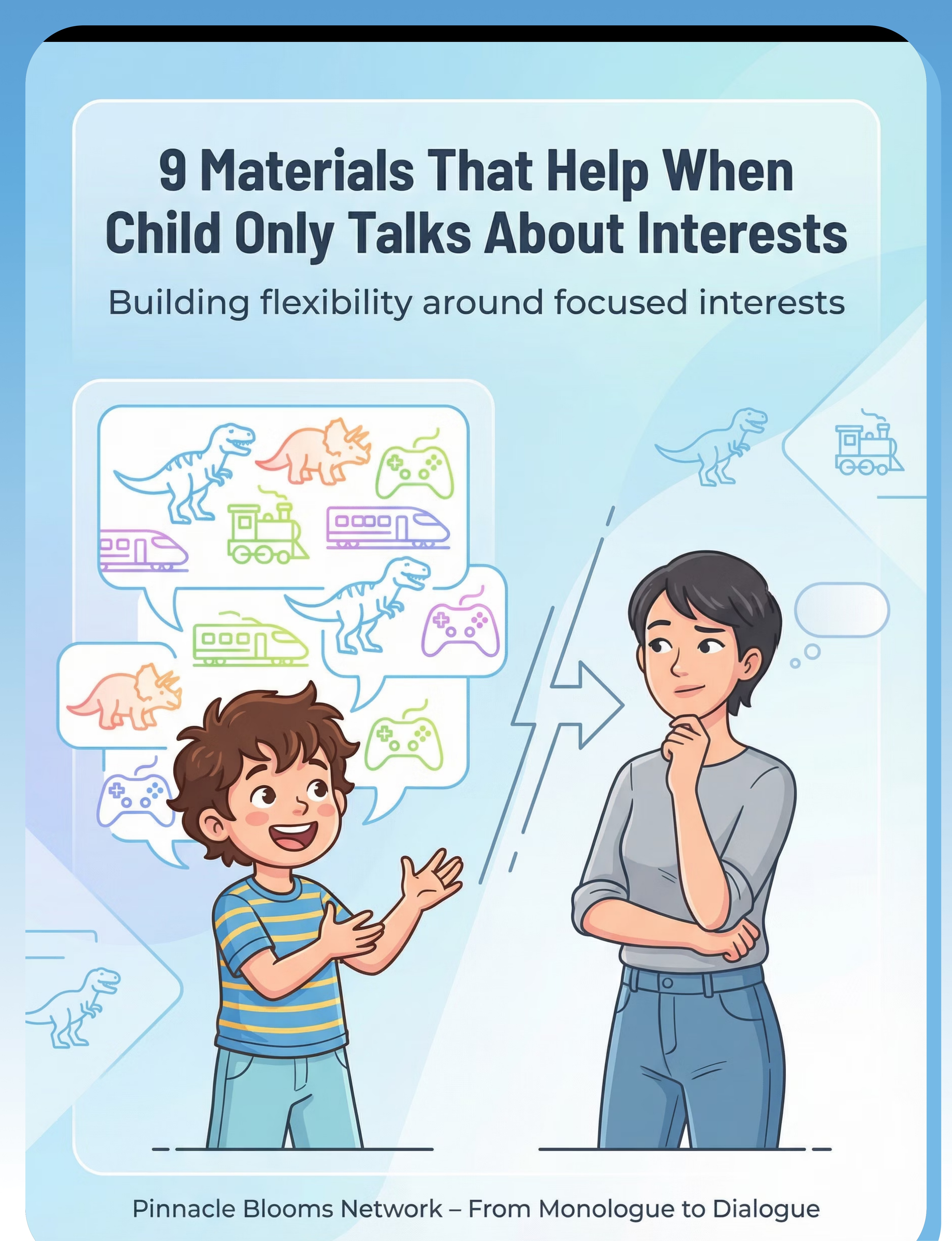
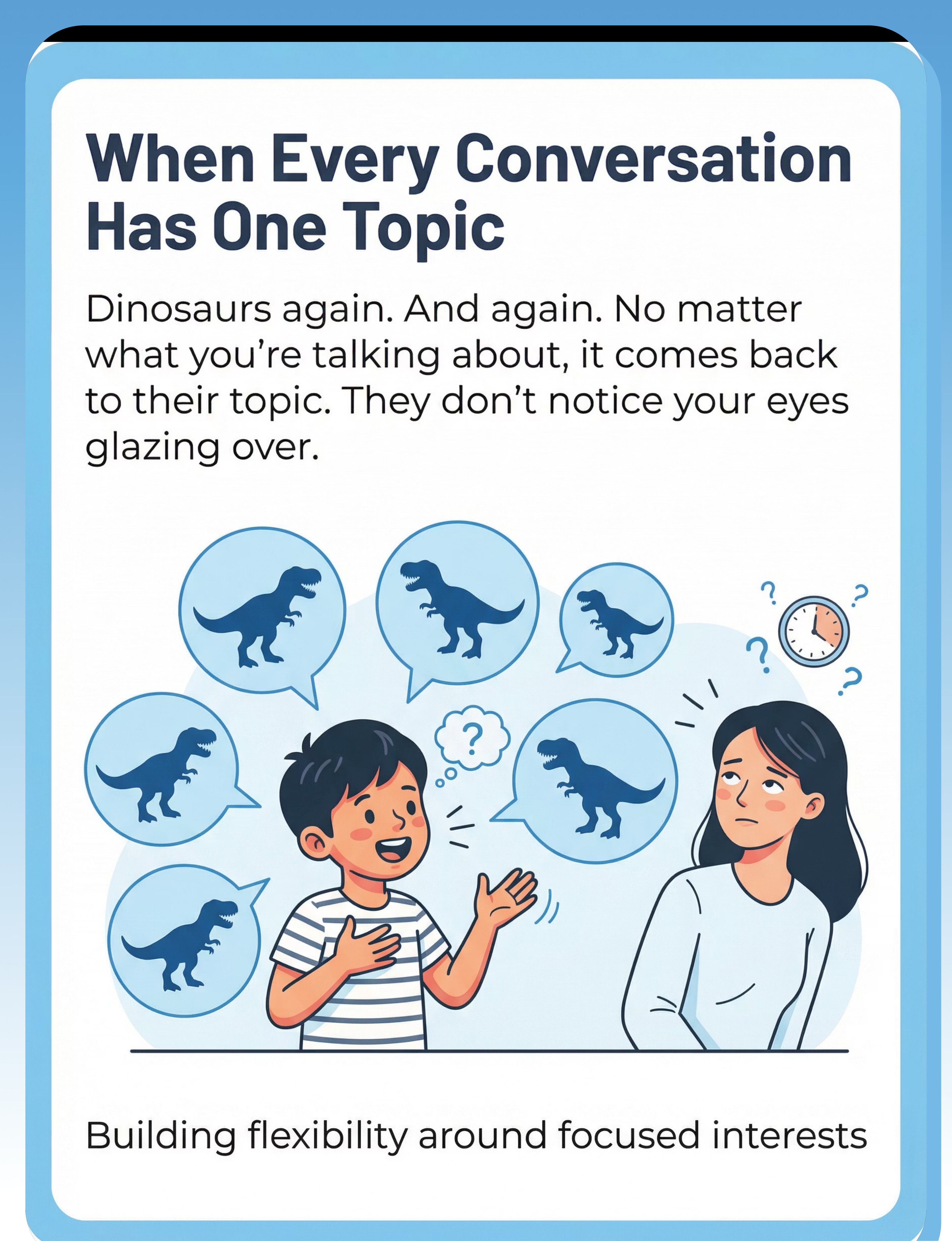
Preview of 9 materials that help when child only talks about interests Therapy Material
Below is a visual preview of 9 materials that help when child only talks about interests therapy material. The pages shown help educators, therapists, and caregivers understand the structure and content of the resource before use. Materials should be used under appropriate professional guidance.







Link copied!

The Pinnacle Promise
Pinnacle Blooms Network®
Built by Mothers. Engineered as a System.
"From fear to mastery. One technique at a time."
A parent arrived on Card 01 recognizing their child's monologue pattern — exhausted, isolated, wondering if they were the only family living this experience. By Card 05, they understood the neuroscience and trusted the evidence. By Card 12, they had the materials ready and the space prepared. By Card 22, they had executed the technique and personalized it to their child. By Card 30, they saw the full developmental map. By Card 37, they had shared the knowledge with their family. Now — they take action.
20M+
Exclusive 1:1 Sessions
97%+
Measured Improvement
70+
Centers Across India
70+
Countries Served
Medical Disclaimer: This content is educational and does not replace assessment by a licensed speech-language pathologist or psychologist. If you are concerned about your child's social communication, please consult a qualified professional. Individual results may vary. Statistics represent aggregate outcomes across the Pinnacle Blooms Network. Restricted interests are a core feature of autism and should be respected while building flexibility. The goal is expanding conversational repertoire, not eliminating passions.
Statutory Identifiers: CIN: U74999TG2016PTC113063 | DPIIT: DIPP8651 | MSME: TS20F0009606 | GSTIN: 36AAGCB9722P1Z2 | ISO 13485 | ISO/IEC 27001
© 2026 Pinnacle Blooms Network®, unit of Bharath Healthcare Laboratories Pvt. Ltd. All rights reserved.
Statutory Identifiers: CIN: U74999TG2016PTC113063 | DPIIT: DIPP8651 | MSME: TS20F0009606 | GSTIN: 36AAGCB9722P1Z2 | ISO 13485 | ISO/IEC 27001
© 2026 Pinnacle Blooms Network®, unit of Bharath Healthcare Laboratories Pvt. Ltd. All rights reserved.