

School Partnership — Building the System Around Your Child
20 evidence-based interventions for school communication, advocacy, inclusion, aide training, behaviour plans & transitions for children with autism. Subdomain H3 | Pinnacle Blooms Network®
Subdomain H3
20 Techniques · H-761 to H-780
RPwD 2016 · NCAEP 2020
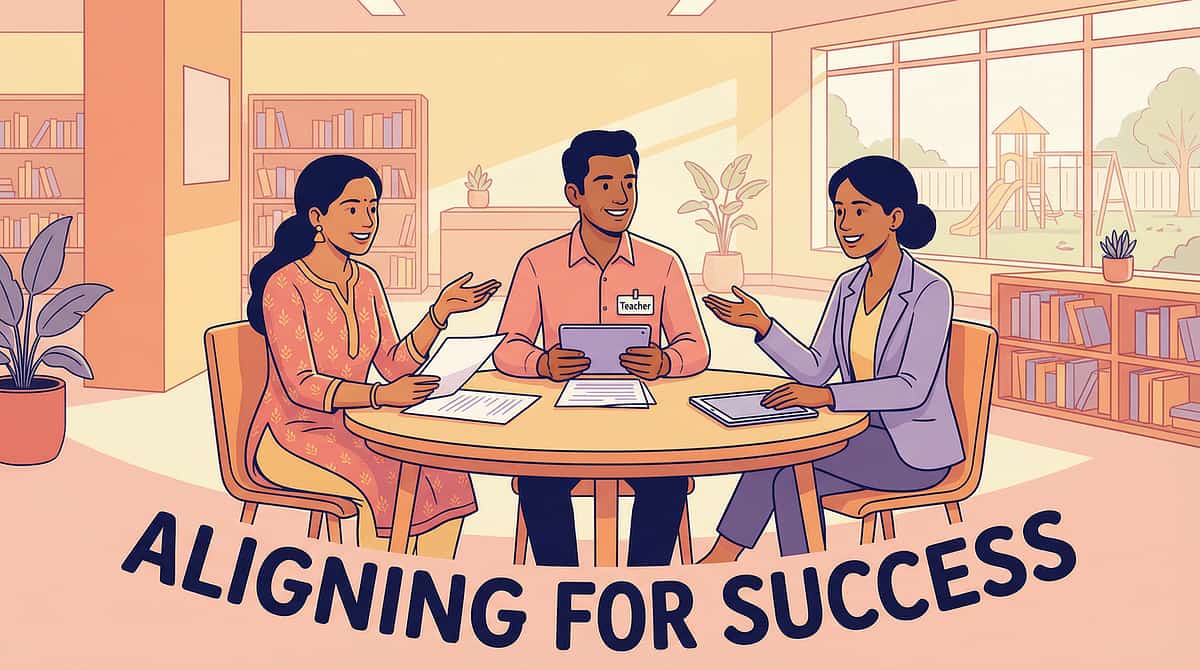
The Core Principle
The Child Succeeds When the Adults Align
Every technique in Domains A–G builds the child's skills. Subdomain H3 builds the system around the child. A child with perfect intervention in an adversarial school environment will struggle. A child with moderate intervention inside a collaborative, informed, accommodating school-home partnership will thrive.
🧠 Basal Ganglia
Consistent home + school strategies = faster skill automation. Conflicting approaches = confusion and slower learning.
💡 Prefrontal Cortex
An accommodating school frees up the child's PFC for learning — not survival. Accommodation removes obstacles, not standards.
❤️ Amygdala
A school where the child feels understood = lower baseline anxiety = better focus, fewer meltdowns, stronger relationships.
🔄 Generalisation
Therapy skills must transfer to school. This requires coordinated language, shared strategies, and therapist-school alignment.

Section 1 of 4
Choosing & Communicating
Cards 3–10 cover the foundational techniques: finding the right school fit, building communication systems that sustain the partnership, mastering teacher meetings, educating staff, and responding to problem calls with confidence and data.
These eight techniques form the bedrock of every successful school partnership. Get these right, and every intervention that follows is easier to implement and sustain.
H-761 | Choosing Right School
9 Materials That Help Choosing Right School
Assessment Criteria
This is the highest-stakes decision in a child's school journey. The wrong school becomes a source of daily trauma. The right school becomes a launchpad. Choosing wisely isn't about prestige, board affiliation, or proximity — it's about fit. Does this school match this child's sensory profile, communication needs, learning style, and social capacity?
🔊 Sensory
Classroom noise level, lighting (fluorescent?), class size, playground and cafeteria sensory load — does the environment operate within the child's processing capacity?
👥 Social
Student-teacher ratio, social skills support availability, bullying policy, peer awareness programme, structured recess options.
📚 Academic
Willingness to modify curriculum, prior accommodation history, special educator availability, flexibility in assessment formats.
💬 Attitude
Ask: "What is your experience with ASD students?" The answer reveals everything. Green flag: "Tell us what works for your child." Red flag: "We treat all children the same."
Decision Framework
India offers a spectrum of school options. Understanding the full range empowers families to make a genuinely informed choice.
1
Mainstream Inclusive
Regular school, accommodations, possible aide — gold standard when genuinely available.
2
Mainstream + Resource Room
Regular class with pull-out support, growing model in metro schools.
3
Special School
ASD-specific or multi-disability — structured, smaller, specialised.
4
Hybrid Model
Part mainstream, part special school — requires strong coordination.
5
NIOS / Home Schooling
Legal under RPwD 2016 when no school works.
How to decide: Visit minimum 3 schools · Bring child for a trial day · Talk to other ASD parents · Check for special educator, ASD training history, accommodation willingness, and a quiet space.
9 Canon Materials:Visual Schedule · Social Stories · Communication Board · First-Then Board · Reward Charts · Visual Timer · Emotion Cards · Calm-Down Kit · Video Modeling
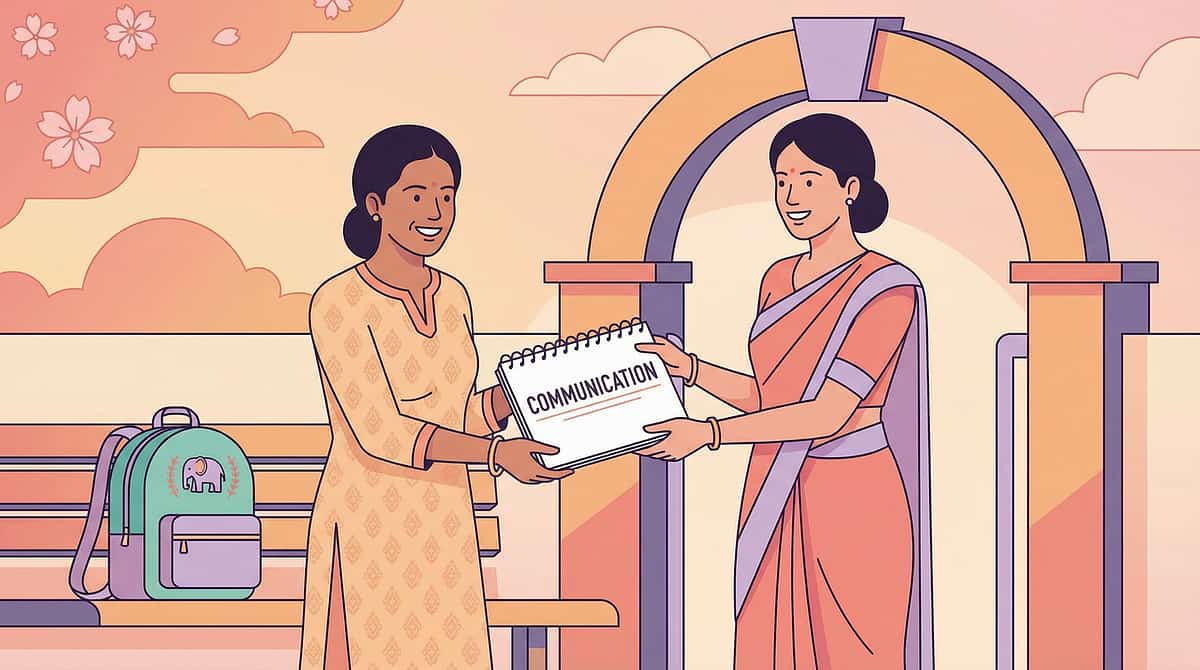
H-762 | School Communication
9 Materials That Help With School Communication
Communication Systems
The daily exchange between home and school is the circulatory system of the child's support. When communication flows, problems are caught early, strategies align, and the child benefits from a unified team. When it breaks down, problems escalate unseen until crisis.
Daily Communication Book
Physical notebook travels in the school bag. Teacher writes key info — mood, achievements, challenges, homework. Parent writes the home update. Two to three lines each. Every day.
Template: Date | Mood (1–5 + emoji) | What went well | What was hard | Homework | Tomorrow's heads-up.
Digital Communication
WhatsApp group (parent + teacher + special educator + aide), email updates, school app notifications. Use whatever channel teachers already use — lower friction = higher consistency.
What to Communicate
- Triggers and successes from the day
- New behaviours observed
- Upcoming schedule changes
- Therapy updates from home sessions
- Sleep quality and morning mood (affects school day)
Execution & Troubleshooting
A communication system only works if it survives the reality of a teacher with 40 students and a parent rushing through the morning. Build for minimum viable consistency — then add richness over time.
Simplify When Needed (Teacher too busy? Switch to tick-box format. Parent not reading? Shift to WhatsApp voice note. Adapt the system — never abandon it.)
Weight Communication Positively (If every note says "Today he hit someone," parents dread opening the book. Share information, not judgment. Celebrate small wins alongside challenges.)
Re-establish When It Dies (Communication naturally fades after 2–3 weeks. Re-establish at the next parent-teacher meeting — agree on minimum viable system and restart.)
Indian context: WhatsApp is already the dominant school communication channel. Teacher workload is real (40+ students) — communication must be efficient. Reframe the daily book as a partnership tool, not an imposition.
H-763 · Dedicated Card | Teacher Meetings
9 Materials That Help With Teacher Meetings
The parent-teacher meeting: 15 minutes that can shape the entire year. Most parents walk in nervous and walk out frustrated. Preparation transforms meetings from vague anxiety exchanges into strategic planning sessions with clear next steps and shared accountability.
Prepare 3 Specific Topics
Not "how's he doing?" — instead: "How is circle time participation? Is the break card being used? What support does he need for writing tasks?"
Bring Data
Home progress notes, therapy reports, and specific examples. Your data and the teacher's data together paint the full picture.
Structure the Meeting
Celebrate what's working → address what's challenging → plan next steps with timelines. The celebrate-first approach keeps the tone collaborative.
Follow Up in Writing
Send an email summary of agreed actions within 24 hours. This creates accountability and a record both parties can reference.
Indian context: Scheduled PTMs are often brief and large-group. Request an individual meeting time separately — a 20-minute one-on-one is worth far more than 5 minutes in a queue.

H-764 · Educating School Staff
9 Materials That Help Educating School Staff
Foundation Knowledge
The teacher has 40 students and no training in ASD. The aide was hired yesterday. The PE teacher thinks the child is "naughty." Staff education isn't optional — it is the foundation of school success. One uninformed teacher can undo months of therapy in a single interaction.
ASD is Neurological
Not a parenting failure, not a discipline problem, not a choice. Every staff member must understand this first.
Behaviour is Communication
Every "misbehaviour" has a function. Ask: what is the child trying to say? Escape? Attention? Sensory relief?
Sensory Differences Are Real
Fluorescent lights, noise, and unexpected touch genuinely cause distress. The child is not being dramatic.
Meltdowns ≠ Tantrums
Meltdowns require safety, not punishment. A teacher who understands this becomes the child's safest adult at school.
Accommodation = Access
Accommodation is not unfair to other students — it removes obstacles so the child can reach the same standard.
Training Delivery
Knowing what staff need to understand is only half the work. The other half is how you deliver it — in a way that respects teacher workload, builds genuine empathy, and sticks beyond the first week of school.
Beginning-of-Year Workshop
- 30–60 minutes for ALL staff — including bus drivers, canteen staff, and security.
- Everyone who interacts with the child needs minimum baseline knowledge.
- Structure: ASD basics (15 min) + this child specifically (15 min) + strategies that work (15 min) + Q&A (15 min).
One-Page Staff Guide
- Every staff member receives a personal copy: child's photo, name, diagnosis summary, communication level, sensory profile, top 3 triggers, top 3 calming strategies, emergency protocol, parent contact.
Ongoing Education
- Monthly check-in with the class teacher
- Mid-year refresher for new staff
- Share relevant articles and short videos
- Invite key staff to observe therapy sessions.
When teachers resist: "I have 40 students — I can't give special treatment." Reframe: "These strategies help ALL students, not mine." Involve the principal for institutional buy-in.

H-765 · Dedicated Card | School Problem Calls
9 Materials That Help With School Problem Calls
The phone rings. "Please come and pick up your child." Your stomach drops. The problem call — meltdown, aggression, injury, refusal, or "we can't manage" — can lead to suspension, expulsion, or the slow squeeze of "maybe this school isn't right for him." Your response shapes the school's response to your child.
Receive the Call
Breathe. Listen. Ask questions — don't defend. Thank the school for communicating. Your calm signals partnership.
Gather ABC Data
What happened BEFORE (antecedent)? What was the exact behaviour? What happened AFTER (consequence)? This is data, not failure.
Schedule a Meeting
"Thank you for letting me know. Let's schedule a meeting this week to adjust the plan." — response to every call, every time.
Adjust the Plan
Data-based adjustment, not punishment-based reaction. If calls become frequent, the behaviour plan needs revision — not the child needs removal.
Indian context: Schools may be protecting their reputation. Advocate firmly but diplomatically. Document everything in writing — email or WhatsApp, with timestamps.
Section 2 of 4
Advocacy & Transitions
Cards 12–17 equip families with the legal knowledge, advocacy scripts, and transition frameworks needed to navigate the most emotionally charged moments: asserting rights, recognizing when to change schools, and managing the high-stress passages between school years and institutions.
Know Your Rights
RPwD 2016 guarantees the right to inclusive education with reasonable accommodation. You are not asking for favours — you are exercising legal rights.
Read the Warning Signs
Recognising when a school is actively harming your child — and acting on it — is as important as choosing well in the first place.
Master Transitions
Preschool to primary. Primary to middle. Middle to high. Each transition is a complete environment reset — preparation 6 months out makes September smooth.

H-766 · Part A | Advocating at School
9 Materials That Help Advocating at School
Know Your Rights
Advocacy isn't aggression — it's informed, persistent, legally-backed partnership. You are not asking for favours. You are exercising rights guaranteed under Indian law. Understanding those rights transforms the parent from petitioner to equal partner.
1
Right to Inclusive Education
RPwD 2016, Sections 16–18. Schools cannot deny admission based on disability.
2
Reasonable Accommodation
Section 2(y). Schools must make modifications without "disproportionate burden" — this is broad and powerful.
3
Examination Accommodations
Section 17. Extra time, scribe, computer, separate room — for board AND school exams.
4
Non-Discrimination
Section 3. The school cannot expel or segregate based on disability. This is unconditional.
5
Barrier-Free Environment
Section 16. Physical and communication accessibility is a legal requirement, not a courtesy.
How to invoke your rights: Written request citing RPwD 2016 → school's legal obligation → District Disability Commissioner if school refuses. Documentation at every step.
Advocacy in Action
Knowing your rights matters. Knowing how to use them without burning bridges is the art. Start collaborative, escalate systematically, and document everything. Most schools respond well to partnership language — escalation is a last resort, not a first move.
Step 1: Verbal Partnership Request
"We'd like to work together to support [child's name]. Here's what we've found works at home and in therapy."
Step 2: Written Request
Written request to teacher + principal. Email or WhatsApp — creates a timestamp. Cite the specific accommodation needed and the professional who recommended it.
Step 3: Formal Letter
Formal letter citing RPwD 2016, Section 16–18. Request acknowledgment in writing. "Under RPwD 2016, my child has a right to reasonable accommodation."
Step 4: District Complaint
District Disability Commissioner complaint. Bring documentation: every prior written request, every meeting summary, every refusal.
Key insight: Teacher resistance often reflects lack of knowledge, not ill will. Educate first — escalate only if needed. Connect with other ASD parents at the same school. Collective advocacy is far more effective than individual requests.
H-767 | When School Isn't Working
9 Materials That Help When School Isn't Working
Warning Signs
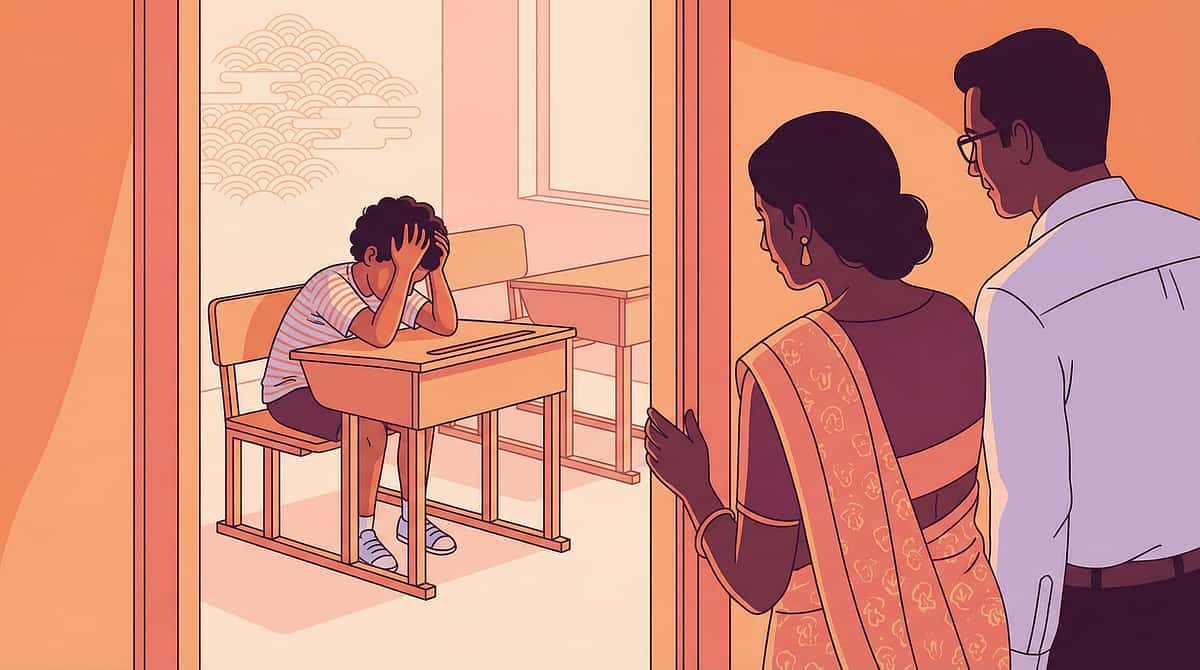
The hardest realization: this school is harming your child. Not every school can serve every child. Staying in the wrong school because of sunk cost — fees paid, uniform bought, "it's a good school" — damages the child. A school causing chronic stress isn't just emotionally harmful; it is neurologically damaging.
🔴 Immediate Action
Physical harm (restrained, injured, or harming others regularly). School-induced trauma: nightmares, regression, panic attacks. Complete skill regression — losing skills they previously had.
🟡 Urgent Review
Chronic school refusal. Daily meltdowns increasing in frequency. No measurable progress for 6+ months despite intervention. School unwilling to accommodate. Child increasingly withdrawn or depressed.
🟢 Monitor Carefully
Occasional difficult days. Slow but present progress. School actively working on improvements. These are not yet signals to leave — they are signals to stay engaged.
The neuroscience: Sustained cortisol elevation suppresses hippocampal learning, sensitizes the amygdala, and impairs executive function. Removing the stressor is treatment — not giving up.
Options & Transitions
Once warning signs are confirmed, the question becomes: what next? There is a full spectrum of options between "stay and hope" and "withdraw immediately." Work systematically from the least disruptive intervention outward.
1
Internal Fix First
New classroom, different teacher, additional aide, modified schedule. Try adjustments within the school before any external change. Fastest and least disruptive if the school is willing.
2
School Change
Move to a different mainstream school, special school, or Montessori. Visit the new school before leaving the current one — overlap matters.
3
Hybrid Model
Part-time school + part-time home-based therapy. Maintains peer exposure while reducing demand to within the child's capacity.
4
NIOS / Home Schooling
Legally valid under RPwD 2016. Structured home programme with community inclusion for socialisation. Growing support communities in metros.
5
Therapeutic Break
Weeks or months away from school to rebuild regulation, followed by graduated re-entry. Sometimes the bravest choice.
When transitioning: tell the child — "It's not your fault. We're finding a school that fits you better." Children internalize blame. Name it out loud to prevent it.

H-768 · Part A | School Transitions
9 Materials That Help With School Transitions
Preparation for Major Transitions
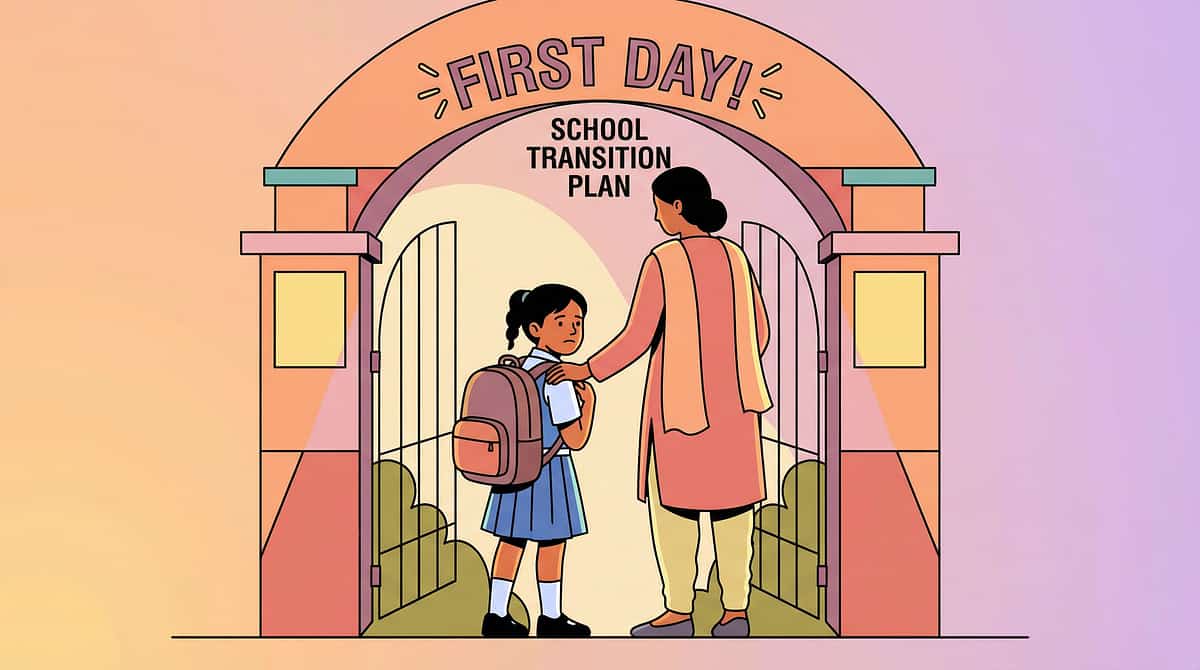
Preschool → primary. Primary → middle. Middle → high. Each transition is a complete environment reset: new building, new teachers, new peers, new rules, new schedule, new sensory landscape. For children with ASD, school transitions are among the highest-stress events in the year — and the most predictable ones. Preparation is the intervention.
6 Months Before
Identify new school. Begin campus visits. Gather information about the new environment's sensory profile.
3 Months Before
Meet key staff. Walk classroom routes. Get uniform. Begin practicing the new daily routine at home.
1 Month Before
Social story about the new school day. Visual schedule preview. Increase visit frequency. Make the unfamiliar familiar.
2 Weeks Before
Full practice run — complete uniform, packed bag, drive the route. Run the full routine from wake-up to school gate.
Day Before
Lay out everything. Review visual schedule. Calm evening routine. No new information today — consolidate the familiar.
H-768 · Part B | School Transitions
9 Materials That Help With School Transitions
Execution & Support
The preparation gets the child to the door. The execution and post-transition support determine whether those first weeks become a foundation — or a crisis. Expect regression. Plan for it. It is the brain adapting, not failing.
Information Handover
Comprehensive transition document hand-delivered to the new school BEFORE the first day: child profile, IEP, behaviour plan, sensory plan, what works, what doesn't, emergency contacts, therapist contacts.
Graduated Entry
Partial days initially if school allows, building to full days. Connect with any peers transitioning to the same school and coordinate peer introductions early.
Expect Regression
2–6 weeks of adjustment is NORMAL. Skills may temporarily decline. Behaviour may worsen. Sleep may be disrupted. This is the brain rebuilding its "school map" from scratch.
Post-Transition Monitoring
Daily communication with new teacher first month, weekly check-ins months 2–3, monthly thereafter. Adjust the plan based on what the new environment reveals.
Indian transition markers: Class 5→6 (often new school), Class 8→9 (board pressure begins), Class 10→11 (stream selection, new school), Class 12→college (start preparation in Class 11).
Section 3 of 4
Coordination & Plans
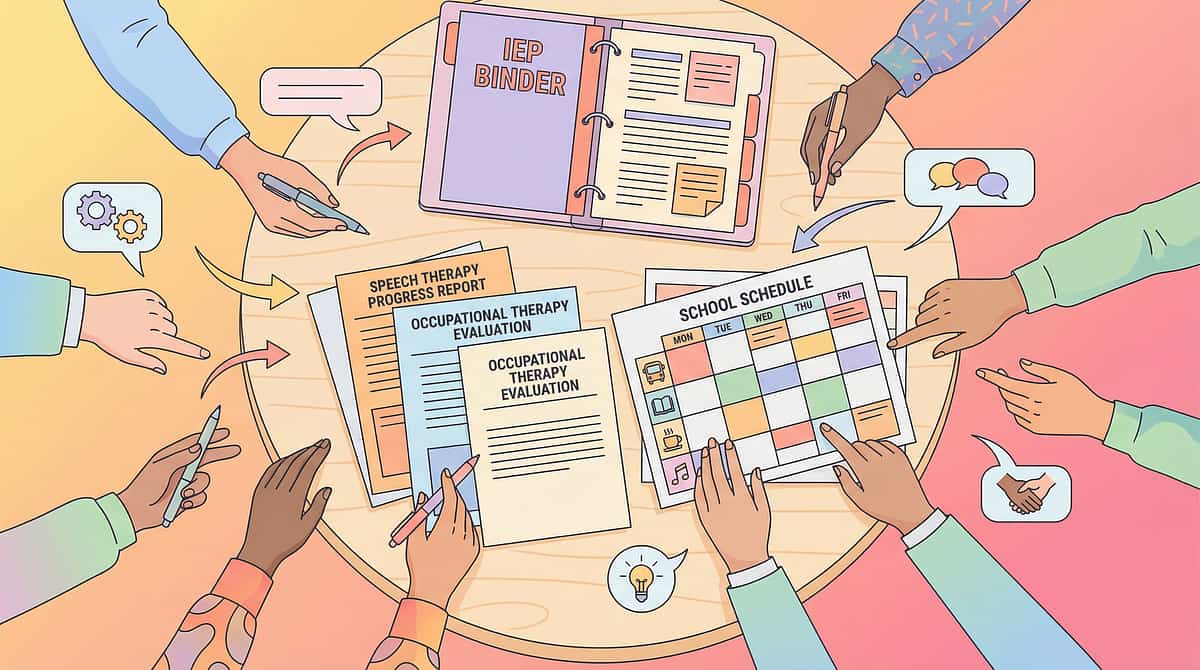
Cards 18–25 cover the technical infrastructure of school partnership: preparing new teachers for a seamless handover, coordinating the therapy team, creating home-school consistency, and building the written plans — behaviour, sensory, communication — that give every adult a shared playbook.
These eight techniques transform individual support into a unified, self-sustaining system that works across every adult and every environment in the child's life.
H-769 · Dedicated Card | Preparing New Teachers
9 Materials That Help Preparing New Teachers
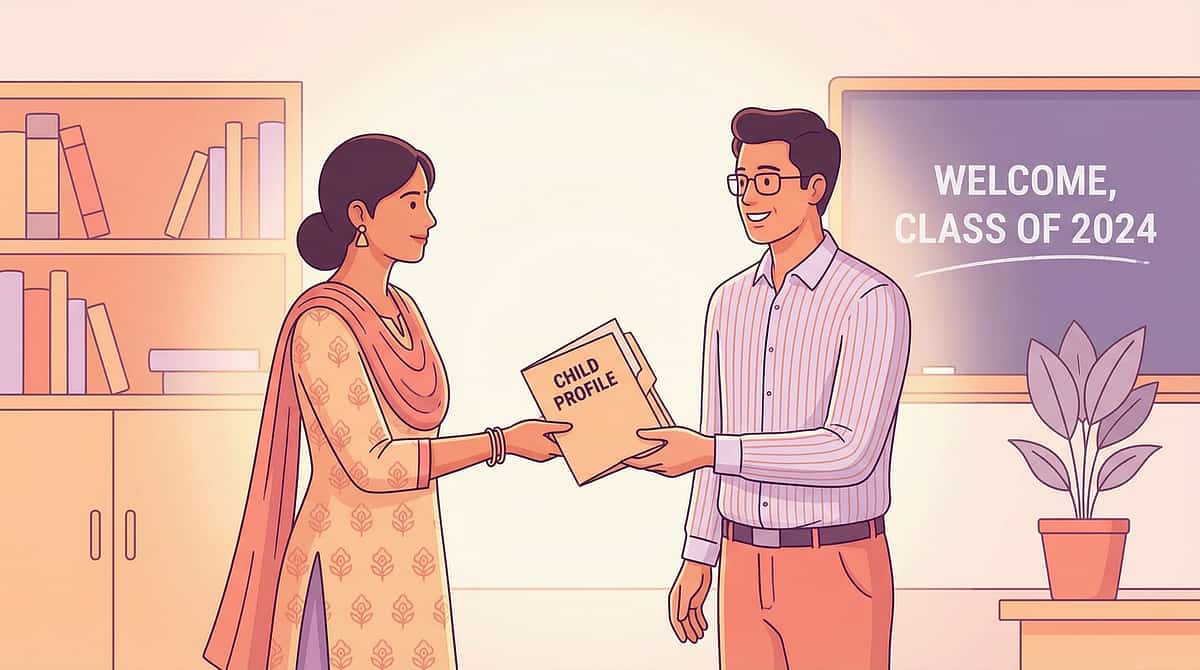
New academic year. New teacher. Everything the previous teacher learned — gone. The annual reset is one of the most frustrating aspects of school for ASD families. Without preparation, the new teacher spends 4–8 weeks discovering what the previous teacher already knew — and the child pays for every misunderstanding during that period.
1
Transition Meeting
Outgoing teacher + incoming teacher + parent. Request this from school — it is the most impactful 30 minutes of the year, and it is completely within your right to request it.
2
"Getting to Know [Child's Name]" Document
Updated annually. Covers strengths, interests, communication style, top triggers, effective strategies, preferred rewards, and emergency protocols. Given to EVERY new adult who interacts with the child.
3
A Short Video
Three minutes of the child at their best + three minutes during a challenge. More powerful than any written description. A new teacher who has SEEN the child is already ahead by weeks.
Indian context: Teacher rotation is common and rarely voluntary. Systematise the handover process so it is school-independent — the documents travel with the child, not with the teacher.
H-770 · Dedicated Card | Therapist Coordination
9 Materials That Help With Therapist Coordination
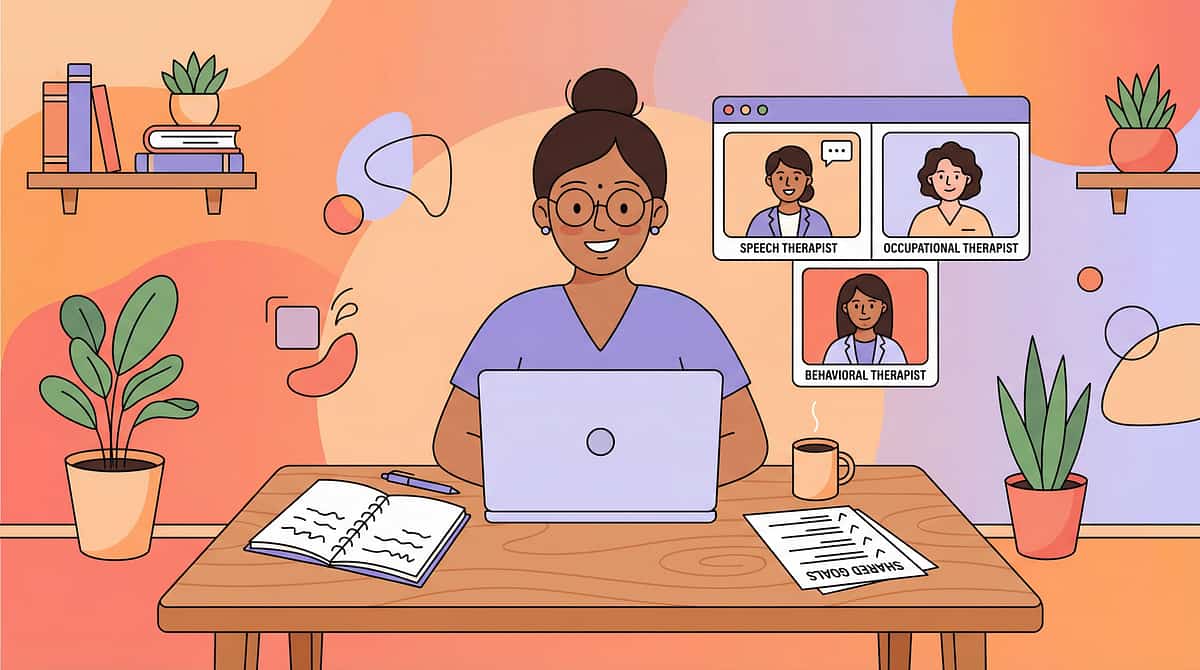
The child has a speech therapist, an OT, a behavioural therapist, a special educator, and a school teacher. Five professionals. If they don't talk to each other, five different — possibly contradictory — approaches confuse the child and slow progress. Coordination is the multiplier that makes individual therapies exponentially more effective.
The Parent as Hub
In the Indian context, therapists are often at different centres with no shared system. The parent must actively be the hub connecting all spokes — gathering information, sharing updates, and brokering alignment between professionals who may never meet in person.
Coordination Methods
- Monthly team meeting (30 min virtual works)
- Shared goals document — all working toward the SAME targets
- Shared WhatsApp group: parent + all therapists + school
- Quarterly progress review with all parties
- Shared report format so notes are readable across disciplines
Coordinated intervention: same terminology, same visual systems, same behaviour approach → the brain receives consistent input across all settings.
H-771 · Dedicated Card | Home-School Consistency
9 Materials That Help With Home-School Consistency
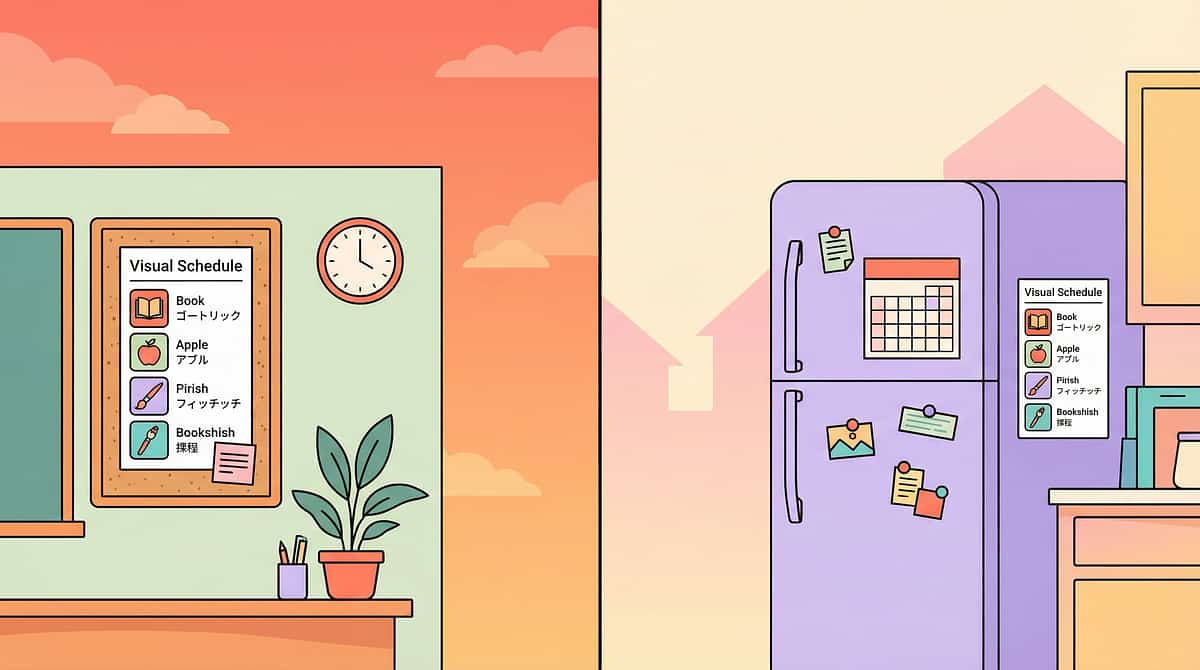
School uses a visual schedule. Home doesn't. School uses a token board. Home uses verbal praise. School says "first-then." Home says "if you do this, you get that." Inconsistency is the silent saboteur of progress. What works at school must work at home — and vice versa.
Same Visual Format
The visual schedule at home should mirror the school format in layout, symbols, and sequence. The child's brain generalises what is consistent.
Same Behaviour Approach
Same language, same consequences, same reinforcement hierarchy. If "break card" means different things in different settings, the child tests limits in both.
Same Communication System
The AAC device, PECS, or sign system used at school must be available and actively used at home — charged, accessible, modelled daily.
Consistency meeting: Parent + teacher agree on TOP 5 strategies used everywhere. In Indian joint families, this extends to ALL caregivers — grandparents, aunts, uncles, domestic helpers. Everyone uses the same approach or the system breaks down.
H-772 · Part A | Behaviour Plans
9 Materials That Help With Behaviour Plans
Plan Development
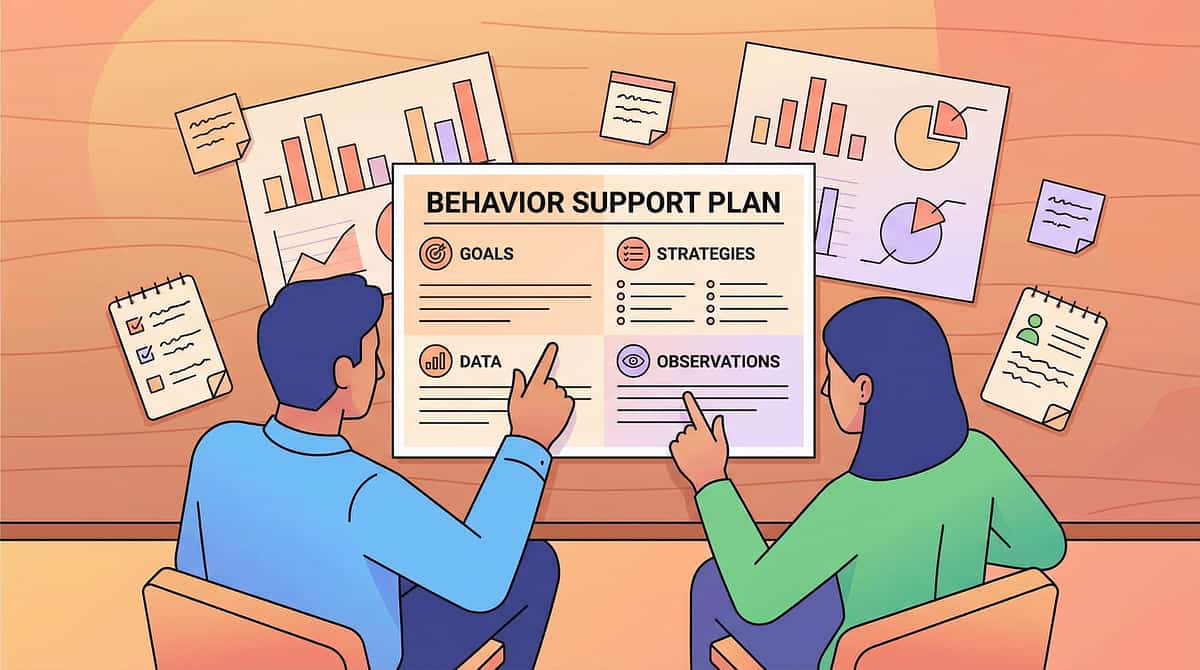
A Behaviour Support Plan (BSP) is a written document that tells every school staff member: what behaviours to expect, why they happen, how to prevent them, how to respond, and how to reinforce alternatives. Without it, each adult invents their own response — guaranteeing inconsistency and undermining the child's progress.
Behaviour plans work because they create environmental consistency: same antecedent management, same response to behaviour, same reinforcement of alternatives. The child's brain learns: "This behaviour → this outcome. Always." Predictability drives learning and behaviour change.

H-772 · Part B | Behaviour Plans
9 Materials That Help With Behaviour Plans
Implementation & Monitoring
A behaviour plan written but not implemented is worse than no plan at all — it creates false confidence while the child continues to struggle. Implementation fidelity is everything. Every person who interacts with the child reads, understands, and practices the plan before they need it.
Training All Staff
Every adult — teacher, aide, PE teacher, canteen staff, bus driver — reads and practices the plan. A visual one-page summary is posted discreetly in the classroom for quick reference.
Simple Data Collection
Frequency count: how many times did the target behaviour occur today? Track weekly. A simple tally sheet is enough — complexity kills compliance.
Review Cycle
2-week check: is it being implemented? → 4-week data review: is it working? → adjust as needed. No plan survives contact with reality unchanged.
Crisis Protocol
What to do during severe behaviour: safety steps, who to call, what NOT to do. Every staff member knows this by heart before the first incident.
Indian context: The behaviour plan concept may be unfamiliar to schools. Parents may need to explain and advocate for a written plan. Pinnacle Blooms therapists can help develop and present plans directly to school leadership.
H-773 · Dedicated Card | Sensory Plans
9 Materials That Help With Sensory Plans
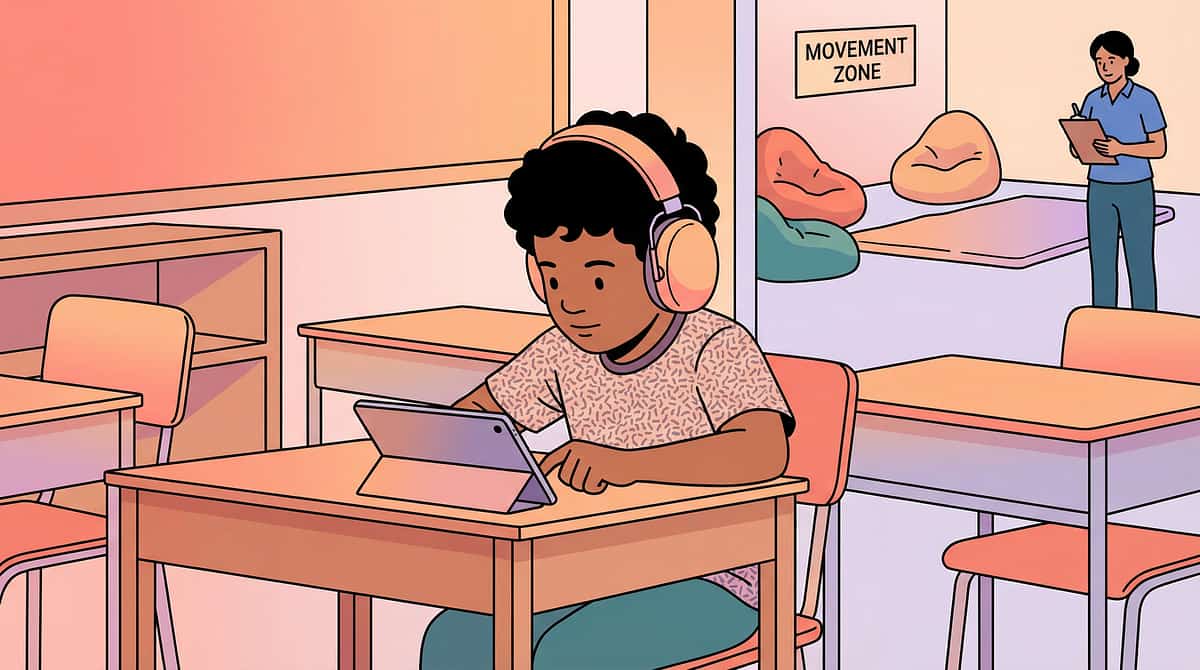
A sensory plan (sensory diet) is the school's blueprint for sensory regulation. It specifies what sensory input the child needs throughout the day, what to avoid, what accommodations are required, and what strategies to deploy at specific times. Developed by an OT, implemented by everyone.
Sensory Profile Summary
Hyper- or hypo-sensitivity for each sensory system. This is the foundation — you cannot build the plan without knowing the profile.
Scheduled Sensory Input
Movement break every 30 minutes. Heavy work before transitions. Fidget tool during seated work. Proactive input — like eating before you're starving.
Environmental Accommodations
Preferred seating location, lighting modifications, noise reduction strategies (headphones, quieter spot). Small changes with large neurological impact.
Sensory Crisis Protocol
What to do during sensory overload — specific steps every staff member follows. Not improvised in the moment, but planned and practiced in advance.
H-774 · Dedicated Card | Communication Plans
9 Materials That Help With Communication Plans
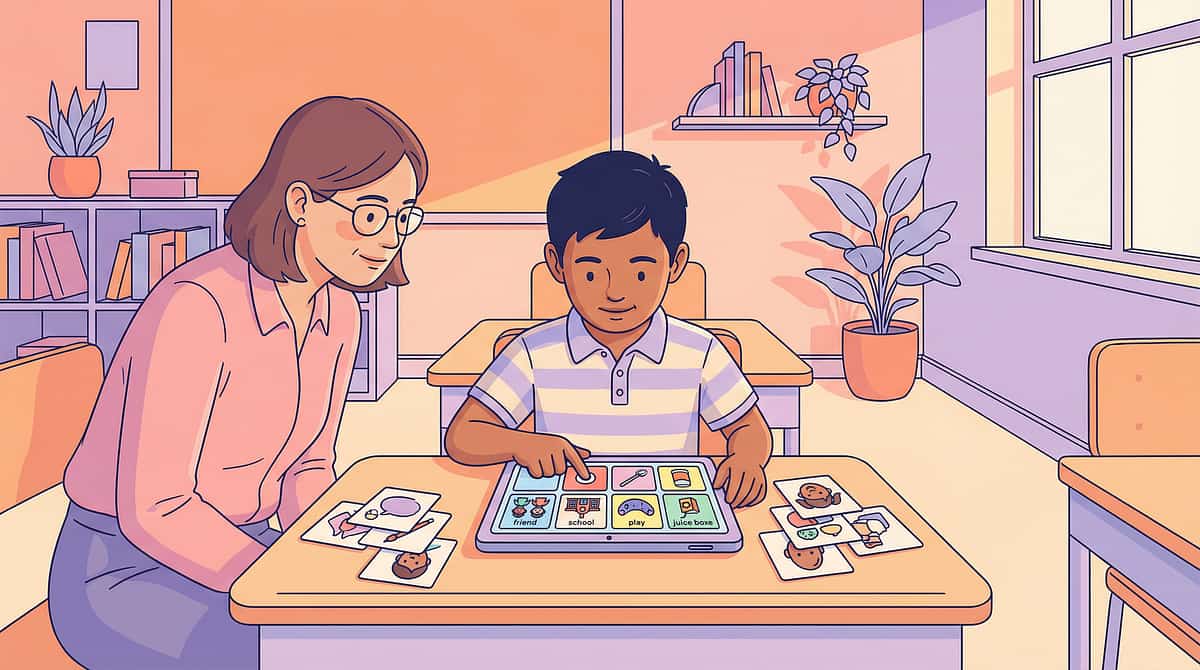
How does the child communicate at school? Verbally? AAC device? Picture cards? Sign? Communication board? The communication plan ensures the school supports the child's method, all staff understand how the child communicates, and the child has access to their communication system all day, every day.
A child who cannot communicate at school is a child in a cage — surrounded by people who don't speak their language. The communication plan gives the child their voice back.
01
Document Current Communication
Communication level, primary mode (verbal/AAC/signs/PECS), available vocabulary, how to respond to communication attempts, when visual supports are needed.
02
Manage the Device
Charging protocol, who carries it, where it stays during PE/lunch/transitions. Device management failures are the most common reason AAC stops being used at school.
03
Train All Staff
How to use the device, how to model communication, what to do when communication breaks down. SLP develops the plan — all staff implement it consistently.
Communication access = agency = reduced frustration = reduced behaviour. The communication plan is often the single highest-impact document in the child's school file.

H-775 · Dedicated Card | Aide Training
9 Materials That Help With Aide Training
The shadow teacher/aide: potentially the most important person in the child's school life — and almost always the least trained. An untrained aide does harm: hovering (preventing independence), doing work for the child (preventing learning), isolating the child from peers, or mismanaging behaviour and escalating crises.
Core Training Curriculum
ASD understanding + child-specific profile + behaviour plan implementation + communication support + sensory strategies + prompt hierarchy (least-to-most) + fading plan + social facilitation.
The Fading Plan
The aide's goal is to systematically work themselves out of a job — not to become a permanent shadow. Independence is the target. Every prompt is a step toward one day not needing it.
Social Facilitation
The aide connects the child with peers — not replaces peers. "Go ask Rahul if he wants to play" not "I'll play with you." The aide is a bridge, not a destination.
Training source: Parent provides initial training. Therapist provides ongoing coaching. Written guides ensure consistency even when the aide changes — and in India, aide turnover can be high.

Section 4 of 4
Inclusion & Community
Cards 26–30 address the broader ecosystem: building genuine inclusion (not just physical presence), educating peers in neurodiversity, connecting the child through extracurricular activities, assembling a functioning support team, and completing the annual cycle with a strong end-of-year handover.
True Inclusion
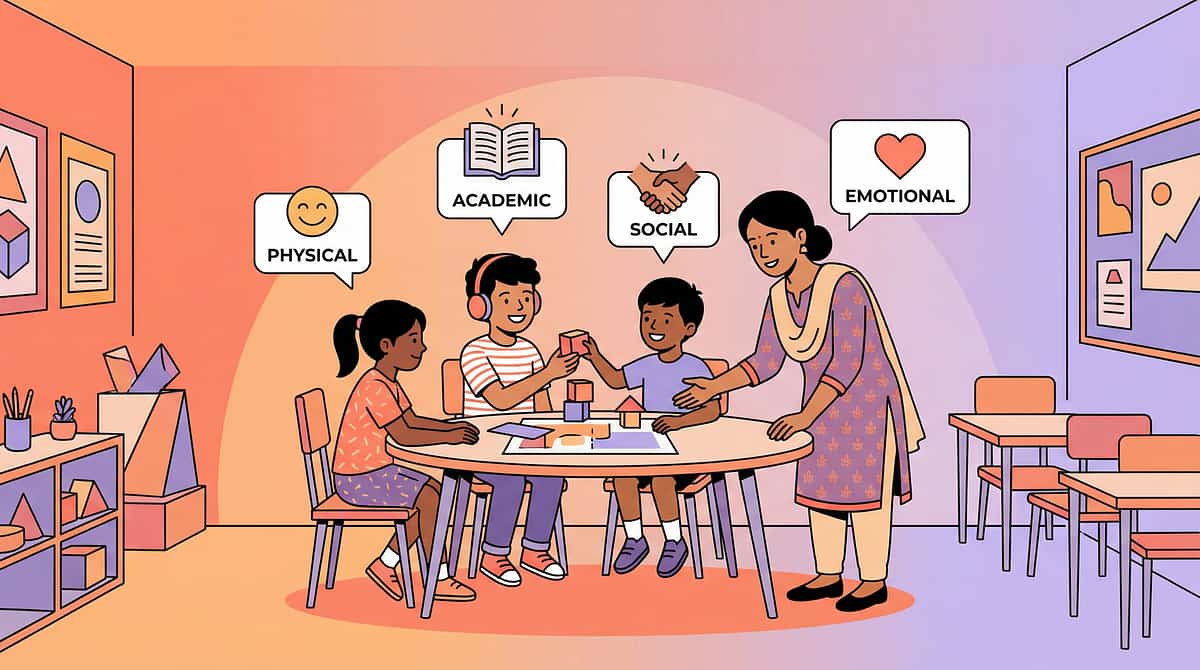
Physical, academic, social, and emotional inclusion — all four must be present. Physical presence without the other three is integration, not inclusion.
Peer Awareness
Children who understand neurodiversity become natural allies. Classroom-wide education transforms the social environment for the ASD child.
Beyond the Classroom
Interest-based extracurricular activities provide structured social interaction — lower social demand, higher social success. Many children find their tribe outside the classroom.
H-776 · Part A | Inclusion Support
9 Materials That Help With Inclusion Support
Inclusion Framework
Inclusion isn't placing an ASD child in a mainstream classroom and hoping for the best. That's integration — physical presence without meaningful participation. True inclusion means the child belongs, participates, learns, and is valued as a member of the class community.
When a child is physically present but socially excluded — sitting in class but invisible — social brain development is actively blocked. The worst of both worlds. All four inclusion dimensions must be present simultaneously.
Inclusive Practices
True inclusion is built through deliberate, specific classroom practices — not good intentions. Every element of inclusion must be actively designed, taught, and maintained by the teacher as the architect of the class community.
Classroom Practices That Work:
- Cooperative learning groups — child has a defined role
- Rotating buddy system — different peers, growing relationships
- Differentiated instruction — same topic, different levels
- Universal design: visual schedules, clear instructions, movement breaks help ALL students
- Child is included in ALL activities — not pulled out for fun ones.
The Teacher as Climate-Setter:
"In this class, we help each other. Everyone learns differently and that's okay." Said once, it's a statement. Said consistently, it becomes classroom culture.
What Inclusion Is NOT:
- Leaving the child without adequate support
- Expecting the child to "keep up" without accommodation
- Separating the child for convenience
- Pulling the child from enjoyable activities for extra work.
Indian reality: RPwD 2016 mandates inclusion but implementation varies enormously. Metro schools have more capacity. Advocate for a trained special educator in school, resource room access, modified assessment, and a peer awareness programme.

H-777 · Dedicated Card | Peer Awareness
9 Materials That Help With Peer Awareness
"Why does he flap his hands?" "Why does she get extra time?" Peer understanding determines whether the classroom is hostile or welcoming. Children who understand neurodiversity become natural allies. Those who don't can become sources of exclusion without anyone intending harm.
Age-Appropriate Classroom Discussion
"Everyone's brain works differently." Neurodiversity-affirming books, short videos, and activities that build empathy without singling anyone out. Benefit extends to all children — not just the ASD child.
Without Naming the Child
"Some people need headphones because sounds are LOUDER for them" — not "Arjun wears headphones because he has autism." Protect privacy while building understanding.
With Family Consent: Share the Diagnosis
When families are ready, sharing the diagnosis can empower: "I have autism — it means my brain works differently." Many children find this liberating, not limiting.
Buddy Training
Teach interested peers specific support strategies: how to invite, how to play, how to respond if communication is different. Peers become genuine allies, not just bystanders.
H-778 · Dedicated Card | Extracurricular Activities
9 Materials That Help With Extracurricular Activities
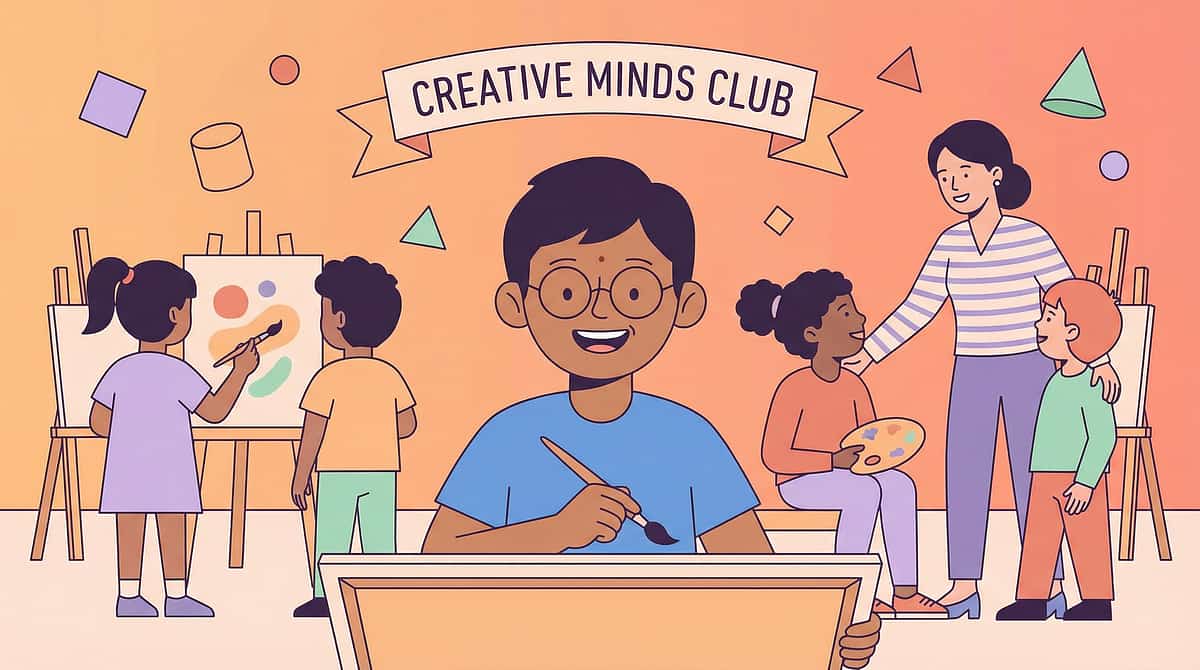
Beyond academics: clubs, sports, music, art, drama, chess. Extracurricular activities provide interest-based social interaction — which is often easier than unstructured peer play. Many children with ASD find their social niche through shared interests, not through the classroom.
Activity Selection
Match to the child's genuine interests AND sensory tolerance. Swimming, art, coding, chess, music — each provides structured social interaction around predictable content.
Graduated Participation
Individual activities first → paired → small group → team. Build social confidence through mastery, not exposure. Don't rush the group stage.
Preparation & Support
Social story before joining. Visit the space before the first session. Brief the instructor. Aide presence initially — with a clear fading plan toward independence.
Why interest-based social works: When the activity centres on a shared interest, social communication demand reduces — the interest provides the conversation topic, the shared activity provides structure. Lower social demand = higher social success.
Indian options: Cricket coaching, dance class, classical music lessons, chess club, art class, robotics, swimming — India's rich extracurricular culture offers genuine opportunity for every child's interest profile.

H-779 · Building School Support Team
9 Materials That Help Building School Support Team
Team Composition
The child needs a team — not a lone parent fighting the system. Building the school support team means identifying, recruiting, and coordinating the adults who form the child's support network at school. Redundancy in the support system protects against single-point failures.
Parents
The hub of the team. 16+ years of expertise in this specific child. Equal members — not petitioners.
Class Teacher
The day-to-day environment architect. The most impactful school adult when well-informed and supported.
Special Educator
Bridges mainstream curriculum and individual need. Develops and monitors the IEP. Core team member.
School Counsellor
Emotional safety net. Supports the child, the teacher, and the parent-school relationship.
External Therapists
SLP, OT, BCBA/ABA therapist, developmental paediatrician. Coordinated through the parent hub.
The champion: Identify ONE person at school who truly understands and advocates for your child. This person is gold. Nurture that relationship actively — they are the most valuable member of the team.
Team Functioning
A support team that exists on paper but never communicates is not a team. Team functioning — the rhythms, shared documents, decision-making protocols, and relationship maintenance — is what transforms a list of names into a working system that sustains itself through the year.
Meeting Schedule
Beginning of year: planning → quarterly: review → as-needed: crisis response. Each meeting has an agenda, a note-taker, and agreed next steps — otherwise they drift into social conversation.
Shared Documentation
All team members access the same documents: IEP, behaviour plan, sensory plan, communication plan. One living document, updated by anyone, visible to all.
Data-Based Decisions
When team members disagree → return to the data. What does the frequency count show? What does the teacher's observation record show? Data depersonalises disagreement.
Maintaining the Team
Thank people. Acknowledge effort. Share positive news — not just problems. Celebrate successes together. In India: tea meetings, Teacher's Day acknowledgment, festival greetings — the human connection that sustains professional collaboration over years.

H-780 · End of Year Transitions
9 Materials That Help With End of Year Transitions
Planning the Handover
Every year ends. Every year, the work of building understanding, systems, and relationships must be transferred to the next year's team. End-of-year transitions done well means September starts smooth. Done poorly means September is a crash — and the first two months are spent rediscovering what was already known.
Transition Document
Updated child profile, current IEP, behaviour plan, sensory plan, communication plan, what worked this year, what didn't, and current goals. The richest document in the child's school file.
Photo Portfolio
Child's best work, current visual supports in use, photos of the classroom setup that works. Visual evidence communicates what words often can't — the new teacher sees, not just reads.
Video Message
Current teacher records a 2-minute handover video for next year's teacher. Seeing the child, hearing the teacher's tone — more powerful than any written report. Takes 5 minutes to make. Worth months of adjustment time.
Planning timeline: Begin in May. Transition document complete by end of May. Classroom visits scheduled for June. Transition meeting before the school closes — not after the holiday begins.
Executing the Handover
Planning the handover is preparation. Executing it — the meeting, the visits, the summer, and the first week — is where it either lands or falls apart. Every element below is designed to replace novelty with familiarity, and anxiety with readiness.
Transition Meeting
Current teacher + next teacher + parent + special educator. Schedule BEFORE school closes — not after the holiday begins.
Classroom Visits
Child visits the NEW classroom 2–3 times before summer. Brief, positive interactions — not formal assessments. Make the room familiar before it's populated.
Summer Preparation
Social story about next year. Visual schedule preview. Practice the new routine. Preview photos of new classroom and teacher.
First Week Plan
Next year's teacher receives the complete file + one-page summary + parent's number + "call me anytime" permission. Daily communication the first month.
Every end of year is a beginning of year for the next class. The investment in transitions compounds — each year, the handover document gets richer, the process gets smoother, and the child transitions more easily.
9 Canon Materials:Visual Schedule, Social Stories, Communication Board, First-Then Board, Reward Charts, Emotion Cards, Calm-Down Kit, Visual Timer, Video Modeling
The Subdomain H3 Message
Your child's school success depends not just on the child's skills — built through Domains A through G — but on the system around the child. Building school partnerships is infrastructure work. Less visible than teaching a skill. Equally impactful.
H1: School Readiness
Preparing the child for the school environment — routines, transitions, social expectations, sensory tolerance.
H2: Academic Skills
Building the functional academic capabilities the child needs to engage with curriculum and demonstrate learning.
H3: School Partnership
Building the system around the child — advocacy, communication, plans, coordination, inclusion, and team. This subdomain.
The child develops AND the system adapts. Both are necessary. Neither is sufficient alone. School is where childhood happens — making it work is a multi-year investment that determines the child's trajectory.
Preview of school partnership Therapy Material
Below is a visual preview of school partnership therapy material. The pages shown help educators, therapists, and caregivers understand the structure and content of the resource before use. Materials should be used under appropriate professional guidance.
Link copied!
All 20 School Partnership Techniques
Every technique in Subdomain H3 — from choosing the right school to the end-of-year handover. Each links to a full 40-card technique page with 9 canon materials, step-by-step guidance, and downloadable resources.
Code | Technique | Focus | |
H-761 | Choosing Right School | Assessment criteria, decision framework, school options in India | |
H-762 | School Communication | Daily book, digital channels, positive-weighted communication | |
H-763 | Teacher Meetings | Preparation, structure, follow-up, individual meeting strategy | |
H-764 | Educating School Staff | Foundation knowledge, training delivery, one-page staff guide | |
H-765 | School Problem Calls | ABC data, collaborative response, plan adjustment protocol | |
H-766 | Advocating at School | RPwD 2016 rights, advocacy scripts, escalation ladder | |
H-767 | When School Isn't Working | Warning signs, options spectrum, transition support | |
H-768 | School Transitions | 6-month preparation timeline, execution, post-transition monitoring | |
H-769 | Preparing New Teachers | Transition meeting, one-page profile, handover video | |
H-770 | Therapist Coordination | Team meetings, shared goals, parent as coordination hub | |
H-771 | Home-School Consistency | Top 5 shared strategies, joint family consistency, same systems | |
H-772 | Behaviour Plans | FBA, BSP development, implementation fidelity, data collection | |
H-773 | Sensory Plans | Sensory profile, scheduled input, environmental accommodations | |
H-774 | Communication Plans | AAC access, device management, all-staff training | |
H-775 | Aide Training | Training curriculum, prompt fading, social facilitation | |
H-776 | Inclusion Support | Four inclusion dimensions, classroom practices, RPwD advocacy | |
H-777 | Peer Awareness | Neurodiversity education, buddy training, consent-based disclosure | |
H-778 | Extracurricular Activities | Interest-based selection, graduated participation, instructor briefing | |
H-779 | Building Support Team | Team composition, meeting rhythms, data-based decisions | |
H-780 | End of Year Transitions | Handover document, classroom visits, summer preparation, first week |