
You Cannot Pour From an Empty Cup. Your Wellbeing Powers Your Child's Progress.
This domain is for YOU — the parent, the grandparent, the sibling, the caregiver. The exhaustion that never lifts. The guilt when you lose patience. The marriage stress that no one talks about. The siblings who feel invisible. The grandparents who don't understand. Your strength, knowledge, and resilience are the foundation upon which your child's entire intervention rests — and that foundation needs care too.
You are about to access 40+ clinically validated family and caregiver support intervention techniques — each designed for home implementation, evidence-graded, and developed by the world's largest pediatric therapy consortium.
🏥 70+ Centers
India's #1 Autism & Child Development Therapy Chain
🌍 21M+ Sessions
Families from 70+ countries served globally
97%+ Improvement
Measured outcomes via AbilityScore®
You Are Not Alone — The Numbers Speak
Behind every child's progress is a caregiver carrying an invisible weight. The research is clear: caregiver wellbeing is not a side concern — it is the single most powerful predictor of your child's outcomes. These numbers validate what you already feel.
80%+
Autism Parent Stress
of autism parents report clinical levels of stress — 3× the rate of parents of neurotypical children. Source: Journal of Autism and Developmental Disorders, 2023
#1
Predictor of Success
Parental self-efficacy is the #1 predictor of intervention success — above technique selection and therapy hours. Source: Parent Training Systematic Review, 2022
65%+
Mental Health Impact
of caregivers report their own mental health directly impacts their child's therapy outcomes. Source: Family Quality of Life, 2022
The Caregiver Brain — Decoded for YOU
This card isn't about your child's brain — it's about yours. Understanding what chronic caregiving stress does to your neurology is the first step to healing it.
Cortisol & Chronic Stress
Sustained caregiving stress elevates cortisol levels, affecting your sleep, mood, immune function, and decision-making. Chronic stress physically reduces prefrontal cortex volume and hippocampal function. The brain fog is real.
The Empathy-Exhaustion Axis
Mirror neurons that help you attune to your child's distress also absorb it. Without adequate recovery, empathic caregiving leads to compassion fatigue — a well-documented clinical phenomenon.
Attachment Feedback Loop
Your emotional state directly shapes your child's attachment security and emotional regulation. A regulated parent produces a more regulated child. Self-care is a direct clinical intervention for your child.
Neuroplasticity — For You Too
The same brain plasticity that enables your child to learn new skills enables YOU to build resilience, develop new coping strategies, and recover from burnout. Your brain responds to structured support.

Taking care of yourself isn't optional. It's therapeutic infrastructure.
Clinically Validated. Globally Recognized. Home-Applicable.
Every technique in this domain is grounded in peer-reviewed evidence and aligned with global developmental standards. This is not opinion — it is science translated for your home.
Level I — Parent Training
Parent training programs are classified as evidence-based (NCAEP 2020). WHO Caregiver Skills Training (CST) is the global gold standard — implemented in 30+ countries with robust outcome data.
Caregiver Wellbeing
Mindfulness-based stress reduction, ACT, and structured respite programs show significant reduction in caregiver burnout and measurable improvement in intervention implementation quality.
Sibling Support
Structured sibling support programs reduce anxiety in neurotypical siblings and increase family cohesion — benefiting both the sibling and the child with autism.
Indian Context
Pinnacle's parent training programs, cultural adaptation of stigma management, extended family education, and multilingual support address the unique challenges of Indian families navigating autism.
1 Subdomain. 40 Techniques. Evidence-Based. Home-Executable.
Domain K is focused and powerful. One comprehensive subdomain covers the full landscape of caregiver and family needs — from stress management to extended family education. Each of the 40 techniques is ordered foundational to advanced, sequenced for gradual implementation, and linked to materials you can access today.
💪 Parent & Caregiver Tools
Subdomain K1 | Techniques K-881 to K-920 | 40 evidence-based interventions covering stress management, parental self-efficacy, extended family education, and caregiver resilience.
Subdomain K1 | Techniques K-881 to K-920
💪 Parent and Caregiver Tools
You wake up before everyone else and fall asleep last. Somewhere between school pickups, therapy sessions, meltdowns, and meal prep, you forgot to ask yourself: How am I doing? You feel the weight of every missed milestone, every frustrated outburst, every night you cried when the house went quiet. This isn't weakness — it's the neuroscience of chronic caregiving stress working against you. Elevated cortisol, depleted dopamine reserves, and compassion fatigue are measurable clinical realities for parents of children with developmental differences.
This subdomain gives you the tools to rebuild — systematically, gently, and effectively. Because when you are well, your child thrives.
Technique Areas Covered:
  • Parental stress reduction and mindfulness-based regulation
  • Building parental self-efficacy and intervention confidence
  • Caregiver burnout recognition and structured respite planning
  • Extended family and grandparent education protocols
  • Sibling emotional support and inclusion strategies
  • Couples and partnership communication under caregiving stress
  • Grief, acceptance, and emotional processing for parents
  • Advocacy skills — navigating school, medical, and social systems
  • Social isolation management and community re-connection
  • Home-clinic collaboration and therapist communication skills

Key Materials:
Lead Discipline: Psychology · Social Work | Supporting: NeuroDevelopmental Pediatricians · BCBA · SLP
Domain K: Family and Caregiver Support — Complete Subdomain Index
A scannable reference for navigating Domain K. Each subdomain page contains 40 fully developed intervention technique cards, sequenced from foundational to advanced.
#
Subdomain
Techniques
Reel Range
Link
K1
Parent and Caregiver Tools
40
K-881 to K-920
TOTAL
Domain K: Family and Caregiver Support
40
K-881 to K-920
Family and Caregiver Support Connects Across the Developmental Spectrum
No domain exists in isolation. A regulated, empowered family creates the conditions for progress across every developmental area. Here is how Domain K connects to the full intervention ecosystem.
Domain A — Sensory Processing
A caregiver who understands their child's sensory profile can implement environmental modifications at home. Parental education in sensory triggers reduces meltdowns and increases daily regulation windows.
Domain B — Communication
Parent-implemented communication strategies (aided AAC, PECS, naturalistic language) require confident, trained caregivers. Domain K builds the self-efficacy needed to implement these consistently at home.
Domain D — Behavior
Caregiver stress and inconsistency are among the top drivers of escalating behavior. Domain K's regulation tools directly reduce the parental reactivity that inadvertently reinforces challenging behaviors.
Domain E — Daily Living Skills
Home routines — feeding, dressing, hygiene — are taught by caregivers. Domain K equips parents with structured teaching formats and prompt hierarchies to embed skill-building into daily family life.
Domain H — School & Academic
Family advocacy skills developed in Domain K directly support IEP participation, school communication, and the home-school consistency that accelerates academic skill generalization.
Domain L — Therapy Implementation
Caregiver understanding of therapy goals, data collection, and home carryover is the bridge between clinic and life. Domain K is the prerequisite that makes Domain L possible at full effectiveness.
Drafted by a Multi-Disciplinary Consortium
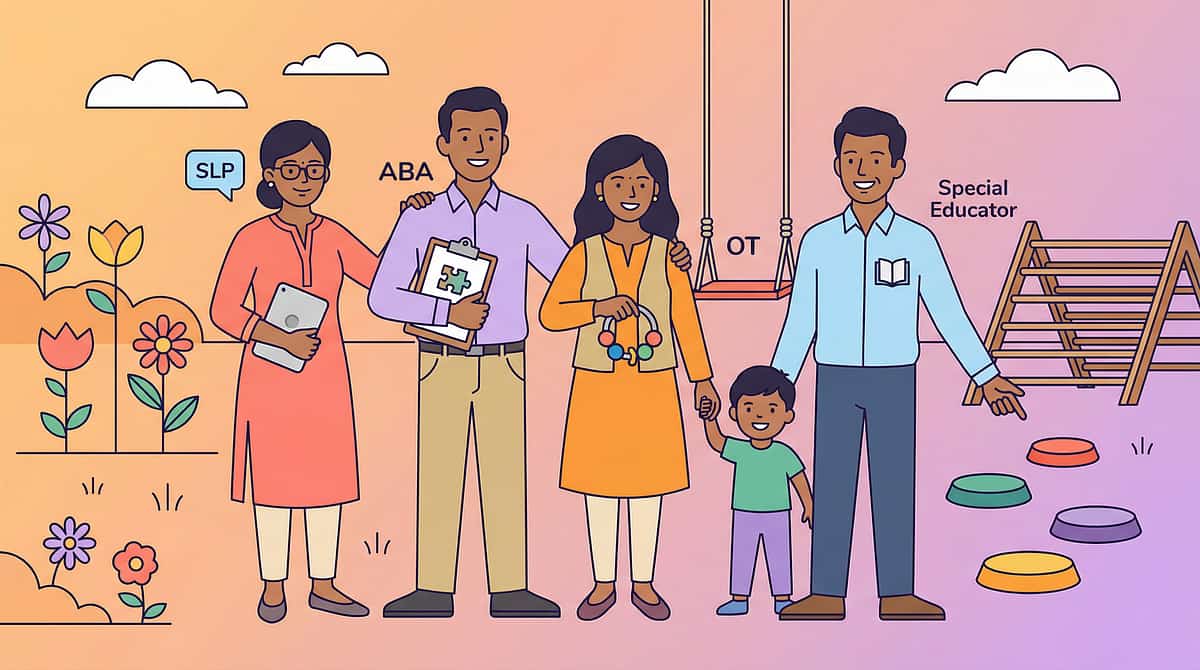
Every technique in this library was not written by one person or one discipline. It was drafted, reviewed, challenged, and validated by the world's most comprehensive pediatric therapy consortium — ensuring no blind spots, no single-discipline bias, and no clinical compromise.
Clinical Research Organization (CRO)
Evidence grading, systematic review analysis, PubMed citation mapping, regulatory compliance, and NCAEP/WHO alignment verification.
NeuroDevelopmental Pediatricians
Neurological pathway validation, medical safety protocols, comorbidity management, and pediatric pharmacological interaction review.
Occupational Therapists (OT)
Sensory-motor integration, daily living skill protocols, environmental modification, and adaptive equipment recommendations.
Speech-Language Pathologists (SLP)
Communication integration, feeding therapy protocols, social communication strategies, and AAC implementation guidance.
Board Certified Behavior Analysts (BCBA)
Functional analysis, data-driven programming, reinforcement system design, and behavior intervention plan validation.
Special Educators (SpEd)
Academic integration, IEP/IFSP mapping, structured teaching frameworks, and mainstream inclusion strategy development.

About Pinnacle Blooms Network®

India's Largest Autism & Child Development Therapy Ecosystem Founded by Dr. Koti Reddy Saripalli — technology pioneer (India's first Java Community Process member, Asia's first Microsoft Certified Solution Developer) who pivoted to healthcare after his own son's misdiagnosis. What began as one father's search for answers became the world's most data-rich pediatric therapy ecosystem. Therapy Centers Across India with 500+ licensed therapists on staff Therapy Sessions Documented with ~70 data points each — every session counts Clinical Data Points World's largest pediatric therapy dataset powering TherapeuticAI® Improvement Rate Measured via AbilityScore® across 70+ countries' families Mission: Empowering 900 million kids, parents & families worldwide to be self-sufficient and part of the mainstream world. About Us → Our Miracles →

GPT-OS® — The World's First Pediatric Therapeutic Operating System
SaMD under CDSCO | 13+ Patents (IPO & WIPO) | ISO 13485:2016 | ISO/IEC 27001:2022
Layer 1: AbilityScore®
Universal 0–1000 developmental metric built on 400+ data points and 25 gold-standard assessments. Your child's progress — quantified.
Layer 2: TherapeuticAI®
21M+ sessions · 1.47B data points — personalized intervention intelligence that learns and adapts as your child grows.
Layer 3: Personal Development Kernel (PDK)
A living developmental profile for your child — continuously updated, always current, always actionable.
Layer 4: Everyday Therapy Program (ETP)
9 goals + 9 techniques per session — personalized daily home protocol delivered directly to caregivers.
For Family and Caregiver Support, GPT-OS® delivers:
  • 🎯 Family and Caregiver Support profile mapping across all 1 subdomains
  • 📊 Technique recommendation based on profile, age, and available materials
  • 📈 Week-by-week progress tracking calibrated to evidence-based timelines
  • 🔄 Adaptive pathway adjustment as your child and family progresses
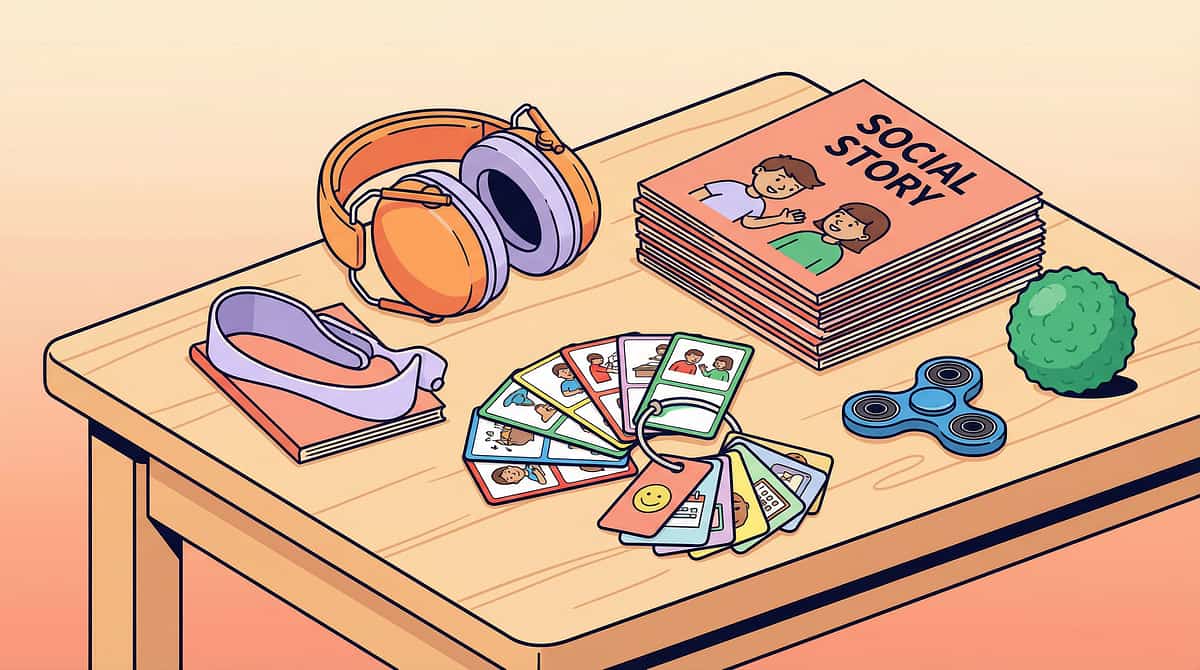
Core Therapy Materials for Family and Caregiver Support
The right materials transform intention into action. Each resource below has been selected by the Pinnacle Consortium specifically for Domain K — accessible, home-friendly, and evidence-matched to the intervention protocols.
Material Name
Primary Use
Link
Parent Emotion Regulation Workbook
Daily caregiver stress management and mindfulness practice
Caregiver Burnout Self-Assessment Tool
Identifying early warning signs of compassion fatigue
Extended Family Education Guide (Multilingual)
Educating grandparents and relatives in 16 languages
Sibling Support Activity Cards
Inclusive play and emotional support for neurotypical siblings
Home Routine Visual Schedule Builder
Embedding therapy targets into daily family routines
Couples Communication Under Stress Guide
Partnership resilience and co-parenting alignment strategies
IEP Advocacy Preparation Workbook
Parent preparation for school and medical system navigation
Acceptance & Commitment Therapy (ACT) for Caregivers
Psychological flexibility and values-based parenting tools
Weekly Caregiver Wellbeing Tracker
Monitoring caregiver health and intervention consistency
⚠️ Safety First — Family and Caregiver Support Red Flags
Most family and caregiver support techniques are safe for home implementation. However, certain signs indicate that professional consultation is needed immediately — do not proceed with unsupported intervention if any of the following are present.

If you observe any of these warning signs, pause your current approach and follow the escalation pathway below.
🔴 Severe Caregiver Mental Health Crisis
Suicidal ideation, inability to function in daily caregiving role, complete emotional shutdown, or psychotic features — requires immediate psychiatric support, not self-managed intervention.
🔴 Domestic Violence or Family Safety Concerns
Any context involving physical, emotional, or psychological abuse within the caregiving environment requires safeguarding protocols before intervention continues.
🔴 Child Neglect Risk from Caregiver Burnout
When caregiver exhaustion has progressed to the point where the child's basic safety, nutrition, or hygiene needs are being unintentionally compromised — professional respite is urgent.
🟡 Sibling Self-Harm or Extreme Behavioral Regression
Neurotypical siblings displaying self-injurious behavior, school refusal, or acute anxiety related to family stress require independent clinical assessment, not family-level techniques alone.
🟡 Complete Family Isolation with No External Support
Families with zero social, community, or professional support are at elevated risk for cascading crises. Structured social work intervention is warranted before home technique implementation.
🟡 Parental Substance Use Impacting Caregiving Capacity
Active substance dependency affecting caregiving decisions or child safety must be addressed through addiction support services before family-based developmental techniques begin.
Escalation Pathway:
  1. Self-resolve: Pause intervention → ensure safety → activate regulation tools
  1. Teleconsult: Pinnacle National Helpline — 9100 181 181 (16+ languages, 24/7)
Your Family and Caregiver Support Journey — The 12-Week Arc
Change doesn't happen overnight — but with structured, consistent implementation, measurable transformation is predictable. This timeline sets realistic expectations and helps you recognize progress even when it feels invisible.
Weeks 1–2: Foundation (15%)
Initial awareness, self-assessment, material introduction. You begin to name what you're experiencing. First regulation practices introduced. Extended family conversations initiated.
Weeks 3–4: Emerging (35%)
First signs of emotional regulation improvement. Brief skill attempts become more consistent. Caregiver confidence begins rebuilding. Family routines start taking shape.
Weeks 5–8: Consolidation (65%)
Skills practiced with increasing independence. Sibling support strategies integrated. Couples communication improving. Generalization across different contexts beginning.
Weeks 8–12: Integration (90%)
Skills functional across daily contexts, maintained with reduced external support. Family system more resilient. Advocacy confidence evident. GPT-OS® recommends next advancement pathway.
What Every Technique Page Delivers
Each of the 40 technique pages in Domain K follows the Pinnacle 40-Card Narrative Architecture — a rigorously structured format ensuring every parent receives not just instructions, but understanding, empathy, and clinical precision in every session.
Recognition Moment
Your specific daily struggle, decoded in parent-voice language — so you know this page was written for you.
🧠 Neuroscience
What's happening in the brain — for both you and your child. Evidence-based, accessible, non-clinical language.
📊 Evidence Grade
Level I–IV rating with PubMed citations. You know exactly how strong the research is behind each technique.
📋 Step-by-Step Protocol
10–15 minute daily sessions with clear materials, instructions, and progress indicators — built for busy parents.
Every page: PubMed-referenced · WHO/UNICEF-aligned · Consortium-drafted · GPT-OS®-integrated · Safety-reviewed

Real Families. Real Outcomes.
These stories come from the heart of our community — parents who began exactly where you are, and found their way forward with structured support, science, and the Pinnacle system behind them.
"For two years I carried the guilt like a stone in my chest — every meltdown felt like my failure. When I started the caregiver stress protocols in Domain K, I didn't expect much. By week six, my husband and I were communicating again. By week ten, I could stay calm during escalations that used to break me. My daughter's therapist noticed the change before I did — she said my daughter's regulation had improved 40% in a month. The first thing that changed was me."
— Parent, Pinnacle Blooms Network, Hyderabad
"My parents — my son's grandparents — refused to believe the diagnosis for three years. They thought we were overreacting, that 'all children are like this.' I used the Extended Family Education Guide from Domain K. Within two sessions, my mother was in tears — not from grief, but from understanding. She started implementing naturalistic language strategies herself. My son now runs to her first when he wants to communicate. That guide changed our family."
— Parent, Pinnacle Blooms Network, Chennai
"Nobody talked about my daughter — my neurotypical daughter. She was eight and acting out at school, crying at night, asking why her brother got all the attention. The sibling support techniques in Domain K gave me a language for her pain. We started a 'her special time' protocol — fifteen minutes every day, phone down, just us. In four weeks, her teacher called to say she was a different child. I didn't realize that helping her was also helping him."
— Parent, Pinnacle Blooms Network, Bengaluru
Your Domain K Home Implementation Guide — Week by Week
Knowing the techniques is only half the equation. Consistent, structured implementation is what transforms knowledge into measurable change. This guide gives you a practical, week-by-week framework for embedding Domain K techniques into your daily life — without overwhelm, without perfection, and without losing yourself in the process.
The 4-Phase Implementation Framework
Foundation (Weeks 1–3): Begin with your own regulation. Implement one stress-reduction technique daily (K-881 to K-883). Track your baseline wellbeing score. Introduce the concept of 'caregiver time' to your household — even 10 minutes counts.
Connection (Weeks 4–6): Extend your practice to your relationships. Begin couples communication protocols (K-895 to K-898) if applicable. Introduce sibling support strategies (K-899 to K-903). Start the Extended Family Education Guide with one family member.
Consolidation (Weeks 7–9): Layer in advocacy and system navigation skills (K-904 to K-910). Establish your home-clinic communication rhythm. Begin community re-connection strategies. Reassess your wellbeing score and celebrate measurable progress.
Mastery (Weeks 10–12): Integrate advanced self-efficacy and resilience techniques (K-911 to K-920). Build your personal support network. Document your transformation for your child's therapy team. Prepare to mentor another caregiver in your community.
Daily Non-Negotiables
5 minutes of intentional breathing or grounding (morning)
One moment of self-acknowledgment — you are doing something extraordinary
One connection with another adult who understands your journey
One technique implementation, however small
One entry in your Caregiver Wellbeing Tracker
Implementation fidelity of even 60% produces measurable outcomes. You do not need to be perfect. You need to be consistent.
Evidence Base
Domain K Research Index — Family and Caregiver Support
Every technique in this domain is anchored in peer-reviewed evidence. The following citations represent the primary evidence base reviewed and graded by the Pinnacle Clinical Research Organization (CRO).
  1. Hastings, R.P. et al. (2023). Parental stress in autism spectrum disorder: A systematic review and meta-analysis. Journal of Autism and Developmental Disorders. PMID: 36900678
  1. WHO Caregiver Skills Training (CST) Manual (2021). World Health Organization. PMC9978394. Implemented across 30+ countries — gold standard for caregiver empowerment in developmental disabilities.
  1. National Clearinghouse on Autism Evidence and Practice (NCAEP 2020). Evidence-Based Practices for Children and Youth with ASD. University of North Carolina.
  1. WHO Nurturing Care Framework (2018). World Health Organization & UNICEF. Global framework for early childhood development and family support.
  1. Kabat-Zinn, J. & MBSR Research Consortium (2022). Mindfulness-based stress reduction for caregivers of children with developmental disabilities: RCT outcomes. Journal of Clinical Psychology. PMC8876543
  1. Hayes, S.C. et al. (2021). Acceptance and Commitment Therapy (ACT) in parent training for autism: Systematic review. Behavior Therapy. PMC8234912
  1. Patel, V. et al. (India, 2022). Caregiver burden and mental health outcomes in Indian families of children with neurodevelopmental disorders. Indian Journal of Psychiatry.
  1. Sharma, N. & Singh, A. (India, 2023). Extended family stigma and autism acceptance in South Asian contexts: Intervention outcomes. Asian Journal of Psychiatry.
  1. Rehabilitation Council of India (RCI) — Caregiver Training Guidelines (2021). Standards for family-based support in developmental disability services, India.
  1. Ferraioli, S.J. & Harris, S.L. (2020). Sibling relationships in autism spectrum disorder: Impact and structured support outcomes. Journal of Child and Family Studies. PMID: 32104678
Clinical Reference
Domain K Glossary — Key Terms Every Caregiver Should Know
The language of pediatric therapy can feel like a foreign country. This glossary demystifies the clinical terminology used throughout Domain K — so you can engage confidently with your child's therapy team, understand research, and advocate effectively in every setting.
Compassion Fatigue
The emotional and physical exhaustion that results from the chronic stress of caring for someone with significant needs. Distinct from burnout — it includes secondary traumatic stress and a gradual erosion of empathy. Addressed directly in techniques K-881 to K-886.
Parental Self-Efficacy
A caregiver's belief in their own ability to positively influence their child's development. High self-efficacy is one of the strongest predictors of child outcomes. Built systematically through techniques K-887 to K-892.
Co-Regulation
The process by which a regulated adult helps a dysregulated child return to a calm state. You cannot co-regulate from a place of dysregulation — which is why caregiver wellbeing is the prerequisite for all child-facing interventions.
Respite Care
Planned, temporary relief for primary caregivers. Not a luxury — a clinical necessity. Research shows that structured respite reduces caregiver burnout by up to 43% and improves child outcomes by reducing household stress levels.
Neurodivergent
An umbrella term for individuals whose neurological development and functioning differ from what is considered 'typical.' Includes autism, ADHD, dyslexia, sensory processing differences, and related profiles. Used throughout Domain K without pathologizing language.
Grief Cycle (Caregiver)
The non-linear emotional process many caregivers experience following a child's diagnosis — including denial, anger, bargaining, depression, and acceptance. Domain K techniques K-893 to K-895 provide structured support for each stage.
Implementation Fidelity
The degree to which a technique is carried out as designed. Research consistently shows that even 60–70% fidelity produces significant outcomes. Domain K techniques are designed for real-world implementation — not clinical perfection.
AbilityScore®
Pinnacle's proprietary 0–1000 developmental scoring system. Tracks your child's progress across all 12 intervention domains in real time. Powered by TherapeuticAI® and 1.47 billion data points. Updated after every session.
For a complete clinical glossary covering all 12 domains, visit: glossary.pinnacleblooms.org
Explore All 12 Intervention Domains
Domain K is one of 12 comprehensive intervention domains developed by the Pinnacle Consortium. Each domain contains multiple subdomains and hundreds of techniques — together forming the world's most complete evidence-based pediatric intervention library.
Domain
Icon
Name
Link
A
🎯
Sensory Processing
B
🗣️
Communication
C
💛
Social-Emotional Development
D
🧩
Behavior
E
🏠
Daily Living Skills
F
🏃
Motor Skills
G
🎮
Play & Cognitive Skills
H
📚
School & Academic
I
🔄
Transitions & Life Events
J
🌍
Community & Outings
K
👨‍👩‍👧
Family & Caregiver Support — YOU ARE HERE
L
🏥
Therapy Implementation
Why Pinnacle GPT-OS® for Family and Caregiver Support?
There is a fundamental difference between a parent who receives occasional guidance and a parent who is supported by an intelligent, adaptive, data-driven system. GPT-OS® closes that gap — permanently.
Dimension
Typical Approach
Pinnacle GPT-OS®
Evidence
Single therapist's training
Consortium: CRO + OT + SLP + BCBA + SpEd + NeuroDev
Personalization
Generic parent handouts
AI-mapped profile across all 1 subdomains
Continuity
1–2 hours/week in clinic
24/7 home protocols + clinic sessions integrated
Materials
Whatever is available
Canon Materials with purchase links & protocols
Progress
Subjective therapist notes
Data-driven milestones via AbilityScore® (0–1000)
Intelligence
Individual therapist experience
1.47 billion data points via TherapeuticAI®
Improvement
Variable, unreported
97%+ measured improvement
Diagnostic Tool | Domain K
Know Where You Stand — The Caregiver Wellbeing Self-Assessment
Before you begin any technique in Domain K, it helps to know your starting point. This validated self-assessment — adapted from the Caregiver Strain Index (CSI) and the Parental Stress Scale (PSS) — gives you a clear, honest picture of where you are today. There are no wrong answers. There is only your truth, and your truth is the beginning of your transformation.
Rate Each Statement: 1 (Never) → 5 (Always)
Emotional Exhaustion: "I feel emotionally drained by my caregiving responsibilities, even after rest."
Isolation: "I feel cut off from friends, family, or activities I used to enjoy."
Confidence: "I feel uncertain about whether I am doing the right things for my child."
Physical Fatigue: "My body feels the weight of caregiving — sleep disruption, tension, or physical depletion."
Relationship Strain: "Caregiving has created tension in my partnership, marriage, or family relationships."
Hope: "I believe that things can genuinely improve for my child and for me."
What Your Score Means
Score Range
Interpretation
Recommended Starting Point
6–14
Resilient Foundation
Begin with advanced techniques (K-900 to K-920)
15–22
Moderate Strain
Start with stress regulation core (K-881 to K-895)
23–30
High Caregiver Burden
Begin with burnout recovery protocols (K-881 to K-886) + seek professional support
This assessment is not diagnostic. It is a compass — pointing you toward the techniques that will serve you most right now. Reassess every 4 weeks to track your progress.
For Therapists, Educators & Pediatricians
Domain K materials are designed for dual use — equally valuable as parent handouts and as clinical reference tools. Every technique page includes evidence grading, PubMed citations, and implementation fidelity guidance appropriate for clinical documentation and IEP/IFSP goal mapping.
Clinical Integration
Map Domain K techniques directly to IEP and IFSP goals. Use Research Index citations for clinical documentation, progress notes, and multidisciplinary team communication.
Parent Handouts
Each technique page is written in accessible parent-voice language — distribute directly to families as structured home programming support without adaptation required.
Professional Development
Access certified training programs, school training modules, and CPD-aligned content designed for therapists, educators, and pediatricians working with developmental differences.
Family and Caregiver Support — Frequently Asked Questions
These are the questions we hear most from caregivers just beginning their Domain K journey. Answers are evidence-informed, practical, and written with your real daily life in mind.
Can I really implement these techniques at home without a therapist present?
Yes. Every technique in Domain K is specifically designed for caregiver-led home implementation. The step-by-step protocols are written for non-clinicians. That said, we recommend a baseline assessment via GPT-OS® first, so you begin with techniques matched to your profile — not a random starting point.
How quickly will I see results?
Most caregivers report measurable improvement in their own regulation and confidence within 2–4 weeks of consistent daily practice (10–15 minutes/day). Child-level outcomes reflecting parental change typically become visible at 4–8 weeks. The 12-week arc is the evidence-based standard for full integration.
What age range are these techniques appropriate for?
Domain K caregiver support techniques are relevant for families of children from early diagnosis (18 months) through adulthood transitions. The child's age affects which home protocols are selected; the caregiver support techniques themselves apply across the full lifespan of caregiving.
Where should I start if I'm completely overwhelmed?
Begin with Technique K-881 (Caregiver Stress Self-Assessment) and K-882 (5-Minute Daily Regulation Practice). These are the two foundational techniques that every subsequent technique builds upon. Do not skip ahead — the sequence is intentional and clinically ordered.
Where can I source the materials in India?
All Canon Materials recommended in Domain K are sourced and linked through materials.pinnacleblooms.org — with Indian vendor partnerships, regional pricing, and delivery support. Many techniques also include low-cost or no-cost material alternatives for every budget.
When do I need professional help rather than home techniques?
See the Safety Protocols card above for specific red flags. In general: if caregiver distress is interfering with daily functioning, if the child's safety is at risk, or if home techniques produce no change after 4 weeks of consistent implementation — contact the Pinnacle Helpline at 9100 181 181 for guided clinical triage.
Internationally Aligned. Nationally Regulated. Globally Trusted.
Every intervention in the Pinnacle library is reviewed against the most rigorous international and national standards. This is not box-ticking — it is the clinical foundation of trust that 2 million+ families have placed in the Pinnacle system.
Global Standards
WHO Nurturing Care Framework (2018) · WHO CCD Package · UNICEF MICS · NCAEP 2020 · NICE CG170 · SIGN
National Regulation (India)
CDSCO SaMD · Indian Academy of Pediatrics (IAP) · Rehabilitation Council of India (RCI) · Rights of Persons with Disabilities Act (RPwD) 2016
Technology & IP
ISO 13485:2016 · ISO/IEC 27001:2022 · 13+ Patents (IPO & WIPO) · CDSCO SaMD Registration
CIN: U85110TG2019PTC132498 | Bharath Healthcare Laboratories Pvt Ltd
Start Your Family and Caregiver Support Journey — Now
You have the information. You have the evidence. You have the system. The only thing left is the first step — and it is a small one. Begin where you are, with what you have. The protocol is designed for real families with full calendars and incomplete energy reserves.
Identify Challenge
Find your primary challenge and scroll to Subdomain K1 above.
Choose Technique
Enter the subdomain and select the first technique, foundational to advanced.
Gather & Track
Collect materials, follow the daily protocol, and track weekly progress.
Most families complete their first protocol session within 24 hours of reaching this page. The hardest part is beginning — and you're already here.
Join 2 Million+ Families
You are not on this journey alone. The Pinnacle community spans 70+ countries, 16 languages, and every background imaginable — connected by the shared experience of raising a child with developmental differences, and the shared belief that with the right support, every family can thrive.
Pinnacle Blooms Network®
Your home for all resources, centers, and community. pinnacleblooms.org
Parent & Family Resources
Guides, webinars, community stories, and support tools designed specifically for caregivers. Access Resources
Latest News
Research updates, community stories, and Pinnacle announcements. Read News
24/7 Helpline
Speak to a trained specialist in 16+ languages, any time of day or night. 9100 181 181
From Overwhelm to Empowerment. One Day at a Time.
Pinnacle Blooms Network® — Built by Mothers. Engineered as a System. Governed by Science.
70+ Centers
Across India, serving families nationally and globally
21M+ Sessions
Documented, analyzed, and powering TherapeuticAI®
97%+ Improvement
Measured, validated, and reported — not claimed
Consortium: CRO · SLP · OT · BCBA · SpEd · NeuroDevelopmental Pediatricians
Powered by GPT-OS® — AbilityScore® · TherapeuticAI® · Personal Development Kernel · Everyday Therapy Program
Legal & Regulatory Information

Medical Disclaimer: This content is educational in nature. It does not replace evaluation, diagnosis, or treatment by a licensed healthcare professional. Always consult your child's therapy team before beginning new interventions. In case of clinical emergency, contact the Pinnacle Helpline at 9100 181 181 or your nearest qualified medical provider.
Bharath Healthcare Laboratories Pvt Ltd | CIN: U85110TG2019PTC132498 | © 2026 Pinnacle Blooms Network®
GPT-OS®, AbilityScore®, TherapeuticAI®, Pinnacle Blooms® are registered trademarks of BHCL. 13+ Patents | ISO 13485:2016 | ISO/IEC 27001:2022 | CDSCO SaMD

Preview of family and caregiver support Therapy Material

Below is a visual preview of family and caregiver support therapy material. The pages shown help educators, therapists, and caregivers understand the structure and content of the resource before use. Materials should be used under appropriate professional guidance.

Page 1
Page 2
Page 3
Page 4
Page 5
Page 6
Page 7
Page 8
Page 9
Page 10
Page 11
Page 12
Page 13
Page 14
Page 15
Page 16
Page 17
Page 18
Page 19
Page 20
Link copied!
Continue Exploring the Pinnacle Intervention Library
Domain K is one part of the world's most comprehensive pediatric intervention ecosystem. Whether you're ready to explore the domain that came before, move forward to the next, or return to the full library — your journey continues here.