
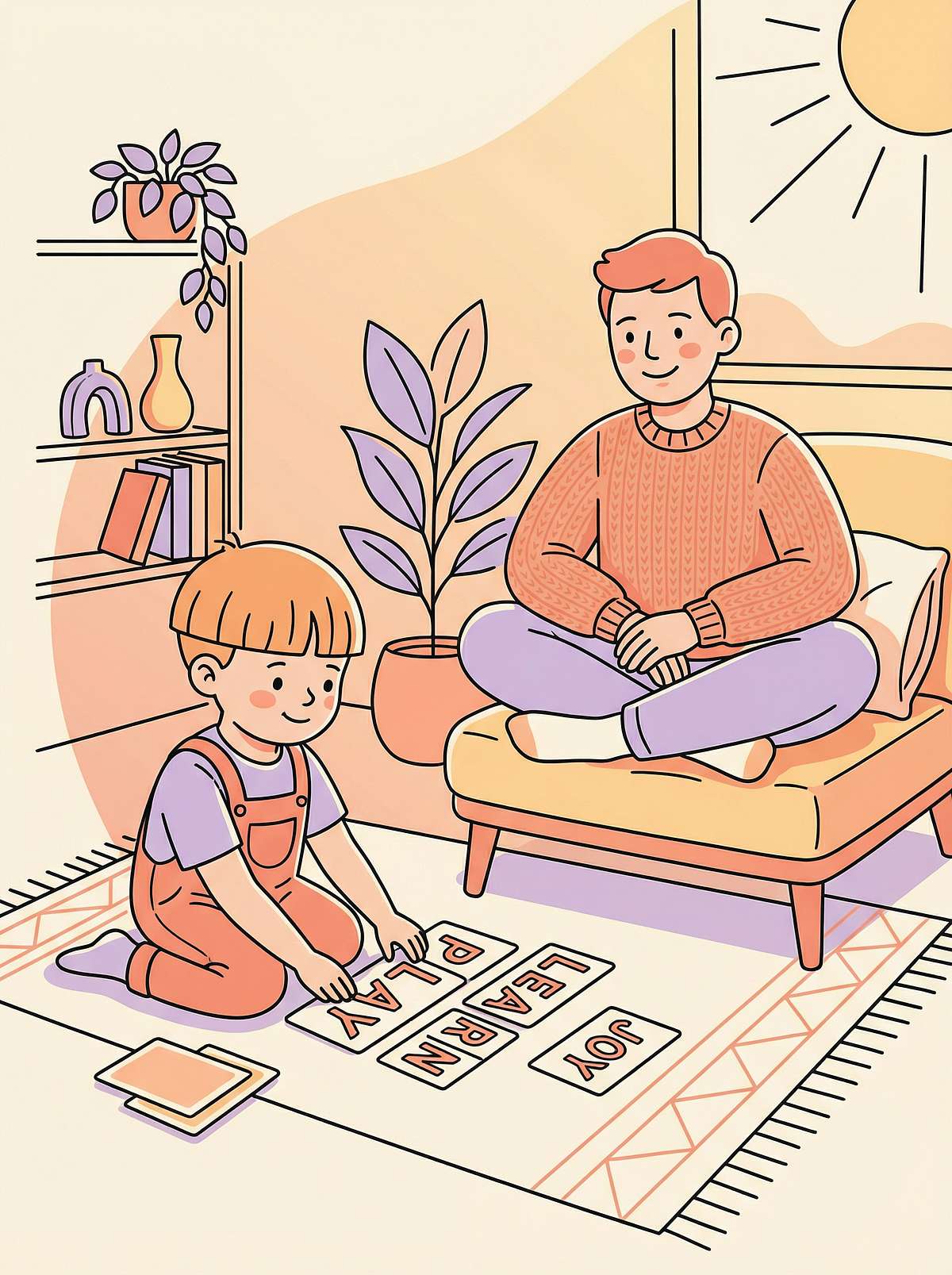
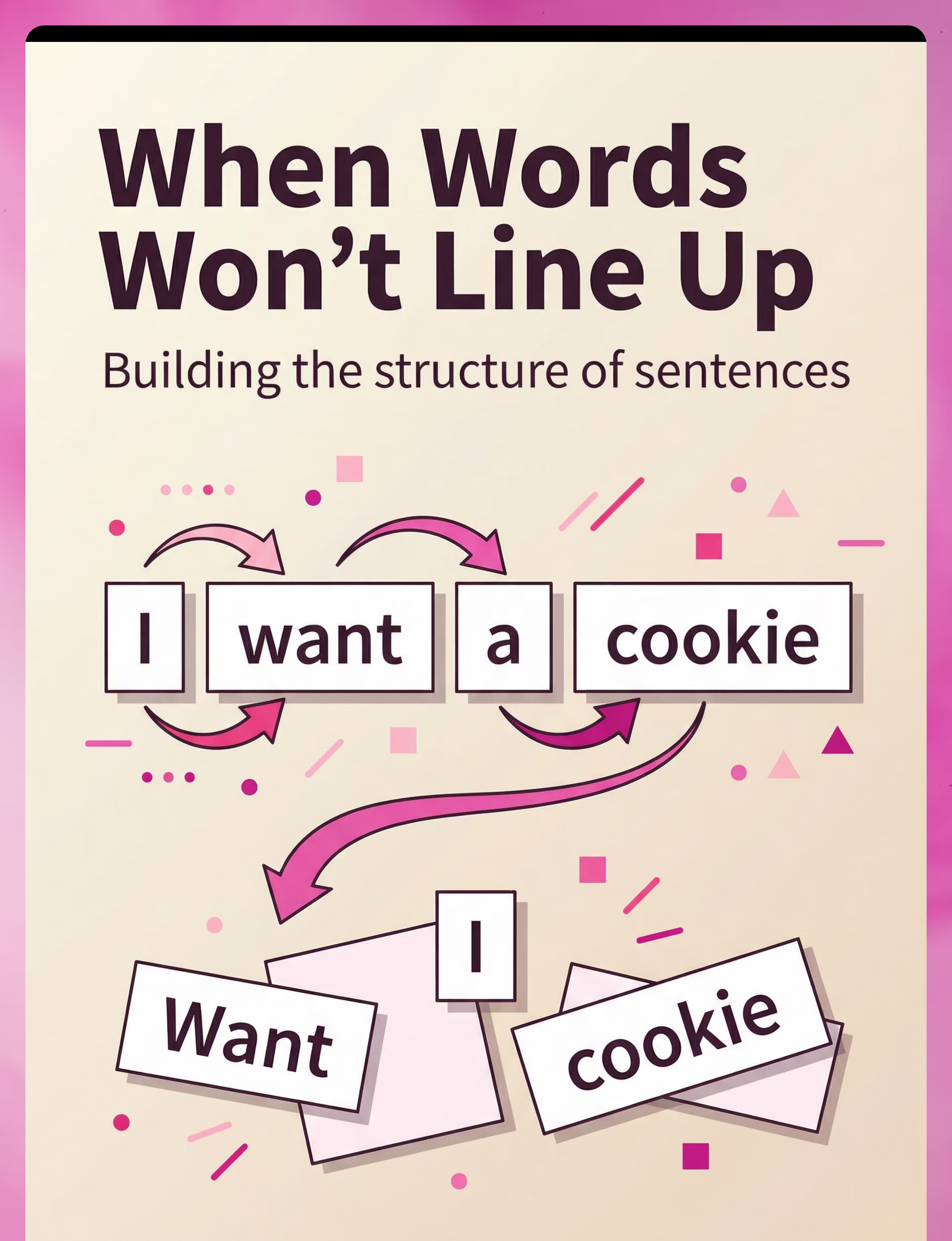
"Want I cookie." "Ball the throw." "Going is she store."
The words are all there. But they won't line up. You've spent the morning translating your child's sentences — and this page gives you the blueprint to build them right.
B-196 | Word Order Difficulty
Language Structure Solutions

You Are Among Millions of Families Navigating This Exact Challenge
Word order difficulty — clinically known as syntactic impairment or morphosyntactic disorder — is not rare, not mysterious, and not permanent. It is a language processing difference. The words exist. The meaning exists. The neural pathway connecting them in the right sequence is still forming. That pathway can be built. These 9 materials help build it.
1 in 36
Children Diagnosed with ASD
CDC, 2023 (US). India prevalence estimated 1 in 68–100. Syntactic difficulty is among the most common language features across ASD profiles.
70–80%
Show Word Order Difficulty
Of children with language disorders. Not just autism — SLI, DLD, and ADHD-related language differences all share this profile.
21M+
Therapy Sessions Delivered
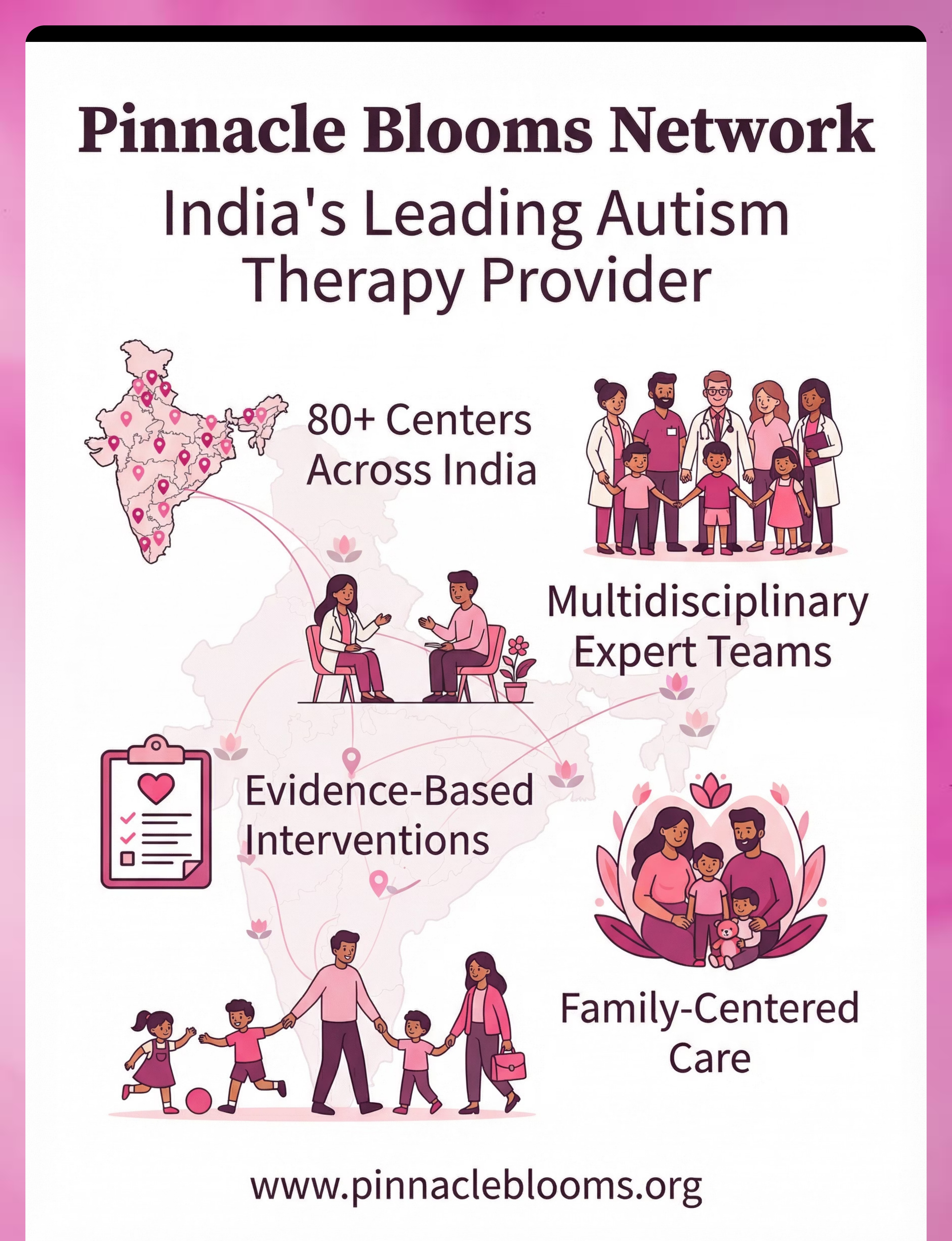
Across India and 70+ countries by Pinnacle Blooms Network. Word order difficulty is among the top 5 most addressed challenges in our SLP program.
🌍 Serving families in 70+ countries | 80+ centers across India | 97%+ measured improvement in Communication Readiness Index | Helpline: 9100 181 181 (FREE, 18+ languages, 24×7)

Language's Invisible Architecture: Why the Words Come Out Scrambled
The Neuroscience
The brain processes syntax — word order rules — in Broca's area (left inferior frontal gyrus) and the perisylvian language network. In children with syntactic impairment, the processing speed and sequencing functions in these regions develop differently.
The child knows what words to use. The neural system for how to sequence them is still developing its automaticity. This is a working memory and grammatical processing difference — not a vocabulary problem, not an attention problem, not laziness. The words ARE there. The assembly line needs practice.
What This Means for You
Think of syntax like a train track. Your child has all the train cars (words). They know where they're going (meaning). But the track — the grammatical rule system that places Subject → Verb → Object in automatic sequence — is still being laid.
Every time you practice with the 9 materials on this page, you are laying that track, section by section. It is neurologically real. It is measurable. It is buildable.
"This is a wiring difference, not a behavior choice." — Pinnacle SLP Consortium
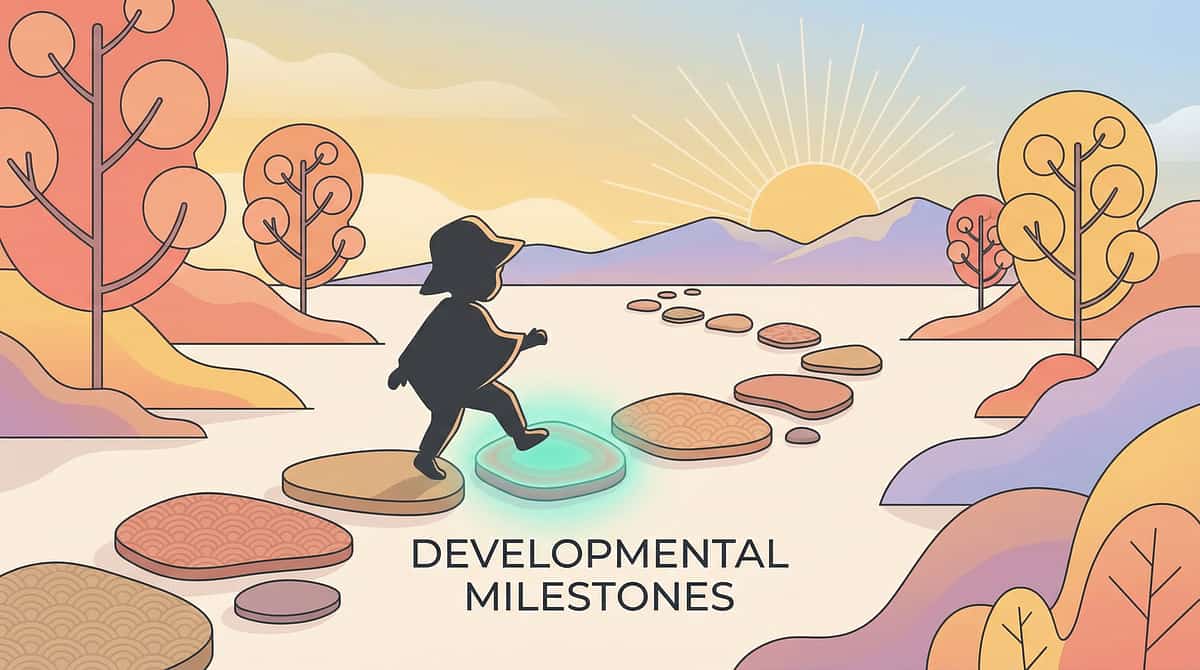
Your Child's Syntax Journey: A Developmental Milestone Map
1
18–24 Months
Agent-Action — "Daddy go"
2
2–3 Years
Simple S-V-O — "I want ball"
3
3–4 Years
Adjectives Added — "I want big ball"
4
4–6 Years
Complex Syntax — Conjunctions, embedded clauses
5
6+ Years
Mature Grammar — Passive voice, complex questions
B-196 targets the gap between early words and correct sentence sequencing. Your child is here — and here is where we're heading.
Comorbidity Awareness: Word order difficulty commonly co-occurs with ASD, Developmental Language Disorder (DLD), Specific Language Impairment (SLI), ADHD-related language differences, and multilingual acquisition patterns. ⚠️ In multilingual children, word order "errors" may reflect first-language grammar rules — not a disorder. Always evaluate in all languages the child uses.

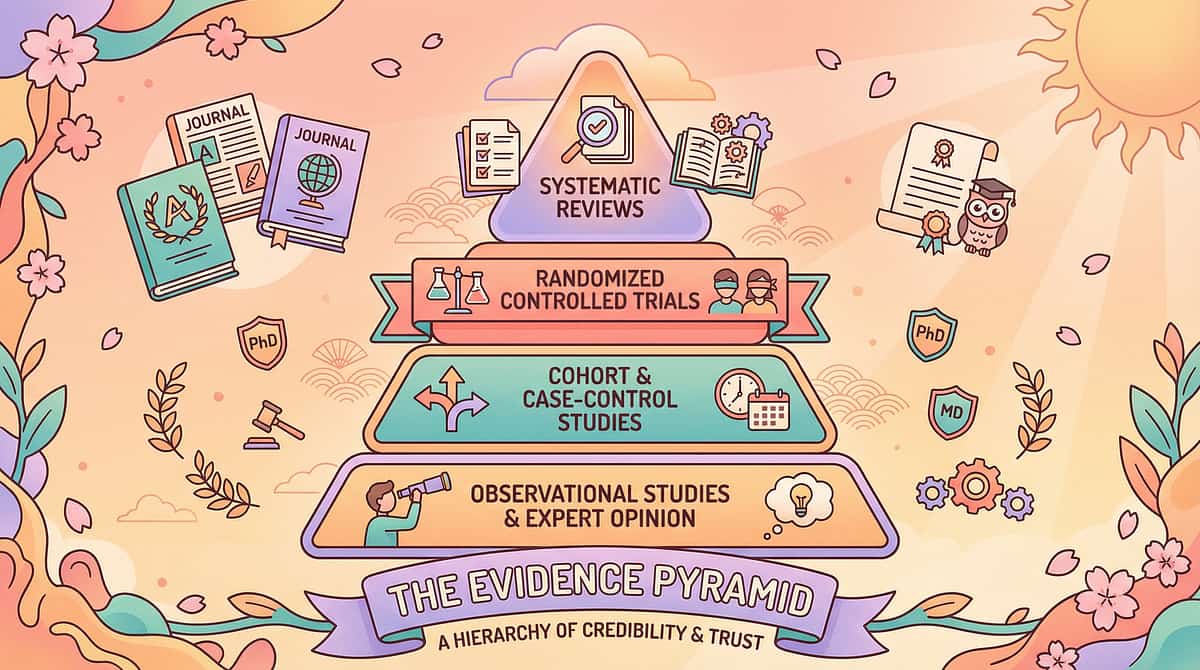
Clinically Validated. Home-Applicable. Parent-Proven.
Evidence Grade: Level I
Systematic Reviews + RCTs
India-Validated
PRISMA Systematic Review (2024)
16 studies | 2013–2023. "Sensory integration and language-visual intervention meets evidence-based practice criteria for children with ASD." → PMC11506176
Meta-Analysis: World J Clin Cases (2024)
24 studies | International. "Visual syntax systems + manipulative-based language intervention effectively promote expressive grammar outcomes." → PMC10955541
Indian RCT (2019)
Home-based structured language sessions. "Significant improvement in syntactic production when parents trained to use visual grammar supports at home." → DOI: 10.1007/s12098-018-2747-4
This technique is not experimental. It is not fringe therapy. It is evidence-based, clinically validated, home-executable, and consortium-supervised. Call 9100 181 181 for personalized guidance.
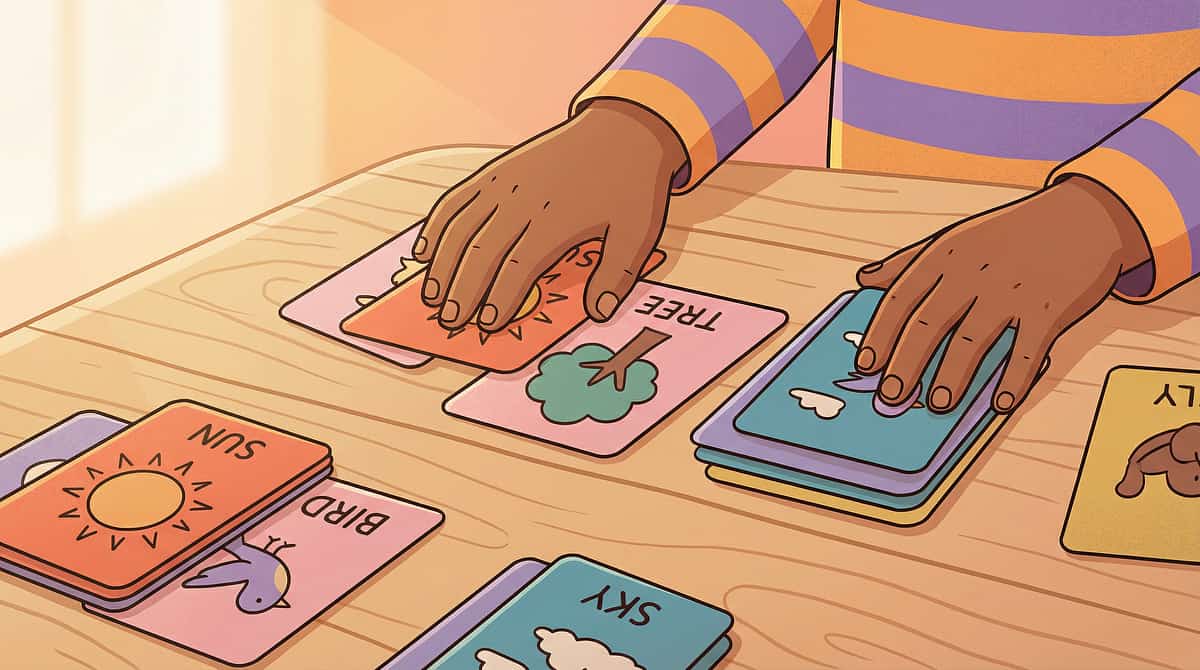
Technique B-196: What It Is
Formal Name
Syntactic Intervention Through Visual-Manipulative Materials (Syntax Building via Multi-Sensory Grammar Supports)
Parent-Friendly Alias
"Word Order Building Practice" | "Sentence Architecture Training"
Key Details
- 👶 Ages: 3–10 years
- ⏱️ Session: 10–20 minutes
- 📅 Frequency: Daily or 3–5×/week
- 🏠 Setting: Home + Clinic
- 🔢 Code: B-196
What This Technique Does
Word Order Difficulty is a language architecture challenge. The child has words. The child has meaning. What's missing is the automatic internal grammar rule that sequences words in their correct positions: Subject → Verb → Object (and all variations).
This set of 9 materials creates a multi-sensory, visible, touchable grammar system — making the invisible rules of syntax visible, moveable, and practicable at home.
Result: Children move from "Want I cookie" to "I want a cookie" through structured, joyful, daily practice.

A Consortium-Validated Technique Deployed Across Multiple Therapy Disciplines
The brain doesn't organize by therapy type. Syntax is a whole-child challenge — requiring a whole-team response.
Speech-Language Pathologist (Primary Lead)
Designs syntax targets, selects sentence patterns, teaches word order rules. Delivers core protocol via direct syntax intervention — card manipulation, color-coding, sentence frames, story-based exposure.
Occupational Therapist (Supporting)
Manages sensory and fine motor aspects of card manipulation. Ensures optimal seated posture and hand control for physical word arrangement. Modifies materials for fine motor access.
Special Educator (Supporting)
Embeds syntax targets into academic language and literacy. Connects oral grammar to reading and writing instruction in classroom context.
ABA / BCBA Therapist (Supporting)
Provides reinforcement structure, data collection, and behavioral scaffolding. Uses token economy for correct sentence attempts and discrete trial format for pattern drilling.
NeuroDev Pediatrician (Advisory)
Differential diagnosis — confirms syntactic impairment vs. language difference. Coordinates with SLP for medical management, assessment, prescription, and outcome review.

This Is a Precision Tool. Here Is Exactly What It Targets.
🎯 Primary Target
Expressive Syntax Accuracy: Correct Subject-Verb-Object sequencing, appropriate article placement, adjective order before nouns, auxiliary verb positioning in questions. Observable: Child produces "I want a cookie" instead of "Want I cookie" in 70%+ of attempts.
🔵 Secondary + Tertiary Targets
Complexity Growth: Adjectives, adverbs, question formation, negation. Sentences grow from 2–3 words to 5–7 words with correct order.
Long-Term Gains: Reading comprehension, written language, social communication, academic readiness, and self-confidence in speaking.
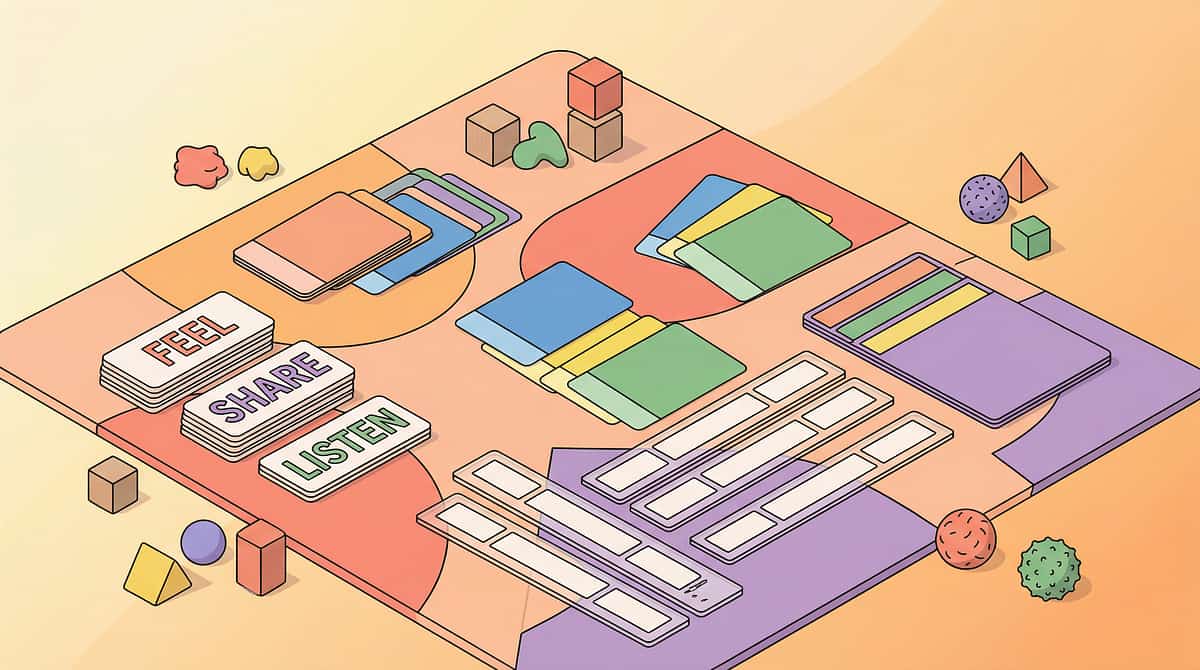
9 Materials That Rewire Syntax
From ₹0 to ₹600 — most are DIY-possible. Every material below targets the core problem: making the invisible rules of word order visible, touchable, and practicable at home.
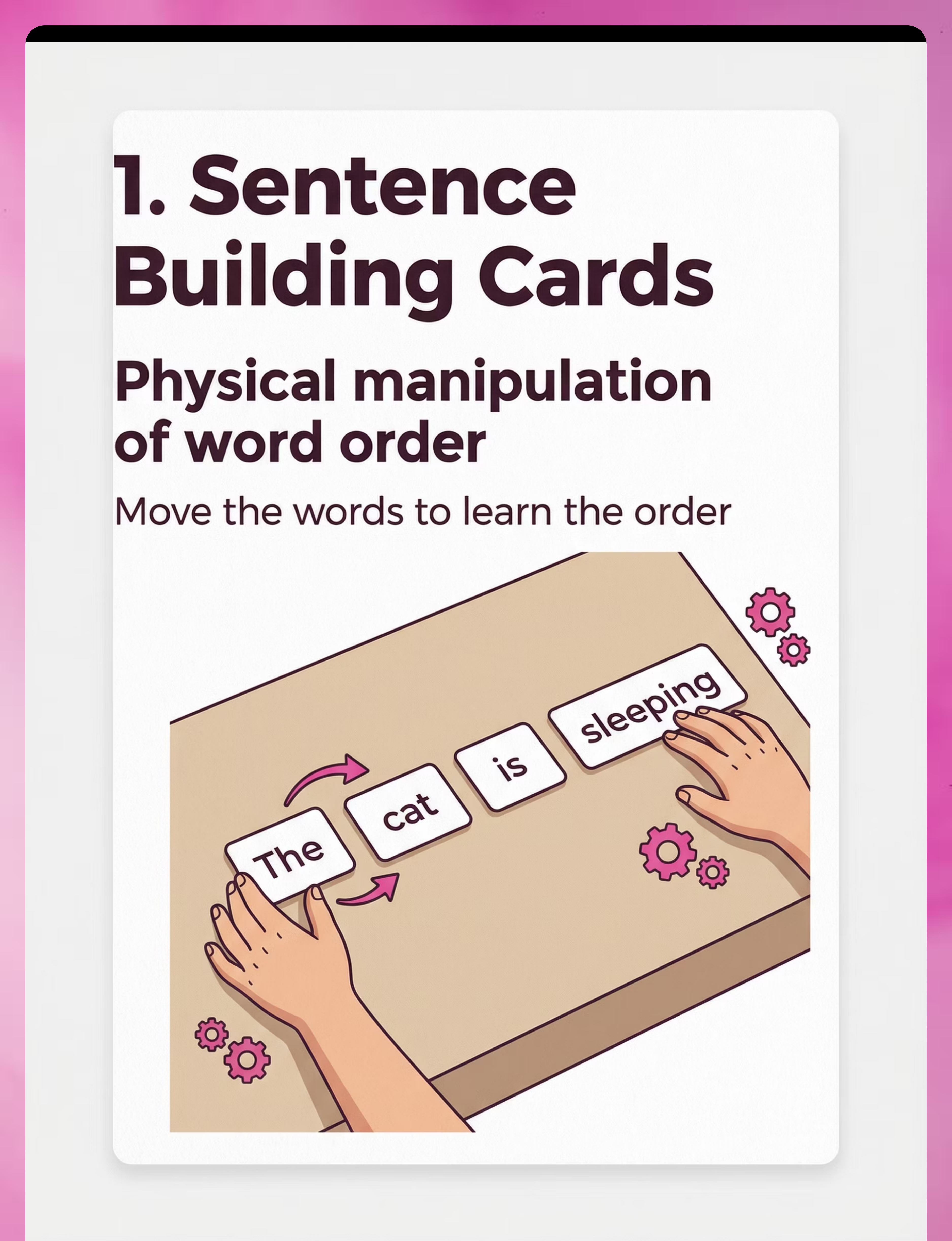
Sentence Building Cards & Word Order Manipulatives
Category: Language Expansion / Visual Supports | ₹200–600 | DIY: ✅ Free
"Move words to learn the order"
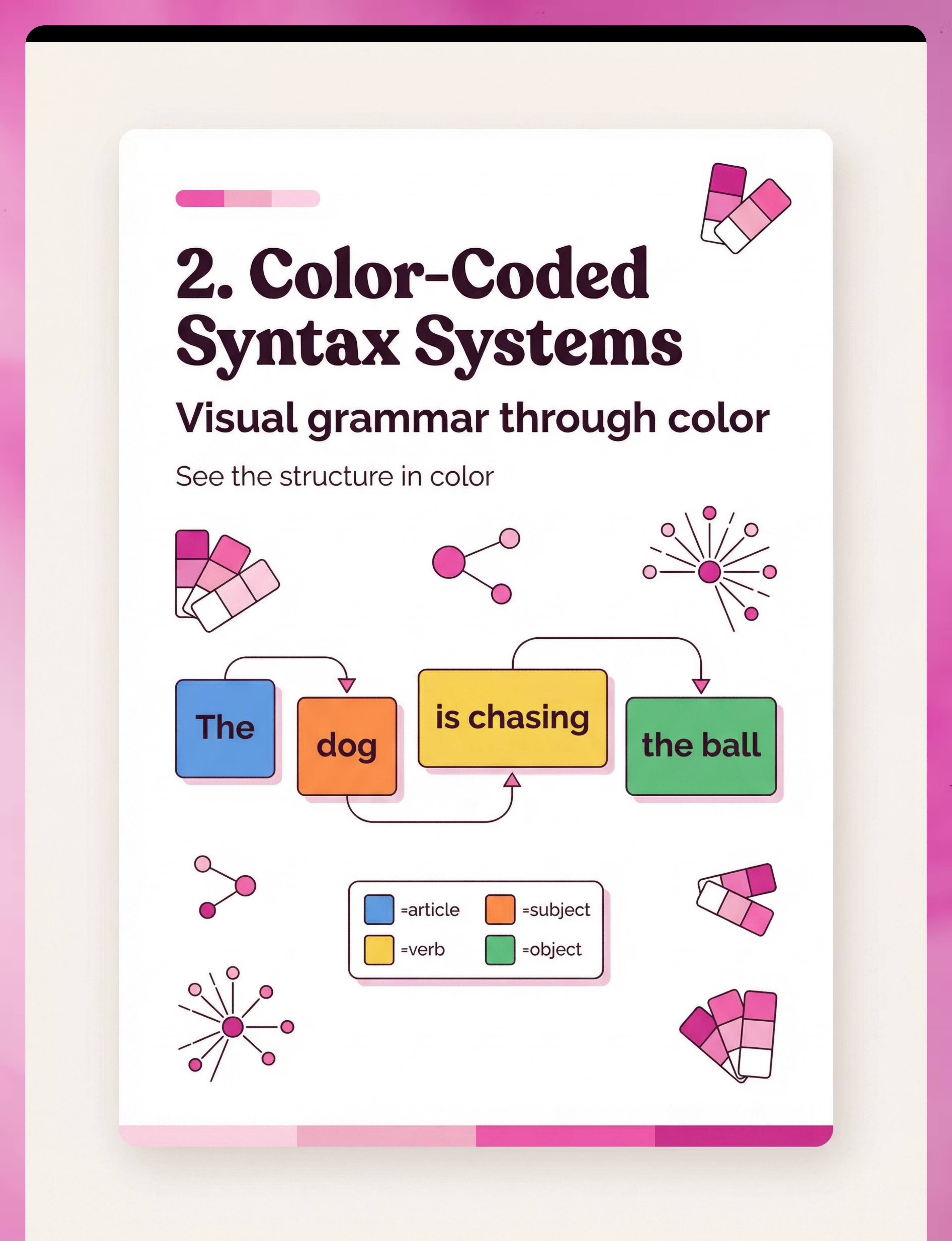
Color-Coded Syntax Systems & Grammar Markers
Category: Language Expansion / Visual Supports | ₹150–500 | DIY: ✅ Free
"See grammar in color"
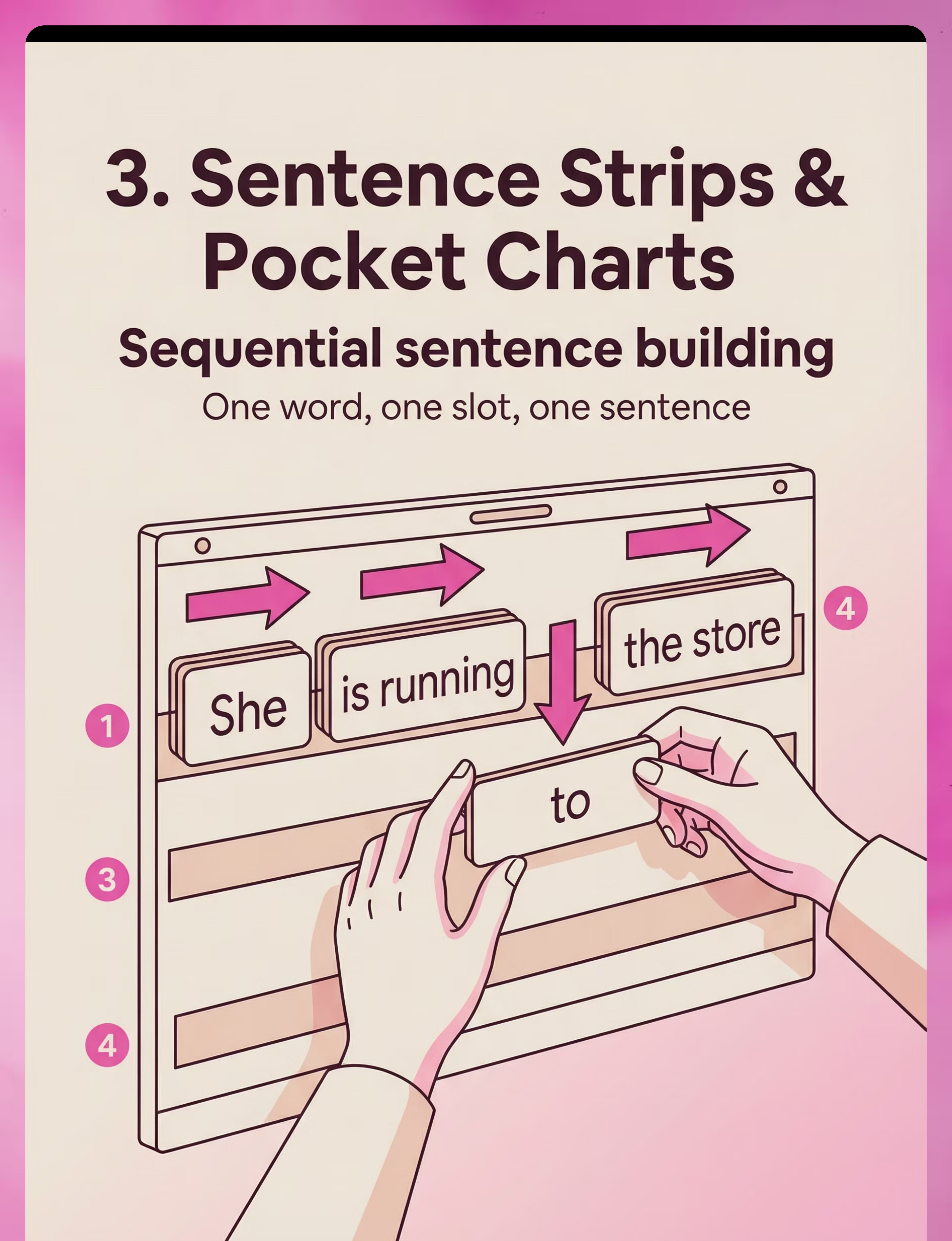
Sentence Strips & Pocket Charts
Category: Visual Supports / Structured Learning | ₹300–800 | DIY: ✅ Free
"One slot, one word, correct order"
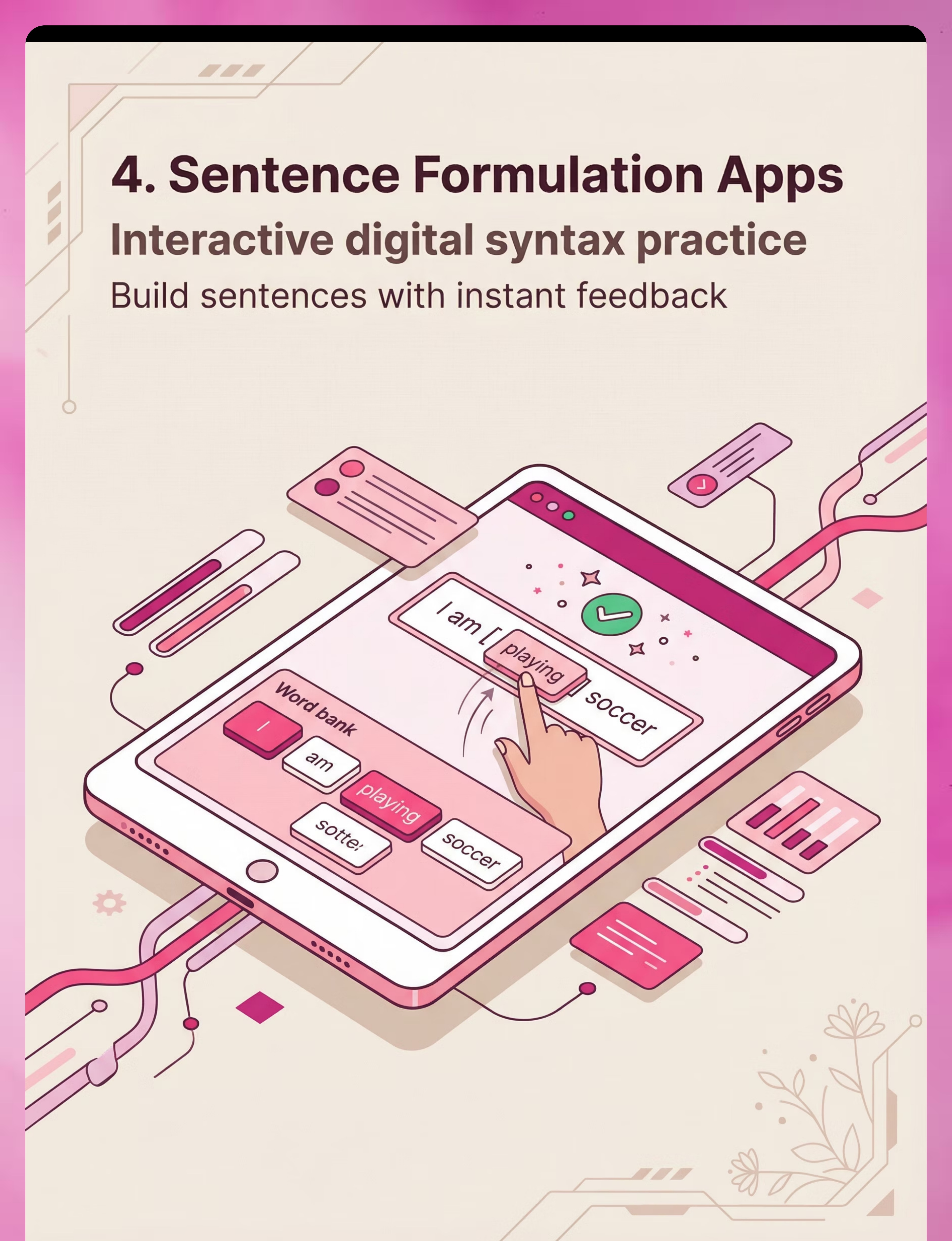
Sentence Formulation Apps & Digital Grammar Tools
Category: Learning & Educational Apps | ₹0–500 | Many FREE
"Build sentences with instant feedback"
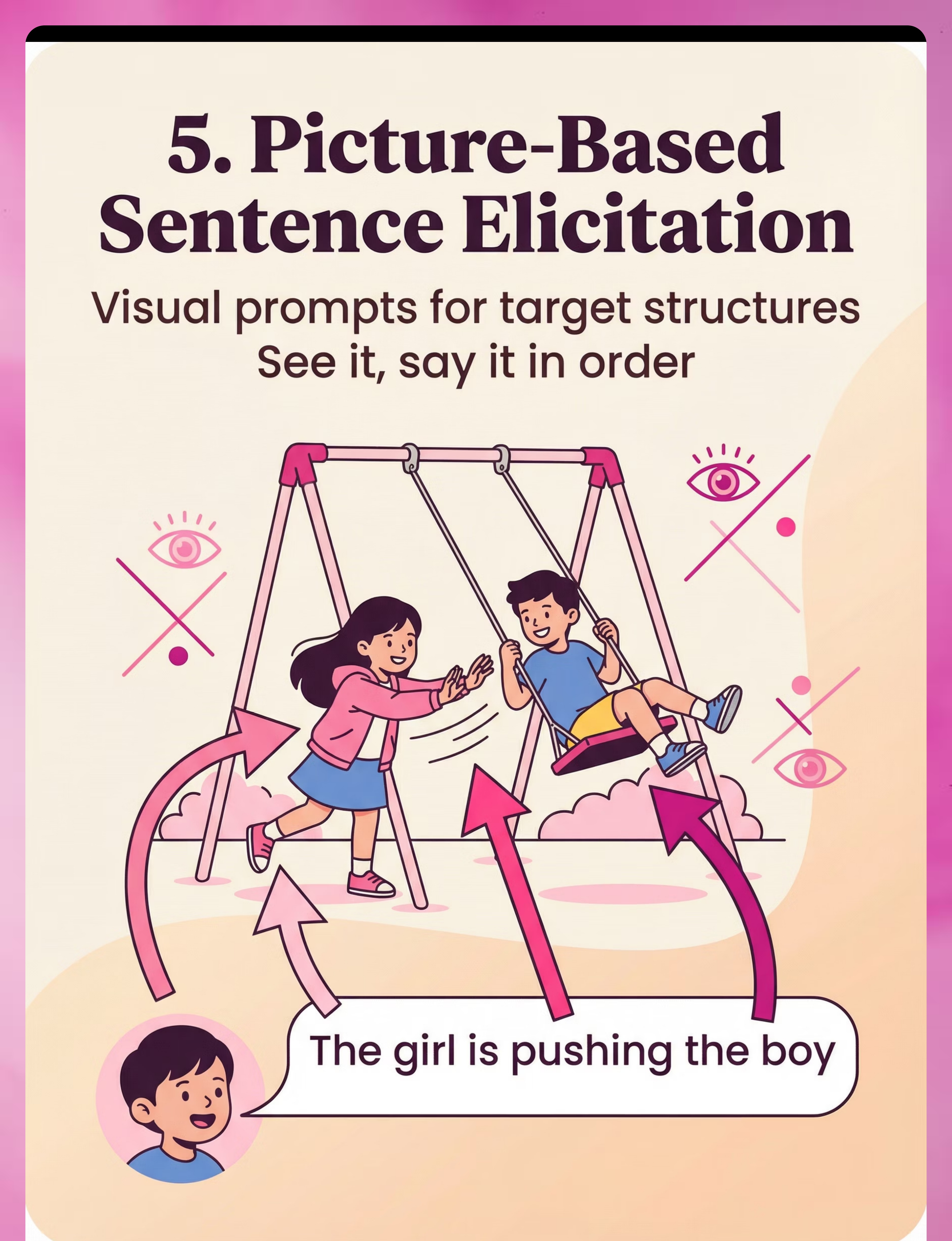
Picture-Based Sentence Elicitation Materials
Category: Language Expansion / Visual Supports | ₹150–400 | DIY: ✅ Free
"See it, say it in order"
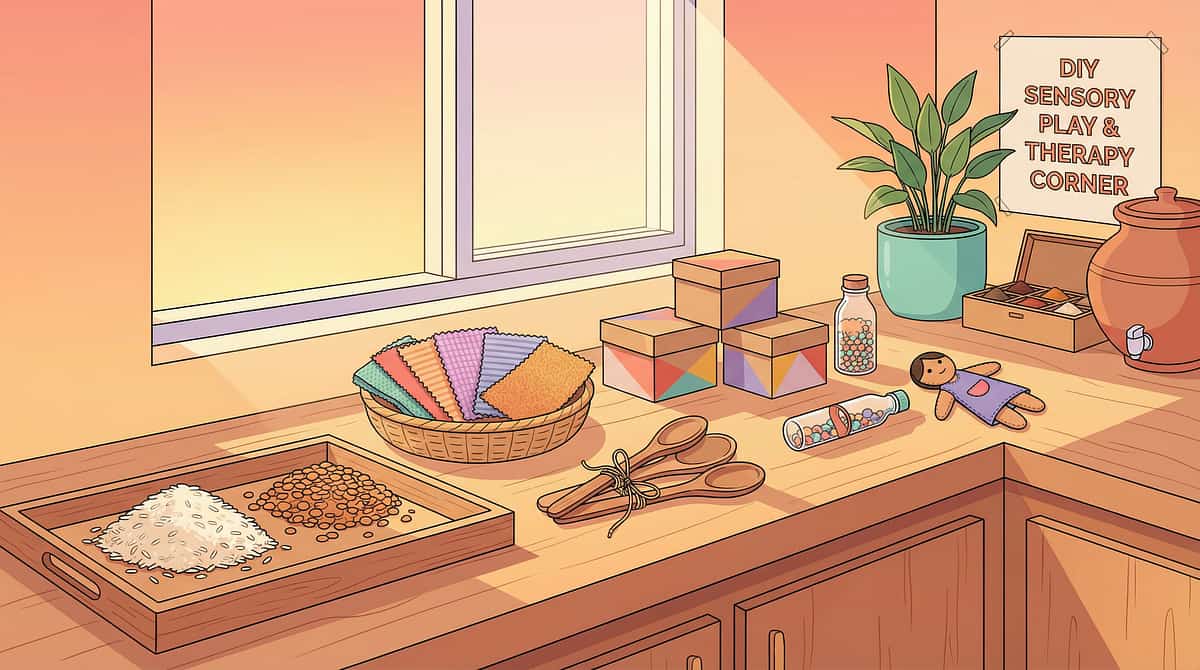
9 Materials That Rewire Syntax (Continued)
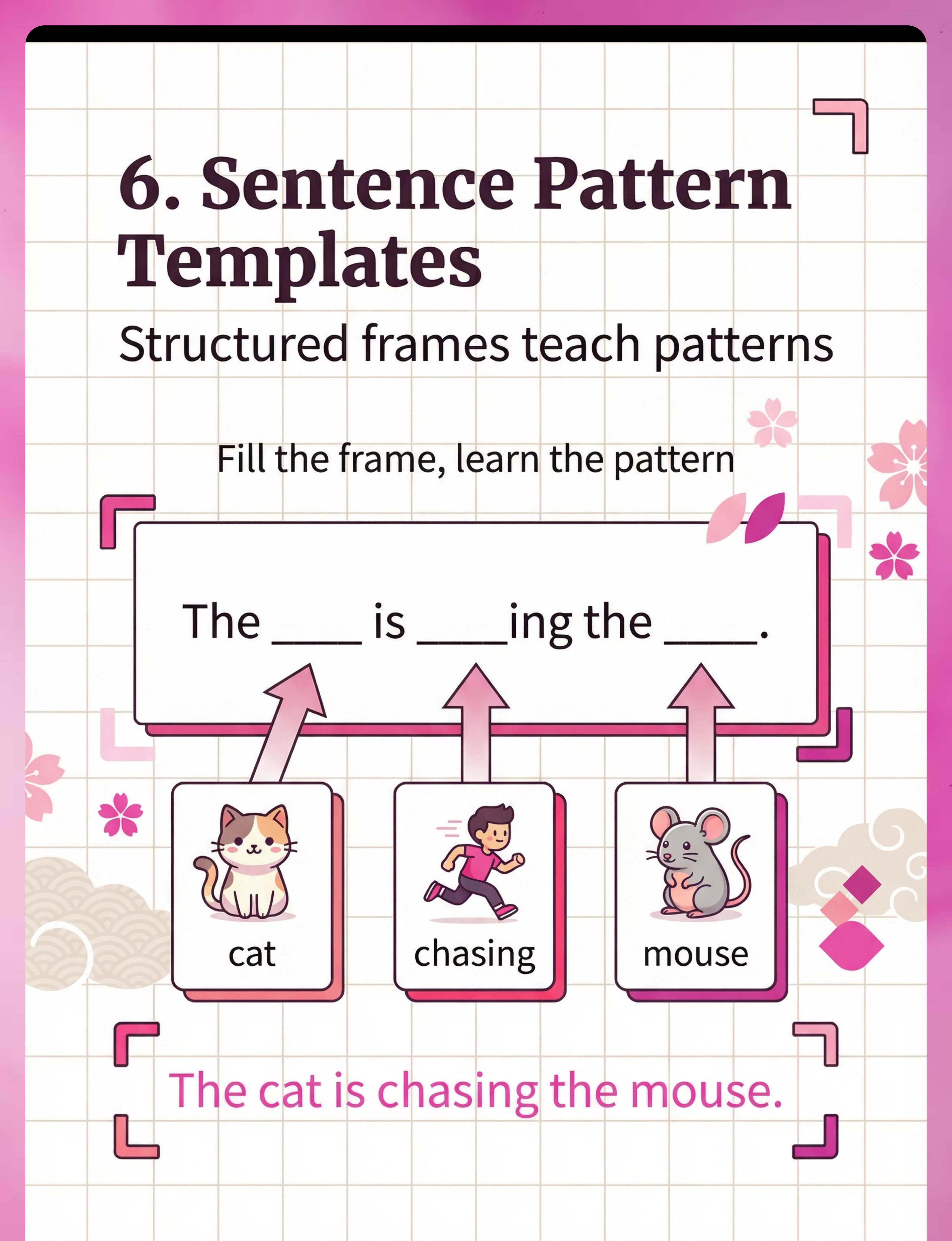
Sentence Pattern Templates & Frames
Category: Language Expansion / Structured Practice | ₹100–300 | DIY: ✅ Free
"Fill the blank, learn the pattern"
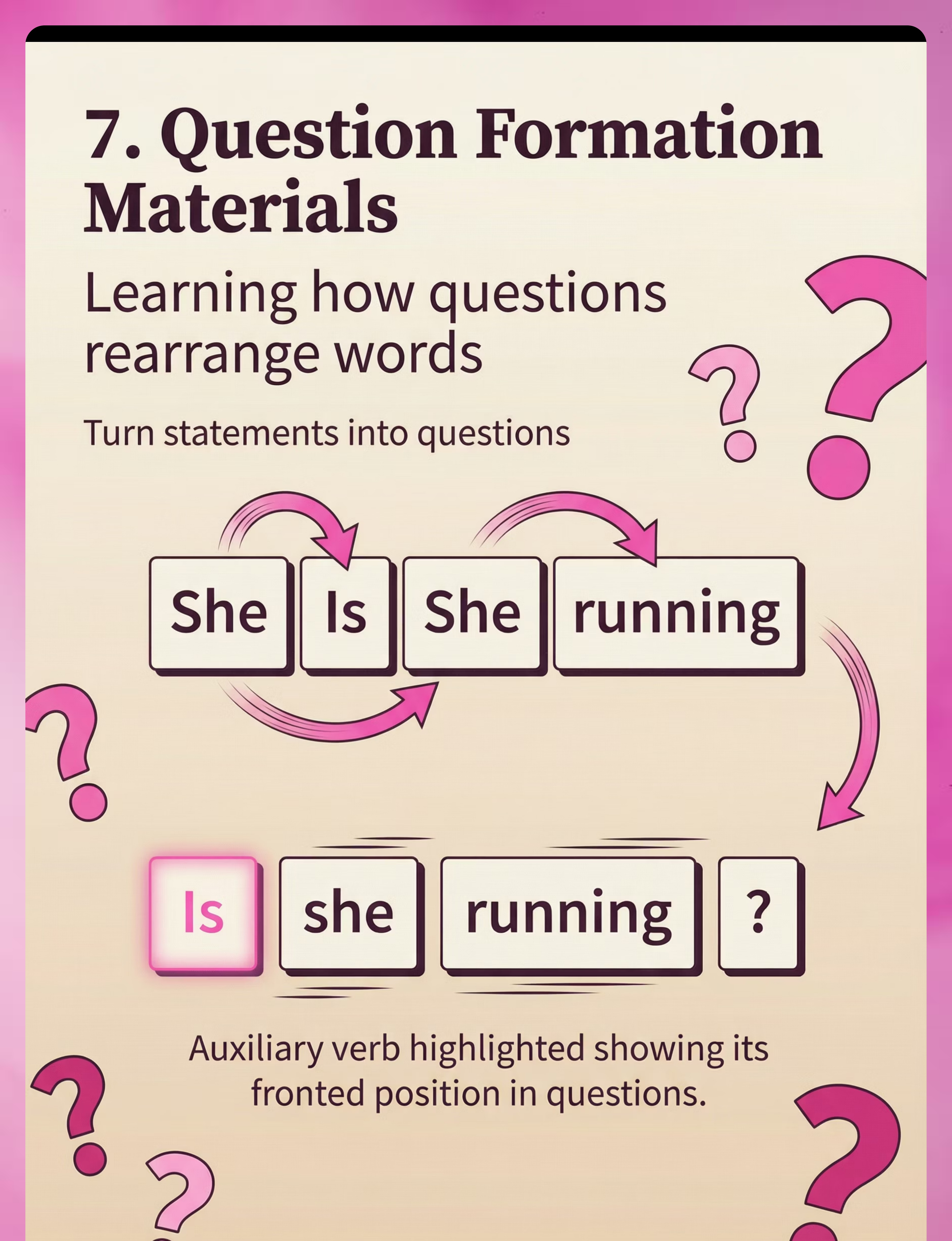
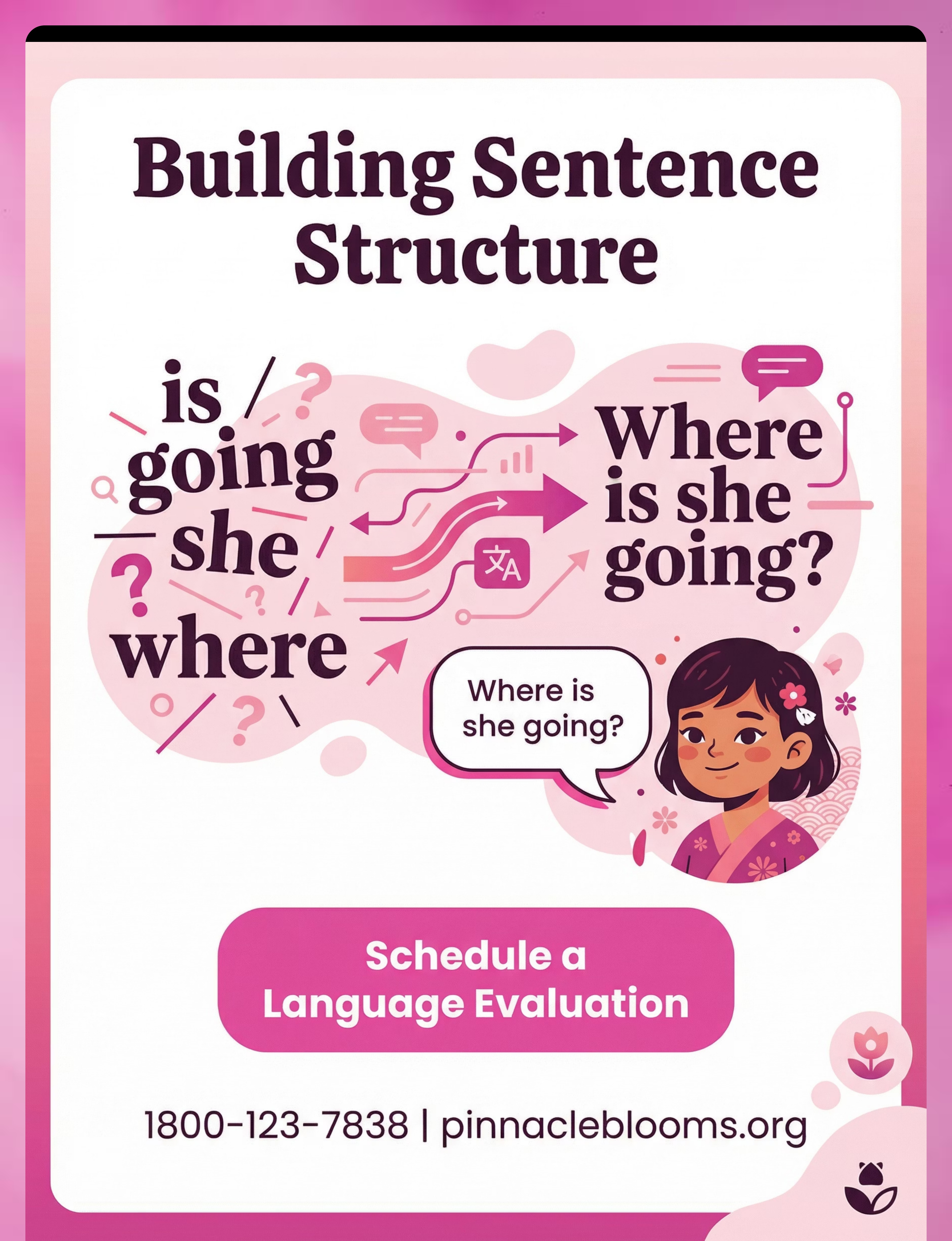
Question Formation Materials & Wh-Word Tools
Category: Language Expansion / Visual Supports | ₹150–400 | DIY: ✅ Free
"How statements become questions"
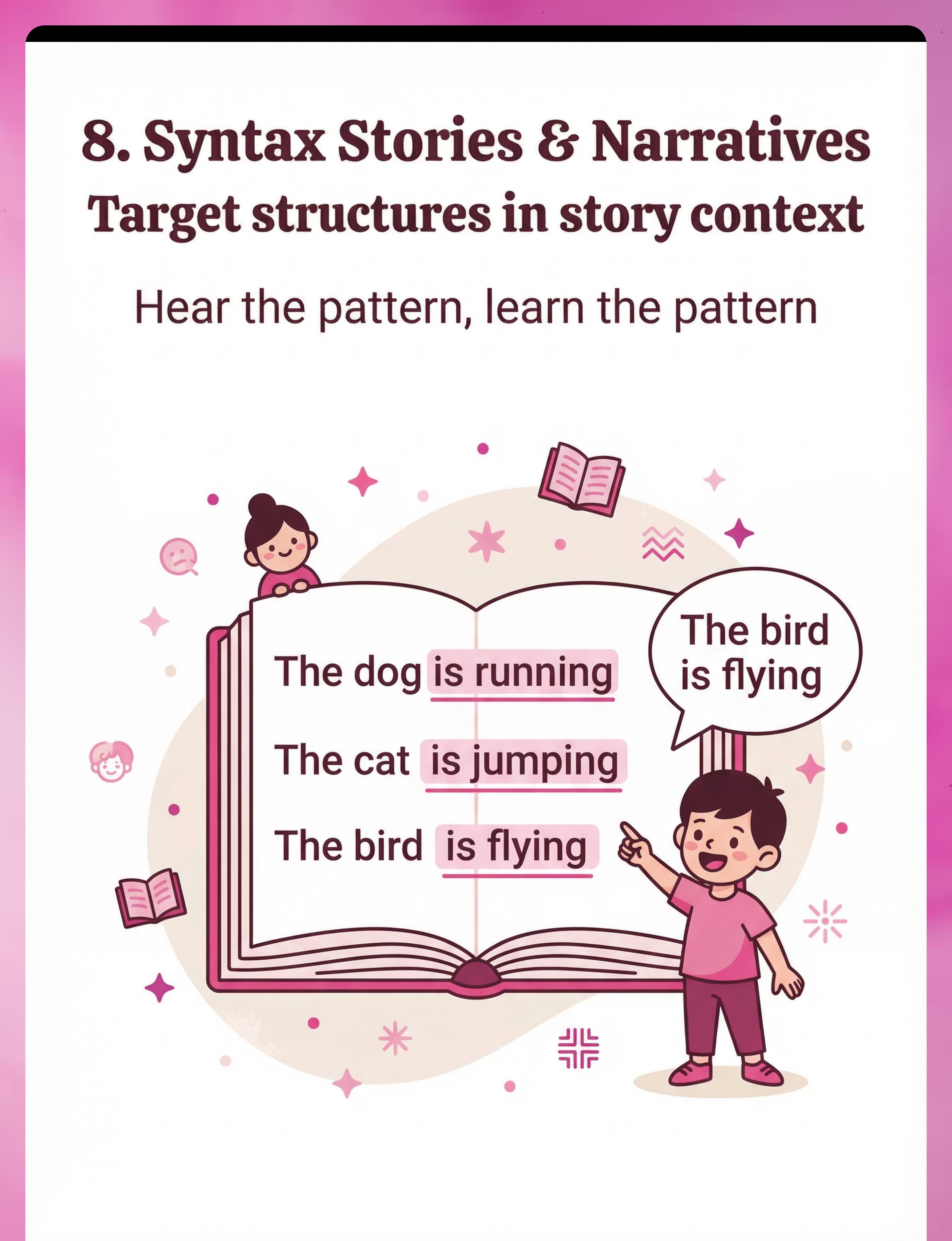
Syntax Stories & Structured Narrative Materials
Category: Social Stories / Early Reading Materials | ₹200–500 | DIY: ✅ Free
"Hear patterns, learn patterns"
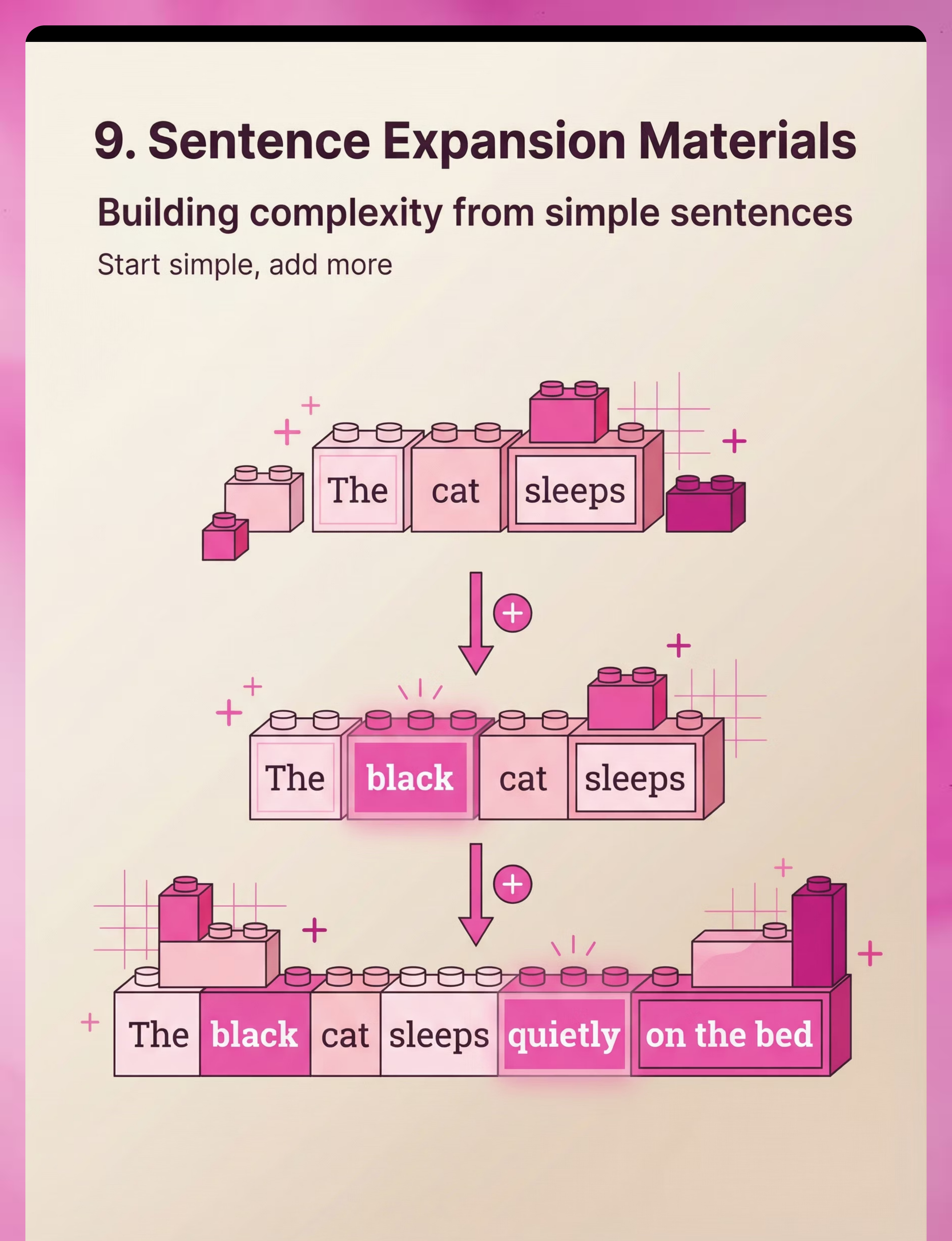
Sentence Expansion & Combining Materials
Category: Language Expansion / Building Tools | ₹100–350 | DIY: ✅ Free
"Simple grows to complex"
Investment Range
- Complete 9-Material Setup: ₹1,150–4,350
- Essential Starter Set (3 materials): ₹450–1,100
- Zero-Cost DIY Version: ₹0 (see next card)
Pinnacle Canon Extras
💡 Reinforcement menus support motivation during practice sessions.
- Rosette Reward Jar: ₹589 (Amazon.in)
- 1800+ Reward Stickers: ₹364 (Amazon.in)

Every Child Deserves Access. Zero-Cost Versions of All 9 Materials.
WHO/UNICEF Equity Principle in Action: No family should be unable to support their child due to cost or location. Every technique on this page can be executed with household materials alone.
Material 1 — Sentence Building Cards
Make it: Write words on index cards cut to equal size. Color-code by: Red = verb, Blue = subject, Green = object. Use cardstock or recycle old greeting cards.
Same principle: Physical manipulation teaches spatial order.
Material 2 — Color-Coded Syntax
Make it: Buy 4 colors of chart paper. Cut into equal rectangles. ORANGE = Who (subject), YELLOW = What doing (verb), GREEN = What (object), BLUE = Where (location). Consistent colors — every session, every day.
Same principle: Visual grammar coding through color pattern.
Material 3 — Pocket Charts
Make it: Tape rows of clear plastic sleeves from a document holder to cardboard. Or clip word strips to a horizontal string using clothespins. Works identically.
Same principle: Positional encoding — each slot = one word position.
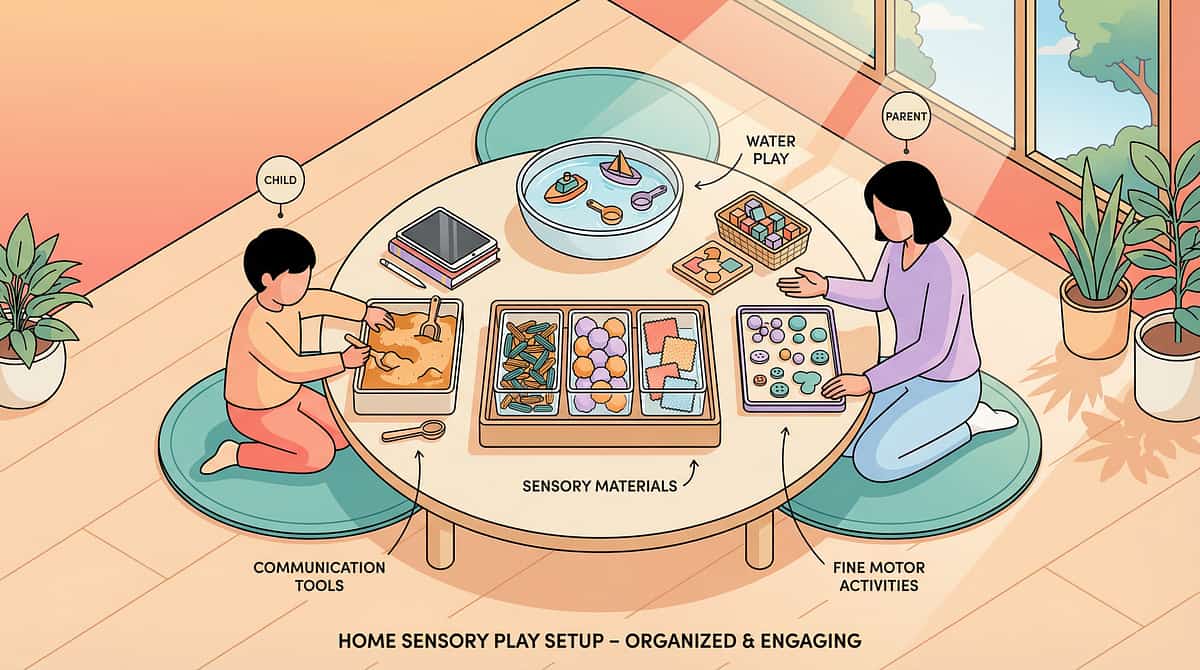
Zero-Cost DIY: Materials 4–9
Material 4 — Apps
Free option: Search "Sentence Builder" on Google Play / App Store. Or create a Google Slides deck with draggable word boxes. Same principle: Digital interaction with instant feedback.
Material 5 — Picture Elicitation
Make it: Print/cut action images from magazines or draw stick figures. Must show: DOER + ACTION + OBJECT. Use family photos: "Amma is cooking the rice." Same principle: Visual action prompts correct sentence.
Material 6 — Sentence Frames
Make it: Write frames on A4 paper or a whiteboard: "The ___ is ___ing the ___." | "I want a ___." Same principle: Reduced formulation load; pattern becomes automatic.
Material 7 — Question Cards
Make it: Write statements and questions on two sets of cards. Draw arrows showing word movement. Practice flipping "She is running" → "Is she running?" Same principle: Concrete visualization of syntactic transformation.
Material 8 — Syntax Stories
Make it: Write a 6-line story repeating the target pattern: "The dog is running. The cat is jumping. The bird is flying." Read expressively, emphasizing the pattern. Same principle: Repetitive pattern exposure in meaningful context.
Material 9 — Expansion Materials
Make it: Start with a sticky note: "The cat sleeps." Add a second: "The BLACK cat sleeps." Add a third: "The black cat sleeps QUIETLY." Lay them in a growing row. Same principle: Systematic complexity building with position awareness.
"A household alternative that works is infinitely better than a clinical tool that stays in the box." — Pinnacle Blooms Consortium (WHO NCF Principle)
⚠️ Read This Before Starting. Your Child's Safety Is the Non-Negotiable Foundation.
🔴 DO NOT PROCEED IF:
- Child is in active meltdown or severe distress
- Child has not eaten in more than 2 hours
- Child has a fever, illness, or significant pain
- You have had a major conflict with the child in the last 30 minutes
- Child shows signs of extreme fatigue or drowsiness
- Multilingual child: syntax "errors" may be first-language transfer → Consult bilingual SLP before labeling as disorder
- Regression in previously correct syntax occurring rapidly → Consult NeuroDev Pediatrician immediately
🟡 MODIFY IF:
- Child is mildly dysregulated → Use only 1–2 materials; reduce session length to 5 minutes
- Child refuses cards but accepts digital → Switch to app-based practice only
- Child is a multilingual learner → Use materials in child's dominant language first
- Child has fine motor difficulties → Use larger cards (A5 minimum), magnetic tiles
- Written material is distracting → Use picture-only versions; add words gradually
🟢 PROCEED WHEN:
- Child is calm, alert, and fed
- Child shows some interest in language play
- Environment is quiet, distraction-controlled
- You have 10–20 uninterrupted minutes
- Materials are pre-prepared and within reach
- You are in a regulated, patient emotional state
⚠️Critical Clinical Note — Language Difference vs. Language Disorder: In children who speak 2+ languages at home, word order "errors" may reflect their first language's grammatical rules — NOT a disorder. Many South Asian languages are SOV (Subject-Object-Verb). "Ball I throw" may be first-language influence, not impairment. ALWAYS evaluate syntax in ALL languages. FREE Assessment Guidance: 9100 181 181

The Environment Is Part of the Therapy. Set It Up Right Before You Begin.
Physical Setup
- Table cleared of all non-session items
- Word cards / materials pre-sorted and face-down
- Reward system within reach but out of child's immediate sight
- Transition object visible (signals "then we do this next")
- Door closed or session area clearly defined
Sensory Setup
- Background noise minimized (no TV, music off or soft instrumental)
- Lighting bright and consistent (not flickering)
- Temperature comfortable — neither cold nor stuffy
- Seating: stable chair with feet flat on floor (or floor seating if preferred)
Parent / Caregiver Setup
- Phone on silent, notifications off
- 10–20 minutes protected, no interruptions
- Your own emotional state: calm and curious (not anxious to perform)
- Script card from Step 1 visible but not obtrusive
Materials Ready
- Session 1: Start with ONLY Material 1 (Sentence Building Cards)
- Sessions 3+: Add one new material per 3–4 sessions
- Never introduce all 9 materials simultaneously
"Parent positioned BESIDE the child — not across. Across creates a test. Beside creates collaboration." — Pinnacle OT + SLP Consortium

60-Second Pre-Flight Check. The Best Session Starts Right.
Energy Level
✅ GO: Alert, awake, responsive to name
⚠️ MODIFY: Sluggish → Use Movement First (5 min jumping/walking)
🚫 POSTPONE: Asleep / post-meltdown (<30 min)
⚠️ MODIFY: Sluggish → Use Movement First (5 min jumping/walking)
🚫 POSTPONE: Asleep / post-meltdown (<30 min)
Last Meal
✅ GO: Eaten within last 90 minutes
⚠️ MODIFY: Hungry → Offer snack, 10-min wait
🚫 POSTPONE: Not eaten in 3+ hours
⚠️ MODIFY: Hungry → Offer snack, 10-min wait
🚫 POSTPONE: Not eaten in 3+ hours
Recent Behavior
✅ GO: Playing, engaged, cooperative
⚠️ MODIFY: Mildly frustrated → Reduce session length
🚫 POSTPONE: Major meltdown/aggression occurred
⚠️ MODIFY: Mildly frustrated → Reduce session length
🚫 POSTPONE: Major meltdown/aggression occurred
Response to Name
✅ GO: Responds and looks within 3 calls
⚠️ MODIFY: Partial response → Use preferred object to establish attention
🚫 POSTPONE: No response (highly dysregulated)
⚠️ MODIFY: Partial response → Use preferred object to establish attention
🚫 POSTPONE: No response (highly dysregulated)
Body Position
✅ GO: Able to sit at table for 3+ minutes
⚠️ MODIFY: Fidgety → Use floor seating or wobble cushion
🚫 POSTPONE: Cannot maintain any seated position
⚠️ MODIFY: Fidgety → Use floor seating or wobble cushion
🚫 POSTPONE: Cannot maintain any seated position
Caregiver State
✅ GO: Calm, patient, curious
⚠️ MODIFY: Tired → Shorten to 5 minutes
🚫 POSTPONE: Highly stressed/anxious — child will sense it
⚠️ MODIFY: Tired → Shorten to 5 minutes
🚫 POSTPONE: Highly stressed/anxious — child will sense it
🟢 5–7 Green Indicators
FULL SESSION — Proceed to Step 1: The Invitation
🟡 3–4 Green Indicators
MODIFIED SESSION — 5–10 min, 1 material only
🔴 Fewer than 3 Green
POSTPONE — Do a preferred activity instead. Session abandonment is intelligent data collection.

Step 1 of 6
⏱️ 30–60 Seconds
Every Session Begins With an Invitation. Never a Command.
Script A — Playful
"Hey! I found something really cool. Want to see a word puzzle?" [Place ONE card face-down on the table. Tap it gently with curiosity, not urgency.]
Script B — Interest-Led
"Remember [child's favorite character]? Let's make a sentence about [character]!" [Have a picture of the character ready.]
Script C — Minimal Demand
"Come sit with me. I want to show you something." [Gesture to seat. Do not repeat more than twice.]
Script D — For Highly Resistant Child
[No words. Simply place 2 colorful cards on the table near the child's natural play space. Wait. Observe. Let curiosity do the work.]
✅ Invitation Accepted — Any of These:
- Child approaches the table / sits
- Child looks at the cards (even briefly)
- Child reaches toward a card
- Child says "what's that?" in any form
- Child begins arranging cards unprompted
❌ Resistance — What To Do:
- Child walks away → Wait 60 seconds. Try Script D.
- Child ignores cards → Move session to child's location.
- Child says "no" → Honor it. Try again in 15 minutes.
Do not coerce. Forcing syntax practice teaches syntax avoidance.
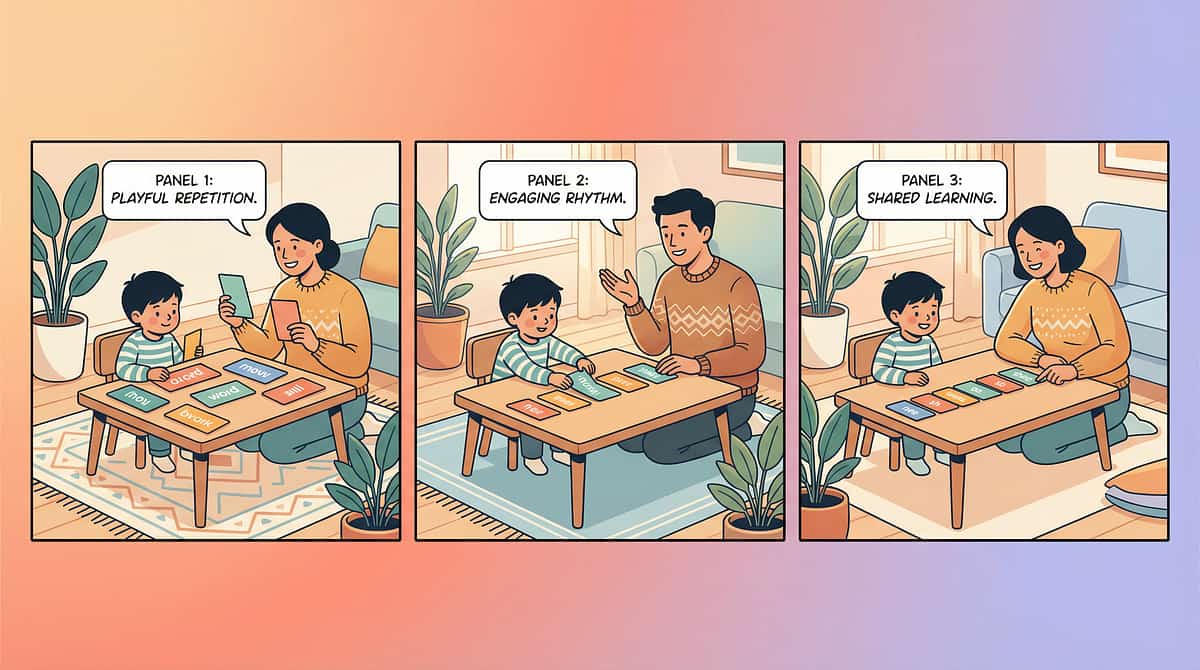
Step 2 of 6
⏱️ 1–3 Minutes
The Child Is Here. Now Introduce the Material. Follow the Child's Pace — Not the Clock's.
Place 3 word cards face-up
[I] [want] [a cookie] — "Look — these are word cards. Each card is one word." Point to each card as you say each word.
Deliberately mix them up
"Oops! They got mixed up! 'Cookie want I a' — that sounds funny!" Act surprised/amused — not concerned.
Invite the child to fix it
"Can you help me fix the sentence? Let's put them in the right order." Move the first card into place: "I" — then pause. Wait for child to move the next card.
Respond to any card movement
If child moves a card → REINFORCE IMMEDIATELY (even if wrong order). If child doesn't move a card in 10 seconds → Model the next move yourself, then "Your turn!"
Material Introduction Protocol: Week 1–2: Material 1 only | Week 3: Add Material 2 alongside Material 1 | Week 5: Add Material 3 | Continue adding one new material per 2 weeks. Never more than 2–3 materials active in a single session.

Step 3 of 6
⏱️ 5–12 Minutes Core Session
The Active Ingredient. This Is Where Syntax Gets Built.
Material 1: Sentence Building Cards
Child physically arranges word cards into correct S-V-O order. Start with "I want a cookie." Progression: 3 words → 4 → 5 → questions.
Script: "Which word comes first? Move it here." | "What is [character] doing? Find the verb card."
Common error: Child puts verb first ("Want I...") → "Almost! The 'doer' always goes first. Who wants the cookie?"
Material 2: Color-Coded Syntax
ORANGE = WHO (subject) | YELLOW = WHAT DOING (verb) | GREEN = WHAT (object) | BLUE = WHERE (location)
Script: "Find the orange card first. Who is doing it?" → "Now yellow — what are they doing?" → Visual pattern: ORANGE → YELLOW → GREEN → BLUE (always)
Material 5: Picture-Based Elicitation
Show action picture. "Who is in this picture?" → "What is the girl doing?" → "Now say the whole sentence!" → "The girl is pushing the boy."
If child says "Girl push boy" → Model: "The GIRL IS pushing THE boy" (emphasize the missing grammatical elements naturally)
Material 6: Sentence Frames
Present frame: "The ___ is ___ing the ___." Child fills slots with content words from picture/situation.
Script: "Look at the frame. First blank = what animal?" → "The CAT is ___ing the ___." → Read the complete sentence together each time.
Core therapeutic action: 5–12 minutes | Total session: 15–20 minutes | Daily practice yields best outcomes — even 10 minutes daily outperforms 45 minutes twice weekly.

Step 4 of 6
⏱️ 3–5 Additional Minutes
3 Good Repetitions Beat 10 Forced Ones. Every Time.
Repetition Guidance
Target: 5–10 correct (or partially correct) sentence attempts per session
Minimum: 3 complete sentence attempts (even with full modeling)
Maximum: Stop at first sign of satiation
Do NOT:
- Demand more than 3 repetitions if child is fading
- Repeat the same exact sentence more than twice in a row
- Correct every error in conversational speech
Variation Menu
Keep the same structure — vary the content:
- Change the subject: "I want a cookie" → "She wants a ball" → "He wants juice"
- Change the verb: "The cat is sleeping" → "The cat is running" → "The cat is eating"
- Change the setting: Use family photos — "Amma is cooking the rice. Papa is driving the car."
- Question form (advanced): "She is running." → "Is she running?" (Show word movement with arrows)
- Expansion: "The cat sleeps" → "The black cat sleeps" → "The black cat sleeps quietly"
Satiation Indicators — Stop Here
- Child starts making deliberate errors (bored/testing)
- Child begins pushing materials away
- Child's attention drifts consistently to other objects
- Child produces more than 3 unprompted refusals

Step 5 of 6
The Moment of Reinforcement Is More Powerful Than the Technique Itself. Time It Right.
⏱️The 3-Second Rule: Reinforcement must occur WITHIN 3 seconds of the target behavior. After 3 seconds, the child's brain has moved on. The reinforcement no longer reinforces the behavior.
Tier 1 — Immediate (Every Correct Attempt)
Verbal praise (specific, enthusiastic): "YES! 'I want a cookie' — perfect sentence!" | "The [child's name] brain just built a sentence!" | High five, fist bump, thumbs up | Sticker on chart → Pinnacle Canon: 1800+ Reward Stickers ₹364 | Amazon.in
Tier 2 — Interval (Every 3–5 Attempts)
Token on token board (fills toward bigger reward) | 30-second access to preferred toy/activity → Pinnacle Canon: Rosette Reward Jar ₹589 | Amazon.in
Tier 3 — Session Completion
Preferred activity for 5 minutes | Special sticker / stamp in "Sentence Builder" book | Child-chosen reward from pre-agreed menu
Tier 4 — Weekly Milestone
Family celebration of communication wins | Certificate from GPT-OS® progress tracker | Video message to grandparents showing skill
"Celebrate the ATTEMPT, not just the success. A child who attempts is learning. Never correct without also celebrating." — Pinnacle ABA/BCBA Consortium

Step 6 of 6
⏱️ 2–3 Minutes
No Session Ends Abruptly. The Cool-Down Is Therapy Too.
If Child Wants to Continue
- Acknowledge: "You love this! We'll do more tomorrow."
- Promise: "Five more cards tomorrow" (be specific, keep the promise)
- Bridge: "You can hold this one card until tomorrow"
The Warning Script
"We have 2 more sentences, then we're all done for today." [Hold up 2 fingers. Use a visual timer if available — even a phone countdown.]
Never abruptly remove a preferred activity — always with advance warning.
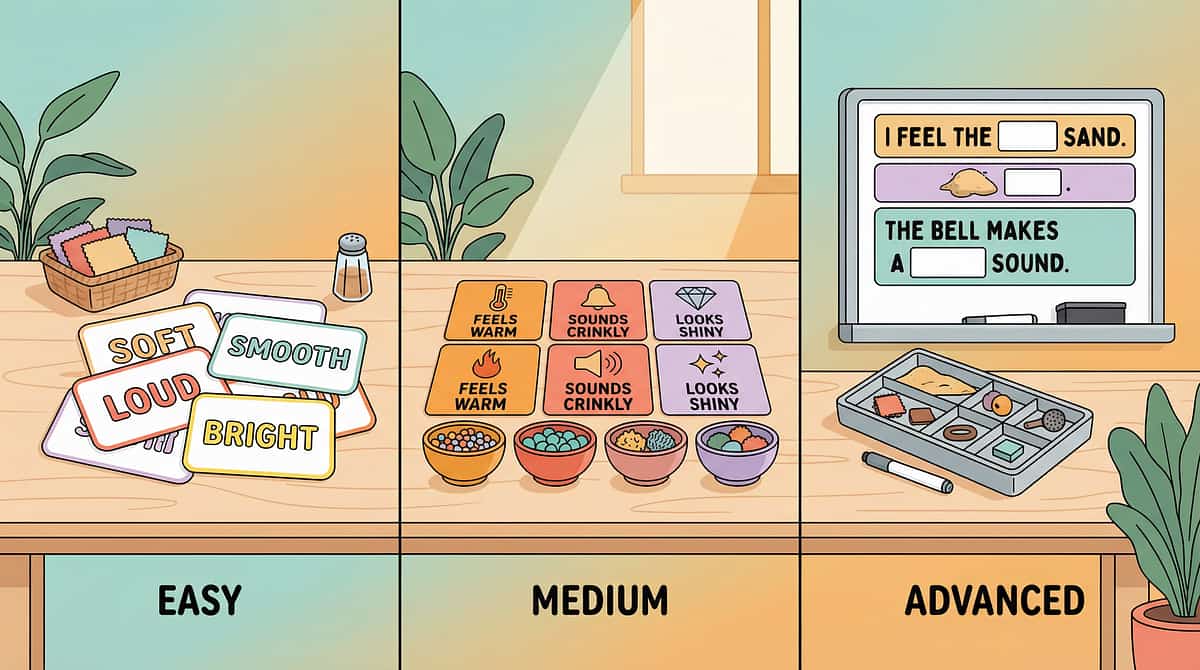
60 Seconds of Data Now Saves Hours of Guessing Later.
The B-196 Tracking Sheet
DATE: ___________ DURATION: ___ minutes MATERIALS USED: ___________
Data Point 1 — Sentence Attempts
Total attempts (any form): ____
Correct order (no prompting): ____
Correct order (with prompting): ____
Incorrect order: ____
Score: ____/____ (correct / total)
Total attempts (any form): ____
Correct order (no prompting): ____
Correct order (with prompting): ____
Incorrect order: ____
Score: ____/____ (correct / total)
Data Point 2 — Prompt Level (circle one):
Full model | Partial model | Gestural only | Independent
Full model | Partial model | Gestural only | Independent
Data Point 3 — Engagement Level (circle one):
High | Medium | Low | Refused
High | Medium | Low | Refused
Notes: What worked / what surprised you: ___________________
Tracking Options
Choose the method that fits your life — any of these is enough:
- 📥 Download the B-196 Tracking PDF
- 📱 GPT-OS® In-App Tracker (auto-syncs to Communication Readiness Index)
- ✏️ Simple tally: How many sentences? How many correct? That's enough.
A refused session is NOT failure — it is data. Record it. It tells you what to change next time.

Most Sessions Are Imperfect. That's Not Failure — That's Data.
Here are the 7 most common challenges and their fixes, drawn from real parent sessions across the Pinnacle Network.
Child Refuses to Touch or Look at Cards
Why: Material may be novel/aversive, or child is dysregulated.
Fix: Switch to digital app (Material 4) or picture cards only. Use preferred character on cards. Reduce to 1-card interaction. Rebuild pairing (Script D from Step 1) for 3 more sessions before reintroducing manipulatives.
Fix: Switch to digital app (Material 4) or picture cards only. Use preferred character on cards. Reduce to 1-card interaction. Rebuild pairing (Script D from Step 1) for 3 more sessions before reintroducing manipulatives.
Child Arranges Cards but Consistently Wrong Order
Why: S-V-O rule not yet internalized; needs more pattern exposure.
Fix: Back to Material 8 (Syntax Stories). Read target patterns aloud daily for 1 week. Color-code positions. Reduce to 2-word combinations (Subject + Verb only) for 2 weeks.
Fix: Back to Material 8 (Syntax Stories). Read target patterns aloud daily for 1 week. Color-code positions. Reduce to 2-word combinations (Subject + Verb only) for 2 weeks.
Correct with Cards but Reverts to Wrong Order in Speech
Why: Structured-to-naturalistic generalization takes weeks — this is normal.
Fix: Do NOT correct every spontaneous speech error. Use expansion recast. Child: "Want I ball." → Parent: "Oh, YOU want the ball! Here it is!" (recast the correct form without demanding repetition)
Fix: Do NOT correct every spontaneous speech error. Use expansion recast. Child: "Want I ball." → Parent: "Oh, YOU want the ball! Here it is!" (recast the correct form without demanding repetition)
Excels with Materials 1–3 but Rejects Materials 7–9
Why: Question transformation is cognitively harder; stories require sustained attention.
Fix: Don't rush. Master Materials 1–3 for 6+ weeks before introducing 7–9. Introduce question cards as "bonus" at session end only.
Fix: Don't rush. Master Materials 1–3 for 6+ weeks before introducing 7–9. Introduce question cards as "bonus" at session end only.

7 Common Challenges: Fixes 5–7
Correct During Sessions but Never Generalizes
Why: Generalization requires intentional programming — it is not automatic.
Fix: Use same sentence structures during natural activities. At meals: "Tell me: what are you eating? Full sentence." At bath: "I am washing my ___." Carry 2–3 cards in your pocket for opportunistic practice.
Fix: Use same sentence structures during natural activities. At meals: "Tell me: what are you eating? Full sentence." At bath: "I am washing my ___." Carry 2–3 cards in your pocket for opportunistic practice.
Parent Feels Sessions Aren't "Working"
Why: Progress in syntax is often invisible until a threshold is crossed.
Fix: Review tracking data. Look for reduced prompt level (same accuracy, less help) — that IS progress. Look for faster response time (same errors, less latency) — that IS progress. Book a GPT-OS® teleconsultation to review data objectively.
Fix: Review tracking data. Look for reduced prompt level (same accuracy, less help) — that IS progress. Look for faster response time (same errors, less latency) — that IS progress. Book a GPT-OS® teleconsultation to review data objectively.
Child Had a Complete Meltdown During the Session
Why: Demand was too high, dysregulation occurred.
Fix: This session is over — do NOT continue. Note what immediately preceded the meltdown (antecedent). Next 3 sessions: half the demand, double the reinforcement. If meltdowns during language sessions are consistent: Call 9100 181 181.
Fix: This session is over — do NOT continue. Note what immediately preceded the meltdown (antecedent). Next 3 sessions: half the demand, double the reinforcement. If meltdowns during language sessions are consistent: Call 9100 181 181.
"Session abandonment is not failure. It is intelligent, compassionate data collection. The data tells you what to change. The change creates the breakthrough." — Pinnacle ABA/SLP Consortium

No Two Children Learn Syntax the Same Way. Here's How to Make This Protocol Yours.
⬇️ Easier Modifications
Use on difficult days or for younger/lower-baseline children:
- Use only 2-word combinations: "Cat sleeping" before S-V-O
- Use photos of child's own family, not generic images
- Remove written words — use pictures only
- One material only per session
- 5-minute maximum session length
- Model every sentence before expecting any attempt
⏺️ Current Level (Standard Protocol)
3–4 word sentences with S-V-O structure | 2–3 materials per session (rotating) | 10–15 minute sessions | Prompt hierarchy: Full model → Partial → Gestural → Independent
⬆️ Harder Modifications
Use when child consistently meets standard criteria:
- Introduce question formation (statement → question transformation)
- Add sentence expansion (adjective + adverb insertion)
- Request spontaneous sentence in NEW context (not just during session)
- Remove color coding — use plain cards only
- Introduce passive voice: "The cookie was eaten by me"
- Bridge to writing: verbal syntax → written syntax

Adapt by Child Profile: Sensory, Learning Style & Language Background
🌀 Sensory Seeker Profile
- Use textured cards (different textures for different word types)
- Allow movement during sessions (wobble cushion)
- Use large-scale cards (A4) on floor for whole-body engagement
🌿 Sensory Avoider Profile
- Use digital version (tablet/phone) instead of physical cards
- Dim lighting during sessions
- Allow child to sit further from parent initially
- Quieter, more measured reinforcement (avoid sudden loud praise)
👁️ Visual Learner Profile
- Heavy emphasis on Materials 2 and 5 (Color-coding + pictures)
- Add visual schedule showing sentence slots before session begins
- Use whiteboard for session (visible, erasable, low-stakes)
🔊 Auditory Learner Profile
- Emphasize Material 8 (Syntax Stories) — read aloud with expression
- Record correct sentences for child to hear back
- Use rhythm/song: "Subject first, then verb, then object — that's the rule!"
🌍 Multilingual Child
- Begin with dominant home language
- Use code-switching naturally (don't demand one language only)
- Consult bilingual SLP before assuming error pattern = disorder
- Celebrate syntax accuracy in ALL languages simultaneously

Progress Arc
Weeks 1–2
Weeks 1–2: You Are Laying the Foundation. Don't Expect the Building Yet.
Foundation Phase
Tolerance and participation — not mastery. The neural pathway is forming.
✅ Real Progress (Even If It Doesn't Look Like It)
- Child sits at the table for 5 minutes (not 3 last week)
- Child handles the cards without pushing them away
- Child makes any attempt to arrange words (even wrong order)
- Child produces any word-level response to picture prompts
- Child tolerates reading one syntax story without closing the book
⏳ Not Progress Yet — And That's Normal
- Correct word order without any prompting
- Spontaneous correct sentences outside of session
- Improvement in conversational speech order
- Any sign of the technique transferring to daily life
These will come. But not yet. Weeks 1–2 are about TOLERANCE.
"If your child sits with the cards for 3 seconds longer than last week — that is real, measurable, neurological progress." — Pinnacle SLP Clinical Team
This Week's Checklist: Sessions 3–5× this week | Material 1 ONLY | Sessions maximum 10 minutes | Fill in tracking sheet after EVERY session | Do NOT introduce Material 2 yet | Call 9100 181 181 with any questions.
Progress Arc
Weeks 3–4
Weeks 3–4: The Neural Pathway Is Forming. Watch for These Consolidation Signals.
Consolidation Phase
Behavioral shifts signal that new neural patterns are taking hold.
Anticipation
Child moves toward the card area without being asked, asks for "the word game." The brain is signaling it wants the pattern — this is not small.
Reduced Prompting
Last week: full sentence model needed. This week: a partial cue is enough. "The cat is ___ing" → child fills the final slot unprompted.
Error Awareness
Child produces wrong order, pauses, self-corrects. This is advanced metacognitive awareness of syntax — celebrate it loudly.
Generalization Seeds
Child produces one correct spontaneous sentence in daily life — not during a session, not when prompted. Even once. Even imperfect. This is generalization beginning.
Parent Confidence
You notice you're running sessions more smoothly, anticipating resistance before it happens. You are part of the therapy. Your growth matters.
This Week: Introduce Material 2 (Color-Coded Syntax) alongside Material 1 | Add sentence frames (Material 6) as secondary activity | Increase session to 15 minutes if engagement allows | Note first instance of spontaneous correct sentence — date and context.
Progress Arc
Weeks 5–8
Weeks 5–8: The Mastery Phase. Here Are Your Badge Criteria.
Mastery Phase
Spontaneous, generalized, self-sustaining syntax across multiple contexts.
Mastery Criterion 1: Spontaneous Correct Order
Child produces S-V-O in correct order WITHOUT word cards, color coding, or any structured prompt in at least 70% of spontaneous utterances in session.
Mastery Criterion 2: Generalization
Correct word order appearing in at least 2 contexts outside of the formal session: mealtimes, play, school report from teacher, bath time.
Mastery Criterion 3: Maintenance
When you skip sessions for 5–7 days, skills don't regress. The neural pathway is self-sustaining.
Mastery Criterion 4: Complexity Growth
Child is adding adjectives, adverbs, and prepositions in their correct positions spontaneously — not just maintaining basic S-V-O.
Mastery Criterion 5: Self-Correction
Child notices their own errors and corrects them without parent prompting in 3+ instances per session.
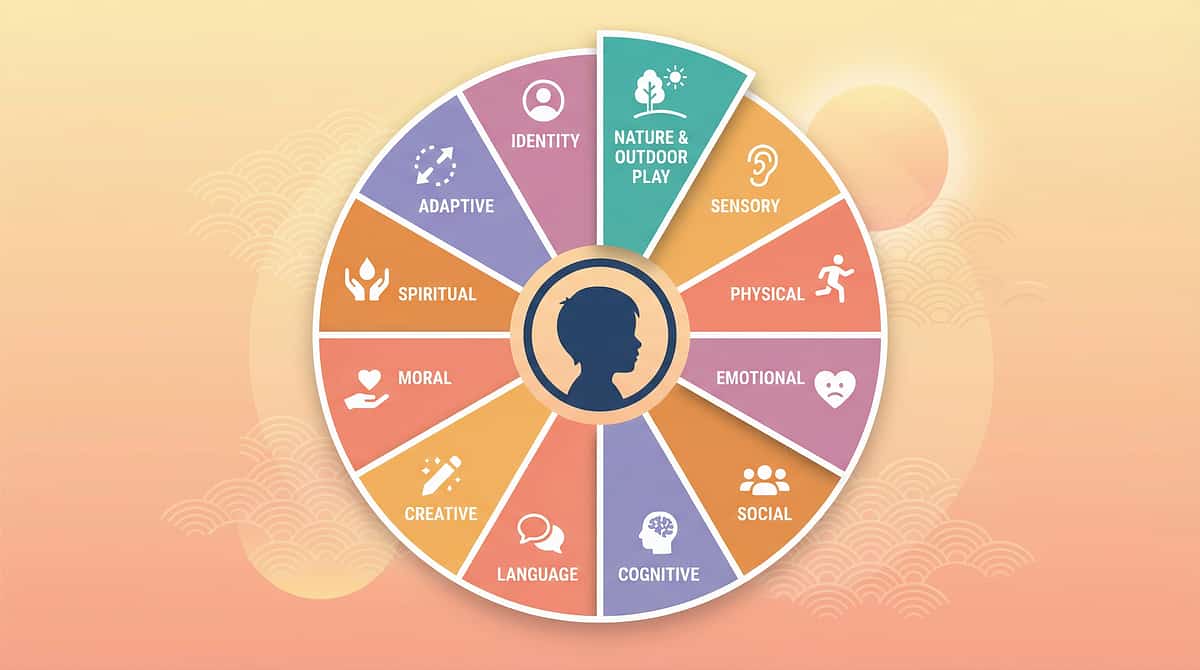
Mastery Unlocked — What Comes Next?
Option A: Advance
Move to B-197 (Difficulty Using Pronouns) | Or introduce question formation focus (Material 7) | GPT-OS® will suggest next technique based on your data
Option B: Strengthen
Stay with B-196 for 4 more weeks in different contexts | School, outdoors, during play — generalize fully before advancing
Option C: Expand Complexity
Introduce B-198 (Verb Tense Errors) — builds directly on syntax mastery | Work on sentence combining (Material 9 — advanced use)
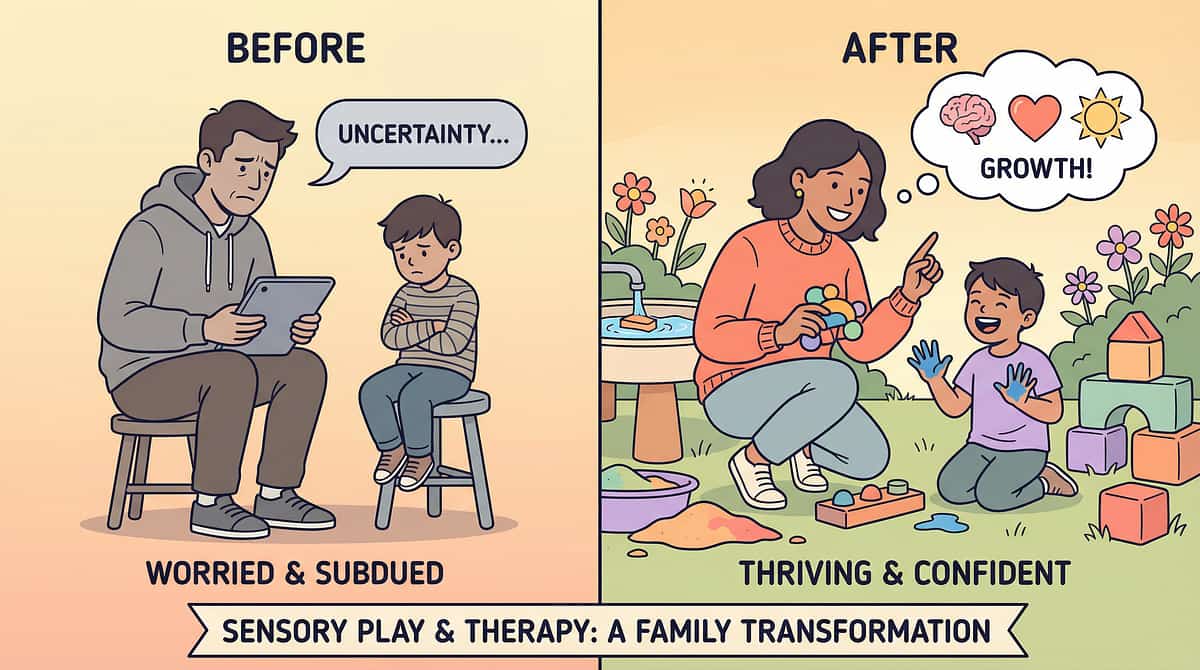
You Did This. Your Child's Brain Grew Because of Your Commitment.
✓ B-196 Syntax Milestone Achieved
Your child can now build ordered sentences. Words line up: Subject → Verb → Object. "I want a cookie" is replacing "Want I cookie." Neurological pattern — reinforced and stable. This is real. This is measured. This is yours.
Celebrate This Win
- 🎉 Record child producing their best sentence — send to grandparents
- 📸 Photo of child with their sentence cards — date it, keep it
- 📖 Journal entry: "Today [child's name] said _________. Correctly."
- 🏆 GPT-OS® Certificate — available in your dashboard. Print it. Frame it.
- 🗣️ Share it in the Pinnacle parent community — your celebration gives another parent hope
"You arrived on this page wondering why the sentences wouldn't come out right. You leave it knowing: The words were always there. You built the architecture around them. One card at a time. One session at a time. One 3-second reinforcement at a time." — The Pinnacle Blooms Consortium

⚠️ Even After Progress: These Signs Mean Stop and Seek Guidance.
🚨 Red Flag 1: Sudden Regression
Child was producing correct word order and has stopped — not just a bad day, but consistent reversal over 5+ days. Rule out: illness, sleep disruption, life change, seizure event. → Action: Teleconsultation within 48 hours. Call 9100 181 181.
🚨 Red Flag 2: Syntax Errors in ALL Languages
For multilingual children: if the same errors appear in both/all languages simultaneously AND are worsening — this shifts from "language difference" to "language disorder" territory. → Action: Bilingual SLP assessment. Don't wait.
🚨 Red Flag 3: Language Regression + Other Regressions
Syntax regression occurring alongside loss of other skills (social engagement, daily living, motor) → red flag for medical evaluation (epilepsy, metabolic, neurodevelopmental). → Action: NeuroDev Pediatrician urgently. Document timing.
🚨 Red Flag 4: Complete Session Avoidance
Child who was previously engaged now refuses all language activities consistently for 2+ weeks, with increased distress. Possible: anxiety, sensory overload, demand too high. → Action: Back to Safety Card. Consult SLP for assessment.
🚨 Red Flag 5: No Progress After 12 Weeks
Consistent practice, correct technique, but no measurable change in any indicator. Possible: diagnosis revision needed, different technique required. → Action: Full GPT-OS® AbilityScore® reassessment.
Escalation Pathway: Level 1: Home adjustment (up to 2 weeks) → Level 2: Teleconsultation with Pinnacle SLP (within 48 hours) → Level 3: In-person assessment → Level 4: NeuroDev Pediatrician evaluation. FREE First Step: 9100 181 181 (24×7, 18+ languages)
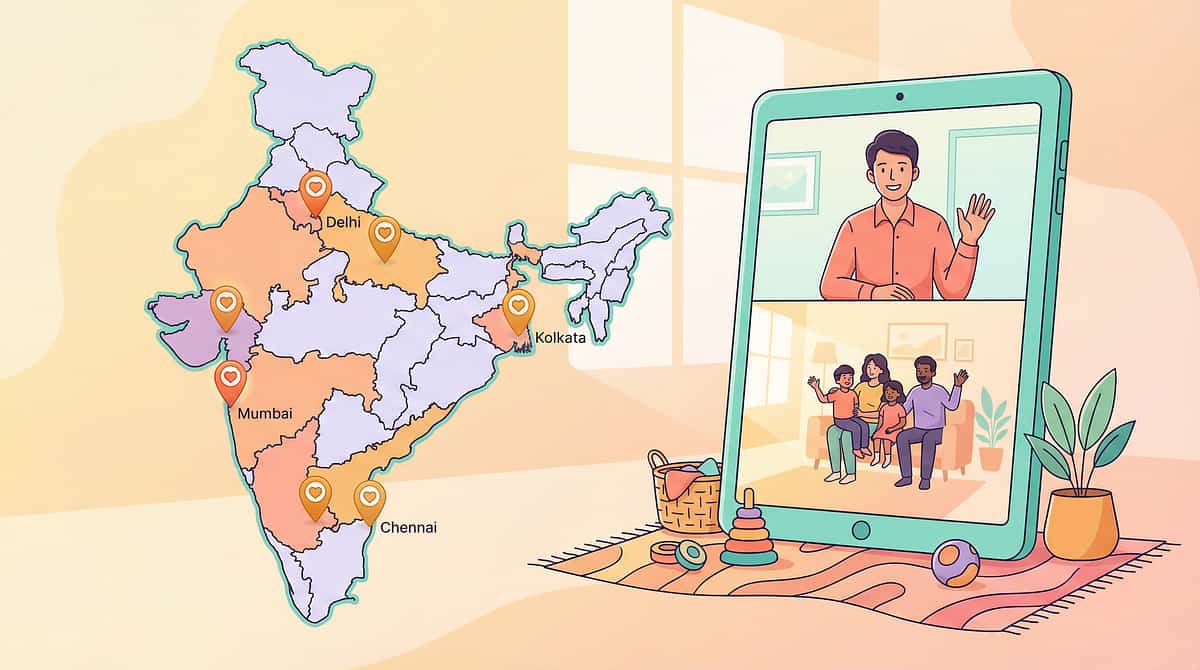
You Are Not Done. You Are on a Journey. Here Is Your Map.
Path A — Mastered S-V-O
→ B-197: Difficulty Using Pronouns | "He/she/they" placement in correct position
Path B — Question Formation Ready
→ B-199: Question Formation Problems | Deep dive: wh-questions + inversion rules
Path C — Verb Form Errors Appearing
→ B-198: Verb Tense Errors | "Is running" vs "ran" — temporal syntax
Path D — Complexity Plateau
→ B-200: Volume Control | Syntax mastery now paired with prosody and confidence
More Techniques in the Language Structure Solutions Series
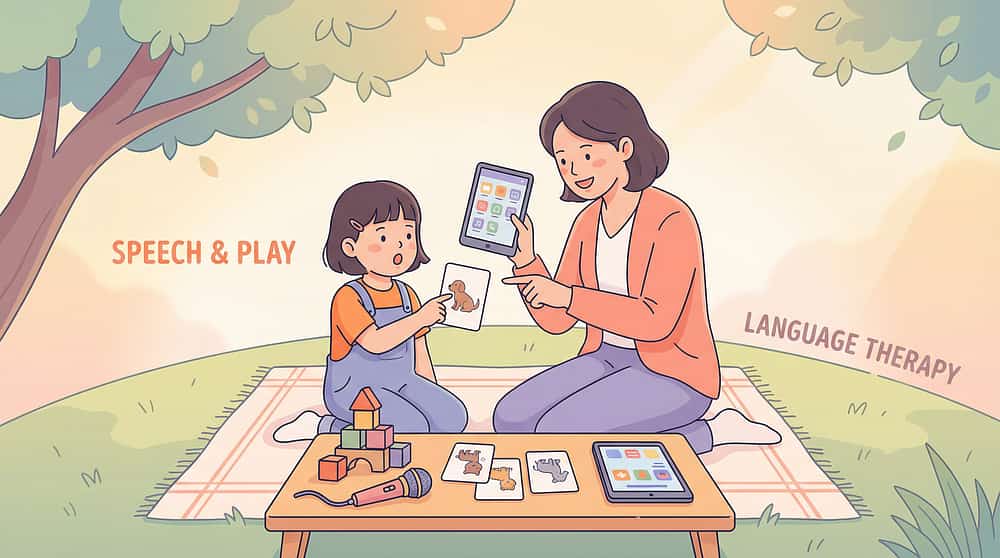
B-193 | Scripted-Only Speech
Intro
🗣️ SLP

B-194 | Speech Rate Problems
Core
🗣️ SLP

B-195 | Difficulty Retelling Stories
Core
🗣️ SLP + SpEd
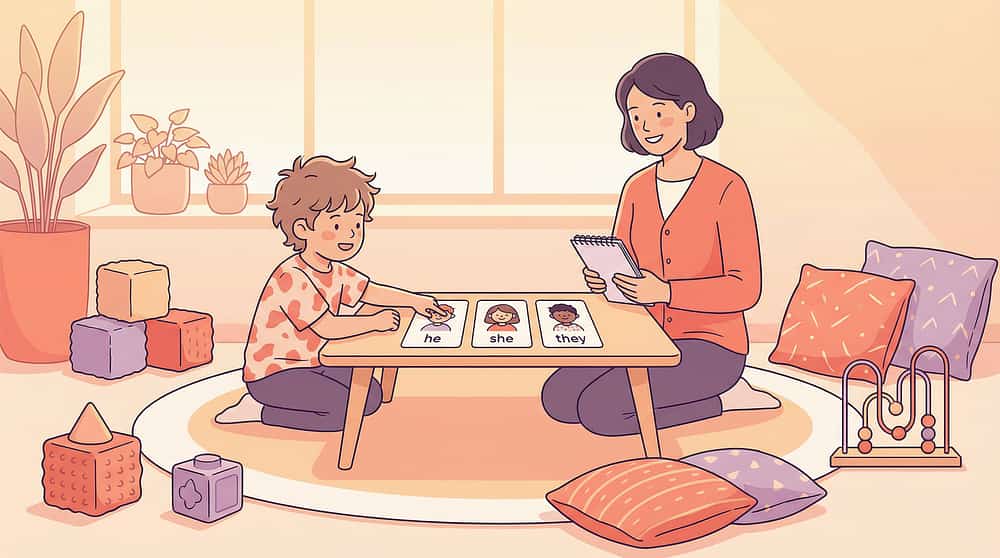
B-197 | Difficulty Using Pronouns
Next Level
🗣️ SLP

B-198 | Can't Initiate Conversation
Core
🗣️ SLP + ABA
B-199 | Only Talks About Interests
Advanced
🗣️ SLP + SpEd
🟢 You already own materials for B-197 (same sentence building cards — add pronoun cards) and B-199 (same color-coding materials + topic expansion cards). 🟡 B-198 requires adding conversation starter cards — minimal new cost.

B-196 Is One Piece. Here Is the Entire Puzzle.
Word order difficulty (Domain B) doesn't exist in isolation. It commonly co-occurs with Domain C (Emotional Regulation) challenges, Domain D (Behavior) patterns, Domain G (Social Skills) gaps, and Domain H (Cognitive) development — specifically working memory, which underpins syntax sequencing. GPT-OS® tracks all 12 domains simultaneously — so when B-196 progresses, connected domains are automatically re-assessed and adjusted.
Real Families. Real Progress. Their Journey Began Exactly Where Yours Did.
Family, Pinnacle Hyderabad Center
BEFORE (Age 4.5): Every sentence came out backwards. "Ball want I big." "Going she where?" Teachers couldn't understand him. He knew exactly what he meant. We were lost in translation.
AFTER (Week 8 of B-196): "I want the big ball, please." His teacher called us — she thought he'd had a sudden breakthrough. He had. But it wasn't sudden. It was 8 weeks of 15-minute sessions, sentence cards on the kitchen table every evening.
Outcome illustrative; results vary by child profile.
Family, Pinnacle Bangalore Center (Trilingual Household)
BEFORE (Age 6): We thought his sentence confusion was because we speak three languages at home. We were told to "pick one language." We felt guilty for our multilingualism.
AFTER (Bilingual SLP assessment + B-196): The SLP showed us our three languages were an ADVANTAGE: we could practice syntax frames in all three. He now produces correct S-V-O in Telugu, Hindi, AND English.
Outcome illustrative; results vary by child profile.
"The most common thing I hear after 6–8 weeks: 'He's always known what he wanted to say. Now other people can hear it too.' Syntax intervention doesn't teach children what to think. It gives them the architecture to express what they already know." — Senior SLP, Pinnacle Blooms Network

You Are Not the Only Parent Building Sentences at the Kitchen Table.
Pinnacle Syntax & Grammar Parent Group
WhatsApp group for parents working on word order, grammar, and sentence structure. Daily tips, parent-to-parent support, technique sharing. [→ Join WhatsApp Group]
Pinnacle Community Forum
Topic: Language Structure Solutions (B-193 to B-220). Moderated by Pinnacle SLP team. Evidence-based, supportive. [→ Join Online Forum]
Local Parent Meetups
Monthly meetups at Pinnacle centers — Speech-Language stream. City-wise groups across 80+ center locations. [→ Find a Meetup Near You]
Peer Mentoring Programme
Connect with a parent who has completed the B-196 protocol. Someone who has walked this exact road. [→ Request a Peer Mentor]
Global Parent Network
Pinnacle's parent community spans 70+ countries. Connect with families navigating syntax challenges in your home language. [→ Find Your Language Community]
"Your experience — your 8 weeks, your data, your child's first correctly ordered sentence — is a gift to the next parent who arrives here scared. Consider sharing your journey." — Pinnacle Community Team

Watch the Reel That Brought This to Life. 9 Materials. 75 Seconds. Visual Proof.
Reel B-196 Details
Title: "9 Materials That Help With Word Order Difficulty"
Series: Language Structure Solutions — Episode 196 of 999
Domain: B — Speech-Language | Syntax & Grammar
Duration: 75 seconds
Demonstrating: Word card arrangement | Color coding in action | Sentence frame practice
Setting: Pinnacle Hyderabad center + home kitchen setting
Related Reel Navigation
← B-195: "9 Materials That Help When Child Can't Retell Stories"
→ B-197: "9 Materials That Help With Grammar and Plurals"
Why Video Modeling Works
Video modeling is classified as an evidence-based practice for autism (NCAEP, 2020). Multi-modal learning — visual + text + demonstration — improves parent skill acquisition and intervention adherence. Reference: NCAEP Evidence-Based Practices Report (2020).

The Words Are Ready. The Architecture Is Learnable. Your Child Is Waiting. Start Today.
🚀 Primary Action
Start This Technique Today — Launch GPT-OS® Session
📞 Secondary Action
Book a Specialist Consultation — Pinnacle center booking | Teleconsultation | FREE first call
→ Tertiary Action
Explore the Next Technique — B-197: Difficulty Using Pronouns
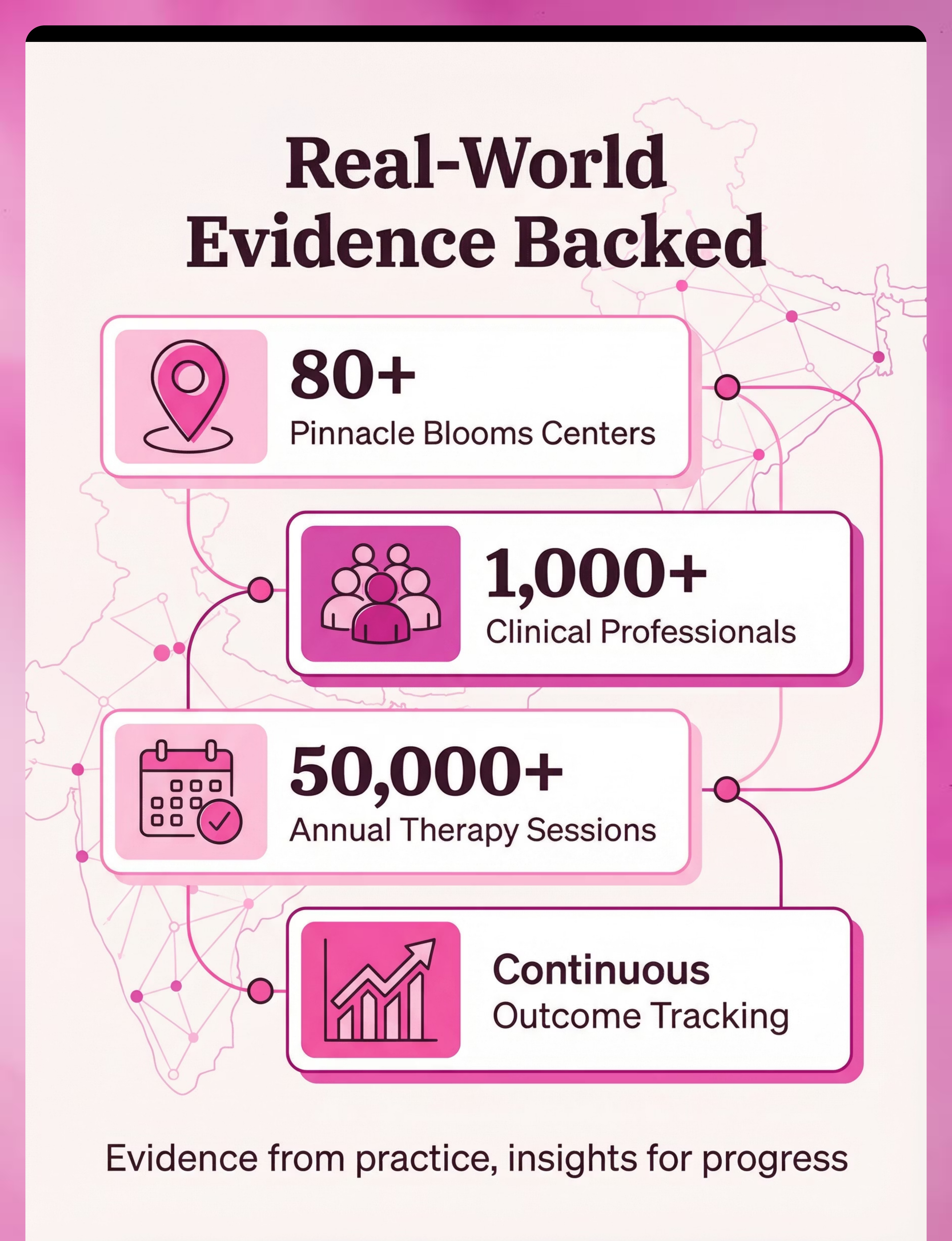
🏥Pinnacle Blooms Consortium™ | 🗣️ SLP | 🧩 OT | 🎯 ABA | 📋 SpEd | 🧬 NeuroDev | Validated by 1,000+ Clinical Professionals | 80+ Centers | 20M+ Sessions | 97%+ Improvement | "From Fear to Mastery. One Technique."
Preview of 9 materials that help with word order difficulty Therapy Material
Below is a visual preview of 9 materials that help with word order difficulty therapy material. The pages shown help educators, therapists, and caregivers understand the structure and content of the resource before use. Materials should be used under appropriate professional guidance.



Link copied!

The Pinnacle Promise
Our Mission
Pinnacle Blooms Network®
Built by Mothers. Engineered as a System.
Built by Mothers. Engineered as a System.
"We exist to transform every home into a proven, scientific, 24×7, personalized, multi-sensory, multi-disciplinary, integrated therapy environment for every child — regardless of geography, language, or economic status."
From Fear to Mastery. One Technique at a Time.
Medical Disclaimer
Educational Content Only — Not a Substitute for Clinical Assessment. This content is produced by the Pinnacle Blooms Network® clinical consortium for educational purposes. It does not replace assessment, diagnosis, or treatment by a licensed speech-language pathologist, occupational therapist, behavior analyst, special educator, or medical professional.
Word order difficulties may reflect various underlying conditions requiring professional differential diagnosis. In multilingual children, language difference must be distinguished from language disorder through qualified bilingual assessment. Individual outcomes vary based on child profile, implementation consistency, severity, co-occurring conditions, and many other factors.
If you are concerned about your child's language development, please consult a qualified speech-language pathologist at your earliest opportunity. FREE First Guidance: 9100 181 181 (24×7)
© 2025–2026 Pinnacle Blooms Network®, a unit of Bharath Healthcare Laboratories Pvt. Ltd. | CIN: U74999TG2016PTC113063 | DPIIT: DIPP8651 | ISO 13485 | ISO/IEC 27001