


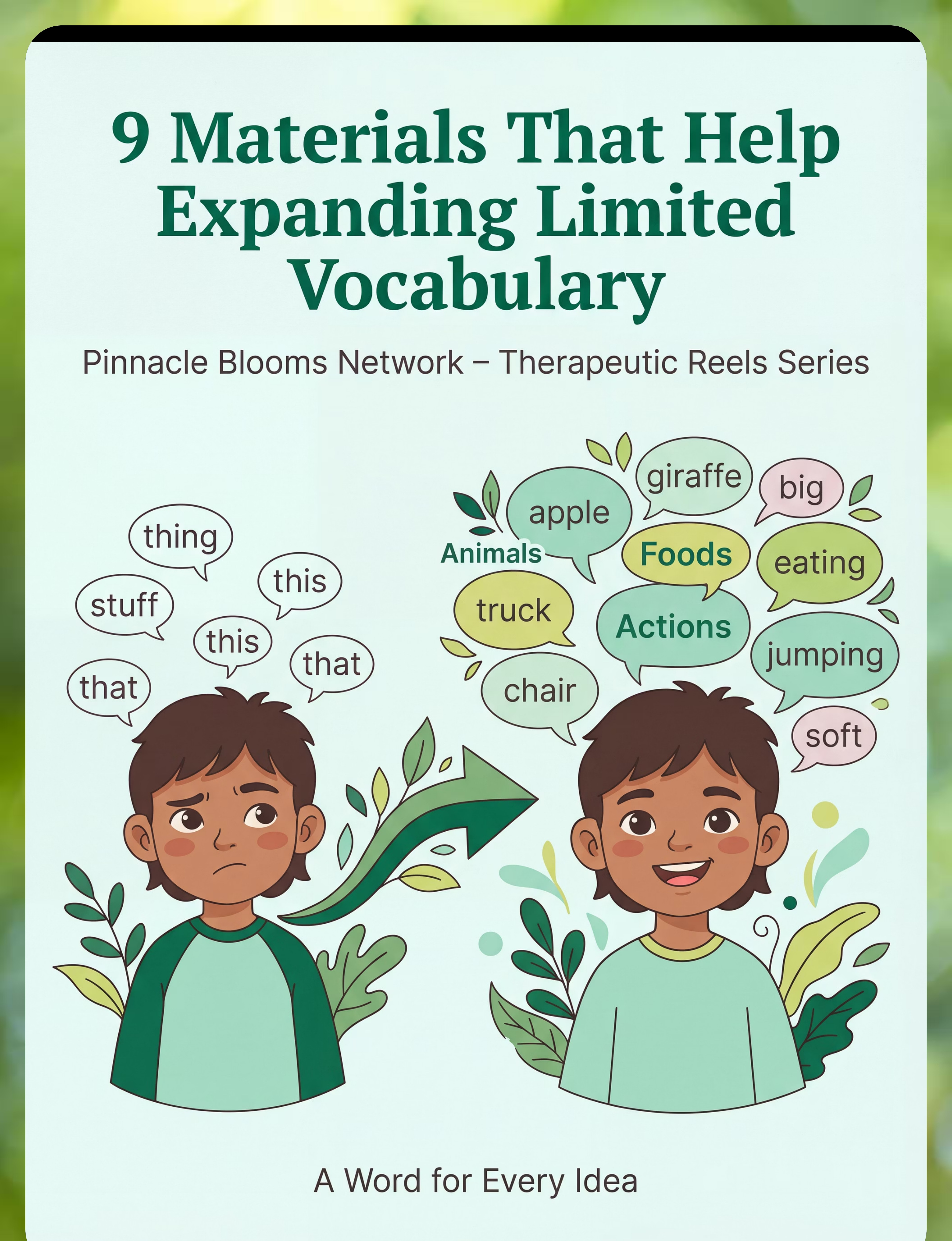
B-190-9 Materials That Help Expanding Limited Vocabulary
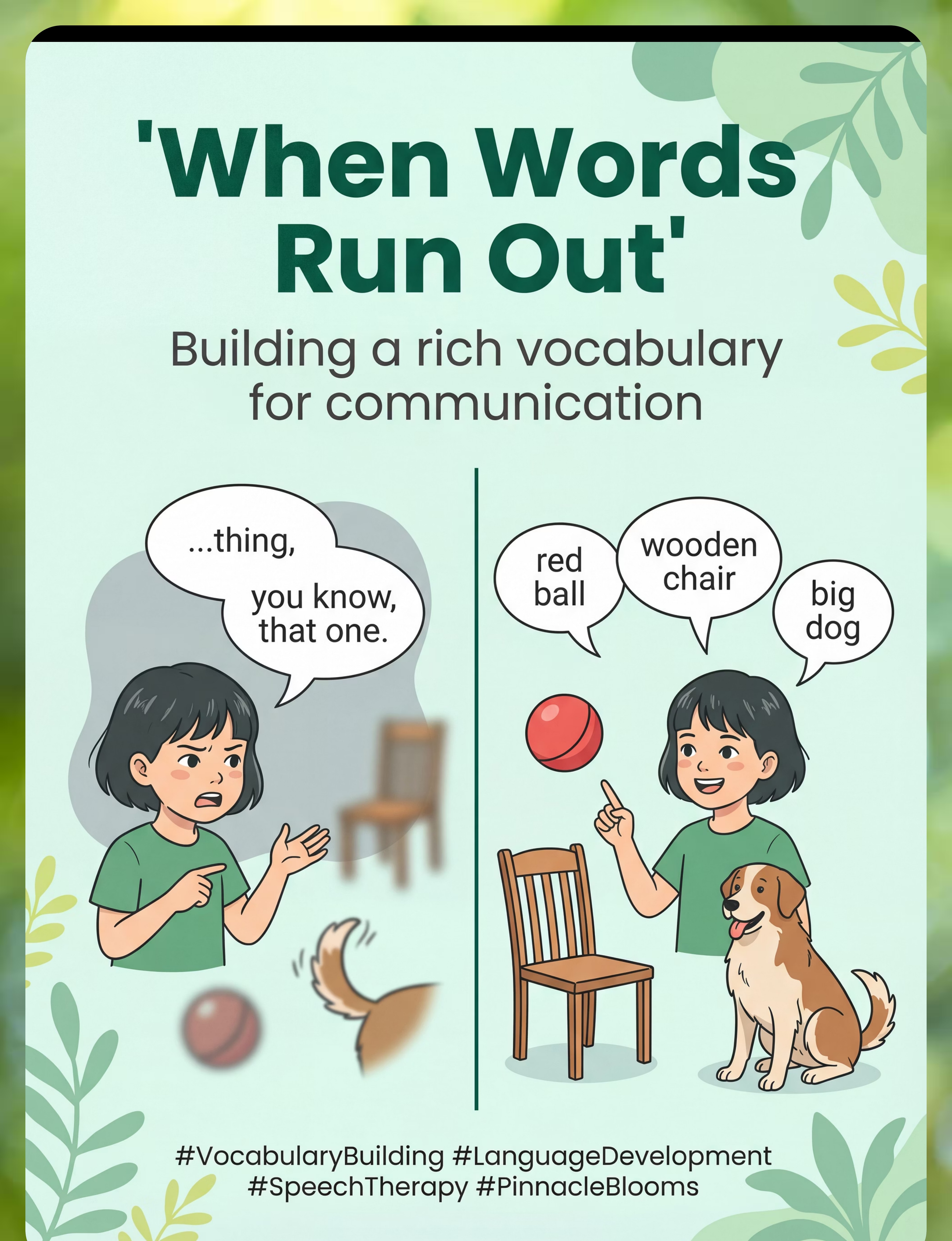
"It's a... thing. The... you know. That one."
She reaches for her cup at breakfast and says "the… stuff… you know." You hand her the juice. She shakes her head. She means the milk. Her friends are saying "chocolate milk please." She is still searching for a single word. You are not failing as a parent. Your child's word-retrieval system is still developing — and targeted support can change everything.
B-190 | Language Foundations Series | Episode 190
techniques.pinnacleblooms.org
ACT I — THE EMOTIONAL ENTRY
You Are Among Millions of Families Navigating This
Vocabulary limitation is one of the most common — and most actionable — developmental concerns in early childhood. You are not alone, and the words are not lost. They just need the right scaffolding to emerge.
1 in 5
Children
Experience a language delay at some point in development, including vocabulary gaps (ASHA, 2023)
7.5%
School-Age Kids
Diagnosed with Developmental Language Disorder — more common than autism, hearing loss, and cerebral palsy combined
18M+
Children Globally
Under age 5 with delayed language development — vocabulary gaps are the most common component (WHO estimates)
10–20×
Exposures Needed
Meaningful exposures a child needs to acquire one new word (Beck, McKeown & Kucan, 2013)

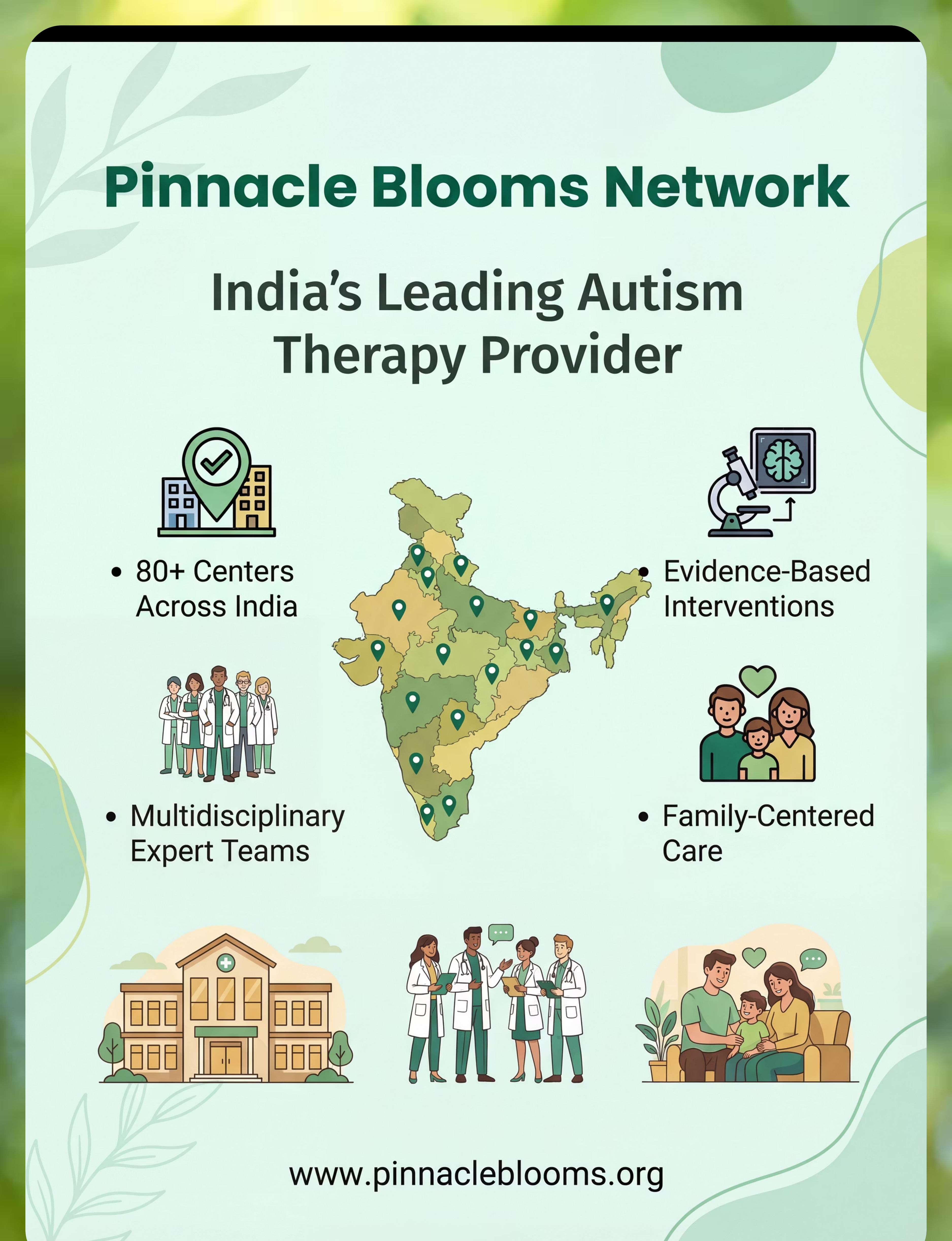
India has an estimated 8–12 million children with clinically significant language delays. Vocabulary limitation is consistently the most reported concern by families presenting at Pinnacle Blooms centers across 70+ locations. You are among millions of families navigating exactly this challenge.
ASHA — Prevalence of Speech, Voice, and Language Disorders in the U.S. | PMC9978394 (WHO CCD Package outcomes across 54 LMICs)
This Is a Wiring Difference, Not a Behaviour Choice
When a child says "thing" instead of "apple," it reflects a gap in the semantic network — not a refusal to speak. Neuroimaging studies show reduced activation in left-hemisphere language networks during naming tasks in children with restricted lexicons.
Key Brain Regions Involved
Broca's Area — Word production and retrieval
Wernicke's Area — Word comprehension and semantic mapping
Angular Gyrus — Cross-modal word-concept integration
Hippocampus — Vocabulary storage during sleep
Prefrontal Cortex — Word selection and inhibition of incorrect alternatives
Plain English: The Filing Cabinet
Think of vocabulary as a filing cabinet. Every word is a folder. The folders are organized into categories — foods, animals, actions, feelings. When a child has limited vocabulary, their filing cabinet has fewer folders, and the ones they have are loosely organized.
Vocabulary intervention works by systematically creating new folders, attaching labels, and building connections between related folders. With 10–20 meaningful exposures in varied contexts, new words migrate from short-term to long-term semantic memory.

Frontiers in Human Neuroscience (2021): Neural correlates of vocabulary development — left-hemisphere network differences confirmed across multiple imaging studies. | Beck et al. (2013): Tiered vocabulary instruction and semantic network building.
Your Child Is Here. Here Is Where We're Heading.
The concern typically becomes visible between 18–30 months when the expected vocabulary explosion doesn't occur, or when word variety plateaus while peers begin combining words into phrases. By age 3–4, the gap can widen to 3,000–6,000 words.
1
12 months
First words emerge ("mama," "ball")
2
18 months
~50 words; vocabulary explosion begins
3
24 months
200–300 words; rapid acquisition
4
36 months
900–1,000 expressive words
5
6 years
~2,600 expressive / ~20,000 receptive
What Commonly Co-Occurs With Limited Vocabulary
ASD
Vocabulary gaps affect 70–80% of autistic children
DLD
Developmental Language Disorder
Hearing Loss
Even mild or intermittent loss affects acquisition
ADHD
Attention difficulties compound word-finding gaps
Anxiety
Word-finding anxiety compounds the core problem
WHO Care for Child Development (CCD) Package (2023) | PMC9978394 | Marulis & Neuman (2010): Effects of vocabulary intervention — meta-analysis, Review of Educational Research
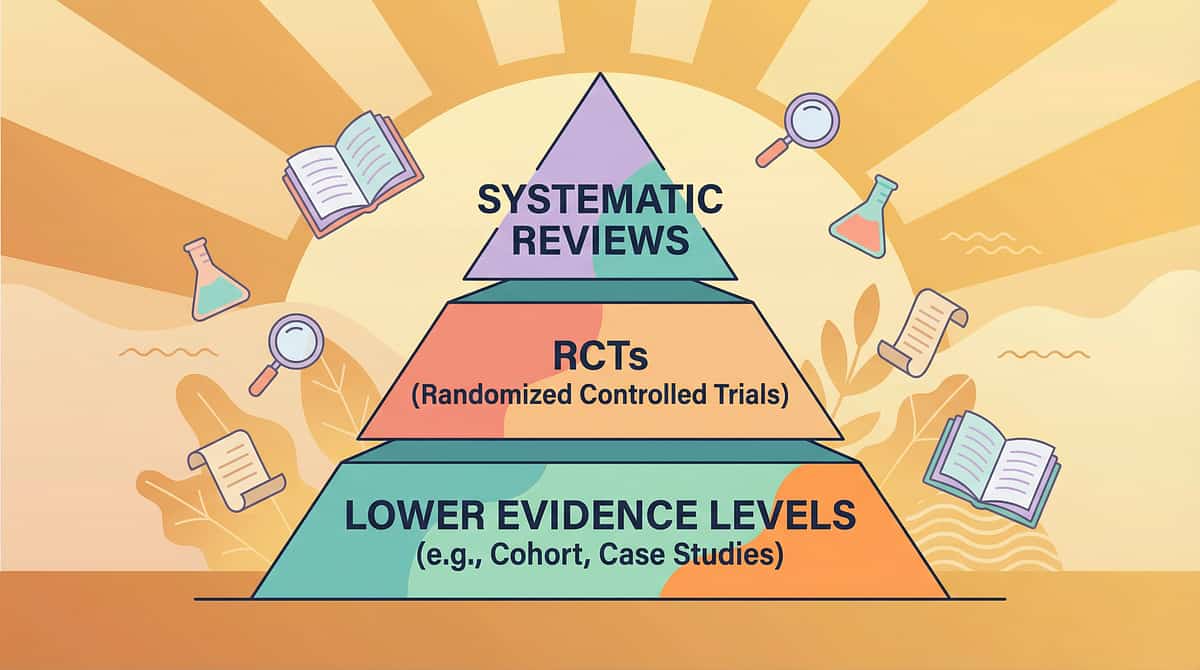
🛡️ LEVEL I EVIDENCE — Systematic Reviews + Multiple RCTs
Clinically Validated. Home-Applicable. Parent-Proven.
Every material on this page is selected because peer-reviewed science confirms it works. Not one is theoretical. Not one is anecdotal. These are tools that have been tested on children like yours, measured, and validated.
Marulis & Neuman (2010) — Review of Educational Research
67 studies, 6,138 children. Effect size d = 0.88 for word learning. Category-based and contextual approaches showed the strongest effects.
ASHA Clinical Practice Guidelines
Systematic vocabulary instruction — category sorting, contextual reading, multiple-exposure methods — classified as evidence-based practice for children with language delays.
NCAEP (2020) — UNC Chapel Hill
Picture exchange, visual supports, and naturalistic developmental behavioral interventions classified as evidence-based practices for children with ASD.
Padmanabha et al. (2019) — Indian RCT
Home-based language intervention demonstrated significant outcomes for Indian children with developmental delays. Indian Journal of Paediatrics. DOI: 10.1007/s12098-018-2747-4
WHO/UNICEF CCD Package (2023)
Implemented across 54 LMICs. Parent-delivered vocabulary exposure activities within daily routines demonstrated measurable language gains. PMC9978394

📞FREE National Helpline: 9100 181 181 | Book an AbilityScore® Language Assessment | 18 Languages | 24×7
ACT II — THE KNOWLEDGE TRANSFER
🗣️ Vocabulary Expansion Therapy via Material-Based Intervention
Parent-friendly alias: "The Word Toolbox Method"
Vocabulary Expansion Therapy is a structured, material-supported intervention that systematically increases a child's expressive and receptive lexicon. It works by providing 10–20 meaningful exposures to target words across multiple contexts, modalities (visual, auditory, tactile), and word categories (nouns, verbs, adjectives, prepositions). Unlike passive vocabulary acquisition, this approach actively builds semantic networks — the web of meaning-connections that makes words retrievable.
Who It's For
Children aged 2–7 years who use fewer words than age-expected norms, rely on pointing/gestures, use generic terms ("thing," "stuff"), or demonstrate limited word variety compared to same-age peers.

Programme Parameters
  • Age Band: 2–7 years
  • Session Duration: 10–20 minutes
  • Frequency: Daily
  • Programme Length: 8–12 weeks for measurable gains
Domain Badges
🟣 SLP
Primary Lead
🔵 SpEd
Special Education
🟡 ABA/BCBA
Reinforcement Architecture
🟢 OT
Secondary Support
GPT-OS® Classification: Domain B (Social Communication) → Sub-domain: Vocabulary Development → Code: SLP-VOC-B190
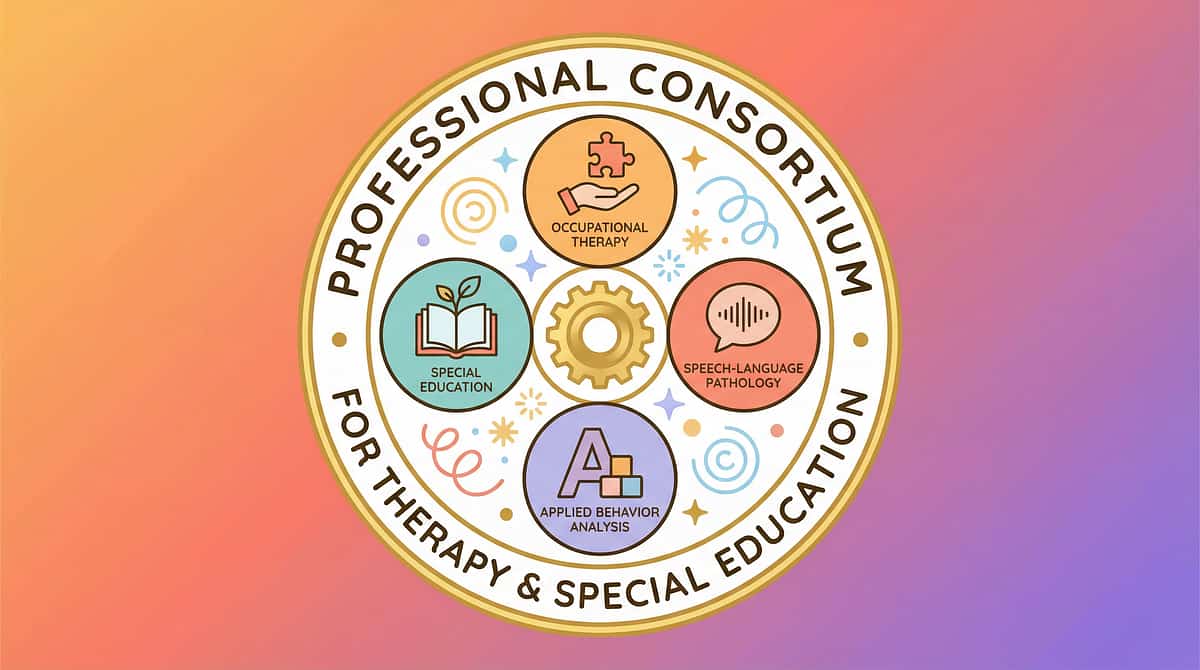
The Consortium Behind This Technique
"The brain doesn't organize itself by therapy type. Vocabulary development is every discipline's business."
🗣️ Speech-Language Pathologist (SLP) — PRIMARY LEAD
Designs the vocabulary target hierarchy — which words, in which order, at which complexity level. Selects appropriate materials and monitors semantic network development. Determines noun vs. verb vs. adjective targets.
🎓 Special Educator (SpEd)
Integrates vocabulary targets into literacy readiness activities, reading instruction, and classroom generalization. Word walls, themed activity boxes, and picture books are primary SpEd tools.
🧠 ABA/BCBA Therapist
Provides the reinforcement architecture — determining motivating operations, reinforcement schedules, and data collection systems. Both DTT and NET deploy vocabulary materials.
🤲 Occupational Therapist (OT)
Addresses tactile and fine motor aspects of material engagement — sorting kits, card handling, object manipulation — ensuring physical interaction doesn't create barriers to learning.
🧬 NeuroDev Paediatrician
Identifies comorbidities affecting vocabulary development — hearing loss, auditory processing, attention, anxiety — ensuring medical factors are addressed alongside therapeutic intervention.

📞9100 181 181 — Request a multi-disciplinary vocabulary assessment
Precision Targets: What Changes in Your Child
Vocabulary expansion therapy doesn't just add words — it builds the entire architecture of language that enables reading, social participation, and academic success.
Child uses specific nouns instead of "thing/stuff"
Child names objects when shown pictures without prompting
Child uses verbs to describe actions ("running" not "going")
Child uses at least 2 descriptive words per week in natural speech
Child attempts to categorize objects by function or appearance
National Reading Panel (2000): Vocabulary instruction is one of 5 pillars of reading. | PMC10955541 (meta-analysis confirming primary, secondary, and tertiary skill outcomes)
9 MATERIALS — CLINICIAN SELECTED
9 Materials. Clinician-Selected. Home-Ready.
Every material below is mapped to Pinnacle's 128 Canon Materials taxonomy and selected by the SLP-led consortium. Each serves a distinct purpose in building your child's word bank.
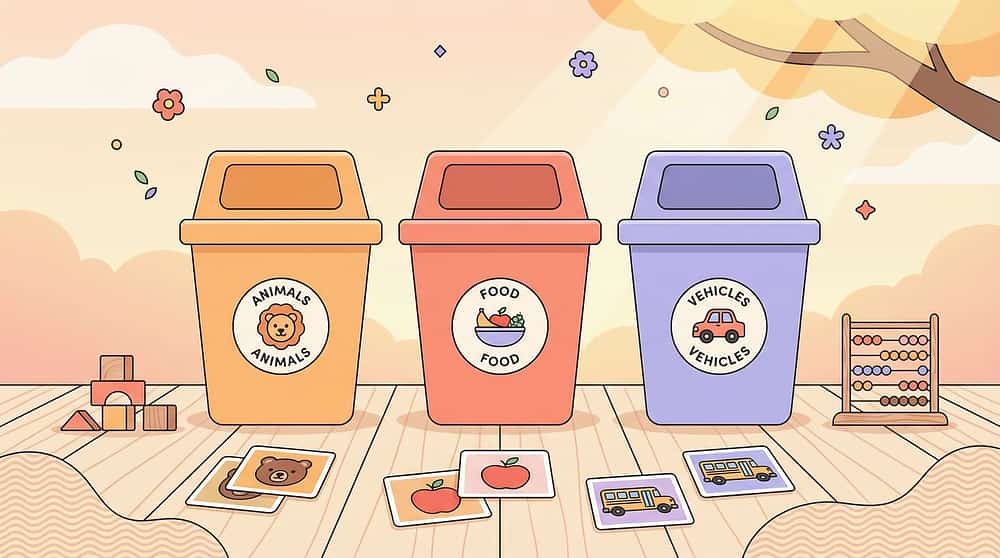
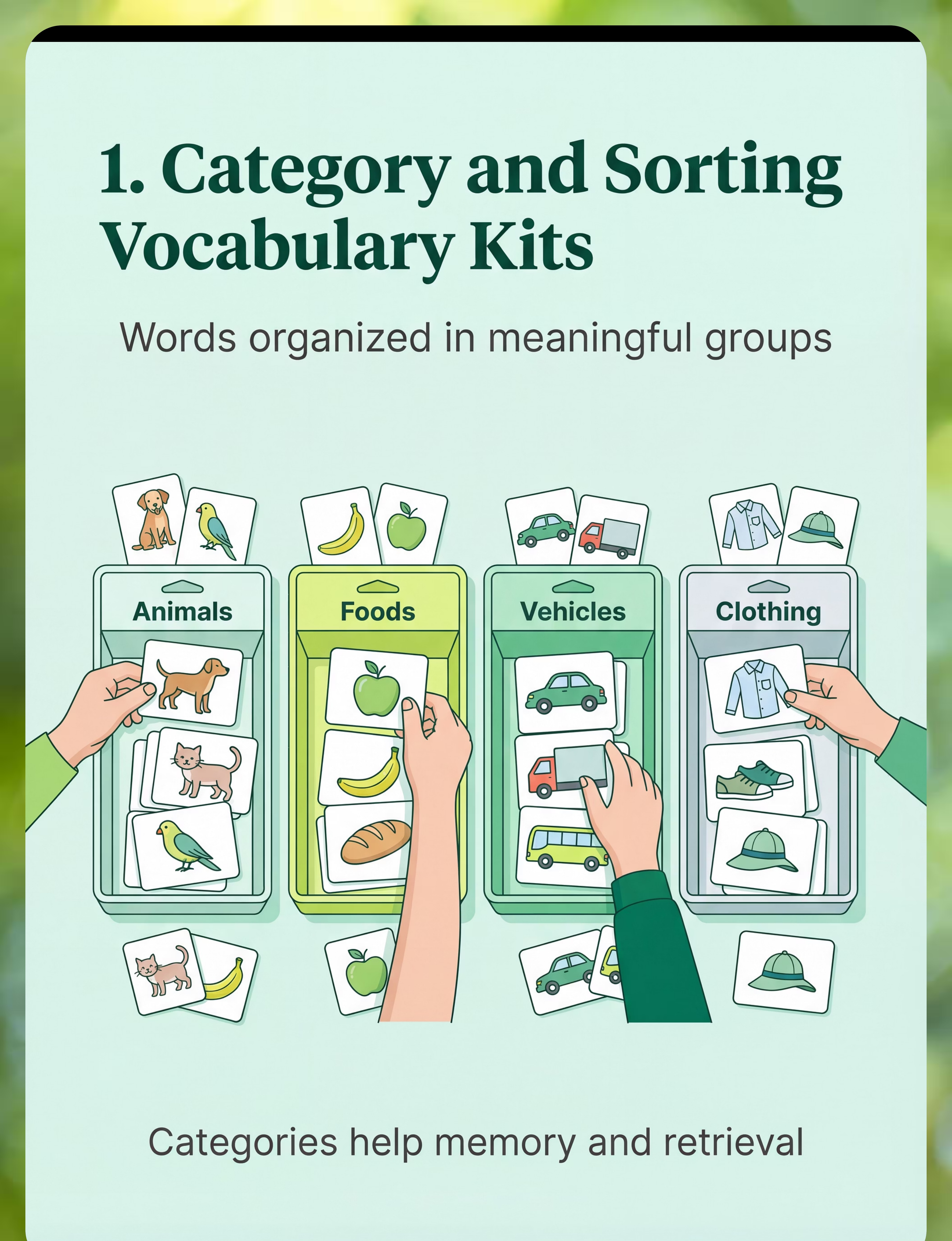
Material 1 — Category & Sorting Vocabulary Kits
Teaches words in semantic families — animals, foods, vehicles, clothing. Category-organized vocabulary is stored more efficiently and retrieved more reliably than isolated word learning.
  • Canon Category: Sorting Activities / Categorization
  • DIY: Kitchen containers + magazine cut-outs. Label bins: "Animals," "Foods," "Things We Wear." ₹0.
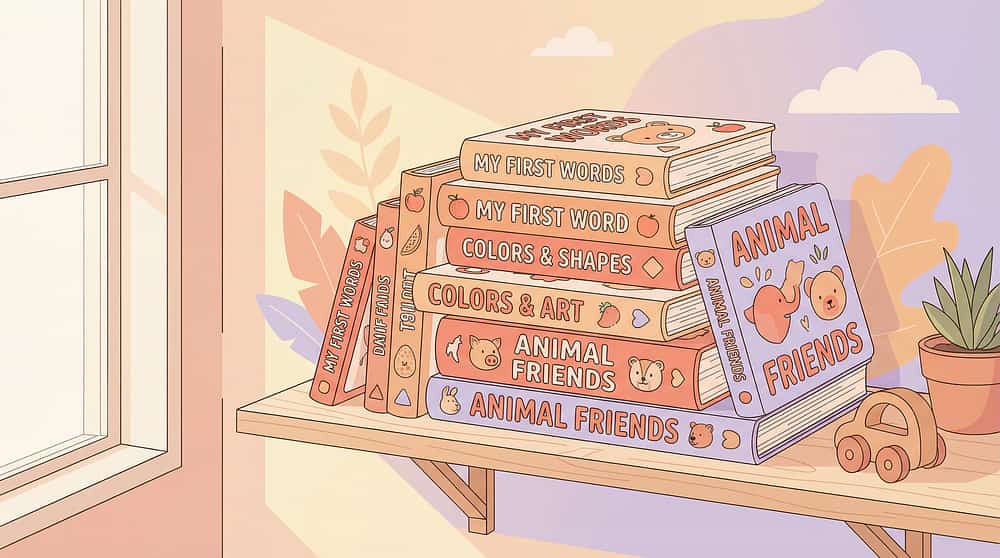
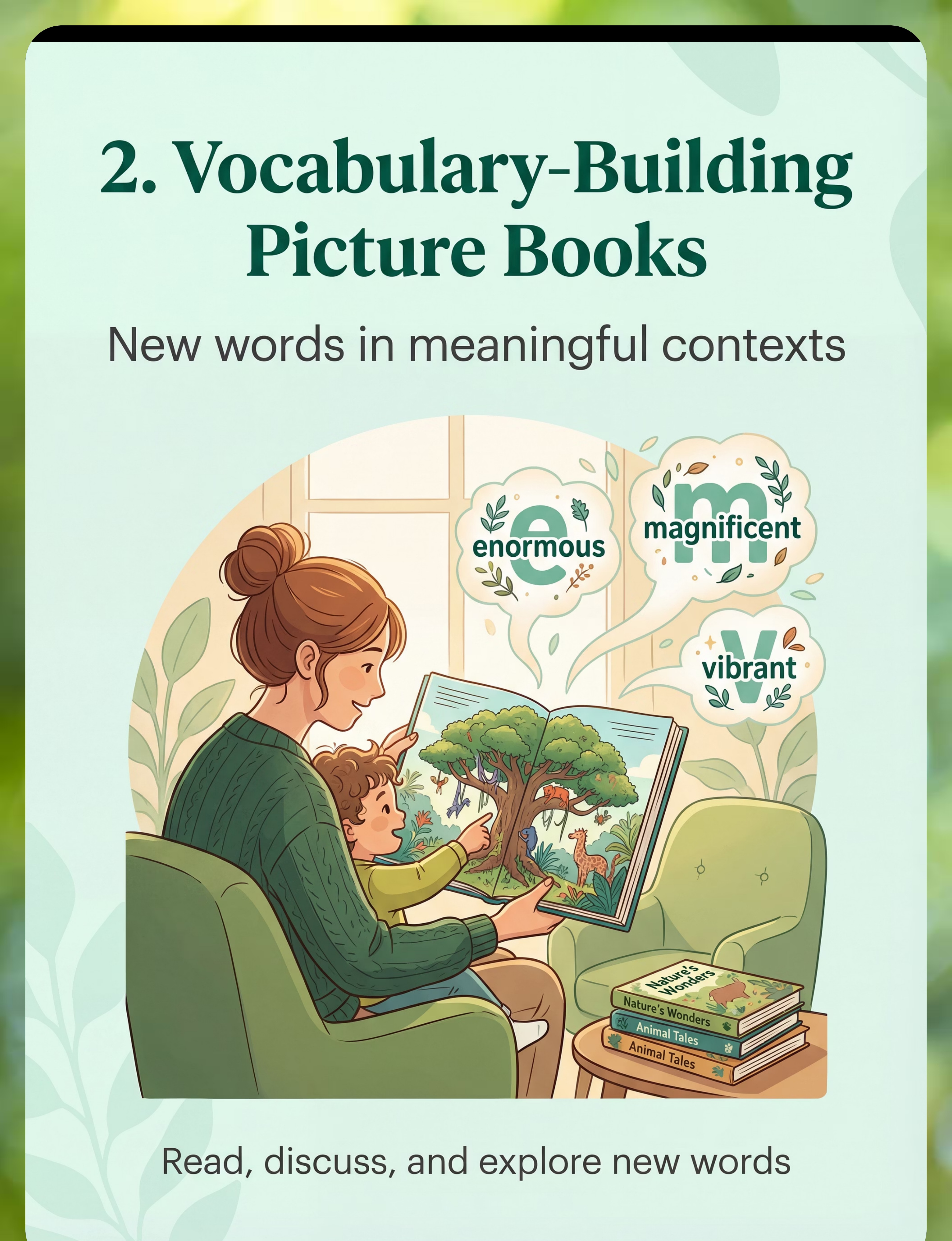
Material 2 — Vocabulary-Building Picture Books
Picture books introduce new words in meaningful narrative contexts where illustrations anchor meaning. Repeated reading of the same book (3–5 times) builds lasting word knowledge through varied exposure.
  • Canon Category: Early Reading Materials / Language Expansion
  • Price Range: ₹200–600
  • DIY: Homemade books using printed photos and handwritten labels. "Our family book." ₹0.
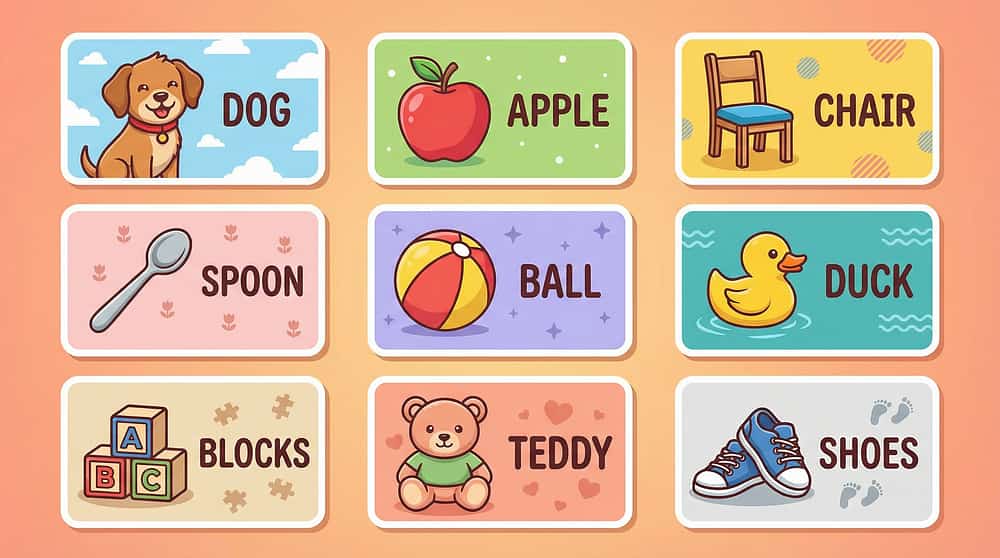
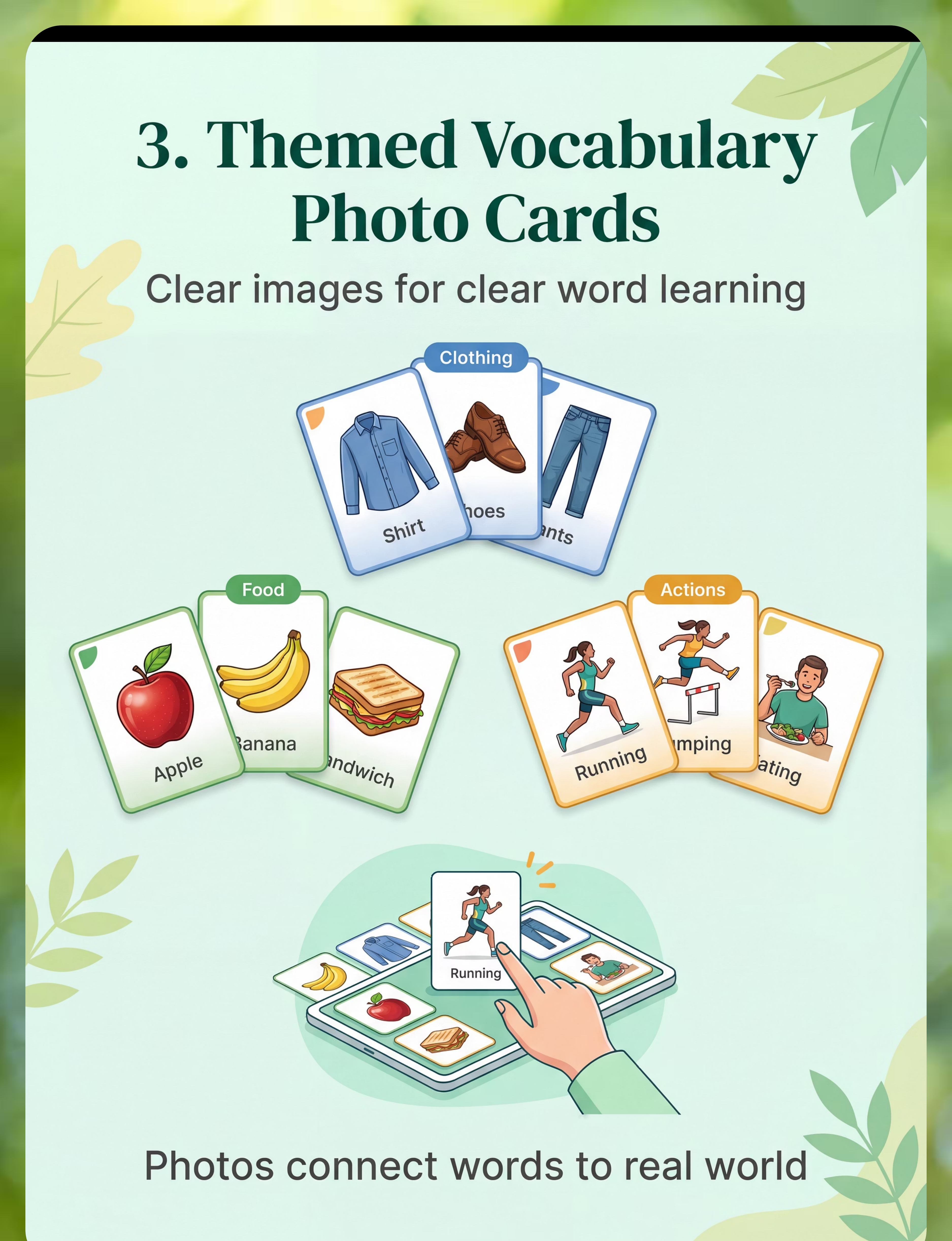
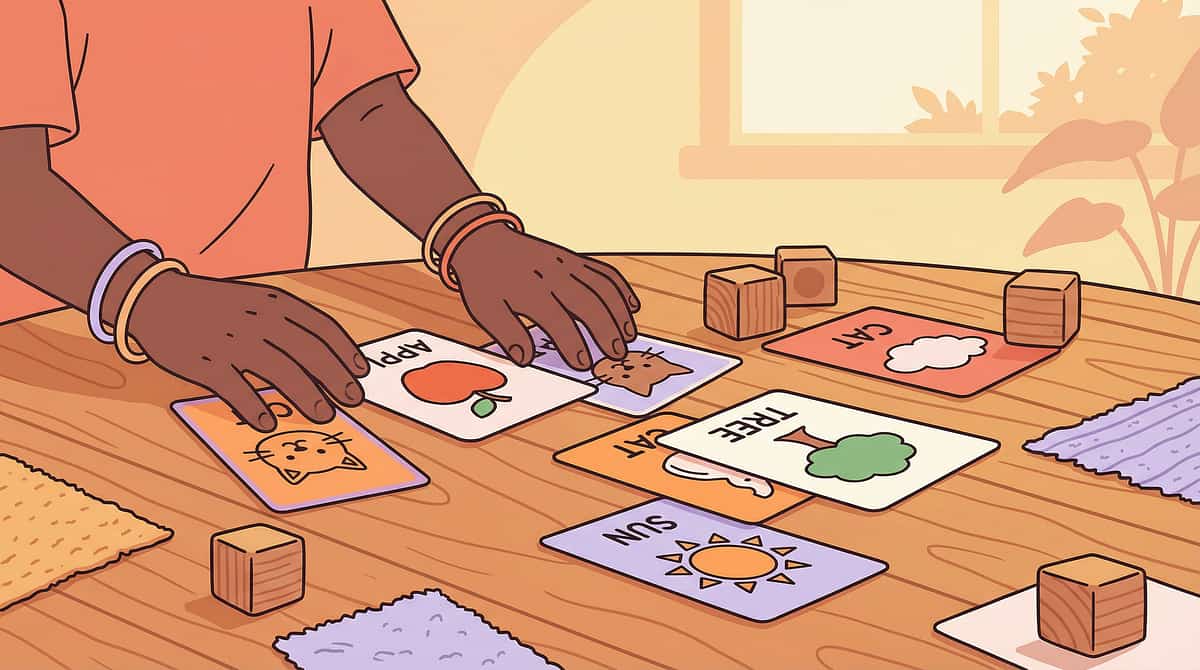
Material 3 — Themed Vocabulary Photo Cards
Real photographs create unambiguous word-to-referent connections. Organized by theme (foods, animals, actions, clothing), they enable systematic, category-by-category vocabulary building.
  • Canon Category: Language Expansion / Vocabulary Building Tools
  • Price Range: ₹250–700
  • DIY: Print photos from your phone, laminate with cling wrap. ₹0–50.
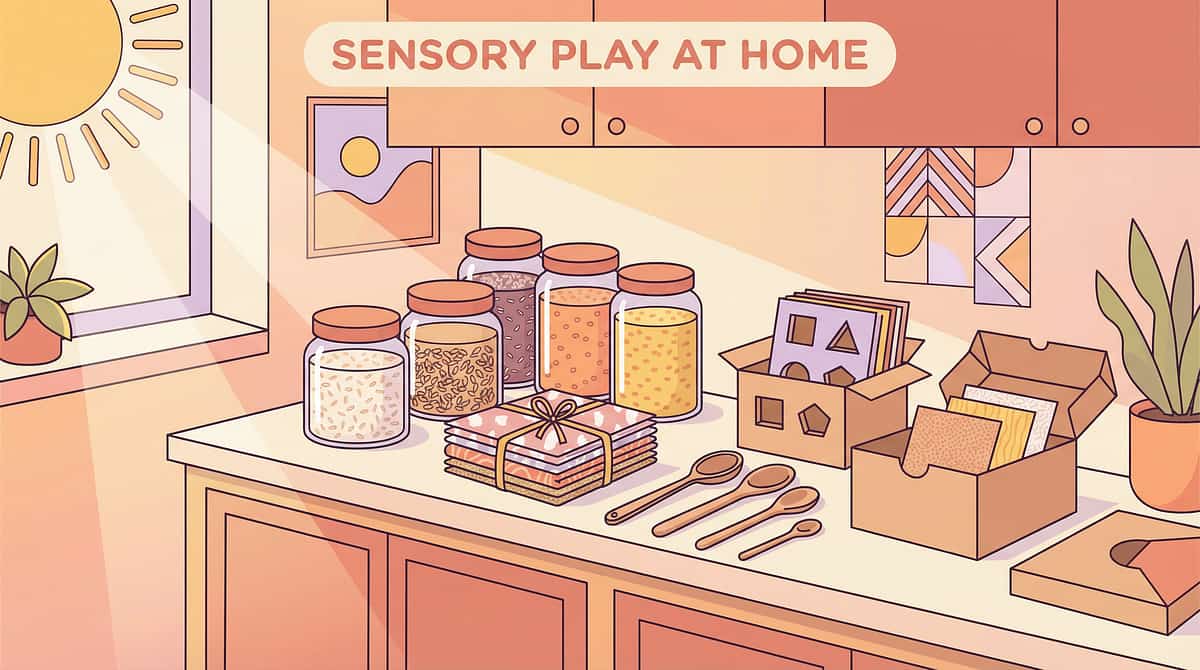
Materials 4–6: Digital, Verbs & Describing Words
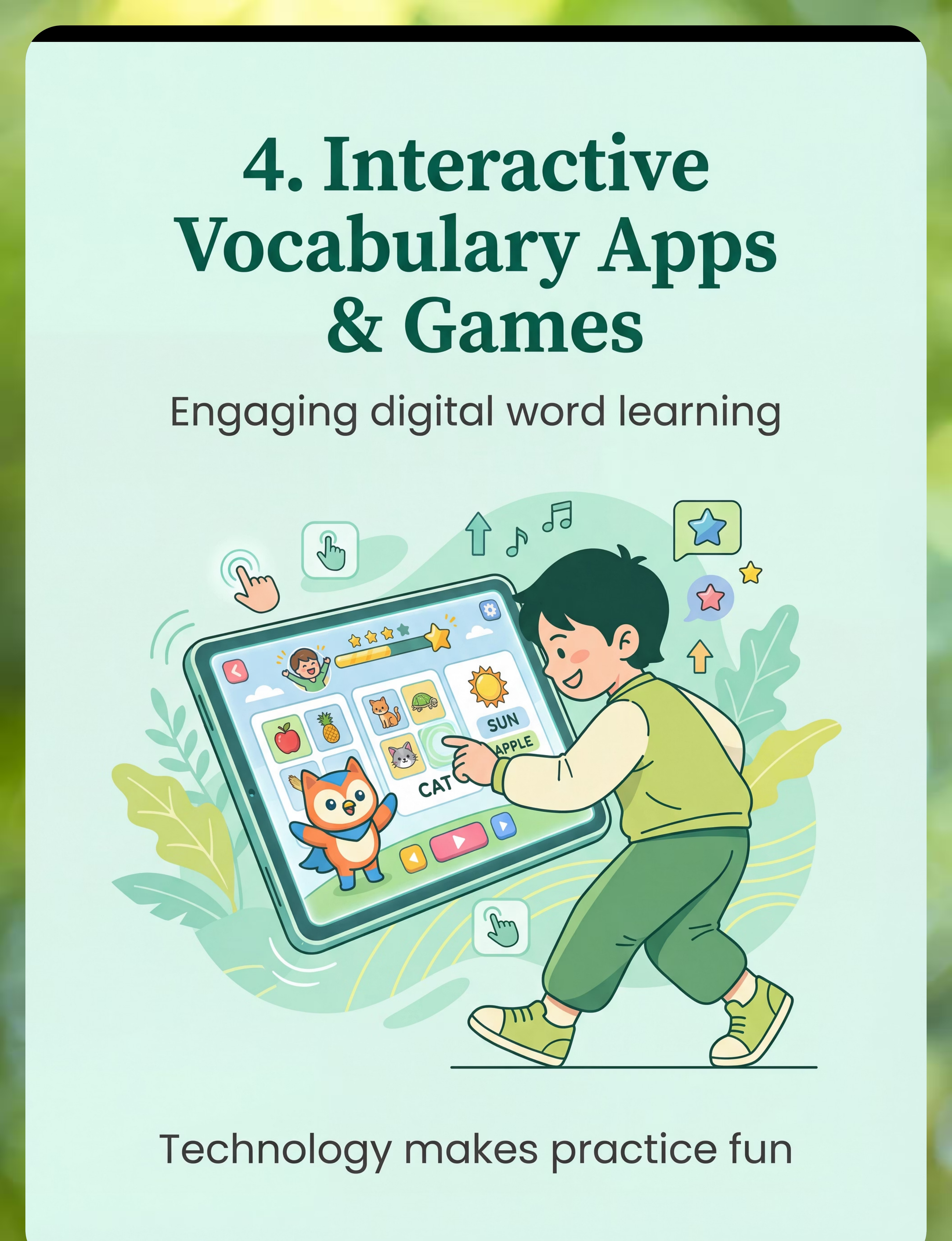
Material 4 — Interactive Vocabulary Apps & Games
Digital platforms deliver the 10–20 exposure repetitions needed for word acquisition through engaging, self-paced interactions with audio modeling and immediate reinforcement.
  • Canon Category: Learning & Educational Apps / Language Expansion Tools
  • Price Range: ₹0–500 (many free tiers)
  • Recommended Apps: Articulation Station, TinyTap, Endless Vocabulary, Khan Academy Kids (free)
  • DIY: YouTube vocabulary songs watched interactively — pause, point, name. ₹0.
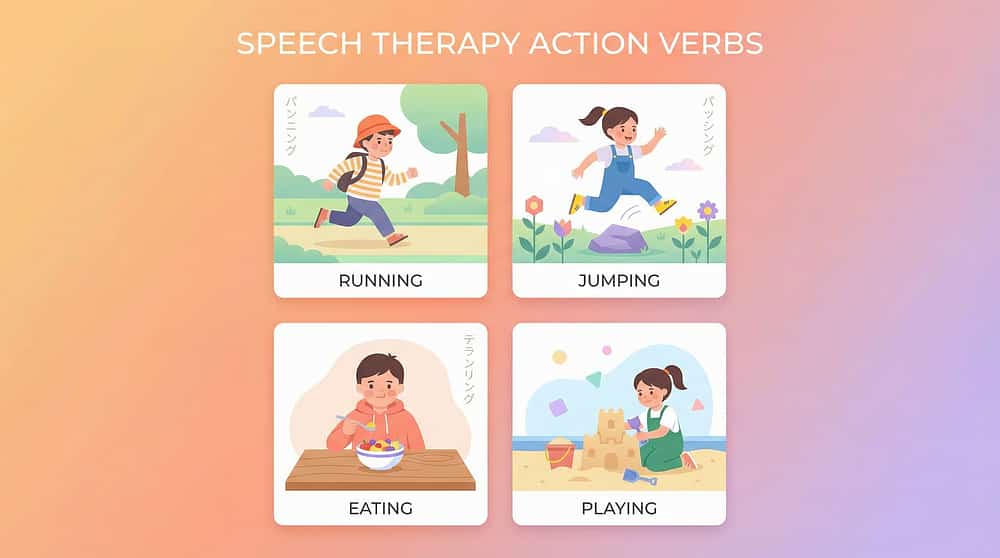
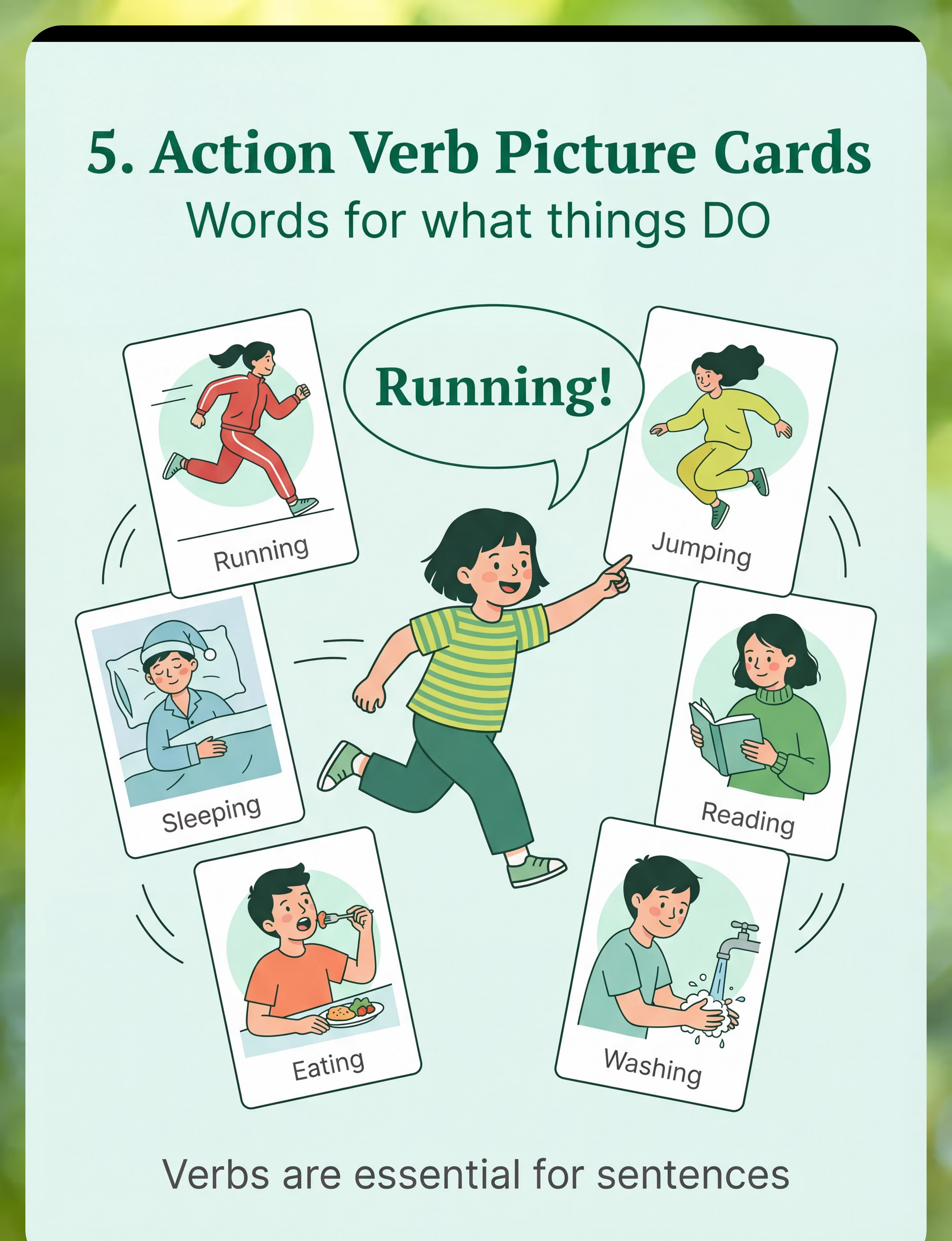
Material 5 — Action Verb Picture Cards
Verb vocabulary is consistently weaker than noun vocabulary in children with limited lexicons. Without verbs, sentences cannot form. Action cards specifically target this critical gap.
  • Canon Category: Language Expansion / Vocabulary Building Tools
  • Price Range: ₹200–500
  • DIY: Photograph family members performing actions — "Amma is running," "Papa is eating." ₹0–30.
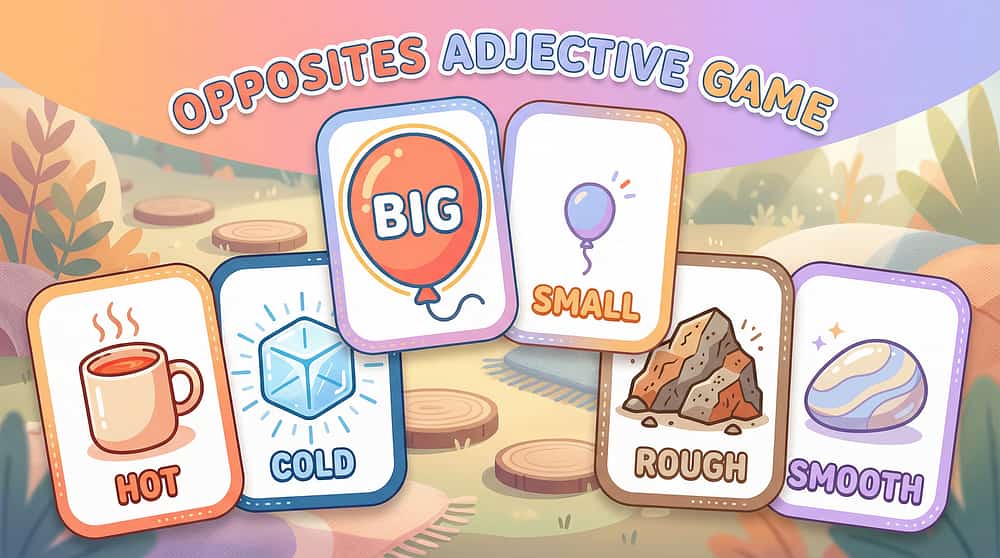
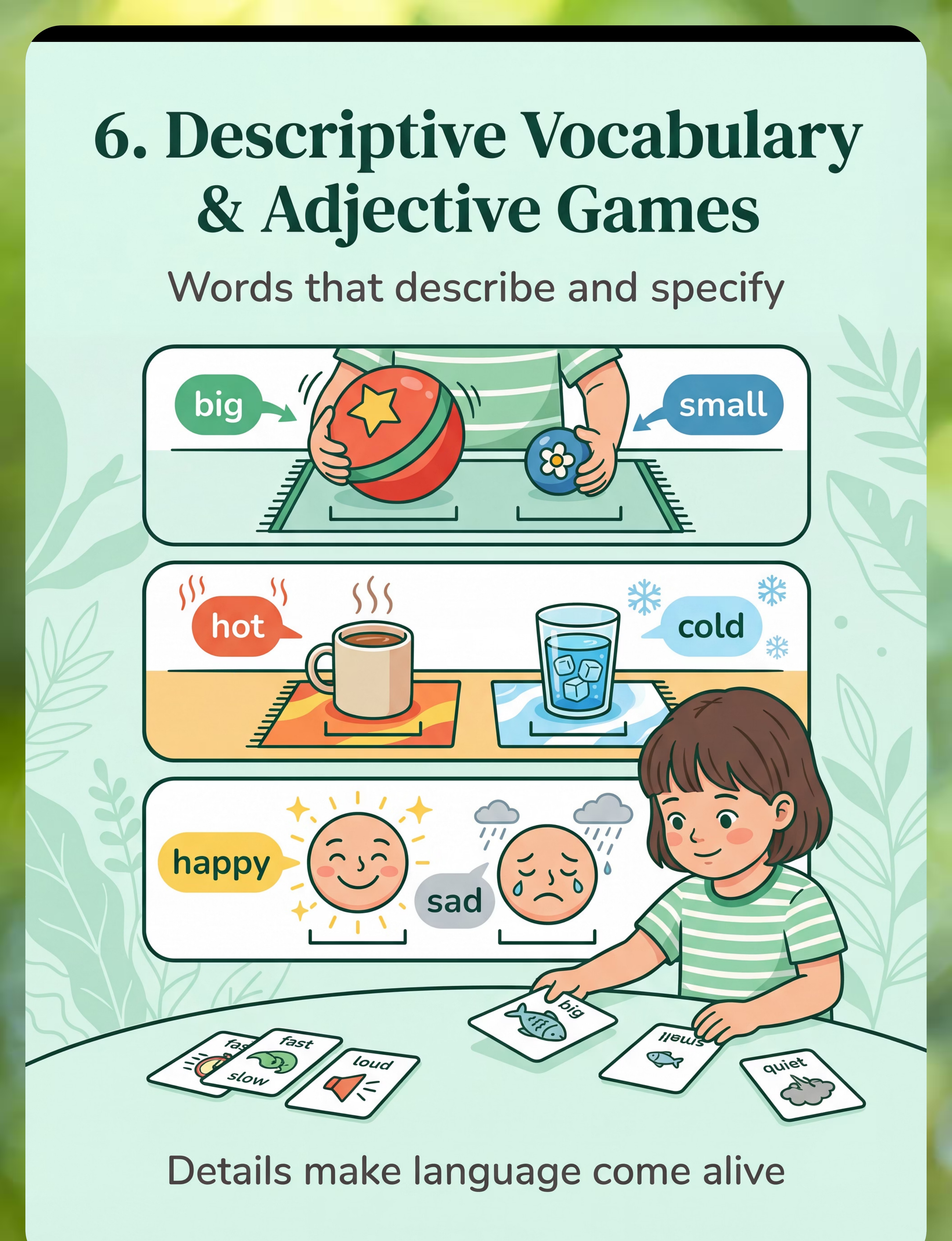
Material 6 — Descriptive Vocabulary & Adjective Games
Adjective vocabulary develops later than nouns and verbs. Describing games (big/small, hot/cold, rough/smooth) build the word class that makes language rich, specific, and communicatively precise.
  • Canon Category: Language Expansion / Vocabulary Building Tools
  • DIY: Household object pairs (big spoon/small spoon). "Describe before you touch." ₹0.
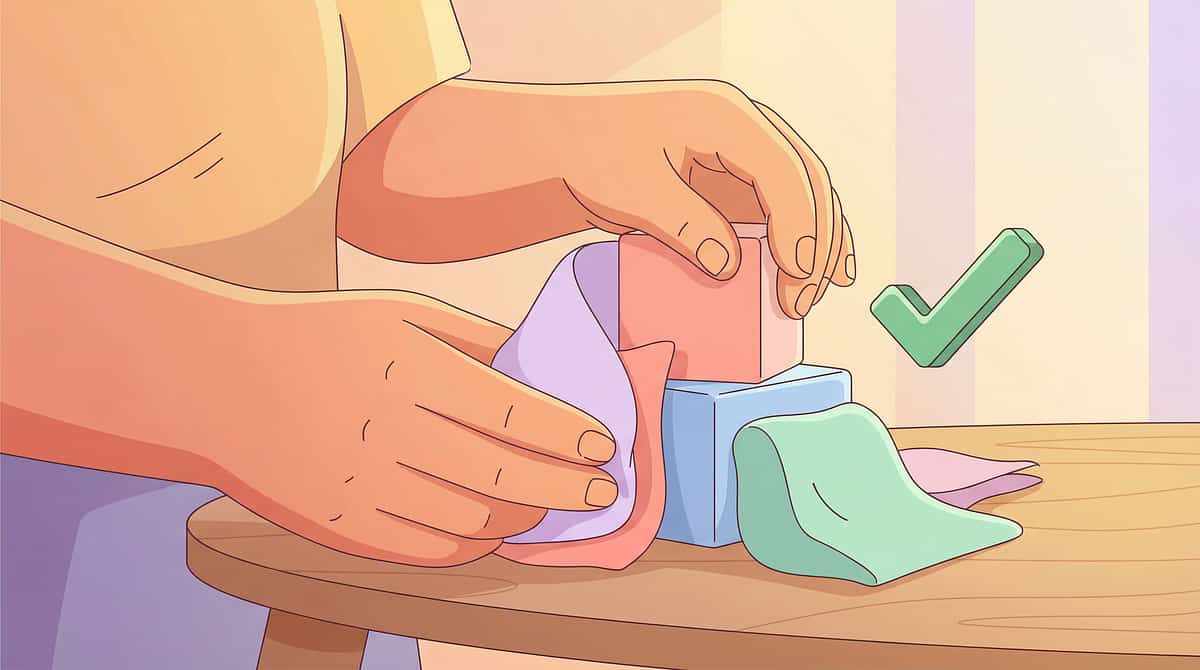
Materials 7–9: Games, Activity Boxes & Word Walls
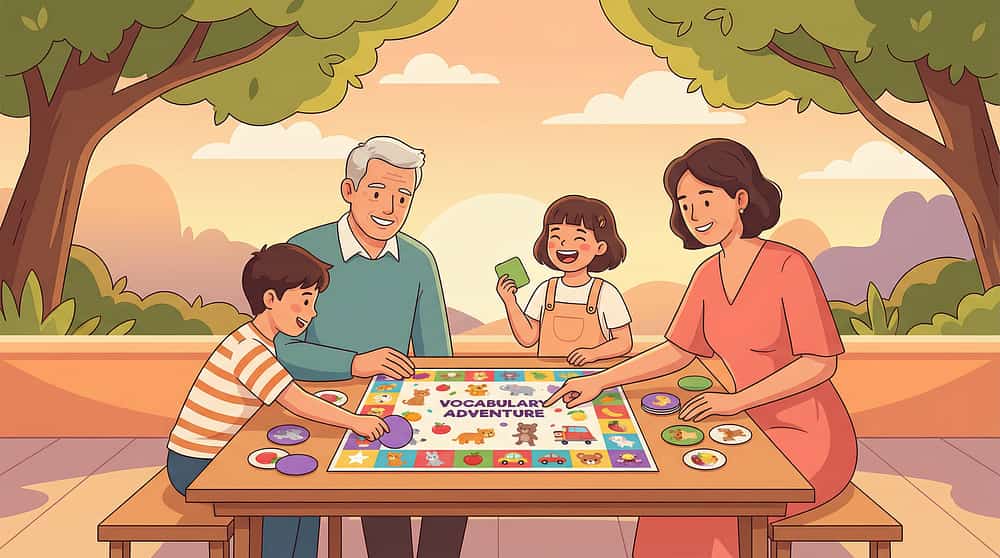
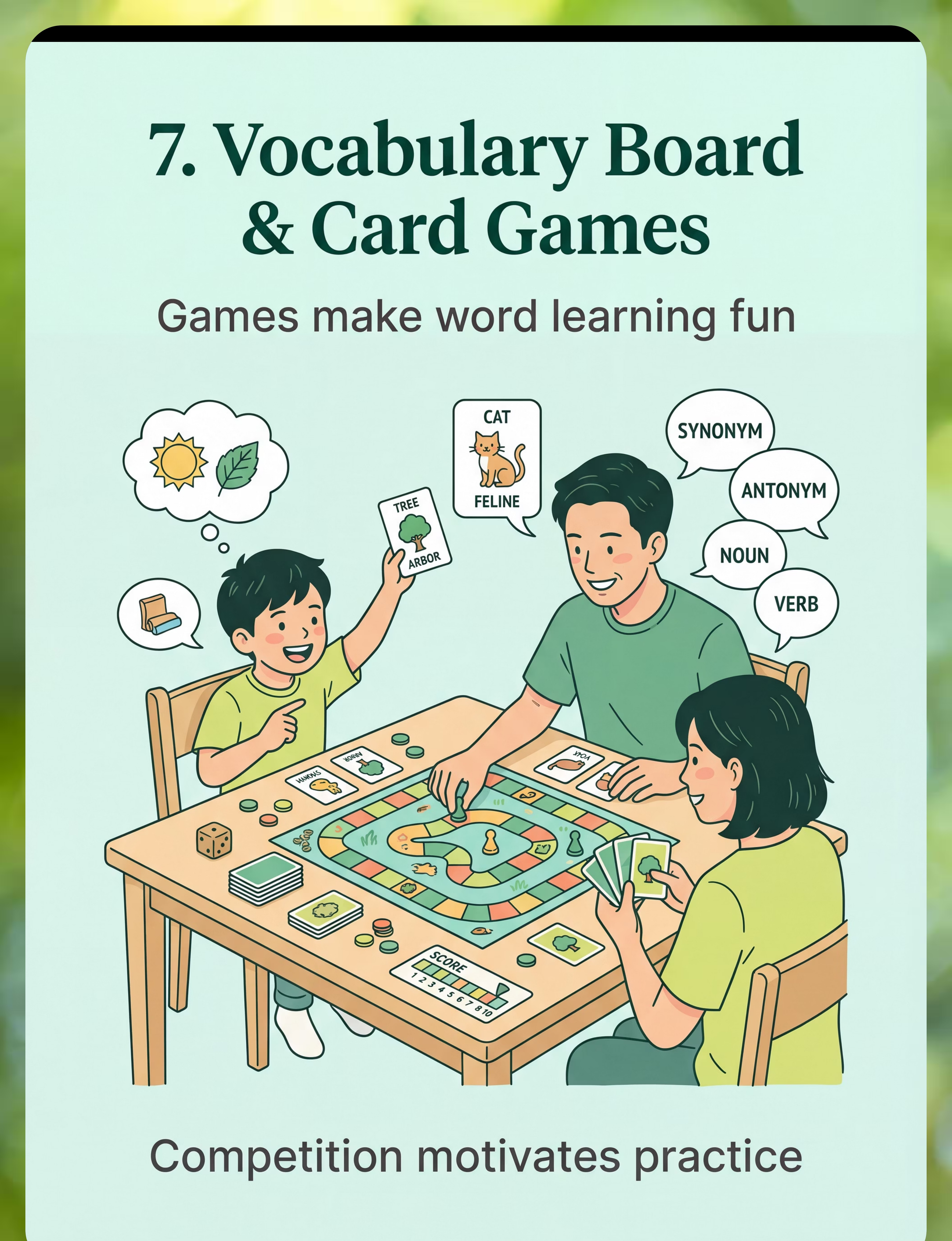
Material 7 — Vocabulary Board Games & Card Games
Games create motivational contexts for the repeated practice required for word mastery, with natural social reinforcement from family participation — making vocabulary learning something children look forward to.
  • Canon Category: Matching Games / Memory Games | Sorting Activities
  • DIY: Vocabulary memory game with homemade picture cards — match word to picture. ₹0–20.
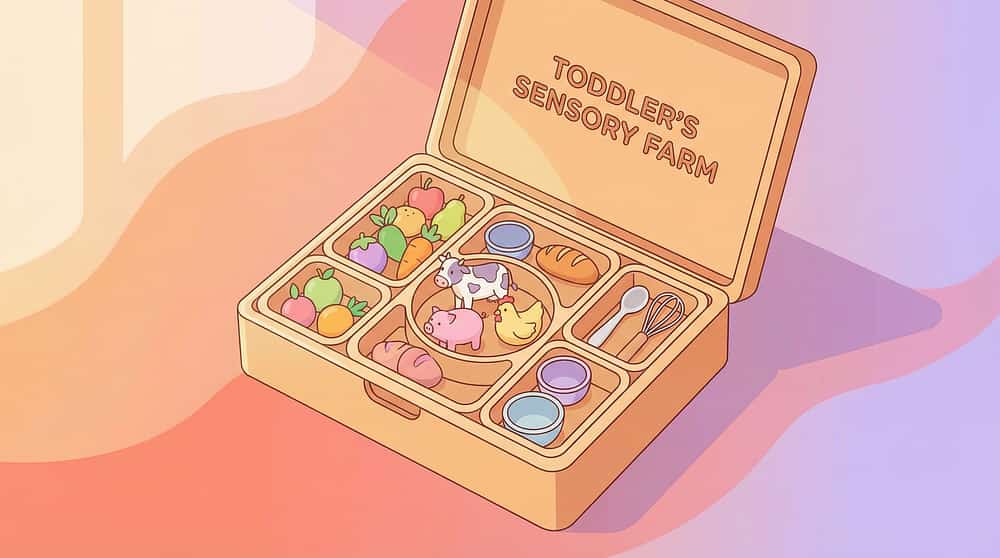
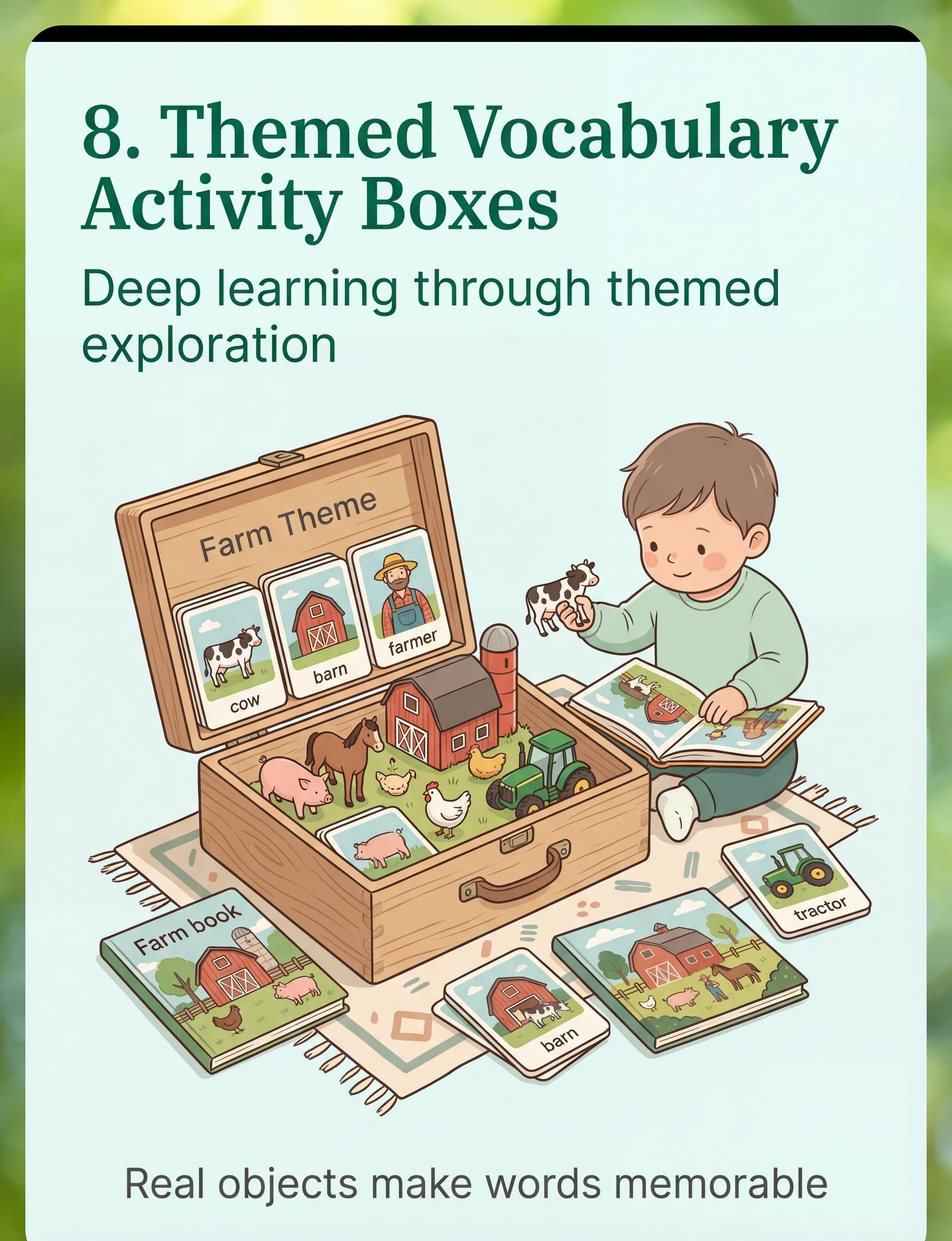
Material 8 — Themed Vocabulary Activity Boxes
Multi-sensory thematic immersion — farm words, kitchen words, ocean words — creates deep, contextually-embedded vocabulary learning through real objects, pictures, books, and play simultaneously.
  • Canon Category: Sorting Activities | Language Expansion Tools
  • Price Range: ₹500–1,500
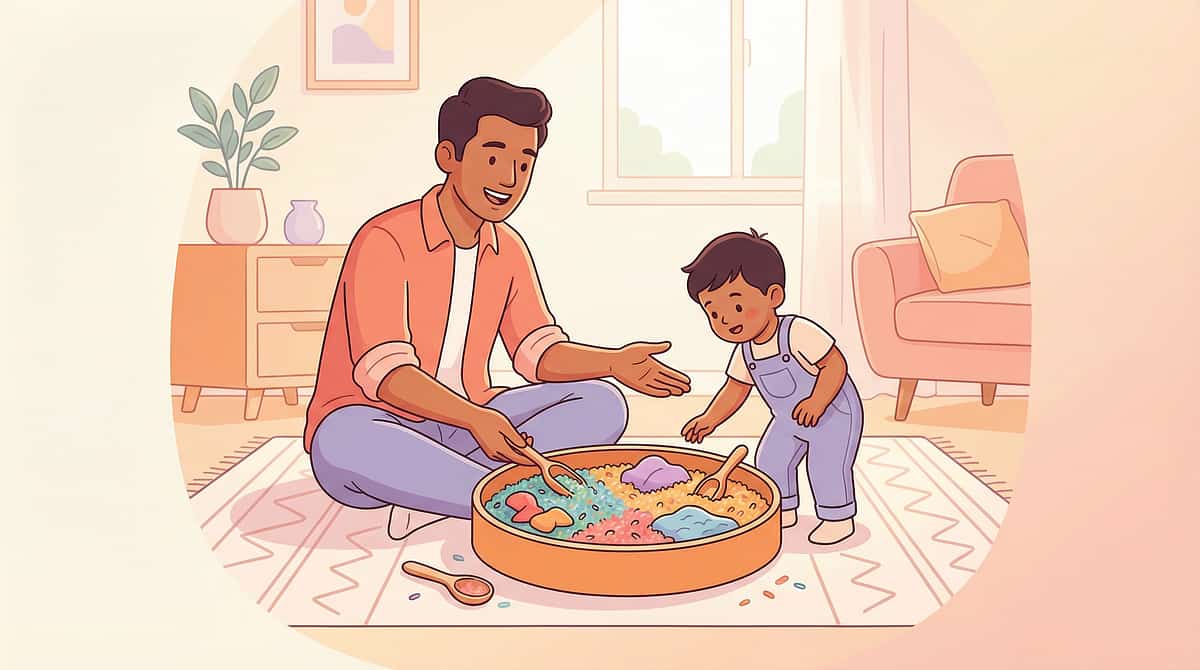
  • DIY: "Theme bags" — gather everything related to one topic from your home. ₹0.
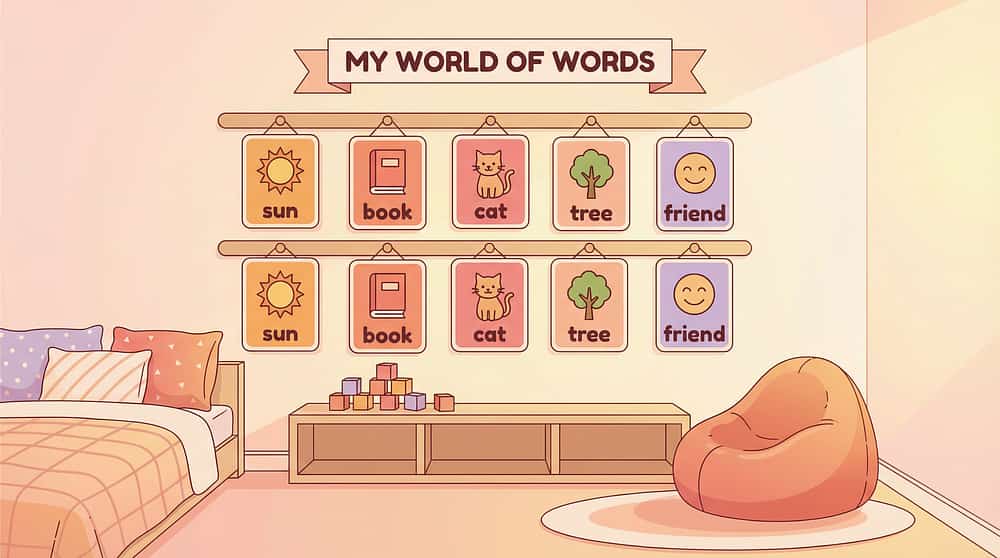
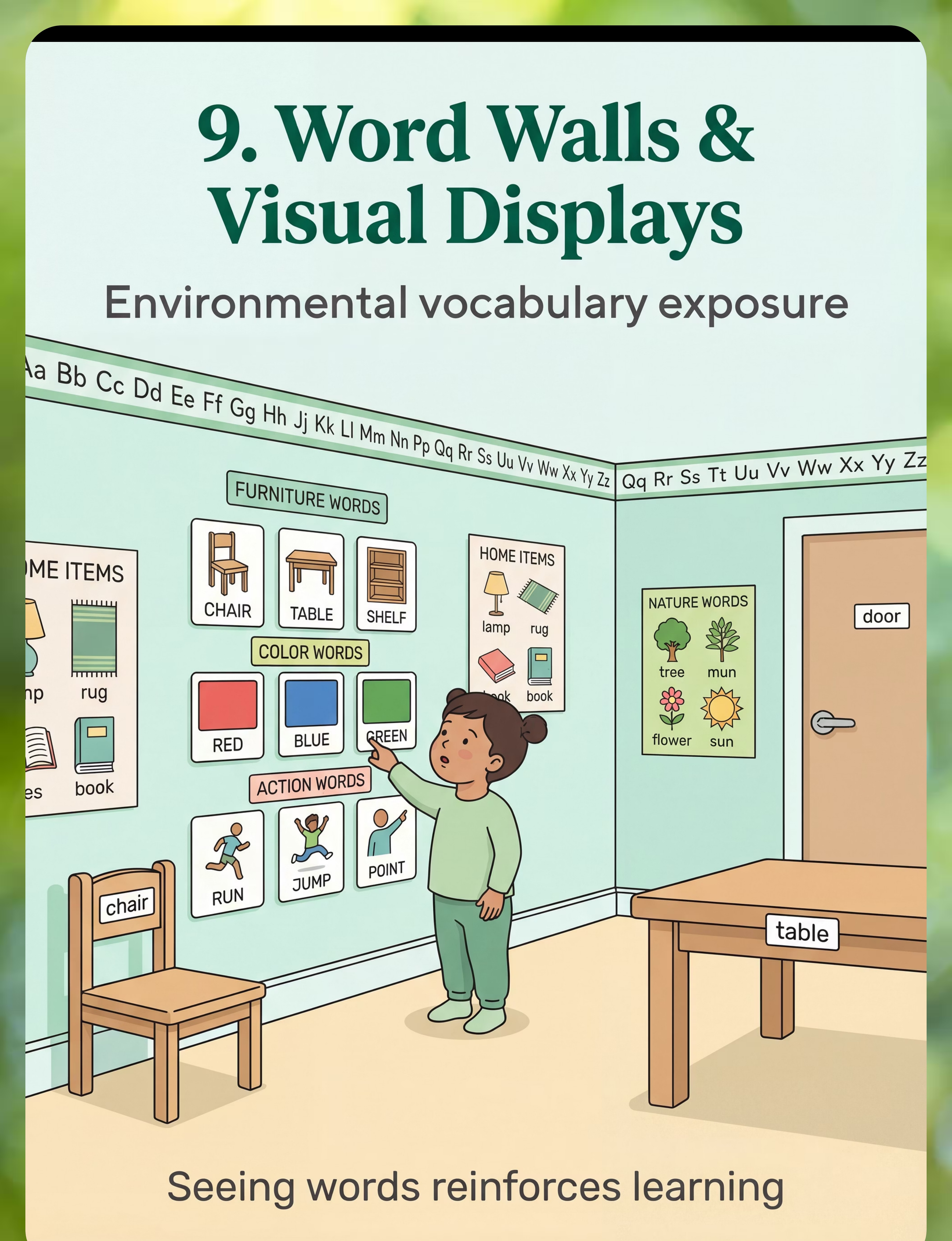
Material 9 — Word Walls & Visual Vocabulary Displays
Environmental vocabulary exposure provides constant reinforcement throughout the day. Seeing words alongside pictures at eye level creates ambient vocabulary learning without dedicated session time.
  • Canon Category: Language Expansion Tools | Visual Schedule System
  • Price Range: ₹100–400
  • DIY: Write target words on sticky notes with a drawn picture. Post at child's eye level. Rotate weekly. ₹0–20.
Starter Pack
Materials 1, 3, 9 — DIY version: ₹0
Core Pack
Materials 1, 2, 3, 5, 9: ₹700–2,000
Full Setup
All 9 materials: ₹2,000–6,000
Every Material Has a ₹0 Version
Per WHO/UNICEF Nurturing Care Framework: Effective vocabulary intervention requires rich parent interaction, not expensive products. Every technique on this page works with household items.
🛒 Commercial Option
🏠 Home Alternative
Why It Works
Sorting Vocabulary Kit (₹300–800)
Kitchen containers + magazine cut-outs
Same categorization principle — the bins teach semantic organization
Vocabulary Picture Books (₹200–600)
Homemade book from family photos
Familiar context + repeated reading = vocabulary acquisition
Themed Photo Cards (₹250–700)
Phone photos printed at ₹2/each + envelope storage
Real photographs achieve identical word-to-referent anchoring
Vocabulary Apps (₹0–500)
Interactive YouTube viewing (pause + name)
Adult mediation achieves the same interaction loop
Verb Action Cards (₹200–500)
Family action photo album
Self-relevant images increase motivation and retrieval
Adjective Games (₹200–600)
Household object pairs (big vs. small spoon)
Concrete comparison is the pedagogically optimal approach
Board Games (₹300–1,000)
Memory match with hand-drawn cards
Hand-making adds a vocabulary exposure during production
Activity Boxes (₹500–1,500)
Theme bags assembled from home contents
Identical multi-sensory principle with zero cost
Word Wall Cards (₹100–400)
Sticky notes with hand-drawn pictures
Environmental print at eye level achieves identical ambient learning

Equity Principle:"The scientific evidence for vocabulary intervention does not require commercial products. It requires consistent, rich, interactive exposure — something every family can provide." | PMC9978394
Pre-Session Safety Gate — Read Before Every Session
These are not fear-inducing guidelines. They are clinical guardrails that empower you to act at the right time and keep your child safe during every vocabulary session.
🔴 RED — DO NOT PROCEED IF:
  • Child has a known swallowing difficulty (dysphagia) and small object cards are present — choking risk
  • Child is in acute distress, self-injury, or post-meltdown within 30 minutes
  • Child is ill (fever, earache, fatigue) — auditory processing and word-retrieval are significantly affected
  • You have observed regression in speech over 2+ weeks — consult SLP before continuing
  • Child displays severe screen avoidance or screen-induced seizure history — avoid digital materials without clinical clearance
🟡 AMBER — MODIFY BEFORE PROCEEDING:
  • Child is hungry, sleepy, or overstimulated — run a 5-minute calming activity first
  • Cards have small print or text-only formats — replace with large-print or picture-paired versions
  • Laminated items have sharp corners — sand edges or add foam edging
  • Child has had a difficult morning — shorten session to 5 minutes, use favourite material only
🟢 GREEN — PROCEED WHEN:
  • Child is alert, regulated, and shows interest in interaction
  • Materials are age-appropriate, large-picture format, and free of choking-size pieces
  • Environment is quiet with reduced visual distraction
  • You (the parent) are calm and have 15 uninterrupted minutes
STOP IF YOU SEE:🚫 Child covering ears repeatedly during named words (auditory processing concern) | 🚫 Child becoming increasingly agitated with each new word (demand avoidance) | 🚫 Complete non-response to all visual stimuli (vision assessment needed)
DOI: 10.1007/s12098-018-2747-4 (Padmanabha et al., Indian J Pediatr, 2019 — home intervention safety protocols)

The Perfect Vocabulary Learning Environment

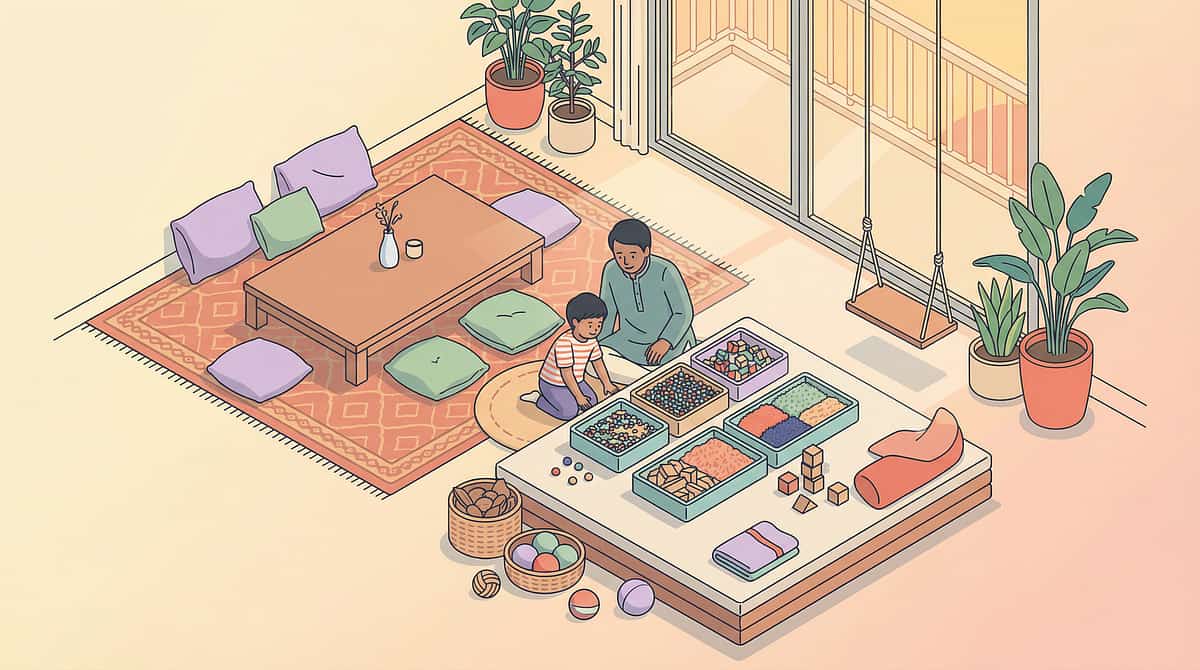
Spatial precision prevents 80% of session failures before they begin. Setup Checklist Seating: Child on floor mat or low table — eye-level interaction Materials: Only current session's materials visible — others stored away Word Wall: Target words posted at child's eye level (60–90cm from floor) Lighting: Natural light preferred. No harsh overhead fluorescents. Sound: TV off. Door closed. Low-volume instrumental music optional. Timer: Visual timer set to session length (10–15 min for beginners) Material Arrangement by Type Sorting Kit Set up category bins with 3 items each BEFORE child enters Picture Books Pre-opened to first page of target vocabulary section Photo Cards Shuffled, face-down, drawn one at a time Activity Box Opened and invitingly arranged — child sees it as they enter 📞 9100 181 181 — Pinnacle Blooms clinical-grade setup available at 70+ centres

ACT III — THE EXECUTION
60-Second Pre-Session Readiness Check
"The best vocabulary session is one that starts right."
Readiness Indicator
What to Do If
Child had a meal within last 2 hours
Feed first. Hunger kills language learning.
No escalating repetitive behaviour
10 min physical play to discharge arousal
Child has slept adequately
Shorten session to 5 min or postpone
No illness, fever, or ear discomfort
Postpone — auditory processing is impaired
Child notices you or materials in the room
Use preferred object first as entry point
No major transition stress in last 30 min
Add 5 min preferred activity buffer
🟢 GO (4–6 ticks)
Proceed to Step 1. Full session.
🟡 MODIFY (2–3 ticks)
Shortened session (5–8 min). Favourite material only. Review familiar targets — no new words.
🔴 POSTPONE (0–1 tick)
This is not failure. It is accurate data. Log the reason. Try again tomorrow.
1
Step 1 of 6
30–60 sec
The Invitation
The Opening (Say this — exact words):
"Hey, I found something really interesting. Want to see?"
(Show the material — don't name it yet. Let curiosity do the work.)
Body Language
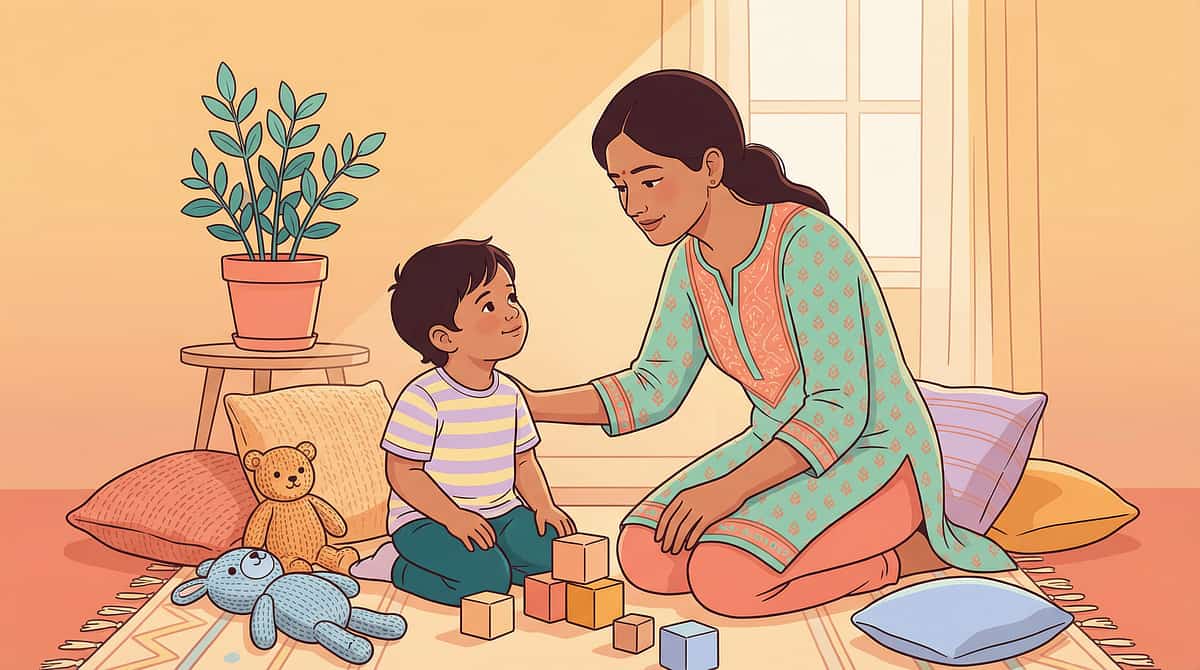
Sit at child's level — on the floor, not looming
Show genuine excitement — children read affect before words
Place material in neutral space between you — not pressing it toward child
Wait 5–8 seconds for child to orient toward it
Acceptance Cues — What "Yes" Looks Like
Eye contact toward material | Hand reaching toward object | Body orientation toward you | Reduced physical distance | Any vocalisation
Resistance Cues & Responses
  • Child turns away → Move material slightly. Narrate without demand: "Oh look, there's a dog here."
  • Child pushes material away → Remove pressure entirely. Play with material yourself while narrating.
  • Child leaves the space → Follow briefly, then return to material. Don't pursue — let interest develop.
ABA Pairing Principle:"We establish the therapist/material as a reinforcer BEFORE placing any demand. The child must want to be near the material before we ask anything of them."
2
Step 2 of 6
1–3 min
The Engagement
Material Introduction Scripts
Category Sorting Kit (Material 1 — most recommended)
"Let's put the animals together. Dog... (place dog card). Cat... (place cat card). What else is an animal?"
Vocabulary Picture Books (Material 2)
"Look at this page. What do you see? (Point) That's a— (pause, let child attempt) — banana! A big yellow banana."
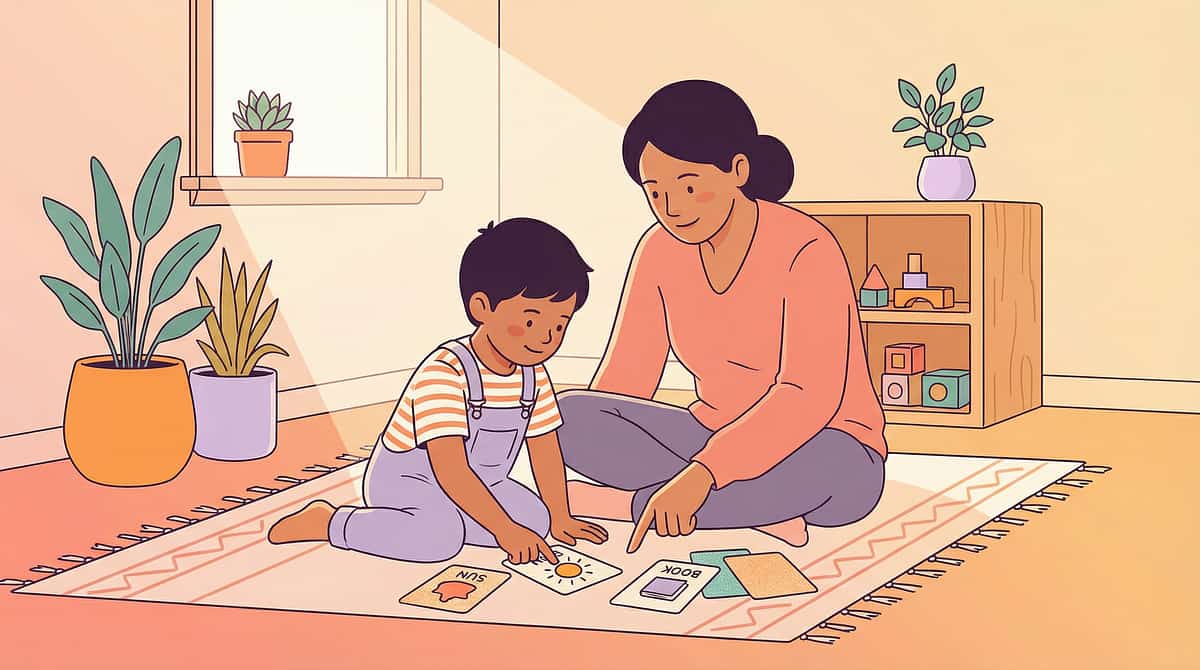
Photo Cards (Material 3)
"I'm going to show you a card. Tell me what you see. (Turn card over slowly) It's a..."
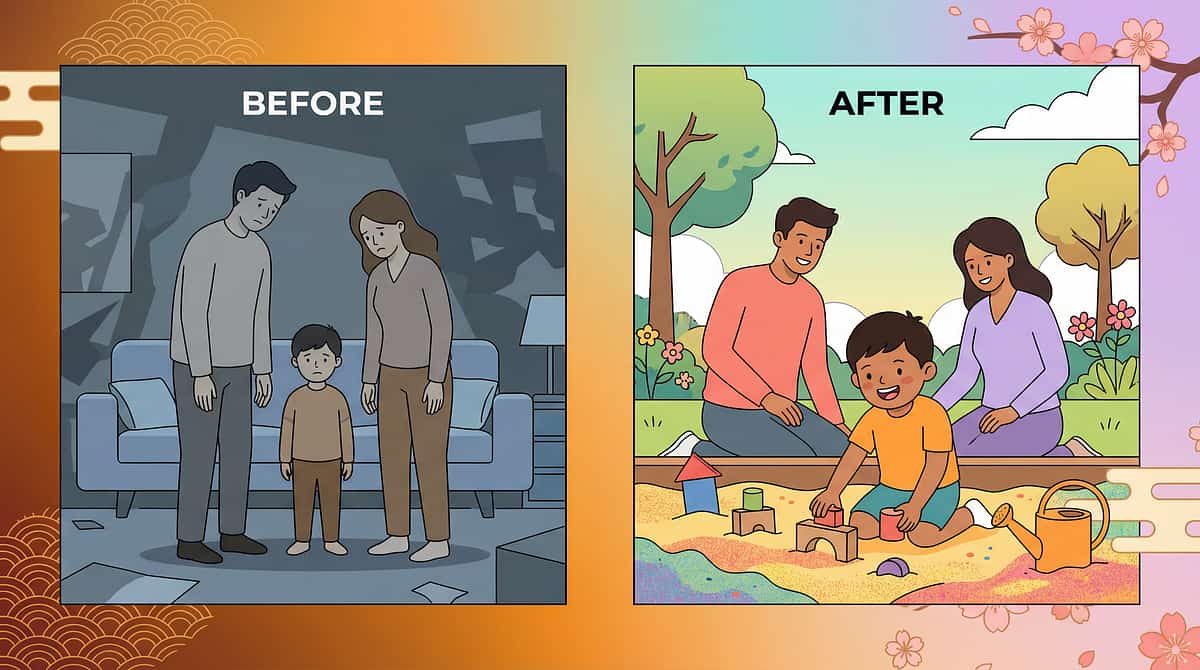
How to Present
Speed: Slow, deliberate — one item at a time. Distance: 30–40cm from child's face. Voice: Warm, unhurried, rising intonation on the target word.
Engagement
Names, points, or attempts sound → Reinforce immediately (Step 5)
🔶 Tolerance
Present and watching but not yet naming → Continue modelling without demanding
🔴 Avoidance
Physically moves away → Reduce demands, return to invitation mode
PMC11506176 (Children, 2024 — structured material introduction in evidence-based vocabulary practice)

3

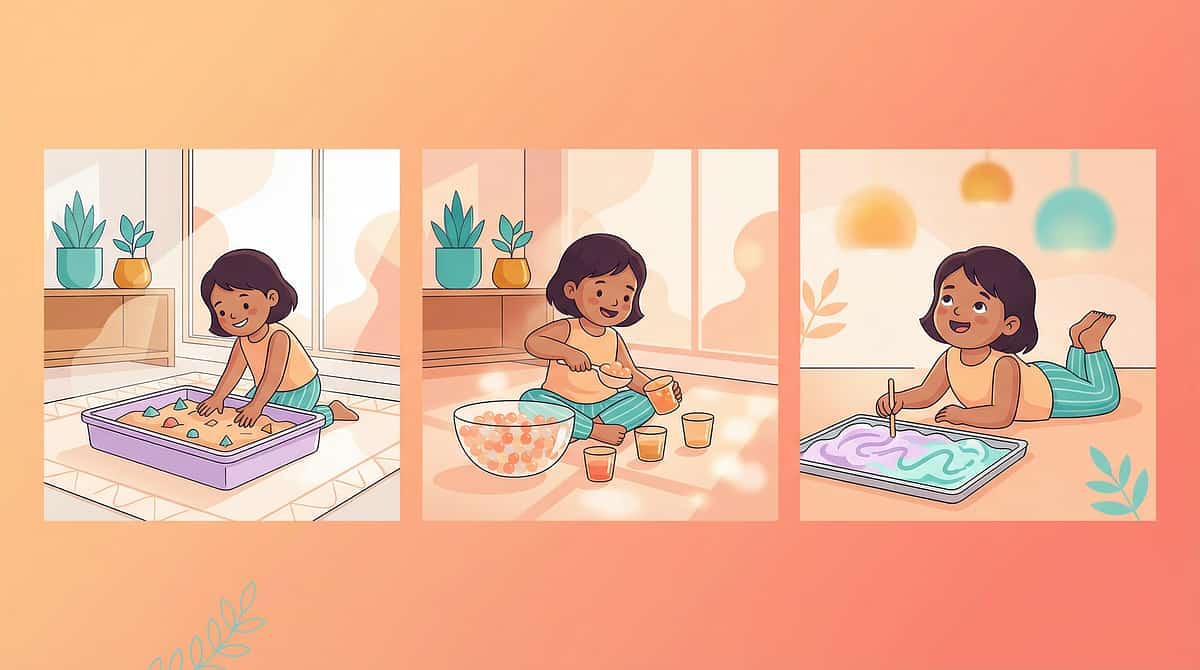
Step 3 of 6 ⏱ 5–12 min The Therapeutic Action This is the core of the session — 40–60% of total time.

4
Step 4 of 6
3–5 min
Repeat & Vary

Dosage Principle: A child needs 10–20 meaningful exposures to a word to own it. One session provides 3–5. This is why daily practice across all 9 materials is the architecture — not one perfect session.
Target Repetitions Per Session
New Words
3–5 exposures per word per session
Review Words
2–3 exposures (from previous sessions)
Total per Session
3–5 new + 5–10 review words
Variation Strategies — Keep Engagement Alive
🔄 Activity Variation
Same word, different material: Sorting card (visual) → Photo card → Real object (tactile) → Book picture (context)
🗣️ Response Variation
Same word, different demands: Point to it → Name it → Find it → Use in sentence → Sort into category
🎭 Context Variation
Same word, different scenario: "Carrot in the bowl" → "Carrot in the garden" → "Bunny eats carrot"
Satiation Indicators — 3 Good Reps > 10 Forced Reps
Watch for: increased fidgeting, eyes leaving materials, vocalisation of protest, body turning away. When you see any two → wrap up with 1 final reinforcing success, then cool-down.
5
Step 5 of 6
Within 3 seconds
Reinforce & Celebrate
"Timing matters more than magnitude. An immediate, specific 'YES! CARROT!' delivered within 2 seconds is more powerful than any sticker given 10 minutes later."
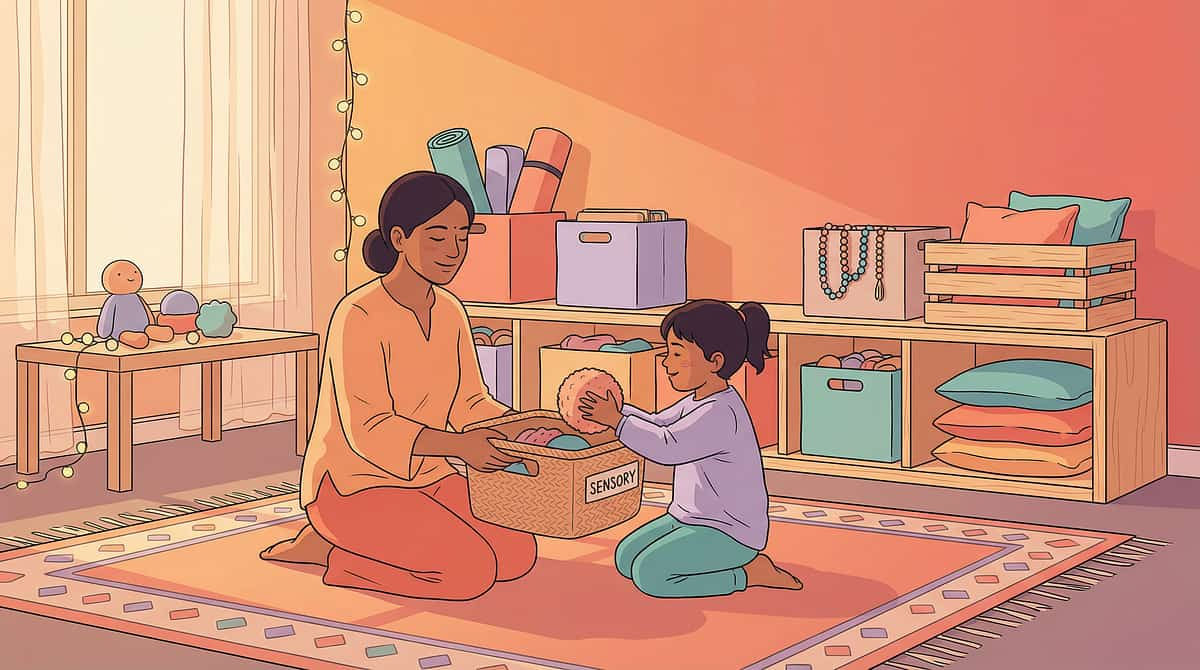
Reinforcement Scripts — Exact Words
For Any Word Attempt (sound, gesture, approximation)
"YES! You said it! CARROT! That's exactly right, carrot!" (Big smile, enthusiastic voice, clap if child enjoys it)
For Category Sorting Success
"You put carrot with the FOODS! Carrot is a food! Perfect sorting!"
For Spontaneous Use (unprompted)
"You SAID 'carrot' all by yourself! That is amazing! High five!" — This is the highest-value reinforcement moment — make it memorable.
Reinforcement Menu
🌟 Social
Praise + eye contact + touch — preferred by most young children
🎯 Activity
30 seconds of favourite activity after each successful naming
🪙 Token
Token board — earn tokens for word attempts, exchange for preferred activity
🎁 Tangible
Only if social/activity insufficient — use sparingly

Celebrate the Attempt, Not Just the Success. A child who says "caw-it" for "carrot" deserves the same enthusiasm as a child who says "carrot" perfectly. The attempt is the therapeutic unit.
Canon Active SKU: Product #803 | Amazon.in → | Product #390 | Amazon.in →

📞9100 181 181 — Ask about personalised reinforcement profiling at Pinnacle
6
Step 6 of 6
1–2 min
The Cool-Down
No session ends abruptly. Abrupt endings create transition resistance that affects the NEXT session.
Transition Warning (2 Minutes Before End)
"Two more cards, then we're all done." (Show visual timer — set to 2 minutes if available)
Transition Object
Have the child's comfort item or favourite toy ready. The transition object signals "session is over" AND "something good is next."
Material Put-Away Ritual
"Can you help me put the animal cards back? Dog goes here... cat goes here... you do horse."
Engaging the child in put-away extends vocabulary review by 2–3 additional exposures and builds routine.
Final Celebration Phrase
"You learned three new words today: carrot, jumping, and enormous. You're a word superhero."
Naming words learned is an evidence-based repetition moment.
Transition to Next Activity
"All done with vocabulary time! Now it's [preferred activity] time."

If child resists ending: use visual timer + offer a choice: "Do you want snack or outside first?"
NCAEP (2020) — Visual supports and transition procedures: evidence-based practice for autism
60 Seconds of Data Now = Weeks of Insight Later
"The session you didn't track is the session that didn't happen — for GPT-OS® intelligence purposes."
📝 Data Point 1
Words attempted today
Tally (✓✓✓) — e.g., Carrot ✓✓, Jumping ✓, Enormous (no attempt)
Data Point 2
Engagement level
1–5 rating — e.g., 4/5 — good session, minor resistance at sorting
Data Point 3
New word success
Yes / Approximation / No for each target word

📱Log your session at:pinnacleblooms.org/tracker or call 9100 181 181 to set up your child's digital progress profile.

Weekly Data Pattern: After 2 weeks of daily 3-point tracking, you will have a word acquisition curve. This curve tells the SLP which word categories are acquiring fastest, which materials produce the most attempts, and what the optimal session length is for YOUR child specifically.
"Continuous measurement (frequency data) and discontinuous measurement (session ratings) provide complementary evidence for vocabulary programme decision-making." — Cooper, Heron & Heward, Applied Behavior Analysis (8th ed.)
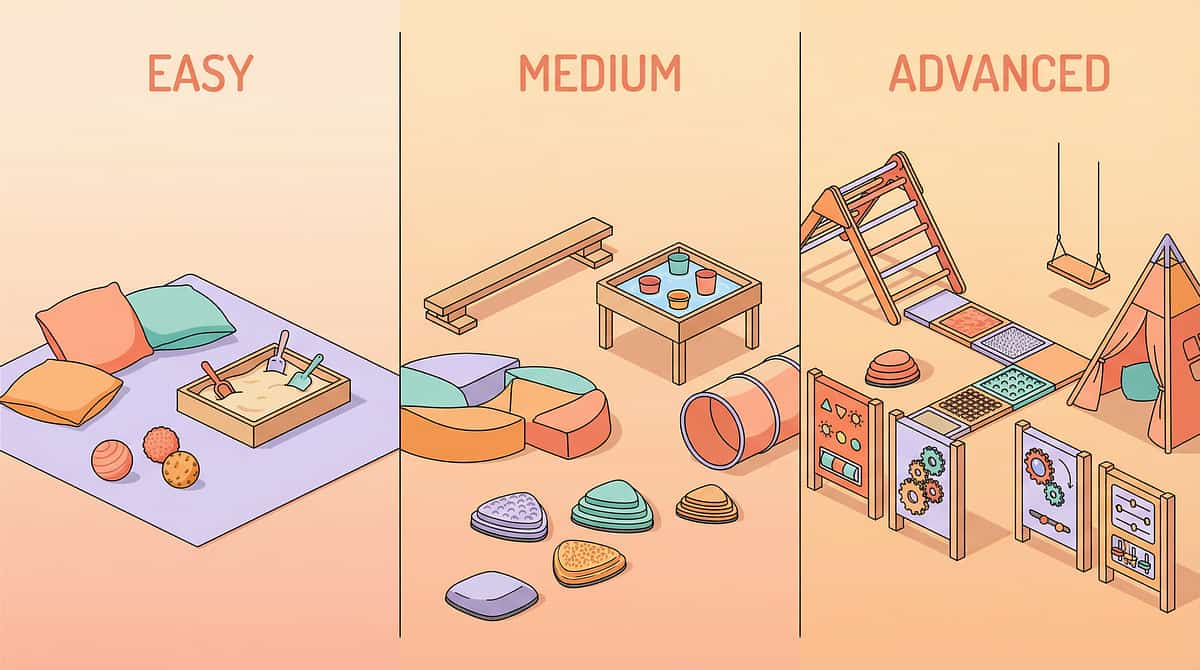
Reality Check: Most Sessions Aren't Perfect
"The technique needs adjustment, not the parent."
"My child just won't name the cards — they just stare or walk away."
💡 You're likely in Stage 0 (pre-naming). The goal here is receptive vocabulary first — can they find the carrot card when asked? Reduce demand to pointing only for 1–2 weeks. Naming comes after recognition.
"My child keeps saying the same 5 words and won't try new ones."
💡 This is consolidation behaviour — actually a good sign! Use known words as a bridge: "You know apple — apple is a food. Carrot is also a food. They're the same! Carrot."
"My child repeats everything I say but doesn't seem to understand."
💡 This is echolalia, not vocabulary learning. Shift to environment narration: narrate what YOU are doing continuously — no demands. Receptive vocabulary precedes productive vocabulary.
"We did 3 sessions but my child still doesn't say the new words."
💡 Word acquisition requires 10–20 exposures. 3 sessions = 9–15 exposures per word. You are in the normal acquisition window. Continue. Don't test — expose.
"My child gets frustrated when they can't find the word."
💡 Don't push — validate: "I know you know the word. It's coming. Let me help: it's the orange vegetable — car..." (partial cue). Build frustration tolerance through success experiences.
"The category sorting creates conflict — my child wants to play with the cards, not sort them."
💡 Use the play behaviour therapeutically. As they "play," narrate: "You've got the dog! And the cat! Animals!" The sorting is for the clinician — the exposure is for the child.
"My child is much better with the app than with cards — is that okay?"
💡 Absolutely. Material preference is valid data. Lean into the app, supplement with one physical material. The principle (repeated word exposure) is more important than the medium.

EMERGENCY: If child became severely distressed during session — stop immediately, engage preferred calming activity, do not re-introduce vocabulary that day. Call 9100 181 181 if distress episodes are recurring.
No Two Children Learn Words the Same Way
The 9 materials are a menu, not a prescription. Here's how to match them to your child's profile.
Level 5: Sentence
Level 4: Two-Word Phrase
Level 3: Single Word
Level 1-2: Receptive & Sound
Profile-Based Adaptations
👁️ High Visual Learner (ASD — common profile)
Primary materials: Photo cards (3) + Word walls (9). Large, clear photographs over illustrated cards. PECS-style progression: point → exchange card → verbal label. Accept pointing as valid response initially.
👂 Auditory Learner
Primary materials: Books (2) + Apps with audio (4). Songs and rhymes for vocabulary embedding. "Carrier phrases" — repeated sentence frames with one changing word.
Tactile Learner
Primary materials: Activity boxes (8) — real objects essential. Texture-paired vocabulary: rough rock, smooth ball, soft blanket. Object manipulation before naming required.
🔋 Low Stamina / High Sensory Sensitivity
5-minute sessions, one material only. Maximum 2 new words per session. Transition objects used at session open AND close.
Age Adaptations
1
2–3 years
Real objects only. No abstract cards yet. Naturalistic daily routine embedding.
2
4–5 years
Photo cards + category sorting. Begin verb targeting.
3
6–7 years
All 9 materials applicable. Begin Tier 2 vocabulary (school-relevant words).

Weeks 1–2: Tolerance, Not Mastery

ACT IV — THE PROGRESS ARC Set realistic expectations — and celebrate every millimetre of progress. ▓░░░░░░░░░ 15% — "Starting the Journey" What You MAY See (Observable Indicators) Child tolerates vocabulary session for 5–8 minutes without protest Child orients toward materials when presented — even briefly Child makes a sound attempt at 1–2 target words (even approximation) Child can point to named objects from a choice of 2 ("Show me the dog") Child begins to anticipate a routine component (reaches for materials) What Is NOT Progress Yet ❌ Spontaneous use of new words in other contexts — too early ❌ Sentence-level use of new vocabulary — too early ❌ Mastery on first exposure — neurologically impossible for most new words Parent Emotional Preparation: Neural encoding of new vocabulary happens largely during sleep consolidation — not during the session itself. You are planting seeds. "If your child tolerates the material for 3 seconds longer than last week — that's real, measurable, neurologically-confirmed progress." PMC11506176 (Children, 2024 — week 1–2 indicators in vocabulary intervention RCTs)
Weeks 3–4: The Quiet Revolution in the Brain
Neural pathways consolidate silently. You'll see the evidence in unexpected places.
▓▓▓▓░░░░░░ 40% — "Pathways Forming"
Anticipatory Behaviour
Child approaches materials without being prompted — they're looking for the session
Category Extension
Child places a NEW item correctly in a sorting category — this is generalisation in action
Spontaneous Labelling
Child names a picture book image before being asked — even once is significant
Reduced Echolalia
Child produces the target word independently rather than repeating your model
Cross-Context Appearance
You hear a new vocabulary word in the bath, at the shops, in play — the ultimate consolidation signal
When to Increase Intensity
If child demonstrates 80% accuracy on target words from sessions 1–14, you may: add 2–3 new target words per session, extend session duration by 5 minutes, or introduce a new material type.
"You may notice you're more fluent at this now too. You're pausing for the child's response. You're celebrating attempts. You're building vocabulary into daily routines naturally. This is the therapeutic alliance forming."

▓▓▓▓▓▓▓░░░ 75% — "Mastery Zone"
Weeks 5–8: The Vocabulary Explosion Window
This is where the investment pays exponential dividends.
Mastery Criteria — Specific, Observable, Measurable
For each target word, mastery is defined as: Child names spontaneously on 3/3 consecutive opportunities Child uses word in a novel sentence not modelled by parent Child correctly sorts the word into category without prompt Child uses word across 2+ different settings
🏅 Mastery Badge Unlock — "Vocabulary Builder"
20+ new words acquired since baseline | At least 5 verbs and 3 adjectives | Spontaneous word use increasing across daily contexts
🌟 Generalisation Indicators (The Real Prize)
Child names items at the supermarket they've never seen in session | Uses adjectives in natural play ("big truck!" "soft blanket") | Asks "what's that?" — the question that powers all future vocabulary growth
🔄 Maintenance Check
After 8 weeks, remove structured session for 1 week. Observe natural vocabulary use. If maintained → mastery confirmed. If regression → brief refresher, then maintenance schedule (2x/week).
When to Move to the Next Level
→ B-191
Difficulty Following Directions — receptive language complexity
→ B-193
Narrative Skill Difficulty — use vocabulary in storytelling
→ B-187
Word Finding Difficulty — if retrieval gaps persist despite vocabulary gains
PMC10955541 | BACB mastery criteria standards
🏆 You Did This. Your Child Grew Because of Your Commitment.
Over 8 weeks of consistent vocabulary practice using the 9 materials on this page, your child has acquired 20–60 new words that didn't exist in their lexicon 2 months ago — and built the foundation vocabulary that will directly enable reading comprehension at age 7.
What Changed
  • Acquired 20–60 new words not in their lexicon 2 months ago
  • Built semantic networks connecting words to categories, contexts, and meaning
  • Developed vocabulary that directly enables reading comprehension at age 7
  • Demonstrated that language can grow — the filing cabinet can always add new folders
Parent Affirmation
"You ran a session on the hard days. You modified when it wasn't working. You celebrated the approximation that sounded nothing like the word. You did the data. You didn't give up. This vocabulary growth is a direct reflection of your love expressed as consistent, intelligent action."

🎉 Family Celebration Suggestion: Create a "Word Wall of Honour" — write every new word your child learned during these 8 weeks on coloured stars, and pin them to a celebration board. 📸 Photo moment: child pointing at their word wall. Timestamp it. You'll want this memory.
Journal Prompt: "Write down the first time your child used a new vocabulary word spontaneously, without prompting. What word was it? What were they doing? What did your face do when you heard it? That moment is yours forever."

📤 Share this milestone with the Pinnacle parent community → pinnacleblooms.org/community
Trust Your Instincts — If Something Feels Wrong, Pause
These are not fear-inducing guidelines. They are clinical guardrails that empower you to act at the right time.
🚨 Vocabulary Regression
Child was using 50 words, now using fewer than 30 over 2+ weeks without illness. Why it matters: Regression in established vocabulary can indicate neurological, medical, or psychological factors requiring evaluation.
🚨 No Growth After 12 Weeks of Consistent Intervention
Typical response to systematic exposure shows gains within 8–12 weeks. Non-response warrants SLP assessment for underlying phonological, auditory processing, or cognitive factors.
🚨 Loss of Language Alongside New Unusual Behaviours
Language loss with new behaviours (repetitive, social withdrawal, seizure-like events) requires urgent medical evaluation. This is a developmental red flag.
🚨 Child Produces Words But Shows No Evidence of Understanding
Pure echolalia without comprehension requires a different strategy — expressive vocabulary work must be preceded by receptive vocabulary groundwork.
🚨 Significant Hearing Difficulty Suspected
Even mild, intermittent hearing loss (otitis media) significantly impairs vocabulary acquisition. Audiology assessment required before vocabulary programme continues.
🚨 Frustration Escalating to Self-Injury or Severe Aggression
Word-finding frustration that escalates to self-injury requires behavioural assessment (FBA) before vocabulary sessions continue.
Full Diagnostics
SLP Assess
Teleconsult
Self-Monitor

📞9100 181 181 — FREE National Helpline | Available 24×7 in 18 languages
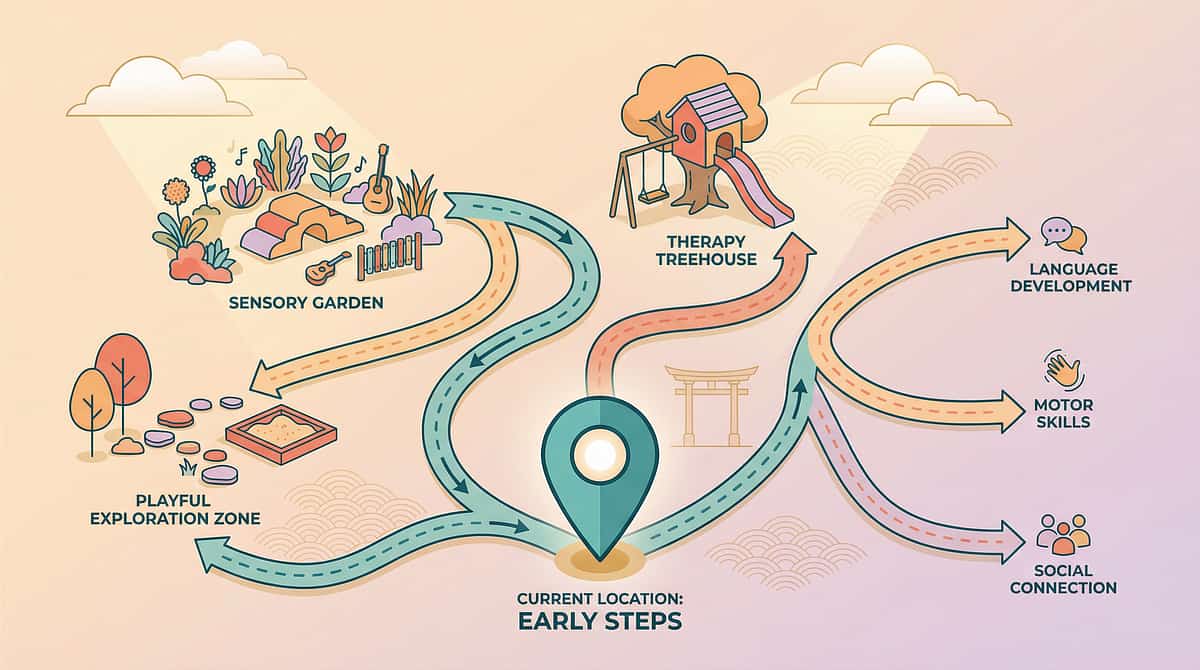
Your Developmental GPS: Where You Are, Where You're Going
Lateral Alternatives
If B-190 isn't resonating:
  • Try B-187 (Word Finding) — may reveal retrieval rather than acquisition gap
  • Try B-189 (Express Needs) — may be more motivating entry point
Long-Term Developmental Goal
B-190 vocabulary gains directly feed:
Reading Comprehension (age 6–8)
Academic Language (age 7–10)
Narrative Competence & Social Communication Mastery

Prerequisite Check: Does your child have a consistent pointing/requesting gesture? If not, B-189 (Functional Communication) may be the better starting point.

📞9100 181 181 — AbilityScore® assessment maps your child's full progression pathway

More Techniques in Language Foundations

All techniques in Domain B — Social Communication | Language Foundations Series Code Technique Level Core Materials B-189 Child Can't Express Needs 🟢 Foundation AAC + Photo Cards B-187 Word Finding Difficulty 🔵 Core Photo Cards + Sorting B-191 Difficulty Following Directions 🔵 Core Sequencing Cards + Books B-192 Limited Understanding of Questions 🔵 Core Visual Supports + Picture Books B-193 Narrative Skill Difficulty 🟡 Advanced Sequencing Cards + Story Books "You Already Own Materials for These": If you've set up Materials 1, 3, and 9 from Card 09, you already have the core materials for B-187, B-189, and B-191. Same investment, three techniques. → All Language Foundation Techniques | → Return to techniques.pinnacleblooms.org
B-190 Is One Piece of a Larger Plan
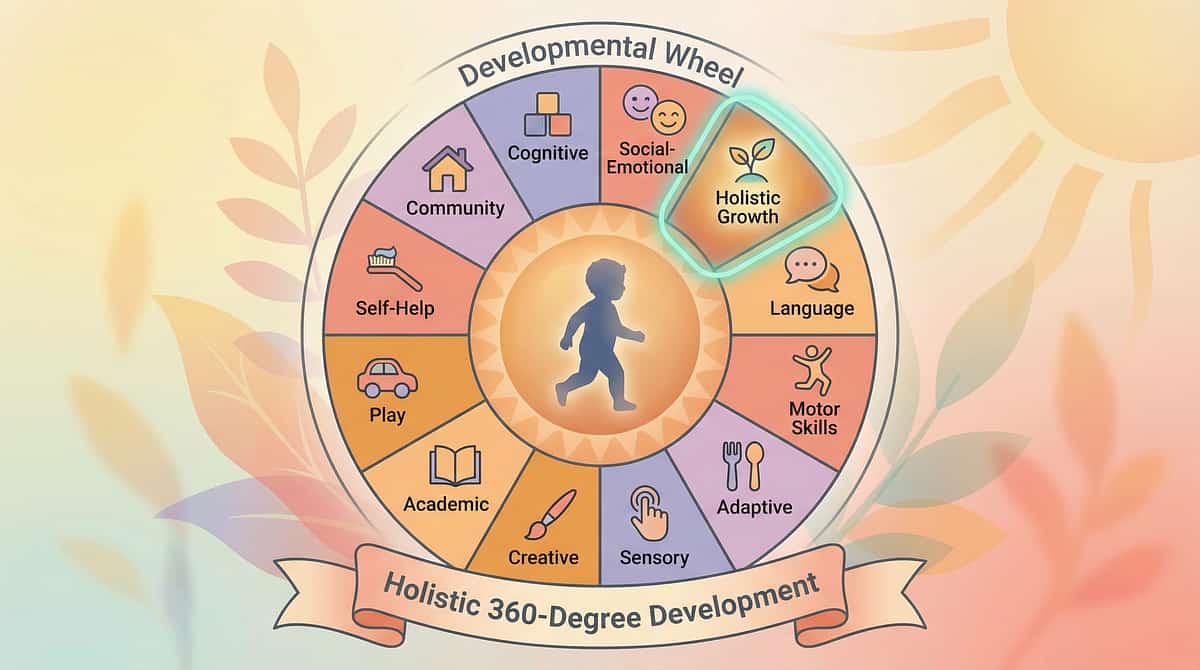
Vocabulary development in Domain B (Social Communication) is deeply interconnected with the full landscape of your child's development. No domain develops in isolation.
Domain A
Sensory processing affects attention during vocabulary sessions
Domain C
Word-finding frustration is an emotional regulation challenge
Domain K
Vocabulary is the #1 predictor of school success
Domain I
Play is the natural context for vocabulary learning
📱View your child's GPT-OS® profile → | 📞 Or call 9100 181 181 to start your child's AbilityScore® assessment
WHO Nurturing Care Framework (2018) | UNICEF 2025 Country Profiles (42 developmental indicators)

From "Thing" to a Thousand Words

ACT V — THE COMMUNITY & ECOSYSTEM These are real families. The details are anonymized. The outcomes are not. Family 1 — "The 30-Word Child" Before: Arjun, 3 years 4 months. 30 functional words. Every toy was "thing." Every food was "this." His parents had stopped correcting him because it upset him. After (12 weeks, B-190 protocol): 182 words measured by SLP on REEL-3. 47 spontaneous verbs. First unprompted sentence: "Amma, dog running." "We thought he just didn't have words. Turns out he had ideas — he just needed the right ladder to reach them." 🗒️ Therapist's Notes: Arjun's semantic network was intact but impoverished — he needed category-based sorting kits first. Once categories were established, word acquisition accelerated. Family 2 — "The Pointer" Before: Diya, 4 years 2 months. Never named objects — pointed for everything. Her parents were exhausted by the guessing game every meal, every outing. After (8 weeks, Materials 3 + 9 primary): Began labelling objects spontaneously. First verbal request: "Water." Within 14 weeks: 85 new words, 12 spontaneous requests, 3 two-word combinations. "The word wall in the bathroom was the turning point. She just started saying 'towel' one morning. Then 'soap.' I cried." 🗒️ Therapist's Notes: Environmental vocabulary exposure (Material 9) worked as a passive incubator — words absorbed without demand pressure. Ideal for demand-sensitive profiles. Family 3 — "Too Many Things" Before: Kabir, 5 years 1 month. ~200 words — but 80% were nouns. No verbs. No adjectives. His speech sounded like a noun catalogue. After (10 weeks, Materials 5 + 6 primary): Verb vocabulary expanded from 8 to 47 consistent verbs. First adjective phrase: "Red ball." School reported improved participation in circle time. "We didn't know verbs were missing. We thought he had good vocabulary. The SLP showed us the gap and the solution in the same session." 🗒️ Therapist's Notes: Word class imbalance (noun-heavy, verb-poor) is extremely common and easily overlooked. Action verb cards (Material 5) are non-negotiable for this profile. Outcomes illustrative. Results vary by child profile, programme intensity, and comorbidity. All families provided consent for anonymized sharing.

You Don't Have to Do This Alone
"Isolation is the enemy of adherence. Community is the engine of consistency."
📱 WhatsApp Group: "Vocabulary Builders — B-190 Parents"
For parents using B-190 and the 9 vocabulary materials. Share progress, swap DIY ideas, troubleshoot together. Join Group →
💻 Pinnacle Online Parent Forum
Moderated by SLPs. Searchable by technique code, challenge type, age band. forum.pinnacleblooms.org
🗺️ Local Pinnacle Parent Circles
Monthly parent meetups at Pinnacle centers across India — co-facilitated by SLPs and experienced parents. Find your nearest circle →
👩‍👩‍👦 Peer Mentoring Programme
Connect with a parent who used B-190 six to twelve months ago. Real guidance. No judgement. Lived experience. Request a mentor →

"If B-190 changed something for your family — share your journey. Your specific experience is the most powerful intervention for a parent still in their first week, sitting in the dark."
WHO NCF Community Engagement Principles | Parent support networks show 40–60% improvement in home intervention adherence with active peer connection.
Home + Clinic = Maximum Impact
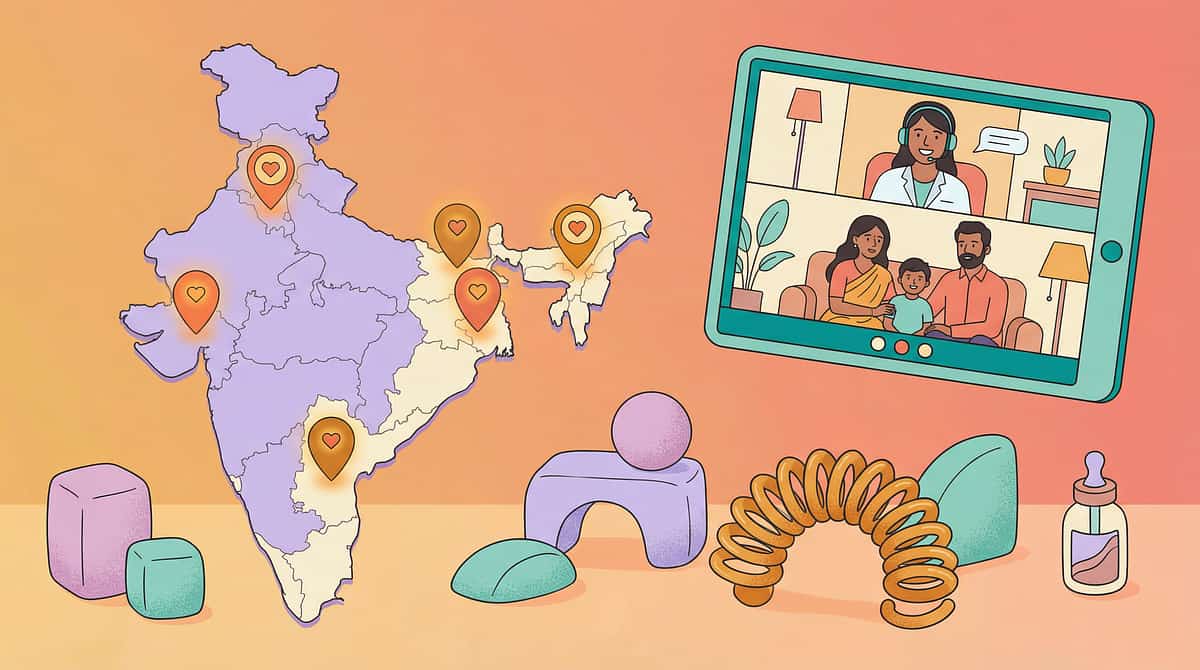
Home-based intervention works best when amplified by professional guidance. You are not expected to do this alone.
🎯 AbilityScore® Vocabulary Assessment
Standardized measurement of current receptive and expressive vocabulary against age norms
📊 GPT-OS® Communication Profile
Full language domain mapping across all vocabulary subcomponents
🗣️ Assigned SLP
Primary clinician who designs your vocabulary intervention programme
🤝 FusionModule™ Session
Co-session with SLP + SpEd to align home programme and school programme
📱 EverydayTherapyProgramme™
Daily vocabulary targets embedded into morning, mealtime, and bedtime routines
Teleconsultation
Not near a center? Our SLPs conduct vocabulary assessments and programme consultations online.
Cost & Insurance
Contact center for current fee schedule. Several state government schemes and private insurance plans accepted.
📞9100 181 181 — Available 24×7 | 18 Languages | FREE initial consultation
WHO NCF Progress Report (2023) — Primary health care as key platform for ECD intervention delivery
The Science Behind Every Card on This Page
"Deeper reading for the curious, rigorous parent."
1. Marulis & Neuman (2010) — Review of Educational Research
67 studies, 6,138 children. Effect size d = 0.88. Category-based and contextual approaches strongest. → Access via Google Scholar
2. WHO Care for Child Development Package (2023)
Implemented across 54 LMICs. Parent-delivered vocabulary activities within daily routines produce measurable language gains. → PMC9978394
3. NCAEP (2020) — UNC Chapel Hill
Visual supports, picture exchange, and naturalistic language interventions classified as evidence-based for ASD. → NCAEP Report 2020
4. Padmanabha et al. (2019) — Indian RCT
Home-based language intervention by trained parents demonstrated significant outcomes for Indian children. → DOI: 10.1007/s12098-018-2747-4
5. Beck, McKeown & Kucan (2013) — Bringing Words to Life
Tiered vocabulary instruction, semantic mapping, and rich instruction produce durable, generalisable vocabulary gains. → ISBN: 9781462508167
6. PMC11506176 (Children, 2024) — PRISMA Systematic Review
16 studies 2013–2023. Structured material-based intervention meets criteria for evidence-based practice across speech-language outcomes in ASD.
7. ASHA Technical Reports on Vocabulary Development
American Speech-Language-Hearing Association clinical practice guidance. → asha.org/practice

Oxford Evidence Grade for B-190: Level I — Supported by systematic reviews and randomised controlled trials.
Your Sessions Feed an Intelligence That Improves Every Child Like Yours
Personalized Recommendations
Compare to 20M+ Sessions
Record 3 Data Points
What GPT-OS® Learns From B-190 Data
Which vocabulary categories are acquired fastest for children with your child's AbilityScore® profile
Which of the 9 materials produces the highest word acquisition rate for your child specifically
Whether vocabulary gains are tracking toward Communication Readiness Index targets
When the transition from B-190 to B-191 is clinically warranted
Privacy Assurance
All child data stored under India's DPDP Act (2023) compliance
Data anonymized and aggregated before pattern analysis
Parents control data — download, correct, or delete at any time
No data sold to third parties. Ever.

📞9100 181 181 — Set up your child's profile with a consultant
"When you submit session data for your child, you contribute to a dataset of 20M+ therapy sessions that GPT-OS® uses to improve recommendations for every child in the network. Your data helps children you'll never meet."

ACT VI — THE CLOSE & LOOP
Your Questions, Answered
Every question below was asked by a real parent navigating exactly this challenge.
How many words should my child have at their age?
Typical benchmarks: 12 months = first words; 18 months = ~50 words; 24 months = 200–300 words with vocabulary explosion; 36 months = 900–1,000 words; 6 years = ~2,600 expressive words. If your child is more than 50% below these numbers, consult an SLP. These are ranges — context matters.
How long before I see results from the 9 materials?
Most parents observe increased engagement within 1–2 weeks. First new word acquisitions typically emerge in weeks 2–4. Measurable vocabulary growth (20+ new words) is generally seen by weeks 6–8 with consistent daily practice.
My child speaks in their mother tongue but not English — is this technique relevant?
Absolutely. The 9 materials work in any language. Vocabulary development in the mother tongue is the clinical priority. The materials described can be adapted for Hindi, Tamil, Telugu, Kannada, Bengali, or any Indian language. Bilingual vocabulary development is normal and healthy.
Can I use all 9 materials at once, or should I choose one?
Start with 2–3 materials that best match your child's learning style (see Card 22). Once those are established routine, add more. Over 8 weeks, most families naturally integrate 4–6 of the 9 materials.
My child's SLP has never mentioned these materials — should I ask?
Yes — proactively. Print Card 09 and bring it to your next session. Ask: "Are these appropriate for my child's vocabulary profile? Which ones match our current targets?" A good SLP will welcome parent-initiated material discussion.
What's the difference between receptive and expressive vocabulary?
Receptive vocabulary = words a child understands. Expressive vocabulary = words a child produces. Most children understand many more words than they say. The 9 materials primarily build receptive vocabulary first, which then enables expressive use. If your child can point to "carrot" but won't say it — their receptive system is working.
Can siblings use these materials without disrupting the therapeutic purpose?
Sibling involvement is encouraged with guidance. Ensure the sibling doesn't "do it for" the target child — the therapeutic value comes from the child's own engagement and attempt. Natural social reinforcement from siblings is highly valuable.
Is B-190 appropriate for children without an autism diagnosis?
Completely. Vocabulary limitation is not specific to autism. Children with DLD, hearing history, attention difficulties, environmental language poverty, bilingual acquisition complexity, or no identified diagnosis at all benefit from B-190. The intervention is vocabulary-need driven, not diagnosis driven.
💬 Ask GPT-OS® → pinnacleblooms.org/ask | 📞 Book a teleconsultation → 9100 181 181
Every Word Your Child Learns Today Is a Door That Opens Tomorrow.
🗣️ SLP
🤲 OT
🧠 ABA
🎓 SpEd
🧬 NeuroDev
👶 Paediatrics
🏛️ Validated by the Pinnacle Blooms Consortium — The World's Largest Paediatric Therapeutic Intelligence Network
21 Million therapy sessions · 97%+ measured improvement · 70+ centres · 70 countries · GPT-OS® Powered

📞9100 181 181 | FREE | 24×7 | 18 Languages | pinnacleblooms.org | care@pinnacleblooms.org

Preview of 9 materials that help expanding limited vocabulary Therapy Material

Below is a visual preview of 9 materials that help expanding limited vocabulary therapy material. The pages shown help educators, therapists, and caregivers understand the structure and content of the resource before use. Materials should be used under appropriate professional guidance.
Page 1
Page 2
Page 3
Page 4
Page 5
Page 6
Page 7
Page 8
Page 9
Page 10
Page 11
Page 12
Page 13
Page 14
Page 15
Page 16
Page 17
Page 18
Page 19
Page 20
Link copied!
🏛️ Pinnacle Blooms Network® — The Pinnacle Promise
"From fear to mastery. One technique at a time."
We exist to transform every home on Earth into a proven, scientific, 24×7, personalised, multi-sensory, multi-disciplinary paediatric therapy environment — accessible to every family, regardless of geography, language, or economic status.
Statutory Identifiers
© 2025–2026 Pinnacle Blooms Network® | Unit of Bharath Healthcare Laboratories Pvt. Ltd.
Content generated by the GPT-OS® Content Engine under consortium editorial governance.
CIN: U74999TG2016PTC113063 | DPIIT: DIPP8651 (Govt. of India Startup Recognition) | MSME Registered | GSTIN: 36AAGCB9722P1Z2
Technique B-190 | Language Foundations Series | techniques.pinnacleblooms.org

Medical Disclaimer: This page is educational in nature and does not constitute medical, psychological, or therapeutic advice. It does not replace assessment, diagnosis, or treatment by a licensed speech-language pathologist, occupational therapist, BCBA, special educator, or medical doctor. Vocabulary intervention should be individualised based on comprehensive professional assessment. Individual results may vary. Statistics represent aggregate outcomes across the Pinnacle Blooms Network across 21M+ exclusive 1:1 therapy sessions.
📞9100 181 181 | Available 24×7 | 18 Languages | FREE initial consultation | 🌐pinnacleblooms.org | 📧care@pinnacleblooms.org