

Social Communication & AAC
25 Evidence-Based Pragmatic Language & Augmentative Communication Interventions for Autism — conversation skills, turn-taking, greetings, AAC modeling, PECS, and emergency communication. Subdomain B4 | Pinnacle Blooms Network®
Domain B: Communication
B4 of 4
25 Techniques
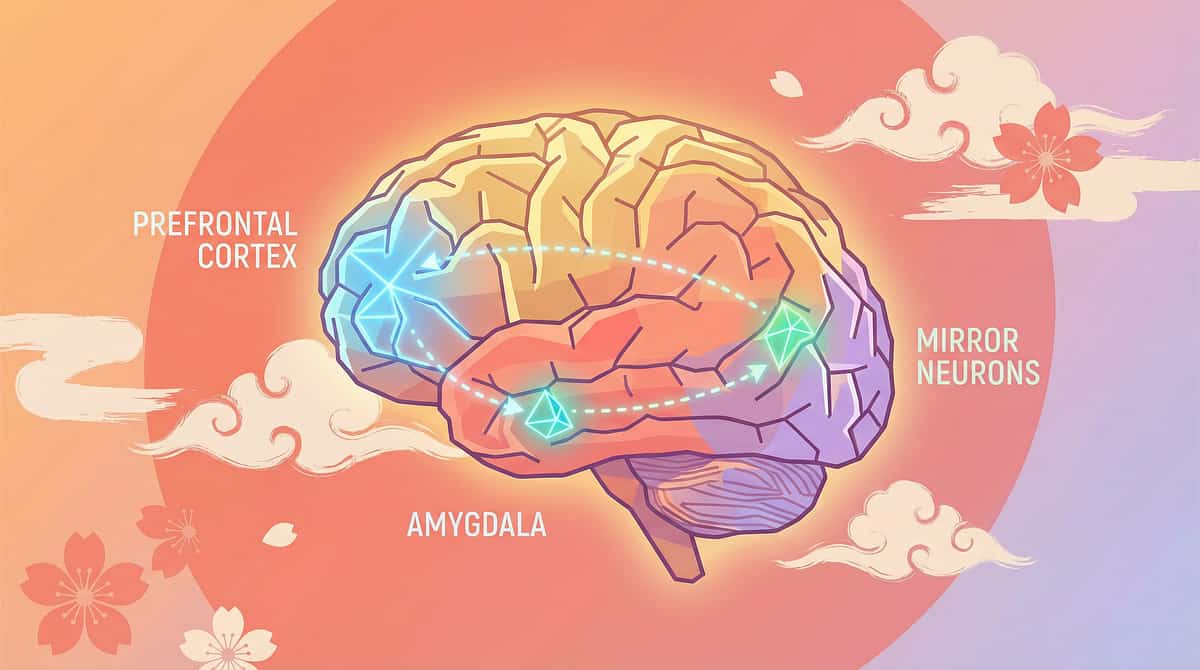
Neuroscience Primer
How the Social Brain Works
Pragmatic language — the social use of language — is the most demanding communication skill, and the most persistently challenged area in autism. It requires the coordinated activation of multiple brain regions working simultaneously during every conversation.
Medial Prefrontal Cortex
Theory of mind — understanding what your listener knows, thinks, and feels in real time
Right Hemisphere
Prosody, sarcasm, irony, non-literal meaning, and humor processing
Temporal-Parietal Junction
Perspective-taking during live conversation with a partner
Fusiform Face Area + STS
Reading facial expressions and interpreting eye gaze signals during interaction

AAC Evidence Base
AAC Is Not "Giving Up on Speech" — It's Accelerating It
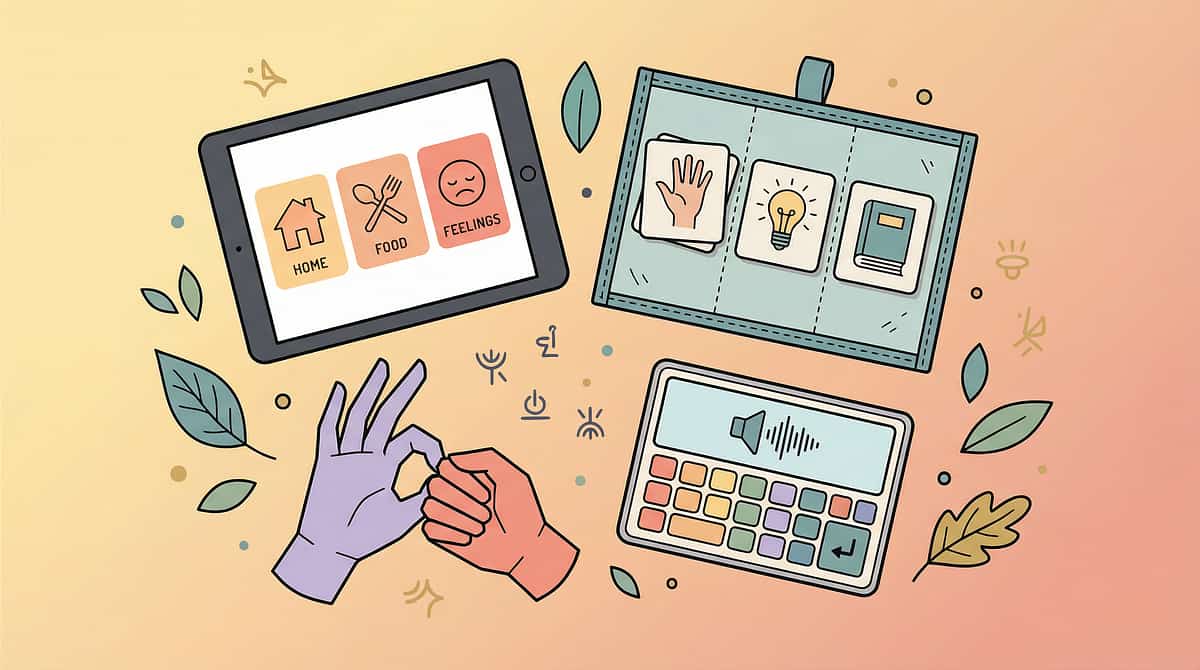
AAC encompasses all communication methods beyond natural speech — picture systems, sign language, communication boards, speech-generating devices, and tablet-based apps. Research consistently shows that AAC accelerates speech development by strengthening the communication-reward loop.
NCAEP 2020 Evidence Rating
AAC holds the highest evidence rating across the entire autism intervention spectrum — classified as a full Evidence-Based Practice.
The Indian AAC Gap
Millions of Indian families have never heard of AAC. Those who have face myths ("AAC prevents speech"), cost barriers, and clinician knowledge gaps. This subdomain is the AAC entry point for families across India — and it is urgently needed.
B-206
Card 01 of 25
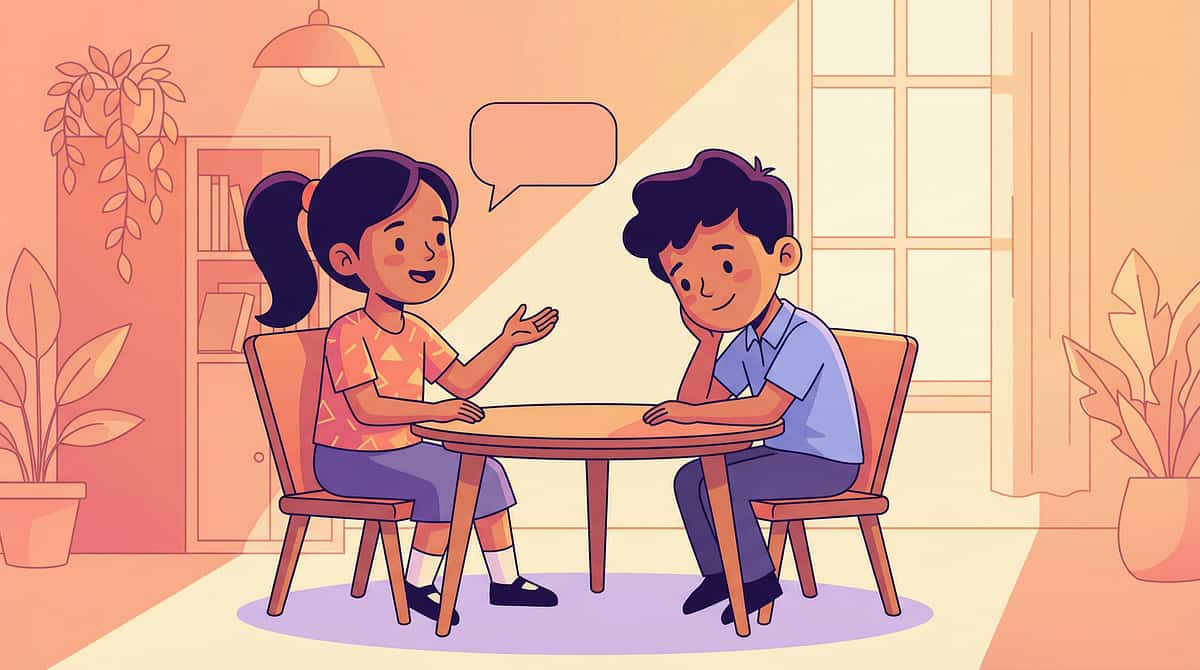
Conversation Turn-Taking
They talk. The other person talks. But the rhythm is wrong — speaking over others, leaving no pause, or missing the moment entirely. The back-and-forth dance of conversation — my turn, your turn — isn't automatic. It's a choreography that must be explicitly taught.
The Neuroscience: Conversational turn-taking requires temporal prediction (cerebellum), pragmatic awareness (prefrontal cortex), inhibitory control (right inferior frontal gyrus), and real-time speech preparation. Typical conversation gaps between turns are just 200 milliseconds. Children with ASD often show extended gaps or overlapping speech — both rooted in neurological differences, not lack of desire to connect.
Evidence Level I — Video modeling, visual turn cues, and structured practice produce measurable improvement in turn-taking. NCAEP 2020 | PMC10955541 | Social Skills Training research
Visual Turn Cues
Talking stick, turn cards, and ball-passing to make "my turn / your turn" concrete and visible
Conversational Scripts
Built-in turn markers that scaffold the rhythm of exchange before it becomes naturalistic
Video Modeling
Observing successful turn-taking to activate mirror neuron learning pathways
9 Canon Materials: Turn-Taking Games · Social Stories · Video Modeling · Conversation Cards · Visual Timer · Puppets / Role Play · Emotion Cards · Reward Charts · Board Games
🗣️Lead: SLP (Pragmatics) · ABA | Psychology · SpEd
B-207
Card 02 of 25
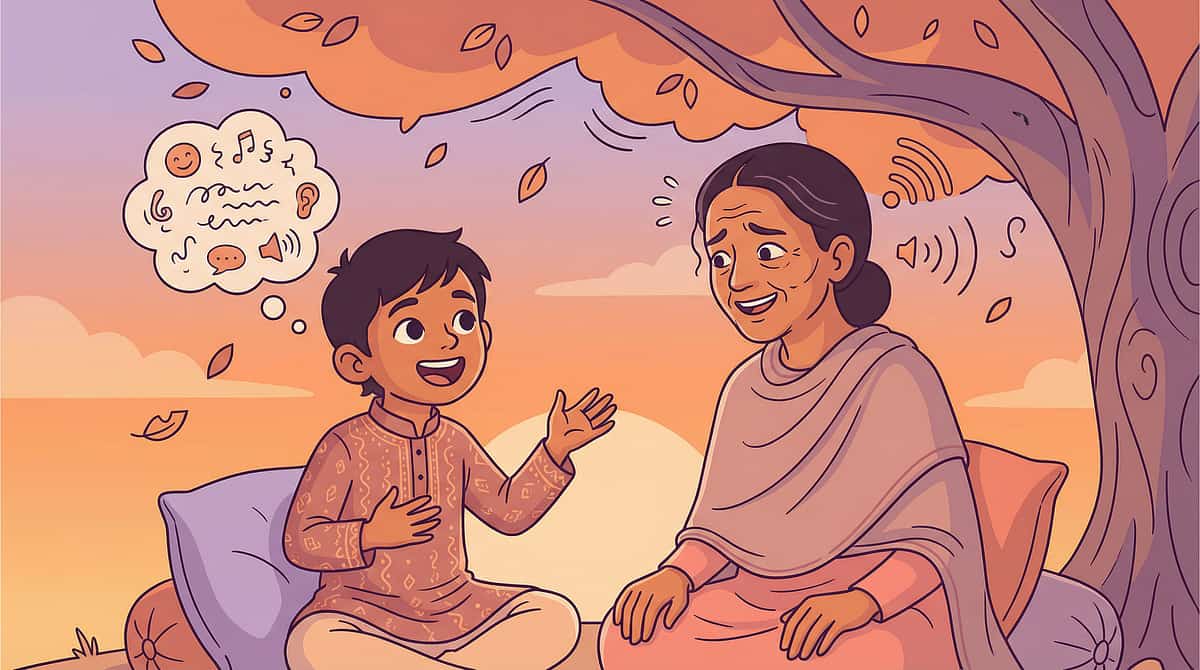
Talks At — Not With
They can talk fluently — sometimes impressively so. But it's a monologue, not a dialogue. They lecture, inform, recite, and explain without checking if the listener is interested, following, or even still present. They deliver language without exchanging it — talking AT you, not WITH you.
The Neuroscience: Talking "at" vs. "with" reflects a deficit in the audience-monitoring system. The medial prefrontal cortex must continuously track: What does my listener know? Are they interested? Should I adjust? Running this social monitoring in parallel with speech production is the most cognitively demanding communication task a human brain performs.
Evidence Level I — Pragmatic language intervention combined with perspective-taking training. NCAEP 2020
"Check-In" Strategy
Pause, look at the listener's face, read interest level — then decide whether to continue
3-Sentence Rule
Pause after 3 sentences, ask a question or check in — building reciprocity into speech rhythm
Listener Role-Play
Experience being the audience of a monologue to build genuine awareness of the listener's perspective
B-208
Card 03 of 25
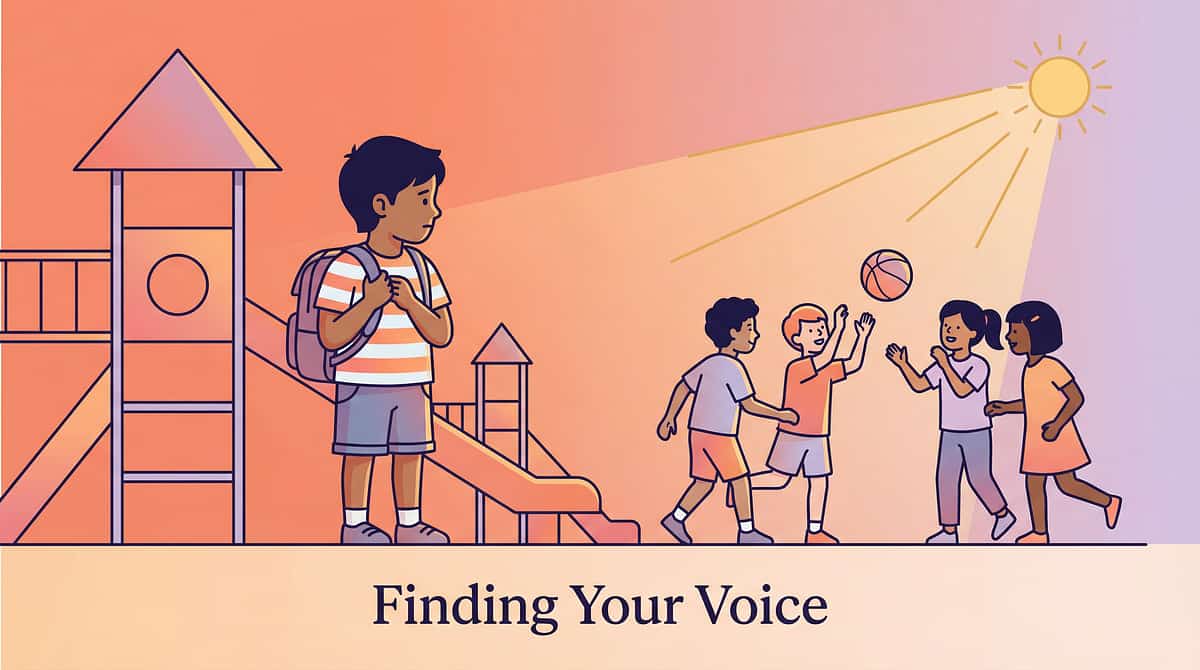
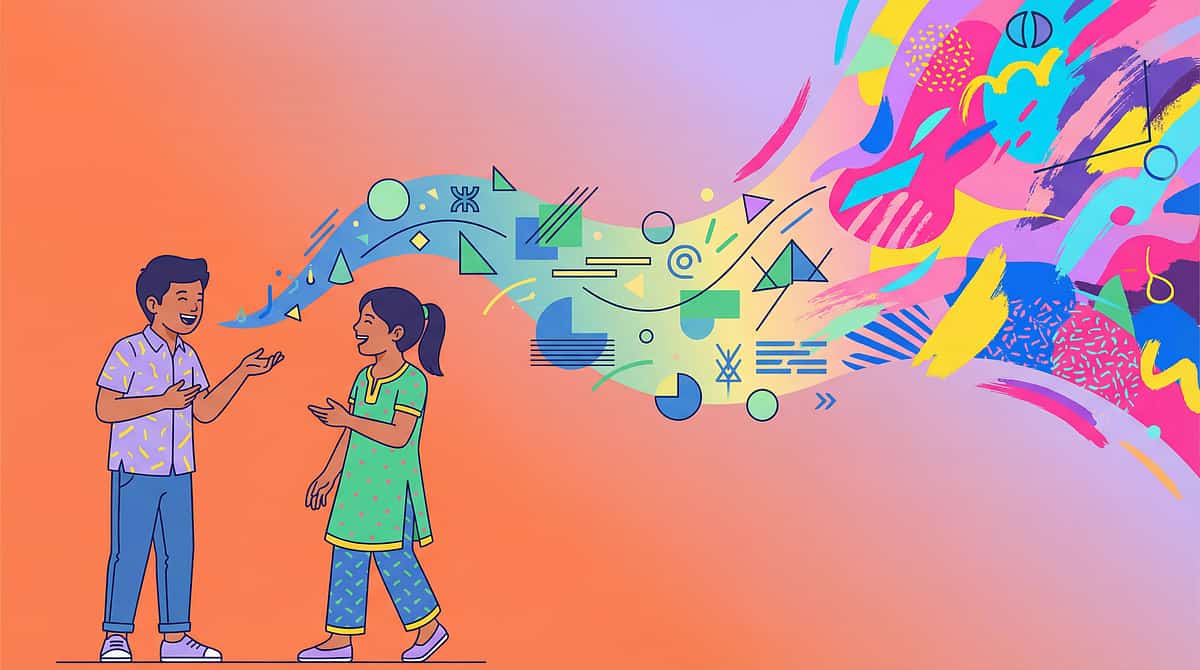
Starting Conversations
They want a friend. They stand near other children. But they can't begin — "Hi" doesn't come, "What are you playing?" doesn't form. They hover at the edge of every social group, wanting in but unable to knock on the conversational door. The desire for connection is fully present. The initiation script is missing.
The Neuroscience: Conversation initiation in a peer context adds social anxiety, peer-status awareness, and rejection fear to an already complex computation. The amygdala (threat assessment) must be overridden by the prefrontal cortex (social goal) long enough to execute the approach, make eye contact, and deliver an opening line — all in under a second.
Evidence Level I — Social skills training for conversation initiation. NCAEP 2020
Opener Scripts
Greetings, shared-interest questions, and situational comments as ready-to-use conversation starters
Peer-Mediated Strategies
Training receptive peers to welcome initiations, reducing the social barrier from both sides
Cultural Greeting Norms
Indian greeting conventions (namaskar, "aap kaise hain") explicitly taught as context-specific scripts
B-209
Card 04 of 25
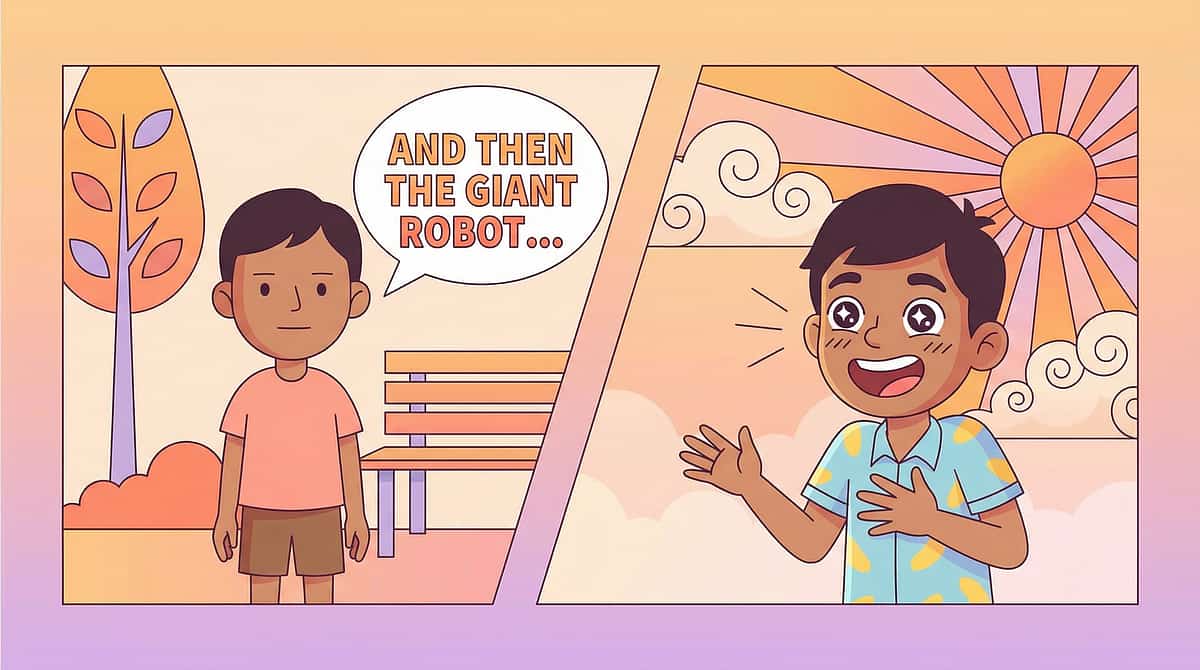
Maintaining Conversation Topics
"What did you do this weekend?" "I went to the park." "Oh fun, what did you play?" "Do you know about black holes?" — Topic gone. In one exchange, the conversation jumped from parks to outer space. They can't stay on topic, can't follow the conversational thread, can't resist the pull of their own thoughts long enough to maintain relevance to what was just said.
The Neuroscience: Topic maintenance requires working memory (holding the current topic), inhibitory control (suppressing unrelated thoughts), and relevance monitoring (is my response connected?). The anterior cingulate cortex monitors conversational coherence; the dorsolateral prefrontal cortex holds the topic thread in working memory — both systems frequently challenged in ASD.
Evidence Level I — Topic maintenance within social communication training. NCAEP 2020
Visual Topic Boards
The topic we're talking about NOW — visible, anchoring, and concrete
Topic Chains
Building each response explicitly on what was just said, modeled step by step
Follow-Up Questions
Asking questions about what the other person said — the single best on-topic strategy
Appropriate Topic Change
Learning when and how to legitimately shift topics without derailing the conversation

B-210
Card 05 of 25
Interrupting
You're on the phone — they shout over you. Two adults are talking — they insert themselves in the middle. The teacher is explaining — they blurt out an unrelated thought. They don't interrupt to be rude. They interrupt because the urgency of their thought overrides the social rule to wait.
The Neuroscience: Not interrupting requires inhibitory control — suppressing speech in the presence of a powerful impulse. The right inferior frontal gyrus is the brain's "brake pedal." When this system is immature, the thought-to-speech pathway fires faster than inhibition can block it. The child often knows not to interrupt but physically cannot stop the impulse from reaching their mouth.
Evidence Level I — Impulse control combined with social rules training. NCAEP 2020
"Thought Parking Lot"
Write down the thought to share later — externalizing the impulse so it no longer demands immediate speech
Interruption Signal
Raise hand or touch shoulder instead of speaking — a socially acceptable bridge while waiting
Urgency Tiers
Emergency = interrupt OK. Non-urgent = wait. Teaching the distinction builds self-regulation alongside social rules.
B-211
Card 06 of 25
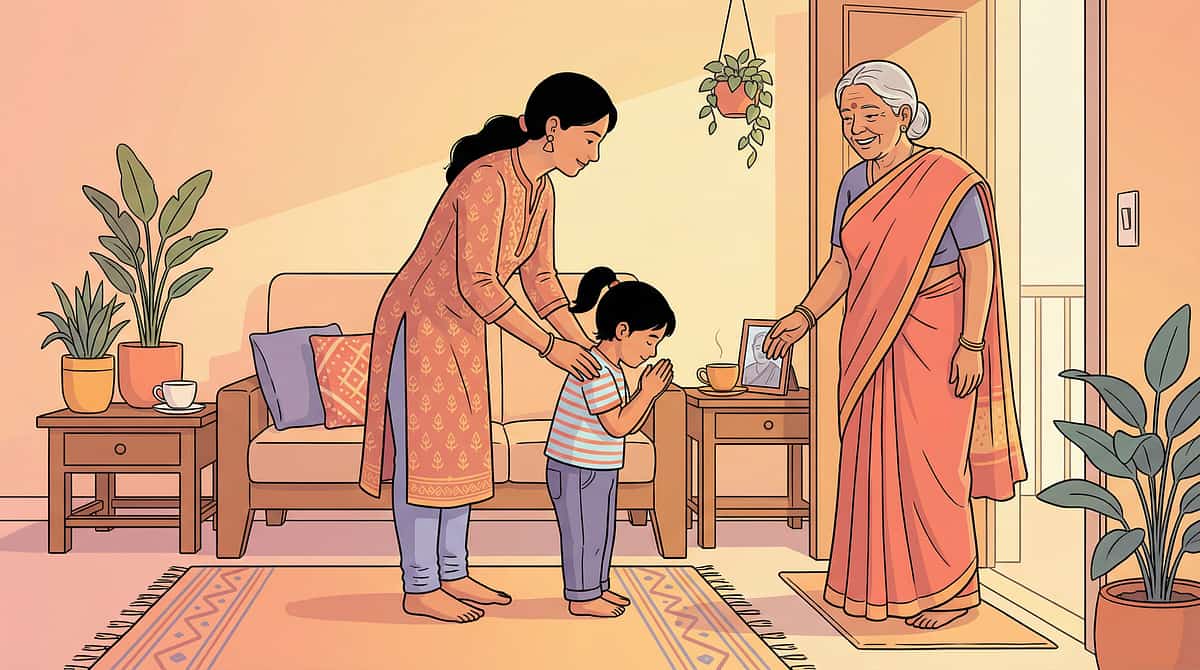
Teaching Greetings
Guests arrive. Everyone expects "Namaste aunty." Your child walks past without acknowledging them. Not rudeness — the social greeting script simply hasn't been installed yet. In Indian culture, greeting expectations are particularly structured and hierarchical, making explicit teaching even more essential than in other cultural contexts.
The Neuroscience: Greetings are social scripts stored in procedural memory (basal ganglia) and triggered by social context recognition. They require person recognition, social hierarchy assessment, cultural rule retrieval, and motor execution — a surprisingly complex chain that must be explicitly taught when it doesn't develop through observation alone.
Evidence Level I — Social skills training for greeting rituals. NCAEP 2020
Family Elder
Pranam / touch feet — highest respect register in Indian greeting hierarchy
Adult / Guest
Namaste with eye contact — the standard respectful greeting for most adult interactions
Peer
Hi / Hello — casual and warm, appropriate for same-age interactions
Teacher / Authority
Good morning / Good afternoon — formal verbal greeting with polite body posture
B-212
Card 07 of 25
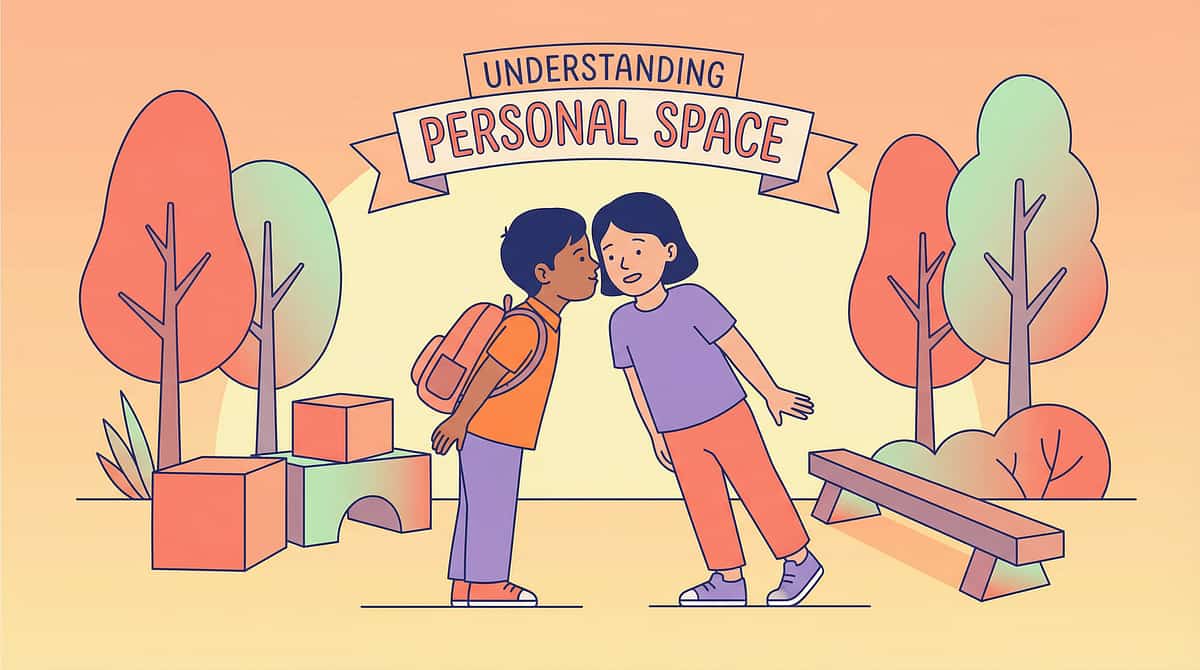
Personal Space in Talking
They stand two inches from the other person's face while talking. Or five metres away, shouting across the room. The invisible bubble of personal space — the culturally defined distance for comfortable interaction — isn't calibrated. In Indian contexts, where space norms shift dramatically between family settings, markets, temples, and formal environments, these rules are genuinely complex.
The Neuroscience: Personal space perception involves the peripersonal space network (ventral intraparietal area, premotor cortex). Social distance calibration also requires social relationship assessment, cultural rule retrieval, and real-time proprioceptive monitoring. When proprioceptive awareness is also impaired, the challenge compounds significantly.
Evidence Level I — Social spatial awareness training. NCAEP 2020
1
Close Family
Warmest proximity — within touch distance, culturally expected in Indian home settings
2
Friend / Acquaintance
Arm's-length default — the practical, teachable rule for most peer interactions
3
Stranger
Comfortable social distance — especially important in public and formal settings
B-213
Card 08 of 25
Facial Expressions in Speech
They tell you something exciting — with a flat face. They describe something sad — with no expression. The words carry content but the face doesn't match. Or conversely, they can't read your face — missing the "I'm annoyed" signal that should cue them to adjust what they're saying. Both production and reception of expression can be independently affected.
The Neuroscience: Facial expression production involves right hemisphere motor cortex (emotional expression) plus left motor cortex (voluntary control). Expression reading activates the fusiform face area, superior temporal sulcus, and amygdala. Both production AND reading can be independently affected in autism — requiring separate assessment and targeted intervention for each.
Evidence Level I — Facial expression training within social cognition programmes. NCAEP 2020
Expression Identification
Using photos, videos, and mirrors to build recognition of the six core emotions and their facial signatures
Intentional Production
Mirror practice and drama activities to develop voluntary, context-appropriate facial expression
Real-Time Reading
Reading a conversational partner's face during actual interaction — the most generalized and functional skill
B-214
Card 09 of 25
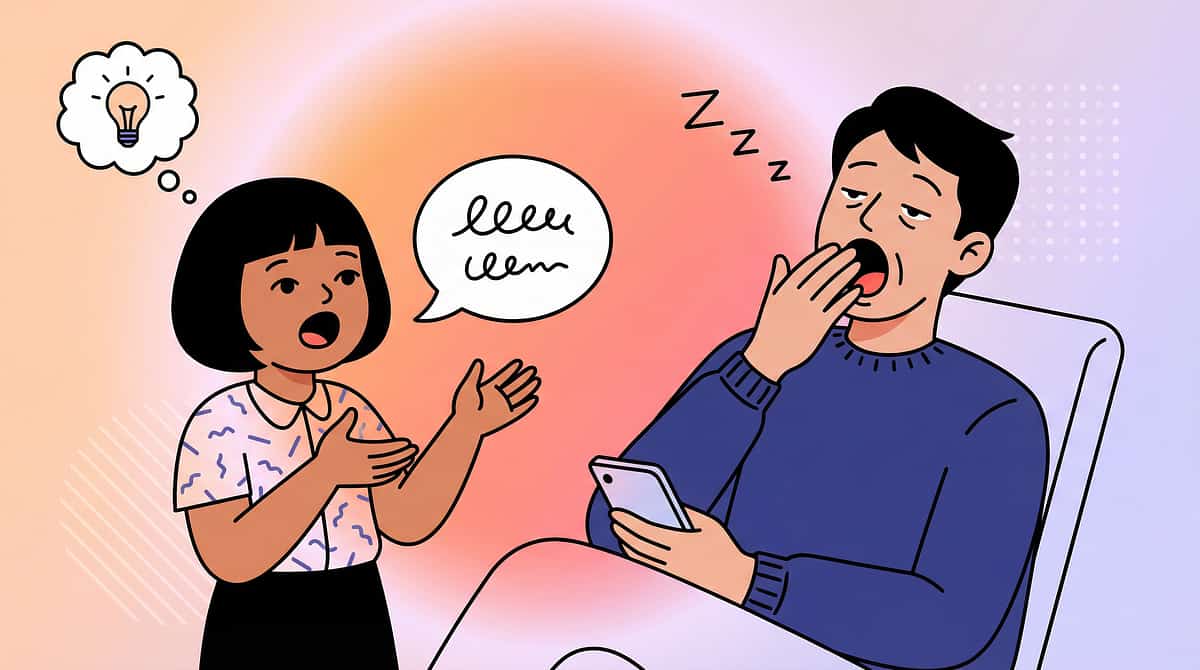
Reading Listener Cues
The listener is yawning. Looking at their phone. Glancing at the door. Giving one-word answers. Every signal says "I'm done with this conversation" — and your child doesn't see a single one. They continue talking, oblivious to the social feedback that should shape their behaviour. Listener-cue blindness makes every interaction feel one-sided to both parties.
The Neuroscience: Reading listener cues requires the superior temporal sulcus (detecting social signals), medial prefrontal cortex (interpreting what those signals mean), and anterior cingulate (using that interpretation to adjust behaviour). The brain must simultaneously: produce speech, monitor body language, interpret signals, and modify output — the most demanding pragmatic skill in existence.
Evidence Level I — Social cognition combined with pragmatic language intervention. NCAEP 2020
Interest Signals
Eye contact, leaning forward, asking questions, smiling — green lights to keep talking
Disengagement Signals
Looking away, one-word replies, body turned away, checking phone — signals to pause and re-engage
Checkpoint Strategy
Pause, look, decide: interested or not? Then ask a question, change topic, or gracefully end
B-215
Card 10 of 25
Ending Conversations
They walk away mid-sentence (yours). They stop talking suddenly with no closing ritual. They say "bye" when the conversation isn't finished. Or they get trapped in a conversational loop they don't know how to exit. Beginning and ending conversations are the bookends that most children with pragmatic challenges struggle with — and endings are often neglected in therapy planning.
The Neuroscience: Conversation closing is a pragmatic negotiation — both parties must signal readiness, agree on the close, and execute it with appropriate social markers. Pre-closing signals ("Well, I should go..."), a closing exchange ("Bye, see you!"), and physical disengagement (stepping back, turning away) are each learned social conventions that must be explicitly taught and practiced.
Evidence Level I — Conversation management within social skills training. NCAEP 2020
1
Pre-Closing Signal
"Well, I need to go now..." — the conversational warning that a close is coming
2
Closing Exchange
"Bye / See you / Take care" — the mutual verbal ritual that formally ends the interaction
3
Physical Disengagement
Stepping back, turning away — the non-verbal signal that aligns with the verbal close

B-216
Card 11 of 25
One-Sided Conversations
This is the umbrella card for monologic communication — combining elements of talking-at (B-207), talking only about interests, and not reading listener cues (B-214). It provides the comprehensive toolkit for transforming one-way talking into genuine two-way conversation, targeting the full pattern rather than individual symptoms.
The Neuroscience: Reciprocal conversation requires the brain to operate in "dual-process" mode — speaking AND listening, producing AND monitoring, sharing AND absorbing — simultaneously. One-sided conversation occurs when the brain operates in "broadcast" mode only. The medial prefrontal cortex must shift from egocentric to allocentric perspective across the entire length of an interaction.
Evidence Level I — Comprehensive reciprocal conversation training. NCAEP 2020
Conversation Seesaw
Visual balance tool — if it tips to one side, it's time to rebalance with a question or pause
Question-Asking
The single most powerful tool for transforming monologue into dialogue — taught as a repeatable habit
Video Self-Review
Watching recordings of own conversations to build objective awareness of balance and reciprocity

B-217
Card 12 of 25
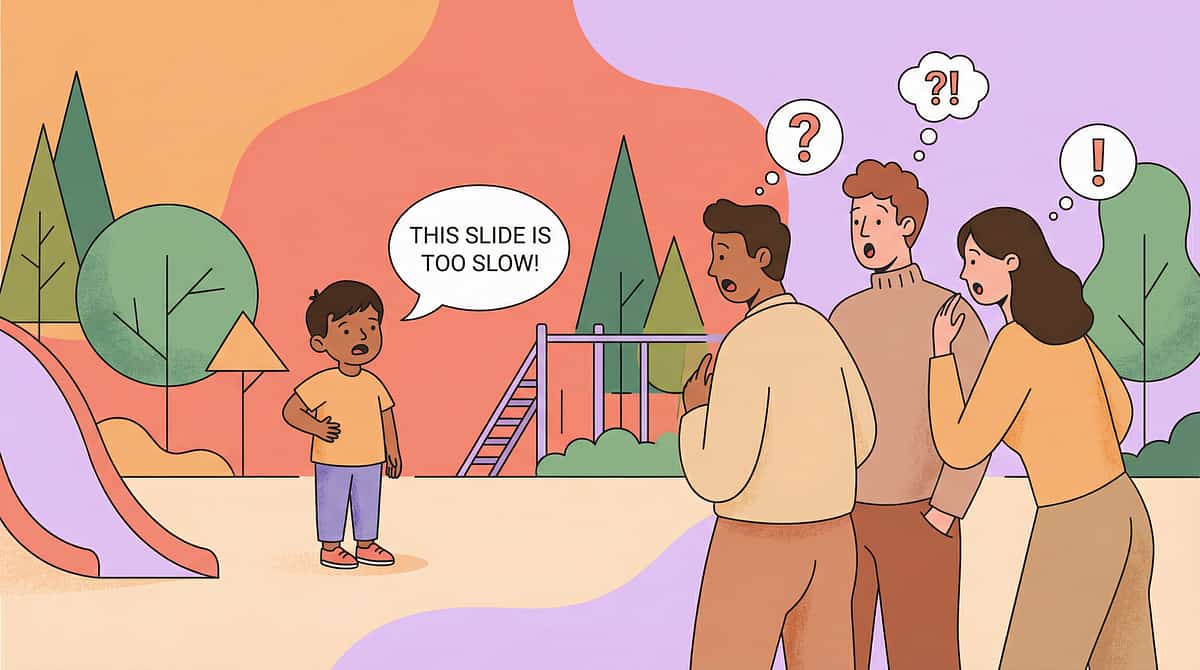
Understanding Sarcasm
"Oh, GREAT job" (said sarcastically after they spill something). They beam with pride. Sarcasm — saying the opposite of what you mean with a specific tone — is a social minefield for the literal processor. In Indian culture, sarcasm appears in everyday family banter, Bollywood dialogue, and classroom exchanges, making it unavoidable and worth targeting directly.
The Neuroscience: Sarcasm comprehension requires detecting the mismatch between words (positive) and context/tone (negative), suppressing the literal interpretation, and inferring the speaker's actual emotional intent. This is a right hemisphere specialization dependent on prosodic processing, theory of mind, and contextual integration — three areas commonly challenged in autism.
Evidence Level I-II — Figurative language and sarcasm training within social cognition programmes. NCAEP 2020
Words vs. Meaning
Sometimes words say the opposite of what is meant — taught as a concrete, reliable rule
Tone Detector
Voice tone as the primary sarcasm cue — high, drawn-out, or exaggerated intonation signals non-literal meaning
Context Clues
What just happened + how it was said + facial expression = the full picture for decoding sarcasm
B-218
Card 13 of 25
Inappropriate Comments
"Why is that aunty so fat?" Loudly. In public. To the aunty's face. They state observations as facts without the social filter that recognizes some truths don't need to be spoken aloud. They're not being cruel — they're processing the world with radical, unfiltered honesty. The social filter is not broken; it simply hasn't been built yet.
The Neuroscience: Social filtering requires formulating a thought, evaluating it against social rules (is this appropriate HERE, NOW, to THIS person?), and either releasing or suppressing it. The orbitofrontal cortex is the brain's social filter — it inhibits inappropriate responses before they reach speech production. When this filter is slow or under-developed, the thought exits as speech before being vetted.
Evidence Level I — Social cognition combined with impulse control training. NCAEP 2020
"Think It or Say It?" Game
Categorizing thoughts as okay-to-say vs. keep-in-head — making the invisible filter visible and teachable
3-Second Check
Pause before speaking — a behavioral habit that mimics the orbitofrontal review process
Replacement Comments
Socially acceptable alternatives for common inappropriate observations — scripts that satisfy the impulse safely
B-219
Card 14 of 25
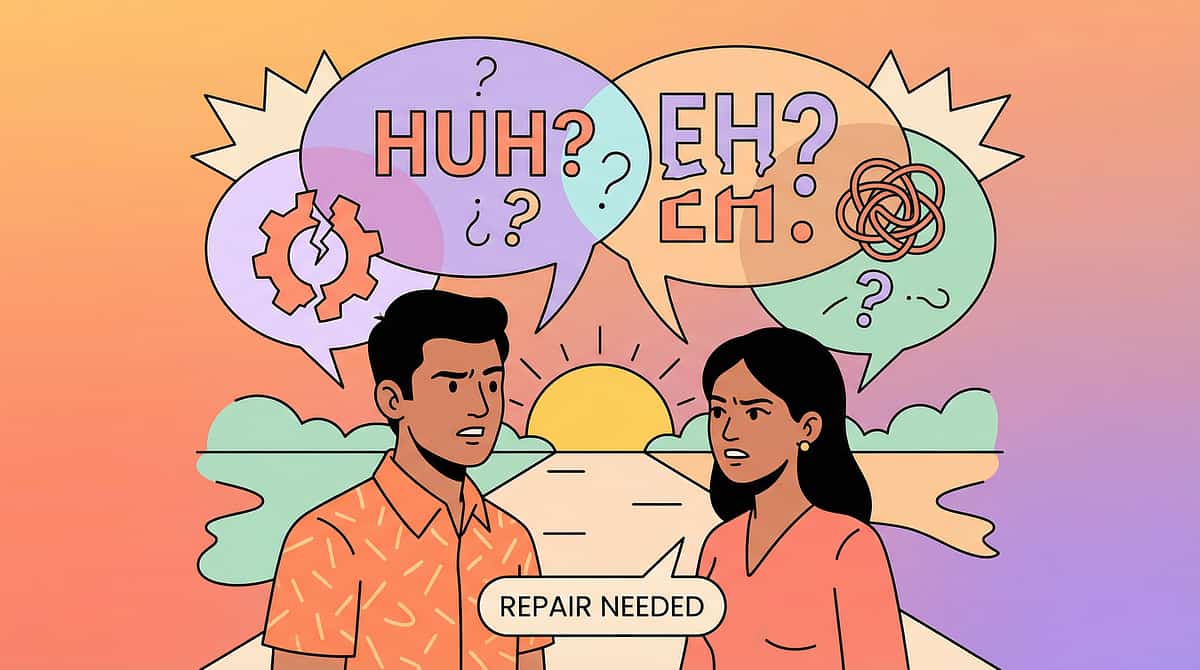
Communication Breakdown Repair
They said something and you didn't understand. Or YOU said something and THEY didn't understand. In typical conversation, both parties have repair strategies — "What?", "Can you say that again?", "I meant…" Your child has none. When communication breaks down, they either repeat the exact same thing louder, go completely silent, or become dysregulated.
The Neuroscience: Communication repair requires detecting the breakdown (metacognitive monitoring), selecting a repair strategy (rephrase, repeat, show, draw, gesture), and executing it — all while managing the frustration of not being understood. This is executive function + pragmatic language + emotional regulation operating together under stress — a significant cognitive load.
Evidence Level I — Communication repair strategies within SLP pragmatics programmes. NCAEP 2020
1
Detect
"They didn't understand me" — metacognitive awareness of breakdown
2
Regulate
Calm first, repair second — emotional regulation enables strategy selection
3
Repair
Repeat · Rephrase · Show · Draw · Point — five strategies, one toolkit
Part B
AAC — Augmentative & Alternative Communication
Cards 15–25 shift into the AAC half of this subdomain — the most urgently needed resource for Indian families navigating non-speaking and minimally speaking autism. Every technique below is built on the highest-rated evidence in the autism intervention spectrum.
11
AAC Techniques
Cards 15–25 covering the full AAC journey from first introduction to emergency use
21M+
Sessions Delivered
Pinnacle Blooms Network® cumulative therapy sessions across India
Level I
Evidence Rating
NCAEP 2020 highest classification — the gold standard of autism intervention evidence
B-220
Card 15 of 25
Getting Started With AAC
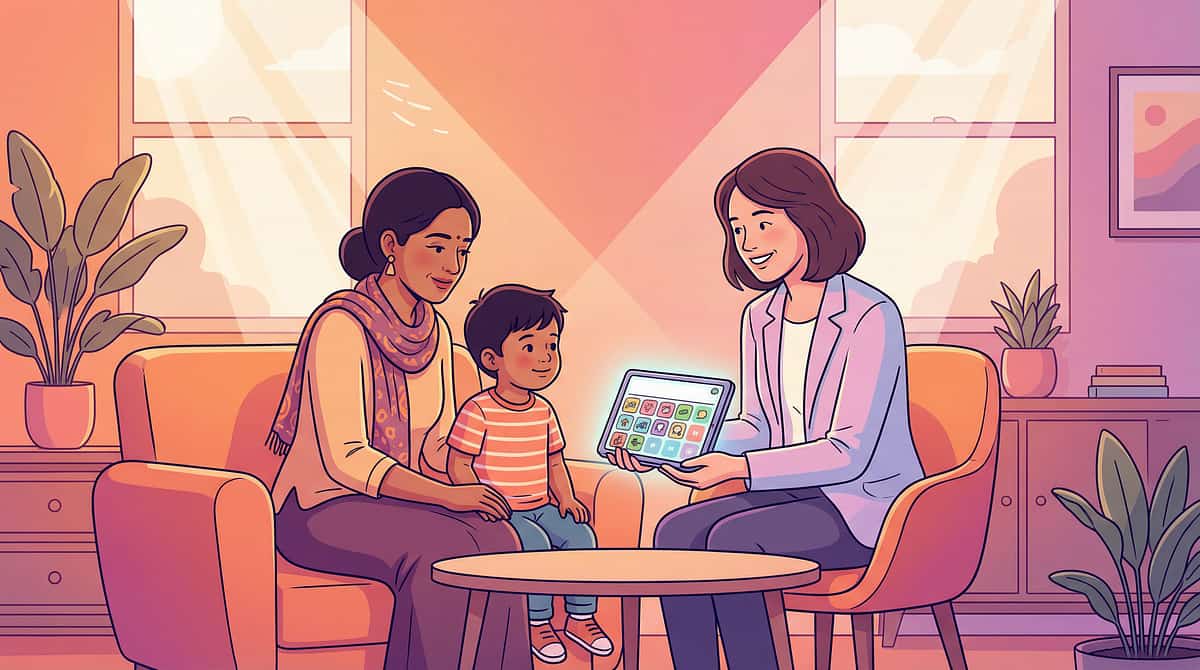
The SLP says "we should consider AAC." Your heart sinks. "Does this mean they'll never talk?" No. AAC is the single most evidence-based communication intervention for non-speaking and minimally speaking children with autism. It is a bridge to speech, not a replacement for it. Every day without AAC access is a day your child's fundamental communication rights are being unmet.
The Neuroscience: AAC activates the same language networks as speech — Broca's area processes communicative intent, the prefrontal cortex plans the message, and the motor system executes it through a different output channel. The brain doesn't care whether the message exits through the mouth or through a button press — it cares that the communication-reward loop completes. AAC strengthens this loop, which accelerates ALL communication development, including speech.
Evidence Level I — Multiple RCTs demonstrate: AAC does NOT prevent speech. AAC ACCELERATES speech in the majority of users. Children with AAC access show BETTER language outcomes than matched peers without it. NCAEP 2020 | ASHA | Beukelman & Light 2020
The AAC Spectrum
Pictures → boards → PECS → speech apps → dedicated SGDs — no single system fits all children
Indian AAC Options
Avaz AAC, LAMP, Proloquo2Go, and low-tech boards in Hindi, Telugu, and Tamil — ₹ cost guide included
Start Now
Starting AAC at any age is always the right decision. Communication is a right — not a milestone to earn.
9 Canon Materials: Communication Board / Low-Tech AAC · Picture Cards / PECS · AAC Device / App · Visual Schedule · First-Then Board · Social Stories · Cause-Effect Toys / Switches · Reward Charts · Video Modeling
🗣️Lead: SLP (AAC specialist) · ABA | SpEd · OT (access) · NeuroDev
B-221
Card 16 of 25
Child Refuses AAC
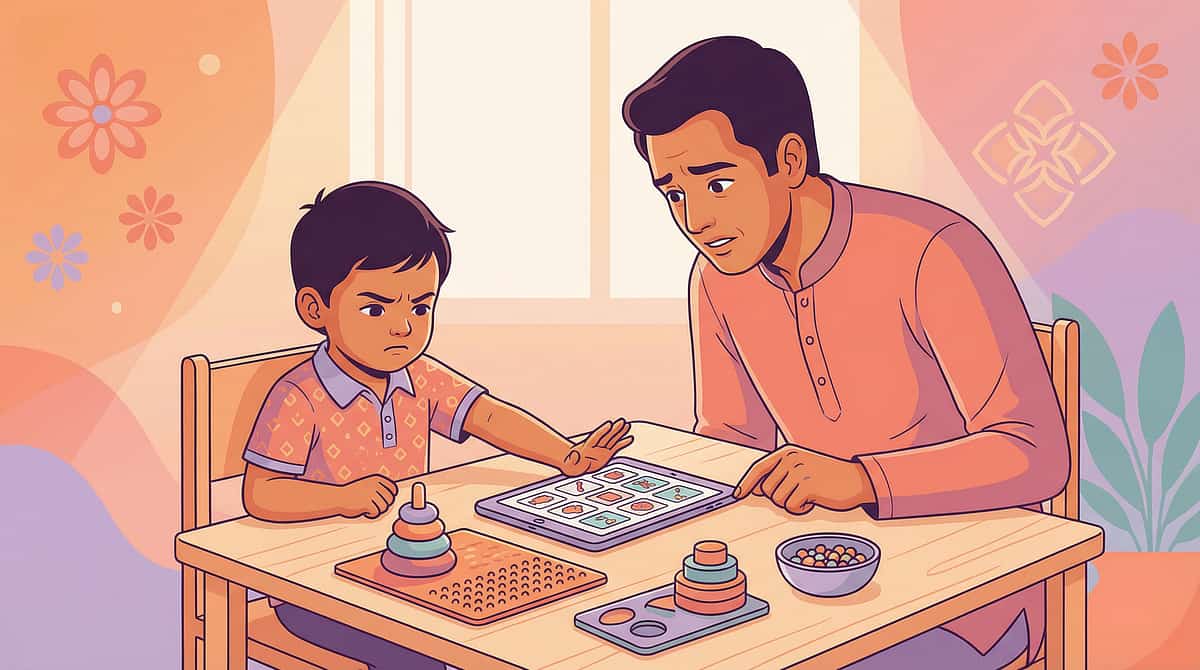
You introduced the AAC board. They pushed it away. The app — ignored. The picture cards — thrown on the floor. Everyone says "they don't want it." But a child who has never experienced communication success doesn't yet know what AAC offers. They're not refusing communication — they're refusing something unfamiliar that hasn't yet proven its value to them.
The Neuroscience: AAC refusal typically reflects unfamiliarity (the brain's default response to novel tools), lack of perceived function (AAC hasn't yet produced a rewarding outcome), sensory issues with the device, or motor access challenges. None of these is a reason to stop — every barrier is solvable with the right strategies and enough time.
Evidence Level I — AAC introduction protocols with structured engagement strategies. NCAEP 2020 | ASHA
Model First
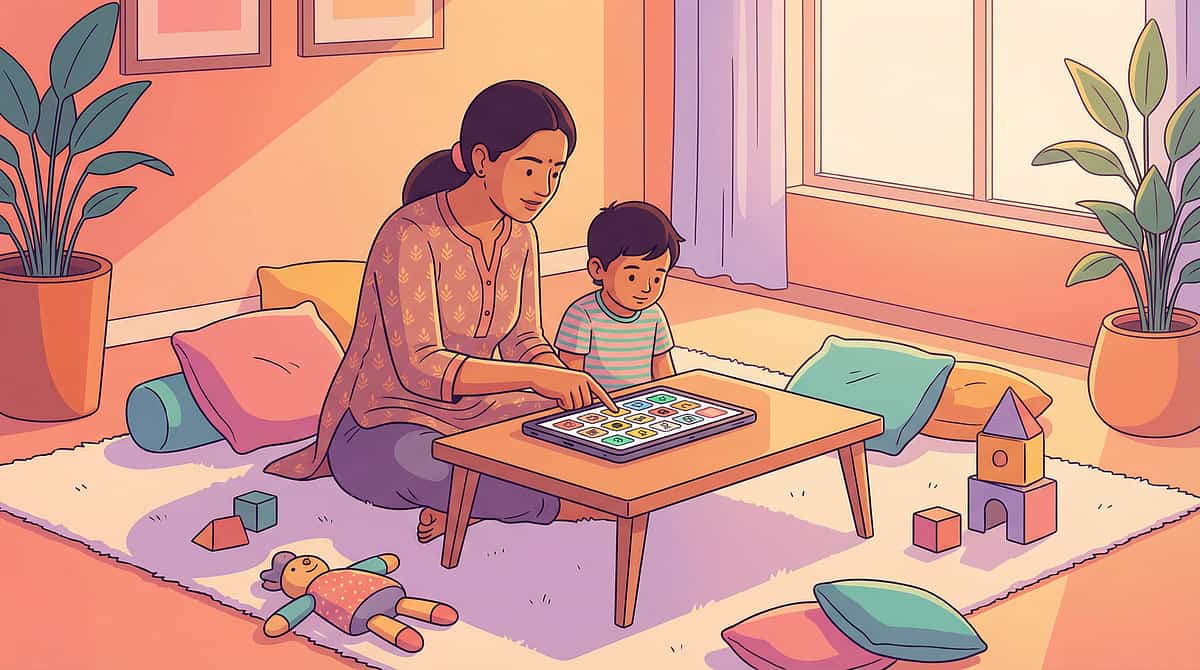
Aided language stimulation — YOU use the AAC for weeks before expecting the child to use it independently
High-Motivation Vocabulary
Start with the child's most desired foods, toys, and activities as the first AAC targets
Immediate Function
Press button → get the thing INSTANTLY. The reinforcement must be immediate to build the neural association
B-222
Card 17 of 25
First AAC Words
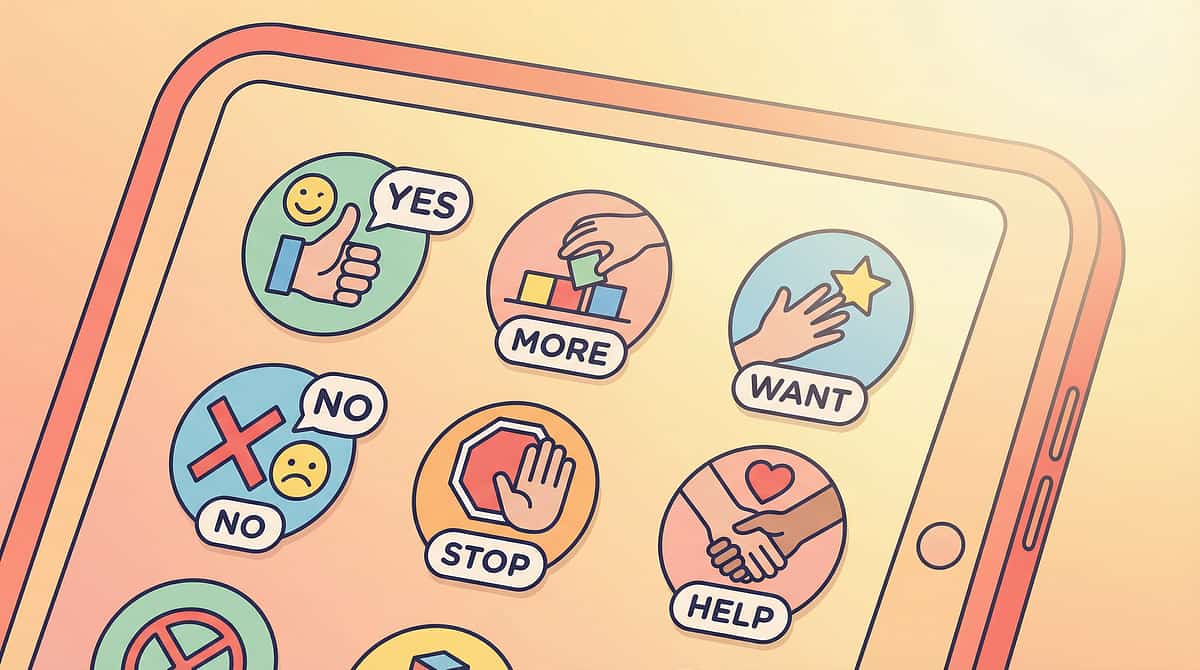
The AAC is ready. Now what? Which words first? "More." "Want." "Stop." "Help." "Yes." "No." The first AAC vocabulary determines whether AAC becomes a living communication system or a forgotten tool collecting dust. Choose the right first words — and everything accelerates from there.
The Neuroscience: First AAC words should be core vocabulary — the small set of words used across 80% of all communication regardless of topic (I, want, more, stop, go, help, not, that, here, like). Core vocabulary is processed through the brain's most frequently activated language pathways, making it easier to learn, faster to retrieve, and more broadly useful than topic-specific nouns.
Evidence Level I — Core vocabulary approach to AAC initiation. NCAEP 2020 | Core vocabulary research
Core Vocabulary
I · want · more · stop · go · help · not · that · here · like — the first 10 AAC words, usable in every situation and every environment
Fringe Vocabulary
Specific nouns like apple, school, dog — useful but less generalizable. Introduced AFTER core is established. Indian daily routine word priorities guide sequencing.
B-223
Card 18 of 25
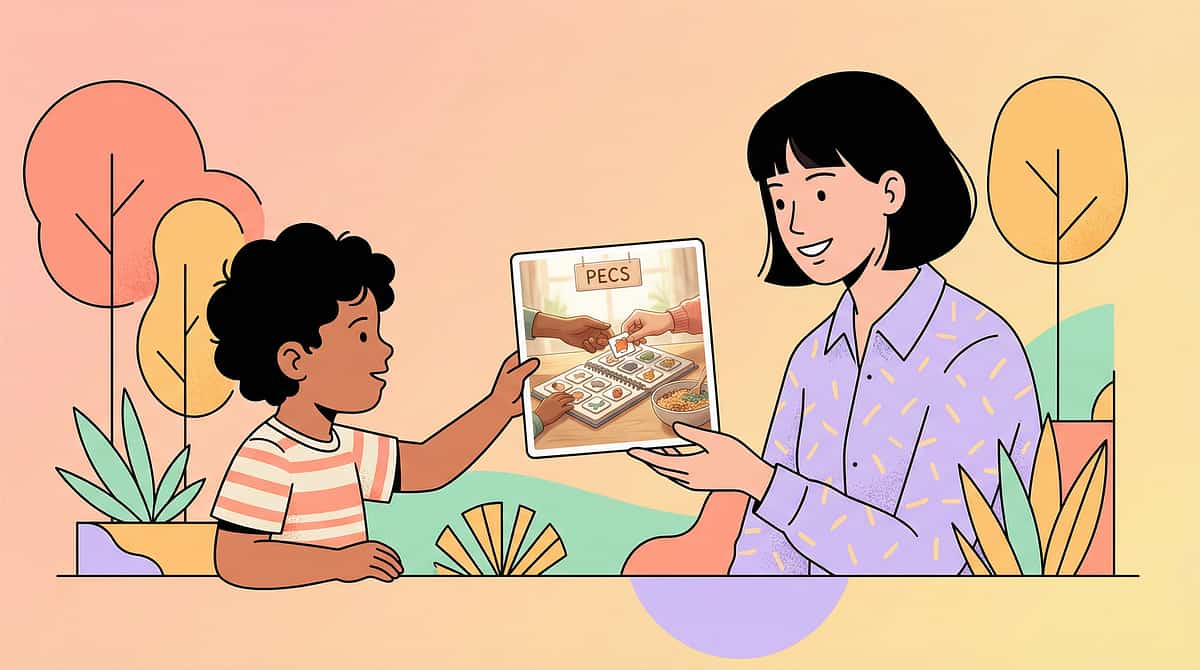
PECS System
PECS — Picture Exchange Communication System — is the most structured, extensively researched AAC entry point. The child hands a picture to a communication partner; the partner gives them what the picture shows. Simple. Physical. Powerful. No technology required. For Indian families, PECS is often the most accessible and affordable AAC starting point.
The Neuroscience: PECS leverages the fundamental communication circuit — signal → understood → need met. The physical exchange adds motor learning (basal ganglia), social interaction (approaching a person with intent), and intentional communication. Uniquely, PECS requires social approach — the child must go TO a person to communicate — building social initiation alongside communication skills simultaneously.
Evidence Level I — PECS has extensive RCT evidence as a standalone autism intervention. 6 phases from single picture exchange to full sentence construction. NCAEP 2020 | Bondy & Frost PECS research
01
Phase I–II
Physical exchange and building distance and persistence — the child learns: picture = I get what I want
02
Phase III–IV
Picture discrimination and sentence strip ("I want ___") — expanding from single symbol to structured request
03
Phase V–VI
Answering "What do you want?" and commenting — the most advanced PECS communicative functions
B-224
Card 19 of 25
Modeling AAC
The number one reason AAC fails: nobody models it. Imagine dropping a child in France and expecting them to speak French without ever hearing it. AAC modeling means YOU use the child's AAC system throughout the day — pointing to pictures while you talk, pressing buttons while you speak — showing what communication looks like on their system. This is the most important AAC technique, and the most consistently neglected.
The Neuroscience: Language acquisition — whether spoken or AAC-based — requires input before output. The mirror neuron system activates when observing a communication partner use the same system the child is expected to use. When adults use AAC naturally and consistently, the brain maps: this tool → communication → response → reward. Without modeling, AAC remains an abstract device rather than a living, meaningful communication system.
Evidence Level I — Aided language stimulation / modeling is the highest-evidence AAC implementation strategy. NCAEP 2020 | ASHA | Aided Language Input research
Aided Language Stimulation
Talk + point to AAC simultaneously, throughout every daily routine — not just during therapy sessions
1-Up Rule
Model one more word than the child currently uses — always stretching without overwhelming
8–12 Weeks
Model consistently for 8–12 weeks minimum before expecting output — AAC modeling is the equivalent of "talking to your baby"
B-225
Card 20 of 25
AAC for Requesting
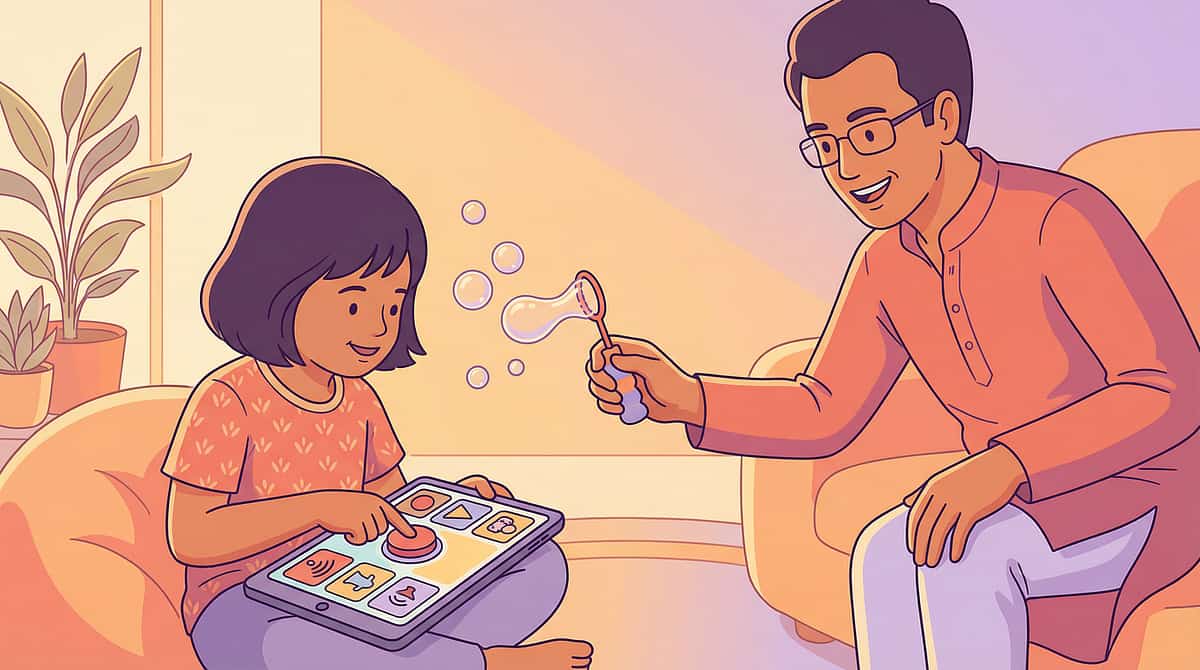
The first AAC function: "I WANT ___." If AAC delivers one transformative thing, it's the power to ask. The moment the child presses a button and the desired item appears — the moment AAC truly works for the very first time — the entire developmental trajectory changes. This is the AAC equivalent of a first word, and it carries the same enormous weight.
The Neuroscience: The motivation circuit (nucleus accumbens) drives AAC use when the AAC signal reliably produces the desired outcome. The critical requirement: immediate reinforcement. The requested item must appear within seconds of the AAC request — any delay weakens the neural association between pressing the button and getting the result. Speed of response is therapy.
Evidence Level I — AAC requesting (manding) with immediate reinforcement protocol. NCAEP 2020 | PECS Phase I-III
High-Motivation Selection
The first AAC requests must target items the child desperately wants — motivation fuels learning
Immediate Reinforcement
Item delivered within seconds — the neural connection between AAC use and reward is built through speed
Expand Across Environments
Requesting at home → school → community — generalization is the measure of true functional communication
B-226
Card 21 of 25
AAC for Rejecting
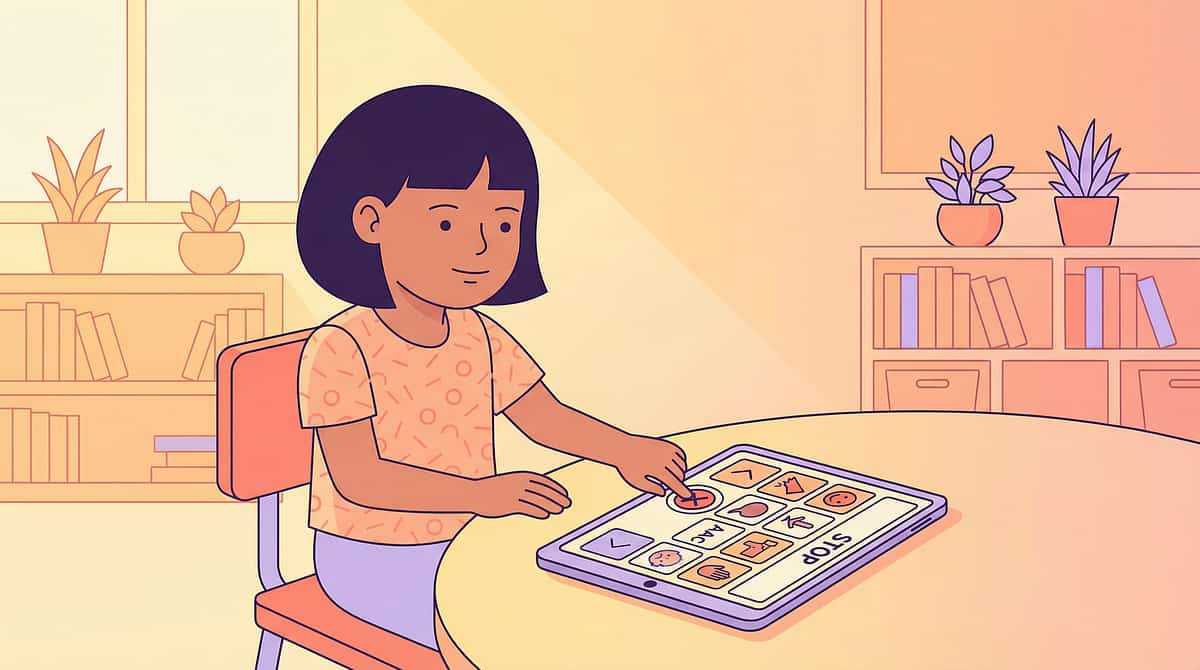
The second essential AAC function: "NO." "STOP." "ALL DONE." Without the ability to reject via AAC, the non-speaking child's only rejection tool is behaviour — pushing, crying, throwing, melting down. A single AAC rejection button, taught and honored consistently, can eliminate hundreds of meltdowns and dramatically reduce daily family stress.
The Neuroscience: Rejection is the second communicative function after requesting, and is urgently needed because its absence produces the most visible behavioural challenges. Teaching AAC rejection under calm conditions — offering a non-preferred item, the child presses "no," the item is removed immediately — builds the association before crisis moments, ensuring the skill is available precisely when it matters most.
Evidence Level I — AAC rejection as a core functional communication training target (FCT). NCAEP 2020
Priority Vocabulary
"No" · "Stop" · "All done" — the three most important rejection words in any AAC system
Honor Every Rejection
Respecting every AAC rejection builds trust in the system — the child learns AAC WORKS before they'll rely on it
Emergency "Stop"
The stop button must always be immediately accessible — never buried in a menu or put away

B-227
Card 22 of 25
AAC for Social Words
Beyond requesting and rejecting — AAC for human connection. "Hi." "Bye." "Thank you." "I love you." "That's funny!" "Wow!" The social words that don't get you a tangible item but get you something far more important — warmth, belonging, and relationship. AAC without social vocabulary is transactional. AAC with social vocabulary is relational.
The Neuroscience: Social vocabulary activates the social reward system — producing connection rather than tangible reinforcement. This is the AAC equivalent of commenting, the most socially advanced communicative function. For many AAC users and their families, having access to "I love you Mamma" programmed into their device is more profoundly life-changing than any other single vocabulary choice.
Evidence Level I — Social functions in AAC. NCAEP 2020 | Light & McNaughton, AAC for social closeness
Greetings & Farewells
Hi · Bye · Namaste · Good morning — opening and closing every social interaction with dignity
Politeness & Emotion
Thank you · Sorry · I love you · I'm happy — the social glue of all human relationships
Indian Priority Words
Namaste · Dhanyavaad · Pyaar — cultural social vocabulary woven into daily AAC use
B-228
Card 23 of 25
Building AAC Phrases
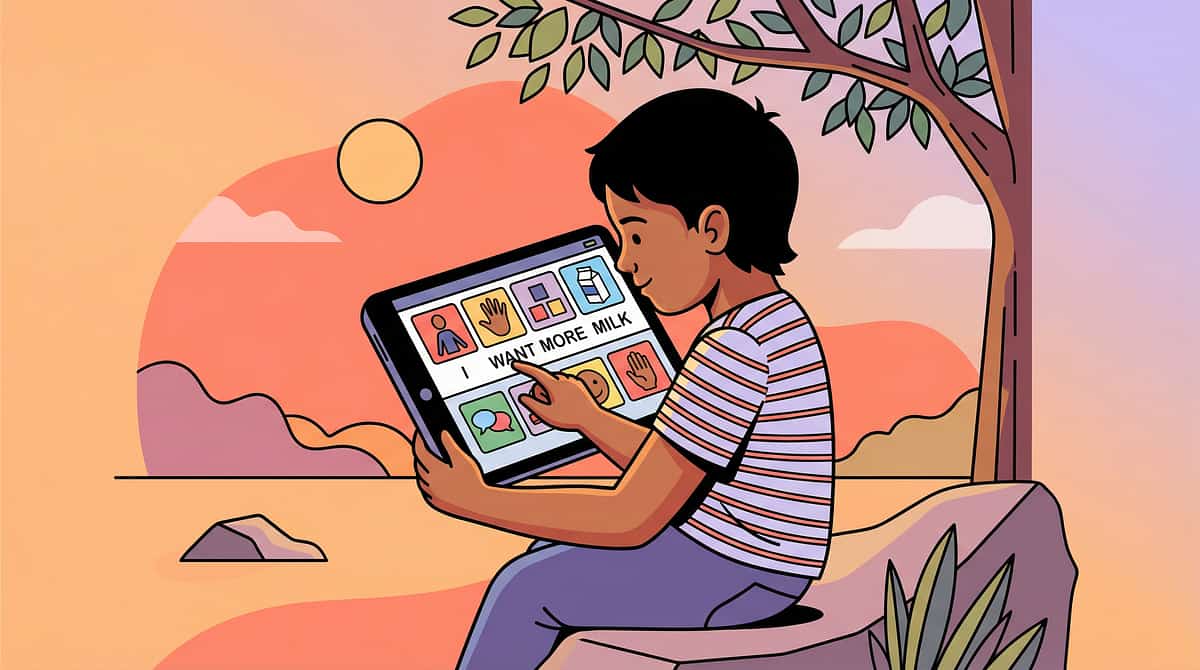
From single AAC words to multi-word AAC phrases — "I want more milk," "Go to park," "I feel sad today." The same developmental leap that speaking children make — single words → phrases → sentences — happens in AAC, and it's just as thrilling when "want" + "cookie" appears on the screen for the very first time. This is language construction through a different motor channel.
The Neuroscience: Multi-symbol AAC use requires the same syntactic processing as spoken sentences — Broca's area plans word order, working memory holds earlier symbols while selecting later ones, and the motor system executes a sequence of selections. AAC phrase-building is genuine language development, not a workaround. It strengthens the same neural architecture as spoken language.
Evidence Level I — Multi-symbol AAC within comprehensive language intervention frameworks. NCAEP 2020
Each step in AAC phrase-building mirrors the natural language acquisition sequence — just expressed through a different, equally valid output system.
B-229
Card 24 of 25
Training Communication Partners
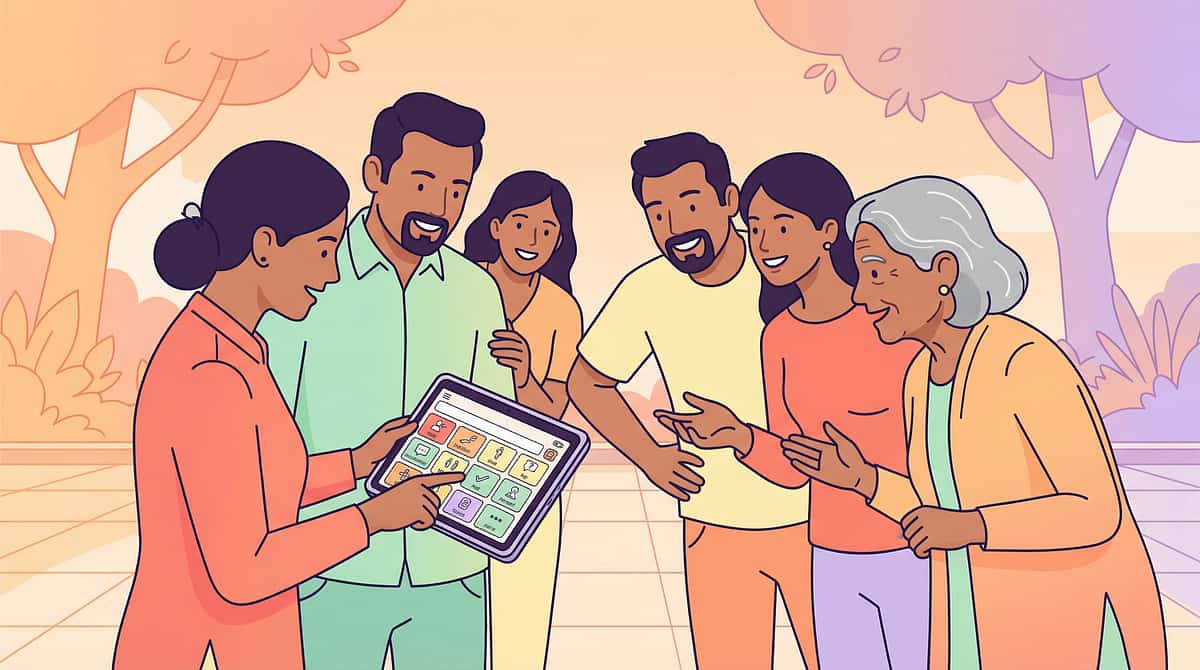
The child has AAC. The SLP trained them. But at home, nobody knows how to respond. At school, the teacher ignores the device. Grandparents think it's a toy. The communication partner is half the equation — and without trained partners, AAC is a tool with no audience. This is the most under-invested aspect of AAC implementation across India.
The Neuroscience: Communication is fundamentally dyadic — it requires two participants. The communication partner's response time, interpretation accuracy, and emotional reception directly determine the AAC user's motivation to keep communicating. Partners who respond slowly or dismissively extinguish AAC use. Partners who respond immediately and enthusiastically strengthen it. Partner training is child therapy.
Evidence Level I — Communication partner training is identified as a CRITICAL component of AAC success. NCAEP 2020 | ASHA | ImPAACT programme research

Family Training
Parents, siblings, grandparents, and domestic staff — everyone in the child's environment must be trained to respond to AAC
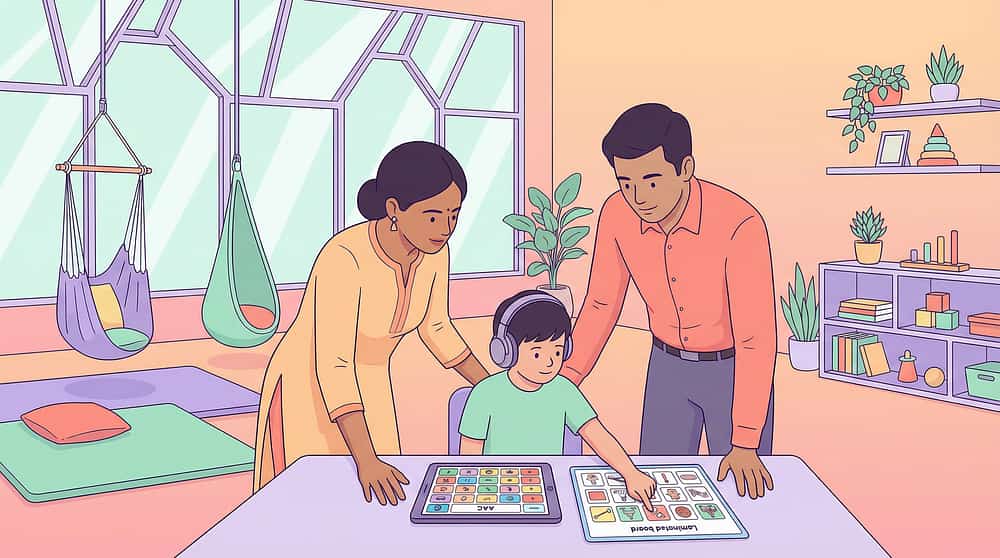
School Training
Teacher and aide training protocols ensuring AAC is actively used and responded to during every school hour
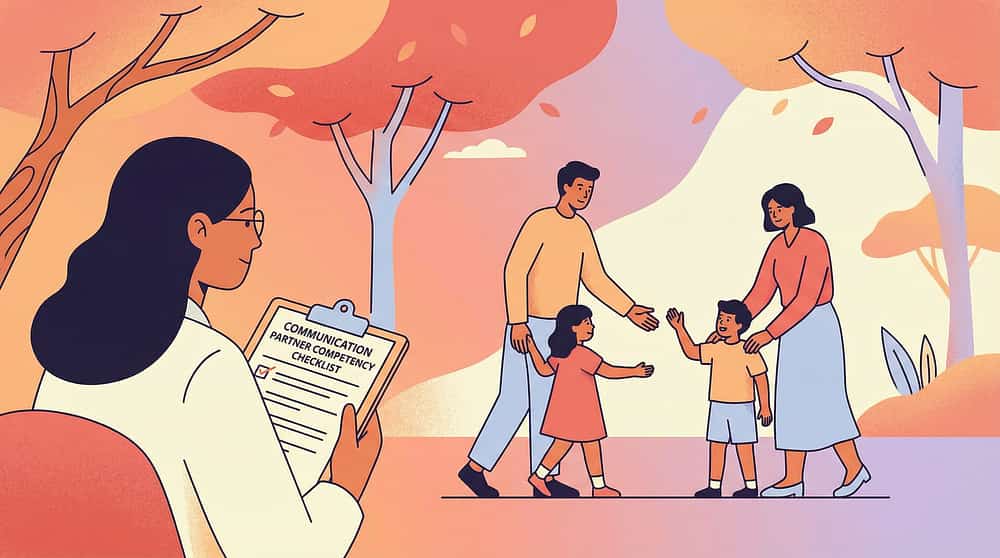
Partner Competency
Model · Wait · Respond · Expand — four core partner skills that determine whether AAC thrives or stalls
B-230
Card 25 of 25
AAC for Emergencies
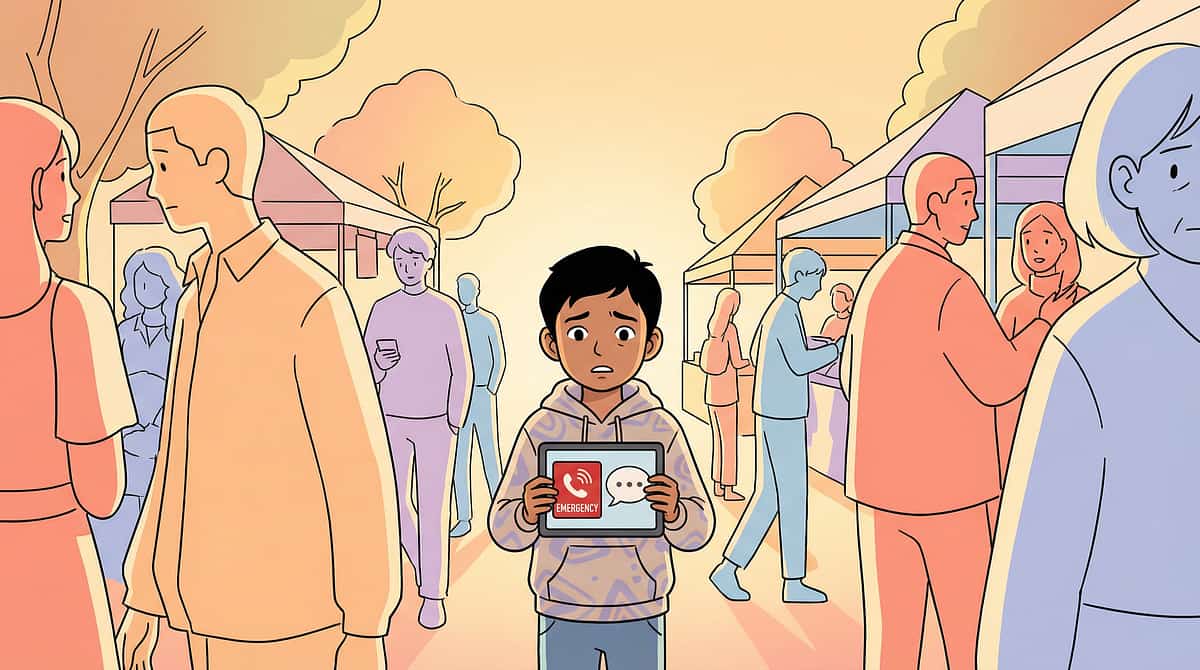
They're in pain but can't tell anyone. They're lost in a crowded festival but can't ask for help. They feel sick at school but can't describe symptoms. A stranger is making them uncomfortable but they have no way to report it. Emergency communication is a safety issue — and for non-speaking children, the absence of an emergency communication system is not a therapy gap. It is a life-safety gap.
The Neuroscience: Emergency communication must be overlearned — stored so deeply in procedural memory (basal ganglia) that it can be accessed even under extreme stress, when the prefrontal cortex is offline and the amygdala is dominant. The emergency AAC system must be always on the body, usable with minimal motor control, and understandable by ANY adult — not just trained communication partners who know the child.
Evidence Level I — Emergency communication as an AAC safety requirement. NCAEP 2020 | ASHA | Safety skills in ASD research
Essential Vocabulary
Hurt · Sick · Scared · Help · Stop · Lost · My name is · Call my parent — eight words that can save a life
Always-On System
Wearable emergency communication — card, bracelet, or phone — that travels with the child at all times
Indian Emergency Contexts
Crowded festivals, train stations, hospitals, and school buses — the specific situations requiring over-practiced safety scripts
9 Canon Materials: AAC Device / App · Communication Board · Picture Cards · Social Stories · ID / Safety Card · Visual Schedule · Emotion Cards · Body Awareness Charts · Video Modeling
🗣️Lead: SLP (AAC) · ABA | OT · Psychology · NeuroDev · Safety / Safeguarding
Preview of social communication aac Therapy Material
Below is a visual preview of social communication aac therapy material. The pages shown help educators, therapists, and caregivers understand the structure and content of the resource before use. Materials should be used under appropriate professional guidance.
Link copied!
Subdomain B4 Complete
Domain B: Communication — All 4 Subdomains Complete
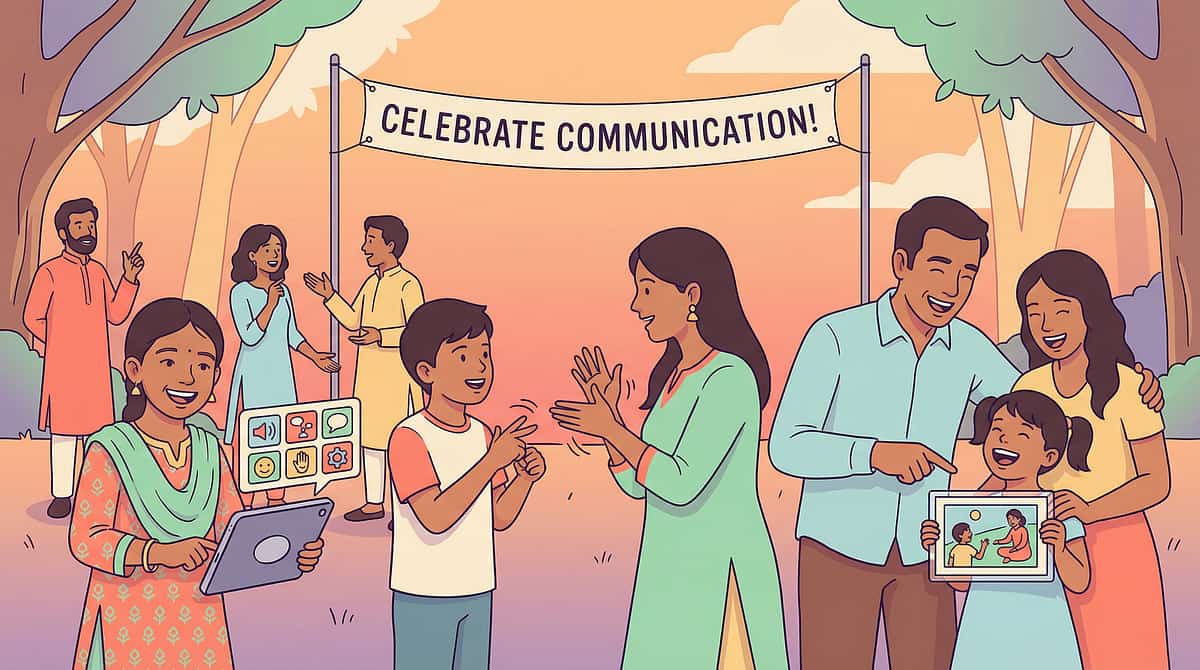
Social Communication & AAC (B4) completes the full Communication domain. 110 evidence-based techniques across four subdomains, all designed to meet children, families, and therapists exactly where they are.
B1: Pre-Verbal & Early Communication
30 techniques · B-121 to B-150 · ✅ Complete
B2: Receptive Language
25 techniques · B-151 to B-175 · ✅ Complete
B3: Expressive Language
30 techniques · B-176 to B-205 · ✅ Complete
B4: Social Communication & AAC
25 techniques · B-206 to B-230 · ✅ Complete