
Parent & Caregiver Tools
40 Evidence-Based Interventions for Autism Families — Because the child cannot thrive if the people around them are breaking. This subdomain is for every parent, grandparent, sibling, and caregiver who holds the world together.
Subdomain K1
Domain K: Family Empowerment
Pinnacle Blooms Network®

Section 1: The Parent Journey
You Cannot Pour From an Empty Cup
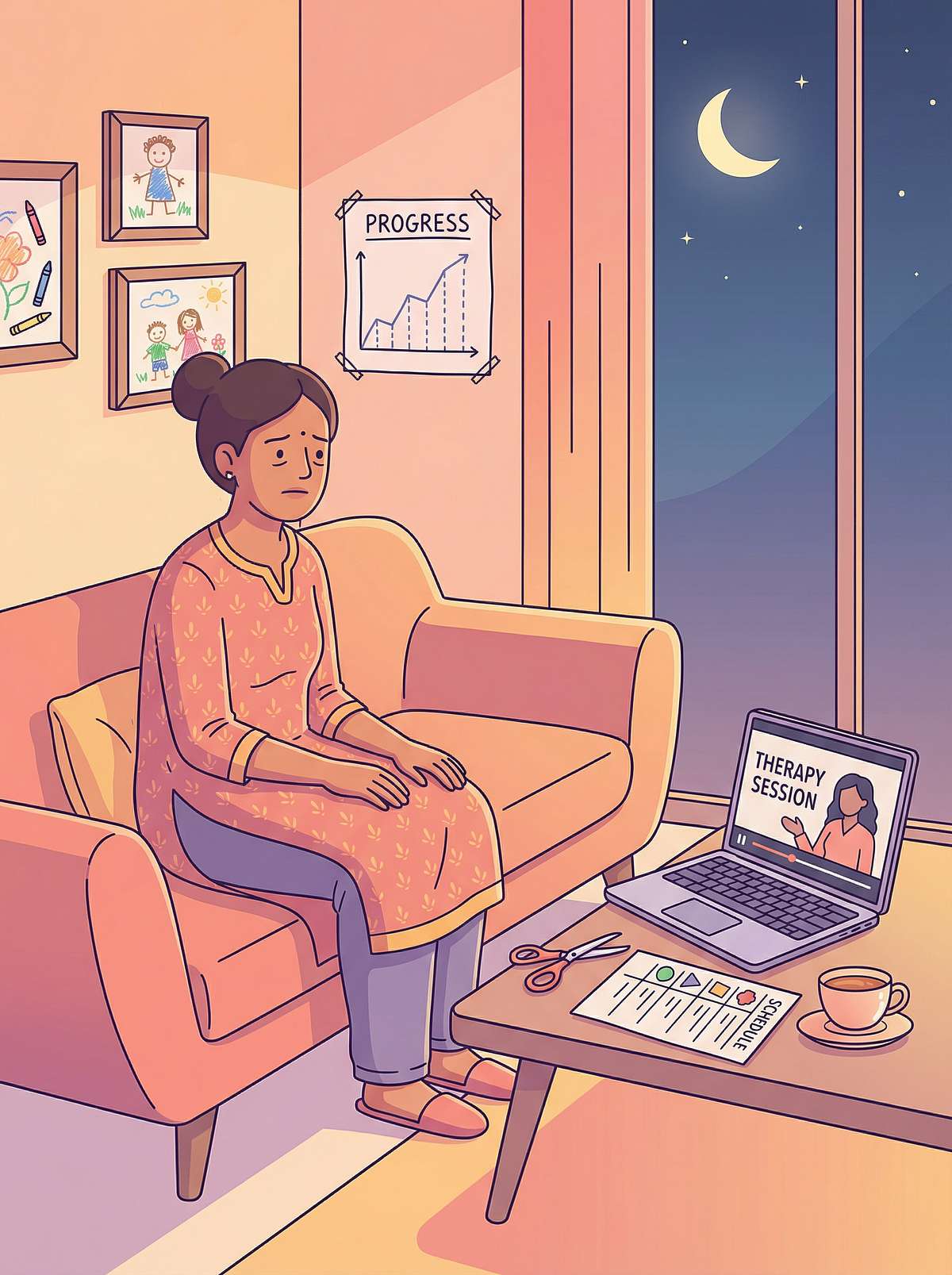
Domains A–J focus on the child. This domain focuses on the people who make everything in Domains A–J possible. The parent who drives to therapy, makes the visual schedule, practices the exercises, advocates at school, researches at midnight, fights the insurance company, holds the child through the meltdown, and worries at 3 AM.
🧠 Your Wellbeing
Burnout, anxiety, guilt, self-care, and marriage stress — Cards 01–07
👨👩👧 Your Family
Siblings, grandparents, acceptance, boundaries, and community — Cards 08–14
🛠️ Your Skills
Therapy carryover, data, advocacy, insurance, finances — Cards 15–22
🌅 Your Future
Planning, joy, hope, calm home, and consistent routines — Cards 23–28

K-881 + K-882
Paired Card
After Diagnosis & Parent Overwhelm
K-881: Parents After Diagnosis
The doctor says the word. "Autism." The world tilts. Everything imagined for this child — school milestones, birthday parties, first words, friendships, college — suddenly uncertain. The grief is immediate, complex, and valid. It is grief for the imagined child. The real child hasn't changed. They are the same child they were before the word was spoken.
Allow grief. Take time — no decisions need to be made today. Get ONE trusted professional opinion. Start with ONE intervention, not everything at once.
K-882: Parent Overwhelm
Then comes the overwhelm: therapy options, school decisions, terrifying internet research, family reactions, financial calculations, and the crushing question — "Am I doing enough?" The brain floods with information and decisions while emotional processing competes for the same limited cognitive resources.
Write down your top 3 concerns (not all 30). Address ONE per week. Accept that "enough" is what you can manage TODAY. You are not alone — 1 in 100 children have ASD. Millions of parents have walked this road.
📞Pinnacle Blooms FREE Helpline: 9100 181 181 — Your first call after diagnosis. | Evidence Level I — NCAEP 2020 | PMC10955541

K-883
Dedicated Card
Caregiver Burnout
You've been running on empty for months. Maybe years. The therapy schedule is relentless. The school advocacy is exhausting. The meltdowns are draining. You can't remember the last time you did something for yourself. And then you feel guilty for feeling this way — because "my child has it harder." This is burnout. Not a character flaw. A physiological state.
Recognize It
Emotional exhaustion, depersonalization (going through the motions), reduced sense of accomplishment, and physical symptoms like headaches, insomnia, and recurring illness.
Understand It
Burnout is NOT laziness, inadequacy, or not loving your child enough. Chronic HPA axis activation exhausts the adrenal system — the same neurological state as clinical depression, caused by sustained demand exceeding recovery capacity.
Recover From It
Reduce unnecessary demands, schedule non-negotiable recovery time, delegate where possible, and seek professional support — a counselor or support group. The cure is not "try harder." It's reduce demand and increase recovery.
⚠️ If burnout includes persistent sadness, hopelessness, or inability to function — seek professional help immediately. This is a medical necessity, not a luxury.

K-884
Dedicated Card
Parent Anxiety
The 3 AM worry spiral: "What if he never talks? What if she can't live independently? What if the therapy isn't working? What if I'm doing it wrong? What if he's bullied? What if I die — who will care for her?" Parent anxiety about the child's future is universal in ASD families — and it is relentless.
The amygdala doesn't distinguish between a physical threat and "my child might never be independent" — both produce the same cortisol cascade. Anxiety is information, not weakness — it means you care deeply.
Focus on Today
Not 20 years from now. One goal at a time. Measurable progress reduces uncertainty and calms the anxious brain.
Reduce the Spiral
Mindfulness, exercise, social connection, sleep hygiene, and limiting midnight internet research are evidence-based anxiety reducers.
Seek Support
If anxiety interferes with daily functioning, a counselor or psychiatrist is a necessity — not a luxury. Parent mental health IS child welfare.

K-885
Dedicated Card
Self-Care for Parents
"Self-care" sounds like a luxury when you're managing 5 therapy sessions per week, school meetings, home practice, and the daily demands of an ASD child. But self-care isn't spa days and vacations — it's the minimum maintenance required to keep the primary intervention tool functioning. That tool is YOU.
Sleep
7+ hours — non-negotiable for prefrontal cortex function. Everything else suffers without it.
Nutrition
Actual meals. Not the child's leftovers standing at the counter. Your body is the intervention engine.
Movement
30 minutes daily — even walking. Movement is one of the most effective stress regulation tools available.
Identity
ONE activity that is yours — not related to autism, therapy, or your child. Maintain who you are beyond this role.
"Taking care of myself makes me a BETTER parent, not a worse one."

K-886 + K-887
Paired Card
Parent Guilt & When Parents Disagree
K-886: Managing Parent Guilt
"Did I cause this? Was it the medication during pregnancy? The vaccination? Should I have noticed earlier? Am I doing enough therapy? The wrong kind?" Parent guilt in ASD is pervasive, irrational, and corrosive.
ASD is NOT caused by anything you did or didn't do. Guilt is the brain searching for a controllable cause — because controllable cause means potential fix. Name the guilt, acknowledge it, and redirect that energy from self-blame to action.
K-887: When Parents Disagree
One parent wants intensive ABA, the other thinks the child needs less therapy. One believes in biomedical intervention, the other doesn't. When co-parents disagree, the child receives inconsistent intervention — reduced effectiveness creates more parental stress, which creates more disagreement. A vicious cycle.
Schedule a dedicated "treatment meeting" (not during a crisis). Bring data — progress reports and therapist recommendations. Agree on core principles and present a united front to the child and school.
Indian Context: Actively involve fathers, who are often peripheral to daily intervention. Address grandparent interference in treatment decisions and the blame dynamics that can arise in arranged marriage contexts.

K-888
Dedicated Card
Marriage Stress
The myth: "80% of ASD parents divorce." The reality: the rate is modestly higher, not 80%. But the stress is real. Conversations become only about the child. Date nights disappear. Intimacy fades. Resentment builds from unequal caregiving loads. The marriage becomes a business partnership managing a shared project — and the couple bond quietly atrophies, not through conflict, but through neglect.
Daily Connection
15 minutes of non-child conversation daily — even in bed before sleep. This single habit protects the relationship more than any weekend getaway.
Monthly Date
Even tea on the balcony after the child sleeps counts. The ritual of prioritizing each other matters more than the setting.
Shared Load
Both parents DO therapy activities. Use appreciation language: "Thank you for handling the school meeting." Seen effort sustains partnership.
Seek Help Early
Persistent resentment, emotional distance, or avoidance → couples counseling. Cultural taboos around marriage counseling cost families more than the sessions ever would.

K-889
Dedicated Card
Single Parents
Everything that two parents struggle to manage — one parent does alone. No one to tag-team during meltdowns, no one to handle the school meeting while you take the child to therapy, no one to share the 3 AM worry. Every decision. Every responsibility. Every appointment. You.
Single parent cognitive load is ALL caregiving decisions concentrated in one prefrontal cortex with no recovery time during the child's waking hours. Decision fatigue, compassion fatigue, and burnout risk are significantly elevated — but the total demand on the child remains unchanged.
Build a Team
Relatives, friends, community — you NEED people. Accepting help is wisdom, not weakness.
Prioritize Ruthlessly
Not everything can be done. What matters MOST today? Let the rest wait without guilt.
Access Support
National Trust, state disability allowances, and Pinnacle Blooms financial assistance programs exist for families like yours.
Section 2: Family Ecosystem
The People Around Your Child Matter Too
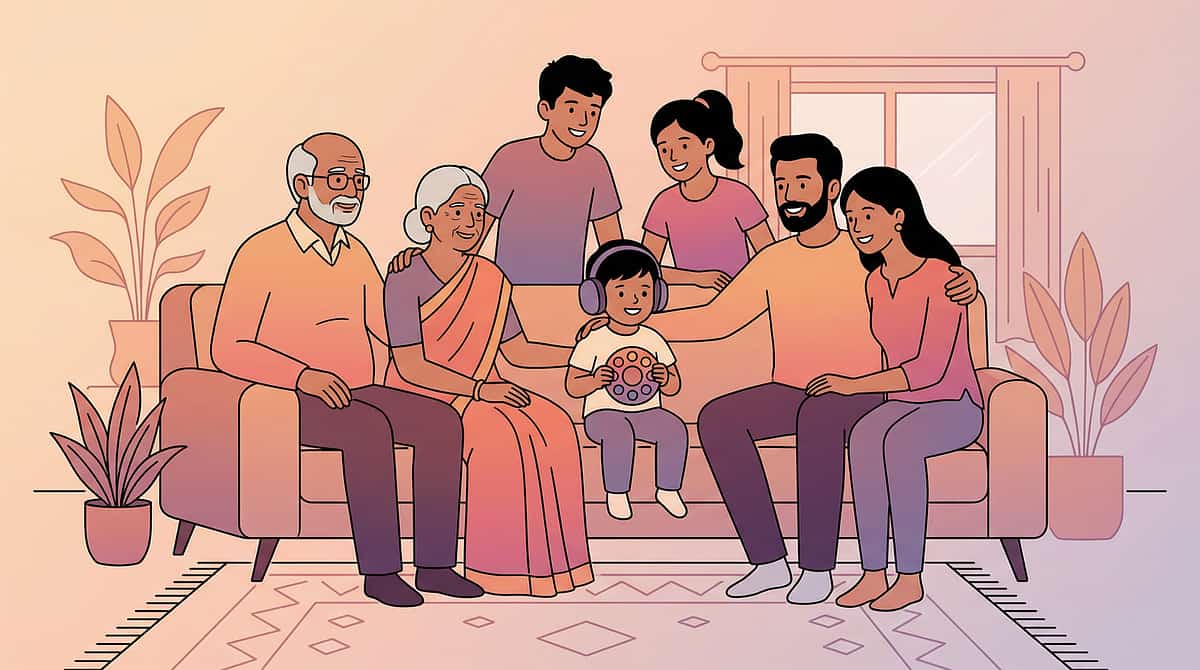
No child grows in isolation. The siblings, grandparents, aunts, uncles, and extended community surrounding your child with ASD form a living ecosystem. When that ecosystem is educated, aligned, and supported — the child thrives. When it is fractured, uninformed, or overwhelmed — even the best interventions lose their footing.
Sibling Support
K-890 through K-893 — protecting and nurturing the invisible family members
Extended Family
K-894 through K-897 — grandparent education, acceptance, and boundary setting
Your Support Circle
K-898 through K-902 — building community, finding respite, and training backup caregivers
K-890 + K-891
Paired Card
Sibling Needs & Explaining Autism to Siblings
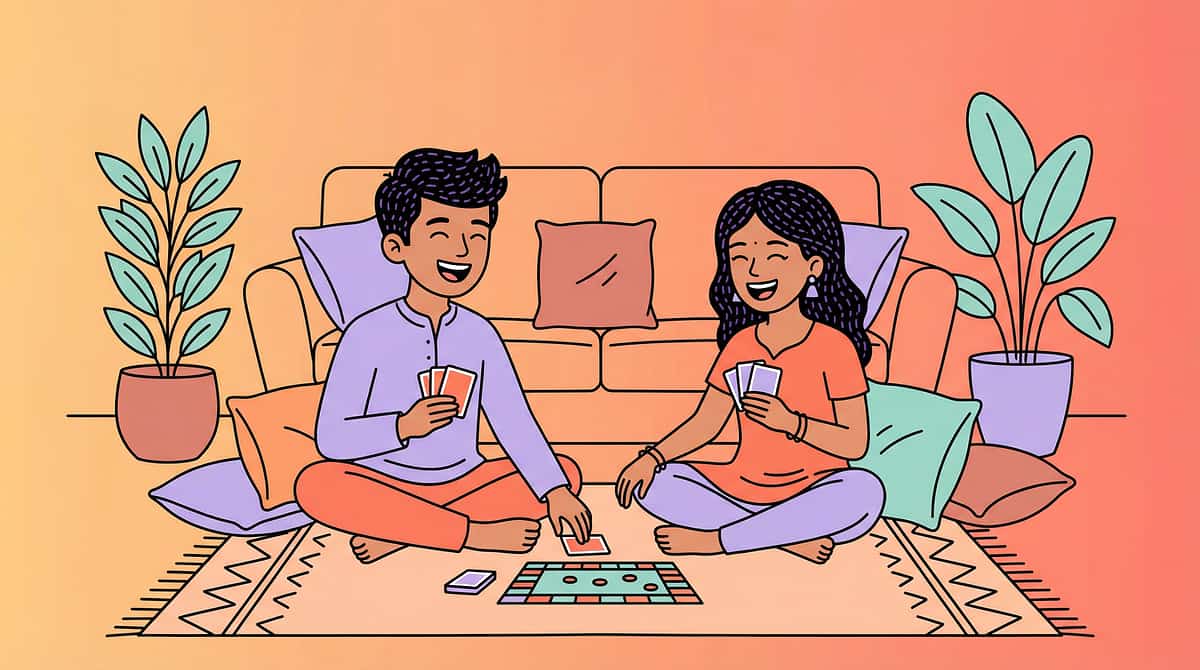
THE INVISIBLE FAMILY MEMBER. The sibling: watching their brother get all the attention, hearing conversations about therapy and doctors, wondering why their sister is "different," feeling guilty for being angry, missing the parent who's always at therapy, and carrying a weight they cannot name. Sibling impact is real, measurable, and preventable.
K-890: Sibling Needs
- Protected 1:1 time with parent — weekly, non-negotiable
- Their own activities and interests — not everything revolves around the ASD sibling
- Emotional space for ALL feelings, including anger and resentment — these are valid
- Their own achievements celebrated loudly and publicly
- Assurance that they are equally loved — in words AND demonstrated through time
K-891: Explaining Autism to Siblings
- Age-appropriate, honest language: "Your brother's brain works differently"
- Answer ALL their questions without dismissing any as too small
- Books written specifically for siblings of children with ASD
- Sibling support groups — connecting with other children in the same situation
- Open family conversations about autism that include the sibling's perspective
K-892 + K-893
Paired Card
When Siblings Feel Neglected & Building Sibling Relationships
K-892: Addressing Neglect Feelings
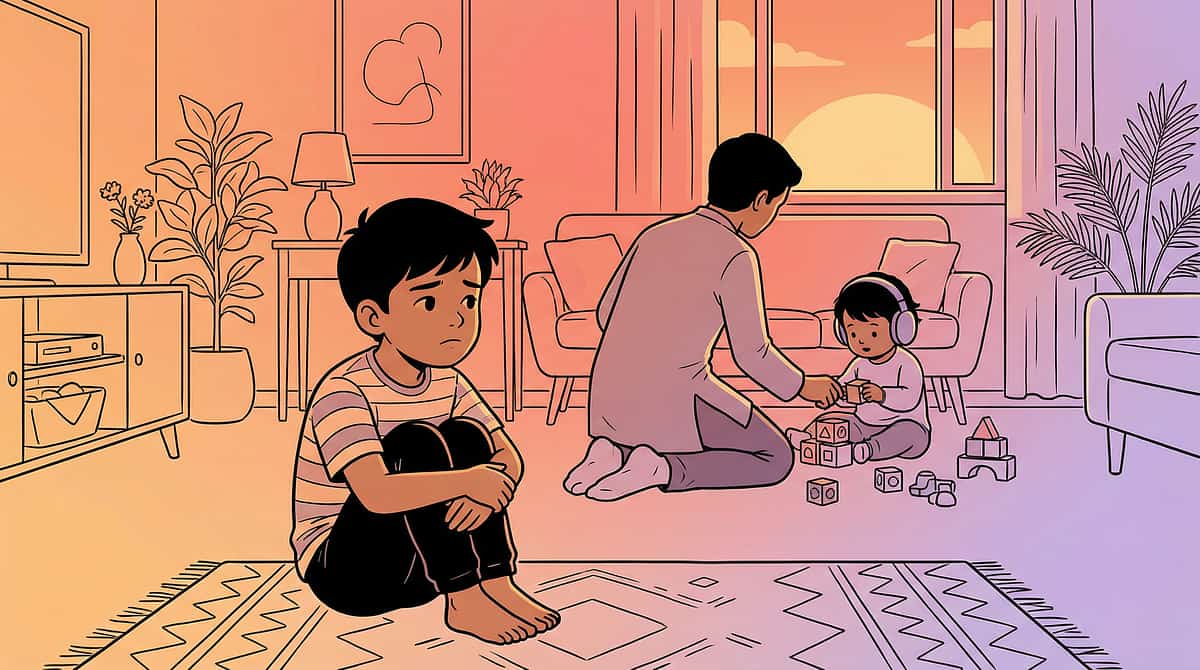
"You always spend time with HIM." "You never come to MY school play." "I HATE having an autistic brother." When the sibling says these words, the parent's heart breaks — because it's true. And because there aren't enough hours, enough energy, enough of you to go around.
Validate first: "You're right. I have been spending more time with your brother. That doesn't mean I love you less. Let's make a plan for our time." Then SHOW change through scheduled 1:1 time, attending their events, and celebrating their achievements publicly.
K-893: Building Sibling Relationships
The sibling is a play partner, not a therapist. Structured play activities that both children can enjoy create genuine connection — not obligation. Positive interactions between siblings benefit BOTH children's development and strengthen the entire family system.
- Structured play between siblings with joint activities both enjoy
- Reinforce positive interactions when they occur naturally
- The sibling's role: playmate and friend — never co-therapist or caretaker
- Joint family cousins as relationship practice in the Indian context

K-894
Dedicated Card
Educating Grandparents
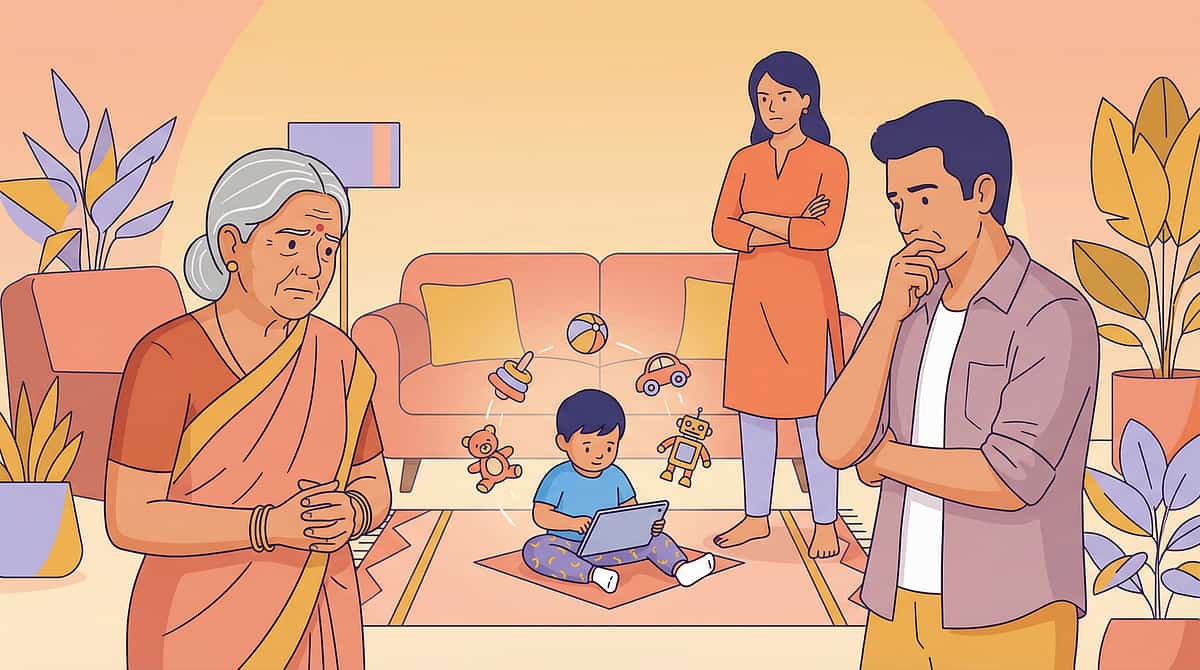
"There's nothing wrong with him. He's just a late talker." "In my time, children didn't have all these problems." "Just give him a good scolding — he'll be fine." Grandparents: often the most important extended family members, and often the hardest to educate about ASD. Their resistance isn't malice. It's grief, generational knowledge gap, and cognitive dissonance — and it deserves compassion.
01
Lead With Compassion
They're grieving too. Acknowledge their love for the grandchild before introducing any information about ASD.
02
Educate Gradually
Not a lecture — short videos, simple books, therapy observation. Seeing is believing. Invite them to one session.
03
Give Specific Instructions
"When he flaps his hands, don't say stop — that's how he regulates himself." Concrete guidance works better than abstract explanation.
04
Activate the Ally
Once educated, grandparents become powerful advocates and supports. The investment in their understanding pays enormous dividends.
K-895
Dedicated Card
Family Acceptance
Acceptance isn't a switch. It's a process — and different family members reach acceptance at different speeds. The mother who researches at midnight may accept before the father who avoids the topic. The grandmother who cries may accept before the uncle who insists "he's fine." Family acceptance of ASD is a journey, not a destination — and the timeline is different for every person walking it.
Shock & Denial
The initial response — "This can't be right." Completely normal, and temporary for most families.
Grief & Anger
Processing the loss of the expected future. Valid emotions that need space, not suppression.
Information Seeking
Questions, research, therapy visits. The brain begins restructuring its narrative around new information.
Gradual Acceptance
Understanding ASD, seeing the child's strengths, witnessing progress — the narrative shifts.
Active Engagement
Family members become genuine participants in intervention — not bystanders or obstacles.
Facilitating acceptance: Share positive moment videos, invite family to therapy sessions, provide information in digestible amounts, allow questions, and — critically — allow grief. Acceptance cannot be rushed, only supported.
K-896 + K-897
Paired Card
Setting Family Boundaries & Managing Unsolicited Advice
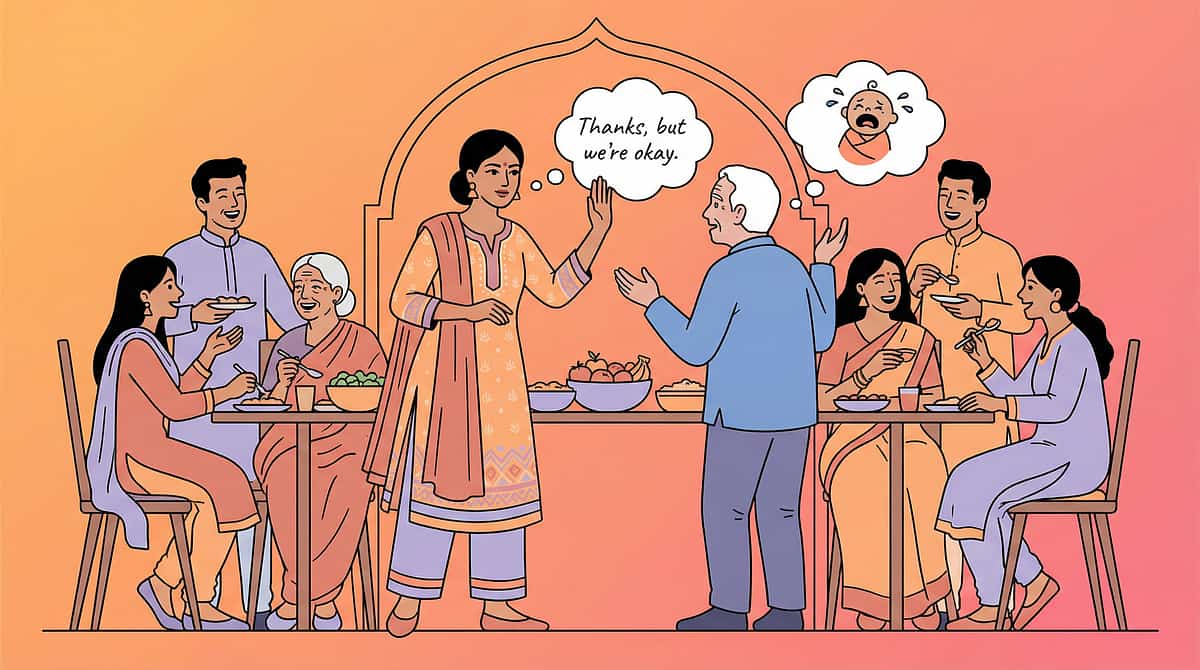
"Have you tried giving him almonds soaked overnight?" "My neighbour's son was cured by a baba." "You should stop all therapy and just let him be a child." The flood of unsolicited advice — well-meaning, uninformed, sometimes harmful — is exhausting. Setting boundaries without destroying relationships is an art every ASD parent must develop.
K-896: Setting Boundaries
You need diplomatic firmness — and pre-rehearsed scripts make this possible without the emotional cost of improvising in the moment.
- Gentle redirect: "Thank you for caring. We're following our doctor's and therapists' recommendations."
- Firm boundary: "We've made our decision about treatment. I appreciate your concern, but this isn't open for discussion."
- When advice is harmful: "That approach isn't supported by research and could harm my child. Please trust us on this."
K-897: Managing Unsolicited Advice
You don't have to convince everyone. You have to protect your child's treatment plan and your own emotional reserves.
- Smile and redirect when the conversation isn't worth the energy
- Identify family allies who can buffer on your behalf
- Manage WhatsApp family group advice diplomatically but firmly
- Practice scripts in advance — rehearsal reduces the emotional toll in the moment
- Religious or alternative treatment pressure: acknowledge love behind it, decline firmly

K-898 + K-899
Paired Card
Building a Support Network & Finding Parent Community
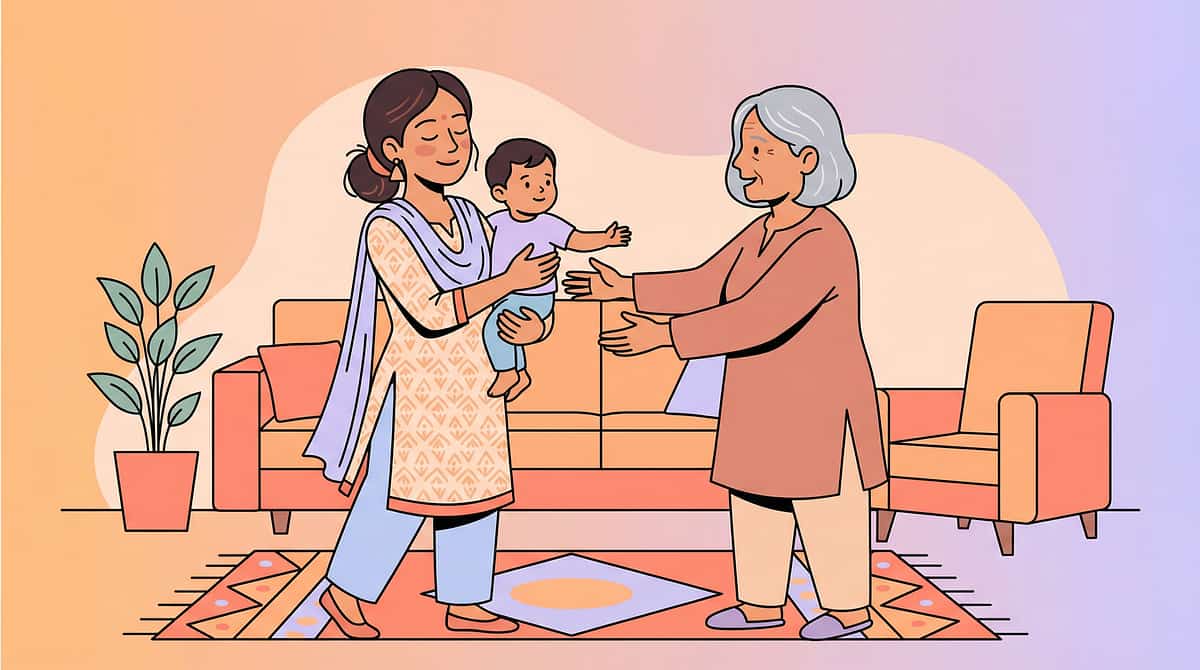
"I KNOW. My child does that too." The most healing sentence an ASD parent can hear.
Finding other parents who understand — who don't judge, who share strategies, who laugh about the absurd moments, who cry together about the hard ones — is transformative. Social support releases oxytocin, reduces cortisol, and buffers the stress response. Connection IS medicine. Isolation amplifies stress; community heals it.

K-898: Your Inner Circle
2–3 people who truly understand. Your Middle Circle: 10–15 people who help practically. Your Outer Circle: community that's generally supportive. Build all three deliberately — each layer serves a different need.

K-899: Parent Community
Pinnacle Blooms Parent Connect, local parent groups, WhatsApp communities, national organizations like Action for Autism and the Autism Society of India, and parent workshops and conferences. You are not navigating this alone.
K-900 + K-901 + K-902
Triple Technique Card
Respite Care & Training Backup Caregivers
"I can't leave my child with anyone." The parent who hasn't had a break in years because no one else can manage the child. Respite — temporary relief from caregiving — is not a luxury. It's a survival strategy. Even brief periods of caregiving relief allow the HPA axis to reset and cognitive resources to replenish, producing days of improved caregiving capacity from just a few hours of genuine rest.
K-900: Respite Options
Trained family member, professional respite carer, parent co-op (trade with another ASD family), and Pinnacle Blooms center-based respite programs. Start small. Build trust gradually.
K-901: Training Caregivers
One-page child profile, visual schedule walkthrough, behavior plan briefing, sensory strategy demonstration, communication system training, and emergency protocol. Document everything in writing.
K-902: Training Babysitters
Same as caregiver training PLUS: a practice session with parent present, then graduated independence — parent in next room → out for 30 minutes → out for an evening. Trust is built in increments.
Section 3: Implementation & Advocacy
From Knowledge to Impact: Your Skills as the Parent-Therapist
The therapist's room is 1–3 hours per week. Your home is 100+ waking hours. The parent who learns to implement therapy strategies at home, collect meaningful data, and advocate confidently in every room — school, clinic, insurance office, government office — multiplies the child's progress exponentially. This section builds those skills.
K-903 + K-904
Paired Card — The Multiplier
Therapy Carryover & Home Practice
The Math That Changes Everything
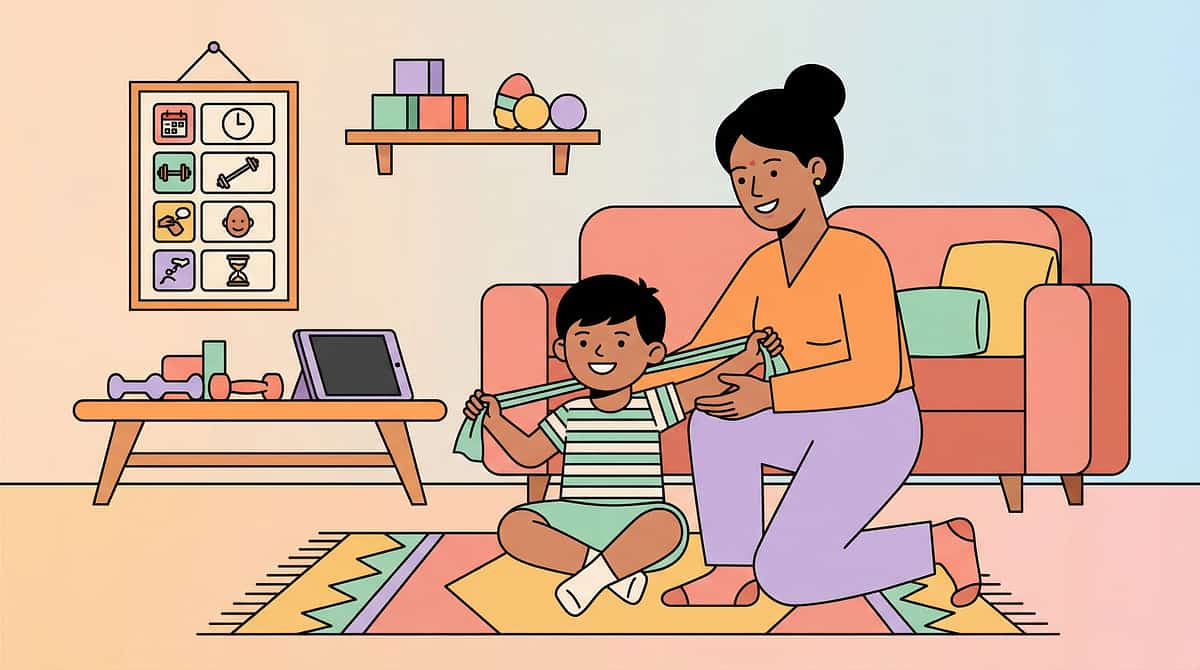
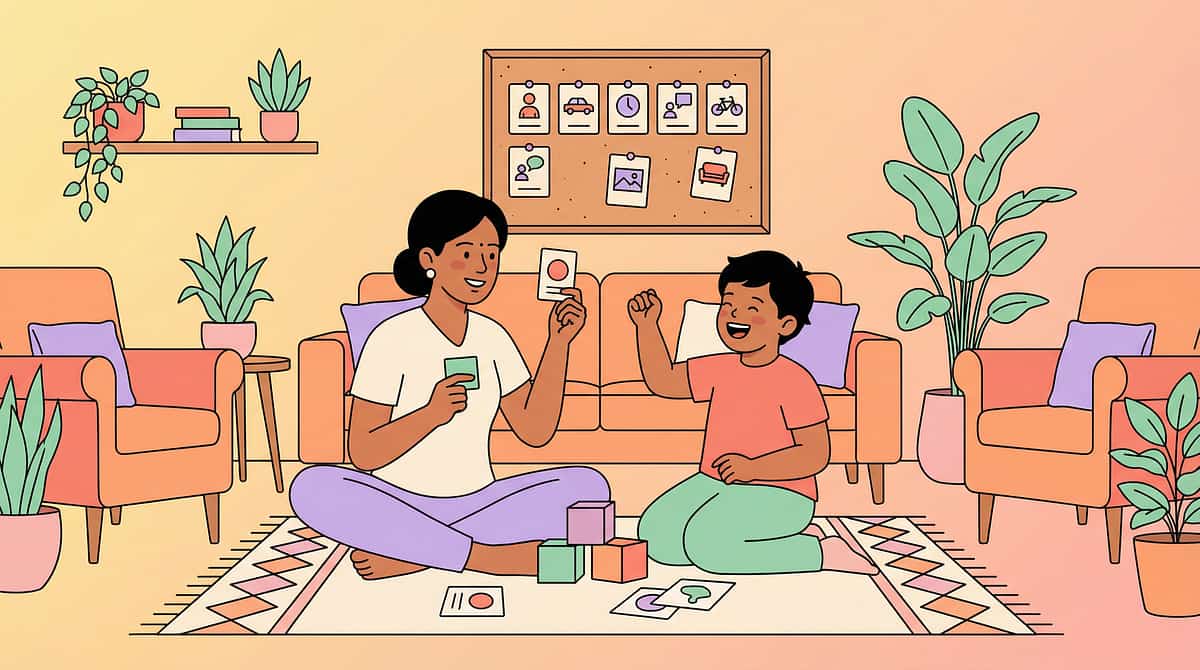
Therapy: 1–3 hours per week. Home: 100+ waking hours per week. If skills only exist in the therapy room, therapy is 3% of the child's week. If skills carry over to home, therapy becomes 100% of the child's week. Home practice doesn't replace therapy — it multiplies it.
Skills practiced in one environment (therapy room) remain context-dependent. Practicing the same skill at home creates a second neural pathway — and the brain begins to generalize: "This skill works everywhere."
K-903: Therapy Carryover
After every session, ask the therapist: "What should I practice at home this week?" One skill, specific instructions. The therapist provides a written home program, video demonstration, and parent training during the session itself.
K-904: Home Practice
Embed practice in daily routine — not a separate "therapy time." Practice requesting during snack. Practice turn-taking during play. Practice fine motor during dressing. 10 minutes of targeted daily practice = 70 minutes per week = more than one full therapy session.

K-905 + K-906
Paired Card
Data Collection & Goal Setting
"Is the therapy working?" Without data, this question produces anxiety. With data, it produces answers. Data collection transforms the parent from anxious observer to informed partner. Goal setting transforms "I want my child to get better" into "By March, my child will request 3 items using PECS independently."
K-905: Simple Data Collection
Tally Count
How many times did the behavior happen today? Simple marks on paper, 30 seconds per day.
ABC Chart
What happened Before, During, and After the behavior? Reveals patterns and triggers.
Video Comparison
Same activity filmed monthly. Visual comparison is the most powerful progress-tracking tool available to parents.
K-906: SMART Goal Setting
Specific
Define exactly what skill, in what context, with what support level.
Measurable
Can you count it? Observe it? Film it? If you can measure it, you can celebrate it.
Time-Bound
Quarterly review cycles with celebrated achieved goals and revised upcoming targets.
🤖Pinnacle GPT-OS® AbilityScore® automates data collection and goal tracking across all therapy domains — reducing parent burden while increasing measurement precision.

K-907
Dedicated Card
Tracking Progress
Day to day, progress is invisible. Week to week, barely perceptible. Month to month, you might notice. But compare September to March — and the child who couldn't sit for 5 minutes now sits for 20. The child who had no words now has 15. The child who melted down daily now manages most transitions. Progress is real. You need the right lens to see it.
Monthly Video
Film the same activity each month. Visual comparison across 3–6 months is the most powerful progress-tracking tool available — for parents AND for hope.
Skill Checklist
Quarterly review of can/can't do skills against your baseline. Document what was impossible 6 months ago that is now emerging.
Behavior Frequency
Daily count → weekly graph. Seeing the graph trend downward on difficult behaviors and upward on skills is neurologically calming for anxious parents.
Portfolio
Best work samples each month. Share progress with your whole team and family to build collective hope and acceptance simultaneously.
K-908
Dedicated Card
Therapy Coordination
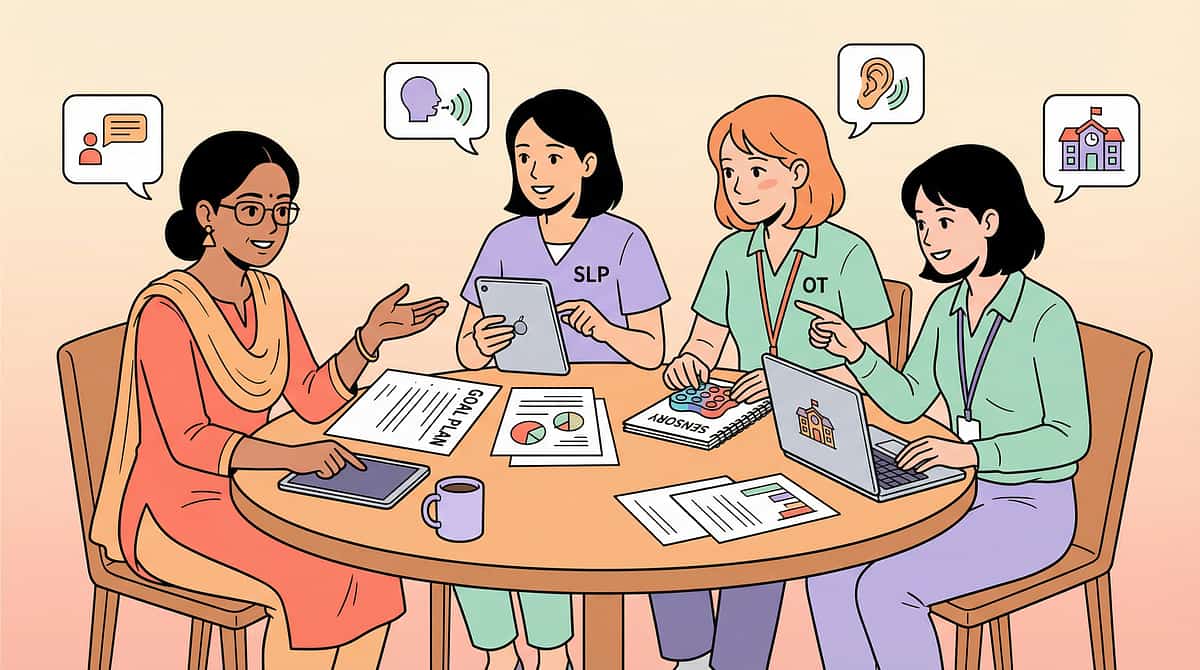
Managing multiple therapists, aligning goals across disciplines, preventing contradictory approaches, and ensuring that the SLP, OT, ABA therapist, Special Educator, and pediatrician are all working on the same child in the same direction. The parent is the router — connecting all professional inputs into a coherent whole.
When therapists disagree: escalate to the developmental pediatrician for a clinical decision — not the internet. Pinnacle Blooms advantage: the integrated multi-disciplinary team under one roof means coordination is built in. GPT-OS® FusionModule™ automatically aligns goals across all disciplines, eliminating the coordination burden from parents entirely.

K-909 + K-910
Paired Card
Advocating for Your Child & Medical Advocacy
The parent as the child's voice — because the child may not yet have their own. Advocacy beyond school: medical system, therapy access, government services, insurance, and community inclusion. When parents shift from passive recipients of services to active advocates, the locus of control shifts internal — reducing helplessness and increasing engagement. Advocacy is therapeutic for the parent as much as for the child.
K-909: General Advocacy
- Know your rights under RPwD 2016 — the Rights of Persons with Disabilities Act
- Document everything in writing — every request, every response, every meeting
- Escalate systematically: direct request → written escalation → complaint body
- UDID card, National Trust certificate, and state disability benefits
- Railway concessions and income tax benefits under Section 80DD/80U
K-910: Medical Advocacy
- Request explanations — understand every diagnosis and every medication prescribed
- Exercise your right to second opinions without guilt or apology
- Informed consent: know what you're agreeing to before you agree
- Request ASD-accommodated appointments — shorter wait times, quiet rooms
- Age-appropriate care transitions as your child grows — plan ahead

K-911
Dedicated Card
School Advocacy
Navigating the Indian school system as a parent of a child with ASD requires a specific toolkit: practical advocacy scripts, documentation templates, and escalation procedures. Under RPwD 2016 Section 16, your child has a legal right to inclusive education with reasonable accommodations.
IEP Request
Template letter requesting an Individualized Education Plan meeting — your starting point for any school advocacy.
Accommodation Request
Written accommodation request citing specific RPwD provisions — extended time, scribe, quiet room for exams.
Escalation Path
Class teacher → Special educator → Principal → District Disability Commissioner → RTI application for school records.
CBSE/ICSE Process
Board-specific accommodation application processes, NIOS enrollment, and state board provisions documented and ready to use.
Documentation is Power: Keep a dedicated file — every email, every WhatsApp message, every letter, every meeting note. Written records protect your child and demonstrate serious intent.

K-912 + K-913
Paired Card
Insurance Navigation & Financial Planning
Therapy costs ₹15,000–50,000+ per month. For years. Plus assessments, materials, school fees, medication, dietary requirements, and respite care. The financial reality of ASD in India: it is expensive, insurance coverage is largely inadequate, and planning isn't optional — it's survival.
K-912: Insurance Navigation
Most Indian health insurance policies exclude developmental and behavioral therapy. But options exist — and advocacy can unlock them.
- Diagnostic evaluations may be covered — request in writing
- Hospitalization for co-morbidities is typically covered
- CGHS and state government schemes — check your eligibility
- Section 80DD tax deduction: up to ₹1.25 lakh for severe disability
- Appeal unjust denials — file IRDAI complaints when warranted
- Corporate HR advocacy: check if employer insurance covers therapy
K-913: Financial Planning
Calculate your total annual ASD-related cost first — therapy, school, materials, transport, assessments, and medical. Then plan deliberately.
- Prioritize high-evidence interventions; many Canon materials have ₹0 alternatives
- National Trust: DISHA, VIKAAS, SAHYOGI schemes — apply now
- State disability pension and UDID benefits — know what you're entitled to
- Section 80DD (₹75,000–₹1.25 lakh deduction) and Section 80U
- Pinnacle Blooms: flexible payment plans, financial counseling, scholarship programs

Section 4: Future, Joy & Home
The Long View: Hope, Home, and What Comes Next
This final section holds the questions that live at the deepest level of every ASD parent's heart: What does the future look like? Are we doing enough? Is there still joy in this? Will my child be okay? These cards don't offer false reassurance — they offer evidence-based frameworks for planning ahead, calibrating expectations honestly, finding the joy that exists within this journey, and building the home environment that makes everything else possible.
K-914
Planning for Future
K-915
Realistic Expectations
K-916
Celebrating Small Wins
K-917 + K-918
Finding Joy & Hope
K-919 + K-920
Calm Home & Routines

K-914
Dedicated Card
Planning for Your Child's Future
"What happens when I'm gone?" The question every ASD parent carries — often alone, often at 3 AM. Future planning is not pessimism. It is the highest form of parental love: ensuring your child is cared for, protected, and provided for across their entire lifespan, regardless of what happens to you.
Legal Guardianship
National Trust Limited Guardianship provisions, guardianship under the Mental Healthcare Act, and Hindu Succession Act considerations — document early, review annually.
Financial Trust
A special needs trust ensures money is managed for the child's benefit without disqualifying them from government disability benefits. Start small — the habit matters more than the amount.
Residential Planning
Independent living, supported living, and group home options exist on a spectrum. Know the landscape. Visit options while your child is young — before urgency forces decisions.
Letter of Intent
A detailed document about your child's needs, preferences, routines, medical history, and what brings them joy — written for future caregivers who will love them in your absence.
Start planning NOW — even if your child is young. Early financial planning compounds. Sibling as future guardian: discuss intentionally, never assume. Early conversations prevent family conflict at the worst possible time.
K-915 + K-916
Paired Card
Realistic Expectations & Celebrating Small Wins
K-915: Realistic Expectations
Between despair ("He'll never be independent") and denial ("She'll be completely normal with enough therapy") lies realistic expectation: understanding what's possible, what's probable, and what's still unknown — and building the capacity to be okay with uncertainty.
- Focus on THIS child — not the diagnostic label or a peer comparison
- Measure against their OWN baseline, not neurotypical milestones
- Update expectations based on DATA, not fear or hope alone
- "Not yet" vs. "Never" — most skills are on a different timeline, not impossible
- No prediction at age 3 accurately forecasts age 18 — hold the trajectory lightly
K-916: Celebrating Small Wins
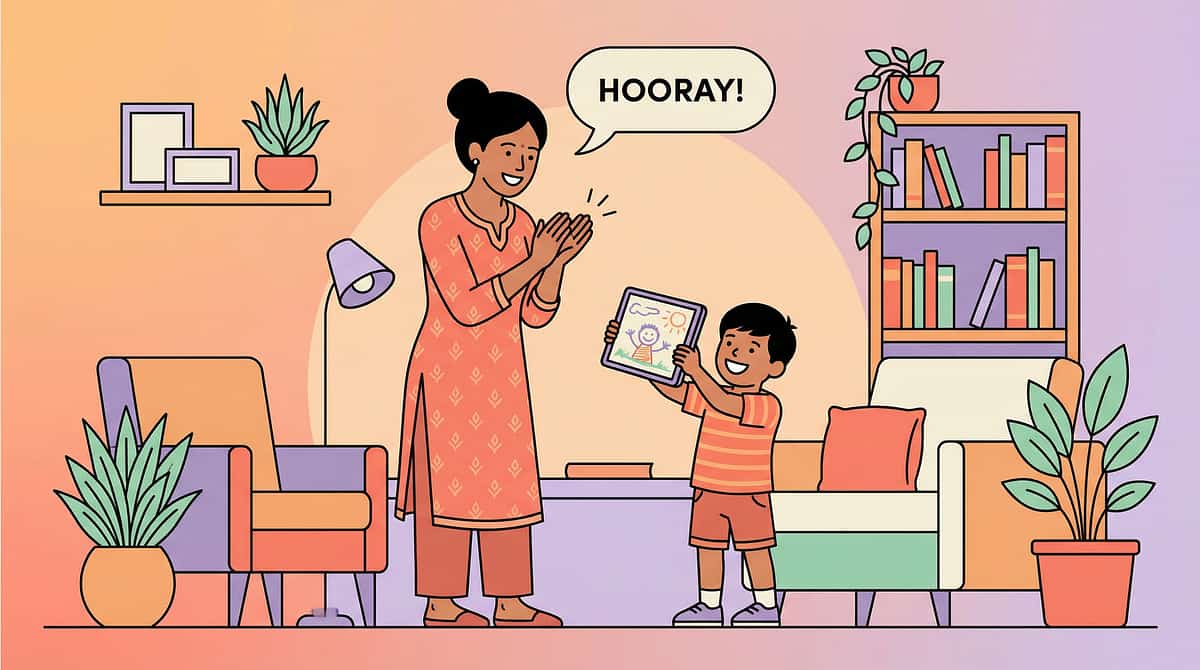
He made eye contact with the shopkeeper. She said "water" for the first time. He sat through an entire haircut. Small to the world. Enormous to you. These wins deserve celebration — because celebration fuels the next win.
Celebration triggers dopamine in the parent's brain — creating a positive association with caregiving that sustains effort over the long arc of this journey. The parent who celebrates small wins has a healthier stress profile than the parent who only measures deficits.
- End each day by naming ONE win — even tiny
- Record wins: journal, phone notes, video
- Share with your support network — other parents know the magnitude
- Celebrate WITH the child: your joy teaches them self-pride

K-917 + K-918
Paired Card
Finding Joy & Building Hope
"Joy doesn't wait until recovery. It's here, woven into the ordinary days."
The unexpected belly laugh during sensory play. The moment he hands you a flower unprompted. The day she sings along to a song. The time he navigates the shop without a meltdown. Joy exists IN this journey — not despite it. And hope, when grounded in evidence and progress data, is neurologically distinct from wishful thinking. It is the brain's planning system working with real information to project achievable positive outcomes.
K-917: Finding Joy — Daily Practices
Gratitude Practice
Name 3 good things from today before sleep. This trains the brain's attention system to detect more joy — neuroplasticity working for you.
Strengths Focus
Your child's unique strengths — their memory, their precision, their loyalty, their humor — are the foundation of their future. Notice them. Name them. Celebrate them.
Lean Into Humor
ASD families develop incredible humor about the absurd, the unexpected, and the magnificent. Lean into it — laughter is a physiological stress release.
K-918: Building Hope — Evidence-Based
Progress Data as Hope
Your tracking data (K-907) is your evidence base for hope. Progress graphs trending upward are neurologically calming — and they are TRUE.
Stories From Ahead
Families further along the journey are your most powerful source of hope. Find them in community, in Pinnacle parent groups, in conferences.
The Science of Neuroplasticity
The brain keeps growing and learning throughout life. The ceiling is never where it appears to be at any given moment in childhood.
Preview of parent caregiver tools Therapy Material
Below is a visual preview of parent caregiver tools therapy material. The pages shown help educators, therapists, and caregivers understand the structure and content of the resource before use. Materials should be used under appropriate professional guidance.
Link copied!

K-919 + K-920
Paired Card
Creating a Calm Home & Building Consistent Routines
Home should be sanctuary — for the child AND for the entire family. A calm home isn't silent or restrictive. It's sensory-informed, visually structured, and emotionally regulated. The home environment IS intervention — and consistent routines are its most powerful expression.
K-919: Calm Home Elements
- Lighting: Warm, dimmable — not harsh fluorescent overhead lights
- Sound: Reduce background noise; use calming music intentionally
- Organization: Visual order reduces cognitive load for the child AND the parent
- Sensory corner: One designated regulation space — swing, crash pad, dim lighting
- Visual supports: Schedule posted, rules visible, emotion thermometer on the fridge
- Indian context: Manage fan noise, TV volume, cooking ventilation, and joint family noise — every decibel matters for a child with sensory sensitivities
K-920: Consistent Routines — The Foundation Card
When the routine is consistent, the child's brain automates daily activities — freeing prefrontal cortex resources for learning instead of navigating moment-to-moment uncertainty. Inconsistency prevents this automation, keeping the PFC perpetually depleted and meltdowns perpetually likely.
- Morning, after-school, evening, and bedtime routines — each with visual schedule and consistent timing
- ALL adults follow the SAME routine — joint family consistency is the #1 challenge AND the #1 priority
- Build in small variations gradually as the child develops flexibility tolerance
- Monthly routine review: is it still working? Adjust as the child grows
The Subdomain K1 Capstone
You are not just a parent. You are the architect of your child's environment, the advocate in every room, the therapist between sessions, the researcher at midnight, the scheduler, the driver, the emotional anchor during meltdowns, and the person who celebrates when a single word emerges after months of silence.
This subdomain exists because the child cannot thrive if you are breaking. Your wellbeing is not a luxury — it is infrastructure. Your mental health is not selfish — it is strategic. Take care of yourself. Ask for help. Set boundaries. Celebrate the small wins. Find the joy that exists within this journey. And know that across India and the world, millions of parents are walking this road alongside you. You are not alone.
📞Pinnacle Blooms stands with you: 9100 181 181 (FREE helpline) | ↑ Domain K: Family Empowerment