
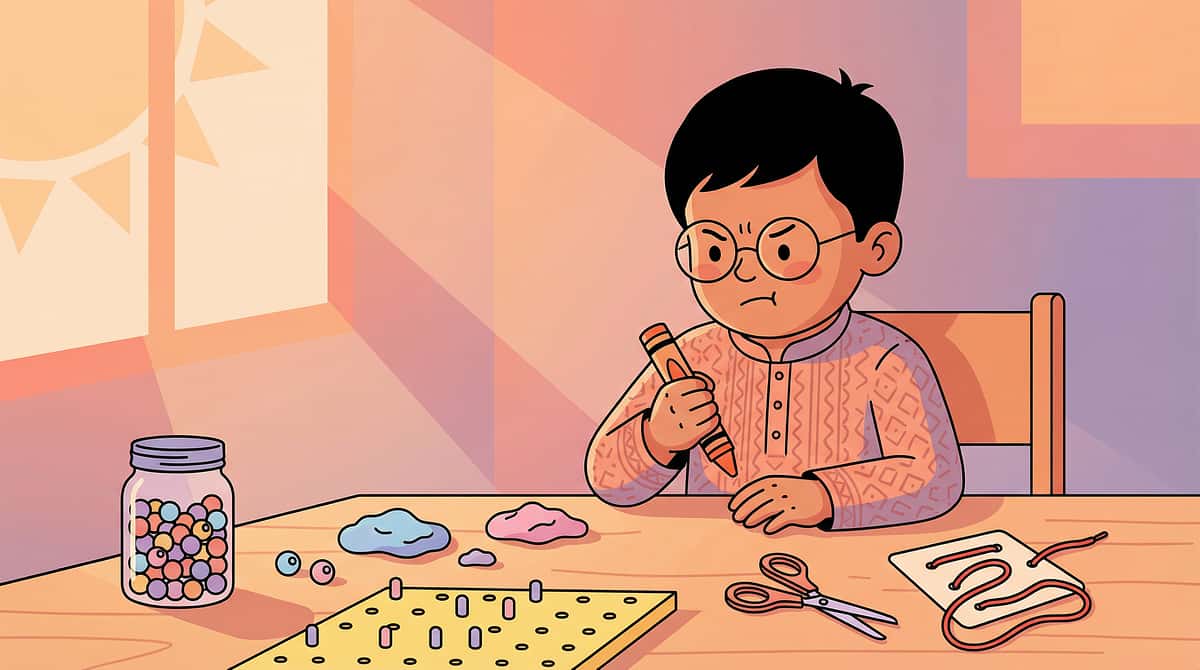
Fine Motor Skills — 30 Evidence-Based Interventions
The hands that will write their name, button their shirt, tie their shoes, and one day build their own life. Thirty evidence-based techniques for grasping, pencil grip, colouring, drawing, scissors, beading, puzzles, hand strength, pre-writing, handwriting, lacing, pegboard, in-hand manipulation, and adaptive tools — built for children with autism and the families and therapists who support them.
Subdomain F1 · Fine Motor
Domain F · Motor Skills
Pinnacle Blooms Network®

Why Fine Motor Skills Matter
The hands are the instruments of the brain. Fine motor skills — the precise, coordinated movements of the small muscles of the hands and fingers — underpin everything: writing, dressing, eating, grooming, playing, and communicating. A child who cannot control their hands faces barriers in school, self-care, and play.
Motor Cortex
The hand and finger region occupies a disproportionately large area of the motor cortex. More brain is devoted to hand control than the entire trunk — fine motor practice is literally building brain architecture.
Cerebellum
Every fine motor task requires precise timing. The cerebellum calibrates this through practice — each repetition provides feedback, the cerebellum adjusts, and the next attempt is more accurate. Repetition matters most in fine motor.
Proprioception
The hand must know where it is and how hard it's gripping without looking. Poor hand proprioception leads to clumsy, heavy-handed, inaccurate movements that tire quickly.
Visual-Motor Loop
The eye sees the target → the brain plans the hand movement → the hand executes → the eye monitors → the brain adjusts. This eye-hand loop is the core of every cutting, colouring, writing, and building task.
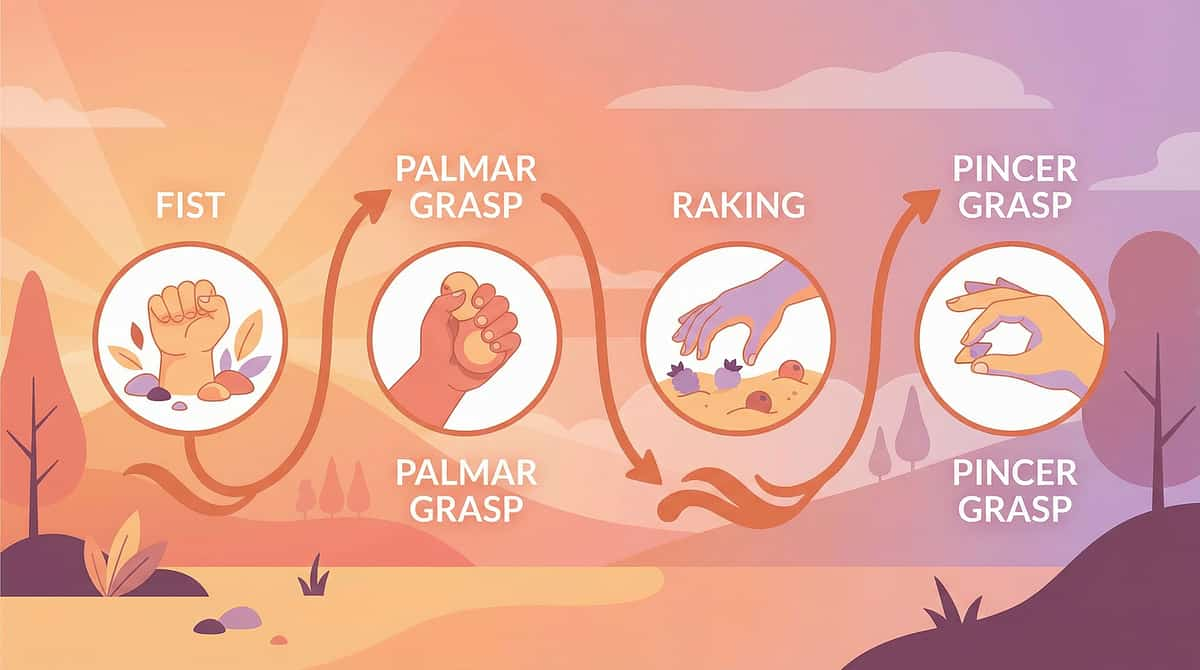
Fine Motor Development Sequence
Fine motor development follows a predictable, progressive sequence. Understanding where your child is in this sequence guides which interventions to prioritize and what to expect next.
Children with ASD may move through this sequence at a different pace, may plateau at a stage, or may show scatter across stages. Each of the 30 interventions in this subdomain targets specific points along this continuum — meeting the child exactly where they are.
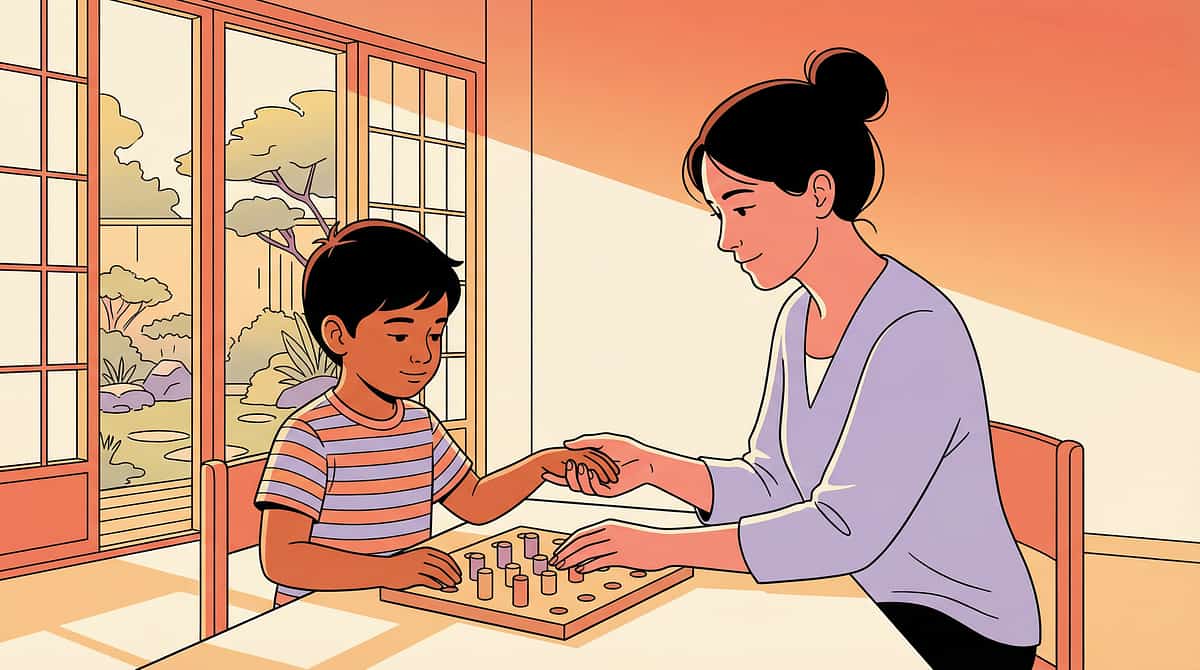
ASD Fine Motor Differences
Children with autism often experience fine motor differences that go beyond simply "needing more practice." Understanding the neurological basis of these differences helps parents and therapists choose the right intervention approach — and respond with empathy rather than frustration.
Dyspraxia (Motor Planning)
The brain knows what it wants the hand to do but cannot efficiently plan the movement sequence. The child may understand the task but struggle to initiate or sequence the physical actions required.
Hypotonia (Low Muscle Tone)
Weak hand muscles lead to faster fatigue during fine motor tasks, reducing endurance. A child may start a writing task well but tire within minutes — not due to unwillingness, but genuine muscle fatigue.
Sensory Differences
Tactile defensiveness (avoiding certain textures) or reduced proprioception (difficulty feeling grip pressure) both interfere with fine motor performance. Sensory support must accompany motor intervention.
Visual-Motor Challenges
Eye-hand coordination differences affect how accurately the child can direct hand movements toward visual targets — impacting colouring, cutting, writing, and building tasks.
Evidence Base: All 30 techniques in this subdomain are supported at Level I evidence — NCAEP 2020 | OT evidence base | PMC10955541 | WHO NCF 2018.
Section 1 of 5
Grasp Development
The foundation of all hand use. Before a child can write, cut, button, or build — they must grasp. Cards 01–06 cover the full grasp development pathway: from picking up objects with the whole hand to holding a crayon and making deliberate marks, to sustaining a drawing through an entire page.
F-591
Object Grasping
F-592
Pincer Grasp
F-593
Pencil Grasp
F-594
Crayon Holding
F-595
Colouring Skills
F-596
Drawing Skills

F-591 · Object Grasping
Object Grasping — The Foundation of All Hand Use
Before the child can write, cut, button, or build — they must grasp. Object grasping — reaching for, securing, and holding an object — is the developmental entry point for every fine motor skill that follows. The brain pre-shapes the hand during the reach, adjusting finger spread and wrist angle before contact based on visual assessment of the object's size, shape, and orientation.
Teaching grasping: present objects appropriate to the child's current grasp level (large objects for palmar, small for pincer), use hand-over-hand guidance for initial learning, then fade to independent. Activities include picking up toys of varying sizes, squeezing sponges in the bath, and transferring objects between containers. Indian daily life is rich with natural grasping opportunities: picking up roti pieces, holding a tumbler, grasping idli, picking up flowers for pooja.
Grasp Progression
- Reflexive — newborn whole-hand grip
- Palmar — full hand wrap around object
- Digital — fingers only, no palm
- Pincer — thumb + index precision
Evidence Level
📊 Level I — NCAEP 2020 | OT evidence base | PMC10955541
Lead Discipline
OT · ABA · SpEd | SLP · Psychology · NeuroDev
F-592 · Pincer Grasp
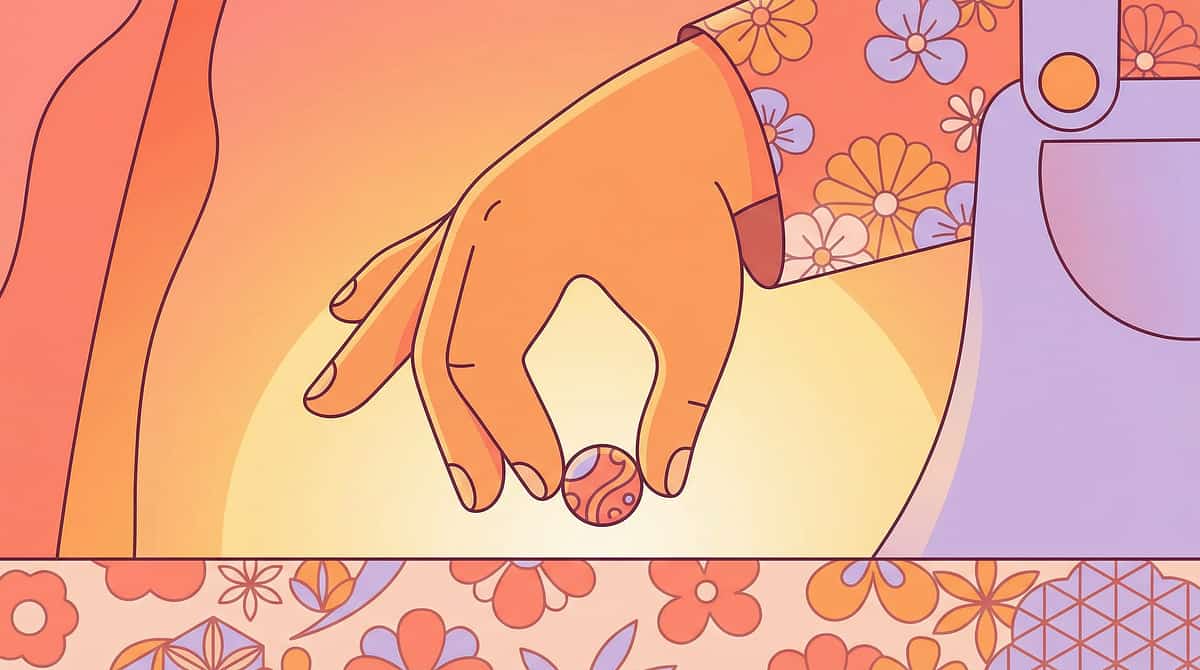
Pincer Grasp — The Precision Gateway
Thumb meets index finger. This is the precision tool. The pincer grasp — picking up small objects between the thumb and fingertip — is the gateway to bead threading, button fastening, page turning, picking up peas, and pencil grip. Without it, precision is impossible. Pincer grasp requires opposition: the thumb rotating to meet the fingertip, a uniquely human fine motor capacity. It typically develops around 9–12 months and may be delayed in children with ASD.
Raking
Fingers sweep items toward palm — earliest pincer precursor
Inferior Pincer
Thumb against the side of the index finger — transitional stage
Neat Pincer
Thumb tip meets index fingertip — true precision pincer achieved
Practice activities include picking up small items (cheerios, raisins, beads — always with supervision for choking hazard), peeling stickers, pulling cotton balls apart, and finger feeding. Indian daily activities: picking up rice grains, sorting dal, picking up sindoor, placing bindis.
⚠️Safety Note: Small items = choking hazard. Always supervise pincer grasp practice with small objects.
F-593 · Pencil Grasp
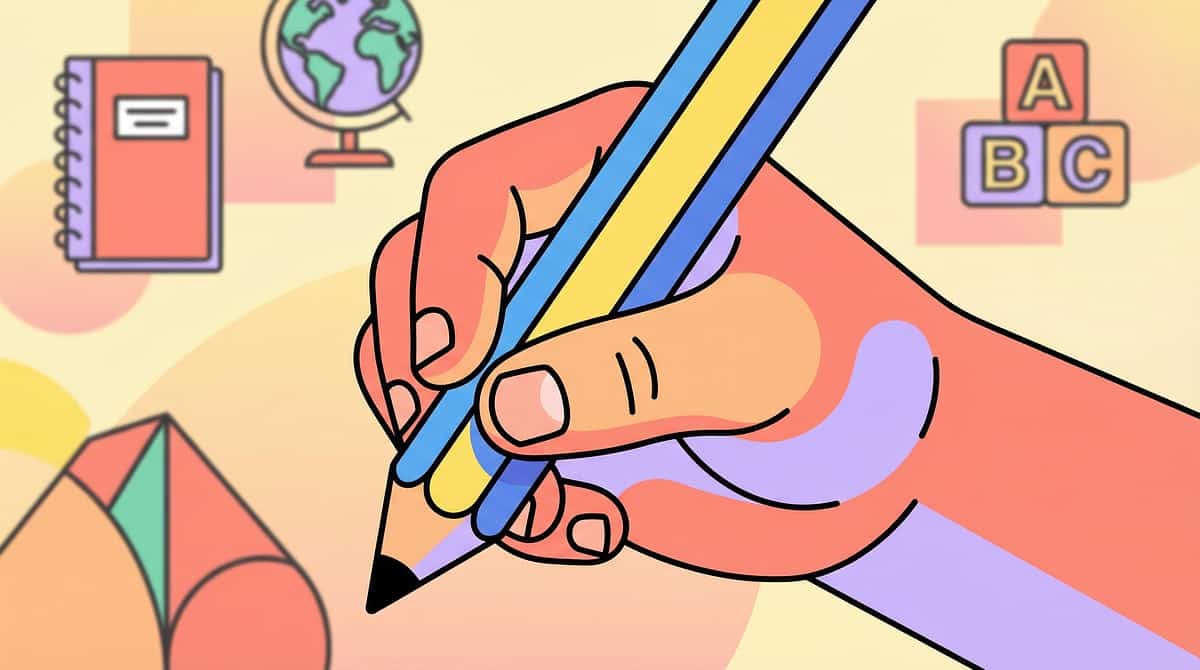
Pencil Grasp — The Writing Grip
How the child holds the pencil determines handwriting quality, speed, endurance, and comfort for years. The mature dynamic tripod — thumb + index + middle finger, pencil resting on the ring finger, fingers moving the pencil while the hand stays stable — is one of the most complex fine motor patterns the human hand performs. Many children with ASD stabilise at an immature grasp; direct intervention can help progression.
Progression activities: use crayons before pencils (fat → thin), broken crayons force a tripod (too small for a fisted grip), pencil grips (rubber triangles that position fingers), vertical surface drawing, and theraputty exercises for finger strengthening.
Key principle: If the child's grasp is atypical but functional — legible writing without pain — do not force a change. Function is the goal, not conformity to a grip type.
Grasp Developmental Stages
01
Fisted Grasp
Whole hand wraps around the pencil — earliest stage
02
Digital Pronate
Fingers hold pencil, arm guides movement
03
Static Tripod
Three-finger grip, wrist moves pencil
04
Dynamic Tripod
Fingers independently move pencil — mature grip
F-594 · Crayon Holding
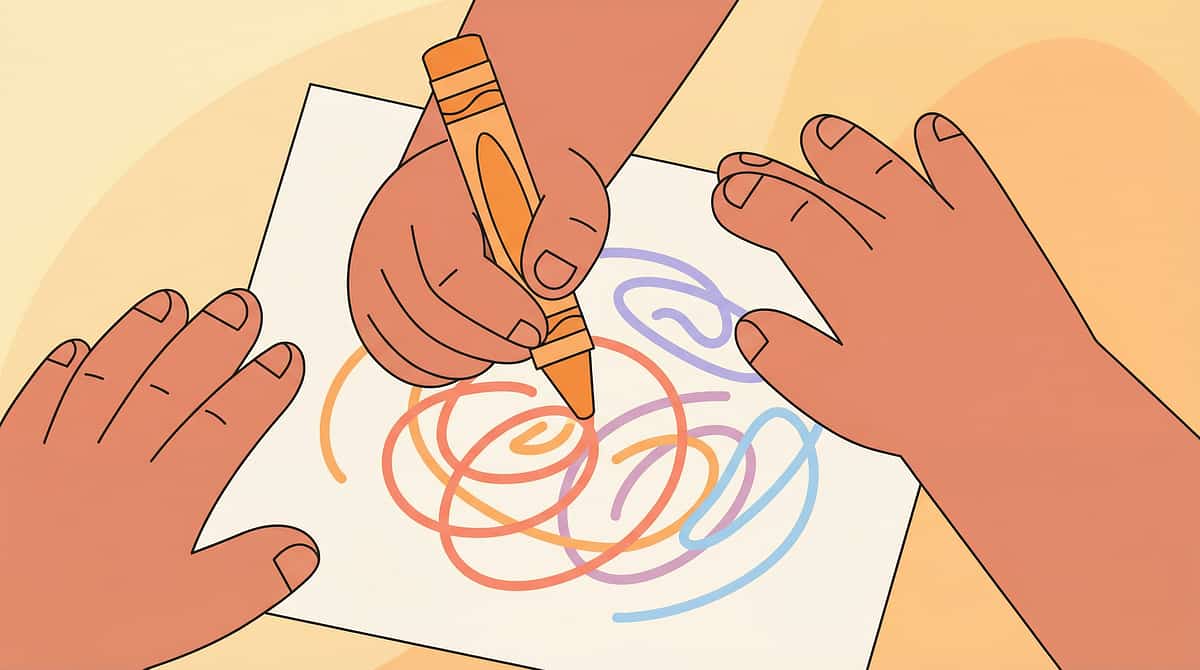
Crayon Holding — The First Mark That's Theirs
Before pencils, crayons. Thicker, easier to grip, more forgiving. Crayon holding is the child's first experience of making a mark they control — the empowerment of "I moved my hand and colour appeared." Mark-making is communication before writing. The visual-motor feedback loop — I press → colour appears — builds the neural association between hand movement and visual result, and the dopamine reward of making a mark drives more practice.
Chunky Crayons
Whole hand grip — ideal for ages 1–2, lowest demand on hand
Egg Crayons
Palmar grip — natural fit for small hands, no wrong way to hold
Triangular Crayons
Shape naturally guides finger placement toward tripod
Standard Crayons
Transition step before pencils — familiar school tool
Activities: free scribbling (all marks are valid!), colouring on large paper taped to table or wall, crayon rubbing over leaves, and outdoor chalk. Indian context: rangoli chalk, slate chalk, veranda chalk drawing — all culturally embedded and highly motivating.
F-595 · Colouring Skills
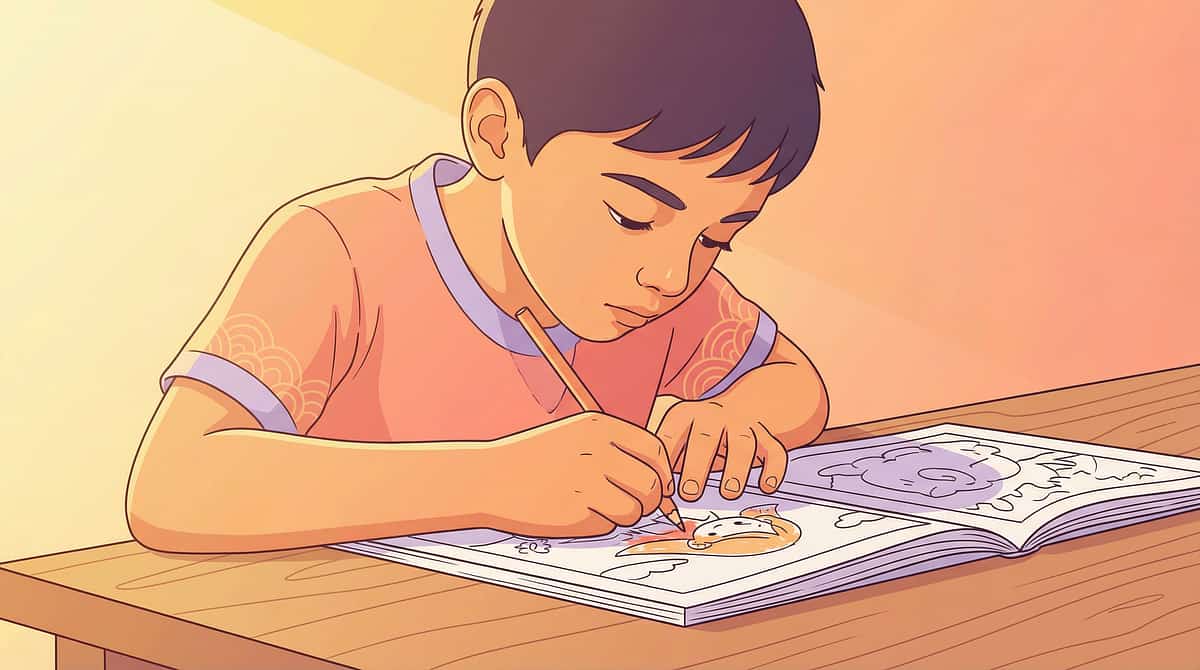
Colouring Skills — Where Motor Meets Attention
What Colouring Builds
- Sustained visual-motor integration
- Grip endurance over minutes
- Directional stroke planning
- Visual boundary monitoring
- The exact circuits needed for handwriting
Evidence
📊 Level I — Pre-writing + visual-motor. NCAEP 2020
Colouring within the lines requires sustained attention, grip endurance, visual-motor control, directional stroke planning, and patience. For many children with ASD, colouring is the first sustained fine motor task — and the first test of whether the hand can follow what the eye instructs.
The visual cortex identifies the boundary → the parietal cortex plans the stroke → the motor cortex executes → the visual cortex monitors: "Am I still inside?" → continuous adjustment loop. Colouring builds the exact neural circuitry needed for handwriting, in a lower-pressure, more engaging format.
Progression: scribbling (no boundary) → large shapes → medium shapes → small shapes → detailed pages. Adaptations: raised glue outlines so the child feels the boundary, preferred character images, thick before thin lines. Indian options: rangoli colouring books, festival-themed sheets, kolam pattern filling.
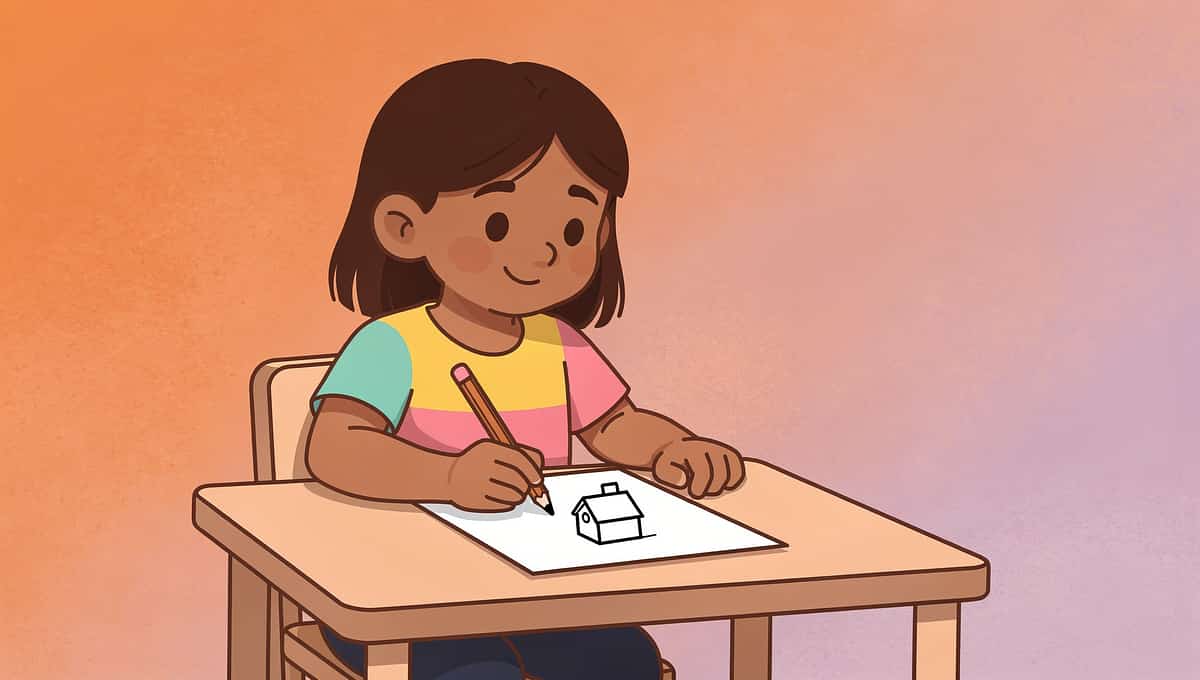
F-596 · Drawing Skills
Drawing Skills — From Mark-Making to Representation
From a scribble that means nothing — to a circle that means "face," a line that means "road," a shape that means "house." Drawing is visual communication before literacy. It builds motor planning (praxis), spatial awareness, visual-motor integration, and creative expression. Drawing adds cognitive planning to the motor act — the child must decide what to create, then execute. It is neurologically more demanding than colouring.
Teaching drawing: draw with the child (model), use hand-over-hand for new shapes then fade, dot-to-dot for shape building, tracing before copying. Indian cultural drawing opportunities: rangoli shapes (circles, lines, dots — a natural drawing progression), kolam dots as drawing guides, and Warli art figures (simple human and animal forms — culturally rich and approachable).
Section 2 of 5
Manipulation Skills
Grasping is the beginning — manipulation is the mastery. Cards 07–14 cover the skills that transform a basic grip into purposeful, precise, two-handed action: scissors, bead stringing, puzzles, block stacking, container opening, page turning, hand strength, and finger isolation. These are the skills of school, play, and daily independence.
F-597
Scissor Skills
F-598
Bead Stringing
F-599
Puzzle Skills
F-600
Block Stacking
F-601
Container Opening
F-602
Page Turning
F-603
Hand Strength
F-604
Finger Isolation
F-597 · Scissor Skills
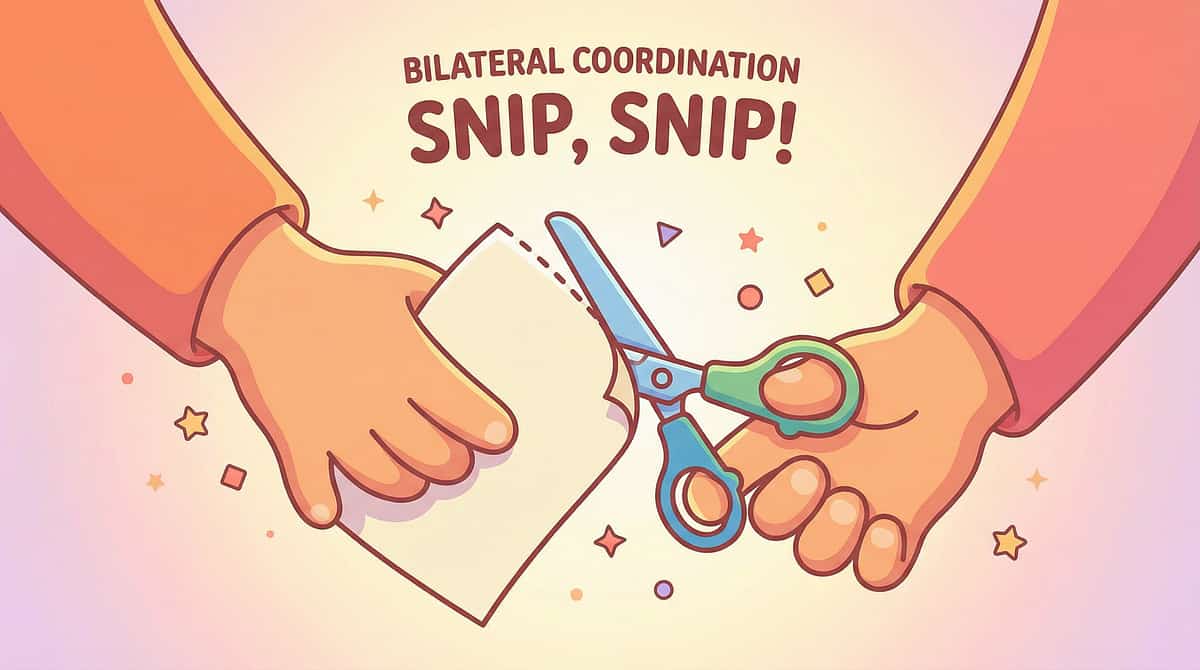
Scissor Skills — The Most Complex Bilateral Task
Scissors are the most complex bilateral fine motor task in the pre-academic repertoire. One hand holds the paper (stabiliser), the other opens and closes the scissors (manipulator) — different movements simultaneously. Add directional control, visual tracking of the cut line, and sustained grip, and you have a task that requires the highest level of bilateral hand coordination a young child will ever attempt. Scissor skills are often the last fine motor skill to develop.
Snip
Single cut across a thin strip — first scissor act, no direction needed
Fringe
Multiple snips along the edge of paper — builds open-close rhythm
Straight Line
Cut along a thick straight line — adds visual tracking
Curved & Shapes
Cut curves, then simple shapes, then complex figures
Pre-scissor activities: tearing paper (bilateral, simpler), play-doh cutting, tongs for open-close practice. Adapted scissors: spring-loaded (auto-open), loop scissors (whole hand), double-handle training scissors. Indian applications: paper rangoli cutting, festival decoration making, flower stem cutting.
F-598 · Bead Stringing
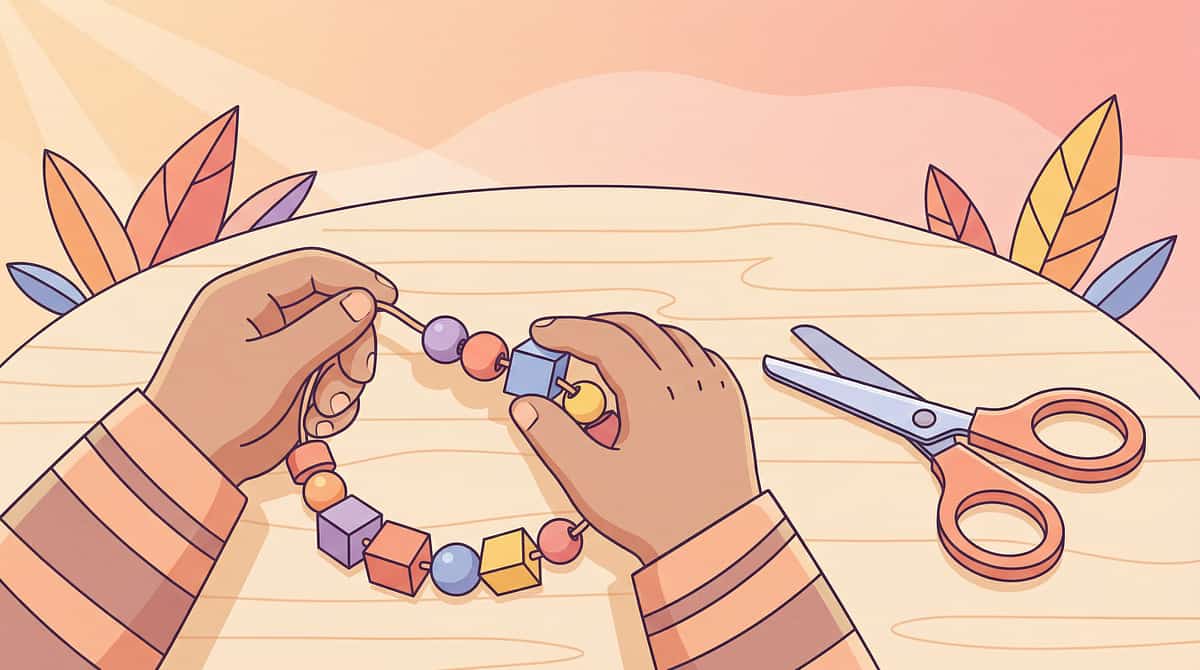
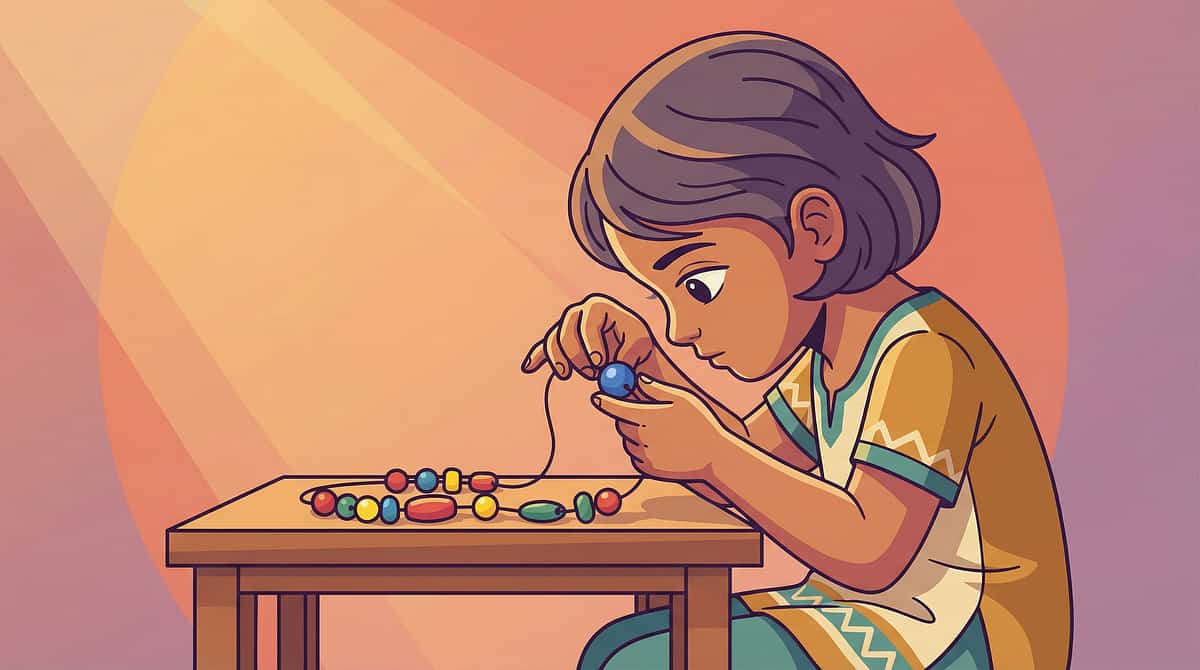
Bead Stringing — The OT's Favourite
Threading a bead onto a string is bilateral coordination, pincer grasp, visual-motor precision, and sustained attention all in one task. Bead stringing targets everything — which is why occupational therapists reach for it again and again. Each bead is a complete fine motor trial: visual-motor precision (aligning a millimetre-width string with a millimetre-width hole), proprioceptive calibration (holding the bead with just the right pressure), bilateral coordination, and sequential planning (string → aim → push → pull → repeat).
Progression: large beads + rigid pipe cleaner (easiest) → large beads + thick string → medium beads + string → small beads + thin string → patterned stringing (colour/shape patterns add cognitive demand). Stiffen the string end with tape to make threading easier at first.
Indian cultural connection: Flower garland making (maala), puja mala threading, and decorative door hangings — bead stringing is already culturally embedded in Indian home life.
3
Skills Targeted
Pincer, bilateral, visual-motor — all at once
4
Difficulty Levels
From pipe cleaner to patterned stringing
F-599 · Puzzle Skills
Puzzle Skills — Leveraging Visual-Spatial Strengths
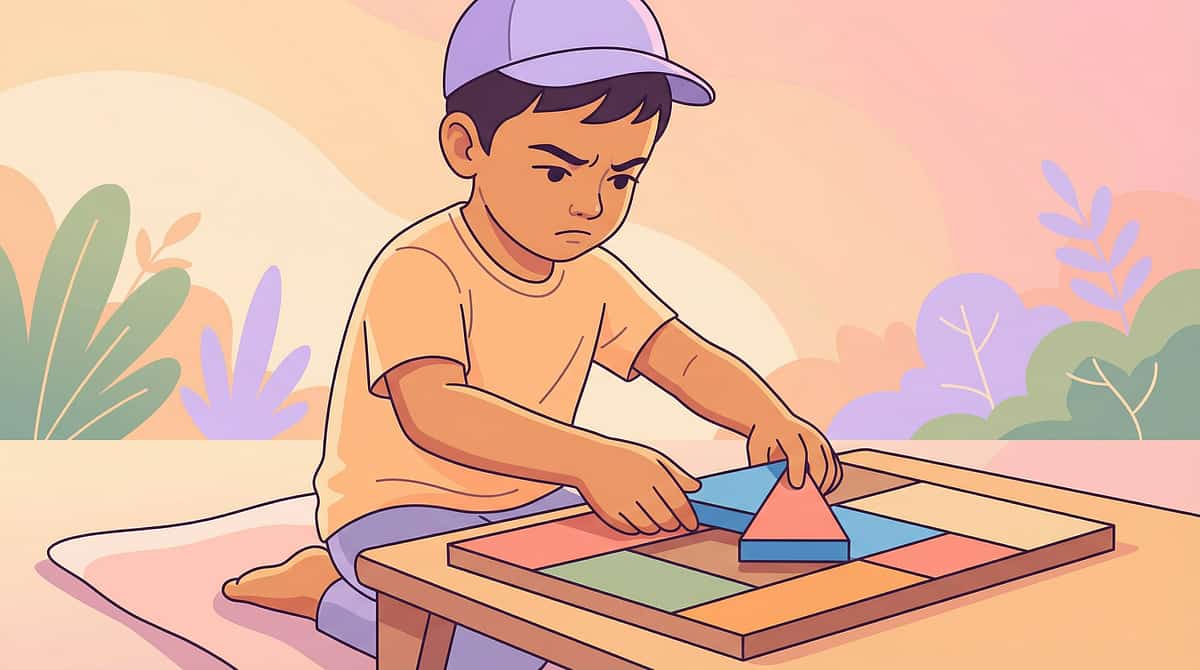
Puzzles combine visual-spatial processing, fine motor precision, and problem-solving. Rotating, flipping, and placing puzzle pieces requires visual analysis (which piece fits?), spatial rotation (turn it to match), and motor precision (place accurately). Many children with ASD excel at puzzles — leveraging visual-spatial strengths that may be a genuine area of ability. Puzzles are where the OT and the child's strengths meet.
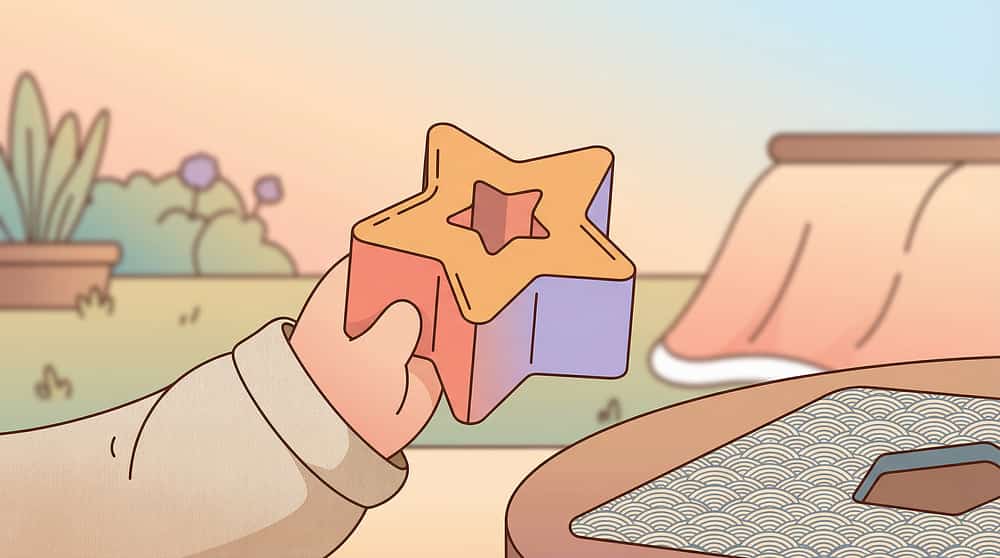
Shape Sorters
Single pieces, matching by shape — the first puzzle experience
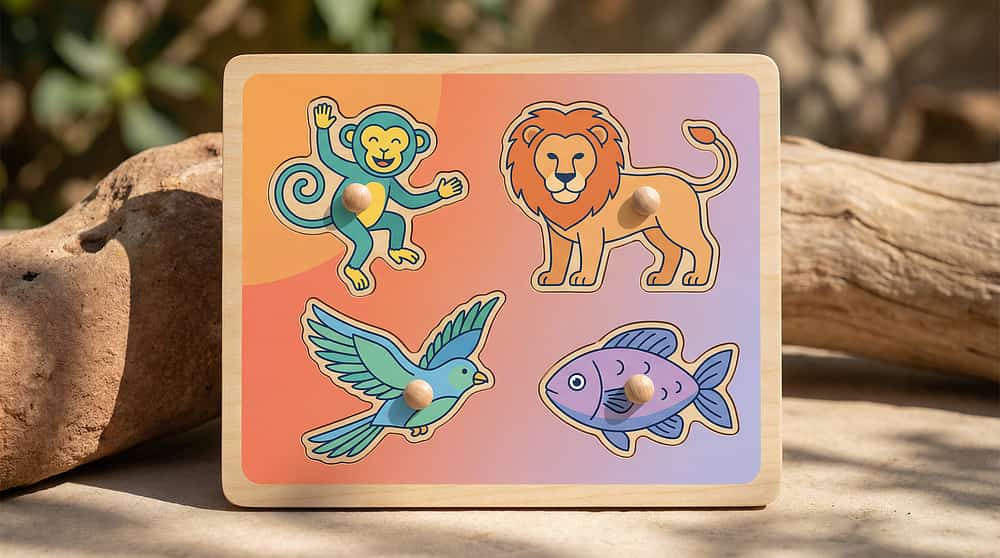
Knob Puzzles
2–4 pieces with knobs for easy grasping and placement
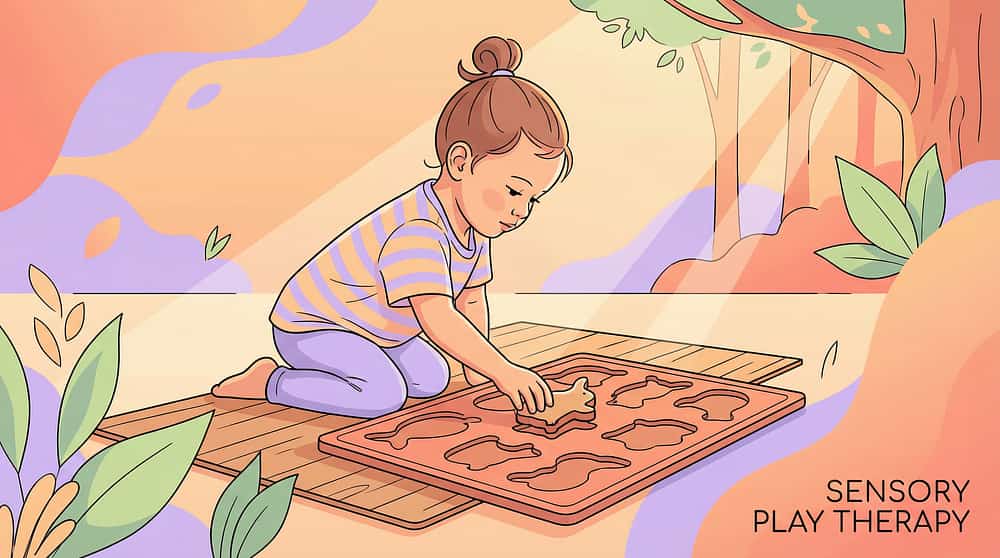
Inset Puzzles
5–10 pieces requiring visual matching and fine placement
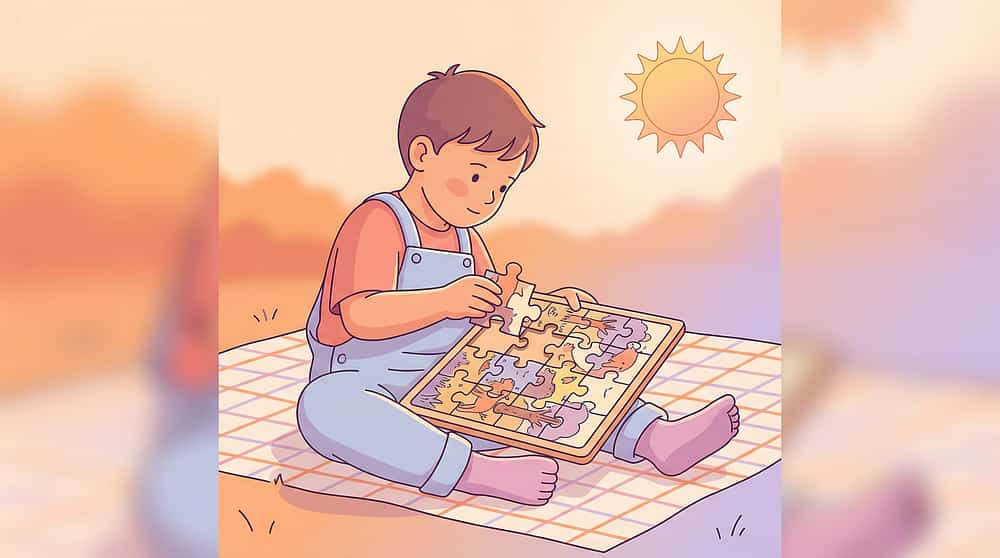
Interlocking Puzzles
12 → 24 → 48 → 100+ pieces as skills develop
Teaching strategy: start with 1 piece removed (errorless — child places the last piece for immediate success) → 2 removed → full puzzle. Always choose puzzles featuring the child's special interests — interest drives practice and practice builds skill.

F-600 · Block Stacking
Block Stacking — Where Release Is Harder Than Grip
The Neuroscience of Release
Stacking reveals a counterintuitive truth: release is harder than grip. The brain must calculate release force, release timing, and release position simultaneously. Over-release → block falls. Under-release → hand knocks the stack. Precise release is a cerebellar timing function that improves only through practice.
Progression
- 2 blocks → 4 → 6 → 10 → 15+
- Large soft → wooden → small → LEGO
- Free stacking → copy a model → build from picture
Block stacking is deceptively rich: it targets visual-motor precision, release control, proprioceptive calibration, and spatial planning (centring for balance) — while also engaging cognitive skills like height planning, balance physics, and imitation.
Activities: "Copy my tower" (imitation + fine motor), build to a target height, pattern stacking (colour sequences), and building from a picture model. Indian daily life offers natural stacking opportunities: chai cup stacking, tiffin container stacking — functional tasks with high repetition and real motivational value.
Block types progress from large soft blocks (wide base, light weight, most forgiving) through standard wooden blocks to small blocks and finally LEGO/Duplo, where the snap-fit connection adds a precision force demand.
F-601 · Container Opening
Container Opening — Fine Motor That Feeds Independence
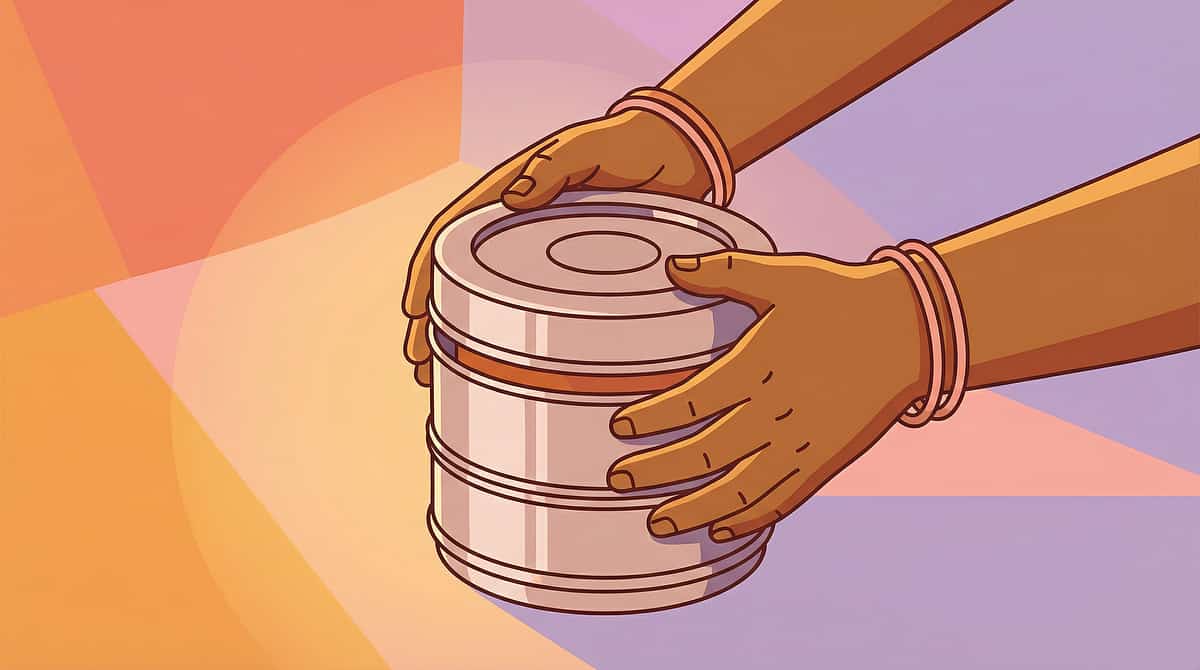
Every day, the child encounters dozens of containers: lids, zippers, Velcro, snaps, buttons, twist caps. Each requires a specific grasp pattern, bilateral coordination, and force calibration. Container opening is functional fine motor — it is the difference between a child who can access their own food, drinks, and belongings, and one who must ask for help at every turn.
Pull-Off Lids
Easiest — no rotation, just vertical pull force
Pop-Open Snap
Press + lever — introduces force calibration
Twist-Off
Sustained rotational force — water bottles, jars
Zipper
Bilateral pinch + pull + direction control
Buttons & Snaps
Highest demand — pincer + bilateral + spatial
Motivate practice by placing the child's preferred item inside — they must open the container to access the reward. Indian context: tiffin box opening (daily, multi-tier — bilateral + twist), dabba lids, water bottle caps, pickle jar opening.

F-602 · Page Turning
Page Turning — Neurologically Complex, Seemingly Simple
Turning one page at a time requires isolated finger control, tactile sensitivity, and bilateral coordination — one hand holds the book, one turns the page. It is a prerequisite for independent book use and a daily school requirement. The brain must detect the edge of a single page through fingertip proprioception, a fine discriminative touch task that requires tactile discrimination, precision pincer, force calibration, and wrist rotation all at once.
Progression: board books (thick pages — easy to isolate) → lift-flap books (tab provides a grip point) → thick magazine pages → thin book pages. Adaptations: paper clip page separators (one per page — easier to grip individually), sticky tabs on corners. Daily practice strategy: during read-aloud, assign the child the job of turning pages — "YOUR job is to turn when I say 'Turn!'" — giving them a clear role and repeated practice in a warm, motivating context.
📚
Board books first — thick pages, lowest demand
🔖
Sticky tabs on corners for easier grip
📖
Daily read-aloud = daily practice
F-603 · Hand Strength
Hand Strength — The Foundation Beneath the Foundation
Grip strength, pinch strength, and finger endurance are the infrastructure of all fine motor skill. Without adequate strength, no grasp pattern sustains for long — a child with weak hands may hold a pencil for one minute before fatigue sets in, fall behind in writing tasks, and face growing frustration. Hand strength equals fine motor endurance.
Play-Doh & Clay
Squeeze, pinch, roll, pull apart — works every intrinsic hand muscle with graded resistance
Spray Bottles
Squeezing the trigger targets the exact muscles needed for sustained pencil grip
Sponge Squeezing
Bath time hand strengthening — functional, daily, and irresistibly satisfying
Crumpling & Tearing
Crumpling newspaper into tight balls builds grip endurance against resistance
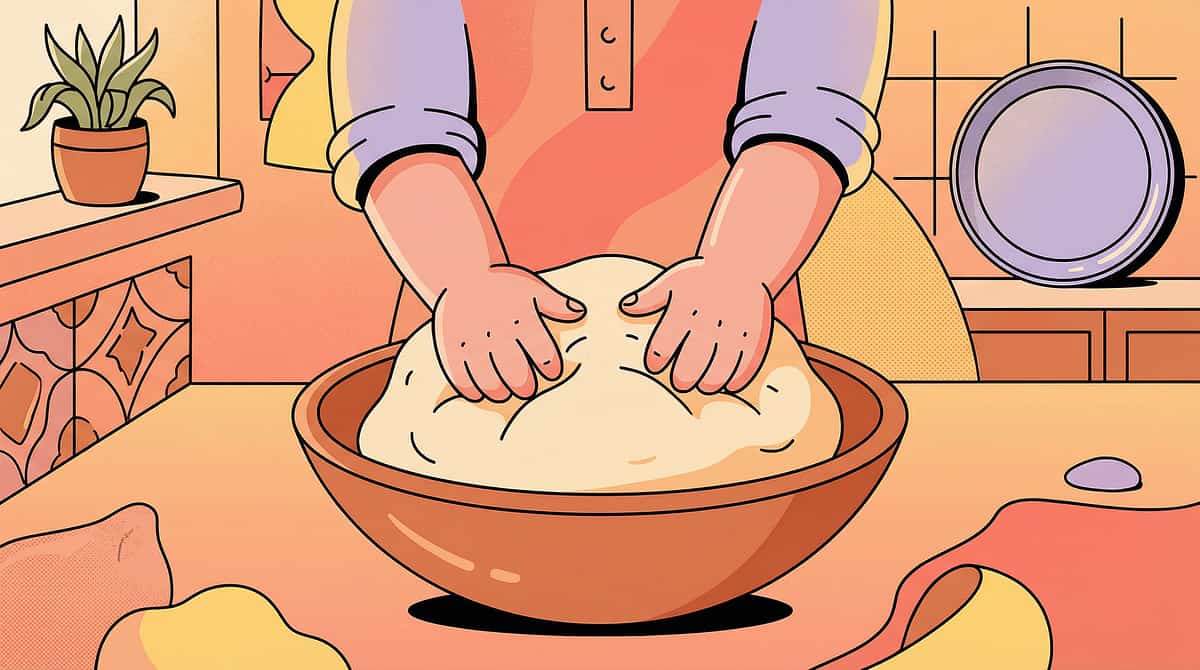
Indian daily life is rich with natural hand strengtheners: kneading atta dough is arguably the single best home hand-strengthening activity for children — culturally embedded, free, and genuinely therapeutic. Coconut scraping and grinding with a mortar and pestle offer similar benefits. Embedding strengthening into daily household routines removes the need for a separate therapy session.
F-604 · Finger Isolation
Finger Isolation — One Finger at a Time
Why Isolation Matters
The dynamic tripod grip requires the thumb, index, and middle finger to work while the ring and pinky fingers stay tucked. Without isolated control, the whole hand moves as one — no precision, no endurance, no mature grip.
Activities
- Finger painting — one finger at a time
- Poking play-doh with the index finger
- Piano or keyboard — one key per finger
- Finger puppets — move one at a time
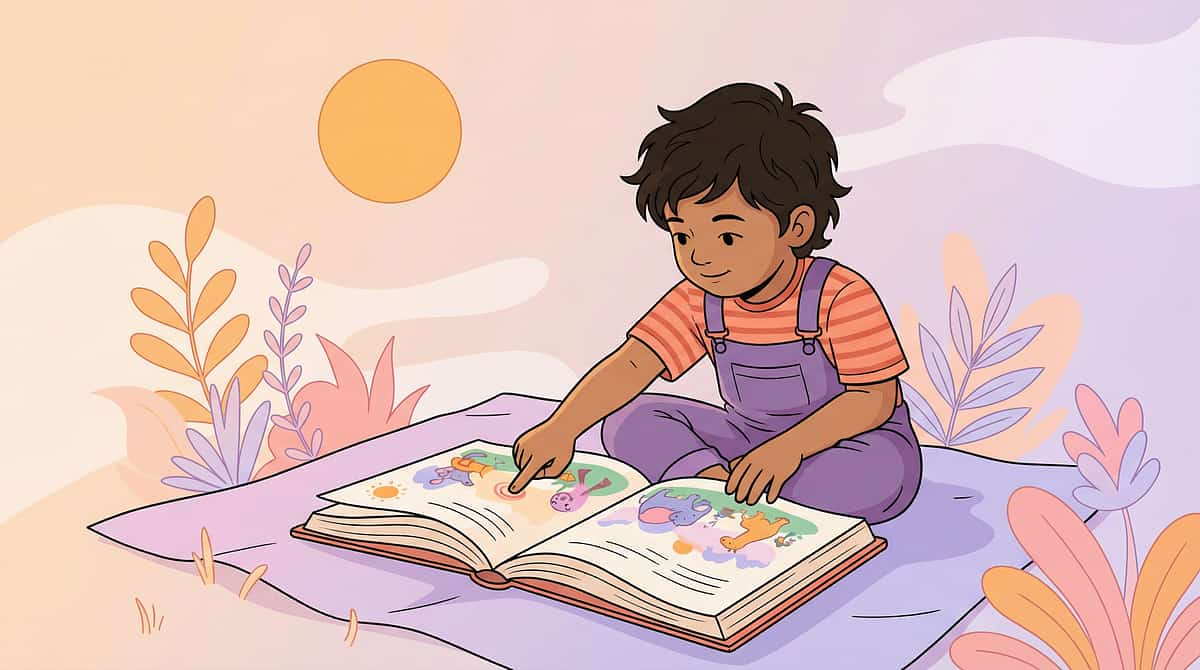
- Pointing to pictures during book reading
- "Finger walking" across the table
Using one finger independently from the others — pointing, pressing buttons, typing, playing piano — is a capacity called motor cortex individuation: the ability to activate one finger's muscles without co-activating adjacent fingers. In young children, finger movements are "en masse" (all fingers move together). With development and practice, the brain learns to separate control, with motor cortex neurons becoming increasingly specific.
In ASD, motor cortex individuation may develop more slowly. Targeted activities — especially those embedded in preferred play — build this separation. Indian daily contexts: counting on fingers (culturally universal), pressing doorbells, temple bell ringing with specific grip and pull patterns.
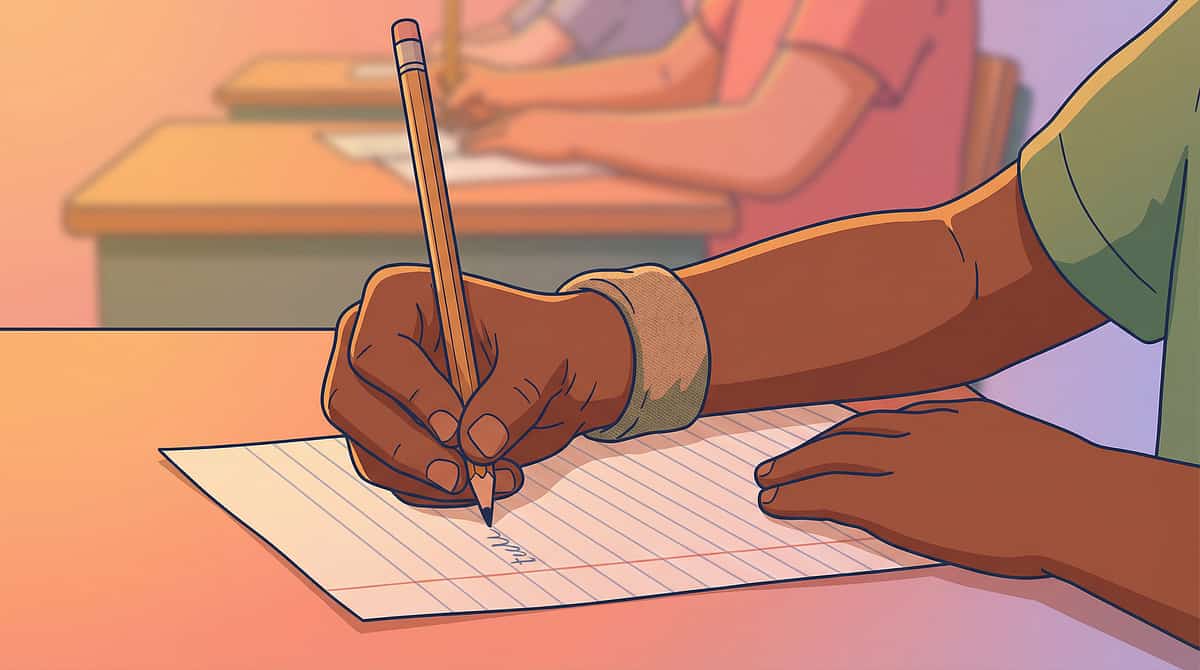
Section 3 of 5
The Writing Pathway
Writing is not a single skill — it is the convergence of every fine motor development that came before. Cards 15–18 trace the complete writing pathway: establishing hand dominance, building pre-writing strokes, developing handwriting, and locking in consistent letter formation. This is where fine motor meets academic participation.
F-605
Hand Dominance
F-606
Pre-Writing Skills
F-607
Handwriting
F-608
Letter Formation
F-605 · Hand Dominance
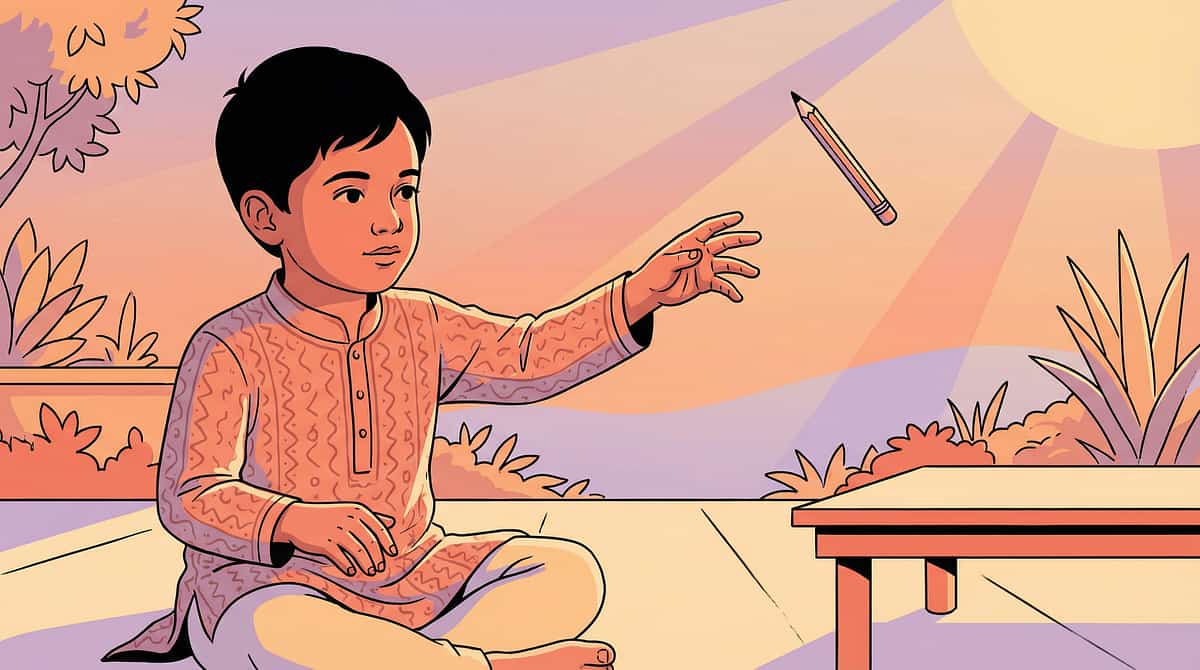
Hand Dominance — The Skilled and the Stabiliser
Left or right? Hand dominance — consistent preference for one hand — typically establishes by age 4–6. Some children with ASD show delayed dominance, switching between hands, which affects fine motor efficiency: without a dominant hand, neither hand accumulates the practice repetitions needed for precision. Hemispheric lateralisation allows one hand to become the skilled manipulator (writes, cuts, draws) while the other becomes the skilled stabiliser (holds paper, holds object). Without dominance, both hands remain moderately skilled; neither reaches precision.
How to Observe
Which hand does the child reach with first? Use for eating? For throwing? For pointing? The most frequently used hand is the emerging dominant hand.
How to Encourage
Once a preference appears, place objects on that side and hand tools to that hand. Encourage — never force. If no preference by age 5, consult your OT.
Left-Handedness
Never force right-handedness if the child prefers left. In Indian cultural contexts where left-hand avoidance for eating exists, clarify: left-handedness for writing is completely valid and should always be respected.
F-606 · Pre-Writing Skills
Pre-Writing Skills — The Strokes Before the Letters
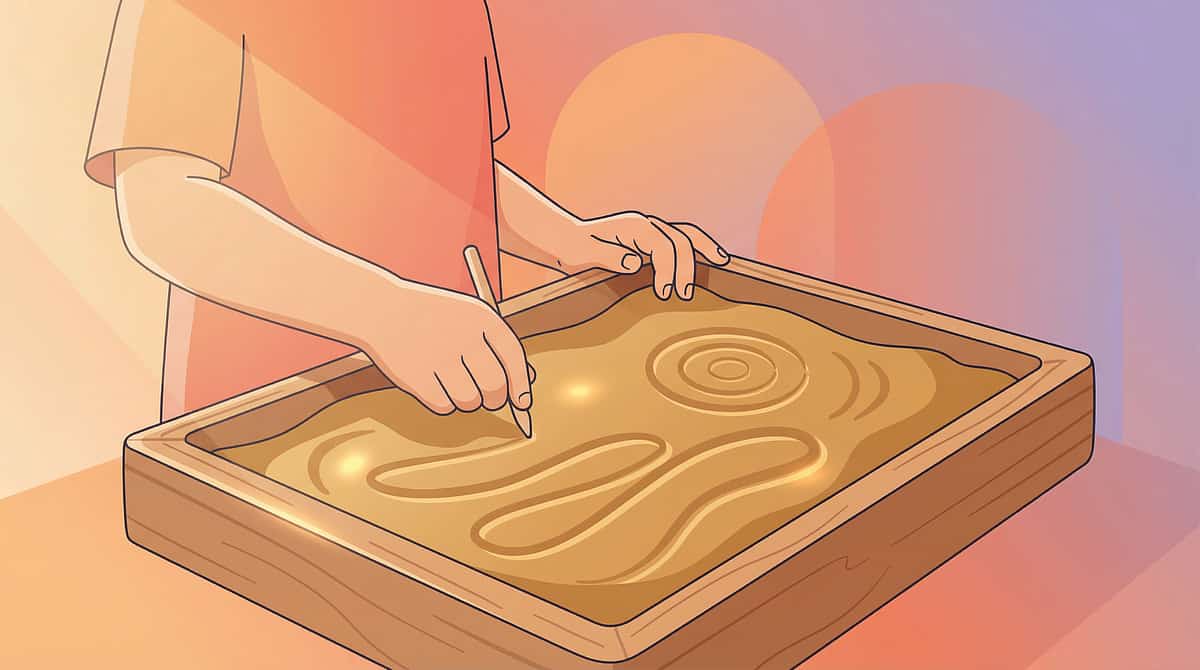
Pre-writing encompasses all the skills needed before formal letter writing: pre-writing strokes (vertical line, horizontal line, circle, cross, diagonal, square, triangle), pencil control, directionality (left-to-right, top-to-bottom), and spatial awareness on the page. Pre-writing strokes develop in sequence because they require progressively more complex motor planning — starting with the simplest single-direction movement and building to combined shapes requiring spatial planning.
Teach through: sand or salt tray (finger tracing before pencil — large-scale, sensory-rich), large chalkboard (arm-level before finger-level), whiteboard, finger paint, and then paper. Indian traditional practice: rangoli lines and curves are a culturally embedded pre-writing activity; kolam dot-to-dot patterns train directional stroke planning; slate and chalk offer the traditional Indian pre-writing pathway.
Stroke Sequence
01
| Vertical Line
Simplest — one direction, full arm movement
02
— Horizontal Line
Requires visual left-to-right tracking
03
O Circle
Continuous directional change — more complex
04
+ Cross / □ Square
Two strokes intersecting — adds spatial planning
05
△ Triangle / X Diagonals
Most complex — combined spatial and directional demands

F-607 · Handwriting
Handwriting — Every Fine Motor System Converges
Handwriting is the fine motor output that school demands most. Forming legible letters consistently with appropriate size, spacing, and speed requires every fine motor subsystem to work together: grip, stroke production, letter memory, visual-motor integration, spatial planning, and endurance for 10+ minutes of sustained writing. Poor handwriting doesn't mean poor intelligence — it means the motor system needs more support.
Multi-Sensory Formation
Trace in sand, form with play-doh, write in air, then write on paper — rich sensory encoding builds stronger motor memory for each letter
Consistent Method
Same starting point, same stroke sequence every time. Inconsistency early creates inconsistency permanently — establish the motor programme correctly from the start
Name First
The child's own name carries the highest motivation. Start there — name writing is the first and most powerful handwriting target for any child
Guided Paper
Raised lines, highlighted lines, or the Indian four-line notebook format — clear visual and tactile boundaries guide size and placement
F-608 · Letter Formation
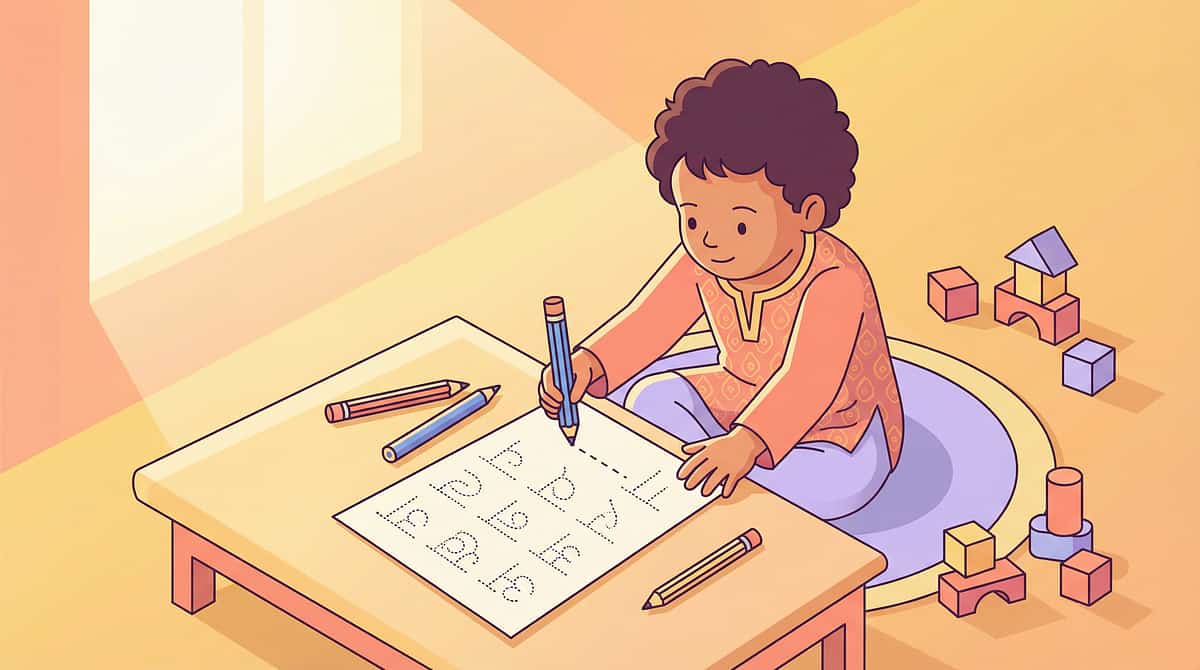
Letter Formation — Building Automated Motor Programmes
The Neuroscience
Letter formation is stored in the basal ganglia as an automated motor programme — a stored sequence of strokes. Once automated, the child writes without consciously thinking about how to form each letter, freeing the prefrontal cortex for what they're writing. Before automation, every letter requires conscious planning — exhausting. Consistent teaching of formation creates consistent motor programmes.
Letter Groups
- Vertical start: l, t, i
- Curve start: c, o, a, d, g
- Down-bump: r, n, m, h
How each letter is formed — stroke by stroke — matters as much as the final appearance. Starting from the top, moving in the correct direction, and following the same sequence every time produces consistency. Inconsistent formation produces inconsistent letters, illegible writing, and growing academic frustration.
Teaching tools: verbal cues ("Start at the top, go straight down, lift, go across" for T), arrow cues on letter models, dotted letters for tracing, gradually fading the dots until the child writes from memory. Always start at the top; always move left-to-right for English. For bilingual children: Hindi akshar formation involves entirely different motor patterns — teach each script separately with its own formation sequences.
Section 4 of 5
Therapeutic Activities
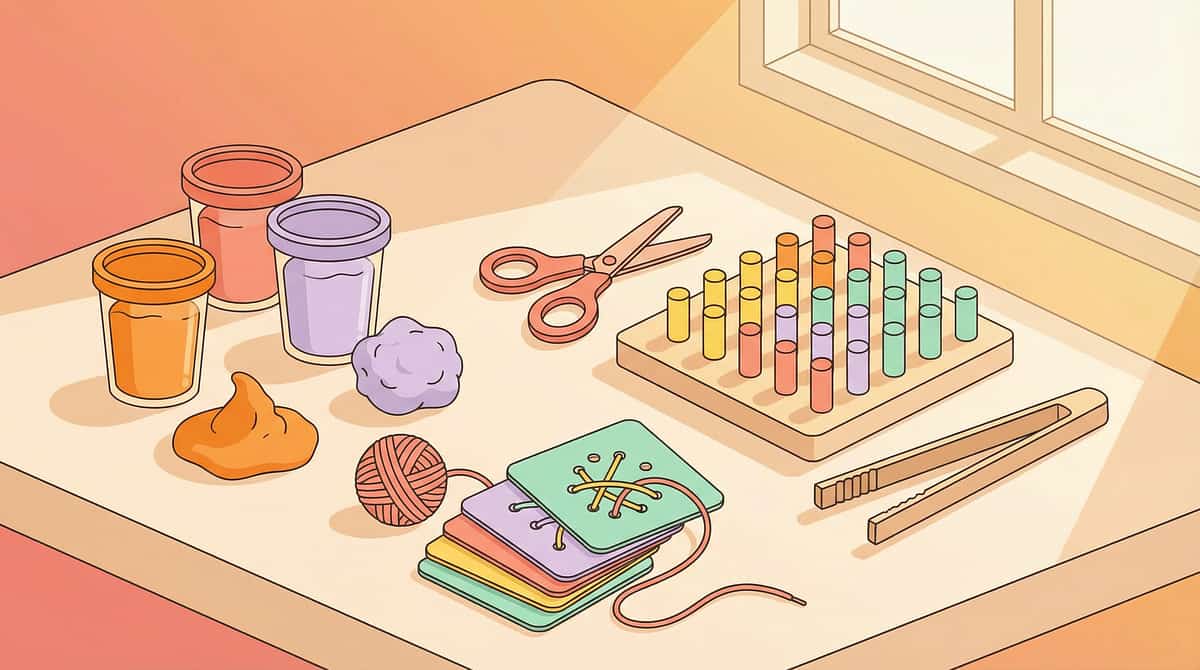
The richest fine motor interventions often feel like the best play. Cards 19–24 cover the therapeutic activity toolkit: play-doh, tearing, crumpling, lacing, pegboard, tongs and tweezers, and clothespins. These are the tools that build strength, precision, bilateral coordination, and endurance — in a format that invites engagement and rewards repetition.
F-609
Playdough Manipulation
F-610
Tearing & Crumpling
F-611
Lacing Skills
F-612
Pegboard Activities
F-613
Tongs & Tweezers
F-614
Clothespin Activities
F-609 · Playdough Manipulation
Playdough — The OT's Desert Island Tool
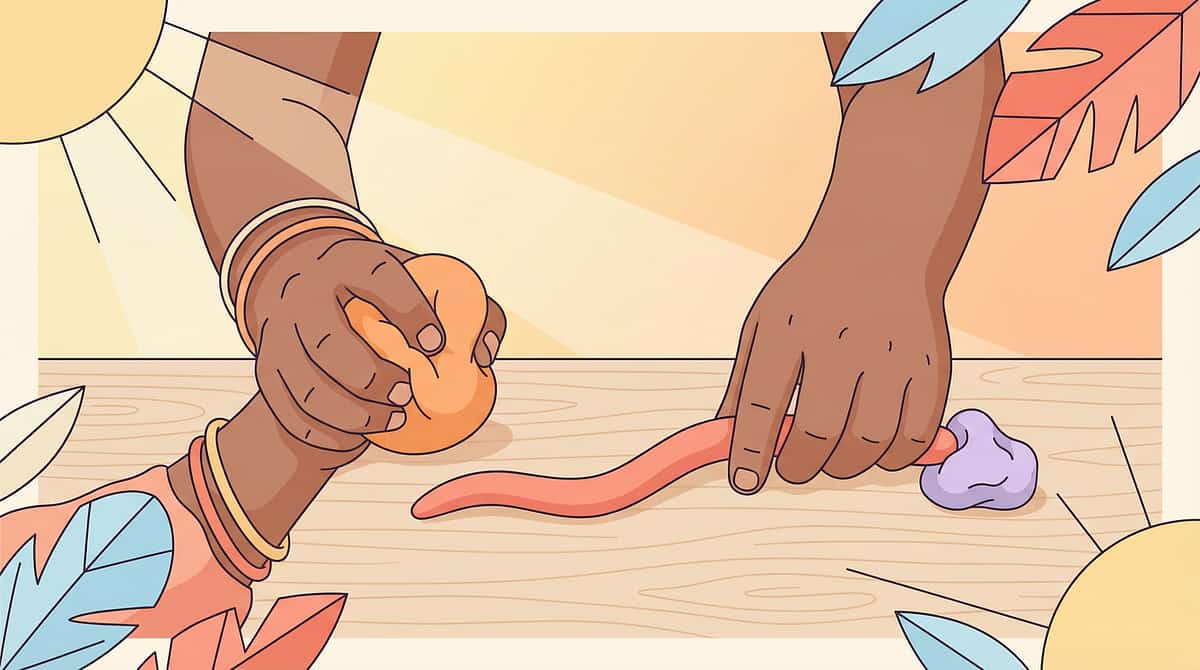
If you could have only one fine motor material, play-doh would be it. Rolling, squeezing, pinching, poking, pulling, cutting, moulding — play-doh works every hand muscle, every grasp pattern, and provides rich proprioceptive feedback. The resistance of play-doh means every movement is simultaneously strengthening. It is therapeutic medium, sensory tool, and creative canvas in a single ball of dough.
Strength
Squeeze flat, pull apart, poke holes — intrinsic and extrinsic hand muscles both engaged
Pincer
Pinch small pieces off, roll tiny balls between thumb and index — precision with resistance
Bilateral
Roll snakes, flatten with rolling pin — both hands working together in coordinated motion
Tool Use
Cut with plastic knife, stamp with cutters, poke with sticks — transfers grip skills to tools
DIY play-doh (₹30): 2 cups flour + 1 cup salt + 2 tbsp oil + water + food colour. Indian alternatives: atta dough (free, always available), festival idol-making clay.

F-610 · Tearing and Crumpling
Tearing and Crumpling — Zero Cost, Maximum Benefit
Tearing paper requires bilateral coordination (each hand pulls in the opposite direction), grip strength, and force calibration. Crumpling paper into balls requires hand strength, proprioceptive input, and grasp endurance. Both activities are free, available everywhere, and deeply satisfying — the sound, the resistance, the productive "destruction" make them highly motivating for many children with ASD.
Tearing progression: tissue paper (easiest) → newspaper → construction paper → cardboard (hardest). Tear into strips, then pieces, then confetti. Use torn pieces for collage art — combining the therapeutic activity with a creative output the child can keep.
Crumpling: crumple newspaper into tight balls (hand strength), then throw at a target (adds gross motor), tape crumpled balls into sculptures (adds creativity). Indian context: old newspapers in English and regional languages are universally available at zero cost.
₹0
Material cost — old newspaper is all you need
Bilateral
Both hands pulling in opposite directions simultaneously
Collage
Torn pieces become art — therapy becomes keepsake
F-611 · Lacing Skills
Lacing Skills — The Precursor to Shoe-Tying
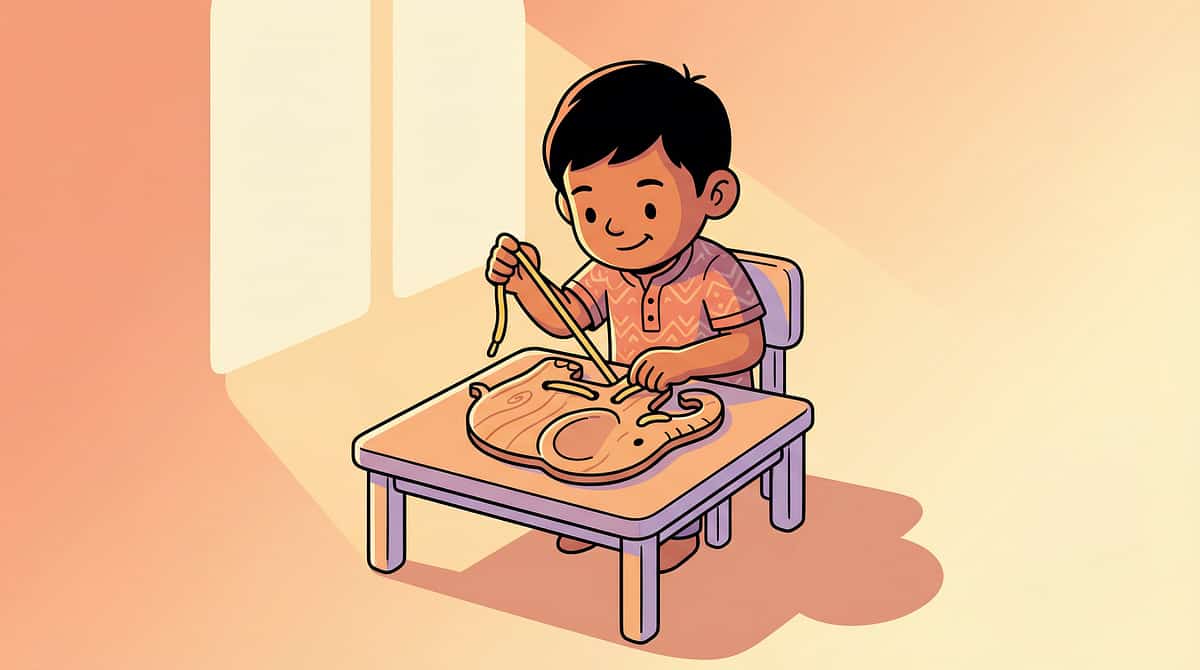
Threading a lace through holes in sequence combines bilateral coordination (hold card + thread lace), pincer grasp, visual-motor precision, and sequential planning (which hole next?). Lacing is the direct precursor to shoe-tying — one of the great milestones of childhood independence — and a powerful bilateral fine motor trainer in its own right. It is bead stringing on a flat surface with directional requirements, adding spatial complexity to an already rich task.
Large Lacing Cards
Wide holes, thick stiff lace — start here. ₹100–200 or DIY from cardboard + shoelace.
Smaller Cards
Reduce hole size and lace thickness incrementally as precision improves
Lacing Beads
Add patterning (colour, shape sequences) to increase cognitive demand
Shoe Lacing
The functional milestone — bunny ears or loop method, target around age 6–7
Indian cultural connections: making toran (festival door hangings with threaded elements), decorative lacing for celebrations, and the functional daily goal of shoe-lacing independence for school.
F-612 · Pegboard Activities
Pegboard Activities — Fine Motor Meets Cognitive
What Pegboards Target
- Motor: Pincer, controlled release, force calibration
- Visual: Align peg with hole — millimetre precision
- Cognitive: Copy patterns, create pictures, sort by colour
- Memory: Hold pattern in mind while placing pegs
Types
- Large pegs — OT starter (₹200–400)
- Small pegs — precision challenge
- Lite-Brite style — light-up, highly motivating
- DIY — toothpicks in thermocol/styrofoam
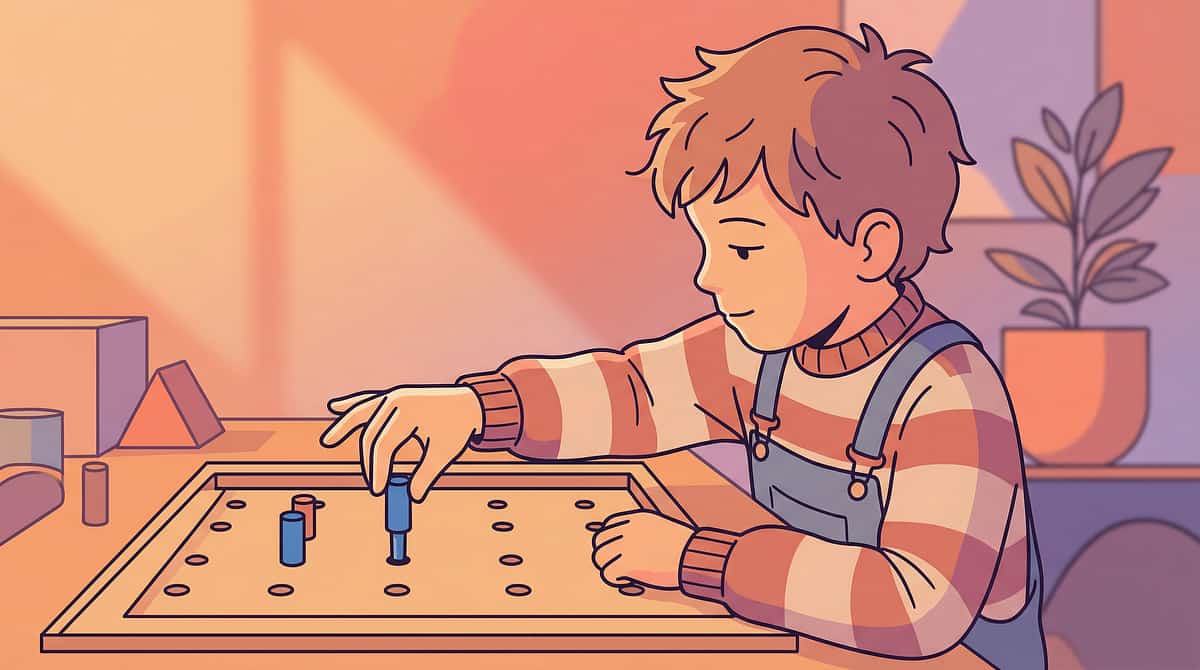
Placing small pegs into holes requires pincer grasp, visual-motor targeting, controlled release, and force calibration — push the peg in with just enough force, not too hard, not too soft. When combined with pattern-making, pegboard activities engage the prefrontal cortex (planning), visual-spatial processing (reading and reproducing designs), and working memory (holding the target pattern while placing).
Activities: fill all holes for motor endurance, copy simple patterns for visual-motor integration, create pictures for creative expression, sort by colour while placing for categorisation, and time challenges for speed and accuracy. The cognitive layer is what makes pegboard uniquely powerful — it is fine motor training and cognitive training simultaneously.

F-613 · Tongs and Tweezers
Tongs and Tweezers — The Pre-Scissor Bridge
Tongs and tweezers train the open-close-open-close hand pattern that is identical to scissor use — but without the complexity of managing paper or cutting a line. They are the ideal bridge activity for children not yet ready for scissors: building grip strength, bilateral coordination, and the reciprocal finger movement pattern that transfers directly to cutting.
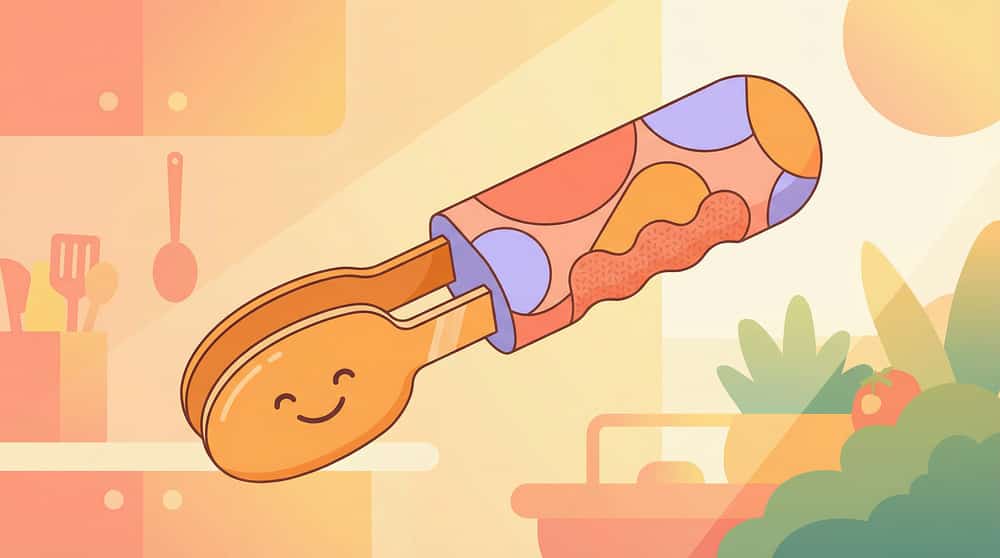
Jumbo Kitchen Tongs
Largest opening, lowest resistance — start here. Transfer large items between containers. Indian kitchen chimta (roti tongs) works perfectly.
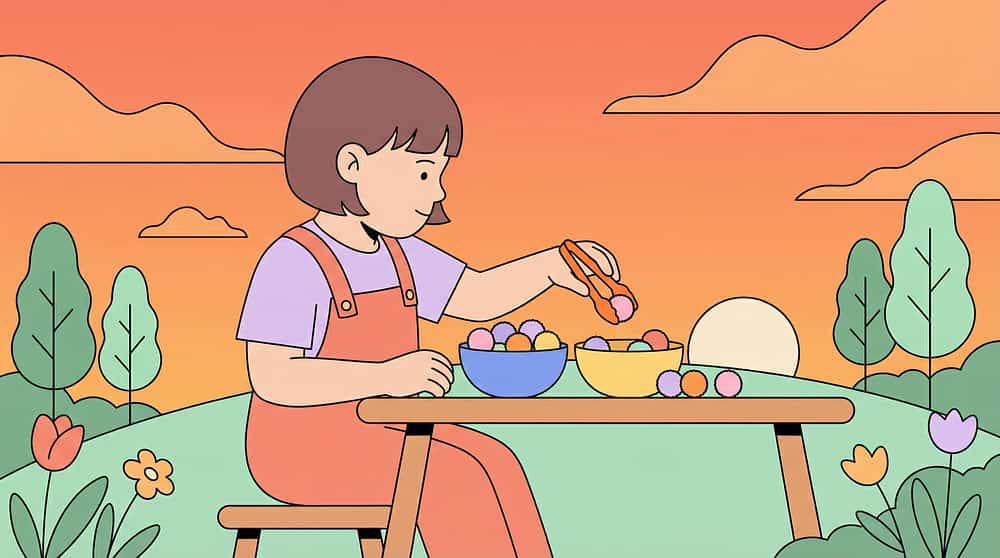
Smaller Tongs
Reduce size as grip improves. Transfer pom-poms, cotton balls, or sorted coloured items between bowls.
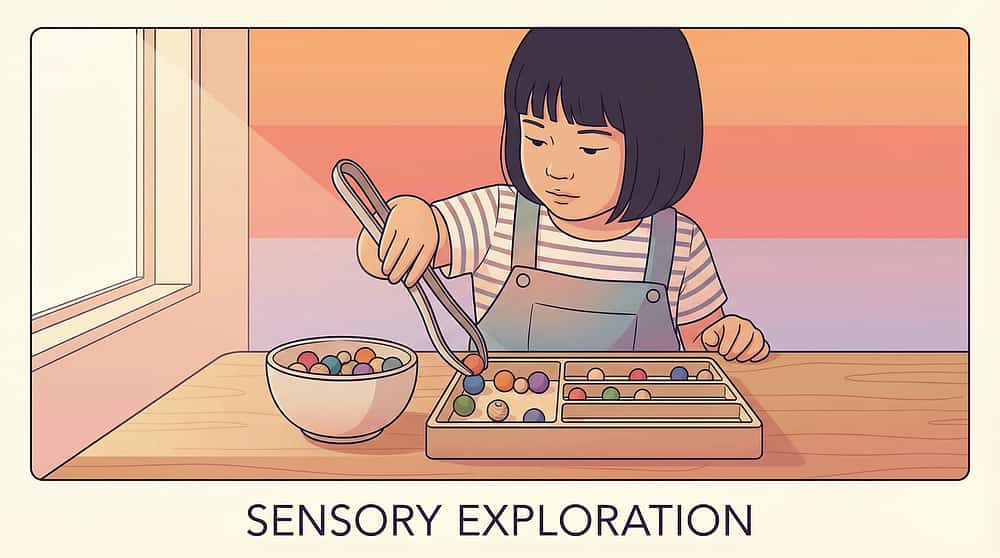
Tweezers
Highest demand — small opening, precision required. Water bead transfer is a favourite for tactile engagement alongside fine motor challenge.
Activity ideas: "feed the monster" (a box with a mouth hole — transfer items in with tongs), colour sorting, and water bead transfer. Indian context: kitchen chimta for roti is a genuinely functional daily tool — using it in play transfers naturally to real kitchen participation.
F-614 · Clothespin Activities
Clothespin Activities — ₹2 Per Peg, Maximum Return
Squeeze to open, release to close on target. Simple. Powerful. The clothespin requires thumb-finger opposition, sustained squeeze force, and precise placement. Occupational therapists love clothespins because they strengthen the exact muscles needed for pencil grip — and at ₹2 each, they are the most cost-effective fine motor tool in existence.
Clothespin activities: clip onto a card edge, clip onto a string (clothesline — functional!), clip around a container rim, colour-matching clips, letter clips (clip the letter card to the corresponding picture), counting clips, and "monster mouth" (clip onto cardboard teeth). Progression: standard wooden pegs → stronger spring pegs → small bulldog clips.
Indian daily life application: An actual clothesline at home — the child helps hang small items, clips socks onto the line, removes dried items. This daily task builds hand strength, bilateral coordination, and independence in household participation simultaneously.
₹2
Per Clothespin
Most cost-effective fine motor tool available
3
Grip Types
Lateral pinch, tripod pinch, and sustained squeeze all activated
Section 5 of 5
Advanced Skills and Integration
The final six techniques bring everything together: in-hand manipulation, sensory fine motor, self-care applications, play-based practice, home OT programming, and adaptive tools. These cards represent the full realisation of fine motor development — where skills built in isolation become the integrated capacities of daily life and independence.
F-615
In-Hand Manipulation
F-616
Sensory Fine Motor
F-617
Self-Care Fine Motor
F-618
Fine Motor Play Ideas
F-619
OT Activities Home
F-620
Adaptive Writing Tools
F-615 · In-Hand Manipulation
In-Hand Manipulation — The Peak of Fine Motor Skill
Moving objects within one hand without help from the other hand is the highest fine motor skill humans perform. Three types: translation (moving an object from fingers to palm or palm to fingers — like picking up a coin and storing it), shift (adjusting finger position on an object — like moving fingers up a pencil to the eraser), and rotation (turning an object in the fingers — like flipping a coin over). These movements require peak motor cortex individuation: each finger performing a different task simultaneously within the same hand.
Translation
Pick up coins one at a time and store in the palm — palm-to-finger and finger-to-palm movement
Shift
Move a pencil from writing position to eraser position and back — finger repositioning on object
Rotation
Turn coins over in fingers, rotate a small ball around in one hand — fingertip-driven rotation
Start with large objects, slow movement, and visual guidance — then progress to smaller objects, faster movements, and finally without looking. In-hand manipulation is the convergence of everything developed in F-591 through F-614.
F-616 · Sensory Fine Motor
Sensory Fine Motor — Double Therapy in Every Handful
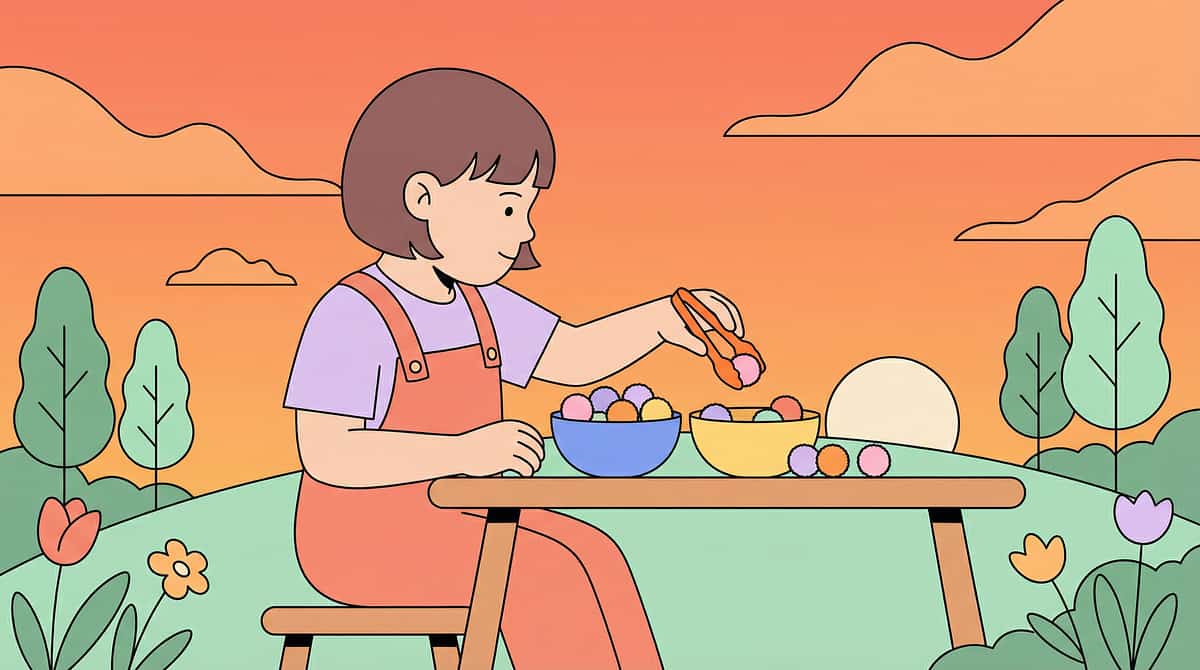
Fine motor through sensory play provides two therapeutic benefits simultaneously: building fine motor skills while delivering rich sensory input. Sensory bins (rice, lentils, sand, water beads), finger painting, shaving cream play, wet sand moulding — these activities engage the somatosensory cortex through tactile input, load the proprioceptive system through resistance, and build fine motor patterns (scooping, pouring, squeezing, pinching) all at once. The sensory input enhances motor learning by creating richer, more multi-layered motor memories.
For children with tactile defensiveness: begin with gradual exposure, starting with dry textures before wet, and always follow the child's regulation state. Never force tactile engagement. Indian daily materials: dal and rice sorting (tactile + pincer), atta dough, wet kolam powder, haldi paste play — culturally embedded sensory fine motor that costs nothing.
Rice & Dal Bins
Hide small toys — child digs, searches, and retrieves using pincer and scoop
Finger Painting
Whole hand engagement — tactile richness motivates sustained fine motor effort
Sand Play
Moulding, building, drawing in sand — proprioceptive resistance + bilateral coordination
F-617 · Fine Motor for Self-Care
Fine Motor for Self-Care — The Final Exam
Every fine motor skill taught across F-591 to F-616 converges here. Buttoning = pincer + bilateral + in-hand manipulation. Feeding with utensils = grasp + wrist control + visual-motor. Tying shoes = bilateral + sequential planning + finger isolation. Self-care is where fine motor development proves its real-world worth: the difference between a child who depends on caregivers for every fastening, feeding, and grooming task — and one who moves through their morning with growing independence.
Buttoning
Large buttons first → smaller. Dressing frame before own clothes. One button per session until consistent, then chain the sequence.
Zipping
Start the zip → zip up. Two separate skills — teach the start separately. Zipper pulls aid grip.
Utensils
Spoon → fork → knife. Adapted utensils (weighted, angled handles) available. Hand-over-hand with gradual fading.
Shoe-Tying
Bunny ears or loop method. Target around age 6–7. Practise on a large frame first, then on actual shoes.
Indian self-care fine motor targets: salwar-kurta ties, bindi application (a natural pincer training task!), bangles on and off. These culturally meaningful tasks carry higher motivation — and therefore more practice repetitions — than artificial therapy tasks.
F-618 · Fine Motor Play Ideas
Fine Motor Play Ideas — The Best Therapy Doesn't Feel Like Therapy
Fine motor through play — because a child who is having fun will always do more repetitions than a child who is doing exercises. The key principle: choose based on interest. The child who loves trains will do more fine motor practice with a train puzzle than a generic pegboard. Motivation drives practice; practice drives skill.
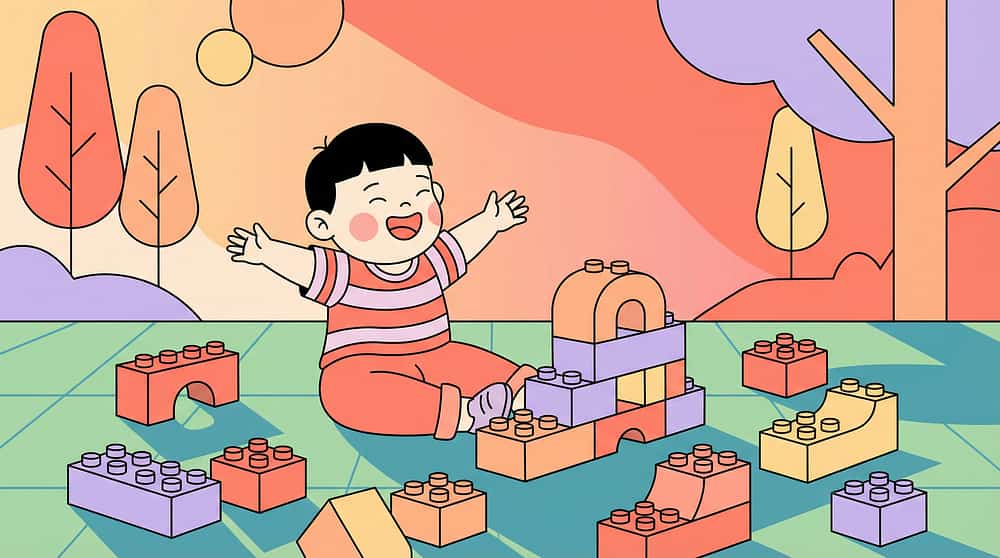
LEGO / Duplo
Pincer + press + creative building — enormous fine motor demand hidden inside joyful construction play
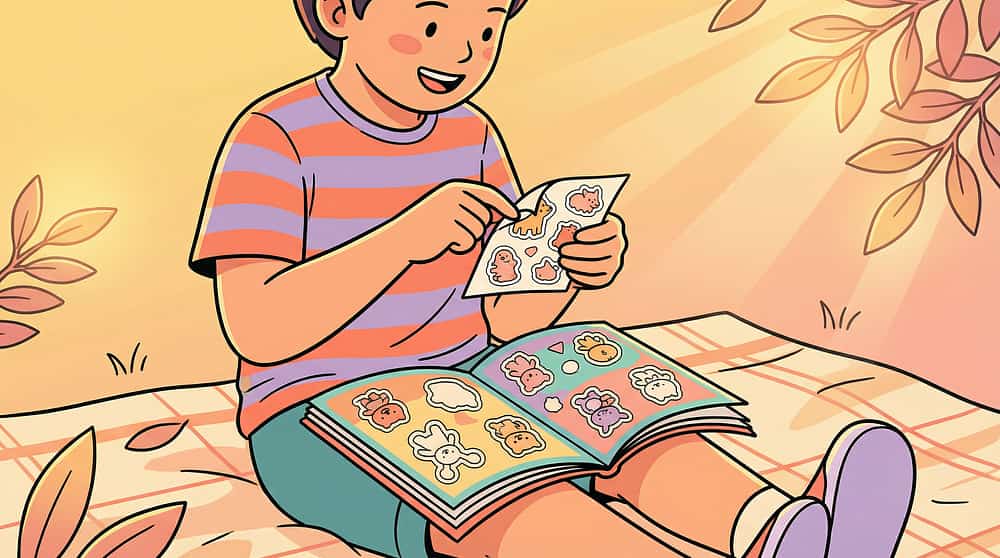
Sticker Books
Peeling = pincer; placing = precision. Sticker books provide hundreds of fine motor trials per session in a format children love.

Watercolour Painting
Brush grip, precise stroke control, and visual-motor targeting — art as occupational therapy

Origami & Paper Folding
Bilateral coordination, spatial planning, and precise crease placement — each fold is a complete fine motor trial
Indian cultural play with fine motor value: rangoli art (pinch + precision + creativity), mehndi tracing, paper diya making for festivals, flower garland threading. These activities connect fine motor practice to cultural identity and family participation.

F-619 · OT Activities Home
OT Activities at Home — The Parent as Therapist
Everything your Occupational Therapist does in the clinic — translated for home, in 15–20 minutes a day. A complete home OT programme does not require special equipment or professional training. It requires consistency, a warm space, and the five components below. The session becomes a routine — same time, same materials spot, same structure — making it sustainable for families.
Warm-Up (2 min)
Finger stretches, hand shakes, wrist circles. Prepare the hand for work — reduce stiffness, increase circulation and proprioceptive awareness.
Strengthening (5 min)
Play-doh squeeze, clothespin clips, sponge squeeze. Build the foundation — no grip strength means no fine motor endurance.
Precision (5 min)
Pegboard, bead stringing, lacing. Target the specific fine motor skills on the child's current OT goal list.
Bilateral (3 min)
Scissor cutting, tearing, rolling play-doh. Both hands working together — the corpus callosum connection.
Functional Application (5 min)
Buttoning practice, zip practice, utensil practice. Transfer skills to real-world independence — the ultimate goal.
Pinnacle OT home programmes are customised by your child's occupational therapist and tracked through GPT-OS® for data-informed progress monitoring.
Preview of fine motor Therapy Material
Below is a visual preview of fine motor therapy material. The pages shown help educators, therapists, and caregivers understand the structure and content of the resource before use. Materials should be used under appropriate professional guidance.
Link copied!