
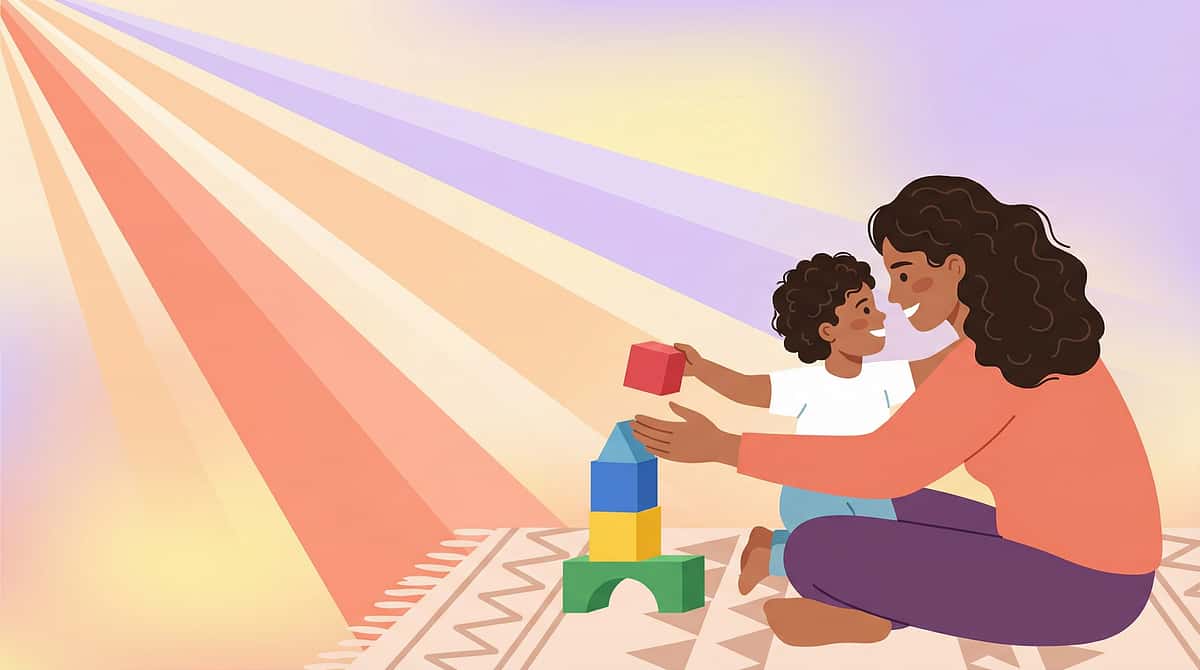
Single Words. Never Sentences.
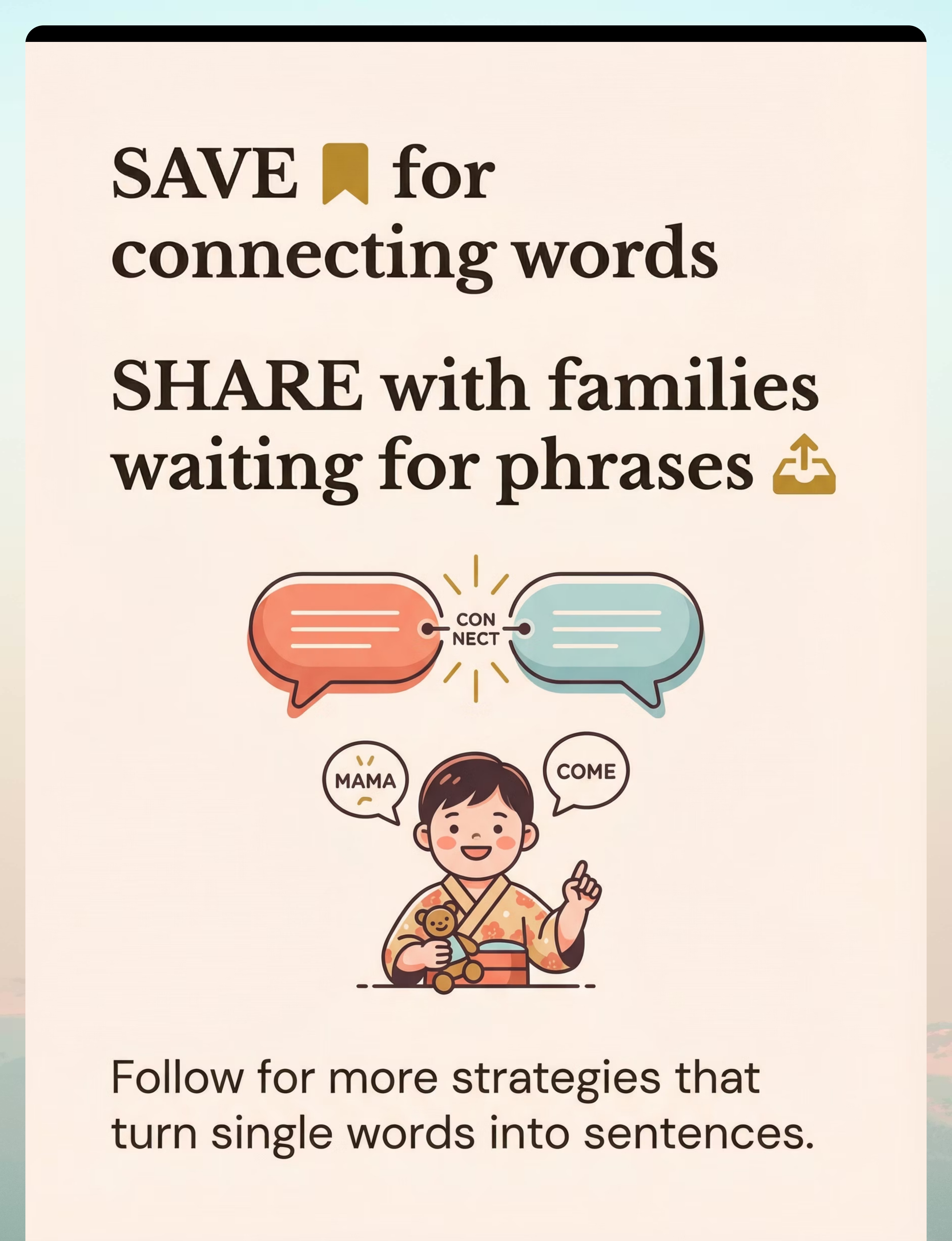
Your child says "ball" and "mama" and "juice" and "car." They label everything — tree, bird, flower, truck. But that's all they do. They label. Single words, one at a time, floating by themselves. You keep waiting for "big dog" or "want cup" or "mama help." You keep listening for the moment words find each other. It hasn't come yet — and that's exactly why this page exists.
Domain B: Speech-Language Development
Technique B-201
Age: 18 months – 4 years
"My son is two and a half, and he has words — maybe fifty or sixty of them now. He can say 'ball' and 'mama' and 'juice' and 'car.' He labels things all day long. But that's all he does — labels. He points at a dog and says 'dog.' He wants his cup and says 'cup.' Everything is one word at a time. I keep waiting for him to put words together — to say 'big dog' or 'want cup' or 'mama help' — but it's not happening. His cousin, who's three months younger, is already saying things like 'more crackers' and 'daddy go work.' Meanwhile, my son just says one word and looks at me, expecting me to figure out the rest."— Parent, Pinnacle Blooms Network
This experience — waiting, interpreting, guessing — is one of the most emotionally exhausting places a parent can stand. One word. Does he want the cup? Is he showing you the cup? Is it his favorite? You have to guess. You have to ask twenty questions. You have to interpret a single word into a complete thought. This guide is for you.
This Gap Between Words and Phrases — Millions of Families Know It
Two-word combinations typically emerge between 18–24 months, once a child has approximately 50+ words in their expressive vocabulary. This isn't arbitrary — reaching this vocabulary threshold often triggers what linguists call the "combinatorial explosion." But for many children, especially those on the autism spectrum or with language processing differences, this explosion doesn't ignite on schedule.
10–15%
Expressive Language Delay
Of two-year-olds demonstrate significant expressive language delay, including delayed word combinations (ASHA, 2023)
70%
Primary Concern
Of families seeking assessment at Pinnacle Blooms Network centers cite language delay as their primary presenting concern
3–4x
Boys vs. Girls
Boys are approximately 3–4 times more likely than girls to present with expressive language delays
1 in 100
Autism in India
Children estimated to be on the autism spectrum in India, with language delays as the earliest observable marker
"If your child has words but isn't combining them — you're not witnessing failure. You're witnessing a developmental threshold. And thresholds are crossed with the right tools, the right timing, and the right guidance."

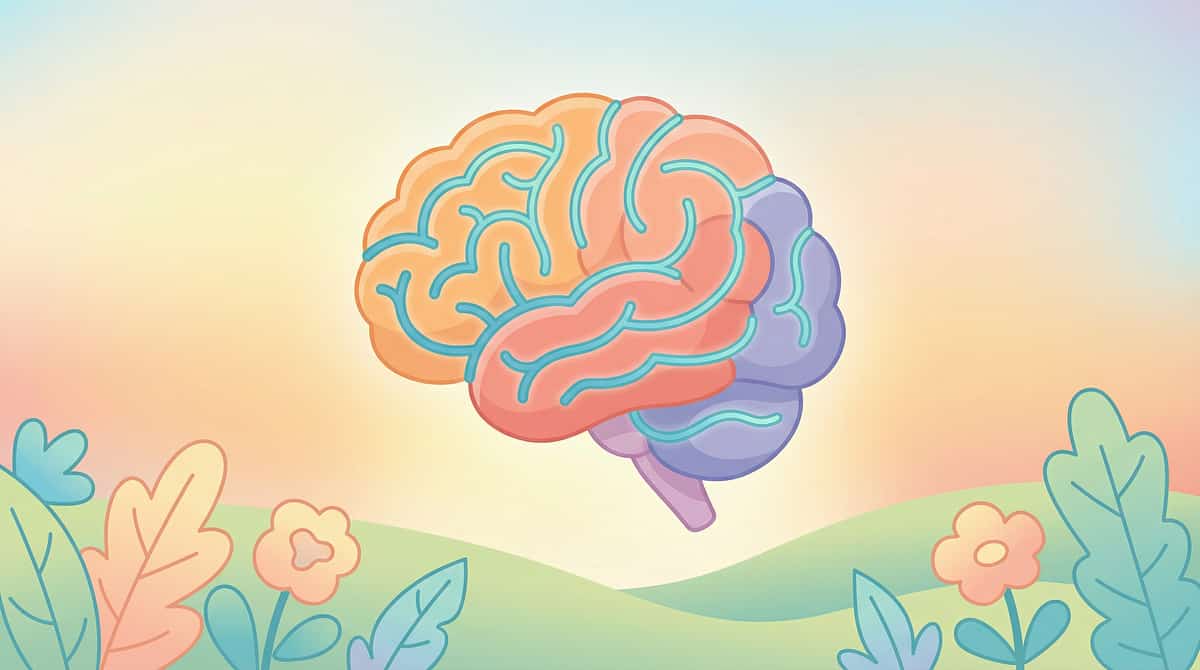
Why Words Stay Separate: The Neuroscience of Combination
Two-word combinations require something fundamentally different from single-word production. When a child says "ball," they're activating a single lexical entry in Wernicke's area. When they say "throw ball," they must simultaneously activate two lexical entries, sequence them through Broca's area, coordinate motor planning for a longer utterance, and — critically — represent the relationship between the words. This is the birth of syntax.
Wernicke's Area
Word storage and comprehension — your child's "dictionary." Words are stored individually. Having 50+ words means this area is well-stocked.
Broca's Area
Language production and grammar — the "sentence builder." Must learn to retrieve and sequence multiple words. Needs targeted input in children with delayed combinations.
Arcuate Fasciculus
The neural highway connecting comprehension to production. Strengthens with practice — each phrase heard or produced myelinates this connection further.
Prefrontal Cortex
Working memory for holding two concepts simultaneously. Combining words requires holding "throw" and "ball" in mind at once — a demand single words don't require.
"This is a wiring milestone, not a willpower problem. The materials in this guide create the electrical conditions — the motivation, the repetition, the joy — that help these neural pathways form faster."
Clinically Validated. Home-Applicable. Parent-Proven.
Evidence Grade: Level I–II
Systematic Reviews + RCTs
This technique is grounded in 30+ peer-reviewed studies on naturalistic language intervention. Key finding: naturalistic language modeling during motivating, child-led play activities demonstrates strong efficacy in promoting word combinations for children with language delays. Material-based intervention that creates natural opportunities for two-word phrases shows measurable gains within 8–12 weeks of consistent implementation.
PRISMA Systematic Review (Children, 2024)
PMC11506176 — 16 articles from 2013–2023 confirm evidence-based practice status for structured intervention in ASD
Meta-Analysis (World J Clin Cases, 2024)
PMC10955541 — Structured activity with modeling shows maximum effectiveness for developmental outcomes across 24 studies
Roberts & Kaiser (2011) — AJSLP
Parent-implemented language interventions meta-analysis confirms strong real-world efficacy for families implementing at home
Pinnacle Blooms Clinical Data
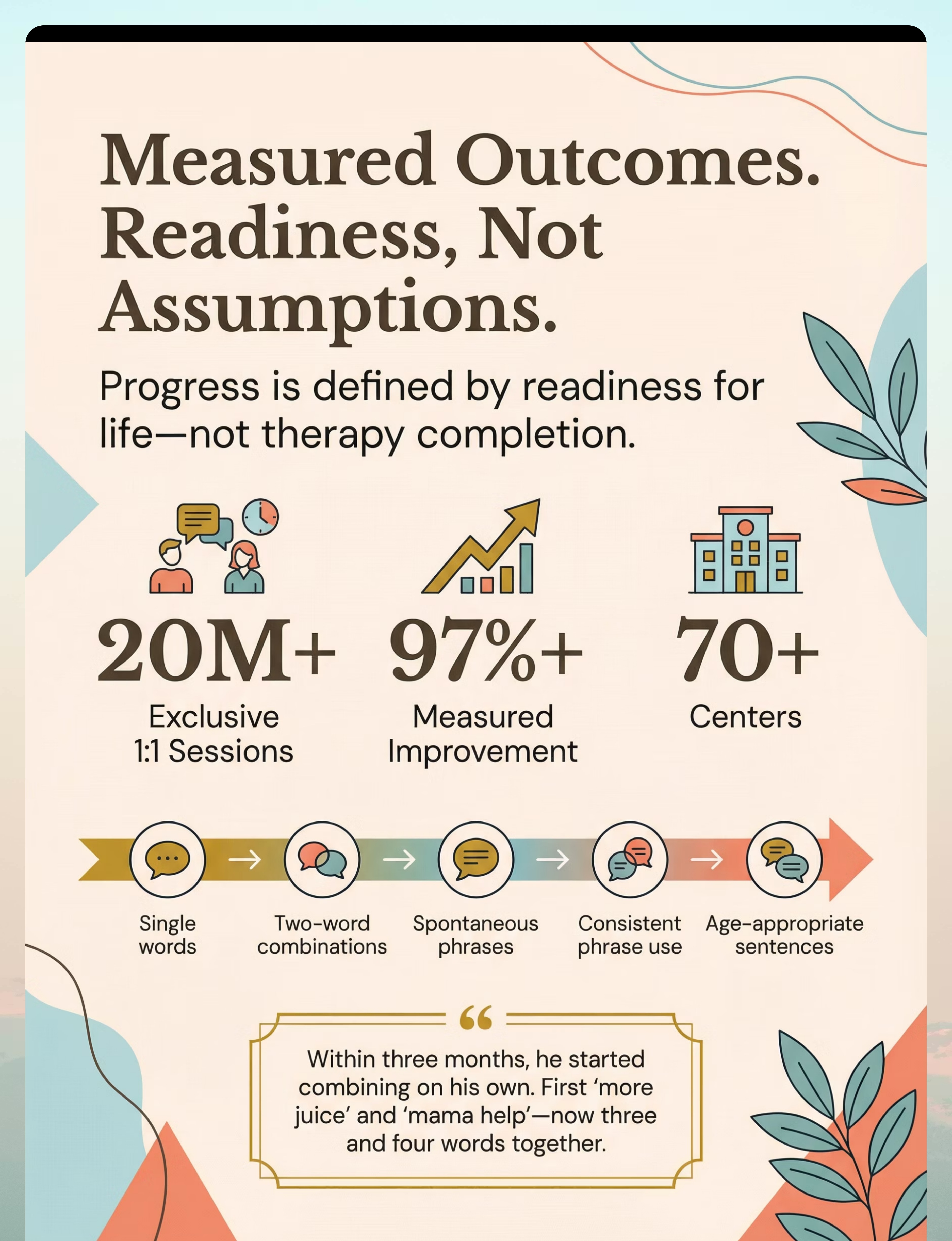
20M+ exclusive 1:1 therapy sessions with 97%+ measured improvement rate via GPT-OS® therapeutic system
Consortium Confidence: This intervention approach has been validated across multiple systematic reviews, randomized controlled trials, and real-world clinical datasets. The Pinnacle Blooms Consortium — combining CRO-level research standards with SLP, OT, BCBA, Special Education, and NeuroDevelopmental Pediatric expertise — grades this as a HIGH-CONFIDENCE intervention target.
The Technique: What It Is
Technique B-201
18 months – 4 years
5–10 min sessions
Formal name: Material-Facilitated Two-Word Phrase Elicitation Through Naturalistic Play
Parent-friendly name: "Helping Words Find Each Other — Using Everyday Materials to Build Phrases"
Parent-friendly name: "Helping Words Find Each Other — Using Everyday Materials to Build Phrases"
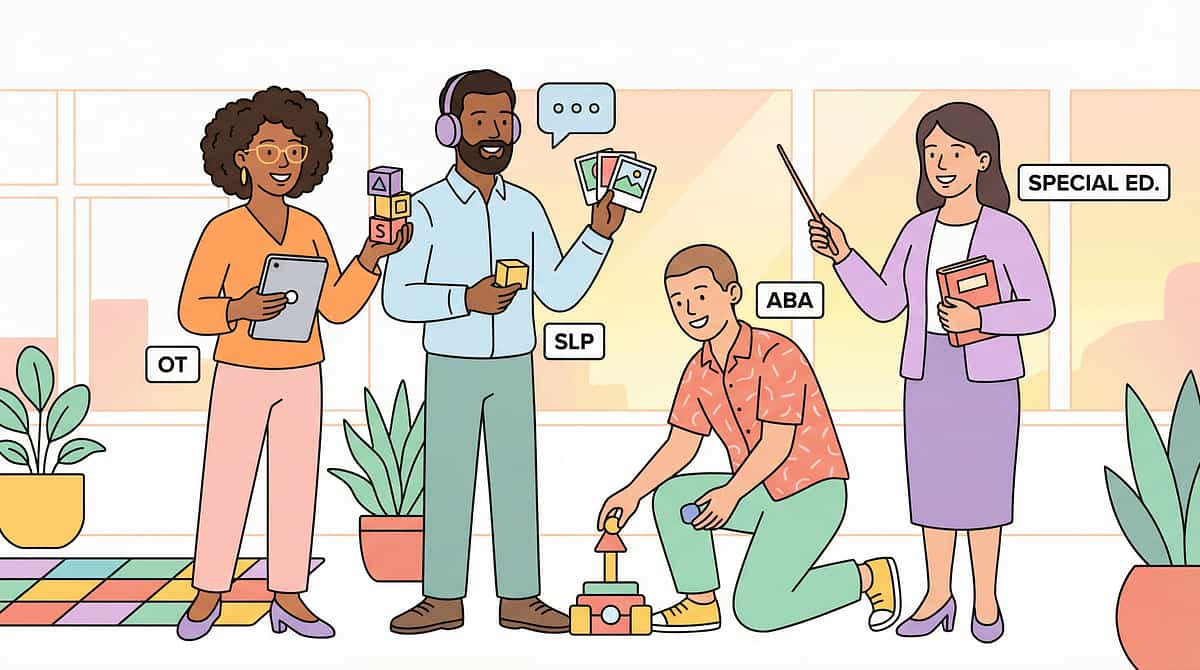
This technique uses 9 categories of carefully selected play materials to create natural, repeated opportunities for two-word combinations during child-led play. The adult models short, focused two-word phrases — agent-action, action-object, attribute-entity, possessor-possession, recurrence, negation — while the child plays with motivating materials. The materials structure the environment so that two words become necessary, natural, and rewarding.
"This is not drilling. This is engineering the play environment so that language combination emerges from motivation and joy."
5–10 Min
Per session, multiple times daily
Any Setting
Home, therapy, preschool, routines
Introductory
No prior training required
Daily
Integrated into natural routines
Who Uses This Technique
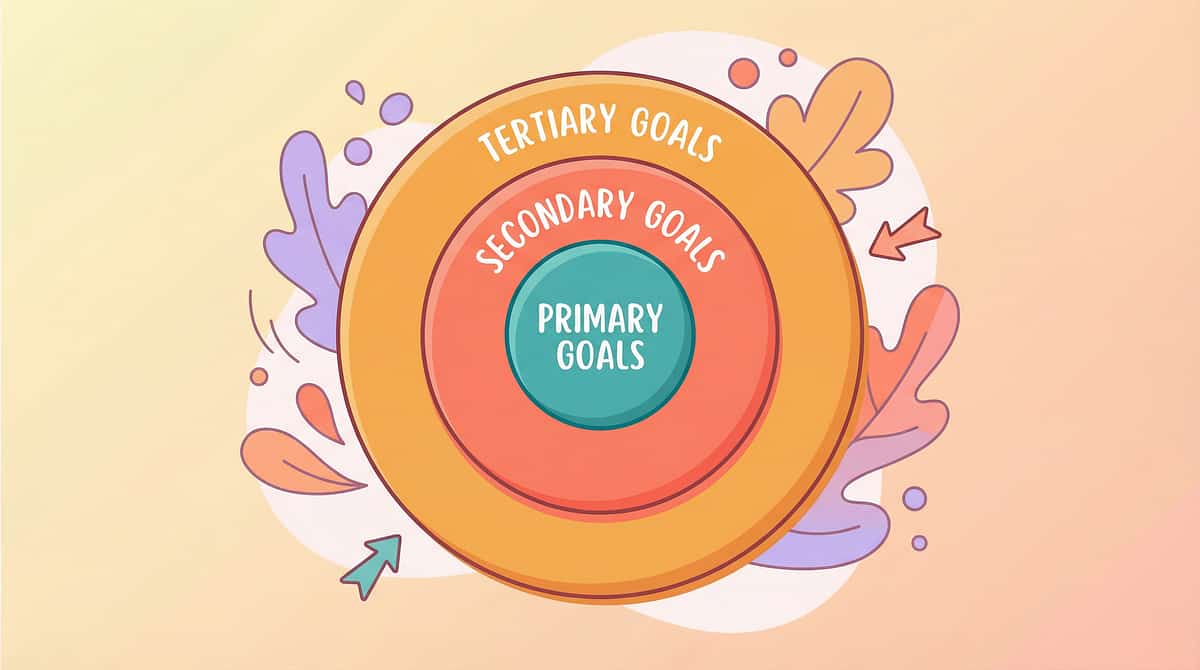
"This technique crosses therapy boundaries — because the brain doesn't organize by therapy type." Every discipline plays a unique, coordinated role. At Pinnacle Blooms Network, GPT-OS® coordinates all these inputs as one closed system through FusionModule™.
Speech-Language Pathologist (Primary Lead)
Drives the language modeling strategy, selects target phrase types based on the child's linguistic profile, designs carrier phrase sequences, and monitors mean length of utterance (MLU) progression. The SLP determines which semantic relations to target first based on the child's vocabulary profile.
Occupational Therapist (Supporting)
Addresses fine motor access to materials, sensory preferences affecting material selection, and environmental setup for optimal engagement. The OT ensures the child's motor and sensory system supports the language activity.
BCBA (Supporting)
Structures reinforcement contingencies — when and how to reward communication attempts, shaping from single words toward combinations using differential reinforcement, and creating motivating operations so two words become more effective than one.
Special Educator (Supporting)
Integrates phrase-building into structured learning activities, adapts materials for classroom and preschool contexts, and creates group opportunities for phrase modeling and practice. Generalizes clinic gains to educational settings.
NeuroDevelopmental Pediatrician (Oversight)
Monitors overall developmental trajectory, identifies co-occurring conditions affecting language, adjusts medical management as needed, and ensures the intervention sits within a comprehensive developmental plan.
Precision Targeting — What This Technique Builds
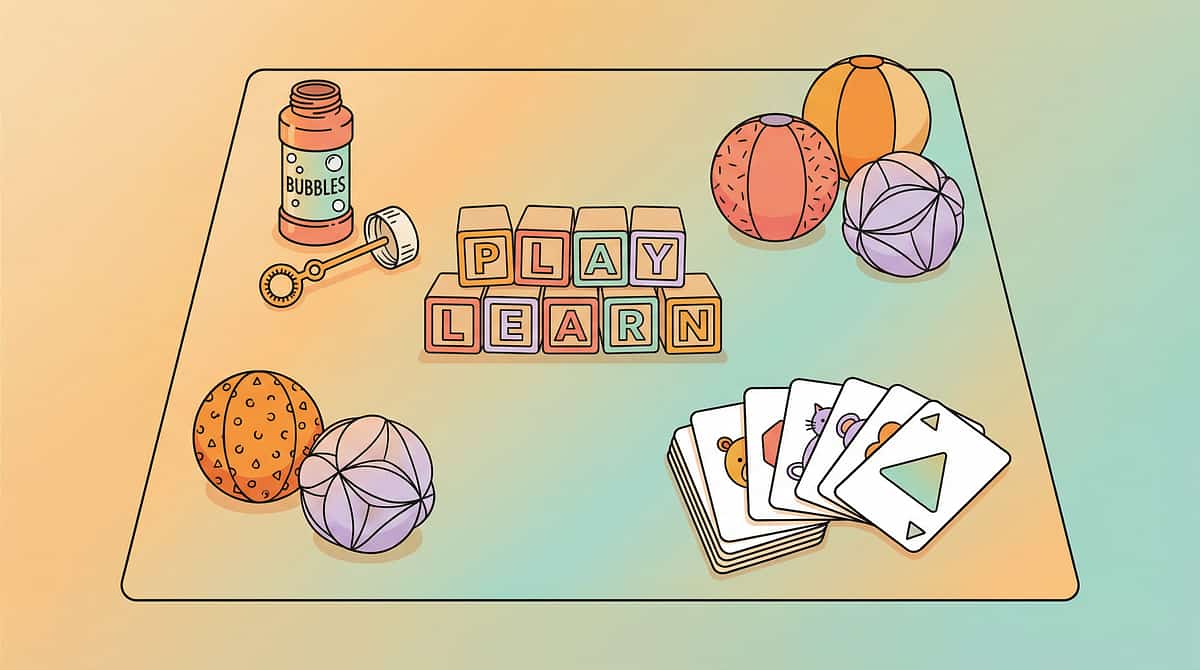
This is not random play. It is an engineered language opportunity with layered, measurable outcomes across three target levels — from the core phrase-production goals to the broader developmental gains that flow from them.
Primary Observable Indicator
Child spontaneously produces novel two-word combinations in 3+ different semantic relation types during unstructured play
Secondary Observable Indicator
Child uses words in new contexts, initiates communication during play, and demonstrates increased joint attention with caregivers and materials
Tertiary Observable Indicator
Emerging three-word combinations, increased social engagement, and early grammatical markers such as plurals and -ing
9 Material Categories — Clinically Selected, Home-Ready
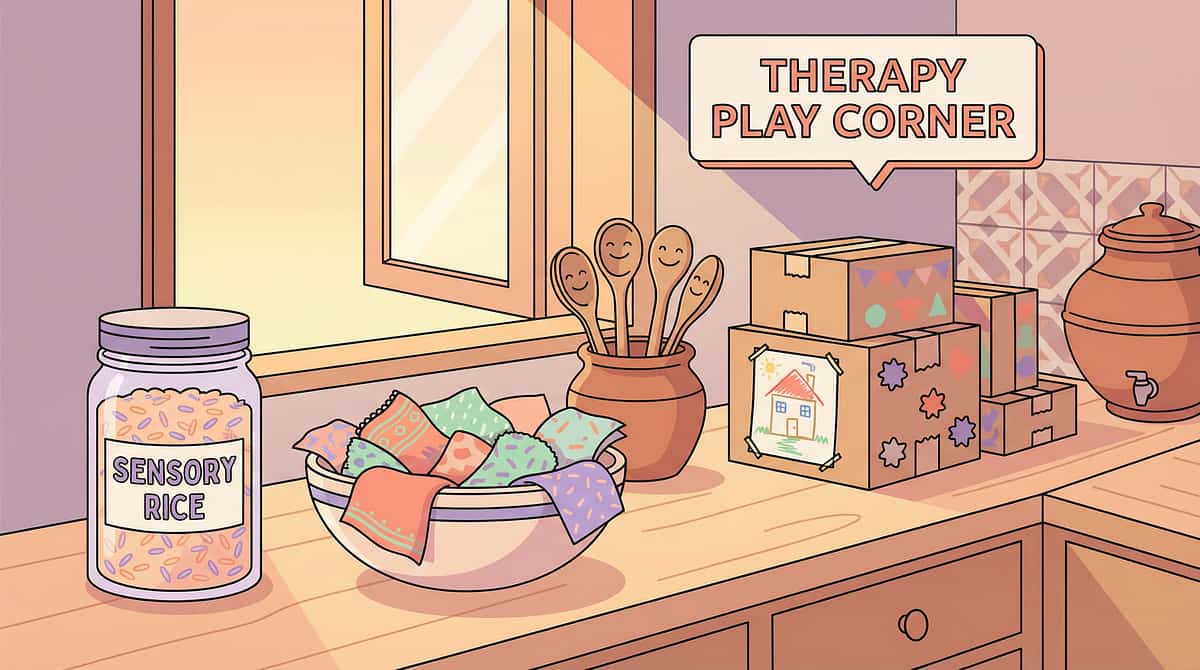
Each of the 9 materials below was selected because it creates a natural, repeated context for a specific type of two-word phrase. You don't need all nine to start — begin with two or three that match your child's current interests. Prices in INR; equivalent items are available globally.
01
Cause-Effect Toys
Pop-up toys, ball drops, wind-ups | ₹300–1,500
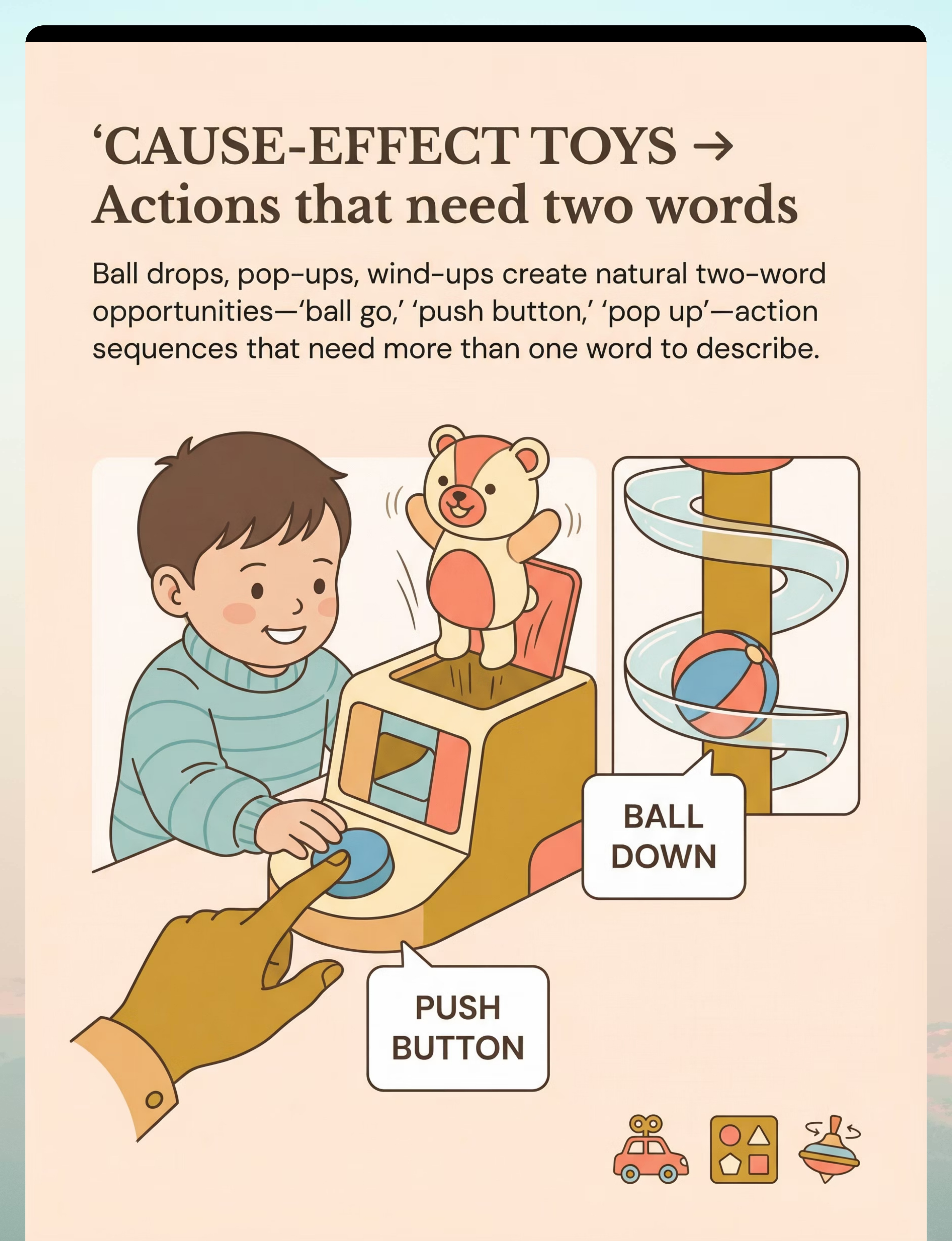
Elicits: "push button," "ball go," "pop up"
Elicits: "push button," "ball go," "pop up"
02
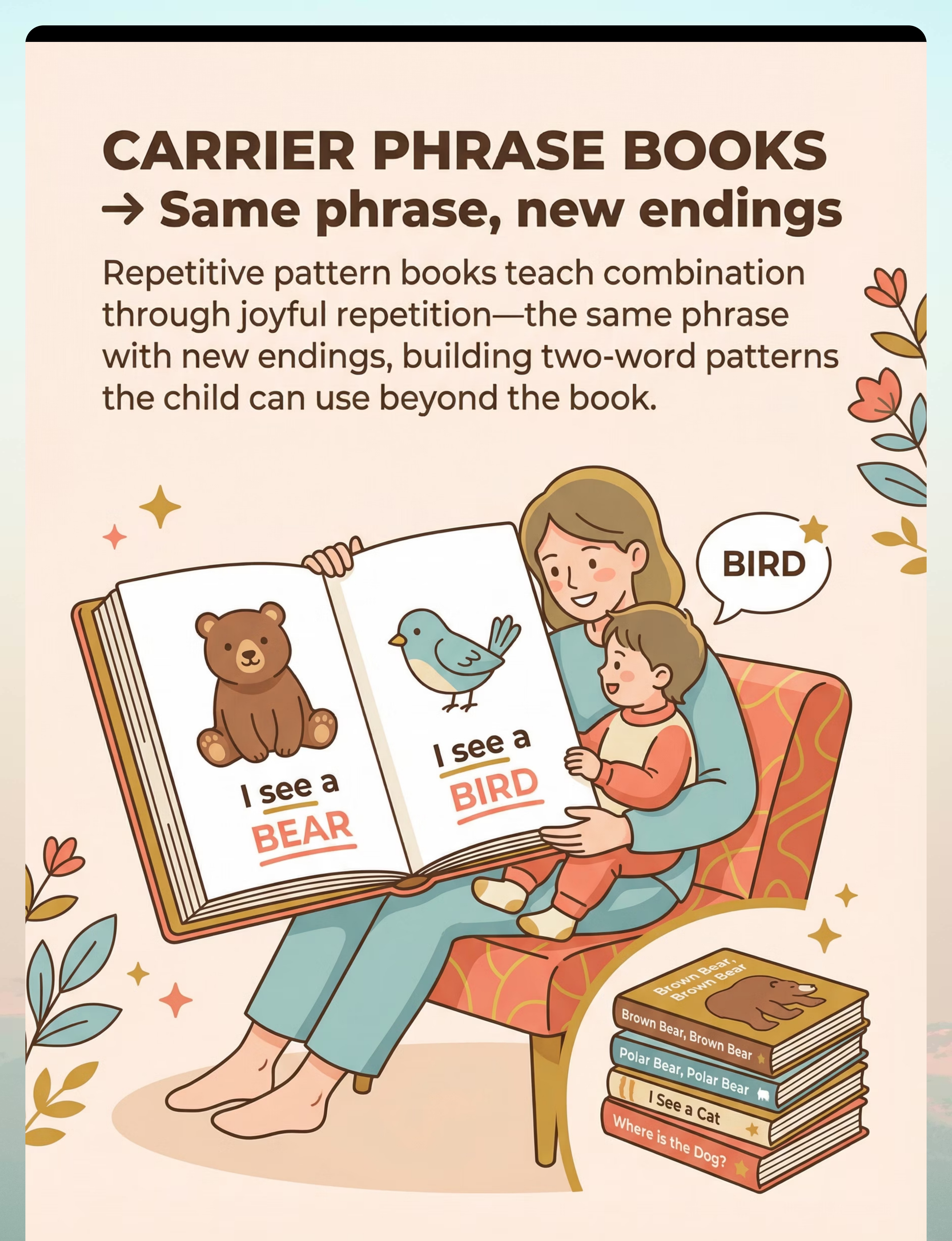
Carrier Phrase Books
Repetitive pattern board books | ₹200–800
Elicits: "I see a ___," "Go, ___, go!"
Elicits: "I see a ___," "Go, ___, go!"
03
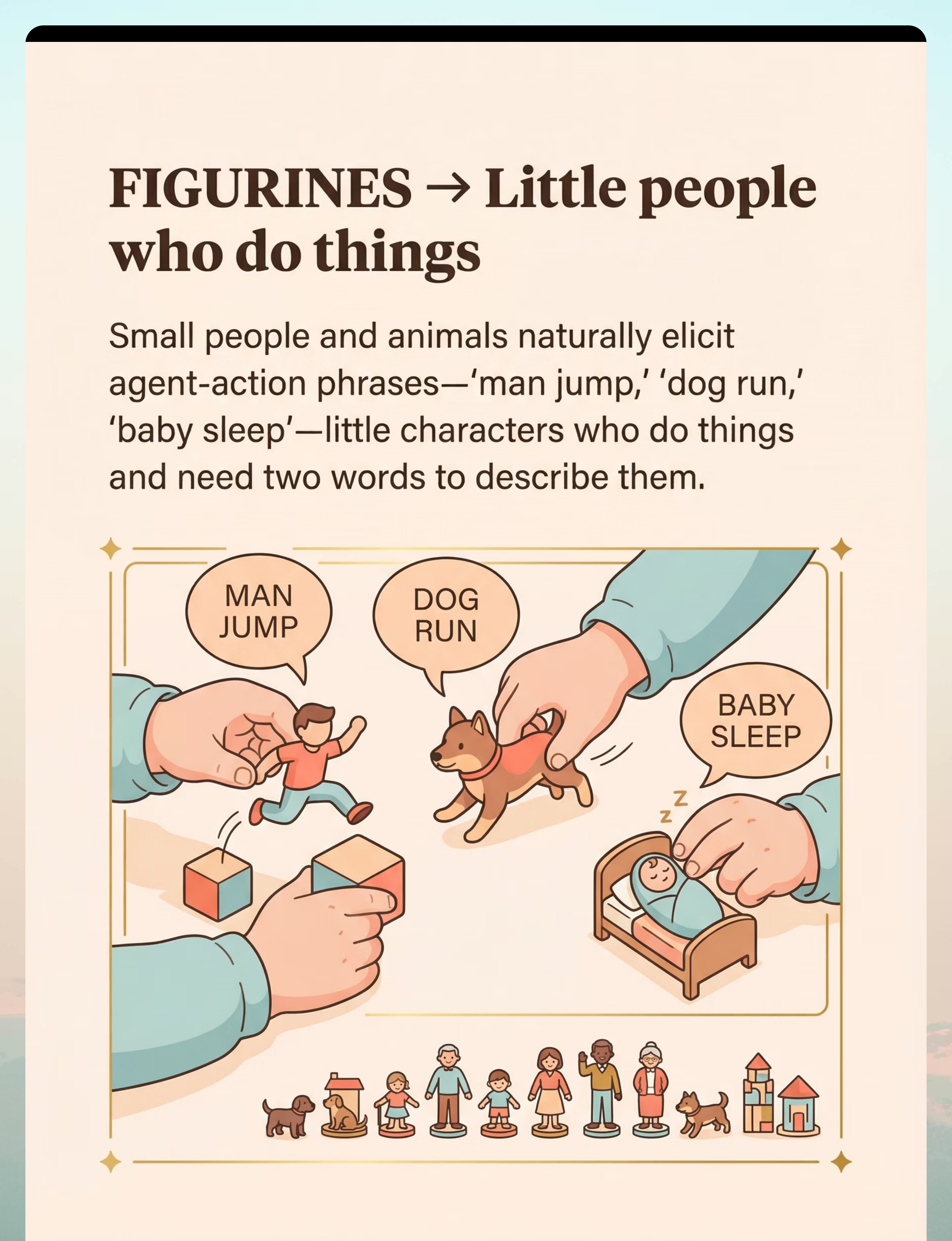
Figurines
Action figures, people/animal sets | ₹200–1,200
Elicits: "man jump," "dog run," "baby sleep"
Elicits: "man jump," "dog run," "baby sleep"
04
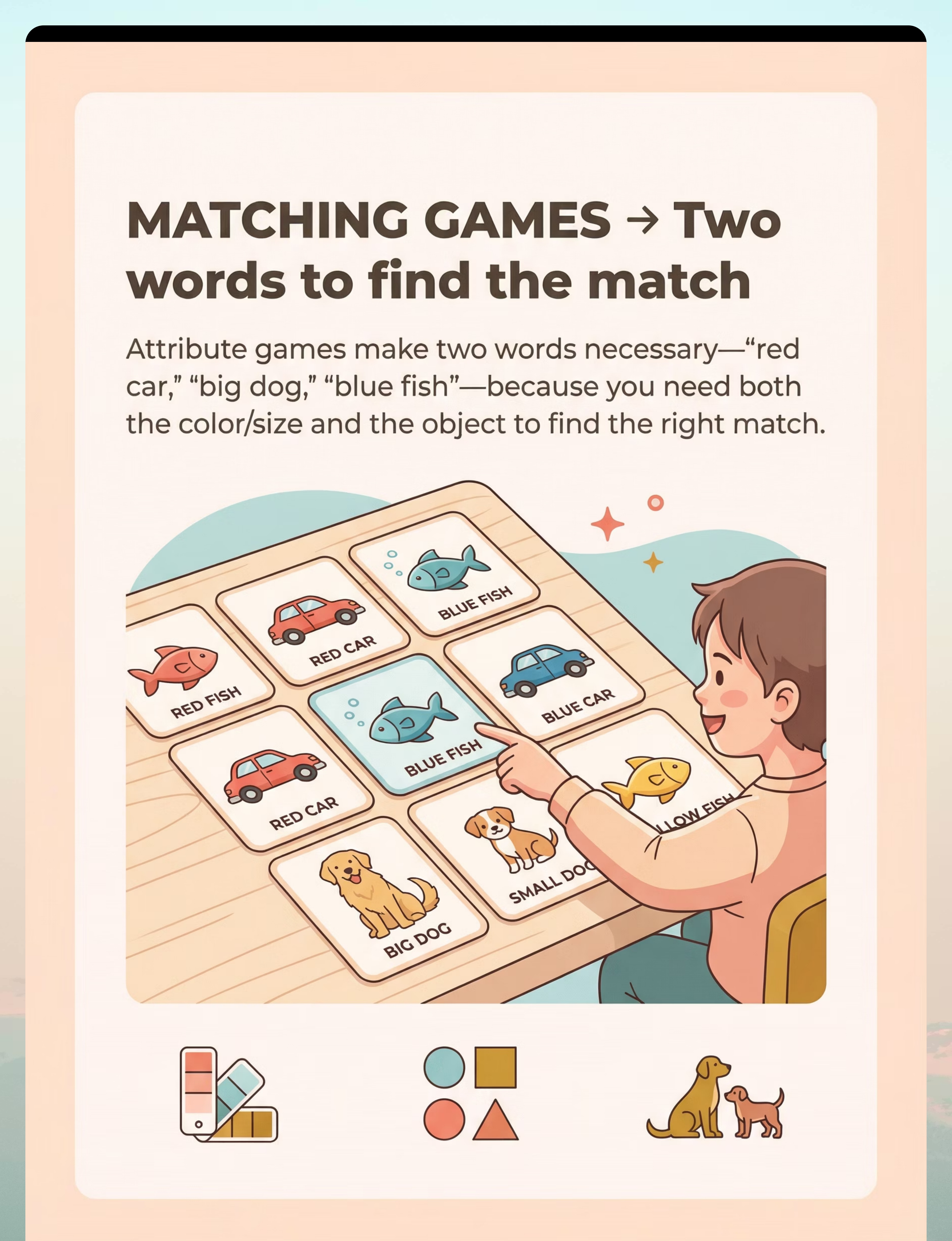
Attribute Matching Games
Colors, sizes, shapes | ₹200–800
Elicits: "red car," "big dog," "blue fish"
Elicits: "red car," "big dog," "blue fish"
05
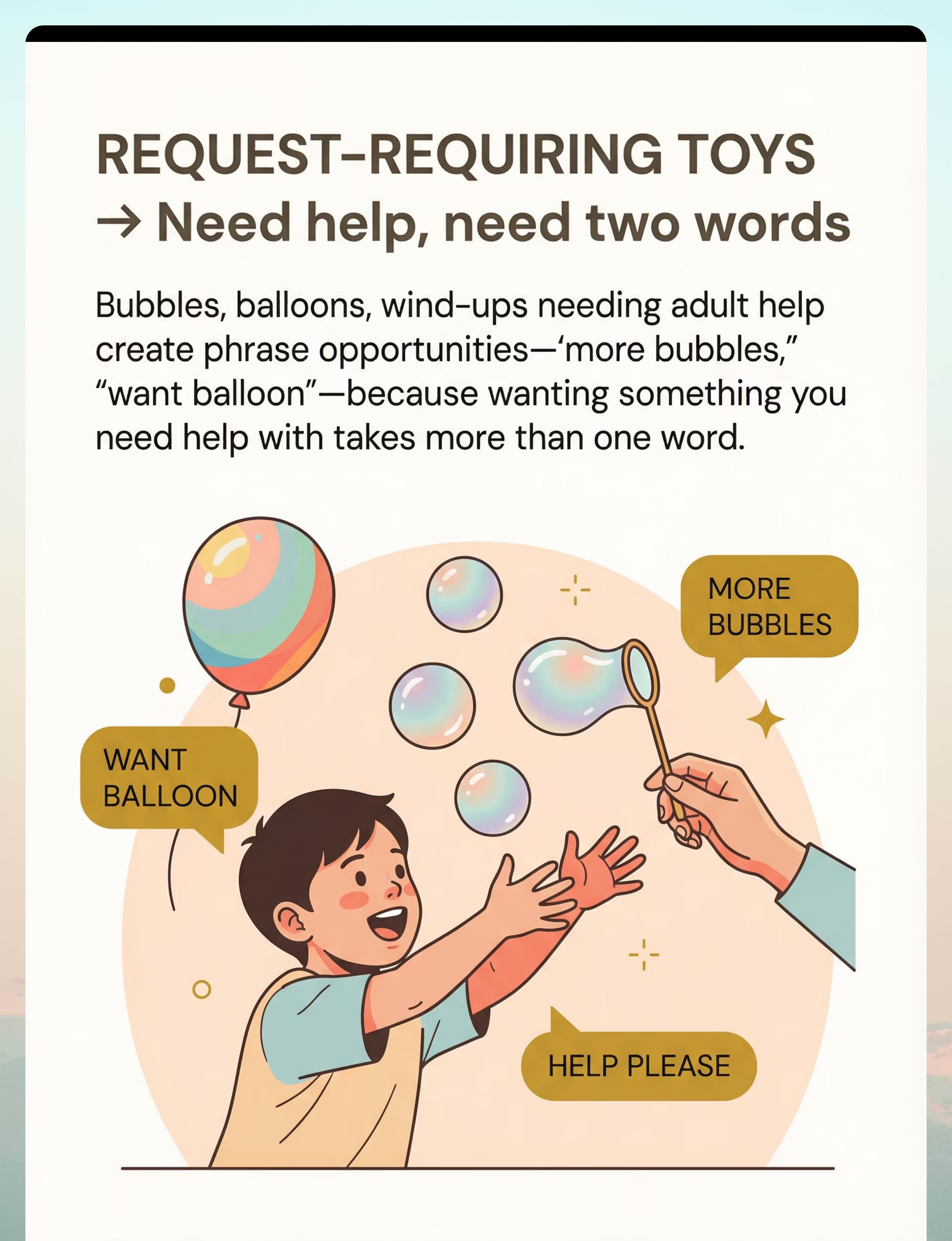
Request-Requiring Toys
Bubbles, balloons, wind-ups | ₹100–600
Elicits: "more bubbles," "want balloon," "help please"
Elicits: "more bubbles," "want balloon," "help please"
06
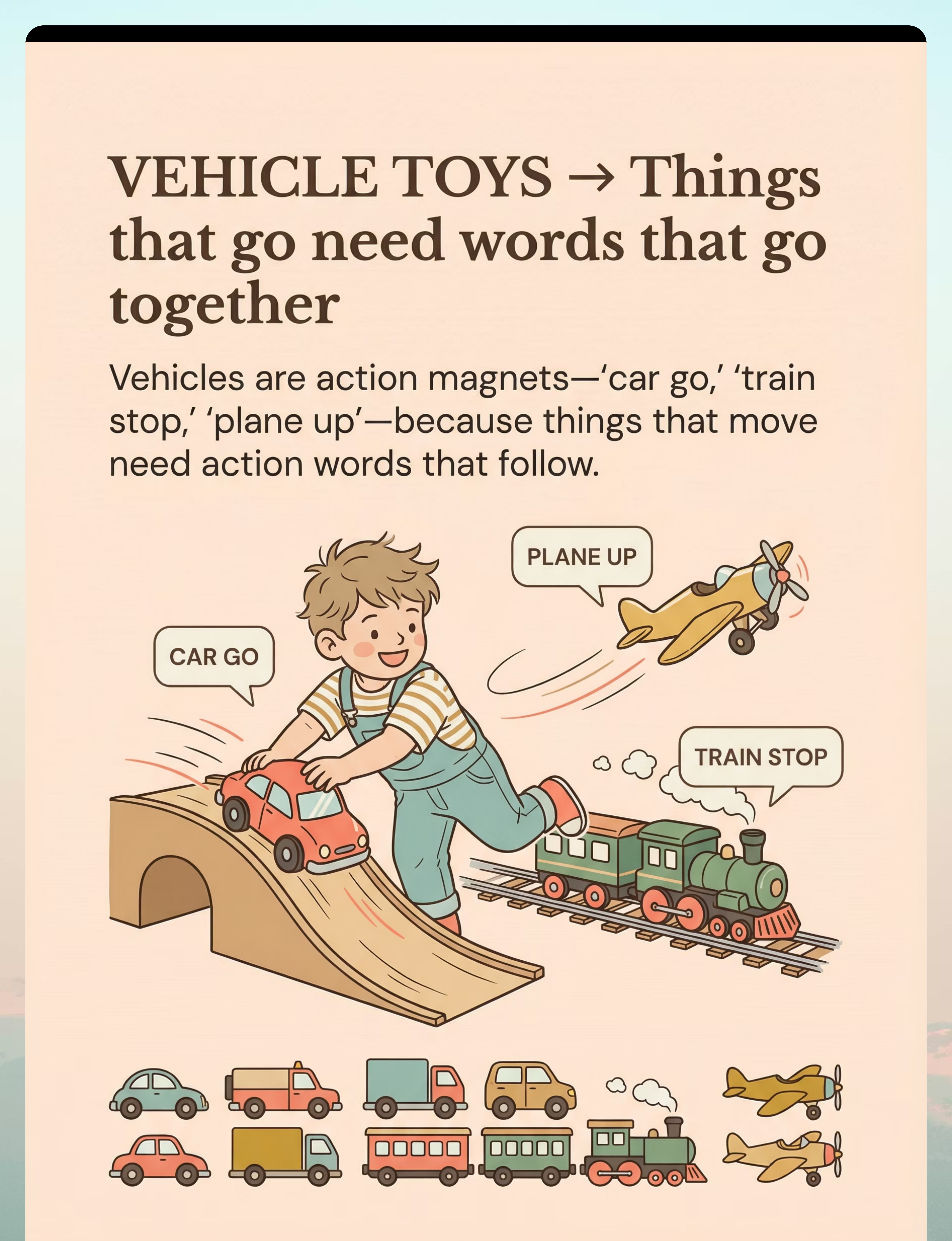
Vehicle Toys
Cars, trains, planes with tracks/ramps | ₹200–1,500
Elicits: "car go," "train stop," "plane up"
Elicits: "car go," "train stop," "plane up"
07
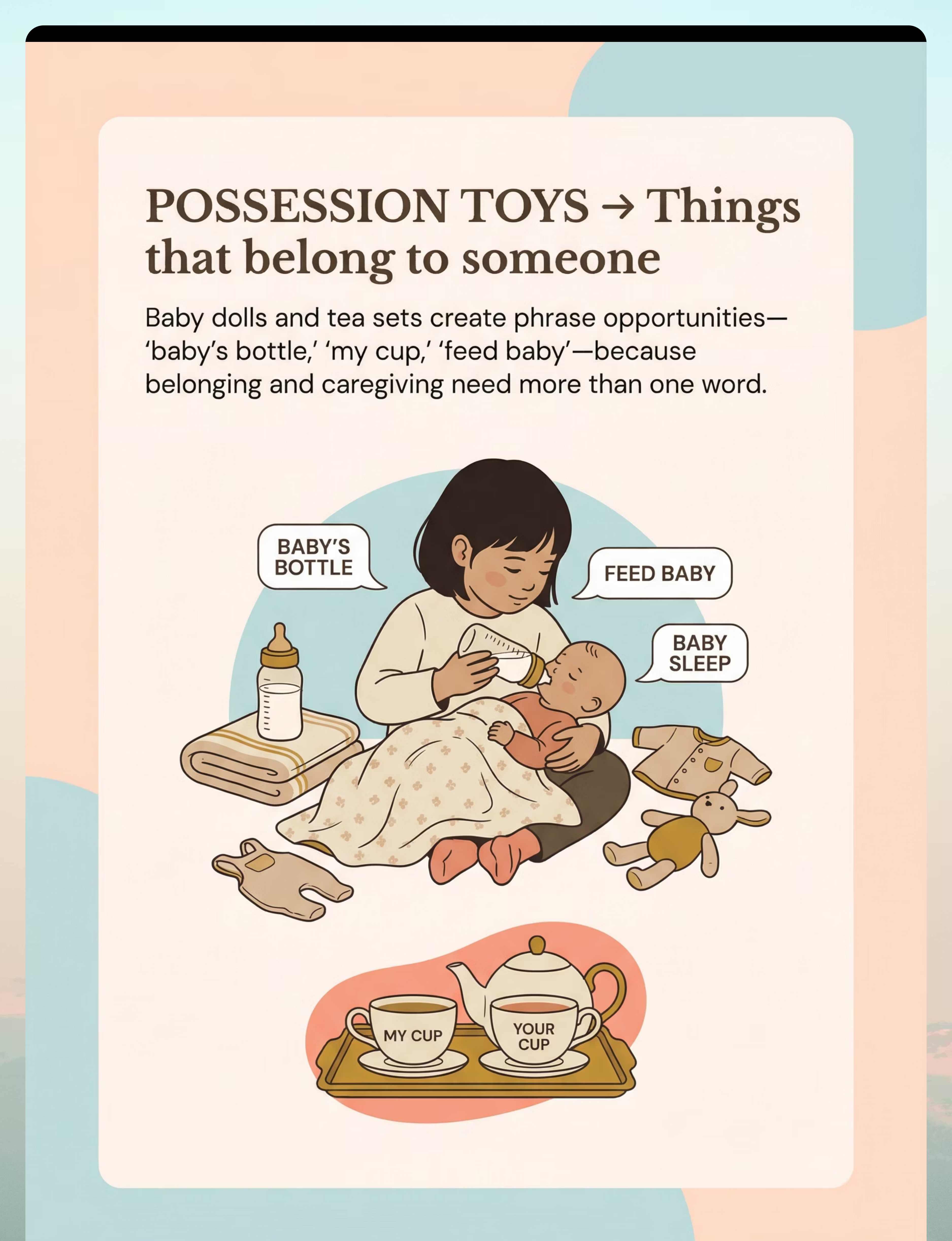
Possession Toys
Baby dolls, tea sets | ₹300–1,200
Elicits: "baby's bottle," "my cup," "feed baby"
Elicits: "baby's bottle," "my cup," "feed baby"
08
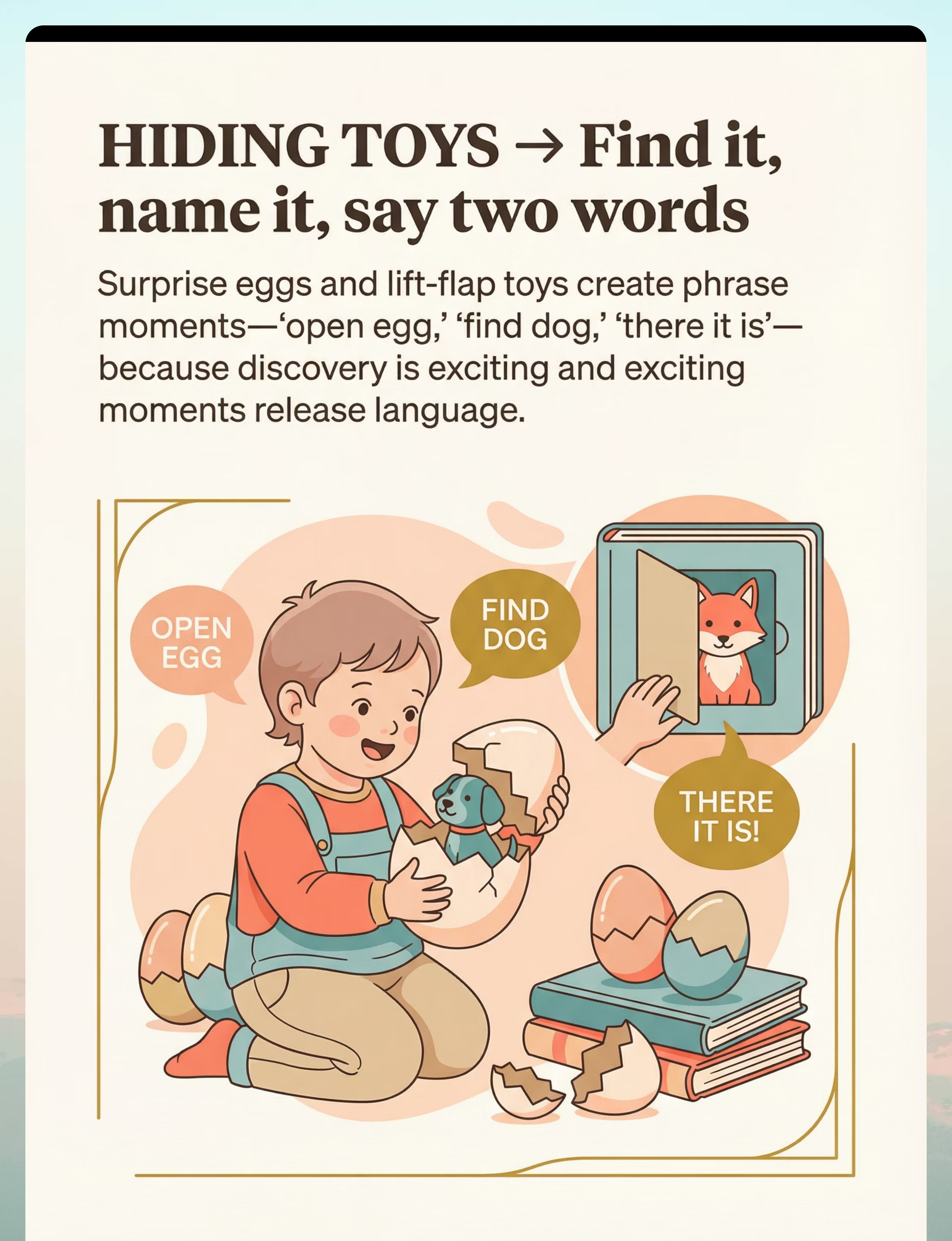
Hiding Toys
Surprise eggs, lift-the-flap, shape sorters | ₹200–1,000
Elicits: "open egg," "find dog," "there it is"
Elicits: "open egg," "find dog," "there it is"
09
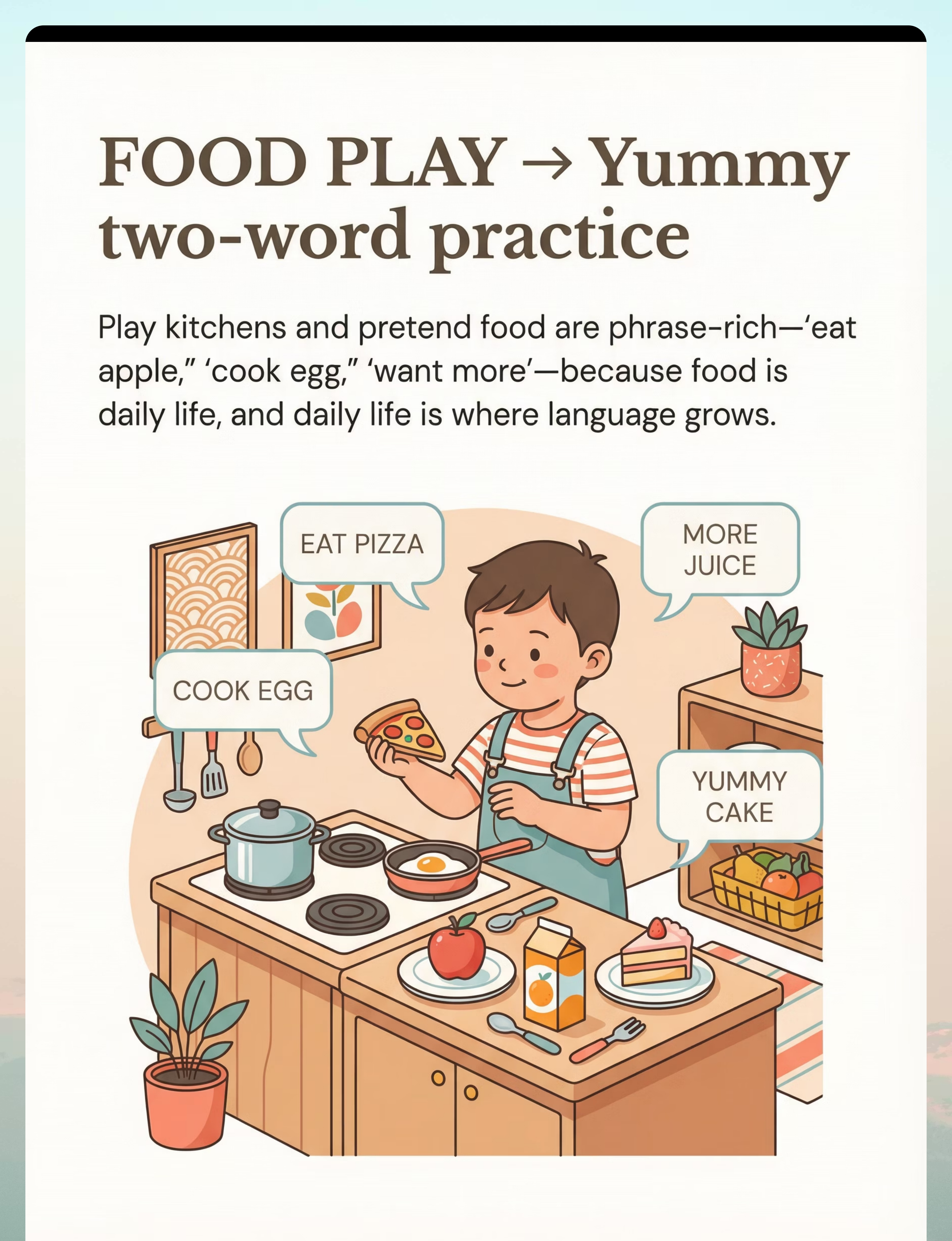
Food Play Sets
Play kitchen, pretend food | ₹300–2,000
Elicits: "eat apple," "cook egg," "yummy cake"
Elicits: "eat apple," "cook egg," "yummy cake"
Essential Starters: Begin today with just three items: Bubbles (₹100) + any ball-drop or push-button toy (₹300) + one repetitive pattern board book (₹200). Total: under ₹600.

Every Family. Every Budget. Language Grows Everywhere.
The material is not the therapy. The interaction is the therapy. The material creates the opportunity for interaction. Any object that motivates your child and creates a natural context for two-word phrases is the right material.
Buy This
- Pop-up toy
- Carrier phrase books
- Figurines
- Matching games
- Bubbles
- Vehicle toys
- Baby dolls
- Hiding toys
- Food play sets
Make This (Zero Cost)
- Drop balls into pots/containers from your kitchen
- Homemade photo books using family photos and sticky notes
- Clothespin people, playdough figures, finger puppets from old gloves
- Sort household items by color — red socks, red cups
- Dish soap + water + wire loop or straw
- Cardboard ramp + any small car; tape roads on floor
- Any stuffed animal + tissue blanket + bottle cap cup
- Cups to hide objects under; sticky notes over book pictures
- Playdough food; empty food containers; pots and spoons
Zero-Cost Daily Routine: During every daily routine — meals, bath, dressing, going outside — model two-word phrases: "Shoes on!" "Drink milk!" "Wash hands!" "Open door!" "Car go!" The most powerful material is your own voice. Keep it short. Keep it focused. Two words.
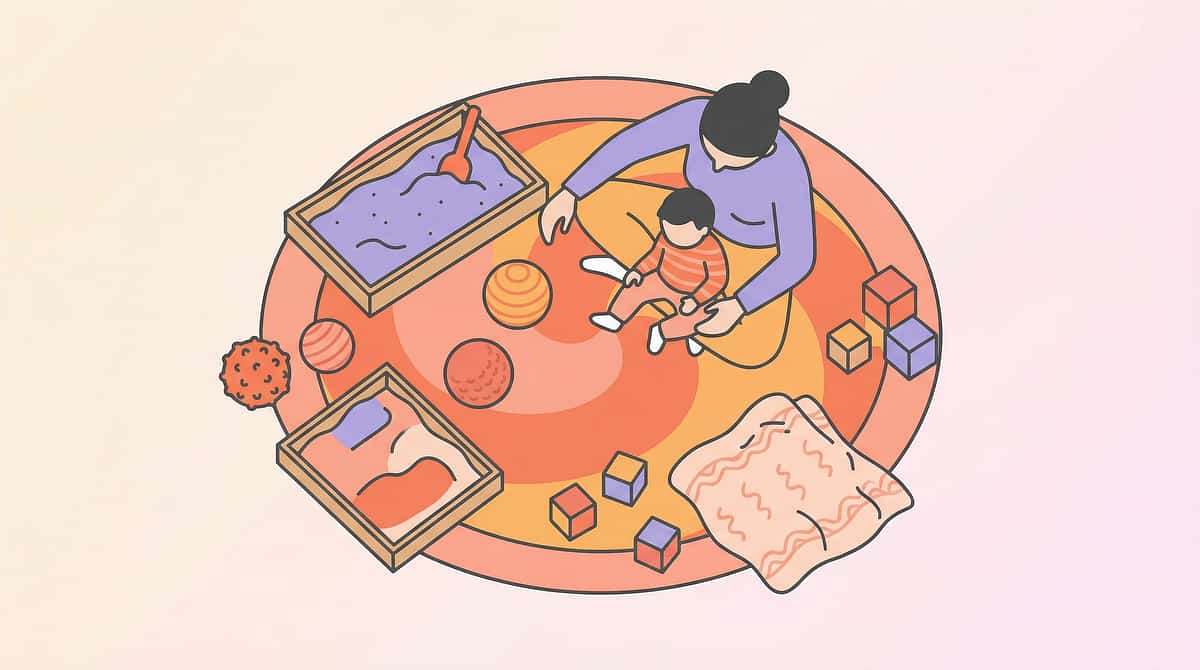
Safety Gate — Read This Before Every Session
Before you begin any session, run through this three-tier safety check. These are non-negotiable. Child safety and emotional readiness must come before any language goals.
🔴 DO NOT PROCEED IF
- Child is in distress, ill, hungry, or exhausted
- Child has shown loss of previously acquired words — regression warrants IMMEDIATE professional evaluation
- Materials contain small parts for children who mouth objects (choking hazard)
- Balloons are present without direct adult supervision — latex balloons are a leading cause of choking death in young children
- Child shows no response to sound or voice — hearing evaluation is needed first
🟡 PROCEED WITH CAUTION IF
- Child becomes frustrated — back off to single-word level, re-engage, try again later
- Child is a sensory avoider — select materials carefully with OT guidance
- Child has oral motor difficulties — consult SLP before targeting longer utterances
- Bubble solution is accessible — ensure child does not ingest
🟢 OPTIMAL CONDITIONS
- Child is alert, fed, rested, and in a good mood
- Environment is quiet with minimal distractions
- Materials are age-appropriate and safe
- Adult has 5–10 minutes of focused, undivided attention
- Child shows interest in the material — follow their lead
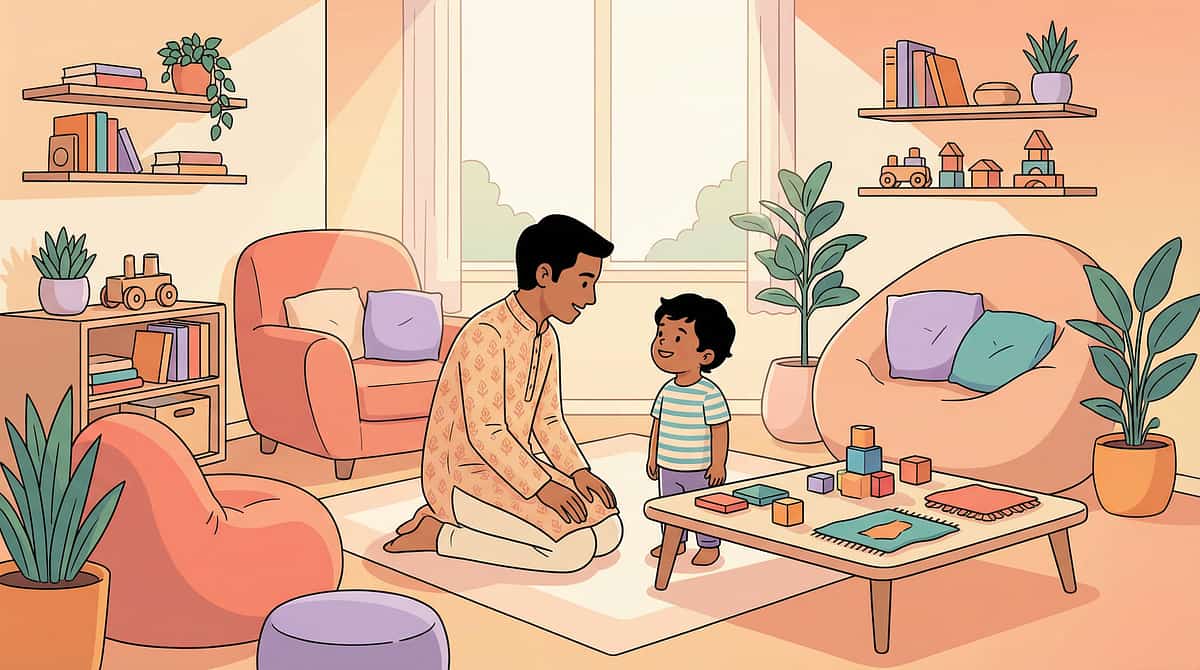
Your Living Room Is Now a Language Lab
You don't need a therapy room. You need a corner of your living room, a floor mat, and one motivated child with one focused parent. That's the language lab. Here is how to set it up — and how to structure your 10 minutes.
Environment Checklist
- Quiet zone: Turn off TV, reduce background noise. Language processing competes with ambient sound.
- Distraction-free: Remove competing toys. Place only 1–2 materials within reach.
- Face-to-face: Position yourself at the child's eye level — on the floor is perfect.
- Materials staged: Have the material slightly out of reach to create a request opportunity.
- Time protected: 5–10 minutes with no interruptions. Phone away.
- Recording (optional): Phone positioned to capture language attempts. Review weekly, not daily.
Session Template
- 0–1 min: Invitation — present the material, generate excitement
- 1–2 min: Engagement — let the child explore, begin modeling two-word phrases
- 2–6 min: Active play — 3+ phrase models per minute during child-led play
- 6–8 min: Repetition and variation — repeat favorites, vary phrases
- 8–9 min: Wind-down — celebrate attempts, natural transition
- 10 min: "All done! Good talking!"
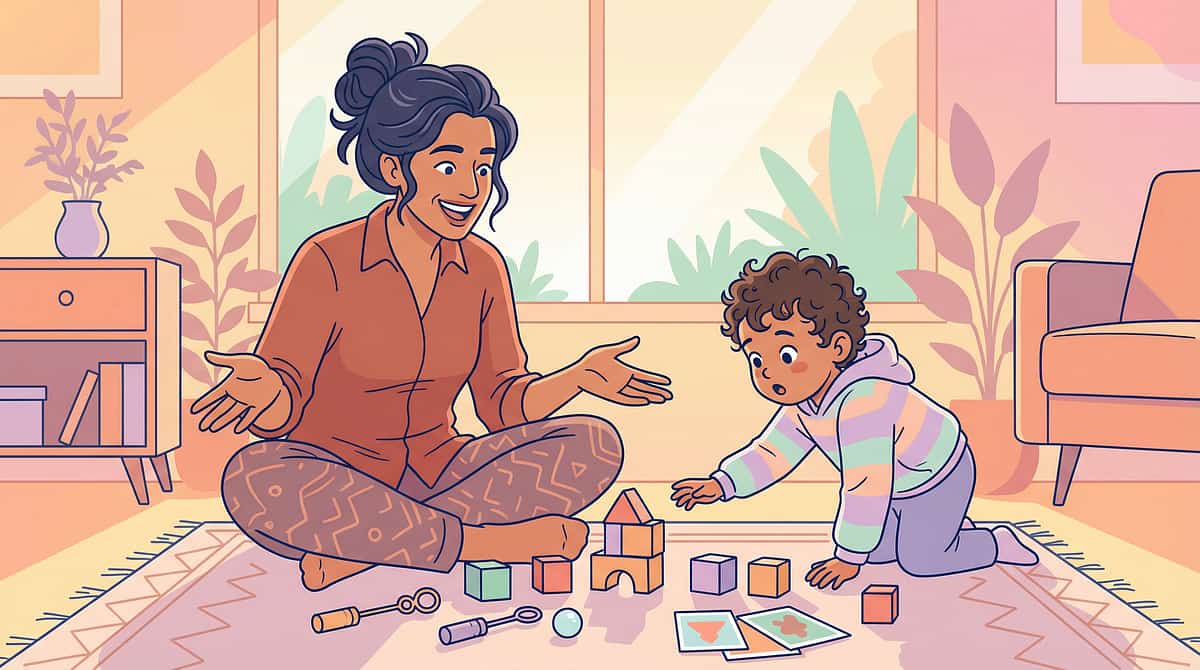
Before You Start — Is Everyone Ready?
Three readiness checks before every session: the child, the caregiver, and the environment. All three must be green before you begin. This isn't perfection — it's protection. A session started in the wrong conditions teaches resistance, not language.
Child Readiness
- 🟢 Alert, fed, and rested
- 🟢 Has shown interest in the selected material before
- 🟢 Producing single words (20+ minimum; 50+ is ideal)
- 🟢 Making eye contact or showing joint attention
- 🟡 Fussy? Wait 15 minutes and try again
- 🔴 Ill, exhausted, or in distress? Skip today entirely
Parent Readiness
- 🟢 5–10 uninterrupted minutes available
- 🟢 1–2 target phrases in mind (e.g., "ball go," "more bubbles")
- 🟢 Feeling patient and playful — not frustrated or pressured
- 🟢 Remembering: MODEL, don't demand. SHORT phrases. FOLLOW the child's lead.
Environment Readiness
- 🟢 Space is set up per the environment checklist
- 🟢 Material is accessible but slightly out of reach
- 🟢 Distractions minimized — TV off, phone away
Step 1 of 6
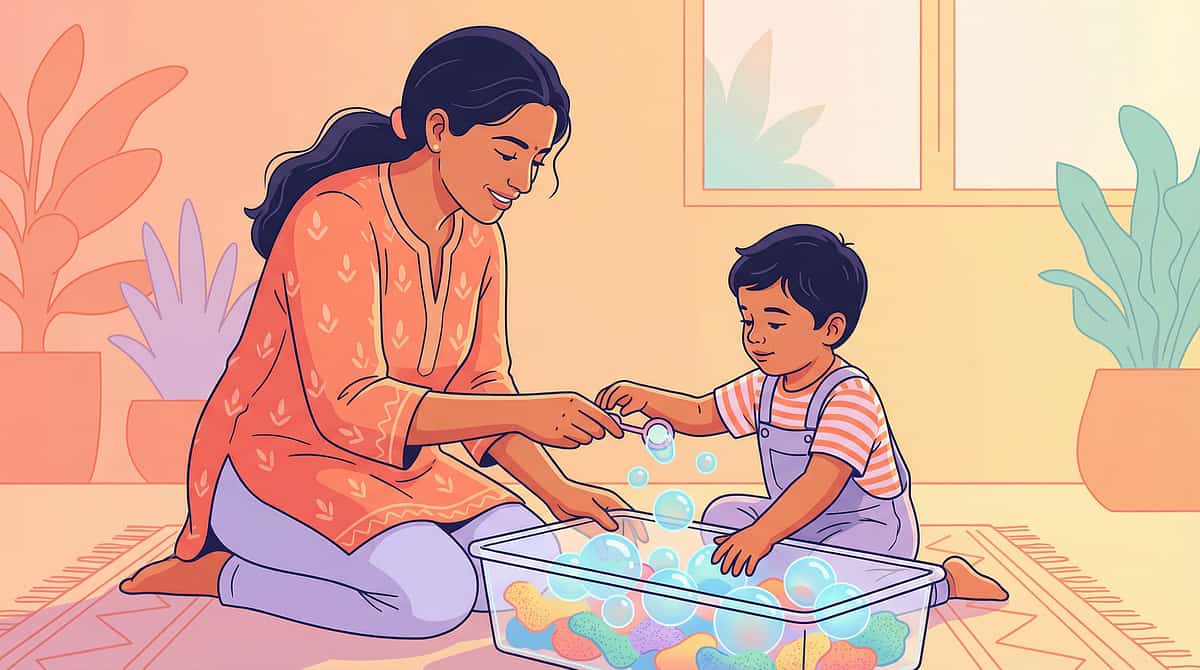
Step 1: The Invitation — "Look What I Have!"
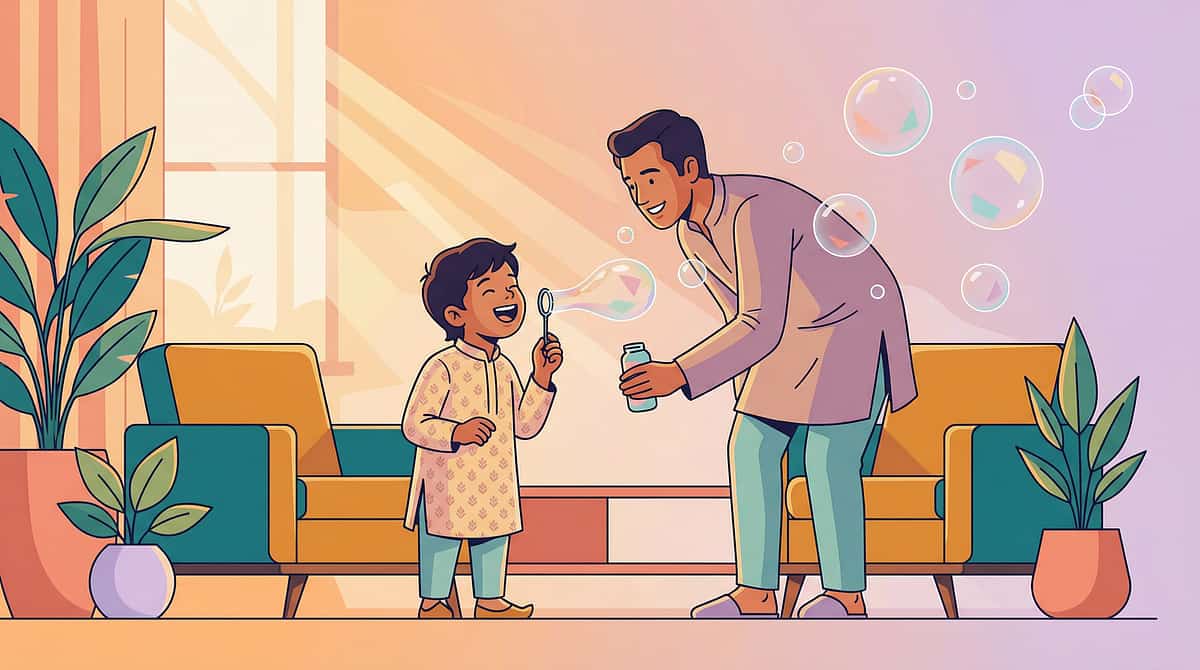
Present the material with excitement and anticipation. Hold it slightly out of reach. Let the child see it, want it, reach for it. This creates the first phrase opportunity: the request. The invitation creates wanting. Wanting creates communication. Communication creates phrases.
"Look! Bubbles!"
Hold up the bubble container — don't open it yet. Let the anticipation build for 3–5 seconds.
"Want bubbles?"
Pause and wait 3–5 seconds. If the child says "bubbles" — expand: "More bubbles! Let's blow bubbles!" If the child reaches — model: "Want bubbles? Want bubbles!"
Then give access
Don't withhold too long — frustration kills motivation. Give the material and begin play immediately after the child communicates in any way.
What NOT to do: Don't demand "Say 'want bubbles'" before giving the material. Don't use long sentences — "Would you like me to open the bubble container for you?" is too complex. Two words. Always two words.
Step 2 of 6
Step 2: Engagement — Follow Their Lead, Model the Words
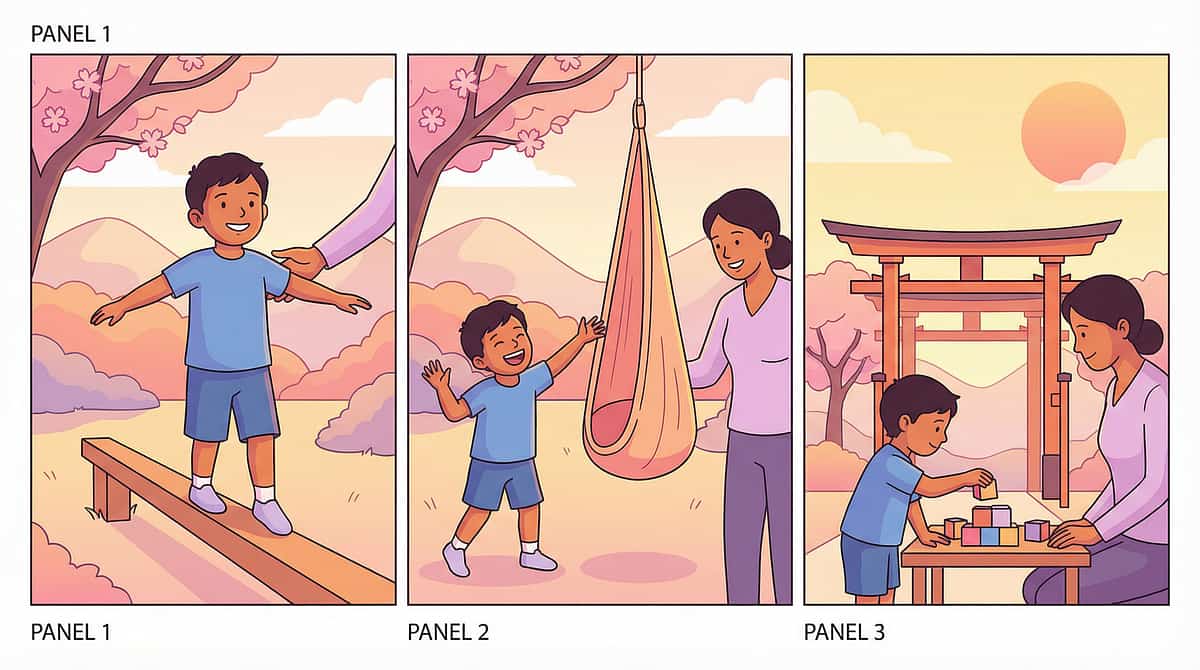
Once the child has the material, let them play. Watch what they do. Then narrate it in two-word phrases. Your job is to shadow their play with a steady stream of short, targeted models. Aim for 3–5 two-word phrases per minute during active play.
🔵 Cause-Effect Toys
Child pushes button → "Push button!" Ball drops → "Ball down!" → "Ball go!" → "Go ball!"
🔵 Carrier Phrase Books
Point to picture → "I see a..." (pause) "...bear!" → turn page → "I see a..." (pause, let child fill in)
🔵 Figurines
Child picks up dog → "Dog walk!" → "Dog jump!" → "Dog sit!" → "Dog eat!"
🔵 Matching Games
Hold up card → "Red car!" → "Find red car!" → Child finds match → "Red car! Same car!"
🔵 Bubbles
Blow bubbles → "Pop bubbles!" → "More bubbles!" → "Big bubble!" → "Catch bubbles!"
🔵 Vehicles
Push car → "Car go!" → Car stops → "Car stop!" → Car crashes → "Car crash!"
🔵 Baby Dolls
Pick up baby → "Baby sleep!" → "Feed baby!" → "Baby's bottle!" → "Wash baby!"
🔵 Hiding Toys
Hide toy → "Where dog?" → Open → "Find dog!" → "There dog!" → "Open egg!"
🔵 Food Play
Pretend cooking → "Cook egg!" → "Eat pizza!" → "More juice!" → "Yummy cake!"
Step 3 of 6
The Active Ingredient
Step 3: Expansion and Expectant Pause
This is the clinical active ingredient. Two techniques — used together — build the bridge from one word to two words.
Expansion
When the child says one word, immediately expand to two:
- Child: "Ball" → You: "Throw ball!"
- Child: "Dog" → You: "Dog run!"
- Child: "More" → You: "More bubbles!"
- Child: "Mama" → You: "Mama help!"
Expectant Pause
In repetitive activities, pause and WAIT for the child to fill in:
- Carrier phrase book: "I see a..." (pause 3–5 seconds, look expectantly)
- Bubble routine: blow bubbles, stop, hold wand, wait — child motivated to say "more bubbles!"
- Ball drop: hold ball at top, wait... "Ball..." (pause) "...go?"
Never expand to full sentences
"Oh, you want me to throw the big red ball?" ✗ → "Throw ball!" ✓ Keep it to TWO words.
Never demand repetition
"Say 'throw ball'" ✗ → Model and move on: say "Throw ball!" then throw it ✓
Never correct
"Don't say 'ball,' say 'throw ball'" ✗ → Expand naturally: "Ball? Throw ball!" ✓

Step 4 of 6
Step 4: Repeat and Vary — 3 Good Reps Beat 10 Forced Ones
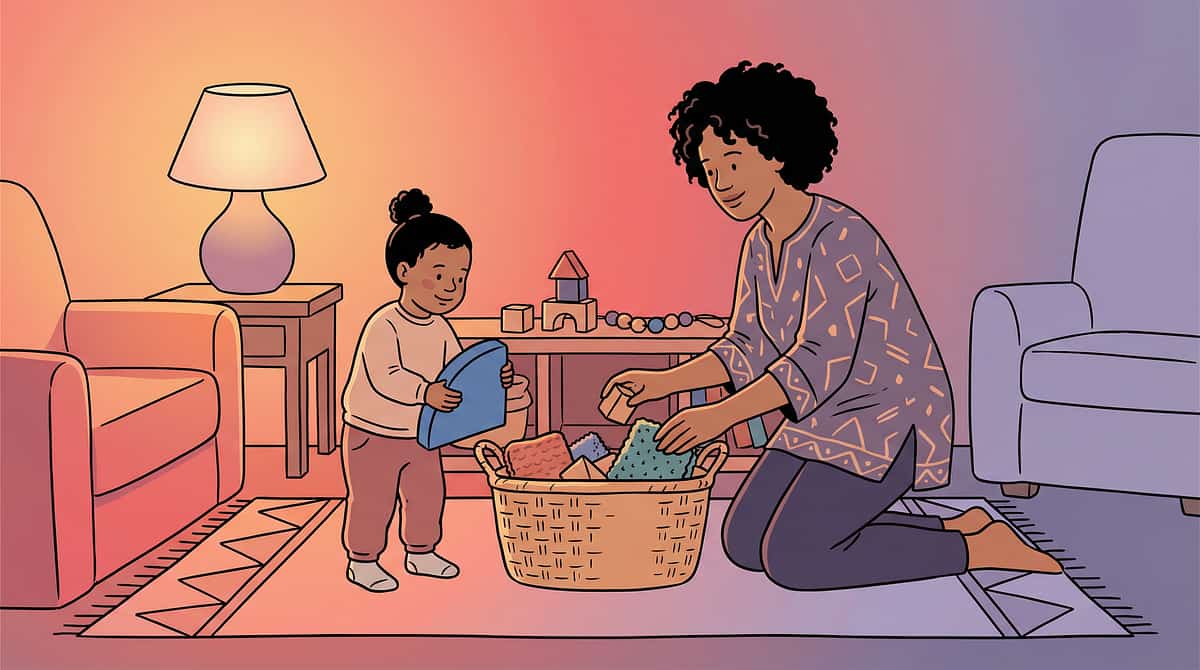
Language learning requires many exposures. Research suggests children need to hear a phrase 50–100 times in context before producing it consistently. Repetition isn't boring to the developing brain — it's building. "Ball go!" should be modeled every time the ball drops. Every. Single. Time.
Same Phrase, Repeat It
Target phrase modeled 5–10 times per session (minimum). Same activity repeated 3–5 times before varying.
Same Material, Different Phrase
"Ball go!" → "Ball down!" → "Big ball!" → "My ball!" — vary the semantic relation while keeping the material familiar.
Same Phrase, Different Material
"Car go!" → "Dog go!" → "Plane go!" — transfer the same phrase type across different toys to promote generalization.
Add Excitement
Whisper it, say it loudly, say it in a funny voice — same two words, different delivery. Novelty maintains engagement.
Satiation signals — when to stop or switch: Child looks away consistently, pushes material away, engagement drops from active to passive, or child says "no," "done," or shows frustration. Respect the signal. Switch materials, not pressure.
Step 5 of 6
Step 5: Celebrate Every Connection — Timing Matters More Than Magnitude
When words work together and things happen — when "more bubbles" produces more bubbles — the brain learns that combination is powerful. That's the deepest reinforcement: language that works.
Natural Consequence (Best)
"More bubbles!" → blow more bubbles immediately. The words get results. This is the most powerful reinforcement available.
Specific Verbal Praise
"You said 'ball go!' Great talking!" — repeat their phrase back, be specific, not generic.
Physical Celebration
High five, clap, tickle — if the child enjoys it. Match the child's energy level. Never overwhelming.
Token System (ABA Framework)
Sticker or token for phrase attempts — consult your BCBA to integrate with the broader behavioral support plan.
Never require perfection. "Mo buh" (for "more bubbles") gets the same celebration as "more bubbles." Every combination attempt — at any approximation level — deserves acknowledgment.
Step 6 of 6
Step 6: Wind Down — "All Done! Good Talking!"
Signal the end of the focused session with a consistent phrase and gentle transition. The cool-down teaches the child that language practice has a beginning and an end — reducing anxiety and building the routine that makes daily practice sustainable.
"All done bubbles!"
Model a two-word phrase even during the transition — every moment is a language opportunity
"Bye-bye ball!"
Wave to the material as you put it away. Make the ending feel gentle and predictable.
"Good talking!"
Physical affection — hug, high five — and a warm close. Celebrate the effort, not just the outcome.
"Now — snack time!"
Transition to the next activity with another two-word phrase. The modeling continues beyond the session.
Post-session integration: The session is done but the modeling continues. Meals: "Eat rice!" "Drink water!" Bath: "Wash hands!" "Bubbles pop!" Walks: "Car go!" "Bird fly!" Two-word phrases live in every moment of every day. Ideal frequency: 3–5 short sessions daily + phrase modeling during all routines.

What Gets Measured Gets Improved
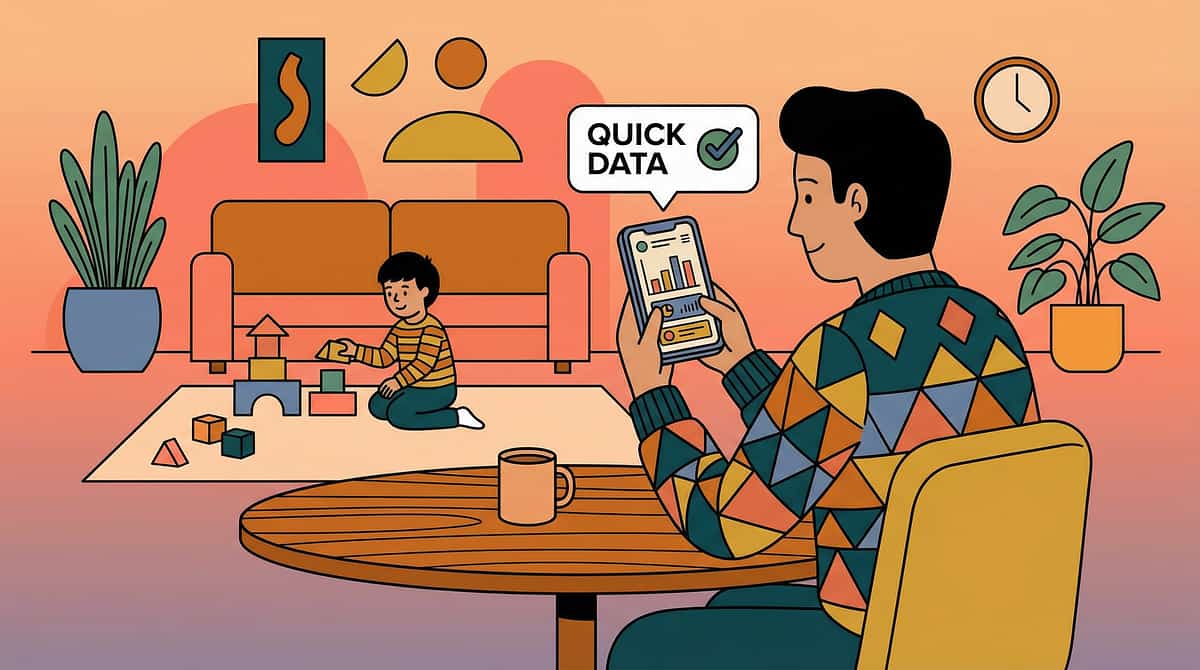
You don't need a complex data system. You need a simple, consistent record that shows you where you started and where you are now. Track once a week — not daily. Looking too closely at day-to-day variation creates anxiety. Weekly trends reveal the real story.
Day | Material Used | Phrases Modeled | Child's Best Response | New Combos Heard | Notes | |
Monday | ||||||
Tuesday | ||||||
Wednesday | ||||||
Thursday | ||||||
Friday | ||||||
Saturday | ||||||
Sunday |
Progress indicator: If you hear even ONE new two-word combination per week that your child initiates spontaneously — that's real progress. Language isn't linear. It builds underground before it surfaces.
Stuck? Here's What to Try
Every child's path to phrases is different. When progress feels stalled, the answer is almost always an adjustment in approach — not an abandonment of it. Here are the most common obstacles and evidence-based solutions.
"My child just repeats the last word I say"
This is "echolalia of final position" — actually a step forward. The child is attending to your speech. Solution: Put the target word FIRST: instead of "Throw ball," say "Ball — throw!" or use rising intonation on the action word to shift attention.
"My child won't imitate my two-word phrases"
Imitation isn't required. Solution: Keep modeling. Research shows children need 50–100+ exposures before production. Model consistently for 4–6 weeks before evaluating. Input is building neural pathways even when you can't hear them yet.
"My child only combines with one specific material"
That's a starting point, not a problem! Solution: Celebrate this combination, then gradually introduce the same phrase TYPE with different materials. If "more bubbles" works, try "more blocks" and "more juice."
"My child uses single words plus gestures instead of two words"
Word + gesture is the developmental step BEFORE word + word. Solution: When child says "ball" and points up, model: "Ball up!" The gesture shows intent — your job is to give it words.
"My child becomes frustrated and shuts down"
Solution: You're likely pushing too hard. Return to single-word play. Make the activity FUN with zero language pressure. Re-introduce phrase modeling after 2–3 days of pure play.
"I've been doing this for 8 weeks with no change"
Solution: Seek professional evaluation. An SLP can assess whether underlying factors are present and whether the targets are appropriate. Call FREE Helpline: 9100 181 181.

Your Child Is Unique. The Technique Adapts.
This is not a one-size-fits-all protocol. Every child comes with their own sensory profile, age, and communication starting point. Use these adaptation dimensions to calibrate the technique to your child's current needs — adjusting as they grow.
Difficulty Slider
- Easier: Focus on one phrase type only (e.g., "more ___"). One material. Accept any approximation. Model less frequently.
- Standard: 2–3 phrase types across 2–3 materials. Model 3–5 per minute. Accept approximations.
- Harder: 4+ phrase types. Introduce expectant pauses. Begin modeling three-word phrases for children with established two-word patterns.
Sensory & Age Adaptation
- Sensory seeker: High-stimulation materials (bubbles, ball drops, vehicles with sound). Model loudly, with energy.
- Sensory avoider: Calm materials (soft books, quiet figurines, gentle food play). Model softly, slowly.
- 18–24 months: Focus on recurrence ("more ___") and agent-action. 3–5 minute sessions.
- 24–30 months: Add attribute-entity and possessor-possession. Introduce expectant pauses. 5–8 minute sessions.
- 30–48 months: Full range of semantic relations. Begin transitioning to three-word phrases. 8–10 minute sessions.
Cultural Adaptation: Use your home language. If you speak Tamil at home, model in Tamil. If you speak Hindi, model in Hindi. Two-word combinations develop in every language. The neural pathway is the same — the words are yours.

Progress Arc
Weeks 1–2
Weeks 1–2: Laying the Foundation
The first two weeks are not about hearing phrases. They are about building the soil that phrases will grow from. What you are doing in these early sessions matters enormously — even when you can't hear results yet.
Increased Attention to Models
Child watches your mouth more carefully, pauses to listen when you model. This is the first observable sign that input is landing.
More Consistent Single-Word Responses
Even if not combining yet, single-word responses during play become more frequent and more intentional.
Word + Gesture Combinations
"Ball" + pointing up. These word-plus-gesture combinations are the developmental precursor to word + word. They count as progress.
Formulaic Unit Phrases
"All gone," "uh oh" — learned as units, not true combinations, but emerging as language is reorganizing. A meaningful sign.
"If your child tolerates the material for 3 seconds longer, attends to your voice more closely, or produces even one word + gesture combination — that's real progress. Weeks 1–2 are about building the foundation that phrases will grow from."

Progress Arc
Weeks 3–4
Weeks 3–4: Words Are Starting to Reach for Each Other
Something is shifting. You may not hear full combinations every day, but the signs of consolidation are becoming visible. The neural connections being built in weeks 1–2 are beginning to surface.
Anticipatory Behavior
The child anticipates routines — "I see a..." and the child starts reaching to fill in the blank word before you finish. Routine prediction is a sign of internalized language structure.
Imitated Two-Word Phrases
Child repeats your model shortly after hearing it — even with a delay of minutes or hours. Deferred imitation is a significant cognitive milestone.
1–3 Semi-Spontaneous Combinations
Child initiates a combination without a model immediately preceding it, though it may still be context-bound to one activity or material.
Carrier Phrase Transfer
Phrases from the books or play routines begin appearing in daily life contexts — a powerful sign of generalization beginning.
"When your child says 'more bubbles' for the first time without you modeling it right before — that's a neural pathway that just formed. The synaptic connection between 'more' and 'bubbles' just myelinated. You may not see it under a microscope, but you heard it in your living room."

Progress Arc
Weeks 5–8
Weeks 5–8: The Combinatorial Explosion Begins
This is the window where the investment pays out. The underground work of weeks 1–4 surfaces. Language begins to accelerate. What you built patiently and consistently is now visible — and audible — every day.
Spontaneous Novel Combinations
The child produces two-word phrases they have NEVER heard you model — combining known words in new ways. This is true generative language.
Multiple Semantic Relations
Not just "more ___" but also "daddy go," "big truck," and "my ball." Several phrase types appearing across the day.
Generalization Across Settings
Combinations appear at meals, during bath, at the park — not just during structured play. The language belongs to the child now.
Three-Word Attempts Emerging
"Want more juice," "big car go" — the foundation is carrying the next level. It's time to begin modeling three-word phrases for the most established combinations.
"Something changes around this time. The child realizes that words CAN go together — not just that 'more bubbles' is a thing they say, but that ANY words can combine. This is the discovery of grammar. From here, the growth accelerates."

The Words Found Each Other. You Helped Build the Bridge.
First Imitated Two-Word Phrase
Child repeats a two-word model — the first bridge between hearing and producing
First Spontaneous Combination
Child produces a two-word phrase without a preceding model — neural pathway formed
First Novel Combination
Words paired in a way never modeled — generative language has begun
First Cross-Context Phrase
Same combination used in a new setting — generalization is complete for this phrase
First Three-Word Attempt
The two-word foundation is strong enough to carry a third — the next stage begins
First Phrase That Worked
Child said it, parent responded — communication happened. Language is now a tool.
"At two and a half, my son had over sixty words but wouldn't combine them. We started with cause-and-effect toys, modeling 'ball go' and 'push button' every time we played. We used carrier phrase books, reading 'I see a ___' until he started filling in the blanks. Within three months, he started combining on his own. First it was 'more juice' and 'mama help.' Then 'big truck' and 'ball go fast.' Now, at three, he's putting three and four words together — little sentences that started with those first two-word connections."— Parent, Pinnacle Blooms Network | Illustrative case; outcomes vary by child profile.
When to Move Beyond Home Practice — Trust Your Instinct
Home practice is powerful. And there are moments when professional evaluation must come next. Trust your instinct. Early intervention is not overreaction — it's precision. The 18–36 month window is when the brain is most responsive. Don't "wait and see." Act, assess, and let professionals guide your next step.
🔴 Seek Immediate Evaluation If:
- Child has LOST previously acquired words or combinations (language regression)
- Child is over 30 months with 50+ words and NO combinations despite 8+ weeks of focused practice
- Child shows limited understanding alongside expressive delay
- Child has stopped responding to their name or shows significant social withdrawal
- Child shows no imitation of any kind — actions, sounds, or words
🟡 Consult SLP or Pediatrician If:
- After 8 weeks, combinations are limited to 1–2 memorized phrases with no generalization
- Child combines only in imitation, never spontaneously
- Child's vocabulary is not growing alongside combination attempts
- Child shows increasing frustration with communication
- Child's hearing has not been tested recently
- Family history of speech-language disorders or autism
Where You've Been. Where You're Going.
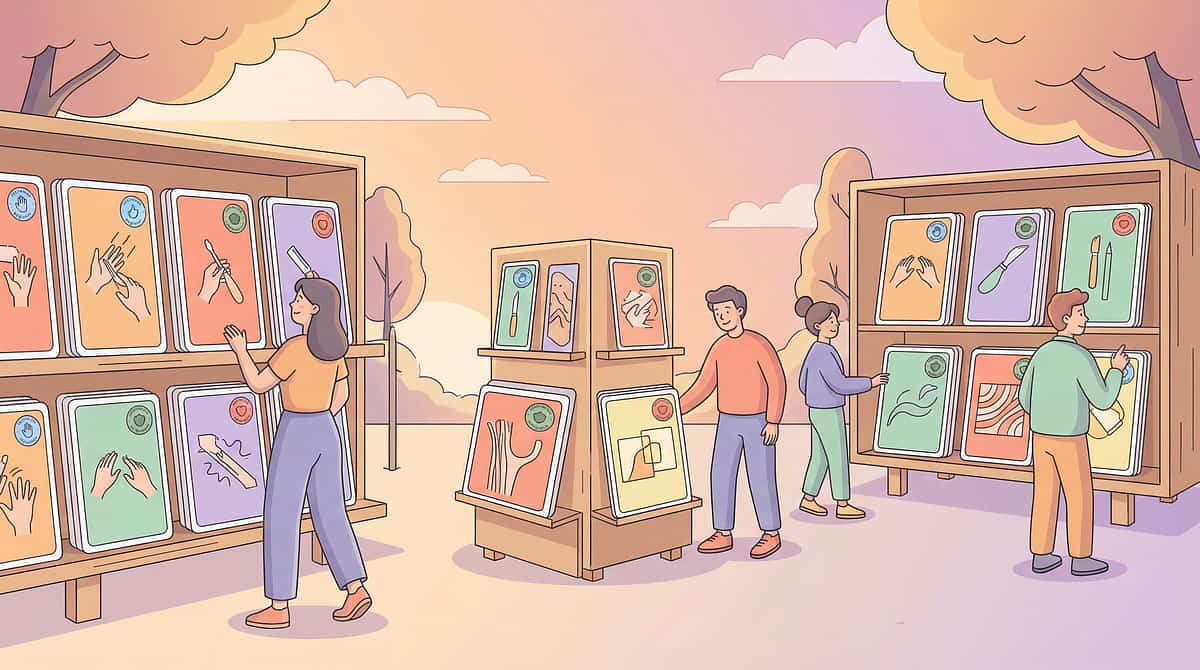
B-201 is one step in a carefully sequenced developmental pathway. Knowing what came before and what comes next gives you the full arc — and helps you recognize when your child is ready to move forward.
When two-word combinations are well-established, the next level opens: three-word sentences (B-202), question development (B-203), pronoun development (B-205), and expanded verb vocabulary (B-210). Lateral alternatives for children with different profiles include AAC-augmented approaches and music-based phrase building.
"Two-word phrases are the foundation of grammar. Grammar is the foundation of sentences. Sentences are the foundation of stories, questions, arguments, jokes, and dreams expressed in words."
More Techniques for Language Building
B-201 is part of a rich, interconnected library of evidence-based techniques. Each one builds on the last — and all are available at techniques.pinnacleblooms.org. Here are the techniques most closely related to the work you're doing now.
B-200: Single Word Plateau
Introductory | Materials: Picture cards, labeling books
The technique that precedes this one — if combinations haven't emerged yet
The technique that precedes this one — if combinations haven't emerged yet
B-202: Three-Word Sentences
Core | Materials: Story sequence cards, expanded play sets
The natural progression once two-word combinations are well-established
The natural progression once two-word combinations are well-established
B-203: Question Development
Core | Materials: Mystery boxes, "what's inside" games
For children beginning to ask "what?" and "where?"
For children beginning to ask "what?" and "where?"
B-205: Pronoun Development
Core | Materials: Mirror play, family photo sorting
For children where "my" and "your" are emerging in combinations
For children where "my" and "your" are emerging in combinations
B-210: Verb Vocabulary
Introductory | Materials: Action cards, movement games
If action word repertoire is limited and restricting phrase variety
If action word repertoire is limited and restricting phrase variety
K-1205: Modeling Language During Play
Parent Training | Materials: Any child-preferred toys
The parent coaching technique that supports all of the above
The parent coaching technique that supports all of the above
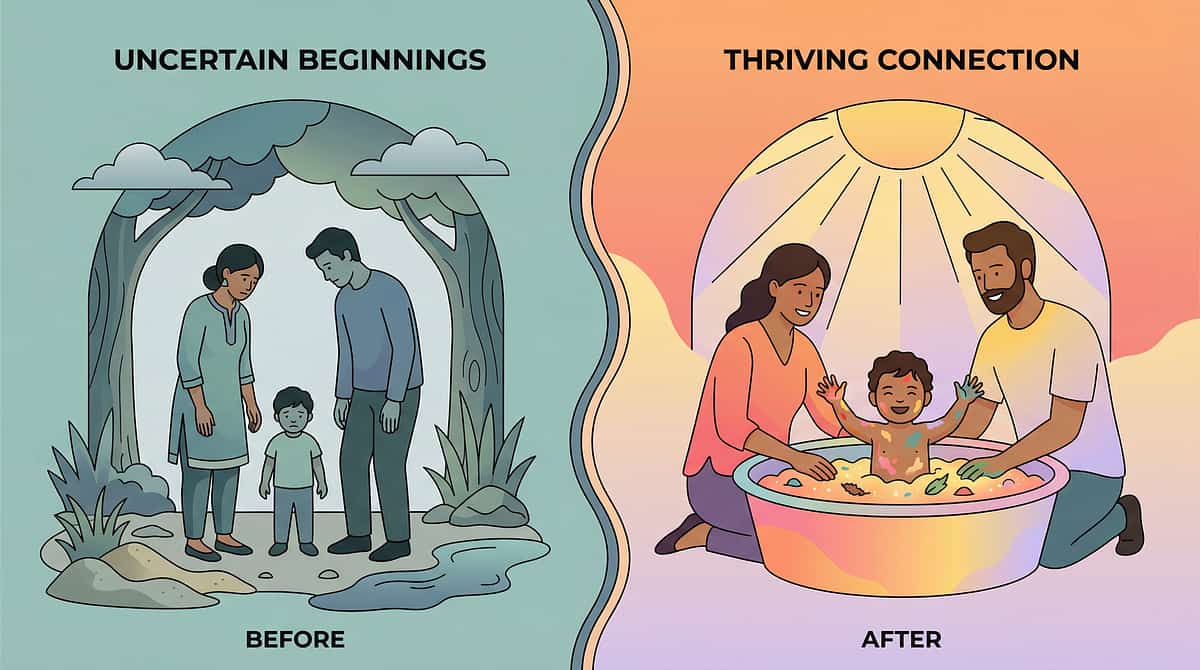
This Technique Is One Piece of a Larger Plan
Building two-word phrases (B-201) sits within Domain B: Communication and Language — the largest intervention domain in the Pinnacle system. But language connects to every domain. It is the thread that runs through sensory processing, social-emotional development, cognitive growth, academic readiness, and community participation.
GPT-OS® maps your child's position across all 12 domains simultaneously. This technique page addresses one specific, high-leverage skill. Your child's full developmental profile — their AbilityScore®, readiness indexes, and personalized intervention plan — lives within GPT-OS®.
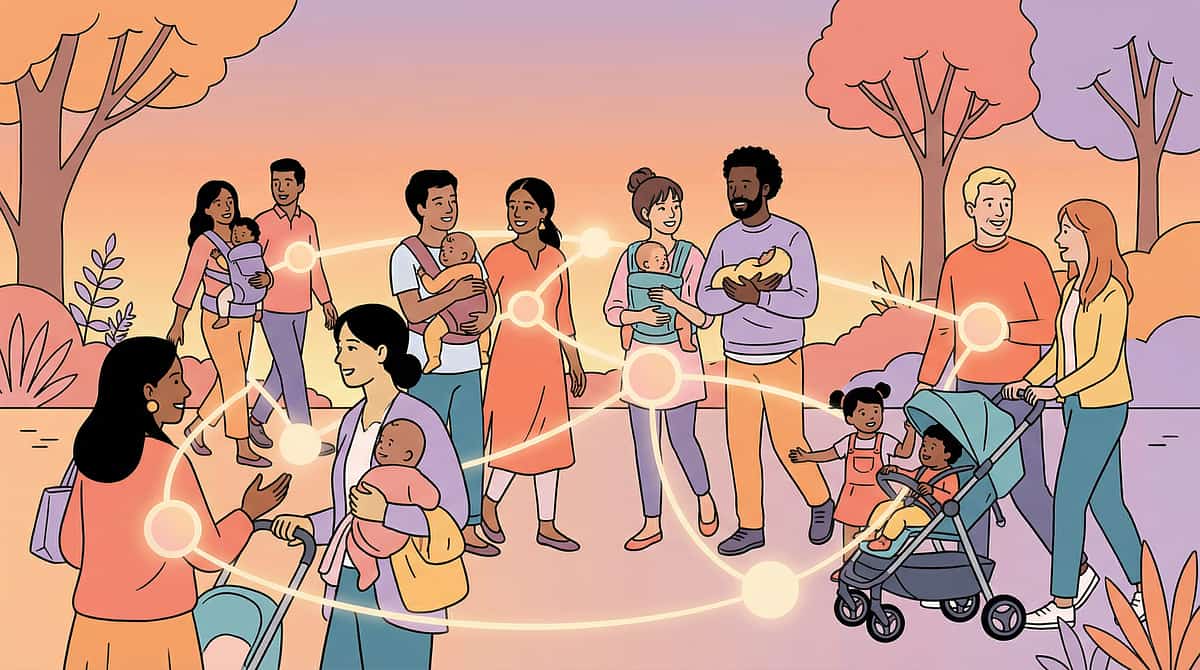
From Other Parents Who Waited for Phrases — and Heard Them
These accounts reflect the experiences of families across the Pinnacle Blooms Network. The materials were different. The cities were different. The children were different. But the moment — the moment words found each other — was the same.
"Aarav was 26 months old with about 70 words and zero phrases. His therapist suggested starting with bubbles and the 'more ___' pattern. We blew bubbles every day, saying 'more bubbles' each time. After three weeks, he grabbed my hand one morning and said 'more bubbles' clear as day. I cried. That was six months ago. He's now saying 'I want bubbles please.' From zero phrases to sentences in six months."— Mother, Hyderabad | Pinnacle Blooms Network
"My daughter would only label things — 'dog,' 'car,' 'tree.' Her SLP recommended figurine play with two-word modeling. We bought a farm animal set for ₹400 and spent 10 minutes every evening: 'cow eat,' 'horse run,' 'pig sleep.' After about a month, she started doing it herself — 'doggy sit!' was her first spontaneous combination. She said it to her grandfather, and he started crying."— Father, Chennai | Pinnacle Blooms Network
"We couldn't afford therapy materials, so we used kitchen items — pots as drums ('drum bang!'), spoons as figurines ('spoon dance!'), cups for hiding games ('find cup!'). The DIY approach worked. My son is combining words now, and we spent exactly zero rupees on materials. The technique is in the interaction, not the toy."— Mother, Rural Andhra Pradesh | Pinnacle Blooms Teleconsultation
Illustrative accounts based on common parent experiences. Individual outcomes vary. Professional assessment recommended.
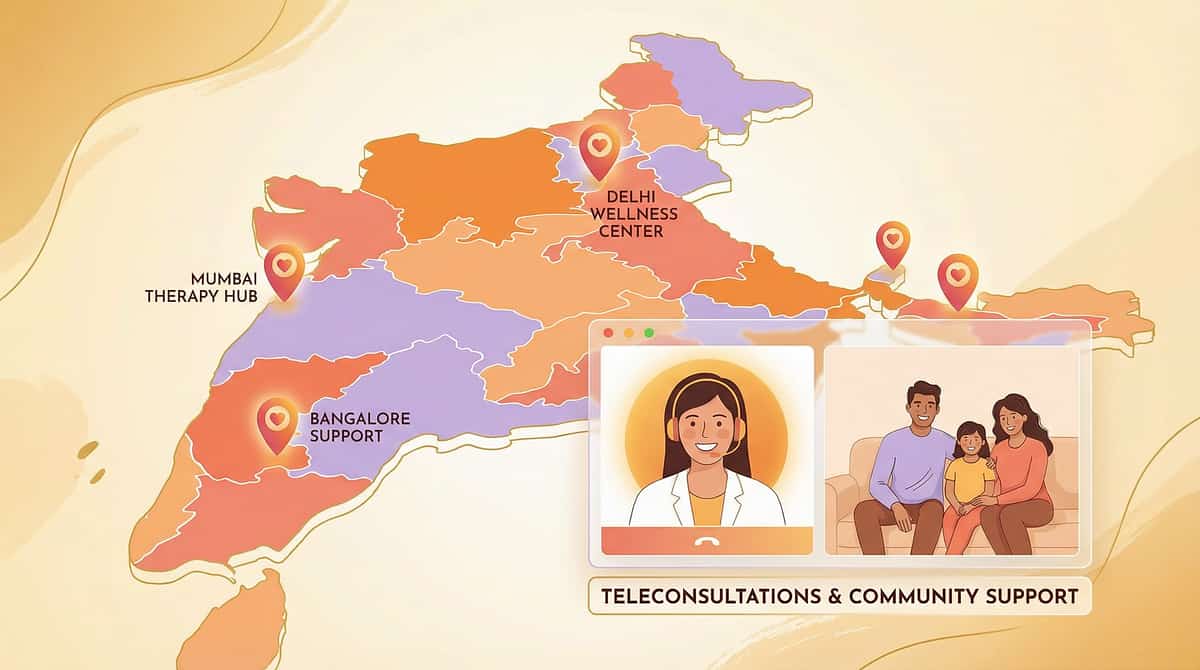
You're Not Doing This Alone
Every parent on this page is walking a version of your journey. Some are ahead of you — their children combining words, building sentences. Some are behind — still waiting for first words. All of them started exactly where you are: wanting more for their child and willing to do the work. You belong here.
📞 FREE National Helpline
Call 9100 181 181 — available in 16+ languages, for guidance and support. No appointment needed.
👨👩👧 Parent Community
Connect with families navigating the same journey at Pinnacle Blooms Parent Community — online and in-person.
📱 EverydayTherapyProgramme™
Daily guided activities sent directly to your phone — so you never have to wonder what to do next.

When You Need Expert Hands — We're Here
Home practice is powerful. Professional support is irreplaceable. When you want a clinician to tailor this technique precisely to your child's profile — or when you need comprehensive assessment to understand the full developmental picture — Pinnacle Blooms is available in person and online.
In-Person Assessment
70+ centers across India. Find your nearest Pinnacle center for comprehensive evaluation with the full consortium team.
Teleconsultation
Available globally. Book an online assessment with a licensed SLP from anywhere — same clinical rigor, delivered remotely.
FREE Helpline
Call 9100 181 181 — no appointment needed, 16+ languages, available for guidance and assessment scheduling.
A professional assessment includes AbilityScore® evaluation across 349 skills, expressive language profiling within GPT-OS®, Communication Function Index analysis, hearing screening referral if indicated, and a fully personalized intervention plan with specific phrase targets and home program development.
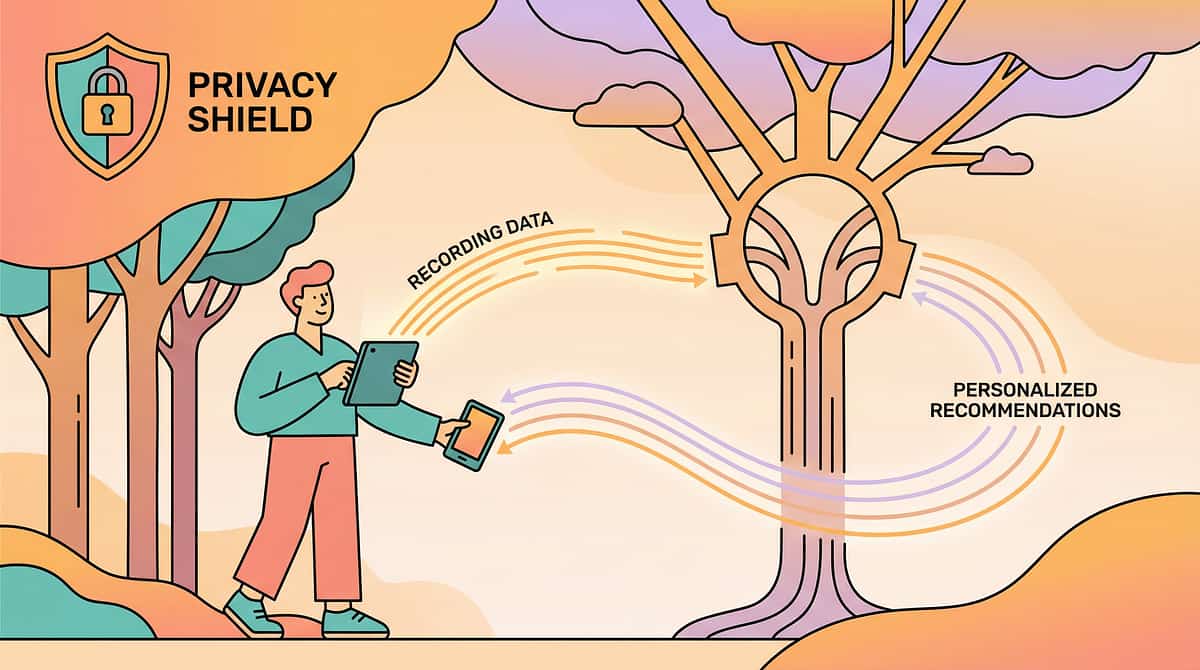
The Science Behind Every Card on This Page
Every recommendation in this guide has been reviewed by the Pinnacle Blooms Consortium. This is not opinion. This is synthesized evidence translated for parent execution — grounded in peer-reviewed research, clinical databases, and international developmental frameworks.
PMC11506176 — PRISMA Systematic Review (Children, 2024)
16 articles from 2013–2023 confirm evidence-based practice status for structured intervention in ASD
PMC10955541 — Meta-Analysis (World J Clin Cases, 2024)
Therapy effectiveness across 24 studies for social skills, adaptive behavior, sensory processing, and motor skills
PMC9978394 — WHO/UNICEF Nurturing Care Framework
Developmental monitoring frameworks and Care for Child Development Package across 197 countries
Roberts & Kaiser (2011) — AJSLP
Parent-implemented language interventions meta-analysis — foundational evidence for home-based practice
Rescorla (2011) — DDRR
Late talkers: predictors of outcome — evidence for early identification and intervention
Pinnacle Blooms Clinical Database
20M+ exclusive 1:1 therapy sessions • 97%+ measured improvement rate • GPT-OS® governed outcomes
Consortium Validation: Reviewed by licensed SLPs, registered OTs, Board Certified Behavior Analysts, Special Educators, and NeuroDevelopmental Pediatricians operating at CRO-level research standards.
GPT-OS® — Global Pediatric Therapeutic Operating System
"GPT-OS® is the end-to-end operating system that governs diagnosis, prognosis, therapy design, execution, monitoring, and readiness outcomes in child development — as one closed, accountable system." This page is one output of that system. Your child's full plan lives inside it.
20M+
Therapy Sessions
Exclusive 1:1 sessions powering the prognosis engine
97%+
Improvement Rate
Measured improvement across all children in the system
70+
Centers
Across India delivering consortium-coordinated care
160+
Countries
Where GPT-OS® patents have been filed
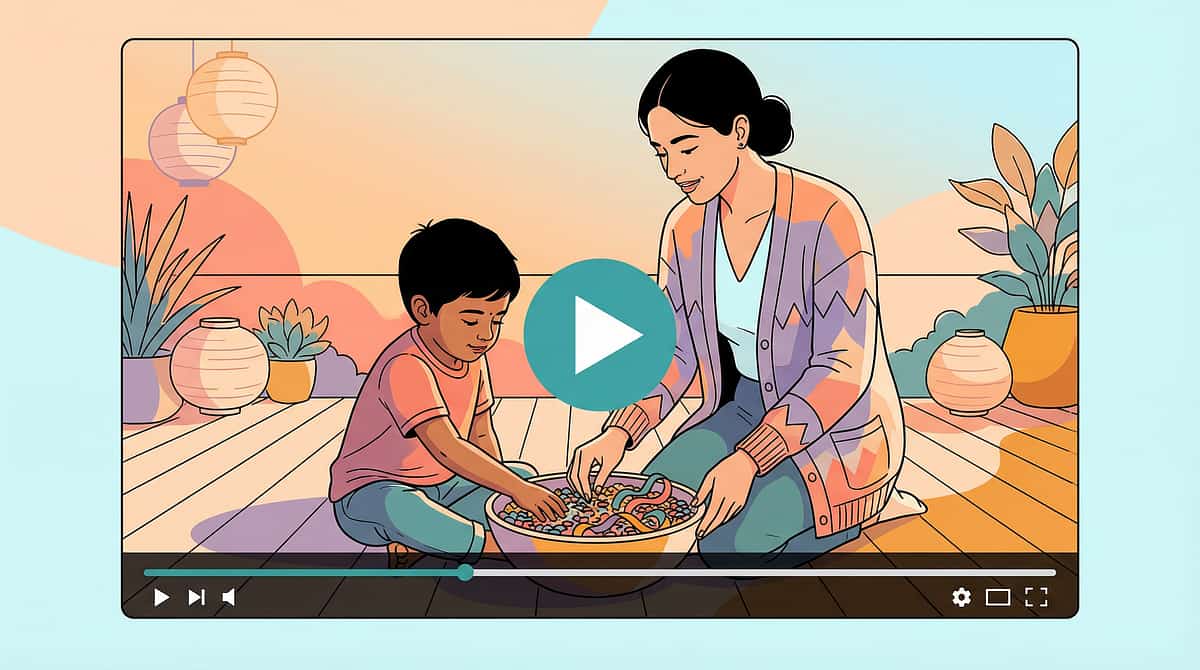
Watch: 9 Materials That Help Building Two-Word Phrases
A 60-second visual guide to all 9 materials — see them in action, hear the phrases, watch the moments when words find each other. Save it. Share it. Use it.
This reel is Episode 201 in the Early Language and Communication Solutions Series from Pinnacle Blooms Network.
1
← Previous
B-200: Single Word Plateau
2
Now Playing
B-201: Building Two-Word Phrases
3
Next →
B-202: Three-Word Sentences

Share This Page With Everyone Who Cares for Your Child
Language practice works best when everyone in a child's world is modeling the same phrases. Share this page with your spouse, your parents, your caregiver — anyone who spends time with your child. Here are ready-to-use messages for each relationship.
For Your Spouse / Partner
"I found this guide on helping [child's name] combine words. It explains 9 materials we can use at home. Can you look through it tonight? We can start with bubbles and the carrier phrase books."
For Grandparents
"This page from Pinnacle Blooms explains why [child's name] is using single words and not phrases yet — and what we can all do to help. The 'DIY alternatives' section shows how to use things already at home."
For Caregiver / Nanny
"Please read the 6-step protocol (Steps 1–6). When you play with [child's name], try to use two-word phrases like 'ball go' and 'more juice.' The page explains exactly how."

Your Questions — Answered by the Consortium
Is my child autistic because they're not combining words?
Delayed word combinations alone do not indicate autism. Many children with language delays do not have autism, and many children with autism do develop language with support. A comprehensive evaluation — not a single milestone — determines diagnosis. If you're concerned, an AbilityScore® assessment can clarify the full picture.
Should I correct my child when they say only one word?
Never correct. Always expand. When your child says "ball," say "Throw ball!" with enthusiasm. Correction discourages attempts. Expansion models the next step. The difference is profound.
What language should I use — English or my home language?
Use your home language. Two-word combinations develop in every language. Research shows bilingual children are not delayed by exposure to multiple languages. Model phrases in the language you're most natural and expressive in.
How many hours per day should I practice?
Not hours — minutes. Three to five focused 5–10 minute sessions per day, plus natural two-word modeling during daily routines. Quality and consistency matter more than quantity. 30 focused minutes across the day is more effective than one exhausting 60-minute block.
Can I use a screen or tablet for this?
Physical materials with real human interaction are strongly preferred over screens for children under 3. The turn-taking, joint attention, and real-time responsiveness of live play cannot be replicated by a screen. Use materials, not apps, for this technique.
My child is already in speech therapy. Should I still do this at home?
Absolutely. Home practice between therapy sessions is where generalization happens. Share this page with your SLP — they can align home activities with therapy goals. The EverydayTherapyProgramme™ does exactly this.
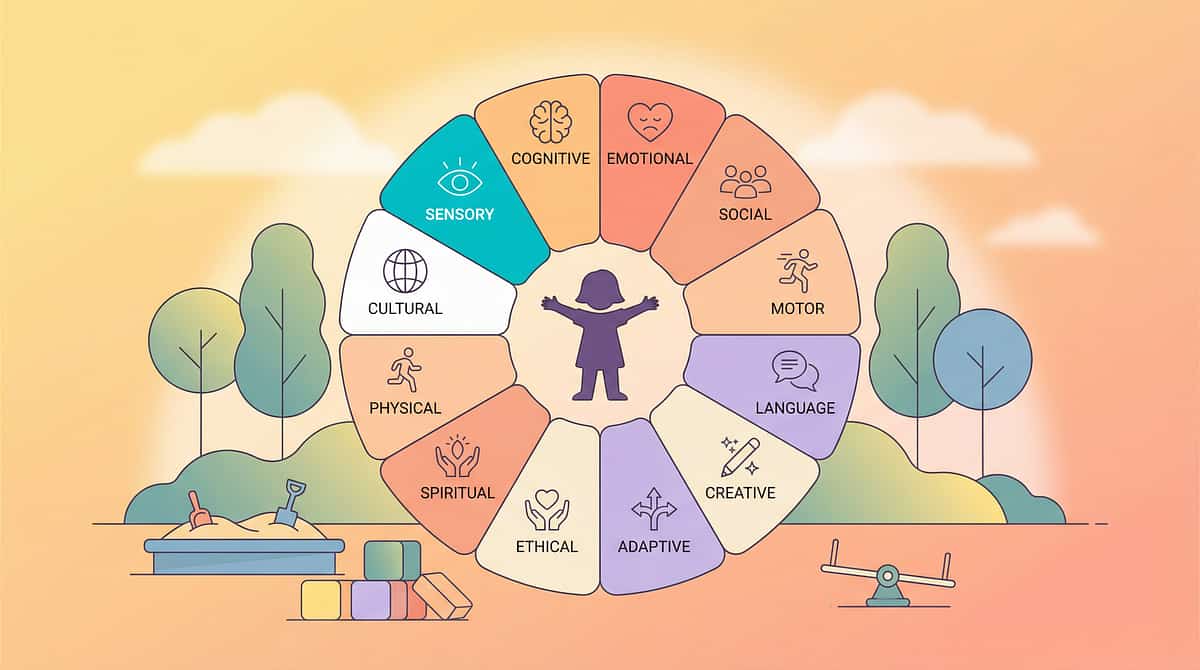
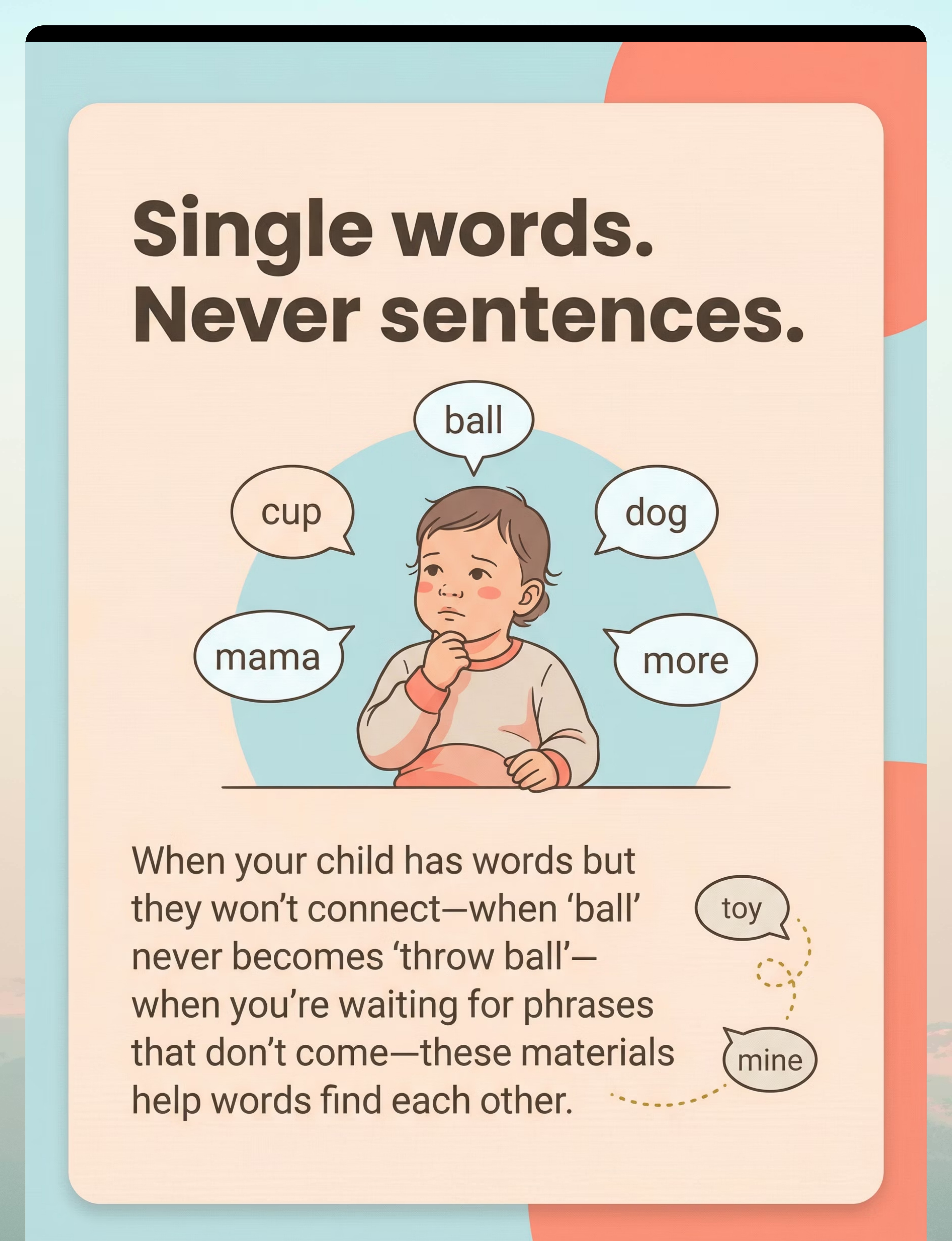
Preview of 9 materials that help building two word phrases Therapy Material
Below is a visual preview of 9 materials that help building two word phrases therapy material. The pages shown help educators, therapists, and caregivers understand the structure and content of the resource before use. Materials should be used under appropriate professional guidance.



Link copied!

You've Read the Science. You've Seen the Materials. Now — Start.
🟢 Start This Technique Today
Scroll back to Step 1: The Invitation. Gather your materials. Set up your space. Begin. Today. The best session is the one that actually happens.
🔵 Book a Professional Assessment
If you want expert guidance, an SLP can tailor this technique to your child's specific profile. Call 9100 181 181 or book online.
🟡 Explore the Next Technique
When your child is combining two words consistently, move forward to B-202: Three-Word Sentences — the next milestone on the path.
"From fear to mastery. One technique at a time."
— The Pinnacle Blooms Consortium
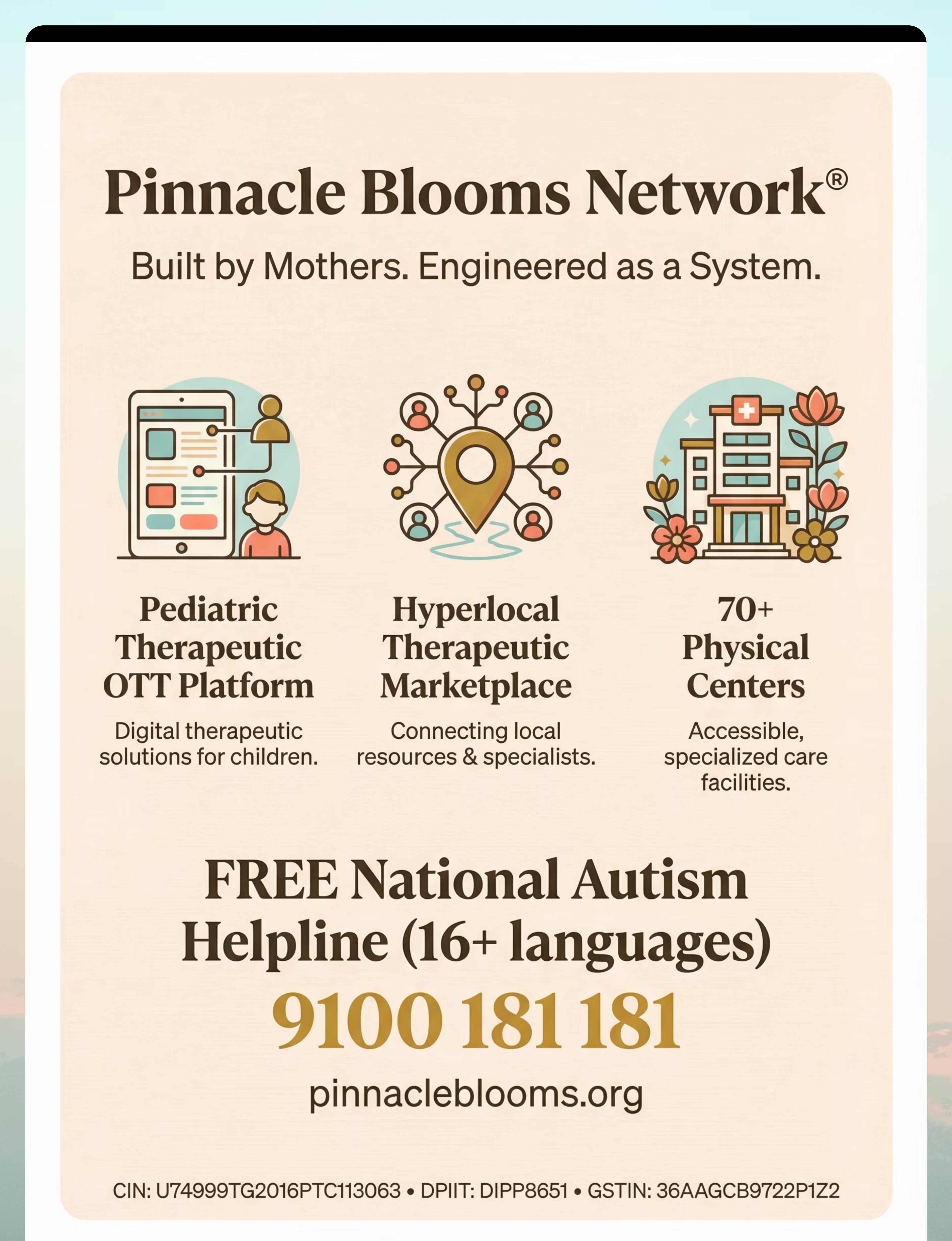
Pinnacle Blooms Network® — Built by Mothers. Engineered as a System.
🗣️ SLP • 🧩 OT • 📋 BCBA • 👩🏫 SpEd • 🩺 NeuroDev • 🔬 CRO
🗣️ SLP • 🧩 OT • 📋 BCBA • 👩🏫 SpEd • 🩺 NeuroDev • 🔬 CRO
FREE National Autism Helpline: 9100 181 181 | 16+ languages | pinnacleblooms.org | care@pinnacleblooms.org
This content is educational. It does not replace assessment by a licensed speech-language pathologist or healthcare provider. Delayed word combinations or language development concerns should be evaluated comprehensively to understand the child's full communication profile and guide appropriate intervention. Individual results may vary. Statistics represent aggregate outcomes across the Pinnacle Blooms Network.
© 2025 Pinnacle Blooms Network®, unit of Bharath Healthcare Laboratories Pvt. Ltd. All rights reserved. CIN: U74999TG2016PTC113063 • DPIIT: DIPP8651 • GSTIN: 36AAGCB9722P1Z2