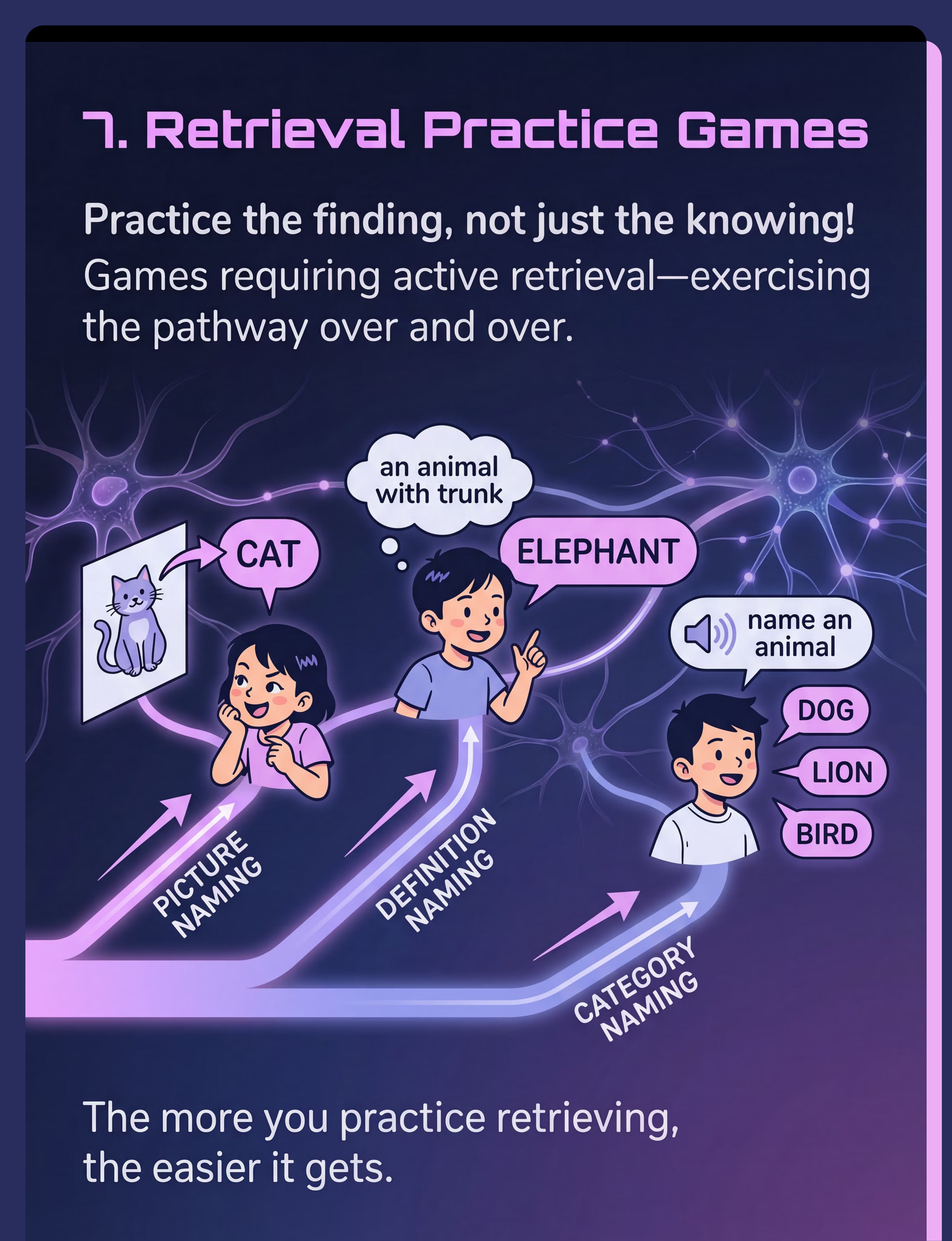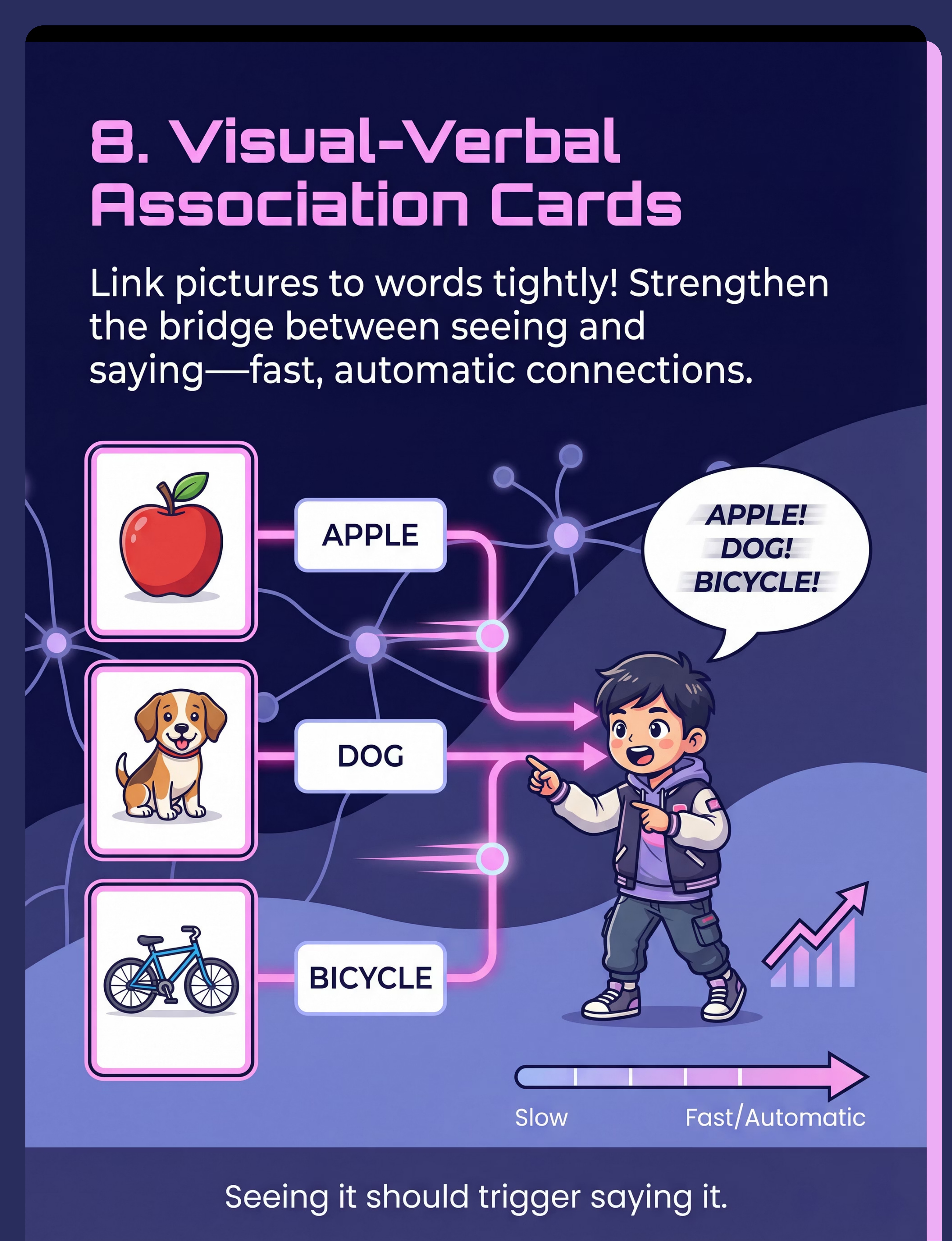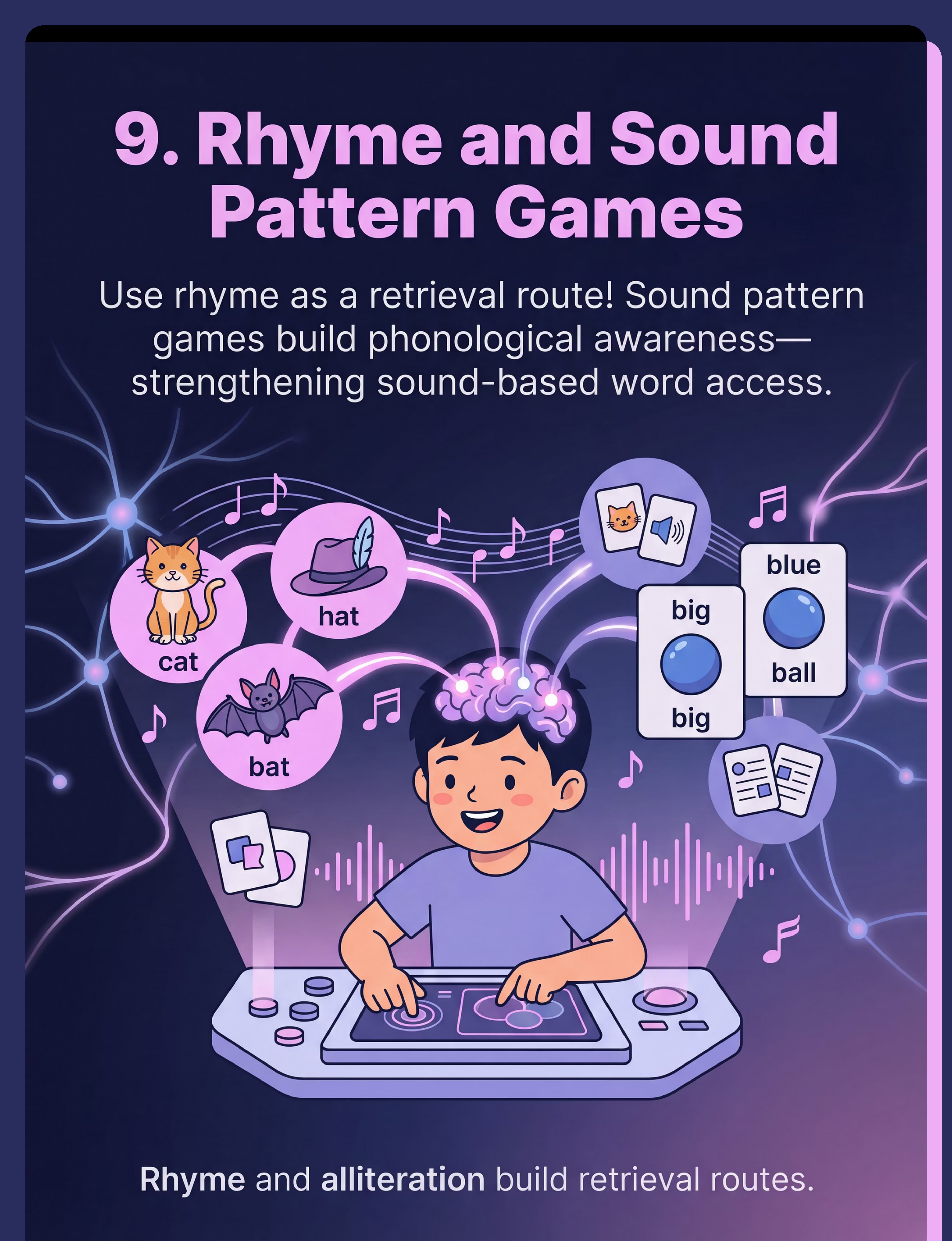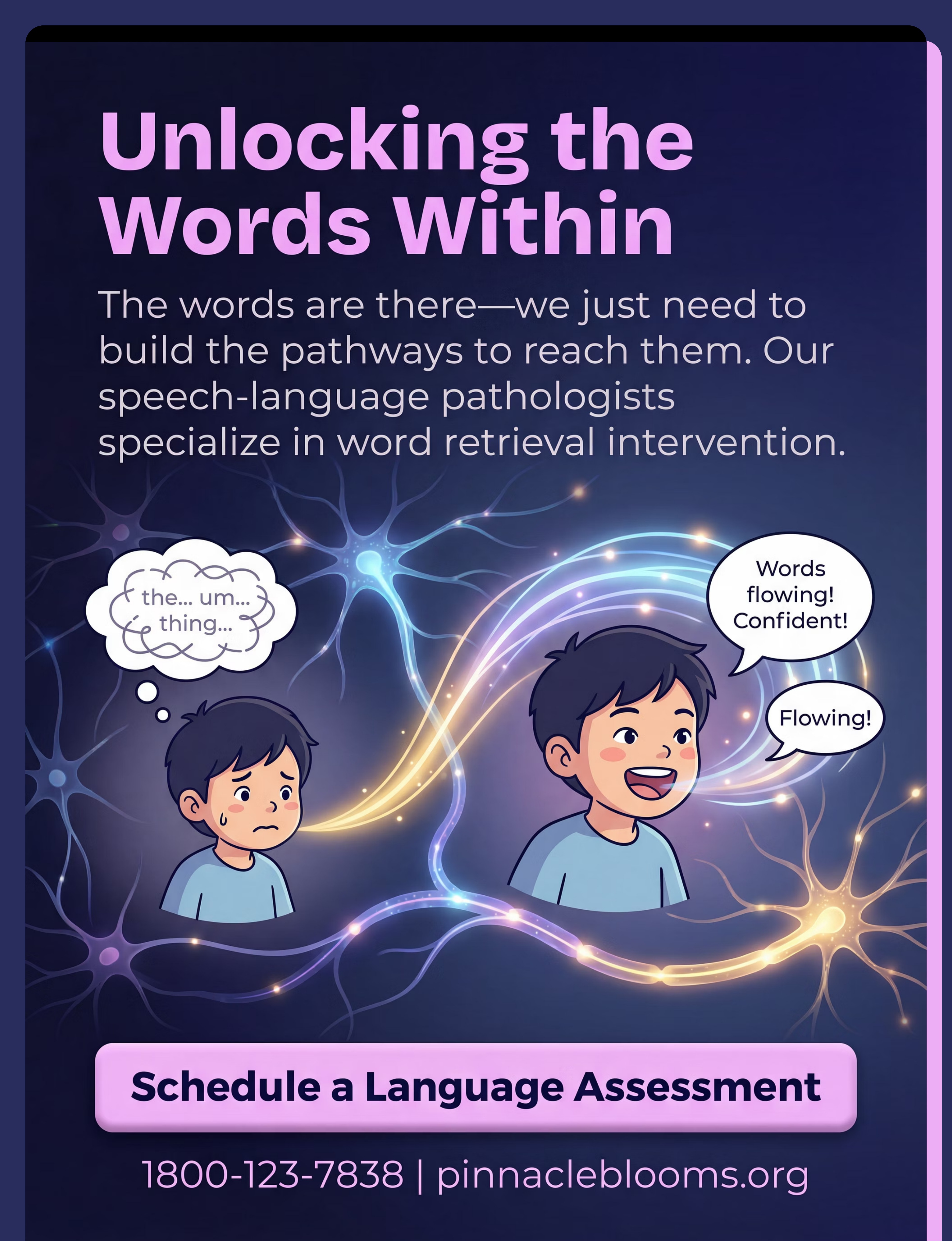

- Autism Spectrum Condition (ASD)
- Developmental Language Disorder (DLD)
- ADHD (attention-linked retrieval difficulty)
- Specific Learning Disabilities (SLD)
- Childhood Apraxia of Speech (CAS)
- Hearing processing differences

Study | Finding | Impact | |
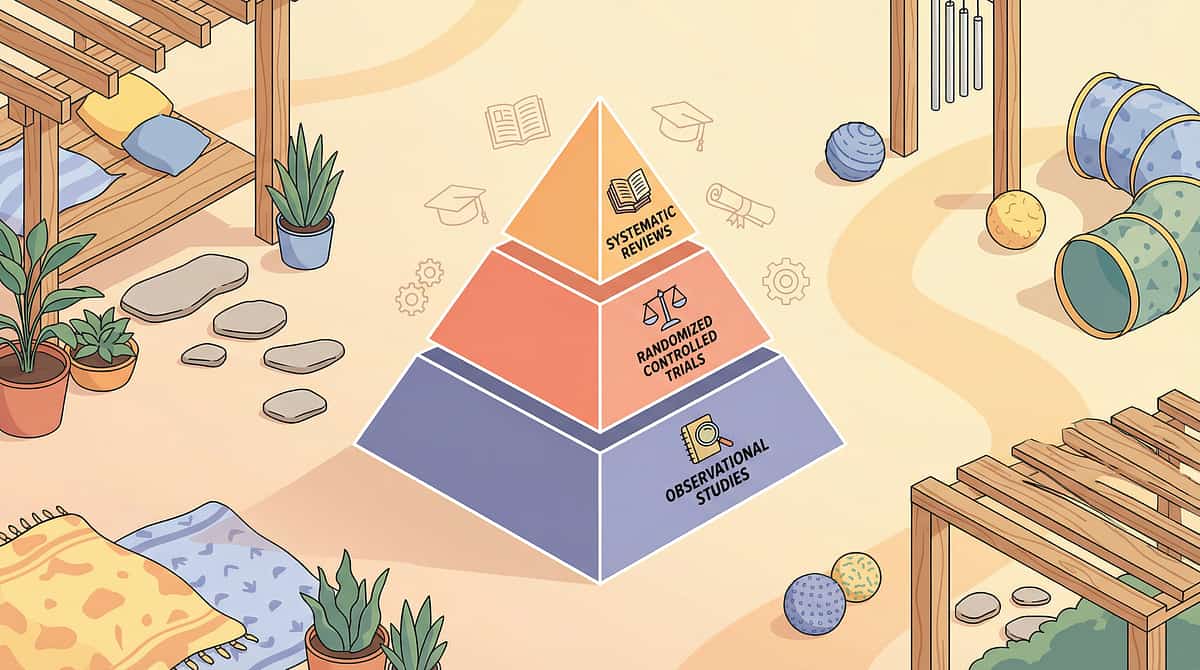
PRISMA Systematic Review 2024 (PMC11506176) | Semantic feature analysis significantly improves word retrieval in children with language disorders | Large effect size across 16 studies | |
World J Clin Cases Meta-Analysis 2024 (PMC10955541) | Language-based interventions improve naming accuracy in 73% of pediatric cases within 8–12 weeks | Consistent cross-cultural replication | |
Padmanabha et al., Indian J Pediatr 2019 | Home-based speech-language programs in Indian populations show significant lexical gains | DOI: 10.1007/s12098-018-2747-4 | |
NCAEP 2020 Evidence-Based Practices | Visual-verbal association and semantic scaffolding classified as EBP for ASD | National clearinghouse validation | |
WHO NCF 2018 | Responsive caregiving + structured home language input improves communication outcomes | 54-country implementation data |
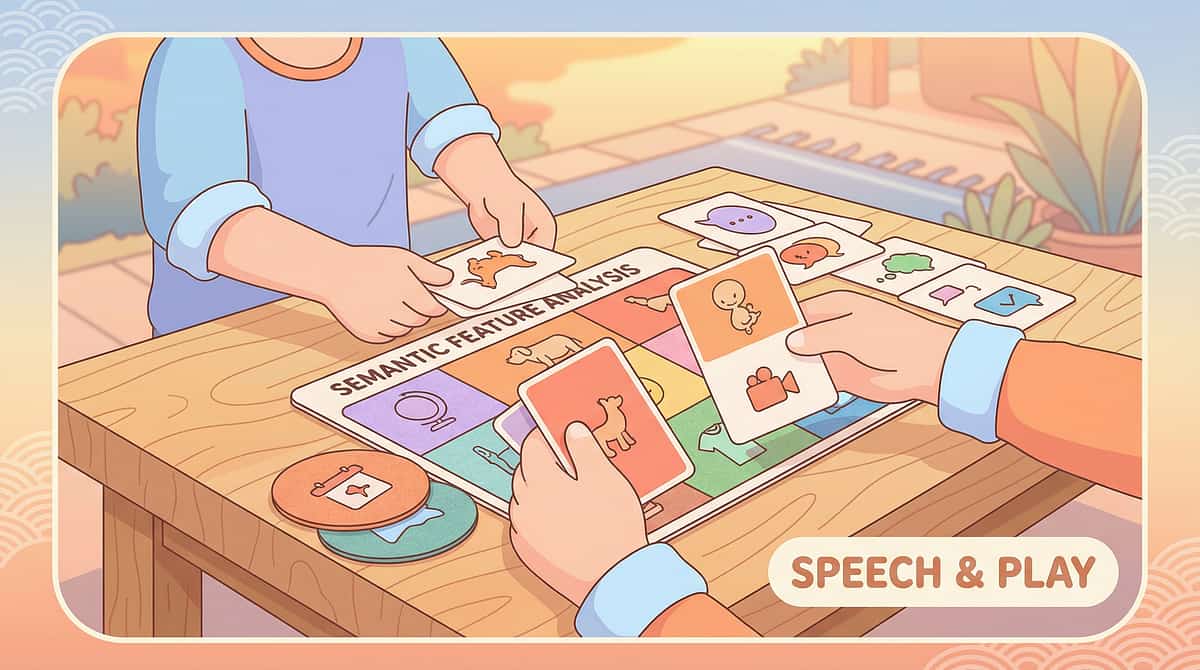
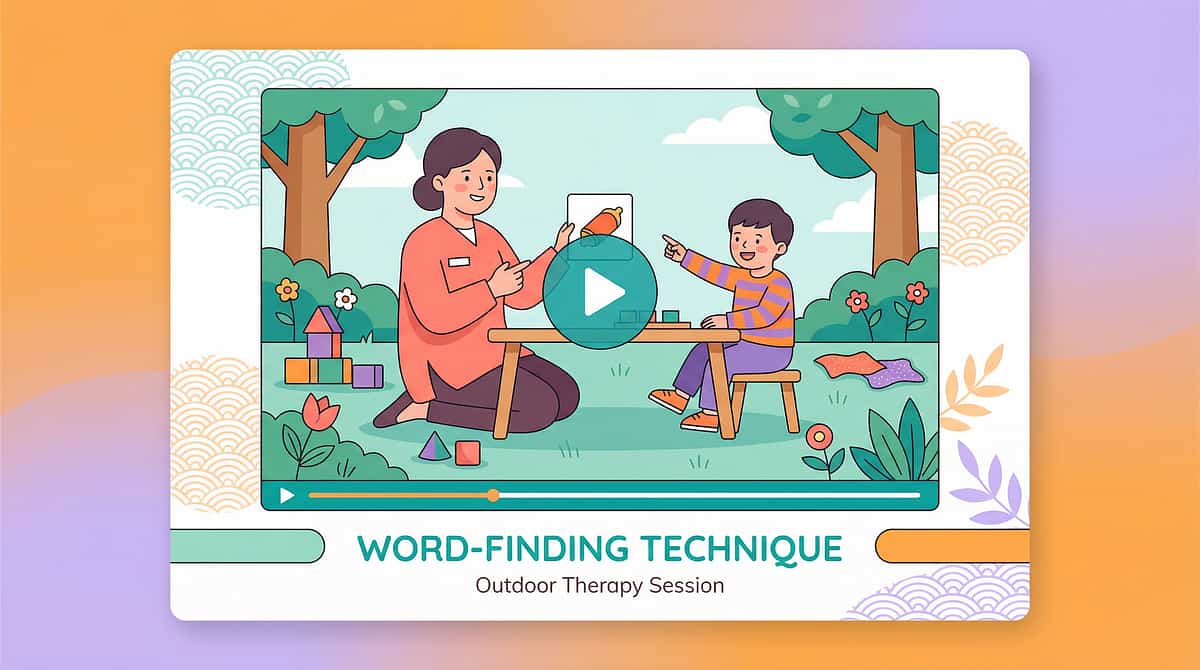
The Technique: Lexical Retrieval Facilitation Therapy
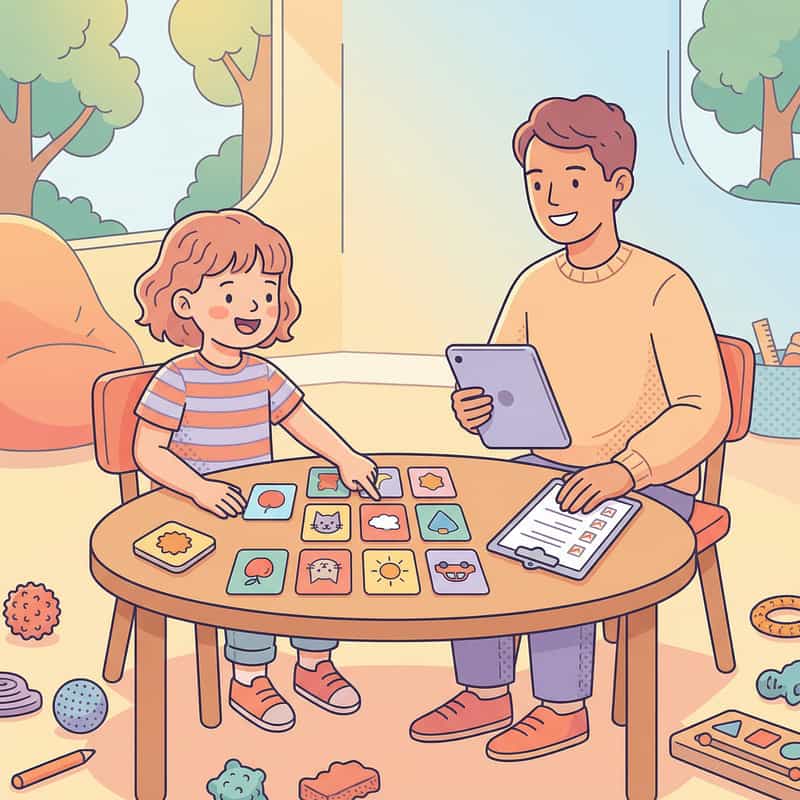
🗣️ Speech-Language Domain (B) Lexical-Semantic Subdomain "Building Word Pathways" | "The Word Finder System" A structured, multi-modal intervention approach that builds multiple neurological routes from a child's knowledge of a word to their ability to say that word. Rather than drilling words repetitively, this approach creates rich semantic webs (meaning connections), phonological bridges (sound cues), and visual-verbal anchors — so that when the direct retrieval path is blocked, the brain has alternative routes to reach the same word. "We're not teaching her the word — she knows it. We're building more pathways for her brain to find it when she needs it." 📌 Age Range 3–10 years ⏱️ Duration 10–20 minutes per session 📅 Frequency 3–5 sessions/week 🏠 Setting Home | Therapy | School




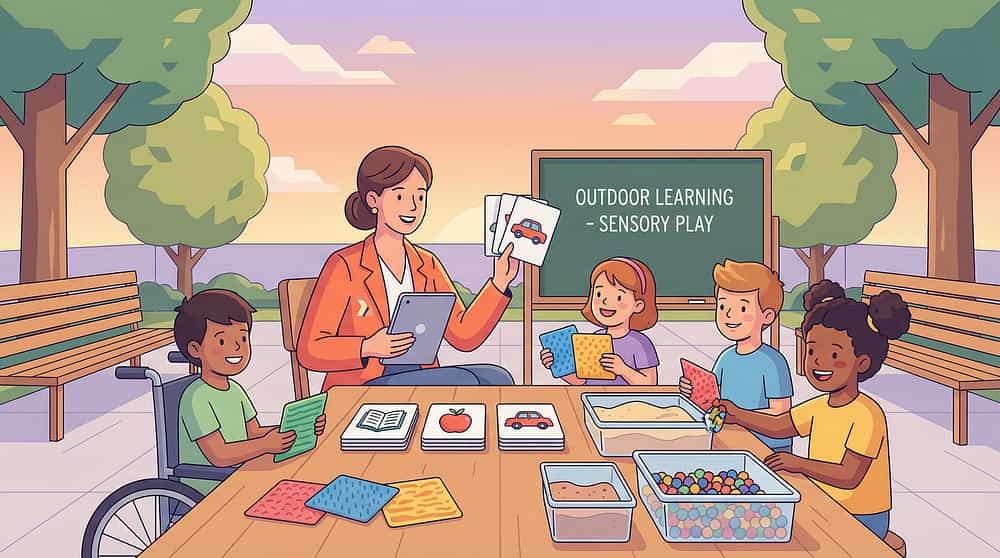

- Successful: "I know! It's the... apple! I said it!" (retrieval achieved)
- Progressing: Pauses, attempts first sound, retrieves word (strategy use)
- Emerging: Points + describes, accepts cue, retrieves with support
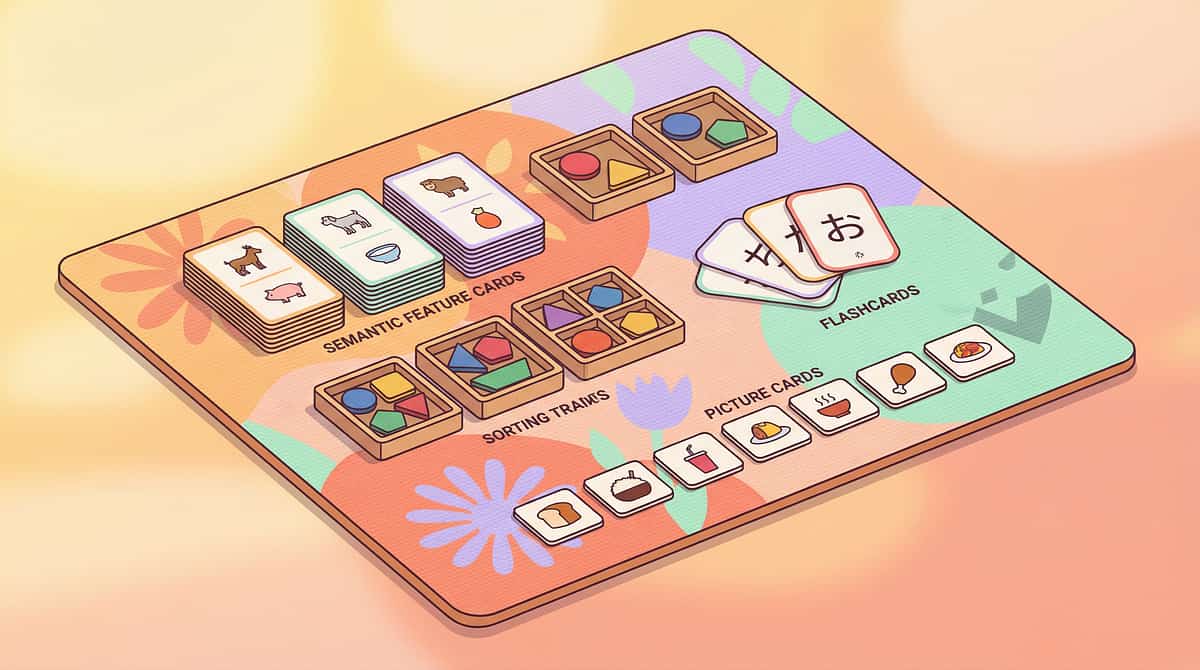

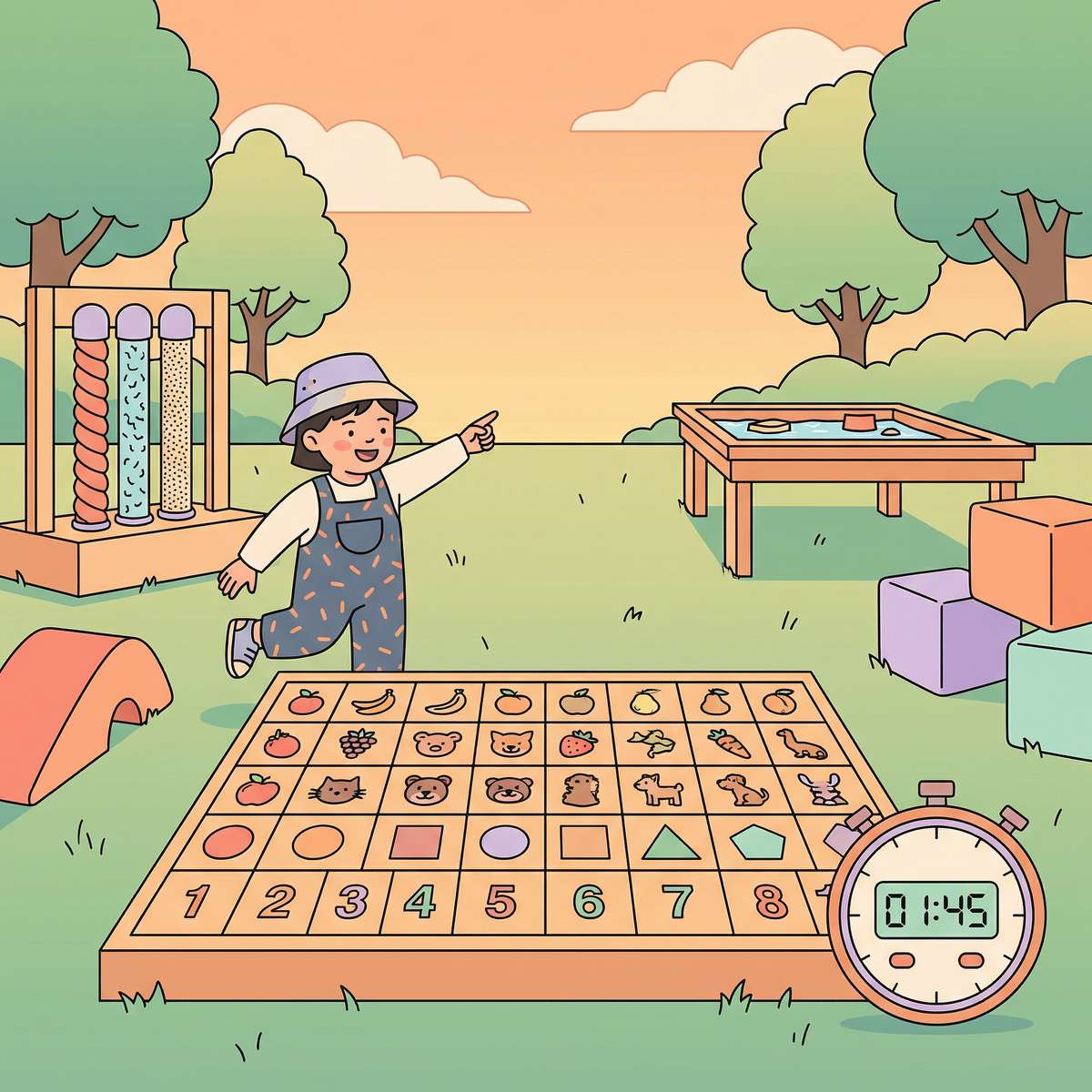

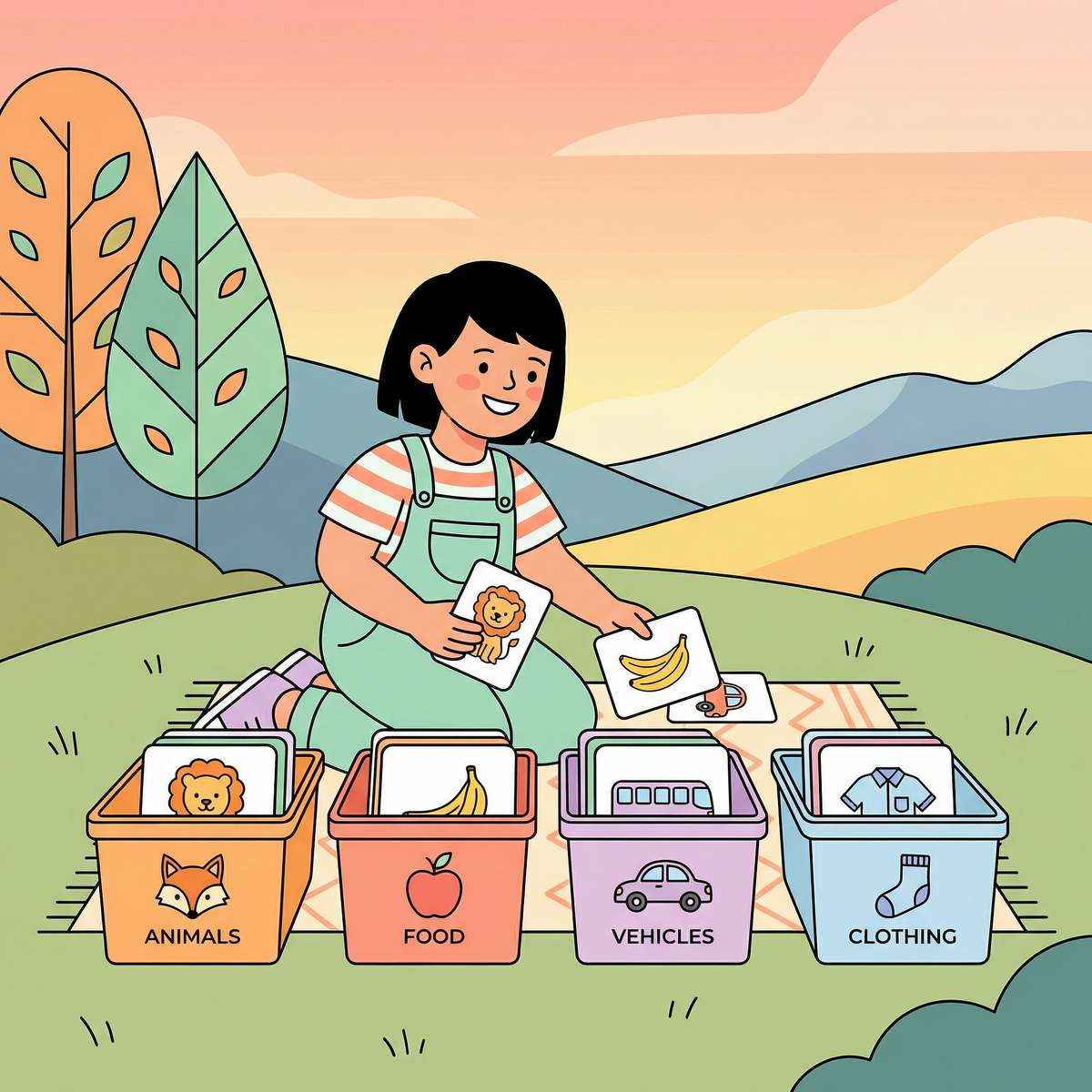

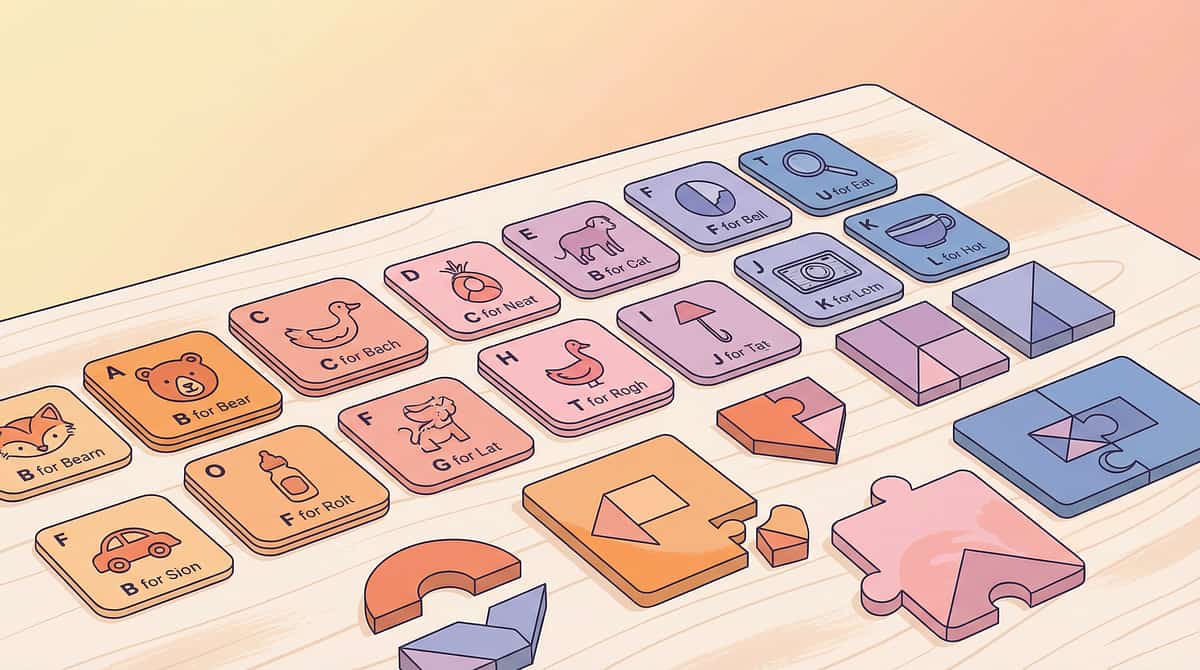

- Dyomnizy Memory Game — ₹519Buy here
- Shinetoy Shut The Box — ₹428Buy here

Clinical Material | DIY Zero-Cost Version | Why It Works the Same | |
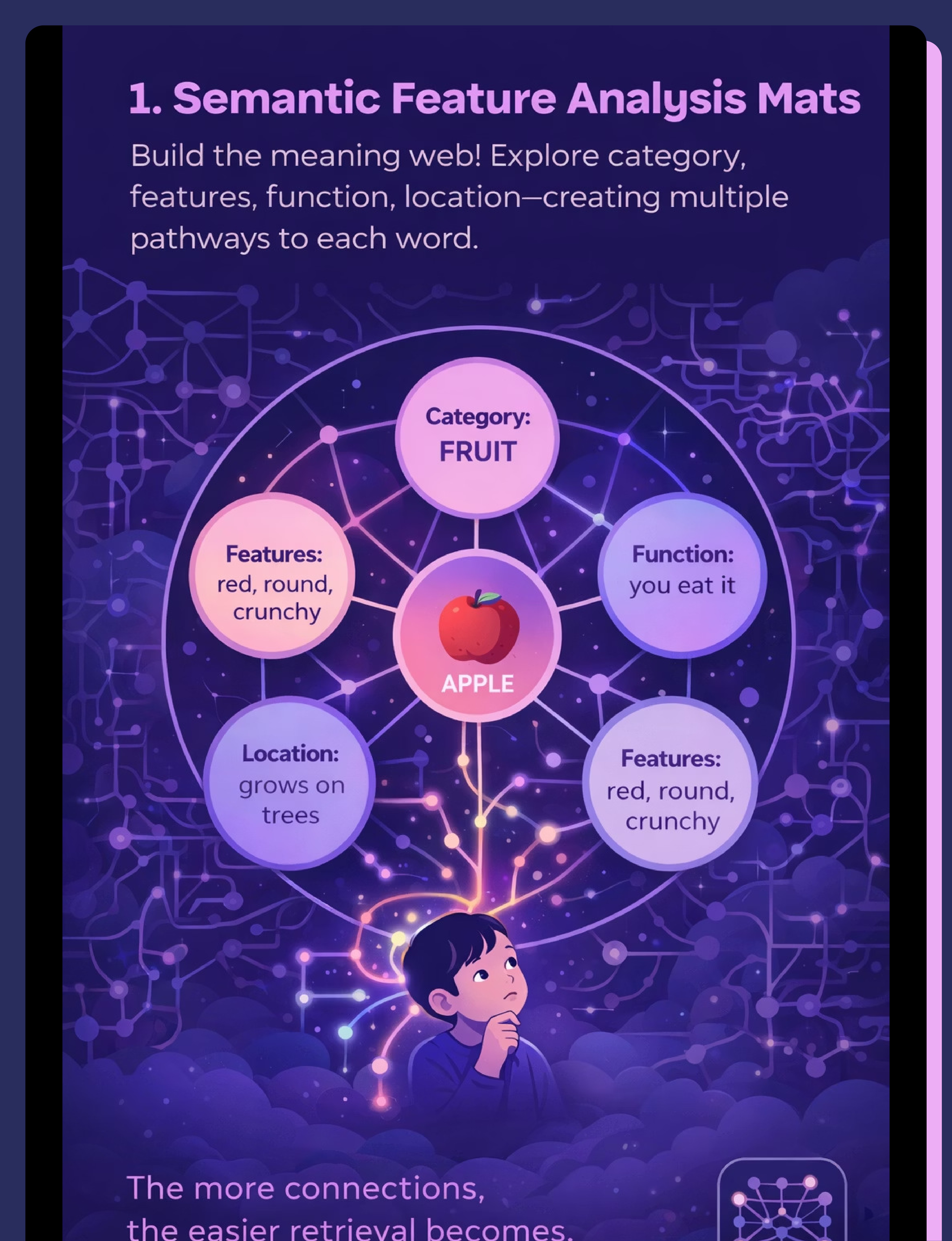
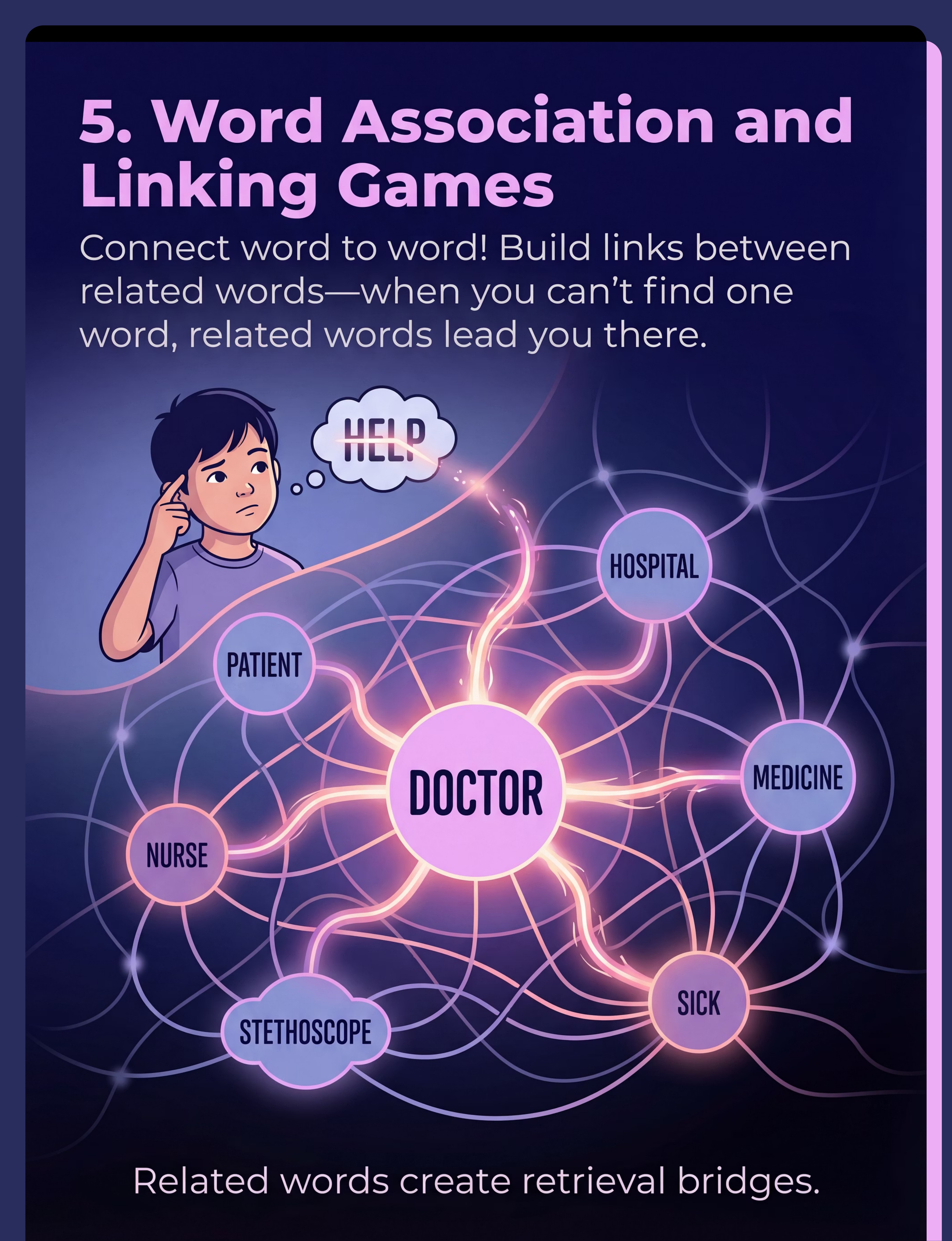
Semantic Feature Analysis Mat | Blank paper with center circle + 6 surrounding bubbles drawn freehand | Same semantic web structure; the drawing itself reinforces encoding | |
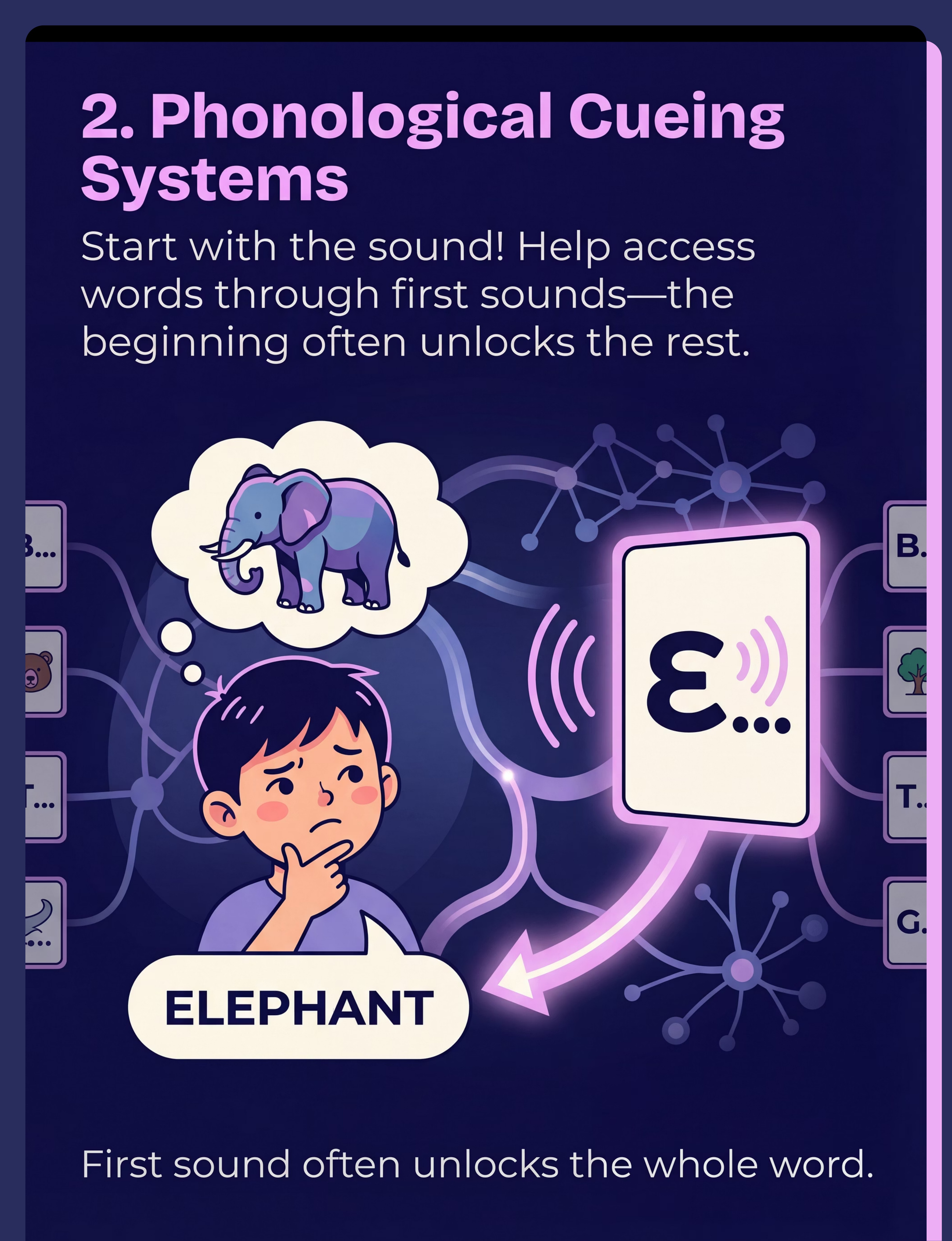
Phonological Cueing Cards | Old magazines — cut out pictures, write first letter below each image | Same visual-phonological pairing; personalizable with child's environment | |
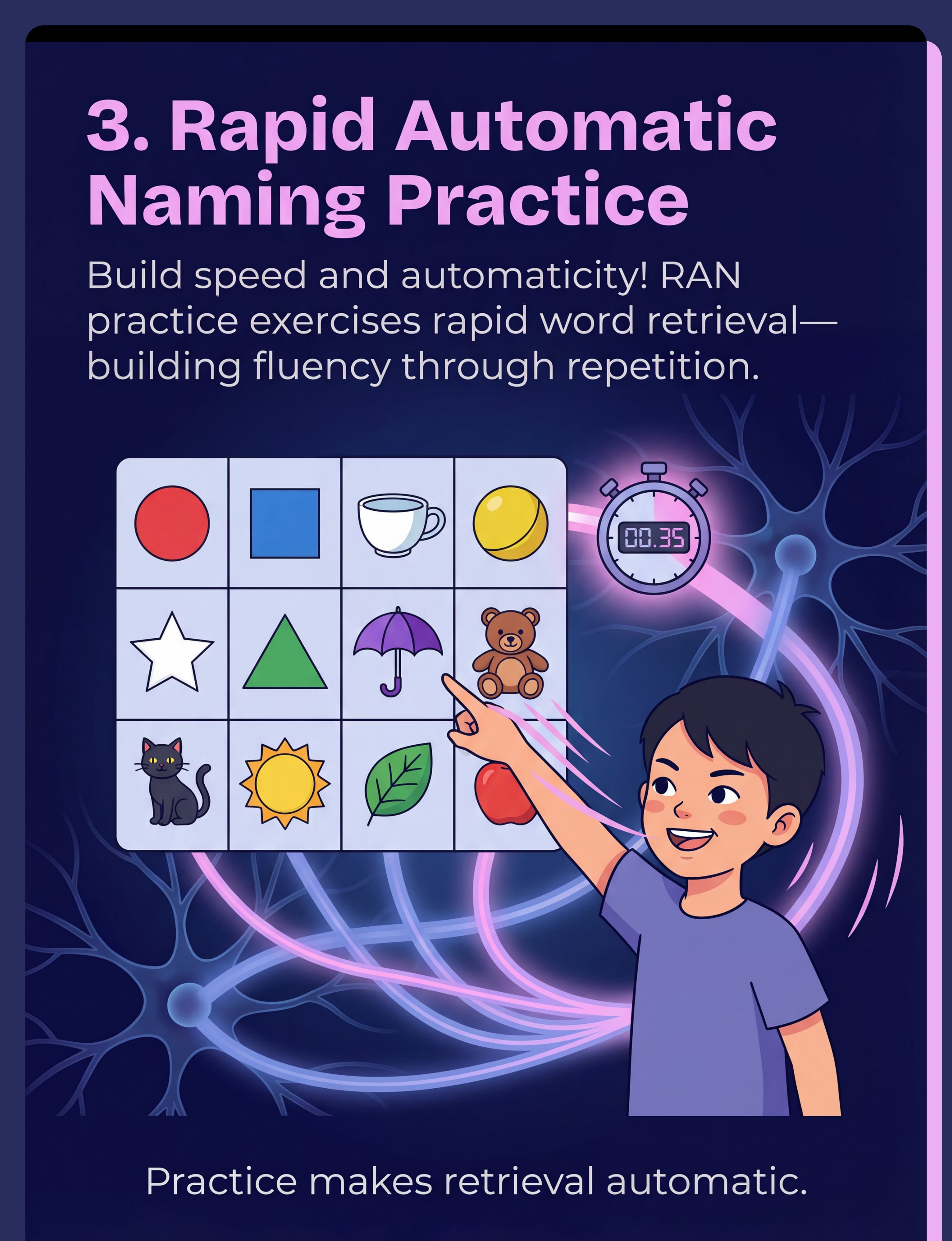
RAN Board | 3×4 grid drawn on paper with simple stick-figure drawings | Same rapid naming practice; child's own drawings create stronger encoding | |
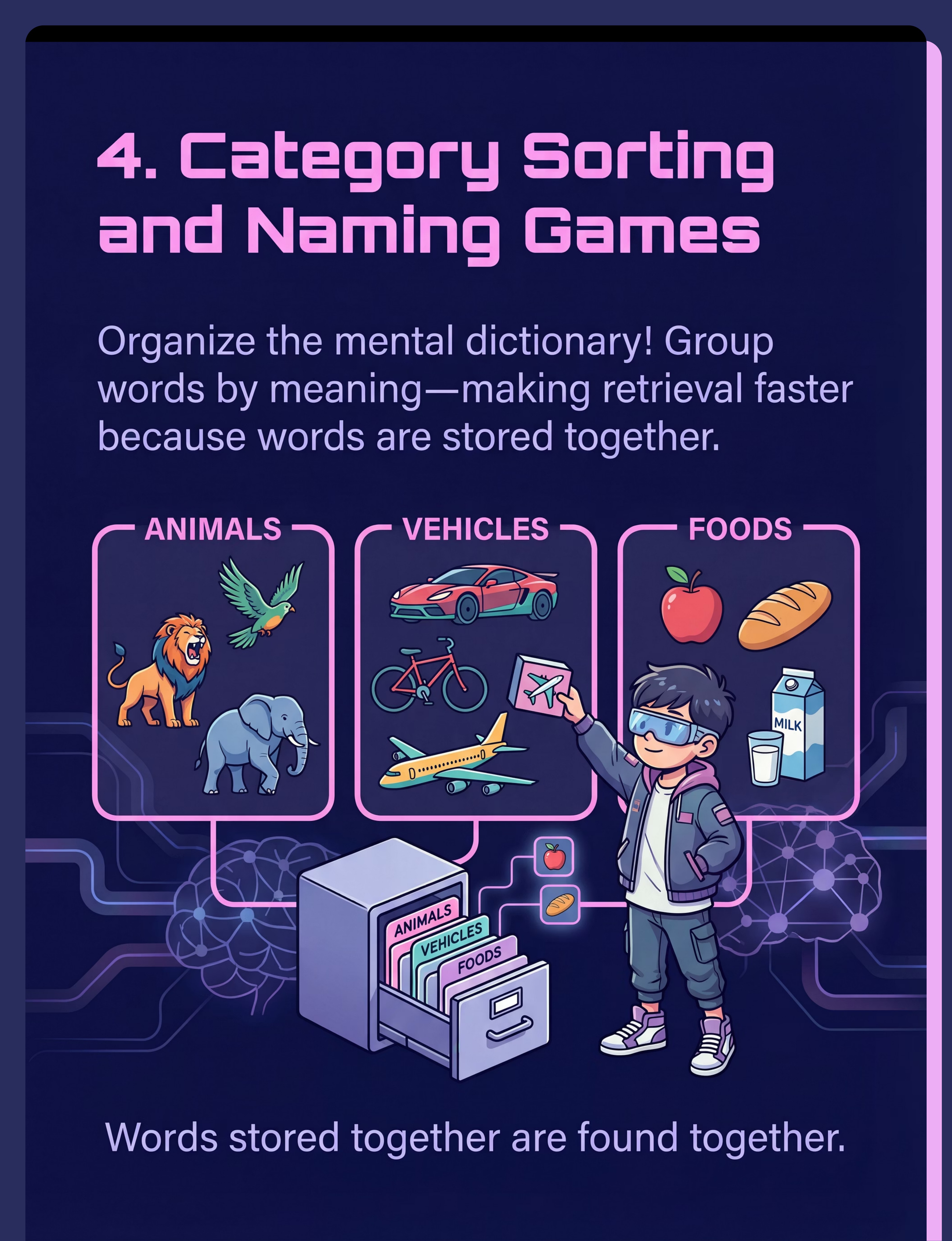
Category Sorting Game | Cut pictures from grocery ads/magazines into category piles | Identical cognitive sorting task; grocery items = real-world vocabulary | |
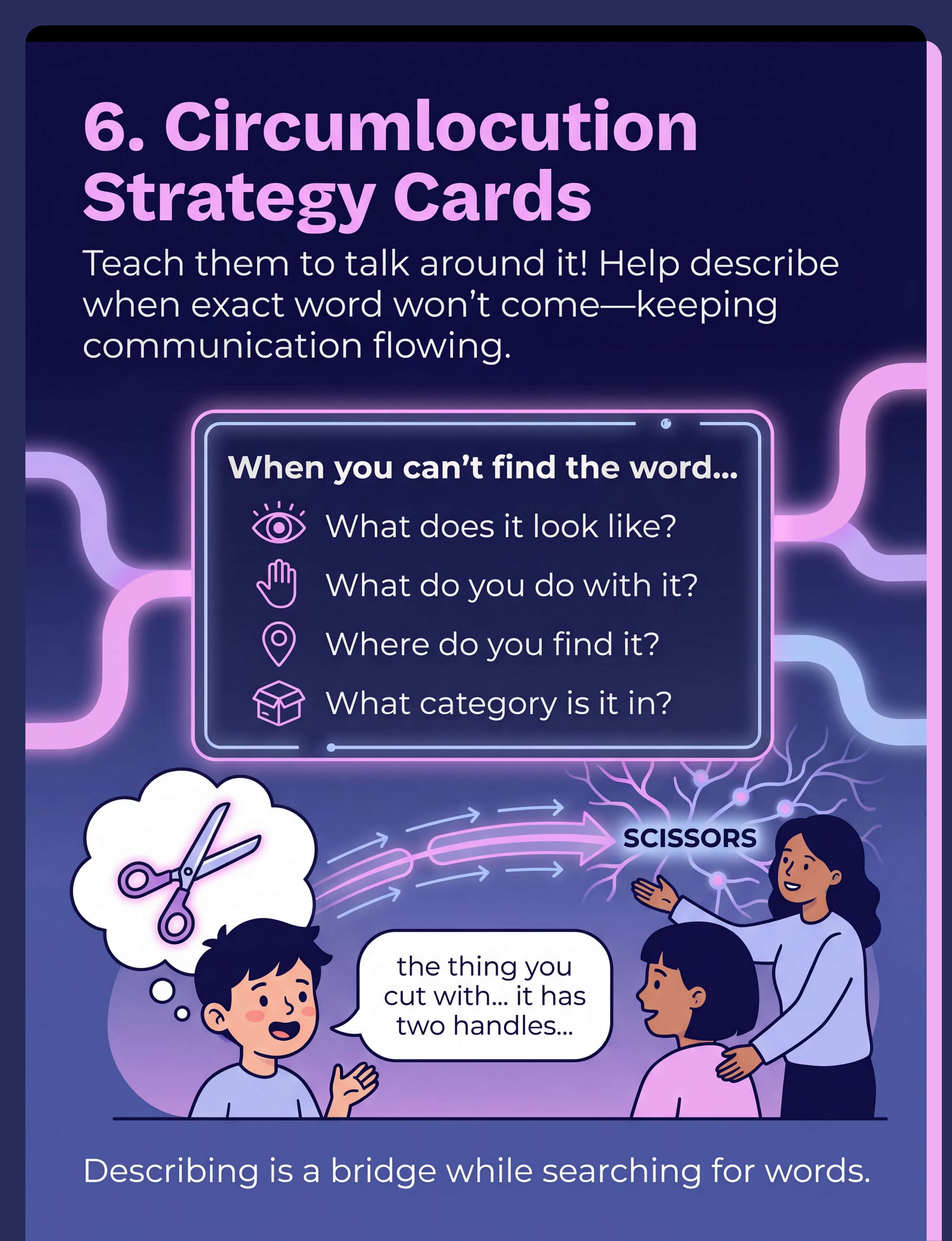
Circumlocution Strategy Card | Hand-written A5 card: "What does it look like? What do you do with it?" | Identical strategy scaffold | |
Naming Games | "I Spy" with household objects + timing with phone stopwatch | Same active retrieval practice; gamified without materials | |
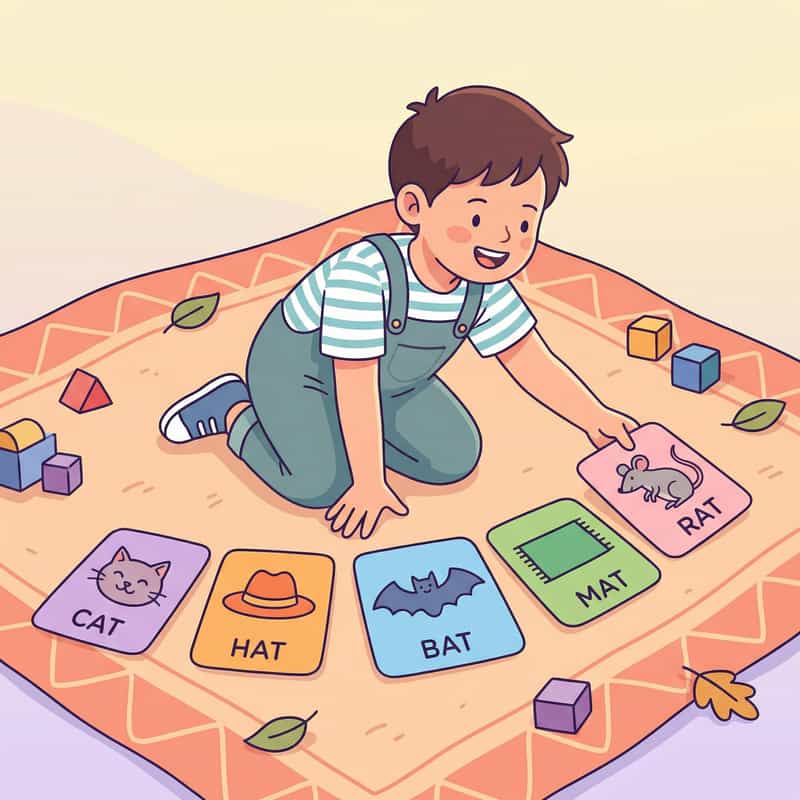
Rhyme Games | Oral rhyme chains during bath/car time — "cat... hat... bat... mat" | Pure oral phonological practice; no materials needed |
- Child shows signs of illness, fever, or significant fatigue
- Child is in post-meltdown recovery (within 2 hours)
- Language regression — sudden loss of previously owned words (requires immediate professional evaluation)
- Significant anxiety or behavioral shutdown specifically around naming tasks
- Child is tired but not ill — shorten to 5-minute session with high reinforcement
- Child is hungry — complete a snack first
- Recent environment change — use familiar vocabulary only
- Child's attention is clearly divided
- Child is alert, recently fed, in regulated state
- Environment is quiet (below 50dB ambient)
- No competing demands on attention for 15–20 minutes
- Parent/caregiver is calm and fully present

- ✅ Screens off and out of sight
- ✅ Materials organized in a closed box (pull out one set at a time)
- ✅ Child's reinforcement menu ready (sticker jar, preferred item)
- ✅ Session tracker/notebook within reach
- ✅ Other household members notified: "15-minute language session"

Check | Look For | ✅ Go | 🟡 Modify | 🔴 Postpone | |
Fed in last 2 hours? | Alert, not hungry | Yes | Snack first | Very hungry/sick | |
Rested? | Alert eyes, engaged | Yes | Shortened session | Overtired | |
Regulated? | Calm body, no residual distress | Yes | Simplify materials | Post-meltdown | |
Willing? | Approaches activity area | Yes | Pair with preferred item | Active avoidance | |
Environment ready? | Quiet, screens off | Yes | Reduce noise first | Cannot control | |
Parent present? | Fully available, not multitasking | Yes | Brief session only | Cannot be present |




- High Energy: "YES! You found it! That's APPLE! Amazing!"
- Calm: "You did it. Apple. Well done."
- Physical: High-five, fist bump, shoulder tap (if child accepts)
- Token: Sticker in jar, dot on chart, virtual point
- Natural: "Since you found all the food words, let's actually have apple slices now."
- Rosette Imprint Reward Jar — ₹589⭐ Pinnacle Recommends Buy here
- 1800+ Reward Stickers Book — ₹364⭐ Pinnacle Recommends Buy here

- Add "1 more, then all done" with clear visual cue
- Use preferred item as natural transition object
- Use visual schedule: "See? Next is [preferred activity]"
- ❌ Abrupt "time's up" without warning
- ❌ Ending after a failed retrieval attempt — end on success whenever possible
- ❌ Immediately asking the child to demonstrate words to another caregiver (adds post-session performance pressure)
What You See | Likely Cause | Clinical Solution | |
Child refuses all naming material | Performance anxiety; previous negative naming experience | Remove all naming pressure; use pure play with materials for 2 sessions; no retrieval demand | |
Retrieves in therapy but not real life | Context-bound retrieval; generalization not yet built | Practice same words in 3 different contexts (kitchen, garden, bathroom) on same day | |
Retrieval speed not improving after 4 weeks | Materials too difficult or semantic web too thin | Drop to 70% familiar vocabulary; increase semantic feature depth before speed practice | |
Child gets upset when they can't find a word | Low frustration tolerance + high achievement drive | Pre-session framing: "Sometimes words hide. That's okay. We're building better hiding spots together." | |
Sessions skipping due to scheduling | Scheduling challenge | Anchor sessions to existing routines: bath time (body parts), breakfast (food words), drive time (vehicles) | |
Child says "orange" when they mean "apple" | Semantic paraphasias — retrieval boundary imprecise | Explicitly practice category differentiation with feature comparison | |
Regression: previously known words now blocked | Illness, major life change, sleep disruption | Reduce to highest-familiarity words for 1–2 weeks; consult SLP if regression persists beyond 3 weeks |
- ✅ Increased willingness to engage with naming materials (familiarity effect)
- ✅ Slightly longer attempt durations — child "tries harder" rather than giving up immediately
- ✅ Parent confidence growing in session delivery
- ✅ Emerging use of 1 compensatory strategy (pointing, describing) when word is blocked
- ❌ Dramatic improvement in spontaneous retrieval — too early
- ❌ Generalization to other settings — consolidation hasn't happened yet
- ❌ Consistent success — variability is expected and normal in weeks 1–2

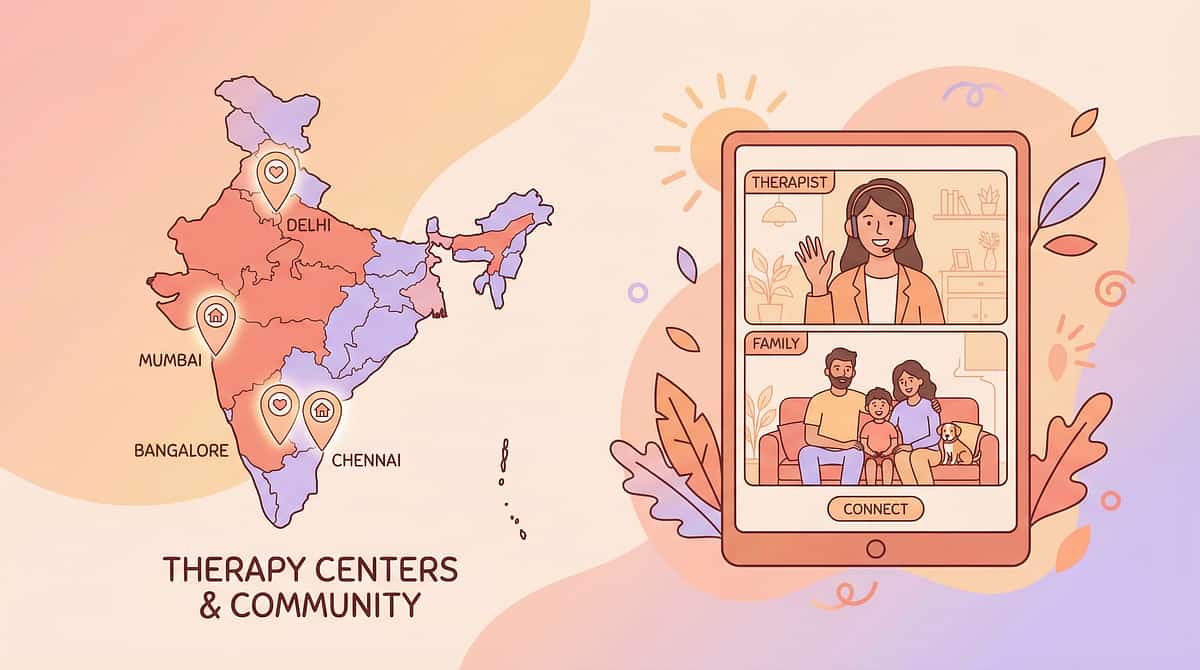
- Retrieval is session-only, not generalizing to real life
- Progress stalled at 50–65% S score
- Significant variability across sessions (good day/bad day pattern)
You showed up 3–5 times a week when you were tired. You learned a clinical protocol and delivered it at home. You tracked data when no one asked you to. You celebrated every attempt, not just every success. Your child found more words because you built the pathways.


From the Pinnacle Community: Families Who Walked This Path
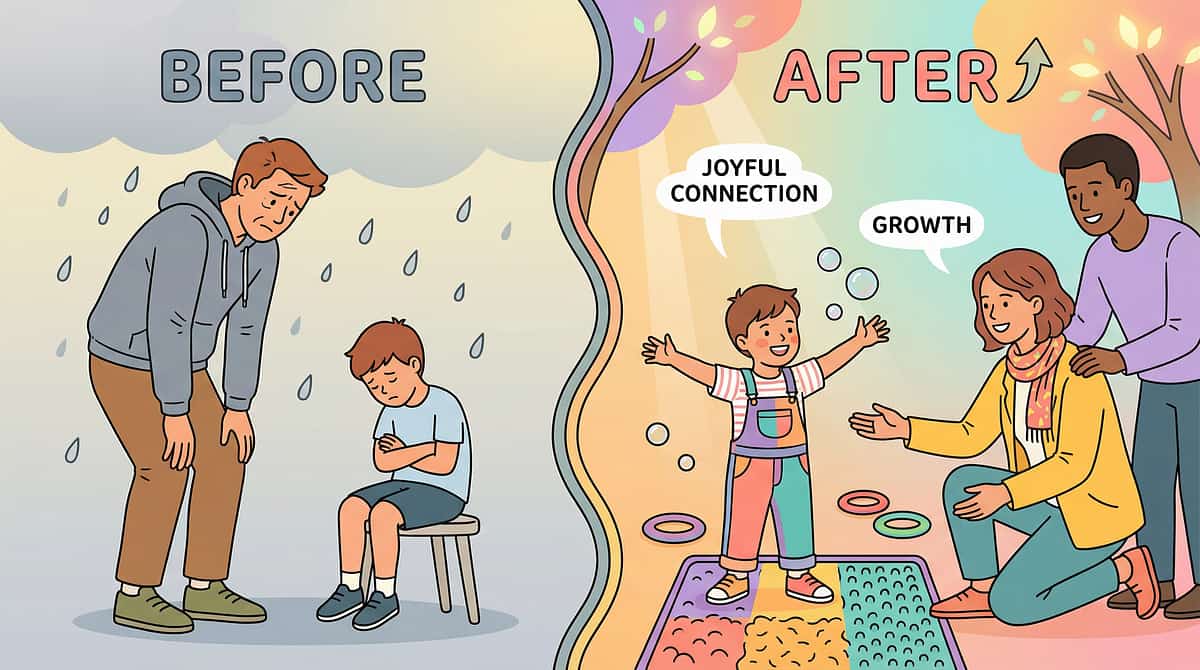
Before → After (Week 6) Before: "He would reach for a word during dinner conversation and just freeze. His eyes would go wide, he'd gesture at the thing, and eventually give up. My heart would break every time." After Week 6: "He paused, said '...it starts with f... fork!' And then he laughed. He actually laughed. I cried after he went to bed." — Mother of 5-year-old | 4 sessions/week | Semantic feature analysis + phonological cueing | Pinnacle Blooms Hyderabad Before → After (Week 9) Before: "Her teacher kept saying she knew the content but couldn't express it in class. She was getting labeled as not paying attention. She was paying perfect attention — the words just weren't coming." After Week 9: "She raised her hand in class and answered a question about the water cycle. Complete sentences. The teacher called me." — Parent of 7-year-old | Home sessions + school vocabulary integration | Pinnacle Blooms Chennai "Word finding difficulty responds beautifully to consistency. The parents who track data, maintain session frequency, and celebrate small wins — they are the ones who call us eight weeks later with breakthrough stories. The technique works. The family is the delivery mechanism." — Senior SLP, Pinnacle Blooms Network® Anonymized illustrative outcomes. Individual results vary by child profile, diagnosis, intervention frequency, and baseline. Consult Pinnacle SLP for personalized prognosis.
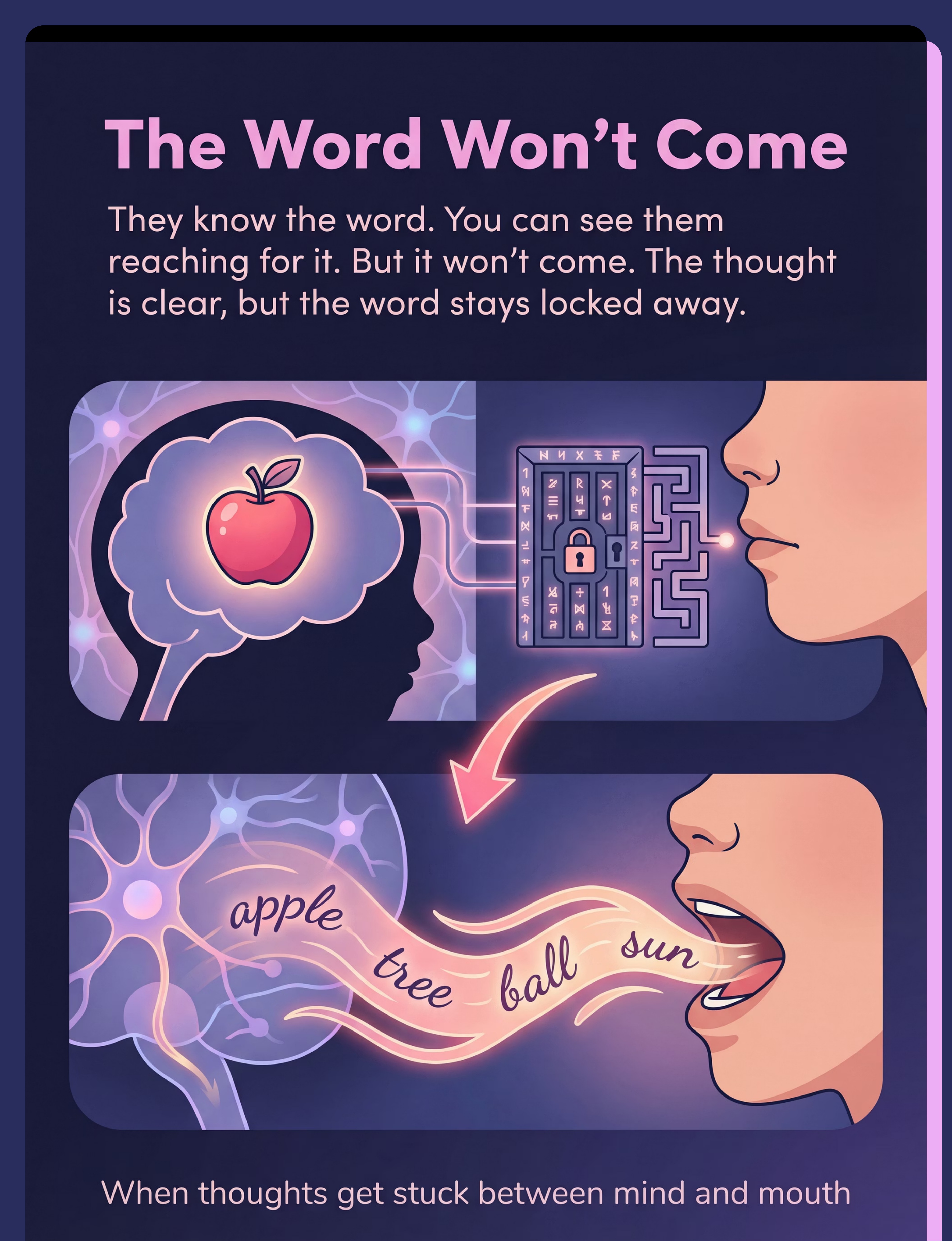
Preview of 9 materials that help with word finding difficulty Therapy Material
Below is a visual preview of 9 materials that help with word finding difficulty therapy material. The pages shown help educators, therapists, and caregivers understand the structure and content of the resource before use. Materials should be used under appropriate professional guidance.