

Subdomain C4 | Domain C: Social-Emotional
Attachment & Self-Concept
10 evidence-based interventions for children with autism — covering caregiver bonding, comfort-seeking, stranger awareness, building connection, joint attention, reciprocal interaction, self-esteem, identity, and celebrating strengths. Developed by Pinnacle Blooms Network® | 21M+ sessions.
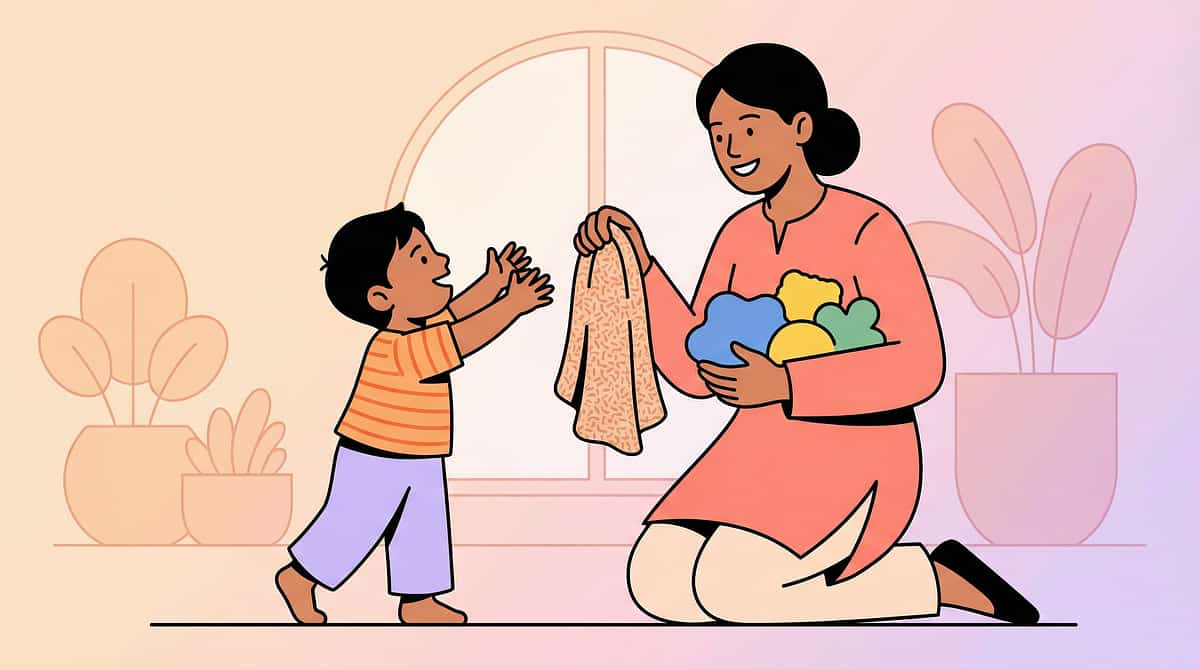
C-331 | Caregiver Preference
9 Materials That Help With Caregiver Preference
The Moment: They don't seem to prefer you — they go to anyone who picks them up. Or conversely, they're so rigidly attached to one person that no one else can interact with them. Caregiver preference — the ability to differentiate the primary attachment figure from others and show appropriate preference — is the foundation of the entire attachment system.
The Neuroscience
Caregiver preference requires face recognition (FFA), emotional association (amygdala + hippocampus — this face = safety), and social approach (OFC). In ASD, reduced face processing and social orienting can delay visible preference — but the underlying bond may be present even when the behaviour doesn't show it.
Evidence Level I — Responsive parenting programmes (Circle of Security, DIR/Floortime) strengthen visible attachment behaviours.
NCAEP 2020 | Rutgers et al. 2004
NCAEP 2020 | Rutgers et al. 2004
What You'll Learn
Bond ≠ Visible Behaviour
Children may love deeply and express it differently — through proprioceptive closeness, voice, or rhythmic movement rather than eye contact.
Responsive Parenting
Reading and responding to their unique attachment signals — celebrating every way they show connection.
Indian Joint Family Context
Multiple attachment figures (Amma, Nani, Dadi) are a strength — leveraging this for richer bonding.
9 Canon Materials
Lead:🧠 Psychology (Attachment) · 📋 ABA (DIR) | NeuroDev · SpEd

C-332 | Doesn't Seek Comfort
9 Materials That Help When a Child Doesn't Seek Comfort
The Moment: They fall and hurt themselves — and don't come to you. They cry alone. They're sick and don't seek your touch. The instinct to run to the caregiver for comfort — the most basic attachment behaviour — isn't activated. You want to hold them. They don't come. This isn't rejection. This is a pathway that hasn't yet connected.
The Neuroscience
Comfort-seeking requires four interlocking systems: interoception (detecting distress in the body), social referencing (looking to the caregiver), approach behaviour (moving toward the caregiver), and communicating the need (verbal or nonverbal distress signal). If interoception is weak, the child may not register their own distress. If social referencing is delayed, they don't look to you for help. The need for comfort exists — the pathway to seek it may not yet be functional.
Evidence Level I — Responsive parenting + DIR/Floortime. NCAEP 2020
What You'll Learn
- Non-seeking as pathway failure — not rejection of you
- Going TO them when distressed (modelling comfort proactively)
- Building the association: distress → parent → comfort → better
- Physical comfort through their preferred sensory channel
- Teaching "I need help" / "I'm hurt" as communication
- Proactive comfort → child begins seeking independently over time

C-333 | Stranger Over-Friendliness
9 Materials That Help With Stranger Over-Friendliness
The Moment: They climb into a stranger's lap. Hold an unknown person's hand. Walk away with anyone who offers. There's no stranger danger — no discrimination between safe and unsafe adults. In Indian public spaces — crowded markets, temples, festivals, train stations — this is a safety emergency that demands urgent, structured intervention.
The Neuroscience
Stranger over-friendliness (indiscriminate sociability) indicates the attachment system hasn't differentiated — the child hasn't built an internal model categorising people into "trusted," "known," or "unsafe." The amygdala-hippocampal system should generate natural caution with unfamiliar adults. When this caution is absent, the child approaches everyone with the same openness reserved for primary caregivers — a neurological gap, not a behavioural choice.
Evidence Level I — Social safety + stranger awareness. NCAEP 2020 | Safety Skills in ASD
What You'll Learn
01
Circle of Trust Visual
Family = inner circle, known adults = middle, strangers = outer — a concrete visual framework.
02
Safety Scripts
"I stay with my grown-up" — practiced rules for public places, festivals, and train platforms.
03
POCSO Integration
Age-appropriate body safety awareness within the Indian legal and cultural context.
04
Urgent Assessment Flag
⚠️ Indiscriminate sociability with safety risk → immediate professional assessment recommended.

C-334 | Extreme Clinginess
9 Materials That Help With Extreme Clinginess
The Moment: They're physically attached to you. Always. Can't be in a different room. Can't tolerate you talking to another person. Can't share your attention with siblings. The attachment system is overactivated — not absent, but excessive. In Indian families, mothers often bear the full weight of extreme clinginess as the primary caregiver, making their own wellbeing a clinical priority alongside the child's.
The Neuroscience
Extreme clinginess reflects an insecure attachment pattern where the child's amygdala maintains constant proximity-seeking because the internal working model says: "If I can't see or touch my caregiver, danger is imminent." The ventral vagal system — responsible for regulation — only activates in physical contact with the attachment figure. Separation equals complete dysregulation. The goal is to build felt security: the child's deep belief that the caregiver will return.
Evidence Level I — Secure base building + graduated separation. NCAEP 2020 | Attachment Theory
What You'll Learn
- Clinginess as attachment — not manipulation
- Building "felt security": child believes you'll return even out of sight
- Object permanence for people: "Amma always comes back"
- Graduated separation protocol (see also C-278)
- Building alternate attachment figures — Papa, Nani, Dadi, older sibling
- Indian joint family as a natural separation support network
- Mother's self-care and sustainability during extreme clinging phases

C-335 | Building Connection
9 Materials That Help Building Connection
The Moment: How do you build connection with a child who doesn't make eye contact, doesn't respond to your voice, doesn't seek your touch, and seems to exist in a world you can't enter? You enter their world. On their terms. Through their interests. With their sensory preferences. Connection doesn't require eye contact — it requires meeting. And every genuine meeting is the beginning of bond.
The Neuroscience
Connection activates the oxytocin system, strengthens vagal tone, and builds the internal working model of "people are safe and responsive." The pathway to connection varies per child: for some, it's parallel play alongside their interest. For others, it's deep pressure touch. For others, rhythmic movement. The channel doesn't matter — the message does: "I see you. I'm here. I'm not trying to change you."
Evidence Level I — DIR/Floortime specifically designed for building emotional connection. NCAEP 2020 | DIR/Floortime | Responsive Parenting Research
Core Principles
Follow the Child's Lead
Enter their world before inviting them into yours — the foundational Floortime principle.
Sensory-Based Connection
Identify the sensory channel they respond to and use it as your connection bridge.
Daily Floortime Ritual
20 minutes of uninterrupted, child-led connection — scheduled, protected, and celebrated.
Special Interest As Bridge
If they love trains, love trains WITH them. Their interest is your invitation.

C-336 | Joint Attention
9 Materials That Help With Joint Attention
The Moment: You point at a bird. They look at your finger — not the bird. Joint attention — the ability to share attentional focus with another person on a third object or event — is the cornerstone of social learning. Without it, the child can't learn from others because they can't share the same perceptual experience. It is the neurological foundation for language, connection, and academic learning.
The Neuroscience
Joint attention requires three interlocking neural systems: gaze following (STS — tracking where the other person looks), triadic coordination (shifting attention: you → object → you, mediated by PFC), and shared experience recognition (mPFC — "we are both looking at the same thing"). Joint attention is the single strongest predictor of language outcomes in ASD — every "look at THAT!" moment is a developmental milestone worth celebrating.
Evidence Level I — JASPER is specifically designed to build JA. NCAEP 2020 | JASPER RCTs | PMC10955541
What You'll Learn
- Initiating JA: Child points or shows to SHARE — not just to request
- Responding to JA: Following another's point or gaze direction
- JA in daily routines: "Look! A dog!" — embedding practice naturally
- Building from brief → sustained shared attention over time
- JA as the foundation for ALL subsequent social learning
- Deep link to language development (Subdomain B-135)

C-337 | Reciprocal Interaction
9 Materials That Help Building Reciprocal Interaction
The Moment: You smile — they smile back. You roll the ball — they roll it back. You make a sound — they make a sound. The back-and-forth dance of human interaction. Reciprocity is the beating heart of connection. Without it, interaction is one-directional. With it, relationship begins. Every exchange — however small — is a circle of communication closed.
The Neuroscience
Reciprocal interaction activates the mirror neuron system (mirroring the partner's action), temporal cortex (detecting contingency — "their action relates to mine"), and the reward system (social reciprocity produces dopamine). Each successful exchange strengthens the brain's social model: "Interaction is a back-and-forth, and my contribution produces a response." Greenspan's "circles of communication" maps this beautifully: each back-and-forth = one circle. The goal is building from 1 → 5 → 10 → sustained reciprocal interaction.
Evidence Level I — DIR/Floortime + PRT. NCAEP 2020
Building Circles of Communication
01
Imitation as Foundation
Copy what the child does — this creates the first circle and shows: "I respond to you."
02
Turn-Taking Structure
Build reciprocity through games, songs, and routines with natural back-and-forth patterns.
03
Follow the Lead to Create Loops
Build reciprocal loops from within the child's interest — where motivation is highest.
04
Celebrate Every Circle Closed
Each completed exchange is a neurological deposit in the social learning system.
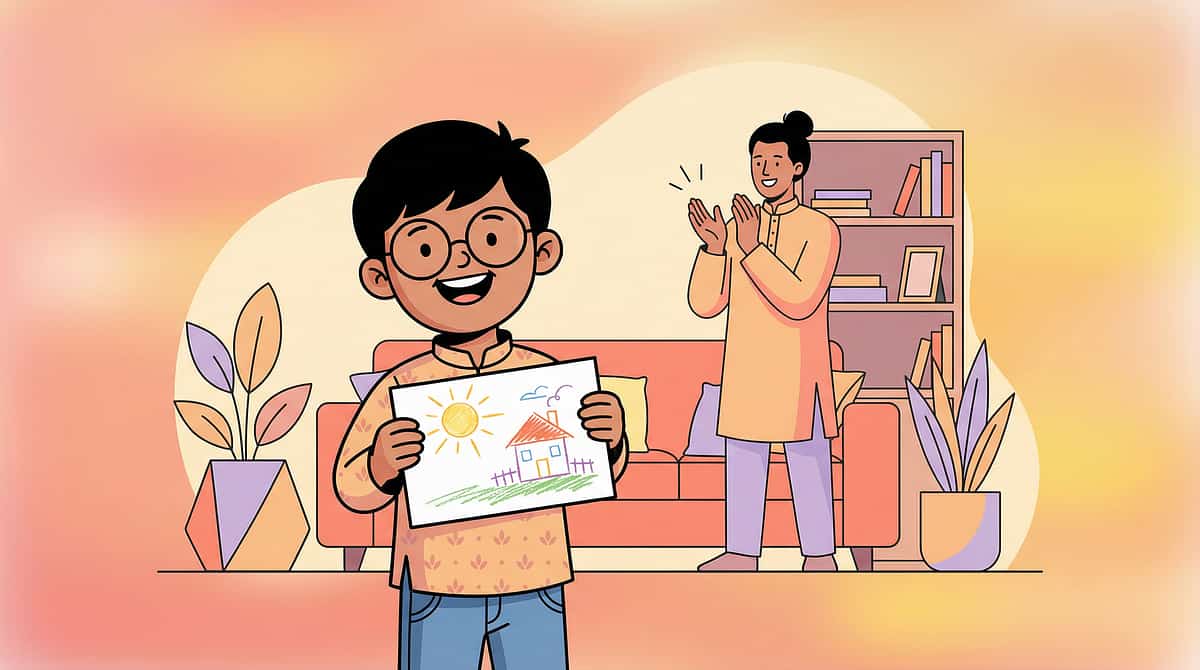
C-338 | Building Self-Esteem
9 Materials That Help Building Self-Esteem
The Moment: "I'm stupid." "I can't do anything." "Nobody likes me." "What's wrong with me?" The child who has been corrected more than praised, compared more than celebrated, and failed more than succeeded. Their self-concept rests on a foundation of deficit — everything they can't do, nothing they can. Reversing this is not optional. It is urgent clinical work.
The Neuroscience
Self-esteem is stored in the medial PFC as a self-evaluation model. Every experience of success deposits a "competence memory." Every experience of failure deposits an "incompetence memory." When failure memories vastly outnumber success memories, the self-evaluation model crystallises: "I am not capable." Reversing this requires systematic competence experience — not empty praise, but genuine earned success that the child's brain can register and store as real.
Evidence Level I — Strength-based approaches + self-esteem programmes. NCAEP 2020
What You'll Learn
- Identifying genuine strengths — every child has them
- Strength-based language shift: "You're amazing at ___" replacing "You can't ___"
- Competence-building activities: setting up success systematically
- "I Can" portfolio — a visual record of real achievements
- Avoiding comparison to neurotypical peers
- Unconditional positive regard as daily practice
- Indian context: countering academic pressure and family comparison culture

C-339 | Feeling Different
9 Materials That Help With Feeling Different
The Moment: "Why am I different?" "Why can't I be normal?" "Why do other kids find things easy?" The moment a child becomes aware of their difference — and the pain that arrives with that awareness. This typically emerges between ages 7–12 and can trigger profound grief, anxiety, or depression if not met with a carefully prepared, honest, and affirming narrative.
The Neuroscience
Self-other comparison (TPJ + mPFC) generates social comparison data. When that data consistently shows: "I am different from peers in ways that make life harder," the emotional response (ACC + amygdala) is real distress. How this distress is processed depends entirely on the narrative the child is given. "Different is broken" produces shame and withdrawal. "Different is a different way of being" produces acceptance, resilience, and identity. The narrative is the intervention.
Evidence Level I — Autism identity + psychoeducation. NCAEP 2020 | Autistic Identity Research
What You'll Learn
When & How to Talk About Autism
Developmental readiness markers and age-appropriate language for disclosure conversations.
"Different, Not Less" Framework
Autism as brain difference — not brain defect. Building the vocabulary of neurodiversity.
Role Models & Community
Famous autistic individuals + meeting other autistic children and adults for lived connection.
Indian Cultural Context
Managing family and social narratives about disability while building proud autistic identity.

C-340 | Celebrating Strengths
9 Materials That Help Celebrating Strengths
The Moment: The capstone of Domain C. After addressing 110 challenges across this domain — this card celebrates strengths. The extraordinary memory. The fierce, beautiful focus. The pattern recognition that sees what others miss. The honesty that never wavers. The loyalty that never fades. The deep knowledge of beloved topics. The unique perspective. The quiet, extraordinary courage to navigate a world not designed for them — every single day.
The Neuroscience
Strength identification and celebration activates the reward system (nucleus accumbens) in direct association with self-concept (mPFC), creating a foundational neural association: "I am someone who is good at things." This neurological pattern is protective against depression, anxiety, and learned helplessness. Strength-based self-concept is the single most protective psychological factor for lifelong wellbeing in autism — it is not a luxury, it is medicine.
Evidence Level I — Strength-based approaches in autism. NCAEP 2020 | Positive Psychology in ASD
What You'll Learn
- Systematic strength assessment — identifying every child's unique gifts
- Strength as career pathway: special interest → academic focus → professional expertise
- "My Superpower" framework — personalised strength identity
- Family strength celebration rituals — building a culture of recognition at home
- Strength-based IEP goals — reframing the education plan around capability
- Autistic adults who leveraged their strengths — real stories, real futures
- The lifetime message: "You have gifts the world needs."
9 Canon Materials
Lead:🧠 Psychology · 📋 ABA | SLP · SpEd · NeuroDev · Family

C-341 | Aggression
9 Materials That Help With Aggression
The Moment: They hit. They bite. They scratch. They throw. The child who lashes out — at caregivers, siblings, peers, or themselves. Aggression is not defiance. It is communication. It is a nervous system that has run out of every other option and is now using the only language that feels powerful enough to be heard. Understanding what the aggression is saying is the first step to changing it.
The Neuroscience
Aggression is mediated by the amygdala (threat detection) and hypothalamus (fight response), with insufficient regulation from the prefrontal cortex. In autism, the PFC–amygdala regulatory circuit is often underdeveloped, meaning the threshold for fight response is lower and the ability to inhibit it is reduced. Aggression is almost always preceded by a build-up of unmet sensory, communicative, or emotional need. The antecedent is the intervention target — not the behaviour itself.
Evidence Level I — FBA + PBS + AAC for communication-based aggression. NCAEP 2020
What You'll Learn
- Functional Behaviour Assessment (FBA) — identifying the function of aggression
- Antecedent modification: removing triggers before the behaviour occurs
- Teaching replacement behaviours: what to do instead of hitting
- De-escalation in the moment: safe, calm, non-reactive responses
- Environmental redesign: reducing sensory and demand overload
- Proactive regulation strategies: preventing the build-up
- Indian context: managing family shame and community perception of aggressive behaviour

C-342 | Self-Injurious Behaviour
9 Materials That Help With Self-Injurious Behaviour
The Moment: They bang their head against the wall. They bite their own hand until it bleeds. They scratch their skin raw. Self-injurious behaviour (SIB) is among the most alarming and least understood presentations in autism. It is not self-harm in the psychiatric sense. It is almost always sensory, communicative, or regulatory in function — and it is always telling you something critical.
The Neuroscience
SIB activates the endogenous opioid system — the brain's own pain-relief and reward pathway. For some children, SIB produces a neurochemical release (beta-endorphins) that is genuinely calming or pleasurable. For others, it is sensory stimulation that meets an unmet proprioceptive need. For others still, it is the most powerful communicative act available when language fails. FBA consistently reveals that SIB is functional — it works for the child, which is why it persists.
Evidence Level I — FBA-based intervention + sensory integration. NCAEP 2020
What You'll Learn
FBA for SIB
Identifying the precise function — sensory, escape, attention, or automatic reinforcement.
Safe Sensory Alternatives
Providing equivalent sensory input through safe, socially acceptable channels.
Communication Replacement
Teaching AAC or other communication to replace SIB as a request or protest.
Environmental & Medical Review
Ruling out pain, illness, or environmental triggers that may be driving the behaviour.
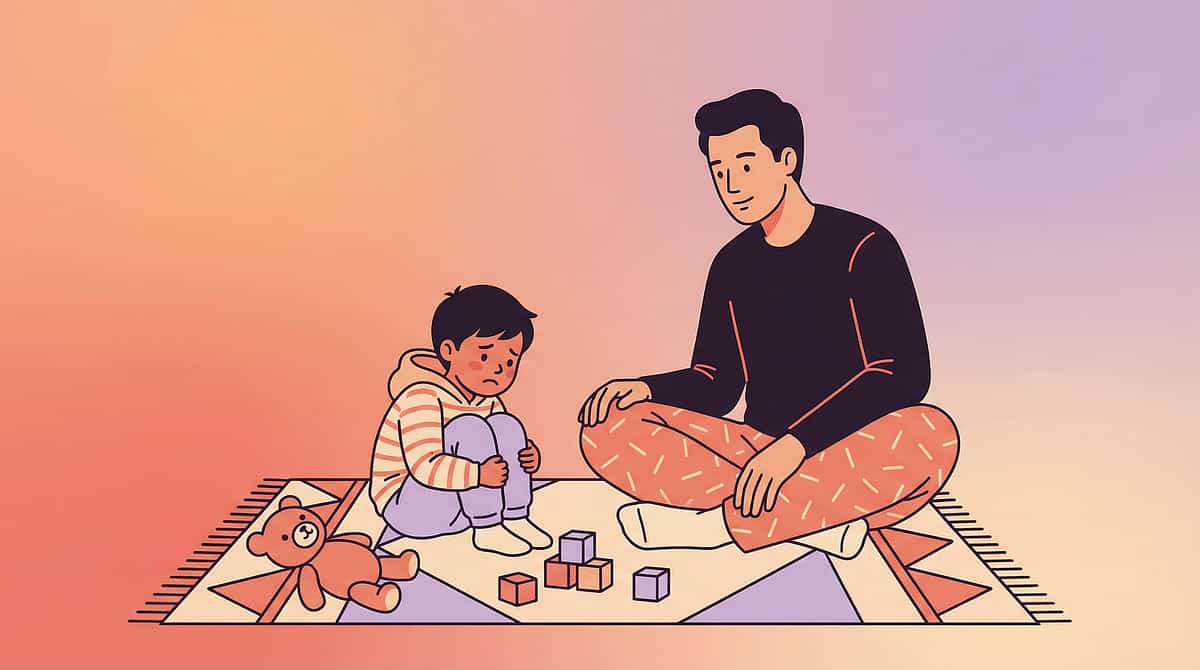
C-343 | Tantrums & Meltdowns
9 Materials That Help With Tantrums & Meltdowns
The Moment: The floor. The screaming. The complete loss of control. A meltdown is not a tantrum — and confusing the two leads to interventions that make everything worse. A tantrum is goal-directed. A meltdown is a neurological storm. The child is not choosing this. They are drowning. Your job is not to discipline — it is to be the lifeguard.
The Neuroscience
A meltdown is a sympathetic nervous system flood — cortisol and adrenaline overwhelm the prefrontal cortex's capacity to regulate. The child literally cannot think, reason, or respond to language in this state. The window for intervention is before the meltdown — in the rumble phase. During the meltdown, the only intervention is safety and silence. After the meltdown, the child is in a recovery phase (parasympathetic rebound) and needs rest, not processing.
Evidence Level I — Zones of Regulation + sensory-based de-escalation. NCAEP 2020
What You'll Learn
- Tantrum vs. meltdown: the critical clinical distinction
- The three phases: rumble → rage → recovery — and what to do in each
- Early warning signs: the child's personal meltdown signature
- Environmental modifications to prevent sensory overload
- In-the-moment safety: what to do, what not to do, what never to say
- Post-meltdown repair: reconnection without shame
- Indian context: managing public meltdowns and family/community responses
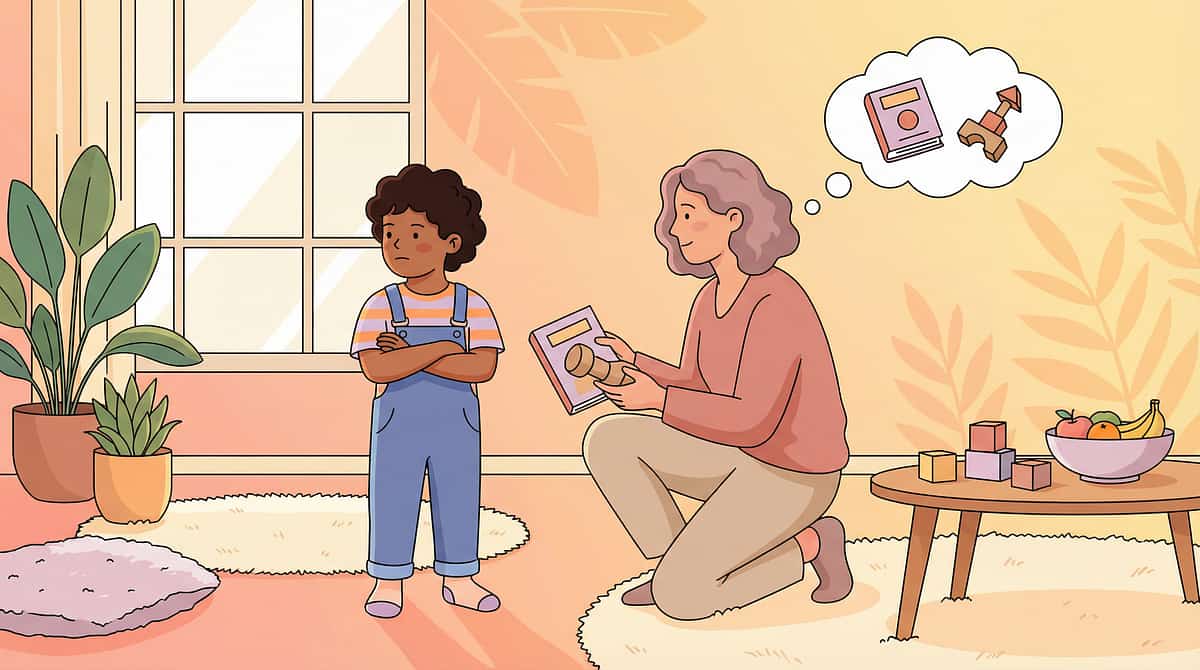
C-344 | Demand Avoidance
9 Materials That Help With Demand Avoidance
The Moment: "Put your shoes on." They don't. "Come to the table." They won't. "It's time to go." They can't. The child who avoids demands — not out of laziness or defiance, but out of a profound, neurologically-driven need for autonomy and control. Demand avoidance in autism is not a behaviour problem. It is an anxiety problem wearing a behaviour costume.
The Neuroscience
Demand avoidance is driven by interoceptive threat detection — the child's nervous system registers external demands as threats to autonomy, triggering a fight-flight-freeze response. The PDA (Pathological Demand Avoidance) profile involves a hyperactive threat-detection system that interprets even gentle requests as loss of control. The intervention is not more pressure — it is collaborative, autonomy-preserving approaches that reduce the perceived threat of demands.
Evidence Level II — PDA-informed approaches + collaborative problem solving. Ross Greene | PDA Society
What You'll Learn
Indirect Language
Replacing direct demands with invitations, choices, and collaborative framing.
Reducing Demand Load
Identifying which demands are essential and which can be removed or modified.
Collaborative Problem Solving
Working with the child to find solutions that meet both their needs and yours.
Autonomy-Building Strategies
Giving genuine control in safe areas to reduce the need to resist in unsafe ones.

C-345 | Elopement
9 Materials That Help With Elopement
The Moment: They run. Without warning, without looking back. Into traffic. Out of the classroom. Away from the playground. Elopement is one of the most dangerous behaviours in autism — and one of the most misunderstood. It is not naughtiness. It is a child moving toward something compelling or away from something unbearable. Both require urgent, compassionate intervention.
The Neuroscience
Elopement is driven by two primary mechanisms: approach motivation (the child is drawn toward a highly preferred stimulus — water, a specific location, a sensory experience) or escape motivation (the child is fleeing an aversive sensory, social, or demand environment). The prefrontal cortex's capacity to inhibit the impulse to run is insufficient to override the pull of the motivating stimulus. Safety planning must address both the environment and the underlying drive.
Evidence Level I — Safety planning + FBA + environmental modification. NCAEP 2020 | AWAARE Collaboration
What You'll Learn
Identifying the function of elopement
approach vs. escape
Immediate safety measures
door alarms, ID bracelets, GPS tracking
Environmental modifications
reducing access to escape routes
Teaching "stop"
as a reliable, reinforced response
Addressing the underlying need
driving the elopement
Community safety planning
neighbours, school, public spaces
Indian context
navigating safety in high-density urban and rural environments
C-346 | Repetitive Behaviours
9 Materials That Help With Repetitive Behaviours
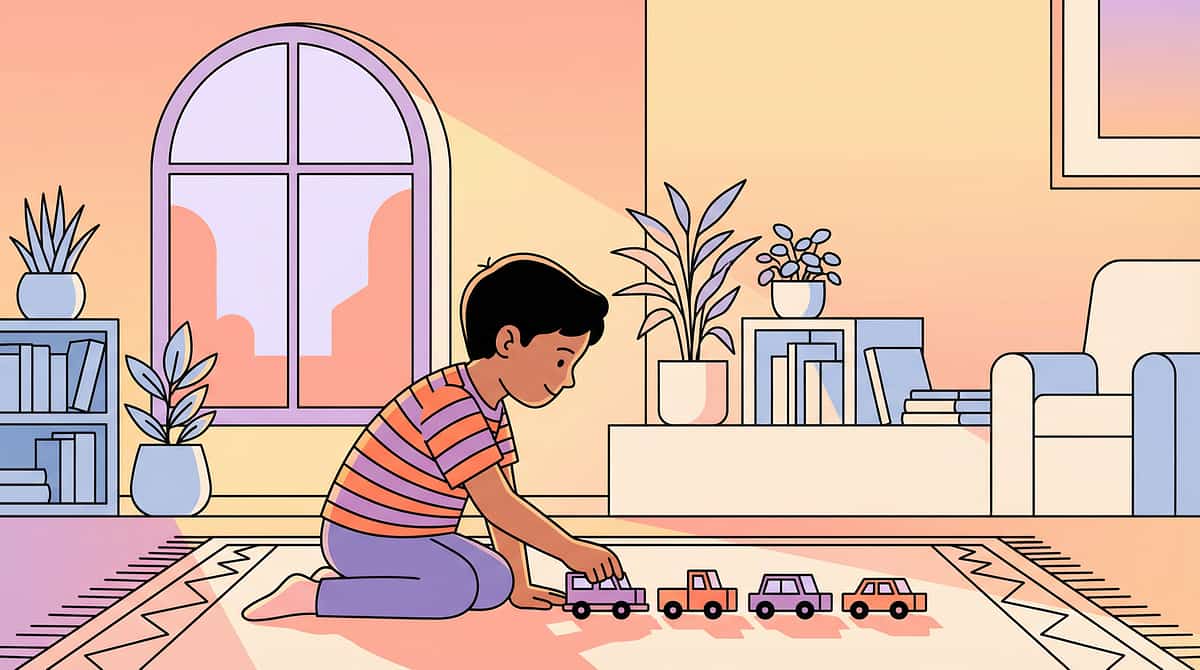
The Moment: They line up the cars. Again. They spin the wheel. Again. They repeat the same phrase. Again. Repetitive behaviours — restricted interests, rituals, routines, and stereotypies — are not symptoms to be eliminated. They are the nervous system's most reliable self-regulation tools. The question is never "how do we stop this?" It is "what is this doing for them — and how do we honour that need safely?"
The Neuroscience
Repetitive behaviours activate the basal ganglia — the brain's habit and routine system — producing predictability and calm in an unpredictable world. They also stimulate the dopaminergic reward pathway, making them intrinsically reinforcing. Attempts to suppress repetitive behaviours without addressing the underlying regulatory function produce anxiety, distress, and often more intense or covert versions of the same behaviour. The intervention is functional equivalence — not elimination.
Evidence Level I — Sensory integration + function-based intervention. NCAEP 2020
What You'll Learn
01
Understanding the Function
Is it sensory, regulatory, communicative, or interest-based? Each requires a different response.
02
When to Intervene vs. When to Allow
Clinical criteria for deciding which repetitive behaviours need modification and which should be protected.
03
Functional Equivalents
Providing alternative behaviours that meet the same neurological need in more flexible ways.
04
Special Interest as Strength
Channelling intense focus into learning, connection, and eventual career pathways.

C-347 | Rigidity & Inflexibility
9 Materials That Help With Rigidity & Inflexibility
The Moment: The sandwich must be cut in triangles. The route to school must never change. The TV show must start at exactly the same time. When any of these rules are broken — even accidentally — the world collapses. Rigidity is not stubbornness. It is a nervous system that has found safety in sameness and experiences change as genuine threat.
The Neuroscience
Rigidity is rooted in the intolerance of uncertainty — a core feature of the autistic nervous system. The brain's predictive processing system (anterior insula + ACC) generates distress when predictions are violated. Sameness and routine reduce prediction error to zero, creating neurological safety. Flexibility requires the PFC to override this distress — a capacity that must be gradually built, not demanded. Forced flexibility without scaffolding produces trauma, not adaptation.
Evidence Level I — Cognitive flexibility training + gradual exposure. NCAEP 2020
What You'll Learn
Why rigidity is a safety strategy, not a character flaw
Gradual change: introducing tiny variations within safe routines
Priming and previewing: preparing the child for change before it happens
Visual supports for transitions and unexpected changes
"First–Then" and "Now–Next" boards for predictability
Building a "change tolerance" muscle over time
Indian context: managing family expectations around flexibility and compliance

C-348 | Non-Compliance
9 Materials That Help With Non-Compliance
The Moment: "Sit down." They don't. "Do your work." They won't. "Stop that." They continue. Non-compliance is the behaviour that most often triggers punishment — and punishment is almost always the wrong response. Non-compliance in autism is almost always rooted in inability, not unwillingness. "Can't" is wearing "won't" as a disguise.
The Neuroscience
Non-compliance is driven by one of four mechanisms: skill deficit (they don't know how), processing delay (they haven't finished processing the instruction), sensory/regulatory overload (they are too dysregulated to comply), or motivational mismatch (the task holds no value for them). Each requires a completely different intervention. Punishing non-compliance without identifying its function is not only ineffective — it is harmful.
Evidence Level I — Antecedent-based intervention + errorless learning. NCAEP 2020
What You'll Learn
Diagnosing Non-Compliance
Identifying whether the root is skill, processing, regulation, or motivation — before intervening.
Instruction Delivery
How to give instructions that autistic children can actually process: timing, language, and format.
High-Probability Sequences
Building compliance momentum with easy requests before introducing harder ones.
Reinforcement Systems
Making compliance intrinsically worthwhile — not through fear, but through genuine reward.
C-349 | Transitions
9 Materials That Help With Transitions
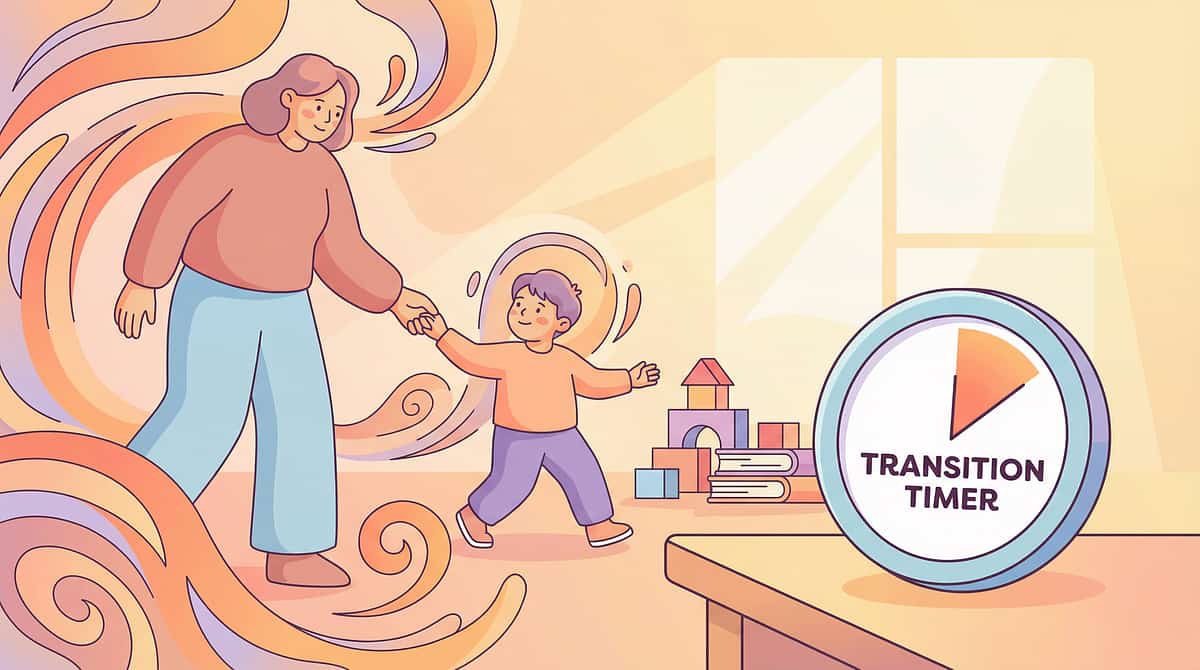
The Moment: "Time to stop." The meltdown begins — not because of what comes next, but because of the ending of what was. Transitions are among the most reliably difficult moments in autism. Every transition is a small loss — of a preferred activity, a predictable state, a sense of control. The child who struggles with transitions is not being difficult. They are grieving.
The Neuroscience
Transitions require the brain to disengage from one attentional state and re-engage with another — a process mediated by the dorsolateral PFC and anterior cingulate cortex. In autism, this cognitive switching is slower and more effortful, and the emotional cost of disengagement is higher (amygdala activation). The child's brain is not being stubborn — it is genuinely struggling to shift. Transition supports work by reducing the cognitive and emotional cost of switching.
Evidence Level I — Visual supports + priming + transition objects. NCAEP 2020
What You'll Learn
Countdown warnings: giving the brain time to prepare for disengagement
Visual timers: making abstract time concrete and predictable
Transition objects: carrying something from the old activity into the new one
First–Then boards: making the next activity visible and desirable
Transition songs and rituals: creating a predictable bridge between activities
Choice within transition: preserving autonomy during the switch
Indian context: managing transitions in busy, multi-generational households

C-350 | Sleep Difficulties
9 Materials That Help With Sleep Difficulties
The Moment: 11pm. They're still awake. They've been awake since 4am. They can't fall asleep without you. They wake screaming at 2am. Sleep difficulties affect up to 80% of autistic children — and a child who doesn't sleep cannot regulate, learn, or connect. Neither can their parents. Sleep is not a luxury. It is the foundation of every other intervention.
The Neuroscience
Sleep difficulties in autism are driven by multiple mechanisms: melatonin dysregulation (the autistic brain often produces melatonin later and in lower quantities), sensory hypersensitivity (sounds, textures, light that neurotypical children habituate to remain alerting), anxiety (hyperactive threat-detection prevents the nervous system from downregulating), and circadian rhythm differences. Each mechanism requires a targeted intervention — there is no single sleep solution.
Evidence Level I — Sleep hygiene + melatonin + sensory modification. NCAEP 2020 | Malow et al.
What You'll Learn
01
Sleep Assessment
Identifying the specific mechanism driving the sleep difficulty — the intervention depends on the cause.
02
Sensory Sleep Environment
Optimising the bedroom for the child's sensory profile: light, sound, texture, temperature.
03
Bedtime Routine Design
A predictable, calming sequence that signals the nervous system: safety is here, sleep is coming.
04
Melatonin & Medical Consultation
When and how to use melatonin supplementation — evidence, dosing, and timing guidance.

C-351 | Feeding & Food Refusal
9 Materials That Help With Feeding & Food Refusal
The Moment: They will only eat five foods. The same five foods. Every day. A new food on the plate produces gagging, panic, or complete shutdown. Mealtimes are a battleground. Feeding difficulties in autism are not pickiness. They are a complex intersection of sensory processing, anxiety, oral motor function, and interoception — and they require clinical expertise, not parental pressure.
The Neuroscience
Food refusal in autism is driven by sensory hypersensitivity (texture, smell, colour, temperature, and appearance of food are processed with extreme intensity), neophobia (the threat-detection system flags unfamiliar foods as potentially dangerous), and interoceptive differences (hunger and satiety signals may be muted or distorted). The gag reflex threshold is often lower. Forcing new foods activates the threat response — making future acceptance less, not more, likely.
Evidence Level I — Sequential Oral Sensory (SOS) approach + food chaining. NCAEP 2020 | Toomey & Associates
What You'll Learn
SOS Feeding Approach: the 32-step hierarchy from tolerance to eating
Food chaining: expanding the diet one tiny step at a time
Sensory food play: building tolerance through non-eating interaction with food
Mealtime environment design: reducing sensory load at the table
Nutritional safety netting: ensuring adequate nutrition during the expansion process
When to refer: identifying children who need specialist feeding therapy
Indian context: navigating family food culture and pressure around eating
C-352 | Toileting & Toilet Training
9 Materials That Help With Toileting
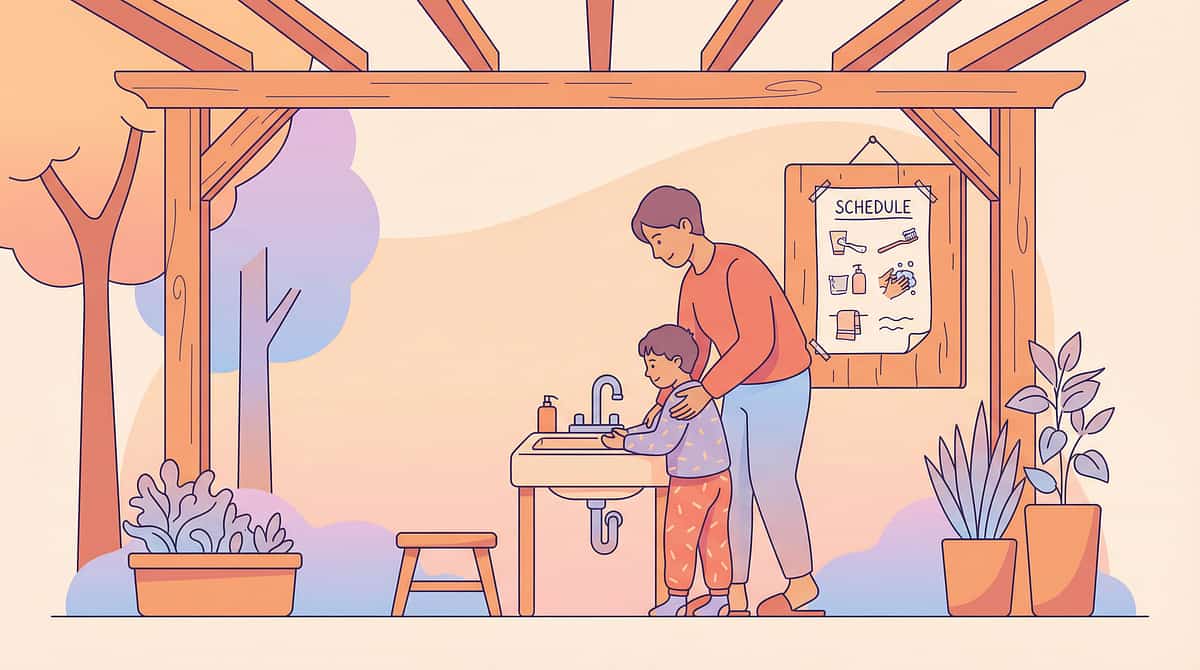
The Moment: They're 5. They're 7. They're 10. And they're still not toilet trained. Or they were trained — and then regressed. Or they'll use the toilet at home but nowhere else. Toileting difficulties in autism are among the most stressful challenges for families — and among the most under-addressed in clinical settings. They are not a parenting failure. They are a complex skill with multiple prerequisites.
The Neuroscience
Successful toileting requires the integration of interoception (sensing bladder/bowel fullness), motor planning (the sequence of steps to reach and use the toilet), sensory tolerance (the sounds, smells, textures, and sensations of the bathroom), and communication (signalling the need). In autism, any or all of these systems may be disrupted. Interoceptive differences — the inability to reliably sense internal body states — are the most common and least recognised barrier.
Evidence Level I — Azrin & Foxx toilet training + sensory modification. NCAEP 2020
What You'll Learn
Readiness Assessment
Identifying the specific prerequisites the child has and hasn't yet developed before beginning training.
Sensory Bathroom Modification
Adapting the bathroom environment to reduce sensory barriers to toilet use.
Structured Training Protocols
Evidence-based toilet training sequences adapted for autistic learners.
Regression & Generalisation
Managing setbacks and building toilet use across all environments.
C-353 | Anxiety
9 Materials That Help With Anxiety
The Moment: The worry that never stops. The "what ifs" that spiral. The refusal to go to school. The physical symptoms — the stomach aches, the headaches, the racing heart — that no doctor can explain. Anxiety is the most common co-occurring condition in autism, affecting up to 84% of autistic children. It is not a personality trait. It is a treatable neurological condition — and it is urgent.
The Neuroscience
Anxiety in autism is driven by a hyperactive amygdala that generates threat signals with lower thresholds and greater intensity than in neurotypical brains. The intolerance of uncertainty — a core autistic trait — means the brain's threat-detection system is perpetually scanning for unpredictability. The PFC's capacity to regulate this threat response is reduced. Sensory hypersensitivity adds a constant background of physiological arousal that primes the anxiety system. The result: a nervous system that is rarely, if ever, at rest.
Evidence Level I — CBT adapted for autism + exposure therapy. NCAEP 2020 | Wood et al.
What You'll Learn
Autism-adapted CBT: modifying cognitive approaches for autistic thinking styles
Exposure hierarchy: gradual, supported approach to feared situations
Interoception training: helping the child recognise anxiety in their body
Worry time and containment strategies: giving anxiety a place without letting it take over
Sensory regulation as anxiety prevention: the body-first approach
School refusal: a specific protocol for the most common anxiety presentation
Indian context: managing anxiety in high-pressure academic environments
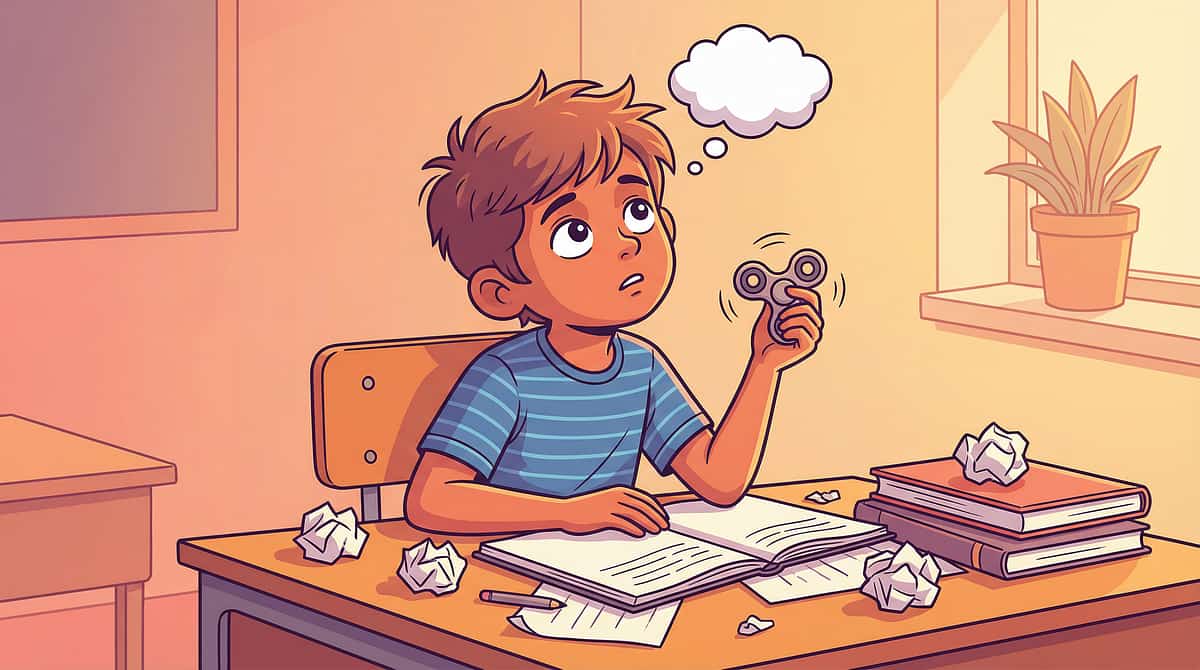
C-354 | ADHD & Attention
9 Materials That Help With ADHD & Attention
The Moment: They can't sit still. They can't focus. They start tasks and never finish them. They're distracted by everything — or hyperfocused on one thing to the exclusion of all else. ADHD co-occurs with autism in up to 70% of cases — yet the two are often treated as separate conditions. They are not. They are two expressions of the same neurodevelopmental difference, and they must be addressed together.
The Neuroscience
ADHD in autism involves dopaminergic dysregulation in the prefrontal cortex — the brain's executive control centre. The PFC struggles to sustain attention, inhibit impulses, and regulate the transition between tasks. Crucially, autistic ADHD often presents differently from neurotypical ADHD: hyperfocus (intense, sustained attention on preferred topics) coexists with profound difficulty attending to non-preferred tasks. The intervention must address both ends of the attention spectrum.
Evidence Level I — Executive function training + environmental modification + medication review. NCAEP 2020
What You'll Learn
01
Environmental Attention Supports
Reducing distractions, optimising seating, and structuring the physical environment for focus.
02
Task Modification
Breaking tasks into smaller steps, using timers, and building in movement breaks.
03
Harnessing Hyperfocus
Using the child's intense interests as an entry point for learning and skill development.
04
Medication Considerations
What families need to know about stimulant and non-stimulant options in autism + ADHD.

C-355 | Executive Function
9 Materials That Help With Executive Function
The Moment: They know what they need to do — but they can't start. They start — but they can't finish. They finish — but they can't organise what they've done. Executive function difficulties are the invisible disability within autism: the gap between knowing and doing that frustrates children, parents, and teachers alike. "They're so smart — why can't they just...?" Because intelligence and executive function are different systems.
The Neuroscience
Executive functions — planning, initiation, working memory, cognitive flexibility, inhibition, and organisation — are mediated by the prefrontal cortex. In autism, PFC development follows a different trajectory, and the connectivity between PFC and other brain regions is atypical. The result is a child who may have exceptional knowledge and intelligence but profound difficulty translating that into organised, initiated, completed action. External scaffolding is not a crutch — it is a prosthetic PFC.
Evidence Level I — Executive function coaching + visual supports. NCAEP 2020 | Dawson & Guare
What You'll Learn
- The 8 executive functions: assessing which are most impaired for this child
- Task initiation strategies: getting started when starting feels impossible
- Working memory supports: externalising what the brain can't hold internally
- Planning and organisation tools: visual planners, checklists, and project maps
- Time blindness: why autistic children struggle with time and what actually helps
- Homework and study systems: structured approaches for academic executive demands
- Indian context: managing academic pressure with executive function differences

C-356 | Sensory Processing
9 Materials That Help With Sensory Processing
The Moment: The tag in the shirt is unbearable. The sound of the hand dryer is terrifying. The smell of the canteen is overwhelming. The fluorescent lights are blinding. Or the opposite: they seek sensation constantly — crashing, spinning, touching everything. Sensory processing differences are present in over 90% of autistic individuals. They are not quirks. They are the lens through which the autistic child experiences every moment of every day.
The Neuroscience
Sensory processing differences arise from atypical multisensory integration in the superior temporal sulcus and thalamus, combined with differences in sensory gating — the brain's ability to filter irrelevant sensory input. The autistic brain often fails to habituate to sensory stimuli that neurotypical brains quickly learn to ignore. The result is a nervous system that is perpetually processing a full, unfiltered sensory world — exhausting, overwhelming, and often painful. Sensory regulation is not optional. It is the prerequisite for everything else.
Evidence Level I — Sensory Integration Therapy (Ayres) + sensory diet. NCAEP 2020 | AOTA
What You'll Learn
01
Sensory Profile Assessment
Mapping the child's unique sensory profile across all 8 senses — including proprioception and interoception.
02
Sensory Diet Design
A personalised schedule of sensory activities that regulate the nervous system throughout the day.
03
Environmental Modification
Adapting home, school, and community environments to reduce sensory overload.
04
Sensory Seeking Strategies
Safe, appropriate channels for children who need more sensory input to self-regulate.
C-357 | School Inclusion
9 Materials That Help With School Inclusion
The Moment: The school that doesn't understand. The teacher who says "he's fine here" when he's clearly not. The IEP that lists deficits but no strengths. The classroom that was designed for neurotypical learners and has never been modified. School is where autistic children spend most of their waking hours — and for many, it is the most dysregulating environment they encounter. Inclusion is not about placing a child in a mainstream classroom. It is about making that classroom work for them.
The Neuroscience
The school environment presents a perfect storm of autistic challenges: sensory overload (noise, light, smell, crowds), social demand (constant peer interaction, group work, unstructured time), executive demand (transitions, multi-step tasks, time management), and communication demand (verbal instruction, rapid processing, social language). Each of these activates the threat-detection system. A dysregulated child cannot learn. Regulation is the prerequisite for education — not a distraction from it.
Evidence Level I — Universal Design for Learning (UDL) + structured teaching (TEACCH). NCAEP 2020
What You'll Learn
- The autism-informed classroom: physical, sensory, and social modifications
- IEP advocacy: how to write and fight for a plan that actually works
- Teacher training: what every teacher needs to know about autism
- Unstructured time: the most dangerous part of the school day — and how to support it
- Peer support programmes: building genuine inclusion, not just proximity
- School refusal: when the school environment is the problem
- Indian context: navigating mainstream vs. special school decisions in India
C-359 | Sibling Relationships
9 Materials That Help With Sibling Relationships
The Moment: The sibling who is always second. Who has learned not to ask for things because their brother's needs always come first. Who loves their sibling fiercely and also resents them deeply — and feels guilty for the resentment. Siblings of autistic children are the most under-served members of the autism family. They carry invisible weight. They deserve to be seen.
The Neuroscience
Siblings of autistic children show elevated rates of anxiety, depression, and social difficulties — not because autism is contagious, but because growing up in a high-stress, high-demand family environment shapes the developing nervous system. The sibling's attachment system is also affected: when a parent's attention is chronically directed toward the autistic child, the sibling's attachment needs may go unmet. Proactive sibling support is not optional — it is a family systems intervention.
Evidence Level II — Sibling support programmes + family systems therapy. Lobato & Kao | Sibshops
What You'll Learn
- Age-appropriate explanations of autism for siblings at every developmental stage
- Sibling support groups: the power of peer connection with others who understand
- Protected sibling time: ensuring the neurotypical child's needs are consistently met
- Managing sibling conflict: when the autistic child's behaviour affects the sibling
- Sibling as ally: involving siblings in intervention in age-appropriate, empowering ways
- The adult sibling: preparing for the long-term relationship and potential caregiving role
- Indian context: managing sibling dynamics within joint family and cultural expectations
Preview of attachment self concept Therapy Material
Below is a visual preview of attachment self concept therapy material. The pages shown help educators, therapists, and caregivers understand the structure and content of the resource before use. Materials should be used under appropriate professional guidance.
Link copied!