

"Put it BEHIND the box." He stared at me blankly.
Not because he didn't see the box. Because 'behind' was invisible. This is Spatial Concepts & Positional Language Intervention — Technique B-172.
B-172 | Language & Communication
Ages 2–10 Years
Pinnacle Blooms Network®

ACT I — UNDERSTAND
You Are Not Alone: The Numbers
Spatial concept difficulties are not rare — and they are not a sign of low intelligence. Children with autism frequently show strong visual-spatial perception paired with weak spatial language. They see the world clearly but lack the words to describe or navigate it.
80%
Spatial Difficulties in Autism
of children diagnosed with autism display spatial processing and language difficulties — PRISMA Systematic Review, 2024
1 in 36
Global ASD Prevalence
children globally are diagnosed with ASD — India estimates 18 million affected children (WHO, CDC 2023)
Top 3
Language Therapy Target
Spatial language is among the top 3 language targets in paediatric SLP intervention for autism globally — NCAEP, 2020
You are not failing your child. You are facing a documented, well-researched developmental challenge — and there are proven materials that help.
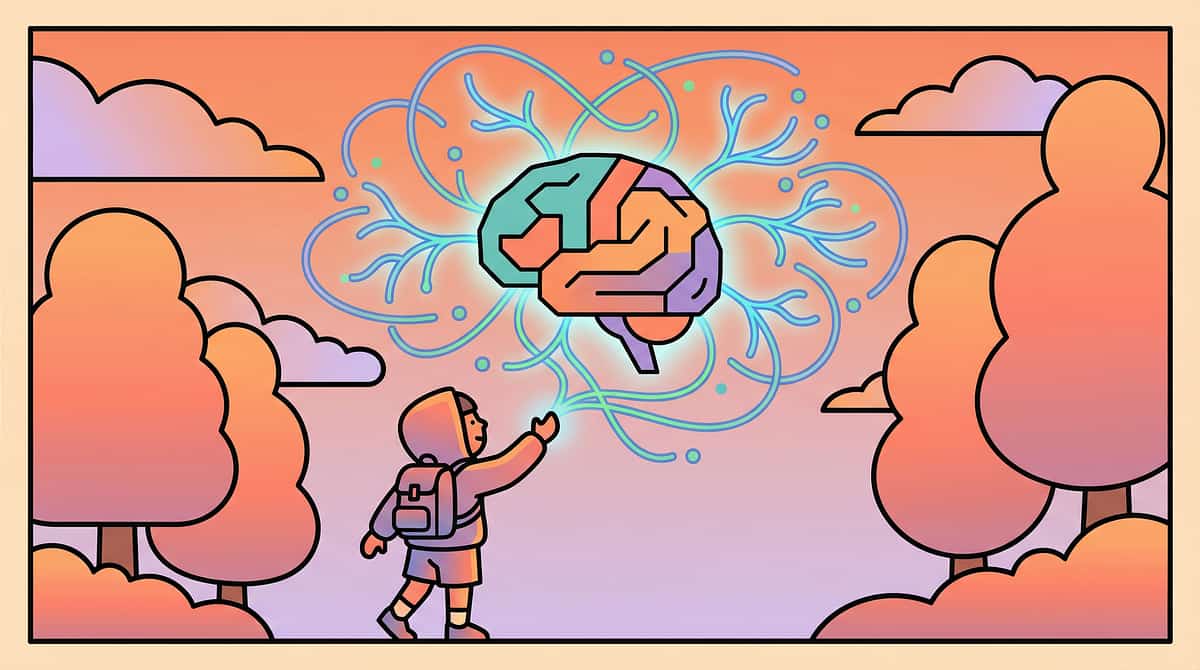
What's Happening in Your Child's Brain
The neuroscience of spatial language is elevating — not intimidating. Understanding it changes everything about how you approach sessions.
What the Brain Does Normally
The parietal cortex maps spatial relationships — it knows the cup is to the left of the plate. The angular gyrus then translates that spatial map into language, connecting spatial perception to words like "left," "beside," "near."
What Happens in Autism
In many autistic children, spatial perception is intact or even advanced. The challenge is the translation pathway — the neural bridge connecting spatial awareness to language encoding.
This is a connectivity difference, not an intelligence limitation.
"This is a wiring difference — not a behavior choice. The visual-spatial world is clear. The word-map for it needs to be built explicitly."
Source: Frontiers in Integrative Neuroscience (2020) — DOI: 10.3389/fnint.2020.556660

Where This Sits in Development
Children with autism often show uneven development — strong visual-spatial perception, but delayed spatial language. They know the space; they need the words for it. Spatial concept challenges frequently co-occur with: following multi-step directions difficulty, narrative and sequencing delays, left-right body awareness issues, and difficulty with map reading and navigation.
1
18–24 Months
Understands "in" and "on" — objects in containers, items placed on surfaces
2
2–3 Years
Grasps "under," "next to," simple prepositions with physical demonstrations
3
3–4 Years
Understands "behind," "in front of," "beside" — emerging prepositions
4
4–5 Years
"Between," "through," "around" — complex prepositions emerge
5
5–6 Years
Left/right with self as reference point; "above" and "below" fully mastered
6
6–8 Years
Perspective-dependent terms — "behind from YOUR position"; navigation language
7
8–10 Years
Full spatial vocabulary for abstract and functional navigation
Sources: WHO Care for Child Development (CCD) Package | UNICEF Developmental Monitoring Framework — PMC9978394

The Evidence Behind This Technique
The 9 materials on this page are not random activities. Each is mapped to the published evidence base for paediatric spatial language intervention — validated across thousands of children, across multiple countries, by the Pinnacle Blooms Consortium of SLPs, OTs, BCBAs, and NeuroDevelopmental Paediatricians.
Study | Finding | Source | |
PRISMA Systematic Review (2024) | 16 studies confirm spatial-language intervention meets evidence-based criteria for ASD | PMC11506176 | |
Meta-analysis, World J Clin Cases (2024) | Spatial and language therapy improves adaptive behaviour, communication, and functional navigation | PMC10955541 | |
Indian RCT, Padmanabha et al. (2019) | Home-based language intervention shows significant outcomes across paediatric ASD population | DOI: 10.1007/s12098-018-2747-4 | |
WHO NCF (2018) | Early, context-specific, caregiver-delivered language intervention produces durable outcomes | nurturing-care.org | |
NCAEP (2020) | Spatial language instruction classified as evidence-based practice for autism | NCAEP Report |
85%
Evidence Confidence
Across systematic reviews, RCTs, and WHO-endorsed frameworks
🏆Validated by the Pinnacle Blooms Network® Consortium — SLP • OT • ABA • SpEd • NeuroDev | 🔴 FREE National Autism Helpline: 9100 181 181 | Available 24x7
ACT II — LEARN
The Technique: What It Is
Definition
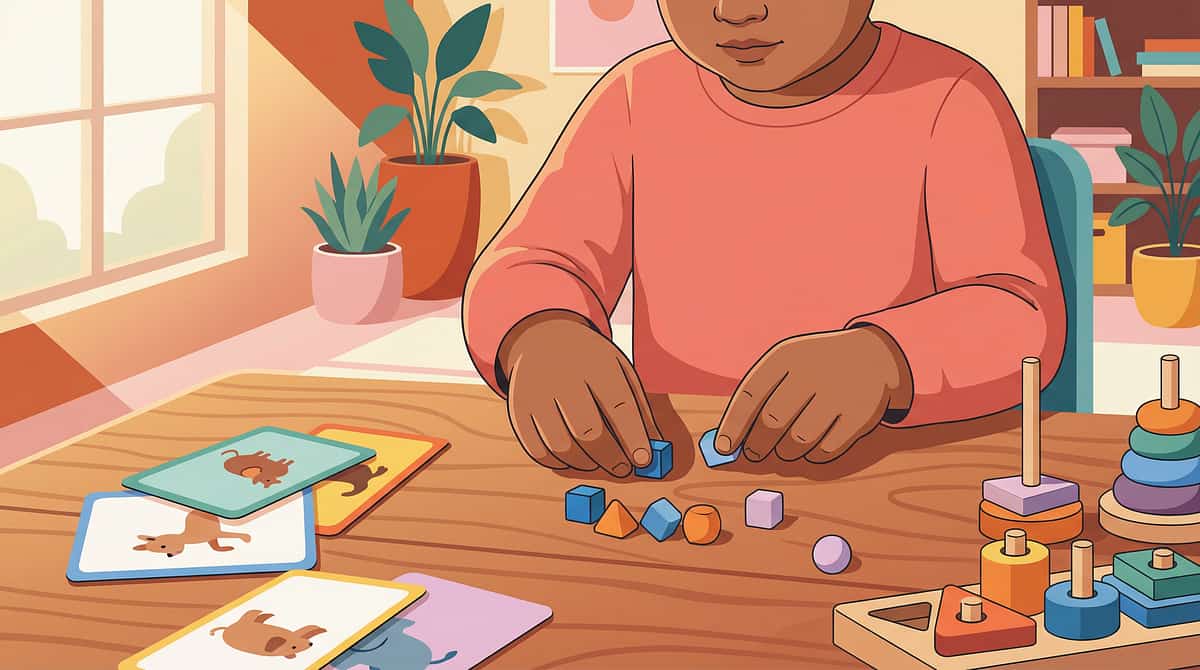
Spatial Concepts Intervention is a speech-language and multi-sensory approach to building a child's ability to understand, express, and apply the vocabulary of position, direction, distance, and spatial relationship.
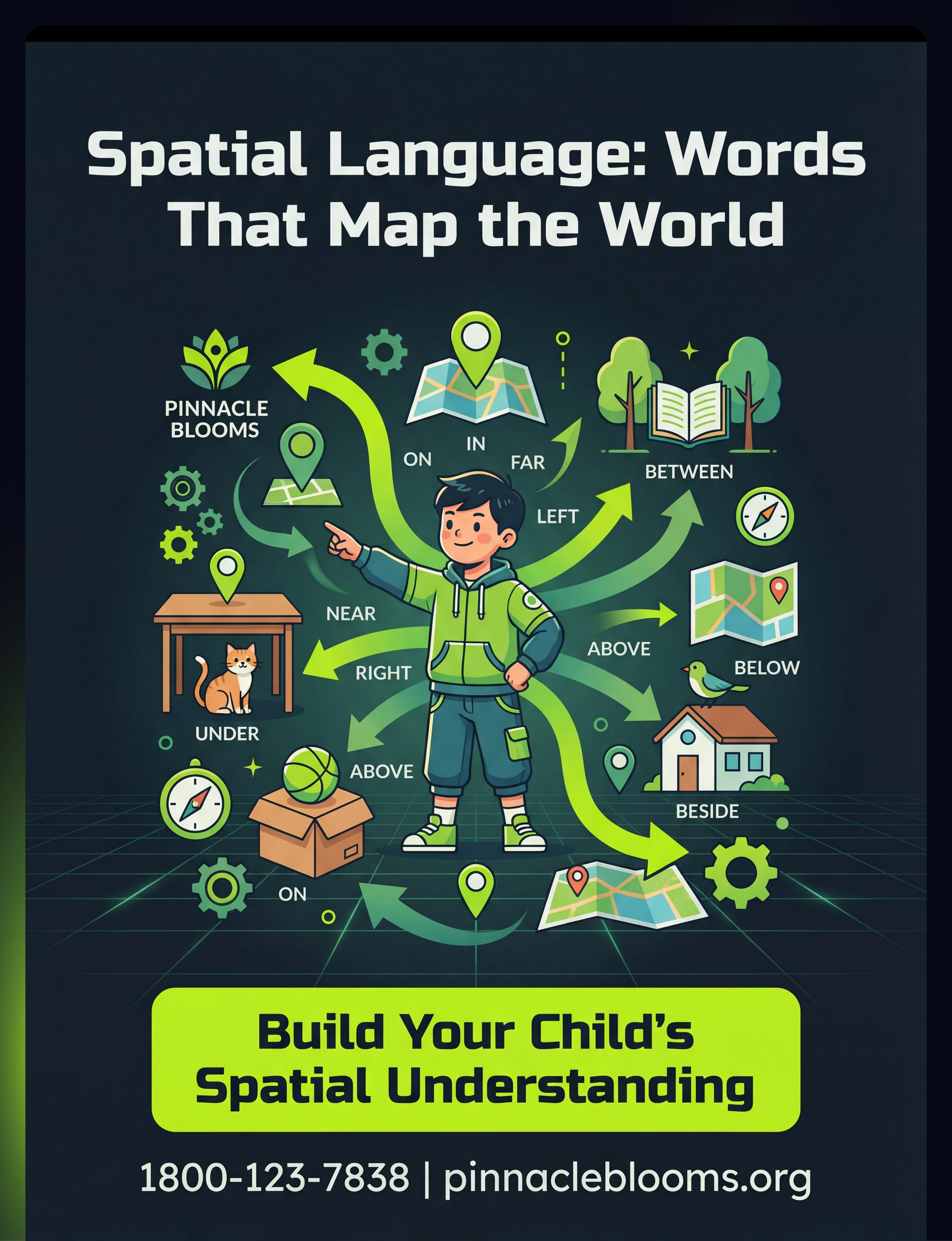
This includes prepositions (in, on, under, behind, between), directional terms (left, right, up, down, through, around), proximity vocabulary (near, far, close), and perspective-dependent language.
Parent Alias
"The Where-Words Programme"
This technique targets the language of space — not spatial perception (which is often intact in autism) but the translation of spatial reality into words that can be understood and communicated.
Technique Details
- Domain: Language & Communication (B)
- Age Range: 2–10 years
- Session Duration: 10–20 minutes
- Frequency: 3–5× per week
- Setting: Home, School & Therapy
- Code: B-172
B-171
Quantity Concepts
B-172
Spatial Concepts ★ Current
B-173
Temporal Concepts
Who Uses This Technique
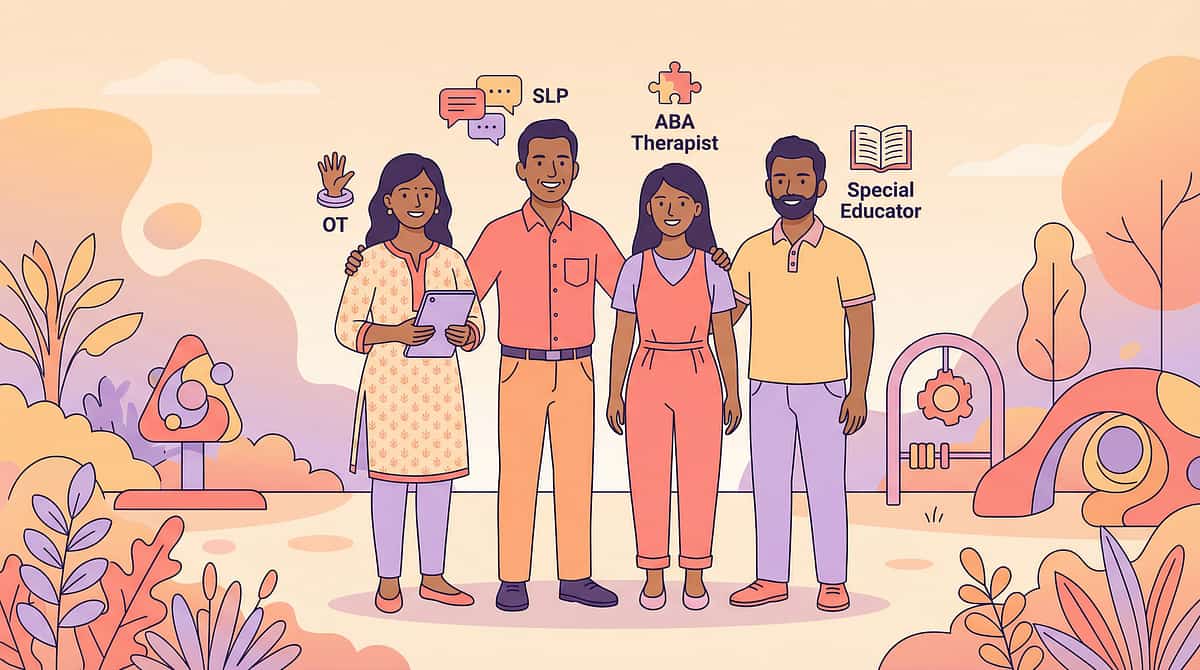
This technique crosses therapy boundaries — because the brain doesn't organise by therapy type. Every discipline listed below has a distinct, validated role in spatial language intervention.
Speech-Language Pathologist (SLP) — Primary Lead
SLPs target receptive comprehension, expressive production, and functional application of spatial language. Barrier games, preposition cards, and vocabulary building are SLP-core tools.
Occupational Therapist (OT) — Embodied Learning Lead
OTs integrate spatial language into sensorimotor activity. Obstacle courses and construction activities allow children to feel spatial relationships before encoding them linguistically.
ABA / BCBA — Systematic Teaching Lead
BCBAs design discrete trial training (DTT) sequences for preposition mastery, error correction protocols, and reinforcement schedules that build consistent preposition use.
Special Educator (SpEd) — Functional Generalisation Lead
SpEd teachers embed spatial vocabulary into classroom routines, academic tasks, and peer interactions. Map activities and navigation games build functional spatial language for school independence.
NeuroDevelopmental Paediatrician — Diagnostic Oversight
Confirms spatial language delays as part of a comprehensive developmental profile; differentiates from visual-spatial perception deficits; guides overall language trajectory in the IEP.
🏆Pinnacle Blooms Consortium | CRO • SLP • OT • BCBA • SpEd • NeuroDev Paediatrics
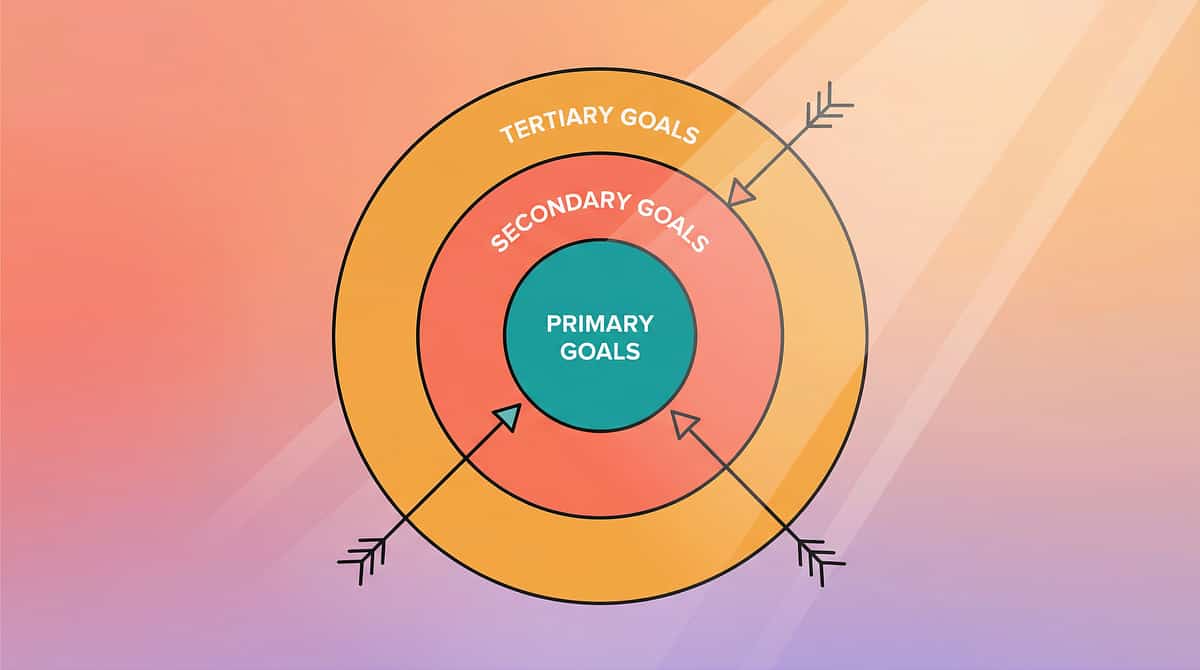
What This Technique Targets
Precision targeting ensures every session minute contributes to measurable outcomes. The bullseye below maps primary, secondary, and tertiary targets across the spatial language domain.
Observable Indicators — What You Will See
Correctly places objects on verbal spatial command
Uses prepositions spontaneously in description ("It's under the chair!")
Follows two-step spatial directions without visual cues
Corrects spatial confusions independently
Gives accurate spatial directions to others
Meta-analysis (PMC10955541): Spatial-language therapy effectively promotes adaptive communication, functional navigation, and academic language across 24 studies in paediatric ASD populations.
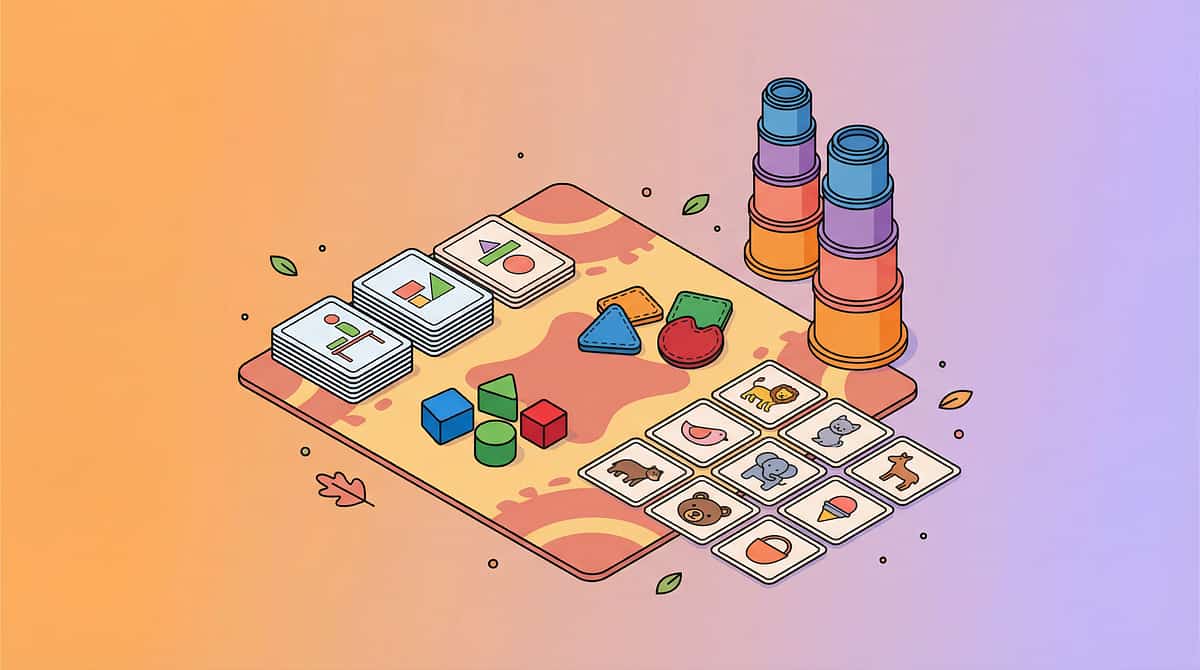
THE 9 MATERIALS
What You Need to Get Started
Every material below is sourced from the Pinnacle 128 Canon Materials System. Click to purchase on Amazon.in or use the DIY alternative on the card that follows. Essential starters: Materials 1 + 2 + 3 — Barrier Games + Preposition Cards + Movement Course. Total estimated investment: ₹2,750–₹9,600 for a comprehensive home setup.
1
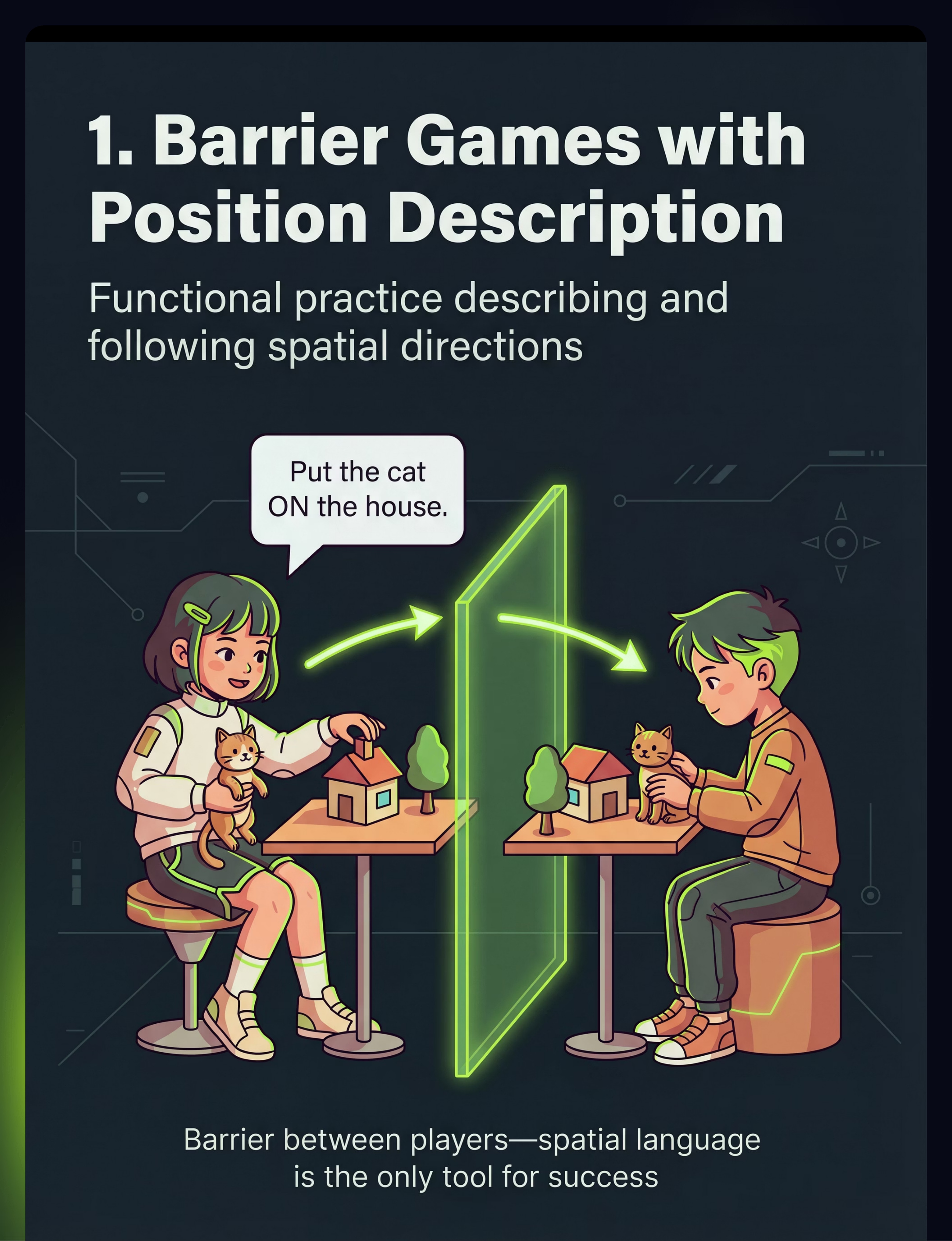
Barrier Games with Position Description
Category: Problem-Solving Toys / Communication Games | Price: ₹400–1,500
Pure spatial communication practice — spatial language is the ONLY tool for success.
2
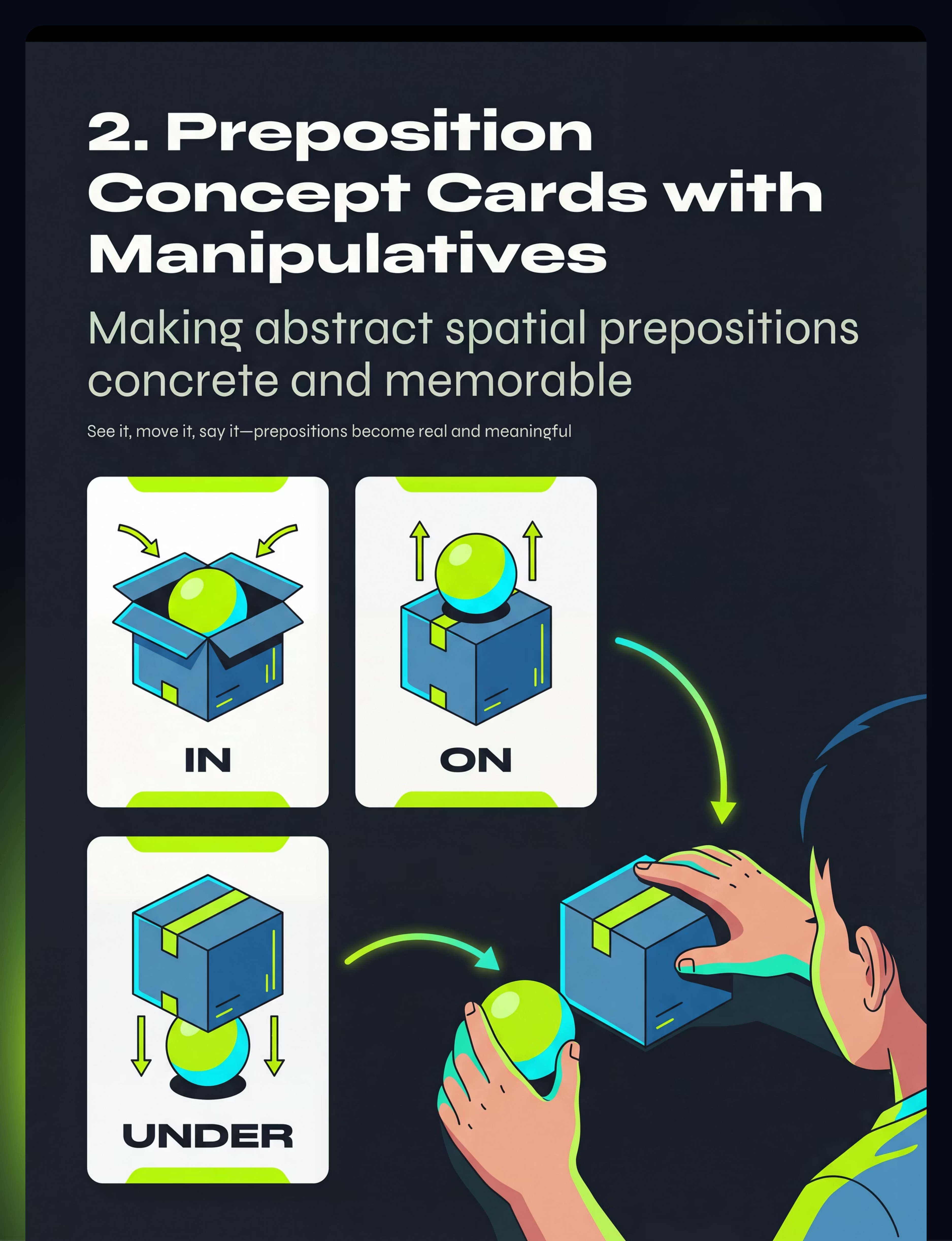
Preposition Concept Cards with Manipulatives
Category: Matching Games / Memory Games | Price: ₹300–1,000
Abstract prepositions become concrete — see it, place it, say it.
3
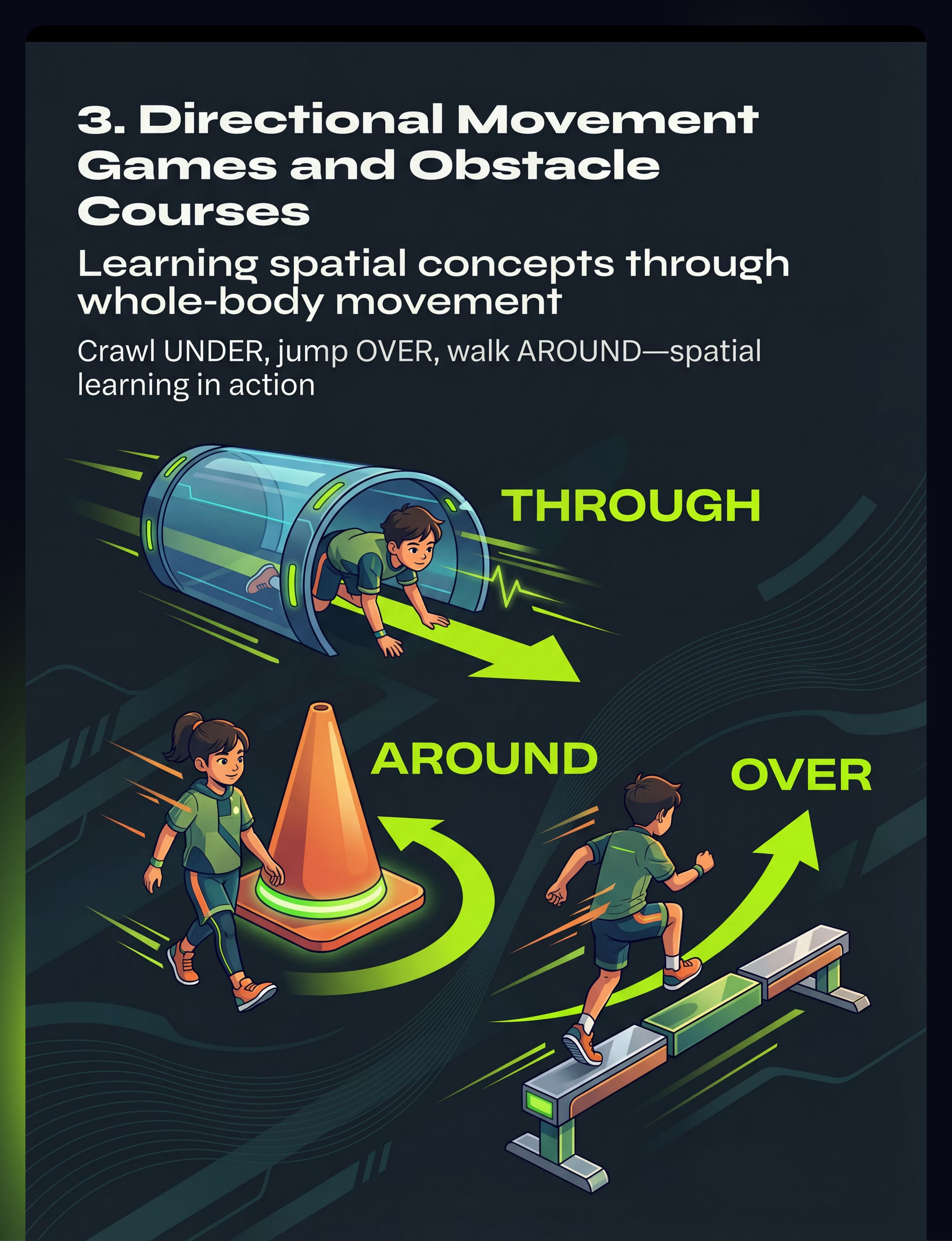
Directional Movement Games & Obstacle Courses
Category: Sorting Activities / Gross Motor Materials | Price: ₹500–2,000
Whole-body spatial learning — THROUGH the tunnel, AROUND the cone, OVER the beam.
4
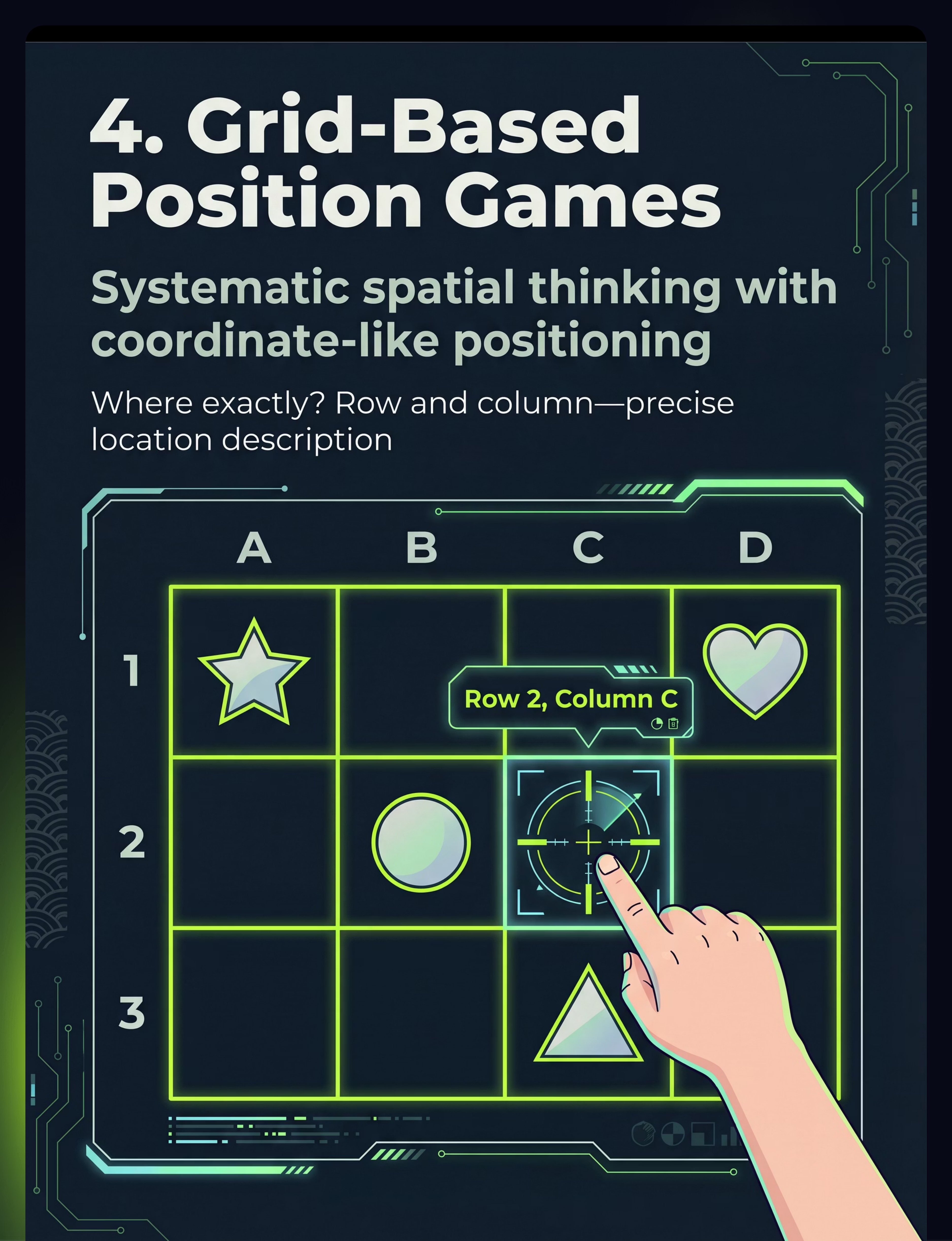
Grid-Based Position Games
Category: Problem-Solving Toys / Coordinate Activities | Price: ₹300–900
Systematic spatial description — row 2, column 3 — builds coordinate thinking.
5
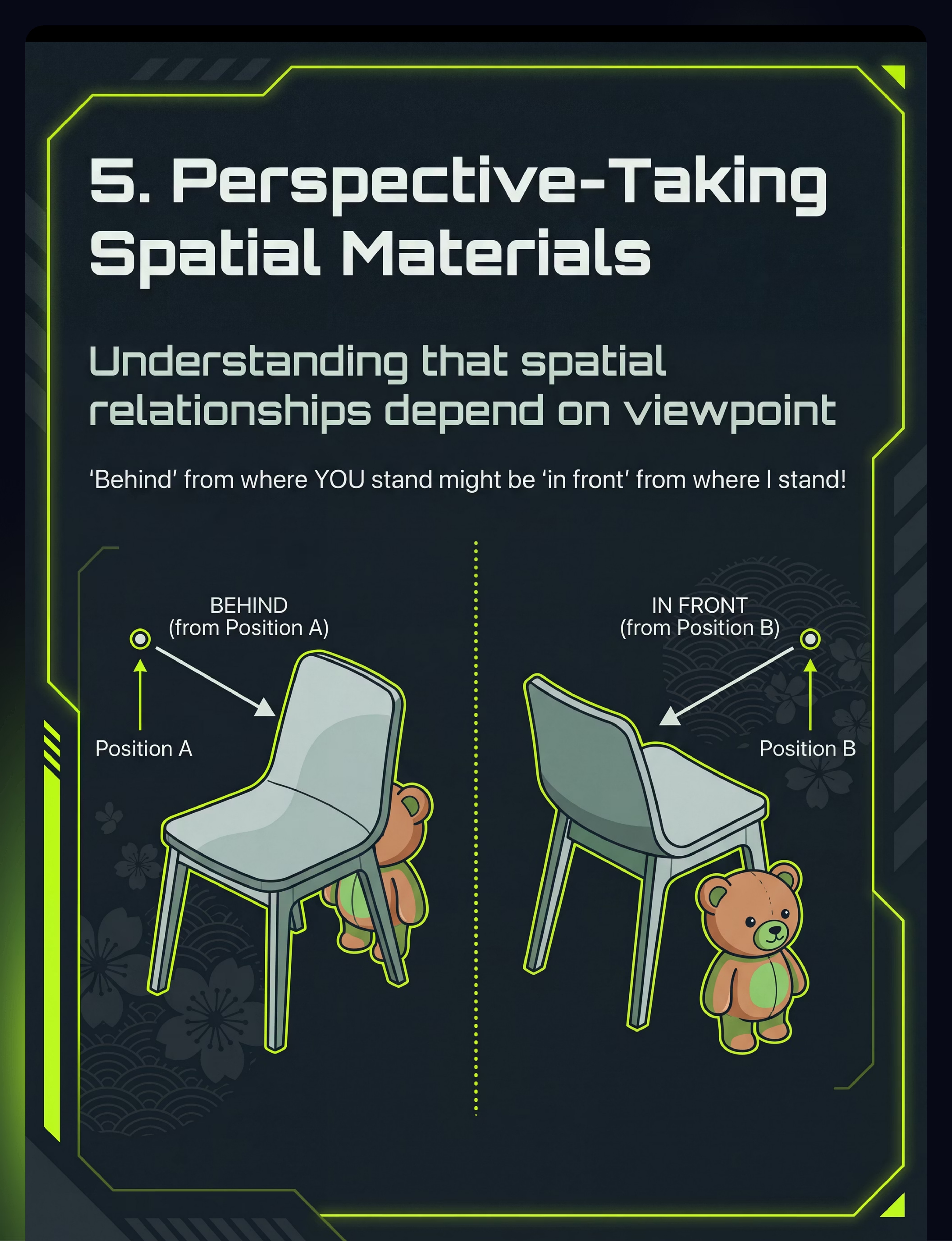
Perspective-Taking Spatial Materials
Category: Matching Games / Viewpoint Comparison Sets | Price: ₹400–1,200
Spatial relationships are viewpoint-dependent — 'behind' from MY side may be 'in front' from yours.
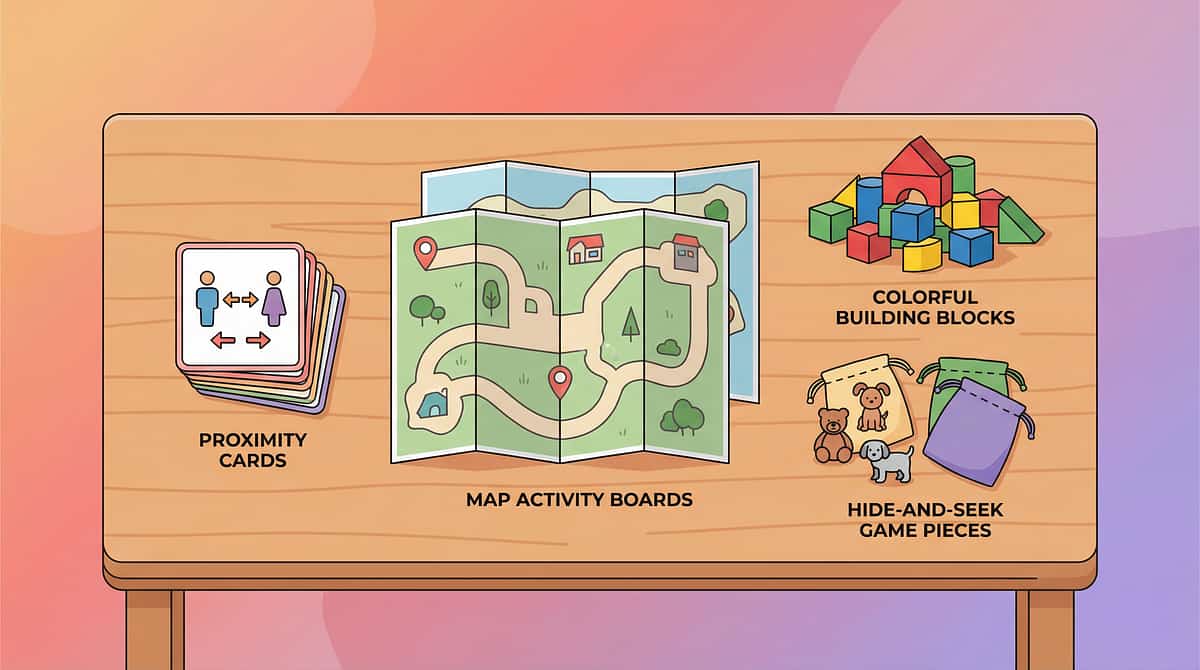
Materials 6–9: Complete Your Set
1
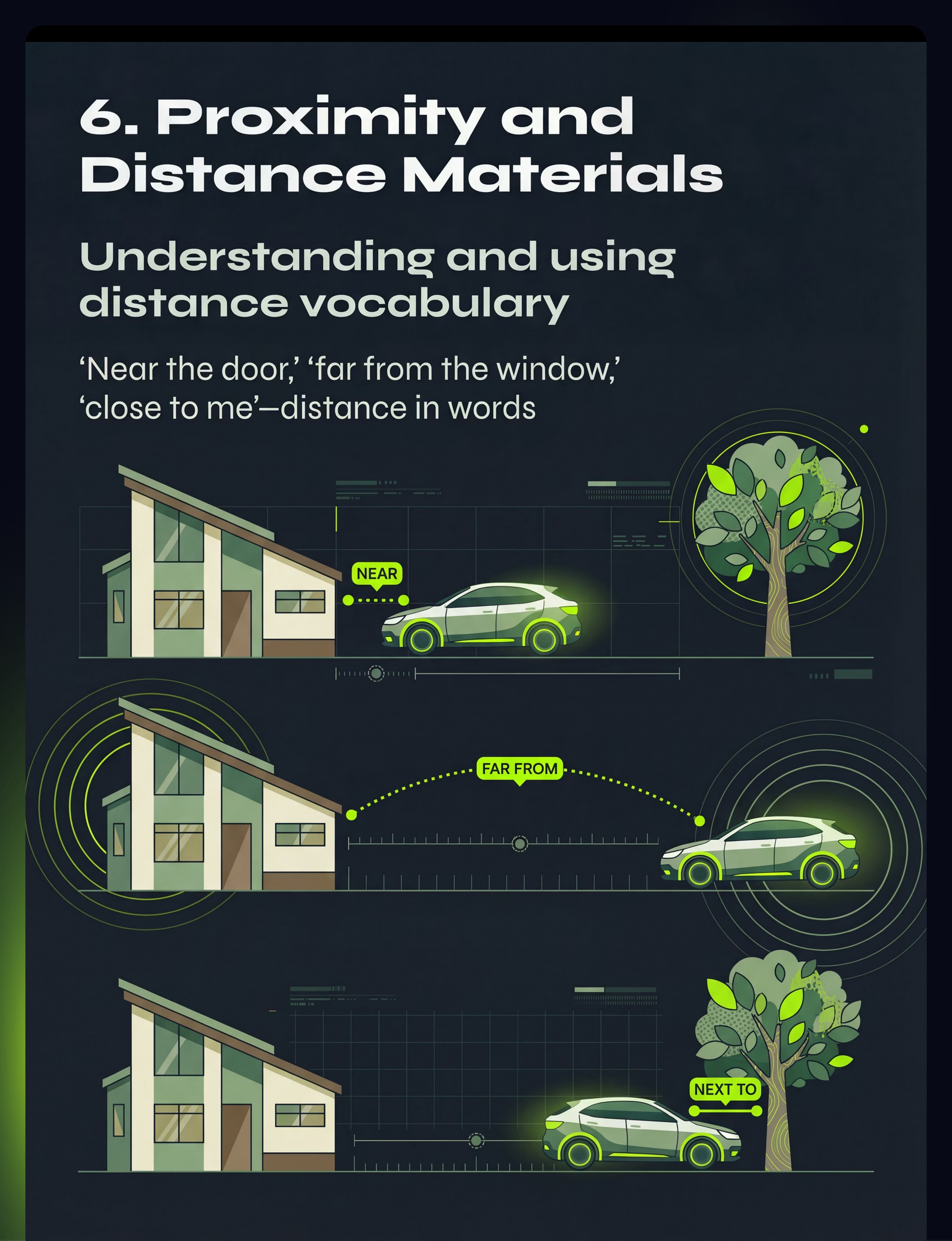
Proximity & Distance Materials
Category: Sorting Activities / Vocabulary Materials | Price: ₹250–800
The vocabulary of distance — near, far, close, away — for functional spatial communication.
🛒 DIY-primary — see DIY card for zero-cost alternative
2
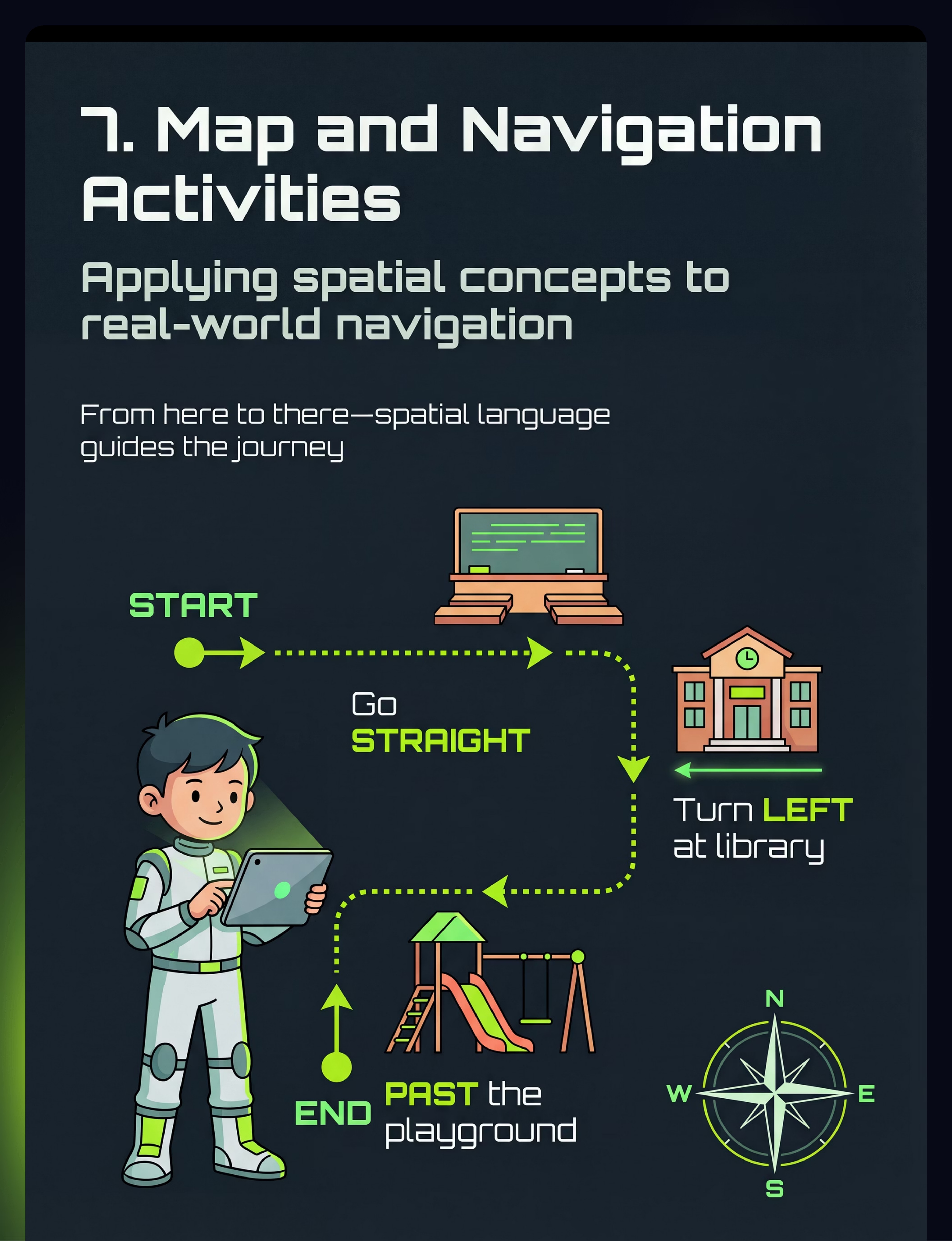
Map & Navigation Activities
Category: Problem-Solving Toys / Navigation Games | Price: ₹300–1,000
Functional spatial language — turn left, go straight, past the library — real-world wayfinding.
3
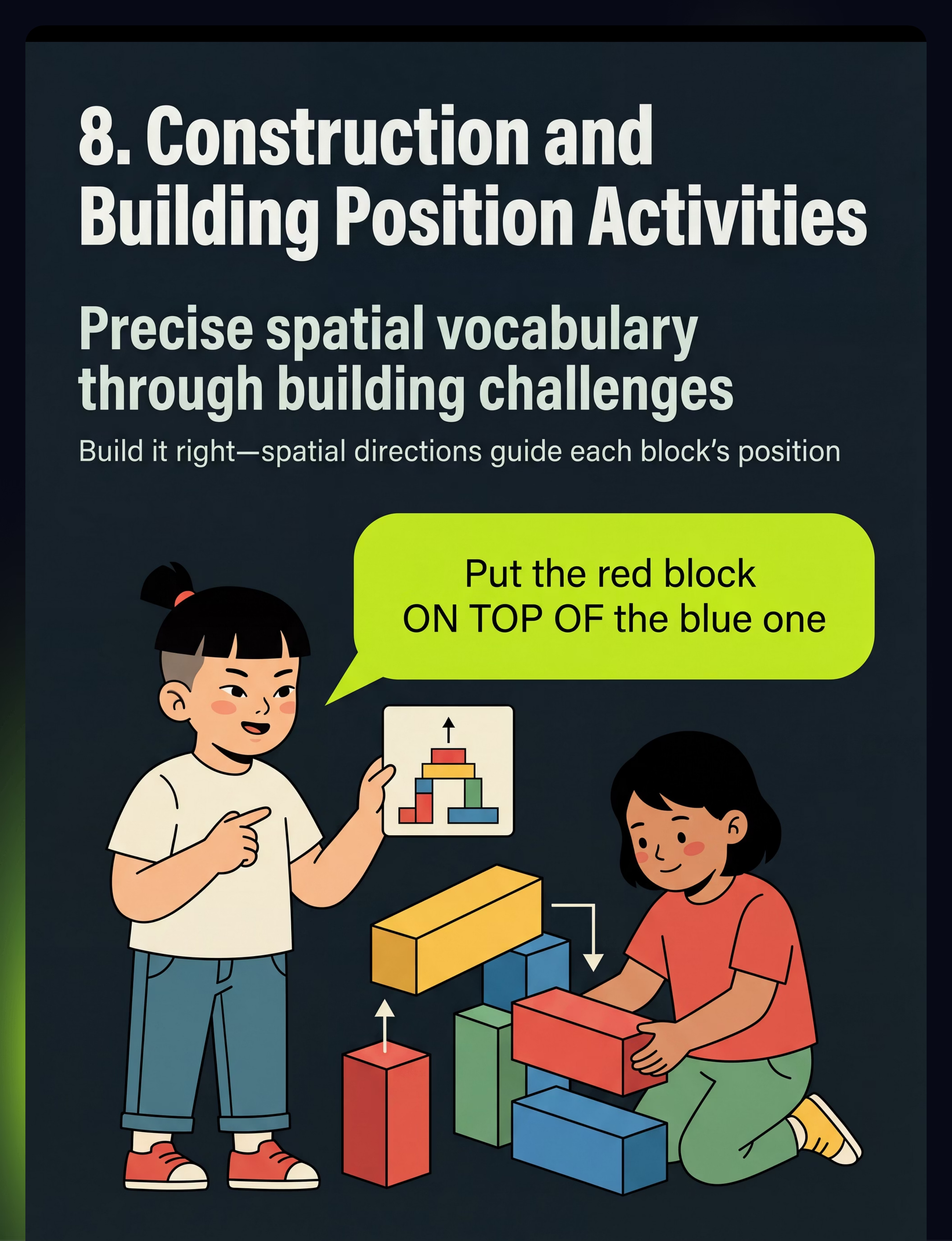
Construction & Building Position Activities
Category: Problem-Solving Toys / Building Sets | Price: ₹400–1,500
Precise spatial language for building — PUT the red block ON TOP OF the blue one.
4
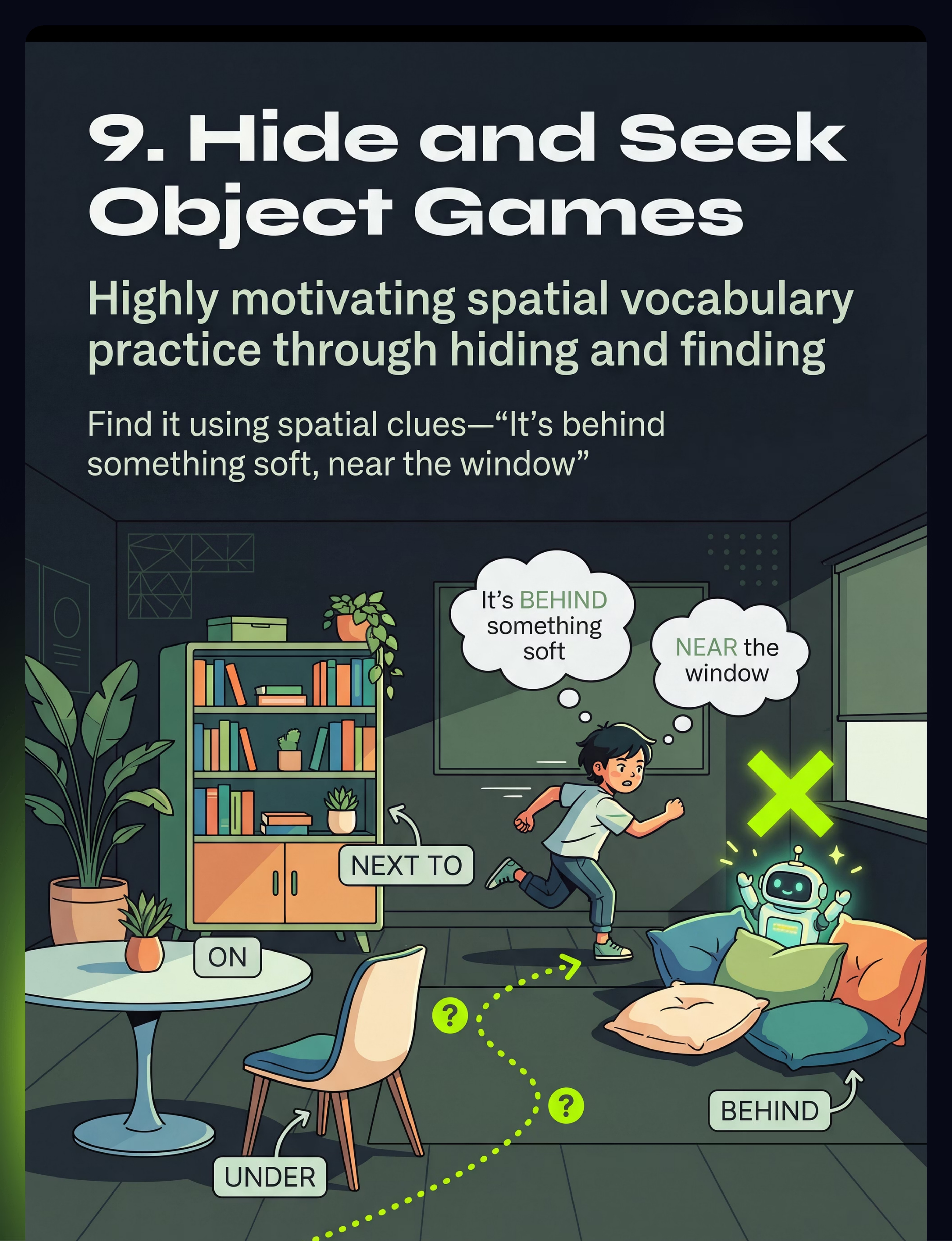
Hide & Seek Object Games
Category: Matching Games / Seek-and-Find Activities | Price: ₹200–700
High-motivation spatial practice — "It's BEHIND something soft, NEAR the window."
Total estimated investment: ₹2,750–₹9,600 for comprehensive home setup. Essential starters: Materials 1 + 2 + 3 — Barrier Games + Preposition Cards + Movement Course.

DIY & Substitute Options
Every family can start TODAY — zero cost required. WHO/UNICEF Equity Principle: Every child deserves access to evidence-based intervention, regardless of economic context. Clinical-grade materials offer calibrated complexity and validated difficulty sequencing, but both commercial and DIY versions activate the same spatial-language neural pathways when used with therapeutic intention.
Material | Commercial Option | DIY Alternative (₹0) | |
Barrier Games | ₹400–1,500 | Large book or folder as barrier; matching household items on each side. "Put the car IN the box." | |
Preposition Cards | ₹300–1,000 | Draw cards showing ball IN box, cat ON chair, toy UNDER table. Use any small objects. | |
Obstacle Course | ₹500–2,000 | Crawl UNDER table, step OVER pillows, walk AROUND chair, go THROUGH hula hoop made from rope. | |
Grid Position Games | ₹300–900 | Draw 3×3 grid on paper; use coins/buttons as markers. "Top row, middle." | |
Perspective Materials | ₹400–1,200 | Walk together around any object: "Now it's BEHIND the box. Walk here — now it's IN FRONT!" | |
Proximity Materials | ₹250–800 | Any toys: "Put the car NEAR the house. Now FAR from the house." | |
Map Activities | ₹300–1,000 | Hand-draw bedroom map; give directions: "Go STRAIGHT, turn RIGHT at the bed." | |
Construction Directions | ₹400–1,500 | Building blocks or LEGO. One describes: "Put the red one ON TOP OF the blue one." | |
Hide & Seek Games | ₹200–700 | Hide any small toy; give clues: "It's UNDER something soft," "NEAR the door." |
🔴 FREE National Autism Helpline: 9100 181 181 — 24x7, 16+ languages

Safety First: Before You Begin
A pre-session safety review prevents the most common session failures. This traffic-light system applies to both commercial and DIY materials. Read before every session.
🔴 RED — Do NOT Proceed If:
- Child is in dysregulated, meltdown, or post-meltdown state (30-min calm window required)
- Child is ill, running a fever, or in physical discomfort
- Session materials include small pieces with children under 3 who mouth objects
- Child is showing signs of severe anxiety about the session activity
🟡 AMBER — Modify If:
- Child is tired or slightly irritable → Shorten to 5–7 minutes; use only 2–3 materials
- Child had a difficult day at school → Choose the most preferred material only
- Obstacle course session: ensure clear, padded floor space; remove sharp corners
🟢 GREEN — Proceed When:
- Child is fed, rested, and in an alert/regulated state
- Materials are prepared and within reach before bringing child to session space
- Environment is quiet (TV off, siblings managed, phone on silent)
- You have 15–20 uninterrupted minutes
RED LINE — STOP IMMEDIATELY if child shows severe distress that does not de-escalate in 60 seconds, physical aggression, self-injurious behaviour, or signs of pain or illness emerging during session. 🔴9100 181 181 — FREE National Autism Helpline, 24x7 clinical guidance available.

Set Up Your Space
The right environment prevents 80% of session failures. Spatial language tasks require focused auditory attention — a quiet, organised space is non-negotiable.
Room Layout Guide
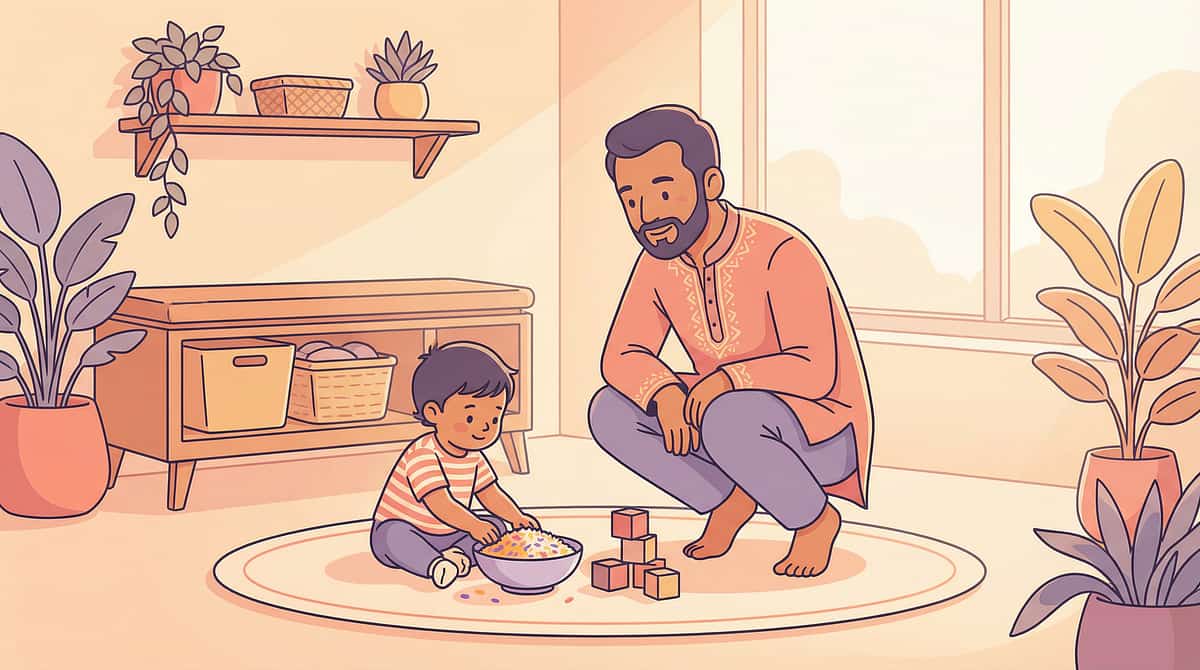
- Child position: seated at low table or on floor mat — facing parent
- Parent position: at same level, facing child (not above)
- Materials: pre-arranged in order of use, NOT all visible at once
- Barrier placement (if barrier game): between child and parent, stable
- Obstacle course: floor cleared, pillows/cushions placed in sequence
Setup Checklist
- Table or floor mat cleared and clean
- All materials pre-organised in sequence
- TV and devices OFF, phone on Do Not Disturb
- Siblings in another room or occupied
- Reward items prepared (stickers, preferred toy)
- Visual timer visible to child
- Water/snack available post-session
Sensory Notes
Natural light preferred. Avoid flickering fluorescent lights. Quiet environment is essential. Comfortable temperature — sensory dysregulation from heat or cold disrupts learning.
PMC10955541: Meta-analysis confirms 1:1 structured environment optimises session outcomes.
ACT III — EXECUTE
Is Your Child Ready? 60-Second Pre-Flight Checklist
Session success is determined before the session begins. This is a core ABA principle: antecedent management. Check all 7 items before proceeding.
Child has eaten and is not hungry
Child has had 20+ minutes since last screen time
No major behavioural incident in the last 45 minutes
Child appears alert — not drowsy
Child is not in a repetitive behaviour loop that won't interrupt
You are calm and have 15–20 minutes available
Materials are set up and ready to go
✅ All 7 Checked
GO: Proceed to Step 1 — The Invitation
⚠️ 5–6 Checked
MODIFY: Start with preferred material only; reduce to 7 minutes
🔴 4 or Fewer
POSTPONE: Sit together and narrate spatial language naturally — no demands. This still provides exposure.

Step 1: The Invitation to Engage
The first 60–90 seconds set the session's emotional tone. A coercive or rushed start creates resistance that persists throughout. Begin with warmth, curiosity, and zero pressure.
"Hey, I've got something interesting for us. Look — [show one material]. I want to try something with you. Can we play for a few minutes?"
🎮 Barrier Game Opening
"I have a secret scene. You have to describe yours to me — but I can't see yours. Let's see if we can match!"
🃏 Preposition Cards Opening
"I'm hiding [toy]. Can you find where? IN? ON? UNDER? Let's see..."
🏃 Obstacle Course Opening
"Mission time! I have a course set up. Your job: follow my directions exactly. Ready!"
🗺️ Map Activity Opening
"We're going on a treasure hunt. I made a map. Can you follow it?"
Key SLP-validated principles: Include child's preferred interest in the first example. No correction in first 2 minutes — pure positive engagement. Sit at child's level. Match child's energy level initially, then gradually elevate.
Step 2: Establish Joint Attention
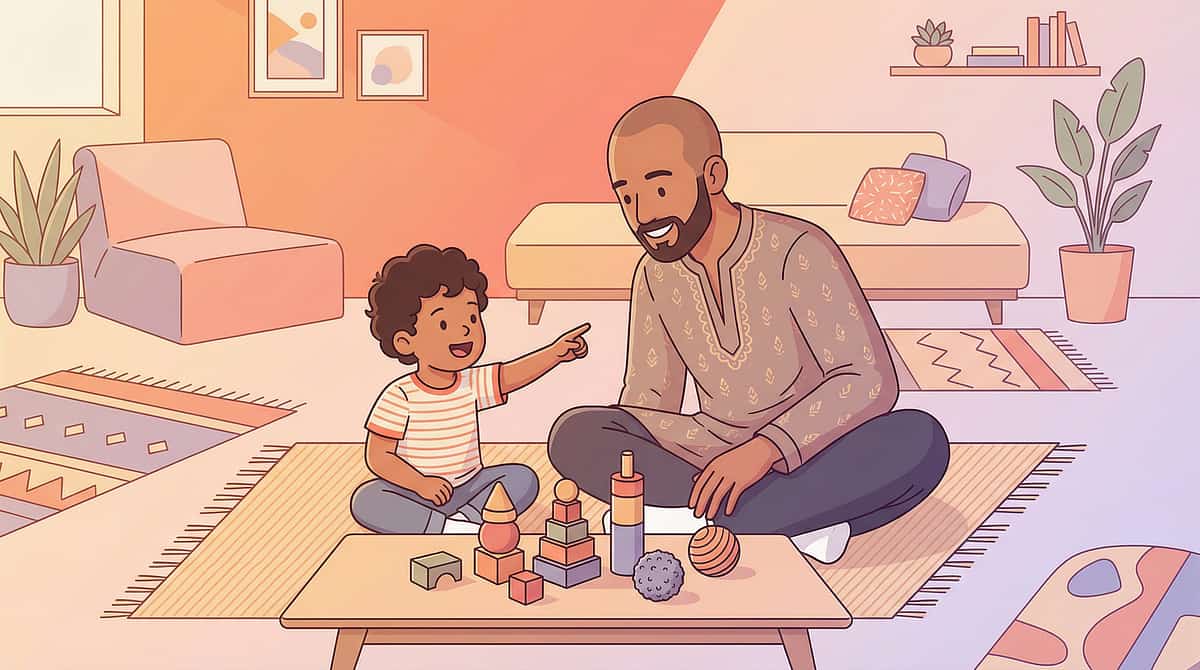
Before any spatial language teaching occurs, the child must be jointly attending — looking at the same materials, engaged in the same activity frame. Teaching to a disengaged child produces zero learning. Never skip this step.
Signs of Engaged State — Proceed
- Eye contact or peripheral attention to materials
- Body orientation toward task
- No escape behaviour in first 90 seconds
- Any imitation or attempted compliance
Signs NOT Ready — Pause and Re-Invite
- Child pushes materials away repeatedly
- Child runs to a different area
- Child becomes self-stimulatory in avoidance pattern

Step 3: The Therapeutic Action
The spatial language teaching sequence is a precise 6-step protocol. Each step builds on the last. Core therapeutic action runs 8–12 minutes of the 15–20 minute session.
1
3a — MODEL (2–3 demonstrations)
Demonstrate the spatial relationship physically: "Watch — the ball is IN the box. IN. I put it IN the box." Use exaggerated, clear placement. Say the spatial word 3 times.
2
3b — RECEPTIVE PRACTICE
"Now you — put the ball IN the box." Wait 5 seconds. Prompt if needed (physically guide to 80% success). Do not repeat instruction more than once — use gestural prompt instead.
3
3c — EXPRESSIVE PRACTICE
Place object and ask: "Where is it?" Wait 5 seconds for spatial word. Accept approximations initially. Model correct form after any attempt: "Yes! It's IN! In the box!"
4
3d — CONTRAST TEACHING (Key to Mastery)
"Now — is it IN or ON?" Place in both positions consecutively. Contrast is what builds discrimination, not repetition of single prepositions.
5
3e — GENERALISATION PROBE
"Show me something IN [different container]." Can the child apply the preposition to a novel object/location? Generalisation is the clinical goal.
6
3f — FUNCTIONAL APPLICATION
Embed in real task: "Please put your pencil ON the table." Natural generalisation in functional context.
PMC10955541: 40-minute therapy equivalence; home session protocols confirmed effective.
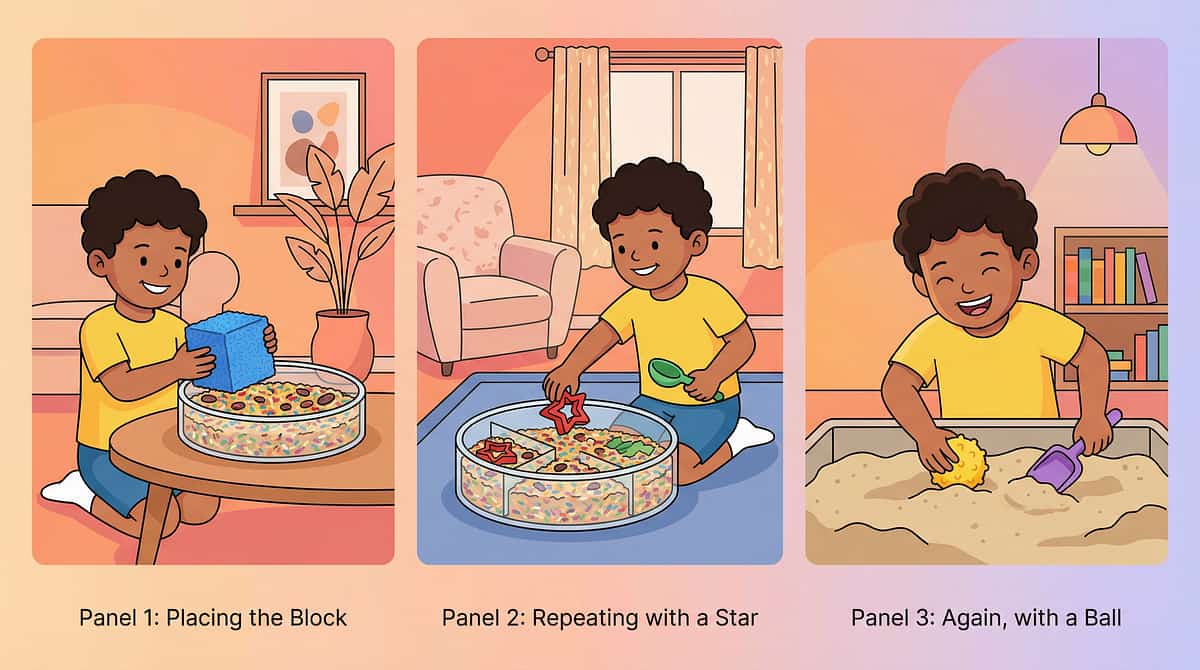
Step 4: Repeat & Vary
Therapeutic dosage: 3 good reps > 10 forced reps. Quality repetition with strategic variation prevents habituation and builds genuine generalisation. If quality drops below 70% correct with standard prompting — end this material, switch or conclude.
Material | Target Reps | Variation Strategy | |
Barrier Game | 5–8 position descriptions | Increase preposition complexity each round | |
Preposition Cards | 4–6 cards per session | Mix receptive and expressive trials | |
Obstacle Course | 2–3 complete runs | Add one new spatial term per run | |
Grid Position Game | 4–6 location descriptions | Increase grid size from 3×3 to 4×4 | |
Hide & Seek | 3–4 hiding rounds | Increase clue complexity each round |
Variation Strategy 1
Change objects, keep spatial term constant: "Put THIS IN the box. Now put THAT IN the bag."
Variation Strategy 2
Change spatial terms, keep objects constant: "Put it IN. Now put it ON. Now UNDER."
Switch roles: child gives the spatial direction; parent follows. Production, not just comprehension.

Step 5: Reinforce & Celebrate
Deliver reinforcement within 3 seconds of the desired response. Specific, immediate, enthusiastic. Timing matters more than magnitude.
🌟 Verbal (Always Required)
- "YES! IN the box! You said IN! That's the word!"
- "You GOT it! BEHIND — you found BEHIND!"
- "That was PERFECT direction-giving! I followed it exactly!"
🎯 Physical (If Preferred)
High five, fist bump, jump celebration, spin — whatever the child finds motivating. Match the child's preferred interaction style.
🏆 Token / Sticker Tracking
One sticker per correct spatial production or comprehension → Reinforcement Jar.
🎮 Natural Reinforcement
In barrier game: finding a match IS the reinforcement. In hide & seek: finding the object IS the reinforcement. Embed natural consequences wherever possible.
"Celebrate the attempt, not just the success. A child who said 'in' instead of 'on' and self-corrected deserves more celebration than a child who got it right without trying."

Step 6: The Cool-Down
No session ends abruptly. Abrupt session endings cause post-session dysregulation. A 2–3 minute cool-down transitions the child back to baseline and builds tolerance for session endings over time. The limit teaches tolerance — never negotiate or extend arbitrarily.
Spatial Language in Cool-Down
Even packing away is therapy: "Put the cards BACK IN the box. Is the lid ON? Put the box ON the shelf."
Every natural moment is a practice opportunity.
If Child Resists Ending
"All done now. We'll do more [barrier games] tomorrow. Right now it's [next preferred activity] time."
🛒 Transition object: Animal Soft Toy — ₹425
NCAEP Evidence-Based Practices Report (2020) — visual supports and transition planning for autism.

DATA CAPTURE
Capture the Data — Right Now
60 seconds of data now = months of progress clarity later. Record immediately after the session while it is fresh. Your data also contributes to population-level outcome insights that improve therapy for every child in the network.
1
Session Rating
🟢Great — engaged, 70%+ correct | 🟡Mixed — distracted, 50–70% | 🔴Difficult — below 50% or behavioural challenges present
2
Spatial Terms Practised
Tick all attempted: in · on · under · behind · in front of · beside · between · through · around · left · right · near · far · above · below
3
Progress Note
One sentence: "First time [child's name] spontaneously used 'behind' correctly today" / "Struggled with 'between' — try contrast teaching tomorrow"
🔗GPT-OS® Integration: Sync this session to your GPT-OS® dashboard → pinnacleblooms.org/gpt-os — your data contributes to personalised recommendations AND population-level outcome insights. | 🔴 FREE National Autism Helpline: 9100 181 181

What If It Didn't Go as Planned?
Session abandonment is not failure — it is data. Every difficult session tells you something clinically important. Use the guide below to diagnose what happened and fix it for next time.
🔴 FREE National Autism Helpline: 9100 181 181 — for any clinical crisis guidance, available 24x7
Child refuses barrier game
Why: Barrier creates physical/visual separation that may feel isolating. Fix: Remove barrier initially; play side-by-side describing positions. Introduce barrier gradually after 3–4 successful sessions.
Confuses 'in front of' and 'behind'
Why: These are perspective-dependent — the hardest category. Fix: Walk AROUND the object together: "Now it's behind. Now in front." Physical movement clarifies relativity.
Consistent left/right errors
Why: Left/right is intrinsically confusing even for neurotypical children until age 7. Fix: Use L-shaped hand trick. Focus on functional use ("left of the door"). Don't force until simpler prepositions are mastered.
Performs in session but doesn't generalise
Why: In-session training ≠ generalisation unless explicitly programmed. Fix: Switch materials every session. Practice in kitchen, bedroom, school bag. Involve all caregivers per the Family Sharing card.
Frustrated and gives up mid-session
Why: Task complexity exceeded current skill level. Fix: Drop back one complexity level. Teach only ONE new preposition per session. Increase mastery trials.
Uses spatial words randomly / inconsistently
Why: Has the word in expressive vocabulary but not as a mapped concept. Fix: Return to receptive phase. Comprehension must precede consistent production. More physical manipulation, less verbal demand.
Hide & Seek becomes perseverative
Why: High motivation — a good sign! But may resist transitioning out. Fix: Use visual countdown. Set clear trial number upfront: "We're hiding 4 things today, then we're done."
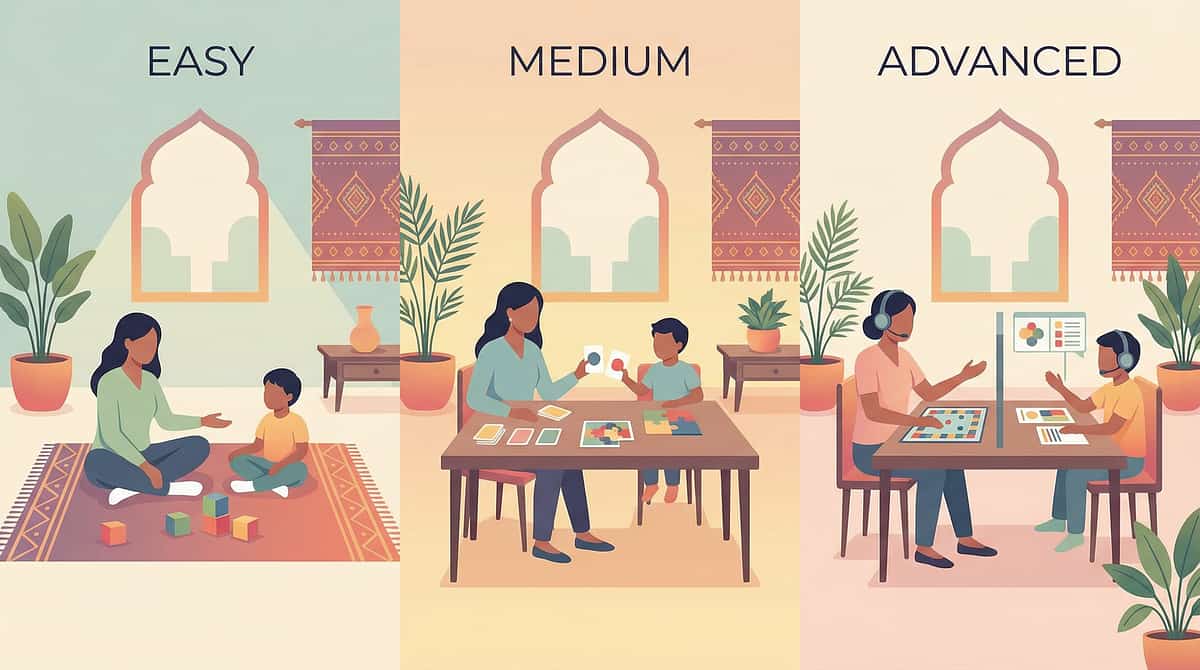
Adapt & Personalise
No two children are identical — this technique adapts to yours. The modifications below allow you to dial difficulty up or down based on your child's current skill level, profile, and daily state.
← EASIER Modifications
- Reduce to 2 prepositions maximum per session (e.g., only 'in' and 'on')
- Use physical manipulation only — no verbal demand initially
- Use child's favourite objects and highly familiar containers
- Shorten to 5-minute session
- Provide maximum prompting (hand-over-hand)
HARDER Modifications →
- Add perspective-taking: "from WHERE I'm standing, the ball is..."
- Multi-step directions: "Put the cup ON the table, then stand BEHIND the chair"
- Novel environments: practice in park, supermarket, classroom
- Child generates spatial directions for parent to follow
- Introduce cardinal directions (north/south/east/west)
Visual-Spatial Strength
Use photograph-based cards, maps, and diagrams. Exploit strong visual memory with spatial vocabulary overlays.
Movement-Seeking Profile
Prioritise obstacle course and body-in-space activities. Embed ALL prepositions into physical movement first.
Language-Rich Profile
Progress quickly to complex multi-step spatial directions. Introduce spatial language in narrative contexts.
High-Anxiety Profile
Prioritise Hide & Seek (child has control) and construction activities. Avoid barrier games until trust is established.

ACT IV — PROGRESS ARC
Weeks 1–2: Building the Foundation
Neural pathways are being formed. You may not see the full picture on the surface yet — but the repetition is writing new connections. Set realistic expectations and celebrate every increment.
15%
Progress at Weeks 1–2
Foundation-building phase — tolerance and recognition emerging
What You WILL See
- Child begins tolerating barrier game setup without protest
- Recognises 2–3 prepositions in highly structured, familiar contexts
- Occasional correct spontaneous use — may be coincidental or emerging
- You feel more confident in session delivery
What You Will NOT See Yet
- Consistent generalisation to new objects or settings
- Correct use of complex prepositions (between, beside, perspective-dependent)
- Spontaneous spatial language without prompting
- Mastery on any single preposition
"If your child tolerates the spatial task 3 minutes longer than last week — that is measurable progress."
PMC11506176: Sensory integration and language intervention outcomes emerge across 8–12 week timelines.

Weeks 3–4: The Neural Pathways Are Forming
During weeks 3–4, the neural pathways continue to strengthen and deepen. The consistent repetition of therapy is actively building new connections in the brain, solidifying the foundational work from the previous period.
You might begin to observe early signs of comprehension and recognition in your child. These moments may still be inconsistent, but they indicate that the new learning is starting to take root. Remaining consistent with practice during this phase is crucial to reinforce these emerging connections and pave the way for more stable progress.

Weeks 5–8: From Therapy Room to Real World
This is the mastery and generalisation phase — where clinical work in structured sessions begins translating into real-world functional communication. Systematically reduce prompting and expand settings.
75%
Progress at Weeks 5–8
Mastery phase — generalisation to natural contexts emerging
Mastery Indicators
- 80%+ accuracy across 3+ prepositions in structured sessions
- Spontaneous, unprompted use in natural contexts (home, school)
- Can follow 2-step spatial directions without repetition
- Can give accurate spatial directions to others (role reversal mastered)
- Asks "Where is it?" using spatial vocabulary rather than pointing
Generalisation Milestones
- Uses spatial language with unfamiliar adults (teacher, grandparent)
- Uses spatial language with peers in play contexts
- Applies spatial words to navigation: "My room is NEXT TO the kitchen"
- Shows spatial language in book-reading: "The cat is ON the roof!"
What to Do in Weeks 5–8
- Systematically reduce prompting (fading schedule)
- Increase settings: practice in at least 3 different environments
- Involve ALL caregivers in spatial language use
- Introduce map activities and navigation tasks

Celebrate the Wins
Your child's brain just changed. Celebrate that. Every milestone represents months of consistent therapeutic effort from you — you built those neural pathways through your daily practice.
First 'in' Used Correctly
Brain milestone: Spatial-linguistic encoding pathway activated
First 'behind' in a Sentence
Brain milestone: Complex preposition representation established
Gave Accurate Directions to Someone Else
Brain milestone: Spatial language generalised to communicative function
Followed a 2-Step Spatial Direction
Brain milestone: Working memory + spatial language integration achieved
Spatial Language in Play, Unprompted
Brain milestone: Functional generalisation — this is the goal
"I saw that! You said BEHIND! That's new! Your brain learned that!" — Specific verbal recognition is the most powerful reward.
Red Flags: When to Escalate Care
The presence of red flags is not a failure of your home programme — it signals that clinical-grade intervention is the next appropriate step. You have been doing exactly the right thing by starting at home.
🔴 Seek SLP/Clinical Review If:
- No understanding of 'in' and 'on' by age 2–3, despite 4+ weeks of consistent home intervention
- Confused by 'under,' 'behind' by age 4, even with intensive practice
- Persistent left/right confusion beyond age 7–8, interfering with school functioning
- Cannot follow any 2-step spatial direction by age 5
- Regression: was using spatial words and has stopped (investigate medical causes)
- Spatial language deficits significantly impacting school performance, peer relationships, or daily navigation safety
What to Do If Red Flags Are Present
1
Call FREE National Autism Helpline: 9100 181 181 (24x7, 16+ languages)
2
Request comprehensive speech-language assessment from certified SLP
3
Ask specifically for: Preschool Language Scale (PLS-5) or CELF evaluation; spatial concept sub-tests
4
Bring your GPT-OS® session data to the appointment (collected from the Data Capture card)
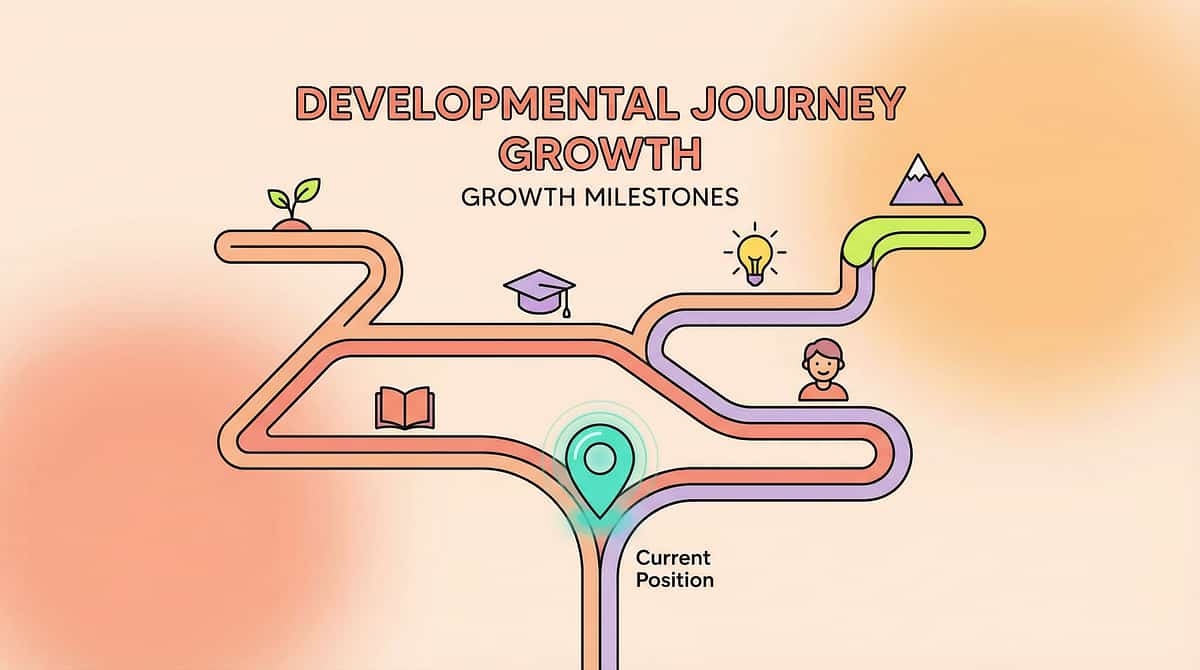
Your Intervention Pathway Map
This technique is one step in a larger language development journey. Spatial language mastery feeds directly into academic literacy, social navigation, independence in community settings, and executive function spatial planning.
Long-term developmental goal: Spatial language mastery feeds into academic literacy (map reading, geometry, science), social navigation, independence in community settings, and executive function spatial planning.
Related Techniques in This Domain
These techniques use materials you may already own from B-172. B-173 and B-174 in particular use the same barrier game and card sets — your investment goes further.

B-165: Receptive Vocabulary Building
Difficulty: Intro | Canon Material: Vocabulary Cards
Understanding what words mean before using them — the foundation under B-172.

B-171: Quantity Concepts
Difficulty: Core | Canon Material: Sorting Activities
The language of amounts — predecessor to spatial and temporal language.

B-173: Temporal Concepts
Difficulty: Core | Canon Material: Sequencing Cards
Before, after, first, then, last — time as spatial sequence.

B-174: Question Understanding
Difficulty: Core | Canon Material: Question Cards
WHERE questions directly require spatial language mastery from B-172.
B-177: Multi-Step Direction Following
Difficulty: Advanced | Canon Material: Direction Cards
Complex directions combining spatial + temporal + verb language.

A-061: Proprioceptive Body Awareness
Difficulty: Core | Canon Material: Obstacle Course Materials
Body-in-space foundation — the kinesthetic basis of spatial language.
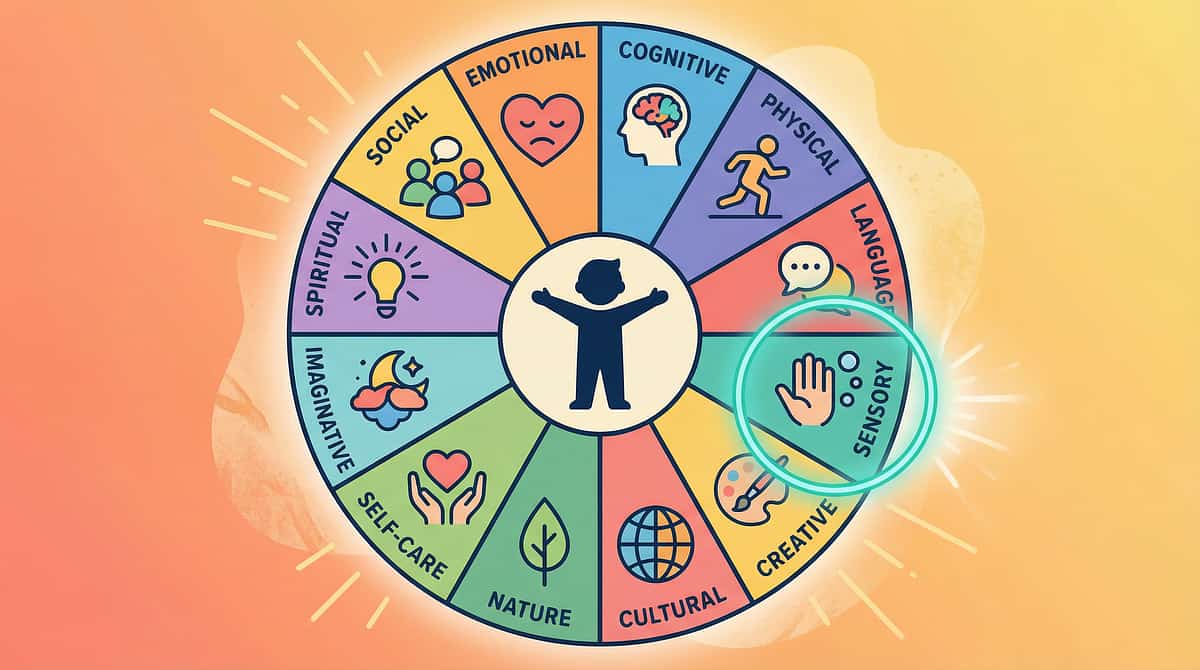
Your Child's Full Developmental Map
B-172 is one piece of a whole-child developmental architecture. In your GPT-OS® personalised plan, this technique contributes to the Language Development Index, Receptive Communication Score, and AbilityScore® — Spatial Language Sub-domain.
🔗View your child's full developmental profile on GPT-OS® → pinnacleblooms.org/gpt-os | WHO/UNICEF Nurturing Care Framework — 5 components of nurturing care require holistic developmental monitoring (PMC9978394)
ACT V — COMMUNITY & ECOSYSTEM
Real Family Stories
From confusion to clarity — real families, real progress. These outcomes are consistent with Pinnacle's real-world evidence base: 20M+ 1:1 sessions, 97%+ measured improvement across the network.
"Aryan was 4 years old and couldn't follow a single spatial direction. 'Put it under the chair' — he'd look at me blankly. Six weeks of barrier games and daily home practice, and last week he gave ME directions: 'Amma, it's behind the blue pillow, near the wall.' I cried."
— Mother of 4-year-old, Pinnacle Blooms Hyderabad
"We thought it was just 'not paying attention.' The SLP explained it was spatial language deficit — completely different thing. Once we knew what to work on, the obstacle course and preposition cards made such a difference. His teacher called me to say he's following classroom directions now."
— Father of 6-year-old, Pinnacle Blooms Bangalore
"We're in a small town with no therapy centre nearby. I started with the barrier game — literally a folder and matching toy sets I made from cardboard. Three months of 15-minute daily sessions. He now navigates the house giving directions to his little sister."
— Caregiver of 7-year-old, Rural Maharashtra
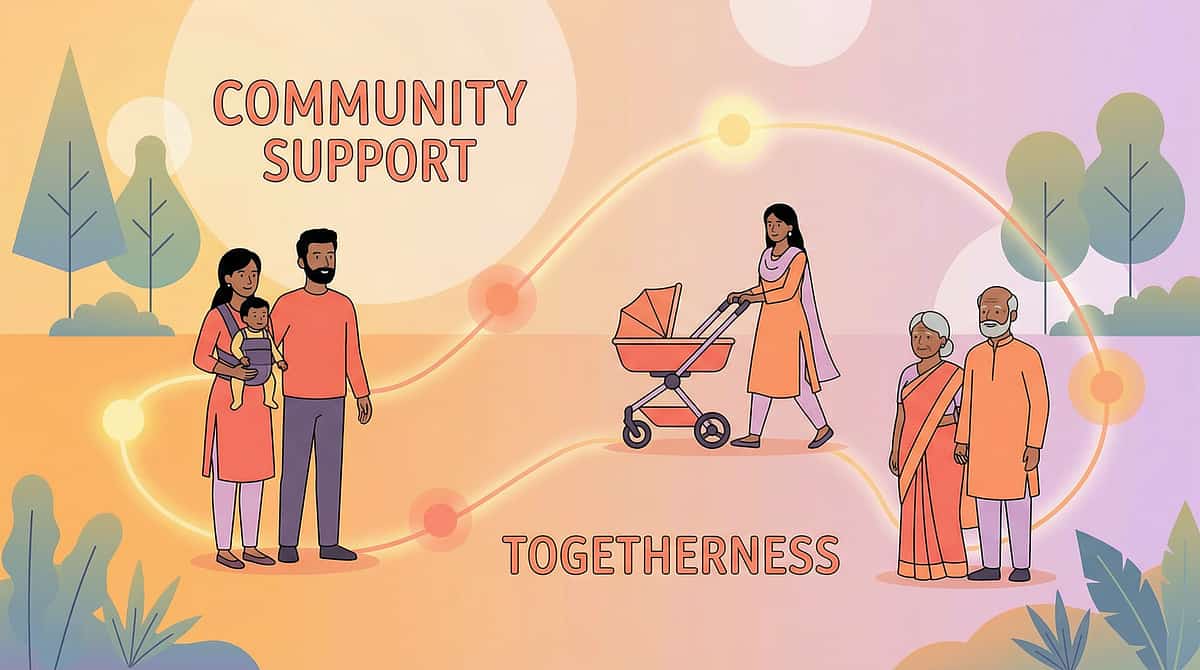
Connect With the Pinnacle Community
21 million therapy sessions. One shared community. Every piece of data you contribute to GPT-OS® helps improve recommendations for every other family in the network. Your child's progress helps every child like yours.
🟢 Parent WhatsApp Community
Join 50,000+ parents navigating similar journeys. Share session wins. Ask questions. Access therapist Q&A.
📱 GPT-OS® Parent App
Track sessions. Log progress. Get AI-powered technique recommendations. Access your child's developmental profile.
🎓 Pinnacle Parent Training
Online and centre-based parent training programmes — SLP, OT, ABA, and SpEd techniques delivered as structured parent courses.
🌐 Techniques Library
Access 70,000+ intervention technique pages across all 12 domains.
When to See a Professional
Home practice + professional guidance = accelerated outcomes. The combination of caregiver-delivered intervention and clinical oversight is the gold standard for paediatric spatial language development.
When to Book a Professional Assessment
- Child is 3+ years with no progress after 6 weeks of consistent home practice
- Red flags from the escalation card are present
- You want a formal AbilityScore® baseline and personalised GPT-OS® plan
- Child's spatial language needs are impacting school or safety
Pinnacle Services for Spatial Language Intervention
- 🗣️Speech-Language Therapy — Spatial language, preposition mastery, direction following
- 🧩Occupational Therapy — Embodied spatial learning, proprioceptive foundation
- 📊ABA Therapy — Systematic preposition teaching, DTT protocols, generalisation programming
- 📚Special Education — Classroom spatial language integration, IEP spatial goals
- 👨👩👧Parent Training — Caregiver-delivered spatial language programmes
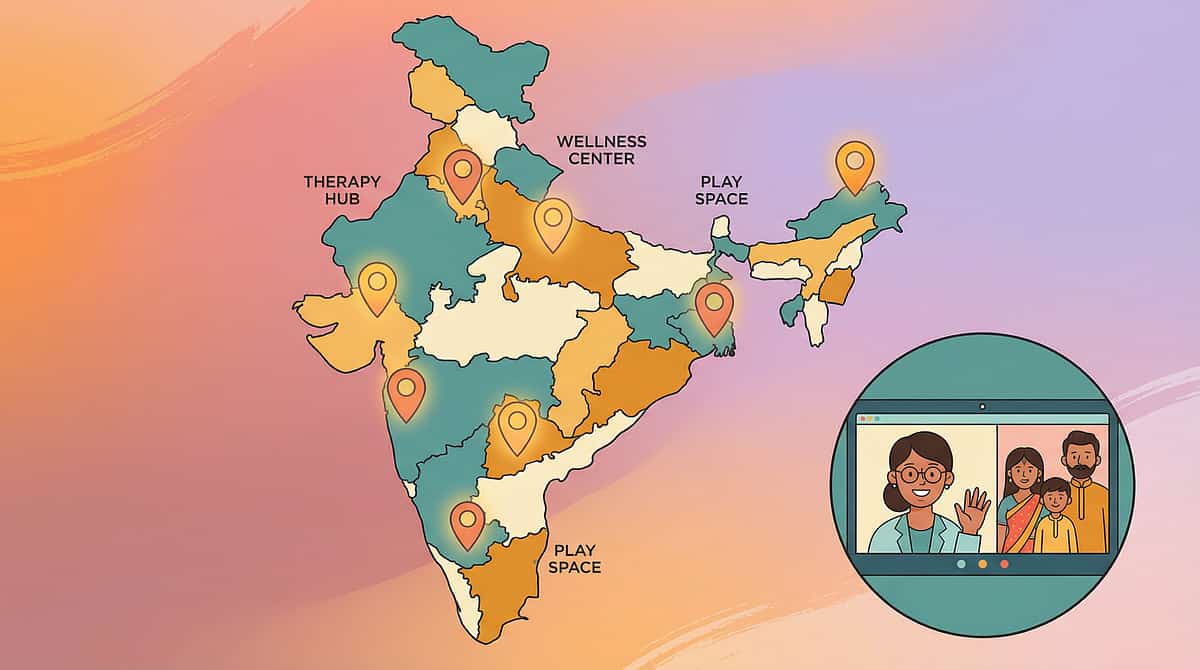
📍 80+ centres across India | 70+ countries served through telehealth | 🔴 FREE National Autism Helpline: 9100 181 181 | 24x7 | 16+ languages — Call now for a free preliminary consultation and centre recommendation
The Research Library
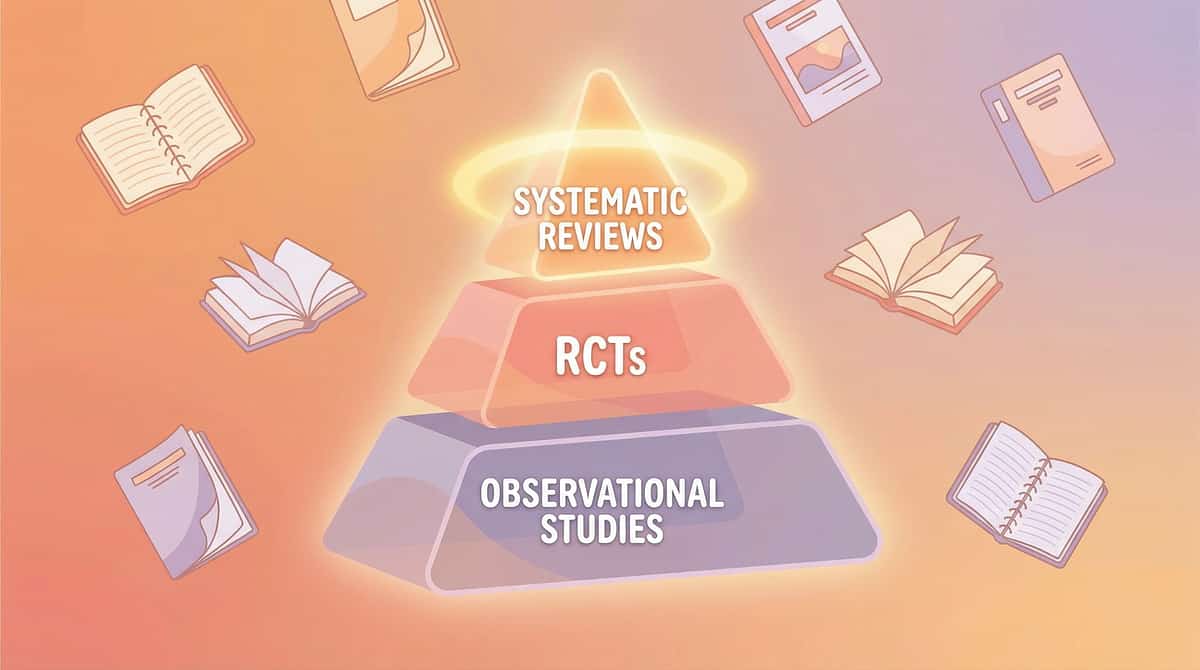
The science behind every card on this page. All materials and protocols on this site are mapped to the published evidence base. The evidence pyramid below shows the hierarchy of evidence supporting this intervention.
🏆 Evidence review conducted by Pinnacle Blooms Network® Consortium — CRO • SLP • OT • BCBA • SpEd • NeuroDev Paediatrics
PMC11506176 — PRISMA Systematic Review (2024)
16 studies confirm language/spatial integration intervention as evidence-based for ASD children. Level I Evidence.
PMC10955541 — Meta-analysis, World J Clin Cases (2024)
Therapy effectively promotes social skills, adaptive behaviour, and communication in autism across 24 studies. Level I Evidence.
PMC9978394 — WHO CCD Package (2023)
Caregiver-delivered early intervention evidence across 54 low- and middle-income countries. WHO-Endorsed.
DOI: 10.1007/s12098-018-2747-4 — Padmanabha et al. (2019)
Home-based intervention RCT showing significant outcomes in Indian paediatric ASD population. Level II RCT.
WHO Nurturing Care Framework (2018)
Global framework for early childhood intervention, used in 197 countries. WHO/UNICEF Endorsed.
NCAEP Evidence-Based Practices (2020)
National clearinghouse: spatial language instruction and video modelling classified as evidence-based practices. Level I Consensus.

How GPT-OS® Uses Your Data
Your data → better therapy for every child like yours. Every session you log contributes to both your personalised recommendations and population-level outcome insights that improve intervention protocols across the network.
What GPT-OS® Learns from B-172 Data
- Which prepositions your child masters fastest
- Which materials drive highest engagement
- Your session consistency patterns
- Progress trajectory vs. 20M+ session benchmark
Privacy Assurance
- All data encrypted on Indian sovereign servers
- DPIIT recognised startup: DIPP8651
- CIN: U74999TG2016PTC113063
- Data used for therapeutic benefit only — never sold or shared commercially
FusionModule™ integration: B-172 data feeds into the FusionModule™ cross-domain intelligence engine — connecting language progress to sensory, motor, and behavioural domains.

Watch the Reel
Watch our therapists demonstrate these 9 materials in action. Video modelling is classified as an evidence-based practice for autism (NCAEP, 2020). Multi-modal learning — watching + reading + doing — improves parent skill acquisition significantly.
📹 B-172: Spatial Concepts Reel
Title: "9 Materials That Help With Spatial Concepts"
Series: Language & Communication Development Solutions — Episode 172
Duration: 75–85 seconds
Watch a paediatric SLP demonstrating barrier game technique, all 9 materials shown in clinical demonstrations, parent-friendly language throughout, and real child responses — engagement, discovery, progress moments.
This page embeds the Pinnacle Blooms B-172 Reel — visit pinnacleblooms.org to view the full video demonstration. | Cluster reels: ← B-171: Quantity Concepts | B-172: Spatial Concepts ★ | B-173: Temporal Concepts →

Share With Your Family
Consistency across caregivers multiplies impact. WHO CCD Package: Multi-caregiver training is critical for intervention generalisation and maintenance. A technique consistently practised by all caregivers achieves 2.5× the outcomes of one practised by a single caregiver inconsistently.
"Explain to Grandparents" Version
"[Child's name] is learning spatial words — words like 'in,' 'on,' 'under,' 'behind.' When you talk to them, please say WHERE things are: 'Your cup is ON the table.' 'Your shoes are UNDER the bench.' This helps build their brain's word-map for space."
Teacher Communication Template
"Dear Teacher, [Child's name] is working on spatial language as part of a speech therapy programme. Please use spatial vocabulary explicitly in instructions: 'Put your book IN your bag,' 'Stand BEHIND your chair.' This reinforces clinical work at home. Thank you."
WhatsApp
Send this page to your partner, grandparents, teachers
Email
Copy link to this technique page
Copy Link
techniques.pinnacleblooms.org/language-communication/spatial-concepts-B-172
Family Guide
Download B-172 One-Page Family Guide — simplified for grandparents and teachers
Reference: PMC9978394 — CCD Package caregiver generalisation evidence.

ACT VI — CLOSE & LOOP
Frequently Asked Questions
Questions parents ask most — answered by the Pinnacle Blooms Consortium. Didn't find your answer? → Ask GPT-OS® | 📞 Still need guidance? → 9100 181 181 (Free National Autism Helpline, 24x7)
My child understands spatial words physically but not verbally — is that normal?
Very common — and actually a good clinical sign. Physical demonstration = partial comprehension. Use physical cues generously at first; fade them deliberately over 4–6 weeks until verbal spatial language is sufficient.
At what age should I be worried if spatial language isn't developing?
Key milestones: 'in' and 'on' by age 2–3; 'under,' 'behind,' 'next to' by 3–4; 'between,' left/right concepts emerging by 5–6. If absent despite consistent practice, consult an SLP.
Does practising in English help if we speak another language at home?
Practice in your child's primary language first — that's where neural mapping is strongest. Once mastered in the home language, generalisation to English follows more easily. Pinnacle helpline supports 16+ languages: 9100 181 181.
My child does barrier games correctly at home but can't follow directions at school. Why?
Generalisation deficit — common in autism. Spatial language learned in one context doesn't automatically transfer. Use the Family Sharing card to bring teachers into the programme. Practice deliberately in multiple settings.
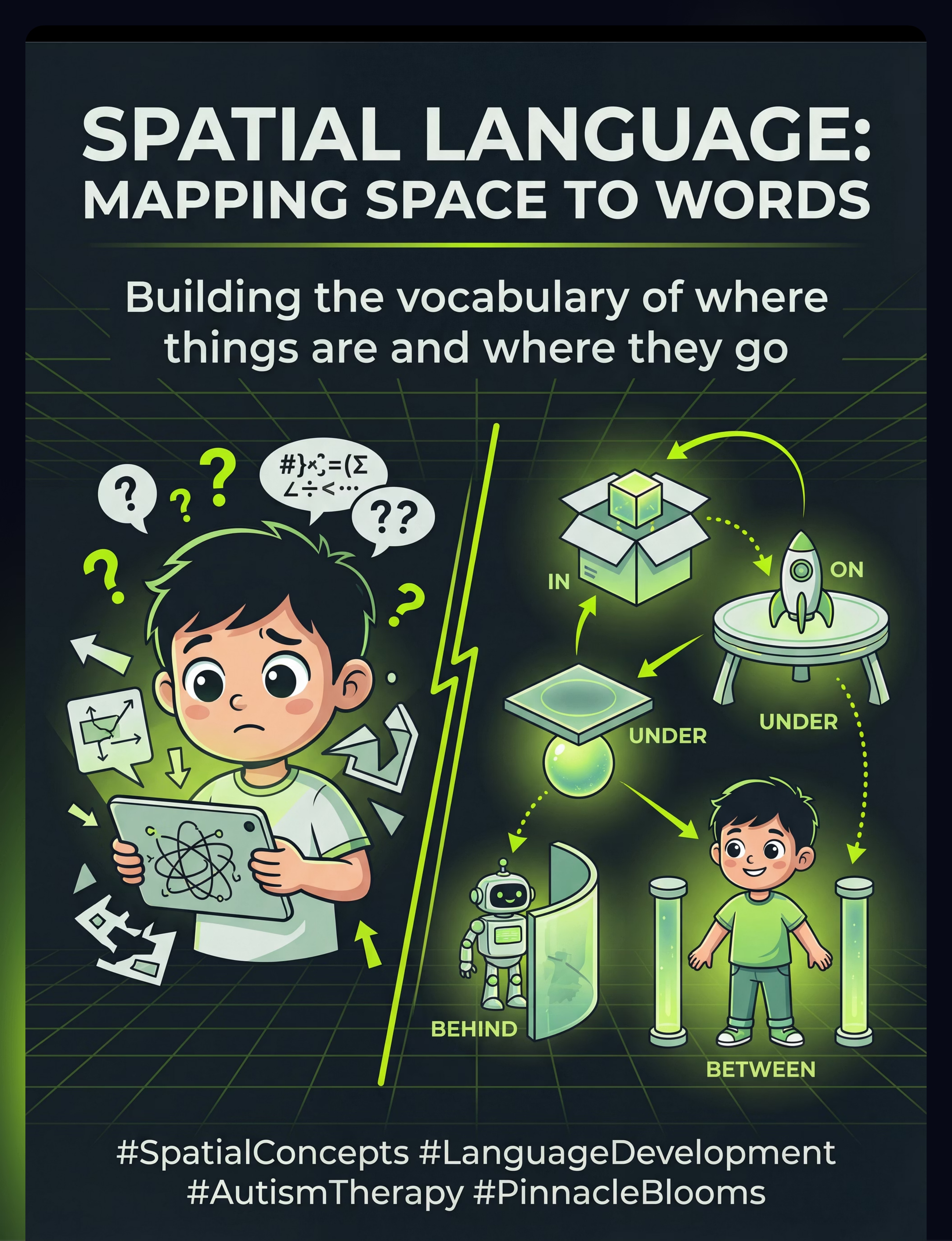
Preview of 9 materials that help with spatial concepts Therapy Material
Below is a visual preview of 9 materials that help with spatial concepts therapy material. The pages shown help educators, therapists, and caregivers understand the structure and content of the resource before use. Materials should be used under appropriate professional guidance.





Link copied!
The Pinnacle Promise
"From fear to mastery. One technique at a time."
Pinnacle Blooms Network® is India's largest autism therapy chain — 80+ centres, 1,000+ clinical professionals, 20M+ therapy sessions, 97%+ measured improvement. Built by mothers. Engineered as a system. Serving children from 70+ countries through the world's most comprehensive paediatric therapeutic operating system — GPT-OS®.
Medical Disclaimer: This content is educational and informational. It is not a substitute for professional assessment, diagnosis, or individualised therapy. Spatial concept intervention should be individualised based on comprehensive clinical evaluation. Results vary based on individual child factors. Consult a qualified speech-language pathologist or developmental paediatrician for personalised guidance.
Statutory Identifiers
CIN: U74999TG2016PTC113063 | DPIIT: DIPP8651 | MSME Registered | GSTIN Registered
© 2025 Pinnacle Blooms Network®
All Rights Reserved. EverydayTherapyProgramme™ | GPT-OS® | AbilityScore® | TherapeuticAI® | FusionModule™
🏆 Validated by the Pinnacle Blooms Network® Consortium | The loop continues — every technique a new beginning.