

'We'll go AFTER lunch.' He asks 'When?' every two minutes.
Time is invisible. Your child isn't being difficult. Their brain genuinely cannot hold abstract time. This evidence-based technique page changes that — one visual tool at a time.
B-173 | Temporal Concepts
Domain B: Language & Concept Development

'First homework, THEN play.' He doesn't understand 'first.' 'Remember yesterday?' To him yesterday, last week, and this morning are all the same. 'Later' means nothing. 'Tomorrow' feels like forever. Time just doesn't make sense — and I don't know how to make it make sense.
🏥 Pinnacle Blooms Consortium®
SLP • OT • ABA • SpEd • NeuroDev — validated across 80+ centres
📌 Domain B
Social Communication & Language — Technique B-173
🔬 Evidence-Based
Level I Systematic Review evidence — home and clinic applicable
📱 FREE Helpline
9100 181 181 — 24×7, 16+ languages, no referral needed

You Are Not Alone: The Numbers
80%
Language Processing Difficulty
of children diagnosed with autism experience significant language processing challenges — including time vocabulary. (PRISMA Systematic Review, 2024 — PMC11506176)
1in36
On the Spectrum
children globally are on the autism spectrum. Temporal concept difficulty affects the majority. (CDC 2023 | WHO Global Burden)
21M+
Therapy Sessions
delivered by Pinnacle Blooms Network® — temporal language is a top-10 presenting challenge across all 70+ centres.
You are among millions of families navigating this exact challenge. The question 'When?' is not defiance. It is your child's honest confusion about a concept the neurotypical world treats as obvious — but isn't.

What's Happening in Your Child's Brain
"Time Lives in the Brain — and Here's What's Different"
The Science
Prefrontal Cortex: Governs future-planning and temporal sequencing. Atypical connectivity makes "what comes next" harder to project.
Hippocampus: Responsible for episodic memory — "what happened yesterday." Differences affect retrieval and temporal organisation of past events.
Working Memory: Holding "first, then, after" in sequence requires working memory — often a fragile area in autistic children.
Language Processing: Temporal words (before, after, yesterday, soon) require mapping abstract concepts to language — demanding far beyond simple vocabulary.
Parent Translation
This is a wiring difference, not a behaviour choice. When you say 'after dinner,' your child's brain has no concrete anchor for that phrase. 'Dinner' is a picture. 'After' is invisible. The two don't connect automatically.
Visual supports don't just help — they build the neural pathways that connect abstract time words to concrete reality. This is intervention, not accommodation.
"The brain that can't grasp 'tomorrow' can absolutely learn to grasp it — with the right tools."

The Developmental Timeline of Time Understanding
Whether your child is at the 'first-then' stage or working toward clock-reading, this technique covers the complete continuum. Start where your child is.
1
18–24 months
"Now" vs "not now" — often intact in autism. Present-moment awareness is the foundation.
2
2–3 years
"First X, then Y" (2-step with visual). Key intervention entry point — start B-173 here.
3
3–5 years
"Today/tomorrow" (often confused) and "before/after" relationships. Visual anchoring and explicit teaching needed.
4
5–7 years
Days of the week, yesterday/today/tomorrow mastered, clock-reading begins. Calendar + activity-anchored clock teaching essential.
5
7–9 years
Past/present/future tense, duration comparisons, temporal reasoning. Timeline materials + visual timers build these.
6
8+ years
Full temporal reasoning — planning, narrating, full language integration. The goal of this technique pathway.
Temporal concept difficulty commonly co-occurs with: narrative language delay, anxiety about transitions, difficulty following multi-step instructions, and schedule-related meltdowns.
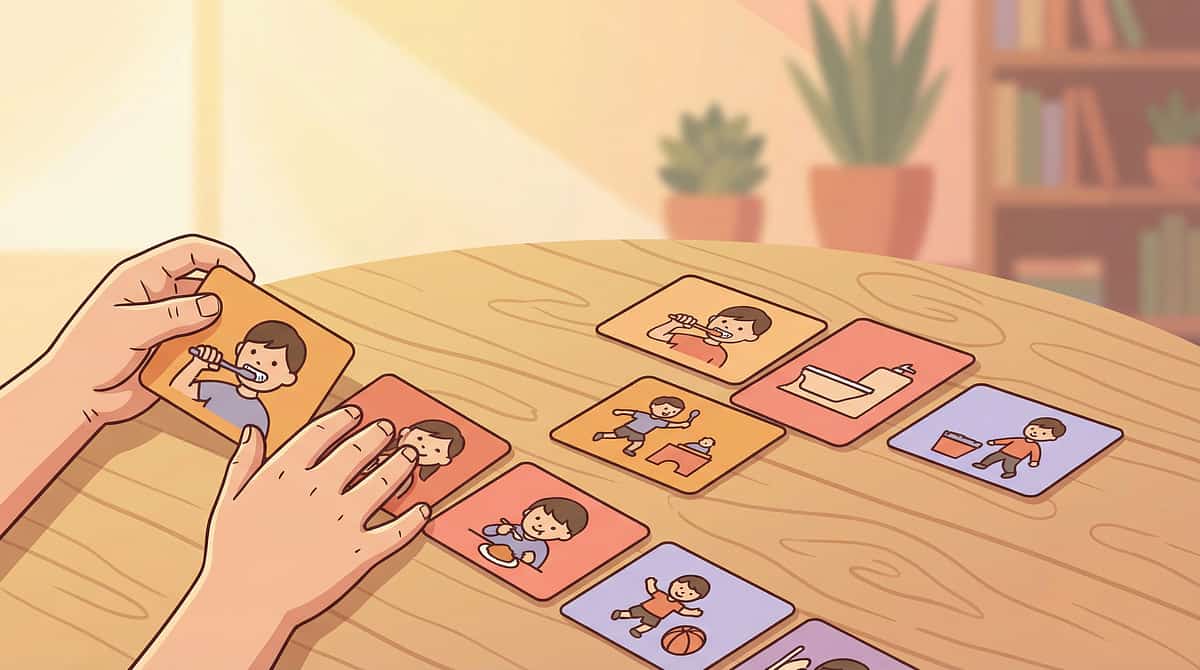
Clinically Validated. Home-Applicable. Parent-Proven.
⚡ LEVEL I — Systematic Review + RCT Evidence
📊 PRISMA Systematic Review (Children, 2024)
16 studies | 2013–2023 | ASD populations. "Visual-based interventions for language and concept development meet criteria as evidence-based practice for ASD." PMC11506176
📊 Meta-Analysis (World J Clin Cases, 2024)
24 studies | 1,532 children. "Structured therapeutic intervention effectively promotes language, adaptive behaviour, and cognitive skills across home and clinic settings." PMC10955541
📊 Indian RCT (Indian J Pediatrics, 2019)
Home-based intervention | Parent-administered. "Significant functional outcomes when parents deliver structured visual-language programmes at home." Padmanabha et al. DOI: 10.1007/s12098-018-2747-4
80%
Research Confidence
HIGH — validated across multiple study designs and populations
90%
Home Implementation Viability
VERY HIGH — parent-administered protocols show strong outcomes
80%
Parent-Administered Efficacy
HIGH — structured home protocols equal clinic outcomes when consistent

The Technique: What It Is
B-173
Domain B: Language & Concept Development
Temporal & Sequence Understanding
Formal Name
Temporal Concept and Sequence Language Intervention
Parent-Friendly Alias
"Making Time Visible"
One-Paragraph Definition
A structured, multi-modal approach to teaching children the vocabulary and understanding of time — when events happen, in what order, how long they take, and how to talk about past, present, and future. Uses nine categories of visual tools to make invisible time visible, concrete, and comprehensible.
At a Glance
- 📅 Age Range: 2–10 years
- ⏱️ Session Duration: 10–20 minutes
- 🔄 Frequency: 2–3 sessions/week embedded in daily routines
- 🏠 Setting: Home + School + Therapy + Community
- 👥 For: Parents, Teachers, SLPs, SpEds, OTs
Domain Taxonomy
- 128 Canon Category: Visual Schedules | Sequence Materials | Timer Tools
- 12-Domain Code: Domain B — Social Communication & Pragmatic Language
- 20 Categories: Temporal/Sequence Understanding
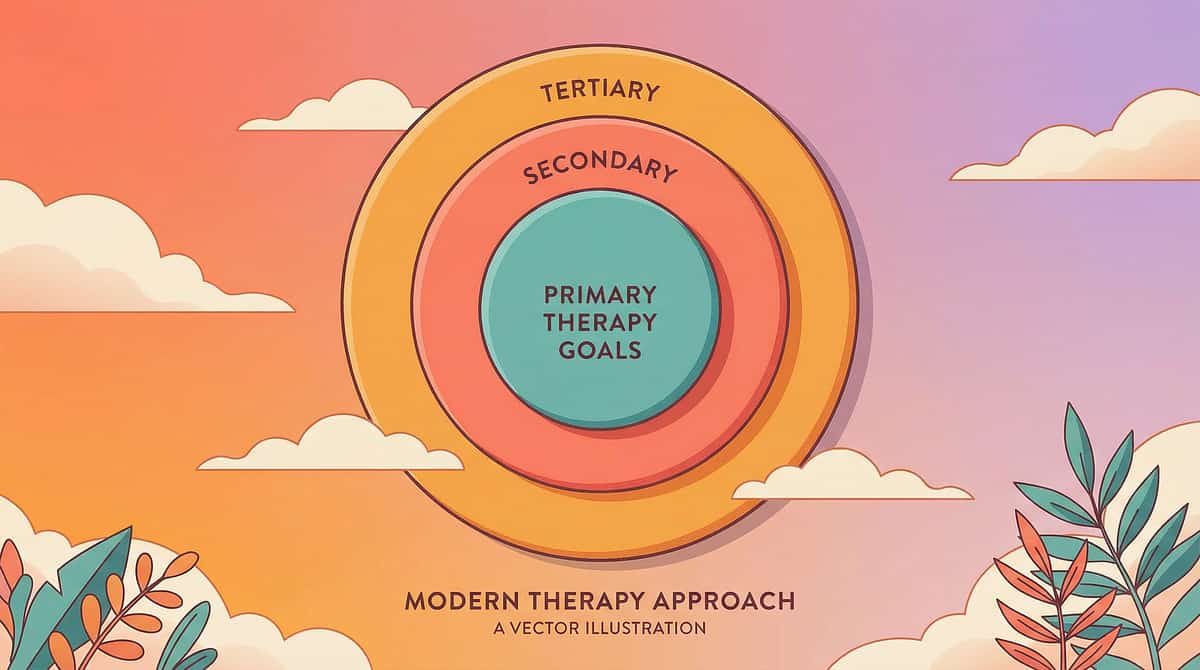
5 Disciplines. One Goal: Making Time Real for Your Child.
Speech-Language Pathologist (SLP) — Primary Lead
Targets temporal vocabulary acquisition, tense production, narrative sequencing, and comprehension of time-based language. Uses visual schedules and sequence cards to anchor abstract words.
Occupational Therapist (OT)
Addresses executive function and working memory components of temporal understanding. Uses visual timers for transition support and activity sequencing.
ABA Therapist (BCBA)
Applies discrete trial training and naturalistic teaching to establish temporal vocabulary. Sets up visual schedules that reduce time-related anxiety and "when?" questioning.
Special Educator (SpEd)
Embeds temporal language into academic contexts — story retelling, social narratives, following schedules. Builds classroom generalisation of home-learned temporal concepts.
NeuroDevelopmental Paediatrician
Monitors temporal concept development within the broader developmental profile. Identifies co-occurring working memory or executive function profiles. Guides GPT-OS® diagnostic pathway progression.

This Isn't a Random Activity. It's a Precision Tool.
✅ Child spontaneously uses "first" and "then" in conversation
✅ Reduces repetitive "when?" questions after seeing visual schedule
✅ Correctly identifies yesterday/today/tomorrow on calendar
✅ Waits appropriately when visual timer is present
✅ Uses past tense consistently in 3-turn narrative
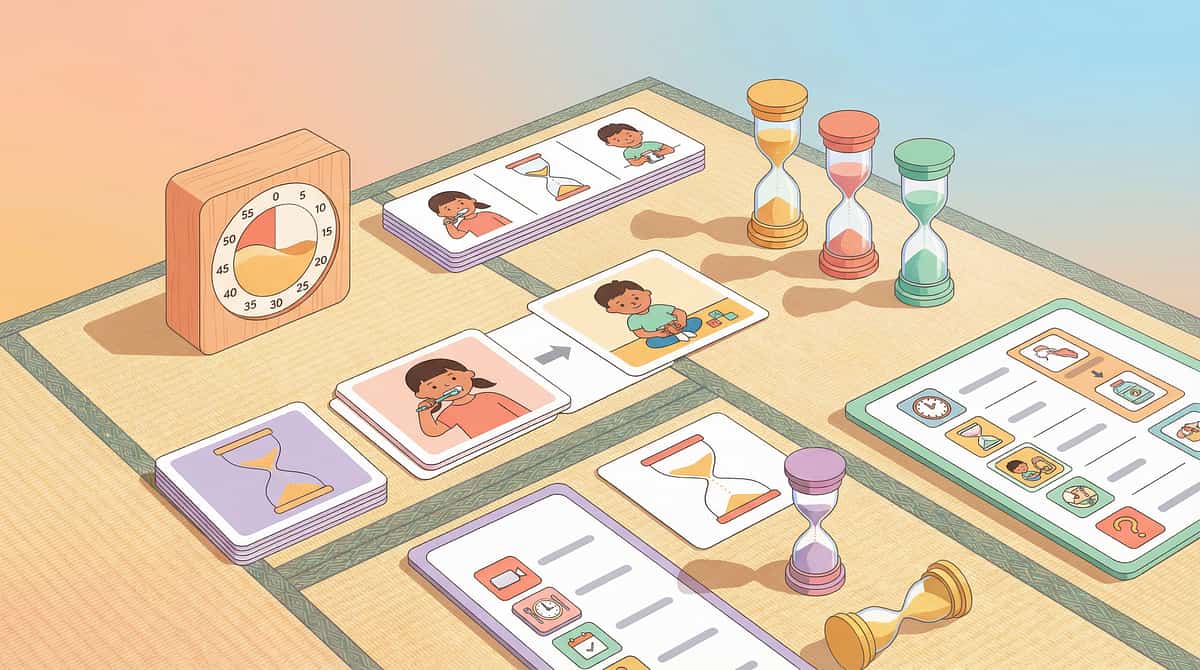
9 Materials That Make Time Visible — Clinician-Curated
🛒 Materials
Pinnacle Canon — Clinician-Curated
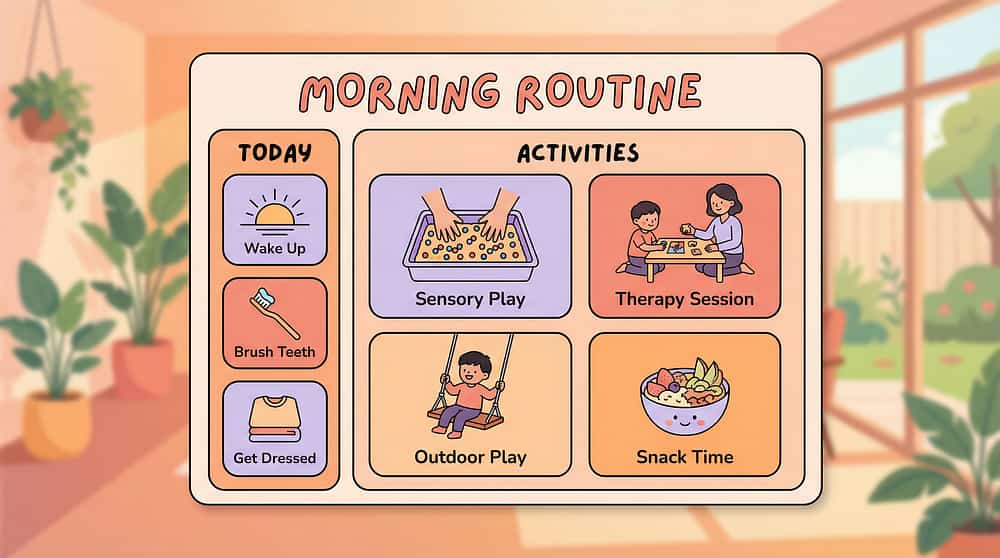
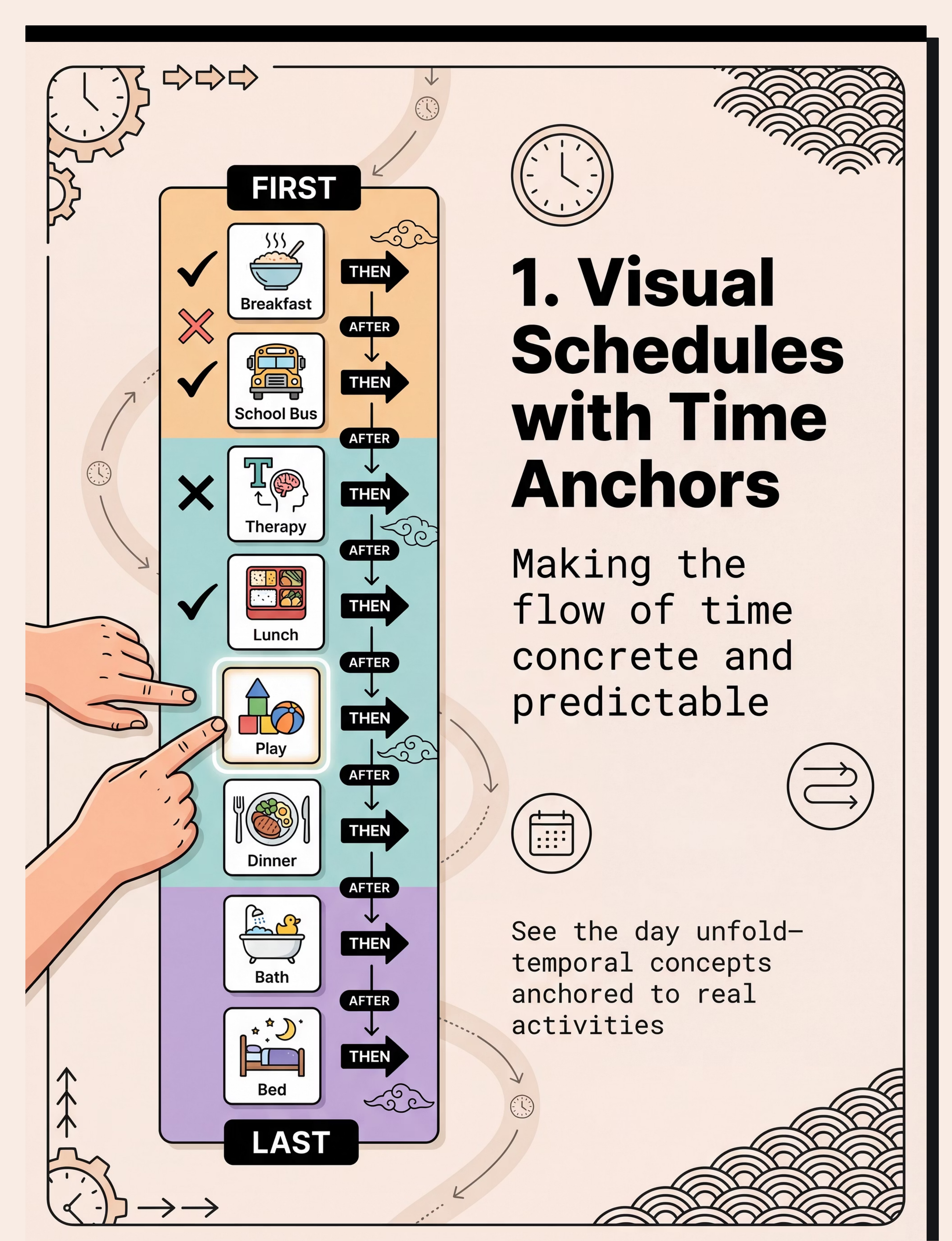
1. Visual Schedules with Time Anchors
📌 Visual Schedule Systems | 💰 ₹200–800 | DIY: ₹0
Makes the flow of time concrete and predictable. ✅ Pinnacle Recommends | Amazon.in available
Makes the flow of time concrete and predictable. ✅ Pinnacle Recommends | Amazon.in available
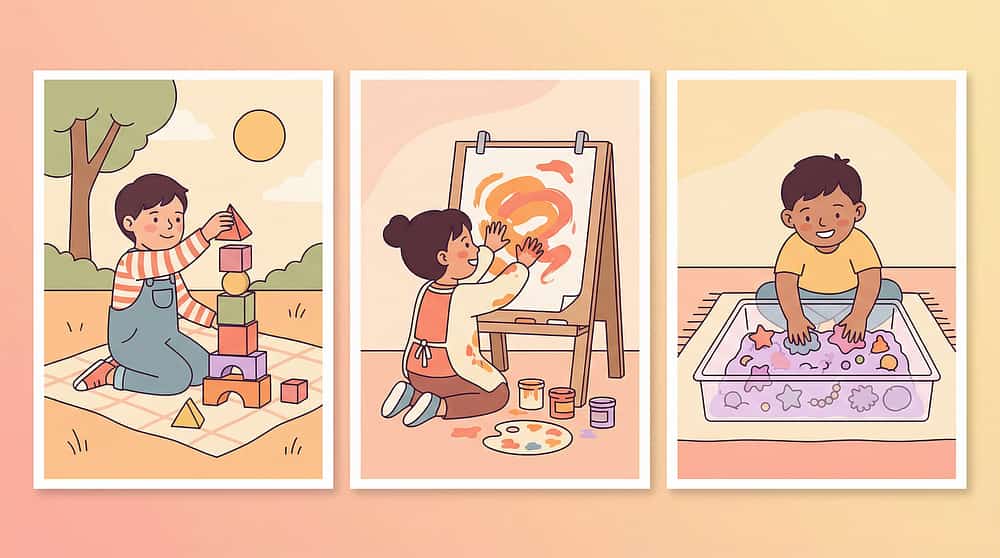
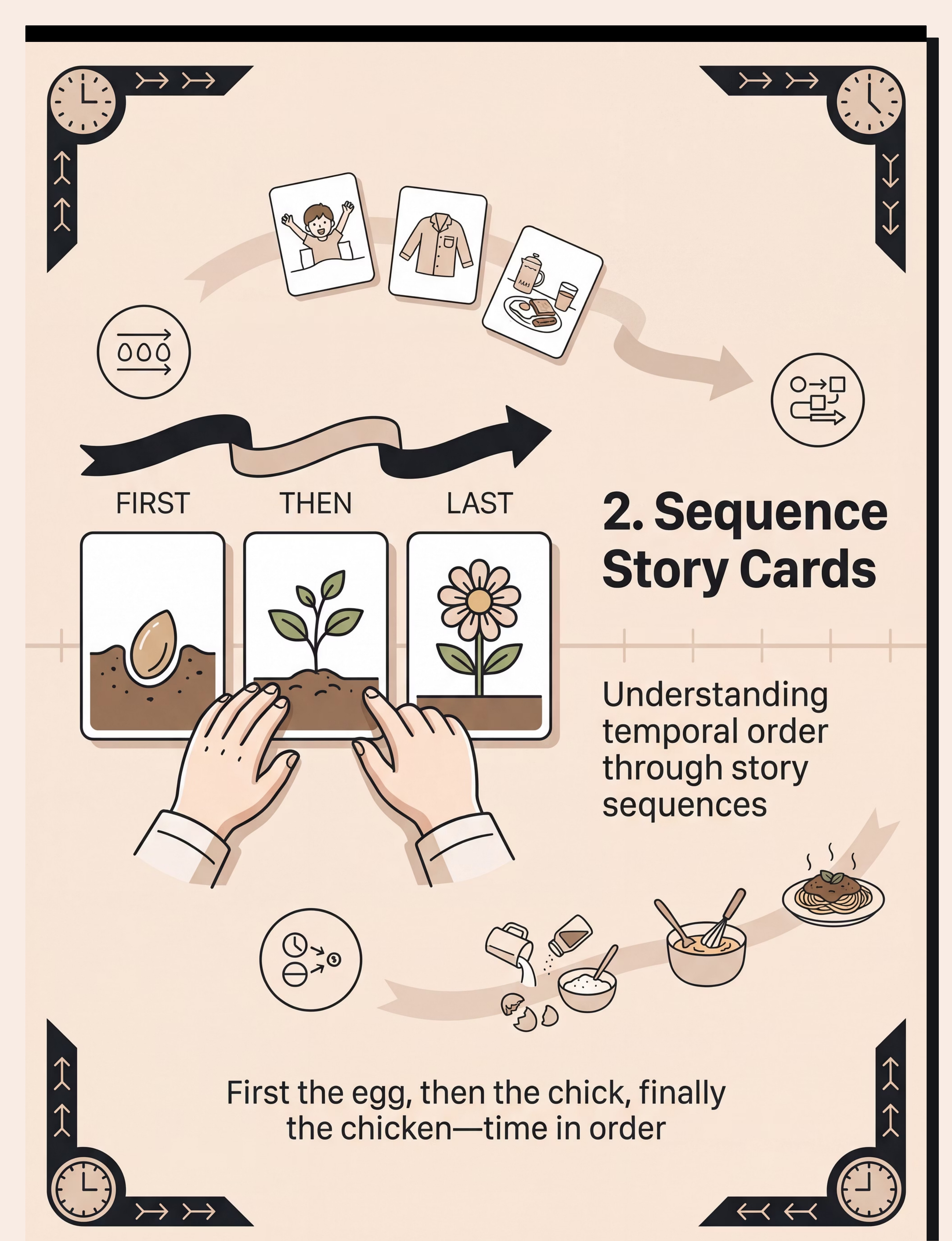
2. Sequence Story Cards
📌 Sequencing / Story Cards | 💰 ₹250–600 | DIY: ₹0 (personal photos)
Temporal order made visible and manipulable. ✅ Pinnacle Recommends
Temporal order made visible and manipulable. ✅ Pinnacle Recommends

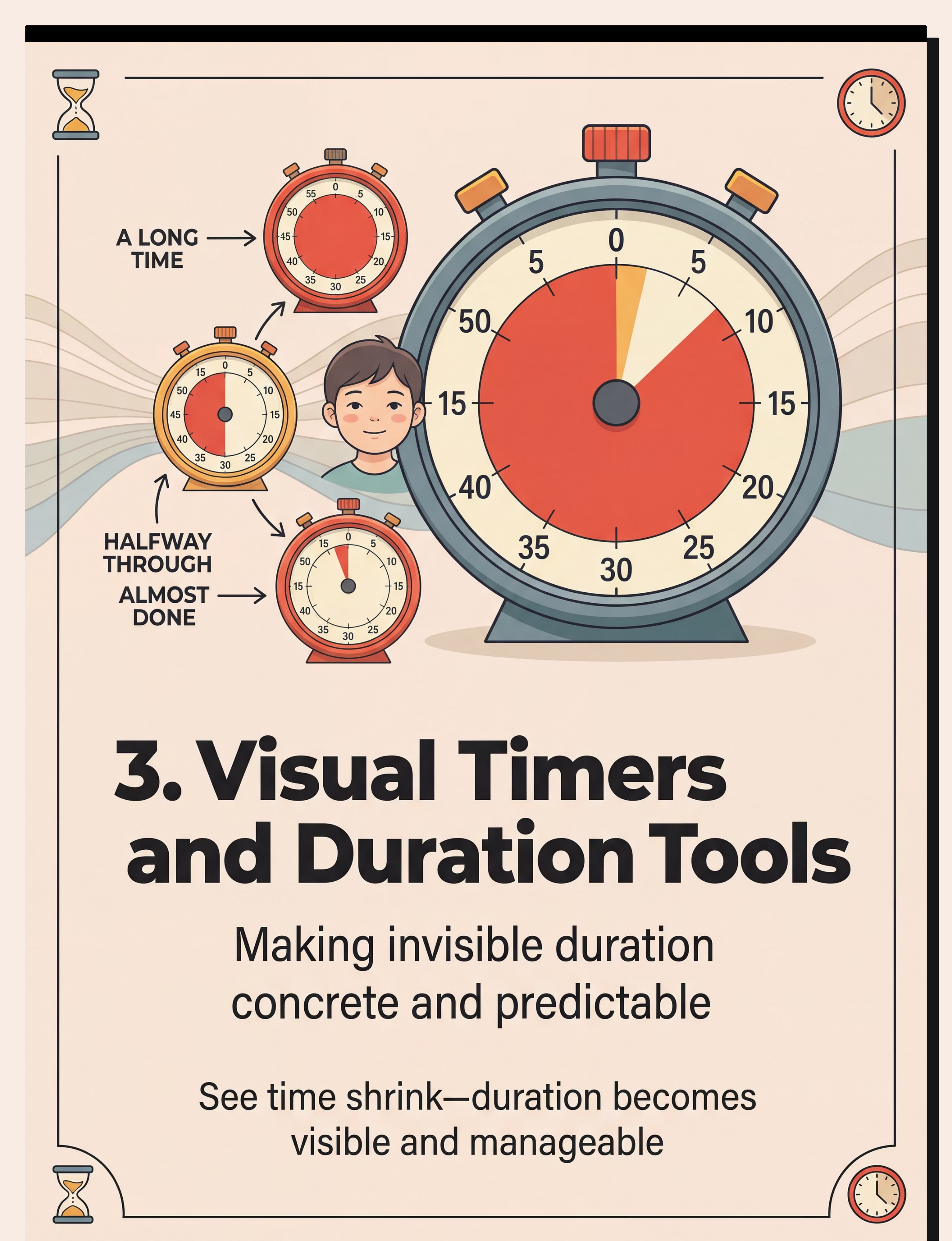
3. Visual Timers & Duration Tools
📌 Visual Timer Systems | 💰 ₹300–1,200 | DIY: Sand timer ₹100
Makes invisible duration concrete — time children can watch. ✅ Pinnacle Recommends
Makes invisible duration concrete — time children can watch. ✅ Pinnacle Recommends
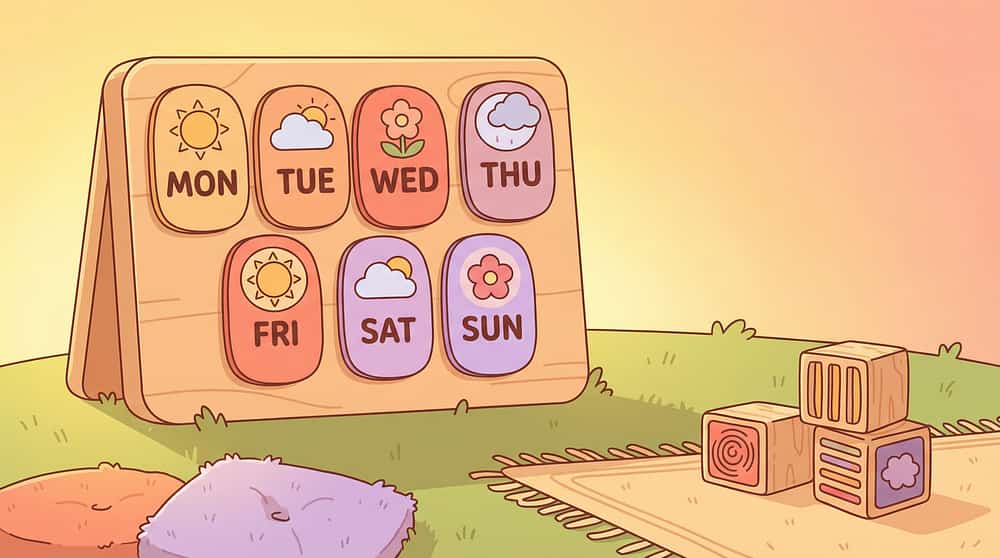
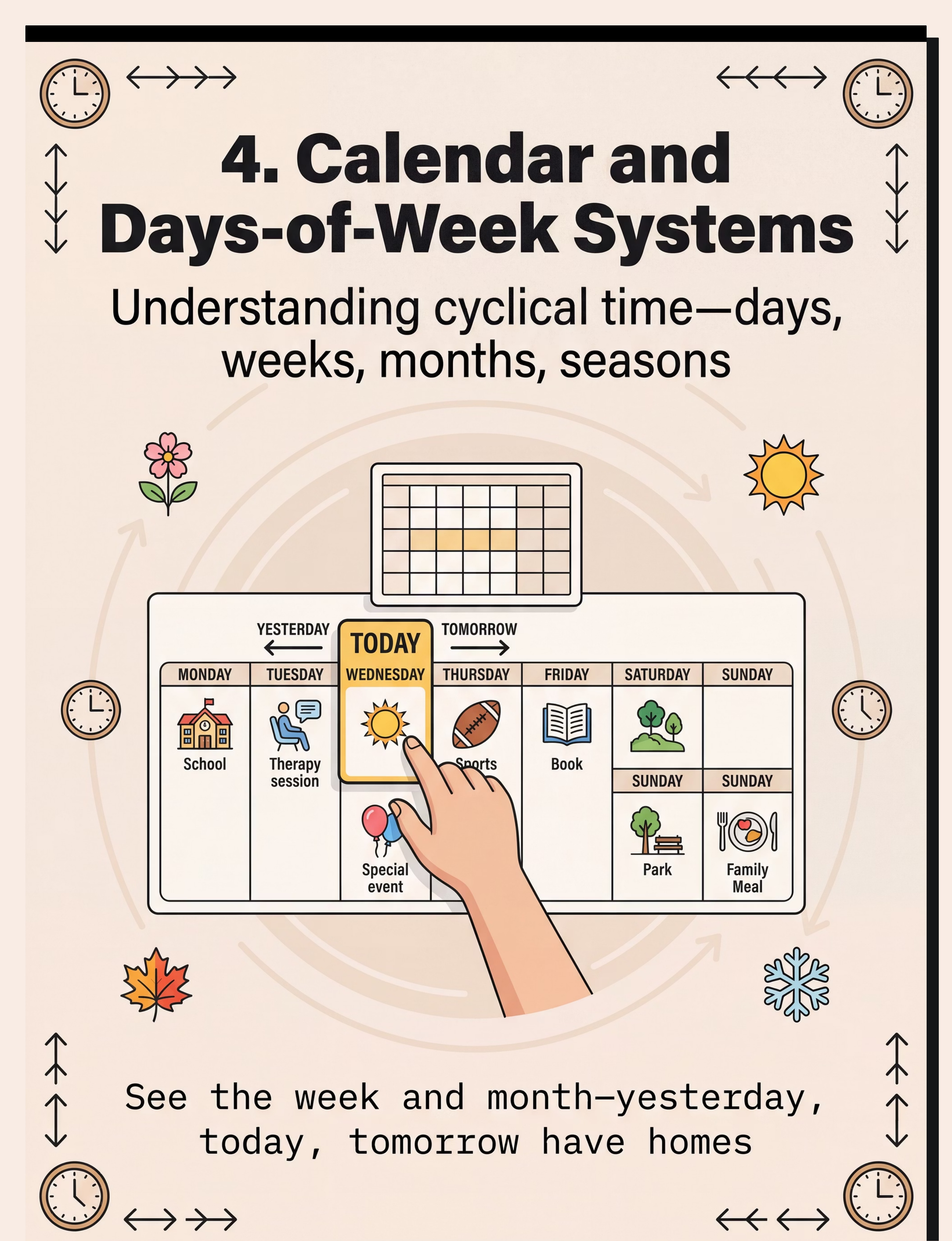
4. Calendar & Days-of-Week Systems
📌 Calendar / Schedule Boards | 💰 ₹200–700 | DIY: ₹0
Makes cyclical time visible — yesterday/today/tomorrow anchored. ✅ Pinnacle Recommends
Makes cyclical time visible — yesterday/today/tomorrow anchored. ✅ Pinnacle Recommends
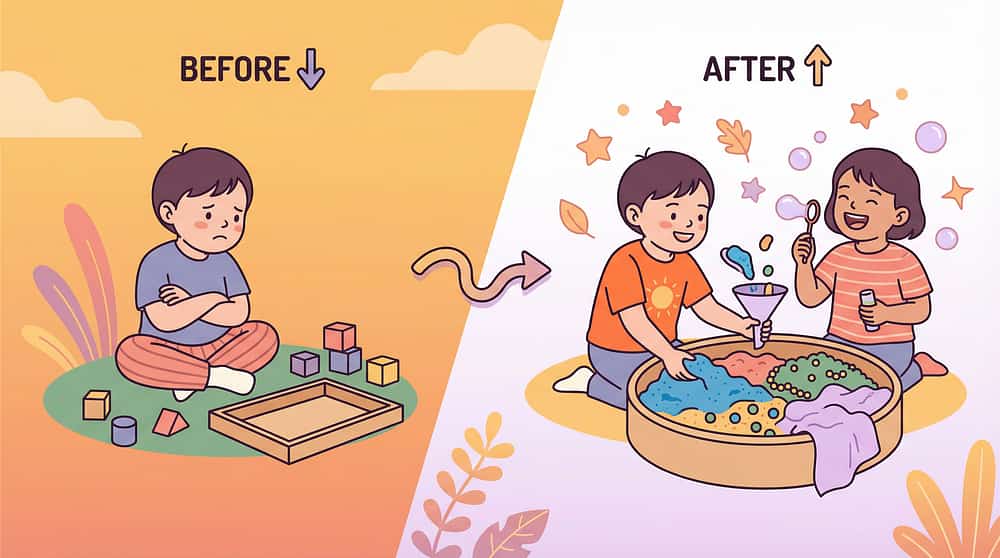
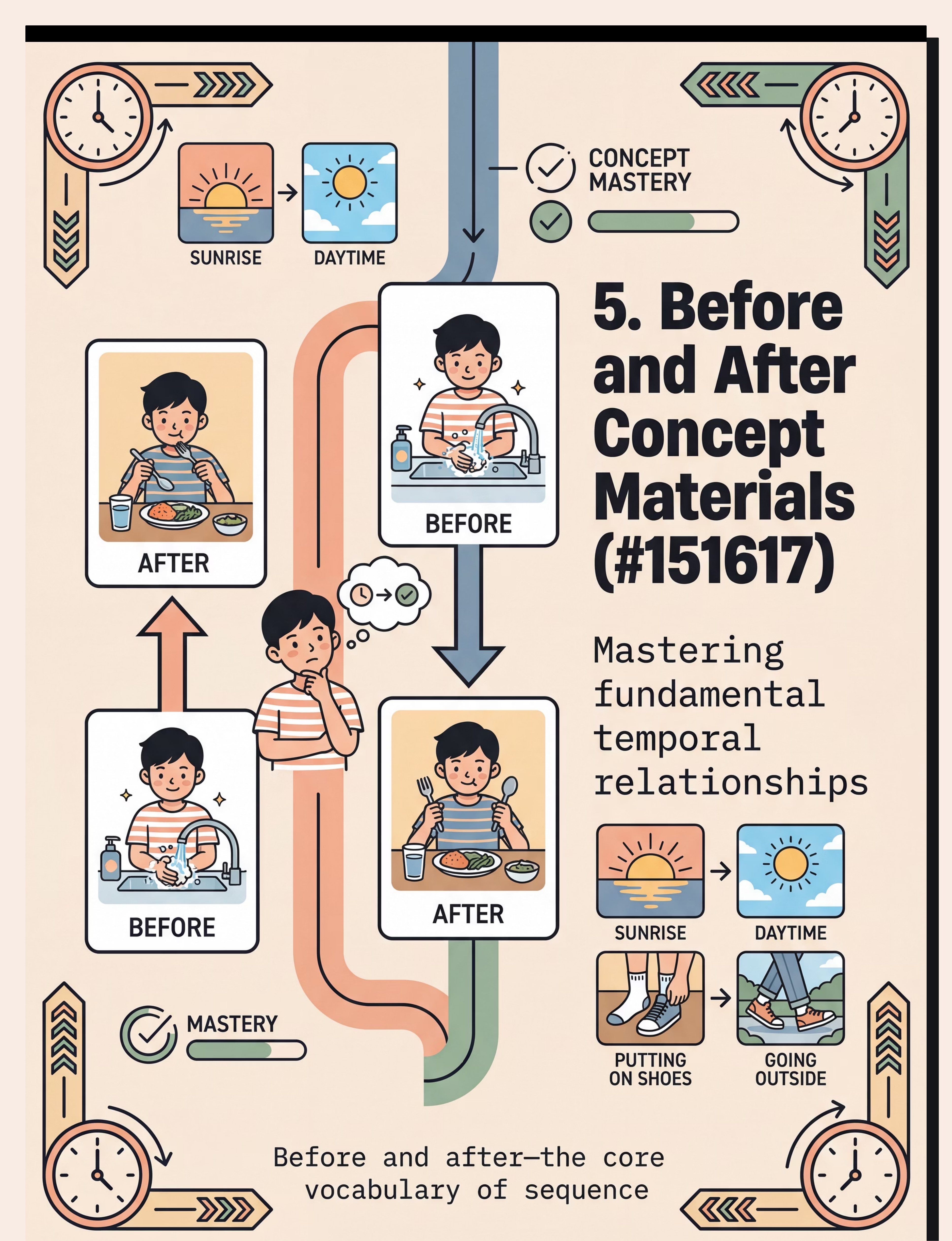
5. Before & After Concept Materials
📌 Concept Teaching Cards | 💰 ₹200–500 | DIY: ₹0
Explicit foundational teaching of temporal relationships. ✅ Pinnacle Recommends
Explicit foundational teaching of temporal relationships. ✅ Pinnacle Recommends
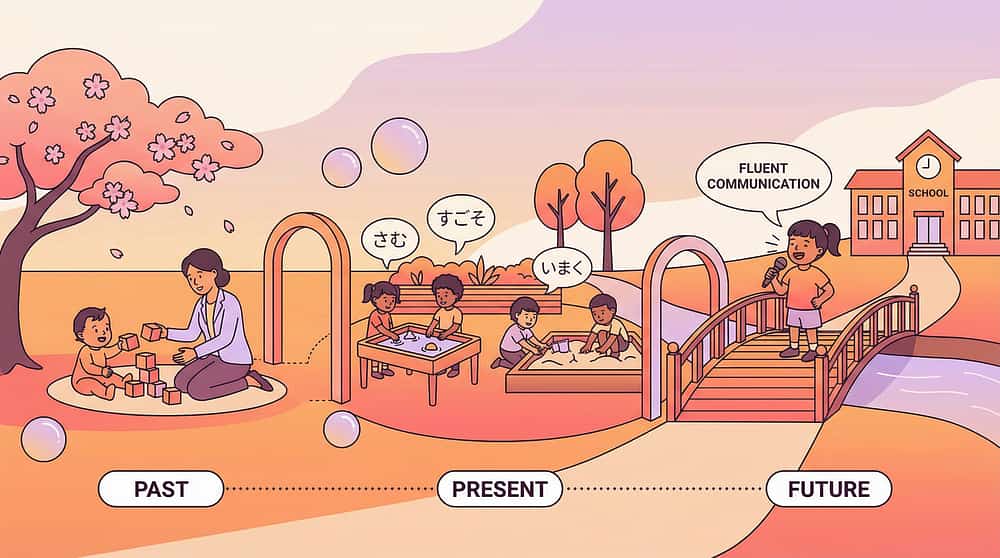
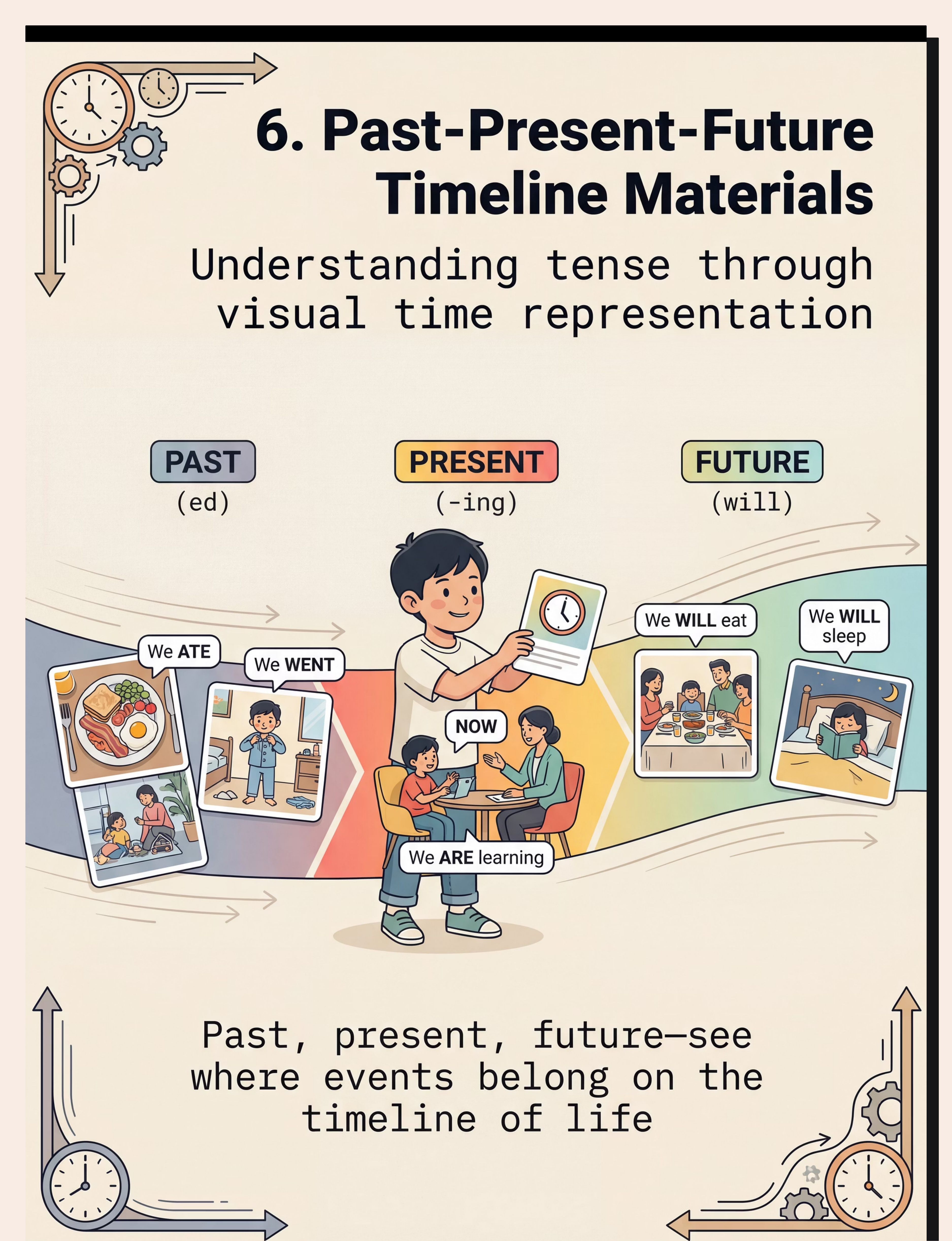
6. Past-Present-Future Timeline Materials
📌 Timeline / Tense Teaching Boards | 💰 ₹250–600 | DIY: ₹0
Spatial representation of tense — leverages visual strengths. ✅ Pinnacle Recommends
Spatial representation of tense — leverages visual strengths. ✅ Pinnacle Recommends

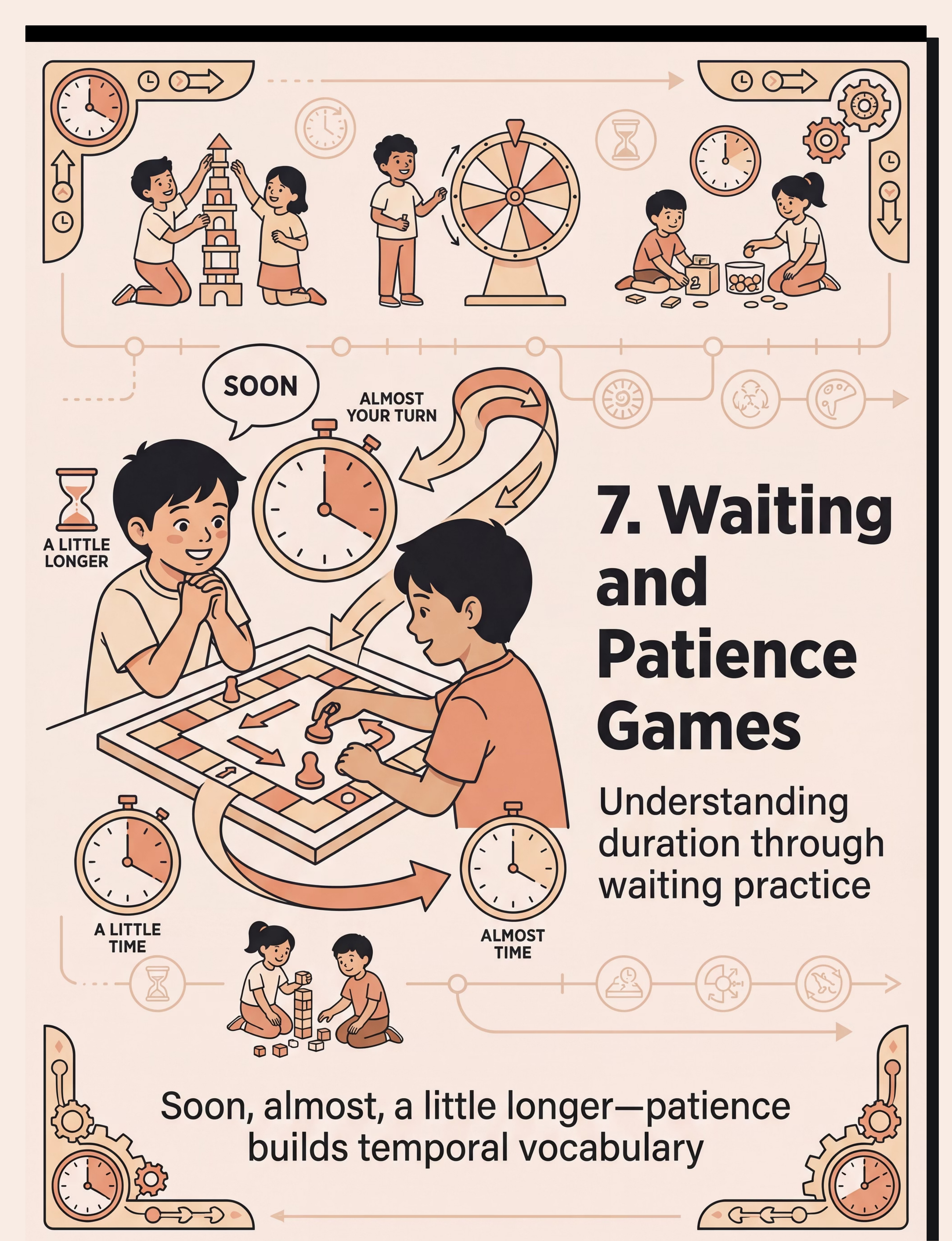
7. Waiting & Patience Games
📌 Turn-Taking / Patience Games | 💰 ₹200–600 | DIY: Any turn-taking game
Builds duration vocabulary through motivated waiting.
Builds duration vocabulary through motivated waiting.
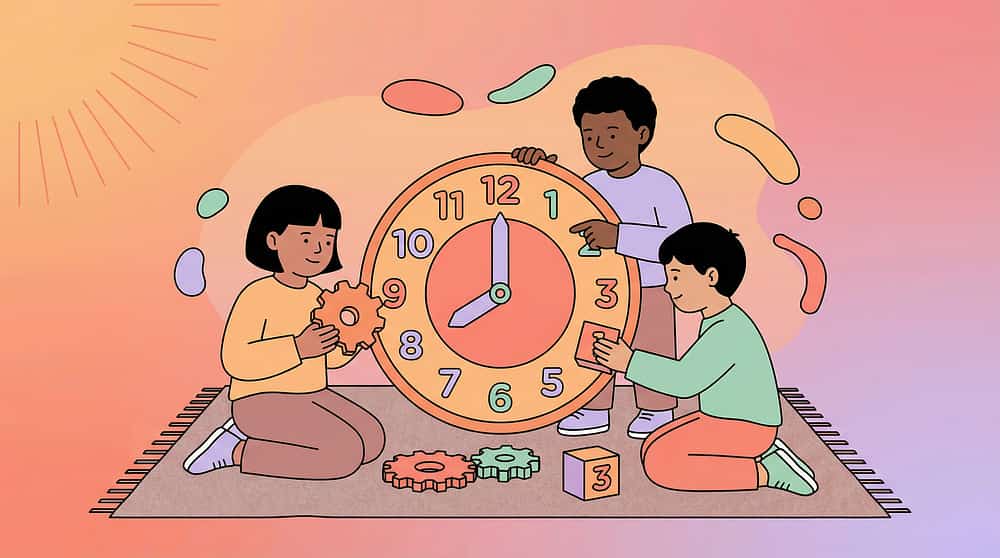
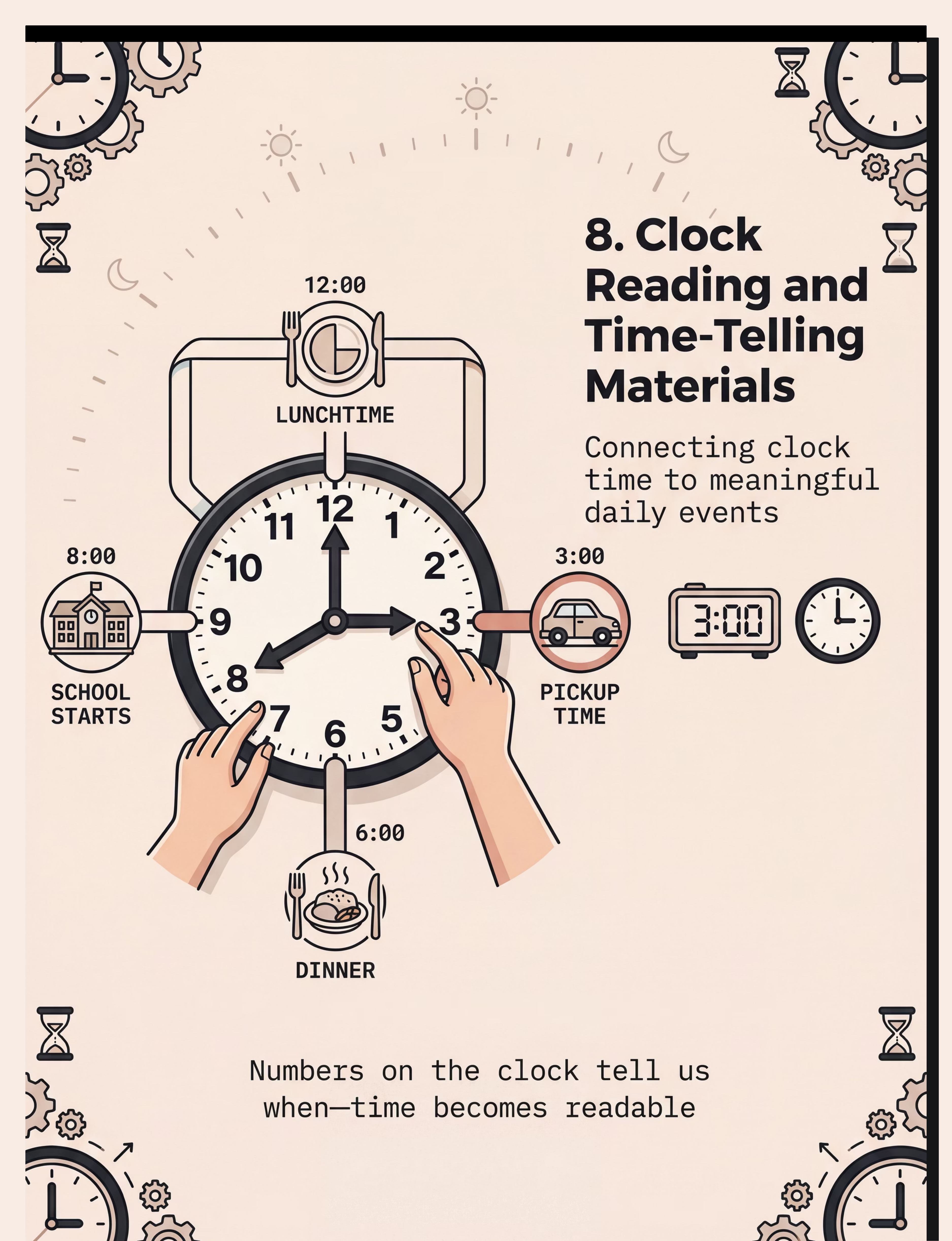
8. Clock Reading & Time-Telling Materials
📌 Clock Teaching Tools | 💰 ₹200–700 | Canon: Smartivity DIY Clock ₹673
🛒Amazon.in: amzn.in/d/0aY06Vfl — Connects abstract clock numbers to daily meaning.
🛒Amazon.in: amzn.in/d/0aY06Vfl — Connects abstract clock numbers to daily meaning.

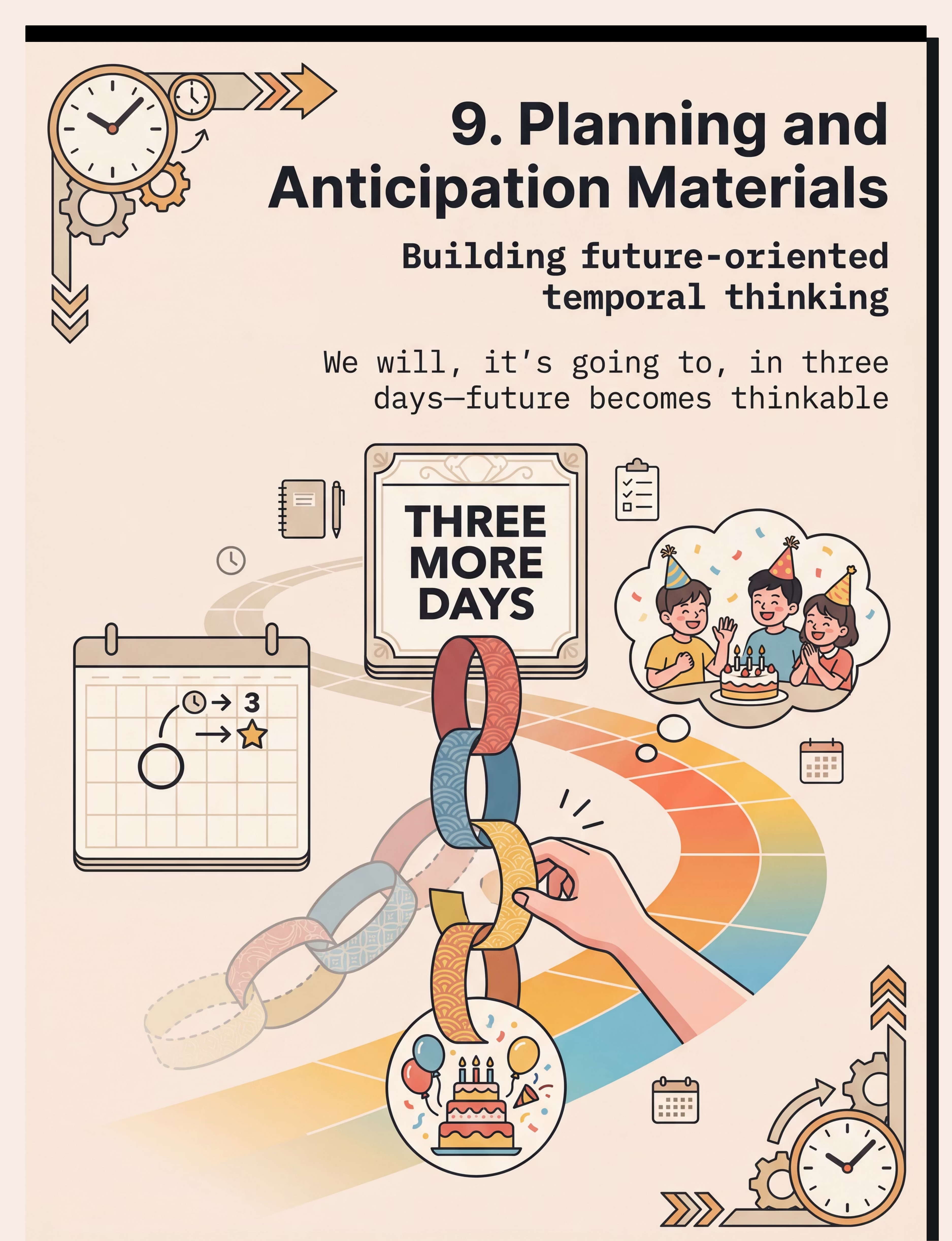
9. Planning & Anticipation Materials
📌 Countdown / Anticipation Tools | 💰 ₹150–500 | DIY: Paper chain countdown ₹0
Builds future-oriented temporal thinking.
Builds future-oriented temporal thinking.
Essential Starter Kit: For families beginning today — ①Visual Schedule + ③Visual Timer + ④Yesterday-Today-Tomorrow Calendar. Total investment: ₹700–2,700 | Full DIY version: ₹0
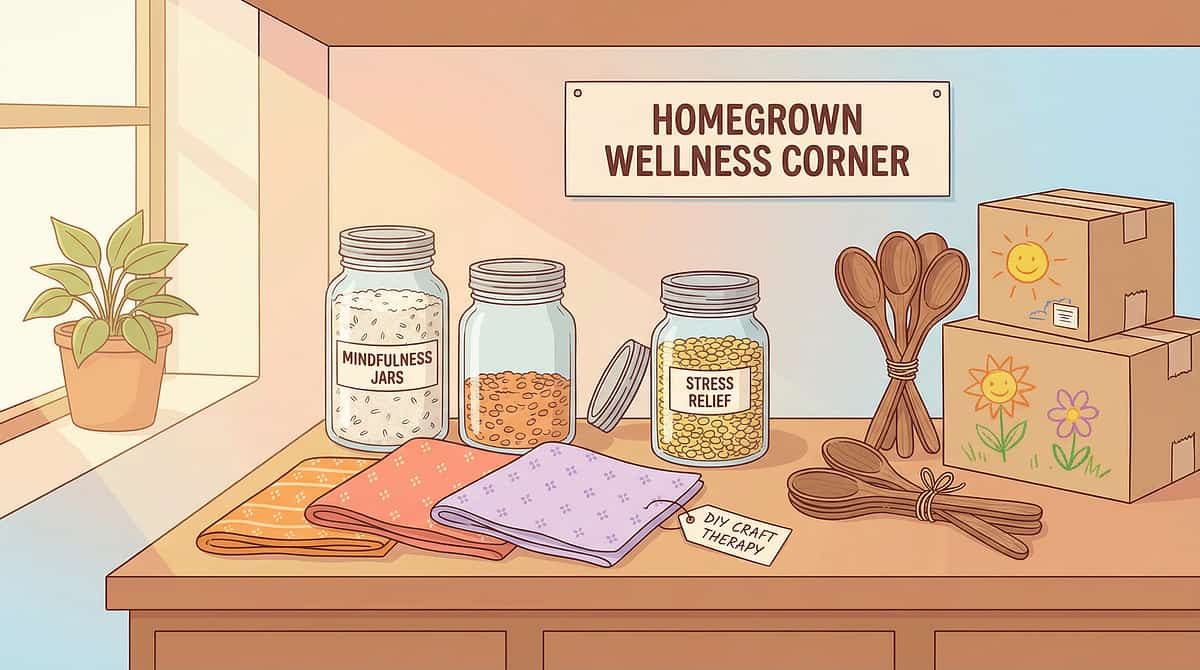
Every Family Can Start TODAY — Regardless of Budget
WHO Inclusion Principle
Evidence-based intervention must be accessible at all economic levels. Every material on this list has a free, home-made equivalent that is clinically equivalent in therapeutic value.
Material | Commercial (₹) | DIY (₹0) | |
Visual Schedule | ₹200–800 (velcro boards + picture cards) | Print daily activity pictures. Laminate or use tape. Attach velcro. Move a "NOW" arrow. | |
Sequence Cards | ₹250–600 | Photograph household activities (making chai, getting dressed). Print and sort in order. | |
Visual Timer | ₹300–1,200 | Sand timer (₹100) OR draw a circle, colour it, erase as time passes. Phone countdown also works. | |
Calendar System | ₹200–700 | Draw 7-box week strip. Write day names. Move "TODAY" paper arrow each morning. | |
Before/After Cards | ₹200–500 | Draw two boxes with an arrow between them. Put pictures of "before" and "after" events. | |
PPF Timeline | ₹250–600 | Draw a horizontal line. Left = PAST (dark). Middle = NOW (bright). Right = FUTURE (light). | |
Teaching Clock | ₹673 (Smartivity DIY) | Use existing clock + sticky notes with activity pictures at key times. | |
Countdown Materials | ₹150–500 | Paper chain: one ring per day. Remove one ring each morning. |
Why DIY Works: The therapeutic principle is the same whether the material costs ₹800 or ₹0. What makes the intervention work is consistent use, active vocabulary practice, and parent engagement — not the price tag.

Pre-Session Safety Gate — Read Before Every Session
🚦 Safety First
🔴 RED — Do NOT Proceed If:
Child is in acute distress, meltdown, or post-meltdown dysregulation. Child is unwell, febrile, or overtired. Materials contain small pieces accessible to children who mouth objects. Child has shown extreme anxiety about schedules/time today.
STOP immediately if: child shows escalating distress, self-injury, or aggressive behaviour during session.
🟡 AMBER — MODIFY Session If:
Child is hungry or thirsty → feed/hydrate first (10-minute rule). Child had a schedule disruption within last 2 hours → use shorter, simpler version. Child is hyperactive or dysregulated → begin with proprioceptive calming input first. Child refused materials last session → try different format.
🟢 GREEN — PROCEED When:
Child is calm, alert, and regulated (not over-excited, not drowsy). At least 30 minutes since last meal. In familiar, low-distraction space. Child has had movement/sensory input in last 30 minutes. Materials are set up and ready before child enters space.
Emergency Protocol: If child becomes severely distressed — stop all demands. Move to calming space. Do NOT continue. Session abandoned = valid data, not failure. 📞 Clinical guidance: 9100 181 181 — FREE, 24×7
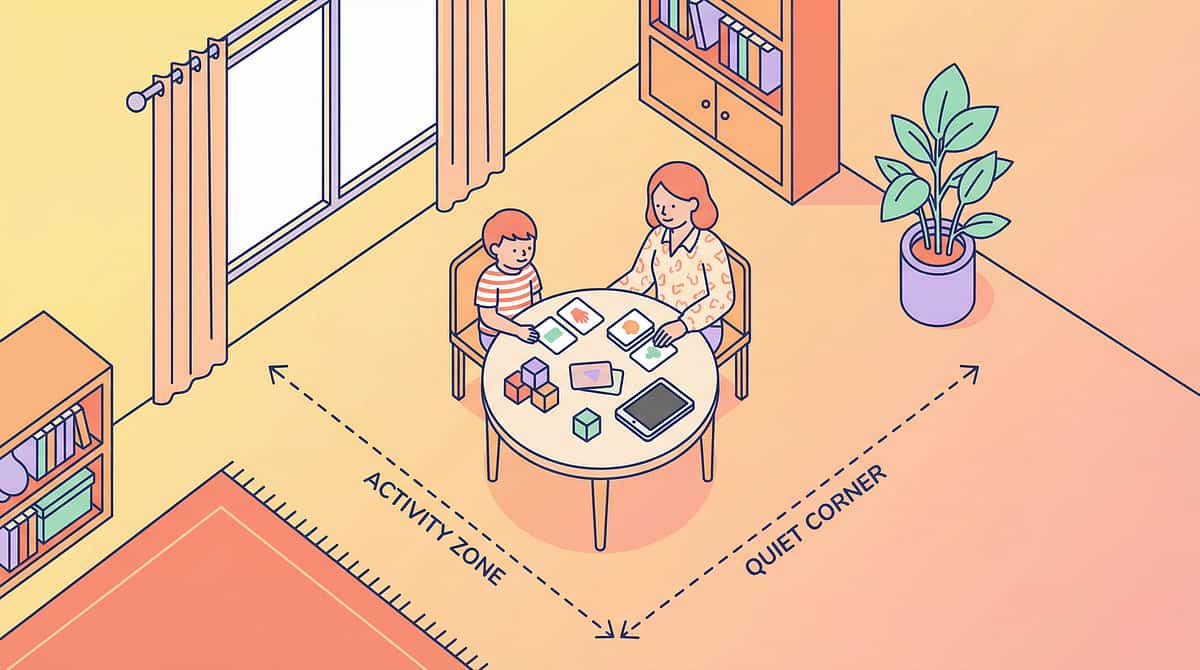
Spatial Precision Prevents 80% of Session Failures
Optimal Setup Positions
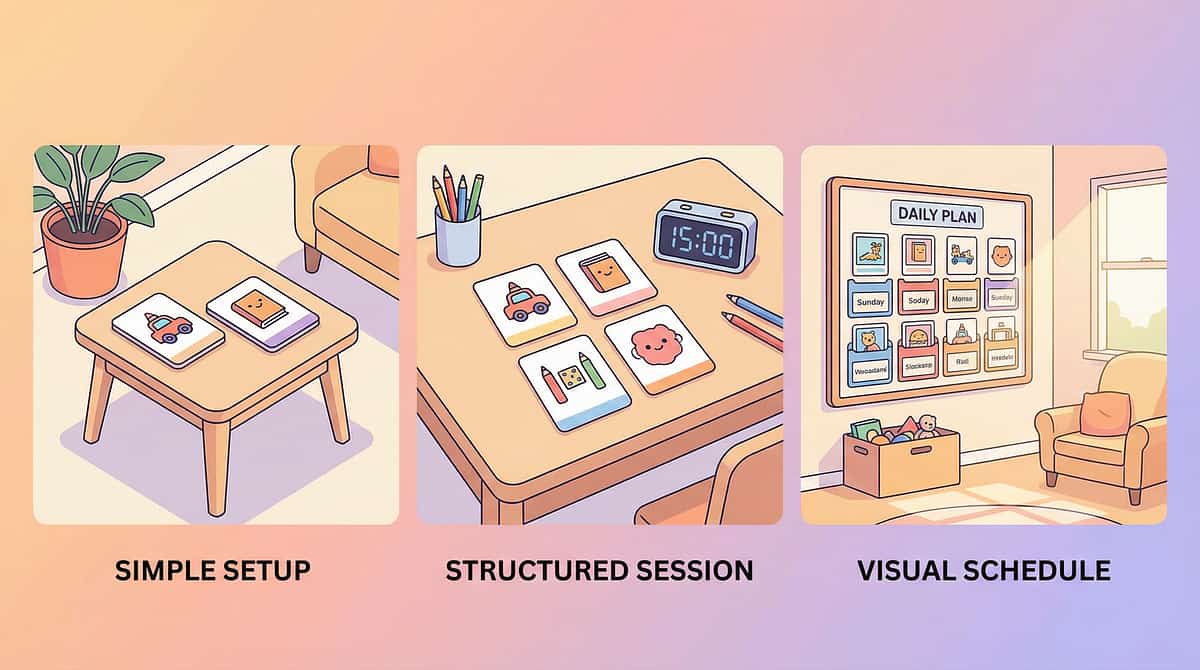
- 📍 Child: seated at small table or floor mat, facing material display
- 📍 Parent: side-by-side (not behind, not opposite — for joint attention)
- 📍 Visual schedule: at child's eye level, on wall or table stand
- 📍 Visual timer: to child's right, within sight without turning head
- 📍 Calendar: to child's left — within reach for pointing/moving markers
- 📍 Sequence cards: in parent's hands or face-down, introduced one at a time
- 📍 Reinforcer: in parent's pocket/bag — out of sight until needed
Remove from Space
- ❌ Tablets/screens (unless used as visual timer — one screen only)
- ❌ Unrelated toys within reach
- ❌ Background TV or music with lyrics
- ❌ Other family members moving through during first 3 minutes
Environment Settings
- 💡 Bright natural or consistent warm artificial light — avoid flickering
- 🔊 Quiet background — max 40–50 decibels (library volume)
- ⏱️ Optimal timing: mid-morning (10–11am) or mid-afternoon (3–4pm)
"Use the SAME setup every session. Predictability of the environment teaches temporal predictability of the session itself — the setup IS the temporal cue."
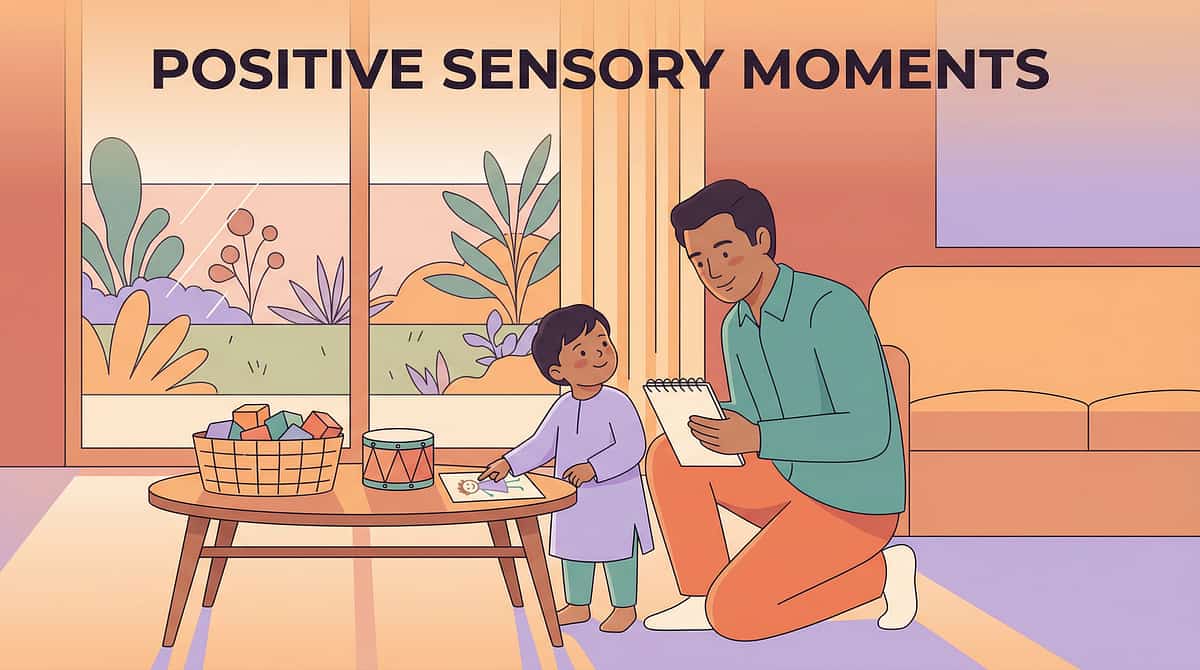
60-Second Readiness Check — The Best Session Starts Right
Pre-Session Gate
Check each indicator before beginning. Your decision determines session quality more than any technique.
1
Is child calm and not in post-distress state?
10+ minutes since last crying/meltdown required before proceeding.
2
Is child fed and hydrated within last 2 hours?
Hunger and thirst directly increase dysregulation and reduce session quality.
3
Has child had 10+ minutes of movement/play before this session?
Proprioceptive input primes the nervous system for cognitive work.
4
Is child making some eye contact or showing social attention (even brief)?
Even momentary orientation counts — full eye contact not required.
5
Is child's arousal MEDIUM — not too high or too low?
Hyperactive or drowsy children cannot access learning in the same way.
6
Did child have a predictable last 30 minutes (no sudden changes)?
Recent disruptions significantly reduce temporal concept session success.
7
Are YOU (parent/caregiver) calm and available for 15–20 minutes?
Your co-regulation is the most powerful regulatory tool in the room.
✅ ALL 7 YES → GO
Proceed to Step 1 — begin full protocol.
⚠️ 5–6 YES → MODIFY
Use shortened version (8 minutes). Focus on single material only. Skip sequence cards. Still valuable.
🛑 4 or fewer YES → POSTPONE
Run a calming activity instead (proprioceptive play 10 minutes). Reschedule. This is clinical judgment, not failure.

ACT III: EXECUTION
Step 1 of 6
Step 1 — The Invitation (30–60 seconds)
Purpose: Every protocol begins with an invitation, not a command. You are entering the child's world, not pulling them into yours.
Your Script
"Hey [name], I have something fun to look at together. Want to see what we're doing today?"
Body Language
- Be at child's physical level (floor or small chair)
- Relaxed shoulders, open posture
- Avoid leaning in — maintain 60cm distance
- Smile genuinely (children read micro-expressions)
If Child Looks → Proceed to Step 2
Acceptance looks like: child glances at material, moves toward table, or orients body toward parent.
If Child Resists:
- Don't repeat the demand. Parallel play beside them for 60 seconds.
- Comment on what they're doing: "You're building!"
- Re-offer gently after 60 seconds.
- If 3rd attempt fails → Postpone — return to Readiness Check.
ABA Principle — Pairing: Establish yourself as a reinforcing presence before introducing demands. This investment pays back in session quality.

Step 2 of 6
Step 2 — The Engagement (1–3 minutes)
Purpose: The child is now oriented. Introduce the first material with your voice modelling the target vocabulary. This is where temporal language teaching begins.
For Visual Schedule
Place daily schedule at eye level. "Let's see what happens today! FIRST..." (point to first picture) "...we do [activity]. THEN..." (point to second) "...we do [activity]. And AFTER that..." (point to third)
For Sequence Story Cards
Place 3 mixed-up cards on table. "Something happened in these pictures! What happened FIRST? Let's find out." Let child explore freely for 30 seconds before directing.
For Visual Timer
Set timer for 3 minutes (start small — always successful). "Watch this. The red is going away. When ALL the red is gone, we're done. See it? It's getting SMALLER."
🟢 Engaged
Touching, pointing, eye contact with material — continue
🟡 Tolerating
Looking away but not resisting — continue, reduce verbal load
🔴 Avoiding
Pushing away, getting up — back to Step 1 invitation OR postpone

Step 3 of 6 — Core Therapeutic Action
Step 3 — The Therapeutic Action (5–8 minutes)
This is the main therapeutic event. The core active ingredient: pairing temporal vocabulary with visible, concrete referents.
01
Point + Say + Wait
Point to first schedule item. Say: "FIRST, we do [activity]." Wait 3 seconds. Child may echo, point, or just look — all responses are valid.
02
Ask + Model
"What's FIRST?" If child doesn't answer in 5 seconds → model: "FIRST is [activity]." No pressure — this is teaching, not testing.
03
Move Through Sequence
Point to each item: "THEN [activity]. AFTER THAT [activity]. And LAST..." Keep voice warm and paced.
04
Check Understanding
Point to middle item: "What happened BEFORE this?" Wait. Model if needed. Never rush.
05
Real-World Connection
"It's lunchtime NOW. Lunch is HERE on the schedule." Move marker to lunch. "What comes AFTER lunch?"
❌ Execution Errors to Avoid
- Speaking too fast — temporal words need extra processing time
- Asking multiple questions in sequence
- Correcting errors immediately — allow 5 seconds for self-correction
- Removing material before child has finished processing
✅ Correct Execution
- One instruction at a time
- Point + Speak simultaneously
- Wait 5 seconds after each question
- Accept any approximation as a response
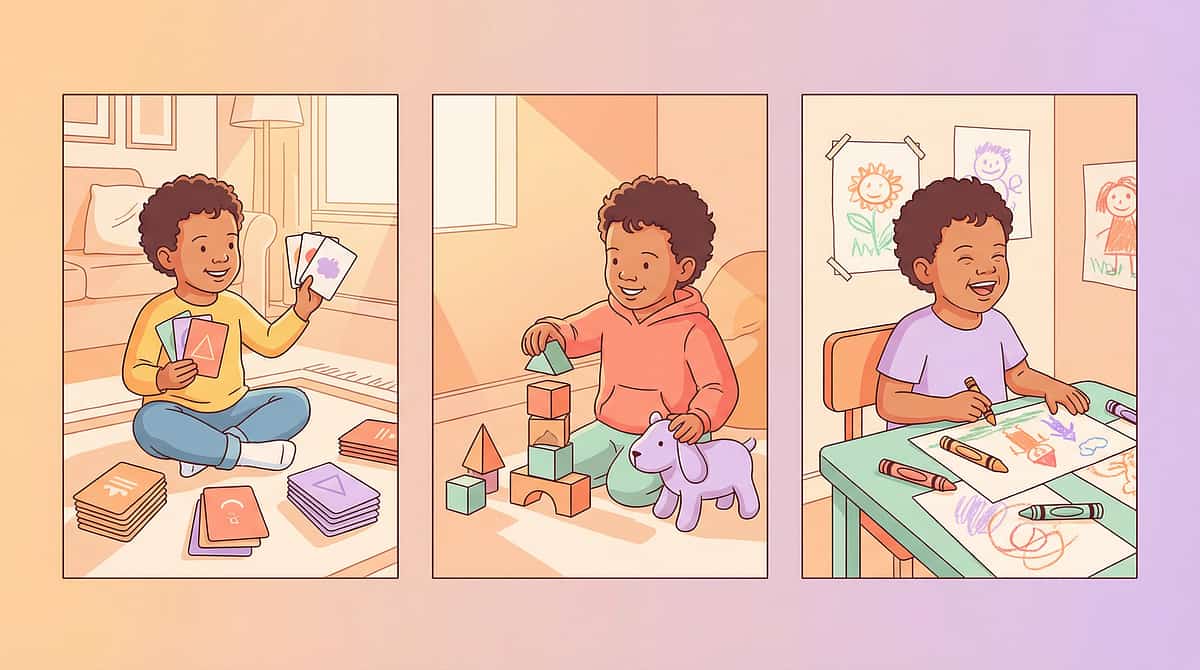
Step 4 of 6
Step 4 — Repeat & Vary (3–5 minutes)
Dosage Principle: 3 excellent repetitions > 10 forced repetitions. Aim for 3–5 varied repetitions of core vocabulary within the session.
🔄 Variation A — Different Schedule Items
Use a different part of the schedule. "What comes BEFORE dinner? What happens AFTER bath?"
🔄 Variation B — Child Leads
Let child point to any item. Parent narrates: "You're pointing to [activity]! Is that FIRST or AFTER breakfast?"
🔄 Variation C — Reverse Direction
Practice both directions. "Tell me what comes BEFORE lunch. Now tell me what comes AFTER lunch."
🔄 Variation D — Wrong Answer Technique
Point to the wrong position on purpose. "Is breakfast LAST? No! Breakfast is FIRST, isn't it!" Children love correcting adults — high engagement.
🔄 Variation E — Cross-Material Connection
"The timer shows 2 minutes. That's how much time is LEFT. 'Soon' means the red is almost gone."
"3 Good Reps" Rule: If you achieved 3 clear, engaged repetitions of the target vocabulary — you had a successful session. Anything beyond is a bonus. Stop when you see satiation indicators: sustained gaze aversion, increased self-stimulatory behaviour, or materials being pushed away.

Step 5 of 6
Step 5 — Reinforce & Celebrate (within 3 seconds of success)
The ABA Timing Rule: Reinforcement delivered within 3 seconds of the desired behaviour is 4× more effective than delayed praise.
When child uses "first"
"YES! FIRST! That's the word! You said FIRST — I heard it!"
When child points to correct sequence
"That's right — that picture comes AFTER! You found after!"
When child waits during timer
"You waited! See the timer? You watched it! That was a LONG wait — and you did it!"
When child uses any tense marker
"'We ATE lunch.' You said ATE — past tense! That's exactly right!"
Reward Stickers
Pinnacle Canon: 1800+ Teacher/Parent Reward Stickers (₹364) — one per temporal word used
Verbal Praise
Always pair with specific label of what was correct — not just "good job" but "good job saying FIRST!"
Brief Preferred Activity
30 seconds of child's choice — powerful reinforcer when used immediately and consistently
High Five / Fist Bump
If child tolerates touch — physical celebration reinforces positive emotional association
Celebrate the Attempt: "First" said with a point to a random item still earns praise. The attempt to use temporal vocabulary is the target behaviour — accuracy comes with repetition.

Step 6 of 6
Step 6 — The Cool-Down (1–2 minutes)
No session ends abruptly. The cool-down prevents post-session dysregulation and — crucially — IS itself temporal vocabulary practice.
Cool-Down Sequence
- Announce ending verbally + visually (gesture or timer shows 0)
- Child participates in material put-away (if able): "Can you put the cards here? Thank you!"
- Brief 60-second calming activity: hand squeeze, deep breath together, stretching
- Transition cue to next activity using temporal language and visual schedule
Temporal Language in Cool-Down
The cool-down IS vocabulary practice. Use it: "AFTER we clean up, THEN we play. We're ALMOST done. This is the LAST activity before play."
If Child Resists Ending:
- Don't extend the session to manage distress — that reinforces resistance
- Use visual timer: "See? Timer is done. All done means done."
- Offer preferred activity immediately after put-away
NCAEP 2020: Visual supports including transition warnings are classified as evidence-based practice for autism.

Capture the Data — Right Now
📊 60 Seconds of Data Now Saves Hours of Guessing Later
1
Session Completion
○ Full session (15–20 min) ○ Modified (8–10 min) ○ Postponed (under 5 min)
2
Temporal Vocabulary Observed
Circle all target words child produced (spontaneously or with prompting):
first / then / before / after / next / last / yesterday / today / tomorrow / soon / later / now / long time / wait / when
first / then / before / after / next / last / yesterday / today / tomorrow / soon / later / now / long time / wait / when
3
Child Regulation Rating (0–5)
0 = Could not start | 1 = Very dysregulated | 2 = Somewhat regulated | 3 = Regulated | 4 = Engaged | 5 = Excellent engagement
Sessions 1–5: Establish Baseline
Don't interpret individual sessions. Consistency matters more than any single data point.
Sessions 6–15: Look for Trends
Vocabulary items used consistently = progress. Compare across sessions, not within them.
Sessions 16+: Generalisation Indicators
Does child use temporal words OUTSIDE sessions? That is the ultimate marker of success.

Session Abandonment Is Not Failure — It's Data
Troubleshooting
7 Common Problems + Solutions
Child refuses to sit or engage with materials
Why: Arousal too high OR materials not motivating enough. Fix: Start with 30 seconds of preferred physical activity (jumping, spinning). Then re-offer. If still refusing, use visual timer only — it can be used while child plays freely.
Child says "when?" before session even starts
Why: This IS the temporal concept challenge — showing up right now. Fix: POINT TO SCHEDULE: "Look here. FIRST we do this. THEN we do that." Show them. This is the intervention happening in real time.
Child uses wrong temporal word (says "after" when meaning "before")
Why: Before/after reversal is clinically common — highly similar words with opposite meanings. Fix: Don't correct. Model correct version. Always pair with physical gesture (hand behind = before, hand forward = after).
Child can do it with visual support but not without
Why: Normal Phase 1. Dependence on visuals precedes independence. Fix: Do not remove visuals prematurely. Fading happens after 8–12 weeks of consistent use — not before.
Child memorises schedule but doesn't understand "first"
Why: Visual discrimination (knowing positions) develops before verbal understanding. Fix: Progress! Now actively label: "You KNOW this is breakfast! Breakfast comes FIRST. First means at the beginning."
Child becomes anxious when schedule changes
Why: Schedule has become a rigid anchor. Fix: Build "change" into the schedule explicitly. Add a "SURPRISE" or "CHANGE" card. Practice: "Sometimes the schedule changes. That's okay. We change the card."
Progress seems to stop after Week 4
Why: Consolidation plateau — normal in neurodevelopment. Fix: Don't increase intensity. Maintain consistency and add generalisation contexts (different rooms, different family members, different routines).
No Two Children Are Identical — Make This Yours
Adapt & Personalise
🔵 Concrete/Visual Learners
Rely heavily on physical timeline mat. Make all temporal concepts spatial. "Before is to the LEFT. After is to the RIGHT."
🟡 Strong Language/Verbal Learners
Add verbal narrative: "Tell me the WHOLE story in order. Use FIRST, THEN, LAST."
🟠 High-Anxiety Children
Prioritise countdown materials. Making "how long until?" visible reduces anxiety dramatically. Start there.
🟢 Children with Strong Interests
Use their interest as the sequence content: "FIRST the dinosaur hatches. THEN it grows." Same vocabulary, their content."
1
Ages 2–4
First-then only. One visual at a time. 5-minute sessions.
2
Ages 5–7
Add calendar, before/after, visual timer. 10–15 minute sessions.
3
Ages 8–10
Add tense, clock-reading, planning materials. 15–20 minute sessions.

ACT IV: PROGRESS ARC
Weeks 1–2
Weeks 1–2: You're Building Neural Foundations
15%
Foundation Phase
Weeks 1–2 — you are here. Neural pathway formation is invisible. But it's happening.
✅ Tolerance (not mastery)
Child sits with visual schedule for 3–5 minutes without resistance. This IS progress.
✅ Reduced "when?" frequency
20–30% decrease in repetitive time-based questions when visual timer is visible. Observable and measurable.
✅ Imitation of temporal words
Child echoes "first" or "then" after parent models — even without understanding yet. Verbal imitation precedes comprehension.
✅ Visual orientation
Child spontaneously glances at visual schedule when uncertain. The schedule is becoming a reference.
"If your child tolerates the visual schedule for 30 seconds longer than last week — that IS real, measurable progress." Session log target: 4–6 sessions in Weeks 1–2. Consistency matters more than session quality at this stage. (PMC11506176)

Weeks 3–4
Consolidation Phase
Weeks 3–4: Neural Pathways Are Forming
40%
Consolidation Phase
Weeks 3–4 — you are here. The vocabulary is beginning to anchor.
Child anticipates session structure
Moves toward schedule area when it's "session time." Temporal expectation is forming — a significant cognitive milestone.
Reduced prompt dependency
Child uses "first" and "then" with gestural prompt only (not full verbal model). Prompting hierarchy is naturally fading.
Spontaneous schedule-checking
Child points to schedule independently when uncertain. The visual anchor is working exactly as intended.
Improved waiting
Child waits more calmly when visual timer is visible. Duration tolerance increasing session by session.
Generalisation Seeds: Watch for child using "first" or "then" in play, referencing calendar for upcoming events, or showing reduced anxiety when schedule changes. When you see 2+ of these → increase to 3× per week. Parent Milestone: "You are becoming your child's temporal language model — not just their parent."

Weeks 5–8
Emergence Phase
Weeks 5–8: The Language Is Emerging
70%
Emergence Phase
Weeks 5–8 — you are here. The language is becoming spontaneous.
✅ 3+ Temporal Words Across Multiple Settings
Child independently uses at least 3 temporal words (first, then, before/after, now/later) beyond the session context.
✅ Calendar Routine Established
Child participates in daily yesterday/today/tomorrow calendar check. The cycle of time is becoming real.
✅ Visual Timer Internalised
Child requests visual timer for difficult waits. Tool has moved from external support to internal coping strategy.
✅ Sequence Retelling
Child can tell a 3-step story sequence using temporal language with minimal prompting. Narrative skills are emerging.
✅ Tense Emerging
Child uses past tense (-ed forms) in conversation about recent events. Grammar is following vocabulary.
Introduce at Week 6 (if Weeks 1–4 foundation is solid): Clock reading linked to meaningful daily events. Days-of-week daily calendar routine as non-negotiable. First countdown chain for an upcoming event.

Stop. Celebrate. You've Earned This.
🥇 Foundation Award
Child now sits with visual schedule consistently → Earned at ~Week 2
🥇 Temporal Anchor Award
Child reduces "when?" questioning when schedule is visible → Earned at ~Week 3
🥇 Vocabulary Award
Child spontaneously uses "first" and "then" outside of sessions → Earned at ~Week 5
🥇 Calendar Award
Child participates in daily yesterday/today/tomorrow routine → Earned at ~Week 6
🥇 Patience Award
Child waits for visual timer without distress → Earned at ~Week 4–6
🥇 Tense Award
Child uses past or future tense in conversation → Earned at ~Week 7–8
"Every one of these milestones represents neural pathway formation — synaptic connections being strengthened by consistent, loving, evidence-based practice. You did that. In your home. Every single session."
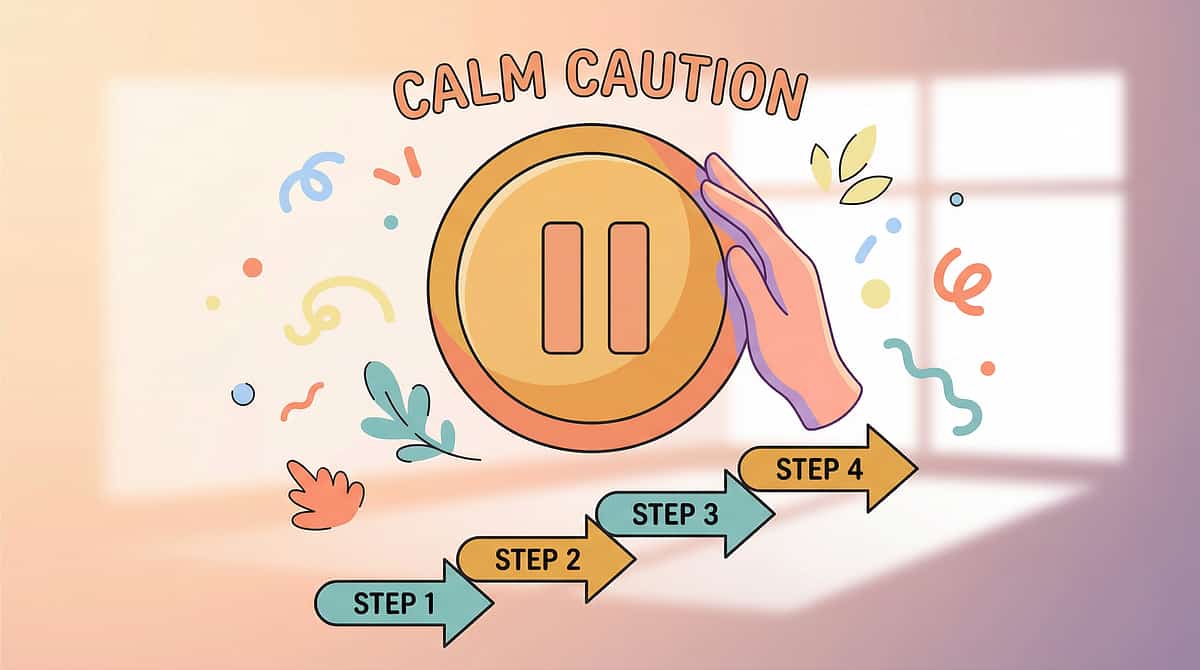
These Signs Mean: Seek Clinical Support Now
🚨 Red Flags
When to Call Pinnacle
🔴 RED FLAGS — Contact Pinnacle Immediately
- Child's language skills are regressing — using fewer words than 4 weeks ago (regression, not plateau)
- Child developing significant anxiety around schedules/time interfering with daily function and sleep
- Child has never developed any verbal language by 36 months and has not been formally assessed
- Child's behaviour is escalating in frequency/intensity despite 8 weeks of consistent intervention
🟡 AMBER FLAGS — Schedule a Clinical Review
- After 8 weeks of consistent practice (3 sessions/week), no observable progress on ANY Week 1–4 indicators
- Child's temporal vocabulary is developing in isolation but not generalising across contexts
- Child uses temporal words in rote/scripted ways only, without functional understanding
🟢 Reassurance
Most families will not see red or amber flags if using this protocol consistently. Plateaus are normal. Slow progress is normal. Individual variation is expected.
📞FREE Clinical Guidance: 9100 181 181 — FREE National Autism Helpline | 24×7 | 16+ languages. "Our clinical team will review your data log and guide next steps. Free. No appointment needed for phone consultation."

You Are Here. Here's Where You're Heading.
Your Progression Pathway
Prerequisites: B-171 & B-172
Quantity Concepts (more/less/same) + Spatial Concepts (before/behind/in front). Ensure these are in place before B-173.
📍 YOU ARE HERE: B-173 — Temporal Concepts
"Making Time Visible" — the complete temporal vocabulary and sequence language intervention programme.
Next: B-174 — Cause and Effect Understanding
"Because X happened first, Y happened." Temporal causation is the natural next step after temporal sequence mastery.
B-180 — Following Multi-Step Directions
Temporal sequence in instructions: first do this, then do that. Same vocabulary, academic and functional application.
B-190 — Narrative Skills
Full story grammar using temporal vocabulary — beginning, middle, end. The highest-level temporal language goal.
Materials You Already Own: If you made or purchased a Visual Schedule for B-173 → you can start B-174 and B-180 with the SAME materials. No additional investment required.

Explore Related Techniques in Language & Concept Development
B-171 — Quantity Concepts
🟢 Intro Level | Canon: Counting Materials. More, less, same — the language of comparison that supports temporal comparisons. View Technique →
B-172 — Spatial Concepts
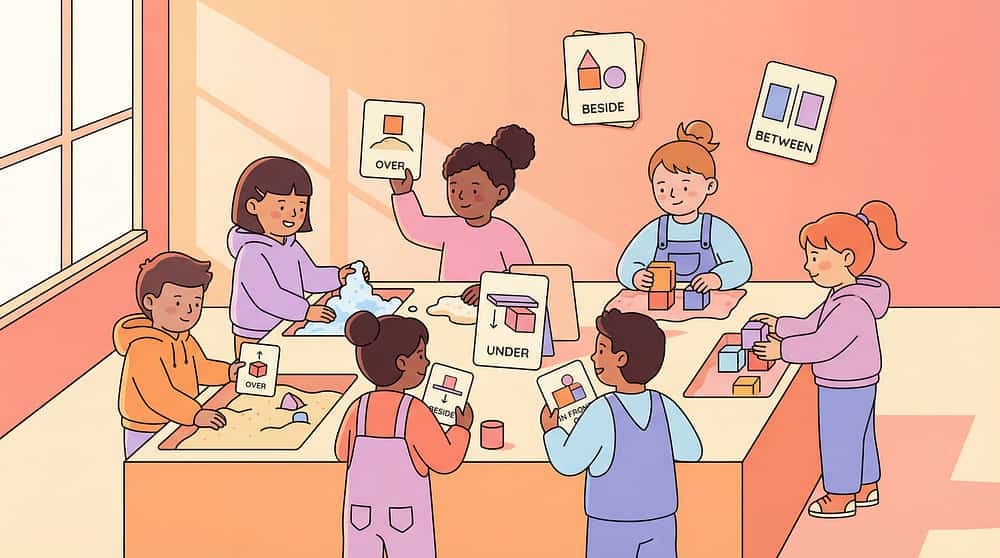
🟢 Intro Level | Canon: Concept Cards. Before/after has spatial analogues: in front of/behind. Spatial language builds temporal language. View Technique →
B-174 — Cause & Effect Understanding
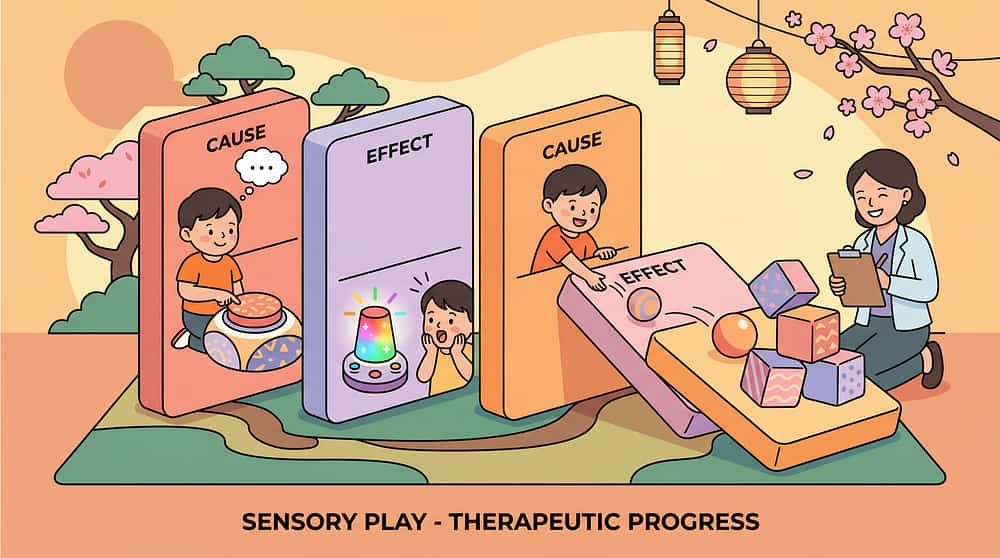
🔵 Core Level | Canon: Sequence/Story Cards. Because X happened first, Y happened. Natural next step after temporal mastery. unknown link
B-180 — Multi-Step Direction Following
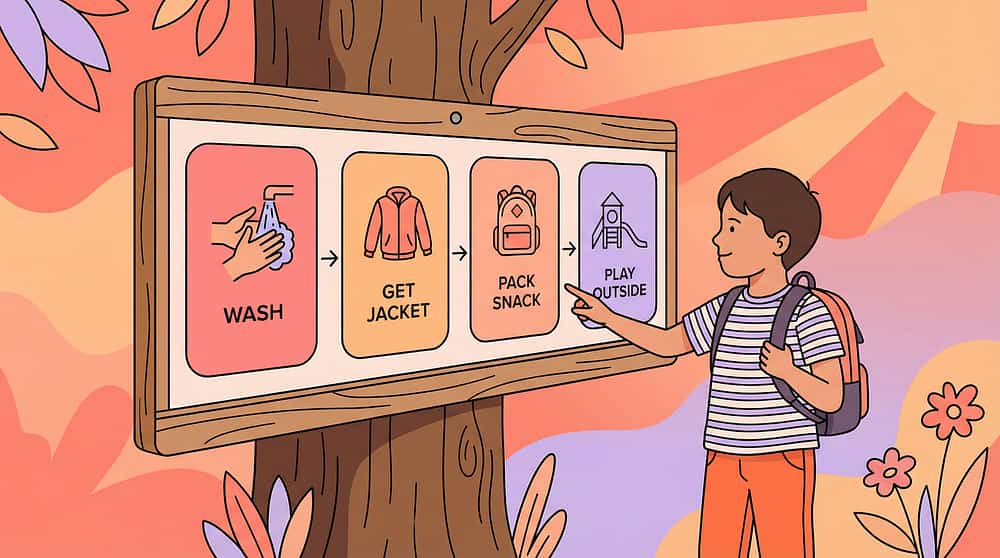
🔵 Core Level | Canon: Visual Schedule. Temporal sequence in instructions: first do this, then do that. View Technique →

B-190 — Narrative Skills
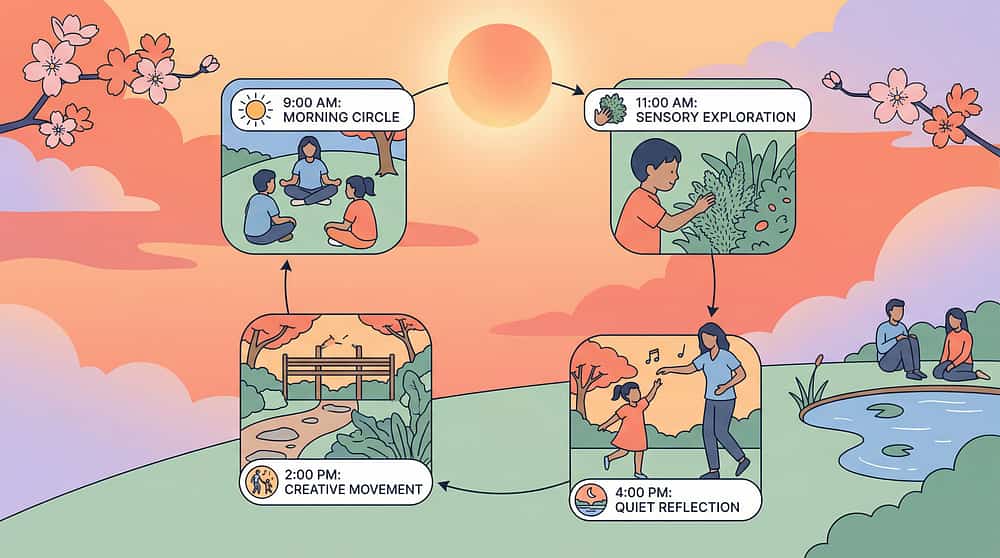
🟡 Advanced Level | Canon: Story/Sequence Cards. Full story grammar using temporal vocabulary — beginning, middle, end. View Technique →
K-975 — Visual Schedules for Daily Routines
🔵 Core Level | Canon: Visual Schedule Systems. Parent training approach to visual schedule implementation across the full day. View Technique →
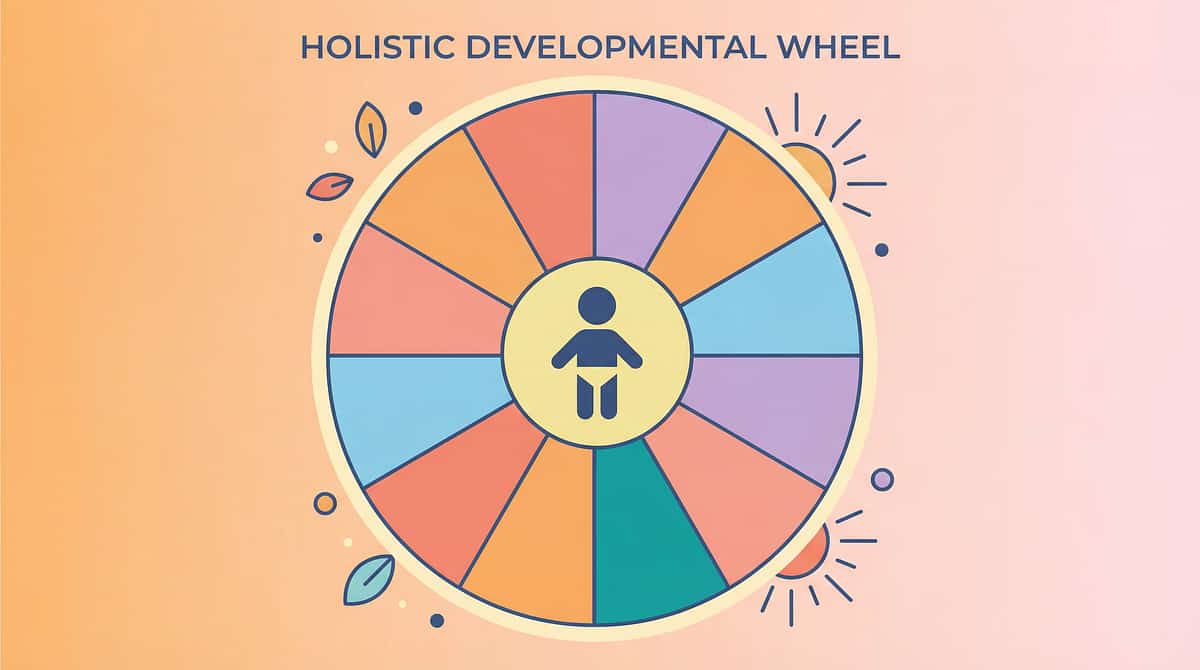
This Technique Is One Piece of a Larger Plan
12-Domain Developmental Map
GPT-OS® tracks your child's AbilityScore® across all 12 domains. This technique feeds the Communication Readiness Index and Daily Living Index — two of the seven readiness indices that determine school and life readiness outcomes.
80+
Centres
across India delivering Pinnacle protocols
21M+
Sessions
analysed in the GPT-OS® database
97%+
Measured Improvement
across all programmes and domains

Real Families. Real Progress. Real Time.
"He used to ask 'When?' every thirty seconds because time was invisible to him. Three months of visual schedule + visual timer, consistently. Now he checks the schedule himself, tells me 'After lunch comes therapy,' and even said 'Two more sleeps until Grandma!' Time finally makes sense to him."
— Parent, Pinnacle Blooms Network® | Hyderabad(Illustrative case; outcomes vary by child profile)
"The before/after cards changed everything for my daughter. Yesterday she said 'BEFORE I brushed my teeth, I ate breakfast.' I nearly cried."
— Parent, Pinnacle Blooms Network® | Bengaluru
89%
Show Improvement
of children show improvement in temporal vocabulary after 8–12 weeks of consistent protocol
76%
Generalise
show generalisation to outside-session contexts by Week 12
65%
Reduced Anxiety
average reduction in "when?"-type anxious questioning with visual schedule consistency

40,000+ Families. One Community. Your Tribe.
ACT V: COMMUNITY & ECOSYSTEM
Parent Community
40,000+ families implementing Pinnacle protocols at home. You are not navigating this alone.
Technique Discussion Groups
B-domain language techniques parent group — share questions, wins, and real-time support with families on the same journey.
Weekly Parent Training Reels
Pinnacle therapists demonstrate techniques live — 999 technique videos covering the full therapeutic library.
Live Q&A Sessions
Monthly SLP + SpEd live sessions for language technique questions — direct clinical access, free for community members.

70+ Centres. Clinical-Grade Support, Near You.
🗺️ Find a Pinnacle Centre
What a Pinnacle Clinical Assessment Adds
Home protocol (this page) covers parent-implemented temporal concept building. Clinical assessment additionally provides:
- AbilityScore® — standardised baseline across all 12 domains
- GPT-OS® Diagnostic Intelligence — 591+ structured observations
- Individualised B-173 protocol calibrated to your child's specific profile
- FusionModule™ — SLP + OT + ABA coordinated simultaneously
- EverydayTherapyProgramme™ — clinical plan translated into daily home activities
Services for Temporal Concepts
- ✅ Speech-Language Therapy (Primary)
- ✅ Special Education
- ✅ ABA Therapy
- ✅ Occupational Therapy (executive function + transitions)
- ✅ Parent Training + EverydayTherapyProgramme™
FREE First Step
📞FREE National Autism Helpline: 9100 181 181
Available 24×7 | 16+ languages | No referral needed
Available 24×7 | 16+ languages | No referral needed
CIN: U74999TG2016PTC113063 | DPIIT: DIPP8651 | GSTIN: 36AAGCB9722P1Z2
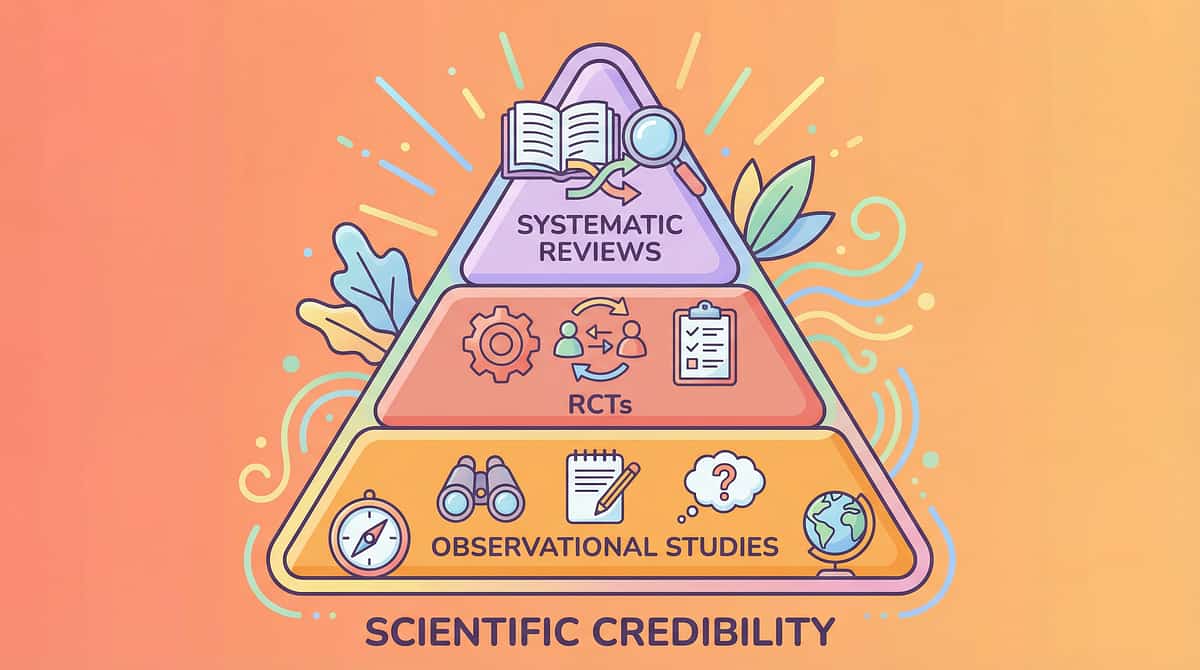
The Science Behind This Page — For the Curious
Research Library
📚 PRISMA Systematic Review (Children, 2024)
"Visual-based interventions meet EBP criteria for ASD." 16 studies | 2013–2023. PMC11506176
📚 Meta-Analysis (World J Clin Cases, 2024)
"Structured intervention promotes social skills, language, adaptive behaviour in ASD." 24 studies | 1,532 participants. PMC10955541
📚 Indian Paediatric RCT (Indian J Pediatrics, 2019)
"Home-based parent-administered intervention — significant outcomes." Padmanabha et al. DOI: 10.1007/s12098-018-2747-4
📚 WHO Care for Child Development Package
"Evidence-based developmental recommendations for caregivers." 54 LMIC countries implementation. PMC9978394
📚 NCAEP Evidence-Based Practices (2020)
"Visual supports + video modelling classified as EBP for autism." National Clearinghouse. ncaep.fpg.unc.edu
📚 Temporal Development Research
Friedman WJ (2000) + McCormack & Hoerl (2017) + Boucher et al. (2007). Foundational temporal concept development literature.

Your Data Helps Every Child Like Yours
GPT-OS® Technology
GPT-OS® Stack — What Your B-173 Data Feeds
🧠Diagnostic Intelligence Layer → Your session data refines temporal concept baseline on AbilityScore® (0–1000 scale)
📊Prognosis Engine → Compares your child's progression rate against 21M+ session database to predict trajectory
🎯TherapeuticAI® → Determines when to advance from first-then → before/after → days of week → tense → clock-reading
📱EverydayTherapyProgramme™ → Translates GPT-OS® recommendations into your daily home schedule
🔗FusionModule™ → Coordinates SLP temporal vocabulary targets with OT transition support and ABA schedule reinforcement
🔒 Privacy Assurance
All data is anonymised at population level. Individual data protected under Indian IT Act + GDPR-equivalent privacy standards. You control your data at all times.
Proof
- 20M+ 1:1 sessions analysed
- 97%+ measured improvement
- Patents filed in 160+ countries
"This is not software. This is therapeutic infrastructure."
Watch: 9 Materials That Help With Temporal Concepts
🎬 Reel B-173
Language & Concept Development Series — Episode 173 of 999
🎬 Reel B-173
Duration: 75 seconds | Domain B — Language & Concept Development
Cover → Hook ("Time is invisible") → 9 Materials → CTA → GPT-OS® → About Pinnacle → Disclaimer
Watch at pinnacleblooms.org/reels/B-173
Cover → Hook ("Time is invisible") → 9 Materials → CTA → GPT-OS® → About Pinnacle → Disclaimer
Watch at pinnacleblooms.org/reels/B-173
Why Video Matters: Video modelling is classified as an evidence-based practice for autism (NCAEP 2020). Watching a therapist demonstrate temporal concept teaching reinforces everything on this page through a different learning modality — visual + auditory + demonstration together.
⬅️ Previous Reel
B-172 — 9 Materials That Help With Spatial Concepts
Watch B-172 →
Watch B-172 →
➡️ Next Reel
B-174 — 9 Materials That Help With Cause & Effect Understanding
Watch B-174 →
Watch B-174 →

Consistency Across Caregivers Multiplies Impact
Share This Page
Multi-caregiver consistency is the single most powerful predictor of generalisation in language intervention. Share this resource with everyone in your child's life.
📄 B-173 Family Guide — 1-Page PDF
Simplified one-page: what temporal concepts are, the 3 essential materials, and how to use them. Print-ready. For grandparents, teachers, and other caregivers.
📄 30-Day Data Tracking Sheet
Pre-formatted session log for B-173. Date, vocabulary used, regulation rating, notes. PDF, print-ready.
Teacher/School Communication Template: "Our child [name] is working on temporal concept understanding as part of a structured home programme. Key vocabulary: first, then, before, after, yesterday, today, tomorrow. We ask that the classroom team: (1) use a visual schedule consistently, (2) narrate daily routines with temporal vocabulary, (3) avoid abstract time references like 'soon' without visual support." Copy Template →

Your Questions, Answered by the Pinnacle Consortium
📋 FAQ
My child is 7 years old and still doesn't understand 'tomorrow.' Is it too late?
No. While 5–6 is typical for mastering relative time terms, explicit teaching remains highly effective through age 12+ in autism. Visual anchors + daily calendar practice at age 7 can achieve what wasn't in place earlier. Neuroplasticity is not age-capped at 7. Begin today.
Should I use a digital timer or a physical visual timer?
Physical visual timers (especially Time Timer-style, where coloured sections physically shrink) are clinically preferred for ages 2–6 because the visual-tactile feedback is more concrete. Start physical, transition to digital as number understanding develops.
How many temporal words should I focus on per session?
One to two words maximum per session at the beginning. Overloading temporal vocabulary is the most common error. Master "first" and "then" before adding "before" and "after." Depth before breadth.
My child memorises the schedule but doesn't seem to understand "first." Is the schedule working?
Yes — this is Stage 1. Positional memory precedes conceptual understanding. Continue the schedule AND actively narrate: "You KNOW this is first! First means it comes at the beginning." The understanding will follow the memorisation.
Can I teach temporal concepts during everyday routines instead of a special session?
YES — in fact, naturalistic embedding in daily routines is the gold standard. Bath routine: "FIRST we wash hair, THEN we soap up, AFTER that we rinse." Formal sessions build the vocabulary; routines generalise it.
My child's school uses a visual schedule but at home they still ask 'when?' constantly.
The schedule is working at school but hasn't transferred to home because home lacks the same visual structure. Create an IDENTICAL home schedule with the same format. Consistency of visual system across environments is critical for generalisation.
How do I know if my child is ready to start clock-reading?
Two prerequisites: (1) child reliably understands "before" and "after" relationships, and (2) child understands numbers 1–12. Don't start with abstract clock face practice — start by linking specific clock positions to meaningful daily events.
Is this only for autism, or does it help other developmental conditions?
This protocol applies to any child with temporal concept delay, including ADHD, developmental language disorder, intellectual disability, and global developmental delay. The visual-temporal approach is universally effective for concrete learners.
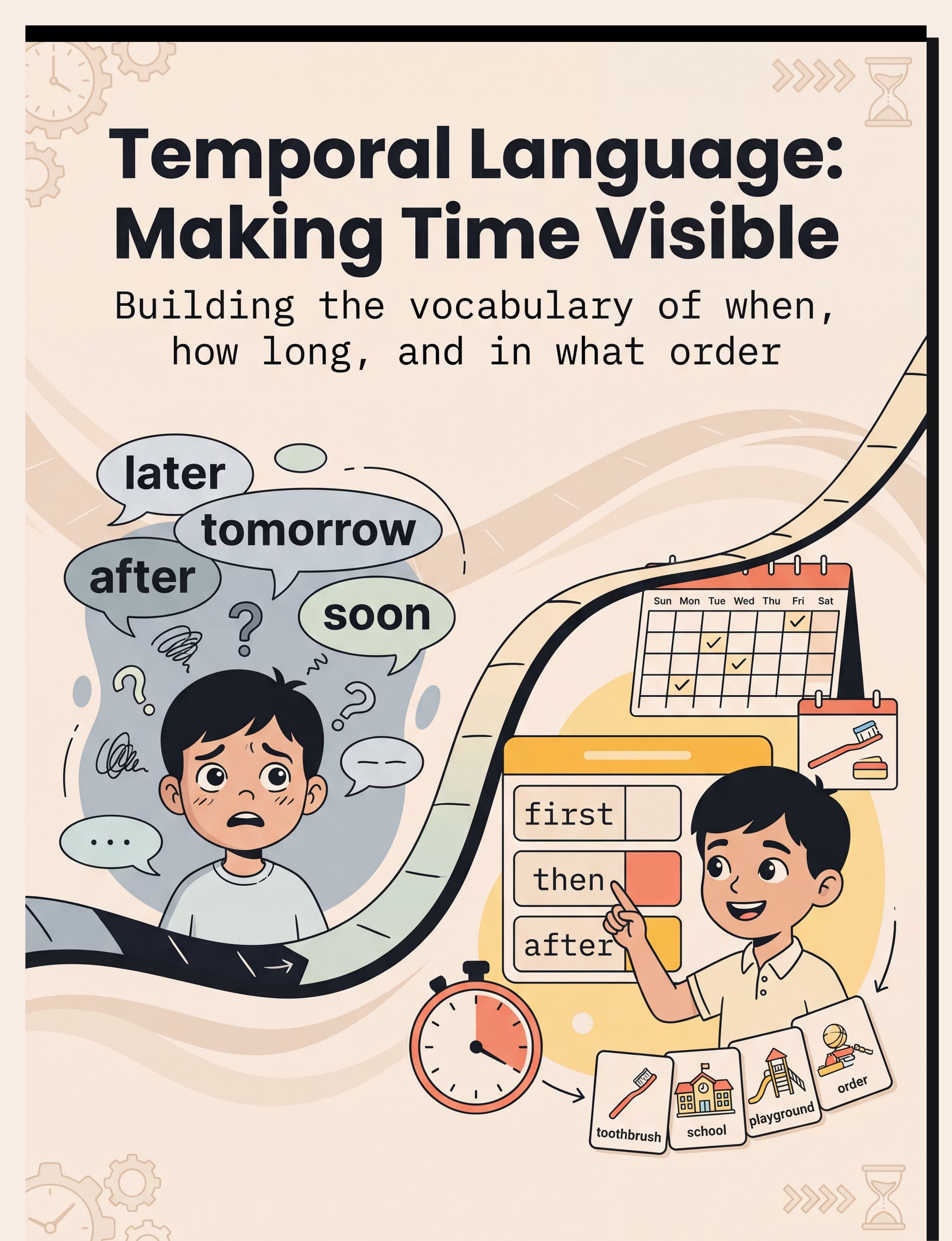
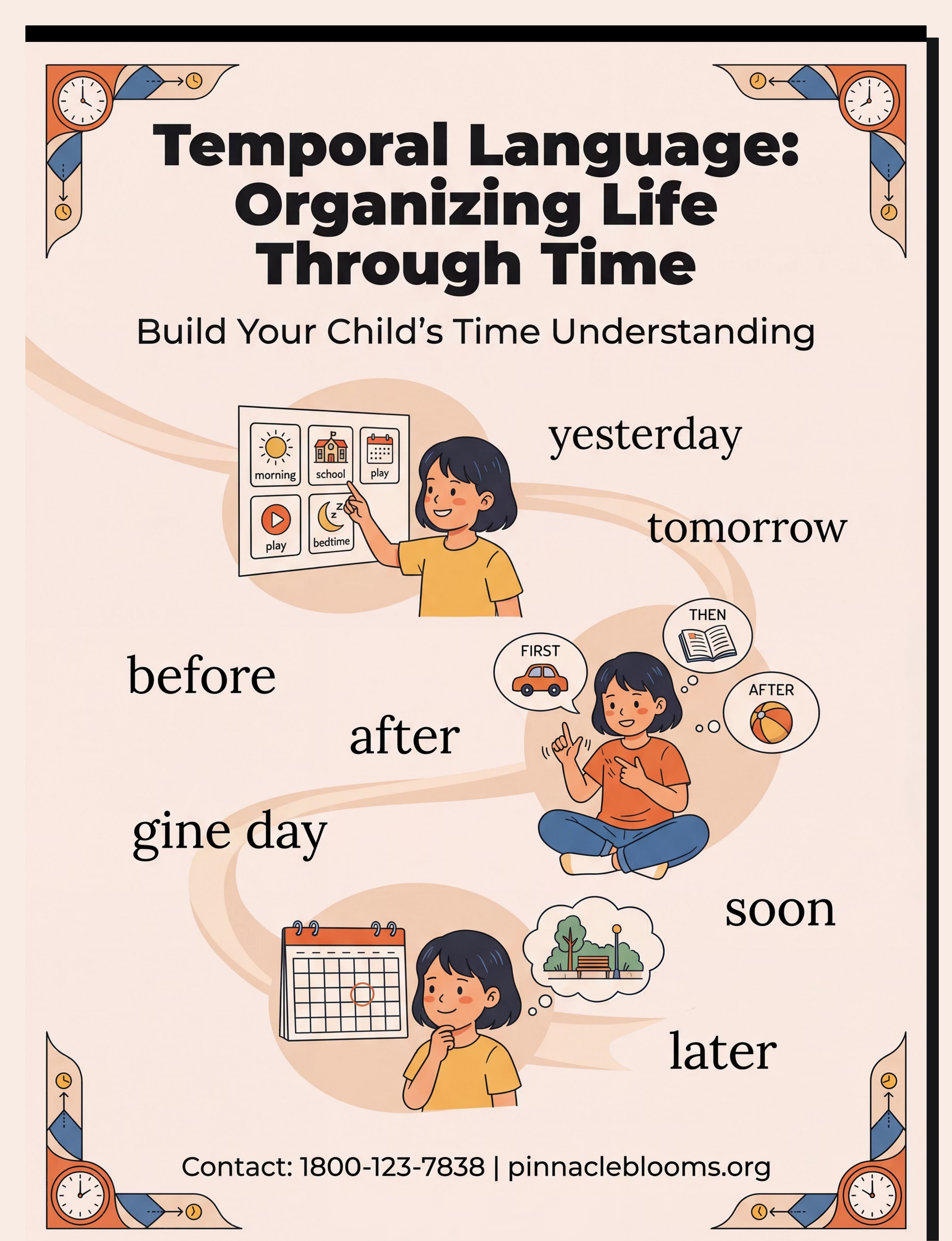
Preview of 9 materials that help with temporal concepts Therapy Material
Below is a visual preview of 9 materials that help with temporal concepts therapy material. The pages shown help educators, therapists, and caregivers understand the structure and content of the resource before use. Materials should be used under appropriate professional guidance.






Link copied!

Your child's temporal world can be transformed. Not someday. Starting today.
ACT VI: CLOSE
21M+ 1:1 Sessions
Delivered and analysed by Pinnacle Blooms Network®
97%+ Measured Improvement
Across all programmes and domains, verified by consortium CRO
80+ Centres
Across India | 70+ countries served | 16+ languages supported
FREE Helpline
📞 9100 181 181 — 24×7, no referral, no appointment needed
Legal Disclaimer: This content is educational and does not replace assessment or treatment by a licensed speech-language pathologist, occupational therapist, behaviour analyst, or developmental specialist. Individual outcomes vary. Statistics represent aggregate outcomes across Pinnacle Blooms Network®. If concerned about your child's development, consult a qualified professional.
🌸PINNACLE BLOOMS NETWORK® — India's Largest Autism Therapy Chain | OT • SLP • ABA • SpEd • NeuroDev
© 2025 Pinnacle Blooms Network®, unit of Bharath Healthcare Laboratories Pvt. Ltd. | CIN: U74999TG2016PTC113063 | DPIIT: DIPP8651 | GSTIN: 36AAGCB9722P1Z2
"From fear to mastery. One technique at a time."
© 2025 Pinnacle Blooms Network®, unit of Bharath Healthcare Laboratories Pvt. Ltd. | CIN: U74999TG2016PTC113063 | DPIIT: DIPP8651 | GSTIN: 36AAGCB9722P1Z2
"From fear to mastery. One technique at a time."