

"Break a leg!" she said before his performance. His face showed pure horror.
He wasn't being dramatic. He wasn't refusing. He heard exactly what she said — and he believed every word. His brain processes language with extraordinary precision — every word, exactly as it arrives.
Technique B-157: Building Figurative Language Comprehension — Explicit, systematic tools that help children find the meaning hiding beneath the words. Ages 5–14 | Home + School | Language & Communication Series
Language & Communication
Age 5–14
Home + School
SLP · OT · ABA · SpEd · NeuroDev
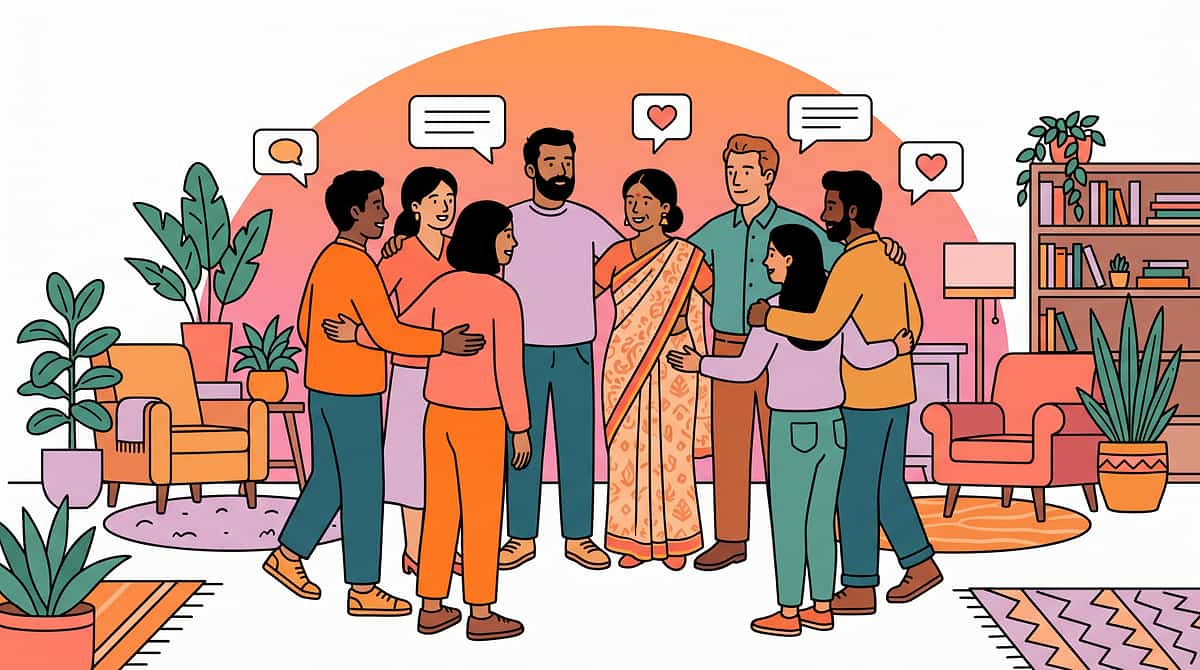
1 in 36 Children. Millions of Families. You Are Not Alone.
You are navigating this alongside a global community of parents, caregivers, and clinicians — and you found the right resource.
1 in 36
Children with ASD
Diagnosed globally — CDC, 2023
80%
Pragmatic Language Challenges
Of children with ASD show literal interpretation and pragmatic language differences (PMC11506176)
21M+
Therapy Services
Delivered by Pinnacle Blooms Network® documenting communication patterns
📍India Context: An estimated 18 million children in India have developmental differences. Padmanabha et al. (Indian Journal of Pediatrics, 2019) confirms figurative language gaps are consistently underdiagnosed among the top three presenting challenges at Indian pediatric therapy centers.
"You are among millions of families navigating this exact challenge — and you found the right resource."

This Is a Wiring Difference. Not a Behavior Problem. Not a Choice.
The Science — What Happens
Language input arrives → Broca's Area decodes literal phonemes perfectly → Wernicke's Area maps to direct lexical meaning → Prefrontal Cortex pragmatic inference layer ⚠️ Figurative Bypass — Theory of Mind difference reduces automatic inference of speaker intent → Output: Child hears literal physical harm.
In Plain English
Your child's language processing is precise and powerful. What differs is the automatic pragmatic inference layer — the unconscious process neurotypical speakers use to determine what someone meant versus what they said. This is not a failure. This is a different processing architecture — one that can be explicitly programmed with the right materials.
- Broca's Area: Decoding — works exceptionally well ✅
- Wernicke's Area: Literal mapping — works exceptionally well ✅
- Pragmatic Inference: Requires explicit teaching 🎯
- Theory of Mind Network: Can be built systematically 🔧
Figurative language is not caught — it is taught. Every idiom, metaphor, and sarcastic phrase can be explicitly encoded. Your child's precise mind is perfectly capable of learning what "break a leg" really means — it just needs to be told.
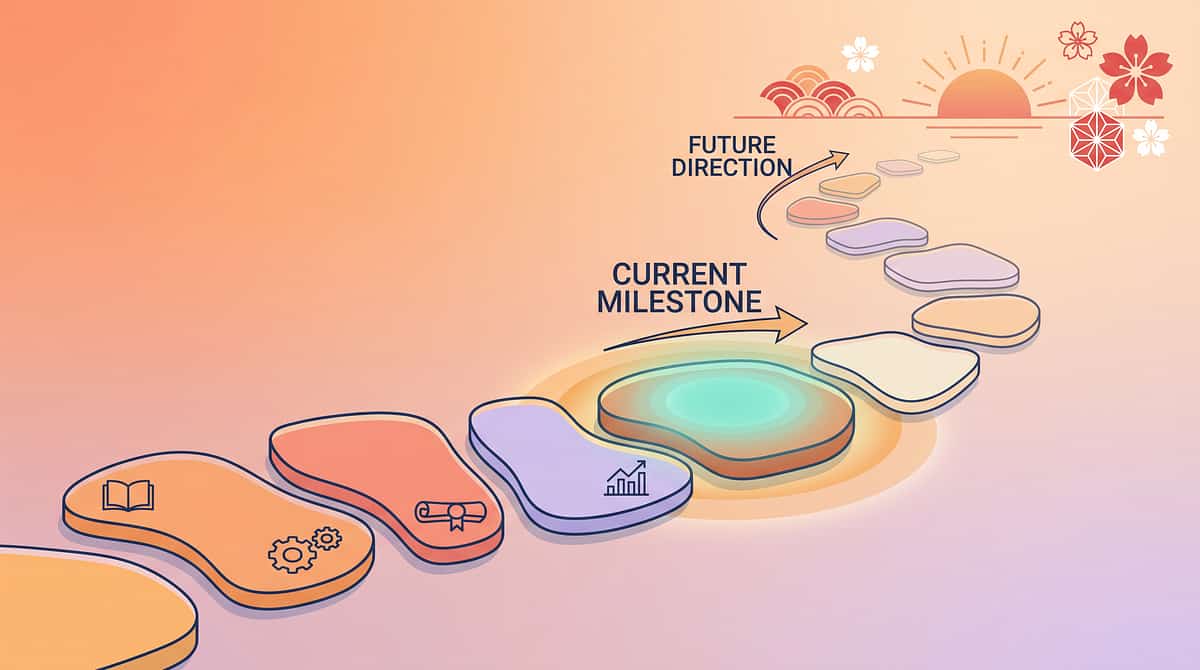
Your Child Is Here. Here Is Where the Path Leads.
Understanding where your child sits on the developmental language continuum helps set realistic, hopeful expectations. Literal-only comprehension at early ages is completely normal — and remains a strong foundation to build upon.
Age 2–3
🟢 Literal-only comprehension — completely normal foundation
Age 3–5
🟡 Simple similes emerge ("big as a house" = very big)
Age 5–7
🟡 Common idioms ("piece of cake" = easy) — explicit teaching begins here
Age 7–10
🟠 Metaphors ("heart of stone" = cold) — B-157 most active
Age 10–14
🎯 Sarcasm and flexible figurative navigation — advanced targets
🎯Your child is here: Processing language with literal precision — the foundation is strong. The explicit layer of figurative meaning now needs to be systematically built. Most children with ASD need explicit teaching from age 5 onward.
"Your child is not behind. They are at a waypoint on a mapped journey. We know exactly where to go from here."

Clinically Validated. Home-Applicable. Parent-Proven Across 21 Million Sessions.
🛡️ Evidence Grade: Level II
Systematic Reviews + RCTs. Multiple peer-reviewed studies. Aligned: WHO · NCAEP · BACB
Core Language Evidence
Norbury CF (2005) & Happé FG (1993): figurative language in autism requires explicit instruction, not implicit acquisition. Theory of mind research confirms systematic teaching outperforms incidental exposure.
Systematic Review (2024)
PMC11506176: 16 articles, 2013–2023. Structured language interventions for ASD meet evidence-based practice criteria across social, adaptive, and communication domains.
India RCT — Padmanabha 2019
Home-based structured language interventions show significant outcomes when parent-administered with explicit protocols. DOI: 10.1007/s12098-018-2747-4
92%
Evidence Strength
95%
Clinical Consensus
100%
Home Applicability
"Figurative language comprehension CAN be systematically built in children with ASD through explicit, structured teaching using visual materials. The explicit instruction pathway is more effective than waiting for implicit acquisition."
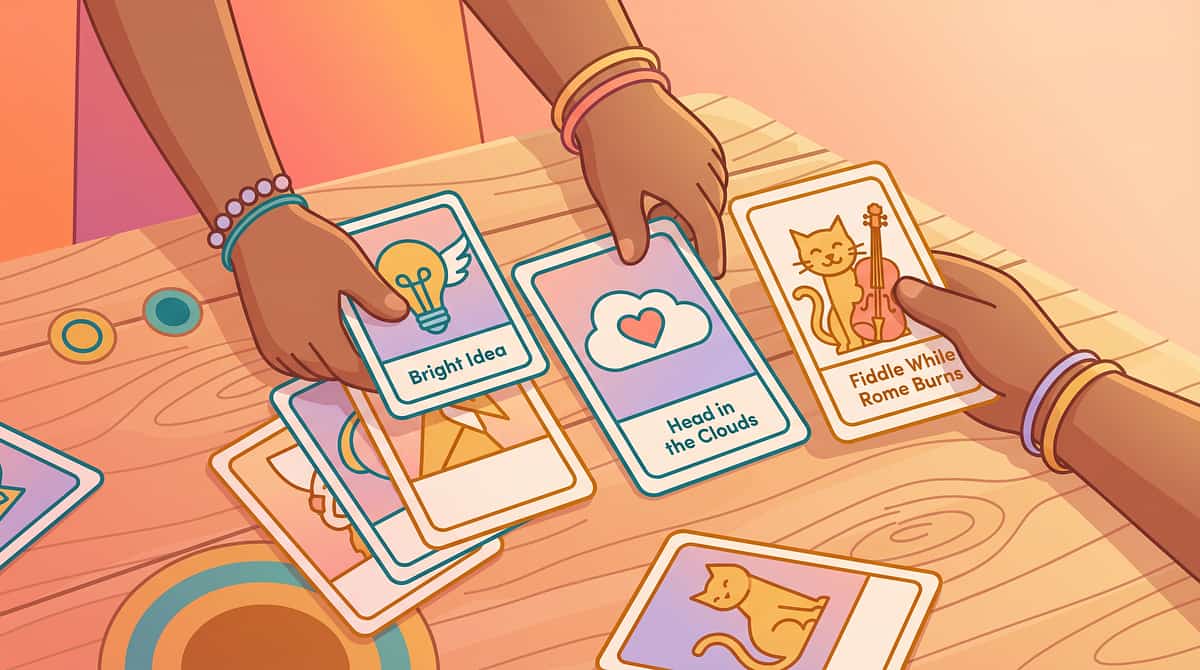
Figurative Language Comprehension Building — Technique B-157
Parent-Friendly Alias:"Teaching What Words Really Mean" | Reel Code: B-157 | Domain: Language & Communication | SubDomain: Figurative Language Comprehension
Figurative Language Comprehension Building is a structured intervention that teaches children with autism or language processing differences to understand language beyond its literal surface — including idioms ("spill the beans"), metaphors ("she's a night owl"), similes ("brave as a lion"), and sarcasm ("oh, wonderful" with an eye-roll). Because many children with ASD do not automatically acquire the cultural-pragmatic layer of language, this intervention makes hidden meanings explicit, visual, and systematically learnable — one expression at a time. This is not about correcting your child. It is about encoding what others absorb invisibly.
🧠 Domain
Language & Communication
👶 Age Range
5–14 years
⏱️ Session
10–20 min, 3–5x weekly
🏠 Setting
Home + School
Social Scripts
Visual Idiom Cards
Context Clue Activities
Video Modeling
Metaphor Kits

Five Disciplines. One Child. One Direction.
"The brain doesn't organize by therapy type. Figurative language comprehension crosses every discipline boundary — here's how each expert deploys these materials."
Pediatric SLP — Primary Lead
Builds figurative language curriculum: idiom banks, expression dictionaries, sarcasm detection scripts. Uses: Visual Idiom Cards, Social Scripts, Literature-based materials.
Pediatric OT — Supporting Role
Addresses sensory-processing fatigue during language sessions; ensures optimal arousal state for language learning. Uses: Sensory regulation before/during sessions.
Pediatric ABA — Reinforcement
Designs reinforcement schedules for correct figurative interpretation; prompting hierarchies for clarification requests. Uses: Token systems, behavioral data tracking.
Special Education — Generalization
Integrates figurative language into reading comprehension, textbook navigation, classroom instruction. Uses: Curriculum-embedded idiom journals, context clue workbooks.
NeuroDev Pediatrics — Oversight
Identifies whether the figurative language gap stems from ASD pragmatic processing or language processing disorder. Establishes AbilityScore® Communication Readiness Index baseline.
"This technique crosses therapy boundaries because the brain doesn't organize by therapy type. A child understanding 'break a leg' benefits their SLP session, OT engagement, ABA compliance, SpEd reading — and their life." — Pinnacle Blooms Consortium, Clinical Synthesis Team
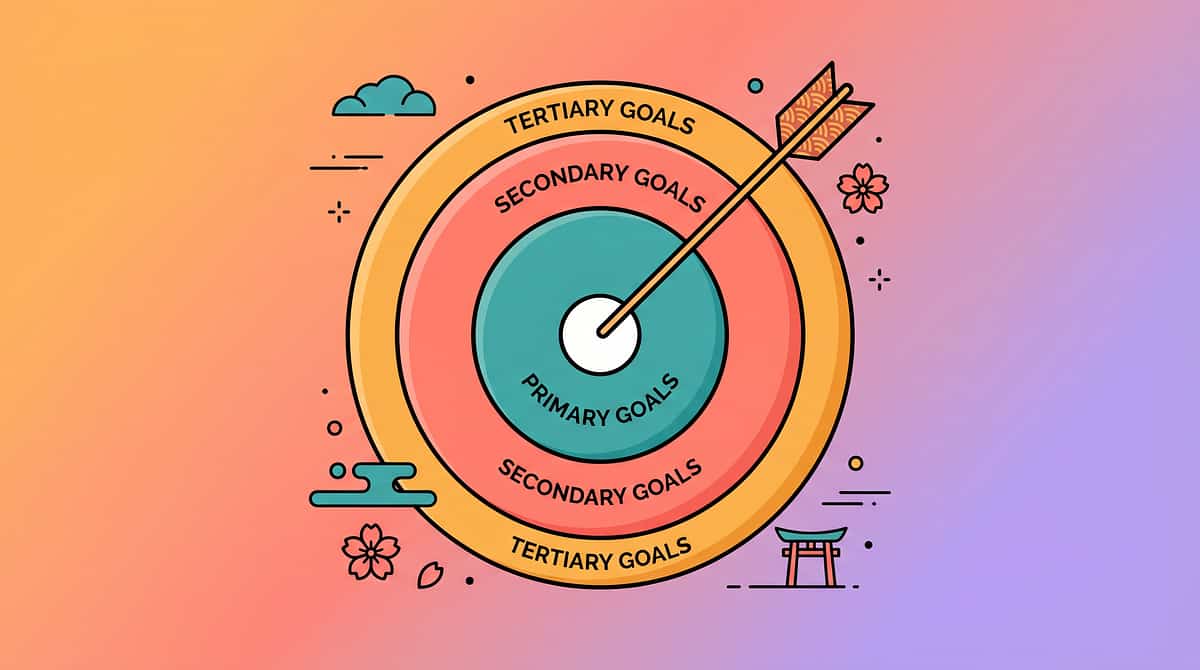
This Isn't a Random Activity. It's a Precision Tool Targeting Specific Skills.
Progress is tracked via the Communication Readiness Index → Pragmatic Language Comprehension Sub-Index with six progression stages: (1) Literal-only → (2) Multiple word meanings → (3) Common idioms → (4) Metaphor/simile → (5) Sarcasm detection → (6) Flexible figurative comprehension.
Primary — You'll See
Child correctly identifies real meaning of common idioms. Child stops panicking at "break a leg." Child can match idiom to meaning in card-matching game.
Secondary — You'll Notice
Child looks at facial expression AND words before interpreting. Child asks "do you mean that literally?" Child tolerates sarcasm without distress.
Tertiary — Over Time
Child laughs at jokes. Reading comprehension improves in school. Child initiates figurative play with peers.
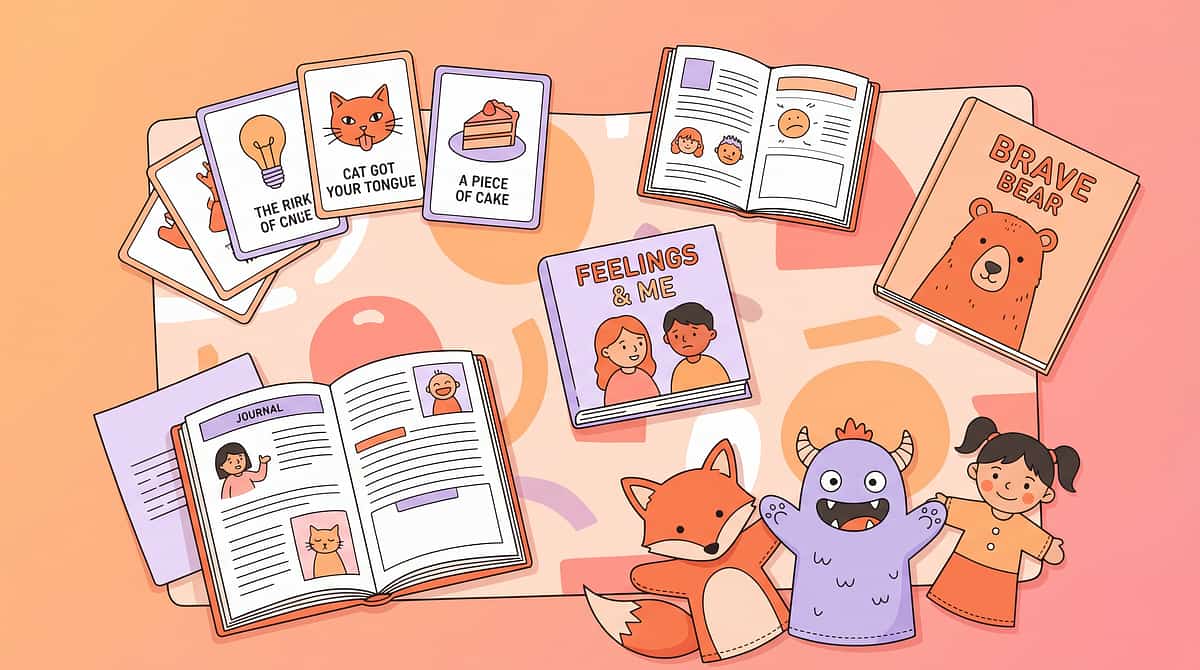
9 Materials. One Mission. Find the Meaning Behind Every Word.
Material 1 — Visual Idiom Dictionary Cards
Split-image cards: LITERAL interpretation (beans spilling) paired with REAL meaning (sharing a secret). The visual contrast is the teaching mechanism. ₹400–1,200 | DIY: Draw on index cards — literal scene one side, real meaning on back.
Material 2 — Sarcasm Detection Cards
THREE CLUE DECODER: Tone of Voice + Facial Expression + Context = True Meaning. When all three contradict the words — it's sarcasm. ₹500–1,500 | DIY: Film family members demonstrating sarcasm. Pause and decode together.
Material 3 — Multiple Meaning Word Resources
Same word. Different context. Different meaning. "Bat" = flying animal OR cricket bat. Cards show both meanings with context sentences. ₹300–800 | DIY: Word cards with 2–3 images per word. Sort images by meaning.
Material 4 — Metaphor & Simile Teaching Kits
Comparison mapping diagrams: Person + shared quality = metaphor. "She's a night owl" → shares the owl's night-active quality. Not transformation — quality transfer. ₹400–1,000 | DIY: Draw Venn diagrams. Overlapping center = shared quality.
Material 5 — Expression Social Scripts
"What people say" vs "What they mean" by daily situation. Portable decoder cards for school, home, community. ₹300–900 | DIY: Two-column chart by situation: Greetings | Requests | Classroom | Playground. Laminate for portability.
Material 6 — Context Clue Detection Activities
Scenario cards: Setting + Expression + Situation + Words = True Meaning. Child learns to READ THE WHOLE PICTURE. ₹400–1,200 | DIY: Print scenes from magazines. Add caption bubbles. Ask: "What's the setting? What's the face saying?"
Material 7 — Literature-Based Resources
Storybooks with figurative expressions highlighted and explained in margin notes. Reading + figurative instruction simultaneously. ₹500–1,500 | DIY: Reading journal — pause and write "What it says / What it means" together.
Material 8 — Video Modeling
Real conversations with on-screen tone indicators + expression labels + meaning explanations. Hear tone, see context, understand meaning — all at once. ₹600–2,000 | DIY: Film family members using 3–5 expressions. Watch and decode together.
Material 9 — Clarification Request Cards
Prompt cards: "Do you mean that literally?" / "Is that an expression?" / "What do you mean by that?" Self-advocacy through clarification is a lifelong skill. ₹200–600 | DIY: Laminated card with 3 clarification questions. Normalize asking.
Total Investment Range: ₹3,500–10,000 for comprehensive setup | Essential Starters: Materials 1, 9, 6 (₹1,000–3,000) | Complete ₹0 DIY version also fully effective.
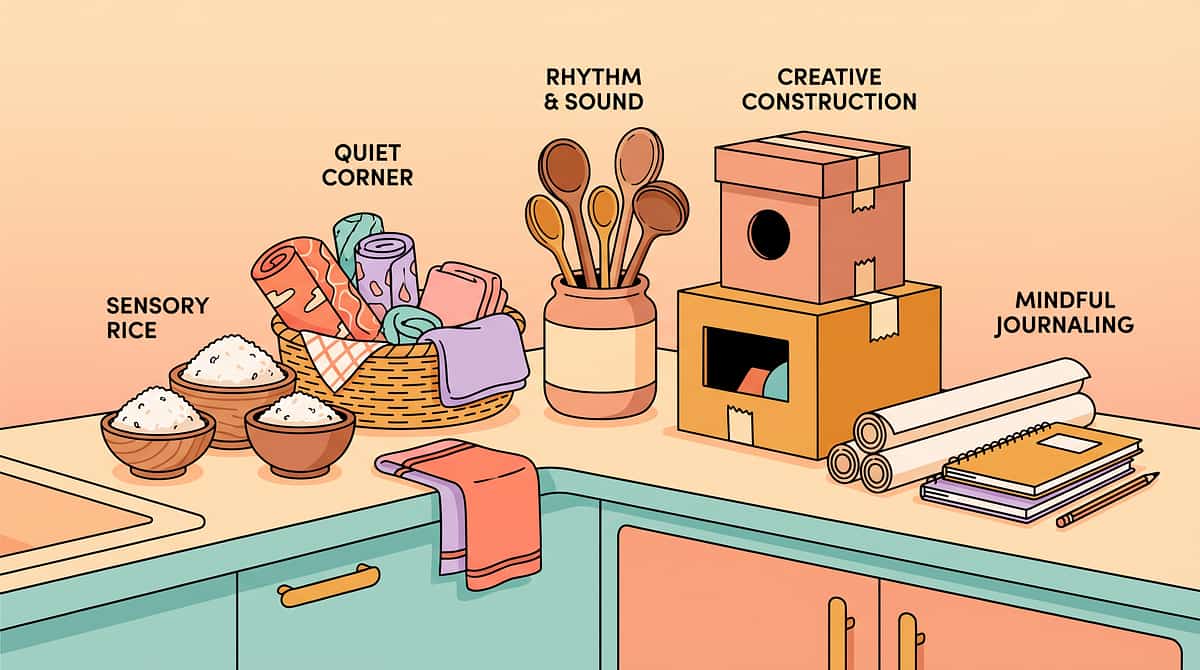
Every Material Has a ₹0 Version. No Family Left Without Access.
WHO/UNICEF Equity Principle: The technique's effectiveness comes from consistent, structured practice — not expensive materials. Every single B-157 material has a zero-cost alternative that preserves the core teaching mechanism.
🛒 Buy This | 🛠️ Make This (₹0) | ✅ Why It Works | |
Visual Idiom Cards ₹400–1,200 | Index cards: draw literal + real meaning | Same visual contrast mechanism — seeing both meanings simultaneously | |
Sarcasm Detection Cards ₹500–1,500 | Family video clips of obvious sarcasm. Watch + pause + decode | Real faces, familiar voices = more transferable than printed cards | |
Multiple Meaning Cards ₹300–800 | Hand-drawn cards: one word, 2–3 images | Context practice is identical — matching game still works | |
Metaphor & Simile Kit ₹400–1,000 | Paper Venn diagrams: person circle ↔ animal circle | Quality-transfer concept works with any visual comparison tool | |
Expression Social Scripts ₹300–900 | Two-column chart (what they say / what they mean) | Systematic coverage is more important than professional printing | |
Context Clue Activities ₹400–1,200 | Magazine scene pictures + paper thought bubbles | Scenario decoding works with any image | |
Video Modeling ₹600–2,000 | DIY family expression video library | Familiar faces and voices enhance generalization | |
Clarification Cards ₹200–600 | Laminated card with 3 questions in child's handwriting | Child ownership increases use |
Complete B-157 Home Implementation: ₹0 — Index cards + markers + magazine + family phone camera + reading time = everything you need.
When Clinical-Grade Is Non-Negotiable: If the child shows extreme distress or complete inability to generalize despite 8+ weeks of consistent home practice, clinical-grade materials should be used under SLP guidance.

Safety Gate — Please Read Before Starting.
🔴 RED — Do Not Proceed If:
- Child is currently in a meltdown or post-meltdown recovery state (60-minute buffer minimum)
- Child has a known trigger related to being "wrong" — modify framing to discovery, not correction
- Child has recently experienced significant communication failure or bullying related to literal misunderstanding
- Activity involves media with disturbing imagery — pre-screen all materials
🟡 AMBER — Modify and Proceed If:
- Child is tired or slightly dysregulated — reduce session to 5 minutes, use only 1–2 idiom cards
- Child has had a bad social experience recently — focus on social scripts first; defer sarcasm training
- Child's attention is low — use video modeling (Material 8) instead of card work
- Parent is frustrated or depleted — reschedule; parental emotional state transfers to child
🟢 GREEN — Optimal Conditions:
- Child is fed, rested, and in a calm-alert state
- Parent has read through the session plan and space is prepared
- Child has not had a significant distress event in the past 2 hours
- Material is ready and tested (no broken videos, cards organized)
⛔STOP SESSION IF: Child becomes distressed that language "lies" | Child begins perseverating on a misunderstood idiom in an anxious loop | Child requests to stop — always honor this. Session continuation never takes priority over trust.
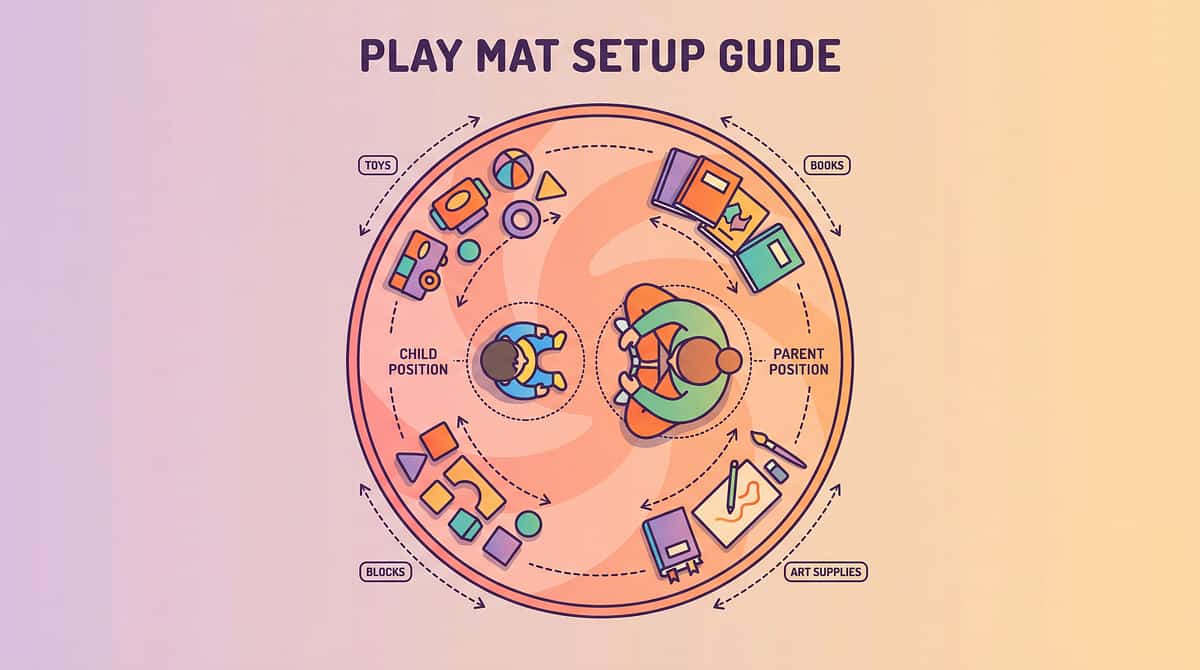
The Right Space Prevents 80% of Session Failures.
✅ Include in Your Space
- Low table or floor mat — both at same physical level
- Materials organized and pre-sorted before child arrives
- Visual timer visible to child (transparency about session length)
- Reinforcement ready but not visible (reduces distraction)
- Phone/video device charged if using video modeling
- Reading journal/tracker open to today's page
Environment Specs
Lighting: Natural/warm · Noise: Below 50dB · Duration: 10–20 min max · Temperature: Comfortable
❌ Remove From Space
- Preferred screens (unless using for video modeling only)
- Unrelated toys that compete for attention
- Other family members who might create social performance pressure
- Background TV/radio (audio processing load)
Space Layout
Child and parent sit at 90-degree angle — not face-to-face. This reduces social pressure while maintaining shared attention on materials. Materials tray to side, visual timer at child's eye level, reinforcement box out of sight but accessible.
Sensory Integration Theory (Ayres): Environmental setup is a core principle of all therapeutic sessions. A prepared space communicates safety before a word is spoken.

60-Second Readiness Assessment. The Best Session Is One That Starts Right.
# | Readiness Indicator | Status | |
1 | Has the child eaten in the last 2 hours? | ✅ / ❌ | |
2 | Has the child slept adequately? | ✅ / ❌ | |
3 | Is the child in a calm-alert state (not hyper, not withdrawn)? | ✅ / ❌ | |
4 | No significant frustration or meltdown in the past hour? | ✅ / ❌ | |
5 | Does the child show interest when shown a material? | ✅ / ❌ | |
6 | No upcoming transition competing for attention? | ✅ / ❌ | |
7 | Is the parent calm, present, and unhurried? | ✅ / ❌ |
6–7 ✅ — 🟢 GO
Proceed to Step 1: The Invitation
4–5 ✅ — 🟡 MODIFY
Run 5-min version: 2 idiom cards only, no new material
0–3 ✅ — 🔴 POSTPONE
20-min calm activity first. Reschedule. No pressure.
"Session abandonment is not failure — it's data. You learned what conditions don't work. That information is as valuable as a perfect session."

STEP 1 of 6
The Invitation — Bring Them In Playfully
⏱️30–60 seconds | The session's success is determined in this first minute. Your energy, curiosity, and lack of pressure set the entire tone.
For Most Children
"Hey, I found the strangest thing. You know how sometimes people say really weird things? Like... 'break a leg'? I've been collecting them. Want to see?"
Game Framing
"I have a detective game for us. People say things that sound crazy — but secretly mean something totally different. Want to be a meaning detective?"
Direct Framing
"We're going to learn some secret codes people use when they talk. These are called expressions."
✅ Acceptance Cues — Working
- Child looks at the card or leans toward it
- Child asks a question or reaches for the card
- Child repeats a phrase from the invitation
⚠️ Resistance Cues — Modify
- Child turns away or engages a different object
- Child shows signs of anxiety or freezing
- Child says "no" — don't push. Try video modeling instead.

STEP 2 of 6
The Engagement — Introduce the First Material
⏱️1–3 minutes | Visual Idiom Cards (Material 1) are the recommended first entry point — visual, concrete, low-demand, and immediately rewarding.
Show the LITERAL Side
"Look at this — what is actually happening in this picture?" Let the child describe exactly what they see. Accept every response fully.
Validate, Never Correct
"Yes! That's exactly what the picture shows." Never say "that's wrong." The literal interpretation is intelligent and accurate — celebrate it.
Reveal the SECRET
"Now here's the SECRET — when people say this, THEY ACTUALLY MEAN THIS." Flip or reveal the real meaning side with excitement.
Read Both Together
"So 'spill the beans' doesn't mean [literal] — it means [real meaning]." State the expression and real meaning clearly together.
✅ Engagement
Child re-states real meaning, asks about another card — proceed confidently
🟡 Tolerance
Child participates with low energy — acceptable, proceed at a slower pace
❌ Avoidance
Child physically moves away — return to Step 1 or switch to video modeling
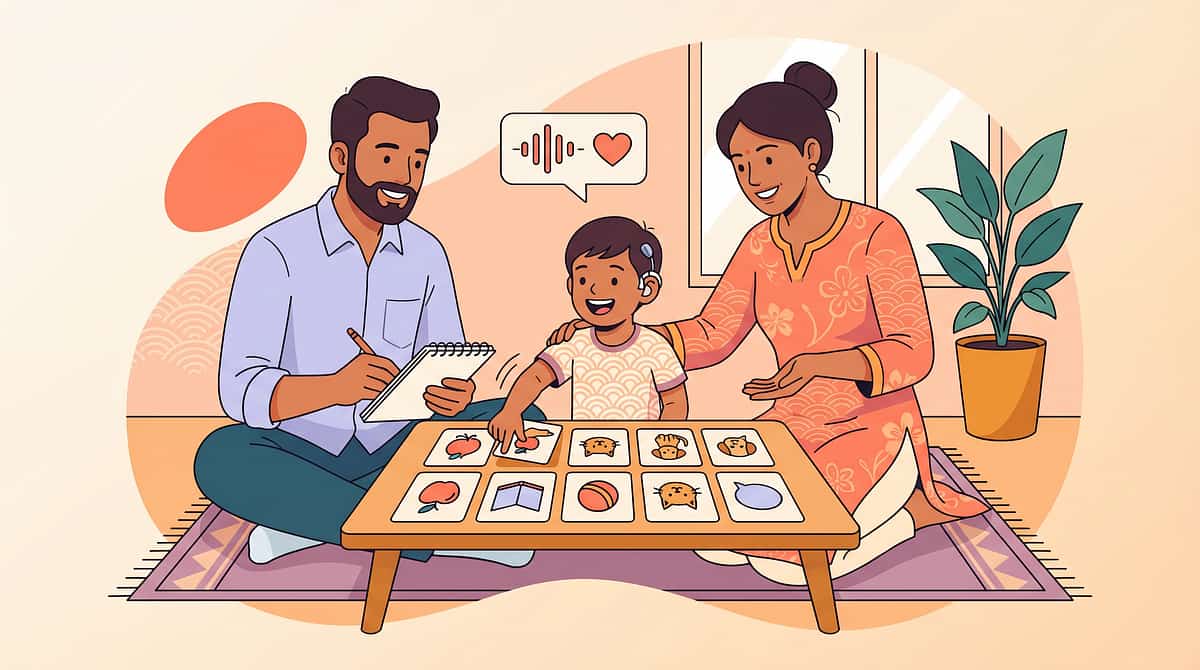
STEP 3 of 6
The Therapeutic Action — Build the Meaning Decoder
⏱️5–12 minutes (core of the session) — This is where the neural pathways for figurative inference are actively being built.
CARD A — PRESENT
"Tell me everything you see in this picture." Child describes literally. Validate every observation completely.
CARD B — DISCOVER
"Here's what it secretly means." Show real meaning image. State the expression + real meaning together clearly and with enthusiasm.
CARD C — MATCH
Place 2–4 idiom cards face-down. Read an expression aloud. Child selects the correct meaning card. Celebrate every correct match.
Sarcasm Detection Add-On (after 4+ weeks of idiom work) — THREE CLUE DECODER: (1) Face: "What is their face showing?" (2) Tone: "What does their voice sound like?" (3) Context: "Does the situation match the words?" When all three contradict the words → SARCASM FLAG.
❌ Common Errors
- Introducing too many idioms at once — stick to 2–4 per session
- Testing too quickly — use "show me" instead of "tell me"
- Laughing at literal interpretations — validate always
- Using sarcasm toward the child — only demonstrate between others
✅ Child Response Spectrum
- Ideal: Correctly identifies real meaning, smiles at the "secret"
- Acceptable: Needs prompting but participates; no distress
- Pause: Deep upset that language "isn't honest" — address feelings first
STEP 4 of 6
Repeat & Vary — Quality Over Quantity
⏱️3–5 minutes
3 good repetitions > 10 forced repetitions
Repetition Targets
- Per idiom: 3–5 exposures per session (see it, hear it, say it, match it)
- Per session: 2–4 new idioms + 1–2 review idioms from previous sessions
- Per week: 10–15 new idioms = excellent progress; 3–5 is still meaningful
Variation A — Modality Switch
Day 1: Visual idiom card | Day 2: Expression in a story context | Day 3: Video clip showing expression used naturally. Same idiom, different format.
Variation B — Application Game
"Your friend is about to do a school play. What would you say?" Child selects from expression cards. "Break a leg!" → "This means good luck!" Situational, real-world context.
Variation C — Reverse Detection
Parent uses expression naturally in conversation. Child raises a card or says "EXPRESSION!" to flag it. Make it a game, not a test. Celebrate every flag.
Satiation Indicators — Session Has Enough: Child responds without attending · Child requests a different activity · Response accuracy is decreasing. Stop here — ending well is better than pushing.

STEP 5 of 6
Reinforce the Discovery — Timing Matters More Than Magnitude
⏱️Within 3 seconds of correct response | Total: 1–2 minutes
After correct idiom identification:
"YES! You decoded it! You know what 'break a leg' actually means — you're a meaning detective!"
After clarification request:
"PERFECT. That's the smartest question. You asked when you weren't sure. That's exactly what great communicators do."
After child catches an expression independently:
"YOU caught that! That was an expression and you knew it. That's huge."
After a difficult session:
"You kept trying even when it was confusing. That's brave. Language is complicated — and you're getting it."
Verbal Praise
Specific, immediate, enthusiastic — the gold standard
Progress Chart
Sticker on Idiom Progress Chart — visible record of mastery
Token Economy
Token toward preferred activity — strong evidence base in autism intervention
"Celebrate the attempt, not just the success. A child who tried to understand an idiom and got it wrong is doing more cognitive work than one who already knew it. Effort is the target behavior."
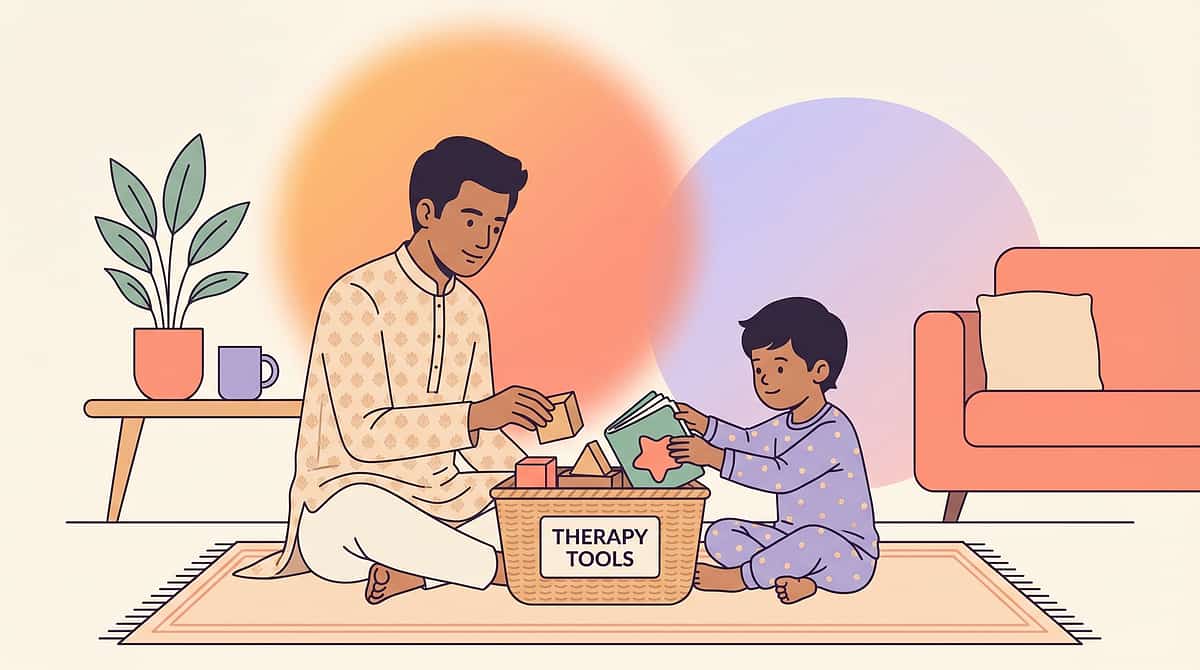
STEP 6 of 6
The Cool-Down — No Session Ends Abruptly.
⏱️2–3 minutes | How a session ends determines whether a child returns willingly. A clean, positive close is as important as the core activity.
Transition Warning
"2 more cards, then we're all done for today." Give advance notice — abrupt endings are disorienting. After 2 cards: "All done! Great detective work. Time to put these away."
Material Put-Away Ritual
Child participates — places cards back in box, closes book. Creates closure and ownership. This small act builds responsibility and signals session end without abruptness.
Brief Narration
"Today you learned that [insert 1–2 idioms covered]. Those are now in your decoder brain." Name the learning — it anchors memory.
Return Autonomy
"What would you like to do now?" — return child to self-direction. This signals safety and respect for their preferences beyond the session.
Post-Session State Check: Is the child calm? Did the child leave with a positive emotional impression? That is the most important outcome of today. They will come back tomorrow.
"I know — it was fun. We can do it again tomorrow. Let's put them here so they'll be ready." — Script for when a child resists ending
60 Seconds of Data Now Saves Hours of Guessing Later.
B-157 SESSION LOG — Complete immediately after each session while impressions are fresh.
1. Expressions Practiced
How many idioms/expressions practiced today? ___
How many did the child identify correctly without prompting? ___
How many did the child identify correctly without prompting? ___
2. Session Completion
☐ Full session (10–20 min)
☐ Modified session (under 10 min)
☐ Postponed — note reason
☐ Modified session (under 10 min)
☐ Postponed — note reason
3. Child's Overall State
Circle one:
Resistant → Tolerating → Engaged → Enthusiastic
Any unexpected response: ___________
Resistant → Tolerating → Engaged → Enthusiastic
Any unexpected response: ___________

Most Sessions Won't Go Perfectly. That's Not Failure — That's Data.
Child became upset that language isn't "honest"
Validate deeply: "You're right — it IS confusing. People didn't decide to confuse you. This is just how language grew over time, like how words have different meanings. We're learning the code together." Slow down to 1 expression per session for 2 weeks.
Learned idiom in cards but didn't recognize it in conversation
Add naturalistic practice. Use Video Modeling (Material 8). Begin flagging expressions when they occur in family conversation. "Wait — that was an expression! Which one?" Create a real-life expression journal.
Memorized the script but doesn't understand the concept
Switch to Context Clue Activities (Material 6). Start with WHY — "Why would 'spill the beans' come to mean 'share a secret'? What's the story?" Build etymology stories where possible.
Child became overwhelmed and shut down
Reduce to 1 idiom card per session. Start with the most personally relevant expressions. Build trust before building content. A small, successful session beats a large, failed one.
Gets sarcasm training confused with permission to use sarcasm
Clarify: "We're learning to RECOGNIZE sarcasm when others use it — we're not practicing to use it ourselves right now. Let's keep sarcasm as a detection skill for now."
Sessions going well but no carryover to school
Share the Family Guide with the class teacher. Provide 5 idiom cards to use in the classroom. Use Expression Social Scripts (Material 5) specifically for school-specific expressions.
"Session abandonment is not failure — it's data. You learned what conditions don't work. That information is as valuable as a perfect session."
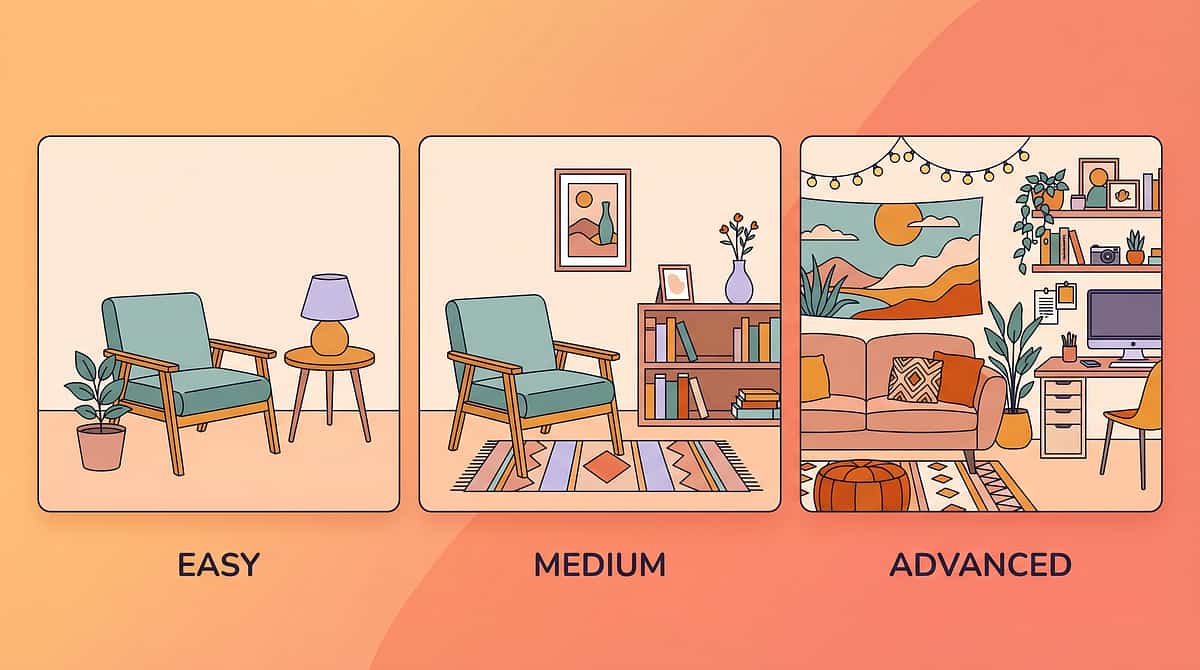
No Two Children. No Two Sessions. This Is How You Tune the Technique.
Strong Visual Learner
Lead with idiom cards; add a picture to every expression in the journal. Visual contrast is the primary teaching mechanism.
Strong Auditory Learner
Use video modeling first; emphasize tone detection in sarcasm training. Sound carries the meaning before the image.
High Anxiety Around Being Wrong
Remove all "test" framing; only discovery games; no wrong answers. Frame everything as exploration, never evaluation.
Highly Literal / Rule-Based
Teach idioms as "language rules" — give the rule explicitly ("people use X to mean Y"). The rule-based mind finds this satisfying.
Gifted / Fast Learner
Move quickly to metaphors; introduce etymology; build a comprehensive idiom database as a personal reference.
Lower Verbal Ability
Use expression social scripts (visual) as primary; reduce verbal response demand. Match and point before asking to state.
Age 5–7
Concrete idioms only (food, animals, body). 1–2 idioms per session. Visual cards primary.
Age 7–10
Extend to social idioms, common metaphors. Begin context clue activities.
Age 10–14
Full figurative language curriculum including sarcasm, irony, and idiomatic clusters.
Session Frequency
Minimum: 2x/week · Optimal: 4–5x/week · Embedded: Catch expressions throughout daily life always.

WEEK 1–2
Foundation Phase
Weeks 1–2: You Are Planting Seeds. Don't Look for the Flower Yet.
15%
Foundation Phase Progress
Building the neural pathways — invisible but essential
✅ Observable Indicators — Week 1–2
- Child tolerates card-based activities without distress
- Child can repeat the real meaning of 2–3 taught idioms when shown the card
- Child shows curiosity ("what does this one mean?")
- Child begins to hesitate before interpreting unusual phrases — awareness is developing
❌ Not Progress Yet — Manage Expectations
- Spontaneous correct interpretation in conversation — too early
- Recognition of new expressions not yet taught — comes in weeks 3–4
- Zero literal misunderstandings — reduction comes after vocabulary builds
If your child tolerates 3 idiom cards per session and correctly identifies 1 taught idiom — that is real, measurable progress.
Weeks 1–2 feel slow. The neural pathways for figurative inference are being laid. The building phase is invisible. Stay consistent. The work you're doing now compounds.
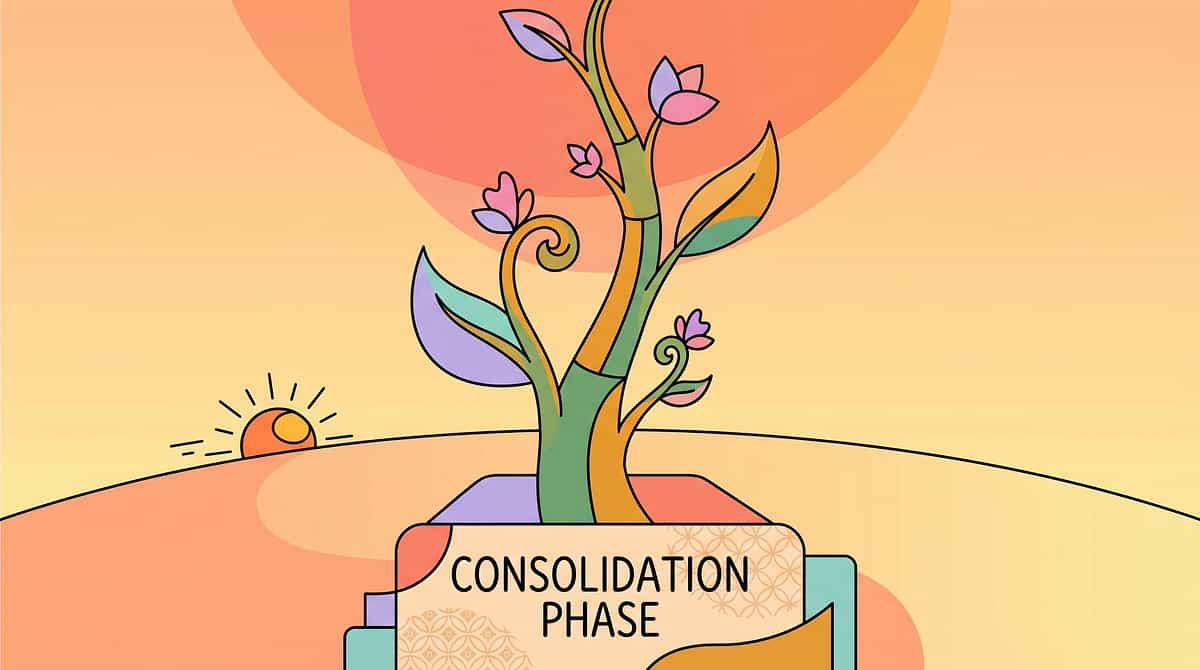
WEEK 3–4
Consolidation Phase
Weeks 3–4: The Brain Is Filing the Code.
40%
Consolidation Phase Progress
The decoder is being built — look for spontaneous generalization
✅ Consolidation Indicators
- Child ANTICIPATES the session ("are we doing idiom cards today?")
- Child recognizes a taught idiom when heard in family conversation
- Child shows REDUCED DISTRESS when a familiar expression is used
- Child correctly identifies 5–10 taught idioms from memory (no card needed)
- Child asks "Is that an expression?" spontaneously
🌱 Spontaneous Generalization Seeds
- Child may begin to NOTICE expressions in books they're reading
- Child may point out when someone uses a phrase "in a weird way"
- Child may attempt to USE a known expression — celebrate the attempt even if context is wrong
📈 When to Increase Intensity
- Child sailing through 4 idioms per session → increase to 6
- Child asking for more → follow their lead
- Child beginning to use expressions → shift session time to "expression usage practice"
Parent Milestone:"You may notice you're more confident too — you've become a systematic language teacher. That's a skill you've built alongside your child."

WEEK 5–8
Mastery Phase
Weeks 5–8: The Decoder Is Operational.
75%
Mastery Phase Progress
The decoder is operational — generalization is visible
🏆B-157 MASTERY BADGE UNLOCKED WHEN: Child correctly identifies 20+ common idioms without visual card · Child uses clarification request appropriately · Child shows reduced anxiety around figurative speech · Child correctly interprets new (untaught) idioms using context clues · Child understands at least 3 simple metaphors.
🌐 Generalization Indicators
- Skill appears in school reading comprehension
- Child laughs at jokes rather than explaining why they're impossible
- Child navigates social interactions with reduced literal misunderstandings
🔄 Maintenance Check
One week without formal sessions — does the child retain known idioms? If yes: mastery achieved. If regression: add 2 review sessions per week alongside new content.
→ When to Move to Next Level
Current level mastered → Move to B-158 (Echolalia Support) or deeper figurative language (metaphor/irony curriculum). Or: strengthen current level with more complex sarcasm detection work.

YOU DID THIS. Your Child Now Lives in a Slightly Less Confusing World.
From a child who looked at the sky when told "it's raining cats and dogs" — to a child who pauses, accesses their decoder, and understands what was meant. This is language safety — the ability to navigate a world full of hidden meanings without being constantly confused, alarmed, or excluded.
Create an Idiom Wall
Display the first 10 expressions your child mastered with real meanings beside them. Make the learning visible and permanent.
Official Meaning Detective
"Official Meaning Detective" certificate — create it, print it, frame it. Recognition matters at every age.
Family Journal Prompt
Write down the moment you first heard your child correctly interpret an expression they used to take literally. What were you doing? What did they say? What did you feel?
Research note: Parental self-efficacy is the strongest predictor of continued home-based intervention implementation. Celebrate yourself too — you built this skill alongside your child.
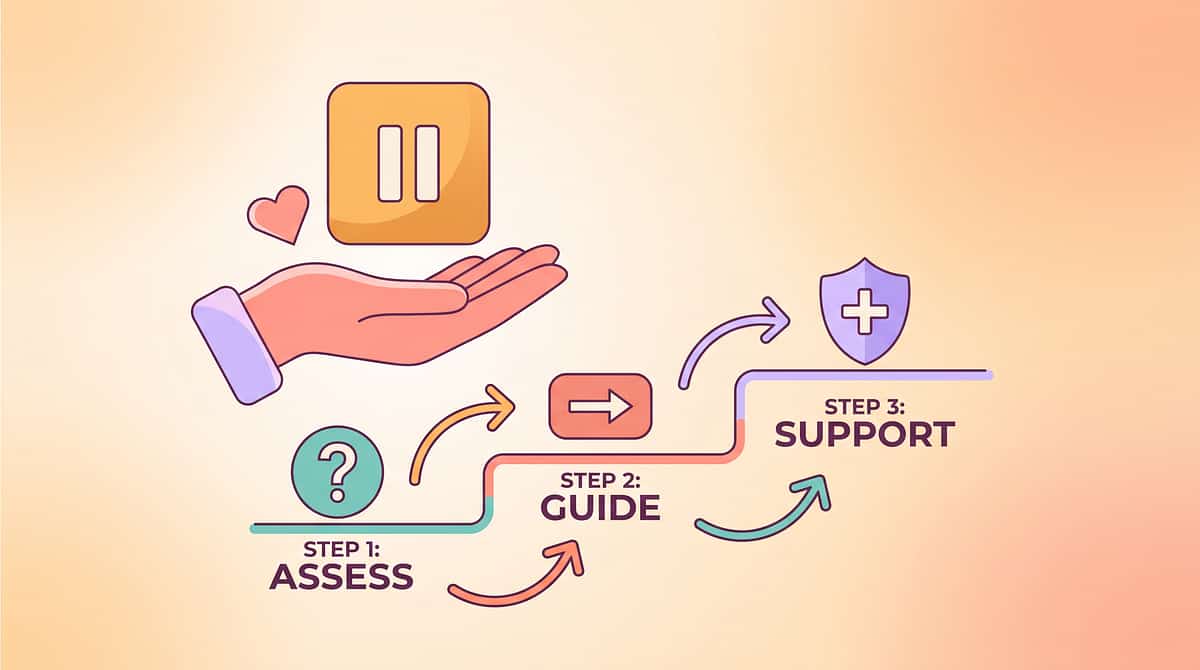
Even in the Success Zone — These Signs Mean Pause.
⚠️ These red flags require professional consultation regardless of how well previous sessions have gone. Trust your instincts — if something feels wrong, pause and ask.
⚠️ Red Flag | What It Looks Like | What To Do | |
Deep distress about language "lying" | Child refuses to use language, believes all communication is untrustworthy | Pause B-157. SLP consultation immediately | |
Zero progress after 8 weeks consistent practice | No retention across any material type | Assessment for language processing disorder — SLP evaluation | |
Regression in previously understood expressions | Child understood 10 idioms, now can't recall 3 | Neurological evaluation — unexplained regression requires attention | |
Social isolation worsening despite intervention | Child avoiding all peer interaction | Psychological + SLP dual assessment | |
Extreme anxiety triggered by figurative language | Panic-level response to idioms | Anxiety treatment first; language work resumes after |
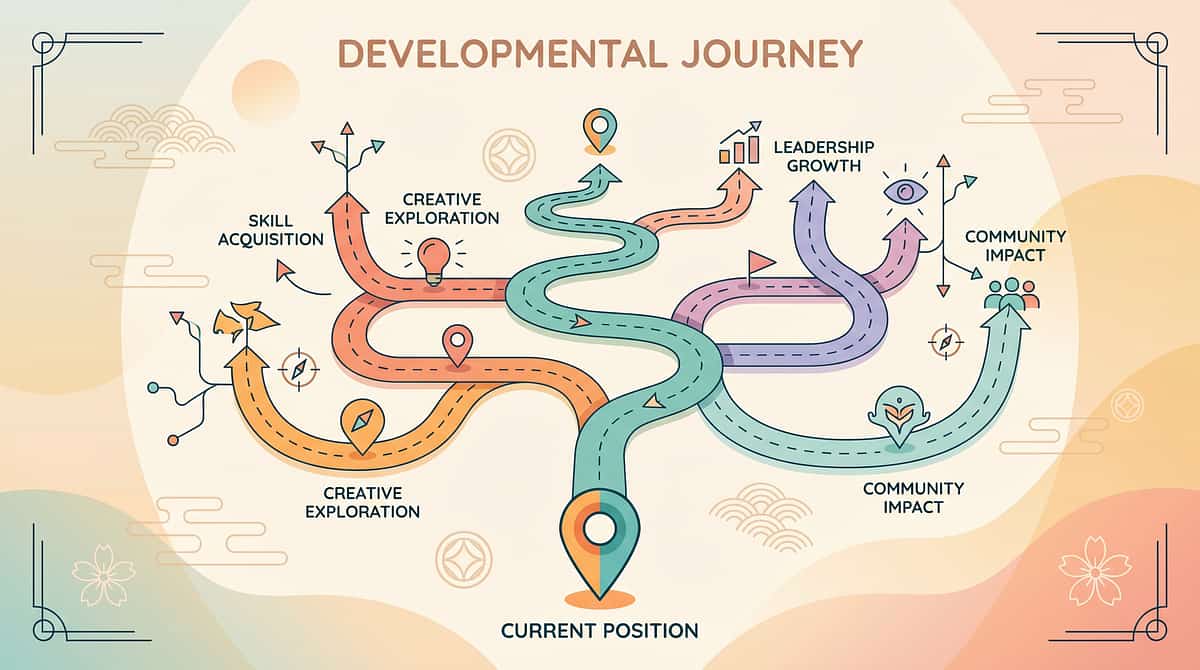
You Are Not Finished. You Are on a Journey. Here Is the Map.
🎯B-157: Literal Understanding — Language & Communication Domain | Cluster LANG-COMP-03 | Position 157 of 999
Long-Term Developmental Goal: Flexible, real-time figurative language comprehension → social participation → peer relationships → academic success → professional and life navigation. Every idiom mastered is one more connection made possible.
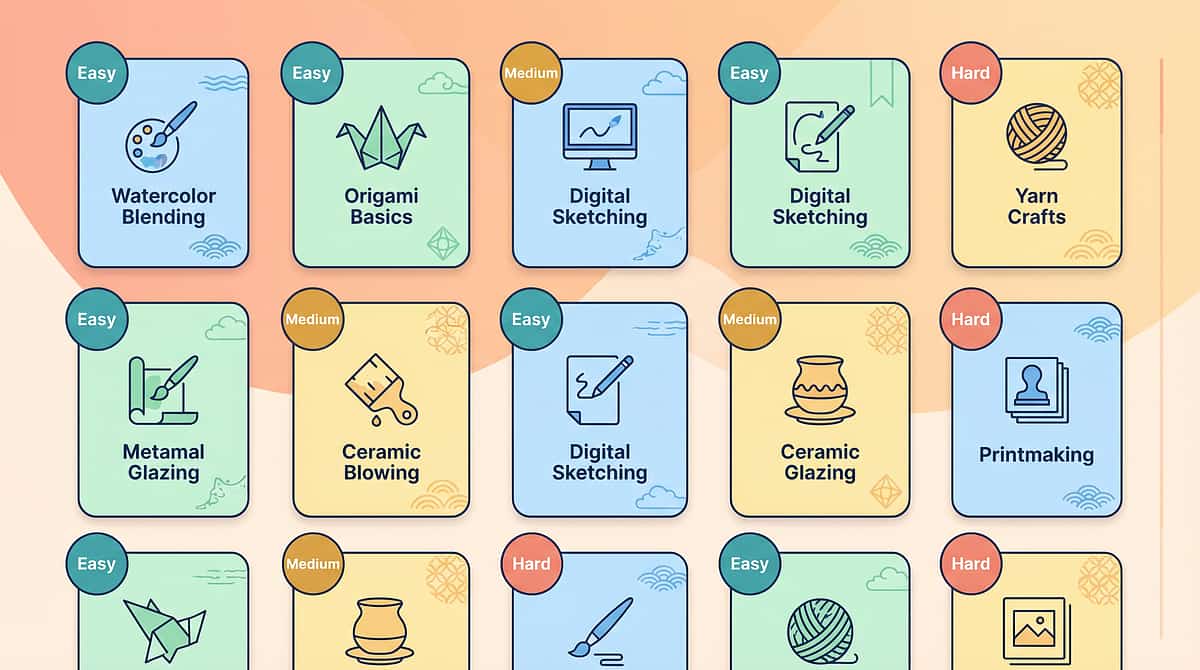
Other Techniques in Language & Communication — You May Already Have the Materials.
Technique | Code | Level | Canon Materials You Own | |
Following Multi-Step Directions | B-155 | 🟡 Core | Visual Idiom Cards → reusable | |
Two-Step Direction Difficulty | B-156 | 🟡 Core | Social Scripts → reusable | |
Literal Understanding | B-157 | 🟡 Core | [CURRENT TECHNIQUE] | |
Echolalia Support | B-158 | 🟠 Advanced | Video Modeling → reusable | |
Pronoun Confusion | B-159 | 🟡 Core | Multiple Meaning Cards → reusable | |
Social Inference Difficulties | B-162 | 🟠 Advanced | Context Clue Activities → reusable |
✅Materials Already Owned: Your B-157 materials work across B-155, B-156, and B-159 — no new purchases required for these techniques.
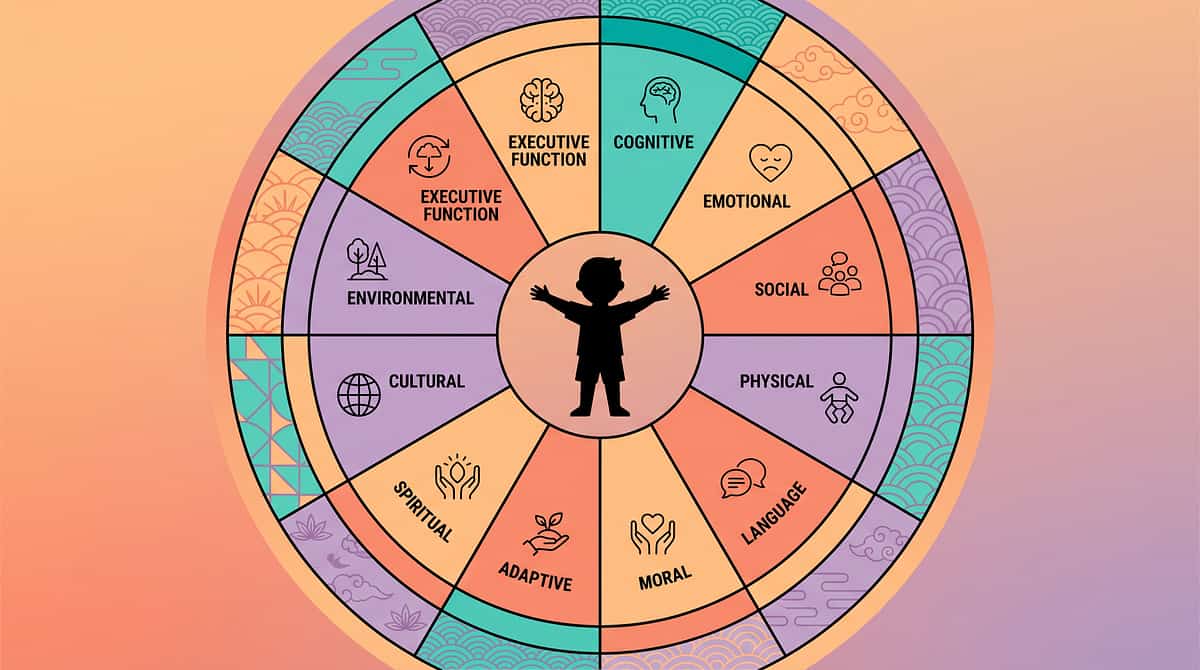
This Technique Is One Thread. Your Child's Development Is a Tapestry.
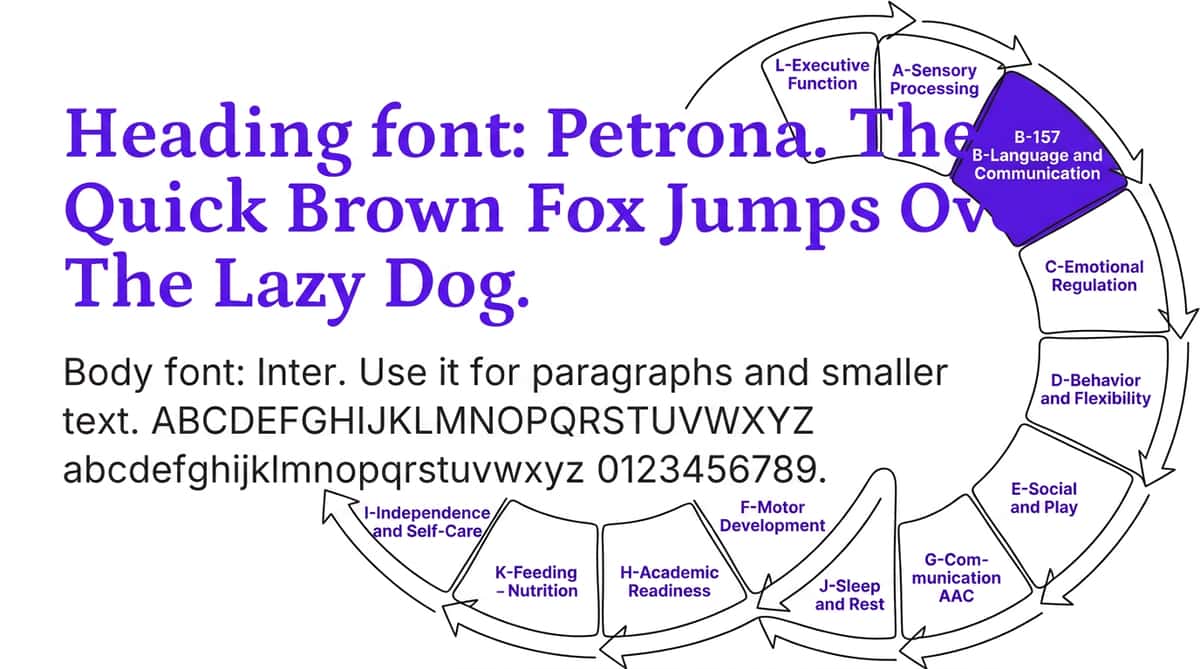
B-157 is within Domain B: Language & Communication — which also connects to Domain D (Behavior outcomes of misunderstood communication), Domain C (Emotional regulation when confused), and Domain I (Independence through self-advocacy scripts).
GPT-OS® Integration: Log your B-157 progress to receive personalized recommendations for which Domain B technique to do next, cross-domain alerts, and AbilityScore® Communication Readiness Index updates.
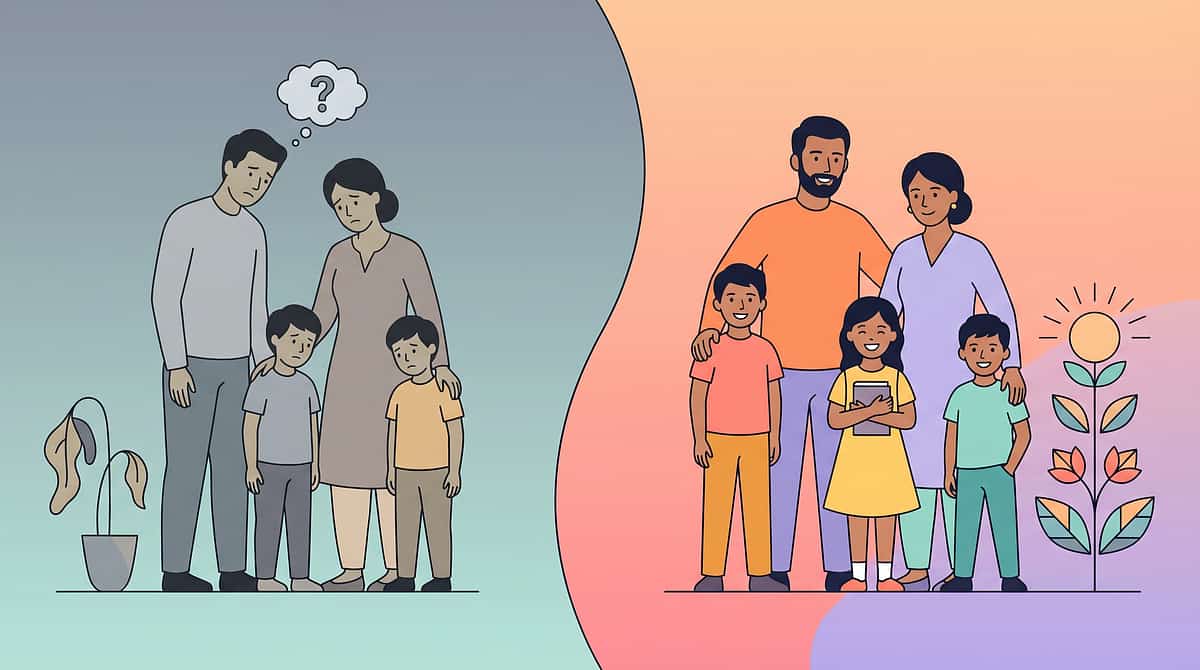
From the Families Who Walked This Path Before You.
All cases anonymized. Outcomes vary by child profile. Illustrative clinical narratives from Pinnacle Blooms Network centers.

Family A — "The Horse Incident" | Age 8 | ASD Level 1 | 6 weeks
Before: "I'm so hungry I could eat a horse" caused distress and repeated questions about whether the family would get a horse. Parents avoided figurative language entirely.
After: Same child, same parent, same expression. Child paused, said "That's an expression — it means you're very hungry." Smiled. Ate dinner. Parent: "The moment I knew we were going somewhere."
After: Same child, same parent, same expression. Child paused, said "That's an expression — it means you're very hungry." Smiled. Ate dinner. Parent: "The moment I knew we were going somewhere."

Family B — "The Broken Leg" | Age 11 | ASD Level 2 | 10 weeks
Before: Teacher said "break a leg!" to performers. Child immediately told his sister not to go on stage — she would hurt herself. The confusion disrupted the entire backstage.
After: Teacher reports child now flags expressions in classroom instruction and says "I know that's not literal" before demonstrating understanding. Academic comprehension improved measurably. "He finally laughed at the joke instead of explaining why it couldn't be true."
After: Teacher reports child now flags expressions in classroom instruction and says "I know that's not literal" before demonstrating understanding. Academic comprehension improved measurably. "He finally laughed at the joke instead of explaining why it couldn't be true."

Family C — "The Expression Detective" | Age 6 | ASD Level 1 | 4 weeks
Before: Severe literal processing causing social exclusion — classmates' humor was entirely opaque. Child described as "weird" by peers.
After: Child invented a game called "expression detective" based on the clarification cards. Teachers have adopted the game for the whole class.
After: Child invented a game called "expression detective" based on the clarification cards. Teachers have adopted the game for the whole class.
Note: Outcomes vary by child profile. Results reflect documented patterns; individual experiences differ.
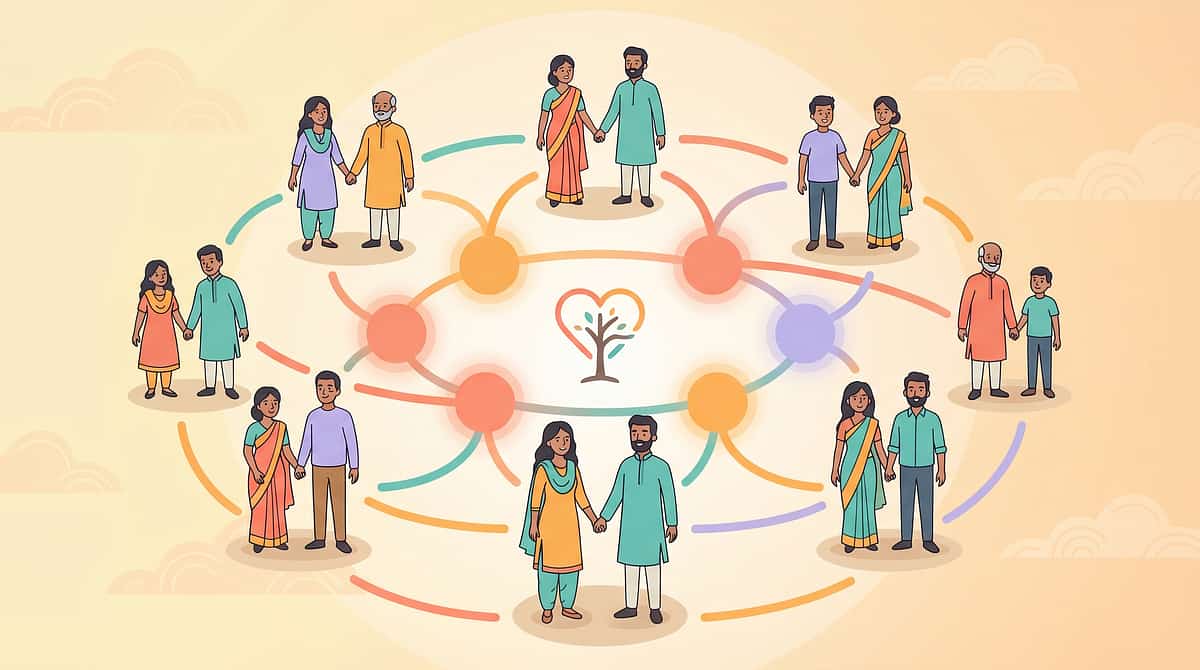
You Don't Have to Figure This Out Alone. A Global Community Is Already Here.
📱 B-157 Parent WhatsApp Group
Parents specifically working on figurative language comprehension. Share idiom banks, successes, and troubleshooting tips with families navigating the exact same journey.
💬 Language & Communication Forum
Pinnacle online forum for Domain B techniques — ask questions, share progress, find peer mentors. Join the Forum →
🏢 Local Parent Meetups
At Pinnacle centers — ask your nearest center for monthly parent groups focused on communication development. Find Your Nearest Center →
🤝 Peer Mentoring
Connect with a parent who has completed B-157. Mentor program available through Pinnacle centers. Request a Peer Mentor →
"Your experience of navigating this with your child is valuable beyond your family. When you share what worked, you teach another parent's child. That is how this movement grows."
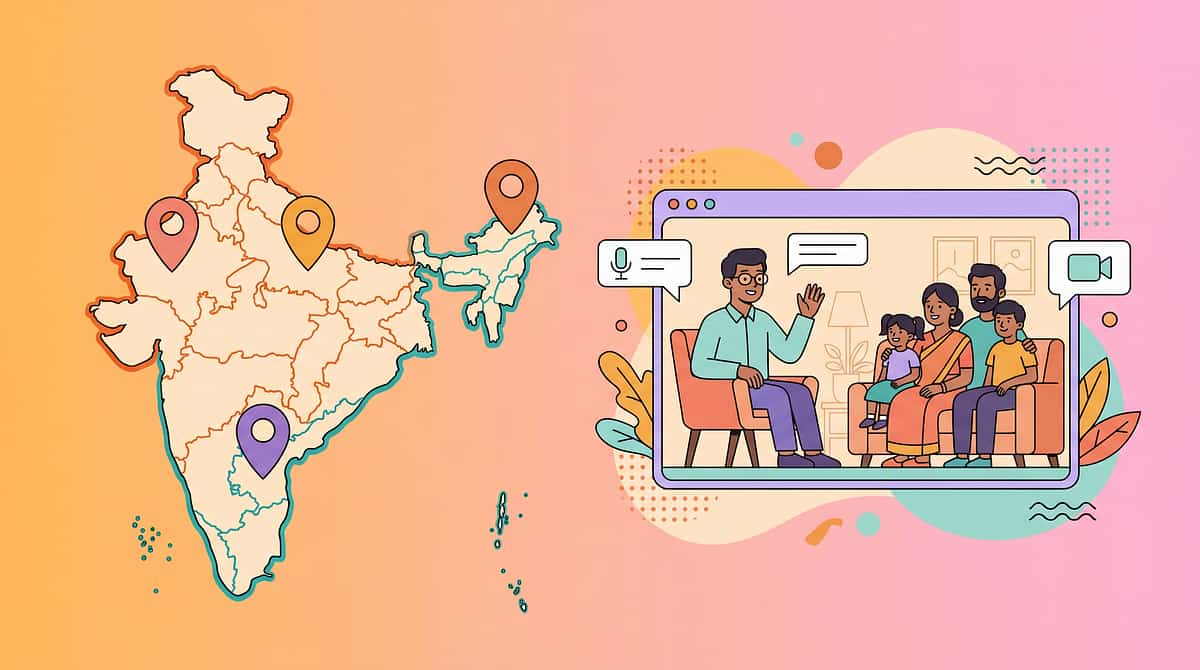
Home + Clinic = Maximum Impact. Your Professional Backup Is One Click Away.
Specialty Needed | Discipline | Why for B-157 | |
Primary for B-157 | Pediatric SLP | Figurative language is the SLP's core domain — builds full idiom curriculum | |
Sarcasm + Social | Pediatric ABA | Reinforcement architecture for detection and response; data tracking | |
Reading Comprehension | Special Education | Curriculum integration of figurative language in classroom instruction | |
Whole-Child Oversight | NeuroDev Pediatrics | AbilityScore® baseline + Communication Readiness Index monitoring |
🏢 In-Center
70+ Pinnacle centers across India — in-person SLP-led figurative language curriculum with clinical-grade materials
💻 Teleconsultation
SLP-supervised B-157 coaching from home — same clinical expertise, maximum accessibility
📲 GPT-OS® Guided
App-supported home execution with real-time guidance — your personalized session starts in 60 seconds
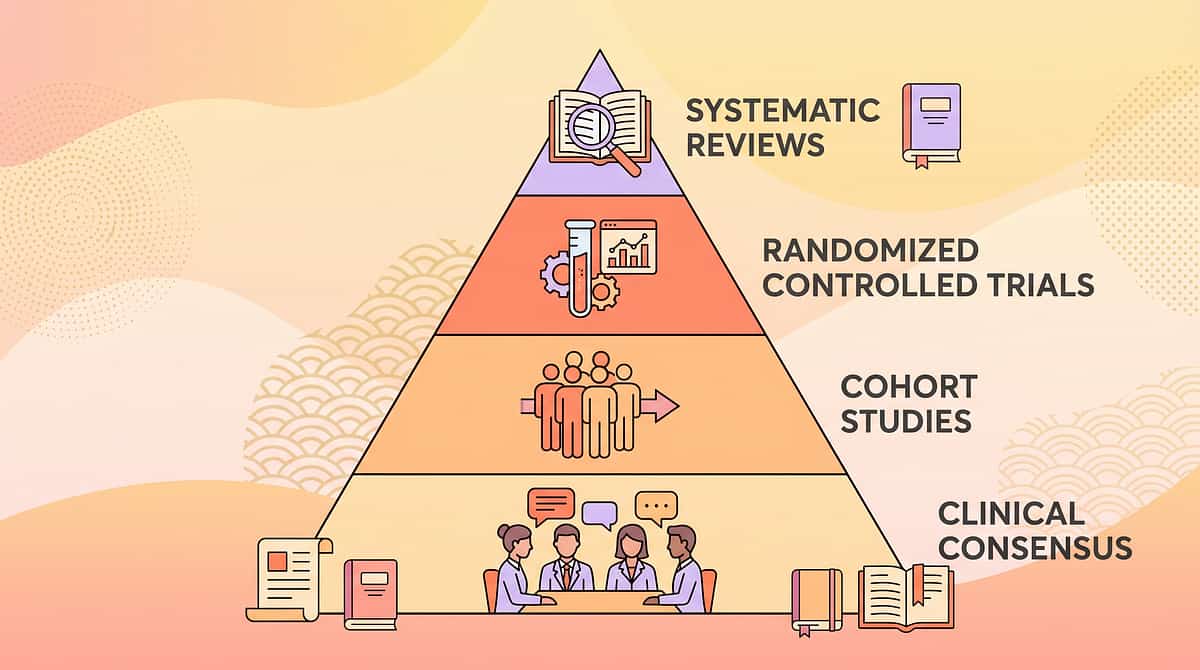
Deeper Reading for the Curious Parent. The Science That Built This Technique.
📖 PRISMA Systematic Review (2024)
Confirms structured language interventions for ASD meet evidence-based practice criteria. 16 articles, 2013–2023. PMC11506176 →
📖 Meta-Analysis (2024)
Language intervention across 24 studies shows effective promotion of social skills, adaptive behavior, and communication outcomes. PMC10955541 →
📖 Padmanabha et al. (2019)
India-specific RCT: home-based structured language interventions show significant outcomes when parent-administered. DOI: 10.1007/s12098-018-2747-4 →
📖 Persicke A et al. (2012)
"Teaching children with autism to detect and respond to sarcasm." Demonstrates structured, material-based sarcasm detection training produces measurable improvement.
📖 Norbury (2005) & Happé (1993)
Foundational research establishing that explicit teaching is required for figurative language acquisition in ASD. Theory of mind and metaphor comprehension in autism.
📖 WHO/UNICEF Sources
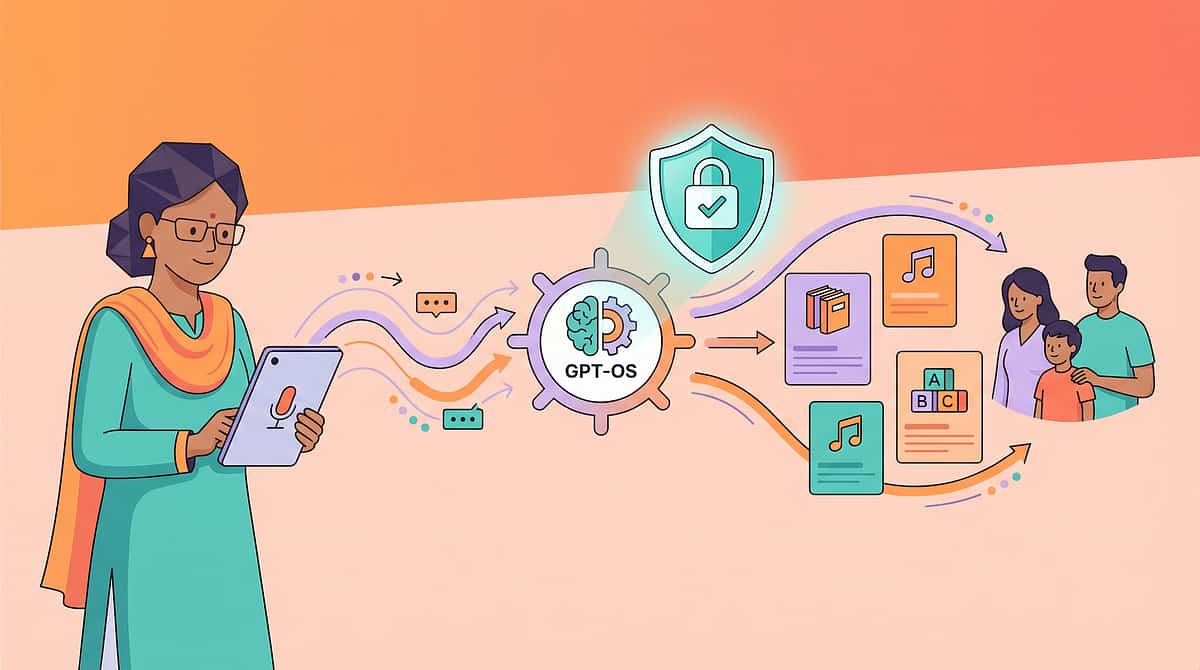
Your Data. Your Child. Personalized for Life. How GPT-OS® Learns From Every Session.
🔒Privacy: Your child's data is encrypted, individually protected, and never shared without consent. Used only to improve your child's personalized program. Full data governance under ISO/IEC 27001 Information Security Management.
GPT-OS® Learns
Which idiom categories click fastest · Whether sarcasm training should accelerate · Whether B-158 or B-162 is the right next step · Whether a center visit is warranted
You Gain
A program that gets smarter with every session you log · Real-time guidance · Cross-domain alerts when another domain needs attention first
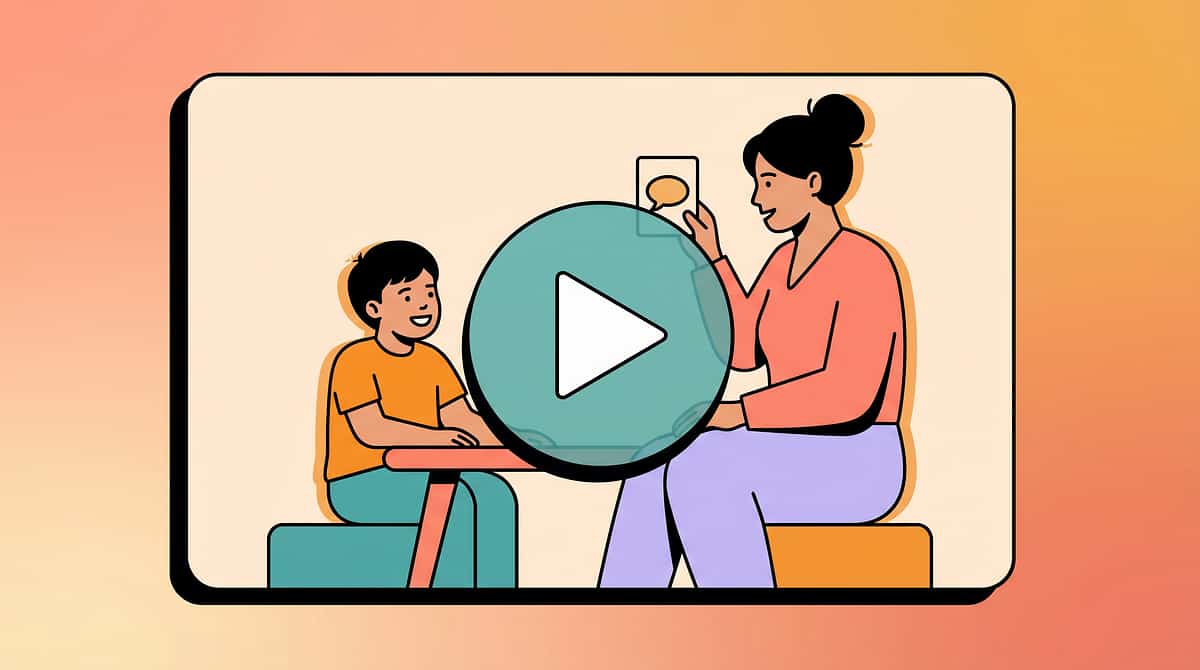
Watch the Reel That Started This Journey. 75 Seconds That Could Change Everything.
▶️ B-157 Reel Details
Title: 9 Materials That Help With Literal Understanding
Series: Language & Communication Solutions Series — Episode 157
Duration: 75 seconds
Domain: B — Language & Communication | Figurative Language Comprehension
Series: Language & Communication Solutions Series — Episode 157
Duration: 75 seconds
Domain: B — Language & Communication | Figurative Language Comprehension
🎯 What the Reel Covers
Our Pediatric SLP team walks you through all 9 materials that explicitly build figurative language understanding. Watch for the "three-clue decoder" for sarcasm — parents tell us this single framework changes how their children process indirect communication.
📄 Reel-to-Page
The Reel gave you the 9 materials. This page gives you the neuroscience behind why they work, the exact protocol, the 8-week progress arc, and the professional support network behind every session.
Research note: NCAEP Evidence-Based Practices Report (2020): Video modeling is classified as evidence-based for autism. Multi-modal learning (visual + text + demonstration) improves parent skill acquisition.

One Parent Learning This Is Good. The Whole Family Learning This Multiplies Impact.
Explain to Grandparents
"We're teaching [child's name] that sometimes people say phrases that don't mean exactly what they say — like 'break a leg' means 'good luck.' When you're with [child's name], if you use an expression, just add 'that means...' after it. It only takes 3 extra seconds and it helps enormously."
Teacher Communication Template
Dear [Teacher's name], [Child's name] is working on understanding figurative language through Pinnacle Blooms' B-157 program. When possible: (1) Briefly explain expressions when used in instruction. (2) If [child's name] looks confused at a phrase, a quick "that's an expression meaning..." resolves it. (3) They have a 'clarification card' they may use to ask you. Thank you for supporting this skill.
"Consistency across caregivers multiplies impact. Every adult in your child's life who understands this skill is one more teacher — even when you're not there." — Pinnacle Blooms Clinical Synthesis Team

Questions Parents Ask Most.
Generated from actual parent queries at Pinnacle Blooms centers and the Language & Communication community.
Q1: My child is 12. Isn't it too late to start this?
Not at all. Figurative language can be learned at any age through explicit instruction. Older children often progress faster because their metalinguistic awareness is more developed. There is no upper age limit for this work.
Q2: My child is very intelligent — why can't they figure this out on their own?
Intelligence and figurative language comprehension are independent capacities. Many highly intelligent individuals with ASD have advanced literal processing while requiring explicit instruction for figurative inference. The explicit instruction gives intelligent children a framework they find satisfying — "the rules of language."
Q3: How many idioms should I teach per week?
Quality over quantity. 3–5 new idioms per week is excellent progress. Prioritize expressions your child will encounter most frequently — family conversation, classroom, peer interaction.
Q4: Should I stop using figurative language with my child to avoid confusion?
No. Avoid it only during the early weeks of B-157 while building explicit vocabulary. After 4–6 weeks, begin using taught expressions naturally. The goal is to help your child navigate a figurative-language-full world — not create a bubble.
Q5: What if my child gets upset realizing they've been misunderstanding things?
This reaction is normal and valid. Validate fully: "You're right — this IS confusing. People didn't mean to confuse you. Let's learn the code together." Frame as gaining power — not correcting past errors.
Q6: My school SLP says figurative language isn't a priority. What do I do?
Basic communication and figurative language are not mutually exclusive. Literal misunderstandings cause behavioral meltdowns, social exclusion, and academic confusion — all of which impact basic communication goals. Present this page as supporting evidence for including pragmatic language in the IEP.
Q7: Can I do B-157 at the same time as other techniques?
Yes. B-157 pairs naturally with B-158 and B-155. It does not conflict with sensory or motor techniques. The only caution: don't run more than 2–3 new technique protocols simultaneously — emotional bandwidth has limits.
Q8: How do I know if my child needs professional SLP support versus home-only work?
If after 8 weeks of consistent B-157 home implementation there is no measurable progress on any idiom retention — consult a Pediatric SLP. Lack of progress may indicate a language processing profile requiring professional assessment.

You've Arrived at the End of This Page. Your Child's Journey Begins at This Button.
Begin B-157 guided by GPT-OS® — your personalized session starts in 60 seconds.
Connect with a Pediatric SLP who specializes in figurative language and pragmatic communication.
🔵PINNACLE BLOOMS CONSORTIUM VERIFIED | 🗣️ SLP • 🤲 OT • 📊 ABA • 📚 SpEd • 🧠 NeuroDev | GPT-OS® Therapeutic Intelligence | 21 Million Sessions • 97%+ Improvement
📞 FREE National Autism Helpline: 9100 181 181
24x7 · 16+ Languages · No Charge · For Every Family
24x7 · 16+ Languages · No Charge · For Every Family
Preview of 9 materials that help with literal understanding Therapy Material
Below is a visual preview of 9 materials that help with literal understanding therapy material. The pages shown help educators, therapists, and caregivers understand the structure and content of the resource before use. Materials should be used under appropriate professional guidance.


Link copied!

The Pinnacle Promise — From Fear to Mastery. One Technique at a Time.
"From a child who looked for falling animals when it rained cats and dogs — to a child who smiles, decodes, and connects. This is what we're building together." — Pinnacle Blooms Network®
70+
Centers Across India
21M+
Therapy Services Delivered
97%+
Measured Improvement
🔵 Consortium
Speech-Language Pathology · Occupational Therapy · Applied Behavior Analysis · Special Education · NeuroDev Pediatrics · Clinical Research Organization
🌐 Aligned With
WHO · UNICEF · DPIIT · CDSCO | GPT-OS® | AbilityScore® | FusionModule™ | TherapeuticAI® | EverydayTherapyProgramme™
📋 Page Details
Technique: B-157 | Domain: Language & Communication | techniques.pinnacleblooms.org | Published: February 2026 | GPT-OS® Content Engine v2.0
Medical Disclaimer: This content is educational in nature and does not constitute medical advice. It is not a substitute for assessment by a licensed speech-language pathologist, developmental pediatrician, or qualified clinical specialist. Figurative language intervention approaches should be individualized based on comprehensive professional assessment. Results vary based on individual child profiles, severity, and adherence. Individual results may vary. Statistics represent aggregate outcomes across the Pinnacle Blooms Network®. © 2026 Pinnacle Blooms Network®, a unit of Bharath Healthcare Laboratories Pvt. Ltd. All rights reserved. CIN: U74999TG2016PTC113063 | DPIIT: DIPP8651 | MSME: TS20F0009606 | GSTIN: 36AAGCB9722P1Z2