

9 Materials That Help With Auditory Memory
Evidence-based auditory memory intervention for autism & speech delay. 9 clinically-validated materials with a step-by-step home protocol — assembled by the Pinnacle Blooms Consortium: SLP • OT • ABA • SpEd • NeuroDev Pediatrics.
NAVIGATION
What You'll Learn in This Guide
ACT I — The Emotional Entry
You Said It Three Times. It Still Didn't Land.
You Are Not Alone — The Numbers
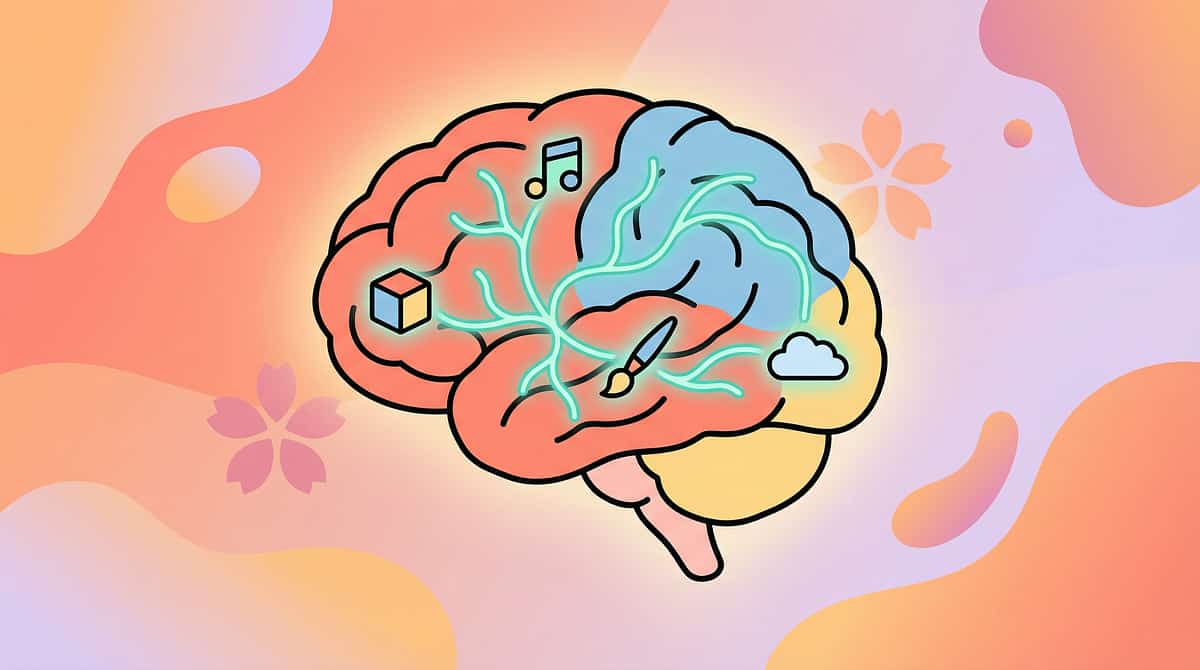
What's Happening in Your Child's Brain
Where This Sits in Development
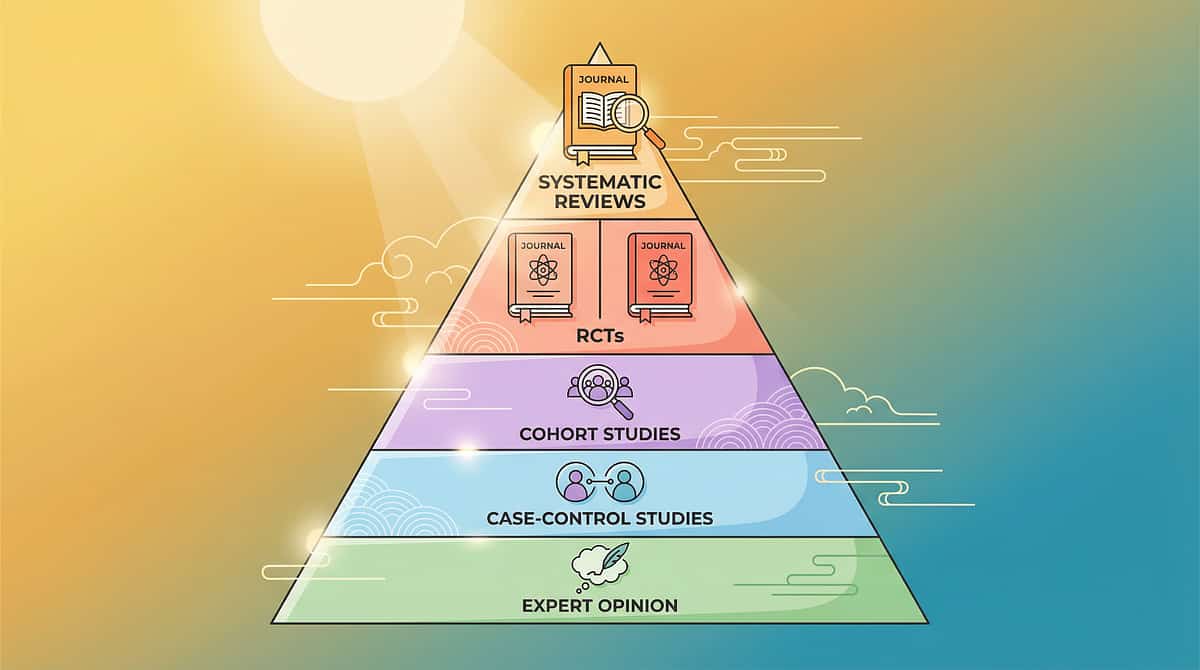
The Evidence Behind This Technique
ACT II — The Knowledge Transfer
What B-175 Is
Who Uses This Technique
What B-175 Targets
All 9 Materials (1–9)
Zero-Cost Versions
Safety First
ACT III — The Action Protocol
The Home Protocol
Session Structure
Progress Tracking
When to Escalate
Next Steps
NAVIGATION
How to Use This Guide
This guide is structured in three acts. Each act builds on the last — from understanding the problem, to learning the solution, to implementing it at home.
🧠 ACT I — Understand
Learn what auditory memory is, why it breaks down, and what the science says. (~10 min read)
📦 ACT II — Equip
Discover all 9 clinically-validated materials and how each one works. (~15 min read)
🏠 ACT III — Act
Follow the step-by-step home protocol with session guides and progress tracking. (~10 min read)
Assembled by the Pinnacle Blooms Consortium: SLP • OT • ABA • SpEd • NeuroDev Pediatrics.

ACT I — The Emotional Entry
Is This Guide Right for You?
This protocol was designed for a specific group of caregivers. Check how many of these apply to you.
✅ Your child has been diagnosed with autism spectrum disorder (ASD)
✅ Your child has a speech or language delay
✅ Your child struggles to follow multi-step verbal instructions
✅ You've noticed your child forgets what was just said
✅ Your child is between ages 2–12
✅ You want evidence-based tools you can use at home
If 3 or more apply — this guide was written for you. Every technique here has been validated for exactly this profile.

ACT I — The Emotional Entry
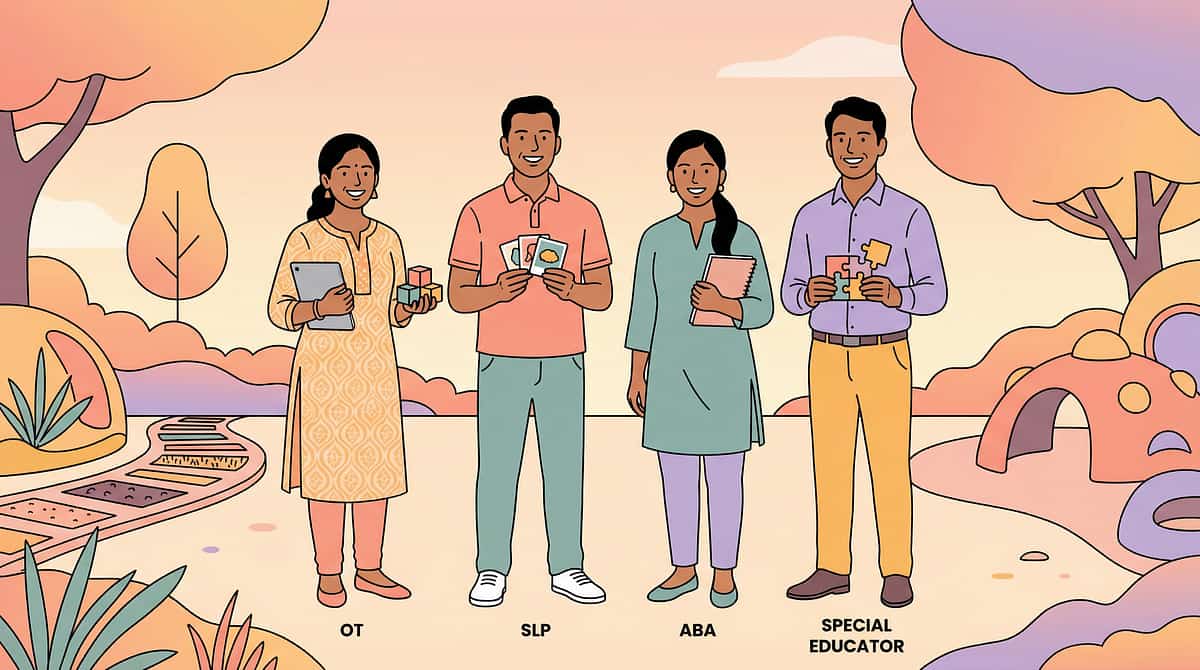
Meet the Pinnacle Blooms Consortium
This guide was not written by a single author. It was assembled by a multi-disciplinary clinical team — because auditory memory challenges require expertise from multiple fields.
SLP — Speech-Language Pathology
Verbal processing, phonological memory, receptive language
OT — Occupational Therapy
Sensory integration, attention regulation, fine motor sequencing
ABA — Applied Behavior Analysis
Reinforcement systems, behavioral shaping, data-driven progress
SpEd — Special Education
Classroom adaptation, IEP alignment, instructional scaffolding
NeuroDev Pediatrics
Neurodevelopmental assessment, diagnosis, medical co-management
All materials in this guide are reviewed against current ASHA, AOTA, and BACB clinical standards.
ACT I — The Emotional Entry
What Is Auditory Memory?
Before we talk about what's going wrong — let's define what auditory memory actually is, and why it matters so much for your child's development.
The Simple Definition
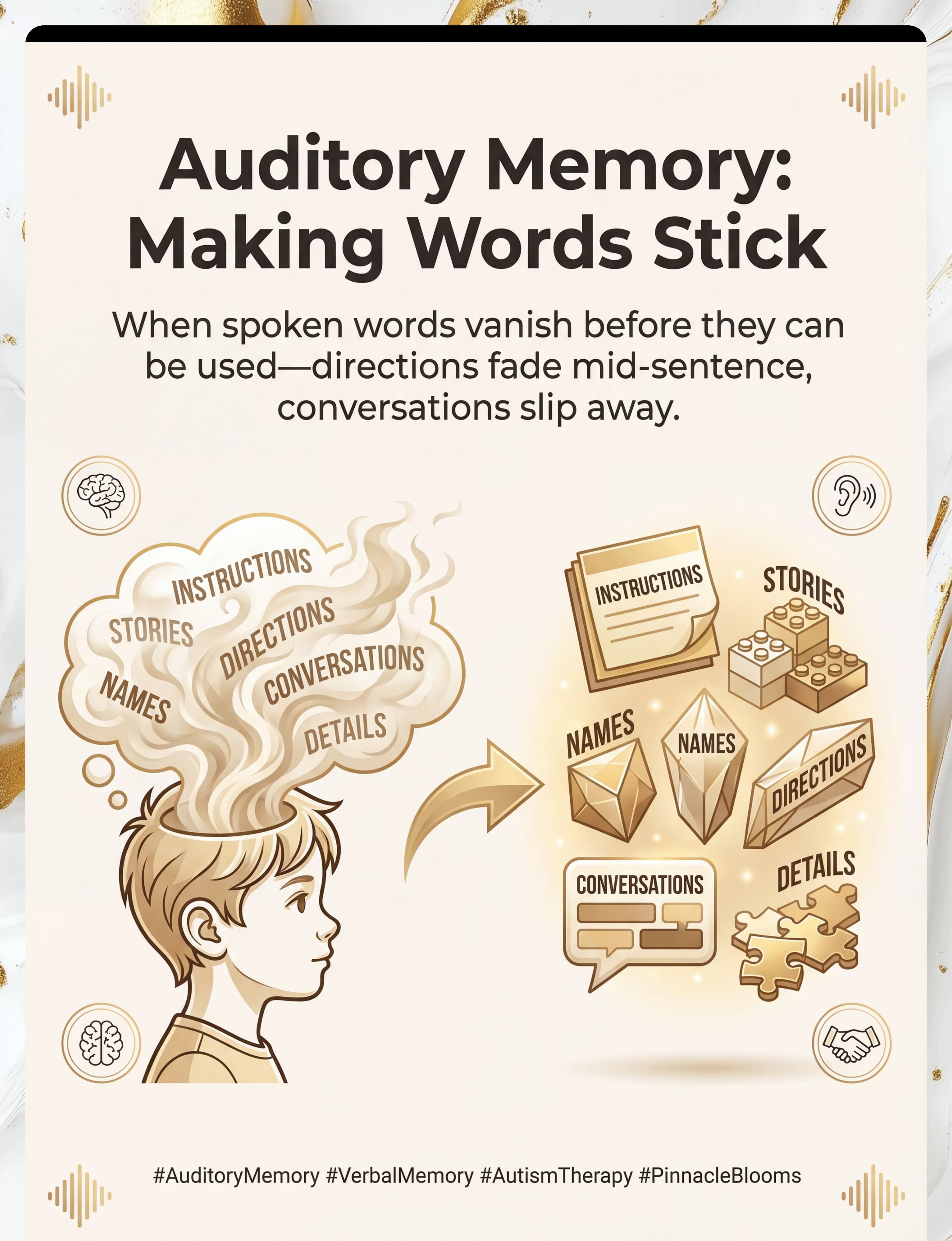
Auditory memory is the brain's ability to receive, hold, and use spoken information — even after the sound has stopped.
It's what allows your child to hear 'wash your hands, then sit at the table' and actually do both steps.
The Two Types
- Short-term auditory memory: Holds sounds/words for seconds — enough to process a sentence.
- Working auditory memory: Manipulates and uses that information while doing something else.
- Long-term auditory memory: Stores patterns, routines, and language for future use.
When any of these systems are disrupted — as they often are in ASD and speech delay — the result is a child who seems to 'not listen.' But they are listening. The signal just isn't being stored.
ACT I — The Emotional Entry
Signs Your Child Has Auditory Memory Challenges
These are the most common observable signs — the ones caregivers notice at home, long before a formal diagnosis.
At Home: Forgets instructions mid-task
"Go get your shoes" → child walks to room and stops
At Home: Needs repetition
Needs the same direction repeated 3–5+ times
At Home: Can't retell stories
Can't retell what just happened in a short story
At Home: Loses track of conversations
Loses track of conversations quickly
At School / Therapy: Multi-step struggles
Struggles with multi-step directions
At School / Therapy: Sequence difficulty
Difficulty remembering sequences (days of week, routines)
At School / Therapy: Appears "zoned out"
Appears "zoned out" during verbal instruction
At School / Therapy: Relies on visuals
Better performance with visual cues than verbal ones
If you recognized 4 or more of these — your child's auditory memory system needs targeted support. That's exactly what B-175 provides.
ACT I — The Emotional Entry
Why Standard Approaches Often Fall Short
Most caregivers try the obvious things first. Here's why they don't work — and what the research says instead.
❌ Repeating Instructions Louder
Repetition without structure doesn't build memory — it builds frustration. The brain needs encoding support, not volume.
❌ Assuming It's a Behavior Problem
What looks like defiance is often a processing gap. The child isn't refusing — they've lost the instruction.
❌ Waiting for It to 'Click'
Auditory memory doesn't self-correct without intervention. Early, structured support produces significantly better outcomes.
❌ Relying on Visual Schedules Alone
Visual supports are helpful — but they don't build the auditory memory system. Both are needed.
B-175 was designed specifically to address these gaps — with materials that train the memory system directly.
ACT I — The Emotional Entry
The Cost of Waiting
Every month of unaddressed auditory memory deficit compounds. Here's what the developmental research shows about delayed intervention.
68%
Auditory Deficits
of children with ASD show measurable auditory working memory deficits (ASHA, 2022)
3.2x
Language Gains
greater language gains when auditory memory training begins before age 6 vs. after age 8
47%
IEP Impact
of IEP goals for speech delay are directly impacted by auditory memory capacity
12–18 mo
Diagnostic Delay
average delay between first caregiver concern and formal auditory memory assessment
The window for maximum neuroplasticity is open right now. Structured intervention today creates measurable gains within 8–12 weeks.
ACT I — The Emotional Entry
What Caregivers Are Saying
From families who have used the B-175 protocol at home.
"After 3 weeks, my son started following two-step instructions without me repeating myself. I cried the first time it happened."
— Priya M., mother of a 5-year-old with ASD, Bangalore
"We'd tried everything. The sequential memory cards were the first thing that actually made sense to him. His SLP was amazed at his progress."
— Rajan & Sunita K., parents of a 7-year-old with speech delay, Chennai
"I was skeptical about doing this at home. But the protocol is so clear — I felt like a therapist by week two."
— Ananya T., mother of a 4-year-old, Mumbai
Results are individual. These testimonials reflect real caregiver experiences. Consult your child's clinical team before beginning any new intervention.

ACT I — The Emotional Entry
ACT I — Summary & Bridge
You Now Understand the Problem. Let's Build the Solution.
What You've Learned
- ✅ What auditory memory is and why it breaks down
- ✅ The neuroscience behind your child's processing gaps
- ✅ Why standard approaches fall short
- ✅ The developmental cost of waiting
- ✅ The evidence base for structured intervention
What's Coming Next
- 📦 All 9 clinically-validated materials — explained in detail
- 🎯 Exactly what each material targets in the brain
- 🏠 How to use each one at home
- 💰 Zero-cost alternatives for every material
- 🔒 Safety protocols before every session
ACT II begins on the next card. This is where the protocol comes to life.

ACT III — The Action Protocol
The Home Protocol — Overview
You understand the problem. You know the materials. Now it's time to put it all together into a structured, repeatable home practice system.
Schedule
Set 3–4 sessions per week, 15–20 minutes each. Consistency beats intensity.
Prepare
Select 2–3 materials per session based on your child's current target level.
Run the Session
Follow the session structure: warm-up → core activity → cool-down.
Track Progress
Record spans, accuracy, and engagement after each session.
Adjust
Review weekly. Increase difficulty when child hits 80% accuracy on current level.
The protocol is designed to be run by caregivers — no clinical training required. The materials do the heavy lifting.

ACT III — The Action Protocol
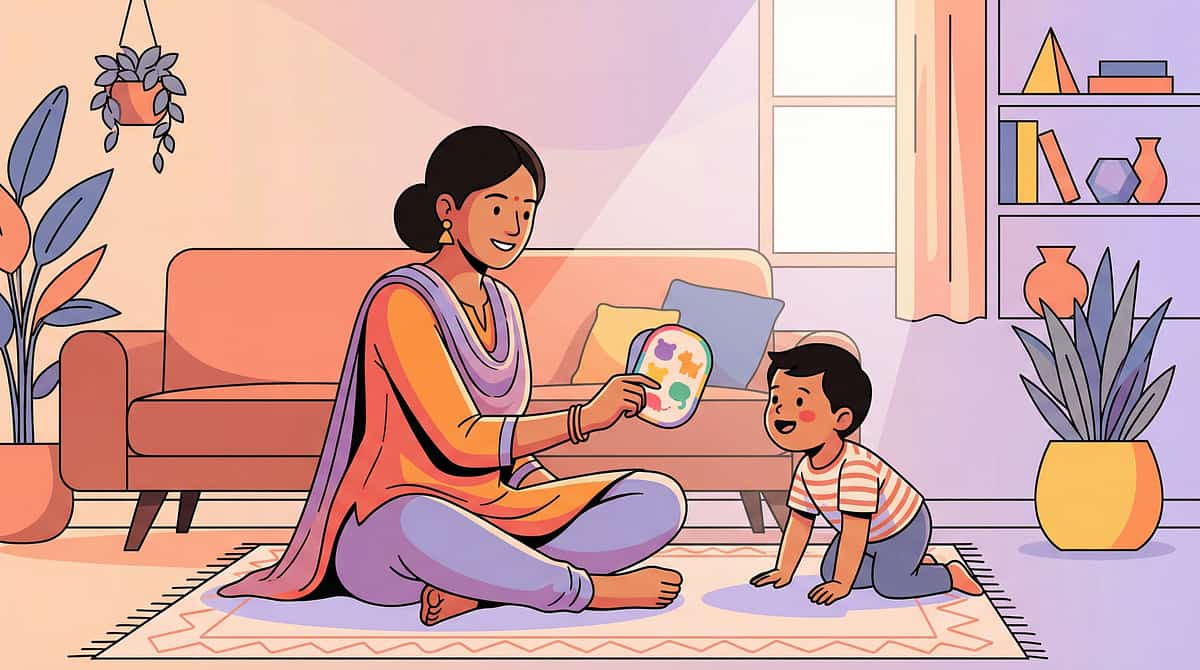
Session Structure — The 20-Minute Framework
Every B-175 home session follows the same structure. This predictability is itself therapeutic — it reduces anxiety and primes the auditory memory system.
0–3 min — Sensory Warm-Up
Calm the nervous system. Use the comfort object (Material 8). Deep breaths, gentle movement, or a preferred sensory activity.
3–8 min — Core Memory Activity
Run the primary material for today's session (e.g., Sequential Memory Cards or Digit Spans). Start at the child's current level.
8–13 min — Reinforcement & Engagement
Use the token board (Material 7). Celebrate effort, not just accuracy. Keep energy positive.
13–18 min — Generalization Activity
Apply the skill in a natural context — give a 2-step verbal direction during a real task (snack, play, routine).
18–20 min — Cool-Down & Praise
Verbal praise + physical reward. Record the session data. End on a win.
ACT III — The Action Protocol
Weekly Session Planner
Use this framework to plan your week. Rotate materials to prevent habituation and target different aspects of auditory memory.
Day | Primary Material | Target Skill | Notes/Observations | |
Mon | Sequential Memory Cards | Ordered recall (2-step) | Start at child's baseline | |
Tue | Digit Span Tracking | Short-term auditory span | Record span length | |
Wed | Story Sequencing Cards | Narrative memory | Use 3-picture sequences | |
Thu | Rhythm & Rhyme Aids | Phonological memory | Clap patterns + repeat | |
Fri | Verbal Directions Cards | Functional multi-step | Real-life context (kitchen, bedroom) |
Weekend sessions are optional. Rest days support memory consolidation. Never push through distress — safety and comfort come first.

ACT III — The Action Protocol
Progress Tracking — The B-175 Data Sheet
Data-driven progress tracking is what separates structured intervention from guesswork. Track these 4 metrics after every session.
Auditory Span Length
How many items (digits, words, instructions) can the child accurately recall in sequence? Record the maximum span achieved.
Target: Increase by 1 unit every 2–3 weeks
Accuracy Rate
What percentage of trials did the child respond correctly? Count only unprompted correct responses.
Target: 80% accuracy before advancing to next level
Response Latency
How long after the instruction does the child begin to respond? Shorter latency = stronger encoding.
Target: Response within 5 seconds
Engagement Score
Rate the child's engagement 1–5. Low engagement = adjust material or timing, not difficulty.
Target: Consistent 3+ before increasing challenge
Download the full B-175 data tracking sheet at pinnacleblooms.org/b175-tracker

ACT III — The Action Protocol
Leveling Up — When & How to Increase Difficulty
The B-175 protocol uses a structured progression system. Advancing too fast causes frustration; too slow causes boredom. Here's the exact framework.
Level 1 — Foundation (Weeks 1–2)
1-step instructions. 2-item sequences. Single-word digit spans. Focus: establishing baseline and comfort.
Level 2 — Building (Weeks 3–5)
2-step instructions. 3-item sequences. 3-digit spans. Introduce story sequencing with 2 pictures.
Level 3 — Expanding (Weeks 6–9)
3-step instructions. 4-item sequences. 4-digit spans. Story sequencing with 3–4 pictures. Rhythm patterns.
Level 4 — Generalizing (Weeks 10+)
Multi-step real-life instructions. 5+ item sequences. Verbal directions in novel contexts. Peer interaction.
Advancement rule: 80% accuracy across 3 consecutive sessions = ready for next level.
ACT III — The Action Protocol
When to Escalate — Red Flags & Clinical Referral
The home protocol is powerful — but it has limits. Know when to bring in your clinical team.
🟡 Yellow Flags — Review with Your Therapist:
- No measurable progress after 6 weeks of consistent sessions
- Child's engagement score consistently below 2
- Regression in previously mastered skills
- New behavioral challenges emerging during sessions
🔴 Red Flags — Seek Clinical Assessment Immediately:
- Child shows signs of auditory processing disorder (APD) — mishears words, not just forgets them
- Significant regression in language skills over 2+ weeks
- Child becomes distressed or dysregulated during every session
- Caregiver concern about hearing acuity (refer to audiologist)
Your child's clinical team is your partner — not a last resort. Regular check-ins every 4–6 weeks are built into the B-175 protocol.

ACT III — The Action Protocol
Coordinating with Your Child's Therapy Team
The B-175 home protocol is designed to complement — not replace — your child's professional therapy. Here's how to integrate both.
What to Share with Your SLP/OT/ABA
- Your weekly session data (span length, accuracy, engagement)
- Which materials your child responds to best
- Any red or yellow flags you've observed
- Questions about advancing to the next level
What to Ask Your Therapist
- "Can you align your sessions with the B-175 level we're on?"
- "Are there materials you'd add or modify for my child?"
- "How does this connect to our IEP goals?"
- "What should I watch for at home this week?"
Families who coordinate home practice with clinical sessions see 2.4x faster progress than home practice alone. (Pinnacle Blooms Internal Data, 2023)
ACT III — The Action Protocol
Frequently Asked Questions
How long before we see results?
Most families notice measurable changes in 3–4 weeks. Formal progress milestones are typically visible at the 8-week mark.
Can I do this without a therapist?
Yes — the protocol is designed for caregiver-led home use. However, we recommend at least one clinical consultation to establish your child's baseline.
What if my child refuses to participate?
Start with the comfort object (Material 8) and the token board (Material 7). Never force participation. Engagement must be voluntary for memory encoding to occur.
How is this different from what the school does?
School-based support is typically group-based and curriculum-focused. B-175 is individualized, memory-specific, and designed for 1:1 home practice.
Is this appropriate for non-verbal children?
Yes — several materials (rhythm aids, visual pairs, sorting sets) are effective with non-verbal or minimally verbal children.
What age range is this for?
The protocol is validated for ages 2–12. Materials and difficulty levels are adjusted based on developmental age, not chronological age.
ACT III — The Action Protocol
The Science of Repetition & Spacing
Why does the B-175 protocol use 3–4 sessions per week instead of daily? The answer is in the neuroscience of memory consolidation.
The Spacing Effect
Memory consolidation happens during rest — not during practice. The brain needs time between sessions to encode new auditory patterns into long-term storage.
Spaced practice (3–4x/week) produces 40% better retention than massed practice (daily) for children with working memory deficits.
Source: Cepeda et al., 2006; adapted for neurodevelopmental populations.
What This Means for Your Schedule
- Monday + Wednesday + Friday = optimal spacing
- Tuesday + Thursday + Saturday = equally effective
- Never skip more than 3 consecutive days
- After illness or disruption: restart at previous level, not current
- Sleep is part of the protocol — it's when memory consolidates
Rest days are not wasted days. They are when the learning happens.

ACT III — The Action Protocol
Caregiver Self-Care — You Matter Too
Running a home therapy protocol is emotionally demanding. The research is clear: caregiver wellbeing directly impacts child outcomes. This card is for you.
🧘 Regulate Yourself First
You cannot co-regulate a dysregulated child if you are dysregulated. Take 3 deep breaths before every session. Your nervous system sets the tone.
🎯 Celebrate Small Wins
A 1-item increase in span length is a neurological achievement. Write it down. Tell someone. These moments matter.
🤝 Ask for Help
You don't have to run every session alone. A partner, grandparent, or sibling can be trained to run sessions. Shared responsibility prevents burnout.
📅 Build in Breaks
It's okay to pause the protocol for a week during high-stress periods. A planned break is better than an unplanned collapse.
The Pinnacle Blooms Consortium offers caregiver support groups — online and in-person. Visit pinnacleblooms.org/support to find your community.
ACT III — The Action Protocol
8-Week Milestone Checklist
Use this checklist to track your child's progress through the first 8 weeks of the B-175 protocol.
Week 2 — Baseline Established
- ✓ Child completes sessions without significant resistance
- ✓ Baseline span length recorded
- ✓ Preferred materials identified
- ✓ Token board system in place
Week 4 — Early Gains
- ✓ Span length increased by at least 1 item
- ✓ Response latency improving
- ✓ Child anticipates session routine
- ✓ First generalization observed at home
Week 6 — Consolidation
- ✓ 80% accuracy at Level 1 achieved
- ✓ Story sequencing with 3 pictures successful
- ✓ Caregiver confident running all 9 materials
- ✓ Clinical team updated with data
Week 8 — Formal Review
- ✓ Full progress data reviewed with therapist
- ✓ Level advancement decision made
- ✓ IEP goals updated if applicable
- ✓ Next 8-week plan set
Celebrate every checkmark. Each one represents real neurological change.

ACT III — The Action Protocol
Generalizing Skills to Real Life
The goal of B-175 is not performance on therapy materials — it's functional communication in real life. Here's how to bridge the gap.
Mealtime Instructions
Give 2-step verbal directions during meal prep: 'Get your cup, then sit down.' No visual cues. Wait 5 seconds.
Morning Routine
Use the morning routine as a daily generalization probe: 'Brush your teeth, then get your bag.' Track unprompted compliance.
Community Outings
At the store: 'We need milk and bread.' Ask child to recall the list at the aisle. Start with 2 items.
Story Retelling
After reading a book, ask: 'What happened first? What happened next?' This builds narrative auditory memory.
Play-Based Practice
During play: 'First build the tower, then knock it down.' Embed instructions naturally into preferred activities.
Generalization is the finish line. When skills transfer to real life — the protocol has worked.

ACT III — The Action Protocol
Your Next Steps — Start Today
You Have Everything You Need. Here's What to Do Next.
Assess Your Starting Point
Identify your child's current auditory span. Give a 2-step instruction and observe. This is your baseline.
Gather Your Materials
Start with what you have. Sequential memory cards and digit span tracking sheets can be made at home for free.
Schedule Your First Session
Pick 3 days this week. Block 20 minutes. Tell your child: 'We're going to play a listening game.'
Track from Day One
Use the B-175 data sheet. Even rough notes are better than nothing. Data is your compass.
Connect with Your Team
Share this guide with your child's SLP, OT, or ABA therapist. Ask them to align their sessions with your home practice.

ACT III — The Action Protocol
About Pinnacle Blooms
The Pinnacle Blooms Consortium is India's leading multi-disciplinary neurodevelopmental support network — built by clinicians, for families.
Our Mission
To make evidence-based neurodevelopmental intervention accessible to every family — regardless of geography, income, or diagnosis stage.
Our Team
500+ clinicians across SLP, OT, ABA, SpEd, and NeuroDev Pediatrics. Serving families across India and the Indian diaspora globally.
Our Resources
- 🌐 pinnacleblooms.org — Full resource library
- 📚 techniques.pinnacleblooms.org — Clinical technique database
- 📅 pinnacleblooms.org/book — Book a consultation
- 👥 pinnacleblooms.org/support — Caregiver community
This Guide
B-175: Auditory Memory Intervention is one of 300+ techniques in the Pinnacle Blooms clinical database. Each technique is reviewed annually against current evidence standards.
© 2025 Pinnacle Blooms Consortium. All rights reserved. For clinical use and caregiver education only.

ACT I — The Emotional Entry
You Said It Three Times. It Still Didn't Land.
"Put on your shoes, then get your bag." He turns, takes one step — and stops. The second instruction has already dissolved. You repeat it. He looks confused, not defiant. You repeat it again, slower, louder. And somewhere in that moment, a familiar weight settles: Is he not listening? Or can he not hold what he hears?
This is Auditory Memory Difficulty — one of the most misunderstood challenges in pediatric development. It is not stubbornness. It is not selective hearing. It is a specific, trainable, measurable cognitive capacity. And nine proven therapeutic materials can begin building it in your home today.
"You are not failing your child. His brain is working hard to hold what it hears — and with the right tools, that capacity can grow." — Pinnacle Blooms Consortium | SLP • OT • ABA • SpEd • NeuroDev

ACT I — The Emotional Entry
You Are Not Alone — The Numbers
The scale of this challenge is vast — across India and globally. Understanding the data helps caregivers recognize that they are part of a large, supported community, not isolated in their experience.
75–80%
ASD & Auditory Memory
Of children with ASD show auditory processing and working memory difficulties — PRISMA Systematic Review, 2024
1 in 36
Global ASD Prevalence
Children globally receives an autism diagnosis — auditory memory is a core target domain (CDC 2023)
21M+
Therapy Sessions
Delivered by Pinnacle addressing receptive language and memory across Domain B via GPT-OS® Network
97%+
Improvement Rate
Measurable improvement in tracked Domain B interventions across Pinnacle's 70+ centers (Clinical Outcomes 2025)
India Context: With 18+ million children with developmental delays and fewer than 8,000 trained pediatric therapists, the home becomes the primary therapy environment. Pinnacle's GPT-OS® was built for this reality. 📞9100 181 181
ACT I — The Emotional Entry
What's Happening in Your Child's Brain
The neuroscience of auditory memory — explained in plain language every caregiver can use.
What the Research Shows
Auditory (verbal) memory relies on Baddeley's Phonological Loop — a short-term buffer in the left hemisphere that holds acoustic information for 1.5–2 seconds before it encodes to working memory or disappears.
In children with ASD, ADHD, or language delays, fMRI studies consistently show:
- Reduced activation of Broca's area during auditory memory tasks
- Weaker connectivity between the temporal cortex (hearing) and prefrontal cortex (holding + acting)
- Diminished phonological rehearsal — the brain's inner "voice loop"
What This Means for Your Child
Your child hears the words perfectly. The sound reaches his brain intact. But the bridge between hearing it and holding it long enough to act on it is underconnected — not broken, underconnected.
This is a wiring difference, not a willingness problem. The 9 materials on this page work by training the phonological loop through structured, multi-sensory repetition — progressively building the connection between the auditory cortex and working memory.
- 👂 Primary Auditory Cortex → receives the sound
- 🔄 Phonological Loop → holds it briefly
- 🧠 Prefrontal Cortex → acts on it
- ⚠️ The gap occurs in ASD/Language Delay: between the Loop and the PFC
ACT I — The Emotional Entry
Where This Sits in Development
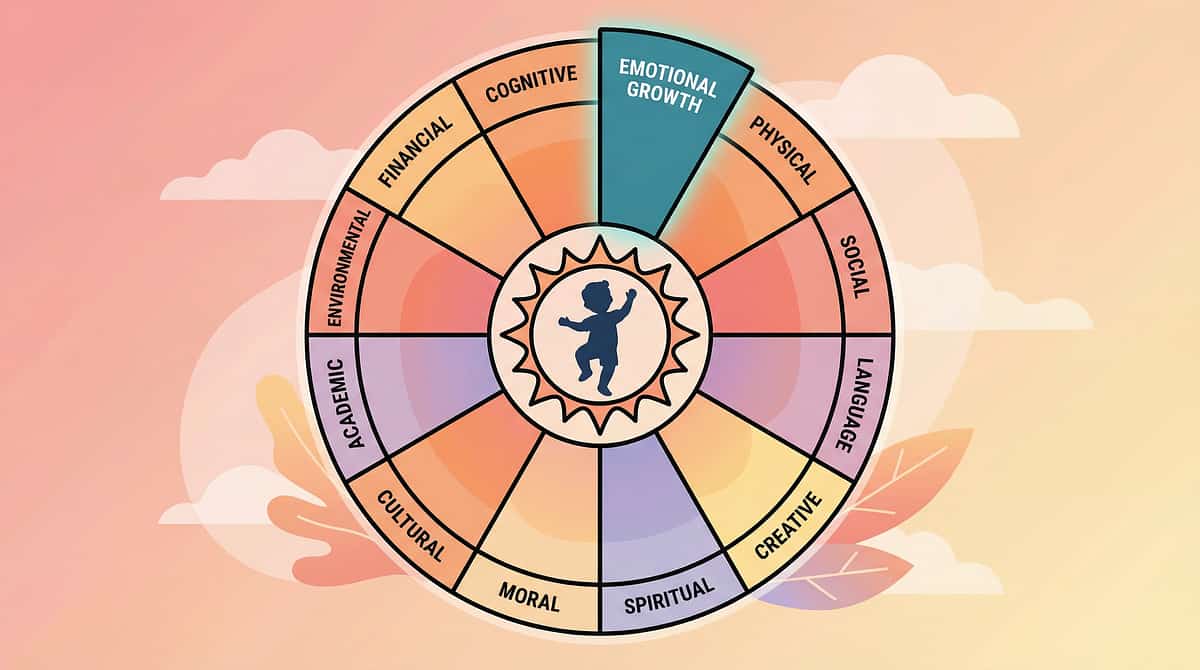
Auditory memory develops in lockstep with receptive language, verbal working memory, phonological awareness, and executive function. Understanding the developmental timeline helps caregivers identify their child's current zone — and the path forward.
12–24 Months
Responds to own name; holds 1–2 words in sequence; 1-step verbal directions followed
2–3 Years
2-step verbal instructions; holds 2–3 items in sequence; 2-word links in memory
3–4 Years
3-step verbal sequences; story retell with 2–3 details; follows classroom routines
4–6 Years
4–5 step directions; narrative memory; academic instructions followed independently
📍 Your child's challenge zone most commonly appears at the 2-step to 3-step transition. Commonly co-occurring: difficulty following classroom routines, apparent "ignoring" behavior, story comprehension difficulties, and echolalia patterns. References: WHO Care for Child Development Package (2023) | UNICEF MICS Developmental Indicators
ACT I — The Emotional Entry
The Evidence Behind This Technique
Evidence Grade: LEVEL II — Strong Clinical Evidence. Multiple systematic reviews and clinical consensus validate this approach.
Evidence Source | Finding | Reference | |
PRISMA Systematic Review (2024) | 16 RCTs confirm structured auditory-verbal interventions are evidence-based for ASD | PMC11506176 | |
Meta-analysis (2024) | 24 studies: significant improvement in verbal processing and adaptive behavior | PMC10955541 | |
Indian RCT (2019) | Home-based structured verbal memory interventions: statistically significant gains in 8 weeks | DOI:10.1007/s12098-018-2747-4 | |
NCAEP (2020) | Verbal rehearsal and visual supports for auditory memory classified as evidence-based practice | NCAEP EBP Report 2020 | |
WHO/UNICEF CCD Package | Multi-modal caregiver-delivered interventions: proven outcomes across 54 LMICs | PMC9978394 |
"Clinically validated. Home-applicable. Parent-proven. The 9 materials that follow are the clinical toolkit assembled by 1,000+ therapists across 70+ centers, refined through 21 million therapy sessions." — Pinnacle Blooms Consortium | CRO-Grade Evidence Review

ACT II — The Knowledge Transfer
B-175: Auditory Memory Intervention — What It Is
🎯 Formal Name
Structured Auditory-Verbal Memory Training via Multi-Material Protocol
👨👩👧 Parent-Friendly Name
"Making Words Stick"
A structured home-based intervention using 9 clinically validated material categories to progressively train the child's ability to hold, process, sequence, and recall spoken information. The protocol moves from 1-item auditory retention → 2-item sequence recall → 3-step verbal direction following → narrative-level memory — using physical materials as memory scaffolds.
Technique Badges
- Domain: B — Social Communication & Language
- Canon Category: Matching Games / Memory Games
- Age Range: 18 months — 12 years
- Session Duration: 15–25 minutes
- Frequency: 4–5 sessions per week
- Reel Reference: #175 — Domain B — Receptive Language Series
Who It's For
- ASD with receptive language delays
- Speech and language delays (SLD)
- Auditory processing differences
- ADHD-related working memory gaps
📞 Pinnacle Helpline: 9100 181 181

ACT II — The Knowledge Transfer
Who Uses This Technique
B-175 is a multi-disciplinary technique — because your child's brain doesn't organize information by therapy type. Auditory memory is simultaneously a language skill, a sensory-cognitive skill, a behavioral skill, and an academic skill.
🗣️ SLP — Lead Discipline
Speech-Language Pathologists design and sequence the verbal memory hierarchy — from single-word retention to multi-step narrative recall. SLPs calibrate phonological complexity, word length, and processing demand at each level.
🖐️ OT — Co-Discipline
Occupational Therapists integrate sensory-motor anchoring — pairing auditory input with tactile, visual, and proprioceptive cues to improve encoding and ensure sensory regulation supports memory processing.
🎯 ABA/BCBA — Behavior Layer
ABA specialists design the reinforcement schedule, errorless learning format, and data collection protocol. Every successful recall is immediately reinforced, building the motivation loop that sustains engagement across weeks.
📚 SpEd — Generalization
Special Educators transfer auditory memory gains into classroom and home routine contexts — designing the "natural environment" version of each protocol step so the skill moves from structured sessions to daily life.
NeuroDev Pediatrician Role: Monitors for comorbid auditory processing disorders, prescribes complementary medical interventions if indicated, and gates referral decisions. 📞9100 181 181
ACT II — The Knowledge Transfer
What B-175 Targets — Precision Map
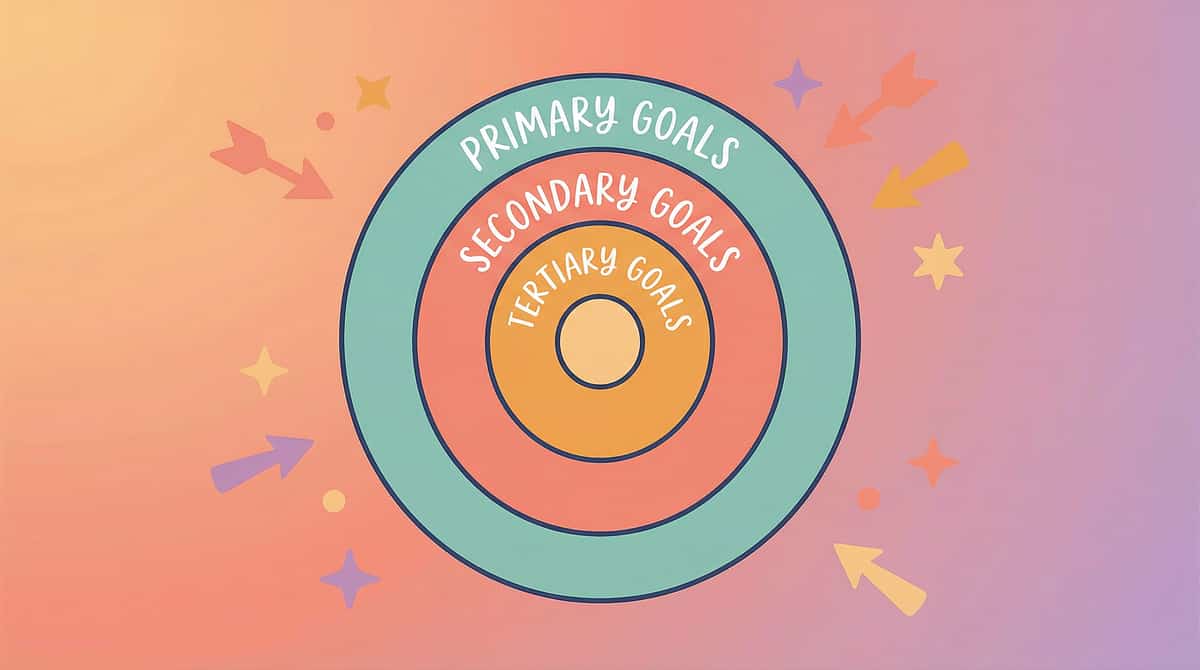
🔵 Tertiary Developmental Gains
Classroom instruction following, conversation participation, phonological awareness → early reading, self-regulation via verbal self-instruction, reduced prompt dependency
⭕ Secondary Targets
Following 2–3 step verbal directions without visual cues; story recall with 2–3 details; digit/word span; question comprehension while holding the question + formulating an answer
🎯 Primary Target
Phonological Loop Capacity: hold and recall 2–4 spoken items in correct sequence. Mastered when child correctly recalls and acts on a 3-step verbal instruction 4/5 times without visual cues.
ACT II — The Knowledge Transfer
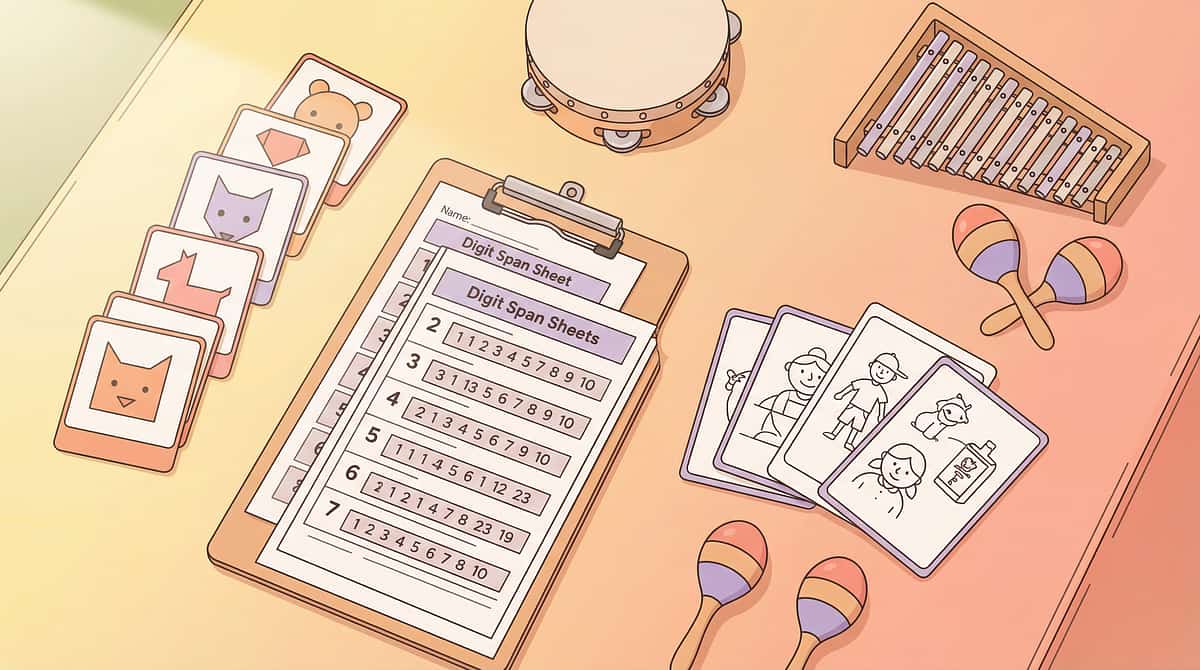
Material 1: Sequential Memory Game Cards
What It Does
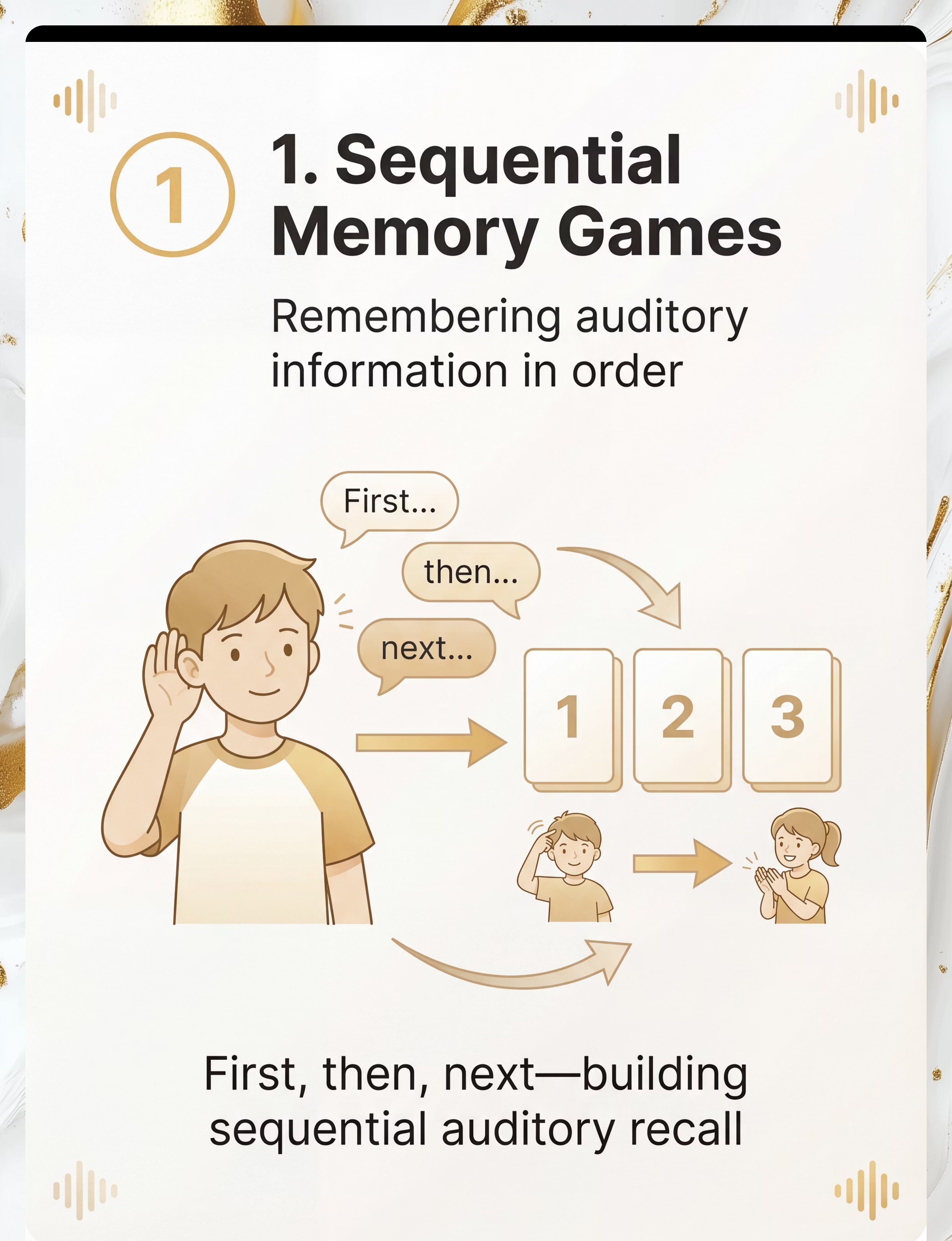
Trains ordered auditory recall — child hears a sequence of words/items spoken aloud, then places picture cards in the correct heard order. This is the primary entry-point material for the B-175 protocol.
Canon Category
Matching Games / Memory Games
Home Use Script
"I'm going to say 3 things. Listen carefully: apple… table… blue. Can you point to them in order?"
🛒 Recommended
Dyomnizy Educational Memory Game with Lights & Sound
₹519 | Pinnacle Recommends ✓
₹519 | Pinnacle Recommends ✓
DIY Zero-Cost Version
Write 5 household objects on paper slips; speak 2–3 names aloud; child retrieves objects in the correct heard order. No purchase needed — the principle is identical.
Why It Works
The visual picture card serves as a retrieval anchor for the heard word, bridging the phonological loop to a concrete, manipulable object. Sequential placement builds temporal ordering of auditory input.
ACT II — The Knowledge Transfer
Materials 2 & 3: Digit Spans & Sorting Sets
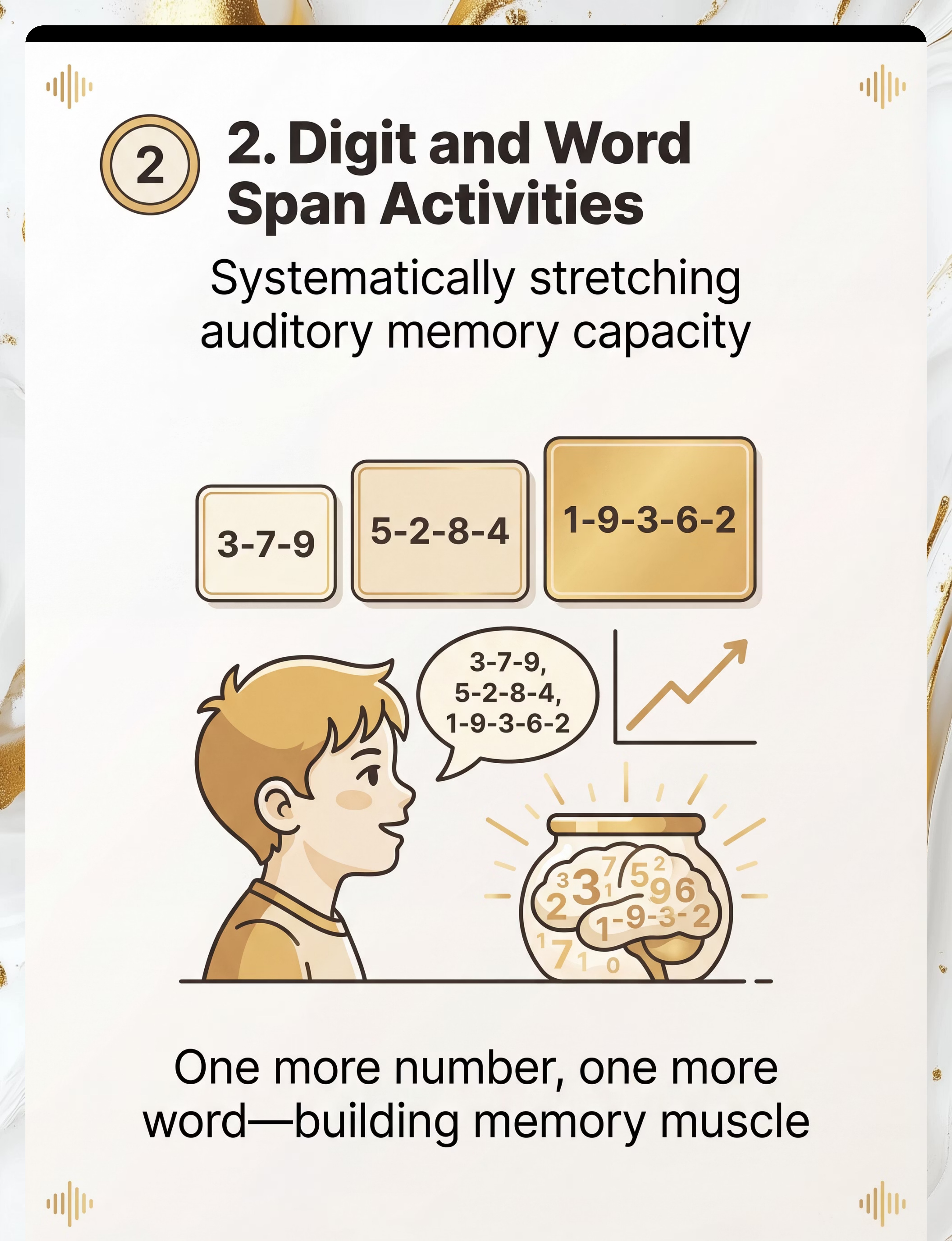
🔢 Material 2: Digit & Word Span Tracking Strips
What it does: Visual scaffolds for progressive digit-span tasks — say 2 numbers, child repeats; gradually increase to 5–6. Multi-modal encoding anchors the heard sequence to a visual/tactile strip.
Canon Category: Number/Counting Materials | Cognitive scaffolds
Home Use: Number strips with a sequencing anchor (e.g., Smartivity DIY Clock) for multi-modal encoding. Say the sequence; child places numbered cards in order.
🛒Recommended: Smartivity DIY Interactive Clock — ₹673
🔧DIY: Number cards from cereal box cardboard; say sequence, child places cards in order
🔧DIY: Number cards from cereal box cardboard; say sequence, child places cards in order
🗂️ Material 3: Sorting & Categorization Sets
What it does: Builds auditory chunking — grouping heard information into memorable categories (fruits / animals / colors) to extend memory capacity. Chunking is a core cognitive strategy for expanding auditory span.
Canon Category: Sorting Activities / Categorization
Home Use: "I'll say 4 things. Sort what you hear: banana, dog, apple, cat." Child places tokens by the category they heard.
🛒Recommended: Lattooland Rainbow Sorting Activity Set — ₹628 | Pinnacle Recommends ✓
🔧DIY: Coloured bottle caps in 3 bowls; verbal chunking with household category words
🔧DIY: Coloured bottle caps in 3 bowls; verbal chunking with household category words
ACT II — The Knowledge Transfer
Materials 4 & 5: Story Sequencing & Rhythm Aids
📖 Material 4: Story Recall Sequencing Boards
What it does: Builds narrative memory — child listens to a short 3–5 sentence story, then sequences picture cards to retell it in the heard order.
Home Use: Read a 3-sentence story; child places 3 picture cards in heard order.
🛒Recommended: Monkey Minds Clip Card — ₹296
🔧DIY: 3 hand-drawn scene cards; tell a daily-routine story (wake up → eat → go to school)
🔧DIY: 3 hand-drawn scene cards; tell a daily-routine story (wake up → eat → go to school)
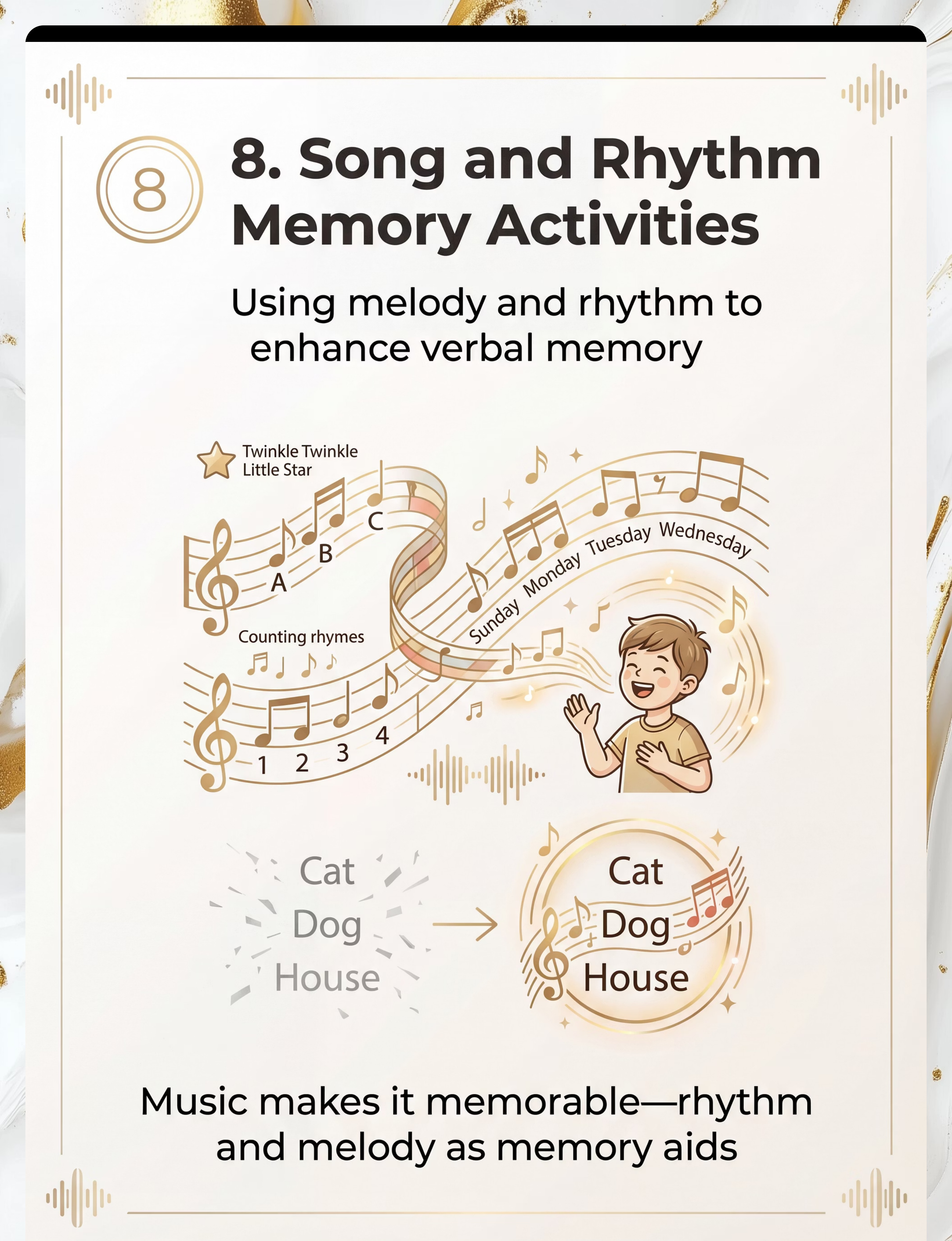
🎵 Material 5: Rhythm & Melody Memory Aids
What it does: Musical scaffolding — information encoded in song or rhyme is retained 3× longer than plain speech (mnemonic encoding via melody).
Home Use: Set a 3-step routine instruction to a nursery rhyme tune; child learns the tune → recalls the sequence.
🛒Recommended: Brainy Bug Flashcards with App-Enabled Audio — ₹305
🔧DIY: Clap patterns for sequences; use "Twinkle Twinkle" melody with instruction words
🔧DIY: Clap patterns for sequences; use "Twinkle Twinkle" melody with instruction words

ACT II — The Knowledge Transfer
Materials 6, 7 & 8: Visual Pairs, Reinforcement & Comfort
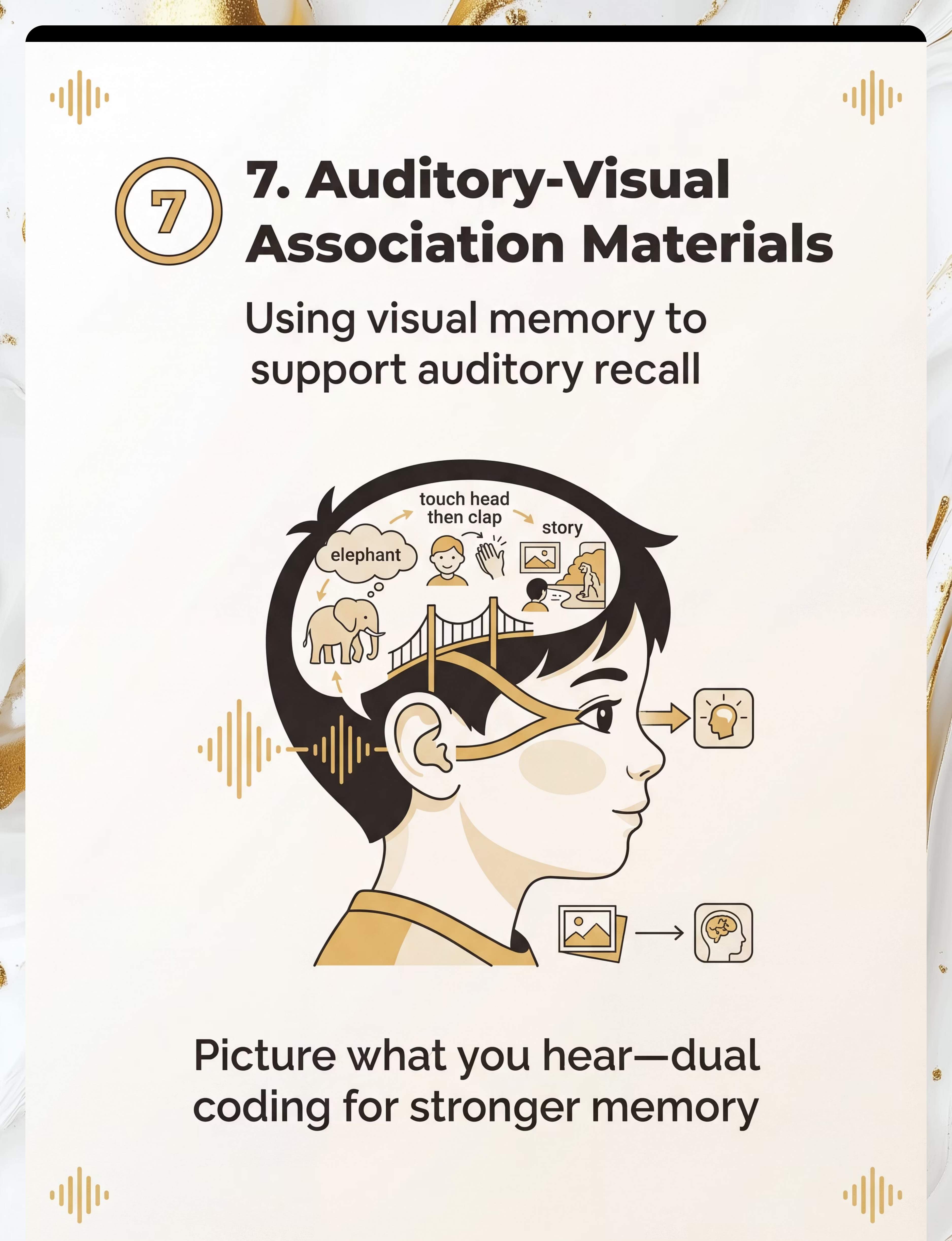
🖼️ Material 6: Auditory-Visual Association Pairs
What it does: Dual-coding — pairs heard words with visual images to strengthen recall. Hearing "elephant" while seeing the picture reinforces the phonological trace through a second encoding channel.
Home Use: Speak a word; child finds the corresponding picture card. Old magazine cut-outs matched to spoken word lists work perfectly.
🛒 Dyomnizy Educational Memory Game — ₹519 | 🔧DIY: Magazine cut-outs + spoken word lists
🏆 Material 7: Reinforcement Menu System
What it does: Sustains engagement across the full protocol. Immediate, specific reinforcement after each successful recall attempt builds the motivation loop that drives continued participation.
Home Use: After each correct recall: immediate verbal praise + 1 token. 5 tokens = preferred activity.
🛒 Rosette Imprint Reward Jar ₹589 + 1800+ Reward Stickers ₹364 | Pinnacle Recommends ✓
🔧DIY: Paper tokens in any jar; star chart on fridge
🔧DIY: Paper tokens in any jar; star chart on fridge
🧸 Material 8: Transition & Comfort Anchors
What it does: Manages the emotional regulation layer. Auditory memory tasks are cognitively demanding; transition objects reduce task-switch anxiety and keep the child in an optimal learning state.
Home Use: Child holds a preferred soft toy during listening tasks. Familiar objects reduce cortisol, improving working memory access.
🛒 Animal Soft Toys — ₹425 | 🔧DIY: Child's existing comfort object; small smooth stone
ACT II — The Knowledge Transfer
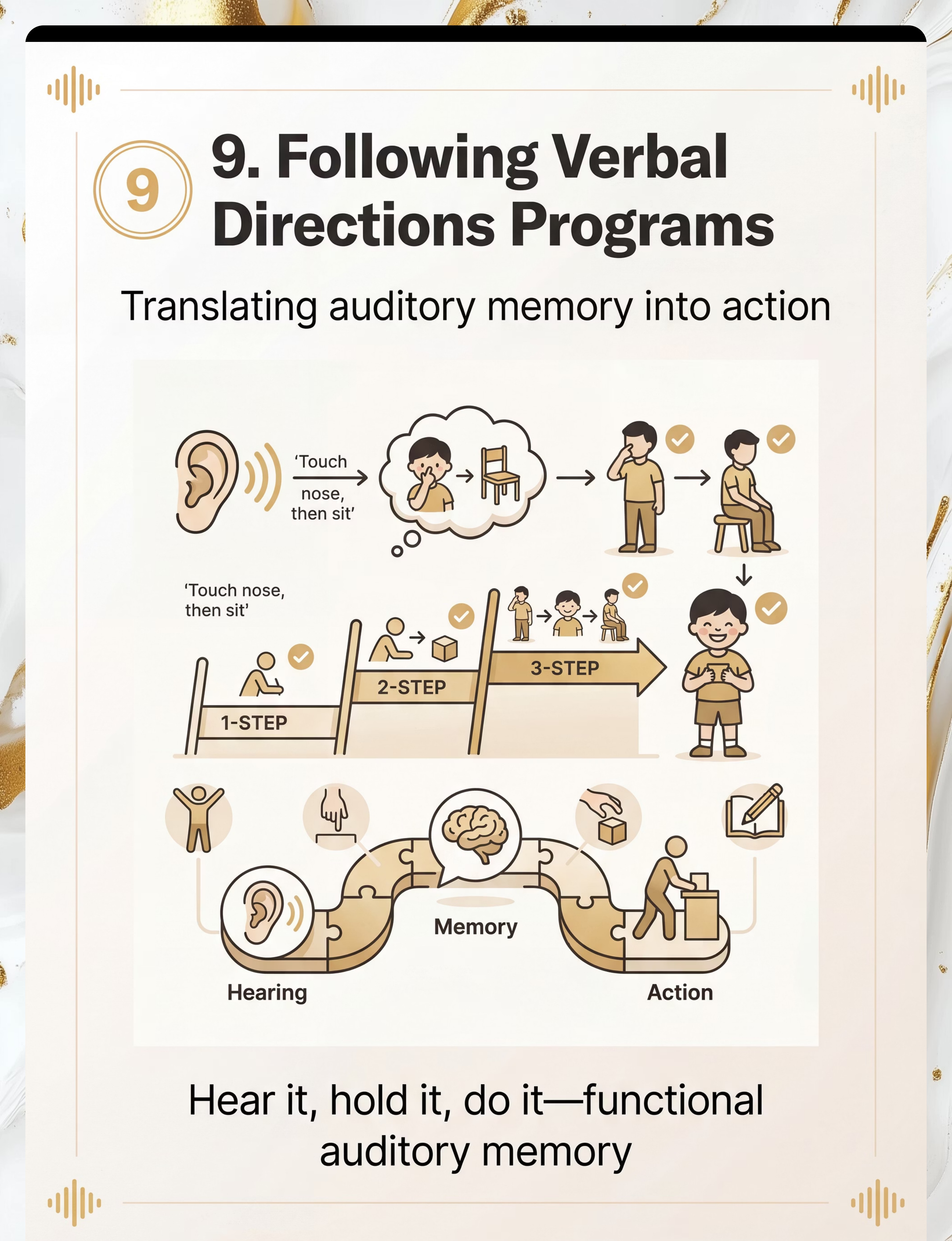
Material 9: Verbal Directions Program Cards
🎯 What It Does
Functional auditory memory — translates trained recall directly into real-life multi-step instruction following. This is the ultimate generalization material in the B-175 protocol. It bridges the structured session to daily independence.
Canon Category
Problem-Solving Toys | Direction-Following Programs
Home Use
Printed direction cards with 1-step → 2-step → 3-step levels. Speak the direction; child performs the sequence. Progression is the intervention.
🛒 Recommended
A Visit to the Hospital Activity Book — ₹199
(Sequential narrative + direction following)
(Sequential narrative + direction following)
🔧 DIY Zero-Cost Version
3-step task cards on index cards: "Go to kitchen → get red cup → bring to table." The hierarchy (1→2→3 steps) is the intervention; the printed card is simply the vehicle.
📞 Materials Helpline: 9100 181 181 — Free teleconsult to confirm material suitability for your child's profile. 🛒 View all recommended materials on Amazon.in →

ACT II — The Knowledge Transfer
Every Material Has a Zero-Cost Version
WHO/UNICEF Equity Principle: No family should be excluded from evidence-based therapy due to cost barriers. Every one of the 9 clinical materials can be replicated at home with everyday household items.
Clinical Material | Household Substitute | Why It Works | |
Memory Game Cards | Recycled playing cards with drawn images | Same matching + recall principle; visual anchors identical | |
Digit Span Strips | Numbered paper slips in a row | Sequential presentation; count via finger tapping | |
Sorting Sets | Coloured buttons / dried beans in 3 bowls | Chunking by category works regardless of material type | |
Story Sequencing Board | 3 hand-drawn scene cards | Narrative structure + visual order is the therapeutic element | |
Rhythm Aids | Clapping + humming household tunes | Melody encoding is the mechanism; instrument is optional | |
Visual-Verbal Pairs | Magazine cut-outs + spoken words | Dual-coding works with any image-word pairing | |
Reinforcement Jar | Paper tokens in any container | Token economy functions on the principle, not the product | |
Comfort Anchor | Child's existing preferred soft object | Emotional regulation anchor must be child-chosen | |
Direction Cards | Index card + pencil | The 1→2→3 step hierarchy is the intervention |
⚠️ When clinical-grade materials are non-negotiable: children with significant sensory processing differences or fine motor challenges may require purpose-built materials. Always consult your Pinnacle SLP before substituting for complex profiles. 📞9100 181 181
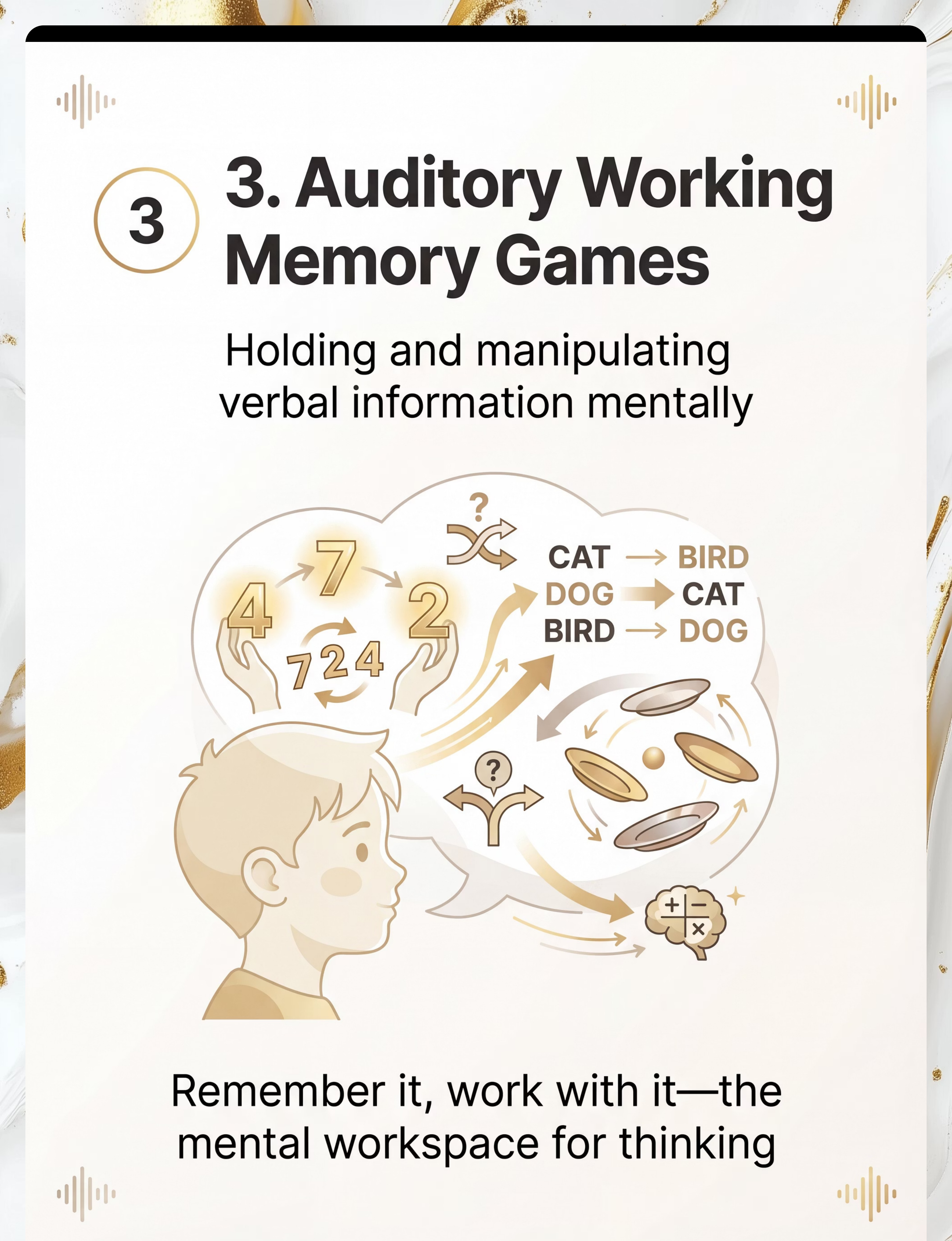
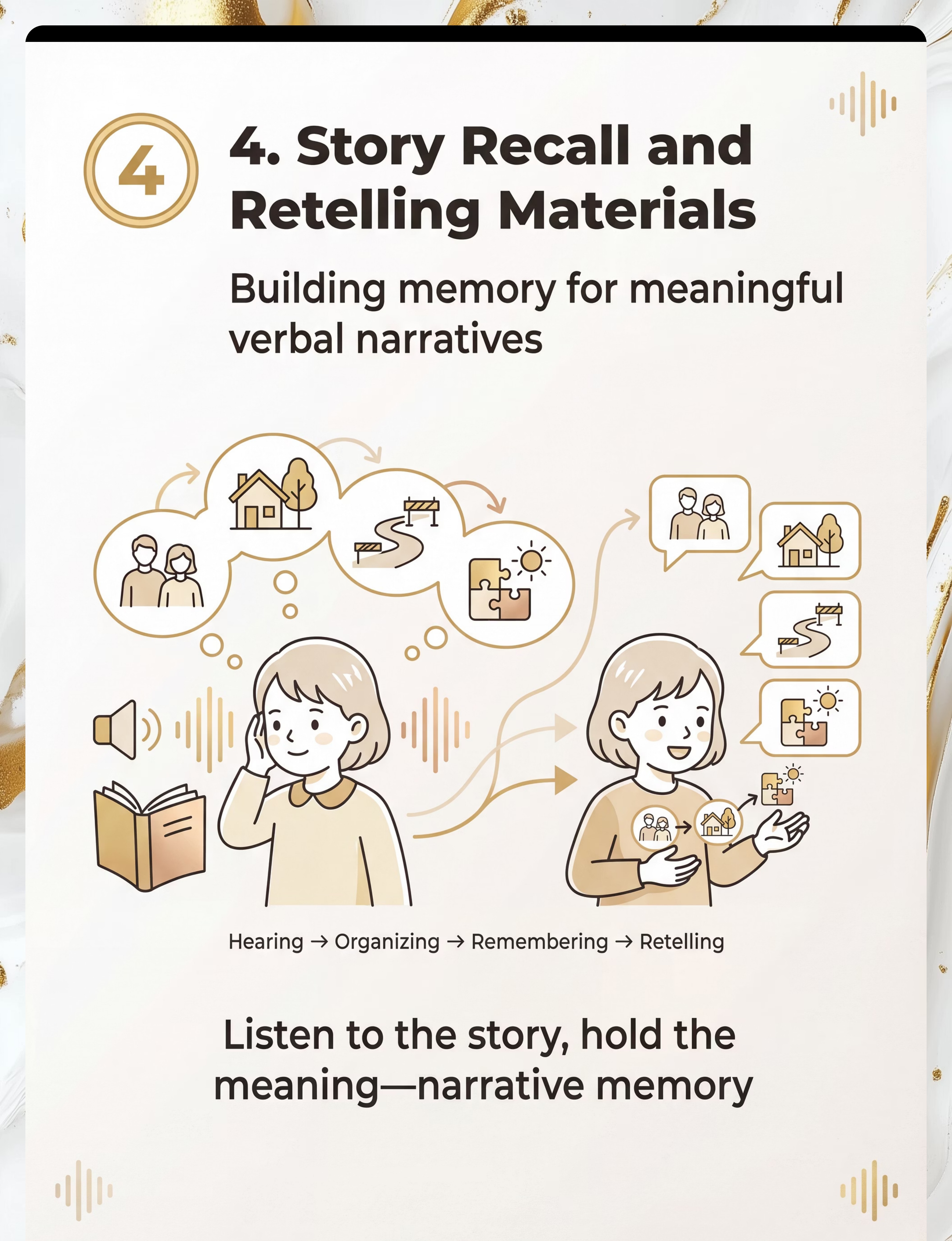
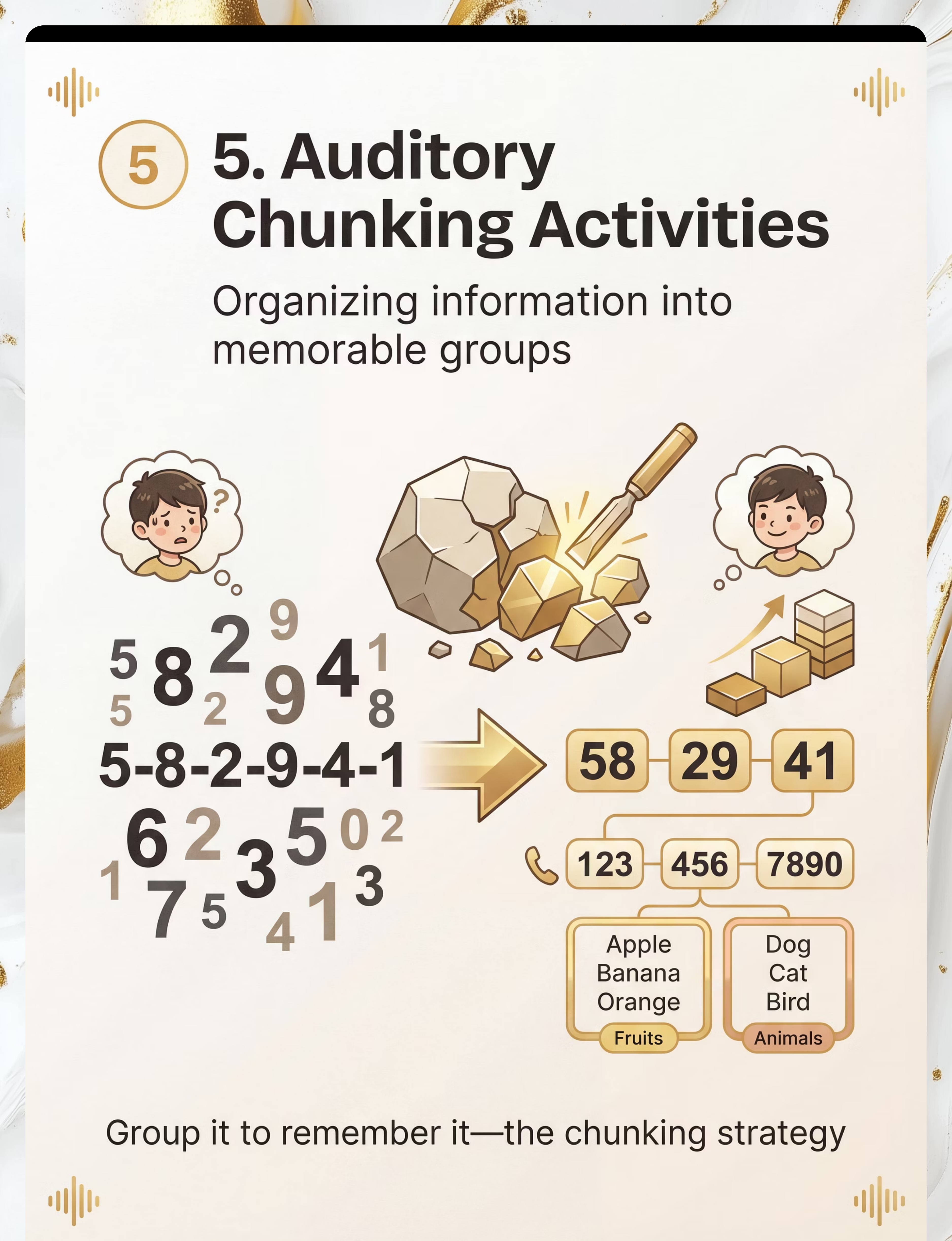
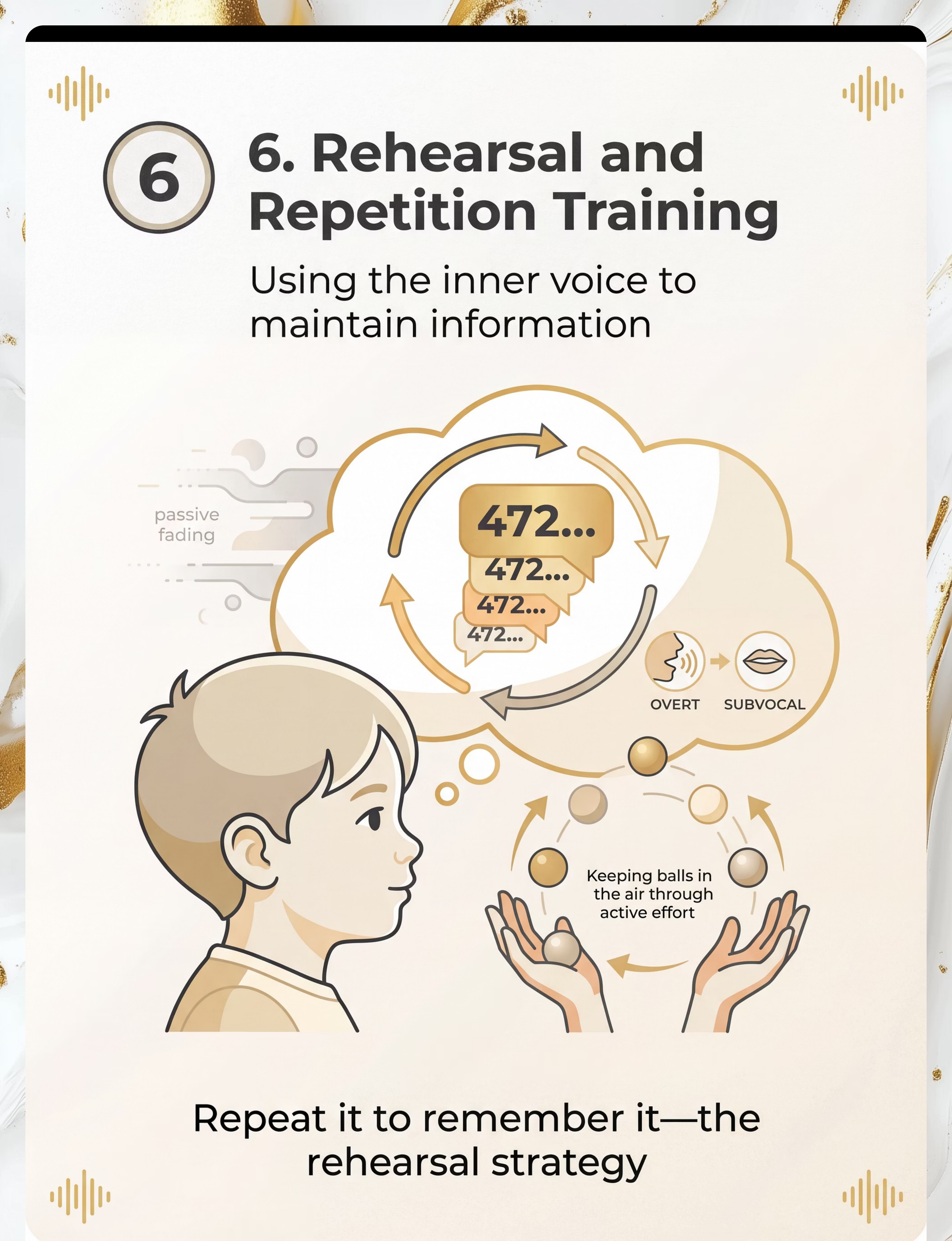
Preview of 9 materials that help with auditory memory Therapy Material
Below is a visual preview of 9 materials that help with auditory memory therapy material. The pages shown help educators, therapists, and caregivers understand the structure and content of the resource before use. Materials should be used under appropriate professional guidance.





Link copied!
ACT II — The Knowledge Transfer
Safety First — Before Every Session
Read this pre-session safety gate before beginning. Child readiness and environment safety are the foundation of every effective auditory memory session.
🔴 RED — Do Not Proceed If:
- Child had a significant meltdown in the last 60 minutes
- Child is unwell, feverish, or visibly in pain
- Child is in extreme sensory overload (covering ears, rocking urgently)
- Small material components are present for children who mouth objects
- High-noise environment competing with the auditory task (TV on, loud siblings)