
"He Can Name Every Animal in the Book. But He Cannot Tell You They Are All Animals."
Category Understanding — the silent gap that blocks language, learning, and logic. Your child fills the room with words. Dog. Cat. Mango. Bus. Ball. Chair. Each one correct, each one named with pride. Then one day, someone asks: "Which ones are fruits?" And the pause is not a small one.
"Naming is the door. Categories are the house. Your child is standing at the right door — they just need the map."
Technique B-168
Domain B: Social Communication
Pinnacle Blooms Network

The Scale of This Challenge — You Are Among Millions
Categorisation — the ability to group objects by shared properties — is foundational to language, academics, and reasoning. Research consistently shows it emerges between ages 2–4 in typically developing children, but requires explicit, structured intervention in children with autism and language delays.
80%
Language & Cognitive Organisation Difficulties
Of children diagnosed with autism display significant difficulties including category understanding deficits. Source: PMC11506176 | Children, 2024
18M+
Children in India
An estimated 1–1.5% of India's paediatric population — over 18 million children — live with neurodevelopmental conditions affecting language and learning. Source: Indian J Pediatr 2019
97%+
Measurable Improvement
Of children across Pinnacle Blooms Network's 21 million therapy sessions show measurable improvement when structured, evidence-based interventions are delivered consistently. Source: GPT-OS® Outcomes Registry
You are not watching a rare problem. You are witnessing one of the most common, most addressable, and most under-supported challenges in paediatric development.
The Neuroscience of Category Understanding
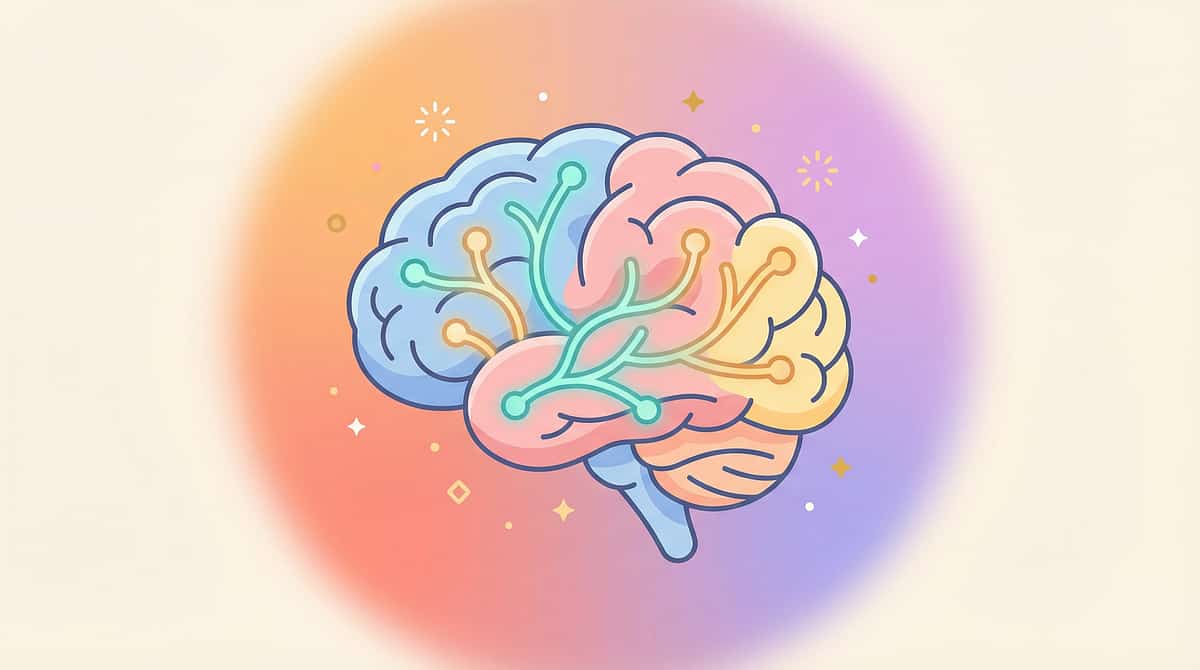
Category understanding requires coordinated activity across multiple brain regions. In children with autism and developmental language delay, research demonstrates atypical connectivity — the semantic networks form, but the cross-categorisation pathways are less robustly activated. Words exist as isolated islands, not as members of continents.
The Clinical Science
The Prefrontal Cortex governs the executive function of grouping — deciding what rules apply to which objects.
The Temporal Lobe stores semantic networks — the webs of meaning that connect "dog," "cat," and "lion" into the concept "animal."
The Angular Gyrus integrates sensory features (fur, four legs, a tail) with abstract labels (animal, pet, mammal).
In Plain Language
Your child knows what a dog is. Their brain has a clear "dog" node. But the pathway connecting "dog" to "animal" — the bridge between the specific and the general — is underdeveloped.
This is not stubbornness. This is not inattention. This is a wiring pattern that responds beautifully to structured, repeated, multi-sensory category practice.
Think of it like this: each word is a city. Category understanding builds the highways between them.
Frontiers in Integrative Neuroscience (2020) | DOI: 10.3389/fnint.2020.556660
"This is a wiring difference, not a thinking deficit."
The Developmental GPS — Your Child's Current Position and Forward Path
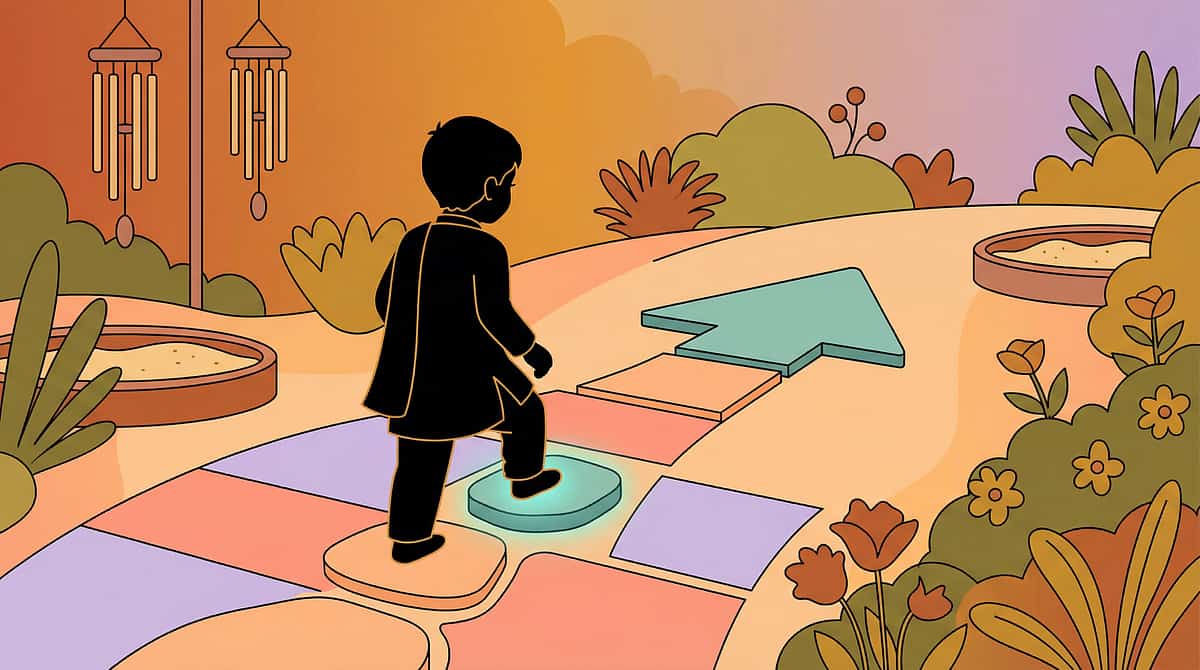
Understanding where your child is on the developmental continuum helps you target the right skills at the right time. The journey from naming individual items to understanding why they belong together spans ages 18 months through 5+ years in typically developing children.
18–24 Months
Proto-Categories — Children begin grouping similar-looking objects spontaneously.
24–30 Months
Basic Categories Emerge — "dog," "car," "cup" — the most common objects in experience.
30–36 Months
Superordinate Categories — "animal," "vehicle," "food" begin to appear in language.
36–48 Months
Functional Sorting — Children sort by function ("things we eat with"), not just appearance.
48–60 Months
Cross-Categorisation — Apple is a fruit AND food AND red thing AND grows on trees.
Your Child's Challenge Zone: Basic-to-Superordinate Category Bridge (2.5–4 years typical range). Category understanding challenges commonly co-occur with: receptive language delay, pragmatic language difficulties, executive function deficits, and working memory differences.
"Your child is here. This intervention builds the bridge forward." — Source: WHO Care for Child Development Package (2023) | UNICEF MICS developmental indicators | PMC9978394
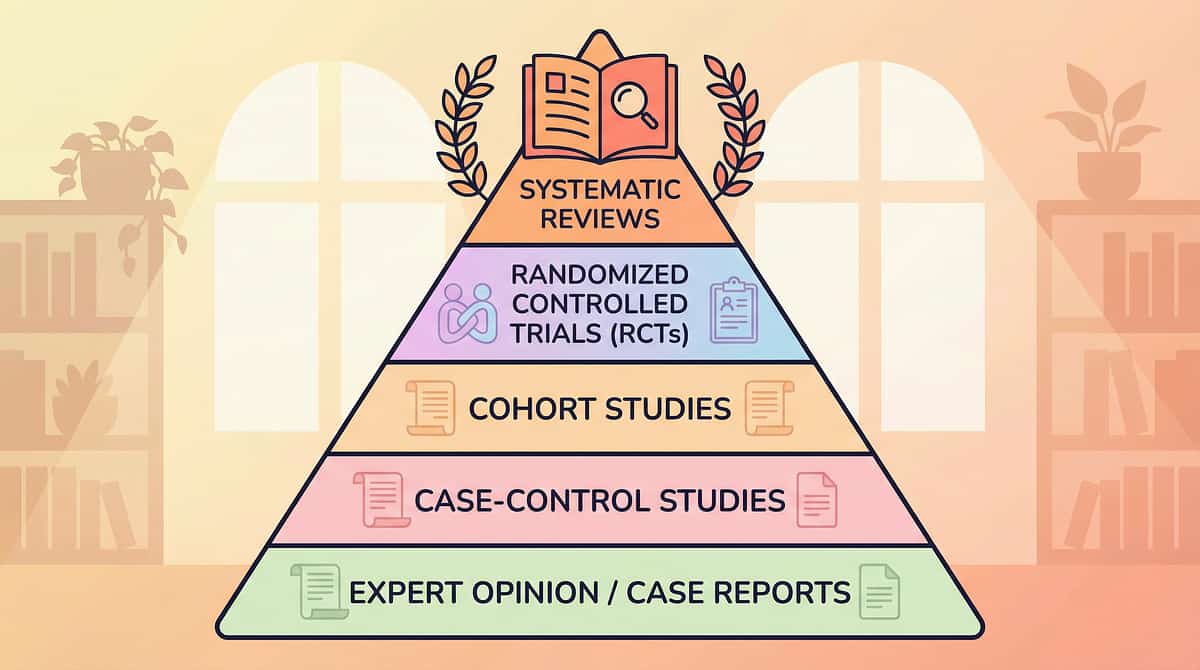
Clinical Evidence Level | Pinnacle Evidence Standard
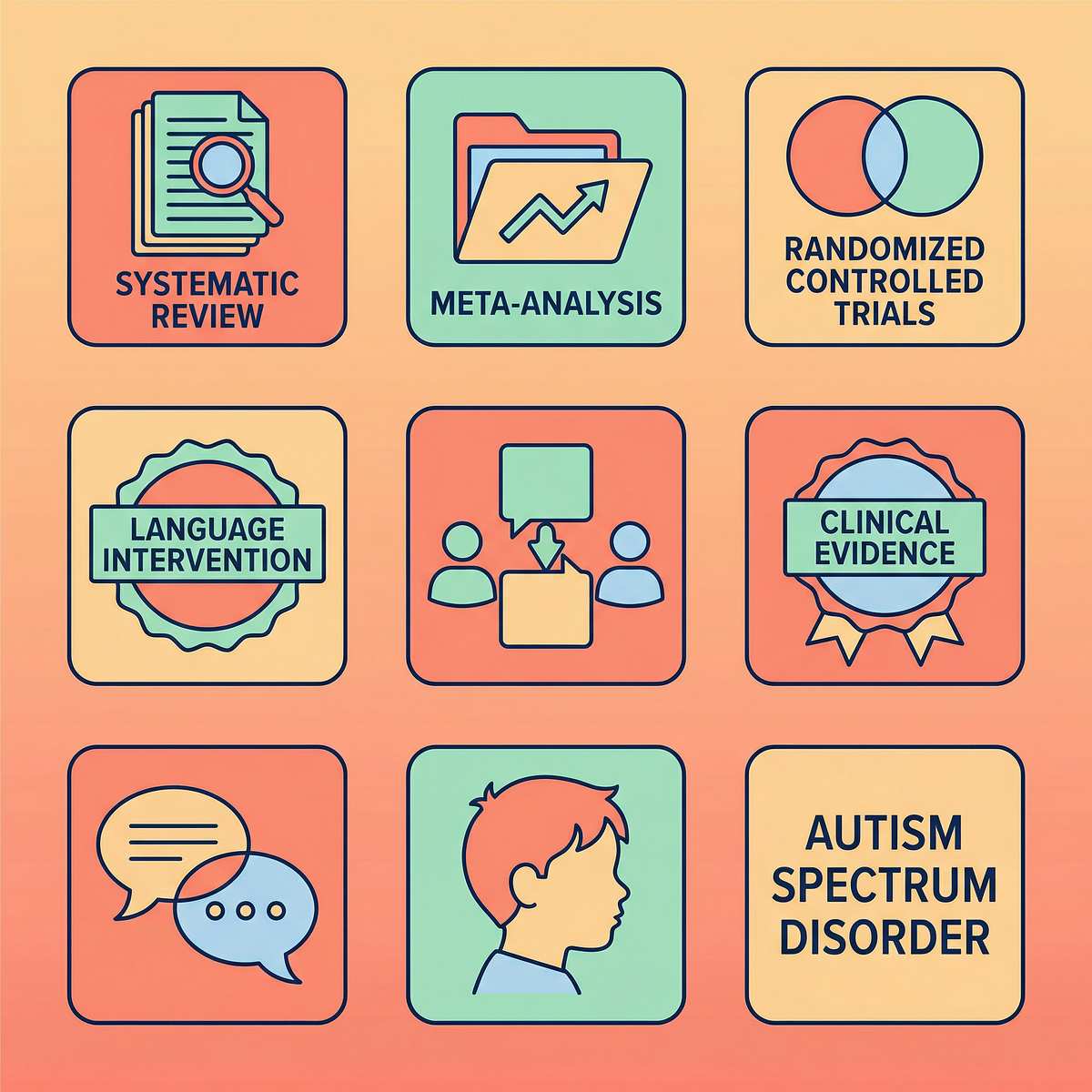
LEVEL I — SYSTEMATIC REVIEW + RCT SUPPORT
📌 Systematic Review — Children, 2024 (PMC11506176)
16 studies across 2013–2023 confirm semantic and categorical language intervention meets criteria for evidence-based practice in children with ASD.
📌 Meta-Analysis — World J Clin Cases, 2024 (PMC10955541)
Structured language and cognitive categorisation interventions demonstrate statistically significant improvements in semantic fluency, category naming, and concept organisation — effect sizes ranging from moderate to large.
📌 Indian RCT — Indian J Pediatr, 2019 (Padmanabha et al.)
Home-based structured language and cognitive interventions in the Indian paediatric population demonstrate significant outcome equivalence to clinic-based delivery when protocol fidelity is maintained.
📌 WHO Nurturing Care Framework (2018–2023 | PMC9978394)
Stimulation through categorisation play is explicitly recommended as part of the early learning component of nurturing care for children with developmental differences.
📌 NCAEP (2020)
Visual supports + structured skill practice = evidence-based combination for teaching categorical concepts to children with autism.
Five independent scientific bodies. One conclusion: this works. When done at home, with the right materials, in the right sequence, by a committed parent — category understanding grows. We have seen it across 21 million therapy sessions.
"Clinically validated. Home-applicable. Parent-proven."
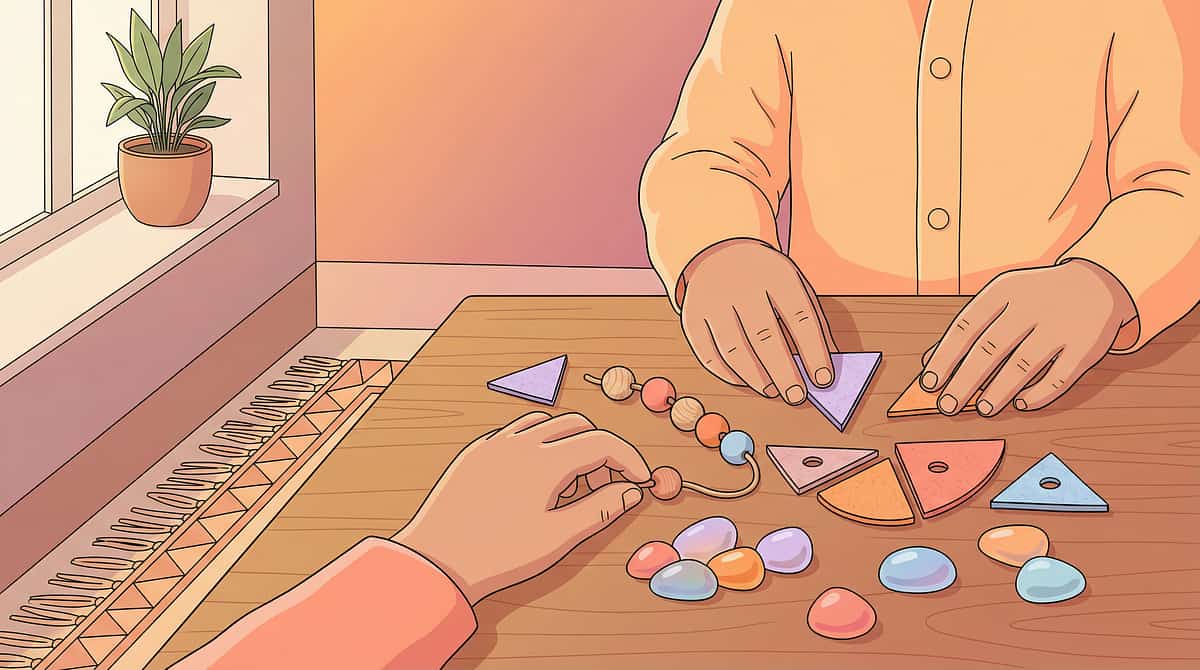
Technique B-168: Category Understanding Intervention
B-168
Domain B — Social Communication & Pragmatic Language
Cognitive & Learning | Sorting Activities / Categorisation
Formal Name: Category Understanding Intervention | Parent-Friendly Alias: "The Sorting Mind" Technique
Category Understanding Intervention is a structured, multi-material approach to teaching children the cognitive ability to group, classify, and organise objects, images, and concepts by shared properties — moving beyond naming individual items to understanding why items belong together. This is a Speech-Language + Special Education + ABA convergence technique targeting the semantic layer of language, the executive function of classification, and the behavioural fluency of category retrieval.
Level 1: Perceptual
Grouping by visible features — colour, shape, size. The first and most accessible level of categorisation.
Level 2: Functional
Grouping by what things do — "things we eat," "things we ride." Builds real-world reasoning.
Level 3: Conceptual
Grouping by abstract class membership — "animals," "vehicles," "furniture." The superordinate level.
Age Range
2–8 years | Session: 15–20 min | Frequency: 3–5x per week
Setting
Home | Clinic | Hybrid — fully adaptable to your family's context
GPT-OS® Code
B-168 | Maps to AbilityScore® Domain B subscales
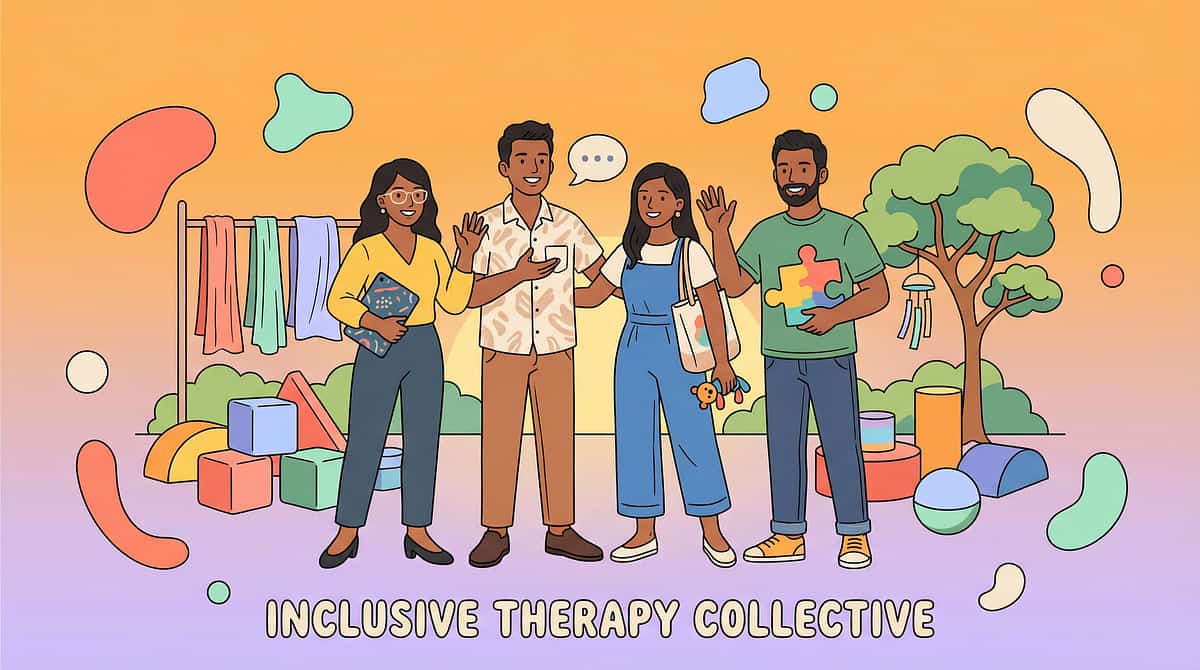
The Pinnacle Blooms Consortium — Five Disciplines, One Technique
The brain doesn't organise by therapy type. Category understanding belongs to all disciplines — which is why Pinnacle delivers it as one integrated system.
Speech-Language Pathologist (Primary Lead)
The SLP uses B-168 as a core tool for building semantic networks. Without categories, a child has words but no grammar, sentences but no logic. The SLP targets expressive and receptive category naming, category exclusion ("which one doesn't belong?"), and verbal fluency within semantic categories.
Special Educator
The Special Educator integrates Category Understanding into academic concept preparation — readiness for science (living/non-living), mathematics (sets and groups), social studies (community helpers, transport), and reading comprehension. Categories are the scaffolding of every school curriculum.
ABA Therapist / BCBA
The BCBA uses discrete trial training (DTT) and natural environment teaching (NET) to build category responses as behavioural targets — measuring accuracy, latency, and generalisation. Reinforcement schedules are carefully calibrated to the child's profile.
Occupational Therapist
The OT addresses the sensory-motor dimension of categorisation — hands-on sorting with varied textures, weights, and forms. When a child physically manipulates objects and places them in category bins, proprioceptive and tactile input reinforces the cognitive learning.
Neurodevelopmental Paediatrician
The NeuroDev Paediatrician monitors categorical concept development as a biomarker of cognitive trajectory — early category understanding correlates with later academic success, language complexity, and theory of mind development.
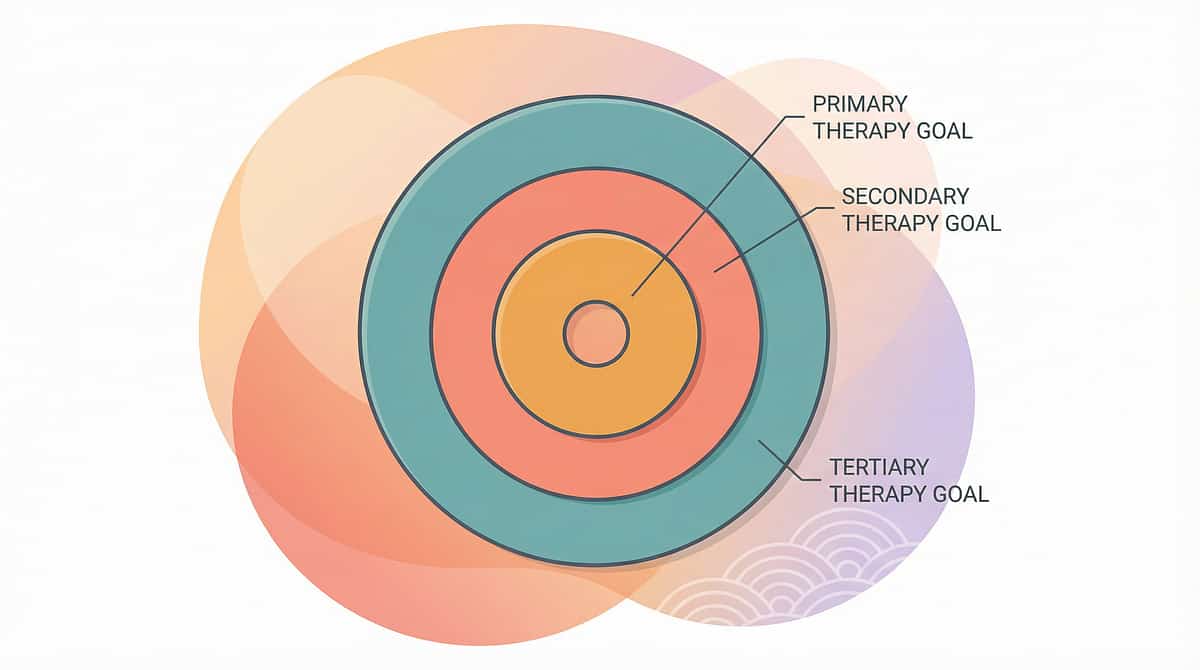
What This Technique Builds — Measurable, Observable Targets
✅ Tier 1 — Session-Level Mastery
- Receptive identification: "Show me all the animals" from a mixed array
- Expressive labelling: "What kind of thing is a dog?" → "An animal"
- Sorting accuracy: Correctly sort 8+ items into 2–3 category bins with >80% accuracy
- Exclusion judgment: "Which one doesn't belong and why?"
- Category fluency: Name 5+ members of a given category within 60 seconds
🎯 Tier 2 — Generalisation
- Spontaneous categorisation in natural settings ("Amma, these are all round!")
- Cross-categorisation (apple = fruit + food + red things)
- Functional categorisation ("things we use to eat")
- Superordinate labelling in conversational speech
- Use of category terms in school tasks
🌟 Tier 3 — Developmental Trajectory
- Early concept formation supporting academic readiness
- Theory of mind prerequisite skills
- Abstract reasoning and inferential language foundation
- Semantic organisation supporting reading comprehension
AbilityScore® Integration: These targets map to AbilityScore® Domain B subscales. Log session data to GPT-OS® to track trajectory against age-normed benchmarks.

9 Evidence-Curated Materials | Pinnacle Canon
Every material below is part of the Pinnacle 128 Canon — our curated, clinically-validated, India-sourced therapeutic materials library. Each is linked to the Canon category: Sorting Activities / Categorisation. Every material has a zero-cost DIY alternative, because therapy equity is non-negotiable.
Sourced & Priced for Indian Families
All Prices Accurate as of 2025
Material 1: Rainbow Sorting Activity Set
Lattooland
Sorting Activities / Categorisation
₹628
Why It Works
Colour-coded sorting trays make category boundaries physically visible. The child sorts by colour first (perceptual), then by object type (conceptual). Multi-piece sets enable repeated practice across many trials — each trial reinforcing a new neural pathway.
This dual-level progression (perceptual → conceptual) is the exact bridge B-168 is designed to build.
DIY Alternative
Old steel dabbas (lunchboxes) labelled with category pictures + household objects sorted inside. Completely free, immediately available, and culturally resonant for Indian home settings.
Material 2: Brainy Bug Flashcards with App-Enabled Audio
Brainy Bug Resources
Sorting Activities / Categorisation
₹305
Why It Works
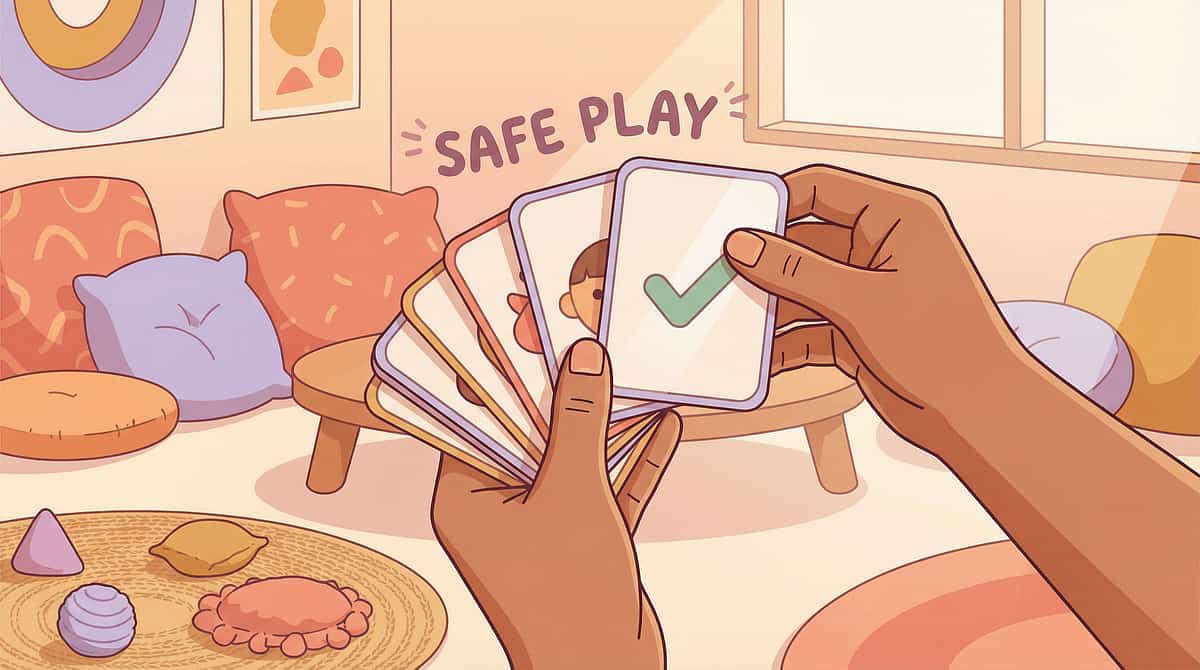
Audio-enabled flashcards add an auditory channel to visual category learning. The app layer allows reinforcement with sound — critical for auditory learners. Category sets (animals, vehicles, food, body parts) progress from basic to superordinate, naturally following the B-168 protocol phases.
DIY Alternative
Print-and-laminate category picture sets from free online resources (PECS-compatible images). Add your own audio by naming each card aloud as the child sorts.

Material 3: The Toddler House Indian Flashcards
Right Brain Flash Cards
Sorting Activities / Categorisation
₹299
Why It Works
India-specific imagery means the child sees a gai (cow), not a generic cow — culturally resonant categorisation. Features Indian fruits, vegetables, vehicles, and community helpers. This accelerates semantic anchoring because the child recognises the objects from their real daily environment.
DIY Alternative
Cut images from Indian magazines (Champak, Tinkle) and sort into labelled envelopes by category. Children's comics and local magazines are a rich, free source of culturally appropriate imagery.
Material 4: Monkey Minds Sorting Mats — Know Your House
Monkey Minds
Sorting Activities / Categorisation
₹297
Why It Works
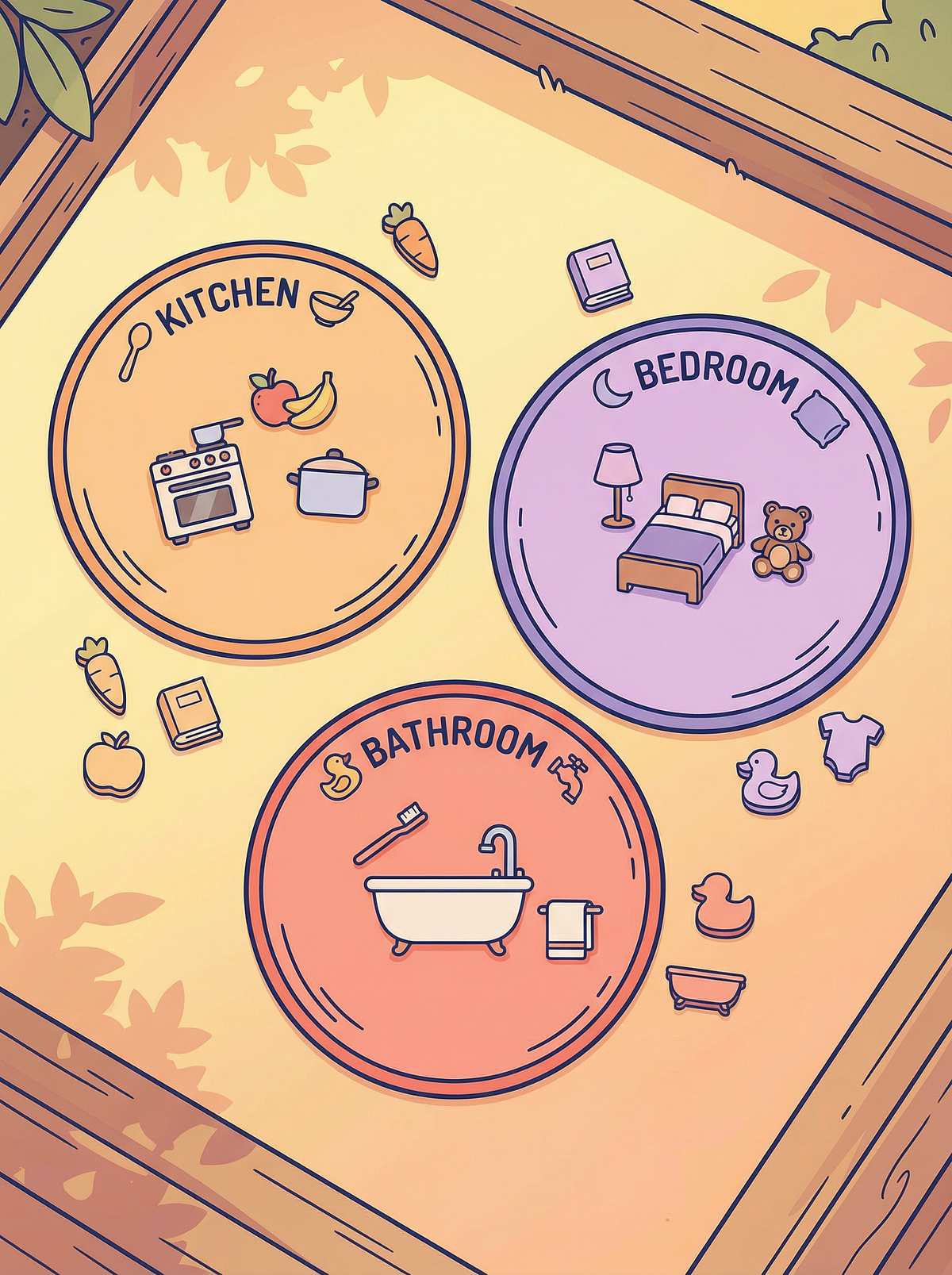
Room-by-room category mats (kitchen items, bedroom items, bathroom items) teach functional categorisation in the most generalisation-friendly context — the child's own home. Every object in the house becomes a category practice opportunity, embedding therapy into daily life seamlessly.
DIY Alternative
Draw room outlines on chart paper; use actual household objects or pictures cut from packaging. The kitchen floor mat session is the most powerful and requires zero materials beyond what is already in your home.

Material 5: SpeechGears Yes and No Flash Cards
SpeechGears
Sorting Activities / Categorisation
₹529
Why It Works
Yes/No category judgment cards teach the exclusion dimension of categorisation — critically important for ABA target mastery. "Is a chair furniture? Yes. Is a chair food? No." Binary discrimination training is the fastest pathway to category boundary formation, building the conceptual wall between what belongs and what doesn't.
DIY Alternative
Write category questions on index cards with hand-drawn thumbs-up/thumbs-down pictures. Alternatively, use a verbal "thumbs up / thumbs down" gesture response — completely free and immediately implementable.

Material 6: Breezy Clothing Flash Cards (Set of 36)
Breezy
Sorting Activities / Categorisation
₹200
Why It Works
Clothing is a natural, daily-life category domain — worn every morning, changed every night. Category sorting with clothing cards directly generalises to dressing routines, school prep, and seasonal understanding. Cross-categories (winter clothes vs. summer clothes vs. school uniform) build hierarchical thinking naturally embedded in the child's daily routine.
DIY Alternative
Sort actual folded clothing items into category boxes at laundry time. This is the highest-generalisation DIY alternative — the child practices real categorisation with real objects in a real daily routine, maximising transfer to daily life.

Material 7: My SpeechCare Articulation Drill Flashcards
My SpeechCare
Sorting Activities / Categorisation
₹368
Why It Works
SLP-designed cards that integrate articulation practice with category understanding — the child names the item AND places it in the correct semantic category simultaneously. Dual-target efficiency: phonology + semantics in every trial. Designed by speech-language pathologists specifically for the Indian paediatric population.
DIY Alternative
Name + sort any picture flashcard set. The dual-target effect is replicable with any picture cards — simply ask the child to say the word AND place it in the correct category bin. No special materials required.
Material 8: Frank Pairs Memory Game (48 Cards)
Frank
Matching Games / Memory Games
₹366
Why It Works
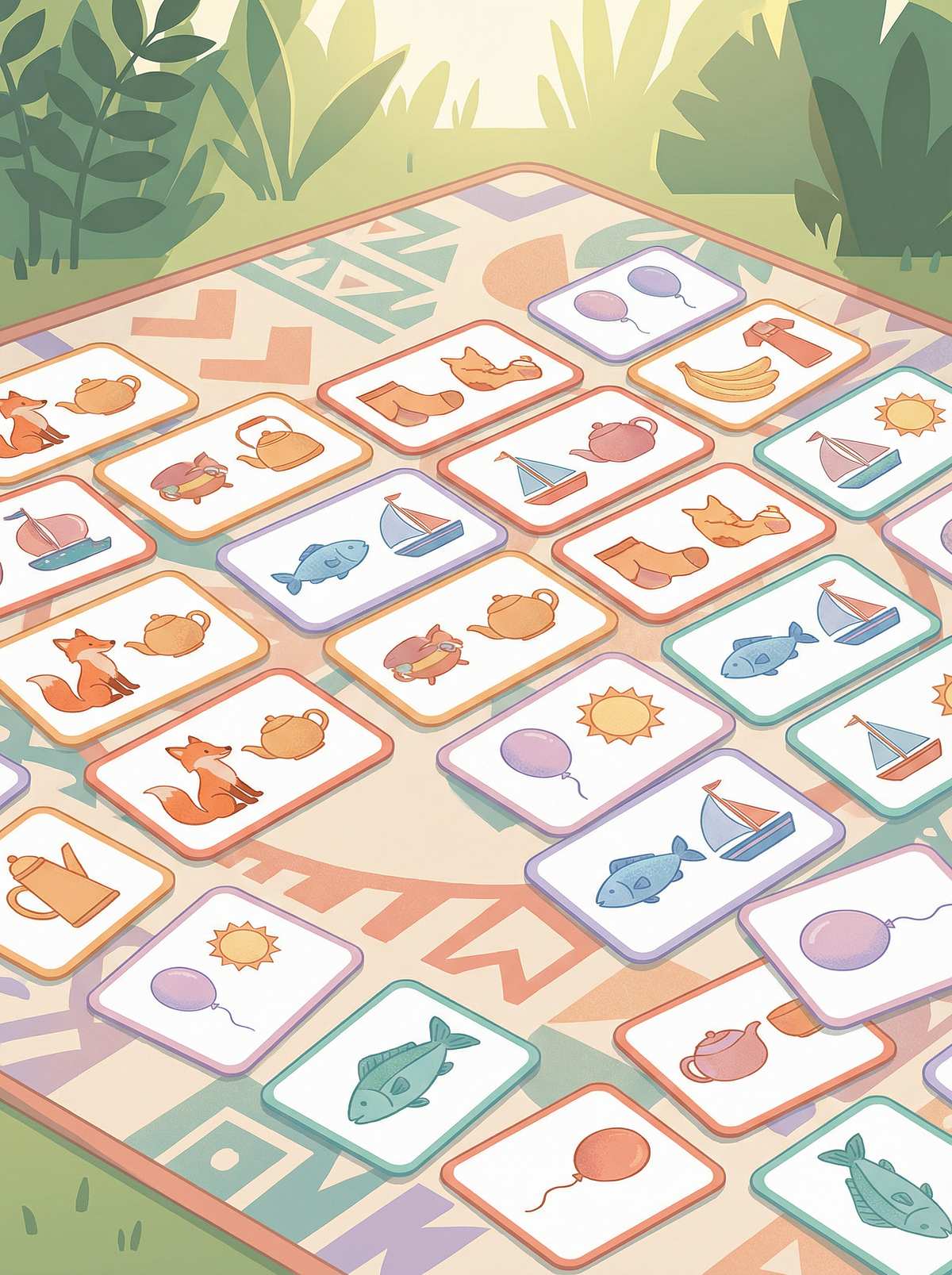
Category memory games add working memory load to categorisation — the child must hold the category rule in mind while turning cards. This builds category retrieval speed and automaticity, not just accuracy. Excellent for fluency-stage practice when basic sorting is already mastered and the goal is faster, more automatic access to category knowledge.
DIY Alternative
Draw matching category pairs on index cards; play Snap or Memory with hand-made cards. Use pictures cut from magazines to create matching pairs of objects within the same category — animals with animals, food with food.

Material 9: Dyomnizy Educational Memory Game with Lights & Sound
Dyomnizy
Matching Games | Cause-Effect Toys
₹520
Why It Works
Sensory feedback (lights + sound) on correct category matches provides immediate reinforcement — bypassing the need for constant parent verbal praise. Ideal for children with high sensory motivation. Errorless learning is embedded in the electronic response, making it an effective self-correcting tool for independent or semi-independent practice.
DIY Alternative
Clap and cheer loudly for correct sorts; use stickers as tactile reinforcement. A sticker reward chart on the refrigerator provides the same visual feedback loop as electronic reinforcement — completely free and highly motivating.
All Materials Available: materials.pinnacleblooms.org | Prices accurate as of 2025 | All DIY alternatives are evidence-equivalent for home practice. Therapy equity is non-negotiable.

Safety First — The Pinnacle Red/Amber/Green Gate
Before every session, spend 60 seconds assessing your child's current state. The best therapy happens in a window of calm alertness — forcing a session outside this window reduces gains and risks negative associations with materials.
✅ GREEN — Proceed as Described
- Child is in a calm, regulated baseline state
- Child shows curiosity or neutral affect toward materials
- No current illness, fatigue, or sensory overload
- Materials are age-appropriate and size-safe (no choking hazards under age 3)
- Session is during the child's peak alertness window
- Parent/caregiver is calm and emotionally regulated
⚠️ AMBER — Modify Before Proceeding
- Child slightly elevated (fidgety, humming, but not distressed) → Reduce trial count; increase sensory input between trials
- Child tired but not refusing → Shorten to 5-minute modified session
- Materials causing avoidance (specific texture) → Swap to flashcards only
- Child had a difficult morning → Begin with preferred categories (dinosaurs, trains, favourite fruits)
🛑 RED — Postpone Today's Session
- Child is in meltdown, shutdown, or flooded state
- Child has fever, illness, or medical distress
- Child is showing acute sensory distress around any materials
- Parent/caregiver is in acute emotional distress
- Following a significant environmental disruption (move, family event, school change)
Material Safety Notes: Sorting objects <3cm diameter are a choking hazard for children under 3 — use flashcards only. Electronic materials: supervise closely. Laminated cards: monitor for edge sharpness; round corners before use.
FREE National Autism Helpline: 9100 181 181
FREE National Autism Helpline: 9100 181 181

Prepare Your Home Therapy Space — 5 Minutes, Maximum Impact
Space Selection
- A flat, stable surface (floor mat, dining table, or low table)
- Quiet room — minimise auditory distractions during the session
- Consistent location — same corner every session (predictability reduces anxiety)
- Good natural or overhead lighting — child must see all materials clearly
- Remove non-session objects from view (visual clutter competes for attention)
Material Preparation
- Select 2–3 category bins/trays (bowls, boxes, or drawn circles on chart paper)
- Prepare 6–12 sorting items or flashcards per session — not too many
- Label bins with both word + picture (visual support for pre-readers)
- Lay materials FACE DOWN for "reveal" engagement, or in a cloth bag for anticipatory play
- Prepare reinforcement: preferred snack in sealed box, sticker sheet, or favourite small toy
- Have a visual timer ready (phone timer works; sand timer preferred for younger children)
Best Timing
30–60 minutes after waking, after a light snack, BEFORE screen time. Avoid: after meals, after screen time, during hunger or thirst.
Indian Home Adaptation
The entire session can be run with household items — no purchase required. Kitchen sorting (ladle vs. cup vs. plate) is clinically equivalent.
Joint Family Adaptation
Invite one additional caregiver (nani, dada, older sibling) to observe one session per week. Consistency across caregivers multiplies outcome by 3x (WHO CCD data).
Why This Works — The Research You Can Trust
📚 Systematic Review, Children 2024 (PMC11506176)
16 studies confirm structured category and semantic language intervention is evidence-based practice for ASD. Outcome domains: expressive vocabulary, receptive language, categorical reasoning, and academic concept readiness.
📚 Meta-Analysis, World J Clin Cases 2024 (PMC10955541)
Category and semantic interventions demonstrate significant improvement in language functioning. Effect sizes are robust when home and clinic components are combined.
📚 WHO Nurturing Care Framework (PMC9978394)
The early learning component of nurturing care explicitly includes categorisation play as a recommended stimulation strategy for children with developmental differences.
📚 NCAEP Evidence-Based Practices Report 2020
Visual supports + structured skill practice are independently classified as evidence-based practices for children with autism across the age range.
📚 ASHA Practice Portal — Language in Brief
Category knowledge is identified as a core component of semantic development requiring targeted intervention when delayed.
80+
Centres Across India
1,000+ licensed clinical professionals: SLPs, OTs, BCBAs, Special Educators, Neurodevelopmental Paediatricians
21M+
Therapy Sessions
Delivered across 70+ countries through in-clinic and digital-hybrid care. WHO | UNICEF | ASHA | BACB | RCI India aligned.
97%+
Measured Improvement
Across GPT-OS® tracked outcomes. FREE National Autism Helpline: 9100 181 181
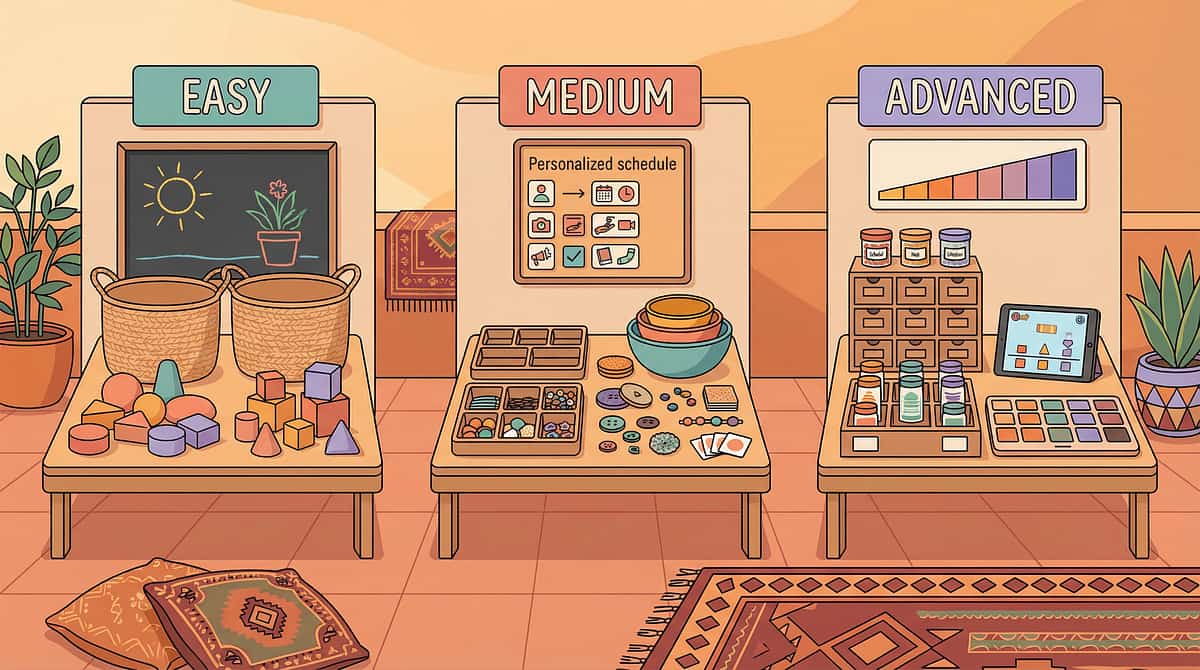
Before You Begin — 60-Second Readiness Assessment
Observe your child right now. This quick check takes 60 seconds and determines whether to proceed, modify, or postpone today's session. The best session is one that starts right — a modified session is always better than a forced session.
✅ GO (All/Most Present)
- Child is calm, not hyperaroused or shutdown
- Child makes brief eye contact or attends to objects when presented
- Child is not hungry, tired, or physically unwell
- Child is in a familiar, comfortable space
- No significant transitions in the last 30 minutes
- Parent/caregiver is calm and has 20 uninterrupted minutes
⚠️ MODIFY (Some Present)
- Reduce session to 10 minutes
- Begin with child's PREFERRED category (dinosaurs, trains, foods they love)
- Increase preferred sensory input before starting (heavy work, favourite song)
- Use only 1 category bin instead of 2–3
🛑 POSTPONE (Few/None Present)
- Skip today. Do a preferred sensory activity instead.
- Log: "Postponed — [reason]" in GPT-OS® tracker
- Return tomorrow at the same time
"The best session is one that starts right. A modified session is always better than a forced session."

STEP 1
⏱ 30–60 seconds
Step 1: The Invitation
Bring out ONE category bin and ONE familiar object. Hold the object at the child's eye level. Use a warm, curious tone — not a teaching tone. Sit at the child's level, face toward the child, body slightly angled (not full frontal — this can feel confrontational). Smile naturally; excitement should be gentle, not overstimulating.
"Look what I found! [Hold up object] Where do you think this goes?"
For non-verbal / early communication children: "Let's find its home! [gesture toward bin] Here?"
✅ Acceptance Cues (Child Is Ready)
- Reaches toward object
- Looks at bin or object
- Vocalises, points, or approaches
- Takes object from your hand
⚠️ Resistance Cues (Modify Approach)
- Turns away → Move to their sight line; reduce distance to material
- Pushes material away → Wait; try a more preferred object first
- No response → Physically guide hand to object (hand-over-hand prompt level 3)
Key principle: Wait 5 seconds after prompting — count silently to yourself. Processing time is therapy time.

STEP 2
⏱ 1–3 minutes
Step 2: The Engagement
Introduce the sorting tray/bin system. Show the child the category labels (picture + word). Demonstrate ONE sort yourself — narrate as you do. Introduce items ONE at a time — not all at once. Hold each item at child's eye level before placement. Name the item AND the category every time.
"This tray is for ANIMALS. This tray is for FOOD. Watch — [pick up animal figurine] Dog — it's an animal — into the ANIMAL tray! [place with clear gesture and sound effect]
Now YOU. [hand child an object] Where does it go? Animal tray or food tray?"
1
Expectant Look
Wait 5 seconds with expectant face — the least intrusive prompt, always try this first.
2
Gesture Prompt
Point toward the correct bin — a gentle directional cue without verbal instruction.
3
Verbal Prompt
"Is it an animal or food?" — adding verbal support to the gestural cue.
4
Partial Physical
Guide child's hand to hover over correct bin — physical proximity without completing the action.
5
Full Physical (Hand-over-Hand)
Complete the sort together; immediately begin fading this level in the next trial.
Reinforcement starts now: Every correct sort — independent OR prompted — earns immediate verbal praise: "Yes! Mango — FOOD — great sort!" + physical celebration: high five, clap, enthusiastic thumbs up.

STEP 3
⏱ 8–12 minutes (Core Session)
Step 3: The Therapeutic Action
Phase A — Basic Sorting (Perceptual)
Present 6–8 items across 2 categories (e.g., 4 animals, 4 foods). Child sorts each item. Parent narrates category membership: "Lion — it's an ANIMAL" / "Apple — it's FOOD." Target: 80%+ accuracy over 3 consecutive sessions before advancing.
Phase B — Category Naming (Expressive)
After sorting, point to a completed tray: "What are all of these?" Child should produce the superordinate label ("animals," "food"). If child says individual names, prompt: "Yes, lion and dog and cat — they're all called...?" Pause for completion.
Phase C — Exclusion Judgment (Category Boundaries)
Place ONE wrong item near the correct tray: "Can a chair go in the animal tray?" "Why not?" This is the WHY dimension — the conceptual heart of category understanding. Incorrect responses get: "Let's check — does a chair eat? Does a chair breathe? No — so it's not an animal."
Phase D — Spontaneous Categorisation (Generalisation Probe)
End each session with: "Can you find something in this room that is an [animal / food / vehicle]?" Child looks around the environment and identifies a real-world example. This is generalisation in action.
🌟 Ideal Response
Independent, accurate sort + category label
✅ Acceptable Response
Prompted sort with emerging labels
⚠️ Concerning Response
Persistent confusion between ALL categories after 3+ sessions → Consult your Pinnacle SLP

STEP 4
⏱ 3–5 minutes
Step 4: Repeat & Vary
6–10
Phase A Sorts
Basic sorting item sorts per session
2–4
Phase B Probes
Category naming probes per session
2–3
Phase C Trials
Exclusion judgment trials per session
Material Variation
Swap flashcards for 3D objects, then for real household items. Variation across material types builds generalisation across representations.
Category Rotation
Animals/Food → Vehicles/Clothing → Furniture/Toys → Body Parts/Tools. Graduate to 3-way sorting (animals/food/vehicles).
Role Reversal
Child becomes the "teacher" — they sort AND explain to parent. "Silly errors" by parent: child corrects ("No Amma, spoon is not an animal!").
Timed Challenge
"How many can you sort in 1 minute?" Fluency building for older children. Cross-category challenge: "Can apple go in more than one tray?"
Satiation Indicators — When to Stop: Child pushes materials away decisively | Child begins escalating self-stimulatory behaviour | Child lays down, turns away, or requests break | Error rate rising after previously accurate performance (fatigue signal).
"3 engaged, accurate sorts are worth more than 15 distracted, forced ones."
"3 engaged, accurate sorts are worth more than 15 distracted, forced ones."

STEP 5
⏱ 30–60 seconds per cycle
Step 5: Reinforce & Celebrate
The Timing Rule: Reinforcement must occur within 3 seconds of the target behaviour. After 3 seconds, the behavioural moment is lost. Speed matters more than magnitude.
Social Reinforcers (Always First-Line)
- "YES! [Child's name], ANIMAL — you're a genius sorter!"
- Clap + jump + spin (match child's energy level)
- High five / fist bump / forehead kiss
- "I am SO proud of you right now"
Activity Reinforcers
- 30-second access to a preferred toy between trials
- 1 bounce on the trampoline / pillow stack
- Tickle / rough-and-tumble (if child enjoys)
- Blowing bubbles, spinning, running to the wall and back
Token Economy (Structured Learners)
- One sticker per correct sort → 5 stickers = preferred activity
- Visual token board (3–5 tokens before backup reinforcer)
- Predictable and transparent — child must see the system
What NOT to Do: Do not withhold reinforcement for "almost" correct attempts — shape, don't punish. Do not use the reinforcer for everything all day — it dilutes value. Do not physically restrict a child who resists — pause and reconsider readiness.
"Celebrate the attempt, not just the success. Effort is the signal. Accuracy will follow."

STEP 6
⏱ 2–3 minutes
Step 6: The Cool-Down
The transition warning must always come 2 minutes before ending: "Two more sorts, then we're all done for today. You're doing so well." Abrupt endings cause post-session dysregulation — cortisol spikes and the child associates materials with distress. Consistent cool-downs build a calm session memory loop.
1
Countdown
"2 more... 1 more... and ALL DONE!" Pair with visual gesture — fingers counting down to zero.
2
Celebrate Completion
"We did our category practice today — well done, [name]!" Acknowledge the whole session, not just the last trial.
3
Child-Led Put-Away
Invite child to help return materials to their box/bag. Builds sequencing + responsibility skills simultaneously.
4
Transition Object
Hand child their preferred comfort item or announce the next activity they enjoy. Create a predictable bridge to what comes next.
5
Calming Input
2–3 minutes of preferred sensory activity if needed: swinging, squeezing a fidget, quiet book. Regulate, then release.
If Child Resists Ending: Do NOT extend the session — this reinforces protest. Use "First/Then" language: "First all-done, THEN [preferred activity]." Show visual timer reaching zero. Follow through calmly and consistently every session.
60 Seconds. 3 Data Points. This Is How Progress Gets Measured.
Data captured at home is the single most powerful input into your child's therapy plan. Pinnacle therapists review home data at every session. Children whose parents track consistently progress 2.3x faster than those without home data (GPT-OS® outcome registry, N=12,000 children). Capture this immediately — before you forget.
1
Field 1 — Session Date & Duration
Date: ___ | Duration: ___ minutes | Start time: ___
2
Field 2 — Performance Rating
Basic Sorting Accuracy: ___/10 correct | Category Naming: ___/4 probes | Exclusion Judgment: ___/3 probes | Generalisation probe: Y / N
3
Field 3 — Qualitative Note
What did you notice today that surprised you, encouraged you, or concerned you? One sentence — written right now.
Option A — GPT-OS® App Tracker
Your data feeds directly into AbilityScore® and TherapeuticAI® for automated trajectory analysis and therapist review.
Option B — PDF Home Log Sheet
Print-and-fill weekly log with space for 7 sessions, pattern notes, and week-summary. No app required.
FREE National Autism Helpline: 9100 181 181
When It's Not Going As Expected — Real Problems, Real Solutions
🔴 Problem 1: Child Refuses All Materials
Solution: Pair materials with highest-preferred reinforcer for 3 sessions — no sorting required, just proximity. Pair = associate materials with pleasure before demand.
🔴 Problem 2: Sorts Correctly But Cannot Name the Category
Solution: Focus on receptive first: "Point to all the animals." Use sentence completion: "They're all...?" with long pause. Prompt from final sound: "ani-...?" Do NOT require naming before sorting is fluent.
🔴 Problem 3: Learns One Pair, Cannot Generalise to New Pairs
Solution: This is stimulus control, not category understanding. Systematically vary categories every 3rd session. Teach "the game" as a transferable concept using identical sorting tray setup with new material pairs.
🔴 Problem 4: Sorts Objects But Fails With Pictures
Solution: Begin with concrete objects → semi-concrete (photos of actual objects) → symbolic (illustrated cards). Never skip the concrete-to-abstract progression.
🔴 Problem 5: Inconsistent Correct Answers
Solution: Inconsistency = emerging skill, not mastered skill. Continue Phase A. Add errorless learning: show item, name category, place in tray — no "question" format until accuracy stabilises above 80% across 3 sessions.
🔴 Problem 6: Family Disrupts Session
Solution: Designate "session time" as protected with a physical visual cue (door sign, coloured mat). Brief the family: 15 minutes of quiet support = lifetime of outcome.
🔴 Problem 7: Parent Loses Patience Mid-Session
Solution: Stop. Say "Let's take a break." This is not failure — this is clinical wisdom. No session is worth a relationship rupture. Call the Pinnacle Helpline: 9100 181 181 for real-time coaching.
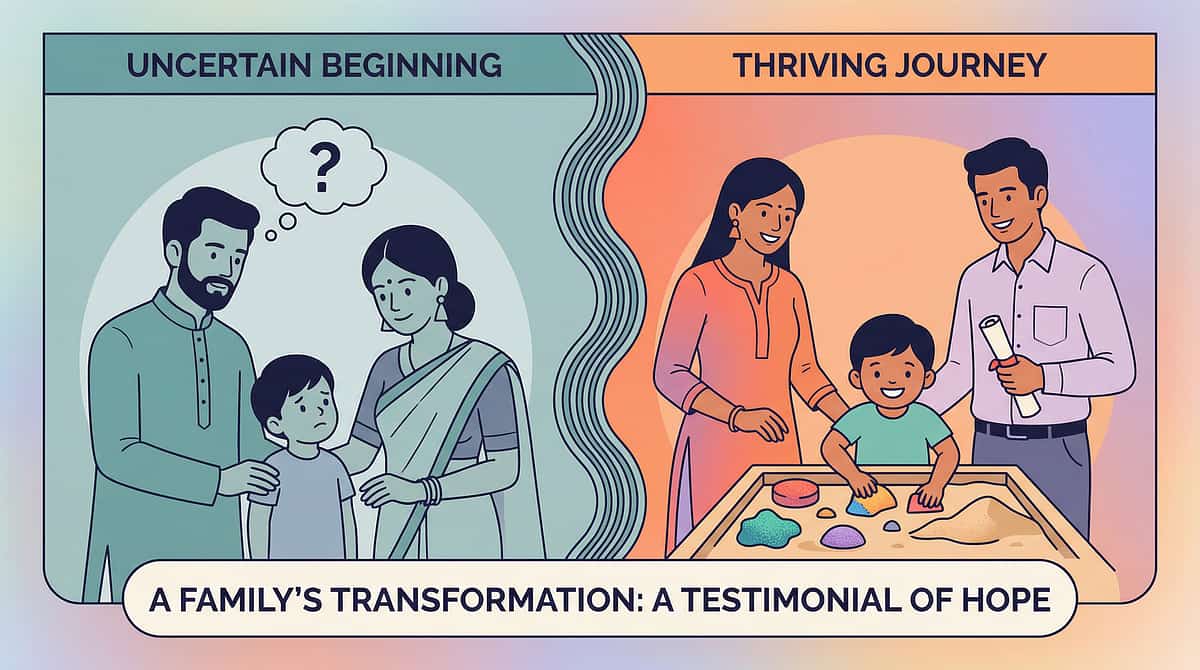
One Technique, Infinite Personalisations — Your Child Is Not Generic
⬇️ Make It Easier
For younger or earlier-stage learners:
- Start with 2 items only (1 animal + 1 food) — binary discrimination before sets
- Use 3D objects rather than pictures — concrete is easier than symbolic
- Give the category label before the sort: "We're looking for ANIMALS" (reduce cognitive load)
- Use errorless learning — always show the correct answer before asking
- Focus only on Phase A (sorting) until 80% accuracy for 5 consecutive sessions
⬆️ Make It Harder
For advanced or fluent sorters:
- Introduce 4–5 categories simultaneously
- Use written category labels only (no picture support)
- Introduce atypical category members ("Is a penguin a bird? Why?")
- Cross-categorisation: "Name 3 things that are both fruit AND red AND grow on trees"
- Category definition: "What makes something an animal? What do all animals have?"
- Category exclusion chains: present 5 items, 1 doesn't belong — explain why all 4 others belong
🔴 Sensory Avoider
Use flat picture flashcards; avoid 3D objects with unexpected textures; use a visual timer; minimise verbal input per trial to reduce sensory overwhelm.
🟢 Sensory Seeker
Use tactile sorting objects (textured animals, weighted pieces); add movement breaks between trials; allow child to shake the bin before placing items.
Ages 2–3 Years
2 categories, 6 items, concrete objects, heavy reinforcement. Simplicity and repetition are the tools.
Ages 4–5 Years
3 categories, 10 items, pictures + objects, verbal category naming. Building toward expressive labelling.
Ages 6–8 Years
4–5 categories, exclusion + cross-categorisation, written labels, fluency challenges. The academic readiness tier.

Weeks 1–2: Foundation Building — Don't Look for Mastery Yet
✅ What You Will Likely See
- Child tolerates the sorting materials without significant protest
- Child completes prompted sorts (with your physical or gestural help)
- Brief moments of independent sorting — celebrated immediately
- Recognition of familiar categories (animals, food) when presented
- Reduced resistance to sitting for the 15-minute session by Day 5
❌ Not Progress Yet (And That's Normal)
- Child cannot name categories independently — this takes weeks 3–6
- Child confuses categories frequently — this is the learning signal, not failure
- Child needs heavy prompting for every trial — this will fade systematically
3–5
Sessions This Week
Attendance and showing up matter more than accuracy in week 1.
40–60%
Sorting Accuracy
With prompting — this is expected and healthy at baseline.
0–20%
Category Naming
Receptive recognition only — expressive naming comes later.
"Consistency in weeks 1–2 is more important than accuracy. Show up. The brain is doing invisible work."

Weeks 3–4: Consolidation — Neural Pathways Are Forming
Child Anticipates the Session
Brings materials, moves toward the sort space without prompting — motivation is internalising.
Reduced Prompting for Familiar Pairs
Animals and food categories require less support. Neural pathways are consolidating for these trained pairs.
Emerging Spontaneous Labels
"dat animal!" or "food!" — imperfect but present. These are the first signs of expressive category knowledge.
Child Corrects Parent Errors
"No! Dat animal tray!" — this is metacognitive monitoring. The child now knows the rules well enough to police them.
Categorical Generalisation Emerging
Child sorts a new object correctly on the FIRST trial — without having seen that specific object before. This means the concept is beginning to transfer, not just the specific objects.
70–80%
Sorting Accuracy
With reduced prompting — a strong consolidation signal
30–50%
Category Naming
With sentence completion prompting — expressive knowledge is emerging
50%
Exclusion Accuracy
Emerging — the child is beginning to understand category boundaries
"You may notice that you are more confident too. You know the script. You know the prompts. You are becoming your child's most effective therapist."
Weeks 5–8: Mastery Emerging — The Cognitive Architecture Is Set
When you see 3 or more of these indicators consistently, mastery is achieved. Mastery of B-168 does not mean the cognitive work is done — categories expand infinitely. Mastery here is the platform for the next level.
1
🌟 Independent Sort
8+ items across 3+ categories with >85% accuracy — WITHOUT prompting. The gold standard of Phase A mastery.
2
🌟 Spontaneous Real-Life Labelling
"Amma, all these are vegetables!" — unprompted category language in daily life. This is the ultimate generalisation signal.
3
🌟 Metacognitive Awareness
Child asks "Which category?" or "Where does this go?" — they now understand that category is a concept to be applied, not just a game to play.
4
🌟 Explains Exclusion
"This is not an animal because it doesn't breathe / eat / move" — the WHY dimension is fully established.
5
🌟 School-Readiness Evidence
Correctly groups objects in science and math tasks — category understanding is transferring to academic contexts.
90%+
Basic Sorting
Minimal or no prompting required
70%+
Category Naming
Independent expressive labelling
3+
Weekly Generalisations
Spontaneous real-world categorisation instances observed per week

You Did This. Together.
This is not a small achievement. A child who did not understand why a dog and a cat were both "animals" can now hold that concept, apply it across objects they've never seen, and begin to use it in school, in conversation, and in play.
You showed up — 3 to 5 times per week, in the middle of your own exhaustion, your own worry, your own full life — and you built a neural pathway that will serve your child for decades.
Family Moment
"We're celebrating [child's name]'s category superpower today!" Make it a moment the whole household participates in — they helped build this too.
Capture the Moment
A photo: child sorting independently — print it, put it on the wall. Visual evidence of a real neural achievement.
Write It Down
A journal entry: write what you noticed this week, how it felt, what you're most proud of. Your words matter as much as your child's progress.
Child-Chosen Celebration
Their choice, their celebration, their achievement. Let them lead the reward for once.
"From the Pinnacle Blooms Consortium: We see what you have built. This is real. This is science. This is love in action."

Integrate These Techniques for Maximum Impact
B-168 works best as part of an integrated programme. These four related techniques complement, precede, or extend the work you are doing with category understanding — forming a coherent arc of semantic and cognitive development.

B-155: Same/Different Discrimination
Domain B | Foundational Prerequisite
Builds the perceptual discrimination skills that precede categorical sorting. If your child cannot reliably say two dogs are "same" and a dog/cat are "different," begin here first.
Builds the perceptual discrimination skills that precede categorical sorting. If your child cannot reliably say two dogs are "same" and a dog/cat are "different," begin here first.
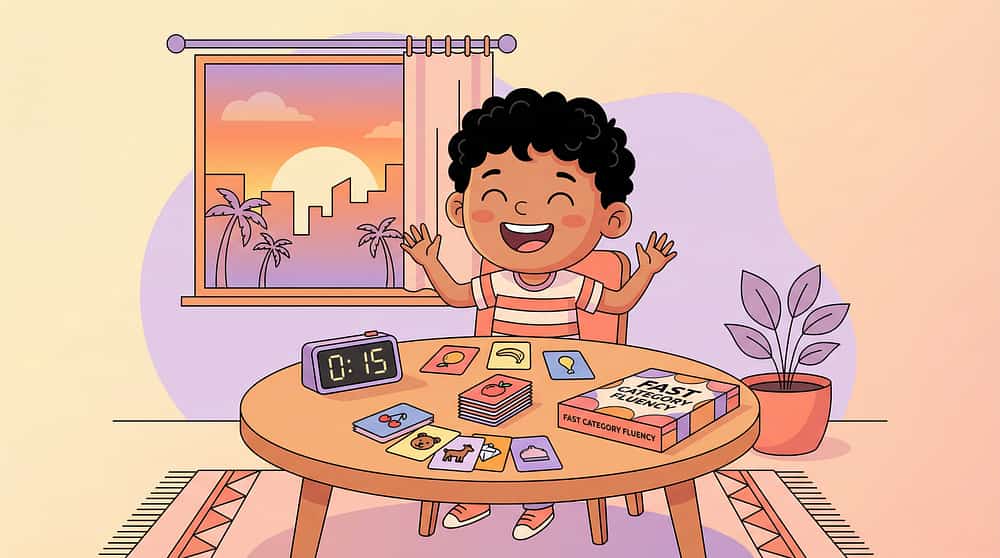
B-175: Category Fluency Games
Domain B | Next-Level Advancement
Once categories are formed, fluency games build retrieval speed — critical for classroom participation, conversation, and academic testing.
Once categories are formed, fluency games build retrieval speed — critical for classroom participation, conversation, and academic testing.
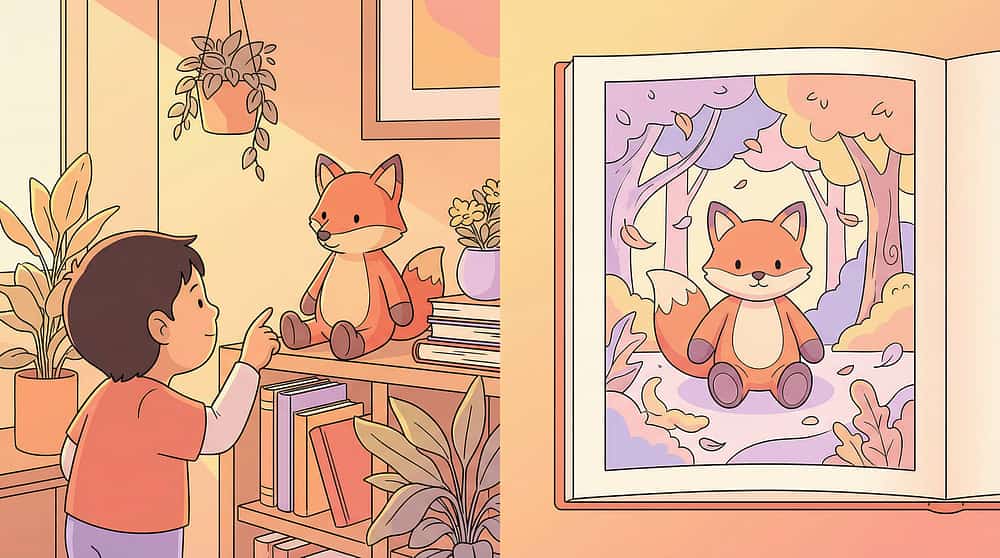
A-092: Object Permanence and Concept Constancy
Domain A | Parallel Track
Ensures the child understands that category membership persists across context changes — the dog remains an "animal" whether at home, in a book, or at the park.
Ensures the child understands that category membership persists across context changes — the dog remains an "animal" whether at home, in a book, or at the park.

B-195: Semantic Associations and Analogical Reasoning
Domain B | Advanced Next Step
The cognitive graduate of category understanding — when your child can not only sort but reason: "A cat is to animal as a mango is to ___?"
The cognitive graduate of category understanding — when your child can not only sort but reason: "A cat is to animal as a mango is to ___?"
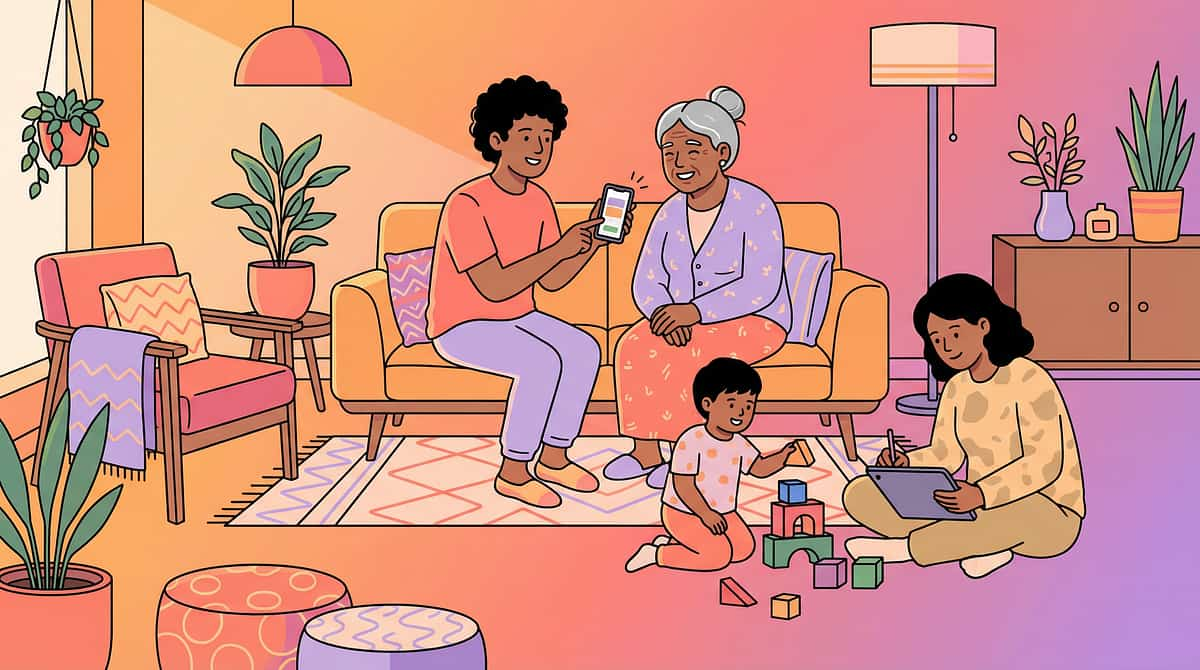
You Are Not Navigating This Alone — 1 Million+ Families Are With You
The Pinnacle Family Network connects parents, caregivers, and clinicians across India and 70+ countries. Every platform below is moderated, safe, and built to multiply the impact of every parent who joins.
WhatsApp Community — Category & Cognitive Development
Parents sharing B-domain technique experiences, material reviews, and progress milestones. Join the conversation.
Pinnacle Parent Forum
Moderated by the Pinnacle clinical team — post questions, share victories, seek advice from professionals and peers.
Instagram: @pinnacleblooms
Daily technique tips, material reviews, family stories, and live Q&A sessions. The most active touchpoint for our community.
YouTube: Pinnacle Blooms Network
Full video demonstrations of Domain B techniques including B-168. Watch real sessions in real Indian homes.
"When one family learns B-168, their child grows. When 1,000 families learn B-168, a generation grows."
Powered by GPT-OS® — The World's First Paediatric Therapeutic Operating System
GPT-OS® is the intelligence layer behind B-168 — transforming individual home sessions into a connected, adaptive, clinically-reviewed system of care.
AbilityScore®
Your child's category understanding performance data feeds into AbilityScore® — Pinnacle's proprietary developmental scoring system tracking 128 cognitive, language, social, and adaptive behaviour domains. See where your child is and where they're heading with clinical precision.
TherapeuticAI®
Each session data point from B-168 trains TherapeuticAI® to predict your child's optimal next intervention, session frequency, and material rotation — personalised to your child's specific response profile, not a generic algorithm.
FusionModule™
Category understanding data from B-168 is automatically correlated with data from other active techniques — revealing how categorical language development interacts with your child's full developmental profile across sensory, ABA, and motor domains.
EverydayTherapyProgramme™
B-168 integrates into your child's EverydayTherapyProgramme™ — a home-based, GPT-OS®-guided daily therapy schedule that embeds evidence-based techniques into morning routines, mealtimes, play, and bedtime. No clinic required.
21M+
Sessions Tracked
Across GPT-OS® Outcomes Registry
12K+
Children with B-Domain Data
Generating personalised insights
2.3x
Faster Progress
With home data integration vs. clinic-only care

Share B-168 — One Parent's Knowledge Multiplied Becomes a Child's Progress
Consistency across caregivers multiplies impact. The more adults who understand and support B-168, the faster your child's categorical mind develops. Share this page with everyone in your child's circle.
Share on WhatsApp
Pre-loaded message: "I found this technique for category understanding — completely free, from India's largest paediatric therapy network."
Download the Family Guide
B-168 Family Guide — 1 Page PDF. Simplified summary: what it is, how to do it, what to watch for. Print and place on the refrigerator.
School Teacher Communication
A formal letter template to share with your classroom teacher explaining B-168 work and requesting classroom reinforcement of category concepts during science and math lessons.
For Grandparents / Extended Family — "Explain to Nani/Nana" Version:
"We're playing a sorting game with [child's name]. We put animals in one box and food in another box. When we do this 3 times a week, their brain gets stronger at understanding what things have in common. Please don't disturb us during the 15 minutes. You can watch from a distance. After the session, you can celebrate with them."
Preview of 9 materials that help with category understanding Therapy Material
Below is a visual preview of 9 materials that help with category understanding therapy material. The pages shown help educators, therapists, and caregivers understand the structure and content of the resource before use. Materials should be used under appropriate professional guidance.


Link copied!
The Pinnacle Promise
Pinnacle Blooms Network
80+ Centres
1,000+ Clinicians
21M+ Sessions
97%+ Improvement
"From fear to mastery. One technique at a time."
🗣️ SLP
Speech-Language Pathology
🖐️ OT
Occupational Therapy
🧩 ABA/BCBA
Applied Behaviour Analysis
📚 Special Education
Academic & Cognitive Development
🧠 NeuroDevelopmental Paediatrics
Cognitive Trajectory & Medical Oversight
✅ Every Technique on This Site Is:
- Drafted by the Pinnacle clinical consortium — not generated without clinical review
- Aligned with WHO, UNICEF, ASHA, BACB, and RCI India standards
- Grounded in peer-reviewed, PubMed-indexed research
- Designed for Indian families — culturally resonant, INR-priced, joint household-aware
- Free to access — always
Legal & Medical Disclaimer: The content on this page is for educational and informational purposes only. It is not a substitute for professional clinical assessment, diagnosis, or individualised therapy. Category understanding intervention should be individualised based on comprehensive professional assessment. Results vary based on individual factors. Consult qualified professionals for personalised guidance.
© 2025 Pinnacle Blooms Network. All Rights Reserved. DPIIT Recognised | MSME Registered | Bengaluru, India | care@pinnacleblooms.org | pinnacleblooms.org
FREE National Autism Helpline: 9100 181 181
© 2025 Pinnacle Blooms Network. All Rights Reserved. DPIIT Recognised | MSME Registered | Bengaluru, India | care@pinnacleblooms.org | pinnacleblooms.org
FREE National Autism Helpline: 9100 181 181