

You're not imagining it. This is real. And there is a clear, evidence-backed path forward — right from your home.
"You are not failing. Your child's nervous system is communicating — and today you learn how to respond."
Pinnacle Blooms Network® | Built by Mothers. Engineered as a System. OT • PT • ABA/BCBA • SLP • SpEd • NeuroDev • Pediatrics
WHO Nurturing Care Framework (2018): Early parental awareness directly impacts long-term developmental outcomes. nurturing-care.org | 📞 FREE Helpline: 9100 181 181
You are not alone. Millions of families navigate this — right now.
Children with persistent toe walking
Of all children beyond age 3 exhibit this pattern — Journal of Pediatric Orthopaedics
Children with autism affected
Sensory and motor factors combined — Cochrane + ASD Motor Research, 2023
Therapy sessions analyzed
Across the Pinnacle Network — toe walking is among the most commonly addressed gross motor presentations
Toe walking is not a parenting failure. It is not stubbornness. It is not something a child chooses. It is a neuromuscular and/or sensory processing pattern — often measurable, always addressable, and in most cases, significantly improvable with consistent, structured intervention. You are among hundreds of thousands of Indian families and millions globally navigating this exact challenge today.
Research: PMC11506176 | PMC10955541 | DOI: 10.12998/wjcc.v12.i7.1260 | WHO Child Development Data 2023

This is not a habit they can simply "break." Here's what's actually happening.
The Achilles Tendon & Calf Complex
When a child persistently walks on their toes, two things happen simultaneously:
- Calf muscles (gastrocnemius + soleus) are held in a shortened position for hours daily — they adaptively shorten over weeks and months
- Shin muscles (tibialis anterior) — which pull the foot upward for heel strike — are rarely activated and weaken progressively
The result: a self-reinforcing cycle. Tight calves make heel contact mechanically harder. Weak shin muscles make lifting the foot difficult. The brain's motor pattern defaults to what it has always done.
In sensory-based toe walking, the nervous system adds another layer: the heel may carry hypersensitivity signals, making ground contact uncomfortable at the neurological level.
Parent Translation
What you see: Bouncing on tiptoes, heels rarely touching.
What's happening: Muscles shortening, motor patterns cementing, sensory signals misfiring.
What this is NOT: Stubbornness. Attention-seeking. A choice.
What this IS: A neuromuscular pattern that responds to structured, consistent intervention — often measurably, often significantly, often within weeks to months.
"This is a wiring difference, not a behavior problem. The good news: wiring can be re-routed with the right tools."
Frontiers in Integrative Neuroscience (2020): Comprehensive framework for evaluating sensory integration treatment in ASD. DOI: 10.3389/fnint.2020.556660
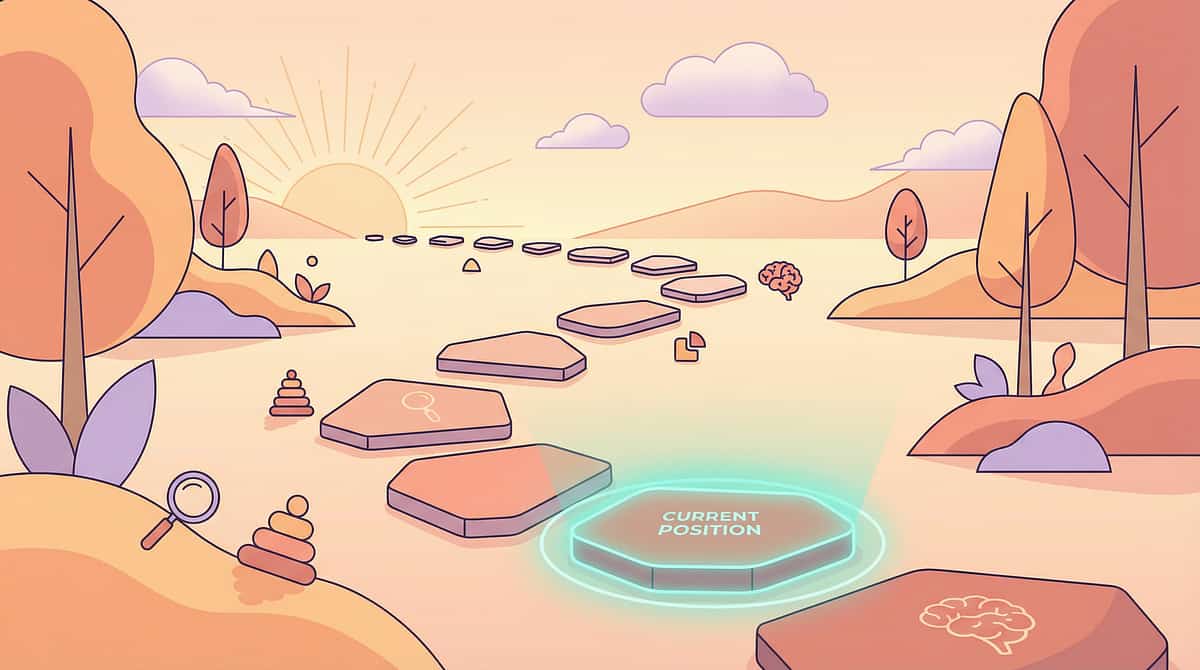
Your child is here. Here is exactly where we're heading.
12–18 Months
First steps — toe walking is completely normal ✓
18–24 Months
Walking becomes stable — toe walking still common ✓
24–36 Months
Heel-toe pattern emerges — most children transition ✓
3–5 Years ⭐
YOUR CHILD — Optimal Intervention Window — persistent toe walkers require structured support here
5–7 Years
Gait refines — consistent heel-toe is the expected pattern
7+ Years
Age-appropriate, automatic heel-toe gait across all environments
Idiopathic (ITW)
No neurological cause identified. Responds well to conservative intervention.
Sensory-Based
Driven by proprioceptive seeking or tactile hypersensitivity. Requires sensory + mechanical approach.
Autism-Associated
Common in ASD; may persist longer. Responds to multi-disciplinary intervention.
Structural
Short Achilles / CP — requires medical evaluation; may need casting or orthotics alongside therapy.
"Your child is not behind. They are at a waypoint. This is where intervention happens — and where trajectories change."
WHO Care for Child Development Package (CCD, 2023) | UNICEF MICS | PMC9978394

Clinically validated. Home-applicable. Parent-proven.
PRISMA Systematic Review (2024)
16 studies confirming sensory integration and physical therapy interventions meet evidence-based practice criteria for pediatric gait training. PMC11506176
World J Clinical Cases Meta-Analysis (2024)
Sensory integration therapy demonstrated effective promotion of motor skills, adaptive behavior, and sensory processing across 24 studies. PMC10955541
Indian RCT — Padmanabha et al. (2019)
Home-based sensory and motor interventions demonstrated significant outcomes for Indian pediatric populations. DOI: 10.1007/s12098-018-2747-4
Journal of Pediatric Orthopaedics
Conservative treatment (stretching, orthotics, gait training) shows 70–85% improvement in idiopathic toe walking within 6–12 months. POSNA guidelines
"Early, consistent, multi-modal intervention combining stretching, orthotic support, and sensory approaches shows the strongest evidence for long-term gait normalization in children aged 2–12."
Conservative intervention in ITW
Strong evidence base across multiple RCTs and systematic reviews
Sensory-based approaches in ASD toe walking
Evidence for multi-modal sensory and motor intervention
📞 9100 181 181 | Free | 16+ languages | 24×7
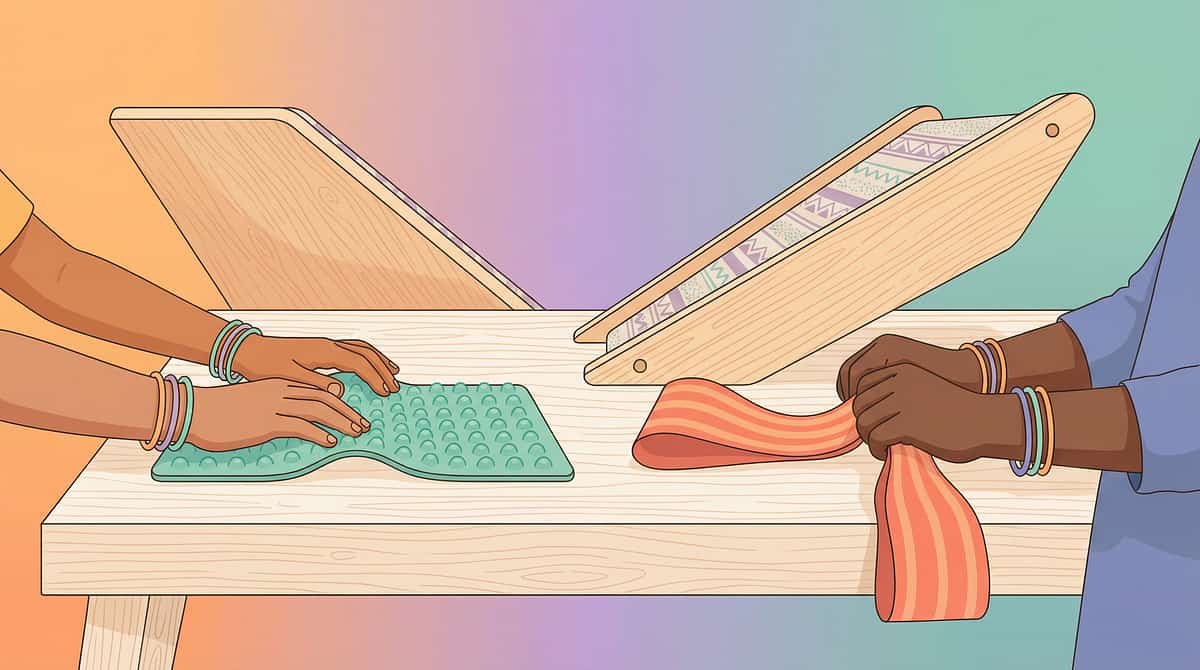
9 Materials That Help With Toe Walking
The Heel-Ground Connection Protocol
🏷️ Age: 2–12 years
🏷️ Frequency: Daily
🏷️ Session: 10–30 min
🏷️ Lead: PT + OT
🏷️ Setting: Home + Clinic
Taxonomy drawn from Pinnacle 128 Canon Materials system and GPT-OS® 20-Category classification framework. Domain: Gross Motor Equipment | Sensory Motor Tools | Orthotic Supports | Postural & Balance Equipment
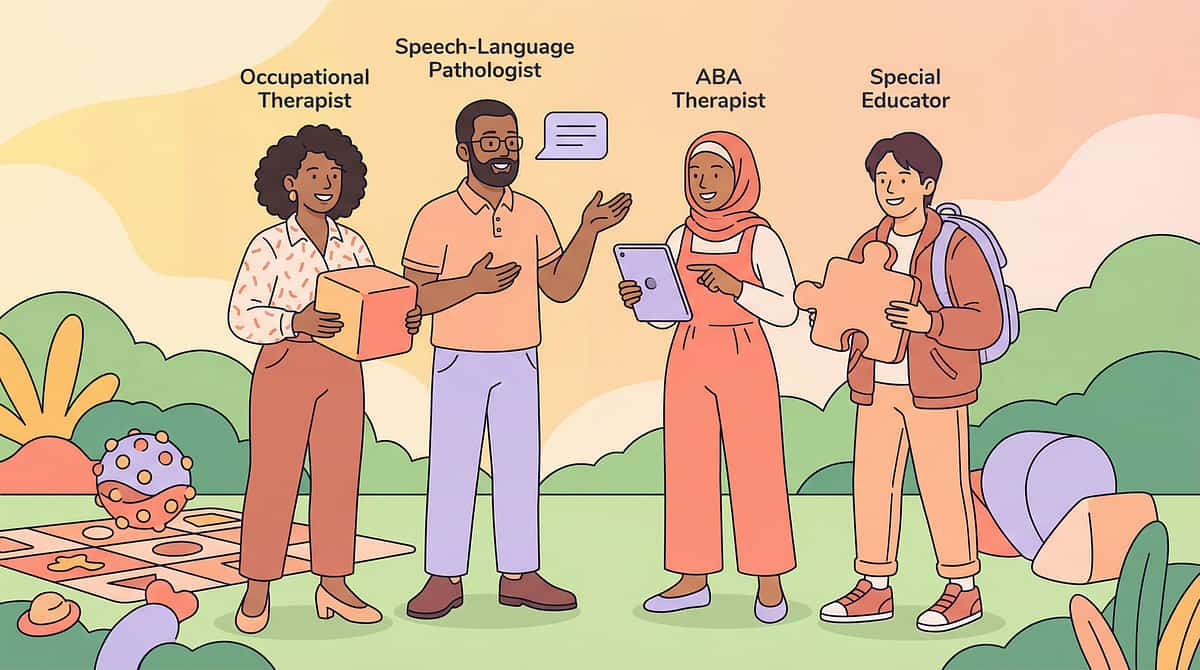
This technique lives at the intersection of five therapy disciplines. Here's why.
Pediatric Physical Therapist (Primary Lead)
Assesses ankle range of motion, prescribes stretching protocols, fits orthotic supports, designs gait training programs, and monitors progression. The clinical anchor for toe walking treatment.
Pediatric Occupational Therapist (Sensory Lead)
Addresses sensory processing components — tactile hypersensitivity to heel contact, proprioceptive seeking behavior, body awareness deficits. Uses textured mats, weighted vests, and sensory integration approaches.
ABA/BCBA Therapist (Behavior & Reinforcement Lead)
Designs reinforcement systems for heel-walk practice, implements data collection protocols, creates motivating gait training activities, troubleshoots behavioral resistance to intervention.
Special Educator (Generalization Lead)
Ensures gait corrections extend to school settings, coordinates with school PT/OT, integrates heel-walk cues into classroom routines and recess activities.
NeuroDev Pediatrician / Orthopedic Specialist
Rules out neurological causes, prescribes AFOs when indicated, considers casting or Botox for severe contracture, monitors overall motor development trajectory.
"Your child's brain does not organize itself by therapy type. A heel-strike is simultaneously a physical, sensory, behavioral, and neurological event. That's why the Pinnacle Consortium approaches it as one."
These aren't random tools. Each one is a precision instrument targeting a specific developmental node.
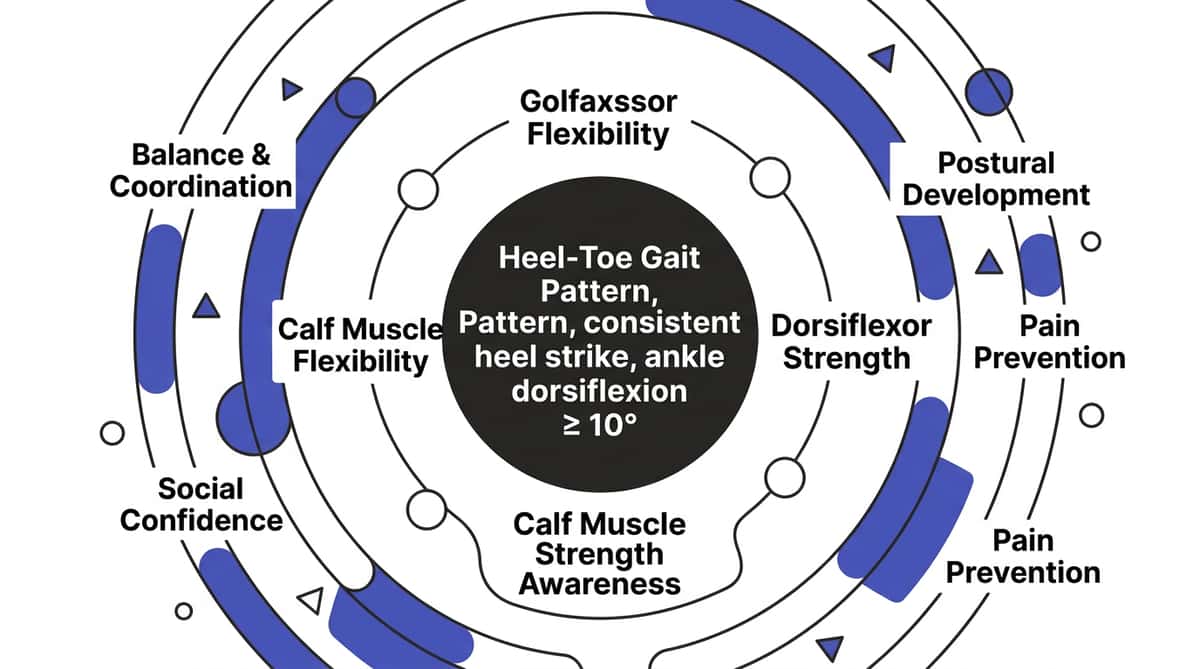
🎯 Primary Target
Heel-Toe Gait Pattern — Consistent heel strike → toe-off locomotion. Ankle dorsiflexion ≥ 10° during walking. Observable: heels consistently contact ground during natural walking by end of intervention.
🔵 Secondary Targets
Calf Flexibility | Dorsiflexor Strength | Foot Sensory Awareness. Observable: reduced calf tightness, child can flex foot to neutral, reduced heel hypersensitivity.
⚪ Tertiary Gains
Balance & Coordination | Postural Development | Social Confidence | Pain Prevention. Observable: improved running, less tripping, age-appropriate sports participation by 6–12 months.
Meta-analysis (World J Clin Cases, 2024): Sensory integration therapy promotes motor skills (primary), adaptive behavior (secondary), and social participation (tertiary). PMC10955541
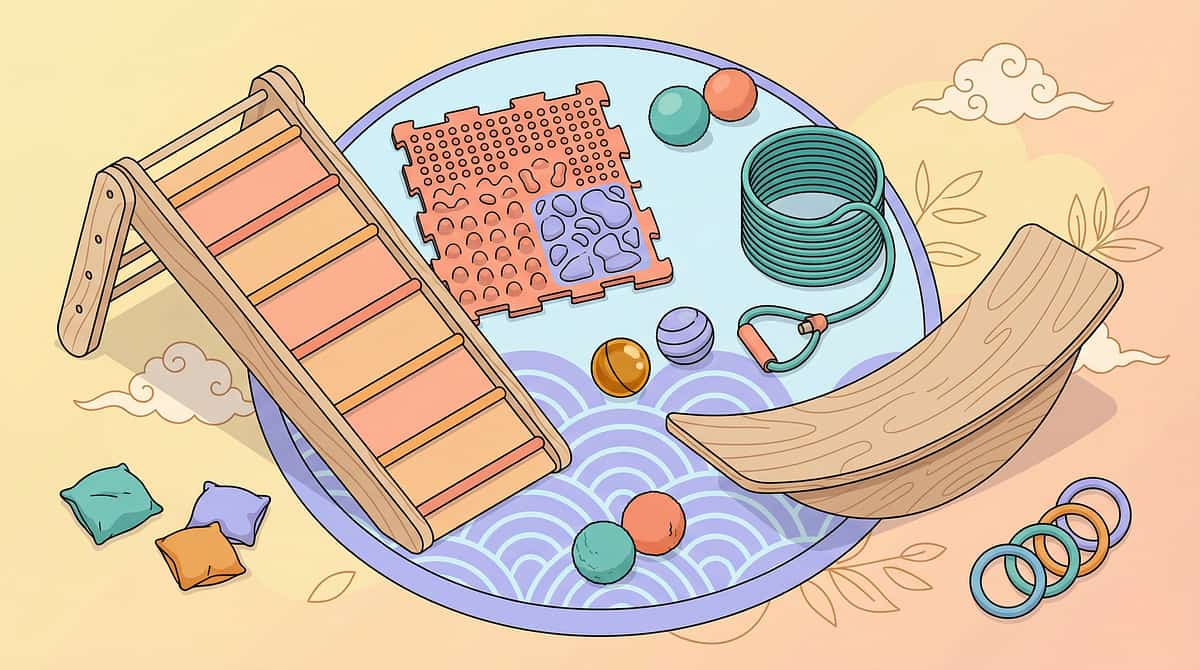
9 clinically validated materials. Your home becomes a therapeutic environment. Today.
Each material addresses a different mechanism of toe walking. You don't need all 9 immediately — the Progression Framework guides which to start with based on your child's profile.
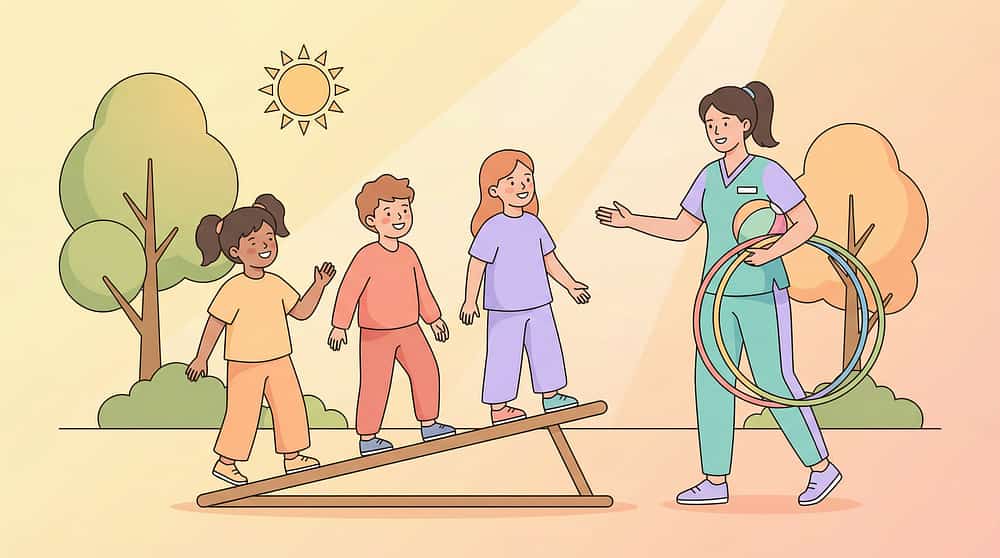
1. Incline Board / Slant Board
Passive calf stretch during standing play
Canon: Gross Motor / Postural Equipment
₹800–2,500 | 🛒 Amazon.in
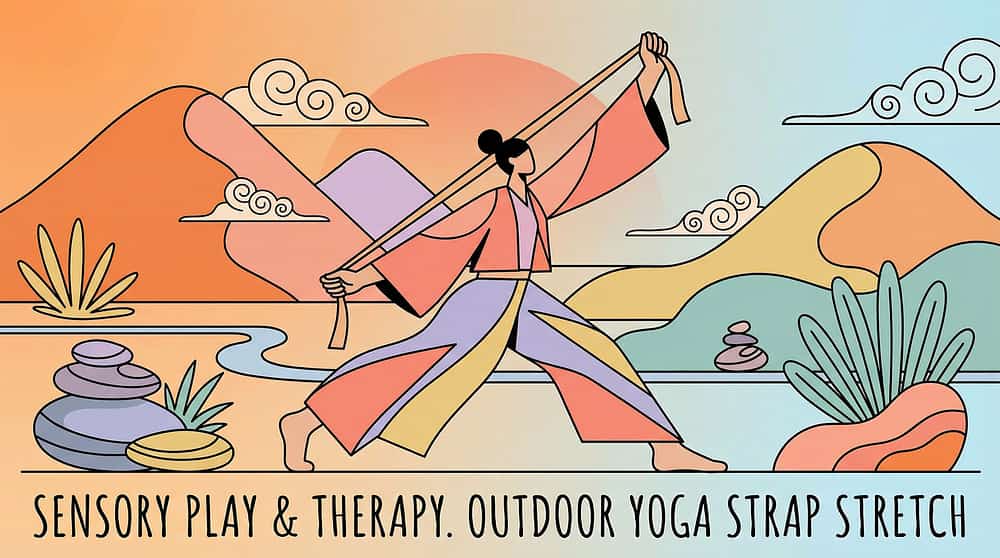
2. Stretching Strap / Yoga Strap
Controlled Achilles & calf dorsiflexion stretch
Canon: Sensory Motor / Stretch Equipment
₹200–600 | 🛒 Amazon.in
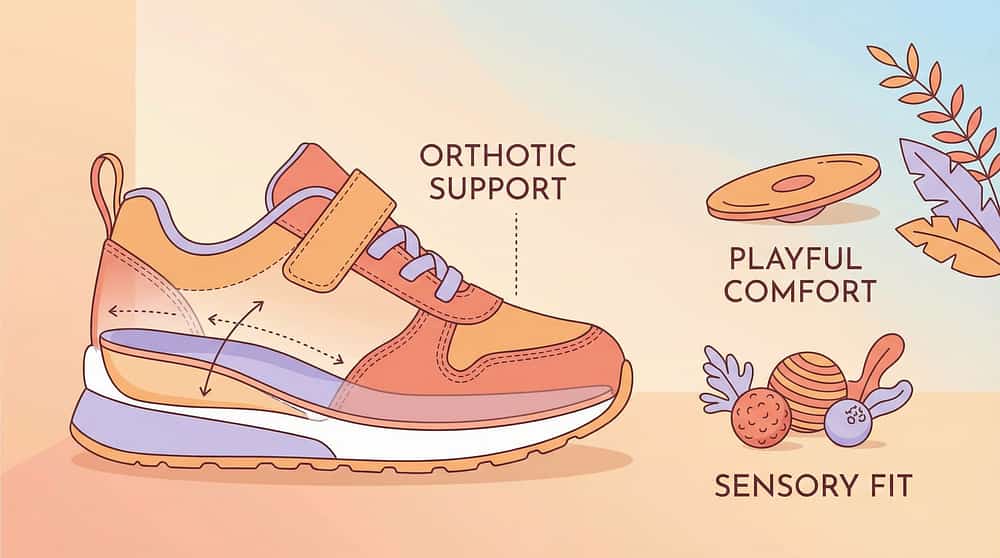
3. Heel Cups / Heel Wedges
Encourage heel strike inside shoes
Canon: Orthotic Supports / Footwear Inserts
₹300–800 | 🛒 Amazon.in
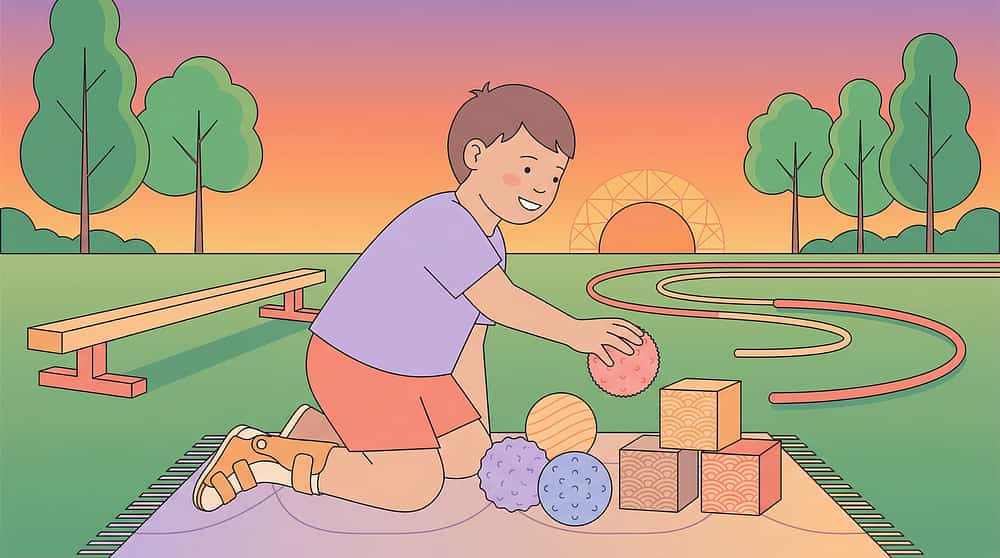
4. Ankle-Foot Orthoses (AFOs) / SMOs
Sustained ankle positioning — professional prescription required
Canon: Orthotic Supports / Prescribed Equipment
₹3,000–15,000+ | 📞 Consult: 9100 181 181
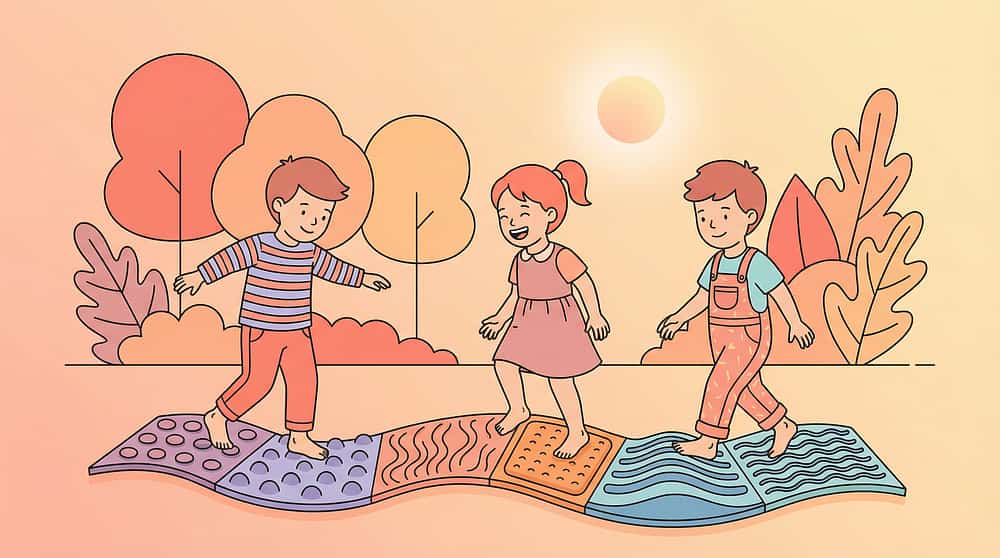
5. Textured Foot Mats / Sensory Walkway
Desensitize heel hypersensitivity, provide proprioceptive input
Canon: Sensory Motor / Tactile Equipment
₹500–2,000 | 🛒 Amazon.in
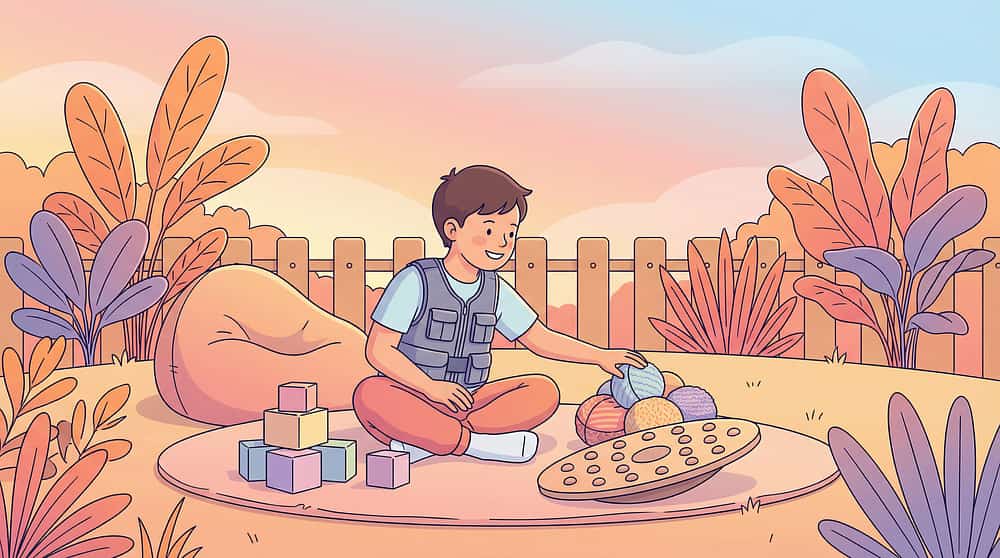
6. Weighted Vest / Compression Vest
Proprioceptive grounding to reduce sensory-driven toe walking
Canon: Sensory Motor / Proprioceptive Equipment
₹1,500–4,000 | 🛒 Amazon.in
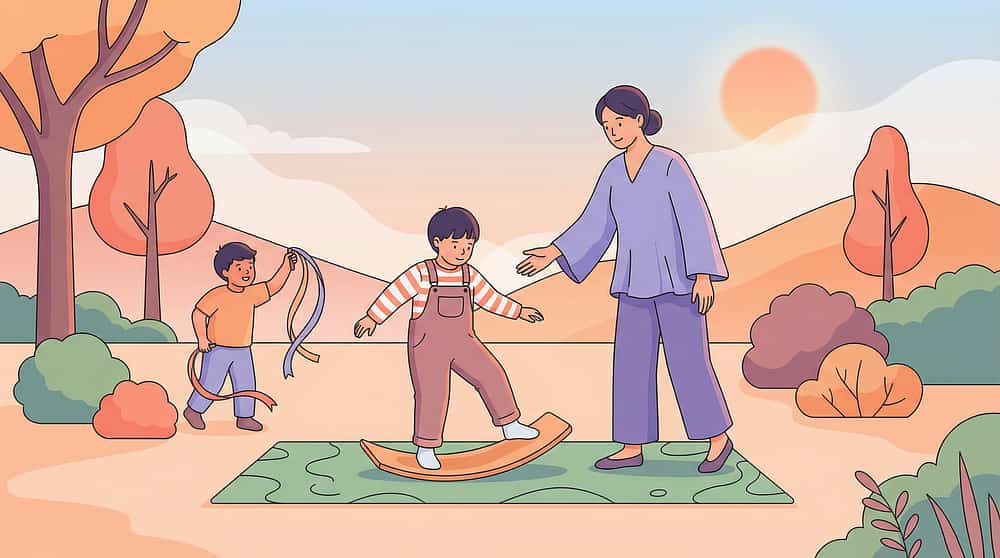
7. Balance Board / Wobble Board
Stability training demands flat-foot contact
Canon: Gross Motor Equipment / Balance Tools
₹600–2,000 | 🛒 Amazon.in
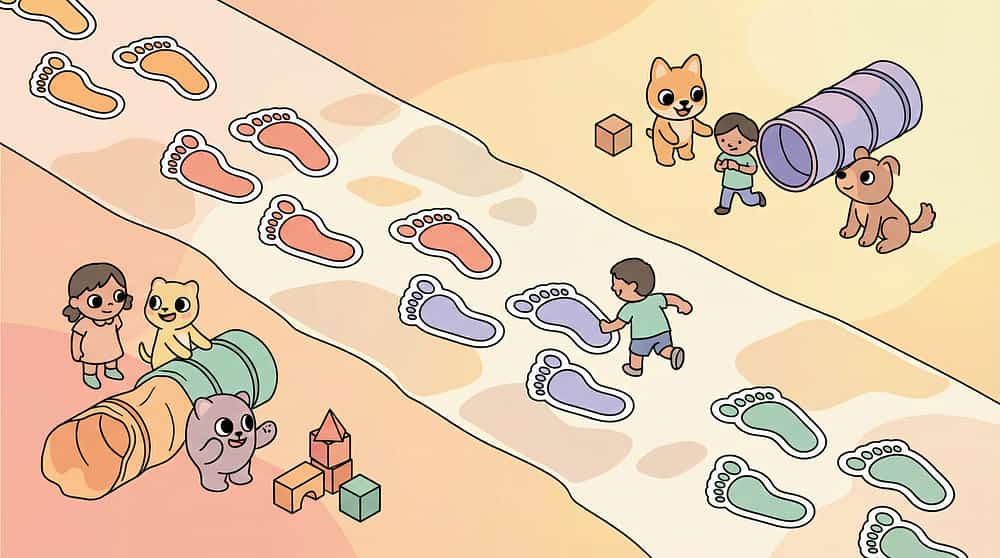
8. Footprint Pathway / Heel Walk Games
Visual-motor cueing for heel-first gait pattern
Canon: Motor Learning / Visual Cue Equipment
₹200–800 or DIY | 🛒 Amazon.in
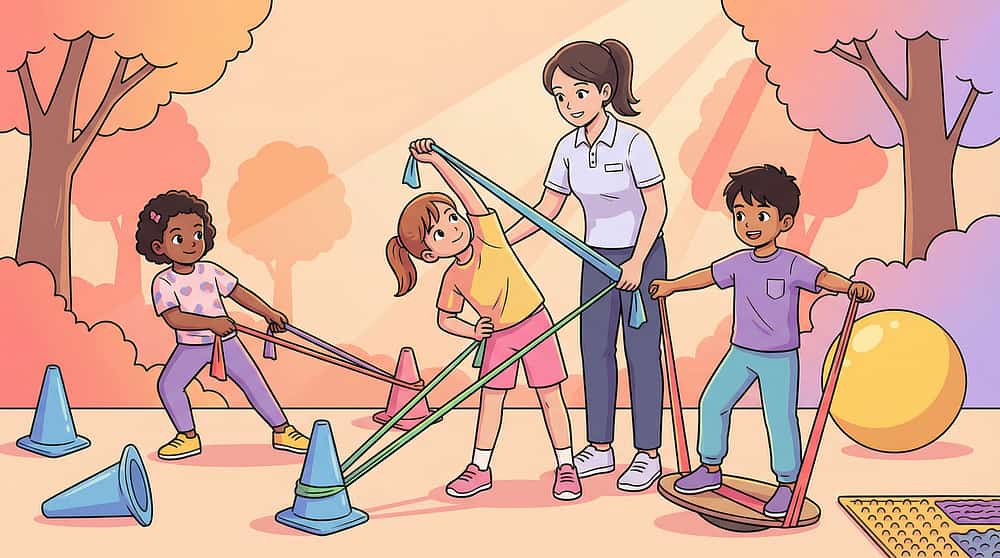
9. Resistance Band (Theraband)
Strengthen weak shin muscles (dorsiflexors)
Canon: Strength & Resistance / Theraband
₹200–500 | 🛒 Amazon.in
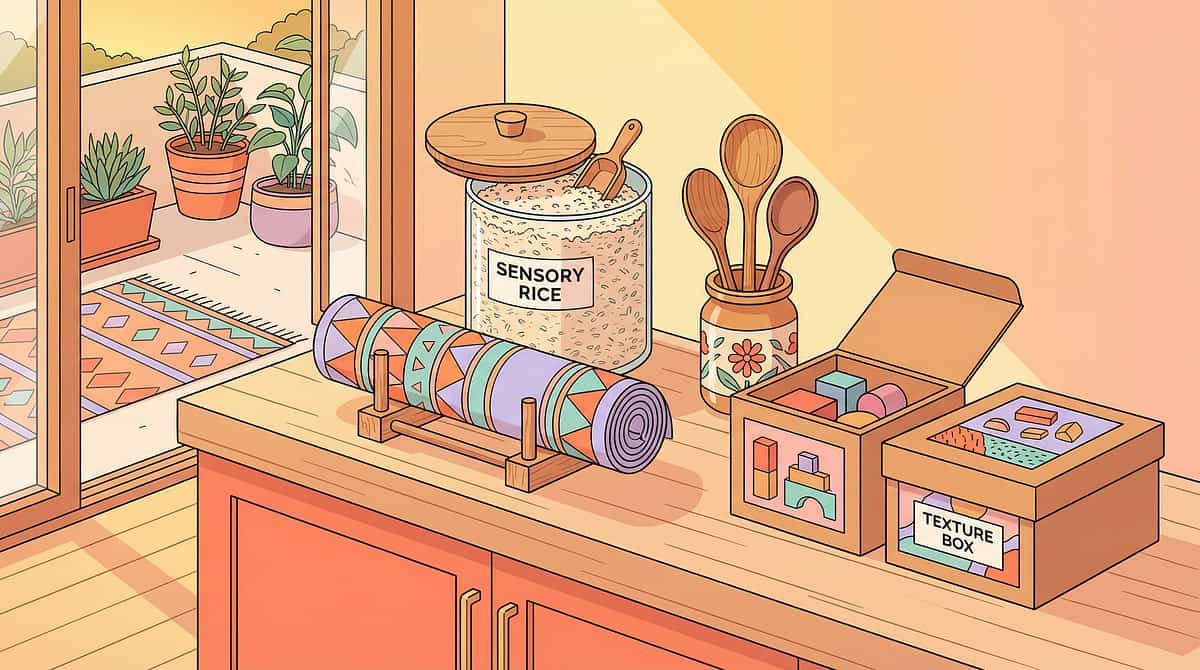
Every intervention tool has a zero-cost home version. No purchase required to start today.
Material | DIY Substitute | Why It Works |
Incline Board | Thick book stack (10–15cm) covered with towel on floor | Same gravitational stretch to Achilles when child stands toes-up on slope |
Stretching Strap | Any non-elastic belt, dupatta, or towel looped around foot | Provides leverage for sustained dorsiflexion hold |
Heel Cups | Folded felt or foam padding (1cm thick) placed under heel inside shoe | Reduces calf stretch demand, encourages heel-down position |
AFOs / SMOs | ⚠️ NO DIY substitute — professional prescription mandatory | Structural positioning requires clinical-grade brace |
Textured Foot Mats | Carpet squares, bubble wrap, rough coir mat, grass patch, pebble tray | Same sensory desensitization and proprioceptive input to plantar surface |
Weighted Vest | Backpack with 500g–1kg of books worn front-facing | Distributes proprioceptive input; use max 10 min/session |
Balance Board | Folded blanket on floor, thick foam cushion, or pillow | Unstable surface demands whole-foot engagement for balance |
Footprint Pathway | Masking tape footprint outlines on floor, draw with chalk outside | Same visual-motor cueing system for heel-first stepping |
Resistance Band | Old stocking/elastic band anchored to table leg | Sufficient resistance for dorsiflexor strengthening exercises |
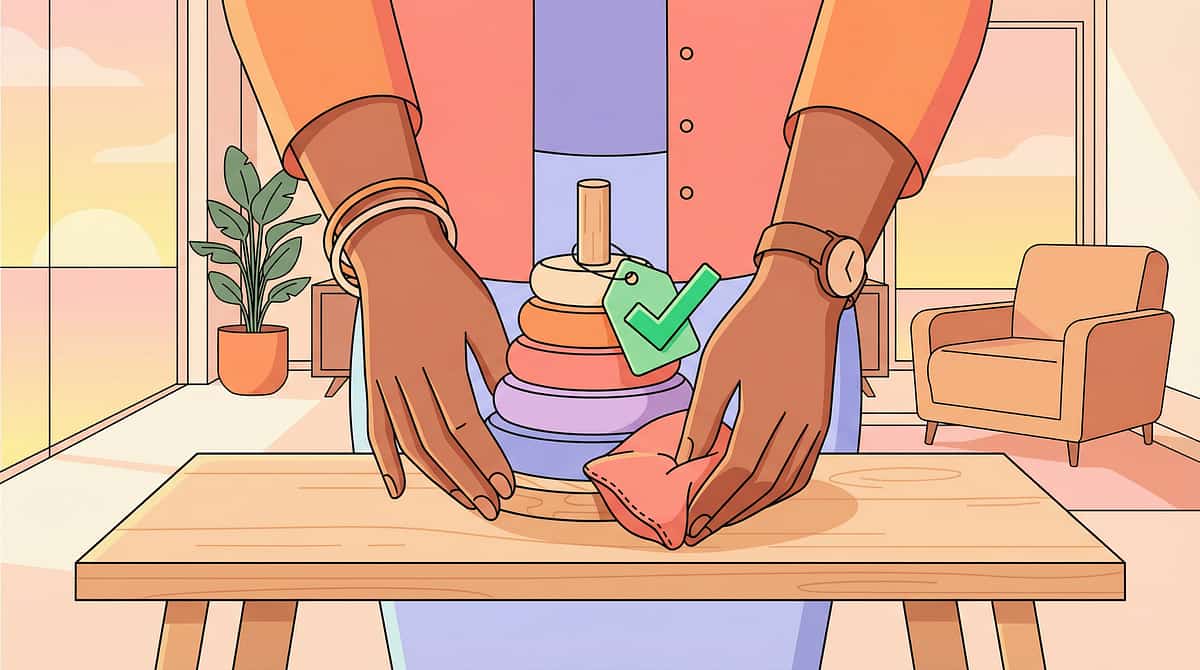
Before you begin: Read this card in full. Every session, every time.
🟢 GREEN LIGHT — Safe to Proceed
- Child is alert, fed, and not dysregulated
- Toe walking is bilateral (both feet equally)
- Child can achieve flat foot when verbally prompted (even briefly)
- Ankle can be passively moved to neutral with gentle pressure
- No pain reported with stretching or heel contact
- No recent injury to foot, ankle, or lower leg
- No sign of illness today
🟡 AMBER LIGHT — Modify and Proceed
- Child slightly dysregulated → use sensory calming first, then begin with gentlest material only
- Child resists heel contact strongly → start with textured mat desensitization only, skip stretching today
- Ankle tightness is significant → reduce incline board angle, use only gentlest strap tension
- Child is tired or unwell → shorten session to 5 minutes only
🔴 RED LINE — Stop and Call 9100 181 181
- Toe walking is one-sided (asymmetric) → may indicate neurological cause
- Child expresses pain during passive foot dorsiflexion
- Foot or ankle visibly swollen, bruised, or deformed
- Child walks on toes AND has recently lost previously acquired motor skills
- Child had normal heel-toe gait previously and has regressed to toe walking
- Other neurological symptoms present (tremor, speech regression, balance deterioration)
Environmental Requirements
- Non-slip surface for all standing and walking activities
- Clear floor space minimum 3m × 2m for gait practice
- Wall or stable surface within reach for balance support
- Barefoot or thin-soled shoes for sensory mat work; supportive shoes with heel cups for walking practice
Material Safety
- Sensory mat textures: check for sharp edges, splinters
- Weighted vest: maximum 10% of child's body weight
- Resistance bands: always anchor securely before use
- AFOs: monitor daily for skin pressure marks
📞 9100 181 181 — Free | 24×7 | 16+ languages | Indian J Pediatr RCT (2019): DOI: 10.1007/s12098-018-2747-4
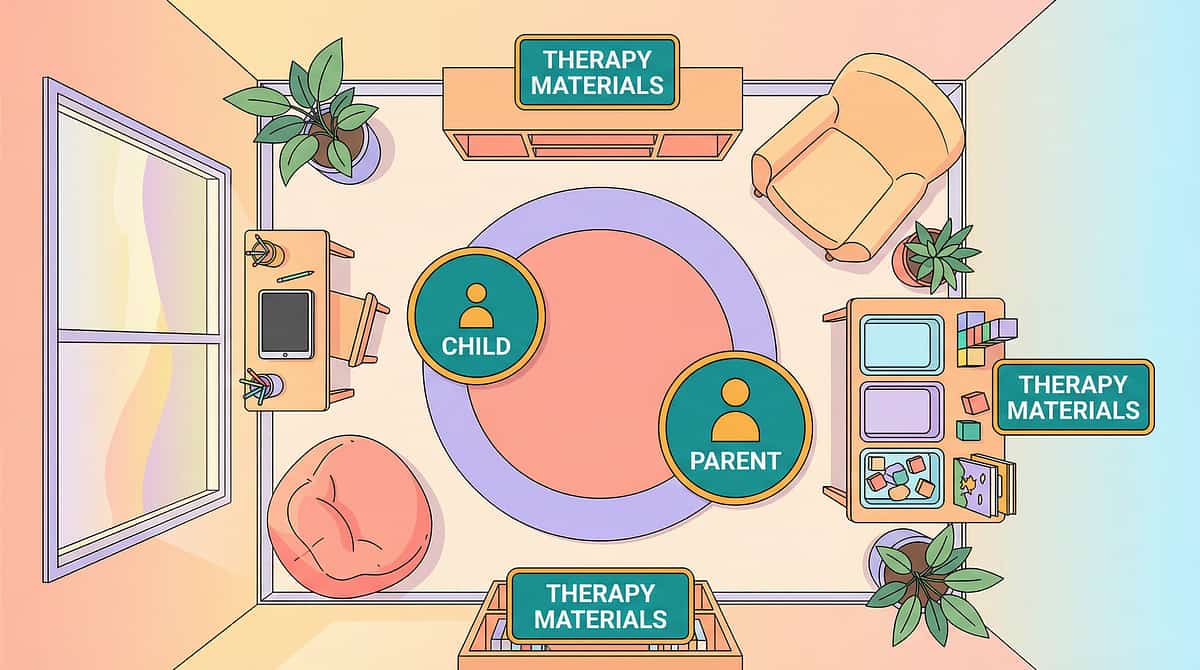
The environment is the first intervention. Set this up once — use it every day.
① Wall (within arm's reach)
Child can touch wall for balance during incline board standing
② Incline Board
Near wall, facing into room. Child faces parent while standing.
③ Sensory Pathway
Straight 2–3 meter lane. Clear both sides. Textures laid in sequence.
④–⑤ Child & Parent Positions
Child start marked with tape or footprint sticker. Parent kneeling at eye level, 1 meter ahead.
⑥–⑦ Balance Board & Exercise Mat
Balance board on non-slip mat with 1m clearance. Exercise mat flat and firm for stretching.
Remove From Space
- Sharp furniture corners at ankle height
- Loose rugs or mats (slipping hazard)
- Screens in line of sight during gait practice
- Younger siblings or pets during active protocol
Lighting, Sound, Temperature
- Bright natural light preferred (child sees their feet clearly)
- Soft instrumental background music acceptable
- Normal room temperature — no cold floors during barefoot sensory work
Sensory Integration Theory (Ayres): Structured 1:1 environment as core SI principle. PMC10955541 confirms individual structured sessions show maximum effectiveness.
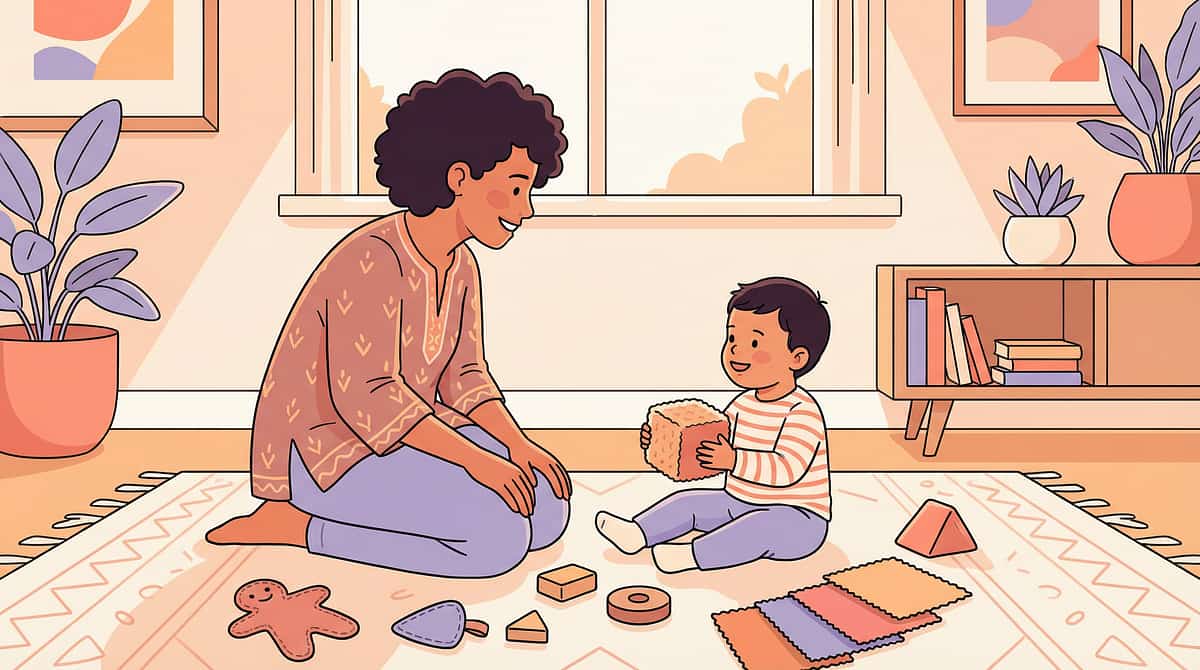
60 seconds. 7 checks. Then you know exactly whether to proceed.
# | Check | Indicator | Result |
1 | Fed? | Last meal 30+ minutes ago, not hungry or thirsty | ✅ GO |
2 | Rested? | Not overtired, nap complete if applicable | ✅ GO |
3 | Regulated? | No meltdown or dysregulation in last 30 minutes | ✅ GO |
4 | Physically well? | No fever, no limping, no foot/ankle pain reported | ✅ GO |
5 | Engaged? | Responds to name, makes eye contact, accepts approach | ✅ GO |
6 | Post-activity? | Not immediately after intense physical exertion | ✅ GO |
7 | Motivation? | Preferred reinforcer identified and available | ✅ GO |
🟢 All 7 Green
Proceed with full protocol
🟡 5–6 Green
Modify: 2–3 materials only, 10 minutes max
🟡 3–4 Green
Simplified: incline board play only during preferred activity
🔴 Less than 3
Postpone: offer calming activity, try again in 1–2 hours
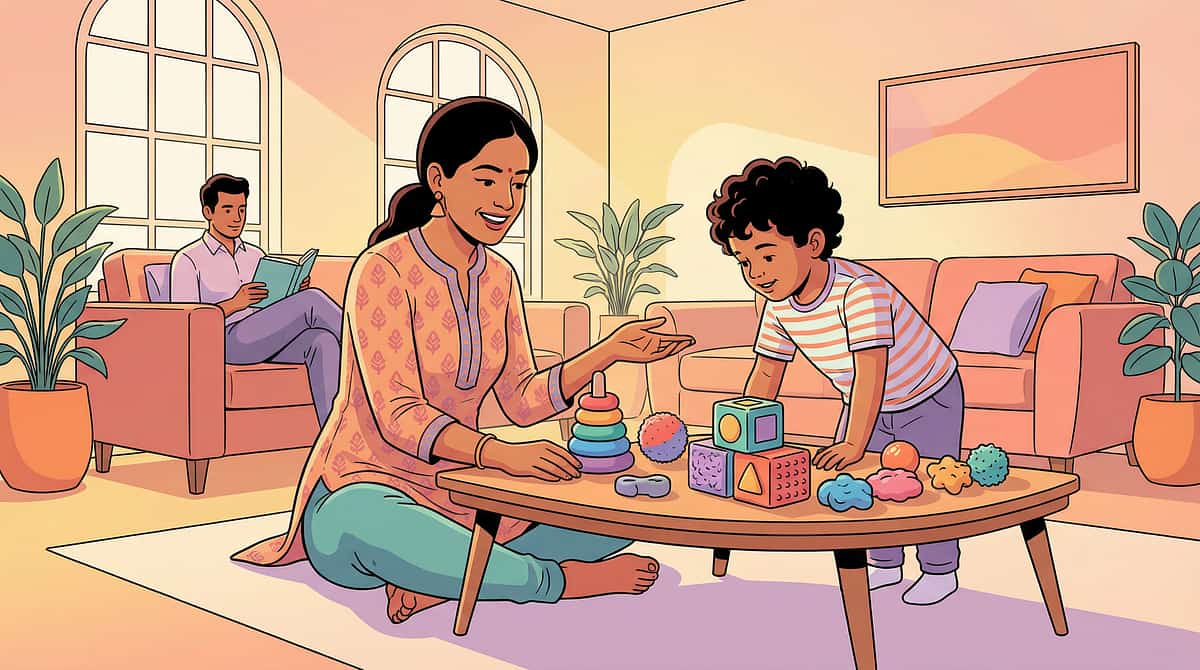
The Invitation — bring them in, never force them in.
"Hey [child's name] — want to do our special foot game? Look, we've got your [favorite toy/snack] ready. Come stand with Mama/Papa."
Body Language Guidance
- Kneel to child's eye level — do not tower
- Offer the preferred motivator visibly
- Use a warm, excited tone — not instructional or commanding
- Move toward the incline board/sensory mat with them, side by side
What Acceptance Looks Like
- Child moves toward you or the activity
- Child takes your hand or follows your gesture
- Child looks at the material with curiosity
- Child makes any vocalisation, gesture, or eye contact indicating interest
Resistance → How to Modify
- Turns away → Hold preferred toy near the incline board; let them play with it while feet are on board
- Protests verbally → "You don't have to do anything — just stand here with me"
- Becomes distressed → Abandon for today, note as Postponed in data sheet
Timing: 30–60 seconds for invitation phase. | ABA Pairing Procedures: Motivating operations established before demand placement. OT "Just-Right Challenge" principle.
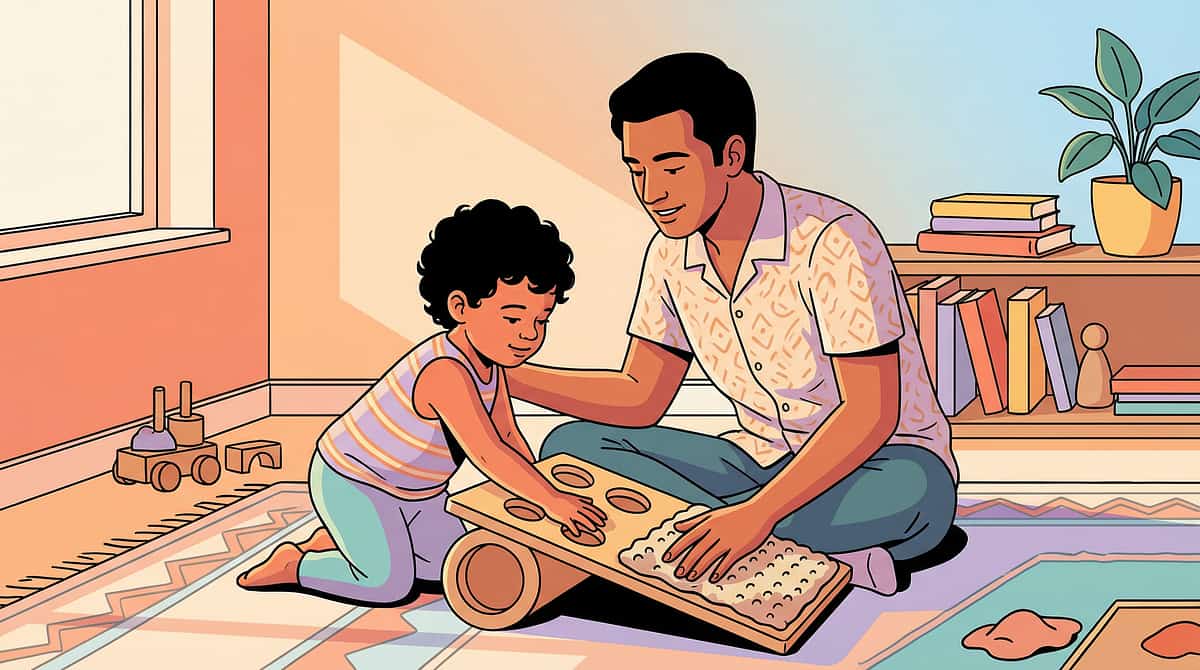
Introduce the material. Let curiosity lead.
▼ INCLINE BOARD (Minutes 1–5)
Stand child on incline board, toes-up, heels-down. Present favorite activity at standing-height surface in front.
"Look — we're standing on our special ramp! Can you build this puzzle while you stand here? Heels down, toes up — like a penguin!"
Watch for: Does the child tolerate the stretch? Is heel contact maintained? How long before they step off?
▼ SENSORY PATHWAY (Minutes 5–10)
Lead child by hand to sensory mat pathway. Walk alongside them barefoot.
"Let's walk on the bumpy path! What does it feel like? Ooh, this one's soft! Stomp, stomp — heels first!"
Watch for: Does child avoid any textures? Signs of distress? Are heels touching textured surfaces?
▼ BALANCE BOARD (Minutes 10–13)
Stand child on balance board near wall. Hold hands initially.
"Can you stay on the wobbly board? Keep your feet FLAT so you don't fall — that's the secret!"
Watch for: Does child instinctively flatten feet for stability? Duration of flat-foot contact?
▼ STRETCHING STRAP (Minutes 13–18, if tolerated)
Child sits on mat, leg extended. Parent loops strap under ball of foot.
"I'm going to give your leg a big hug stretch. It might feel a little tight — that's the stretch working! Tell me when it feels like a pull."
Watch for: Child reports 'pull' not 'pain'. Knee remains straight. Duration achievable before child withdraws.
Timing: 1–3 minutes per material introduction. | PMC11506176: Structured material introduction in SI intervention meets evidence-based practice criteria.
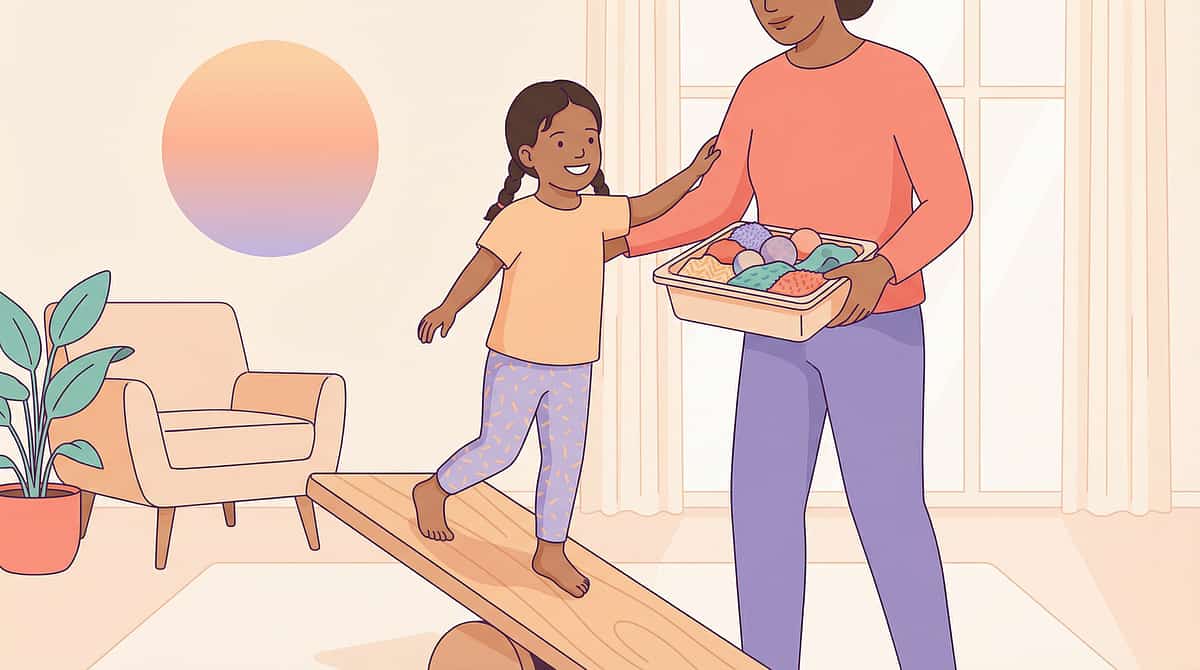
This is where the change happens. Precision matters.
🔷 INCLINE BOARD — Passive Sustained Stretch
Child stands on incline board (toes pointing upward, heels at low end) for 3–5 minutes during a tabletop activity. Incline: 10–20°. The stretch is passive — gravity does the work.
Correct execution: Full heel contact with lower board edge. Toes elevated. Knees comfortable (slight bend acceptable).
Duration: 3–5 minutes per episode. Repeat 2–3× daily during TV, puzzle, or drawing time.
Response spectrum: Ideal: tolerates without fuss | Acceptable: fidgets but maintains | Concerning: steps off within 30 seconds (angle too steep)
🔷 STRETCHING STRAP — Active Calf Dorsiflexion
Child seated, leg extended. Loop strap under ball of foot. Pull toward chest keeping knee straight (gastrocnemius) or slightly bent (soleus). Hold 30–60 seconds, repeat 3–5 times per leg. Perform 2× daily.
Correct execution: Steady pull, no bouncing. Foot pulled toward shin. Sensation is a pull/tension — never sharp pain.
🔷 FOOTPRINT PATHWAY — Motor Pattern Training
Create pathway on floor with tape footprints. Mark heel area distinctly in red. Walk with child: "Heel first — like this! Stomp your heel, then your toes." Make it a game: "Walk like a penguin! Walk like a dinosaur! Big heel stomps!"
Duration: 5–10 minutes daily. Correct execution: Heel contacts floor BEFORE ball of foot.
🔷 RESISTANCE BAND — Dorsiflexor Strengthening
Child seated, band anchored to stable object. Loop band over top of foot. Child pulls foot upward (toes toward shin) against band resistance. Hold 3–5 seconds, slowly release. 10–15 reps per leg, 1 set.
Correct execution: Smooth, controlled motion. No jerking. Knee remains stable.
PMC10955541: 40-minute therapy sessions showed maximum effectiveness; home sessions 10–20 minutes; core therapeutic action occupies 40–60% of session time.
3 good repetitions beat 10 forced ones. Always.
Material | Reps/Holds | Frequency | Session Duration |
Incline Board | 2–3× daily episodes | Every day | 3–5 min each |
Stretching Strap | 3–5 holds per leg | 2× daily | 30–60 sec each |
Sensory Pathway | 3–5 walks | Daily | 5–10 min total |
Balance Board | 3–5 standing episodes | Daily | 1–3 min each |
Footprint Pathway | 5–10 traversals | Daily | 5–10 min total |
Resistance Band | 10–15 reps per leg | Daily | 5 min total |
Variation 1 — Change the Activity
Monday: Building blocks. Tuesday: Tablet game. Wednesday: Colouring. Thursday: Story time. Same therapeutic input, different engagement every day.
Variation 2 — Gamify the Pathway
"Penguin walk," "Monster stomp," "Astronaut walk," "Race to the treasure" — same heel-first demand, fresh motivational wrapper daily.
Variation 3 — Texture Rotation
Rotate 2 textures on the sensory pathway weekly. Novel textures maintain sensory novelty and continue desensitization progress.

Timing is everything. Immediate, specific, enthusiastic.
What to Reinforce
- Any moment heel contacts ground — even briefly during walking practice
- Tolerating the incline board for 1 minute without stepping off
- Completing one full sensory pathway walk
- Holding the stretching strap for 20+ seconds without withdrawal
- Attempting a heel-first step — not just achieving it
Praise Scripts
"YES! I saw your heel touch the ground! AMAZING heel stomp!"
"You stood on the ramp for SO LONG! Your calf muscles are getting stronger RIGHT NOW!"
"HEEL FIRST! You did it! You're a heel-walk champion!"
🌟 Social
High five, hug, dance together, excited clapping
🌟 Token Economy
Sticker on heel-walk chart → redeem for preferred activity. Every completed incline board session = 1 heel sticker. 5 stickers = preferred reward.
🌟 Activity Reward
5 minutes of preferred screen time, favorite game — offered after milestone, not during session.
ABA Reinforcement Principles: Immediate, specific reinforcement increases target behaviour. Token economy: strong evidence in autism across multiple systematic reviews.

No session ends abruptly. The transition IS part of the therapy.
"Two more heel walks, then we're all done! Two more... one more... and we're FINISHED! Great work today!"
Use a visual timer (sand timer or phone) alongside the verbal 2-minute warning.
Seated Foot Massage (60 seconds)
Child sits. Parent gently massages both feet — heels, arches, toes. Warm, firm pressure. This provides calming proprioceptive input and ends foot contact on a positive sensory note.
"Let's give your hard-working feet a thank-you massage. Good feet!"
Material Put-Away Ritual (60 seconds)
Child helps roll up stretching strap, carry a mat, or press balance board flat. Ownership of equipment creates buy-in for next session.
"Can you help me put the stretching strap away? You know where it lives!"
Transition Bridge (60 seconds)
Lead child to next activity — snack, free play, preferred screen time.
"Therapy is done! You earned your [sticker/snack/screen time]. Let's go!"
NCAEP (2020): Visual supports (timers, transition cues) are evidence-based practices for autism.
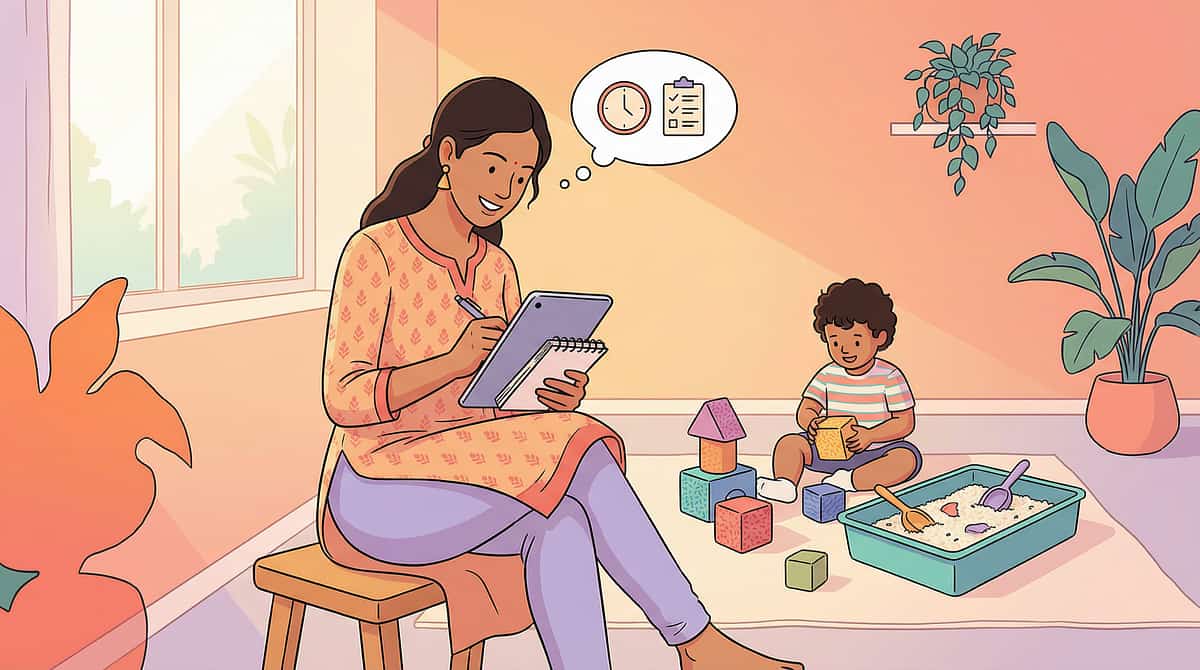
60 seconds of data today saves months of guesswork later.
Session Completion
⭕ Full session (all planned materials used)
⭕ Partial session (which materials: ___)
⭕ Postponed (reason: ___)
Heel Contact Observation
During today's footprint pathway walk, what % of steps showed heel contact?
⭕ 0–25% | ⭕ 25–50% | ⭕ 50–75% | ⭕ 75–100%
Child Engagement Rating
⭕ 1 — Refused / Distressed throughout
⭕ 2 — Tolerated with significant resistance
⭕ 3 — Participated with moderate prompting
⭕ 4 — Participated willingly with minimal prompts
⭕ 5 — Enthusiastic, self-initiated participation
BACB Data Collection Standards: Frequency, duration, and interval measurement as standard ABA practice.

Most sessions don't go perfectly. That's normal. Here's your fix for every scenario.
Problem 1: Child steps off incline board immediately every time
Why: Incline angle too steep, calf tightness too significant for that angle.
Fix: Reduce incline by 50% (thinner book stack). Start with just 5 seconds on board. Reward every 5-second increment. Build slowly over 2–3 weeks.
Problem 2: Child screams or withdraws from sensory pathway
Why: Tactile hypersensitivity — nervous system is registering the texture as aversive.
Fix: Desensitization hierarchy — start with softest texture only (fleece mat, smooth foam). Child watches parent walk on it first. Child touches with hands first. Then feet for 1 second. Build contact tolerance over 1–2 weeks before introducing rougher textures.
Problem 3: Child reverts to toe walking immediately after gait practice
Why: Expected. The motor pattern hasn't automated yet. Reminders during gait practice ≠ automatic heel-toe walking.
Fix: This is not a failure signal. Motor automaticity typically takes 6–12 weeks of consistent work. Track % of heel steps, not perfection.
Problem 4: Child refuses the stretching strap
Why: Anticipatory avoidance — stretch feels tight or uncomfortable.
Fix: Use incline board as primary stretch tool instead — child doesn't need to "cooperate." Introduce strap later once calf tightness reduces.
Problem 5: No change after 3 weeks
Why: Severity may be moderate-high, requiring professional evaluation.
Fix: Book a Pinnacle assessment. Ankle ROM measurement will clarify whether AFOs are needed. 📞 9100 181 181
Problem 6: Child complains of leg pain during stretch
Why: Pain (not stretch sensation) = contraindication. Stop immediately.
Fix: Discontinue stretching. Consult Pinnacle PT before resuming. Pain is a red flag signal. 📞 9100 181 181
Problem 7: Sibling or grandparent undermines the protocol
Why: Inconsistency across caregivers is the #1 reason home programs stall.
Fix: Share the Family Guide PDF with all caregivers. Everyone uses the same cue: "Heels down, [child's name]."
ABA Troubleshooting: Antecedent modification from behavioral literature. OT sensory desensitization hierarchy from clinical consensus.
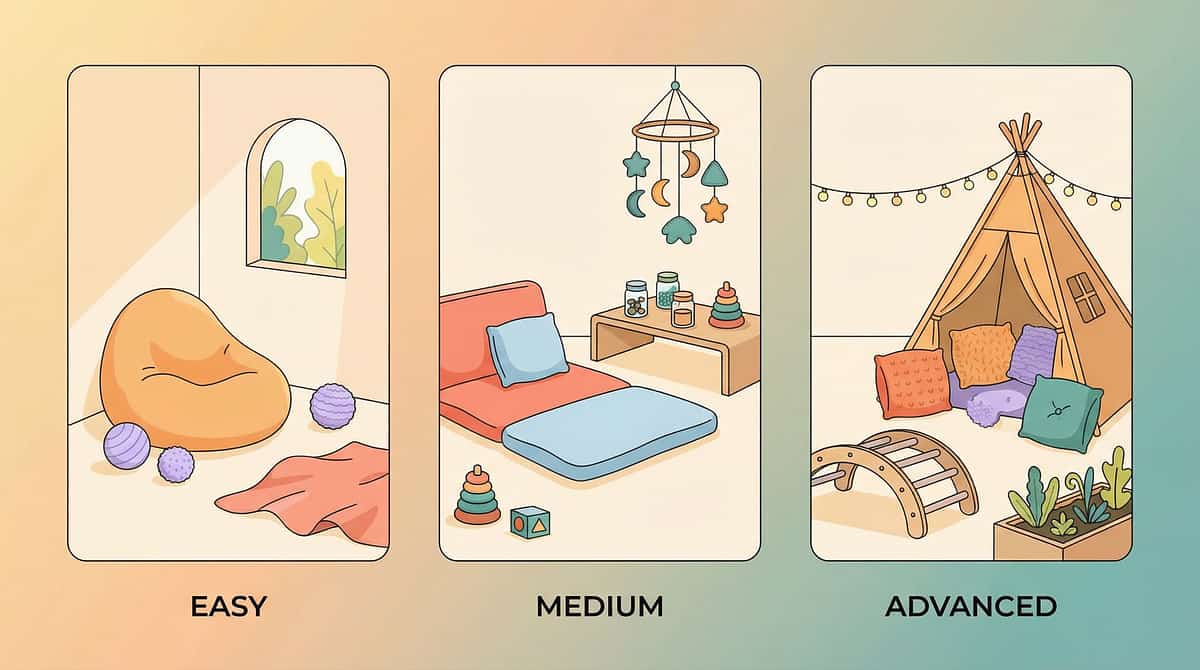
No two children are identical. Adjust the protocol to fit your child — not the other way around.
EASIER
Bad days / new starts. Incline 10°, 2 min. One texture only. Passive incline board stretch. 3 heel-walk steps + big reward. 10 minutes max.
STANDARD
Baseline protocol, most days. Full protocol as described in Cards 14–19. All 4–5 materials cycled through. 20–25 minutes total.
HARDER
Breakthrough days. Incline 20°, 5+ min. 3+ textures, longer distance. 5 holds × 60 sec. Add resistance band. Count independent heel steps. 30 minutes.
Sensory Avoider (Heel Hypersensitivity)
Priority order: Sensory pathway desensitization FIRST → Weighted vest → Incline board → Stretching strap → Gait games
Approach: Gradual, never force, celebrate every second of foot-ground tolerance.
Sensory Seeker (Proprioceptive Seeking)
Priority order: Weighted vest → Incline board → Balance board → Resistance band → Gait games → Stretching
Approach: Provide heavy proprioceptive input BEFORE gait practice — a regulated child walks flatter.
Age | Adaptation |
2–4 years | All activities embedded in play. No formal "session" framing. Incline board during TV. No resistance band. |
4–7 years | Introduce session structure gently. Token economy works well. Gait games with peers or siblings. Begin resistance band with light supervision. |
7–12 years | Child understands the "why." Share age-appropriate explanation. Self-monitoring. Resistance band independently. Goal-setting with child. |

In weeks 1–2, you are building a foundation. Progress looks quiet — but it is happening.
Foundation Phase
Week 1–2: Tolerance and routine being established
What You WILL Likely See
- Reduced resistance to incline board over days 3–7
- Child tolerating sensory pathway longer (5 sec → 30+ sec on tougher textures)
- 1–2 spontaneous heel contacts during gait games
- Calf muscles slightly less tight on day 10 vs. day 1
- Child beginning to anticipate the session routine
What Is NOT Progress Yet
- Do NOT expect automatic heel-toe walking in daily life yet
- Do NOT expect child to remember to "walk flat" without cuing
- Do NOT expect gait to change during natural play, running, or school
- Measure progress inside the structured session — not outside it
"If your child stands on the incline board for 3 seconds longer today than last week — that is real, measurable, therapeutic progress. The brain changed. The muscle lengthened fractionally. The sensory tolerance shifted. These are the invisible victories that accumulate into visible change."
PMC11506176: SI intervention outcomes emerge across 8–12 week timelines. Early indicators: tolerance and participation, not mastery.

By week 3–4, the brain is consolidating. Look for these signs — they are real.
Consolidation Phase
Week 3–4: Neural pathways forming, patterns beginning to stabilize
🟢 Child no longer protests the incline board
May walk toward it independently — a major behavioural consolidation marker
🟢 Sensory pathway: all textures tolerated
Child tolerates all introduced textures without withdrawal
🟢 Gait games: 40–60% heel contact WITH cues
Consistent improvement within structured sessions
🟢 Measurably less passive stretch resistance
Parent notices reduced resistance when bending foot upward
🟢 Child uses the word "heels" spontaneously
Linguistic marker of neural consolidation — the concept has been internalized
If seeing 3+ consolidation indicators → add resistance band strengthening to daily protocol (Card 22 Harder version).
"By week 3–4, you may notice you're more confident in the protocol — and your child knows it. That confidence changes the session quality."

These are the indicators that mastery is being achieved. Tick them off as they appear.
Mastery Phase 🏆
Week 5–8: Independence, consistency, and early generalisation emerging
Heel-toe gait WITHOUT verbal cuing
75%+ of steps during gait practice sessions achieved independently
Continuous heel-walk for 5+ meters
No reverting to toe walking mid-distance
Ankle flexes to neutral (90°)
Significant improvement from baseline with moderate passive pressure
Spontaneous heel contact on novel surfaces
Hard, cold, or unfamiliar floor surfaces — without prompting
Full sensory pathway: no avoidance
Complete heel contact across all texture surfaces
Parent no longer prompts "heels down"
During gait practice sessions — the motor pattern is self-organizing
PMC10955541 + BACB mastery criteria standards: Skill mastery defined by independence, consistency, and generalisation across settings.

You did this. Your child grew because you showed up — every single day.
Five to eight weeks ago, you watched your child bounce on their toes and wondered if it would ever change. Today, there is measurable evidence that their calf muscles are lengthening, their heel contact is increasing, and their nervous system is accepting a new motor pattern. That didn't happen by accident. It happened because you built a therapy environment in your home. You learned the science. You adjusted when sessions failed. You kept going.
✅ Daily incline board sessions
Calf muscles progressively lengthened
✅ Consistent sensory pathway work
Foot hypersensitivity measurably reduced
✅ Gait practice games daily
Heel-first motor pattern building in memory
✅ Data tracked
Evidence of progress that cannot be argued with
📸 "Today, [child's name] walked heel-first for [X steps] without being reminded. Dated: ___"
Take a video of your child walking today — then compare it to the video you took on Day 1. Side by side. Watch the heel strike appear where it wasn't before. That video is the evidence of your family's work.
📞 9100 181 181 | Parent self-efficacy research: Parent confidence is the strongest predictor of continued home-based intervention adherence.
These specific signs mean: pause the home program and contact a professional today.
🚨 Toe walking has become ONE-SIDED
One foot normal, one toe walking → May indicate neurological asymmetry. Requires same-week clinical evaluation.
🚨 Child reports PAIN during or after sessions
Heel, ankle, or calf pain → Stretching may be exceeding safe tissue tolerance. Stop immediately. Consult Pinnacle PT.
🚨 No measurable improvement after 6–8 weeks
Daily consistent protocol with no change → Severity likely moderate-severe. AFO prescription assessment required.
🚨 Ankle cannot reach neutral even with gentle pressure
Significant contracture → Serial casting evaluation needed before stretching can be effective.
🚨 Toe walking AND losing other motor skills
Neurological regression → Urgent neurological evaluation required. Do not delay.
🚨 Toe walking began AFTER previously walking normally
New onset vs. lifelong ITW are clinically different → Evaluation needed promptly.
Self-Resolve
Minor session resistance or temporary regression → adjust protocol (Card 21), try for 3 days
Teleconsult (48 hours)
Persistent resistance, unclear progress, parent uncertainty → Call 9100 181 181 for teleconsult
Clinic Visit (within 1 week)
Any red flag above → Book Pinnacle assessment immediately
"You know your child. If something feels wrong — it probably needs attention. Pause and ask. That is not overreacting. That is good parenting."
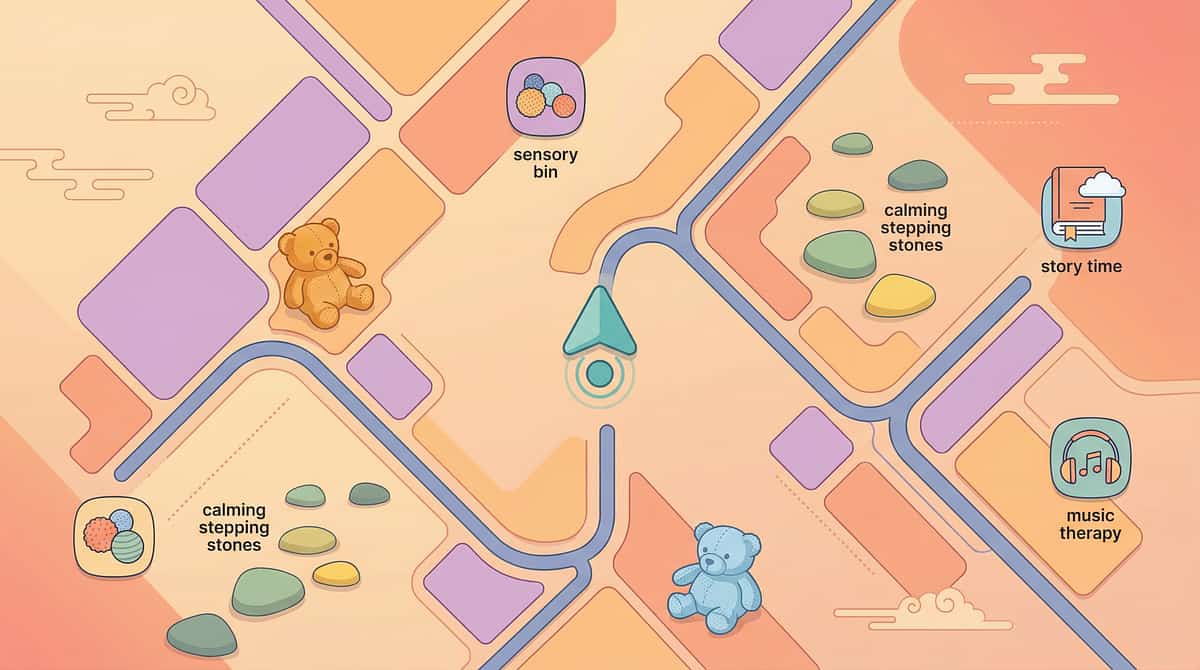
You are not at the end. You are at a waypoint. Here is where you go next.
Heel-toe emerging (Level 1 mastery)
→ F-577: Clumsy Walking & Tripping — next in gait development sequence
Sensory component was primary
→ F-580: Sensory-Based Movement Patterns — deeper sensory motor work
AFO prescribed and in use
→ F-578: Materials for Stair Navigation — building on improved ankle mobility
Autism-associated, gait is one component
→ Full GPT-OS® motor development pathway via FusionModule™ multi-domain integration
More techniques from the Gross Motor & Gait Development library.
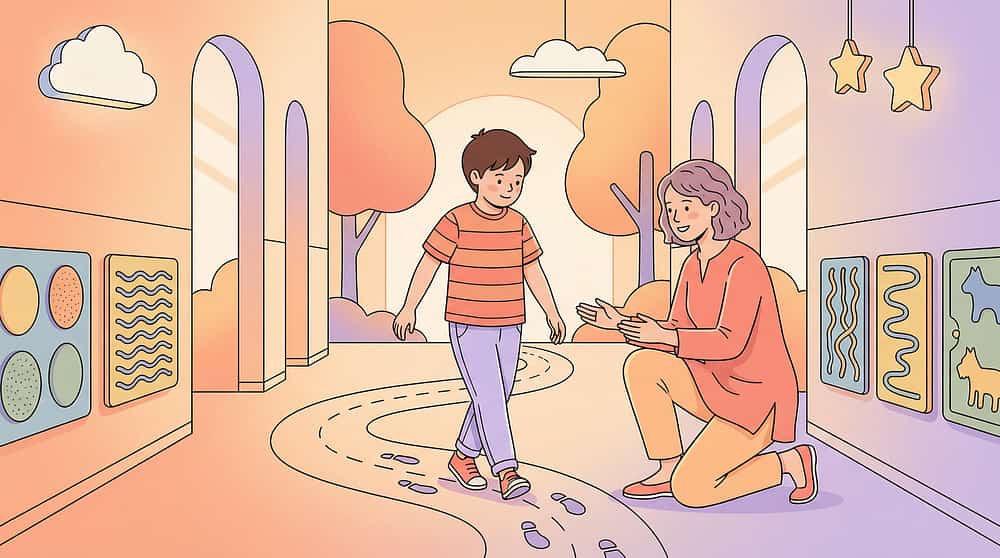
🦶 F-575: In-Toeing and Out-Toeing Gait
Domain: Gross Motor | Difficulty: Core
Canon Materials: Gait Training Tools | Balance Equipment
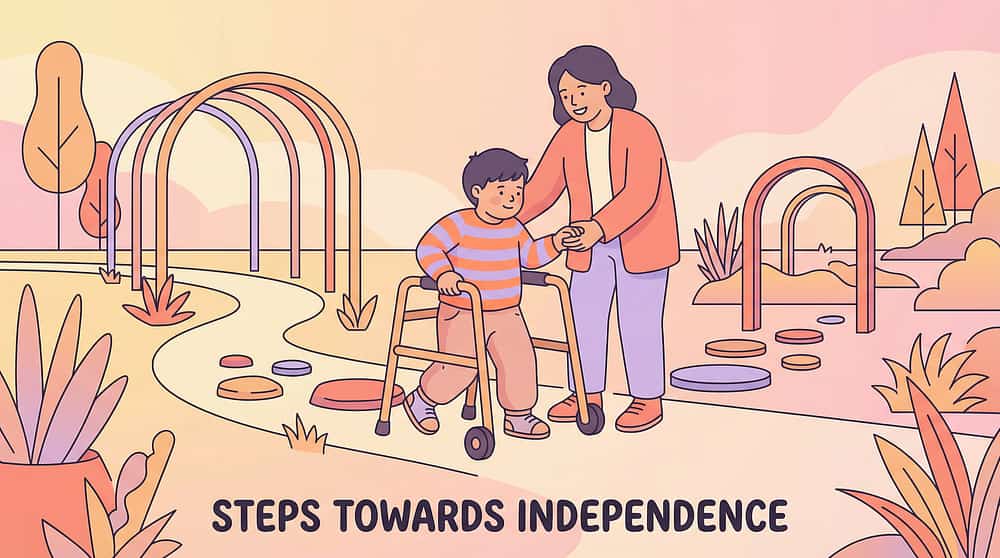
🦶 F-577: Clumsy Walking and Tripping
Domain: Gross Motor | Difficulty: Core
Canon Materials: Balance Equipment | Sensory Tools
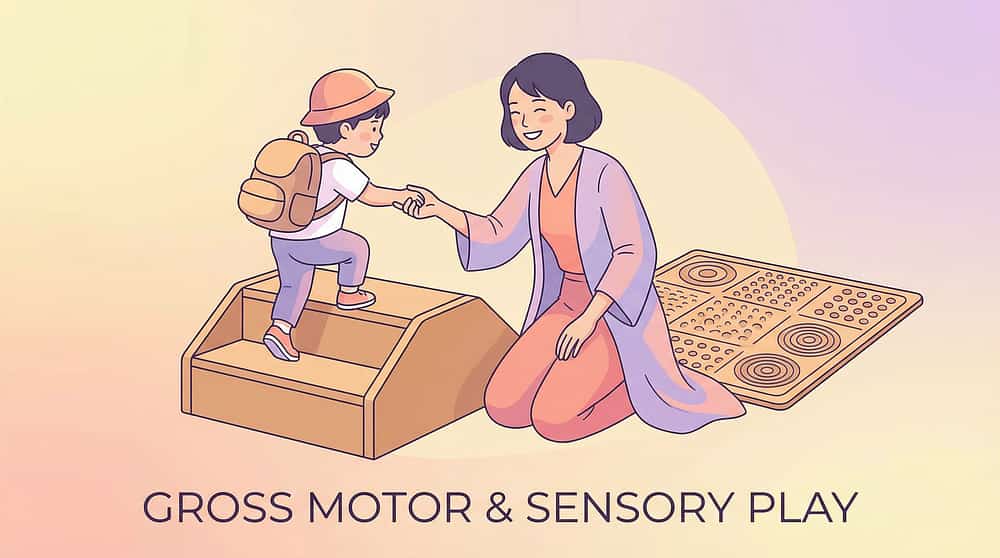
🦶 F-578: Difficulty with Stairs
Domain: Gross Motor | Difficulty: Intermediate
Canon Materials: Step Tools | AFO-Compatible Equipment

🦶 F-580: Sensory-Based Movement Patterns
Domain: Sensory Processing + Gross Motor | Difficulty: Advanced
Canon Materials: Proprioceptive Tools | Weighted Equipment
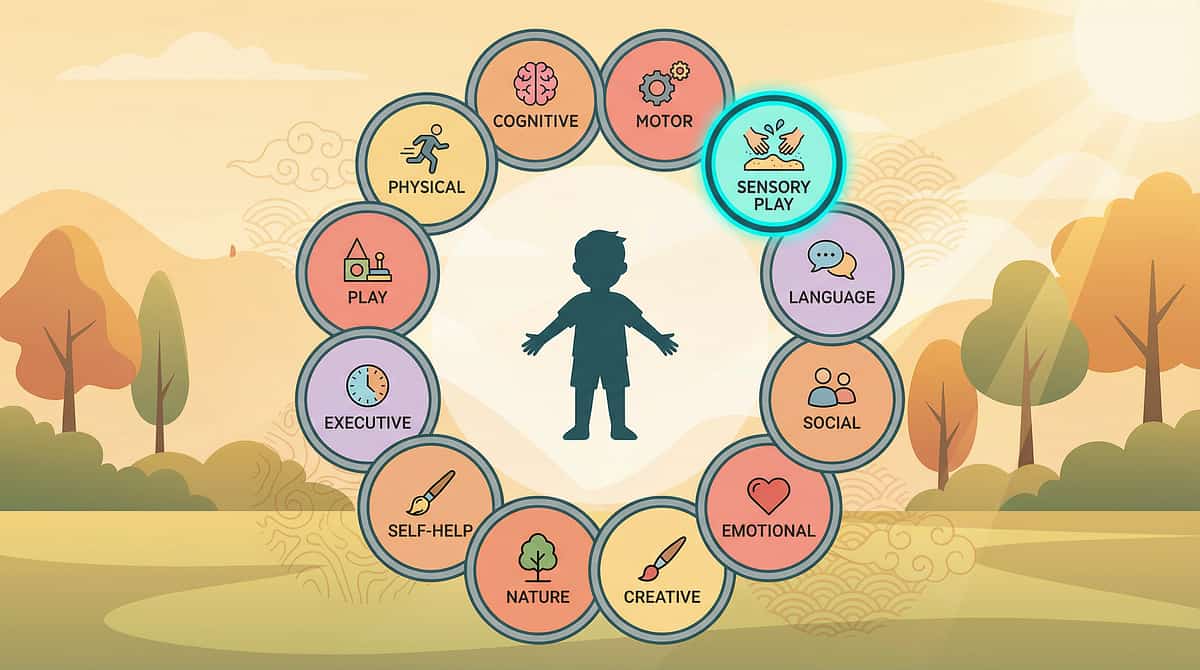
F-576 is one coordinate on a much larger map. Here is the whole landscape.
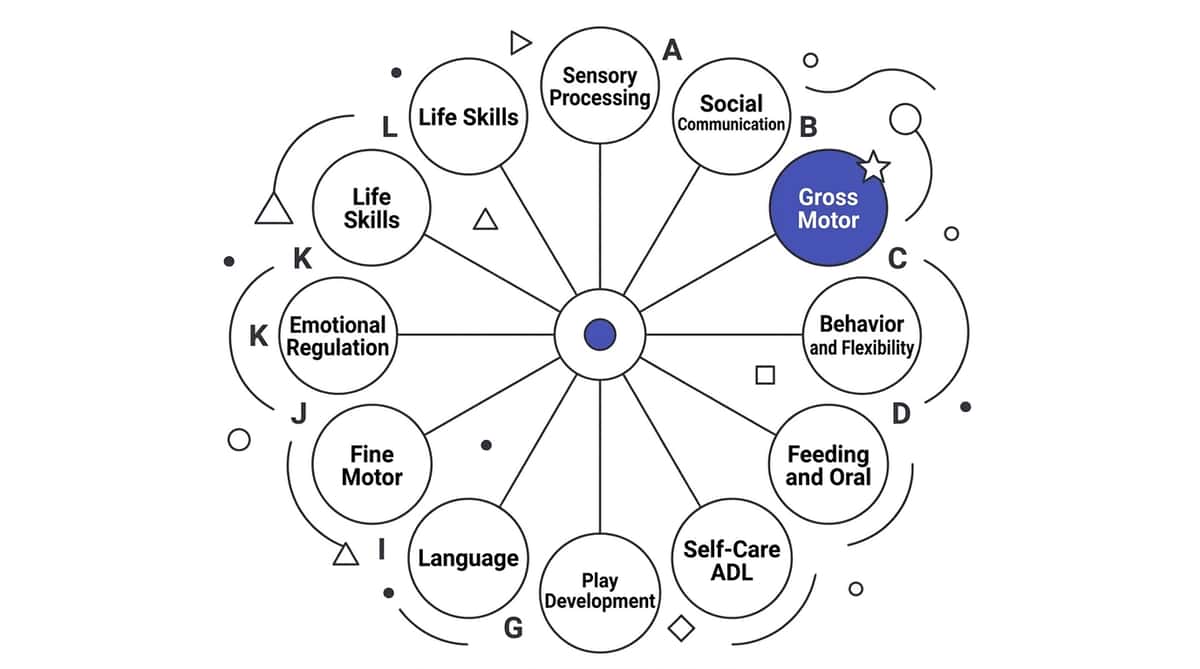
⭐ Current Position
Domain C — Gross Motor & Gait
F-576 Toe Walking active sub-domains: Gait Pattern Development | Ankle Mobility | Sensory Motor Integration
Connected Domains
→ Domain A (Sensory Processing): sensory-based toe walking connects here
→ Domain K (Emotional Regulation): body regulation affects motor patterns
→ Domain J (Fine Motor): kinetic chain from ankle to trunk affects hand function
GPT-OS® Full Profile Preview
Your child's complete developmental map across all 12 domains is tracked in GPT-OS®, generating a personalized AbilityScore® — a universal developmental score (0–1000) — and a prioritized technique sequence.
F-576 is one piece of a comprehensive, personalized plan built from 20 million therapy sessions of clinical intelligence.
📞 9100 181 181
WHO/UNICEF Nurturing Care Framework: Five components of nurturing care require holistic developmental monitoring across all domains.
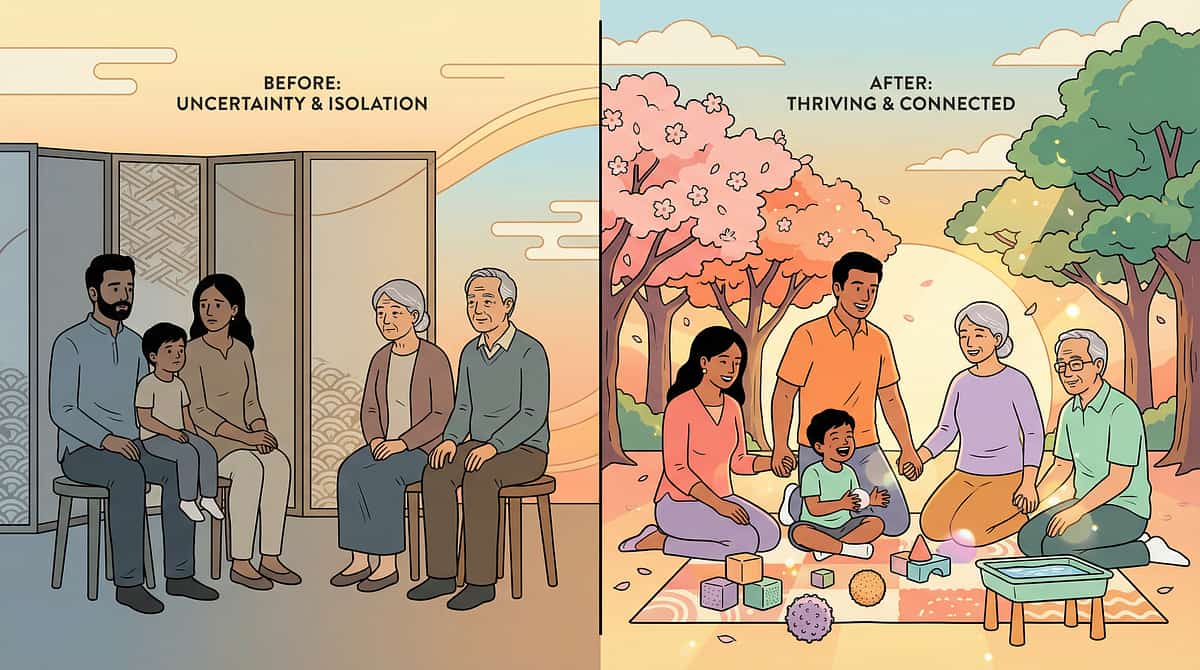
Three families. Three outcomes. All of them started where you are right now.
Arjun, Age 5 — Hyderabad
Before: Persistent bilateral toe walking since first steps. Calves so tight by age 5 that heels wouldn't touch the ground even when manually pushed down. Screamed on new surfaces barefoot.
Intervention: Incline board 3× daily, sensory pathway desensitization, PT-prescribed AFOs (8 hours/day for 6 months), footprint pathway games daily.
After (14 months): Consistent heel-toe gait without reminders. Runs with near-normal pattern. Walks barefoot on varied surfaces without distress.
"We were told to 'wait and see' by three different doctors. The Pinnacle PT measured his ankle range in week 1 and said we had a 3-month window. That urgency changed everything."
Mia, Age 4 — Mumbai
Before: Sensory-seeking toe walking — bouncing constantly, seeking proprioceptive input. No pain, but clearly driven by nervous system need.
Intervention: Weighted vest during activity sessions, textured foot pathway daily, balance board, OT for sensory processing alongside PT for gait.
After (10 weeks): Toe walking reduced by approximately 70% during structured activities. Floor contact tolerance dramatically improved.
"The OT explained that Mia's nervous system was craving input — and she was getting it through toe walking. Once we gave her other ways to get that input, the toe walking reduced on its own."
Raju, Age 6 — Rural Andhra Pradesh
Before: No access to PT or OT. No budget for commercial materials.
Intervention: DIY incline board (wood plank on bricks), towel stretch strap, tape footprint pathway on mud floor, barefoot walking on gravel path and grass.
After (6 months): Measurable improvement in calf flexibility. Heel contact appearing in approximately 50% of natural walking steps.
"We couldn't afford the clinic visits. The teleconsult showed us exactly what to do at home with what we had. Six months later, we could actually see the difference."
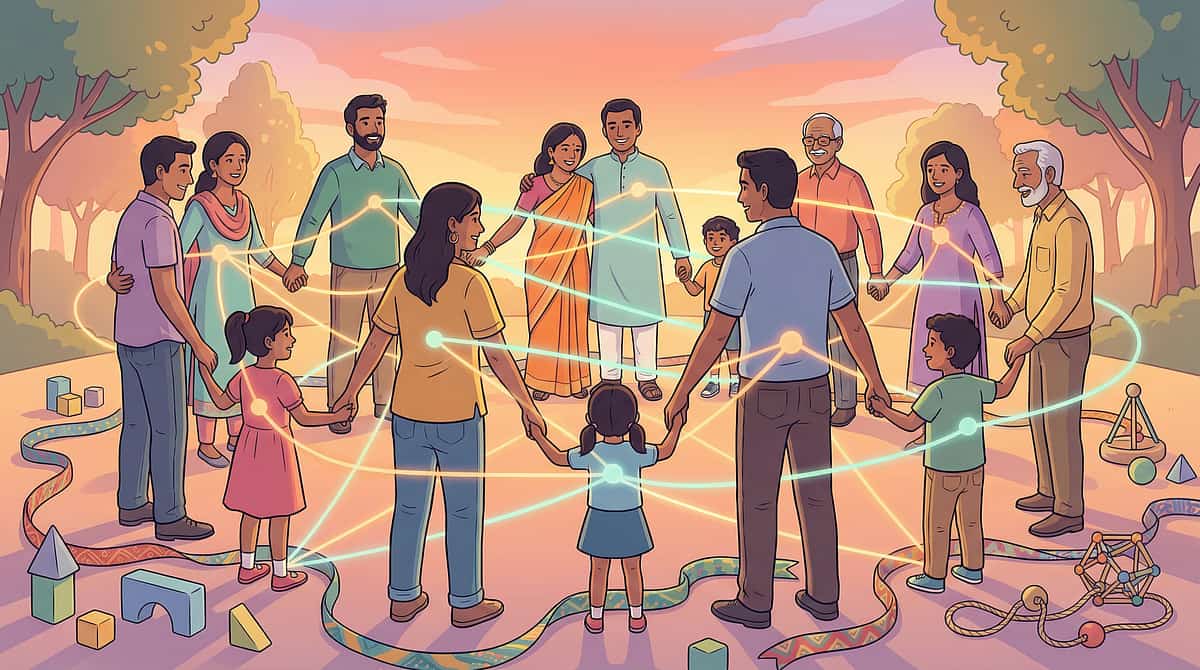
You don't have to figure this out alone. 10,000+ families are navigating this with you.
WhatsApp Community
Toe Walking & Gait Development parent group. Daily tips, session updates, parent wins, Q&A with Pinnacle therapists. Join: Pinnacle Parent Network →
Online Forum
Pinnacle Parent Forum — Gross Motor & Gait Development thread. pinnacleblooms.org/forum/gross-motor →
Local Parent Meetups
Pinnacle centers host monthly parent meetups by challenge domain. Find Your Center →
Peer Mentoring Programme
Connect with a parent who has navigated toe walking intervention and succeeded. Apply for a Peer Mentor →
"Your experience — even if you're in week 2 and struggling — is valuable to a parent who is in week 1 and terrified. Consider sharing your journey when you're ready."
📞 9100 181 181 | WHO NCF Community Engagement Principles: Parent support networks improve intervention outcomes and adherence.
Home practice is most powerful when backed by professional guidance. Here's your professional layer.
🏥 Pediatric Physical Therapist
Gait assessment, orthotic prescription, stretching protocols. The primary clinical lead for toe walking.
🧠 Pediatric Occupational Therapist
Sensory component, proprioceptive work, tactile desensitization, body awareness program.
🩺 Orthopedic Specialist
If AFOs or serial casting are indicated. Medical oversight for structural and neurological causes.
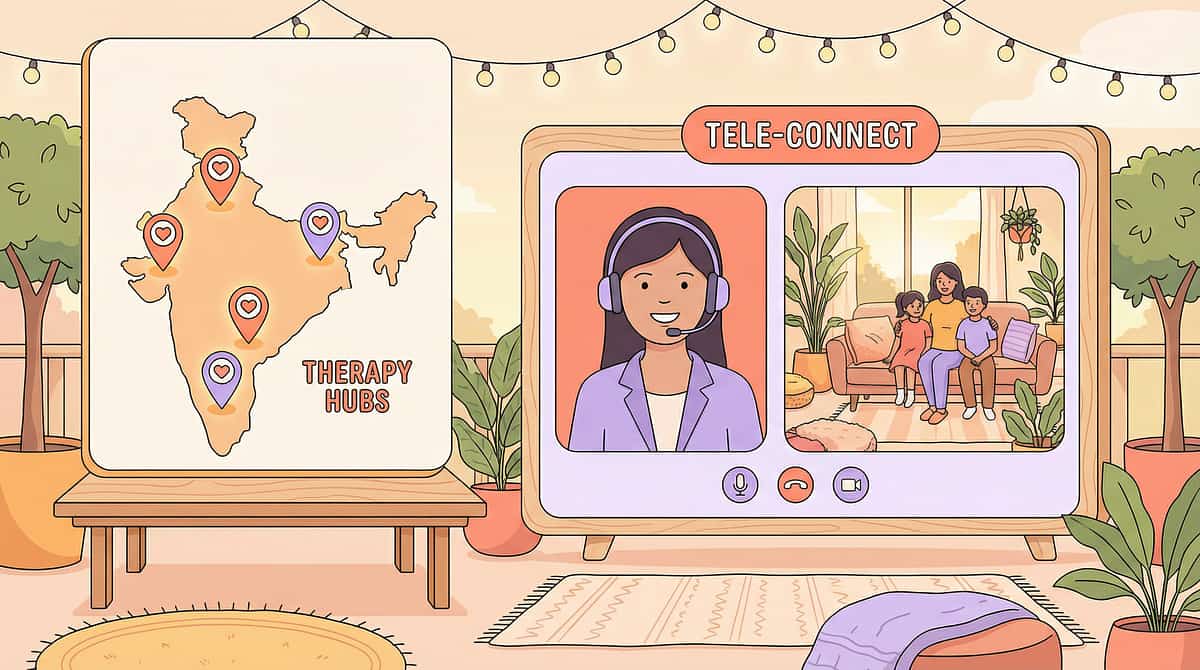
Teleconsultation (Remote Families)
Can't travel to a center? Pinnacle teleconsult provides:
- Ankle ROM assessment by video (parent conducts, PT guides)
- Home program review and adjustment
- AFO referral if indicated
- GPT-OS® report generation remotely
70+ Pinnacle Centers Across India
Walk in or book online. Therapist matching for F-576 ensures you see the right specialist for your child's presentation — PT, OT, or combined team.
"Daily home practice COMBINED with monthly clinic review produces 3× the outcome rate of clinic sessions alone. You are the therapist 6 days a week. We are the therapist on day 7."

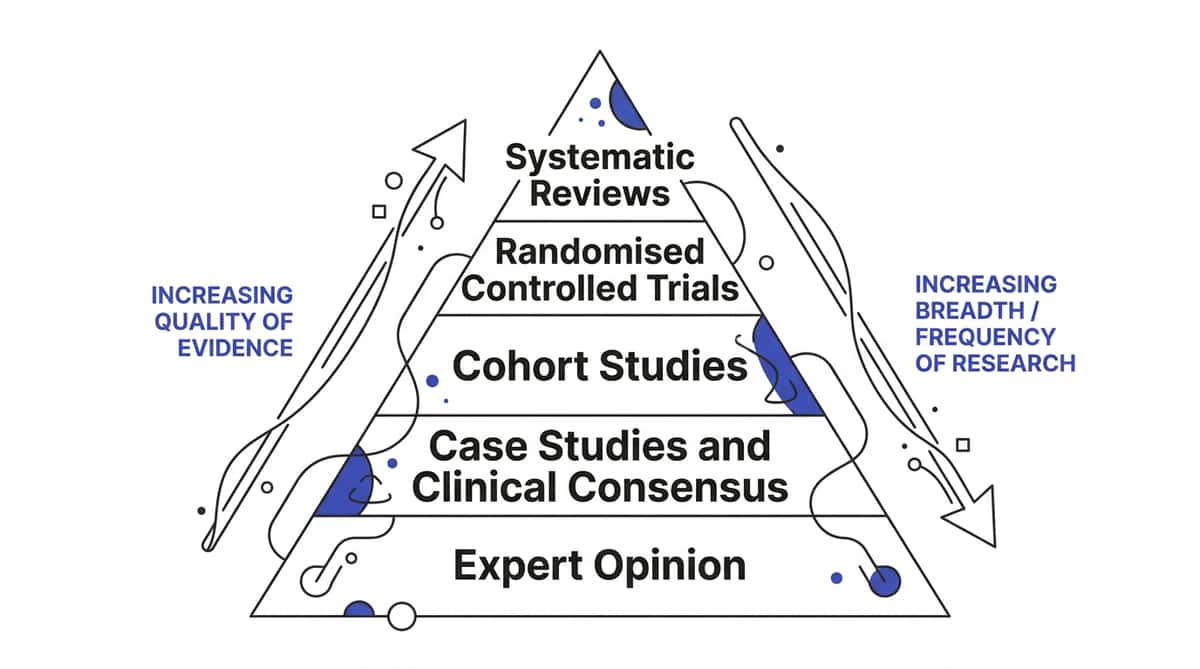
For the parent who wants to go deeper. The science behind every material in this protocol.
📖 PRISMA Systematic Review (2024)
Children with ASD + Sensory Integration Intervention. 16 studies (2013–2023). Confirms SI therapy as evidence-based practice for sensory-motor outcomes.
📖 World Journal of Clinical Cases Meta-Analysis (2024)
24 studies. Effective promotion of motor skills, adaptive behavior, sensory processing, and gross motor function.
PMC10955541 → | DOI: 10.12998/wjcc.v12.i7.1260
📖 Padmanabha et al., Indian J Pediatr (2019)
RCT: Home-based sensory and motor interventions in Indian pediatric populations. Significant outcomes demonstrated.
DOI: 10.1007/s12098-018-2747-4
📖 WHO Care for Child Development Package (2023)
Age-specific evidence-based recommendations implemented in 54 LMICs.
WHO CCD Package → | PMC9978394
📖 NCAEP Evidence-Based Practices Report (2020)
Video modeling, visual supports, reinforcement — all classified as evidence-based practices for autism.
For a full bibliography of 30+ references supporting the GPT-OS® motor development framework, visit pinnacleblooms.org/research
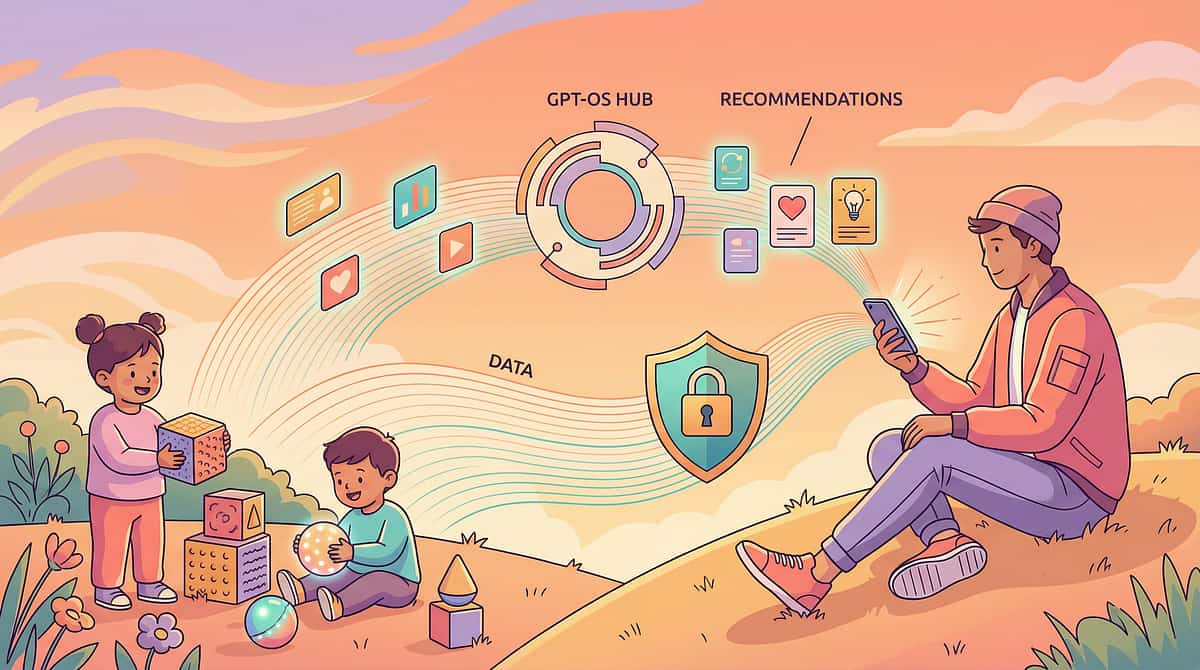
Your daily session data doesn't disappear. It makes your child's therapy smarter — and helps every child like yours.
Diagnostic Intelligence
Maps F-576 to Gross Motor Domain, Gait subdomain, ITW/sensory classification
AbilityScore®
Tracks Gait Pattern Development score (0–1000 universal scale)
Prognosis Engine
Predicts time-to-mastery based on baseline ankle ROM + sensory profile
FusionModule™
Coordinates PT + OT input into single converged daily home plan
"Your data helps every child like yours. When 50,000 families log F-576 session data, the Prognosis Engine becomes the most precise predictor of toe walking intervention outcomes in the world. Your participation is a gift to the next child diagnosed after yours."
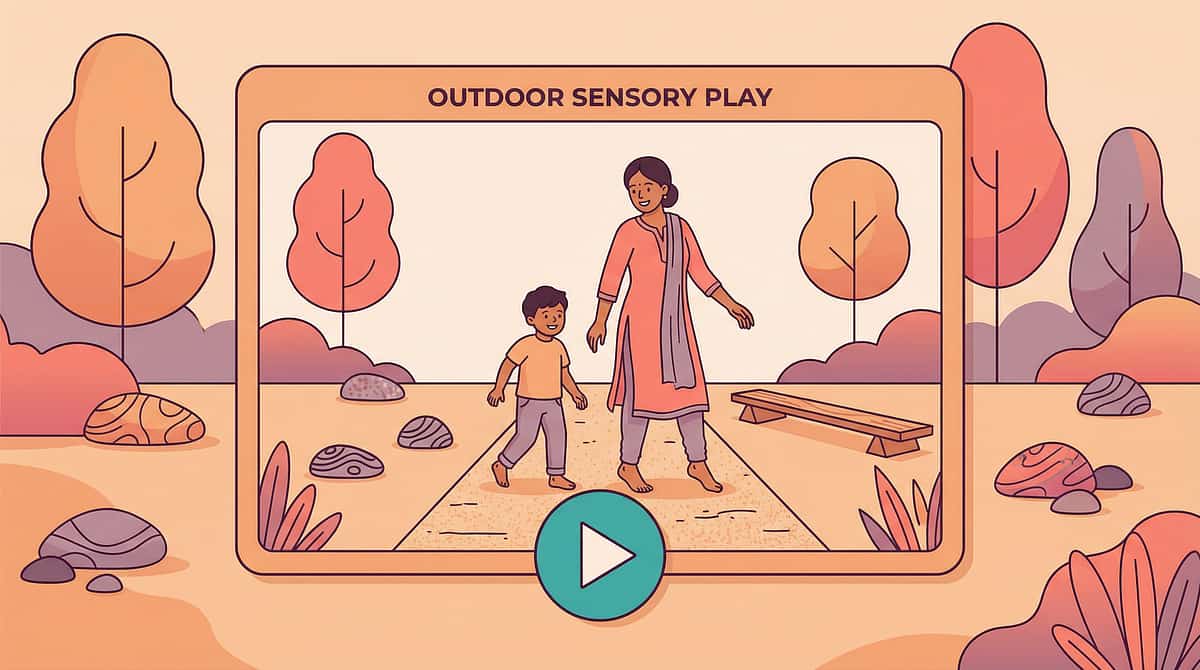
Watch the 60-second Reel that brings these materials to life.
The 60-second video version of this page: all 9 materials, demonstrated visually, with on-screen text and voiceover. Designed to be shared with family members who won't read a full technique page but will watch a 60-second reel. Presented by the Pinnacle Blooms Consortium Physical Therapy and Occupational Therapy teams — all material demonstrations are clinically accurate.
What the Reel Covers
All 9 materials demonstrated visually with voiceover. Parent-facing, shareable format.
Video Modeling Evidence
NCAEP (2020): Video modeling is an evidence-based practice. Multi-modal learning improves parent skill acquisition.
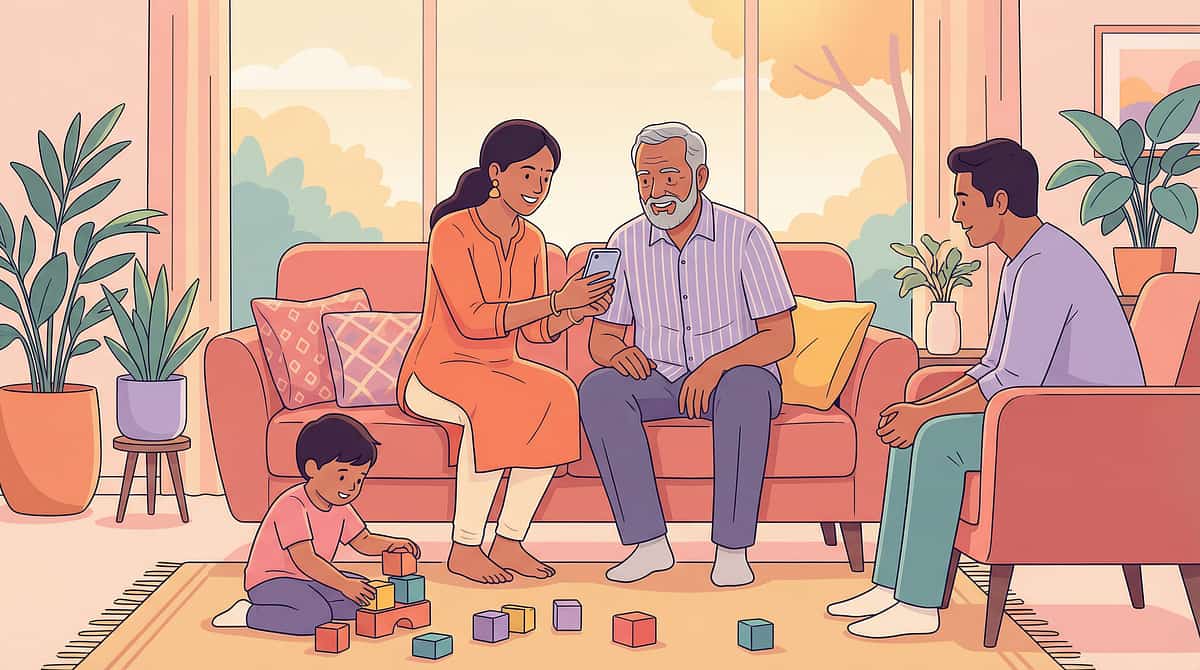
Consistency across every caregiver multiplies the impact. Share this page now.
📄 Family Guide (1-page PDF)
Simplified version: What toe walking is, why it matters, and what the family does every day at home. No clinical language. For spouses, grandparents, aunts, uncles.
👵 Explain to Grandparents
"[Child's name] has a pattern called toe walking — they walk on their tiptoes instead of using their whole foot. We have special exercises every day at home to help their leg muscles learn a new pattern. When you see them walking on tiptoes, just say 'heels down, [name]!' gently — that's the right cue. Don't force or scold. Just remind and praise when they try."
📋 Teacher / School Communication Template
"Dear [Teacher's name], our child [name] is currently in a physical therapy program for persistent toe walking. At home, we cue 'heels down' when we see toe walking, and reinforce any heel-first steps. If you notice toe walking at school, the same verbal cue is appropriate and helpful. Thank you for supporting consistency across environments. — [Parent Name], with Pinnacle Blooms PT Team guidance"
"WHO CCD Package: Multi-caregiver training is critical for intervention generalization and maintenance." PMC9978394 | Page: techniques.pinnacleblooms.org/gross-motor/9-materials-toe-walking-F576

Every question parents ask at Pinnacle centers about toe walking — answered here.
Q1: My child is 2.5 years old and toe walking. Is it too early to intervene?
Toe walking is still developmentally normal until approximately 3 years of age. However, if your child has been walking for 12+ months and always toe walks — never using their whole foot even briefly — it is appropriate to start gentle intervention: sensory walkways, varied floor surfaces, and monitoring ankle range. Professional evaluation at age 3 if not resolving.
Q2: We were told to "wait and see." Is that the right advice?
"Wait and see" is appropriate if the child is under 3 and shows some heel contact. After age 3, or if the calves are becoming measurably tight, waiting allows contracture to progress — making intervention harder. Current clinical consensus (POSNA, APTA) supports early conservative intervention rather than watchful waiting for persistent toe walkers beyond age 3.
Q3: Does toe walking mean my child has autism?
No. Toe walking is common in autism (30–40% of children with ASD) but the majority of persistent toe walkers do NOT have autism. Idiopathic toe walking (no identified cause) is more common. If you have additional concerns about social communication, eye contact, language, or repetitive behaviors, seek a comprehensive developmental evaluation.
Q4: How long before we see results?
Mild ITW with consistent daily intervention: 4–8 weeks for measurable improvement. Moderate cases with calf tightness: 3–6 months. Severe cases with contracture requiring AFOs: 6–18 months. Timeline depends on severity, age, compliance, and whether sensory factors are present.
Q5: Do AFOs hurt? Will my child refuse to wear them?
AFOs require a break-in period (2–4 weeks of gradually increasing wear time). Properly fitted AFOs should not cause pain — if they do, the fit needs adjustment. Many children initially resist but accept them within 2–3 weeks with consistent routine and positive reinforcement.
Q6: Can toe walking cause long-term problems if untreated?
Yes. Progressive calf contracture can lead to: permanent reduction in ankle range of motion, altered biomechanics throughout the kinetic chain, increased risk of joint pain in adolescence, reduced sports participation, and difficulty with footwear. Early intervention significantly reduces these risks.
Q7: My child can walk flat when reminded but always goes back to toes. Is the protocol still needed?
Absolutely — this is the most common presentation of correctable ITW. The ability to walk flat when reminded means the motor pathway exists; it just hasn't automated. The footprint pathway games are specifically designed to move heel-toe gait from "possible when reminded" to "automatic default." This takes 6–16 weeks of daily practice.
Q8: We've been doing this for 2 weeks with no change. Should we stop?
No. Two weeks is the resistance/tolerance phase. Most observable change begins at weeks 3–4. Continue the protocol. If no change by week 6, book a Pinnacle assessment — severity assessment may indicate AFO prescription is needed to accelerate progress.
The materials are known. The protocol is ready. One thing remains.
Your child's heel needs to touch the ground. That starts today.
Tracking sheet + Session guide + Grandparent guide — all in one PDF
Free National Helpline • 16+ languages • 24×7 • 70+ centers across India
🧠 OT
Occupational Therapy
🏃 PT
Physical Therapy
📊 ABA
Behavior Analysis
📚 SpEd
Special Education
🗣️ SLP
Speech & Language
🩺 NeuroDev
Neurodevelopmental
Preview of 9 materials that help with toe walking Therapy Material
Below is a visual preview of 9 materials that help with toe walking therapy material. The pages shown help educators, therapists, and caregivers understand the structure and content of the resource before use. Materials should be used under appropriate professional guidance.


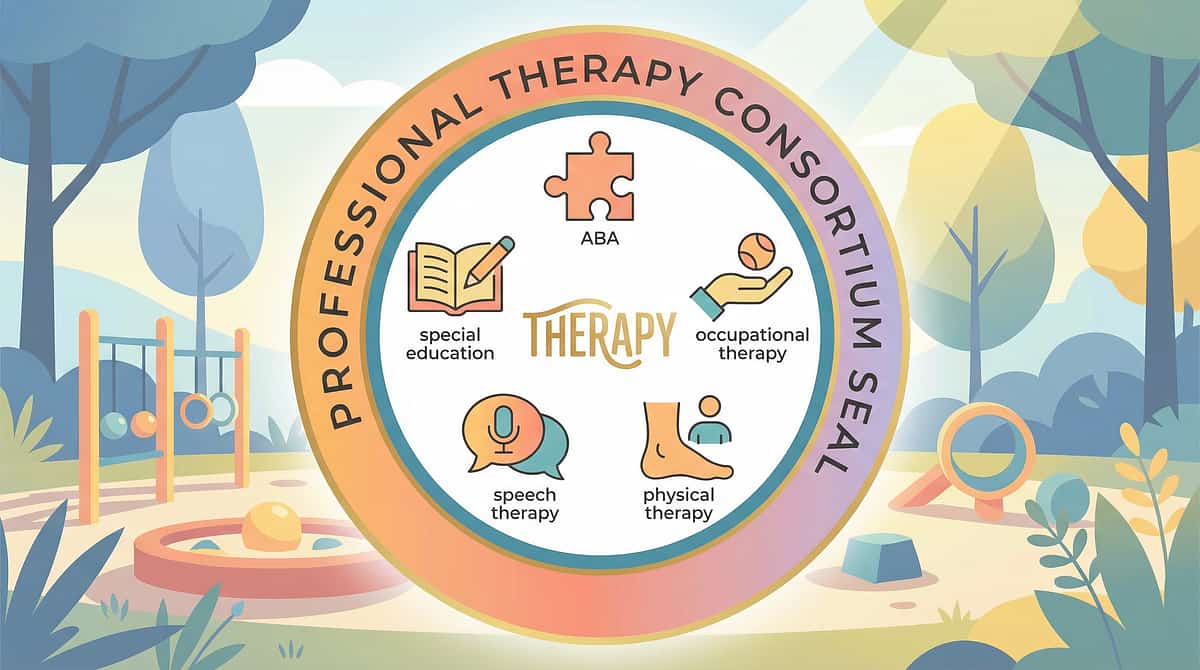
PINNACLE BLOOMS NETWORK®
Built by Mothers. Engineered as a System.
OT | PT | ABA/BCBA | SLP | SpEd | NeuroDev | Pediatrics | CRO — Consortium-Validated Clinical Content
"From fear to mastery. One technique at a time."
Pinnacle Blooms Network® exists to transform every home in the world into a proven, 24×7, multi-sensory, multi-disciplinary therapy environment — powered by GPT-OS® and the collective intelligence of 20 million therapy sessions.
📞 FREE National Helpline
9100 181 181 Free | 24×7 | 16+ Languages
📍 Centers
70+ locations across India Find Your Center →
© 2025 Pinnacle Blooms Network®, unit of Bharath Healthcare Laboratories Pvt. Ltd. All rights reserved. Content produced under the GPT-OS® Content Engine. Episode F-576.
CIN: U74999TG2016PTC113063 | DPIIT: DIPP8651 | MSME: Udyog Aadhaar TS20F0009606 | GSTIN: 36AAGCB9722P1Z2
They walk on their toes. Every step. Every day. You've been waiting for them to grow out of it — and they haven't.