
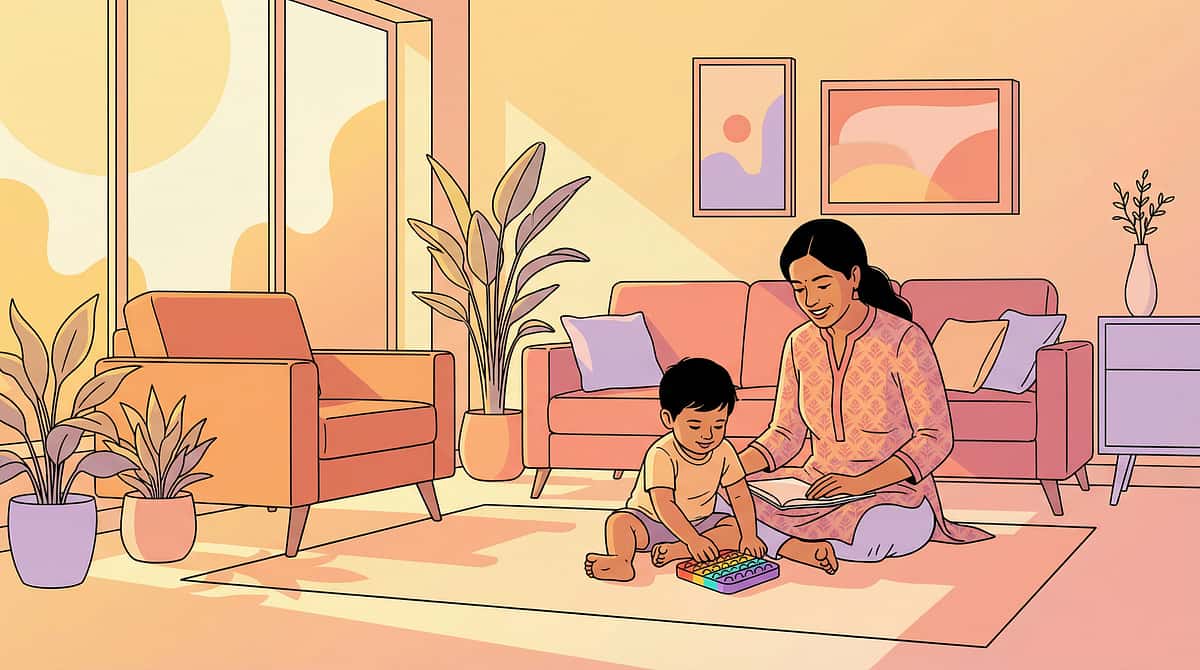
Behavior Analysis & Positive Behavior Support · Episode D-380
9 Materials That Help With Stress-Increased Stimming
When the body's regulation system is overwhelmed, it finds its own solutions.
"My daughter flaps her hands at home — and honestly, I find it kind of endearing. It's just her thing. But at school, in crowded places, or when something unexpected happens, the flapping becomes something different entirely. Her whole body gets involved. She rocks violently, hums so loudly, covers her ears and shakes. It's like her normal stimming gets dialled to 100 when she's stressed. The teachers say it's disruptive. But I can see she's not trying to disrupt — she's trying to cope. She can't tell me what's wrong in those moments. The stimming IS her telling me something is wrong. I don't want to stop her. I know she needs it. But I want to help her feel less stressed so her body doesn't have to work so hard alone." — A mother, navigating this with love
Age Range: 2–18 years · Setting: Home + School + Community · Consortium Lead: ABA/BCBA · OT · NeuroDev Pediatrics · SLP · SpEd

You Are Among Millions of Families Navigating This Exact Challenge
The isolation you feel is a statistical anomaly — not your reality. Millions of parents wake up to this same morning. Millions of nervous systems are working overtime to cope. You are not failing. Your child's nervous system is speaking — and today, you learn to answer.
1 in 36
Children with Autism
Diagnosed globally — CDC 2023 · WHO global surveillance
80%
Sensory Difficulties
Of autistic children experience significant sensory processing difficulties · PMC11506176
70%
Insufficient Support
Of stress-stimming families report insufficient access to regulation strategies at home · Pinnacle GPT-OS® intake data
2M+
Children in India
An estimated 1.8–2.2 million children with autism in India navigate sensory regulation challenges daily · INCLEN study · Indian J Pediatr 2019
The vast majority of these families have no structured home-based support system. This page changes that. Evidence Base: PMC11506176 · PMC10955541 · PMC9978394 · WHO NCF 2018 · Padmanabha Indian J Pediatr 2019
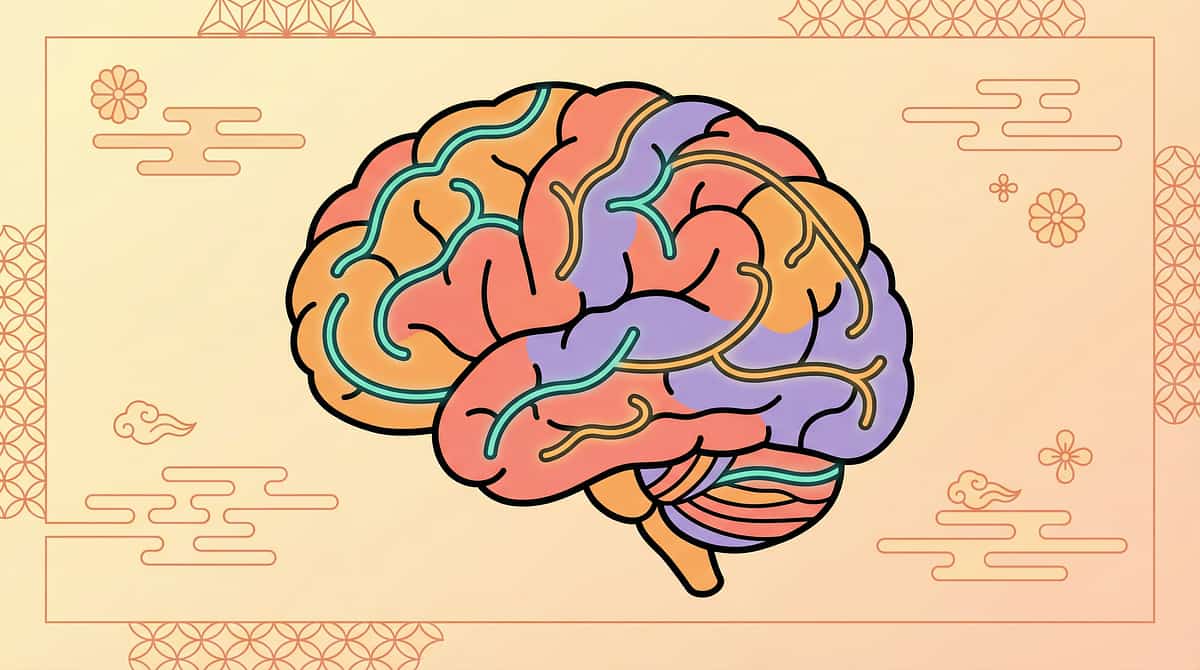
What's Happening in Your Child's Brain
Understanding the neuroscience transforms how you respond — and makes everything on this page make sense.
The Neuroscience
When your child encounters a stressor — a sudden noise, an unexpected change, sensory overload, or social demand — the sympathetic branch of the ANS activates. Cortisol and adrenaline flood the system. The Reticular Activating System (RAS) elevates arousal threshold. The amygdala flags threat. The prefrontal cortex — responsible for verbal communication and self-regulation — goes partially offline.
The body finds its own regulation pathway: self-stimulatory behavior (stimming) — rhythmic, repetitive movements that activate the proprioceptive and vestibular systems, which directly modulate the ANS toward parasympathetic (calm) state.
When stress increases → regulation demand increases → stimming intensity increases.
This is not misbehavior. This is neurobiology executing a survival protocol. Porges, S.W. Polyvagal Theory · Frontiers in Integrative Neuroscience DOI:10.3389/fnint.2020.556660
What This Means For You
Your child's brain, under stress, loses access to the parts that speak words and make decisions. The body takes over — using movement, pressure, and rhythm to send "calm down" signals back to the brain.
The stimming isn't random. It's self-medicine.
The flapping, rocking, humming — each stim is the body's attempt to activate calming neural circuits. When stress is higher, the dose needs to be higher. Your job isn't to stop the medicine. Your job is to help the dose work.
"This is a wiring difference, not a behavior choice."
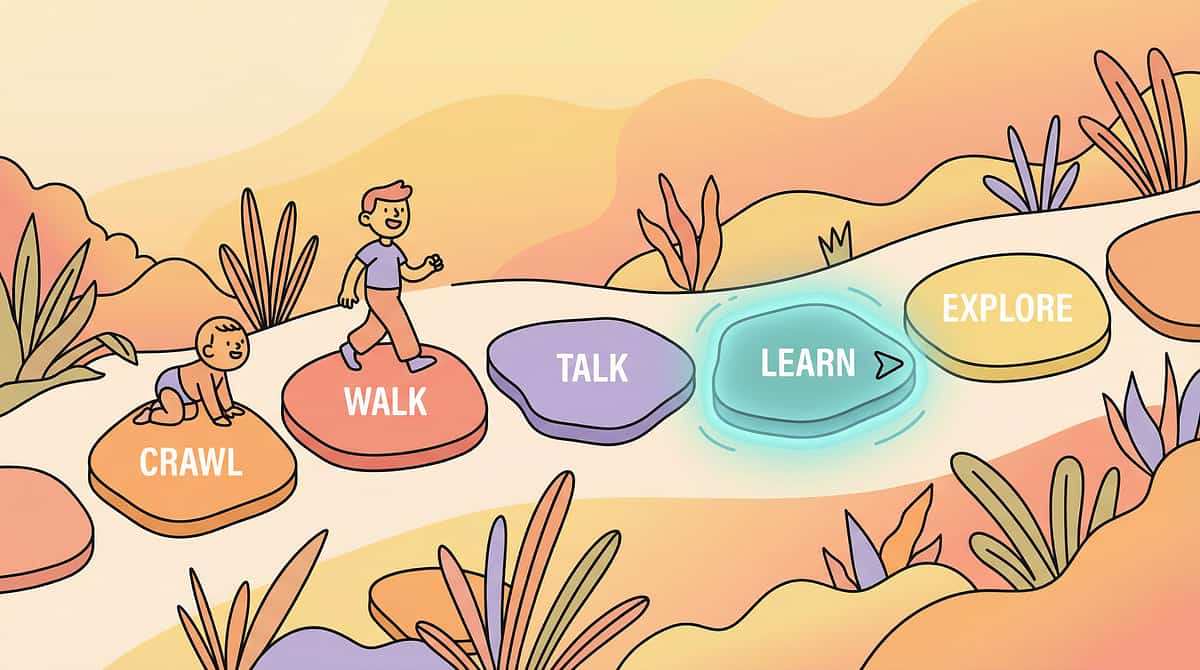
Your Child's Regulatory Journey — On the Developmental Map
Understanding where your child sits developmentally reframes everything. Stress-stimming is not a regression — it is a normal response at a specific waypoint on the regulatory development arc.
Age 0–2
Co-regulation dependent. All regulation comes from caregiver presence.
Age 2–4
Emerging self-stim appears. Universal and healthy across all children. Intensity higher in neurodivergent children due to greater regulatory need.
Age 4–7 ◉ D-380
Early regulation vocabulary with support. This is the primary target zone for D-380 intervention.
Age 7–12
Building regulation strategies. Neurotypical children develop verbal regulation. Many neurodivergent children continue physical stimming — and may begin masking at school.
Age 12–18
Self-regulation mastery goal. Masking pressures peak. Adolescents may suppress stimming for hours, then experience intense release episodes at home.
Comorbidities commonly co-occurring with stress-increased stimming: Sensory Processing Disorder (SPD) · Generalized Anxiety Disorder (GAD) · ADHD with emotional dysregulation · Pathological Demand Avoidance (PDA) · Post-Traumatic Stress responses. WHO CCD Package (2023) · UNICEF MICS Indicators · PMC9978394

Evidence Grade: Level I–II · Systematic Review + Multiple RCTs
This protocol is not opinion. It is built on the highest available levels of clinical evidence — systematic reviews, meta-analyses, and randomized controlled trials, including Indian-population RCT data.
PRISMA Systematic Review · Children · 2024 — Level I
PMC11506176 — 16 studies confirm sensory regulation intervention is evidence-based practice for ASD. Stress-stimming response to multi-sensory support documented across multiple populations.
Meta-Analysis · World J Clin Cases · 2024 — Level I
PMC10955541 — Sensory integration therapy across 24 studies: effective promotion of adaptive behavior, self-regulation, and stress response modulation.
WHO/UNICEF CCD Package · BMC Pediatrics · 2023 — Level II
PMC9978394 — Home-based caregiver-administered sensory and regulation interventions show significant outcomes across 54 LMICs including India.
Padmanabha et al. · Indian J Pediatr · 2019 — Level II RCT
DOI:10.1007/s12098-018-2747-4 — Indian RCT: home-based sensory regulation protocols demonstrate measurable reduction in dysregulation behaviors in Indian pediatric population.
NCAEP Evidence-Based Practices Report · 2020 — Consensus
Visual supports and sensory integration approaches classified as evidence-based practices for autism across all age ranges. Polyvagal Theory provides the neurophysiological foundation.
"Clinically validated. Home-applicable. Parent-proven." — Pinnacle Blooms Consortium · 20M+ 1:1 therapy sessions · 97%+ measured improvement

Technique Definition
The Technique: What It Is
Clinical Name: Stress-Responsive Self-Stimulatory Behavior Regulation · Parent-Friendly Alias: "The Nervous System Support Kit" · Series: Behavior Analysis & Positive Behavior Support · D-380
Stimming (self-stimulatory behavior) is a natural, healthy regulatory mechanism — rhythmic, repetitive movements, sounds, or actions that help regulate the nervous system. In many neurodivergent individuals, stimming increases in intensity, frequency, or duration under stress as the body works harder to cope with greater regulatory demands. This protocol does not aim to eliminate stimming.
Goal 1
Support the regulation that stimming is working to achieve
Goal 2
Reduce the stressors that are making stimming work overtime
Goal 3
Provide additional regulation tools that work alongside natural stims
Goal 4
Create safer alternatives when stress-stims become harmful
This is not suppression. This is support. Age: 2–18 years · Frequency: Daily environmental support + responsive use · Setting: Home · School · Community · All Environments

Who Uses This Technique: The Full Consortium
Stress-stimming is simultaneously a sensory, behavioral, communication, and neurological event — which is why it requires every discipline working in concert. Here is exactly how each role contributes.
Occupational Therapist (Lead Discipline)
Conducts the Sensory Profile assessment identifying your child's specific sensory triggers, processing differences, and which input types are regulating vs. dysregulating. Prescribes the sensory diet, weighted tools, movement breaks, and calm-down space design. The OT is the sensory architect.
ABA / BCBA (Behavior Analyst)
Conducts Functional Behavior Assessment (FBA) to understand WHY stimming increases. Designs reinforcement systems, identifies safe alternatives when stimming is injurious, and measures data on stim intensity, frequency, and duration.
Speech-Language Pathologist
Addresses the communication gap: when your child cannot verbally express "I am stressed," stimming fills that gap. The SLP builds stress communication systems — gesture-based, AAC-supported, or symbol-based.
Special Educator
Designs predictability structures — visual schedules, first-then boards, transition supports — that reduce the environmental uncertainty triggering stress-stimming. Also coordinates school accommodation plans.
NeuroDevelopmental Pediatrician
Rules out co-occurring conditions (anxiety disorder, SPD, PTSD responses), makes referrals, and monitors developmental trajectory. May co-prescribe sensory diet with OT.

Precision Targeting: What These 9 Materials Address
Each material in this protocol is mapped to a specific therapeutic target. Understanding what you are targeting transforms implementation from guesswork to clinical precision.
Primary Target — Reduce Stimming Intensity
Observable: Stimming intensity decreasing from 9/10 → 5/10 on behavior intensity scale; duration shortening from 45 minutes → 10 minutes during similar stressor exposure.
Earlier Stress Identification
Child identifies stress at "yellow" level before reaching "red." Observable: using stress scale with prompting to flag emerging dysregulation before escalation.
Independent Regulation Tool Use
Child accesses sensory kit, calm space, or weighted item without adult prompt — a key self-advocacy milestone in the regulation development arc.
Reduction in Self-Injurious Stimming
Hand-biting, head-banging, skin-picking replaced by safer alternatives. This is both a safety target and a primary therapeutic outcome for children with injurious stims.
Faster Post-Stressor Recovery
Child returns to regulated baseline faster after stressor exposure. Interoceptive awareness, emotional vocabulary, improved sleep, and stronger parent-child co-regulation develop as tertiary gains.
AbilityScore® Domain: Sensory Processing Readiness Index + Self-Regulation Readiness Index. GPT-OS® tracks progress across all targets with 349 standardized skill markers.
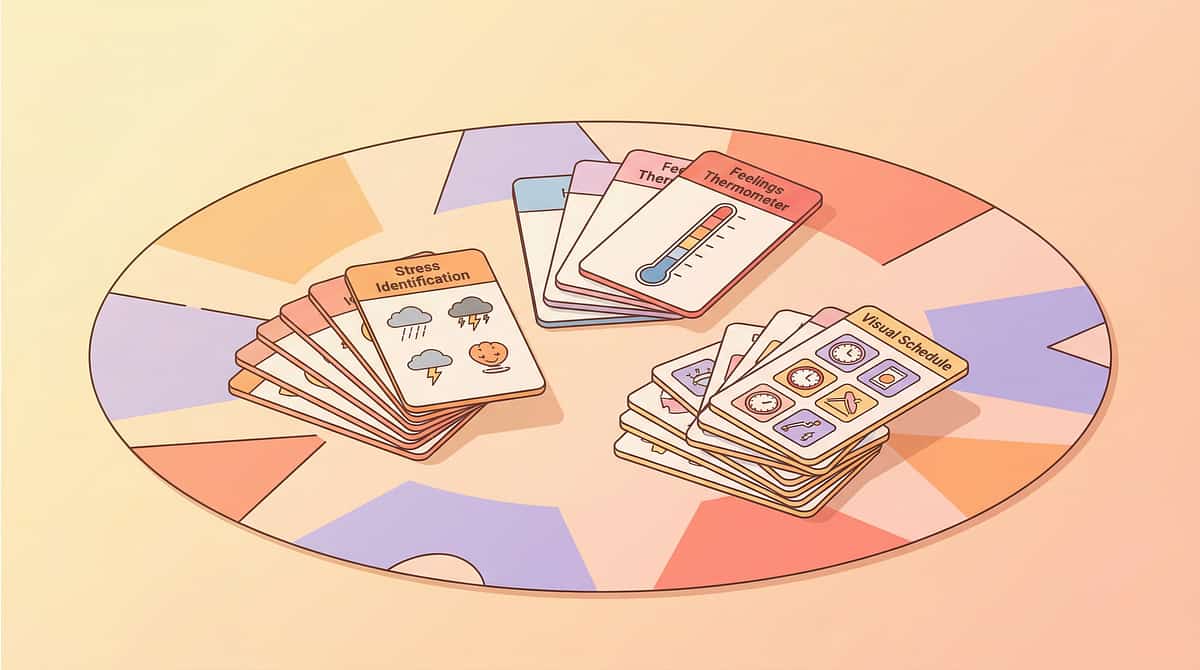
Material 1 of 9
Stress Identification Visuals
Canon Category: Visual Schedule System / Behavior & Feelings Thermometer
What It Is
Stress thermometer (1–10 scale), body map for stress sensations, zone-of-regulation cards. These visual tools build interoception — the internal awareness that enables self-regulation. When a child can point to where they are on the scale, they have taken the first step toward self-regulation mastery.
The stress scale is not just a measurement tool — it is the foundation of the entire protocol. Every other material is introduced by referencing where the child is on the scale.
How to Use It
Show child the stress scale. Ask: "Where are you right now? Can you point?" When identified: "Good noticing. Let's try [tool] to help it come down."
Price Range: ₹100–400 · Laminated, reusable formats recommended
✅ Pinnacle Recommends: Laminated, reusable formats. Introduce during calm moments first — never during peak stress.
Material 2 of 9
Portable Sensory Regulation Kit
Canon Category: Fidget Tool Set + Travel Comfort & Sensory Kit
What It Is
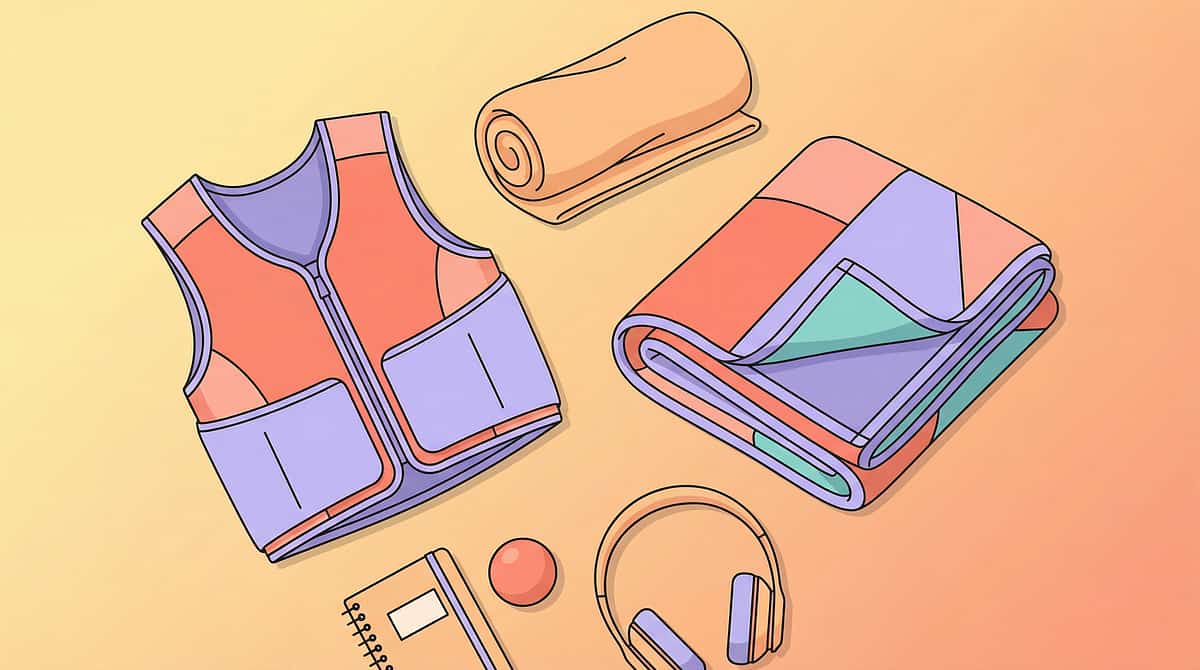
Small carry case with fidgets (tactile, visual, auditory), chew tools, stress balls, textured items. The portable sensory kit provides alternative sensory input that runs parallel to the stress-stim, reducing its intensity by giving the nervous system a different input channel to work with.
The kit must be portable and always available — at home, school, in the car, in the community. Regulation needs don't observe location boundaries.
Critical Implementation Note
The kit MUST be allowed in ALL environments. A sensory kit that only lives at home only works at home. Coordinate with school to ensure permitted desk use. This single coordination step multiplies the kit's impact by the number of environments your child inhabits.
Price Range: ₹300–1,000
✅ Pinnacle Recommends: Coordinate with school. Use school accommodation template from Card 37.
Material 3 of 9
Weighted & Deep Pressure Tools
Canon Category: Compression Vest / Body Sock
What It Is & Why It Works
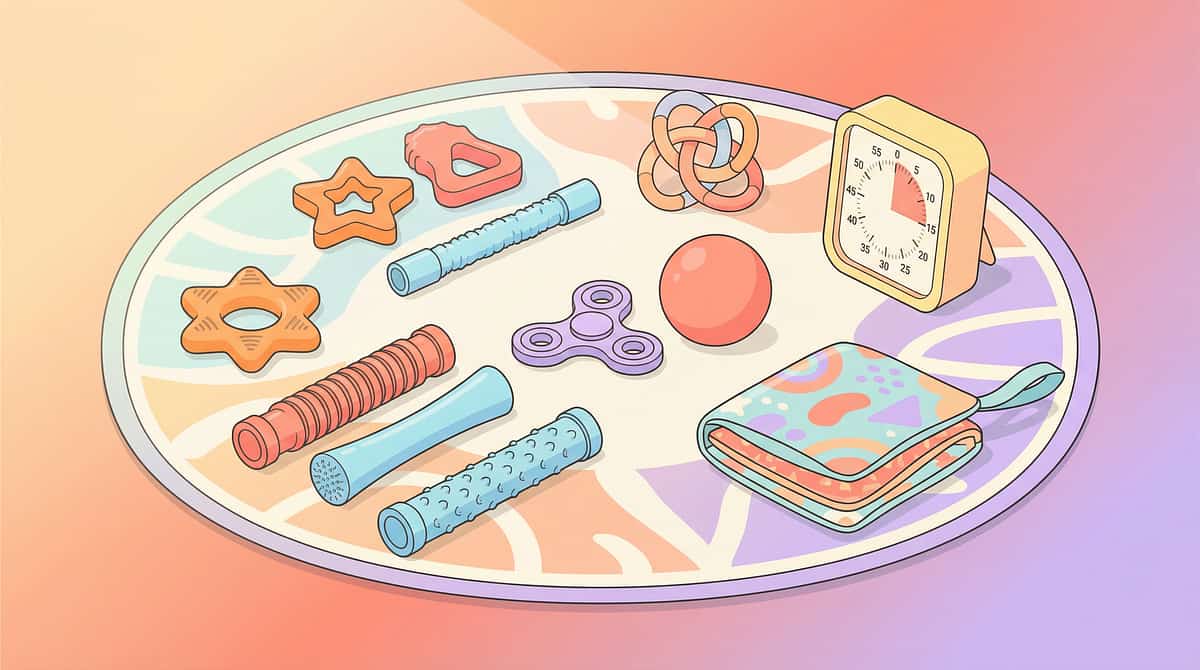
Weighted lap pad (1–2 kg), compression clothing, weighted blanket (≈10% body weight), pressure vest. Deep pressure activates large proprioceptive receptors → sends organizing signals to the vestibular-cerebellar system → ANS shifts toward parasympathetic. This is measurable — you may see breathing slow within 2–3 minutes of application.
This is the most physiologically powerful material in the kit for children whose stress-stims are proprioceptive in nature (rocking, crashing, pushing).
Safety Protocol
⚠️Weighted blankets: ≈10% body weight maximum · NEVER use with infants under 2 years · Child MUST be able to remove independently or communicate discomfort · Monitor for overheating · Maximum continuous use: 20 minutes for lap pads; 45 minutes for blankets.
Price Range: ₹500–3,000
Material 4 of 9
Safe Stim Alternatives & Redirection Tools
Canon Category: Oral Motor Chews + Fidget Tool Set
What It Is
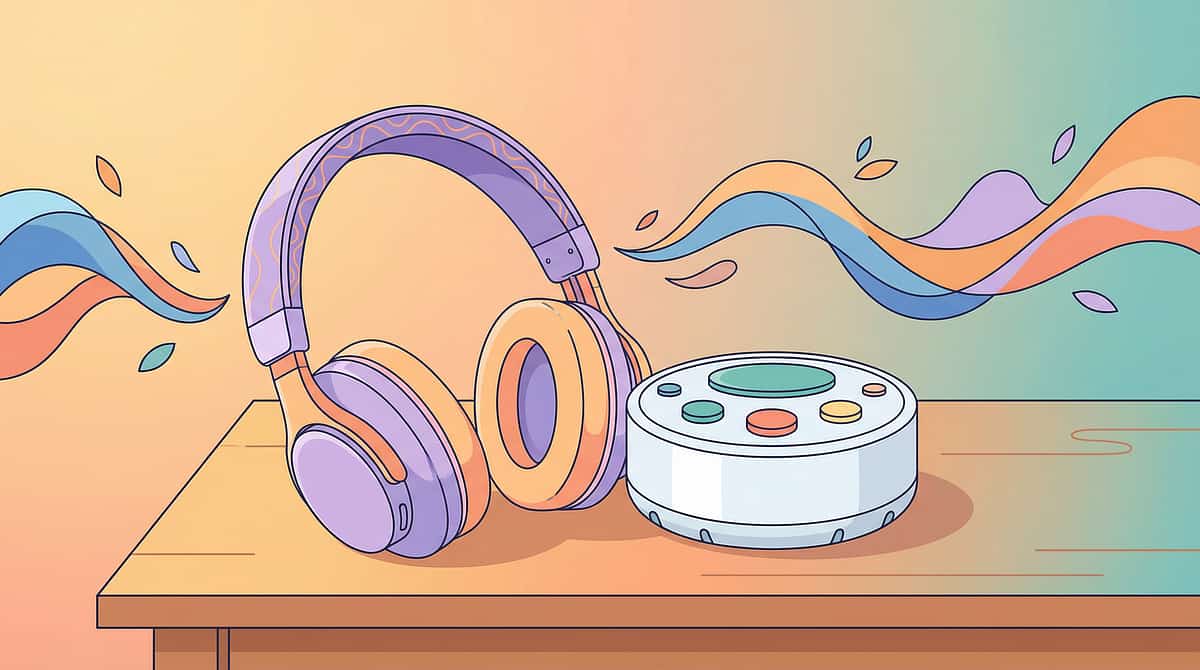
Chew tubes/chewelry (P-shaped, T-bar), squeeze balls, theraputty, textured fidgets. Oral proprioception — jaw input — activates calming pathways. For children who bite their hands or objects under stress, chew tools redirect the sensory input to a safe, designed channel without suppressing the underlying need.
Key principle: You are redirecting the sensory input, NOT the need. The need is valid. The delivery channel matters.
How to Introduce
If child is biting hands: hold chew tube near their mouth: "Try this instead. Same feeling, safer." Do not place in mouth without consent — hold at their level and let them choose to engage.
Price Range: ₹200–800
✅ DIY Option: Food-grade silicone bite ring available ₹50–100 in toy shops.

Material 5 of 9
Calm-Down Space Materials
Canon Category: Sensory Tent / Hideaway / Calm-Down Space + Calm-Down Kit
What It Is
Pop-up sensory tent, bean bag, dimmable lamp, soft cushions, regulation tools kit within the space. The calm-down space works on two levels: the physical properties (reduced light, spatial containment, soft surfaces) directly calm the nervous system, AND the agency of choosing to enter the space is itself regulatory — agency reduces the threat response.
"Your calm corner is ready. You can go whenever you want — no one will follow you in. It's yours."
Setup Notes
The space should be available at all times, not just during regulation sessions. Its permanent presence is part of its regulatory power — the child's nervous system learns: "safety is always accessible." Keep the sensory kit inside the space so all tools are co-located.
Price Range: ₹500–3,000 · DIY: Corner of room with bedsheet draped over two chairs; add cushion and one fidget — identical regulatory function.

Material 6 of 9
Movement & Vestibular Input Tools
Canon Category: Therapy Swing / Sensory Swing + Mini Trampoline / Rebounder
What It Is
Indoor therapy swing, rocking chair, wobble cushion, mini trampoline. Rhythmic, linear movement is the most powerful vagal input available. 10 minutes on a swing can shift arousal state more effectively than most verbal interventions. For children whose stress-stim involves intense movement (pacing, rocking, spinning), movement tools provide a structured, safe channel for the same neurological drive.
Safety & Use
Always supervise swing and trampoline use. Ensure safety mats and space clearance. Do not stop abruptly — slow to stillness gradually. Target: 10 minutes rhythmic; 3–5 minutes maximum vigorous. Satiation signal: child slows movement, climbs off independently.
Price Range: ₹500–5,000 · DIY: Hammock between doorframe hooks; towel swing held by parent — same vestibular activation principle.
Material 7 of 9
Auditory Regulation Tools
Canon Category: Noise-Reducing Headphones / Ear Defenders + White Noise / Sound Machines
What It Is
Noise-canceling headphones (SNR ≥25dB), ear defenders, white noise machine, calming music player. Auditory protection removes one of the most frequent stressor triggers immediately. Unpredictable sounds are a primary stressor for many autistic children — the headphones don't just reduce volume, they restore auditory predictability, which is the actual regulatory mechanism.
How to Introduce
Help child put on headphones: "These help the noise go down." Offer calming playlist (instrumental, nature sounds, or their preferred music). Never force placement — offer at child's eye level and let them choose to put on. Child-controlled removal is important — they should feel empowered, not trapped.
Price Range: ₹500–3,000 · DIY: Tightly fitted soft earmuffs from hardware store (~₹150) — same auditory reduction principle.
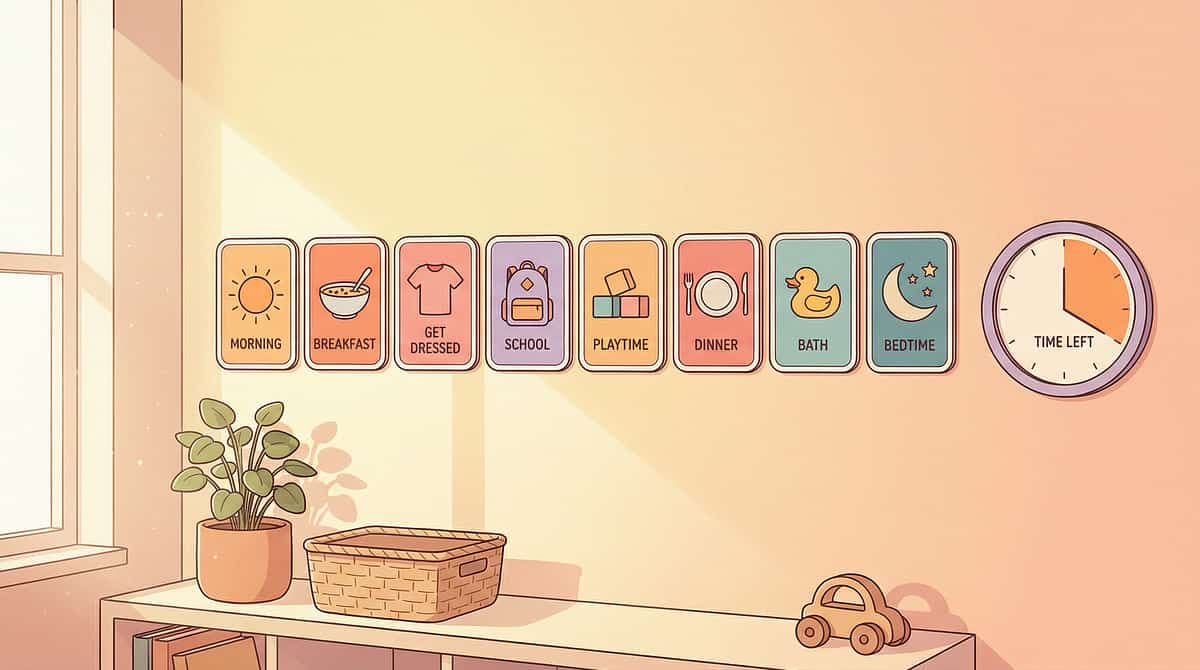
Material 8 of 9
Visual Supports for Predictability
Canon Category: Visual Schedule System + Visual Timer
What It Is
Daily visual schedule, first-then board, visual timer (Time Timer format), transition warning cards, change cards. Predictability reduces future threat anticipation, lowering the arousal floor. The visual schedule doesn't just organize time — it reduces cognitive load, which frees up regulatory capacity for the nervous system.
After stressor peaks, reference schedule together: "Look — after this, we have [preferred activity]. That's coming. You can see it."
Setup & Use
Post the visual schedule at child's eye level in the primary regulation space. Reference 2–3 times per session. Use the visual timer for all transitions — visible countdown removes the uncertainty of "how long" which is a significant stressor in itself.
Price Range: ₹100–500 · DIY: Photos printed on phone, arranged in sequence on refrigerator with magnets — identical predictability function regardless of format.

Material 9 of 9
Co-Regulation Support Materials
Canon Category: Reinforcement Menus + Transition Objects / Comfort Items
What It Is
Help-request cards, calming scripts for caregivers, connection cue visuals, animal soft toy (comfort item). The regulated parent's ANS literally communicates with the dysregulated child's ANS via co-present physiological co-regulation. This is not metaphor — it is documented neuroscience. Your calm IS a regulation tool. Your presence IS an intervention. (Porges, 2011)
How to Use & Products
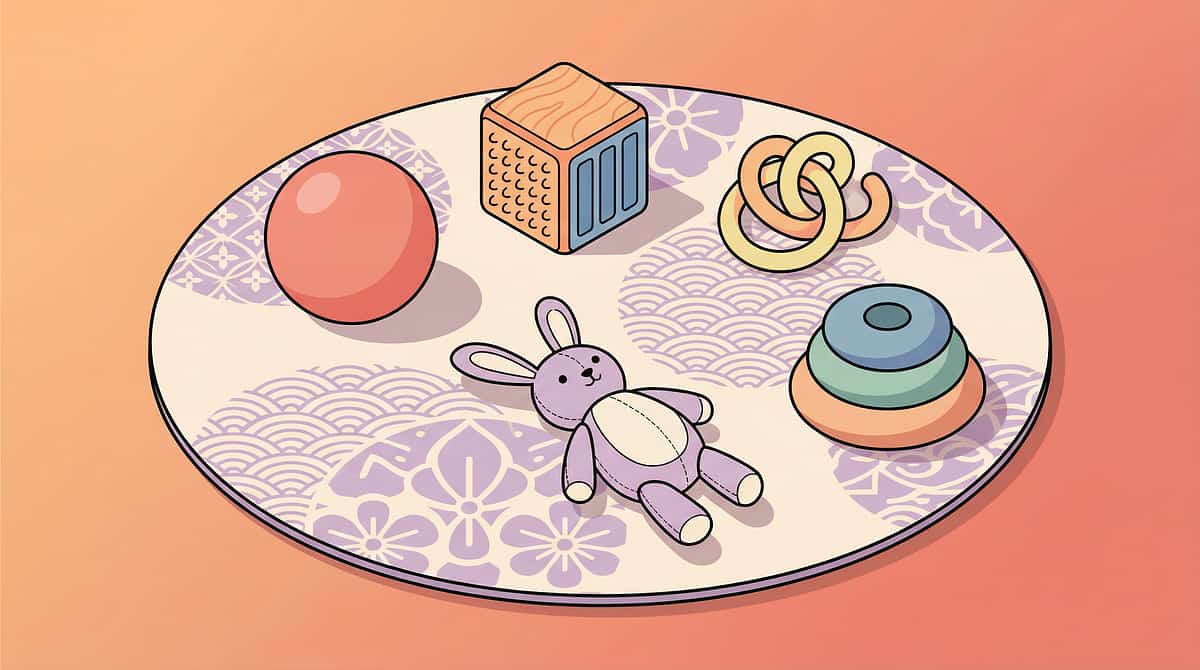
Stay. Breathe. Match their rhythm without demand. The comfort object (soft toy, transition item) extends co-regulation into moments when you cannot be physically present — at school, during transitions, in challenging community settings.
Price Range: ₹100–400

Every Material. Zero Budget. Full Effectiveness.
WHO/UNICEF Equity Principle: Evidence-based intervention belongs to every family, regardless of economic status. These household alternatives maintain the same sensory and regulatory principles as commercial products. The science is in the principle, not the price tag.
Commercial Material | DIY / Household Alternative | Why It Works |
Stress Thermometer | Draw a 1–10 scale on cardboard with emojis; laminate with tape | Visual representation of internal state — identical function |
Portable Sensory Kit | Small ziplock bag: rubber eraser, smooth stone, fabric swatch, dried pasta for texture | Variety of tactile input — core regulatory principle unchanged |
Weighted Lap Pad | Fabric pouch filled with rice or dried lentils (~500g–1kg); stitch closed | Proprioceptive deep pressure — same neural mechanism |
Compression Vest | Snug-fitting undershirt or thin wetsuit top; firm hug from caregiver | Deep pressure to trunk — same vagal activation |
Calm-Down Space | Corner of room with bedsheet draped over two chairs; add cushion and one fidget | Environmental refuge — spatial containment triggers calm |
Therapy Swing | Hammock between doorframe hooks; towel swing held by parent | Vestibular input — linear swinging activates calming circuits |
Noise-Canceling Headphones | Tightly fitted soft earmuffs from hardware store (~₹150) | Auditory reduction — reduces sensory overload trigger |
Visual Schedule | Photos printed on phone, arranged in sequence on refrigerator with magnets | Predictability — cognitive load reduction regardless of format |
Co-Regulation Card | Handwritten card: "I need you" with hand-drawn heart | Communication bridge — the message, not the medium, matters |
✅ Zero-Cost Core Regulation Kit: Rice lap pad + snug undershirt + bedsheet tent + photo schedule on fridge + rubber eraser fidget = Complete sensory regulation setup for ₹0. ⚠️ Non-Negotiable Exception: If stimming is self-injurious (biting until bleeding), a clinical-grade chew tool is recommended for hygiene and durability.

🚦 Safety Gate — Read Before Any Session
Safety is not an afterthought — it is the foundation. Read this card before implementing any materials. These guidelines apply every session, every time.
🔴 RED — STOP
Do NOT proceed if: child has active self-injurious behavior · child shows signs of acute medical distress · child is in meltdown/shutdown state · parent/caregiver is significantly dysregulated · any weighted item with a child who cannot independently remove it or communicate discomfort.
🟡 AMBER — MODIFY
Proceed with caution if: major stressor in past 2 hours — use gentle materials only · child is hungry, fatigued, or unwell — prioritize basic needs first · new material being introduced for first time — introduce only in calm moments · sensory swing or trampoline use — always supervise with safety mats.
🟢 GREEN — PROCEED
Child is in regulated or mildly elevated baseline state (3–5 on stress scale, not 8–10) · environment is calm · safety equipment in place for movement tools · you (the caregiver) are regulated — breathing normally, emotionally steady.
⛔ABSOLUTE RED LINES: Child experiences head impact during rocking or stimming — document and report · Any respiratory distress with compression tools — remove immediately · Social shame or punishment for stimming — this is contraindicated; it worsens outcomes and causes measurable harm. Weighted tools: ≈10% body weight max · Never with infants under 2 years · Monitor for overheating · 20 min max for lap pads · 45 min max for blankets.
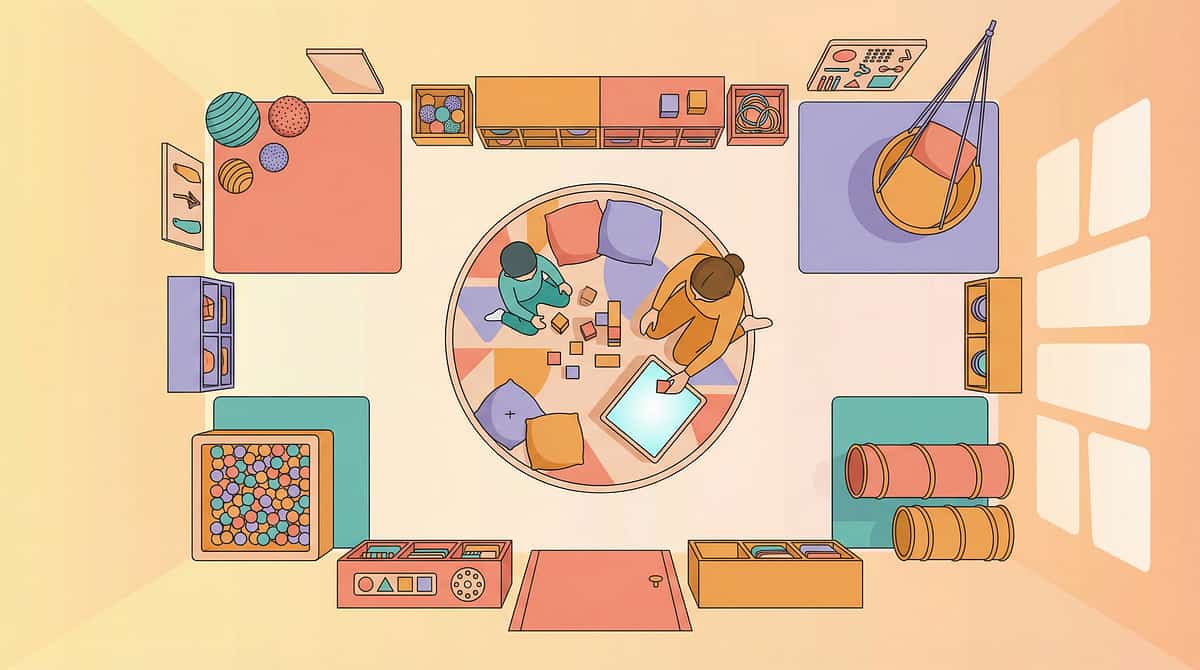
Set Up Your Space: The Regulation Environment
Spatial precision prevents 80% of session failures. This setup takes 5 minutes and changes everything.
Lighting
Warm, soft. Dimmer preferred. Overhead fluorescents OFF. Draw blinds to 50% — soft filtered light only. Your nervous system is light-sensitive under stress — your child's even more so.
Sound
Less than 50dB ambient. White noise at 40dB if needed. Remove ticking clocks, loud ventilation fans, or unpredictable sound sources. Auditory predictability is as important as auditory volume.
Temperature & Seating
22–24°C. Cooler is better for regulation. Child at floor level or low seating. Parent at same height — not above, not looming. This one adjustment signals safety before a word is spoken.
Visual Environment
Remove: screens/devices (unless used as auditory tool) · high-clutter visual surfaces · other people (siblings, visitors) during initial protocol · strong smells · multiple competing colors.
Material Positions
Sensory kit on low shelf accessible to child · calm space corner with bean bag and weighted blanket folded and ready · visual schedule at eye level · timer visible to child · movement tool centered in available space · auditory tools (headphones) within reach.

60-Second Pre-Session Assessment: Is Your Child Ready?
"The best session is one that starts right." Check each indicator honestly. This takes 60 seconds and sets the entire session trajectory.
Indicator | GREEN ✅ | AMBER 🟡 | RED ❌ |
Current stress level | 1–4 (calm to mildly elevated) | 5–6 (noticeably stressed) | 7–10 (escalating/crisis) |
Last meal | Within 2 hours | 2–3 hours ago | >3 hours / hungry |
Sleep last night | Adequate (age-appropriate) | Slightly reduced | Significantly poor |
Recent stressor | None in last 2 hours | Minor stressor | Major stressor/meltdown |
Child's engagement signals | Eye contact, receptive posture | Passive, neutral | Avoidance, turning away |
Your (caregiver) state | Calm, regulated | Mildly stressed | Significantly stressed |
Medical status | Fully well | Minor sniffles | Unwell/fever |
🟢 ALL/MOSTLY GREEN → PROCEED
Move to Step 1: The Invitation
🟡 2–3 AMBER → MODIFY
Soft materials only · No new introductions · 5–10 minutes max · Focus on co-regulation presence
🔴 ANY RED → POSTPONE
Offer water, snack, comfort item · Sit near without demands · Wait 20–30 min and recheck · "Session abandonment is not failure — it's data"

Step 1 of 6
The Invitation
Every regulation support begins with an invitation, never a command. ⏱️ 30–60 seconds
The ABA Pairing Principle + OT Just-Right Challenge: Before introducing any regulation tool, establish yourself as safe and the environment as welcoming. The child's nervous system must register safety before it can accept help.
"Hey [child's name]. I can see things feel big right now. That's okay. I'm right here with you. Would you like to try something that might feel nice?"
For non-verbal or low-verbal children: Sit near them. Breathe slowly and audibly. Place a fidget tool within reach without directing. Let them discover it. Your presence IS the invitation.
✅ Body Language
Sit at their level · Open posture — no crossed arms · Breathe slowly and visibly · Soft eye contact — available, not demanding · Give 60cm personal space minimum · No urgency, even if YOU feel it
Reading Acceptance Signals
👍 Turns toward you, glances at material → Proceed
😐 No clear response, not avoiding → Stay present 30 more seconds
🚫 Turns away, covers ears, vocalizes distress → Offer calm presence only; do not introduce material
😐 No clear response, not avoiding → Stay present 30 more seconds
🚫 Turns away, covers ears, vocalizes distress → Offer calm presence only; do not introduce material
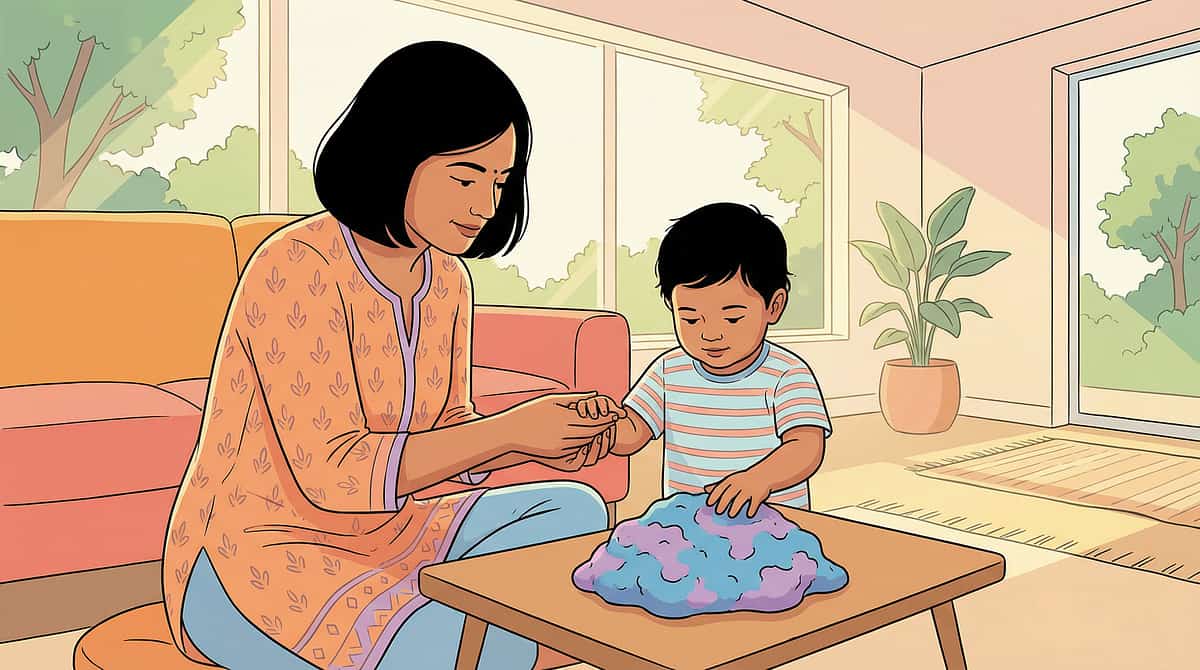
Step 2 of 6
The Engagement
The child is now present. Deepen the interaction through the therapeutic material — never through demand. ⏱️ 1–3 minutes
Introduce the First Material — match to the child's presenting stim type:
If child is currently... | Start with... |
Hand-flapping intensely | Sensory kit — tactile fidget that matches hand input |
Rocking hard | Wobble cushion OR guide toward rocking chair |
Covering ears / vocalizing | Noise-canceling headphones + calming playlist (offer, don't place) |
Biting hands | Chew tube — hold near their mouth, let them take it |
Pacing / moving constantly | Clear a path; let them pace; place weighted lap pad on route |
Curled in corner | Sit near. Offer weighted blanket. Don't speak. Just be. |
"I've got this [name of tool]. Sometimes it helps when things feel big. Want to try it? You can hold it."
Hold material at child's eye level, angled toward them. Do not place ON the child without consent. When child makes contact → immediate warm praise: "Yes! Just like that. That's it. You've got it." If child pushes material away → respect; try next material; or remain in co-regulation only.

Step 3 of 6
The Engagement
This is where regulation happens. Each material engages a specific neural pathway to shift the nervous system from sympathetic (stress) to parasympathetic (calm). ⏱️ 5–15 minutes
Stress Visuals
Show child the stress scale. Ask: "Where are you right now? Can you point?" When identified below 10: "Good noticing. Let's try [tool] to help it come down." Builds interoception — the internal awareness that enables self-regulation.
Weighted/Deep Pressure
Apply weighted lap pad to child's thighs if seated, or offer compression vest. Deep pressure activates large proprioceptive receptors → ANS shifts toward parasympathetic. This is measurable — breathing may slow within 2–3 minutes.
Safe Alternatives
If child is biting hands or hitting self, hold chew tube near their mouth: "Try this instead. Same feeling, safer." Redirect the sensory input, not the need. The need is valid and healthy.
Calm Space
"Your calm corner is ready. You can go whenever you want — no one will follow you in. It's yours." The act of choosing the space is regulatory itself — agency reduces threat response.
Movement Tools
Guide to swing, trampoline, or wobble cushion. Rhythmic, linear movement is the most powerful vagal input available. 10 minutes on a swing can shift arousal state more effectively than most verbal interventions.
Visual Schedule
After stressor peaks: "Look — after this, we have [preferred activity]. That's coming. You can see it." Predictability reduces future threat anticipation, lowering the arousal floor.
✅Ideal: Stimming intensity decreases within 5–10 minutes · ✅Acceptable: No decrease but child tolerates tool · ⚠️Concerning: Stimming escalates with material → stop that material; return to co-regulation baseline
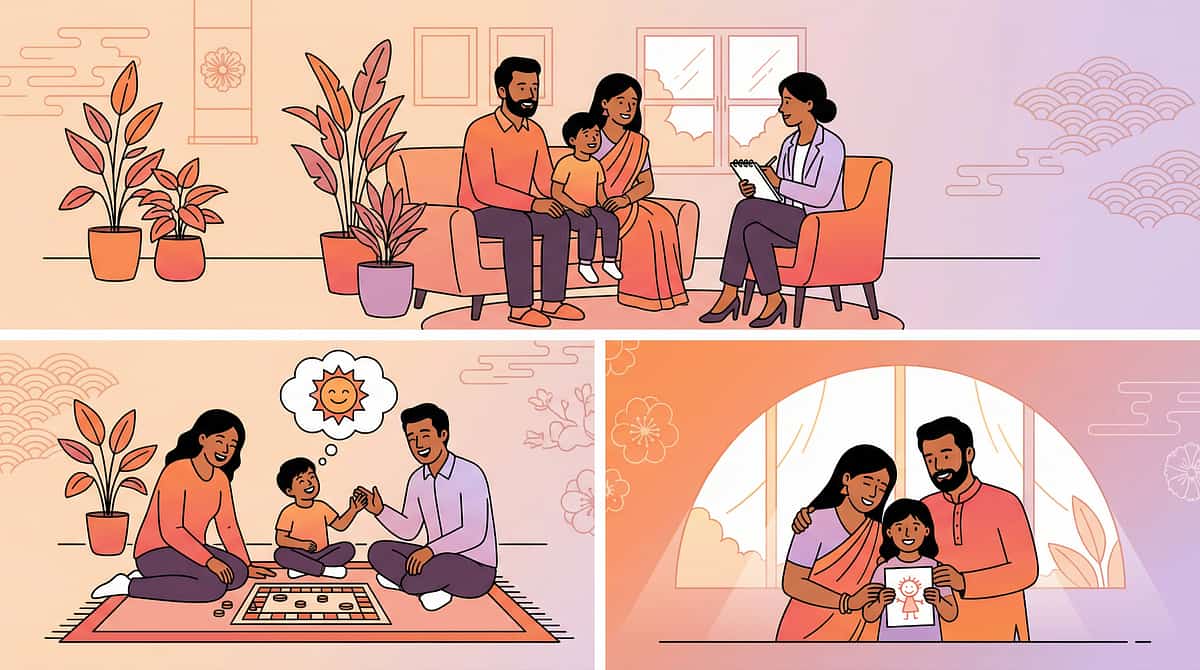
Step 4 of 6
Repeat & Vary
Therapeutic dosage: 3 quality interactions with a regulation tool outweigh 10 forced interactions. ⏱️ 3–5 minutes total
Material | Target Duration | Satiation Signal |
Stress Scale check-in | 1–2 times per session | Child stops engaging with scale |
Sensory fidget | Continuous 5–10 min | Child puts tool down voluntarily |
Weighted lap pad | 10–20 min continuous | Child removes it or shifts uncomfortably |
Chew tool | As needed during session | Child stops chewing and sets aside |
Calm space | Child-directed duration | Child emerges voluntarily |
Swing/movement | 10 min rhythmic; 3–5 min vigorous | Child slows movement, climbs off |
Headphones | As needed; child-controlled | Child removes them |
Visual schedule reference | 2–3 times during session | Child references independently |
Co-regulation presence | Full session duration | Child moves away independently |
Variation to Maintain Engagement: Switch between two tactile fidgets (one smooth, one textured) · Change movement type (slow swing → rocking chair) · Alter auditory input (nature sounds → white noise → silence) · Vary weighted input location (lap → shoulders with pressure vest)
"Satiation is success, not failure." When your child puts down the tool and their stimming has decreased — that means the tool worked. Don't restart if regulation has been achieved.
Step 5 of 6
Reinforce & Celebrate
ABA Principle: Immediate, specific, enthusiastic reinforcement builds the neural pathways that make regulation easier next time. ⏱️ Within 3 seconds of target behavior
Using the stress scale independently
"You told me where you were! That is amazing self-awareness."
Reaching for the sensory kit without prompting
"You knew what you needed! You got your tool!"
Going to calm space independently
"You found your calm corner all by yourself. That's regulation mastery."
Using chew tool instead of biting hands
"You chose the safe one. That's incredible."
Any reduction in stimming intensity (even 10%)
"I can see your body is getting a little calmer. You're doing it."
The ATTEMPT, not just the success
"You tried the headphones. That was brave." Celebrate the attempt. The nervous system learns through positive association, not pressure.

Step 6 of 6
The Cool-Down
No session ends abruptly. The transition IS part of the therapeutic work. ⏱️ 2–3 minutes
Abrupt transitions from therapeutic engagement → daily life are a frequent trigger for post-session stress-stimming. The cool-down embeds the regulated state, prevents the "regulation cliff," and teaches the child that calm is a state that can persist.
"We're almost done with our regulation time. Two more minutes, and then we're all done." (Set visual timer. Child watches the time drain — predictability in the transition itself.)
Reduce Sensory Input
Lower white noise volume, dim lights further. Signal the shift gradually, not abruptly.
Slow Movement Tools
If on swing, slow to stillness. Do not stop abruptly — the vestibular system needs a gradual transition, not a cliff.
Remove Weighted Items Gently
With child's participation if possible: "Want to help fold the lap pad?" Participation in put-away maintains agency and signals: tools are always here for you.
Co-Regulation Pause
60 seconds of quiet parallel sitting. No demands, no language. Just calm presence.
Transition Cue
"Great job with your body today. Now let's get [preferred transition activity]." If child resists ending: "One more minute." Show timer. Honor one extension — and only one.

Capture the Data: Right Now
"60 seconds of data now saves hours of guessing later." — Pinnacle GPT-OS® Data Doctrine. This is the difference between hoping and knowing. 60 seconds of data after every session enables personalized GPT-OS® recommendations in as few as 3 weeks.
Stress Level at Start (1–10)
Record the child's stress level on the scale at session start. This is your baseline. Without a baseline, you cannot measure progress.
Stress Level at End (1–10)
Record at session close. The delta between start and end is your primary outcome measure. Even 1–2 points of reduction is clinically significant.
Primary Material Used
Which of the 9 materials was the primary tool? Over weeks, patterns emerge — and GPT-OS® identifies which materials work best for YOUR child's specific sensory profile.
Did Stimming Intensity Reduce?
YES / PARTIAL / NO. Also note session duration in minutes and any concerns or observations. This single field drives the most important personalization decisions.
What this data does over time: After 2 weeks → GPT-OS® identifies most effective materials for YOUR child · After 4 weeks → Personalized regulation toolkit prioritization generated · After 8 weeks → Progression pathway to D-381 or deeper techniques assessed · Population level → Your data (anonymized) improves recommendations for 1.8M+ families globally.
What If It Didn't Go As Planned?
"Session abandonment is not failure — it's data. Every 'failed' session teaches you what the nervous system needs." Most sessions don't go perfectly. Here is your fix protocol.
❓ Child rejected all materials and escalated further
Why: Materials were introduced too late in the arousal cycle (child was already at 8–10). Fix: Start earlier — use the stress scale to catch stress at 4–5, before 8–10. Materials work best as PREVENTION, not crisis response.
❓ Child uses tool for 10 seconds then throws it
Why: The tool doesn't match their specific sensory need; OR hasn't been paired with positive experience yet. Fix: Try a different sensory modality. Practice introducing the tool in a CALM moment, not a stressed moment. Pair with 5 minutes of preferred play first.
❓ Fine during session but escalates badly immediately after
Why: Inadequate cool-down; abrupt transition from regulated to unregulated environment. Fix: Extend cool-down to 5 minutes. Add clear transition visual. Ensure first post-session activity is preferred, not demanded.
❓ Weighted items seem to make stimming more intense
Why: Child may be a sensory avoider (tactile defensive) — deep pressure can be aversive for some. Fix: Immediately remove. Consult OT for sensory profile assessment. Try lighter touch or movement tools instead.
❓ You (the caregiver) became frustrated during the session
Why: Completely normal. Your regulation is prerequisite to theirs. This is biology, not failure. Fix: End the session calmly. Regroup. Your nervous system's calm is a therapeutic tool — tending to it IS the work.
❓ Nothing works after 3 weeks of consistent practice
Why: Underlying stress source not being addressed; or professional assessment required. Fix: Call 9100 181 181 for teleconsultation. This may require OT sensory profiling or FBA by BCBA.
Adapt & Personalize: No Two Nervous Systems Are Identical
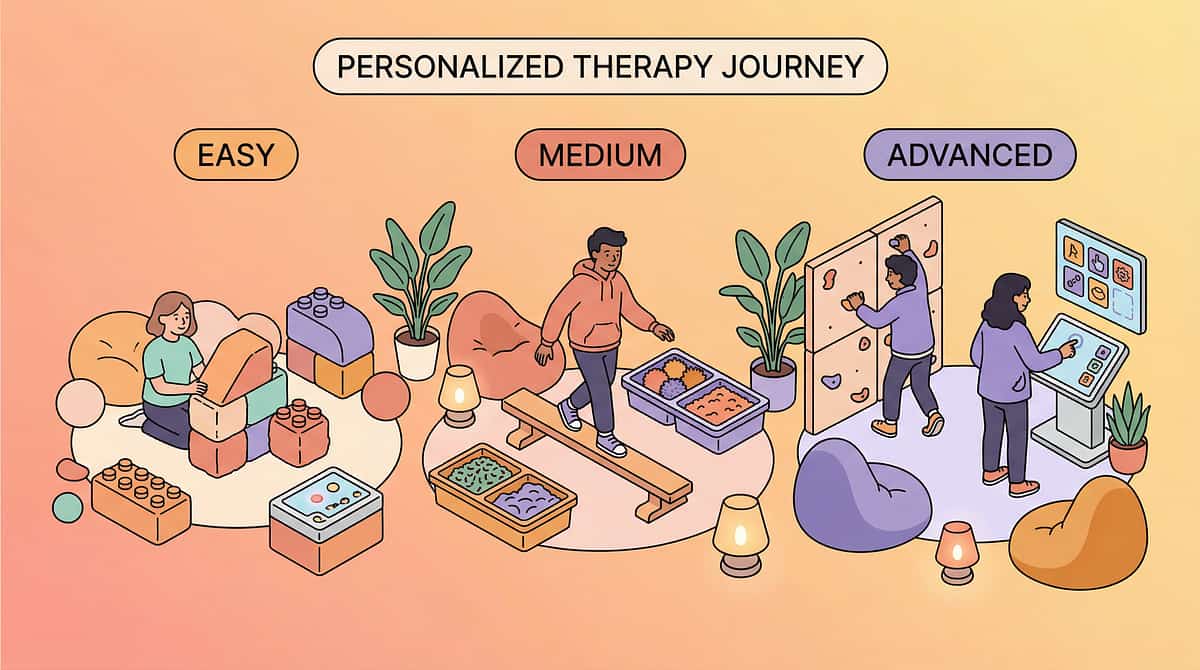
Adjust the technique to your child's sensory profile, age, and current capacity. This framework gives you a structured way to find the right level for YOUR child — and to advance when they're ready.
Dimension | EASIER (Start Here) | STANDARD | HARDER (Mastery) |
Stress Scale | Parent-guided: "Is this how you feel?" with pointing | Child points independently | Child rates verbally without visual |
Sensory Kit | Parent offers one item | Child chooses from two items | Child independently retrieves kit and selects tool |
Calm Space | Parent accompanies to space | Parent guides child to door | Child independently transitions when stressed |
Visual Schedule | Parent reads schedule aloud together | Child references with prompt | Child references independently before transition |
Sensory Seeker → HIGH Intensity Input
Weighted items: 1.5–2kg lap pad, full compression vest · Movement: Fast linear swing, mini trampoline jumping · Tactile: Firm squeeze balls, theraputty, vibrating tools
Sensory Avoider → GENTLE Gradual Input
Weighted items: Begin with light 500g lap pad, increase gradually · Movement: Slow rocking chair, gentle floor swaying · Tactile: Smooth textures only; no surprise touch; introduce slowly
Age Modifications: Ages 2–5: Caregiver-led, simple 2-zone scale, soft toys and parent co-regulation · Ages 5–10: Gradual independence, 5-zone scale, sensory kit at school · Ages 10–14: Self-advocacy focus, discreet tools, private calm space · Ages 14–18: Self-directed regulation, "regulation toolkit" language rather than "sensory bag."

Progress Arc · Weeks 1–2
Weeks 1–2: Tolerance, Not Mastery
Most parents expect dramatic change immediately. Here is what actually happens — and why it is profoundly significant.
What You WILL See
Child tolerates a material for 3–5 seconds longer than day one — this is neural pathway laying · Resistance decreases — fewer refusals · Curiosity appears — child picks up a fidget without prompt · You feel slightly more confident — the routine is beginning to form.
What You Will NOT See Yet
Dramatic reduction in stimming intensity (neuroplasticity takes time) · Independent self-regulation (weeks 5–8 territory) · Generalization to new environments (comes later). This is completely normal and expected.
Synaptic strengthening through repeated structured sensory input follows a documented curve. The first 2 weeks are the investment phase — you are building the pathways that will deliver results in weeks 5–8. Weeks 1–2 can feel unrewarding. They are the most important weeks. Hold the course.
"If your child tolerates the weighted lap pad for 2 minutes longer than Day 1 — that is real, clinically significant progress."

Progress Arc · Weeks 3–4
🌿 Weeks 3–4: The Regulation Patterns Are Forming
Consolidation is the phase where you begin to SEE the work. These indicators tell you the nervous system is learning — not just tolerating.
Child anticipates the regulation routine
Moves toward calm space before being guided. This is the first sign of internalized regulation — the child's brain has mapped the protocol as "safety."
Stimming intensity at session start is lower
Lower than it was at Week 1 for similar stressors. The arousal floor is dropping — the foundational goal of the protocol.
Child reaches for sensory kit with minimal prompting
One to two word prompt now works where full scripts were needed before. Prompt dependency is decreasing — independence is emerging.
Recovery time after stressor begins to shorten
30 minutes → 20 minutes. You notice specific triggers becoming identifiable and predictable. Pattern recognition is one of the most empowering shifts for caregivers.
Early generalization seeds
Child uses a fidget at the dinner table · Asks for headphones before a noisy situation · Stimming at school decreases (check in with teacher). These early transfers are extraordinary signs.
"You may notice you're more confident too. That's not a coincidence — your regulatory system has also been trained."

Progress Arc · Weeks 5–8
🌳 Weeks 5–8: The Regulation System Is Operating
This is the phase where the work becomes visible, measurable, and undeniable. Use these specific criteria to assess mastery.
Mastery Criteria | Observable Behavior |
Independent stress identification | Child uses stress scale without prompt 3+ times per week |
Independent tool access | Child retrieves sensory kit or goes to calm space without adult guidance ≥50% of opportunities |
Stimming intensity reduction | Stress-stim intensity ≤6/10 during previously 9/10 stressor situations |
Recovery time | Post-stressor regulation achieved within 15 minutes vs. 45+ minutes at baseline |
Safe alternative use | Self-injurious stimming reduced ≥70%; child redirects to safe alternative independently |
Generalization | Regulation skill demonstrated in ≥2 environments (home + school, or home + community) |
≥4/6 Criteria Met
Progress to D-381 (Anxiety-Related Behaviors) — you have built the regulatory foundation.
2–3/6 Criteria Met
Stay at D-380 and strengthen with professional OT support. You are close — targeted support accelerates the final gap.
Fewer than 2/6 Met
Schedule AbilityScore® assessment via 9100 181 181. Additional professional profiling will unlock the specific gap.

🌟 You Did This.
"You didn't just teach your child regulation tools. You taught yourself to see their stimming differently — as communication, as neurology, as the body's intelligence. That shift in you will change their life more than any single technique."
A Regulation Toolkit
Your child now has a toolkit they know how to use — materials and strategies that belong to them, accessible across environments.
A Practiced Nervous System
A nervous system that has practiced calming 40+ times — the neural pathways for regulation have been built and strengthened.
A Safer Relationship
A relationship where "I need help regulating" is safe to express — the foundation of every therapeutic outcome that follows.
A Community Contribution
6–8 weeks of data that personalizes future GPT-OS® recommendations AND contributes to the population-level evidence base helping 1.8M+ Indian families.
Family Celebration Suggestion: Plan one special activity this week that your child loves — and when you're there, quietly notice: are they more regulated than 6 weeks ago? That moment IS the evidence. Journal prompt: "Write one sentence about what you noticed your child do this week that they couldn't do 6 weeks ago."

Red Flags: When to Pause and Escalate
These are not reasons to fear. They are clinical indicators that additional professional support will accelerate outcomes. Know them, recognize them, act on them without delay.
🚨 Self-injurious stimming increasing in severity or frequency
More frequent hand-biting causing open wounds; head-banging increasing; self-scratching breaking skin. May indicate unaddressed pain, anxiety disorder, or functional need requiring FBA. Action: BCBA/ABA assessment + OT sensory profile · Call 9100 181 181
🚨 Stimming disconnected from identifiable stress triggers
Intense stimming in apparently calm situations; no visible pattern. May indicate internal physical pain, sensory hypersensitivity, or medical cause. Action: NeuroDev Pediatrician consultation · Rule out pain/GI/dental sources.
🚨 Significant regression after a period of progress
Previously mastered regulation skills disappearing; stimming intensity returning to baseline or worse. Often signals a major stressor, illness, or medication change. Action: Consult therapist; review recent environmental changes; schedule reassessment.
🚨 Property destruction or aggression accompanying stress-stimming
Stimming episode transitions into throwing objects, hitting others, or property damage. Safety concern requiring immediate professional behavior support. Action: BCBA emergency consultation · Do not attempt physical restraint.
🚨 Child expressing distress about their own stimming
Older child saying "I hate that I do this" or showing shame. Internalized shame about stimming is associated with anxiety, depression, and autistic burnout. Action: Psychological support · Affirm stimming as healthy · Address school environment.
🚨 You (the caregiver) are in crisis
You cannot give from empty. Caregiver breakdown is a child's red flag. Action: Pinnacle parent support network · Family counseling · 9100 181 181
Escalation Pathway: Self-monitor → Teleconsultation → Center Visit → Comprehensive Assessment → Multidisciplinary Support · Helpline: 9100 181 181 · 24×7 · 16+ Languages
Your Developmental GPS: The Progression Pathway
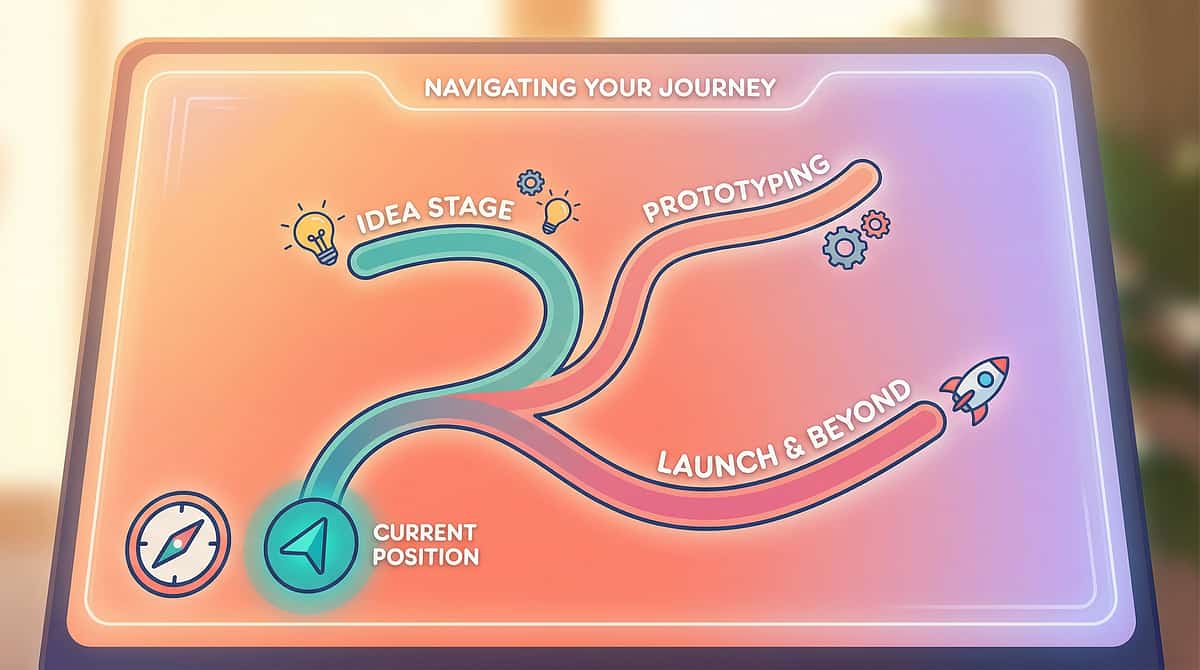
D-380 is not a standalone technique. It sits within a carefully mapped developmental progression. Understanding where this leads gives your work context, purpose, and direction.
D-378 & D-379
Sensory Seeking → Sensory Avoidance Behaviors — the foundation this protocol builds upon
D-380 ◉ YOU ARE HERE
Stress-Increased Stimming — regulation support for when the system is overwhelmed
D-381
Anxiety-Related Behaviors — if stress-stimming has an anxiety core (anticipatory, generalized, social)
D-382
Transition-Related Behaviors — if transitions are the primary stressor driving dysregulation
D-385
Safe Stim Alternatives Deep-Dive — if self-injurious elements require targeted intervention
D-390
Self-Regulation Skills Full Protocol — the broader self-regulation skill set that D-380 feeds into
Long-Term Developmental Goal: Independent stress management across all environments → Reduced need for external support → Full adaptive independence readiness (AbilityScore® domain: Self-Regulation Readiness Index)

Real Families, Real Regulation
Clinical narratives from Pinnacle centers. Identifying details changed. Outcomes measured via AbilityScore® and GPT-OS® readiness indexes.
Arjun, 7 years · Hyderabad
Before: 45–60 minute hand-flapping and rocking episodes of such intensity he would bruise his palms. His mother described "watching him disappear inside himself while I stood helpless."
After 8 weeks (OT support): Arjun has a sensory kit he calls his "calm bag." He reaches for it at school, in the car, and at home. Rocking continues — and is welcomed — but intensity has halved and hand-bruising has stopped entirely. Weighted lap pad during homework reduced evening escalations by 70%.
"He still stims. He'll always stim. But now he has tools, and I have understanding. Those two things changed everything." — Arjun's mother
Priya, 12 years · Bengaluru
Before: Post-school stimming explosions lasting 2 hours. Priya was masking all day — suppressing visible stimming to appear "normal" — then decompressing with intense rocking and humming. She reported hating "losing control."
After 10 weeks (BCBA + OT team): Calm-down space and noise-canceling headphones permitted at school dramatically reduced post-school decompression. She now uses a visual timer to self-limit stimming episodes.
"I didn't know I was allowed to do this at school. Knowing it's okay made me not need to do it so much." — Priya (12 years), self-reported
Explore Your Full Behavior & Regulation Toolkit
These techniques use materials you may already own from D-380. Your investment in this protocol is foundational — it builds forward to cover 6+ related techniques.
Technique | Focus | Difficulty | Materials You Have |
D-378 | Sensory Seeking Behaviors | 🟡 Core | Core Fidget Kit, Movement Tools |
D-379 | Sensory Avoidance Behaviors | 🟡 Core | Visual Schedule, Headphones |
D-381 | Anxiety-Related Behaviors | 🟡 Core | Stress Scale, Co-Regulation Tools |
D-382 | Transition-Related Behaviors | 🟢 Intro | Visual Timer, First-Then Board |
D-385 | Safe Stim Alternatives Deep-Dive | 🔴 Advanced | Chew Tools, Fidgets |
D-390 | Self-Regulation Skills Full Protocol | 🔴 Advanced | All D-380 Materials |
Sensory Kit
Covers D-378, D-379, D-380, D-381
Visual Schedule + Timer
Covers D-380, D-382, D-383, D-384
Weighted Tools
Covers D-378, D-380, D-385
Stress Scale Visual
Covers D-380, D-381, D-390

Your Questions, Answered by the Pinnacle Consortium
Generated from actual parent queries at Pinnacle centers and the online community. These are the questions every family asks.
❓ Should I try to stop my child's stimming?
No — and this is the single most important thing you can take from this page. Stimming is a healthy, adaptive regulatory mechanism. Suppressing it causes harm — it forces the nervous system to regulate without its primary tool, often leading to anxiety, meltdowns, or internalized distress. Redirect to safer alternatives ONLY when the stim is causing physical injury.
❓ How do I know which of the 9 materials to start with?
Start with the Portable Sensory Kit and Calm-Down Space — these two provide the broadest coverage. Add weighted tools if your child shows proprioceptive-seeking stims (rocking, crashing). Add auditory tools if sound is a primary trigger. Add stress identification visuals when your child is regulated enough to learn them. Layer — don't introduce all 9 at once.
❓ My child refuses every tool I offer. What do I do?
Tools are being introduced at peak stress (too late) or haven't been paired with positive experience. Introduce every tool during calm, low-demand play time first. Let the child explore freely with no expectation. After 2 weeks of positive exposure, offer during low-level stress. Never introduce a new tool during a crisis moment.
❓ How long will this take to show results?
Weeks 1–2: tolerance. Weeks 3–4: pattern formation. Weeks 5–8: measurable reduction. Full independent self-regulation: 3–6 months with consistent practice. Individual variation is significant — children with higher sensory processing needs may need more time.
❓ My child's stimming has become self-injurious. Is this a failure?
Absolutely not — it is a signal. Self-injurious stimming indicates the stress load exceeds the current regulation capacity. It requires immediate professional assessment (OT + BCBA) to identify the function and implement a safe alternatives protocol. It is NOT a measure of your parenting or your child's character. Call 9100 181 181 today.
❓ Is it okay for my child to stim at school?
Yes — stimming is a regulation need, not a behavior problem. Schools are legally required to accommodate diagnosed sensory needs (under RPWD Act 2016 in India). Subtle fidgets, quiet space access, and headphone permission are standard reasonable accommodations. Use the school communication template on the Share card to request these.
❓ Can my neurotypical child use these materials too?
Yes — regulation tools benefit all nervous systems. Fidgets, weighted lap pads, calm-down spaces, and visual timers are used in general education classrooms worldwide. Any child under high stress will benefit from these supports.
Preview of 9 materials that help with stress increased stimming Therapy Material
Below is a visual preview of 9 materials that help with stress increased stimming therapy material. The pages shown help educators, therapists, and caregivers understand the structure and content of the resource before use. Materials should be used under appropriate professional guidance.


Link copied!

🌟 You've Read the Science. You Have the Tools. Now: Begin.
20M+ therapy sessions · 97%+ measured improvement · 70+ centers · Patents filed in 160+ countries
⚠️ Medical Disclaimer: This content is educational. It does not replace professional assessment or intervention from qualified occupational therapists, behavior analysts, speech-language pathologists, or physicians. Stimming that causes physical injury requires immediate professional support. Never attempt to physically stop, restrain, or punish stimming behavior. Individual outcomes vary based on neurotype, severity, co-occurring conditions, and implementation consistency.
📋 Clinical Notes: Data sourced from Pinnacle Blooms Network® clinical operations across 70+ centers, 20M+ 1:1 therapy sessions, and 97%+ measured improvement across one or more GPT-OS® readiness indexes. Statistics represent aggregate outcomes. Individual results vary.
Statutory Identifiers (India): CIN: U74999TG2016PTC113063 · DPIIT: DIPP8651 · MSME: Udyog Aadhaar TS20F0009606 · GSTIN: 36AAGCB9722P1Z2
© 2025 Pinnacle Blooms Network®, a unit of Bharath Healthcare Laboratories Pvt. Ltd. All rights reserved. GPT-OS® · AbilityScore® · TherapeuticAI® · EverydayTherapyProgramme™ · FusionModule™ are registered trademarks and proprietary systems of Pinnacle Blooms Network®.
FREE National Autism Helpline (16+ Languages): 9100 181 181 · pinnacleblooms.org
techniques.pinnacleblooms.org/behavior-analysis/stress-increased-stimming-D-380