

"Every morning is a war zone."
The tears start before sunrise. The stomachaches have no medical cause. The drop-off takes twenty minutes and leaves you both shattered. You are not failing. Your child's nervous system is speaking — and today, the Pinnacle Blooms Consortium answers.
"You are not failing. Your child's nervous system is speaking." — Pinnacle Blooms Consortium | OT • SLP • ABA • SpEd • NeuroDev

ACT I — Recognition
You Are Not Alone: The Numbers
School anxiety affects millions of families worldwide. You are not the only one fighting this morning battle.
—
Children Affected
Experience clinically significant anxiety impacting school participation
—
Countries Reached
Families reached by the GPT-OS® therapeutic system
—
ASD + Anxiety
Of children with ASD experience anxiety that affects school participation
—
Therapy Sessions
Tracked across the Pinnacle Blooms Network — progress is measurable
2–5% of school-age children experience school refusal behavior significant enough to require intervention
School anxiety peaks at three transition points: kindergarten entry, middle school transition, and after significant life stressors
Children with autism, ADHD, sensory processing differences, and learning disabilities face significantly elevated school anxiety risk
Without intervention, school anxiety typically escalates — each absence makes the next return harder
📞 FREE National Autism Helpline: 9100 181 181 (16+ languages, 24x7) | Sources: PMC11506176 | PMC10955541 | WHO/UNICEF CCD Package (2023)
ACT I — Neuroscience
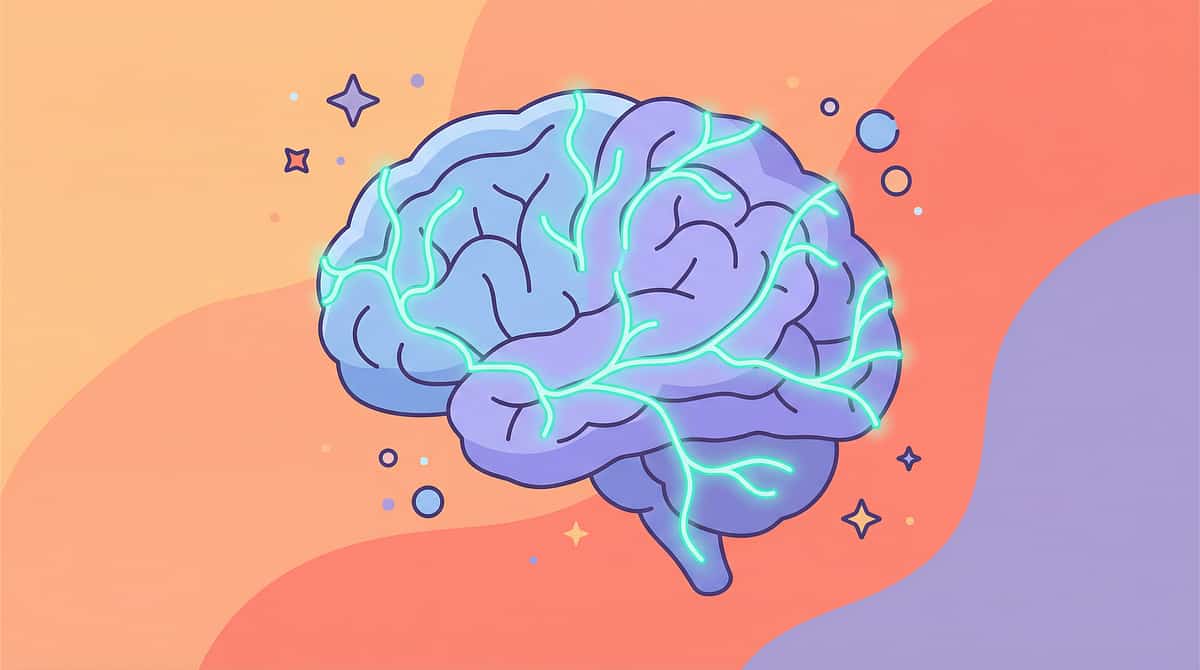
This Is Not Drama. This Is Neurobiology.
The Amygdala's False Alarm System
When a child with school anxiety thinks about the next school day, their amygdala — the brain's threat-detection center — fires as if genuine danger is present. The body releases cortisol and adrenaline. Heart rate rises. Stomach contracts. This is the same physiological cascade as encountering a predator.
The prefrontal cortex — responsible for rational thought, "school is safe, I'll be fine" — is overwhelmed by the amygdala signal. The thinking brain goes offline. This is why reasoning doesn't work in the moment. You cannot logic your child out of an activated threat response.
What This Means for Your Child
The stomachaches are REAL — cortisol contracts the digestive system
The "I can't breathe" is REAL — the nervous system restricts airways
The terror is REAL — the amygdala is sending genuine danger signals
Your child is not being dramatic. They cannot "just stop it."
🔑The intervention opportunity: The anticipation is often WORSE than the reality. Once at school, most children find it manageable. The morning is the crisis point — and that's exactly where these 9 materials work.
"This is a wiring difference in threat-detection, not a discipline problem. The nervous system needs training, not punishment." — Pinnacle Blooms Consortium NeuroDevelopmental Pediatrics + OT Team
Source: Frontiers in Integrative Neuroscience (2020) | DOI: 10.3389/fnint.2020.556660

ACT I — Development
School Anxiety Follows Predictable Developmental Windows
School anxiety is not random. Understanding when it peaks helps you know exactly where your child is — and where you're headed.
Age 2–3
Normal Separation Anxiety — typical developmental stage
Age 4–5 ⚡
PEAK WINDOW — Kindergarten Entry. Separation distress at drop-off, physical symptoms. Key risk: autism/ASD, sensory differences
Age 6–8
Common Persistence — anticipatory anxiety, morning battles, social worry. Academic pressure intensifies
Age 10–12 ⚡
PEAK WINDOW — Middle School Transition. Academic anxiety + peer judgment fear, perfectionism, bullying risk
Age 13–14
Social + Performance Anxiety — identity formation, peer comparison, high-stakes assessment
Children with Autism Spectrum Disorder, ADHD, Sensory Processing Differences, Learning Disabilities, or Trauma History face significantly elevated school anxiety across all windows. This page addresses all these presentations.
Source: PMC9978394 | WHO/UNICEF CCD Package (2023)

ACT I — Evidence
Clinically Validated. Home-Applicable. Parent-Proven.
🏆 LEVEL I EVIDENCE — Systematic Reviews + Multiple RCTs
Cognitive-Behavioral + Graduated Exposure Approaches
Study | Finding | Source | |
CBT for Pediatric Anxiety (meta-analyses) | 60–80% response rates for school anxiety with CBT-based approaches | PMC6447673 | |
NCAEP EBP Report (2020) | Visual supports, social stories, behavioral interventions — all classified EBP for autism | NCAEP 2020 | |
Indian RCT — Home-Based Interventions | Home-executed sensory and behavioral interventions demonstrated significant outcomes | DOI: 10.1007/s12098-018-2747-4 | |
WHO NCF (2018) | Parent-implemented intervention in the home setting is evidence-backed at population scale | nurturing-care.org | |
Pinnacle Network Data | 97%+ measured improvement across Anxiety Management + School Participation Readiness Indexes | 20M+ sessions |
"Graduated exposure combined with coping skill development and parent coaching is the gold standard for school anxiety treatment. These 9 materials operationalize that evidence for home use." — Pinnacle Blooms Consortium CRO + NeuroDevelopmental Pediatrics
✦ Validated by the Pinnacle Blooms Consortium ✦ OT • SLP • ABA/BCBA • SpEd • NeuroDevelopmental Pediatrics
ACT II — The Technique
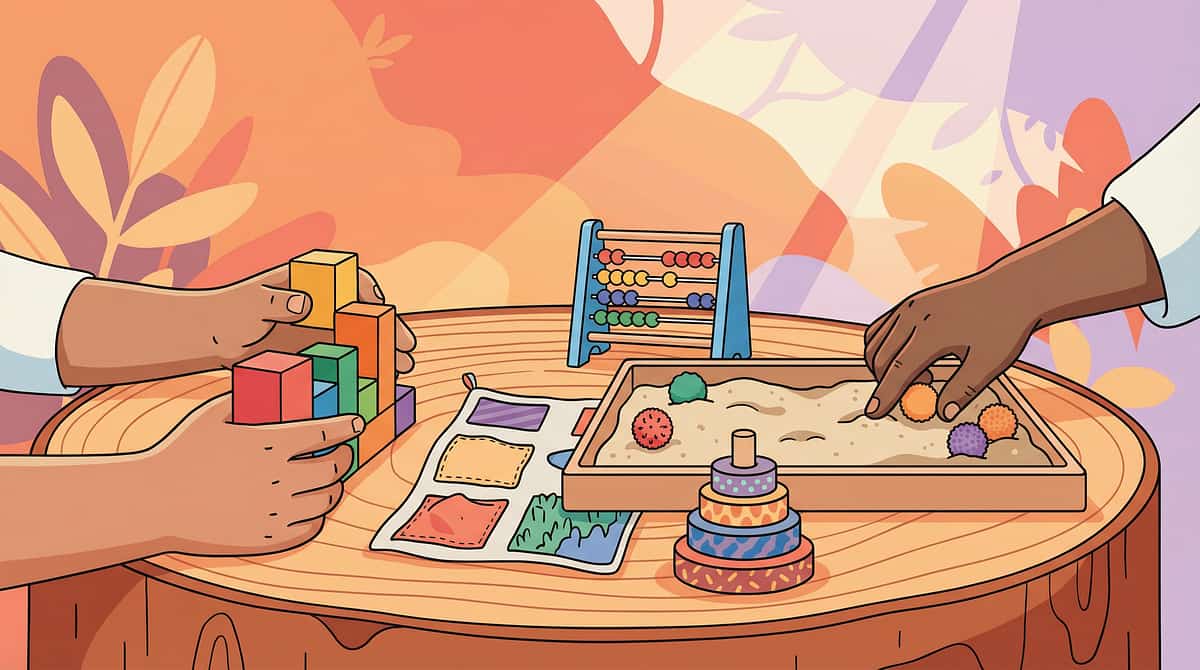
Technique C-292: What It Is
Formal Name
Multi-Modal School Anxiety Reduction and School Participation Support Intervention
Parent Name
"The Morning Battle Toolkit" | School Anxiety Support System (C-292)
School anxiety encompasses separation anxiety, social anxiety, academic anxiety, and generalized anticipatory anxiety — all interfering with school attendance, participation, or wellbeing. This intervention provides 9 evidence-based materials that target the biological, cognitive, behavioral, and environmental drivers of school anxiety.
🏷️ Domain
Emotional Regulation / Anxiety Management / School Participation
🧒 Ages
4–14 years
⏱️ Session
Morning routine (15–20 min) + school day ongoing
📅 Program
8–12 weeks minimum for sustainable outcomes
🔢 Code
C-292 | Cluster: REG-03
← C-291: Character Fear Materials | C-293: Selective Mutism Materials → | Related: C-290 Understanding Childhood Anxiety | C-297 Anticipatory Anxiety
ACT II — Targets
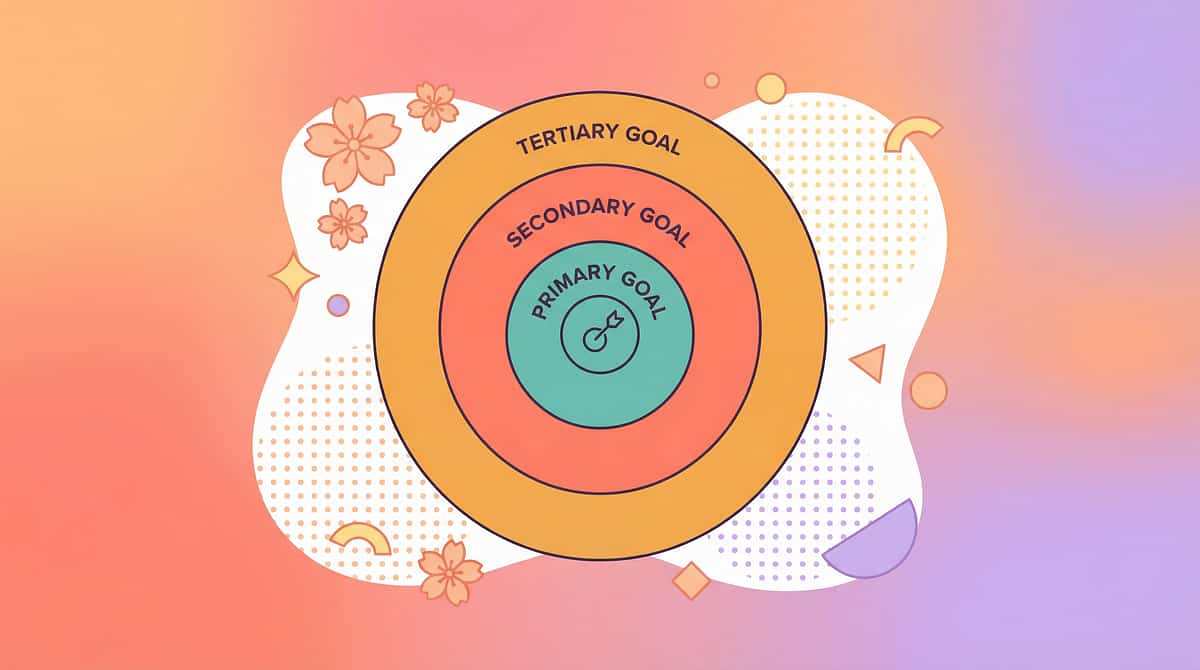
This Is a Precision Tool With Measurable Targets
This is not a random activity. Every material maps to a specific therapeutic outcome — from daily school attendance to long-term anxiety resilience.
School Participation Readiness
Reducing refusal behavior and drop-off separation difficulty
Anxiety Management Readiness
Reducing severity of anticipatory anxiety cycle
Separation Tolerance
Building confidence in independence from attachment figures
Emotional Regulation
Portable, self-initiated regulation strategies
Adaptive Coping Readiness
Skills that transfer to other anxiety domains beyond school
Source: PMC10955541 | NCAEP 2020
ACT II — Materials Overview
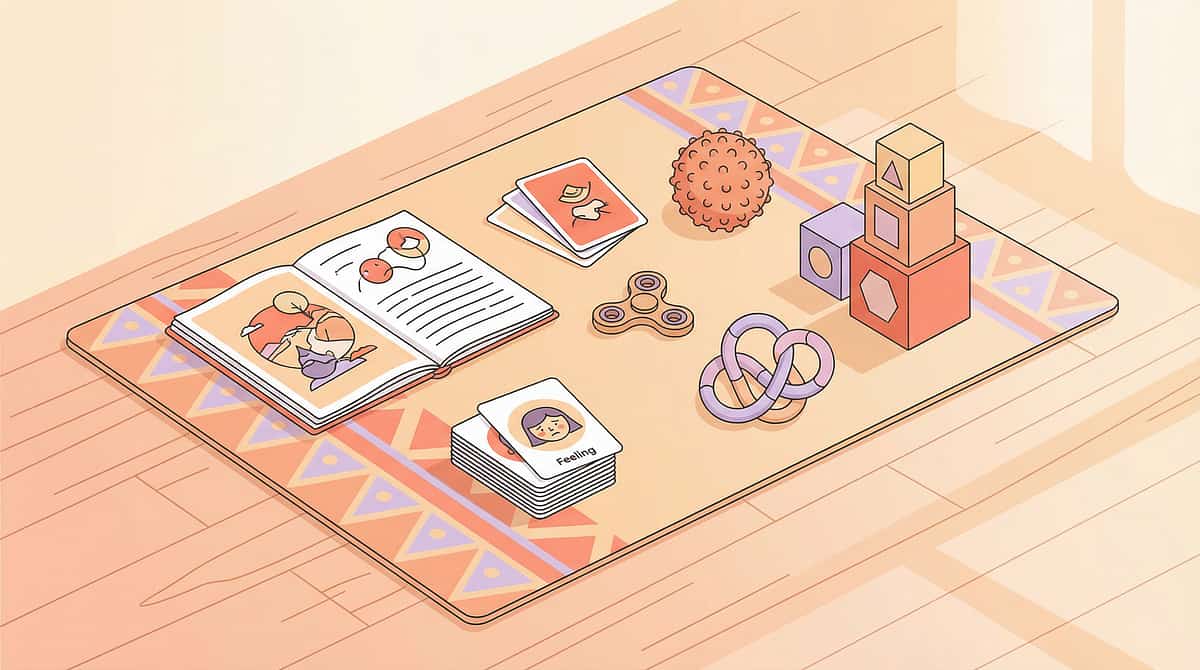
9 Materials. All Evidence-Based. All Parent-Deployable.
Most available for under ₹800. All have a zero-cost DIY version. Start today — no purchase required.
1️⃣ Transitional Objects
Connection Maintenance | ₹0–500
2️⃣ Visual Morning Schedules
Predictability Structure | ₹200–800
3️⃣ Worry Journals
Anxiety Containment | ₹100–400
4️⃣ Coping Strategy Cards
Coping Skill Support | ₹150–600
5️⃣ Fidgets & Sensory Tools
Somatic Regulation | ₹100–800
6️⃣ Social Stories
Predictability Structure | ₹200–800
7️⃣ Breathing & Grounding Cards
Coping Skill Support | ₹100–400
8️⃣ Brave Charts
Progress Tracking | ₹100–400
9️⃣ Check-In Systems
Connection Maintenance | ₹0–300
🌟Essential Starter Kit (₹0 — free to begin): One transitional object (use something meaningful from home) + Simple visual morning schedule (draw or photograph) + Basic coping cards (index cards + pen) + Worry journal (any notebook). Start today. No purchase required.
🛍️ Pinnacle Recommends — Transition Objects: Animal Soft Toys ₹425 | Canon Category: Transition Objects / Comfort Items ✓ Clinically validated | 🛍️ Brave Rewards: The Rosette Imprint Reward Jar ₹589 | Canon Category: Reinforcement Menus ✓
ACT II — Equity
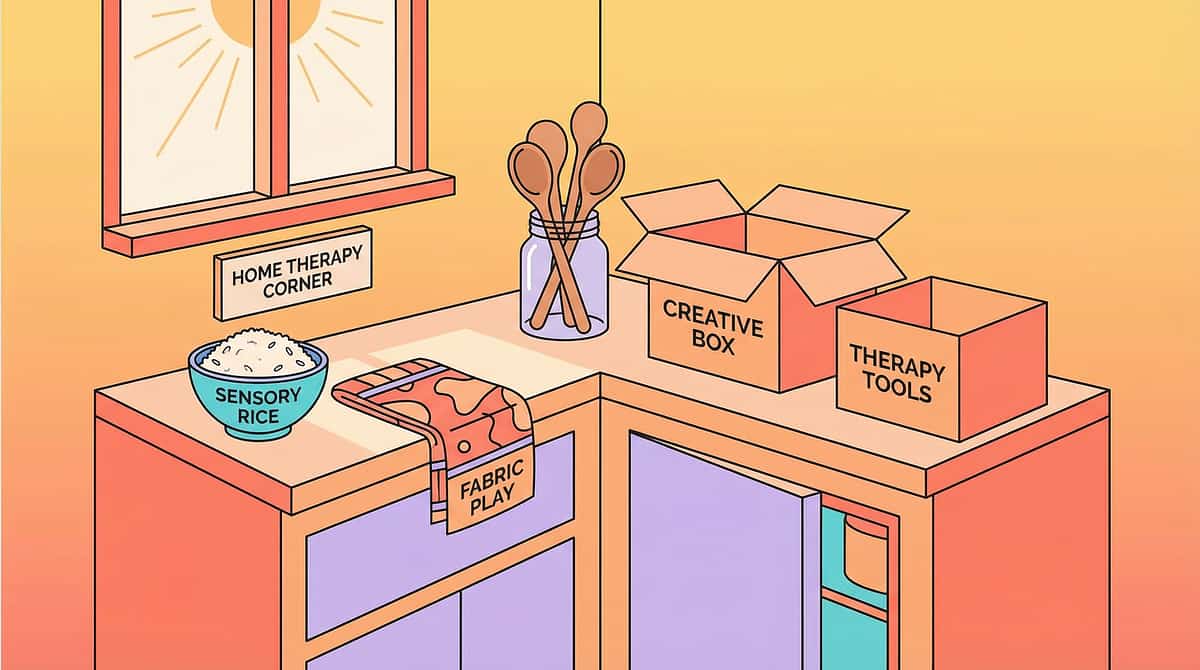
Every Material Has a Zero-Cost Version. Anxiety Doesn't Wait for Delivery.
The WHO/UNICEF Nurturing Care Framework principle: effective interventions must be accessible to all families regardless of economic status. Every commercial material has a household equivalent that works on the same therapeutic principle.
Material | Commercial Option | DIY Version (₹0) | |
Transitional Object | Animal soft toy ₹425 | Parent's scarf, button, handkerchief | |
Visual Schedule | Printed laminated chart ₹300 | Drawn on paper, phone photos | |
Worry Journal | Dedicated notebook ₹150 | Any exercise book, decorated | |
Coping Cards | Pre-made card sets ₹400 | Index cards, hand-drawn, binder ring | |
Fidget Tool | Fidget cube ₹300 | Smooth stone, hair tie, fabric scrap | |
Social Story | Published book ₹600 | Parent-written with photos of child's actual school | |
Breathing Card | Printed pattern card ₹200 | Hand-drawn square breathing pattern | |
Brave Chart | Sticker chart ₹150 | Paper grid with pencil marks | |
Check-In System | Communication notebook ₹200 | Any small notebook, pre-written notes |
"The therapeutic principle is the object, not the price tag. A smooth stone your child chose from the garden is as effective a fidget as a commercial tool — if it regulates them." — Pinnacle Blooms OT Consortium
Source: PMC9978394 | WHO NCF Handbook (2022)
ACT II — Safety
Safety First: Before You Begin
Before you deploy any material, read this. Clinical precision in the home requires clinical awareness.
🔴 RED — Do NOT Proceed
Seek professional evaluation first if:
- Child expresses suicidal ideation, self-harm thoughts, or hopelessness
- School avoidance has been complete for more than 2 weeks
- Child has experienced recent trauma or disclosure of abuse
- Physical symptoms are severe enough to warrant medical investigation
- Anxiety is accompanied by dissociation, psychosis, or loss of reality contact
🟡 AMBER — Modify and Monitor
- First-time school anxiety — introduce materials gradually, not all at once
- Child with autism: visual schedules essential; adapt all materials for communication level
- Very young children (4–5): simplify all materials, lead with transitional objects + visual schedules only
- After extended school absence: begin with modified school exposure plan first
🟢 GREEN — Proceed With These Foundations
- Child is medically cleared (anxiety, not illness, driving symptoms)
- Parent understands the "validate and proceed" principle
- School is informed and collaborative
- Materials are introduced gradually (2–3 initially, not all 9 at once)
- Worry journal is not used for trauma content or self-harm ideation
⚠️Important: Accommodating school avoidance (allowing the child to stay home) provides short-term relief but long-term escalation. Avoidance feeds anxiety. The goal is "validate and proceed" — the child attends school WITH support, not despite it.
If you are unsure whether to proceed — call: 📞9100 181 181 (FREE, 16+ languages, 24x7)
Source: DOI: 10.1007/s12098-018-2747-4 | NCAEP 2020
ACT III — Readiness
60-Second Readiness Check Before Every Morning Session
✅ GO — All Green
- Child slept adequately
- No fever or illness
- No acute trauma since yesterday
- Morning started before 7:30 AM (no rush)
🟡 MODIFY — Adjust the Session
Child had a difficult night but is physically well → Use simplified visual schedule only. Shorten goodbye ritual. Reduce expectations for today.
🔴 POSTPONE — Not Today As Planned
Child has genuine physical illness | Significant trauma occurred | Acute family crisis → Postpone WITH a clear re-entry plan for tomorrow. Never postpone without a plan.
"The best session is one that starts right. Pushing through when the child isn't ready builds negative associations with the materials and with school. Data matters — every attempt is information." — Pinnacle ABA Consortium
Source: ABA Antecedent Manipulation Principles | PMC11506176
Step 1 of 6
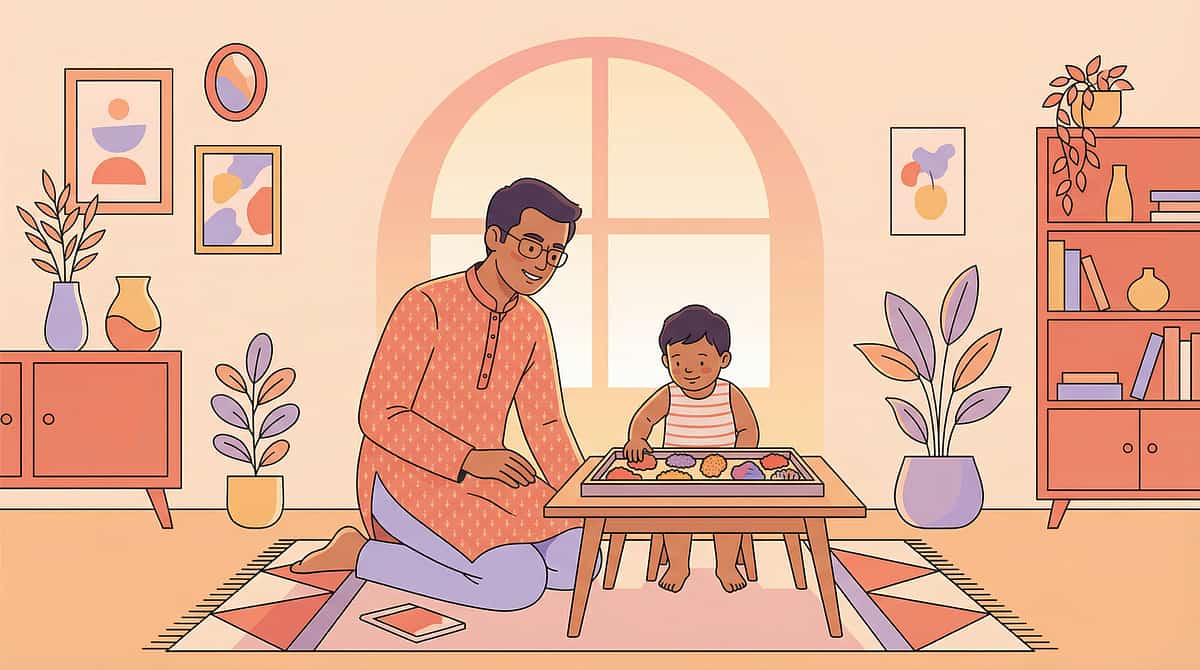
Step 1: The Invitation
The morning doesn't begin with "Get up, we're late." It begins with connection.
The Invitation Script:
"Good morning. Let's check your brave morning plan together." [Show visual schedule]
"Your special object is ready in your bag." [Reference transitional object]
"You've got all your tools. I know today feels hard. I believe you can do this."
"Good morning. Let's check your brave morning plan together." [Show visual schedule]
"Your special object is ready in your bag." [Reference transitional object]
"You've got all your tools. I know today feels hard. I believe you can do this."
❌ What NOT to Say
- "You'll be fine." — Dismisses the anxiety
- "There's nothing to be scared of." — Invalidates their nervous system
- "Don't cry." — Shames the emotional response
✅ What TO Say
"I know you're scared. It's okay to be scared. You're going anyway — because you can do hard things."
This validates the fear while maintaining the expectation. Both are true at the same time.

Step 2 of 6
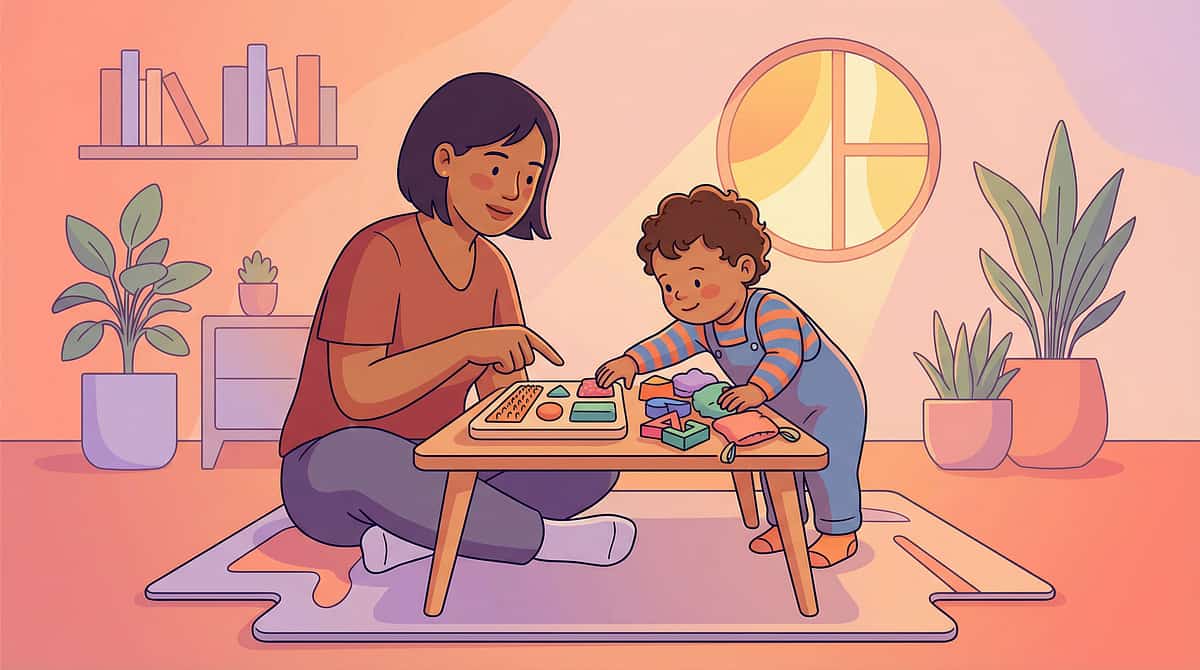
Step 2: Engage With Morning Materials
The visual schedule runs the morning — not the parent. The child checks off each step independently, building agency and competence from the very first minutes of the day.
This 15–20 minute morning engagement with materials is the therapeutic core. Each step your child completes is evidence of their growing capability. The schedule is the authority — it removes parent-child conflict and gives the child something concrete to anchor to.
Source: NCAEP 2020 | Visual Supports as EBP | PMC11506176
Step 3 of 6
Step 3: The Departure — The Most Important 3 Minutes
The Goodbye Ritual (30 seconds maximum):
"I love you. You've got your tools. I'll see you at [pickup time]. You can do this."
One physical gesture (hug, high-five, fist bump). Then: Parent LEAVES. Immediately. No lingering.
"I love you. You've got your tools. I'll see you at [pickup time]. You can do this."
One physical gesture (hug, high-five, fist bump). Then: Parent LEAVES. Immediately. No lingering.
Why this matters: Long, extended goodbyes increase distress. The child's nervous system needs to see the parent confident and departing — not uncertain and hovering. Each second of lingering tells the child's amygdala: "There IS something to be scared of — even my parent is nervous."
✅ Ideal
Child accepts goodbye, walks in with minimal resistance
✅ Acceptable
Child cries but can be handed off to teacher; calms within 5–10 minutes
🟡 Concerning
Extended crying beyond 20 minutes; physical aggression; teacher cannot receive child — document and review
🔴 Escalation
Child panics severely; vomits; cannot be separated — document and call 9100 181 181
Source: PMC11506176 | ABA Drop-Off Protocol Literature
Steps 4–5 of 6
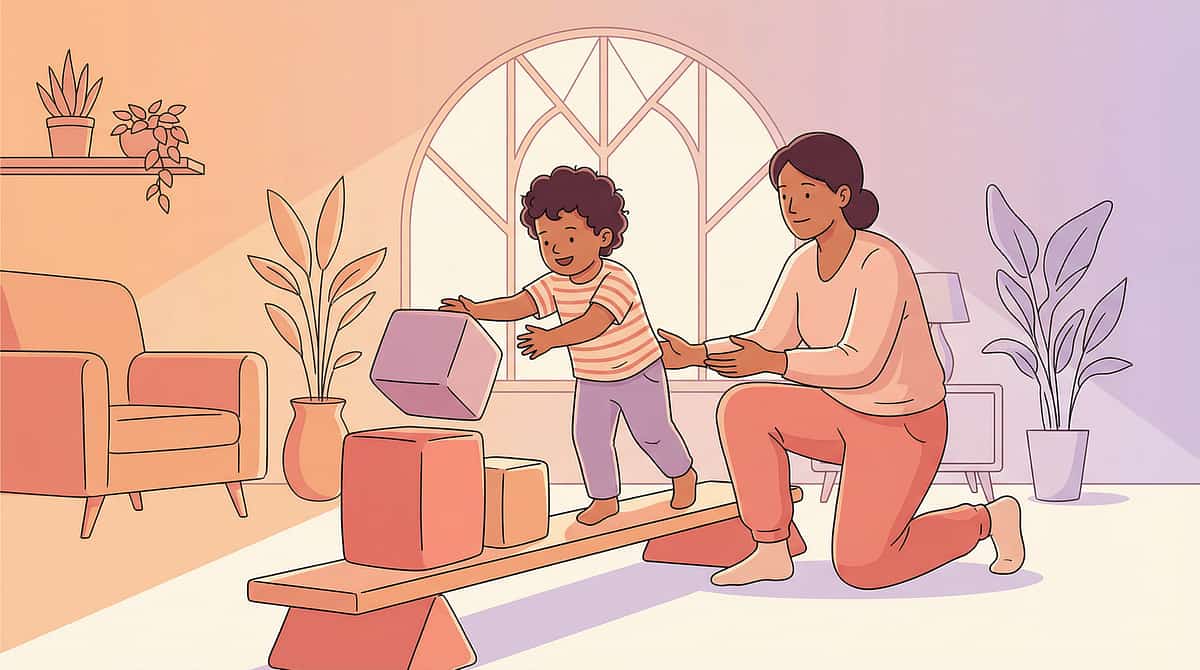
Steps 4–5: In-School Coping and Reinforcement at Pickup
Step 4: In-School Material Use (Child-Initiated)
During the school day, the child has:
Coping cards on bag zipper — for rising anxiety moments
Fidget tool in pocket or pencil case — continuous background regulation
Transitional object in bag — accessible at break times
Breathing card in desk — for acute anxiety moments
Check-in time scheduled (e.g., 12:30 PM) — not on demand
Step 5: Reinforcement at Pickup
The Pickup Debrief (brief, positive):
"I'm so glad to see you. You did it." → Mark brave chart together.
"Was there a moment you used your tools?" → Celebrate the tool use, not just the attendance.
"I'm so glad to see you. You did it." → Mark brave chart together.
"Was there a moment you used your tools?" → Celebrate the tool use, not just the attendance.
❌ Avoid: Detailed interrogation about anxiety levels
✅ Focus: Brave actions taken, tools used, moments survived
✅ Focus: Brave actions taken, tools used, moments survived
🛍️Brave Jar: The Rosette Imprint Reward Jar — ₹589 | Canon Category: Reinforcement Menus ✓
Step 6 of 6
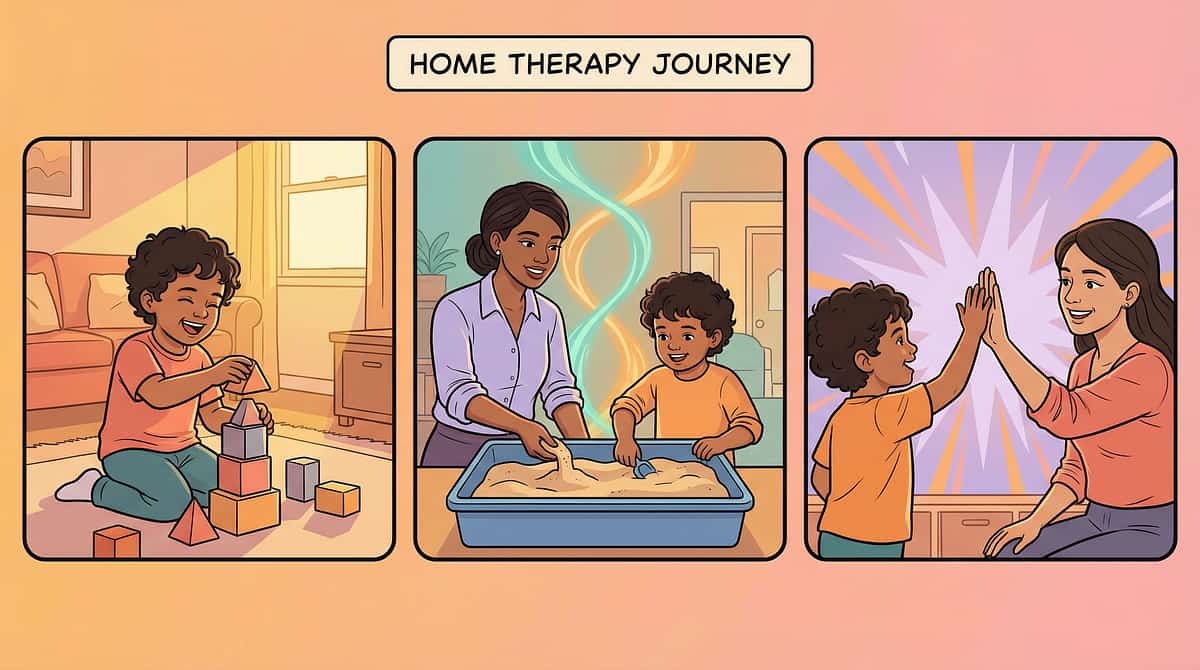
Step 6: Cool-Down and Transition Closure
After-school cool-down (10–15 minutes) is the final piece of the daily protocol — and one of the most important for building tomorrow's resilience.
Acknowledge arrival: "Welcome home. You survived."
Physical decompression: snack, movement, no demands for 15 minutes
Brief brave chart marking: child adds their point/sticker — even on hard days
Worry journal if afternoon worries arise about tomorrow — journal now, not at bedtime
❌ What NOT to Do After School
- Immediately discuss tomorrow's school
- Express parental anxiety: "Are you worried about tomorrow?"
- Skip brave chart marking on hard days — those need celebration most
✅ What TO Do After School
- Offer connection before questions
- Allow decompression time before any demands
- Mark the chart — every school day counts

ACT III — Materials Deep-Dive
Material 1: Transitional Objects and Parent Connection Items
The Science
Separation anxiety at its core is a fear of disconnection — the child's nervous system doesn't believe it will be safe apart from its attachment figure. Transitional objects bridge that neurological gap.
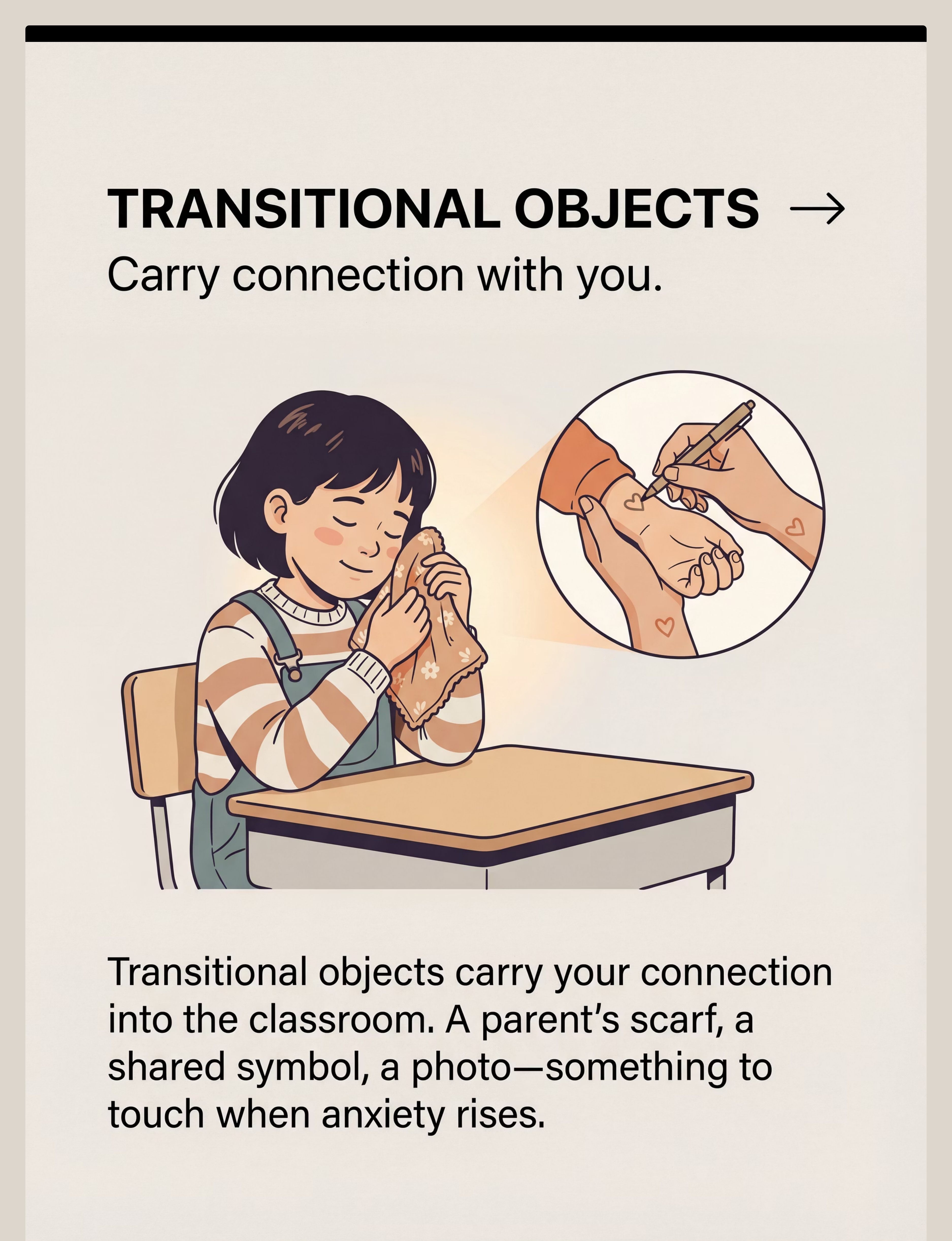
A small item from home — a parent's scarf sprayed with their perfume, a family photo, a keychain the parent has "charged with love," matching hearts drawn on both wrists — provides a tangible reminder that the connection continues even when physically apart. When anxiety rises, the child touches the object and activates the felt sense of parental presence. This is not magic — it is a regulation anchor that speaks directly to the nervous system.
DIY Protocol (Step-by-Step)
- Choose an item that genuinely belongs to the parent (not something bought new)
- Create a morning ritual: hold the object together, say your phrase ("I'm putting my love in this")
- Draw matching hearts on wrists each morning — child's wrist + parent's wrist
- Write a surprise lunchbox note: "Found it? I'm thinking of you right now."
- Have a backup object in case the primary is forgotten
What / Why / When / Where / How
- WHAT: A physical object representing parental connection
- WHY: Activates felt sense of safety; reduces amygdala activation at separation
- WHEN: Every school day; loaded into bag the night before
- WHERE: School bag, pocket, desk drawer — accessible but not obtrusive
- HOW: Child touches/holds during stressful moments; parent reinforces meaning each morning
🛍️ Canon Material: Animal Soft Toys — ₹425 | Price Range: ₹0–500 | DIY: ₹0 (use existing meaningful items)

ACT III — Materials Deep-Dive
Material 2: Visual Morning Routine Schedules
The Science
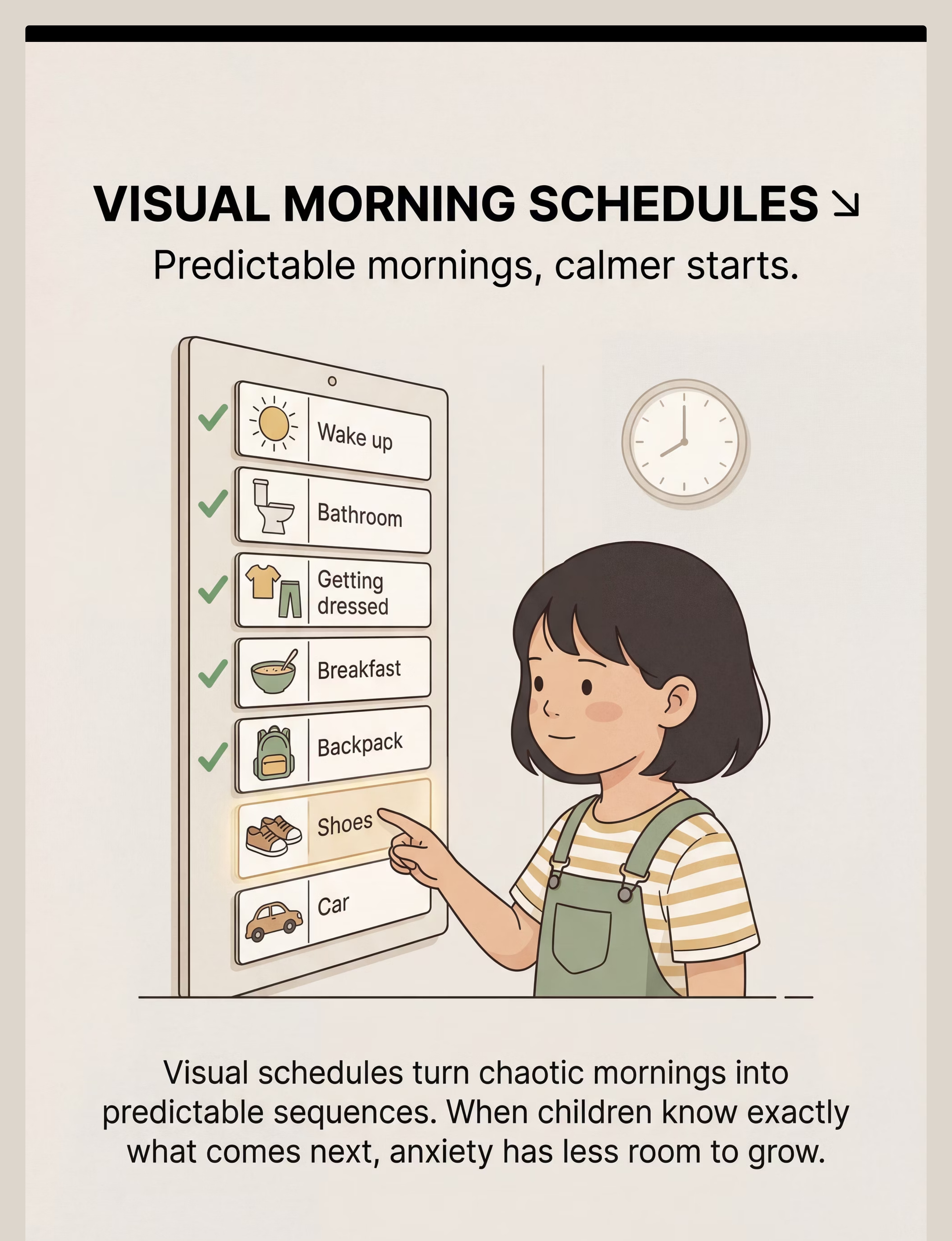
Anxious mornings are chaotic mornings — and chaos feeds anxiety. Visual morning routine schedules externalize the sequence, removing decisions and reducing parent-child conflict. The schedule becomes the authority — not the parent, not the clock. No one argues with the schedule.
For anxious children, predictability is regulating. Knowing exactly what will happen reduces the "what ifs" that fuel anticipatory anxiety. The schedule can also embed coping steps: "Take 3 deep breaths" can appear between "put on shoes" and "get in car."
DIY Protocol
- Photograph your child doing each morning step (or use simple drawings)
- Print, laminate, and place at child's eye level in bathroom or kitchen
- Add a velcro "done" tab for each step — child marks completion
- Include 1–2 coping steps in the sequence
- Practice on calm days (weekends) before using for school mornings
The visual schedule removes the parent as the "enforcer" — the child follows the chart, not your instructions. This reduces morning conflict significantly.
Price Range: ₹200–800 | DIY: ₹0 (paper, pen, phone photos)

ACT III — Materials Deep-Dive
Material 3: Worry Journals and Worry Time Containers
The Science
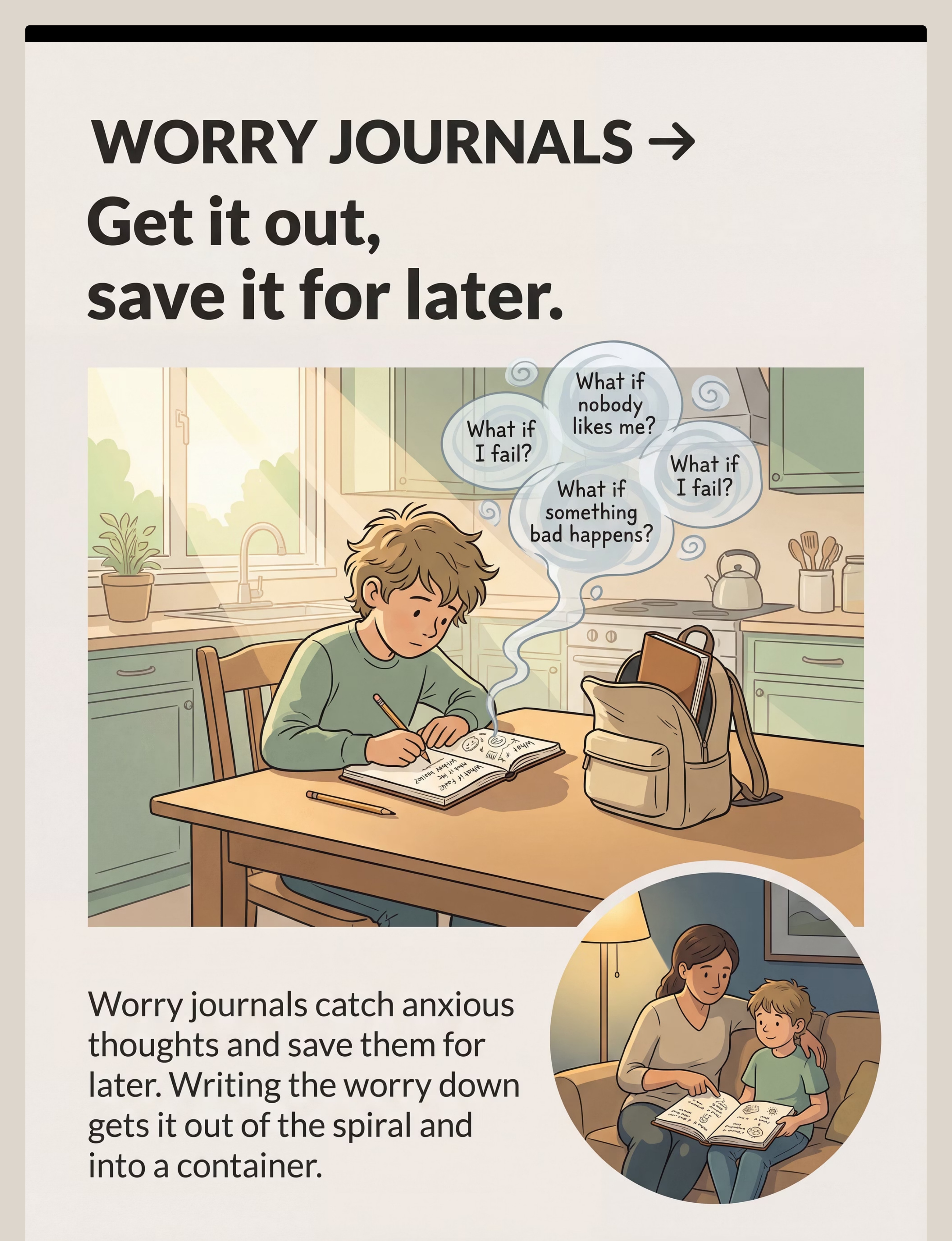
Anxious children have brains that won't stop producing "what if" thoughts. These worries multiply when pushed away. Worry journals don't eliminate worries — they defer them with dignity. The deal: worries are acknowledged and saved, not dismissed. They are reviewed during a designated "Worry Time" — a specific 15-minute window (not at bedtime, not before school).
The act of externalizing the worry — getting it out of the head and onto paper — provides immediate relief and creates cognitive distance from the anxious thought.
DIY Protocol
- Choose a dedicated notebook and decorate it together
- Establish Worry Time: same time, same place, 15 minutes (3–4 PM, not bedtime)
- Morning worries → written in journal → "saved for Worry Time"
- At Worry Time: review together, rate each worry 1–10, problem-solve collaboratively
- Actually hold Worry Time consistently — the system collapses without it
⚠️ The Worry Time only works if you consistently hold it. If children experience Worry Time being cancelled or ignored, they stop trusting the journal as a container.
Price Range: ₹100–400 | DIY: ₹0 (any notebook)

ACT III — Materials Deep-Dive
Material 4: Coping Strategy Cards and Rings
The Science
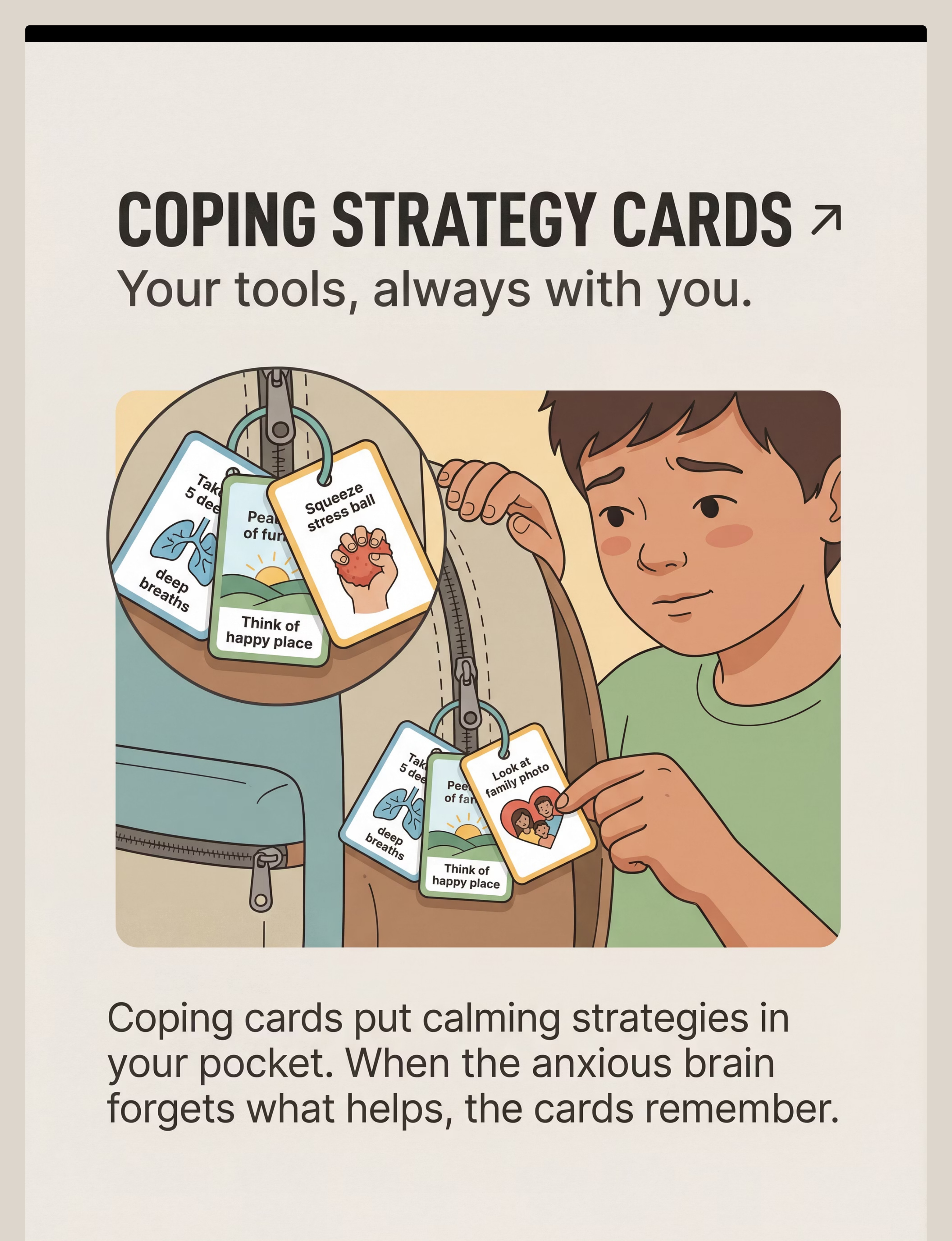
When anxiety floods the nervous system, the thinking brain goes offline. Children forget their coping strategies precisely when they need them most. Coping cards externalize memory — the child doesn't have to remember strategies, just look at them.
Cards work because they provide agency: the child HAS tools, visible and portable, that they control. In a moment of school anxiety, flipping through their cards is a self-initiation of regulation — not dependence on an adult.
Sample Card Content (Build These Yourself)
- Card 1: "Take 5 slow breaths" (with breathing pattern visual)
- Card 2: "Squeeze my fidget 10 times"
- Card 3: "Look at my family photo"
- Card 4: "Think of my safe place"
- Card 5: "Count backwards from 10"
- Card 6: "I've survived hard things before"
DIY Protocol
- Index cards + hole punch + binder ring
- Child helps choose which strategies to include (5–7 cards)
- Practice each strategy when calm — familiarity is the activation key
- Attach to school bag zipper for immediate access
Price Range: ₹150–600 | DIY: ₹20 (index cards + binder ring)
ACT III — Materials Deep-Dive
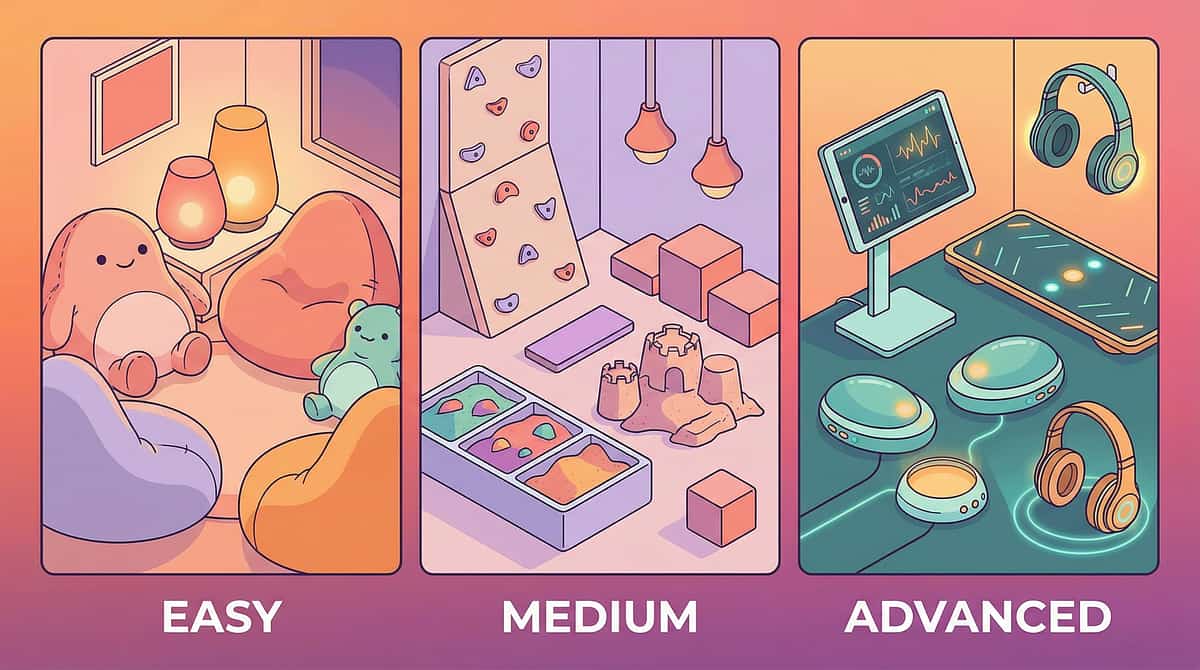
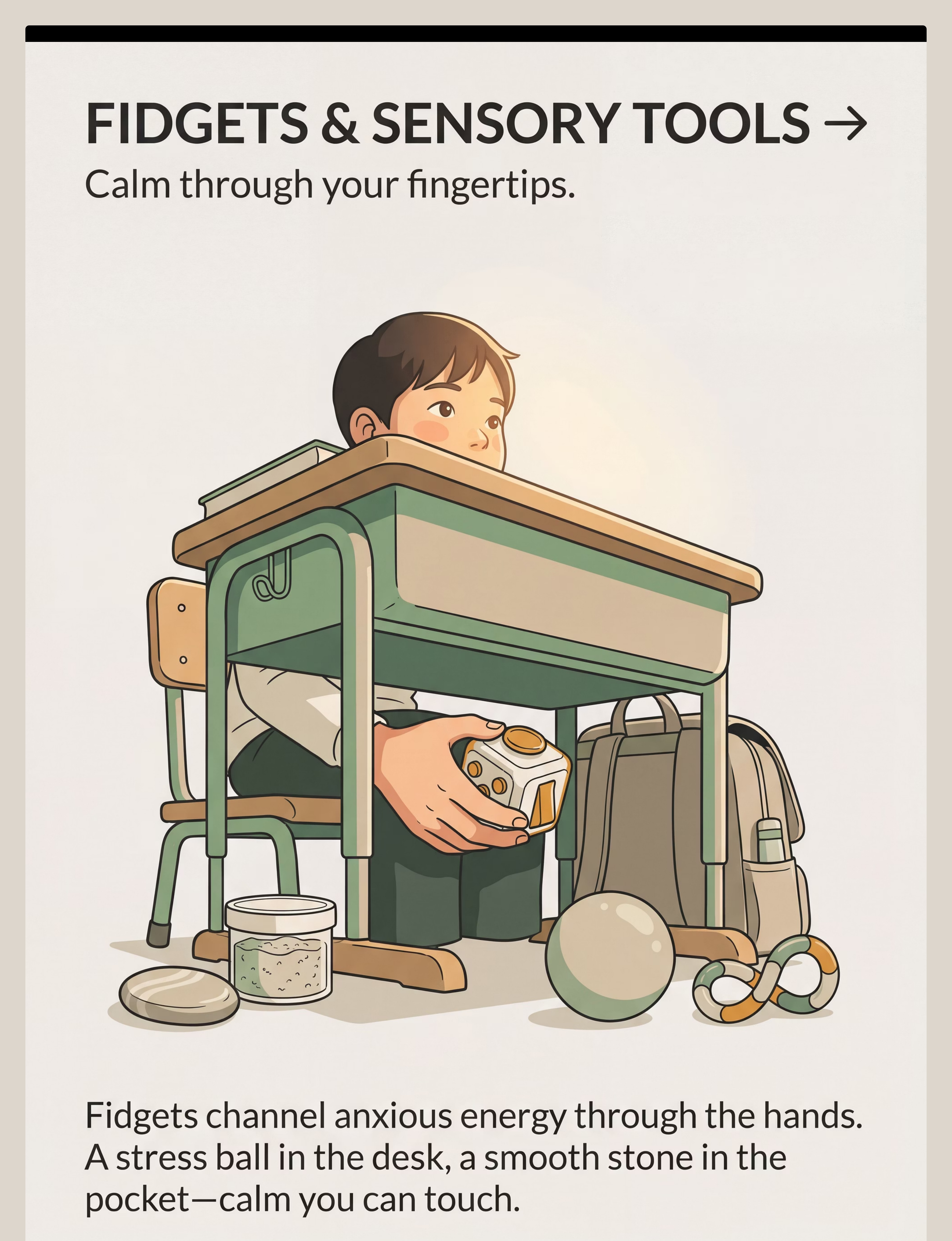
Material 5: Fidgets and Sensory Regulation Tools
The Science
Anxiety is a whole-body experience. The nervous system activates, muscles tense, energy builds with nowhere to go. Fidgets give that anxious energy a productive outlet through the hands. The repetitive motion of fidgeting activates the parasympathetic nervous system, promoting calm. For anxious children, a quiet fidget in the pocket means they always have a subtle way to self-regulate without disrupting class or drawing attention.
Research supports fidgeting as improving both focus and reducing anxiety — particularly for children with attentional or anxiety differences.
Critical Classroom Rule
Fidgets must be QUIET. No squeaking, no flashing, no noise. A smooth stone or textured putty works better than a spinnable toy for classroom use.
DIY Options (₹0)
- Smooth stone from garden
- Fabric scrap to rub
- Hair tie on wrist
- Homemade stress ball (balloon + flour)
School Approval Note
Show the teacher the fidget before sending to school. Many teachers will support this once they understand the function — a brief written explanation helps.
Price Range: ₹100–800 | DIY: ₹0

ACT III — Materials Deep-Dive
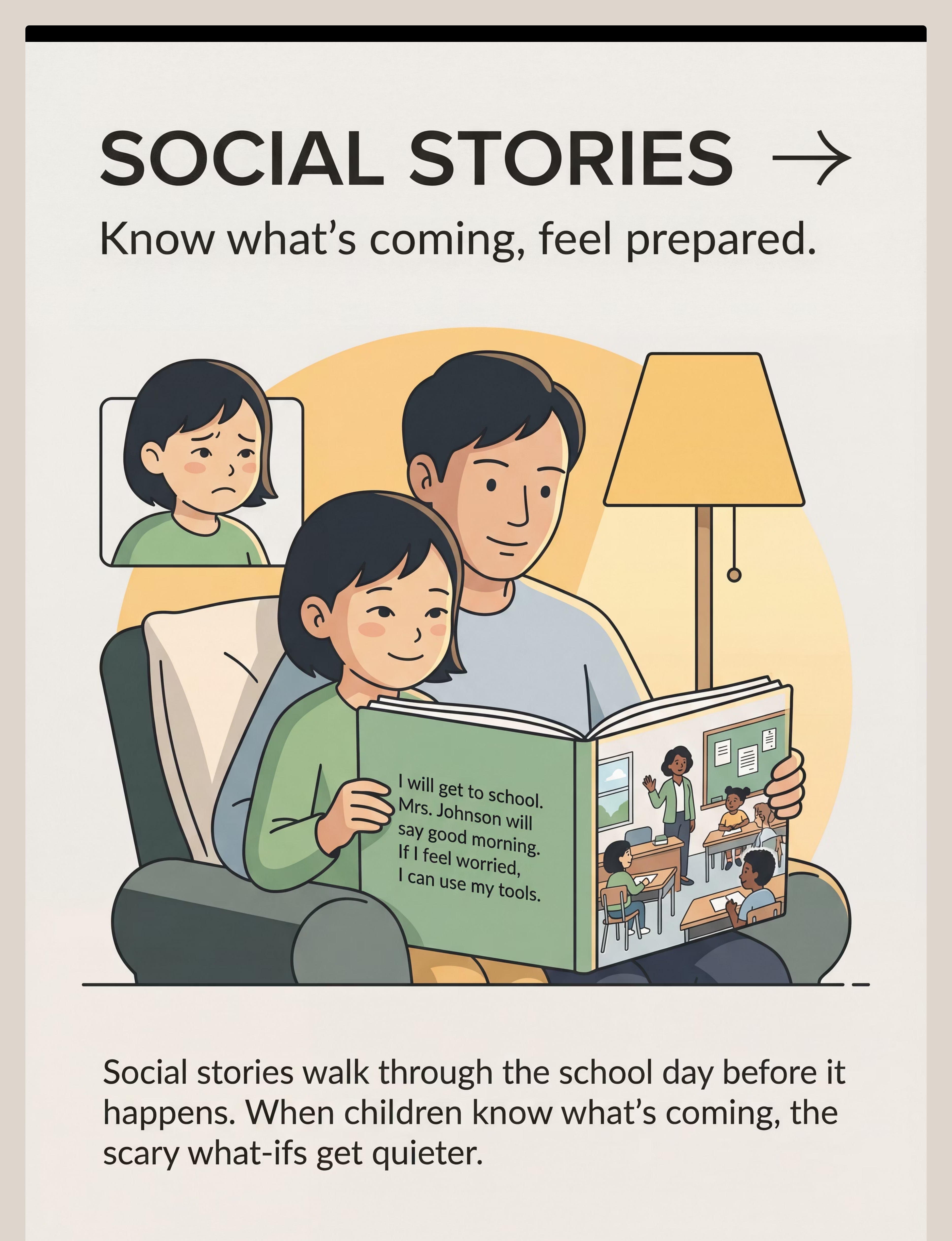
Material 6: Social Stories and School Preparation Books
The Science
Anticipatory anxiety feeds on uncertainty. The anxious brain generates "what if" scenarios, most catastrophic, and cannot distinguish imagined disasters from likely reality. Social stories replace scary unknowns with concrete, manageable knowledge. They walk through the school day in specific, reassuring detail with embedded coping statements. Reading the story the night before AND morning of school primes the brain for what will happen.
📞9100 181 181 — Our SLPs can guide you through social story creation for your child's specific school and anxiety profile.
Personalized Social Story Structure
"My School Morning Story"
- Page 1: "I will wake up and follow my morning plan."
- Page 2: "I will arrive at school. [Teacher's name] will say hello."
- Page 3: "We will do [first subject]. I know how to do this."
- Page 4: "If I feel worried, I will use my coping tools."
- Page 5: "At lunchtime, I may have my check-in."
- Page 6: "At [pickup time], [parent name] will be there. I will be proud of myself."
Use photos of your child's ACTUAL school, classroom, and teacher for maximum effectiveness. The familiar images directly address the specific unknowns driving the anxiety.
Price Range: ₹200–800 | DIY: ₹0 (use photos of child's actual school)

ACT III — Materials Deep-Dive
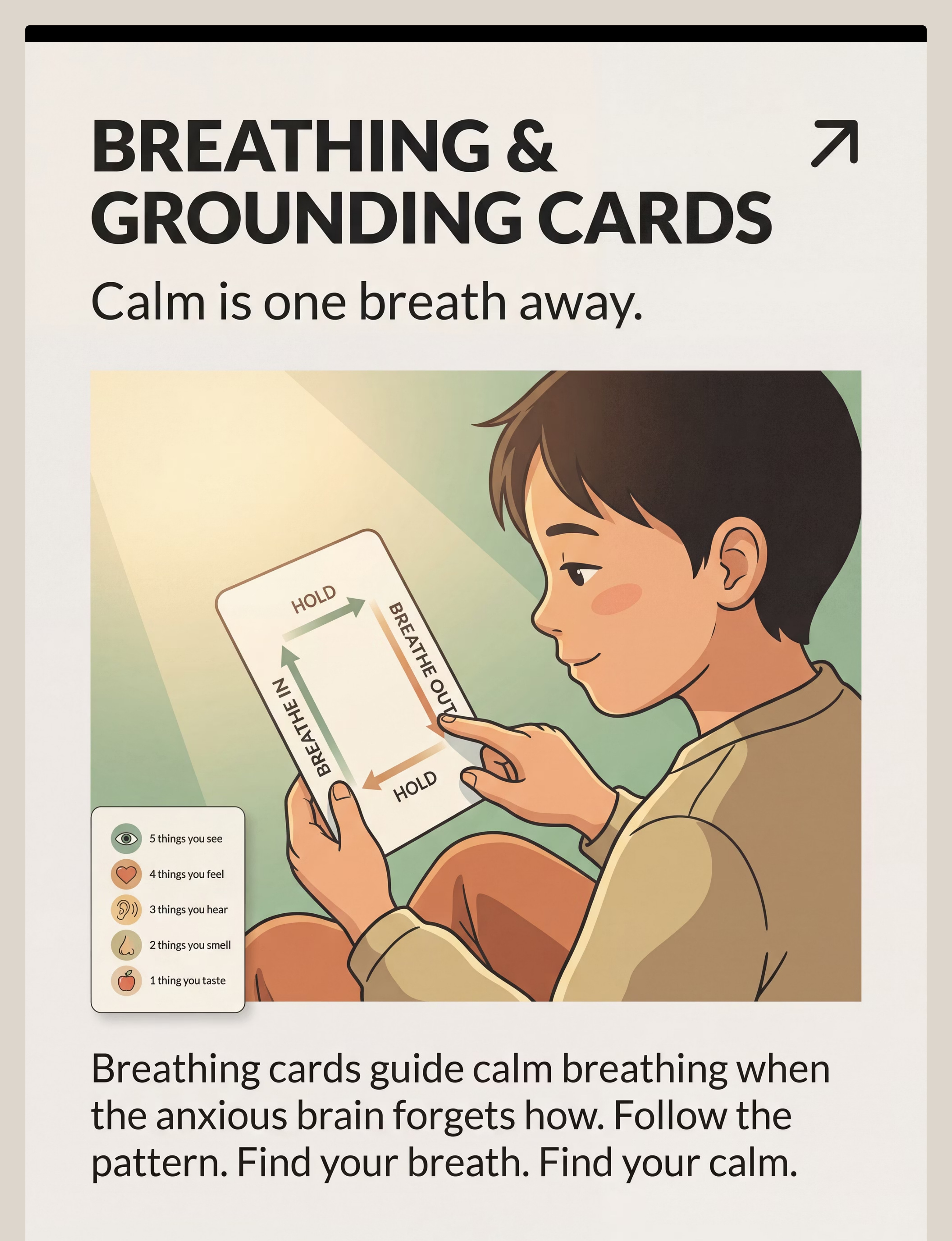
Material 7: Breathing and Grounding Cards
The Science
Deep breathing activates the parasympathetic nervous system and brings the body out of fight-or-flight. The challenge: anxious children forget to breathe when they most need to. Breathing cards bypass this by externalizing the instruction.
Visual breathing patterns (square breathing, lazy 8, star breathing) are particularly effective because they occupy the visual channel while regulating breath. The 5-4-3-2-1 grounding technique (5 things you see, 4 you hear, 3 you feel, 2 you smell, 1 you taste) interrupts catastrophic thinking by anchoring the child in the present moment.
Square Breathing (Print on Card)
Breathe IN (4 counts) → HOLD (4 counts) → Breathe OUT (4 counts) → HOLD (4 counts)
Repeat 3–4 times for full parasympathetic activation.
⚠️ Safety note: If child hyperventilates during "take a deep breath," focus on slowing the exhale rather than breathing in deeply. Or switch to the 5-4-3-2-1 grounding technique instead.
Price Range: ₹100–400 | DIY: ₹0 (draw the breathing pattern on any card)

ACT III — Materials Deep-Dive
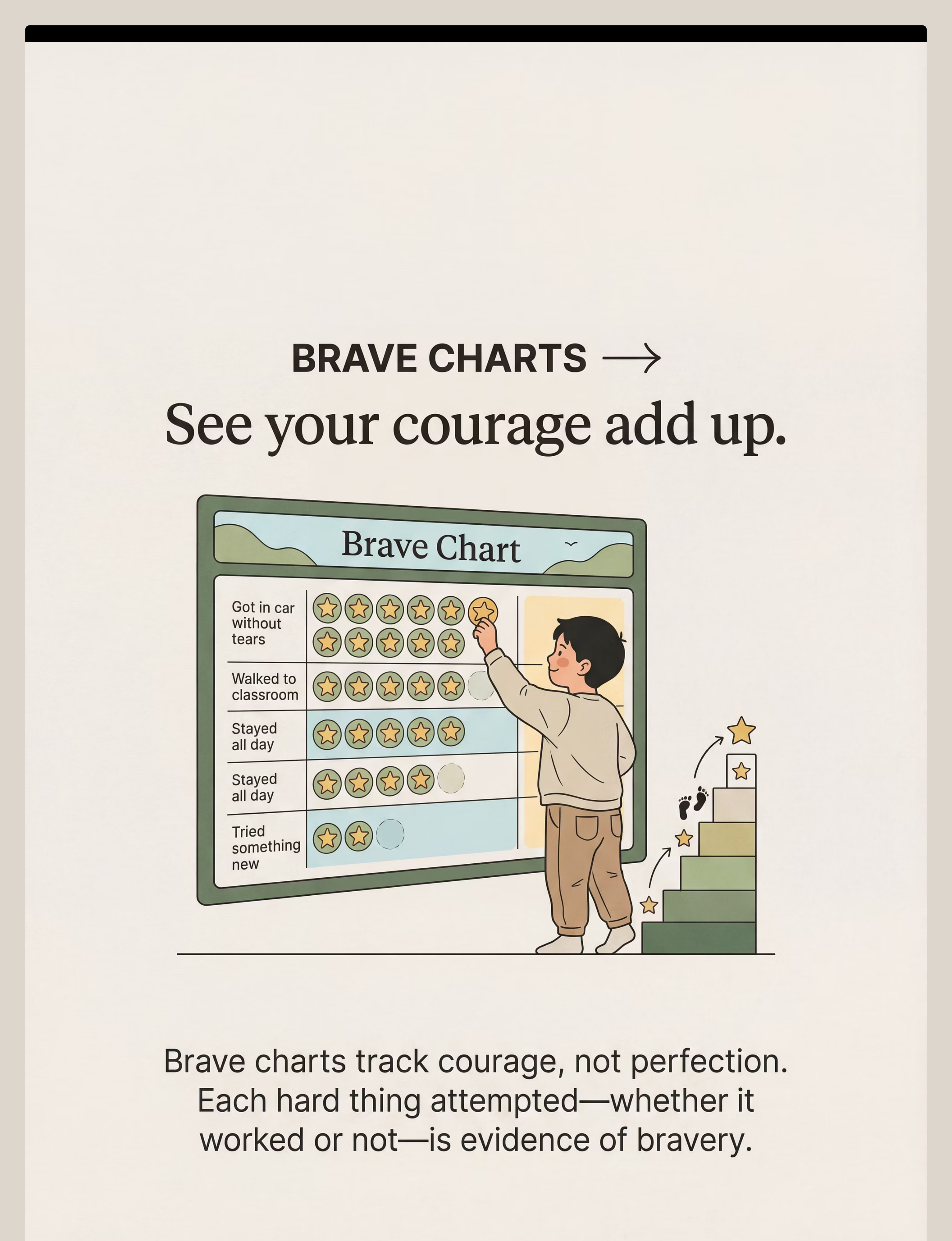
Material 8: Brave Charts and Graduated Exposure Trackers
The Science
Overcoming anxiety requires doing the scary thing repeatedly until the brain learns it is survivable. But anxious children feel like they are failing every day. Brave charts reframe the narrative: each hard thing attempted is evidence of courage. The visual accumulation of bravery points provides concrete counter-evidence to the anxiety's message "I can't do this."
Graduated exposure trackers operationalize the clinical gold standard: breaking the feared situation into smaller steps, celebrating progress at each level, and building a ladder from avoidance to full participation.
Exposure Ladder Example (Customize Per Child)
- Mom walks to classroom door (Week 1–2)
- Mom walks to school entrance (Week 3–4)
- Mom drops at school gate (Week 5–6)
- Mom drops at curb (Week 7–8)
- Child enters independently (Week 9–10)
Brave Actions to Track
- Got in car without extended crying
- Walked through school entrance
- Used a coping tool at school
- Stayed all day
- Said goodbye without clinging
⚠️ Brave charts must NEVER shame anxiety. "You were so brave even though you cried" validates both the fear and the courage.
🛍️ Canon Material — Reward Jar: The Rosette Imprint Reward Jar ₹589 | Canon: Reinforcement Menus ✓ | DIY: ₹0 (paper grid + stickers)

ACT III — Materials Deep-Dive
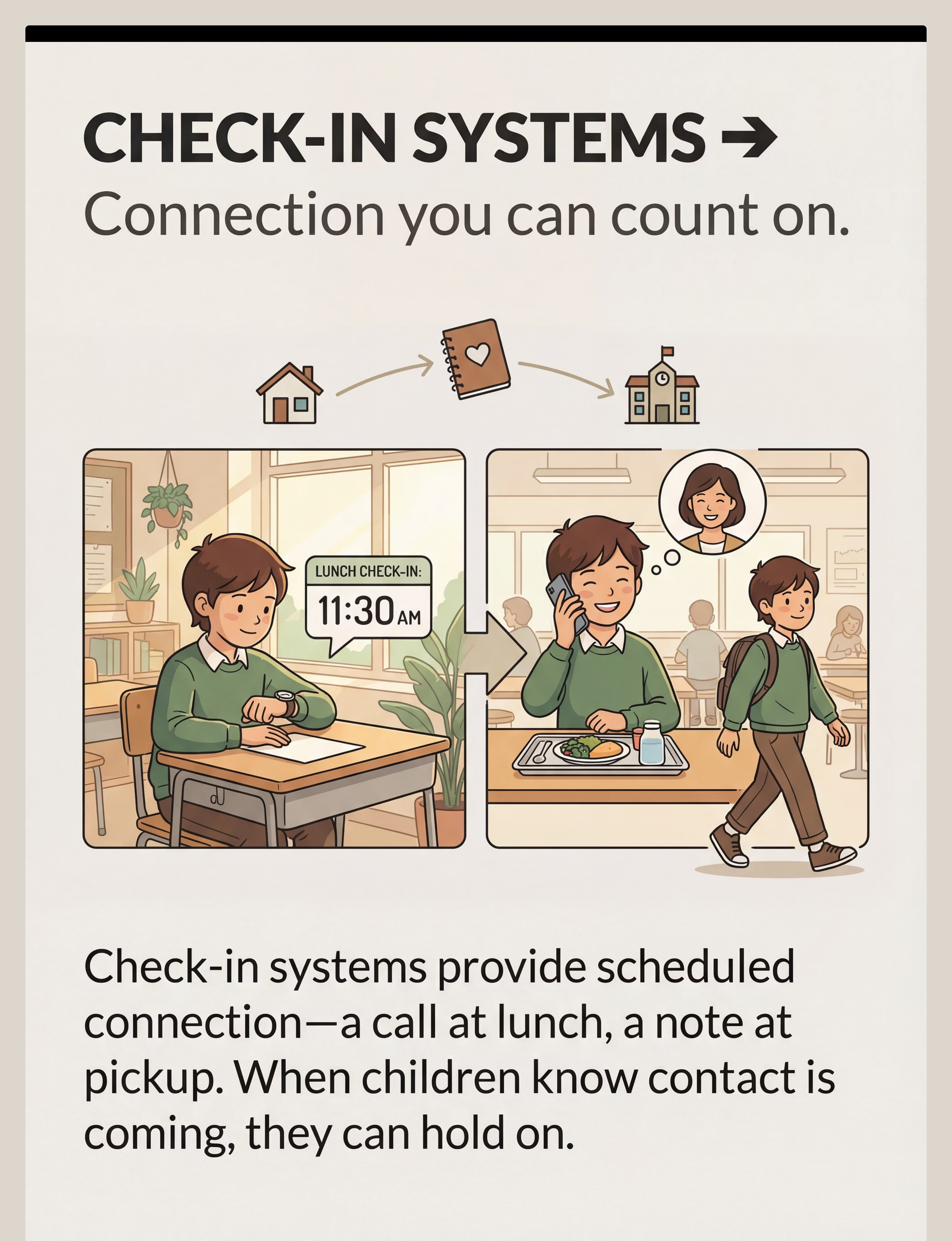
Material 9: Check-In Systems and School-Home Communication
The Science
Anxious children worry about not having access to parents during the school day. Check-in systems provide structured, predictable parent contact that satisfies the need for connection WITHOUT enabling excessive reassurance-seeking.
The key is predictability and limits: the check-in happens at the scheduled time, not on demand. This teaches the child they can tolerate the gap between check-ins while ensuring they are not completely cut off. Over time, check-ins are gradually reduced as tolerance builds.
Check-In System Setup
- Establish ONE scheduled contact point (e.g., 12:30 PM text or lunchtime call)
- Keep check-ins brief and positive (2–3 minutes maximum)
- Content: "How are you doing? I'm thinking of you." NOT: "Are you anxious?"
- For younger children: school-home notebook traveling in backpack
Fade Plan (Critical)
- Weeks 1–2: Daily check-in
- Weeks 3–4: Every other day
- Weeks 5–6: Twice per week
- Weeks 7–8: Once per week
- Week 9+: On-demand only (child requests)
📞9100 181 181 — Our team can help you build the check-in fade plan for your child's specific profile.
Price Range: ₹0–300 | DIY: ₹0 (pre-written notes, scheduled texts)

ACT III — Personalization
Adapt and Personalize: Calibrate for YOUR Child's Profile
No two anxious children are identical. The same 9 materials work differently depending on the anxiety type driving the morning distress.
If primary anxiety is… | Prioritize these materials first | |
Separation Anxiety | Transitional objects + Check-in systems | |
Social Anxiety | Coping cards + Fidgets + Social stories | |
Academic Anxiety | Coping cards + Brave charts + Breathing cards | |
Generalized / "What if" Anxiety | Worry journals + Visual schedules + Social stories | |
Sensory-driven (ASD/SPD) | Visual schedules (essential) + Fidgets + Social stories |
For Children with Autism
Visual schedules are non-negotiable. All materials must be communication-level appropriate. Social stories should use photos of the child's ACTUAL school environment. Visual timers essential. Sensory accommodations coordinated with school.
For Children with ADHD
Visual schedules with extra structure. Fidgets essential. Coping cards provide external memory support that their working memory struggles to provide.
For Perfectionist Children
Brave charts must explicitly celebrate EFFORT not outcomes. Worry journals address unrealistic worry content. Core frame: "Good enough is brave."
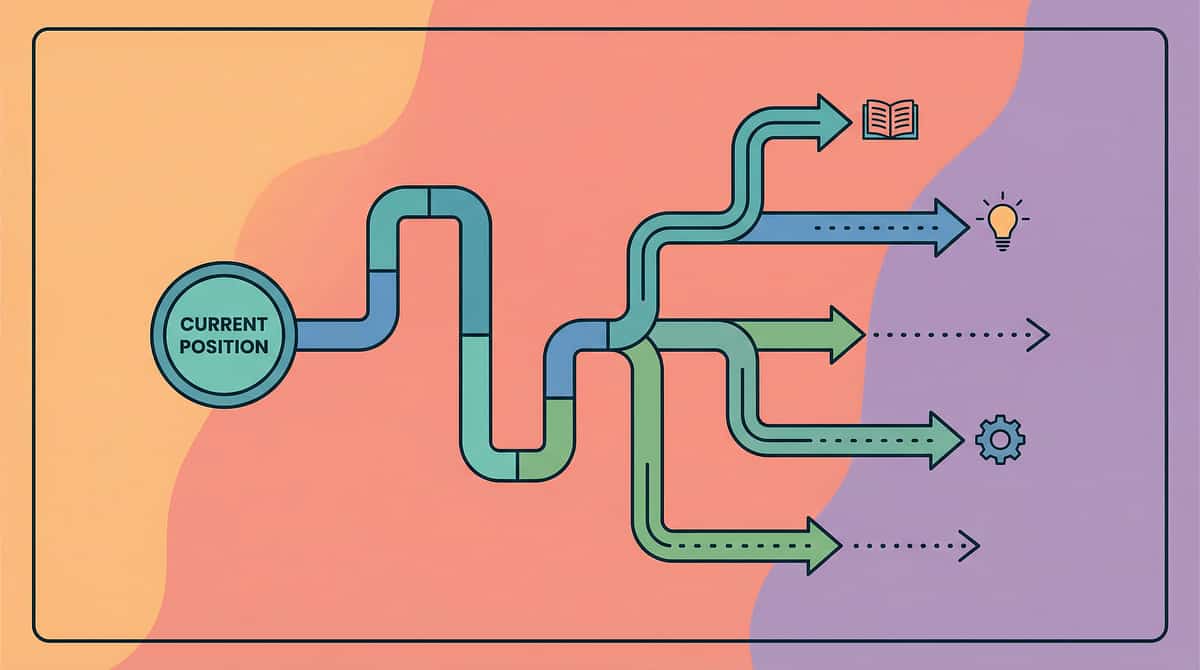
ACT IV — Progress Arc
Week 3–4: The Neural Pathways Are Forming
40%
Progress Reached
Consolidation phase — consistent tool use beginning to show in behavior
Watch for These Consolidation Signals
Child begins packing their materials without being reminded
Drop-off time reduces noticeably
Child initiates use of one coping tool without prompting
Mentions school without dread on occasional evenings
Pickup debrief contains a positive moment more often than not
"Synaptic pathways connecting 'school morning' to 'manageable experience' are being reinforced with every completed school day. Each time the child survives school, the amygdala receives evidence that contradicts its threat assessment."
🌟Parent milestone: You may notice you are calmer on weekday mornings. Your nervous system is regulating too.
Source: PMC11506176 | Neuroplasticity evidence for pediatric populations
ACT IV — Progress Arc
Week 5–8: From Coping With Anxiety to Managing Anxiety
70%
Progress Reached
Skill mastery phase — independent coping beginning to emerge
Mastery Indicators
- Child initiates morning material use independently
- Drop-off mostly smooth with occasional difficult days
- Child self-reports "using my tools" at school
- First report of independent coping without materials
- Weekends/evenings no longer dominated by anticipatory anxiety
Graduation Milestones — Begin Fading Materials
- ✓ 5 consecutive smooth drop-offs → reduce check-in from daily to every other day
- ✓ Child stops reaching for fidget consistently → it's now optional, not essential
- ✓ Morning follows visual schedule without checking it → routine internalized
Fading materials is a milestone, not a loss. When your child no longer needs a tool, it means the skill has been internalized. That is the goal of every intervention: to make itself unnecessary.
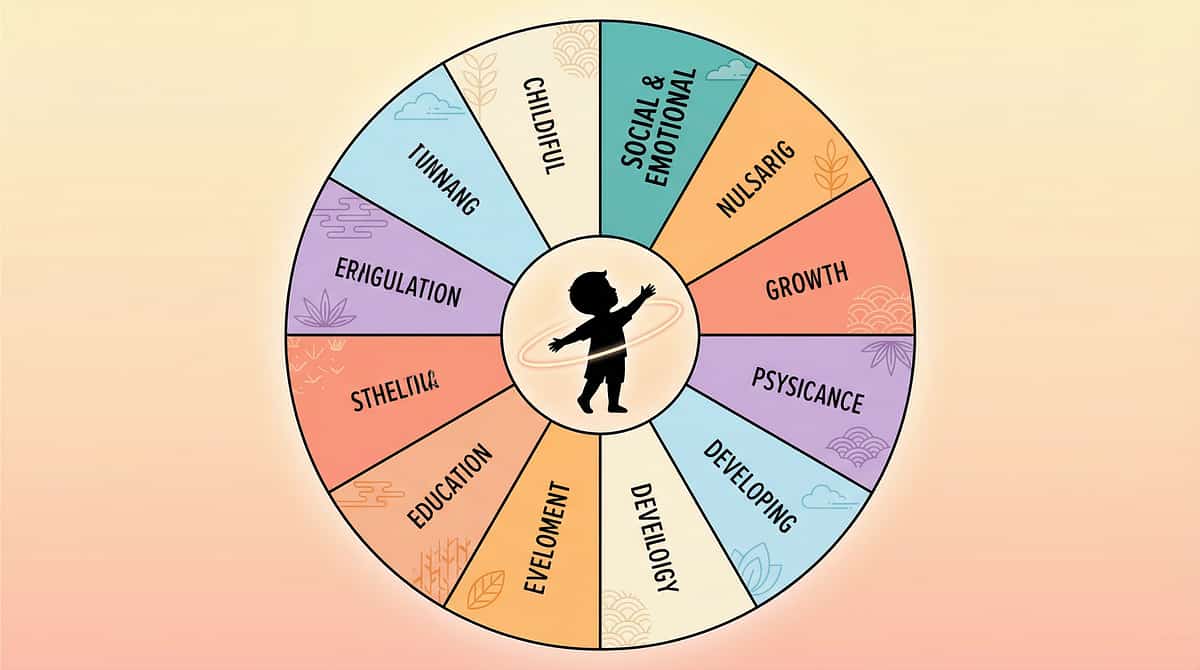
ACT IV — Developmental Map
School Anxiety Is One Domain. Your Child Is a Whole Developmental Ecosystem.
This technique addresses Domain C — Emotional Regulation. Your child's complete profile across all 12 domains requires an AbilityScore® Assessment for a full personalized GPT-OS® plan.
📞9100 181 181 — Request your child's AbilityScore® Assessment today. FREE. 16+ languages. 24x7.
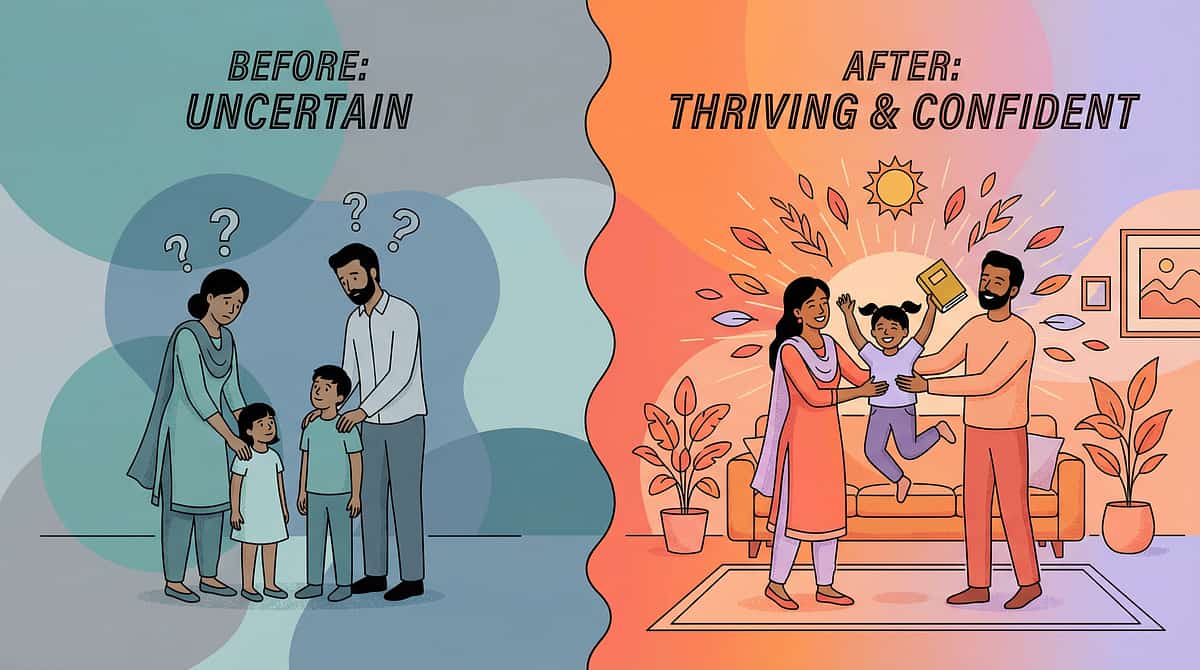
ACT V — Community
What 4 Months of Consistency Looks Like
"This morning, my daughter got dressed, ate breakfast, and got in the car without tears. At drop-off, she gave me a hug, said 'See you later, Mom,' and walked into school. Just walked in. Like it was normal. Like it was easy. We're not fighting the monster anymore. She's learned to live with it, and it's gotten smaller. The mornings aren't war zones anymore. They're just mornings."
— Parent, Pinnacle Network | Illustrative case; outcomes vary by child profile.
8 wks
School Participation
Baseline → Developed
12 wks
Anxiety Management
Crisis → Managed
90 sec
Drop-Off Duration
Reduced from 20 minutes
📞9100 181 181

ACT V — Community
You Don't Have to Fight This Alone
Join thousands of families navigating school anxiety with GPT-OS® support across 70+ centers and 16+ languages.
pinnacleblooms.org
Full parent education library. Techniques, tools, and resources across all 12 developmental domains.
GPT-OS® App
Daily EverydayTherapyProgramme™ support. Track progress, access materials, and stay connected to your plan.
9100 181 181
FREE National Autism Helpline. 16+ languages. 24x7. Five disciplines. One call.
care@pinnacleblooms.org
Write to our Consortium. Detailed questions, case-specific guidance, and partnership inquiries.
Consistency across caregivers multiplies impact. Share this page with your spouse, grandparents, and your child's teacher. When everyone responds the same way, the neural pathways form faster.

ACT V — Professional Support
70+ Pinnacle Centers. One Call Away from Expert Support.
When to Book a Consultation
- Materials have been used consistently for 4+ weeks with minimal progress
- School anxiety is affecting the entire family system
- Child has ASD, ADHD, trauma history, or learning disabilities requiring specialist input
- You need a formal AbilityScore® Assessment and personalized GPT-OS® plan
What Pinnacle Provides for School Anxiety
- ✓ AbilityScore® Assessment across all 12 domains
- ✓ Psychology: CBT and graduated exposure therapy
- ✓ Behavioral Therapy: Brave chart and exposure hierarchy design
- ✓ OT: Sensory accommodation and fidget prescription
- ✓ School consultation: 504/IEP support + teacher training
- ✓ Parent coaching: morning routine transformation
CIN: U74999TG2016PTC113063 | DPIIT: DIPP8651 | MSME: TS20F0009606 | GSTIN: 36AAGCB9722P1Z2
ACT V — Research
The Science Behind Every Material on This Page
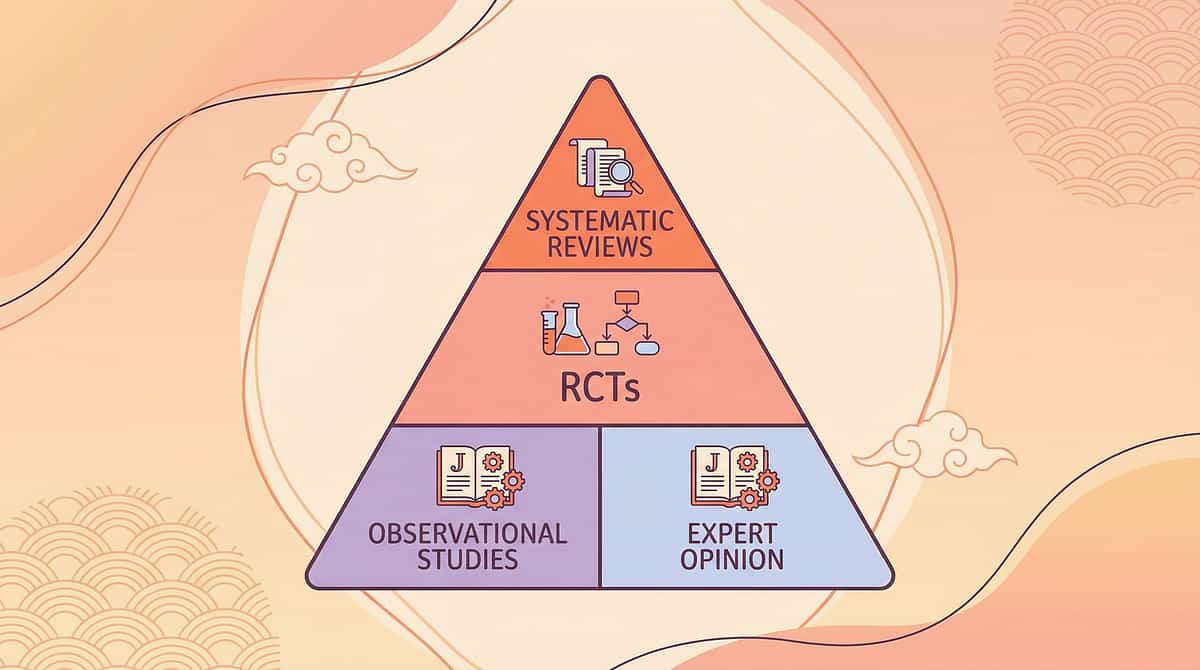
Deeper reading for the evidence-minded parent, clinician, or program lead. All materials on this page are backed by peer-reviewed research at Level I evidence — systematic reviews and multiple RCTs.
Study | Finding | Source | |
Meta-analysis: CBT for Pediatric Anxiety | 60–80% response rates for school anxiety with CBT-based approaches | PMC6447673 | |
PRISMA Systematic Review (2024) | Sensory integration as EBP for ASD | PMC11506176 | |
Meta-analysis, World J Clin Cases (2024) | SI therapy promotes social skills, adaptive behavior, motor skills | PMC10955541 | |
NCAEP EBP Report (2020) | Visual supports, social stories, behavioral interventions — confirmed EBP | NCAEP 2020 | |
Indian RCT (Padmanabha, 2019) | Home-based interventions: significant outcomes | DOI: 10.1007/s12098-018-2747-4 | |
WHO NCF (2018) | Parent implementation in home setting: population-scale evidence | nurturing-care.org | |
WHO/UNICEF CCD Package | Age-specific caregiver interventions: 54 countries | PMC9978394 |
Evidence grading follows Oxford Centre for Evidence-Based Medicine (OCEBM) Levels of Evidence. Level I — Multiple Systematic Reviews + RCTs.

ACT V — Technology
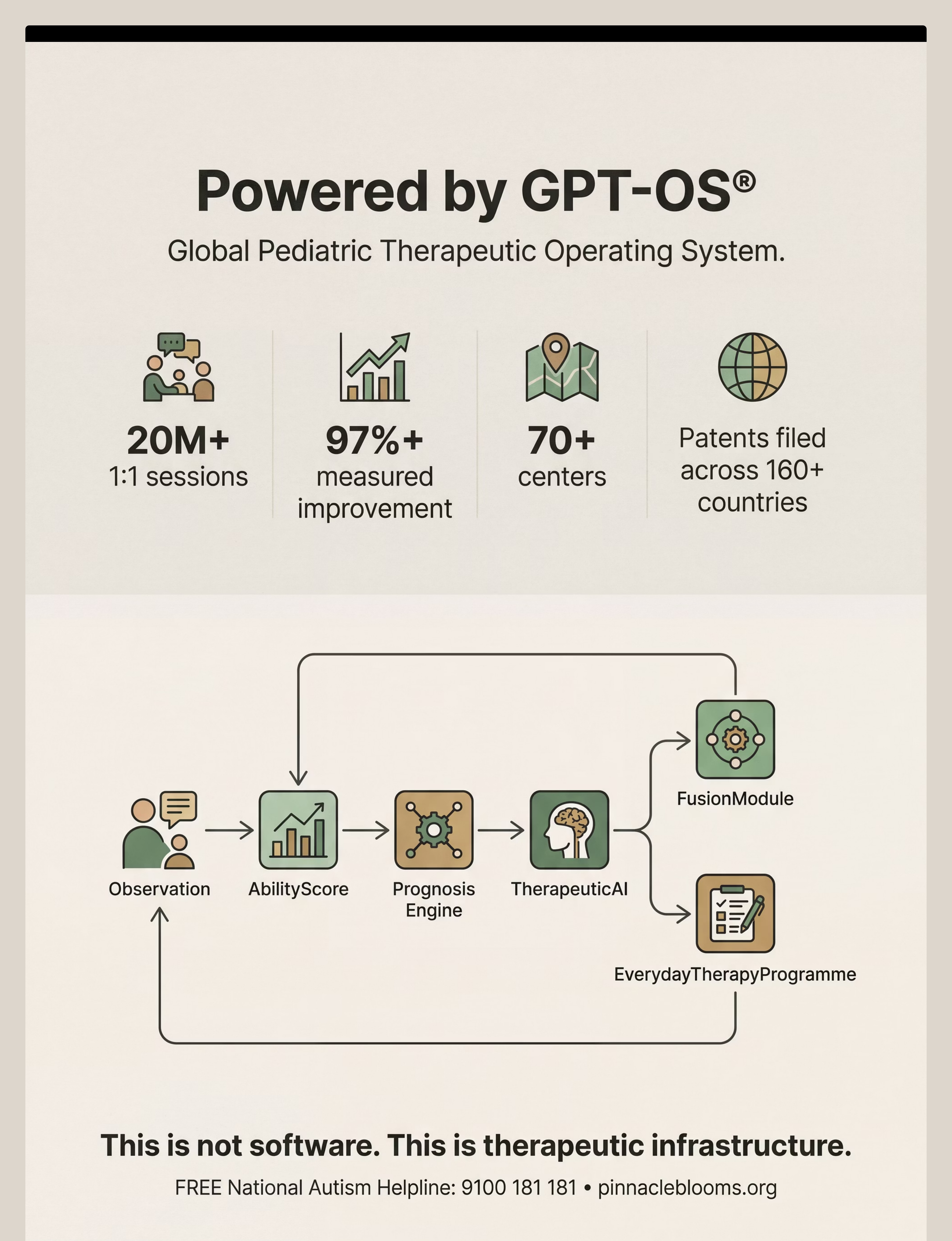
This Is Not Software. This Is Therapeutic Infrastructure.
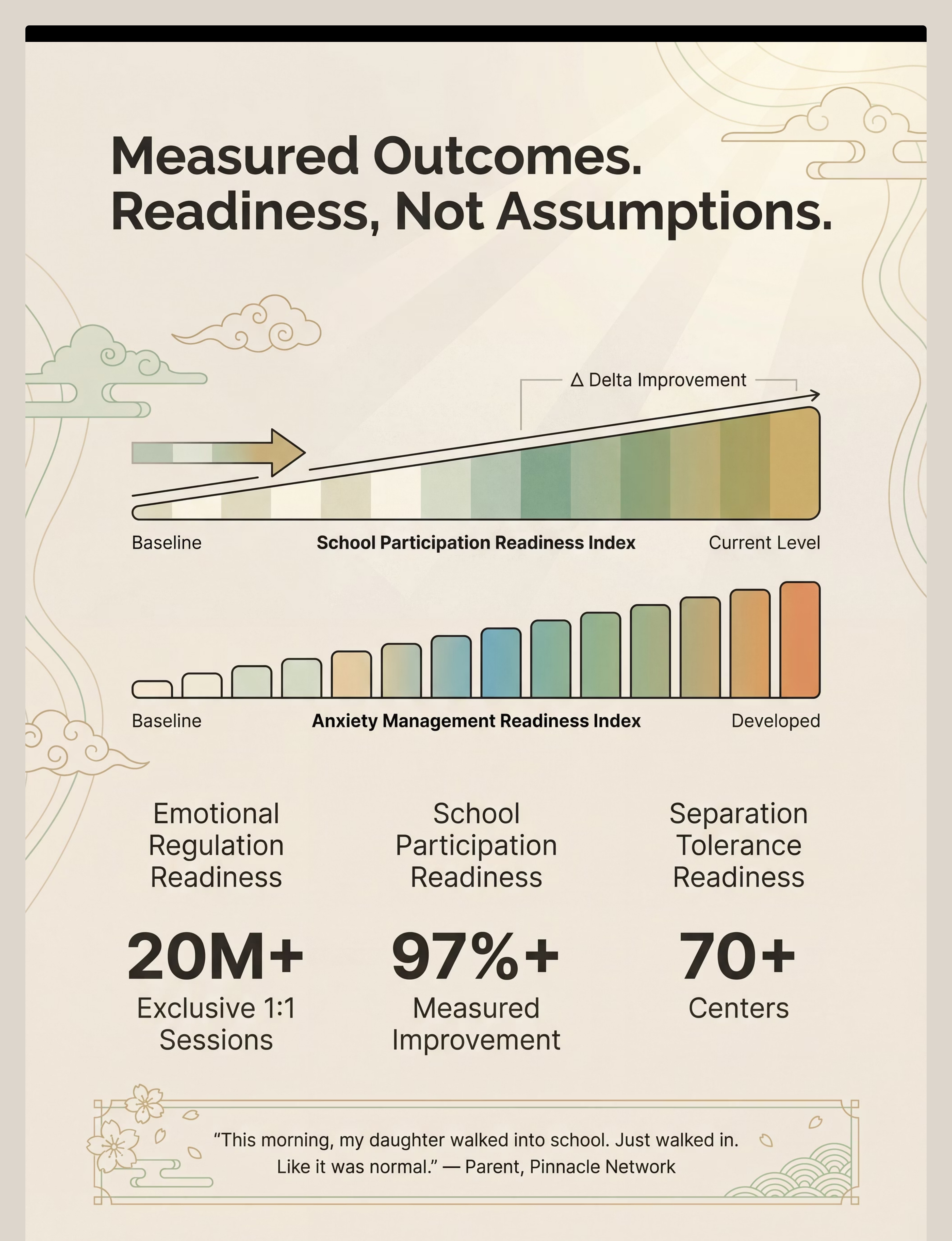
School Participation Readiness Index
Tracks reduction in refusal behavior and drop-off difficulty over time
Anxiety Management Readiness Index
Measures severity of anticipatory anxiety cycle week-over-week
Separation Tolerance Readiness Index
Monitors growth in independence from attachment figures
Emotional Regulation Readiness Index
Tracks self-initiated coping tool use and regulation capacity
Adaptive Coping Readiness Index
Measures generalization of skills across anxiety domains
20M+
1:1 Sessions
Across the Pinnacle Network
97%+
Measured Improvement
Across tracked readiness indexes
70+
Centers
Across India
160+
Countries
Patents filed
📞9100 181 181 | All data operates under ISO/IEC 27001 (Information Security Management) protocols. Individual data is never shared without consent.
ACT V — Watch
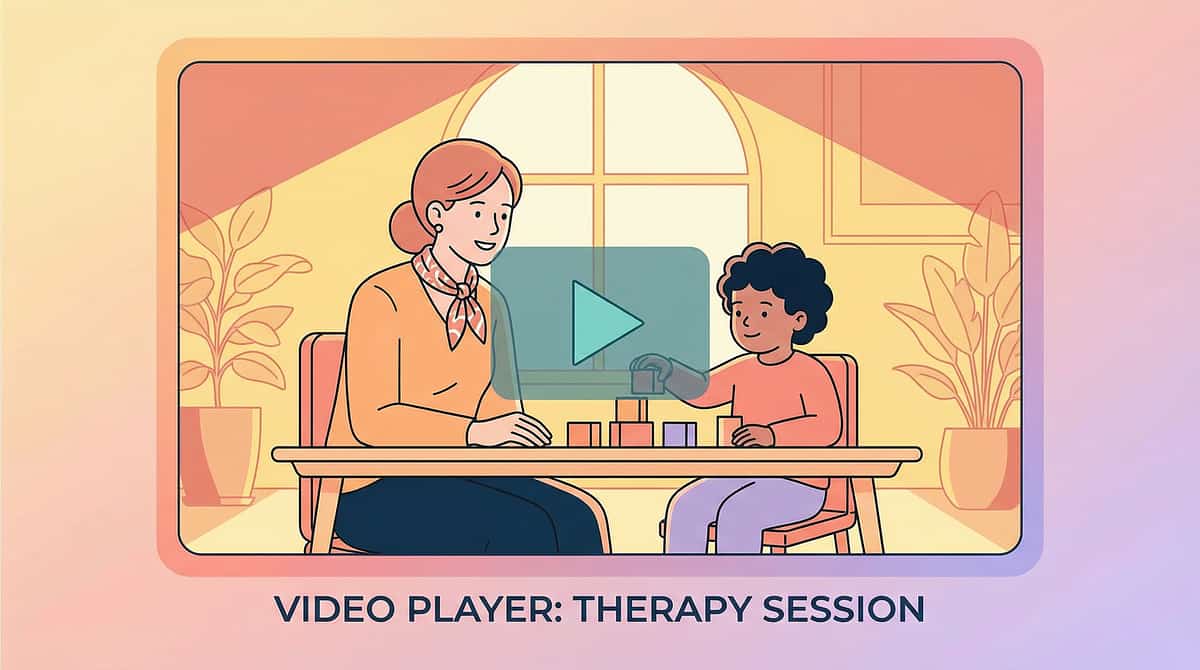
Watch the Reel That Started This Journey
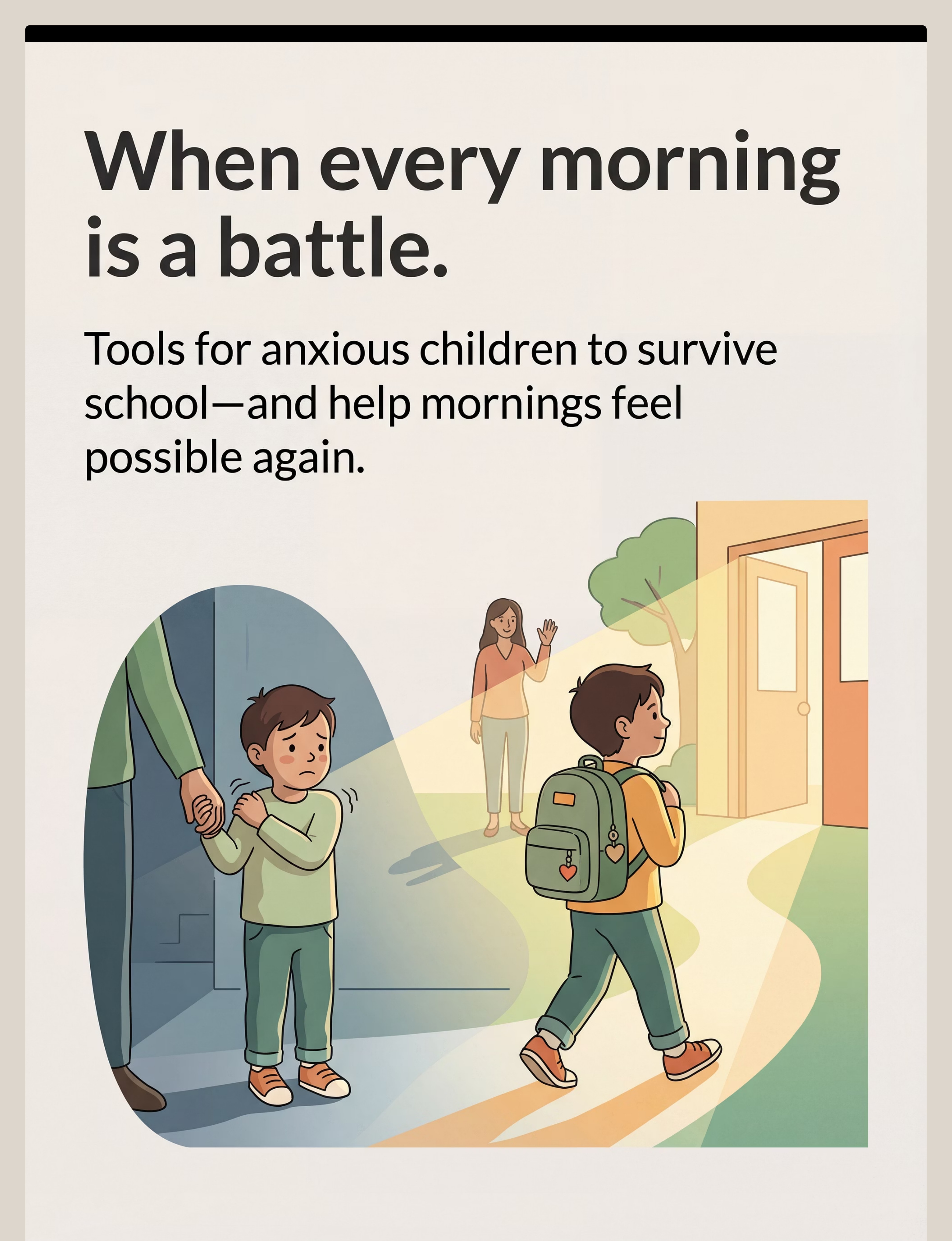
"When every morning is a battle. The tears start before sunrise. The stomachaches have no medical cause. The drop-off takes twenty minutes and leaves you both shattered. These 9 materials help anxious children survive school — and help mornings feel possible again."
🎬 Reel ID: C-292
Title: "9 Materials That Help With School Anxiety"
Series: Emotional Regulation & Behavioral Support — Episode 292
Domain: C — Emotional Regulation | REG-SCH
Presenters: Pinnacle Blooms Consortium OT + Psychology Team
Duration: 75–85 seconds
Series: Emotional Regulation & Behavioral Support — Episode 292
Domain: C — Emotional Regulation | REG-SCH
Presenters: Pinnacle Blooms Consortium OT + Psychology Team
Duration: 75–85 seconds
← Previous
C-291: 9 Materials That Help With Character Fear
Next →
C-293: 9 Materials That Help With Selective Mutism
Source: NCAEP 2020 — Video modeling as EBP
ACT V — Share
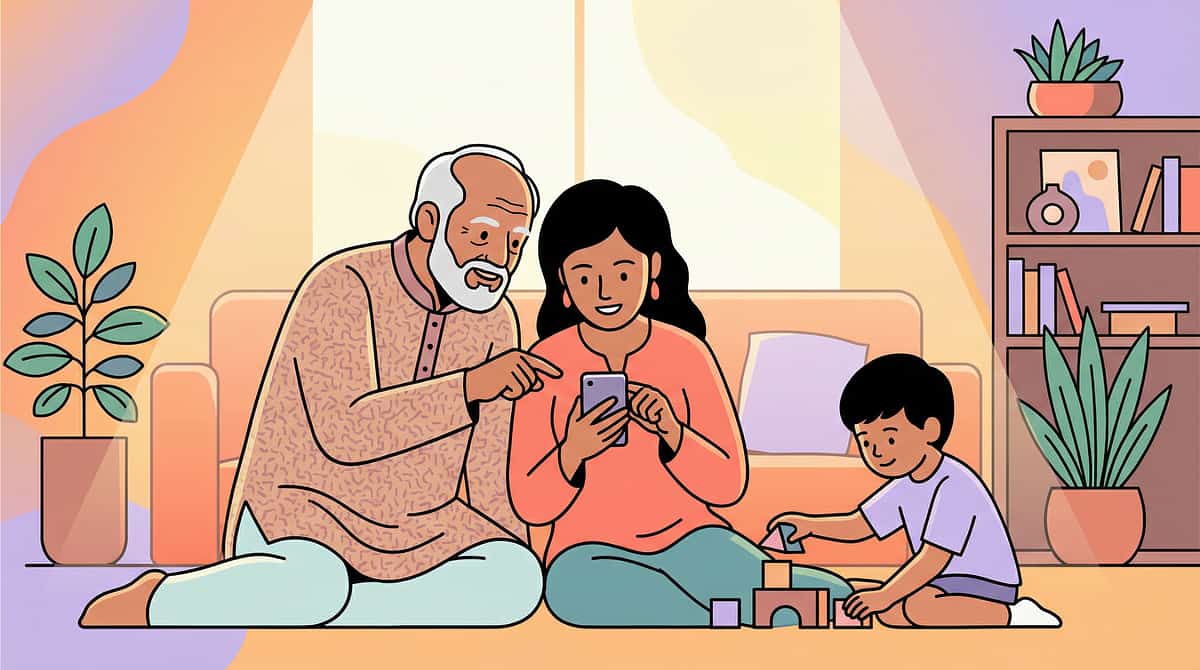
One Parent Can't Fight This Alone. Share These Tools With Everyone in Your Child's Village.
📥Downloadable Family Guide: One-Page Family Guide to School Anxiety Materials — C-292 (PDF)
Simplified version for grandparents, teachers, and school staff to align on the approach.
Simplified version for grandparents, teachers, and school staff to align on the approach.
Teacher Communication Template
"Dear [Teacher Name], my child [name] experiences school anxiety that is being managed with evidence-based materials. They carry a coping card ring, a fidget tool, and a transitional object in their bag. A brief, consistent morning greeting from you at arrival would significantly help their transition. Our scheduled check-in is [time]. Thank you for partnering with us. — [Parent name]"
"Consistency across caregivers multiplies impact. If Grandma responds differently to the morning anxiety than you do, the neural pathways get confused. Share this page. Align on the approach." — Pinnacle Blooms Consortium
📞9100 181 181
Source: PMC9978394 — WHO CCD Package on multi-caregiver training

ACT VI — FAQ
Questions Every Parent Asks. Answers from the Pinnacle Blooms Consortium.
Q1: My child is fine at school but awful every morning. Is this normal?
Yes. This is the "anticipatory anxiety paradox" — the dread of school is often far worse than the experience of it. The morning is the intervention point. Once your child is at school, their nervous system recalibrates. This actually means treatment will work — if you can get them there, they usually find it survivable.
Q2: How many materials should I introduce at once?
Start with 2–3 most relevant to your child's anxiety type. For separation anxiety: transitional object + visual schedule first. Adding all 9 simultaneously overwhelms rather than helps. Build gradually over 2–3 weeks.
Q3: My child refuses all the materials. What do I do?
Don't force. Introduce materials during calm times, not during crisis. Let the child help choose (which fidget, which journal cover). The brave chart especially — build it WITH the child, not for them. Ownership drives engagement.
Q4: How long before I see results?
Typically 2–4 weeks for initial reduction in morning distress; 8–12 weeks for sustainable improvement. If no change after 4 consistent weeks, call 9100 181 181 for assessment.

ACT VI — FAQ Continued
More Questions, More Answers
Q5: Should I keep my child home on very bad days?
Generally no — each missed day makes the next return harder (avoidance feeds anxiety). However, there are exceptions: genuine illness, acute trauma, or when the school environment itself is unsafe. When in doubt, modified attendance (late start, early pickup) is better than full absence.
Q6: My school doesn't support these materials. What do I do?
Request a written meeting with the teacher and school counselor. Bring this page. Explain the evidence base. If needed, request a 504 plan or IEP meeting. Pinnacle's school consultation service can provide professional letters of support — call 9100 181 181.
Q7: Can these materials help children with autism specifically?
Yes — and they're often essential for ASD. Visual schedules and social stories are particularly critical. All materials should be adapted to the child's communication level. Our OT Consortium has autism-specific guidance — call 9100 181 181.
Q8: The check-in system has become permanent. How do I fade it?
Follow the fade plan: reduce frequency by one step every 2 weeks when the child demonstrates tolerance. If they resist fading, that's information — the anxiety may need more clinical support. Call 9100 181 181.

ACT VI — Your Next Step
You've Read the Science. You Know the Materials. One Step Remains.
The morning battles are not permanent. The stomachaches have a treatment. The drop-off tears have an endpoint. You now hold 9 evidence-based tools and a 6-step protocol backed by 20M+ therapy sessions and the combined expertise of five therapy disciplines.
→ Explore Next Technique: C-293 Selective Mutism Materials | ← Previous: C-291 Separation Anxiety Materials
✦ Validated by the Pinnacle Blooms Consortium ✦ OT • SLP • ABA/BCBA • SpEd • NeuroDevelopmental Pediatrics
20M+ sessions | 97%+ measured improvement | 70+ centers | 9100 181 181
CIN: U74999TG2016PTC113063 | DPIIT: DIPP8651 | MSME: TS20F0009606 | GSTIN: 36AAGCB9722P1Z2
20M+ sessions | 97%+ measured improvement | 70+ centers | 9100 181 181
CIN: U74999TG2016PTC113063 | DPIIT: DIPP8651 | MSME: TS20F0009606 | GSTIN: 36AAGCB9722P1Z2
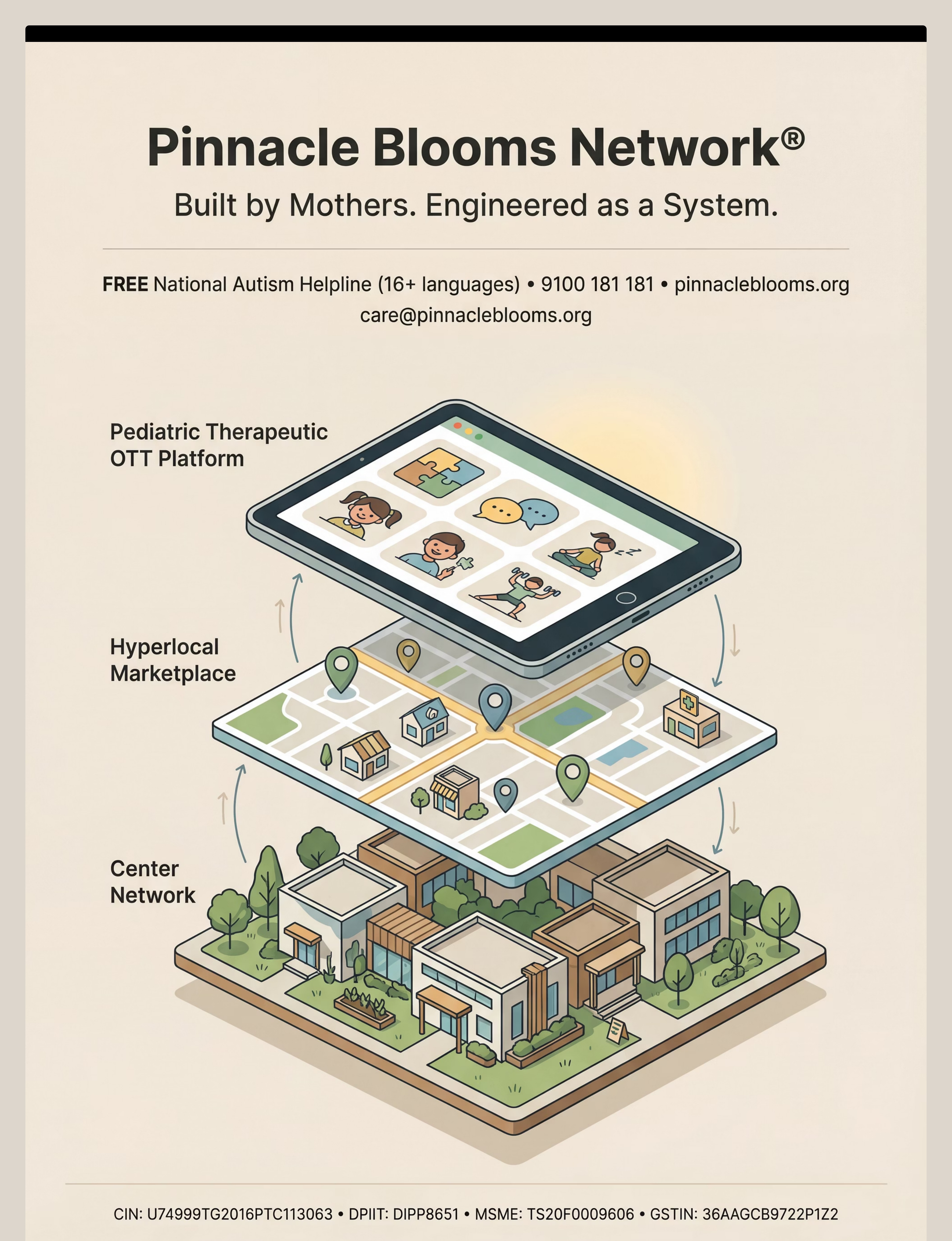
Preview of 9 materials that help with school anxiety Therapy Material
Below is a visual preview of 9 materials that help with school anxiety therapy material. The pages shown help educators, therapists, and caregivers understand the structure and content of the resource before use. Materials should be used under appropriate professional guidance.


Link copied!

"From fear to mastery. One morning at a time."
— Pinnacle Blooms Network®
✦ The Consortium
OT | SLP | ABA/BCBA | Special Education | NeuroDevelopmental Pediatrics | Psychology | CRO
Built by Mothers. Engineered as a System.
Built by Mothers. Engineered as a System.
📞 Contact
FREE National Autism Helpline: 9100 181 181
16+ languages | 24x7
pinnacleblooms.org | techniques.pinnacleblooms.org
care@pinnacleblooms.org
16+ languages | 24x7
pinnacleblooms.org | techniques.pinnacleblooms.org
care@pinnacleblooms.org
⚖️ Medical Disclaimer
This content is educational. It does not replace assessment and intervention from licensed mental health professionals. School anxiety causes and severity vary by individual. Severe school refusal requires professional evaluation. Individual results may vary.
© 2025 Pinnacle Blooms Network®, unit of Bharath Healthcare Laboratories Pvt. Ltd. All rights reserved.
CIN: U74999TG2016PTC113063 | DPIIT: DIPP8651 (Govt. of India) | MSME: TS20F0009606 | GSTIN: 36AAGCB9722P1Z2
Canonical: https://interventions.pinnacleblooms.org/emotional-regulation/school-anxiety-intervention-c-292
CIN: U74999TG2016PTC113063 | DPIIT: DIPP8651 (Govt. of India) | MSME: TS20F0009606 | GSTIN: 36AAGCB9722P1Z2
Canonical: https://interventions.pinnacleblooms.org/emotional-regulation/school-anxiety-intervention-c-292