

"The brain that needs completion isn't rigid. It's wired for patterns."
When incomplete patterns cause distress, the answer isn't to force tolerance — it's to provide healthy completion. Discover 9 evidence-based materials that satisfy the completion drive and build genuine cognitive flexibility.

Parent Voice
You Are Not Alone in This
"My daughter couldn't leave anything incomplete. If a puzzle piece was missing, she'd melt down. If a song ended before the final note, she'd scream. If I stopped reading mid-sentence, she'd become inconsolable. She had to close every door, finish every video, complete every pattern. I used to think she was being controlling or rigid. I'd try to teach her flexibility by intentionally leaving things incomplete — which only made everything worse. Her psychologist explained that her brain has a strong need for closure — for patterns to be complete. It's neurological, not defiance." — Mother of a 6-year-old, Pinnacle Network
🏥 OT
Occupational Therapy
🗣️ SLP
Speech-Language Pathology
🔬 ABA
Applied Behavior Analysis
📚 SpEd
Special Education
🧬 NeuroDev
NeuroDevelopmental Pediatrics
"You are not failing. Your child's nervous system is speaking." — Series Badge: Sensory Regulation & Repetitive Behaviors — Episode D-378

You Are Among Millions of Families Navigating This Exact Experience
1/44
Children with ASD
Children diagnosed with ASD globally (CDC 2023)
80%
Pattern Rigidity
of autistic children display pattern-rigidity and need-for-sameness behaviors
70%
Distress Reduction
reduction in distress when pattern completion needs are constructively met
Pattern completion need — the neurological drive to see patterns, sequences, and tasks through to their complete state — is one of the most common yet misunderstood features of autism spectrum and related developmental profiles. Families in India, the United States, Australia, the United Kingdom, Japan, and 70+ countries have walked this path. You are not alone. And crucially: there is a path forward.
🇮🇳 In India alone, an estimated 18 million children are on the autism spectrum (NIMH India 2022). Pattern completion and rigidity features affect the majority. Pinnacle Blooms Network® serves families across 70+ centers, 16+ languages, 70+ countries.
📞FREE National Autism Helpline (16+ languages): 9100 181 181 | pinnacleblooms.org
📞FREE National Autism Helpline (16+ languages): 9100 181 181 | pinnacleblooms.org
This Is a Wiring Difference. Not a Behavior Choice.
What's Happening in the Brain
🧠 Prefrontal Cortex — Governs cognitive flexibility; shows reduced activation in rigid processing styles.
⚡ Anterior Cingulate Cortex (ACC) — The brain's "error detection" center; fires intensely when patterns don't resolve.
🔄 Basal Ganglia — Encodes pattern sequences and habits; seeks loop closure with a satisfying "click."
💥 Limbic System — Generates genuine emotional distress when completion is blocked.
In Plain Language
Your child's brain is running on a powerful pattern-completion operating system. The anterior cingulate cortex fires every time a pattern doesn't resolve. For most people, an incomplete pattern registers as mild discomfort. For your child, it registers as genuine distress — as real and as sharp as a loud noise or a painful touch.
The basal ganglia craves the satisfying "click" of sequence completion. The prefrontal cortex, which normally overrides this drive with flexibility, has reduced activation in this context.
This is not defiance. This is neurology.

Your Child Is Here. Here Is Where We're Heading.
Age 1–2
Normal pattern preference; early completion-seeking begins
Age 2–4
Pattern completion need emerges strongly; highest distress with interruption — 📍 Where many families are right now
Age 4–7
Maximum intervention impact window; brain most plastic; flexibility building most effective
Age 7–12
Consolidation phase; strategies become habitual; tolerance generalizes
Beyond
Adaptive flexibility achieved; generalized tolerance consolidated
Comorbidity Awareness: Pattern completion needs frequently co-occur with sensory processing differences, anxiety, OCD-spectrum features, ADHD (rigidity component), and executive function challenges. This is not a list of additional problems — it is a map of interconnected neurological features that often travel together.
📞9100 181 181 — FREE | 16+ languages | 24×7
📞9100 181 181 — FREE | 16+ languages | 24×7
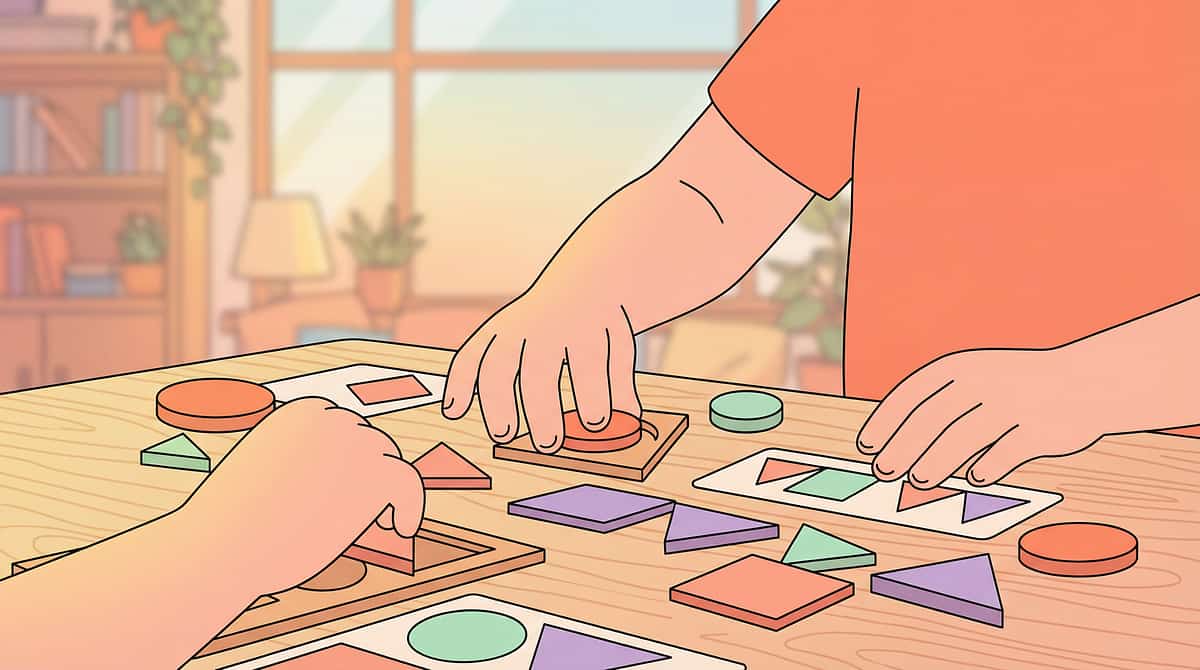
Clinically Validated. Home-Applicable. Parent-Proven.
Evidence Grade: I-B — Systematic Review Level
📊 PRISMA Systematic Review 2024
16 studies (2013–2023) confirm sensory integration and cognitive flexibility interventions meet evidence-based practice criteria for ASD. PMC11506176
🧪 Meta-Analysis World J Clin Cases 2024
Structured completion-based interventions effectively promote adaptive behavior, self-regulation, and cognitive flexibility across pediatric ASD populations. PMC10955541
🇮🇳 Indian RCT (Padmanabha et al., 2019)
Home-based structured behavioral interventions demonstrated significant outcomes in Indian pediatric populations. DOI: 10.1007/s12098-018-2747-4
90%
Evidence Confidence
HIGH — Systematic review level
95%
Home Applicability
VERY HIGH — Parent-implementable
88%
Parent Feasibility
HIGH — Minimal training required

Pattern Completion Need — Constructive Satisfaction Protocol
"The Completion Diet" — feeding your child's brain the pattern closure it craves through structured, achievable activities
What It Is: Pattern completion need refers to a strong cognitive and emotional drive to see patterns, sequences, tasks, and forms through to their complete state. Related to Gestalt Processing — the brain's tendency to perceive wholes rather than parts — this drive creates genuine distress when patterns remain incomplete.
This is NOT stubbornness, rigidity, or a behavior problem. It is a neurological processing style where the brain strongly registers "incompleteness" as aversive — as real as physical discomfort.
The intervention principle: Rather than fighting the need (which fails and increases distress), we work WITH it — providing appropriate pattern completion outlets that satisfy the drive and, over time, build genuine tolerance for real-world incompleteness.
This is NOT stubbornness, rigidity, or a behavior problem. It is a neurological processing style where the brain strongly registers "incompleteness" as aversive — as real as physical discomfort.
The intervention principle: Rather than fighting the need (which fails and increases distress), we work WITH it — providing appropriate pattern completion outlets that satisfy the drive and, over time, build genuine tolerance for real-world incompleteness.
👶 Age Range
2–12 years
⏱️ Duration
5–20 minutes per session
📅 Frequency
2–4× daily (completion diet approach)
🏠 Setting
Home · Therapy · School · Community
🧩 Code
D-378 | Domain D
📞9100 181 181 — For AbilityScore® assessment and personalized program
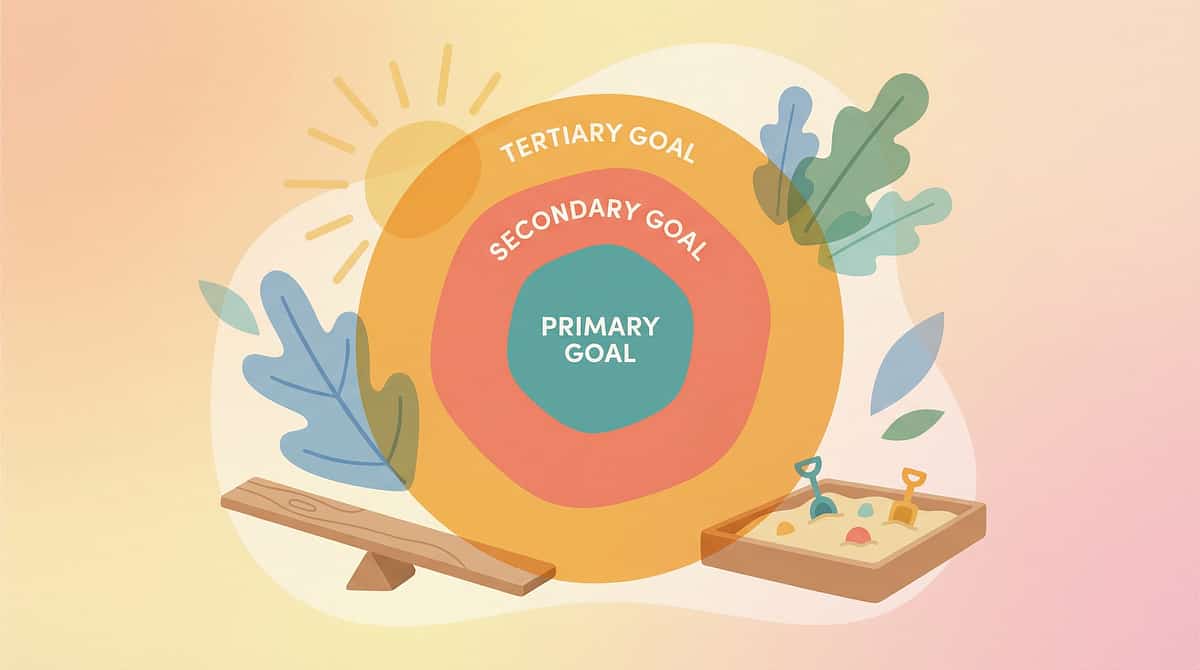
This Technique Crosses Therapy Boundaries — Because the Brain Doesn't Organize by Therapy Type
Occupational Therapy
Primary Lead. OTs use pattern completion activities within sensory diet programming. Completion activities provide deep cognitive satisfaction that regulates the nervous system — embedded in sensory integration treatment frameworks.
Applied Behavior Analysis
Secondary Lead. BCBAs structure completion activities as antecedent interventions — proactively satisfying the completion drive before demanding tasks, reducing problem behavior. Also used in flexibility-building protocols.
Speech-Language Pathology
SLPs use sequencing and story completion tasks specifically — narrative closure satisfies the pattern completion drive while simultaneously building language and narrative skills. Completing story sequences = therapeutic dual-target.
Special Education
SpEd professionals embed checklist and task completion systems into daily classroom routines, converting the completion drive into academic productivity. Visual schedules become powerful motivators when children can "check off" completion.
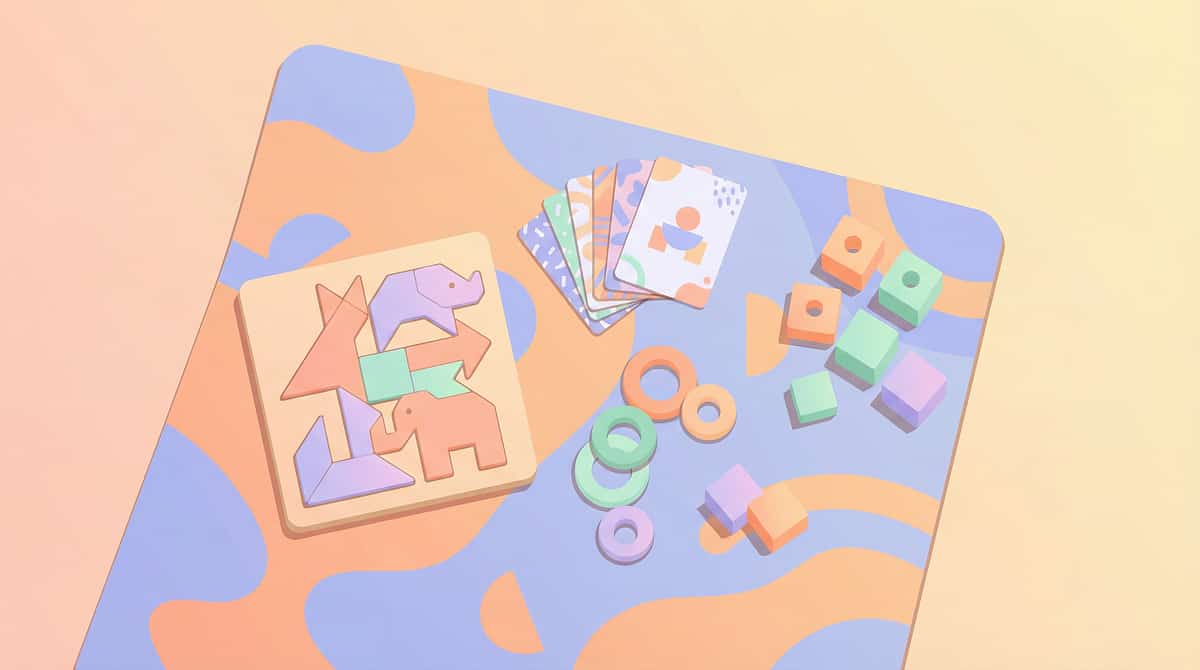
What We're Building Toward
Progression is tracked via the Cognitive Flexibility Readiness Index + Self-Regulation Readiness Index: Significant distress → Tolerates with support → Accepts with scaffolding → Manages with coping → Generalizes flexibility. Every stage is measurable. Every stage is achievable.

9 Materials That Help With Pattern Completion Needs
"Satisfy the need. Build the flexibility. Here is your complete material toolkit."
1️⃣ PUZZLES
Reliable completion satisfaction
2️⃣ PATTERN CARDS
Complete the sequence
3️⃣ SORTING SETS
Everything in its place
4️⃣ SEQUENCING CARDS
Story from beginning to end
5️⃣ MATCHING GAMES
All pairs found, done
6️⃣ COMPLETION WORKBOOKS
Pages you can finish
7️⃣ CONSTRUCTION SETS
Build to completion
8️⃣ CHECKLISTS
Tasks become completable patterns
9️⃣ SAND TIMERS
Time you can see complete
Total starter kit: ₹500–3,500 | All 9 materials: ₹50–₹2,000 individually | DIY alternatives available at ₹0 | 📞9100 181 181 — Material guidance in 16+ languages
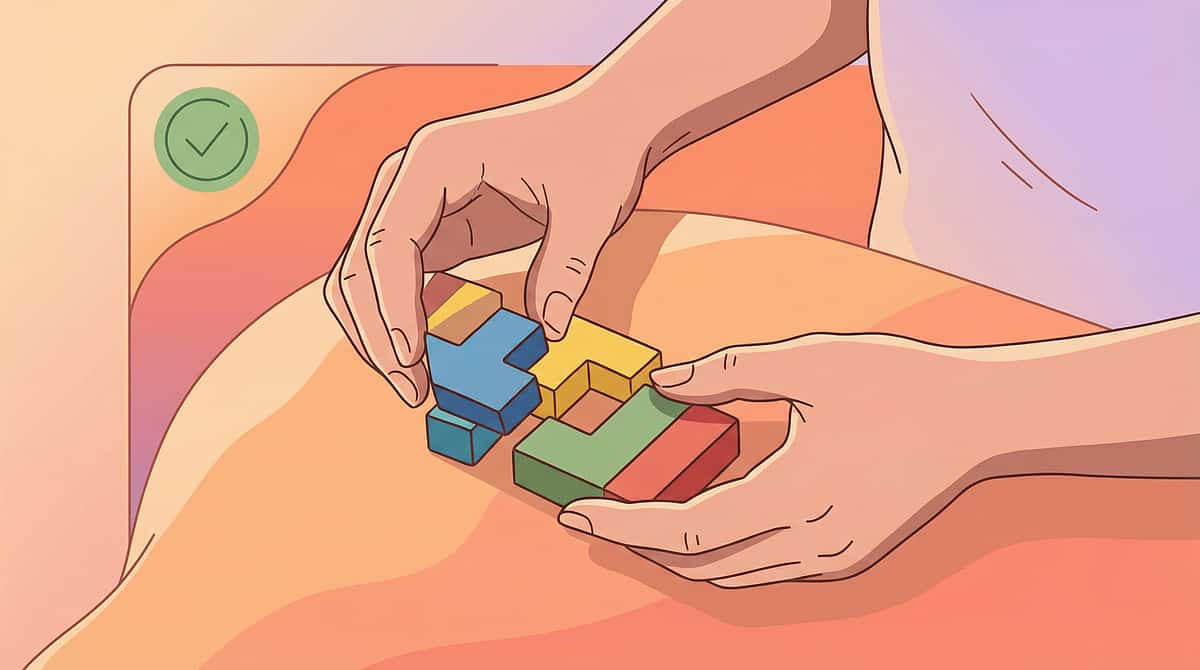
Material 1 of 9
🧩 Puzzles — Reliable Completion Satisfaction
Why It Works
The puzzle is the quintessential pattern completion activity — scattered pieces that become a unified whole. For children with strong pattern completion needs, puzzles activate the basal ganglia's reward circuitry at completion, delivering the "closure signal" the brain craves.
The critical requirement: Guaranteed completability. Every piece must be present. A puzzle missing one piece creates genuine cognitive distress. Count pieces. Protect pieces. Store carefully.
— Occupational Therapy Consortium, Pinnacle Blooms Network®
Step-by-Step Protocol
- Select puzzle at child's mastery level — completion should take 5–15 minutes
- Count all pieces BEFORE giving to child. Verify completability.
- Lay out pieces face-up for younger / face-down for older children
- Use language: "Let's build this together. Every piece has a home."
- Allow child to place the final piece — this is the closure moment. Do NOT take it from them.
- Celebrate: "Done! All pieces home. Complete!"
- Record: engagement duration, affect at completion
What: Knob puzzles (3–8 pieces), frame puzzles, interlocking 12–100+ pieces. ₹150–1,000.
⚠️Safety: Ensure piece size is age-appropriate. Under 3: chunky knob puzzles only. Supervise with small pieces.
DIY (₹0): Print a colourful image on A4, cut into 6–12 pieces. Store in labelled envelope.
"The puzzle that can be completed is calming. Count the pieces. Protect the pieces. Guarantee the completion."
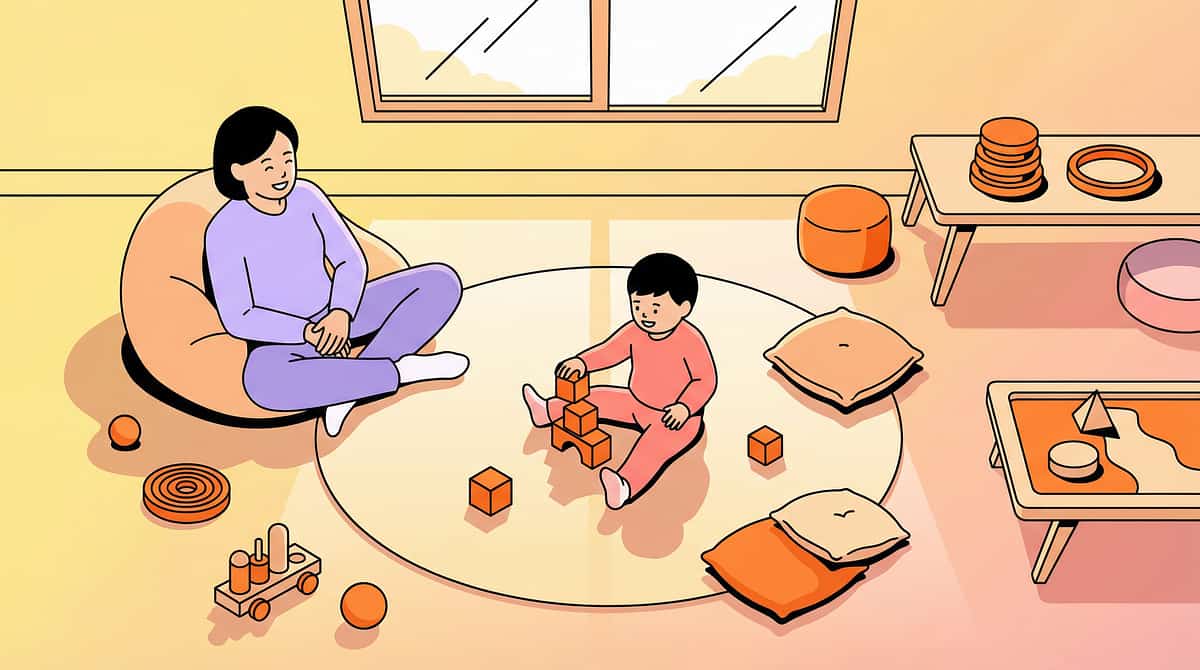
Material 2 of 9
📋 Pattern Cards — Complete the Sequence Satisfaction
Why It Works
Pattern completion cards present sequences or visual patterns with a missing element — inviting the child to supply the satisfying conclusion. Unlike open-ended creative activities, these have one correct answer. The brain KNOWS when the pattern is finished.
This specificity is therapeutic: the anterior cingulate cortex receives a clear "resolved" signal when the missing piece is placed correctly. Repeated resolution experiences gradually reduce the intensity of incompleteness distress.
— Behavioral Psychology Consortium, Pinnacle Blooms Network®
When: As warm-up before demanding tasks. During transitions as a calming bridge. In therapy sessions as primary skill-building tool. Before bedtime as part of calming routine.
Step-by-Step Protocol
- Begin with simple AB patterns (red-blue-red-blue-?)
- Present pattern strip with final element missing
- Offer 3–4 choices: "Which one comes next?"
- Allow child to place the completing piece
- Confirm together: "Yes! The pattern is complete!"
- Progress: AB → ABC → AABB → picture sequences → complex visual sequences
What: Pattern completion strips (AB, ABC, AABB progressions), sequence completion cards, visual attribute pattern sets. ₹200–600.
DIY (₹10–50): Cut coloured paper into cards. Create AB patterns with stickers or drawn shapes. Use family photos in sequences.
"When patterns complete, the brain relaxes. Give the brain patterns it can finish."

Material 3 of 9
🗂️ Sorting Materials — Everything in Its Place
Why It Works
Sorting activities have natural, unmistakable completion points: when every item is in its correct category, the task is done. For children with pattern completion needs, the satisfaction of "everything in its place" delivers powerful closure through the organizational dimension of pattern processing.
Sorting also engages the executive function network — categorization, working memory, cognitive control — making it simultaneously a regulatory AND skill-building activity.
— OT + SpEd Consortium, Pinnacle Blooms Network®
Step-by-Step Protocol
- Prepare sorting materials with a FINITE, countable set (e.g., exactly 20 bears)
- Tell child the total: "We have 20 bears. When they're all sorted, we're done."
- Provide clear sorting containers (muffin tin, divided tray)
- Allow sorting at child's pace. Do not interrupt mid-sort.
- Celebrate completion: "All sorted! Every bear has its home. Done!"
- Record time, engagement quality, affect at completion
DIY (₹0): Collect household items (spoons/forks, socks by colour, LEGO by size). Muffin tin = free sorting tray.
"Sorted is complete. Complete is satisfying. Sorting feeds the pattern brain constructively."

Before You Begin: The Readiness Check
"The best session is one that starts right."
🟢 GO — All Clear
Child is calm or mildly engaged · Not hungry, tired, or unwell · Not post-meltdown (allow 30-min reset) · Familiar with material · 10+ minutes available
🟡 MODIFY — Simplify
Child is slightly dysregulated · Energy is low or scattered · Distracted by environment → Use simpler puzzle · Shorter session (5 min) · Higher adult support
🔴 POSTPONE — Not Today
Active meltdown or post-meltdown within 30 min · Sick or in pain · Extreme sensory overload → Offer 3-piece emergency puzzle · Comfort-first · Reschedule
7 Readiness Indicators
- ✅ Child is calm (not actively distressed)
- ✅ Child has eaten and is not hungry
- ✅ It has been 30+ minutes since last significant meltdown
- ✅ Environment is reasonably quiet and predictable
- ✅ You (the caregiver) are calm and have 10+ minutes
- ✅ All materials are present and counted (no missing pieces!)
- ✅ Child is familiar with the material (or curiosity is present)
📞9100 181 181 — Clinician guidance on session readiness 24×7

Step 1 of 6
Step 1: The Invitation
Every protocol begins with an invitation — never a command.
🗣️ "Hey, I've got something really satisfying for us. Look — all these pieces, and they all have one right home. Want to help everything find its place?"
Body Language
Sit at child's level. Place materials within sight but not yet reach. Calm, warm tone. No urgency.
Acceptance Cues to Look For
Eyes move toward materials · Body orients toward table · Reaches toward pieces · Vocalizes interest
Resistance Response
Do not insist. Say: "No problem. The puzzle is here whenever you're ready." Leave it visible. Often curiosity follows.
Timing
30–60 seconds. If no engagement in 2 minutes, Modify or Postpone. Never force the invitation.
ABA Principle: This is the pairing procedure — establishing the material as a reinforcer before demand placement. The invitation, not the command, creates willing engagement.

Step 2 of 6
Step 2: The Engagement
The child is now in. Deepen without overwhelming.
🗣️ "OK, let's see — this piece, where does it go? [pause — let child try] ... Yes! It goes right there. One home found. How many more?"
Present One Piece at a Time
Avoid overwhelming with all pieces at once. Narrate completion progress: "Three pieces home. Six more to go."
Point Out the Endpoint
Show the box picture or completed template repeatedly. The brain needs to see what "done" looks like.
Read the Child's Response
✅ Ideal: Focused, self-directed, reaching for pieces · ✅ Acceptable: Following adult lead with prompts · ⚠️ Monitor: Frustrated or throwing pieces — scale back to simpler puzzle
Begin Reinforcement
Verbal praise for each correct placement. The reinforcement rhythm builds momentum toward completion.

Step 3 of 6
Step 3: The Therapeutic Action
This is the completion event — the active ingredient.
The therapeutic event is sustained pattern-completion engagement — the child works through the completion activity from beginning to endpoint without interruption. The parent's role shifts to supportive presence: narrating progress, preventing frustration, maintaining momentum toward completion.
Working Phase (60–80%)
Child engages, making progress. Parent narrates: "You're getting close. Look how much is done."
Approach Phase (15%)
Child is nearly at completion. Excitement and focus increase. Parent validates: "Almost! Just a few more. You're so close to done."
Completion Event (5% — THE PEAK)
Child places final piece / checks final box / makes final match. Parent celebrates immediately and specifically: "DONE! Complete! Everything is in its place!"
⏱️ Duration: 5–20 minutes total | Core action: 40–60% of session time | 📞9100 181 181 — Live therapist guidance

Step 4 of 6
Step 4: Repeat & Vary
3 good completions > 10 forced ones.
Time of Day | Activity | Duration | Purpose |
🌅 Morning | Puzzle or Sorting | 5–10 min | Regulate before demands |
☀️ Mid-day | Pattern Cards or Matching | 5 min | Reset between tasks |
🌇 Afternoon | Workbook page or Checklist | 5–10 min | Transition buffer |
🌙 Evening | Construction set or Sequencing | 10–15 min | Calm before sleep |
Variation Options
- Rotate materials: puzzle → sorting → pattern cards → matching (same principle, different medium)
- Increase complexity weekly: 6 pieces → 12 → 24 → 48
- Personalize: use child's interest theme (dinosaur puzzle, vehicle sorting, etc.)
- Social variation: sometimes parallel, sometimes collaborative
Satiation Indicators — Stop or Scale Down
- Child looks away repeatedly and doesn't return
- Energy drops suddenly
- Mild agitation or loss of interest
- 3+ errors in a row where success was previous pattern

Step 5 of 6
Step 5: Reinforce & Celebrate
Celebrate the completion event. Your child earned closure.
⚡Within 3 seconds of completion — the reinforcement must arrive before the brain moves to the next thing. Delayed praise loses 80% of its signal.
🗣️ Verbal (Always First)
"You did it! COMPLETE! Every piece home. Every box checked. Done!" Use child's preferred "done" language.
🏆 Token / Sticker
🤗 Sensory / Physical
High-five, fist bump, brief preferred sensory activity (10 seconds of preferred input) — child-specific.
🎯 Natural Reinforcement
The completion ITSELF is the primary reinforcer. The brain's reward circuitry fires at task completion. Your celebration amplifies this natural reward.
ABA Principle: Celebrate the attempt as well as success. If child completed 80% before needing help: "You did so much! Look — almost all done. Tomorrow, one more piece by yourself."

Step 6 of 6
Step 6: The Cool-Down
No session ends abruptly. Transitions are part of the technique.
🗣️ "Two more pieces, then we put the puzzle away until tomorrow. It will wait for us." (After 2 pieces:) "All done for now! The puzzle is complete and it's staying safe right here. We'll see it tomorrow."
Use a sand timer for cool-down if the child has difficulty with verbal transitions. The child watches sand complete — timer ends = activity ends. The sand completing IS a completion experience in itself. Animal Soft Toy (Transition Comfort Object) | ₹425 can support the transition ritual.
Capture the Data. Right Now.
Within 60 seconds of session end. 3 fields. 30 seconds.
Session Log — D-378 Pattern Completion
Material Used:
○ Puzzle ○ Pattern Cards ○ Sorting
○ Sequencing ○ Matching ○ Workbook
○ Construction ○ Checklist ○ Timer
○ Puzzle ○ Pattern Cards ○ Sorting
○ Sequencing ○ Matching ○ Workbook
○ Construction ○ Checklist ○ Timer
Completion Achieved? ○ YES ○ PARTIAL
Affect at Completion (1–5):
😣 1 — 😟 2 — 😐 3 — 😊 4 — 😁 5
😣 1 — 😟 2 — 😐 3 — 😊 4 — 😁 5
Notes: ___________________________
Why Data Matters
Every session you track feeds the GPT-OS® Cognitive Flexibility Readiness Index for your child. Over 8 weeks, the data reveals:
- Which materials provide the highest completion satisfaction
- Which time-of-day positions are most effective
- When to progress the difficulty level
Your observations are clinical data. Your noticing matters.
📞9100 181 181 — Data interpretation and personalized program adjustment
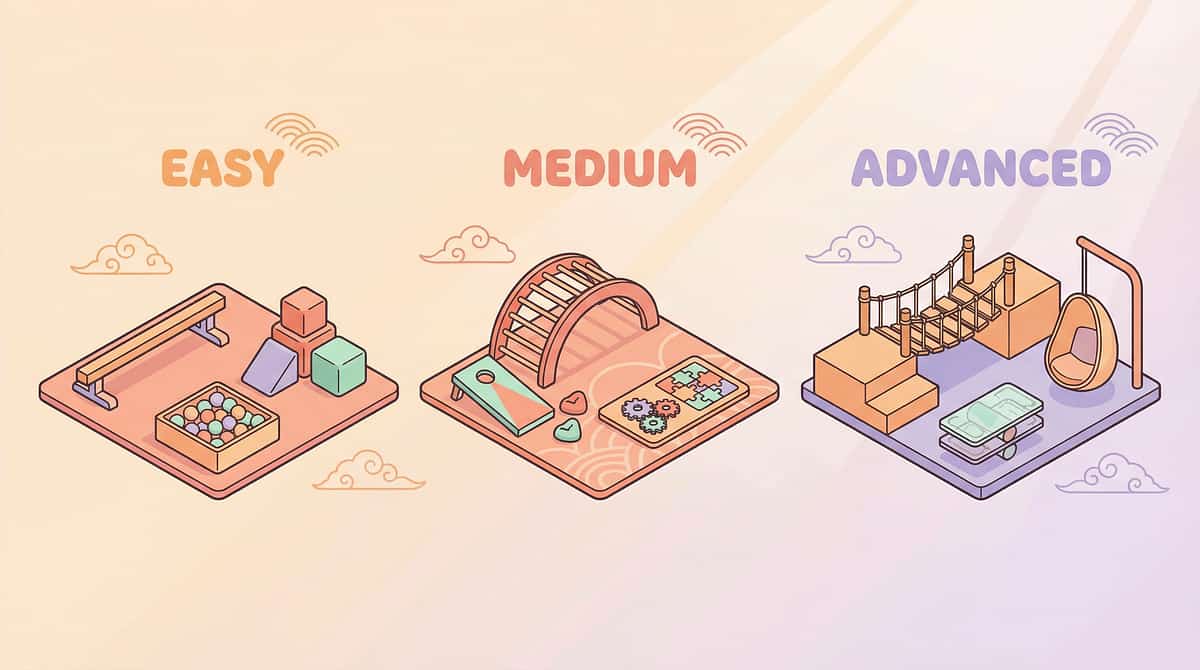
When It's Not Working: Troubleshoot First
Common challenges and consortium-validated solutions
🔴 Child refuses to start the activity
Reduce difficulty. Switch to a 3-piece knob puzzle — the easiest available completion. Or try sorting (simpler initiation). Check readiness indicators: the issue is often hunger, fatigue, or post-meltdown state, not the material itself.
🔴 Child completes but shows no relief or positive affect
Activity may be too easy or too hard. Find the "just right" level where effort + achievement = satisfaction. Check: is the endpoint clear enough? Ambiguous "done" state reduces the reward signal.
🔴 Child wants ONLY completion activities, refuses everything else
This is working — use it as leverage: "First we do [non-preferred], then we do puzzle." The completion activity becomes the most powerful motivator you have. This is a resource, not a problem.
🔴 Child is MORE distressed after completing the activity
The activity may be revealing, not creating, distress. Check for co-occurring anxiety. Consult your Pinnacle therapist — some children need professional assessment to differentiate completion-drive from OCD-spectrum features.
🔴 Missing piece ruins the entire session
Prevention: count pieces BEFORE every session, store in sealed containers, keep backup puzzles. If a piece is missing mid-session: acknowledge calmly, offer an alternative completion, never force the incomplete activity.
🔴 Progress seems to have plateaued
Plateau usually means it's time to progress: more pieces, more complex patterns, introduction of micro-pauses. Or rotate the completion diet — the brain habituates to repeated identical activities.

Personalize. Every Child's Completion Brain is Different.
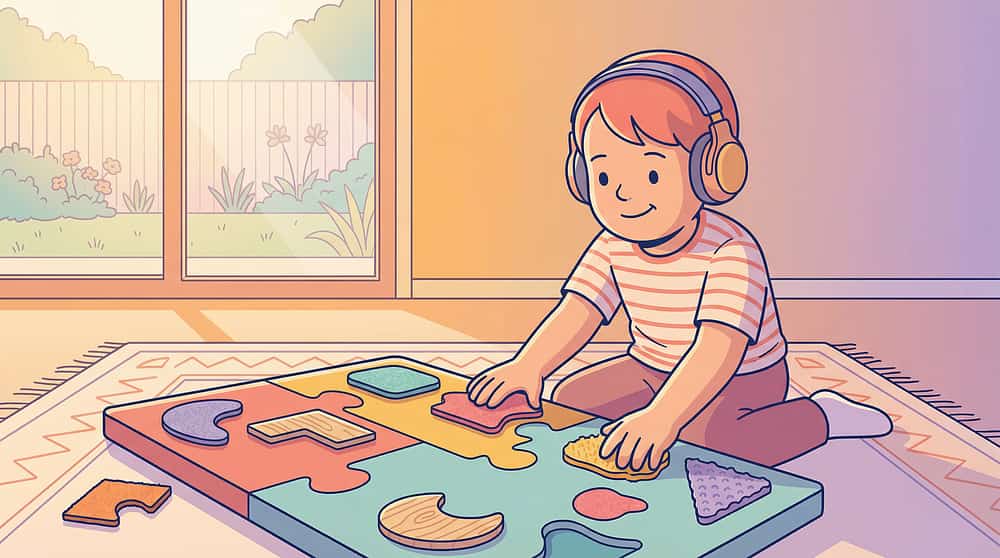
For Sensory Seekers
Textured puzzle pieces · Tactile sorting objects (different textures by category) · Weighted completion materials · 3D construction over flat patterns
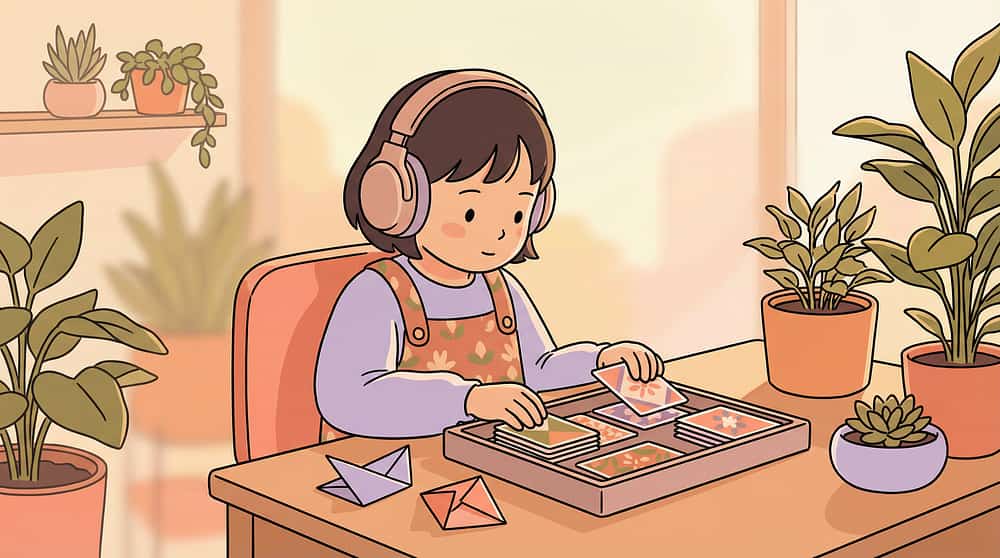
For Sensory Avoiders
Smooth, clean materials · Avoid noisy or light-up activities at session start · Quiet sorting (no rattling) · Paper-based patterns over tactile materials
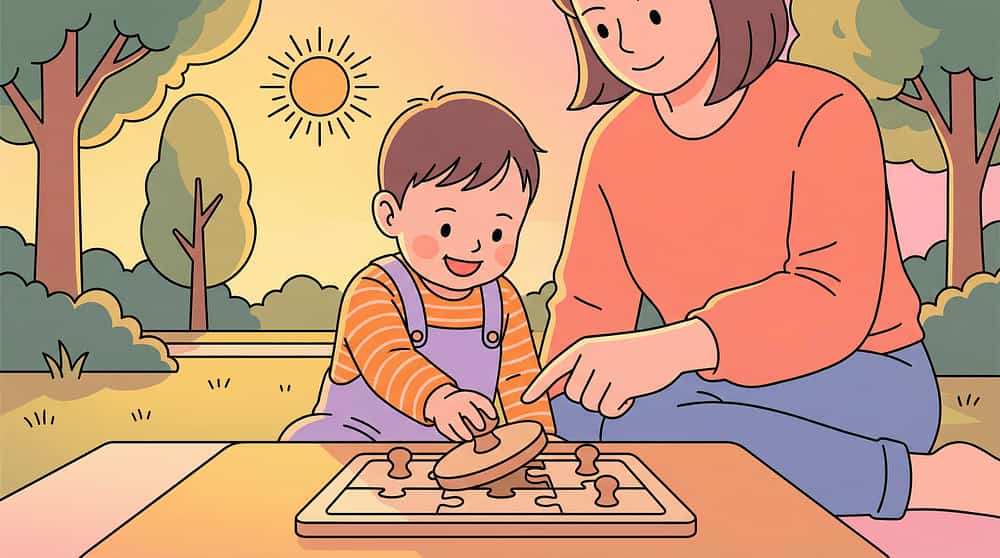
For Ages 2–4
Knob puzzles, 3-piece sequences, 2-category sorts · Maximum parental scaffolding · Session: 5 minutes · Celebration: very enthusiastic

For Ages 7–12
Complex construction (LEGO with instructions) · Multi-step checklists · 6+ card narrative sequences · Begin introducing planned incompleteness (save/resume)
If your child's sensory profile is unknown, request an AbilityScore® Sensory Assessment through Pinnacle. The assessment determines exact completion diet parameters. 📞9100 181 181

Progress Arc — Weeks 1–2
Weeks 1–2: Foundation Laying
Don't look for flexibility yet. Look for these.
15%
Overall Progress
Foundation phase — engagement and initial satisfaction
✅ What Progress Looks Like
- Child engages with completion material (even briefly — 2 minutes counts)
- Child shows SOME positive affect at completion (even mild)
- Distress episodes AFTER completion activities are slightly less intense
- Child begins to associate specific material with completion satisfaction
- You (parent/caregiver) feel more confident in how to present activities
❌ What Is NOT Progress Yet (And That's Fine)
- Child still distressed when non-completion activities are interrupted — this comes later
- Child still needs completion of ALL media/games/meals — flexibility builds slowly
- Progress isn't linear — there will be "regression" days
Parent Metric: "If your child tolerates the completion activity for 3 minutes longer than day one — that is real, measurable neurological progress."
Progress Arc — Weeks 3–4
Weeks 3–4: Neural Pathway Formation
Look for these consolidation signs.
40%
Overall Progress
Consolidation phase — spontaneous requests and reduced scaffolding
Child Requests Activities Spontaneously
"Puzzle? Sort?" — unprompted seeking of completion activities is a significant milestone.
Anticipatory Excitement
Child shows anticipatory positive affect before completion sessions begin.
More Pronounced Completion Affect
Visible joy or satisfaction at completion — the reward signal is strengthening.
Reduced Adult Scaffolding Needed
Child can complete activities with less adult support — independence emerging.
First Micro-Tolerance Signs
Slight increase in tolerance when non-completion activities are briefly interrupted (5–10 second pauses).
Parent Milestone: "At week 3–4, you may notice you're more confident too. You have a tool that works. That shift in parental confidence is clinically significant — children read parental confidence, and it reduces their anxiety."

Progress Arc — Weeks 5–8
Weeks 5–8: The Flexibility Window Opens
The brain has enough completion. Now it can begin to tolerate incompleteness.
65%
Overall Progress
Flexibility window — micro-pauses, short delays, planned incompleteness
Stage A: Micro-Pauses (Week 5)
Hold the final puzzle piece. Count silently to 3. Then give it to the child. The brain experiences a 3-second "incompleteness window" and learns: "Completion is coming. I can wait."
Stage B: Short Delays (Week 6)
"We'll do 5 pieces now, and 5 more after [specific activity]." The "save" mechanism is introduced. Completion is guaranteed — just deferred.
Stage C: Planned Incompleteness (Weeks 7–8)
"We're going to stop here and finish tomorrow. Let's take a photo of our progress." The photograph is a "save state" — visual evidence that the pattern is preserved and will complete.
🛒SHINETOY Shut The Box Dice Game | ₹428 — excellent flexibility-building tool | 📞9100 181 181 — Week 5 is the critical threshold. Clinical support recommended.

You Are Doing Something Extraordinary.
Every completion your child experiences is a deposit in their flexibility bank.
🥇 Week 1
Child engaged with completion material for the first time
🥇 Week 2
First spontaneous smile or satisfaction at completion
🥇 Week 3
Child requested a completion activity without prompting
🥇 Week 4
First tolerance of a 2-minute interruption (with support)
🥇 Week 5
First micro-pause before final completion accepted
🥇 Week 6
First "save and resume" accepted without meltdown
🥇 Week 8
First spontaneous use of coping language: "I'll finish this later"
"Most parents who walk into the Pinnacle system are exhausted. They have tried everything. They have cried in bathroom stalls after meltdowns in supermarkets. And then they find that the answer wasn't to fight the need. It was to meet it. You are doing something that most of the world doesn't understand. You are building neurological capacity through daily, patient, scientifically-grounded love. That is extraordinary work." — Pinnacle Blooms Network® Clinical Consortium
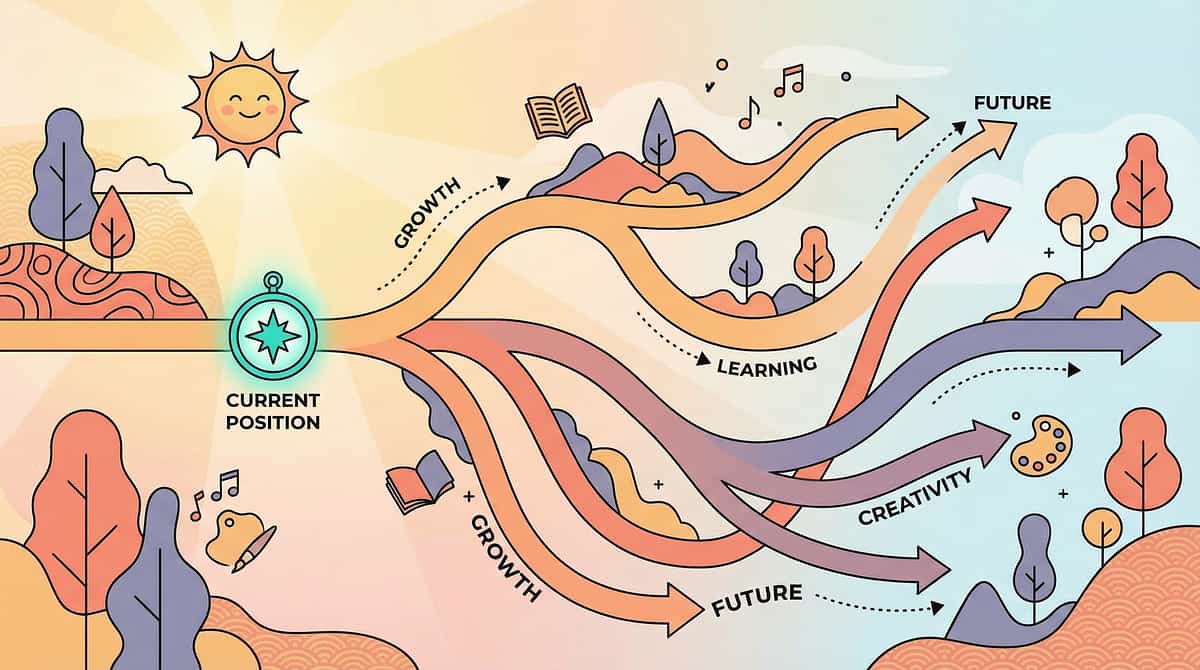
Red Flags: When Professional Escalation Is Needed
These signals warrant professional assessment, not just home strategies.
🚩 Increasing Severity
Pattern completion needs are increasing in severity over 2+ weeks despite consistent home intervention.
🚩 Physical Self-Injury
Child's distress with incompleteness is causing physical self-injury (hitting self, head-banging, scratching).
🚩 Family Functioning Impaired
Cannot leave the home, attend school, or complete basic routines due to pattern completion distress.
🚩 Possible OCD Co-Occurrence
Child shows intrusive thoughts, repeating specific phrases, or rituals beyond pattern completion — possible OCD co-occurrence.
🚩 No Response After 4 Weeks
Child has not responded to any completion activities after 4 weeks of consistent implementation.
🚩 Prominent Anxiety Symptoms
Hyperventilation, panic, extreme avoidance, or generalized fear are prominent features.
If you see these flags, do not delay. Call immediately: 📞9100 181 181 — FREE National Autism Helpline
Request: AbilityScore® Assessment + Cognitive Flexibility + Anxiety Screening
Professional Pathway: Psychology Assessment → OT Sensory Profile → Anxiety Screening → FusionModule™ Coordinated Plan
Request: AbilityScore® Assessment + Cognitive Flexibility + Anxiety Screening
Professional Pathway: Psychology Assessment → OT Sensory Profile → Anxiety Screening → FusionModule™ Coordinated Plan
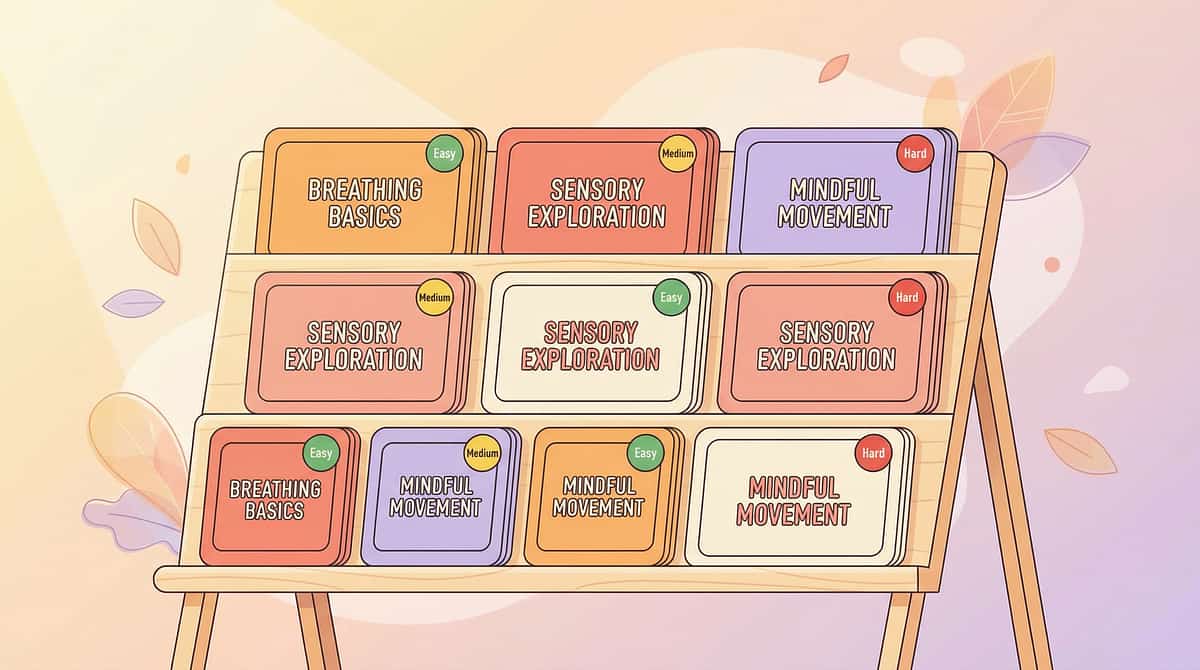
Your Journey Through the Behavior & Flexibility Domain
D-377
Transition Challenges ← Previous
D-378
📍 Pattern Completion Needs — You Are Here
D-379
Flexibility Building → Next
D-380
Interruption Tolerance → Future
← D-377: Transition Challenges
9 Materials That Help With Transition Challenges — When moving between activities creates distress. The bridge from D-377 is understanding that transitions feel incomplete to the pattern brain.
→ D-379: Flexibility Building
9 Materials That Help With Flexibility Building — When the completion diet is established and it's time to build genuine flexibility with real-world incompleteness. The natural next step from D-378.
🔗 Explore all 128 Canon Materials at pinnacleblooms.org/canon | 🔗 Browse all 999 Techniques at techniques.pinnacleblooms.org | 📞9100 181 181
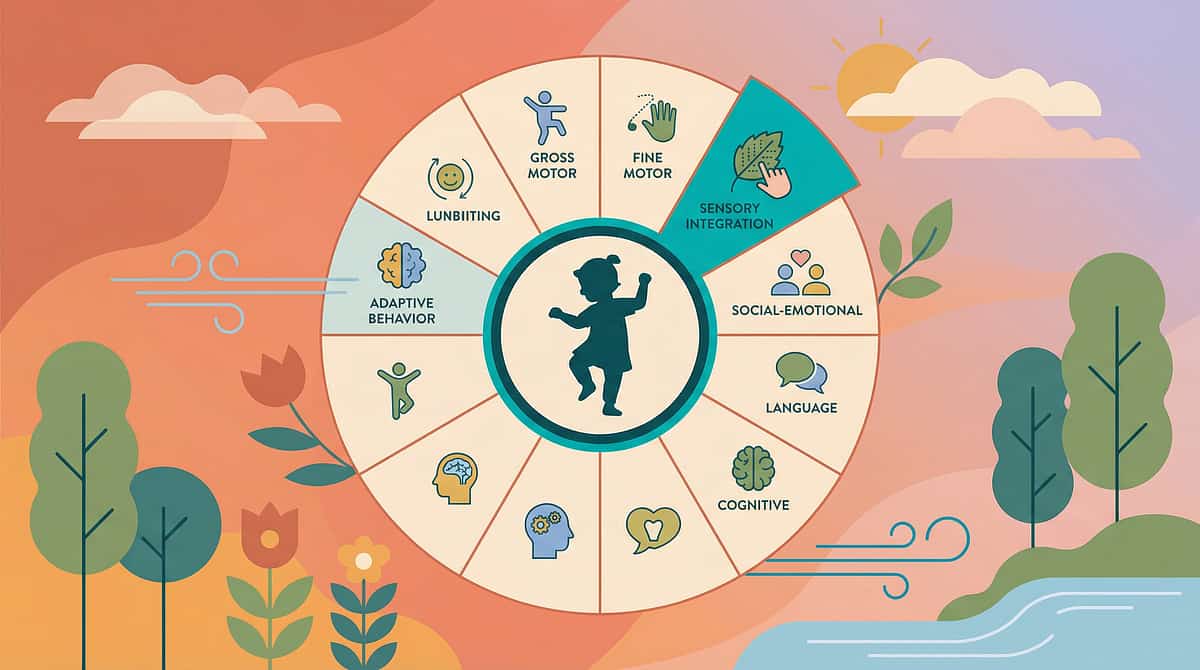
The Full Picture: Where Pattern Completion Fits in Development
Sub-domain | Code | Stage | GPT-OS® Stage |
Sensory Rigidity | D-375 | Explore | Pre-skill |
Routine Rigidity | D-376 | Explore | Emerging |
Transition Challenges | D-377 | ← Previous | Developing |
Pattern Completion Needs | D-378 | 📍 You Are Here | Approaching |
Flexibility Building | D-379 | → Next | Proficient |
Interruption Tolerance | D-380 | Future | Independent |
AbilityScore® Connection: Your child's current stage is tracked via the Cognitive Flexibility Readiness Index — a component of the AbilityScore® system. The progression spans: Significant distress with incompleteness → Tolerates with max support → Accepts short delays → Manages planned incompleteness with coping strategies → Generalizes flexibility across all contexts, including unexpected interruptions.
Request your child's current score at a Pinnacle centre or via: 📞9100 181 181
Request your child's current score at a Pinnacle centre or via: 📞9100 181 181
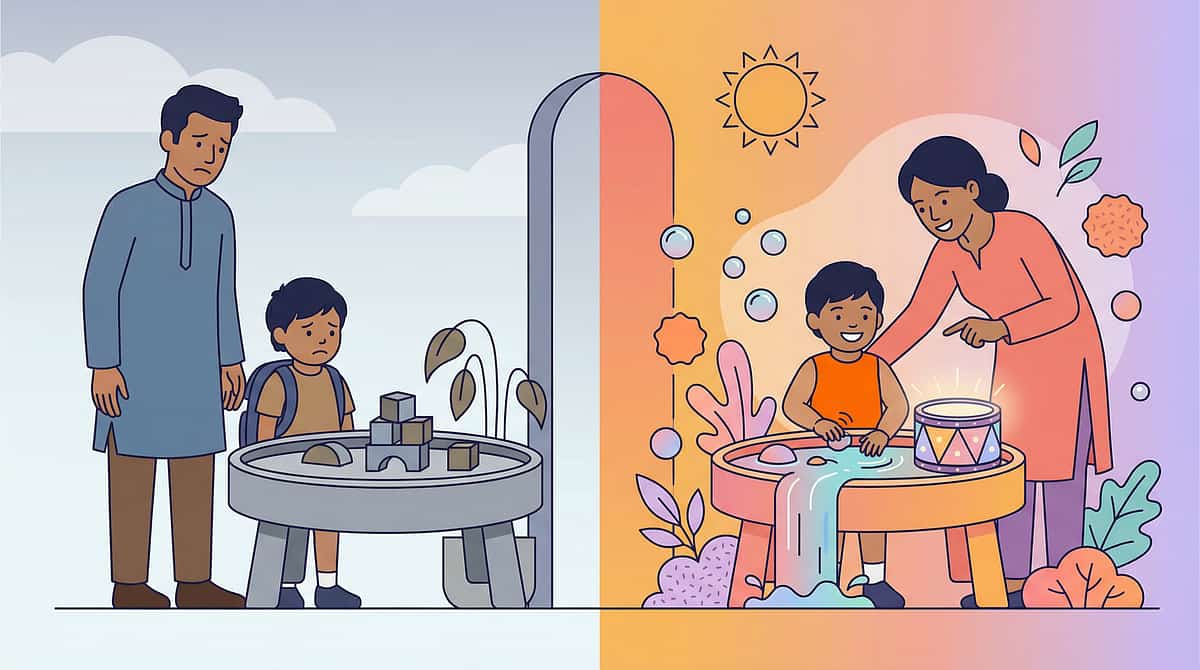
Build Your Child's Completion Diet
Just as a sensory diet provides proactive sensory input, a Completion Diet provides proactive closure experiences that prevent distress.
Time | Activity | Material | Duration | Purpose |
🌅 7:30am | Morning completion | 12-piece puzzle | 10 min | Regulate before demands |
☀️ 11am | Sorting task | Rainbow Sorting Set | 5 min | Reset between tasks |
🌤️ 2pm | Pattern completion | Pattern cards | 5 min | Decompress transition |
🌆 4pm | Construction | LEGO with instructions | 15 min | Deep engagement |
🌙 7pm | Checklist review | Day's completion record | 2 min | Satisfaction review |
😴 8:30pm | Sequencing | 4-card story sequence | 5 min | Narrative closure for day |
🎒 Emergency Completion Kit — Keep Ready at All Times:
1 × 6-piece knob puzzle · 1 × sorting task (10 items, 2 categories) · 1 × 3-card sequence · 1 × simple pattern strip
This is your regulation toolkit. Deploy when distress is building — before it peaks.
📞9100 181 181 — Personalized completion diet planning available
1 × 6-piece knob puzzle · 1 × sorting task (10 items, 2 categories) · 1 × 3-card sequence · 1 × simple pattern strip
This is your regulation toolkit. Deploy when distress is building — before it peaks.
📞9100 181 181 — Personalized completion diet planning available
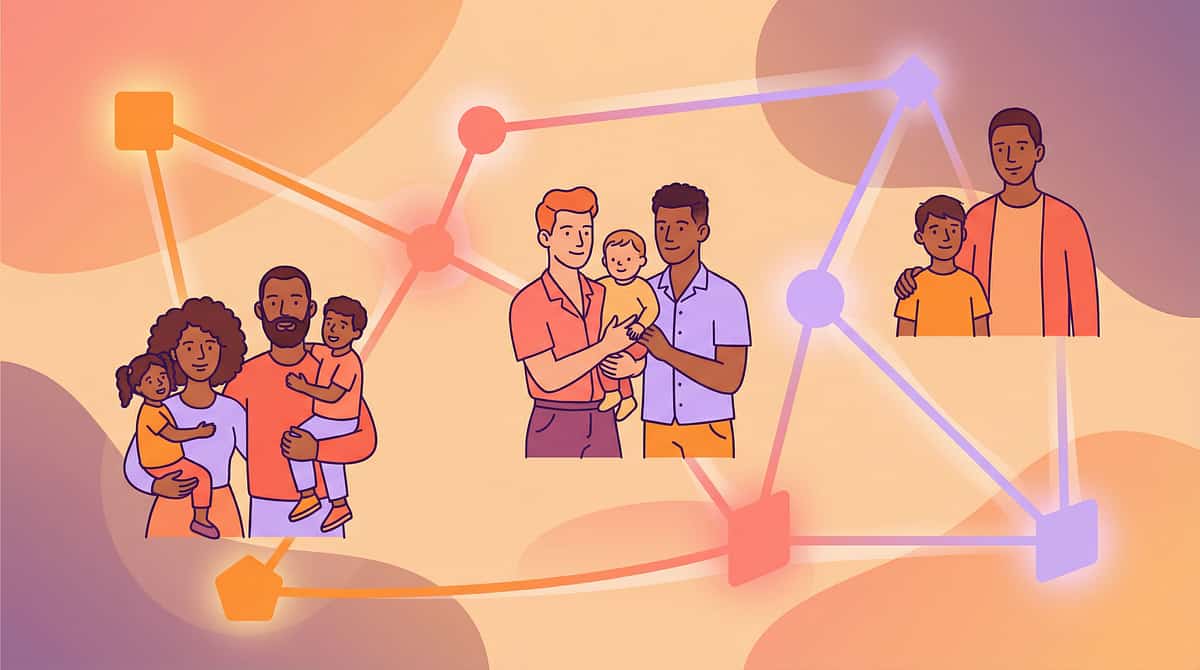
Families Who've Walked This Path
"Our son's need for completion controlled our entire household. Every show had to end. Every game had to finish. Every meal had to be eaten completely. His therapist didn't try to force flexibility — she gave him completion. Puzzles, patterns, sorting, building. Multiple times a day, his brain got to complete things. And something shifted. The more completion he got through these activities, the more he could handle when real life was incomplete. He still prefers things finished. But he can tolerate interruptions now."
— Parent, Pinnacle Network(Illustrative case; outcomes vary by child, underlying factors, and intervention approach.)
"I kept trying to teach flexibility by leaving things incomplete. His therapist stopped me: 'You're trying to build tolerance before the bank has any deposits.' Once we flooded him with completion, the tolerance came naturally."
— Father of a 5-year-old, Pinnacle Hyderabad Centre
"The puzzle box is now his self-regulation tool. When we can tell a meltdown is building, we bring out his favourite puzzle. Within 10 minutes of completing it, he's regulated. It's like magic — except it's science."
— Mother of a 7-year-old, Pinnacle Network
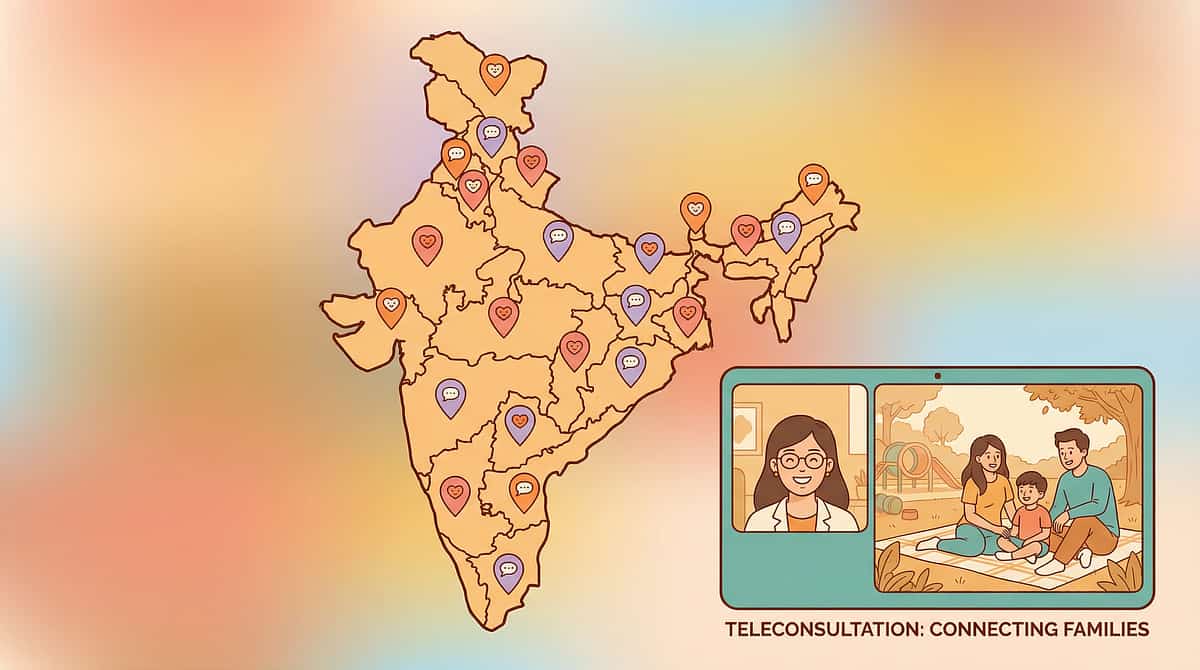
You Don't Have to Do This Alone.
The Pinnacle Parent Community: 70+ countries, 16+ languages.
WhatsApp Parent Group
Join thousands of Pinnacle families navigating pattern completion, flexibility building, and sensory regulation. Share strategies. Get real answers. Available in regional languages. Join — pinnacleblooms.org/community
Pinnacle OTT Platform
On-demand therapy guidance, parent education, and EverydayTherapyProgramme™ content — available in 16+ languages. Access Platform
Parent-to-Parent Support
Connect with a Pinnacle parent mentor — someone who has navigated pattern completion needs with their own child. care@pinnacleblooms.org
Global Reach
Pinnacle serves families from India, UAE, USA, UK, Canada, Australia, Singapore, Malaysia, and 70+ countries. You are not navigating this in isolation.
📞9100 181 181 | FREE | 16+ languages | 24×7
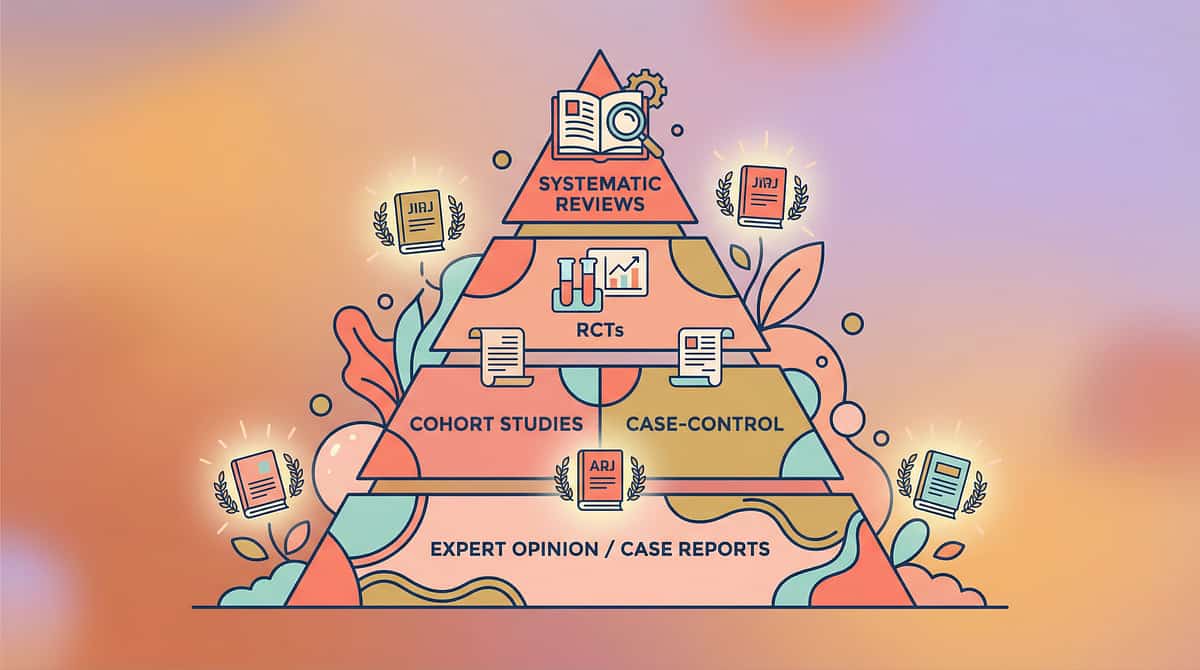
When Home Strategies Need Professional Support
Find your nearest Pinnacle center — 70+ centers across India
Service | Lead Discipline | What You'll Get |
AbilityScore® Assessment | NeuroDev + Psychology | Baseline severity score + complete developmental profile |
Cognitive Flexibility Evaluation | Psychology + OT | Pattern completion severity + anxiety screening |
Occupational Therapy | OT | Sensory diet + completion diet design |
Applied Behavior Analysis | BCBA | Structured flexibility building protocol |
Parent Training | All disciplines | Home implementation coaching |
EverydayTherapyProgramme™ | GPT-OS® | Daily home micro-intervention plan |
FusionModule™ | All disciplines | Converged multi-disciplinary plan |
Cannot visit a centre? Teleconsultation available for assessment and parent coaching across all disciplines. → Book at pinnacleblooms.org/teleconsult
📞9100 181 181 — FREE consultation guidance | Find a Centre
📞9100 181 181 — FREE consultation guidance | Find a Centre

The Evidence Base: For the Curious Parent
"Deeper reading for the curious."
[1] PRISMA Systematic Review (2024)
16 studies confirm sensory integration and behavioral flexibility interventions are evidence-based for ASD. Level I evidence. PMC11506176
[2] Meta-Analysis, World J Clin Cases (2024)
Structured therapy across OT/ABA/SLP improves adaptive behavior, self-regulation, and cognitive flexibility. PMC10955541
[3] Padmanabha et al., Indian J Pediatr (2019)
Home-based structured behavioral interventions — significant outcomes in Indian pediatric populations. DOI: 10.1007/s12098-018-2747-4
[4] WHO Nurturing Care Framework (2018)
Early identification and parental awareness directly improves developmental outcomes. nurturing-care.org/ncf-for-ecd
[5] NCAEP Evidence-Based Practices (2020)
Visual supports, behavioral intervention, and structured environmental design classified as EBP for autism. NCAEP Report
[6] Gestalt Psychology Closure Principle
Classical and contemporary research on pattern completion, closure, and whole-part processing as the neurological basis for this intervention.

Powered by GPT-OS®
Global Pediatric Therapeutic Operating System
Data Transparency
When you log a session, your anonymized data updates your child's Cognitive Flexibility Readiness Index, feeds the TherapeuticAI® plan adjustment algorithm, and contributes to population-level patterns that improve recommendations for all children.
Privacy: All data is encrypted, anonymized, and governed under Indian DPDP Act compliance standards.
Proof Strip
20M+ 1:1 sessions logged
97%+ measured improvement
70+ centres across India
160+ countries — patents filed
📞9100 181 181 | pinnacleblooms.org

Share This With Every Caregiver in Your Child's Life
"Consistency across caregivers multiplies impact."
Explain to Grandparents: "[Child's name]'s brain is wired to need patterns to be complete. When things get interrupted or left unfinished, it feels genuinely uncomfortable to them — like a splinter you can't get out. They're not being stubborn or naughty. The best thing you can do: let them finish, OR offer them a small puzzle or sorting activity to complete instead. These activities calm their brain down."
📝 Teacher/School Template: Download the professionally drafted letter explaining D-378 interventions to teachers and school staff, with specific classroom accommodation recommendations — covering visual schedules as completion motivators, checklist systems for academic tasks, and transition support using completion activities as buffers.
Frequently Asked Questions
Is my child's need to finish everything a sign of autism?
Pattern completion needs and insistence on sameness are among the diagnostic features of ASD, but they also occur in ADHD, anxiety, and OCD. The presence of a strong pattern completion need alone is not a diagnosis. For formal assessment, contact us at 9100 181 181 for an AbilityScore® evaluation.
If I give them completion activities, won't they become MORE rigid?
This is the most common misconception. Research consistently shows the opposite: when the completion need is satisfied constructively, the brain develops greater tolerance for incompleteness over time. Saturation builds capacity. Think of it like sleep — you don't prevent future sleep needs by depriving a child of sleep tonight.
My child only wants completion activities and refuses everything else. Is this a problem?
It's actually a sign the intervention is working — completion activities have become powerful motivators. Use this strategically: "First we do [non-preferred], then we do puzzle." This is the First-Then principle from ABA. The completion drive is now a clinical resource.
What's the difference between this and OCD?
OCD involves intrusive thoughts, fear of consequences, and ego-dystonic compulsions (the child knows it's irrational but can't stop). Pattern completion needs in autism are more about cognitive comfort-seeking — the child WANTS the pattern to complete because it feels better, not because they fear a bad outcome. Both can co-occur. Call 9100 181 181 if you're unsure.
How do I handle missing puzzle pieces?
Prevention is paramount: count pieces before every session, store in sealed containers, keep backup puzzles. If a piece goes missing mid-session: acknowledge calmly ("One piece is missing today"), offer an alternative completion, never force an incomplete activity. A missing-piece crisis is an opportunity: "Let's find something we CAN complete."
How long until I see results?
Weeks 1–2: engagement and slight positive affect. Weeks 3–4: spontaneous requests, consolidation. Weeks 5–8: flexibility window opens, micro-pauses tolerated. Months 2–3: planned incompleteness accepted. Full generalization: 6–12 months with consistent implementation. Progress is non-linear — track the trend, not the day.
Can I do this without buying expensive materials?
Absolutely. Every material in D-378 has a ₹0 DIY alternative. Print-and-cut puzzles, household sorting tasks, homemade pattern strips, drawn checklists, a repurposed egg timer. The principle is what matters: a completable activity with a clear endpoint.
My child is 11. Is it too late?
No. Neuroplasticity continues throughout childhood and adolescence. The intervention is effective at any age; the timeline and strategies adapt. For older children: more complex materials, more explicit discussion of the brain science, more collaborative goal-setting. Call 9100 181 181 for age-specific guidance.

The Completion Your Child's Brain Is Waiting For Is One Puzzle Away.
"From fear to mastery. One technique at a time."
20M+
1:1 therapy sessions
97%+
Measured improvement
70+
Centres across India
70+
Countries served
✅ Validated by the Pinnacle Blooms Consortium | 🔬 OT • 🗣️ SLP • 🔴 ABA/BCBA • 📚 SpEd • 🧬 NeuroDev • 👶 Pediatrics
📞9100 181 181 — FREE — 16+ languages — 24×7 | pinnacleblooms.org | care@pinnacleblooms.org
Preview of 9 materials that help with pattern completion needs Therapy Material
Below is a visual preview of 9 materials that help with pattern completion needs therapy material. The pages shown help educators, therapists, and caregivers understand the structure and content of the resource before use. Materials should be used under appropriate professional guidance.


Link copied!
🏆 Pinnacle Blooms Network®
Built by Mothers. Engineered as a System.
A consortium of Occupational Therapists, Speech-Language Pathologists, Board Certified Behavior Analysts, Special Educators, NeuroDevelopmental Pediatricians, Child Psychologists, CRO Scientists, WHO/UNICEF-aligned Researchers, and thousands of Mothers, Fathers, and Caregivers who refused to accept that their children could not be helped.
"From fear to mastery. One technique at a time."
Every technique page on techniques.pinnacleblooms.org is a door. Behind each door is a family — scared, exhausted, searching. Our consortium's singular purpose is to walk through that door with them, with the full weight of 20 million therapy sessions, evidence-based practice, and human expertise.
Your child's brain can learn flexibility. It starts with completion.
⚕️Medical Disclaimer: This content is educational. It does not replace individualized assessment by licensed psychologists, occupational therapists, behavior analysts, or developmental specialists. Pattern completion needs that significantly impact daily functioning, learning, or family wellbeing should be evaluated by qualified professionals. Intervention approaches should be individualized based on comprehensive developmental and behavioral assessment. Individual results may vary.
FREE National Autism Helpline (16+ languages)📞9100 181 181 | pinnacleblooms.org | care@pinnacleblooms.org
CIN: U74999TG2016PTC113063 | DPIIT: DIPP8651 (Govt. of India) | MSME: Udyog Aadhaar TS20F0009606 | GSTIN: 36AAGCB9722P1Z2
© 2025 Pinnacle Blooms Network®, a unit of Bharath Healthcare Laboratories Pvt. Ltd. All rights reserved. techniques.pinnacleblooms.org