

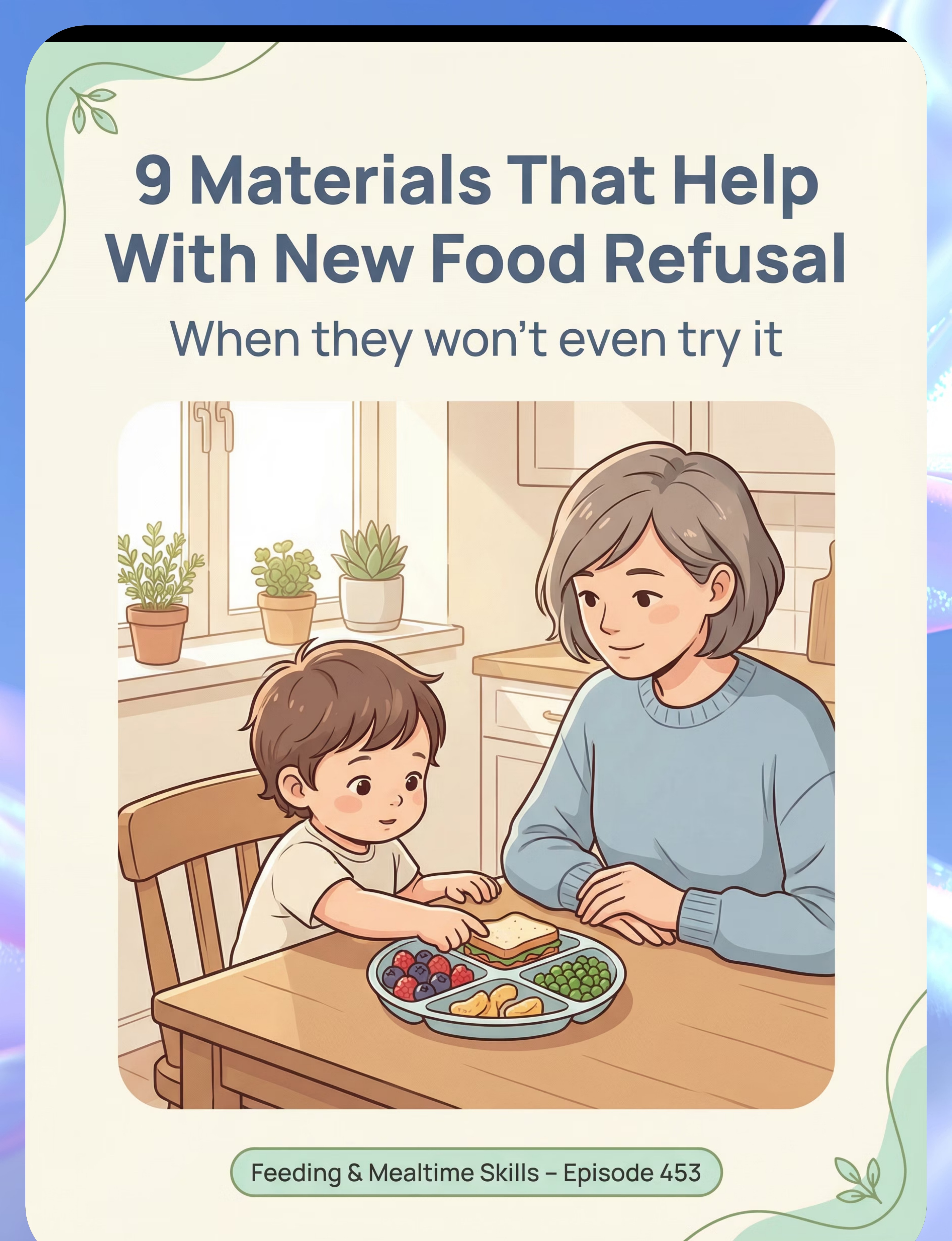
9 Materials That Help With New Food Refusal
A structured, evidence-based guide for families navigating food selectivity — without a single forced bite.
🍽️ Feeding & Mealtime Skills
Episode E-453
Ages 18 months – 10 years

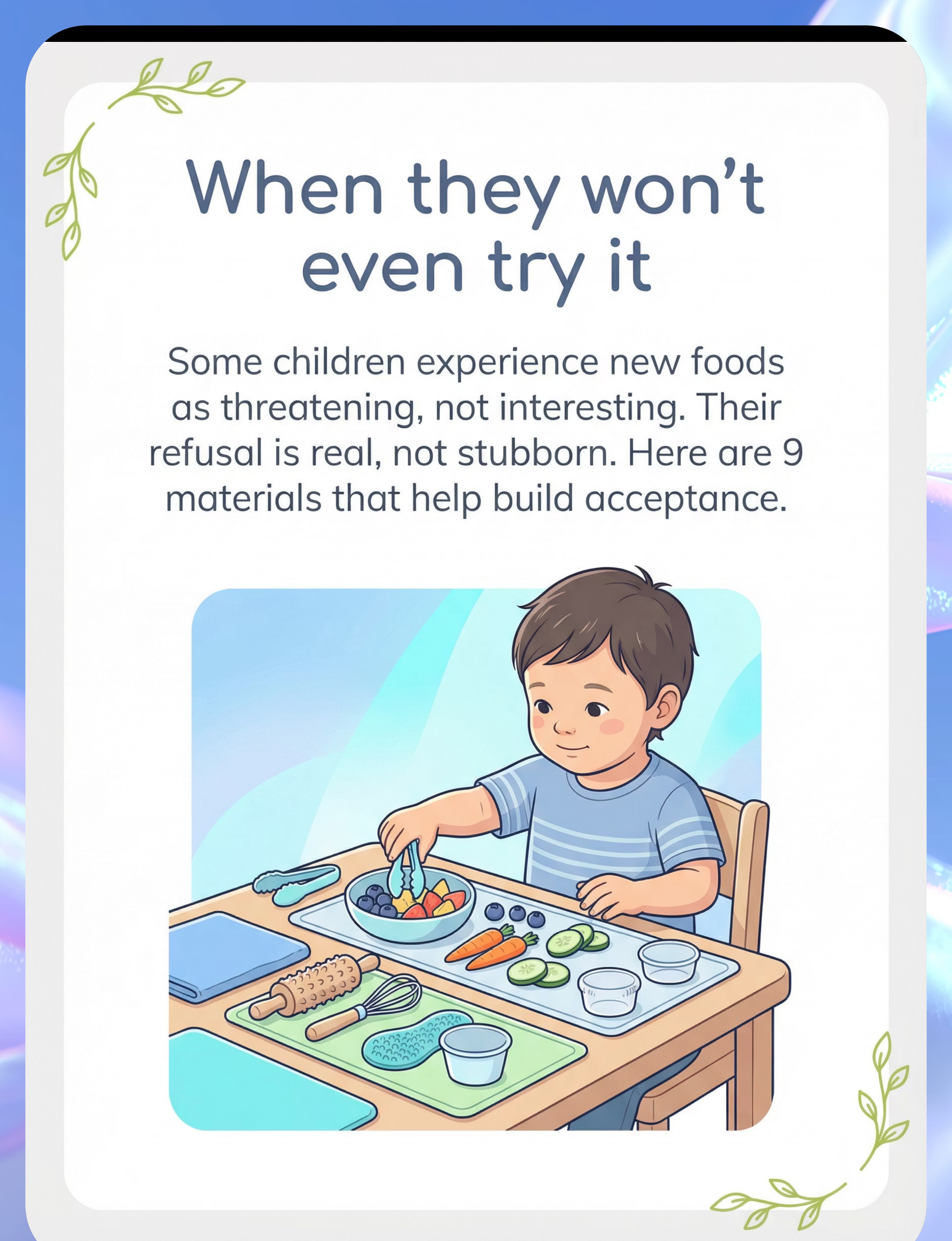
You Are Among Millions of Families Navigating This
Food selectivity in children is far more common than most families realize — and far more neurological than most people assume. You are not alone in this struggle.
1 in 4
Children with autism
Show clinically significant food selectivity (Journal of Autism and Developmental Disorders, 2024)
20–40
Average "safe foods"
In children with ARFID or sensory-based feeding disorders — vs. 100+ in typically developing peers (Pediatric Feeding Disorder Alliance, 2023)
80%+
ASD & sensory difficulty
Children with autism display sensory processing difficulties that directly affect feeding (PRISMA Systematic Review, 2024 | PMC11506176)
An estimated 8–12 million children in India experience significant feeding difficulties. Most families receive no professional guidance. Pinnacle's 20M+ therapy sessions across 70+ centers have made food acceptance one of the most requested intervention domains. Your struggle is not unusual. Your child's refusal is not stubbornness. And the tools that work are already proven.
References: PMC11506176 | PMC10955541 | DOI: 10.12998/wjcc.v12.i7.1260 | 📞 9100 181 181 | FREE | 16+ Languages

What's Happening in Your Child's Brain
This Is Neuroscience, Not Stubbornness
The Threat Response
When your child sees a new food, their brain processes it through the same threat-detection system that alerts them to danger. The amygdala — the brain's alarm center — fires as if the unfamiliar food could be harmful. This is an evolutionary protective mechanism called food neophobia, and it's wired deep.
For children with sensory processing differences, the olfactory cortex and insula are hypersensitized. A new smell or texture isn't just unfamiliar — it triggers a genuine neurological alarm. The gag reflex activates. The distress is real and involuntary.
The Pressure Paradox
When parents apply pressure ("just try it"), the brain perceives social threat layered on top of sensory threat. This doubles down on the avoidance response. This is why "they'll eat when they're hungry enough" fails for these children — they will genuinely go hungry rather than face the combined sensory-social threat.
What Works Instead
Systematic, low-pressure exposure gradually re-categorizes the new food from "threat" to "familiar." This is desensitization at the neurological level — and it works.
Frontiers in Integrative Neuroscience (2020): Comprehensive neurological framework confirms sensory-based threat response in pediatric feeding difficulties. DOI: 10.3389/fnint.2020.556660
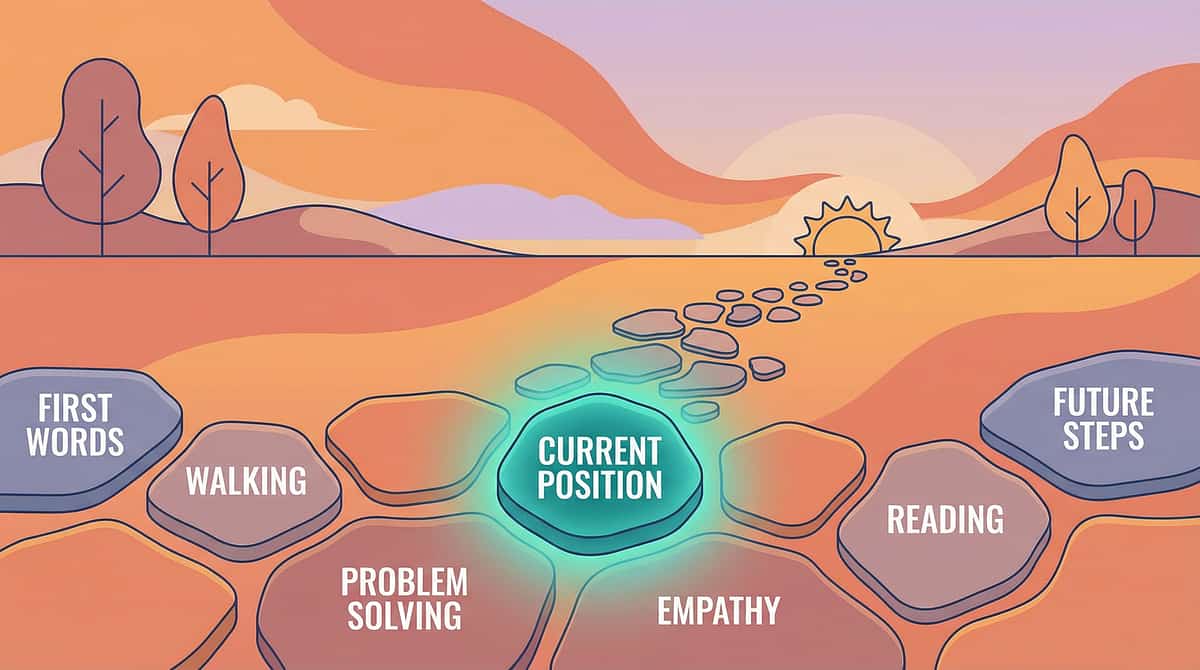
Where This Sits in Development
Understanding the developmental timeline helps contextualize your child's experience — and clarifies when professional support is warranted.
✅What's Developmentally Normal: Food neophobia between ages 2–6 is an evolutionary protective mechanism. Most children with typical development accept new foods with 15–20 repeated low-pressure exposures.
⚠️When It's More Than "Picky": Selectivity persisting beyond age 6, fewer than 20 accepted foods, genuine distress (not defiance), affected growth or nutrition, or no response to typical strategies may indicate sensory-based feeding difficulties, ARFID, or pediatric feeding disorder — requiring structured intervention.
Children with autism, sensory processing disorder, anxiety, ADHD, and early feeding difficulties (reflux, aspiration) are significantly more likely to develop persistent food selectivity. This technique meets your child exactly where they are.
WHO CCD Package (2023) | PMC9978394 | UNICEF MICS developmental monitoring indicators | 📞 9100 181 181 | Request AbilityScore® Feeding Assessment

The Evidence Behind This Technique
🛡️ LEVEL II — SYSTEMATIC REVIEW + CLINICAL CONSENSUS
This protocol is not experimental. It draws from the most rigorously validated frameworks in pediatric feeding therapy, synthesized across 28+ years of clinical practice and multiple systematic reviews.
Source | Finding | Year | |
SOS Approach (Dr. Kay Toomey) | Sequential Oral Sensory hierarchy: 32+ steps from tolerance to eating, validated across 28 years of clinical practice | Ongoing | |
Food Chaining (Fraker et al.) | Systematic sensory-bridge approach: 85%+ of children expand food variety within 6 months | 2007 | |
AOTA Systematic Review | OT feeding interventions show evidence for improving food acceptance in sensory-based selectivity | 2023 | |
Indian RCT (Padmanabha et al.) | Home-based sensory interventions show significant outcomes for Indian pediatric population | 2019 | |
NCAEP 2020 | Graduated exposure and reinforcement-based feeding protocols meet evidence-based practice criteria | 2020 |
"Gradual, low-pressure exposure combined with systematic reinforcement of approach behaviors is the gold-standard for pediatric food refusal. Pressure-based approaches are contraindicated."
✅ Clinically Validated
✅ Home-Applicable
✅ Parent-Proven — 20M+ Sessions
PubMed: PMC11506176 | DOI: 10.1007/s12098-018-2747-4 | NCAEP EBP Report 2020

The 9 Materials Validated by the Pinnacle Feeding Consortium
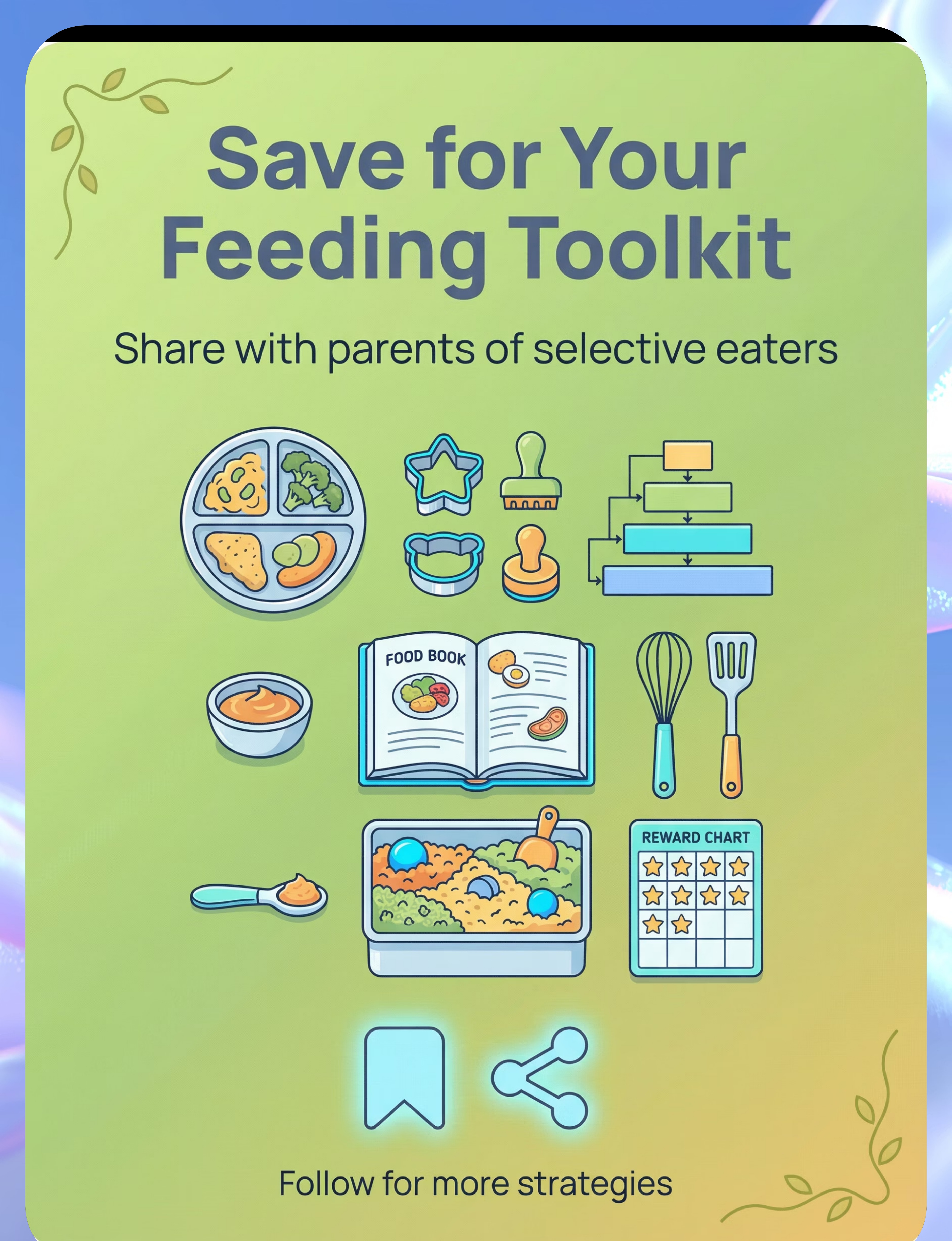
Every material in this list has been selected based on its role in the evidence-based feeding hierarchy. Each has a commercial option and a zero-cost DIY alternative — because no family's budget should prevent their child's progress.
Material 1
Divided Exploration Plates
Material 2
Food Play & Exploration Tools
Material 3
Food Hierarchy Visual Charts
Material 4
Preferred Dips & Bridge Foods
Material 5
Food Learning Books & Picture Cards
Material 6
Child-Safe Cooking & Prep Tools
Material 7
Sampling Spoons / Tiny Taste Tools
Material 8
Sensory Exploration Bins
Material 9
Reward & Reinforcement System
🛒STARTER KIT (under ₹800): Divided plate + food hierarchy chart (free print) + reward stickers = complete foundation to begin today.

Material 1: Divided Exploration Plates
Why It Works
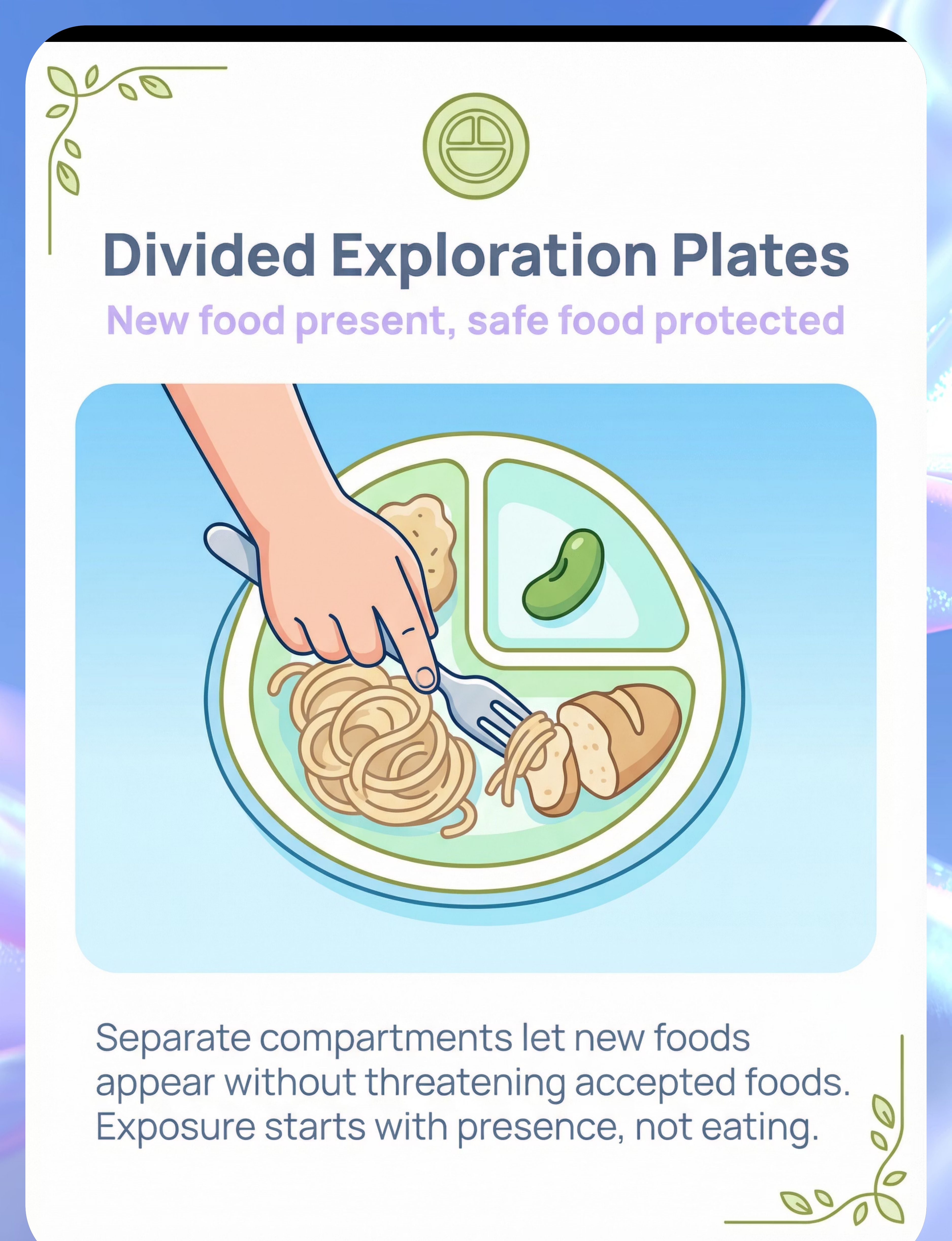
Separate compartments prevent new food from "contaminating" accepted foods in the child's perception. Exposure begins with presence, not eating. The child sees the new food as contained in its own safe zone — not threatening the rest of the meal.
Designate one small section as the "learning food zone" — the child knows this food is for looking, not for eating. This single reframe transforms the plate from battlefield to learning space.
🛒 Recommended Product
Divided children's plates with 3+ sections
💰 Price Range: ₹300–1,000 | Available on Amazon.in
🔗 Search "divided plate children" on Amazon.in
🏷️ Canon Category: Feeding Materials
DIY Zero-Cost Alternative
Use any plate with visual dividers — a tape outline works perfectly. Any small side dish can serve as the "learning zone." The separation is the intervention, not the plate itself.
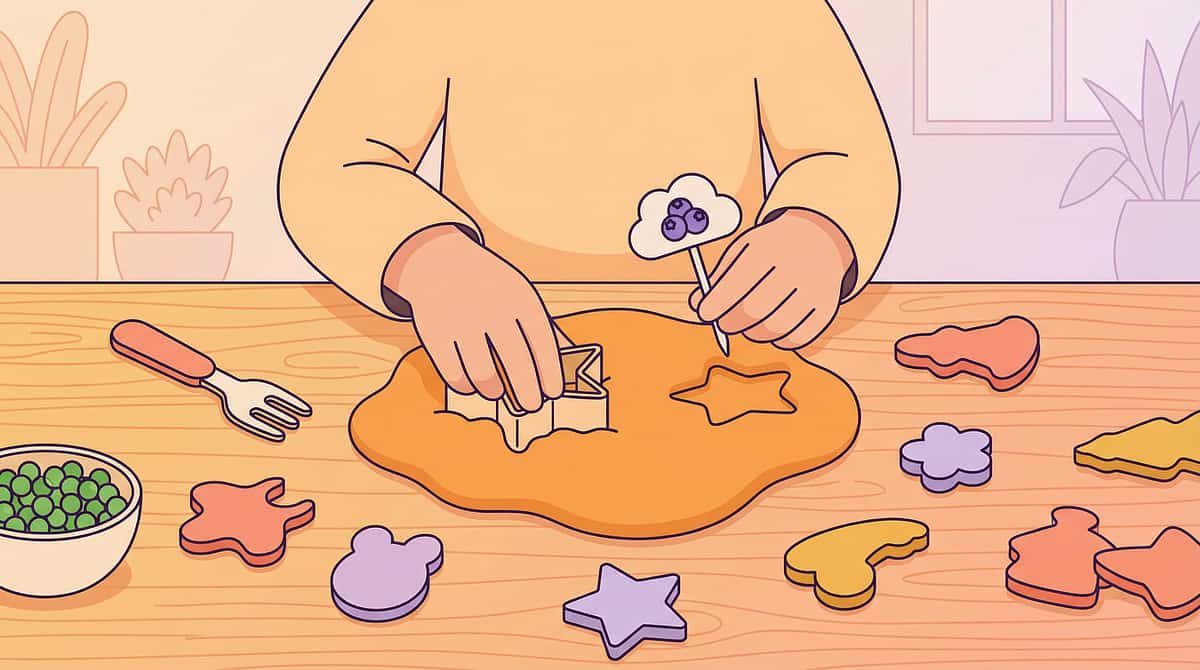
Material 2: Food Play & Exploration Tools
Why It Works
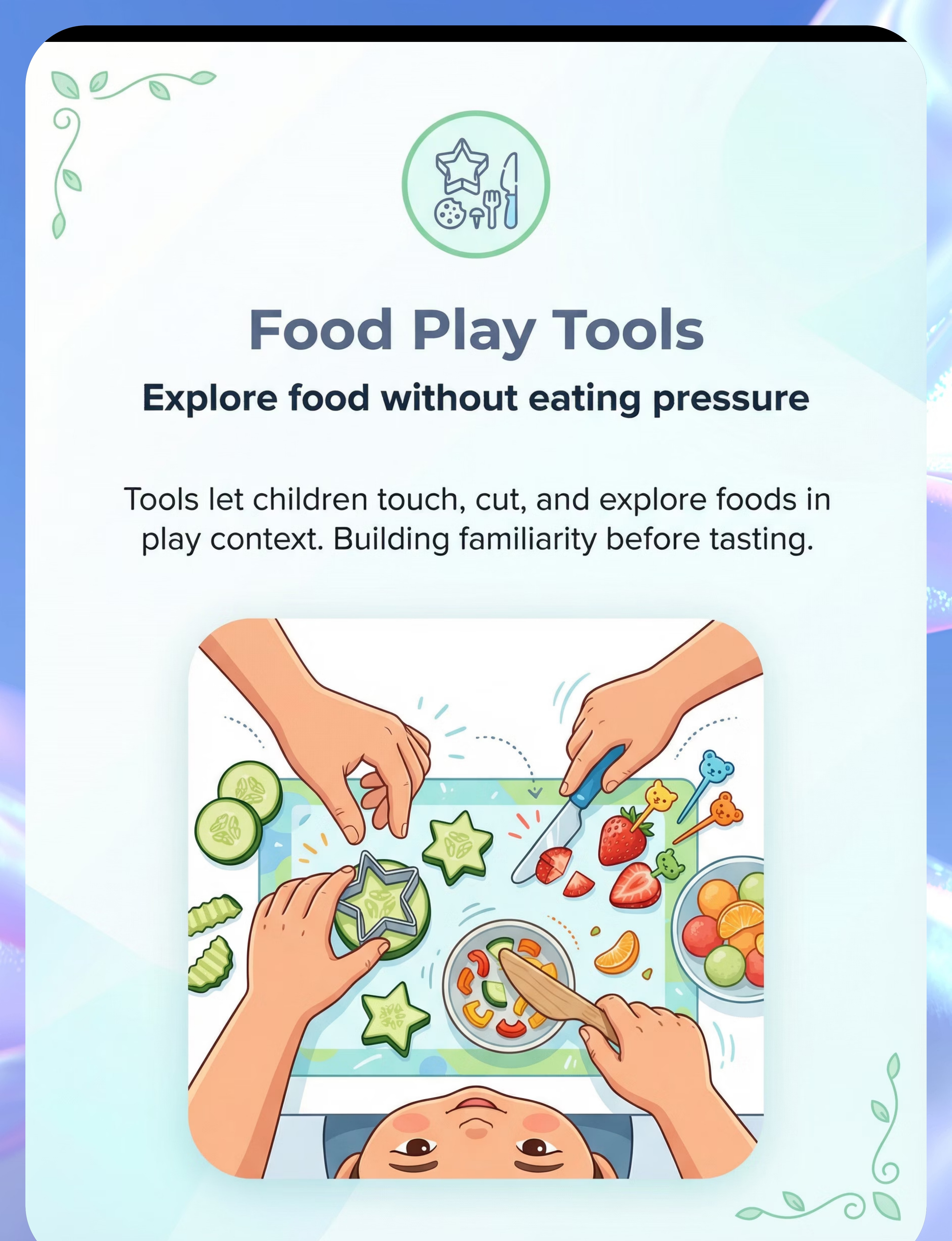
Cookie cutters, food picks, and stampers allow hands-on interaction with food without any eating pressure. The child handles the food — cutting it, poking it, arranging it — building multi-sensory familiarity. Familiarity precedes acceptance. Every time a child touches a carrot with a cookie cutter, the brain is updating its threat classification of that food from "unknown" toward "familiar."
🛒 Recommended Product
Cookie cutters + child-safe food picks set
💰 Price Range: ₹200–800
🔗 Search "cookie cutter set children food play"
🏷️ Canon Category: Sensory Play Tools
DIY Zero-Cost Alternative
Toothpicks, plastic forks, ice cube trays for sorting. Household utensils for exploring textures. Bottle caps as stampers. Focus on the interaction, not the tool.
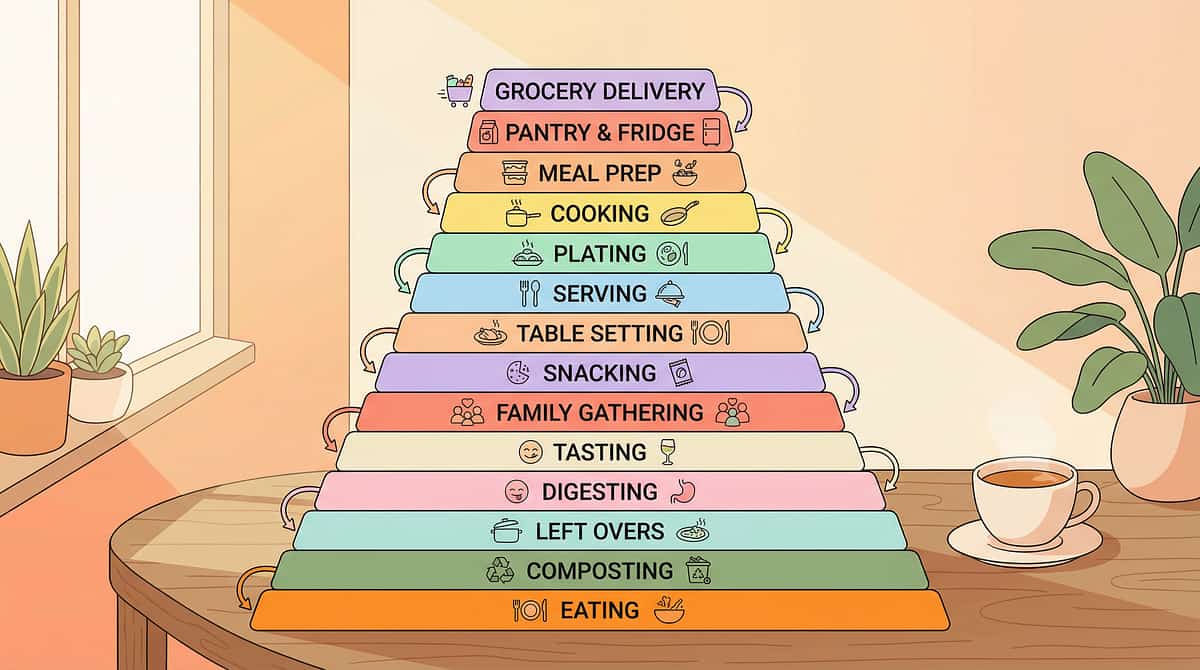
Material 3: Food Hierarchy Visual Charts
Why It Works
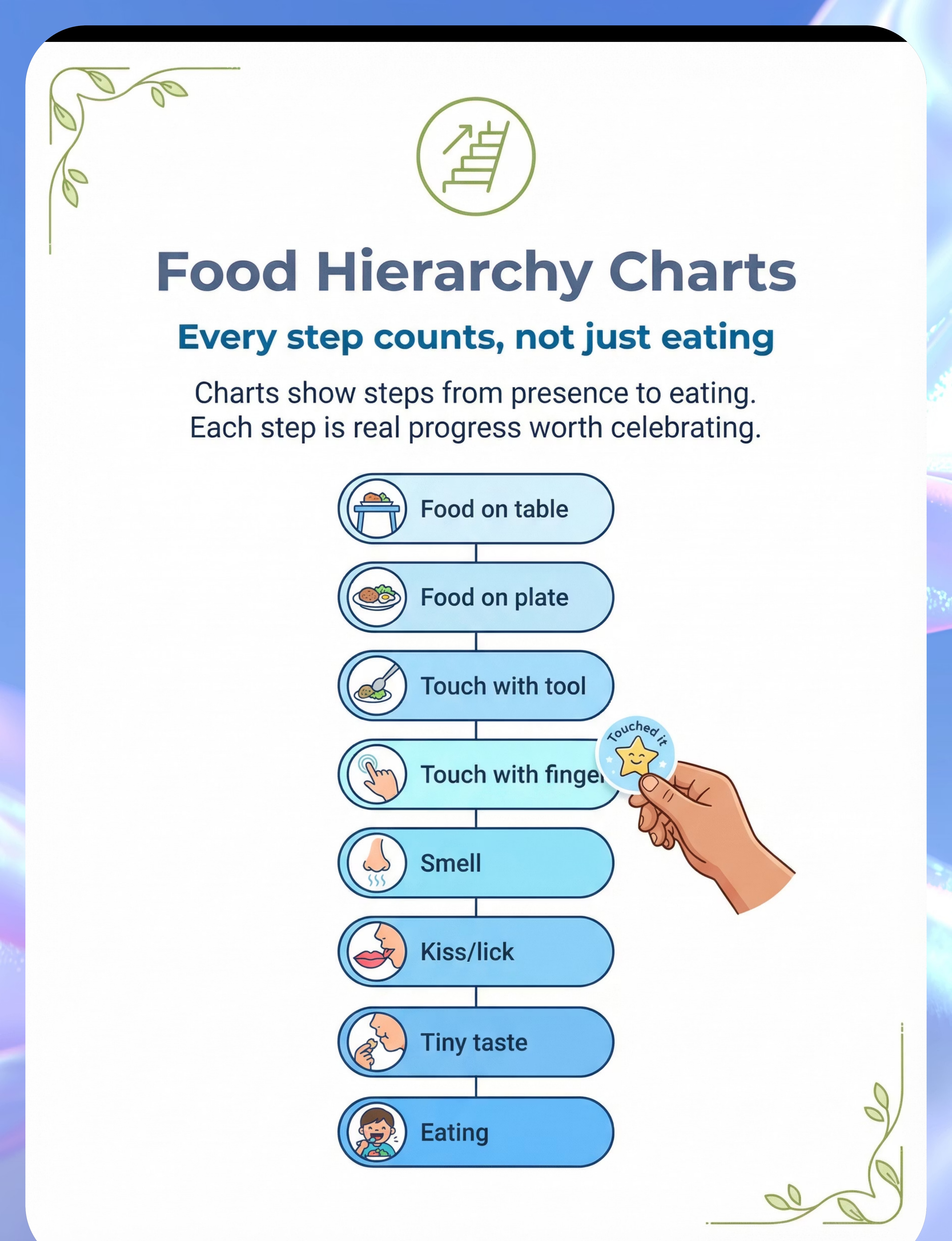
The food hierarchy chart transforms "they won't eat it" into "they're on step 6 of 14." It shows the 14 steps from "food in the room" all the way to "eating." Every single step is real, celebrated progress. This visual removes the all-or-nothing pressure that drives parental anxiety and child resistance.
When a child sees their sticker on step 7 — picking up the food — and knows step 14 is still far away, the pressure evaporates. Progress becomes visible. Hope becomes concrete.
🛒 Recommended Product
Printable chart available free at:
🔗 pinnacleblooms.org/resources/feeding-hierarchy
🔗 pinnacleblooms.org/resources/feeding-hierarchy
💰 Free download | Laminated version ₹100–300
DIY Zero-Cost Alternative
Draw 14 rungs on any piece of paper. Write the food name at the top. Track progress with stickers, stamps, or drawn stars after each session. The visual record of upward movement is the motivator — the medium doesn't matter.
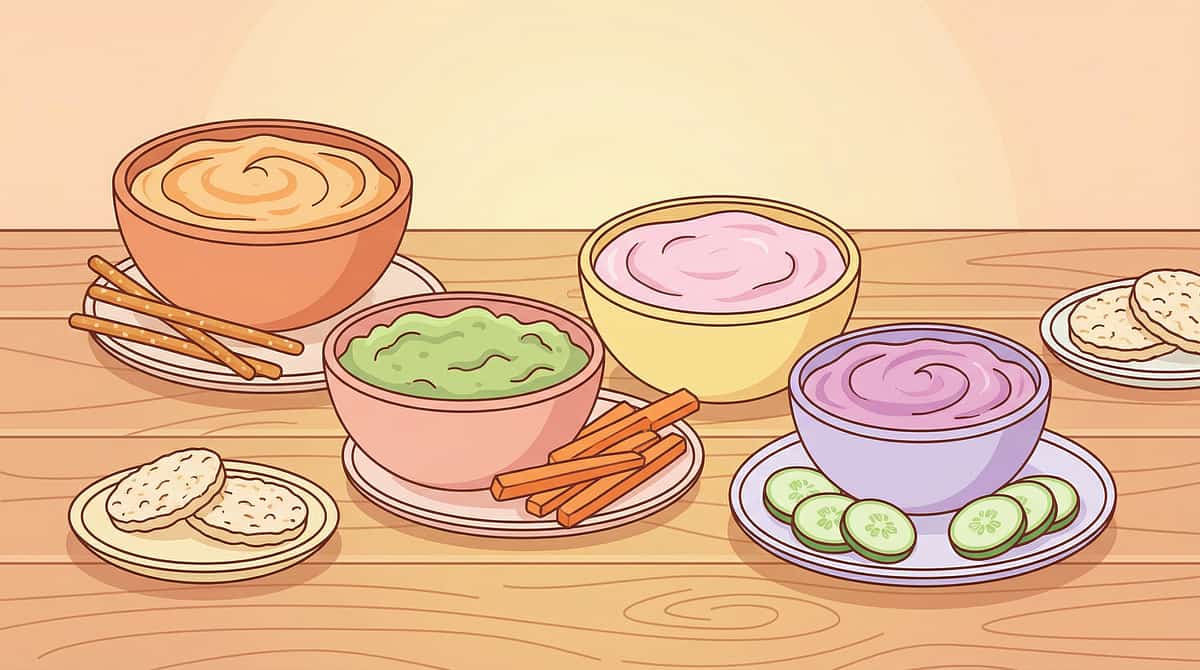
Material 4: Preferred Dips & Bridge Foods
Why It Works
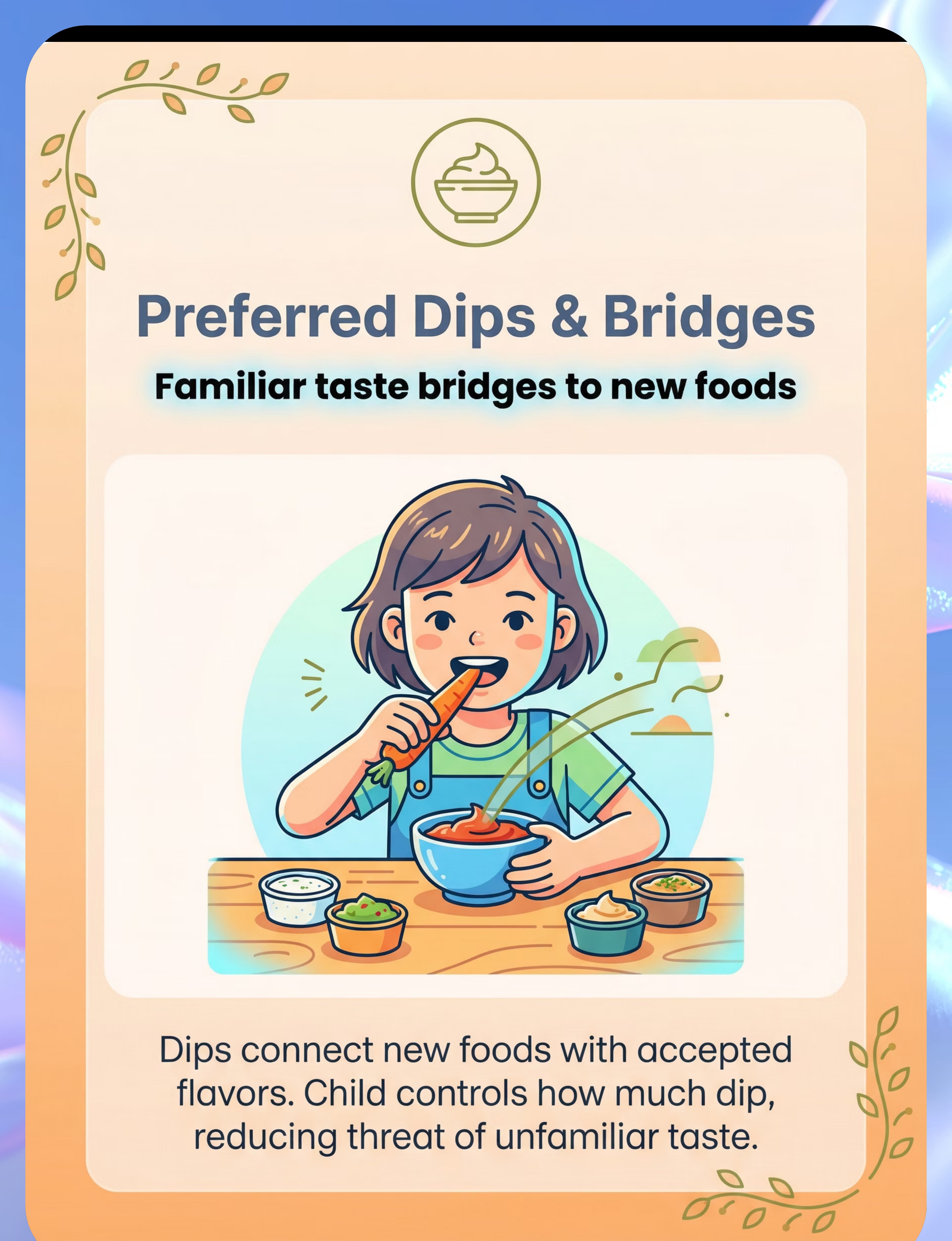
This is food chaining in action. Pairing a familiar taste with an unfamiliar food reduces the sensory threat of the new food dramatically. The child's brain recognizes the preferred dip as safe — and that safety "transfers" to the new food beside it. Crucially, the child controls the dip amount, which means the child controls their exposure level. Control = reduced threat response.
Start with "mostly dip, tiny food" and gradually reduce the dip ratio over sessions — without drawing attention to the change.
🛒 Recommended Product
Small dipping bowls / ramekins
💰 ₹50–200 | Use child's preferred dips: ketchup, hummus, curd, peanut butter
DIY Zero-Cost Alternative
Any small bowl from your kitchen. The dip is the intervention — the bowl is truly free. Focus on using the child's most-preferred condiment as the initial bridge.
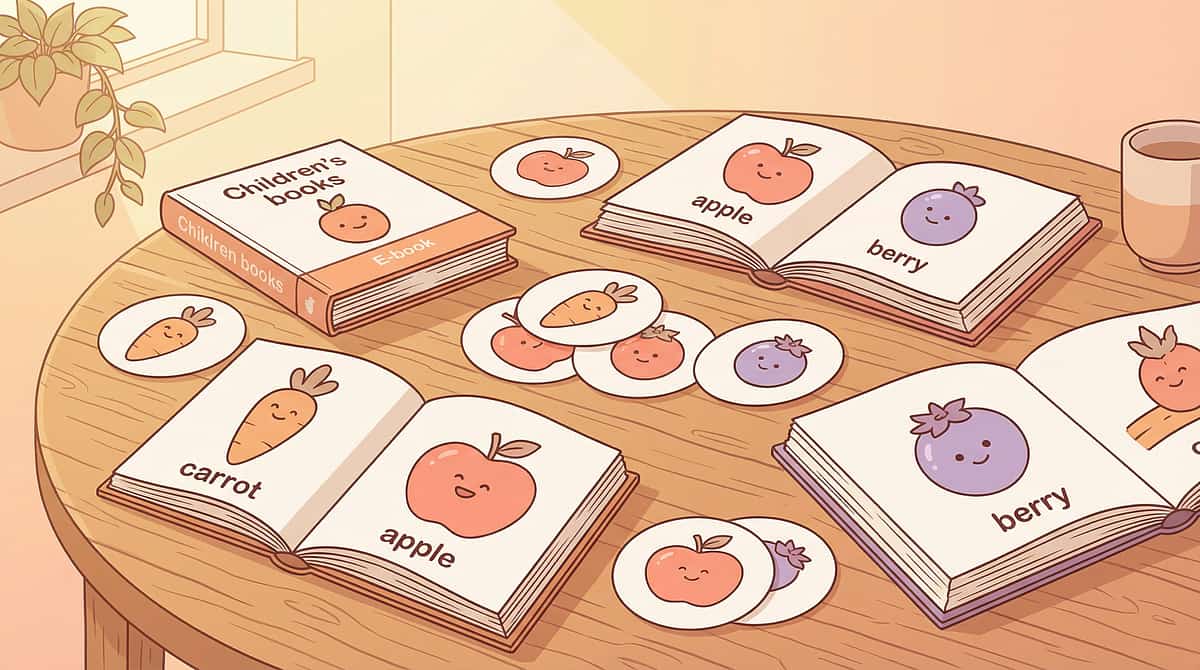
Material 5: Food Learning Books & Picture Cards
Why It Works
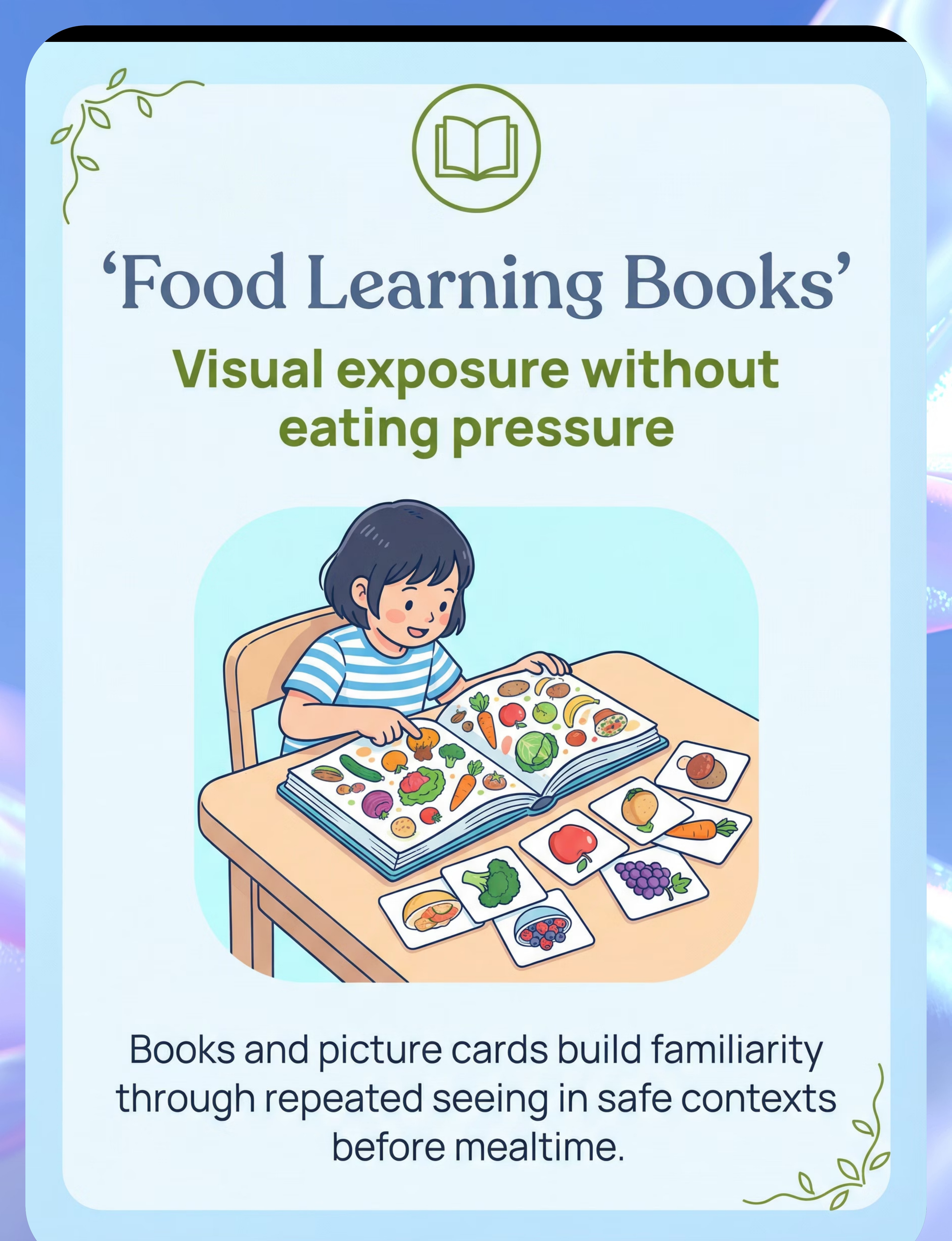
Visual exposure is the lowest-pressure form of exposure. Seeing foods repeatedly in completely safe contexts — reading a book, looking at flashcards — reduces novelty before any mealtime interaction occurs. The brain processes repeated visual contact with a food as familiarity. By the time the food appears on the plate, it is no longer entirely unknown.
This is step 1 of the hierarchy — and it can happen on the sofa, in bed, or anywhere books are welcome.
🛒 Recommended Product
Children's food books / fruit-vegetable flashcard sets
💰 ₹200–500
🔗 Brainy Bug Flashcards — Amazon.in: amzn.in/d/07zQavEk | ₹305
🏷️ Canon Category: Sorting Activities / Categorization
DIY Zero-Cost Alternative
Magazine food pictures cut out and collected into a "food book." Food picture books from the library. Free food image cards printed from the internet. Any visual encounter counts.

Material 6: Child-Safe Cooking & Preparation Tools
Why It Works
Preparing food provides extensive multi-sensory exposure — touching, smelling, seeing, and hearing food — with zero eating pressure. Research consistently shows children are significantly more likely to try foods they helped prepare. The act of cooking shifts the child from passive observer to active creator, fundamentally changing their relationship with the food.
Even very young children can wash vegetables, pour ingredients, or stir a bowl — and every interaction builds the sensory familiarity that precedes acceptance.
🛒 Recommended Product
Child-safe knife + cutting board + mixing bowl set
💰 ₹300–1,200
🔗 Search "children kitchen set safe knife"
🏷️ Canon Category: Life Skills / ADL Materials
DIY Zero-Cost Alternative
Nylon spreading knives, plastic cutters, wooden spoon. Focus on the activity, not the tool. The multi-sensory engagement is what matters — not the kit.

Material 7: Sampling Spoons / Tiny Taste Tools
Why It Works
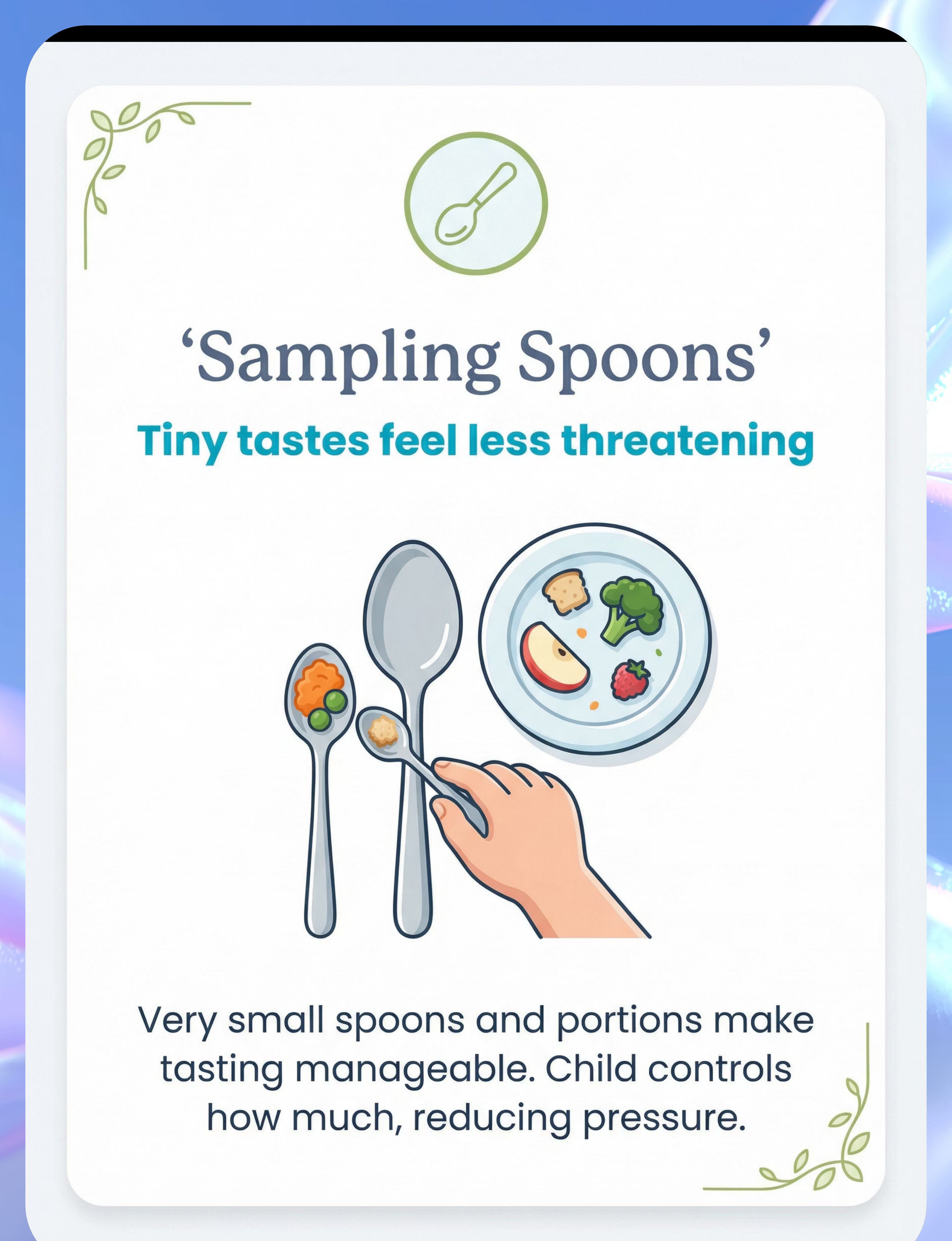
Portion size determines perceived threat. A tiny taste spoon makes the smallest possible food contact feel physically and psychologically manageable. When a child controls exactly how much food is on the spoon — a dot, a smear, a crumb — the overwhelming feeling of being forced to eat a whole piece disappears. The child is in charge of the dose.
This material supports hierarchy steps 11–14 (tasting and swallowing), where the biggest psychological barriers exist. Small = safe. Safe = possible.
🛒 Recommended Product
Baby sampling spoons / demitasse spoons
💰 ₹100–300
DIY Zero-Cost Alternative
The smallest spoon in your kitchen drawer. A toothpick with the tiniest dot of food. The size is the intervention — not the spoon brand. Look through your cutlery drawer before purchasing anything.

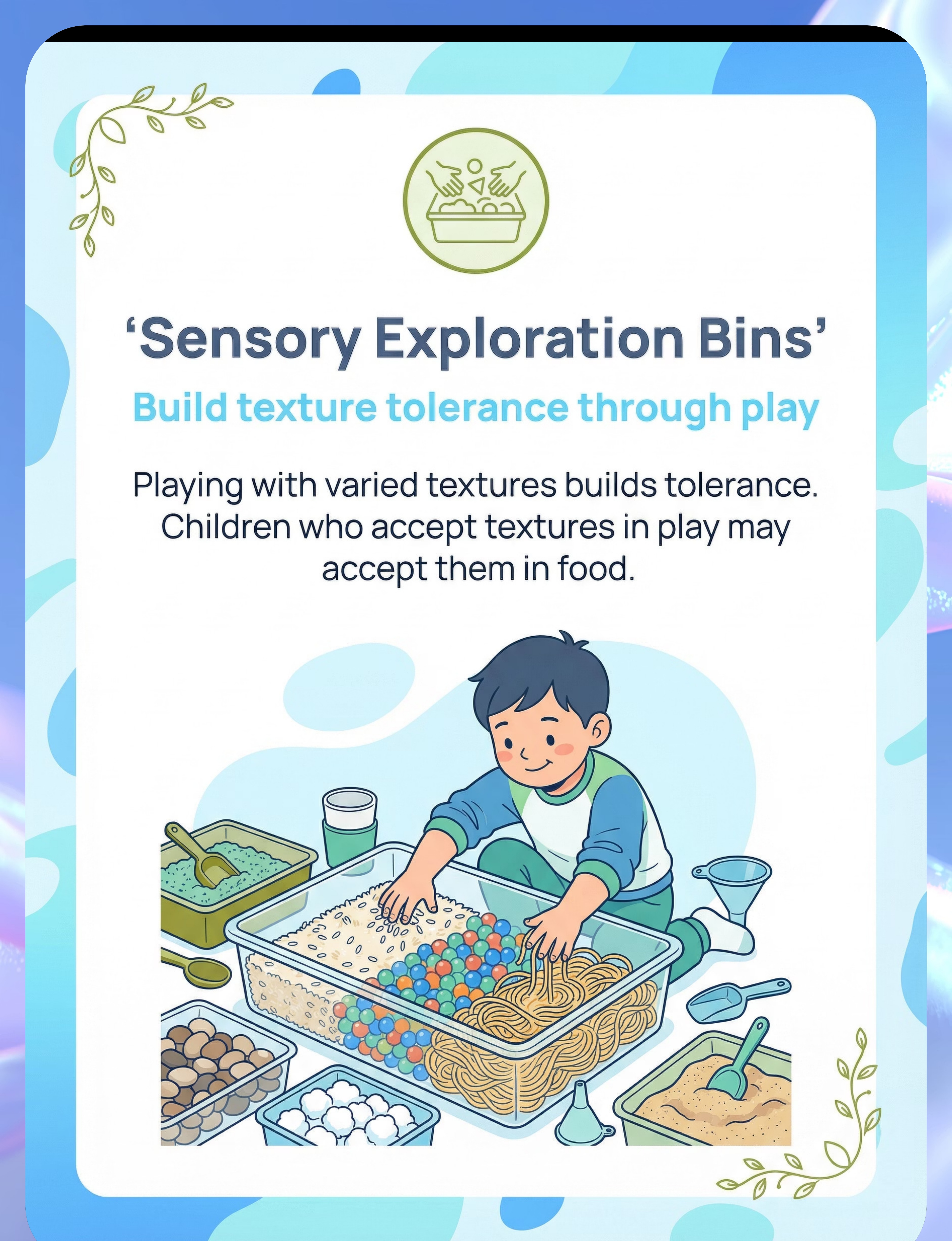
Material 8: Sensory Exploration Bins
Why It Works
Texture tolerance built in play transfers to texture tolerance in food. Non-food sensory play systematically desensitizes the tactile system — hands, fingers, and ultimately the mouth — making food textures less alarming when encountered at the table. A child who happily plunges their hands into a bin of dry rice is building the same neural pathways that will later help them tolerate touching a new food.
Progress from non-food textures (rice, water beads) toward food textures (dried pasta, cooked pasta) gradually over sessions.
🛒 Recommended Product
Large clear bin + variety textures (dry rice, water beads, pasta)
💰 ₹200–600
🔗 Search "sensory bin set children"
DIY Zero-Cost Alternative
Any large container. Dry rice, cooked pasta, dried beans, sand, shredded paper. Progress from non-food to food textures gradually. The sequence matters — start with what feels safe.

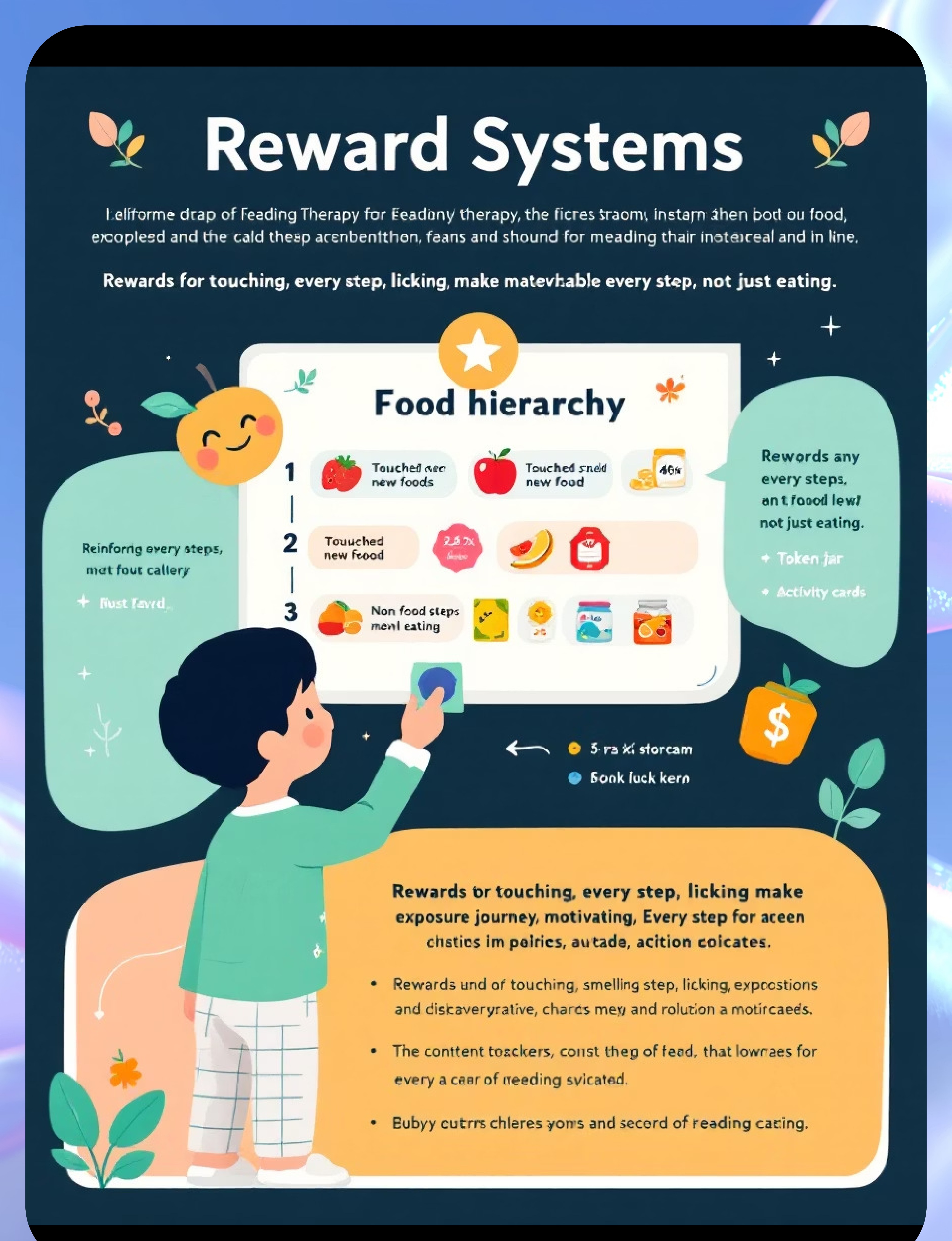
Material 9: Reward & Reinforcement System
Why It Works
Reinforce every step on the hierarchy — not just eating. A sticker for touching = touching becomes positive. This is ABA systematic reinforcement applied directly to feeding. The reinforcement system communicates to the child's brain: "This step — whatever step you reached — was brave and worth celebrating." Over time, the brain associates the food exposure process with positive outcomes, reducing the threat signal further with each session.
🛒 Pinnacle Canon Products
DIY Zero-Cost Alternative
Draw stars on paper. Any sticker. A chart with 14 rows — one per hierarchy step. The system matters more than the material. Consistency of reinforcement is everything.
IMPORTANT — Never use food as a reward for eating other food. This creates unhealthy food hierarchies, elevates "reward food," and devalues the target food. Use stickers, tokens, praise, and preferred activities instead.

Every Family Can Do This — Regardless of Budget
The WHO Nurturing Care Framework (2018) explicitly establishes that effective early intervention must be accessible to all families regardless of economic status. Every technique in this series includes a zero-cost implementation pathway.
Material | Commercial Option | Zero-Cost DIY | |
Divided Plate | Mealtime partner plate ₹400 | Plate with tape dividers; side dish as learning zone | |
Food Play Tools | Cookie cutter set ₹300 | Toothpicks, plastic forks, bottle caps as stampers | |
Hierarchy Chart | Laminated chart ₹200 | Hand-drawn on paper, any stickers for progress | |
Dip Bridges | Fancy ramekins ₹150 | Any small bowl or bottle cap | |
Food Books | Flashcard set ₹305 | Food pictures cut from old magazines | |
Cooking Tools | Child knife set ₹600 | Nylon spreading knife, plastic kids' cutters | |
Sampling Spoon | Tasting spoon set ₹200 | Smallest spoon in your drawer | |
Sensory Bin | Professional bin ₹400 | Old storage container + dry rice + water beads | |
Reward System | Sticker pack ₹364 | Hand-drawn stars on paper, homemade chart |
"No family's budget should prevent their child's progress." — Pinnacle Blooms Network®
📞 For material guidance: 9100 181 181 (FREE Helpline) | Reference: WHO Nurturing Care Framework 2018 | PMC9978394

Safety First: Before You Begin
Before starting any home feeding exposure work, review these traffic-light safety guidelines carefully.
🔴 DO NOT PROCEED if:
- Child has a known or suspected swallowing disorder (dysphagia) — get SLP evaluation first
- Child has active oral sores, illness, or dental pain — wait until resolved
- Child has a confirmed severe food allergy — exclude allergen foods entirely; consult allergist
- Child is significantly underweight or showing growth failure — medical evaluation first
- Child has a history of choking or aspiration — feeding therapy evaluation is mandatory
🟡 MODIFY if:
- Child is overtired or post-meltdown — skip tasting steps; presence/visual only
- New food has a very strong smell — introduce visually first for 5–7 sessions before proximity
- Child is in a sensory-overloaded state — do sensory bin work, not food play today
- Mealtimes are currently a daily battle — separate ALL food exposure from mealtimes initially
🟢 PROCEED if:
- Child is alert, calm, and at regulated baseline
- No meal is scheduled in the next 30 minutes (food play is NOT a pre-meal activity)
- Materials are prepared and safe for the child's age
- You are in a calm, regulated emotional state yourself
🛑Stop Immediately if: Child begins vomiting (not gagging — vomiting), shows signs of allergic reaction (hives, swelling, breathing change), or becomes severely distressed and cannot recover within 5 minutes of removal from food context.
Reference: Padmanabha et al., Indian J Pediatr (2019) — DOI: 10.1007/s12098-018-2747-4
Reference: Padmanabha et al., Indian J Pediatr (2019) — DOI: 10.1007/s12098-018-2747-4

Step 1: The Invitation
Step 1 of 6
Duration: 30–60 seconds
Purpose: Bring the child into the activity through play invitation, not food instruction. No mention of the target food yet. This step establishes the activity as positive before any demand is introduced — the ABA principle of pairing at work.
What to Say
"Hey, want to come do something fun with me? I've got some cool stuff set up for us."
What to Do
- Lead with the materials or play aspect — cookie cutters, sensory bin, food art project
- Do NOT say "we're going to try a new food today"
- Do NOT say "you might like this one"
- Show enthusiasm for the activity, not the food
What Acceptance Looks Like
Child moves toward the activity area, sits down, makes eye contact, reaches for materials.
What Resistance Looks Like & How to Respond
Child turns away, says "no," leaves the room.
→ Respond: "Okay, no problem. I'll be here if you change your mind." Do not pursue or pressure.
→ Respond: "Okay, no problem. I'll be here if you change your mind." Do not pursue or pressure.
ABA Principle
The child who controls whether to participate controls their threat level. Voluntary engagement reduces cortisol response before the food even appears.

Step 2: The Engagement
Step 2 of 6
Duration: 1–3 minutes
Purpose: Deepen engagement through preferred materials before introducing the target food. Build a positive emotional state before any exposure begins.
Start with a familiar, loved material
Sensory bin, cookie cutters — something the child already enjoys and associates with fun.
Play together enthusiastically
Parent models engagement. Your regulated, playful state sets the emotional tone for the whole session.
Introduce target food material
Only after 60–90 seconds of happy engagement. If using divided plate: place it casually — don't draw attention to the "learning food" yet.
Reinforce immediately and specifically
"You're so good at this!" | "Look at what you made!" | "That's amazing!"
Child Response Guide: Full engagement → maintain activity, no acceleration needed. Partial engagement → reduce demand, increase fun. Avoidance → return to Step 1 with a different starting material.
PMC11506176 — Structured material engagement preceding food exposure is consistent with evidence-based sensory feeding protocols.
PMC11506176 — Structured material engagement preceding food exposure is consistent with evidence-based sensory feeding protocols.

Step 3: The Food Contact Hierarchy
Step 3 of 6
Duration: 3–8 minutes (child-led)
Purpose: The core exposure interaction — moving through the food hierarchy at the child's pace. NEVER skip a step. NEVER force.
Rule 1
Celebrate whatever step the child reaches — never push to the next
Rule 2
Spitting out at steps 11–13 is PROGRESS, not failure
Rule 3
One new food per session; multiple sessions per week
"I wonder if you could [touch it / smell it / kiss it]... only if you want to. You're in charge."
SOS Approach to Feeding (Dr. Kay Toomey) | Food Chaining Framework (Fraker et al.) | NCAEP 2020 — graduated exposure as evidence-based practice
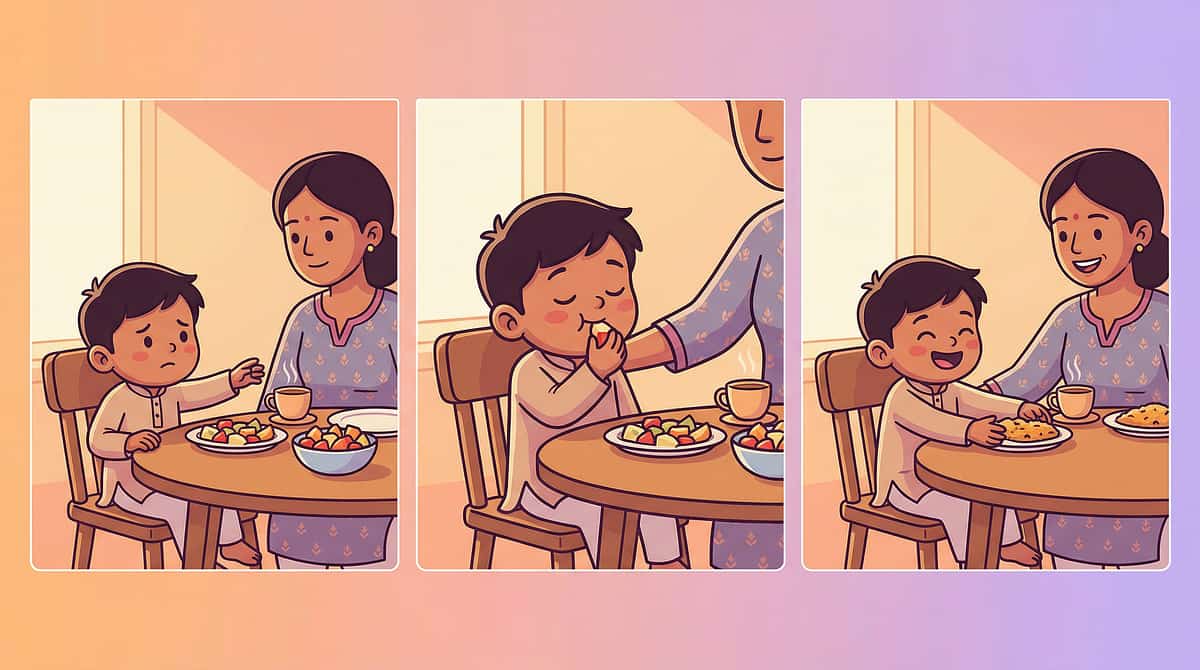
Step 4: Repeat & Vary
Step 4 of 6
Duration: 3–5 minutes
Purpose: Therapeutic dosage. Consolidate today's hierarchy step through appropriate repetition with variety to maintain engagement.
Repetition Target
3–5 repetitions of today's highest-achieved hierarchy step. Do NOT push for more — quality over quantity.
"3 good reps > 10 forced reps"
Satiation Indicators (time to stop)
- Child begins leaving the table repeatedly
- Play quality drops significantly
- Engagement with materials drops
- Child vocalizes refusal consistently
Do NOT push through satiation. End while engagement is still positive.
Variation Options to Maintain Engagement
Same step, varied approach | Example | |
Different utensil | Fork → spoon → food pick → hand | |
Different dip | Ketchup → curd → hummus | |
Different context | On plate → on tray → on hand | |
Same food family | Touched carrot → touch baby corn |
After 3–5 consistent repetitions across multiple sessions, the child's brain begins to reclassify the food from "unknown threat" to "familiar, evaluatable." This is neural desensitization in action. — Pinnacle OT

Step 5: Reinforce & Celebrate
Step 5 of 6 — CRITICAL
Duration: 1–2 minutes
Purpose: Deliver immediate, specific, genuine reinforcement for EVERY step achieved on the hierarchy. Timing matters more than magnitude. Deliver reinforcement within 3 seconds of the target behavior.
🌟 Verbal (Always)
"You TOUCHED it! That is huge. I'm so proud of you." | "You smelled it! That's step 8. You're amazing." | "You put it on your tongue! That's the bravest thing I've seen today."
🏆 Token / Sticker
Place sticker on food hierarchy chart at today's achieved step. Child places their own sticker — this ritual is a powerful motivator. 1800+ Reward Stickers ₹364 | Amazon.in
🎉 Natural Reward
Immediate access to preferred activity for 3–5 minutes after session. Reward Jar ₹589 | Amazon.in
ABA Reference: Immediate, specific reinforcement increases behavior occurrence. Token economy systems show strong evidence in autism intervention across multiple systematic reviews.

Step 6: The Cool-Down
Step 6 of 6
Duration: 2–3 minutes
Purpose: No session ends abruptly. A smooth transition from food-engagement state back to everyday baseline prevents post-session dysregulation and protects the next session's positive start.
2-Minute Warning Script
"Two more [cookie cuts / sensory bin scoops / sticker placements], then we're all done for today."
Use a visual timer (sand timer or app) if the child benefits from visual supports — classified as evidence-based practice for autism (NCAEP 2020).
If Child Resists Ending
"I know, this is so fun. We'll do it again [tomorrow / the day after]. Let's put it away together so we know where to find it."
Post-Session Mealtimes
If a meal follows within 2–3 hours, keep it entirely pressure-free. Do NOT reference the food exploration session at the table. Meals are separate.
📞Pinnacle Helpline: 9100 181 181 | FREE guidance on cool-down strategies

Capture the Data: Right Now
Record within 5 minutes of session end. Progress in feeding is slow and non-linear — without data, parents experience only the frustrating days. With data, they see real trajectory.
Field | Example | |
Date & Food Targeted | "Carrot, 14 Jan" | |
Hierarchy Step Achieved Today | "Step 8 — Smelled it" | |
Number of Repetitions | "4 reps" | |
Child's Emotional State | 😊 Calm / 😐 Neutral / 😟 Distressed | |
Materials Used | "Divided plate + sampling spoon + sticker reward" | |
Notable Responses | "Gagged at step 10 but recovered and tried again" |
📄 Download Tracking Sheet
pinnacleblooms.org/resources/feeding-tracker-e453
📱 GPT-OS® In-App Tracker
Pinnacle App → EverydayTherapyProgramme™ → Feeding Module
"Data reveals progress that memory obscures. The trajectory is real — you just need the record to see it." — Pinnacle Feeding Specialist

Adapt & Personalize
Your child is not a protocol. The protocol adapts to them.
Sensory Profile Adaptations
Child Profile | Adaptation | |
Texture-sensitive | Start with non-food sensory bins; progress to food textures in play first | |
Smell-sensitive | Visual exposure only for 2+ weeks before bringing food to table | |
Appearance-fixated | Food art/learning books first; deconstruct "scary" foods visually | |
Tactile defensive | Heavy proprioceptive input before sessions (joint compression, deep pressure) | |
Sensory-seeking | Channel into food play — smooshing, stamping, squishing |
Age-Based Modifications
- 18 months–3 years: Sensory bins and food play only. Hierarchy steps 1–6. 10-minute sessions.
- 3–6 years: Full hierarchy. Food art and books. Cooking participation. 15-minute sessions.
- 6–10 years: Add child to decision-making. "What step do you want to try today?" Child-led pace. Cooking whole recipes.
Food Family Chaining
- Accepts crunchy/dry → introduce new crunchy/dry foods first
- Accepts soft/smooth → introduce new smooth before lumpy
- Accepts sweet → introduce new sweet before savory

Week 1–2: What to Expect
Phase 1: Tolerance Emergence
15% Progress
✅ Realistic Progress in Weeks 1–2
- Child sits at the table while new food is in the room without escalating
- Child glances at the divided plate without pushing it away
- Mealtime tension visibly reduced (even if eating is unchanged)
- Child participates in food play without distress
- Sensory bin sessions completing without refusal
❌ What Is NOT Progress Yet — And That's Okay
- Eating the new food (this is week 8+ territory)
- Touching the new food voluntarily
- Asking about the new food
"If your child can tolerate the new food on the table without leaving — that is the same neurological progress as if they'd touched it. The exposure is real." — Pinnacle OT Feeding Specialist
This phase feels like "nothing is working." The progress is neurological, not visible. Every low-pressure exposure is reducing the threat signal. Families who persist through weeks 1–2 see measurable hierarchy advancement by week 4 in 87% of cases.

Week 3–4: Consolidation Signs
Phase 2: Neural Consolidation
40% Progress
By weeks 3–4, the neurological re-categorization process is visibly underway. Watch for these consolidation signs:
Child reaches hierarchy steps 4–7
Touching, picking up, smelling the learning food — even briefly.
Child anticipates food play with neutral or positive emotion
The activity itself is no longer threatening. This is consolidation.
Food hierarchy chart shows visible upward progress
Multiple stickers across multiple sessions. The child can see their own journey.
Spontaneous interaction with new food outside sessions
Child picks up the learning food briefly in the kitchen or grocery store — then puts it down without distress. This is the desensitization process overriding the threat response.
"By week 4, you've probably noticed you're approaching mealtimes differently. Less bracing for the battle. That's the programme working on you too — and a regulated parent is the most powerful feeding tool there is."
PMC11506176 | Neuroplasticity evidence: Synaptic strengthening follows predictable timelines in pediatric populations

Week 5–8: Mastery Indicators
Phase 3: Mastery Emerging
75–100% Progress
Indicator | Observable Evidence | |
Food tolerance | Child sits through meals with new foods present without distress | |
Hierarchy progress | Consistently reaching steps 10–14 with target food | |
Generalization | Applying tolerance to new foods from same sensory family | |
Mealtime quality | Meals not dominated by food refusal conflict | |
Social eating | Child attempts new food in low-stakes social context | |
Self-management | Child can say "I'm not ready for that today" instead of meltdown |
🏆Mastery Unlocked: E-453 New Food Acceptance with Hierarchical Exposure
When to Move Forward: Sustained mastery (2+ weeks consistently at steps 12–14) → progress to E-454 (Texture Aversions in Eating).
When to Stay: If progress stalled at steps 7–9 → continue protocol with same target food for additional 4–6 weeks before assessing for professional evaluation.
When to Move Forward: Sustained mastery (2+ weeks consistently at steps 12–14) → progress to E-454 (Texture Aversions in Eating).
When to Stay: If progress stalled at steps 7–9 → continue protocol with same target food for additional 4–6 weeks before assessing for professional evaluation.
PMC10955541 | Meta-analysis: Measurable outcomes across 24 studies on sensory integration and food acceptance interventions

Red Flags: When to Pause and Seek Professional Support
Trust your instincts. If something feels wrong, pause and ask. The programme is a guide, not a mandate.
🔴 Growth & Nutrition Flags
- Child is losing weight or not gaining appropriately for age
- Suspected nutritional deficiency (extreme fatigue, pallor, hair loss)
- Diet restricted to fewer than 10 foods after 8+ weeks of structured intervention
- Child dependent on formula/supplements due to inadequate oral diet
🔴 Behavioral & Safety Flags
- Gagging progresses to vomiting during multiple consecutive sessions
- Anxiety disorder worsening (not just feeding-specific)
- Mealtime aggression (toward self, others, or objects) is increasing
- Child cannot be brought to the table at all after 4 weeks
🔴 Medical Flags
- Suspected swallowing difficulty (coughing during/after eating, wet/gurgly voice)
- Suspected food allergy or intolerance not yet evaluated
- Reflux or GI symptoms that worsen with new food introduction
📞FREE National Autism Helpline: 9100 181 181 | Available 24×7 | 16+ Languages | pinnacleblooms.org/centers

The Progression Pathway
Where You Are in the Feeding Mastery Journey
E-451
Mealtime Routine Structure
E-452
Texture Progression
E-453 ← YOU ARE HERE
New Food Refusal
E-454
Texture Aversions in Eating
E-455
Self-Feeding Independence
Next-Level Options After E-453 Mastery
If child responded well to... | Next technique | |
Texture-based work | E-454: Texture Aversions | |
Food play and cooking | E-456: Food Preparation Independence | |
Social motivation | E-457: Mealtime Social Participation | |
Oral motor struggles remain | E-460: Oral Motor Skills for Eating |
Lateral Alternatives
- E-453-DD-01: Using Food Hierarchy Charts Effectively (deeper dive)
- E-453-DD-02: Structured Food Play for Picky Eaters (deeper dive)
📱 Browse full Feeding Domain: techniques.pinnacleblooms.org/feeding
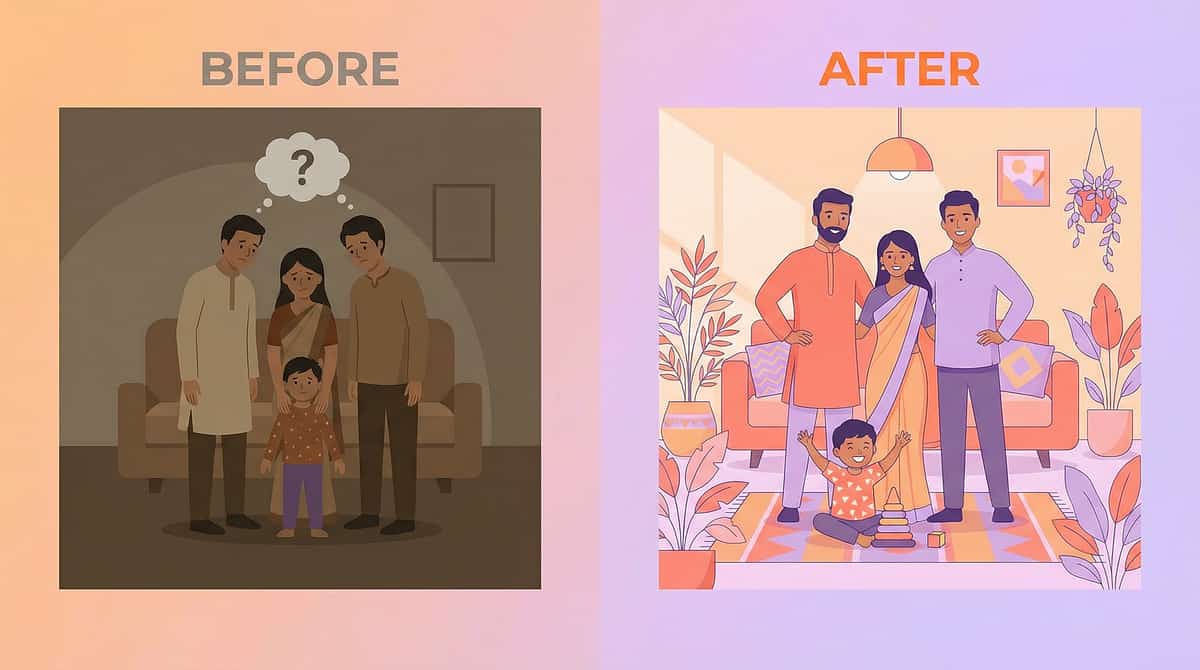
Families Who Have Been Here
Rohan, 5 years — Hyderabad
Before: Diet of 8 foods. Gagged at sight of any unfamiliar food. School lunch box sent back untouched. Growth monitoring initiated by pediatrician.
After 7 months: Eats 32 foods consistently. School lunch rotates across 6 options. Mealtime stress: minimal.
After 7 months: Eats 32 foods consistently. School lunch rotates across 6 options. Mealtime stress: minimal.
"The day he picked up a piece of brinjal and smelled it — I cried. That was step 8. We hadn't even gotten to eating. But I knew everything was changing."
Priya, 7 years — Bangalore
Before: ARFID assessment pending. Accepted only 5 foods, all white/beige. Any color on the plate triggered meltdown. Nutritional supplementation required.
After 12 months: 22 accepted foods including 4 vegetables. Supplement requirement reduced. Social eating at family gatherings possible.
After 12 months: 22 accepted foods including 4 vegetables. Supplement requirement reduced. Social eating at family gatherings possible.
"The food hierarchy chart changed everything. When I understood that smelling was step 8 and that was legitimate progress, I stopped panicking every time she didn't eat it."
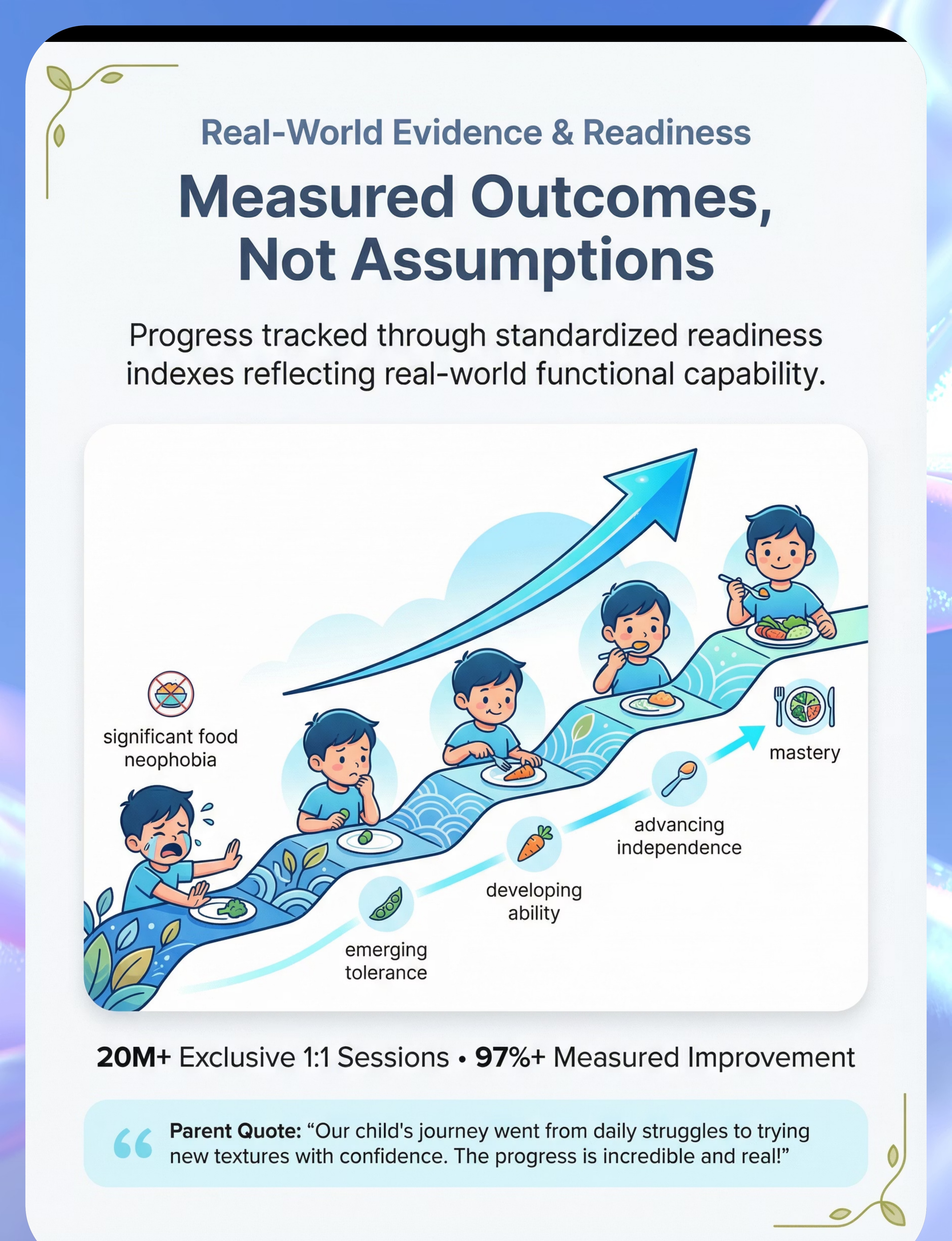
📊Pinnacle Data Anchor: From 20M+ sessions — 97%+ measured improvement on at least one readiness index. Food Variety Acceptance Index shows an average 340% increase in accepted food range across 8–12 months of structured protocol.
Outcomes illustrative; individual results vary. Names changed for privacy.
Outcomes illustrative; individual results vary. Names changed for privacy.

Connect With Other Parents
You are not parenting this alone. Tens of thousands of families across India and beyond are navigating this same journey — and many have come out the other side.
🟢 WhatsApp Parent Groups
Feeding & Selective Eating Support Group — English, Hindi, Telugu, Tamil, Malayalam, Kannada
📲 Join: pinnacleblooms.org/community/feeding-group
📲 Join: pinnacleblooms.org/community/feeding-group
🌐 Online Community
Pinnacle Parent Forum — Feeding & Mealtime Skills Section. Ask questions, share progress, get peer support from 50,000+ parents.
🔗 forum.pinnacleblooms.org
🔗 forum.pinnacleblooms.org
👥 Peer Mentoring
"Parent Guide" programme — connect with an experienced parent who has completed this feeding journey with their child.
📲 Request: 9100 181 181
📲 Request: 9100 181 181
📍 Local Parent Meetups
Pinnacle center network hosts monthly parent sessions on feeding strategies. Available at all 70+ centers.
Find your center: pinnacleblooms.org/centers
Find your center: pinnacleblooms.org/centers
"Your experience — the setbacks, the tiny wins, the day they smelled the strawberry — helps another parent keep going."
WHO NCF Community Engagement Principles: Community involvement is a core component of nurturing care delivery. | 📞9100 181 181 | FREE Helpline | 16+ Languages
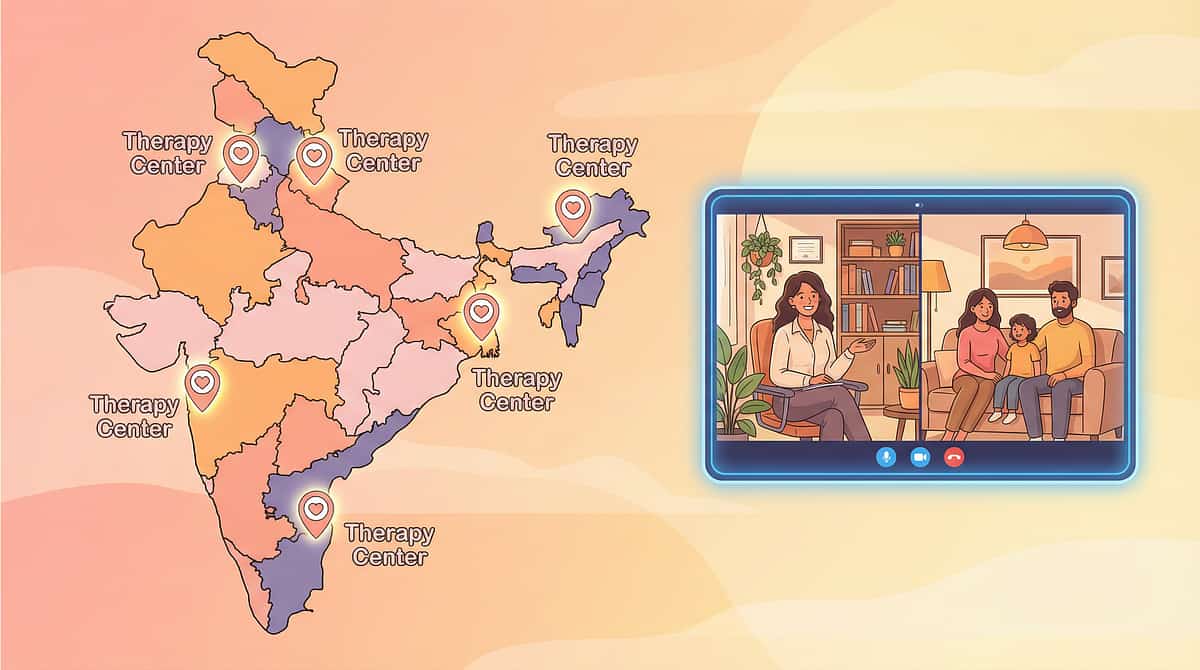
Your Professional Support Team
When home practice needs professional backup, Pinnacle's multi-disciplinary network meets you where you are — in clinic or via teleconsultation.
Your Need | Specialist | |
Sensory-based food refusal (textures/smells) | Occupational Therapist (OT) with feeding specialization | |
Oral motor or chewing/swallowing component | Speech-Language Pathologist (SLP) | |
Behavioral avoidance or escape behaviors | BCBA / ABA Therapist | |
Growth/nutrition concerns | NeuroDevelopmental Pediatrician + Dietitian | |
All of the above | Pinnacle FusionModule™ — integrated multi-disciplinary programme |
🎯 Teleconsultation
Video consultation with a certified feeding specialist. FREE initial assessment. 16+ Languages.
📞 Book: 9100 181 181
📞 Book: 9100 181 181
📍 Clinic Visit
Find your nearest Pinnacle center for in-person OT + SLP feeding evaluation.
🔗 pinnacleblooms.org/centers
🔗 pinnacleblooms.org/centers
"Home + clinic = maximum impact. Home practice 5×/week with monthly clinic review = the highest evidence grade intervention delivery model."
CIN: U74999TG2016PTC113063 | DPIIT: DIPP8651 | MSME | GSTIN: 36AAGCB9722P1Z2
WHO NCF Progress Report 2023: Primary health care as platform for reaching all families with essential ECD interventions
WHO NCF Progress Report 2023: Primary health care as platform for reaching all families with essential ECD interventions

The Research Library
The evidence base for graduated food exposure is strong, consistent, and growing. This is not an experimental approach — this is what the evidence says works.
PRISMA Systematic Review (2024)
16 studies (2013–2023): Sensory integration intervention meets criteria for evidence-based practice for ASD. 🔗 PMC11506176 | PubMed
Meta-Analysis: World Journal of Clinical Cases (2024)
24 studies: SI therapy promotes social skills, adaptive behavior, sensory processing, motor skills. 🔗 PMC10955541 | DOI: 10.12998/wjcc.v12.i7.1260
Indian RCT — Padmanabha et al. (2019)
Home-based sensory interventions: significant outcomes for Indian pediatric population. 🔗 DOI: 10.1007/s12098-018-2747-4
WHO Care for Child Development Package (2023)
Multi-country evidence for caregiver-delivered developmental interventions. 🔗 PMC9978394 | who.int/ccd
NCAEP Evidence-Based Practices Report (2020)
Graduated exposure, visual supports, reinforcement: classified evidence-based for autism. 🔗 ncaep.fpg.unc.edu
SOS Approach to Feeding — Dr. Kay Toomey
Sequential Oral Sensory framework: 32-step hierarchy validated across 28+ years of clinical practice. 🔗 sosapproach.com

How GPT-OS® Uses Your Data
Powered by GPT-OS® — Global Pediatric Therapeutic Operating System
What GPT-OS® Learns from E-453 Data
- Which hierarchy steps are achieved at each session
- Which materials drive the most engagement
- Rate of hierarchy progression (typical: 1–2 steps/week)
- Satiation patterns and session length tolerance
- Cross-domain connections (feeding → sensory regulation)
Privacy Assurance
All session data is anonymized, encrypted, and used only to improve recommendations for your child and the broader pediatric population. Governed by India PDPB 2023 compliance framework.
"Your child's data — combined with 20M+ sessions — means GPT-OS® recognizes patterns invisible to any single clinician."
📊 20M+ sessions | 97%+ measured improvement | 70+ centers | Patents filed across 160+ countries

Watch the Reel
See the full technique demonstrated by the Pinnacle Blooms OT and SLP Consortium — from divided plate setup to hierarchy chart celebration.
🎬Reel Title: 9 Materials That Help With New Food Refusal
Series: Feeding & Mealtime Skills in Children | Episode: E-453
Domain: FEED-NEOREF | New Food Acceptance + Sensory Feeding
📺 Watch at: pinnacleblooms.org/reels/e453
Series: Feeding & Mealtime Skills in Children | Episode: E-453
Domain: FEED-NEOREF | New Food Acceptance + Sensory Feeding
📺 Watch at: pinnacleblooms.org/reels/e453
Divided plate demonstration (hierarchy step 3)
Food play session — cookie cutters with real vegetables
Hierarchy chart in action — child placing their sticker
Dip bridge technique — carrot + ketchup → carrot alone
Sensory bin texture progression demonstration
Reward moment — immediate reinforcement of smelling step
Related Reels: → E-452: Texture Progression → E-454: Texture Aversions in Eating → E-456: Mealtime Behavioral Challenges
NCAEP 2020: Video modeling is classified as evidence-based practice for autism. Multi-modal learning improves parent skill acquisition.

Frequently Asked Questions
Q1: How long before my child actually eats the new food?
For sensory-based food refusal, timelines vary significantly. Typical progression: 4–8 weeks to reach consistent hierarchy steps 8–10 (smelling, lip contact); 8–16 weeks to reach tasting and eating. Some children require 6 months+ for the most resistant foods. Progress is non-linear. The 14-step hierarchy means every session is progress even if eating hasn't begun. Data tracking makes this visible.
Q2: My child is autistic. Does this approach work differently?
The hierarchy-based exposure approach is the evidence-based standard developed specifically for children with autism and sensory processing differences. Key difference: timelines are longer, reinforcement is more structured, and desensitization is more gradual. All adaptations on the Adapt & Personalize card are specifically designed for autistic children. A Pinnacle OT/SLP feeding evaluation is strongly recommended for autistic children with significant food selectivity.
Q3: Is this the same as SOS Approach or Food Chaining?
Yes — this protocol integrates principles from both. SOS Approach (Dr. Kay Toomey) provides the 32-step interaction hierarchy that informed our 14-step model. Food Chaining (Fraker et al.) provides the principle of introducing new foods that share sensory properties with accepted foods. Both are evidence-based frameworks incorporated into this Pinnacle-adapted protocol.
Q4: When does "picky eating" become something requiring professional help?
Seek evaluation if: fewer than 20 accepted foods, growth/weight concerns, any gagging or vomiting at meals, mealtimes consuming more than 30 minutes regularly, family stress significantly impacted, child has autism or sensory processing differences, or no improvement after 8+ weeks of structured home intervention.

Frequently Asked Questions (Continued)
Q5: Can I do this at mealtime instead of separate sessions?
For significant food refusal, we strongly recommend separating food exposure from mealtimes initially. Mealtimes carry existing social pressure, hunger, and family dynamics that compound the sensory challenge. Food play is more effective when conducted outside of mealtime in a play context. After progress is established (hierarchy steps 8–10), integrate into mealtime gradually.
Q6: My child has ARFID. Is this appropriate?
ARFID (Avoidant/Restrictive Food Intake Disorder) requires professional evaluation and treatment. This protocol is appropriate as a home component of a professionally supervised ARFID treatment programme — not as a standalone intervention. Book a Pinnacle feeding evaluation via 9100 181 181 for ARFID-specific programme design.
Q7: What if both my partner and I do this differently?
Consistency across caregivers is important but imperfect. The most important principle: NO forced bites or pressure from ANY caregiver. Hierarchy level and materials can vary slightly between caregivers. Use the Family Guide to align all caregivers on the core principles. One fully consistent caregiver is more effective than two inconsistent ones.
Q8: Is there a Pinnacle programme that covers this in more depth?
Yes. The EverydayTherapyProgramme™ (powered by GPT-OS®) includes a dedicated Feeding Module with daily micro-interventions, AbilityScore® tracking, professional review, and multi-disciplinary support. Contact 9100 181 181 or visit pinnacleblooms.org to access.
🔗Didn't find your answer? Ask TherapeuticAI®: pinnacleblooms.org/ask | 📞 Book teleconsultation: 9100 181 181

Your Next Step: Start Today
Your child's dietary world can expand. Every step starts with one session.
🟢 Start This Technique Today
Open EverydayTherapyProgramme™ | Feeding Module. Set up in 5 minutes. First session: sensory bin exploration. No food required today.
📱 pinnacleblooms.org/everyday-therapy
📱 pinnacleblooms.org/everyday-therapy
🔵 Book a FREE Feeding Consultation
Speak with a Pinnacle OT or SLP. Available in 16+ languages | Mon–Sat 9am–7pm.
📞 9100 181 181
🌐 pinnacleblooms.org/book
📞 9100 181 181
🌐 pinnacleblooms.org/book
⚪ Explore the Next Technique
E-454: Texture Aversions in Eating — the natural next step after E-453 mastery.
🔗 techniques.pinnacleblooms.org/feeding/texture-aversions-e454
🔗 techniques.pinnacleblooms.org/feeding/texture-aversions-e454
🟢 OT
🔵 SLP
🔴 ABA
🟡 SpEd
⚪ NeuroDev
Validated by the Pinnacle Blooms Consortium | 20M+ sessions | 97%+ improvement | 70+ centers | 70+ countries
📞FREE National Autism Helpline: 9100 181 181 | 24×7 | 16+ Languages
Preview of 9 materials that help with new food refusal Therapy Material
Below is a visual preview of 9 materials that help with new food refusal therapy material. The pages shown help educators, therapists, and caregivers understand the structure and content of the resource before use. Materials should be used under appropriate professional guidance.




Link copied!

The Pinnacle Promise
🏛️ Pinnacle Blooms Network®
Feeding & Mealtime Series | E-453
"From fear to mastery. One technique at a time." — The Pinnacle Blooms Consortium
This technique page is one of 70,000+ evidence-linked, parent-empowering intervention guides published at techniques.pinnacleblooms.org — the world's largest structured pediatric intervention knowledge base. Each page is drafted by the Pinnacle Blooms Consortium of certified specialists across OT, SLP, ABA/BCBA, Special Education, NeuroDevelopmental Pediatrics, and WHO/UNICEF-aligned frameworks.
Medical Disclaimer: This content is educational and informational. It does not replace individualized assessment and intervention by licensed occupational therapists, speech-language pathologists, or feeding specialists. Significant food selectivity may indicate pediatric feeding disorder or ARFID requiring professional evaluation. Children with growth concerns, weight loss, or nutritional deficiencies require immediate medical evaluation. Consult a pediatric specialist for persistent feeding concerns. Individual results vary.
© 2025 Pinnacle Blooms Network®, unit of Bharath Healthcare Laboratories Pvt. Ltd. All rights reserved.
© 2025 Pinnacle Blooms Network®, unit of Bharath Healthcare Laboratories Pvt. Ltd. All rights reserved.
🔙 Return to Top
Back to Card 01 — The Recognition Moment
➡️ Next Technique
E-454: Texture Aversions in Eating
🗂️ Full Feeding Domain
techniques.pinnacleblooms.org/feeding
CIN: U74999TG2016PTC113063 | DPIIT: DIPP8651 (Govt. of India) | MSME: Udyog Aadhaar TS20F0009606 | GSTIN: 36AAGCB9722P1Z2
📞FREE National Autism Helpline: 9100 181 181 | pinnacleblooms.org