
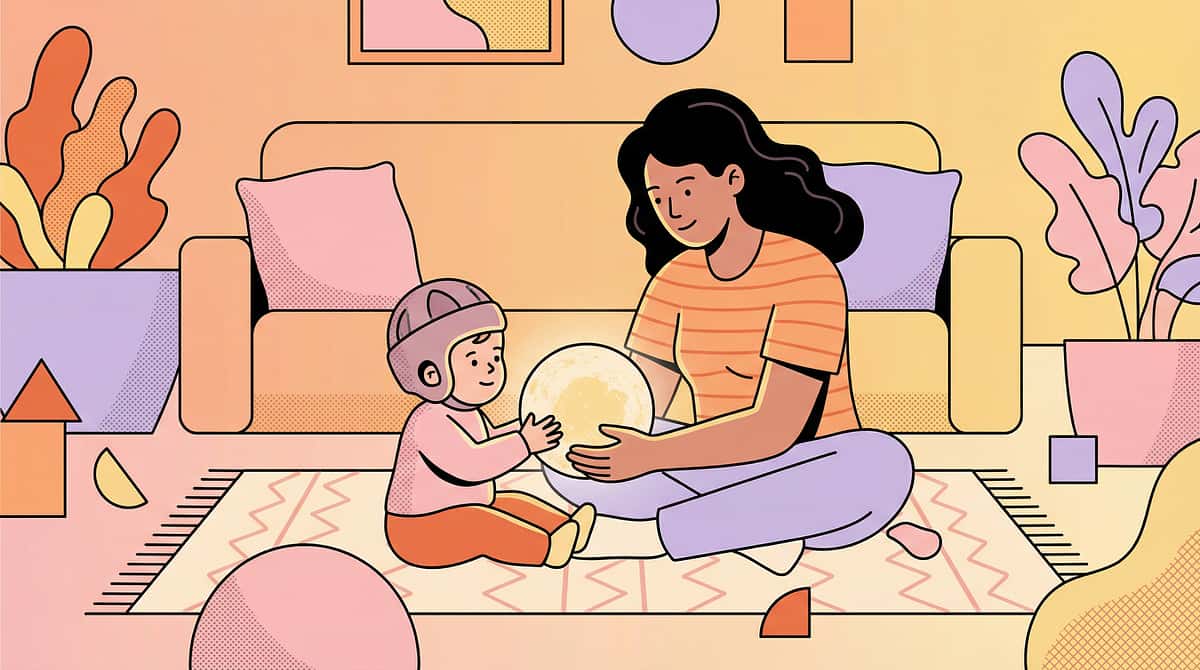
She says "I can't" — before she even knows what you're asking.
Not defiance. Not stubbornness. Not a difficult child. This is fear — genuine, paralyzing fear of the unknown. And there is a clear, proven path forward.
Emotional Regulation
Behavioral Flexibility
Novelty Tolerance
Age 3–12
C-286

ACT I · THE EMOTIONAL ENTRY
A parent's voice — and why it matters.
"My daughter won't try anything new. Not new foods. Not new activities. Not new games. Not new routes to school. If she hasn't done it before — the answer is automatically, reflexively, desperately 'no.' I can see the fear in her eyes. The genuine panic when we suggest something unfamiliar. Her body tenses. Her breathing changes. She'll say 'I can't' before she even knows what we're asking. Last week, her class was learning a new dance. Every other child was laughing and stumbling through the steps together. My daughter sat in the corner, sobbing, refusing to even stand up. Not because she couldn't — at home, she dances constantly. But because she'd never done THIS dance before. The teacher called me, frustrated: 'She just won't participate.' I wanted to scream: It's not WON'T. It's CAN'T. Her world keeps getting smaller. I don't know how to help her take that first brave step."
If this story sounds familiar, you are not alone. Across 70+ Pinnacle Blooms Network® centers, this is one of the most frequent concerns parents bring to therapy — and one of the most transformable.

This is one of the most common struggles parents bring to Pinnacle.
Across our network, one of the most frequent parent concerns is this exact pattern: a capable child whose fear of the unfamiliar quietly shrinks their world. New friends not made. Activities not joined. Talents not discovered. You are not failing your child. You are not alone in this. And there is a clear, proven path forward.
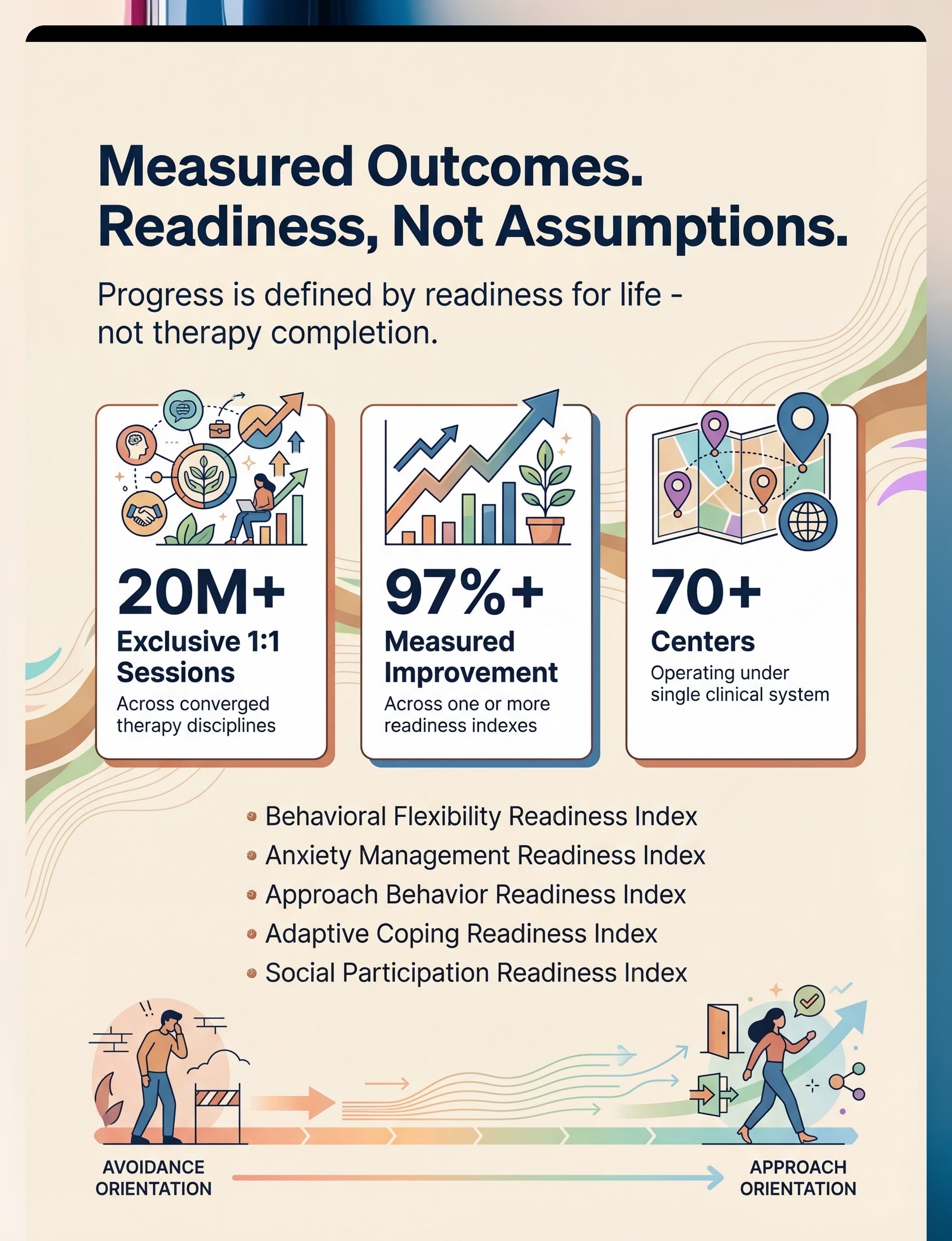
20M+
Therapy Sessions
Delivered across the Pinnacle Blooms Network®
97%+
Measured Improvement
Including behavioral flexibility and anxiety management outcomes tracked via AbilityScore®
70+
Centers Across India
Bringing evidence-based pediatric therapy to families nationwide
"He refused to try swimming because he'd never tried it." — Parent, Hyderabad
"She wouldn't go to art camp. She'd never been to art camp." — Parent, Bengaluru
"New food, new park, new game — automatic NO. Every time." — Parent, Chennai
Aligned with the WHO Nurturing Care Framework (2018) — Responsive Caregiving + Early Learning domains. PMC9978394 | WHO NCF 2018
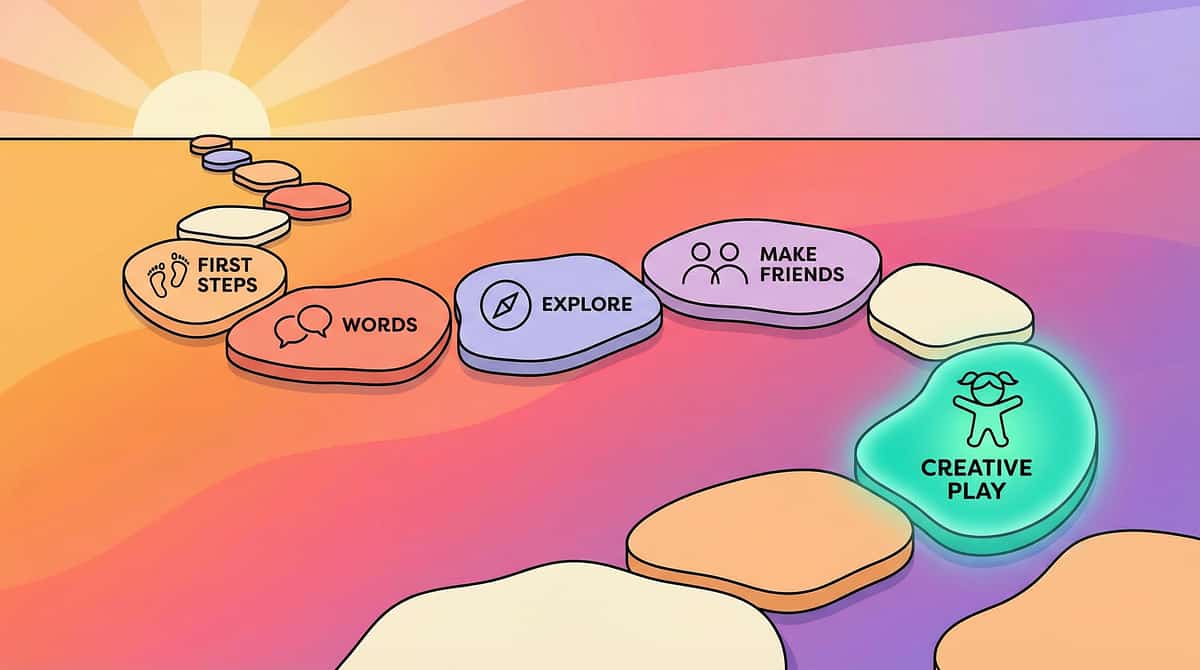
This isn't "won't." It's a nervous system in protection mode.
Novelty Avoidance
Behavioral Inhibition
Approach-Avoidance Conflict
When your child encounters something new, a part of their brain called the amygdala fires a threat signal — before the thinking brain can evaluate whether the situation is actually dangerous. For children with heightened behavioral inhibition, this threat signal is extraordinarily loud. Their nervous system cannot distinguish between "new dance at school" and "real danger." Both feel equally threatening.
The avoidance response — the "no," the tears, the meltdown — is not manipulation. It is the nervous system doing exactly what it was designed to do: protect the child from what feels dangerous. The problem is that the threat signal is exaggerated. The fear is real. The danger is not.
❌ Not the Activity Itself
It's rarely about what is being asked.
✅ The Uncertainty
Not knowing what will happen — anticipatory distress before is often worse than the experience itself.
✅ Fear of Failure
Looking incompetent, making a mistake, not being good at something immediately.

Common signs to recognize.
Fear of trying new things presents across many settings — home, school, social environments, and beyond. These are the signs clinicians and caregivers look for when evaluating whether a child's novelty wariness has moved beyond typical developmental caution.
Automatic "No" or "I Can't"
Before even understanding what's being asked — a reflexive refusal rooted in anticipated threat.
Visible Panic or Meltdowns
When facing unfamiliar situations — the nervous system in full threat-response mode.
Avoidance Across Domains
New activities, foods, places, people — avoidance is not selective, it is pervasive.
Excessive Pre-Questioning
Asking question after question to eliminate ALL uncertainty before attempting anything.
Physical Symptoms
Stomachaches, headaches, nausea before new situations — the body expressing what words cannot.
Shrinking World
Range of acceptable foods, activities, places progressively narrowing over time.
Research evidence: Behavioral inhibition (temperamental tendency toward wariness of novelty) is a documented risk factor for anxiety disorders in children. PMC3685418 | NCAEP Evidence-Based Practices Report (2020)
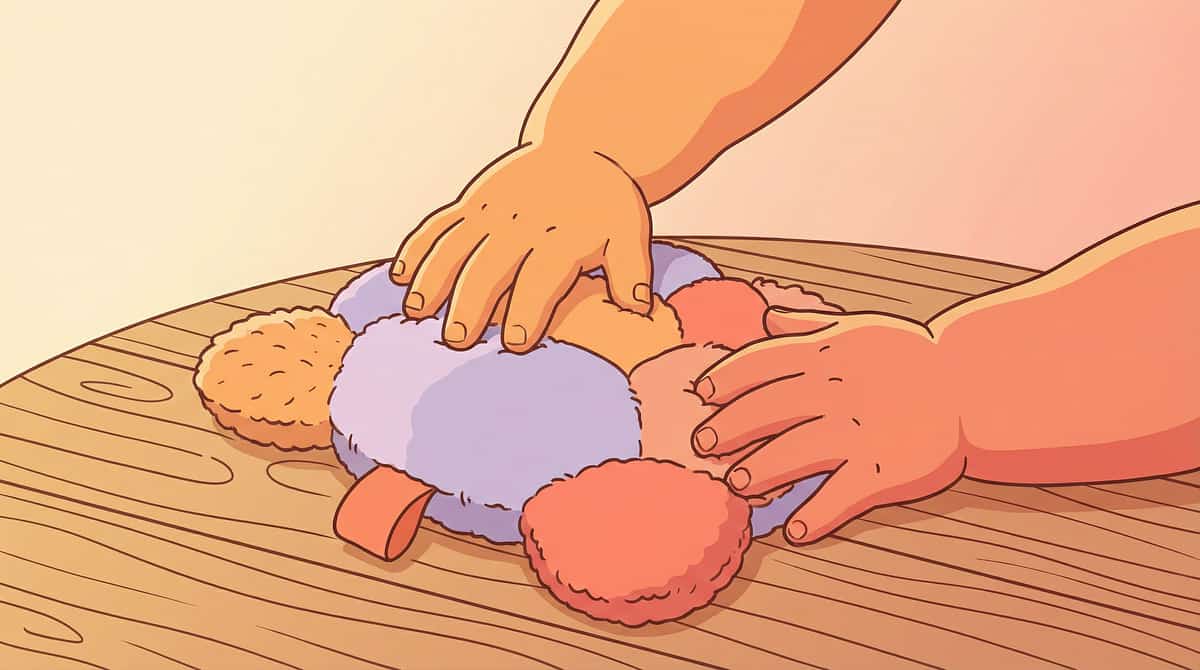
When normal caution becomes something that limits your child's life.
Some wariness of novelty is developmentally normal — it's protective. But the pattern becomes concerning when the intensity of the fear far exceeds the actual risk, avoidance progressively restricts daily life, and typical developmental opportunities — friendships, activities, learning — are being missed.
🔵 Temperamentally Inhibited
Biologically wired toward novelty wariness — this is a temperament profile, not a choice.
🔵 Anxiety Disorders
Generalized worry extending to new situations in all forms.
🔵 Perfectionistic Children
Fear of not doing something right immediately — the cost of trying feels too high.
🔵 Autism Spectrum
Need for sameness, sensory unpredictability in new environments.
🔵 Sensory-Sensitive
New environments mean unpredictable sensory input — overwhelming before arrival.
🔵 Previous Negative Experiences
Generalized "new = bad" belief formed after a difficult past experience.
In joint household structures, well-meaning extended family often accommodate avoidance — inadvertently strengthening the cycle. The Pinnacle approach trains the whole household, not just one parent.
The science is clear. The path is proven.
🏅 Level I Evidence
Multiple Systematic Reviews
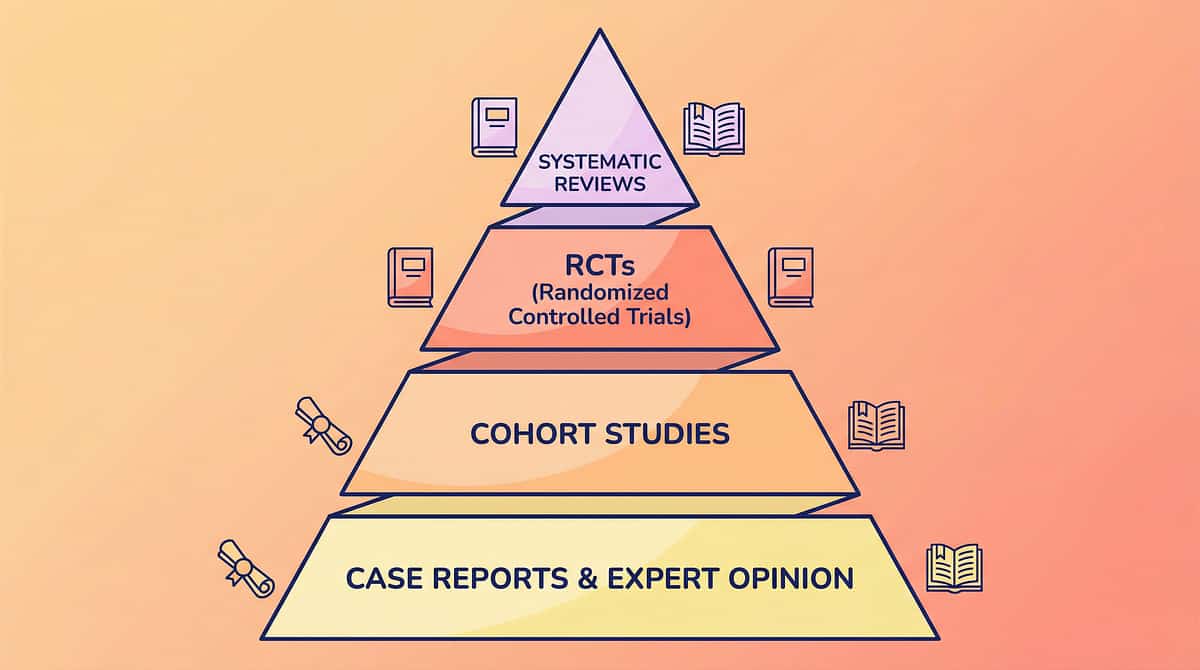
The 9 materials on this page are not folk wisdom or parent intuition — though both have value. They are grounded in the most rigorously tested frameworks in pediatric behavioral therapy. Each intervention has an independent evidence base spanning hundreds of clinical trials and systematic reviews.
✅ Graduated Exposure Therapy
Breaking fears into small, manageable steps (Brave Ladder). Validated across hundreds of CBT trials for childhood anxiety.
✅ Cognitive Restructuring
Teaching children to question fear-based thoughts (Worry vs. Brave Brain). Core CBT technique for pediatric anxiety.
✅ ABA Reinforcement of Approach Behavior
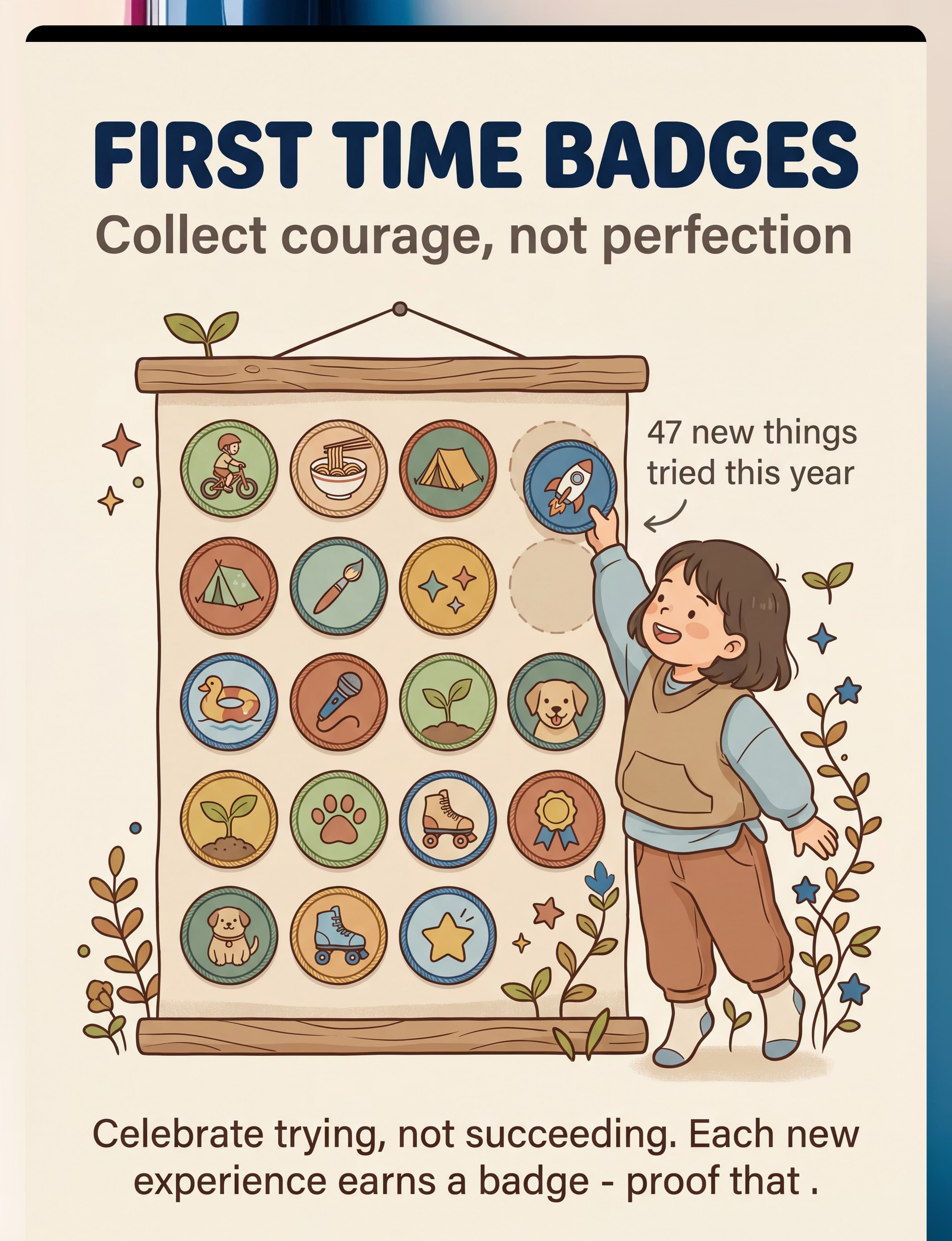
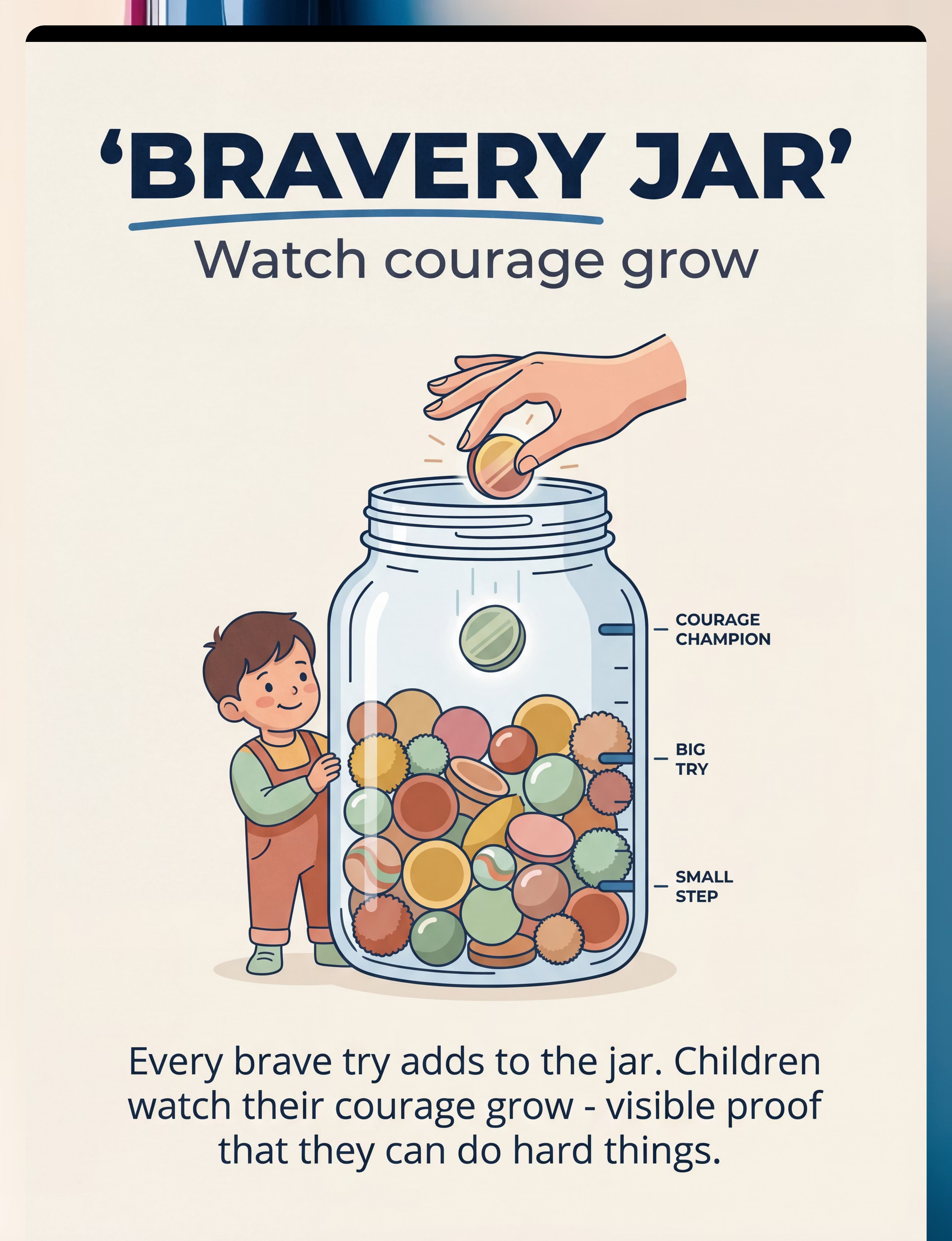
Rewarding trying, not just succeeding (First Time Badges, Bravery Jar). Decades of Applied Behavior Analysis evidence.
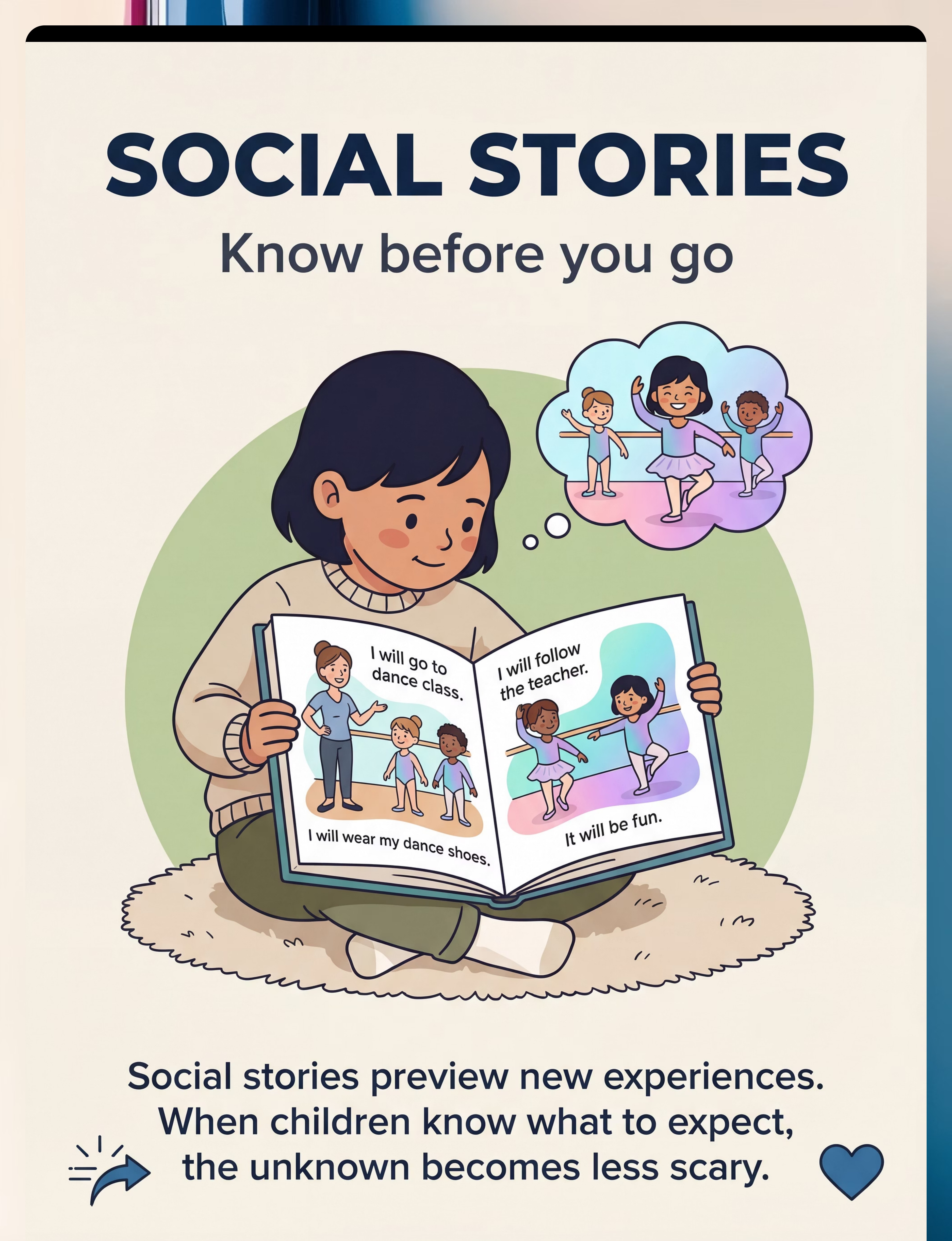
✅ Social Stories
Previewing new experiences to reduce uncertainty. NCAEP Evidence-Based Practice for autism (2020).
✅ Coping Skills Development
In-the-moment portable support (Coping Cards). Standard CBT toolkit for anxiety management.
Validated by the Pinnacle Blooms Consortium — OT · Psychology · ABA · Special Education · NeuroDevelopmental Pediatrics
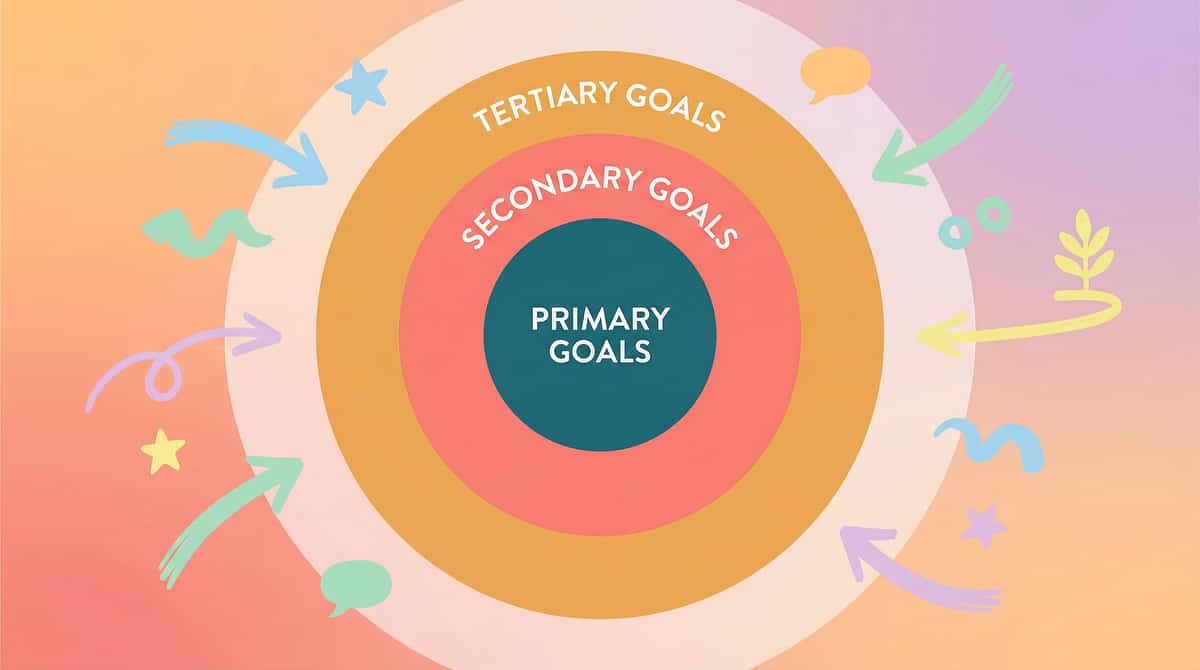
ACT II · THE KNOWLEDGE TRANSFER
The Brave Step System — What It Is
Fear of Trying New Things
Graduated Exposure & Approach Behavior Protocol
The Brave Step System is a multi-component behavioral and cognitive intervention for children aged 3–12 who experience significant fear, avoidance, or distress when faced with unfamiliar activities, experiences, foods, people, or environments. It combines graduated exposure (breaking scary things into achievable small steps), cognitive restructuring (helping children question fear-based predictions), and systematic reinforcement of approach behavior (rewarding the attempt, not just the outcome).
The goal is not to eliminate fear — fear is a normal part of learning — but to help children act bravely despite fear, progressively expanding their world.
Domain
Emotional Regulation + Behavioral Flexibility
Age Range
3–12 years
Duration
10–20 min/session
Frequency
Daily brave steps + 3×/week structured sessions
Setting
Home + School + Community
This crosses every therapy boundary — because fear doesn't stay in one lane.
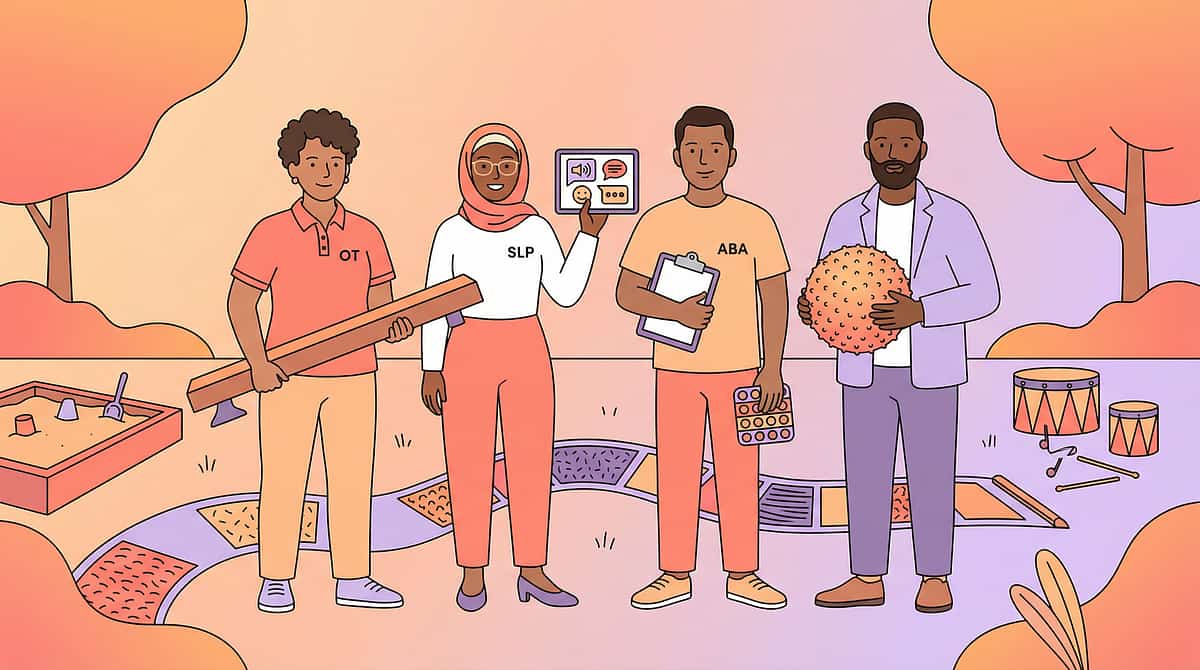
A child's fear of a new dance class involves their sensory system, behavioral patterns, cognitive processing, and social-emotional regulation simultaneously. This is why Pinnacle's FusionModule™ coordinates all disciplines around a single intervention plan.
Psychology / Behavioral Specialist
Primary Lead. Cognitive-behavioral therapy, exposure hierarchies, cognitive restructuring, anxiety management — the "think differently about fear" work.
Occupational Therapist
Sensory processing considerations. For children with sensory sensitivities, new environments are unpredictable sensory experiences. OT addresses the physical layer of novelty fear.
BCBA / ABA Therapist
Reinforcement architecture. Designing systems that reward approach behavior, token economies, and shaping gradual movement toward feared situations.
Special Education Teacher
School-based implementation. Many fears manifest in classroom settings. SpEd adapts brave step systems for academic and social new experiences.
NeuroDevelopmental Pediatrician
Medical evaluation when fear responses seem extreme or part of a broader neurodevelopmental presentation. Rules out medical contributors.
What we are building. What we are reducing. What we are measuring.
Building — Approach Targets
- Willingness to attempt new activities with support
- Ability to tolerate uncertainty without shutting down
- Reframing mistakes as expected, not catastrophic
- Approach-oriented identity ("I'm someone who tries")
- In-the-moment coping when fear surges
- Gradual independence in initiating new experiences
Reducing — Avoidance Targets
- Automatic "no" response before evaluating new situations
- Meltdowns or severe distress when novelty is required
- World-shrinking avoidance patterns
- Catastrophic predictions about what will go wrong
- Dependence on total certainty before attempting anything
Measuring — GPT-OS® Readiness Indexes
- Behavioral Flexibility Readiness Index
- Approach Behavior Readiness Index
- Novelty Tolerance Sub-Index · Mistake Tolerance Sub-Index
When successful: children join activities they've never tried. They form new friendships. They try new foods. Their world expands instead of contracts — and they develop an approach-oriented identity that serves them across a lifetime.
9 materials. 6 therapeutic mechanisms. One brave child.
Each material below targets a specific layer of novelty fear — from the behavioral (exposure) to the cognitive (reframing) to the motivational (reinforcement). Used together, they form a complete system. Used individually, each still moves the needle.
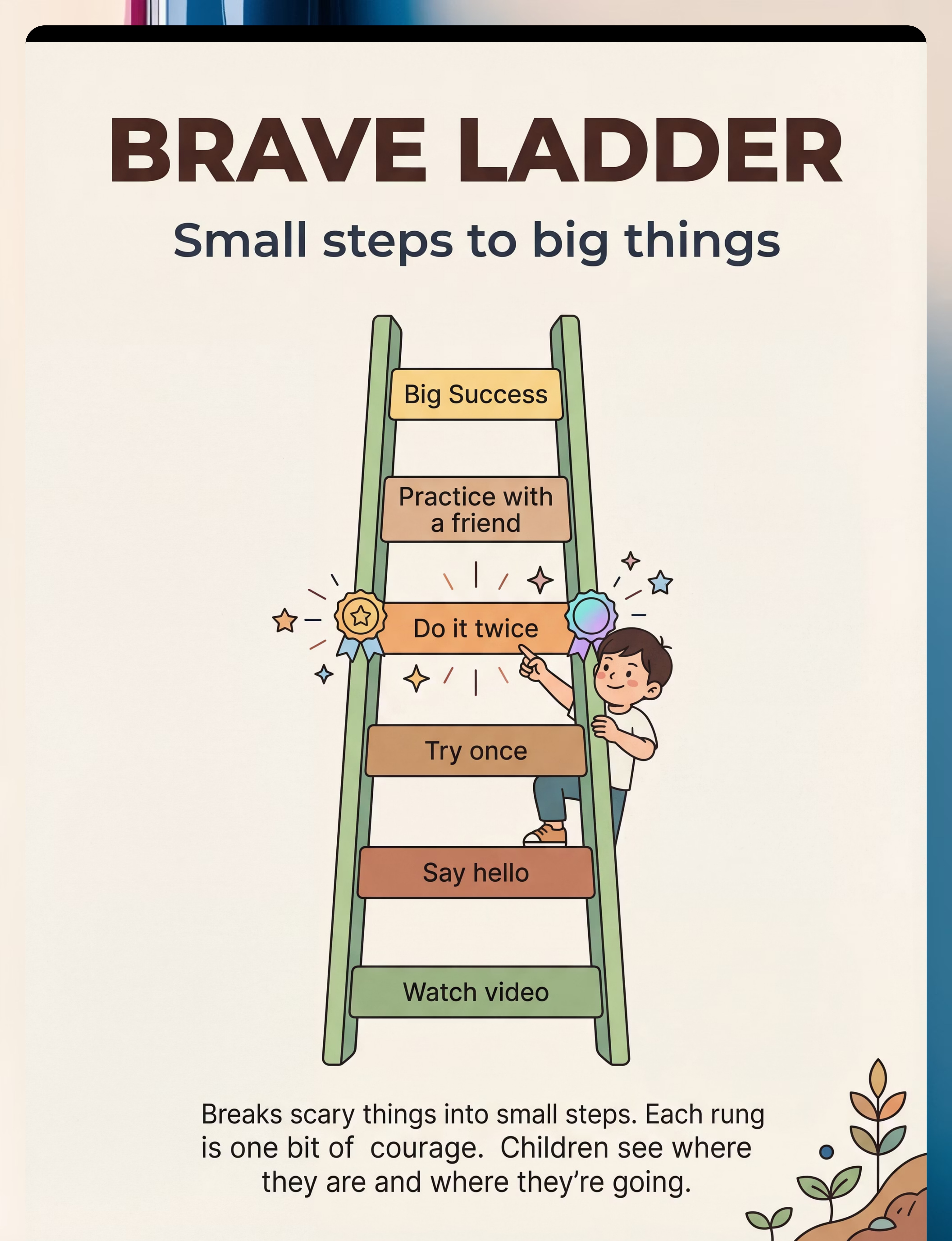
🪜 Brave Ladder
Small steps to big things · ₹150–600
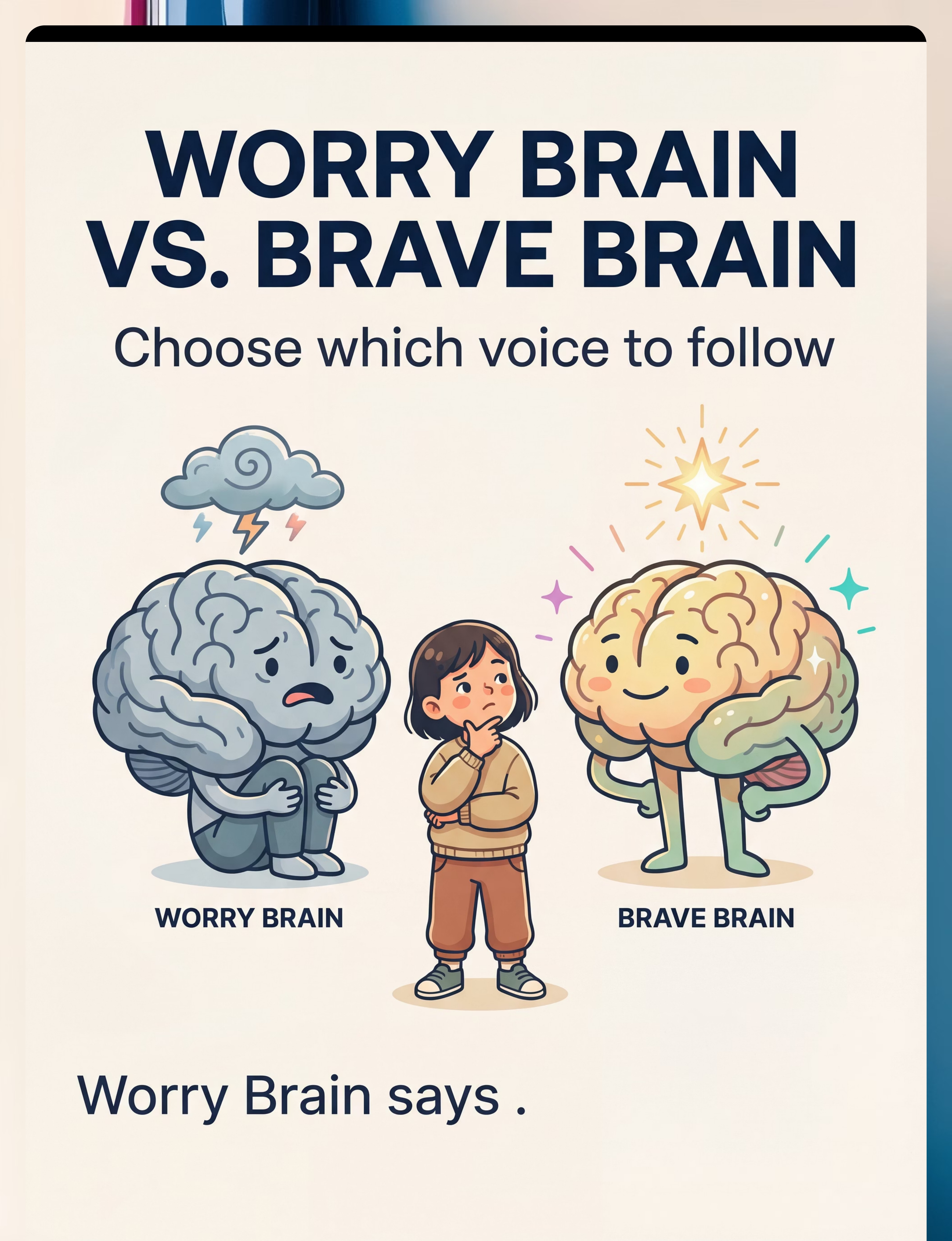
🧠 Worry vs. Brave Brain
Choose which voice to follow · ₹200–800
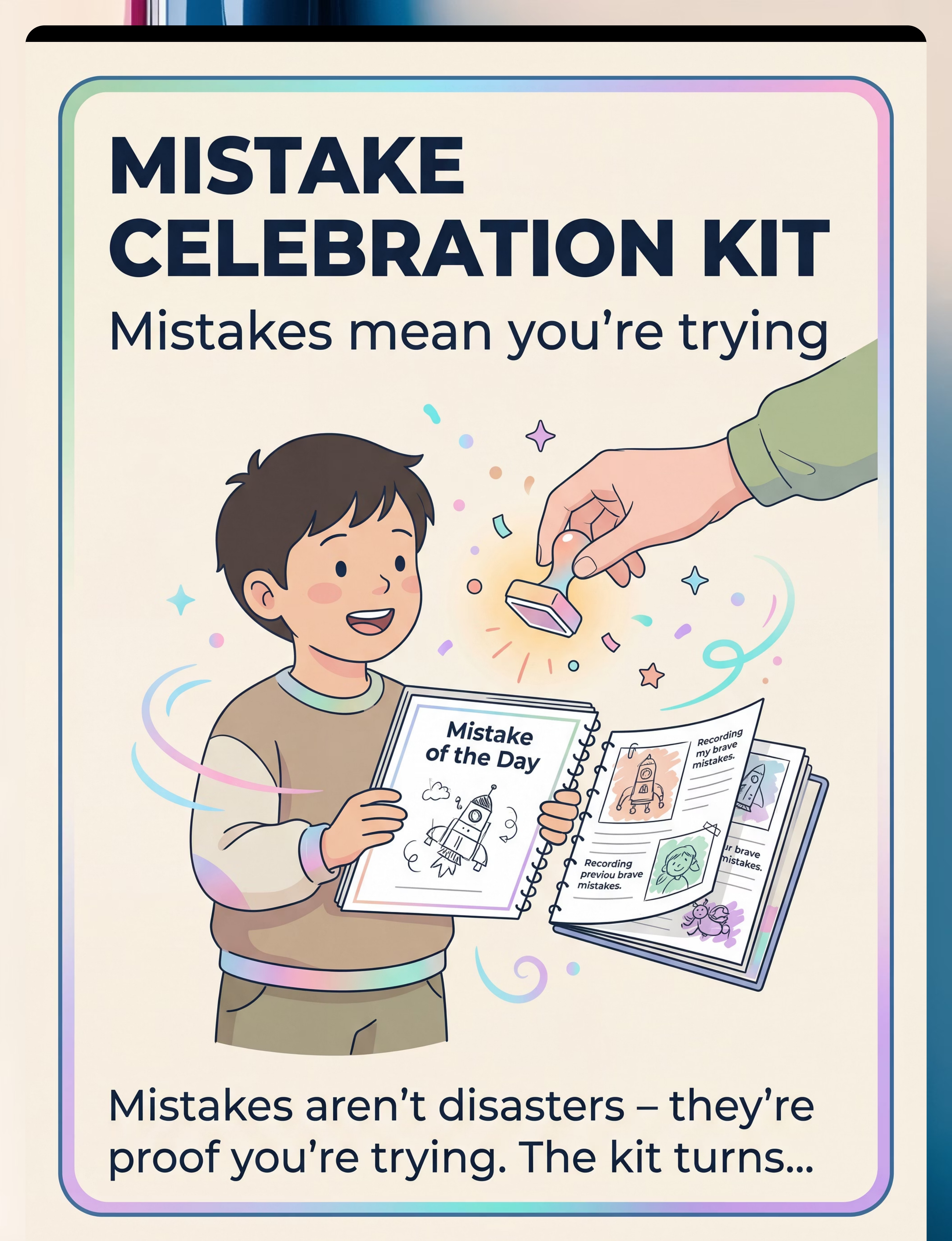
🎉 Mistake Celebration Kit
Mistakes mean you're trying · ₹200–700
🏅 First Time Badges
Collect courage, not perfection · ₹150–500
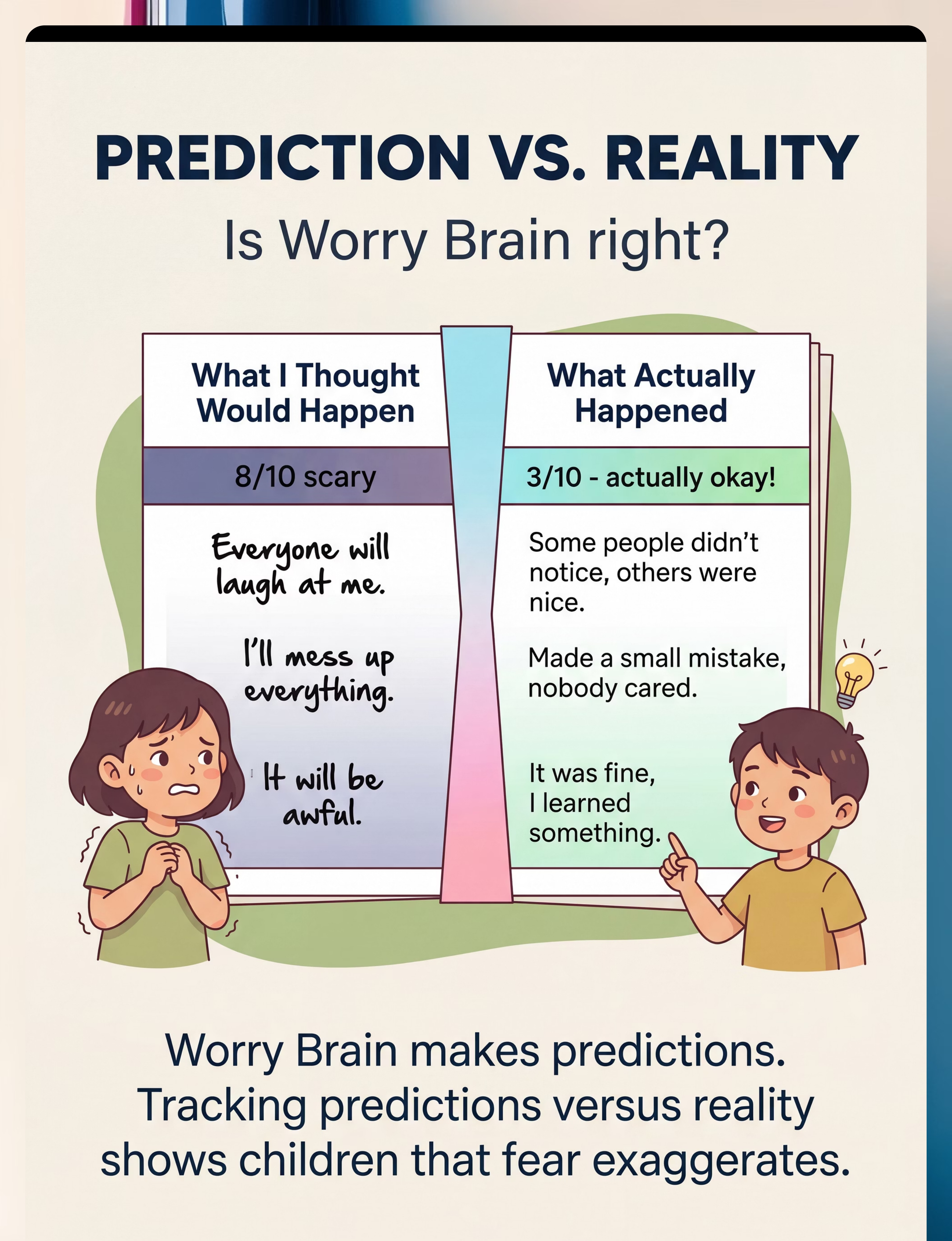
📋 Prediction vs. Reality
Is Worry Brain right? · ₹100–400
📖 Social Stories
Know before you go · ₹200–800
🫙 Bravery Jar
Watch courage grow · ₹100–400
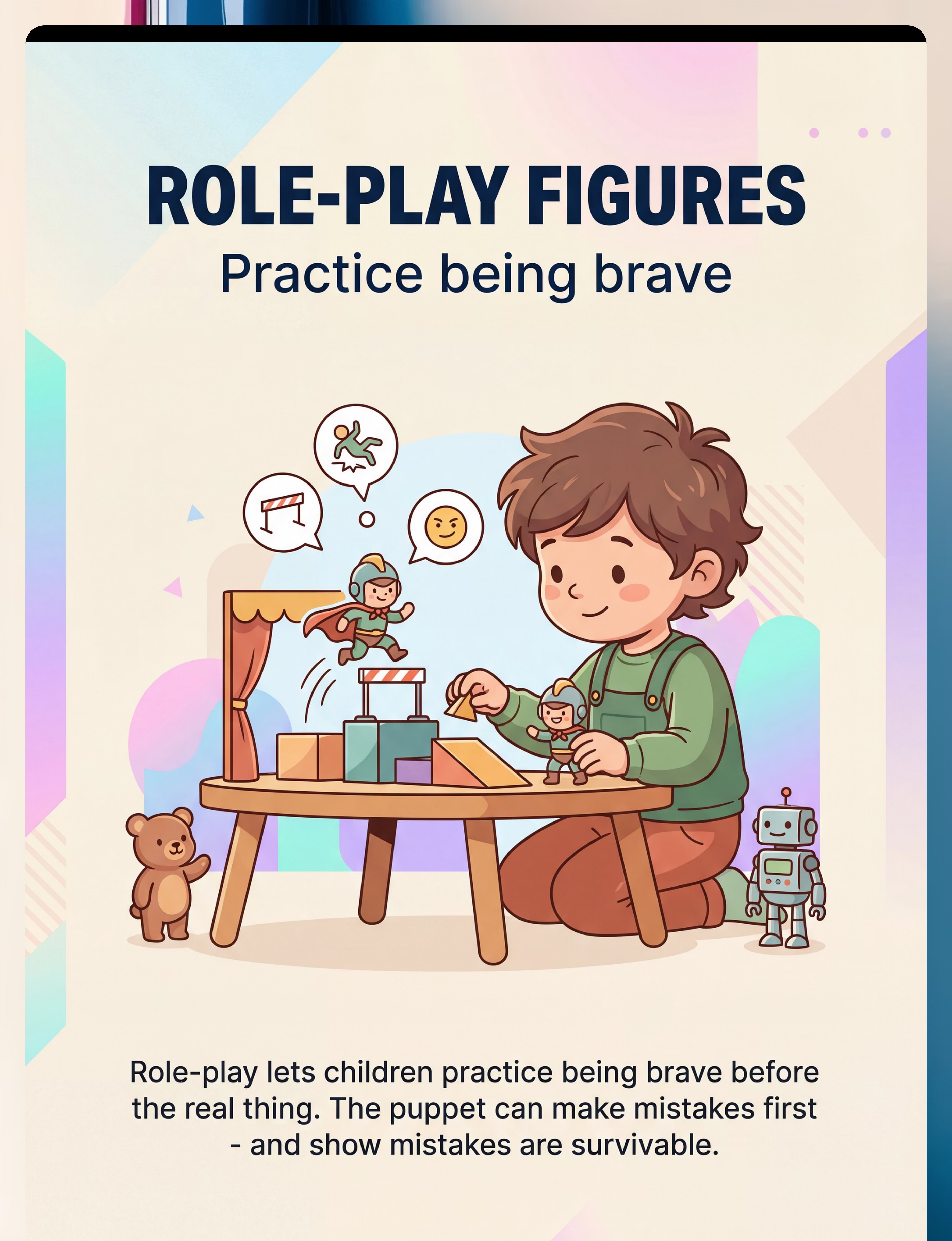
🎭 Role-Play Figures
Practice being brave · ₹300–1,200
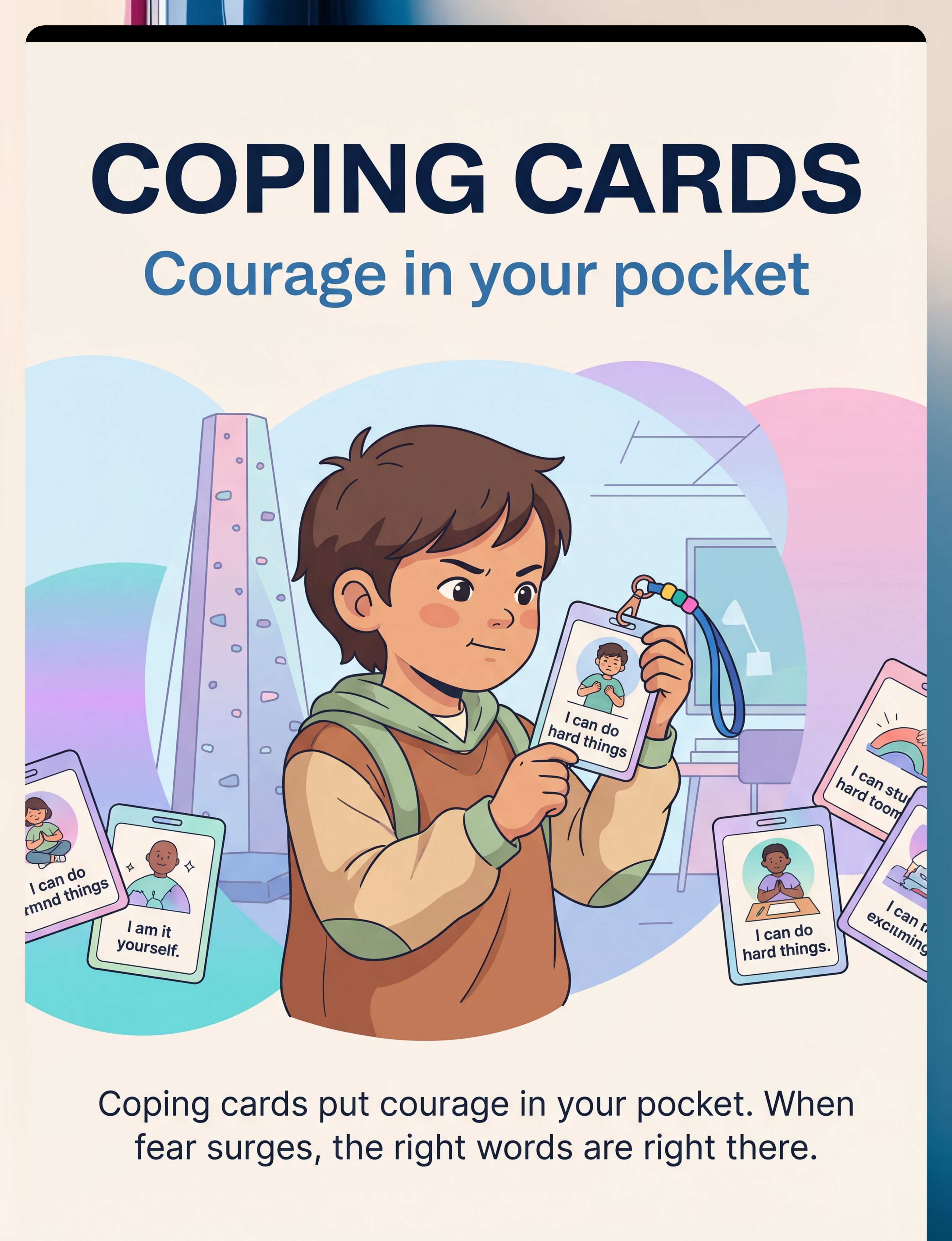
🃏 Coping Cards
Courage in your pocket · ₹100–400
Total starter kit: ₹100 (single item) to ₹1,200 (complete set). All 9 materials have complete DIY versions. Courage does not require a purchase.

Material 1 of 9
🪜 Brave Ladder / Courage Ladder → Small steps to big things
Fear of new things feels like an all-or-nothing decision: either I do the whole scary thing, or I do nothing at all. The Brave Ladder breaks this binary by making the path between "not trying" and "fully doing" visible and achievable. A child afraid to join dance class doesn't have to leap from "no dance" to "performing the full routine." The ladder might show: Watch a video → Watch class through the window → Sit in the room → Stand up → Move one arm → Follow one step → Try the whole routine.
Each rung is one bit of courage. The child chooses which rung to attempt today — making approach feel like their decision, not something forced upon them. This agency is essential. Forced exposure backfires. Chosen exposure builds.
Identify One Feared Activity
Name one specific new situation the child is avoiding.
Build the Ladder Together
Work WITH your child to identify 5–10 small steps between "not doing" and "fully doing."
Decorate It (This Matters)
Draw the ladder together. Let the child use favorite stickers or colors — ownership drives follow-through.
Place It Visibly
Somewhere the child sees it daily — a bedroom wall or refrigerator works perfectly.
Child Chooses the Next Rung
When ready, child selects which rung to attempt. Celebrate every attempt — every rung earns a star.
⚠️ Safety Note: Child must participate in creating the steps. Adult-imposed rungs the child doesn't believe are achievable will not work. Honor the child's pace — rushing the ladder backfires. DIY: Draw a ladder on paper. A whiteboard makes a reusable version. Nothing needs to be purchased. · ₹150–600 pre-made

Material 2 of 9
🧠 Worry vs. Brave Brain Cards → Choose which voice to follow
Children with fear of new things are hijacked by what clinicians call the threat appraisal system — their Worry Brain. This part of the brain screams danger even when situations are actually safe. Worry Brain says: "You can't do this. You'll fail. Everyone will laugh. Don't even try." Brave Brain says: "This is new, but I can try. Mistakes are okay. I might surprise myself."
By personifying these two voices, children gain crucial insight: they are not their worry. They have a worry. And they also have courage. The cards make this abstract internal conflict concrete, visual, and discussable — critical for children who cannot easily access their emotional vocabulary.
Introduce the Two Characters
Use drawings, puppets, or the cards to bring both brain voices to life.
Name Them Together
Some children rename them ("Alarm" and "Explorer") — this personalization deepens engagement.
Practice in Low-Stakes Moments
Daily situations first — before applying to feared new activities.
Ask "Which Brain Is Talking?"
When facing something new: "Is Worry Brain telling the truth? What does Brave Brain say?"
Internalize Over Time
Externalized until internalized — this becomes a lifelong internal skill.
⚠️ Safety Note: Avoid making Worry Brain "bad." It is trying to protect your child — just overprotecting. The goal is balance, not silencing worry entirely. DIY: Draw two simple brain faces — one worried (storm cloud above), one brave (star or cape). · ₹200–800 pre-made
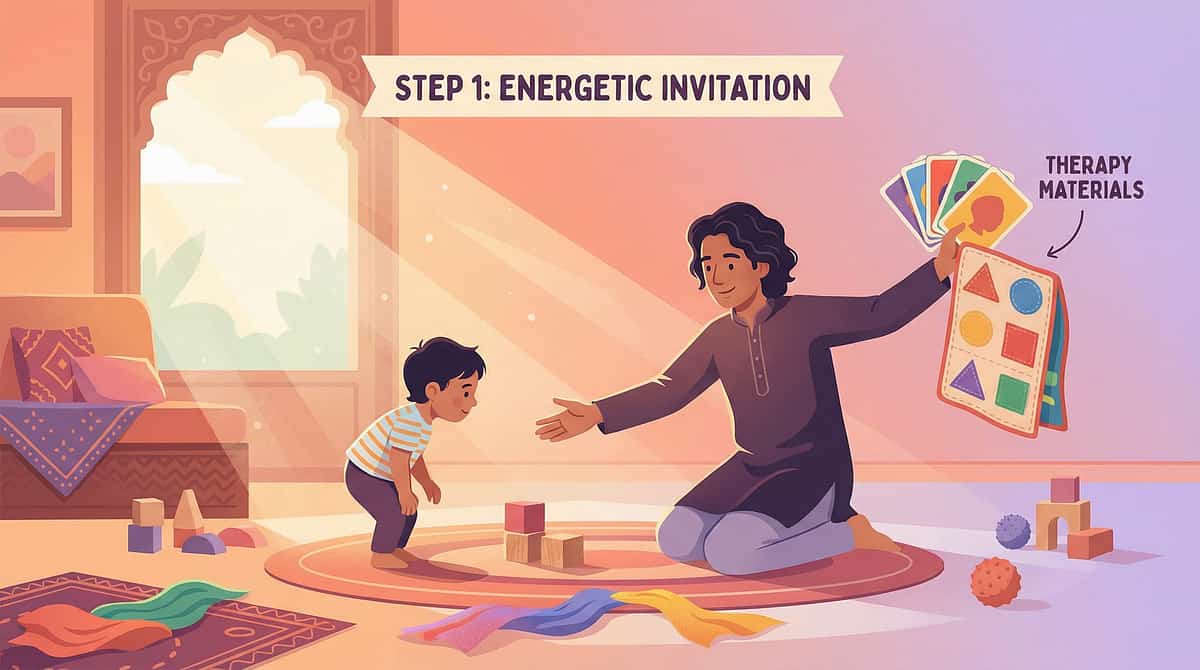
Material 3 of 9
🎉 Mistake Celebration Kit → Mistakes mean you're trying
For children terrified of trying new things, mistakes feel catastrophic — proof they shouldn't have tried, evidence of failure, reason to never try again. The Mistake Celebration Kit completely reframes this relationship. Instead of disasters to avoid, mistakes become expected, normal, even celebrated. When a child makes a mistake while bravely attempting something new, the response is curiosity: "Ooh, a brave mistake! What did we learn? Let's add it to the journal!"
The message: Mistakes aren't evidence you shouldn't try. They're evidence you ARE trying. Only people who never try never make mistakes. And not trying is the biggest mistake of all.
Kit Contents (DIY)
- "Mistake of the Day" certificate — make one together
- "Brave Mistake Journal" with prompts: What did I try? What happened? What did I learn?
- Special stamp/sticker reserved only for learning mistakes
- Family "mistake celebration" ritual — silly dance, special phrase, high-five sequence
How to Use It
- Introduce kit before any specific new experience
- Frame: "In our family, we celebrate brave mistakes"
- When child makes a mistake while trying: activate — stamp, celebrate, journal
- Adults model: share YOUR mistakes and celebrate them too
- Periodically review the journal: "Look at everything you've learned!"
⚠️ Safety Note: Celebrate mistakes made during brave attempts, not careless errors. The distinction matters — and children know the difference. Key insight: What we celebrate, children will pursue. · ₹200–700 pre-made

Materials 4–9
Quick Overview
The remaining 6 materials at a glance.
Each of the following materials targets a distinct mechanism — from motivational reinforcement to cognitive evidence-gathering to embodied practice. Together with Materials 1–3, they form a complete therapeutic ecosystem for building brave behavior.
1
🏅 First Time Badges
Collect courage, not perfection. A visual record of every first-time attempt — building an identity as someone who tries. · ₹150–500
2
📋 Prediction vs. Reality Worksheet
Evidence against Worry Brain. Children write what they feared would happen, then record what actually did — the data dismantles catastrophic predictions. · ₹100–400
3
📖 Social Stories
Know before you go. Preview new experiences in story form to reduce the uncertainty that drives avoidance — NCAEP evidence-based practice. · ₹200–800
4
🫙 Bravery Jar & Token System
Watch courage grow visibly. Tokens accumulate in a jar — a tangible, motivating record of every brave attempt. · ₹100–400
5
🎭 Role-Play Figures / Puppets
Practice being brave before the real moment. Children rehearse new scenarios through play, reducing anticipatory anxiety. · ₹300–1,200
6
🃏 Coping Cards
Courage in your pocket. Portable, child-created cards with coping phrases and strategies for in-the-moment support when fear surges. · ₹100–400
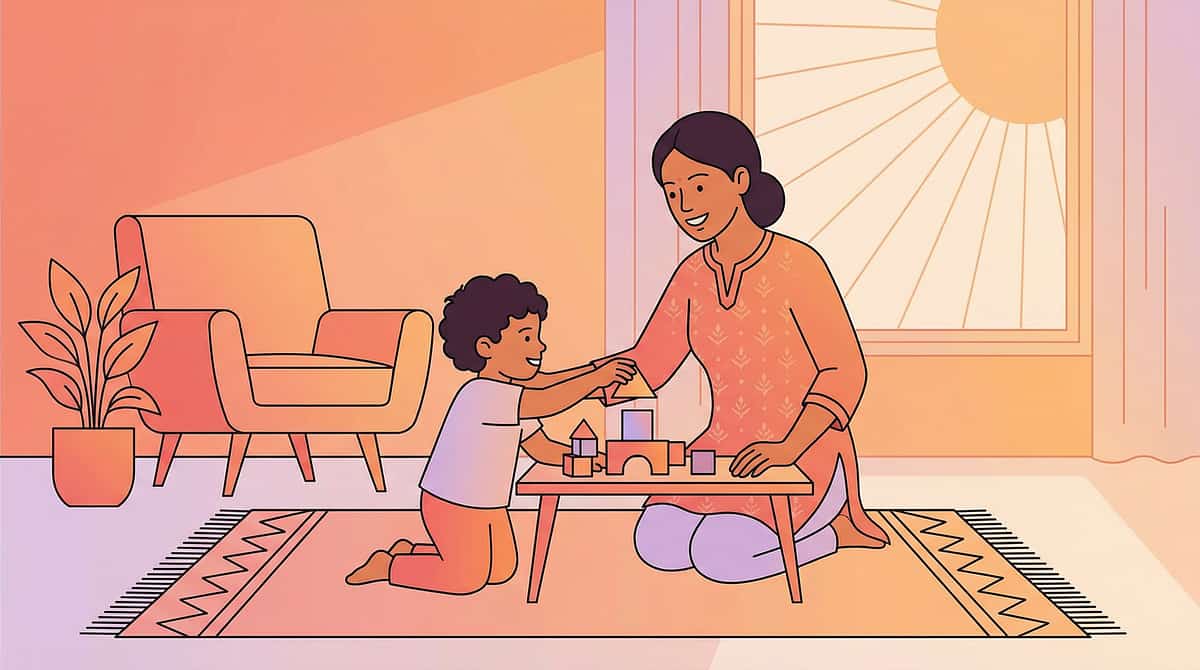
ACT III · THE EXECUTION
Before you begin: the 60-second readiness check.
The best session is one that starts right. There is no failure in postponing — there is only wisdom. A child who is hungry, exhausted, or already dysregulated will not benefit from a brave step session, and a forced attempt can undermine future willingness.
✅ Check Physical State
Child is fed, well-rested, and showing no signs of illness — fever, stomachache, or physical distress.
✅ Check Regulatory State
No meltdown or significant dysregulation in the past 30 minutes. Child is calm, not already anxious about something else.
✅ Check the Environment
Quiet, predictable, distractions removed. Setting should feel safe and familiar.
✅ Check Yourself
Parent/caregiver is calm and patient. Your nervous system state is contagious — it matters enormously.
🟢 GO
6–7 YES: Proceed with planned brave step.
🟡 MODIFY
4–5 YES: Simplify to a smaller step or shorter duration.
🔴 POSTPONE
3 or fewer YES: Not today. Try a calming activity instead. Tomorrow is also brave.
Step 1 of 6
Duration: 30–60 seconds
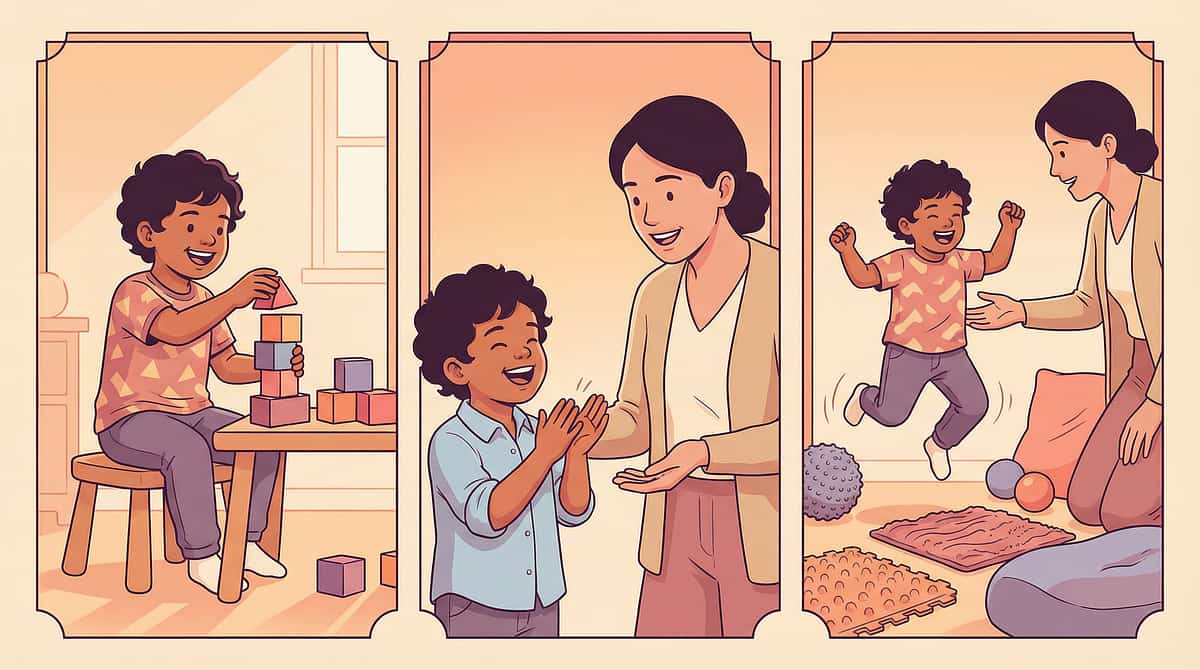
Step 1: The Invitation
Every brave step begins with an invitation — not a command. The child is welcomed into the activity through playful, low-demand engagement. The framing of this moment sets the emotional tone for everything that follows.
"Hey, I was thinking we could try something together today. It's totally okay if it feels a bit new — that's actually the whole point! Want to take a look?"
Body Language Guidance
- Get at child's eye level
- Relaxed, open posture — not tense or urgent
- Warm smile — but not over-eager (children read desperation)
- Have the material visible but not thrust at them
What Acceptance Looks Like
Eye contact, slight lean toward the material, reduced body tension, a curious question ("What is it?").
What Resistance Looks Like + How to Modify
Head shake, body turned away, "no." → Don't escalate. Say: "That's okay. It's here when you're ready." Wait. Often, curiosity wins within 2–5 minutes.

Step 2 of 6
Duration: 1–3 minutes
Step 2: The Engagement
The child is now engaged. This step introduces the brave activity — the specific rung on the brave ladder being attempted today. The key principle here is that reinforcement is announced before the attempt, not after. The child knows they have already "won" by trying. This removes performance pressure entirely.
"So today we're going to try [specific step]. You don't have to be good at it. We're just going to try it once. And whatever happens — you get a brave point."
🟢 Engaged
Moving toward activity, asking questions, reduced anxiety visible in body.
🟡 Tolerating
Present but tense, not fully engaged, compliant but not enthusiastic.
🔴 Avoidance
Backing away, escalating distress → Return to Step 1, offer a smaller brave step.
Research: PMC11506176 — Sensory integration intervention with structured material introduction meets evidence-based practice criteria.

Step 3 of 6
Duration: 3–8 minutes
Step 3: The Therapeutic Action — The Brave Attempt
This is the brave step itself. The child attempts the specific new thing — the rung on the ladder. This might be: trying one bite of a new food, standing in the classroom for the new activity, touching a new material, or saying hello to a new person. Your energy in this moment matters as much as the child's action.
Keep Your Own Energy Calm
Matter-of-fact — not cheering wildly. Excessive enthusiasm signals to the child that the situation IS scary.
Stay Physically Nearby, Not Hovering
Proximity is reassuring. Hovering communicates anxiety.
Narrate Gently
"You're doing it. You're trying something new." — steady, warm, factual.
✅ Say This
- "You're doing something brave right now."
- "I'm right here."
- "Whatever happens, you tried — that's what counts."
❌ Avoid These Common Errors
- "Just try it — it's fine!" (dismisses fear)
- "See? It's not scary!" (invalidates felt experience)
- Letting child abandon at first resistance
- Promising "you'll love it" (performance pressure)

Step 4 of 6
Target: 2–3 good repetitions
Step 4: Repeat & Vary
3 good repetitions beat 10 forced ones. The goal is positive, manageable exposure — not endurance. Repetition within a session consolidates the nervous system's new learning that "this situation is manageable." Variation maintains engagement without increasing demand.
Variation Options
- Change one small element (different color of the new food, different position)
- Increase duration slightly (if first attempt was 3 seconds, aim for 5)
- Let the child "teach" you how to do the step (role reversal builds mastery)
Satiation Indicators — When to Stop
- Restlessness, looking away, asking to stop
- Quality of engagement visibly dropping
- Signs of building anxiety returning
When you see satiation: STOP. This is success. The child did the brave thing. Pressing further undermines the win.
Step 5 of 6
Timing: Within 3 seconds of attempt
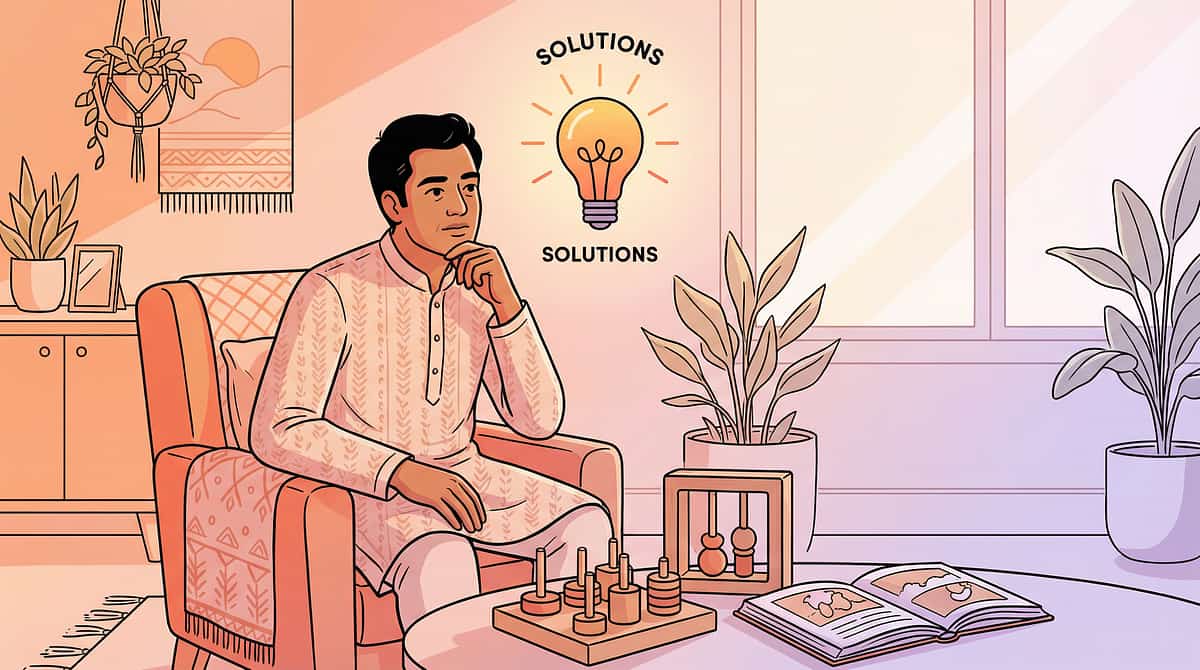
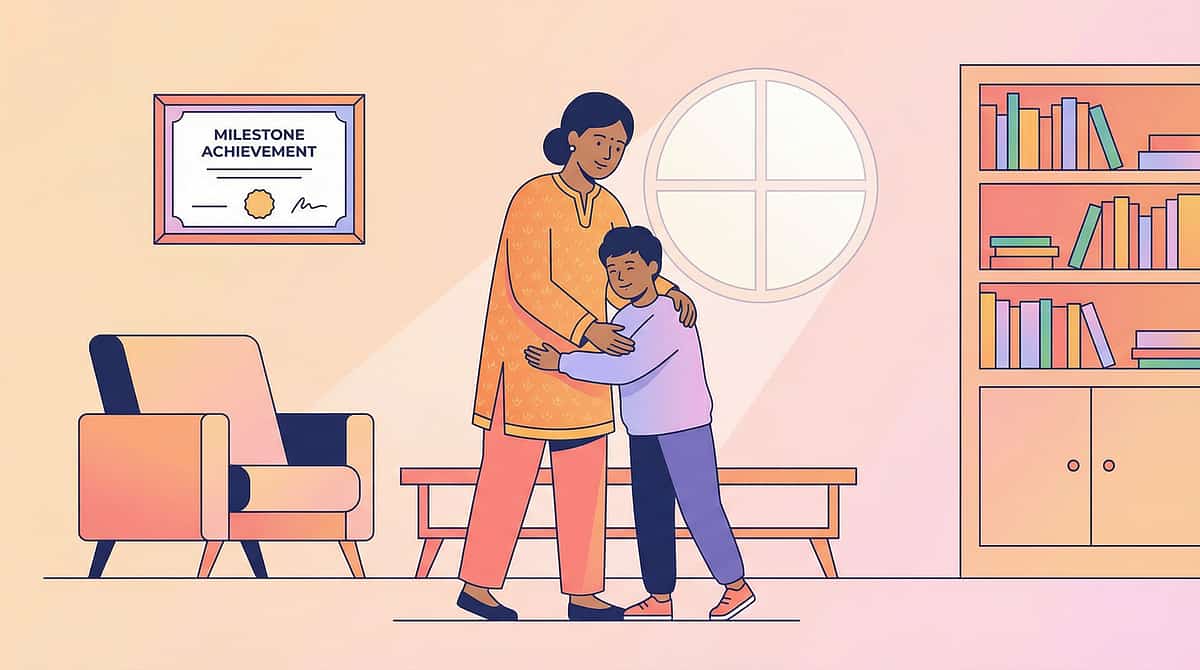
Step 5: Reinforce & Celebrate
Timing matters more than magnitude. Immediate, specific, enthusiastic reinforcement delivered within 3 seconds of the attempt is far more powerful than elaborate praise delivered later. The critical principle: reinforce the attempt, not the outcome.
"You did it. You tried something new. That was BRAVE. I am so proud of you for trying — not for how it went, just for trying."
Badge Added to Chart
Visual, permanent record of every brave attempt.
Token in Bravery Jar
Tangible, accumulating evidence of courage.
Family Celebration Ritual
Silly dance, special phrase, high-five sequence — shared joy.
Star on Brave Ladder
Progress made visible on the ladder itself.
Journal Entry with Photo
Entry in First Time journal — a lasting memory of bravery.
✅ Child tried new food and hated it: "That was SO brave. You tried. Badge earned." ✅ Child stood in dance class and didn't dance: "You were IN the room. That's the rung. Badge earned."
Step 6 of 6
Duration: 1–2 minutes
Step 6: The Cool-Down
No brave session ends abruptly. The cool-down transitions the child from the heightened state of a brave attempt back to baseline — and consolidates the win emotionally. This step is often skipped by well-meaning caregivers who are excited about the progress. Don't skip it.
Transition Warning
"Two more seconds, then we're all done with our brave work for today." — Predictable endings reduce post-session dysregulation.
Cool-Down Activity
Return to a familiar, preferred activity. Brief sensory calming if needed — child's preferred: heavy blanket, fidget, quiet moment together with no demands.
Consolidation Conversation
"You were brave today. How did it feel? Was it as bad as Worry Brain said it would be?" — This question directly builds the Prediction vs. Reality skill.
Research: Visual timer and transition support are evidence-based practices for autism. NCAEP Evidence-Based Practices Report (2020)

60 seconds. Right now. Before you forget.
Data captured immediately after a session is data that drives real progress. Week-on-week, you will see the distress scores decreasing — and this visual evidence of progress is motivating for both parent and child. It is also critical for reporting to your therapist and for GPT-OS® TherapeuticAI® to adjust the intervention plan.
📅 Date
Record today's date — consistency tracking begins here.
🪜 Rung/Step Attempted
Which specific step on the brave ladder did you attempt today?
🌡️ Distress Level (1–5)
Child's visible distress during the attempt — the number that will trend downward over weeks.
📝 What Happened
One sentence. What did the child do, and how did they respond?
🏅 Reinforcement Delivered
YES / NO — was a badge, token, or celebration given within 3 seconds?
Research: Parent-collected data with 80%+ consistency has been shown to improve intervention outcomes. Systematic data collection is a core ABA principle.

Every brave attempt is information. Not failure.
When a session doesn't go as planned, you haven't failed — you've collected clinical data. Each scenario below tells you something specific about what to adjust next time. The troubleshooting mindset transforms difficult sessions into diagnostic insights.
🔴 Child Refused to Attempt at All
The rung was too high. Work with child to identify a smaller step. Return tomorrow with an even lower-demand starting point.
🟡 Child Attempted but Had a Meltdown Mid-Way
Too much, too fast. Validate feelings, activate cool-down. The attempt still counts — partial brave steps are brave steps. Reduce demand for next session.
🟡 Child Completed but Dysregulated for Hours After
The activity created too high an arousal spike. Ensure longer cool-down. Consider whether this rung needs more preparation (social story or role-play first).
🟢 Child Completed with Difficulty but Recovered
This is the target. Exactly this. Difficulty + recovery = brave step success. Celebrate fully.
🟢 Child Said "That Wasn't So Bad"
GOLD. Document this. This is the Prediction vs. Reality worksheet completing itself. Reference it next time Worry Brain predicts catastrophe.
Parent self-check: Was my energy calm? Did I communicate urgency or desperation? Did I push the rung when the child showed satiation? These factors matter enormously.

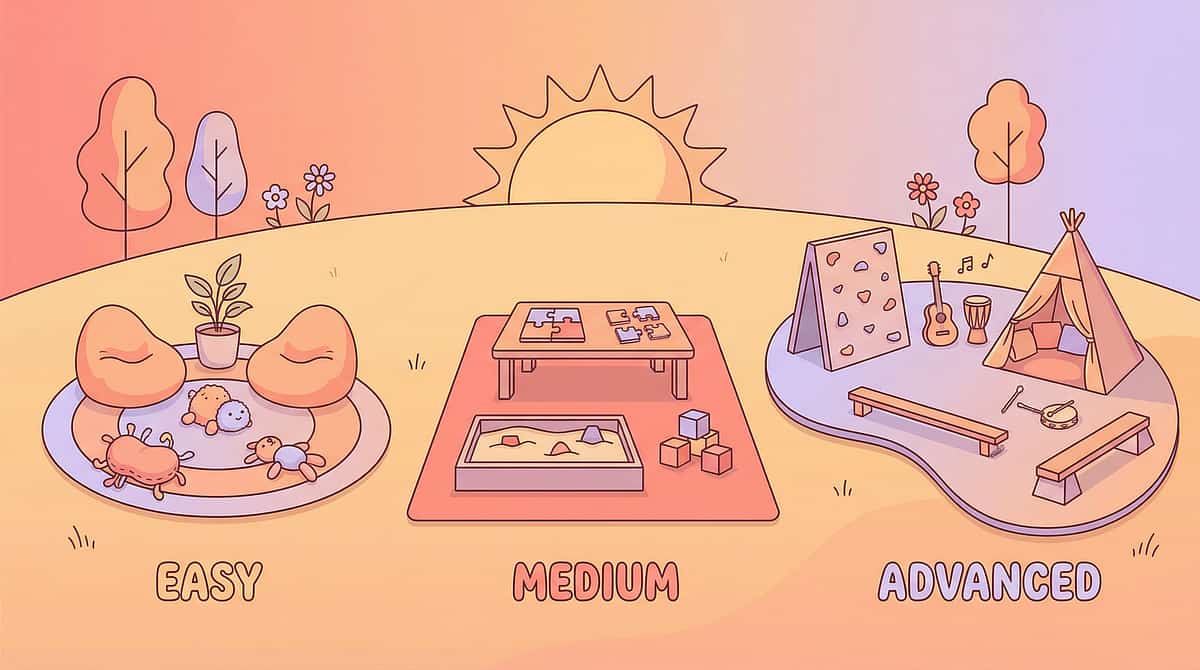
The brave ladder is different for every child. Here's how to scale yours.
There is no single correct pace. The brave ladder is not a fixed structure — it is a personalized tool that adapts to your child's profile, current anxiety level, and readiness on any given day.
↙️ Easier — For Very High Anxiety / First Attempts
- Shorter exposure duration (1–2 seconds is valid)
- Maximum parent proximity — parent participates alongside
- More preparation: social story + role-play before
- Peer model present first
- High preferred reinforcement
↗️ Harder — When Child Is Ready to Push Further
- Longer duration of exposure
- Less parent support during attempt
- Introduce unpredictable elements
- Generalize to new settings
- Reduce reinforcement frequency gradually
🔵 Autism / Sameness Preference
Extra social stories, detailed advance preview, sensory preparation, much smaller increments between rungs.
🔵 Perfectionism
Heavy emphasis on Mistake Celebration Kit, reframe success as "attempting," model your own imperfection openly.
🔵 Sensory Sensitivity
Scout new environments ahead, identify sensory challenges in advance, bring calming sensory tools.
🔵 Social Anxiety
Start with family-only new activities before introducing social settings with peers or strangers.
ACT IV · THE PROGRESS ARC
Week 1–2: What to Expect
In the first two weeks, you are laying foundations — not seeing breakthroughs. The nervous system is beginning to receive new information. If your child tolerated a brave attempt for even 30 seconds this week, that is real progress. Manage your own expectations with the same warmth you offer your child.
✅ Child Is Familiar with the Brave Ladder
Can name their current rung and explain what the next step might be.
✅ Can Identify Worry Brain vs. Brave Brain
Beginning to name which voice is talking in low-stakes situations.
✅ First 1–3 Badges Earned
Early reinforcement establishing the "trying = reward" equation.
✅ Some Reduction in Automatic "No"
Even if still frequent — a pause before refusing is neurological progress.
What is NOT progress yet at weeks 1–2: spontaneous approach to new things without prompting, absence of anxiety, or multiple rungs climbed. These come later. Research: PMC11506176 — Early-phase indicators focus on tolerance and participation rather than skill mastery.
Week 3–4: Consolidation Signs
What you're seeing in weeks 3–4 is synaptic change. The brain is beginning to code new things as "manageable" rather than "dangerous." This is not cognitive — it is biological. The repetition of successful brave steps is literally rewiring the nervous system's threat response.
Child Begins to Anticipate Sessions
Not just dreading them — a shift from avoidance to neutral or even mild anticipation.
Brain Language Becoming Natural
"My Brave Brain says..." — children begin using the vocabulary spontaneously.
Prediction vs. Reality Showing Patterns
Reality is consistently better than predicted — the data is building its own case against Worry Brain.
5–10 Badges Accumulated
Child showing visible pride in their collection — identity as "brave" beginning to form.
Distress Intensity Reducing
On repeated rungs, the 1–5 distress score is trending downward. The data shows what the eye may not yet see.
Week 5–8: The Breakthrough Window
Weeks 5–8 are where children either consolidate the approach or revert. Consistency is everything here. Daily brave steps — even tiny ones — maintain the neurological momentum that has been building since week one. This is the window where the system shifts from effortful practice to emerging habit.
🌟 Spontaneous Brave Step Identification
Child identifies their own new brave steps without adult prompting.
🌟 "I've Never Tried That, But I Could"
This sentence is a milestone. Record the date and celebrate it.
🌟 First Generalization
Applies the brave step approach to NEW, unplanned situations not specifically trained.
🌟 Mistake Celebration Becomes Culture
Family culture shift — mistakes are met with curiosity rather than shame.
🌟 Physical Symptoms Reducing
Fewer stomachaches before new experiences — the body catching up to the mind.
🌟 Brave Ladder Advanced by Child's Own Initiative
The child chooses to move up — the most significant sign of internalized approach behavior.

Mastery Indicators: What success looks like.
True mastery isn't absence of fear. It's an identity as someone who takes brave steps despite fear. The goal was never a fearless child — it was a child who acts bravely even when afraid. That distinction matters for the rest of their life.
Initiates Trying New Things
Without prompting — the approach behavior has become self-generating.
Identity Shift
Child describes themselves as "someone who tries new things" — the deepest form of change.
Mistakes Met with Curiosity
Not catastrophe — mistakes become data, not devastation.
Visibly Expanded World
Range of foods, activities, places, friendships has grown. The world is larger than it was.
Fear Still Present — But Doesn't Determine Action
"I can do hard things" — said and believed.
Red Flags: When to seek professional support.
These materials support — but do not replace — professional intervention when it is warranted. Recognizing when to escalate is not failure. It is good clinical judgment. If any of the following apply, please contact a Pinnacle clinician or the free national helpline.
🔴 Severely Limiting Daily Functioning
Missing school, unable to eat, significant developmental regression — functioning has dropped below baseline.
🔴 Escalating Physical Symptoms
Vomiting, severe stomachaches before new situations — the body is overwhelmed.
🔴 Meltdowns Increasing in Frequency or Intensity
Despite 8 weeks of consistent, structured practice.
🔴 No Progress After 8 Weeks
Suggests an underlying factor requiring clinical evaluation: anxiety disorder, autism, sensory processing disorder, or trauma history.
🔴 Suspected Underlying Condition Not Yet Assessed
Anxiety disorder, autism, or sensory processing disorder that has not been formally evaluated.
🔴 Trauma Responses or Safety Compromised
Freeze responses, dissociation, extreme physical reactivity — these require clinical assessment immediately.
📞 FREE National Autism Helpline: 9100 181 181 · 16+ languages · 24×7 · Connects you with licensed Pinnacle clinicians for AbilityScore® assessment and professional pathway planning.

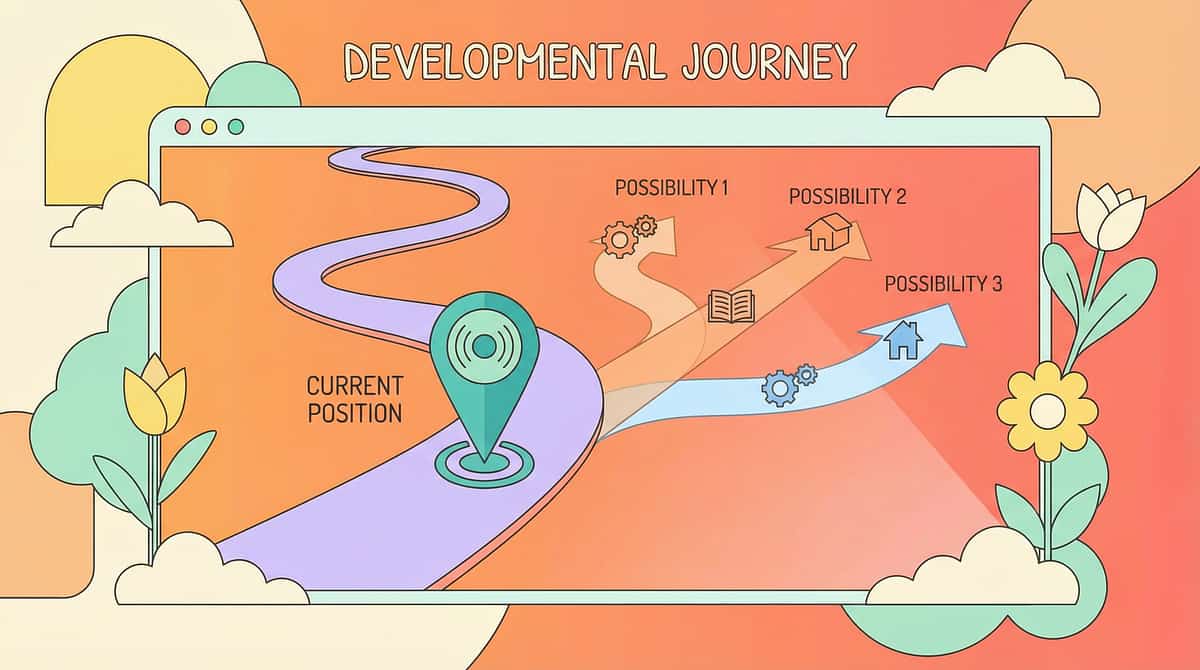
Progression Pathway: What comes next.
This technique is one step in a larger, carefully sequenced journey. Behavioral flexibility and approach behavior develop across multiple domains — the cluster below shows how C-286 fits into the broader architecture of your child's intervention plan.
C-284
Understanding Anxiety & Avoidance Patterns
C-285
Recognizing Fear of Failure Signs
C-286 ← You Are Here
Fear of Trying New Things — Brave Step System
C-287
Perfectionism & Fear of Mistakes
C-288
Building Risk-Taking & Resilience
C-290
Rigidity & Need for Sameness
🔗 Domain C: Emotional Regulation
The full cluster of emotional regulation techniques — your broadest context.
🔗 Domain A: Sensory Processing
When sensory sensitivity is the primary driver of novelty fear.
🔗 Domain D: ABA / Behavior
For systematic approach behavior shaping with reinforcement architecture.

ACT V · THE COMMUNITY & ECOSYSTEM
From "I can't" to "I'll try." — Parents tell it better than we can.
"Last month, my daughter joined a pottery class. A class she'd never been to, with kids she didn't know, learning something she'd never tried. A year ago, this would have been absolutely impossible. We've been using the brave ladder, collecting first-time badges, and celebrating mistakes for months. When I mentioned pottery, she said 'I've never done that' — and then, after a pause, 'But I could try.' She was nervous. She used her coping cards in the car. But she walked in. And she made something. And she's going back next week. Her world is growing again."
— Parent, Pinnacle Network · Outcomes vary by individual profile
— Parent, Pinnacle Network · Outcomes vary by individual profile
"The turning point was when my son climbed a new playground structure. He'd refused for three weeks. We'd been using the brave ladder, starting with just standing near it. On week four, he climbed it. And then announced proudly: 'I've never done that before. First time badge!' He'd internalized the whole system."
— Parent, Bengaluru · Outcomes vary by individual profile
— Parent, Bengaluru · Outcomes vary by individual profile
Connect with the Pinnacle Community.
You are not on this journey alone. The Pinnacle community includes thousands of parents and caregivers across India — sharing brave step progress, troubleshooting challenges, and celebrating milestones together. In joint households, consistency across all caregivers multiplies the impact of every technique.
Pinnacle Parent Community
Connect with parents navigating the same journey — shared wisdom, shared encouragement.
WhatsApp Parent Network
Real-time connection with parents and Pinnacle clinicians across India.
Find Your Nearest Center
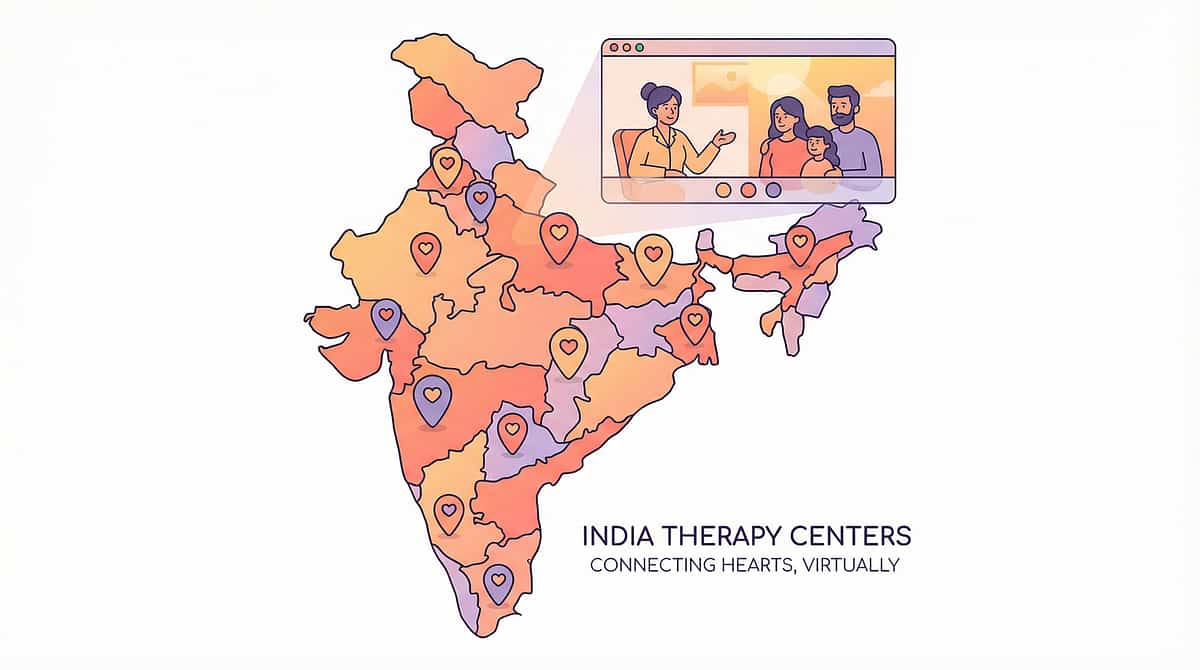
70+ centers across India — in-person therapy, assessments, and family support.
FREE National Autism Helpline
📞 9100 181 181 · 16+ languages · 24×7 · Licensed Pinnacle clinicians.
For joint households: Download the Family Guide for Behavioral Flexibility — a simplified one-page explainer for grandparents, extended family, and school teachers. Consistency across all caregivers is the single greatest multiplier of therapeutic outcomes.
The science behind C-286.
Every technique in the Brave Step System is grounded in publicly verifiable, peer-reviewed research. The citations below represent the primary evidence base — accessible via PubMed and verifiable by any clinician, parent, or researcher seeking to evaluate the evidence independently.
📄 PMC11506176
Systematic review (Children, 2024): Sensory integration and behavioral intervention outcomes across 8–12 week timelines. Evidence-based practice criteria confirmed.
📄 PMC10955541
Meta-analysis (World J Clin Cases, 2024): Session structure and therapeutic dosage for pediatric intervention — core protocol architecture.
📄 PMC3685418
Behavioral inhibition and anxiety in children: approach-avoidance conflict mechanisms and intervention pathways. Core theory foundation for C-286.
📄 NCAEP Evidence-Based Practices Report (2020)
Social Stories, Visual Supports, and Reinforcement as evidence-based practices for autism — Materials 4, 6, and 7 grounded here.
📄 WHO Nurturing Care Framework (2018)
Responsive caregiving and early learning domains — PMC9978394. Multi-caregiver training for intervention generalization.
📄 Dweck, C. (2006)
Growth mindset research: praising effort over outcome and reframing failure as learning. Foundation of the Mistake Celebration Kit.
This technique is one data point in a living, learning system.
GPT-OS® Platform
AbilityScore® Integration
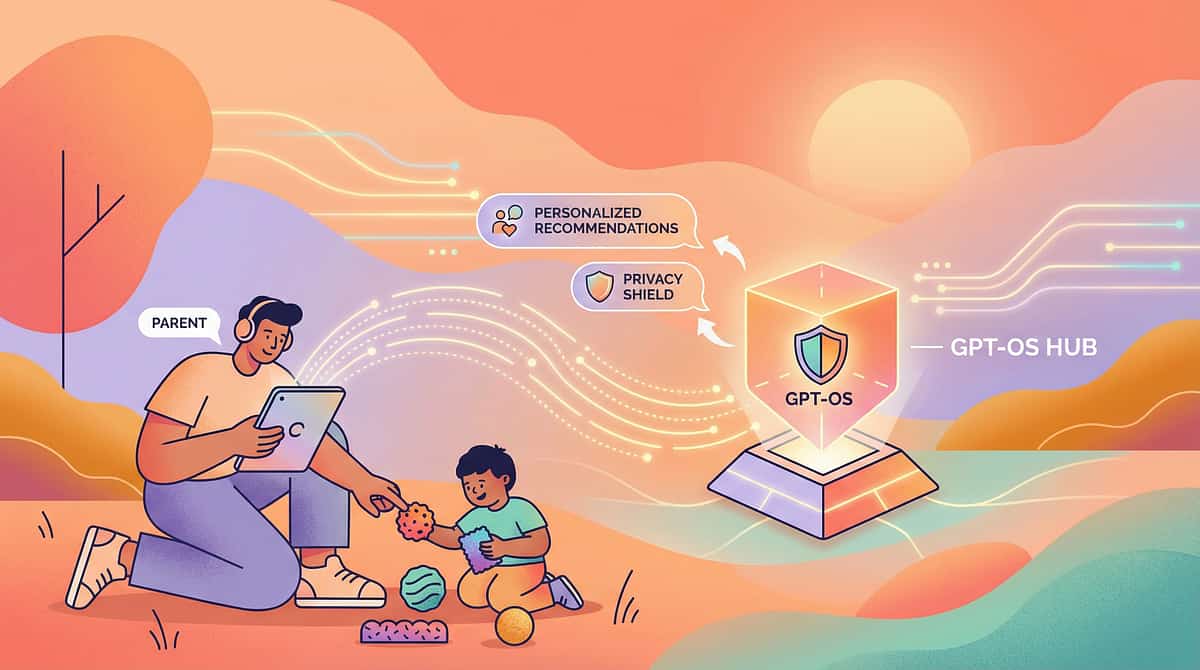
GPT-OS® is the therapeutic infrastructure that connects every brave step session to a larger, personalized clinical picture. Each session logged feeds TherapeuticAI®, which adjusts rung difficulty, reinforcement intensity, and discipline priority based on your child's real-world data — not assumptions.
Input Domains
Behavioral Flexibility Readiness Index + Approach Behavior Readiness Index
Tracked Via
EverydayTherapyProgramme™ daily brave step log — parent-entered after each session
Re-Measured
AbilityScore® checkpoint at 4-week and 8-week intervals — progress validated clinically
20M+ sessions · 97%+ measured improvement · 70+ centers · 160+ countries IP protection. "This is not software. This is therapeutic infrastructure." Learn more: pinnacleblooms.org/gpt-os

Consistency across caregivers multiplies impact.
The brave step system only reaches its full potential when every adult in your child's life uses the same language, the same responses, and the same reinforcement approach. A child who hears "You're so brave for trying" at home and "Just do it" at school receives conflicting neurological signals. Consistency is the multiplier.
📥 Family Guide: Brave Steps
One-page PDF for grandparents, extended family, and school teachers — the essential version of this system in plain language.
📥 School Communication Template
"How to Support My Child at School" — download and share directly with your child's teacher or coordinator.
📥 Session Tracker PDF
Printable tracker for sessions when the app isn't available — same 5 fields, always at hand.
"When [child's name] says no to new things, it's not naughtiness — it's genuine fear. Please don't force them, but also please don't allow them to always avoid. When they try something new, celebrate the attempt with these exact words: 'That was so brave. I'm proud you tried.' That's all. That's enough."
— Pinnacle Explain-to-Grandparents Guide

ACT VI · THE CLOSE & LOOP
Frequently Asked Questions
These are the questions Pinnacle clinicians hear most often from families implementing the Brave Step System. Each answer has been reviewed by the consortium for clinical accuracy and practical utility.
Q: My child refuses to even look at the brave ladder. What do I do?
Start even smaller — before the ladder, just have a conversation about "brave things we've tried." Build the concept before the tool. Let the child make the ladder themselves before using it for anything challenging. The ladder is a means, not the destination.
Q: Won't celebrating mistakes teach my child it's okay to be careless?
No — the Mistake Celebration Kit specifically celebrates mistakes made during brave attempts, not careless errors. The distinction is clear to children: "Was this a brave mistake or a careless one?" They know the difference. You can make the distinction explicit and children respond well to it.
Q: My child seemed fine during the session but had a major meltdown an hour later. Normal?
Yes — this is called a "delayed arousal response." The brave step created more neurological activation than was visible in the moment. Shorten future sessions and ensure longer cool-down periods before returning to normal activity.
Q: How long before I see real change?
Most families see measurable change within 6–8 weeks of consistent daily practice. Occasional practice produces occasional results. The system requires consistency — even tiny daily brave steps maintain neurological momentum.

More answers — your questions, continued.
Q: My child's teacher thinks they should "just be forced to participate." How do I explain?
Download the school communication template from Card 36. The key clinical point: forced exposure without readiness produces trauma responses, not tolerance. The brave step approach has a stronger evidence base for sustainable change. Research citations are available to share with school staff.
Q: Is this relevant for autism?
Yes — and requires adaptation. Children on the autism spectrum need extra social story preparation, smaller increments, sensory accommodation in new environments, and more advance notice. The core system applies; the dosage and pacing differ significantly. Consult a Pinnacle ABA or psychology specialist for autism-specific calibration.
Q: We've been doing this for 3 months with no progress. What's wrong?
This pattern warrants professional assessment. Three months of consistent effort without progress suggests an underlying factor — anxiety disorder, autism, sensory processing disorder, or trauma history — that requires clinical evaluation, not more of the same intervention. Call 9100 181 181 for a free consultation.
Q: Can I use multiple materials at once or should I introduce them one at a time?
Start with the Brave Ladder + First Time Badges + Worry vs. Brave Brain cards simultaneously — these form the core trio. Add others progressively over weeks 3–4. Too many new systems at once can itself trigger novelty anxiety — introduce gradually, just as you would a new brave step.

Your child's brave step starts today.
Not when conditions are perfect. Not when you have the full kit. Not when you've read every card. Today. The first thing to do — right now — is sit with your child and say:
"I have a new idea. Want to help me draw a Brave Ladder together?"
That's the invitation. That's Step 1. Everything else follows from that one moment.
🟢 Start This Technique Today
Launch EverydayTherapyProgramme™ — GPT-OS® will guide you through today's brave step, personalized to your child's profile.
🔵 Get Professional Support
Book an AbilityScore® Assessment. A Pinnacle clinician will build your child's personalized brave step system from the ground up.
⚪ Explore the Next Technique
C-287: Perfectionism & Fear of Mistakes — the natural next step in the Behavioral Flexibility Series.
🏅 Validated by the Pinnacle Blooms Consortium — OT · Psychology · ABA · Special Education · NeuroDevelopmental Pediatrics · FREE National Autism Helpline: 9100 181 181 | 16+ languages | 24×7
Preview of 9 materials that help with fear of trying new things Therapy Material
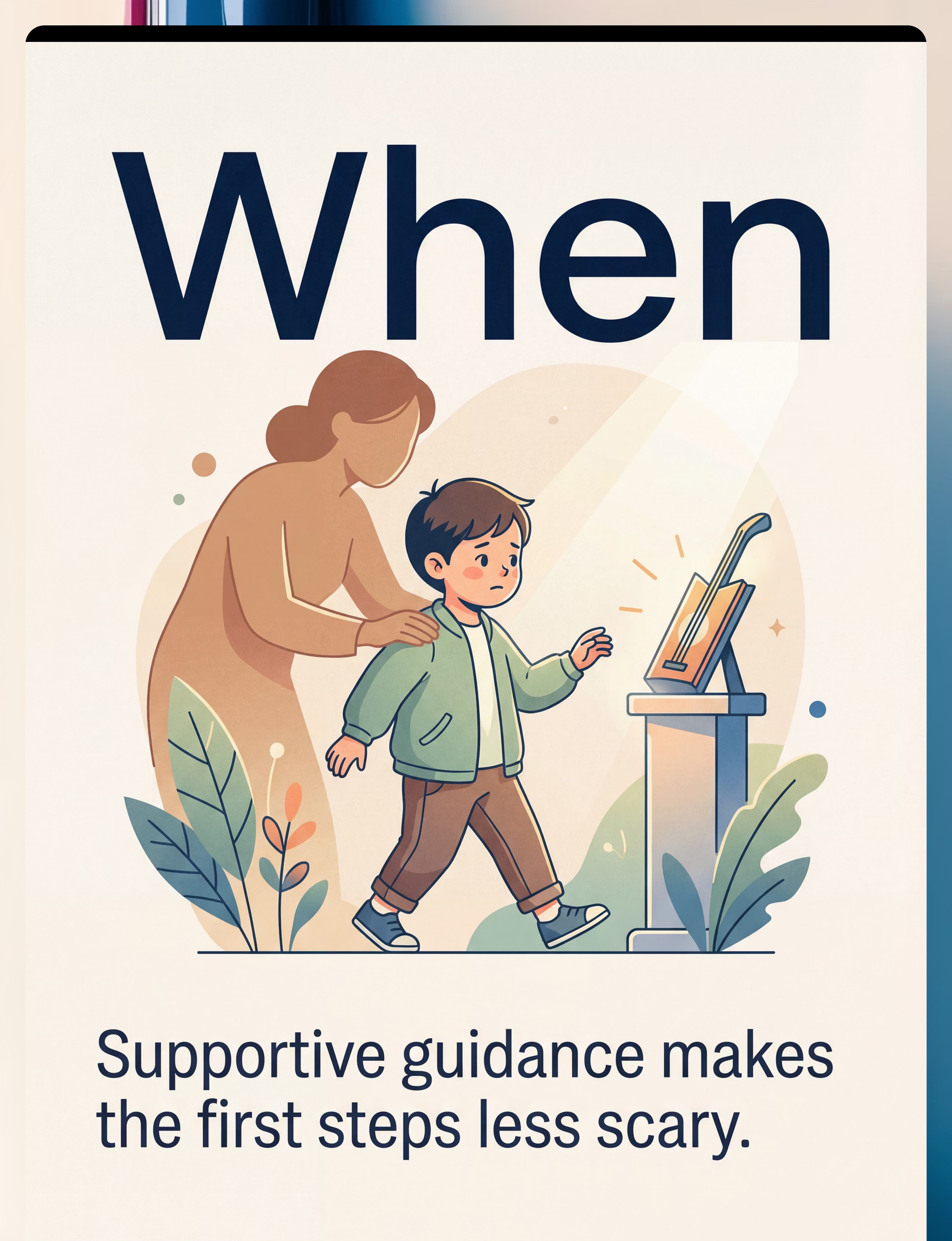
Below is a visual preview of 9 materials that help with fear of trying new things therapy material. The pages shown help educators, therapists, and caregivers understand the structure and content of the resource before use. Materials should be used under appropriate professional guidance.




Link copied!

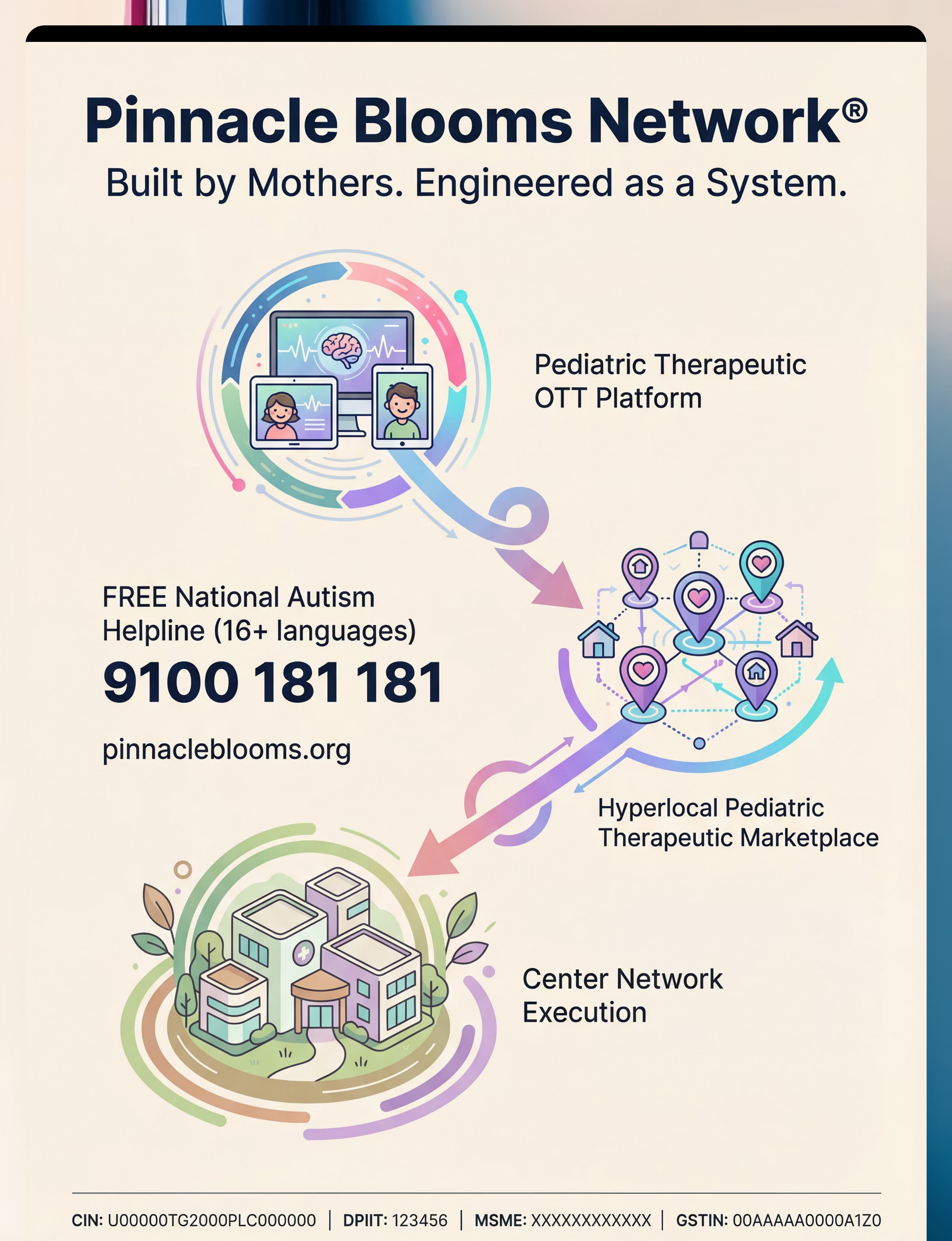
Pinnacle Blooms Network®
Built by Mothers. Engineered as a System.
"From fear to mastery. One brave step at a time."
Every technique on this platform was built by a consortium of licensed pediatric therapists, behavioral scientists, neurodevelopmental pediatricians, special educators, and most importantly — parents who have lived this journey. It is designed to be rigorously scientific, practically executable, and deeply human.
← C-285
Fear of Failure Signs
C-286 · You Are Here
Fear of Trying New Things
C-287 →
Perfectionism & Fear of Mistakes
techniques.pinnacleblooms.org
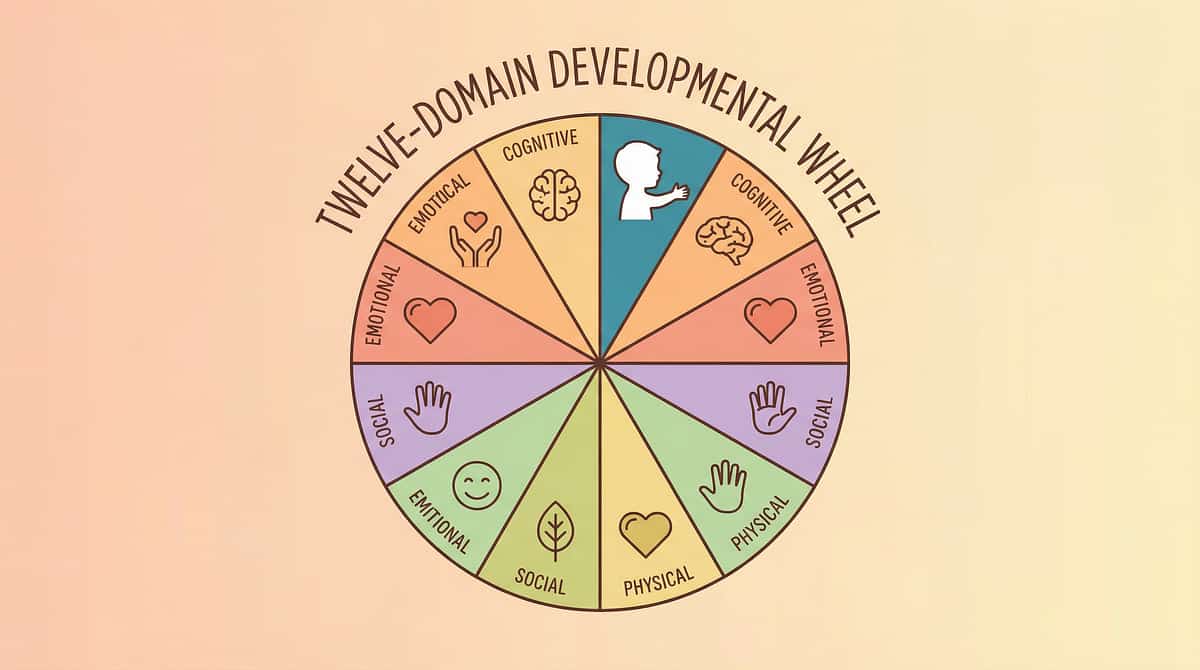
380 of 999 techniques complete and live across 12 developmental domains.
📞 9100 181 181
FREE National Autism Helpline · 16+ languages · 24×7
✉️ care@pinnacleblooms.org
Direct line to the Pinnacle team for clinical questions and feedback.
This content is educational. It does not replace individualized assessment and intervention planning with licensed professionals. Fear and avoidance patterns vary by individual and may require professional intervention. Individual results may vary. Statistics represent aggregate outcomes across the Pinnacle Blooms Network®.
CIN: U74999TG2016PTC113063 · DPIIT: DIPP8651 · MSME: TS20F0009606 · GSTIN: 36AAGCB9722P1Z2
© 2025 Pinnacle Blooms Network®, unit of Bharath Healthcare Laboratories Pvt. Ltd. All rights reserved.
© 2025 Pinnacle Blooms Network®, unit of Bharath Healthcare Laboratories Pvt. Ltd. All rights reserved.