
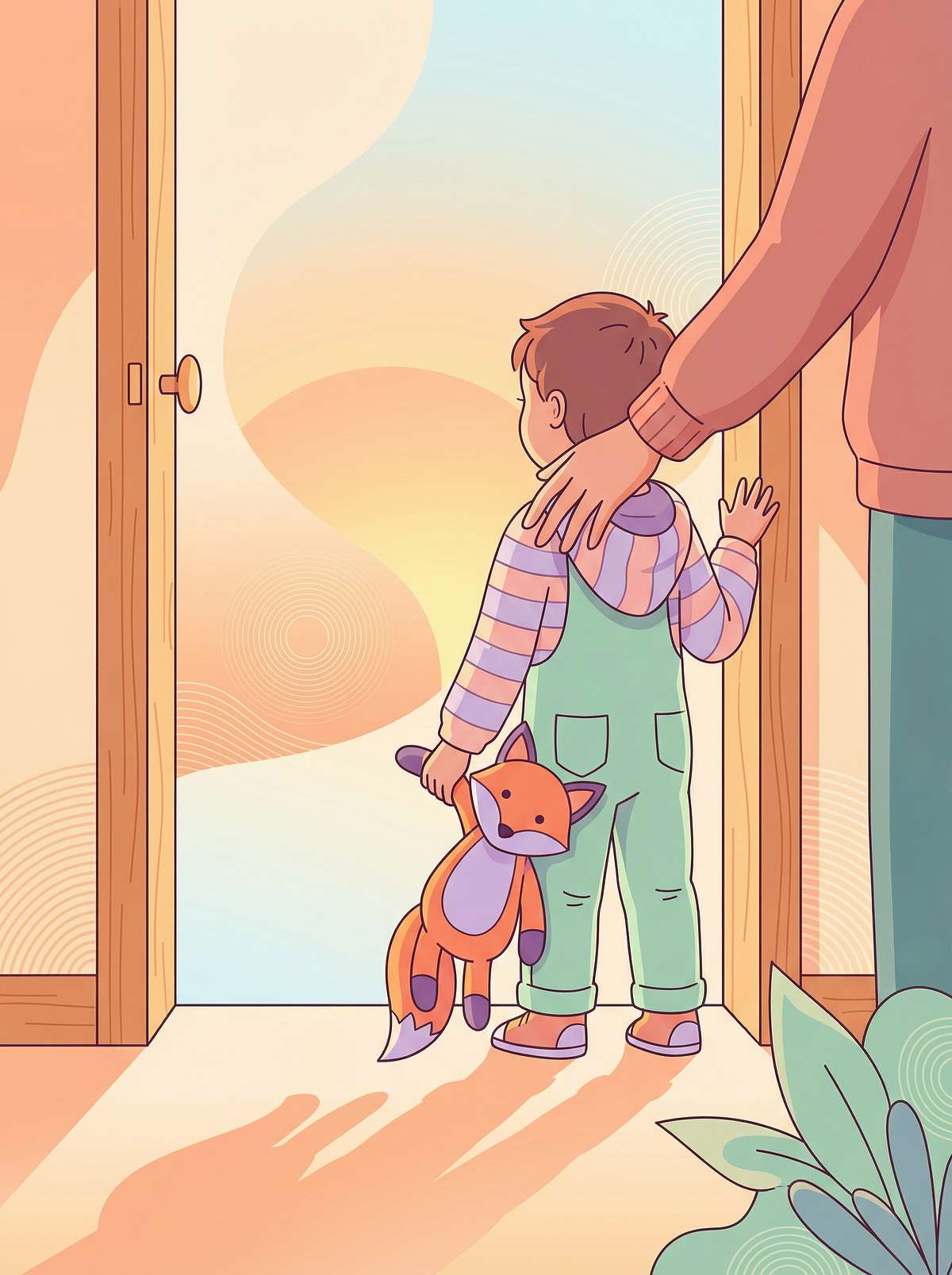
When 'somewhere new' means panic.
You've watched your child freeze at the threshold of every new place. You've cancelled plans, made excuses, and quietly grieved the experiences they're missing. You are not failing. Their nervous system is.
This page contains a clinically validated, home-applicable protocol used by occupational therapists, psychologists, and special educators across India. It works. And you can start today.
Emotional Regulation & Anxiety Support
C-280 | Ages 3–12
1 in 8
Children experience clinically significant anxiety about new environments
6–8 Weeks
Average time to meaningful progress with this protocol
9 Materials
Everything you need, most of it free or already at home

"She's seven years old and she's never been to a restaurant. Not once. The mere suggestion — even whispered — sends her into a spiral. Crying, pleading, sometimes vomiting before we even get in the car. While other children get excited about new places, she monitors every conversation for hints that we might go somewhere unfamiliar. Our world has shrunk to five buildings. Home. Grandma's. School. One park. One grocery store. Anywhere else triggers what looks like genuine mortal terror. I've tried forcing it. I've tried avoiding it. Nothing works. And every year, the gap between her world and the world grows wider."
— Parent, Pinnacle Network (identity protected)
You are not failing. Your child's nervous system is speaking. There is a science-backed path forward.
WHO Nurturing Care Framework (2018): Parental awareness and early identification directly improve developmental trajectories. nurturing-care.org
Chapter 1
Recognition
You Are Among Millions of Families Navigating This Exact Challenge
Novel environment anxiety — the excessive, persistent fear of unfamiliar places — is one of the most functionally limiting challenges in autism and paediatric anxiety. It is not rare. It is not a parenting failure. It is a documented neurodevelopmental phenomenon with proven, home-applicable interventions.
40–80%
Children with ASD
experience significant anxiety about unfamiliar environments and transitions
1 in 3
Anxious Children
present with place-specific fears that significantly limit family functioning
21M+
Therapy Sessions
delivered by Pinnacle Blooms Network® for environmental anxiety and transition challenges
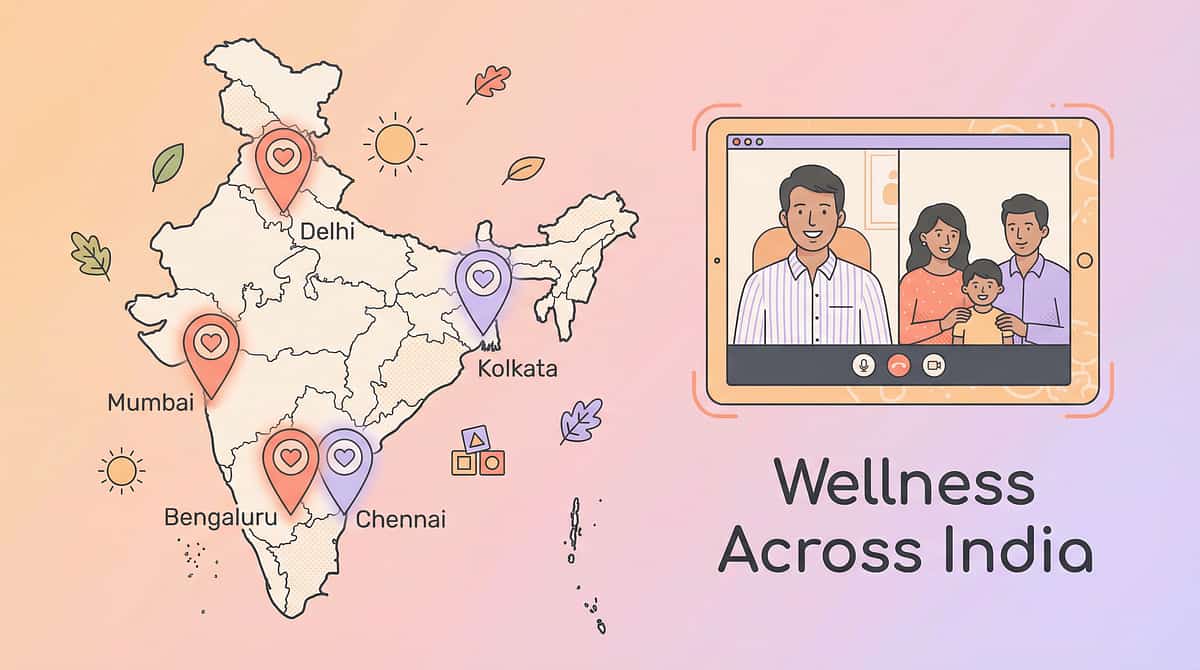
India Context: An estimated 1.3–1.5 million children in India are living with autism-related environmental anxiety significant enough to impair daily life and family participation. Pinnacle Blooms Network® serves families across 70+ centres in 22 states.
Meta-analysis (World J Clin Cases, 2024): Graduated exposure and cognitive preparation strategies show significant effect sizes for environmental anxiety in paediatric populations. PMC10955541

Neuroscience
This Is a Wiring Difference. Not a Behaviour Problem.
What happens neurologically when your child approaches a new place:
The Brain Scans for Familiarity
The amygdala (threat-detection centre) scans for specific smells, layouts, sounds, and textures it recognises as "safe."
Absence of Recognition = Danger
In a novel environment, those cues are absent. To a nervous system wired for heightened vigilance, no recognition equals potential threat.
The Alarm Fires First
Adrenaline, cortisol, fight-flight-freeze — before the reasoning brain (prefrontal cortex) can assess actual safety.
Calibrated More Sensitively
For children with autism, sensory differences, or anxiety, the threshold for "unfamiliar = threatening" is lower, and the response more intense.
The Memory–Safety Connection
The hippocampus creates spatial "maps" of known environments. Familiar places have complete maps — exits, bathrooms, expected sounds. New places have no map. To the threat-detection system, an unmapped territory is a threat-level territory.
Your child is not choosing to be afraid. They cannot reason their way out of this — because the fear bypasses reasoning entirely.
Frontiers in Integrative Neuroscience (2020): Neurological framework for evaluating sensory-based interventions in ASD. DOI: 10.3389/fnint.2020.556660

Developmental Context
Your Child's Fear Has a Developmental Context — and a Forward Path
1
8–18 Months
Stranger anxiety peak — normal caution with unfamiliar people and places. ✓ Same baseline, but more intense in affected children.
2
2–3 Years
Expanding world — curiosity begins to overcome caution. ⚠ Caution may not resolve; begins to entrench.
3
3–5 Years
Confident exploration of new environments with parent support. ⚠ Fear intensifies rather than reducing.
4
5–8 Years
Independent exploration of familiar community settings. 🔴 World may be shrinking, not expanding.
5
8–12 Years
Peer-driven environmental exploration and autonomy. 🔴 Significant peer gap; avoidance entrenched.
Current Challenge Zone: Your child is likely in the 3–12 year zone where, without structured intervention, avoidance patterns entrench progressively and the comfortable world contracts year by year.
Common Co-occurrences
Novel environment anxiety commonly co-occurs with: Autism Spectrum Disorder (ASD), Sensory Processing Differences, Generalised Anxiety Disorder (GAD), Specific Phobias, OCD with environmental triggers, and ADHD with impulse-driven avoidance. Each co-occurrence requires discipline-specific adaptation. Pinnacle's FusionModule™ coordinates care across all relevant disciplines simultaneously.
WHO Care for Child Development Package (2023): Age-specific caregiver interventions for developmental challenges. PMC9978394
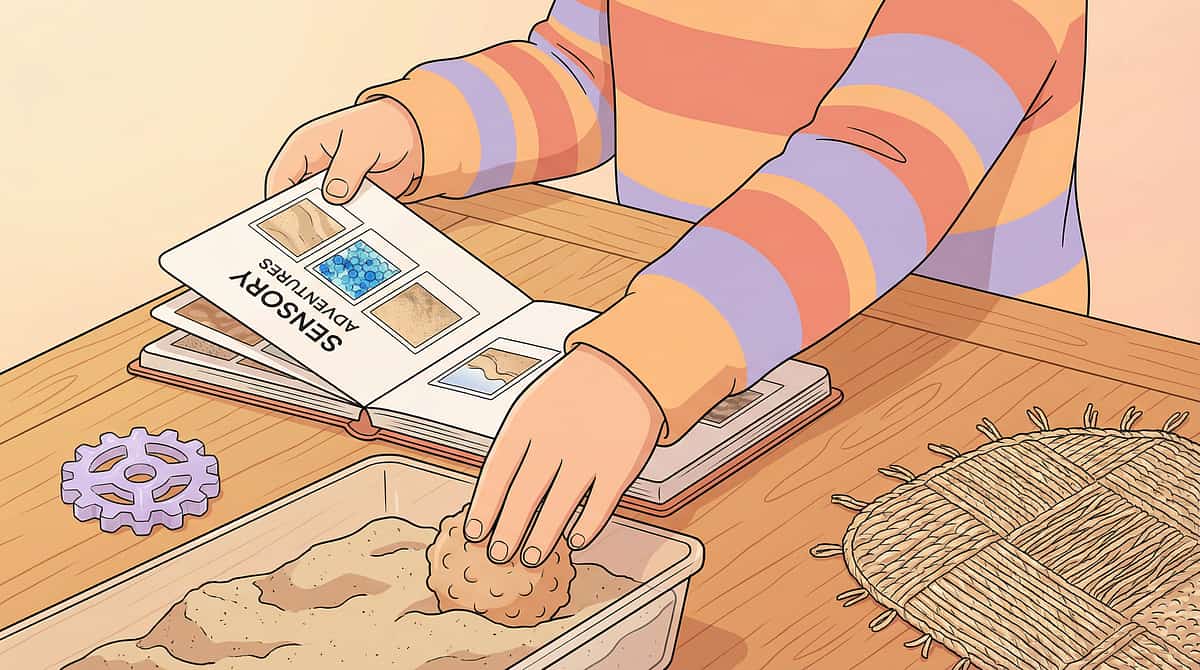
Evidence Grade
Clinically Validated. Home-Applicable. Parent-Proven.
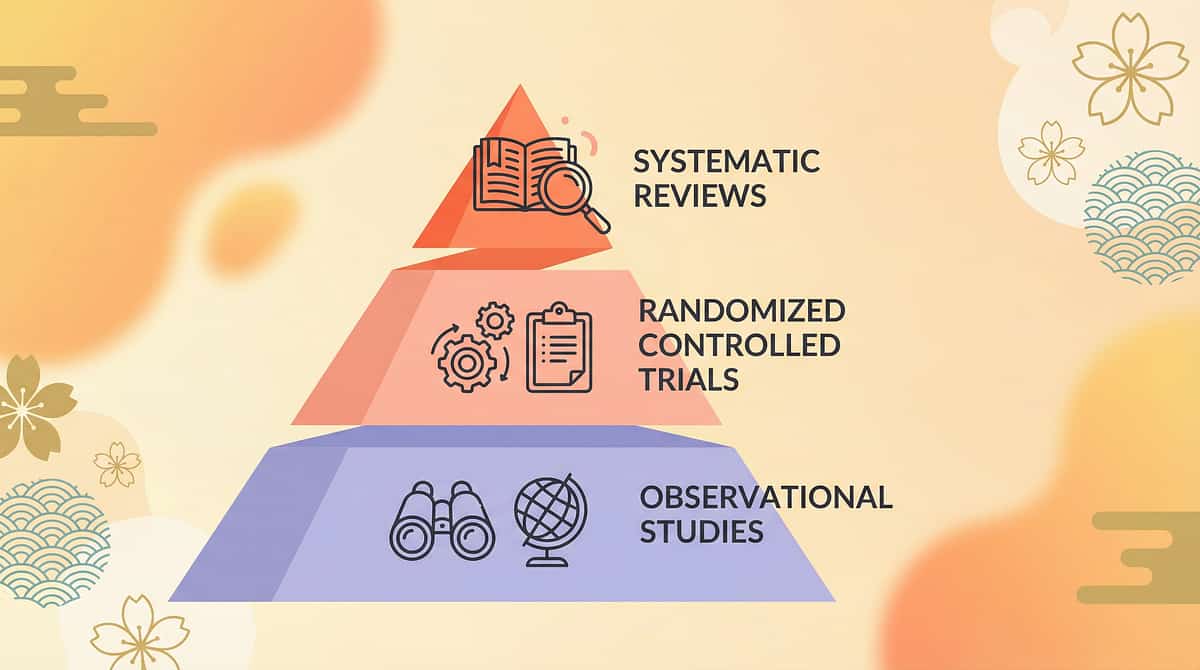
🏛EVIDENCE GRADE: LEVEL II–III — Systematic Reviews + RCT Evidence + Clinical Consensus. Graduated exposure for childhood anxiety is one of the most studied interventions in paediatric psychology.
NCBI PMC5803568 — Graduated Exposure
Graduated exposure therapy for childhood phobias demonstrates robust evidence across systematic reviews. Photo previewing and social story preparation are classified as evidence-based practices for ASD anxiety.
PMC11506176 — Sensory + Anxiety (PRISMA 2024)
16 studies confirm sensory integration intervention as evidence-based for ASD. Sensory supports in novel environments reduce anxiety-driven avoidance behaviour.
NCAEP 2020 — Evidence-Based Practices
Social Stories™, Visual Supports, and Reinforcement Systems are each independently classified as Evidence-Based Practices for autism, with collective support for anxiety management in novel environments.
India-Specific: Padmanabha et al. (Indian Journal of Pediatrics, 2019) — Home-based structured interventions in Indian paediatric populations demonstrated significant measurable outcomes. DOI: 10.1007/s12098-018-2747-4
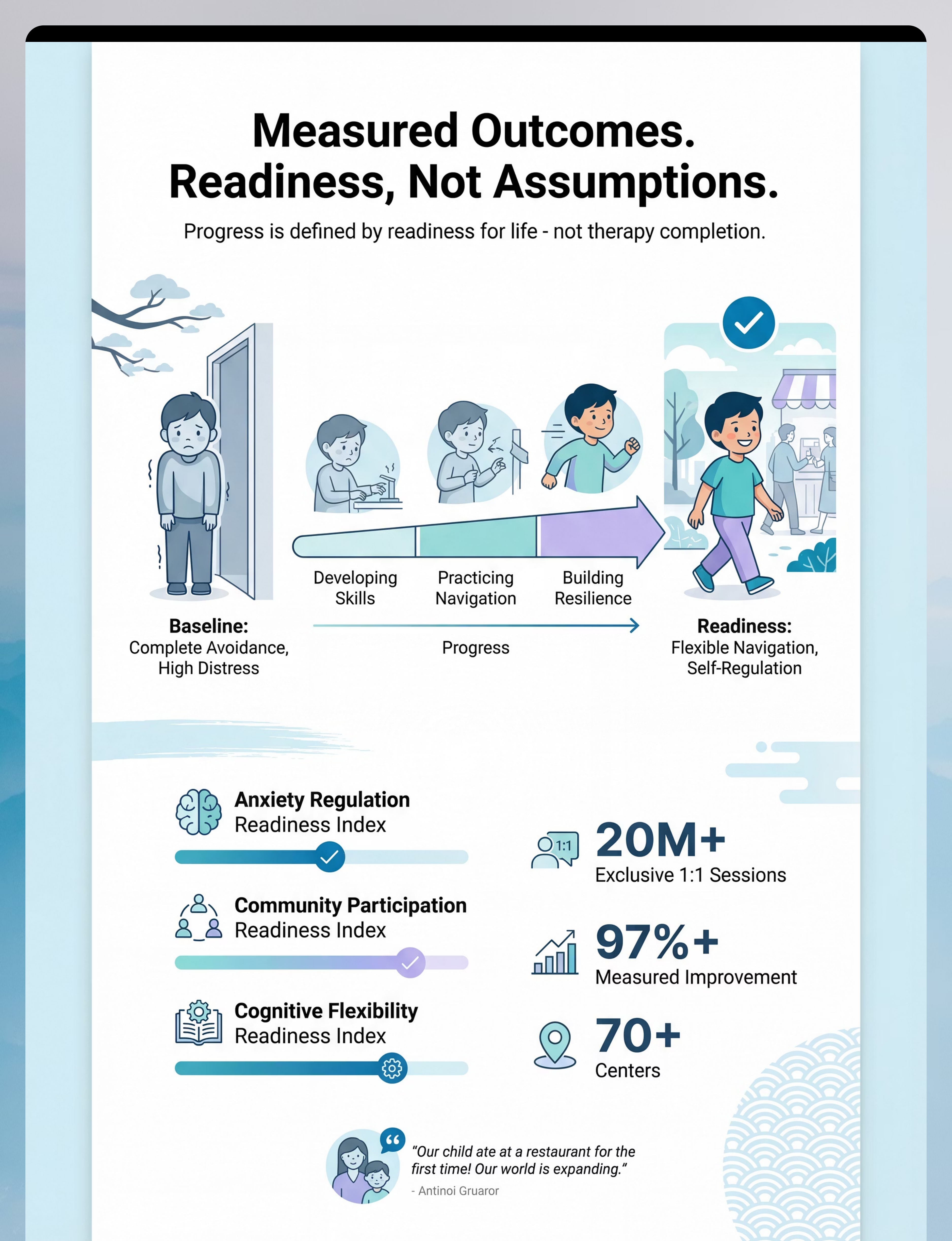
97%+
Measured Improvement
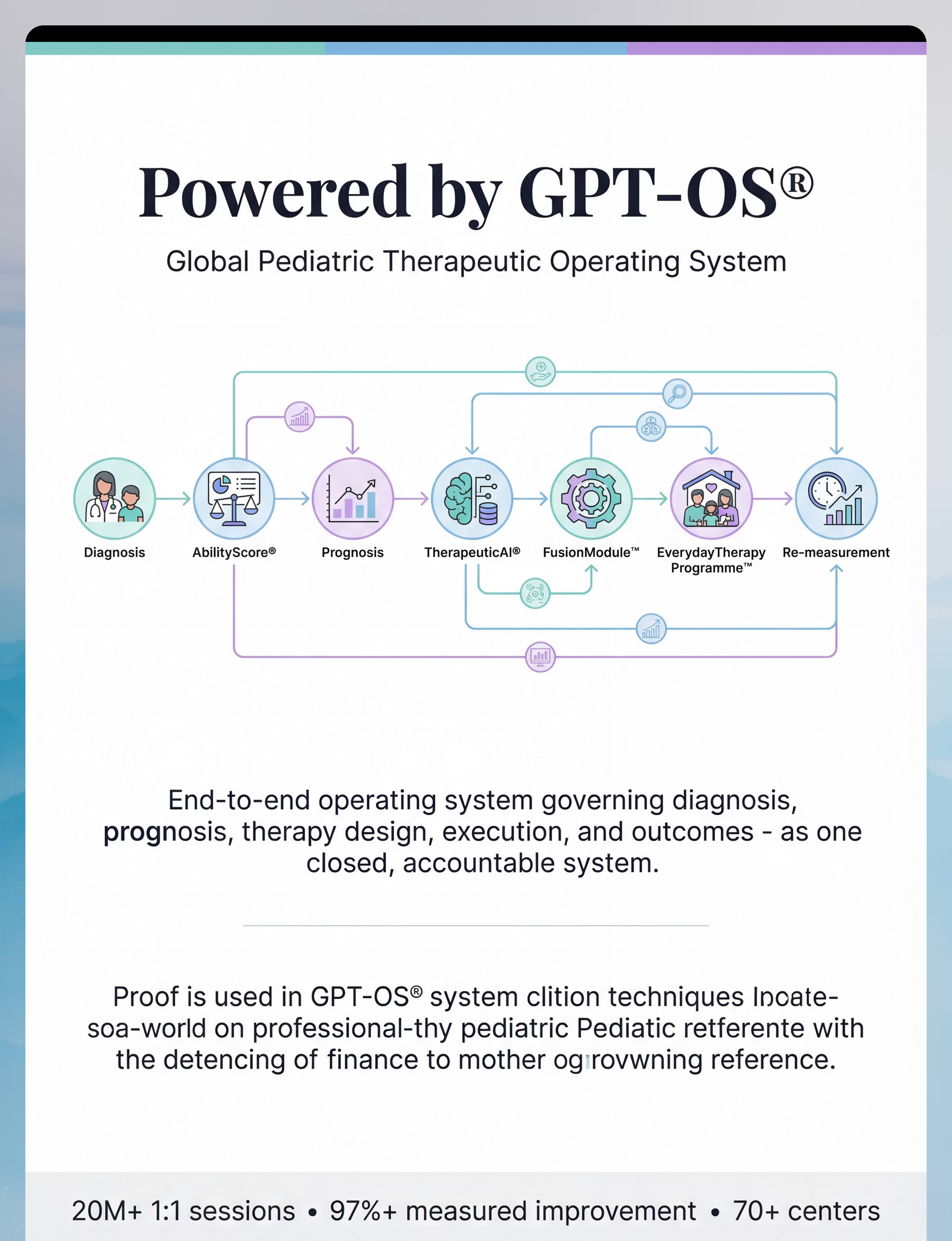
Across Pinnacle Network families using GPT-OS®-governed anxiety and environmental tolerance protocols (20M+ sessions, 70+ centres)
Chapter 2
Understanding the Technique
Novel Environment Desensitisation Protocol
Parent-Friendly Alias: "Making the Unknown Knowable" | Technique ID: C-280 | Domain: Emotional Regulation & Anxiety | ANX-ENV
What It Is
A structured, multi-material intervention that systematically transforms unfamiliar environments from "unknown threats" into "previewed, mapped, manageable spaces" — enabling children with novel environment anxiety to approach, enter, and participate in new locations with increasing confidence and decreasing distress.
What It Does
Works through three mechanisms simultaneously: (1) cognitive preparation that removes the threat-fuelling mystery before arrival, (2) sensory and emotional anchoring during exposure using comfort and regulation tools, and (3) graduated approach that builds evidence of capability one achievable step at a time.
Who It's For
Children ages 3–12 with autism spectrum disorder, anxiety disorders, sensory processing differences, or any profile causing excessive, functionally limiting fear of new or unfamiliar environments.
Session Details
- 🧠 Domain: Emotional Regulation
- 📍 Sub-domain: Novel Environment Anxiety / Transition Support
- ⏱ Duration: 15–30 min preparation + outing exposure
- 📅 Frequency: Preparation daily 1 week before; exposure 1–3x per week
- 👶 Age Band: 3–12 years
- 🏠 Setting: Home preparation + community execution
Who Uses This
This Technique Crosses Therapy Boundaries — Because Fear Doesn't Organise by Discipline
Behavioural Psychologist / BCBA
Designs the graduated exposure hierarchy (Bravery Ladder), selects and calibrates the reinforcement system (Brave Bucket), monitors anxiety reduction data, and coaches parents on the behavioural principles of approach vs. avoidance.
Occupational Therapist
Assesses the child's sensory profile and customises the Sensory Support Kit for novel environments. Addresses sensory unpredictability as a core anxiety driver.
Speech-Language Pathologist
Develops the language components of Social Stories and Parent Scripts. Addresses communication barriers that prevent the child from expressing fear or requesting coping strategies.
Special Educator
Adapts Photo Preview Books and Visual Schedules to the child's literacy and comprehension level. Coordinates with school environments for generalisation.
NeuroDevelopmental Paediatrician
Provides diagnostic clarity on anxiety profile, rules out or addresses comorbid conditions, and may coordinate medication consultation when anxiety is severe.
Parent / Caregiver
The most critical team member for home-based execution. Prepares materials, executes Photo Previews and Social Stories, manages the Bravery Ladder pacing, operates the Sensory Kit in the field, and delivers Parent Scripts in real-time anxious moments.
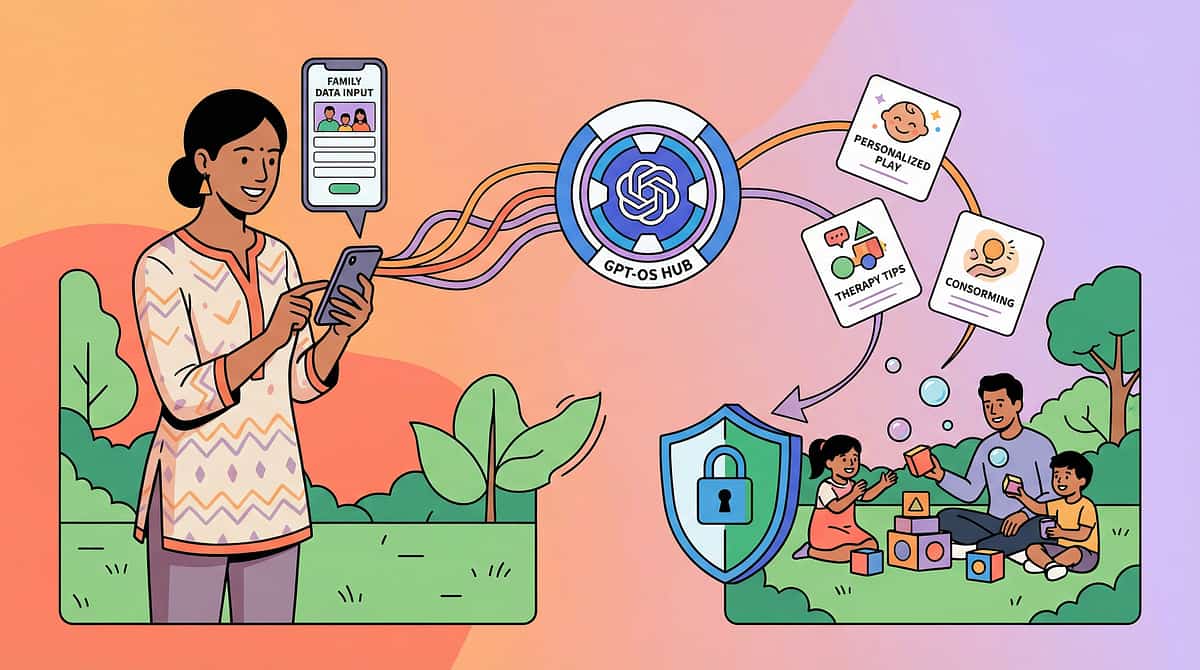
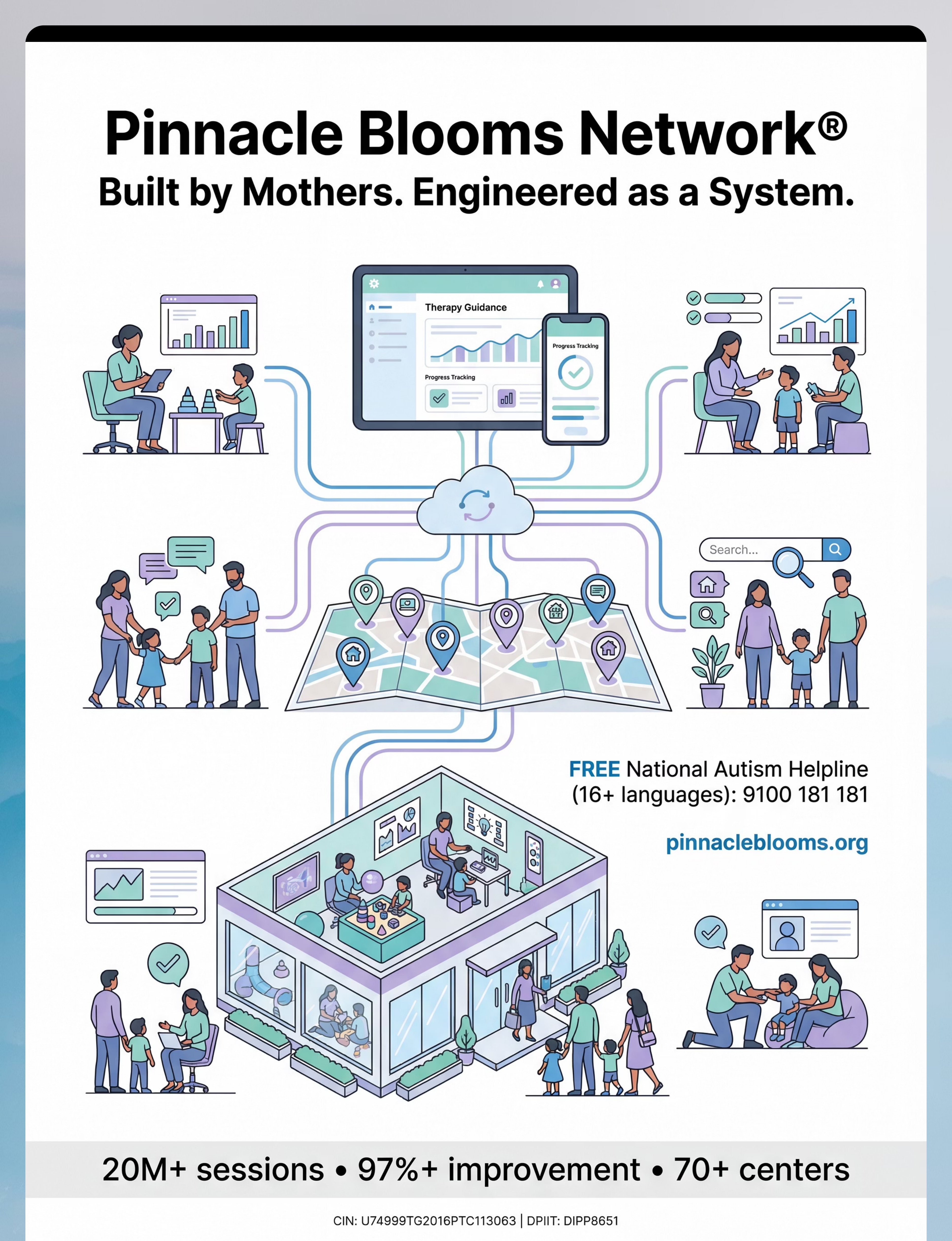
FusionModule™ Coordination: In the Pinnacle GPT-OS® system, all six roles are coordinated simultaneously through a single converged therapeutic plan. No siloed sessions, no contradictory guidance. One child, one plan, multiple disciplines executing in alignment.
Therapeutic Targets
This Is Not a Random Activity. It Is a Precision Multi-Target Intervention.
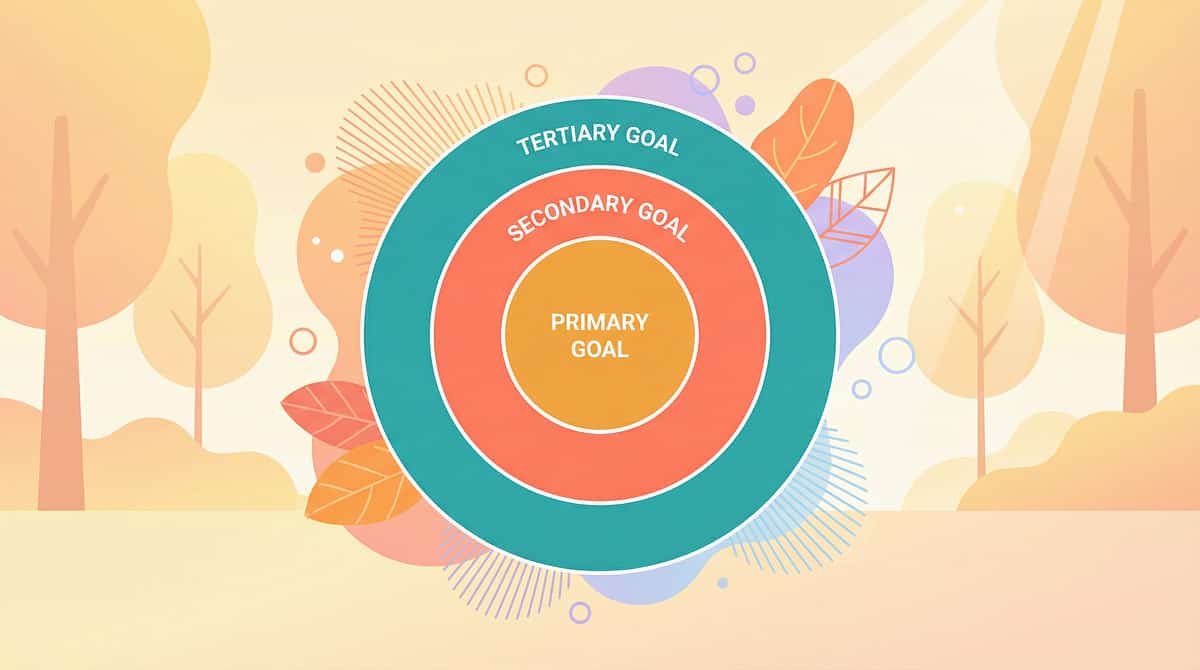
🎯 Primary Target
Novel Environment Tolerance — The child can be present in an unfamiliar location without panic, shutdown, or complete avoidance.
Observable indicator: Child enters new place with preparation and high-support tools, distress manageable.
Secondary & Tertiary Targets
- Anticipatory anxiety reduction before outings
- Coping strategy application in new settings
- Transition flexibility with schedule changes
- Parent confidence and regulation
- Community participation and family quality of life
- Long-term autonomy and cognitive flexibility
Meta-analysis (World J Clin Cases, 2024): SI therapy effectively promoted social skills (primary), adaptive behaviour (secondary), and motor/cognitive development (tertiary). PMC10955541
Chapter 3
The 9 Materials
Your 9-Material Toolkit for Fear of New Places
From ₹0 (fully DIY) to ₹2,500 for a complete kit. Start with what you have.
💚 Zero-Cost Starter Kit
DIY all 9 materials using household items and photos you take yourself
₹0
💛 Moderate Investment Kit
3 purchased items, remainder DIY
₹800–1,200
💙 Full Clinical-Grade Kit
All 9 materials purchased or professionally sourced
₹2,500–3,500
Pinnacle 128 Canon Materials system. All items have DIY equivalents per WHO/UNICEF equity principles.

Material 1 of 9
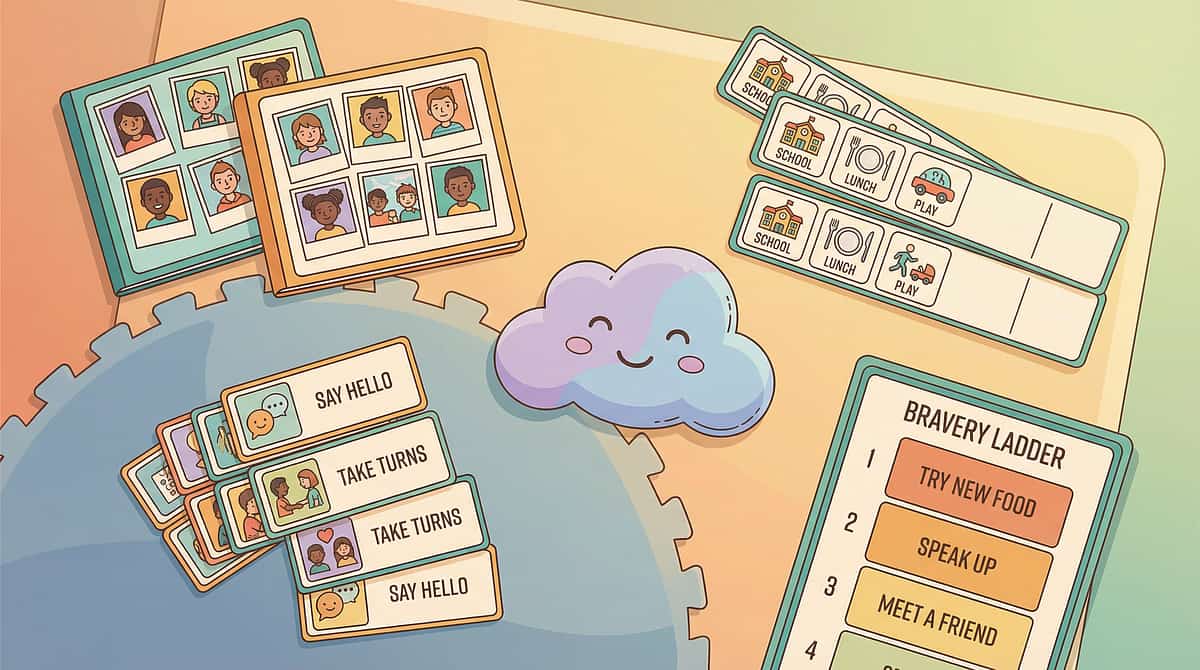
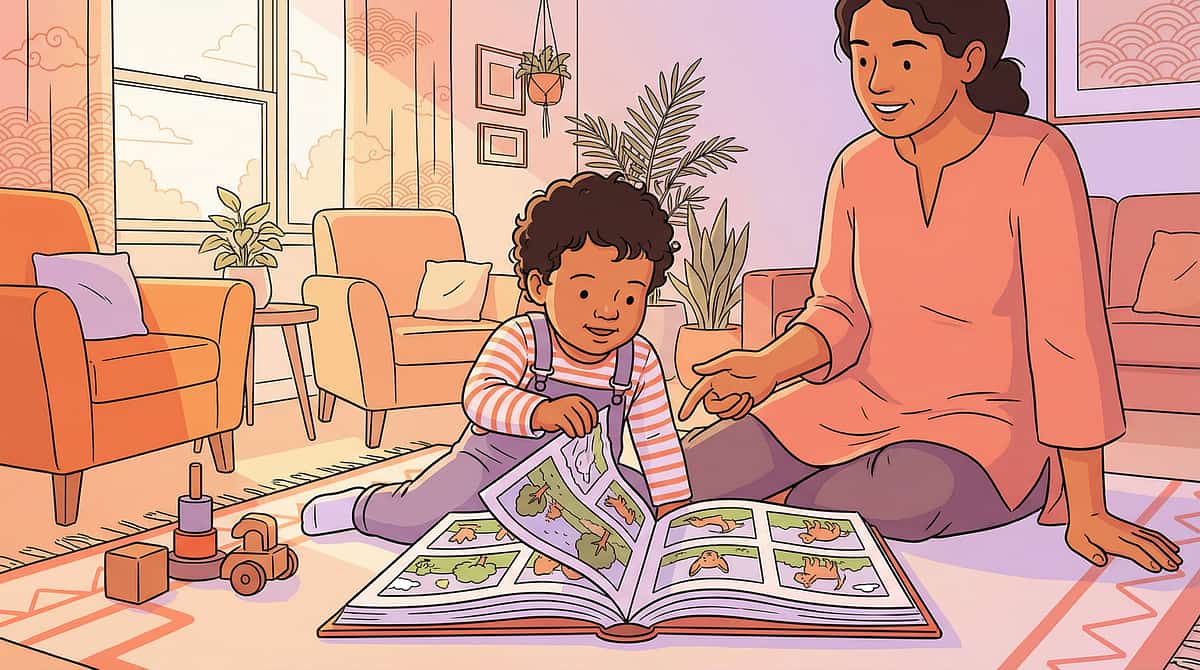
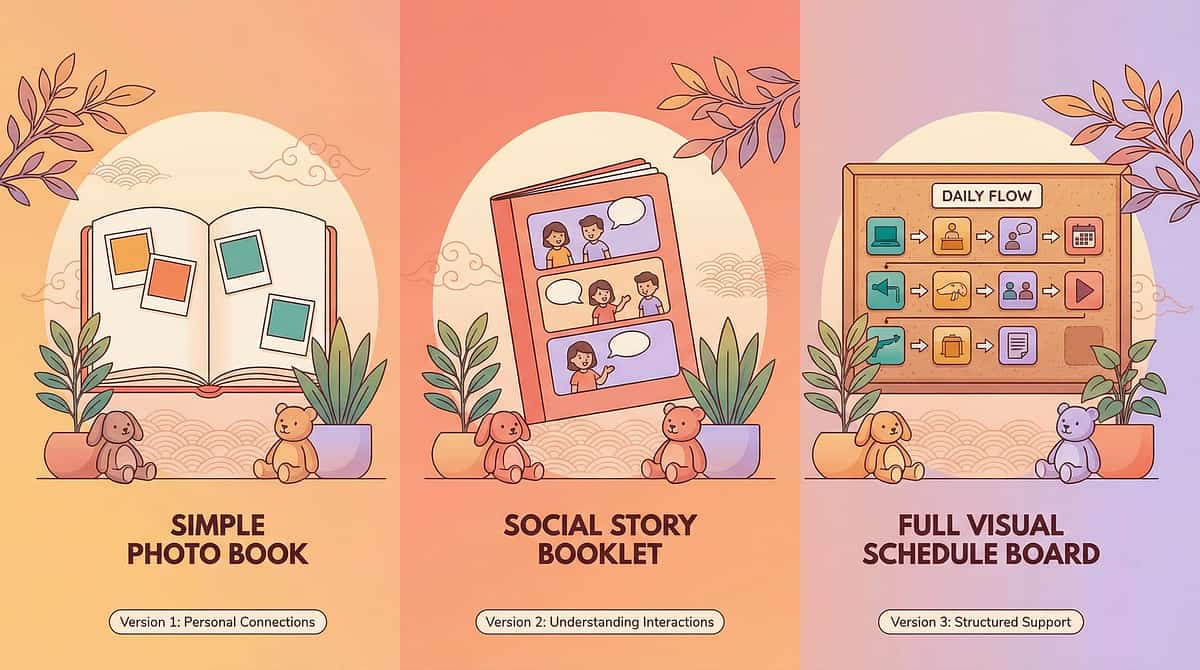
Material 1: Photo Preview Books
What It Is
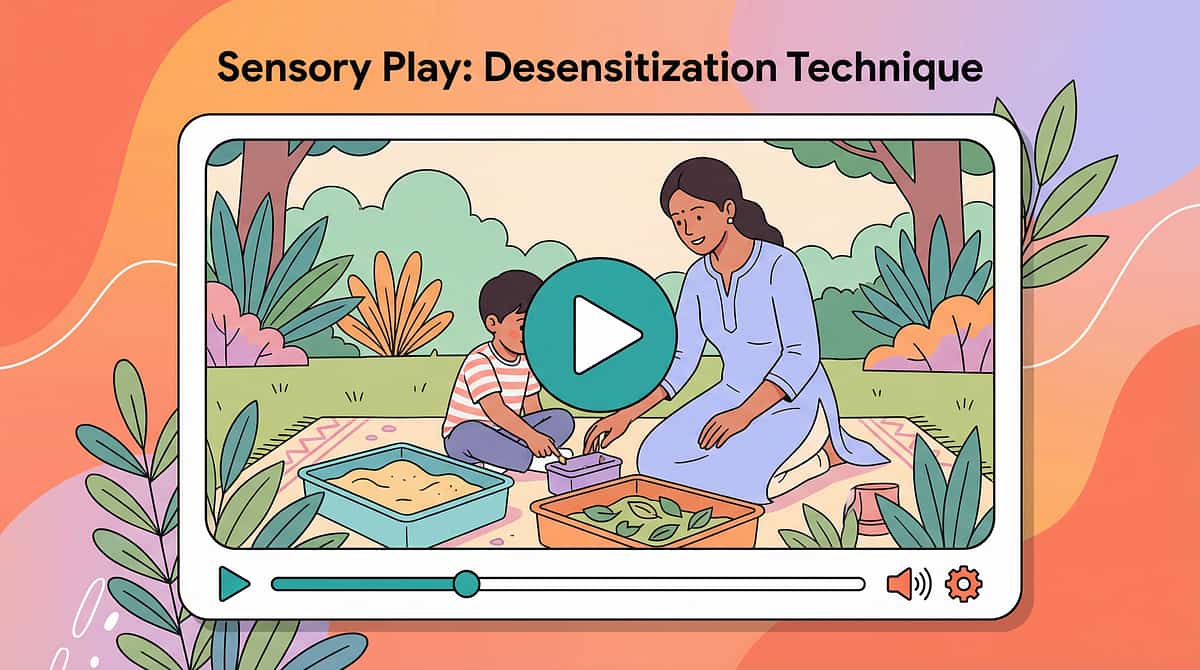
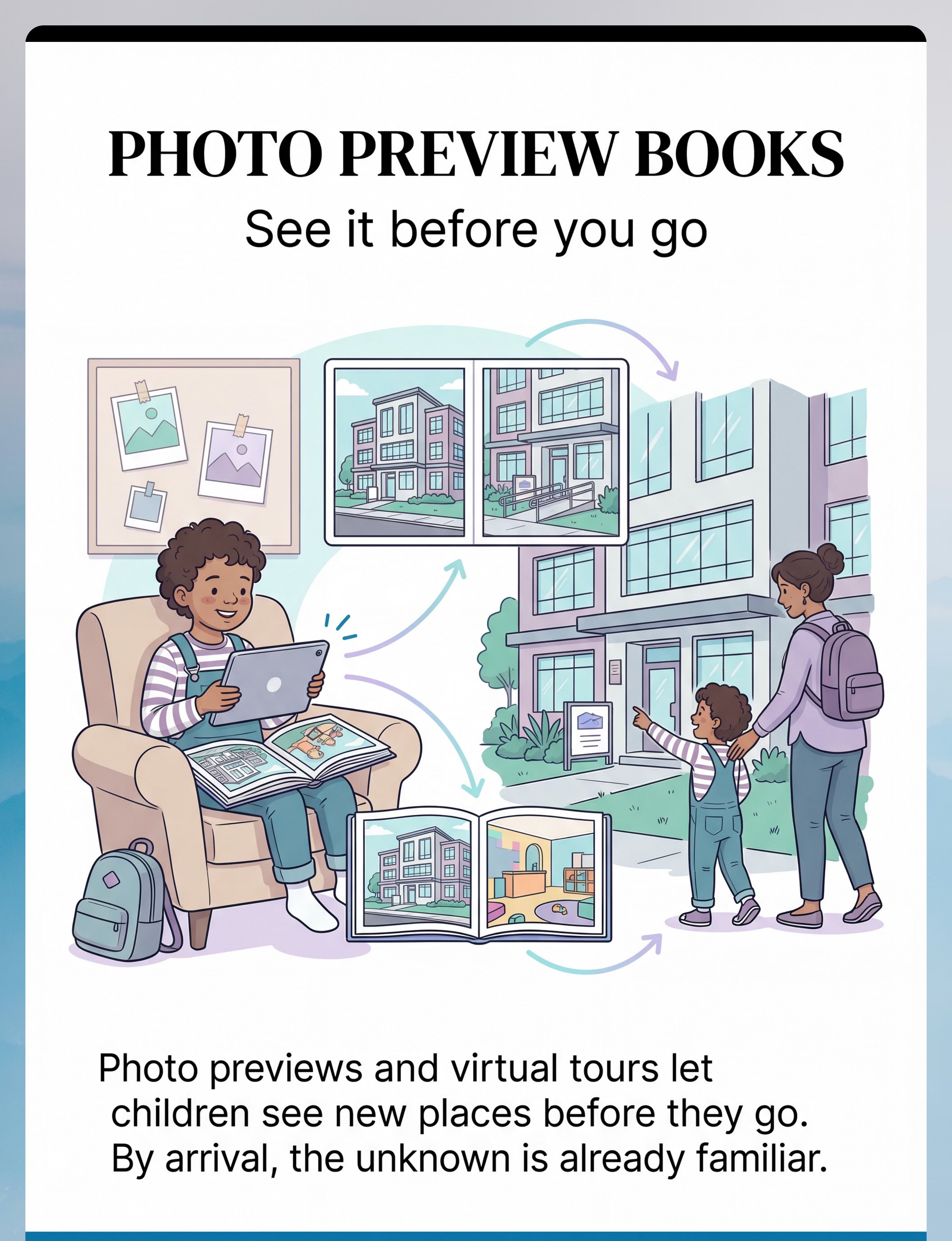
A printed or digital collection of photographs of the target destination — exterior, entrance, interior spaces, bathroom location, seating areas, exits. The child reviews these daily in the week before any outing to build a neural "map" of the unknown place before arriving.
Canon Category
Visual Preparation Materials
DIY Option
Printed photos + binder (₹0–150). Take photos on your phone and show them on screen, or print at a local store for approximately ₹10/page.
Purchase Option
Photo album or lamination pouches + printed venue photos
Cost: ₹0–500
Pinnacle Recommends
Start DIY. Photograph the specific destination yourself — the actual car park, the actual entrance, the actual bathroom sign. Generic stock images do not build the child's specific spatial map. Your photos do.
Material 2 of 9
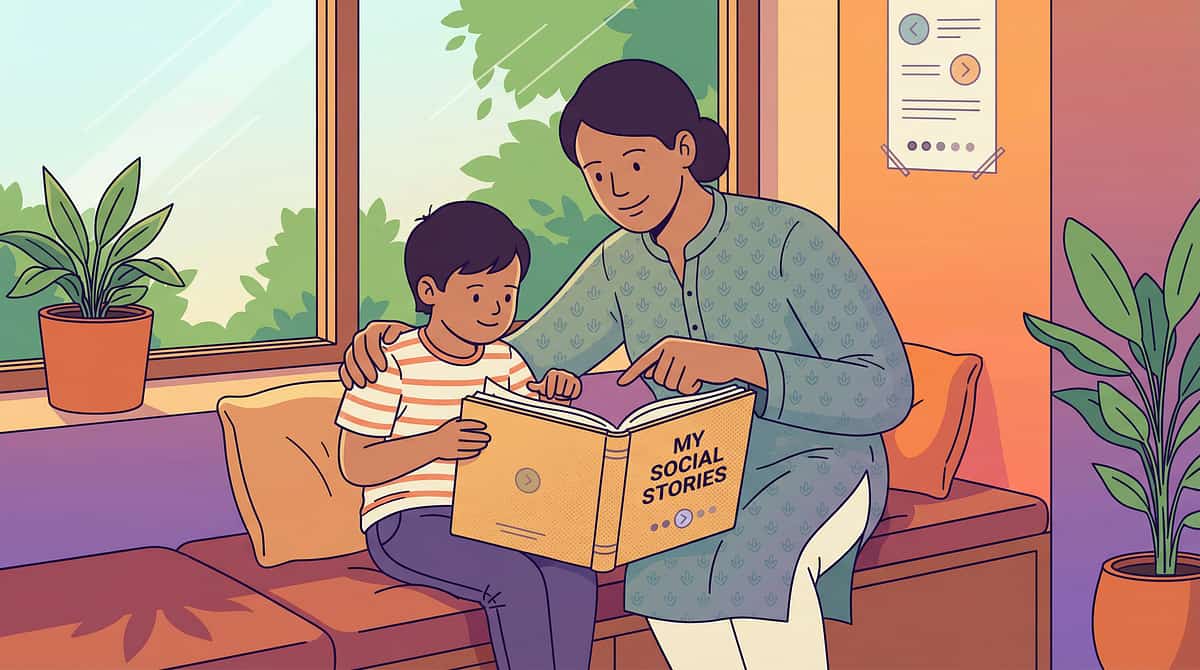
Material 2: Social Stories for Specific Places
What It Is
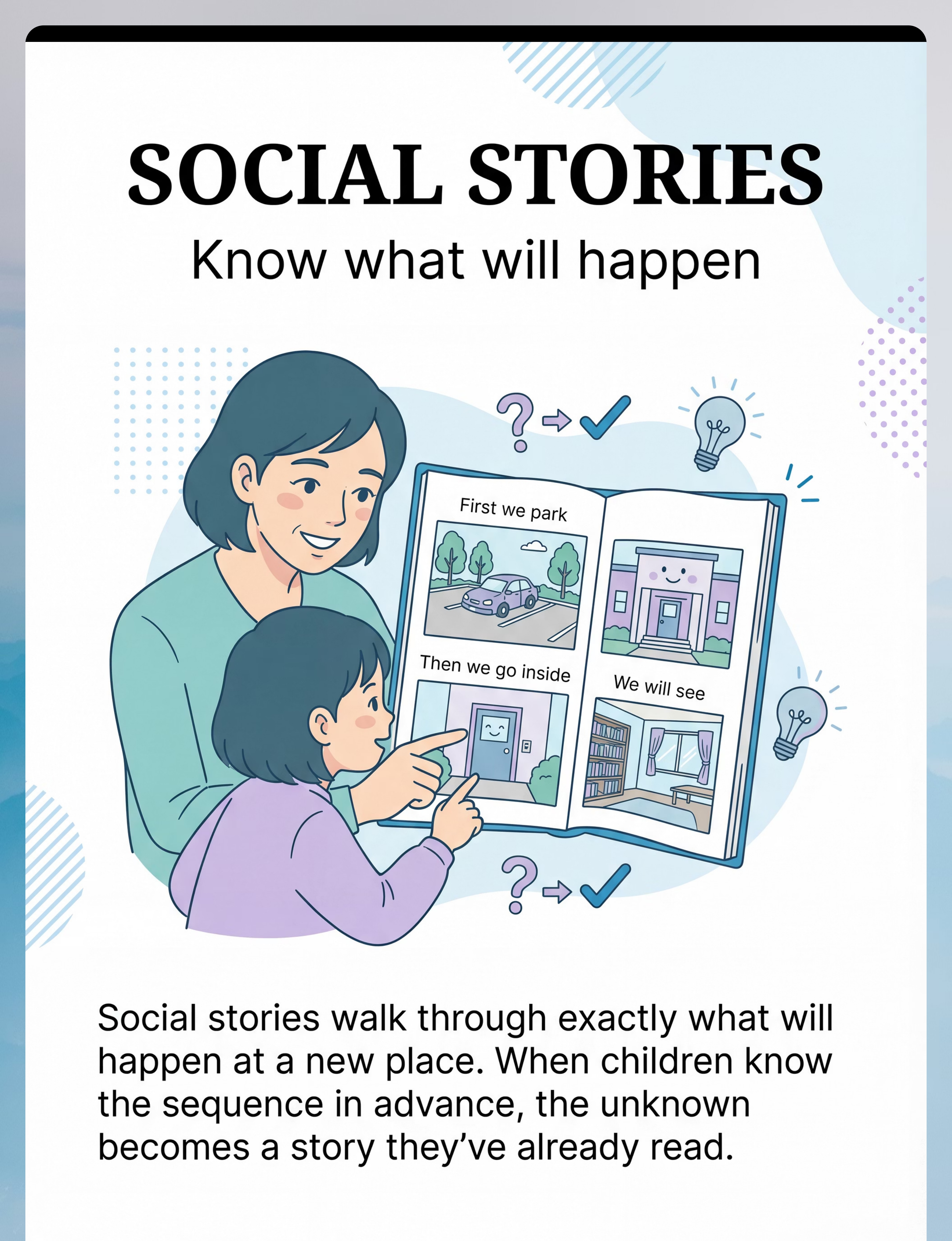
A short, personalised narrative that walks through the complete experience of a specific new place — what will happen, in what order, what to see, hear, and do, and what to do if scared. The anxious brain generates hundreds of "What if?" questions about the unknown. The Social Story answers them all in advance.
Canon Category
Visual Narratives / Social Story Materials
DIY Option
Hand-written or printed notebook with drawn images or phone photos. Read it aloud with your child daily. (₹100–300)
Purchase Option
Social story books or story-creation apps
Cost: ₹100–600
Pinnacle Recommends
Write the story yourself using photos of the actual destination. A story about this restaurant, this clinic, this park — not a generic "going somewhere new" story. Specificity is the therapeutic ingredient.
Material 3 of 9
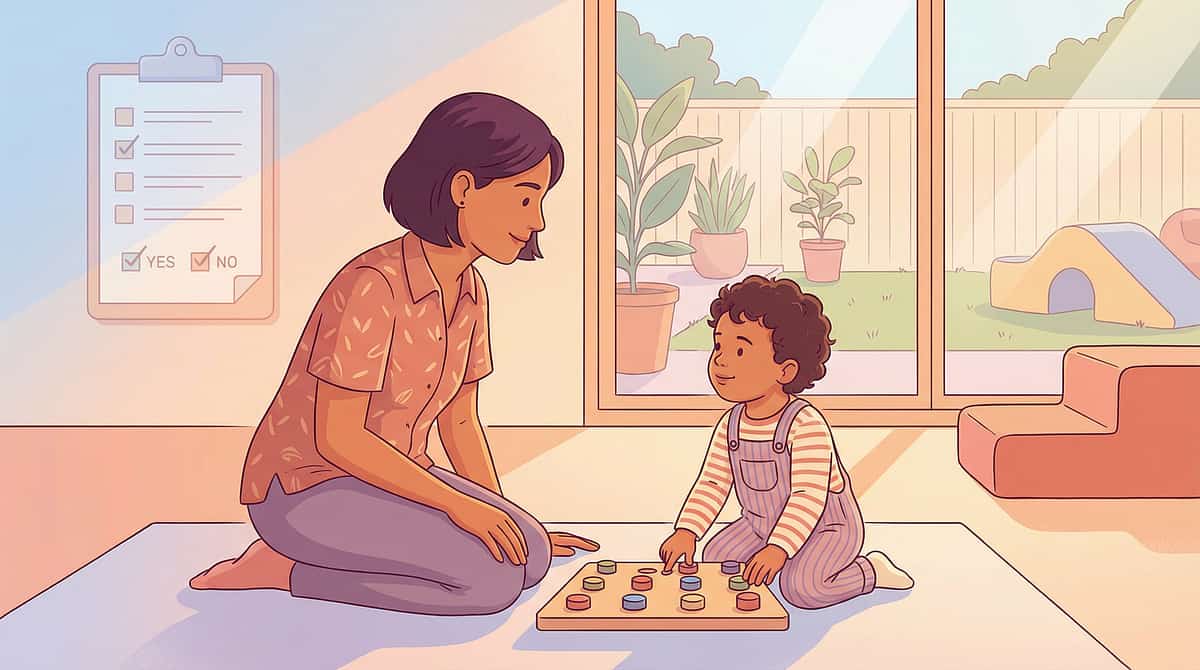
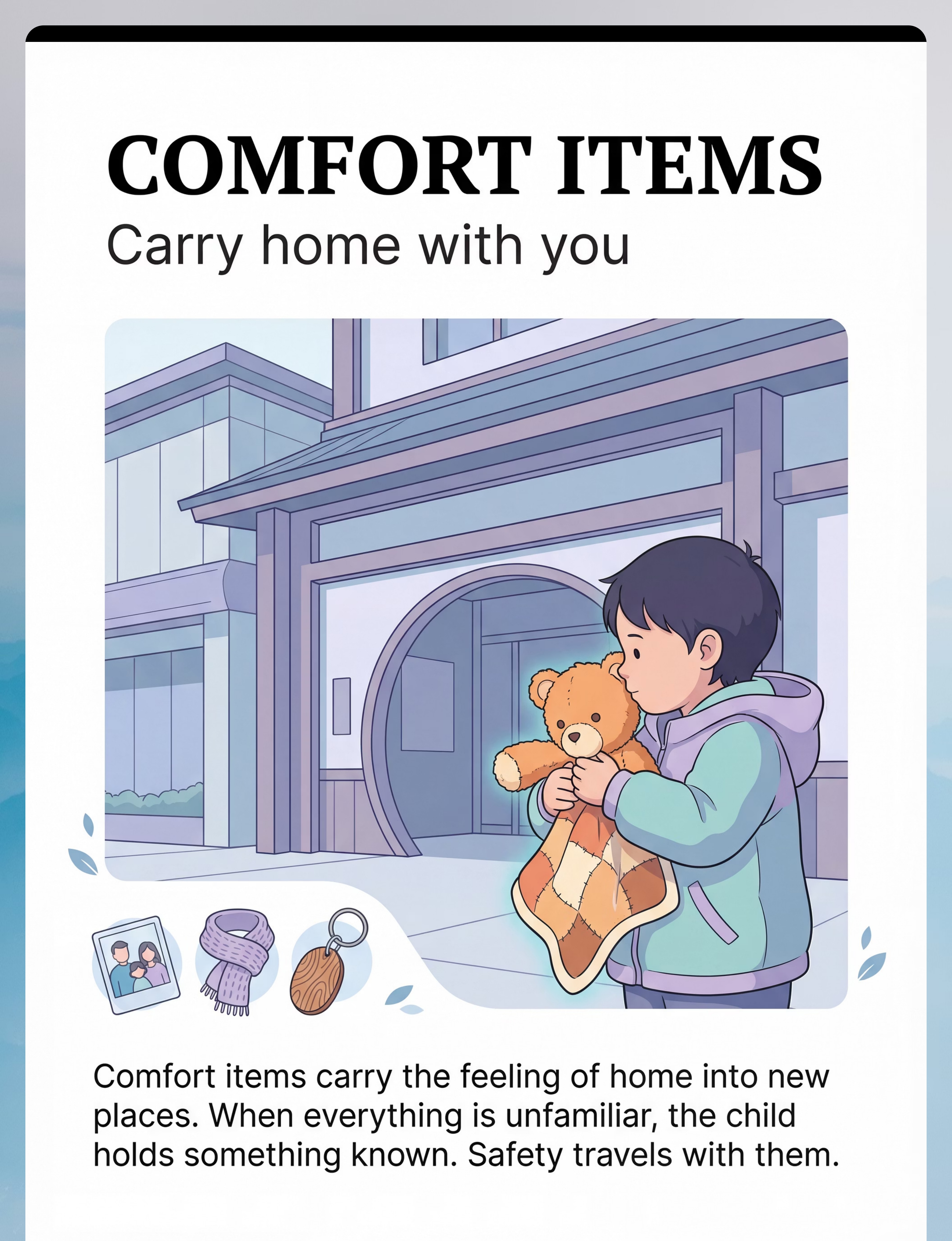
Material 3: Comfort Items & Transitional Objects
What It Is
A familiar, preferred object the child carries into new environments as a portable "anchor" of safety. The transitional object carries the sensory and emotional signature of home and security into an unknown space — lowering the threat threshold simply by its presence.
Canon Category
Transition Objects / Comfort Items ✅ACTIVE PRODUCT
DIY Option
Use the child's existing preferred comfort item — a worn piece of clothing, a small laminated family photo in a plastic sleeve, or a familiar textured object. Cost: ₹0
Purchase Option
Product #118 — ₹425
Cost range: ₹0–800
Critical Safety Note
All comfort items should be secured with a clip or lanyard. Losing a comfort item during an anxious new-place experience can be devastating and set back progress significantly. Never leave home without it clipped on.

Material 4 of 9
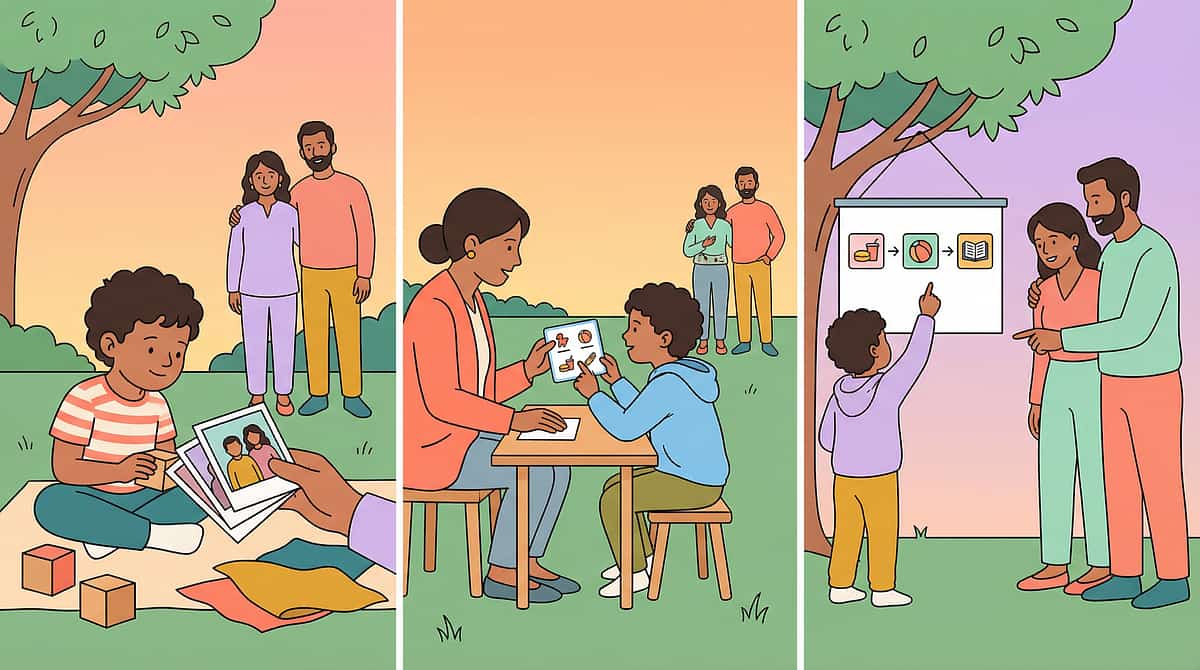
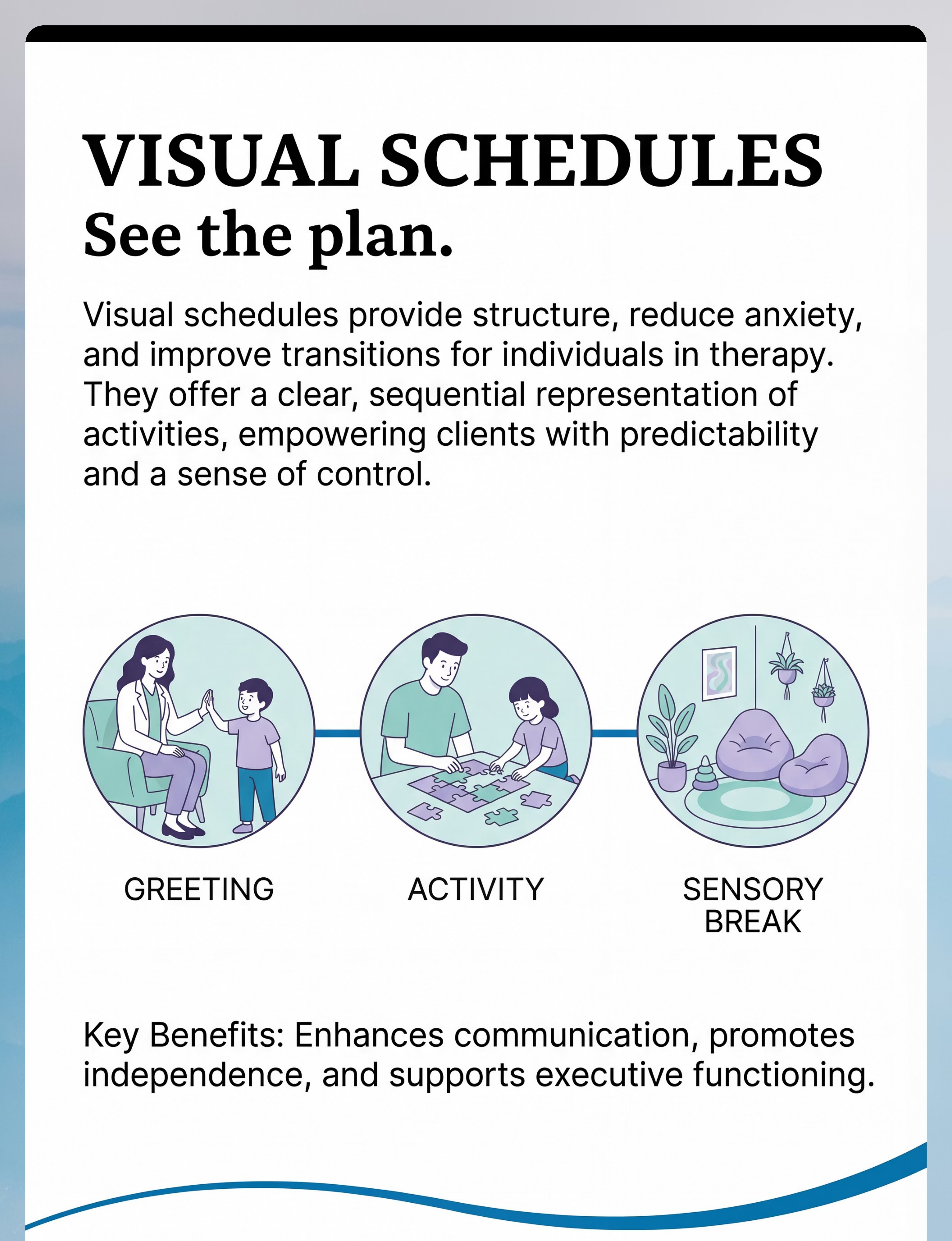
Material 4: Visual Schedules with Home Endpoint
What It Is
A portable, visual strip showing the sequence of today's outing — each step represented by a photograph or simple drawing — ending with a clear picture of "home" or the child's safe, familiar place. The schedule externalises predictability, answering the anxious child's most persistent question: "When will this be over and when do I get to go back?"
Canon Category
Visual Schedules / Structure Tools
DIY Option
Printed photo strip + velcro dots from a craft store. Draw boxes on paper with a "Home" picture at the end. (₹0–150)
Purchase Option
First-Then boards, portable schedule strips
Cost: ₹150–600
Pinnacle Recommends
Always include "home" or "safe place" as the final image. This single design choice — the visible endpoint — reduces anticipatory anxiety more than almost any other modification to the schedule. The child needs to see the finish line.
Material 5 of 9
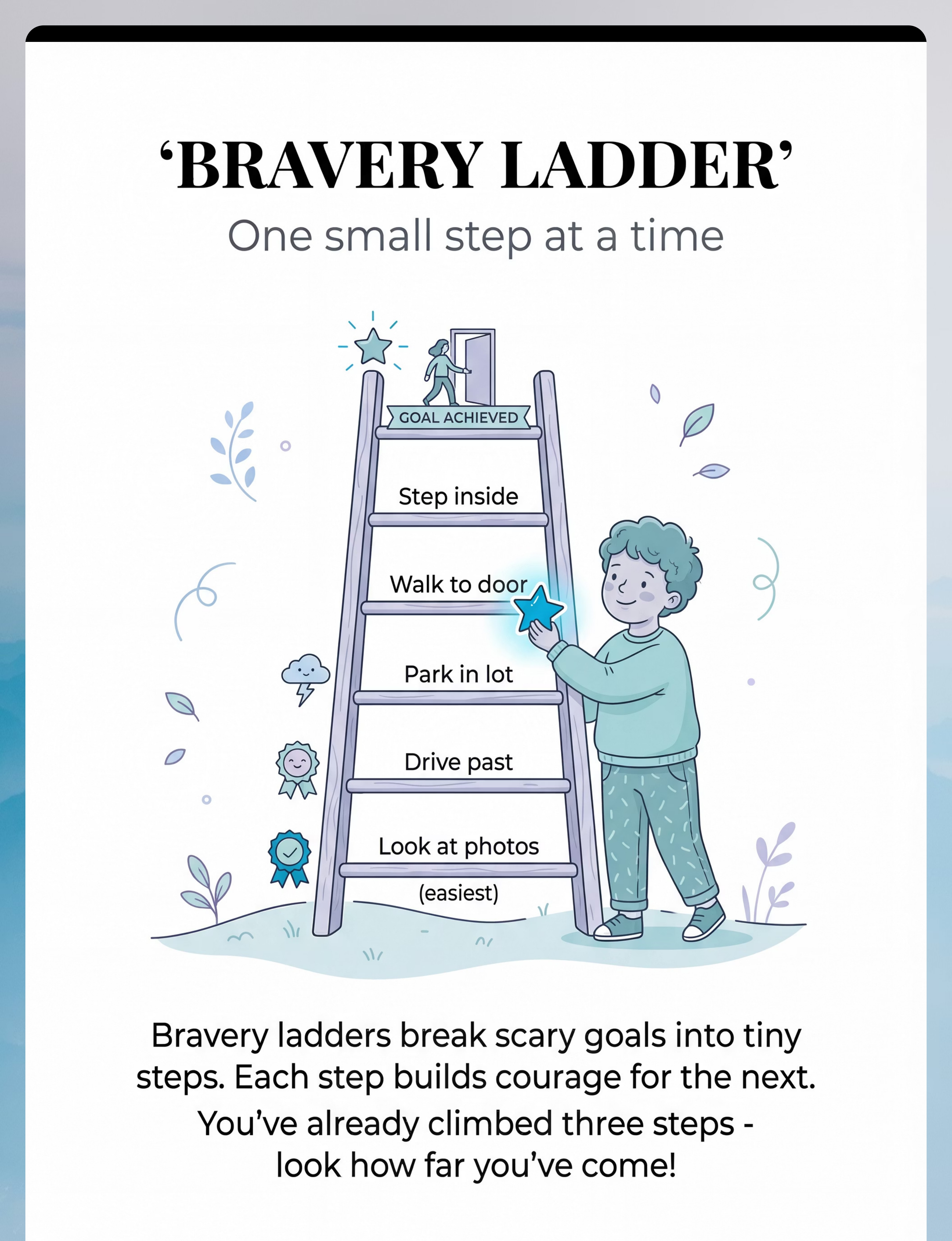
Material 5: Bravery Ladder & Graduated Exposure Chart
What It Is
A visual chart showing the graduated steps from "easiest possible engagement with the feared place" to "full activity participation." Each rung represents one achievable exposure step. The child earns recognition — and tokens — for each rung attempted, not just for reaching the top. The ladder makes progress visible and makes the goal feel achievable.
Canon Category
Progress Tracking / Exposure Charts
DIY Option
Draw a ladder on paper or whiteboard with stickers as markers. (₹0–100)
Purchase Option
Printable ladder charts + sticker sets
Cost: ₹0–400
Pinnacle Recommends
Draw it with your child. Their input on the steps makes it theirs. A child who helped design their own ladder is far more committed to climbing it. Their perception of what is easy vs. hard is clinical data — honour it.
Material 6 of 9
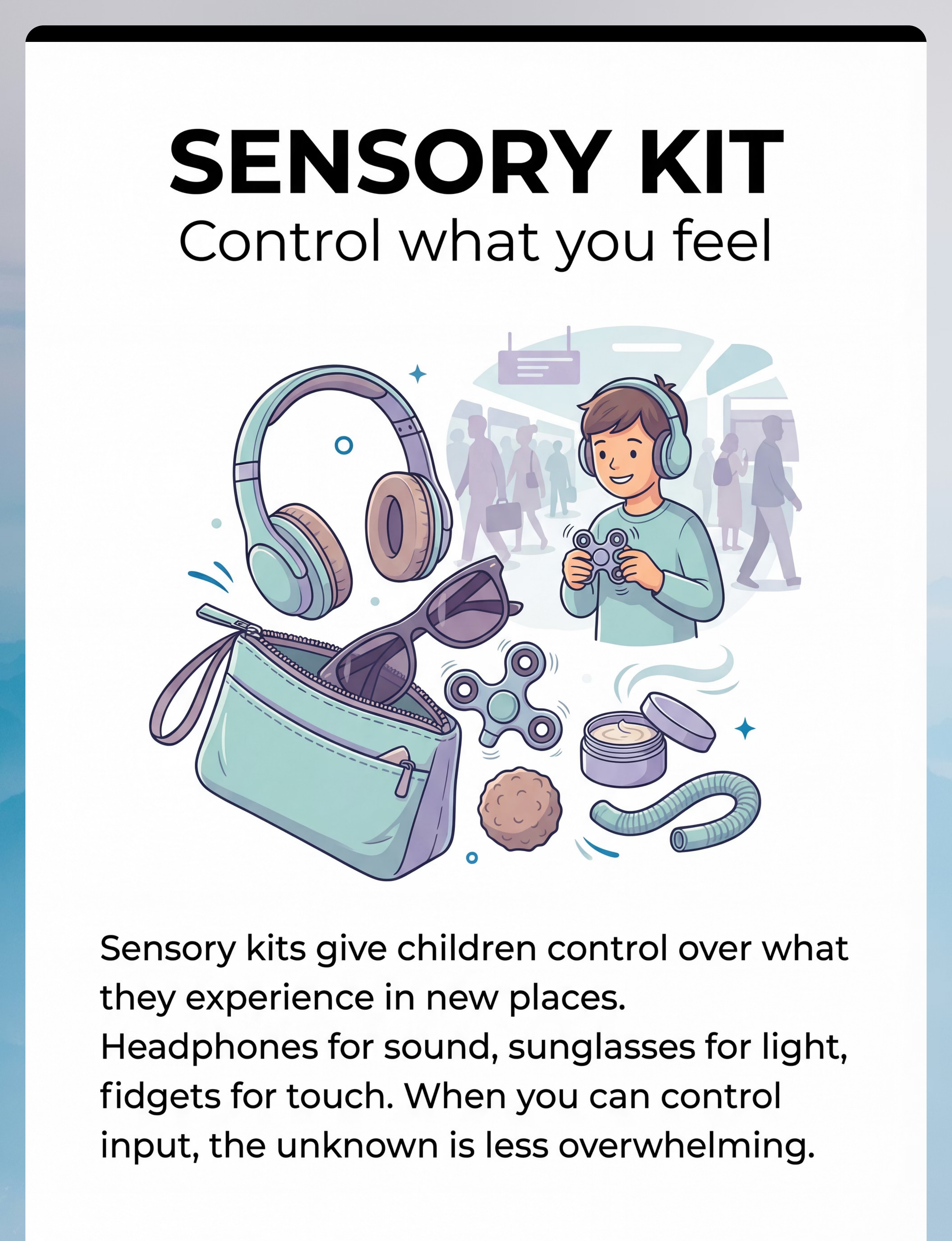
Material 6: Sensory Support Kit for New Environments
What It Is
A small, portable bag of sensory regulation tools the child carries into new environments. Novel environments are unpredictably sensory — different sounds, lighting, smells, textures, and spatial acoustics. The Sensory Kit provides the child with tools to modulate their sensory experience rather than be overwhelmed by it.
Canon Category
Sensory Regulation Tools
DIY Option
Compile household items into a small pouch: noise-reducing headphones, sunglasses, fidget tool, scent container, chewy item. (₹0–200)
Purchase Option
Cost: ₹500–2,500 (full kit)
Pinnacle Recommends
Headphones are the single highest-impact item for sensory unpredictability in new environments. Sound is the most difficult sense to modulate without tools. A child who can control their auditory input is a child who can stay in a new place longer.
Safety Note
Ensure proper fit for the child's head size. Loose headphones provide no benefit. Test all kit items in calm, familiar settings before relying on them in new ones.
Material 7 of 9
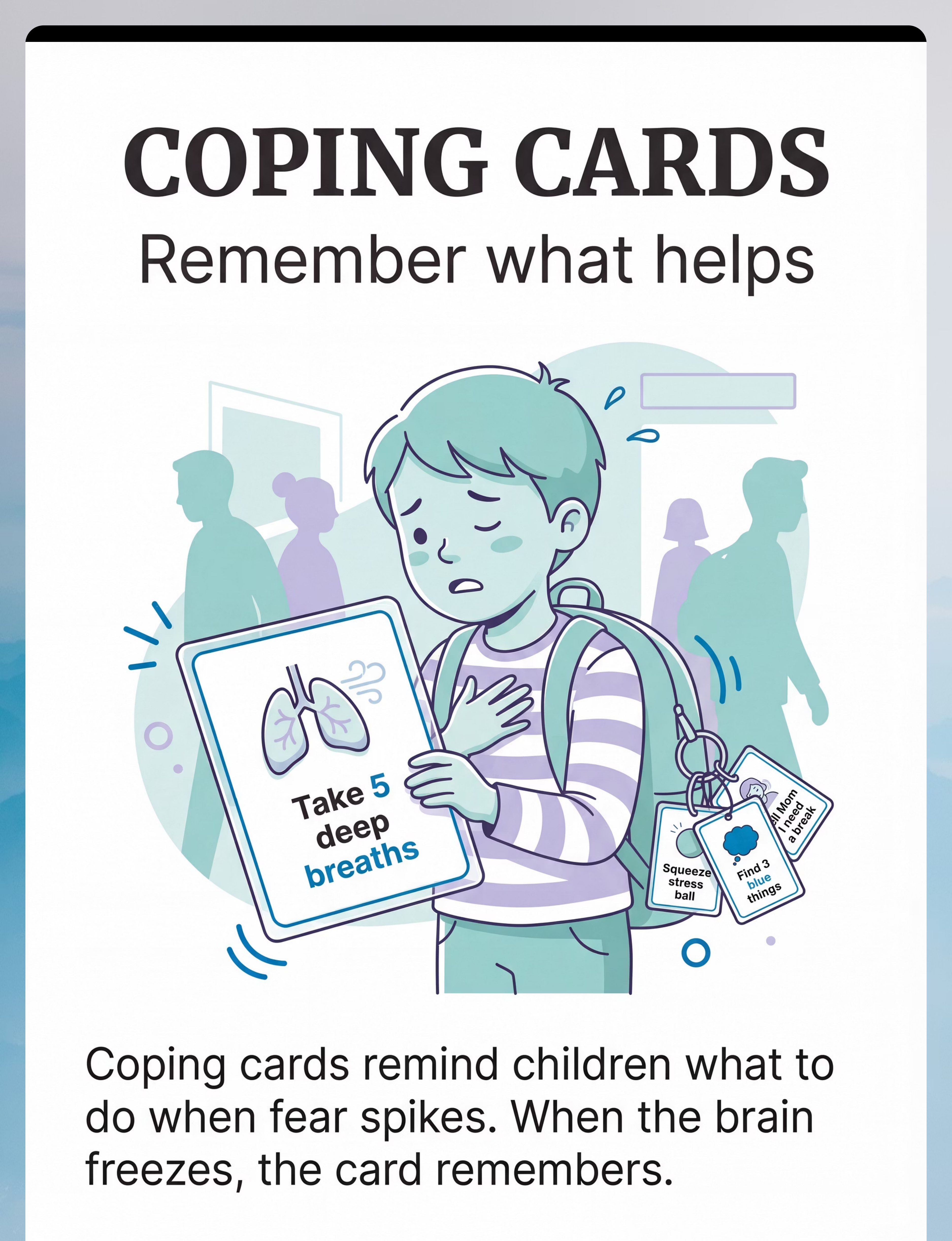
Material 7: Coping Cards & Anxiety Strategy Reminders
What It Is
Small, portable cards — in the child's pocket or on a lanyard — containing visual reminders of the coping strategies the child has practised at home. In the moment of peak anxiety, the reasoning brain is offline. The coping card externalises the strategy so the child doesn't have to remember it under pressure. It is a cognitive prosthetic for the anxious moment.
Canon Category
Coping Tools / Self-Regulation Aids
DIY Option
Index cards + lamination. Write the child's own words and strategies. (₹50–150)
Purchase Option
Cost: ₹50–300
Pinnacle Recommends
Make them WITH the child. Their words, their chosen strategies, their handwriting or drawings on the card. A child who helped create their coping card is more likely to reach for it when anxious. The card becomes an extension of their own agency — not a tool imposed by an adult.

Material 8 of 9
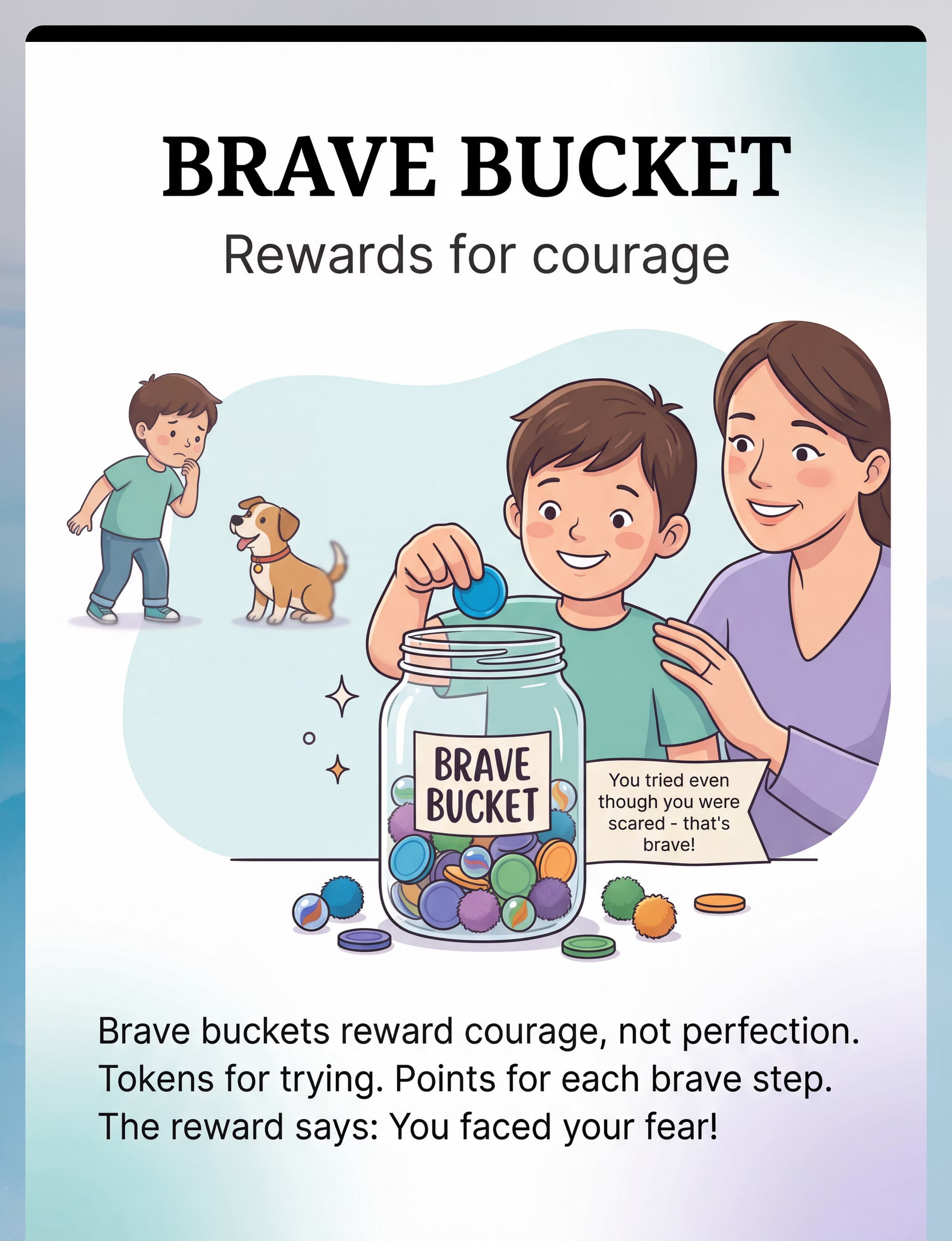
Material 8: Brave Bucket / Reward System
What It Is
A visible, tangible token economy system that rewards courage — not perfection, not completion, not the absence of fear. The child earns a token for every brave attempt: looking at photos, reading the Social Story, getting in the car, walking to the door, stepping inside for any duration. The filled bucket earns an agreed-upon reward. The system makes courage visible and accumulating.
Canon Category
Reinforcement Menus ✅ACTIVE PRODUCT
DIY Option
Clear jar + pom poms, marbles, or dried beans as tokens. Reward = 10 extra minutes of preferred activity. (₹0–150)
Purchase Option
Product #803 — ₹589
Cost range: ₹0–600
Critical Rule
NEVER remove tokens for failed attempts, fear responses, or distress. The system rewards courage. Fear is not punished. Avoidance is not rewarded. These are the only two rules.
Material 9 of 9
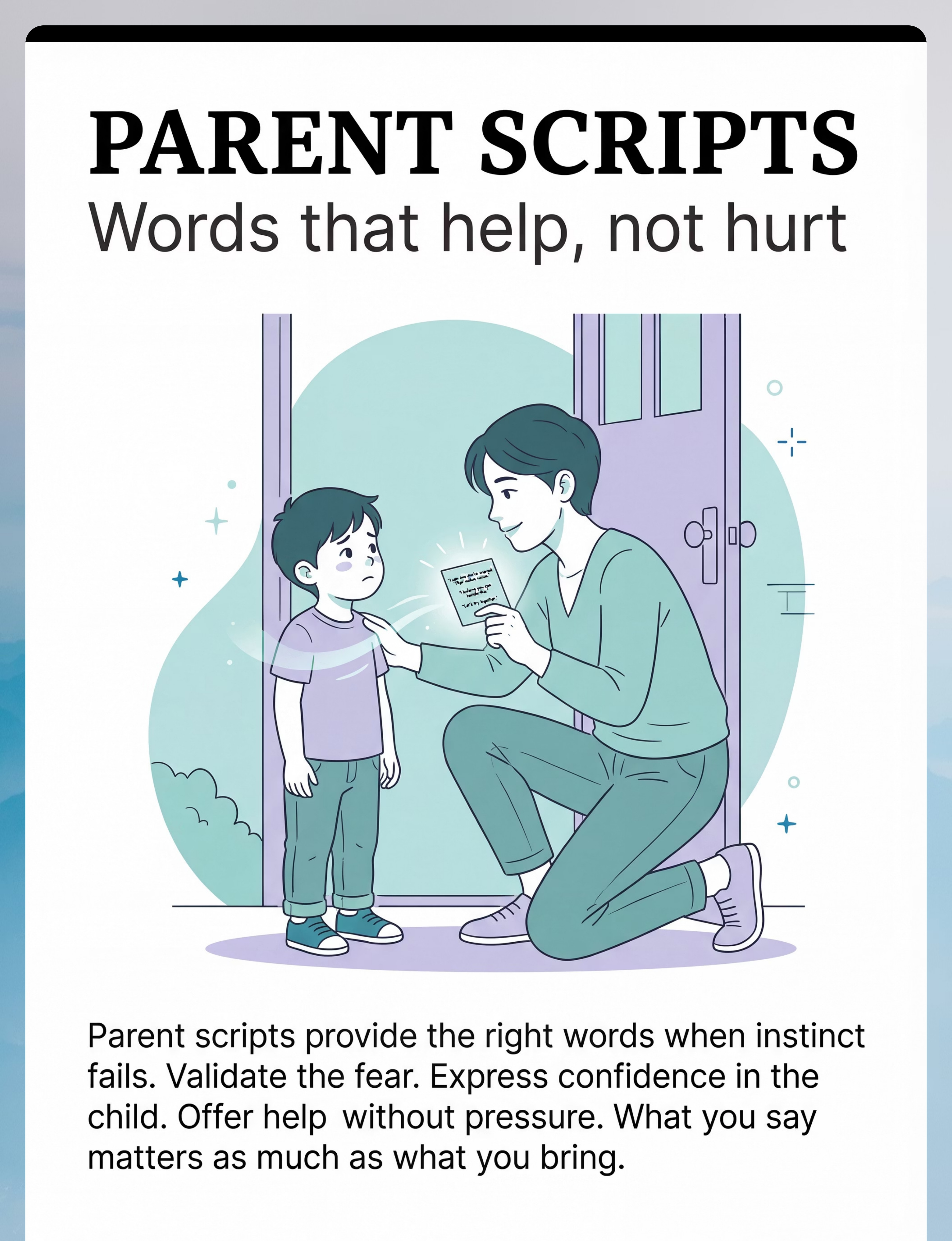
Material 9: Parent Scripts & Confidence-Building Language Cards
What It Is
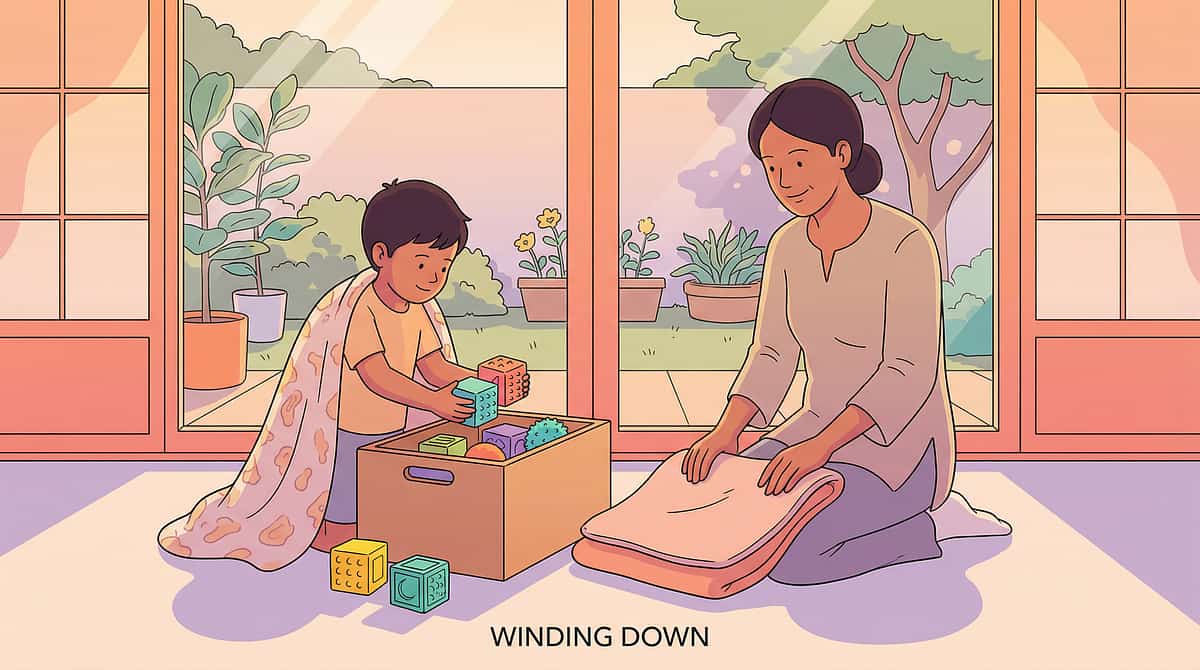
A small set of pre-prepared phrases for the parent to use in anxious moments — in the car, in the car park, at the entrance, during the attempt, and after the session. In the heat of a child's distress, parents instinctively reach for the wrong words ("It's fine!", "There's nothing to be scared of!"). The Parent Script card puts the right words in reach before those instincts take over.
Canon Category
Parent Coaching Tools / Language Guides
DIY Option
Handwritten cards with 5 key phrases. Keep inside your wallet. (₹0–100)
Purchase Option
Cost: ₹50–200
Pinnacle Recommends
Write your 5 key phrases on a sticky note inside your wallet. Review them before getting out of the car. Your regulated voice and accurate language is one of the most powerful therapeutic tools in this entire protocol. The script keeps that tool sharp under pressure.

Chapter 3 Continued
DIY & Substitutes
Every Family Can Execute This Technique Today — Regardless of Budget
The WHO/UNICEF principle: equity-first intervention design
Material | Buy This | Make This (₹0) | |
Photo Preview Book | Printed photo album + lamination | Phone photos shown on screen; print at local store ₹10/page | |
Social Story | Pre-made social story books | Write in a notebook with drawn images or phone photos; read aloud | |
Comfort Item | Stuffed animal, textured toy | Child's existing favourite: worn clothing, family photo in plastic sleeve | |
Visual Schedule | First-Then board | Draw boxes on paper with Home picture at end; velcro dots from craft store | |
Bravery Ladder | Printed chart + sticker book | Draw a ladder on paper; stars made from sticky notes | |
Sensory Kit | Noise-reducing headphones | Rolled cotton wool in ears (temporary); existing sunglasses; familiar-smelling handkerchief | |
Coping Cards | Laminated card sets | Write phrases on folded paper; keep in child's pocket | |
Brave Bucket | Token jar with reinforcement items | Any clear bottle + dried beans or pasta as tokens; reward = 10 extra minutes of preferred activity | |
Parent Scripts | Printed language guide | Write your 5 key phrases on a sticky note inside your wallet |
Why Substitutes Work: Each substitute preserves the active therapeutic ingredient — novelty reduction (photo previews), narrative predictability (social stories), security anchoring (comfort items), visual predictability (schedules), graduated approach (bravery ladders), sensory control (improvised tools), cognitive prompting (coping cards), reinforcement of courage (any consistent reward), and calm language modelling (parent scripts). The active ingredient is the intervention. The material is the vehicle.
A parent with a smartphone, a pen, and a jar can execute all nine materials in this protocol. The zero-cost version — implemented consistently with warmth and patience — is vastly more effective than waiting for the "right" materials.

Chapter 4
Safety First
Read This Before Your First Session. Every Time.
🔴 STOP — Do Not Proceed If:
- Child had a severe panic attack (vomiting, fainting, loss of bowel/bladder control) in the last 24 hours in a new environment
- Suspected trauma underlying the fear — exposure before trauma processing can worsen outcomes
- Child is currently ill, sleep-deprived, or in a heightened stress state
- Child is in active meltdown or pre-meltdown — never begin exposure during dysregulation
- You (the parent) are highly anxious about this outing — your regulated state is prerequisite
🟡 MODIFY — Proceed with Caution If:
- Child showed significant distress at mention of today's destination — increase preparation, do not reduce
- Child did not sleep well — use a lower rung on the Bravery Ladder than planned
- Target environment is unusually noisy or crowded for a first exposure — choose a quieter time
- Child has a cold or mild discomfort — sensory systems are more sensitised; lower the challenge level
🟢 GO — Proceed Fully If:
- Child is fed, rested, regulated
- Preparation materials reviewed in past 24 hours
- Sensory Kit is packed and tested
- Bravery Ladder step for today is clearly decided
- You (the parent) feel calm and confident
Stop immediately and return to the car if: Child's distress escalates to physical symptoms (vomiting, hyperventilation, dissociation, or complete behavioural shutdown). This is not failure — it is data. The next rung on the ladder is lower than this one.
Environment Setup
Preparation Happens at Home. The Setup IS the Intervention.
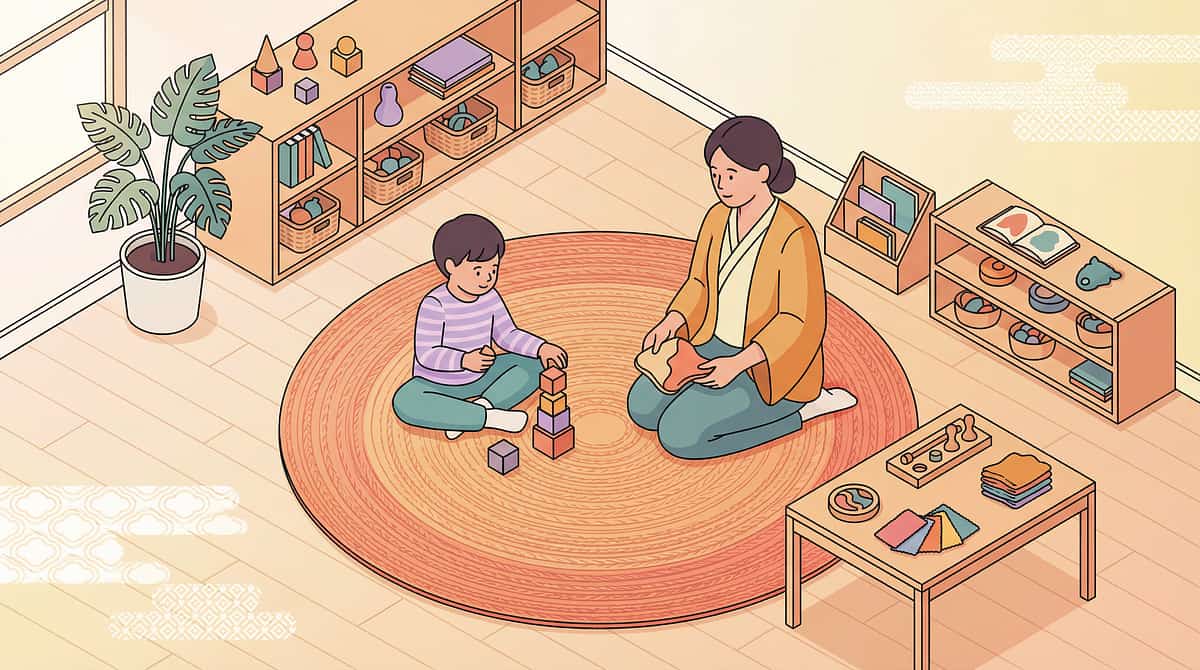
Home Preparation Setup
Child Position
Comfortable seat (bean bag, cushion, or floor mat) — familiar, preferred spot.
Parent Position
Beside and slightly behind the child — not across. This is collaborative, not confrontational.
Photo Book
On child's lap or table — within reach. Child controls page-turning.
Visual Schedule
Posted at child's eye height on wall or held on a clipboard.
Environment
Remove screens, background noise, distracting toys. Warm lighting, not fluorescent. 20–30 quiet minutes minimum. Do not rush.
The Outing Bag — Always Packed Before Leaving
- Comfort item (secured with clip)
- Visual Schedule (today's specific outing)
- Coping Cards (in child's pocket or on lanyard)
- Sensory Kit (headphones, sunglasses, fidget, scent, chewy)
- Parent Scripts (in your pocket)
- Brave Bucket tokens to earn (in a small container)
- Today's target: which Bravery Ladder step?
Environmental Intelligence — Know Before You Go
- What time of day is least crowded?
- Where is the nearest exit?
- Where are the bathrooms?
- Is there a quiet corner or low-stimulation area?
- Can you call ahead to alert the venue?
Calling ahead to say "My child has anxiety about new places — is there a quieter time to visit?" is a legitimate, empowering strategy. Most businesses accommodate.

Readiness Check
Run This 60-Second Check Before Every Outing Attempt
The best session is one that starts right.
Physical Readiness
- Child is fed (hunger amplifies anxiety — never attempt on an empty stomach)
- Child is not tired (fatigue lowers distress tolerance)
- No illness, pain, or physical discomfort
Emotional / Behavioural Readiness
- Child is in a calm baseline state
- Child has been informed of today's plan using the Social Story (not a surprise)
- Child knows today's Bravery Ladder target step and has agreed to try it
- Child's Brave Bucket tokens are visible and motivating
Preparation Readiness
- Photo Preview Book reviewed in last 24 hours
- Social Story reviewed this morning
- Outing bag packed with all tools
- Parent is calm, unrushed, genuinely confident
Decision Gate
✅All Green → Full Protocol. Proceed as planned.
🟡Some Amber → Modify Protocol:
- Lower today's Bravery Ladder target by one step
- Shorten planned duration at the new location
- Add an extra review of Photo Book/Social Story
- Increase sensory support (headphones on before entering)
🔴Multiple Red → Postpone:
- Today is not the day. This is information, not failure.
- Do a calming activity together at home instead.
- Do an extra preparation session. Tomorrow, with a lower step target.
Your regulated state is part of the readiness check. If you are anxious, rushed, or dreading this outing, your child will feel it. Take 3 slow breaths before getting in the car. Read your Parent Script card. You are the most important sensory regulator your child has.

Chapter 5
The How-To Protocol
Step 1: Make the Unknown Visible Before You Go There
Timing: Daily for 3–7 days before the outing | Duration: 5–15 minutes
"Hey [child's name], I have something to show you. We're going to [place name] on [day]. I found some pictures so we can see what it looks like. Want to look with me?"
If child resists: "It's okay, you can just peek. You don't have to look long."
If child shows interest: "You found the bathroom! Now you'll know exactly where it is when we get there."
How to Execute
Sit Beside the Child
Not across from them — this is collaborative, not confrontational.
Let Child Control the Pace
Open the Photo Book or slideshow. Do not force speed. Narrate calmly: "This is the outside. This is where we park. This is the entrance."
Point Out Landmarks
"See? There's the bathroom. The seating area is here. There's an exit right there."
Answer Every Question
If child asks questions: answer every single one. Questions are engagement, not resistance.
Close with Certainty
"Now we know what it looks like. It won't be a surprise when we get there."
Child Acceptance Cues
- Leaning toward screen/book → engagement, keep going
- Asking questions → high engagement, answer warmly
- Touching the screen/photos → excellent, let them explore
- Quiet, neutral expression → toleration, continue at their pace
Resistance Response
Child refuses to look: "That's okay. The book will be here if you change your mind." Leave it accessible. Try again tomorrow. Never force viewing.
Child becomes distressed by photos: Scale back — just one photo per session. Start with the least threatening (exterior/car park), not the most (crowded interior).

Step 2: Give the Unknown a Narrative Before You Live It
Timing: Daily for 3–5 days before the outing | Duration: 5–10 minutes
What a Social Story Does
A Social Story walks through the complete experience of a specific new place — what will happen, in what order, what to see, hear, and do, and what to do if scared. The anxious brain generates hundreds of "What if?" questions about the unknown. The Social Story answers them all in advance.
Template Structure
"Today, I am going to [place]."
"It looks like [description from Photo Book]."
"When we arrive, we will [first action]."
"Inside, I will see [things]. I might hear [sounds]. I might smell [smells]."
"If I feel scared, I can [coping strategy 1] or [coping strategy 2]."
"After [place], we will go home."
"Going to [place] is brave. I am brave."
"Let's read your story about [place name]. I wrote it specially for you so you'd know exactly what's going to happen."
Read slowly, pointing to photos. Pause after each page. Let child ask questions or comment.
"Any questions? What are you wondering about?"
Reinforcement Cue
After each Social Story reading session: "That was great reading. You're getting ready to be so brave."
Even if the child showed no visible response — reading it counts. The neural preparation is happening beneath the surface.
Carol Gray Social Stories™ research: Structured narratives reduce anxiety and increase predictability for children with autism. NCAEP 2020: Social Stories classified as EBP for ASD.
Step 3 of 6
Step 3: Choose One Step. Only One. And Attempt Only That.
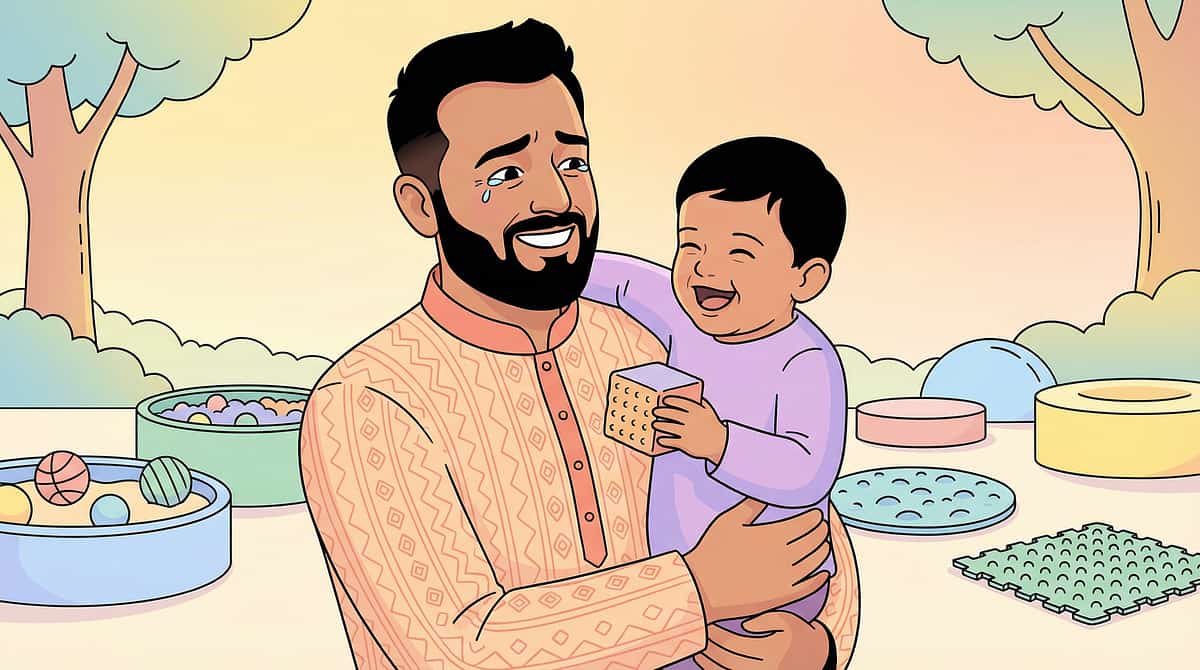
This IS the therapeutic action. One rung. Celebrate it like a summit.
Rung 1
Look at photos of the place at home ← Start here
Rung 2–3
Read Social Story once without distress → Drive past the location without stopping
Rung 4–5
Park in the lot, stay in the car 2 min → Get out of the car and stand in the car park, then return
Rung 6–7
Walk to entrance, touch the door, return to car → Step inside for 30 seconds, then exit
Rung 8–9
Go inside, find one specific thing (bathroom sign, cashier), leave → Stay for 5 minutes with all sensory tools
Rung 10 — Goal
Stay for the full planned activity 🏆
✅ Ideal Response
Child attempts the step with noticeable anxiety but does not retreat. Uses at least one coping tool. Accepts token at the end.
✔️ Acceptable Response
Child attempts partially — walks toward but doesn't enter. Partial attempt IS a brave step. Token given.
⚠️ Exit Gracefully
Child's distress escalates beyond their window of tolerance. Exit calmly and immediately. Attempt was still brave. Token still given.
You are not trying to eliminate fear. You are building evidence that your child can handle fear. Every attempt — however incomplete — is that evidence.
Step 4 of 6
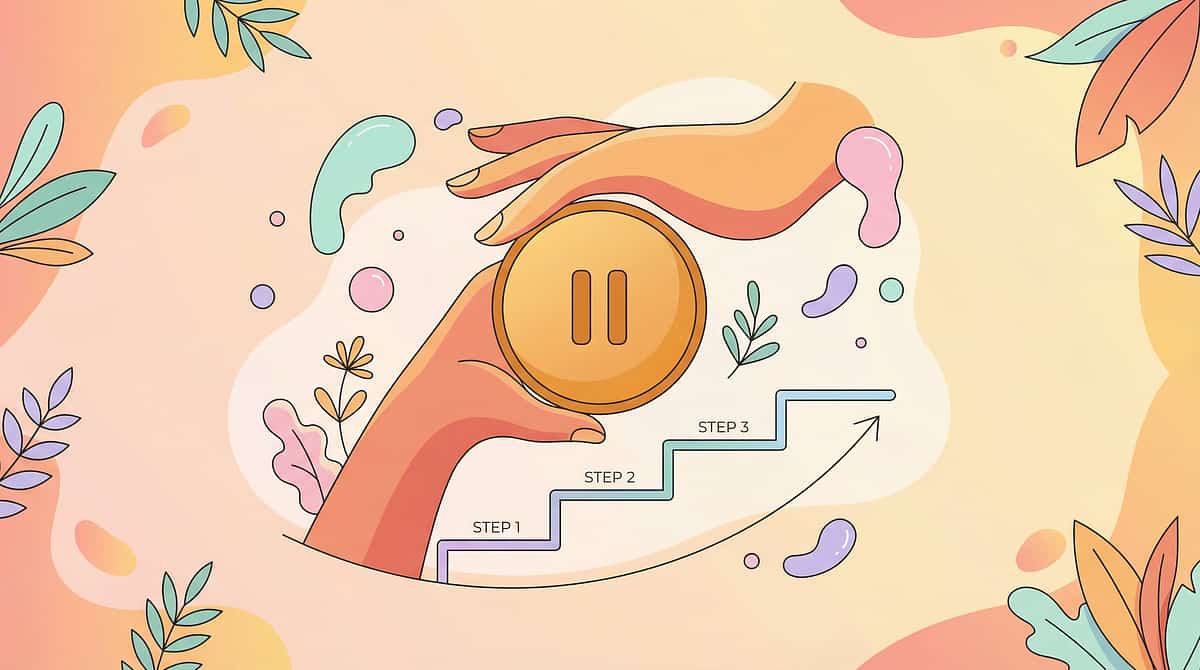
Step 4: Stay at Each Rung Until It Becomes Ordinary
Comfort — not just completion — is the criterion for progressing.
Repetition Guidance
- Repeat the same Bravery Ladder rung until the child's anxiety rating drops to low (e.g., 2/10 rather than 8/10)
- This may take 1 attempt for easy rungs; 5–10 attempts for harder ones — both are normal
- A rung is "complete" when the child does it with mild discomfort rather than significant distress
- Never rush up the ladder — consolidation at each rung accelerates progress at the next
Satiation Indicators — When Child Has Had Enough Today
- Sensory kit items being put away by child without prompting
- Spontaneous "Can we go now?" — honour this, the window is closing
- Body language: slouching, eye contact dropping, hands fidgeting more
- Verbal: shorter responses, monosyllabic answers
Variation Options
Vary the Destination
Once rung 6 is achieved at the grocery store, practise rung 6 at a library, restaurant, or clinic. Generalising a rung across locations accelerates overall flexibility.
Vary the Sensory Kit
As tolerance builds, experiment with removing one sensory support at a time. Tracks real-world generalisation.
Vary Preparation Intensity
For new places similar to ones already practised, reduce Photo Book preview from 7 days to 3 days.
Vary the Duration
Once 5 minutes is comfortable, extend to 8, then 12, then 20. Duration tolerance is its own graduation.
Step 5 of 6
Step 5: Celebrate Courage. Not Perfection. Courage.
Brave Bucket Protocol
When to give a token: Within 30 seconds of any brave attempt — including partial ones, including attempts that ended in retreat.
What earns a token:
- Looked at the Photo Book without distress ✅
- Read the Social Story all the way through ✅
- Got in the car knowing where we were going ✅
- Walked to the car park ✅
- Touched the building door ✅
- Stepped inside for any duration ✅
- Used a coping card or sensory tool ✅
- Asked for help instead of shutting down ✅
What does NOT determine token earning: Whether the full plan was completed. Whether distress was visible. Whether the attempt was "good enough."
"I saw how scared you were, and you tried anyway. That is what brave looks like."
"You used your headphones. That was so smart — you knew what you needed."
"You didn't go all the way in today. That's okay. You walked to the door. That's three steps higher than last week."
"Token in the bucket. Every one of these is proof of your courage."
Reinforcement Menu — Filled Bucket Rewards
- Extra screen time (15–30 minutes)
- Choice of preferred activity
- Small toy or sensory item
- Special outing to a FAMILIAR favourite place
- Cook or make something together
ABA Reinforcement: Immediate, specific reinforcement increases approach behaviour. Token economy systems show strong evidence in autism intervention.
Step 6 of 6
Step 6: Every Brave Attempt Deserves a Calm Return
The cool-down prevents post-session dysregulation. It also signals: the hard part is over.
In-Environment Transition (Before Leaving)
"We're going to leave in 2 more minutes. What's one thing you noticed about this place?" — Reframes the experience from threat to observation. Then: "Ready? Let's go. You did something really brave today."
In-Car Cool-Down (5–10 minutes)
Comfort item available immediately. No debrief questions for 3–5 minutes — give quiet. Sensory kit items available. Preferred music if helpful. After 5 minutes: "How was that? Scale of 1–10 hard?"
At-Home Cool-Down (10–15 minutes after return)
Preferred calming activity: screen time, quiet play, snack. Token deposit into Brave Bucket. Brief affirmation is enough — no extended processing required. Capture data (next step) in first 10 minutes at home.
"All done for today. Let's go home. You were brave."
Simple. Factual. Affirming. Not effusive or extended — that can feel destabilising for anxious children.
NCAEP 2020: Visual timers and transition supports are evidence-based practices for autism. Transitions are highest-risk periods for behavioural dysregulation.
Data & Tracking
60 Seconds of Data Now. Hours of Clarity Later.
What to Record — 3 Fields Only
Field 1: Today's Rung
Which Bravery Ladder rung was attempted today?
Field 2: Distress Level
At the peak moment, how distressed was the child? Scale: 1 (barely noticeable) → 10 (severe distress requiring immediate exit)
Field 3: Outcome
✅ Full attempt | ⚡ Partial attempt | 🔄 Postponed | ⚠️ Session ended early
What the Data Will Show You
When you track across sessions, you will see:
- Distress ratings dropping over time at the same rung (habituation evidence)
- Rung numbers increasing (progression evidence)
- Partial attempts becoming full attempts (capability evidence)
This is what readiness looks like in data form. It doesn't feel like progress in the moment. The data shows it.
ABA Data Collection Standards: Continuous and discontinuous measurement as standard for behaviour-analytic intervention tracking. Cooper, Heron & Heward, Applied Behaviour Analysis, 8th ed.
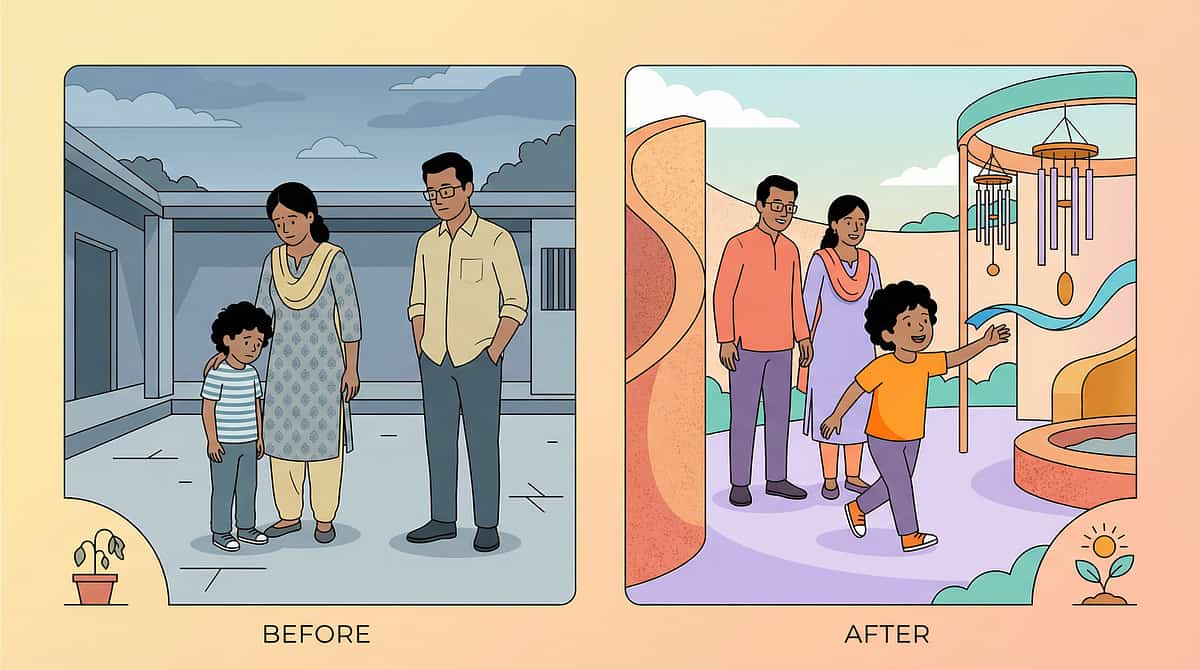
Troubleshooting
Most Sessions Don't Go Perfectly. This Is Not Failure. This Is Data.
🚗 Child refused to get in the car
Why: Anticipatory anxiety peaked before departure — the feared event triggered the alarm at the planning stage.
Fix: Back the step down. Don't announce the destination — just say "we're going for a drive." Drive past only. No parking. Build car departure as its own rung if needed.
Fix: Back the step down. Don't announce the destination — just say "we're going for a drive." Drive past only. No parking. Build car departure as its own rung if needed.
🅿️ Child melted down in the car park before entering
Why: The actual environment is more threatening than the photos conveyed, OR sensory overload (bright sun, noise, crowds) occurred before entry.
Fix: Today's rung = car park. That is progress. Celebrate it. Add a sensory kit item for next time (hat for sun, headphones pre-car-park).
Fix: Today's rung = car park. That is progress. Celebrate it. Add a sensory kit item for next time (hat for sun, headphones pre-car-park).
😰 Child went in, then became inconsolable and had to be carried out
Why: The rung was too high, OR an unexpected sensory trigger caused an acute fear response.
Fix: Session was still a brave attempt. Document the trigger — this is clinical information for the Social Story. Next session: prepare that specific trigger in advance. Drop rung back to car park for next two sessions.
Fix: Session was still a brave attempt. Document the trigger — this is clinical information for the Social Story. Next session: prepare that specific trigger in advance. Drop rung back to car park for next two sessions.
😓 Child did fine but I'm exhausted and can't do this consistently
Why: This intervention requires extraordinary parental energy.
Fix: You need support. Call 9100 181 181. Ask about Pinnacle parent coaching sessions. You are not meant to do this alone. Parent sustainability is intervention sustainability.
Fix: You need support. Call 9100 181 181. Ask about Pinnacle parent coaching sessions. You are not meant to do this alone. Parent sustainability is intervention sustainability.
📉 3 weeks at the same rung — nothing is improving
Why: Insufficient approach frequency, a rung that is too large, or a comorbid factor.
Fix: Increase frequency to 3–5x per week. Add intermediate rungs. Consider professional assessment. Call Pinnacle.
Fix: Increase frequency to 3–5x per week. Add intermediate rungs. Consider professional assessment. Call Pinnacle.
🎯 Child is using the system to avoid (only doing the car park for tokens)
Why: The reward system has been captured by avoidance — child is optimising for tokens, not progress.
Fix: Restructure token earning — tokens require genuine attempt toward the NEXT rung, not repeat of mastered rungs.
Fix: Restructure token earning — tokens require genuine attempt toward the NEXT rung, not repeat of mastered rungs.
Session Abandonment Protocol: Leaving early is not failure. Leaving early with dignity — calm exit, no shame, brief affirmation — preserves the therapeutic alliance and makes next time possible. The child who leaves the car park having tried is in a far better position than the child who is forced inside and associates the place permanently with terror.

Adapt & Personalise
No Two Children Are Identical. Your Protocol Should Not Be Either.
Easier Modifications
Use on bad days or after setbacks
- Start Photo Book review earlier (10 days instead of 7)
- Add more intermediate rungs between current steps
- Reduce target duration at each rung
- Allow child to hold parent's hand throughout
- Choose quieter times at target location (early morning, weekdays)
- Add a second comfort item
- Increase reinforcement frequency (token for each sub-step)
Harder Modifications
Use only on breakthrough days when child initiates
- Reduce Photo Book preparation to 3 days
- Attempt two rungs in one session
- Remove one sensory support tool voluntarily
- Visit at peak-activity time
- Stay 50% longer than the planned duration
- Try a similar but new location without full preparation protocol
🧩 Autism Spectrum — High Need for Sameness
Take the same route every time until the rung is mastered, then vary. Use exact same Social Story wording for multiple sessions. Build in a "same spot" anchor within each new place. Allow stimming tools without comment.
🎧 Sensory Processing Differences
Sensory Kit is non-negotiable — never attempt without it. Consider sensory-friendly hours at target venues. Sensory preview in the Social Story must be explicit: sounds, smells, textures, lighting all specifically described.
💭 Anxiety Disorder (GAD)
Address catastrophic thinking explicitly in Social Story: "The loud sound is not dangerous." Coping Cards should include cognitive reappraisal strategies. Parent Scripts for this profile: more cognitive validation + curiosity prompts.
👶 Younger Children (Ages 3–5)
Shorter preparation sessions (5 minutes maximum). Single-image Social Story. Comfort item is the anchor. Rung steps even smaller (add 5 rungs between each above step). Token should be immediate and edible or sensory.
Chapter 6
Tracking Progress
Weeks 1–2: You Are Building the Foundation, Not Seeing the Roof
What "Progress" Actually Looks Like at Weeks 1–2
- Child tolerates Photo Book review without significant distress
- Child can hear Social Story read aloud without leaving the room
- Child attempts Rung 1 or 2 with manageable (not absent) distress
- Distress duration after outing attempts may be shorter than previous
- Child refers to the place by name from the Photo Book — this is neural mapping beginning
What Is NOT Progress Yet (And That's Normal)
- Full compliance with outing attempts
- Absence of fear or distress
- Enthusiasm about new places
- Transfer to other new places
These come later. Expecting them now creates premature disappointment.
Realistic Scenario for Week 2
Child looks at photos of the target restaurant every morning with minimal prompting. Has listened to the Social Story four times. Drove past the restaurant twice. Did not exit the car either time. Distress level upon seeing the restaurant from the car: 7 (down from 9 on the first drive-past). This is two weeks of meaningful progress.
Weeks 3–4: Neural Pathways Are Forming. You May Miss It If You're Looking for the Wrong Signs.
Progress Milestone
Consolidation phase — the foundation is laid, first entries are happening
Consolidation Indicators
Child anticipates Photo Book review
May bring it to you or ask for "the book about [place]"
Child references Social Story details spontaneously
"The restaurant has blue chairs" — unprompted recall is neural map formation
First successful entry, however brief
Even 30 seconds inside counts as a consolidation marker
Curiosity alongside fear
"What was that smell?" after exiting — curiosity alongside fear is the consolidation signal
Independent coping tool use
Child uses a Coping Card or Sensory Kit item without prompting
The Spontaneous Generalisation Seed
You may notice the child applying preparation logic to OTHER new places: "Mama, can we see pictures first?"
This is spontaneous generalisation. The protocol has been internalised. This is the most significant week 3–4 indicator.
"You may notice you're more confident too. Your voice in the car park sounds different — calmer, more assured. You're reading your Parent Script less because you're starting to know what to say. Your confidence is a therapeutic input. It is working."
Weeks 5–8: Your Child Is No Longer the Child Who Couldn't Go Anywhere New
Progress Milestone
Mastery phase — 🏆 Mastery Badge Unlocked
Mastery Criteria — Specific, Observable, Measurable
Full Activity Completion
Child completes the full planned activity at the target location with Sensory Kit but without full preparation protocol (Photo Book shortened to 1–2 day review)
Distress 3/10 or Below
Consistently at peak during a full outing — down from potentially 9/10 at baseline
Requests a Second Location
Child requests or agrees to try a NEW location — this is the generalisation indicator
Independent Coping Strategies
Child uses at least one strategy without prompting during a full outing
15-Minute Recovery
Post-outing recovery time: 15 minutes or less (down from potentially hours at baseline)
Maintenance Check: Two weeks without a practised location visit — does the child still show manageable distress (not panic) at the prospect of returning? If yes — maintained. If panic returns — maintenance visits are needed every 2–3 weeks.
You Did This. Your Child Grew Because You Did Not Give Up.
Five to eight weeks ago, your child's world was five buildings. Today, that world has a new address in it. An address that your child walked into, stayed in, and survived — possibly even noticed something interesting about.
This happened because you:
- Sat beside them every morning with a Photo Book instead of forcing them through the door
- Read the Social Story even when they seemed not to listen
- Stood in the car park for fifteen minutes praising a child who couldn't walk to the door yet
- Gave tokens for courage, not for perfection
- Used the right words when everything in you wanted to say "just go in"
- Stayed regulated even when your own anxiety was spiking
What This Achievement Means
What was mastered: Novel Environment Tolerance — entering, participating in, and recovering from a new location.
What changed: The child's threat-detection system learned, through repeated evidence, that this specific unknown is survivable.
What this unlocks: Every future new place is now approached as "I have done this before" rather than "I have never survived this."
Family Celebration Suggestion
Celebrate with a visit to one of the child's FAMILIAR favourite places — the known world honouring the expanded world.
Journal Prompt
"The first new place [name] went to without crisis was ____. It happened on ____. What they said was: ____."
Chapter 7
Safety & Red Flags
Even in the Celebration Zone — Know When to Pause and Seek Guidance
🔴 Self-Harm During Anxiety Episodes
Any scratching, head-banging, biting, or self-injurious behaviour triggered by new-place exposure. Stop graduated exposure immediately. Seek psychiatric/psychological assessment.
🔴 Panic Attacks with Physical Symptoms
Fainting, vomiting, loss of bladder/bowel control, hyperventilation not resolving within 10 minutes. This severity requires professional assessment before continuing home-based exposure.
🔴 Regression from Mastered Rungs
Child who was managing rung 6 suddenly cannot manage rung 2. This suggests a new stressor, trauma event, illness, or neurological change that needs assessment.
🟡 Weeks Without Measurable Progress
5+ weeks at the same rung with no reduction in distress rating — professional guidance needed to restructure the approach.
🟡 Parent Emotional Exhaustion
You cannot sustain the protocol. You need respite and support. This is a flag, not a failure. Call 9100 181 181.
Trust your instincts. You know your child. If something feels wrong — not just hard, but wrong — pause and ask. The helpline is free. The consultation is non-judgmental. 9100 181 181

Progression Pathway
C-280 Is One Rung on a Much Longer Ladder
Next-Level Options
Fear primarily about new PLACES
→ C-281 (Fear of New People) — generalise environmental courage to social environments
Sensory overwhelm as primary driver
→ Domain A Sensory Desensitisation tracks
Transition rigidity as primary driver
→ C-285 Transition Planning series
Lateral Alternatives
- Picture Exchange Communication System (PECS) for non-verbal anxiety communication
- CBT workbook format for verbal children ages 7+
- Intensive outpatient anxiety programme at a Pinnacle centre
Long-Term Goal
Community Participation Readiness Level 3 — flexible navigation of novel environments with self-initiated preparation and regulation strategies

Chapter 10
Start Now
Your Child Deserves a World Bigger Than Five Buildings.
Here is how you start building that world. Today.
🚀 Start This Technique Today
GPT-OS® Session Launcher: C-280 Protocol Initialisation. Begin with Photo Book preparation for your first target location.
📞 Speak with a Pinnacle Specialist
FREE National Autism Helpline: 9100 181 181
Available 24x7 | 16+ Languages | Free
Available 24x7 | 16+ Languages | Free
→ Explore the Next Technique
C-281: Fear of New People | Same protocol, new domain
Every week of avoidance reinforces the fear. Every brave attempt — however small — weakens it. The protocol starts with a Photo Book. You can begin in the next 10 minutes.
Psych
OT
SLP
SpEd
NeuroDev
CRO
Validated by the Pinnacle Blooms Consortium — OT • SLP • ABA/BCBA • Special Education • NeuroDev Paediatrics • CRO
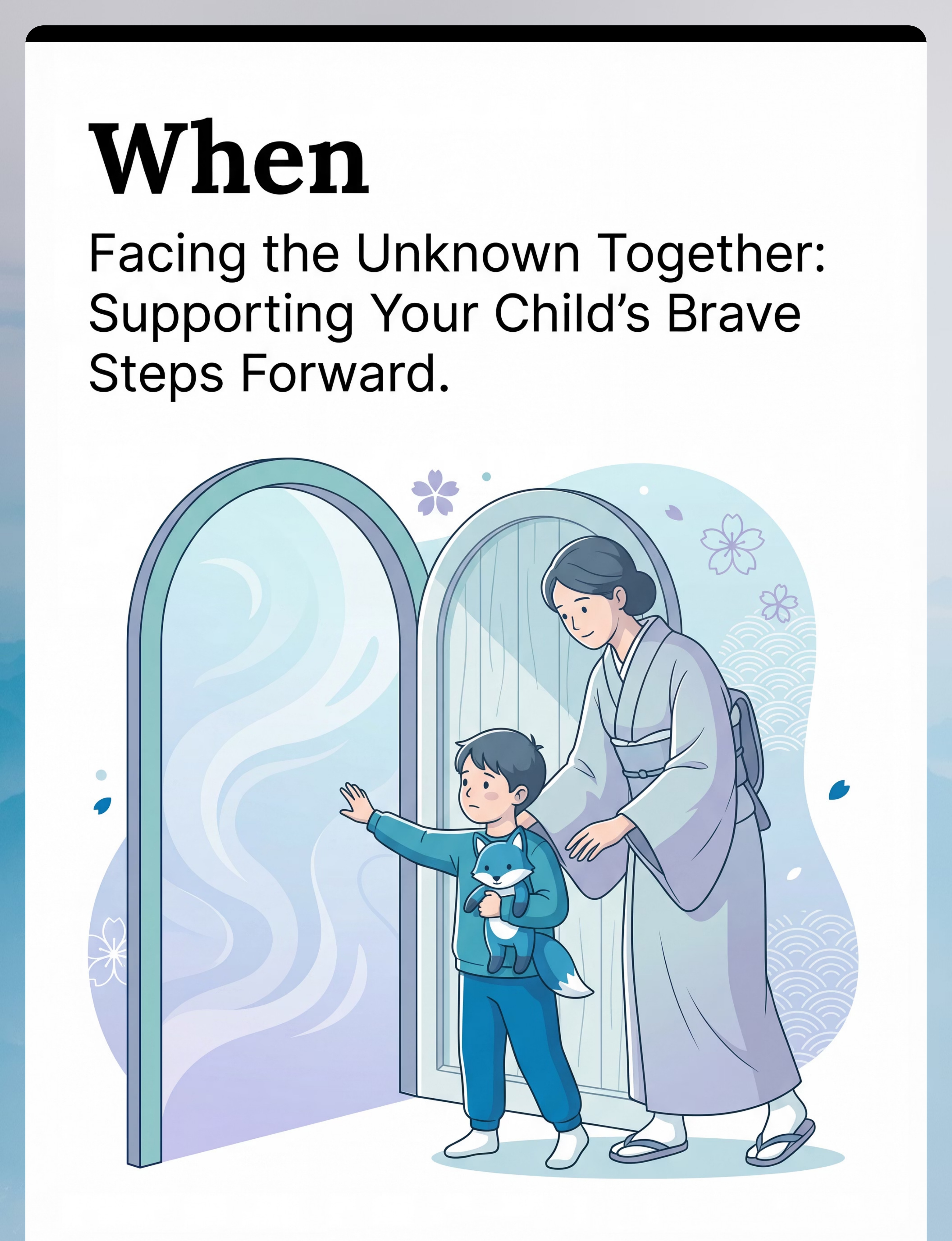
Preview of 9 materials that help with fear of new places Therapy Material
Below is a visual preview of 9 materials that help with fear of new places therapy material. The pages shown help educators, therapists, and caregivers understand the structure and content of the resource before use. Materials should be used under appropriate professional guidance.



Link copied!
"From fear to mastery. One technique at a time."
20M+
Therapy Sessions
97%+
Measured Improvement
70+
Centres
22
Indian States
70+
Countries Served
Pinnacle Blooms Network® | Built by Mothers. Engineered as a System.
Medical Disclaimer: This content is educational. It does not replace individualised assessment and intervention with licensed professionals including psychologists, behavioural specialists, and occupational therapists. Novel environment anxiety presentation and treatment response varies significantly by individual profile, diagnosis, and history. Individual results may vary. Statistics represent aggregate outcomes across the Pinnacle Blooms Network® centre ecosystem.
CIN: U74999TG2016PTC113063 | DPIIT: DIPP8651 (Govt. of India) | MSME Udyog Aadhaar: TS20F0009606 | GSTIN: 36AAGCB9722P1Z2
© 2025 Pinnacle Blooms Network®, unit of Bharath Healthcare Laboratories Pvt. Ltd. All rights reserved. | ISO 13485: Medical Device QMS | ISO/IEC 27001: Information Security