

We Changed the Room. The Behavior Changed Itself.
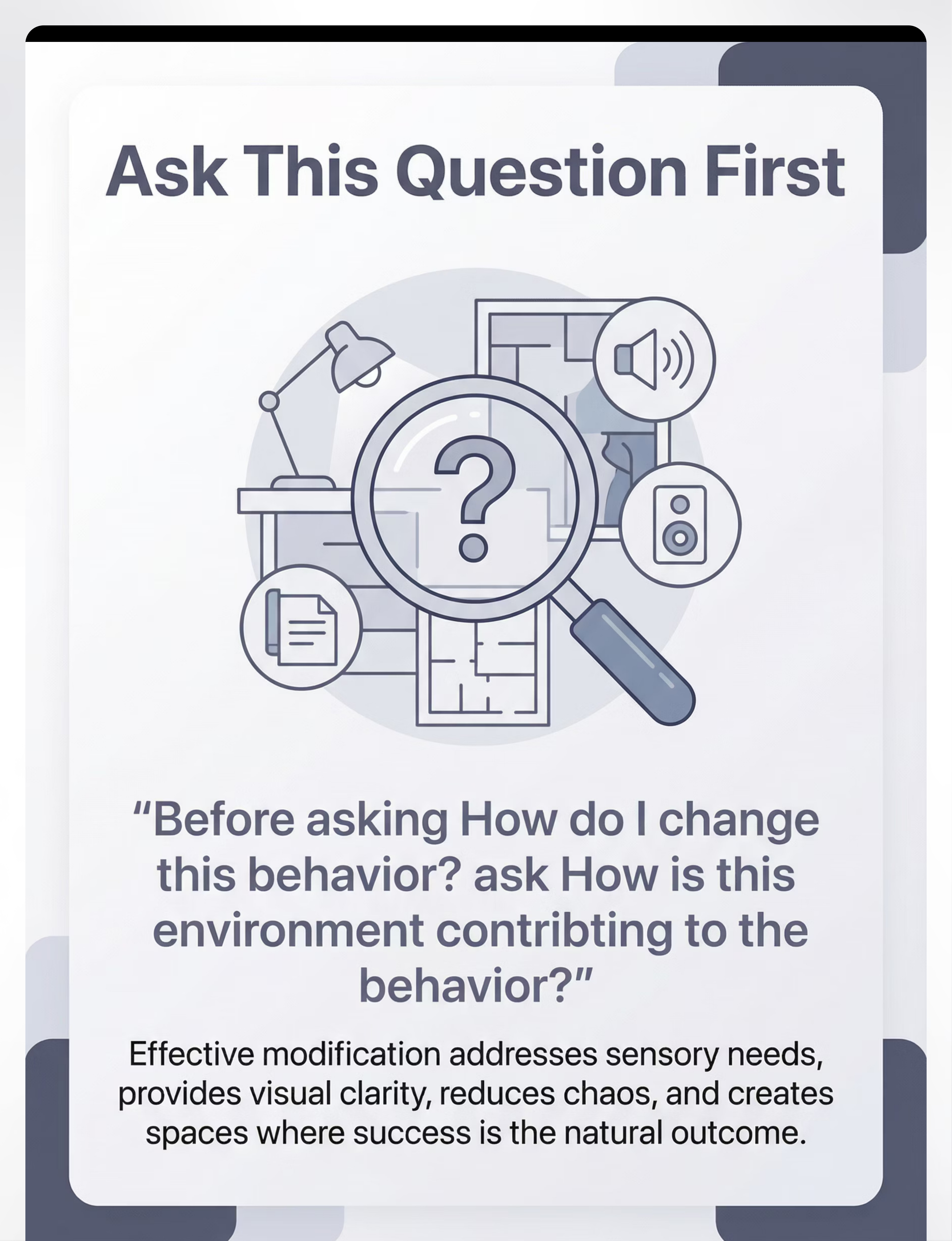
Before asking "How do I change this behavior?" — ask "How is this environment contributing to it?" Your child's space is the invisible curriculum. Discover 9 scientifically validated materials that modify the environment to prevent challenging behavior — designed for home use by parents and caregivers.

D-354 | Pinnacle Blooms Network®
Ages 2–12 | Behavioral Domain
The Environment Factor Is Real — And You Are Among Millions
You are among an estimated 14 million families across India alone navigating environment-driven behavioral challenges. The discovery that the space itself is the trigger — not the child — is one of the most liberating moments in the therapy journey.
80%
Sensory Processing Difficulties
Of children diagnosed with autism display sensory processing difficulties — lighting, sound, and visual clutter all function as behavioral antecedents.
3/4
Preventable Episodes
Behavioral episodes in structured environments are preventable through proactive modification. The space is teaching — the question is: what is it teaching?
21M+
Therapy Sessions Analyzed
Across Pinnacle centers reveal environment as the #1 under-addressed behavioral trigger. Changing the room reduces session demand before therapy even begins.
Sources: PRISMA Systematic Review (2024) PMC11506176 | Meta-analysis World J Clin Cases (2024) PMC10955541 | Pinnacle Blooms Network® GPT-OS® Clinical Database

The Neuroscience of Environmental Sensitivity
When your child's sensory cortex is over-responsive, ordinary environmental stimuli — fluorescent lights, echoing hallways, cluttered shelves — register as threat signals, not background noise. The amygdala fires. The brain's executive control center (prefrontal cortex) goes offline. Your child is not "choosing" to behave that way. Their nervous system is responding to an environment that is neurologically incompatible with regulation.
The Brain Pathway
Sensory Input Arrives
Lighting, sound, visual clutter enter the sensory system
Thalamus Routes Signals
Signals directed to the sensory cortex for processing
Amygdala Activates
Threat detection fires — dysregulation response begins
Prefrontal Cortex Overwhelmed
Executive function goes offline — behavior follows
What This Means for You
This is a wiring difference — not a behavior problem. The environment is the variable you can actually control. When you modify the environment before the behavior occurs, you are working upstream of the amygdala — changing the input before dysregulation can cascade.
🔬"When you modify the environment before the behavior occurs, you are working upstream of the amygdala — changing the input before dysregulation can cascade." — Pinnacle NeuroDev Pediatrics Consortium
Research evidence: Frontiers in Integrative Neuroscience (2020) establishes the biological basis for environmental modification. | DOI: 10.3389/fnint.2020.556660

Environmental Sensitivity in the Developmental Journey
Every child’s developmental path is unique, and for many children, the way their nervous system interacts with the world is distinctively tuned. Understanding environmental sensitivity is a vital step in supporting your child as they grow, helping them navigate a world that often feels louder, brighter, or more demanding than it does for others.
The Sensory Landscape
In a bustling Indian household, vibrant sounds, spices, and constant interaction are the norm. For a sensitive child, these everyday joys can sometimes feel overwhelming, as their nervous system processes sensory input more intensely.
Recognizing Daily Signs
Sensitivity often manifests as a need for "downtime" after family gatherings, an aversion to specific textures or fabrics, or becoming easily distressed by changes in household routines or sudden shifts in light and sound.
Why It Matters for Growth
When we recognize these cues as signals of their unique biology rather than "defiance," we can build a supportive environment. This foundation allows them to develop self-regulation skills at their own pace, honoring their natural temperament.
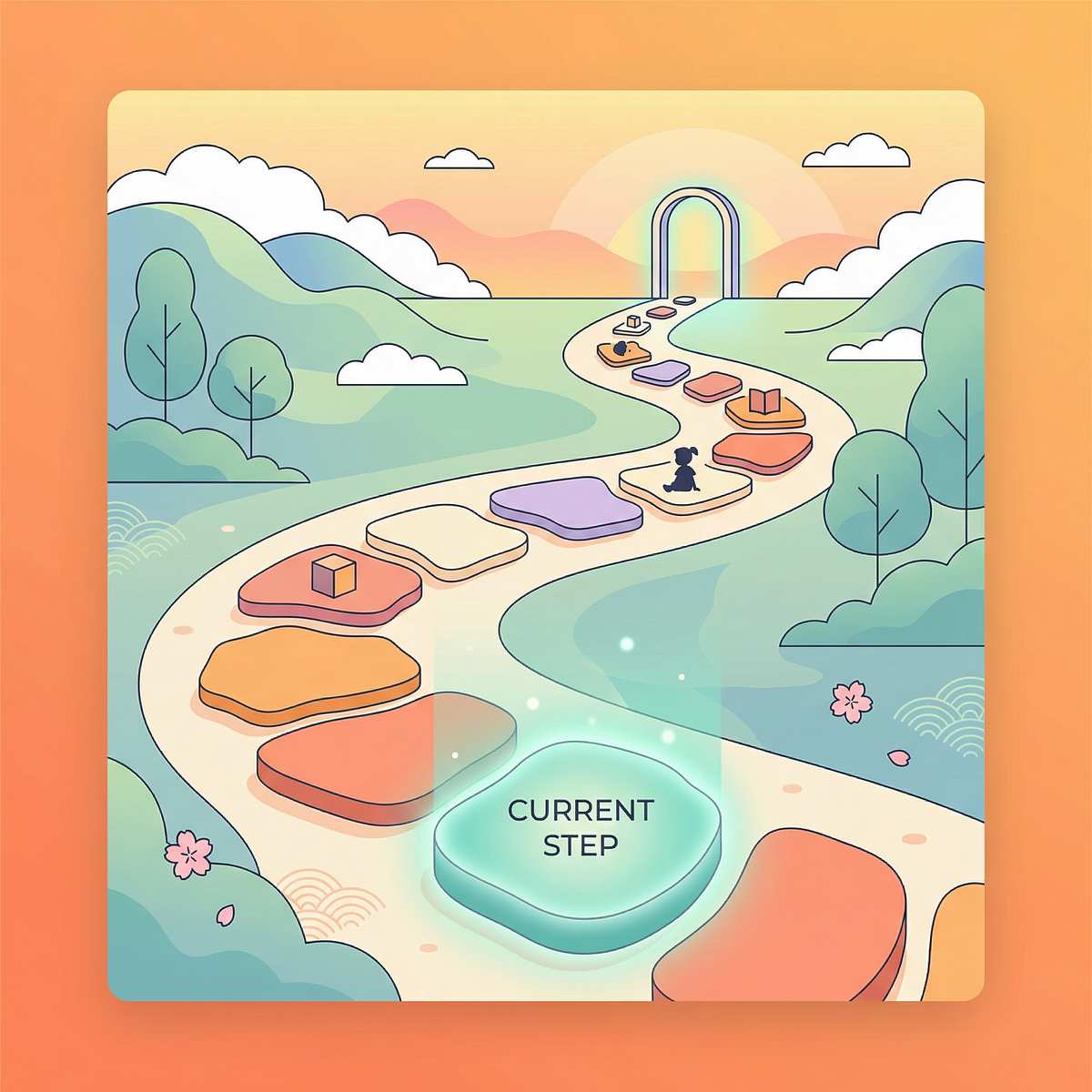
Environmental Sensitivity in the Developmental Journey
Environmental dysregulation typically peaks between ages 2–6. School entry (age 5–6) is the highest-risk period — new environments, sensory overload, undefined spaces converge. Environmental sensitivity commonly co-occurs with Sensory Processing Disorder (SPD), ADHD, anxiety disorders, and intellectual disabilities.
With targeted environmental modifications during the peak sensitivity window, the developmental trajectory shifts toward self-advocacy for environmental needs by ages 10–12 — a measurable, achievable outcome. Sources: WHO Care for Child Development Package PMC9978394 | WHO/UNICEF CCD Package (2023)
📍Your child is here. Ages 2–8 represent the peak environmental sensitivity window — and the highest-leverage intervention period.

Clinically Validated. Home-Applicable. Parent-Proven.
D-354 Environmental Modification is supported by the highest tier of clinical evidence — systematic reviews and multiple randomized controlled trials. This technique has been validated across OT, ABA, Special Education, and NeuroDev disciplines.
PRISMA Systematic Review (2024)
16 studies (2013–2023) confirm environmental modification meets evidence-based practice criteria for ASD. PMC11506176
Meta-Analysis, 24 Studies (2024)
Environmental + sensory interventions effectively promote adaptive behavior, social skills, and regulation. PMC10955541
TEACCH Program
Structured teaching environments demonstrate decades of replication across cultures. University of NC Chapel Hill.
Indian RCT (Padmanabha et al., 2019)
Home-based structured interventions demonstrate significant outcomes in the Indian pediatric population. DOI: 10.1007/s12098-018-2747-4
Research Confidence
Home Applicability
Parent Safety Profile
✅ Clinically validated across OT, ABA, SpEd, and NeuroDev disciplines within the Pinnacle GPT-OS® system. Deployed across 21 million therapy sessions. Evidence grade: Level I. — Pinnacle Blooms Consortium Scientific Review Board
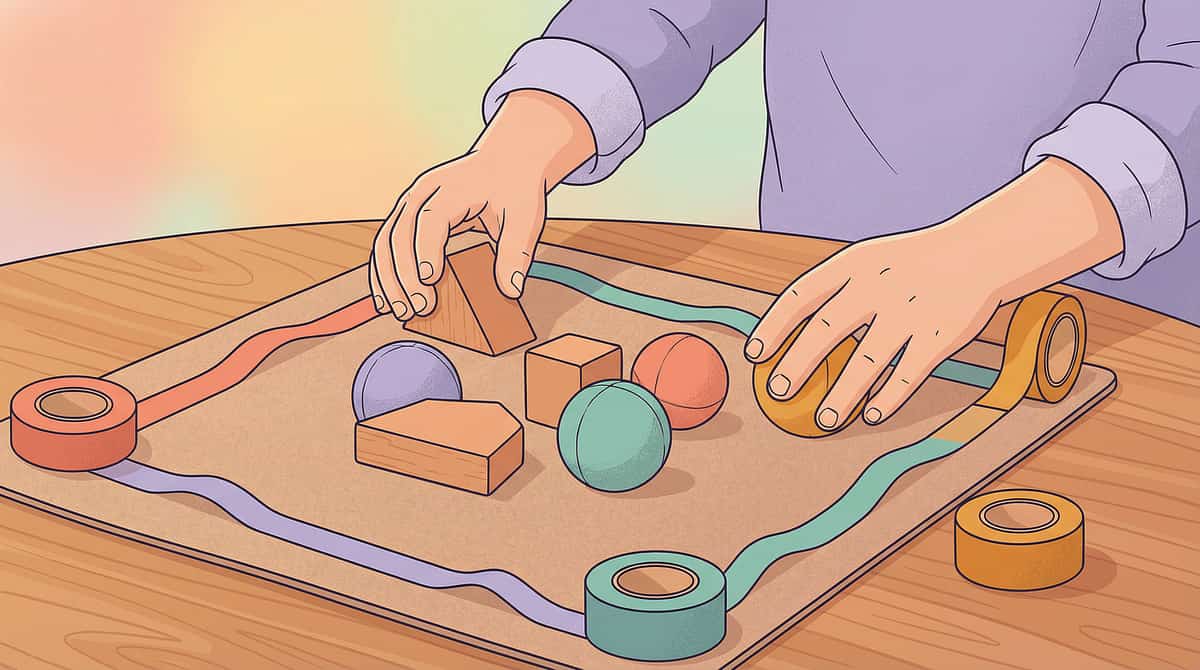
Environment Modifications — Designing the Space for Success
Domain: Behavioral
BEH-ANT-ENV
Ages 2–12
Setup: 30–90 min
Environment Modifications is the systematic, evidence-based practice of redesigning the physical and sensory properties of a child's space to prevent challenging behavior before it begins. Rather than responding to behavior after it occurs, this technique changes the antecedents — the environmental triggers — so that the child's nervous system is supported by the space rather than overwhelmed by it.
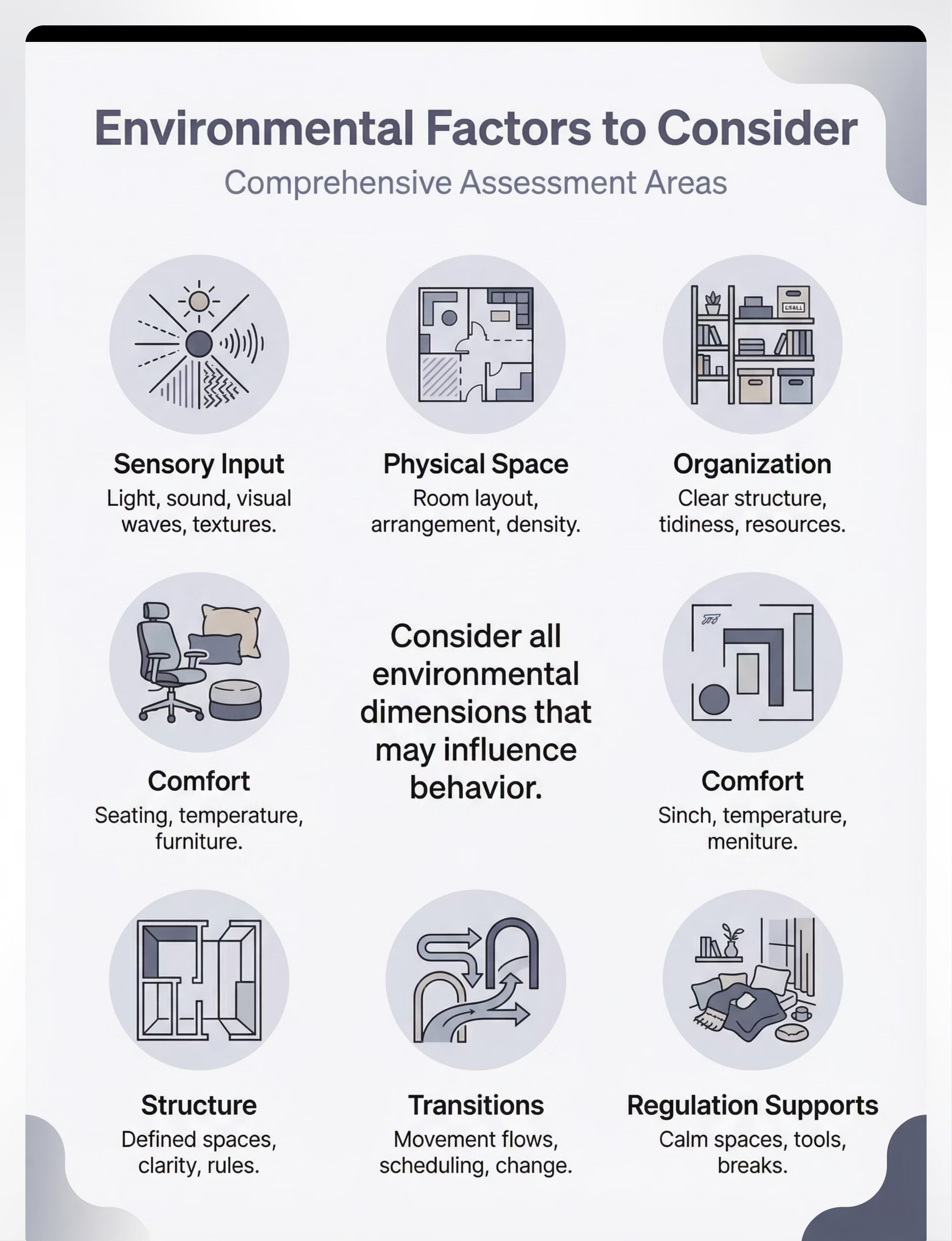
It encompasses sensory load management (lighting, sound, visual clutter), physical space organization (boundaries, zones, traffic flow), material accessibility, transition support cues, and regulation provisions (calm spaces). The environment becomes an active co-therapist.
Visual Boundary Markers
Sensory Modification Tools
Structured Work Stations
Traffic Flow Maps
Calm Down Space
Material Accessibility
Transition Cues
Flexible Seating
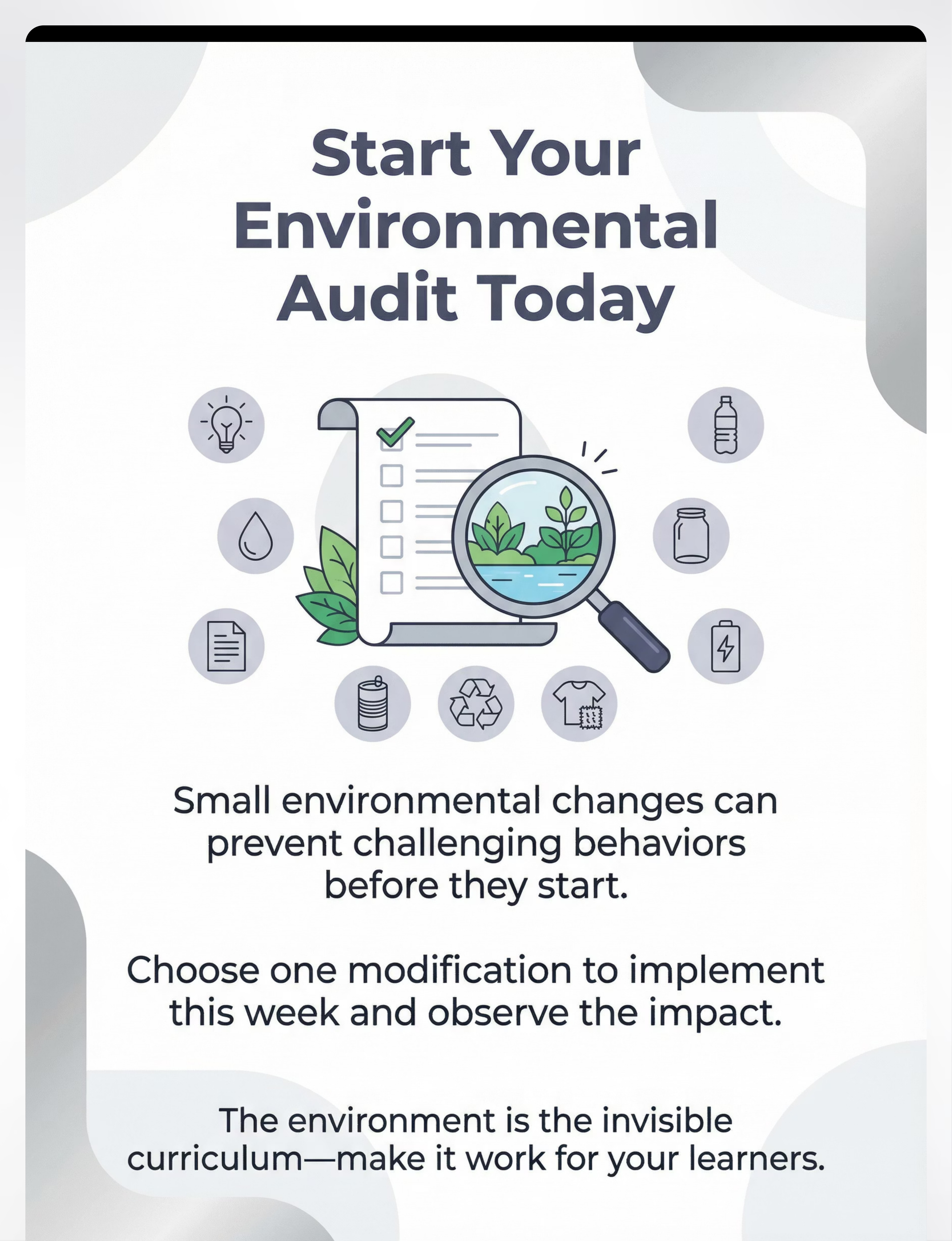
Environmental Audit

This Technique Crosses Every Therapy Boundary
Because the brain doesn't organize by discipline. No child's nervous system waits for the right therapist to walk in before responding to the space. The environment is always active. Every discipline has learned to use it.
Occupational Therapy (OT) — Primary Lead
OTs assess sensory profiles and design sensory-responsive environments. They prescribe lighting modifications, flexible seating, tactile boundary tools, and noise management systems specific to each child's sensory profile.
ABA / BCBA — Co-Lead
BCBAs use environmental modification as the highest-priority antecedent intervention. Functional behavior assessments routinely include environmental analysis — changing the environment is more efficient than managing behavior after it occurs.
Special Education (SpEd) — Primary Implementer
Special educators implement TEACCH-style structured teaching environments — defining workstations, visual schedules, and spatial clarity. Classroom environmental design is core SpEd competency.
Speech-Language Pathology (SLP) — Supportive
SLPs design communication-supportive environments — reducing auditory competition, creating quiet zones for communication practice, and organizing AAC materials for accessibility.
NeuroDev Pediatrics — Prescriptive Authority
NeuroDev pediatricians identify sensory processing disorders and prescribe environmental accommodation as part of the medical management plan, feeding into IEP/504 plan recommendations.
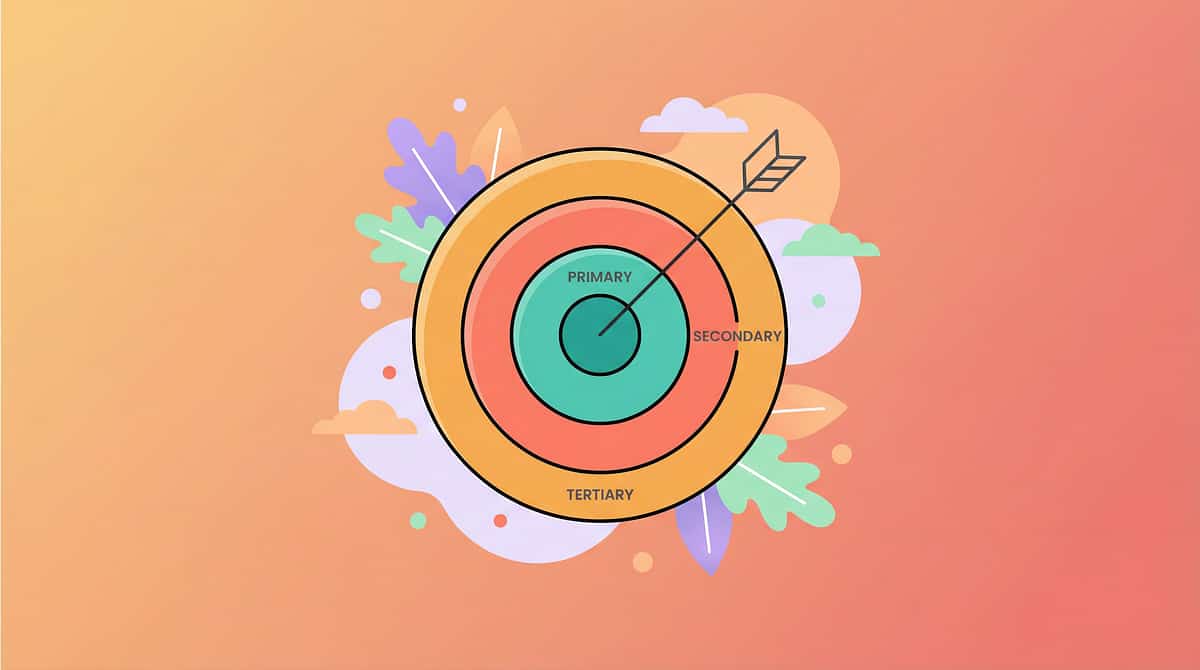
Precision Targeting — The Environment Modification Bullseye
Environmental modification works across three concentric rings of impact — from immediate behavioral reduction to long-term self-advocacy. Each ring builds on the one before it.
🎯 Primary Target
Reduction of environment-driven challenging behavior — meltdowns from sensory overload, transition escalation, frustration from material inaccessibility, shutdown in undefined spaces. Observable: Reduced frequency/duration within 2–4 weeks.
🎯 Secondary Targets
Increased independent task initiation, improved self-regulation during transitions, enhanced focus and on-task duration, reduction in adult prompting needed. Observable: Longer regulated engagement periods reported by parent/teacher.
🎯 Tertiary Targets
Self-advocacy for environmental needs ("I need quiet") by ages 7–12, generalization to novel environments, caregiver confidence, improved social participation. Observable: GPT-OS® Behavioral Self-Regulation Index gains over 8–12 weeks.

The 9 Materials That Transform a Space — And the Behavior Within It
Pinnacle Recommends — Clinically validated selections. Every material includes a ₹0 DIY alternative on Card 10. Total investment range: ₹4,000–14,500 for complete setup. Essential Starter Kit (3 materials): Visual Boundary Markers + Sensory Tools + Audit Checklist | Under ₹2,000.
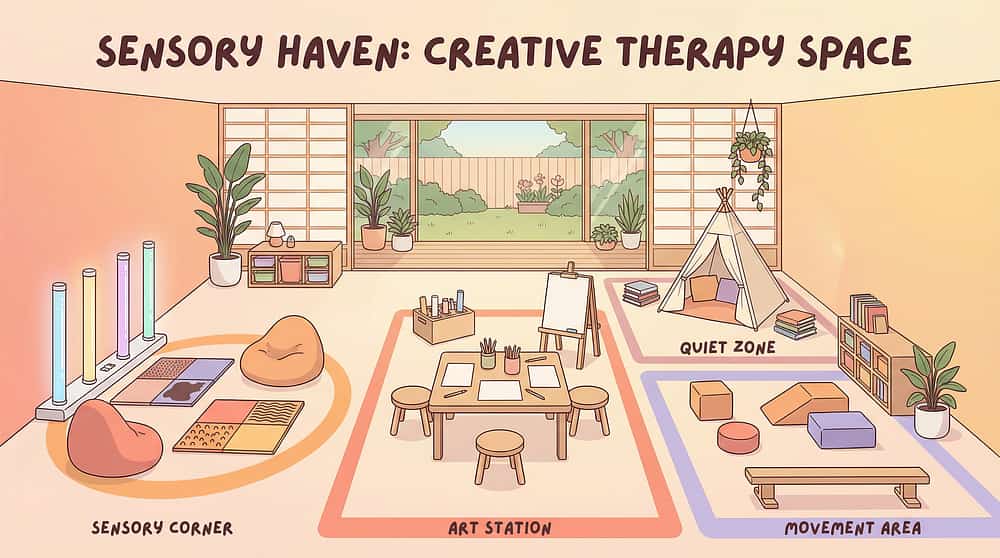
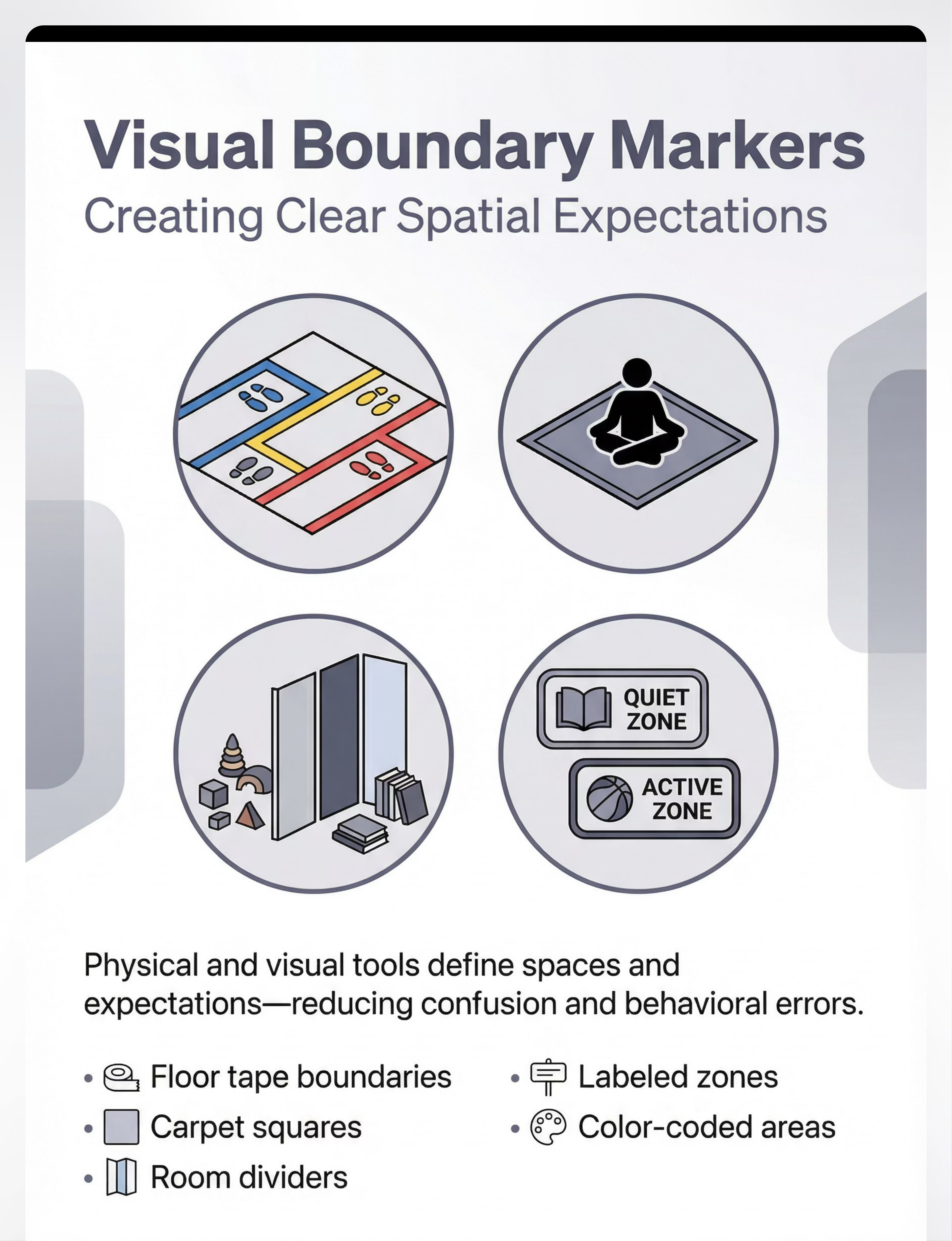
1. Visual Boundary Markers
Canon: Visual Organization | Spatial clarity and zone definition. Colored Floor Tape (Multi-color) | ₹200–800. Search Amazon.in

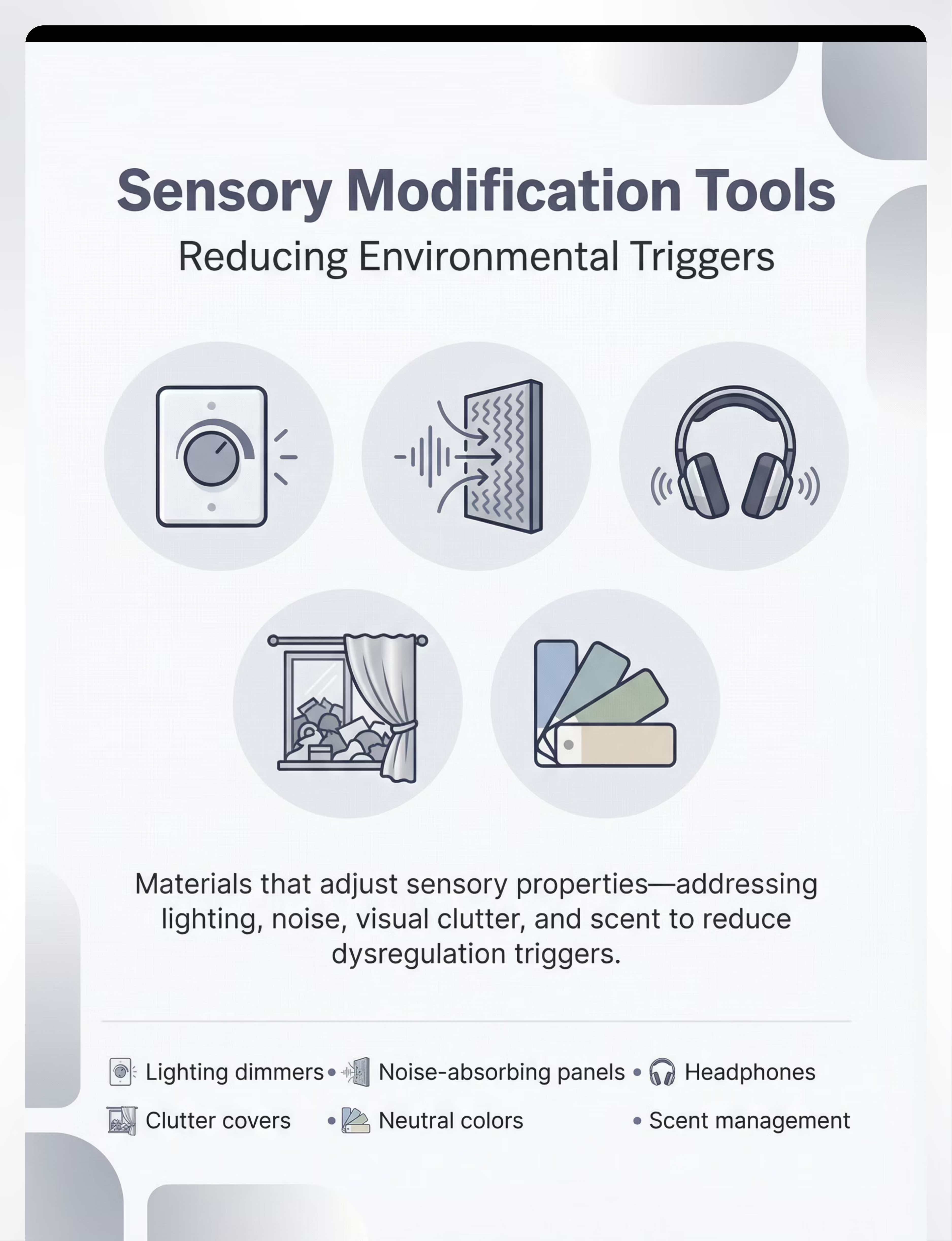
2. Sensory Modification Tools
Canon: Sensory Regulation | Reduce sensory triggers. Child-safe noise-canceling headphones ₹500–1,500. Warm lamp ₹300–800. Search Amazon.in
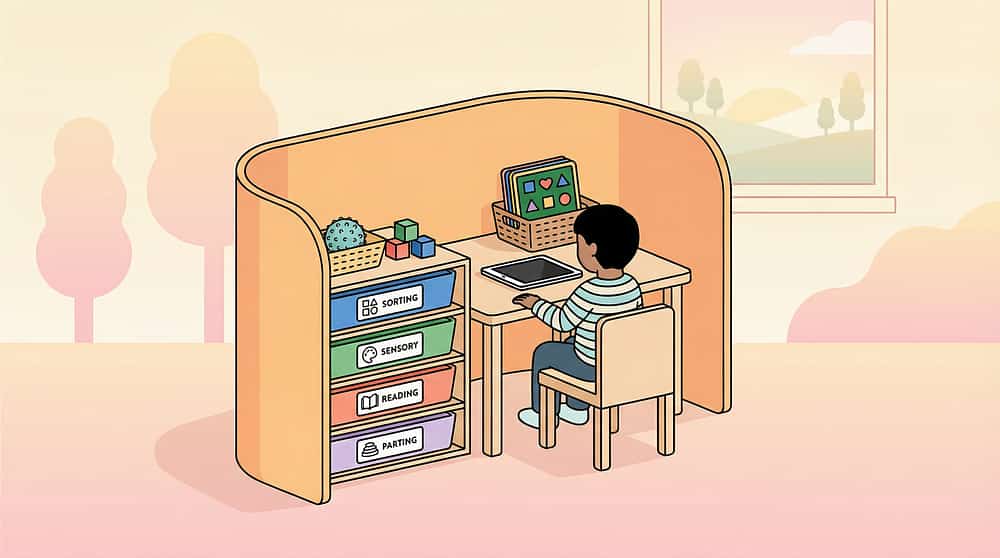
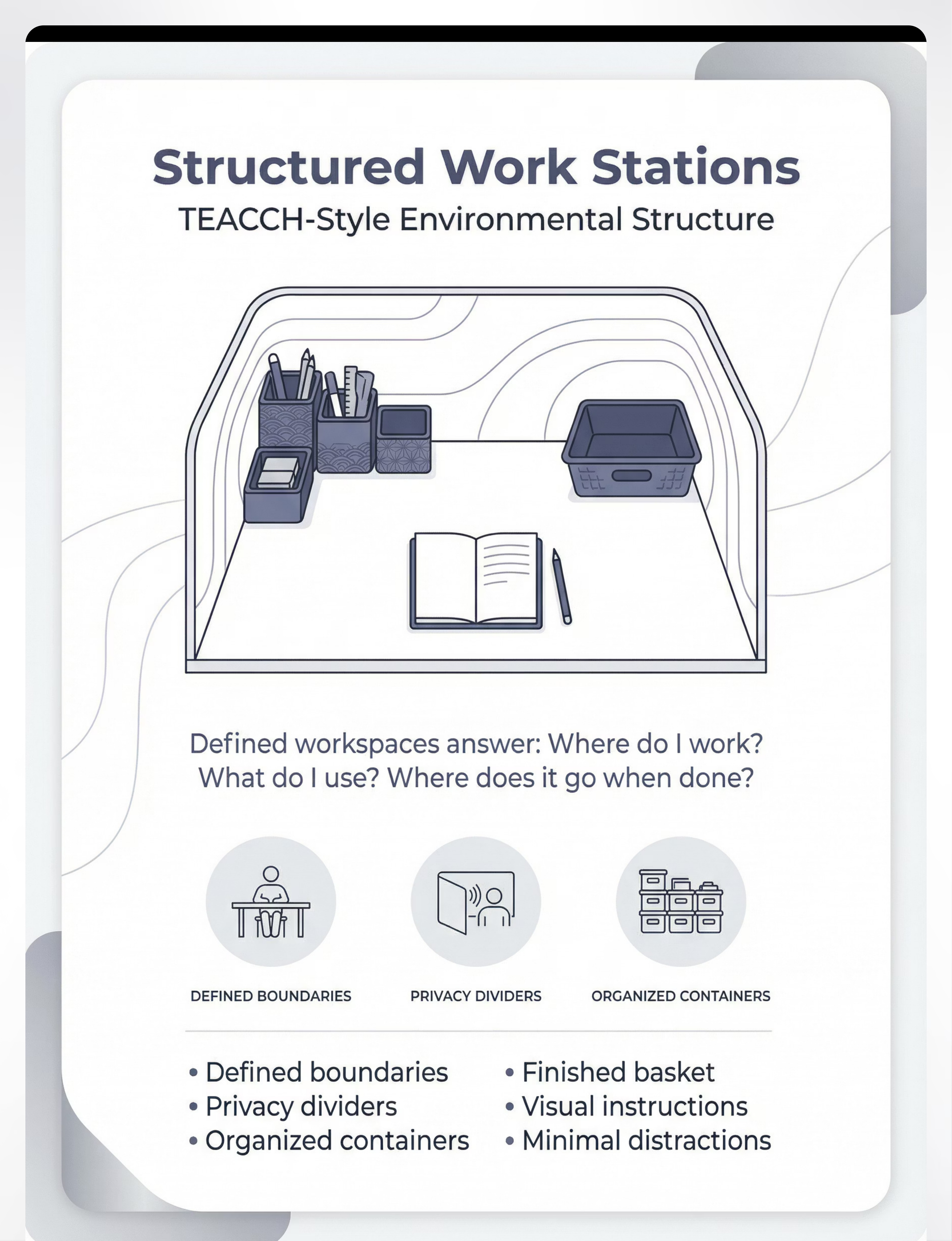
3. Structured Work Stations
Canon: TEACCH/Structured Teaching | Environmental clarity for independent work. 3-sided divider ₹400–1,000. Labeled storage bins ₹200–500. Search Amazon.in

Materials 4–6: Completing the Environmental System
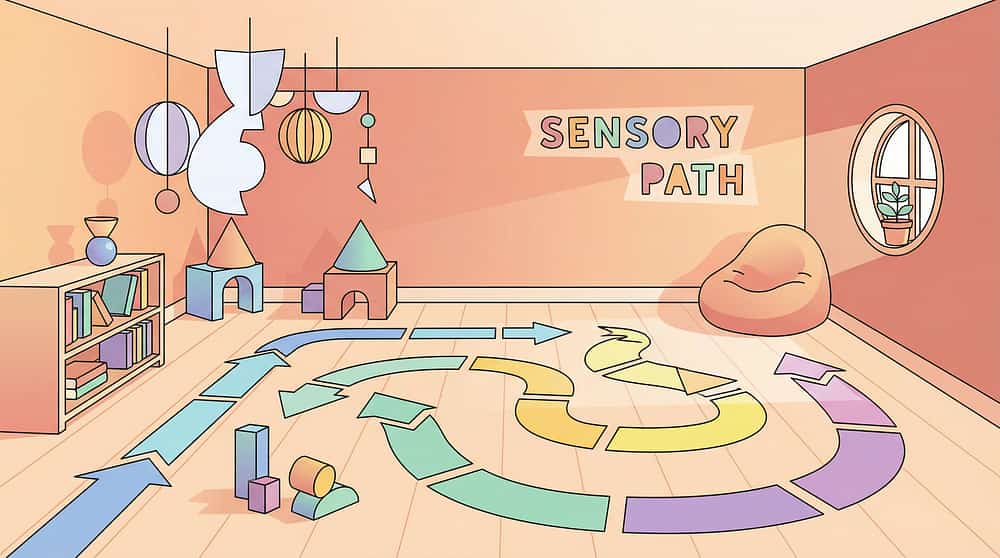
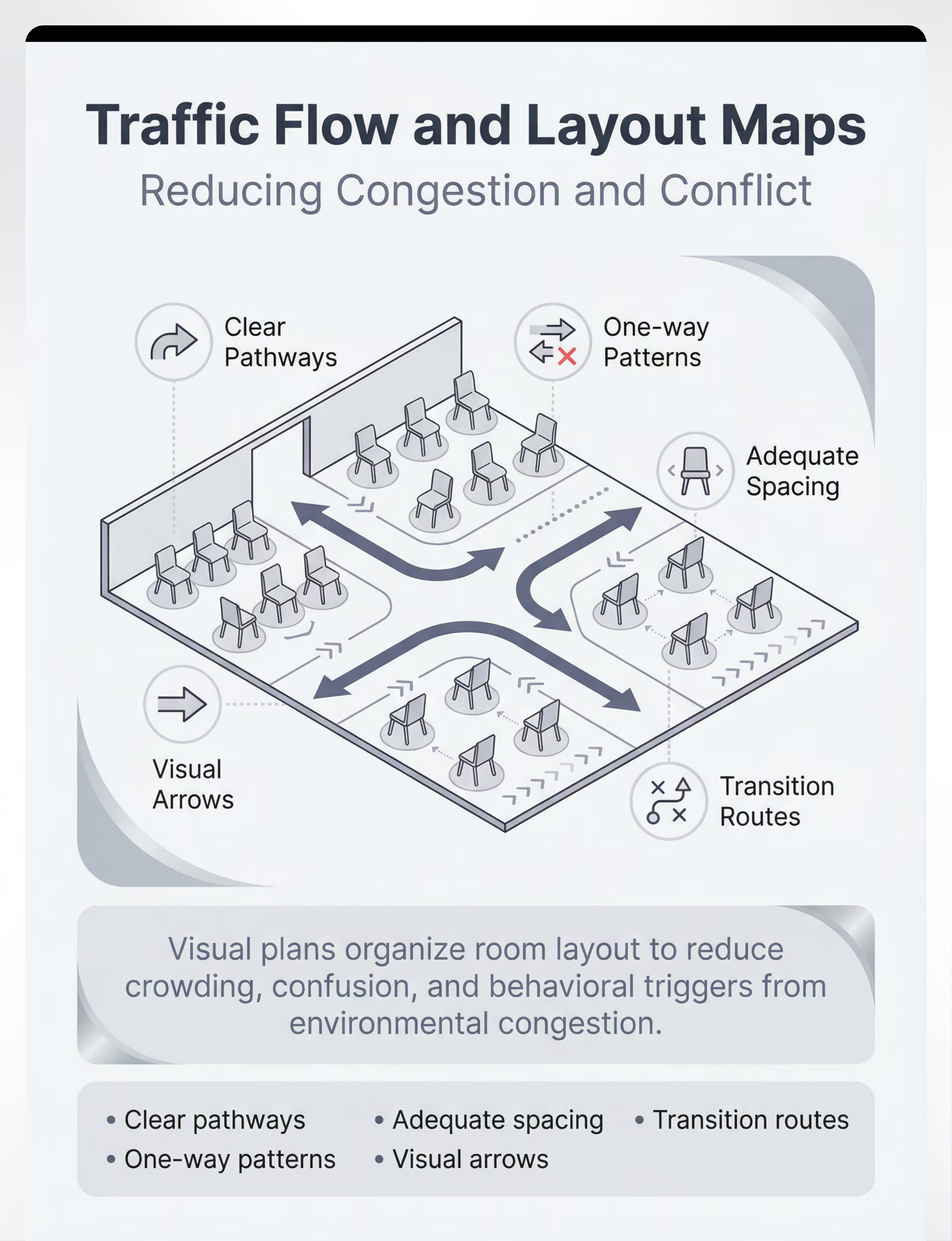
4. Traffic Flow and Layout Maps
Canon: Environmental Organization | Prevent congestion-triggered conflict. Floor Arrow Tape (directional markers) ₹100–300. Search Amazon.in

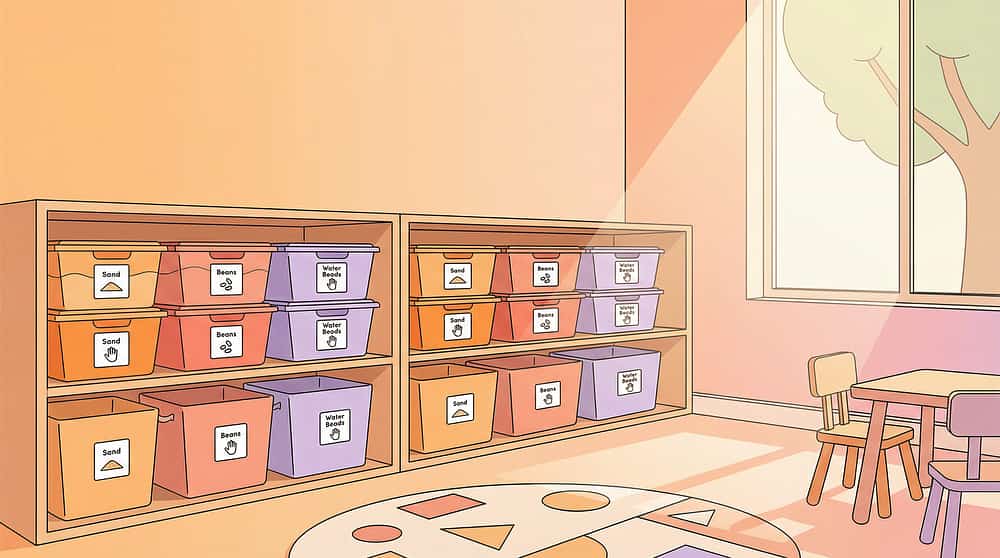
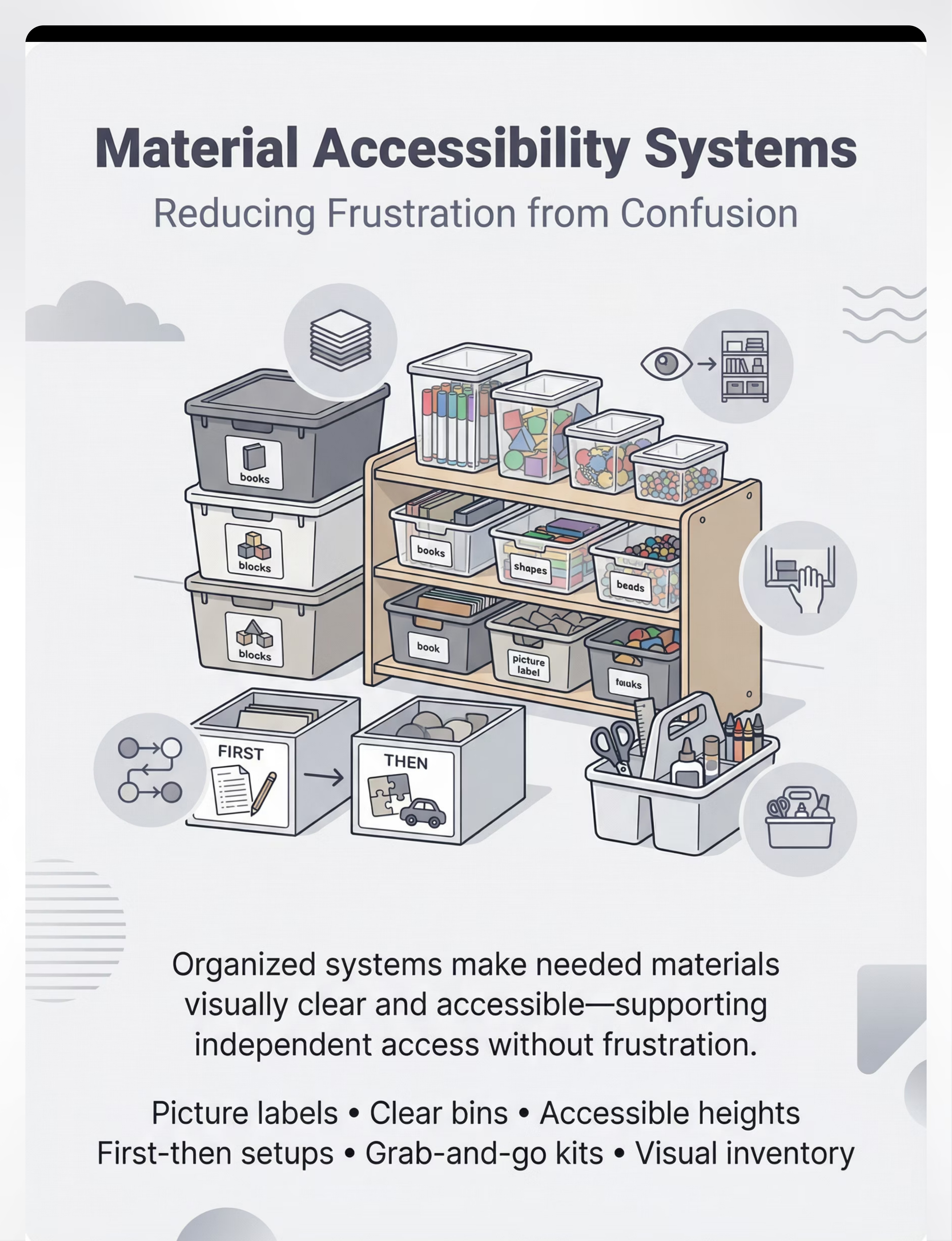
6. Material Accessibility Systems
Canon: Visual Organization | Independent access, frustration reduction. Clear labeled bins (picture labels) ₹500–1,000. Sorting Activity Set: Lattooland Rainbow Set ₹628⭐ Pinnacle Recommends

Materials 7–9: Transitions, Seating, and Audit

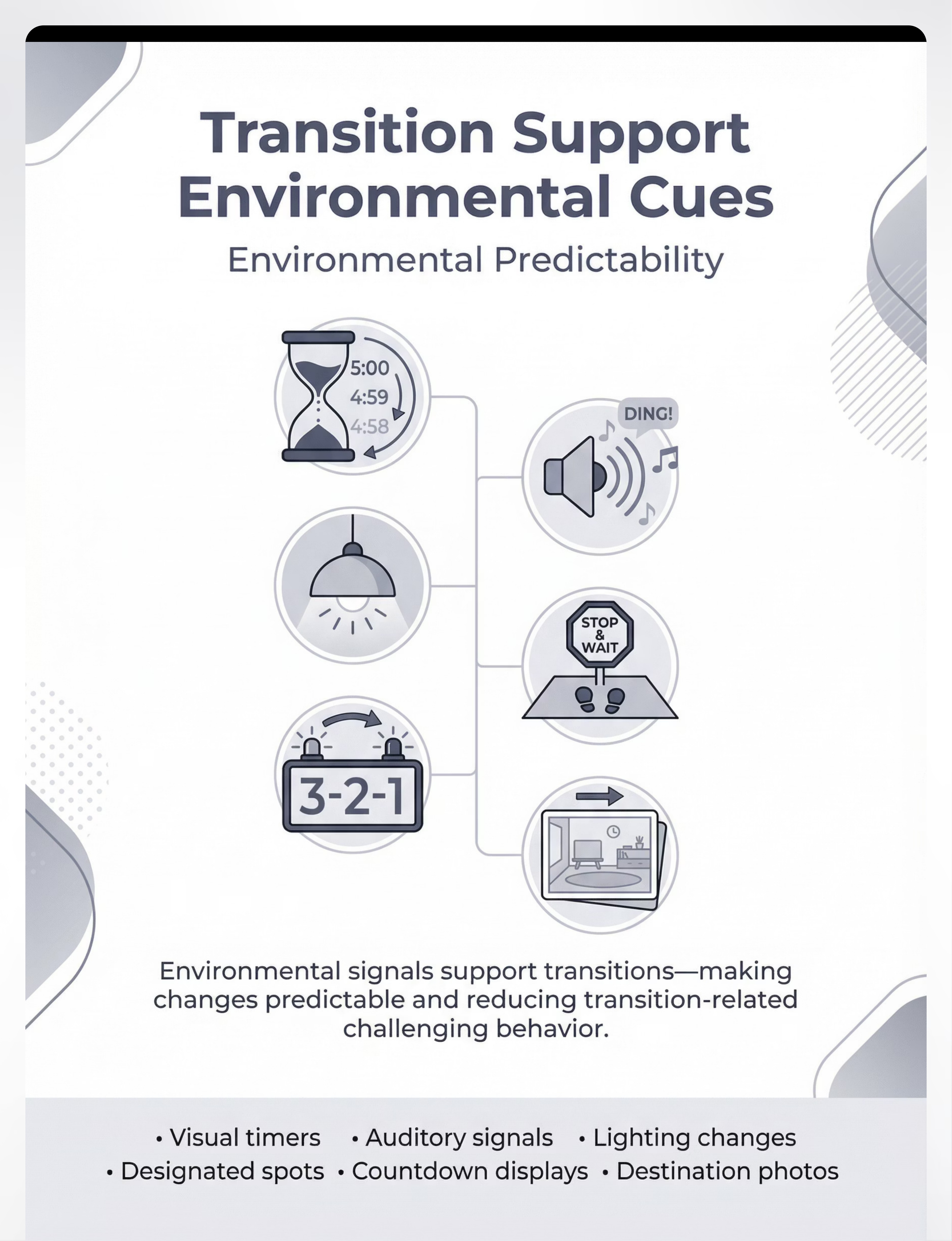
7. Transition Support Environmental Cues
Canon: Visual Schedules/Timers | Predictable transition signals. Visual sand timer ₹300–800. Search Amazon.in. Transition comfort soft toy: ₹425⭐ Pinnacle Recommends

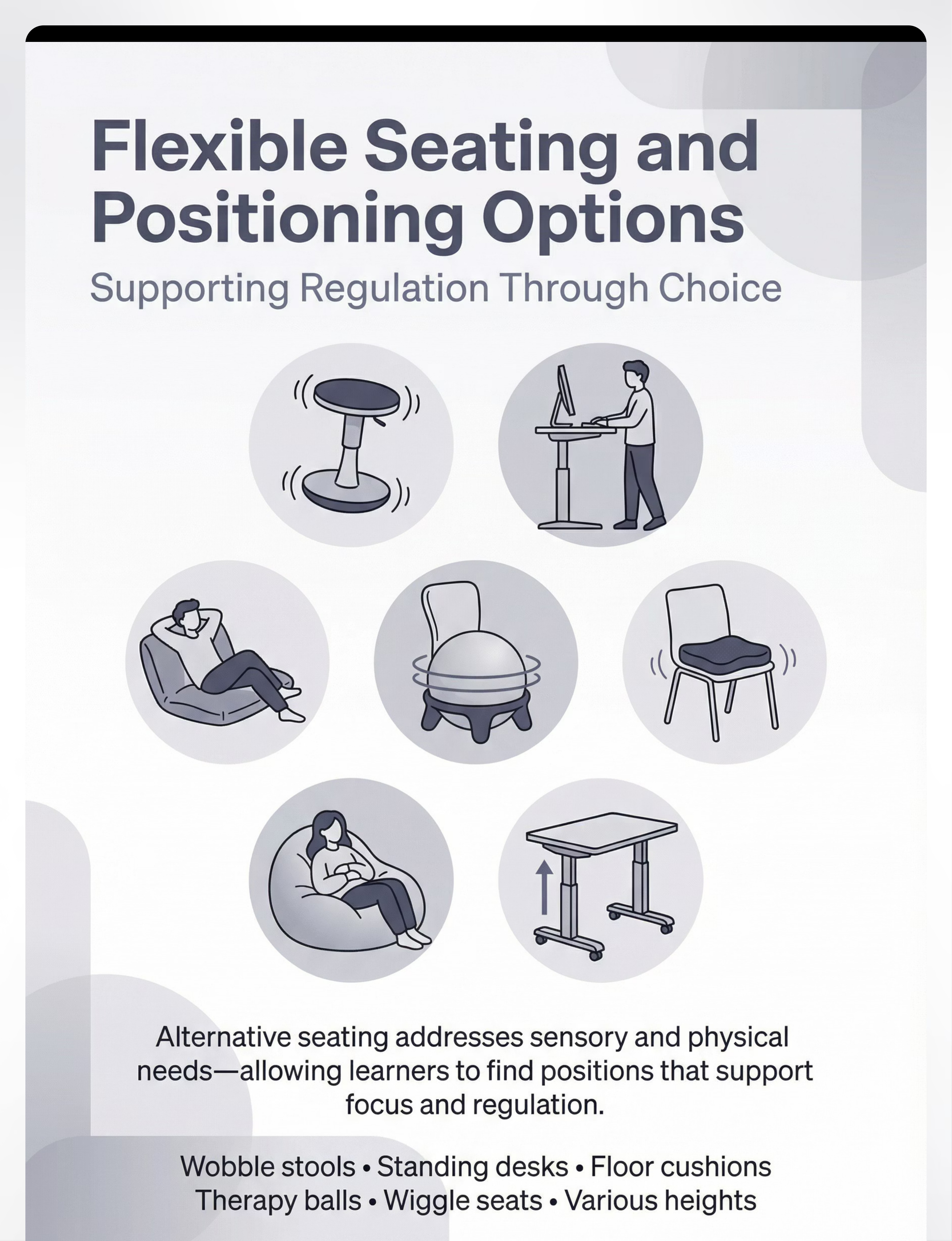
8. Flexible Seating and Positioning
Canon: Seating/Positioning | Sensory-motor regulation through choice. Wobble cushion ₹800–1,500. Search Amazon.in. Floor mat/carpet square ₹300–600. Search Amazon.in

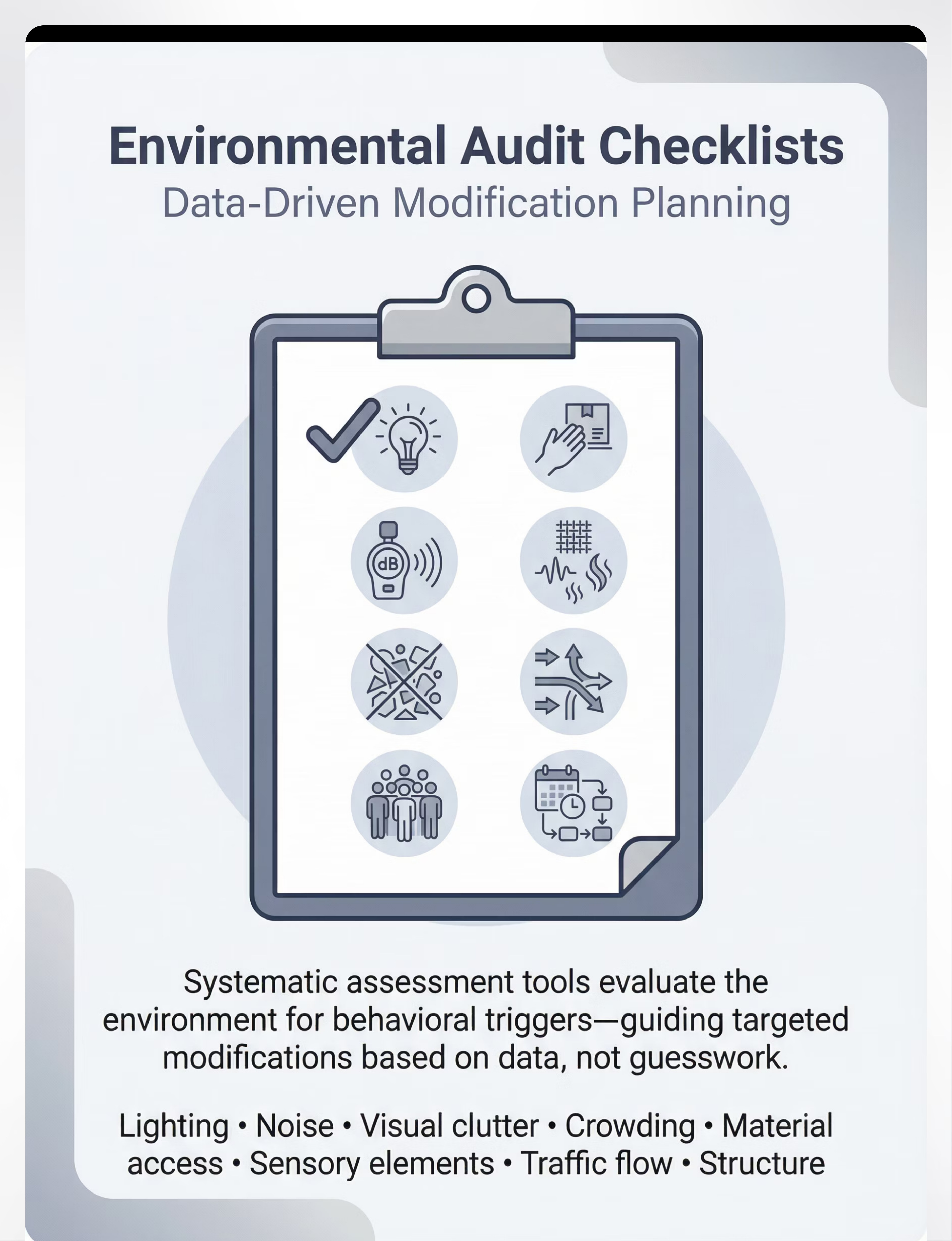
9. Environmental Audit Checklists
Canon: Assessment Tools | Data-driven modification planning. Noise Level Meter App (free). Printable Audit Checklist ₹0. Download from pinnacleblooms.org. Fully DIY — no purchase required.
🏅 All recommended products are selected on clinical utility, safety profile, and accessibility criteria by the Pinnacle Blooms OT and ABA Consortium. Prices sourced from Amazon.in. Availability may vary.

Every Material Has a ₹0 Version — Because Every Child Deserves This Technique
Per WHO/UNICEF equity principles: effective intervention must be accessible regardless of economic status. The clinical principle never changes based on the price of the material. A ₹20 chalk boundary is neurologically identical to a ₹500 floor tape boundary.
Material | ₹ Commercial Option | ✅ DIY / Household Substitute | |
Visual Boundary Markers | Colored floor tape ₹200+ | Colored chalk; old cloth strips; newspaper strips painted | |
Sensory Mod (noise) | Noise-canceling headphones ₹500+ | Cotton wool earplugs + standard headphones playing white noise (free apps) | |
Sensory Mod (light) | Warm lamp ₹300+ | Cover window with thin cloth; place child away from fluorescent overhead | |
Structured Work Station | Privacy divider ₹400+ | 3 cardboard boxes taped together; large cereal box divider; thick books propped | |
Traffic Flow Markers | Arrow floor tape ₹100+ | Draw arrows with chalk; use old magazine strips as path markers | |
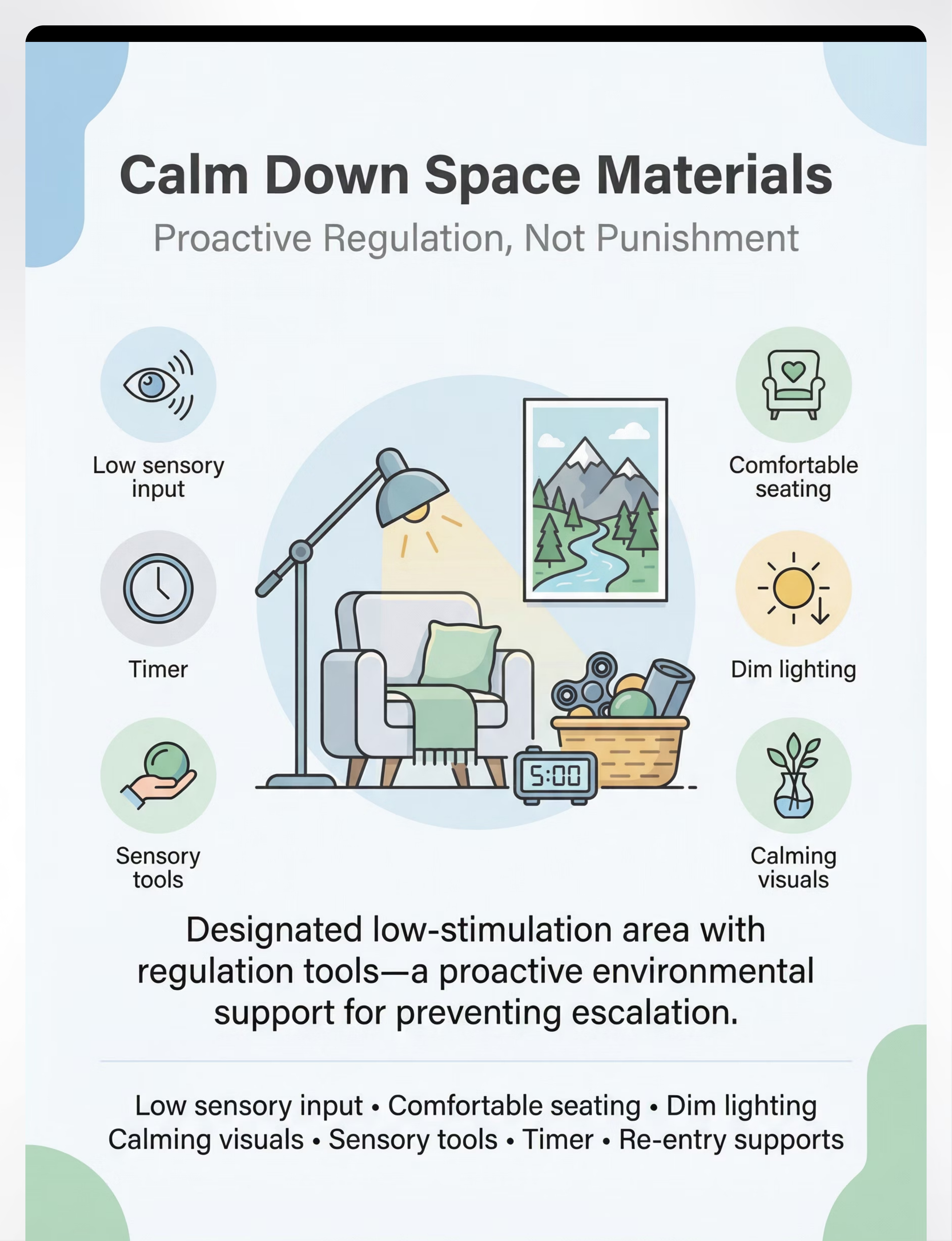
Calm Down Space | Bean bag + lights ₹1,000+ | Pile of blankets + corner with drawn curtain + basket of soft toys | |
Material Accessibility | Clear labeled bins ₹500+ | Old jars with picture cut from magazine; repurposed ice cream containers | |
Transition Cues | Visual timer ₹300+ | Regular clock face with marker; counting aloud; phone timer with visual countdown | |
Flexible Seating | Wobble cushion ₹800+ | Folded blanket on hard chair; rolled towel under thighs; floor mat instead of chair | |
Audit Checklist | Commercial scales | Pinnacle downloadable checklist (free) + notebook + smartphone before/after photos |
"The clinical principle never changes based on the price of the material. A ₹20 chalk boundary is neurologically identical to a ₹500 floor tape boundary. The environment is modified either way." — Pinnacle OT + ABA Consortium, GPT-OS® Clinical Guidelines

The Environmental Safety Gate — Read Before Modifying
Before implementing any environmental modification, complete this safety review. Your child's physical and emotional safety comes first — always. When in doubt, call the FREE National Autism Helpline: 9100 181 181 (24x7 | 16+ languages).
🔴 DO NOT PROCEED IF:
- Child has active self-injurious behavior triggered specifically by environmental change — seek BCBA consultation first
- Flooring tape creates confirmed tripping hazard for child with motor impairment — use alternative boundary methods
- Calm down space has been previously associated with punishment/timeout — requires professional reframing before use
- Child has claustrophobic response to enclosed spaces — workstation dividers must be open, not enclosed
🟡 PROCEED WITH CAUTION:
- Test all tape adhesives on a small area of flooring first
- Child under 3: ensure all loose sensory tools are non-ingestible (no beads, no small objects)
- Noise-canceling headphones: set volume limit maximum 70dB; test on your own ears first
- Maintain clear emergency exit paths — modifications must never block exits
- Wheelchair users: all pathways minimum 90cm clearance
🟢 PROCEED WHEN:
- Child is in a regulated, alert state before changes are explained
- All modifications made BEFORE the child enters the space
- Child is shown the new layout with a brief visual tour first
- Safety check on all shelving stability (secure to wall if over 120cm height)
📞FREE National Autism Helpline: 9100 181 181 (24x7 | 16+ languages) — "If something feels wrong — stop, step back, and call us. Trust your instincts."
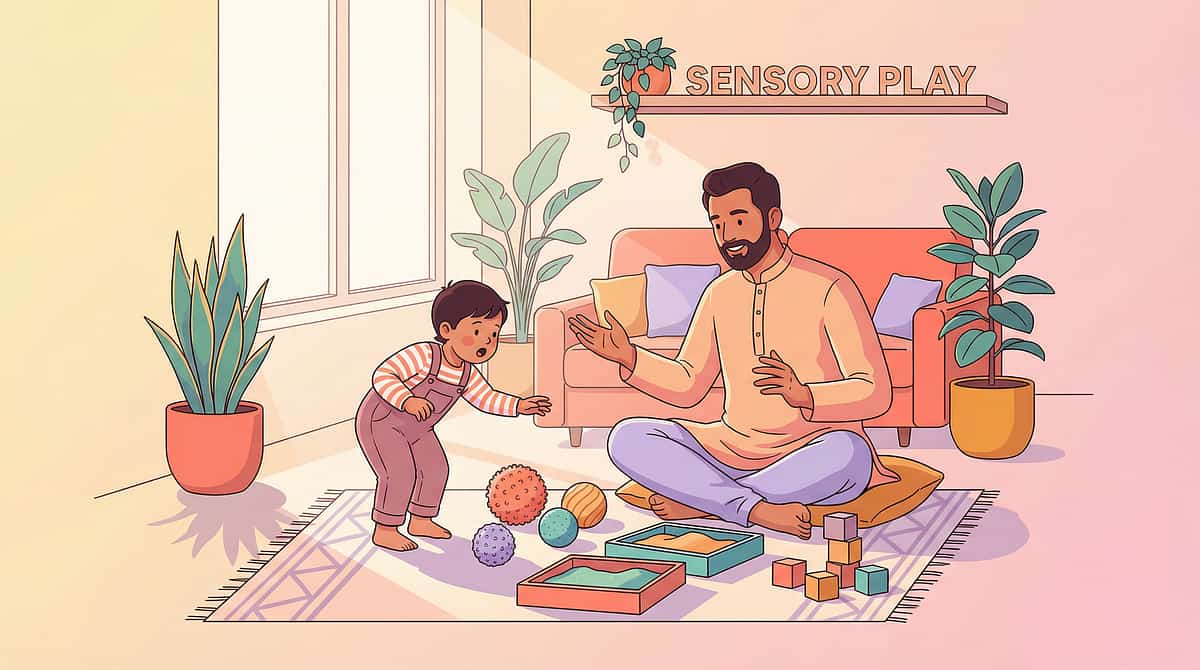
Design the Stage Before the Therapy Begins
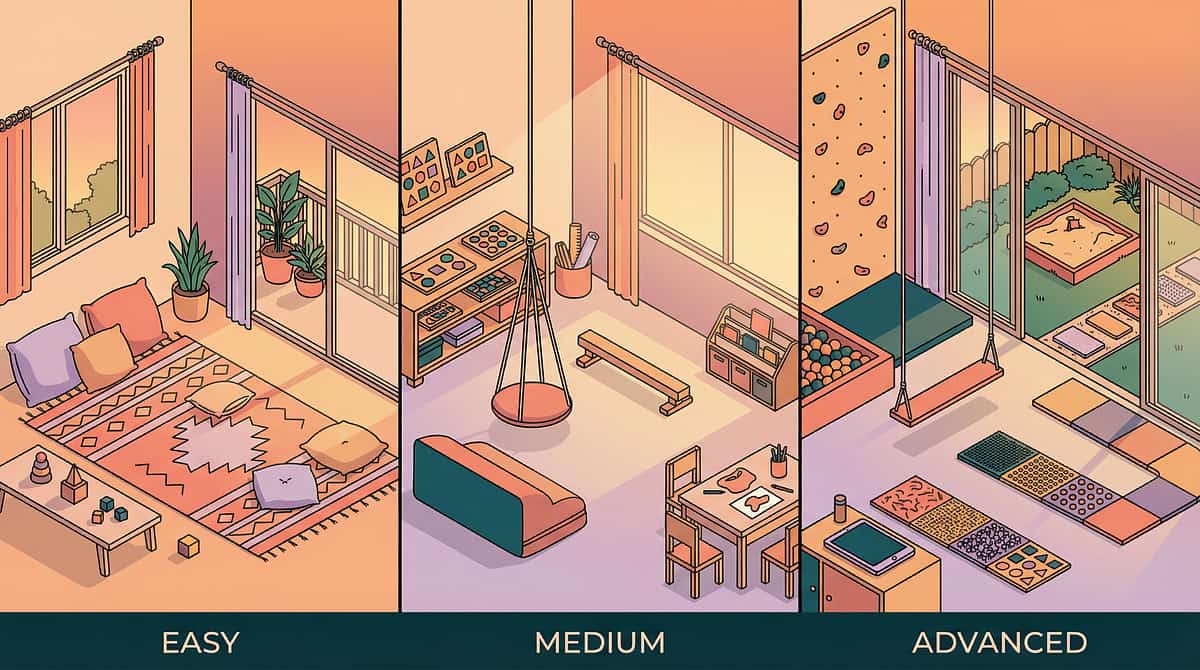
Every great environmental session starts with a prepared space. Setup time: 15–30 minutes (first time) | 5 minutes (once established). Complete all setup before the child enters.
Lighting
Replace overhead fluorescent with warm lamp or covered window. Optimal: 200–300 lux warm light.
Sound
Close windows if external noise present. Rugs on floor. Curtains on windows. Background sound below 40dB.
Visual Clutter
Cover unused shelves with neutral fabric or close cupboard doors. Remove items not relevant to current activity.
Boundaries and Materials
Tape zones visible and fixed. Carpet square at child's work position. Everything the child will need is pre-positioned and labeled.
Calm Space and Temperature
Corner prepared, dimmed, basket with sensory tools, visual timer visible. Temperature 22–26°C recommended.
Parent Position
Beside and slightly behind — never blocking the child's environmental view.

60 Seconds Before Starting — The Environmental Session Pre-Flight
"The best environmental session is one that starts when both the space and the child are ready." Use this 60-second readiness check before every session.
Check | ✅ Green — Go | ⚠️ Amber — Modify | 🔴 Red — Postpone | |
Fed and hydrated | Normal meal within 2 hrs | Mildly hungry | Not eaten, refusing food | |
Sleep last night | Normal, adequate | Slightly disrupted | Very poor sleep | |
Physical state | No illness signs | Mild tiredness | Fever, illness, pain | |
Recent regulation | Regulated past 30 min | Minor irritability | Recent meltdown/tantrum | |
Mood/affect | Neutral to positive | Slightly resistant | Highly anxious/distressed | |
Sensory state | Baseline sensory state | Mildly elevated | Actively seeking/avoiding |
✅ GO
5–6 green — proceed with full environmental exploration and protocol
⚠️ MODIFY
3–4 green — introduce ONE environmental change only. Keep session under 10 minutes.
🔴 POSTPONE
Fewer than 3 green — not today. Offer 5 minutes of preferred sensory activity. No demands. No protocol.

Step 1 of 6
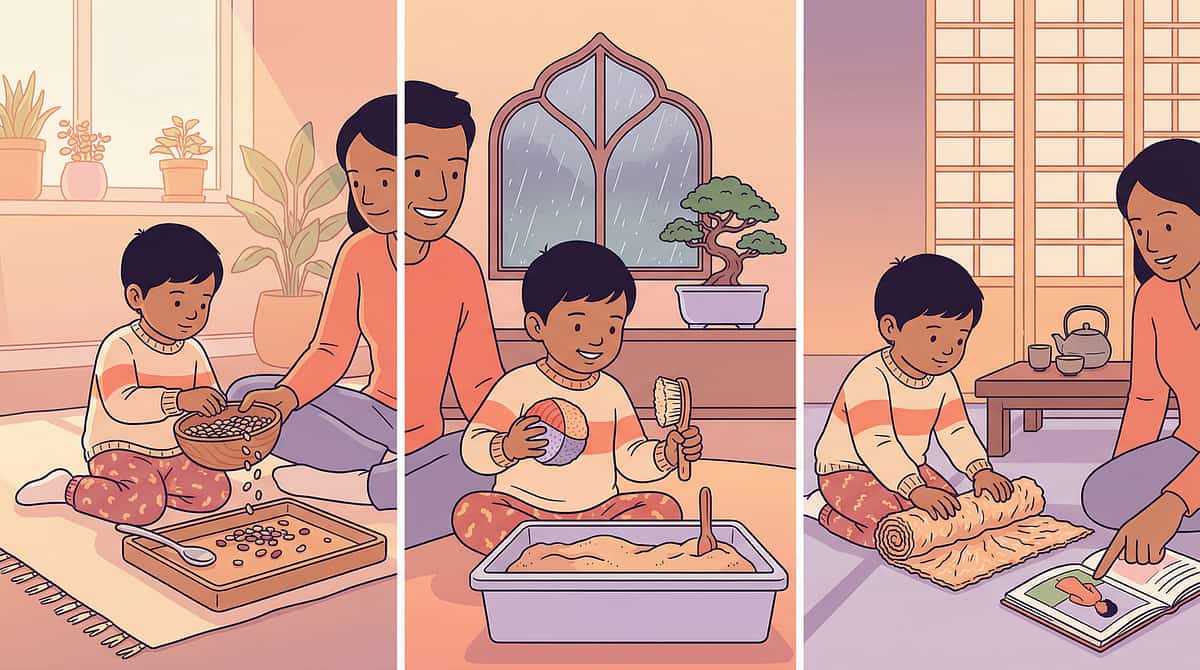
The Environmental Tour — "Come See What I Made"
Children accept modified environments more readily when they are invited to explore rather than placed within them. The space must be introduced as an interesting discovery, not a demand.
Parent Script (Exact Words)
"Hey, I set up something for you. Want to come see?" [neutral, curious tone — not commanding]
(Walk toward the space together. Let the child lead.)
"This is your [quiet zone / work space / calm corner]. What do you think?"
Body Language Guidance
- Stand beside the child, not in front
- Point with open hand (not finger-pointing)
- Stay at child's eye level
- Smile genuinely — your regulated nervous system supports theirs
Acceptance Cues to Look For
- ✅ Child enters space independently
- ✅ Child looks around and explores boundaries
- ✅ Child touches or sits on materials
- ✅ Child uses familiar language ("my spot")
Resistance Cues and Response
- ⚠️ Child hesitates → Wait 30 seconds silently. Don't push.
- ⚠️ Child backs away → "That's OK. We can look from here." Take a step back.
- 🔴 Child becomes distressed → Do not proceed. Document as data. Try again tomorrow.
Timing: 30–90 seconds for this step only.
Step 2 of 6
The Child Explores — The Environment Speaks
Once the child is in the space, let the environmental structure do the work. Resist the impulse to narrate or direct. The materials, boundaries, and organization are communicating already. Timing: 1–3 minutes.
Visual Boundaries First
Walk the perimeter. "This is where our [activity zone] starts and stops."
Work Station Second
"This is where we [work/learn/play]. Everything you need is right here."
Calm Space Last
"And this is a quiet spot. You can use it anytime." [Point, don't lead.]
Child Response Indicators
- Engagement: Touches materials, sits down, begins exploring labeled bins independently
- Tolerance: Stands in space but doesn't engage — acceptable. Dwell time is therapeutic.
- Avoidance: Moves toward exit — redirect gently once, then release. Mark as data.
Reinforcement Cue
"Yes! You're checking it out. That's exactly right."
When the child enters and explores → immediate, genuine praise within 3 seconds. Specific, enthusiastic, real.

Step 3 of 6
Let the Environment Be the Therapist
Invite the child to use the organized space for a preferred, low-demand activity. The environment modification is now active — observe how the child's regulation, engagement, and behavior shift within the modified space versus pre-modification baseline. Duration: 10–20 minutes first session | 20–40 minutes once established.
Activate Lighting
Switch on warm lamp. Observe child's posture and eye behavior within 2–3 minutes.
Offer Noise Reduction
If headphones offered — do not demand. Place beside child as an available option.
Present Workstation Activity
Present a favorite activity WITHIN the workstation. Watch for independent initiation.
Observe Calm Space
Do not direct child here. Wait to see if the child self-selects when needed.
Child Response | Classification | Action | |
Child settles, engages longer than usual | Ideal | Note time, reinforce, continue | |
Child uses space but shows some seeking behaviors | Acceptable | Minor adjustments — add or remove one element | |
Child ignores modifications, regulation unchanged | Data | Note, try one element change at next session | |
Child escalates in modified space | Concerning | Stop, document, seek OT consultation |
Common Execution Errors:❌ Introducing ALL modifications on day one → ✅ Start with ONE change. ❌ Narrating constantly while child explores → ✅ Step back and observe. ❌ Using calm space as timeout → ✅ Calm space is always voluntary, always positive, never punitive.

Step 4 of 6
Consistent Exposure. Gradual Expansion.
Environmental modification is not a one-session fix. It requires consistent exposure over weeks to reshape how a child's nervous system relates to the space. Follow the dosage and variation sequence below.
2–3
Sessions Per Week
15–30
Minutes Per Session
Gradual increase over time
3–4
Weeks to Consolidation
Environmental comfort; 6–8 weeks for behavioral maintenance
Week 1
Introduce 1 modification only — typically lighting or visual boundaries (most impactful for most children).
Week 2
Add second modification. Continue with the first. Observe the cumulative effect.
Weeks 3–4
Add remaining modifications. Observe cumulative effect across all elements.
Weeks 5–8
Begin fading structured adult guidance. The environment should increasingly "run itself."
Satiation Indicators (session is complete): Child begins leaving the defined zone without dysregulation | Child asks for a different activity | Child begins repetitive seeking behaviors within the space. 3 genuinely engaged repetitions of the target activity beat 10 forced ones.

Step 5 of 6
Reinforce the Environment Use, Not Just the Behavior
Reinforce the child's interaction with the modified environment — walking to the calm space independently, choosing the structured workstation, using headphones without prompting — not just the academic or behavioral outcome. Reinforce within 3 seconds of desired environmental behavior. Specific, enthusiastic, genuine.
Child enters workstation independently
"You walked right to your spot! That's exactly it!"
Child uses calm space before escalating
"You went to your calm corner all by yourself. That's so smart."
Child respects zone boundaries
"Look at you — you know exactly where your space is."
Child uses labeled bins correctly
"You found it! Your system is working."
Reinforcement Menu: Use the Reward Jar System ₹589 or Sticker Reward System ₹364 to reinforce environmental self-management behaviors. Token Economy: each independent use of modified environment = 1 token → 5 tokens = preferred reward. Fade token system as environmental use becomes habitual (typically weeks 4–6).
"You noticed you were getting big feelings and walked to your corner. THAT is the win. Not what happened after."

Step 6 of 6
No Session Ends Abruptly — The Environment Transitions You Both
Environmental modification sessions end with a return-to-baseline transition that the environment signals — not just the parent's words. The space teaches the ending, not just the beginning.
2-Minute Warning
Visual timer shows 2 minutes remaining → Point: "Timer says 2 more minutes."
1-Minute Warning
"One more. Then we're all done for today."
Consistent Sound Cue
At end → chime, clap pattern, or song snippet — always the same signal, every session.
Child Participation
"Help me put [one item] back where it belongs." — One-step participation only.
Destination Cue
"After this, we're going to [specific next thing]." — Always name what comes next.
Cool-Down Activity (1–2 minutes)
- Hand the child the transition comfort object — soft toy ₹425
- Or: 5 deep breaths together (model before asking)
- Or: Count down from 5 with child
Resistance to Ending
If child resists session end — do not extend the session. This is not progress; it's difficulty with transitions. Offer transition object. Stay calm. Use countdown. Wait. The visual timer is your ally.
60 Seconds of Data Now — Weeks of Insight Later
Session data from 21 million+ therapy events shows that parents who track 3 data points per session achieve significantly better outcomes than those who don't track at all. Your observation IS clinical data.
Regulation Quality
Scale: 1 (constant dysregulation) → 5 (fully regulated throughout). Record your score within 60 seconds of session end.
Environmental Element Most Helpful
Which element had the most impact today? Lighting | Visual Boundaries | Workstation | Calm Space | Material Access | Transition Cues | Seating | Other
Duration of Regulated Engagement
Minutes of on-task, regulated behavior within modified space. This number should increase each week — that's the intervention working.
Log Your Data
Download Tracking Sheet

Every "Failed" Session Is a Data Session. Here's What the Data Is Saying.
Nothing is wasted. Every session — including those that don't go as planned — generates information about your child's specific environmental needs. Here's how to interpret the most common challenges.
Child refuses to enter the modified space
Why: Predictability preference — the previous (even chaotic) space was at least known. Next time: Modify the space WITH the child present and involved. Let them place one item. Make it collaborative. Reduce scope to 1 change only.
Behavior worsened in the modified space
Why: A modification introduced a NEW sensory trigger (lamp's hum, tape's texture). Next time: Remove all changes except one. Identify the specific trigger. Consult OT for sensory profile assessment. Call 9100 181 181.
Child uses calm space too frequently or won't leave it
Why: Differentiate — is there a demand they're avoiding, or genuine regulation need? If avoidance: reduce overall task demand. If genuine regulation: the calm space is working exactly as intended.
Siblings disrupt the organized space
Next time: Create a "protected space" within a shared room using portable dividers. Establish a visual signal (red card = protected time).
Modifications work at home but not at school
Why: Environmental support is setting-specific initially. Next time: Use the Family Share card (Card 37) to create a teacher communication template. Pinnacle's school liaison service can support. Call 9100 181 181.
Parent finds it hard to maintain organized space consistently
This is the most common challenge. You are not alone. Start with ONE modification that requires zero maintenance (e.g., only the calm space corner). Layer in others as the habit establishes.
🚨Emergency — Severe Distress: Stop immediately. Remove demands. Call 9100 181 181 if escalation is beyond your ability to manage safely.

Your Child Is Unique. This Technique Adapts to Them.
Environmental modification is not one-size-fits-all. Your child's sensory profile, age, and developmental level should shape every aspect of how you implement this technique. Use the adaptations below to personalize your approach.
Sensory Seeker
Seeks intense sensory input:
- Add proprioceptive seating (wobble cushion, therapy ball)
- Create an active zone with defined movement pathway
- Include heavy work materials within workstation (clay, resistance activities)
- Calm space includes deeper pressure options (weighted blanket corner)
Sensory Avoider
Overwhelmed by typical sensory load:
- Maximize noise reduction first (priority intervention)
- Visual declutter before any other modification
- Calm space is the most important element — introduce this first
- Move to lighting modification before any spatial changes
Age-Based Modifications
Ages 2–4
Focus on calm space + 1 boundary marker only. Sessions 10 min max.
Ages 5–7
Introduce structured workstation. Add transition cues. 15–20 min sessions.
Ages 8–12
Child participates in designing their own space. Self-monitoring data card. 20–40 min sessions.
Developmental Level Adaptations
- Emerging language: Use photo labels (not text). Demonstration over verbal instruction.
- Non-verbal: Environmental structure IS the language. Every element communicates without words.
- High cognitive ability with sensory needs: Involve child in environmental audit. Use data language with them.

Week 1–2: Don't Look for Mastery Yet — Look for These Instead
Progress — Tolerance Phase
Weeks 1–2 are about tolerance, not transformation. Changes are happening in the nervous system — they become visible in weeks 3–4.
✅ Observable Indicators — Weeks 1–2
- Child tolerates the modified space for longer than before (even 2 minutes longer)
- Child enters the space without significant resistance
- Child notices and interacts with at least one modification (examines labeled bins, touches boundaries)
- One incident of self-selecting the calm space (even briefly)
- Parent observes one episode of prolonged regulated engagement that wouldn't have occurred pre-modification
❌ What Is NOT Progress Yet (Manage Expectations)
- Generalization to other rooms or school
- Complete elimination of challenging behavior
- Independent management of all sessions
- Consistent preference for structured space over unstructured
"These are weeks 5–8 goals. Weeks 1–2 are about tolerance, not transformation."
"If your child tolerates the modified space for 3 seconds longer than last week — that is measurable, real, neurological progress."
You may feel that nothing is changing. The data you're recording now is the bridge to that visibility. Source: Systematic review (Children, 2024): Sensory and environmental intervention outcomes emerge across 8–12 week timelines. PMC11506176

Week 3–4: The Neural Pathways Are Forming — Watch for These Signals
Progress — Consolidation Phase
The nervous system is adapting. Behavioral changes are becoming visible and measurable.
✅ Consolidation Indicators
- Child anticipates the space — walks toward workstation when activity time arrives
- Child independently retrieves materials from labeled bins
- Child begins using calm space pre-emptively (before escalation, not after)
- Challenging behaviors in modified space showing downward trend
- Child protests slightly less at session end
- Parent reports feeling more confident running sessions
Spontaneous Generalization Seeds
"He organized his toys in his bedroom the same way." — This is emergent generalization. Note it. It's significant.
"She went to sit quietly in the corner of the classroom." — The space-seeking behavior is generalizing. Document this.
"She went to sit quietly in the corner of the classroom." — The space-seeking behavior is generalizing. Document this.
When to Increase Intensity
- All Week 1–2 indicators solid → increase session duration by 5–10 minutes
- Child self-initiating space use → reduce structured adult prompting
- Calm space use consistent → introduce mild demand within calm space
"You may notice that you're more confident too. That you're reading the room and the child together. That is a genuine clinical skill you have developed. It matters." — Pinnacle Clinical Team
Week 5–8: The Space Has Become the Teacher
Progress — Mastery Phase
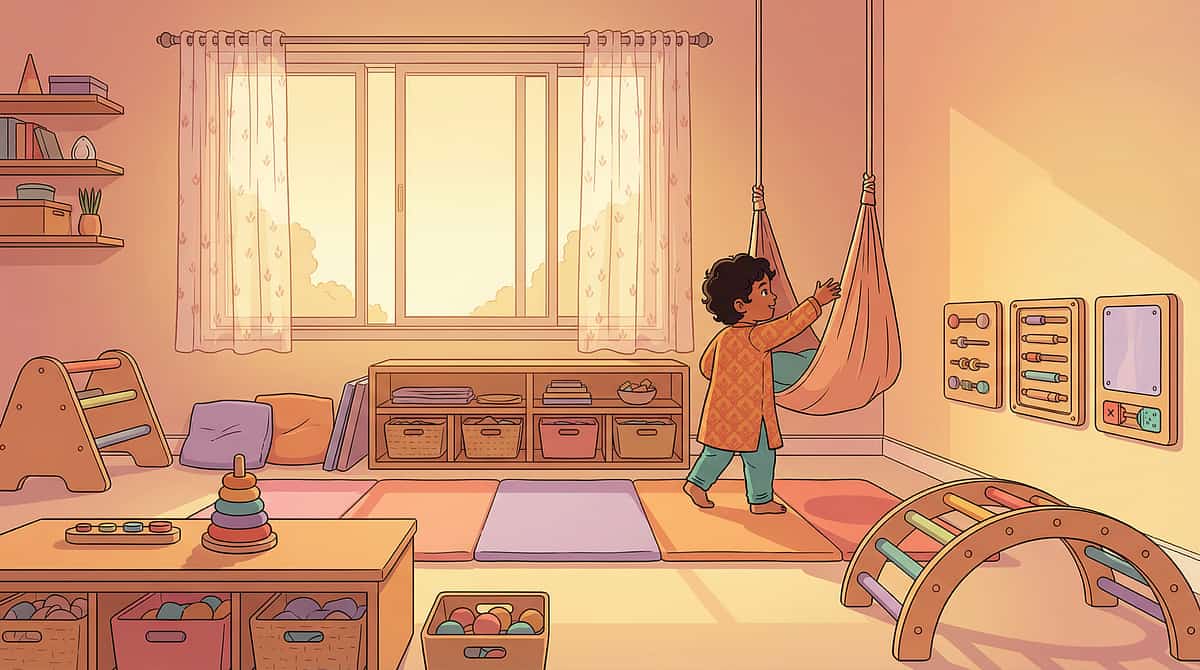
Independent environmental navigation. The space is running itself.
🏅 Mastery Criteria (Observable, Measurable)
- Child independently enters, uses, and exits all defined zones without adult direction
- Child self-selects calm space reliably when regulation is needed, pre-escalation
- Challenging behavior in modified environment reduced by ≥ 50% from baseline
- Child maintains behavior in the space when adult briefly leaves
- Child shows distress when the space is disrupted (demonstrates it has become a regulatory anchor)
Generalization Indicators
- ✅ Regulated behavior appearing in other structured environments
- ✅ Child communicates an environmental need: "It's too loud," "I need my corner"
- ✅ Child helps set up their own space for sessions
Maintenance Check
Remove one environmental support for 2–3 sessions. Does regulation maintain? If yes → support is no longer needed, fade further. If no → support was still necessary, restore and continue.
When to Move to Next Level
→ Proceed to D-355: Visual Supports for Behavior Prevention

You Did This. Your Child Grew Because You Created the Space.
You spent weeks learning that your child's environment was speaking to their nervous system in a language that behavior analysts, occupational therapists, and neurodevelopmental physicians have spent decades decoding. Then you changed the space. And the behavior followed.
You Conducted an Environmental Audit
Like a clinical professional — systematic, evidence-based, and child-specific.
You Modified the Space
Lighting, boundaries, or organization — one evidence-based change at a time.
You Created a Calm Space
That your child chose to use voluntarily — a genuine regulatory anchor.
You Tracked the Data
Through sessions and watched a number increase — week after week, measurably.
📷Take a photo of the modified space today. Write one sentence: "What changed in the last 8 weeks." This is your clinical record. Keep it.
Family Celebration: Let your child lead the family on a tour of their space. They'll show you their calm corner, their work spot, their bins. Watch their pride. That pride is the deepest outcome metric.
"From fear to mastery. One technique at a time." — The Pinnacle Blooms Consortium

Even After Progress — Know When to Pause and Call
Progress is real — and so are the moments that require you to pause. These red flags are signals from your child's nervous system, not failures. Trust them. Act on them.
🚨 New Self-Injurious Behavior
Head-banging, biting, scratching appearing specifically within the modified space or in response to environmental changes. May indicate a specific environmental element creating extreme distress. Stop all modifications. Restore original space. Call 9100 181 181.
🚨 Significant Sleep Regression
Sleep quality worsening after environmental changes were introduced — changes at home can disrupt circadian predictability. Restore bedroom environment completely. Introduce modifications only to therapy/play space.
🚨 Complete Behavioral Regression
Skills or behaviors that had been stable are suddenly deteriorating despite environmental supports — may indicate a setting event change (illness, life change), not an environmental modification failure. Medical check first. Pause protocol. Consult BCBA/OT.
🚨 Extreme Distress at Environmental Unpredictability
Child becomes severely dysregulated at any furniture rearrangement, even minor — may indicate need for assessment of OCD/rigidity spectrum features alongside environmental needs. Teleconsultation with Pinnacle NeuroDev team. Call 9100 181 181.
📞Escalation Pathway: Self-observe → Teleconsultation → Center visit → Crisis support. Find nearest Pinnacle center | 9100 181 181 | 24x7 | 16+ languages
You Are Here — And Here Is Where the Journey Continues
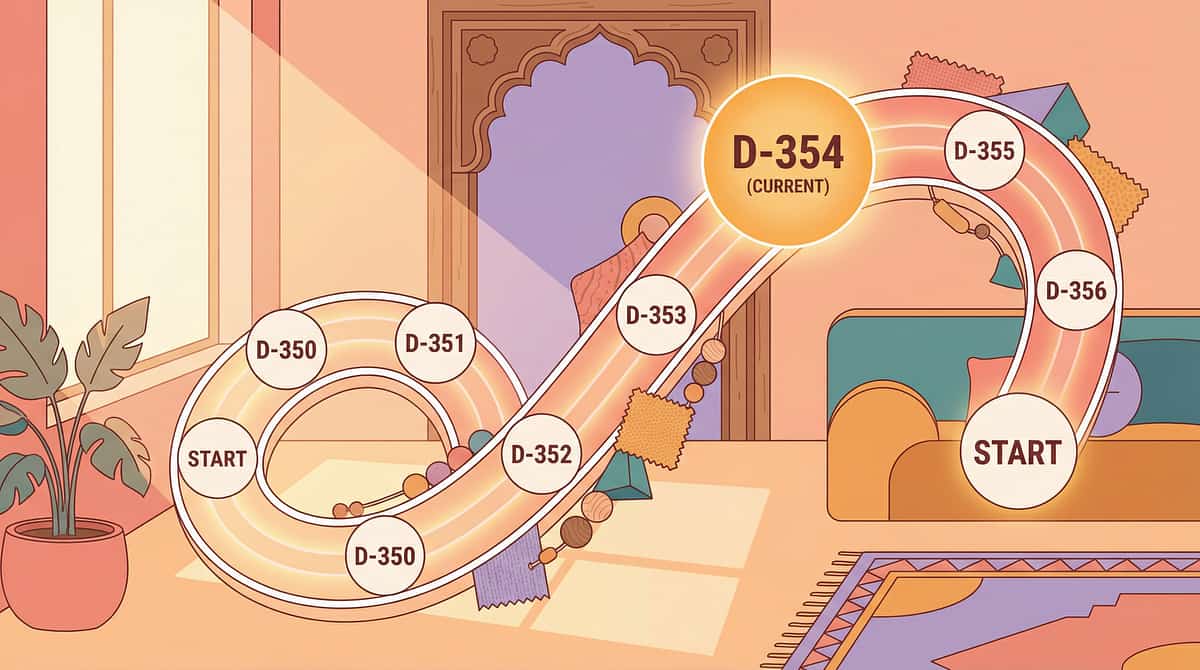
D-354 does not stand alone. It is one precisely placed step in the Behavioral Antecedent Intervention sequence — and the foundation for everything that follows. Choose your path forward based on how your child responded.
Path A: Visual/Spatial Response
Child responded strongly to visual/spatial modifications → D-355: Visual Supports for Behavior Prevention. Adds visual schedules, First-Then boards, choice boards to the environmental foundation.
Path B: Routine/Transition Response
Child responded strongly to routine/transition cues → D-356: Schedule and Routine Modifications. Deepens the predictability layer built in D-354.
Path C: Primary Sensory Driver
Sensory sensitivities are the primary driver → A-100: Sensory Environment Deep-Dive. Pairs with OT sensory profile assessment (available via 9100 181 181).
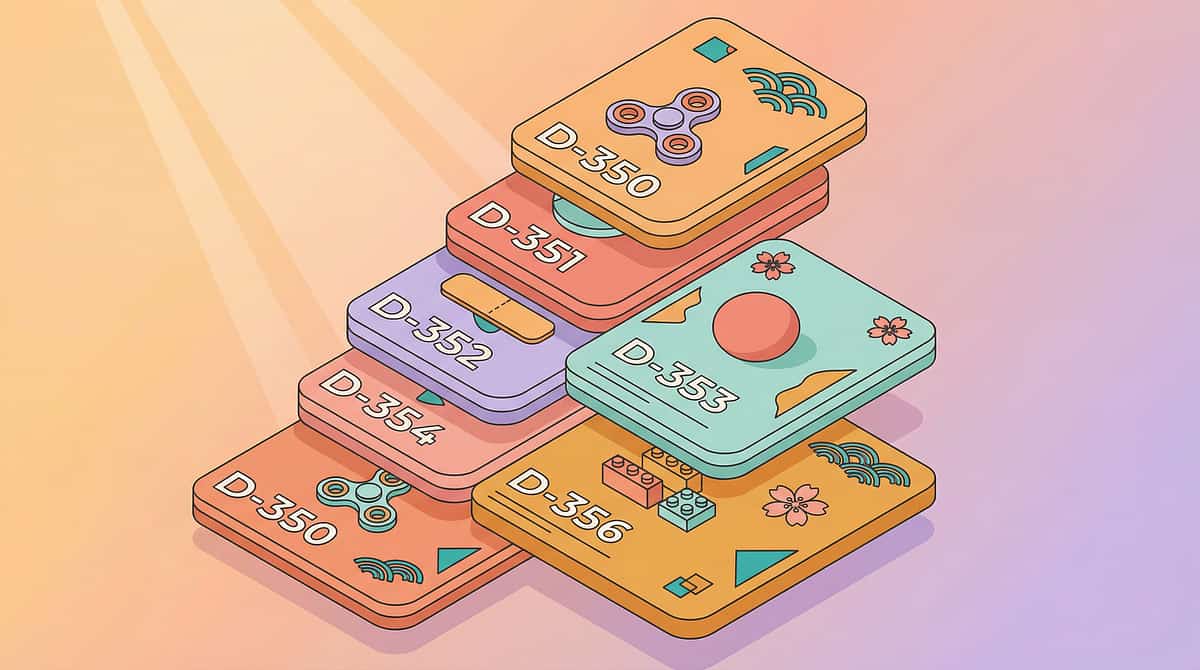
Building the Full Antecedent Intervention Stack
D-354 is the core technique in the Behavioral Antecedent series. If you have the Visual Boundary Markers and Reward System from D-354, you already own the materials for D-355 and D-356. The Canon system was designed so each technique builds on the last.
Technique ID | Level | Setting | Primary Material | |
D-350 | 🟢 Intro | Setting Events Overview | Knowledge | |
D-351 | 🟢 Intro | Sleep and Behavior | Sleep Tools | |
D-352 | 🟢 Intro | Hunger and Behavior | Nutrition Tracking | |
D-353 | 🟢 Intro | Illness and Behavior | Health Monitoring | |
D-354 | 🟡 Core | Environment Modifications | Full 9-Material Kit ← YOU ARE HERE | |
D-355 | 🟡 Core | Visual Supports for Behavior | Visual Schedules | |
D-356 | 🟡 Core | Schedule and Routine Mods | Visual Timers |
Cross-Domain Related
A-100: Sensory Overload in Classroom | D-400: Transition Difficulties | K-950: Creating a Sensory-Friendly Home | K-965: Working with Schools on Environmental Accommodations
One Technique. One Domain. One Piece of a Complete Developmental Journey.
Your child's challenges don't organize themselves by therapy type. Environmental sensitivity affects communication, sensory processing, social participation, and daily living simultaneously. D-354 is a cross-domain investment.
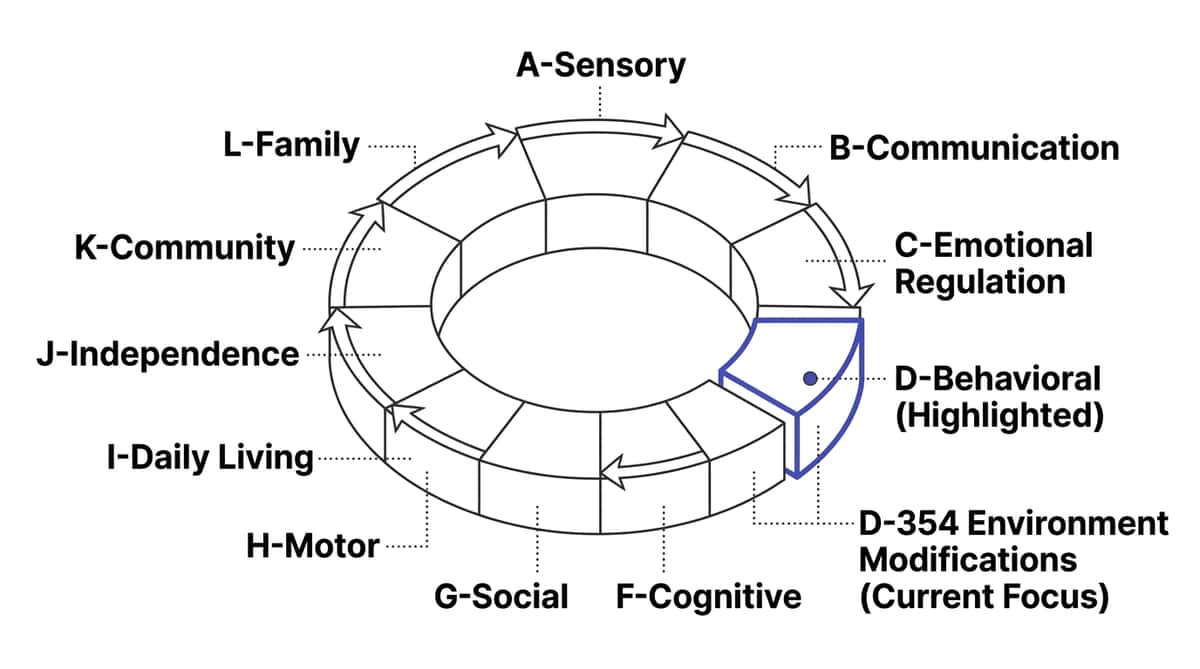
Domain D Status
Environmental modification is one of the first antecedent interventions in the behavioral domain — it sets the foundation for all subsequent behavioral techniques by removing environmental triggers before skill-building begins.
GPT-OS® Integration
→ AbilityScore® tracks your child's position across all domains simultaneously.
Source: WHO/UNICEF Nurturing Care Framework: Five components of nurturing care require holistic developmental monitoring. WHO NCF (2018) | UNICEF 2025 Country Profiles (42 indicators)
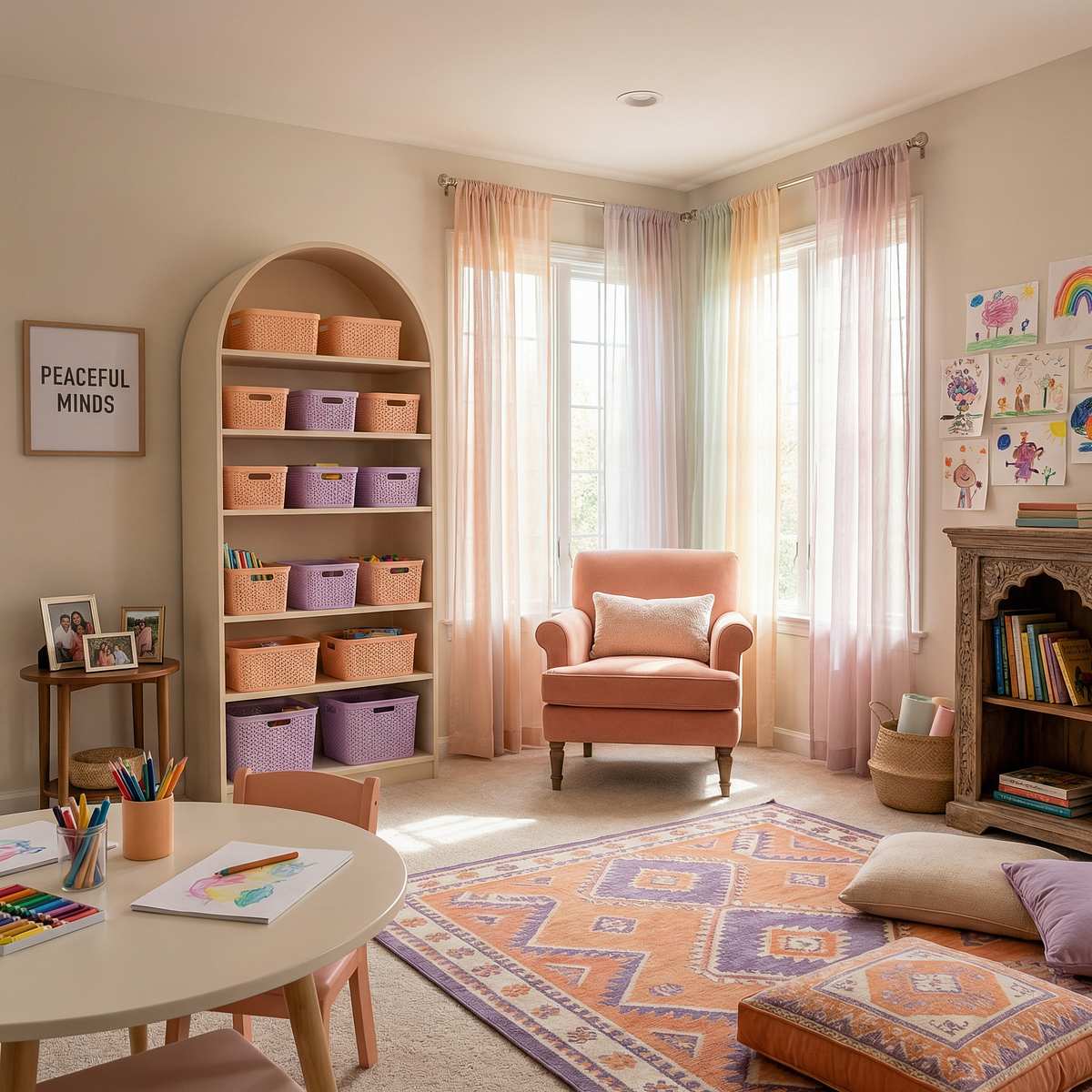
From Chaos to Calm — Real Families, Real Transformations
All vignettes anonymized. Outcomes vary by child profile. Illustrative cases from Pinnacle center clinical records.
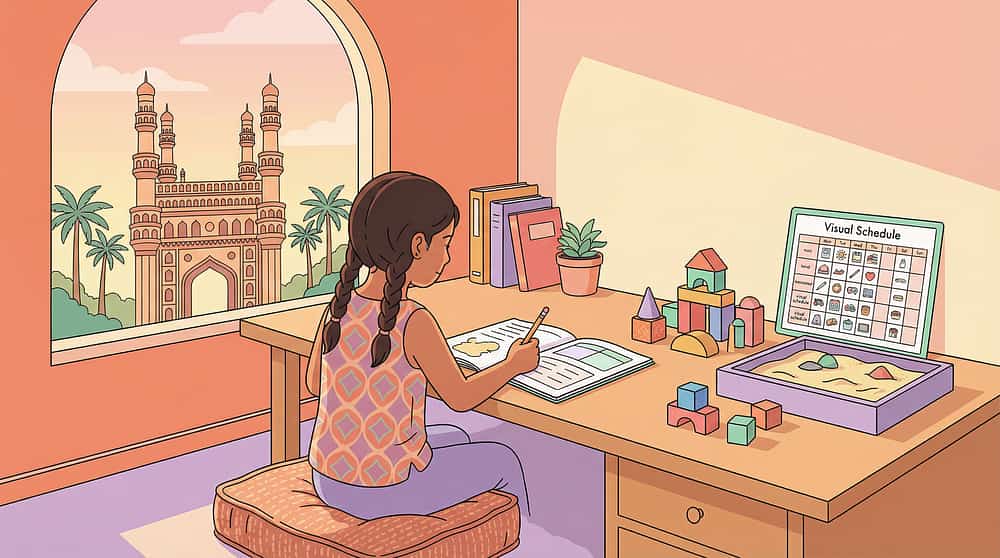
Ananya's Story — Age 6, Hyderabad
Before: "Every morning was a battle. She'd walk into the kitchen — where we tried to do homework — and within 5 minutes she was under the table, hands over ears, crying. We thought it was the homework. It wasn't. It was the kitchen."
After (Week 6): A corner of the bedroom was cleared, a soft lamp added, her books placed in labeled bins. Same homework. Different space. "She sits down and starts. I'm not even in the room anymore. The room happened."
After (Week 6): A corner of the bedroom was cleared, a soft lamp added, her books placed in labeled bins. Same homework. Different space. "She sits down and starts. I'm not even in the room anymore. The room happened."
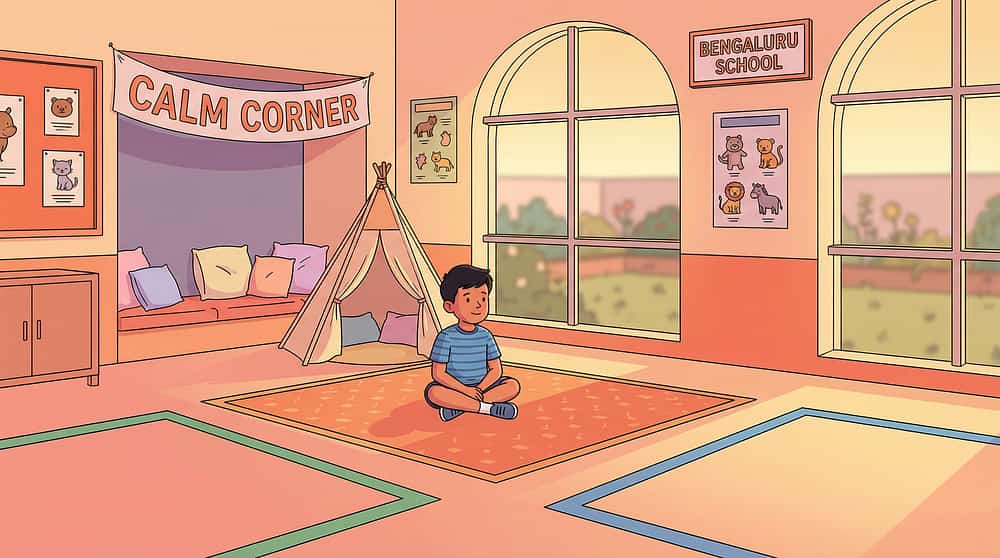
Arjun's Story — Age 4, Bengaluru
Before: "School called every single day. He can't sit still, he's disrupting the class, he refuses to transition. We were terrified."
After (Week 8): Carpet squares at each child's position, floor tape defining movement zones, a quiet corner with a calming basket. Arjun's transition incidents: 8/week → 1/week."The teacher said she doesn't know what changed. We do. The room did."
After (Week 8): Carpet squares at each child's position, floor tape defining movement zones, a quiet corner with a calming basket. Arjun's transition incidents: 8/week → 1/week."The teacher said she doesn't know what changed. We do. The room did."
"We changed the room. We got our child back. The room was always talking to him. We just didn't know how to hear it." — Father, Pinnacle parent network
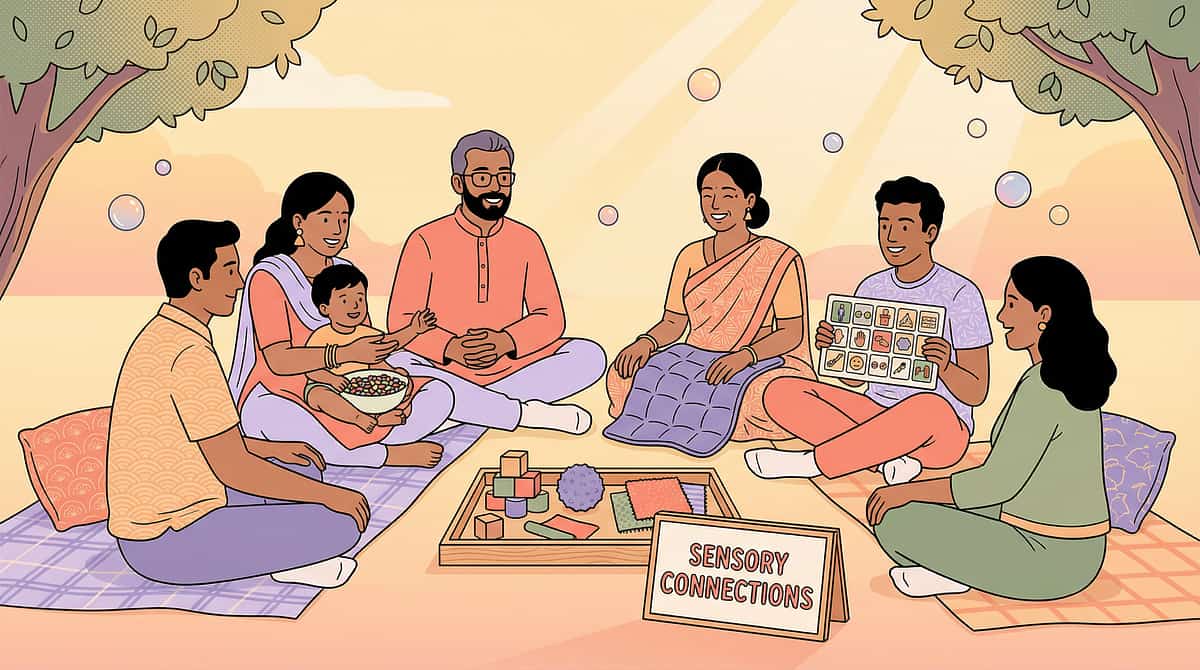
Isolation Is the Enemy of Consistency — Your Community Is Here
You are not the first parent to discover that the room was the problem. You are not the only one learning to design for your child's nervous system. Connect with those who understand — because they've been exactly where you are.
Parent WhatsApp Community
Pinnacle Parent WhatsApp Community — Behavioral Support Group. Share photos of setups, ask questions, celebrate wins. → Join at pinnacleblooms.org/community
Online Parent Forum
Pinnacle Parent Hub — searchable threads on environmental setup, school accommodation letters, what worked, what didn't. → Pinnacle Parent Hub (online)
Peer Mentoring Program
Connect with a parent who completed D-354 and D-355 and is willing to share their journey. Available via 9100 181 181 (request peer mentor program).
Local Pinnacle Parent Meetups
Available at 70+ centers across India. Call 9100 181 181 to find your nearest meetup date and connect face-to-face with families on the same journey.
"If you've completed 8 weeks of D-354 and seen change — your story could become Card 33 for another family starting today. Share your journey. Every data point you contribute improves GPT-OS® recommendations for every child like yours."

Home + Clinic = Maximum Impact. Your Professional Team Is 70+ Centers Strong.
In Pinnacle's 21 million+ session dataset, children whose home-based environmental modifications were reviewed and guided by a clinic-based OT showed 40% faster progress than those using home modifications alone. The combination is the intervention.
Need | Specialist | How to Access | |
Sensory environment audit | Occupational Therapist (OT) | Book via 9100 181 181 | |
Behavioral function assessment | BCBA / Behavior Analyst | Book via 9100 181 181 | |
TEACCH workstation design | Special Educator | Book via 9100 181 181 | |
School accommodation letter | SpEd + OT jointly | Book via 9100 181 181 | |
Medical sensory assessment | NeuroDev Pediatrician | Book via 9100 181 181 |
Find Your Center
Teleconsultation
→ Book a 30-minute teleconsult on Environmental Modification — across India | 16+ languages | selected insurance panels
📞FREE National Autism Helpline: 9100 181 181 — to book, inquire, or simply ask a question. 24x7 | 16+ languages | Answered by trained specialists.

The Science Behind Every Square Meter You've Modified
D-354 evidence sits primarily at Systematic Review and RCT levels — the highest tiers of clinical evidence. These are not theoretical frameworks; they are replicated findings across thousands of children and decades of research.
PRISMA Systematic Review (2024)
16 studies (2013–2023): Environmental and sensory-based interventions meet criteria for evidence-based practice in ASD. → PMC11506176 on PubMed
Meta-Analysis, World J Clinical Cases (2024)
24 studies: Environmental + sensory interventions effectively promoted adaptive behavior, social skills, sensory processing, and motor skills. → PMC10955541 | DOI: 10.12998/wjcc.v12.i7.1260
TEACCH Program (Mesibov et al.)
Structured teaching environments demonstrate replicated efficacy across cultures and decades. Environmental structure is the primary intervention vehicle. — University of North Carolina Chapel Hill
Cooper, Heron & Heward — ABA (3rd Ed.)
Antecedent modification classified as the most efficient behavioral intervention class — changing antecedents prevents behavior more efficiently than consequence management.
Padmanabha et al., Indian J Pediatrics (2019)
Indian RCT: Home-based structured interventions demonstrated significant outcomes in the Indian pediatric population. → DOI: 10.1007/s12098-018-2747-4
NCAEP Evidence-Based Practices (2020) + WHO NCF (2018)
Environmental supports classified as evidence-based for autism intervention across age ranges and settings. WHO Nurturing Care Framework validates early environmental awareness. → nurturing-care.org

Questions Parents Actually Ask — From the Pinnacle Helpline Database
Q: My child is fine in some messy environments but not others — how do I know which factors are triggers?
Use the Environmental Audit Checklist (Material 9) to assess lighting, noise, visual clutter, spatial organization, material accessibility, and traffic flow systematically. Note which specific elements correlate with behavioral changes. If pattern is unclear after 2 weeks, book an OT assessment via 9100 181 181.
Q: My child's school won't make environmental modifications — what can I do?
An OT or BCBA's written recommendation carries clinical authority for school IEP/504 discussions. Download our School Accommodation Letter template from Card 37. Pinnacle's OT team can provide a written environmental assessment report. Contact us via 9100 181 181.
Q: How long before I see results from environmental modifications?
Initial tolerance improvements: 1–2 weeks. Consolidation (child self-selecting modified space): 3–4 weeks. Behavioral reduction measurable: 5–8 weeks. Full generalization: 8–12 weeks. These timelines apply to consistent, daily exposure — not occasional use.
Q: Can I do all 9 modifications at once?
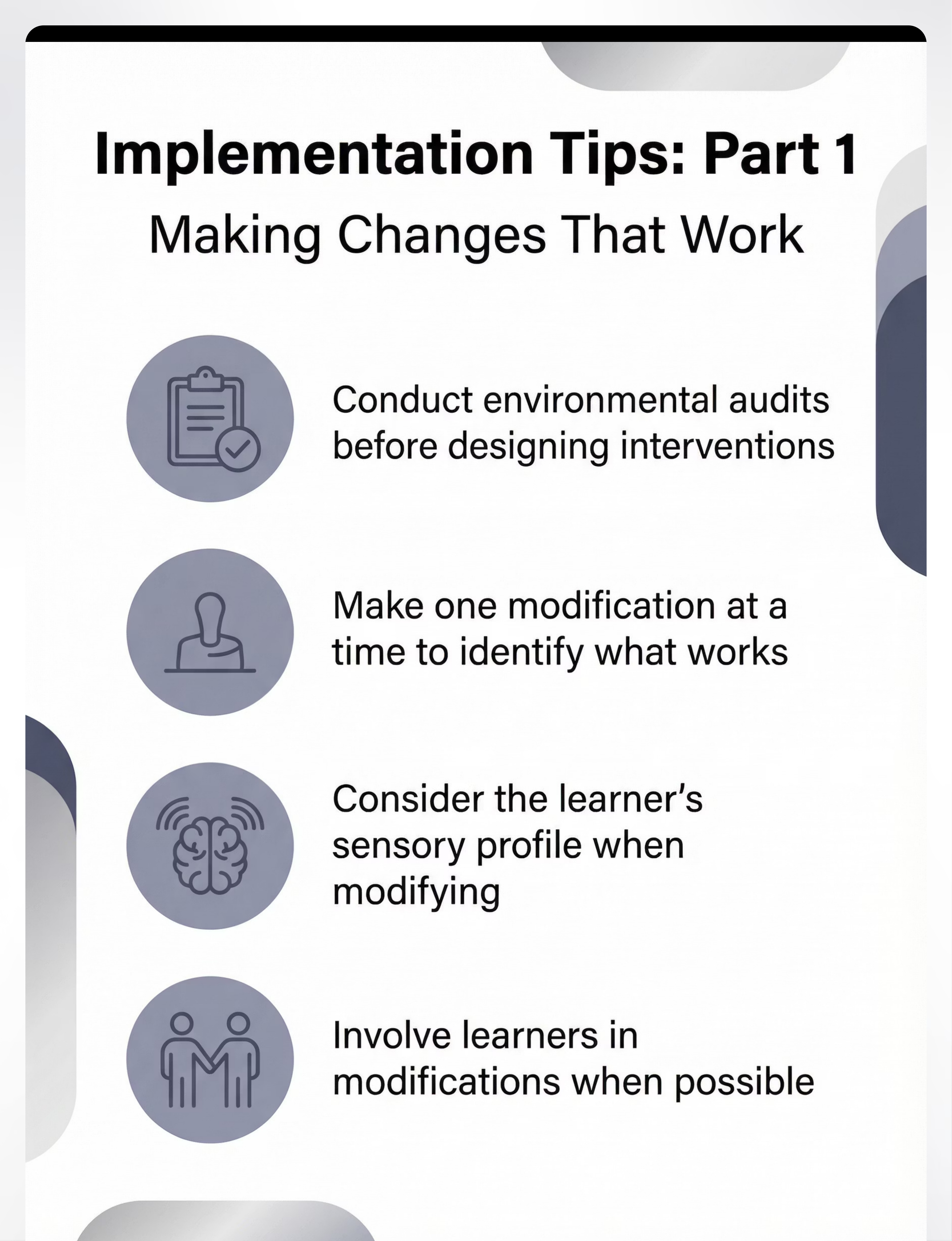
Clinically, no. When you change multiple variables simultaneously, you cannot identify which is producing behavioral change. Start with 1 modification, observe for 5–7 days, then add the next. The Environmental Audit Checklist helps you prioritize which to start with based on your child's specific profile.
Q: The calm down space keeps becoming a play space — how do I maintain its function?
Keep the calm space exclusively calm — no preferred toys that create excitement, only self-regulation tools (soft items, fidgets, quiet visuals). Introduce a visual signal for the space (specific color, specific object) that is only present when in "calm mode." Do not allow play activities in the calm space.
Q: My child is 10 years old — is this still applicable?
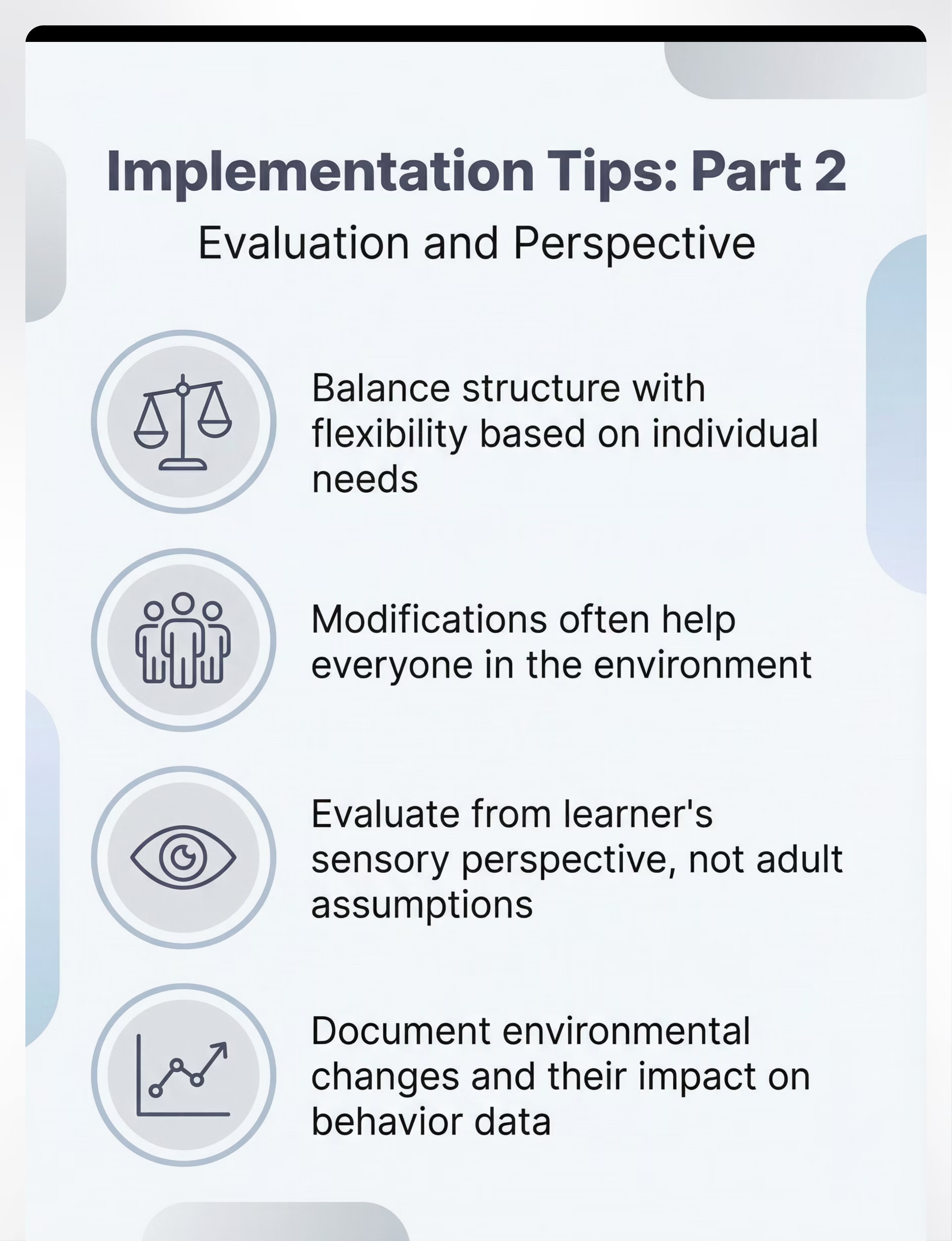
Yes. Environmental modification is age-agnostic — the neurological mechanism doesn't change. For older children (8–12), involve the child in designing their own space, teach them to articulate environmental needs ("I need the lights dimmer"), and use the audit checklist collaboratively. Self-advocacy for environmental needs is a life skill.
Q: We live in a small home with 5 family members — how do I create environmental structure in a crowded space?
Environmental modification is about defined spaces and signals, not square footage. A corner of a shared room can be the structured workstation. A specific mat on the floor can be the calm space. A consistent time of day can be the protected session. Start with the smallest modification first — the single visual boundary marker — and build from there.

You've Read the Science. You Have the Materials. One Step Remains.
Every day without an environmental modification is a day the space continues to work against your child. Start today. The 9 materials are within reach. The technique is evidence-based. The support is a phone call away.
20M+ Sessions
97%+ Measured Improvement | 70+ Centers | GPT-OS® Powered
Free Helpline
📞 9100 181 181 | 24x7 | 16+ languages | Trained specialists
🏛️Validated by the Pinnacle Blooms Consortium — Occupational Therapy • Speech-Language Pathology • ABA/BCBA • Special Education • NeuroDev Pediatrics • CRO | WHO/UNICEF Aligned | GPT-OS® Powered
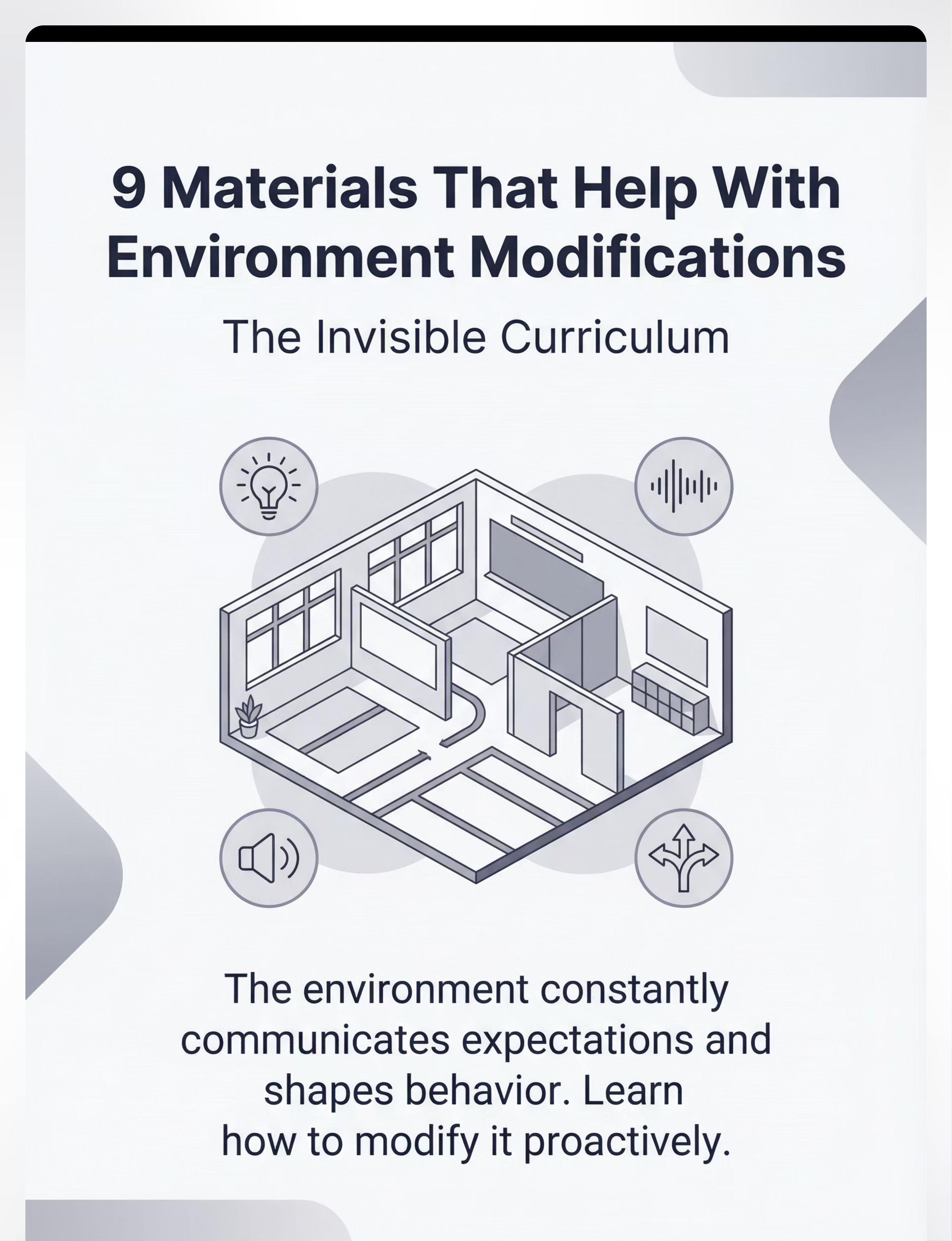
Preview of 9 materials that help with environment modifications Therapy Material
Below is a visual preview of 9 materials that help with environment modifications therapy material. The pages shown help educators, therapists, and caregivers understand the structure and content of the resource before use. Materials should be used under appropriate professional guidance.


Link copied!

From Fear to Mastery. One Technique at a Time.
Pinnacle Blooms Network® exists to transform every home into a proven, scientific, 24×7, personalized, multi-sensory, multi-disciplinary pediatric therapy environment — powered by GPT-OS® and built by the world's largest integrated consortium of pediatric therapy expertise. D-354 is one of 70,000+ such technique pages. Each one a precision instrument. Each one backed by evidence. Each one built for you.
🔝 Return to Top
→ Return to Card 01 — The Recognition Moment
📖 Browse All Behavioral Techniques
→ techniques.pinnacleblooms.org/behavioral
→ Next: D-355
→ D-355: Visual Supports for Behavior Prevention
← Previous: D-353
→ D-353: Illness and Behavior
This page is educational and does not replace assessment by a licensed occupational therapist, behavior analyst, or special educator. Environmental modifications should be individualized based on each child's sensory profile, developmental needs, and functional assessment. Consult qualified professionals for comprehensive environmental assessment before implementing modifications for children with complex behavioral or medical needs.
Individual results may vary. Statistics represent aggregate outcomes across the Pinnacle Blooms Network®. © 2026 Pinnacle Blooms Network®, a unit of Bharath Healthcare Laboratories Pvt. Ltd. All rights reserved.
CIN: U74999TG2016PTC113063 | DPIIT: DIPP8651 | MSME: TS20F0009606 | GSTIN: 36AAGCB9722P1Z2
→ THE LOOP RESTARTS: Your next technique: D-355: Visual Supports for Behavior Prevention — building directly on the environmental foundation you've just created.