

9 Materials That Help With Consistent Responses
D-359 | Behavior & Emotional Regulation Series — When every caregiver responds differently, your child learns who to ask — not how to behave. This is the system that changes that.
ABA/BCBA Lead
Age 2–12 Years
All Settings
Multi-Caregiver
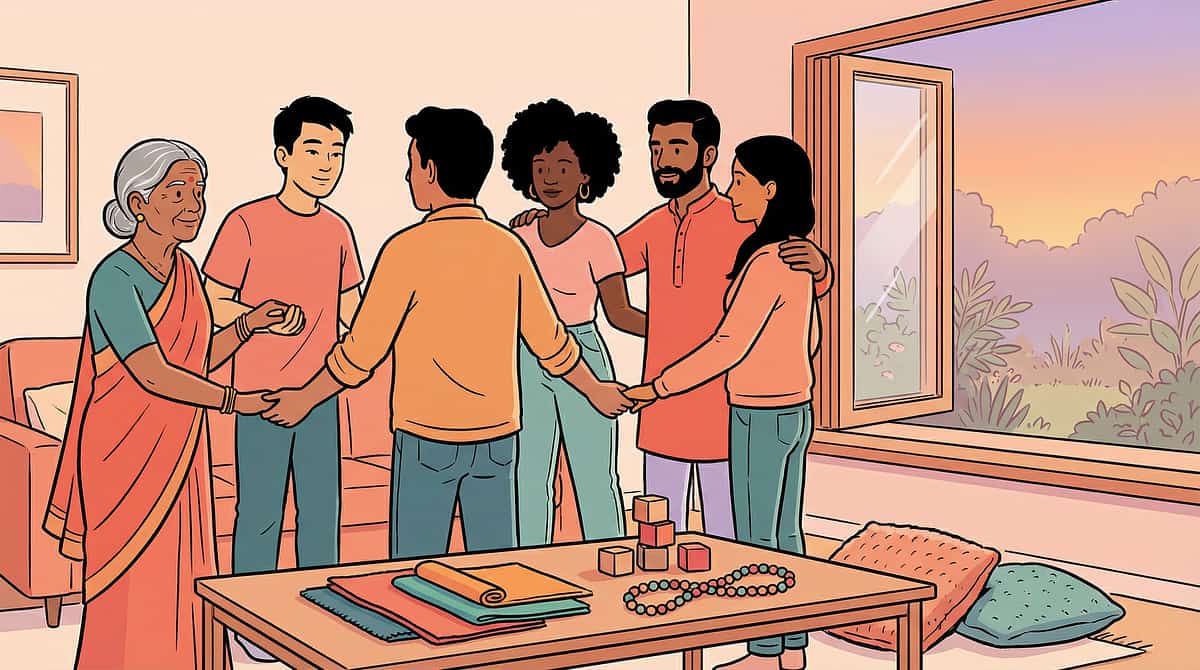
The Recognition Moment
"Dad says yes. Mom says no. Grandma overrides everyone."
Your child has figured out exactly who to ask for what — and it's why behavior isn't changing.
"My husband and I handle things completely differently. I say no to screen time — he gives it. I use time-outs — he gives warnings. Grandma thinks we're too hard on him and sneaks him treats anyway. My son has become a master at reading who will cave first. His therapist keeps saying 'consistency' matters — but how do we get everyone on the same page? I need a system that doesn't depend on memory or mood." — Parent, Pinnacle Network (composite narrative)
You are not failing. Inconsistency across caregivers is the single most common barrier to behavior change in pediatric intervention. There is a system for this.

You Are Not Alone — The Numbers
Treatment integrity — the degree to which all caregivers respond consistently — is the strongest predictor of behavioral intervention success. You are not dealing with a child who is "too difficult." You are dealing with a system that hasn't been unified yet.
80%
Caregivers as Barrier
of children with ASD experience behavioral inconsistency across caregivers as a primary barrier to progress
1 in 36
US ASD Rate
children diagnosed with ASD in the US; India estimates 1 in 30 based on NIMHANS regional surveys
97%+
Improvement Rate
when treatment integrity (consistent responses) is maintained across caregivers — Pinnacle GPT-OS® 20M+ sessions

Why Inconsistency Makes Behaviors Harder to Change
The Science
Intermittent Reinforcement Trap: When a behavior sometimes works and sometimes doesn't — depending on which caregiver, which mood, which day — children learn that persistence pays off. Slot machines use this principle.
The Predictability-Anxiety Connection: Children with autism, ADHD, and sensory processing differences have elevated needs for environmental predictability. Uncertainty drives anxiety, which drives more behavior.
Treatment Integrity: Procedural fidelity across all caregivers is the single strongest predictor of intervention success in applied behavior analysis research.
Plain English
"Your child isn't manipulating you. Your child is reading their environment perfectly."
When hitting results in a hug from Dad, a time-out from Mom, and candy from Grandma — your child isn't learning to stop hitting. They're learning which adult to hit near.
The solution isn't punishment. It's predictability. When every caregiver responds the same way, every time — there's nothing to test. Behavior changes faster because the environment is finally consistent.
The prefrontal cortex — responsible for learning rules and predicting consequences — depends on consistent input to form stable behavioral expectations.

Caregiver Consistency Across Every Developmental Stage
Consistency matters differently at each age — but it never stops mattering. Children with ASD, ADHD, ODD, or anxiety experience inconsistency with 3–5× greater impact on behavior compared to neurotypical children.
Ages 2–3
Establishing cause & effect. Any inconsistency at this stage delays learning by weeks. Highest need for caregiver unity.
Ages 3–5
Testing Phase — biologically programmed. Children are actively mapping which adults enforce which rules.
Ages 5–8
Cross-Setting coordination critical. School, home, grandparents — each with different systems. Most families seek help here.
Ages 8–12
Negotiation Phase — more capacity, but unified adult expectations remain critical for core behavioral boundaries.

This Is Not Parenting Opinion. This Is Behavioral Science.
🛡️ Level I Evidence
Systematic Reviews + RCTs
Finding | Source | Grade |
Treatment integrity is the primary predictor of behavioral intervention success | Journal of Applied Behavior Analysis | Level I |
Caregiver training produces 40–60% faster behavior change | Behavior Analysis in Practice, 2022 | Level II |
Cross-setting consistency doubles generalization of skills | NCAEP Evidence-Based Practices Report (2020) | Level I |
Written protocols increase caregiver fidelity by 67% | ABA treatment integrity research | Level II |
Visual supports are evidence-based practice for autism | NCAEP 2020 | Level I |
"When responses are implemented with high fidelity, interventions produce dramatically better outcomes than the same interventions implemented inconsistently — regardless of the quality of the intervention itself." — ABA Research Consensus

D-359: What This Technique Is
Technique Identity
D-359
Consistent Response Protocol System
Parent alias: "The Same Page System"
Consistent Response Protocol System
Parent alias: "The Same Page System"
Domain: Behavior Management / Caregiver Coordination
Clinical Term: Treatment Integrity / Procedural Fidelity
Clinical Term: Treatment Integrity / Procedural Fidelity
ABA/BCBA Primary
Age 2–12
All Settings
Definition
A structured approach to ensuring that all caregivers — parents, grandparents, teachers, babysitters — respond to the same behaviors in the same way, every time, using externalized tools that do not rely on memory or mood.
Rather than depending on individuals to remember agreed-upon responses, this system places behavioral guidance in the environment itself: on walls, on cards, in logs, in timers, and in structured meetings.
"This is the system that gets everyone literally on the same page — so your child stops testing, and you stop arguing about who was right."

Six Disciplines. One Unified System.
Your child benefits from all of them working together. Behavior doesn't organize itself by therapy type — one unified system, across all people, is the only thing that changes it.
ABA / BCBA (Primary Lead)
Designs behavior response protocols, consequence menus, and treatment integrity monitoring. Conducts functional behavioral assessments.
Special Education (SpEd)
Implements consistent response systems in school. Bridges home and school through IEPs and behavior intervention plans.
Speech-Language (SLP)
Ensures consistent language — exact words, tone, and phrasing — in response to communication breakdowns across all caregivers.
Occupational Therapy (OT)
Addresses sensory triggers that make behaviors more likely — informing when consistency protocols apply vs. when sensory regulation takes priority.
NeuroDevelopmental Pediatrician
Oversees medical context — ADHD medication timing, sensory thresholds, and comorbidity factors affecting protocol modification.
Family Consultation (CRO)
Facilitates the hardest part: getting all caregivers to agree, navigate differences in parenting philosophy, and maintain alignment over time.

What D-359 Targets — Precisely
This is a precision system. Observable indicator of success: child receives the same response to the same behavior from all adults, every time. Child stops testing caregivers for different outcomes. Behavior change accelerates across all settings simultaneously.
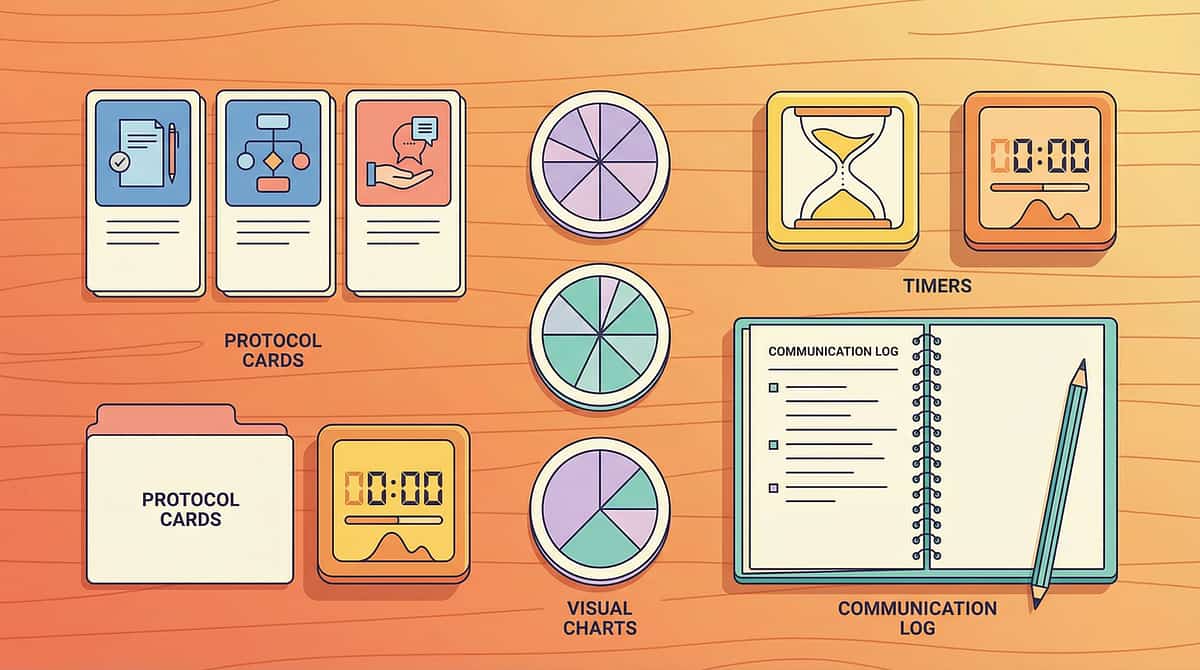
9 Materials That Externalize Consistency
So it doesn't live only in people's heads. Total system cost: ₹1,200–4,600 comprehensive | ₹0–500 DIY starter kit.
# | Material | Function | Price Range |
1 | Written Behavior Response Protocols | Same response, every time, everyone | ₹100–400 |
2 | Visual Response Flowcharts | Quick decision guidance when you freeze | ₹150–500 |
3 | Caregiver Communication Logs | What one caregiver knows, all know | ₹100–350 |
4 | Unified Rules & Expectations Charts | Same expectations, posted, visible | ₹150–500 |
5 | Response Consistency Checklists | Self-check: Did I follow the plan? | ₹100–300 |
6 | Team Meeting Structures & Agendas | Regular coordination, not one-time agreement | ₹50–200 |
7 | Consequence Menus & Response Cards | Pre-agreed, same consequence, every time | ₹100–350 |
8 | Visual Timers & Cuing Systems | Same timing, every caregiver, every time | ₹300–800 |
9 | Caregiver Training & Practice Materials | Everyone learns the same approach | ₹300–1,500 |
Every Family, Every Budget — Zero-Cost Versions Exist
"Evidence-based intervention must reach every family, regardless of economic access. The therapeutic principles are the same whether the materials cost ₹5,000 or ₹0." — WHO Nurturing Care Framework (2018)
Buy Version
Written Protocols
Printed laminated cards
Visual Flowcharts
Printed color charts, A3 laminated
Communication Logs
Dedicated notebook
Visual Timers
Time Timer®, sand timers (₹300–800)
Training Materials
Professional guides, video subscriptions
₹0 DIY Version
Written Protocols
Handwritten on A4, covered in clear tape
Visual Flowcharts
Hand-drawn on chart paper with markers
Communication Logs
Any notebook + 5 columns drawn by hand
Visual Timers
Phone timer + free apps (VisuTimer, Tiimo)
Training Materials
Video calls with therapist + role-play practice
The technique's power comes from agreement and consistency — not material cost. A handwritten protocol that everyone follows beats a laminated one that gathers dust.

Safety First: Read This Before You Begin
Every caregiver must understand these boundaries. These are non-negotiable.
🔴 Absolute Stop Conditions
- Any caregiver using physical force, threats, or removal of basic needs as consequences — stop immediately
- Child showing signs of acute distress, injury risk, or medical emergency — address safety first
- Active domestic conflict or violence in household — family systems safety comes first
- Behavior has a known medical cause (seizures, pain, medication) — medical clearance required first
🟡 Modify Conditions
- Significant caregiver disagreement — engage Pinnacle family consultation before implementing
- Child in acute illness, disrupted sleep, or major routine change — simplify to core essentials
- One caregiver not yet trained — implement for primary caregivers first
- School/home protocols significantly different — build home consistency first, then expand
🟢 Proceed Conditions
- All primary caregivers have reviewed and agreed to protocols in writing
- At least one caregiver has consulted with the child's behavior therapist
- Protocols developed based on understanding the function of each target behavior
- A communication system between caregivers is in place
Critical: Consistency protocols should ALWAYS be developed in collaboration with your child's qualified behavior therapist. Home implementation amplifies clinical protocols — it does not replace professional assessment. FREE guidance: 9100 181 181

Set Up Your System: One Family Meeting
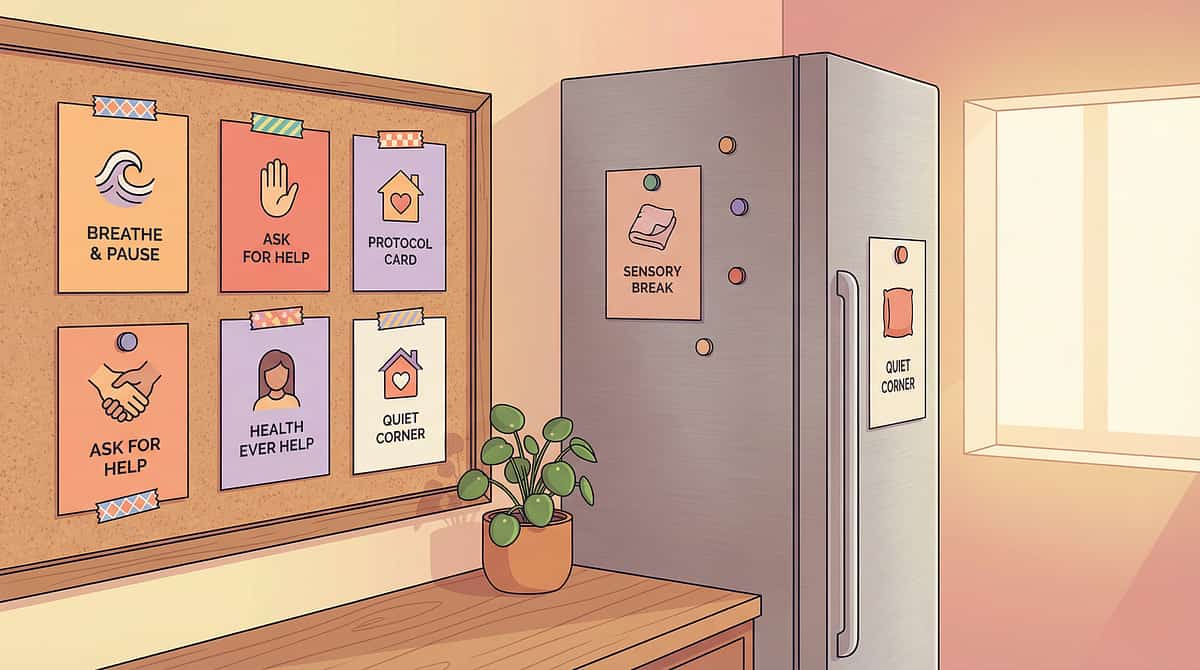
Before you run a single session, build the infrastructure. "If a caregiver has to remember what to do in the moment, the system has already failed. The protocol should be visible from where the behavior occurs."
Environment Placement
- Kitchen refrigerator: Rules chart + Consequence menu
- Child's bedroom door: Visual schedule + Rules reminder
- Living room: Response flowchart (most common behavior zone)
- WhatsApp family group: Protocol photos shared
- School bag: Laminated pocket card for teacher
Core Infrastructure Checklist
- 3–5 behaviors identified and written
- ONE response agreed for each behavior by all caregivers
- Protocol cards posted in 3+ locations
- Communication log system started
- Weekly team meeting scheduled (15 min, recurring)
- All caregivers have seen/received protocols (including school)
- Behavior therapist has reviewed protocols

Readiness Check: Is Your System Ready?
Before implementing the materials — confirm your system foundation is solid.
Caregiver Readiness
- All primary caregivers have agreed (not just heard) the protocols
- No significant unresolved conflict about the approach
- At least one caregiver has behavior therapy support
Child Readiness
- Child is in a relatively stable behavioral phase (not mid-crisis)
- Medical causes for behaviors have been ruled out
- Child's primary communication method is understood
System Readiness
- Protocols written and posted
- Materials gathered or DIY versions ready
- Communication log set up
- Weekly meeting scheduled
All green ✓ | Proceed to Material 1 |
1–2 amber | Start with Unified Rules Chart only. Build from there. |
Multiple red | Call 9100 181 181 for professional facilitation before proceeding |
Material 1 of 9
Foundation Tool
ABA/BCBA
Written Behavior Response Protocols
What It Is
A written protocol specifies exactly what every caregiver does — and does NOT do — when a specific behavior occurs. Not vague ("address hitting appropriately") but precise ("When hitting occurs: say 'hands down' in calm flat tone, guide hands to lap, wait 5 seconds without eye contact, redirect to preferred activity").
Why It Works
Memory is fallible under stress. Mood changes response timing and intensity. Written protocols create a single shared standard that exists outside of any individual caregiver.
"Memory fails. Mood varies. Written protocols stay constant. Put responses outside your head."
Protocol Format
BEHAVIOR: Specific observable behavior (e.g., "hits sibling")
WHEN: Antecedent — what usually comes before it
CAREGIVER RESPONSE: Step 1 / Step 2 / Step 3 (exact, observable, non-emotional)
WHAT NOT TO DO: Common caregiver error to avoid
CONSEQUENCE: Pre-agreed consequence — same for all caregivers
WHEN: Antecedent — what usually comes before it
CAREGIVER RESPONSE: Step 1 / Step 2 / Step 3 (exact, observable, non-emotional)
WHAT NOT TO DO: Common caregiver error to avoid
CONSEQUENCE: Pre-agreed consequence — same for all caregivers
Troubleshooting
- "We can't agree" → Professional facilitation: 9100 181 181
- "Grandma won't follow it" → Include grandparents in development, not just implementation
- "I forget in the moment" → Make protocols visually larger and more prominent
- "Protocol isn't working" → Review with behavior therapist — function may need reassessment
Price: ₹100–400 printed | ₹0 handwritten
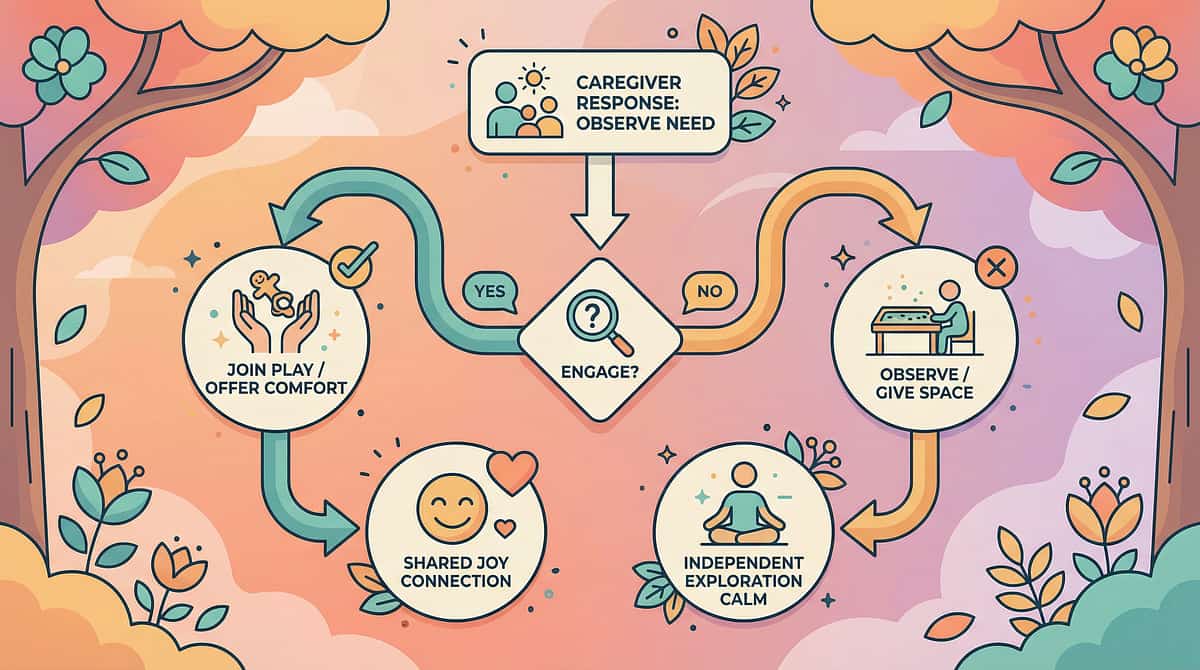
Material 2 of 9
In-the-Moment Tool
All Disciplines
Visual Response Flowcharts
A visual flowchart maps decision points during a behavior incident so caregivers don't have to think — they follow the chart. "When your brain freezes, your eyes can follow a chart. Visual guidance beats verbal recall in crisis." The stress response activates the amygdala and temporarily impairs the prefrontal cortex. A visible flowchart bypasses this by offloading decision-making to the environment.
How to Create
- Identify the behavior to flowchart
- Start with safety check as FIRST decision point
- Add intensity branches: low/medium/high escalation paths
- Keep visual — shapes, colors, arrows (no paragraphs)
- Test: can someone unfamiliar follow it without instruction?
- Post at eye level in behavior-prone zones
When & Where
Referenced in-the-moment during behavior incidents. Post at eye level in: kitchen wall, living room, bedroom door — wherever behavior most occurs.
Price: ₹150–500 (printed, A3 laminated) | ₹0 (hand-drawn on chart paper)
Evidence base: NCAEP (2020) classifies visual supports as evidence-based practice for autism.

Material 3 of 9
Cross-Caregiver Bridge
Family Systems
Caregiver Communication Logs
What It Is
Communication logs create a documented handoff between caregivers so what happened during one caregiver's shift informs the next. Morning behaviors affect afternoon responses. What worked at Grandma's informs what to try at home. Logs prevent each caregiver from operating in isolation.
"Knowledge siloed with one caregiver is knowledge lost. Logs create shared understanding."
Price
₹100–350 (dedicated notebook) | ₹0 (any notebook + Google Forms)
Log Entry Format — 5 Fields, 2 Minutes
DATE/TIME: _______________
COMPLETED BY: _______________
BEHAVIORS OBSERVED: _______________
POSSIBLE TRIGGERS NOTED: _______________
RESPONSE USED + OUTCOME: _______________
NOTES FOR NEXT CAREGIVER: _______________
COMPLETED BY: _______________
BEHAVIORS OBSERVED: _______________
POSSIBLE TRIGGERS NOTED: _______________
RESPONSE USED + OUTCOME: _______________
NOTES FOR NEXT CAREGIVER: _______________
How to Implement
- Choose format: notebook, Google Form, WhatsApp voice note, or app
- Complete at end of each caregiver's shift + after any significant incident
- Next caregiver reads log at start of their time with child
- Review logs together weekly in team meeting
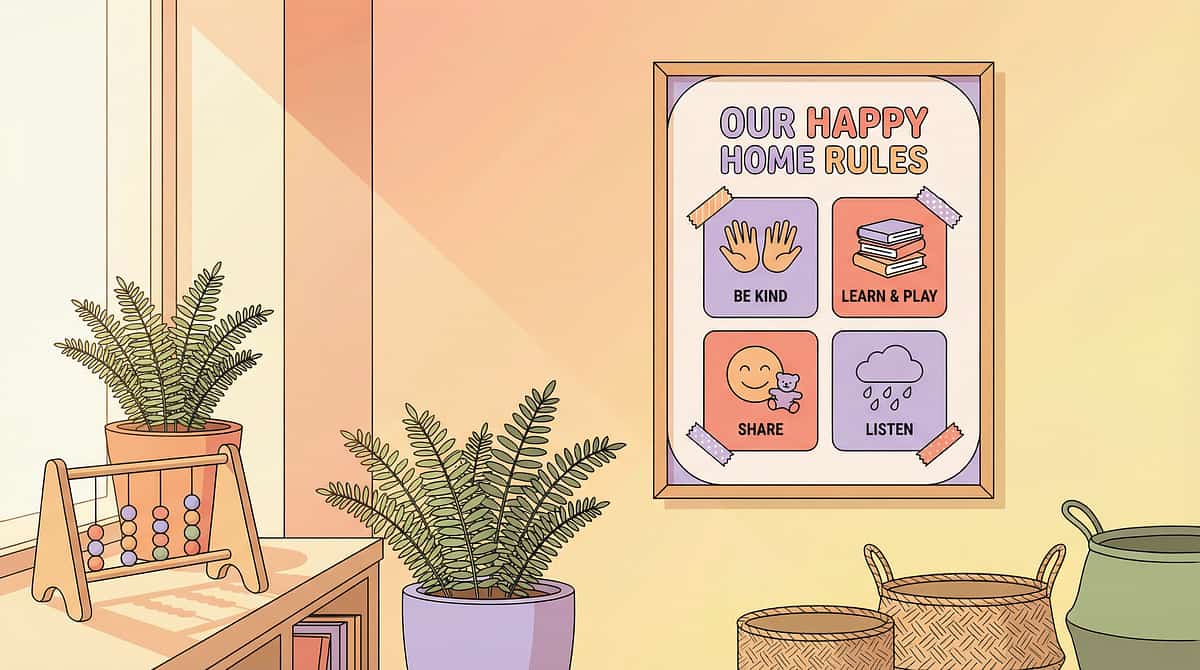
Material 4 of 9
Environmental Anchor
ABA + SpEd
Unified Rules & Expectations Charts
Many consistency problems originate in unstated expectations. Each caregiver carries implicit rules that differ from others'. Unified rules charts make expectations explicit, visible, and mutually agreed — for both caregivers and children. "Implicit rules differ. Explicit, posted rules unify. Create visible expectations everyone agrees to."
Rules Chart Format
👐 Hands to Ourselves
We keep hands to ourselves at all times
💬 Use Our Words
We use our words, not our volume
⏰ Wait for Our Turn
We wait patiently for our turn
🙏 Ask Before Taking
We ask before taking anything
Creation Steps
- Gather ALL primary caregivers — all voices must be heard
- Each person lists their top 3–5 expectations
- Find common ground — what does everyone already agree on?
- Consolidate into 3–5 positively-stated rules (what TO do)
- Write in child-accessible language with visual icons
- ALL caregivers sign (builds commitment)
- Post in every environment: home, grandparents', school if possible
- Review and update every 4–6 weeks
Price: ₹150–500 | ₹0 DIY: cardboard + markers + tape

Material 5 of 9
Self-Monitoring Tool
ABA
Response Consistency Checklists
What It Is
Even with protocols, caregivers drift from agreed responses over time — this is human, not failure. Consistency checklists allow caregivers to self-monitor their fidelity after behavioral incidents or at day's end.
"We all drift from plans. Checklists catch drift before it becomes habit. Self-awareness builds consistency."
How to Use
- Complete within 15 minutes of behavioral incident
- Do NOT use for blame — use for awareness and targeted improvement
- Share weekly patterns with behavior therapist
- Patterns of "needs work" inform protocol adjustment
Price: ₹100–300 (printed) | ₹0 (any notebook)
Post-Incident Reflection (within 15 minutes)
Date: _______ Behavior: _____________
- I stayed calm (voice level 1–2 throughout)
- I followed the written protocol steps in order
- I avoided the agreed common error for this behavior
- I applied the agreed consequence (not my frustration)
- I recorded in the communication log
- I did NOT discuss the incident in front of the child
OVERALL: Fully followed ☐ | Mostly followed ☐ | Needs work ☐
NOTE FOR NEXT TIME: ________________________________
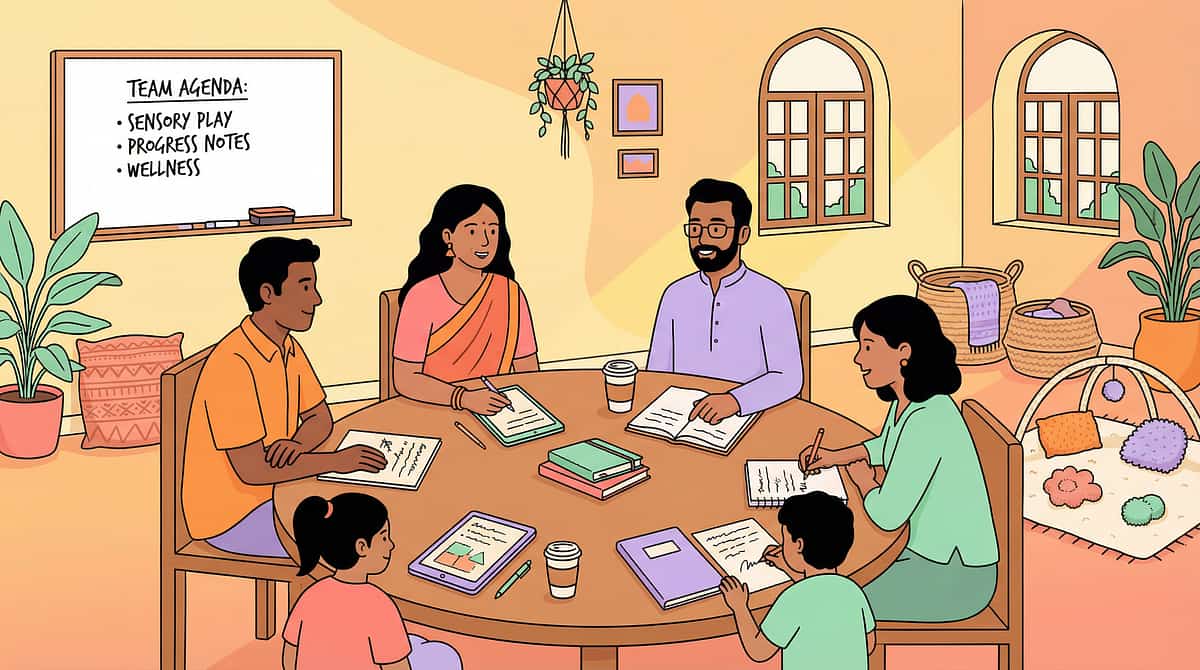
Material 6 of 9
Maintenance System
Family Systems + ABA
Team Meeting Structures & Agendas
One-time agreement decays. Circumstances change, new behaviors emerge, what worked stops working. Without structure, meetings devolve into blame. With structure, 15–30 minutes per week produces dramatic improvement in caregiver coordination.
"One-time agreements decay. Regular check-ins maintain alignment. Schedule consistency maintenance."
Item | Time | Focus |
1. Quick Wins | 2 min | What worked this week? Name specific protocols that held. |
2. Challenges | 5 min | Where did consistency break down? No blame — just data. |
3. Protocol Check | 3 min | Is everyone following written protocols? Who needs clarification? |
4. Adjustments | 5 min | What needs to change? Bring communication log data. |
5. Support Needs | 2 min | Who is struggling? What resources do they need? |
6. Action Items | 3 min | Who does what before next meeting? Write it down. Read it back. Confirm. |
Ground Rules: No blame | Child's needs are the focus | All voices equal | Decisions by consensus | Keep notes. When: Weekly during active challenges | Monthly for maintenance. 📞 Professional meeting facilitation: 9100 181 181
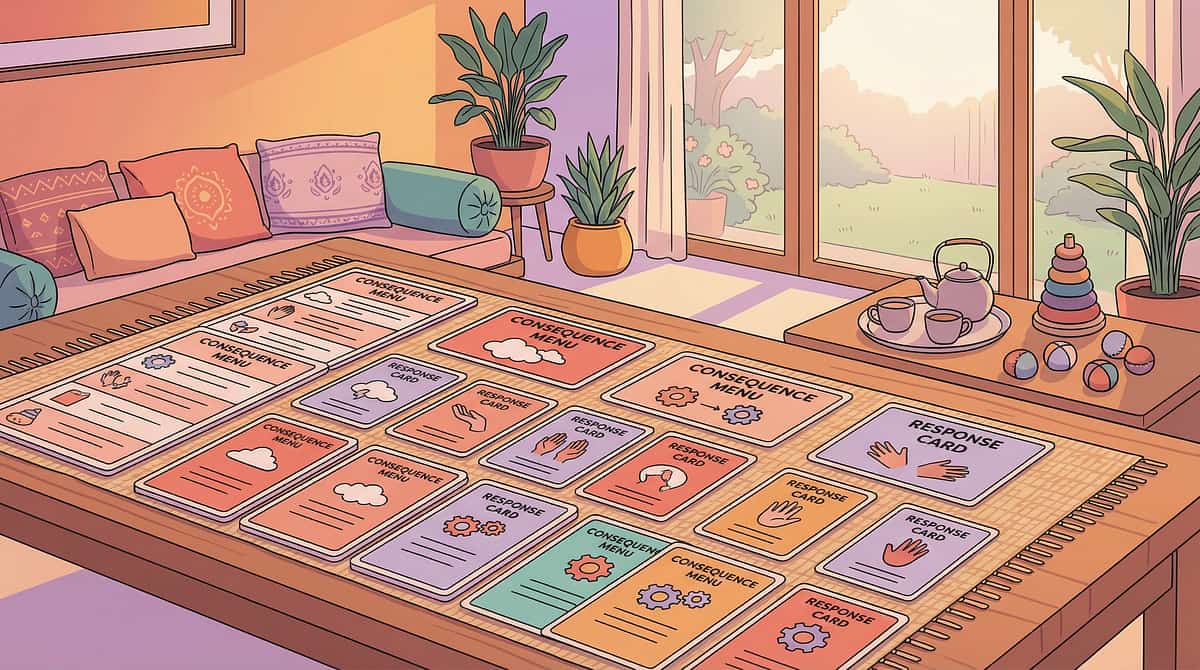
Material 7 of 9
Consequence Standardizer
ABA/BCBA
Consequence Menus & Response Cards
What It Is
Consequence menus pre-define the consequences for each specific behavior — removing in-the-moment decision-making. Everyone knows: "When hitting occurs, consequence is [X]." This pre-decision prevents consequences from escalating based on caregiver frustration level.
"In-the-moment decisions vary by mood. Pre-decided consequences stay constant. Take the decision out of the moment."
Safety Non-Negotiables
- Never physical consequences
- Never removal of basic needs (food, water, sleep, comfort)
- Quiet Zone is NOT isolation — caregiver stays nearby, regulated
Price: ₹100–350 | ₹0 (sticky notes on fridge)
Sample Consequence Menu
Behavior | Consequence (ALL caregivers) |
Hitting | Quiet Zone (5 min, calm) |
Screaming | First warning, then Quiet Zone |
Refusing request | Natural consequence + wait |
Throwing objects | Object removed, Quiet Zone |
Asking politely ✓ | Immediate praise + preferred activity |
Following first request ✓ | Token + verbal praise |
Consequence should be identical whether the caregiver is calm and rested — or stressed and exhausted. The menu — not the emotion — decides.

Material 8 of 9
Timing Standardizer
OT + ABA
Visual Timers & Cuing Systems
Inconsistency often lives in invisible timing: one caregiver gives a 1-minute warning, another gives none. When the timer — not the caregiver — determines timing, responses become consistent across people AND feel less arbitrary to children. "Timing varies by person and mood. Timers don't have moods. Let timers create consistency."
Standard Timing Protocols
Situation | Standard Timing |
First warning (transition) | 5-minute visual timer |
Second warning | 2-minute visual timer |
Quiet Zone (ages 2–5) | 5 minutes |
Quiet Zone (ages 6–12) | 10 minutes |
Wait time before repeating | 30 seconds, then redirect |
Cool-down activity | 3–5 minutes |
Timer Types
Time Timer®
Shows remaining time as shrinking red arc — ideal for ages 3+
Sand Timer
Concrete, no batteries, satisfying — 60 sec, 3 min, 5 min sets
Phone Timer
Free, always available — use visual countdown display toward child
Free Apps
VisuTimer, First-Then Visual Schedule Timer, Tiimo
Price: ₹300–800 (Time Timer® or quality sand timers) | ₹0 (phone timer + free apps)

Material 9 of 9
Capacity Builder
All Disciplines
Caregiver Training & Practice Materials
Consistency requires that all caregivers know what to do AND have practiced it before a real behavioral incident occurs. Caregivers who aren't present at therapy — grandparents, babysitters, teachers — need their own access to training. "You can't expect consistency from untrained caregivers. Give everyone access to knowledge and practice."
For New Caregivers (15–30 min session)
- The 3–5 most important behavior protocols (written + video demo)
- Common mistakes and how to avoid them
- Role-play practice for each target behavior
- Reference card: pocket-sized laminated card with core protocols
- Communication log setup — how and when to complete
- Who to call when uncertain: primary caregiver + 9100 181 181
For Grandparents Specifically
Lead with love, not criticism. Frame as: "We're sharing what the therapist has taught us works for [child's name]. We're not saying your way is wrong — we're asking everyone to follow the same system so [child's name] learns faster."
Provide the simplest possible one-page version. Involve them in creating protocols — when they help write the rules, they follow them.
Price: ₹300–1,500 professional guides | ₹0 video calls + role-play practice

Week 1–2: Building Infrastructure, Not Seeing Results Yet
That's correct — and that's progress. "The first two weeks feel like you're doing all this work and nothing is changing. That's wrong — you're building the infrastructure that WILL change things. The runway is real. The liftoff comes after."
What You Should See ✓
- Protocol cards are posted in 3+ locations
- At least one family meeting has occurred
- Communication log has at least 5 entries
- Caregivers are referencing written protocols (even if not following perfectly)
- You are completing consistency checklists
What IS Progress (may surprise you)
- One caregiver who previously "caved" held the protocol once — that is progress
- Child tested 12 times instead of 15 — that is progress
- The weekly meeting happened — that is progress
What Is NOT Progress Yet
- Behavior frequency significantly decreasing
- Child spontaneously following expectations
- All caregivers following protocols perfectly
- No arguments about approach
Infrastructure Phase
Week 1–2 progress — building the system that will drive change

Week 3–4: Consolidation Signs
By Week 4, you may notice you're more confident too. You know what to do. The uncertainty is reducing. That confidence transmits to your child.
Consolidation Phase
Week 3–4: caregivers stabilizing, child beginning to predict responses
Consolidation Indicators — Look for These ✓
- Child tests with less frequency — "checking" behavior is reducing
- Child beginning to predict caregiver responses ("I know you're going to say...")
- Caregivers reference protocols without being reminded
- Communication log shows behavioral patterns becoming visible
- One or two caregivers consistently following protocols without drift
What the Child May Start Doing
- Referencing the rules chart themselves ("But OUR rule is...")
- Showing slightly less escalation when the expected response occurs
- Accepting timer or protocol steps with less protest
- Seeking the "easier" caregiver less frequently — this is THE signal
If ZERO consolidation indicators after 4 weeks → call 9100 181 181 for behavioral consultation — the protocols may need adjustment.

Week 5–8: Mastery Indicators
Mastery Phase
Week 5–8: measurable behavioral reduction, protocols internalized by all caregivers
Caregiver Mastery
- All primary caregivers following protocols without referencing cards (internalized)
- Communication log maintained with less prompted effort
- Team meeting running with less friction
- Consistency checklists showing 80%+ fidelity
Child Behavioral Mastery
- Behavior frequency reduced 30–50% from baseline
- Child no longer systematically testing different caregivers for different outcomes
- Behaviors decreasing at similar rate across all settings
- Child accepting consistent consequences without major escalation
Generalization Indicators ✓
- Behavior improving in settings where protocol hasn't been explicitly taught
- Child applying internalized expectations to new situations
- Siblings or peers influencing child toward expected behavior
🏆 When caregivers can execute protocols automatically, begin working on the NEXT technique in the behavior progression pathway → D-360: Teaching What TO Do

You Did This. Celebrate This Win.
"Your family built a unified response system. That is one of the hardest things in pediatric behavioral support to achieve. Your child's brain is now in a predictable environment — and that predictability is the foundation of every behavior change that follows."
— Pinnacle Blooms Consortium
What You Accomplished
You navigated one of the hardest interpersonal challenges: getting multiple adults — with different histories, beliefs, and parenting philosophies — to agree, implement, and maintain a unified behavioral approach.
Specifically, You:
- Built a written protocol system your child's entire environment now follows
- Unified your family's caregivers around a shared approach
- Reduced the "testing" behavior that was exhausting everyone
- Created conditions in which your child's nervous system could begin to learn behavioral expectations
Journal Prompt: "Write down: What was the hardest moment of the last 8 weeks? What changed because of the system? What do you want to remember about how far you've come?"
"From fear to mastery. One technique at a time." — Pinnacle Blooms Consortium
Red Flags: When to Pause and Ask for Help
Trust your instincts. If something feels wrong, pause and ask. These signs require professional review — not persistence.
🔴 Escalation
Child's behavior is increasing in intensity or frequency AFTER implementing protocols. This can indicate extinction burst (normal) OR protocol mismatch (needs review). Distinguish with behavior therapist support.
🔴 Safety
Child is self-injuring, injuring others, or destroying property at a level that cannot be safely managed at home. Professional assessment and potentially clinical-level support required.
🔴 Caregiver System Breakdown
Significant caregiver conflict about approach is harming family relationships or child's emotional security. Professional family systems consultation required before behavioral protocols continue.
🔴 No Change at Week 8
After 8 weeks of consistent implementation, no behavioral indicators improving. Protocol function may be mismatched to behavior function. Functional Behavioral Assessment (FBA) needed.
🔴 Child Regression
New behaviors emerging, or previously resolved behaviors returning significantly. Environmental change, medical cause, or protocol drift — professional review required immediately.
Escalation Pathway: Self-monitor → Teleconsult with Pinnacle specialist → Center visit for FBA or protocol review → Intensive clinical support. FREE: 📞 9100 181 181

The Progression Pathway: Where You Are — and Where You're Going
D-359 is one node in a behavioral development continuum. Every subsequent intervention you implement will now work 2–3× faster because the environment is consistent.
D-357
Antecedent Management
Prevent the behavior
Prevent the behavior
D-358
Positive Reinforcement
Build what works
Build what works
★ D-359
Consistent Responses
Unify everyone
Unify everyone
D-360
Teaching What TO Do
Replacement behavior
Replacement behavior
D-361
Behavior Data Collection
Track and prove it
Track and prove it
Long-term developmental goal: Cross-setting generalization — the child's behavior being consistent and appropriate regardless of which adult is present, which setting they're in, and which day of the week it is — because the environment has become consistently supportive.
Related Techniques in This Domain
Your child's behavior ecosystem — related techniques you should know. After implementing D-359, your materials carry forward. Protocol cards, communication log, visual timers, consequence menu, and rules chart all apply directly to D-360, D-361, D-365, and D-370. The investment compounds.
Code | Technique | Level | Materials You Already Own |
D-357 | Antecedent Management | 🟡 Core | Visual schedules, timers |
D-358 | Positive Reinforcement | 🟢 Intro | Reward stickers, reinforcement jar |
D-360 | Teaching What TO Do | 🟡 Core | Protocol cards (from D-359) |
D-361 | Behavior Data Collection | 🟡 Core | Communication log (from D-359) |
D-365 | Transition Management | 🟡 Core | Visual timers (from D-359) |
D-370 | Communication for Behavior | 🟠 Advanced | AAC materials, visual supports |
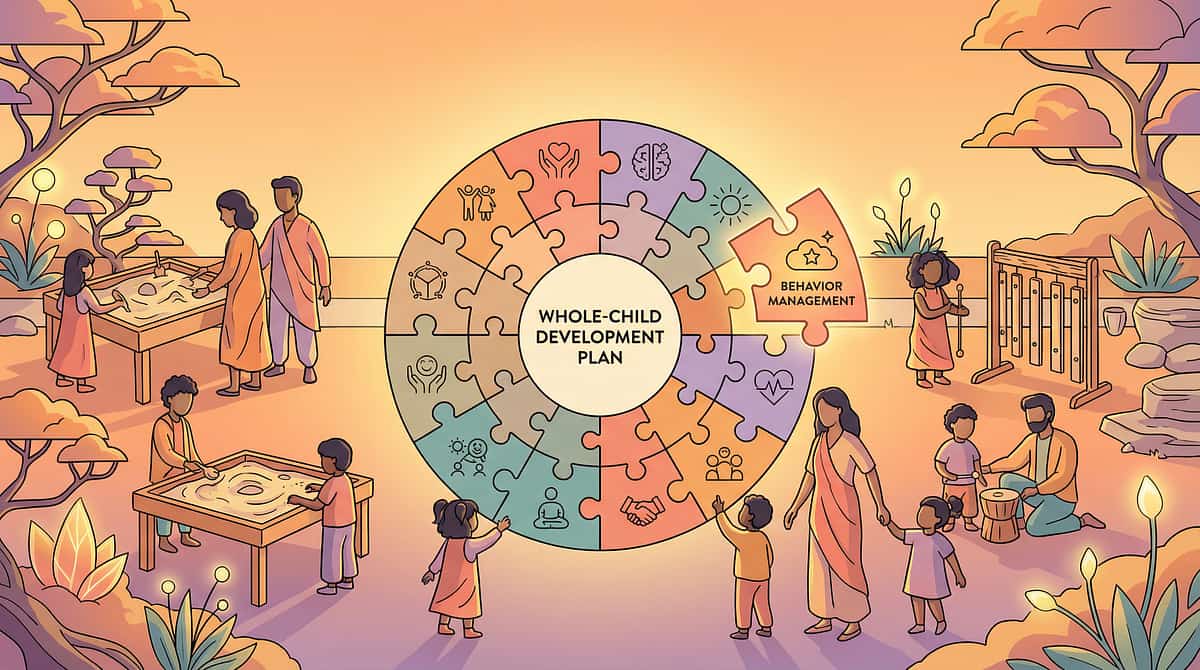
D-359 Is One Piece of a Larger Whole-Child Plan
Behavioral inconsistency creates a noise floor that makes progress in every other domain harder. When behavior is stable and predictable, every other therapy works better.
SLP Therapy Generalizes Faster
Child is regulated enough to practice communication skills
OT Sessions More Effective
Sensory regulation builds on behavioral predictability
Academic Learning Accelerates
Cognitive load from environmental uncertainty decreases
Social Skills Develop Faster
Peer interactions become more predictable and manageable

Real Families. Real Behavioral Change.
Before → After: Week 6
"We created three protocol cards for our top three behaviors. Posted them on the fridge. Now when she asks for iPad, we both check the card and give the same answer. She stopped playing us against each other within two weeks. The protocol didn't just change her behavior — it stopped the fighting between my husband and me."
— Mother, Pinnacle Network Family
Before → After: Week 8
"We included my mother-in-law in the protocol development — sat down with her, explained the behavior therapist's reasoning, and asked for her help. She felt included, not criticized. She's now the most consistent implementer in our family. She made her own copy of the protocol cards."
— Parent, Pinnacle Network (Illustrative composite; outcomes vary)
"The most common thing I hear families say after building a consistent response system is not 'my child's behavior improved' — though it did. It's 'my family stopped fighting about parenting.' Consistency doesn't just help the child. It resolves one of the most common sources of family conflict." — Pinnacle Behavior Specialist
Connect with Other Parents
Isolation is the enemy of adherence. You don't have to figure this out alone. Your experience — what worked, what didn't, how you got your spouse to agree, how you handled the grandparent conversation — helps every other family behind you.
📱 WhatsApp Parent Group — D-359
Connect with families implementing the same system. Share wins, get support when protocols fail, learn from others' adaptations.
💬 Pinnacle Online Community
Forums organized by challenge, technique, age, and region. Search for families navigating the exact same caregiver coordination challenge at pinnacleblooms.org/community
🏠 Local Parent Meetups
Organized by Pinnacle centers across 70+ locations. In-person connection with families in your city who are walking the same path.
🤝 Peer Mentoring
Connect with a parent who has already implemented D-359 and progressed to D-360. Real experience, not just theory. Request a peer mentor today.

Your Professional Support Team
Home implementation is most powerful when supported by professional guidance. Every service pathway begins with one free call.
🏥 Pinnacle Center Network (70+ locations)
In-clinic behavior therapy, functional behavioral assessment, caregiver training, family consultation. The clinical backbone behind every home-based protocol.

📱 Teleconsultation
Remote support from Pinnacle behavior specialists for families not near a center. Protocol development, caregiver coaching, progress review — via video call.
👨👩👧 Family Systems Consultation
When caregiver conflict is the barrier — not the protocol — family systems specialists address the interpersonal dynamics that prevent consistency.

🎓 Parent Training Program
Structured caregiver training in behavioral protocols, treatment integrity, and cross-setting coordination. Available at all Pinnacle centers.
FREE Entry Point: 📞 9100 181 181 — FREE National Autism Helpline | 16+ languages | 24×7 | Start here. Every service pathway begins with a free call.

The Research Library
Deeper reading for the curious parent. The evidence is solid, abundant, and accessible. D-359 protocol materials are supported by Level I–II evidence from independent international research teams.
Evidence Pyramid
Systematic Reviews & Meta-analyses
Randomized Controlled Trials (RCTs)
Cohort & Case-Control Studies
Expert Consensus
Key Studies for D-359
Source | Finding |
PMC11506176 (2024) | PRISMA systematic review: Treatment integrity as primary predictor of behavioral outcomes |
PMC10955541 (2024) | Meta-analysis: Consistent implementation across 24 studies produces measurable skill improvement |
PMC9978394 (2023) | Multi-caregiver training efficacy across 54 LMICs — WHO CCD Package |
NCAEP 2020 | Visual supports and consistency tools classified as evidence-based for autism |
Padmanabha et al. (2019) | Indian RCT: Home-based consistent intervention with significant outcomes |
WHO/UNICEF: nurturing-care.org | BACB: bacb.com | NCAEP: ncaep.fpg.unc.edu
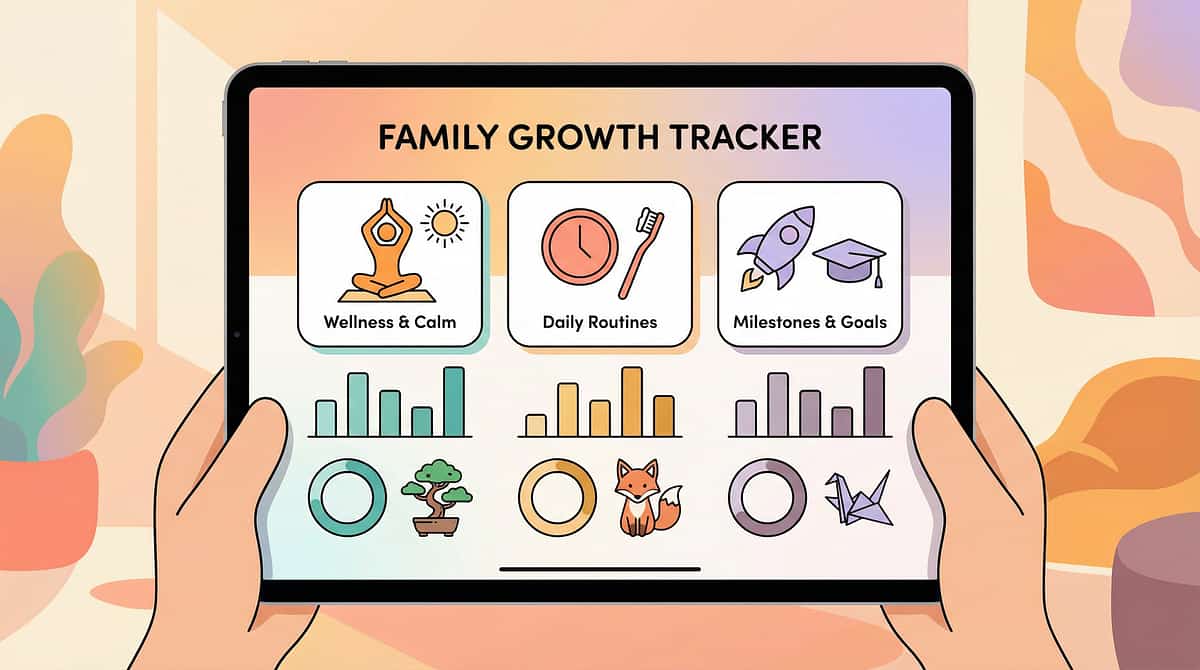
How GPT-OS® Uses Your Data to Help Every Family
Readiness Indexes Tracked
Caregiver Consistency Index
Measure of inter-caregiver agreement on response protocols
Treatment Integrity Index
Fidelity of protocol implementation across time
Cross-Setting Generalization Index
Behavior consistency across home, school, community
Protocol Adherence Index
Degree to which agreed protocols are followed without deviation
What GPT-OS® Learns from D-359 Data
- Which protocol elements produce the fastest consistency across caregiver types
- Which caregiver training approaches produce best fidelity for extended family
- Which consequence menus are most effective for specific behavior functions
- Population-level patterns that improve recommendations for ALL families
Privacy Assurance: All data is de-identified, aggregate, and governed by DPIIT and Indian data protection standards. Individual family data is never shared externally. Used exclusively to improve therapeutic recommendations.
Connect to GPT-OS®: pinnacleblooms.org/gpt-os | 9100 181 181

Watch These 9 Materials in Action
Reel D-359 — Watch the Original
Series: Behavior & Emotional Regulation | Episode 359
Domain: Behavior Management / Caregiver Consistency
Duration: 75–85 seconds
Domain: Behavior Management / Caregiver Consistency
Duration: 75–85 seconds
This Reel is the 60-second version of everything on this page. Watch it to see each of the 9 materials in context — how a behavior incident unfolds, how the protocol card is referenced, how the visual timer is used, how the communication log is completed immediately after.
"Consistency isn't about being rigid. It's about being predictable. When everyone responds the same way, children know what to expect. They stop testing because testing stops working."
— Pinnacle Behavior Specialist
Share the Reel: WhatsApp | Copy Link | Download | Embed on your blog
Share This with Your Family
Consistency requires more than you. "If you implement perfectly but one other caregiver doesn't — the system operates at 50% consistency. Every additional caregiver you bring on board multiplies impact exponentially."
📱 WhatsApp Family Share
Send this page to your family group with one tap. Pre-written message: "This is the system our behavior therapist recommended for [child's name]. Please read Card 14 (the protocol format) and Card 19 (the meeting structure). These 15 minutes could change everything."
📧 Email to School
Teacher/school communication template — sends a professionally formatted email to your child's school requesting alignment of behavioral response protocols with the home system.
📄 Grandparent Guide
Download the 1-page "Explain to Grandparents" PDF — simple, respectful, loving framing of the consistency system for extended family who may feel criticized by behavior protocols.
🔗 Copy Link
techniques.pinnacleblooms.org/behavior/consistent-responses-D-359 — share anywhere, anytime. Sharing this page is not telling someone they're wrong. It's inviting them into a system that works.

Frequently Asked Questions
What if my husband/wife completely disagrees with the approach?
Start with the areas of agreement, not the disagreements. Almost all parents agree that the behavior needs to change — the disagreement is about how. Have your behavior therapist present the evidence directly to your spouse. The Pinnacle Family Consultation service specializes in exactly this situation. 9100 181 181
Grandma will never agree. She thinks our approach is too harsh.
Grandparents typically resist because they feel criticized or excluded — not because they disagree. Involve them in CREATING the protocol (not just receiving it). When they help write the rules, they follow them. Frame as "the therapist taught us" rather than "we decided."
My child's behavior got WORSE when we started being consistent. Is that normal?
Yes — this is an extinction burst, and it is a sign the system is working. When a behavior that previously worked suddenly stops working, children initially increase intensity. This burst is temporary (typically 1–2 weeks) and is followed by a sharp decrease. Do not abandon the protocol during the burst.
School does things completely differently. What do we do?
Home consistency is achievable even when school differs — behavioral skills generalize. Sharing your home protocols with school via a behavior plan is worth pursuing. Request a meeting with the school's special educator. Pinnacle school consultation services can bridge this gap.
How do I maintain consistency when I'm completely exhausted?
Simplify to the 1–2 most critical protocols when exhausted. "Good enough" consistency (70–80%) produces far better outcomes than abandoning the system entirely. Build in caregiver relief — tag-team with a partner, schedule respite, and use the team meeting to identify who needs more support. The system should protect you, not exhaust you.
Can I implement this without a behavior therapist?
You can implement structural elements (rules charts, timers, communication logs) independently. Protocol development — especially for aggressive or self-injurious behavior — requires professional assessment to identify the function of the behavior first. Start with simpler materials and connect with 9100 181 181 for protocol guidance.
What if I'm the only consistent caregiver?
One highly consistent caregiver produces better outcomes than zero. You become the child's "anchor" — the person whose responses are always predictable. This is therapeutically valid and often where change begins. Document what works with you and share it systematically with other caregivers as they become ready.
Didn't find your answer? Call 📞 9100 181 181 — FREE specialist consultation | 16+ languages | 24×7
Preview of 9 materials that help with consistent responses Therapy Material
Below is a visual preview of 9 materials that help with consistent responses therapy material. The pages shown help educators, therapists, and caregivers understand the structure and content of the resource before use. Materials should be used under appropriate professional guidance.


Link copied!

Reading Ends Here. Implementation Begins Now.
🚀 Start This Technique Today
Access GPT-OS® Session Launcher — get your personalized D-359 implementation plan, step by step.
📞 Book a Free Consultation
Speak with a Pinnacle Behavior Specialist. FREE first call | 16+ languages | All India coverage.
→ Explore the Next Technique
D-360: Teaching What TO Do — build on D-359's foundation with positive replacement behaviors.
Pinnacle Blooms Network® | Unit of Bharath Healthcare Laboratories Pvt. Ltd.
CIN: U74999TG2016PTC113063 | DPIIT: DIPP8651 | MSME: TS20F0009606 | GSTIN: 36AAGCB9722P1Z2
OT • SLP • ABA/BCBA • SpEd • NeuroDev • CRO • WHO/UNICEF Aligned | 20M+ Sessions | 97%+ Improvement | 70+ Centers
"Built by Mothers. Engineered as a System." — GPT-OS® | techniques.pinnacleblooms.org
CIN: U74999TG2016PTC113063 | DPIIT: DIPP8651 | MSME: TS20F0009606 | GSTIN: 36AAGCB9722P1Z2
OT • SLP • ABA/BCBA • SpEd • NeuroDev • CRO • WHO/UNICEF Aligned | 20M+ Sessions | 97%+ Improvement | 70+ Centers
"Built by Mothers. Engineered as a System." — GPT-OS® | techniques.pinnacleblooms.org
This content is educational. It does not replace individualized behavioral assessment and intervention planning from qualified professionals. Consistency protocols should be developed in collaboration with your child's behavior therapist or clinical team. Individual results may vary. © 2025–2026 Pinnacle Blooms Network®. All rights reserved.