

9 Materials That Build Flexibility When Routine Changes Distress Your Child
Evidence-based tools for cognitive flexibility, transition support & routine change distress in children ages 2–12. Visual schedules, timers, social stories & more — validated by India's largest pediatric therapy consortium.
Technique D-372
Behavioral Development
Ages 2–12

ACT I — THE EMOTIONAL ENTRY
"We changed his breakfast cup and he screamed for 45 minutes."
Your child isn't being difficult. His nervous system is experiencing genuine distress. A different route, a cancelled plan, a missing object — and the world collapses. There is a name for this. There is a reason for this. And there are 9 materials that make the difference between walking on eggshells and building real flexibility.
"You are not failing. Your child's brain is wired to find unpredictability genuinely threatening. What you're experiencing is a skill gap — and skill gaps can be filled." — The Pinnacle Blooms Consortium
D-372 | Routine Changes Distress
Flexibility & Transitions | Ages 2–12
Consortium Lead
OT • SLP • ABA/BCBA • SpEd • NeuroDev • CRO • WHO-Aligned
Built By Mothers
Engineered as a System. 20M+ Sessions. 70+ Centers.
📞 FREE National Autism Helpline — 9100 181 181 — 16+ languages — 24×7
Card 02 — The Numbers
You Are Not Alone: The Scale of This Challenge
80 million children globally show clinically significant difficulty with routine changes and transitions. Difficulty with routine changes affects children across ASD, ADHD, anxiety disorders, developmental delay, and sensory processing differences. Most families wait 2–4 years from first concern to receiving targeted flexibility intervention. Research confirms: inflexibility is a skill deficit — not defiance, not manipulation.
1 in 36
Children with ASD
Insistence on sameness is a core diagnostic feature
1.8M
Children in India
Diagnosed with ASD; 70–80% show significant inflexibility
80%
ASD + Inflexibility
Of children with ASD display cognitive inflexibility impacting daily functioning
20M+
GPT-OS® Sessions
Transition & flexibility challenges addressed across 70+ centers
Sources: PMC11506176 (PRISMA Systematic Review 2024), PMC10955541 (Meta-analysis 2024), WHO Global Burden of Disease data.

Card 03 — The Neuroscience
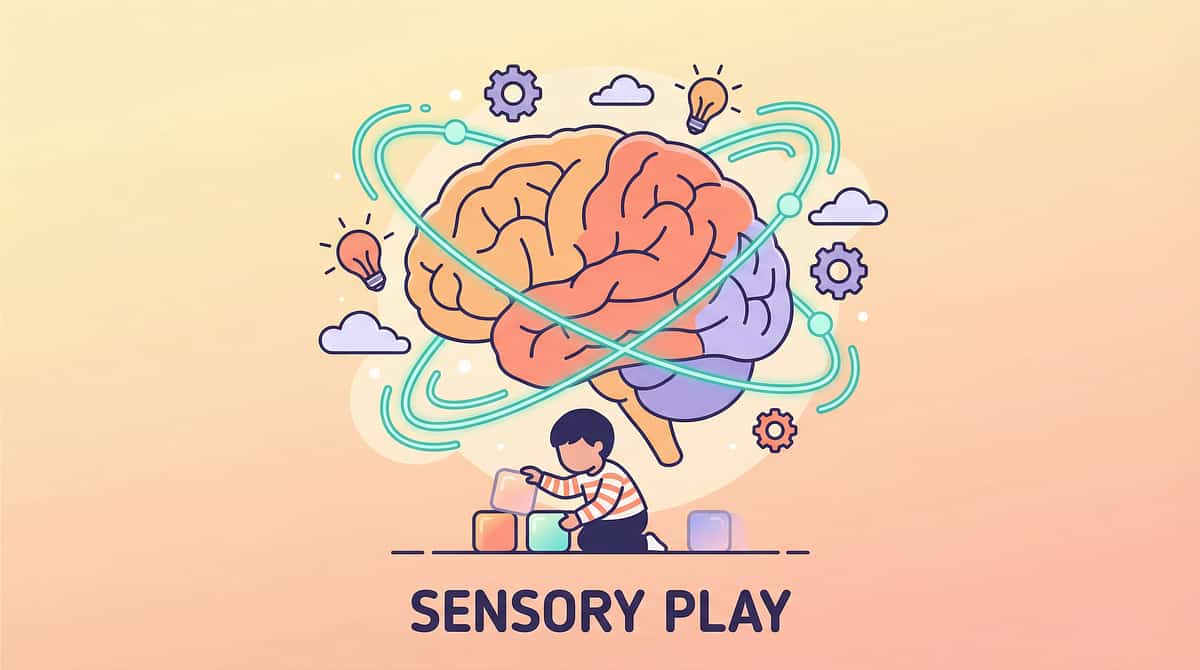
What's Happening in Your Child's Brain
"The Neuroscience of 'I Need Everything to Stay the Same'" — your child's brain isn't broken. It's over-secured. When your child expects Routine A and gets Routine B, their brain fires a genuine alarm signal — the same neural pathway activated by physical threat. This is not imagination. It is neurobiology.
The Brain Science
Prefrontal Cortex (PFC): Governs cognitive flexibility and task-switching. PFC-amygdala connectivity is reduced — the "thinking brain" cannot override the "threat detection brain" fast enough.
Amygdala: Fires when unexpected stimuli appear. For inflexible children, routine deviations trigger the same response as genuine danger. The cup is wrong = threat signal = survival response.
Basal Ganglia: Stores habits and routines in deeply grooved neural pathways. Deviation = error signal that cannot easily be suppressed.
Anterior Cingulate Cortex (ACC): The brain's "gear-shifter." Underdevelopment here = difficulty moving from expectation A to expectation B.
Plain English for Parents
The brain's "gear-shifting" mechanism — executive function — is what allows us to say "Oh, plan changed — okay, new plan." In children with flexibility challenges, this gear-shifting is effortful or delayed.
This is a wiring difference, not a behavior choice.
The good news: neural pathways are plastic. They can be trained. The 9 materials on this page are, at their core, tools for building new neural architecture — gradually, safely, and without forcing meltdowns.
Source: Frontiers in Integrative Neuroscience (2020) — DOI: 10.3389/fnint.2020.556660

Card 04 — Developmental Timeline
Cognitive Flexibility Develops Throughout Childhood — Here's Where Your Child Is
Age 1–2
Strongly preference-driven. Limited flexibility. Developmentally expected.
Age 2–3
Beginning to accept minor variations with predictable warning. Still needs high routine support.
Age 3–4 ★
Typical Emergence Zone. Children begin showing increased ability to shift activities with preparation.
Age 4–5
Should show flexibility with minor changes when given advance notice and visual support.
Age 5–7 ⚠️
Most children can handle reasonable schedule changes with brief preparation. Persistent difficulty here warrants assessment.
Age 7–12
Developing metacognitive flexibility — ability to reason about and manage their own responses to change.
Persistent, significant difficulty with routine changes beyond age 4–5 often indicates either a developmental delay in executive function, an anxiety component, or a neurodevelopmental condition such as autism. This is the intervention window — and this is exactly why this page exists.
Commonly co-occurring with flexibility challenges: Autism Spectrum Disorder (insistence on sameness) · Anxiety Disorders (predictability = safety seeking) · ADHD (executive function deficits) · Sensory Processing Differences · Developmental Delay

Card 05 — The Evidence
Clinically Validated. Home-Applicable. Parent-Proven.
Visual Supports — Level I Evidence (NCAEP 2020)
Classified as evidence-based practice for autism; reduces transition-related challenging behavior.
Social Stories™ — Level II Evidence
Multiple RCTs show moderate-to-strong evidence for reducing rigidity and improving flexible behavior.
Zones of Regulation — Level II Evidence
Positive effects on emotional awareness, coping strategy use, and behavioral regulation.
Behavioral Flexibility Training — Level I Evidence
Graduated exposure with support builds tolerance; forcing without support increases rigidity.
Choice & Agency Interventions — Level II Evidence
Choice provision reduces power struggles, increases compliance, builds intrinsic motivation.
Key finding: Multi-modal approach — visual + behavioral + regulation tools — produces best outcomes. Flexibility is a teachable, trainable executive function skill, not a fixed trait.
📞 Need professional guidance? FREE National Autism Helpline: 9100 181 181
ACT II — THE KNOWLEDGE TRANSFER
The Technique: What It Is
Formal Name: Cognitive Flexibility Training Through Environmental Supports and Graduated Exposure
Parent-Friendly Alias:"The Flexibility Builder Toolkit"
Parent-Friendly Alias:"The Flexibility Builder Toolkit"
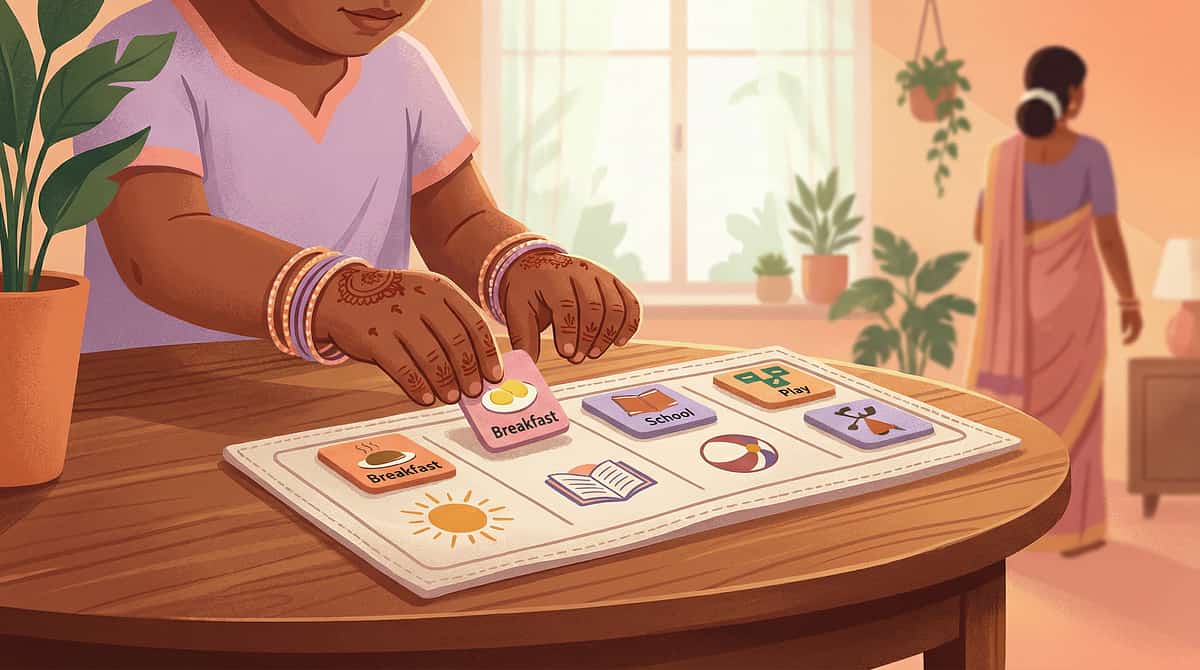
Cognitive flexibility — the executive function skill that allows the brain to shift from one expectation to another — can be systematically trained using environmental supports, graduated exposure, and regulation tools. This technique addresses the threat response on three levels simultaneously:
1. Prevention
Visual supports make predictability visible, reducing the threat signal before distress begins.
2. In-the-Moment Coping
Regulation tools manage distress when it occurs, providing a bridge while skills are built.
3. Skill Building
Gradual, playful practice wires new neural pathways for flexibility over time.
The 9 materials address all three levels. Used systematically, they transform a child who "can't handle any change" into a child who "prefers routine but can cope when change is necessary" — which is the functional, realistic, and achievable goal.
Domain
D — Behavioral / Emotional / Cognitive Flexibility
Ages
2–12 years
Frequency
Daily visual supports + 3–5×/week flexibility practice
Duration
Ongoing system — not a single-session technique
Card 07 — The Disciplines
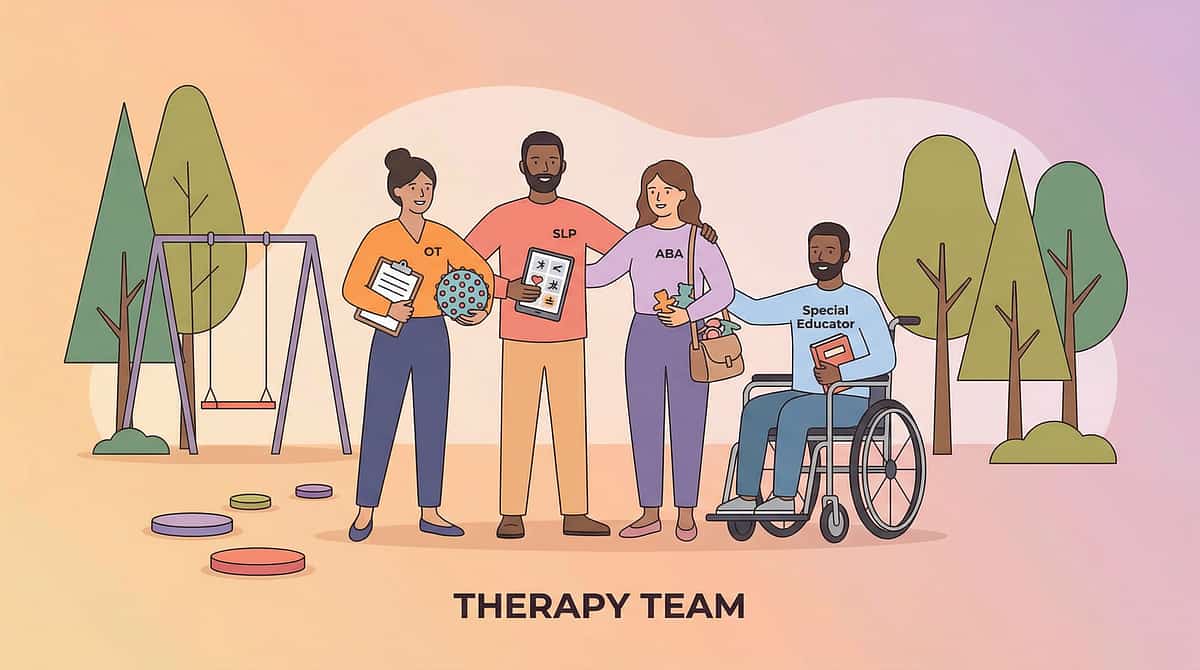
Five Disciplines. One Flexible Child.
BCBA / ABA Therapist — PRIMARY LEAD
Designs graduated exposure hierarchy. Implements behavior-analytic flexibility training protocols, choice systems, reinforcement for flexible behavior, and data collection on transition success.
Occupational Therapist (OT)
Addresses sensory underpinnings of rigidity. Builds the sensory regulation foundation that makes flexibility cognitively possible. Designs calm-down kits and proprioceptive regulation strategies.
Speech-Language Pathologist (SLP)
Develops communication systems for "I need to know what's next." Teaches social scripts for navigating unexpected situations. Creates personalized social stories tailored to the child.
Special Education Therapist (SpEd)
Adapts visual schedules for classroom settings. Designs IEP accommodations for transition difficulties. Ensures home-school consistency in visual support systems.
NeuroDevelopmental Pediatrician
Diagnostic authority — determines underlying cause (ASD, ADHD, anxiety, developmental delay) and guides clinical priority. Co-manages anxiety components that often drive rigidity.
Card 08 — Precision Targets
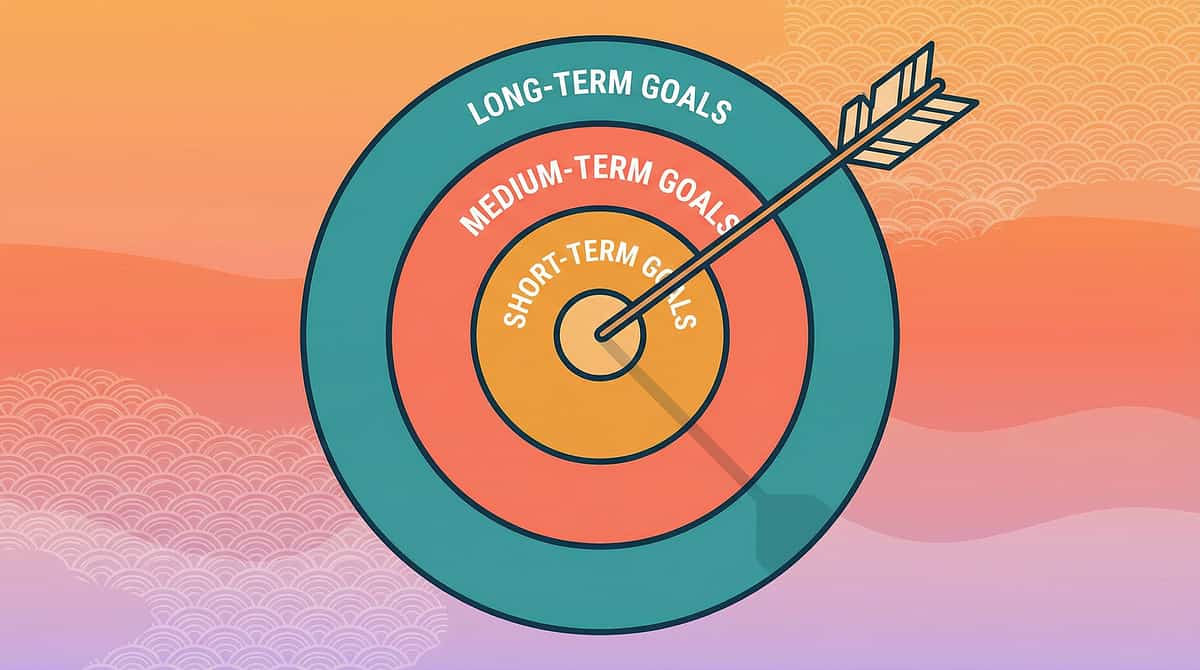
Precision Targets. Not Random Activities.
The primary target is cognitive flexibility — the executive function skill of shifting from one expectation to another without debilitating distress. Secondary targets build the emotional and transitional capacity that makes flexibility possible day-to-day. Long-term tertiary gains include adaptive behavior, social participation, academic readiness, independence, and generalized resilience across all of life's settings.
Target | Not There Yet | Getting There | Achieved |
Cognitive Flexibility | Meltdowns at any deviation | Distress with quicker recovery using supports | Tolerates expected changes with visual support |
Emotional Regulation | 0-to-60 escalation | Catches self at "yellow," uses tool | Self-monitors and intervenes before crisis |
Transition Success | Refuses to shift activities | Shifts with extensive prompting | Shifts independently with 1 warning |
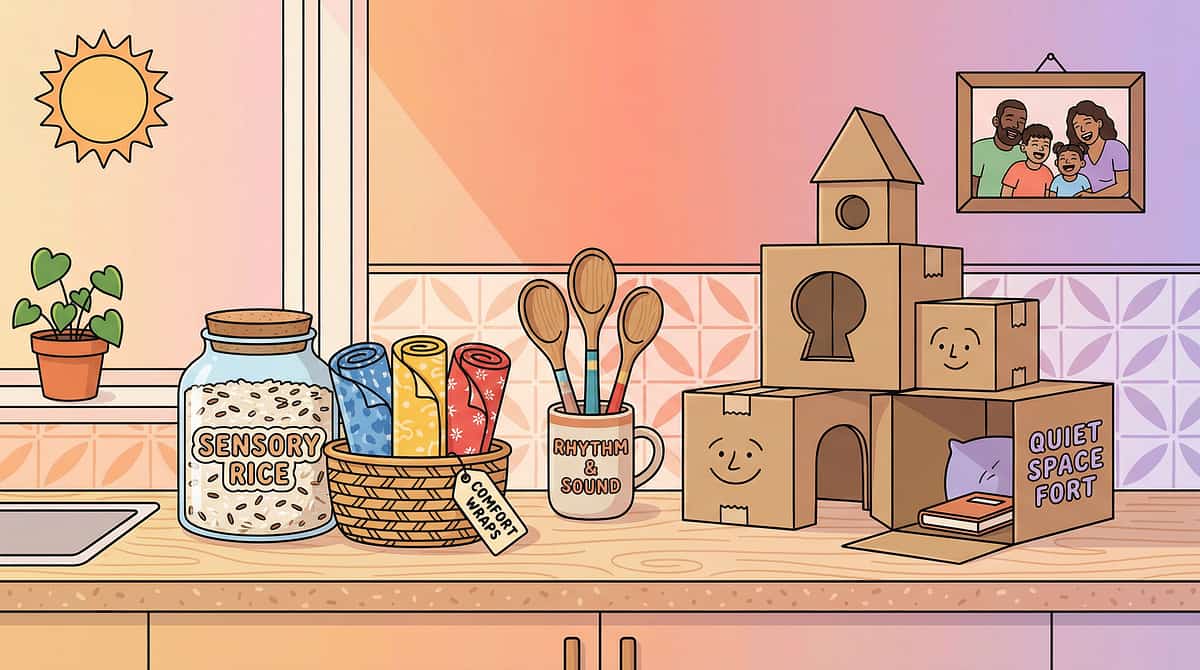
The 9 Materials, Continued
🎲 Material 5: Flexibility Games & "Change It Up" Cards
Purpose: Games where rules change mid-play build the cognitive flexibility "muscle" in low-stakes, enjoyable contexts. Practice changing in play → use it in life.
Price: ₹300–1,500 | Canon: Cooperative Games | Lead: ABA + SpEd
Pinnacle Recommends: Problem-Solving Toys: SHINETOY 8 Dice Shut The Box Game — ₹428 — Buy on Amazon.in
Price: ₹300–1,500 | Canon: Cooperative Games | Lead: ABA + SpEd
Pinnacle Recommends: Problem-Solving Toys: SHINETOY 8 Dice Shut The Box Game — ₹428 — Buy on Amazon.in
🧰 Material 6: Calm-Down Kit / Regulation Tools
Purpose: Portable collection of sensory and self-regulation items for when changes happen anyway. Not preventing distress — managing it. The coping bridge while flexibility skills are being built.
Price: ₹500–2,500 | Canon: Calm-Down Kit | Lead: OT
Pinnacle Recommends: Child-assembled kit — ownership increases use
Price: ₹500–2,500 | Canon: Calm-Down Kit | Lead: OT
Pinnacle Recommends: Child-assembled kit — ownership increases use
📌 Material 7: Choice Boards
Purpose: When plans change, children still choose what happens next. Restores sense of control. Rigidity is often about control — choice boards give control back within safe limits.
Price: ₹200–800 | Canon: Visual Supports | Lead: ABA
Pinnacle Recommends: All offered choices must be genuinely acceptable — never offer choices you can't allow
Price: ₹200–800 | Canon: Visual Supports | Lead: ABA
Pinnacle Recommends: All offered choices must be genuinely acceptable — never offer choices you can't allow
🧸 Material 8: Transition Objects & Comfort Items
Purpose: Something constant when everything else changes. Familiar object activates comfort-related neural pathways, reduces amygdala activation. Portable anchor through uncertainty.
Price: ₹100–1,000 | Animal Soft Toys — ₹425 — Buy on Amazon.in
Pinnacle Recommends: Child-selected; small enough to travel in pocket or backpack
Price: ₹100–1,000 | Animal Soft Toys — ₹425 — Buy on Amazon.in
Pinnacle Recommends: Child-selected; small enough to travel in pocket or backpack
🌡️ Material 9: Feelings Thermometer / Zones of Regulation Tools
Purpose: Teaches children to identify their regulation level and intervene at "yellow" — before "red." Most inflexible children go 0-to-meltdown because they don't catch escalating signals.
Price: ₹200–1,200 | Canon: Behavior/Feelings Thermometer | Lead: OT + ABA
Pinnacle Recommends: Paired with strategy cards matched to each zone level
Price: ₹200–1,200 | Canon: Behavior/Feelings Thermometer | Lead: OT + ABA
Pinnacle Recommends: Paired with strategy cards matched to each zone level
Total Starter Kit: ₹2,000–8,000 (many items DIY) | Essential Starter (₹800–2,000): Visual Schedule + Change Card + First-Then Board + Visual Timer + Simple Calm Kit
📞9100 181 181 — FREE Helpline — Ask which materials your child needs most
📞9100 181 181 — FREE Helpline — Ask which materials your child needs most
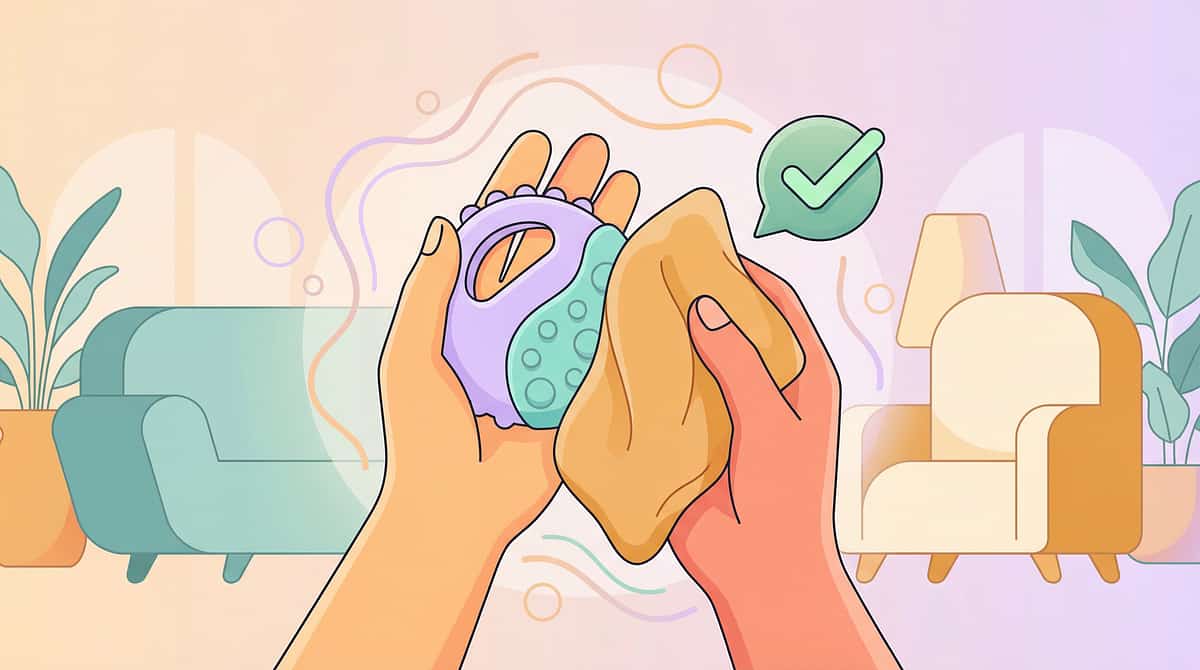
Card 10 — DIY & Zero-Cost Options
Every Parent Can Do This. Regardless of Budget.
"WHO equity principle: Every family deserves access to evidence-based intervention, regardless of economic status." Each DIY version preserves the core therapeutic mechanism — visual externalization of expectations, structured sequencing, and agency within limits. The clinical-grade material is preferred but never mandatory.
Material | 🛒 Commercial Option | 🏠 DIY / Zero-Cost Version |
Visual Schedule | Velcro board ₹300–1,500 | A4 paper, photos/drawings, tape or blu-tack on wall |
First-Then Board | Laminated board ₹200–800 | Two sheets of paper labelled "FIRST" and "THEN" with drawings |
Social Stories | Printed/bound ₹200–1,000 | Write in notebook or phone notes; child's own drawings |
Visual Timer | Time Timer ₹400–2,000 | Phone/tablet timer with screen visible; pour sand between cups |
Flexibility Games | Commercial game ₹300–1,500 | "Change It Up" cards written on index cards; modify any game mid-play |
Calm-Down Kit | Pre-assembled kit ₹500–2,500 | Old zipper bag + household sensory items (cloth, ball, headphones) |
Choice Board | Commercial board ₹200–800 | Three index cards, each with a drawn option — child points to choice |
Transition Object | Purchased toy ₹100–1,000 | Any beloved object child already owns; the choice matters more than cost |
Feelings Thermometer | Printed chart ₹200–1,200 | Draw thermometer on paper; color zones together with child |
Non-Negotiable Case: Social stories are most effective when personalized. The DIY (handwritten, child's own photos) version is often MORE effective than a generic commercial book.
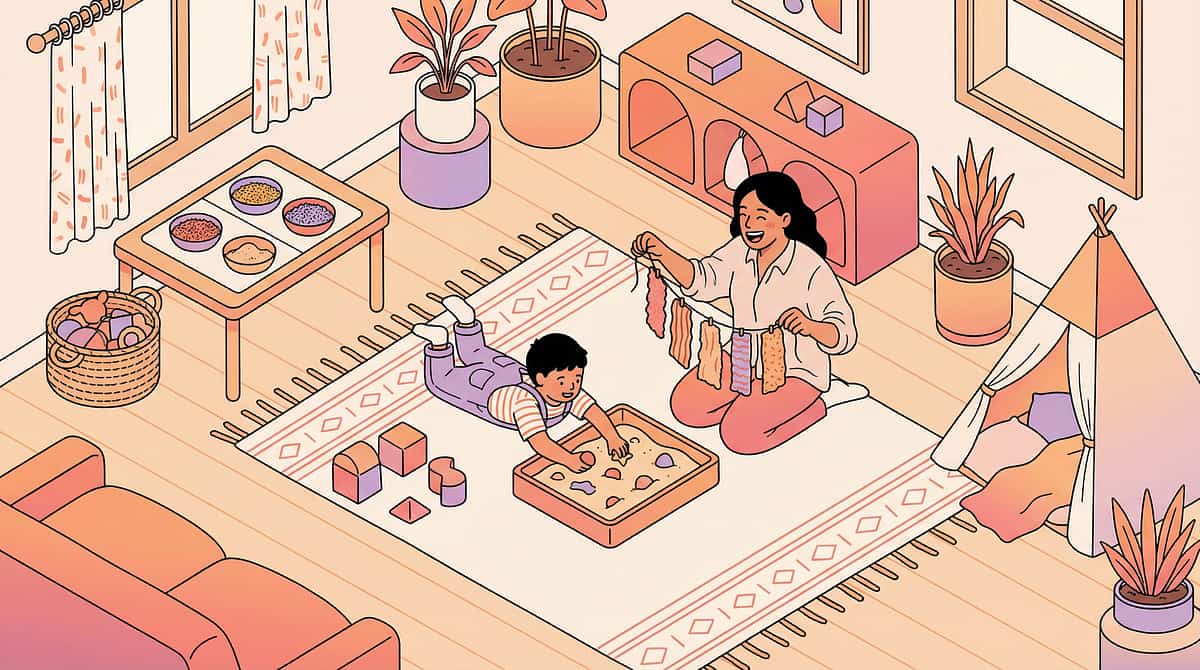
Card 11 — Safety First
Read This Before Your First Session. Non-Negotiable.
🟢 Green — Safe to Proceed
- Child is fed, rested, and at baseline regulation
- Visual supports are prepared and accessible in advance
- Parent is calm (your nervous system regulates theirs)
- Planned change is small and low-stakes for the first attempt
- Child has had no major disruption in the past 2 hours
🟡 Amber — Modify Before Proceeding
- Child is slightly elevated but not in full crisis — use simplified version only
- Change is moderate — add extra preparation time, use all visual supports
- Child has had one recent disruption — increase support level, reduce demand
- Parent is stressed — still proceed but keep session brief and supportive
🔴 Red — Do Not Proceed
- Child is in full meltdown or severe dysregulation
- Child is ill, overtired, or hungry
- Recent major disruption within 2 hours
- Parent cannot maintain calm
Material Safety Notes
- Visual schedule small pieces (velcro, cards): Choking hazard for children under 3 — use large-format cards
- Sand timers: Use plastic, not glass
- Calm-down kit items: Age-appropriate; no small parts for toddlers
- Transition objects at school: Check school policy on personal items
🛑STOP IMMEDIATELY IF: Child is becoming aggressive toward self or others · Distress is intensifying despite all supports. Provide comfort, do not revisit the change attempt for at least 30 minutes. Contact Pinnacle Helpline if this is a pattern: 9100 181 181

ACT III — THE EXECUTION
Is Your Child Ready? The 60-Second Check
"60 Seconds Now Prevents 60 Minutes of Meltdown Later." Before every flexibility session, run this readiness assessment to determine the right approach.
Check | ✅ Green | ⚠️ Amber | 🛑 Red |
Regulation State | Calm, engaged | Slightly elevated | Meltdown, shutdown |
Physical State | Fed, rested | Slightly tired | Hungry, ill, exhausted |
Recent Events | Routine day | 1 minor disruption | Major disruption <2hrs |
Time of Day | Child's best window | Neutral time | End of day, known tired time |
Parent State | Calm, present | Slightly stressed | Overwhelmed, reactive |
✅ 5 Greens: PROCEED
Ideal session conditions. Begin with the full visual schedule review.
⚠️ Mix of Green + Amber: MODIFY
Use First-Then board only. Introduce the smallest possible change. Keep session to 5 minutes maximum. Extra reinforcement for any participation.
🛑 Any Red: POSTPONE
Offer preferred calming activity. Say: "We'll try our schedule tomorrow." Don't apologize — just redirect. Note what created the red condition.
"The best session is one that starts right. A 5-minute session in the right state beats a 45-minute session in the wrong state every time." — Pinnacle ABA Consortium

Card 14 — Step 1
Step 1: The Invitation — Setting Up Predictability
What You Do
Sit beside your child at their eye level. Point to the visual schedule together. Name each activity in sequence. When you reach the "Change Card" (if applicable today), pause.
Body Language
- Seated beside child, not looming over
- Calm, matter-of-fact tone — not anxious or apologetic
- Point to schedule with child's hand if needed
- Let child look as long as they need
Timing: 2–3 minutes
Exact Script to Say
"Let's look at our day together. This morning we have [breakfast], then [school], then [CHANGE — something different today], then [home]. See this card? This is our 'Change Card.' It means one part of our day is going to be a little different. And that's okay — I'm going to tell you exactly what it is."
If Child Resists
- Child refuses to look → use First-Then board only (no full schedule)
- Child fixates on the change card with escalating anxiety → reduce preparation time; introduce change card closer to the event
- Child not verbal about schedule → use pointing only, no verbal requirement
Card 15 — Step 2
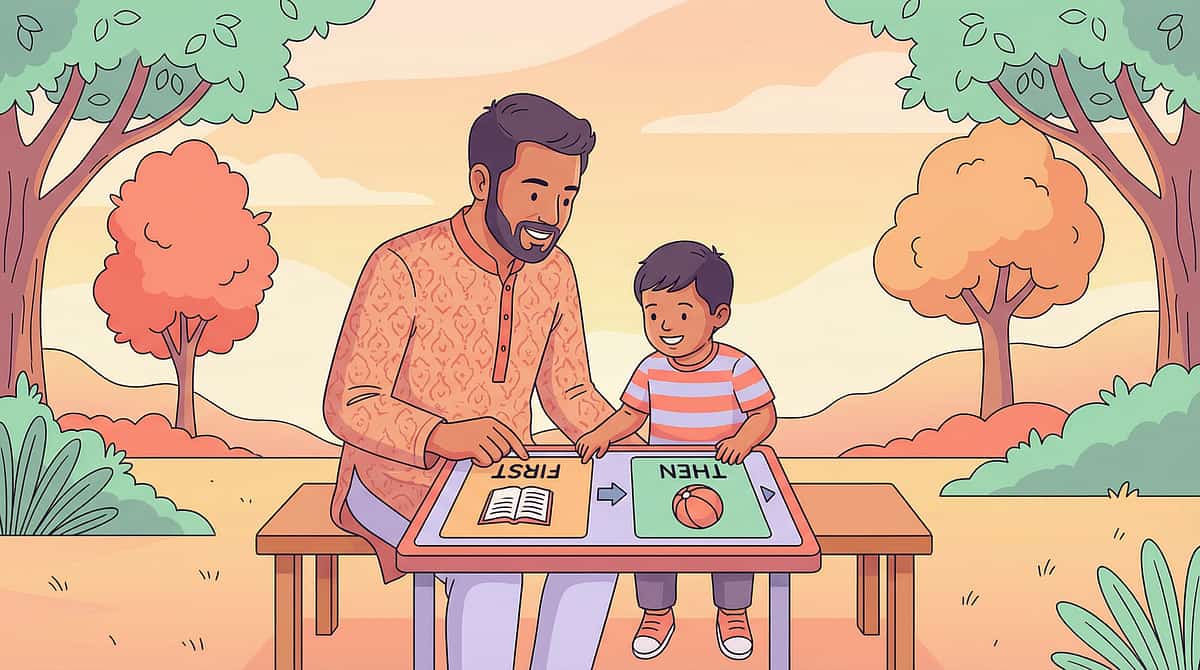
Step 2: The Engagement — First-Then Transition
What You Do
As a transition approaches (5–10 minutes before), pick up the First-Then board. Show the child what they're doing NOW ("First") and what comes NEXT ("Then"). If the "Then" involves the change, briefly explain what changed.
Exact Script
"First we finish [current activity]. Then [next activity / changed activity]. See it here — First [point], Then [point]."
Timing: 1–2 minutes
Child Response Indicators
- Engagement: Child looks at board, nods, continues with First activity
- Tolerance: Child glances at board, may vocalize concern, but continues
- Avoidance: Child pushes board away — reduce verbal load, just point
If "Then" Involves a Change
Update the "Then" card to show the actual changed activity while child watches:
"See, I'm changing the Then card now. It shows [new activity] instead of [original activity]. Same First — new Then. You can do this."
Reinforcement Cue
When child acknowledges the First-Then board without protest → immediate specific praise: "I love how you looked at the plan. That is being flexible."

Card 16 — Step 3
Step 3: Supporting Your Child Through the Actual Change
When the change moment arrives, three tools are deployed simultaneously: the visual schedule (showing the change was pre-planned), the visual timer (showing how long until the new activity), and the First-Then board (showing the sequence). The parent remains calm and matter-of-fact — not apologetic, not over-explaining.
"Okay — this is the change we saw on our schedule. Look at the timer — in [X] minutes we'll start [new activity]. You can hold [transition object] while we get ready. I'm right here."
Response | What It Means | What To Do | |
✅ | Accepts with minimal protest | Flexibility happening — celebrate it! | Immediate warm praise |
✅ | Brief distress, then coping | Using skills — this IS the work | Validate + reinforce |
⚠️ | Escalating distress, not reducing | Overload threshold reached | Offer calm-down kit immediately |
🛑 | Full meltdown | Above support level | End, comfort, reassess |
Key insight: Allow child adequate time to process. Don't rush. The flexibility is happening even when it's not pretty. Your calm body language is co-regulation in action.
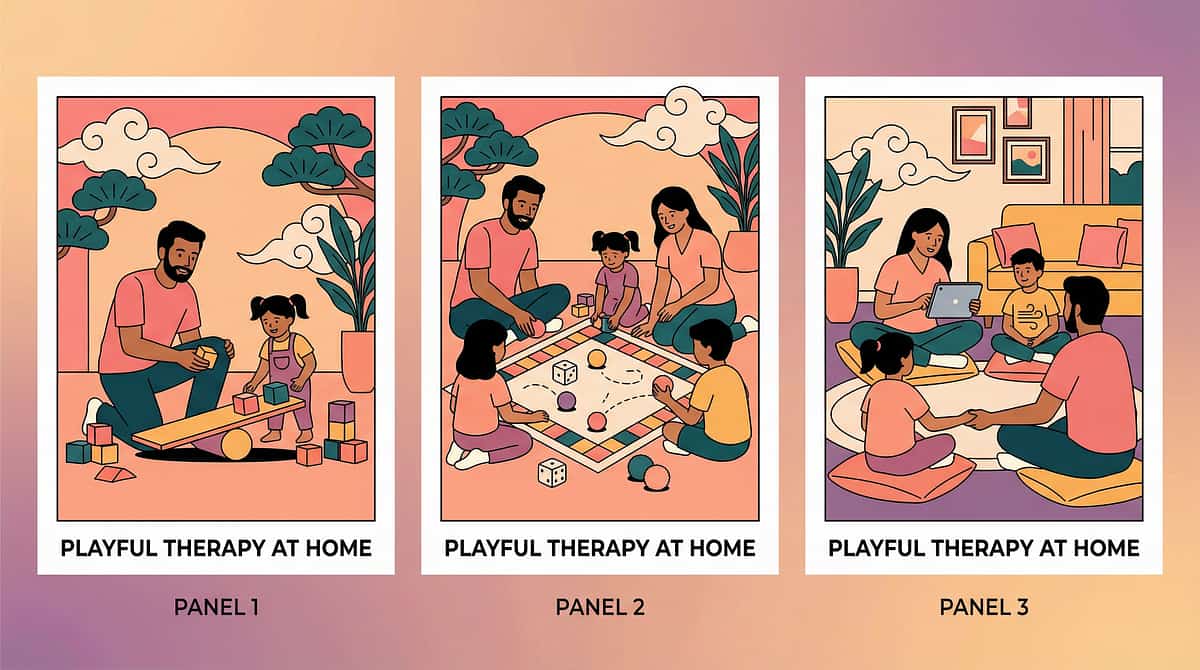
Card 17 — Step 4
Step 4: Repeat & Vary — Building the Flexibility Muscle
The Therapeutic Dosage: 3 good flexibility experiences per day > 1 forced one. The goal is consistent, low-stakes flexibility practice built into daily life — not a discrete "session."
🎲 Game-Based Practice (5–15 min, 3–5×/week)
Using Flexibility Games & "Change It Up" Activity Cards. Start by changing 1 rule — the change is fun, not difficult. Progress: changes become slightly more significant. Always keep it playful; laugh at unexpected outcomes.
📅 Schedule-Based Daily Practice
Week 1: Change the ORDER of two preferred activities
Week 2: Change the LOCATION of a preferred activity
Week 3: Change one ITEM within a familiar routine (different cup is intentional practice)
Week 4: Introduce a minor SURPRISE that is positive
Week 2: Change the LOCATION of a preferred activity
Week 3: Change one ITEM within a familiar routine (different cup is intentional practice)
Week 4: Introduce a minor SURPRISE that is positive
🏷️ Label the Skill — Every Time
"You just changed plans and kept going. That's called being flexible. That is HARD work and you did it."
Satiation Indicators — Stop When: Child stops engaging · Child shows signs of frustration increasing · Child verbally asks to stop. Every time a child successfully navigates a change — even a tiny one — they are building the neural architecture for flexibility.

Card 19 — Step 6
Step 6: End With Regulation — The Cool-Down
No session — no transition — ends abruptly. The cool-down sequence protects the child's nervous system and ensures the next transition into regular life is smooth.
Each step signals safety and predictability — giving the child a reliable, trustable ending to every flexibility practice session. The cool-down itself must never become a meltdown.
Step 1: Visual Warning
"Two more minutes, then all done." Show timer if still running.
Step 2: Transition Ritual
Child participates in putting visual materials away — signals practice is done for today.
Step 3: Regulation Offer
"Let's do one calm thing together before we move on." Brief preferred sensory activity, deep pressure, or 2 minutes with comfort object.
Step 4: Transition Out
Use First-Then board: "After our calm time → [next familiar, preferred activity]."
"You had a hard change today and you used your tools. Tomorrow we'll practice again."

Card 20 — Data Capture
Capture the Data: Right Now
"60 Seconds of Data Now Saves Hours of Guessing Later." Record these 3 data points immediately after each session. Data reveals the trajectory when your eyes can't see it — a child who goes from a "2" to a "3" over 6 weeks has made enormous progress that won't feel like progress in any given day.
Change Tolerance Level (Scale 1–5)
1 = Full meltdown, no tools used · 2 = Significant distress, partial tool use · 3 = Moderate distress, used tools with prompting · 4 = Mild distress, used tools independently · 5 = Minimal distress, coped with visual supports alone
Tools Used — Check All That Applied
☐ Visual Schedule ☐ First-Then Board ☐ Visual Timer ☐ Social Story ☐ Flexibility Game ☐ Calm-Down Kit ☐ Choice Board ☐ Transition Object ☐ Feelings Thermometer
Recovery Time
From peak distress to regulated: _____ minutes. Tracking recovery time is the single most revealing metric in flexibility training.
Use the GPT-OS® in-app tracker at pinnacleblooms.org or download the D-372 Daily Data Sheet PDF. AbilityScore® Assessment available: 📞9100 181 181

Card 21 — Troubleshooting
What If It Didn't Go As Planned? Sessions Don't Always Go Perfectly.
Here's what the data is telling you. Session abandonment is not failure — it is data. Every meltdown has a function. Data reveals the function. The function tells you the next intervention.
"The change card made it WORSE — now they're anxious about any card on the schedule"
You introduced the change card before trust in the visual schedule was established. Go back to running the schedule for 2 weeks without any change cards. Build baseline schedule trust first. Then introduce "change = positive surprise" before "change = neutral."
"They accept changes at home but melt down at school"
Generalization hasn't transferred yet. Coordinate with school staff: same visual schedule format, same change card design, same language. School must use identical systems. Contact Pinnacle center for school consultation: 9100 181 181.
"The flexibility games are fun — but they still can't handle real changes"
The bridge between game-flexibility and life-flexibility requires deliberate transfer. After each game success, explicitly say: "Remember when you changed the rule in the game? Your plans changed today — you can do the same thing."
"The calm-down kit works but takes 30+ minutes to regulate"
Recovery time is the metric to watch. 30 minutes at week 1 → 20 minutes at week 4 is significant progress. Check whether calm-down kit items actually work for THIS child — individual sensory profiles vary. OT consultation helps identify what specifically regulates your child.
"We've been doing this for 3 months and I see no improvement"
This requires professional assessment. Contact Pinnacle: 9100 181 181. Possibilities: (a) anxiety component needing clinical treatment, (b) materials not matched to the function of the inflexibility, (c) implementation needs professional review, (d) co-occurring condition requiring additional support.
"They destroyed the visual schedule when upset"
Create a protected format: laminated cards in a secure binder, not a velcro wall board. Destroying the schedule is a communication — "I don't want to see what's coming." This needs direct ABA consultation.
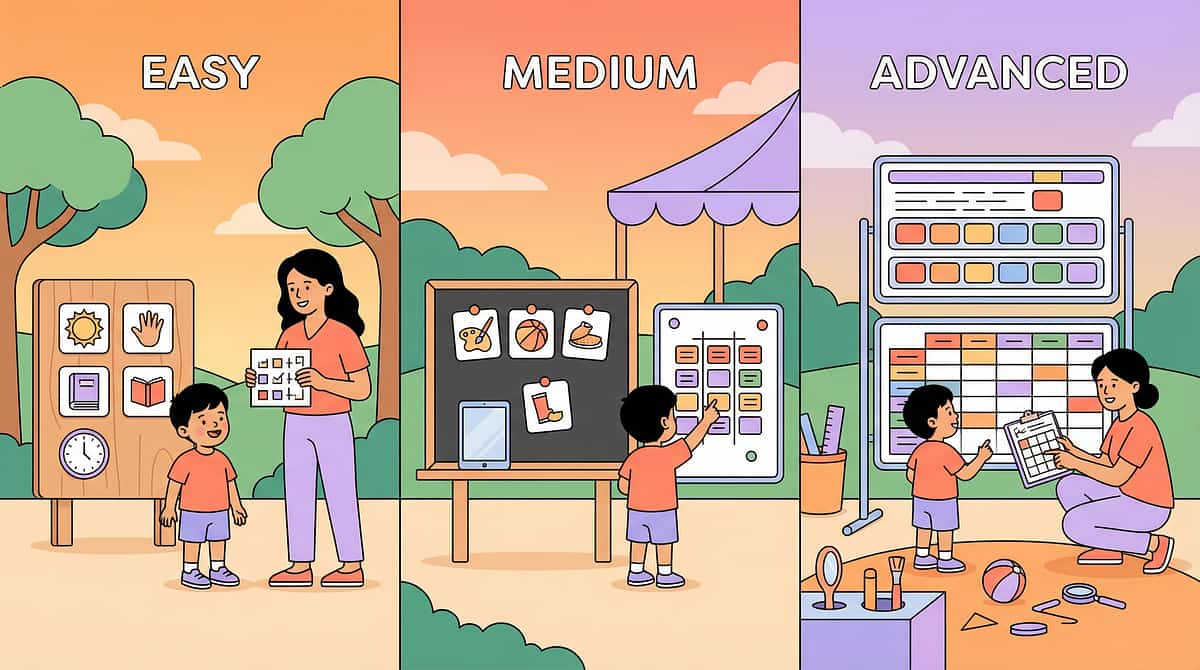
Card 22 — Adapt & Personalize
No Two Children Are the Same. Here Is How to Fit This to Yours.
⬅ Easier Modifications
For highly inflexible children, new to this approach:
- Use First-Then only (not full schedule) for first 2–4 weeks
- Only practice changes that are POSITIVE (change = ice cream, change = extra play)
- Change card introduced only 1 minute before the change
- Flexibility games: change 1 micro-rule (color of piece, not direction of play)
- Calm-down kit offered proactively before any known change
➡ Harder Modifications
For children showing progress:
- Full visual schedule with multiple change cards in a single day
- Change card introduced 30+ minutes in advance
- Changes that are neutral — not positive or negative, just different
- Flexibility games with multiple rule changes in sequence
- Independent use of calm-down kit without parent prompt
Condition | Key Adaptations |
ASD | Visual supports essential, not optional. More preparation time. Social stories must be highly specific and literal. |
ADHD | Shorter, more engaging formats. Visual timer essential for time blindness. |
Anxiety | Gradual exposure hierarchy; never flood. Calm-down kit essential. Professional psychological support recommended alongside. |
Developmental Delay | Photo-based (not symbol-based) schedules. Shorter sequences. More repetition before mastery. |
Sensory Seeker | Pair changes with proprioceptive input (jumping, heavy work) as regulatory bridge. |
Sensory Avoider | Preview sensory features of new situations before change: "It will be loud — here are your headphones." |

ACT IV — THE PROGRESS ARC
Weeks 1–2: What to Expect
✅ You May See in Weeks 1–2
- Child looks at the visual schedule, even if briefly
- Reduced panic compared to unannounced changes
- Child allows the First-Then board to be shown, even with protest
- Some interest in calm-down kit items, even if not used during distress
- Slightly shorter recovery time after a change — 3 minutes shorter = real progress
❌ You Will NOT Yet See
- Smooth acceptance of unexpected changes
- Independent use of tools
- Generalization to school or community settings
- Reduced frequency of change-related distress events
"If your child tolerates the visual schedule for 30 more seconds than last week, that is real progress. You are training a nervous system, not flipping a switch. Expect effort, not transformation, in these first two weeks."
Normal early-phase setback: 2 steps forward, 1 step back. This is expected. Neural pathway formation is not linear. 📞 "Are we making progress?" — Ask a specialist: 9100 181 181

Card 24 — Consolidation
Weeks 3–4: Consolidation Signs
40%
Progress Milestone
Weeks 3–4 consolidation zone — real behavioral changes signaling neural pathway formation
🔵 Child begins referencing the visual schedule independently
Checking it before you prompt — a major executive function milestone.
🔵 The "Change Card" triggers protest rather than meltdown
Smaller reaction = real progress. The threat signal is reducing.
🔵 Recovery time shortens measurably
From 30 minutes to 20 minutes is significant. Track this number weekly.
🔵 Child uses flexibility game language in real situations
"Change it up!" or "That's different but okay" — the bridge between practice and life is forming.
🔵 Spontaneous use of transition object during a change
Child seeking their own anchor — self-regulation is beginning to emerge.
"By Week 3–4, you may notice you're more confident executing these strategies. Your confidence is therapeutic — children with flexibility challenges are exquisitely sensitive to parental anxiety about transitions."

Card 25 — Mastery
Weeks 5–8: Mastery Indicators
75%
Mastery Zone
Weeks 5–8 — specific, observable, measurable mastery criteria
✅ Core Mastery Criteria
- Accepts visual schedule change card without meltdown in 8 out of 10 presentations
- Independently accesses calm-down kit when distress signal appears (at "yellow")
- Recovery time under 10 minutes from peak distress
- Successfully navigates at least one unexpected change per week
- Demonstrates 2+ alternative-generating behaviors: "If we can't do X, can we do Y?"
🌐 Generalization Indicators
- Same behavior at school (reported by teacher)
- Accepts changes at grandparents', in community settings
- Handles changes from other caregivers, not just trained parent
- Maintains flexible behavior without every visual support deployed
"Your child can cope with routine changes. They may not love them — that's fine. They can handle them. That is the goal. Mastery achieved."
When to Progress: → D-373: Rigid Thinking Patterns (next in cluster) → D-370: Transition Between Activities (related lateral technique)

Card 26 — Celebrate This Win
You Did This. Your Child Grew Because of Your Commitment.
You took a child who fell apart at a different breakfast cup and gave them the tools to say, with their nervous system: "This changed. I can cope."
That is not small. That is a fundamental rewiring of how a brain responds to uncertainty — and you did it at home, in daily life, one visual schedule at a time.
From
Severe distress at any routine deviation, requiring complete environmental control
To
Functional flexibility — coping with expected changes, recovering from unexpected ones, with a toolkit they carry everywhere
Family Celebration Suggestion: Do something that involves a positive, predictable "change" — a new restaurant, a different park route, an unexpected dessert — and narrate: "Look — we did something different and it was good."
Journal Prompt: Write down the first change your child successfully navigated without a meltdown. What tools did they use? How long did it take to get there? This is your story of evidence.
#FlexibilityBuilders
#PinnacleBlooms
#GPT-OS

Card 27 — Red Flags
Even in Progress, These Signs Mean Pause and Consult.
🚨 Self-Injury During Meltdowns
Hitting head, biting self during change-related meltdowns → Immediate consultation required. This indicates distress beyond the scope of this protocol.
🚨 Aggression Toward Others During Transitions
Hitting, biting others → Professional behavioral assessment required before continuing.
🚨 Complete Shutdown Over 2 Hours
Lasting more than 2 hours after a routine change → Anxiety severity requires clinical assessment and possible pharmacological support.
🚨 No Improvement After 8 Consistent Weeks
Underlying function not addressed by current materials. Professional assessment to identify function.
🚨 Regression After Period of Improvement
Skills lost, distress worsening → Environmental change, medical issue, or anxiety exacerbation — requires assessment.
🚨 Flexibility Challenges Preventing School Attendance
Severity level requiring multi-disciplinary support team immediately.
Level 1
Self-resolve — continue protocol with modifications (Card 22)
Level 2
Teleconsult — Pinnacle Helpline 9100 181 181
Level 3
Clinic Assessment — Nearest Pinnacle Center
Level 4
Multidisciplinary team + possible medical evaluation
"Trust your instincts. If something feels wrong — pause and ask. Your observation is clinical data."

Card 29 — Related Techniques
Other Techniques Using These Same Materials
"You already own materials for several of these." The Visual Schedule, Timer, and Calm Kit you built for D-372 are used in 8 related techniques in this cluster. Your investment compounds.
Technique | Domain | Level | Materials You Have |
D-370: Transition Between Activities | D — Behavioral | ⬆️ Prerequisite | Visual Schedule, Timer |
D-371: New Situations & Environments | D — Behavioral | ⬆️ Prerequisite | Social Stories, Comfort Items |
D-373: Rigid Thinking Patterns | D — Behavioral | 🔷 Next Level | Same full kit |
D-374: Building Routine Flexibility | D — Behavioral | 🔷 Next Level | Games, Choice Board |
C-265: Transition Meltdowns | C — Emotional | ↔️ Lateral | Calm Kit, Timer |
I-802: Flexibility Building | I — Life Events | 🔶 Advanced | Games, Choice Board |
Flexibility & Rigidity Cluster
D-371 → D-372 → D-373 → D-374
Transitions & Life Events
I-781 → I-802
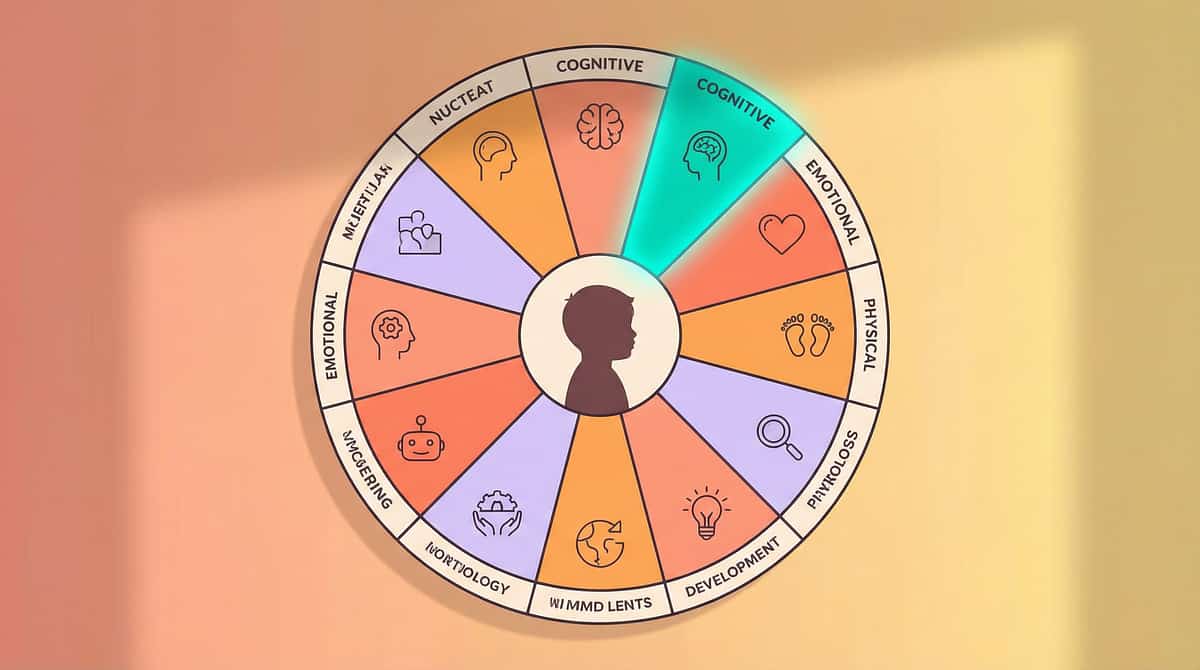
Card 30 — Full Developmental Map
D-372 Is One Piece. Here Is the Full Picture.
This technique addresses the core of Domain D: Behavioral Development. But behavioral flexibility connects to every other domain. Sensory regulation (A) underpins behavioral flexibility. Emotion regulation (C) is a prerequisite for cognitive flexibility. Transition success (I) is flexibility applied to life events. Academic participation (H) requires handling schedule unpredictability.
The data you collect in your daily tracker feeds the Cognitive Flexibility Index within AbilityScore®. Over time, GPT-OS® identifies which domains need attention next and adjusts your EverydayTherapyProgramme™ accordingly.
Access AbilityScore® Assessment → | 📞9100 181 181
Access AbilityScore® Assessment → | 📞9100 181 181
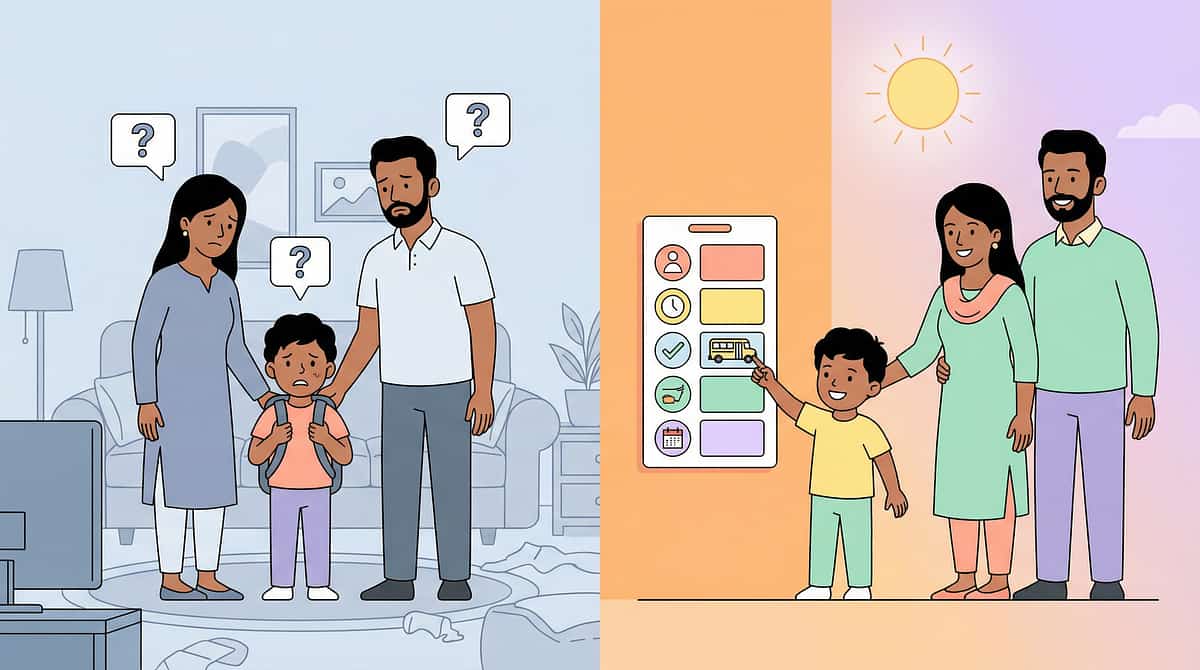
ACT V — THE COMMUNITY & ECOSYSTEM
Three Families. Three Breakthroughs. Your Child Can Too.
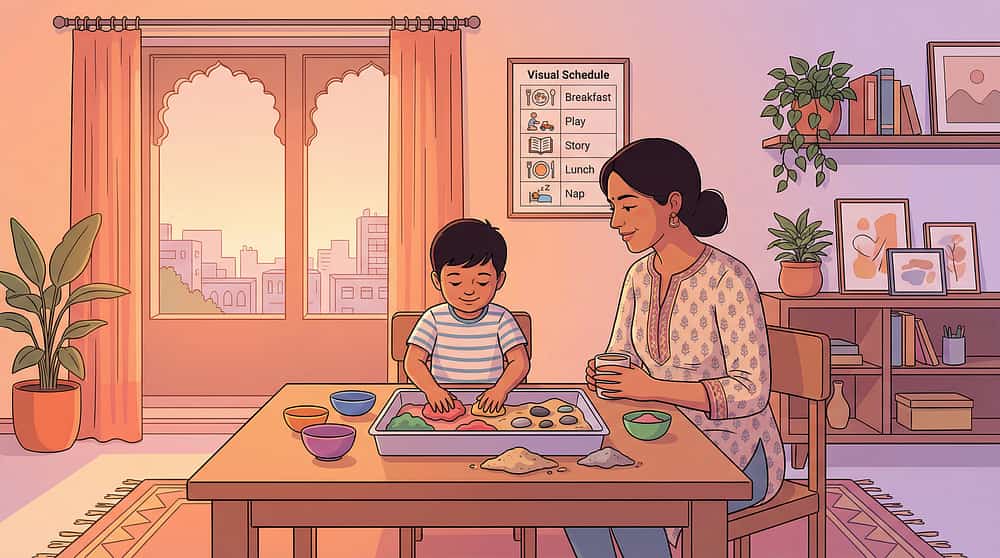
Priya, Mother of Arjun (6) — Hyderabad
Before: "Every Friday was a disaster because school had assembly. Arjun would know from Monday that Friday was 'wrong' and spend the entire week anxious."
What They Used: Visual schedule with a "Change Card" specifically for Friday assemblies. Social story: "Sometimes our school has special programs. I know about them on my schedule. I can do this."
After 8 weeks: "He started asking 'When is the next change card?' instead of dreading invisible change. His teacher says transitions are now his most improved area."
What They Used: Visual schedule with a "Change Card" specifically for Friday assemblies. Social story: "Sometimes our school has special programs. I know about them on my schedule. I can do this."
After 8 weeks: "He started asking 'When is the next change card?' instead of dreading invisible change. His teacher says transitions are now his most improved area."

Ramesh, Father of Kavya (4.5) — Bangalore
Before: "Her cup, her chair, her plate — everything had to be exact. We bought 6 identical cups so we'd always have one clean."
What They Used: Flexibility Games approach; First-Then board; Choice Board with two acceptable alternatives.
After 12 weeks: "She still prefers her cup. But when it's not available, she checks the board, picks another, and moves on in about 3 minutes instead of 45. We don't have 6 cups anymore."
What They Used: Flexibility Games approach; First-Then board; Choice Board with two acceptable alternatives.
After 12 weeks: "She still prefers her cup. But when it's not available, she checks the board, picks another, and moves on in about 3 minutes instead of 45. We don't have 6 cups anymore."

Meena, Mother of Rohan (8) — Chennai
Before: "A cancelled cricket match would ruin two full days. He couldn't recover, couldn't be redirected, couldn't accept any alternative."
What They Used: Feelings thermometer + Plan B card system. When a change was announced, Rohan checked his thermometer level and chose from pre-approved Plan B alternatives.
After 10 weeks: "He says 'I'm at orange — I need my calm kit.' Then 15 minutes later: 'Okay what's Plan B?' That's the same child with better tools."
What They Used: Feelings thermometer + Plan B card system. When a change was announced, Rohan checked his thermometer level and chose from pre-approved Plan B alternatives.
After 10 weeks: "He says 'I'm at orange — I need my calm kit.' Then 15 minutes later: 'Okay what's Plan B?' That's the same child with better tools."
Individual results vary. These are illustrative composite narratives. Statistics represent aggregate outcomes across Pinnacle Network.

Card 32 — Community
Isolation Is the Enemy of Adherence. You Need Your People.
Every caregiver who understands these tools is an additional therapeutic agent in your child's daily life. Connect with families who are navigating exactly what you are — and share what's working.
WhatsApp Group — Flexibility & Transitions Support
Families using visual schedules, flexibility games, and transition tools — share what's working, ask what's not. Join Group →
Online Forum — Pinnacle Parent Community
Ask questions. Share wins. Get peer support from 10,000+ families navigating neurodevelopmental challenges. Join Forum →
Local Parent Meetup — Pinnacle Centers
70+ centers across India organize regular parent meetup sessions for families working on behavioral development. Find Your Center →
Peer Mentoring Program
Connect with a parent who has successfully implemented D-372 and related techniques. Your experience helps others — and their experience helps you. Request a Mentor →
"Your experience helps others. When you share what worked — the exact visual schedule format, the social story that finally clicked — you become part of the clinical knowledge base."
Card 33 — Professional Support Team
Home + Clinic = Maximum Impact
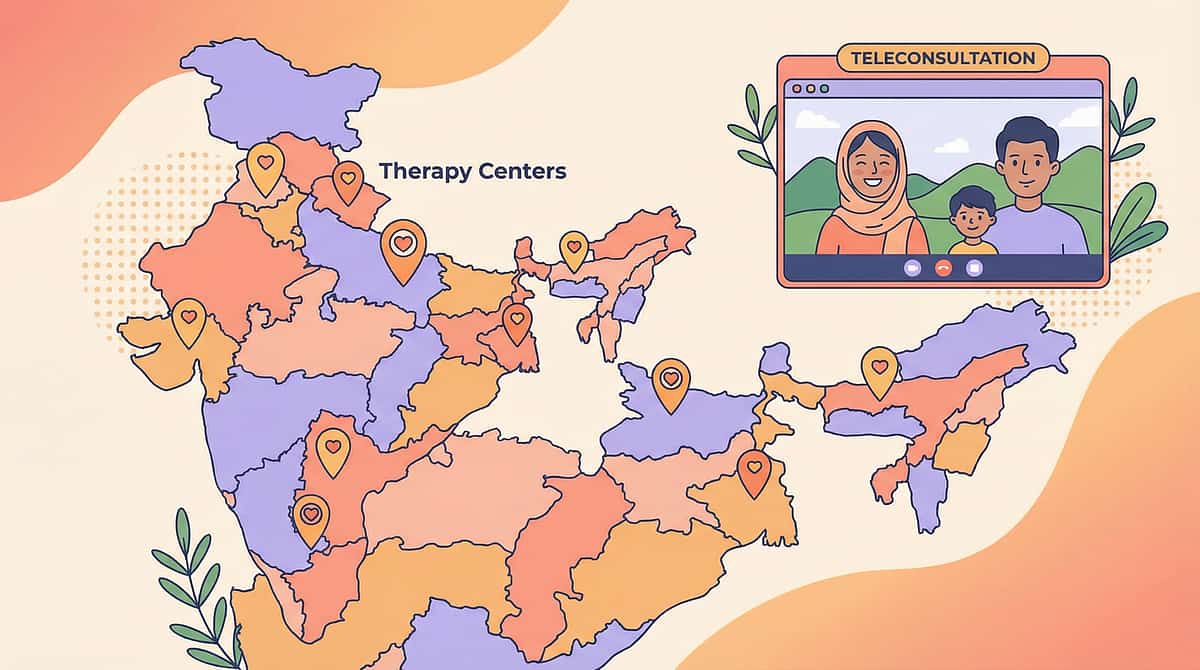
70+ centers across India — serving families from 70+ countries via telehealth. For D-372 (Routine Changes Distress), your team at Pinnacle includes specialists across every discipline involved in flexibility training.
🧠 BCBA / ABA Therapist
Designs graduated exposure hierarchy, implements visual support system, collects and analyzes flexibility data
🖐️ Occupational Therapist
Addresses sensory components, designs calm-down kit, supports proprioceptive regulation
💬 SLP
Creates personalized social stories, builds language for change communication
📚 Special Educator
School coordination, IEP accommodation design, teacher training on visual supports
🏥 NeuroDev Pediatrician
Diagnostic clarity, anxiety management, overall clinical supervision
🏥 Visit a Center
Full assessment, AbilityScore®, FusionModule™ therapy plan. Book Assessment → | 9100 181 181
💻 Teleconsultation
Available for families across India and internationally. Book Telehealth Session →
📞 FREE Helpline
9100 181 181 — 16+ languages — Start here. Available 24×7.
Validated by: OT • SLP • ABA/BCBA • SpEd • NeuroDev • Pediatrics • CRO | DPIIT DIPP8651 | MSME | CIN: U74999TG2016PTC113063
Card 34 — The Research Library
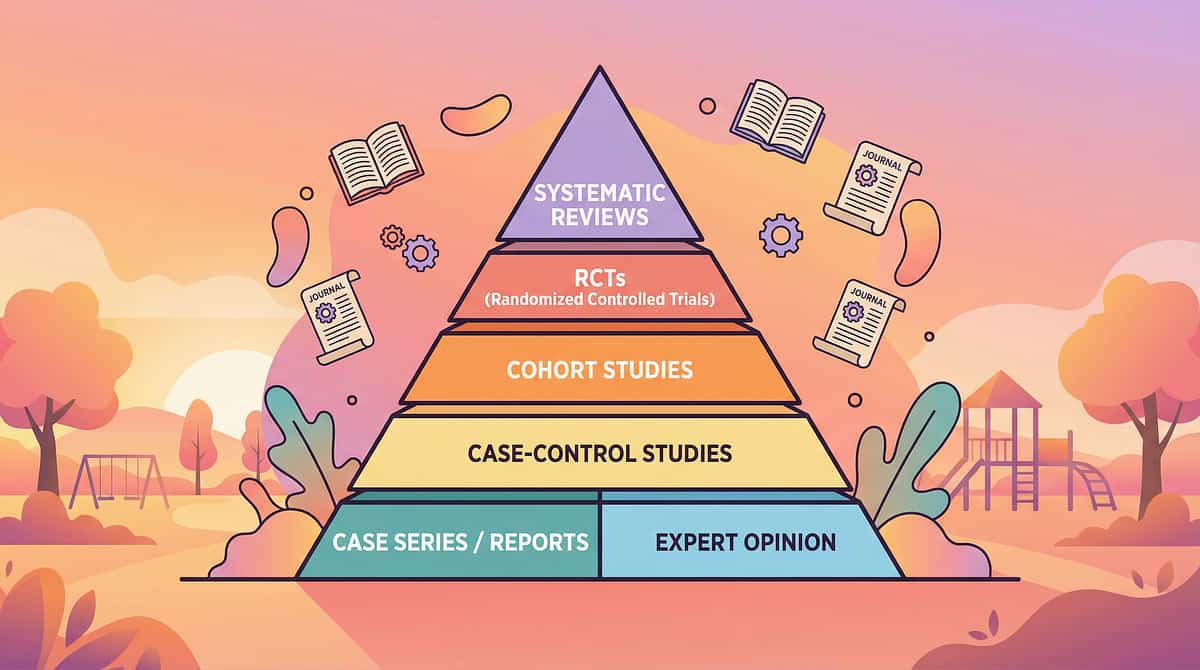
The Science Behind Every Card on This Page
PMC11506176 | PRISMA Systematic Review, 2024
16 studies (2013–2023): Sensory integration and structured behavioral intervention meets evidence-based practice criteria for ASD. Visual supports are non-optional for flexibility challenges. Read on PubMed →
PMC10955541 | Meta-Analysis, World J Clin Cases, 2024
24 studies: Structured behavioral + OT interventions effectively promote adaptive behavior, cognitive flexibility, and social skills in pediatric populations. Read on PubMed →
PMC9978394 | WHO CCD Package Implementation
Caregiver-delivered structured interventions across 54 LMICs — efficacy of home-based approach using household and low-cost materials. Read on PubMed →
Padmanabha et al., Indian J Pediatr, 2019
RCT: Home-based structured behavioral intervention in Indian pediatric population. Significant outcomes. Safety protocols established. Read Study →
NCAEP Evidence-Based Practices Report, 2020
Visual supports, Social Stories™, video modeling, behavioral flexibility interventions classified as evidence-based practices for autism. Read Report →
WHO Nurturing Care Framework (2018) + Progress Report (2023)
Comprehensive evidence for early childhood development interventions, including multi-disciplinary caregiver training. Read Framework →
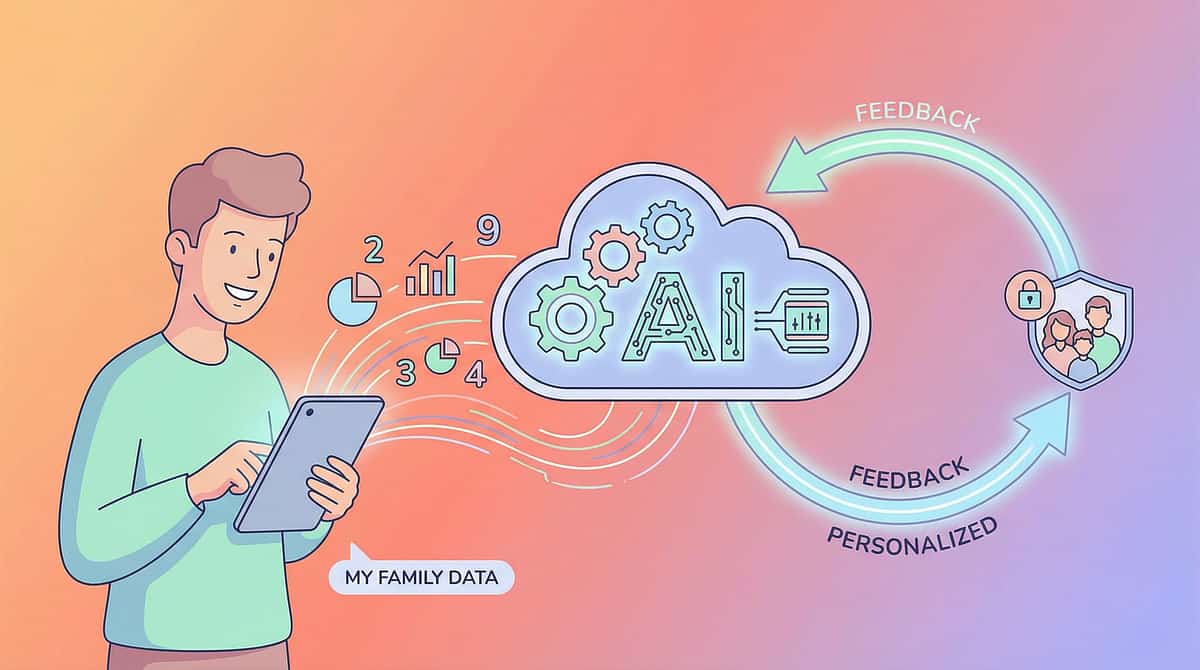
Your Data. Your Child's Edge. Everyone's Improvement.
Card 35 — GPT-OS® Intelligence
GPT-OS® uses the data you record after each session to generate a personalized intelligence layer — turning 60 seconds of daily observation into clinical-grade guidance tailored to your child's specific profile.
You Record | GPT-OS® Learns | You Receive |
Daily change tolerance score (1–5) | Cognitive Flexibility Index updates | Personalized next-technique recommendation |
Recovery time (minutes) | Transition Success Index updates | Adjusted session frequency guidance |
Tools used (checklist) | Material effectiveness mapping | Which of the 9 materials is most impactful for YOUR child |
20M+ other session data | Pattern recognition across population | Predicted trajectory and intervention timing |
Pattern Detection
Which flexibility tools work for children with your child's specific profile
Trajectory Guidance
Whether progress matches the typical arc or needs adjustment
Advancement Timing
When to advance to the next technique in the cluster
Privacy Protected
All data de-identified, encrypted, governed under Indian data protection standards
"When you record 60 seconds of data after each session, you contribute to the GPT-OS® learning system that benefits 20M+ therapy sessions for children across 70+ countries. You're not just helping your child — you're making the system smarter for every family."
Card 36 — Watch the Reel
The 60-Second Reel That Might Have Brought You Here
"This reel introduces all 9 materials in 60 seconds. This page gives you everything needed to use them. Both together — the visual format and the depth — is how parents go from 'I saw this on Instagram' to 'I implemented this at home.'"
Reel D-372: "9 Materials That Help When Routine Changes Distress" | Domain D — Behavioral Development / Routine Rigidity / Cognitive Flexibility
Related Reels in This Cluster
D-370
9 Materials That Help With Alternative Sensory Input
D-371
9 Materials That Help With Rigid Routines
D-373
9 Materials That Help With Sameness Insistence
C-267
9 Materials That Help With Routine Disruption
I-802
9 Materials That Help With Flexibility Building
📱 Follow @pinnacleblooms on Instagram | YouTube | Facebook for daily guidance on pediatric behavioral development, sensory regulation, and autism support.
NCAEP (2020): Video modeling is classified as evidence-based practice for autism.
NCAEP (2020): Video modeling is classified as evidence-based practice for autism.

Card 37 — Share With Your Family
Consistency Across Caregivers Multiplies Impact
A visual schedule used by one parent and ignored by grandparents creates inconsistency — which increases, not decreases, distress. Every caregiver who understands these tools is an additional therapeutic agent in your child's daily life. Research confirms: multi-caregiver training is critical for generalization and maintenance.
📱 Share Buttons
Share on WhatsApp · Share via Email · Copy Page Link
📄 Family Guide (PDF)
"Helping [Child's Name] When Plans Change" — simple language version for extended family, grandparents, and domestic helpers. Download PDF →
👩🏫 Teacher Template
"[Child's name] uses visual supports for transitions. Please use the attached schedule format and the 'change card' system. Consistency between home and school is critical." Download Template →
👴 Grandparent Card
Three things to do and three things to avoid — in plain language. Download Grandparent Card →
WhatsApp Message Template
"We're using visual schedules and a 'Change Card' system to help [child] with transitions. When you're caring for [them], here are the 3 most important things to know: (1) Show the schedule before any change. (2) Use the First-Then board for transitions. (3) Offer the calm-down kit — don't force it. Full guide here: [link]"
Sending this message to grandparents, teachers, and other caregivers takes 30 seconds and can transform consistency across every setting your child enters.
Source: PMC9978394 — WHO CCD Package: Multi-caregiver training is critical for intervention generalization and maintenance across settings.

Card 38 — FAQ
Your Most Common Questions — Answered
Q: My child is autistic — will these materials work differently for them?
Visual supports (schedule, First-Then, timer) are essential, not optional, for children with ASD. All 9 materials are highly applicable. Critical adaptations: (a) use photos rather than symbols for concrete thinkers, (b) introduce change cards very gradually after baseline schedule is trusted, (c) social stories must be highly specific and literal — no idioms or metaphors. Autism-related inflexibility may be more persistent and require ongoing accommodation, not just temporary support.
Q: How long until I see real change?
Early indicators appear in Weeks 1–2 (reduced meltdown intensity, slightly faster recovery). Functional change typically emerges by Weeks 5–8 with consistent implementation. Complete flexibility skill generalization can take 3–6 months depending on severity, consistency, and underlying cause. Slower progress = signal to consult professionally.
Q: Is it okay that my child still prefers routine even after all this?
Yes. Routine preference is not pathological — it's often adaptive. The goal is never eliminating routine preference. The goal is functional flexibility: the capacity to cope when routine changes are necessary. A child who prefers routine but can handle unavoidable changes is a child with a healthy relationship to predictability.
Q: My child's school uses a different visual schedule format. Should I change ours?
Consistency between home and school accelerates progress significantly. Contact the school — or the Pinnacle team can liaise. The format (photos vs. symbols, horizontal vs. vertical) should match the child's comprehension level, not the adult's preference.
Q: My child watches the visual timer obsessively and can't focus on activities.
Place the timer in a visible but not directly-in-front location (on a shelf in peripheral vision). Gradually move it further away as the child trusts that the timer will still signal accurately. Some children benefit from a structured "timer check" schedule — they look every X minutes — reducing obsessive watching.
Q: We used these for 6 weeks, then had a stressful period — we're back to square one. Is the progress lost?
Progress is rarely fully lost — but regression under stress is normal and expected. Return to the foundations (visual schedule, First-Then, timer) with increased support. The neural pathways built in those 6 weeks are still there — temporarily less accessible under stress load. Expect faster re-establishment than the original learning.
Q: My 2-year-old shows these signs. Is it too early to start?
Some preference for routine at age 2 is developmentally typical. However, if the intensity significantly disrupts daily life, early visual support introduction is appropriate and beneficial. First-Then boards and transition objects are particularly suitable for this age. Formal flexibility training (gradual exposure, games) is more developmentally appropriate from age 3–4.
Didn't find your answer? Ask GPT-OS® → | Still need help? Book a teleconsultation → | 📞9100 181 181

ACT VI — THE CLOSE
Your child can handle change. The tools are on this page. The time is now.
Every day without these tools is a day your child's nervous system manages the threat of change alone. Every day with them is a day new neural architecture is being built — gradually, safely, and with you beside them.
🖐️ OT
Occupational Therapy
💬 SLP
Speech-Language Pathology
🧠 ABA
Applied Behavior Analysis
📚 SpEd
Special Education
🏥 NeuroDev
NeuroDevelopmental Pediatrics
✦ VALIDATED BY THE PINNACLE BLOOMS CONSORTIUM ✦ | 20M+ Sessions | 97%+ Measured Improvement | 70+ Centers
DPIIT DIPP8651 | MSME | CIN: U74999TG2016PTC113063
📞 FREE National Autism Helpline: 9100 181 181 | 16+ languages | 24×7
DPIIT DIPP8651 | MSME | CIN: U74999TG2016PTC113063
📞 FREE National Autism Helpline: 9100 181 181 | 16+ languages | 24×7
Preview of 9 materials that help when routine changes distress Therapy Material
Below is a visual preview of 9 materials that help when routine changes distress therapy material. The pages shown help educators, therapists, and caregivers understand the structure and content of the resource before use. Materials should be used under appropriate professional guidance.


Link copied!

The Pinnacle Promise
"From fear to mastery. One technique at a time."
A parent arrived at Card 01 exhausted, confused, and walking on eggshells. By Card 05, they understood the neuroscience of their child's distress. By Card 12, they had 9 materials and a prepared space. By Card 22, they had executed, troubleshot, and adapted the technique. By Card 30, they saw their child's full developmental map. By Card 37, they had shared the knowledge with their family. By Card 40, they were ready to act — and the loop restarts.
This is what GPT-OS® does. Technique by technique. Family by family. Population-level change through parent-level empowerment.
Built by Mothers
Engineered as a System
OT • SLP • ABA/BCBA
SpEd • NeuroDev • CRO
WHO-Aligned
Evidence-Based at Every Step
This content is educational in nature. It does not replace individualized assessment and intervention from licensed professionals. Extreme inflexibility or rigidity may be associated with autism spectrum disorder, anxiety disorders, ADHD, or other conditions requiring professional evaluation. Materials should be implemented as part of a comprehensive support plan. Never force children through changes without appropriate support. Individual results may vary.
© 2025 Pinnacle Blooms Network®, a unit of Bharath Healthcare Laboratories Pvt. Ltd. All rights reserved. GPT-OS®, AbilityScore®, TherapeuticAI®, EverydayTherapyProgramme™, FusionModule™ are proprietary marks of Bharath Healthcare Laboratories Pvt. Ltd. CIN: U74999TG2016PTC113063 | DPIIT Recognition: DIPP8651 | MSME: TS20F0009606 | GSTIN: 36AAGCB9722P1Z2