

Your Child Isn't Stuck on Purpose. Their Brain Is.
She decided she wanted the blue cup — and the next hour was destroyed. He asked the same question seventeen times, even after you answered. She couldn't end the puzzle even when dinner was getting cold. This isn't defiance. This is a brain that genuinely cannot shift. And there are 9 materials that help it do exactly that.
"You are not failing as a parent. Your child's nervous system is asking for a bridge — not a push." — Pinnacle Blooms Consortium, validated across 20M+ therapy sessions
🏥 Consortium-Validated
Evidence-based across every discipline
👶 Ages 2–12
Adapted for every developmental stage
🏠 Home-Executable
No clinic required — start today
🌍 70+ Countries
Trusted by families worldwide
Pinnacle Blooms Network® | Built by Mothers. Engineered as a System. | 📞 FREE Helpline: 9100 181 181 — 16+ languages, 24×7
Cognitive Flexibility & Executive Function
Domain D | Episode 377

The Scale of This Challenge — And Why It Matters
1 in 36
Children Diagnosed
with autism globally (CDC 2023)
80%
Experience This
of autistic children experience significant cognitive inflexibility
21M+
Therapy Sessions
where Pinnacle has worked on flexibility and transition skills
Cognitive inflexibility is not rare. It is not your parenting. It is not your child's choice. It is one of the most prevalent and most impactful features of autism spectrum disorder — and it shows up in ADHD, anxiety disorders, and other developmental profiles too. The brain's executive function shifting network — the neural machinery that allows one thought to release so another can take hold — develops differently in these children. Not broken. Different. And trainable with the right tools.
"80% of children diagnosed with autism display sensory processing and cognitive flexibility difficulties — making this one of the most common intervention targets globally." — PRISMA Systematic Review, Children (2024) | PMC11506176
Across 70+ Pinnacle centers in India, cognitive inflexibility is among the top 5 presenting challenges in children aged 2–10. 📞9100 181 181
PMC11506176
PMC10955541
WHO Global Autism Profile 2023

The Neuroscience of Getting Stuck
Clinical Explanation
The prefrontal cortex (specifically the dorsolateral region) governs executive function shifting — the ability to disengage from a current mental set and engage with a new one. In children with cognitive inflexibility, this shifting circuit is under-connected. When the brain locks onto a thought, object, or routine, the "release mechanism" fails to fire. The child is not choosing to stay stuck — they are neurologically unable to shift without support.
This is compounded by interoceptive processing differences, anxiety circuits that treat any change as a threat signal, and working memory limitations.
In Plain Language
Think of your child's brain like a car stuck in one gear. Most brains can shift smoothly between gears — from play to eating, from wanting one thing to accepting another. Your child's gear-shift mechanism needs external scaffolding to work.
That scaffolding is exactly what these 9 materials provide.
"This is a wiring difference, not a behavior choice. The tools that work are the ones that externalize what the brain cannot do internally." — Pinnacle NeuroDevelopmental Consortium
PMC10955541
NCAEP EBPs 2020
DOI: 10.3389/fnint.2020.556660
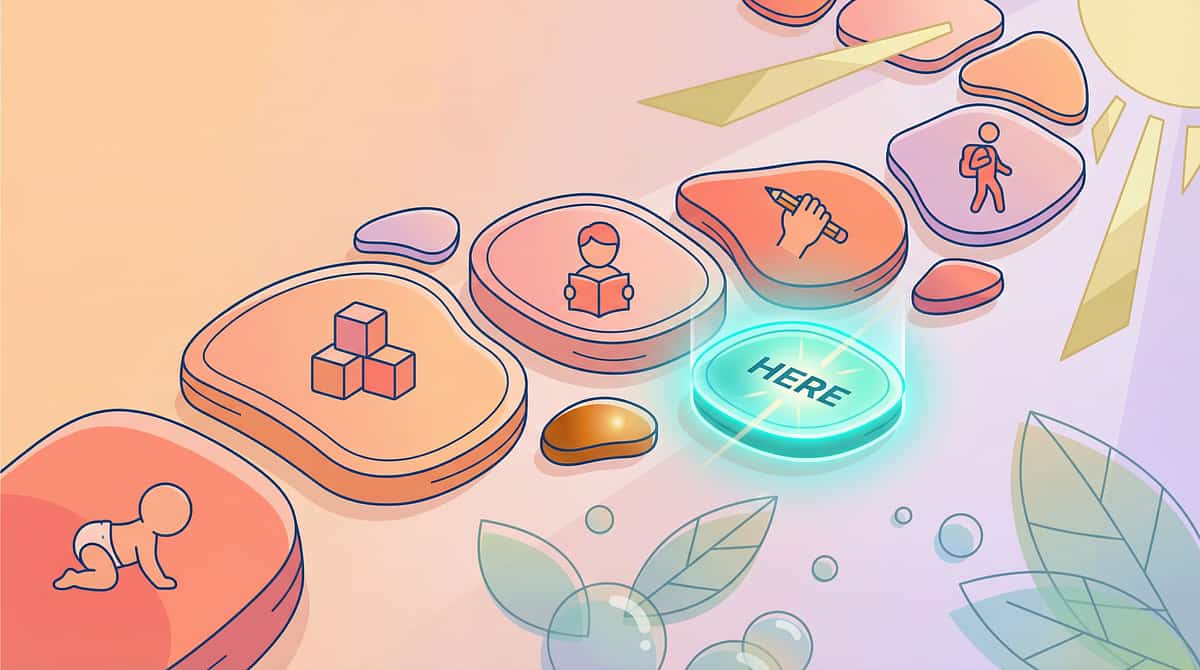
Your Child's Developmental Roadmap
Young children are naturally somewhat rigid — routines provide security, and cognitive flexibility is a skill that builds over time. The WHO Care for Child Development Package confirms that flexibility begins emerging at 18 months and develops progressively through middle childhood. When inflexibility is significantly more pronounced than same-age peers, causes substantial distress, or interferes with daily functioning — intervention is warranted.
Ages 2–3
Natural rigidity — routines provide essential security
Ages 3–5
Early flexibility begins to emerge with development
Ages 5–7
Set-shifting grows — many autistic children need support here
Ages 7–12
Flexible thinking builds with consistent scaffolding
Adolescence
Adult flexibility — achievable with the right foundations
Cognitive inflexibility commonly co-occurs with:🔴 Autism Spectrum Disorder (core feature) | 🟠 ADHD (shifting deficit) | 🟡 Anxiety Disorders (change = threat) | 🟡 OCD (compulsive sameness)
This page gives you the tools to begin moving forward — whether your child is 3 or 12, whether you're just beginning to understand this, or refining approaches you've tried before.
WHO/UNICEF CCD Package 2023
PMC9978394

Clinically Validated. Home-Applicable. Parent-Proven.
LEVEL I — SYSTEMATIC REVIEW + RCT SUPPORT
Every strategy on this page is backed by international research and validated across Pinnacle's 20M+ real-world therapy sessions. The evidence base is not theoretical — it is drawn from systematic reviews, meta-analyses, and randomized controlled trials conducted across multiple countries, including India.
Source | Finding | |
PRISMA Systematic Review (Children, 2024) — PMC11506176 | 16 studies (2013–2023) confirm visual supports and structured flexibility interventions meet evidence-based practice criteria for ASD | |
Meta-analysis (World J Clin Cases, 2024) — PMC10955541 | Structured intervention promotes cognitive flexibility, adaptive behavior, and executive function across 24 studies | |
NCAEP Evidence-Based Practices Report (2020) | Visual supports, social stories, and video modeling classified as EBPs for autism | |
Indian RCT (Padmanabha, Indian J Pediatr, 2019) | Home-based structured interventions demonstrate significant outcomes — DOI: 10.1007/s12098-018-2747-4 | |
WHO NCF (2018) | Caregiver-administered structured daily interventions validated across 54 low-/middle-income countries |
"Clinically validated. Home-applicable. Parent-proven. Powered by 20M+ real-world sessions." — Pinnacle Consortium: OT • SLP • ABA • SpEd • NeuroDev
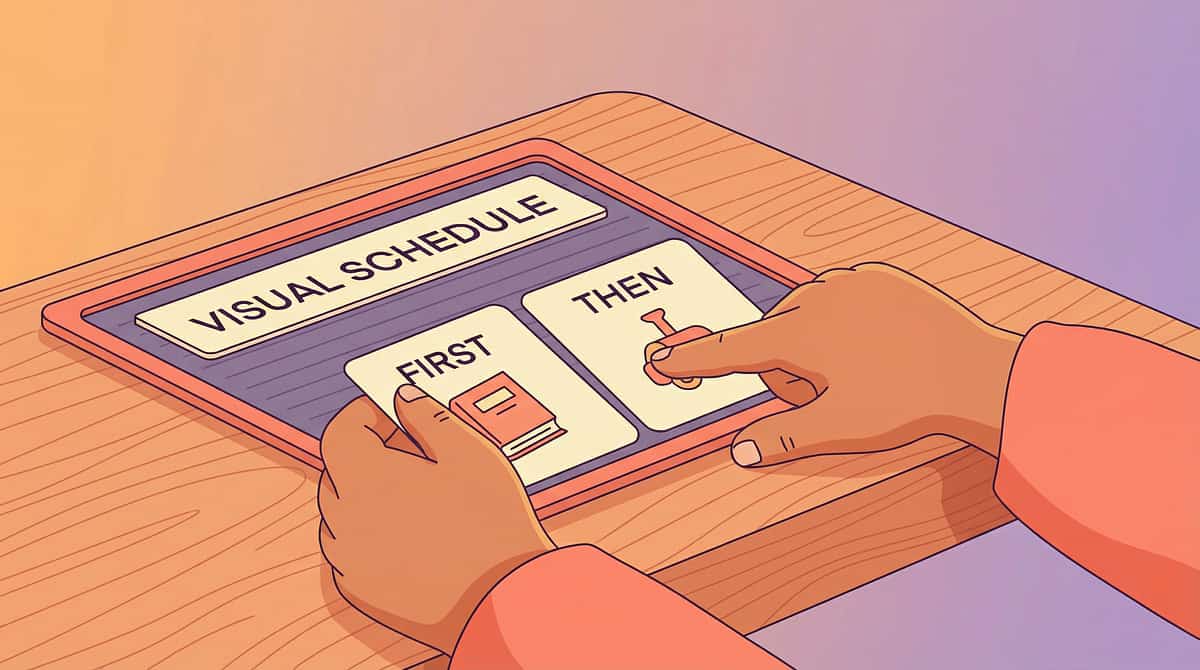
Understanding "Getting Stuck" — And the Intervention Stack That Helps
Formal Name: Cognitive Flexibility & Perseveration Intervention Using External Scaffolding | Parent-Friendly Alias: "The Unsticking System"
"Getting stuck" refers to difficulty shifting attention, thoughts, or behaviors from one focus to another. External supports, visual tools, and systematic strategies scaffold the flexibility the brain struggles to generate internally.
1. Perseveration
Same question or action repeated in a loop
2. Transition Difficulty
Cannot stop one activity to start another
3. Insistence on Sameness
Rigid routines, exact sequences required
4. Fixation
Locked on an unavailable item or outcome
5. Rigid Thinking
Only one "right" way is acceptable
Domain D: Autism/Behavioral
Subdomain D2: Stimming & Repetitive Behaviours
Ages 2–12 | Daily Frequency | Embedded in Routine
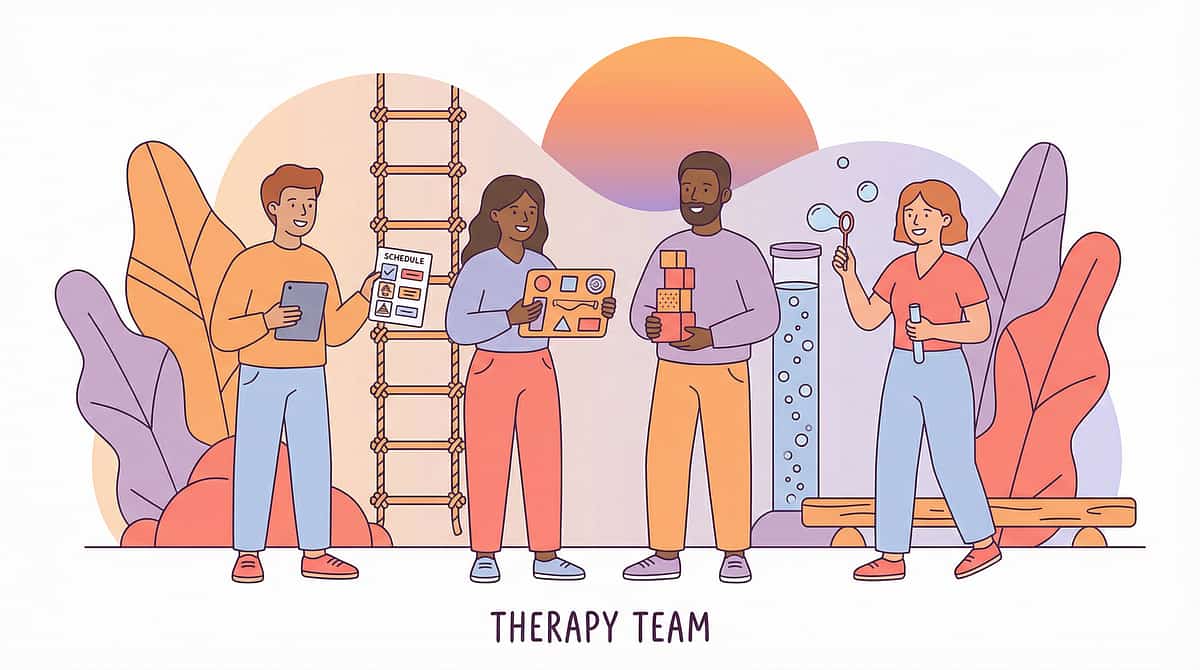
Every Discipline. One Unified System.
Cognitive flexibility intervention is not owned by one therapy type — the brain doesn't organize by therapy discipline. Every specialist in the Pinnacle consortium brings a unique lens, and together they form a complete intervention system that is greater than the sum of its parts.
Occupational Therapy (Lead)
OTs address executive function and sensory regulation. They design transition supports, set up the sensory environment for flexibility, and build the visual scaffolding toolkit.
Speech-Language Pathology
SLPs work on social-cognitive flexibility — understanding that "sometimes" is real, and that language can be a tool for self-regulation during stuck moments.
BCBA / Applied Behavior Analysis
BCBAs design reinforcement architecture around flexibility — rewarding successful shifts and systematically reducing perseverative behaviors through antecedent management.
Special Education
SpEd specialists integrate flexibility tools into school environments — visual schedules in classrooms, transition protocols, and flexibility training during academic tasks.
NeuroDevelopmental Pediatrics
Assesses the underlying executive function profile and rules out co-occurring conditions (anxiety, OCD) that may be driving rigidity.
DOI: 10.1080/17549507.2022.2141327
WHO/UNICEF NCF for SLPs 2022

Precision Targets — What These 9 Materials Actually Change
These 9 materials are precision tools — each targeting specific layers of the cognitive flexibility system. The primary target is the neural shifting capacity itself. Secondary targets address the behavioral manifestations. Tertiary targets represent the long-term adaptive gains that compound over months of consistent practice.
✅ Week 4 Observable
Transition completed within 2 minutes with visual support
✅ Week 6 Observable
Repeated question reduced by 50% with redirect card
✅ Week 8 Observable
Accepts 1 of 3 offered alternatives without meltdown
✅ Week 10 Observable
Uses visual schedule independently before transition
PMC10955541
NCAEP 2020
Pinnacle AbilityScore® Cognitive Flexibility Readiness Index
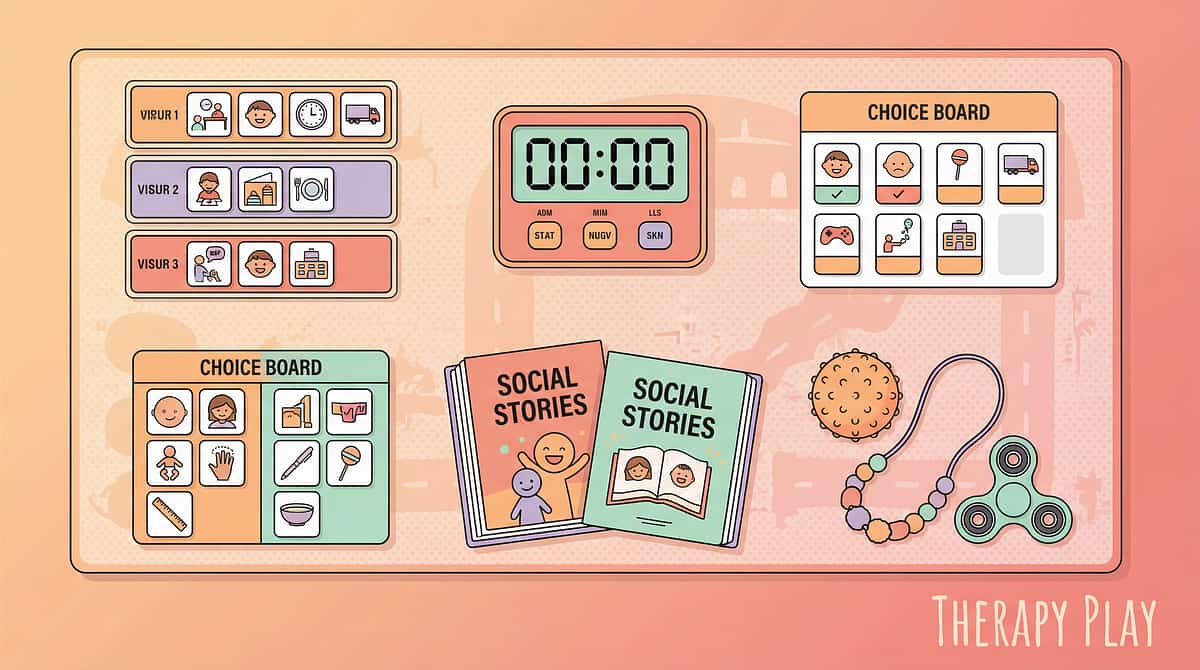
9 Materials That Help When Your Child Gets Stuck
"The mind that gets stuck needs a bridge, not a push." Each of the following materials has been consortium-validated, priced accessibly for Indian families, and comes with a zero-cost DIY alternative. The essential 4 to begin today: Visual Schedule + First-Then Board | Visual Timer | Choice Board | Calm-Down Kit — Total starter investment: ₹400–2000.
# | Material | Price Range | |
1 | 🗓 Visual Schedules & First-Then Boards | ₹200–1000 | |
2 | ⏱ Visual Timers & Time Timer | ₹500–2500 | |
3 | 📖 Social Stories & Change Stories | ₹100–800 | |
4 | 🎯 Choice Boards & Limited Options | ₹150–600 | |
5 | 🧸 Transition Objects & Comfort Items | ₹50–500 | |
6 | 🧘 Calm-Down Tools & Regulation Supports | ₹200–1500 | |
7 | 🎲 Flexibility Games & Structured Practice | ₹200–1500 | |
8 | 📋 Visual 'Sometimes' & Change Supports | ₹100–500 | |
9 | 🔄 Perseveration Redirect Tools | ₹100–400 |
📞 FREE Helpline: 9100 181 181 — Ask our specialists which materials to start with for your child's specific profile.
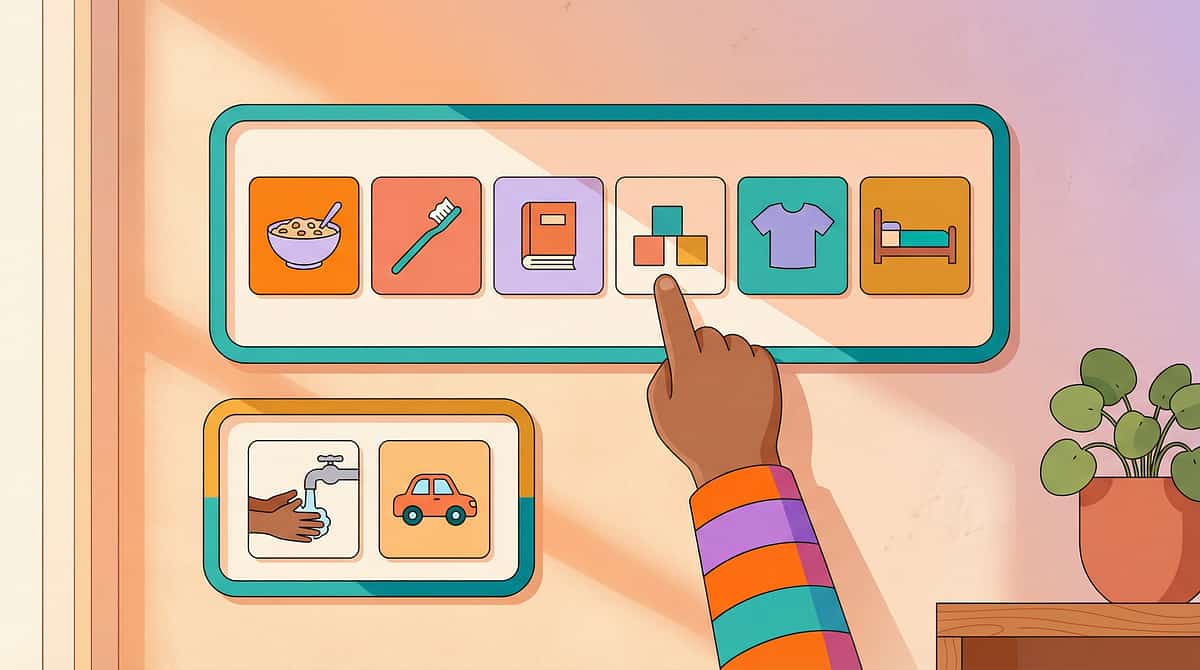
Material 1: Visual Schedules & First-Then Boards
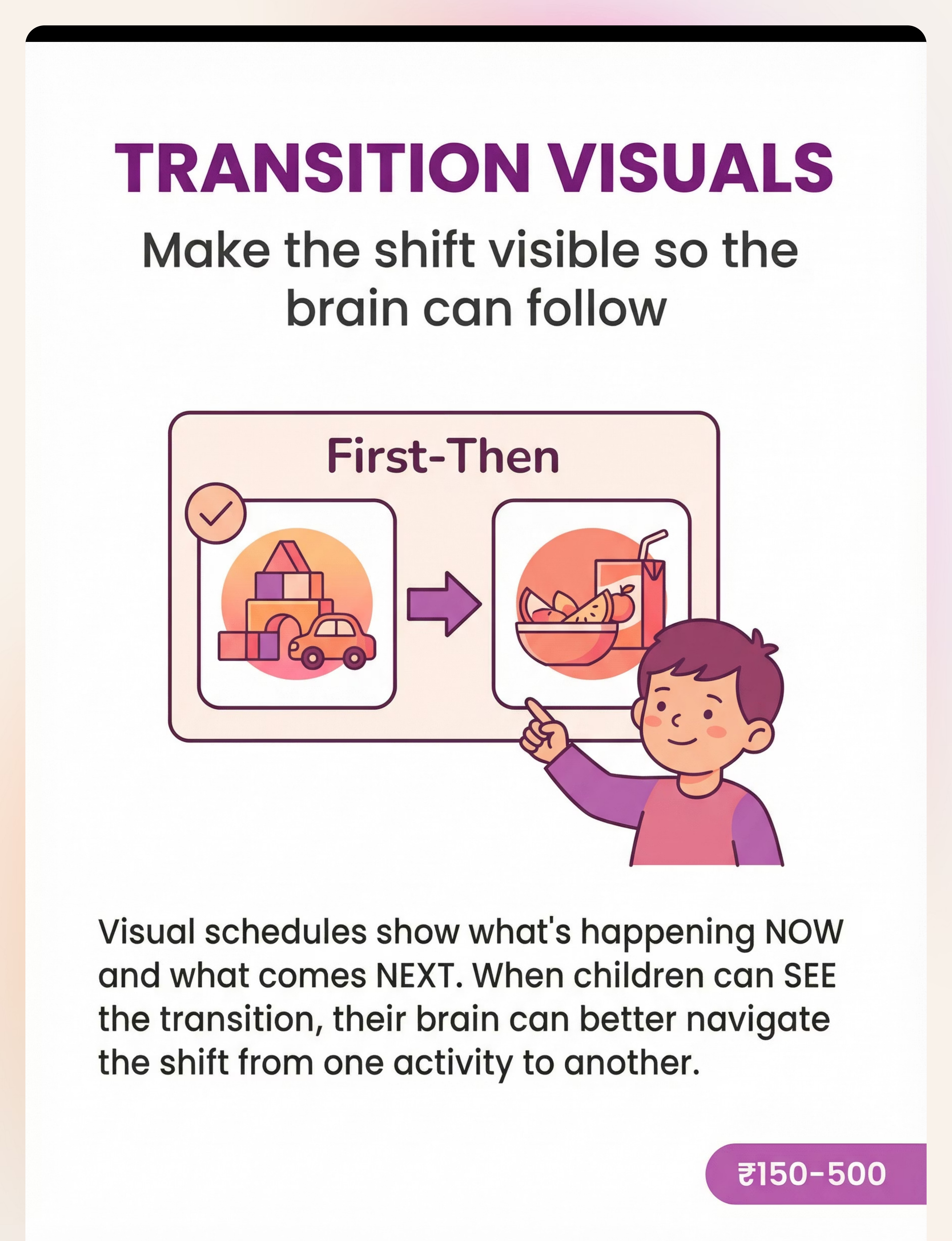
Make the shift visible so the brain can follow
The Science
Children who get stuck often struggle because they cannot see what's coming or hold the day's sequence in working memory. Visual schedules make the abstract concrete — activities become visible, predictable, and navigable.
First-Then boards specifically scaffold transitions: "First we do puzzle, Then we have snack." The child can see that the current activity will END but something known will FOLLOW. Instead of relying on internal mental flexibility, the child uses external visual flexibility.
"When the brain cannot hold the sequence internally, visual schedules hold it externally."
🛒 Buy Option (₹350–800)
Visual Schedule Board with Picture Cards — Velcro-backed, laminated, includes done-section → Amazon.in
📋 DIY (Zero-Cost)
- Print or draw pictures representing 4–6 daily activities
- Laminate or use cardstock; stick on wall at child's eye level
- Add a "DONE" envelope/pocket for completed activities
- First-Then Board: 2-section board, Velcro current activity left, next activity right
- Before every transition: point, name, let child move the piece
Why the DIY works: Same visual externalization principle — the brain processes the picture sequence regardless of materials quality.
PMC11506176
NCAEP Visual Supports 2020

Material 2: Visual Timers & Time Timer
Make time visible — endings are no longer sudden surprises
The Science
Getting stuck often involves difficulty with time itself — not understanding that the current activity will end, not sensing time passing. "Five more minutes" is invisible and abstract. Visual timers make time concrete: the colored section shrinks as time passes, so the child can literally see "almost done."
The timer becomes a neutral, external authority: it ends the activity, not the parent. This removes conflict and shifts the "messenger of bad news" from caregiver to object.
"When time is invisible, endings feel sudden and threatening. Visible time allows visible preparation."
🛒 Buy Option (₹600–2000)
Visual Timer with Color-Display Face (Time Timer brand or equivalent with disappearing red section) → Amazon.in
📋 Protocol
- Set timer for activity duration (start shorter than child's actual capacity)
- Show child: "When the red is gone, puzzle time is done"
- Verbal prompts as time decreases: "Look — just a little red left"
- Honor the timer always — extending after it ends destroys trust in the tool
📋 DIY Option
Sand timers from craft stores (₹50–200) for shorter durations; Timer+ or Time Timer app (free) on phone/tablet with large visual display.
PMC11506176
ABA Antecedent Management Literature

Material 3: Social Stories & Change Stories
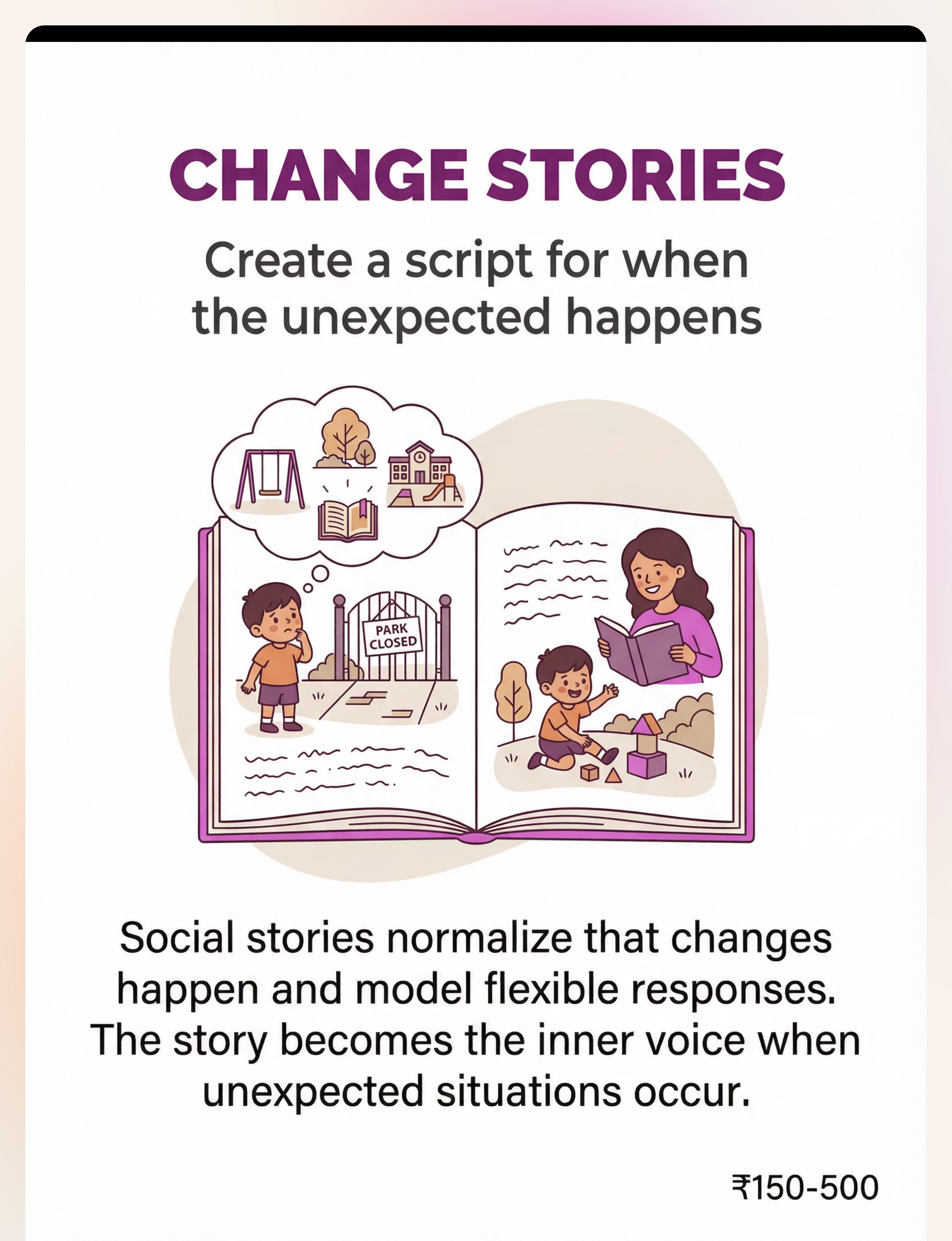
Pre-teach the change before it happens
The Science
Children who get stuck often struggle with unexpected changes because they cannot mentally simulate alternatives. Social Stories (Carol Gray framework, widely validated) and Change Stories pre-teach what will happen, why, and what the child can do. Reading the story multiple times allows the new expectation to become familiar before it's experienced.
For perseveration, Change Stories address why things are sometimes different: "Sometimes things are different from what I expected. That's okay. I can..."
"When the brain cannot simulate alternatives, stories provide the simulation externally."
🛒 Buy Option (₹200–600)
Personalized Social Story Book Set — laminated, customizable, child-photo compatible → Amazon.in
📋 DIY — Consortium Protocol
- Write in Carol Gray format: what will happen, why, what child might feel, what child can do
- Use photos of actual places/people when possible; write in first person
- Include coping strategy: "If I feel upset, I can hold my comfort item and take 3 breaths"
- Read 2–3 times before the event, once more immediately before
- Build a story library for common situations: new school, cancelled plans, different food
NCAEP Social Narratives 2020
DOI: 10.1007/s12098-018-2747-4

Material 4: Choice Boards & Limited Options
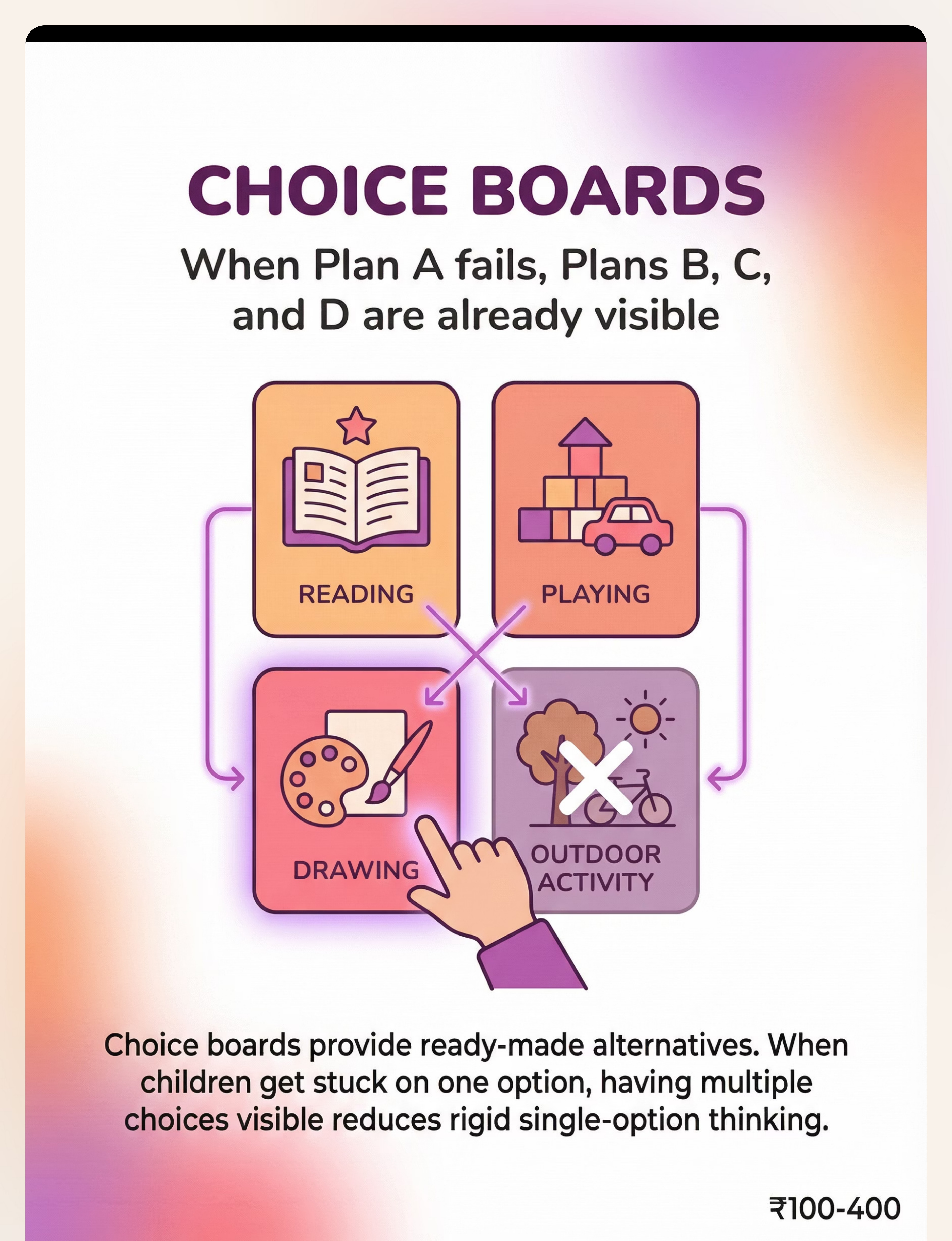
When Plan A fails, Plans B, C, and D are already visible
The Science
Getting stuck often involves fixating on one specific outcome. When that outcome is unavailable, the rigid brain cannot generate alternatives. Choice boards externalize options — presenting 2–3 acceptable alternatives visually so the child can see what IS available.
Over time, practicing choosing among options builds the neural pathways for flexibility. The choice board is both an immediate rescue tool and a long-term flexibility builder.
"Stuck minds fixate on what's not available. Choice boards redirect attention to what is."
🛒 Buy Options
Velcro Choice Board with Picture Cards (₹200–500) → Amazon.in | Lattooland Rainbow Sorting Set — ₹628 → Amazon.in
📋 DIY Protocol
- Create boards for common stuck points: snacks, activities, routes, toys
- Use pictures, actual items, or drawings — 2–3 options to start
- When fixation begins: present board, point to each option, name it
- Wait for selection — honor it immediately; do NOT include options you'll say no to
- Script: "I know you wanted blue. Blue isn't here. Look at your choices."
- Gradually increase options as flexibility builds (2 → 3 → 4)
ABA Choice-Making Literature
NCAEP 2020
PMC10955541

Material 5: Transition Objects & Comfort Items
When part of the past travels with you, letting go becomes possible
The Science
Transitions require leaving something behind. For the child who gets stuck, this leaving is intensely difficult because the brain cannot hold continuity across the gap. Transition objects provide continuity across the change — something that travels with the child from one state to the next.
When something is maintained, the brain can release its grip on what is ending. The transition object externalizes safety and continuity, reducing the internal cognitive load of managing the shift.
"Transitions mean leaving something behind. Transition objects ensure something stays."
🛒 Buy Options
Soft Transition Comfort Animal / Small Toy (₹200–500) → Amazon.in | Animal soft toys — ₹425 → Amazon.in
📋 DIY Protocol
- Identify what provides continuity for THIS child
- Activity transition: "Carry one puzzle piece to snack — we'll put it back after"
- Comfort object: same item travels everywhere during all transitions
- Photo option: photo of the left-behind activity on a small card
- Create a "transition bag" with comfort items for community outings
- Fade transition objects over time — some children need them long-term, and that's valid
Safety: Have backups for important items. Ensure object is appropriate for all environments.
OT Sensory Integration Principles
WHO NCF Nurturing Care 2018
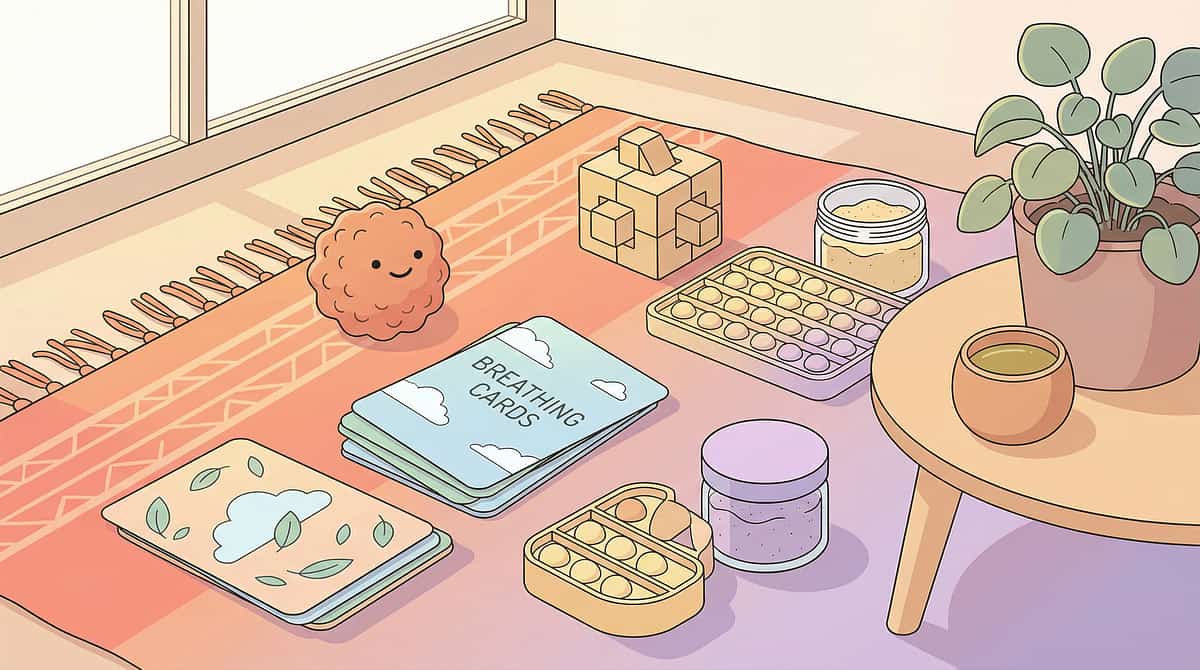
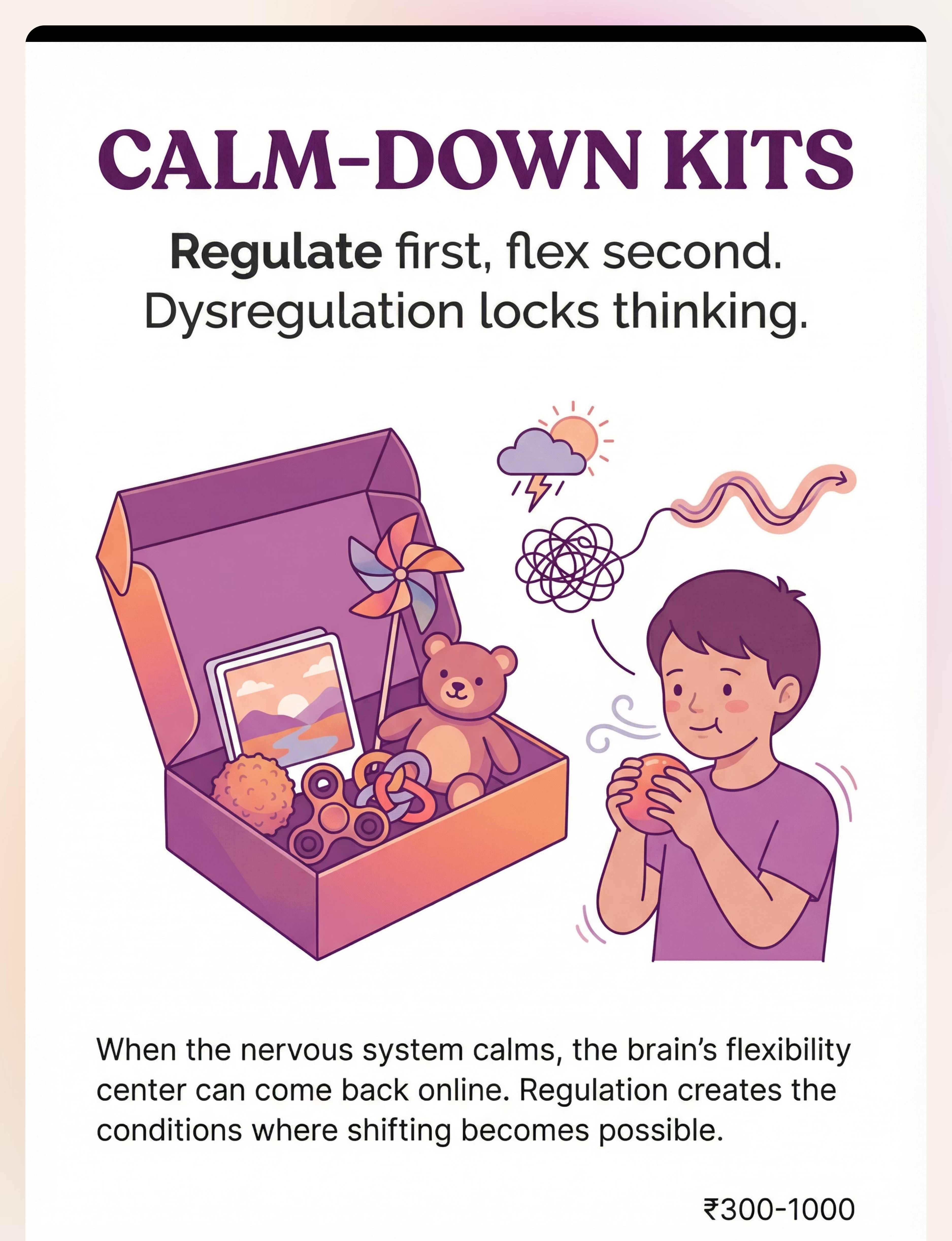
Material 6: Calm-Down Tools & Regulation Supports
Regulate first. Flex second. Dysregulation locks all thinking.
Getting stuck frequently escalates into dysregulation. In this escalated state, flexibility becomes even more neurologically impossible — the prefrontal cortex goes offline when the stress response activates. The sequence is non-negotiable: Regulate → Then attempt flexibility.
Calm-Down Kit Contents
- 🟣 Fidget toys (sensory input for hands)
- ⚪ Stress ball / squeeze toy
- 🟢 Chewy items (proprioceptive calming)
- 🔵 Pinwheel / bubbles (slow exhale = vagal brake activation)
- 🟠 Headphones + calming audio
- 🟤 Weighted lap pad (deep pressure)
🛒 Rosette Reward Jar — ₹589 → Amazon.in
📋DIY: Stress ball from balloon + rice | pinwheel from paper | freeze-dried lavender sachet
📋 Protocol
- Build kit during calm times
- Teach tools during calm — NOT in crisis
- When stuck escalates: "I see your body is upset. Let's calm down first, then we can figure it out."
- Do NOT discuss the stuck point until regulation is achieved
- Track: which tools help this specific child
"Flexibility requires regulation. Calm-down tools create the conditions where shifting becomes possible."
📞 FREE Helpline: 9100 181 181
Polyvagal Theory (Porges)
ABA Antecedent Manipulation
PMC11506176

Material 7: Flexibility Games & Structured Practice
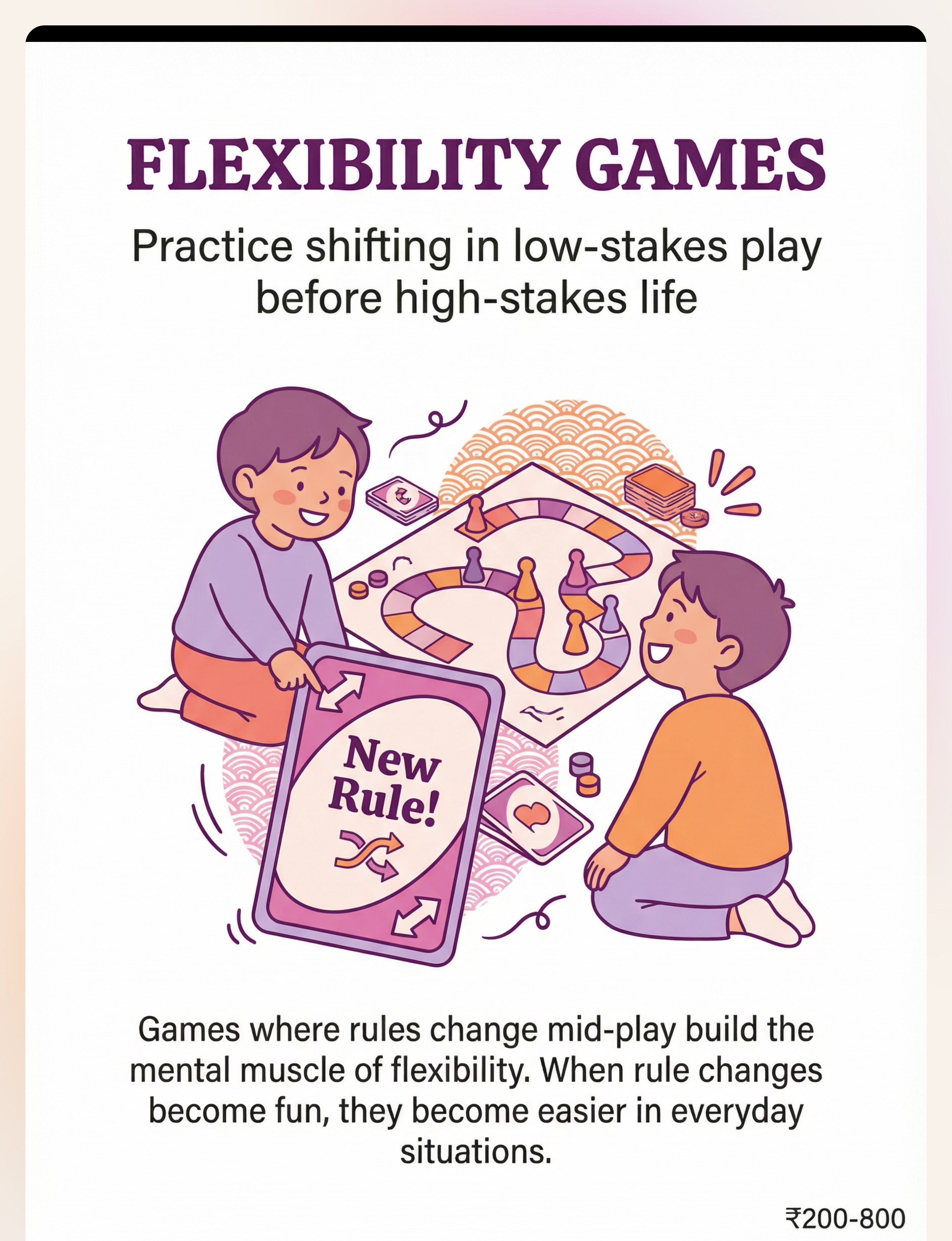
Practice shifting in low-stakes play before high-stakes life
Cognitive flexibility is like a muscle — it can be strengthened with systematic practice. Flexibility games provide low-stakes opportunities to practice shifting, changing plans, and accepting alternatives in contexts that feel safe and fun. When flexibility is practiced in play, the neural pathways being built become more accessible in real-life stuck moments.
🎲 Variable Rules
Board games with "New Rule!" cards (Snakes & Ladders variations)
🃏 Opposite Day
Do the opposite of what's said — safe, playful rule-breaking
🎭 Role Play
Take turns being different characters — perspective flexibility
❓ Would You Rather
Practice considering alternatives in a low-pressure format
🛒 SHINETOY Shut The Box Game — ₹428 → Amazon.in | Protocol: Celebrate successful shifts: "You changed your plan! That's flexible thinking!" Connect game wins to real life. Always end every flexibility game on a WIN.
"Flexibility practiced in play becomes flexibility available in life."
NCAEP 2020
Superflex Curriculum — Michelle Garcia Winner
PMC10955541

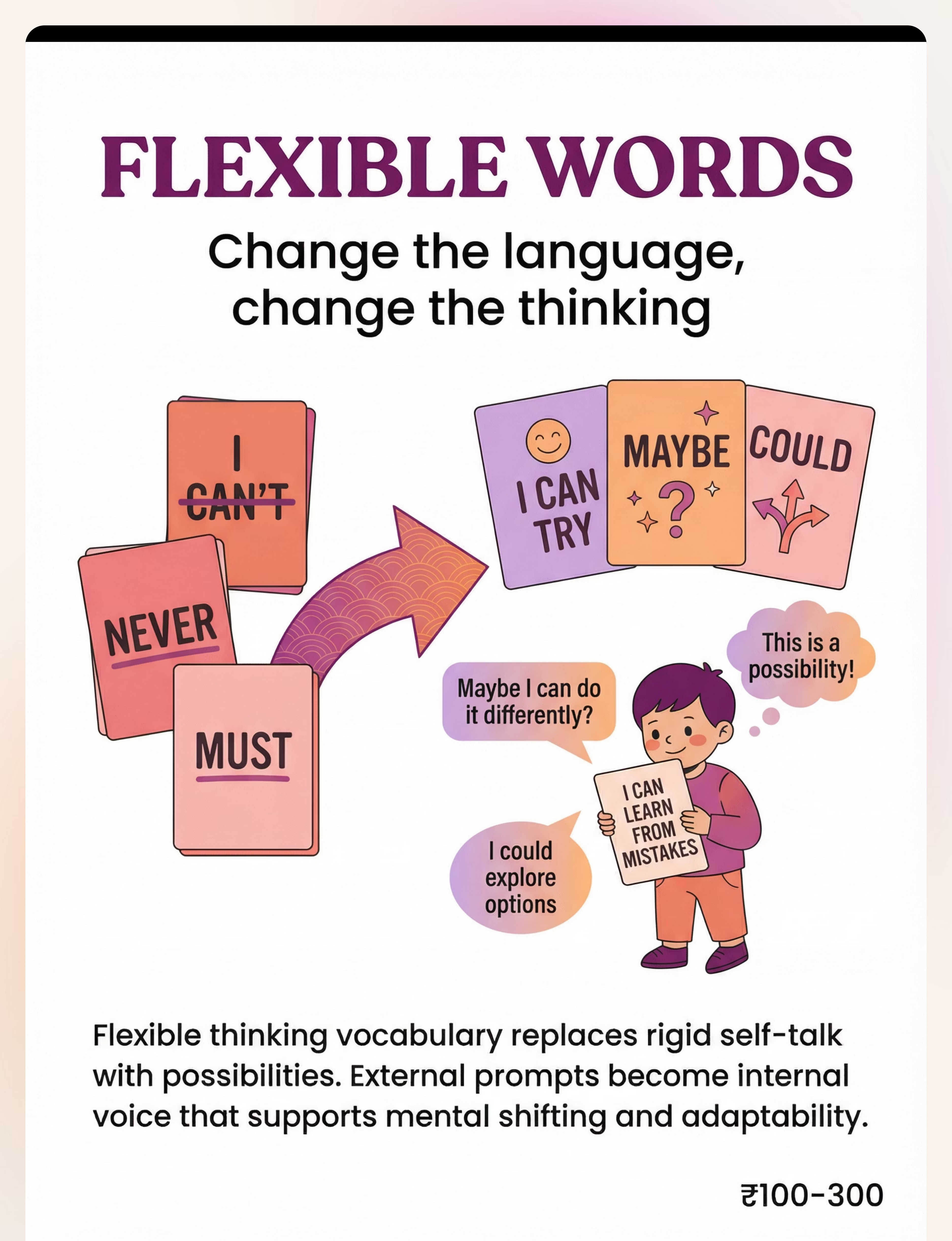
Material 8: Visual 'Sometimes' & Change Supports
Change the language. Change the thinking.
The Science
Children who get stuck often think in absolutes: always this way, never different, must be exact. Visual supports that explicitly teach "sometimes" and "change is okay" directly challenge this absolute thinking. By making variation visible and normalized, these tools gradually build the concept that multiple ways are acceptable.
"Rigid thinking sees only one way. 'Sometimes' visuals build the concept that multiple ways are okay."
Tools
- 📋"Sometimes" Board:"Sometimes we have pancakes. Sometimes we have eggs. Sometimes we have toast."
- 🚦"Change is Coming" Signal: visual card indicating something will be different
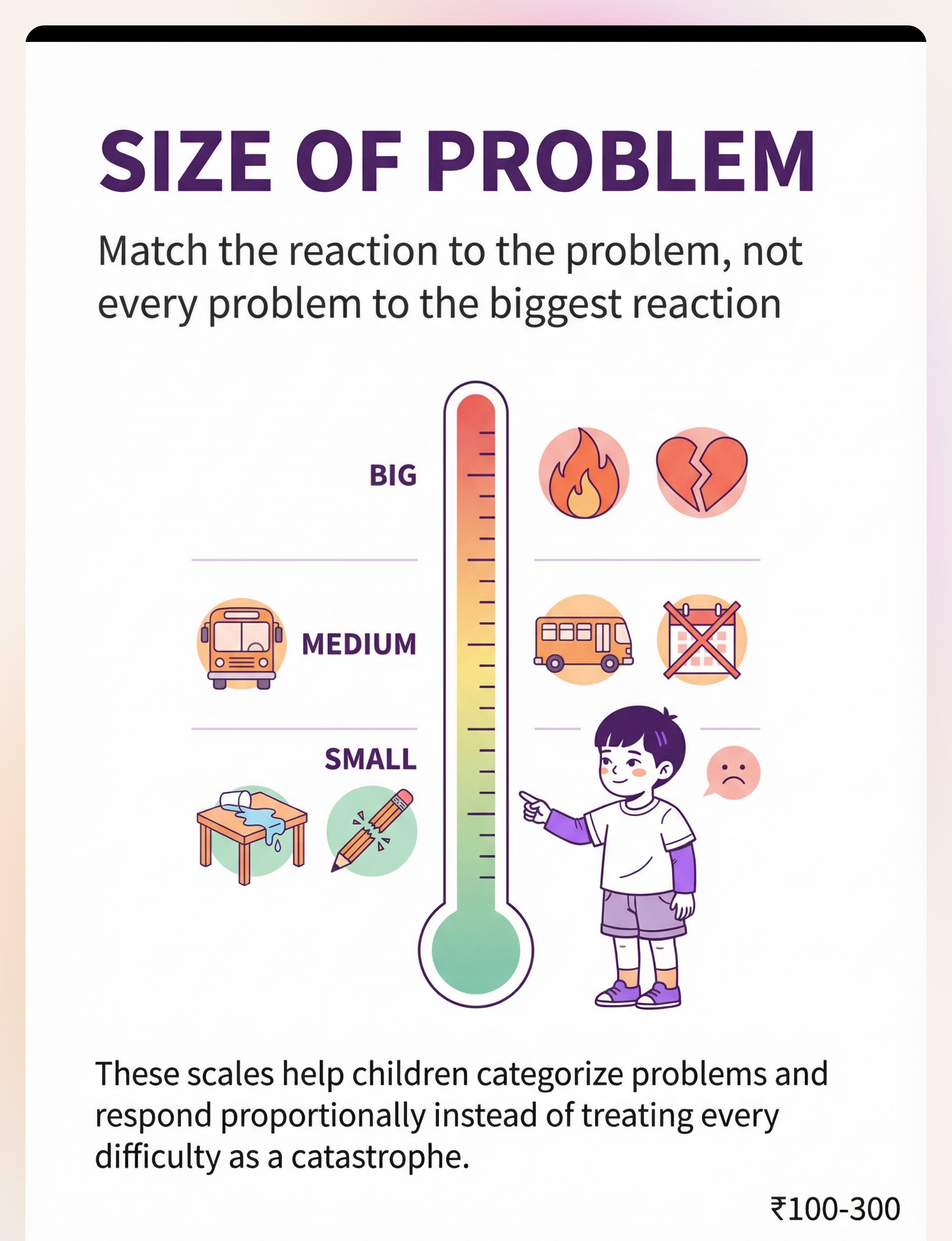
- 📊Flexibility Scale: Green (totally fine) → Red (very hard)
- 🗓️"Sometimes Route" Card: alternate route card in visual schedule
📋 DIY Protocol
- Create "Sometimes" boards for common stuck points: foods, routes, activities, people
- Review during calm times — NOT during active stuck episodes
- Build "sometimes" into daily language: "Today we're taking the sometimes route"
- Celebrate when child accepts variation: "You were flexible! That's flexible thinking!"
- Gradually increase variation exposure as tolerance builds
Social Thinking Curriculum — Michelle Garcia Winner
Cognitive Flexibility Intervention Literature

Material 9: Perseveration Redirect Tools
When the brain loops, external signals provide the exit it cannot find internally
When a child is stuck in a thought loop — asking the same question on repeat, cycling through the same topic — the internal "stop" signal the brain needs to exit the loop is absent. Redirect tools provide that stop signal externally: neutral, visual, non-confrontational. The tool — not the parent — breaks the loop.
🃏 Answer Cards
Visual card showing the answer to commonly repeated questions. When question repeats → point to card: "Look at your card. That's the answer."
📋 Topic Cards
"Now Topics" vs "Not Now Topics" visual — structures when a topic is available for discussion
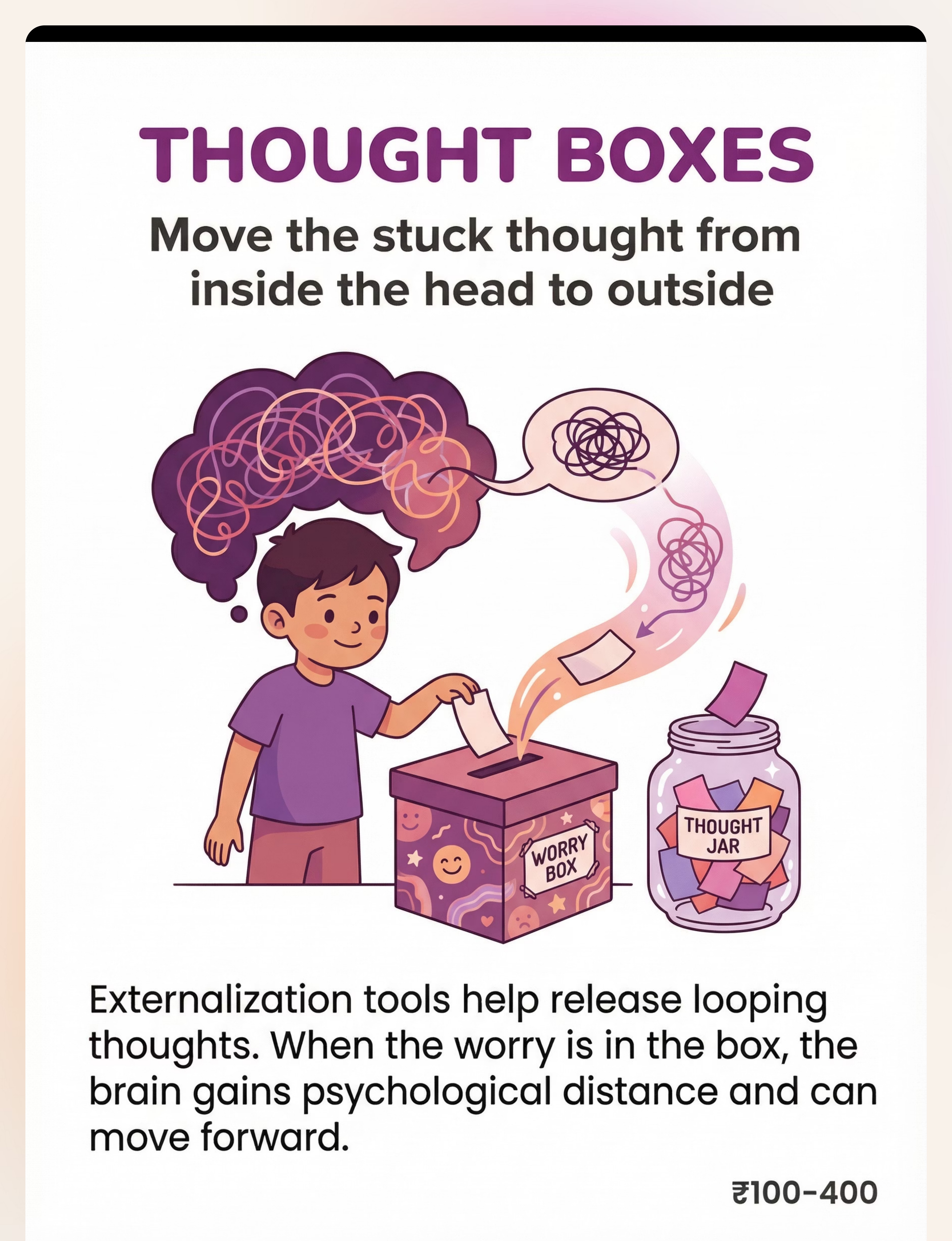
📦 Parking Lot
Write/draw the stuck thought on paper, place in special box for "later" — validates the thought without feeding the loop
↩️ Redirect Cue Card
Physical signal meaning "we're moving to something else now" — neutral and consistent
Safety Note: Persistent repeated questions may indicate underlying anxiety — always assess what is driving the loop before selecting redirect strategies. Don't dismiss valid needs.
ABA Perseveration Protocols
SLP Pragmatic Language Literature
NCAEP 2020

Every Family Can Start Today — With or Without Budget
Every child, regardless of economic context, deserves access to evidence-based support. The following zero-cost versions of all 9 materials work on the same sensory, cognitive, and behavioral principles as commercial products. The science does not live in the price tag — it lives in the consistent application of the principle.
Material | Buy (Amazon.in) | DIY (Zero Cost) | |
Visual Schedule | ₹350–800 | Printed/drawn pictures on cardstock, tape | |
Visual Timer | ₹600–2000 | Sand timer from craft store (₹50), or phone timer app | |
Social Stories | ₹200–600 | Written by hand, illustrated with stick figures | |
Choice Board | ₹200–500 | 3 pictures drawn and taped to cardboard | |
Transition Object | ₹200–500 | Any small familiar object, family photo | |
Calm-Down Kit | ₹200–1500 | Stress ball from balloon + flour, paper pinwheel | |
Flexibility Games | ₹200–1500 | Paper card games, storytelling, role play | |
Sometimes Board | ₹100–500 | Hand-drawn on paper, review together | |
Redirect Cards | ₹100–400 | Written answer cards on index cards |
Total DIY Starter Kit: ₹0 — what's already in your home. 📞9100 181 181 — "Tell us your situation and we'll help you build the right toolkit."
WHO NCF 2018
PMC9978394 — CCD Package for LMICs

Start Measuring — Progress You Can See Builds Hope
What gets measured gets managed. Tracking your child's stuck episodes — their frequency, duration, and triggers — transforms guesswork into a clear picture of progress. Even small shifts (a meltdown that lasts 8 minutes instead of 15) are real, meaningful, neurological change. Use the tracker below to establish your baseline today.
Metric | Today | Notes | |
Number of stuck episodes | |||
Average duration of stuck episode | |||
Which tool helped most | |||
Escalation level (1–5) | |||
Successful transitions (count) |
Child's Age Range
2–4 / 5–7 / 8–12
Primary Stuck Pattern
Transition / Perseveration / Sameness / Fixation / Rigidity
Materials Starting With
Select from the 9 materials in Cards 10–18
AbilityScore® Integration
Share tracking data with your Pinnacle therapist via GPT-OS® dashboard
ABA Data Collection Principles
Pinnacle AbilityScore® Methodology
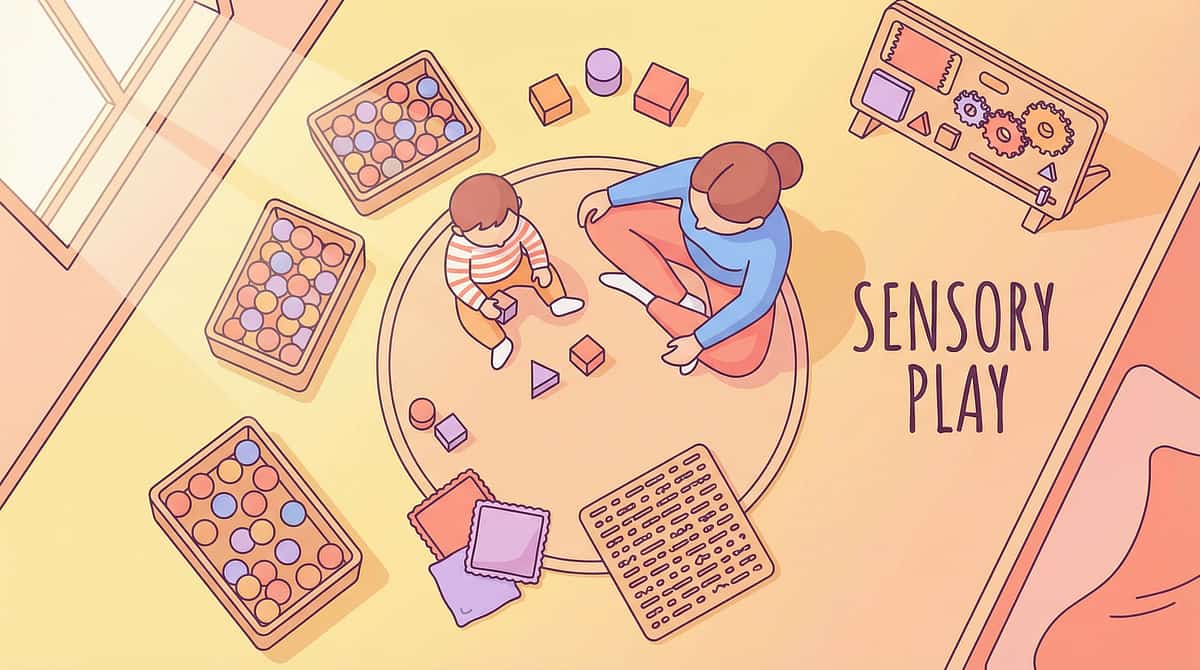
Prepare the Environment Before the Session
"Spatial precision prevents 80% of session failures." Before introducing any flexibility strategy, the physical environment must be configured to support the child's success. A properly arranged space removes barriers, ensures tools are accessible, and communicates predictability before a single word is spoken.
Visual Schedule
Mounted on wall at child's eye level — left to right or top to bottom orientation
Timer Placement
Positioned where child can see it clearly throughout the activity
Choice Board
Accessible and showing ONLY genuinely available options
Calm-Down Kit
Visible in corner — not hidden; must be reachable without caregiver assistance
Transition Object
Nearby and ready before transition begins
Redirect Cards
In caregiver's pouch — accessible quickly without searching
Remove From Space:❌ Items that may trigger a new stuck point | ❌ Unavailable preferred items (don't show what they can't have) | ❌ Screens during transition practice
Sensory Integration Theory (Ayres)
PMC10955541

60-Second Readiness Assessment — Before Every Session
ACT III: The Execution
The best session is one that starts right. Running a 60-second readiness check before every flexibility practice prevents setbacks, protects trust in the tools, and ensures caregiver energy is deployed when it will have the greatest impact.
Check | Yes ✅ | No ❌ | |
Child is fed and not hungry | |||
Child has had adequate sleep | |||
No signs of illness | |||
Child is in calm/regulated state | |||
No recent meltdown in last 30 mins | |||
Environment is prepared | |||
Caregiver is calm and ready |
6–7 ✅ → GO
Proceed with full protocol
4–5 ✅ → MODIFY
Use simplified/shorter version; prioritize regulation tool
0–3 ✅ → POSTPONE
Basic care first; offer calming activity; try again later
ABA Antecedent Manipulation
Pinnacle Clinical Protocols

Step 1: Pre-Transition Preparation
Step 1 of 6
What You Do
Review the visual schedule together at the start of the session or day. Point to the current activity. Then point to the next activity. Sit beside the child — not in front. This is an invitation, not a command.
Script (say this)
"Let's look at our schedule together. Right now we're doing [Activity]. After [Activity], we're going to [Next Activity]. Let me set the timer so we know when it's time."
Body Language: Calm, matter-of-fact tone — not anxious, not pleading. Point to schedule while speaking. Sit beside, not in front.
Timing: 60–90 seconds
What Acceptance Looks Like
- ✅ Child looks at schedule
- ✅ Child continues activity with reduced anxiety
- ✅ No immediate escalation
What Resistance Looks Like
- ❌ Child refuses to look → Modify: only show First-Then board (2 items)
- ❌ Child becomes anxious → Offer comfort item before continuing
Principle: ABA Pairing + OT "Just-Right Challenge" — invite, don't command.
ABA Pairing Procedures
OT Session Structure Literature
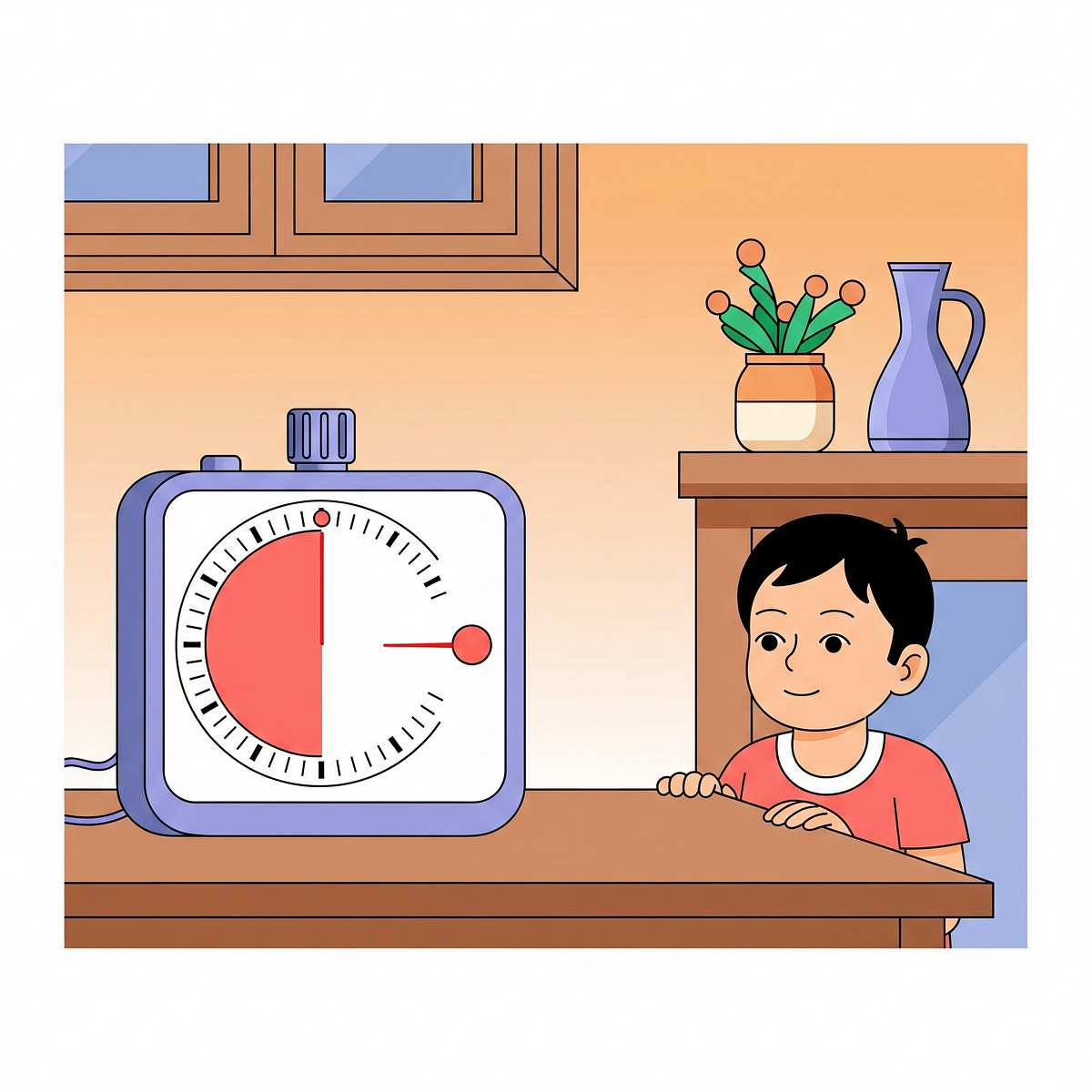
Step 2: Make Time Visible
Step 2 of 6
Set the visual timer and place it where the child can see it. The timer's job is to externalize the abstract concept of "almost done" — making the inevitable ending predictable and therefore survivable.
Set & Explain
"I'm setting the timer for [X] minutes. When the red is gone, [Activity] time is done. Then we [Next Activity]."
At Halfway
"Look — the timer is halfway. Keep going!" — Keeps the child informed and reduces surprise
At 2 Minutes
"Almost time. Just a little red left." — Primes the transition preparation
At 30 Seconds
"Almost done. Start getting ready." — Active transition preparation begins
At Zero — Honor It
Always honor the timer immediately — no extensions. Extensions destroy trust in the tool.
Key Rule: The timer ends the activity — not you. You are on the child's team. If child protests timer → point to schedule: "Timer says done. Look — schedule says [Next Activity] is next."
ABA Extinction + Prompt Hierarchies
PMC11506176

Step 3: Bridge the Transition
Step 3 of 6
When the timer ends, execute the transition with scaffolding. Movement between activities helps the brain shift — physical movement is neurologically meaningful, not just logistical. Follow the Bridge Sequence precisely and consistently.
1
1. Signal
"Timer is done. Puzzle time is finished." — Clear, neutral, matter-of-fact
2
2. Acknowledge
"I know you love the puzzle. We can do it again [tomorrow/later]."
3
3. Transition Object
"Carry this puzzle piece to snack — we'll put it back after."
4
4. Movement
Walk together, skip, carry something — physical movement helps the brain shift gears
5
5. Confirm + Arrive
"First snack, Then puzzle again." Arrival ritual: "We made it! Here we are."
If Escalation Occurs: Offer calm-down kit. Do NOT reason during escalation. Wait for regulation. Then re-attempt bridge. Timing: 2–5 minutes.
OT Sensory Integration
ABA Escape Extinction

Step 4: Reinforce the Shift
Step 4 of 6
Immediately and specifically praise the flexible thinking as soon as the child arrives at the new activity. The reinforcement must be specific — name exactly what they did — and must happen immediately upon arrival, not minutes later.
Verbal Praise Script
"You did it! You finished puzzle and came to snack. That's called being flexible!"
Effort Acknowledgment
"I saw you check your schedule and make the switch. That was excellent flexible thinking."
Brain Celebration
"Your brain shifted! High five!"
🌟 Verbal
Specific praise naming exactly what they did
🎉 Physical
High five, hug if accepted
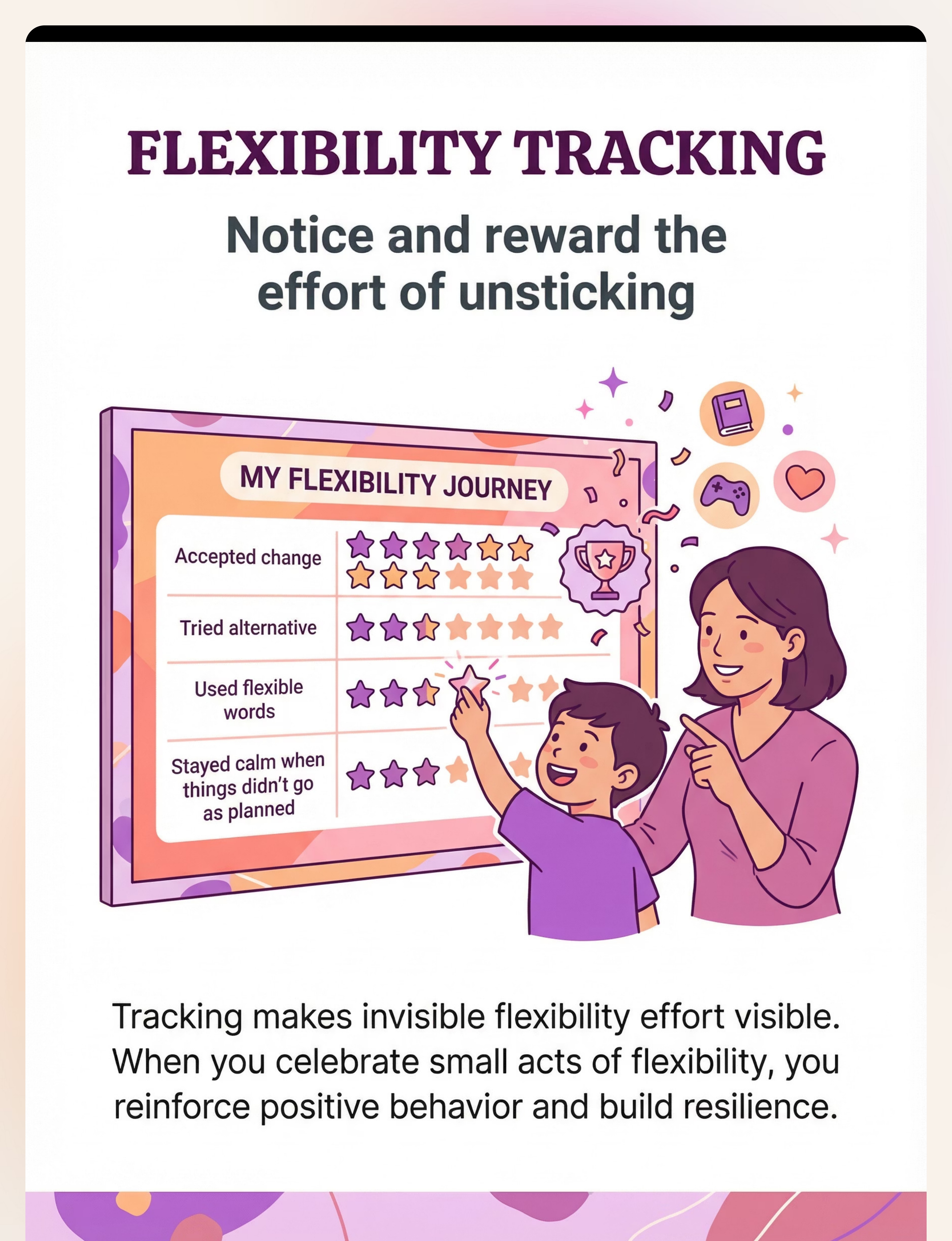
🏆 Token
Star added to flexibility chart (₹589 Rosette Reward Jar)
🎁 Activity
Brief preferred activity as reward for successful transition
IMPORTANT: Reinforce the effort of shifting, not just the outcome. "You tried really hard to be flexible — that counts."
ABA Positive Reinforcement
NCAEP Reinforcement Procedures 2020
Step 5: Capture What You See
Step 5 of 6
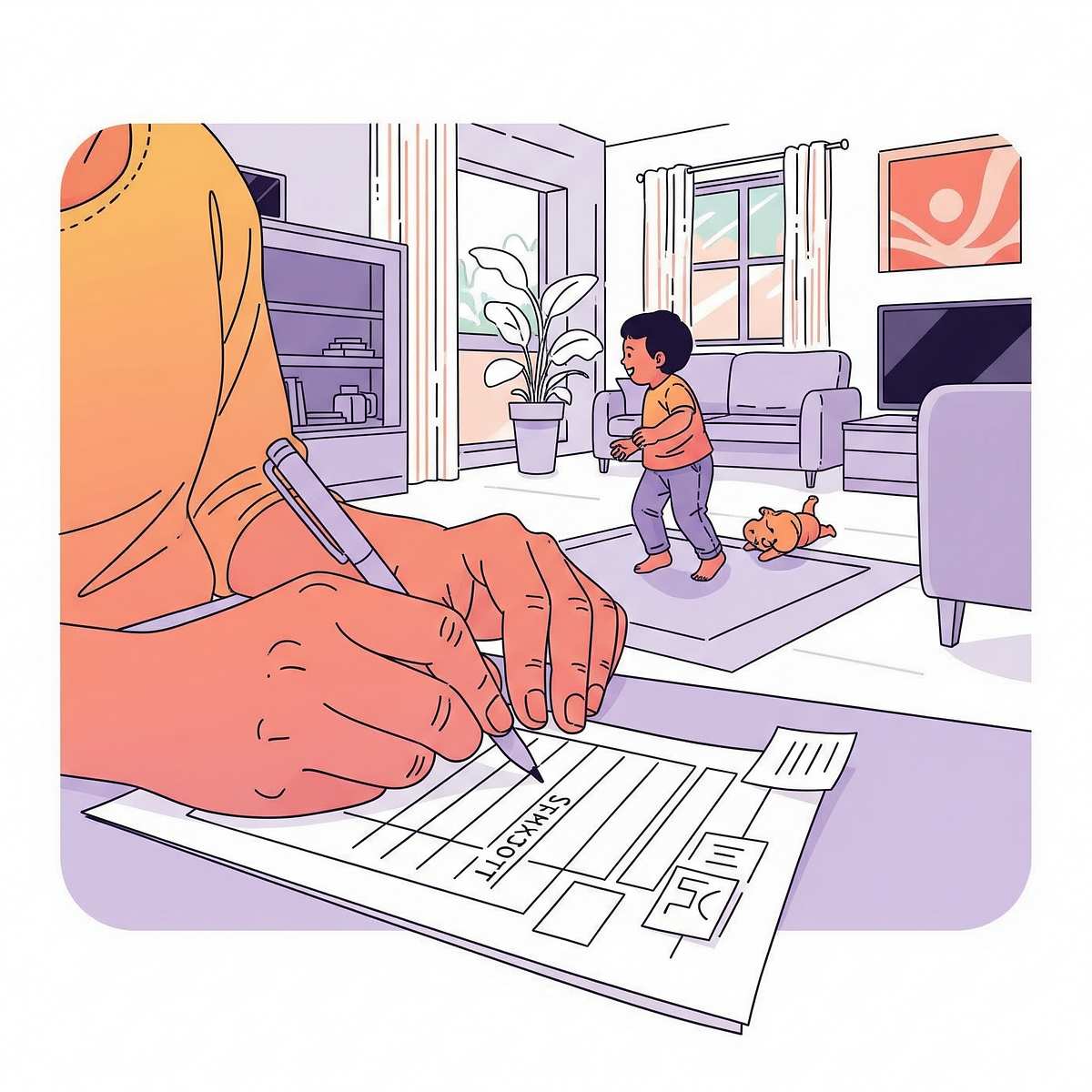
Sixty seconds of daily data collection builds the evidence base for your child's individual progress. Without measurement, it's easy to miss the real gains — a meltdown that now lasts 8 minutes instead of 20 is significant progress, even when it doesn't feel like it yet.
Metric | Today | Notes | |
Number of stuck episodes | |||
Average duration of stuck episode | |||
Which tool helped most | |||
Escalation level (1–5) | |||
Successful transitions (count) |
Weekly Pattern Review
Are stuck episodes reducing in frequency and duration? Which materials are working best? What triggers consistently cause sticking?
AbilityScore® Integration
Share your tracking data with your Pinnacle therapist. This feeds directly into the Cognitive Flexibility Readiness Index — one of the GPT-OS® standardized progression measures.
📊 GPT-OS® Dashboard: pinnacleblooms.org/gpt-os
ABA Single-Case Design
Pinnacle AbilityScore® Methodology
Step 6: When Things Don't Go As Planned
Step 6 of 6
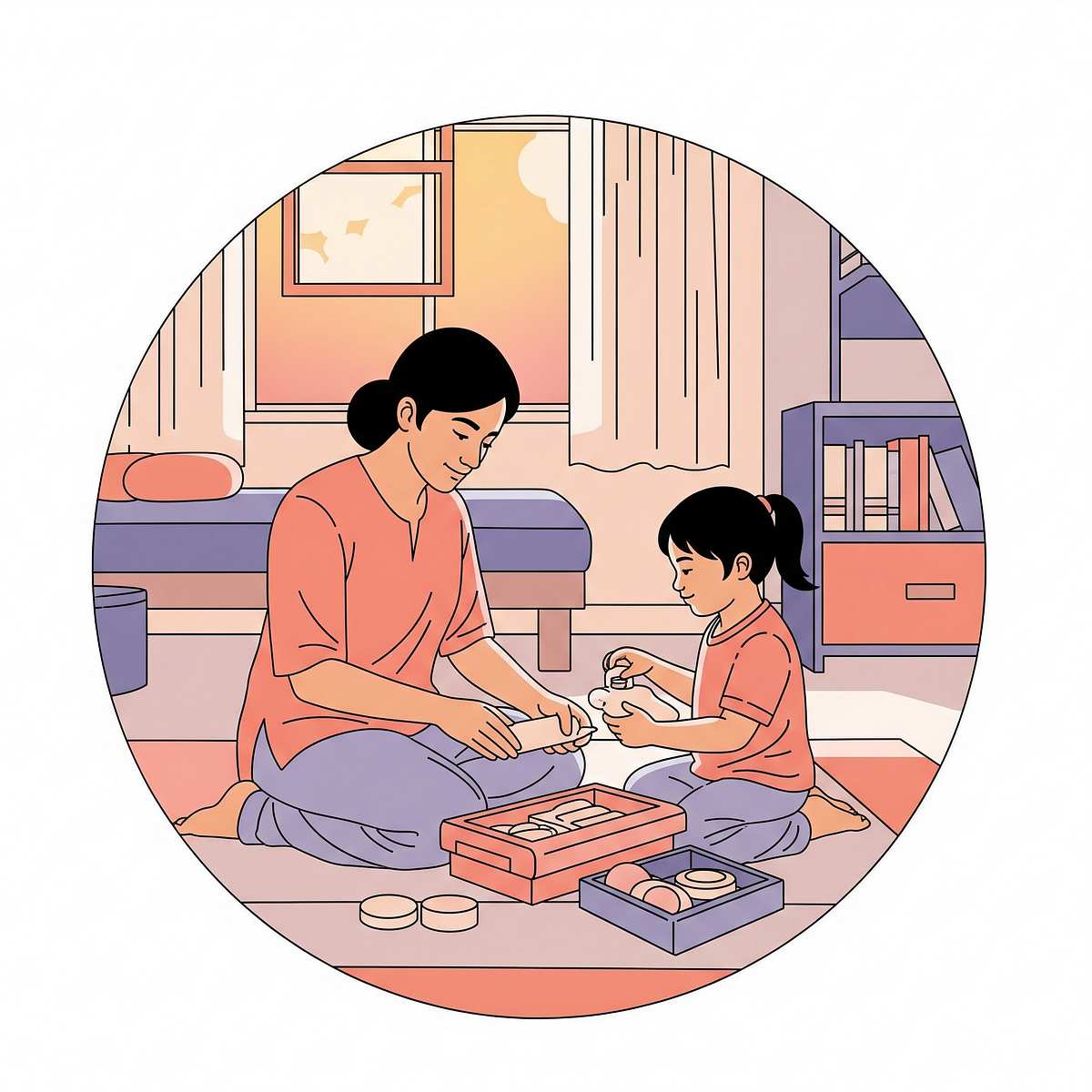
Every child's response to these tools is individual. When a strategy isn't working, the answer is almost never "this child can't be helped" — it's "this strategy needs modification." Use the troubleshooting guide below before abandoning any tool. Most issues resolve within 2–3 weeks of adaptation.
Problem | Solution | |
Child refuses to look at schedule | Start with First-Then only (2 items). Build from there. | |
Timer creates anxiety | Introduce timer during play first (fun association). Reduce timer volume. | |
Transition object not helping | Try different object. Let child choose their own. | |
Stuck episodes getting worse | Scale back demands. One strategy at a time. Consult Pinnacle. | |
Child now dependent on timer | Gradually fade: timer → verbal warning → self-management | |
Social story not helping | Make story more specific. Add child's own photos. Re-read more times. | |
Choice board rejected | Reduce to 2 choices. Ensure all options are genuinely available. |
The Meta-Rule: If three consistent weeks of a strategy show no improvement, escalate to professional assessment. Pinnacle's therapists can conduct a Cognitive Flexibility Assessment and adapt the approach. 📞9100 181 181 — Free Consultation Available
ABA Problem-Solving Protocols
Pinnacle Clinical Adaptation Framework

Weeks 1–2: Laying the Foundation
ACT IV: The Progress Arc
15%
Foundation Phase
Weeks 1–2 progress benchmark
What You Will See (Realistic)
- ✅ Child looks at visual schedule when prompted (not yet independently)
- ✅ Timer reduces tantrum duration (15 mins → 8 mins counts as real progress)
- ✅ Reduced resistance to being shown choice board
- ✅ Some successful transitions with maximum support
What Is NOT Progress Yet
- ❌ Independent use of any tool
- ❌ Acceptance of change without any support
- ❌ Elimination of all stuck episodes
You are building a neural pathway that currently does not exist. Every day you show the schedule, you are literally growing your child's brain.
The Evidence Baseline: "Sensory integration and flexibility interventions show early-phase indicators at weeks 1–4 focused on tolerance and participation — not mastery." — PMC11506176
PMC11506176
Pinnacle Clinical Progression Data

Weeks 3–4: The Neural Pathways Begin to Form
40%
Consolidation Phase
Weeks 3–4 progress benchmark
These are the indicators most parents miss because they're looking for bigger changes. Passive acceptance of the schedule review, a brief pause before escalation when the timer ends — these are the quiet signals that neural pathways are forming.
Child Anticipates
Child begins anticipating the schedule review before you initiate — passive readiness is genuine progress
Timer Independence
Child begins looking at timer independently during activity — internal monitoring is emerging
Duration Reducing
Transition distress: 10 minutes → 5 minutes — neurological shift in progress
First Spontaneous Shift
Child accepts an alternative without the choice board being shown — a landmark moment
Parent Milestone:"You may notice you're more confident too." Your own neural pathway for calm, consistent implementation is forming alongside your child's. If consolidation is clear — add one new element: slightly longer timer durations, one more item on schedule, introduce first flexibility game.
Neuroplasticity Literature
Pinnacle 8-Week Intervention Data

Weeks 5–8: Generalization Begins
70%
Breakthrough Phase
Weeks 5–8 progress benchmark
✅ Independent Schedule Use
Child uses visual schedule independently — without prompt from caregiver
✅ Faster Transitions
Transition from preferred activity completed within 3 minutes with minimal support
✅ "Sometimes" Generalizes
Accepts different food, different route — the concept has internalized
✅ Self-Redirect
Child uses choice board to redirect themselves during incipient stuck moment
What to Expand: Add novelty to schedule (1 new activity per week). Reduce transition warnings (5-minute → 3-minute → 1-minute). Begin fading transition objects gradually.
When Professional Support Accelerates Progress: Contact your nearest Pinnacle Blooms Network® center for AbilityScore® Cognitive Flexibility Assessment, OT-designed individualized visual support system, and ABA-structured flexibility training. 📞9100 181 181 | pinnacleblooms.org
PMC11506176
Pinnacle 8-Week Outcome Data
Know Where You're Heading — And When to Escalate
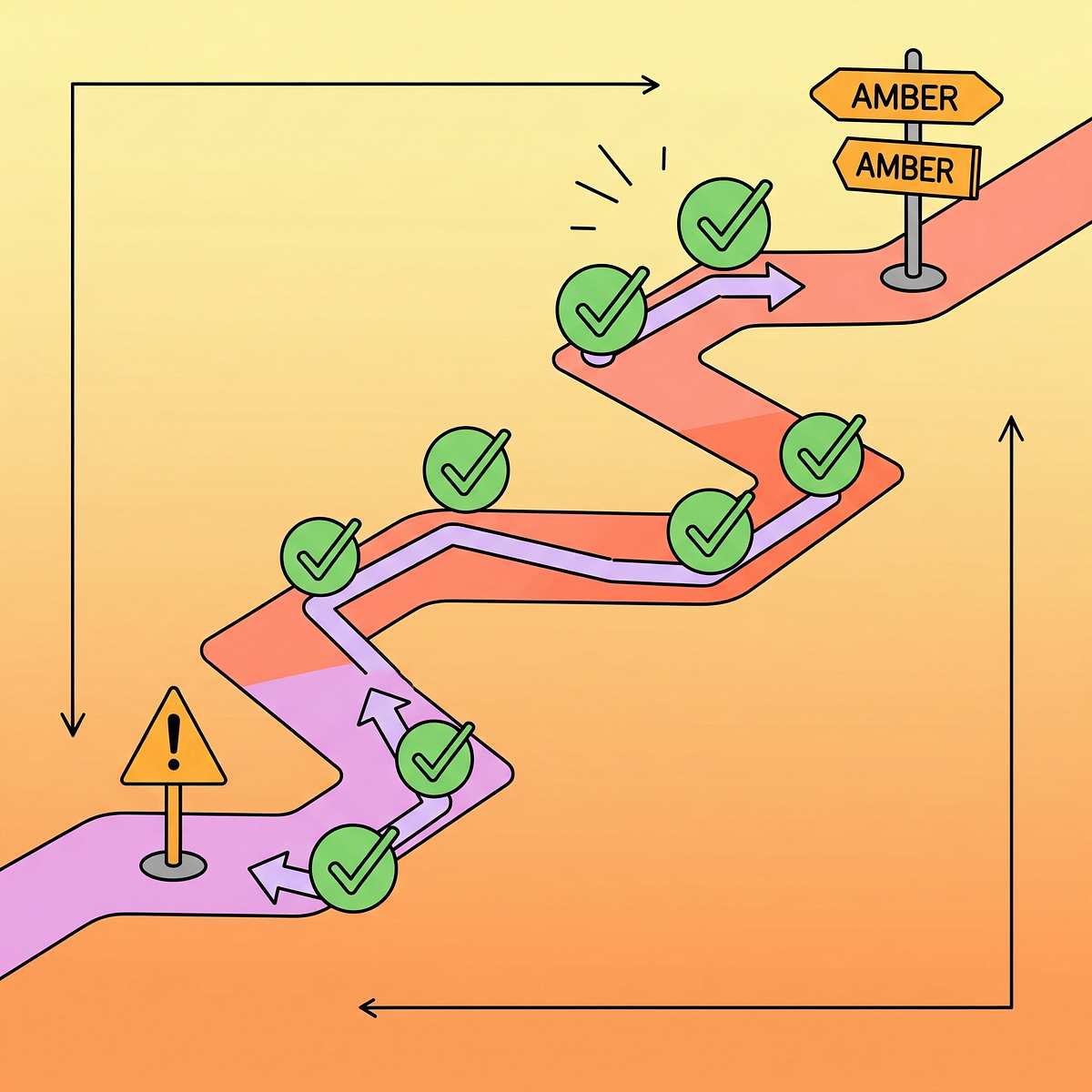
🟢 Mastery Indicators (Goal State)
- Transitions complete within 2 minutes without meltdown (most days)
- Child independently uses visual schedule and timer
- "Sometimes" accepted without major protest
- Flexibility demonstrated across multiple settings (home + school + community)
- Child self-monitors: recognizes when stuck and uses a tool
🔴 Red Flags — Escalate to Professional Assessment
- Daily severe meltdowns consistently after 8 weeks of consistent implementation
- Self-injurious behavior during stuck episodes
- School attendance impacted by transition difficulties
- Family organizing entire life around avoiding triggers
- No progress indicators after 6 weeks of consistent implementation
When Red Flags Appear: Contact Pinnacle immediately. Cognitive inflexibility this severe requires comprehensive assessment — not just different tools. 📞9100 181 181 — FREE. 16+ languages. 24×7.
Pinnacle Assessment Path: AbilityScore® → Cognitive Flexibility Evaluation → FBA for stuck patterns → Individualized Intervention Protocol
NCAEP 2020
Pinnacle Clinical Escalation Protocols
DOI: 10.1007/s12098-018-2747-4

From Trapped by Rigidity to Free to Adapt
ACT V: Community & Ecosystem
Family Story 1 — Bangalore, 7 years
Before: Every morning was a crisis. If a road was closed — meltdown. If his food touched another food — meltdown. He could not end any preferred activity without 20+ minutes of distress.
After (12 weeks): Meltdown duration dropped from 25 minutes to 6 minutes by week 4. By week 10, he could transition in under 2 minutes with the timer. By week 16, he checked the schedule himself before his parents reminded him.
"He still prefers routine. But he can adapt when routine changes. That transformation — from rigidity that trapped us all to flexibility that gave us our life back — came from building bridges, not demanding flexibility."
Family Story 2 — Chennai, 5 years
Before: She asked the same question — "Are we going to the park?" — 47 times in one morning. By the 20th answer, caregiver and child were both escalating.
After: Answer card created. Showed the card instead of answering verbally. Week 1: 47 → 22 repetitions. Week 3: 22 → 6. Week 6: She checked the card herself.
"Answer cards work because they externalize the answer. The brain loops on the question because it cannot internally retain the answer. The card holds it." — Therapist's Notes
📞 FREE Helpline: 9100 181 181 | Pinnacle center outcome data (anonymized) | Parent-reported outcomes research

You Are Not Navigating This Alone
"Caregiver peer support is one of the strongest predictors of home intervention adherence. Parents who are connected implement strategies more consistently and sustain them longer." — WHO NCF (2018) | PMC9978394. Isolation is the enemy of adherence. Connection is the accelerator of progress.
WhatsApp Community
"When They Get Stuck" Parent Group — families navigating cognitive inflexibility, insistence on sameness, and transition challenges. Join at pinnacleblooms.org/parent-community
Online Forum
Pinnacle Parent Forum — share strategies, ask questions, and get peer support from families who've been exactly where you are. forum.pinnacleblooms.org
Local Meetups
Pinnacle centers organize monthly parent circles. Find yours at pinnacleblooms.org/centers
Peer Mentoring
Connect with an experienced parent who is 2 years ahead in the flexibility journey and navigating exactly what you're navigating now.
WHO NCF Community Engagement Principles
PMC9978394
When to Bring In the Professionals
Discipline | When to Refer | What They'll Do | |
Occupational Therapist | Sensory components driving rigidity; transition difficulties dominating | Sensory profile, individualized visual support design, executive function intervention | |
Speech-Language Pathologist | Perseveration dominating; social-cognitive rigidity | Social stories, pragmatic language, perspective-taking | |
BCBA / Behavior Analyst | ABA approach for systematic flexibility training | FBA, reinforcement protocol, extinction plan for stuck behaviors | |
Developmental Pediatrician | First assessment; co-occurring conditions suspected | Comprehensive developmental evaluation, referrals | |
Psychologist | Anxiety driving rigidity | CBT for anxiety, flexibility-focused therapy |
The Pinnacle Assessment Path: AbilityScore® → Executive Function Evaluation → Cognitive Flexibility Assessment → FBA → Individualized Flexibility Protocol via FusionModule™
OT-Led
Cognitive flexibility intervention
SLP-Led
Social narrative program
ABA-Designed
Systematic flexibility training
Parent Coaching
EverydayTherapyProgramme™
📞9100 181 181 — Free consultation to understand where to start | pinnacleblooms.org
Pinnacle Consortium Clinical Protocols
NCAEP 2020
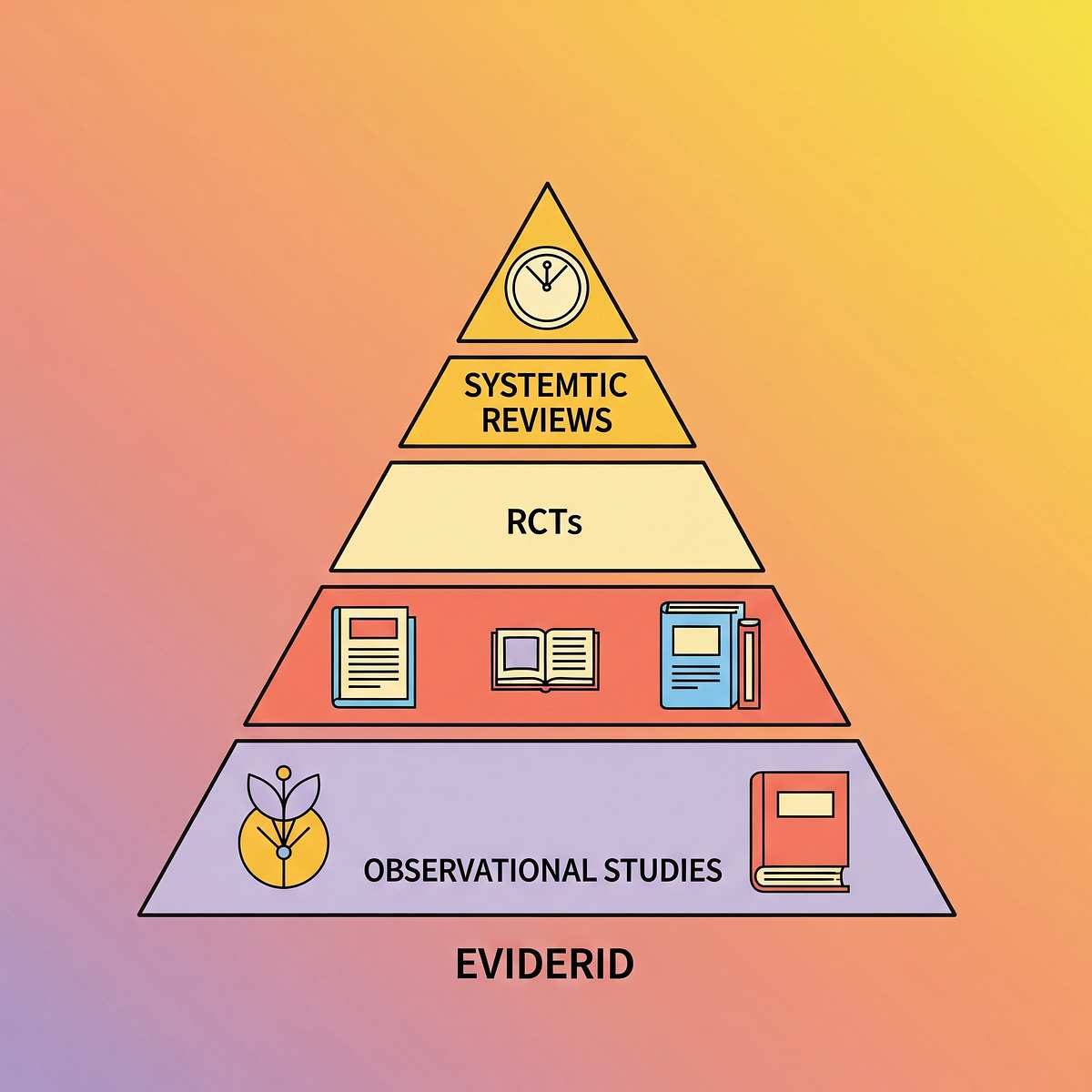
The Science Backing Every Strategy on This Page
📚 PMC11506176 — Systematic Review (Children, 2024)
16 studies confirm visual supports and structured flexibility interventions are evidence-based for autism. Effect sizes meaningful across home and clinic settings.
📚 PMC10955541 — Meta-Analysis (World J Clin Cases, 2024)
24 studies: structured therapy promotes social skills, adaptive behavior, cognitive flexibility, and motor skills in ASD.
📚 DOI: 10.1007/s12098-018-2747-4 — Padmanabha et al., Indian J Pediatr (2019)
Indian RCT: home-based structured interventions demonstrate significant outcomes in Indian pediatric population. Safety and efficacy established.
📚 NCAEP Evidence-Based Practices Report (2020)
Visual supports, social narratives, and video modeling classified as evidence-based practices for autism.
📚 WHO Nurturing Care Framework (2018) | PMC9978394
Caregiver-administered interventions validated across 54 LMICs. Age-specific recommendations implemented across 197 countries.
Related Techniques (Cluster D — Executive Function):D-375: Self-Regulation Challenges | D-376: Waiting Difficulties | D-378: Unexpected Changes | D-379: Problem-Solving Flexibility

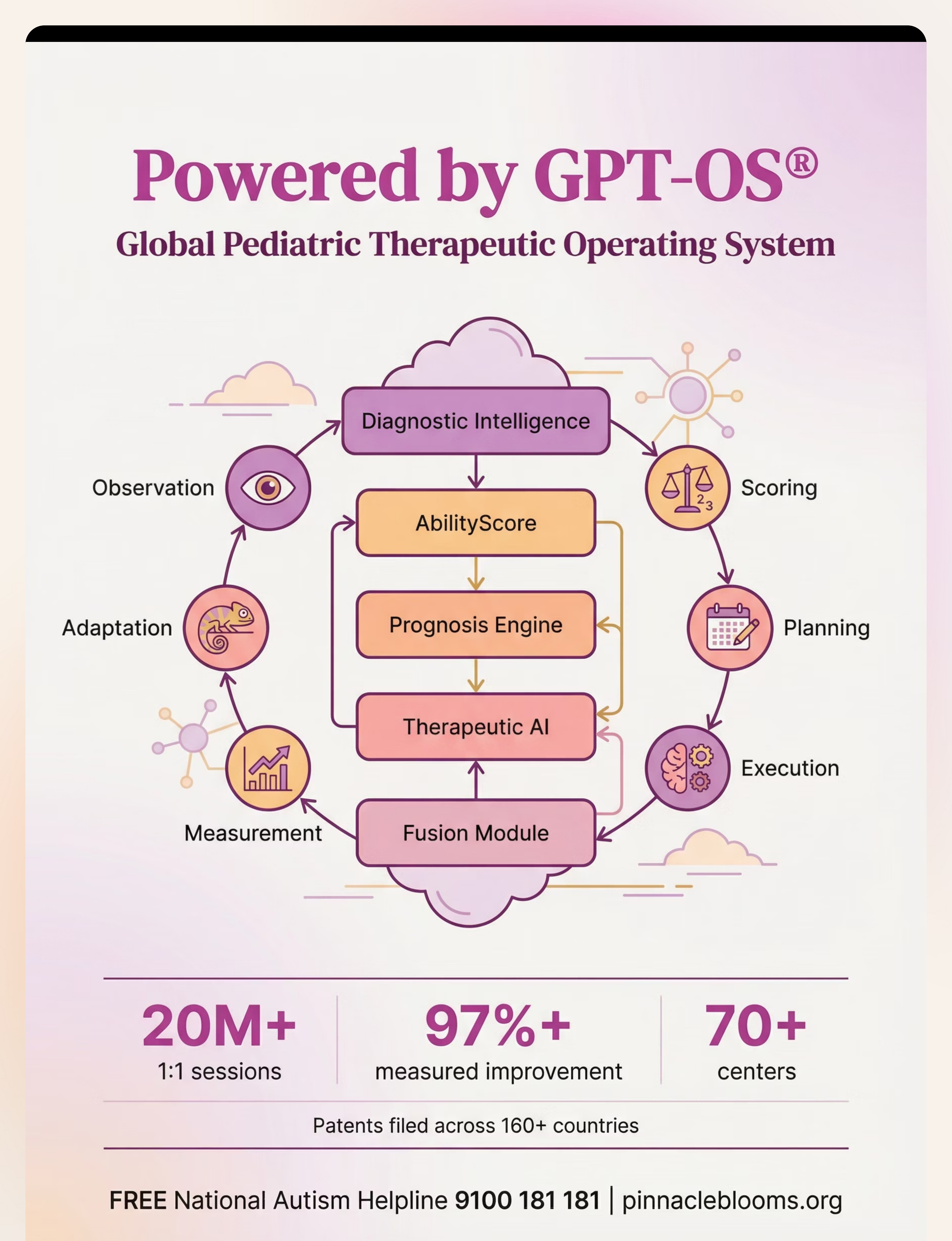
Powered by GPT-OS®
Global Pediatric Therapeutic Operating System — GPT-OS® is not software. It is therapeutic infrastructure. Built on 20M+ 1:1 therapy sessions, it tracks every dimension of your child's cognitive flexibility journey and generates personalized guidance at every stage.
GPT-OS® tracks the Cognitive Flexibility Readiness Index, Transition Readiness Index, Self-Regulation Readiness Index, and Executive Function Readiness Index — giving your therapist and you a unified, measurable picture of your child's progress trajectory.
20M+
1:1 Sessions
Real-world therapy data powering the system
97%+
Measured Improvement
Across tracked outcomes
70+
Centers
Across India and 70+ countries worldwide
📞9100 181 181 | pinnacleblooms.org
PMC11506176
PMC10955541
Pinnacle GPT-OS® Internal Documentation

Your Questions, Answered by the Consortium
Q1: My child has been stuck for years. Is it too late to start?
Never. Neuroplasticity exists across the lifespan. Adults with ASD can and do develop greater cognitive flexibility with the right supports. The tools described here work across ages — the approach simply adapts.
Q2: Will my child always need visual supports?
Some children fully internalize the flexibility skills and no longer need external supports. Others benefit from visual supports throughout life — and that is a completely valid outcome. The goal is functional flexibility, not invisible flexibility.
Q3: We tried visual schedules before and it didn't work. Why would it work now?
Visual schedules fail most often due to: inconsistent use, pictures that don't match the child's cognitive level, or introduction during crisis rather than calm. This page's protocol addresses all three.
Q4: Is getting stuck different from OCD?
There is overlap. OCD involves intrusive thoughts with compulsive rituals to reduce anxiety. Cognitive inflexibility in autism often doesn't involve intrusive thoughts — it's more like a preference that has become overwhelming. A developmental pediatrician or psychologist can distinguish.
Q5: My child refuses to look at the schedule. What do I do?
Start smaller: First-Then board only (2 items). Use real objects instead of pictures. Introduce the schedule during a preferred activity first (positive association). Give it 2 weeks of consistent, calm exposure before assessing.
Q6: How do I help school teachers implement these strategies?
Card 37 includes a teacher/school communication template. Pinnacle also offers school consultation services. Download the Family Guide at the bottom of the Reel card.
Q7: My child gets stuck on wanting me specifically. Is this the same?
This often intersects with attachment patterns and separation anxiety — a slightly different profile. While some tools here apply, SLP and OT assessment will be most helpful. Call 📞9100 181 181
Q8: How long before we see results?
Week 1–2: reduced escalation duration. Week 3–4: consolidation signs. Week 5–8: generalization. Results depend on consistency of implementation and severity of profile.
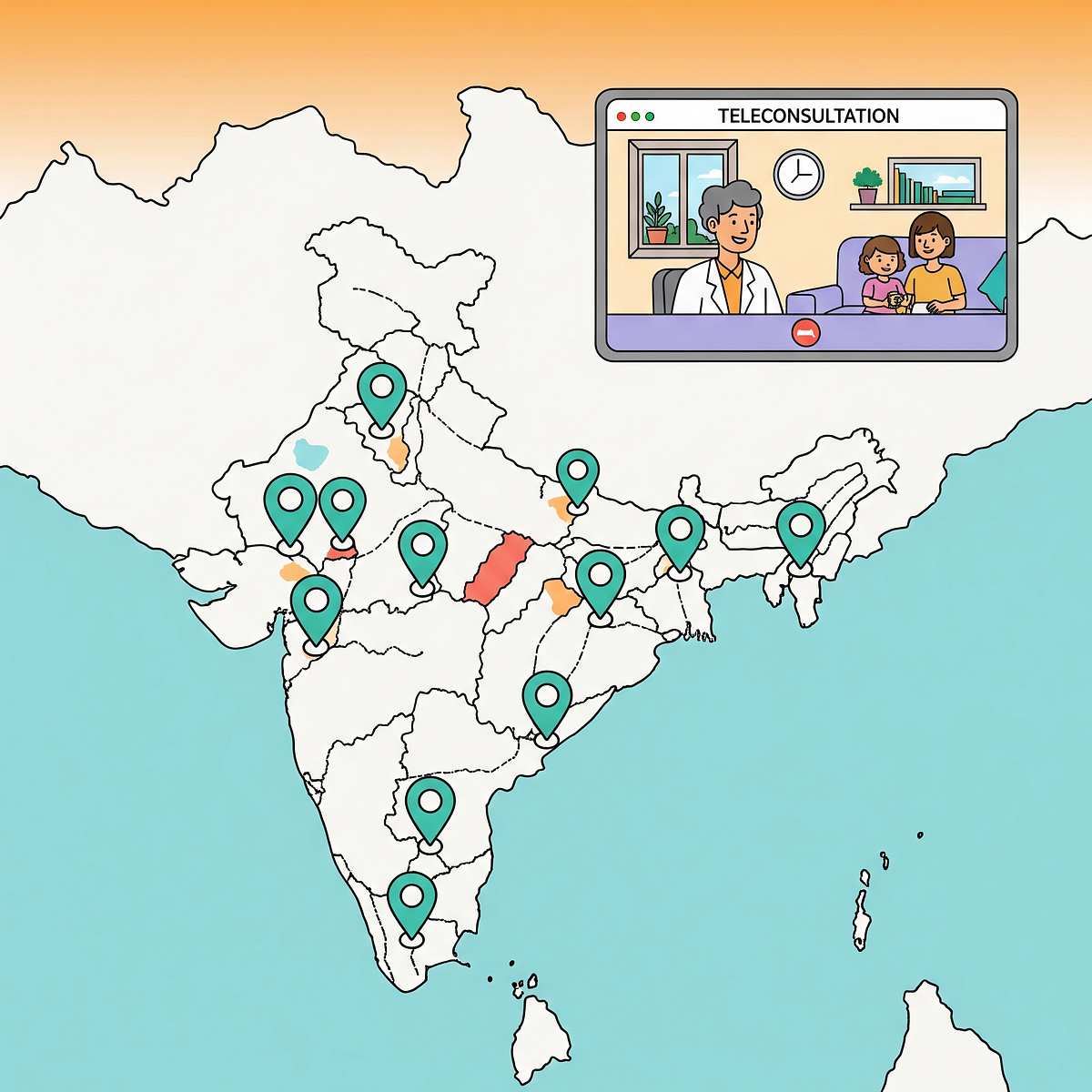
Didn't find your answer? Ask GPT-OS® at pinnacleblooms.org | Still need help? Book a teleconsultation: 📞9100 181 181

You Have Everything You Need to Begin Today
Your child's brain is not broken. It needs bridges. You now have 9 of them — validated by India's largest autism therapy consortium, backed by international research, and executable from your home, starting today. The science is clear. The tools are accessible. The path forward is yours.
→ Explore Next Technique: D-378: When Unexpected Changes Happen
20M+
1:1 Sessions
97%+
Measured Improvement
70+
Centers Worldwide
70+
Countries Served
Validated by the Pinnacle Blooms Consortium | OT • SLP • ABA • SpEd • NeuroDev • CRO • WHO-aligned
📞 FREE National Autism Helpline: 9100 181 181 | 16+ languages | 24×7 | pinnacleblooms.org
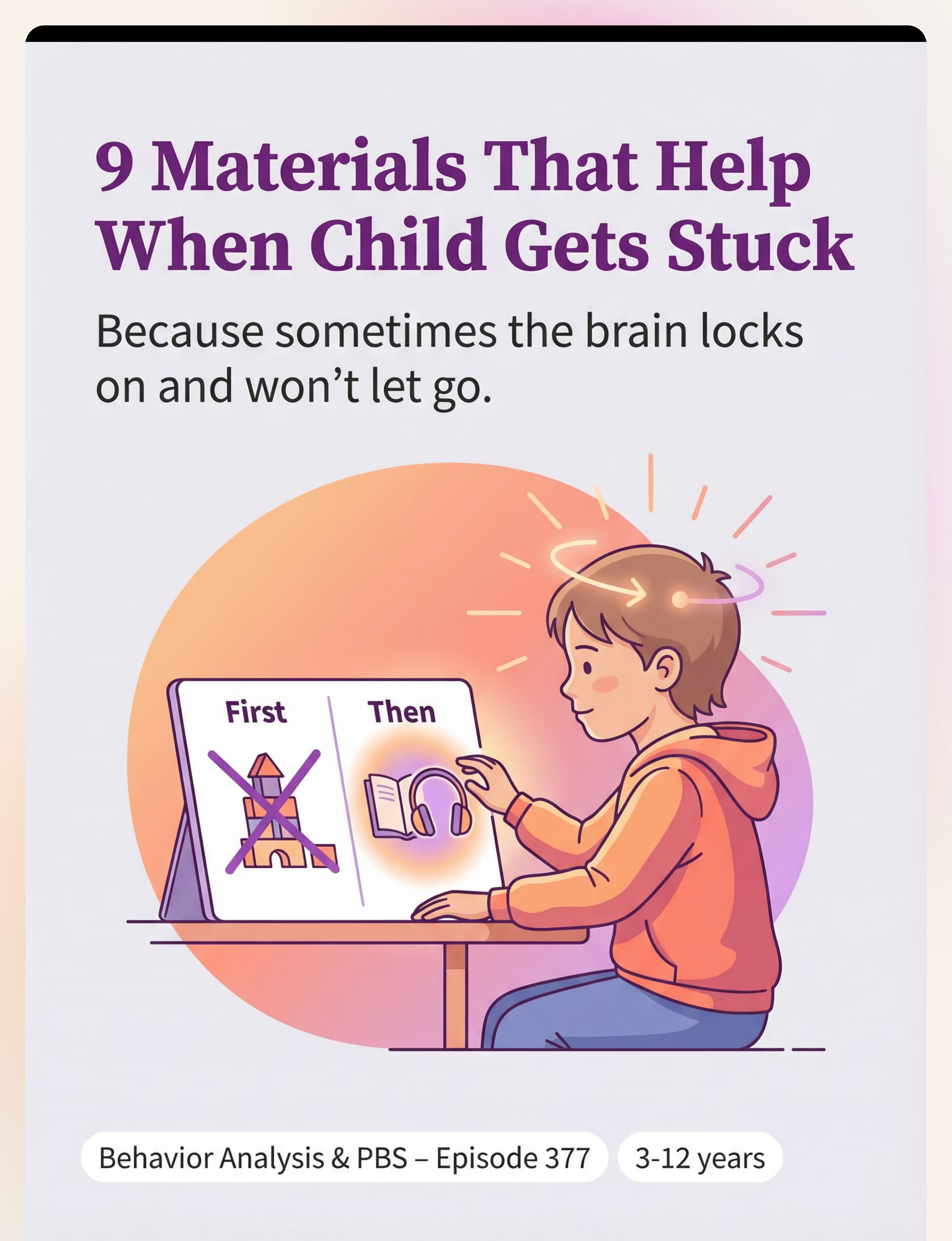
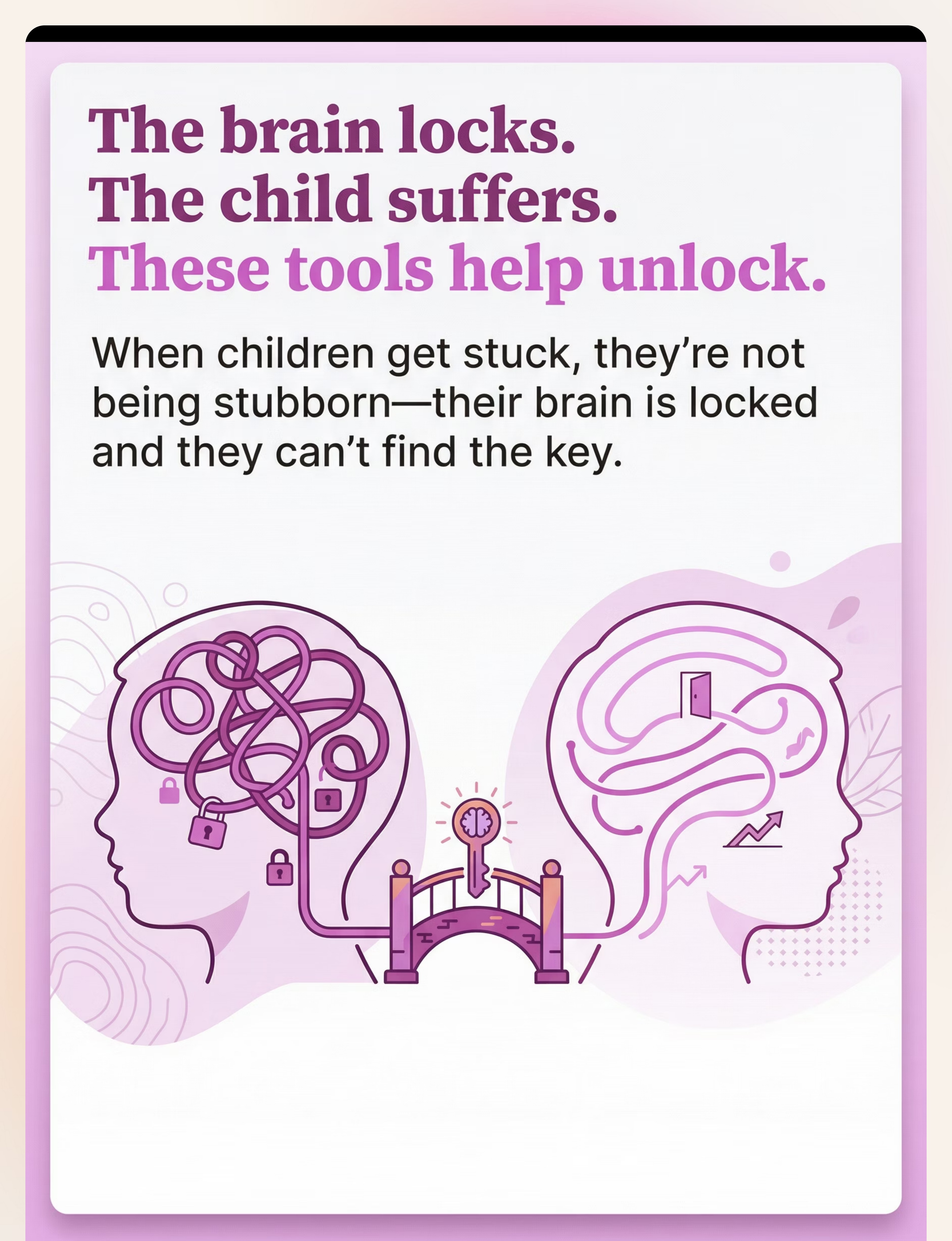
Preview of 9 materials that help when child gets stuck Therapy Material
Below is a visual preview of 9 materials that help when child gets stuck therapy material. The pages shown help educators, therapists, and caregivers understand the structure and content of the resource before use. Materials should be used under appropriate professional guidance.


Link copied!
"From Fear to Mastery. One Technique at a Time."
Pinnacle Blooms Network® exists to transform every home in India — and across 70+ countries — into a proven, scientific, personalized, 24×7 therapeutic environment for every child who needs it. Not in a clinic. At home. With the right tools. By empowered families.
🔴 OT
Occupational Therapy
🔵 SLP
Speech-Language Pathology
🟠 ABA
BCBA / Applied Behavior Analysis
🟢 SpEd
Special Education
🟣 NeuroDev
NeuroDevelopmental Pediatrics
🌍 WHO-Aligned
CRO + Global Standards
ease create images for all cards
Navigation:Explore All Techniques → | Next: D-378 Unexpected Changes →
CIN: U74999TG2016PTC113063 | DPIIT: DIPP8651 | MSME: TS20F0009606 | GSTIN: 36AAGCB9722P1Z2
© 2025 Pinnacle Blooms Network®, unit of Bharath Healthcare Laboratories Pvt. Ltd. All rights reserved. Technique D-377 | Domain D: Autism/Behavioral | Subdomain D2: Stimming & Repetitive Behaviours
📞 FREE National Autism Helpline (16+ languages): 9100 181 181 | pinnacleblooms.org