

Before you can support it, you need to understand it.
Your child's hand flapping, rocking, and humming are not problems to eliminate. They are a language to learn.

D-361 | Understanding Stimming
The Moment That Brought You Here
It is Tuesday morning. Your 6-year-old begins flapping his hands intensely at breakfast. You reach over, instinctively, and hold his hands still. He explodes — not because he is defiant, but because you just silenced the one thing that was helping his nervous system stay regulated. You didn't know. You were trying to help. This page is written for that moment — and everything that comes after it.
D-361: 9 Materials That Help Understanding Stimming — Evidence-based. Parent-executable. Neurodiversity-affirming. You are not failing your child. You are learning a language that no one taught you. That ends today.
🏛️Pinnacle Blooms Network® | OT • ABA/BCBA • NeuroDev • SLP • SpEd — India's largest pediatric therapy consortium — 70+ centers — 20M+ sessions
FREE National Autism Helpline: 9100 181 181 | 16+ languages | 24×7 | pinnacleblooms.org
Act I — Recognition
You Are Among Millions of Families Asking This Exact Question.
80%
Sensory Differences
of autistic children experience sensory processing differences that drive stimming
1 in 36
Global Diagnosis
children diagnosed with autism globally (CDC 2023)
20M+
Sessions Delivered
therapy sessions delivered by Pinnacle to families navigating exactly this
If India alone has 18 million children with developmental needs, approximately 14.4 million of their families have faced the moment you faced this morning — reaching to stop a stim they didn't understand. You are not alone in this confusion. You are not alone in wanting to understand. And you are not alone in your commitment to change that. Estimated 7–8 million autistic individuals in India (Govt. of India, Ministry of Health, 2021). Sensory dysregulation is among the three most reported primary concerns across all 70+ Pinnacle centers nationally.
"You are among millions of families navigating this exact challenge — and among the few who sought to truly understand rather than simply correct."
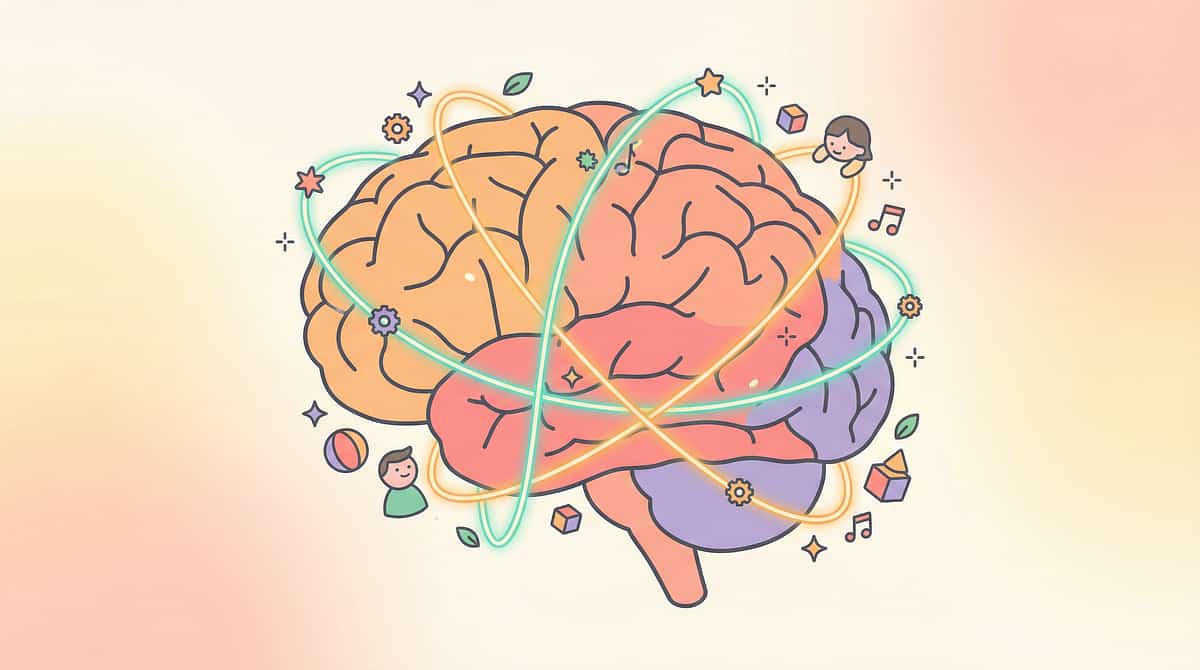
Act I — Neuroscience
Stimming Is Not Misbehavior. It Is Neurology.
The Neuroscience
The autistic nervous system processes sensory information through altered sensory gating mechanisms in the thalamus and somatosensory cortex. When sensory input is overwhelming or under-registered, the brain seeks homeostasis through repetitive motor or vocal behavior.
- Thalamus — sensory relay and filtering
- Basal ganglia — repetitive motor circuit regulation
- Cerebellum — coordination of rhythmic movements
- Amygdala — emotional intensity driving regulation-seeking
- Prefrontal cortex — executive override (often overwhelmed)
In Plain English
Think of your child's brain as a sensory control room where the volume knobs are set differently than neurotypical brains. Some inputs are too loud — fluorescent lights, unexpected sounds, clothing label textures — and the brain needs to turn the volume down. Other inputs are too quiet — the child doesn't feel their own body enough — and the brain needs to turn the volume up.
Stimming is the brain's volume knob. Hand flapping creates rhythmic proprioceptive feedback. Rocking activates the vestibular system with predictable, self-controlled input. Humming creates a constant auditory signal that masks unpredictable environmental sounds.
"Suppressing a stim without addressing the sensory need is like removing a pressure valve without reducing the pressure. The pressure finds another way out." — Pinnacle Blooms Consortium Clinical Team

Act I — Development
Understanding Stimming Across the Developmental Journey
1
Birth–12M
Sensory newborn reflexes emerge (rocking, hand-mouthing, visual tracking)
2
12M–24M
First stims visible — most families begin to notice repetitive patterns
3
3–5 Years
Stims peak — school pressure increases, environments become less accommodating
4
5–8 Years
Complex stim patterns emerge — most families reach Pinnacle at this stage
5
Lifelong
Adult stimming identity — stims evolve but remain a valued regulatory tool
Stimming begins in infancy and by ages 3–5, when school demands increase and sensory environments become more complex, stimming often becomes more visible and more misunderstood. Stimming co-occurs most frequently with: Sensory Processing Disorder (SPD), Anxiety Disorders, ADHD, Intellectual Disability, and Sleep Disorders. Understanding the primary regulatory function of stimming often reduces the secondary behavioral presentations of all comorbidities.
"Your child is here — at the point where understanding and acceptance become the most powerful interventions available."
🛡️ Level I Evidence
This Is Not Opinion. This Is Evidence.
Understanding and accepting stimming before any intervention is supported by the highest level of clinical evidence — systematic review and meta-analysis across 24+ randomized controlled trials.
Study | Finding | Citation | |
PRISMA Systematic Review (2024) | 16 studies confirm sensory integration and neurodiversity-affirming approaches as evidence-based practice for ASD | PMC11506176 | |
Meta-analysis — World J Clin Cases (2024) | Sensory integration therapy promotes social skills, adaptive behavior, and motor skills across 24 RCTs | PMC10955541 | |
Padmanabha et al. (2019) | Home-based sensory interventions demonstrate significant outcomes in Indian pediatric population | DOI: 10.1007/s12098-018-2747-4 | |
Autistic Self Advocacy Network | First-person evidence: stim suppression increases anxiety and reduces quality of life | autisticadvocacy.org | |
WHO Nurturing Care Framework (2018) | Responsive caregiving + understanding child communication = strongest predictor of developmental outcomes | nurturing-care.org |
Clinically validated. Neurodiversity-affirming. Parent-proven. Before any redirection, modification, or intervention for stimming, understanding its function is the scientifically validated first step.

Act II — Knowledge Transfer
D-361 | Understanding Stimming — What It Is
What It Is: Understanding Stimming is a structured parent education and observation practice that shifts the caregiver's relationship with self-stimulatory behavior from suppression to comprehension. Using 9 specific materials — tracking sheets, autistic-authored perspectives, sensory profiles, function categories, video review tools, arousal scales, comparison charts, support plans, and environment design guides — parents build a systematic, evidence-based understanding of what their child's stims mean.
📅 Ages
All ages
⏱️ Duration
Ongoing practice
🔁 Frequency
Daily observation + weekly review
🏛️ Lead
OT + ABA + NeuroDev
Who It's For: All ages. All stim types. Primary caregivers, extended family, educators. Most critical for families in the first 1–3 years post-diagnosis. What It Does: Transforms parental response from interruption to informed support. Enables functional hypothesis generation. Reduces anxiety in both parent and child. Establishes the foundation for all subsequent sensory and behavioral interventions.
Act II — Disciplines
Five Disciplines. One Unified Understanding.
Occupational Therapist (OT) — Primary Lead
Conducts formal sensory profile assessments. Maps stims to sensory processing patterns. Designs environmental modifications. Guides the family through understanding sensory-seeking vs. sensory-avoiding stim profiles.
ABA/BCBA Therapist — Co-Lead
Performs functional behavior assessment (FBA) to identify antecedents, behaviors, and consequences of stimming. Develops stim support plans. Distinguishes between stims requiring intervention vs. acceptance.
NeuroDevelopmental Pediatrician — Medical Oversight
Evaluates neurological basis of stimming patterns. Rules out medical etiologies. Provides diagnostic context. Validates understanding approach within comprehensive treatment planning.
Speech-Language Pathologist (SLP) — Communication
Assesses communicative functions of vocal stimming (humming, echolalia, scripting). Helps family distinguish between stimming and communicative intent. Supports AAC integration where needed.
Special Educator (SpEd) — School Bridge
Translates stim understanding into IEP accommodations and classroom supports. Advocates for stim-friendly learning environments. Trains school staff on function-based understanding.
"The brain does not organize itself by therapy type. A child's stimming crosses sensory, behavioral, communicative, and developmental boundaries simultaneously. Understanding it requires all five disciplines — converged." — Pinnacle Blooms Consortium | FusionModule™ Design Principle
📞 Connect with the right Pinnacle specialist for your child's stim profile: 9100 181 181 (FREE, 16+ languages)
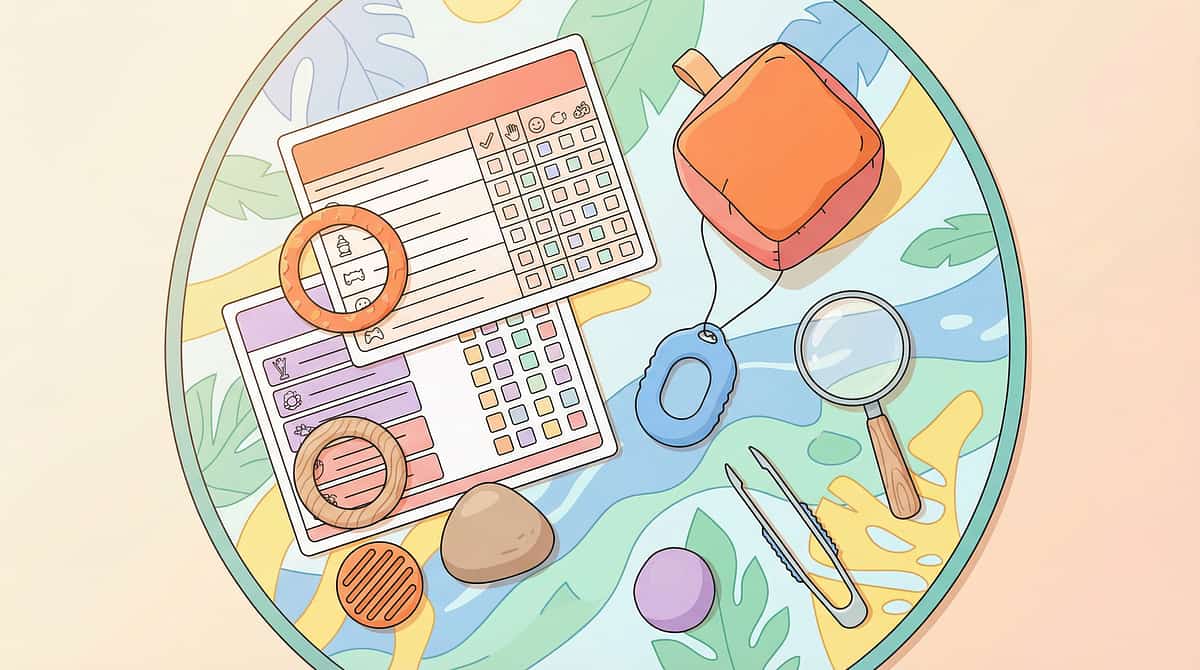
Act II — Targets
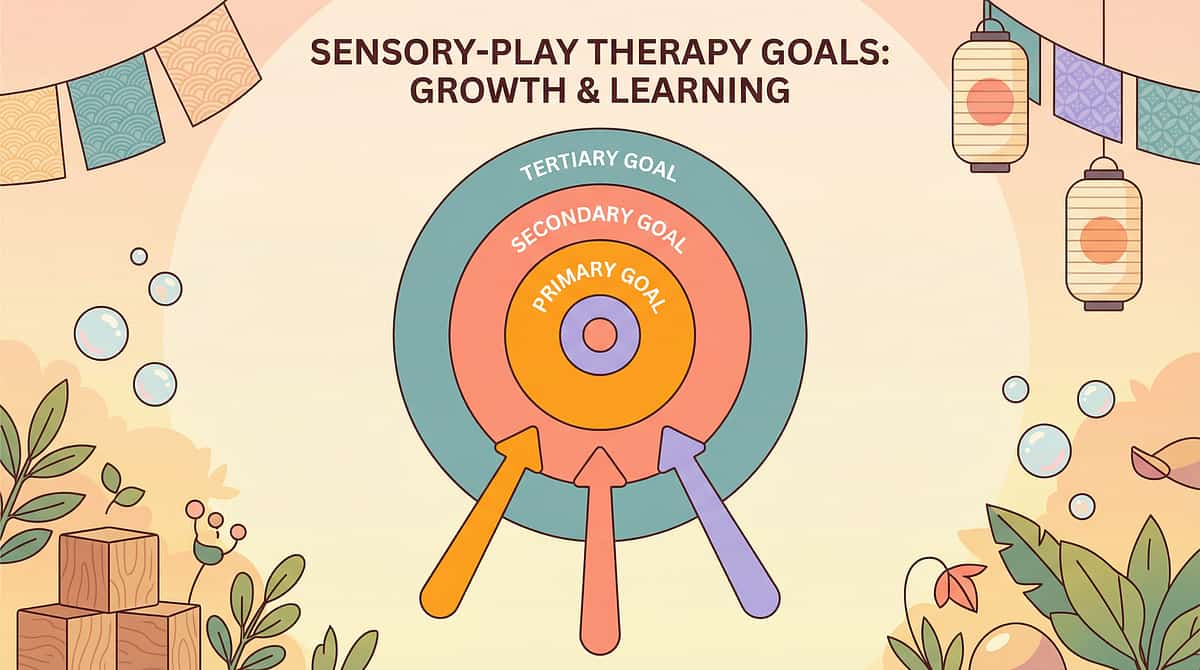
What Changes When You Truly Understand Stimming
The targets of D-361 operate at three levels simultaneously. At the center: your own understanding shifts first. In the middle ring: your child's daily experience changes as a direct result. In the outer ring: your entire family ecosystem and school relationship transforms over weeks and months.
You know understanding is developing when: You observe a stim and ask "what function is this serving?" rather than "how do I stop this?" You can predict which environments trigger which stims. You describe a stim to a therapist with context, not just behavior. You feel curiosity when a new stim appears — not alarm.

9 Materials
9 Materials. One Framework. Infinite Understanding.
# | Material | Function | Cost | |
1 | Stim Function Tracking Sheets | Observe → Decode | ₹0–200 | |
2 | Autistic-Authored Books | Understand from inside | ₹300–1,500 | |
3 | Sensory Profile Assessments | Map the sensory logic | ₹0–500 | |
4 | Function Category Posters | Framework for "why" | ₹100–400 | |
5 | Video Recording & Review | See what you miss | ₹0 | |
6 | Arousal & Regulation Scales | Connect state to stim | ₹100–500 | |
7 | Stim Comparison Charts | Normalize through comparison | ₹0–200 | |
8 | Stim Support Plans | Know when to accept/redirect | ₹0–200 | |
9 | Stim-Friendly Environment Guides | Design for support, not suppression | ₹200–5,000 |
Total Cost Range: ₹0 (fully DIY) → ₹8,500 (complete clinical-grade kit) | Pinnacle Recommends Starter Kit: Materials 1 + 2 + 4 | Cost: ₹400–1,900 | Begin today.
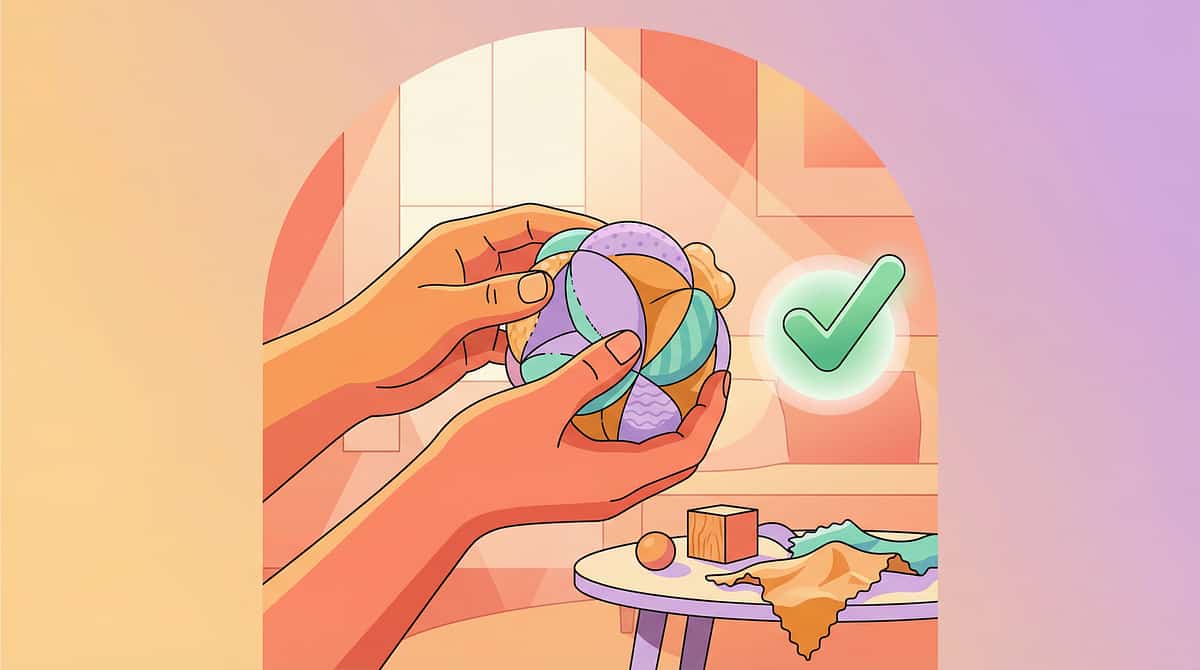
Act II — Equity
Every Parent. Every Budget. Every Village.
"WHO/UNICEF equity principle: Effective intervention must reach all families regardless of economic status. Every single material below has a zero-cost alternative that carries the same therapeutic value."
Material | Full Version | Zero-Cost DIY | |
Tracking Sheets | Printed observation log templates (₹50–200) | Paper + pen. 7 columns: Date / Stim / Before / Context / After / Hypothesis. Free download at pinnacleblooms.org | |
Autistic-Authored Books | Books by Temple Grandin, Naoki Higashida (₹300–1,500) | Free: NarrativelyAutistic.com | autisticadvocacy.org | |
Sensory Profile Assessment | Formal Dunn Sensory Profile via OT (₹500+) | DIY sensory map: List each sense. Note Seeks / Avoids / Neutral. Free worksheet at pinnacleblooms.org | |
Function Category Poster | Printed educational poster (₹100–400) | Draw 6 boxes on paper: Sensory Regulation / Emotional Expression / Focus / Self-Soothing / Communication / Joy | |
Video Review | Any smartphone (₹0) | Any smartphone. Use slow-motion mode. Review with the 6-question guide. | |
Arousal Scales | Zones of Regulation materials (₹100–500) | Draw 4 boxes: Calm / Ready / Excited / Overwhelmed. Color them. Note which stims appear in each zone. | |
Stim Support Plans | Professional template (₹0–200 with OT guidance) | For each stim: Is it harmful? Yes → seek OT. No → accept. Does it need space? Yes → create it. | |
Environment Guides | Design consultation (₹200–5,000) | Clear one corner of a room. Put a cushion and two fidget items there. That's a stim-friendly space. Start there. |
The substitute works because the therapeutic mechanism is in the understanding, not the material brand. A ₹0 observation log used consistently outperforms a ₹2,000 premium tracker that sits unused.
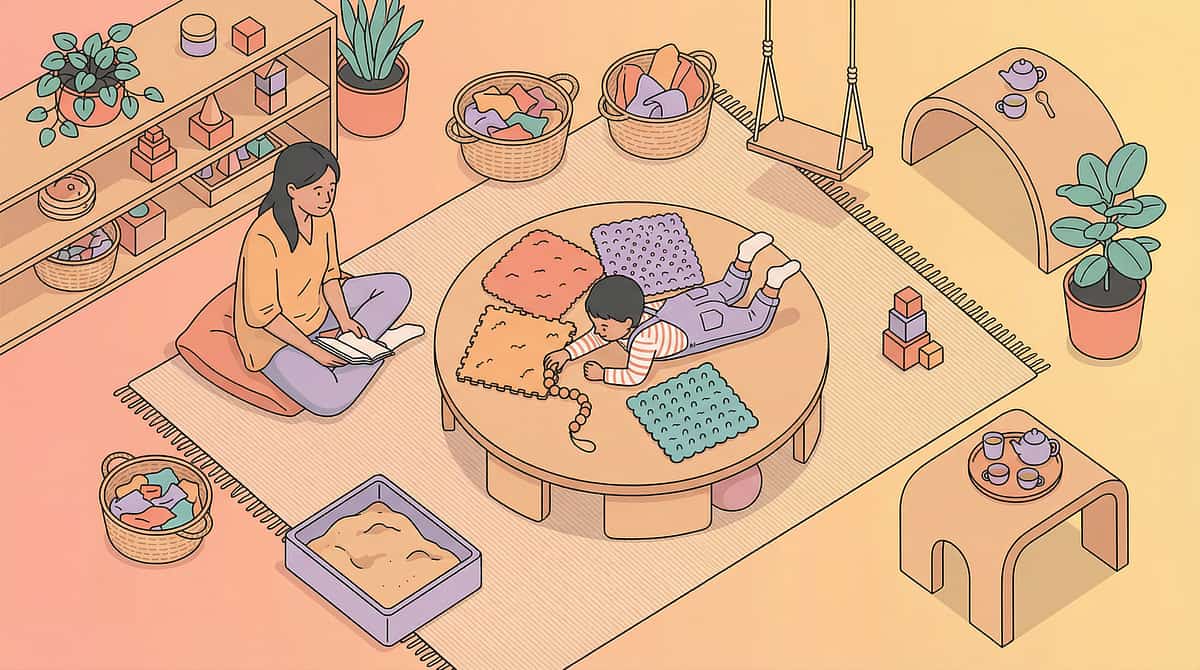
Safety First
Before You Observe. Before You React. Read This.
🟢 GREEN — Proceed as Normal
Most stimming is safe and should be observed, not interrupted. Rocking, hand flapping, humming, spinning, finger flicking, object lining — OBSERVE, do not stop. Child is regulated and has not had a recent meltdown within 30 minutes: proceed.
🟡 AMBER — Modify Your Approach
Child is in a heightened arousal state: observe from a distance. Stim involves objects with potential sharp edges: ensure the environment is clear but do NOT interrupt the stim. Multiple sensory inputs present: remove the environmental trigger, not the stim.
🔴 RED LINE — Stop and Seek Professional Guidance
Stim involves repeated self-injury causing wounds. Stim involves ingestion of non-food materials (PICA): immediate medical evaluation required. Stim pattern has changed dramatically and suddenly. Child becomes severely distressed when observed.
Observation is not surveillance. Approach with curiosity, not control. Your energy during observation is felt by your child. Regulate yourself first. If uncertain about any stim's safety: 9100 181 181 | FREE | 24×7

Act II — Setup
The Right Environment for Observation Changes Everything You See.
Element | Recommendation | |
Lighting | Natural light preferred. Dim fluorescents. Avoid flickering lights. | |
Sound | Reduce background noise. Familiar, predictable sounds only. | |
Space | Minimum 6×6 ft clear zone for the child. No tripping hazards. | |
Temperature | Child's comfortable range. Not too warm (increases agitation). | |
People | Maximum one observer initially. Additional observers increase performance effect. | |
Time | Child's natural stim window — typically post-school, post-transitions, post-meals. |
What to Remove
- Screens playing unpredictable content
- Strong smells (cooking, cleaning products)
- Other children or pets who interrupt
- Your own anxiety — breathe before you observe
Setup Mantra
"The space is ready. The child is allowed to be themselves in it. I am here to learn, not to correct."

Act III — Execution
60 Seconds. 7 Questions. Know Before You Begin.
# | Check | GO Indicator | Modify / Postpone | |
1 | Hunger / thirst | Fed within last 90 minutes | Hungry → Feed first | |
2 | Sleep | Adequate night sleep, no extreme fatigue | Overtired → Postpone | |
3 | Recent meltdown | None in past 60 minutes | Recent meltdown → 30-min calming first | |
4 | Illness | No fever, pain, or illness indicators | Any illness → Postpone | |
5 | Arousal state | Regulated or mildly elevated | Red-zone dysregulation → Do not observe for data | |
6 | Environment | Setup complete per Card 12 | Environment not ready → Set up first | |
7 | Parent state | You feel calm, curious, non-reactive | You feel frustrated/anxious → Regulate yourself first |
✅ 7/7 → GO
Proceed to Material 1
✅ 5–6/7 → MODIFY
10 minutes, no data pressure
Below 5 → POSTPONE
Tomorrow is a valid choice
If YOU are not ready: 5 deep breaths. One minute outside. Tell yourself: "I am learning. My child is not a problem. This is data."

Material 1 of 9
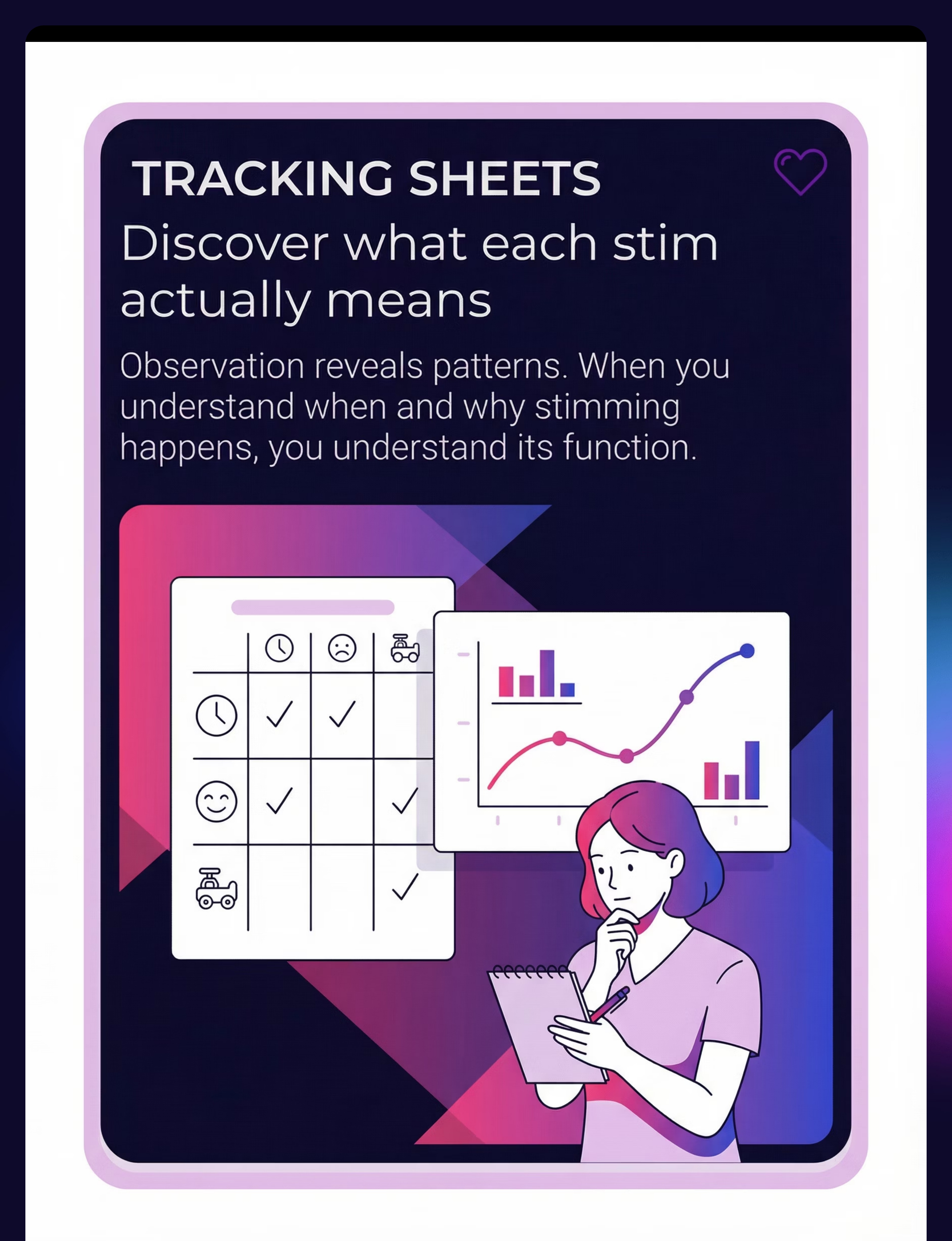
📋 Tracking Sheets — Discover What Each Stim Actually Means
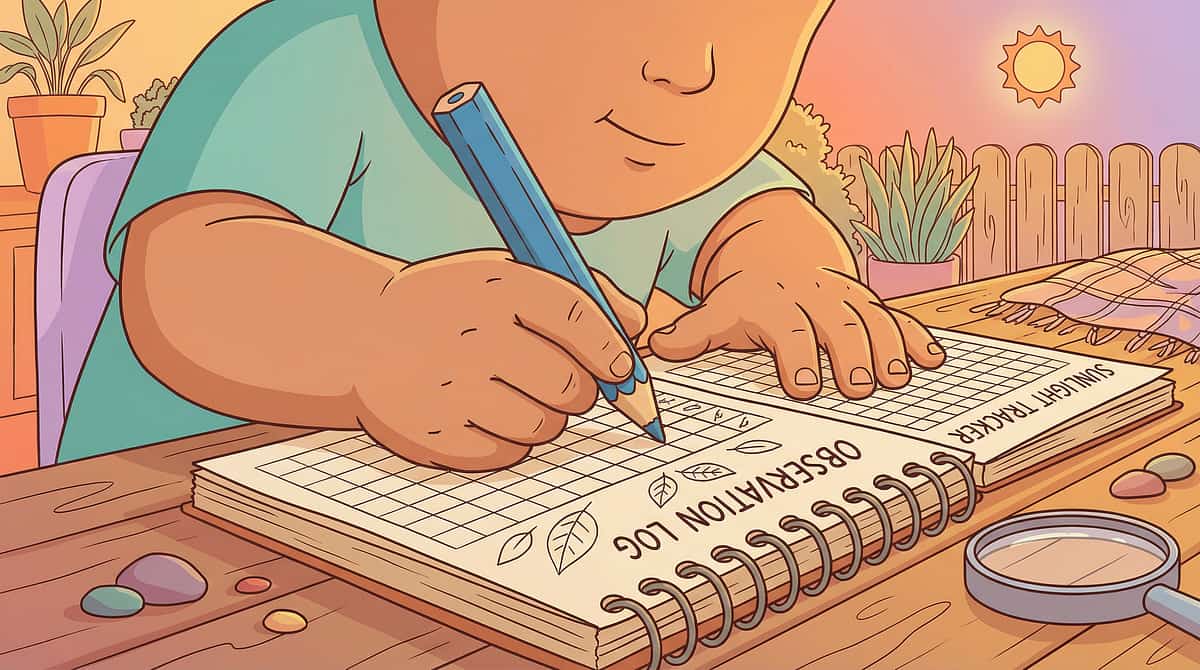
Stim Function Tracking Sheets are structured observation logs that transform casual watching into clinical-grade data. They move you from "my child is flapping" to "my child flaps at 4pm after school transitions, lasts 3–8 minutes, decreases with proprioceptive input, and appears to serve an emotional decompression function."
Step 1 — THE INVITATION: Say (in a calm, warm voice): "I'm going to sit with you for a little while. You don't need to do anything different. I'm just watching." Sit 3–4 feet away. Open your tracking sheet. Date it. Take one breath.
Date/Time | Stim Description | What Happened Before | Environment | Child's State | Duration | Hypothesis | |
Tue 4pm | Hand flapping, bilateral, rapid | School bus just arrived | Living room, TV off | Tense → relaxed after | 6 min | Emotional decompression |
DIY Alternative (₹0)
Paper. Pen. 7 column headers. Drawn by hand. Pinned to the fridge. Photographed each week and sent to your therapist. This works.
What to Observe
- Exact physical description of the stim (speed, height, bilateral/unilateral)
- The trigger: what happened in the 2 minutes before
- Emotional state: before, during, and after
- Duration and how it ended (self-terminated vs. interrupted)
"The same stim can serve different functions in different contexts. Only observation over time reveals the truth."
📌Canon Products:The Rosette Imprint Reward Jar (₹589) | 1800+ Reward Stickers (₹364) | Price range: ₹0 (handwritten) → ₹200 (printed)
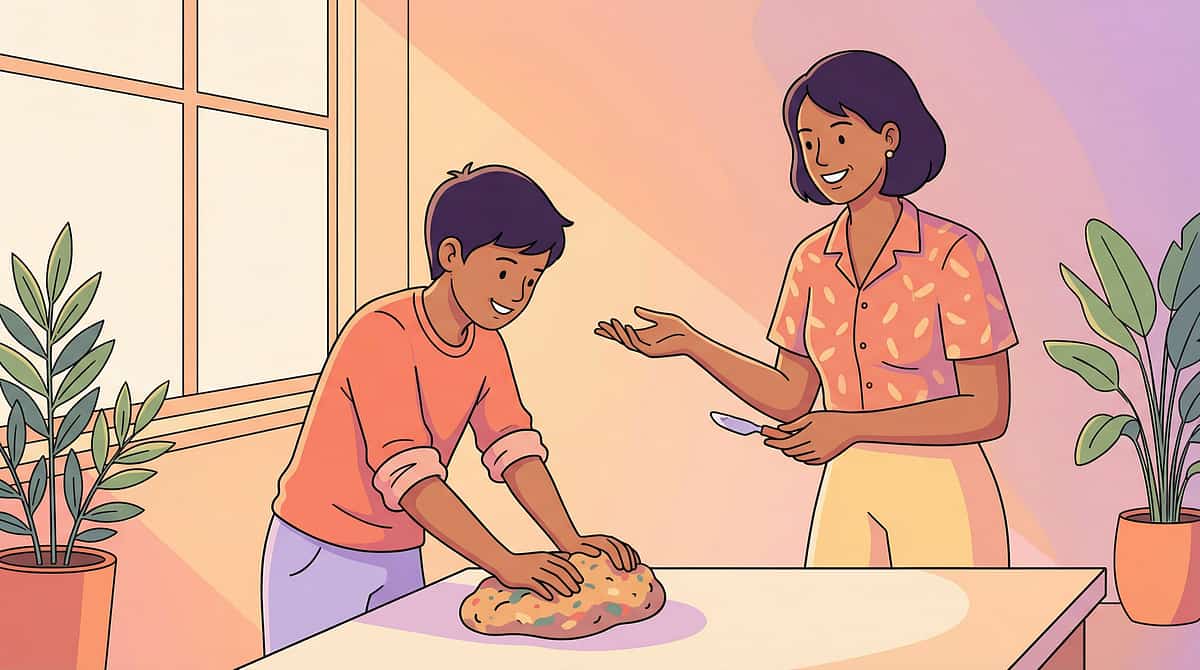
Material 2 of 9
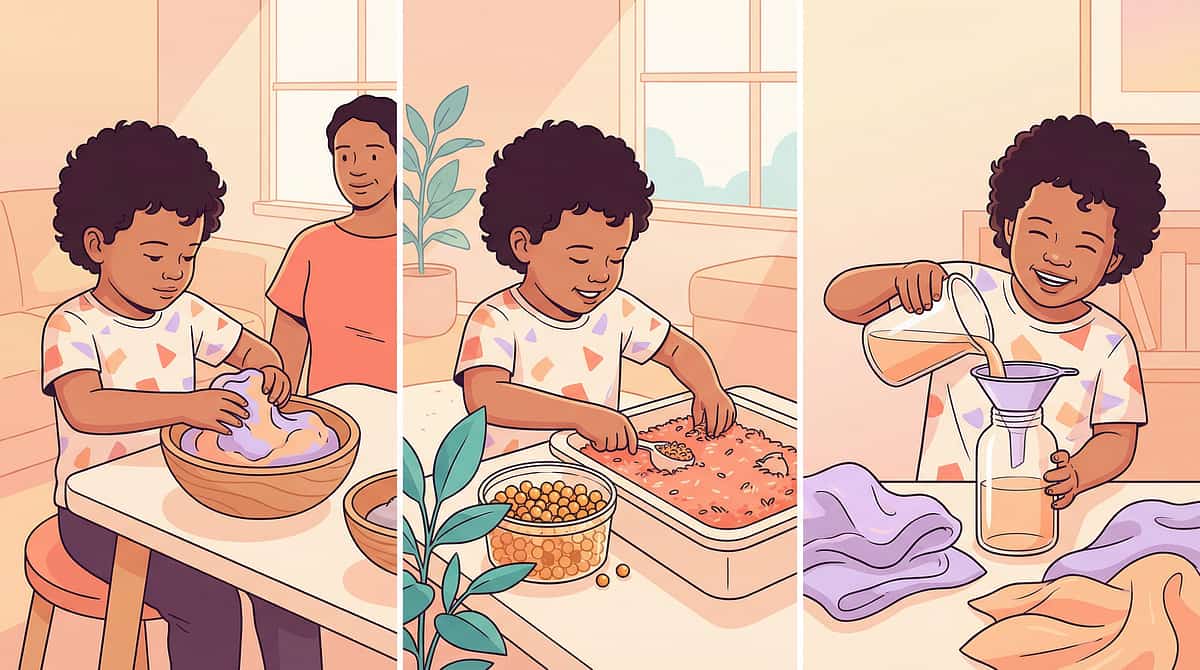
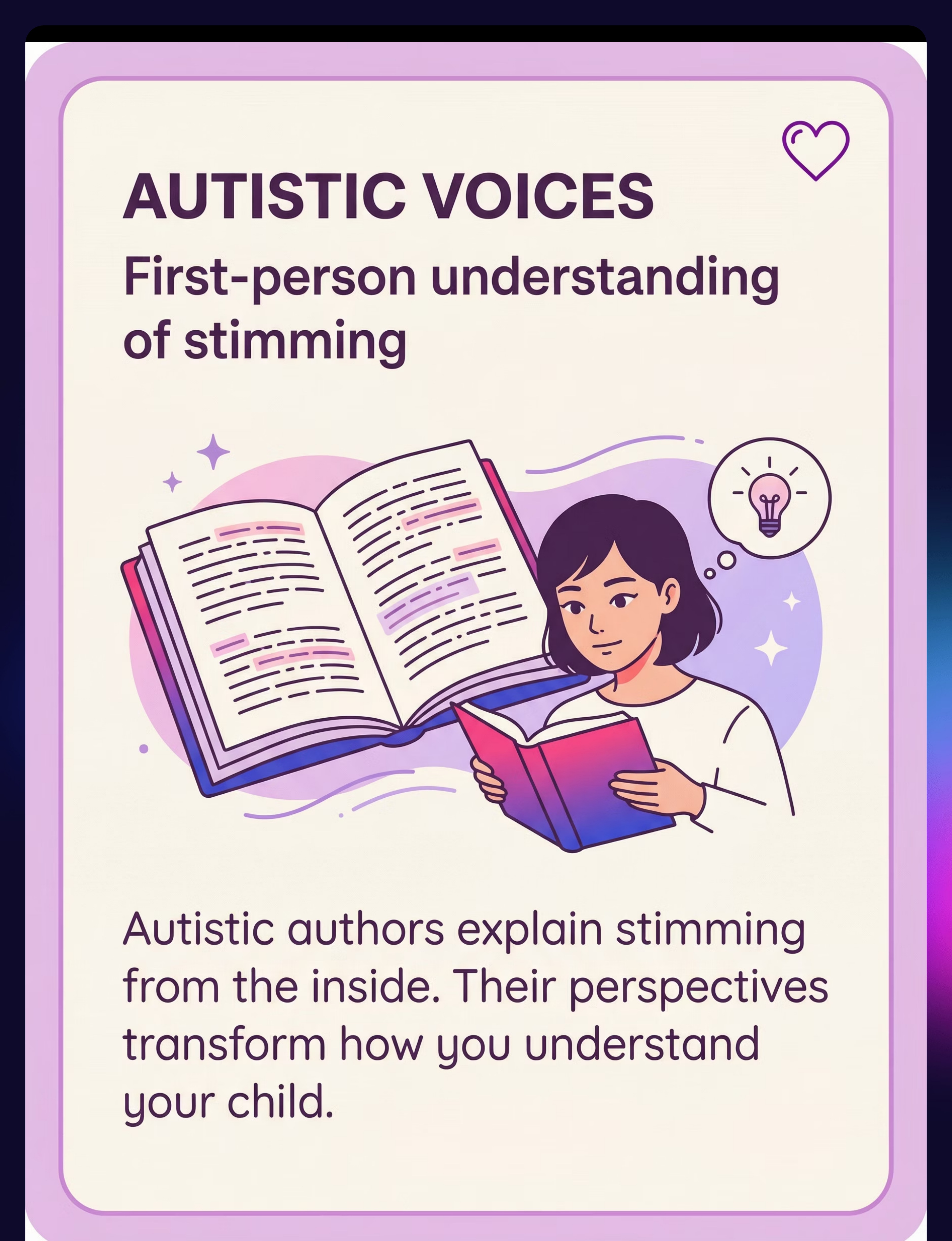
📚 Autistic Voices — First-Person Understanding of Stimming
Books, essays, social media accounts, and spoken testimony by autistic individuals who describe what stimming feels like from the inside — why it is necessary, what happens when it is suppressed, and what it means to live in a body that stims. No neurotypical researcher can replicate the experiential authority of an autistic adult explaining that hand flapping "feels like happiness escaping through my fingers."
Step 2 — ENGAGEMENT: Read one chapter or essay per week. Underline every sentence that makes you think: "Is this what my child is experiencing?" Share one insight with your spouse, your child's therapist, or your family WhatsApp group per week.
The Reason I Jump
Naoki Higashida — First-person autism experience by a non-speaking autistic teenager
Thinking in Pictures
Temple Grandin — Sensory and motor experience of autism from one of the world's most recognized autistic voices
Carly's Voice
Carly Fleischmann — Non-speaking autistic girl's emergence into communication
The Autistic Brain
Temple Grandin — Neuroscience of autism from an autistic scientist
DIY Alternative (₹0): YouTube: Search "autistic adults explain stimming." Listen to 3 videos. Write down 3 things that surprised you. Free: autisticadvocacy.org | #ActuallyAutistic | NarrativelyAutistic.com | Price range: ₹300–₹1,500 per book | ₹0 online
"One hour reading an autistic author's description of stimming teaches more than 10 hours of clinical research. Both are necessary. Start with the lived experience."
Material 3 of 9
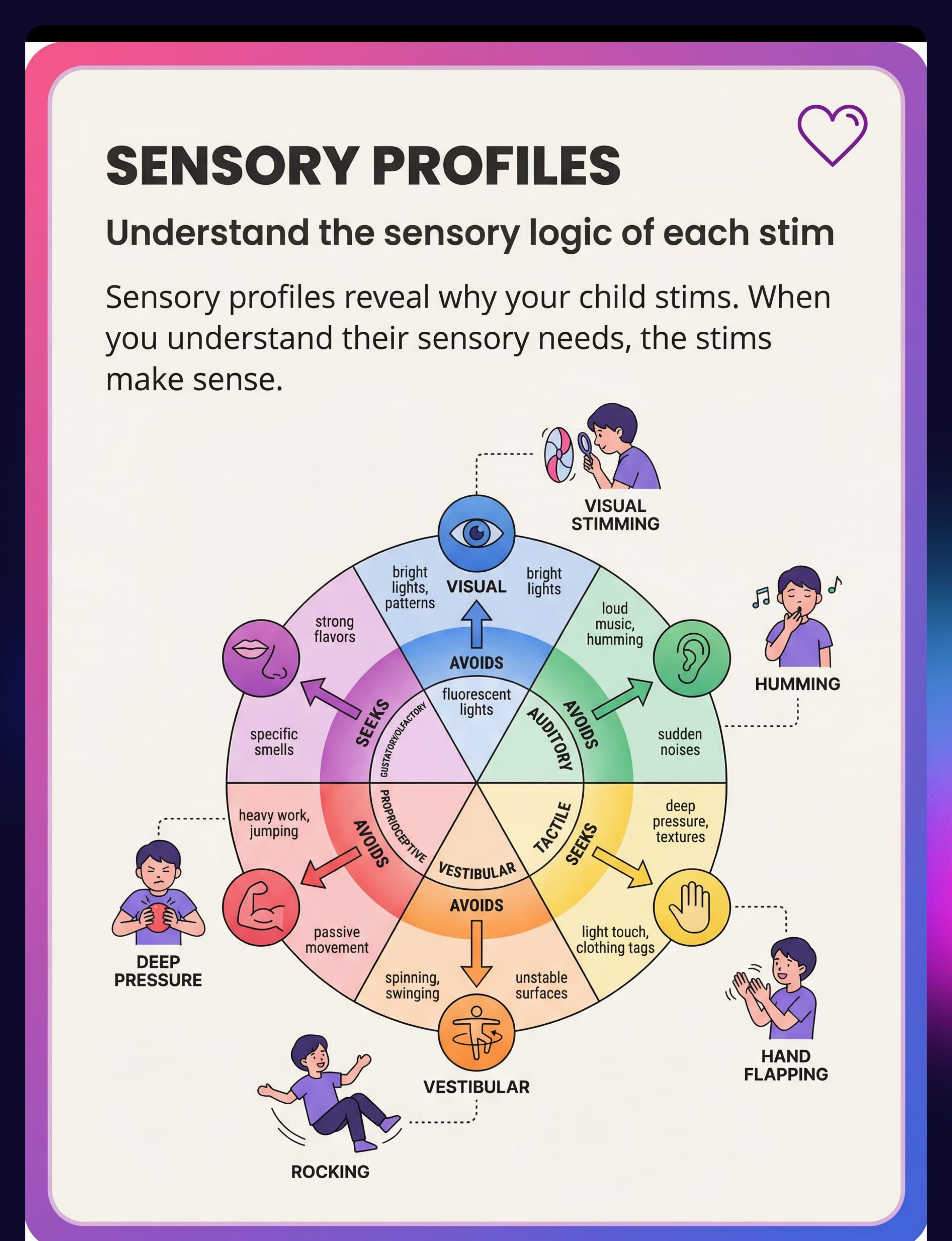
🧠 Sensory Profiles — Understand the Sensory Logic of Each Stim
Sensory Profile Assessments are standardized instruments (Dunn's Sensory Profile 2, Sensory Processing Measure) that map a child's patterns of sensory seeking, avoiding, sensitivity, and registration across all 8 sensory systems: visual, auditory, tactile, vestibular, proprioceptive, olfactory, gustatory, and interoceptive. When you know the sensory profile, stims stop being mysteries and become self-evident solutions.
Step 3 — THE THERAPEUTIC ACTION: Map your child's sensory profile using the informal worksheet below. Then book an OT assessment for the formal Sensory Profile 2 if possible.
Sense | Seeks | Avoids | Child's Stims Connected | |
Visual | Spinning objects, lights | Bright lights, busy environments | Finger flicking near eyes → seeking visual input | |
Auditory | Specific songs, predictable sounds | Sudden noises, crowds | Humming → masking unpredictable auditory input | |
Tactile | Deep pressure, textures | Light touch, certain fabrics | Rubbing surfaces → seeking tactile input | |
Vestibular | Swinging, spinning, rocking | Unstable surfaces | Rocking, spinning → seeking vestibular input | |
Proprioceptive | Crashing, jumping, squeezing | Passive movement | Hand flapping, jumping → seeking body awareness | |
Olfactory | Specific smells | Strong odors | Smelling objects → olfactory seeking |
"Most stims make perfect sensory sense once you understand the underlying sensory profile. There is no random stimming — there is only stimming whose purpose you haven't yet decoded."
📞 Book an OT assessment at your nearest Pinnacle center. Formal Sensory Profile 2 takes 30–45 minutes. 9100 181 181 to book | pinnacleblooms.org/centers | Price range: ₹0 (DIY worksheet) → ₹500+ (formal OT assessment)

Material 4 of 9
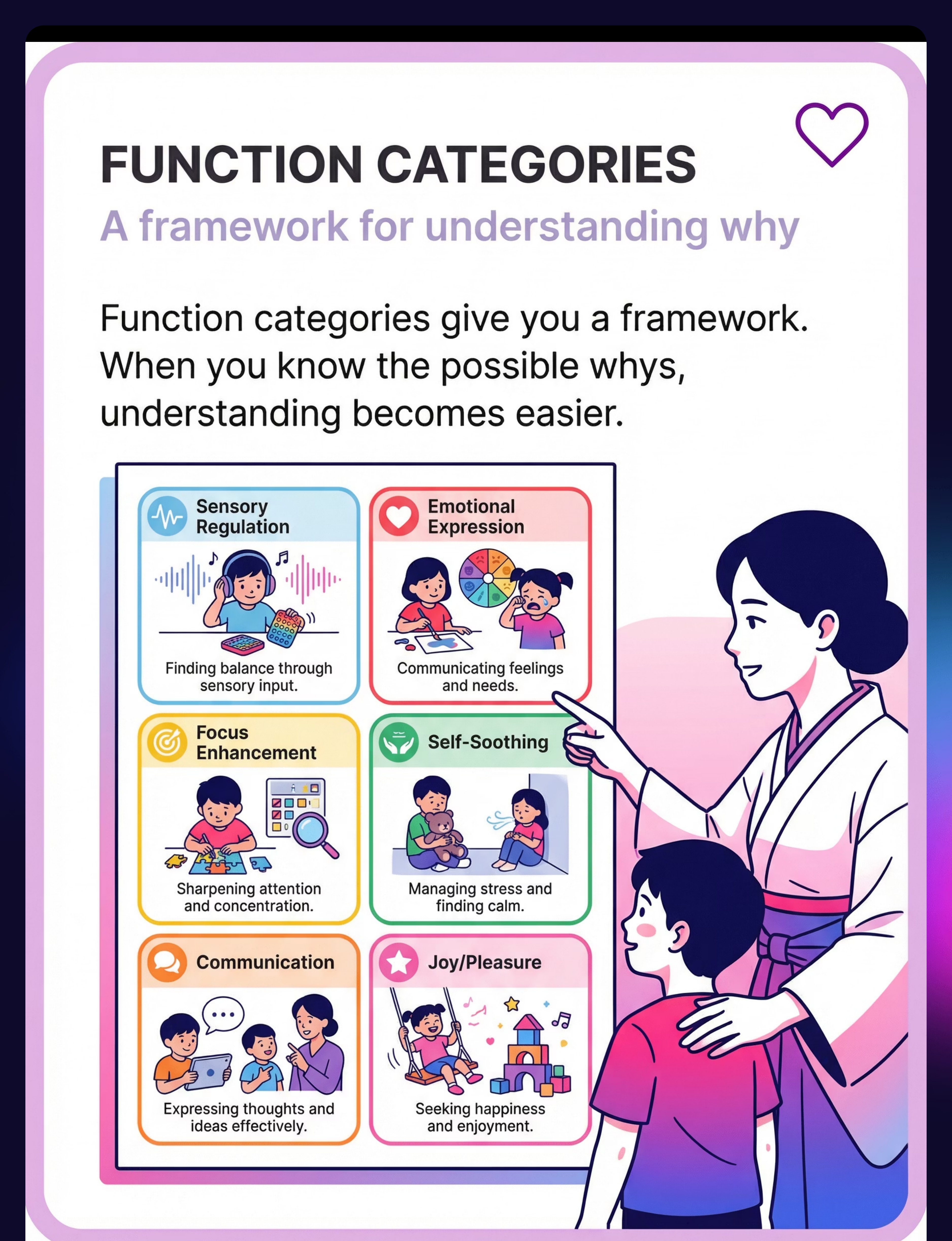
🗂️ Function Categories — A Framework for Understanding Why
Educational posters and function-category frameworks that organize all possible stim functions into 6 clear categories, giving parents a mental model to apply during observation.
🔵 Sensory Regulation
Managing too much or too little sensory input. Examples: Rocking (vestibular), humming (auditory mask)
❤️ Emotional Expression
Showing excitement, anxiety, joy, frustration. Examples: Hand flapping when excited, jumping for joy
🎯 Focus Enhancement
Helping with attention and concentration. Examples: Subtle rocking while reading, fidgeting during listening
🌿 Self-Soothing
Calming during distress or anxiety. Examples: Rocking during meltdown, humming when scared
💬 Communication
Expressing needs, discomfort, or desires. Examples: Increased stimming to signal overwhelm
⭐ Joy / Pleasure
Simply feeling good. Intrinsically rewarding. Examples: Spinning for pure enjoyment, texture delight
Note on Overlap: One stim can serve multiple functions simultaneously. Hand flapping may serve emotional expression + sensory regulation at the same time. This is not confusing — it is efficient. The child's nervous system is multitasking. DIY Alternative (₹0): Draw 6 boxes on A4 paper. Label each with one function category. Stick to the wall. Use a pencil mark to tally which function each observed stim appears to serve.
"Having categories turns 'why is she doing this?' into an answerable question. Every parent deserves that shift."

Material 5 of 9
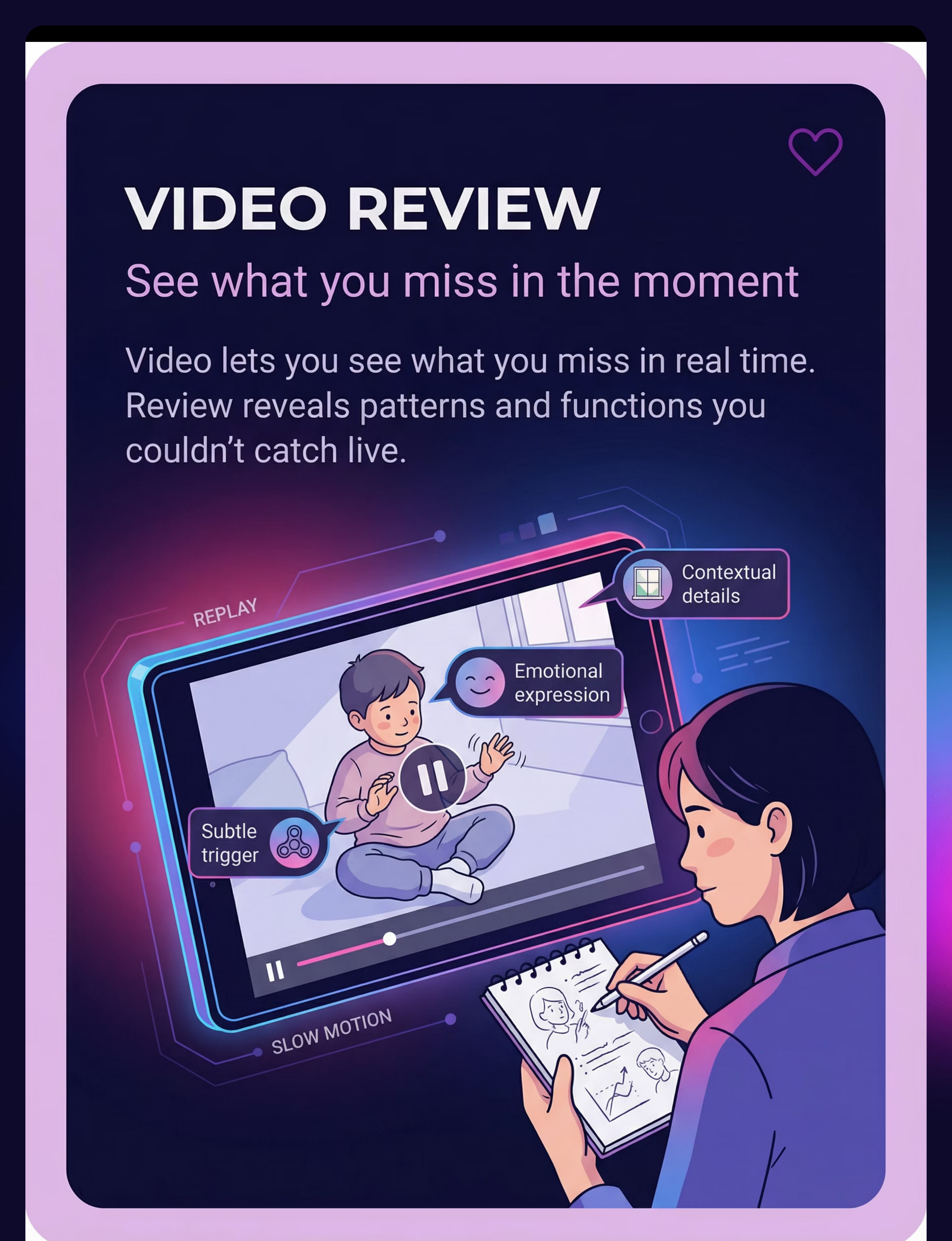
📱 Video Review — See What You Miss in the Moment
Using your smartphone to capture brief, natural videos of stimming episodes, then reviewing them with a structured question guide to identify patterns, triggers, and functions that are invisible in real-time observation. When you observe your own child stimming, you are simultaneously managing your emotional response, the environment, and your interpretation — all at once. Video removes the time pressure.
Step 5 — REINFORCE & CELEBRATE: After reviewing a video with insight — write down one new thing you learned. Share it with your spouse or therapist. This is progress. Celebrate it.
Capture
2–5 minute clips. Natural behavior. Don't stage it. Slow-motion mode recommended.
Review — Emotional Pass
Watch once without notes. Let yourself simply observe before analyzing.
Review — Analytical Pass
Pause every 15–20 seconds. Ask: What is the stim doing physically? What happened 2 minutes before? What is the child's face communicating? What happened to the stim over time? What ended it? Which function category fits best?
Share
Send relevant clips to your OT or BCBA for professional interpretation.
Privacy Note: Keep videos private. Secure storage. Do not share publicly. Use only for understanding and therapeutic purposes. Child's dignity is paramount.
"Slow-motion review and repeated watching reveal what real-time observation always misses. The answer is in the frame you skipped." | Price range: ₹0 (any smartphone)
Material 6 of 9
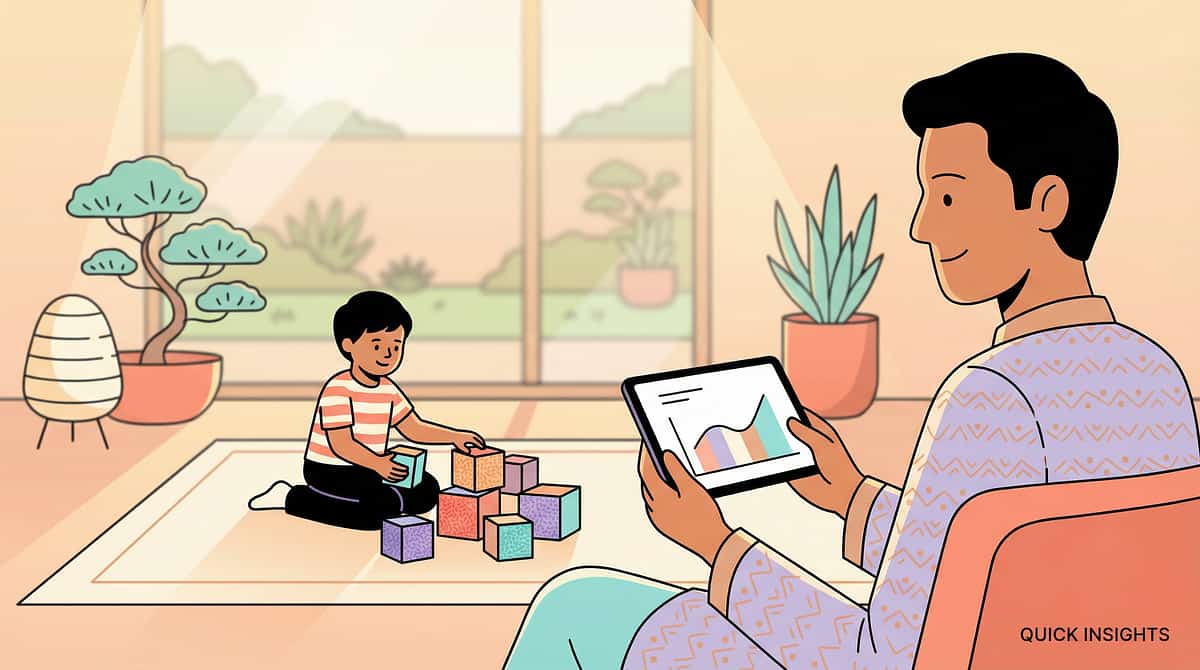
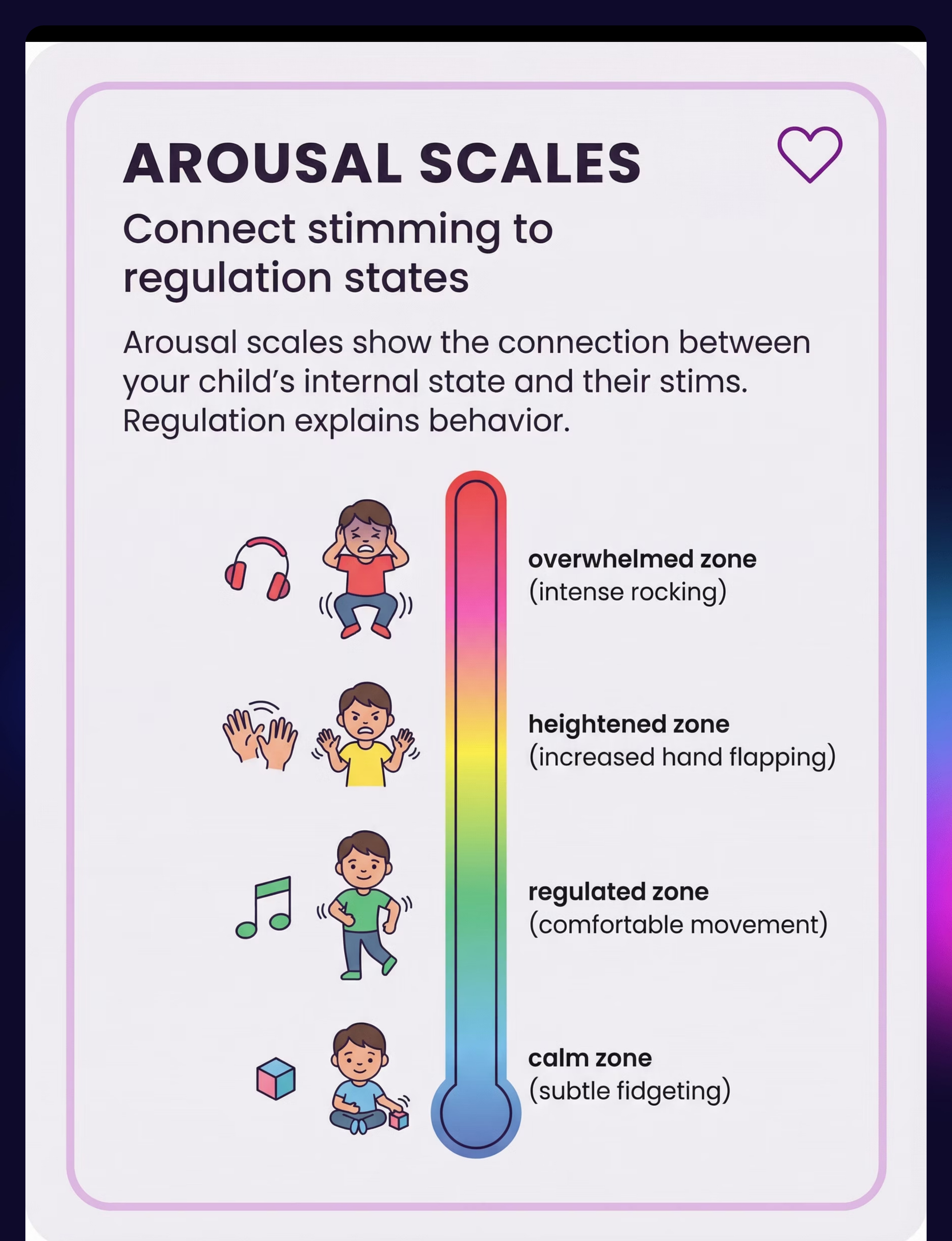
📊 Arousal Scales — Connect Stimming to Regulation States
Visual tools (Zones of Regulation, simple arousal scales, or parent-made equivalents) that map your child's internal nervous system state — from under-aroused to overwhelmed — and connect each arousal level to the stims that appear within it.
Zone | State | Typical Stims | What the Nervous System Needs | |
🔴 | OVERWHELMED — Flooded, shutdown, or explosive | Intense rocking, self-biting, head-banging, loud vocal stims | Immediate sensory calm: quiet, dim, deep pressure | |
🟡 | HEIGHTENED — Anxious, revved, difficult to settle | Rapid hand flapping, fast spinning, increased vocal stims | Proprioceptive input: heavy work, joint compression | |
🟢 | REGULATED — Alert, engaged, learning-ready | Subtle rocking, quiet humming, light fidgeting | Maintain — this is the optimal state | |
🔵 | UNDER-AROUSED — Disconnected, sluggish, "zoned out" | Repetitive object manipulation, light finger flicking | Alerting input: movement, vestibular, rhythmic activity |
Over 2 weeks of observation, note which stims appear in which zone. Your map will become uniquely predictive: "When she starts rocking rhythmically (vs. intensely), we're in green — I don't intervene. When the rocking becomes rapid and she's covering her ears, we're moving into red."
"Stimming tracks arousal. Understanding the nervous system state reveals the stim's purpose — and tells you exactly what the child needs from you."

Material 7 of 9
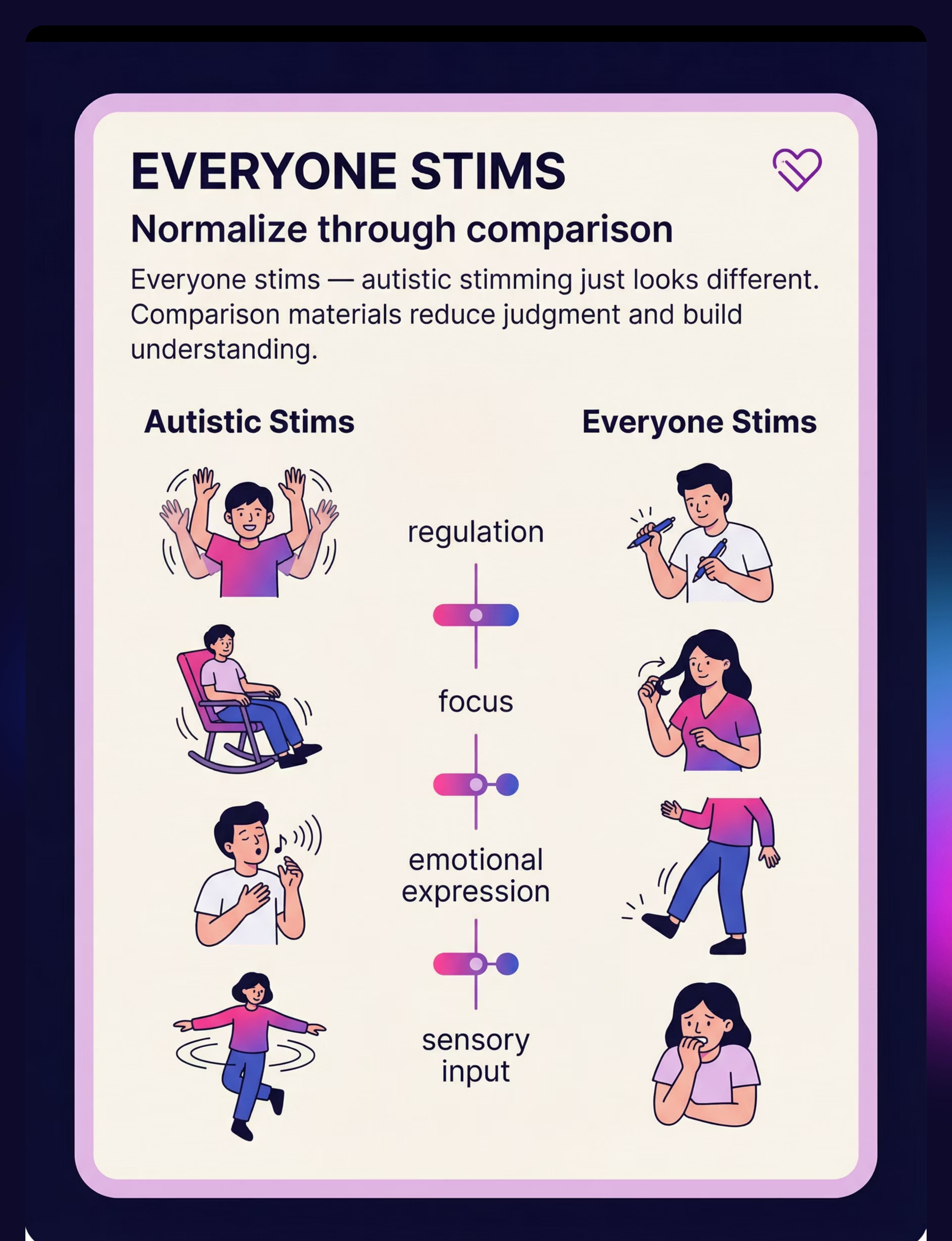
🔄 Everyone Stims — Normalize Through Comparison
Visual comparison charts that place autistic stimming alongside neurotypical self-regulatory behaviors — showing that all humans stim; autistic stimming simply looks more visible and serves a more essential function. Same function. Different visibility.
Autistic Stim | Shared Function | Neurotypical Equivalent | |
Hand flapping | Emotional expression | Clapping, jumping up and down when excited | |
Rocking | Vestibular regulation | Rocking chair, swaying when listening to music | |
Humming | Auditory self-soothing | Humming while working, earphones in always | |
Finger flicking | Visual stimulation | Pen clicking, tapping fingers | |
Spinning | Vestibular seeking | Spinning in a chair, pacing | |
Lining up objects | Pattern-seeking / order | Organizing desk perfectly before work | |
Echolalia | Auditory processing | Repeating phrases to remember them |
With Extended Family
Show the comparison chart. Ask: "What do YOU do when you're anxious? Stressed? Overwhelmed?" Watch the conversation shift.
With Teachers
"Every child in your class stims. My child's version looks different — here's why it serves the same purpose."
"When extended family realizes they stim too, judgment dissolves and acceptance begins. One chart can transform a family gathering."
Troubleshooting
The Reality Card. Most Understanding Doesn't Come Immediately.
❓ "I observe but I can't figure out the function"
Normal. Function identification takes 2–4 weeks of consistent tracking. Don't conclude after 3 days. Look for patterns across 10+ episodes. Consult your OT with your tracking data.
❓ "My child's stims change constantly"
Focus on the top 1–2 most frequent stims first. Changing stims often indicate changing regulation needs (common during school transitions, illness, seasonal change). Document the change itself as data.
❓ "My spouse thinks I'm overcomplicating it"
Share the neuroscience card and the comparison chart. You're not overcomplicating — you're building a foundation that prevents the behavioral escalation that comes from stim suppression.
❓ "My child's teacher says the stimming needs to stop"
Request an IEP meeting. Request OT consultation from the school. Share this page with the school's special education coordinator. Call our advocacy line: 9100 181 181
❓ "I feel guilty that I spent years trying to stop the stimming"
That guilt is love. You were doing what you were told, with the best information you had at the time. Understanding evolves. You are here now. That is what matters.
❓ "The stim is dangerous — the materials don't help enough"
If a stim causes physical harm: Contact your Pinnacle OT immediately. 9100 181 181. A functional behavior assessment by a BCBA is the correct next step — not suppression, but assessment and safer alternatives.
"Session abandonment is not failure — it is data. No observation session should leave you more confused than when you started. If it does, the data is telling you to ask for professional help."

Material 8 of 9
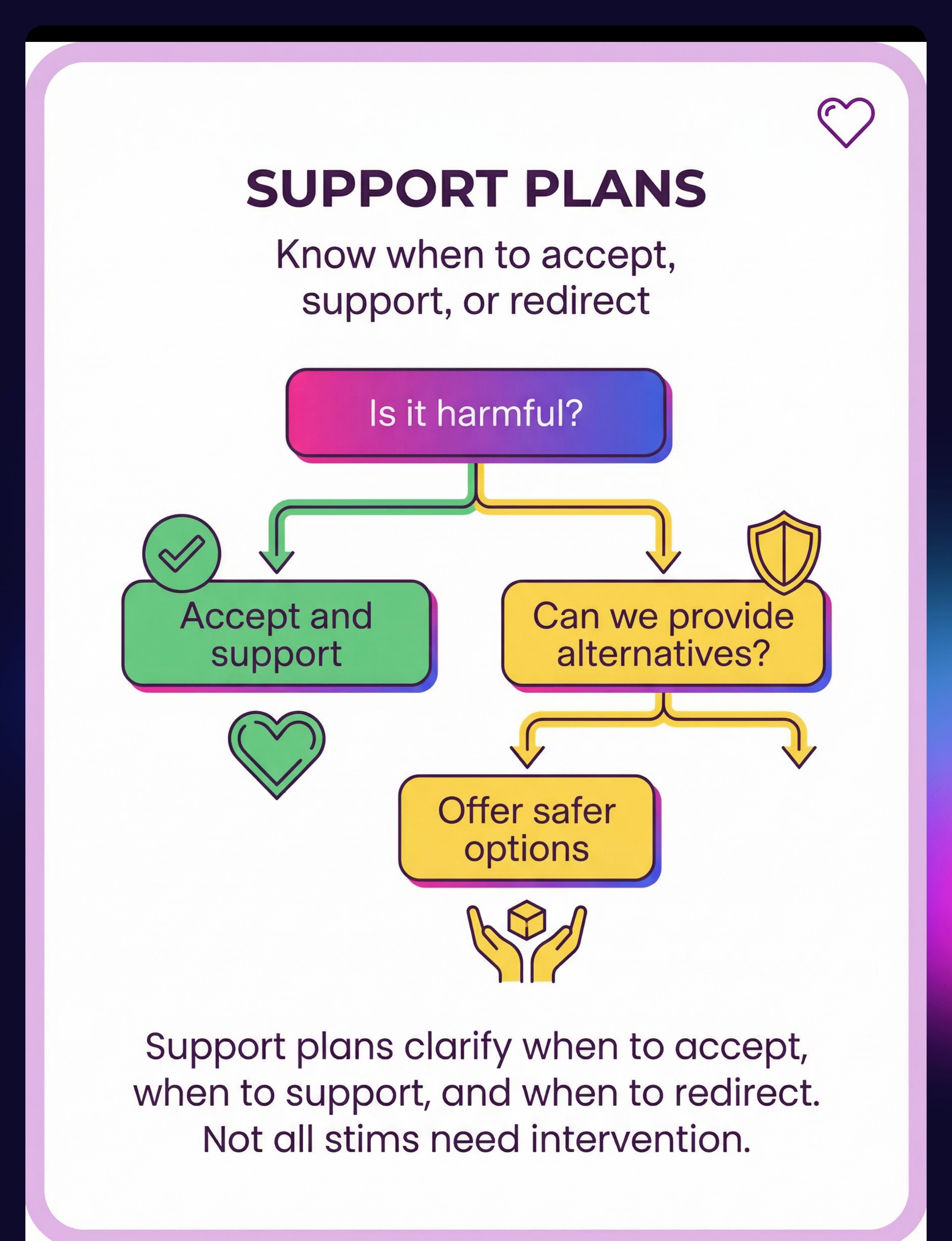
📋 Support Plans — Know When to Accept, Support, or Redirect
A written, shared document — developed ideally with OT + BCBA input — that classifies each of your child's stims by response category and guides all caregivers on the consistent, function-based approach to each.
Stim Category | Response | Rationale | Example | |
Harmless, regulatory, essential | ACCEPT | Do not interrupt. Create space. | Rocking, humming quietly | |
Functional but context-specific | SUPPORT | Provide designated space/time | Spinning in stim corner | |
Similar function, safer execution needed | OFFER ALTERNATIVE | Provide safer equivalent | Redirect head-banging to cushion | |
Harm, health, or essential interference | PROFESSIONAL REVIEW | Contact OT/BCBA | Self-injury, PICA |
Critical Principle: Most stims → ACCEPT. Fewer → SUPPORT. Fewer still → OFFER ALTERNATIVE. Very few → PROFESSIONAL REVIEW. To develop a stim support plan with a Pinnacle BCBA: 9100 181 181 | Free initial guidance

Act IV — Progress Arc
Week 1–2: You Are Building a New Lens.
Foundation Phase — 15%
What You May See | What This Means | |
You catch yourself about to stop a stim — then pause | Your new awareness is activating | |
You notice the stim has a predictable trigger | Pattern recognition beginning | |
Your child seems calmer when you don't interrupt | Reduced suppression = reduced anxiety | |
Your tracking sheet has 5–10 entries | You are doing clinical-grade observation | |
You feel uncertain about function hypotheses | Normal — 2 weeks is not enough data yet |
What is NOT progress yet — don't look for these: Your child stopping their own stims | Stim frequency dramatically decreasing | Complete understanding of all stim functions | Family alignment on the new approach
Week 1–2 is the hardest — because the old reflex (to stop the stim) is strong and the new reflex (to observe with curiosity) is not yet automatic. Be patient with yourself. The reflex change comes with repetition.
"If your child stimmed freely for 3 minutes longer than last week without interruption — that's real, measurable progress. Not for them. For you."

Progress
Week 3–4: The Patterns Are Becoming Visible.
Consolidation Phase — 40%
You can predict which stim will appear before a transition
Antecedent-behavior pattern is now encoded in your awareness — this is clinical-level observation skill.
You describe a stim to your OT with context, not just label
You now bring antecedents, duration, emotional state, and a function hypothesis to every conversation.
Your child seems to seek you out after stimming
Trust is forming — stims no longer bring interruption, so the child no longer hides them from you.
Your tracking sheet shows a pattern of function hypotheses
Functional understanding is emerging from data, not guesswork.
If your tracking is consistent and function hypotheses are clear for 2+ stims — add Material 9 (Environment Design). You are ready to build a stim-friendly space.
"You may notice that you feel more confident — not just in understanding stimming, but in understanding your child. This is the ripple effect of functional understanding."

Progress
Week 5–8: You Have Learned Your Child's Language.
Mastery Phase 🏆 — 75%
You can identify the function of your child's top 3 stims with 80%+ accuracy (confirmed by OT)
You have a written support plan shared with all caregivers
You have modified at least one aspect of your home environment to support stimming
You respond to a new stim with curiosity rather than alarm
Your child's anxiety-related behaviors have decreased — fewer meltdowns triggered by stim interruption
You can explain stimming to a family member or teacher with confidence
Mastery Unlocked — What Comes Next: Material 9 (Environment Design) | D-362: Sensory Regulation — the next technique in this series | Book an OT session to develop a formal sensory diet using your tracking data
You Did This.
In 5–8 weeks, you transformed the most fundamental aspect of how you understand your child.
You traded the reflex to stop
for the skill to understand
You traded judgment
for curiosity
You traded fear
for knowledge
Your child's stims haven't changed. But everything around them has — because you changed.
🎉Family Milestone: Take a photo of your completed tracking sheet. Frame it. This is the evidence of 8 weeks of intentional parenting. This is clinical data produced in your home, without a clinic.
Journal Prompt: Write one sentence about who you were at Card 01 (the parent who reached to stop the hand flapping) and who you are now. This is the story worth telling.
Journal Prompt: Write one sentence about who you were at Card 01 (the parent who reached to stop the hand flapping) and who you are now. This is the story worth telling.
📞 Want to share your progress with a Pinnacle therapist or get next steps? 9100 181 181 | We celebrate with you.
⚠️ Red Flags
Trust Your Instincts. If Something Feels Wrong — Pause and Ask.
🚨 Flag 1: Physical Self-Injury During Stimming
What it looks like: Stim results in bleeding, bruising, or repeated tissue damage. Why it matters: The sensory need is intense enough to require clinical-grade alternatives. What to do: Contact Pinnacle immediately. BCBA functional assessment is required. 9100 181 181
🚨 Flag 2: Sudden, Dramatic Change in Stimming Pattern
What it looks like: New stims appearing rapidly, existing stims intensifying without environmental explanation. Why it matters: May indicate underlying medical change or regression marker. What to do: Medical evaluation + teleconsultation with NeuroDev Pediatrician. 9100 181 181
🚨 Flag 3: Stimming Preventing Sleep or Eating
What it looks like: Child cannot transition from stimming to sleep for 3+ hours; stimming during meals prevents adequate nutrition consistently. What to do: OT sensory diet consultation + BCBA schedule support. 9100 181 181
🚨 Flag 4: Increased Meltdowns Despite Understanding Approach
What it looks like: Understanding and accepting stims has not reduced meltdown frequency after 8 weeks. May indicate unaddressed sensory need or environmental factor. What to do: Book formal sensory assessment at nearest Pinnacle center. 9100 181 181
🚨 Flag 5: Ingestion of Non-Food Materials (PICA)
What it looks like: Child repeatedly eating, mouthing, or swallowing non-food items as part of stimming. PICA carries medical risk (toxicity, obstruction). What to do: Medical evaluation FIRST. Then OT for oral sensory alternatives. 9100 181 181
Act IV — Pathway
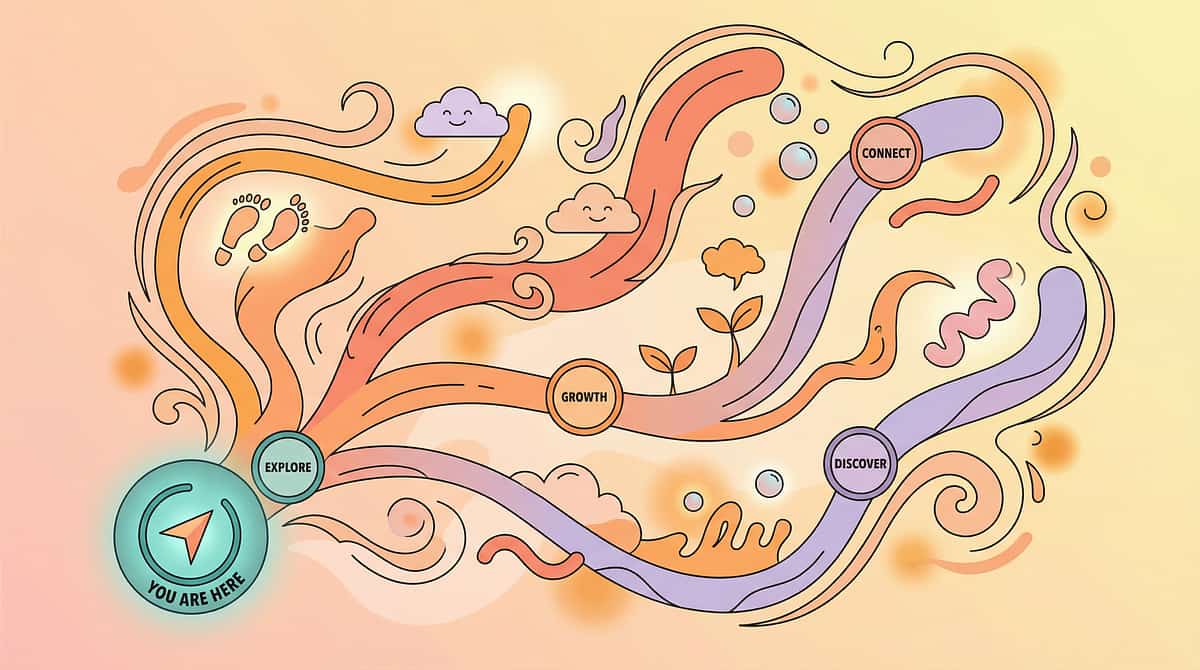
D-361 Is One Step on a Larger Journey.
D-359
Consistent Responses — establishing predictable caregiver behavior (prerequisite)
D-360
Transition Preparation — reducing transition-triggered stimming through predictability (prerequisite)
D-361 ← YOU ARE HERE
Understanding Stimming — the foundational understanding that makes all subsequent sensory intervention effective
D-362
Sensory Regulation — active regulation strategies for children with clear sensory profiles (next)
D-363+
Environmental Modifications — full stim-friendly transformation (next+1)
Long-Term Goal This Feeds Into: Complete Sensory Self-Regulation → Reduced Environmental Barriers → School Readiness → Social-Communication Foundation → Independent Regulatory Competence
Path | Technique | For Children Who... | |
Primary Next | D-362: Sensory Regulation | Have clear sensory profiles; ready for active regulation strategies | |
Lateral | D-365: Visual Stimming | Primary stims are visual (finger flicking, spinning objects) | |
Lateral | D-366: Vocal Stimming | Primary stims are vocal (humming, echolalia, making sounds) |
Related Techniques
Stimming & Repetitive Behaviors — The Full Domain
Technique | Code | Difficulty | Materials You Own | |
9 Materials for Visual Stimming | D-365 | 🟡 Core | Sensory profile (Material 3) ✅ | |
9 Materials for Vocal Stimming | D-366 | 🟡 Core | Tracking sheets (Material 1) ✅ | |
9 Materials When Stimming Causes Harm | D-368 | 🔴 Advanced | Support plan (Material 8) ✅ | |
9 Materials When Stimming Blocks Learning | D-369 | 🔴 Advanced | Arousal scales (Material 6) ✅ | |
9 Materials for Stress-Increased Stimming | D-380 | 🔴 Advanced | Comparison charts (Material 7) ✅ | |
Sensory Regulation | D-362 | 🟡 Core | All 9 materials ✅ |
"You Already Own Materials for These": Every technique above uses at least 3 materials you've already gathered in D-361. Your investment in understanding grows exponentially.
Material 9 of 9
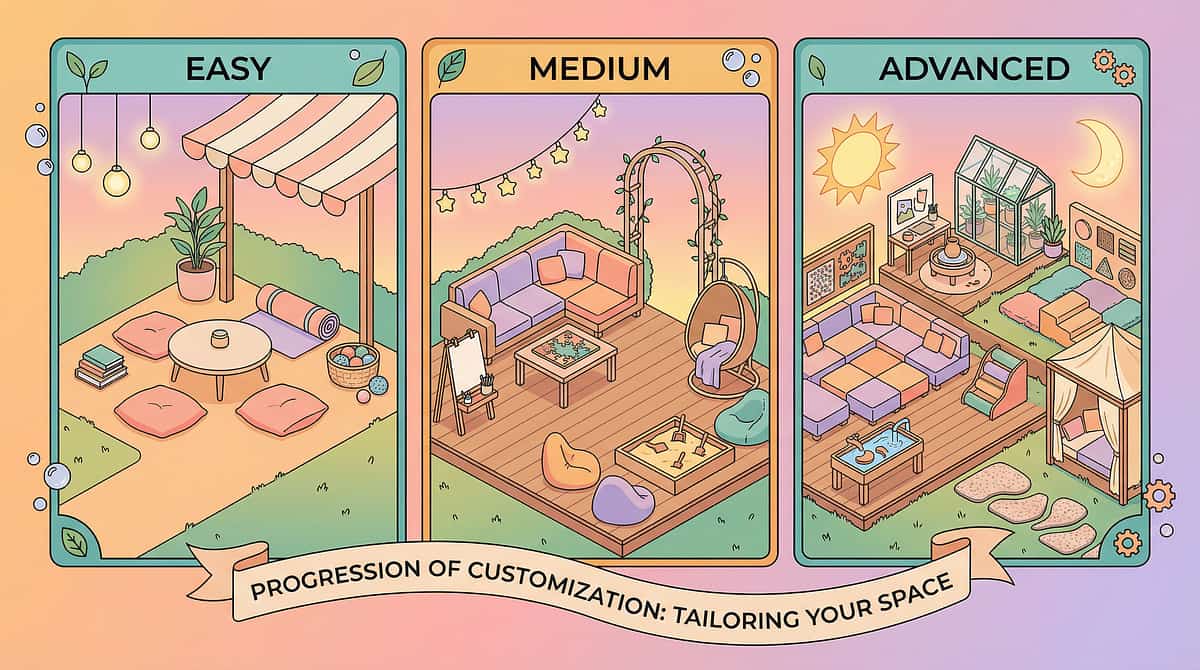
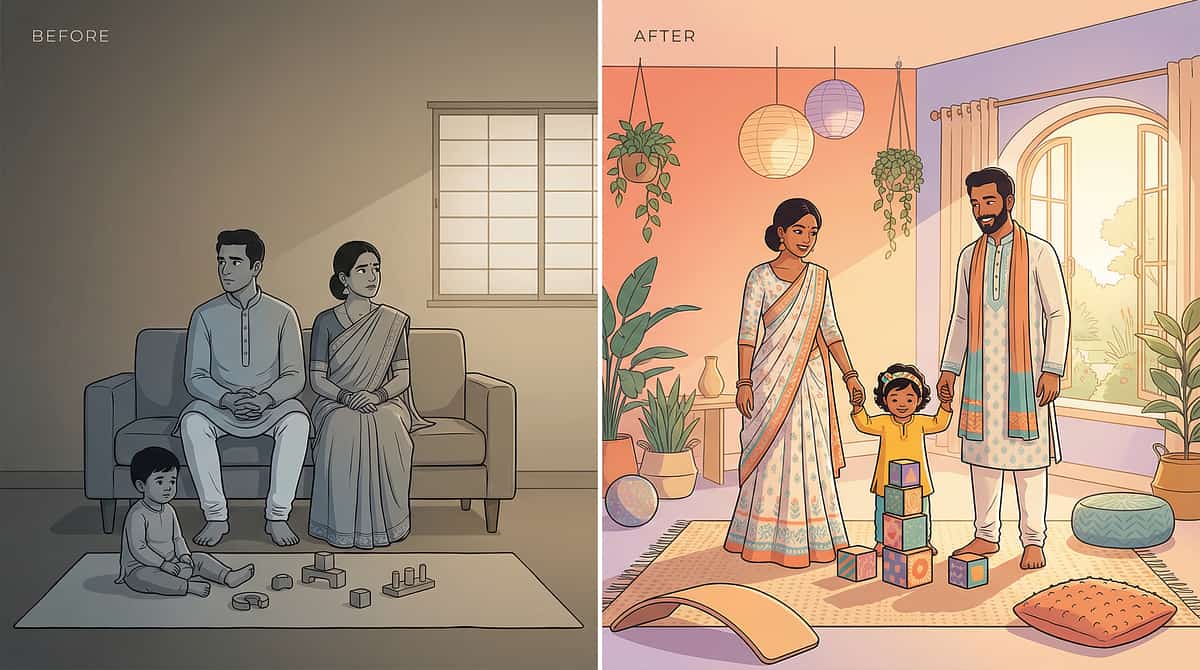
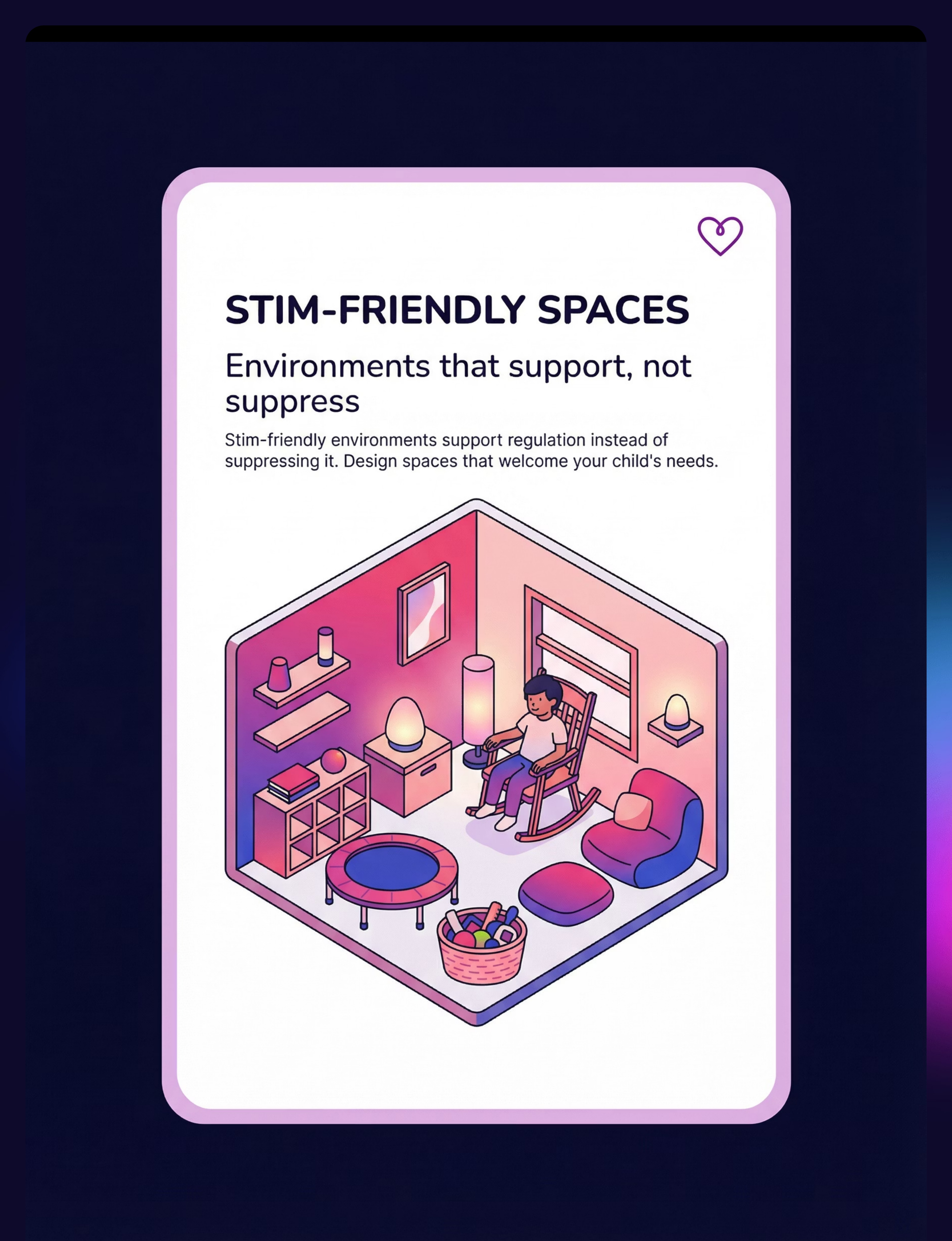
🏠 Stim-Friendly Spaces — Environments That Support, Not Suppress
Design guides and checklists for transforming one room (or one corner) of your home into an environment that actively accommodates and supports stimming — reducing environmental triggers while enabling free regulatory behavior.
Sensory Corner Essentials
- One comfortable floor cushion or bean bag
- One movement option: rocking chair, mini trampoline, or indoor swing
- Two fidget items accessible at child's height
- Adjustable/dimmable lighting (remove harsh fluorescents)
- Quiet zone — reduce unpredictable sounds
- One comfort object (Soft Animal Toy ₹425)
Whole-Home Modifications
- Fidgets available in every room (not just the sensory corner)
- Remove visual clutter from main living areas
- Designate stim-appropriate spaces: "You can rock here. You can hum here."
- Create outdoor access for jumping, spinning, and running
"Change the environment, not the child. Stim-friendly spaces communicate one message to your child: 'You are welcome here. Exactly as you are.'"
Act V — Community
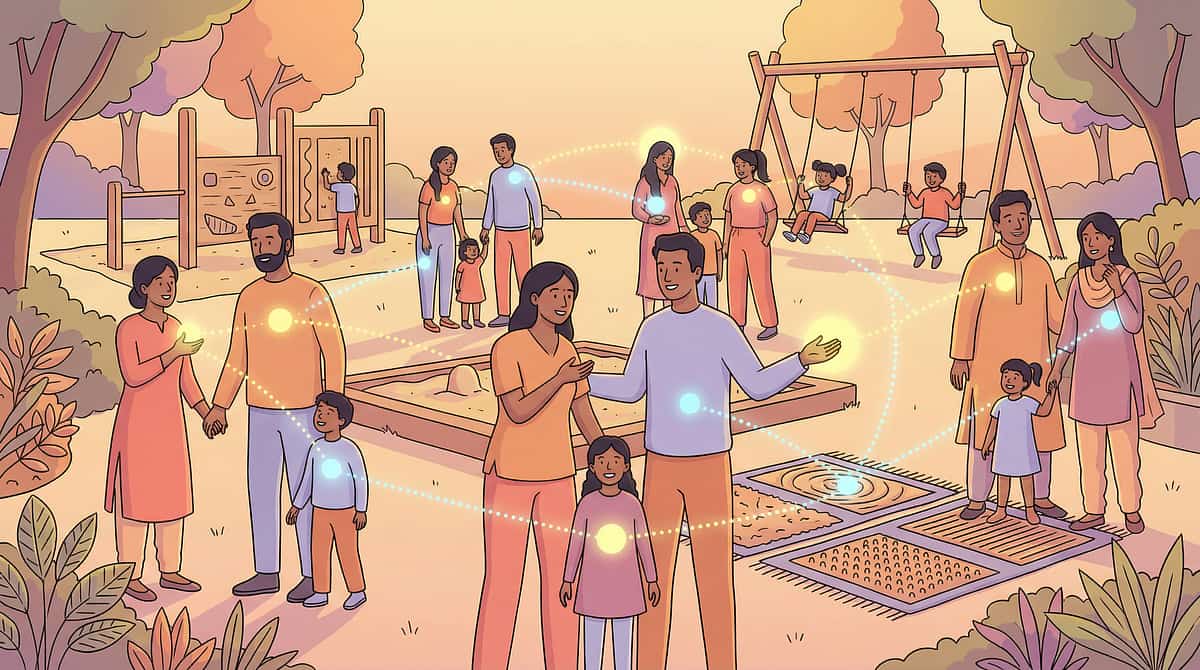
You Are Not the First. You Will Not Be the Last. But You Can Be Next.
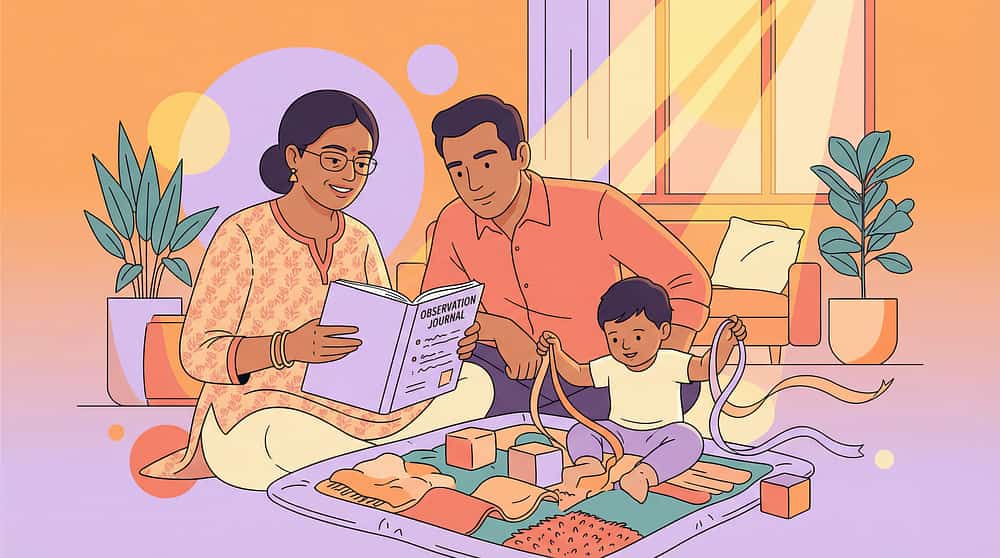
Arjun's Family — Hyderabad
Before: "I was stopping Arjun's hand flapping 30–40 times per day. He was becoming more explosive, more anxious, less connected to me."
Turning point: An OT introduced the tracking sheet. "She asked me: What is Arjun doing right before he flaps? I realized I had no idea."
After (Week 8): "I now know that Arjun flaps when he's happy and when he's overwhelmed — but the flapping looks different. Happy flapping is loose and bouncy. Overwhelmed flapping is tight and fast. I can tell before he can tell me." — Illustrative; experiences vary
Turning point: An OT introduced the tracking sheet. "She asked me: What is Arjun doing right before he flaps? I realized I had no idea."
After (Week 8): "I now know that Arjun flaps when he's happy and when he's overwhelmed — but the flapping looks different. Happy flapping is loose and bouncy. Overwhelmed flapping is tight and fast. I can tell before he can tell me." — Illustrative; experiences vary

Priya's Family — Chennai
Before: "My mother-in-law called Priya's rocking 'laziness' and would physically hold her still. Priya would melt down every time she visited."
Turning point: Shared the comparison chart with the extended family. "My mother-in-law realized she rocks her own feet when she's anxious. That one moment of recognition changed 3 years of conflict."
After: "Now my mother-in-law calls it Priya's 'thinking rock.' Priya is calmer at family events than she has ever been." — Illustrative; experiences vary
Turning point: Shared the comparison chart with the extended family. "My mother-in-law realized she rocks her own feet when she's anxious. That one moment of recognition changed 3 years of conflict."
After: "Now my mother-in-law calls it Priya's 'thinking rock.' Priya is calmer at family events than she has ever been." — Illustrative; experiences vary
"This family's transformation is typical when parents shift from behavioral management to functional understanding. The parent becomes the child's best interpreter — more effective than any formal assessment." — Pinnacle OT, Domain D Specialist
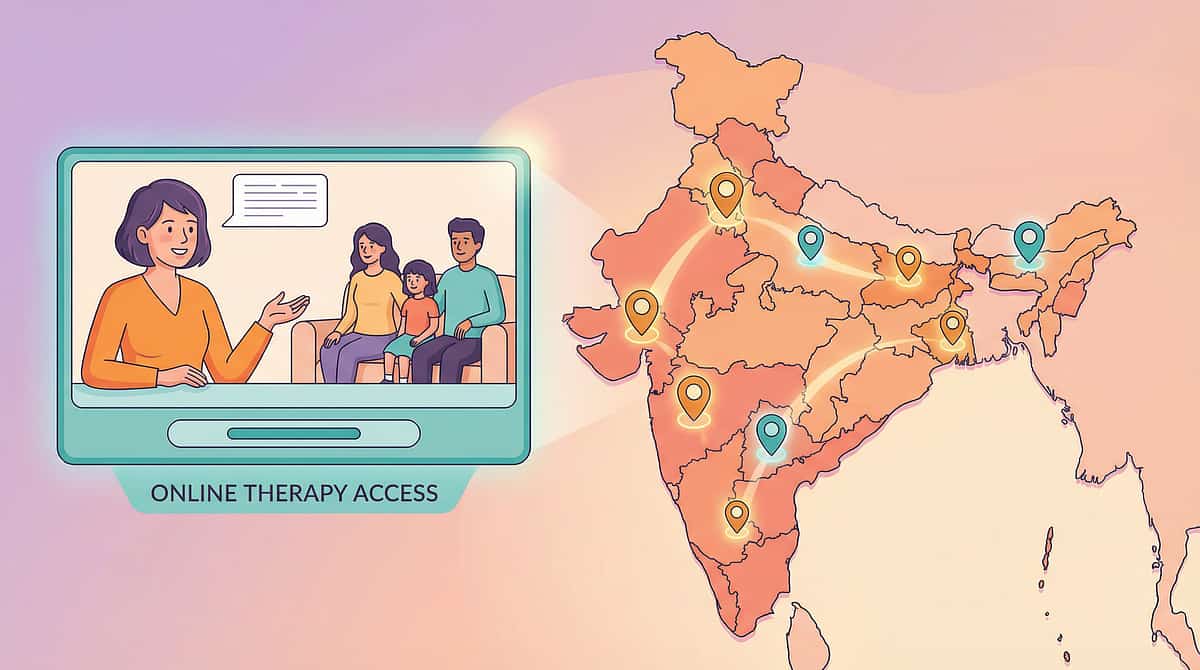
Your Experience Helps Others. Others' Experience Helps You.
Pinnacle Parents WhatsApp Community
800+ parents currently navigating stimming questions. Share your tracking data. Ask questions. Get real answers from parents who have been exactly where you are. Join: pinnacleblooms.org/community
Online Community Forum
Pinnacle Knowledge Community — Domain D: Stimming & Repetitive Behaviors. Ask questions, read threads, and access the full D-domain archive.
Local Pinnacle Parent Meetups
Monthly in-person gatherings at all 70+ Pinnacle centers. Ask at your nearest center. Find your center: pinnacleblooms.org/centers
Peer Mentoring Programme
Connect 1:1 with an experienced Pinnacle parent who navigated stimming understanding 12–18 months ahead of you. Request a mentor: 9100 181 181
"Isolation is the enemy of adherence. Every parent in this community was once where you are. Now they're part of the answer. Join them."
📞9100 181 181 | FREE | 16+ languages | 24×7 | to connect with any community resource
Professional Support
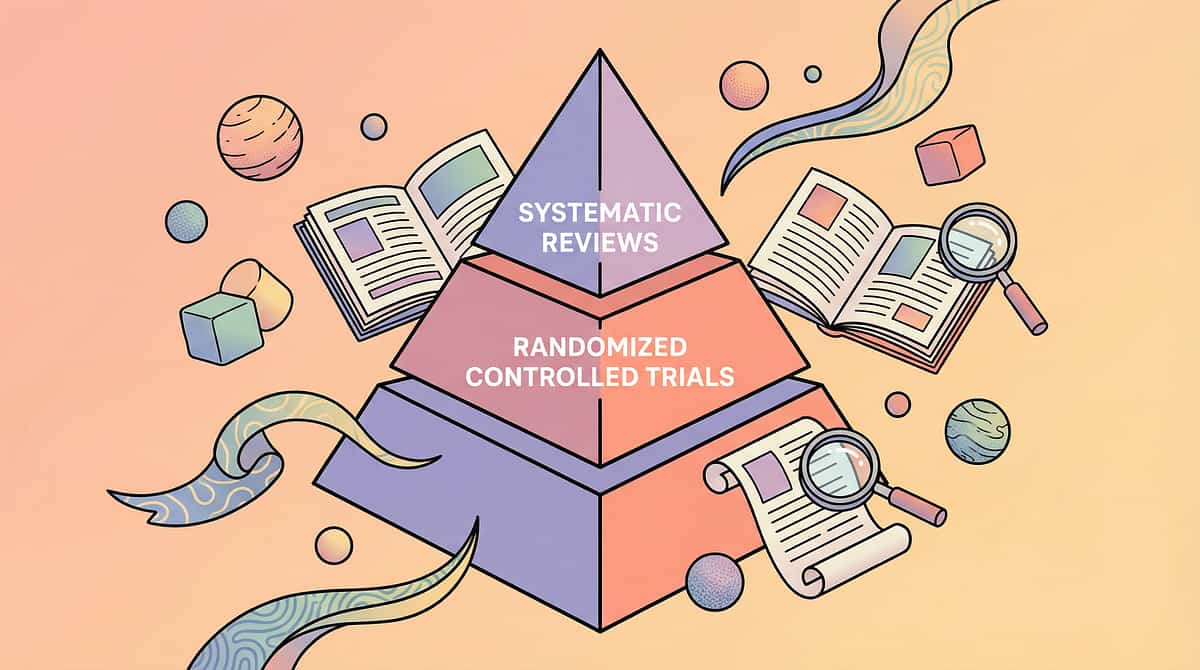
Home + Clinic = Maximum Impact. You Don't Have to Do This Alone.
Find nearest center → pinnacleblooms.org/centers | 70+ centers across India
Your Need | Pinnacle Specialist | How to Connect | |
Sensory profile assessment | Occupational Therapist | ||
Functional assessment of specific stim | BCBA / ABA Therapist | ||
Medical review of stim pattern change | NeuroDev Pediatrician | ||
School advocacy and IEP support | Special Educator | ||
Vocal stim and communication integration | Speech-Language Pathologist |
Teleconsultation for Remote Families: Can't reach a center? Our network includes teleconsultation options in 16+ languages. 📞9100 181 181 | Book online: pinnacleblooms.org/teleconsult
"Home-based intervention works best when backed by professional guidance. The understanding you've built on this page is the foundation. Our 70+ centers are the structure above it."
Research Library
Deeper Reading for the Curious Parent.
# | Study | Finding | Evidence Level | Link | |
1 | PRISMA Systematic Review (2024) | 16 studies confirm sensory integration as EBP for ASD | Level I | ||
2 | Meta-analysis — World J Clin Cases (2024) | SI therapy promotes social skills, adaptive behavior, motor skills across 24 RCTs | Level I | ||
3 | Padmanabha et al., Indian J Pediatr (2019) | Home-based sensory interventions produce significant outcomes in Indian pediatric population | Level II | ||
4 | Frontiers in Integrative Neuroscience (2020) | Neurological framework for SI treatment in ASD | Level II | ||
5 | NCAEP Evidence-Based Practices (2020) | Video modeling and behavioral understanding classified as EBP for autism | Level I | ||
6 | WHO Nurturing Care Framework (2018) | Responsive caregiving = primary determinant of early developmental outcomes | International Policy |
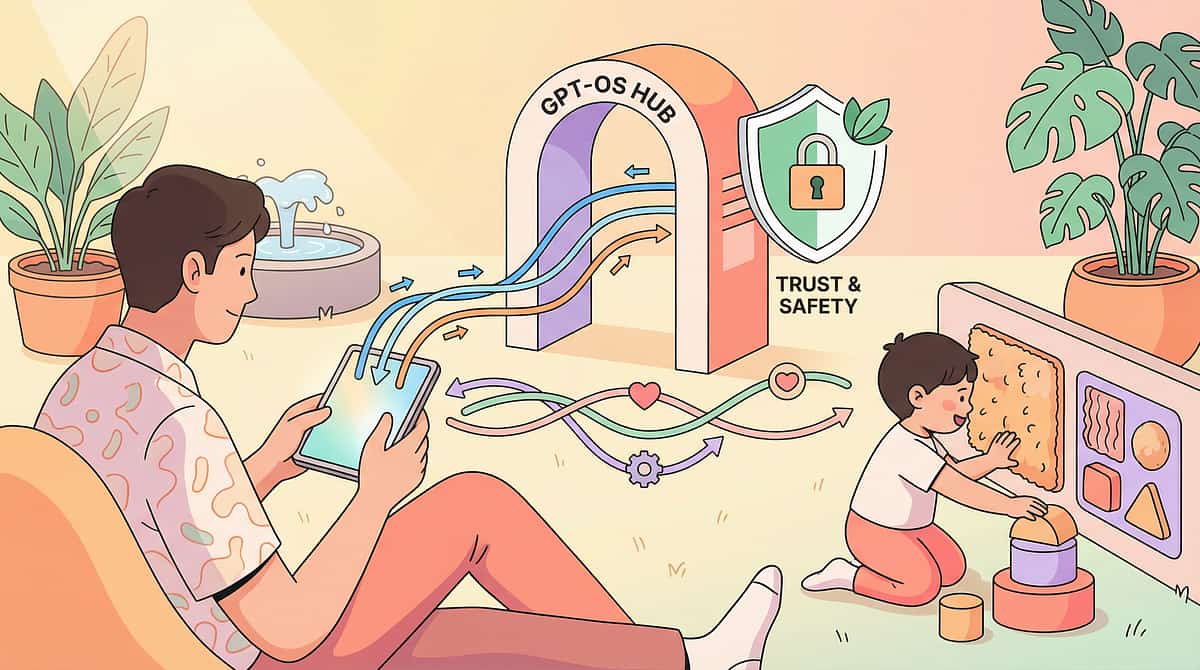
GPT-OS®
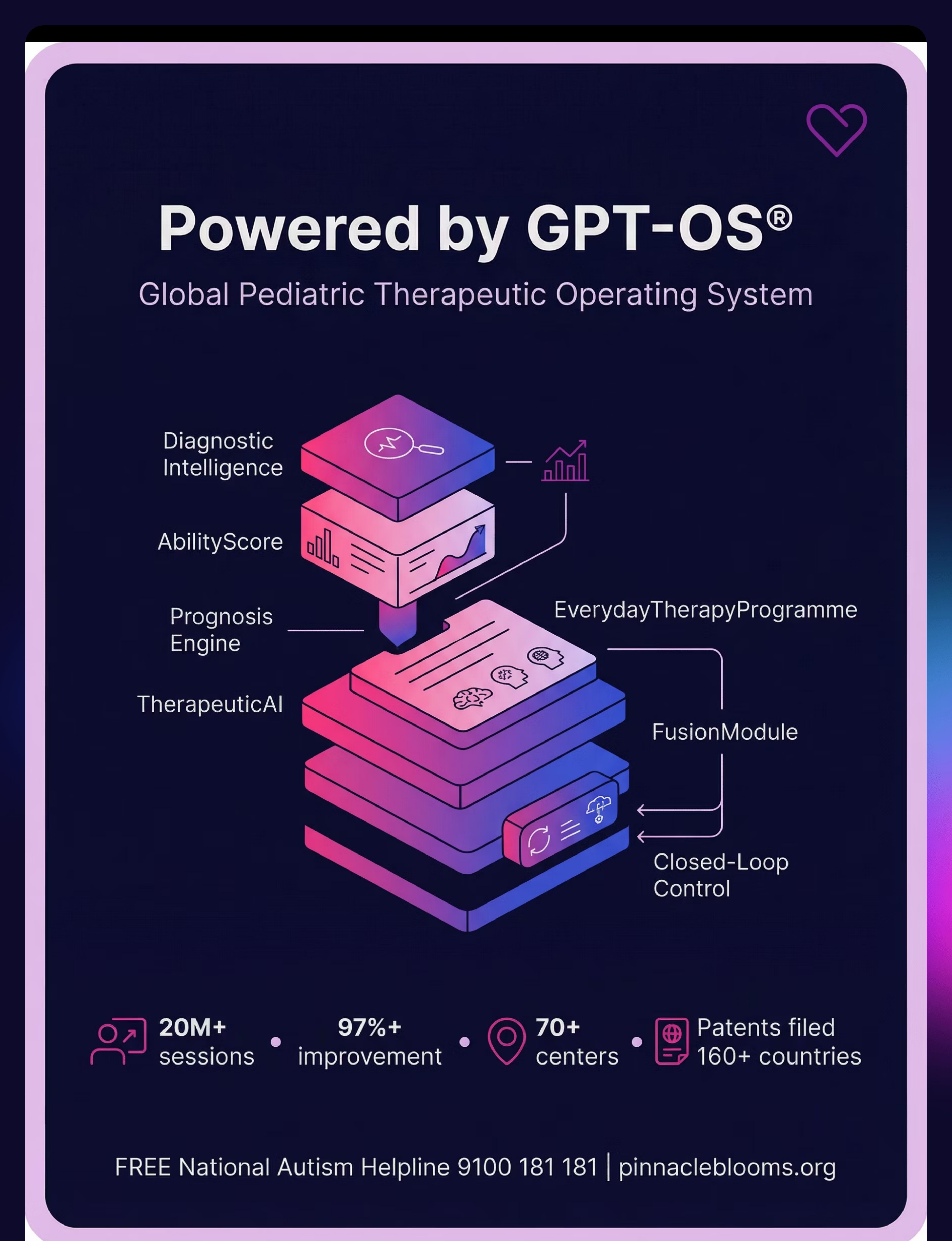
Powered by GPT-OS® — Global Pediatric Therapeutic Operating System
What GPT-OS® Learns from D-361 Data
Your tracking sheet data (antecedents, stim descriptions, function hypotheses) flows into GPT-OS® and:
- Refines your child's Sensory Regulation Readiness Index
- Updates the Caregiver Understanding Readiness Index
- Adjusts TherapeuticAI® recommendations for next technique selection
- Feeds the population-level model that improves recommendations for all families
The GPT-OS® Stack
- Diagnostic Intelligence Layer — 591+ observations → standardized clarity
- AbilityScore® (0–1000) — Universal developmental baseline
- Prognosis Engine — Trajectory prediction from 20M+ sessions
- TherapeuticAI® + EverydayTherapy Programme™
- FusionModule™ — OT + ABA + SLP + SpEd convergence
- Closed-Loop Control — Observe → Score → Plan → Execute → Re-measure → Adapt
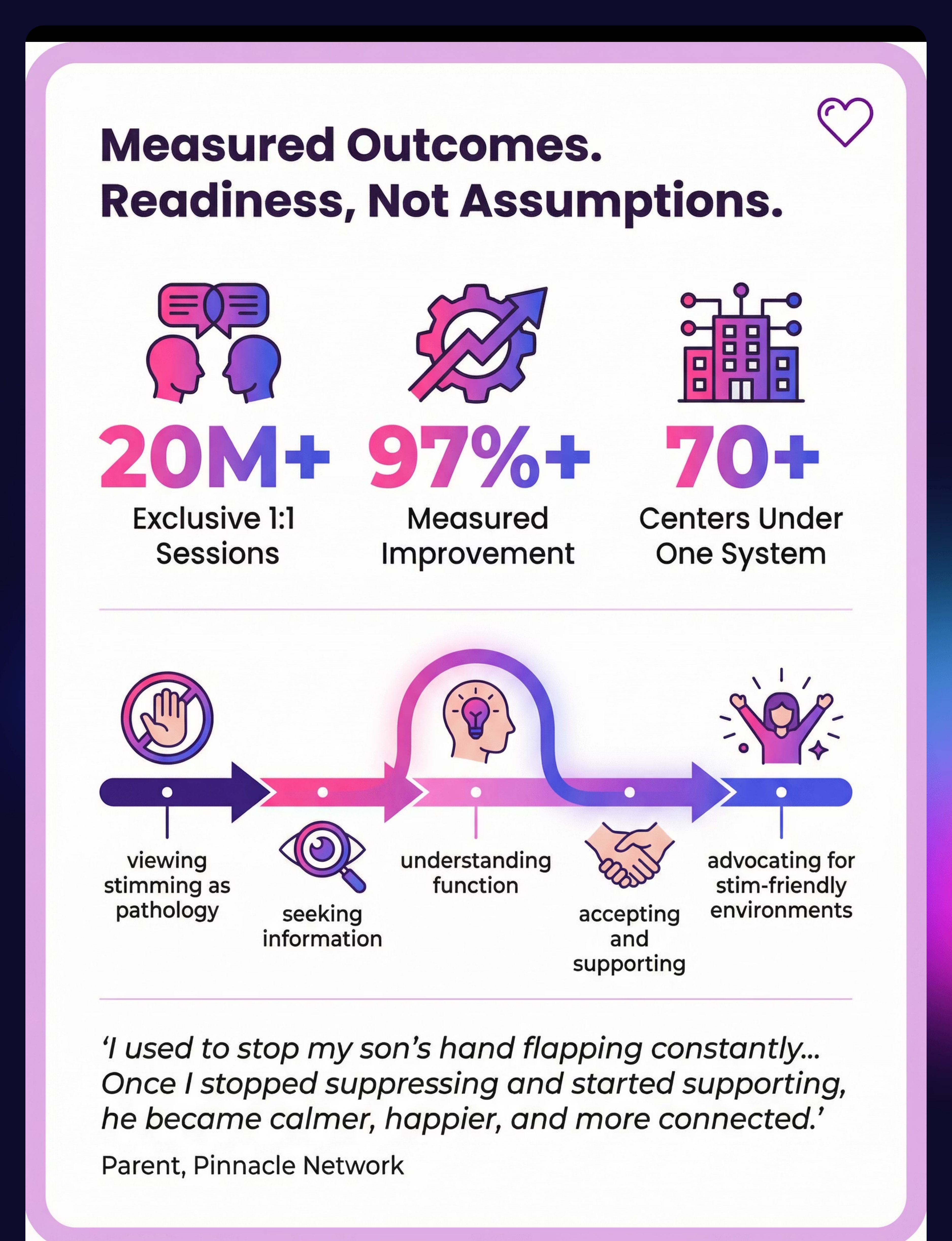
Proof: 20M+ exclusive 1:1 sessions | 97%+ measured improvement | 70+ centers | Patents filed across 160+ countries | Privacy: All data is anonymized, encrypted, and governed by India's PDPB framework + DPIIT compliance standards.

Watch the Reel
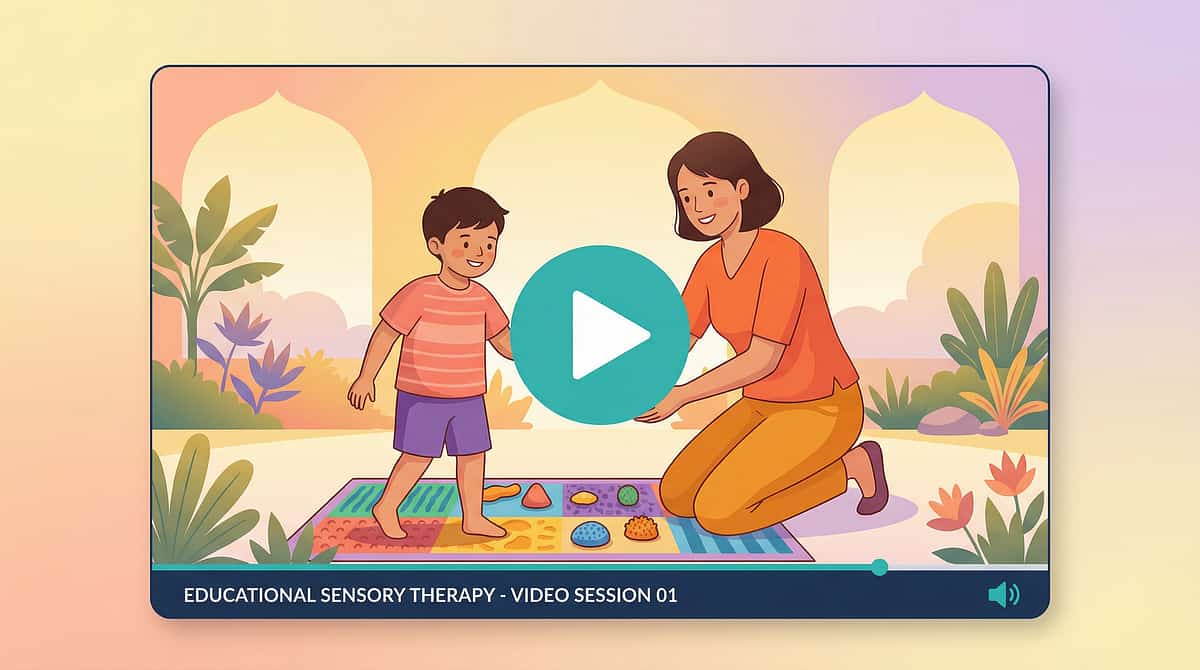
Watch the Original Reel — 9 Materials That Help Understanding Stimming
🎬D-361 | Sensory & Self-Regulation Support — Episode 361 | Series: Stimming and Repetitive Behaviors (D-361 to D-380) | Duration: 75–85 seconds | Domain: D
"In this reel, our consortium OT and BCBA team introduces the 9 materials that transform how parents understand stimming — from behavior to communication, from problem to solution." — Pinnacle Blooms Consortium, Domain D Specialists
This technique page is the deep companion to the D-361 reel. The reel introduced the 9 materials in 85 seconds. This page gives you the science, the protocol, and the complete framework to use them. The reel was the invitation. This page is the knowledge transfer.
D-362
9 Materials That Help With Sensory Regulation
D-365
9 Materials That Help With Visual Stimming
D-366
9 Materials That Help With Vocal Stimming

Share
Consistency Across Caregivers Multiplies Impact.
📱 WhatsApp (Primary)
Share to WhatsApp: "I found something important for understanding [child's name]'s stimming. Worth 10 minutes of reading." → techniques.pinnacleblooms.org/stimming-repetitive-behaviors/understanding-stimming-D-361
📧 Email
Subject: "Understanding Our Child's Stimming — Please Read." Send to spouse, grandparents, extended family, and weekend caregivers.
📄 Family Guide PDF
A simplified 1-page version designed for grandparents, teachers, and weekend caregivers. Plain language. No clinical jargon. Download: pinnacleblooms.org/guides/D-361-family
School / Teacher Communication Template:"[Child's name] uses stimming as a regulatory strategy. Their specific stims and functions are documented in our stim support plan. Please do not interrupt harmless stims. For guidance on classroom accommodation, contact: [therapist name/Pinnacle center]. For school OT consultation: 9100 181 181."

Act VI — FAQ
Questions from Real Parents at Pinnacle Centers Across India.
Q1: Is stimming always a sign of autism?
No. All humans stim (pen clicking, hair twirling, foot tapping). Autistic stimming tends to be more visible, more intense, and more functionally essential. The presence of stimming is not a diagnostic criterion. Consult a NeuroDev Pediatrician for formal assessment. Call 9100 181 181.
Q2: My child's stims are disturbing others in public. What do I do?
Your child's regulatory need takes priority over social comfort. For truly disruptive stims, discretely offer a quieter equivalent — but only if you can provide an equally effective alternative. Never suppress without offering an alternative. Advocate: "My child has a sensory regulation need. This is their way of managing it."
Q3: Will my child always need to stim?
Most autistic individuals stim throughout their lives — and this is healthy. The goal is not to eliminate stimming but to understand it, support it in appropriate contexts, and ensure it never interferes with essential safety or health. Many autistic adults describe their stims as a positive, valued part of their identity.
Q4: Our ABA therapist is trying to reduce my child's stimming. Is this right?
This is a contested area. Contemporary neurodiversity-affirming ABA focuses on functional understanding — only addressing stims that cause genuine harm and providing alternatives rather than eliminating behaviors. Discuss the functional assessment rationale with your BCBA. Call 9100 181 181 for a second opinion.
Q5: How long will the tracking take before I see clear patterns?
Minimum 2 weeks of consistent tracking across multiple contexts. For complex stim profiles, 4–6 weeks gives clearer data. Share your tracking sheets with your OT at week 3 for interim interpretation.
Q6: My child cannot tell me what stimming feels like. How do I know what they need?
The tracking data IS what they're telling you — through behavior, not words. Read autistic adults' descriptions (Material 2) to gain vocabulary for experiences your child may not yet be able to articulate. Their body's behavioral language is consistent across the autistic community.
Q7: Can I share this page with my child's school?
Yes. This page is designed for sharing. Use the tools at Card 38. For formal school advocacy, contact Pinnacle's Special Education team: 9100 181 181.
Q8: Is this content safe for all families, regardless of culture or religion?
Understanding stimming is a universal human right for every child. This page is designed for families across 70+ countries and 16+ languages. The science is universal. The application is always personalized to your child, your family, and your context.
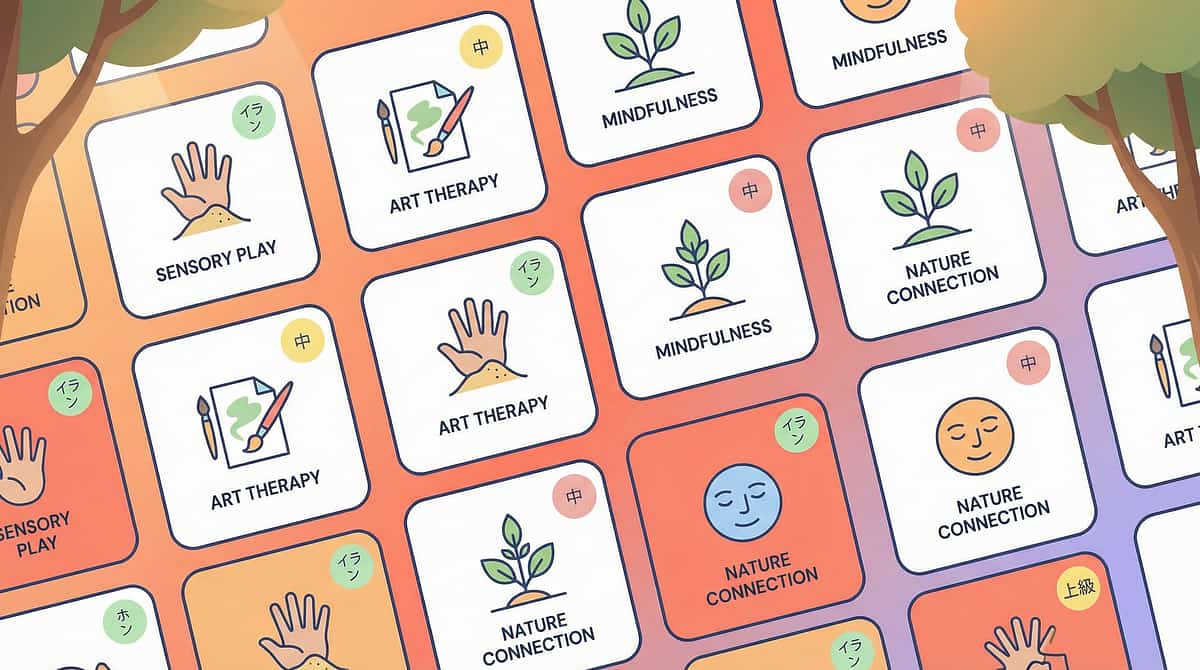
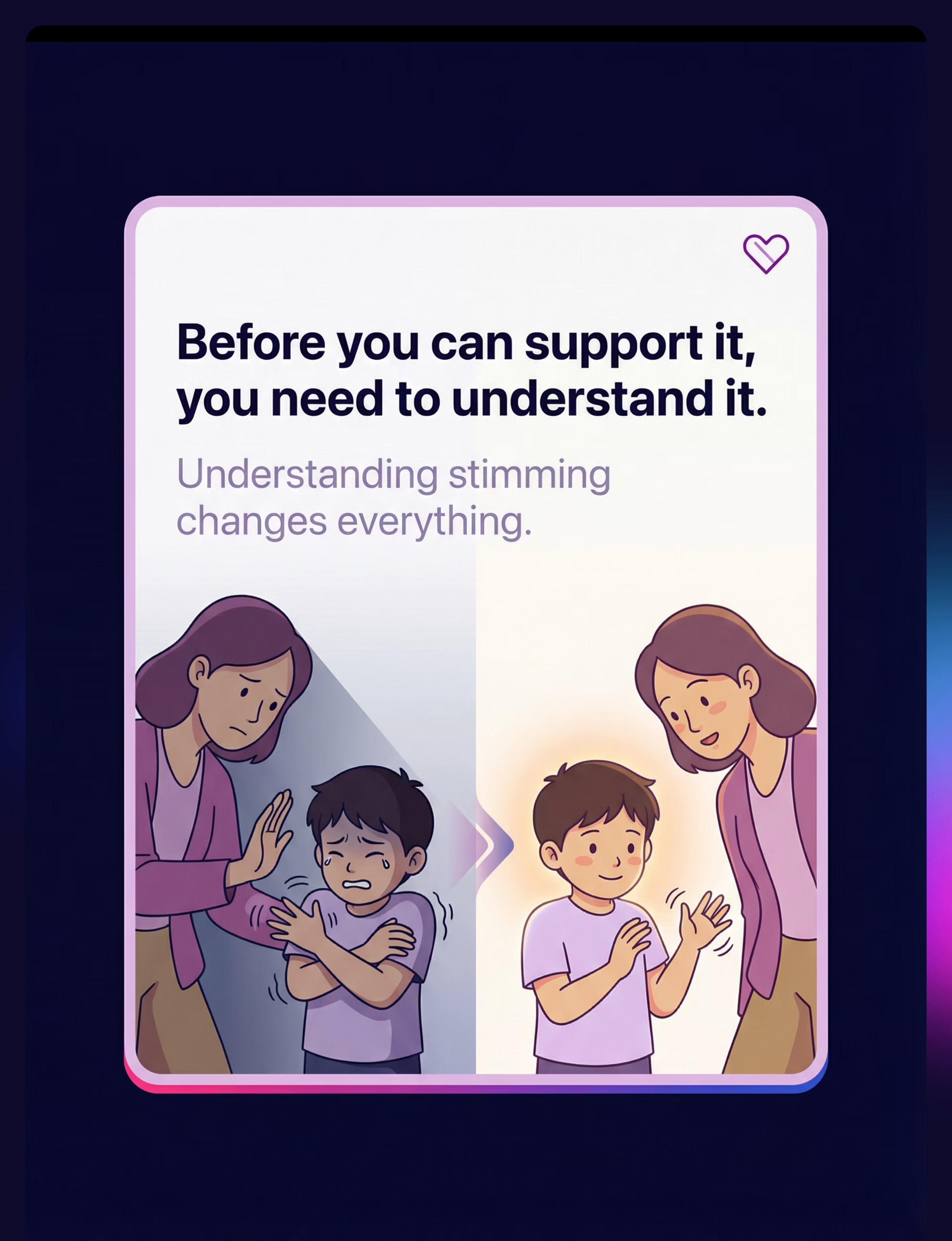
Preview of 9 materials that help understanding stimming Therapy Material
Below is a visual preview of 9 materials that help understanding stimming therapy material. The pages shown help educators, therapists, and caregivers understand the structure and content of the resource before use. Materials should be used under appropriate professional guidance.


Link copied!
The Understanding Begins Today.
Your child's stims have been trying to tell you something. Now you have the tools to listen.
🔵 OT
🟢 ABA
🔴 NeuroDev
🟡 SLP
🟠 SpEd
🏛️Validated by the Pinnacle Blooms Consortium | OT • SLP • ABA/BCBA • SpEd • NeuroDev • Pediatrics | 20M+ sessions | 97%+ improvement | 70+ centers | WHO/UNICEF-aligned
📞 FREE National Autism Helpline: 9100 181 181 | 16+ languages | 24×7
🏛️PINNACLE BLOOMS NETWORK® — Built by Mothers. Engineered as a System. | "From fear to mastery. One technique at a time."
20M+ exclusive 1:1 sessions | 97%+ measured improvement | 70+ centers | 70+ countries | Patents filed across 160+ countries | care@pinnacleblooms.org | pinnacleblooms.org
Medical Disclaimer: This content is educational. It does not replace individualized assessment by occupational therapists, behavior analysts, or autism specialists. Some stims may require professional evaluation, particularly if they cause physical harm. This content presents neurodiversity-affirming perspectives while recognizing that individual needs and circumstances vary. Individual experiences vary. Statistics represent aggregate outcomes across the Pinnacle Blooms Network.
© 2025–2026 Pinnacle Blooms Network®, unit of Bharath Healthcare Laboratories Pvt. Ltd. All rights reserved. | CIN: U74999TG2016PTC113063 | DPIIT: DIPP8651 | MSME: TS20F0009606 | GSTIN: 36AAGCB9722P1Z2
© 2025–2026 Pinnacle Blooms Network®, unit of Bharath Healthcare Laboratories Pvt. Ltd. All rights reserved. | CIN: U74999TG2016PTC113063 | DPIIT: DIPP8651 | MSME: TS20F0009606 | GSTIN: 36AAGCB9722P1Z2