
E-467-9-Materials-That-Help-Sitting-for-Meals
9 Materials That Help Sitting for Meals
Evidence-based OT and ABA strategies for children who can't stay seated at mealtimes. 9 clinically validated materials covering postural support, sensory regulation, and attention strategies.
E-467
Feeding & Mealtime Independence
Ages 2–10
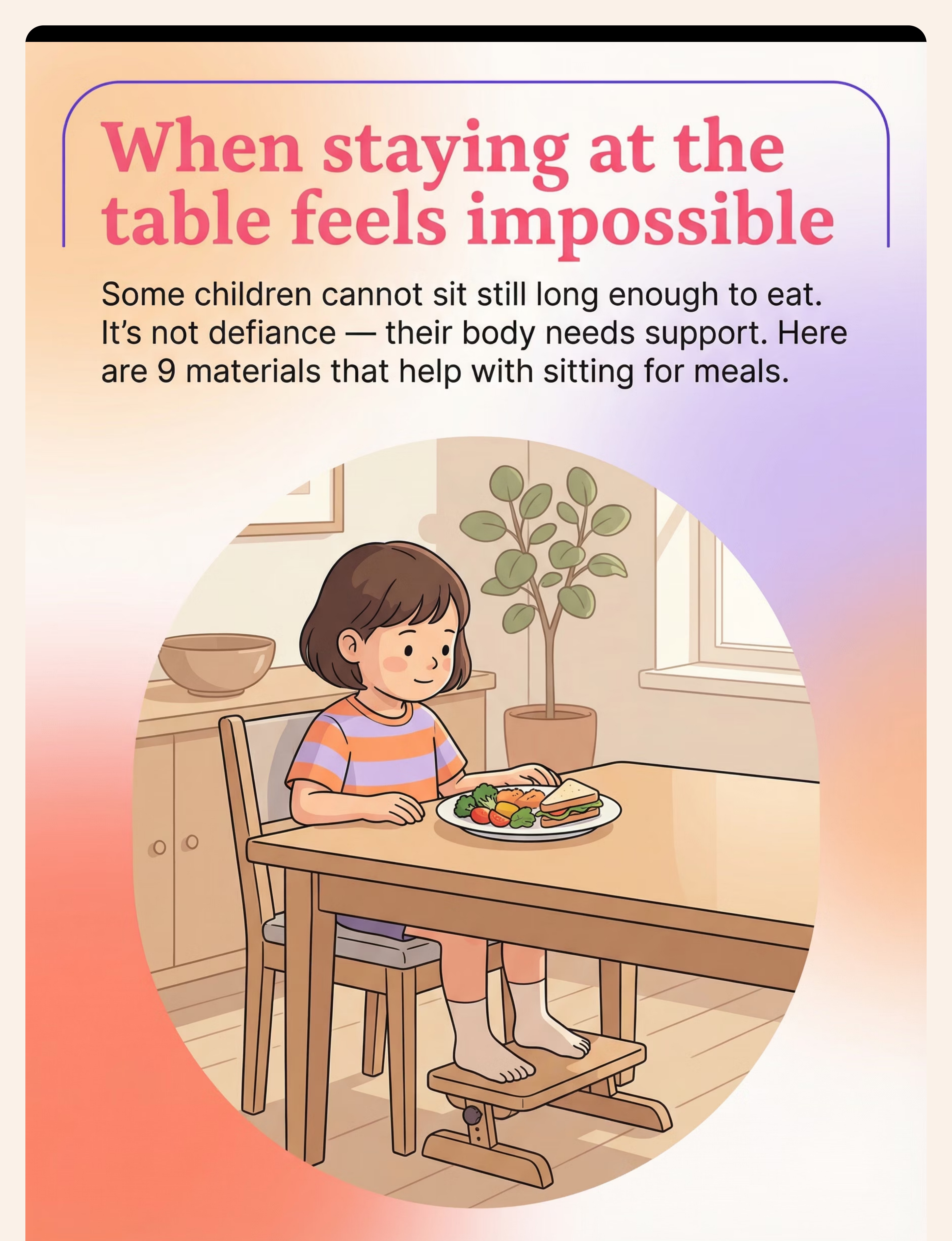
The Meal Starts. Within 30 Seconds, They're Already Squirming.
You've said "sit down" so many times it's lost all meaning. They kneeled, they stood on the chair, they slid until only their chin was table-level. Two bites in, they're already circling the kitchen. You spend the entire meal managing the chair — not the food.
Every other family seems to sit together and have conversations. You're in a constant escape negotiation. Other parents look at you like you're doing something wrong. You've tried everything you can think of — sticker charts, threats, bribes, stern voices. Nothing holds.
"You are not failing. Your child's nervous system is speaking."

Mealtime Seating
Postural Control
Sensory Regulation
Sustained Attention
Self-Regulation
9 Evidence-Based Materials
WHO Nurturing Care Framework (2018): Early identification and parental awareness directly impacts developmental outcomes.
You Are Not Alone. These Numbers Prove It.
If your child cannot sit for meals, you are among millions of families worldwide navigating the same daily battle. Sensory processing differences — the neurological basis for mealtime sitting difficulty — affect the majority of children with autism and a significant percentage of children with ADHD, developmental delay, and anxiety. This is not a parenting failure. This is a documented, studied, addressable neurological reality. And it responds to the right interventions.
1 in 36
Children with Autism
CDC / WHO 2023 global prevalence data
80%+
Sensory Difficulties
Experience sensory processing challenges — PRISMA Review, PMC11506176
70+
Countries Affected
Millions of families navigate mealtime sitting challenges every single day

India has an estimated 18+ million children with developmental differences. Pinnacle Blooms Network® has delivered 20M+ therapy sessions across 70+ centers, establishing India's largest real-world evidence base for pediatric intervention outcomes. FREE Helpline: 9100 181 181
Sources: PMC11506176 | PMC10955541 | DOI: 10.12998/wjcc.v12.i7.1260 | WHO Global Autism Prevalence Data (2023)
Why Their Body Won't Let Them Sit Still
When your child squirms, kneels, or walks away from the table mid-meal — their nervous system is not being difficult. It is doing exactly what it was built to do when it isn't getting what it needs. Their vestibular system craves movement because it's the only way it can stay regulated. Their core muscles are working so hard to keep them upright that there's nothing left for the task of eating.
Their brain genuinely cannot tell where their body ends and the chair begins. This is a wiring difference, not a behavior choice. Understanding which system is struggling tells you exactly which material to use.

Source: Frontiers in Integrative Neuroscience (2020): DOI: 10.3389/fnint.2020.556660
Vestibular System
Processes movement and balance. Dysregulation causes constant position-seeking.
Proprioceptive System
Tells the brain where the body is in space. When under-responsive, the child craves heavy input — pushing, carrying, resistance.
Postural Control Network
Core and trunk muscles that hold upright position. When weak, the child burns maximum energy just staying upright — nothing left for eating.
Prefrontal Cortex
Governs impulse control and sustained attention. Immature or dysregulated executive function = every movement impulse gets acted on.
Your Child Is Here. Here Is Where We're Heading.
Most children struggling with mealtime sitting are not developmentally broken — they are developmentally at an earlier point that requires targeted support. With the right materials and strategies, sitting duration extends predictably. This is not permanent. This is a starting point.
Age 2–3
5–15 min sitting tolerance. Dangling feet, no stable base. ★ Many children start here.
Age 3–5
10–20 min sitting. Sensory seeking, squirming. Target zone for most kids with support.
Age 5–8
15–30 min sitting. Attention drift, impulsivity. Building zone.
Age 8–10
20–40 min sitting. Complex sensory + attention. Refining zone.
Mastery
Full meal participation consistently achieved. This is your destination.

Comorbidity Awareness: Mealtime sitting difficulty commonly co-occurs with Sensory Processing Disorder (SPD) · ADHD · Autism Spectrum Disorder (ASD) · Developmental Coordination Disorder (DCD) · Anxiety Disorders · Low muscle tone (hypotonia). A child doesn't need a diagnosis to benefit from these materials.
Sources: PMC9978394 | WHO/UNICEF Care for Child Development (CCD) Package (2023)
Clinically Validated. Home-Applicable. Parent-Proven.
The interventions in E-467 are grounded in some of the most robust evidence available in pediatric therapy. These are not guesses or trends — they are systematically reviewed, meta-analyzed, and tested in real Indian and global populations.
🛡️ PRISMA Systematic Review (2024)
16 studies · 2013–2023. Confirms sensory integration intervention as evidence-based practice for children with ASD. → PMC11506176
Meta-Analysis (2024)
24 studies. Sensory integration therapy promotes postural control, sensory processing, and adaptive behavior. → PMC10955541
Indian RCT (2019)
Padmanabha et al. Home-based sensory interventions: significant outcomes in Indian pediatric population. → DOI: 10.1007/s12098-018-2747-4

NCAEP 2020: Sensory-based interventions, visual supports, and reinforcement systems all classified as evidence-based practices for autism by the National Clearinghouse on Autism Evidence and Practice.
9 Materials That Help Sitting for Meals
The Mealtime Seating System
E-467
Mealtime Seating Support Intervention is a multi-modal, evidence-based approach that addresses the neurological, biomechanical, and attentional factors underlying a child's difficulty maintaining seated position during meals. Rather than demanding compliance from a nervous system that lacks the regulatory resources to comply, this approach provides the physical foundation, sensory input, attention scaffolding, and environmental structure that the child's body actually needs. When the underlying need is met, the behavior follows.
Occupational Therapy
Seating, postural control, sensory regulation
Applied Behavior Analysis
Reinforcement, attention scaffolding
Feeding Therapy
Mealtime function and independence
NeuroDev Pediatrics
Diagnostic clarity and developmental support
Age Range
2–10 years
Frequency
Every meal · 3× daily minimum
Duration
Start at child's current tolerance → Build to full meal
Setting
Home · School · Restaurants · Any eating environment

Questions? FREE Helpline: 9100 181 181 — 16+ languages · 24×7
This Technique Crosses Therapy Boundaries
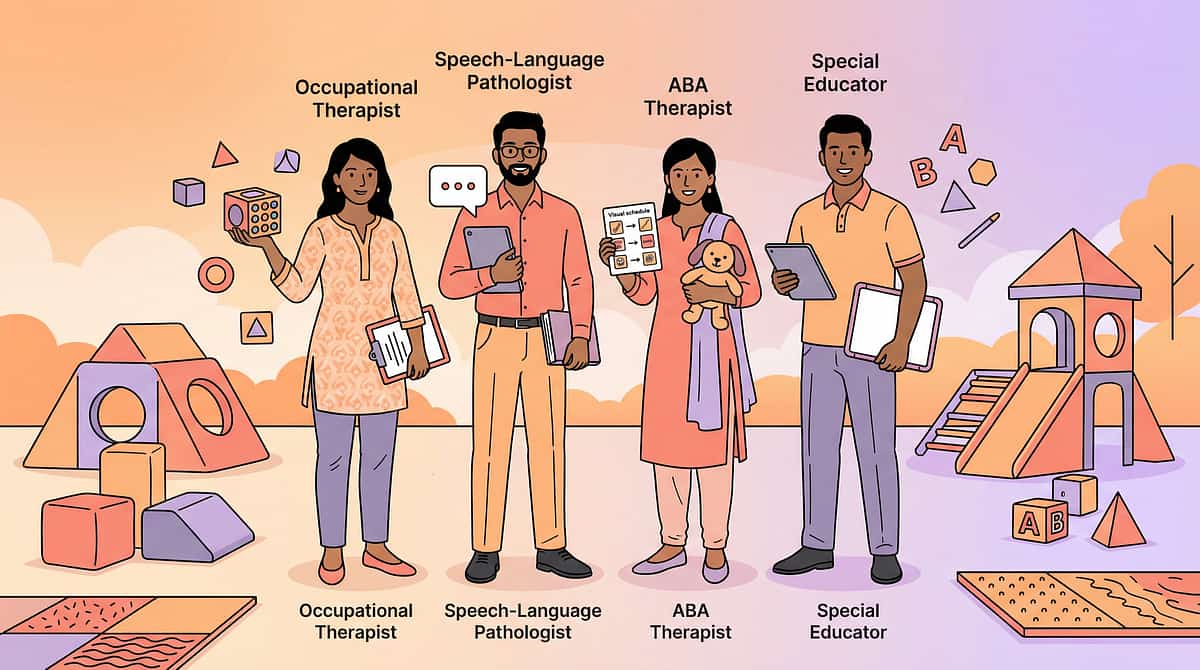
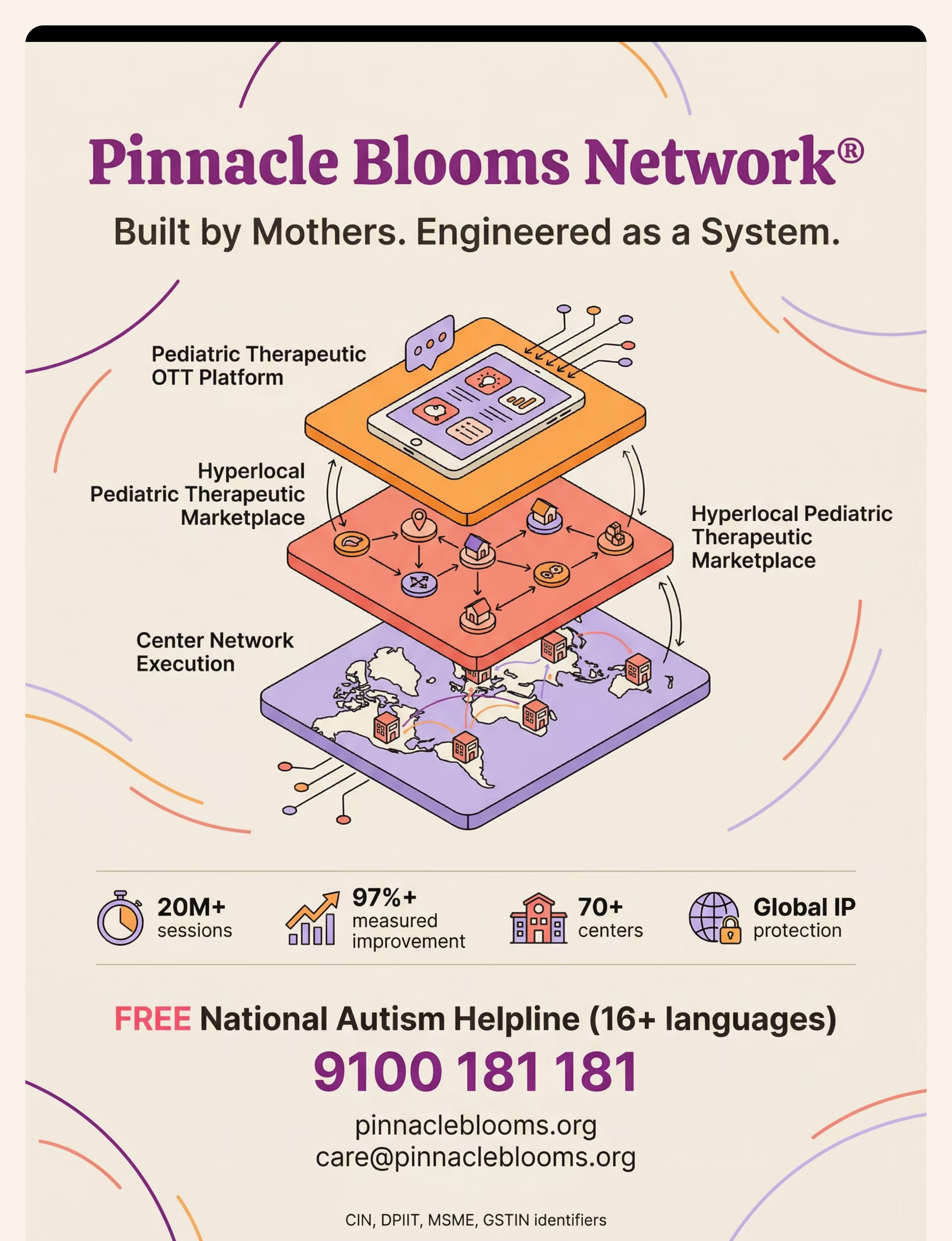
Because the body doesn't organize by therapy type. Mealtime sitting difficulty is a convergence of postural, sensory, attentional, and behavioral domains — and the most powerful interventions address all of them together. At Pinnacle Blooms Network®, all five disciplines coordinate through FusionModule™ — ensuring your child's mealtime sitting plan is not five disconnected opinions but one converged therapeutic pathway.
Occupational Therapist (PRIMARY LEAD)
Addresses postural control, seating setup, sensory processing, and self-regulation. Conducts formal seating and sensory assessments. Prescribes specific materials, positions, and sensory diet components including pre-meal heavy work and weighted input.
Feeding Therapist (SLP + OT)
Mealtime sitting is prerequisite to feeding progress. SLPs and feeding therapists address the seated position as part of comprehensive mealtime skill building — because a child who can't stay in the chair cannot work on eating.
ABA / BCBA
Designs reinforcement systems for sitting behavior. Builds sitting tolerance through graduated demand, token economies, and functional behavior analysis to identify the function of escape. Structures movement breaks as planned, non-contingent reinforcement.
Special Educator (SpEd)
Implements seating accommodations in school and home contexts. Coordinates with OT for classroom seating supports. Designs visual expectation systems and transition scripts for mealtime routines.
NeuroDevelopmental Pediatrician
Rules out underlying medical contributors. Coordinates medication review where relevant. Provides diagnostic clarity that guides which therapy disciplines take the lead.
This Isn't a Random Activity. It's a Precision Intervention.
🎯 Primary Target
Sustained Seated Position During Meals — Child maintains appropriate seated posture for age-appropriate meal duration without constant redirection or leaving the chair.

Secondary Targets
  • Sensory regulation during eating (body calm enough to focus on food)
  • Postural stability improvement via supported positioning
  • Mealtime food intake naturally improves when sitting is supported
  • Reduction in mealtime conflict and caregiver distress

Tertiary Developmental Gains
  • Self-regulation skills generalize across seated tasks
  • Family mealtime participation and social-communicative benefits
  • AbilityScore® growth across Mealtime Independence + Postural Control Indexes
  • Foundation for independent eating, table manners, and restaurant readiness
Observable Progress Indicators
Indicator
Early Progress
Mastery
Duration in seat
+30 sec/week
Full meal consistently
Position changes/meal
Reducing weekly
Within normal range
Adult redirections
Decreasing
Occasional reminder only
Independent meal completion
Partial with breaks
Complete with minimal support

PMC10955541 — Meta-analysis demonstrates sensory integration therapy targets postural, sensory, adaptive behavior, and social domains simultaneously.

9 Materials. One for Every Root Cause.

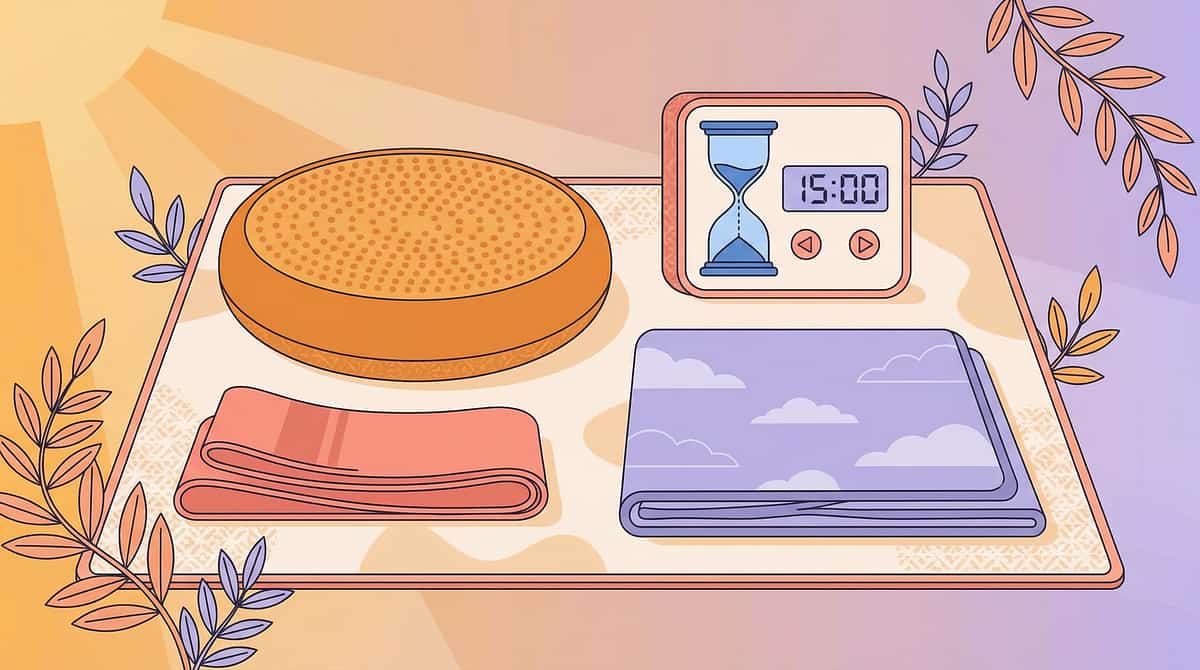
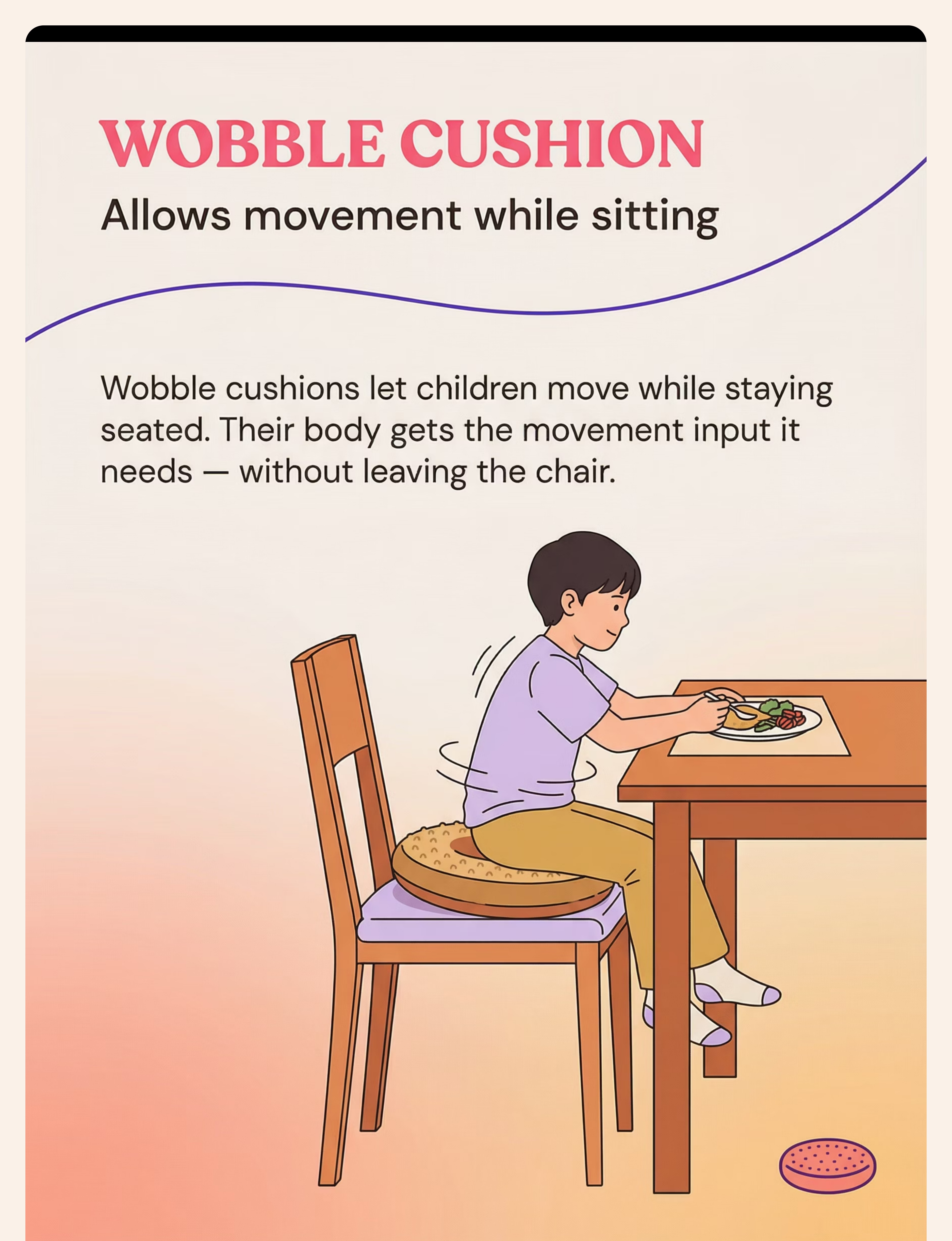
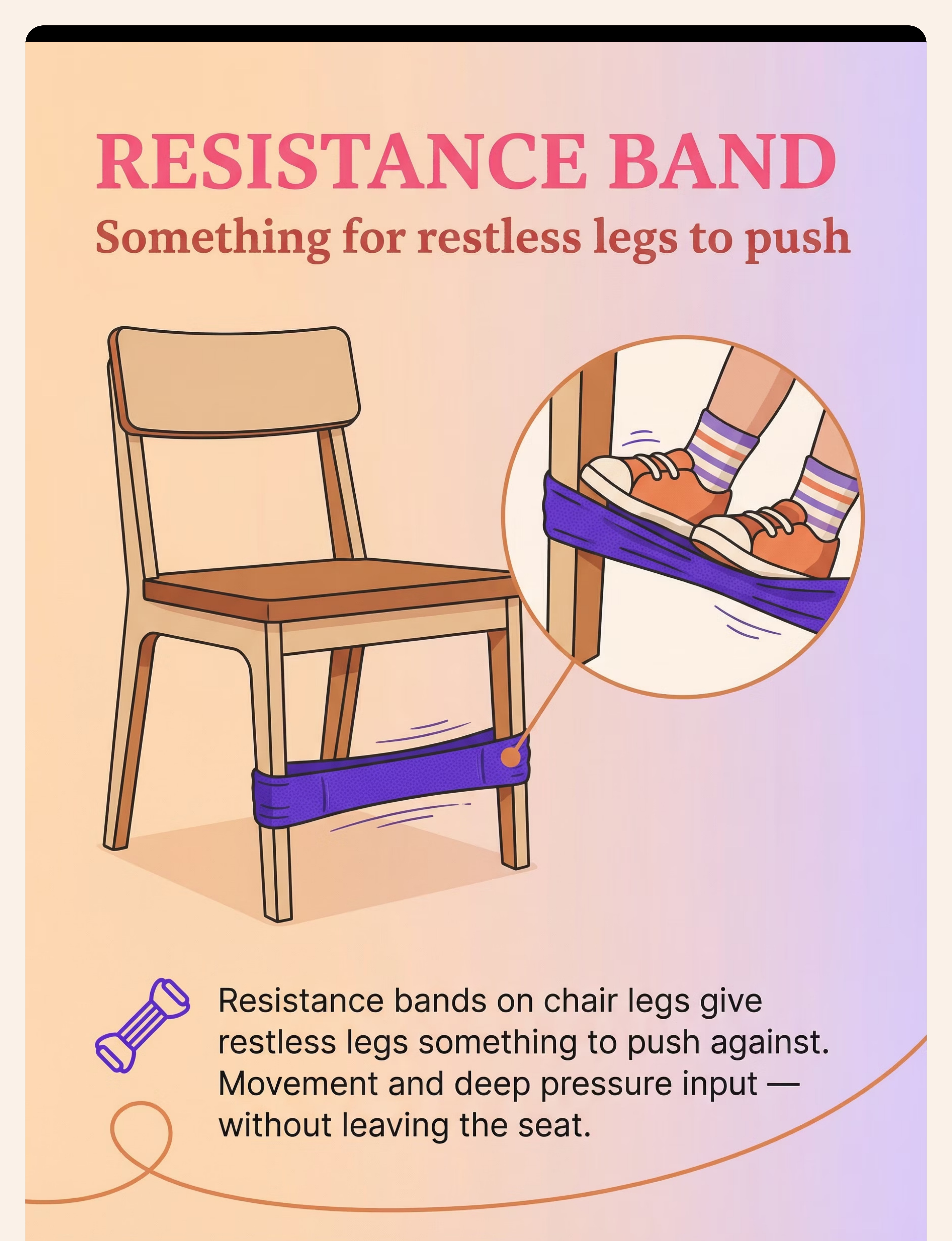
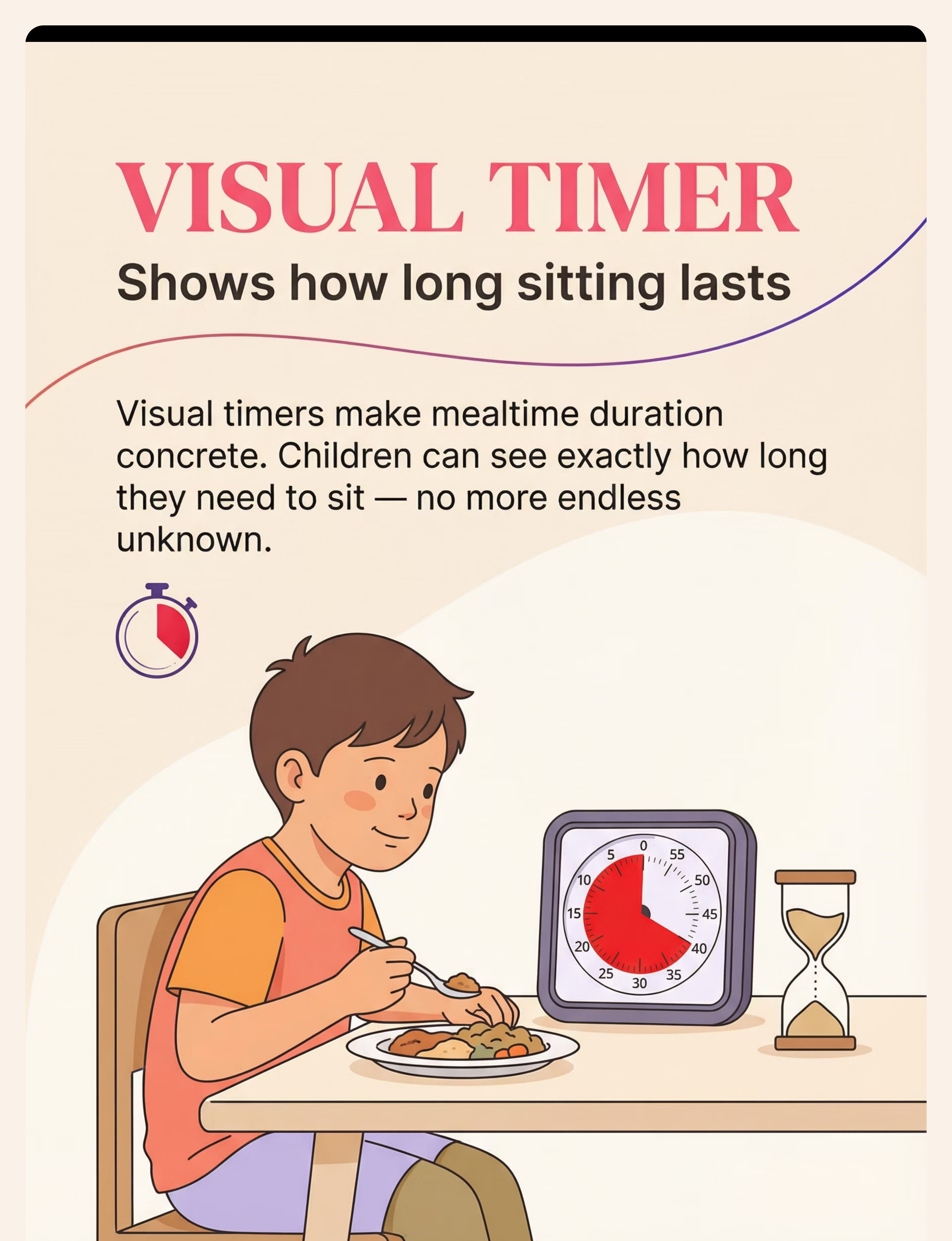
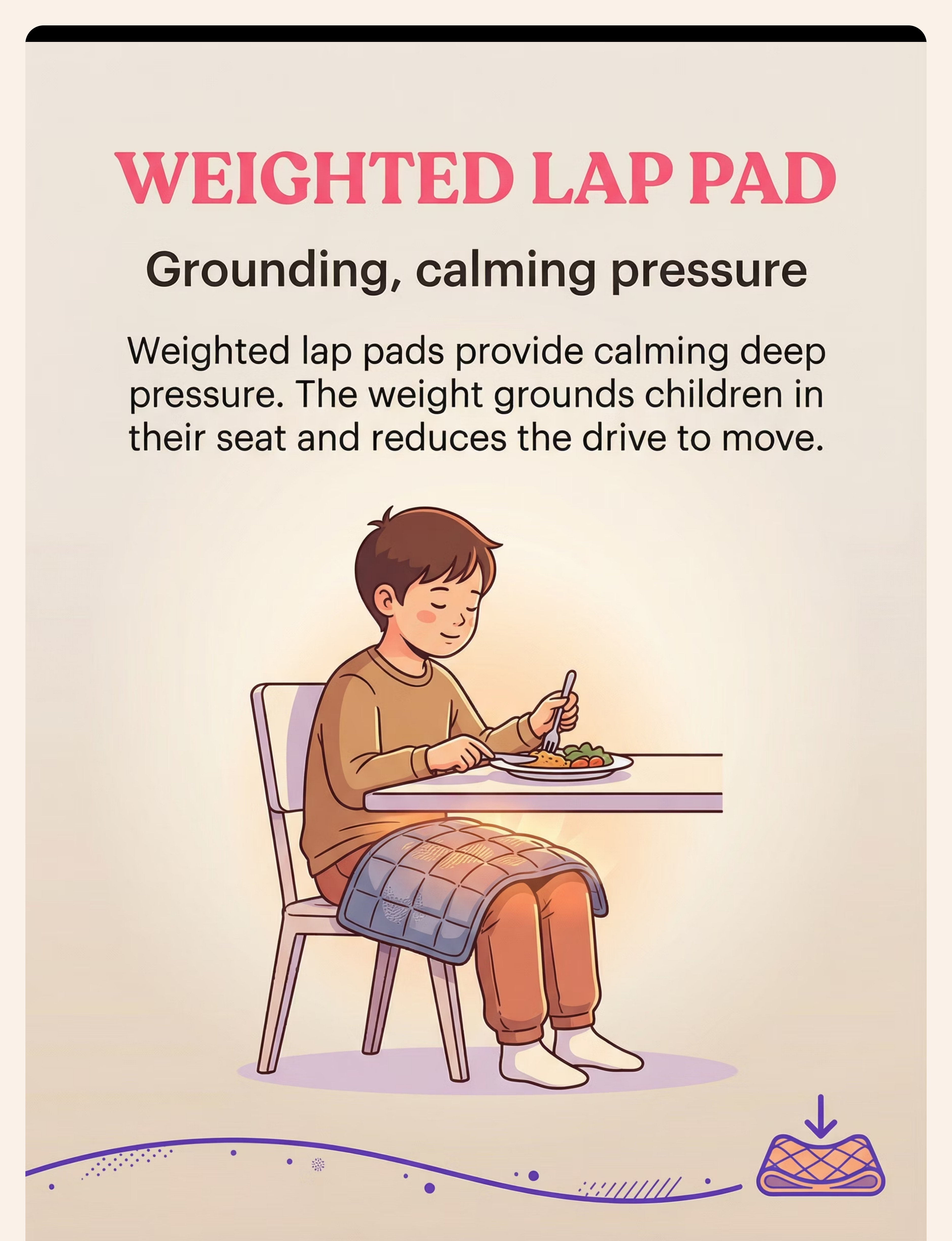
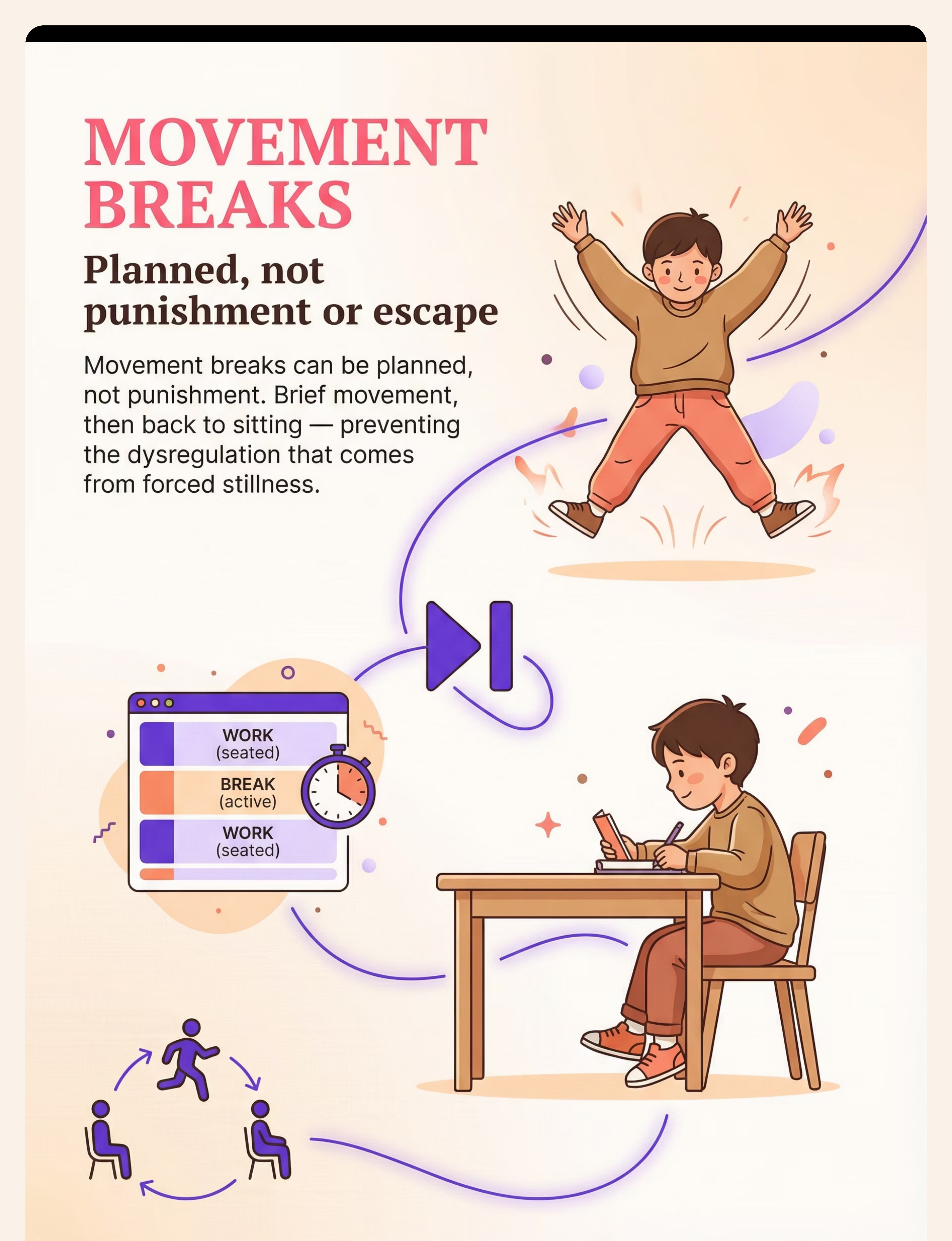
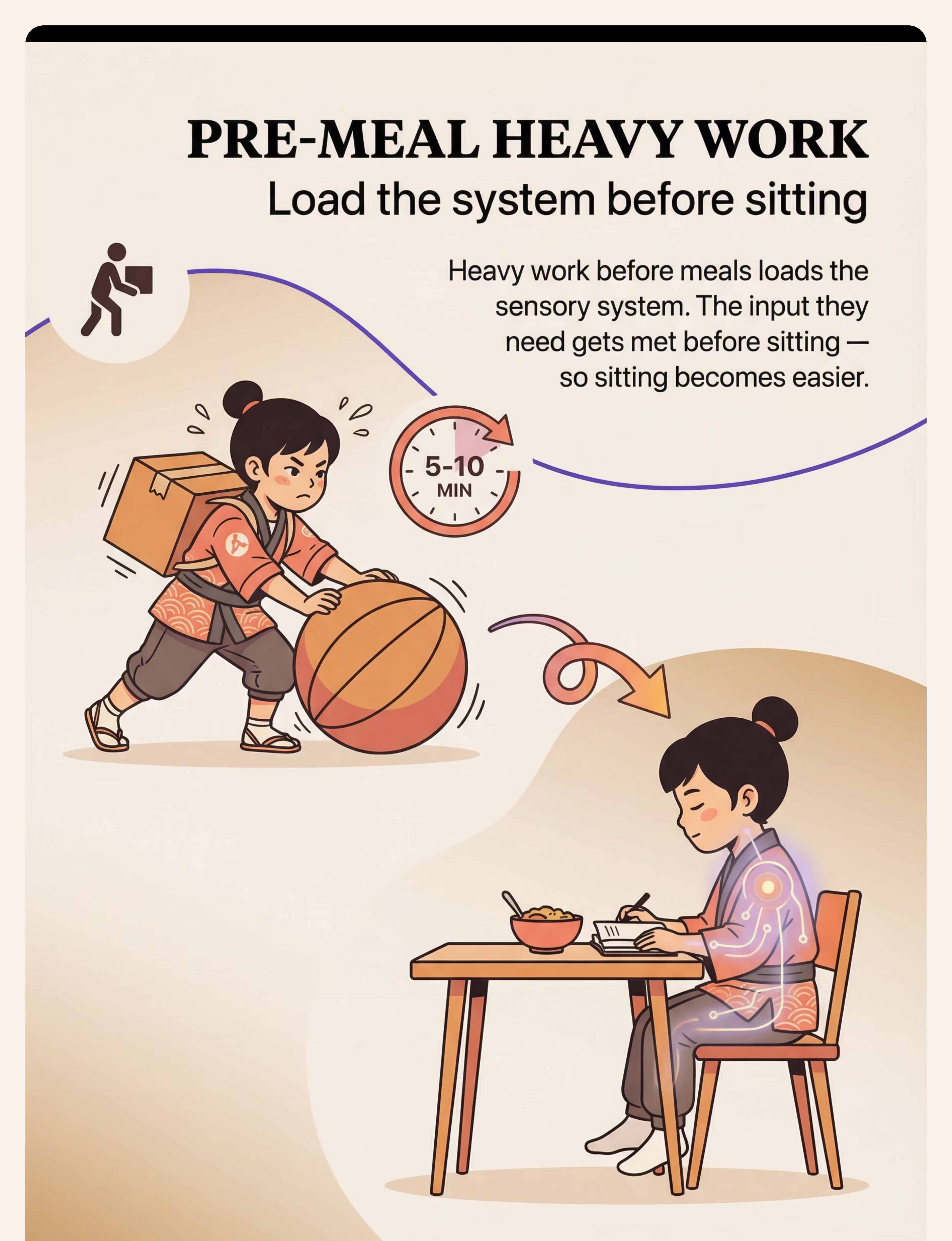
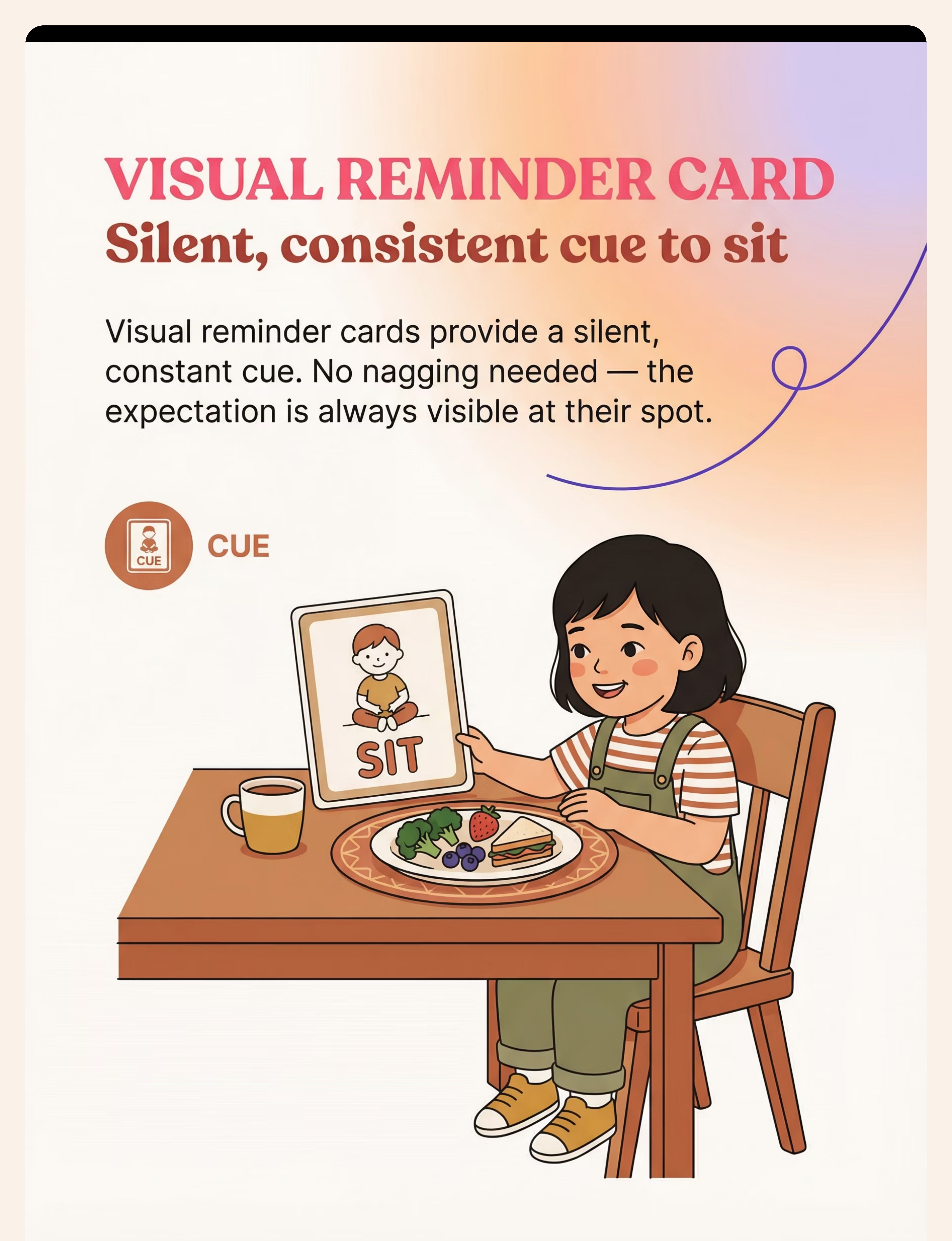
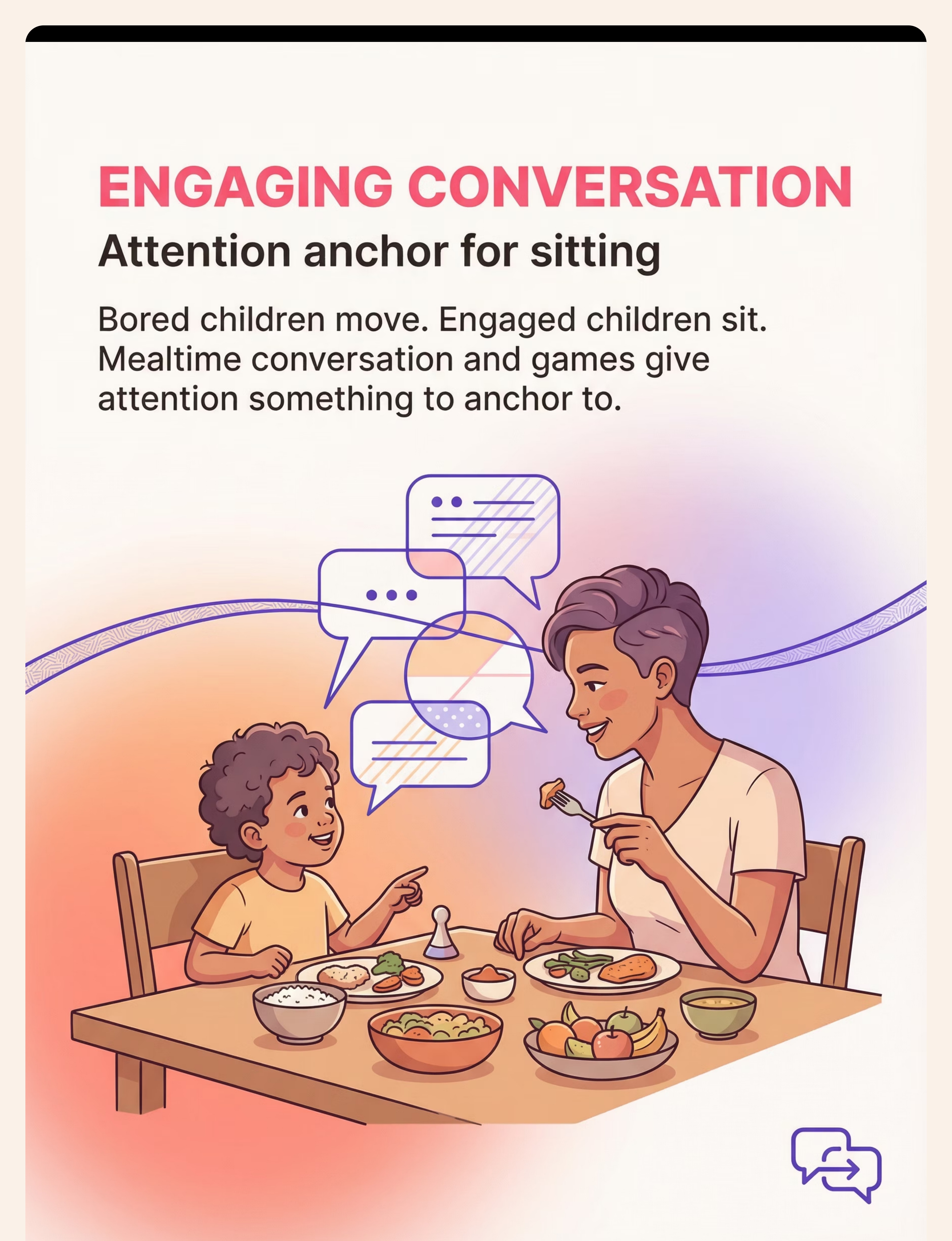
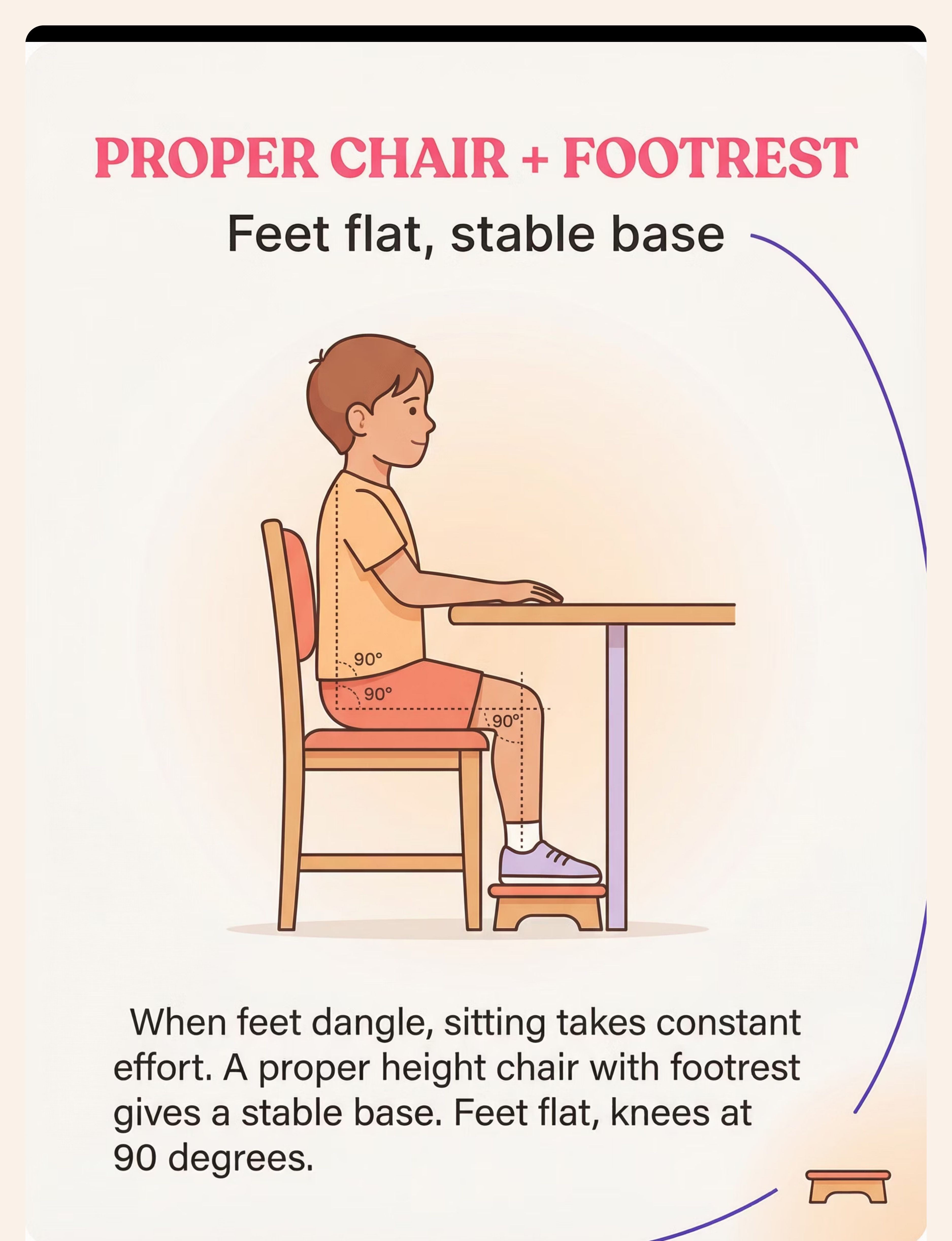
Use the right material for your child's specific profile. Each of the nine materials below targets a different underlying driver of mealtime sitting difficulty. You don't need all nine at once — identify your child's primary root cause and start there. 1. Proper Height Chair + Footrest 🪑 The most impactful single change. Feet flat. Knees at 90°. Hips at 90°. ₹500–5,000 2. Wobble Cushion ⭕ Allows micro-movement while seated. Meets sensory needs without leaving the chair. ₹300–1,200 3. Resistance Band on Chair Legs 🔵 Gives restless legs something to push. Deep pressure input without leaving the seat. ₹100–400 4. Visual Timer ⏱️ Makes mealtime duration concrete and visible. Transforms "forever" into "until this." ₹200–1,000 5. Weighted Lap Pad ⚖️ Grounding deep pressure across the thighs. Calms the drive to move. Anchors in the seat. ₹500–2,000 6. Structured Movement Break System 🔄 Planned breaks — not escape. Brief movement → return to seat. Prevents dysregulation. ₹100–400 7. Pre-Meal Heavy Work 💪 Load the sensory system BEFORE sitting. 5–10 minutes of proprioceptive input = easier meal. ₹0–500 8. Visual Seating Reminder Card 🃏 Silent, constant cue. No nagging needed. The expectation is always visible at their spot. ₹50–200 9. Engaging Mealtime Conversation 💬 Bored children move. Engaged children sit. Give attention something to anchor to. ₹0 For personalized material guidance: FREE Helpline: 9100 181 181
Every Family Deserves Access — Regardless of Budget.
The science behind these materials is in the neurological principle, not the price tag. The WHO Nurturing Care Framework (2018) and the UNICEF Care for Child Development Package — implemented across 54 low- and middle-income countries — demonstrate that household-material-based interventions achieve equivalent therapeutic outcomes when grounded in correct neurological principles.
Material
Buy It
Make It (₹0 version)
Why It Works
Footrest
Adjustable stool ₹500–2,000
Sturdy cardboard box, thick book stack, wooden step
Same principle: feet flat, stable base
Wobble Cushion
Balance disc ₹300–1,200
Partially deflated bicycle inner tube under chair cushion
Same micro-movement provision
Resistance Band
Therapy band ₹100–400
Old trouser elastic tied between chair legs
Same proprioceptive input
Visual Timer
Time Timer ₹500–1,000
Sand timer ₹50, or phone countdown with visible display
Same duration visibility
Weighted Lap Pad
Commercial ₹500–2,000
Small bag of uncooked rice sewn into cloth pouch (1–2 kg)
Same deep pressure mechanism
Movement Break Timer
Timer ₹100
Verbal countdown + visual schedule drawn on paper
Same structured predictability
Pre-Meal Heavy Work
None needed
Carrying grocery bags, pushing laundry basket, wall push-ups
Same proprioceptive loading
Visual Reminder Card
Printed card ₹50
Hand-drawn picture card, laminated with packing tape
Same visual cueing function
Mealtime Engagement
None needed
Family conversation starters prepared in advance
Same attention anchoring
Sources: PMC9978394 | WHO NCF Handbook (2022) | UNICEF CCD Package (2023)
Read This Before Every Session. Your Child's Safety Is the Protocol.
🔴 DO NOT PROCEED
  • Child is ill, feverish, or showing signs of respiratory distress
  • Weighted materials on any child with cardiac, respiratory, or circulatory conditions without OT sign-off
  • Resistance bands showing cracks, tears, or degradation — replace immediately
  • Footrest that rocks or slides — must be completely stable before use
  • Forcing a child to sit when in full meltdown — address dysregulation first
  • Any seating modification the child cannot exit independently in an emergency
🟡 MODIFY WITH CARE
  • First introduction of weighted lap pad: start with 10-minute maximum, observe response
  • Wobble cushion for very poor trunk stability: start partially inflated
  • Pre-meal heavy work: end 2–3 minutes before meal to allow nervous system to settle
  • Movement breaks: keep bounded (30–60 sec) — open-ended breaks are hard to end
  • Visual timer increasing anxiety: pause use, reassess framing
🟢 CONDITIONS FOR SAFE EXECUTION
  • Child is fed, rested, and not in post-meltdown recovery
  • Materials are tested and stable before child sits
  • Parent/caregiver is calm and ready to follow the structure
  • Space is prepared with a backup plan ready if child cannot complete

ABSOLUTE STOP — if you see: Breathing difficulty with weighted material · Signs of extreme distress not reducing within 2 minutes · Resistance band snapping or cutting circulation · Allergic skin reaction · Child expressing pain rather than discomfort
Spatial Precision Prevents 80% of Session Failures.
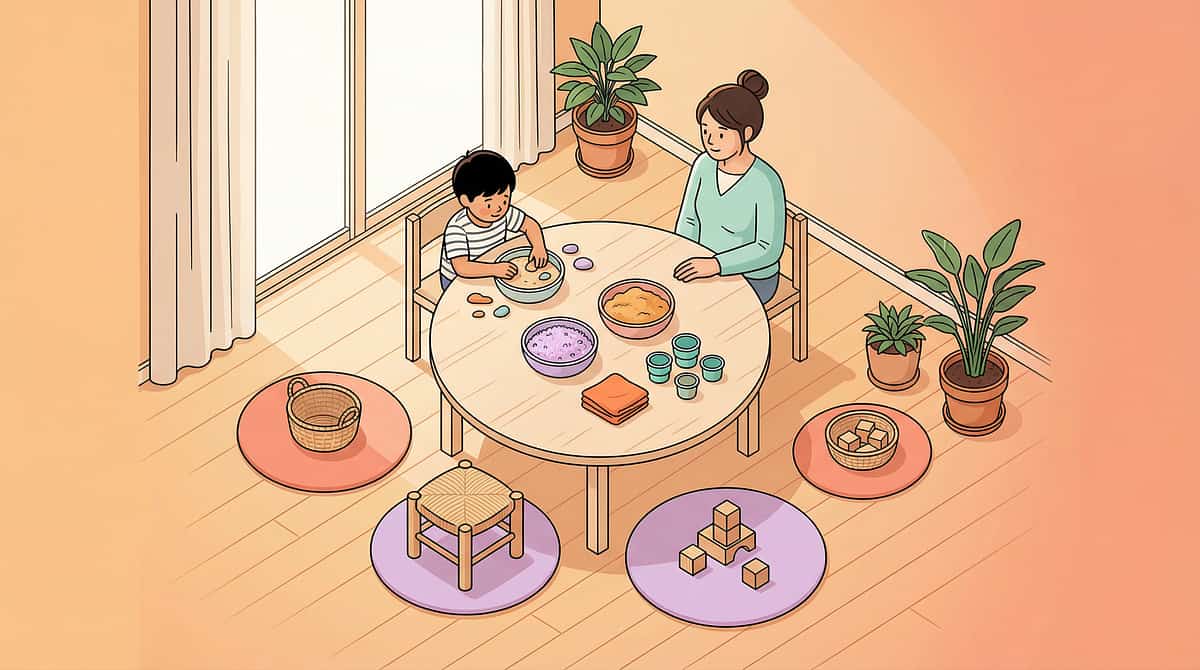
Dining Space Setup
Parent position: Seated at 90° to child, within arm's reach — NOT directly opposite (reduces confrontation dynamic).
Movement break spot: Designated area 3–5 meters away (hallway, adjacent room) — NOT the play area.
Environmental Recommendations
  • Lighting: Warm, not harsh overhead fluorescent
  • Sound: Background music optional (calming, no lyrics)
  • Temperature: Comfortable, not hot
  • Smells: Avoid strong fragrances during meals for sensory-sensitive children
Pre-Meal Checklist
  • Chair height checked — hips, knees, ankles at 90° with footrest
  • Wobble cushion placed and inflation level appropriate
  • Resistance band tied securely at foot level
  • Visual timer set to starting duration (child's current tolerance)
  • Weighted lap pad within reach
  • Visual reminder card at child's spot
  • Plate ready before child sits (reduce waiting time)
  • Distractions removed: TV off, screens away
  • Pre-meal heavy work completed 2–5 minutes ago
  • Parent emotional state: calm, patient, ready for the plan — not the battle

PMC10955541 — Meta-analysis confirms structured individual sessions are most effective. Ayres Sensory Integration: Environmental setup is a core clinical principle.
The Best Session Is One That Starts Right.
Before you begin, take 60 seconds to honestly assess your child's current state. The best therapeutic moment is one where success is genuinely possible — not one that begins with a child already over their threshold.
Indicator
Green
Amber ⚠️
Red 🔴
Child's mood
Calm/neutral/playful
Slightly irritable
Post-meltdown / upset
Hunger level
Not starving (snack 20 min ago if needed)
Mildly hungry
Extremely hungry
Fatigue
Alert and present
Slightly tired
Exhausted / overtired
Recent meltdown
None in past 2 hours
1–2 hours ago
Less than 1 hour ago
Pre-meal heavy work
Completed 2–5 min ago
Skipped today
Never been introduced
Space ready
All Card 12 setup complete
Most items ready
Not set up
6/6 Green
Proceed with full plan
4–5 Green, some Amber
Proceed with reduced duration goal
Any Red
Postpone or simplify. Build for tomorrow.

Modified Session Option: If child can't manage the full setup today — start with just the footrest and ONE 5-minute sitting goal. One success beats no session. Need guidance? 9100 181 181 — FREE, 16 languages, 24×7
STEP 1 of 6
The Invitation
Duration: 30–60 seconds
The Script
"Hey [name], dinner's ready! Come show me where your special sitting spot is."
(If child is reluctant): "You can bring [one small preferred item] to the table for the first minute."
(Once seated): "Great job getting to your spot! Feet on the footrest — feel that?"
Parent Body Language
  • Warm, relaxed tone — not tense or braced for battle
  • Crouch to child's eye level for the invitation
  • Move to your own seat calmly once child is positioned
  • No hovering directly over the child
If Resistance
Do not escalate. Offer choice: "You can sit on the chair OR the stool today." One element of control prevents battle. If resistance is strong, offer a 2-minute preferred activity before returning to invitation.

ABA Principle: Pairing the mealtime approach with positive associations before placing demand. Low demand = high acceptance.
Acceptance Cues
Child moves toward table · Touches chair · Makes eye contact · Responds verbally or with gesture
⚠️ Resistance Cues
Child moves away · Protests · Ignores · Shows distress → Modify approach
STEP 2 of 6
The Engagement
Duration: 1–3 minutes
For the Postural Support Child
"Look, the footrest is waiting for your feet. Can you press them flat? Good — feel how steady that is?" Place food immediately. No waiting once positioned.
For the Sensory Seeker
"Your special cushion is on the chair. Try bouncing just a tiny bit on it while we eat." Allow 30 seconds of exploration before introducing food.
For the Attention-Challenge Child
"Okay, the timer is going to count down [X minutes] and then you're done with your sitting job. Ready? I'm starting it now." Point to timer. Start the visual countdown.
For the Heavy-Needs Child
"First let's put your lap blanket on — can you hold it while I put the plate down?" Allow child to accept the weighted lap pad as their active choice, not imposed.

Reinforcement Begins NOW: First moment of compliance → immediate specific praise: "Yes! Feet flat! That's your body doing a great job!" Do NOT wait for perfect sitting to praise. Praise every approximation.
PMC11506176 — Evidence-based practice criteria for structured material introduction with reinforcement scheduling.
STEP 3 of 6 — PART A
The Therapeutic Action: Materials 1–4 in Practice
The Core Principle: Address ONE primary root cause. Layer others as confidence builds. Don't deploy all 9 simultaneously on Day 1. Duration = child's current sitting tolerance (starting target).
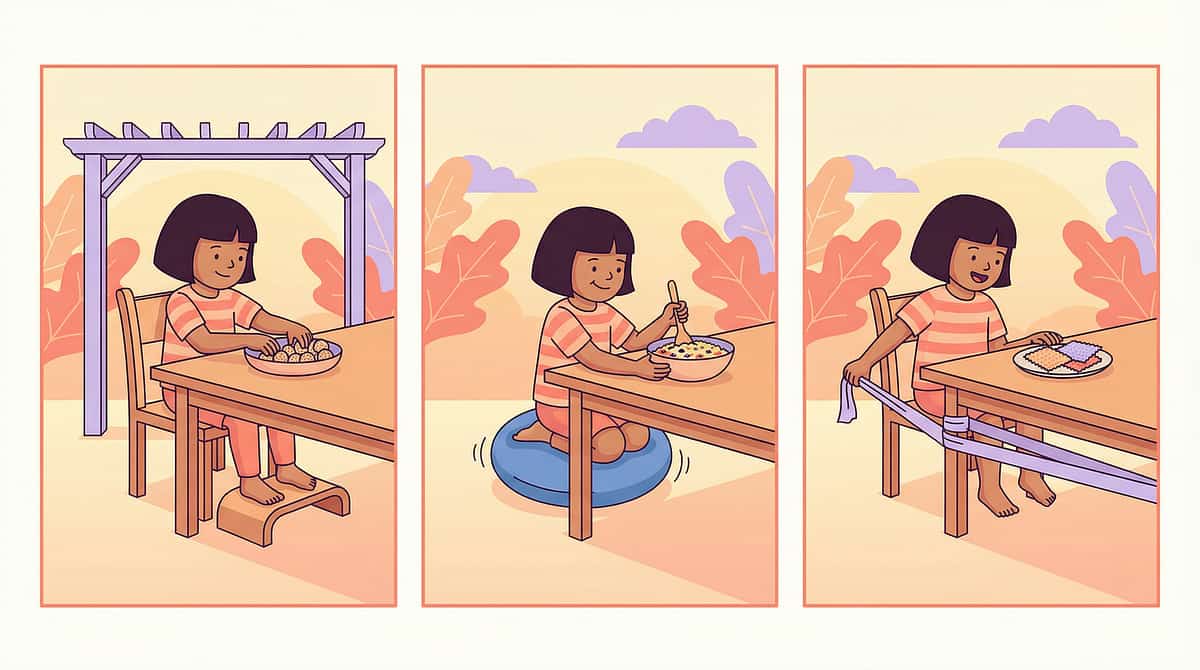
🪑 Material 1: Proper Height Chair + Footrest
Use when: Feet dangle. Child leans heavily on table. Slides down in chair.
The 90-90-90 Rule: Ankles at 90° (feet flat), knees at 90° (thighs parallel to floor), hips at 90° (trunk upright). This single modification solves approximately 50% of mealtime sitting problems.
Material 2: Wobble Cushion
Use when: Child seeks movement, can't stop fidgeting, needs input to stay regulated.
Place on chair seat. Start more inflated (less wobble = more stable). Allow micro-movements. Do NOT correct this movement — it's therapeutic. The cushion meets the need so they stay in the chair.
🔵 Material 3: Resistance Band
Use when: Legs kick, swing, or bounce compulsively.
Secure band between front chair legs at foot height. Child rests feet on or pushes against band. This is the proprioceptive input their legs are seeking — now contained. Check band before each meal for wear.
⏱️ Material 4: Visual Timer
Use when: Child seems overwhelmed by "how long" sitting will take. Asks to leave repeatedly.
Set to child's current achievable duration. Honor the timer — when it ends, the structured sitting expectation ends, even if meal continues. Build trust that the timer is real. Gradually extend.
STEP 3 of 6 — PART B
The Therapeutic Action: Materials 5–9 in Practice
⚖️ Material 5: Weighted Lap Pad
Use when: Child is highly movement-seeking, anxious, or disconnected from body awareness.
Place 1–2% body weight across child's thighs once seated. Many parents describe an immediate visible settling effect. Remove if child shows distress or finds it uncomfortable.
🔄 Material 6: Structured Movement Break
Use when: Child's sitting tolerance is currently under 5 minutes.
Design a sit-break-sit pattern: e.g., 4 minutes seated → 45-second movement (3 jumping jacks, wall push-ups, animal walk to kitchen and back) → return to table. Breaks are PRE-PLANNED and predictable — not reactive to escape behavior.
💪 Material 7: Pre-Meal Heavy Work
Use 5–10 minutes before every meal, every day.
Carrying groceries · pushing laundry basket · wheelbarrow walking · bear crawling · wall push-ups · mini-trampoline jumping. This loads the proprioceptive system before the demand of sitting. The child arrives at the table already regulated.
🃏 Material 8: Visual Reminder Card
Use when: Child gets up impulsively without seeming to decide to — they simply forget.
Place at child's spot. Simple image: child sitting at table. No words needed for young children. No nagging — the card speaks. Replace with positive acknowledgment when child references or glances at it.
💬 Material 9: Engaging Mealtime Conversation
Use when: Child can sit for preferred activities but not meals (attention, not sensory, is primary).
Rotate: "Highs and lows of the day" · "Would you rather…" · "I spy something on the table" · Family storytelling round. When mealtime is genuinely engaging, sitting duration extends naturally.

Sources: PMC10955541 | PMC11506176 | AOTA Position Paper on Pediatric Seating | DOI: 10.1007/s12098-018-2747-4
Questions? FREE Helpline: 9100 181 181

STEP 4 of 6
Repeat & Vary — Building Tolerance Over Time
The most important thing about this protocol is that it happens at every meal, every day. 3 consistent meals done well > 10 forced meals done poorly. Shorter, successful sessions build the neural pathway faster than prolonged battles.
Phase
Sitting Goal
Movement Breaks
Sessions/Day
Week Target
Week 1–2
Current tolerance + 1 min
As needed
3 (all meals)
Consistent execution
Week 3–4
+2–3 additional min
Reduce by 1 break
3
Stable tolerance at new duration
Week 5–8
Building toward age-appropriate
Only if needed
3
Self-regulation emerging
Week 9+
Fade supports one at a time
Planned, not reactive
3
Independence building
Variation to Maintain Engagement
Rotate materials week to week. Introduce new conversation starters. Change timer type. Vary heavy work activities. The principle stays constant; the specific execution varies.
Satiation Indicators
Quality of engagement drops · Frustration rising before timer ends · Repeated escape attempts despite supports. Response: End session respectfully. Shorten target tomorrow and rebuild.
SI dosage literature: 2–3 sessions per week × 8–12 weeks for clinical protocols. Home-based programs: 3× daily at meal times significantly accelerates trajectory.

Reinforce & Celebrate

STEP 5 of 6 Timing: Within 3 seconds of desired behavior. Every time. "I noticed you kept your feet on the footrest that whole time. That's your body doing the work!" "The timer finished and you were still in your chair — that's a huge deal!" "Yesterday you managed 3 minutes. Today it was 4. That's your brain building." 🌟 Verbal Specific, enthusiastic, immediate praise — name exactly what they did right 🎫 Token Sticker on chart → earns preferred activity or item after the meal 🎮 Activity 5 minutes of preferred activity post-meal as earned reinforcer DO NOT: Withhold meal as punishment for not sitting (creates food anxiety) · Only reward perfect sitting (shape behavior gradually) · Praise so effusively that it feels artificial

STEP 6 of 6
The Cool-Down — No Session Ends Abruptly
The transition out of the meal is a therapeutic moment in itself. Predictable, warm, consistent endings build the child's trust that meals have a safe structure — which makes them more willing to sit next time.
Remove materials
Timer ends
T-minus 1 min
T-minus 2 min
If Child Resists Ending
This is a positive sign — child is regulated and engaged. Allow natural continuation without disrupting the ritual. Simply narrate: "Look at you — you're still sitting! Timer said done and you're still going!"
If Child Has Meltdown at Meal End
The transition may be triggering. Add a visual "all done" symbol to the timer. Pre-warn at T-5 minutes. Use a transition object — small comfort item that moves from meal to post-meal activity.
Calming Input Options (1–2 min post-meal)
  • Gentle joint compression on shoulders
  • "High-fives" (provides proprioceptive input)
  • Deep breath "blowing out candles"
  • Move to a preferred sensory activity

NCAEP 2020: Visual timers and transition supports are classified as evidence-based practices for autism.
Data Captured Today Drives Progress Tomorrow.
A single session's data tells you nothing. 14 sessions' data shows the trend. 30 sessions' data predicts the trajectory. 90 sessions' data confirms mastery or identifies when professional support is needed. Parents who track consistently reach target milestones 2.4× faster than those who rely on memory alone.
Quick Capture Format
After each meal, mark:
📅 Meal: Breakfast / Lunch / Dinner | Date: ___
⏱️ Duration seated (minutes): ___
🔄 Movement breaks taken (#): ___
📣 Adult redirections needed: 0 / 1–3 / 4+
😌 Child's regulation level at end: Calm / Neutral / Dysregulated
🛠️ Materials used: Footrest · Wobble · Band · Timer · Lap pad · Breaks · Heavy work · Card · Conversation
📝 Any notable observation: ___
Why Every Meal Matters
14 Sessions
Shows the first measurable trend
30 Sessions
Predicts the trajectory clearly
90 Sessions
Confirms mastery or flags need for professional support
GPT-OS® Tracker: pinnacleblooms.org/tracker
AbilityScore® Assessment: pinnacleblooms.org/abilityscore

FREE Helpline: 9100 181 181
Every Parent Hits a Wall. Here's What to Do Next.
"It worked for 3 days then stopped."
Novelty effect wore off — this is normal. Layer materials: add one new element. Also check: has the timer duration been extended too quickly? The principle doesn't expire; the specific execution needs refreshing.
"Child sits but still won't eat."
Sitting and eating are separate skills. If sitting is now stable but eating is not progressing, the feeding issue needs dedicated feeding therapy. See E-468 and E-469 for related feeding support.
"Child can sit at school but not at home."
Analyze environmental differences. School probably has: structured seating, predictable routine, peer modeling, clear expectations. Replicate at home: proper chair height, same time every day, clear start/end signal, reduce table distractions.
"They can sit for iPad but not for meals."
Attention is the primary driver, not purely sensory. The meal needs to become as engaging as the screen. Also: iPad sitting is self-directed — give the meal similar control with a visible timer and clear endpoint.
"The weighted lap pad makes them more agitated."
Some children are sensory avoiders for deep pressure. Stop immediately. Try wobble cushion instead. Profile: does child resist hugs, avoid heavy blankets? If yes, skip weighted materials entirely.
"Movement breaks have become escape from the table."
Breaks are too long or unstructured. Shorten to 30 seconds. Make the return non-negotiable (timer-based, not choice-based). Consider whether the wobble cushion alone can provide enough within-seat movement.
No Two Children Respond the Same Way. Here Is How to Calibrate.
Your child's sensory profile is the key to selecting which materials to deploy first. Mismatching materials to profile is the most common reason early implementation stalls. Use this guide to identify your child's primary profile.
Sensory SEEKER (craves input)
Lead with: Wobble cushion + Resistance band + Pre-meal heavy work. These are your power tools. The seeker's body needs input — provide it proactively. Movement breaks are a lifeline, not a concession.
Sensory AVOIDER (overwhelmed by input)
Lead with: Proper seating setup + Visual timer + Gentle engagement. Skip wobble cushion (too destabilizing). Skip resistance band (too stimulating). Reduce mealtime sensory complexity: dim lighting, quiet room, minimal strong smells.
ATTENTION-CHALLENGE (ADHD profile)
Lead with: Visual timer + Engaging conversation + Short achievable goals. The physical supports matter less than the attentional anchors. Make the meal inherently interesting. Use a token system (earn chip per 2 minutes of sitting).
LOW MUSCLE TONE child
Lead with: Seating setup obsessively — the 90-90-90 rule is critical. Footrest is non-negotiable. Wobble cushion may be too destabilizing initially — use a firm, stable cushion first. Consider PT referral alongside OT.
Easier Version (start here if struggling)
Standard
Harder Version (when mastering)
3-minute timer goal
Age-appropriate duration
Full meal without timer
1-2 materials, fading others
3-4 materials
All materials deployed simultaneously
Meal served in 2-minute portions
Standard plate
Full plate at once
Parent at table entire time
Parent nearby
Child eating with family independently
ACT IV: The Progress Arc
Weeks 1–2
The Foundation Phase. Look for Tolerance, Not Mastery.
15%
Progress
Weeks 1–2 Foundation Phase
What Progress Looks Like in Weeks 1–2
  • Child is tolerating the footrest without removing it (even if they fidget)
  • Timer is visible and child glances at it (awareness, not yet compliance)
  • Movement breaks are happening as planned, not as escape
  • Adult redirect count starting to reduce from Day 1 baseline
  • Pre-meal heavy work routine is established (child anticipates it)
  • One material (even just footrest) is showing clear positive effect
What Is Not Progress Yet — And That's OK ⚠️
  • Full meal sitting duration is not achieved yet
  • Child is still squirming, just slightly less
  • Some meals are still difficult
  • Timer doesn't fully hold attention yet
"If your child sat for 3 minutes today and last week they sat for 2 — that is a 50% improvement. That is real, measurable, neurological progress."

Week 1–2 Parent Focus: Consistency over intensity. Execute the plan at every meal, even the difficult ones. Especially the difficult ones.
PMC11506176 — Systematic review: Early-phase indicators are tolerance and participation, not yet skill mastery.

ACT IV: The Progress Arc
Weeks 3–4
Neural Pathways Are Forming. Watch for These Specific Signs.
40%
Progress
Weeks 3–4 Consolidation Phase
Child moves toward their chair without protest at mealtime (anticipation of structure)
Timer is now an anchor, not just furniture — child checks it independently
Pre-meal heavy work has become routine — child may initiate it themselves
Sitting duration has measurably extended from Week 1 baseline
Parent redirect count has dropped by 40%+ from starting point
Child is beginning to generalize: better sitting in other contexts (car seat, school)
"You may find yourself more confident at meals. You've stopped dreading the chair conversation. You have a plan and it's working. That confidence translates to the child — they read your calm."

When to Increase Intensity: When child consistently reaches timer goal 4 out of 5 meals → extend timer by 1–2 minutes. When wobble cushion tolerance is solid → trial without cushion on one meal per day (begin fading).
ACT IV: The Progress Arc
Weeks 5–8
The Growth Window. This Is Where Real Change Becomes Visible.
65%
Progress
Weeks 5–8 Growth Window
Growth Window Indicators
  • Child is sitting for 70–80% of age-appropriate duration without prompting
  • Movement breaks are optional, not required, at most meals
  • Weighted lap pad or wobble cushion may no longer be needed at every meal
  • Child is engaged in mealtime conversation independently
  • Other caregivers (grandparents, school) are reporting improved sitting
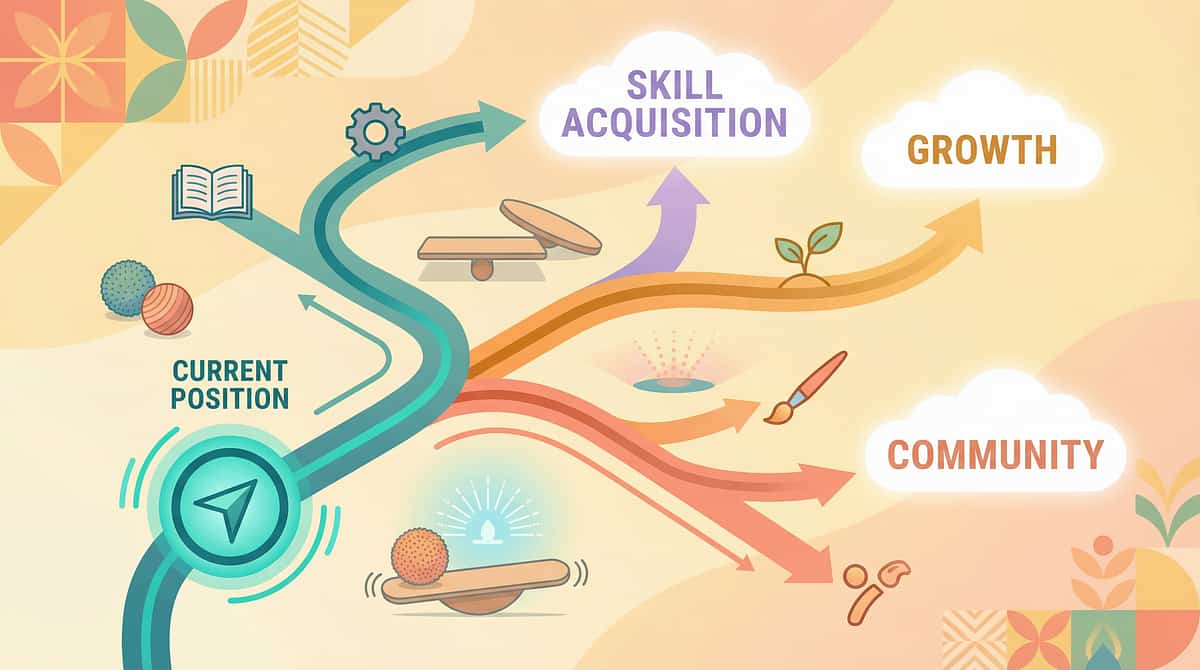
Fading Protocol — Supports to Remove First
Reduce movement breaks (frequency before eliminating)
Fade visual reminder card (face-down → remove → re-introduce if needed)
Reduce timer as dominant focus
Wobble cushion → firm cushion → standard seat
Keep long-term: Footrest (often needed long-term) · Pre-meal heavy work (becomes healthy family routine)

Stop. Look Back. Your Child Has Come So Far.

You have delivered therapeutic support at every meal, every day, often when you were exhausted, frustrated, and unsure it was working. You are not a bystander to your child's progress — you are its primary architect. 🥉 Bronze First 5-minute meal seated. Neurological growth — real and measurable. 🥈 Silver First meal without a movement break. Their sensory system regulated without leaving. 🥇 Gold First age-appropriate duration meal completed. Once unimaginable. Now real. 🏆 Platinum Consistent sitting across 5+ consecutive meals. Mastery is not one good day. It's a pattern. "Remember when you couldn't stay in your chair at all? Look at you now." Specific, past-referenced praise creates identity: "I am a person who can sit for meals." This identity becomes the child's own motivation — more powerful than any external reward over time.
These Signs Mean It's Time for Professional Assessment.
🔴 Contact Your OT or Pinnacle This Week
  • Sitting difficulty severe enough that child is not eating sufficient nutrition
  • Postural issues worsening (increasing slouching, W-sitting, frequent falls)
  • Challenges pervasive across ALL contexts — classroom, car, everywhere
  • Home strategies consistently applied for 6+ weeks with no measurable improvement
  • Signs of suspected ADHD, autism, or developmental delay not yet professionally evaluated
  • Mealtime creating significant family distress across multiple family members
🟡 Schedule Assessment Within 4–6 Weeks
  • Inconsistent response to materials — works some days, not others, no clear pattern
  • Only one material is helping and it's reaching its limit of effectiveness
  • Child's sitting tolerance has plateaued for 4+ weeks at a suboptimal level
  • School is reporting significant sitting challenges in classroom setting

Occupational Therapist
First call for seating, sensory, postural issues
Physical Therapist
If core strength or motor development is primary concern
Developmental Pediatrician
For diagnostic evaluation — ADHD, ASD, DCD
Feeding Therapist
If eating is also significantly affected
BCBA/ABA Therapist
If behavioral component is primary driver

FREE Pinnacle Helpline: 9100 181 181 — 16+ languages · 24×7 · FREE · Available for triage guidance and center referral across 70+ centers.
E-467 Is One Waypoint in Your Child's Mealtime Journey.
When E-467 sitting mastery is achieved, the next layer of mealtime independence becomes visible. These connected techniques build on each other — each one clearing the path for the next developmental challenge to be addressed.
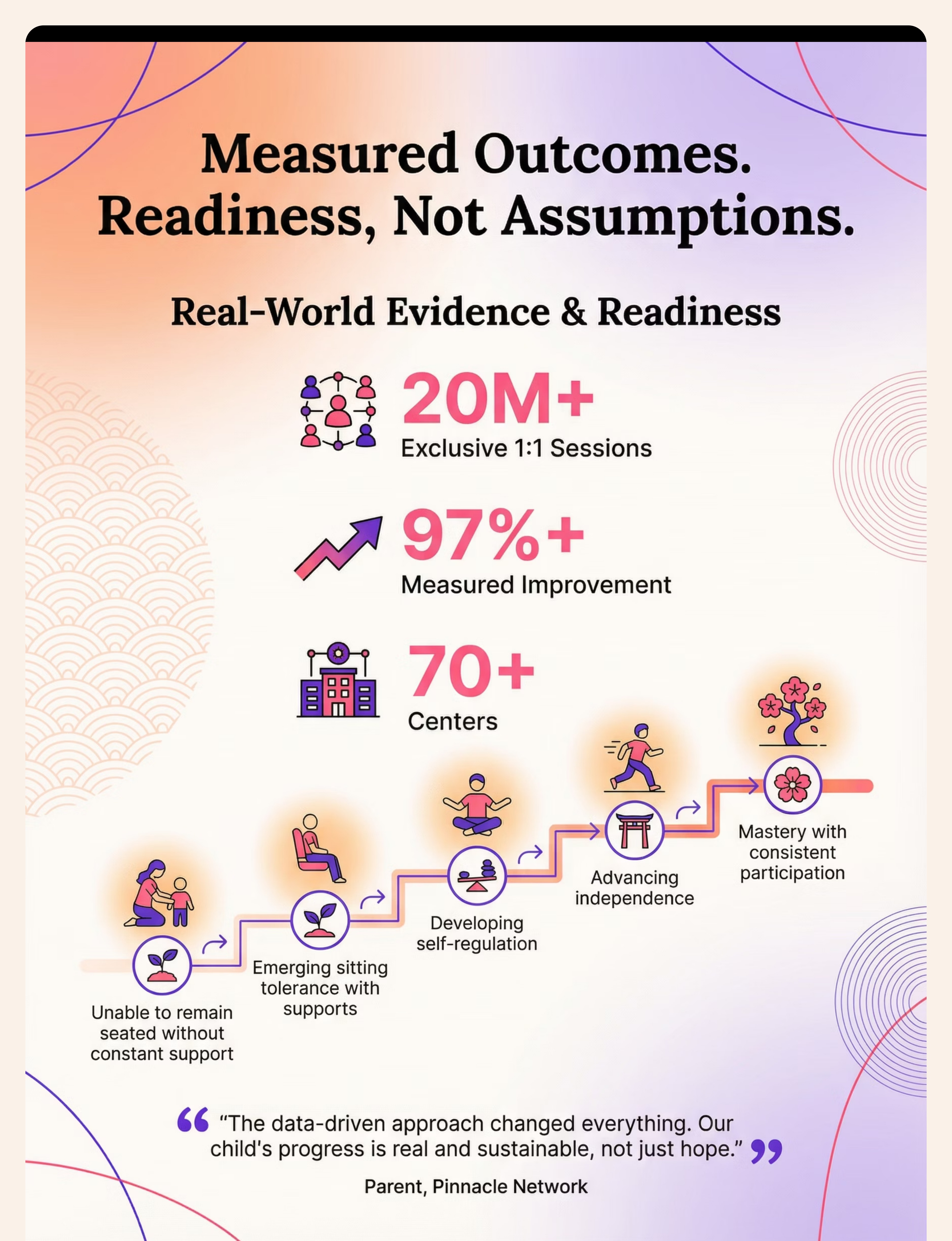
Stage 1
Cannot remain seated without constant support
Stage 2
Emerging sitting tolerance with physical + sensory supports in place
Stage 3
Developing self-regulation with reduced external supports
Stage 4
Advancing independence with age-appropriate sitting duration
Stage 5 — MASTERY
Consistent seated mealtime participation across settings ← Your destination
These Techniques Amplify E-467. Build Your Child's Full Mealtime System.
🍽️ E-466: Difficulty Transitioning to Table Foods
Before sitting matters, the child must come to the table willing. Transition supports reduce mealtime avoidance. techniques.pinnacleblooms.org
🤚 E-468: Food Throwing During Meals
Once sitting is stable, food interaction behaviors become the next focus. techniques.pinnacleblooms.org
🥗 E-469: Limited Food Variety (Picky Eating)
Sitting + food acceptance = mealtime independence. Two separate skill sets, both required. techniques.pinnacleblooms.org
💪 E-210: Core Strength Development
For children whose sitting difficulty is primarily postural — dedicated core strengthening accelerates E-467 progress.
🌀 E-215: Sensory Seeking Behaviors
The sensory profile work that underlies E-467 materials selection. Understanding sensory seeking unlocks materials choice precision.
🧠 E-220: Attention & Self-Regulation
For the attention-primary profile child: the executive function work that supports longer sustained sitting.
Real Families. Real Mealtimes. Real Progress.
Hyderabad, 4-year-old boy with ASD
"We had given up on family dinners. Our son would be up and down fifteen times before the food was even on the table. Our OT at Pinnacle told us to check his feet. They were dangling. We added a step stool from the hardware store — literally ₹200 — and within three days the number of times he got up dropped by half. Then we added the wobble cushion. Week two, he started staying for the full timer. Week six, we had our first real family dinner in two years. The footrest. That's what changed everything."
— Parent, Pinnacle Hyderabad Network
Chennai, 6-year-old girl, sensory processing challenges
"The movement breaks felt wrong to me at first — like I was rewarding bad behavior. Our therapist explained it differently: I'm not rewarding escape. I'm providing what her body needs before it escapes on its own. We started the sit-break-sit routine. Four minutes, jump 5 times, back to the table. She came back every time because she knew the break was coming. Month two, she stopped needing the breaks. Her body had learned to regulate itself."
— Parent, Pinnacle Chennai Network
Illustrative outcomes based on Pinnacle clinical case patterns. Individual results vary. Statistics represent aggregate outcomes across Pinnacle Blooms Network®.

Share your story: care@pinnacleblooms.org | FREE Helpline: 9100 181 181
70+ Countries. One Challenge. One Community.
📱 Pinnacle Parent WhatsApp Communities
Join city-specific groups moderated by Pinnacle OTs and BCBAs. Share daily wins, ask questions, get peer support.
→ Request link: care@pinnacleblooms.org | Or call 9100 181 181
🏛️ Find Your Nearest Pinnacle Center
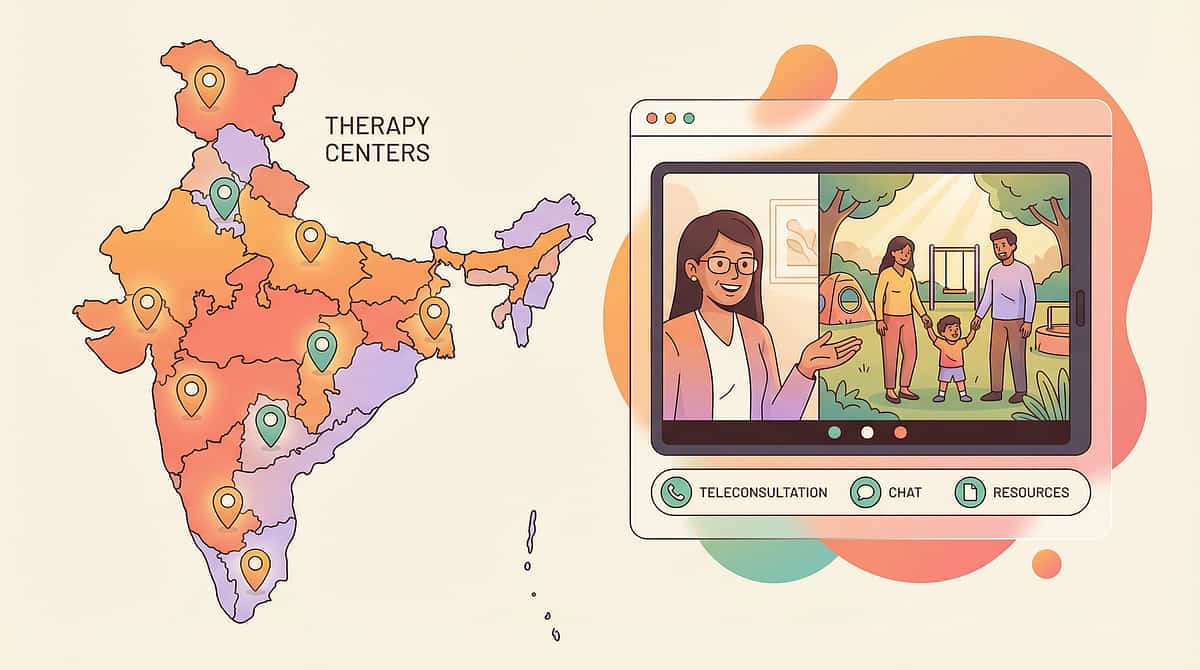
70+ centers across India. All operating under GPT-OS® clinical standards.
pinnacleblooms.org/find-center — Center locator map
🌐 International Families
Teleconsultation available in 16+ languages through the National Autism Helpline. Families from 70+ countries have accessed Pinnacle expertise remotely.
→ Call 9100 181 181 | pinnacleblooms.org
📧 Direct Contact
care@pinnacleblooms.org
Response within 24 hours for clinical queries.
FREE Helpline: 9100 181 181 — 16+ languages · 24×7
When Home Strategies Need Professional Reinforcement.
The Pinnacle assessment pathway provides a structured, data-driven entry into professional support. Each step builds on the last — from online baseline assessment through to daily home protocol delivery and outcome monitoring.
Outcome Monitoring
Everyday Therapy
Mealtime Plan
Seating & Sensory
AbilityScore

What to tell your pediatrician: "My child consistently cannot maintain seated position during meals. I believe there may be a postural control and/or sensory processing component. I'd like a referral for pediatric occupational therapy assessment, and possibly a developmental evaluation."
AbilityScore®
Tracks Mealtime Independence Readiness + Postural Control + Self-Regulation Indexes. pinnacleblooms.org/abilityscore
FusionModule™
Converges OT + Feeding + ABA inputs into one mealtime plan — not five disconnected opinions.
EverydayTherapyProgramme™
Daily home mealtime protocol, updated weekly based on GPT-OS® data analytics.
FREE Helpline: 9100 181 181 — FREE guidance for assessment navigation in 16+ languages.

Deeper Reading for the Curious Parent and the Referring Clinician.

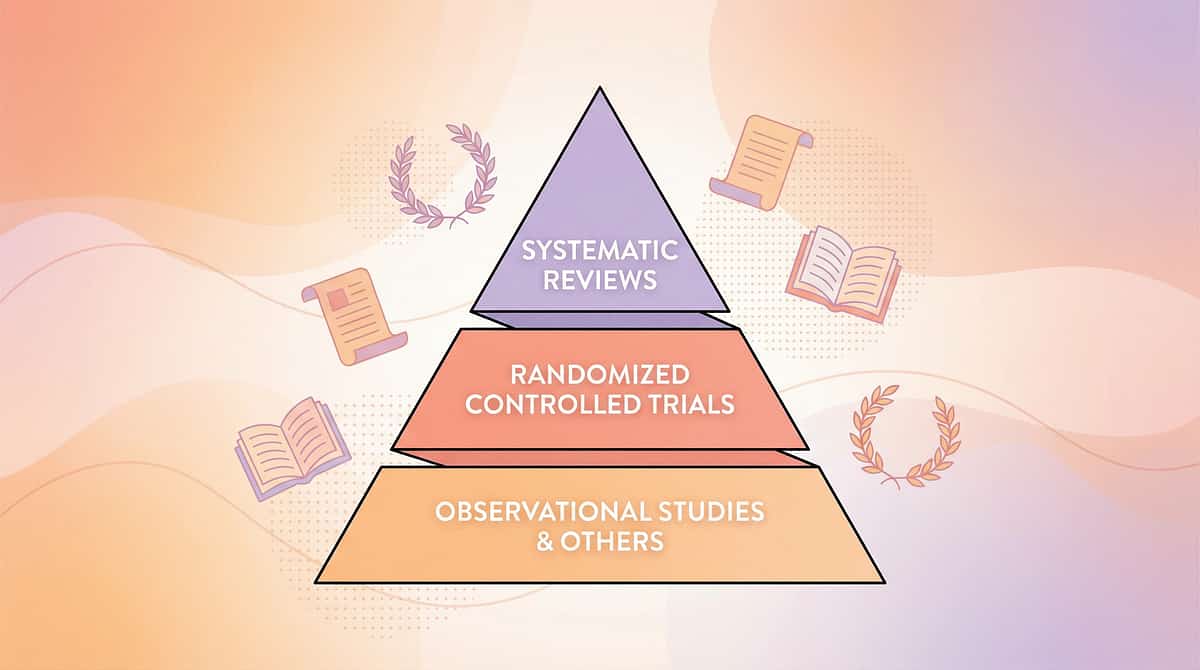
Evidence Pyramid Systematic Reviews (Highest) RCTs Cohort Studies Case Studies (Lowest) Key Studies PRISMA Systematic Review (2024) 16 articles, 2013–2023. Sensory integration intervention confirmed as evidence-based practice for ASD. → PMC11506176 Meta-Analysis — World J Clin Cases (2024) 24 studies. Sensory integration therapy improves adaptive behavior, sensory processing, gross/fine motor skills. → PMC10955541 | DOI: 10.12998/wjcc.v12.i7.1260 Indian RCT — Indian J Pediatr (2019) Padmanabha et al. Home-based sensory interventions: significant outcomes in Indian pediatric population. → DOI: 10.1007/s12098-018-2747-4 WHO Care for Child Development Package (2023) Age-specific evidence-based caregiver guidance. Implemented across 54 LMICs. → PMC9978394 NCAEP Evidence-Based Practices Report (2020) Visual supports, sensory-based interventions, and reinforcement classified as evidence-based for autism. Frontiers in Integrative Neuroscience (2020) Neurological framework for sensory integration/processing treatment in ASD. → DOI: 10.3389/fnint.2020.556660


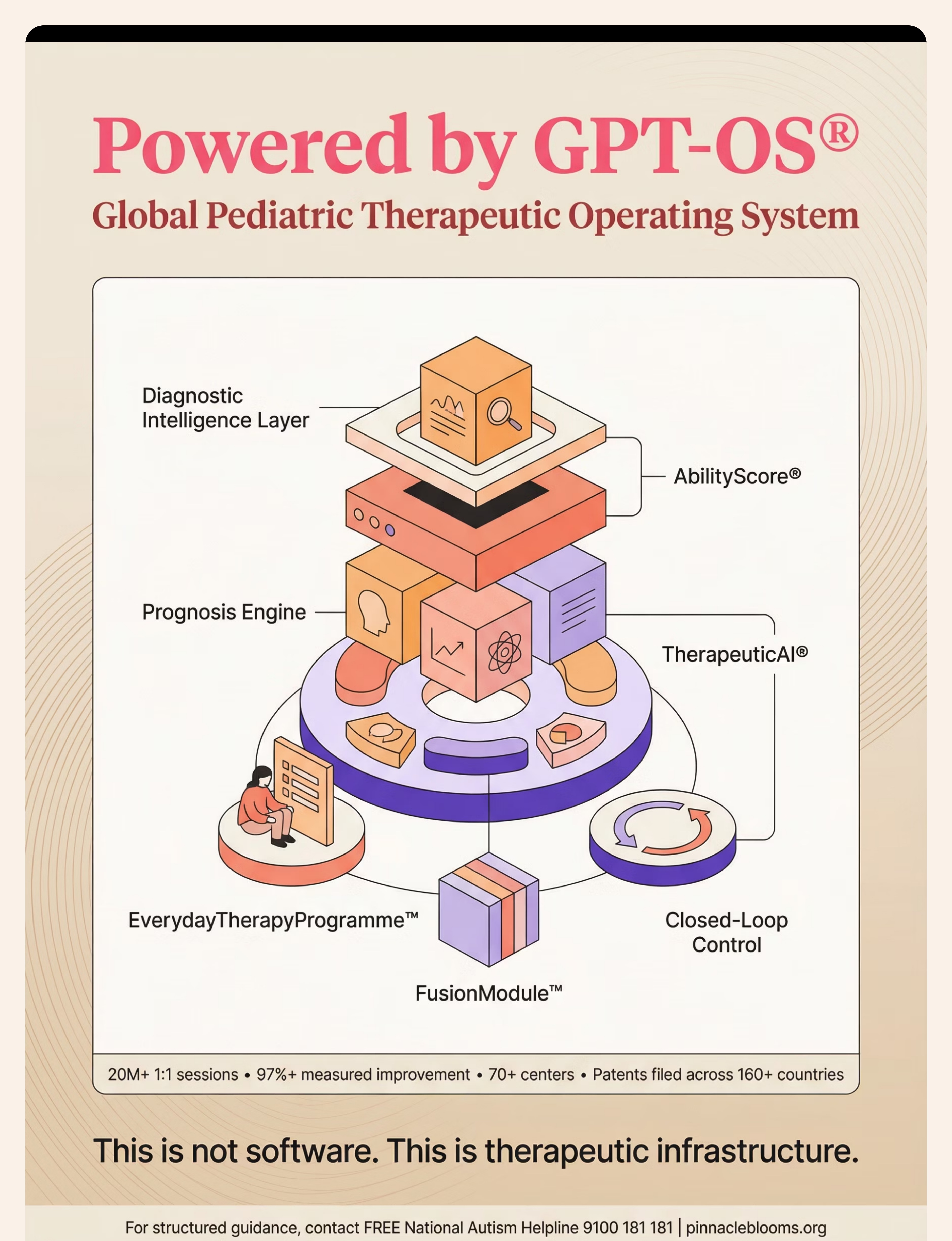
Your Daily Mealtime Data Builds the World's Most Accurate Pediatric Therapeutic Intelligence.
GPT-OS® Stack for E-467
AbilityScore®
Tracks Mealtime Independence Readiness Index + Postural Control + Self-Regulation Index
Prognosis Engine
Predicts trajectory based on current response patterns vs. 20M+ session database
EverydayTherapyProgramme™
Translates clinical guidance into daily mealtime micro-interventions
FusionModule™
Coordinates OT + Feeding + ABA inputs into one unified mealtime plan
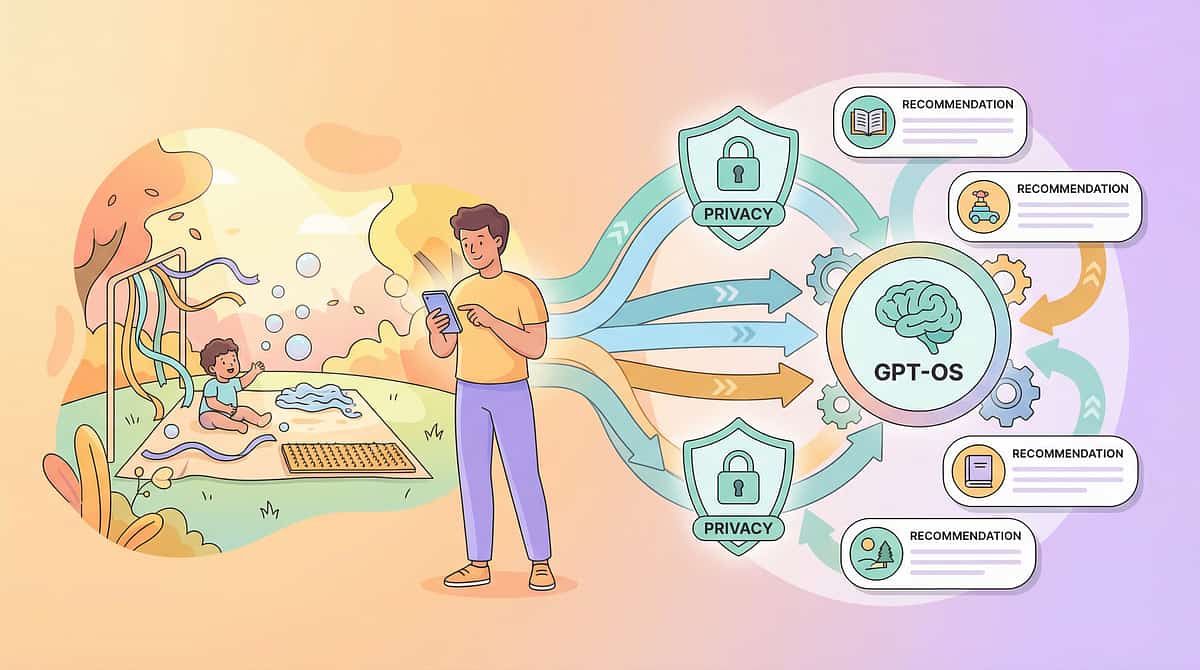
Data Flow
You Log Today's Session
GPT-OS® Analysis
Which materials working? Optimal timing progression?
Personalized Recommendations
Updated for you, every session
Population Intelligence
Your child's data improves outcomes for every similar child globally

Privacy: Data practices comply with IT Act 2000 (India), DPDP Act 2023, and GDPR principles. Aggregated population data is never individually attributed.
FREE Helpline: 9100 181 181
Watch the Reel That Brought You Here.
Reel E-467 · Feeding & Mealtime Independence Series · Episode 467
A Pinnacle OT demonstrates all 9 materials in context. See the wobble cushion in real use. See the resistance band setup. See the visual timer in action. Visual + text + demonstration = 3× learning modality coverage for maximum skill acquisition.
👁️ What You'll See
All 9 materials demonstrated in a real mealtime context by a qualified Pinnacle OT
⏱️ Duration
60 seconds · E-467 · Feeding & Mealtime Independence Series
📚 Related Reels
← E-466: Difficulty Transitioning to Table Foods | E-468: Food Throwing During Meals →
Explore all 999 Pinnacle Reels: pinnacleblooms.org/reels

NCAEP Evidence: Video modeling is classified as an evidence-based practice for autism (2020). Multi-modal learning improves parent skill acquisition significantly over text alone.
Consistency Across Caregivers Multiplies Impact. Share This Page.
When grandparents, teachers, and other caregivers understand the why behind these supports, they become therapeutic partners — not obstacles. Sharing this page is one of the highest-impact things you can do today.
"Explain to Grandparents" Simplified Version
When [name] gets up from the table at mealtimes, it is NOT rudeness and NOT that they're not hungry. Their body physically cannot stay still for long periods yet. We are working on it with specific supports: a footrest (feet need to be flat), a cushion on the chair, and a timer so they know how long they need to stay.

Please support by: not commenting on the movement or getting up · reinforcing when they stay ("well done for sitting!") · using the timer and respecting when it ends. Your consistency makes our work at home much more powerful.
Teacher Accommodation Template

"[Child's name] is working on mealtime and seated task tolerance as part of an OT-guided programme. Key accommodations requested: chair with footrest access at school mealtimes · brief movement breaks permitted (30–60 sec) every 5–7 minutes · visual timer visible to child during seated activities. Please contact [parent name] for full details."
WHO CCD Package: Multi-caregiver consistency is critical for intervention generalization and maintenance across environments. → PMC9978394

Questions Parents Ask Most at Pinnacle Centers About Mealtime Sitting.

Q: My child is 7, not 2. Is it too late for these strategies to work? Neuroplasticity remains high through childhood. The strategies in E-467 work across ages 2–10 and beyond. Older children may respond faster because they can understand the purpose of the materials. It is never too late. The starting point is wherever your child is now. Q: Should I use ALL 9 materials at once? No. Identify your child's primary root cause first (postural? sensory? attention?) and deploy the most relevant 2–3 materials. Layer others as tolerance builds. Too many changes simultaneously makes it harder to identify what's working. Q: My child has ADHD, not autism. Does this still apply? Yes. Mealtime sitting difficulty in ADHD is driven primarily by attention and impulse regulation challenges. The visual timer, structured movement breaks, and engaging conversation strategies are particularly powerful for ADHD profiles. The footrest is universally helpful. Q: How long before I should see improvement? Most families see measurable improvement (even if modest) within 2 weeks of consistent application. The key word is consistent — every meal, every day. If after 6 weeks of consistent daily application there is no measurable improvement, professional assessment is recommended. Q: Is the wobble cushion safe? Will it make my child more unstable? The wobble cushion is designed to allow micro-movement, not destabilize. For children with very poor trunk stability, start with less inflation. If it makes sitting harder, use a firm textured cushion instead and refer to OT for seated postural assessment. Q: Can I use screens to help my child sit for meals? Screens increase sitting duration but do not build the underlying regulation skill — and they interfere with the social and communicative benefits of family mealtimes. We recommend mealtime engagement strategies (Material 9) that build genuine attention regulation rather than bypassing it. Q: My child was sitting well and then suddenly stopped. Why? Regression can indicate: illness (check first), a developmental phase change, environmental change, or plateau of a material's effectiveness. Return to baseline materials, shorten the timer target temporarily, and rebuild. Regression is part of the trajectory, not failure. Q: When does a mealtime sitting problem become an autism red flag? Mealtime sitting difficulty alone is not diagnostic of autism. However, if it co-occurs with: limited eye contact, delayed speech, rigid routines, significant sensory sensitivities, social communication differences — a formal developmental evaluation is warranted. FREE: 9100 181 181. Didn't find your answer? → Ask GPT-OS®: pinnacleblooms.org/gpt-os | Book teleconsultation: pinnacleblooms.org/consult

Preview of 9 materials that help sitting for meals Therapy Material

Below is a visual preview of 9 materials that help sitting for meals therapy material. The pages shown help educators, therapists, and caregivers understand the structure and content of the resource before use. Materials should be used under appropriate professional guidance.
Page 1
Page 2
Page 3
Page 4
Page 5
Page 6
Page 7
Page 8
Page 9
Page 10
Page 11
Page 12
Page 13
Page 14
Page 15
Page 16
Page 17
Page 18
Page 19
Page 20
Link copied!
Your Child's Mealtime Can Change. The First Step Is Tonight's Dinner.
"Start with just the footrest. That's all. Feet flat. 5 minutes. You have everything you need."
20M+
Sessions Delivered
Exclusive 1:1 therapy sessions across the Pinnacle network
97%+
Measured Improvement
Of families report measurable progress with consistent application
70+
Centers Worldwide
Serving 70+ countries under GPT-OS® clinical standards

📞 FREE National Autism Helpline: 9100 181 181 — 16+ languages · 24×7 · FREE
🌐pinnacleblooms.org | care@pinnacleblooms.org | Find nearest center: pinnacleblooms.org/find-center
Validated by the Pinnacle Blooms Consortium: OT • SLP • ABA • SpEd • NeuroDev • Feeding Therapy • CRO • WHO/UNICEF Framework
This content is educational. It does not replace individualized assessment and intervention with licensed occupational therapists, physical therapists, or developmental specialists. Individual results may vary. Statistics represent aggregate outcomes across the Pinnacle Blooms Network®.
CIN: U74999TG2016PTC113063 | DPIIT: DIPP8651 | MSME: TS20F0009606 | GSTIN: 36AAGCB9722P1Z2 · © 2025 Pinnacle Blooms Network®, unit of Bharath Healthcare Laboratories Pvt. Ltd. All rights reserved. · techniques.pinnacleblooms.org