
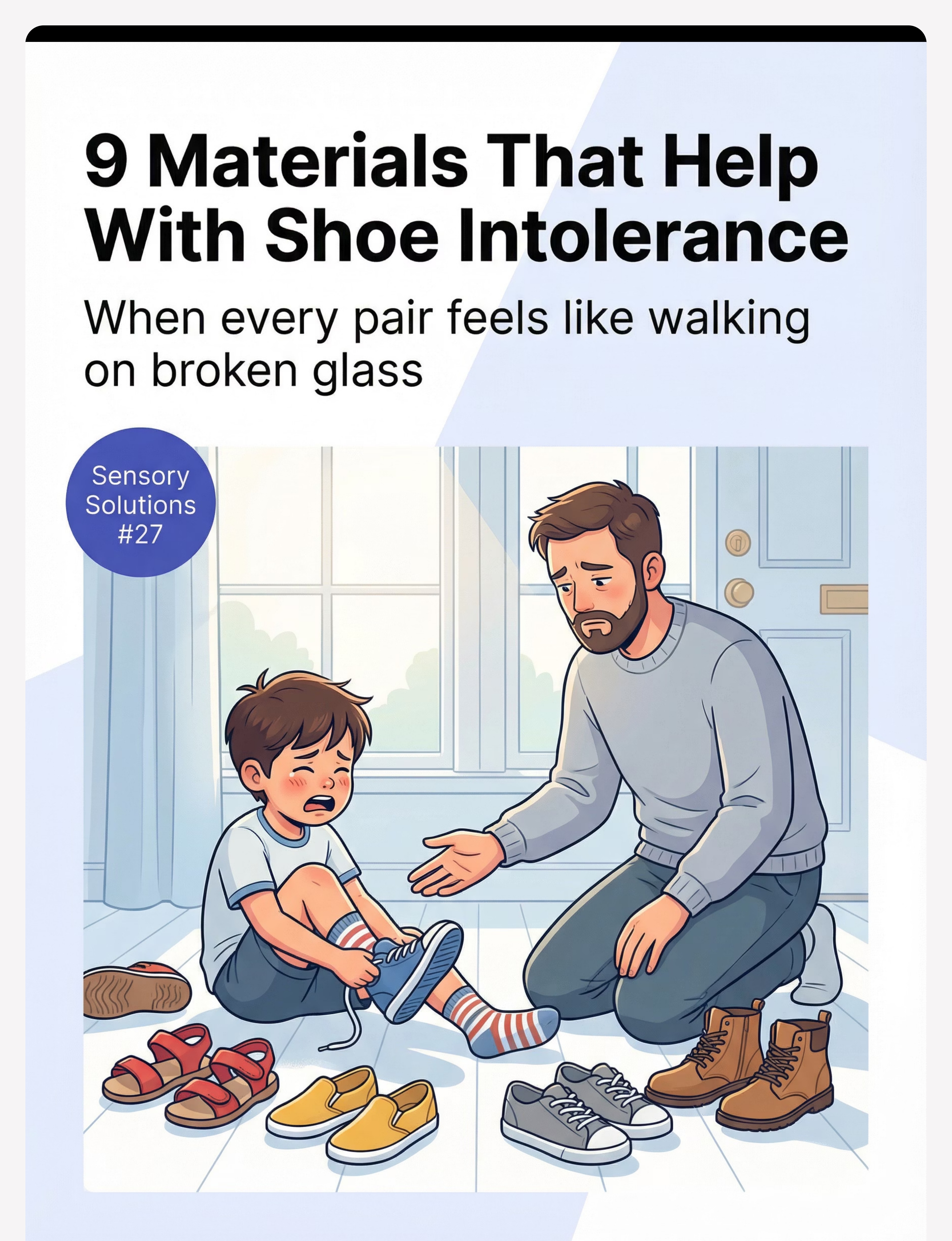
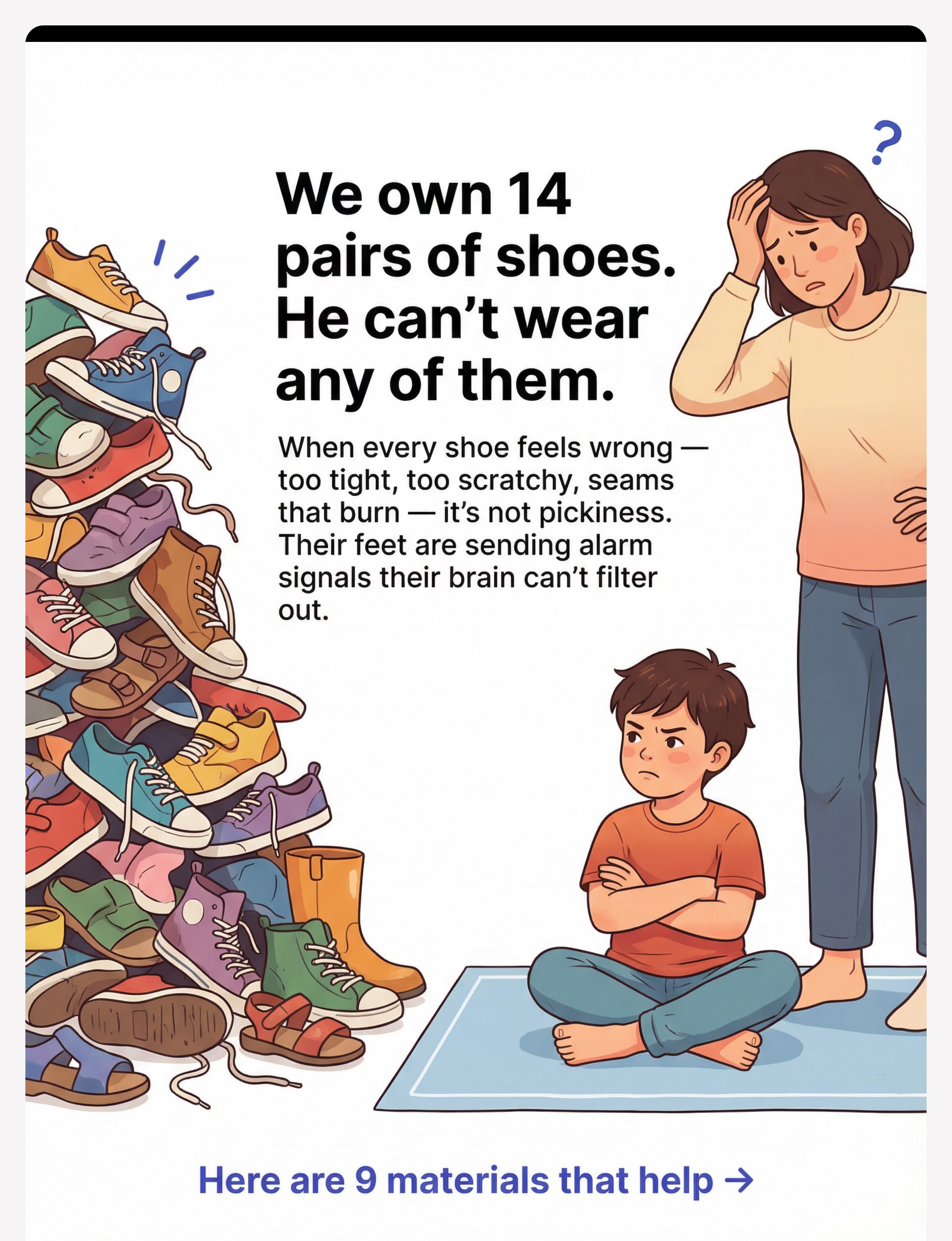
We Own 14 Pairs of Shoes. He Can't Wear Any of Them.
When every pair feels like walking on broken glass — it's not pickiness. It's neurology.
Sensory Solutions Series — Episode #27
Tactile Processing • Foot Sensitivity
Age Band: 2–12 years
The Morning Battle You Know Too Well
It's 7:42 AM. School starts in eighteen minutes. Your child is on the floor, sobbing, pulling at shoes that have been on for less than thirty seconds. You've tried soft shoes, hard shoes, no socks, thick socks, sandals, sneakers — everything. The seams burn. The laces press. The soles feel like concrete.
People tell you to just "make him wear them." They don't understand. He literally cannot.
You are not failing. Your child's nervous system is speaking a language most people can't hear.
This page gives you 9 materials and strategies — validated by a consortium of Occupational Therapists, Speech-Language Pathologists, Board Certified Behavior Analysts, Special Educators, and NeuroDevelopmental Pediatricians — that can help your child find shoes they can actually wear.
Pinnacle Blooms Consortium Validated
Built by Mothers. Engineered as a System.
You Are Among Millions
Shoe intolerance is not rare. It is not unusual. It is one of the most common daily-living challenges reported by families navigating sensory processing differences. You are among millions of families worldwide facing this exact morning battle.
80%
Sensory Difficulties in ASD
of children diagnosed with autism spectrum disorder experience sensory processing difficulties — per PRISMA systematic review (2024), analyzed across 16 studies from 2013–2023.
60–70%
Tactile Hypersensitivity
of children with sensory processing differences show tactile hypersensitivity affecting feet, hands, or both — the feet contain the highest density of tactile receptors in the entire body.
1 in 6
Global Prevalence
children globally presents with developmental differences requiring sensory accommodation in daily living activities including dressing and footwear (WHO/UNICEF data).
Research Citation: PMC11506176 | PMC10955541 | WHO Nurturing Care Framework (2018) | UNICEF MICS Developmental Indicators
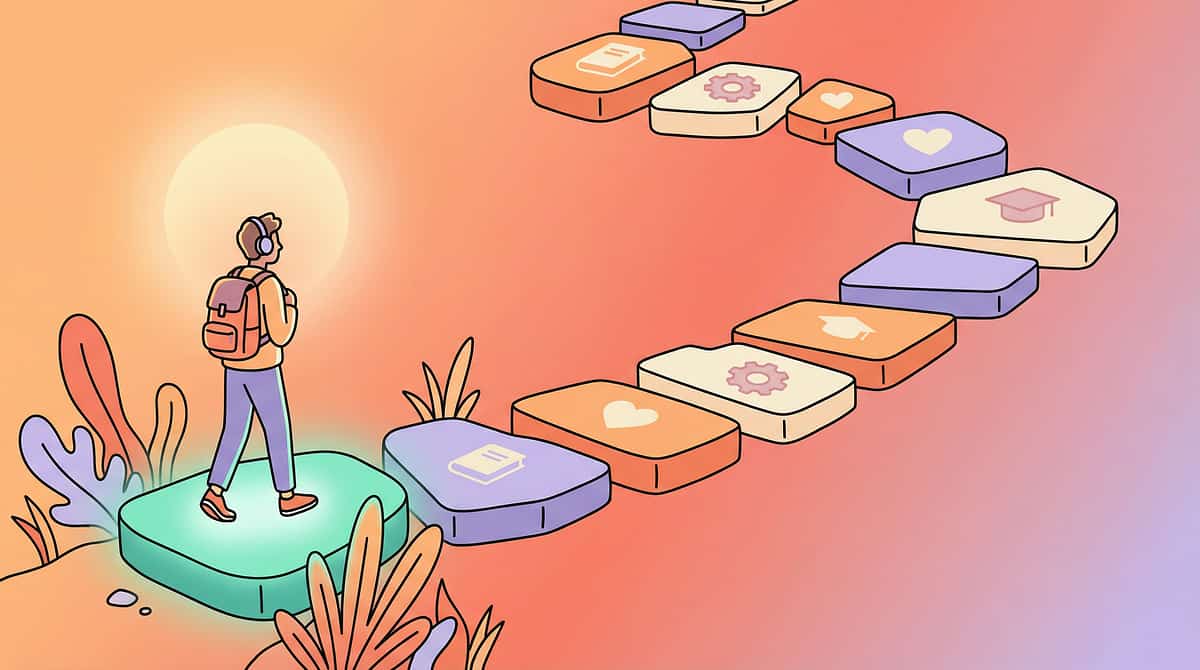
This Is Neurology, Not Behavior
The Science
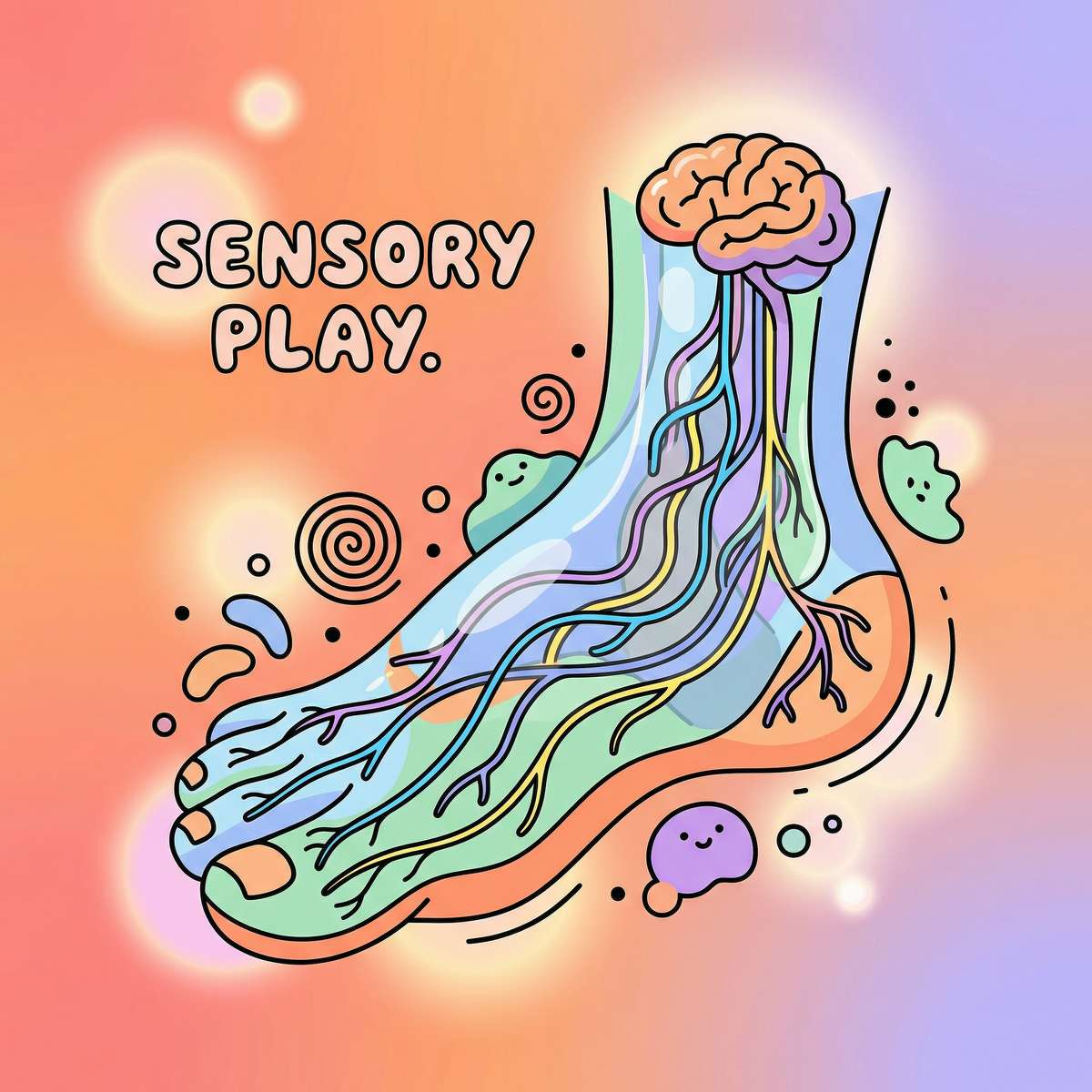
The soles of the feet contain approximately 200,000 nerve endings — the highest tactile receptor density in the human body. In children with tactile over-responsivity, the somatosensory cortex over-amplifies normal shoe sensations.
What should register as mild pressure registers as pain. What should feel like gentle texture feels like sandpaper. The brain's protective system interprets normal footwear as a threat and triggers a fight-or-flight defensive response.
What This Means for Your Child
When your child screams that shoes hurt, their brain is literally processing shoe contact as painful. This is not stubbornness. This is not attention-seeking. This is a measurable neurological processing difference in how tactile information travels from the foot's receptors through the spinal cord to the brain's sensory processing centers.
This is a wiring difference, not a behavior choice. The pain your child reports is neurologically real.
Research Citation: DOI: 10.3389/fnint.2020.556660 (Frontiers in Integrative Neuroscience) | SPD Foundation: Tactile over-responsivity research

Your Child's Developmental Position
Shoe intolerance commonly co-occurs with broader tactile defensiveness (clothing sensitivity, food texture aversion, grooming resistance), proprioceptive processing differences, and anxiety in novel sensory environments. Addressing footwear tolerance is part of a larger sensory regulation journey — not an isolated challenge.
0–12 Months
Barefoot exploration; sensory foundations forming through natural tactile experiences with the world.
12–24 Months
First shoes introduced; sensory tolerance expanding. ⚠️First signs of shoe distress often emerge here.
2–4 Years
Dressing independence developing; shoe tolerance expected. ⚠️Shoe intolerance becomes functionally limiting here.
4–7 Years
School requires specific footwear; community participation demands shoes. Daily living impact escalates significantly.
7–12 Years
Social awareness increases; peer comparison begins. Shoe intolerance affects participation and self-esteem.
Your child is here. Here is where we're heading — toward functional footwear independence across life contexts.
Research Citation: PMC9978394 | WHO Care for Child Development (CCD) Package | UNICEF MICS Developmental Indicators
Evidence Grade: Established Practice
Level I–II Evidence
Systematic Reviews + RCTs
PRISMA Systematic Review (2024)
16 articles from 2013–2023 confirm sensory integration intervention meets criteria as evidence-based practice for children with ASD. (PMC11506176)
Meta-Analysis (World J Clin Cases, 2024)
Sensory integration therapy effectively promotes adaptive behavior, sensory processing, and motor skills across 24 studies. (PMC10955541)
Indian RCT (Padmanabha et al., 2019)
Home-based sensory interventions demonstrate significant outcomes when parents are trained in therapeutic material use. (DOI: 10.1007/s12098-018-2747-4)
NCAEP Evidence Report (2020)
Environmental modification and sensory-based interventions classified as evidence-based practices for autism.
4.5
Confidence Rating
Strong evidence base with multiple systematic reviews supporting this intervention approach.
Clinically validated. Home-applicable. Parent-proven.
ACT II: THE KNOWLEDGE TRANSFER
Sensory-Accommodated Footwear Intervention with Graduated Desensitization
"Finding shoes that work — and building feet that can handle them"
A multi-component intervention combining environmental modification (sensory-friendly footwear, sock modifications, insole replacement), nervous system preparation (deep pressure input, proprioceptive priming), and graduated exposure (systematic desensitization to footwear) to address tactile hypersensitivity affecting foot tolerance. The approach works on two parallel tracks: immediate accommodation (making shoes tolerable NOW) and long-term tolerance building (expanding what feet can handle over time).
Sensory Processing
Tactile → Foot Sensitivity
Daily Living
Self-Care → Dressing Skills
Emotional Regulation
Transition → Morning Routine
Age Range
2–12 years
Duration
Ongoing (accommodation) + 8–12 weeks (desensitization)
Frequency
Daily (shoe accommodation) + 3–5x/week (sensory play)

The Consortium Behind Your Child's Solution
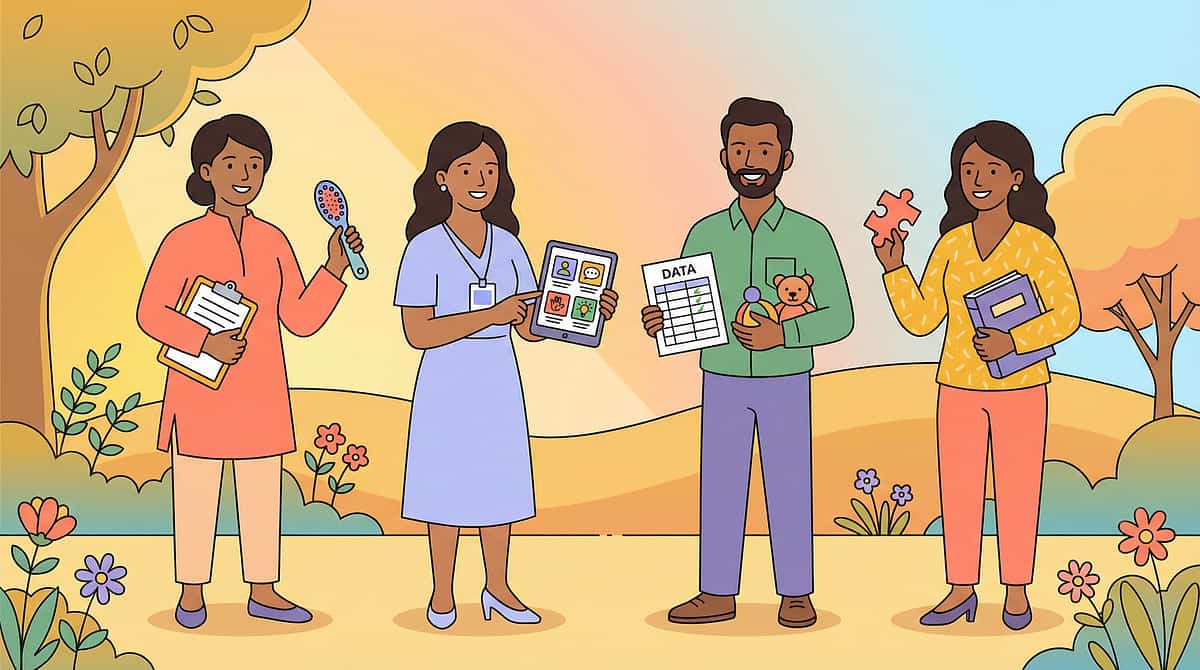
Occupational Therapist (OT) — Primary Lead
Sensory integration assessment, footwear modification recommendations, graduated desensitization protocols, deep pressure techniques, and sensory diet design for foot tolerance.
Board Certified Behavior Analyst (BCBA)
Graduated exposure scheduling, reinforcement strategies during shoe tolerance building, functional behavior assessment of shoe refusal, and data collection frameworks for tracking progress.
Special Educator (SpEd)
School accommodation planning, IEP footwear modifications, classroom shoe tolerance strategies, and peer awareness support.
NeuroDevelopmental Pediatrician
Differential diagnosis (sensory vs. structural foot issues), referral for podiatric evaluation when needed, and medication review if sensory processing is part of a broader profile.
This technique crosses therapy boundaries because the brain doesn't organize by therapy type. Your child's feet need OT science, ABA precision, educational accommodation, and medical oversight — working as one system.
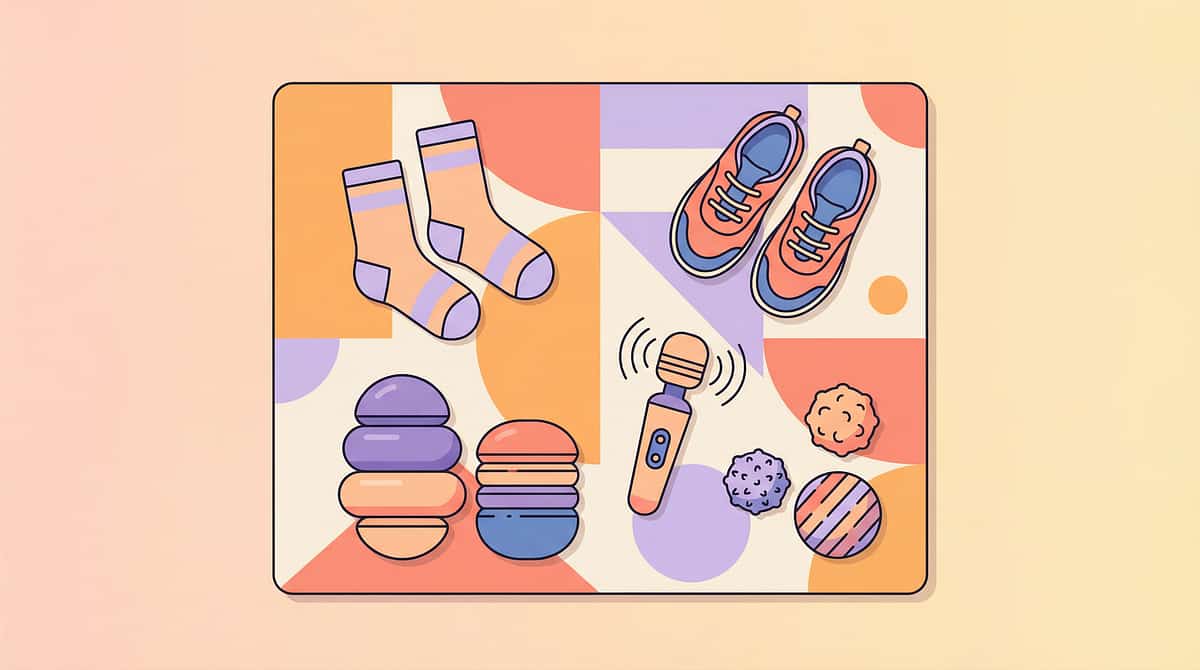
Precision Targets — Not a Random Activity
Observable Indicators of Progress
Duration Increases
Time wearing shoes grows steadily week over week.
Distress Decreases
Intensity of distress during shoe application drops measurably.
Style Range Expands
Number of tolerated shoe styles increases over time.
Independence Improves
Child manages shoes with decreasing adult support.
Routine Time Drops
Morning shoe process shrinks from 20+ minutes to under 5.
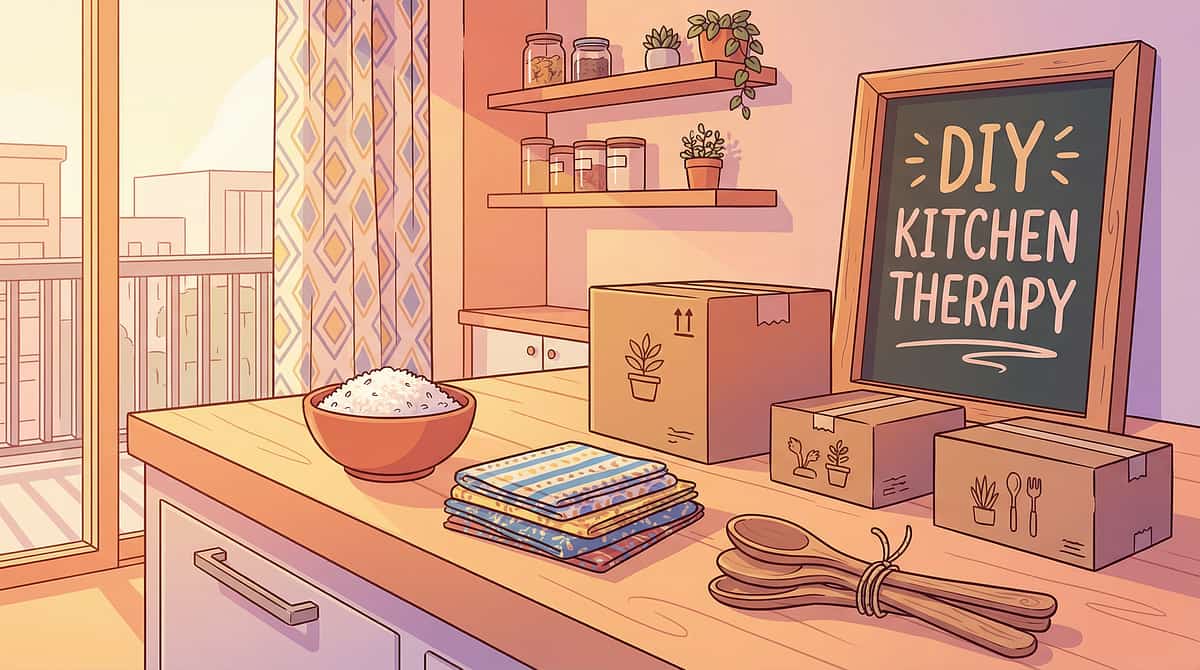
Your 9-Material Toolkit
Here are the nine materials and strategies — organized by function — that form your complete shoe tolerance intervention. Each material addresses a specific barrier your child's nervous system faces when encountering footwear.
# | Material | Price Range | Category | Function | |
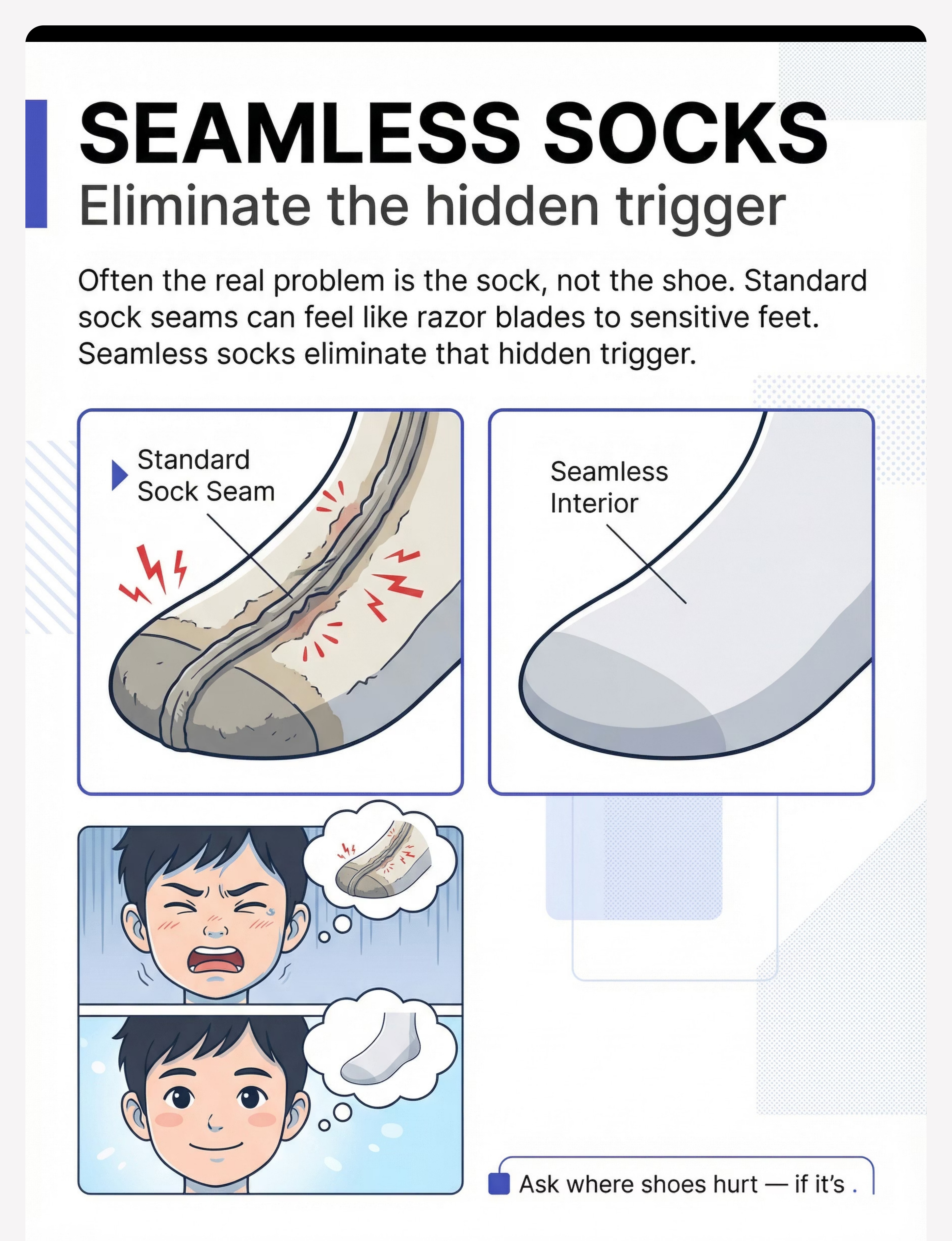
1 | Seamless / Sensory-Friendly Socks | ₹300–800/pair | Footwear Mod | Eliminate hidden seam triggers | |
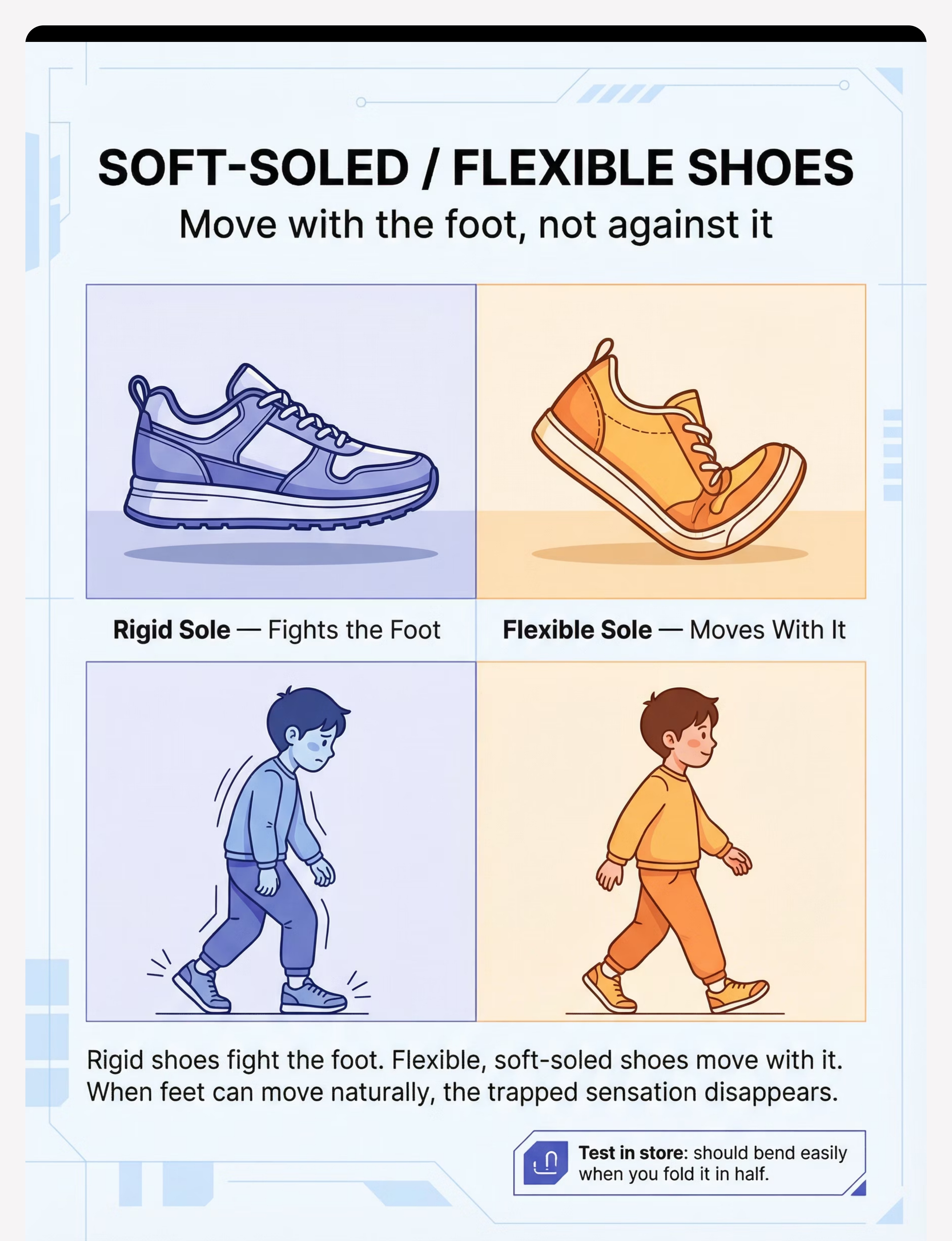
2 | Soft-Soled / Flexible Shoes | ₹800–3,500 | Footwear Mod | Reduce sole rigidity pain | |
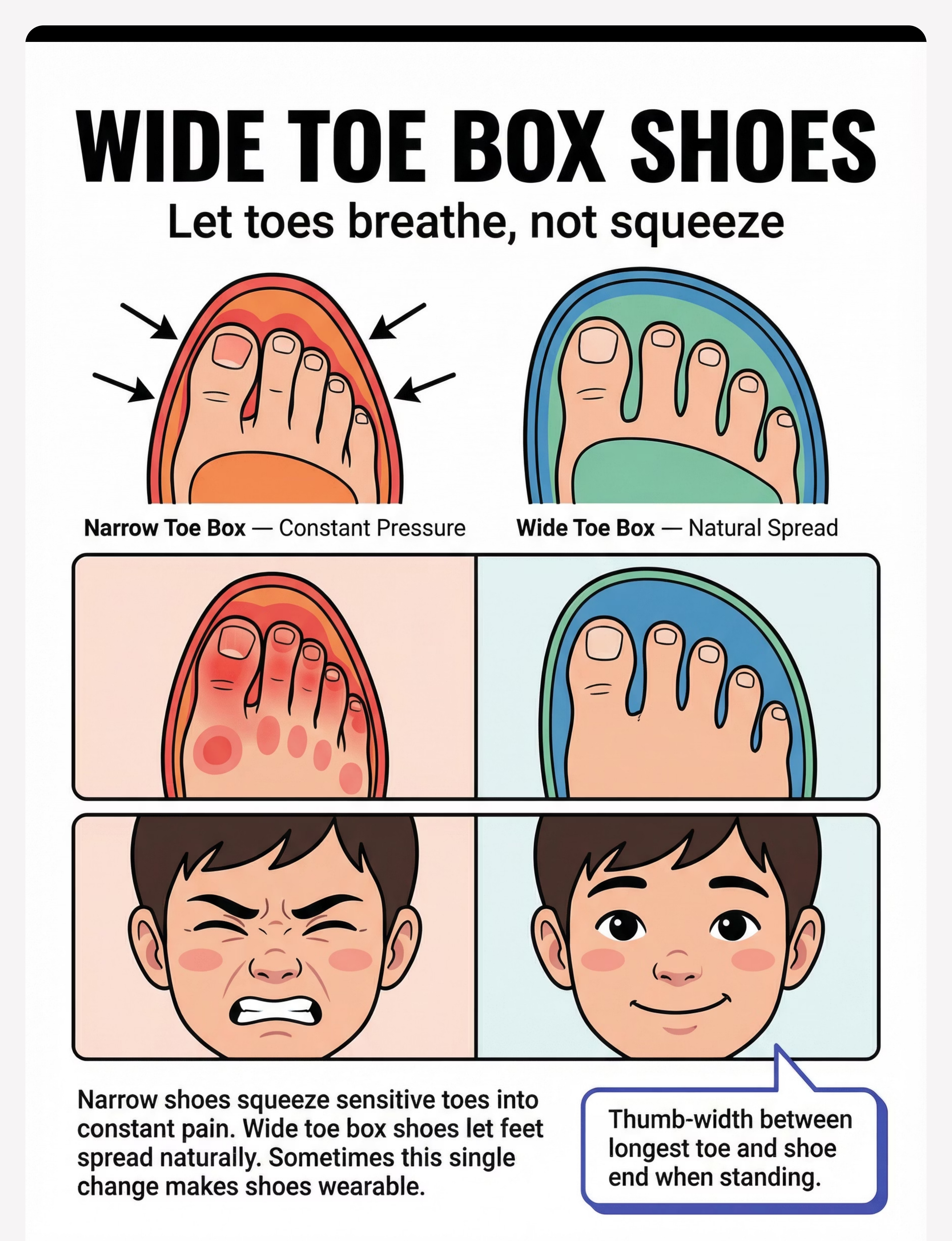
3 | Wide Toe Box Shoes | ₹1,000–4,000 | Footwear Mod | Eliminate toe compression | |
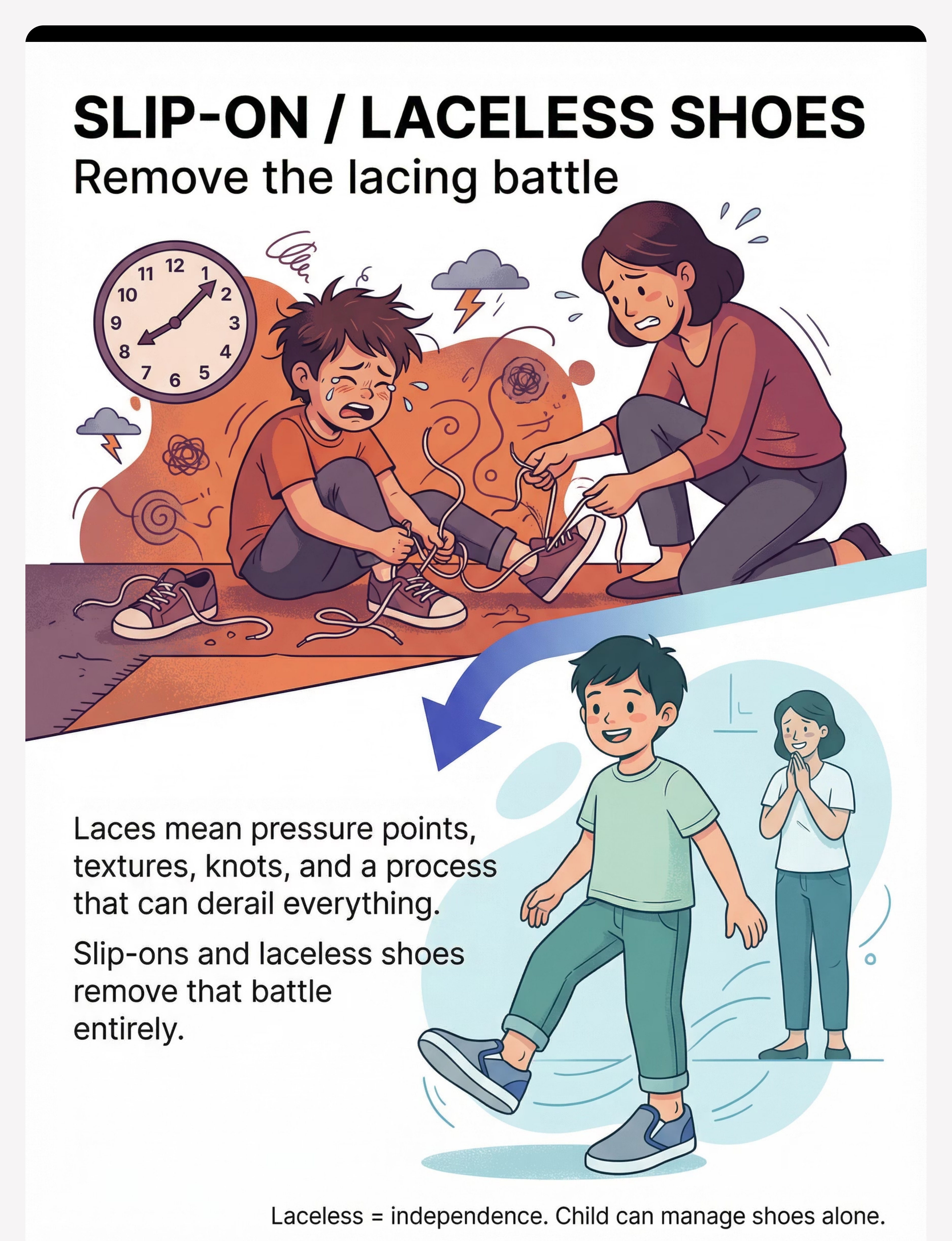
4 | Slip-On / Laceless Shoes | ₹600–3,000 | Footwear Mod | Remove lacing pressure | |
5 | Graduated Shoe Exposure Protocol | ₹0 (technique) | Tolerance Building | Systematic desensitization | |
6 | Deep Pressure Input Before Shoes | ₹0 (technique) | Nervous System Prep | Regulate before contact | |
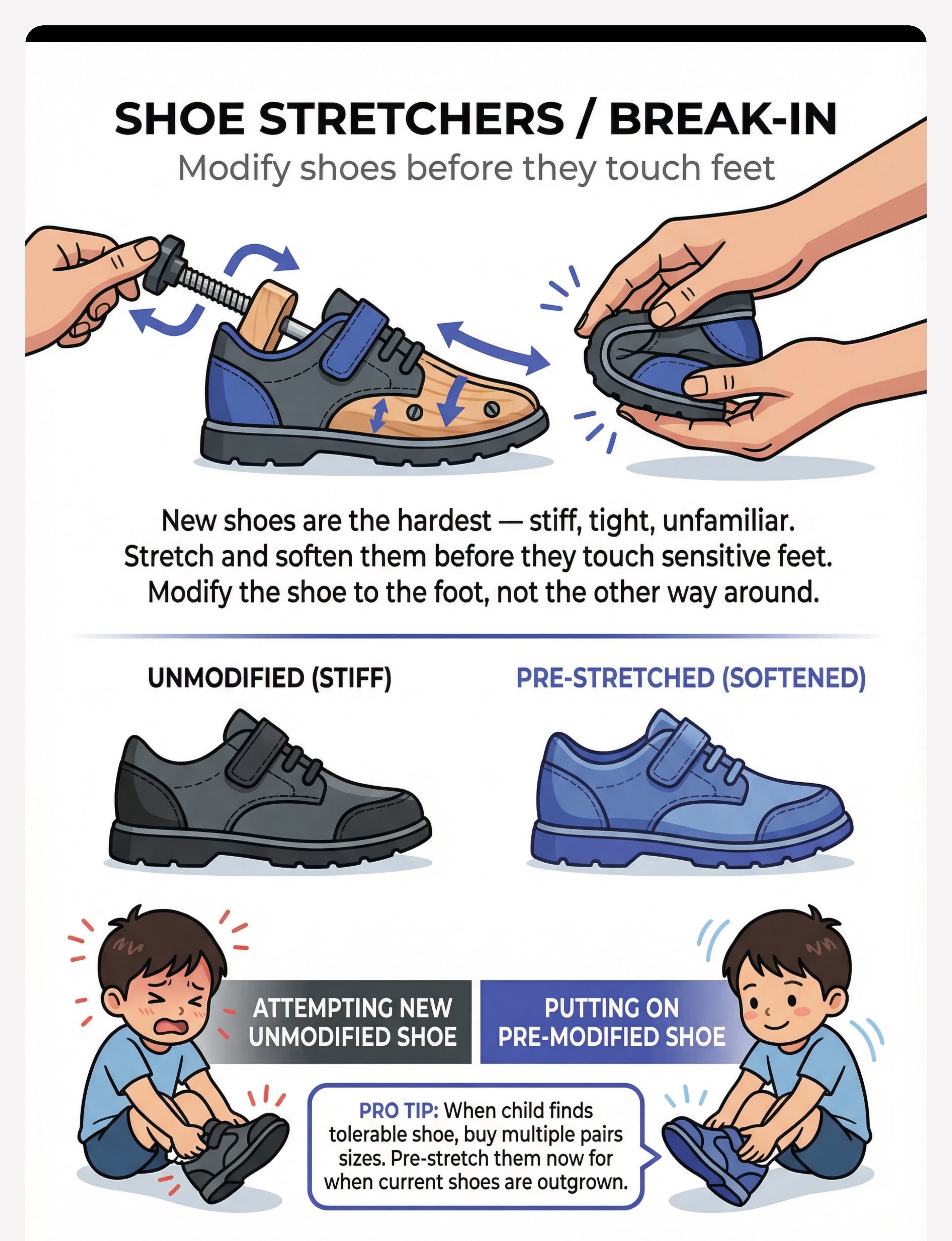
7 | Shoe Stretchers / Break-In Modification | ₹300–1,500 | Shoe Preparation | Customize shoe fit | |
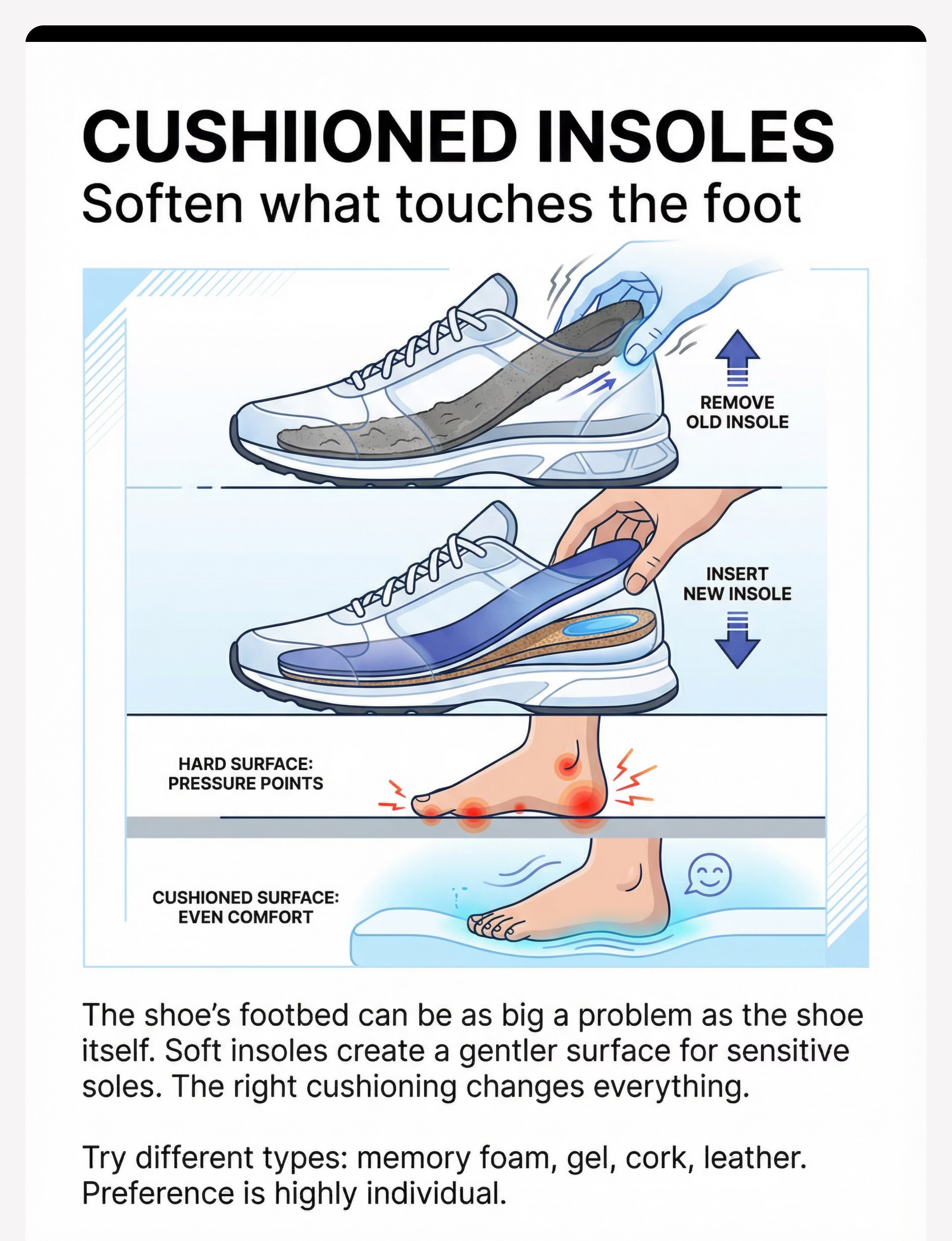
8 | Orthotic Insoles / Cushioned Inserts | ₹400–10,000 | Footwear Mod | Replace harsh factory insoles | |
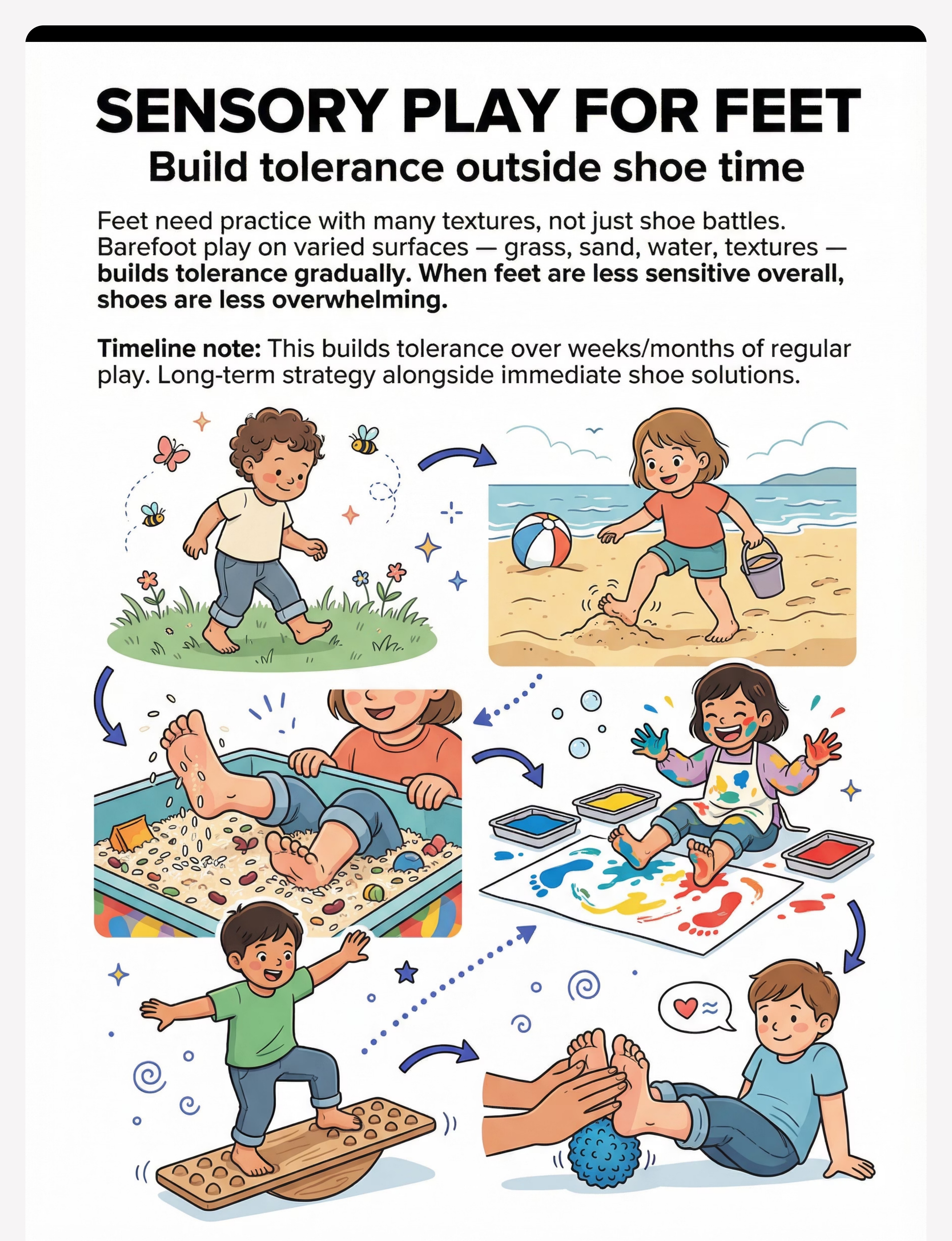
9 | Sensory Diet / Foot Desensitization Play | ₹0–2,000 | Tolerance Building | Build long-term tolerance |
Total Investment: ₹3,000–15,000 for a comprehensive approach (varies by shoe selection).
🟢Essential Starters (Start Here): 1) Seamless Socks — solve the hidden trigger first. 2) Deep Pressure Before Shoes — regulate the nervous system. 3) Find ONE tolerable shoe style — then optimize from there.
Every Family Can Start Today — Regardless of Budget
The WHO/UNICEF Nurturing Care Framework emphasizes context-specific, equity-focused interventions. You do not need expensive products to begin. You need knowledge. This page gives you that knowledge.
Buy This | Make This (₹0) | How | |
Seamless socks (₹300–800) | Inside-out regular socks | Turn socks inside out so seams face outward. Remove internal tags. | |
Soft-soled shoes (₹800–3,500) | Water shoes or canvas shoes | Any shoe that bends easily in half works. | |
Wide toe box shoes (₹1,000+) | Size up by half | Look for "wide" or "extra wide" in existing stores. | |
Slip-on shoes (₹600–3,000) | Elastic no-tie laces (₹100–200) | Replace existing laces in current shoes. | |
Shoe stretchers (₹300–1,500) | Stuff with thick socks overnight | Flex soles by hand repeatedly to break them in. | |
Cushioned insoles (₹400–3,000) | Soft cloth or foam padding | Cut to fit inside the shoe. | |
Graduated exposure tools | Timer + preferred activity + shoe | Free technique — no materials needed. | |
Deep pressure tools | Firm foot massage with hands | Free — use your own hands. | |
Sensory play materials | Grass, sand, water, rice, beans | All available at home — free. |
Research Citation: PMC9978394 | WHO NCF Handbook (2022) — CCD Package implemented across 54 LMICs demonstrates household-material-based intervention efficacy
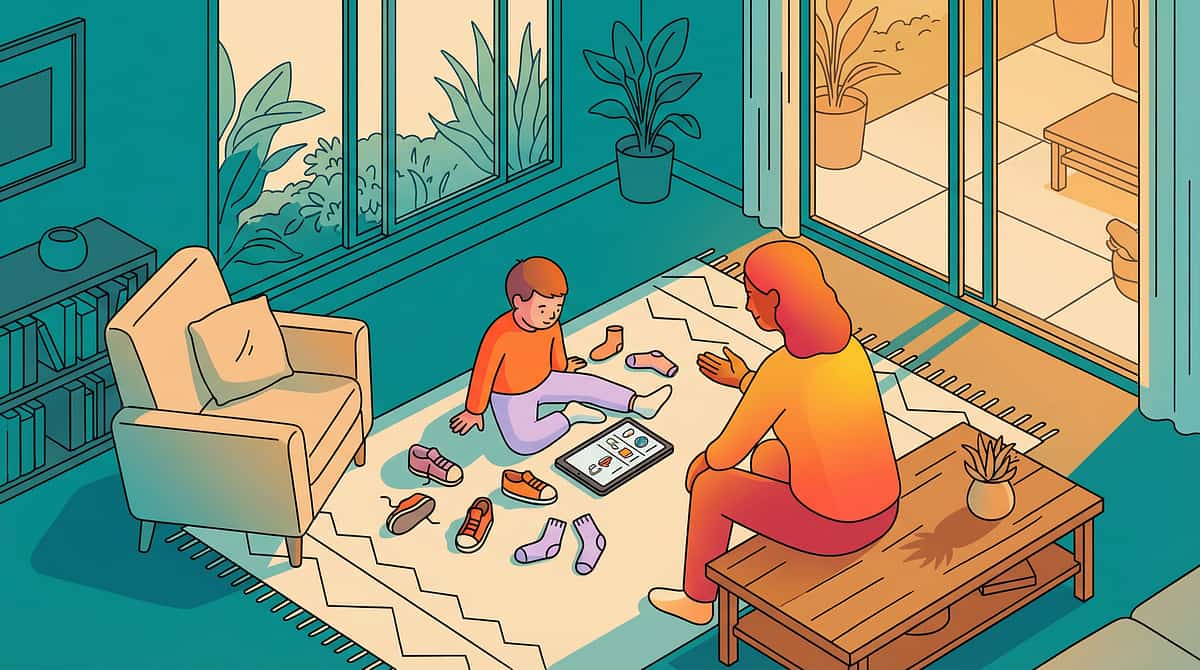
Safety Gate — Read Before You Begin
🔴 RED — DO NOT PROCEED IF:
- Child has open wounds, blisters, or skin conditions on feet
- Child is in active meltdown or severely dysregulated state
- Suspected structural foot problems (flat feet, bunions, foot pain without shoes) — see podiatrist first
- Child has recently had a medical procedure affecting feet or legs
🟡 AMBER — MODIFY APPROACH IF:
- Child is tired, hungry, or recovering from illness
- Child has already had a difficult sensory experience today
- Morning is already running late (don't add shoe pressure to time pressure)
- Child shows pre-dysregulation signs (stimming increase, withdrawal, irritability)
🟢 GREEN — PROCEED WHEN:
- Child is fed, rested, and in a regulated state
- Environment is calm and unhurried
- Materials are prepared in advance
- You have time to end BEFORE distress (always end on success)
🚨 Absolute Red Lines — STOP Immediately If:
- Self-injury during shoe attempts (hitting, biting, head-banging)
- Complete dissociation or freeze response
- Regression in previously tolerated footwear
- Shoe avoidance preventing school attendance for >5 consecutive days
Contraindications
- Never force shoes onto a distressed child
- Never punish shoe refusal
- Never remove accommodations that are working to "challenge" the child
- Never dismiss the child's pain reports
- Avoid shoe practice during already-dysregulated states
Research Citation: DOI: 10.1007/s12098-018-2747-4 (Padmanabha et al. — home-based sensory intervention safety protocols)
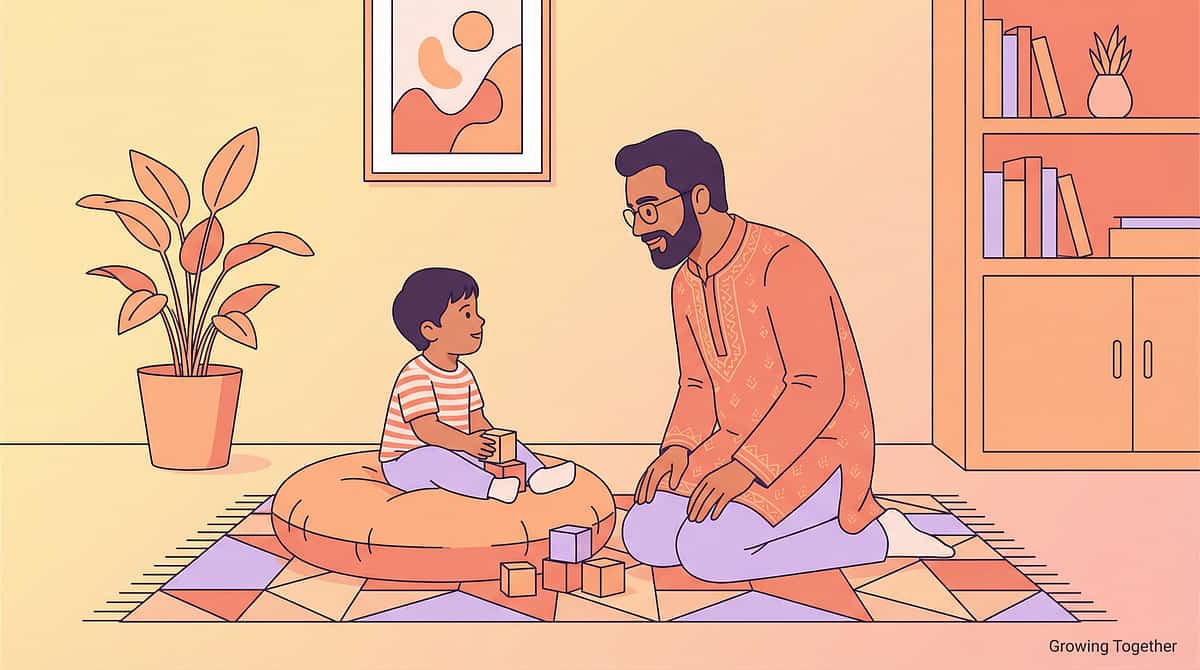
Prepare the Environment — Before a Single Shoe Appears
For Morning Shoe Routine — Set Up:
- Designated "shoe spot" — same location every day (predictability reduces anxiety)
- Seating: low stool or floor mat where child can sit comfortably
- Shoes and socks pre-positioned (child doesn't see overwhelming pile)
- Only ONE shoe option presented (not a wall of choices)
- Timer visible (if using graduated exposure)
- Preferred activity/reward nearby (pairing)
- Sensory prep materials ready (massage tools, weighted items)
Remove from the Space:
- Clock pressure ("we're LATE" energy)
- Audience (siblings watching)
- Competing sensory input (TV, loud music)
- Previous "battle" shoes that carry negative associations
Environmental Conditions:
- Temperature: cool room preferred (hot feet increase sensitivity)
- Lighting: natural or soft (avoid harsh fluorescent)
- Sound: quiet background (no sudden noises)
- Surface: non-slip floor for safety
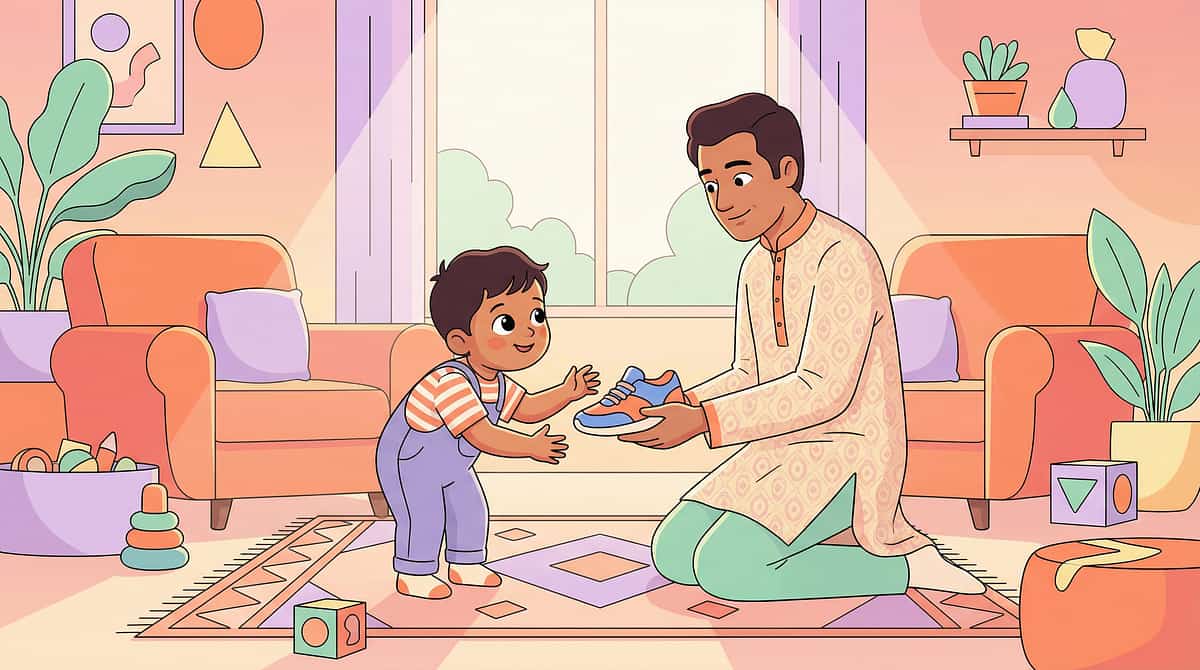
ACT III: THE EXECUTION
60-Second Pre-Session Readiness Check
Before every shoe session, run through this quick readiness check. The best session is one that starts right. A skipped session costs nothing. A forced session costs trust.
Fed within the last 2 hours?
Hunger destabilizes sensory regulation. Ensure your child has eaten recently.
Slept adequately last night?
Fatigue dramatically increases sensory defensiveness. Poor sleep = harder session.
No meltdowns in the past 30 minutes?
The nervous system needs recovery time. A recent meltdown means the system is already overloaded.
Child appears calm or neutral?
Not already dysregulated. Look for baseline behaviors — relaxed body, normal tone of voice.
YOU feel calm and patient?
Your regulation matters too. Children co-regulate off their caregivers. Your anxiety transfers.
Time available to end BEFORE distress?
Never start if you can't stop gracefully. Rush guarantees failure.
All Green → GO
Proceed with full protocol
1–2 Amber → MODIFY
Shortened version, lowest-demand only
Any Red → POSTPONE
Switch to calming activity, try tomorrow
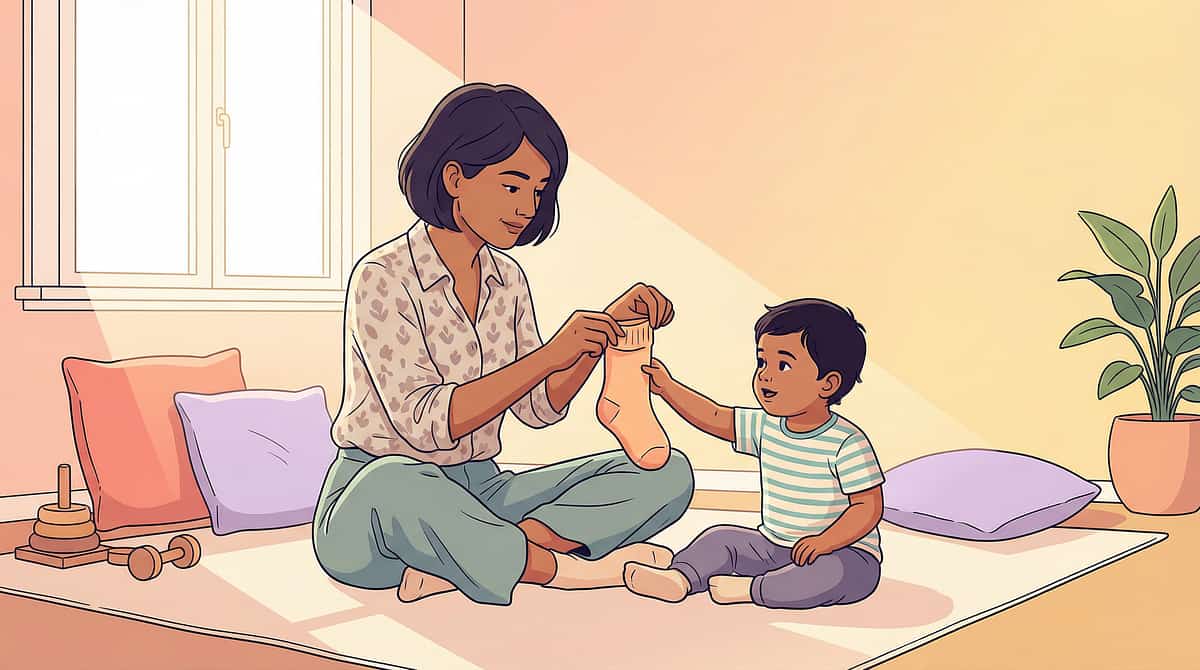
Step 1: Calm the Feet First
1–2 Minutes
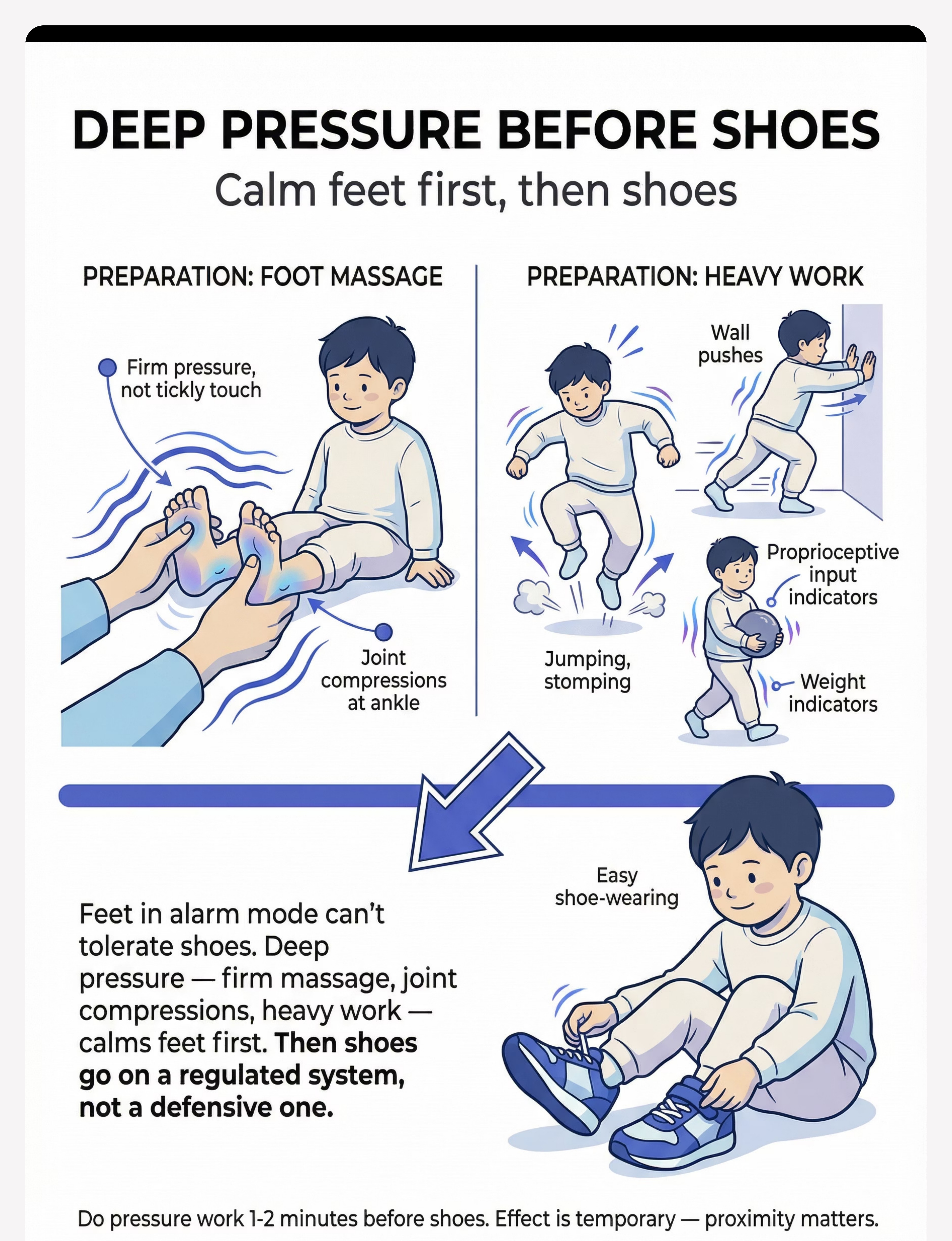
Deep Pressure Prep
"Hey buddy, let's get your feet ready. Can I squeeze your feet? Let's do some jumping first!"
Firm Foot Massage
Use both hands with firm pressure (NOT light tickling touch). Press palms firmly against soles, squeeze toes gently, apply joint compressions at ankles (press-release 10x).
Heavy Work Alternative
Have child jump 10x, stomp feet, push against a wall, or walk on tiptoes across the room. These proprioceptive activities organize the nervous system.
Weighted Input
Place feet under a heavy pillow or weighted blanket for 30 seconds. Deep pressure calms the tactile system.
✅ What Acceptance Looks Like
Child allows foot massage without pulling away. Completes jumping/stomping willingly. Feet appear relaxed, toes uncurled.
⚠️ What Resistance Looks Like
Child pulls feet away from touch → switch to heavy work (jumping, stomping). Refuses all foot contact → let child initiate with a foot toy/ball and try shoes later.
⚠️Critical: Light touch ACTIVATES the defensive response. You need FIRM, deep pressure. If child is ticklish, use tools (foam roller, weighted blanket) instead of hands.
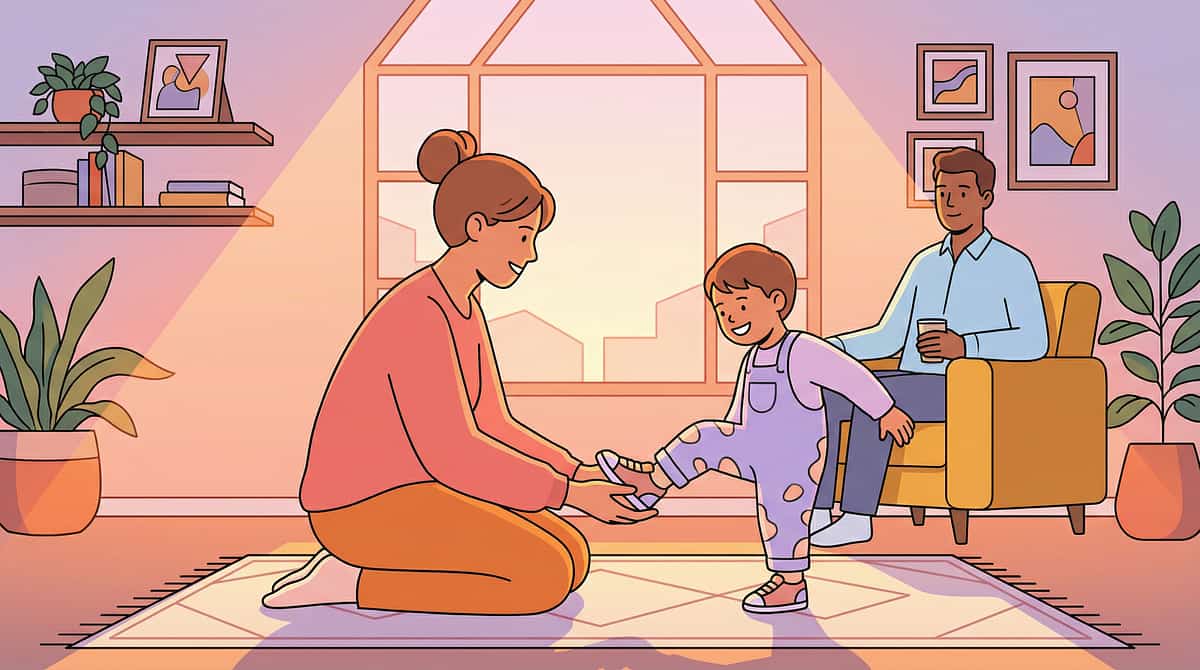
Step 2: The Sock Solution
1–2 Minutes
Sock Application
"Let's try your special socks — the smooth ones. Feel how soft they are inside?"
Present Seamless Socks
Use seamless socks or inside-out regular socks. Let child feel the interior — no seams, no bumps, no tags.
Roll On Gently
Not pulling or tugging. Smooth, slow, unhurried. Child can see you putting the sock on (not from behind). Child maintains visual control.
Check In
"Does anything feel bumpy or scratchy?" — validate whatever they report. If socks feel okay → immediate verbal praise: "Great job! Your feet look comfortable!"
Ideal
Allows socks, no discomfort → proceed to Step 3
Acceptable
Tolerates 30+ sec with mild discomfort → praise, proceed cautiously
Concerning
Immediately pulls socks off → return to deep pressure, try again tomorrow
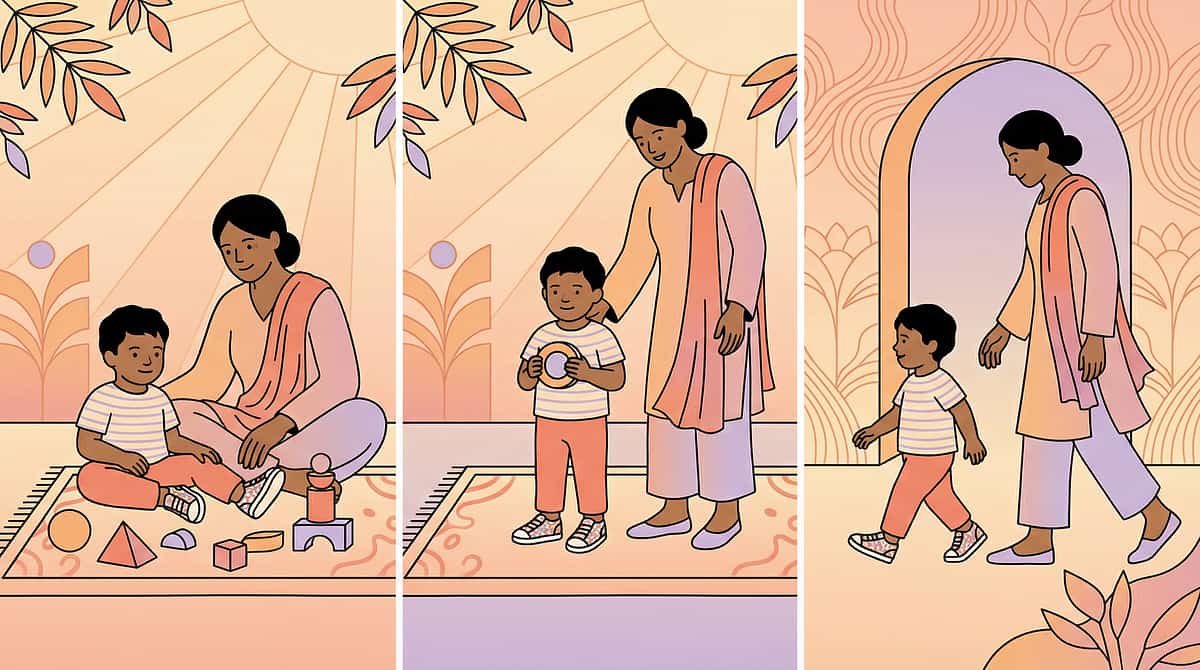
Step 3: Shoes On — Calm System First
2–3 Minutes
Shoe Application
1
Present ONE Pre-Modified Shoe
Pre-stretched, insole replaced, flexible sole. Let child hold shoe, touch it, examine it — no rush whatsoever.
2
Guide Foot In Gently
Child controls the pace. Once shoe is on: "How does that feel? Anything poking or pressing?"
3
Start Timer & Engage
Begin with target duration (30 seconds for beginners). Engage child in preferred activity WHILE shoe is on — tablet, toy, snack.
❌ Common Execution Errors
- Forcing shoe on quickly while child looks away — child needs visual control
- Immediately walking after shoe is on — let child sit first, acclimate
- Asking "Is it okay?" in a worried tone — your anxiety transfers. Keep voice neutral/warm
- Putting both shoes on at once initially — start with one foot
Ideal
Tolerates shoe for target duration, engages with activity → celebrate!
Acceptable
Mild discomfort but continues with distraction → note duration, praise effort
Concerning
Escalating distress within 30 sec → remove immediately, praise for trying, return to deep pressure

Step 4: Build Duration Gradually
Ongoing
Repeat & Vary
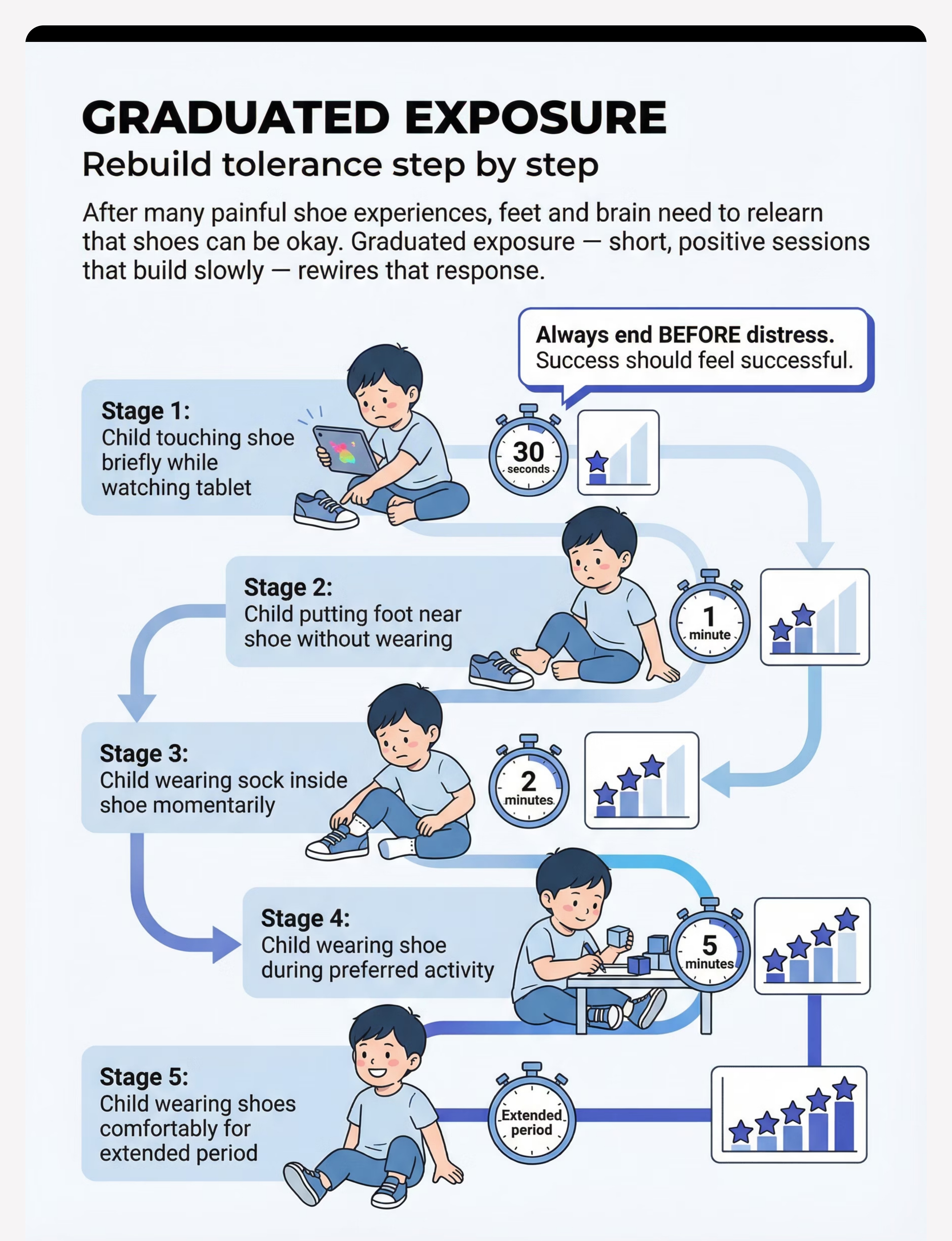
Stage 1: Touch
Child touches shoe briefly while doing preferred activity → 30 seconds target
Stage 2: Proximity
Child places foot near/in shoe without fully wearing → 1 minute target
Stage 3: Wearing
Child wears sock inside shoe momentarily → 2 minutes target
Stage 4: Activity
Child wears shoe during preferred activity → 5 minutes target
Stage 5: Independence
Child wears shoes comfortably for extended periods across settings
Variation Options
- Different rooms (bedroom, then living room, then near front door)
- Different times of day (not just morning rush — practice when calm)
- Different activities while wearing shoes (drawing, watching, playing)
- Both feet vs. one foot
- Standing vs. sitting vs. walking
Golden Rule: "Always end BEFORE distress. Success should feel successful. 3 good minutes > 10 forced minutes."
Satiation Indicators (time to stop): Child starts fidgeting with shoes. Attention to preferred activity decreases. Body tension increases. Child asks to remove shoes — honor the request immediately.

Step 5: Celebrate Every Second of Tolerance
Reinforce Immediately
Within 3 Seconds
"You wore your shoes for TWO WHOLE MINUTES! That's amazing!"
"Your feet did such a great job staying in those shoes!"
"I'm so proud of you for trying — that was brave!"
Reinforcement Menu — Choose What Works for YOUR Child
Verbal Praise
Specific, enthusiastic, immediate. Name exactly what they did well.
Sticker Chart
Visual progress tracker that builds toward a bigger reward.
Screen Time
1 minute per minute of shoe tolerance — proportional and motivating.
Preferred Snack
A small favorite treat paired with the accomplishment.
High-Five / Dance
Physical celebration creates positive sensory associations with shoes.
Key Principle: Celebrate the ATTEMPT, not just the success. A child who put shoes on for 10 seconds and then asked to remove them showed more courage than we give them credit for.
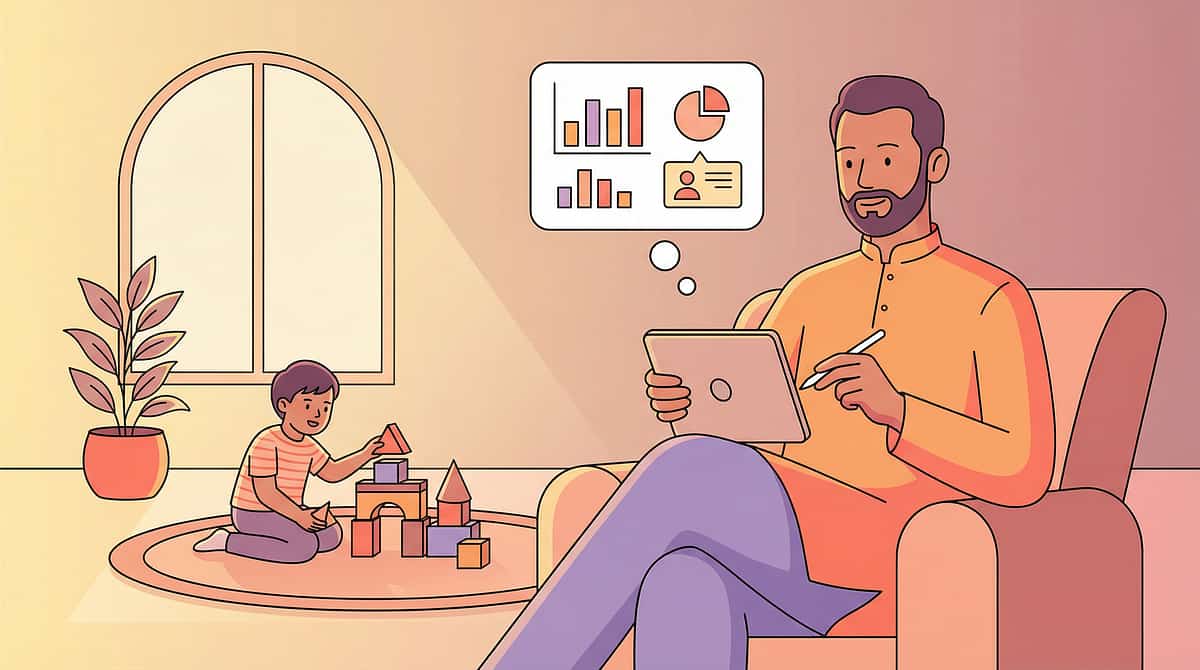
Step 6: End Well — Every Time
Cool-Down
Transition Protocol
"Shoes are all done! Let's take them off now. Great job today."
1
Remove Promptly
When session/time is complete, honor the endpoint immediately. No "just one more minute."
2
Reset the Feet
Brief foot massage or compression (30 seconds) — calm the nervous system back down.
3
Barefoot Reward
Preferred barefoot activity for 2–3 minutes. This is the reward for shoe bravery.
4
Store & Prepare
Put shoes in designated "shoe spot" for next session. Predictability for tomorrow.
If Child Wants to KEEP Shoes On 🎉
Let them! This is progress! Note the duration in your tracker. Still do gentle foot massage after eventual removal.
If Child Was Distressed
Remove shoes immediately, no questions. Calming input: deep pressure, weighted blanket on feet. No discussion of "trying again" — just comfort. "Your feet told us something important today. We'll listen."
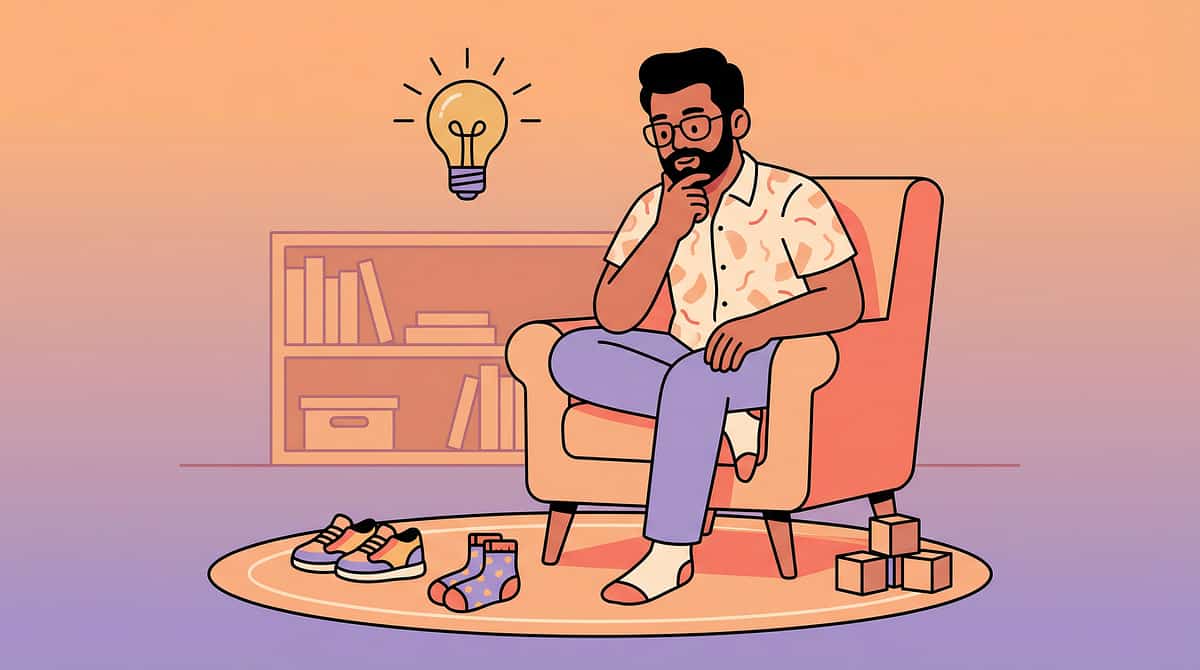
60 Seconds of Data — Record It Now
Data transforms guessing into knowing. Your child's progress lives in these numbers. Sixty seconds of recording now saves hours of confusion later.
Field | What to Write | Example | |
Duration | How long were shoes on? | "2 min 15 sec" | |
Distress Level | 1 (calm) to 5 (severe distress) | "2 — mild fidgeting" | |
Notes | What worked? What didn't? | "Inside-out socks helped. Left shoe harder than right." |
Download PDF
Pinnacle Shoe Tolerance Tracking Sheet — printable format for daily recording.
GPT-OS® In-App Tracker
Logs directly to your child's Daily Living & Independence Index for automated analysis.
Simple Notebook
A plain notebook works too. Consistency matters more than the tool.
60 seconds of data now saves hours of guessing later. Your child's progress lives in these numbers.
The Reality Card — Most Sessions Don't Go Perfectly
"My child wouldn't even touch the shoe"
Back up further. Start with shoe in the room during preferred activity. No contact required. Just proximity. Build from there over days.
"Seamless socks still bother them"
Try no socks at all. Some children tolerate shoes better with bare feet. If moisture is a concern, try a thin cotton liner sprayed with fabric softener.
"Fine for 1 minute, then sudden meltdown"
Your target was too long. Next session, aim for 45 seconds — end well BEFORE the 1-minute mark. Build up by 10-second increments.
"Only wears ONE specific pair — wearing out"
Buy duplicates NOW in current size AND next size up. Pre-stretch the next size. When current pair wears out, the replacement is already broken in.
"Deep pressure didn't seem to help"
Was the pressure FIRM enough? Light touch makes things worse. Try proprioceptive alternatives — jumping, wall pushes, carrying heavy objects — before shoe time.
"We made progress, then regressed"
Regression is normal during illness, growth spurts, or periods of stress. Return to the last successful level and rebuild. The neural pathways are still there.
"I feel like I'm doing this wrong"
If your child tried shoes at all today — even for 5 seconds — you are doing this right. Session abandonment is not failure. It's data.

Make It Work for YOUR Child
Every child's sensory profile is unique. This protocol isn't one-size-fits-all — it's a framework you customize based on your child's needs, their current tolerance, and what works for your family.
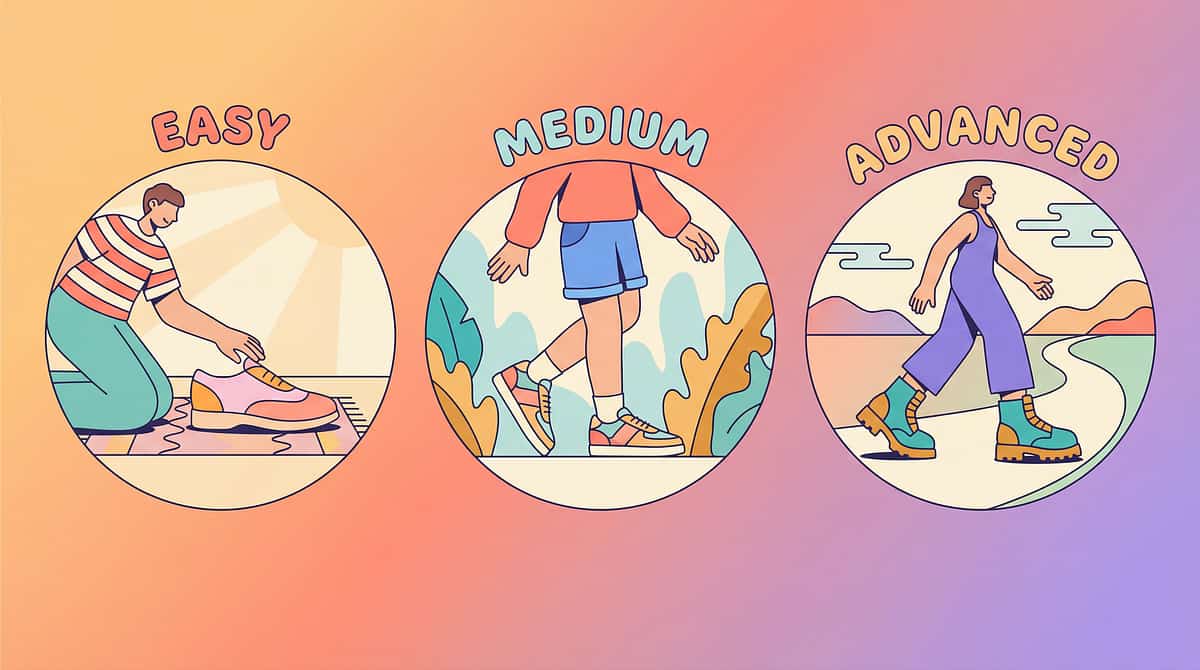
← EASIER
For severe sensitivity or bad days: No shoes — just sock practice. Shoe in room with no contact. Touch shoe for 5 seconds only. One foot only. Preferred activity before AND during.
STANDARD
For most children: Deep pressure prep → seamless socks → one shoe → 1–5 minutes → both shoes → build toward functional duration.
HARDER →
For building generalization: Try new shoe styles. Walk to different rooms. Wear shoes outside. Practice at different times. School morning routine.
Sensory Avoider
Start with lightest, most minimal footwear. Use deep pressure prep heavily. Slow, gradual exposure. Calm environment. These children need less sensory input, more carefully controlled.
Sensory Seeker
May prefer heavier shoes with more proprioceptive input. Try high-top shoes, weighted shoes, or firm insoles. These children sometimes do better with more input, not less.
Age Modifications
2–4 Years
Play-based, short sessions, heavy reinforcement, fully parent-led
5–8 Years
Participates in choosing shoes, understands "why," sticker charts for motivation
9–12 Years
Self-monitoring, peer-motivated goals, independence-focused, self-managed timers

ACT IV: THE PROGRESS ARC
Weeks 1–2: Foundations, Not Miracles
15%
Progress Level
Early foundations are forming. Neural pathways are just beginning to respond.
✅ What Progress Looks Like
- Tolerates shoes for 10–30 seconds longer than baseline
- Distress drops from 5/5 to 3–4/5 during shoe application
- Accepts deep pressure prep without resistance
- Begins identifying which shoes/socks feel "less bad"
- Morning shoe routine drops from 25+ to 15–20 minutes
❌ What Is NOT Progress Yet
- Child happily putting shoes on independently
- Wearing shoes for a full school day without complaint
- Trying new shoe styles willingly
- Morning routine happening without any support
If your child tolerates shoes for 15 seconds longer than last week — that is real, measurable, neurological progress. Celebrate it.

Weeks 3–4: The Neural Pathways Are Forming
40%
Progress Level
Consolidation is underway. Patterns are becoming recognizable.
Consolidation Indicators
Reduced Anticipatory Anxiety
Child anticipates shoe routine with reduced anxiety — no pre-crying before shoes even appear.
Preference Emerges
Shows preference for specific accommodated shoes: "I want the blue ones."
Extended Tolerance
Tolerates shoes for 5–15 minutes during preferred activities without escalating distress.
Natural Gait
Begins walking in shoes without unusual gait patterns or toe-walking.
Spontaneous Engagement
May spontaneously put on shoes during play, touch shoes without prompting, or walk to the "shoe spot" independently.
Parent Milestone: You may notice you're more confident too. The morning dread is lifting. You've found a system that works.
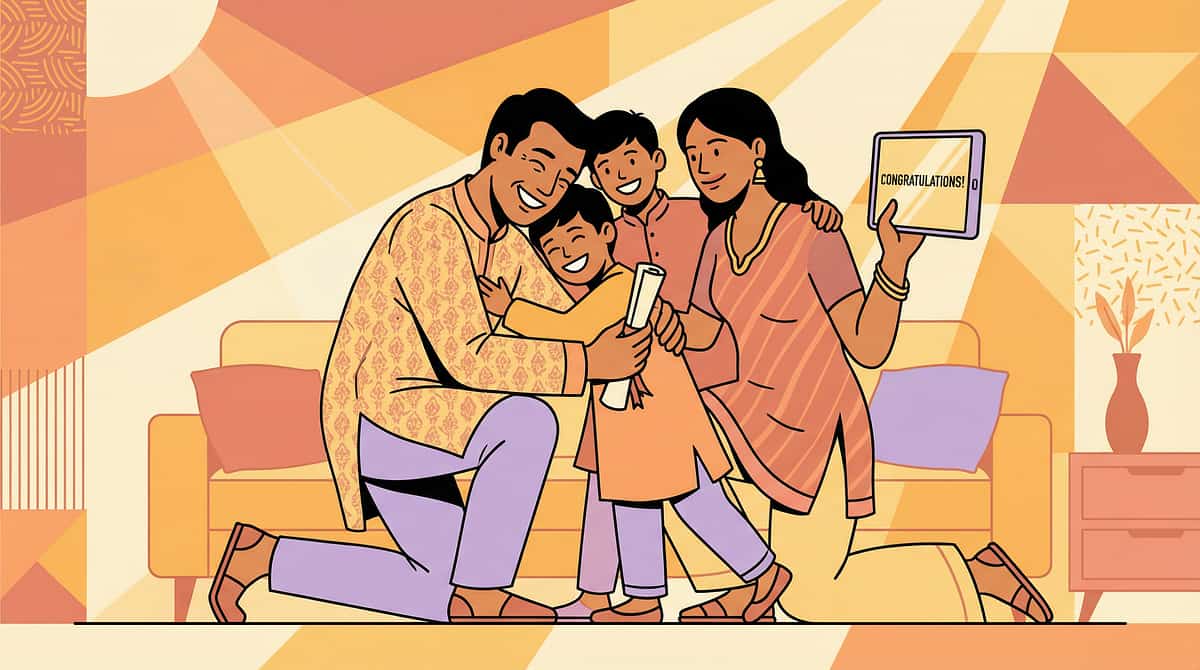
Weeks 5–8: Functional Footwear Is Within Reach
75%
Progress Level
Mastery indicators are emerging. Functional independence is close.
Mastery Criteria
- Tolerates accommodated shoes for required durations (school day, outings)
- Puts on shoes with minimal or no adult assistance
- Distress level at 1–2/5 (mild, manageable)
- Tolerates 2–3 different accommodated shoe options
- Morning routine shoe time under 5 minutes
- Can verbalize what helps: "I need the smooth socks first"
Generalization Indicators
- Wears shoes in new environments (friend's house, restaurant, park)
- Manages shoe transitions (indoor to outdoor)
- Accepts shoe-wearing for community activities
Mastery Achieved →
Maintain accommodations, begin slowly expanding shoe options
Partial Progress →
Continue protocol, consider OT consultation for structured support
Minimal Progress →
Professional assessment recommended — broader sensory profile evaluation needed
You Did This.
Remember Card 1? The sobbing child on the floor at 7:42 AM? The fourteen pairs of rejected shoes? The overwhelming helplessness of not knowing why your child couldn't do what every other child seems to do effortlessly?
Look where you are now.
Your child wears shoes. Maybe not every shoe. Maybe not without their special socks and deep pressure prep. But they wear shoes. They get to school. They go to the park. They participate.
You did this. Not with force. Not with "toughening up." With science, patience, firm foot massage, seamless socks, and the stubborn refusal to accept that your child's pain wasn't real.
Your child grew because of your commitment. Document this milestone. You've earned it.
Clinical Guardrails — When to Seek Professional Help
Trust your instincts. If something feels wrong, pause and ask. These red flags indicate it's time to seek professional evaluation rather than continuing at home alone.
1
Complete Inability
Cannot wear ANY footwear despite 8+ weeks of systematic accommodation → Full sensory processing evaluation needed.
2
Self-Injury
Hitting, biting, head-banging during shoe struggles → Behavioral assessment + OT co-evaluation required immediately.
3
Generalized Avoidance
Avoidance extends to ALL clothing, not just shoes → Broader sensory profile assessment needed.
4
Unexplained Regression
Previously tolerated footwear rejected without clear cause → Medical evaluation + sensory re-assessment.
5
School Attendance Impact
Shoe avoidance preventing school for >5 consecutive days → Urgent multidisciplinary intervention.
6
Structural Foot Signs
Pain when barefoot, unusual foot shape, persistent limping → Podiatric evaluation before sensory work.
The free Pinnacle helpline is available 24/7: 📞 9100 181 181
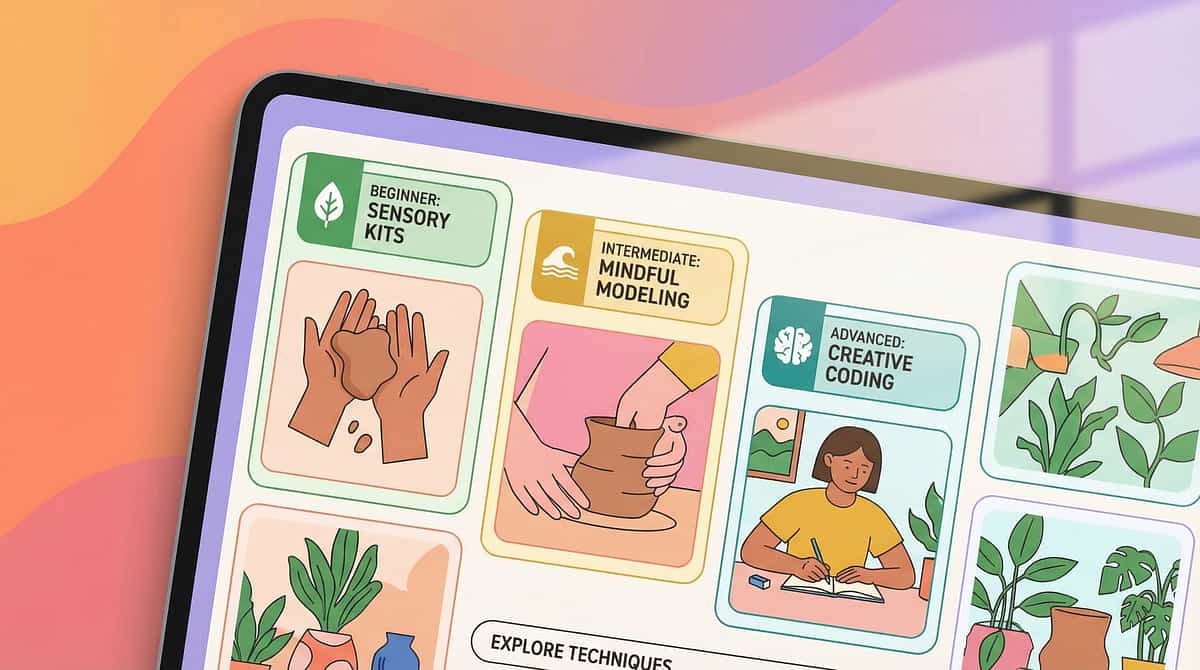
Where This Technique Sits in Your Child's Journey
Long-Term Developmental Goal: Functional independence in dressing across all clothing items → Daily Living & Independence Index progression → Community participation without sensory barriers.
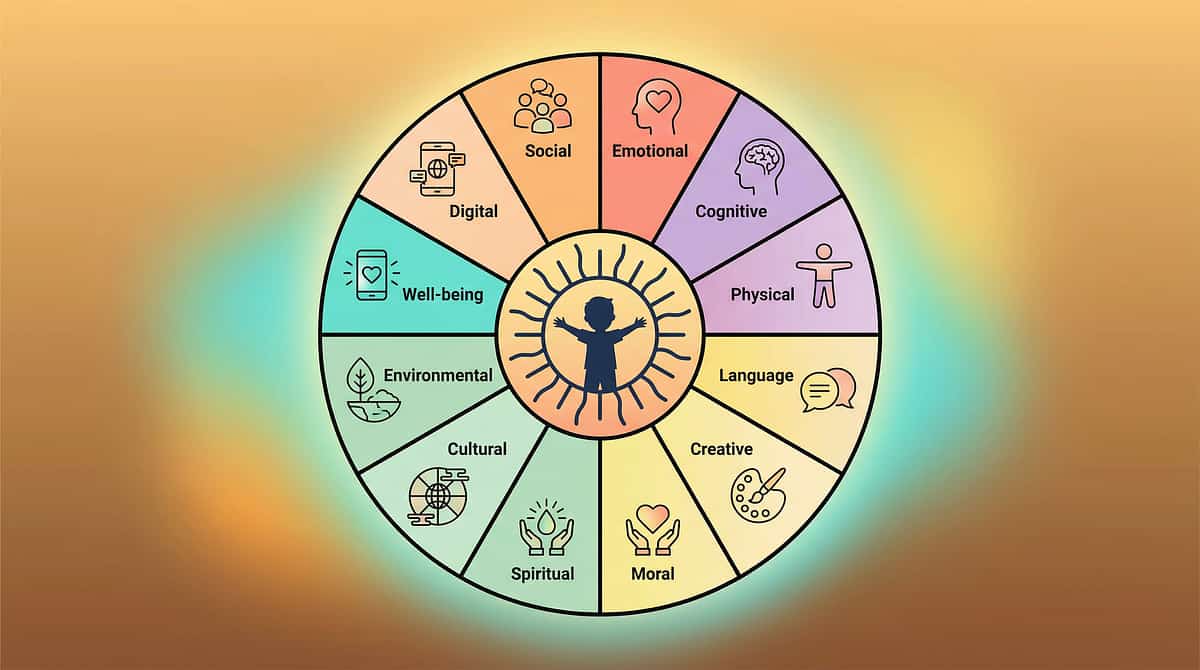
More Techniques in Tactile Processing
If you purchased seamless socks and deep pressure tools for shoe intolerance, these same materials apply to techniques A-024, A-025, and A-026. Your investment keeps working across multiple challenges.
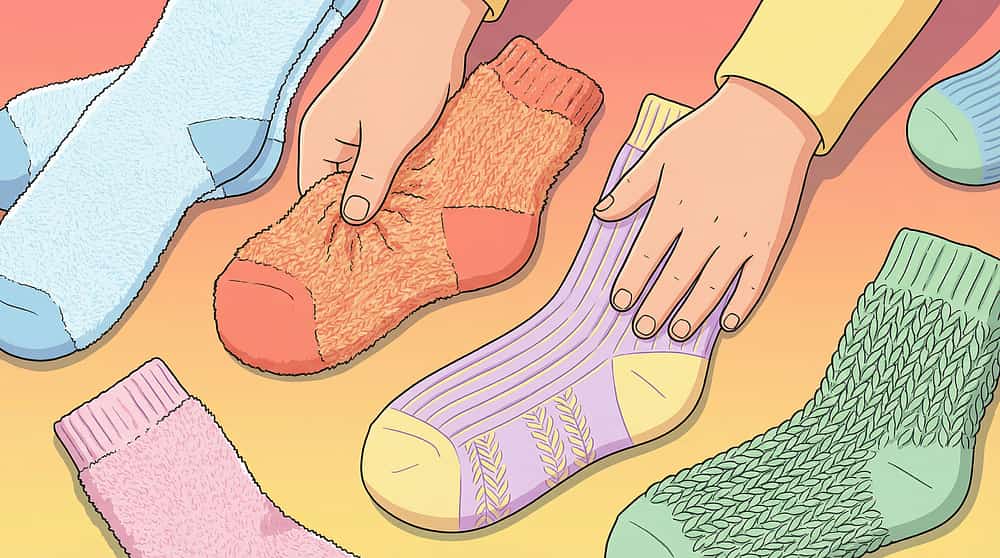
A-024: Seam Sensitivity in Socks
Tactile Kit techniques for children who can feel every seam, tag, and thread.
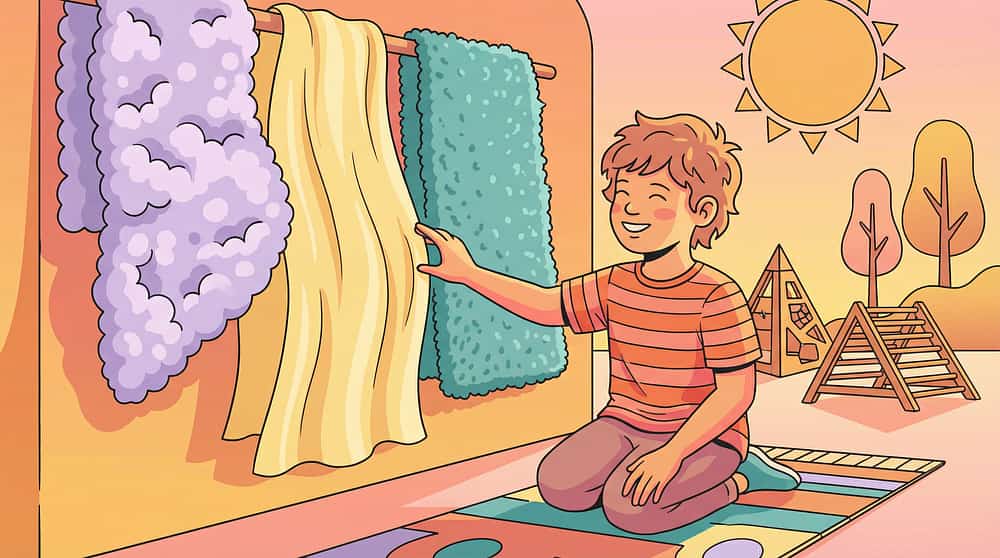
A-025: Fabric Texture Refusal
Strategies for children who reject specific clothing materials and textures.
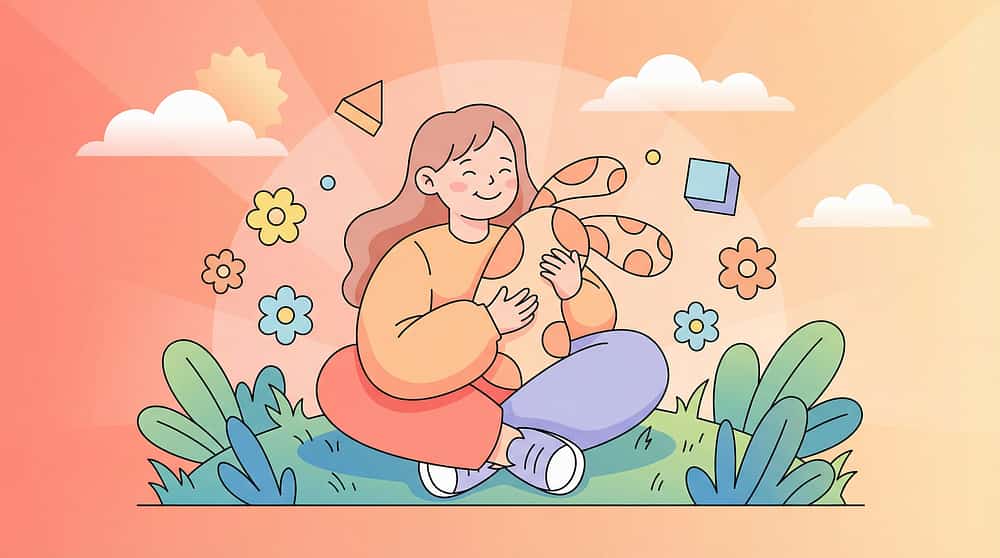
A-026: Tight Clothing Intolerance
Compression tools and techniques for children who can't tolerate snug fits.
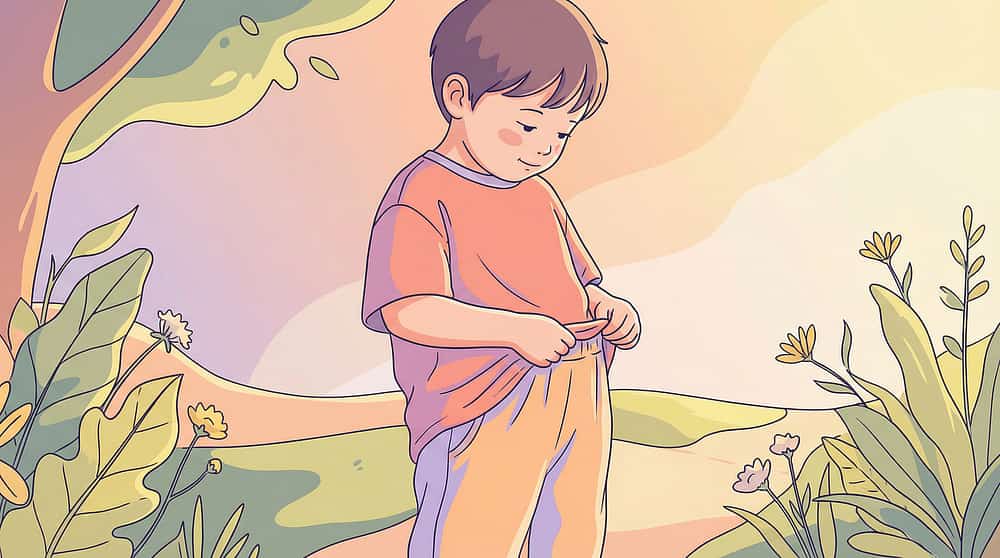
A-028: Waistband Sensitivity
Dressing tools for children who struggle with waistband pressure and elastic bands.
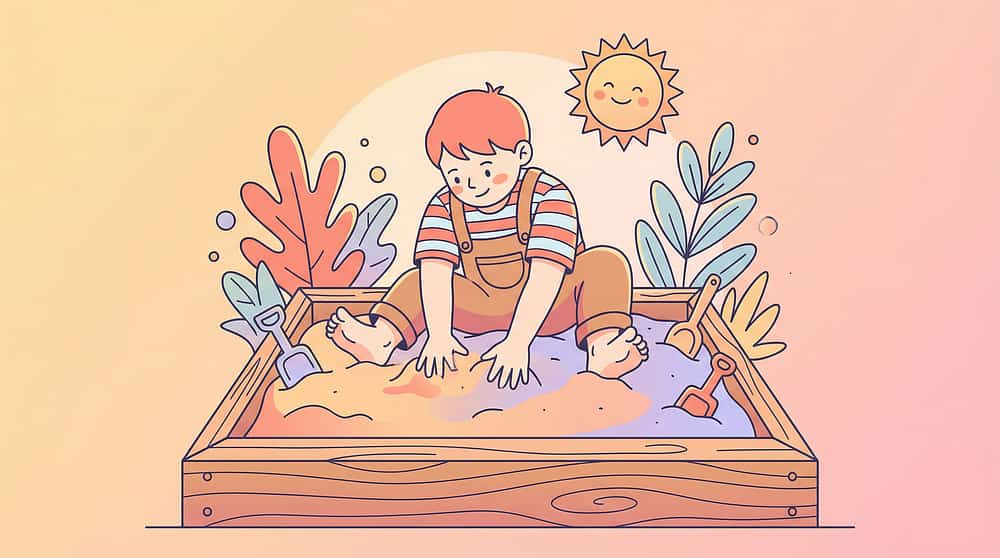
A-009: Sand Play Avoidance
Sensory bin approaches for foot and hand texture sensitivity during play.
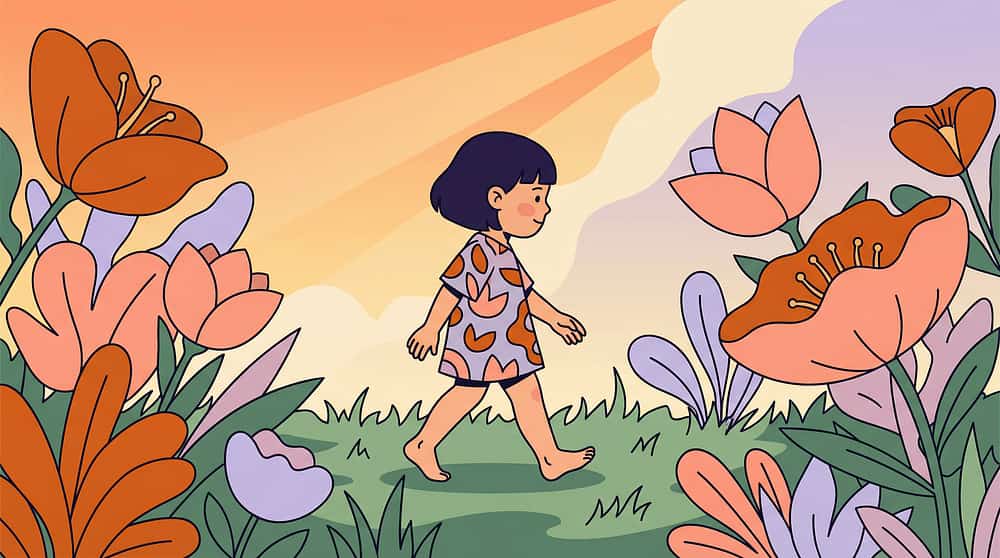
A-010: Grass Walking Refusal
Outdoor sensory techniques for children who resist barefoot contact with natural surfaces.
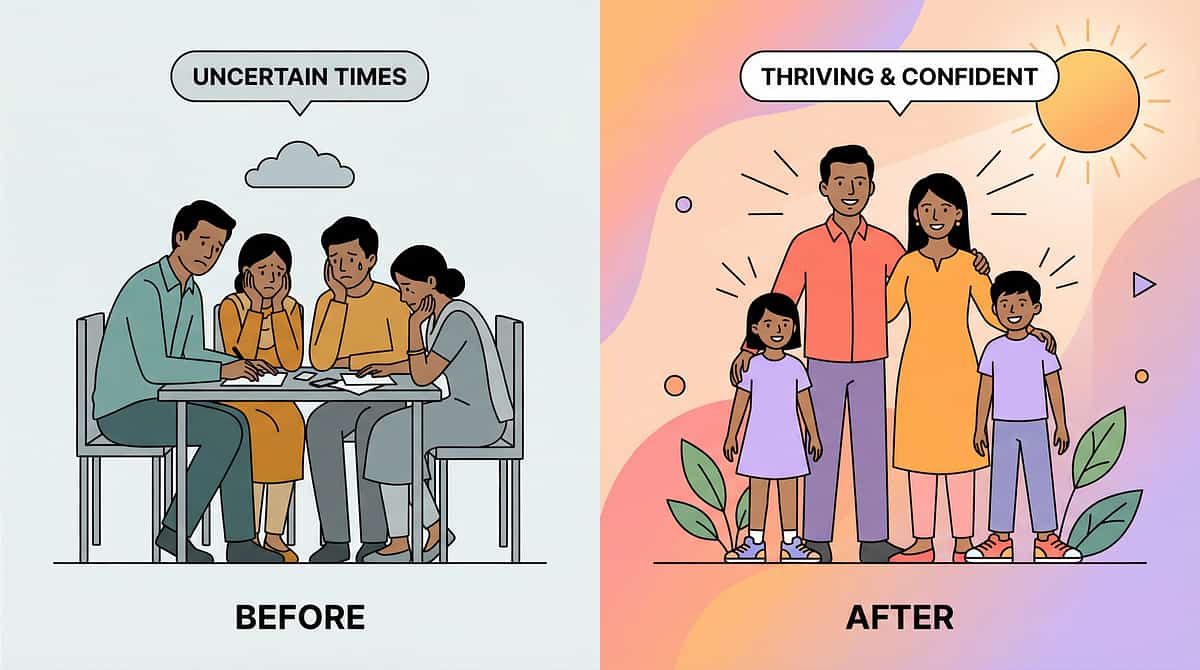
One Technique. One Piece of a Larger Plan.
Shoe intolerance is a sensory processing challenge (Domain A) that directly impacts daily living independence (Domain G) and community participation (Domain K). Solving it unlocks progress across three domains simultaneously. GPT-OS® tracks your child's growth across all 12 domains — this technique is one precision tool in a comprehensive developmental plan.
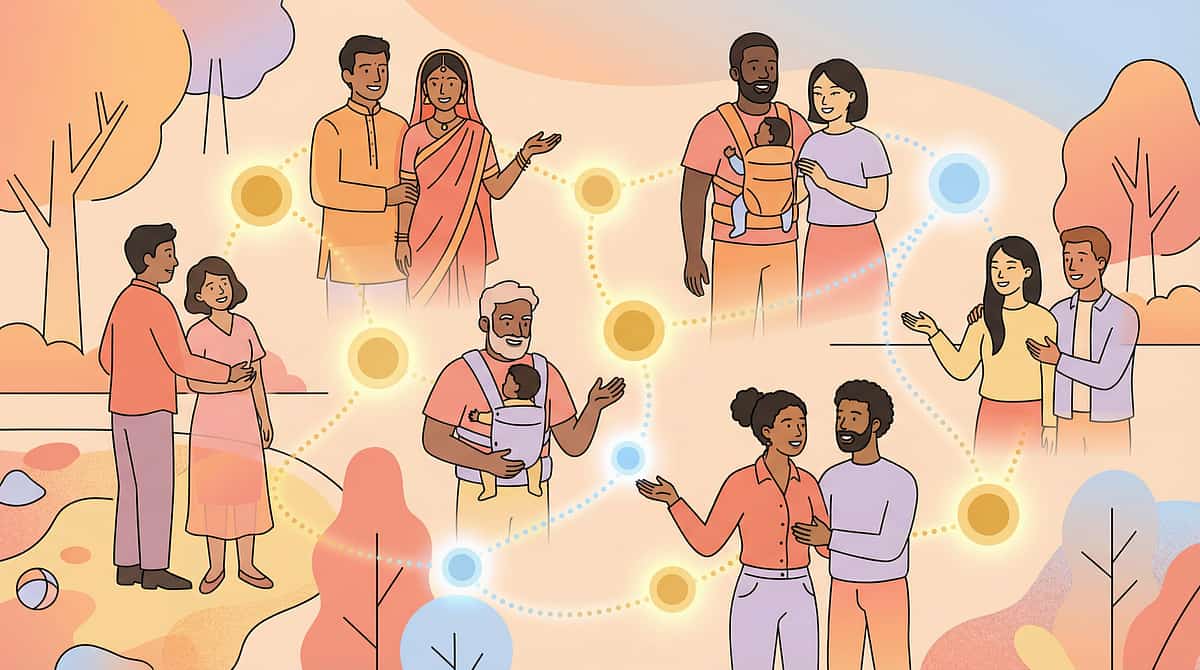
ACT V: THE COMMUNITY & ECOSYSTEM
Real Families. Real Progress.
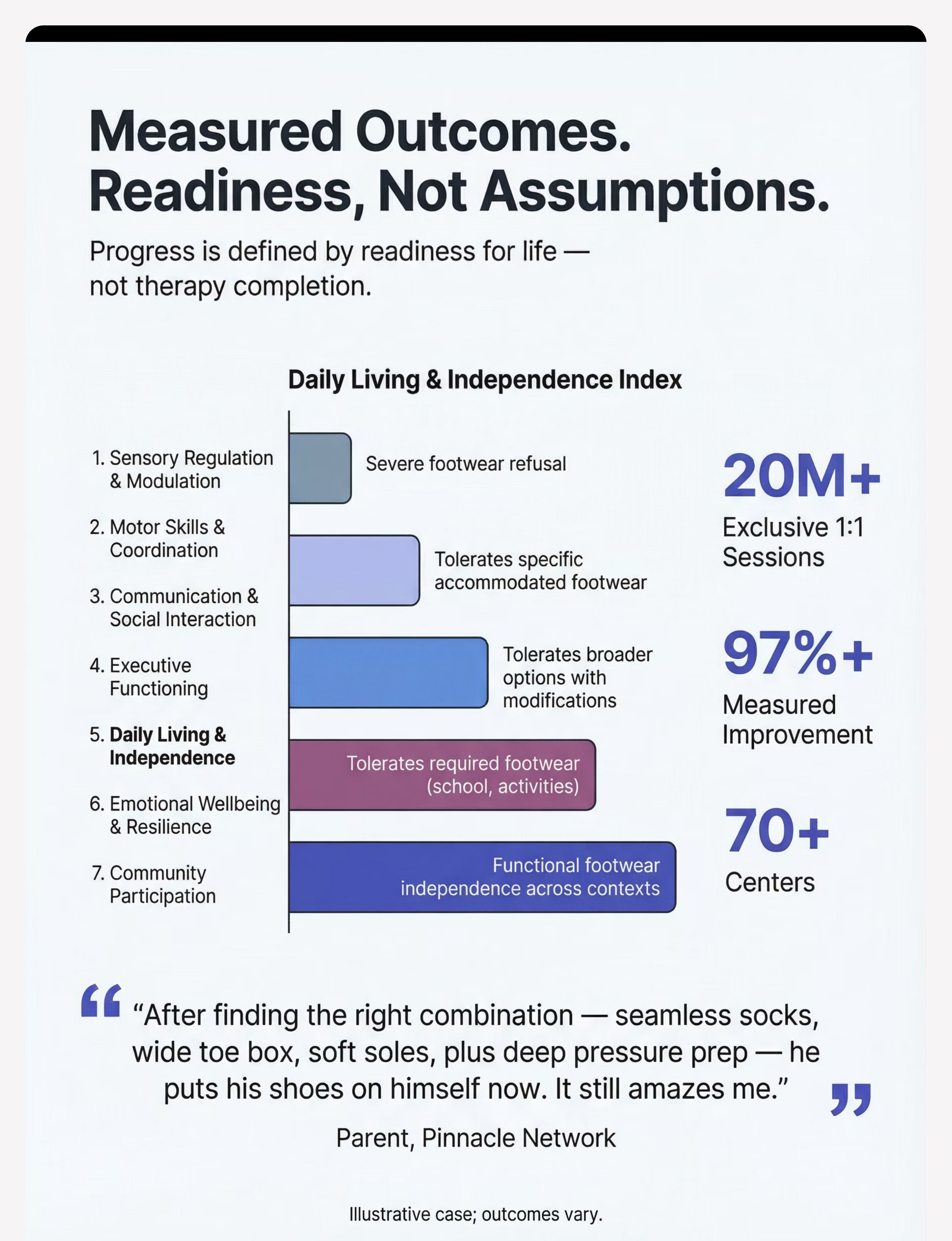
"We spent two years fighting about shoes every single morning. After finding the right combination — seamless socks, wide toe box, soft soles, plus deep pressure prep — he puts his shoes on himself now. It still amazes me."
— Parent, Pinnacle Blooms Network
"We bought elastic laces and suddenly she could put shoes on independently. The lacing process was the whole problem. One ₹200 purchase changed our mornings completely."
— Parent, Pinnacle Blooms Network
From the Therapist's Notes
"This child's breakthrough came when we identified the sock seam as the primary trigger — not the shoe itself. Once seamless socks were introduced, shoe tolerance improved within two weeks. The deep pressure protocol before morning shoes made the remaining discomfort manageable."
Disclaimer: Illustrative cases; outcomes vary by child profile. Individual results depend on sensory profile severity, consistency of implementation, and broader developmental context.
You Are Not Doing This Alone
WhatsApp Group
"Sensory Dressing Solutions" — families navigating clothing and footwear challenges share daily wins, tips, and encouragement.
Online Community
Pinnacle Parent Forum — Sensory Processing section where thousands of families connect, ask questions, and support each other.
Local Meetups
Pinnacle center parent groups — monthly sensory strategy sessions where you can meet families in your area face-to-face.
Peer Mentoring
Connect with an experienced parent who has successfully navigated shoe intolerance. Request a mentor match through Pinnacle.
Your experience helps others. Consider sharing your shoe solutions with families just starting this journey.

Home + Clinic = Maximum Impact
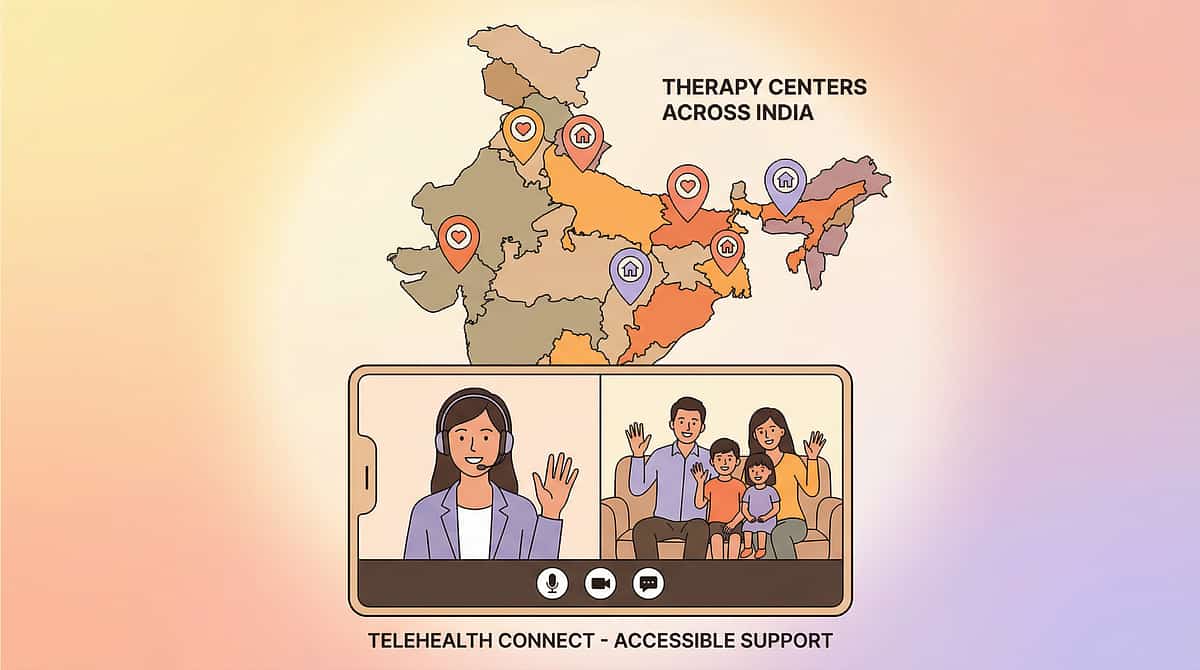
📍 Find Your Nearest Center
70+ Pinnacle Blooms centers across India. Pediatric OTs specializing in sensory processing are ready to help your family.
📞 Teleconsultation
Video consultation with a pediatric OT who specializes in sensory processing and footwear tolerance. Available from home.
🏫 School Consultation
Pinnacle can help your child's school understand and accommodate shoe intolerance with professional guidance and letters.
📋 Full Sensory Assessment
AbilityScore® evaluation covering all sensory domains — comprehensive profiling to guide intervention precision.
📞 9100 181 181
FREE National Autism Helpline — Available 24/7 • 16+ languages • Completely free
Website:pinnacleblooms.org | Email:care@pinnacleblooms.org

For the Curious Parent — The Full Evidence
1
PRISMA Systematic Review (2024)
16 articles confirming sensory integration as evidence-based practice for ASD. PMC11506176
2
Meta-Analysis: Sensory Integration Therapy (2024)
Effective promotion of social skills, adaptive behavior, sensory processing, and motor skills across 24 studies. PMC10955541 | DOI: 10.12998/wjcc.v12.i7.1260
3
Indian RCT: Home-Based Interventions (2019)
Padmanabha et al., Indian Journal of Pediatrics — significant outcomes with parent-administered protocols. DOI: 10.1007/s12098-018-2747-4
4
WHO Nurturing Care Framework (2018)
Global framework for early childhood development interventions. nurturing-care.org/ncf-for-ecd
5
WHO CCD Package Implementation (2023)
Multi-caregiver intervention across 54 low- and middle-income countries. PMC9978394
6
NCAEP Evidence-Based Practices (2020)
Environmental modification and sensory-based interventions classified as evidence-based for autism.
7
Dunn, W. — Sensory Profile 2 (2014)
Framework for understanding tactile over-responsivity. Pearson Clinical Assessment.
8
SPD Foundation
Tactile processing research and foot sensitivity evidence. spdfoundation.net
Your Data Powers Personalized Recommendations
What GPT-OS® Learns From Your Shoe Data
- Which shoe accommodations work for children with your child's sensory profile
- Optimal progression speed based on similar profiles
- Red flag detection before you notice it
- Cross-domain insights (shoe tolerance progress predicting broader sensory gains)
🔒 Encrypted
All data encrypted and anonymized at the population level
👁️ Your Eyes Only
Individual data visible only to you and your clinical team
✅ Certified
ISO 13485 + ISO/IEC 27001 certified data handling
Your data helps every child like yours. Population-level intelligence makes individual recommendations sharper.
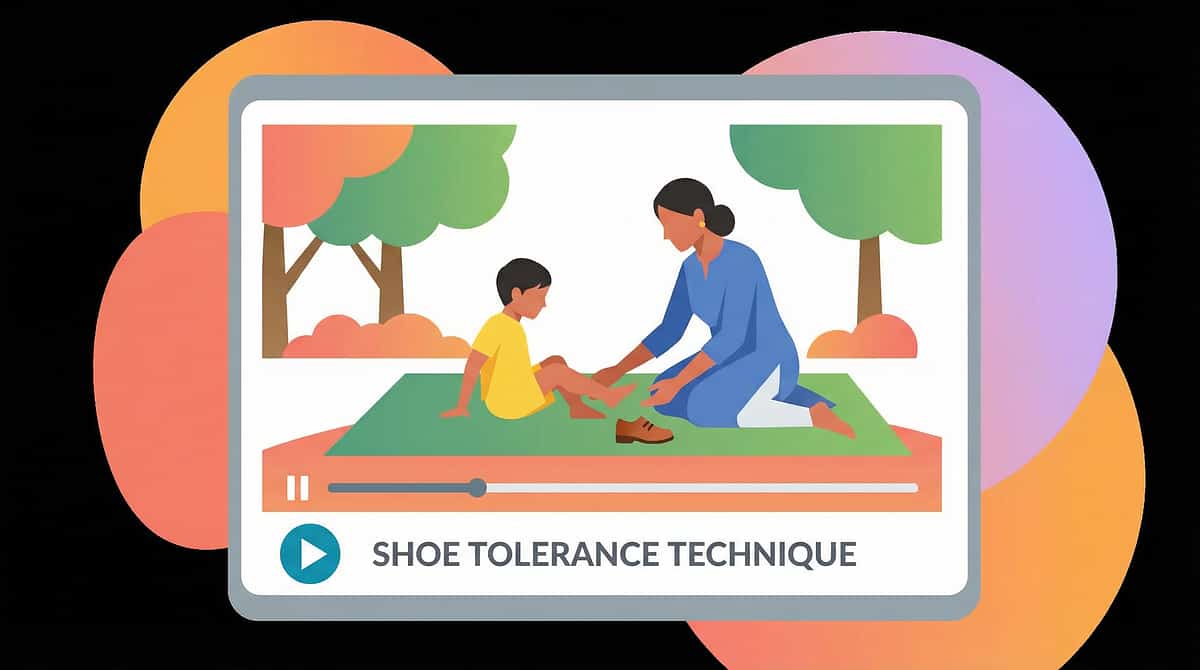
Watch: 9 Materials That Help With Shoe Intolerance
Reel A-027
Sensory Solutions — Episode 27
60 Seconds
Presented by: Pinnacle Blooms Network® Occupational Therapy Team
See the materials demonstrated by trained therapists. Video reinforces text through a different learning modality — research shows multi-modal instruction (visual + text + demonstration) significantly improves parent skill acquisition (NCAEP 2020). Watch how deep pressure prep looks in practice, see how seamless socks are applied, and observe the graduated exposure technique in action.
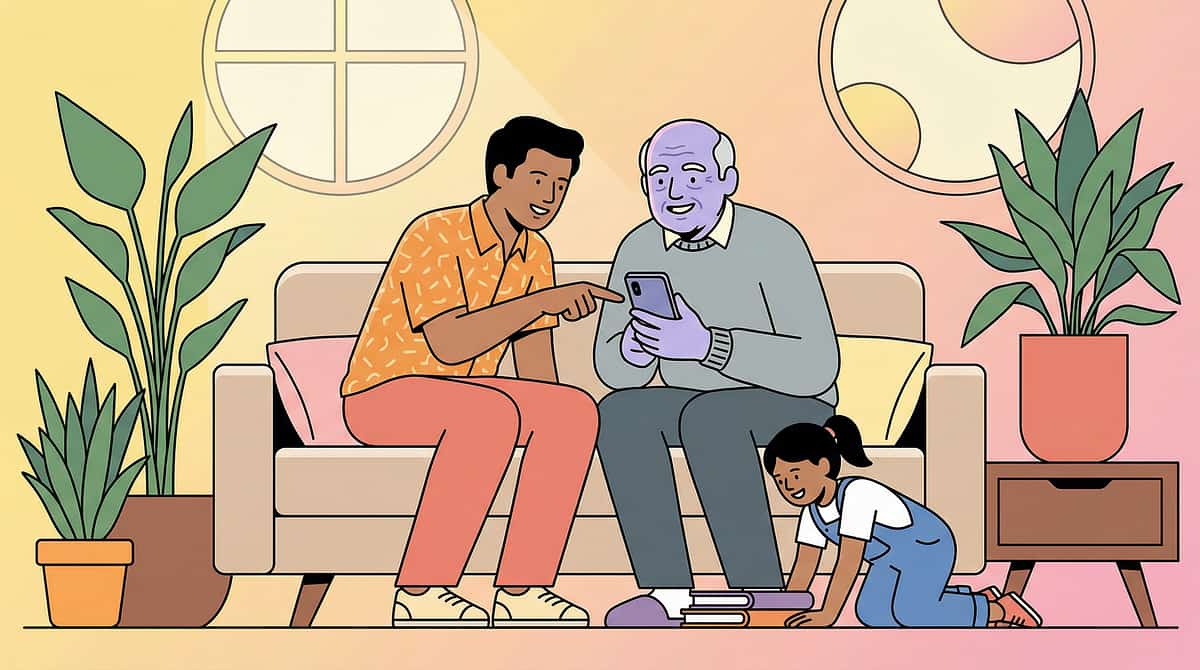
Consistency Across Caregivers Multiplies Impact
If only one parent knows the shoe strategy, it fails 50% of the time. When every caregiver understands the approach — seamless socks, deep pressure first, never force — progress accelerates.
Share via WhatsApp
One-tap share with a pre-formatted message explaining the technique to family members.
Share via Email
Pre-written email to grandparents, babysitters, and extended family.
Downloadable Guides
Family Guide (1-page PDF), "Explain to Grandparents" version (plain language), and Teacher Communication Template.
Research Citation: PMC9978394 — WHO CCD Package emphasizes multi-caregiver training as critical for intervention generalization

Your Questions, Answered
How long until my child can wear shoes normally?
"Normally" may look different for a sensory-sensitive child — and that's okay. Many children achieve functional shoe tolerance (can wear accommodated shoes for required durations) within 4–8 weeks. Full generalization across shoe types may take 3–6 months. Some children will always prefer specific accommodations — and that's a successful outcome.
Should I force shoes on for school?
Never. Forced shoe-wearing increases sensory defensiveness and damages trust. Contact your child's school about temporary accommodations (indoor shoes only, alternative footwear allowances) while you build tolerance. Pinnacle can help write school accommodation letters.
Are seamless socks really worth the cost?
For many children, seamless socks alone solve 50%+ of the shoe problem. At ₹300–800 per pair, they are the highest-ROI investment in this entire toolkit. Try turning regular socks inside out first as a free test.
My child wears shoes at school but melts down at home. Why?
Children often hold it together at school through massive self-regulation effort, then release the sensory overload at home where they feel safe. Home shoe removal should be honored. Focus shoe tolerance practice on low-stress times, not arrival home.
Can shoe intolerance be "cured"?
The underlying neurological difference is lifelong, but functional management is absolutely achievable. Most children with proper accommodation and desensitization reach full functional independence with footwear. Think management, not cure.
When should I see a specialist?
If systematic accommodation shows no improvement after 8 weeks, if self-injury occurs during shoe attempts, or if shoe intolerance prevents school attendance — seek professional OT evaluation. Call the free Pinnacle Helpline: 9100 181 181.
Does my child also need an ABA therapist?
ABA principles (graduated exposure, reinforcement, data collection) are already built into this protocol. If your child also shows behavioral challenges beyond shoe intolerance, a BCBA can design a broader intervention plan.
Didn't find your answer?
ACT VI: THE CLOSE & LOOP
Your Next Step
▶️ Start This Technique Today
Download the Shoe Tolerance Protocol + Tracking Sheet. Begin with seamless socks + deep pressure prep tomorrow morning. Your child's journey starts with one session.
📞 Book a Consultation
Connect with a Pinnacle OT who specializes in sensory processing and footwear tolerance. FREE Helpline: 9100 181 181
➡️ Explore Next Technique
A-028: 9 Materials That Help With Waistband Sensitivity — continue building your child's dressing independence.
Consortium Validated: OT • SLP • ABA • SpEd • NeuroDev
Preview of 9 materials that help with shoe intolerance Therapy Material
Below is a visual preview of 9 materials that help with shoe intolerance therapy material. The pages shown help educators, therapists, and caregivers understand the structure and content of the resource before use. Materials should be used under appropriate professional guidance.




Link copied!
From Fear to Mastery. One Technique at a Time.
Pinnacle Blooms Network® — The world's most comprehensive consortium of pediatric therapeutic expertise: Clinical Research Organization • Speech-Language Pathologists • Occupational Therapists • Board Certified Behavior Analysts • Special Educators • NeuroDevelopmental Pediatricians
Every child deserves the right materials, the right knowledge, and the right system behind them. This page exists because a parent searched in despair and deserves to find science, not confusion. From fear to mastery. One technique at a time.
20M+
Exclusive 1:1 Sessions
97%+
Measured Improvement
70+
Centers Across India
160+
Countries — Patents Filed
FREE National Autism Helpline:📞9100 181 181 — Available 24/7 • 16+ languages • Completely free
Website:pinnacleblooms.org | Email:care@pinnacleblooms.org | Techniques Library:techniques.pinnacleblooms.org
Medical Disclaimer: This content is provided for informational and educational purposes by the Pinnacle Blooms Consortium. It does not constitute medical advice, diagnosis, or treatment. Always consult qualified healthcare professionals for your child's specific needs. Individual outcomes depend on the child's sensory profile, consistency of implementation, and broader developmental context. Pinnacle Blooms Network® recommends professional assessment for comprehensive intervention planning.
CIN: U74999TG2016PTC113063 | DPIIT: DIPP8651 (Govt. of India) | MSME: TS20F0009606 | GSTIN: 36AAGCB9722P1Z2 | ISO 13485 | ISO/IEC 27001
© 2026 Pinnacle Blooms Network®. Powered by GPT-OS® — Global Pediatric Therapeutic Operating System. All rights reserved.