

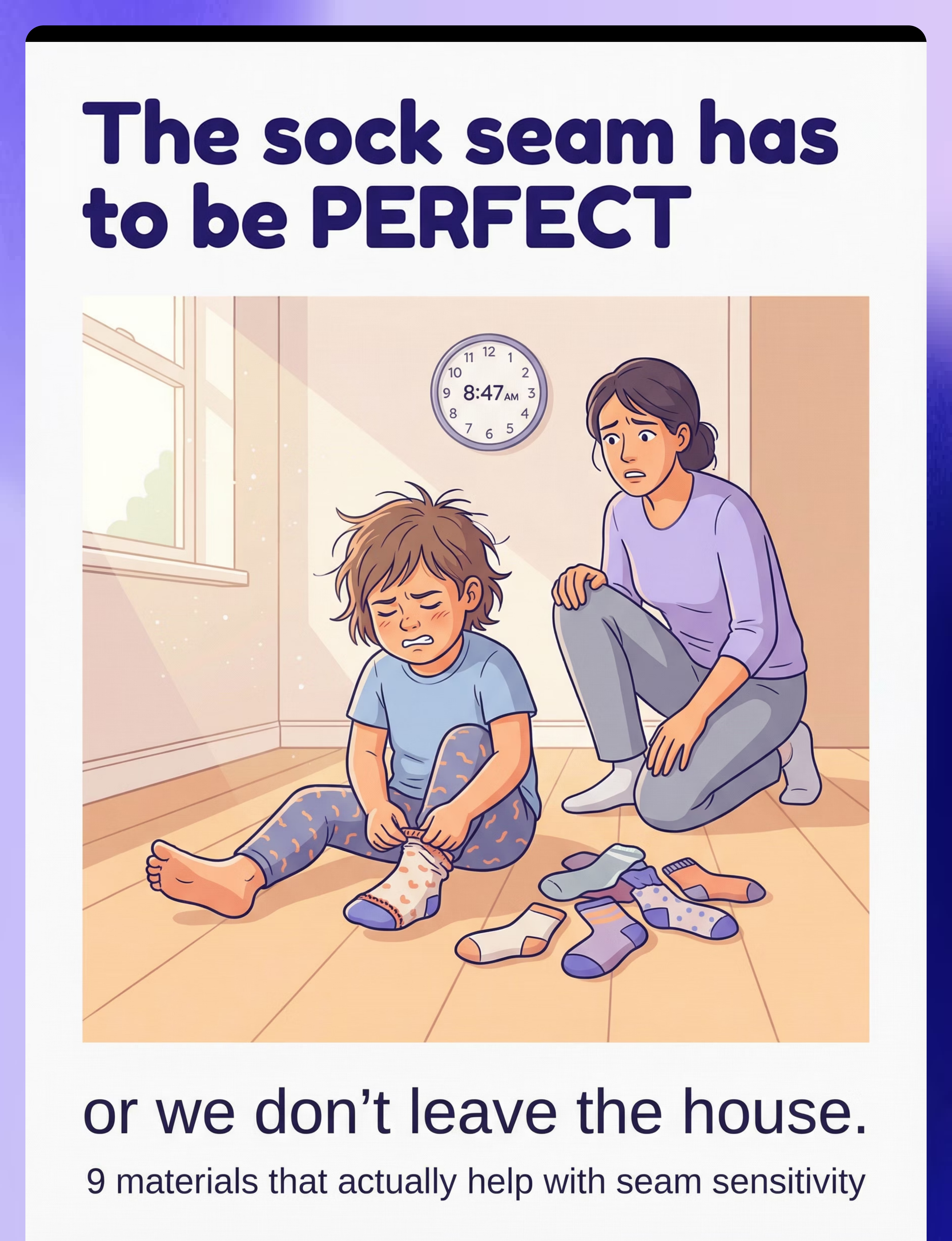
"The sock seam has to be PERFECT — or we don't leave the house."
It's 8:47 AM. Your child is on the floor, sock pulled halfway on, sobbing. They can feel the seam across their toes and it's wrong. You've repositioned it eleven times. You're already late. The other socks are scattered across the floor — all rejected.
This isn't a phase. This isn't stubbornness. Their nervous system is screaming.
"You are not failing. Your child's nervous system is speaking. And we know exactly what it's saying."
9 Evidence-Based Materials
Home-executable, parent-proven solutions for seam sensitivity in socks.
Age 2–8 Years
Sensory Solutions Series — Episode 5 | Domain: Tactile Processing
Setting: Home
Practical daily protocols designed for real morning routines.
Pinnacle Blooms Network®
Built by Mothers. Engineered as a System.
Powered by GPT-OS®

You Are Not Alone — The Numbers
Millions of families face this exact morning battle every single day. Sock seam sensitivity is one of the most common and most reported specific tactile sensitivities in childhood — and the research backs this up conclusively.
80%
Sensory Difficulties
Children with autism display sensory processing difficulties. Source: PRISMA Systematic Review, Children (2024)
90%
Clothing Sensitivity
Of children with SPD show clothing-related tactile defensiveness. Sock seam sensitivity is among the top 3 most reported clothing complaints.
21M+
Therapy Sessions
Delivered by Pinnacle Blooms Network across 70+ centers — real-world evidence, not theory.
You are among millions of families navigating this exact morning battle. The sock seam struggle is one of the most common specific tactile sensitivities in childhood — recognized, researched, and solvable.
Research: PMC11506176 | PMC10955541 | DOI: 10.12998/wjcc.v12.i7.1260

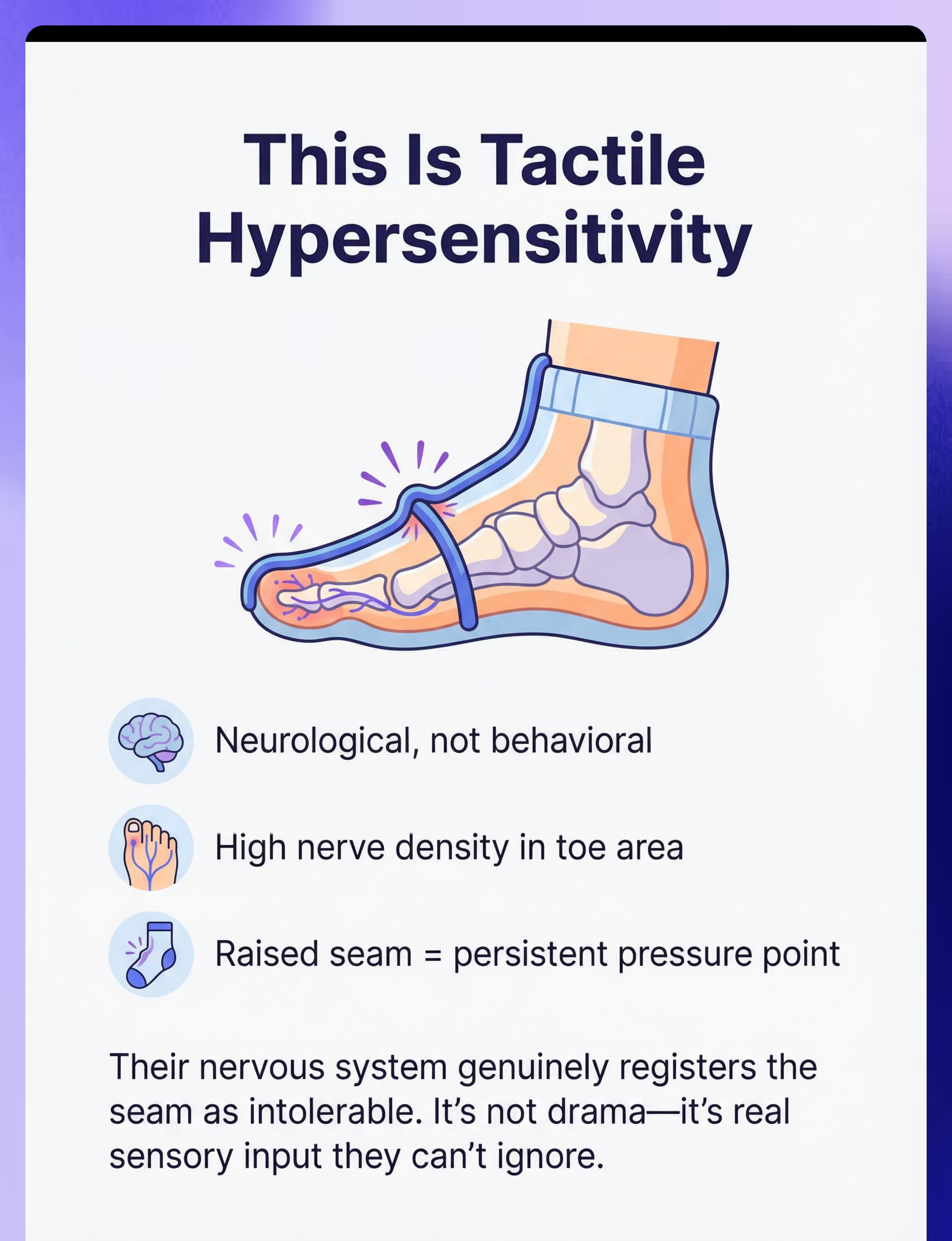
This Is Tactile Hypersensitivity — Neurological, Not Behavioral
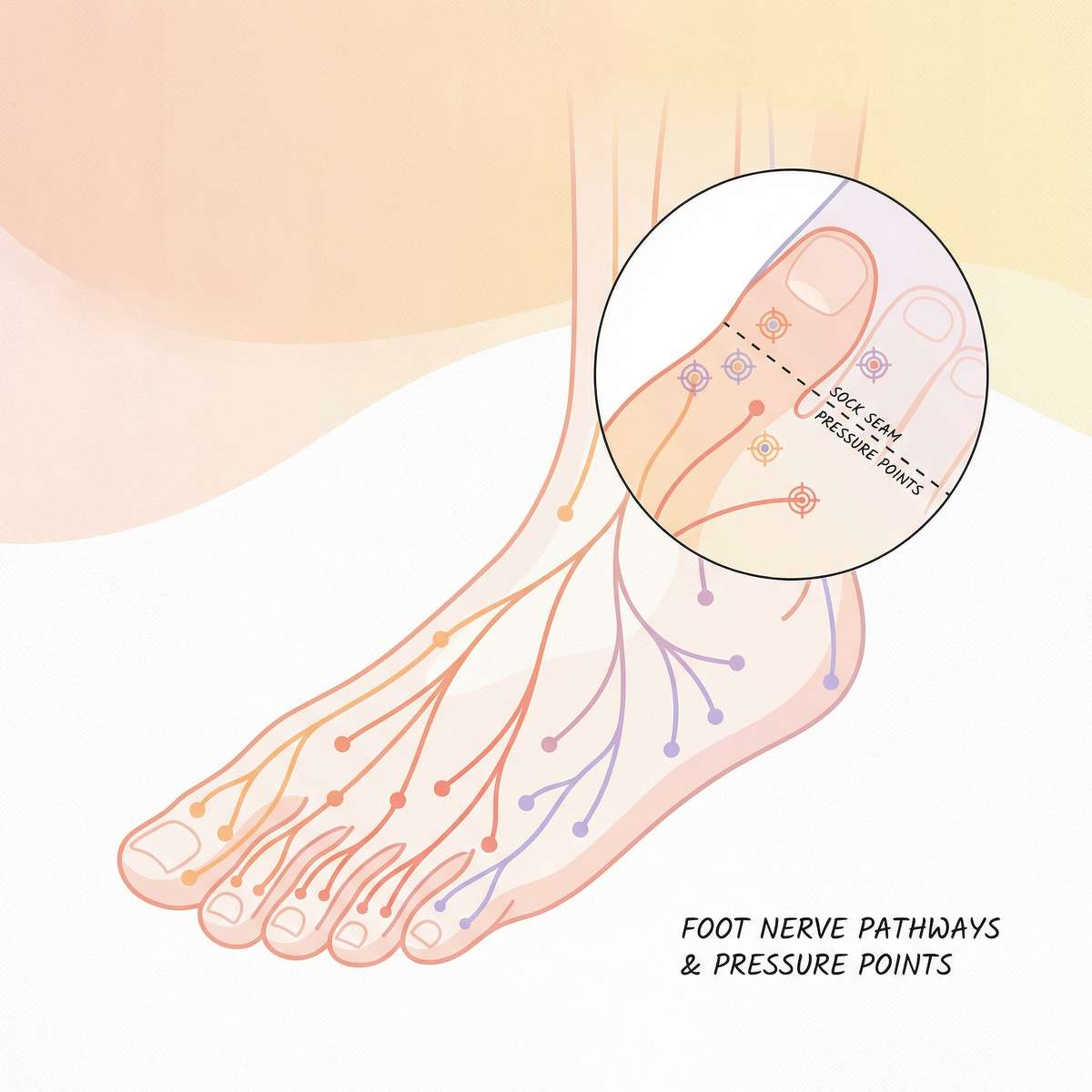
The Neuroscience, Plain English
The toe area has one of the highest concentrations of light touch receptors in the entire body. In typical sensory processing, the brain receives the signal from the sock seam and filters it as unimportant — like background noise.
In tactile hypersensitivity, the somatosensory cortex over-amplifies this signal. The raised seam becomes an intolerable, persistent pressure point that the child's brain genuinely cannot ignore or suppress.
Three Key Facts
- Neurological, not behavioral: The nervous system genuinely registers the seam as intolerable
- High nerve density in toe area: Light touch receptors are abundant in toe pads
- Raised seam = persistent pressure point: Creates a ridge the brain cannot filter out
"It's not drama — it's real sensory input they can't ignore. You wouldn't ask someone to ignore a pebble in their shoe. This is that, amplified."
Research: DOI: 10.3389/fnint.2020.556660 — Frontiers in Integrative Neuroscience (2020)

Where Sock Seam Sensitivity Sits in Your Child's Development
Understanding when this challenge peaks — and why — helps parents and caregivers respond with compassion rather than confusion. Sock sensitivity doesn't come out of nowhere: it emerges from a specific developmental window where body awareness and verbal ability intersect.
0–12 Months
Sensory foundations forming. Early tactile preferences emerging.
12–24 Months
Tactile defensiveness may appear. Clothing sensitivity first noticed during self-dressing attempts.
⭐ 2–4 Years
Peak sock seam battles. Child has body awareness to detect the problem and developing verbal skills to express distress.
4–6 Years
School demands amplify the challenge — uniforms, time pressure, social expectations.
6–8 Years
With intervention, tolerance improves. Without it, avoidance patterns solidify.
Co-occurring sensitivities: Sock seam sensitivity commonly co-occurs with clothing tag sensitivity (A-003), fabric texture refusal (A-004), waistband sensitivity (A-006), and shoe sensitivity (A-007). If you see more than one, a full OT sensory profile is warranted.
Research: PMC9978394 | WHO/UNICEF CCD Package (2023)

The Evidence Behind These Materials
Evidence Grade: Level I–II
Systematic Reviews + Controlled Studies
Every material and protocol on this page is grounded in peer-reviewed research — not anecdote, not opinion. Here is what the science says.
PRISMA Systematic Review (2024)
16 articles from 2013–2023 confirm sensory integration intervention as evidence-based practice for children with ASD. PMC11506176
Meta-Analysis (World J Clin Cases, 2024)
Sensory integration therapy across 24 studies effectively promotes adaptive behavior, sensory processing, and motor skills. PMC10955541
Indian RCT (Padmanabha et al., 2019)
Home-based sensory interventions demonstrated significant outcomes in Indian pediatric populations. DOI: 10.1007/s12098-018-2747-4
SPD Foundation Clinical Consensus
Environmental modification — including clothing adaptation — is first-line intervention for tactile defensiveness.
"Clinically validated. Home-applicable. Parent-proven across 21 million+ sessions at Pinnacle Blooms Network."
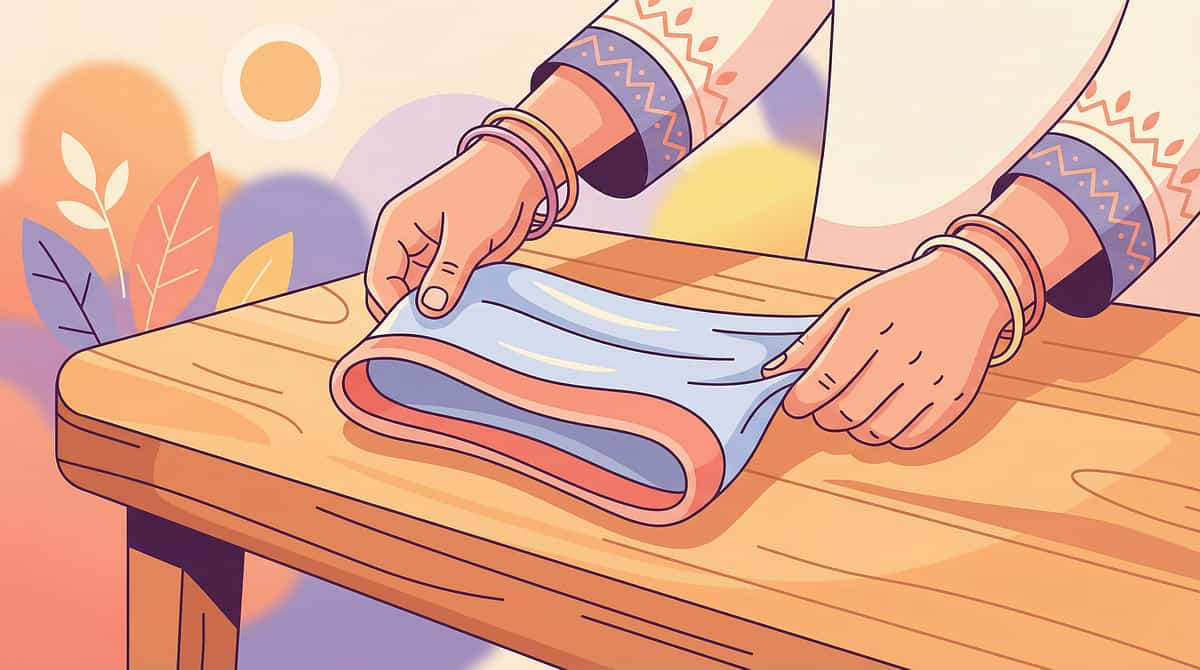
Sock Seam Sensitivity Management — Material-Based Tactile Accommodation
Formal Name
Tactile Environmental Modification for Toe Seam Hypersensitivity
Parent-friendly alias: "Fixing the sock seam problem — 9 materials that actually work."
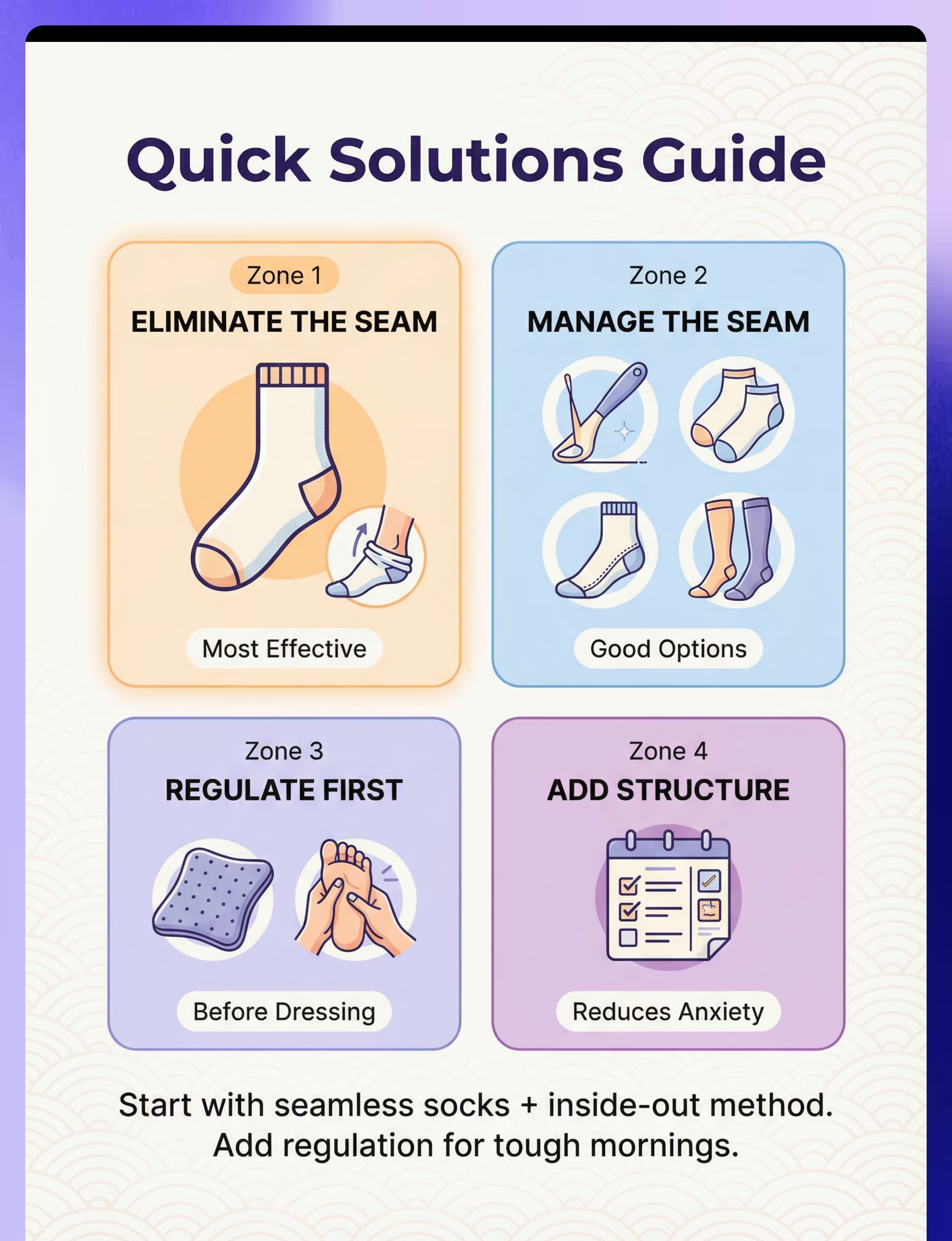
A structured material-based intervention that addresses sock seam tactile defensiveness through a four-zone approach: eliminating the seam entirely, managing the seam, regulating the child's nervous system before dressing, and adding predictability through visual routine structures.
This is not about "toughening up" — it's about matching the sensory environment to the child's neurological profile.
Technique Badges
- Domain: A — Sensory Processing | Subdomain: Tactile
- Canon Materials: Multiple (Seamless Socks, Compression Socks, Weighted Items, Visual Supports)
- Age: 2–8 years
- Duration: Morning routine integration
- Frequency: Daily
Zone 1
Eliminate the seam entirely
Zone 2
Manage the seam effectively
Zone 3
Regulate the nervous system first
Zone 4
Add structure and predictability

Which Experts Use These Materials — And How
Sock seam sensitivity doesn't fit neatly into one therapeutic box. It is simultaneously a sensory challenge, a behavioral pattern, a communication need, and sometimes a medical question. That's why the Pinnacle Blooms Consortium takes a multi-disciplinary approach.
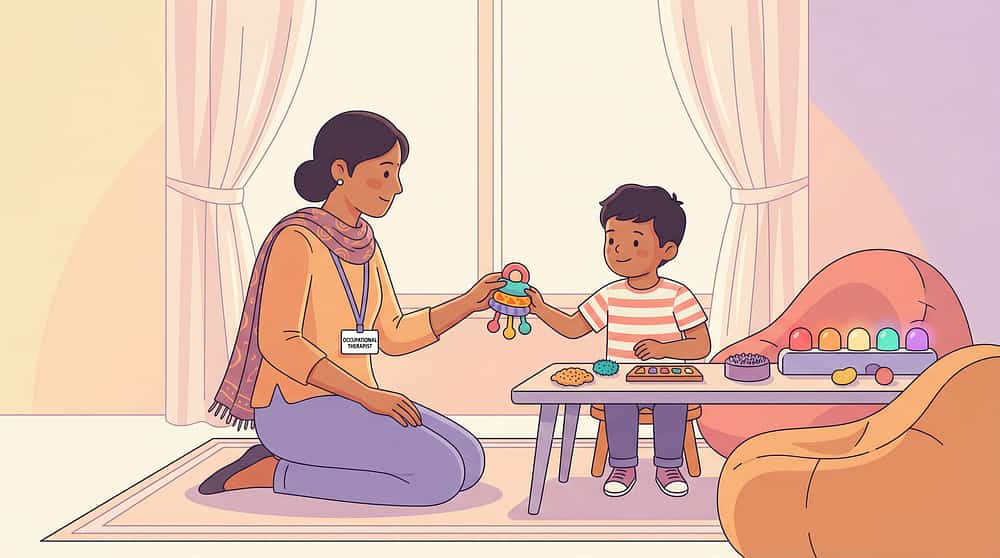
Occupational Therapist (Primary Lead)
Conducts sensory profile assessment, recommends specific material types based on the child's tactile threshold, and designs the desensitization progression plan.
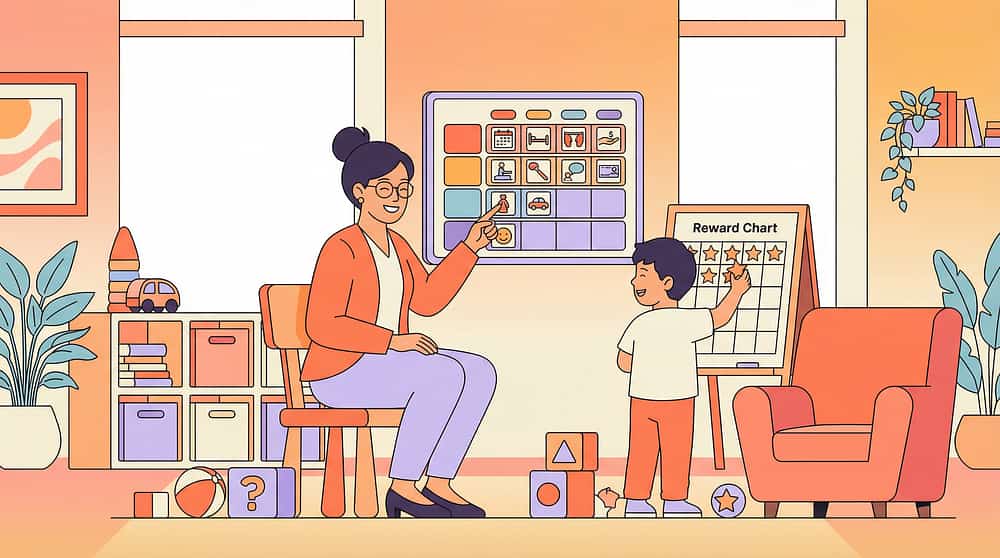
Board Certified Behavior Analyst (BCBA)
Structures the dressing routine using visual schedules, implements reinforcement strategies for sock tolerance, and tracks progress data on morning routine duration.

Speech-Language Pathologist
Supports communication about sensory experiences, teaches self-advocacy vocabulary, and integrates choice-making into the sock selection routine.
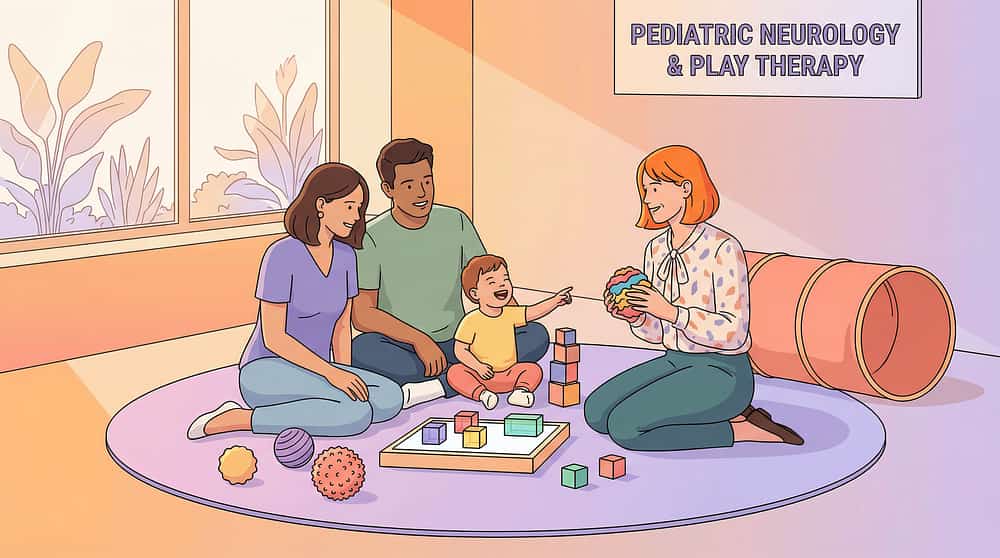
NeuroDevelopmental Pediatrician
Rules out underlying medical causes, assesses whether sock sensitivity is part of a broader sensory processing disorder requiring comprehensive intervention.
"This technique crosses therapy boundaries because the brain doesn't organize by therapy type. Your child's sock struggle is sensory, behavioral, communicative, and medical — simultaneously."
Research: DOI: 10.1080/17549507.2022.2141327 — Adapted UNICEF/WHO Nurturing Care Framework for SLPs (2022)
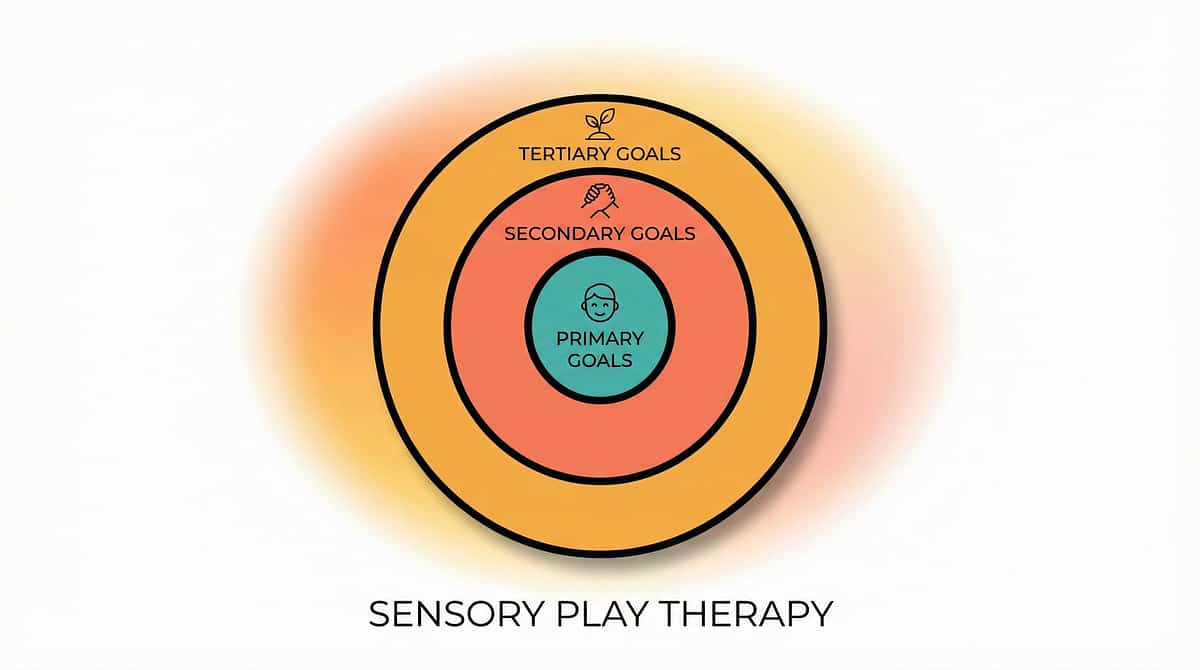
What These 9 Materials Actually Target
Each material in this toolkit addresses a specific layer of the sock seam challenge. Understanding the target hierarchy helps you prioritize which materials to try first and measure whether they're working.
Observable Behavior Indicators
- Child tolerates socks without removing or re-applying repeatedly
- Morning routine completed within a reasonable time frame
- Child can identify and select "comfortable" socks independently
- Decreased crying, screaming, or meltdowns during sock application
Measuring Success
- Track dressing time daily — even a 5-minute reduction is real progress
- Count adjustment requests per session — downward trend = success
- Note which materials produce the calmest response
- Share data with your OT — it guides the next phase of intervention
Research: PMC10955541 — Meta-analysis: SI therapy effectively promotes adaptive behavior, sensory processing, and motor skills across 24 studies.

Your 9-Material Toolkit — Zone 1: Eliminate the Seam
Zone 1
Most Effective — Start Here
The most direct solution is the most effective: remove the seam from the equation entirely. Zone 1 materials attack the problem at the source. These two options are where every family should begin.
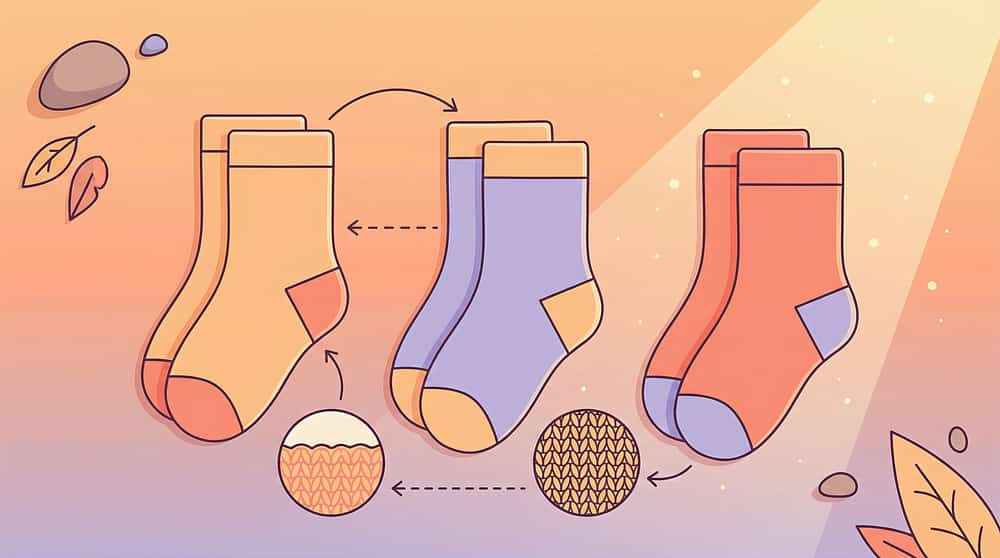
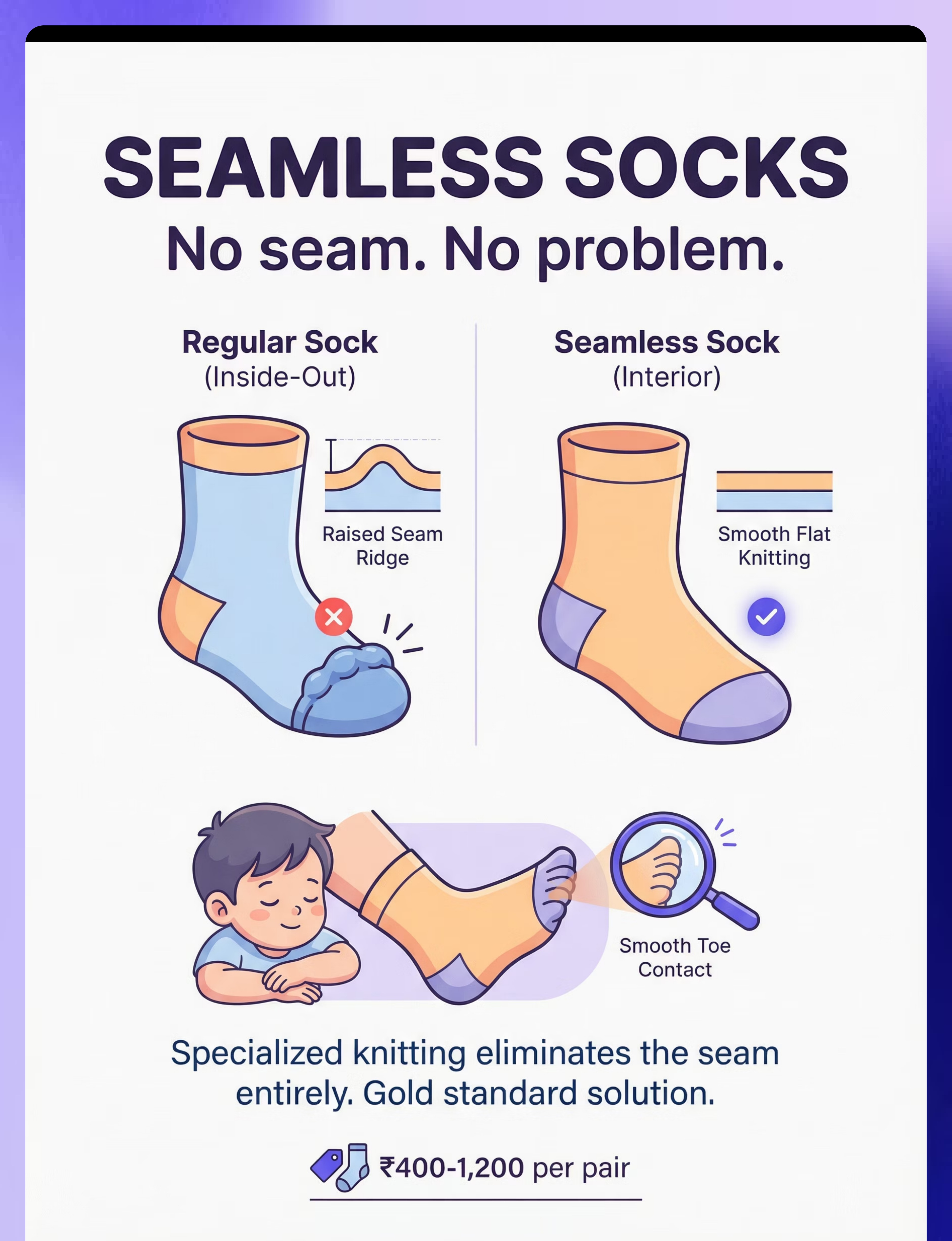
Material 1: Seamless Socks
Price: ₹400–1,200/pair
Specialized knitting technology eliminates the toe seam entirely. The interior is completely smooth — there is no ridge for the somatosensory cortex to over-amplify. SmartKnitKids is the OT-recommended gold standard. Feel the interior before purchasing: it must be completely smooth with zero ridge.
🏆 Pinnacle Recommends
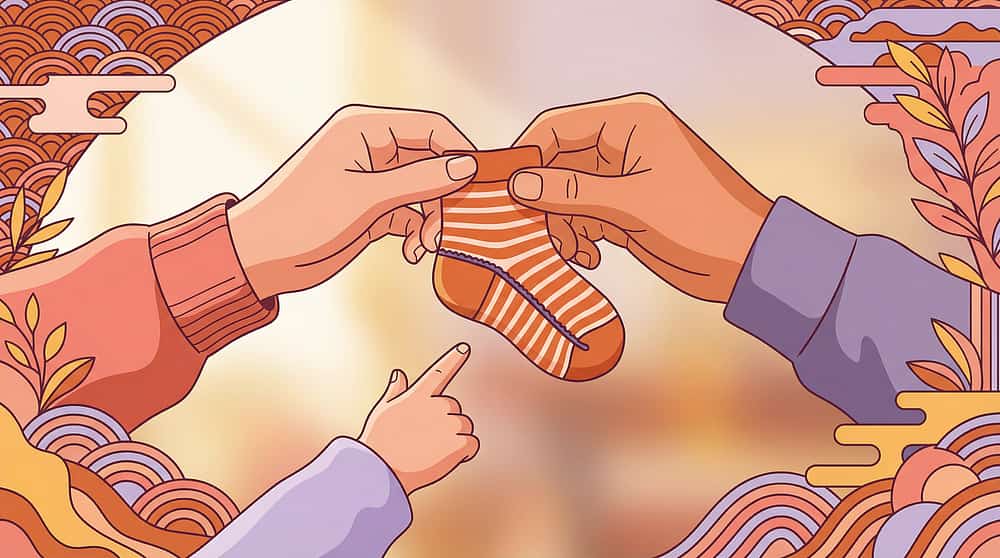
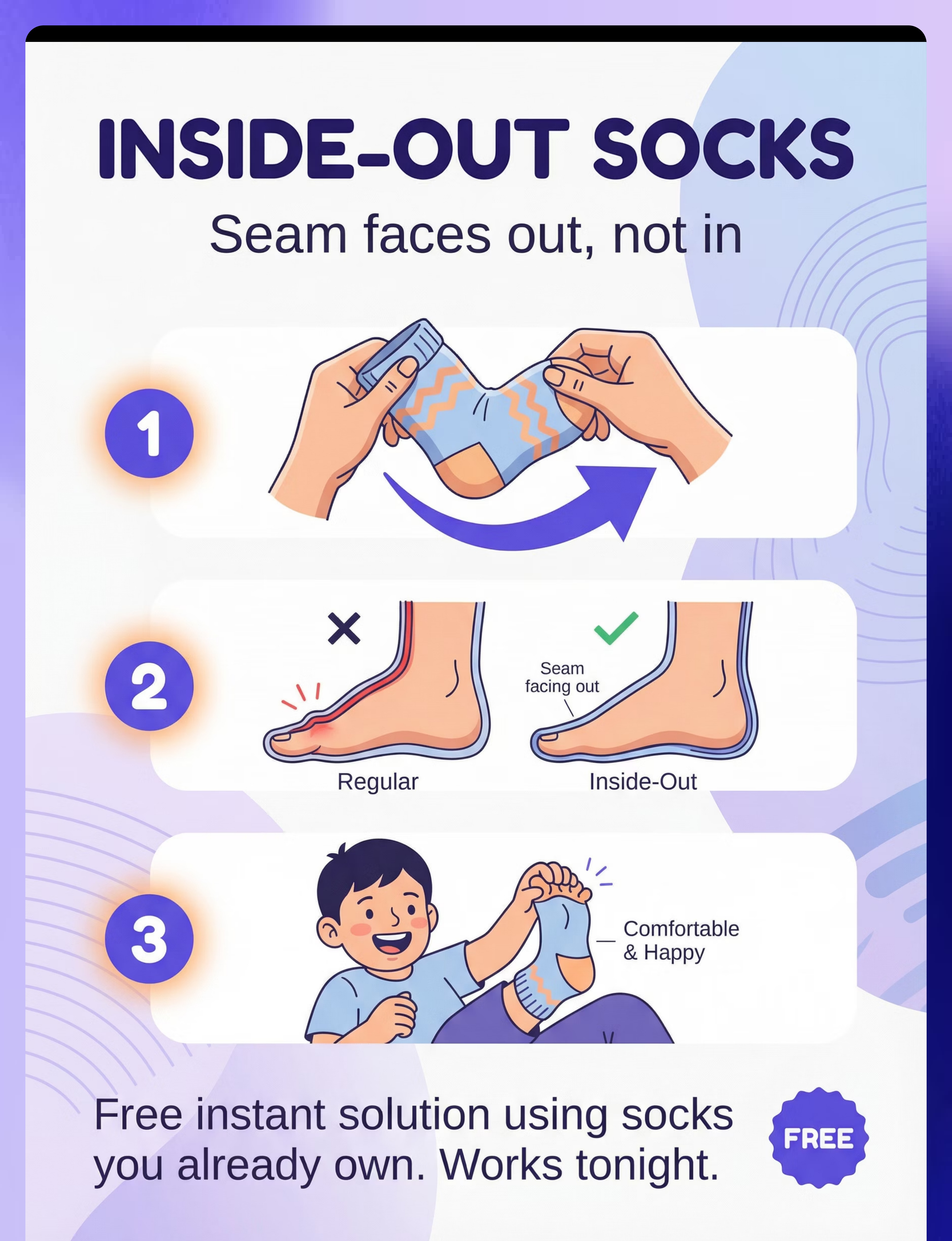
Material 2: Inside-Out Sock Method
Price: FREE
Turn existing socks inside-out so the seam faces outward, away from the child's skin. Works with socks you already own, requires no purchase, and can be implemented tonight. The smooth interior fabric — not the seam — contacts the skin. This is the zero-cost first step every family should try immediately.
Start Tonight — No Cost
Start here before anything else: Try the inside-out method tonight with socks you already own. Order 1 pair of seamless socks tomorrow. If Zone 1 solves the problem, you may not need Zones 2–4 at all.

Your 9-Material Toolkit — Zone 2: Manage the Seam
Zone 2
Good Options When Seamless Isn't Enough
When eliminating the seam isn't fully possible — or when you need additional tools — Zone 2 materials work by repositioning, minimizing, or overriding the seam's impact on the skin. These four materials offer excellent results for children with moderate sensitivity.
1
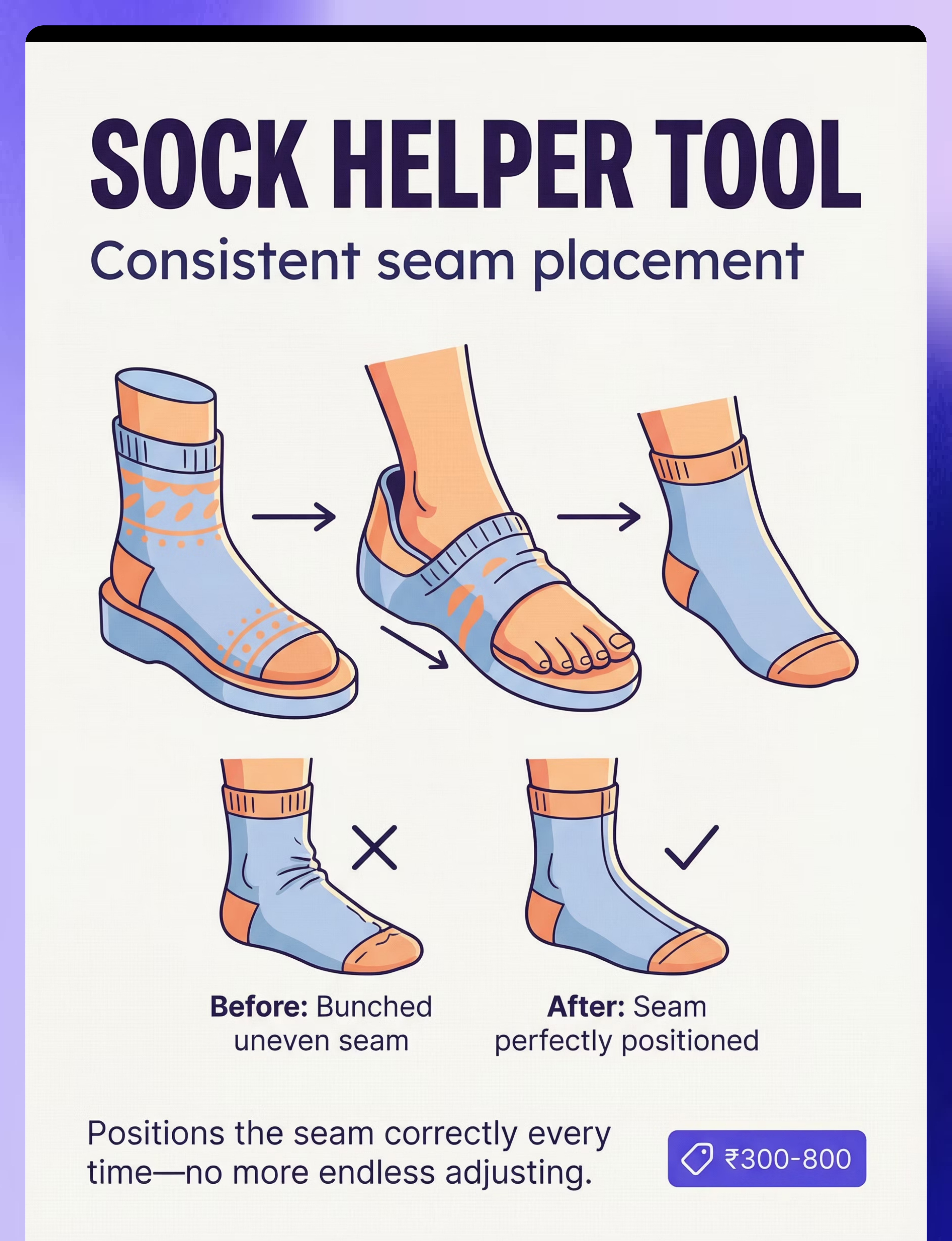
Material 3: Sock Alignment Tool / Helper
₹300–800 — Positions the seam correctly every time, ending the endless repositioning loop. Provides consistent, predictable placement so there's no daily guessing game.
2
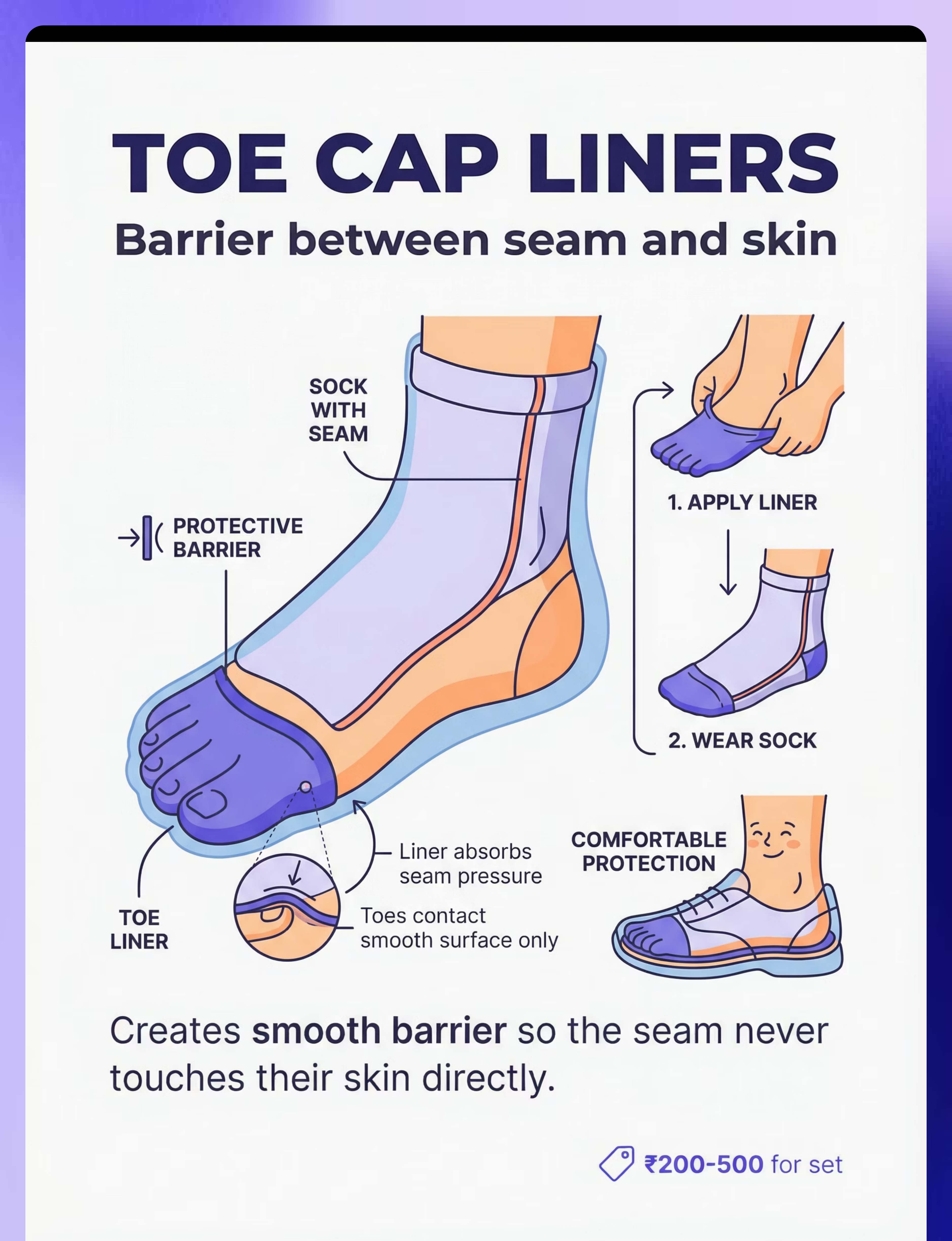
Material 4: Toe Cap Liners
₹200–500/set — A smooth barrier worn between the seam and skin. The seam never touches the toes directly. Invisible under regular socks — ideal for school uniform compliance.
3
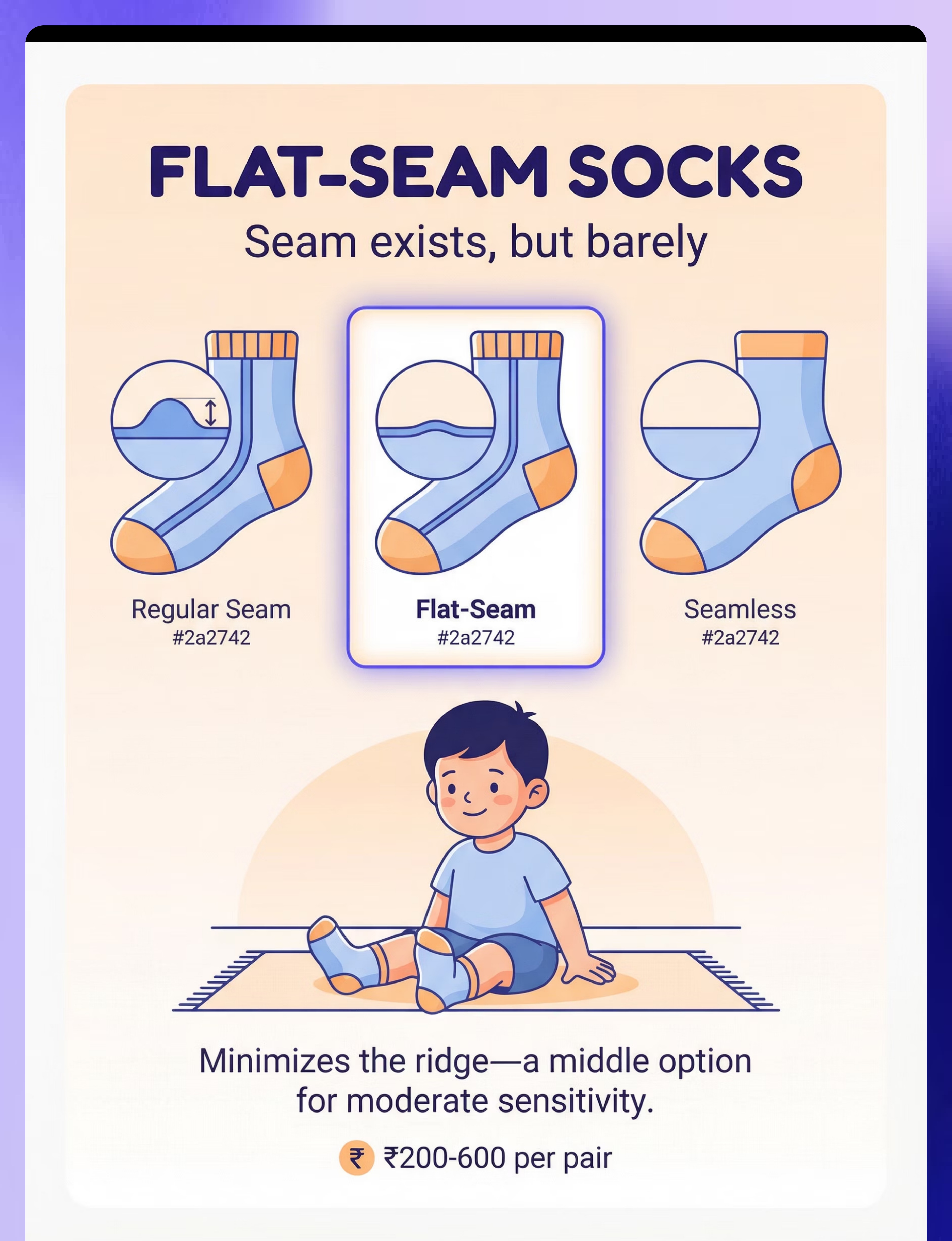
Material 5: Flat-Seam Socks
₹200–600/pair — The seam exists, but it's minimized to a nearly flat profile. A strong middle-ground option for children with moderate sensitivity who don't yet need fully seamless construction.
4
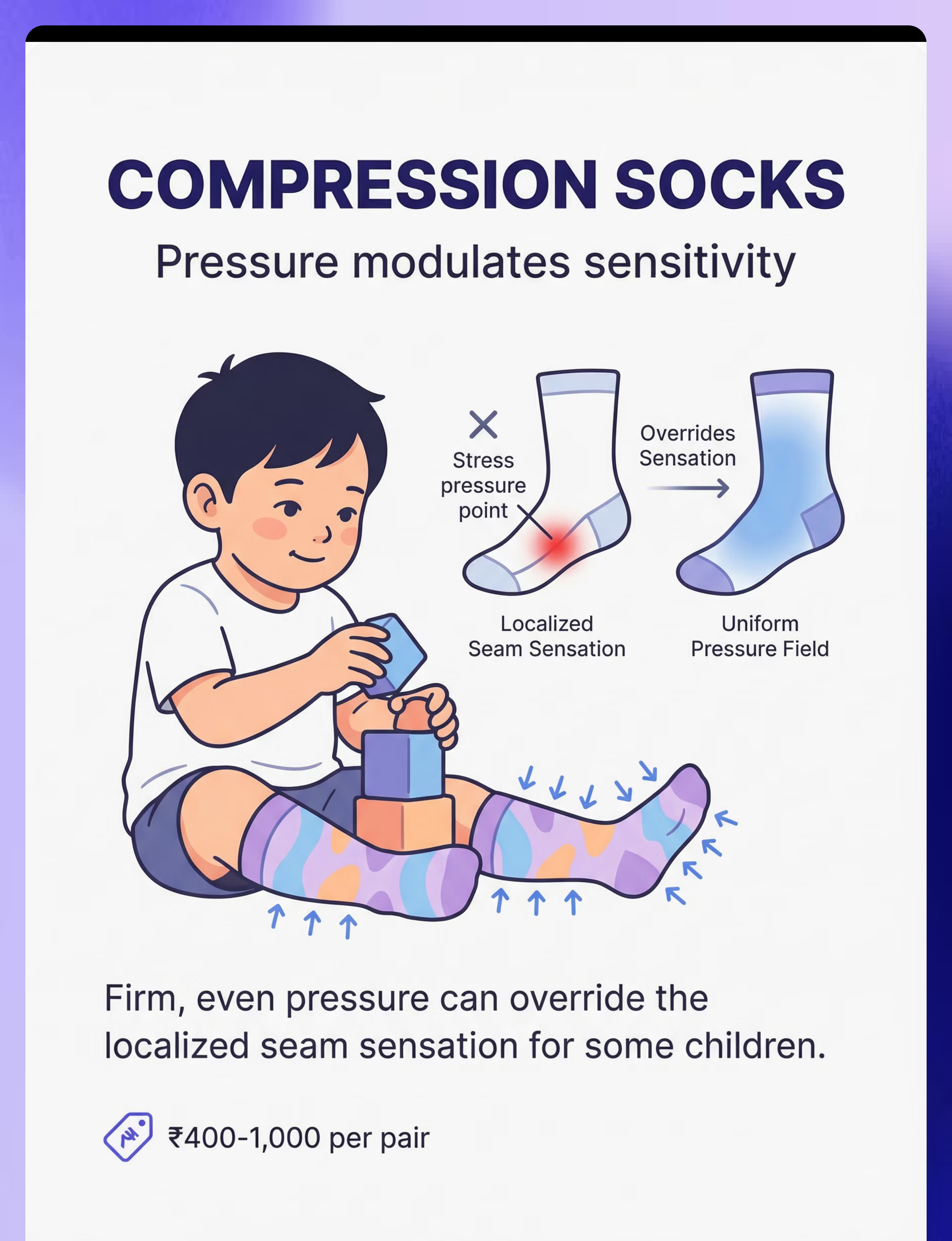
Material 6: Compression Socks
₹400–1,000/pair — Uniform, deep pressure across the entire foot overrides the localized sensation of the seam. The brain receives consistent input rather than a single irritating pressure point.
Your 9-Material Toolkit — Zone 3 & Zone 4
Zone 3
Regulate First — Before Dressing
These materials prime the nervous system before socks go on, raising the tactile tolerance threshold so the seam becomes less overwhelming.
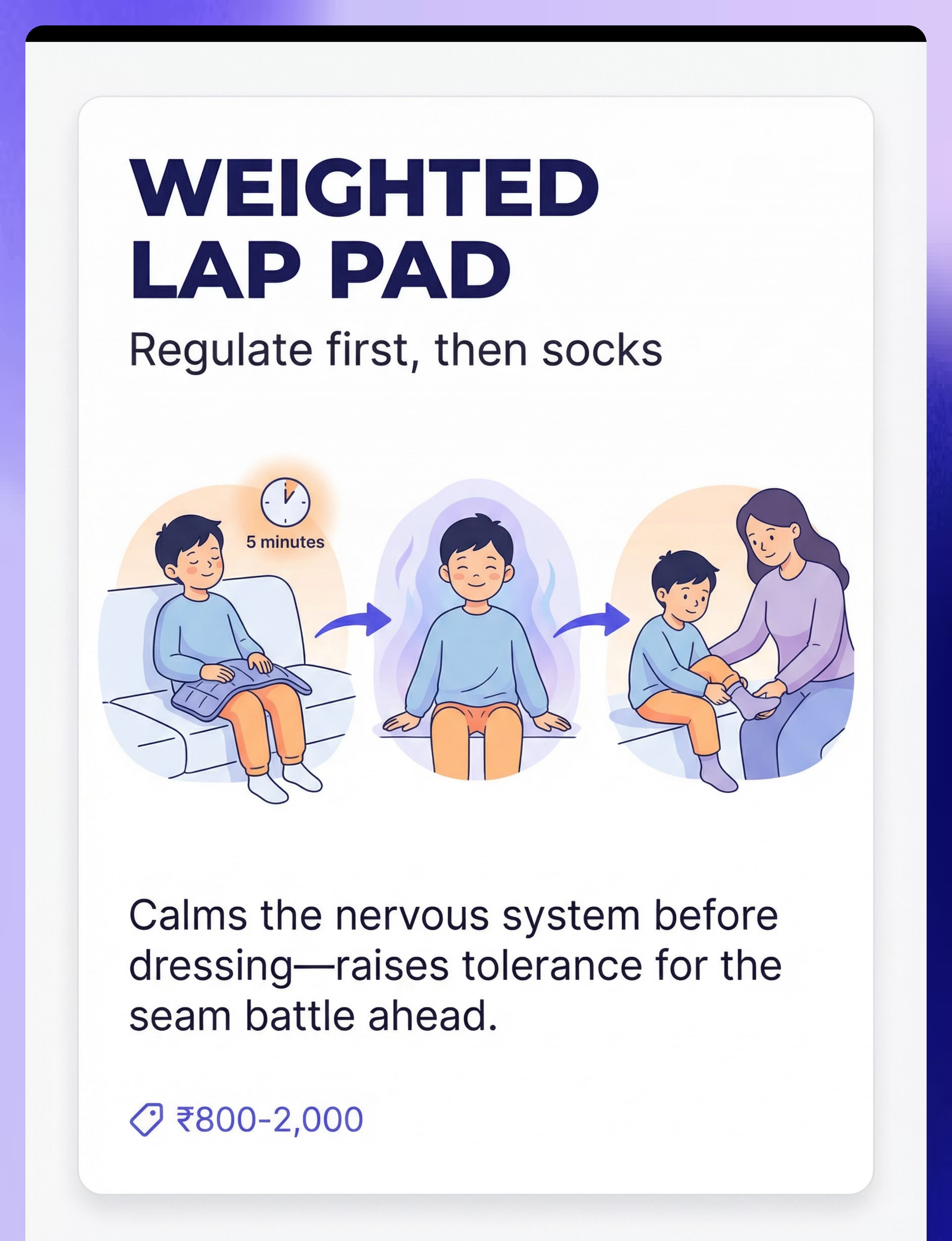
Material 7: Weighted Lap Pad
₹800–2,000 — 5 minutes of deep pressure pre-dressing calms the nervous system and raises tolerance for the light touch of the seam. One of the highest-impact tools in the toolkit.
🏆 Pinnacle Recommends
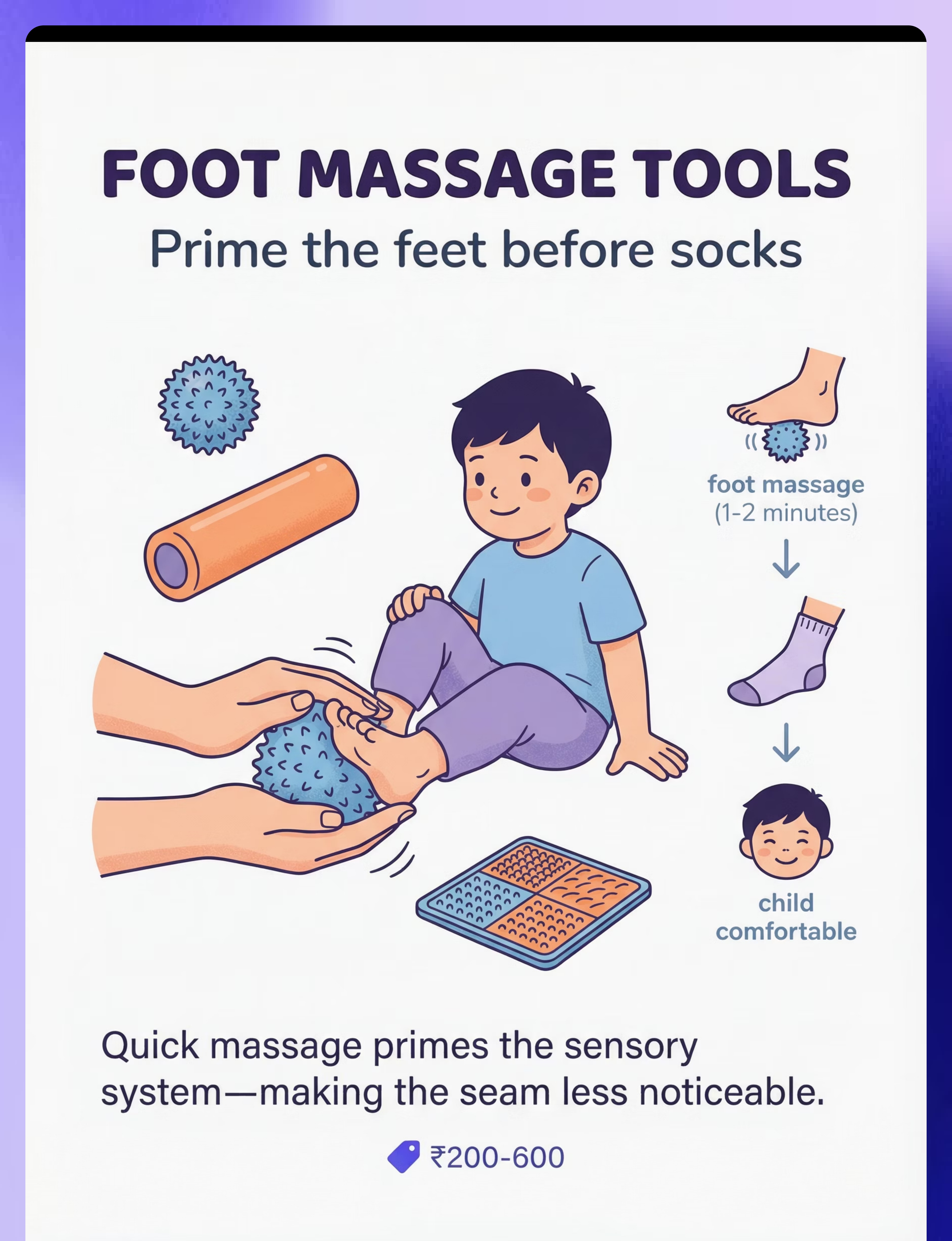
Material 8: Sensory Foot Massage Tools
₹200–600 — A spiky ball or textured roller applied firmly to the soles of the feet for 1–2 minutes "primes" the feet neurologically, making the seam sensation less noticeable by comparison.
Zone 4
Add Structure — Reduce Anxiety
Predictability is itself a sensory regulation tool. When children know exactly what is about to happen, anxiety decreases — and lower anxiety means lower sensory sensitivity.
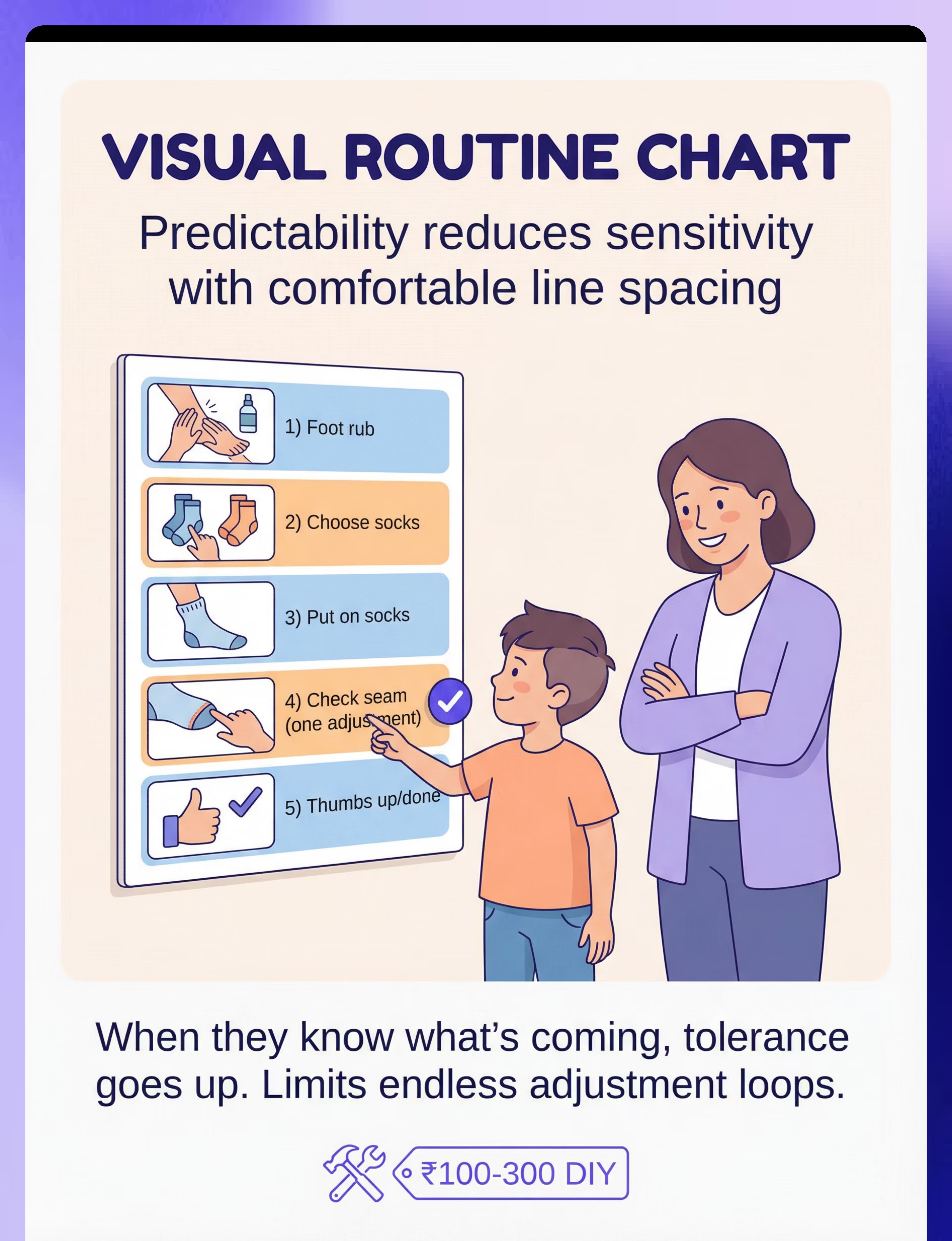
Material 9: Visual Routine Chart
₹100–300 or DIY Free — A laminated chart showing each dressing step with pictures. Posted at eye level at the sock station. Limits endless adjustment loops by providing a clear, external reference point.
🏆 Pinnacle Recommends
Investment Summary
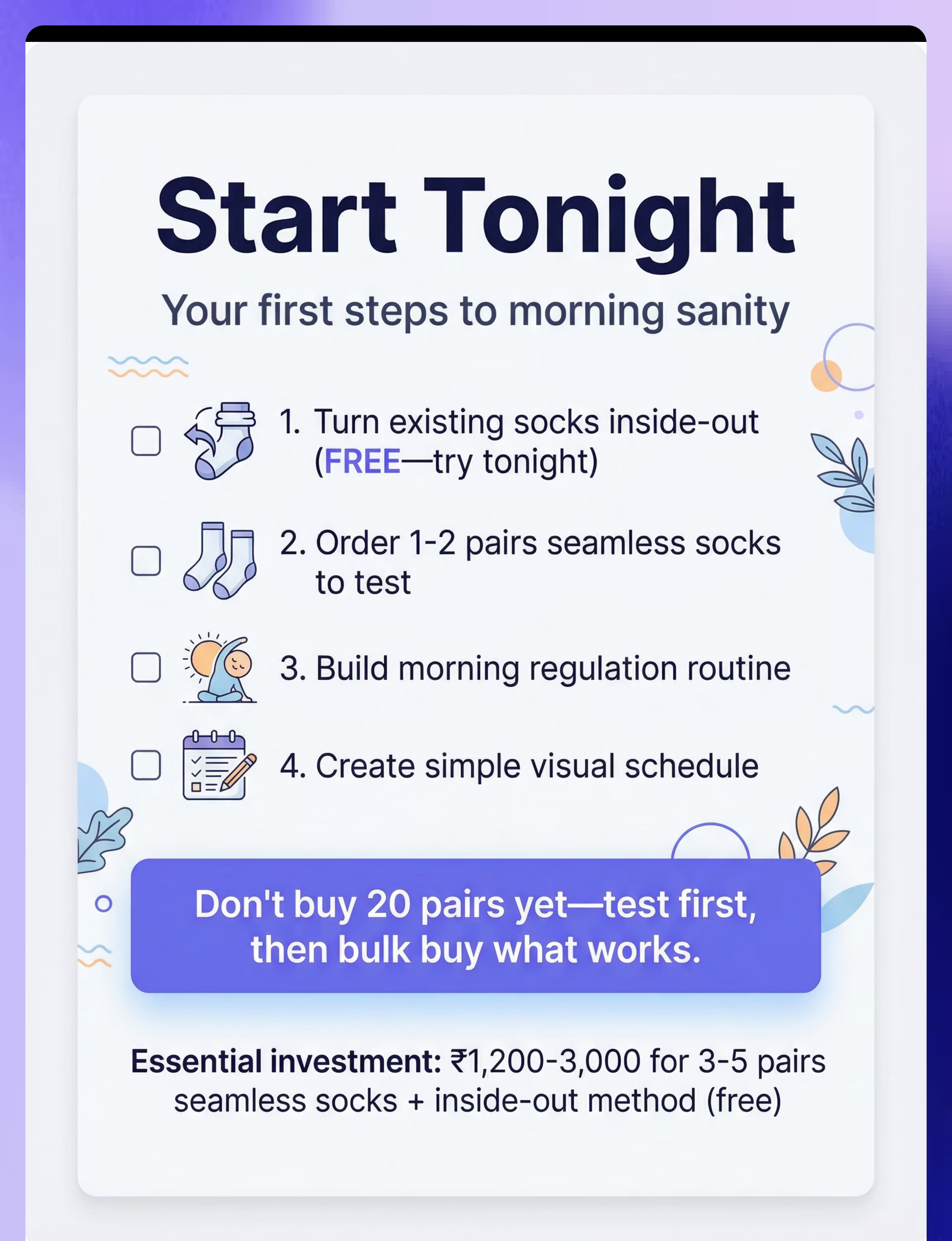
- Essential: ₹1,200–3,000 (3–5 pairs seamless socks + inside-out method free)
- Comprehensive: ₹2,500–6,000 for full 9-material toolkit
Can't Order Today? Make These at Home — Tonight
Every family deserves access to solutions regardless of location or budget. These DIY alternatives use the same therapeutic principles as their commercial counterparts. You can begin tonight with materials you already have at home.
Buy This | Make This | Same Principle | |
Seamless Socks (₹400–1,200) | Turn regular socks inside-out | Seam moved away from skin | |
Sock Helper Tool (₹300–800) | Cut cardboard foot form to child's size, stretch sock over form, position seam, slide onto foot | Consistent seam placement | |
Toe Cap Liners (₹200–500) | Cut the toe portion from a soft thin sock; wear under regular socks | Barrier between seam and skin | |
Flat-Seam Socks (₹200–600) | Iron damp sock seam flat with low heat | Reduces seam height | |
Compression Socks (₹400–1,000) | Snug athletic socks or dance tights | Uniform pressure effect | |
Weighted Lap Pad (₹800–2,000) | Fill pillowcase with 1–2 kg rice, sew closed | Deep pressure calming | |
Foot Massage Tools (₹200–600) | Tennis ball or rolling pin for foot massage | Proprioceptive priming | |
Visual Routine Chart (₹500–1,000) | Print pictures of each step, laminate, stick to wall | Visual predictability |
Zero-cost version: Inside-out socks + tennis ball foot massage + hand-drawn routine chart = FREE. Start tonight.
When clinical-grade is non-negotiable: If your child cannot wear any socks, start with SmartKnitKids seamless socks — no DIY fully replicates seamless knitting construction.
When clinical-grade is non-negotiable: If your child cannot wear any socks, start with SmartKnitKids seamless socks — no DIY fully replicates seamless knitting construction.
Research: PMC9978394 | WHO NCF Handbook (2022) — Context-specific, equity-focused interventions across 54 LMICs.
Safety First — Read Before You Start
Before beginning any sensory intervention at home, take 2 minutes to review these safety guidelines. The goal is progress, not distress. These protocols are designed to be safe — and your careful attention keeps them that way.
🔴 Do NOT Proceed If:
- Child has open wounds, blisters, or skin irritation on feet
- Known allergy to specific sock materials (latex, certain synthetics)
- Child shows signs of peripheral neuropathy (numbness, tingling) — consult pediatrician first
- Sudden onset of sock sensitivity — may indicate injury or medical condition requiring evaluation
🟡 Proceed With Caution:
- Compression socks: Check circulation — toes must remain pink and warm. Remove immediately if toes turn pale/blue
- Weighted lap pad: 5–10% of child's body weight maximum. Never restrict movement or breathing
- DIY toe liners: Ensure they stay flat — bunching creates new pressure points
- Ironing seam flat: Low heat only — synthetic socks can melt
🟢 Safe to Proceed When:
- Child is calm and fed — hunger amplifies sensory sensitivity
- Morning has adequate time — rushing increases sensitivity
- Multiple sock options available — never "one sock or nothing"
- Parent is calm — your stress transfers to the child
RED LINE — Stop immediately if child shows self-injurious behavior related to sock distress (hitting feet, pulling at toes aggressively). This indicates severity beyond home management. Contact Pinnacle Helpline: +91 9100 181 181
Research: DOI: 10.1007/s12098-018-2747-4 — Home-based sensory interventions safety protocols (Padmanabha et al., 2019)

Set Up Your Sock Station — 5 Minutes of Prep Saves 30 Minutes of Battle
Environment is not a luxury — it is a therapeutic variable. The right setup reduces anxiety before your child even sits down. A predictable space signals: "This is safe. I know what comes next."
1
Designated Spot
Same place every morning — floor mat, low chair, or bed edge. Predictable location reduces anticipatory anxiety significantly.
2
Sock Drawer Organization
Pre-approved socks only. Remove all rejected pairs. Your child should see only options that have worked before.
3
Regulation Tools Within Arm's Reach
Weighted lap pad, foot massage ball — accessible without getting up. No reaching, no disrupting the routine.
4
Visual Routine Chart at Eye Level
Laminated and posted before the child sits down. Steps visible immediately — the chart is the authority, not your voice.
5
Optional Visual Timer
For children stuck in adjustment loops: "One adjustment, then done." The timer makes the rule concrete.
Before your first session: Test all materials when your child is calm and unhurried. Weekend afternoon, not Monday morning. Let them explore seamless socks without any time pressure.
Before You Start — The 60-Second Readiness Check
Sixty seconds of honest assessment before you begin can save thirty minutes of failed attempts. The protocol works — but only when the conditions are right. Check all three categories before proceeding.
Child Readiness
- Fed and hydrated — hunger amplifies sensory sensitivity
- Rested — fatigue lowers tolerance thresholds
- Not already in meltdown — regulate first, then dress
- Aware that "sock time" is coming — verbal or visual cue given 5 minutes prior
Material Readiness
- Pre-approved socks laid out (2–3 options)
- Regulation tool ready (weighted lap pad or massage ball)
- Visual routine chart visible and at eye level
- Backup socks available in case first choice is rejected
Parent Readiness
- Calm — your emotional state is their co-regulation resource
- Unhurried — or at minimum, appearing unhurried
- Ready to validate: "I know the seam feels uncomfortable"
- Committed to the routine — no shortcuts today
If Any RED Items Fail
Regulate first. The protocol can wait 5 minutes. Forcing the process when the child or parent is already dysregulated guarantees failure and may increase sensitivity tomorrow.

Step 1 — Invite, Don't Instruct
Step 1 of 6
Duration: 30 seconds
The way you open the routine sets the emotional tone for everything that follows. Walking over and saying "Put your socks on — we're late" activates the nervous system in the wrong direction. Inviting rather than instructing keeps the window of tolerance open.
For Verbal Children
"It's sock time. Let's look at our chart. Step one — foot rub!" or "Which socks do you want to try first today?"
For Non-Verbal Children
Point to the chart. Offer the weighted lap pad. Begin foot massage. Let the routine speak rather than your words.
What NOT to Do
Don't say "Hurry up" or "We're late." Don't pick the socks for them. Don't reference yesterday's meltdown. Don't rush the transition.
Research: PMC11506176 — Child-initiated engagement increases intervention participation and reduces resistance significantly.
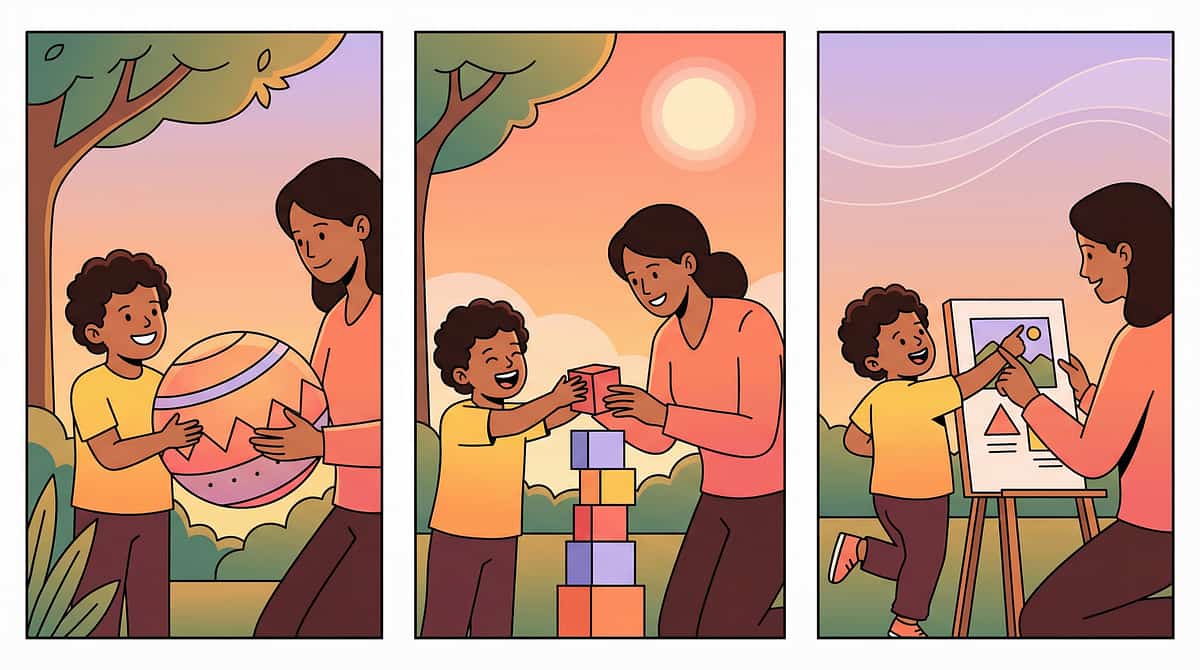
Step 2 — Regulate Before You Dress
Step 2 of 6
Duration: 1–3 minutes
This step is the secret most parents skip — and the reason the routine fails. Putting on socks before the nervous system is calm is like asking someone to thread a needle during an earthquake. Prime the system first.
Option A — Weighted Lap Pad
Place the weighted lap pad on the child's lap while they're seated. Let them sit for 2–3 minutes. Deep pressure input calms the nervous system and raises the threshold for tolerating subsequent light touch — like the sock seam.
Option B — Foot Massage
Using a spiky ball or textured roller, apply firm, rhythmic pressure to the soles of the feet for 1–2 minutes. Include the toes specifically — where the seam will contact. Firm and rhythmic, NOT light tickling touch (which increases sensitivity).
Option C — Combined (Best Results)
Lap pad on while you massage feet simultaneously. 3 minutes total. Transition directly to sock application while feet are still "primed." The window of elevated tolerance lasts approximately 5 minutes.
What You're Watching For:
- Shoulders dropping and body settling into the seat
- Breathing slowing, less fidgeting
- A "ready" look, or the child gives you a verbal cue
Research: PMC11506176 — Deep pressure input through weighted items and proprioceptive stimulation raises sensory thresholds in tactile-defensive children.

Step 3 — Applying the Socks
Step 3 of 6
Duration: 1–2 minutes maximum
This is the core therapeutic action. Follow the approach that matches your chosen material. The single most important rule across all methods: one check, one adjustment if needed, then move on. This prevents the infinite adjustment loop that derails mornings.
1
If Using Seamless Socks
Offer 2–3 pairs. Let child feel the smooth interior. They choose. Slide on smoothly. No seam to position. Done.
2
If Using Inside-Out Method
Turn sock inside out in front of the child. Show them the seam is now on the outside. Apply gently and point out the smooth interior against their skin.
3
If Using Toe Cap Liners
Apply thin liner first. Let child feel the smooth coverage on toes. Then apply regular sock over top. The liner absorbs the seam pressure completely.
4
If Using Compression Socks
Roll sock down, position over toes carefully, then roll up slowly. Even pressure should override seam sensation before it becomes intolerable.
Child response spectrum:Ideal — minimal or no distress. Acceptable — brief discomfort, one adjustment, moves on. Concerning — extended distress despite seamless socks → try a different brand → if persistent, consult your OT.
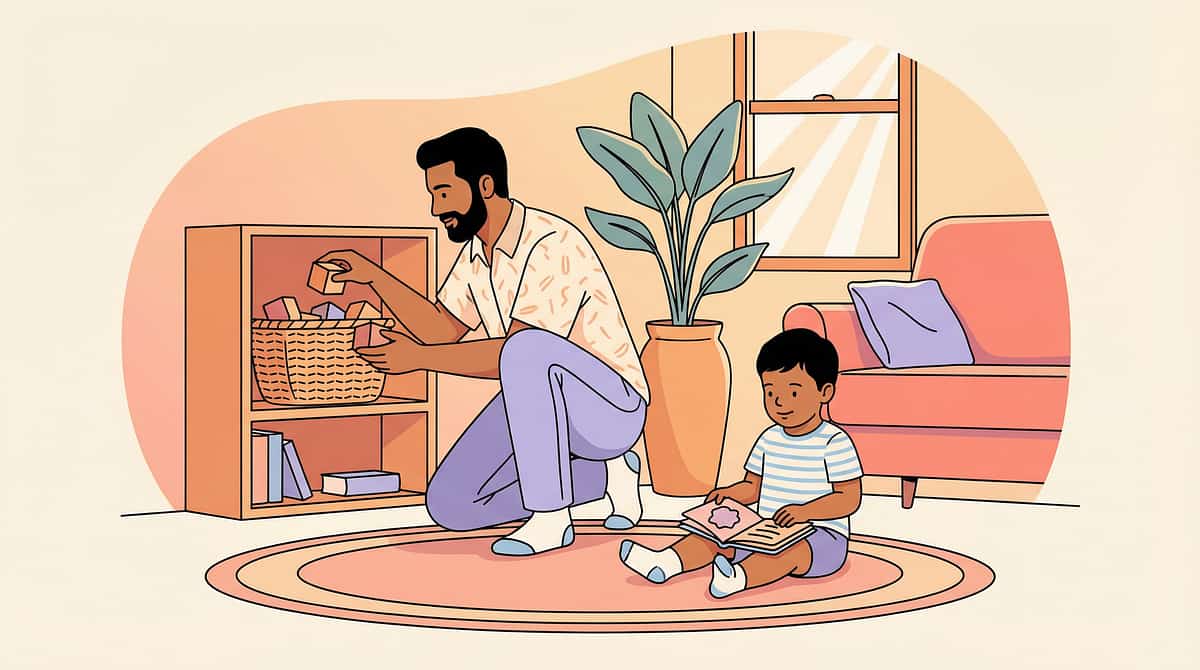
Step 4 — Build the Pattern, Add Variety
Step 4 of 6
Frequency: Daily
Consistency is the therapeutic dosage here. You are not just putting on socks — you are building a neural pathway that says: "Sock time is predictable, manageable, and ends quickly." Every repetition deepens that pathway.
Maintaining Consistency
- Same routine, same sock station, same visual chart every morning
- Rotate between 2–3 approved sock types to find the optimal one
- Let child choose sock color or pattern from pre-approved options — choice equals control equals lower anxiety
The "3 Good Days" Principle
Three consistent good mornings are worth more than ten forced ones. If it's a bad morning, use the easiest sock option and move on. One bad day does not erase a good week.
Forcing the process when the child is already dysregulated increases defensiveness — it does not build tolerance.
Gradual exposure path: Seamless socks → Flat-seam socks → Regular socks. Only progress when the child demonstrates mastery with the current level across 2+ weeks. Never rush this progression.

Step 5 — Reinforce the Win
Step 5 of 6
Timing: Within 3 seconds of success
Reinforcement is not bribery — it is the neurological fuel that makes the behavior more likely to happen again tomorrow. The timing matters more than the magnitude. A quick, genuine, specific response within 3 seconds is worth more than an elaborate reward 10 minutes later.
What Counts as Success
- Child sat at sock station when prompted ← SUCCESS
- Child tolerated one pair of socks for more than 30 seconds ← SUCCESS
- Child needed only one adjustment instead of ten ← SUCCESS
- Morning routine was 5 minutes shorter than last week ← SUCCESS
Reinforcement Menu
- Verbal praise — immediate and specific: "You did it! Socks on!"
- Preferred activity access immediately after
- Token or sticker on the visual chart
- Natural consequence: on-time arrival means more play time
What to Say
- "You did it! Socks on, and we're ready to go!"
- "Look at you — you chose your socks and put them on. That was quick!"
- High-five, thumbs up, or preferred physical praise gesture
Research: PMC11506176 — ABA reinforcement scheduling principles applied to sensory accommodation routines.
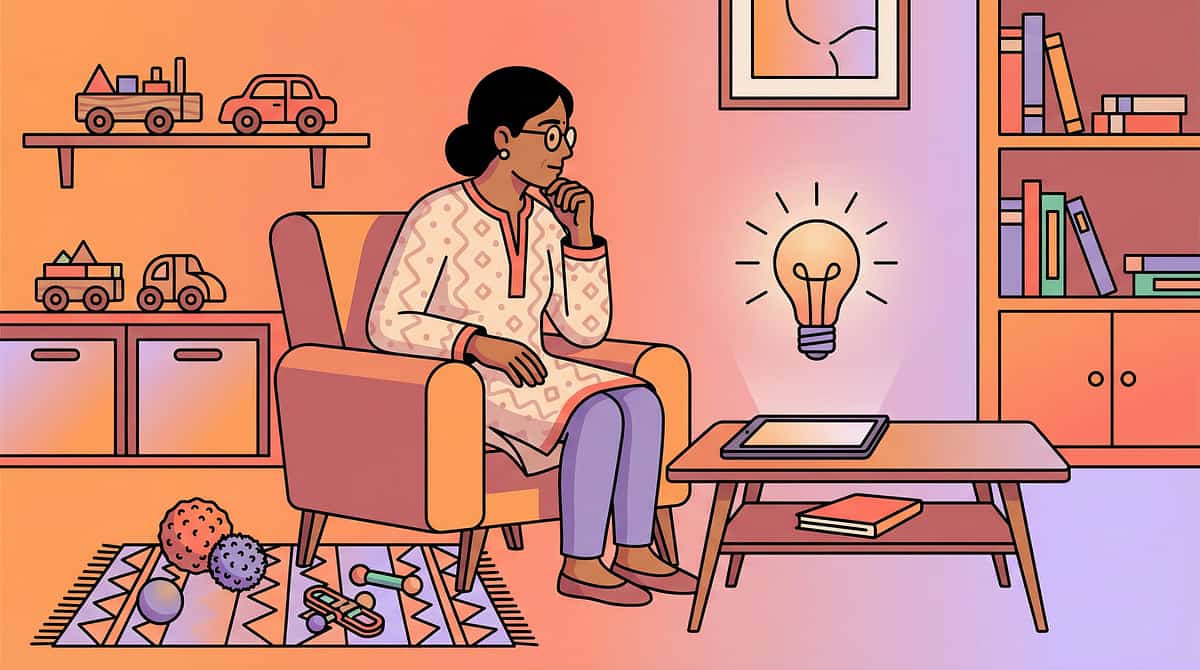
Step 6 — Transition Out Smoothly
Step 6 of 6
The Critical 5-Minute Window
After socks are on, move immediately to the next morning activity. Don't linger at the sock station. Don't ask "Are they okay?" repeatedly — this draws attention back to the seam and invites re-examination. The goal is forward momentum.
If Child Fidgets With Socks After Application
- Redirect: "Socks are done — check the chart. What's next?"
- Offer distraction: "Let's go have breakfast"
- Use the timer: "We already checked the seam. Timer says we move on."
Most children who tolerate socks for 5 minutes without adjusting will tolerate them for the rest of the day. Get through those 5 minutes with distraction, movement, or preferred activity.
If Socks Are Rejected After 10 Minutes
Today is not the day. Use the fallback option — sandals, sockless shoes, or different footwear. Try again tomorrow.
One failed morning does not mean the intervention failed. It means today the window wasn't open. That's useful information, not defeat.
The Fallback Rule
Always have a fallback. "No socks today" is a better outcome than a 40-minute meltdown that sets the pattern back by a week.
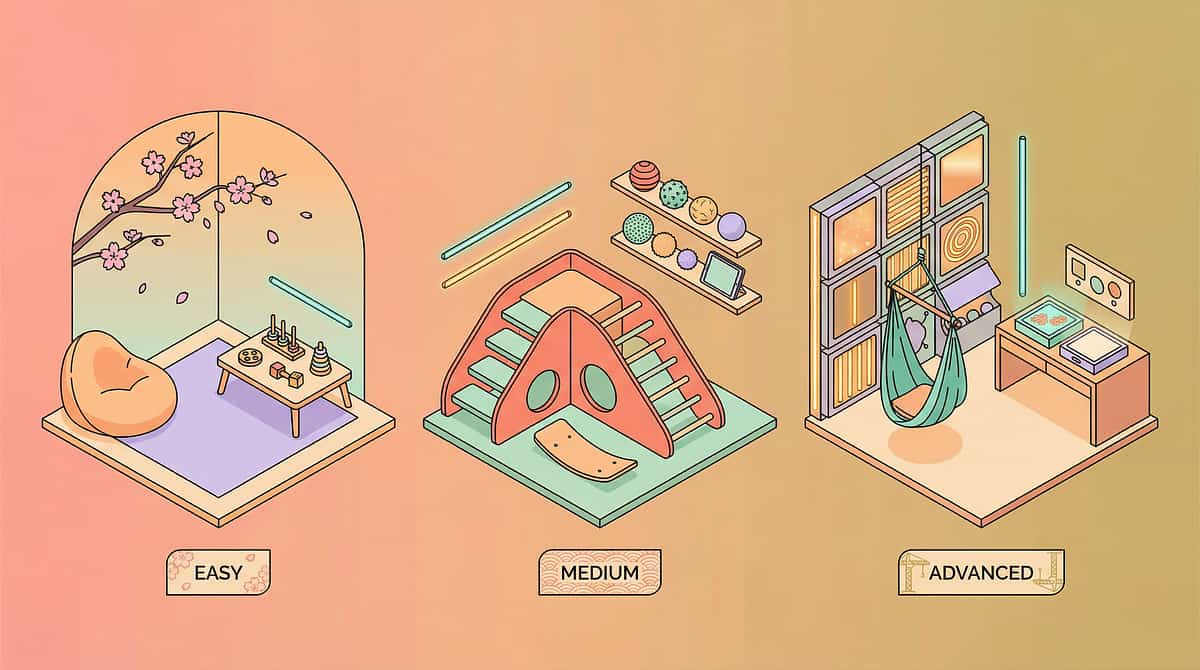
Track the Pattern — 30 Seconds Per Day
Parents routinely underestimate progress because they remember the bad days vividly and forget the good ones. Tracking creates an objective record — and after two weeks, clear patterns emerge that change everything about how you respond to hard mornings.
Daily Tracking (Check What Applies)
- Sock type used: Seamless / Inside-Out / Flat-Seam / Compression / Other
- Regulation used: Lap Pad / Foot Massage / Both / None
- Visual chart used: Yes / No
- Distress level: None / Mild / Moderate / Meltdown
- Adjustments needed: 0 / 1 / 2–3 / 4+ / Gave up
- Total dressing time: ___ minutes
Why Tracking Matters
After two weeks, patterns emerge. You'll see which sock type works best, whether regulation helps, and whether mornings are genuinely getting shorter. Data turns "I feel like it's not working" into "Tuesday through Thursday are actually good — it's Mondays after weekends that are hard."
Share this data with your therapist — it is clinical gold that guides the next phase of intervention.
GPT-OS® Integration
Track digitally through GPT-OS® at pinnacleblooms.org — auto-generates progress visualizations and shares directly with your clinical team.

Not Working? Troubleshoot Before You Quit
If the protocol isn't producing results, the answer is almost never to abandon it entirely. Usually, one specific variable needs adjusting. Work through these troubleshooting pairs before concluding the approach isn't right for your child.
Problem: "Seamless socks still bother my child"
Solution: Check the brand. Not all "seamless" socks are truly seamless. Turn inside out and feel for any ridge. Try SmartKnitKids specifically — OT-designed gold standard. Also confirm the sock doesn't bunch, which creates new pressure points.
Problem: "Child rejects ALL socks now — even the good ones"
Solution: Sensitization from too many forced attempts. Step back completely — go sockless for 3–5 days. Restart with regulation first and one pair of truly seamless socks. No pressure. No time limit.
Problem: "Works at home but not at school"
Solution: Send approved socks to school in the child's bag. Create a visual routine card for the school bag. Brief the teacher: "He needs seamless socks. Please don't force regular socks."
Problem: "My child insists on one specific pair only"
Solution: This is completely normal and manageable. Buy 3–5 identical pairs of that exact style. Rotate to keep them fresh. Reliable sock inventory eliminates a daily source of stress.
Problem: "Morning is still taking 30+ minutes"
Solution: Implement the visual timer with a strict one-adjustment rule. If the child cannot move past the adjustment loop regardless of timer, the sock type may be wrong. Switch to a different material from the 9-material toolkit.

Personalize This Protocol — Your Child Is Unique
The 9-material toolkit is the foundation. How you apply it depends on your child's specific sensory profile, age, and communication level. Use these adaptations as your starting point, not as fixed rules.
Sensory Avoider (High Sensitivity)
- Start with seamless socks only — don't experiment with flat-seam initially
- Maximize regulation: lap pad + foot massage + warm feet before socks
- Minimal sock options (2, not 5) — choice overload increases anxiety
- Longer adaptation timeline: 4–6 weeks before expecting consistency
Sensory Seeker (Craves Input)
- Try compression socks first — deep pressure may be preferred
- Use spiky massage ball (not smooth) — intense input may be enjoyable
- Let them help turn socks inside-out — motor engagement reduces resistance
- Shorter timeline: often adapts within 1–2 weeks
1
Ages 2–3 Years
Parent does everything. Visual chart uses photos, not text. Short regulation (1 minute). Immediate distraction activity after socks are on.
2
Ages 4–5 Years
Child participates in choosing socks. Follows visual chart with adult prompting. Beginning to self-advocate: "I need the blue ones."
3
Ages 6–8 Years
Child follows routine independently. Can articulate which socks feel right. Beginning to manage their own sensory environment autonomously.

Week 1–2: What to Expect (And What Not To)
Progress Phase 1
~15% of journey
The first two weeks are about building trust in the routine — not achieving mastery. Managing expectations during this phase is as important as the technique itself. Here is what real, measurable progress looks like at this stage.
What Progress Looks Like
- Child accepts sitting at the sock station without immediate meltdown
- One or two "okay" mornings out of seven
- Dressing time reduced by even 5 minutes
- Child begins to express preference: "not those ones"
- 30 extra seconds of sock tolerance over previous socks = real neurological progress
What Is NOT Progress Yet (And That's Okay)
- Child doesn't cheerfully put on socks every morning
- Some mornings are still battles
- Child may reject socks they accepted yesterday
Parent Emotional Preparation
This is the hardest phase. You're changing an entrenched pattern while managing your own frustration and time pressure. The data shows improvement emerges across 8–12 weeks — not 8–12 days. It gets easier.
Research: PMC11506176 — Sensory integration intervention outcomes emerge across 8–12 week timelines.

Week 3–4: The Consolidation Phase
Progress Phase 2
~40% of journey
Something shifts in weeks three and four. The routine stops being a battle and starts becoming a pattern. Neural pathways are consolidating. You'll notice the changes first in the small things — before the big ones.
Child walks to the sock station with minimal prompting
The location and routine are now familiar — anticipatory anxiety is decreasing.
Preferred sock type is becoming clear
The child reaches for the "right" pair. They are developing a sensory vocabulary for what works.
Adjustment requests are decreasing
From 10+ adjustments to 1–3. The loop is shortening. This is measurable, meaningful progress.
Child may begin following visual chart independently
Without adult pointing — the chart is becoming internalized routine structure.
Child starts choosing socks from the drawer independently
Telling you which socks "feel good." Spontaneous self-advocacy is emerging.
"You may notice you're more confident too. The morning dread is lifting." — Parent milestone, Pinnacle Blooms Network

Week 5–8: Mastery Is Emerging
Progress Phase 3
~75% of journey
3
Minutes to Independent Dressing
Child selects and applies socks independently in under 3 minutes — mastery benchmark
2
Consecutive Weeks Meltdown-Free
Zero or one adjustment per application, no sock-related meltdowns for 2 full weeks
1
Max Adjustments Per Session
Zero or one adjustment is the mastery standard — down from 10+ at baseline
Mastery Criteria (Specific, Observable)
- Child selects and applies socks independently in under 3 minutes
- Zero or one adjustment per application
- No meltdowns related to socks in the past 2 weeks
- Tolerates socks for full day without mid-day removal requests
Generalization Indicators
- Child begins tolerating other clothing items that previously caused distress
- Transfers visual routine chart concept to other dressing tasks
- Can verbalize sensory preferences to non-family caregivers
Some children always need seamless socks — that is a completely acceptable permanent accommodation, not a failure. The goal is a peaceful morning, not a "normal" sock.
Research: PMC10955541 | BACB mastery criteria standards

You Did This. Celebrate.
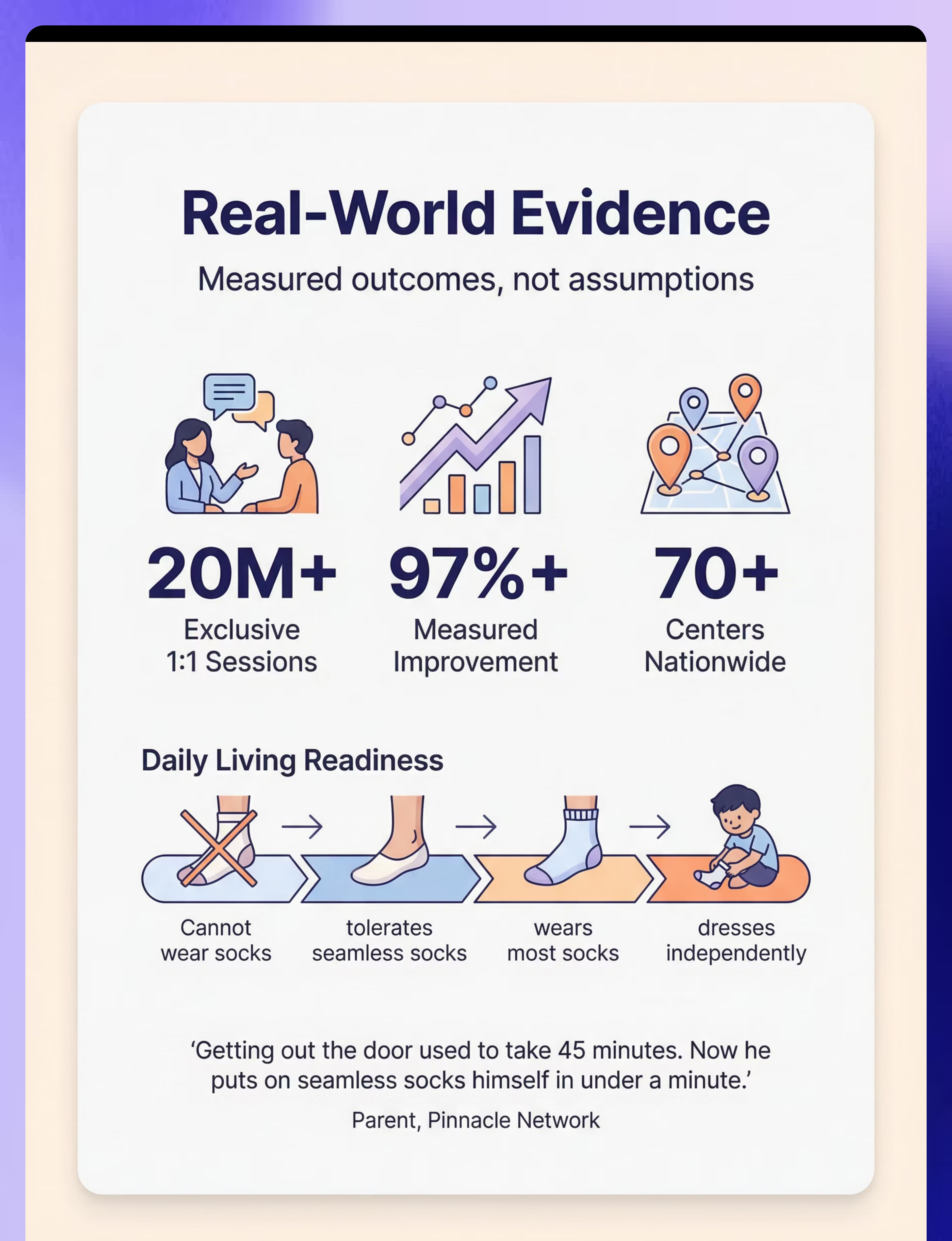
"Getting out the door used to take 45 minutes. Now he puts on seamless socks himself in under a minute." — Parent, Pinnacle Blooms Network
To the parent reading this: You spent weeks following a routine when you were exhausted. You bought the socks, built the chart, massaged the feet, and kept going when it felt like nothing was changing. Your child can now put on socks and leave the house. That is not a small thing. That is a daily freedom restored to your family.
Take a Photo
Capture your child putting on socks independently. The visual record of this milestone matters — for you, for your child's record, and for your OT.
Note It in Their Journal
Write it down. "Week 8 — socks on independently, under 3 minutes." These notes become the story of your child's development.
Mark the Before and After
The discarded sock pile from Week 1 versus the smooth morning of Week 8. That distance is the measure of what you accomplished together.
You arrived on Card 01 stressed, exhausted, and late. You're leaving here empowered, equipped, and on time.
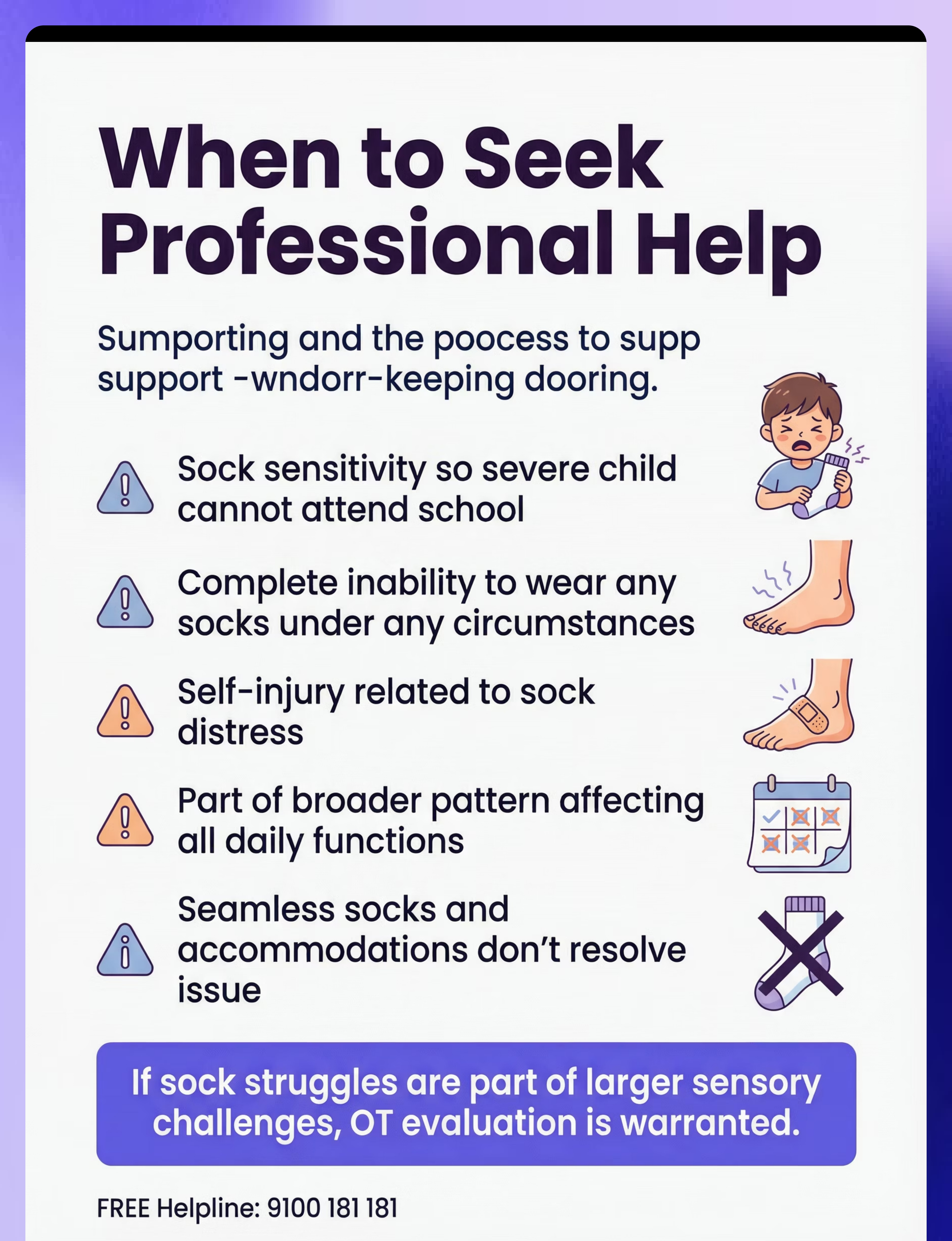
Red Flags — When to Seek Professional Evaluation
Home-based protocols resolve the vast majority of sock seam sensitivity challenges. But some presentations require professional assessment. Trust your instincts — you know your child best. If something feels wrong, pause and ask.
Pause and consult if you see any of the following:
Complete Inability to Wear Any Socks
Sensitivity so severe the child cannot attend school or activities despite all 9 materials — including truly seamless options.
Self-Injury Related to Sock Distress
Hitting feet, pulling at toes, or scratching aggressively. This indicates severity beyond home management.
Broader Tactile Defensiveness Pattern
Affecting ALL daily functions — eating, bathing, sleeping — not just socks. Requires comprehensive OT sensory profile assessment.
Sudden Onset of Foot Sensitivity
New sensitivity that appeared without gradual progression may indicate injury, infection, or neurological change requiring medical evaluation.
No Improvement After 8 Weeks
Seamless socks and all accommodations implemented consistently with no measurable progress — escalate to in-clinic assessment.
FREE National Autism Helpline
+91 9100 181 181 | 18+ languages | Monday–Saturday
Find Your Nearest Pinnacle Center
pinnacleblooms.org/centers | 70+ locations across India
Research: WHO NCF Progress Report 2018–2023 | Pinnacle clinical escalation protocols
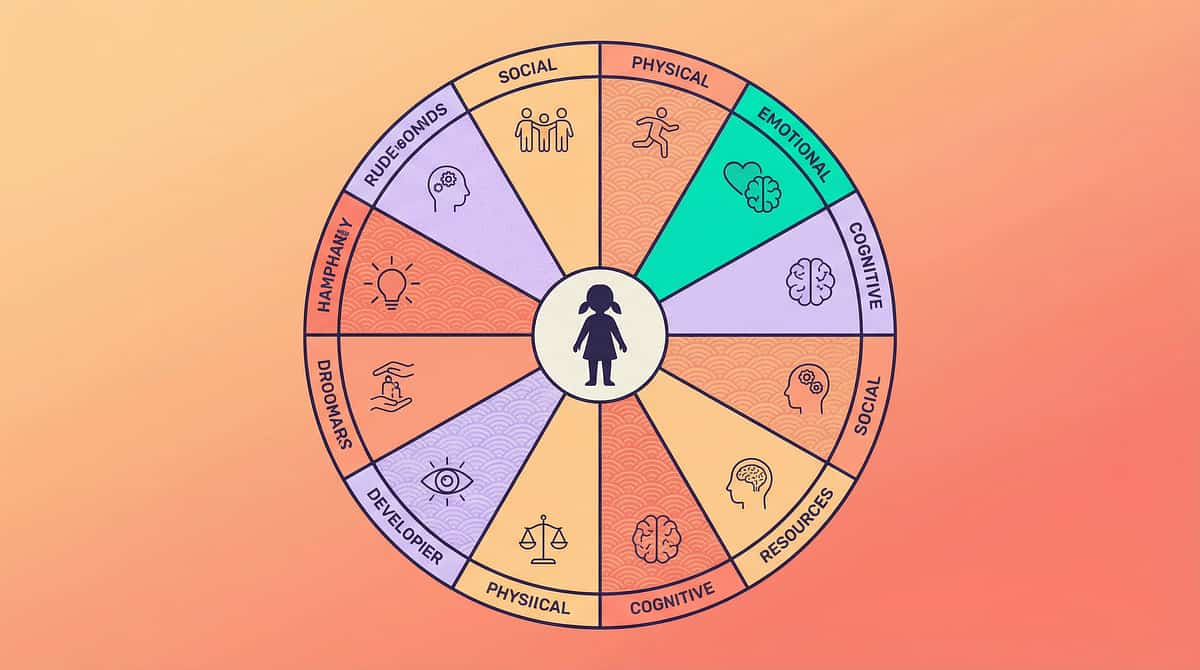
Your Sock Sensitivity Journey — The Progression Pathway
Sock seam sensitivity doesn't exist in isolation. It sits within a broader landscape of tactile processing — and the skills you've built here directly transfer to adjacent challenges. Here is how your journey connects to what came before and what comes next.
Each technique in this series builds on the materials and skills from the previous one. Completing A-005 means you already have the regulation tools, visual routine structure, and accommodation principles needed for A-006.
If Sock Tolerance Is Improving
- Gradual exposure: seamless → flat-seam → regular (over 4 weeks)
- Progress to A-006: Waistband Sensitivity — same principles, new body zone
- Explore A-005-DD-01: Complete Guide to Seamless Sock Brands
If Child Remains Highly Sensitive
- Lateral option: A-007 Shoe/Footwear Sensitivity
- Full OT sensory integration program — in-clinic
- Deepdive A-005-DD-02: Building a Sock Routine That Works
Related Techniques in Tactile Processing
The materials you've assembled for this technique — seamless garments, compression items, weighted tools, and visual routine charts — are the foundation of the entire tactile processing domain. You're already equipped for what comes next.
1
A-001: Touch Sensitivity — 9 Materials Intro
Level: Intro | You already have: Weighted items, visual charts. The foundational framework for all tactile sensitivities.
2
A-003: Clothing Tag Sensitivity
Level: Intro | You already have: Visual routine chart. Same elimination principle — applied to clothing tags.
3
A-004: Fabric Texture Refusal
Level: Intro | You already have: Sensory regulation tools. Broader fabric challenges using the same protocol structure.
4
A-006: Waistband Sensitivity
Level: Core | You already have: Compression garments, visual charts. Natural next step after sock mastery.
5
A-007: Shoe/Footwear Sensitivity
Level: Core | You already have: Foot massage tools, visual routines. Adjacent foot-zone challenge.
6
A-008: Underwear Sensitivity
Level: Core | You already have: Seamless garments principle. Same approach, new garment zone.
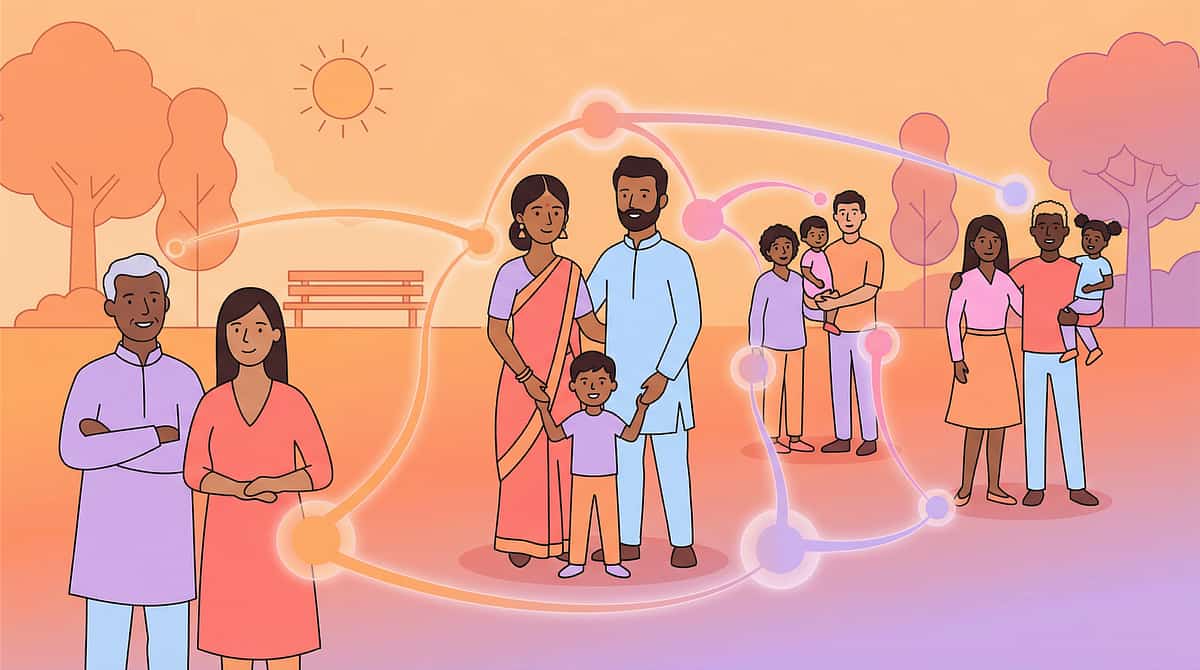
This Is One Piece of a Larger Plan
Sock seam sensitivity is a single window into your child's broader sensory and developmental profile. The skills built here — accommodation, regulation, routine, and gradual exposure — contribute across multiple developmental domains simultaneously.
This technique feeds into: Domain A (Sensory) → Domain E (Daily Living: Independent Dressing) → Domain G (Emotional Regulation: Reduced Morning Dysregulation). One technique. Three domain impacts.
GPT-OS® builds a personalized developmental plan across all 12 domains, connecting your child's progress in each area to the others. Visit pinnacleblooms.org/gpt-os to see your child's full profile.
Research: WHO NCF (2018) | UNICEF 2025 Country Profiles — Holistic developmental monitoring across all nurturing care components.

Real Families. Real Outcomes. Real Mornings Transformed.
Arjun, Age 4 — Hyderabad
Before: 35-minute sock battles every morning. Mother crying in the car. Late to school 4 days per week. Forced regular socks caused escalating meltdowns.
After Week 6: Seamless socks + visual routine chart. Morning dressing time: 4 minutes. Zero sock-related meltdowns in 3 weeks. Child now selects socks independently.
"Getting out the door used to take 45 minutes. Now he puts on seamless socks himself in under a minute."
Meera, Age 6 — Bangalore
Before: Refused all socks. Went to school in sandals even during winter. School sent notes home.
After Week 4: Started with the inside-out method (free). Graduated to SmartKnitKids seamless. Now wears socks to school daily.
"Meera's tactile defensiveness was localized to the toe seam — once we eliminated the specific trigger, her tolerance generalized to other clothing items." — Pinnacle OT, Bangalore
Rohan, Age 3 — Pune
Before: Would scream and pull socks off within seconds. No tolerance for any footwear with a toe seam.
After Week 8: Foot massage + weighted lap pad pre-dressing protocol. Tolerates seamless socks for full school day. Has two "favorite" pairs. Follows visual chart with minimal prompting.
You Don't Have to Do This Alone
The morning sock battle can feel profoundly isolating — like you're the only family dealing with this before 9 AM. You're not. Thousands of families across India are navigating the same challenge, and many have come out the other side. Connect with them.
Pinnacle Parent WhatsApp Community
Connect with parents currently navigating the same sock challenge. Share which brands work, which DIY hacks last, and what Week 2 really feels like — unfiltered, parent to parent.
Online Parent Forum
Browse hundreds of threads from families who've completed this journey. Search by age, sensitivity type, or material. Read before you post, or share your own progress. pinnacleblooms.org/community
Local Parent Meetups
In-person meetups at 70+ Pinnacle centers across India. Meet other parents, share experiences, and get peer mentoring from families who've already completed the journey.
"Consider sharing your sock journey. The parent searching at 11 PM tonight needs to hear your story."

Professional Support — Whenever You Need It
Home protocols work for the majority of families. When you need more — or want clinical confirmation that you're on the right path — Pinnacle Blooms Network is here across every channel.
Pinnacle Blooms Network
70+ Centers Across India
Find your nearest center for in-person OT assessment, sensory profile evaluation, and comprehensive intervention programs.
pinnacleblooms.org/centers
Teleconsultation
Can't visit in person? Book a virtual OT consultation from anywhere.
pinnacleblooms.org/teleconsult
FREE National Autism Helpline
+91 9100 181 181
18+ languages | Monday–Saturday | Staffed by Pinnacle clinicians
What to Ask Your OT
- "Should we pursue a formal sensory profile assessment?"
- "Is my child's sock sensitivity part of a broader tactile pattern?"
- "What's the right desensitization progression for our specific situation?"
- "Are there other clothing challenges I should address next?"
You don't need to have a crisis to contact us. A preventive consultation — before patterns become entrenched — is often the highest-value intervention. Book early, not just in emergencies.
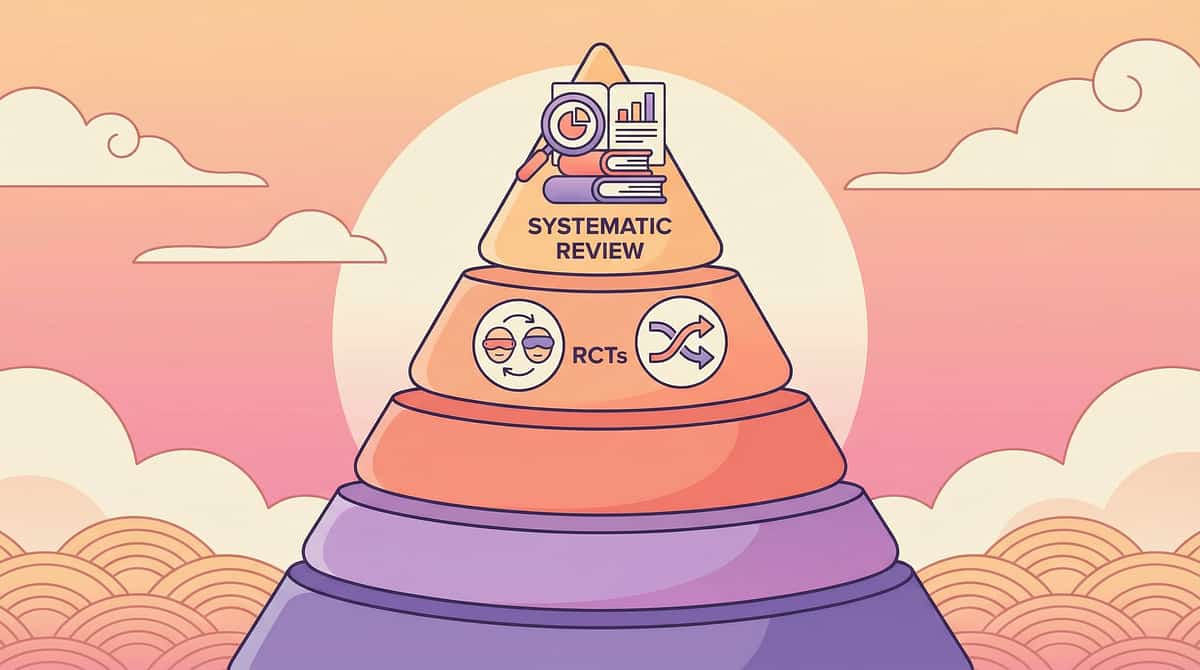
The Research — Every Claim on This Page Is Sourced
This page meets Pinnacle Blooms Consortium evidence requirements: minimum Level II evidence for all primary claims, with clinical consensus supporting implementation guidance. Nothing here is opinion dressed as fact.
Study | Finding | Reference | |
PRISMA Systematic Review (Children, 2024) | 16 studies from 2013–2023: Sensory integration intervention is evidence-based practice for ASD | PMC11506176 | |
Meta-analysis (World J Clin Cases, 2024) | 24 studies: SI therapy promotes social skills, adaptive behavior, sensory processing, motor skills | PMC10955541 | |
Indian RCT (Padmanabha et al., Indian J Pediatr, 2019) | Home-based sensory interventions: significant outcomes in Indian pediatric populations | DOI: 10.1007/s12098-018-2747-4 | |
WHO Nurturing Care Framework (2018) | Early intervention during critical developmental periods impacts lifelong outcomes | nurturing-care.org | |
WHO/UNICEF CCD Package (2023) | Evidence-based caregiver recommendations implemented across 54 LMICs | PMC9978394 | |
Frontiers in Integrative Neuroscience (2020) | Neurological basis for sensory processing treatment in ASD established | DOI: 10.3389/fnint.2020.556660 | |
NCAEP Evidence-Based Practices (2020) | Video modeling + sensory integration classified as evidence-based practices | NCAEP 2020 Report | |
UNICEF/WHO NCF for SLPs (2022) | Multi-disciplinary contributions to nurturing care framework | DOI: 10.1080/17549507.2022.2141327 |
Powered by GPT-OS® — Global Pediatric Therapeutic Operating System
This page is one of 70,000+ intervention technique pages in the GPT-OS® knowledge system — the world's largest pediatric therapeutic content library. Every recommendation is generated, validated, and updated by a combination of clinical expertise and AI-powered evidence synthesis.
Diagnostic Intelligence
Identifies your child's specific sensory profile from structured parent input and clinical data, mapping their unique tactile threshold.
AbilityScore®
Quantifies current functioning across all 12 developmental domains, giving you a baseline to measure progress against.
Prognosis Engine
Projects developmental trajectory based on your intervention selection, helping you understand expected outcomes and timelines.
TherapeuticAI®
Matches your child to the exact materials and protocols most likely to work — based on profile, age, sensitivity pattern, and family context.
20M+
Therapy Sessions
97%+
Measured Improvement
70+
Centers Nationwide
70+
Countries Served
CIN: U74999TG2016PTC113063
DPIIT: 8651
ISO 13485:2016

Watch: 9 Materials That Help With Seam Sensitivity in Socks
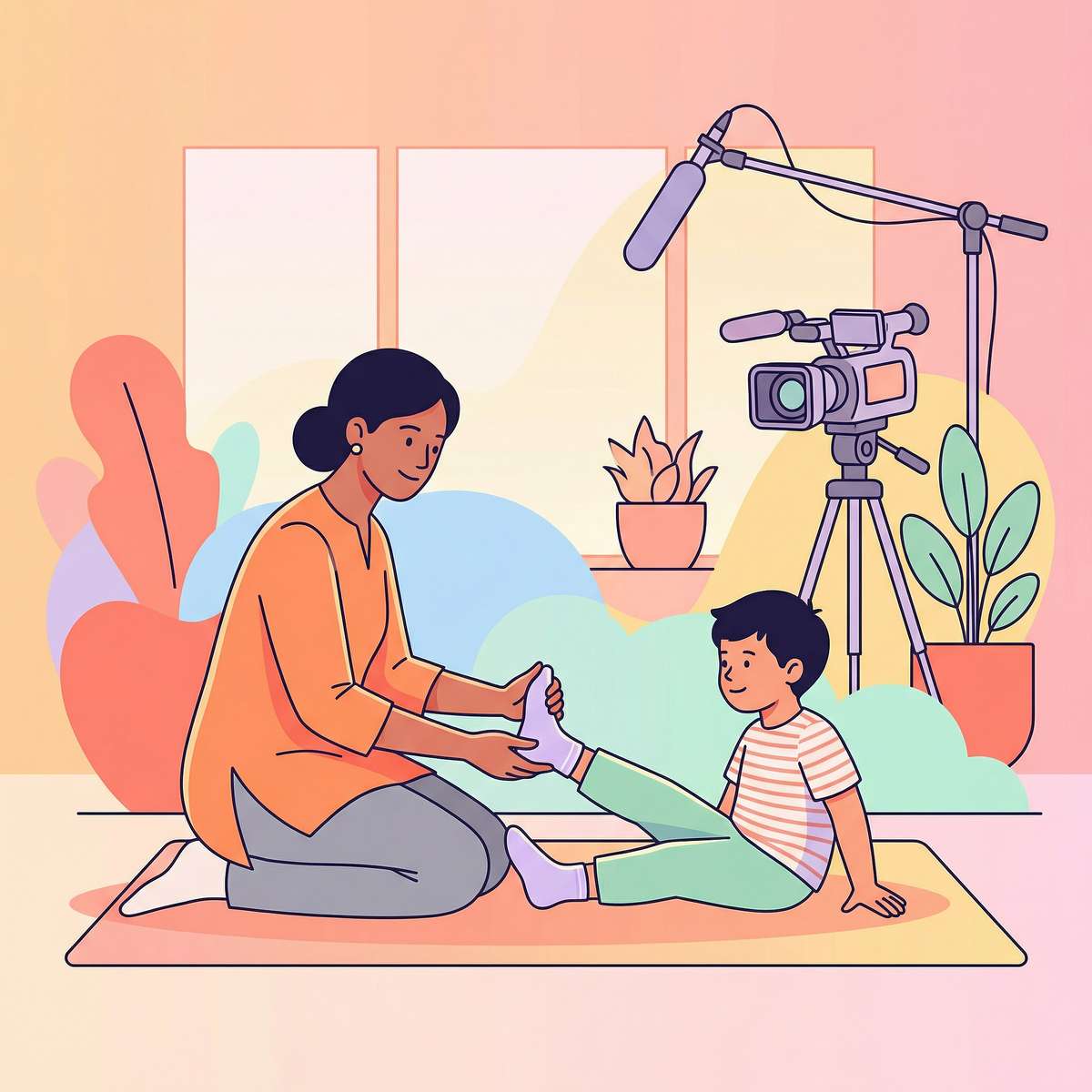
Research: NCAEP (2020): Video modeling is classified as an evidence-based practice for autism. Multi-modal learning improves parent skill acquisition and retention.
V
Reel A-005
60 Seconds
Sensory Solutions Series — Episode 5
Domain: Tactile Processing — Sock Seam Sensitivity
Watch a Pinnacle Blooms pediatric OT walk through all 9 materials in real time. See the regulation sequence, the sock application technique, and the visual routine chart in action — before you try it at home.
Presented by: Pinnacle Blooms Consortium — Pediatric Occupational Therapy Lead
You've now read the full protocol. The Reel gives you the 60-second visual reference to keep on your phone for morning use.ideo Embed Placeholder — Reel A-005

Share This — Because Consistency Across Caregivers Multiplies Impact
If only one caregiver uses the right socks and the right routine, impact is limited. When everyone — both parents, grandparents, school teachers — uses the same approach, improvement accelerates dramatically. Share this page.
"Explain to Grandparents" Version
"Your grandchild's brain processes the sock seam differently. It genuinely hurts. The seamless socks fix it. Please don't say 'just deal with it' — it makes it worse. Here's what to do instead."
Teacher Communication Template
"Dear [Teacher], [Child's name] has tactile hypersensitivity affecting sock tolerance. Please ensure they wear their designated seamless socks during school. Forcing regular socks causes significant distress. Thank you for your understanding."
Share This Page
Send to both parents, grandparents, the class teacher, and any other regular caregiver — everyone who dresses or supervises your child in socks.
Downloadable Family Guide
1-page PDF summary — everything your spouse, grandparent, or school teacher needs to know about your child's sock sensitivity on a single laminated sheet.
Research: PMC9978394 — WHO CCD Package: Multi-caregiver training is critical for intervention generalization across all settings.
Preview of 9 materials that help with seam sensitivity in socks Therapy Material
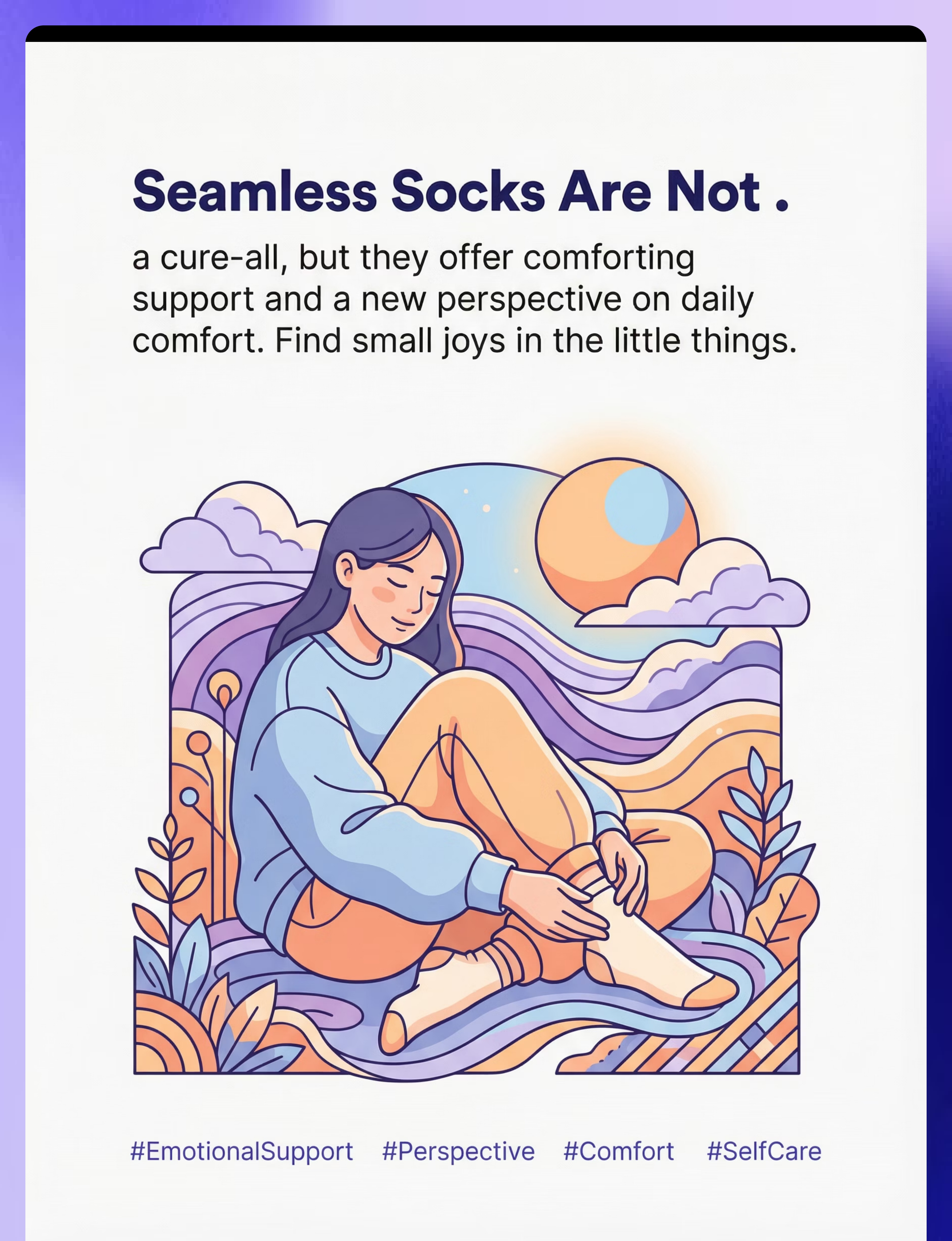
Below is a visual preview of 9 materials that help with seam sensitivity in socks therapy material. The pages shown help educators, therapists, and caregivers understand the structure and content of the resource before use. Materials should be used under appropriate professional guidance.


Link copied!

Your Questions, Answered
The most common questions parents bring to Pinnacle Blooms clinicians about sock seam sensitivity — answered with clinical accuracy in plain language.
Is this OCD or sensory processing?
Sock seam sensitivity is a sensory processing difference, not OCD. The child's somatosensory cortex over-amplifies the tactile signal from the seam. OCD involves intrusive thoughts and compulsions — this is a direct neurological response to physical stimuli.
Will my child ever grow out of this?
Some children develop increased tolerance with age and sensory integration therapy. Others always prefer seamless socks — and that is a perfectly acceptable permanent accommodation, not a failure.
Are seamless socks expensive?
₹400–1,200 per pair. Start with 1 pair to test, then buy 3–5 of the one that works. The inside-out method is FREE and works tonight. Comprehensive approach: ₹2,500–6,000.
My child's school requires specific socks. What do I do?
Use toe cap liners under school socks — invisible from outside. Or request a formal accommodation with a medical letter from your pediatrician or OT explaining the sensory processing need.
Should I force my child to wear regular socks to "build tolerance"?
No. Forcing toleration of an intolerable stimulus increases sensitization, not desensitization. Start with accommodation (seamless socks), then gradually introduce variety as tolerance improves naturally — not by force.
Which seamless sock brand should I buy first?
SmartKnitKids — designed with OT input, truly seamless, clinical gold standard. Order 1 pair to test. Feel the interior before putting on your child: it must be completely smooth with zero ridge.