
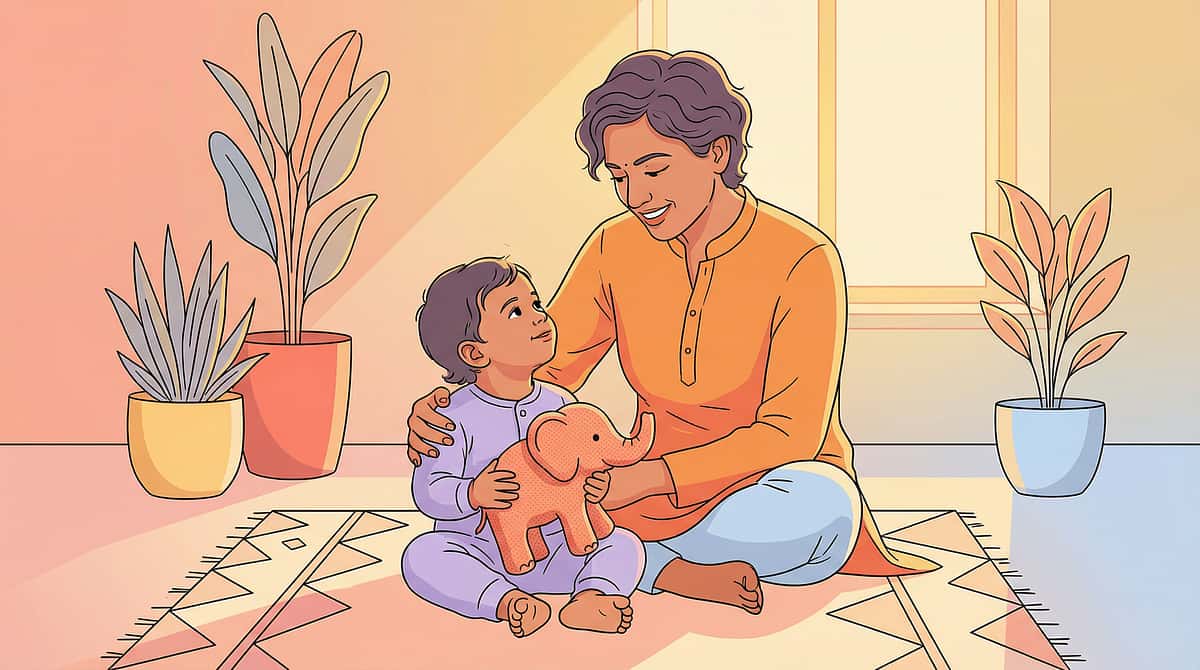
She Watches Other Kids Paint. She Wants To Join. Her Hands Won't Let Her.
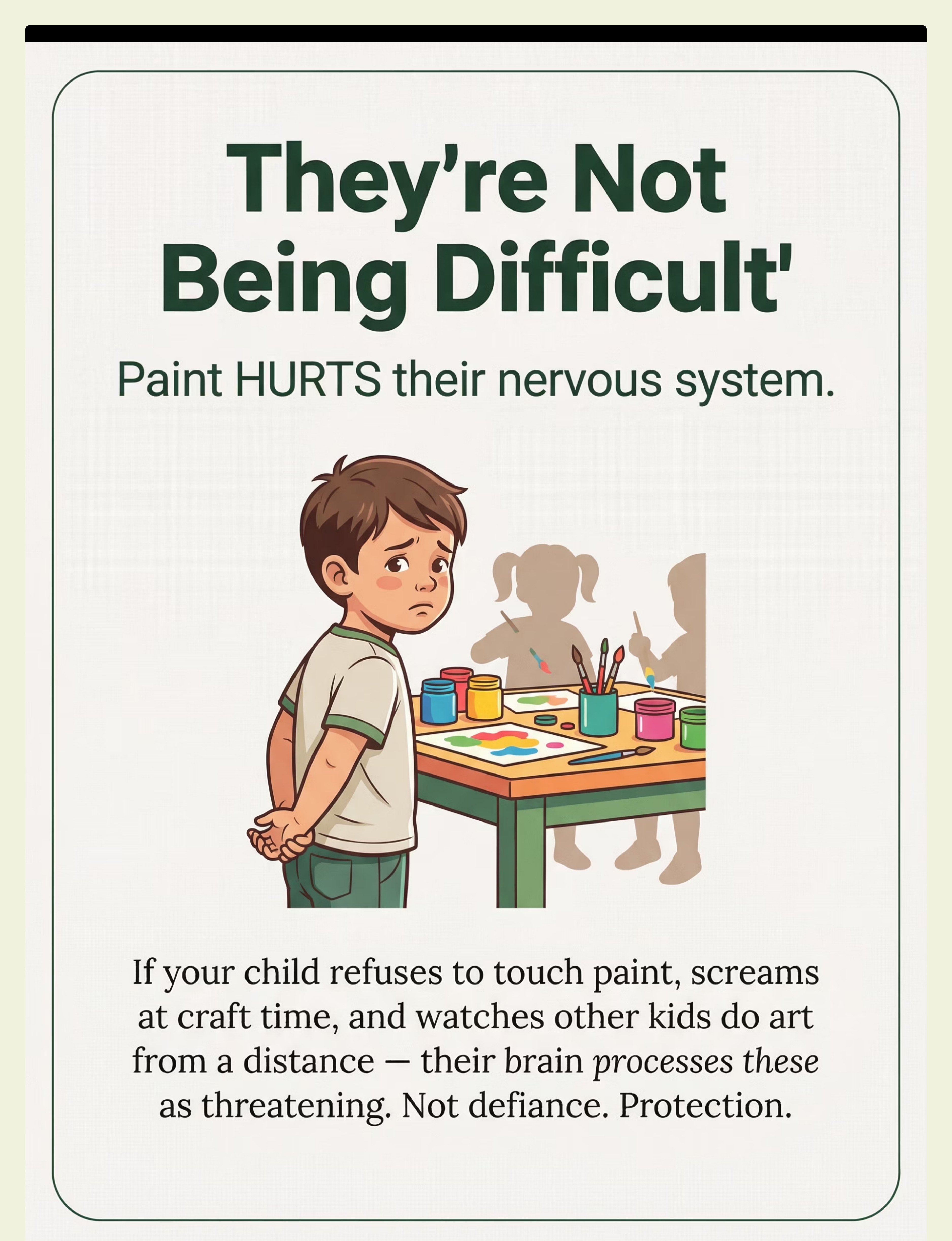
It's art time at preschool. Your child stands three feet from the table, hands behind their back, watching other children smear colors across paper with joy. The teacher says "come join us!" and your child's eyes fill with tears — not because they don't want to create, but because the wet, sticky texture of paint feels to their nervous system the way you'd feel putting your hands in something burning.
You've tried encouraging them. You've tried "just try it once." You've heard "they're just being difficult." You know that's wrong — because you see the longing in their eyes every single time other kids create freely.
This is not defiance. This is not pickiness. This is a neurological difference in how their tactile system processes art materials. And it has solutions.
"You are not failing. Your child's nervous system is speaking. And today, you learn its language."
Pinnacle Blooms Consortium®
Sensory Solutions Series — Episode 007
Evidence Level II
You Are Not Alone — The Numbers Are Staggering
Millions of families worldwide navigate this exact challenge every day. The child who won't touch paint at birthday parties, who cries before art class, who watches longingly while other kids create — they are not rare. They are not broken. They need different tools.
80%
Children with Autism
of children diagnosed with autism experience sensory processing difficulties, including tactile defensiveness that directly impacts art participation.
Source: PRISMA Systematic Review, Children (2024) | PMC11506176
1 in 6
Children Globally
display sensory over-responsivity that affects daily activities including school art participation, messy play, and creative expression.
Source: Meta-analysis, World Journal of Clinical Cases (2024) | PMC10955541
18M+
Families in India
navigate sensory processing challenges in their children. Art and craft aversion is among the most commonly reported concerns at Pinnacle Blooms centers.
Source: Indian prevalence estimates, Padmanabha et al., Indian J Pediatr (2019)
Research evidence: PRISMA systematic review (2024) — 16 articles from 2013–2023 confirm sensory integration intervention as evidence-based practice for children with ASD. References: PMC11506176 | PMC10955541

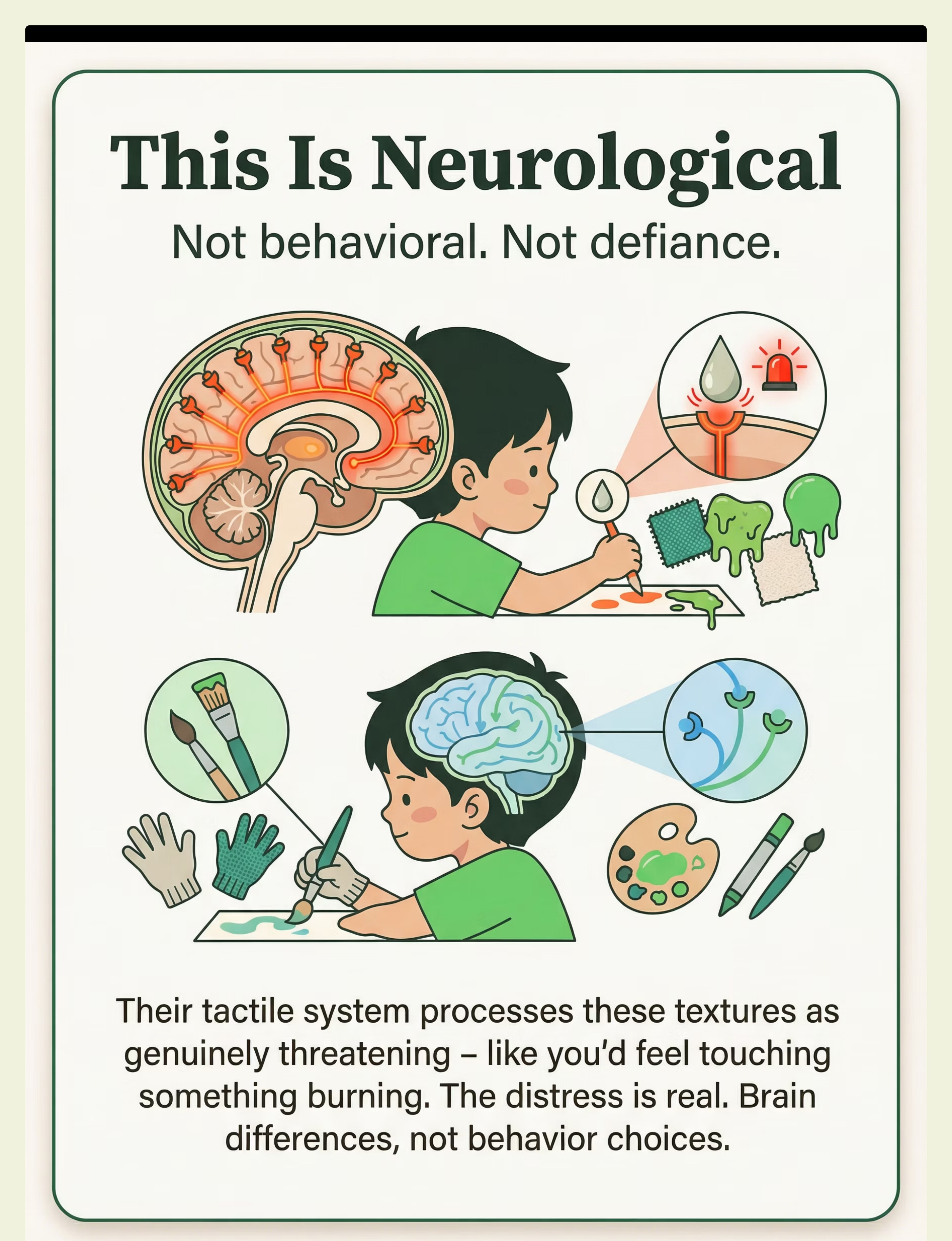
This Is Neurological. Not Behavioral. Not Defiance.
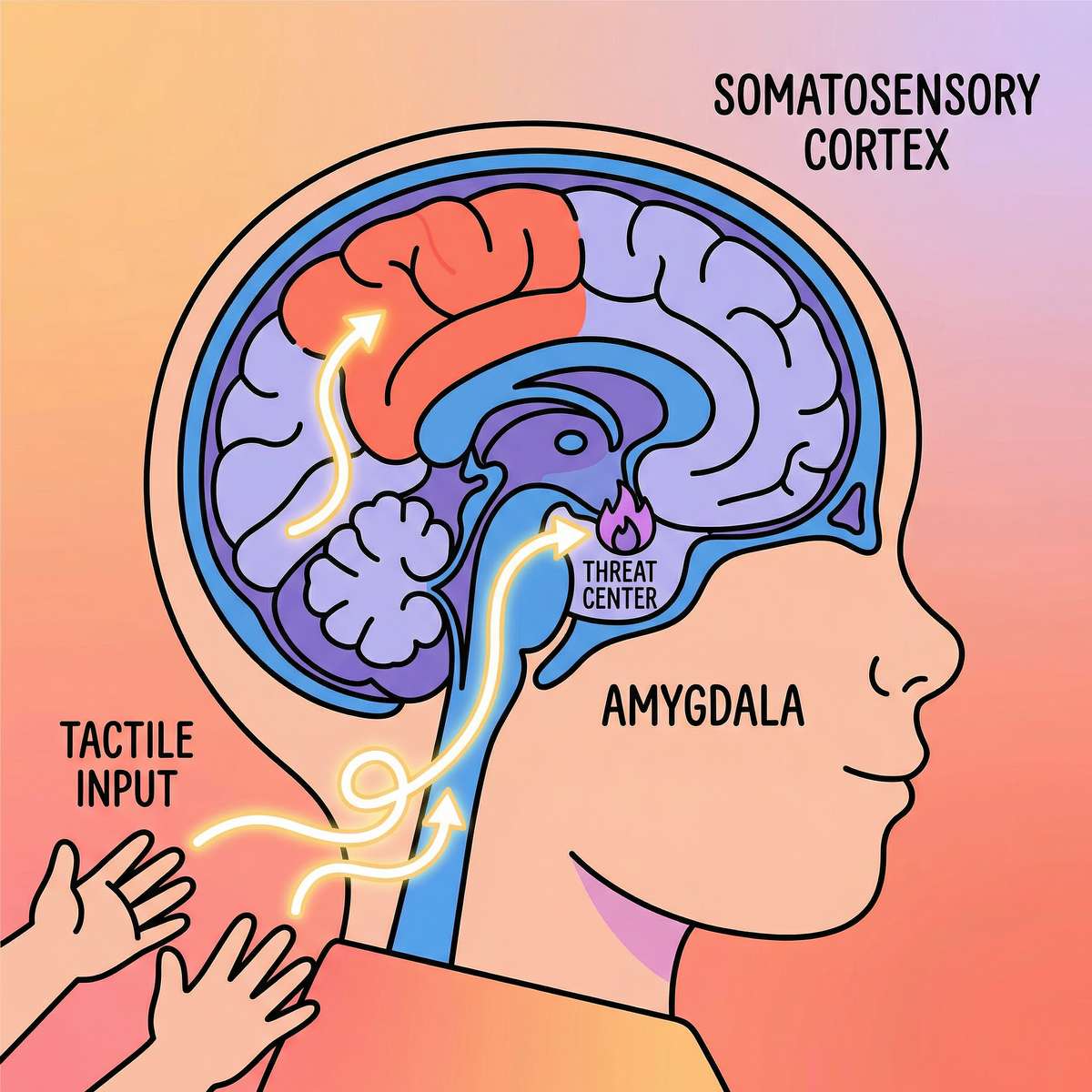
What Happens When Your Child Touches Paint
Their somatosensory cortex — the brain region that processes touch — amplifies the sensation of wet, sticky, slimy textures far beyond what neurotypical children experience. What feels like "paint" to most children registers as a threat signal in your child's brain.
The amygdala — the brain's alarm center — triggers a fight-flight-freeze response. This is why your child pulls away, cries, gags, or freezes. Their nervous system is genuinely protecting them from what it perceives as danger.
This is the same brain mechanism that makes you recoil from touching something burning hot. The intensity is comparable. The distress is real.
The scientific term is tactile over-responsivity — the somatosensory cortex has a lower threshold for detecting and amplifying tactile input. This is a wiring difference documented across hundreds of neuroimaging studies.
Research evidence: Frontiers in Integrative Neuroscience (2020): Comprehensive framework establishing the neurological basis for sensory-based interventions in ASD. DOI: 10.3389/fnint.2020.556660
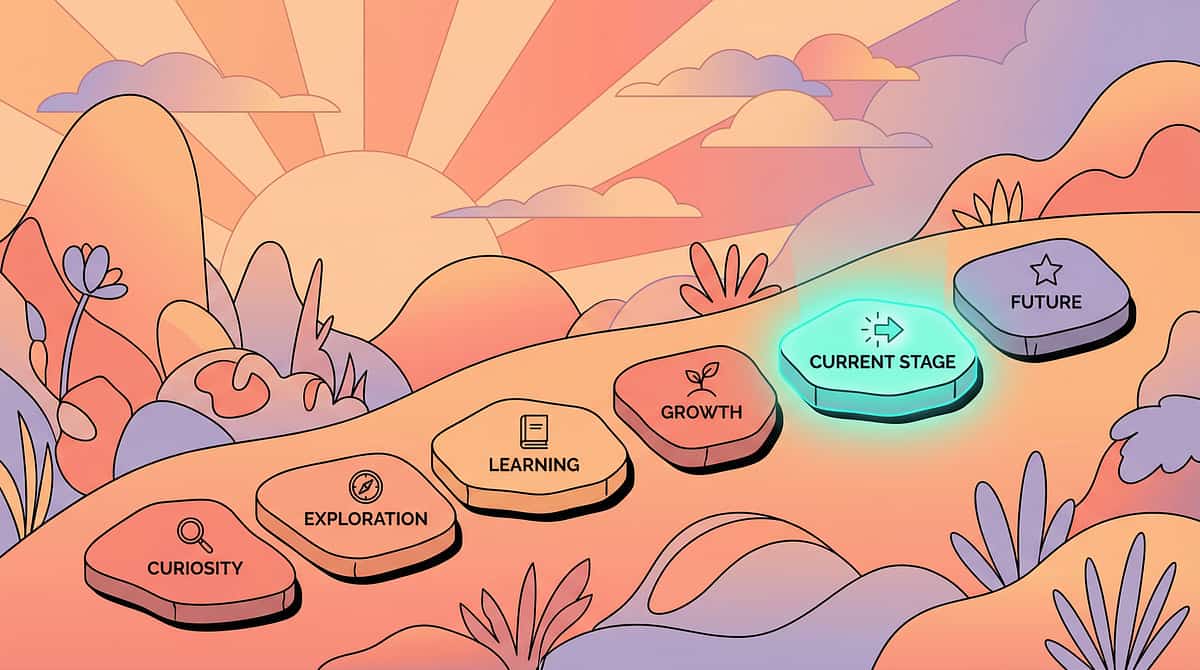
Where Art Aversion Sits in Your Child's Development
Tactile defensiveness to art materials typically becomes visible between ages 2–4, when social expectations for messy play and art participation increase. Your child may have shown earlier signs — resisting lotion, disliking certain food textures, preferring dry play — but art time is where it becomes impossible to hide.
6–18 Months
Begins exploring textures; finger painting typically emerges
18–24 Months
Enjoys messy play; tactile defensiveness may first appear
2–4 Years
Common recognition window — art aversion becomes visible in preschool
3–5 Years
Craft participation expected socially; aversion creates peer gap
5–8 Years
Art becomes academic requirement; accommodation planning critical
What commonly co-occurs: Aversion to art materials rarely exists in isolation. Children with paint/art tactile defensiveness frequently also experience sensitivity to food textures, clothing tags and seams, sand and grass textures, and general tactile defensiveness across multiple domains.
Research evidence: WHO Care for Child Development (CCD) Package: Age-specific evidence-based recommendations for caregivers implemented across 54 countries. References: PMC9978394 | WHO/UNICEF CCD Package (2023)

Evidence Grade: Level II — Systematic Reviews + Randomized Controlled Trials

Clinically Validated
These 9 materials are drawn from evidence-based practice guidelines endorsed by the Pinnacle Blooms Consortium of 5 integrated therapy disciplines.
Level II Evidence
Key Evidence Summary
PRISMA Systematic Review (2024)
16 studies from 2013–2023 reviewed. Sensory integration intervention meets criteria as evidence-based practice for children with ASD. Tactile desensitization demonstrated significant outcomes. PMC11506176 | Children (Basel)
Meta-Analysis (2024)
24 studies analyzed. Sensory integration therapy effectively promoted social skills, adaptive behavior, sensory processing, and motor skills. Individual 1:1 sessions showed strongest effects. PMC10955541 | World Journal of Clinical Cases
Indian RCT (2019)
Home-based sensory interventions by trained parents demonstrated significant improvement in sensory processing and functional participation. Parent-administered intervention validated. Padmanabha et al., Indian Journal of Pediatrics | DOI: 10.1007/s12098-018-2747-4
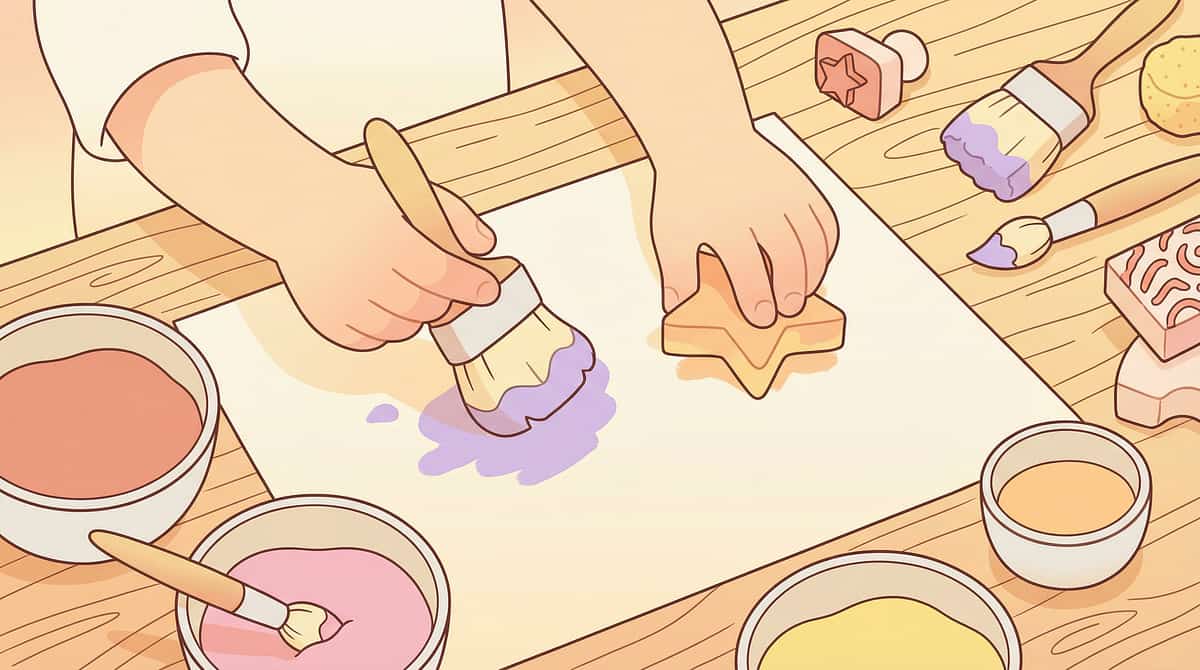
Material-Adapted Art Intervention for Tactile Defensiveness
Parent-Friendly Name: "Sensory-Safe Art Materials"
A systematic approach to enabling creative participation for children with tactile over-responsivity to art materials. Instead of forcing exposure to triggering textures, this technique provides 9 categories of adapted, alternative, and graduated materials that respect the child's sensory boundaries while unlocking full artistic expression. The approach progresses at the child's pace — from complete texture avoidance through barrier-protected participation to optional graduated exposure.
🏷️ Domain
Sensory Processing — Tactile Defensiveness
🧒 Age Range
2–8 years
⏱️ Duration
10–30 minutes per session
📅 Frequency
Daily integration into art activities
🏠 Setting
Home, School, Therapy Clinic
Interconnects: Canon Materials: No-Mess Art Tools, Sensory Bags, Dry Art Media, Stampers, Gloves, Clean Alternatives, Washable Materials, Digital Art, Gradual Exposure Kits → Related: A-003 (Food Textures), A-006 (Sand/Grass), A-012 (Clothing), A-018 (General Tactile Defensiveness) → Browse: materials.pinnacleblooms.org

Five Disciplines. One Integrated Approach.
This technique crosses therapy boundaries because the brain doesn't organize by therapy type. Your child's art aversion involves sensory processing, behavior, communication, education, and neurology — and the Pinnacle Blooms Consortium addresses all five simultaneously.
Occupational Therapy (PRIMARY LEAD)
OTs assess the child's tactile processing profile using standardized tools (Sensory Profile-2, SPM), design material progression pathways, and train parents in graded exposure protocols. OTs match materials to each child's specific sensory threshold.
Applied Behavior Analysis
BCBAs design the reinforcement schedule around art participation, structure graded exposure using systematic desensitization principles, track data on tolerance, and manage behavioral responses using function-based strategies.
Speech-Language Pathology
SLPs integrate art activities as contexts for language development — describing materials, requesting tools, narrating creations. For children with limited verbal communication, art becomes a powerful expressive outlet.
Special Education
Special educators adapt classroom art curricula to include sensory-safe materials, ensuring the child participates fully alongside peers. IEP accommodations for art class are designed at this level.
NeuroDevelopmental Pediatrics
NeuroDev pediatricians rule out medical causes for tactile hypersensitivity, evaluate comorbid conditions, and provide the diagnostic context that informs the entire therapy approach.
Research evidence: Adapted UNICEF/WHO Nurturing Care Framework for SLPs (2022): Multiple disciplines contribute to nurturing care components. DOI: 10.1080/17549507.2022.2141327
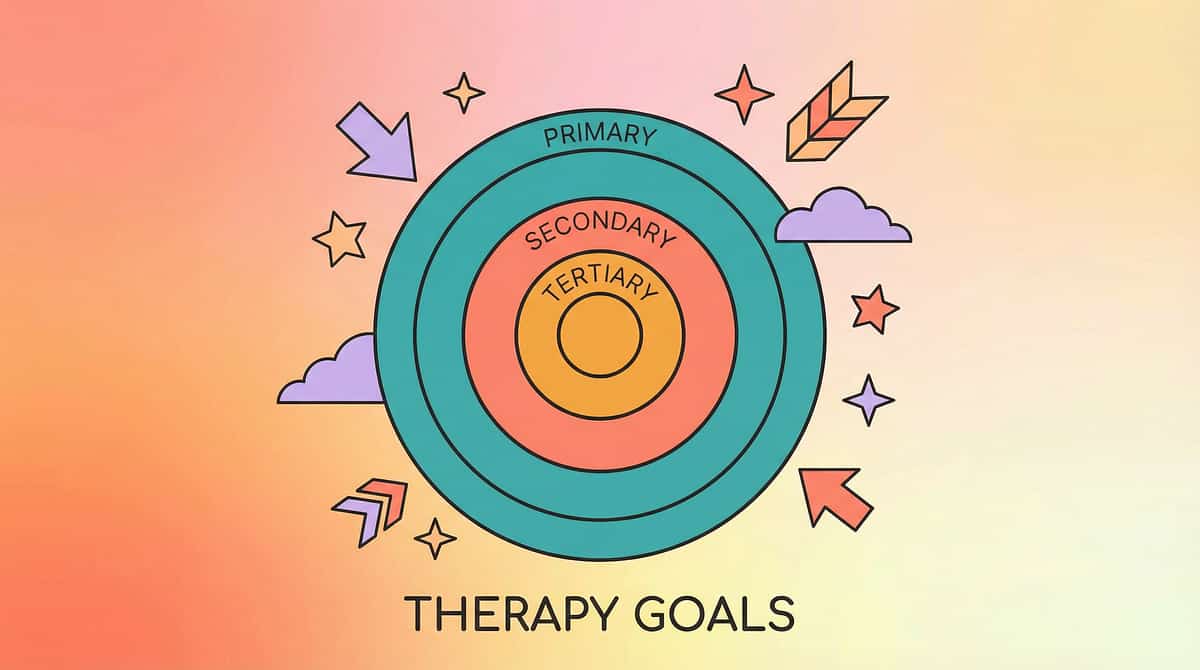
Precision Targets: What These Materials Address
These 9 materials don't just help with art — they create ripple effects across your child's development. Understanding what each layer targets helps you track real progress and communicate with your child's therapy team.
Observable Progress Indicators
A parent can track progress by watching for a natural sequence: increased time spent near art materials → touching materials with tools → tolerating incidental contact → choosing to explore new textures → participating in group art with minimal accommodation.
Research Evidence
Meta-analysis (World J Clin Cases, 2024): Sensory integration therapy effectively promoted social skills (primary), adaptive behavior (secondary), sensory processing, and motor skills (tertiary) across 24 studies. Reference: PMC10955541
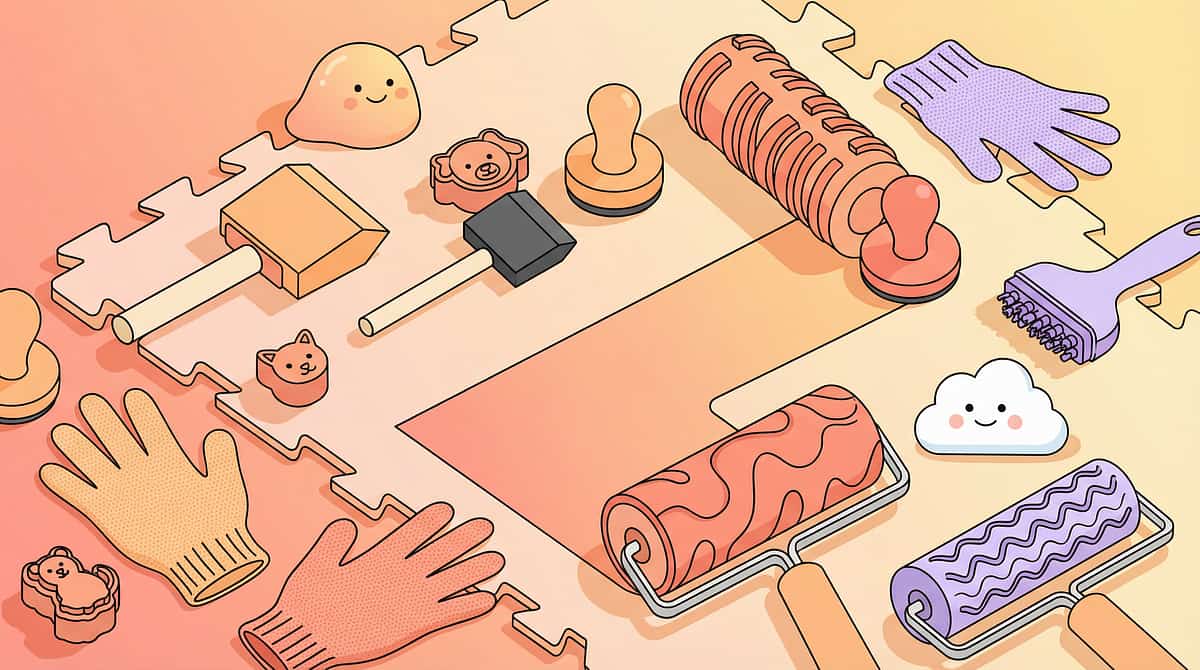
The 9 Materials — Your Child's Art Toolkit
Every material below has been clinically validated by the Pinnacle Blooms Consortium. Together, they form a complete sensory-safe art system — from the easiest starting point to optional graduated exposure. Start where your child is comfortable today.
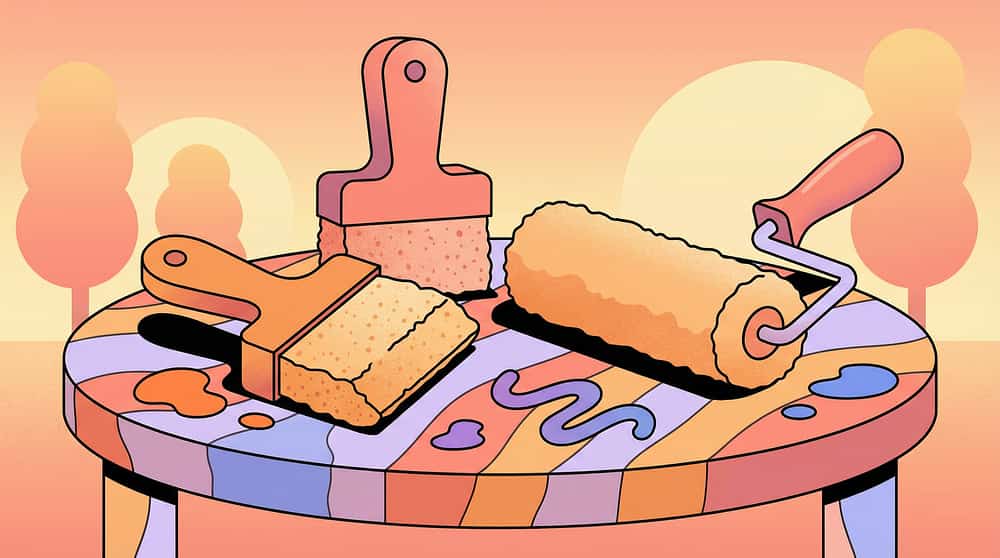
1. No-Mess Art Tools
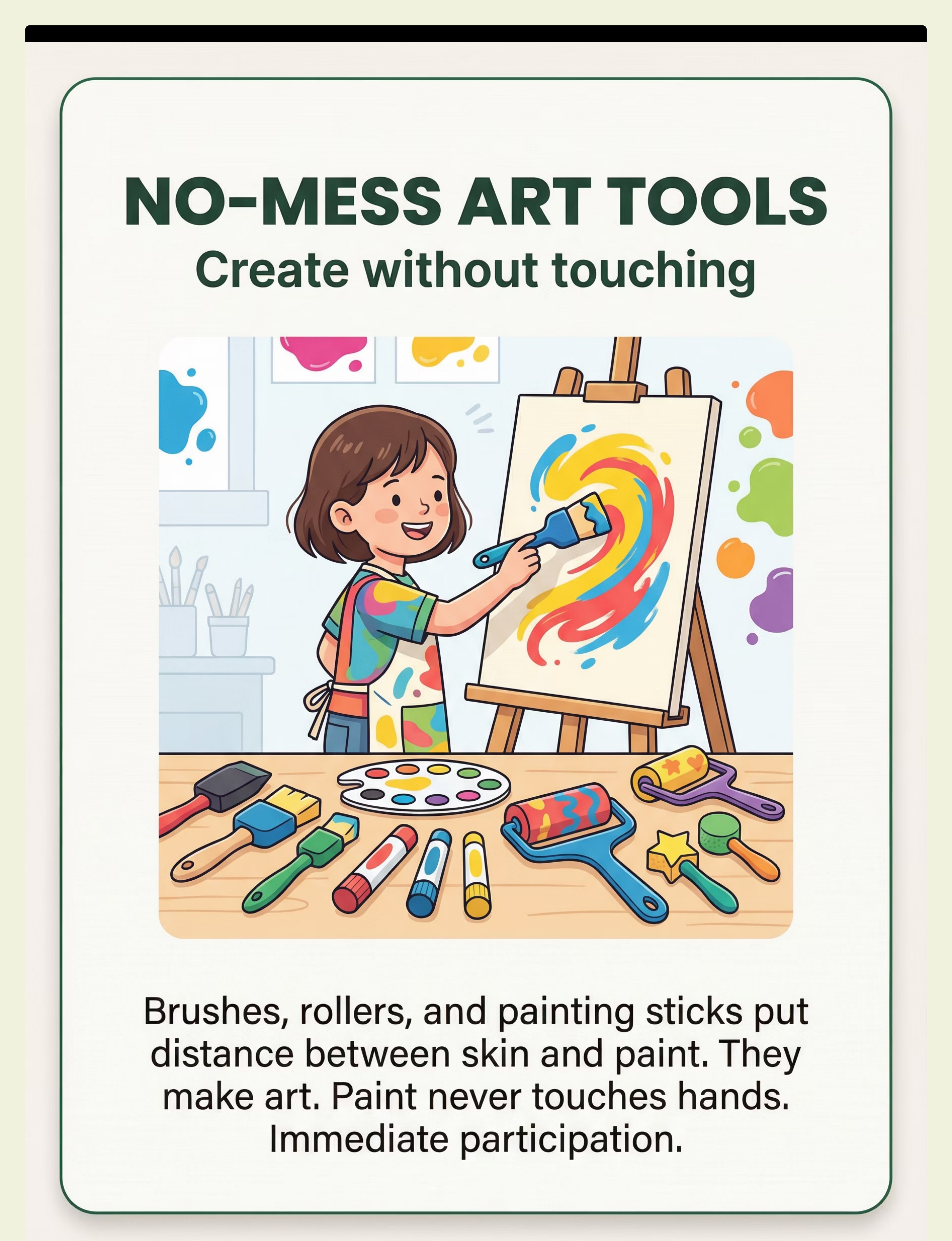
Chunky brushes, foam rollers, and painting sticks keep hands away from paint entirely. The handle creates distance — the essential first step. ⭐ Start Here
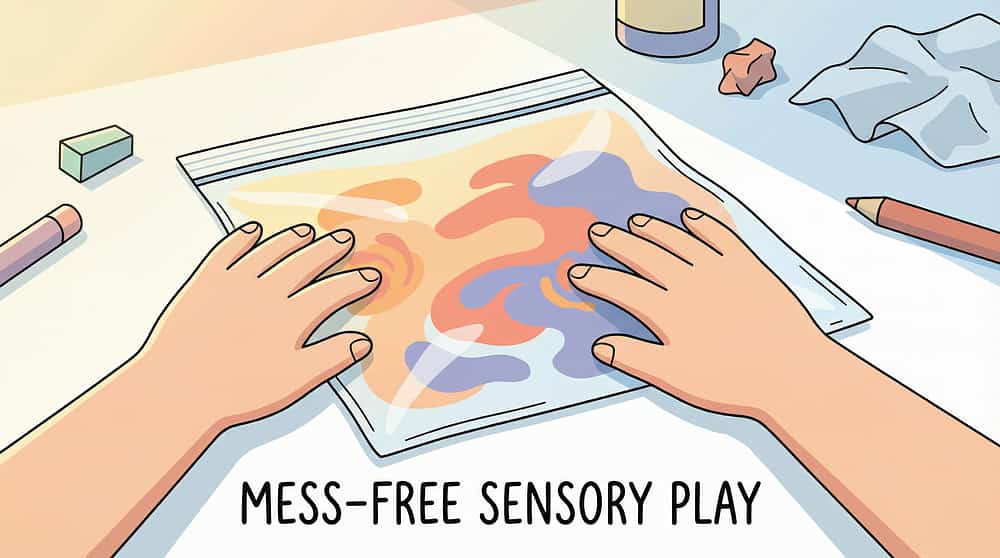
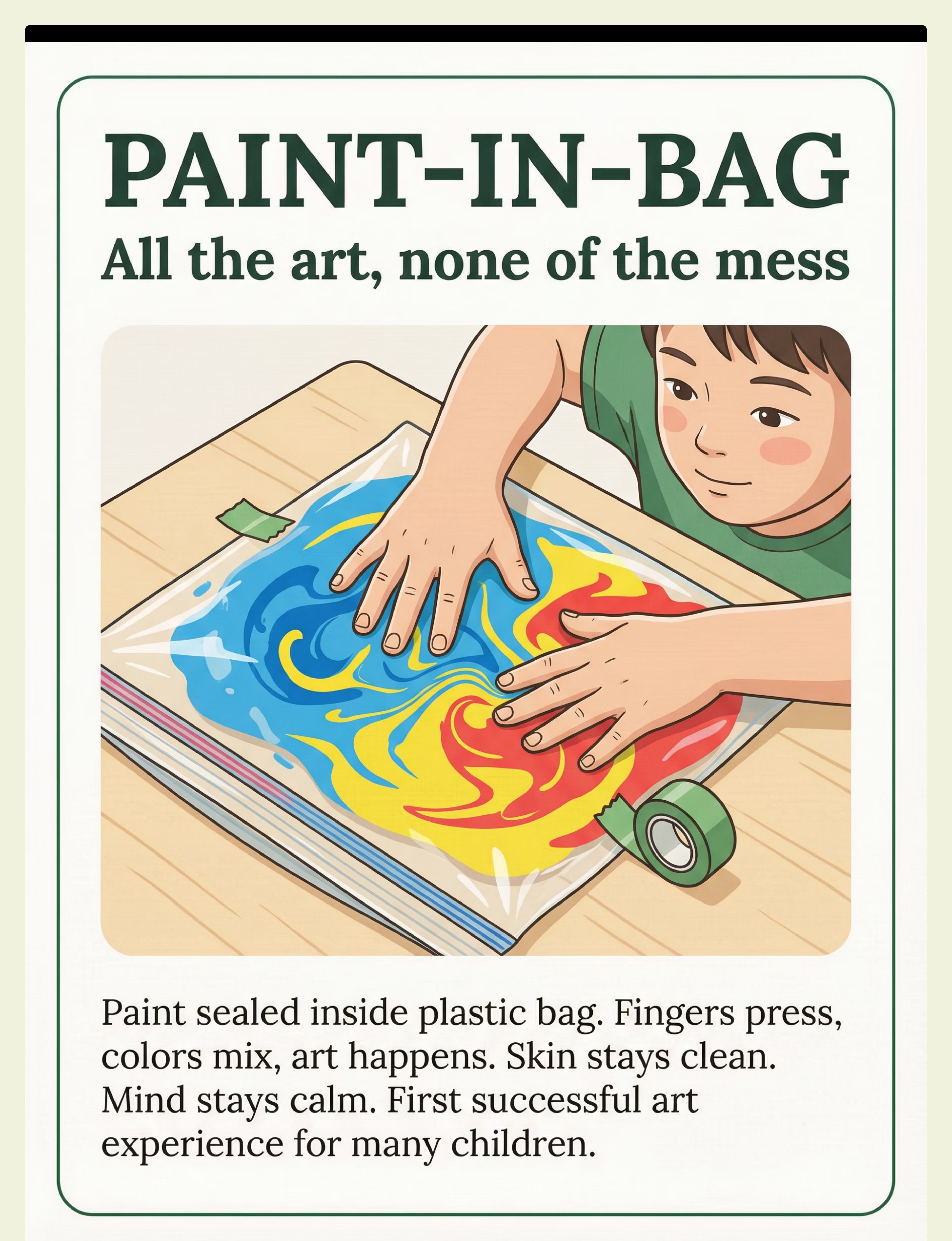
2. Paint-in-Bag (Mess-Free Sensory Bags)
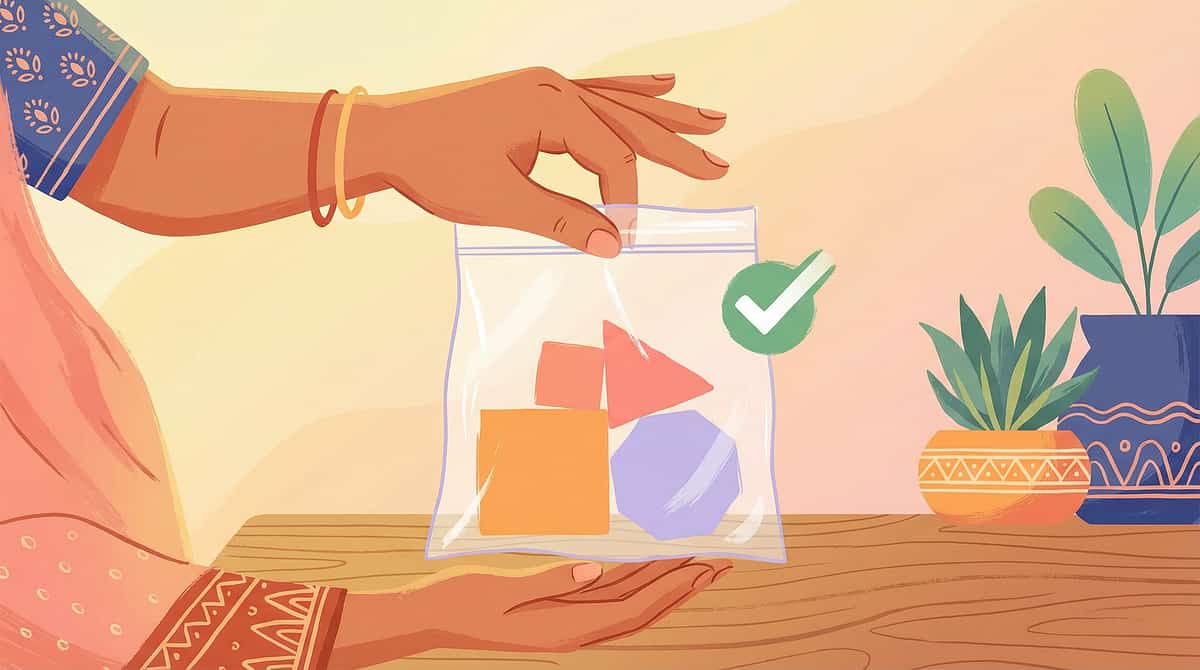
Finger paint sealed in a ziplock bag allows full color mixing with zero skin contact. The bag IS the art medium. ⭐ Start Here
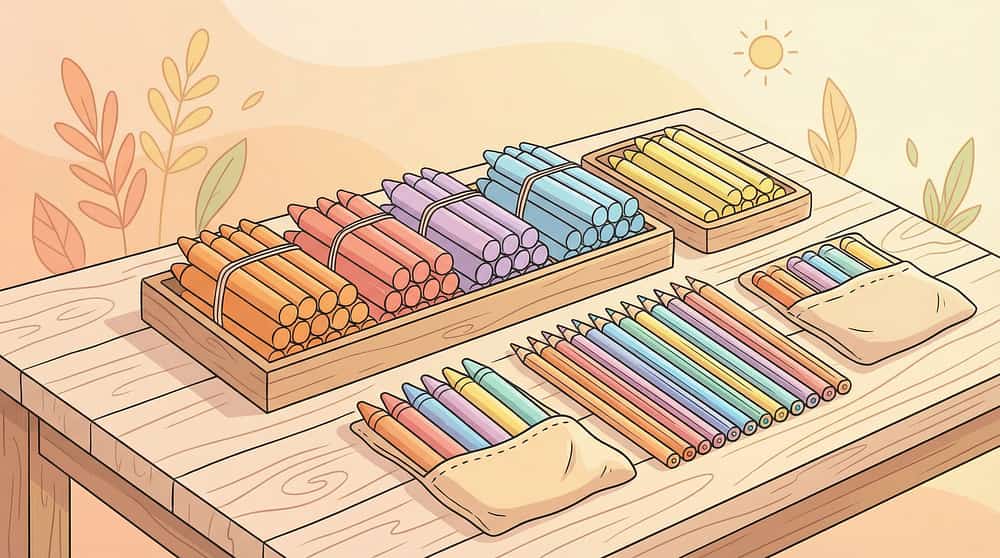
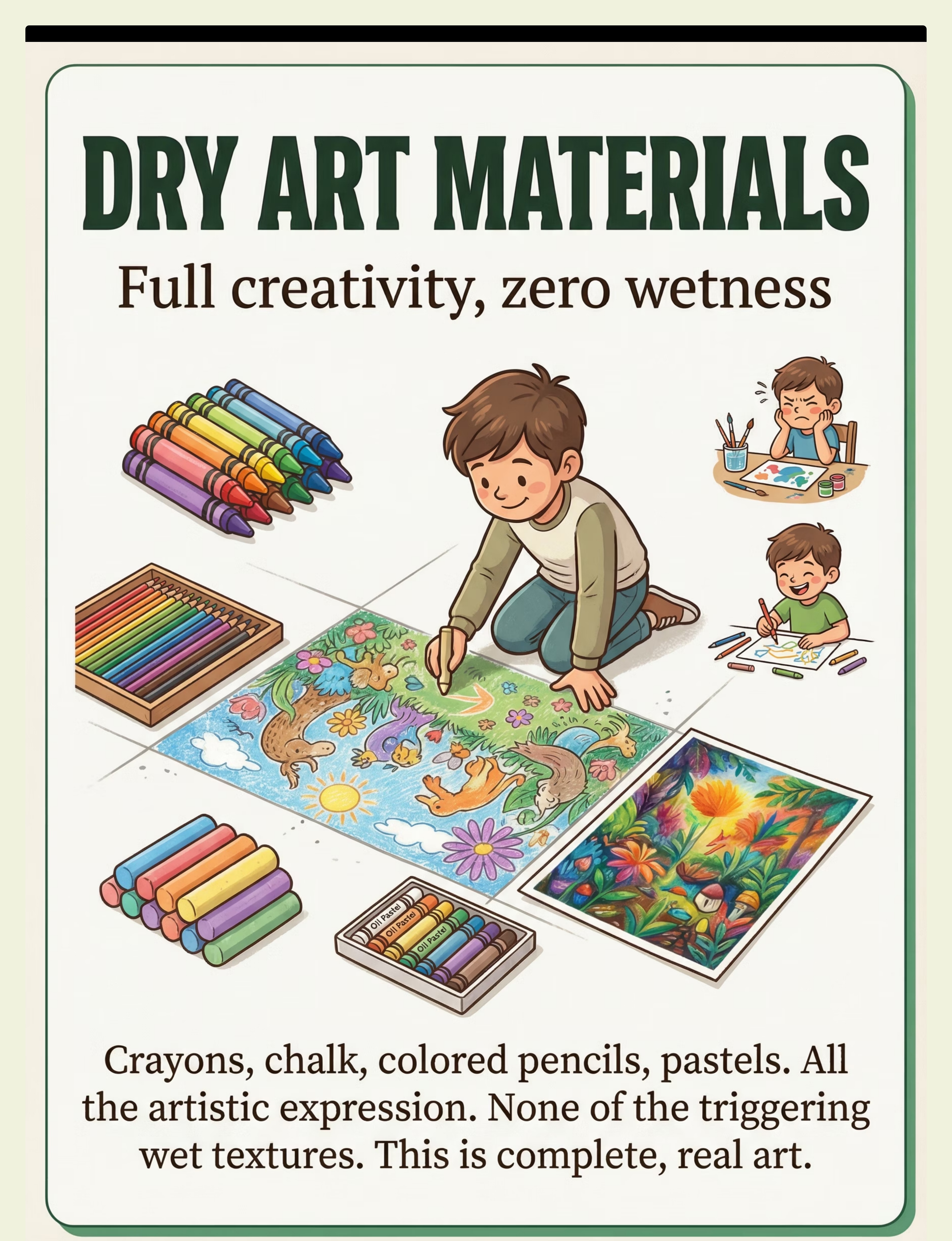
3. Dry Art Materials
Chalk, crayons, colored pencils, and pastels are dry, non-sticky, and universally tolerated. Every home already has these. ⭐ Start Here
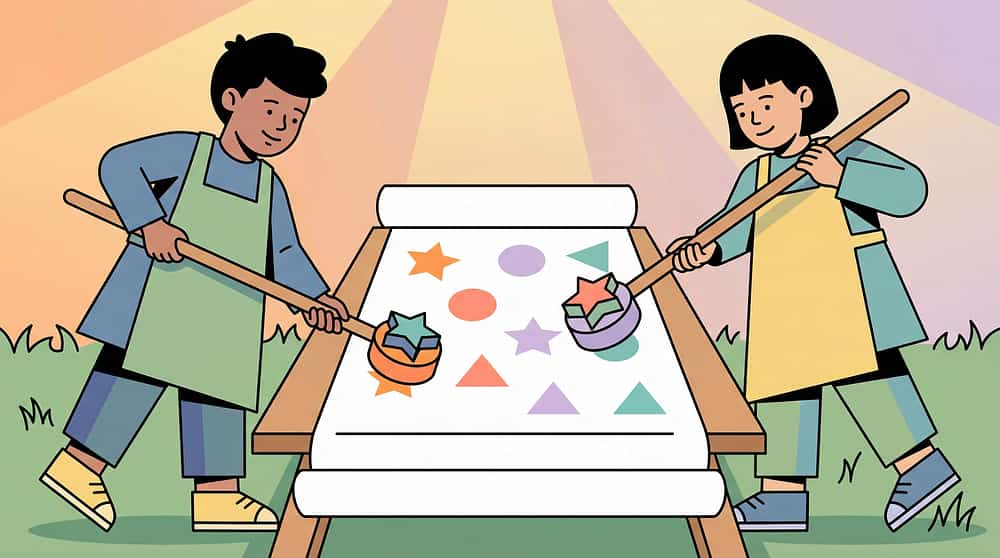
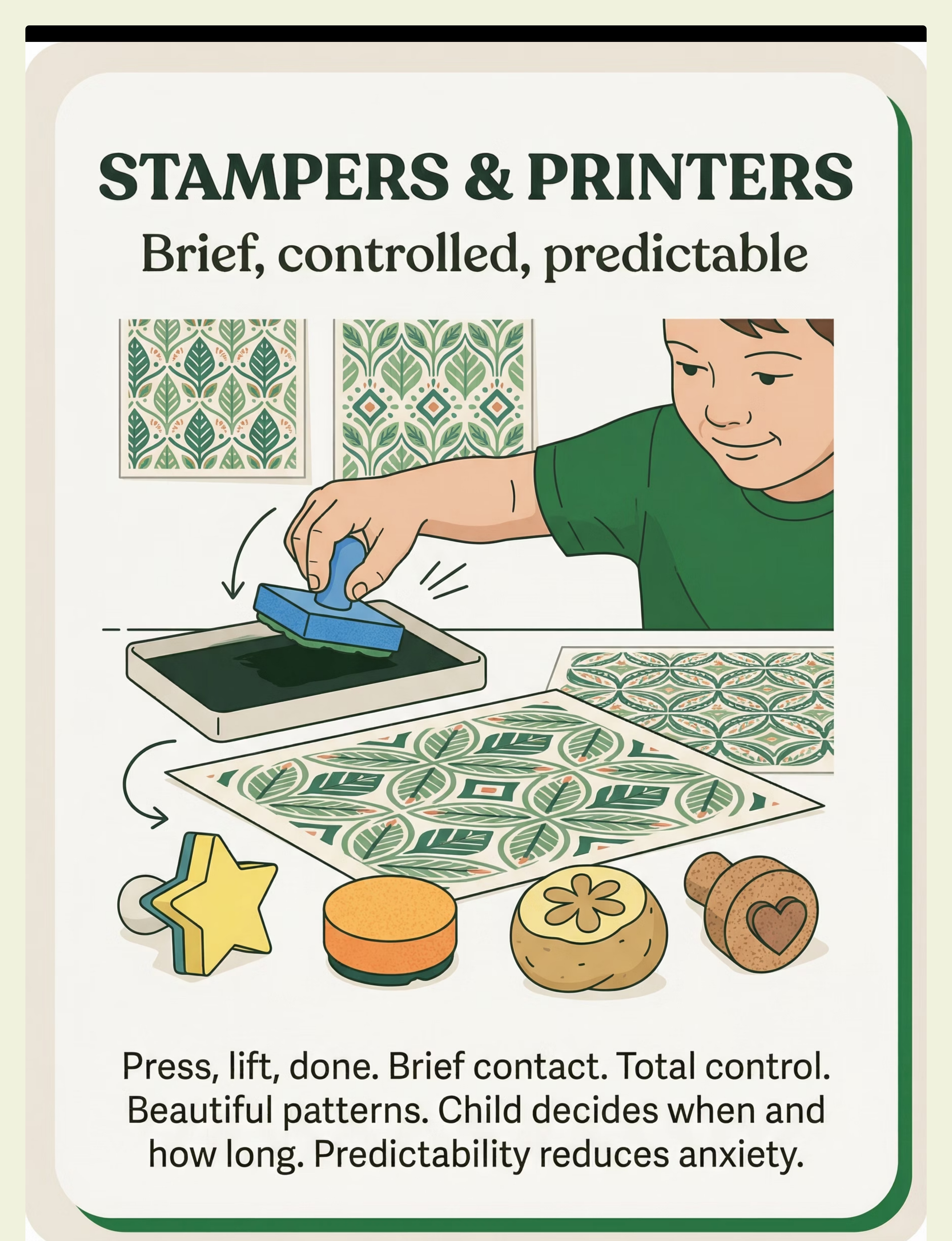
4. Textured Stampers & Printing Tools
Handles keep hands away from paint while creating satisfying, high-impact art results. Great for building engagement. ⭐⭐ Build On
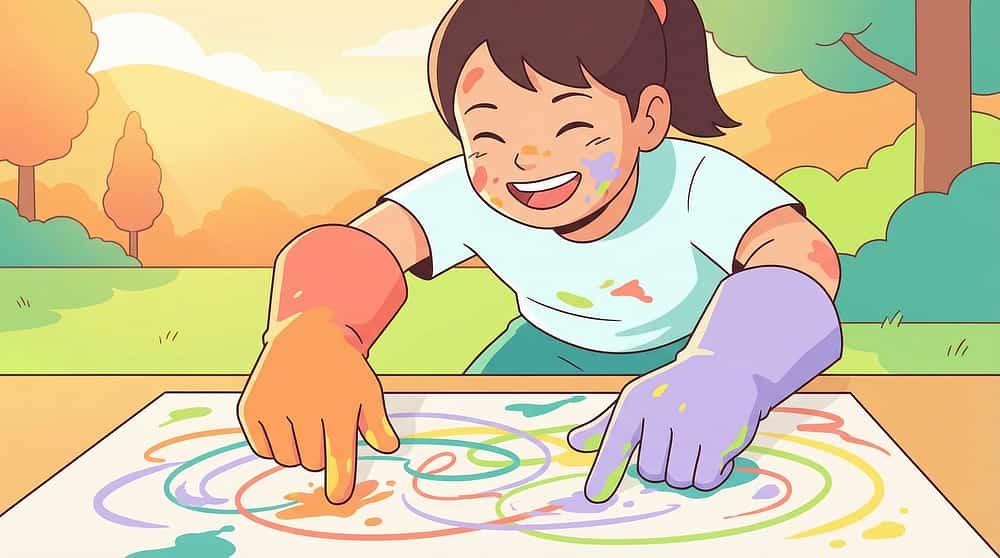
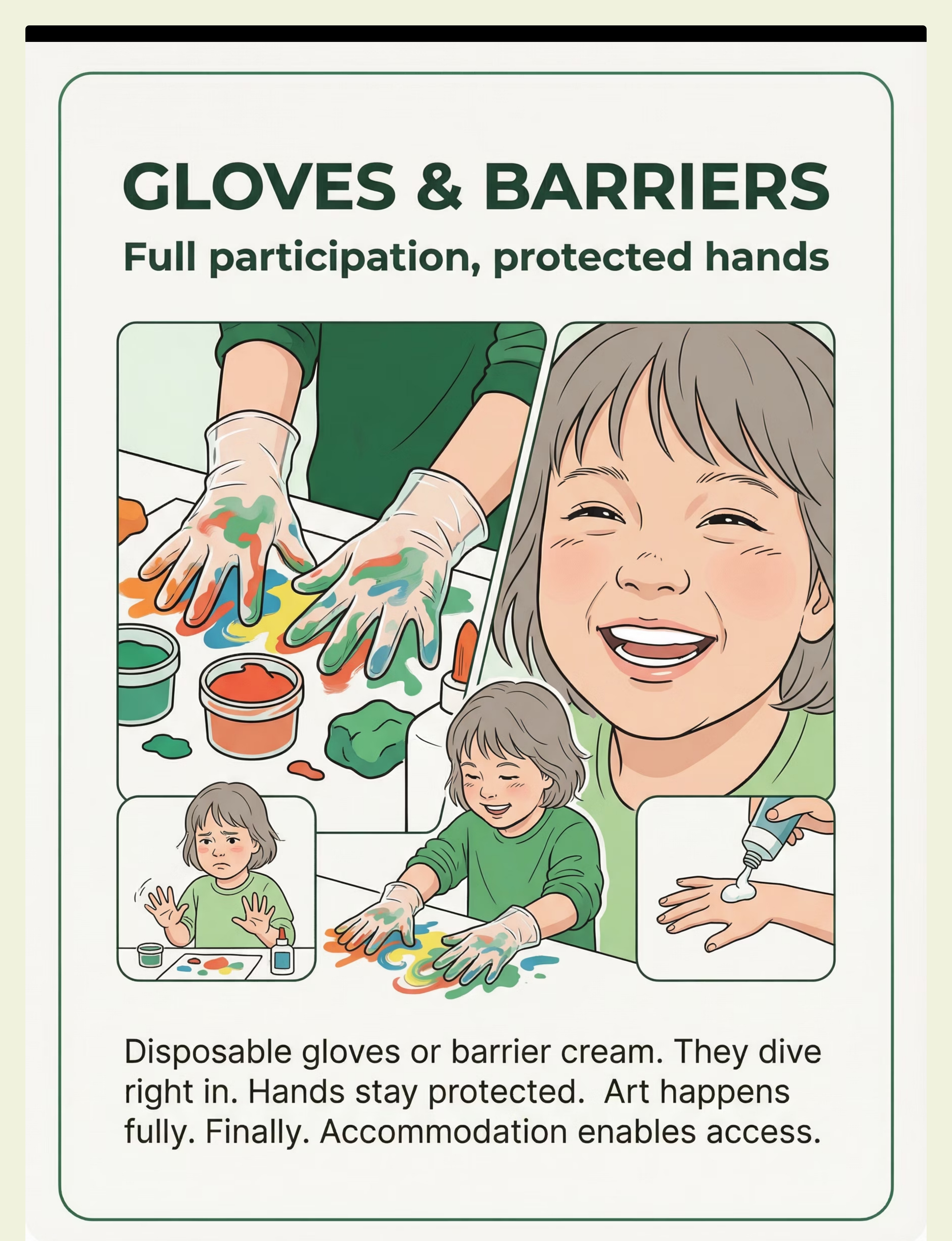
5. Gloves & Barrier Protection
Latex-free gloves allow full hands-on painting with a protective barrier. For many children, gloves are the breakthrough moment. ⭐⭐ Build On
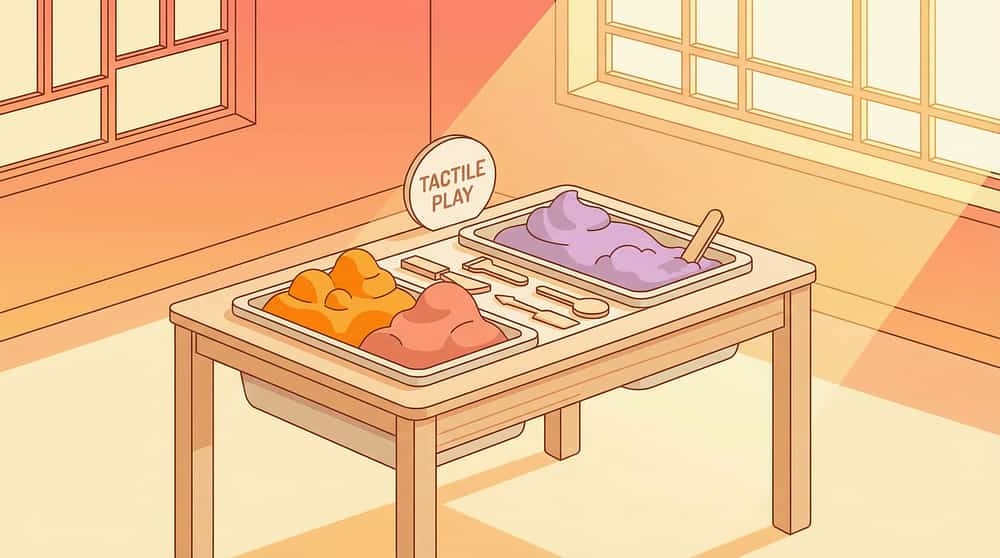
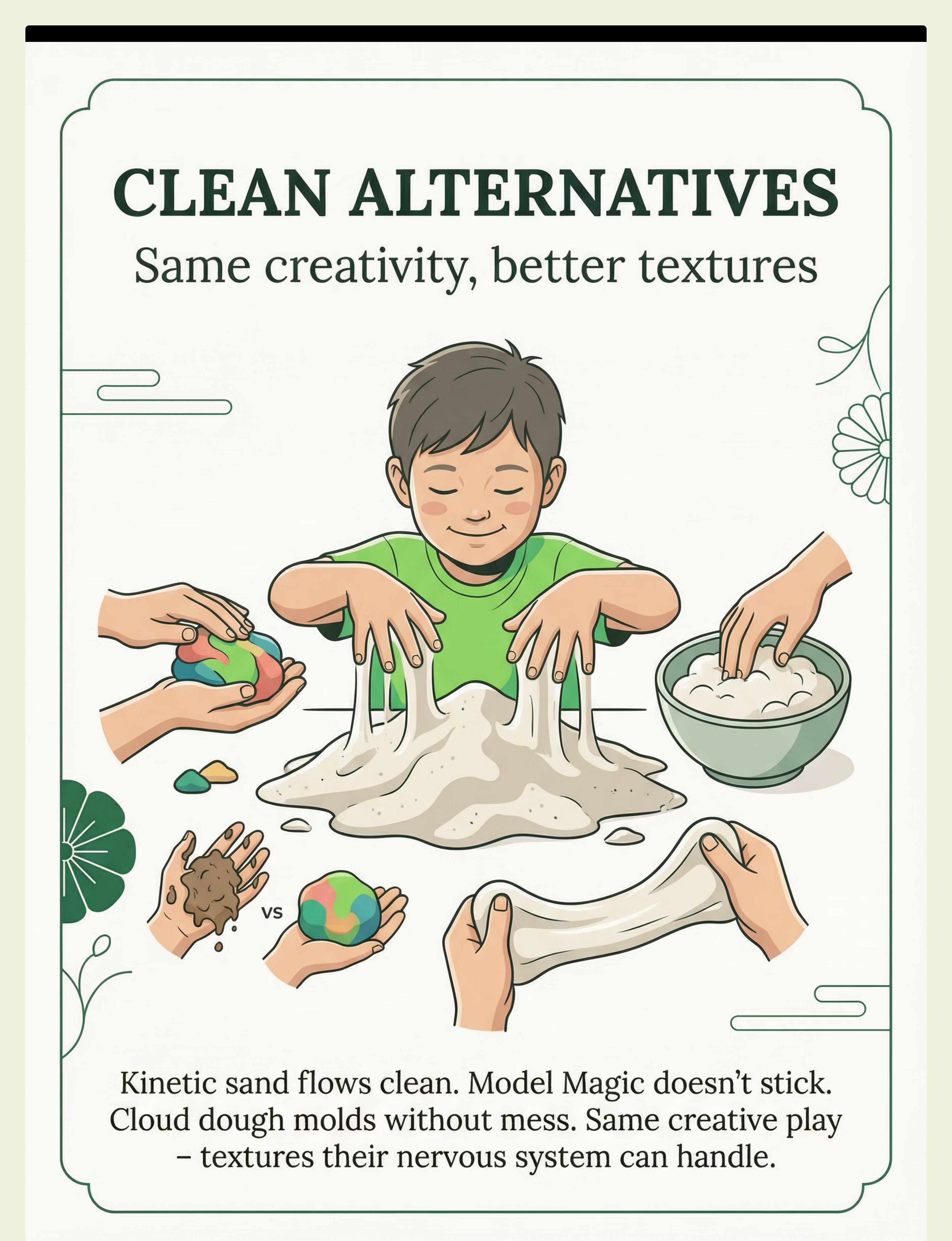
6. Clean Alternatives
Kinetic sand, Model Magic, and cloud dough are moldable and non-sticky — satisfying creative alternatives to paint. ⭐⭐ Build On
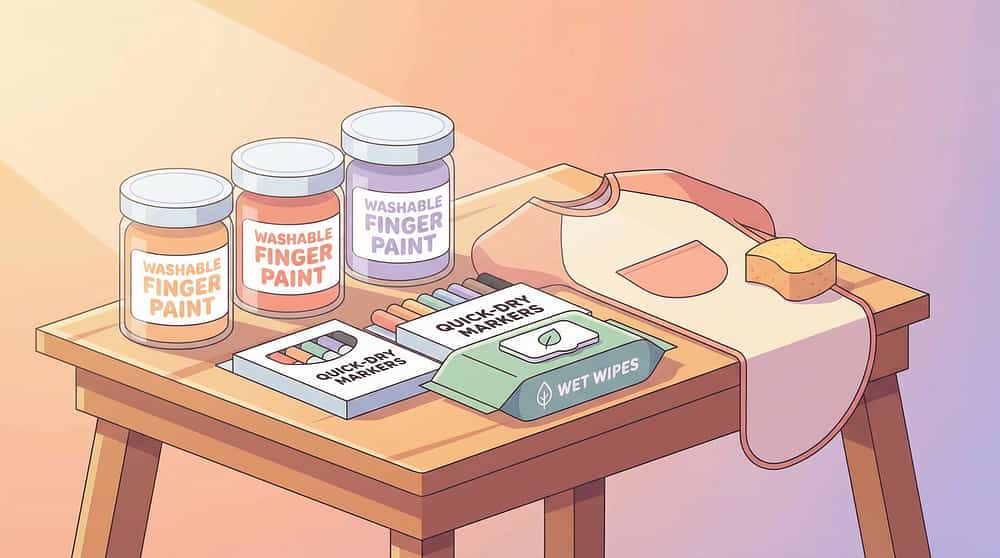
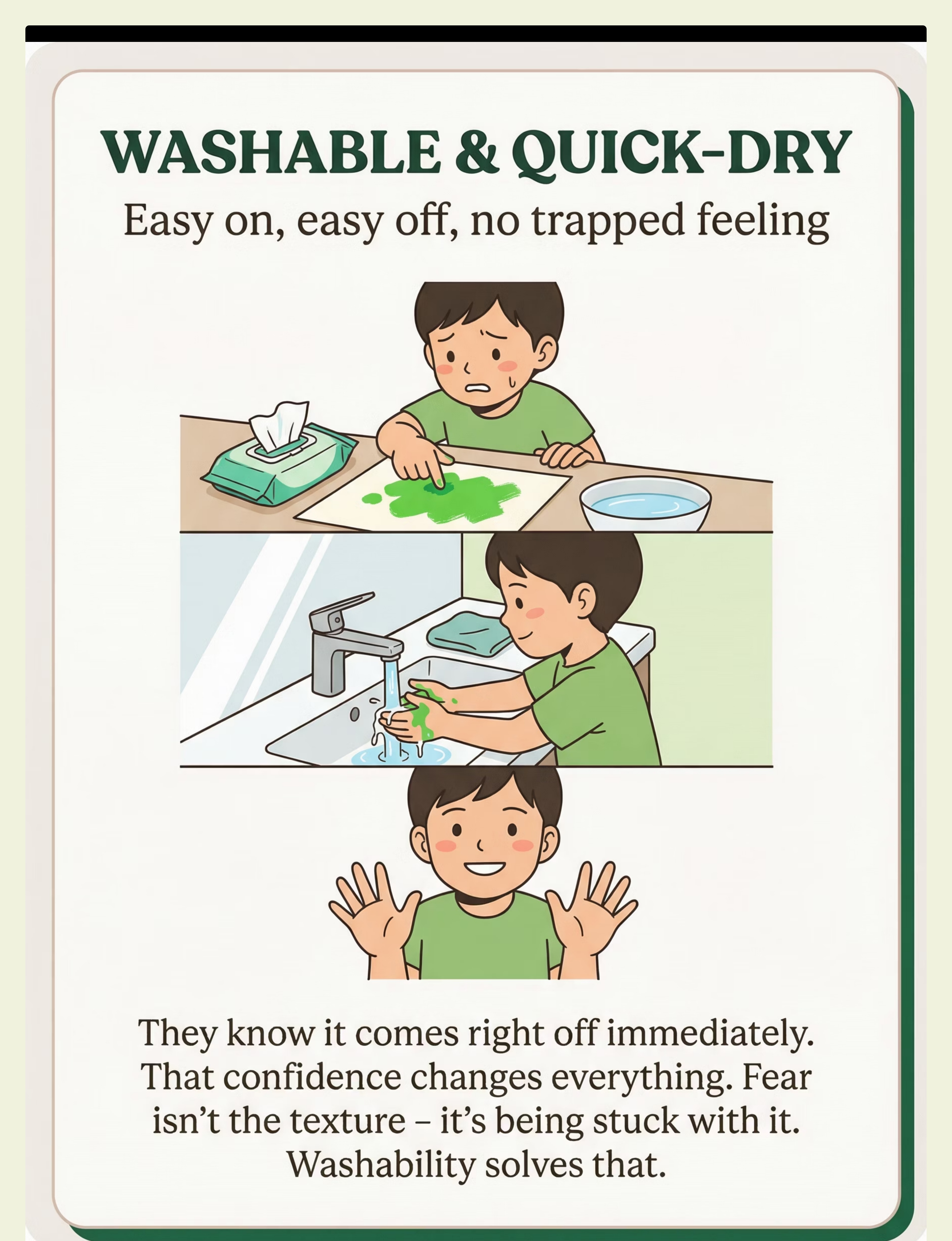
7. Washable & Quick-Dry Materials
Demonstrating instant washability transforms wet materials from threatening to safe. Show it first; offer it second. ⭐⭐⭐ Progress
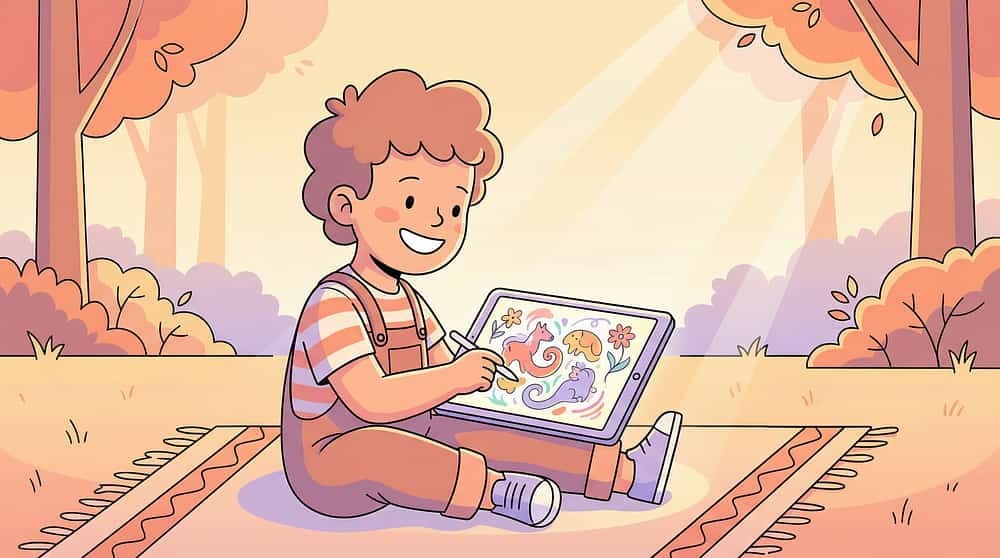
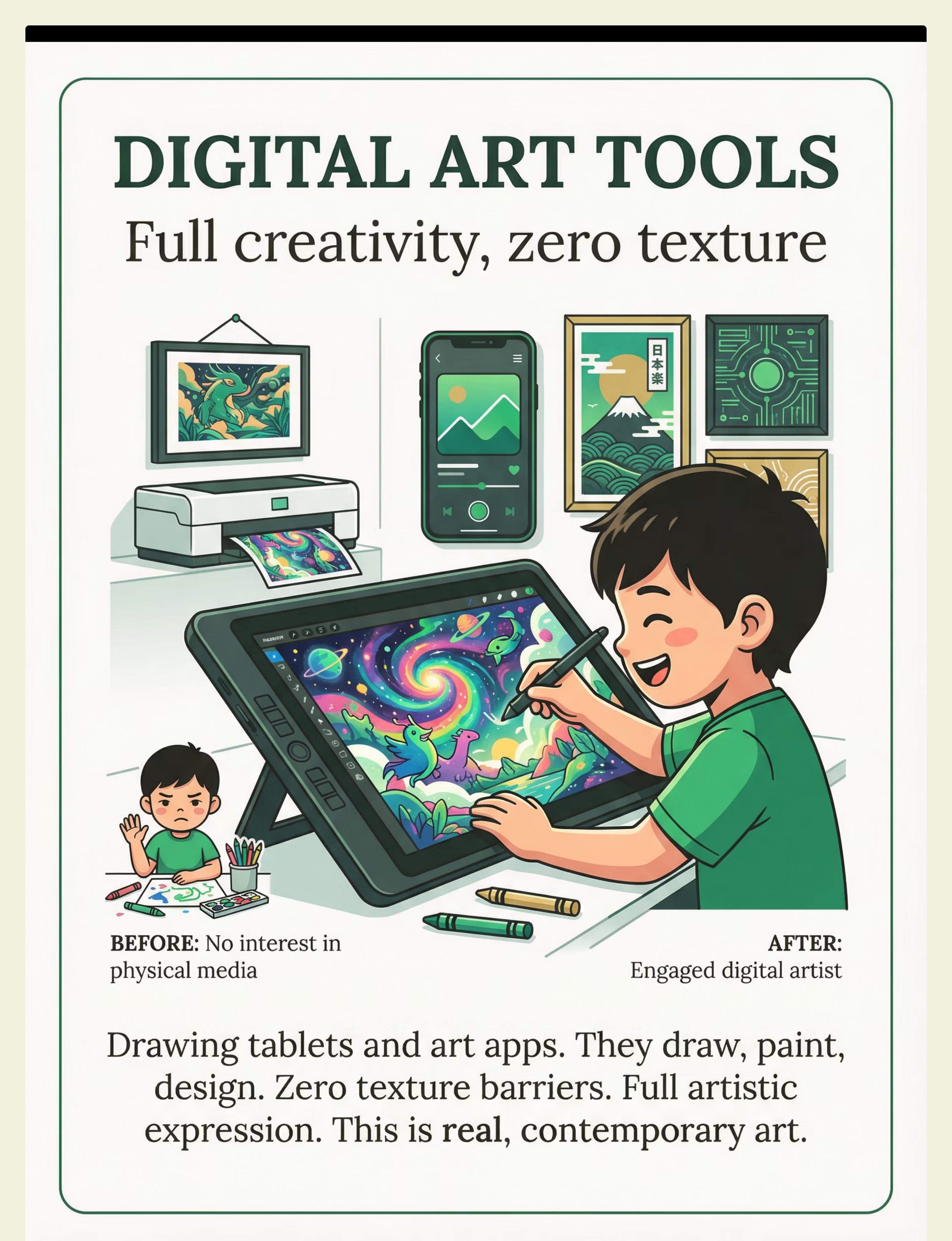
8. Digital Art Tools
Tablets and art apps deliver full creative expression with zero tactile demands. Digital art is real art — always available. ⭐ Anytime
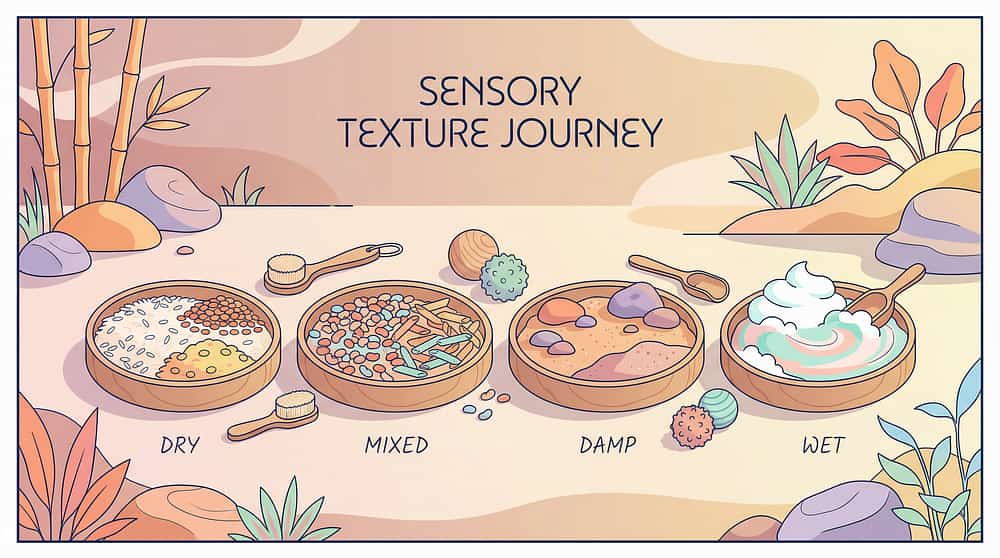
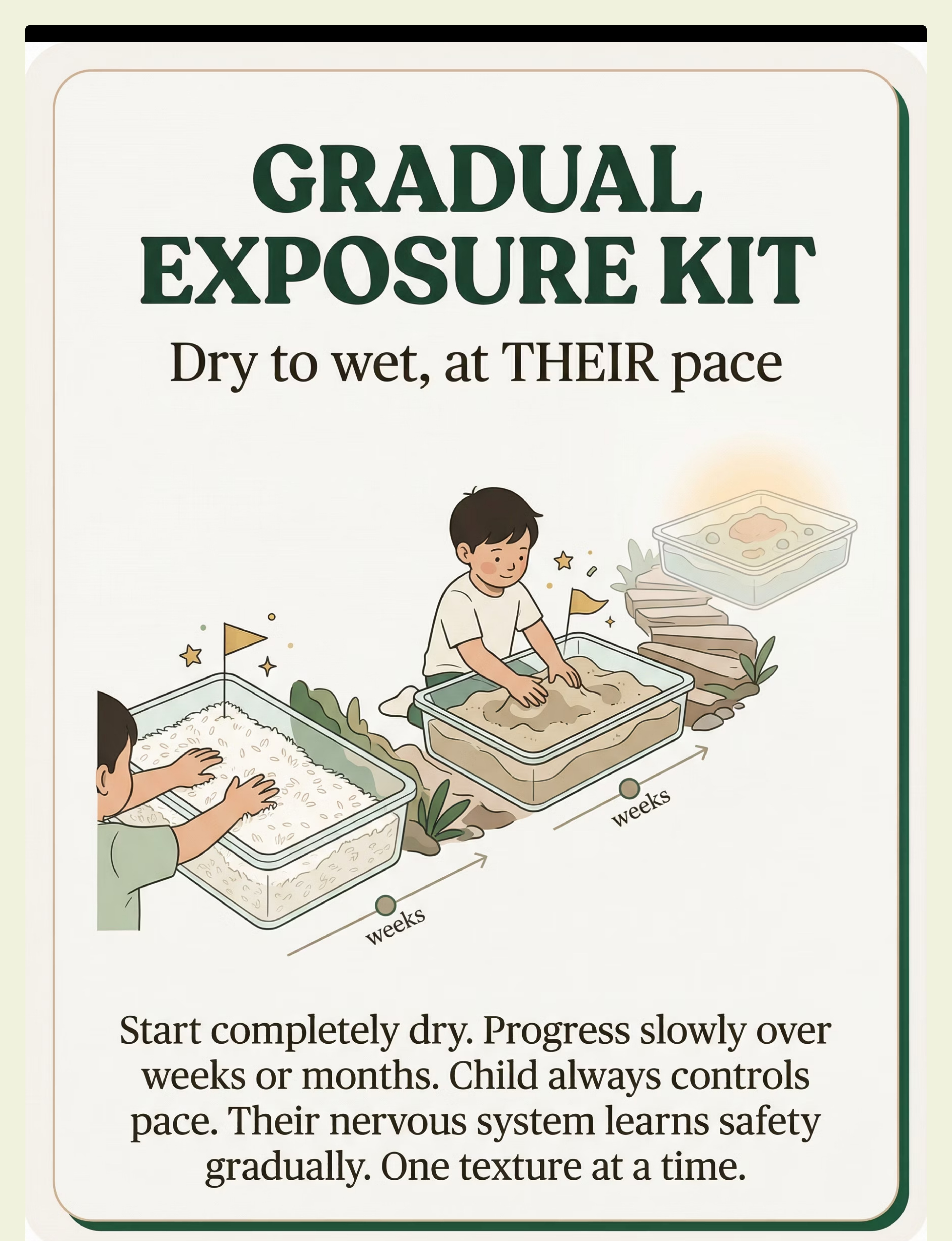
9. Gradual Texture Exposure Kit
A sequenced progression from dry materials to wet — always child-controlled. The child sets the pace. ⭐⭐⭐ Progress
Essential Starter Kit (Under ₹500): No-Mess Art Tools + Paint-in-Bag + Dry Art Materials = immediate art participation, starting tomorrow. All materials clinically validated. Browse: materials.pinnacleblooms.org
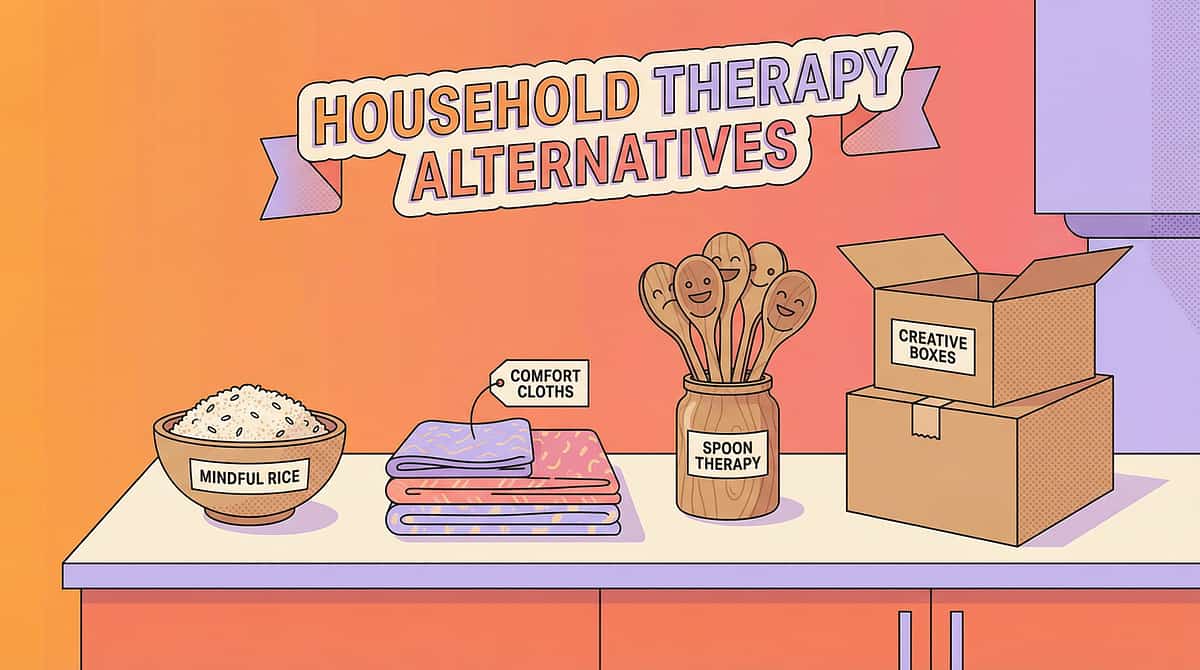
Can't Buy It? Make It. Every Material Has a Zero-Cost Alternative.
The WHO Nurturing Care Framework (2018) emphasizes context-specific, equity-focused interventions. The most effective therapy material is the one your family can access today. Every one of the 9 materials has a free or near-zero-cost homemade version.
No-Mess Art Tools → DIY
Wrap foam pipe insulation around regular paintbrushes. Clothespins holding cotton balls become painting tools. Kitchen forks, spatulas, and whisks are art tools. Key: distance between hand and paint.
Paint-in-Bag → DIY
Gallon ziplock bag + 2–3 tablespoons finger paint inside. Squeeze out air, seal completely, tape edges. Tape to table. Cost: ₹20. Alternative: hair gel + food coloring.
Stampers → DIY
Cut sponges into shapes, attach to bottle caps for handles. Potato stamps. Cardboard tubes. Lego blocks. Leaves. Anything becomes a stamp with a handle.
Gloves → DIY
Food handling gloves from any grocery store. Petroleum jelly or coconut oil as barrier cream. Under ₹50 for a box of food-safe gloves.
Clean Alternatives → DIY
Cloud dough: cornstarch + hair conditioner. Moon sand: flour + baby oil. Both are moldable, non-sticky. Under ₹30 with kitchen items.
Exposure Kit → DIY
Shallow container + dry rice, beans, or pasta from your kitchen. Progress to damp sand, then shaving cream over weeks. Child always controls pace.
Digital Art → Free
Free apps on any smartphone: Kids Doodle, SketchBook Free, Drawing for Kids. An old phone becomes a dedicated art device. Cost: zero.
Washable Setup → Free
Wet wipes at arm's reach. Art near the sink. Bowl of clean water + towel beside the art area. Show the child that cleanup is instant and complete.
Equity Statement: The WHO Nurturing Care Framework (2018) emphasizes context-specific, equity-focused interventions. The most effective therapy material is the one the family can access TODAY. Reference: PMC9978394
⚠️ Safety Gate — Read Before Starting Any Art Session
Every session begins here. These traffic-light guidelines protect your child's nervous system and ensure each art experience builds toward participation — not away from it.
🔴 RED — Do Not Proceed If:
- Child has open wounds, eczema flare, or skin infection on hands
- Child is in active meltdown or extreme dysregulation
- Child has known allergy to any material being used (latex, specific foods in DIY recipes)
- Child is ill, fevered, or recently vomited
- Environment is chaotic, noisy, or unpredictable
🟡 AMBER — Modify the Session If:
- Child is tired, hungry, or mildly dysregulated (use simplest material only — dry crayons)
- Child is in an unfamiliar environment (stay with most tolerated materials)
- First time with a new material (introduce visually first — no demand to touch)
- Another child is present who may force sharing or incidental contact
🟢 GREEN — Proceed When:
- Child is calm, fed, rested, and in a familiar space
- Materials are prepared and within reach
- Cleanup supplies are immediately accessible
- Parent is calm and prepared (your regulation affects theirs)
- Exit path is clear — child can leave the activity at any time
Material-Specific Safety Notes
- Choking hazards: Dry materials (beans, beads, small objects) for children under 3 — supervise at all times
- Allergy check: Latex-free gloves only. Test DIY recipes on a small skin area first
- Mouthing risk: Children who mouth objects — avoid taste-unsafe materials, supervise closely
- Glove fit: Too large = frustrating; too small = sensory trigger. Test beforehand
🛑STOP IMMEDIATELY if the child shows: sustained screaming, physical self-harm, vomiting or gagging that doesn't resolve, signs of panic attack (hyperventilating, shaking), or dissociation. These indicate the nervous system is overwhelmed. End the session, provide comfort, and consult your therapist.
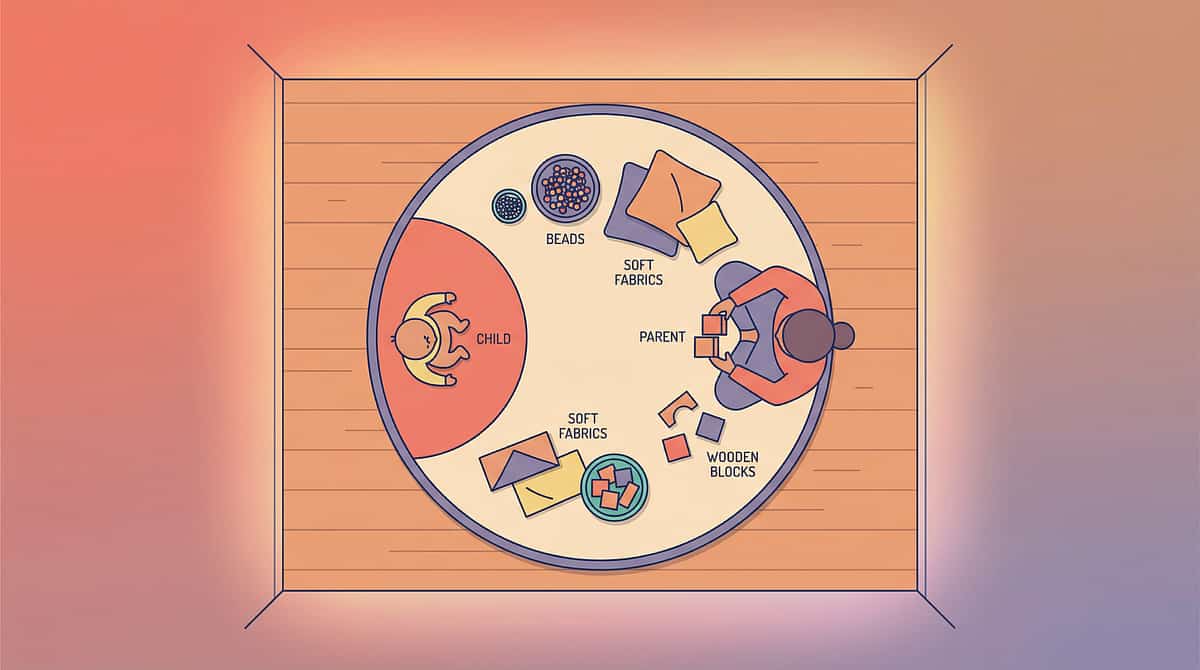
Set Up Your Art Space — Before the Child Enters
The environment is part of the therapy. How you arrange the space communicates safety, predictability, and choice to your child's nervous system before art even begins. A well-set space reduces anxiety by 50% before the first brush stroke.
Surface Protection
Cover the table with old newspaper, a plastic sheet, or a disposable tablecloth. This communicates to the child that mess is expected and okay — reducing cleanup anxiety before it starts.
Cleanup Station — Within Arm's Reach
Wet wipes, damp cloth, bowl of warm water, dry towel — all within the child's reach. The child must be able to clean their hands instantly if needed. This is non-negotiable.
One Material Only
Lay out ONLY today's chosen material. Too many options overwhelm. Start with one material per session — choice comes after comfort is established.
Parent Position: Beside, Not Across
Sit BESIDE the child at the same level — never across the table. Your calm presence regulates their nervous system through co-regulation.
Lighting, Sound & Exit Path
Natural light preferred. No fluorescent buzz. Quiet environment. The child can leave at ANY time — no locked doors, no blocking. Predictable visual timer visible: "We'll do art for 5 minutes, then all done."
Research evidence: Ayres Sensory Integration Theory — environmental setup is a core therapeutic principle. Meta-analysis confirms structured 1:1 sessions are most effective. Reference: PMC10955541
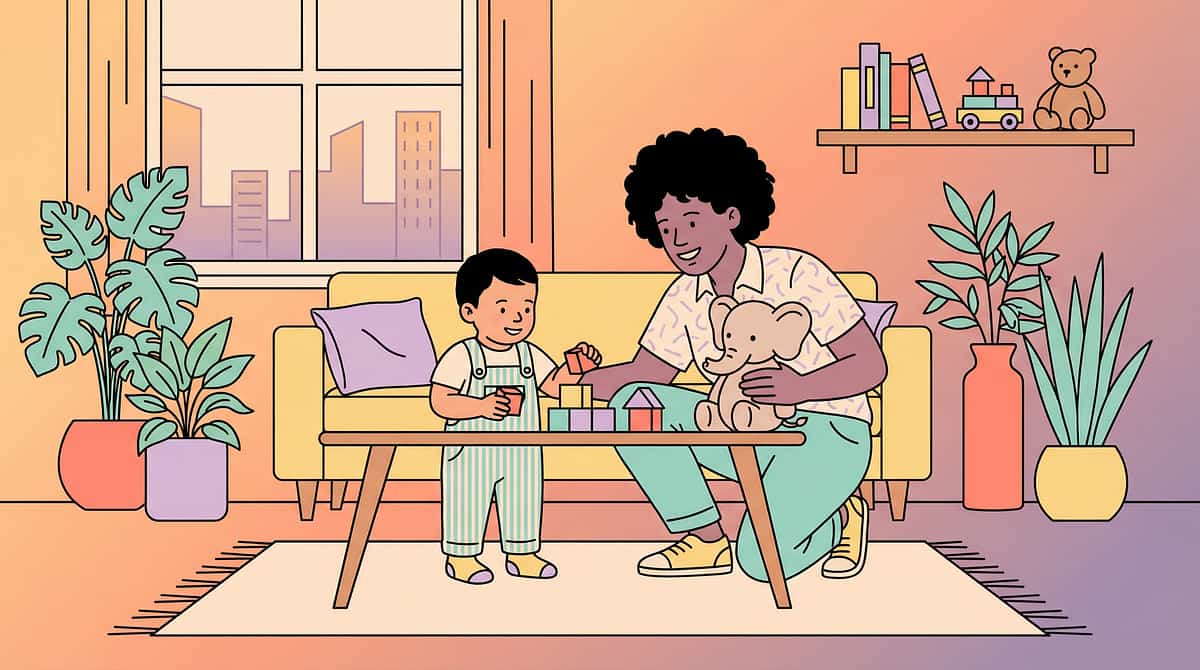
Pre-Flight Checklist: Is Your Child Ready Right Now?
This checklist uses observable, not subjective, criteria. You're not guessing at your child's mood — you're checking concrete, visible indicators that their nervous system is in a state where positive art experience is possible.
✅ Green — Proceed
- Child has eaten within the last 2 hours
- Child has slept adequately — no signs of overtiredness
- No meltdown in the past 30 minutes
- Child is in a regulated state (can respond to their name)
- No recent distressing event (doctor visit, argument, transition stress)
- Child is in a familiar environment
- Art materials are set up out of sight initially
🟡 Amber — Modify
Some indicators are off. Use ONLY the most tolerated material (typically dry crayons or digital art). Shorten session to 3 minutes maximum. Lower all demands entirely.
🔴 Red — Postpone
Do a calming activity instead — favorite book, gentle music, deep pressure. Try art tomorrow. Postponing is not failure — it is clinical judgment.
"The best session is one that starts right."
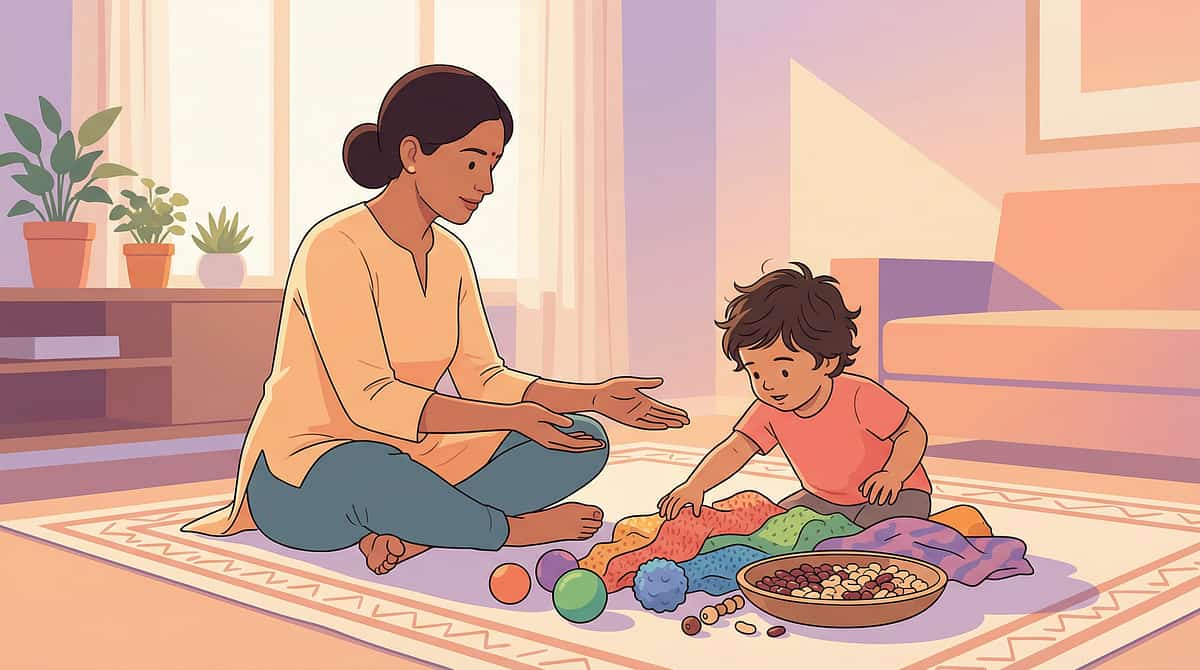
Step 1: The Invitation (60 seconds)
ACT III: Execution
Step 1 of 6
Parent Script — Say These Words
"Hey [child's name], look what I have! I'm going to do some painting. Want to see?"
DO: Start doing the art activity yourself first. Let the child observe without any demand. Smile. Look like you're genuinely enjoying it.
DO NOT: Say "come do art." Don't say "try it." Don't pick up the child's hand. Zero demand in this step.
Body Language: Relaxed, engaged with the material yourself. Occasional warm glances at the child. No urgency whatsoever.
What to Watch For
Acceptance Looks Like:
- Child moves closer to the table
- Child watches your hands
- Child points or reaches toward materials
- Child sits at the table (even without touching anything)
ANY of these cues = proceed to Step 2.
Resistance Looks Like:
- Child moves away → Keep doing art yourself. Try again in 5 minutes.
- Child says "no" → "That's okay! I'm just going to draw a bit." No pressure.
- Child becomes distressed → End attempt. Try tomorrow with a different material.
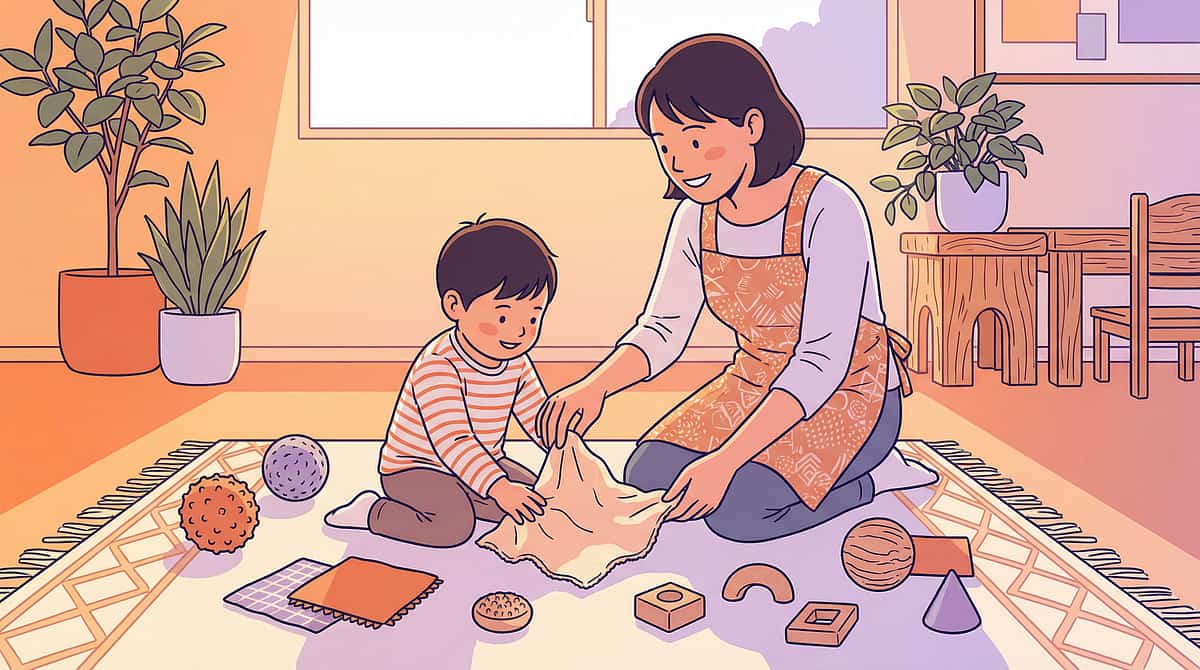
Step 2: The Engagement (1–3 Minutes)
Step 2 of 6
Once the child shows any acceptance cue from Step 1, gently invite participation through choice — never through demand. Choice is control. Control is safety.
Parent Script
"Look, I made this! Do you want to pick a color?" (Hold out 2–3 brushes, crayons, or stamps for THEM to choose.)
Reinforcement — Praise the Approach
"You're sitting right here! That's awesome!" (praise proximity, not touching)
"You picked the blue one — great choice!" (praise any engagement)
Material Introduction by Type
- No-Mess Art Tools: Offer the tool handle-first. Let them hold it. Don't guide their hand to paint yet.
- Paint-in-Bag: Place the sealed bag on the table. Tap it yourself. "Look, the colors move!" Let them observe before touching.
- Dry Materials: Place 2–3 crayons in front of them. Model drawing a simple shape.
- Stampers: Stamp once yourself. "Look! It makes a star!" Offer the handle-first.
- Digital Art: Open the app, draw something. Hand the device with the drawing visible.
Engagement
Reaches for material, starts using it → Proceed to Step 3
Tolerance
Stays seated, watches, doesn't use material → Stay here. Model 2 more minutes. Don't push.
Avoidance
Turns away or pushes material → Drop demand completely. "That's okay. I'll keep drawing."
Research evidence: Systematic review (Children, 2024): Sensory integration intervention with structured material introduction meets evidence-based practice criteria. Reference: PMC11506176
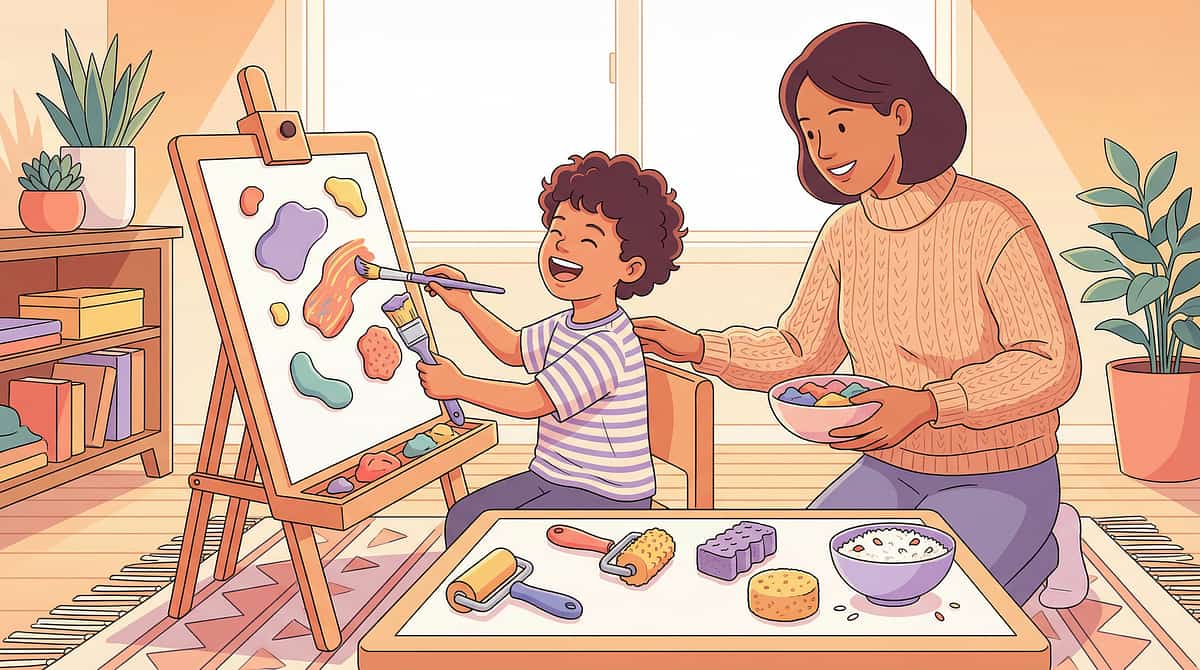
Step 3: The Therapeutic Action (3–10 Minutes)
Step 3 of 6
CORE PRINCIPLE: Follow the child's lead. They choose how long, how much, and how intense. Your job is to be present, reinforce engagement, and model enjoyment. Never correct technique. Never compare.
No-Mess Tools
Let them paint freely. If paint touches their hand accidentally — wipe immediately without drama. "There, all clean! Want to keep painting?"
Paint-in-Bag
Encourage pressing, swirling, letter tracing through the bag. "Wow, you made purple! Look how the colors mix!" The bag IS the art — celebrate what they create through it.
Dry Materials
Let them draw whatever they want. Offer new colors. Draw alongside them. Joint drawing builds connection AND tolerance simultaneously.
Gloves
If child accepts gloves, let them explore ANY wet material. This is their breakthrough moment. "Look at your hands making art! So cool!"
Digital Art
Free exploration. Show them undo/redo. "You can always start over — no mistakes!" This builds creative confidence without any tactile pressure.
Exposure Kit
Let them explore at the level they choose. Dry? Great. Damp? Amazing. Wet? Incredible. THEIR pace — always, without exception.
Common Execution Errors — Avoid These
- ❌ Guiding the child's hand onto material — this is forced exposure, not therapeutic
- ❌ Saying "see, it's not so bad" — this invalidates their real experience
- ❌ Comparing to other children — this increases shame and decreases motivation
- ❌ Showing disappointment if they don't progress — this increases avoidance next time
Research evidence: Meta-analysis (World J Clin Cases, 2024): Individual therapy sessions showed maximum effectiveness. Core therapeutic action occupies 40–60% of session time. Reference: PMC10955541
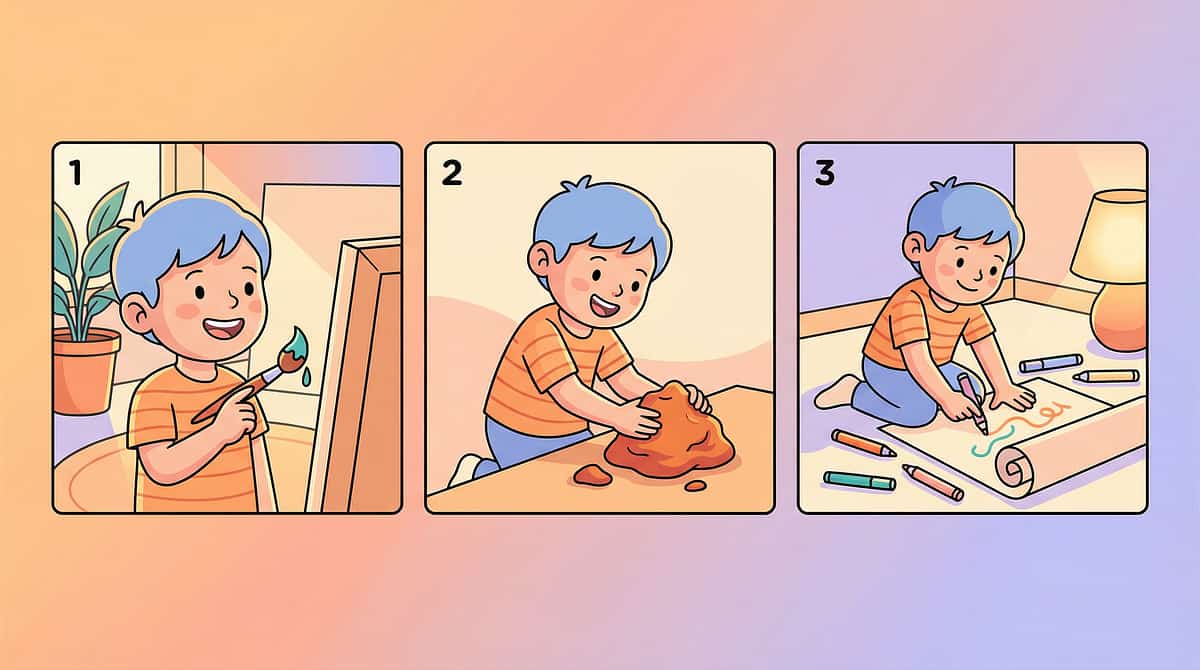
Step 4: Repeat & Vary (3–5 Minutes)
Step 4 of 6
How Many Repetitions?
There is no magic number. 3 good minutes of engaged art-making with adapted materials is worth more than 20 minutes of forced participation with standard paint. Let quality drive quantity.
"3 good reps > 10 forced reps."
When they're done, they're done. Honor it every time.
Variation Within the Session
- Offer a second color or material after the first is comfortable
- Suggest a new surface: paper → cardboard → window with window markers
- Introduce a second tool type (started with brush → add stamper)
- Create together: "I'll stamp here, you stamp there"
Satiation Indicators — When They've Had Enough
- Pushing materials away (not distress — just done)
- Looking at other activities in the room
- Decreased engagement (stamping becomes mechanical)
- Saying "all done" or equivalent communication
- Body shifting away from the table
Research evidence: Sensory integration therapy dosage: 2–3 sessions per week for 8–12 weeks as typical protocol. References: SI literature + Pinnacle clinical protocols.
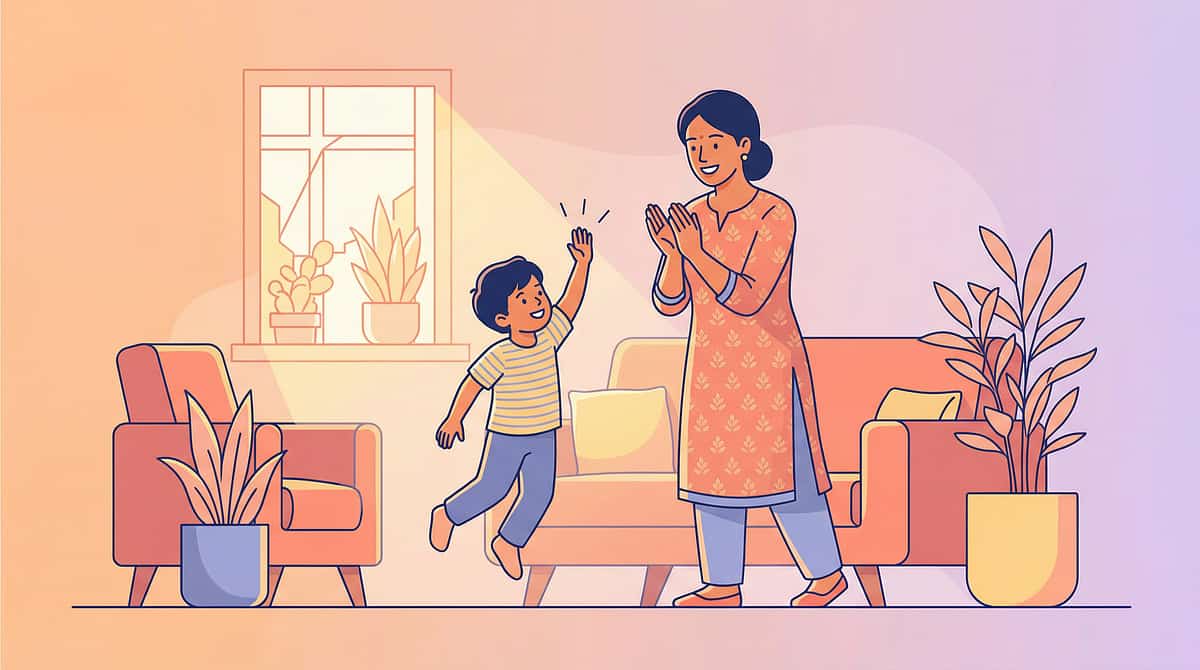
Step 5: Reinforce & Celebrate
Step 5 of 6
Timing: Within 3 seconds of any positive behavior. Reinforcement that comes late loses its power. The connection between action and praise must be immediate and specific.
"You painted with the brush! Look at all those colors YOU made!"
"You sat at the art table for five whole minutes! High five!"
"You tried the stamper! That star you made is so cool!"
"You made art today!"
What to Reinforce — Everything Counts
- Any engagement with materials — even holding a brush without painting
- Sitting at the art space, even as an observer
- Choosing a material or color
- Creating anything — regardless of what it looks like
- Tolerating incidental mess, even briefly
- Communicating about art ("I want blue" / pointing)
The Masterpiece Rule: Display their art. On the fridge. On the wall. Take a photo. Send it to grandparents. A child who creates beautiful art with adapted materials IS an artist — and treating it as real art is the most powerful reinforcement you have.
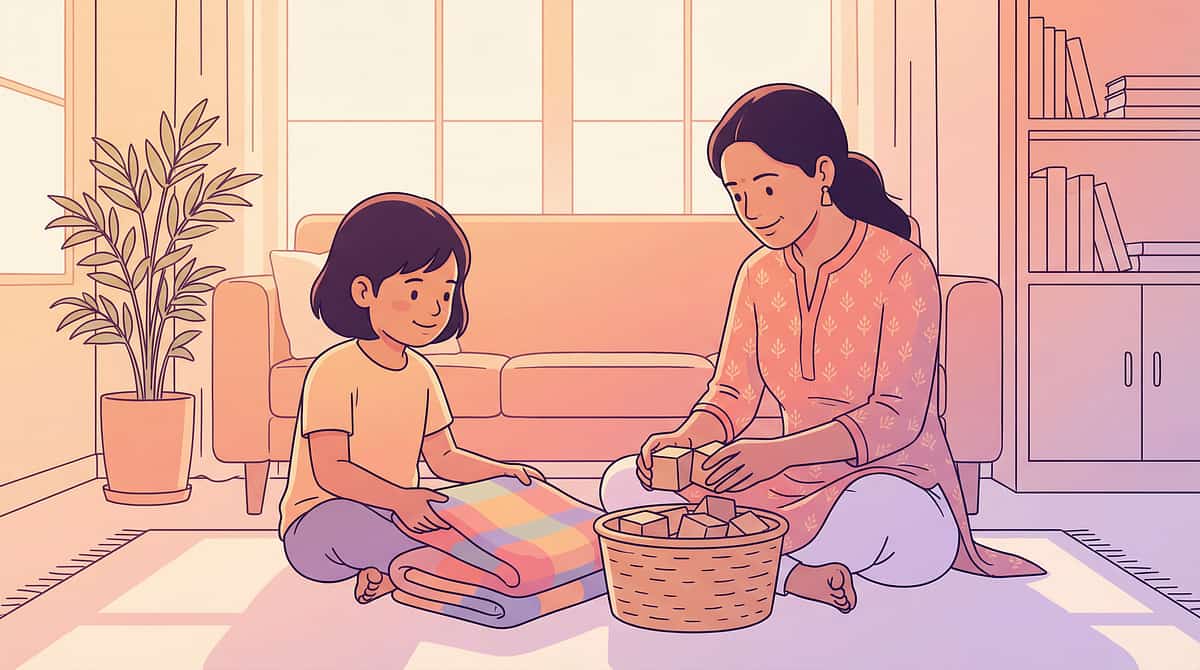
Step 6: The Cool-Down (2 Minutes)
Step 6 of 6
Transition Warning Script
"Two more stamps/strokes/minutes, then art time is all done."
"One more, then we clean up!"
"All done! Let's clean up together."
If the Child Resists Ending
This is GOOD — it means they enjoyed art! "I know, art is so fun! We'll do it again tomorrow. Right now it's time for [next activity]." Use visual timer for final countdown.
Cool-Down Activities
- Wash hands together — this IS additional desensitization practice
- Let the child help put caps on markers, close paint containers (fine motor + closure ritual)
- Look at what they made together: "Tell me about your art!" or "Show me your favorite part."
- Transition object: "Now let's go read your book" — preferred activity follows art
Cleanup as Therapy
For children who tolerate washable materials, the cleanup IS additional tactile exposure — warm water, soap, rubbing hands together. Treat it as a positive sensory experience, not a chore to rush through.
Research evidence: Visual timer and transition support are classified as evidence-based practice for autism (NCAEP, 2020). References: NCAEP Evidence-Based Practices Report (2020).
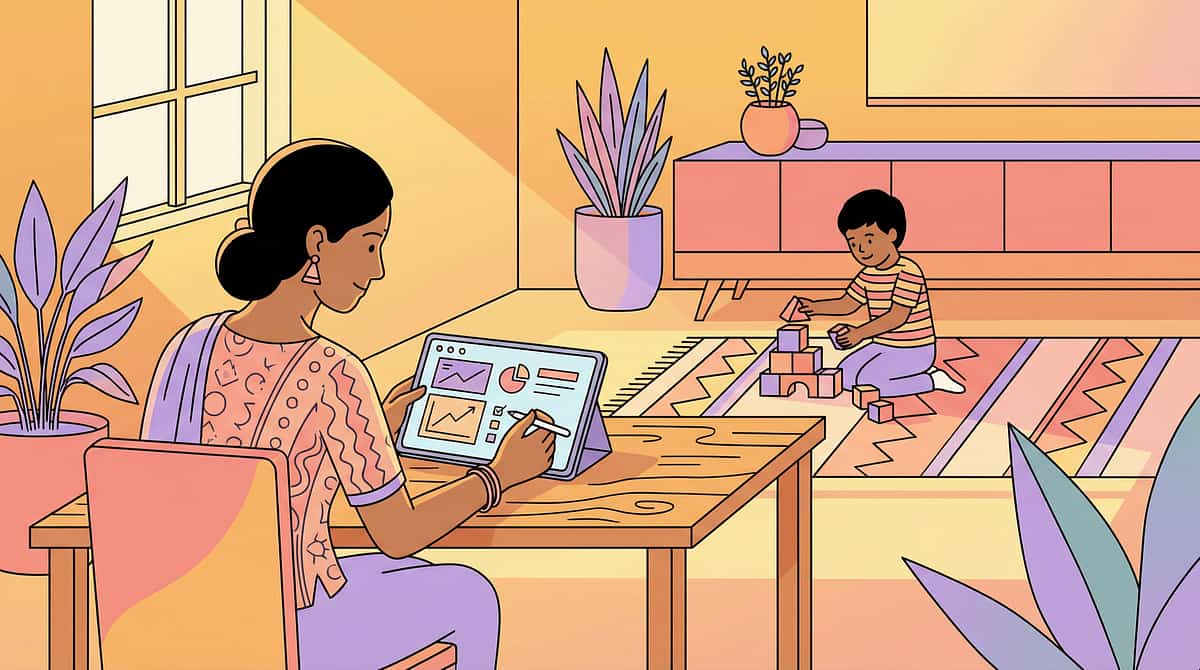
60 Seconds of Data Now Saves Hours of Guessing Later
You don't need a spreadsheet or app. Three simple data points, recorded immediately after each session, reveal the trajectory that day-to-day observation misses. A parent who records "2, 2, 2, 3, 2, 3, 3, 3, 4" across nine sessions sees real, neurological progress that feels invisible until you look at the numbers.
1
Material Used Today
Which of the 9 materials did you use this session? Record the specific material — this helps identify patterns across weeks.
2
Engagement Time
How many minutes did the child actively participate? Even 3 minutes counts. Growth is visible when you track it.
3
Tolerance Rating (1–5)
1 = Refused entirely | 2 = Watched only | 3 = Used with tools/barrier | 4 = Tolerated brief direct contact | 5 = Comfortable direct engagement
Optional Quick Notes
- Any new material tolerated today?
- Any unexpected reaction — positive or negative?
- Child's mood before, during, and after the session?
📥Download: Session Tracking Sheet (PDF) — pinnacleblooms.org/trackers/art-aversion | 📱Digital: Log directly in GPT-OS® app for automated progress visualization. ABA Data Collection Standards: frequency, duration, and rating measurement for behavior-analytic intervention tracking. References: BACB Guidelines + Cooper, Heron & Heward.
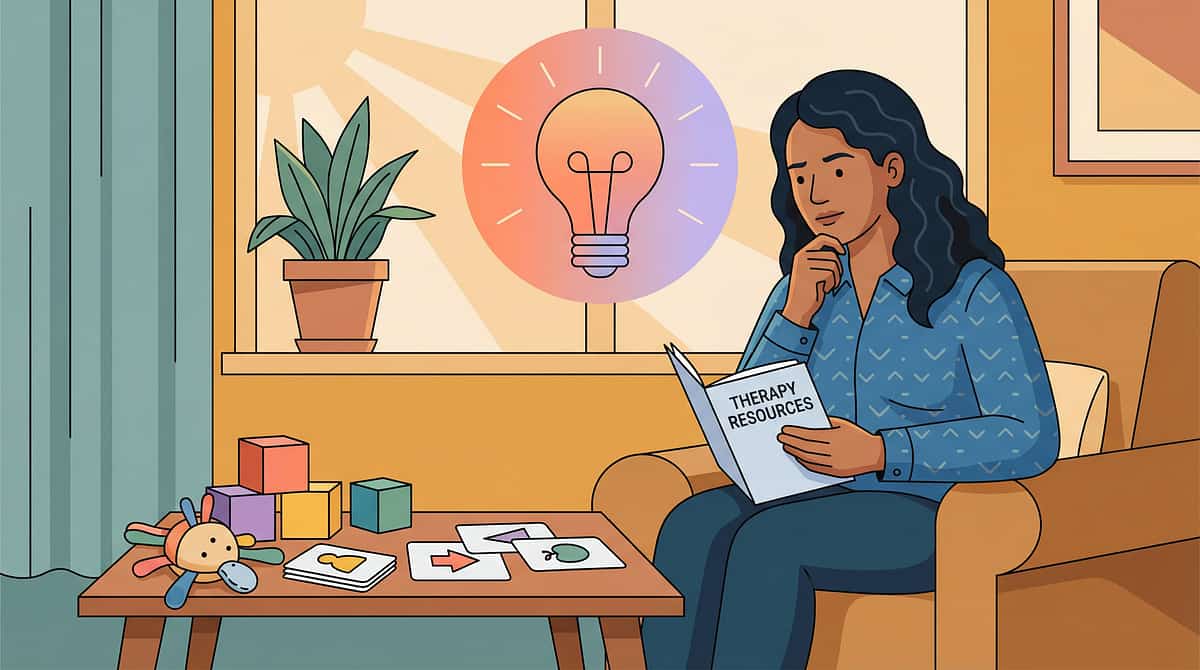
It Didn't Go Perfectly? That's Normal. Here's What to Do.
Every session that doesn't go as planned is not a failure — it is data. Each outcome teaches you something specific about your child's current tolerance, preferences, and nervous system capacity. Use this troubleshooting guide to decode what happened and course-correct.
Child refused to come to the table
They're not ready today. Do art yourself where they can see you. Try again tomorrow. Place materials in their play space instead of calling them to a dedicated "table."
Child sat down but wouldn't touch anything
THAT'S PROGRESS. Sitting at the art table = success. Watch their eyes — are they following your hands? Model for 3–5 minutes, then walk away. Some children engage when the pressure of observation is removed.
Child touched the material and immediately melted down
Immediate comfort. Clean their hands right away if needed. Move to a preferred calming activity. Tomorrow, start with a less-triggering material. The nervous system needs recovery time.
Child only used one material and refused all others
One material IS success. A child who draws with crayons for 10 minutes is doing art therapy. Celebrate consistency. Variety will come when they're ready — do not push it.
Paint accidentally touched skin and triggered panic
Wipe immediately without drama. "There, all clean! No worries." Wipes at arm's reach prevent escalation. The accidental touch + quick cleanup can actually BUILD tolerance over time when handled calmly.
Session was going great, then suddenly the child stopped
Satiation is real. Their nervous system said "enough" and they listened. That is self-regulation — celebrate it, don't fight it.
"Session abandonment is not failure — it's data." Every session teaches you about your child's tolerance, preferences, and readiness. Use it.
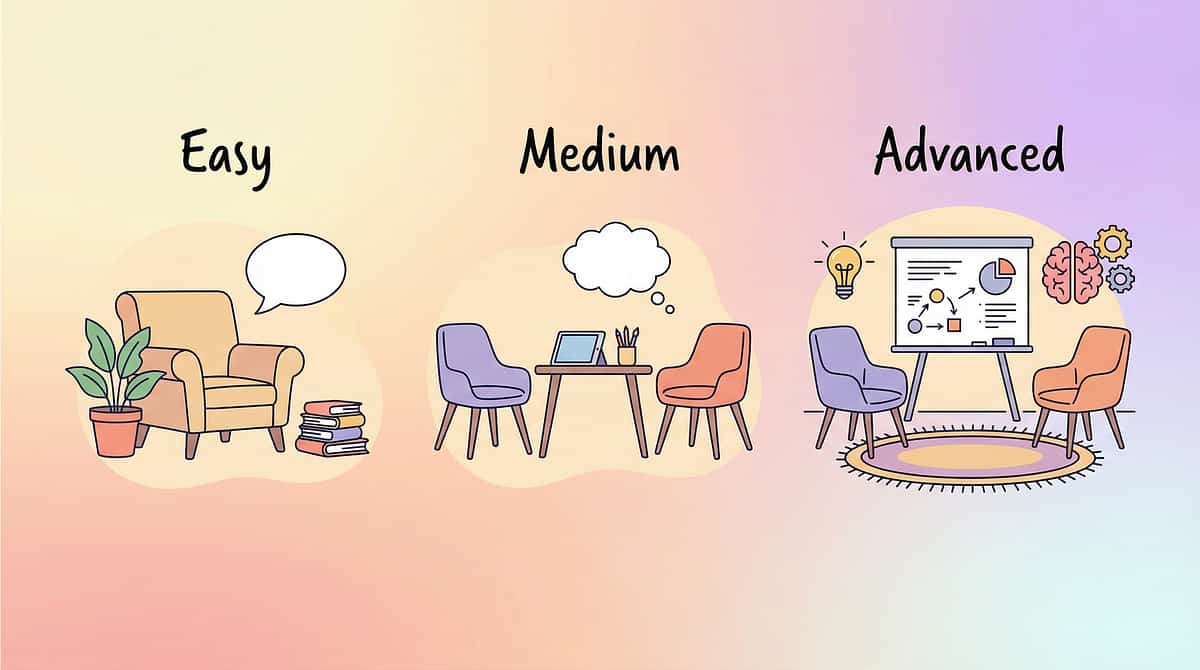
Make It Yours: Adapt to Your Child's Unique Profile
No two children have identical sensory profiles. These adaptations allow you to calibrate the technique precisely — making it easier on hard days, more progressive on good ones, and always appropriate for your child's exact developmental stage and sensory presentation.
← Easier (Bad Days / Starting Out)
- Use ONLY dry materials (crayons, chalk)
- 3-minute maximum session
- No new materials — stick to the most tolerated
- Parent does art, child watches (zero demand)
- Digital art only
→ Harder (Breakthroughs / Progression)
- Introduce one new material per week
- Extend sessions to 15–20 minutes
- Try removing gloves for brief periods (child-led only)
- Mix materials (stamps WITH paint, crayons AND chalk)
- Group art with siblings or peers
Sensory Avoider Profile
Start with maximum distance (tools, bags, digital). Progress toward contact ONLY when the child initiates. Never rush. Weeks between steps is completely normal.
Sensory Seeker + Art Avoider (Paradox Profile)
Some children seek heavy proprioceptive input but avoid light tactile textures like paint. Use firm-pressure tools, weighted art materials, and resistive media (thick clay, theraputty). Pressure regulates while texture desensitizes.
Age Modifications
- 2–3 years: Chunky tools only, 3–5 min sessions, edible alternatives (pudding paint, yogurt art)
- 4–5 years: Full 9-material rotation, 10–15 min sessions, school accommodation focus
- 6–8 years: Peer art activities, classroom integration, self-advocacy skills

Weeks 1–2: The Foundation Phase
ACT IV: Progress Arc
Phase 1 of 3
What You WILL See
- Child may tolerate sitting at the art space — even without creating
- May choose one preferred material and use only that
- Session times of 3–5 minutes maximum
- May watch you do art for longer periods before trying
- Possible initial increase in resistance (novelty anxiety) before settling
What You Will NOT See Yet
- Voluntary touching of previously avoided textures
- Long, engaged art sessions
- Willingness to try multiple materials
- Participation in group art with peers
"If your child tolerates the art space for 3 seconds longer than last week — that is real, measurable, neurological progress."
Parent Emotional Preparation: This phase tests patience. You may think "nothing is working." It is. The nervous system recalibrates slowly and invisibly. Trust the process — the data will show you what your eyes cannot yet see.

Weeks 3–4: Consolidation — The Neural Pathways Are Forming
Phase 2 of 3
40%
Progress Milestone
Neural consolidation underway — engagement patterns are stabilizing and preferences are emerging
7-10
Minutes of Engagement
Typical session engagement time increases from 3 minutes in Weeks 1–2 to 7–10 minutes by Week 4
What You Will See in Weeks 3–4
Anticipation
Child anticipates art time and may approach the table without a formal invitation — this signals that art has become a positive association.
Preference
Child shows clear preference for specific materials — this is GOOD. Preference equals engagement. Preference is the nervous system choosing safety.
Requesting
Child may begin requesting art: "I want to draw" / pointing to materials. Reduced protest or hesitation at the start of sessions.
The Signs Parents Often Miss
- Child talking about art between sessions = neural encoding happening
- Child noticing art materials in stores or on TV = attention to domain increasing
- Child approaching art at school even without participating = social interest emerging
When to Increase: If consolidation signs are stable for 1 full week, you can introduce one new material from the 9-material list. One new material per week — no faster.
Weeks 5–8: Mastery — Your Child Is an Artist
Phase 3 of 3
Mastery Criteria — Observable and Measurable
Duration
✅ Participates in art activities for 10+ minutes without distress
Variety
✅ Uses 2–3 different material types comfortably within or across sessions
Initiation
✅ Initiates art activity independently — "Can we paint?" without prompting
Resilience
✅ Tolerates incidental mess without meltdown: paint on hand → wipes → continues creating
Social Participation
✅ Participates in group art with at least basic accommodation (tools available)
Pride
✅ Creates art they are proud of — wants to show others, display it, keep it
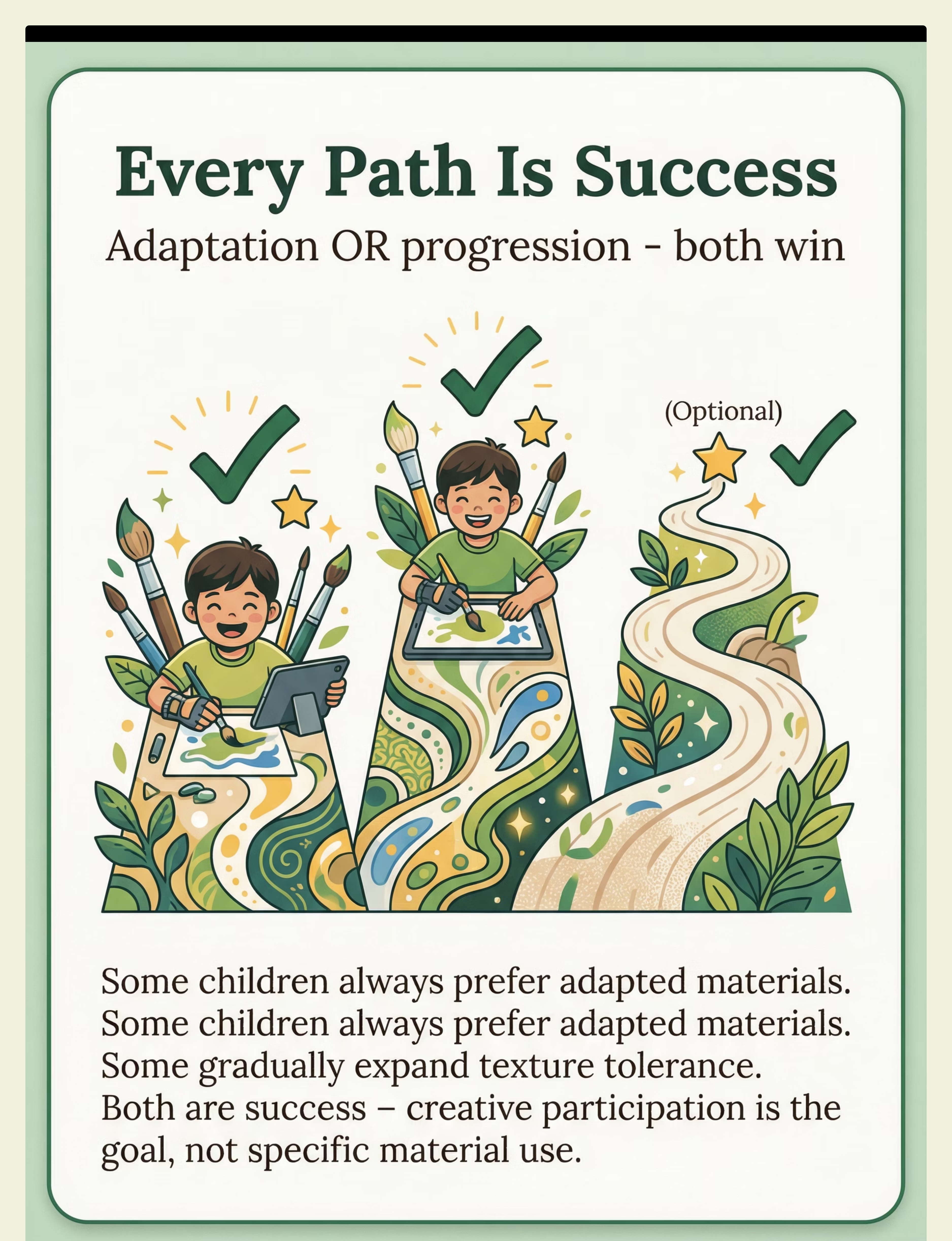
Mastery ≠ Touching Paint Barehanded. Mastery = Comfortable, Joyful Creative Participation. The materials used are irrelevant. The creation matters.
Maintenance: Continue daily art opportunities with adapted materials. The tolerance built here requires maintenance through continued positive exposure. Removing art activities risks regression of hard-won gains.
🎨 You Did This. Your Child Grew Because of Your Commitment.
Remember the child from Card 01 — standing apart from the art table, hands behind their back, watching other children create? Look where they are now.
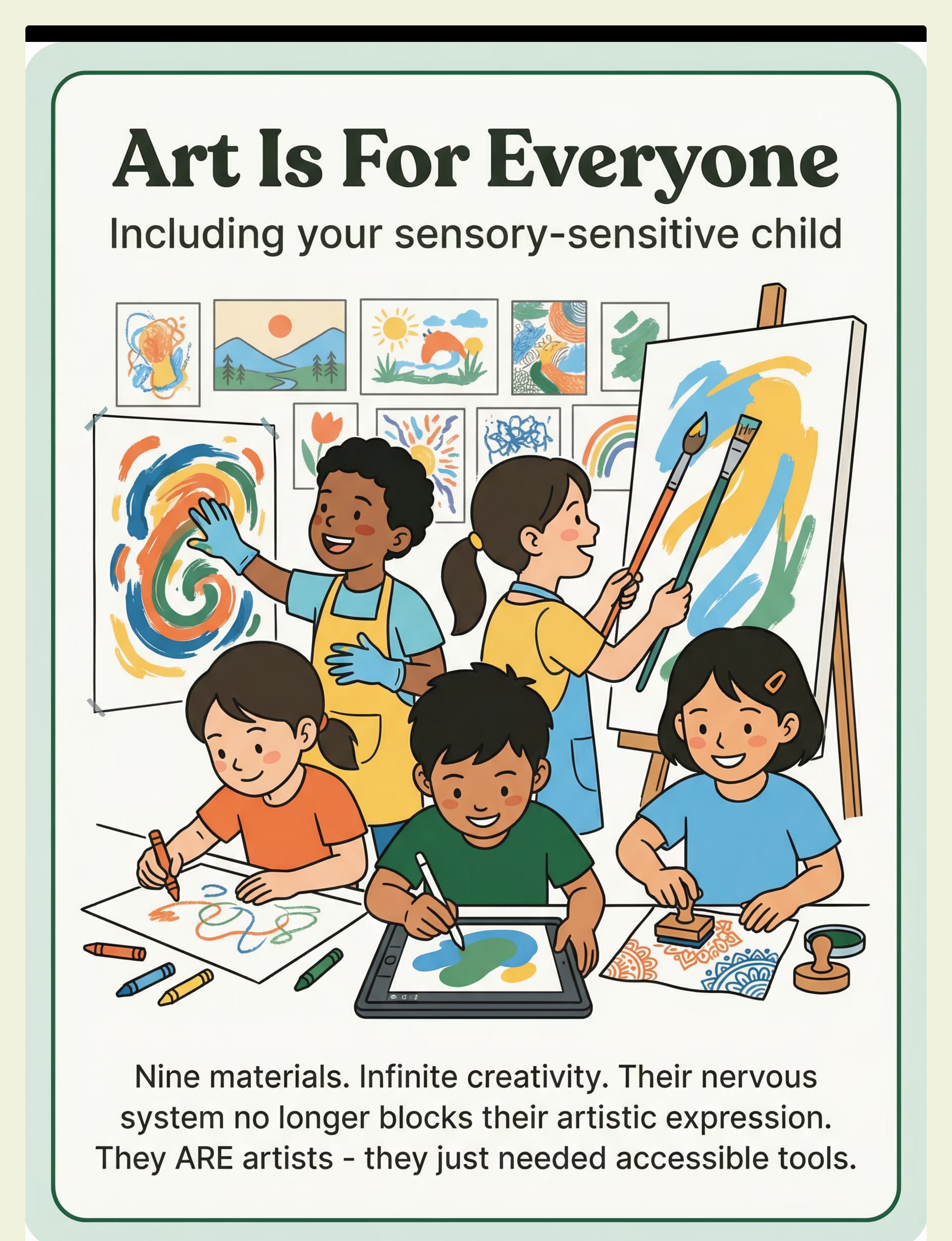
They may be painting with brushes, pressing colors through bags, stamping patterns, drawing with chalk, sculpting with kinetic sand, or creating digital masterpieces. The medium doesn't matter. What matters is this: they are creating. They are participating. They are an artist.
Frame It
Frame their favorite artwork and hang it where the family sees it every day
Create a Gallery
Designate one wall of the house as their art gallery — add to it over time
Document It
Take a photo of them creating today. Date it. Compare with 8 weeks ago. This is real progress.
Tell Them
"You are an artist. Look at what you make." Say this out loud, often, and mean it.
"You did this. Not because you forced them. Because you listened to their nervous system, provided materials it could handle, and celebrated every single step."
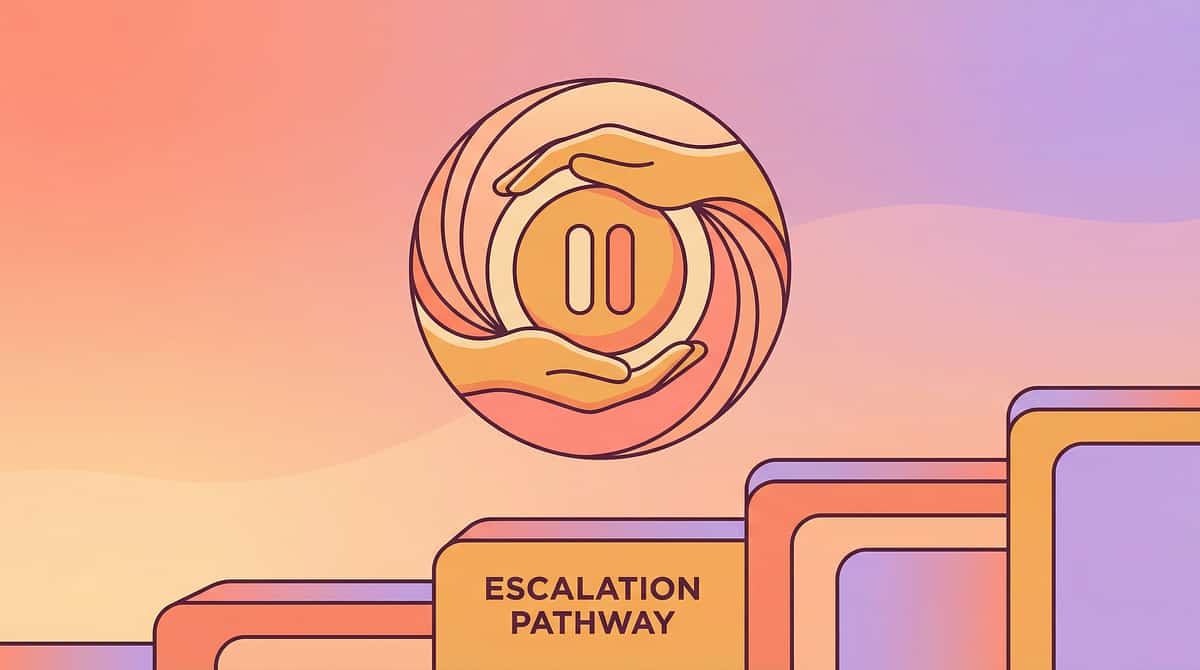
🚩 Red Flags — When to Pause and Seek Professional Guidance
Home-based intervention succeeds for the vast majority of families when applied consistently. But certain signs indicate it's time to pause the home program and bring in a professional. Trust your instincts — if something feels wrong, pause and ask.
🔴 Pause and Consult a Professional If:
- No progress after 6 weeks of consistent daily sessions — not even sitting at the art table
- Regression: child previously tolerated a material and now reacts more intensely to it
- Generalization of avoidance: tactile defensiveness spreading to new domains (foods, clothing, hygiene)
- Emotional escalation: meltdowns during art are becoming longer, more intense, or involve self-injurious behavior
- Physical symptoms: skin reactions, gagging at sight of materials, persistent hand-washing beyond cleanup
- Behavioral changes outside art: increased anxiety, sleep disruption, or social withdrawal correlated with art sessions
Escalation Pathway
Each step in this pathway is designed to match the level of support your child's presentation requires. Most families resolve challenges at Step 1. Professional support is always available when needed.
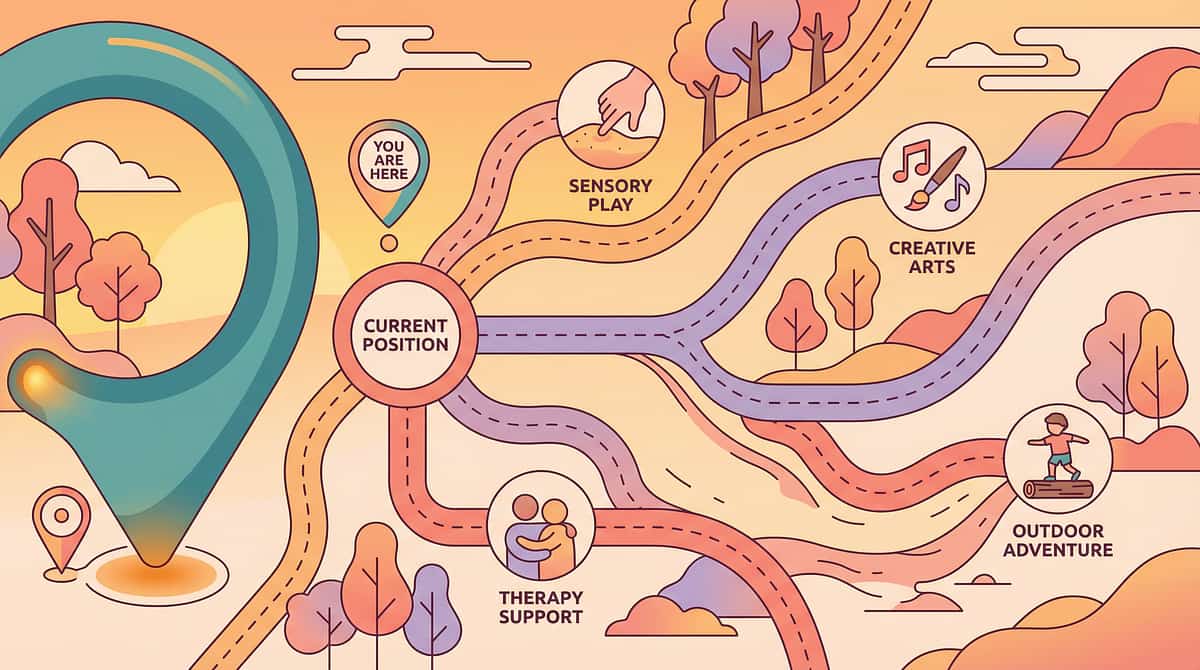
Where You've Been. Where You Are. Where You're Going.
Technique A-007 doesn't exist in isolation. It's one evidence-based node in a larger sensory processing framework designed to build on itself. Understanding your position in this map helps you plan what comes next for your child.
Long-Term Goal: Full creative participation in age-appropriate art activities across home, school, and community settings — using whatever materials the child's nervous system supports. The destination is joy. The materials are just the vehicle.
Browse the full technique library: techniques.pinnacleblooms.org/sensory/ | For AbilityScore® assessment across all domains: Call 9100 181 181
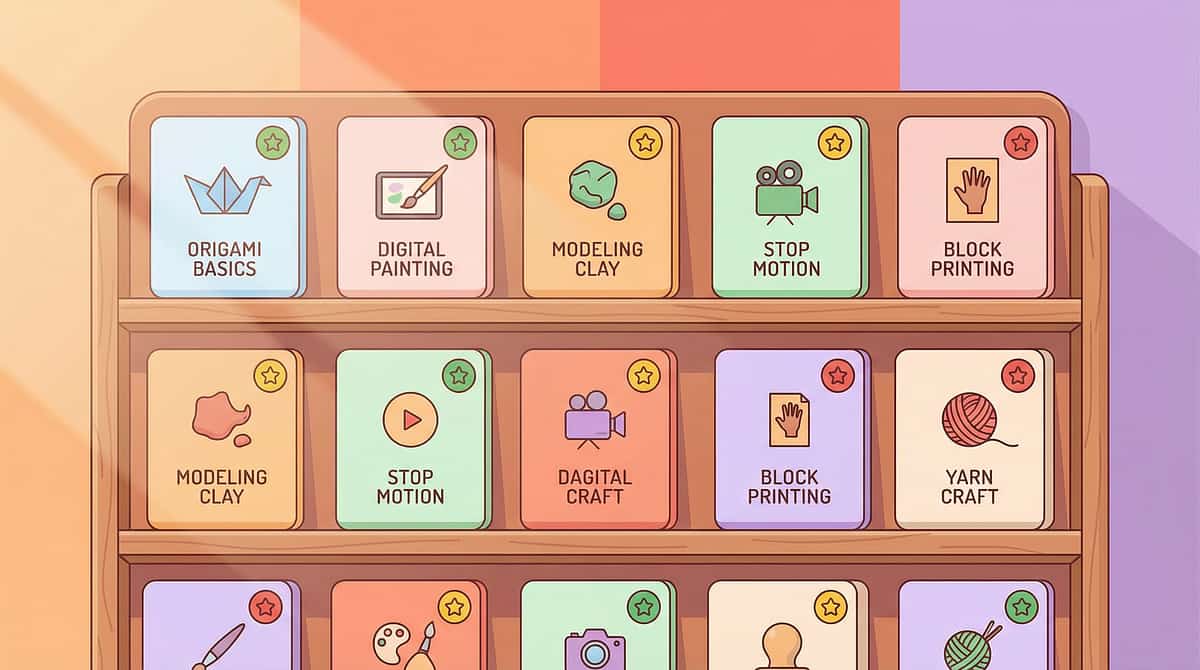
Related Techniques — You Already Own Materials for These
Families who complete A-007 automatically have a head start on four additional sensory techniques. The brushes, gloves, clean alternatives, and exposure kits you've already purchased or made transfer directly to other domains of tactile sensitivity.
A-001: Touch Sensitivity
9 Materials for General Touch Sensitivity | ⭐ Intro Level | You already own: brushes, gloves from A-007
A-003: Food Texture Aversion
9 Materials for Food Texture Aversion | ⭐⭐ Core | You own: the graduated exposure principles from A-007
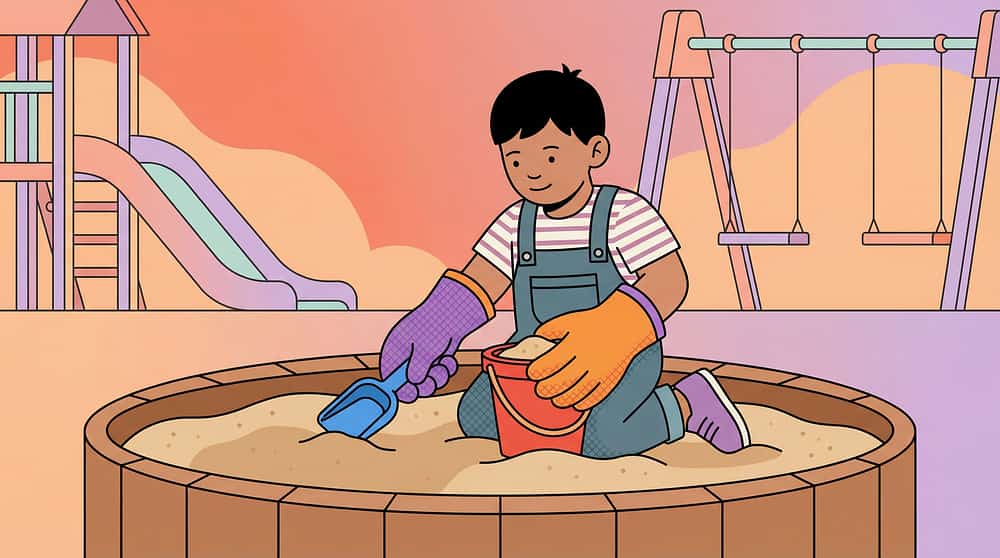
A-006: Sand Play Avoidance
9 Materials for Sand and Grass Avoidance | ⭐⭐ Core | You already own: kinetic sand, gloves
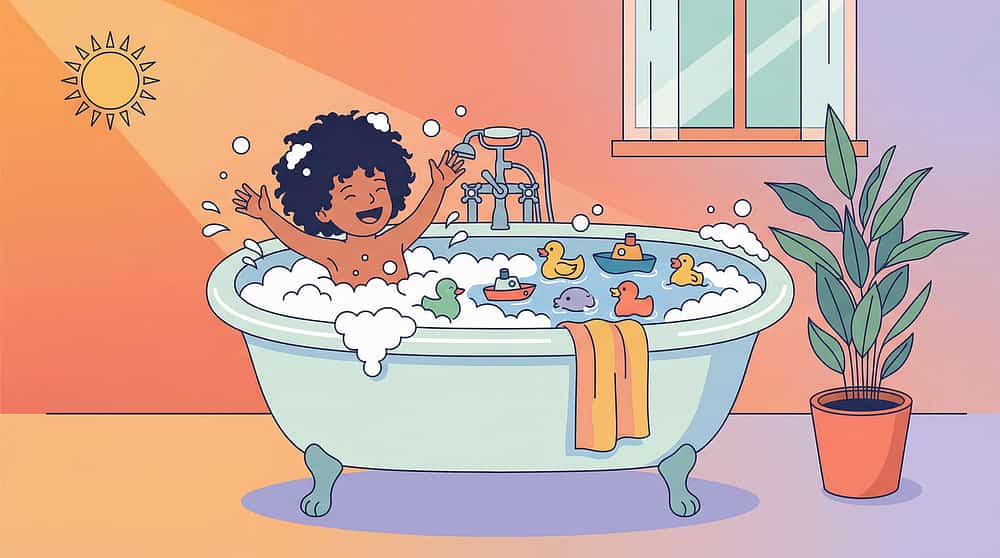
A-009: Water/Bath Sensitivity
9 Materials for Water and Bath Sensitivity | ⭐⭐ Core | You already own: washable materials, gloves
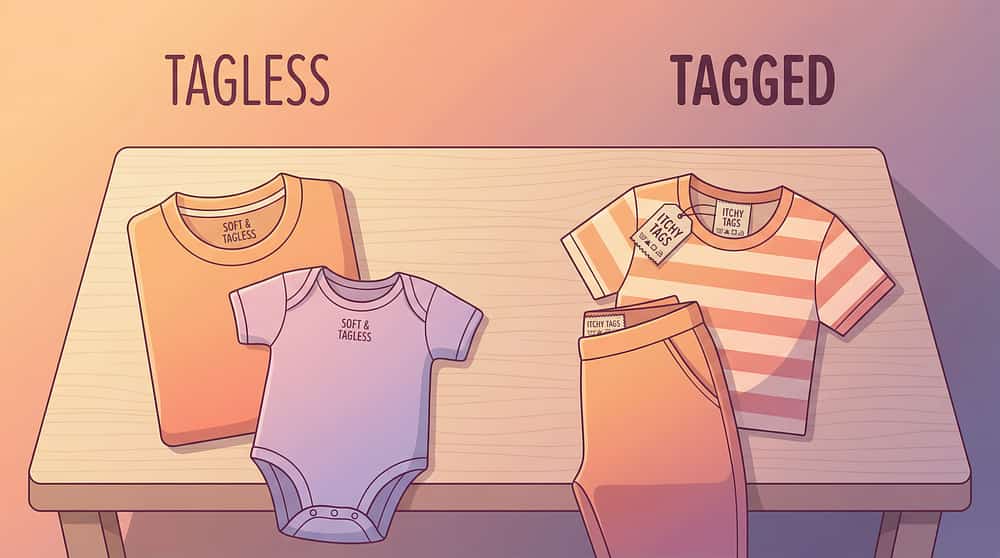
A-012: Clothing Texture Sensitivity
9 Materials for Clothing Texture Sensitivity | ⭐⭐ Core | Separate materials needed for this domain
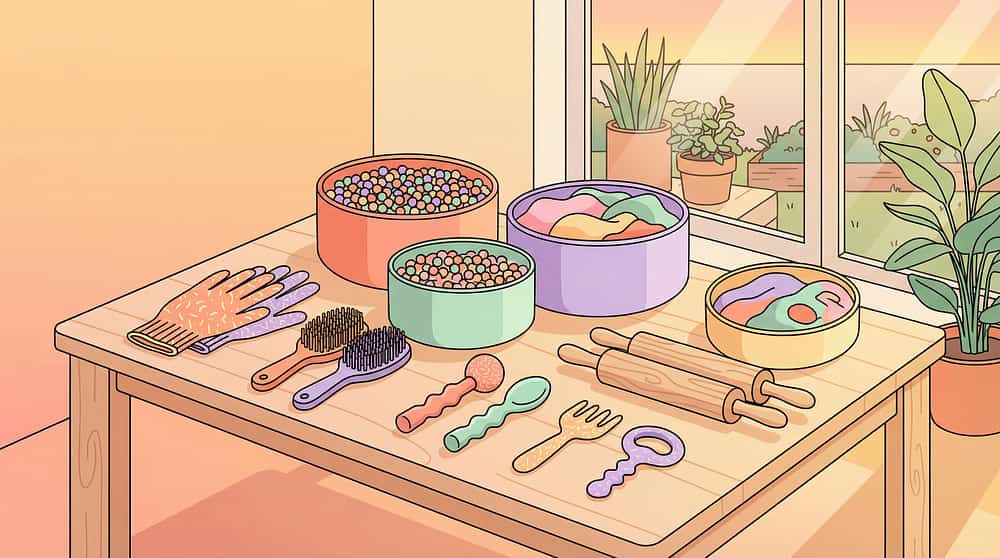
A-018: General Tactile Defensiveness Toolkit
The comprehensive toolkit integrating all above domains | ⭐⭐⭐ Advanced | Builds on everything from A-007
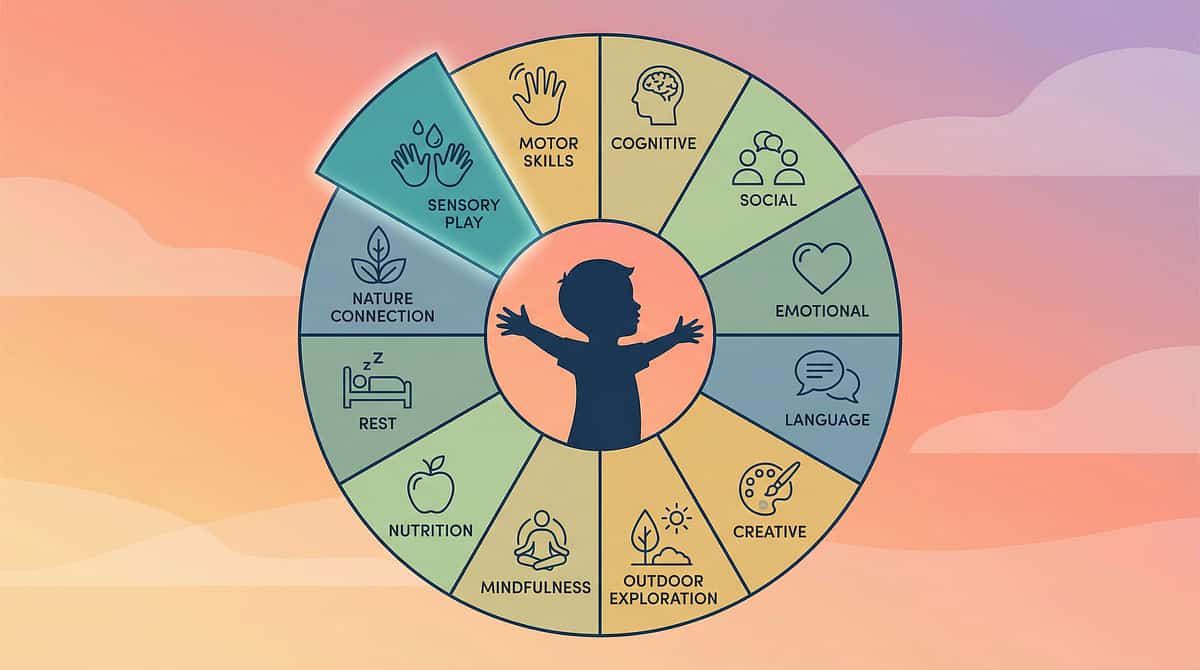
This Technique Is One Piece of a Larger Developmental Picture
This isn't "just art." When your child participates in creative activities using adapted materials, the developmental ripple effects extend across six interconnected domains — each one amplifying the others in a virtuous cycle of growth.
Sensory Processing (A)
Direct tactile tolerance development — the primary therapeutic target of A-007
Communication (B)
Vocabulary expansion through art — color names, texture words, requesting tools, narrating creations
Motor Skills (E)
Fine motor development through grip, pressure control, and bilateral hand coordination during art activities
Academic Readiness (J)
Pre-writing skills, classroom participation, and following multi-step instructions developed through art
Emotional Regulation (G)
Art as a channel for self-expression and emotional processing — builds regulation capacity over time
Social Skills (C)
Group art activities, sharing materials, parallel play, and peer connection during creative expression
Explore your child's full developmental profile across all 12 domains: pinnacleblooms.org/gpt-os | Call for AbilityScore® assessment: 9100 181 181
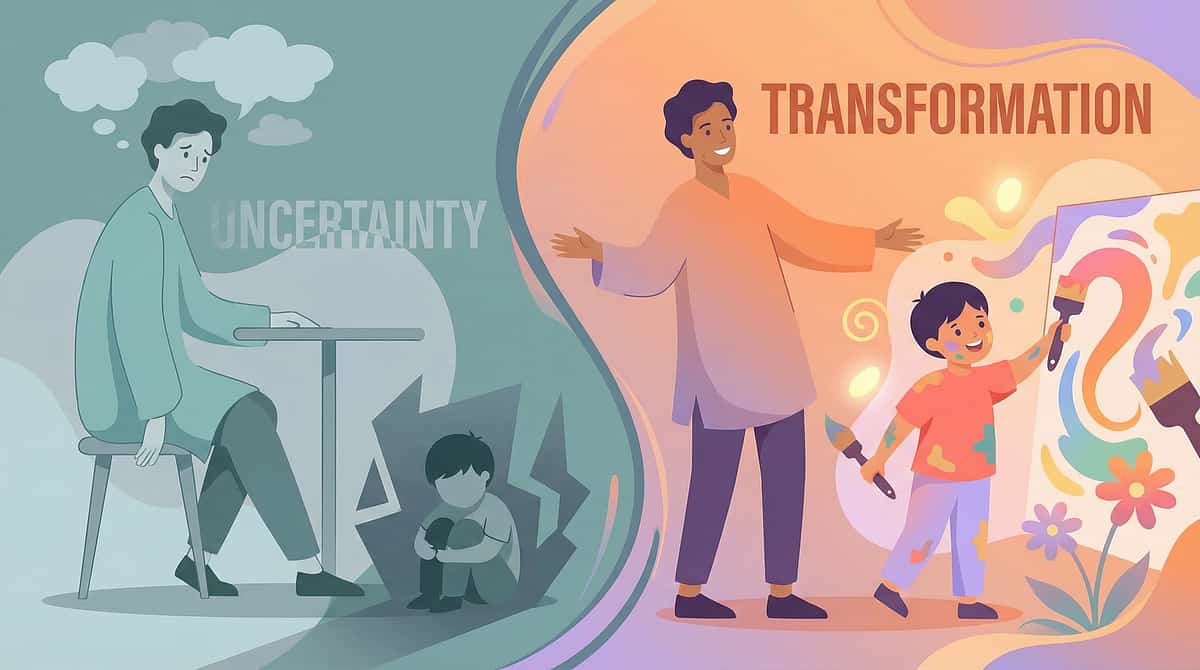
Real Families. Real Progress. Real Art.
ACT V: Community & Ecosystem
These illustrative case accounts reflect the kinds of journeys families navigate through the Pinnacle Blooms Network. Every child's timeline and profile is unique. Outcomes vary by individual sensory presentation, consistency of application, and support context.
Family A — The Watcher Becomes the Creator
Before: "Priya, age 3, would stand at the edge of the art table every day at preschool. She'd watch other children paint for the entire 20-minute art time. Hands always behind her back. If a teacher put her hand on paint, she'd scream for 10 minutes."
Intervention: Started with paint-in-bag at home. Week 2: began pressing the bag. Week 4: tried chunky brushes. Week 7: painting with brushes for 15 minutes.
After (Week 10): "She runs to art time now. Uses brushes, stampers, and has started putting one finger in paint — briefly — on her own terms. She asked for crayons for her birthday." — Parent, Pinnacle Network | Illustrative case; outcomes vary by child profile
Family B — The Digital Artist
Before: "Arjun, age 5, had never completed an art project in two years of preschool. Every art class ended in a meltdown. Teachers recommended he skip art entirely."
Intervention: Started with digital art on tablet. Parallel introduction of dry materials (chalk, crayons) at Week 3.
After (Week 8): "Arjun creates digital art every day. He's now the kid who shows his drawings to everyone. He also uses oil pastels and chalk. He hasn't touched paint — and that's okay. He's an artist." — Parent, Pinnacle Network | Illustrative case; outcomes vary by child profile
"Art aversion resolves not when the child touches paint, but when the child creates. The medium is irrelevant. The expression is everything." — From the Therapist's Notes
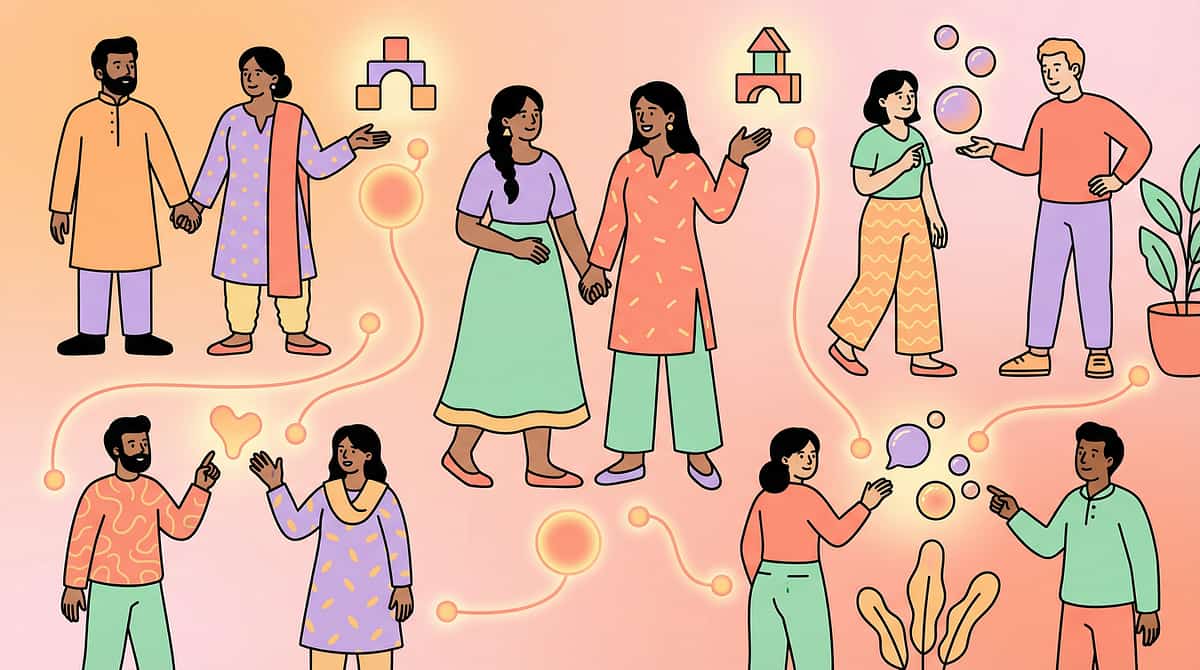
You're Not Navigating This Alone
The families who make the most consistent progress are those who connect with others on the same journey. Peer support doesn't replace professional guidance — it makes professional guidance more effective by sustaining motivation, answering day-to-day questions, and celebrating shared wins.
Sensory Solutions Parent Community
WhatsApp group for families actively working on tactile defensiveness techniques. Share materials, troubleshoot sessions, and celebrate wins together.
Online Forum
Ask questions, share session wins, get peer support from thousands of families navigating sensory c
Local Parent Meetups
Monthly parent meetups at 70+ Pinnacle centers across India. In-person connection with families in your community who are on the same journey.
Peer Mentoring
Connect one-on-one with a parent who has already completed the art aversion journey. Practical guidance from lived experience — not just clinical advice.
"Your experience helps others — consider sharing your child's journey when you're ready."

Home + Clinic = Maximum Impact
Home-based intervention with adapted materials succeeds for most families when applied consistently. Professional clinical support amplifies outcomes when the sensory profile is complex, progress has stalled, or school accommodation advocacy is needed.
📞 FREE National Autism Helpline
9100 181 181 — Available in 18+ languages. Call with questions about art aversion techniques, material selection, and when to seek in-person evaluation. Free. No referral needed.
🏥 70+ Pinnacle Centers
Find your nearest center for standardized sensory profile assessment (Sensory Profile-2, SPM), therapist-guided art intervention, and family training workshops. → pinnacleblooms.org/centers
💻 Teleconsultation
Video consultation with a Pinnacle OT specialized in tactile defensiveness. Review your session data, adjust materials, get personalized guidance from home. → pinnacleblooms.org/teleconsult
When Home Intervention Benefits from Professional Support
- Complex sensory profiles with multiple co-occurring sensory challenges
- Multiple co-occurring developmental challenges requiring cross-discipline coordination
- School accommodation advocacy and IEP development for art class
- Progress stalled after 6+ weeks of consistent home implementation
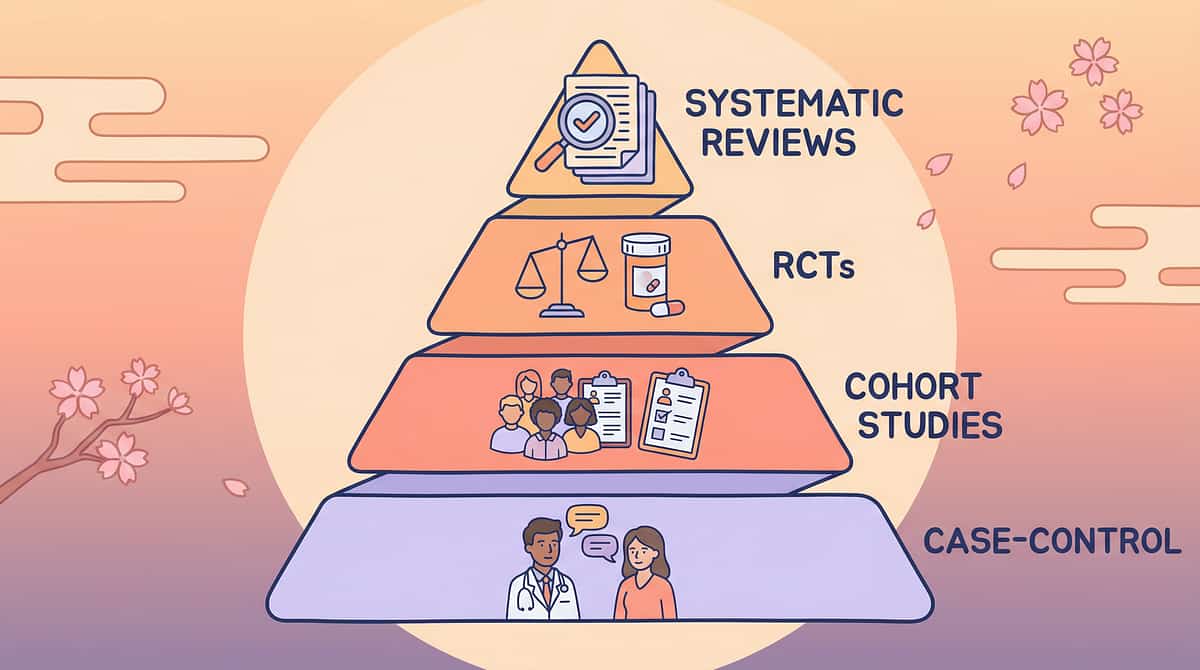
The Evidence — For Parents Who Want to Go Deeper
Every recommendation on this page is grounded in peer-reviewed research. The following studies form the evidence base for this technique. Links go directly to PubMed for independent verification.
1
Systematic Review (2024) — Level I
"Sensory Integration Intervention for Children with ASD: A Systematic Review" — 16 articles reviewed, confirms evidence-based practice status. → PubMed: PMC11506176
2
Meta-Analysis (2024) — Level I
"Efficacy of sensory integration therapy on social skills, adaptive behavior, sensory processing in ASD" — 24 studies, significant positive effects. → PubMed: PMC10955541
3
Indian RCT (2019) — Level II
"Home-based sensory interventions for children with ASD" — Parent-administered intervention validated. → DOI: 10.1007/s12098-018-2747-4
4
WHO/UNICEF CCD Package (2023) — Level IV
Care for Child Development Package: Caregiver-mediated interventions across 54 countries. → PubMed: PMC9978394
5
Neurological Basis (2020) — Level III
Comprehensive framework for sensory processing treatment in ASD. → DOI: 10.3389/fnint.2020.556660

Powered by GPT-OS® — Therapeutic Intelligence at Scale
Every session you track with the 3-point data system from Card 20 feeds directly into GPT-OS®'s TherapeuticAI® engine — building a personalized model of your child's sensory tolerance trajectory and predicting what comes next.
What GPT-OS® Does With Your Data
- Identifies your child's specific material tolerance pattern across all 9 materials
- Predicts which materials to try next, based on population data from 20M+ sessions
- Adjusts session duration and frequency recommendations as tolerance evolves
- Flags red flags automatically when data patterns suggest professional consultation
- Connects art aversion progress to your child's full 12-domain developmental profile
The Scale Behind the Personalization
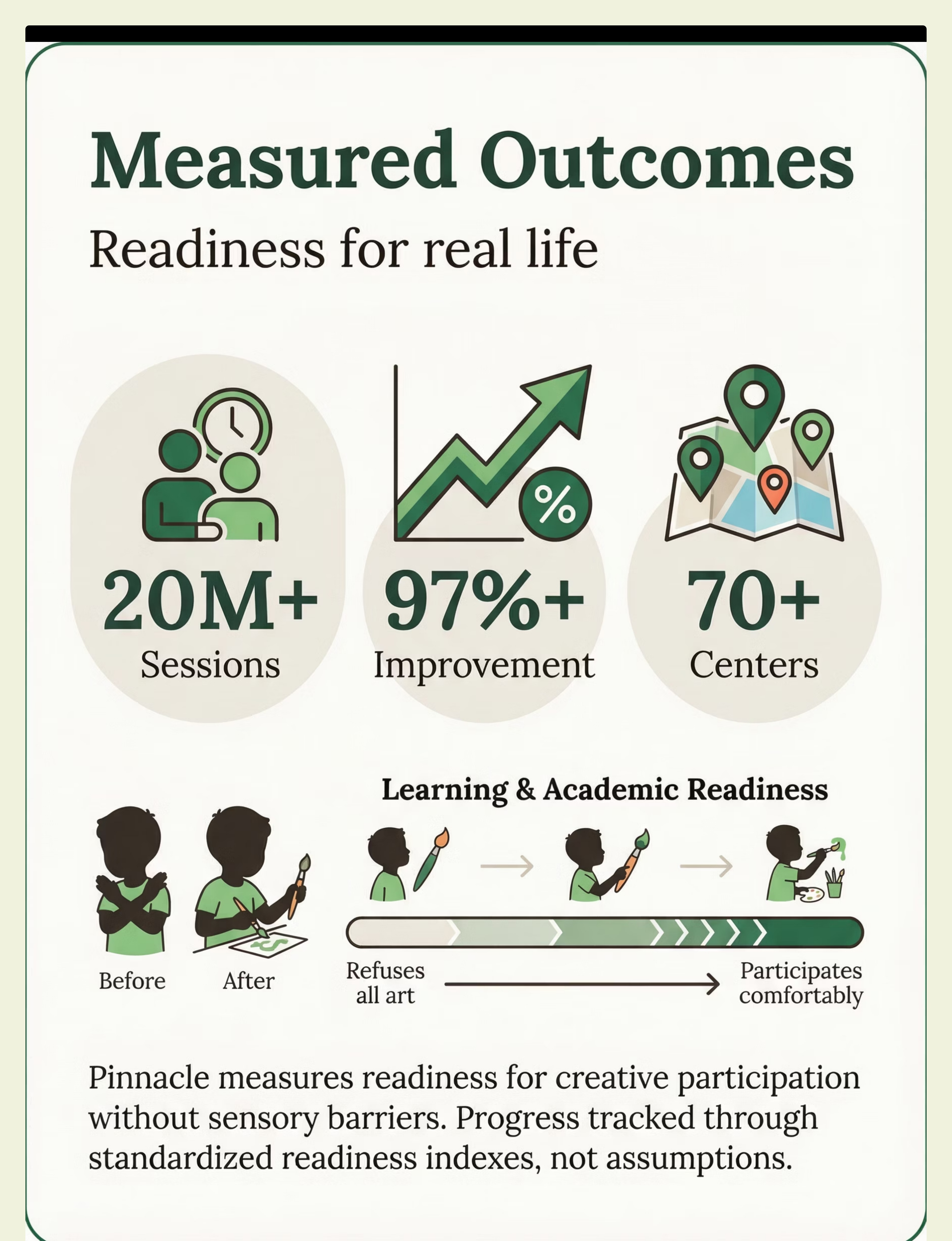
20M+
Therapy Sessions
97%+
Measured Improvement
70+
Centers
Privacy Assurance: Your child's data is encrypted, anonymized at the population level, and never shared with third parties. Individual data improves recommendations for your child. Anonymized patterns improve recommendations for all children.
"This is not software. This is therapeutic infrastructure."
🎬 Watch: 9 Materials That Help With Paint and Art Aversion
Reel ID: A-007
Sensory Solutions Series — Episode 007
Domain
Sensory Processing — Tactile Defensiveness
Duration
60 seconds
Format
9 materials introduced with live visual demonstrations by a Pinnacle OT
What You'll See: A Pinnacle Blooms OT demonstrates each of the 9 materials with a real child, showing genuine engagement and authentic progress. Each material gets 4–5 seconds of visual demonstration — the child creating art comfortably, joyfully, on their own terms. Seeing is believing. Watch these materials in action before your first session.
Research evidence: Video modeling is classified as evidence-based practice for autism (NCAEP, 2020). Multi-modal learning improves parent skill acquisition and implementation fidelity.
Share This — Because Consistency Across Caregivers Multiplies Impact
When grandparents, teachers, and extended family members understand your child's tactile defensiveness, the adapted materials approach works everywhere — not just at home with you. Consistency across all caregivers is what drives generalization.
Downloadable Resources
- 📥Family Guide (1-page PDF): "Understanding Paint and Art Aversion" — simplified version for grandparents, extended family, and any caregiver who doesn't have time to read the full page
- 📥Teacher Communication Template: Letter explaining your child's tactile sensitivity and recommended art accommodations for school — ready to sign and send
- 📥Quick Reference Card: The 9 materials at a glance — laminate and keep at the art station
"Explain to Grandparents" Version
"[Child's name] doesn't refuse art because they're being difficult. Their brain processes the feeling of paint, clay, or glue the same way you'd feel touching something burning hot. It's real, it's neurological, and it has solutions. When you do art with them, use [preferred material]. They'll create beautiful art with tools that don't hurt their nervous system."
Share this page directly:
Research evidence: WHO CCD Package — Multi-caregiver training is critical for intervention generalization and maintenance. Reference: PMC9978394

Your Questions, Answered
ACT VI: Close & Loop
These are the questions parents ask most frequently — at the helpline, in community forums, and in the first consultation. Read every answer, because the one that challenges your assumptions most is probably the one you need most.
Is my child ever going to touch paint normally?
Maybe. Maybe not. And both are success. Some children gradually expand their tolerance and eventually engage with all textures. Others prefer adapted materials forever. A child who creates beautiful art with brushes, stamps, or digital tools IS an artist. The goal is creative participation — not specific material tolerance.
Am I enabling avoidance by using adapted materials?
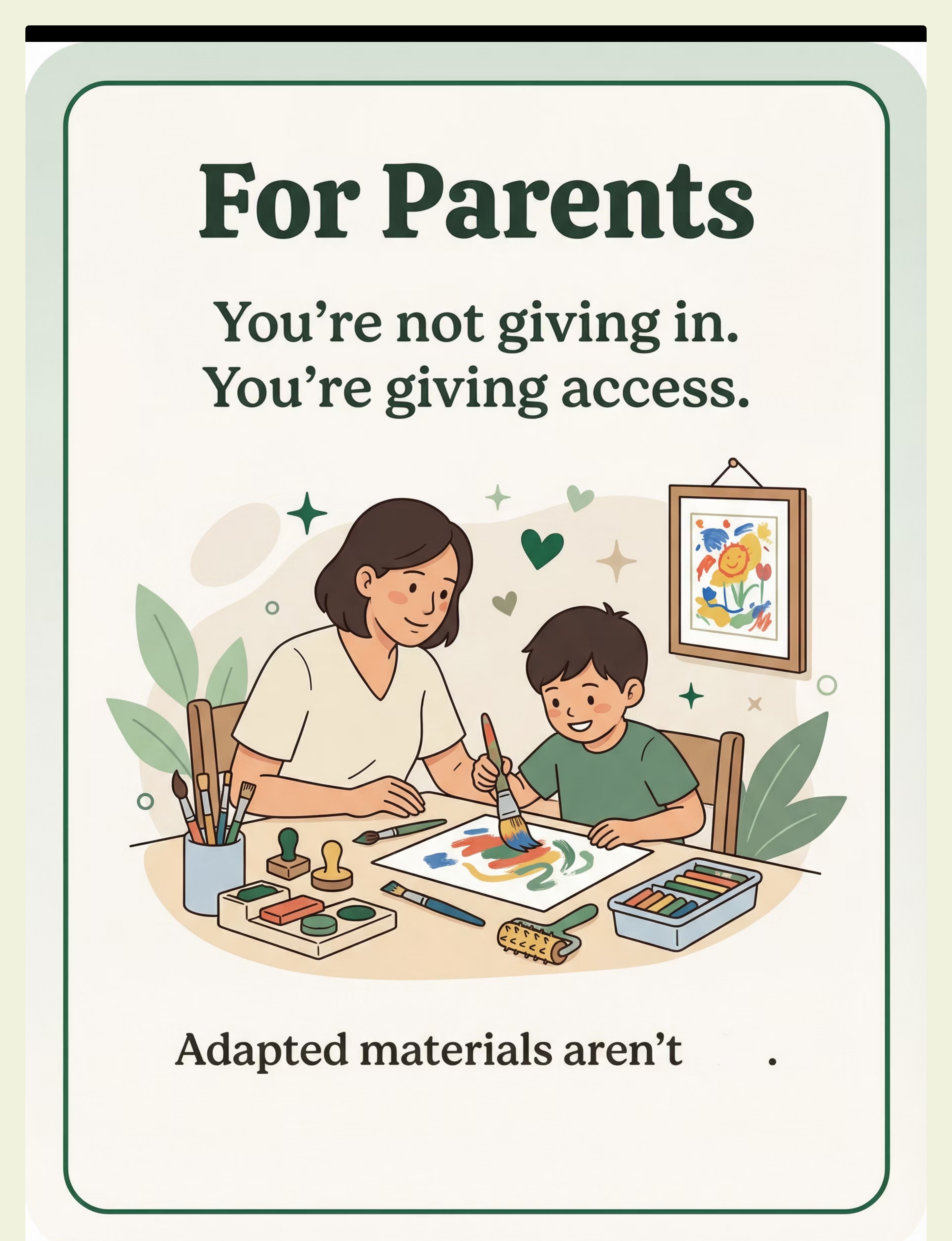
No. You're enabling ACCESS. Adapted materials are accommodation — the same way glasses aren't "avoiding" seeing without them. Participation builds tolerance. Forced exposure builds trauma. The research is unambiguous on this distinction.
My child's school says they must finger paint like everyone else.
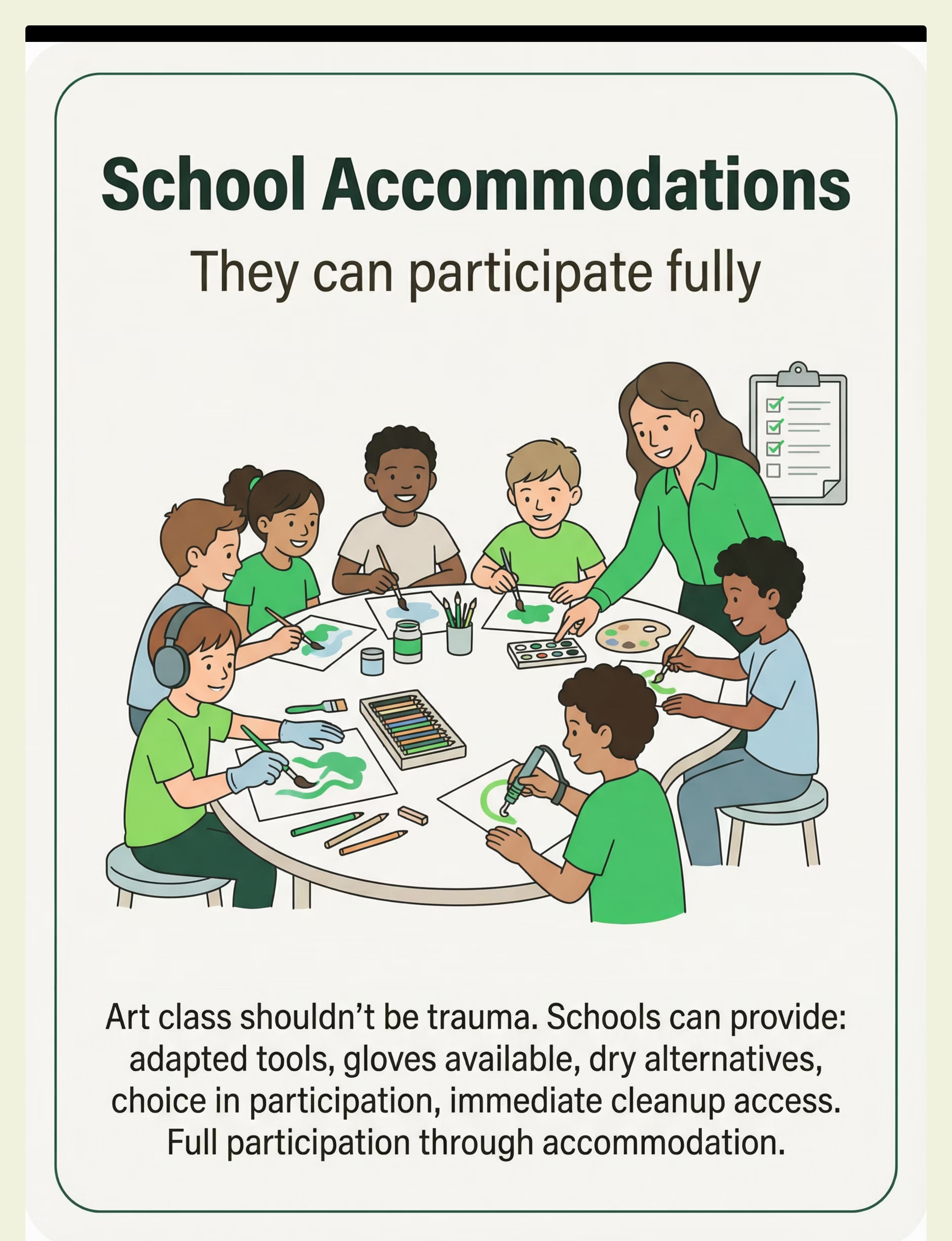
Your child has a right to participate in art with reasonable accommodations. Adapted tools, gloves, and alternative materials ARE reasonable accommodations. Card 37 includes a teacher communication template. For IEP-specific accommodations, consult your Pinnacle center.
How long before I see progress?
Most families see initial engagement changes within 2–4 weeks. Consolidation at 3–6 weeks. Mastery indicators at 5–8 weeks. But every child's timeline is their own. Consistency matters far more than speed.
Can I combine multiple materials in one session?
Start with one material per session for the first 2 weeks. Once the child is comfortable with 2–3 materials individually, you can offer choices within a session. Never introduce more than one NEW material per week.
What if they only want digital art and nothing else?
Then they are a digital artist. Professional artists work exclusively in digital media. If your child creates joyfully on a tablet, that is full creative success. Physical materials can be offered alongside — never forced.
My family thinks I'm overcomplicating this. "Just make them do it."
Forcing tactile-defensive children to touch aversive textures causes trauma and increases sensitivity. Research confirms this clearly (see Card 34). Share Card 37's Family Guide. Accommodation enables participation; force enables avoidance.
Is professional OT for sensory integration therapy covered by insurance?
The materials themselves are typically out-of-pocket (₹500–5,000 for a comprehensive kit). Professional OT sessions may be covered depending on your plan. Call 9100 181 181 for guidance specific to your situation.

Your Child Can Create. Start Today.
You now have everything you need: the neuroscience, the 9 materials, the 6-step session protocol, the safety framework, the troubleshooting guide, and the progress markers. The gap between reading this and your child making art today is one material and one 5-minute invitation.
🟢 Start This Technique Today
Get your personalized art material recommendation based on your child's sensory profile. Guided session launcher for Technique A-007.
📞 Book a Consultation
Speak with a Pinnacle OT specialized in tactile defensiveness. Teleconsultation available from home — no travel needed.
🔄 Explore the Next Technique
Continue building your child's sensory toolkit with related techniques in the Sensory Solutions Series.
Validated by the Pinnacle Blooms Consortium® | OT • SLP • ABA • SpEd • NeuroDev | 20M+ sessions | 97%+ improvement | 70+ centers across India
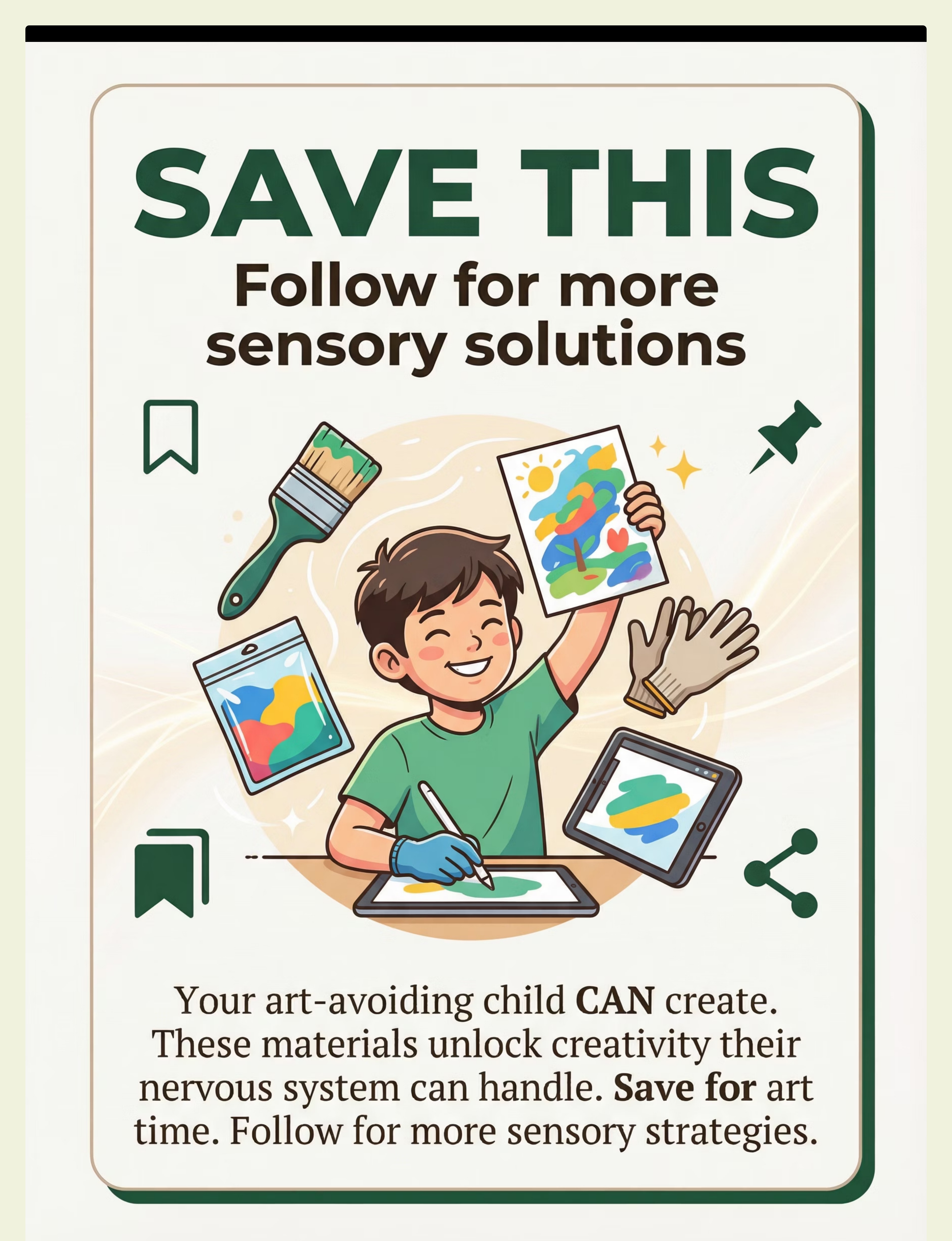
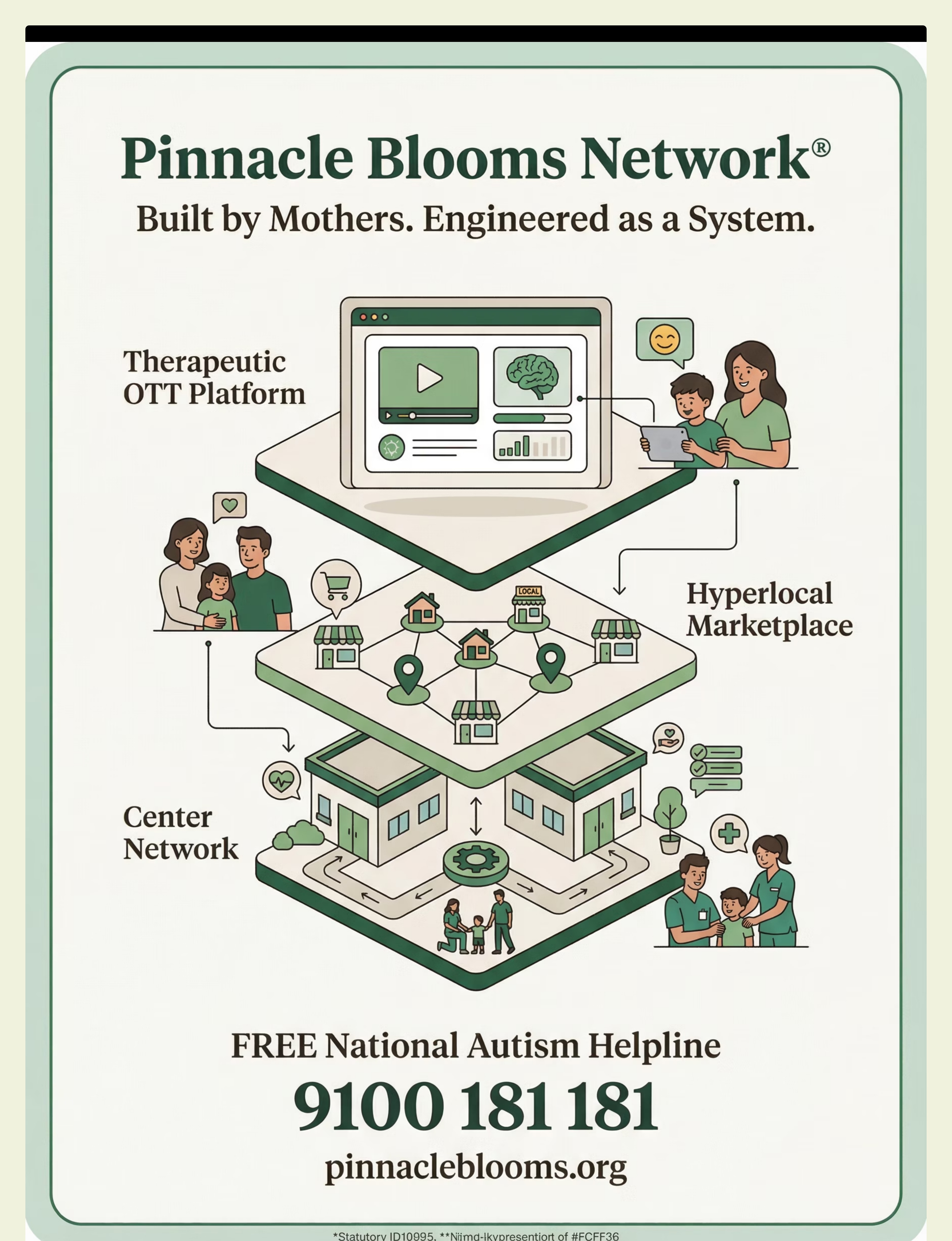
Preview of 9 materials that help with paint and art aversion Therapy Material
Below is a visual preview of 9 materials that help with paint and art aversion therapy material. The pages shown help educators, therapists, and caregivers understand the structure and content of the resource before use. Materials should be used under appropriate professional guidance.

Link copied!