
"He Falls Apart in Gyms. Pools. Malls. We Finally Figured Out Why."
Your son screams when you enter the swimming pool building. He covers his ears the moment you walk into the gymnasium. The mall food court turns him into a different child. You tried noise-canceling headphones but he said "now I can't hear anything at all." You've figured out the pattern — it's the spaces with hard surfaces, high ceilings, that hollow bouncing sound. It's the echo. And you need solutions that actually work.
Environmental Acoustic Accommodation for Reverberant Spaces — 9 Materials That Transform Echo-y Environments from Impossible to Manageable
You are not failing. Your child's auditory processing system is telling you something real. Echo is not just loud — it degrades the quality of every sound in the room. And there are specific, proven tools to help.
Pinnacle Blooms Consortium®
OT • SLP • ABA • SpEd • NeuroDev
Sensory Solutions Series — Episode A-050
You Are Not Alone — The Numbers Are Enormous
Millions of families worldwide share this exact challenge. Gymnasiums, swimming pools, shopping malls, airports — these are not optional spaces. They are life. And your child deserves to participate, not just survive.
80%
Auditory Impact
of children diagnosed with autism display sensory processing difficulties, with auditory processing among the most commonly affected domains (PRISMA systematic review, 2024 — PMC11506176)
5–10dB
Signal Reduction
the amount reverberation can reduce effective signal-to-noise ratio in a gymnasium or pool — pushing speech below the threshold of understanding for children with auditory processing differences (ASHA Classroom Acoustics Research)
2–4s
Reverberation Time
the RT60 in typical gymnasiums and swimming pools — versus the 0.4–0.6 seconds optimal for speech understanding (Acoustical Society of America standards)
With an estimated 1 in 100 children on the autism spectrum (WHO, 2023), India alone has approximately 3–4 million children navigating sensory processing challenges in everyday reverberant environments — from school assembly halls to temple prakarams to railway station platforms.

What's Happening in Your Child's Brain — The Neuroscience of Echo
What Reverberation Does to Sound
In an echo-y space, every sound bounces off hard surfaces — walls, floors, ceilings, glass — and reflects back multiple times before fading. The original sound and its reflections overlap in time. This "smears" the acoustic signal, making it impossible to distinguish the original from its copies.
Why Your Child Is Affected More
For typically developing children, the brain compensates for moderate reverberation by predicting speech patterns and filling gaps. But for children with auditory processing differences, sensory sensitivities, or autism spectrum conditions, this compensation system is already working at capacity. When reverberation degrades the signal, the processing system is overwhelmed.
The Critical Distinction
This is NOT just about volume. Your child may tolerate a loud outdoor concert but fall apart in a moderately-noisy gymnasium. The difference is echo. Volume can be addressed with simple blocking. Echo requires preserving speech clarity while reducing acoustic chaos — a fundamentally different challenge.
"This is a wiring difference, not a behavior choice. Your child's brain genuinely cannot sort the original sound from its reflections in these spaces. The echo doesn't just add noise — it destroys the clarity of every sound in the room."
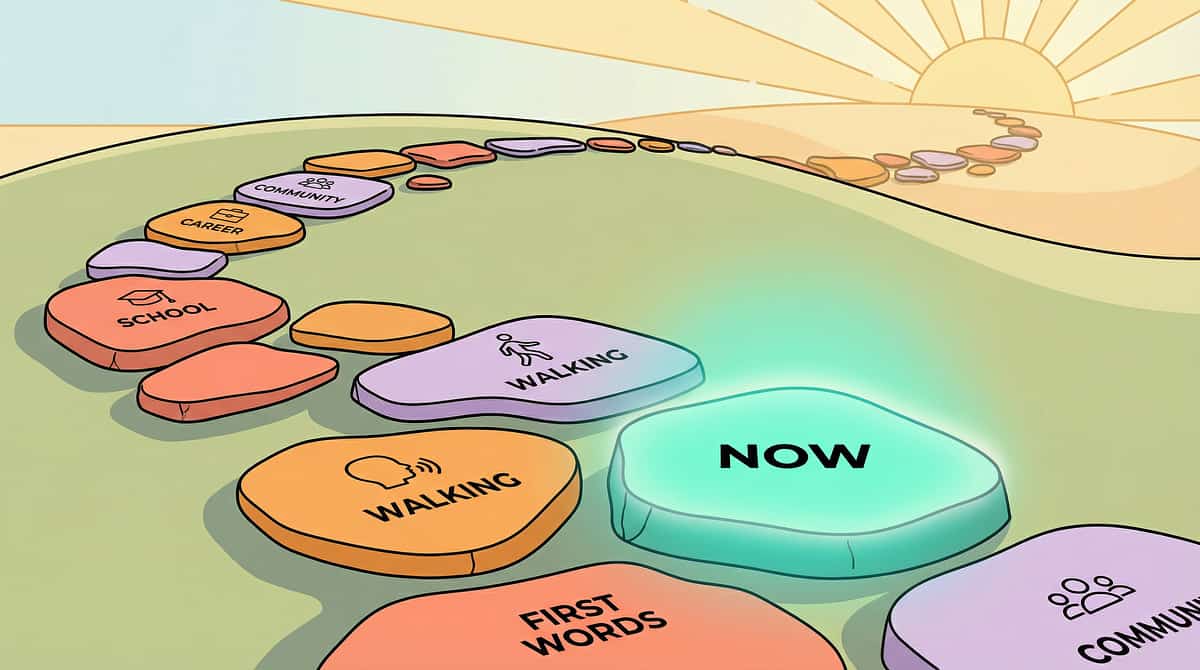
Where Echo Sensitivity Sits in Your Child's Development
Understanding where your child is on the developmental arc helps you choose interventions that match their current capacity — and see how far they can go with the right support.
1
0–12 Months
Auditory orienting develops — turning toward sound sources
2
12–24 Months
Auditory discrimination — distinguishing different sounds and voices
3
2–3 Years ◄
Auditory figure-ground begins — separating target sounds from background. Echo sensitivity may first appear here.
4
3–5 Years ◄
Speech-in-noise processing develops. Peak challenge window for reverberant environments.
5
5–8 Years
Auditory processing maturation — acoustic environment tolerance expands with appropriate support
6
8–12 Years
Self-advocacy and independent strategy selection emerges — child learns to manage own acoustic needs
Echo sensitivity commonly co-occurs with: general auditory over-responsivity, auditory processing disorder (APD), attention challenges (ADHD), language processing differences, and sensory processing differences across multiple sensory domains. Your child is here — and here is where we're heading: independent management, full participation.

The Evidence Behind Acoustic Environment Accommodation
Evidence Level: II–III
Multiple systematic reviews, controlled studies, and strong clinical consensus supporting sensory accommodation and environmental modification for children with auditory processing differences and sensory sensitivities.
Study Count
- 16+ articles in PRISMA systematic review (2013–2023)
- 24 studies in meta-analysis demonstrating effective outcomes
- ASHA classroom acoustics standards
- Acoustical Society of America guidelines
Key Findings
- Sensory integration therapy meets criteria for evidence-based practice for children with ASD (PRISMA, 2024)
- Home-based sensory interventions demonstrate significant outcomes when properly structured (Indian J Pediatr, 2019)
- Reverberation time directly impacts speech intelligibility — each doubling of RT60 significantly decreases understanding (ASHA)
- FM systems restore favorable signal-to-noise ratio independent of room acoustics
- Environmental acoustic modifications benefit all users, not only those with identified sensory differences
Clinically validated. Home-applicable. Parent-proven. These 9 materials are drawn from converged evidence across audiology, occupational therapy, speech-language pathology, and behavioral science.
PMC11506176
PMC10955541
DOI: 10.1007/s12098-018-2747-4
ASHA Classroom Acoustics
The Technique — What It Is
SEN-AUD-ECHO
Ages 3–12
Sensory Solutions — Episode 50
Environmental Acoustic Accommodation for Reverberant Spaces
Parent-friendly alias: "Making Echo-y Places Manageable"
A multi-layered accommodation strategy that combines acoustic protection (filtered earplugs, noise-reducing headphones), enhanced speech signal delivery (FM/remote microphone systems), alternative communication channels (visual supports), environmental positioning strategies, anxiety reduction through preparation and gradual exposure, self-regulation tools, and environmental modification advocacy — to enable children with auditory processing differences and sensory sensitivities to participate meaningfully in reverberant spaces including gymnasiums, swimming pools, shopping malls, places of worship, airports, and other hard-surfaced public environments.
Domain
Sensory Processing → Auditory Processing → Reverberant Environments
Setting
Gyms • Pools • Malls • Airports • Any Reverberant Environment
Frequency
As needed — before and during every echo-y environment encounter
Key Distinction: This is NOT a single-tool solution. Echo challenges require layered accommodation: protect the ears + enhance the speech signal + bypass auditory when needed + prepare the child + modify the environment. No single material solves reverberant environment challenges alone.
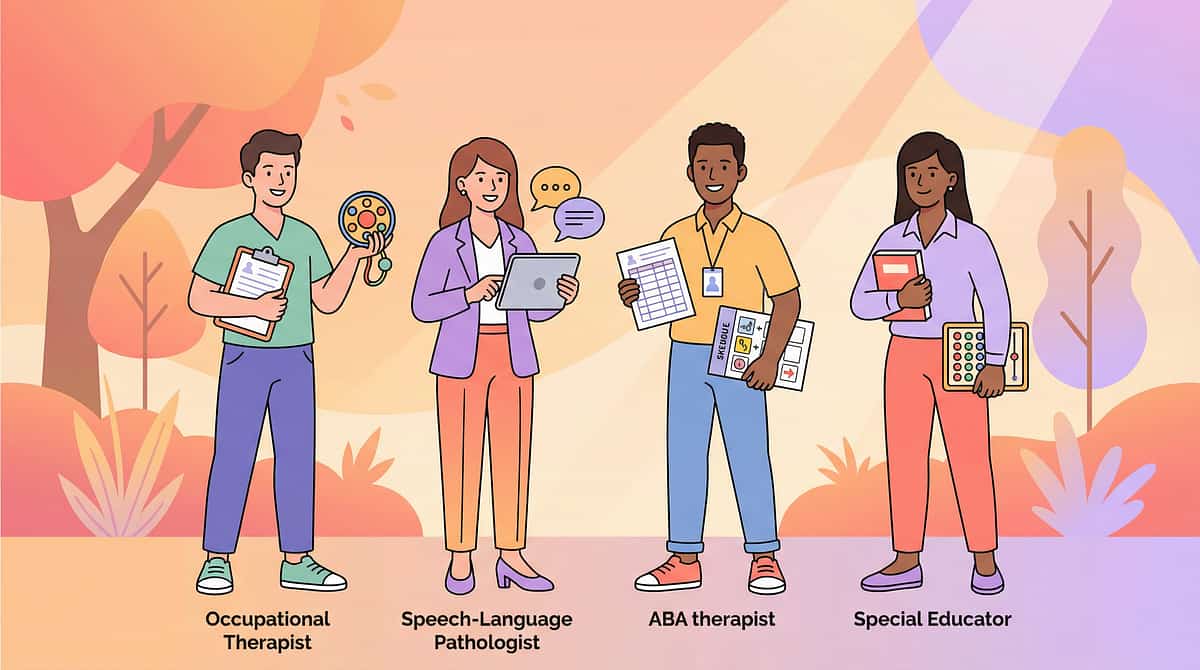
Who Uses This Technique — Your Child's Multi-Disciplinary Team
Occupational Therapist (OT) — Primary Lead
Evaluates sensory processing profile including auditory over-responsivity and environmental tolerance. Designs sensory diet incorporating echo environment preparation. Recommends and trains use of acoustic protection tools. Leads gradual exposure protocols within sensory integration framework.
Speech-Language Pathologist (SLP)
Evaluates auditory processing including speech-in-noise understanding. Recommends and fits FM/remote microphone systems. Designs visual communication supports that bypass the degraded auditory channel. Provides auditory discrimination training to strengthen processing capacity.
Board Certified Behavior Analyst (BCBA/ABA)
Designs systematic gradual exposure protocols using behavioral principles. Establishes reinforcement schedules for tolerance building. Creates data collection systems for environmental tolerance tracking. Trains self-advocacy communication for acoustic needs.
Special Educator + NeuroDevelopmental Pediatrician
SpEd develops classroom acoustic accommodations and coordinates IEP/504 modifications. NeuroDev rules out hearing loss and central auditory processing disorder, refers for audiological evaluation, and monitors neurological maturation of auditory processing.
"This technique crosses therapy boundaries because echo challenges span auditory processing, sensory regulation, communication, behavior, and environmental advocacy. The brain doesn't organize by therapy type — and neither should the intervention."
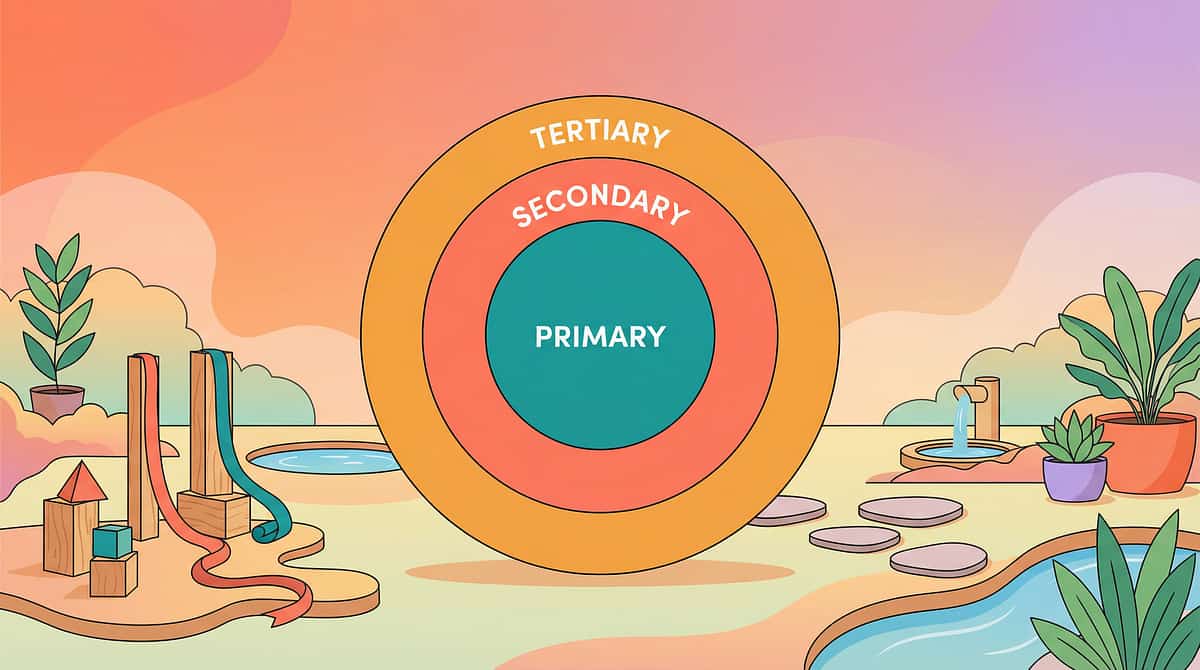
Precision Targets — What This Technique Addresses
Parents will observe real, measurable progress: willingness to enter previously avoided spaces, reduced ear-covering, improved participation duration, successful use of self-selected tools, ability to follow instructions in echo-y settings, decreased post-exposure meltdowns, and spontaneous requests to visit previously challenging spaces.
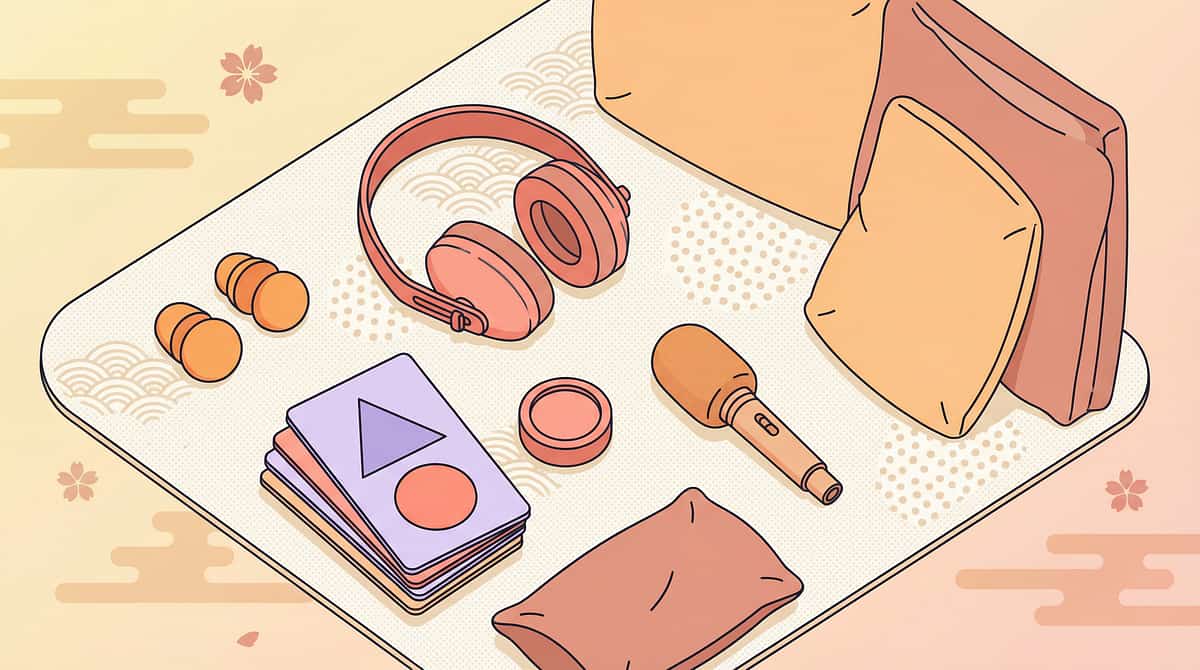
What You Need — The 9 Materials: Overview
These 9 materials work as a layered system. Each serves a distinct purpose — protection, signal enhancement, communication, preparation, positioning, regulation, and systemic change. The next 9 cards go deep on each one.
01
Filtered Ear Protection
Reduces volume while preserving speech clarity
02
Noise-Reducing Headphones
Substantial protection for worst echo environments
03
Portable Acoustic Panels
Creates a dampened micro-environment within the echo-y space
04
FM / Remote Microphone System
Speaker's voice transmitted directly to child's ears, bypassing all room acoustics
05
Visual Communication Supports
Bypasses compromised auditory channel entirely
06
Preparation & Gradual Exposure Materials
Reduces anxiety that amplifies sensory distress
07
Strategic Positioning Knowledge
Zero cost — finds areas where echo is naturally reduced
08
Calming / Regulation Tools
Recovery support during and after echo exposure
09
Environmental Modification Requests
Changes the space itself — benefits everyone
Total Investment Range: ₹0 (strategic positioning + visual supports + preparation) to ₹80,000+ (full FM system + comprehensive materials). Essential starters under ₹5,000: Filtered earplugs + visual communication supports + strategic positioning.
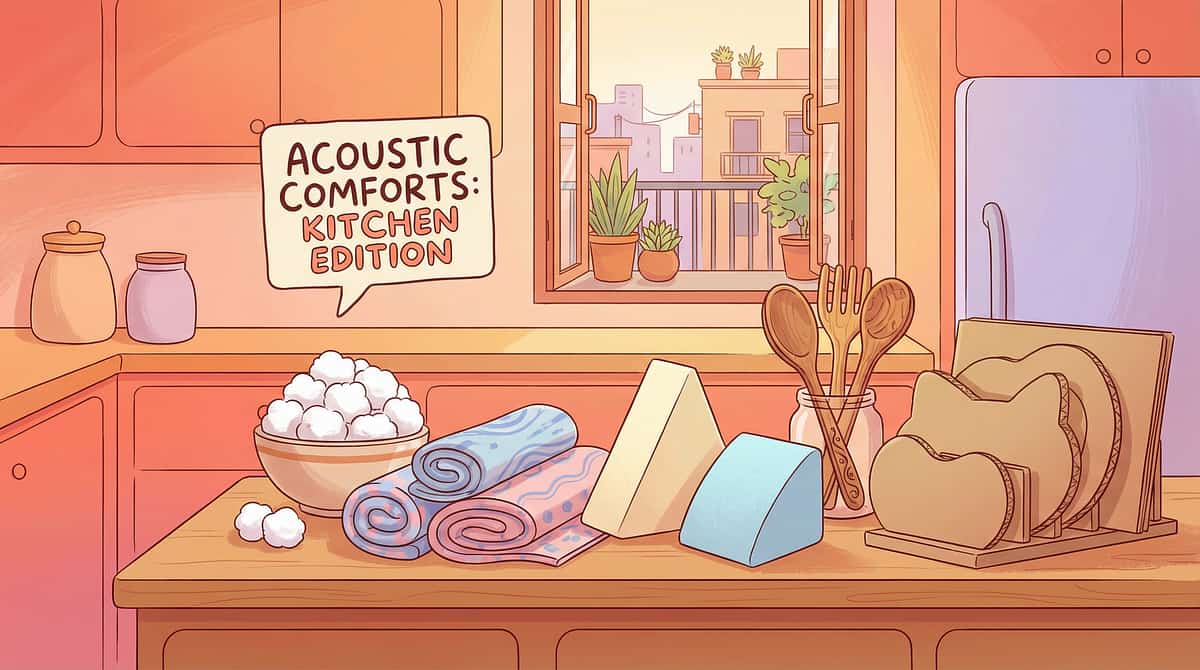
Material 1: Filtered Ear Protection
Acoustic Protection
₹500–5,000
🏷️ Pinnacle Recommends
What It Is
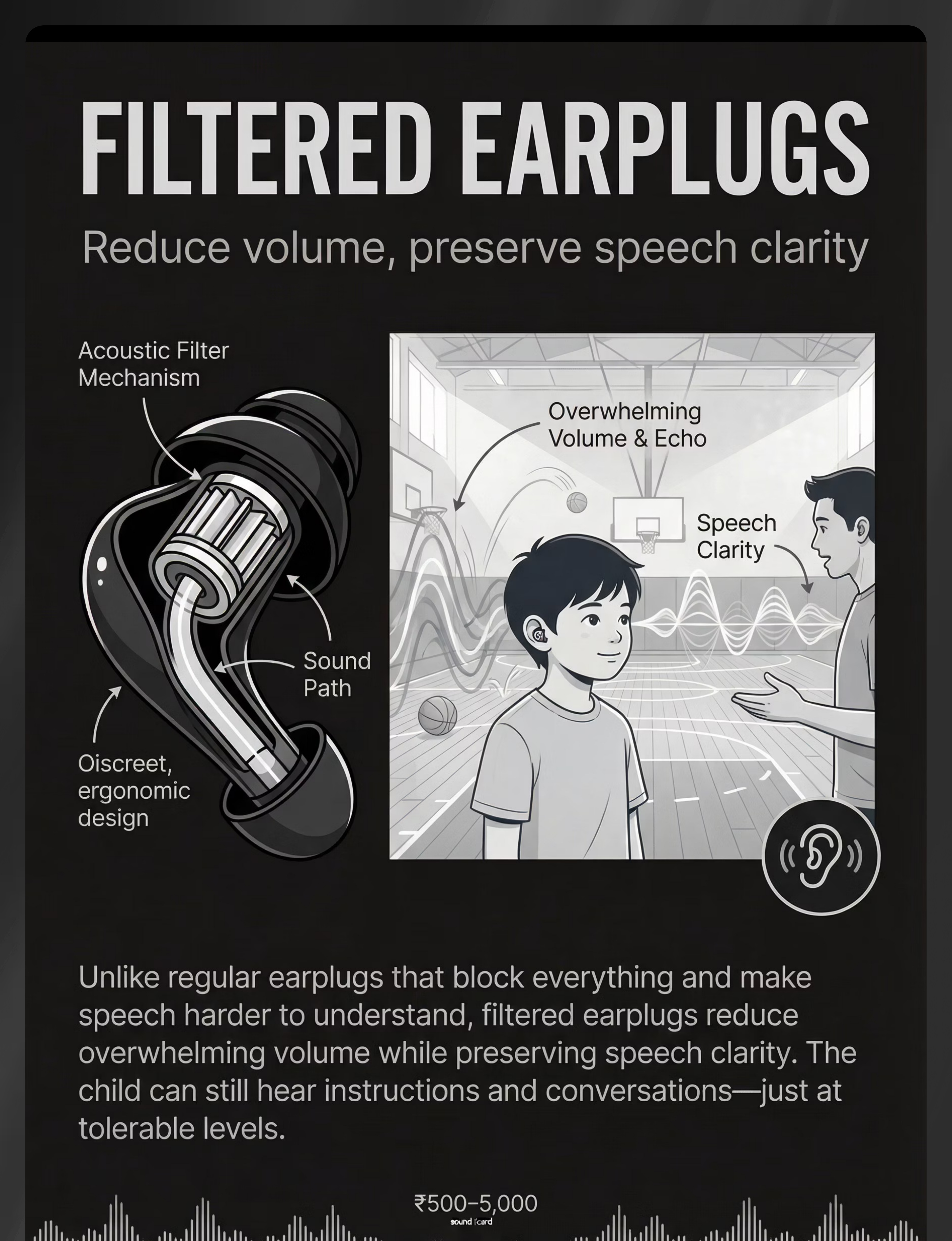
Filtered earplugs use acoustic filters — precisely engineered openings — to reduce overall sound pressure while preserving the frequency balance of speech. Unlike foam earplugs that muffle everything equally, filtered earplugs let your child still hear and understand speech, music, and safety sounds while dramatically reducing the acoustic chaos of reverberant environments.
Key Products
- Loop Experience — Stylish, effective, child-friendly (Pinnacle Top Pick)
- Vibes High-Fidelity — Discreet, music-grade filtering
- Alpine Muffy Kids — Designed specifically for children's ear canals
- Calmer by Flare Audio — Reduces distortion without reducing volume — unique option for distortion-sensitive children
Why It Works for Echo
Standard foam earplugs block both the echo AND the speech signal equally — trading acoustic chaos for communication blackout. Filtered earplugs selectively reduce the reverberant energy while preserving enough signal clarity for speech understanding. For children who said "now I can't hear anything" with foam earplugs, filtered options are transformative.
How to Use
- Practice fitting at home in a calm environment first — never debut in the challenging space
- Let child handle and explore the earplugs before wearing them
- Try different brands — in-ear comfort varies significantly by child
- Some children prefer over-ear options (Material 2) — offer choice
DIY Bridge: Cotton balls loosely inserted (partial block) gets you through today. Order filtered version for sustained use.
Material 2: Noise-Reducing Headphones
Acoustic Protection
₹1,500–20,000
What They Are
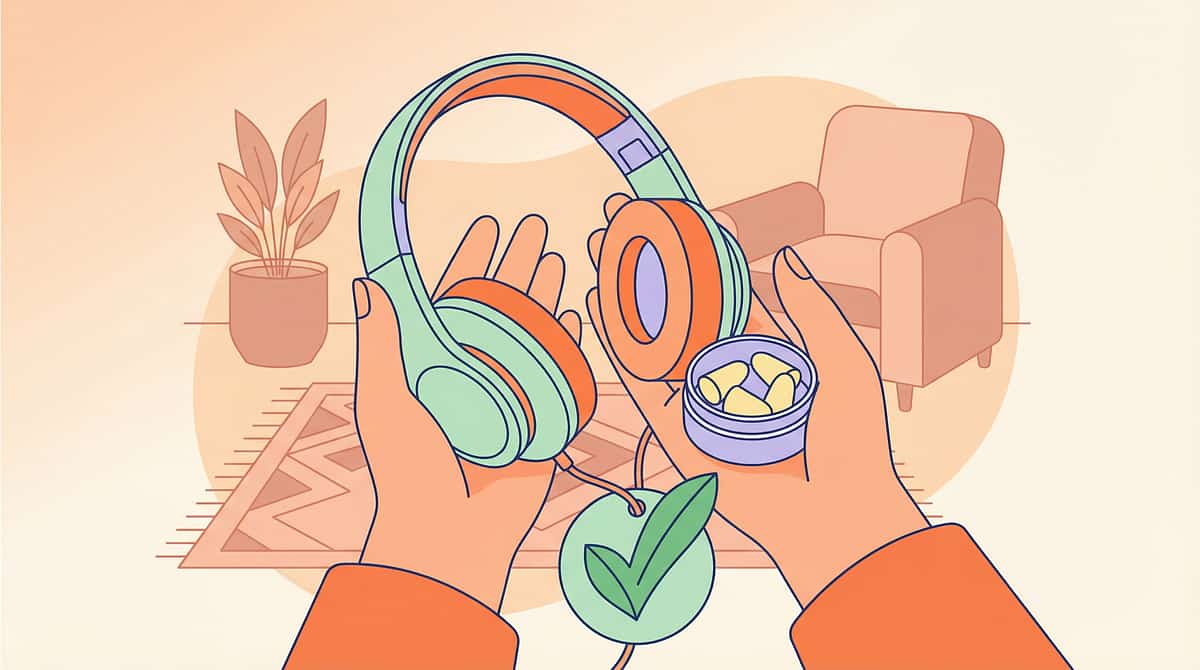
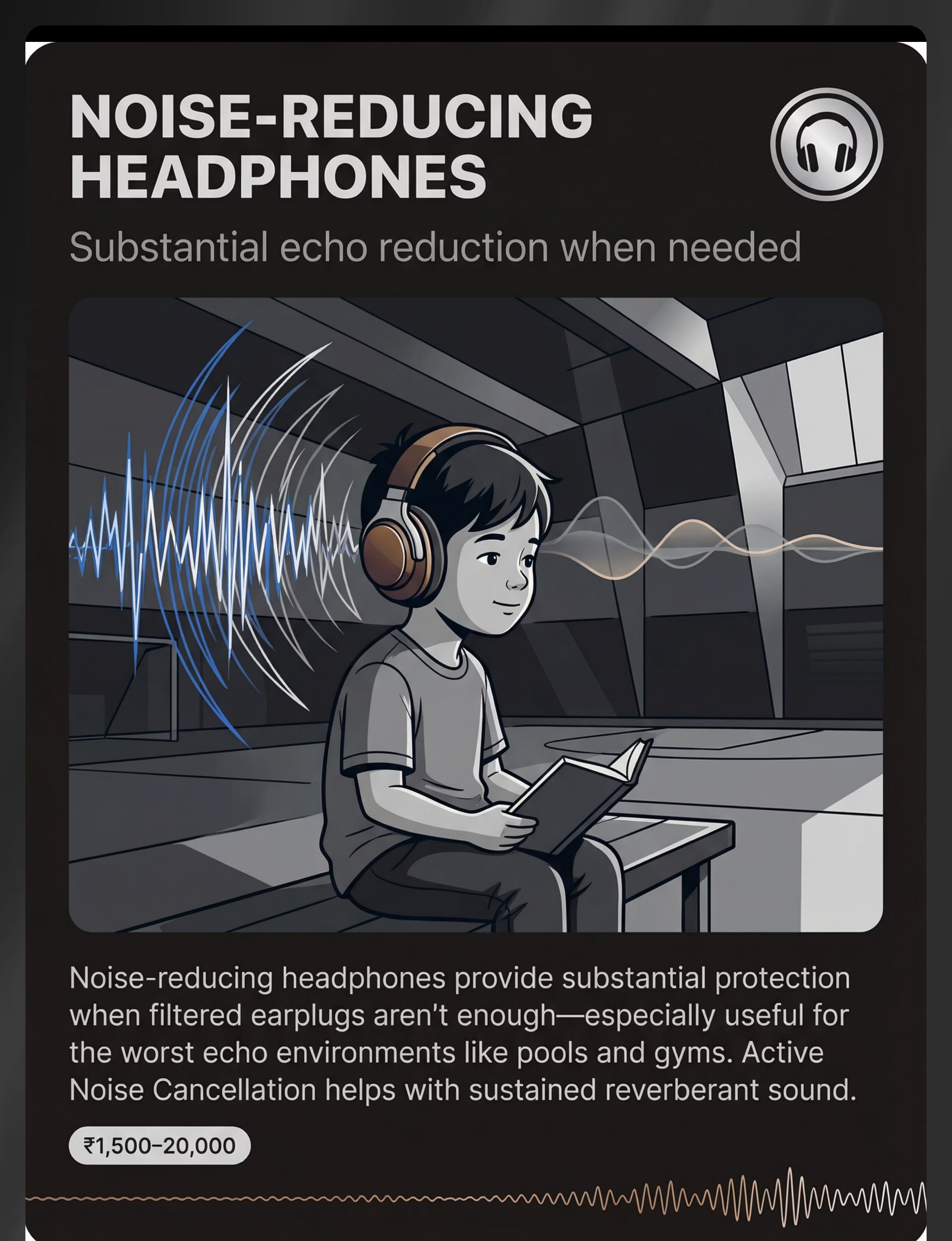
Over-ear noise-reducing headphones provide physical passive attenuation through earcup mass and seal, with premium models adding Active Noise Cancellation (ANC) electronics that actively counteract low-frequency reverberant rumble — the deep "boom" characteristic of pool and gymnasium acoustics. These offer substantially more protection than filtered earplugs for severe echo environments.
Key Products
- 3M Peltor Kids — Durable, affordable entry point (Pinnacle Top Pick for budget)
- Puro Sound — Child-specific ANC with volume-limiting safety feature
- Sony/Bose ANC models — Adult-grade performance when child tolerates larger form factor
When to Choose Headphones Over Earplugs
- Child has tactile sensitivity to in-ear insertion
- The reverberant environment is severely challenging (RT60 >3 seconds)
- Child needs maximum protection during early tolerance-building phase
- Child has low-frequency auditory sensitivity (booming pool echo)
Important Consideration
Full headphones may block more than needed. Plan for how the child will receive important instructions — combine with FM system (Material 4) or visual supports (Material 5) to maintain communication. Never use headphones that completely isolate the child from safety sounds.
DIY Bridge: Any over-ear headphones the child owns provide some physical barrier. Ear muffs (winter type) work in an emergency.
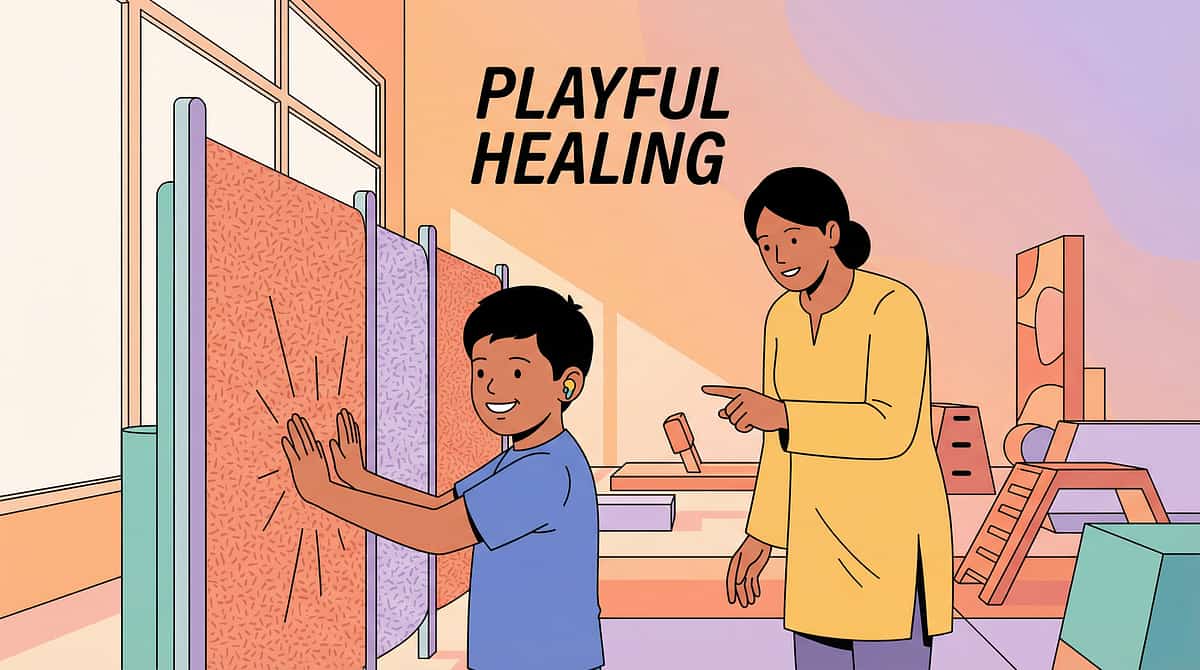
Material 3: Portable Acoustic Panels
Environmental Strategy
₹2,000–15,000
What They Are
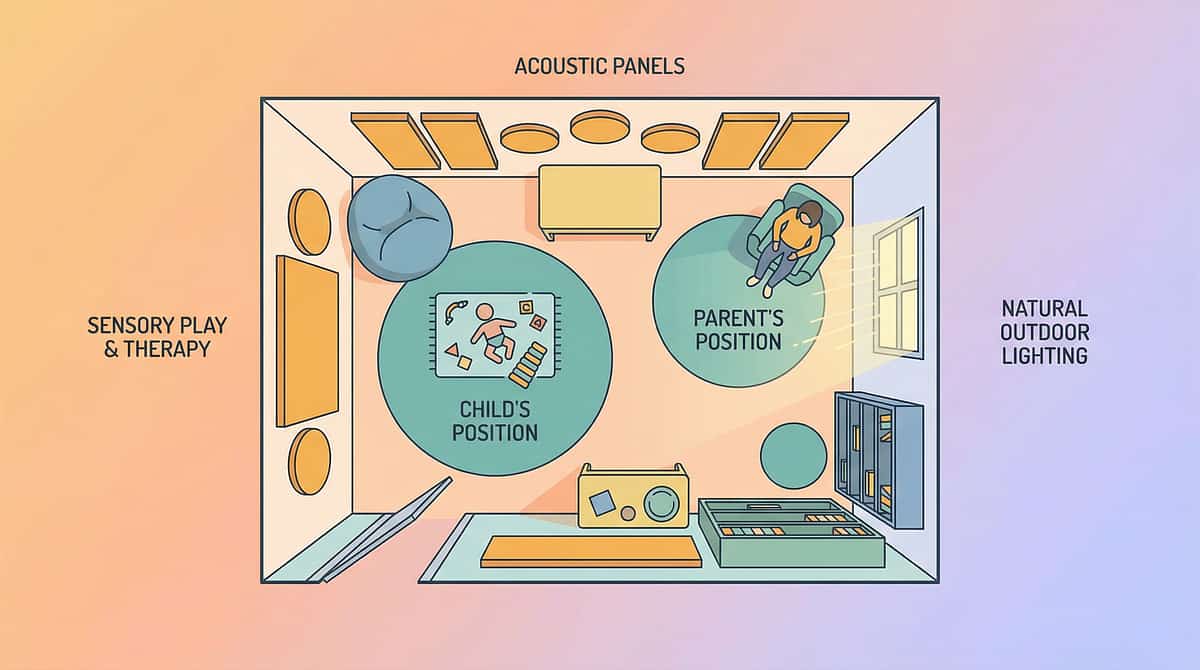
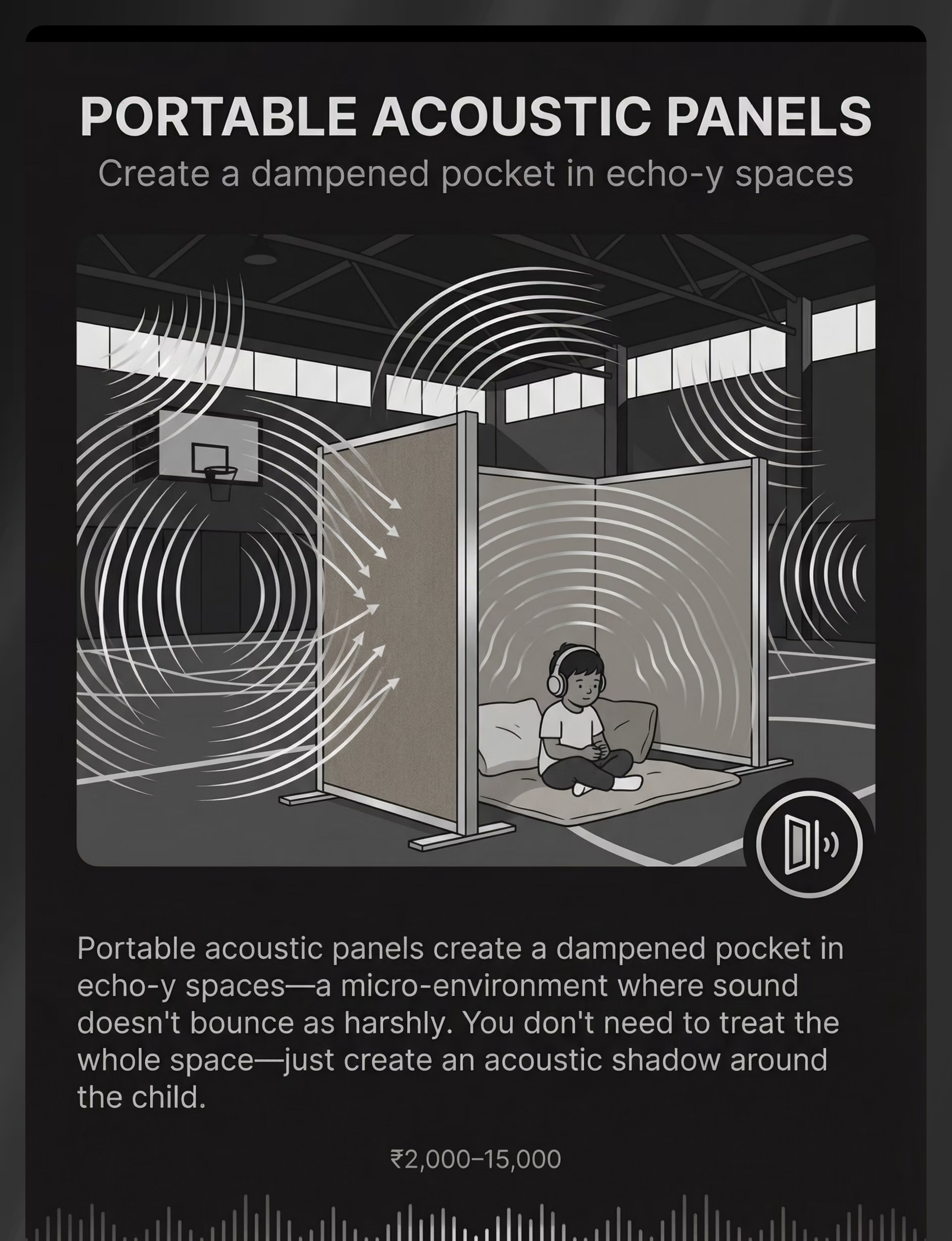
Portable acoustic panels are sound-absorbing surfaces you bring INTO the echo-y environment to create a dampened micro-environment immediately around your child. Rather than modifying the entire space (which requires institutional approval and budget), portable panels create a personal acoustic refuge within the reverberant room.
Key Products
- Portable freestanding fabric panels (office acoustic dividers)
- Acoustic blankets (moving blankets with mass-loaded vinyl backing)
- Fabric room dividers — available in portable fold-flat designs
How to Position Them
Place panels between the child and the primary reflecting surfaces (hard walls, glass). The panel doesn't need to block the sound completely — even partial absorption reduces the reverberant field around the child significantly. Combined with strategic positioning (Material 7), panels multiply acoustic benefit.
The Physics: Why This Works
Sound energy that strikes a soft, porous, or mass-loaded surface is absorbed rather than reflected. A single portable panel positioned between a child and a hard wall reduces the reflection from that surface direction — shortening the effective reverberation time in the child's immediate acoustic zone.
Practical Considerations
- Ensure stability — panels must not fall, especially around children
- In pool environments, use humidity-resistant materials (not standard fabric panels)
- Do not create a barrier that prevents adult supervision
- Coordinate with the facility — most are accommodating when acoustic sensitivity is explained
DIY Bridge: Thick blankets hung on a portable drying rack, draped over chairs near the child, or dense curtain fabric. Even towels stacked as a barrier apply the same principle: soft materials absorb reflections.
Material 4: FM / Remote Microphone System
Enhanced Speech Signal
₹10,000–80,000
Professional Fitting Recommended
What It Is — The Game-Changer
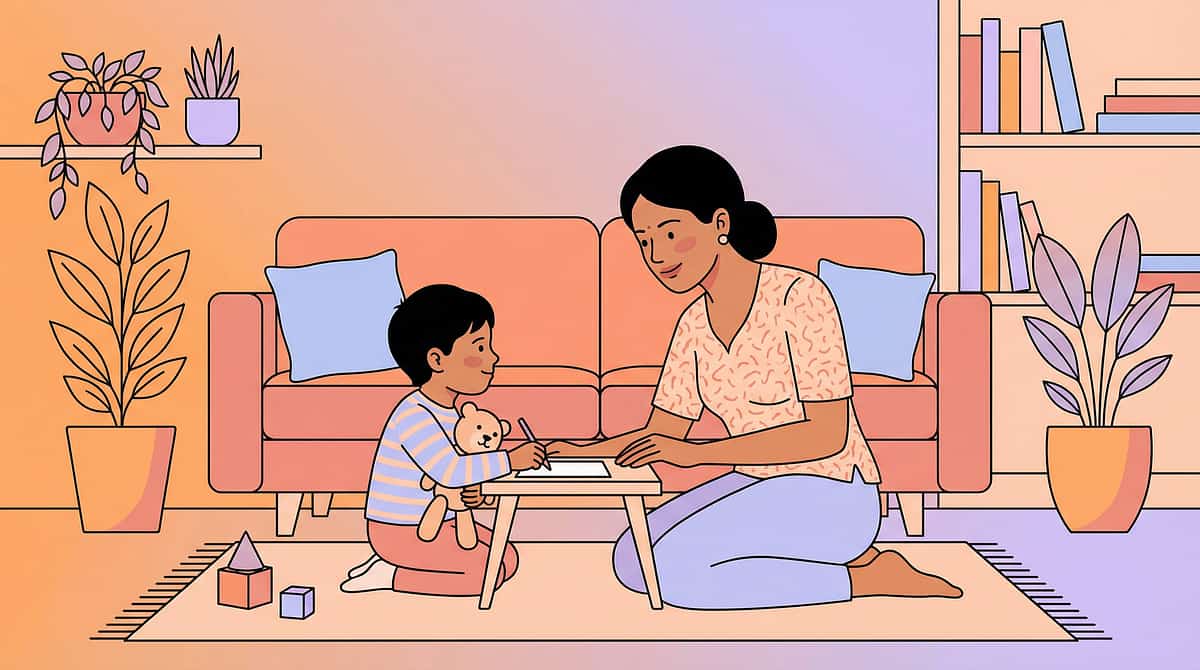
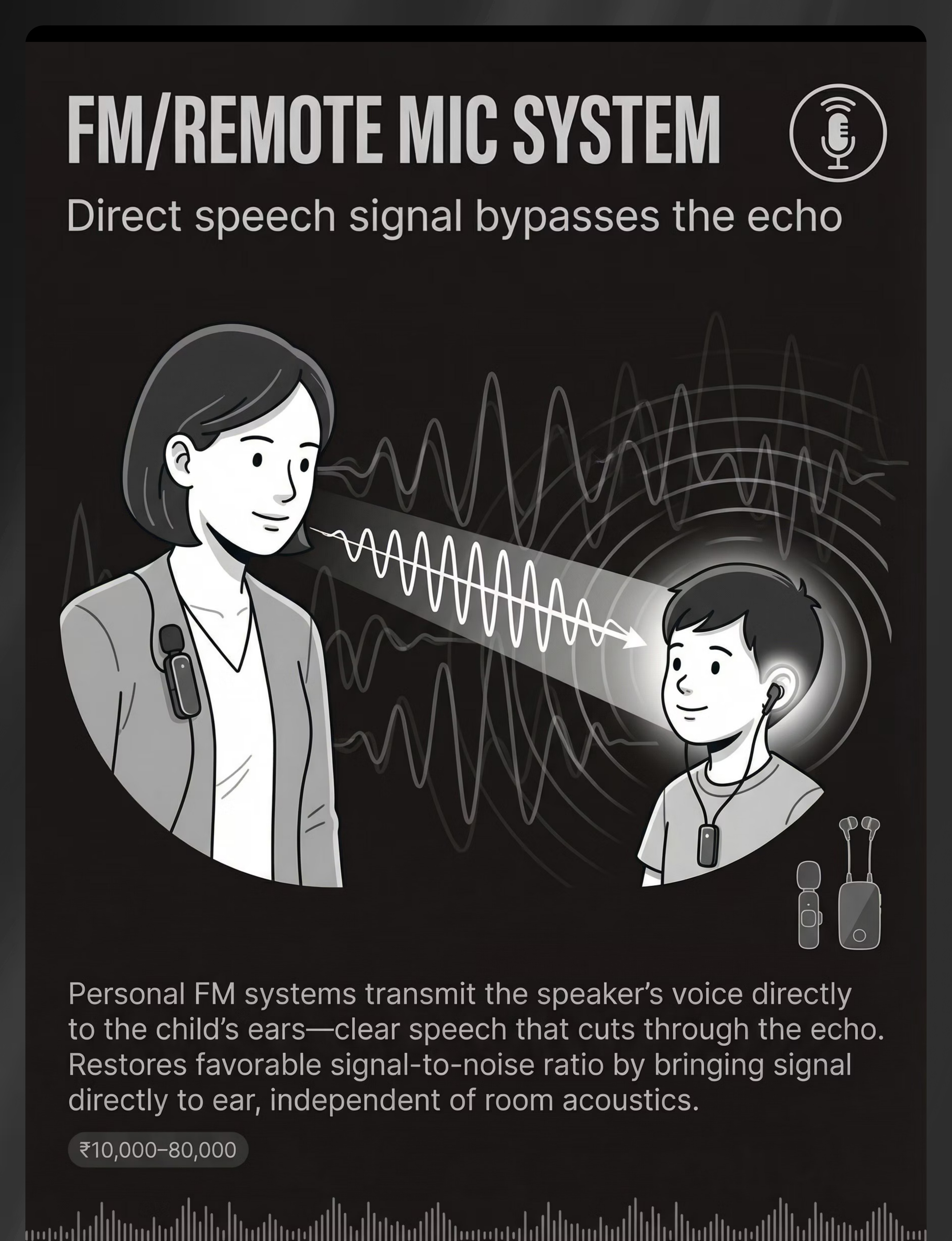
An FM (Frequency Modulation) or remote microphone system bypasses the room's acoustics entirely. The speaker — a teacher, swim instructor, parent — wears a small transmitter microphone. The child wears a receiver that delivers the speaker's voice directly to their ears, independent of how reverberant the room is. The room's echo still exists, but the primary speech signal arrives clean, clear, and at a favorable signal-to-noise ratio.
Key Products
- Phonak Roger System — Clinical-grade, SLP-recommended, multiple receiver options
- Personal FM systems — Various educational audiological options
- Bluetooth lavalier mic + earbuds — Budget alternative (₹500–2,000 consumer grade)
Who Benefits Most
- Children where the primary challenge is understanding speech (not just acoustic discomfort)
- Children in structured learning environments: gym class, swim lessons, school assemblies
- Children with diagnosed auditory processing disorder (APD)
- Situations where filtered earplugs alone still leave speech unclear
Important Note on Fitting
Clinical-grade FM systems for children with diagnosed auditory processing disorder should be professionally fitted by an audiologist — consumer-grade alternatives are a bridge, not a replacement. Volume levels must be verified. All adults who will use the transmitter need training. Your Pinnacle SLP can coordinate the full evaluation and fitting process.
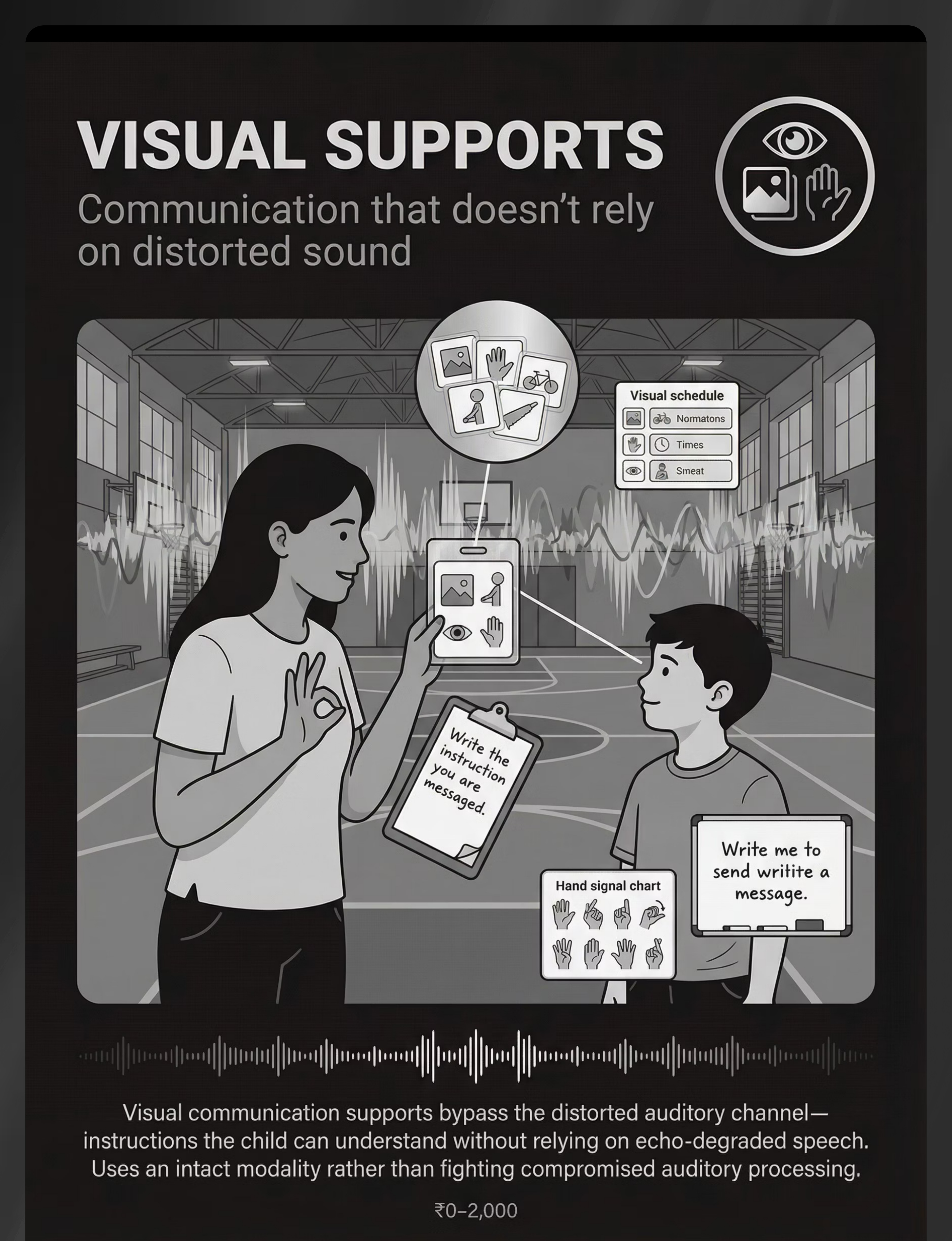
Material 5: Visual Communication Supports
Alternative Channel
₹0–2,000
Zero to Low Cost
The Strategy: Bypass the Auditory Channel
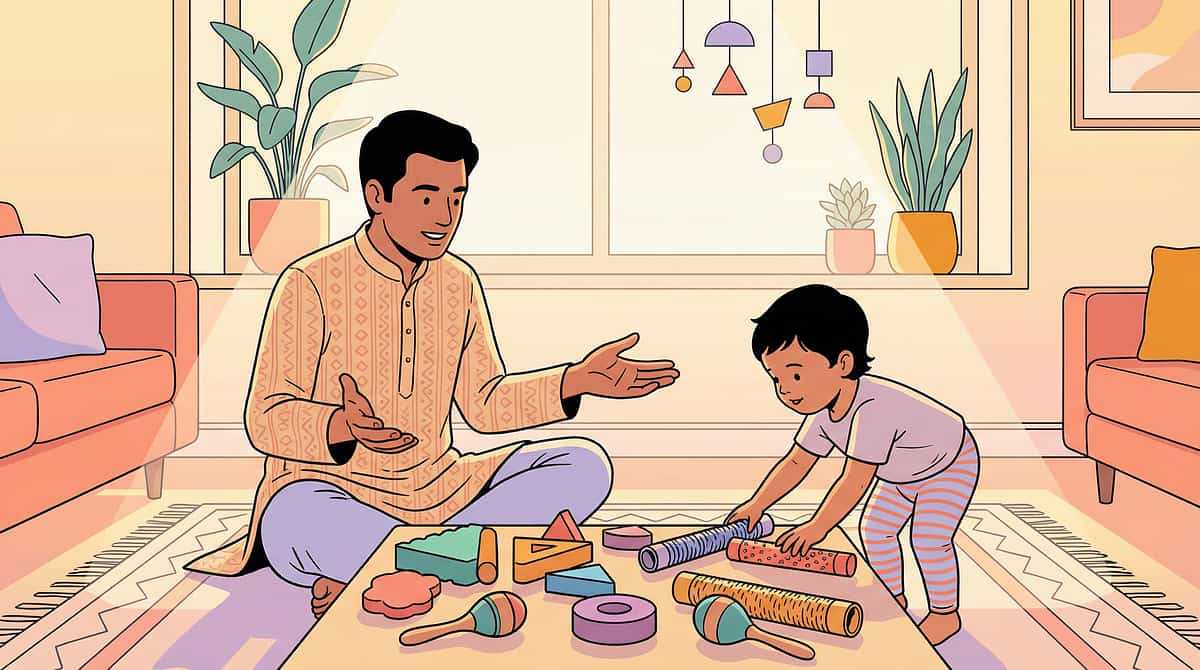
When the acoustic environment has degraded the auditory signal beyond usable quality, visual communication supports bypass the problem entirely. Instead of struggling to understand spoken instructions through echo and noise, the child receives information through a channel that echo cannot disrupt: sight.
Key Materials
- Laminated picture cards — Core vocabulary for gym, pool, mall environments
- Visual schedules — Step-by-step sequence of what will happen
- Hand signal charts — Practiced at home, used in the environment
- Portable whiteboard — Write instructions, erase, repeat
- Phone screen — Type instructions directly for older children
How to Implement
- Choose 5–10 core signals for the specific environment (stop, go, break, good job, look here, follow me, water, leave)
- Practice at home until automatic — the environment is not the time to learn new signals
- Laminate picture cards for durability — pool environments need waterproof versions
- Train all adults in the child's environment: PE teacher, swim instructor, grandparent
- Add new vocabulary as the child's participation expands
DIY Bridge: Hand-drawn picture cards on paper, laminated with clear tape. Hand signals practiced at home. Written notes on phone shown to child. All are zero cost and start immediately.
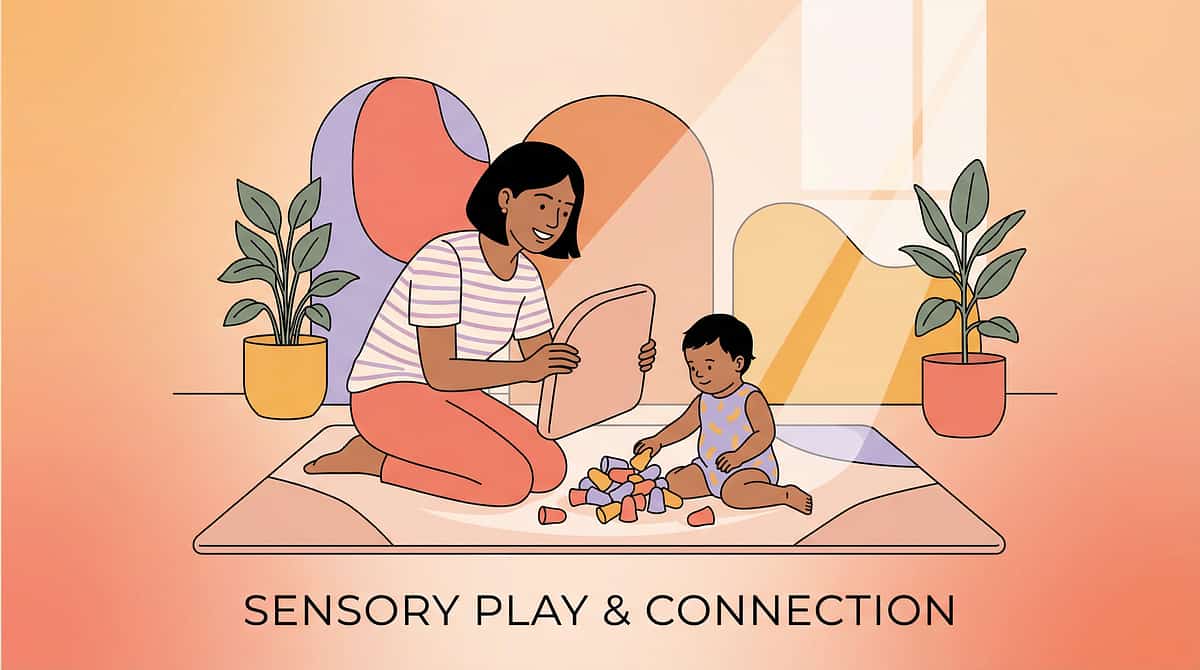
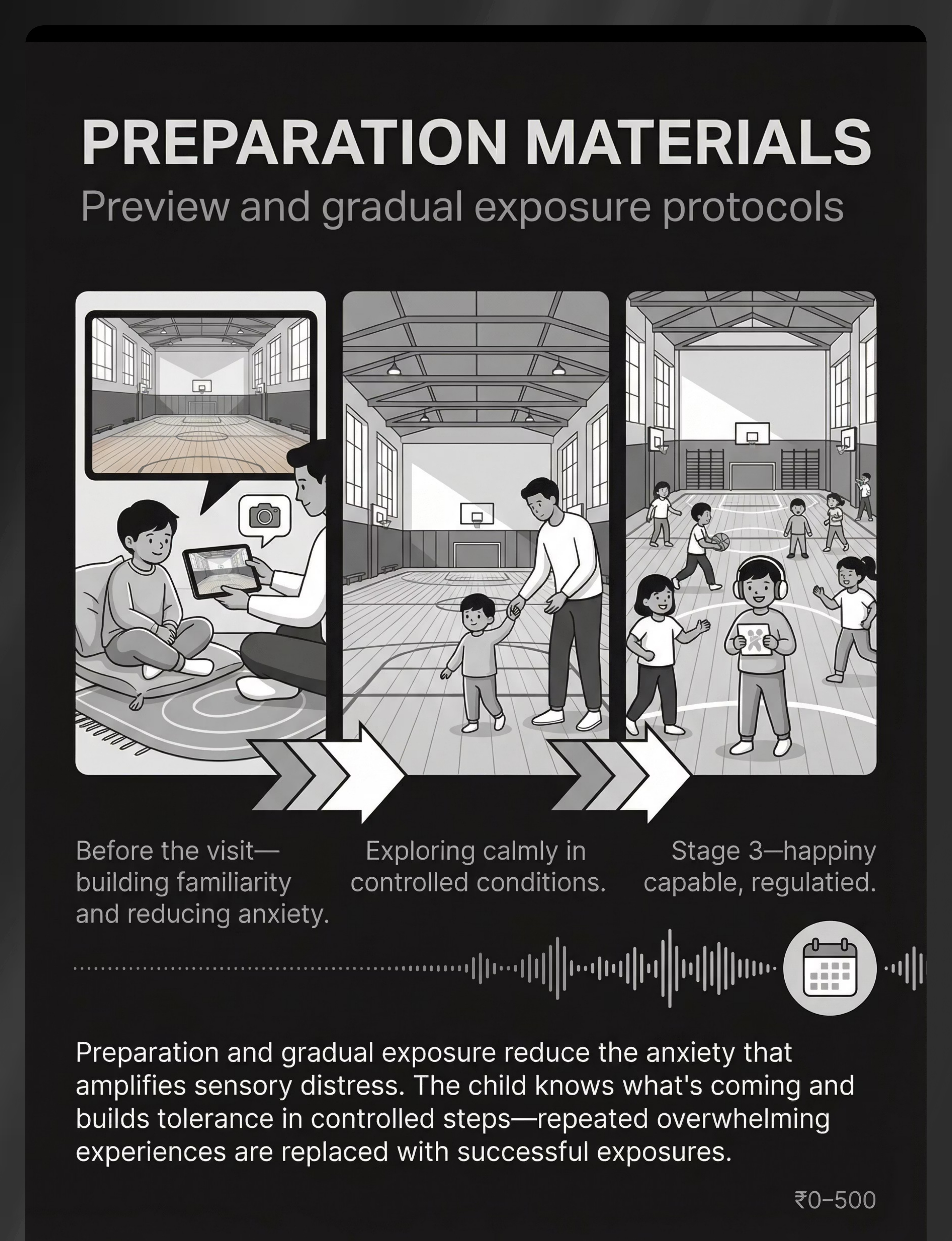
Material 6: Preparation & Gradual Exposure Materials
Anxiety & Regulation
₹0–500
Why Preparation Is a Material
Anxiety amplifies sensory distress. A child who enters a reverberant environment in a state of anticipatory fear has a dramatically lower sensory threshold before the visit even begins. Preparation materials systematically reduce that anxiety by converting the unknown into the known — removing the fear of surprise while preserving the actual acoustic challenge the child needs to practice tolerating.
Key Materials
- Photos of the specific space (this gymnasium, this pool, this mall)
- Short video recording of the environment with its sounds
- Social stories — personalized narratives explaining what will happen
- Gradual exposure protocol (written plan with session durations)
- Coping strategy cards: "When it feels too loud, I will ___"
The Gradual Exposure Sequence
- Home preview: Look at photos/videos, talk about what it sounds like
- Threshold visit: Drive to the space, stay in car, observe from outside
- Quiet entry: Visit when the space is empty or nearly empty
- Low-activity visit: Enter during low-activity period with full protection
- Active participation: Brief participation during normal activity
- Full participation: Complete activity with self-selected supports
DIY Bridge: Take photos on your phone of the echo-y space. Record a short video. Show child at home before visiting. Talk through "what will happen, what it will sound like, what we'll use to help." This is zero cost and starts today.
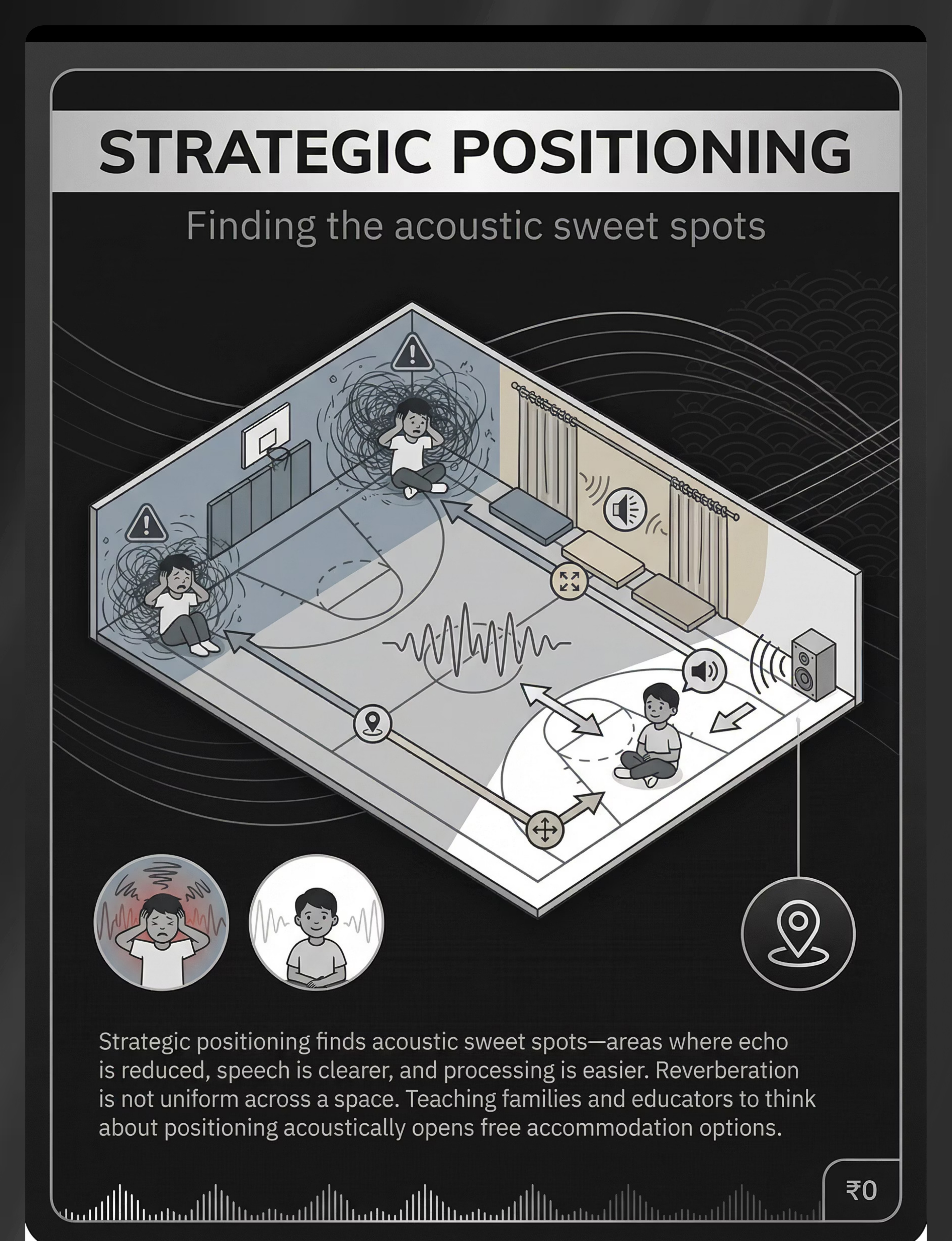
Material 7: Strategic Positioning Knowledge
Environmental Strategy
₹0 — Always Available
Strategic positioning is the only material in this system that costs nothing, requires no equipment, and is available in every echo-y environment you will ever enter. It is based on the acoustic physics of reverberant spaces: some positions within a room receive dramatically less reflected energy than others.
Gymnasium
Position near gym mats or curtain areas. Arrive early before full noise. Inform PE teacher of positioning needs.
Swimming Pool
Near pool edge, not center of acoustic chaos. Request instructor proximity. Use waterproof earplugs.
Shopping Mall
Identify carpet-zone stores. Avoid marble atriums and food courts initially. Plan shortest route.
Place of Worship
Position near cloth banners, curtains, or padded seating. Arrive during quieter periods.
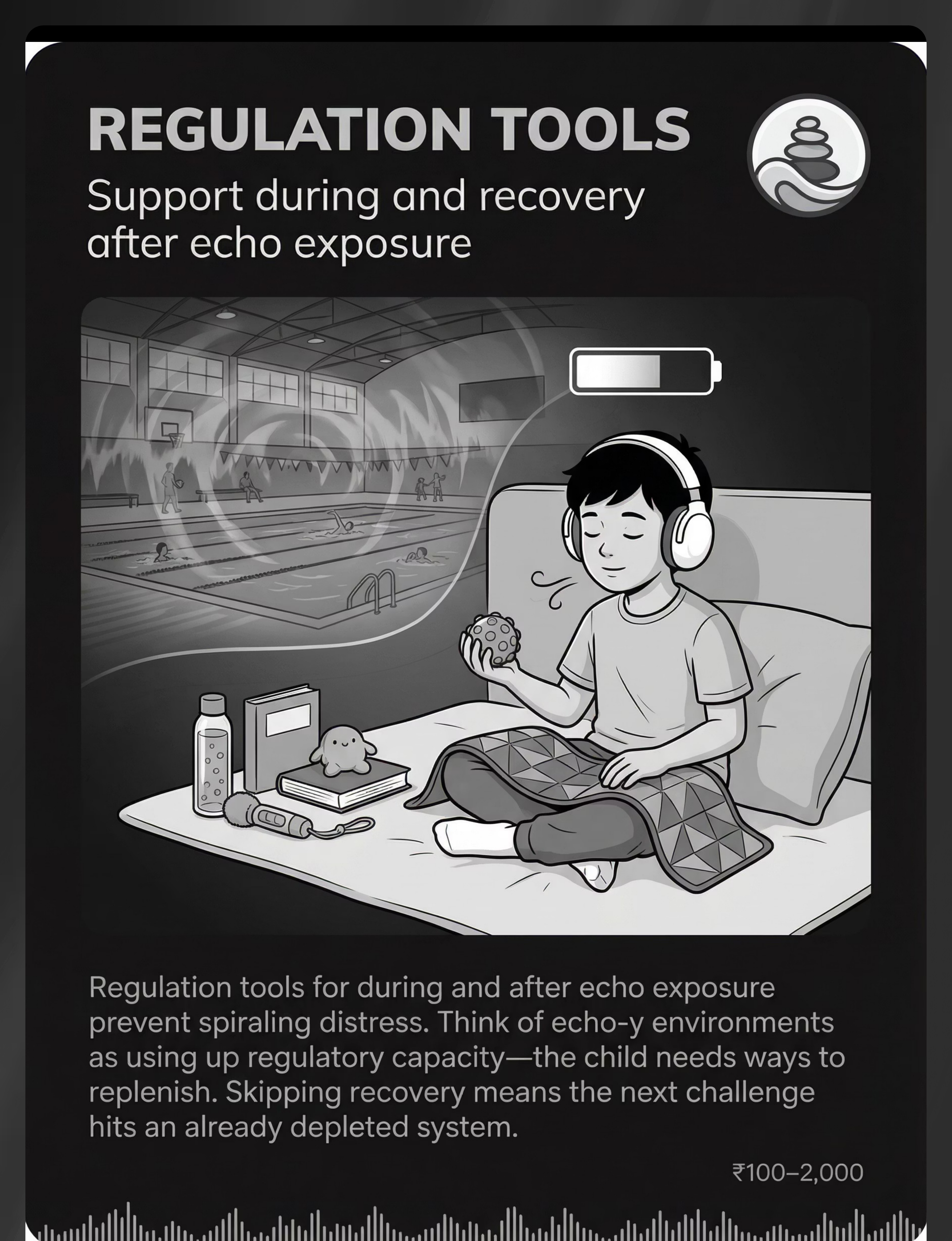
Material 8: Calming / Regulation Tools
Anxiety & Regulation
₹100–2,000
Why Regulation Tools Belong in This System
Acoustic processing stress is physiologically real — it activates the same threat-response pathways as physical danger. After sustained exposure to a reverberant environment, a child's nervous system has been working overtime. Regulation tools provide sensory input that helps the nervous system return to baseline, preventing the cumulative overwhelm that leads to post-exposure meltdowns and growing avoidance.
During the Echo-y Environment
- Fidgets — Proprioceptive input that grounds the child while tolerating acoustic challenge
- Weighted lap pad — Deep pressure input, portable, discrete
- Compression vest — Whole-body proprioceptive input for heightened states
After the Echo-y Environment
- Comfort object — Preferred tactile item that signals safety
- Preferred fidget — Self-selected regulation tool
- Calm-down kit — Portable bag with 3–5 regulation items child has chosen
- Quiet space + time — The most critical tool: undemanding recovery time
Building the Calm-Down Kit
Let the child help pack it — ownership increases willingness to use. Test each item at home first. The kit should be available before, during, and after the echo-y environment visit.
DIY Bridge: Ziplock bag with: a small squeeze ball (or rolled-up socks), a smooth stone from outside, a piece of cloth with familiar smell. Designate a "quiet corner" wherever you go.
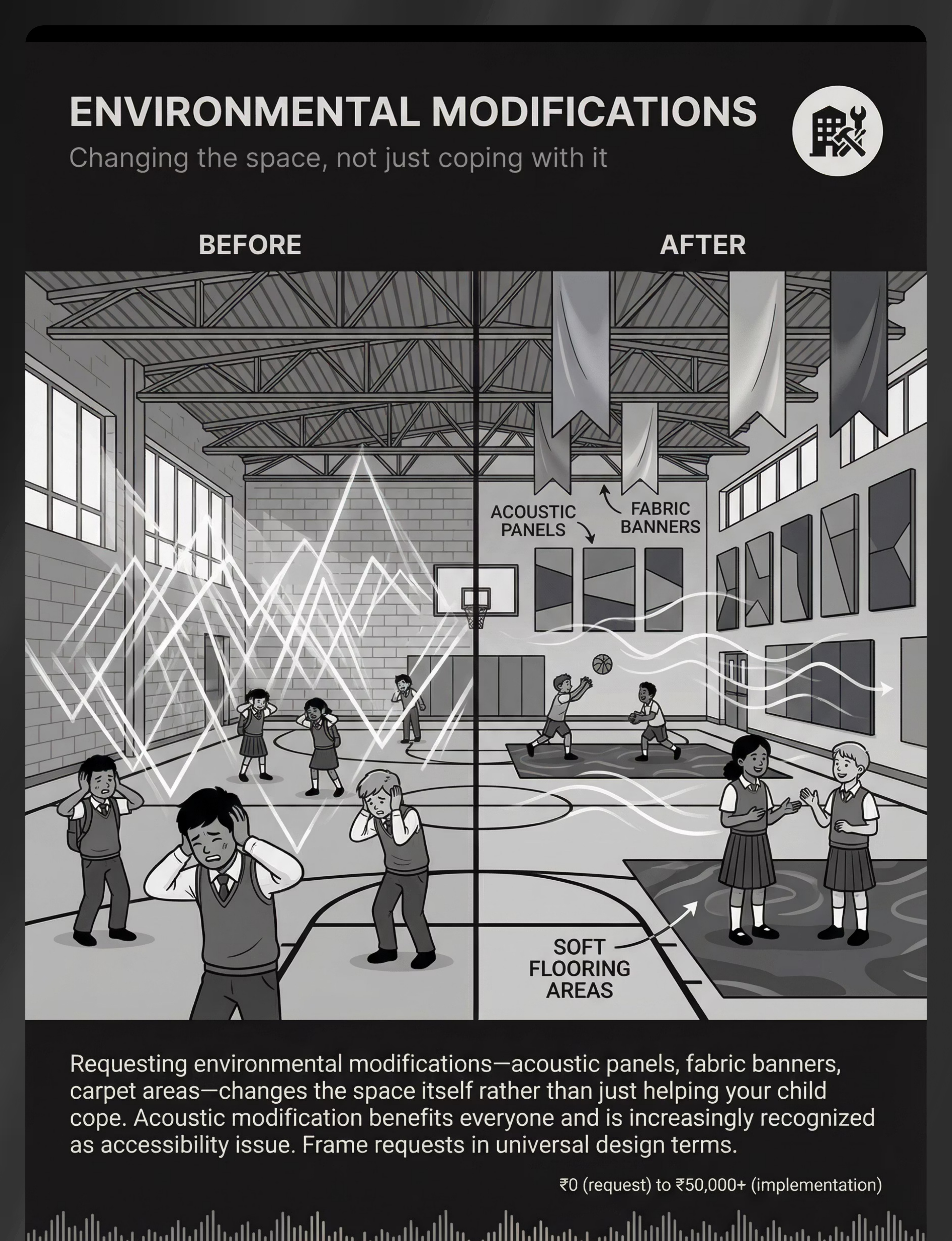
Material 9: Environmental Modification Requests
System Change
₹0 (request) to ₹50,000+ (implementation)
The Most Powerful Material — And the Hardest
The first 8 materials work with the child. Material 9 changes the environment itself. Environmental modifications — acoustic panels on walls, carpet sections on floors, fabric banners from ceilings, rubber flooring zones — reduce the reverberation time of the entire space, benefiting every user: every child, every teacher, every parent who enters that gymnasium or pool. This is accessibility in its truest form.
What to Request
- Acoustic panels for walls (especially hard reflective surfaces)
- Carpet areas or rubber matting in key zones
- Fabric banners hung from high ceilings
- Padded seating in spectator and waiting areas
How to Make the Request
- Frame as accessibility accommodation, not personal preference
- Cite ASHA classroom acoustics standards and disability inclusion guidelines
- Provide documentation from your child's OT or audiologist
- Reference universal design evidence: modifications help all students, not just those with identified differences
- Start small: request even one acoustic panel section as a pilot
Your Pinnacle therapy team can provide formal documentation supporting an environmental modification request. The Pinnacle school accommodation template (downloadable from Card 37) includes specific acoustic language for IEP/504 plans.
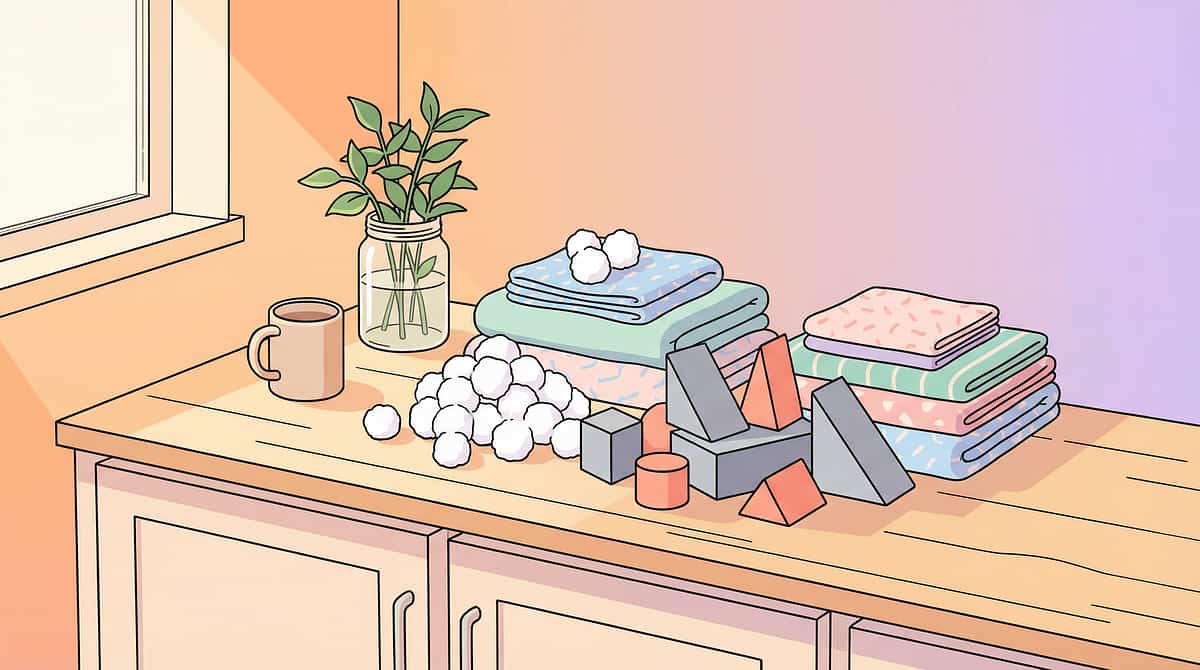
Can't Order Right Now? Start TODAY with What You Have
Every strategy in this system has a household alternative. You don't need to wait for shipping to begin. Here's how to bridge from today to the clinical-grade material.
Buy This | Make/Use This Instead | Notes | |
Filtered earplugs (₹500+) | Cotton balls loosely inserted | TEMPORARY. Gets you through today. Order filtered version for sustained use. | |
Noise-reducing headphones (₹1,500+) | Any over-ear headphones the child owns, or winter ear muffs | Even without ANC they provide some physical barrier. | |
Portable acoustic panels (₹2,000+) | Thick blankets on drying rack, dense curtains, towels stacked as barrier | Same principle: soft materials absorb reflections. | |
FM system (₹10,000+) | Bluetooth lavalier mic paired with child's earbuds | Consumer-grade but restores some signal clarity. ₹500–2,000 on Amazon. | |
Visual communication cards (₹200+) | Hand-drawn cards, hand signals practiced at home, written notes on phone | Fully functional alternative. | |
Preparation materials (₹0–500) | Phone photos of the space, short video recording, verbal walkthrough | Zero cost. Start immediately. | |
Calm-down kit (₹100+) | Ziplock bag: squeeze ball or rolled socks, smooth stone, cloth with familiar smell | Works the same as purchased kit. |
Zero-Cost Version: Strategic positioning (₹0) + hand signals (₹0) + preparation conversations (₹0) + identifying quiet recovery spots (₹0) = a meaningful start with no expenditure. Every family can begin today.
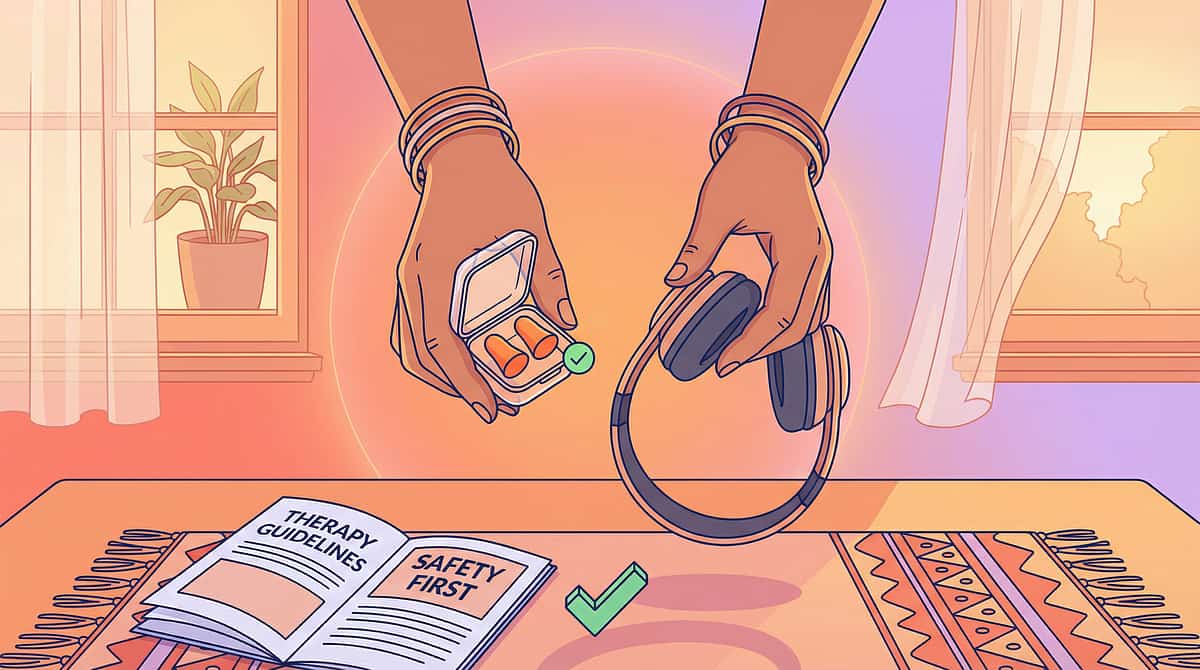
⚠️ Safety First — Read Before You Begin
🔴 STOP — Do Not Proceed If:
- Child has ear infection, ear pain, or recent ear surgery — do NOT insert earplugs
- Child shows signs of actual hearing loss — seek audiological evaluation FIRST
- Child becomes severely distressed and shows signs of panic or dissociative shutdown — STOP, remove from environment, do not push through
- An object is in the ear canal that you cannot verify is clear
🟡 MODIFY — Proceed with Caution If:
- Child is already dysregulated before entering — postpone or use maximum support
- Child has had a meltdown within the last hour
- The space has additional stressors today (unusual crowds, construction, flashing lights)
- First time using filtered earplugs — test at home first
🟢 PROCEED When:
- Child is in regulated state (fed, rested, calm baseline)
- Materials tested and fitted in advance
- Recovery plan in place (quiet space identified, regulation tools packed)
- Communication method established and practiced
- Adult(s) present are trained on all materials and protocols
STOP if you see: panic breathing, dissociative staring, self-injurious behavior, vomiting from stress, or loss of communication. Remove from environment immediately. These are signs the acoustic overwhelm has exceeded safe tolerance. Document and discuss with your child's therapy team.
Set Up for Success — Before Entering the Echo-y Space
A successful echo-y environment visit begins 24–48 hours before you arrive at the door. This preparation checklist ensures every element is in place before the acoustic challenge begins.
Before the Visit
- ☐ Materials packed: earplugs/headphones, visual supports, regulation tools
- ☐ Child has previewed the space (photos, social story, previous quiet visit)
- ☐ Communication method established and practiced
- ☐ Quiet recovery location identified in advance
Day-Of Check
- ☐ Time limit planned (shorter is better — success builds capacity)
- ☐ Escape plan communicated: "If it's too much, show me the 'break' signal"
- ☐ All adults understand material usage
- ☐ Child is in regulated state (fed, rested, not already depleted)
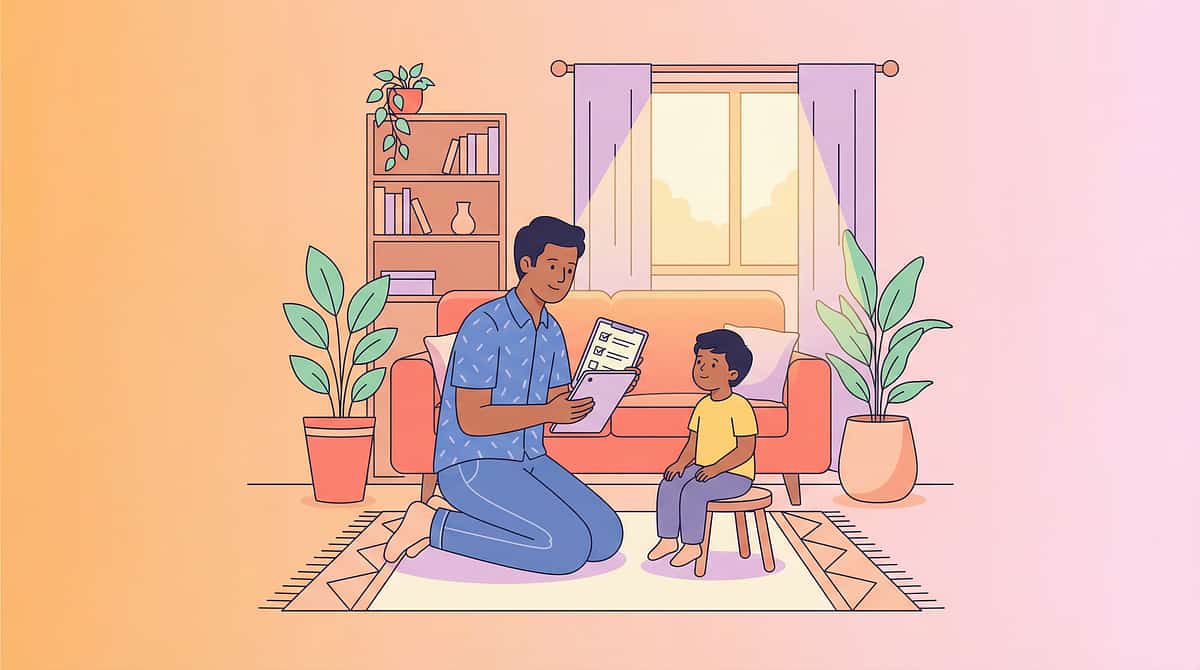
Pre-Flight Check — Is Your Child Ready Today?
The best echo-y environment visit is one that starts right. A child who enters regulated, prepared, and equipped will build tolerance. A child forced into overwhelm will build trauma. Take 60 seconds to run this check before you walk to the door.
1
Fed & Hydrated
Hunger and dehydration lower sensory thresholds significantly
2
Slept Adequately
Fatigue = reduced processing capacity for all sensory input
3
No Recent Meltdown
No meltdown in the past 2 hours — regulatory capacity must not be pre-depleted
4
Knows What to Expect
Child understands where they are going and has completed preparation
5
Materials Ready
Earplugs fitted, signals established, tools packed and practiced
6
Willing or Neutral
Shows willingness or at least neutral acceptance — not actively resistant
7
Recovery Budgeted
Recovery time planned AFTER the visit — not rushing to the next stressor
7/7 → GO
Proceed with full protocol
5–6/7 → MODIFY
Shortened duration, maximum support, ready to exit early
Below 5 → POSTPONE
Use this time for preparation instead — it IS progress
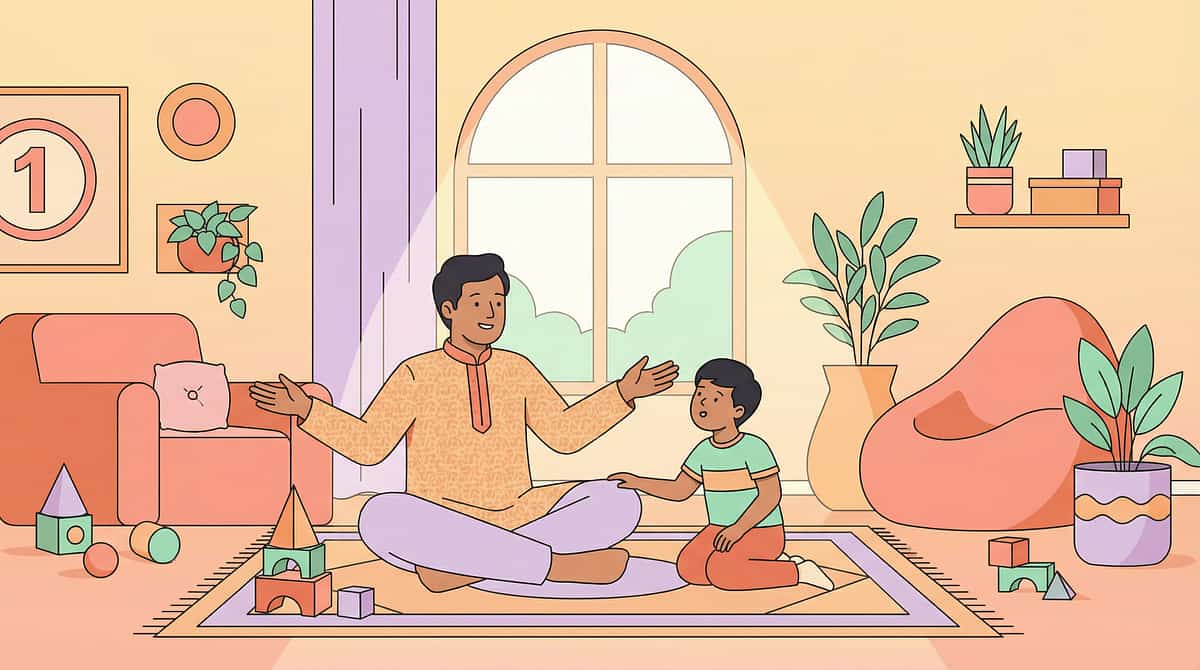
Step 1: The Invitation — Approaching the Echo-y Environment
STEP 1
"Okay sweetheart, we're going to go into [the gymnasium/the pool/the mall] now. Remember, we talked about how it sounds in there — the sounds bounce around and it can feel noisy. But we have our [earplugs/headphones/tools]. Let's put them on now, before we go in. And remember, if it feels like too much, show me our [break signal]. We'll stay for [specific time/goal] and then we'll go to our quiet spot. Ready? Let's do this together."
Body Language Guidance
- Calm, confident posture — your anxiety amplifies theirs
- Position at child's eye level
- Offer hand or preferred physical contact
- Walk in together — not pushing from behind
- Pause at threshold — let child orient before moving deeper
Acceptance Cues — Ready to Enter
- Takes the earplugs/headphones willingly
- Makes eye contact or nods
- Takes your hand or steps toward the entrance
Resistance Cues — Modification Needed
- Refuses earplugs/headphones — try the alternative option
- Pulls back physically
- Starts ear-covering before entering
- Says "no" or shows escape behavior
If resistance: "That's okay. Let's just look through the door first. We don't have to go in all the way." Allow 30–90 seconds at the threshold. Do not rush this moment — it is itself a therapeutic step.

Step 2: The Engagement — Entering and Orienting in the Echo-y Space
STEP 2
"Good job walking in! Let's go to our spot. [Walk to identified position near soft surfaces, away from corners.] How does it feel? Your [earplugs/headphones] are working — the sound is still there but it's softer now. Let's sit here for a moment and let your ears adjust."
Instructions Upon Entry
Once through the threshold, move directly to the pre-identified optimal position. Walk with purpose — lingering in acoustically bad zones increases distress. If the child removed protection at the threshold, re-offer now. Present visually: show the materials, model putting them on yourself, let child control the placement. Do not force.
Monitoring Child Response
- 🟢 Engagement: Child looks around, shows curiosity, tolerates the sound → Continue and reinforce within 10 seconds
- 🟡 Tolerance: Quiet but not distressed, hands near ears but not covering → Offer regulation tool, move closer
- 🔴 Avoidance: Ear covering, requesting to leave, agitation → "I see this is hard. Let's use our break signal and take a quick break. We'll try again for just one minute."
Within 10 seconds of child demonstrating tolerance: "You're doing amazing. You're IN the [gym/pool/mall] right now — that's huge!" Allow 1–5 minutes for initial orientation phase.
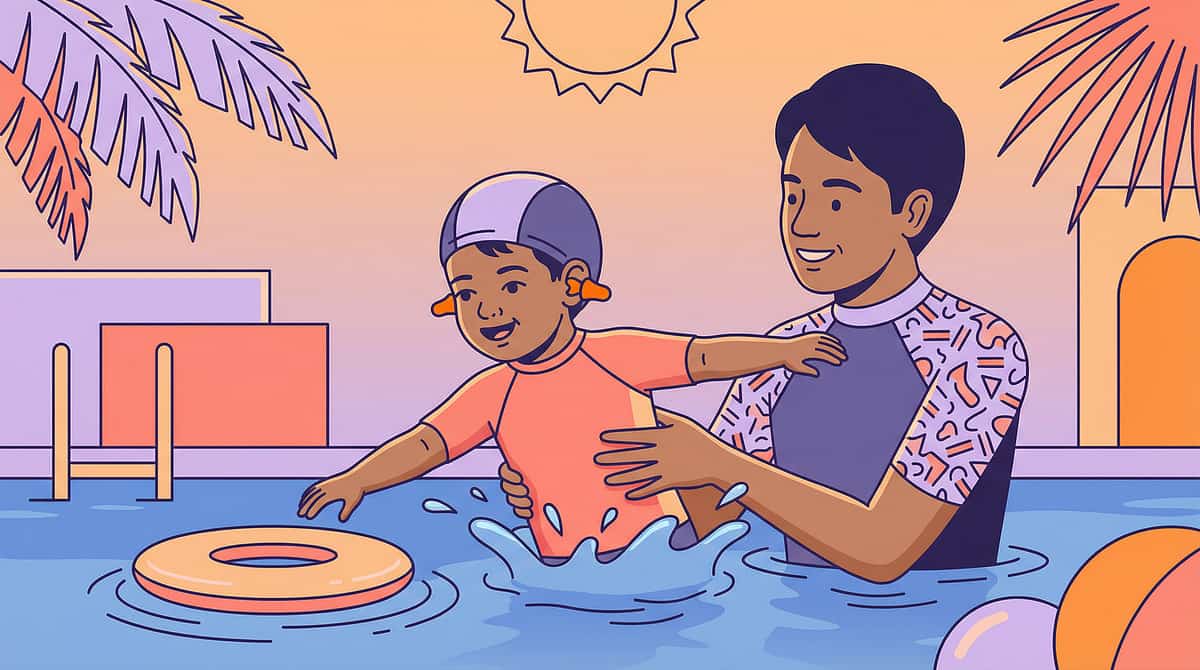
Step 3: The Therapeutic Action — Participating in the Echo-y Environment
STEP 3
The child is now present, protected, and positioned. The therapeutic action is PARTICIPATION — whatever the environment's purpose is: gym class, swim lesson, shopping, worship, school assembly. This is the active ingredient.
What to Do During the Action
- Monitor child's regulation state continuously (face, body, behavior)
- Use visual supports for any verbal communication
- Stay near child — your presence is a co-regulation anchor
- Note what seems to help most (earplugs? positioning? proximity?)
- Be ready with break protocol if regulation starts slipping
Duration
Start SHORT. 5–10 minutes of successful participation is more therapeutic than 45 minutes of survival. The goal is the child leaving saying "that was okay" — not "never again." Set a timer and leave while it's still going well.
Regulation Traffic Light
- 🟢 GREEN: Engaged, participating, reduced ear-covering, following instructions → Continue, reinforce
- 🟡 AMBER: Increased fidgeting, hands drifting toward ears, reduced eye contact → Offer regulation tool, reduce demands, move closer
- 🔴 RED: Ear covering, crying, attempting to flee, shutting down → Activate break protocol immediately, move to quiet space
Common Errors: Staying too long because "we're already here." Removing protection because child "seems fine." Positioning in convenient but acoustically terrible spots. Avoid all three.
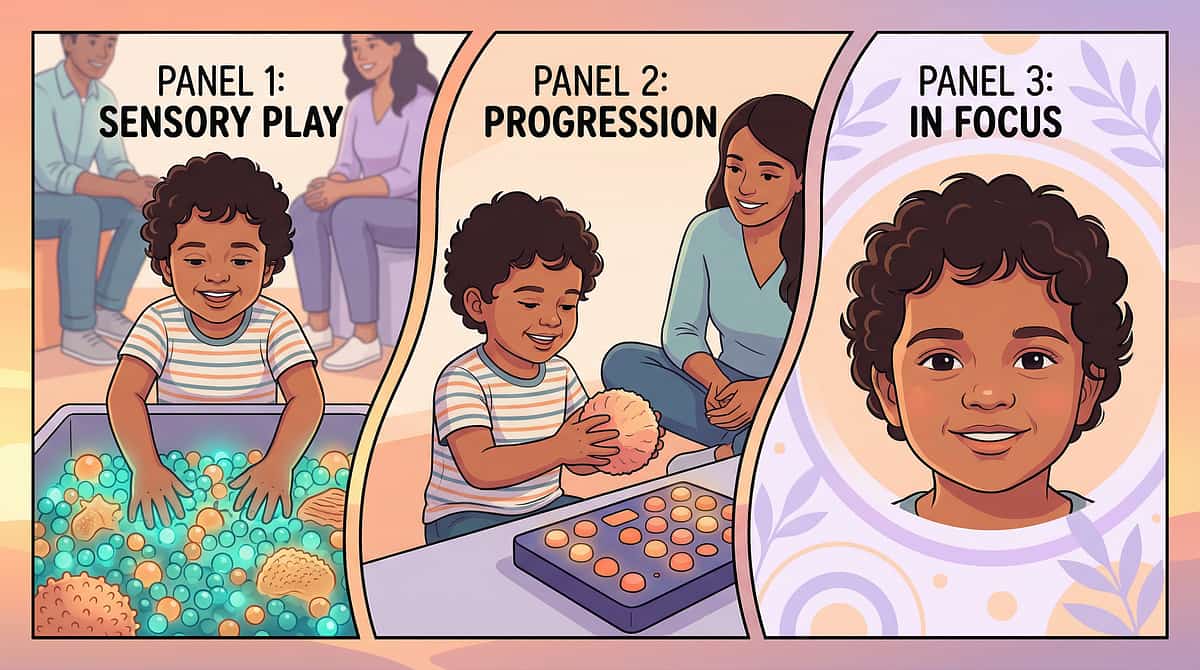
Step 4: Repeat & Vary — Building Acoustic Tolerance Over Time
STEP 4
Echo environment tolerance is built through repeated successful exposures, not single heroic efforts. Frequency and consistency matter more than duration.
Vary the Environment
Gymnasium → mall → pool → temple. Each has a different acoustic signature and builds generalization.
Vary the Support
Full protection → filtered only → positioning only → independent management. Reduce gradually.
Vary the Demand
Observer → low participation → full participation. Match demand to current capacity.
Vary the Timing
Quiet hours → moderate activity → peak activity. Build tolerance to busier conditions over time.
"3 successful 10-minute visits build more tolerance than 1 forced 45-minute endurance test. Success breeds confidence. Confidence reduces anxiety. Reduced anxiety improves sensory tolerance. It's a virtuous cycle."

Step 5: Reinforce & Celebrate — This Moment Matters
STEP 5
"You did it! You were in the [gymnasium/pool/mall] for [X minutes] and you [stayed calm / followed the teacher / watched the whole game / shopped in two stores]. That was brave and that was hard and YOU did it."
Timing is everything. Deliver reinforcement within 3 seconds of the desired behavior or completion. Immediate, specific, enthusiastic. Not generic "good job" — specific to what they accomplished.
Verbal Praise
Specific, enthusiastic, tied to the achievement. Always first. Always immediate.
Token System
If using a token board, this echo-y environment visit earns tokens toward preferred item or activity.
Documentation
"Let's take a photo to show how brave you were" — builds positive association with the space.
Choice
"You've earned a choice — what would you like to do now?" Autonomy as its own reward.
Critical: Celebrate the ATTEMPT, not just the success. A child who entered the gymnasium for 2 minutes before needing a break has made progress over a child who refused to enter at all. Mark that progress.

Step 6: The Cool-Down — Recovery After Acoustic Challenge
STEP 6
Echo-y environments deplete regulatory capacity. Recovery time is NOT optional. Skipping recovery means the next challenge hits an already depleted system. Budget 15–30 minutes of calm after significant echo exposure.
Transition Warning Script
"Two more minutes, then we'll go to our quiet spot." Use a visual timer if available. Count down: "One more minute." Then: "All done! Great job. Let's go."
If Child Wants to Stay
Surprisingly, children who've been well-supported sometimes want to STAY. This means the accommodations are working. Still honor the planned duration initially: "I know you're having fun! We'll come back again soon. For today, let's stop while it's still good." This preserves the positive ending that builds future willingness.
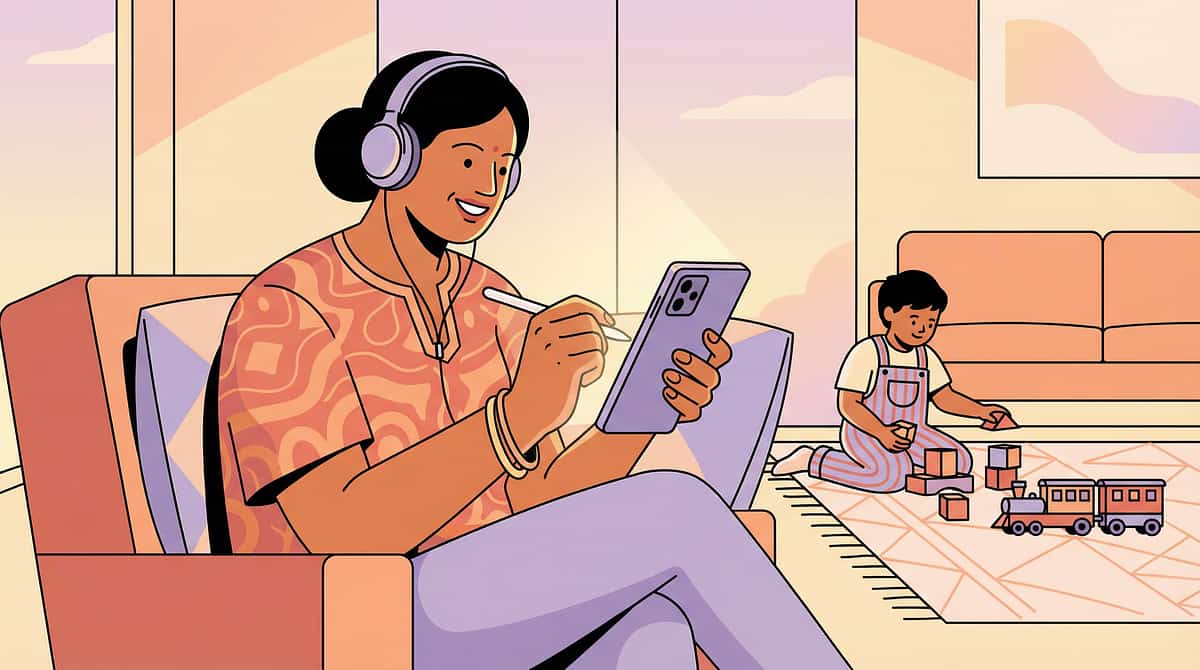
Capture the Data — 60 Seconds, Right Now
Within 60 seconds of leaving the echo-y environment, while it's fresh, record these data points. This data drives your child's progress and feeds into GPT-OS® for personalized recommendations. 60 seconds of data now saves hours of guessing later.
What to Record | How to Record | Example | |
Environment name/type | Name of space | "School gymnasium" | |
Duration tolerated | Minutes | "12 minutes" | |
Protection used | List materials | "Filtered earplugs + positioning near mats" | |
Peak regulation state | Green / Amber / Red | "Mostly green, amber for 2 min mid-visit" | |
Participated in | Description | "Watched PE class, followed 3 visual instructions" | |
Recovery time needed | Minutes | "15 minutes in car before ready for next activity" | |
What worked best | Note | "Positioning near stacked gym mats made biggest difference" |
Over 4–8 weeks, this data reveals patterns: which environments, which tools, which positioning, which time of day — the precision that transforms random attempts into a scientific protocol.

What If It Didn't Go as Planned? — Common Challenges & Fixes
Session abandonment is not failure — it's data. Every "failed" visit tells you something: the environment was too challenging, the support was insufficient, the timing was wrong, or the child wasn't ready. Adjust, don't abandon.
Problem: Child refused to put on earplugs/headphones
Why: Tactile sensitivity to material, unfamiliarity, or resistance to "different." The protection itself became a stressor. Fix: Practice at home as a game. Try different brands/types. Some children tolerate over-ear but not in-ear — offer choice.
Problem: Fine for 5 minutes then complete meltdown
Why: Acoustic stress builds cumulatively. The child looked "fine" but was depleting regulatory capacity. Fix: Shorten next visit to 4 minutes (below the tipping point). The invisible depletion is real.
Problem: Earplugs worked but "I can't hear the teacher"
Why: In severely reverberant spaces, speech signal was already degraded — earplugs pushed it below understanding. Fix: Combine filtered earplugs with FM system. Or position child closer to teacher. Consider Calmer by Flare Audio.
Problem: Did well in gymnasium, fell apart in swimming pool
Why: Pool acoustics (tile + water + humidity + enclosed) are often the WORST of all echo environments. Success in one space doesn't automatically transfer. Fix: Each environment needs its own gradual exposure protocol.
Problem: Child seemed traumatized, now refuses to try again
Why: An overwhelm experience was forced too far. The child learned "that place = pain." Fix: Back up to preparation phase. Acknowledge their experience. Rebuild trust slowly. Consider involving your child's OT or BCBA.
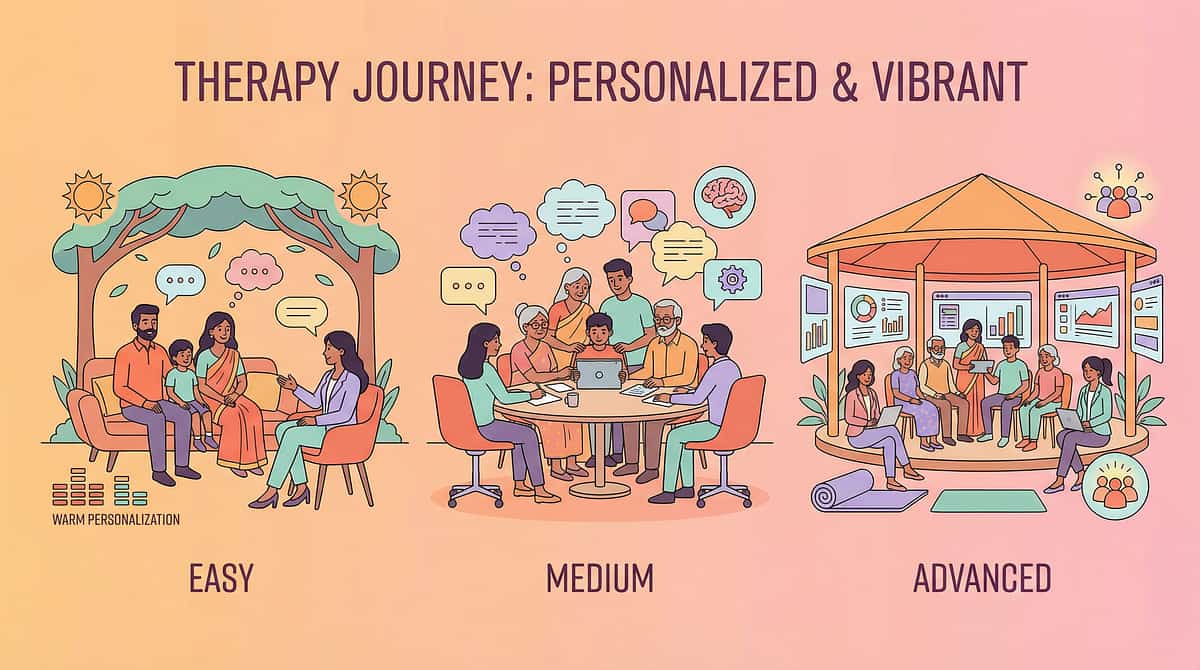
Adapt to YOUR Child — One Size Does Not Fit All
Ages 3–5
Parent-managed entirely. Visual supports are primary communication. Child wears protection; parent manages all decisions.
Ages 5–8
Begin shared decision-making. Teach self-report: "Is it too much? Show me with your fingers: 1-2-3-4-5." Practice self-advocacy.
Ages 8–12
Teach independent strategy selection. Child chooses own protection level, identifies good positioning, initiates own breaks with teachers and coaches.

Week 1–2: The Foundation — What Progress Actually Looks Like
Progress Arc
Weeks 1–2 · ~15% Complete
1
Tolerance Appears
Child enters the echo-y environment with less resistance — still needs full support, but the refusal is softening
2
Protection Accepted
Child willingly uses earplugs or headphones without a battle — this alone is a major milestone
3
Duration Increases
From refusing to enter → tolerating 5–10 minutes — even 3 minutes longer than last time is real progress
4
Break Signal Used
Child communicates need for break rather than melting down — self-advocacy has begun. This is a breakthrough.
Independent management is NOT expected. Enjoyment is NOT expected. Full participation is NOT expected. Measure forward from where YOU started, not from where you want to end. Each successful exposure is rewiring your child's acoustic threat response — neural pathways restructure on their timeline, not yours.

Week 3–4: Consolidation — Neural Pathways Forming
Progress Arc
Weeks 3–4 · ~40% Complete
Anticipation Without Dread
Child may show awareness of upcoming gym/pool visit without the extreme anxiety of week 1. The threat response is recalibrating.
Self-Initiation of Protection
Child reaches for earplugs without prompting. They are beginning to own their accommodation strategy.
Partial Participation
Child begins engaging in the activity — not just tolerating the space. This is the shift from survival to participation.
Faster Recovery
Post-exposure recovery time shortens from 30 minutes to 10–15 minutes. The system is becoming more resilient.
Generalization Seeds
Watch for: child tolerating OTHER reverberant spaces (restaurant bathroom, parking garage, airport). These indicate acoustic tolerance is becoming internal, not situation-specific.
Parent Milestone: You may notice you're less anxious about entering echo-y spaces too. Your confidence in managing the situation is its own form of progress. Your child reads your regulation state — when you're calm, their threshold rises.

Week 5–8: Mastery Emerging — From Surviving to Thriving
Progress Arc
Weeks 5–8 · ~75% Complete
3+
Environments
Tolerance demonstrated in at least 3 different reverberant environments — generalization confirmed
4wks
Maintenance
Behavior persists for 4 consecutive weeks even without the full structured approach
100%
Activity Duration
Full activity duration achieved with independently managed, self-selected supports
1
Independent Strategy Selection
Child chooses own protection level without prompting
2
Self-Positioning
Child naturally gravitates toward acoustically better positions
3
Self-Regulated Breaks
Takes breaks independently, returns voluntarily to the activity
4
Emotional Neutrality
Echo-y spaces are "manageable" rather than "terrifying" — the threat response has been recalibrated
🏆Mastery Badge Unlock: "Environmental Acoustic Self-Management — Level 1 Achieved" — Child participates in at least 2 regular echo-y activities with self-selected supports for 4 consecutive weeks.
🎉 Celebrate This — You and Your Child Made This Happen
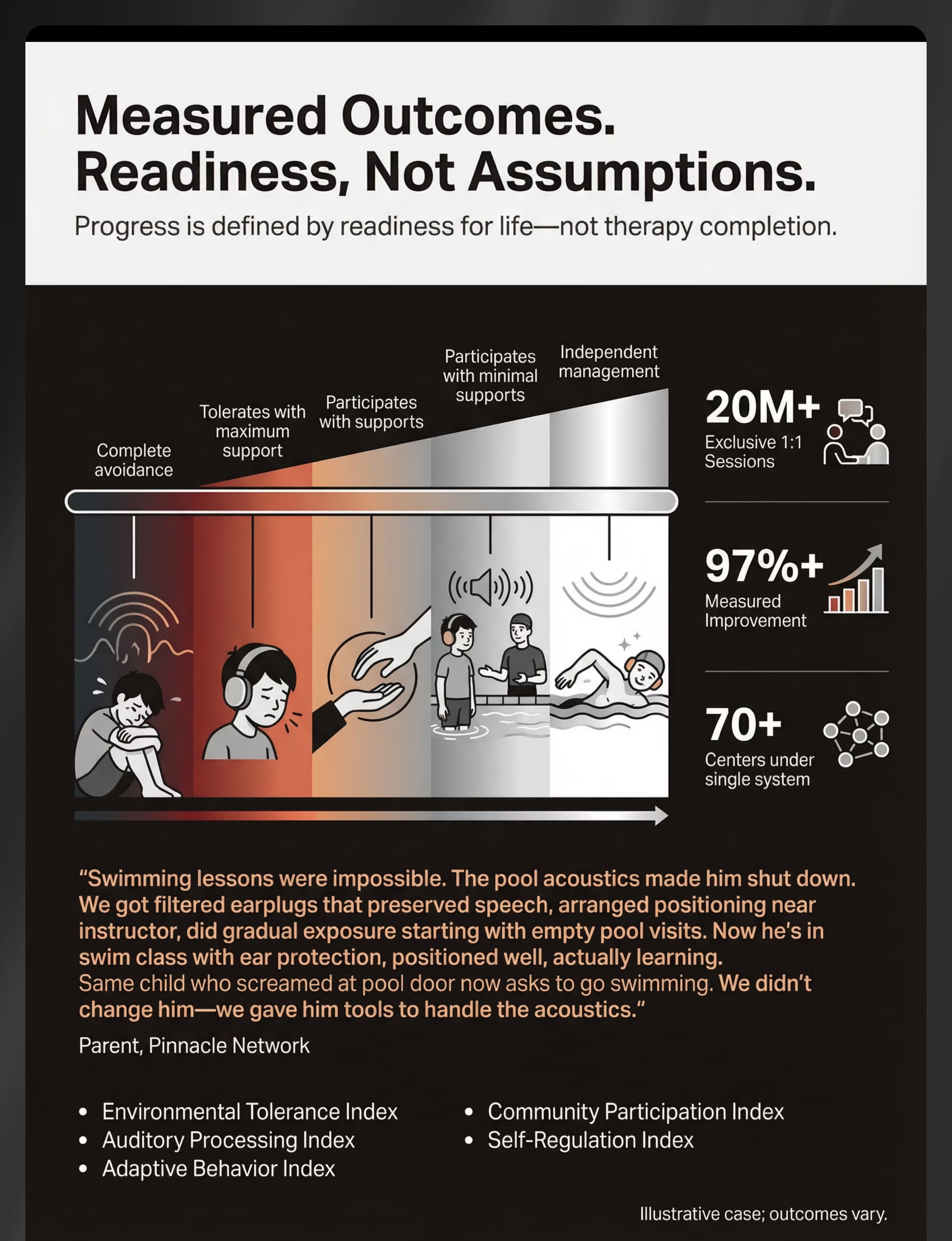
"Remember when he screamed at the pool door? When he couldn't enter the gymnasium? When the mall sent him into a different child? That was weeks ago. Today, that same child enters with earplugs and participates. Chooses their own positioning. Asks to go swimming. YOU did this. Your patience. Your consistency. Your willingness to show up again after the hard days."
From
Complete avoidance or severe distress in reverberant environments — refusing to enter, screaming at the door, falling apart within minutes
To
Participates with self-selected supports and independently managed breaks — the gymnasium doesn't scare us anymore
Celebrate in It
Visit a previously-avoided echo-y place and celebrate there — ice cream at the mall food court!
Document It
Take a photo: "The gymnasium doesn't scare us anymore." Let your child see their own victory.
Tell Them
"You used to cover your ears and cry in the pool. Now you swim. That's incredible."
Share with the Team
Tell your child's therapy team — your progress data drives better recommendations for every family like yours.
⚠️ Red Flags — When to Pause and Seek Professional Support
🔴 Regression After 4+ Weeks
Child was improving but has returned to complete avoidance — may indicate a new stressor, illness, or need for protocol adjustment by a professional
🔴 Hearing Changes
Child complaining of ear pain, showing new difficulty hearing in quiet environments, or recent ear infections — seek audiological evaluation immediately
🔴 Generalized Anxiety Spreading
Echo sensitivity expanding to previously-tolerated spaces, or new avoidance behaviors emerging in non-acoustic situations — may need behavioral or psychological support
🔴 Self-Injurious Behavior
Child hitting own ears, head-banging, or other SIB in response to acoustic environments — requires immediate professional intervention
🔴 No Progress After 6 Weeks
Consistent implementation with no measurable change — the intervention needs professional modification. This is not failure of effort; it's a signal for calibration.
🔴 Dissociative Responses
Child "checking out," becoming non-responsive, or showing flat affect during echo exposure — overwhelm beyond regulation capacity. Stop immediately.
Trust your instincts. If something feels wrong, pause and ask. The Pinnacle FREE National Autism Helpline is available 24/7 at 9100 181 181 in 16+ languages.
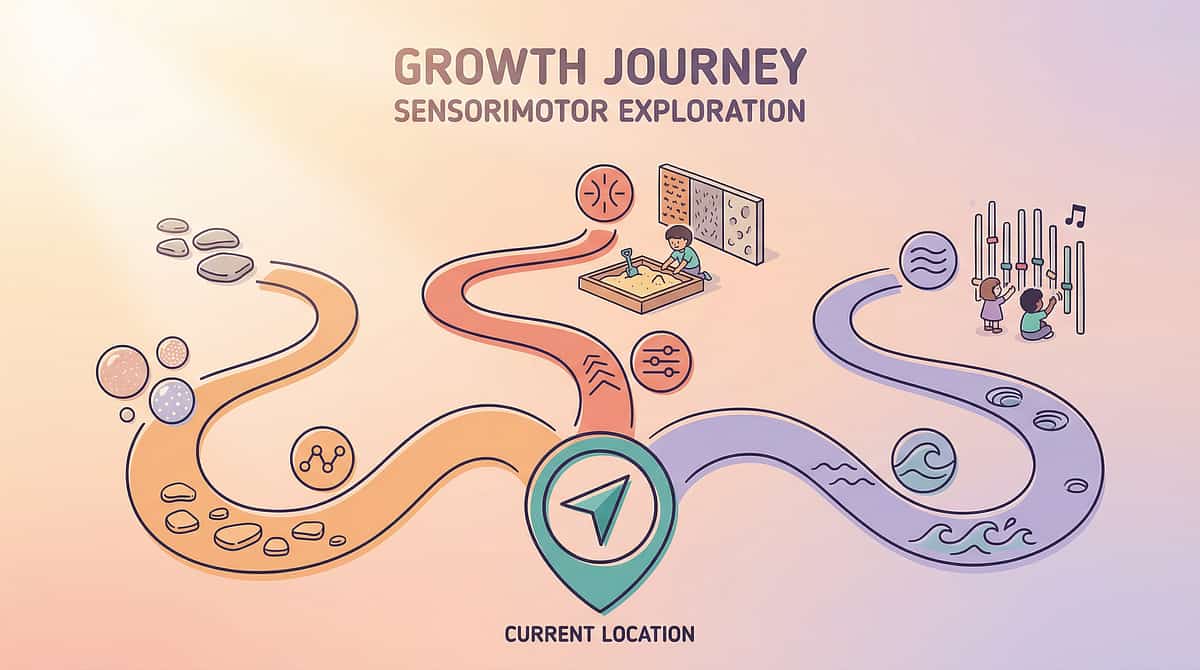
Your Child's Progression Pathway — Where This Leads
This technique — acoustic environment accommodation — is a clearly defined waypoint in your child's auditory processing journey. The pathway branches based on your child's response and what the data from Card 29 reveals about where support is needed next.
Path A — Auditory Processing
A-051: Can't Localize Sound | A-052: Delayed Auditory Processing
Path B — Environmental Tolerance
Advanced acoustic self-management | Community participation expansion
Path C — Self-Regulation
A-043: Hums to Block Sound | A-044: Sensitivity to Specific Sounds
Related Techniques — Explore the Auditory Sensory Domain
If you already have filtered earplugs, noise-reducing headphones, and visual supports from this technique, you're already equipped for A-048, A-049, A-043, and A-044. Your investment in materials extends across the entire domain.
A-048: Covers Ears Constantly
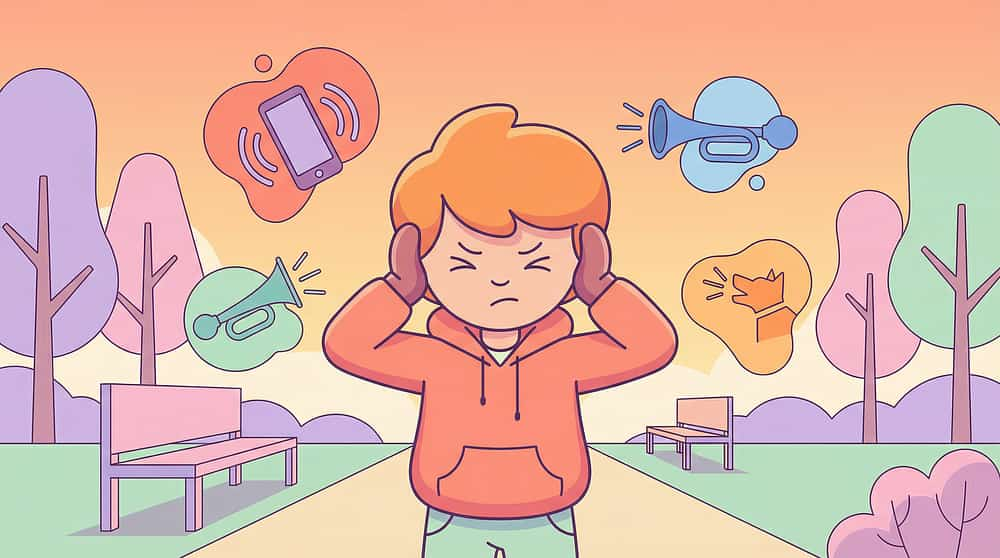
Difficulty: Intro | Domain: Auditory Sensitivity
A-049: Auditory Defensiveness
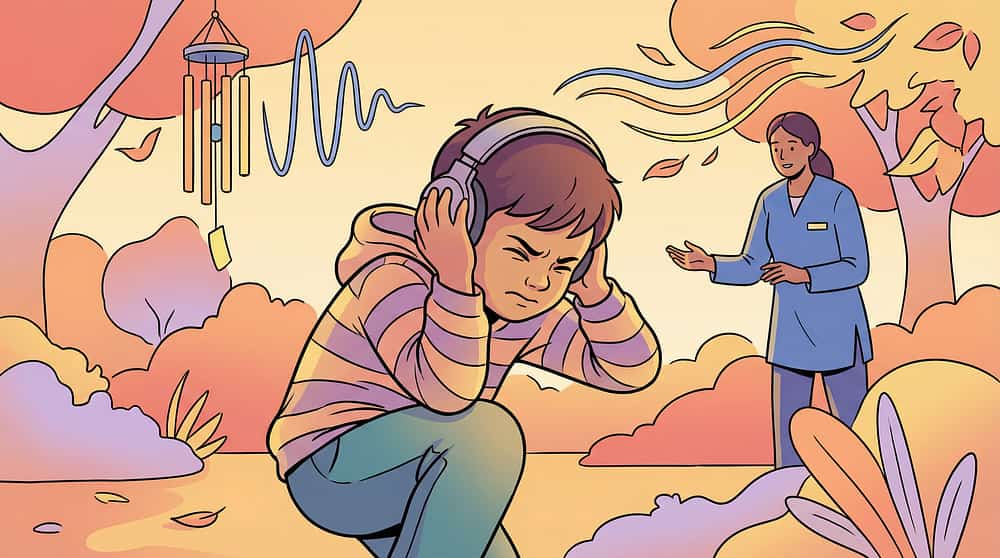
Difficulty: Core | Domain: Auditory Processing
A-051: Can't Localize Sound
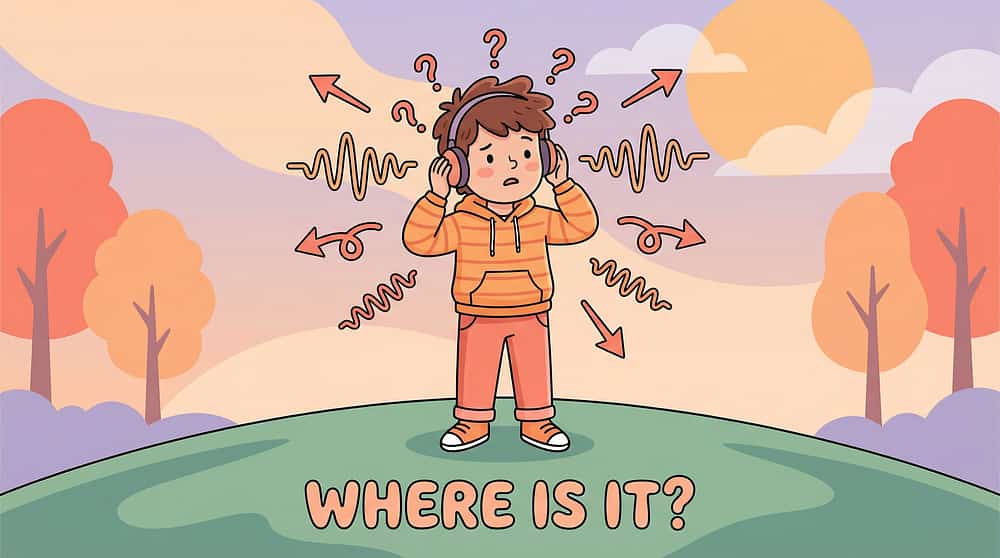
Difficulty: Core | Domain: Auditory Processing
A-043: Hums to Block Sound
Difficulty: Intro | Domain: Auditory Self-Regulation
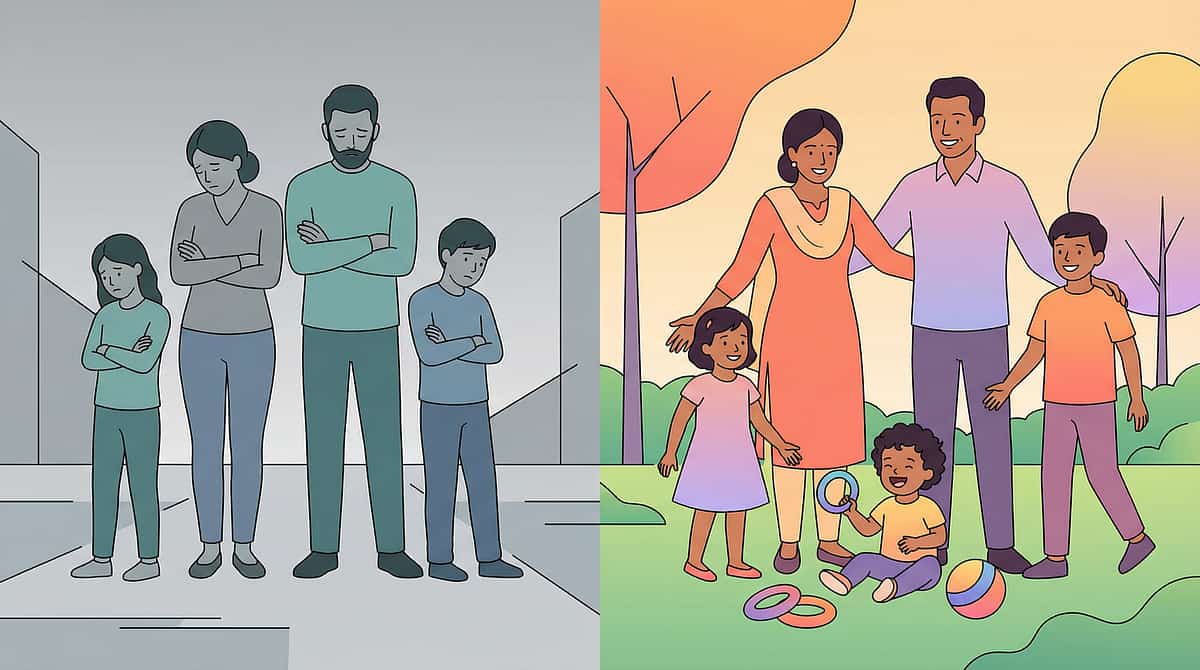
Families Who've Been Exactly Where You Are
The Pool Story
Before: "Swimming lessons were impossible. The pool acoustics made him completely shut down — he couldn't understand the instructor, couldn't handle the echoing voices and splashing." After: "We got filtered earplugs that preserved speech, arranged for positioning near the instructor, and did gradual exposure starting with empty pool visits. Now he's in swim class with his ear protection, positioned well, and actually learning." Timeline: 6 weeks from complete refusal to active participation.
The Gymnasium Story
Before: "School PE was a war zone. He'd cover his ears and refuse to enter the gymnasium. The teacher thought he was being defiant." After: "After we explained echo sensitivity to the school, they agreed to FM system use. Combined with filtered earplugs and positioning away from the corner, he now participates in most gym activities." Timeline: 8 weeks from complete avoidance to regular participation with supports.
"The same child who screamed at the pool door now asks to go swimming. We didn't change him — we gave him the tools to handle the acoustics." — Parent, Pinnacle Network
Illustrative cases; outcomes vary by child profile. From the therapist's notes: "Echo sensitivity is one of the most underrecognized patterns in pediatric sensory processing. Once parents identify the acoustic pattern — the common factor across gyms, pools, malls, temples — the intervention becomes targeted and effective."
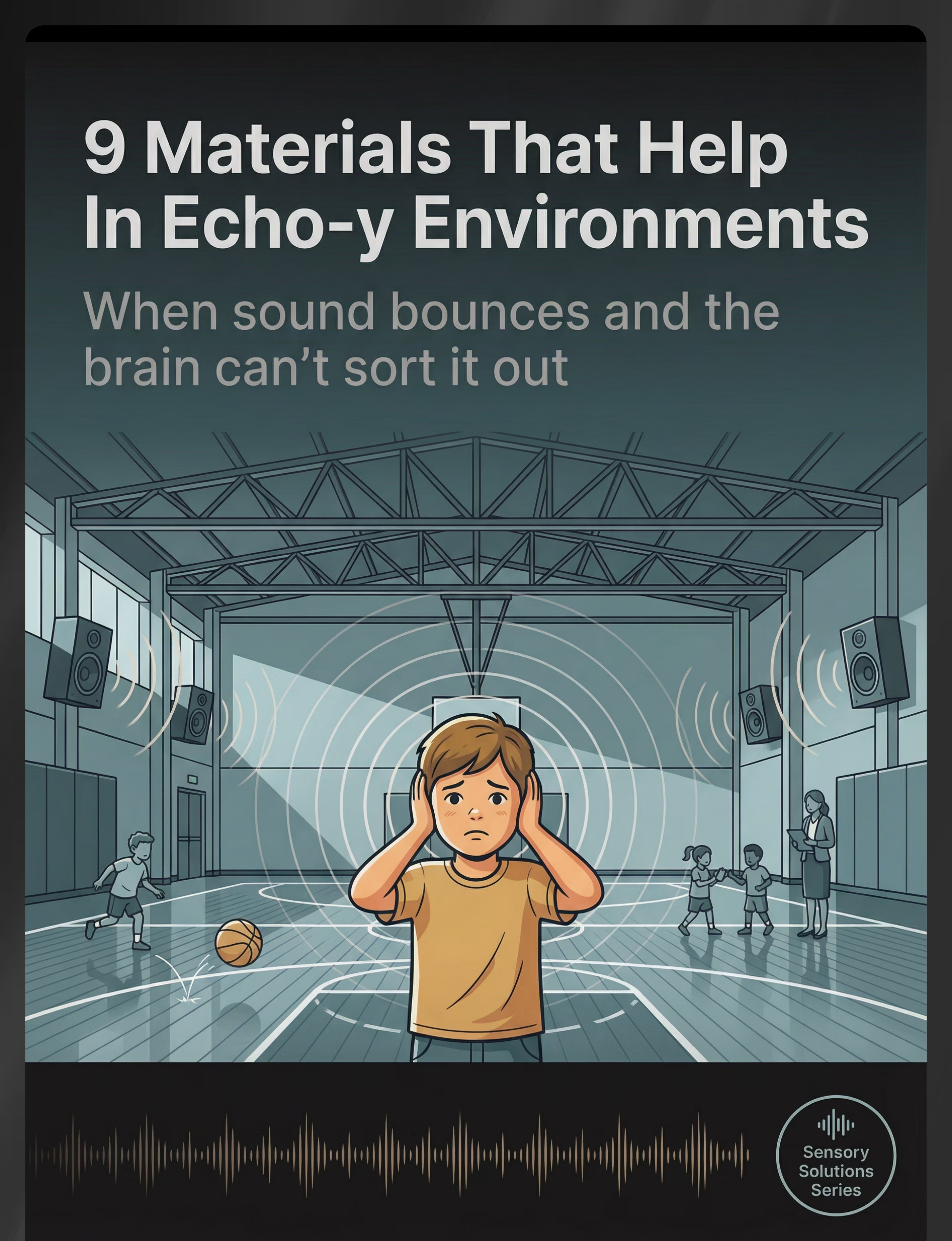
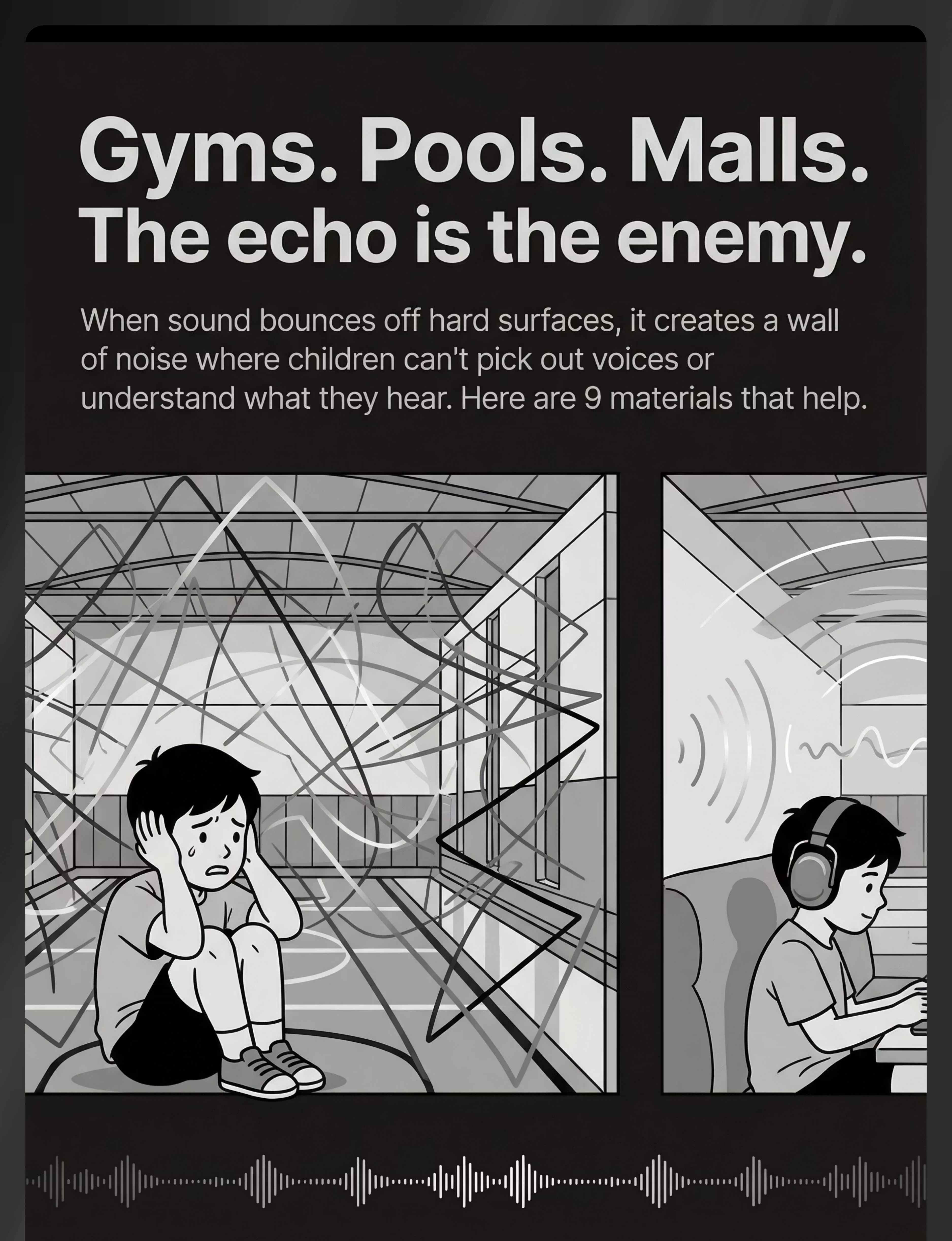
Preview of 9 materials that help in echo y environments Therapy Material
Below is a visual preview of 9 materials that help in echo y environments therapy material. The pages shown help educators, therapists, and caregivers understand the structure and content of the resource before use. Materials should be used under appropriate professional guidance.


Link copied!

Frequently Asked Questions
Will my child always need earplugs in echo-y environments?
Many children reduce their reliance on protection over time as auditory processing matures and tolerance builds. The goal is progression from "can't enter without full protection" toward "manages independently with minimal or no external support." Some children may always prefer filtered protection in the worst acoustic environments — and that's perfectly fine. Adults use earplugs at concerts.
What's the difference between echo sensitivity and general noise sensitivity?
A child with pure noise sensitivity reacts to decibel level regardless of environment. A child with echo sensitivity may tolerate a loud outdoor event but struggle in a moderately-quiet gymnasium. The distinguishing factor is the reverberant quality of the sound, not just the volume. Many children have both — the strategies overlap, but echo-specific tools are critical additions.
My child's school says they can't use earplugs in the gymnasium.
Acoustic accommodation is increasingly recognized as an accessibility issue. Request a formal accommodation meeting. Document the specific impact of the gymnasium acoustics on your child's participation and learning. Filtered earplugs that preserve speech are a reasonable accommodation. Your Pinnacle therapy team can provide supporting documentation for an IEP/504 plan.
Can we just avoid all echo-y environments?
Avoidance is not a sustainable solution. Gymnasiums, swimming pools, malls, airports, places of worship, school assemblies — these are essential life spaces. The goal is building capacity and providing tools so your child can participate, not creating a smaller and smaller world.
Is an FM system overkill for a child without hearing loss?
FM systems are used for auditory processing differences, not just hearing loss. If your child specifically struggles to understand speech in reverberant environments, an FM system that delivers clear speech directly to the ear can be transformative — especially for gym classes, swimming lessons, and school assemblies.
My child is 3 years old — is it too early for these strategies?
No. Early acoustic accommodation prevents the build-up of traumatic associations with reverberant spaces. A 3-year-old with echo sensitivity who is accommodated now is far more likely to develop natural tolerance than one who endures years of unprotected overwhelm. Age-appropriate implementation: parent manages all strategies, child wears the protection.
© 2025 Pinnacle Blooms Network®, unit of Bharath Healthcare Laboratories Pvt. Ltd. All rights reserved. Pinnacle GPT-OS®, AbilityScore®, TherapeuticAI®, FusionModule™, EverydayTherapyProgramme™ are trademarks of Bharath Healthcare Laboratories Pvt. Ltd. This content is educational and does not replace assessment by a licensed audiologist, occupational therapist, speech-language pathologist, or healthcare provider. Individual results may vary.
CIN: U74999TG2016PTC113063 • DPIIT: DIPP8651 • MSME: TS20F0009606 • GSTIN: 36AAGCB9722P1Z2 • ISO 13485 • ISO/IEC 27001