
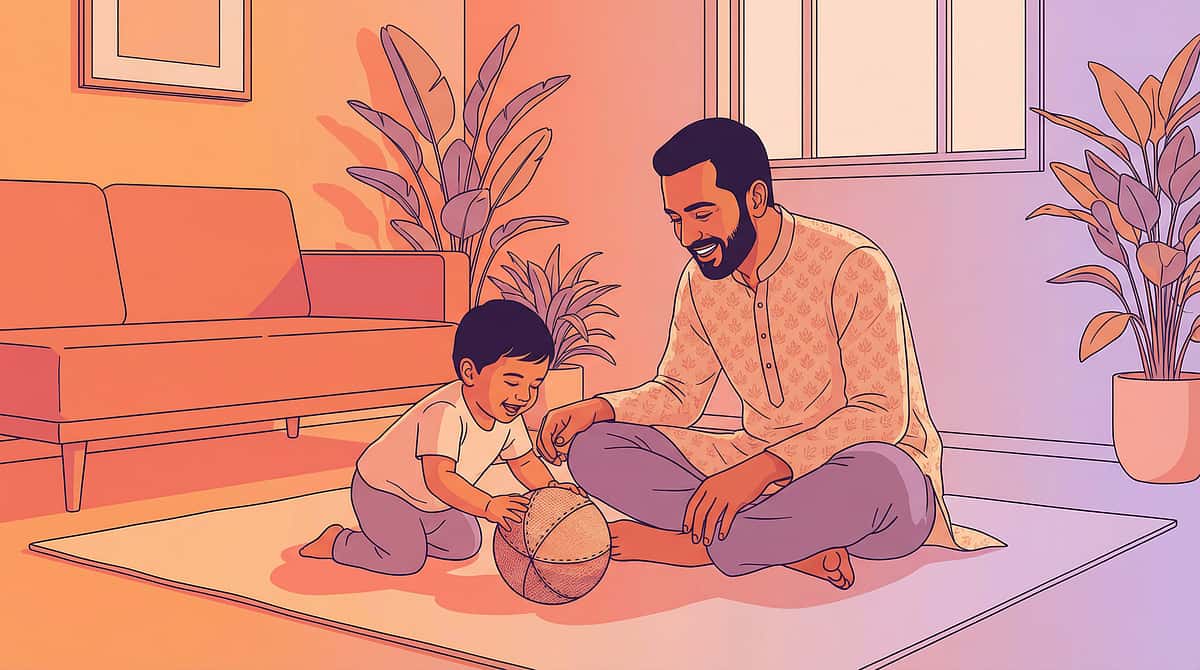
Every temple visit ends in a meltdown. The bells ring. The incense chokes. The crowd presses in. And your child falls apart.
Multi-Sensory Environmental Desensitization for Temple and Aarti Participation — A 9-Material Intervention Protocol
"You are not failing your child. You are not disrespecting your tradition. Your child's nervous system is processing this sacred space differently — and there is a clear, evidence-based path from meltdown to meaningful participation."
Pinnacle Blooms Network® Consortium
Sensory Solutions Series — Episode A-051
Consortium Lead: Occupational Therapy (Sensory Integration) + ABA (Behavioral Supports) + Special Education (Social Stories) + NeuroDevelopmental Pediatrics (Diagnostic Oversight)
ACT I — RECOGNITION
You Are Not Alone: The Numbers
Millions of Indian families are caught between protecting their child from sensory overwhelm and maintaining connection to tradition, community, and faith. This is not a parenting failure — it is a neurological reality with clear, practical solutions.
80%
Children with ASD
experience clinically significant sensory processing difficulties. Source: PRISMA Systematic Review, 2024 — PMC11506176
5-8
Sensory Channels
activated simultaneously at peak intensity during a typical Hindu temple aarti — auditory, olfactory, visual, tactile, and vestibular. Source: Sensory Processing Disorder Foundation + Pinnacle Clinical Protocols
54
Countries
implementing the WHO/UNICEF Nurturing Care Framework that supports caregiver-mediated sensory interventions for children exactly like yours. Source: WHO/UNICEF NCP for South Asia, 2023
ACT I — UNDERSTANDING
What's Happening in Your Child's Brain
This is a wiring difference, not a behavior choice.
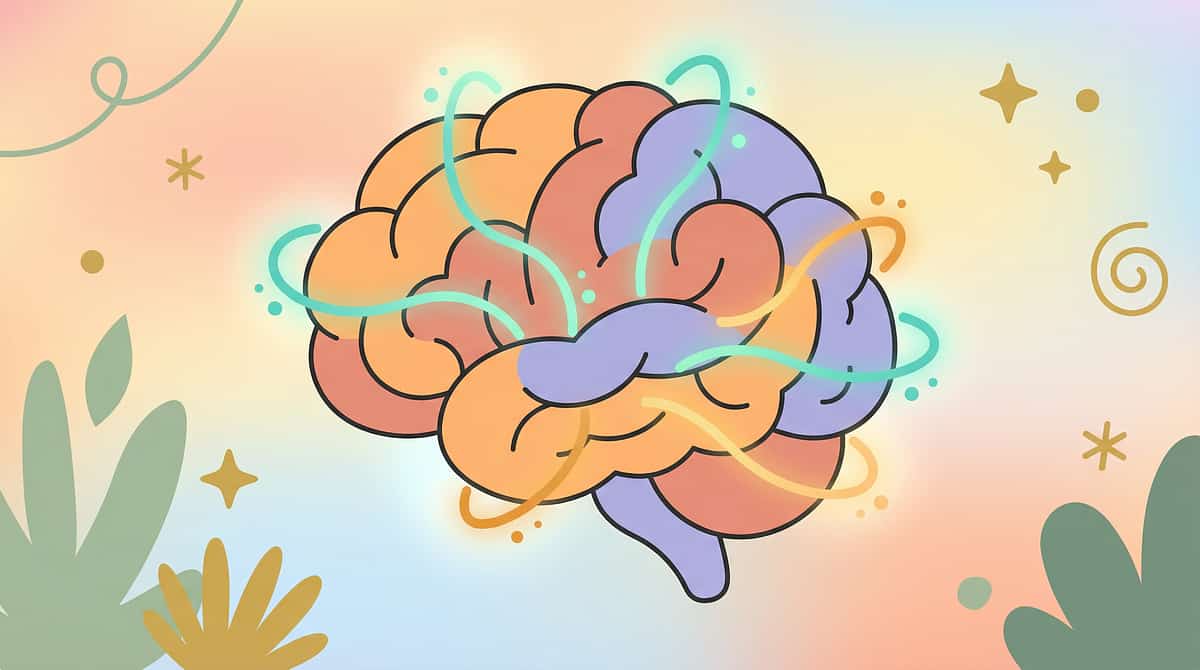
Your child's brain processes sensory information through the same pathways as every other child — but with different thresholds. The thalamus, the brain's sensory relay station, amplifies signals instead of filtering them.
When your child enters a temple during aarti, their brain receives all of the following at once — at full intensity — simultaneously:
- Bell sounds at 80–100+ dB reverberating off stone walls (auditory cortex in overdrive)
- Thick incense smoke triggering the olfactory bulb (no "off switch" for smell)
- Bright, moving aarti flames against temple darkness (visual cortex overwhelmed)
- Unpredictable touch from strangers in a crowd (somatosensory cortex on high alert)
- Cold marble floors sending temperature signals (additional tactile load)
Like five radio stations playing at maximum volume in one room.
For neurotypical children, the brain filters and integrates these inputs smoothly. For your child, each input arrives at full intensity simultaneously. The result isn't disobedience — it's neurological overload.
The thalamus determines how much sensory input reaches conscious awareness. In children with sensory over-responsivity, this relay station amplifies rather than filters. There is no volume knob. There is no mute button. Every signal arrives at 100%.
Research Citation: Frontiers in Integrative Neuroscience (2020): Comprehensive framework for evaluating sensory integration treatment in ASD, establishing the neurological basis for sensory-based interventions. DOI: 10.3389/fnint.2020.556660

ACT I — CONTEXT
Where This Sits in Development
Multi-sensory environment challenges like temple distress typically peak between ages 3–7, when sensory processing differences intersect with increasing social and cultural demands. With systematic, graduated intervention using the right materials, the trajectory bends toward meaningful participation — not avoidance.
Ages 0–2
Sensory preferences emerge. Some infants startle more to loud sounds, resist certain textures. Early indicators often missed.
⚡ Ages 2–4 — Challenge Zone
Multi-sensory environment intolerance becomes apparent. Temple visits, festivals, crowded markets trigger visible distress. Families begin avoiding environments.
⚡ Ages 4–7 — Peak Impact Zone
Cultural and social expectations increase. Family religious participation becomes a source of conflict. Anticipatory anxiety about overwhelming environments develops.
Ages 7–12
With intervention, graduated tolerance develops. Without intervention, avoidance patterns calcify and social isolation compounds.
Ages 12+
Self-advocacy skills emerge with support. Accommodation strategies become self-managed. Full or modified participation in religious life becomes achievable.
Comorbidity Awareness: Auditory processing challenges, anxiety disorders, tactile defensiveness, olfactory sensitivity, and crowd/social anxiety commonly co-occur. A comprehensive sensory processing evaluation addresses the full profile. Source: WHO CCD Package — PMC9978394

ACT I — EVIDENCE
The Evidence Behind This Technique
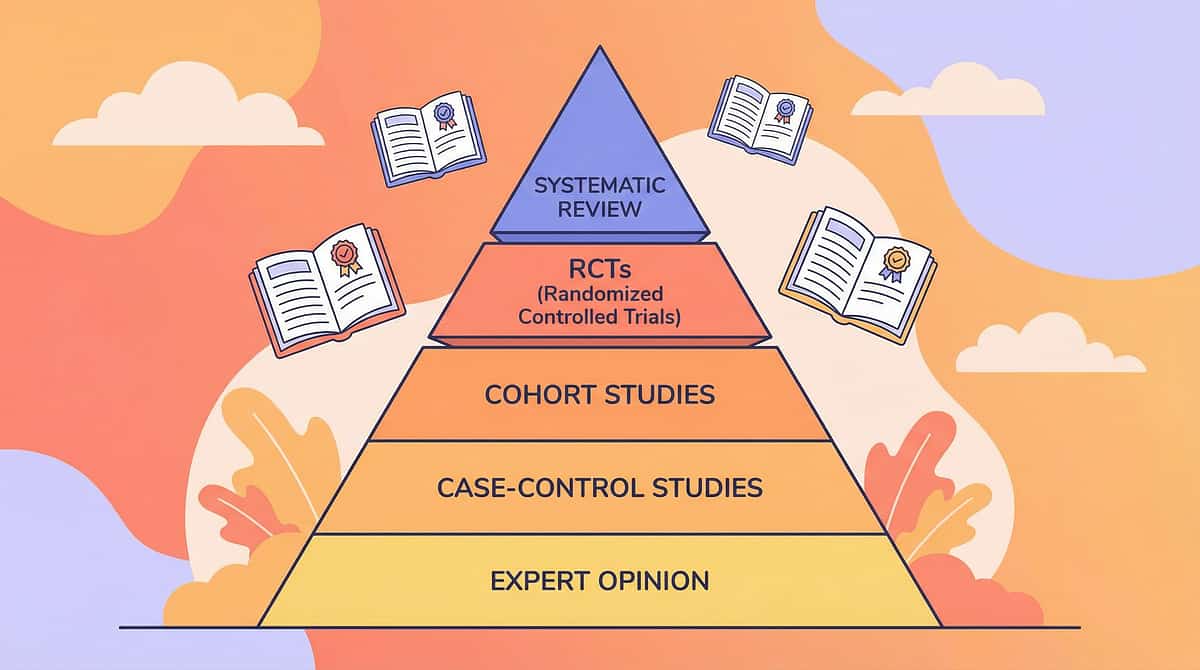
LEVEL I–II
Evidence Grade: Systematic Reviews + RCTs Supporting Sensory Integration Intervention
PRISMA Systematic Review (2024)
16 articles from 2013–2023 confirm sensory integration intervention meets criteria to be considered evidence-based practice for children with ASD. PMC11506176
Meta-Analysis, World J Clin Cases (2024)
Sensory integration therapy across 24 studies effectively promoted social skills, adaptive behavior, sensory processing, and motor skills. Individual 1:1 sessions showed maximum effectiveness. PMC10955541 | DOI: 10.12998/wjcc.v12.i7.1260
Indian Journal of Pediatrics RCT (2019)
Home-based sensory interventions demonstrated significant outcomes in Indian pediatric populations. Safety protocols established for parent-administered sessions. DOI: 10.1007/s12098-018-2747-4 (Padmanabha et al.)
WHO Care for Child Development (CCD) Package
Implemented across 54 countries, establishing caregiver-mediated intervention as a primary delivery mechanism for early childhood developmental support. PMC9978394
Frontiers in Integrative Neuroscience (2020)
Comprehensive framework validating the neurological basis for sensory-based interventions in ASD. DOI: 10.3389/fnint.2020.556660
"Clinically validated. Home-applicable. Parent-proven. This intervention approach is supported by multiple systematic reviews, randomized controlled trials, and population-level implementation data from WHO/UNICEF frameworks."
ACT II — KNOWLEDGE TRANSFER
The Technique: What It Is
Temple Comfort Protocol
Formal Name: Multi-Sensory Environmental Desensitization for Religious/Cultural Settings
A systematic, graduated intervention that combines sensory protection tools, environmental modification strategies, cognitive preparation, grounding techniques, and family education — enabling children with sensory processing differences to participate meaningfully in temple worship and aarti ceremonies without overwhelming distress.
The protocol moves from complete accommodation through graduated exposure to independent self-management of sensory challenges in religious environments.
Domain
Sensory Processing — Multi-Sensory Integration
Age Range
3–12 years
Duration
2–6 months, graduated progression
Setting
Hindu Temples, Aarti, Festivals, Home Pooja
Canon Materials: Ear Defenders, Sensory Fidgets, Visual Supports, Social Stories
Frequency: Aligned with family's natural temple visit pattern + daily home preparation practice
ACT II — DISCIPLINES
Who Uses This Technique
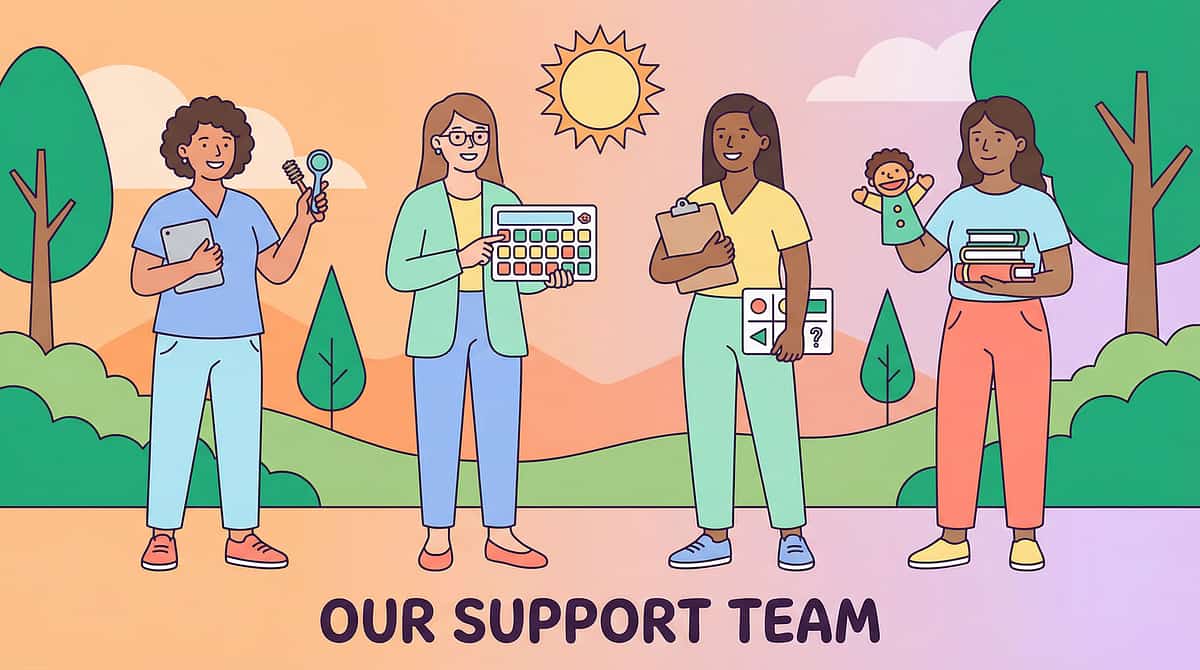
This technique crosses therapy boundaries because the brain doesn't organize by therapy type. Temple distress involves auditory processing, behavioral avoidance, cognitive preparation, and medical oversight — converging through the FusionModule™ into a single, coherent intervention pathway.
Occupational Therapist (Lead)
Designs the sensory protection strategy, evaluates the child's full sensory profile across all modalities, creates the graduated exposure protocol, selects and fits ear protection, and establishes the sensory diet that builds baseline tolerance.
BCBA (Secondary)
Develops behavioral support — reinforcement schedules, antecedent manipulation, functional analysis of meltdown triggers, and systematic desensitization with measurable behavioral targets.
Special Educator (Supporting)
Creates the temple social story, visual sequence cards, coping strategy cards, and family education materials — adapted to the child's cognitive and communication level.
NeuroDev Pediatrician (Oversight)
Provides diagnostic context, rules out co-occurring conditions (anxiety, auditory processing disorder, PTSD), and guides medication considerations if anxiety is severe enough to warrant pharmacological support alongside behavioral intervention.
ACT II — TARGETS
What This Technique Targets
1
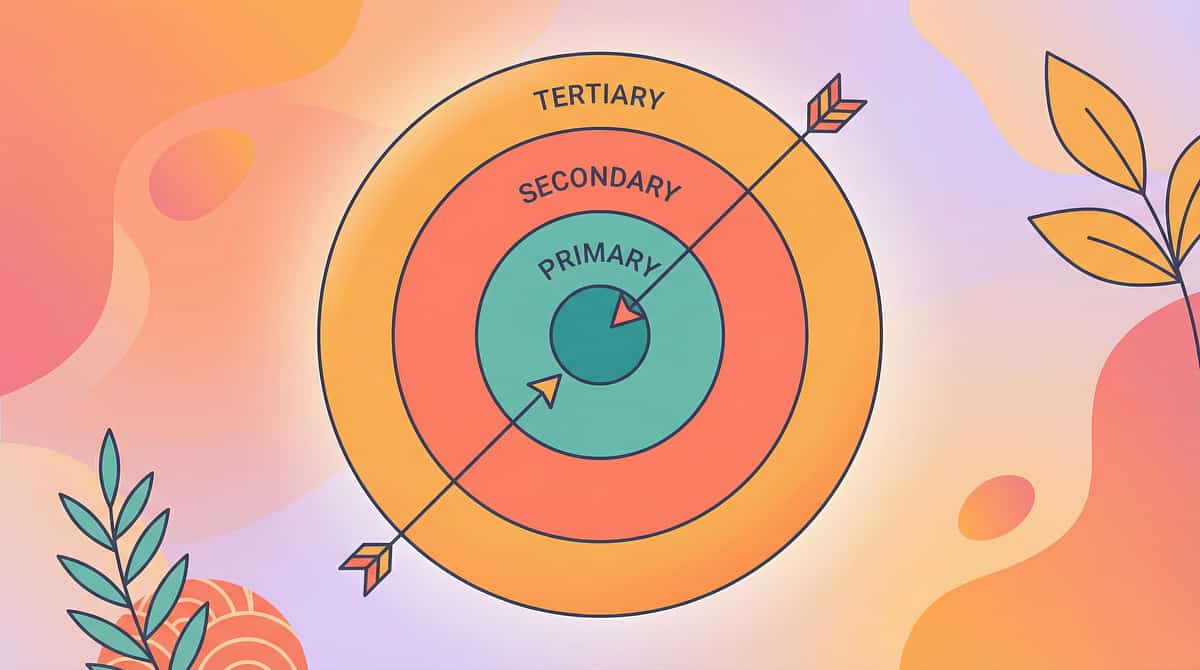
Primary: Multi-Sensory Environmental Tolerance
The child's ability to remain regulated — calm, present, not in distress — within a temple environment during varying levels of sensory intensity. Observable: duration of calm presence, absence of ear-covering, crying, or meltdown behaviors.
2
Secondary: Sensory Channel Tolerance
Auditory tolerance to sudden loud bells; olfactory tolerance in incense environments; crowd proximity comfort; anticipatory anxiety reduction before planned visits; self-regulation using comfort objects, breathing, and self-positioning.
3
Tertiary: Long-Term Developmental Gains
Community Participation Index; reduced family conflict; positive cultural identity connection; generalization to markets, weddings, and festivals; child self-advocacy for accommodations. Source: World J Clin Cases Meta-Analysis, 2024 — PMC10955541

ACT II — MATERIALS 1–3
The 9 Primary Materials: Materials 1–3
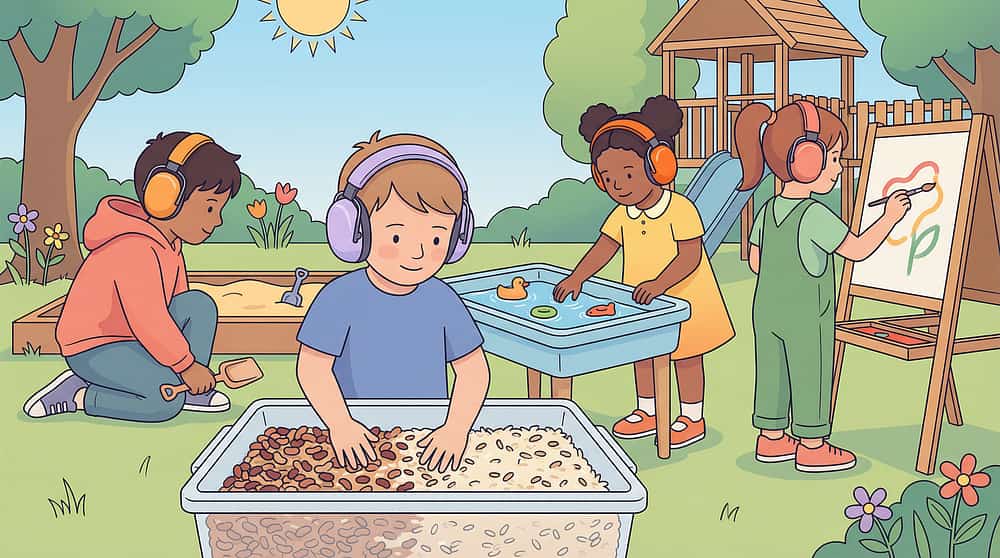
🔊→🔇 Material 1: Noise-Reducing Ear Protection
Purpose: Dampen the bells, stay present.
Options: Over-ear noise defenders, filtered musician's earplugs, Loop-style earplugs, foam earplugs, custom-molded earplugs.
Price: ₹300–5,000
The single most effective intervention for most families. Temple bells are the #1 trigger.
Options: Over-ear noise defenders, filtered musician's earplugs, Loop-style earplugs, foam earplugs, custom-molded earplugs.
Price: ₹300–5,000
The single most effective intervention for most families. Temple bells are the #1 trigger.
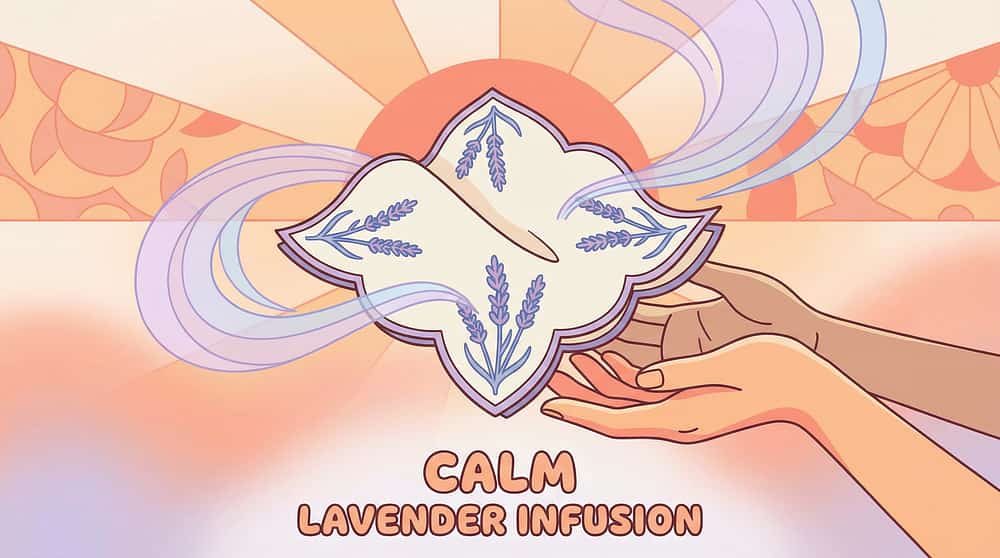
💨→🌬️ Material 2: Incense/Smoke Management Tools
Purpose: Position and protect from smoke.
Options: Soft cotton cloth/handkerchief, familiar calming essential oil on cloth (not skin), temple layout knowledge.
Price: ₹0–500
Positioning and timing are your main tools. Know where the smoke concentrates.
Options: Soft cotton cloth/handkerchief, familiar calming essential oil on cloth (not skin), temple layout knowledge.
Price: ₹0–500
Positioning and timing are your main tools. Know where the smoke concentrates.
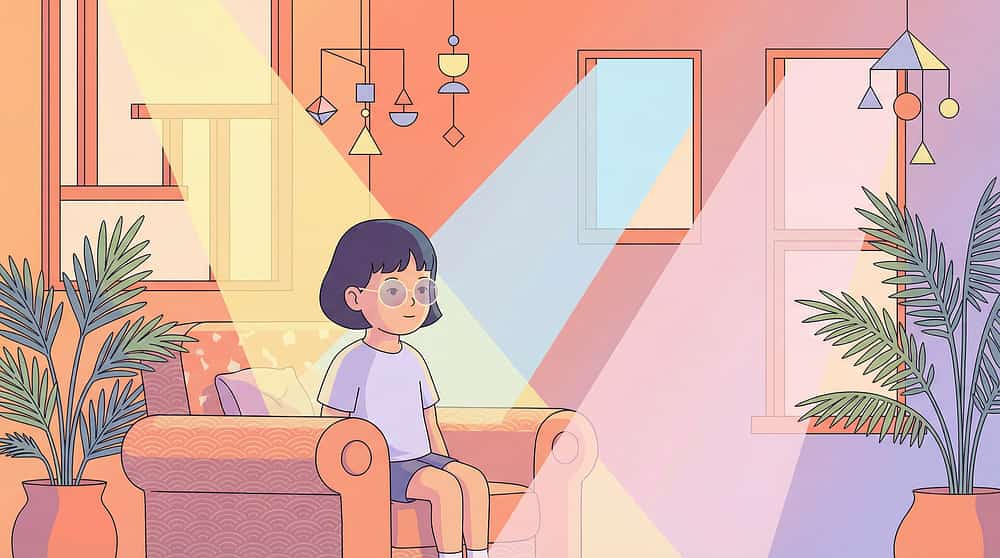
✨→👁️ Material 3: Visual Shielding & Positioning
Purpose: Control brightness and flame intensity.
Options: Strategic positioning plan, tinted/lightly shaded glasses, aarti preview videos, parent-as-shield positioning.
Price: ₹0–1,000
Give the child agency over how much visual input they take in.
Options: Strategic positioning plan, tinted/lightly shaded glasses, aarti preview videos, parent-as-shield positioning.
Price: ₹0–1,000
Give the child agency over how much visual input they take in.

ACT II — MATERIALS 4–6
The 9 Primary Materials: Materials 4–6

👥→🛡️ Material 4: Crowd & Touch Buffer Strategies
Purpose: Space from unpredictable touch.
Options: Temple crowd timing knowledge, edge positioning, parent-as-buffer, exit route planning.
Price: ₹0
Timing is the most powerful crowd management tool. Same temple, completely different experience at 6 AM vs. evening aarti.
Options: Temple crowd timing knowledge, edge positioning, parent-as-buffer, exit route planning.
Price: ₹0
Timing is the most powerful crowd management tool. Same temple, completely different experience at 6 AM vs. evening aarti.

🧸→⚓ Material 5: Grounding & Comfort Objects
Purpose: Familiar anchor in an overwhelming space.
Options: Smooth stones/worry stones, squeeze balls, soft fabric swatch, small weighted bean bag, quiet fidget toys.
Price: ₹50–500
Not a distraction from worship — it's what makes being present for worship possible.
Options: Smooth stones/worry stones, squeeze balls, soft fabric swatch, small weighted bean bag, quiet fidget toys.
Price: ₹50–500
Not a distraction from worship — it's what makes being present for worship possible.
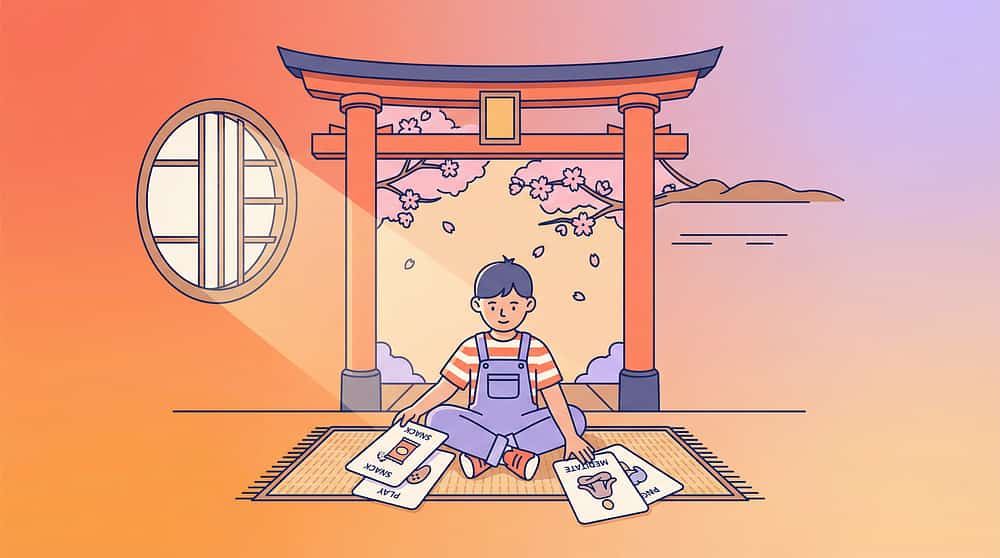
📖→🧠 Material 6: Temple Social Story & Preparation
Purpose: Preparation reduces anxiety.
Options: Photos of your specific temple, visual social story sequence, aarti videos, coping strategy cards.
Price: ₹0–500
Preparation is one of the most powerful interventions and costs nothing.
Options: Photos of your specific temple, visual social story sequence, aarti videos, coping strategy cards.
Price: ₹0–500
Preparation is one of the most powerful interventions and costs nothing.
ACT II — MATERIALS 7–9
The 9 Primary Materials: Materials 7–9
⏰→📋 Material 7: Timing & Duration Management Plan
Purpose: Visit when sensory load is manageable.
Options: Temple schedule knowledge, quiet-time visit plan, gradual duration extension protocol.
Price: ₹0
Five successful 10-minute visits build more capacity than one 60-minute meltdown.
Options: Temple schedule knowledge, quiet-time visit plan, gradual duration extension protocol.
Price: ₹0
Five successful 10-minute visits build more capacity than one 60-minute meltdown.
🚪→🗺️ Material 8: Exit Strategy & Safe Space Map
Purpose: Knowing you can leave helps you stay.
Options: Temple layout knowledge, identified safe spaces (garden, outer courtyard, quieter corner), verbal preparation with child.
Price: ₹0
Having an exit you don't need is better than needing an exit you don't have.
Options: Temple layout knowledge, identified safe spaces (garden, outer courtyard, quieter corner), verbal preparation with child.
Price: ₹0
Having an exit you don't need is better than needing an exit you don't have.
👨👩👧→🤝 Material 9: Family & Community Education
Purpose: Turn critics into allies.
Options: Simple explanation language, printed sensory processing resources, therapist letter, specific phrases for common criticism.
Price: ₹0–500
Family pressure often creates more stress than the temple itself.
Options: Simple explanation language, printed sensory processing resources, therapist letter, specific phrases for common criticism.
Price: ₹0–500
Family pressure often creates more stress than the temple itself.
Total Investment: ₹0–5,000 (most interventions are zero cost). Essential Starters: Ear protection + Timing management + Social story preparation.
ACT II — DIY OPTIONS
DIY Alternatives & Home-Made Options
The most powerful interventions cost nothing. Start these today, without buying a single item.
Timing Strategy
Survey your temple's schedule. When is it quietest? Often early morning (6–7 AM), weekday afternoons, or immediately after the main aarti concludes. Start all visits during these windows.
Strategic Positioning
Position at the edge of the aarti gathering, not the center. Stand with your body between the child and the densest crowd. Choose locations near exits and away from bell towers and incense holders.
Home Preparation with Videos
Use YouTube videos of aarti ceremonies to preview sounds and visuals. Start with low volume. Gradually increase. Pair with comfort objects and create a "First… Then…" visual sequence using photos from your specific temple.
Cotton Cloth Olfactory Buffer
A soft cotton cloth from home, held near (not over) the child's face during peak incense moments. Add a single drop of a familiar essential oil — lavender or any preferred scent — to create an olfactory "anchor" against the unfamiliar smoke.
Home Pooja as Training Ground
Your home pooja setup is a controllable version of the temple environment. Use smaller, softer bells. Light less incense or light it in an adjacent room. Let the child participate from a distance initially — building familiarity one ritual element at a time.
Safety Note for All DIY: Never cover the child's face in a way that restricts breathing. Never force exposure that results in trauma. The cloth is held near, not pressed against. The ear protection is offered, not forced. The visit is ended early if needed — without shame. Source: Indian Journal of Pediatrics RCT, 2019 — DOI: 10.1007/s12098-018-2747-4
ACT II — SAFETY
Safety First: Before You Begin
Contraindications — When NOT to Use This Protocol
- If the child is currently ill, running a fever, or in acute distress unrelated to sensory triggers
- If the child has had a severe meltdown in the past 24 hours and has not fully recovered
- If the temple visit coincides with a major festival day and the child has not progressed past Stage 2
- If the child has a respiratory condition exacerbated by incense smoke — seek medical clearance first
- If there is a history of seizures triggered by flickering lights — aarti flame exposure requires neurologist approval
Material Safety
- Ear protection must still allow the child to hear the parent's voice and safety instructions
- Comfort objects must be small enough not to become a tripping hazard in crowds, and temple-appropriate
- No essential oils applied directly to child's skin without patch testing
- Tinted glasses must allow adequate vision for safe navigation in dim temple interiors
🔴 RED LINE — Stop Immediately If You See:
- Child becomes physically aggressive (hitting, biting) beyond initial protest
- Child shows signs of a panic attack (hyperventilation, frozen/unresponsive state)
- Child develops physical symptoms (vomiting, severe headache, fainting)
- Meltdown escalates beyond anything seen before
- Child explicitly communicates extreme fear (not just discomfort)
Action if RED LINE is crossed:
Exit immediately. Do not attempt to "push through." Return to the safe space or vehicle. Consult your child's occupational therapist or developmental pediatrician before the next attempt. This is data, not failure.
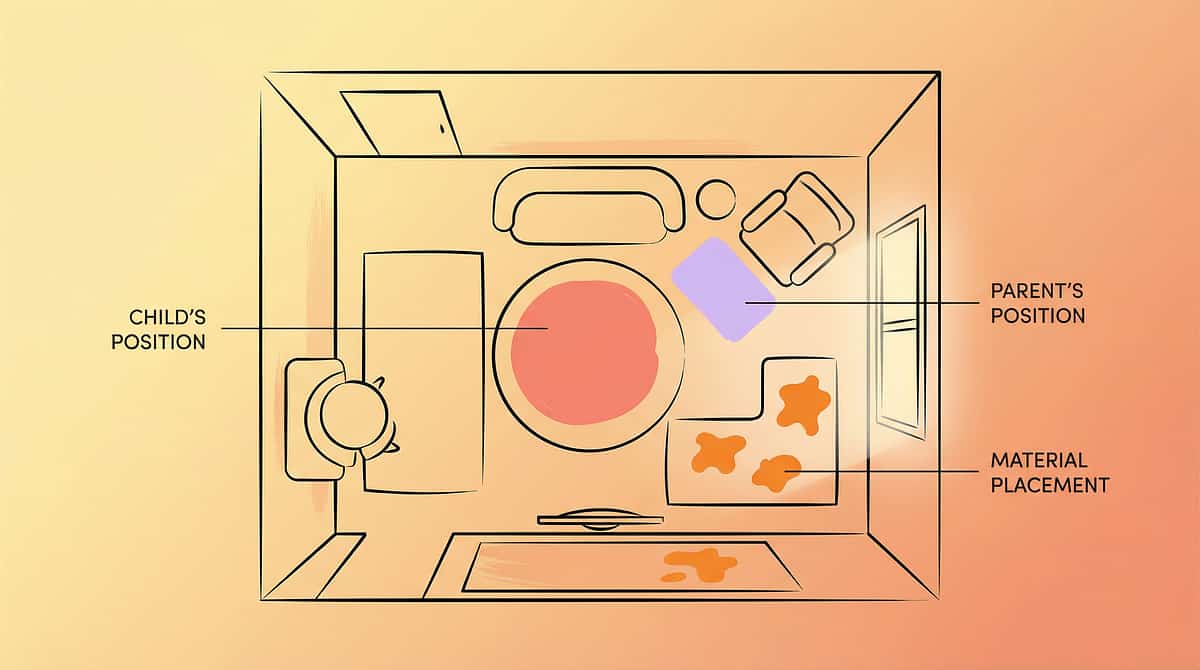
ACT II — SETUP
Set Up Your Space: The Temple Preparation Map
Position 1 — Safe Zone (Pre-Visit Staging)
Vehicle parked with direct exit path. Temple Kit checked: ear protection, comfort object, cloth, water, snack. Social story reviewed one final time.
Position 2 — Entry Zone
Shoe removal area → child puts on ear protection HERE, before entering the acoustic space. Comfort object already in hand.
Position 3 — Darshan Position
Lateral position, not front-center. Parent between child and crowd. Away from bell tower and primary incense holders. Line of sight to deity with distance buffer from flames.
Position 4 — Aarti Observation Point
Edge of gathering. Clear path to exit. Parent can shield from visual intensity of closest flames. Child has permission to look away, close eyes, or focus on comfort object.
Position 5 — Safe Retreat
Identified quiet corner, garden, outer courtyard, or shoe area. Pre-identified during a reconnaissance visit. Go here for a break — not to leave, but to recover and optionally return.
Pre-Visit Checklist:✅ Temple Kit packed ✅ Social story reviewed ✅ Quiet time confirmed ✅ Exit route identified ✅ Extended family expectations managed ("We may need to leave early") ✅ Child calm and regulated ✅ Duration target set (start with 10–15 minutes)
ACT III — READINESS
Is Your Child Ready? Readiness Check
Run this 60-second assessment before every temple visit. It takes less than a minute and prevents hours of distress.
✅ Fed?
Child has eaten within the past 2 hours. Hunger amplifies sensory sensitivity.
✅ Rested?
Child has had adequate sleep. Fatigue reduces coping capacity.
✅ Regulated?
No meltdowns, crying episodes, or significant distress in the past 2 hours.
✅ Willing?
Child shows neutral-to-positive response when temple visit is mentioned. At early stages, neutral is sufficient — enthusiasm comes later.
✅ Equipped?
Temple Kit packed. Ear protection tested and accepted. Comfort object selected by child.
✅ Prepared?
Social story reviewed. Child can describe at least 2 things they will see or hear at the temple.
✅ Healthy?
No illness, fever, headache, or stomach distress.
6–7 ✅ = GO
Proceed with the temple visit at the planned sensory level.
4–5 ✅ = MODIFY
Proceed with reduced duration, reduced intensity, or additional supports.
0–3 ✅ = POSTPONE
Not today. Do a home pooja practice session instead. "The best session is one that starts right."

ACT III — STEP 1
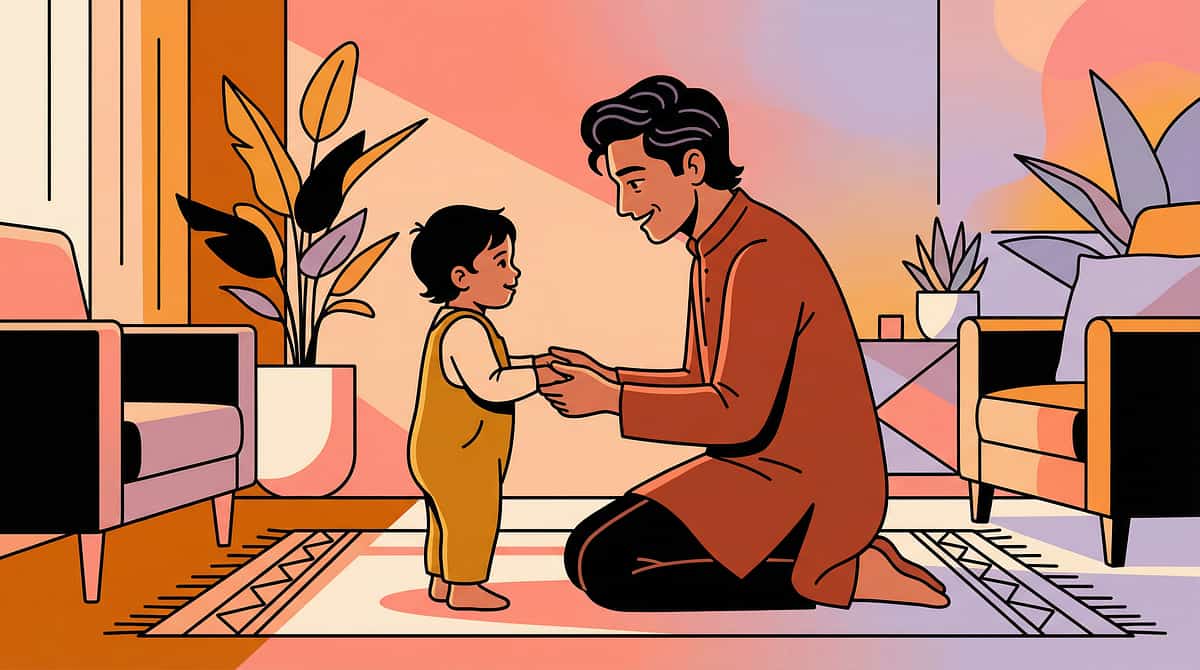
Step 1: The Invitation
Duration: 2–5 minutes | Location: Home (before leaving)
Parent Script
"We're going to visit the temple today. Remember our temple story? [Hold up social story.] First, we put on shoes. Then we drive. Then we take off shoes at temple. Then we walk in slowly. You have your [comfort object] and your ear covers. If the bells are too loud, we have your ear covers ready. If you want to go to the garden, we can go to the garden. Ready? Let's go see God today."
Body Language Guidance
- Calm, unhurried tone — no anxiety in your voice (children read parental anxiety)
- Kneel to child's eye level when speaking
- Hold up each element of the Temple Kit as you mention it
- Let the child hold their comfort object from this moment forward
Acceptance Cues (Child is ready)
- Reaches for comfort object
- Nods or verbally agrees
- Begins putting on shoes
- Shows interest in social story images
Resistance Cues (Modify or postpone)
- Stiffens body, turns away
- Covers ears preemptively (anticipatory anxiety)
- Cries or says "No temple"
- Physical symptoms emerge (stomach ache claim)
If Resistance: Do not force. Say: "That's okay. We don't have to go today. Let's practice our temple story at home instead." Home practice counts as intervention progress.
ACT III — STEP 2
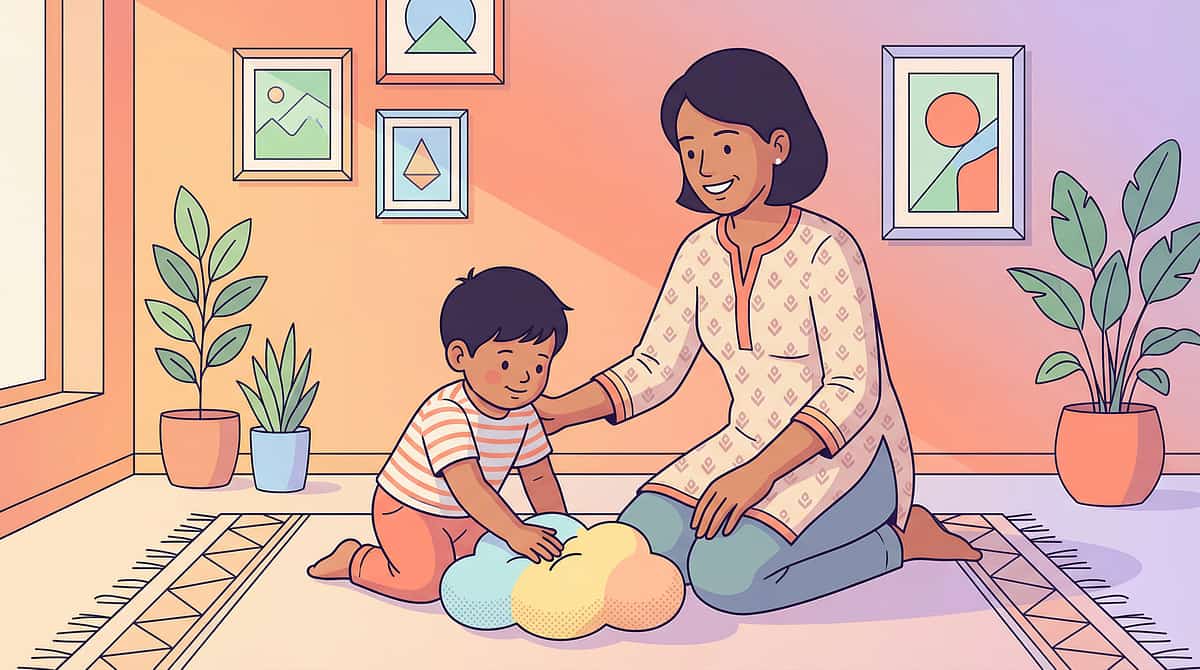
Step 2: The Engagement
Duration: 5–10 minutes | Location: Travel to temple + Arrival
During Travel
Play soft devotional music at low volume in the car. Review the social story one more time. Confirm the child has their ear protection accessible — not yet worn. Comfort object in hand throughout the journey.
At Temple Entry
"We're here. Let's put on your ear covers now — before we go inside. Good. Now hold my hand. We're going to walk slowly." Ear protection goes on BEFORE entering the temple's acoustic space, at the shoe removal area.
Read Your Child's Response
Engaged: Looking around with interest, walking willingly, asking questions. Tolerating: Walking but holding comfort object tightly, quiet but not distressed. Avoiding: Pulling back, attempting to return to vehicle, whimpering.
Reinforcement Cue
The moment the child steps inside the temple without distress: "You're doing it! You walked right in. That's so brave. God is happy to see you."
If Avoidance: Don't push past the threshold. Spend time in the outer courtyard. This IS the visit for today. Being near the temple without distress is genuine progress.
ACT III — STEP 3
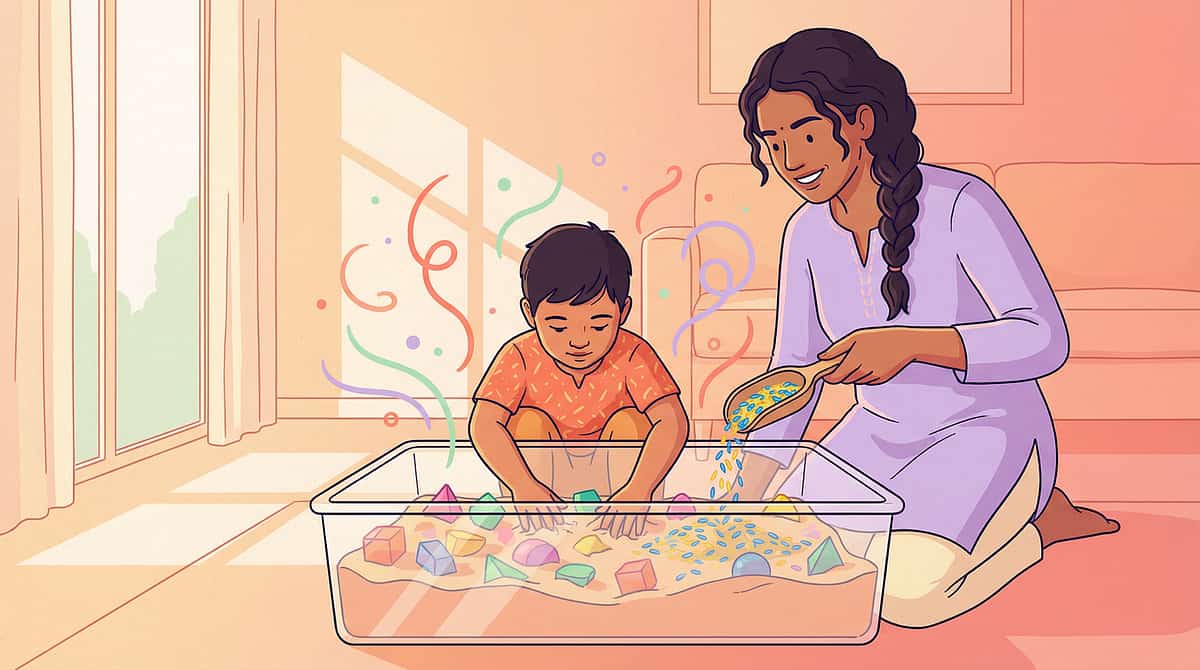
Step 3: The Therapeutic Action
Duration: 5–30 minutes depending on current stage | Location: Inside temple
Stage 1 — First Visits
Outer areas only. Brief darshan from a distance. No aarti exposure. 5–10 minutes total. Leave while the child is still comfortable — BEFORE distress begins.
"Let's say hello to God. There He is! Beautiful. Now let's go see the garden."
"Let's say hello to God. There He is! Beautiful. Now let's go see the garden."
Stage 2 — Building Tolerance
Enter the main temple area during quiet times. Brief darshan closer to the deity. 10–15 minutes. May hear some bells (ear protection on). Light incense exposure.
"We're going closer today. Your ear covers are on. If it gets too loud, squeeze your [comfort object] tight."
"We're going closer today. Your ear covers are on. If it gets too loud, squeeze your [comfort object] tight."
Stage 3 — Moderate Exposure
Present during moderate activity. Brief overlap with aarti start or end (not full ceremony). 15–20 minutes inside. Positioned at edge of gathering.
Stage 4 — Partial Ceremony
Present for partial aarti — arrives for last portion or stays for first portion. Full ear protection, comfort object, edge positioning. 20–30 minutes.
Stage 5 — Full Participation
Full aarti attendance with discreet ear protection. Self-selected positioning. Self-managed comfort strategies. 30+ minutes.
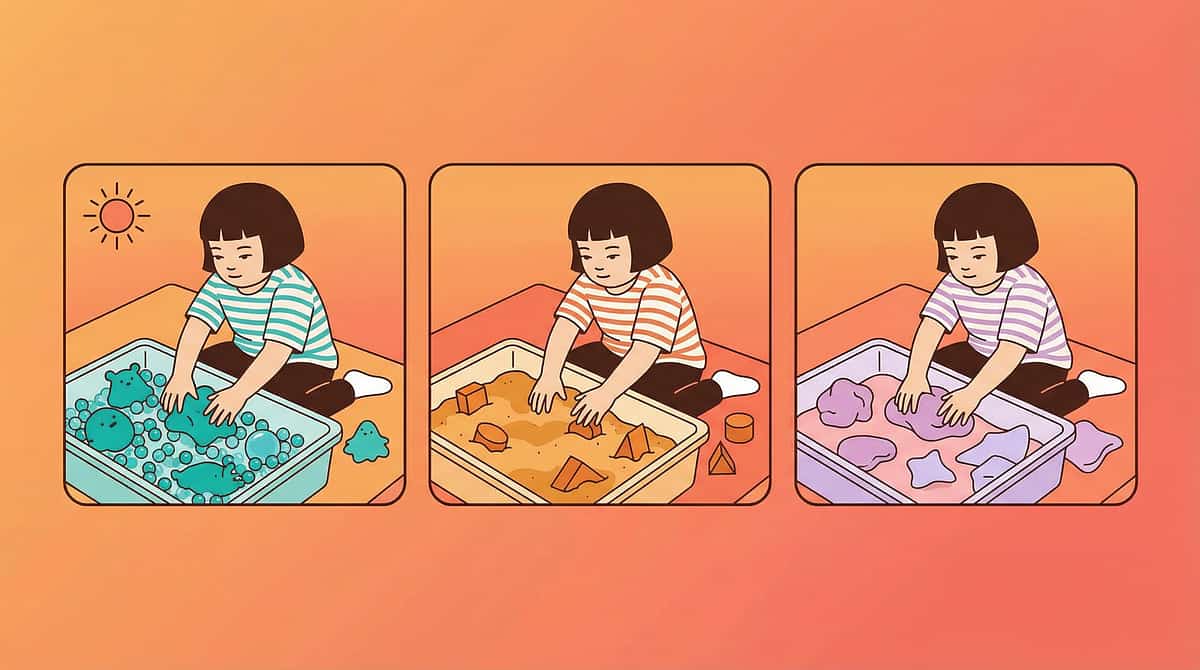
Common Execution Errors:❌ Pushing to the next stage before the current stage is consistently successful ❌ Removing ear protection to "test" tolerance ❌ Front-row positioning before the child is ready ❌ Staying past the first signs of overwhelm to "finish the prayer"
ACT III — STEP 4
Step 4: Repeat & Vary
Frequency: 1–2 temple visits per week, aligned with family pattern
Repetition Protocol
Repeat the current stage 3–5 times successfully before advancing to the next stage. "Success" means: the child completed the designated duration without meltdown, without needing emergency exit, and with manageable (not zero) distress.
"3 good visits > 10 forced visits."
Each successful visit at the current level builds neural pathways that support the next level. Rushing creates setbacks, not progress.
Variation Within Stages
- Visit different times on different days (morning slots, weekday afternoons)
- Try slightly different positions within the same zone
- Vary which comfort object the child selects
- Gradually reduce the social story review time — from full review to brief reminder
Satiation Indicators (Time to Level Up)
- Child appears bored rather than stressed during the visit
- Child begins looking around with curiosity rather than vigilance
- Child initiates interaction with temple elements (reaching for prasad, asking questions)
- Parent feels confident enough to relax slightly

ACT III — STEP 5
Step 5: Reinforce & Celebrate
Timing: Within 3 seconds of desired behavior, and immediately after exiting temple
In-Temple (Whispered)
"You're doing amazing. You're in the temple right now. So brave."
"I see you using your ear covers perfectly."
"You're holding your stone and staying calm. That's wonderful."
"I see you using your ear covers perfectly."
"You're holding your stone and staying calm. That's wonderful."
Post-Temple (Within 60 seconds)
"You did it! You stayed in the temple for [X] minutes! That was longer than last time! I'm so proud of you."
Reinforcement Menu
Specific Praise
Name the exact behavior — not generic "good job"
Preferred Activity
Playground, ice cream, screen time — whatever is reinforcing for this child
Token Economy
Temple visit sticker on a chart → cumulative reward at 5/10 stickers
Temple Photo
Photo with parent in temple, building positive association with the environment
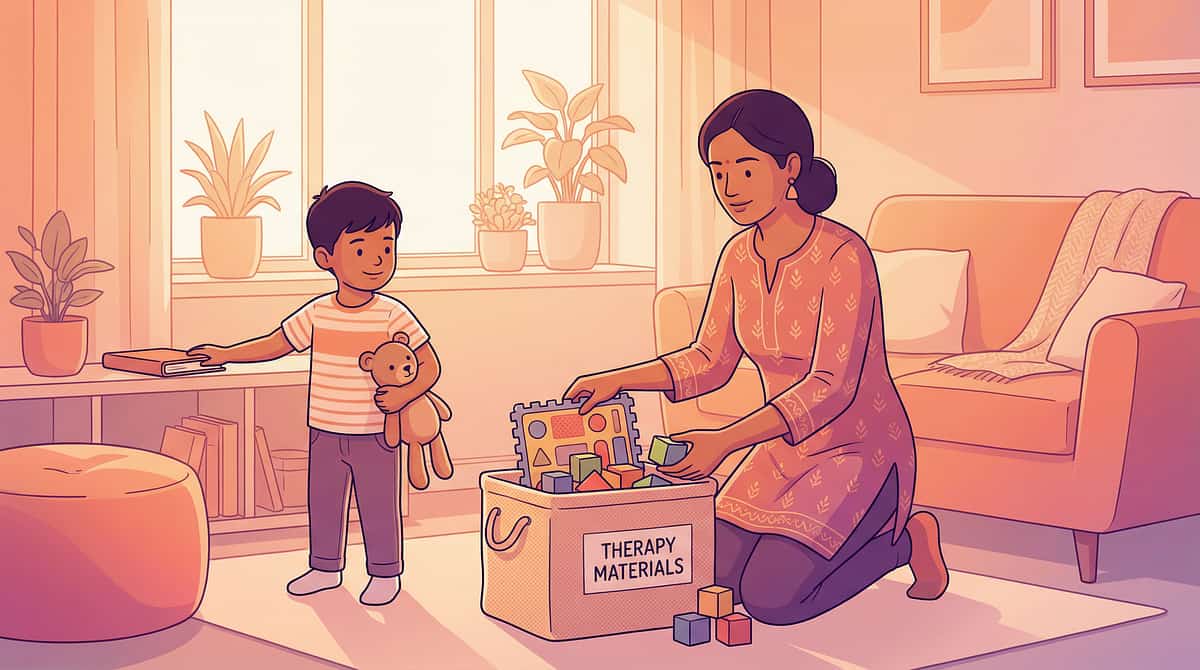
Critical Rule: "Celebrate the attempt, not just the success." A child who walked to the temple steps and then needed to leave has still achieved something worth celebrating compared to not going at all.
ACT III — STEP 6
Step 6: The Cool-Down
Duration: 5–10 minutes | Location: Safe space within temple grounds or vehicle
Transition Warning (Inside Temple)
"Two more minutes and then we'll go to the garden/car." Then: "One more minute. Almost done. You did so well." Predictability reduces protest at transition time.
Cool-Down Activity After Exiting
Remove ear protection slowly — let the child control this. Sit in a quiet space (garden, outer courtyard, vehicle with AC). Offer water and a small snack. Let the child continue holding their comfort object. No debriefing questions yet — let the nervous system settle first.
Proprioceptive Input
Gentle grounding: a firm hug if child accepts, or deep pressure hand squeeze. These proprioceptive inputs help the nervous system downregulate after peak sensory activation.
Material Put-Away Ritual
"Let's put the Temple Kit back in the bag. Ear covers — check. Stone — check. Cloth — check. Ready for next time." This ritual signals "temple experience is complete" and creates predictable closure.
If the Child Resists Ending: As the child progresses, they may resist LEAVING the temple. This is a wonderful sign. Gently maintain the time limit: "We'll come back soon. The temple will be here." Gradually extend duration in response to this motivation.
ACT III — DATA
Capture the Data: Right Now
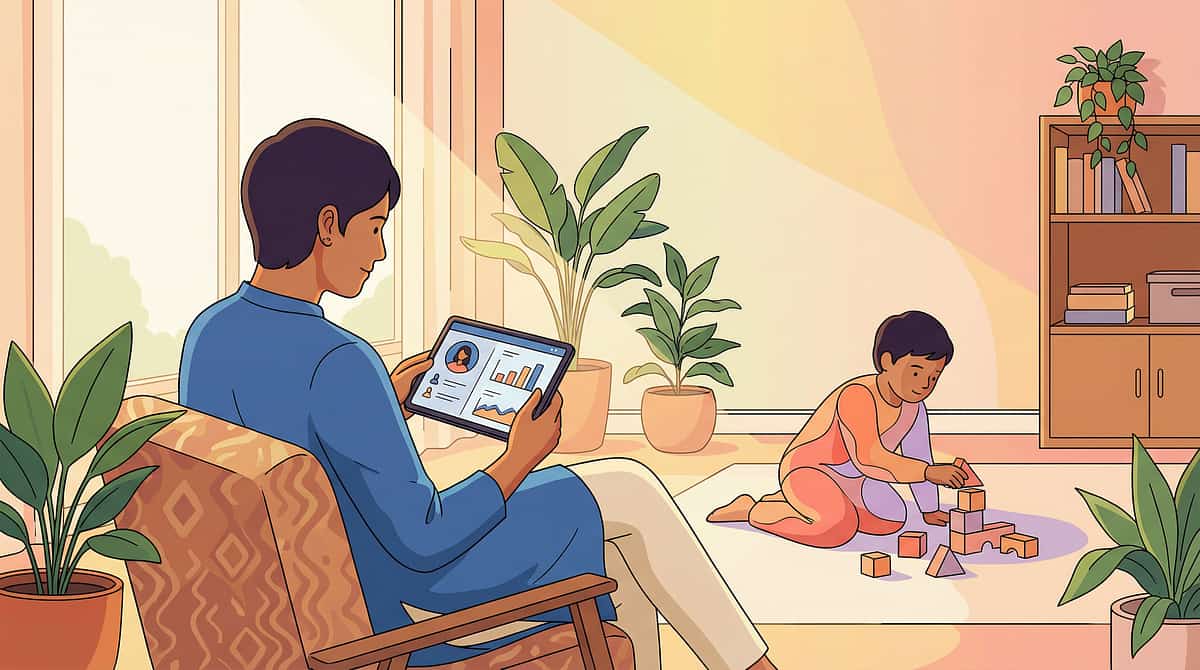
Record within 60 seconds of leaving the temple. Use phone notes or a tracking sheet. This data drives your child's personalized progression and becomes invaluable for your OT consultation.
1
Data Point 1 — Duration
How many minutes was the child inside the temple? Note the outcome: Completed the planned duration / Exited by choice / Exited due to distress.
2
Data Point 2 — Distress Level (1–5)
1 = Calm throughout | 2 = Mild, self-managed | 3 = Moderate, needed parent support | 4 = Significant, needed exit | 5 = Full meltdown
3
Data Point 3 — Triggers Observed
Check all that applied: ☐ Bells ☐ Incense ☐ Crowd ☐ Flames ☐ Floor temperature ☐ Chanting ☐ Duration ☐ Unknown ☐ None notable
4
Data Point 4 — Materials Used
Which materials from the Temple Kit were used and how effective were they? Ear protection: Yes/No, Helpful? | Comfort object: Yes/No, Helpful? | Cloth: Yes/No, Helpful?
"60 seconds of data now saves hours of guessing later. After 4–6 visits, your data reveals patterns: Which triggers dominate? Which materials help most? Is duration increasing? Is distress level decreasing?"

ACT III — TROUBLESHOOT
What If It Didn't Go as Planned?
Core Principle: "Session abandonment is not failure — it's data."
Problem 1: Child refused ear protection
Why: The ear protection may be uncomfortable, unfamiliar, or the child resists anything on their head.
Fix: Practice wearing ear protection at home during preferred activities first. Let the child choose between over-ear and in-ear options. Make it "cool" — "These are your special temple powers."
Fix: Practice wearing ear protection at home during preferred activities first. Let the child choose between over-ear and in-ear options. Make it "cool" — "These are your special temple powers."
Problem 2: Had to leave after 3 minutes
Why: The sensory environment exceeded current capacity — this IS data, not failure.
Fix: 3 minutes inside is more than 0 minutes. Celebrate it. Next visit, target 4 minutes. Ensure you're visiting during the quietest possible time.
Fix: 3 minutes inside is more than 0 minutes. Celebrate it. Next visit, target 4 minutes. Ensure you're visiting during the quietest possible time.
Problem 3: Incense was overwhelming despite positioning
Why: Some temples have poor ventilation, especially in smaller inner sanctums.
Fix: Stay in outer areas with better air circulation. Visit after aarti concludes (when incense has partially dissipated). The cotton cloth with a familiar scent provides a breathing anchor.
Fix: Stay in outer areas with better air circulation. Visit after aarti concludes (when incense has partially dissipated). The cotton cloth with a familiar scent provides a breathing anchor.
Problem 4: Extended family made comments about ear protection
Why: Lack of understanding about sensory processing differences.
Fix: "His brain processes sound differently. The bells cause him physical pain. The ear covers make it possible for him to be here." Prioritize your child's wellbeing over approval.
Fix: "His brain processes sound differently. The bells cause him physical pain. The ear covers make it possible for him to be here." Prioritize your child's wellbeing over approval.
Problem 5: Full meltdown during aarti
Why: Combined sensory load exceeded capacity. Aarti is peak intensity.
Fix: Exit immediately. Do not attempt to calm inside the temple during aarti. Return to quiet-time visits — this is a stage progression issue, not a protocol failure.
Fix: Exit immediately. Do not attempt to calm inside the temple during aarti. Return to quiet-time visits — this is a stage progression issue, not a protocol failure.
Problem 6: Fine during quiet visits but family attends peak times
Why: Your family attends during evening aarti or festivals.
Fix: This is exactly the progression pathway. Quiet visits → moderate → partial aarti → full aarti. Share your plan so family understands it's strategic, not avoidance.
Fix: This is exactly the progression pathway. Quiet visits → moderate → partial aarti → full aarti. Share your plan so family understands it's strategic, not avoidance.
ACT III — ADAPT
Adapt & Personalize
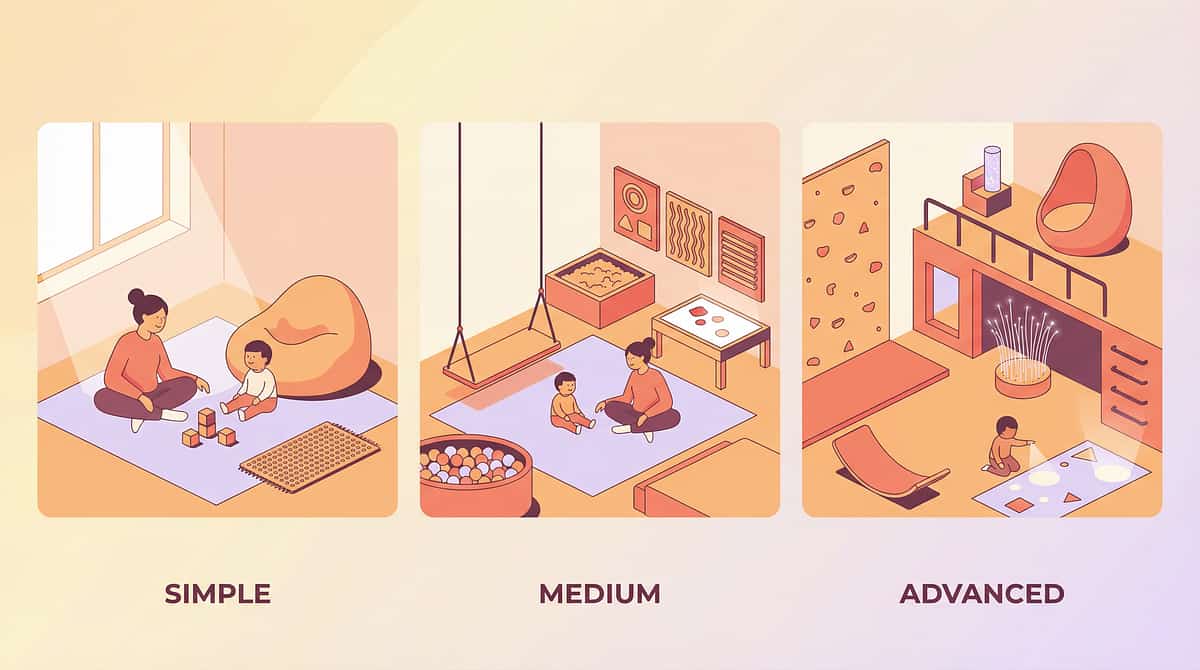
1
EASIER
6 AM weekday visit. Outer courtyard only. 5 minutes maximum. Full sensory kit. Both parents present. Exit at first sign of discomfort.
2
STANDARD
Moderately quiet times. Main temple area. 15–20 minutes. Core materials (ear protection + comfort object). One parent. Exit at moderate distress.
3
HARDER
Busier times approaching aarti. Closer positioning. 30+ minutes. Minimal, discreet materials. Partial aarti exposure. Child self-manages distress.
Sensory Avoider
Emphasis on protection — ear covers, positioning, reduced exposure. Gradual, slow progression. "Safety first" approach. Each stage repeated until fully comfortable before advancing.
Sensory Seeker
May be drawn to certain temple elements (flames, vibrations) while overwhelmed by others. Identify which inputs the child seeks and which they avoid. Allow controlled access to sought inputs while protecting against avoided ones.
Age-Based Modifications
- Ages 3–4: Parent-carried if needed. Very brief exposures. High reliance on comfort objects. Social stories use simple pictures, not words.
- Ages 5–8: Walking independently. Longer duration capacity. Social stories include text. Beginning of self-advocacy ("It's too loud, Amma").
- Ages 9–12: Self-selected accommodations. Self-positioning. Discreet tools preferred. Can be part of the planning process.

ACT IV — PROGRESS ARC
Week 1–2: What to Expect
Observable Indicators
Child may still show anxiety before temple visits but it is not escalating. Duration inside the temple may increase by 2–5 minutes from baseline. Child accepts ear protection without protest (or with reduced protest). Child holds comfort object throughout but is not in active distress. Child may look at temple elements briefly with curiosity rather than fear.
What "Progress" Looks Like
"If your child stayed inside the temple for 8 minutes this week compared to 5 minutes last week — that's a 60% improvement. If they put on ear protection without crying — that's a behavioral shift. If they walked through the entrance without clinging — that's enormous. Look for the small shifts."
What Is NOT Progress Yet
Full aarti attendance (too early). Enjoying the temple visit — tolerance precedes enjoyment. Not needing any materials — these are tools, not crutches. Extended family noticing a difference — they will, in weeks 4–8.
Parent Emotional Preparation
"Weeks 1–2 are about establishing the routine and building data. You are learning your child's patterns. The child is learning that temple visits follow a predictable, manageable sequence. Patience is not passive — it's strategic."

ACT IV — WEEK 3–4
Week 3–4: Consolidation Signs
40%
Progress Milestone
Typical improvement in tolerance and duration by end of week 4 with consistent protocol execution.
3/5
Stage Completion
Target ratio of successful visits before advancing to the next stage in the graduated exposure sequence.
Consolidation Indicators
Child may begin asking about temple visits neutrally — not with fear. Anticipatory anxiety decreases. Comfort object is held but not death-gripped. Child looks around the temple with growing interest. Duration targets consistently met. Ear protection is routine — child reaches for it themselves.
Generalization Seeds
Reduced sensitivity in other multi-sensory environments (busy markets, family gatherings). Comfort object strategy being used independently in other contexts. Child may begin communicating about sensory experience: "It's smoky" or "Too loud" — self-advocacy is emerging.
Parent Milestone
"You may notice you're more confident too. Your own anxiety about temple visits is decreasing. You're reading your child's cues faster. You're exiting proactively rather than reactively. This is parental self-efficacy in action."

ACT IV — WEEK 5–8
Week 5–8: Mastery Indicators
1
Mastery Criteria
Child completes designated visit duration at current stage without distress. Advancement to the next stage is possible. Child uses sensory tools independently without parent prompting. Duration approaches 20–30 minutes. Family members begin noticing positive changes.
2
Generalization
Skills transfer to other religious settings — family pooja, festivals, other temples. Crowd tolerance improving in non-temple settings. Auditory sensitivity management tools used independently.
3
"Mastery Unlocked" Criteria
The child can attend a quiet-to-moderate temple visit for 20+ minutes using self-selected sensory tools, with manageable or no distress, and a positive or neutral post-visit state.
Maintenance Check: Does the temple visit protocol persist without the formal "preparation ritual"? Can the child handle a spontaneous temple visit — with Temple Kit available but without extensive pre-visit preparation?
ACT IV — CELEBRATE
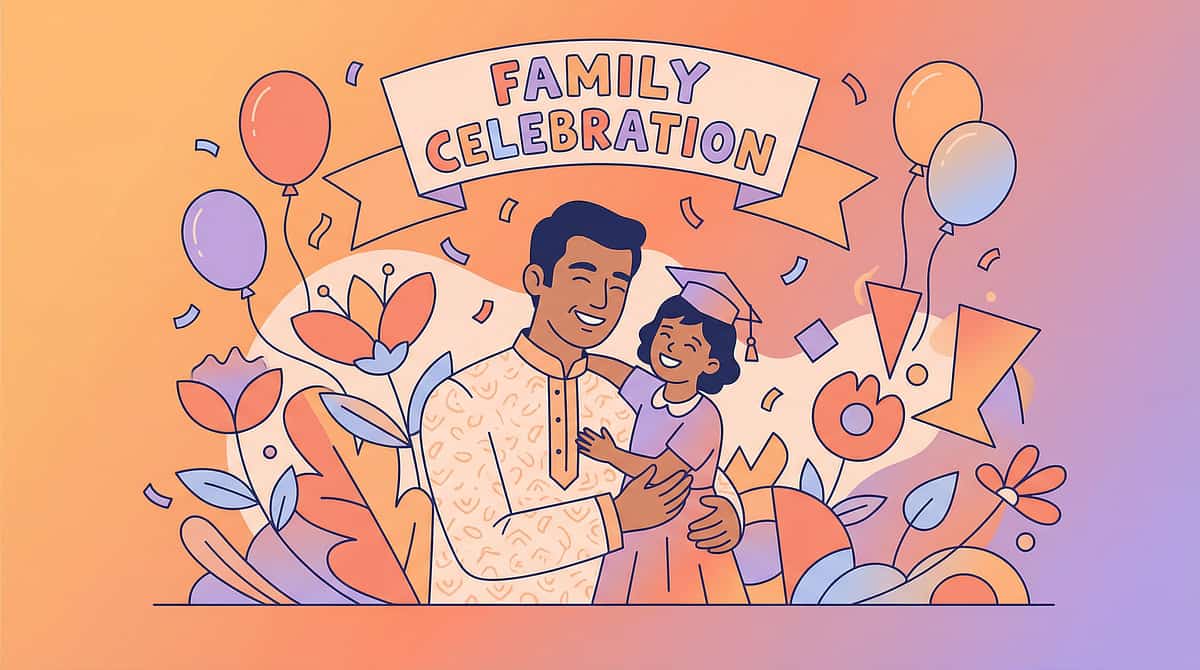
Celebrate This Win
"You did this. Your child's world just got bigger because of your commitment."
Temple visits have moved from meltdown to manageable. A sacred space that was off-limits is now accessible. A cultural connection that was severed is being rebuilt. A family tradition that caused conflict is becoming a source of unity.
You Learned
Your child's sensory profile in temple environments — and used that knowledge systematically to build tolerance.
You Advocated
For your child's needs in a context of cultural pressure — with warmth, clarity, and clinical precision.
You Tracked
Data and adjusted the protocol based on evidence — thinking like a clinical professional on behalf of your child.
Family Celebration Suggestion: After a milestone temple visit, take a family photo in the temple. Write the date on the calendar. Tell the child: "Remember when temple was hard? Look at you now."

ACT IV — RED FLAGS
Red Flags: When to Pause
Trust your instincts — if something feels wrong, pause and ask a professional before continuing.
🔴 Regression after 4+ weeks
Child's tolerance is decreasing rather than increasing despite consistent protocol execution. This may indicate an underlying anxiety condition requiring clinical intervention beyond the home protocol.
🔴 Generalized anxiety spreading
Temple-related anxiety begins extending to all outings, car rides, or leaving the house. The fear is generalizing rather than remaining environment-specific.
🔴 Physical symptoms intensifying
Vomiting, headaches, or sleep disturbance specifically linked to temple visit days. Somatization of anxiety requires professional assessment.
🔴 Self-injurious behavior
Child begins hitting self, head-banging, or other self-harm during or after temple exposure. Immediate professional consultation required.
🔴 Complete ear protection rejection
If the child cannot tolerate any form of auditory protection and bells remain the primary trigger, an audiological evaluation and custom ear protection fitting may be needed.
🔴 Family conflict escalating
If disagreements about temple accommodation are causing significant family distress, family therapy or a joint session with the treatment team may help.
Escalation Pathway
Protocol adjustment → Teleconsultation with Pinnacle OT → In-clinic sensory evaluation → Comprehensive developmental assessment
FREE National Autism Helpline
📞 9100 181 181 — 24x7 — 16+ languages
ACT IV — PATHWAY
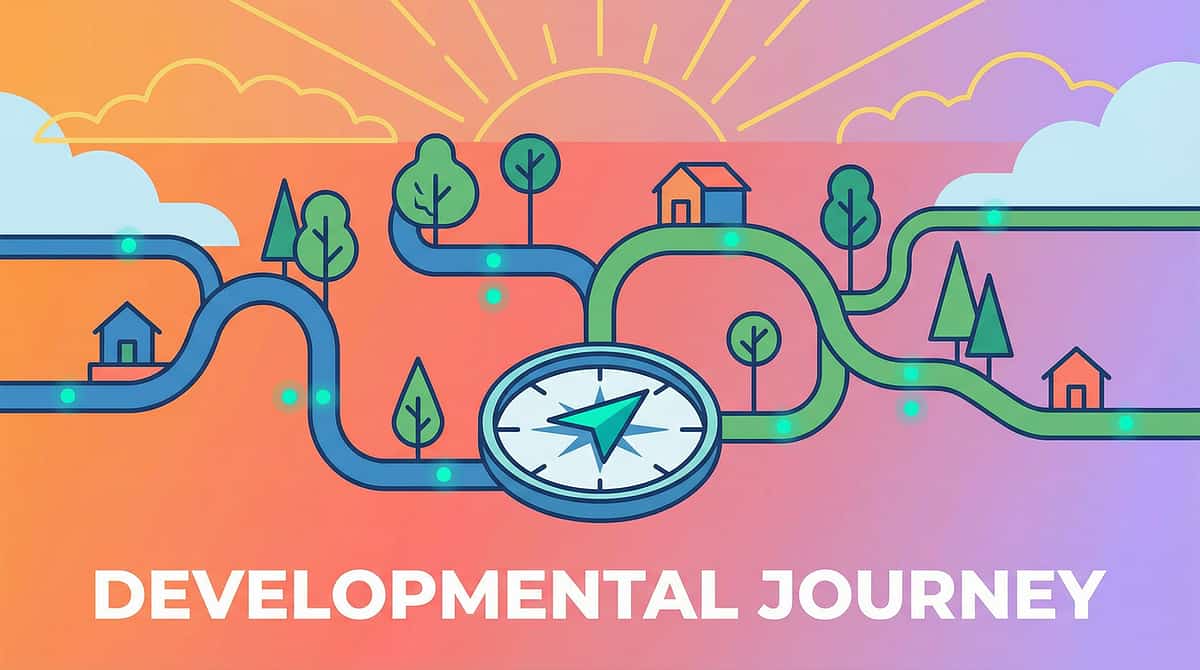
The Progression Pathway
This technique sits within a broader therapeutic sequence. Understanding where it connects helps you plan what comes before and what comes next.
Path A — Auditory Dominant
→ A-052: Can't Localize Sound
→ A-044: Sensitivity to Specific Sounds
→ A-044: Sensitivity to Specific Sounds
Path B — Crowd/Social Dominant
→ A-053: Crowded Event Overwhelm
→ Community Participation Protocol
→ Community Participation Protocol
Path C — Olfactory Dominant
→ A-060: Olfactory Sensitivity (targeted smell desensitization)
Path D — Successful → Generalize
Apply the Temple Comfort Protocol to weddings, festivals, crowded markets, cinema halls, family gatherings
ACT V — COMMUNITY
Families Who've Been Here
Family Vignette 1 — 6 Months
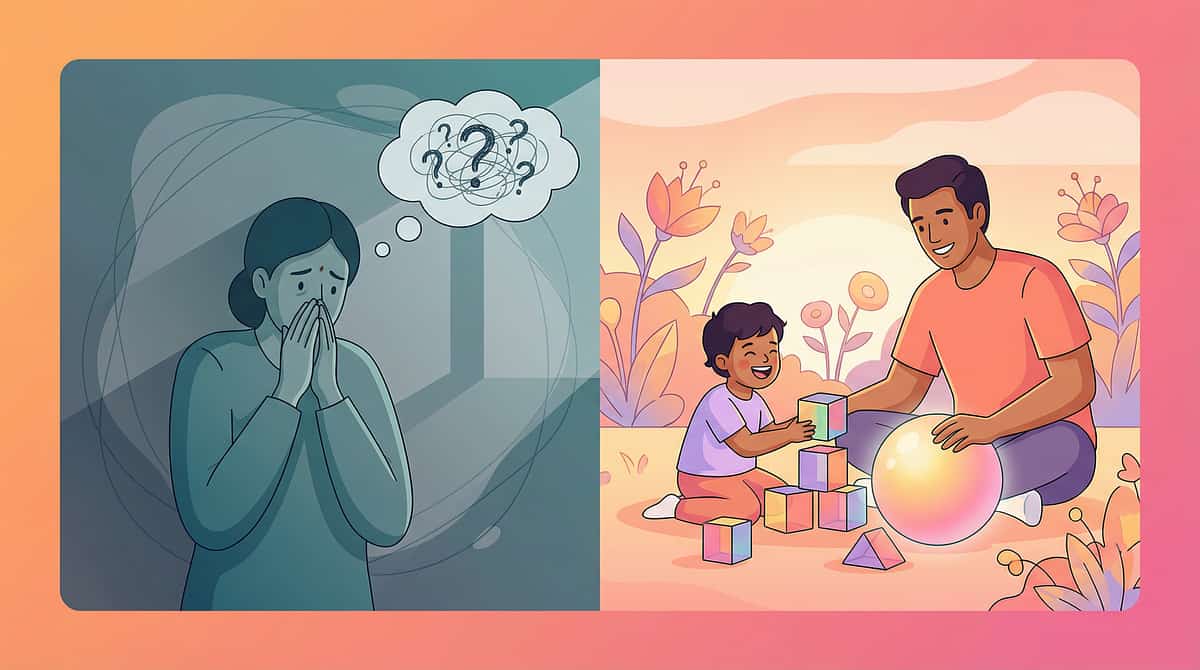
Before: "Temple was impossible. My son would start crying the moment bells rang. We stopped going as a family. My mother-in-law was convinced he was just 'naughty.' Diwali at the temple — the biggest family tradition — was completely off the table."
After: "Last Diwali, he did the full evening aarti at our family temple — with his earplugs in, standing at the side, holding his comfort stone. He watched the flames, didn't cry, and asked for prasad. My mother-in-law cried happy tears."
After: "Last Diwali, he did the full evening aarti at our family temple — with his earplugs in, standing at the side, holding his comfort stone. He watched the flames, didn't cry, and asked for prasad. My mother-in-law cried happy tears."
Family Vignette 2 — 3 Months
Before: "Our daughter had anticipatory anxiety days before any temple visit. Stomach aches every Saturday morning. We tried 'just exposing her more' as everyone suggested — it made everything worse."
After: "The social story changed everything. Once she knew exactly what would happen — in what order — her anxiety dropped dramatically. Now she asks to light the diya herself. She's still careful about the incense, but she's present. She's choosing to be there."
After: "The social story changed everything. Once she knew exactly what would happen — in what order — her anxiety dropped dramatically. Now she asks to light the diya herself. She's still careful about the incense, but she's present. She's choosing to be there."
From the Therapist's Notes: "The families who tried forced immersion universally reported worsening. The families who started with protection and built gradually reported consistent improvement. The intervention is not the temple visit — it's the systematic preparation, protection, and progression." Note: These are illustrative cases. Outcomes vary by child profile.

ACT V — CONNECT
Connect With Other Parents
"You are not navigating this alone."
WhatsApp & Online Communities
Pinnacle Sensory Solutions Parents WhatsApp Group. Temple & Religious Participation Support Group. Online Forum: pinnacleblooms.org/community/sensory
Local Pinnacle Parent Meetups
Find your nearest Pinnacle center and join their monthly parent group. Share strategies, swap Temple Kit tips, and connect with families on the same journey. pinnacleblooms.org/centers
Peer Mentoring
Connect with a parent who has successfully navigated temple participation challenges. Their experience is invaluable — and they remember exactly how it felt to be where you are now.
"Your experience helps others — consider sharing your journey."
ACT V — PROFESSIONAL SUPPORT
Your Professional Support Team
Home + Clinic = Maximum Impact. Your home-based Temple Comfort Protocol is most effective when supported by professional guidance.
What a Pinnacle OT Can Do For Your Child
- Conduct a comprehensive sensory processing evaluation specific to your child's multi-sensory profile
- Identify which sensory channels are most over-responsive (auditory? olfactory? tactile?)
- Fit and recommend the most effective ear protection for your child's anatomy and sensitivity level
- Design a systematic desensitization protocol with precise progression milestones
- Address co-occurring challenges: anxiety, auditory processing disorder, tactile defensiveness
- Provide a therapist letter for extended family education
- Track progress through GPT-OS® Environmental Tolerance Index
Find Support Near You
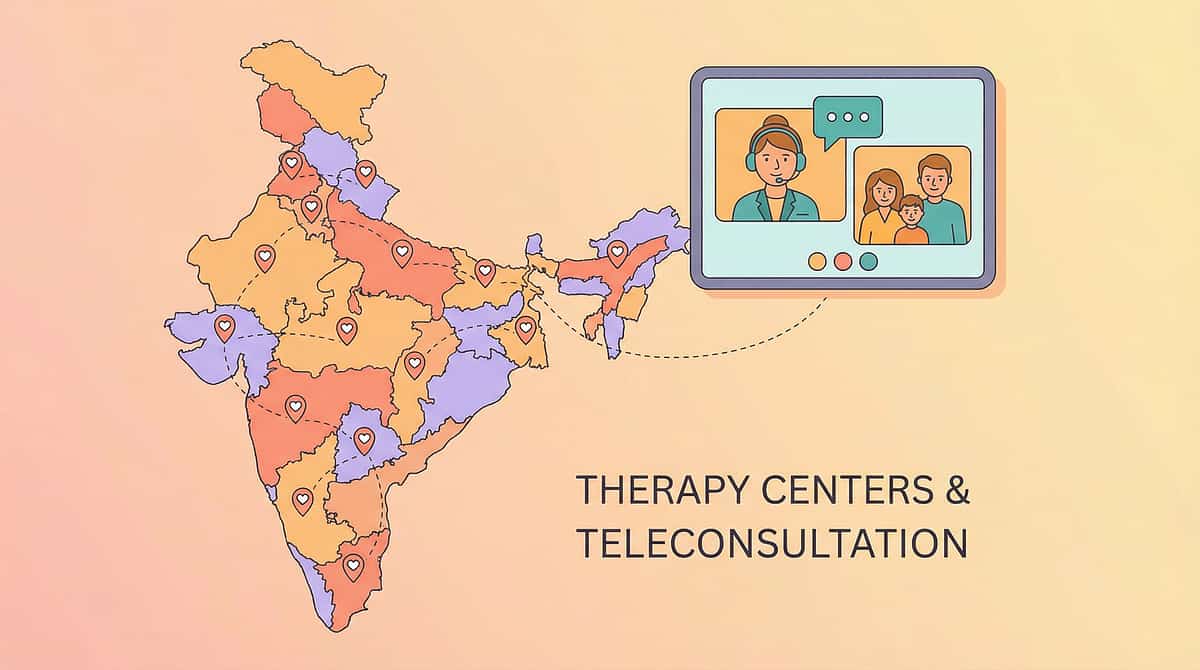
70+ centers across India
Interactive Map — pinnacleblooms.org/centers
Interactive Map — pinnacleblooms.org/centers
Teleconsultation (Remote Families)
Book a Video Consultation — Available in 16+ languages
Book a Video Consultation — Available in 16+ languages
FREE National Autism Helpline
📞 9100 181 181
24x7 — 16+ languages
For structured guidance on getting started.
📞 9100 181 181
24x7 — 16+ languages
For structured guidance on getting started.
ACT V — RESEARCH
The Research Library
For the curious parent — the science behind this protocol, drawn from Levels I–II of the clinical evidence pyramid.
PRISMA Systematic Review (Level I) — 2024
"Sensory Integration Intervention for Children with ASD." 16 articles from 2013–2023 confirm SIT meets evidence-based practice criteria. → PubMed: PMC11506176
Meta-Analysis, World J Clin Cases (Level I) — 2024
"Effects of Sensory Integration Therapy on Children with Autism." 24 studies. Effective promotion of social skills, adaptive behavior, sensory processing, and motor skills. → PMC10955541 | DOI: 10.12998/wjcc.v12.i7.1260
Indian Journal of Pediatrics RCT (Level II) — 2019
Padmanabha et al. Home-based sensory interventions demonstrated significant outcomes in Indian pediatric population. Safety protocols for parent-administered sessions. → DOI: 10.1007/s12098-018-2747-4
WHO/UNICEF CCD Package (Global Policy)
Caregiver-mediated intervention as primary delivery mechanism. Implemented across 54 countries. → PMC9978394 | nurturing-care.org
Frontiers in Integrative Neuroscience (Level II) — 2020
"Evaluating Sensory Integration/Sensory Processing Treatment." Comprehensive neurological framework. → DOI: 10.3389/fnint.2020.556660
ACT V — TECHNOLOGY
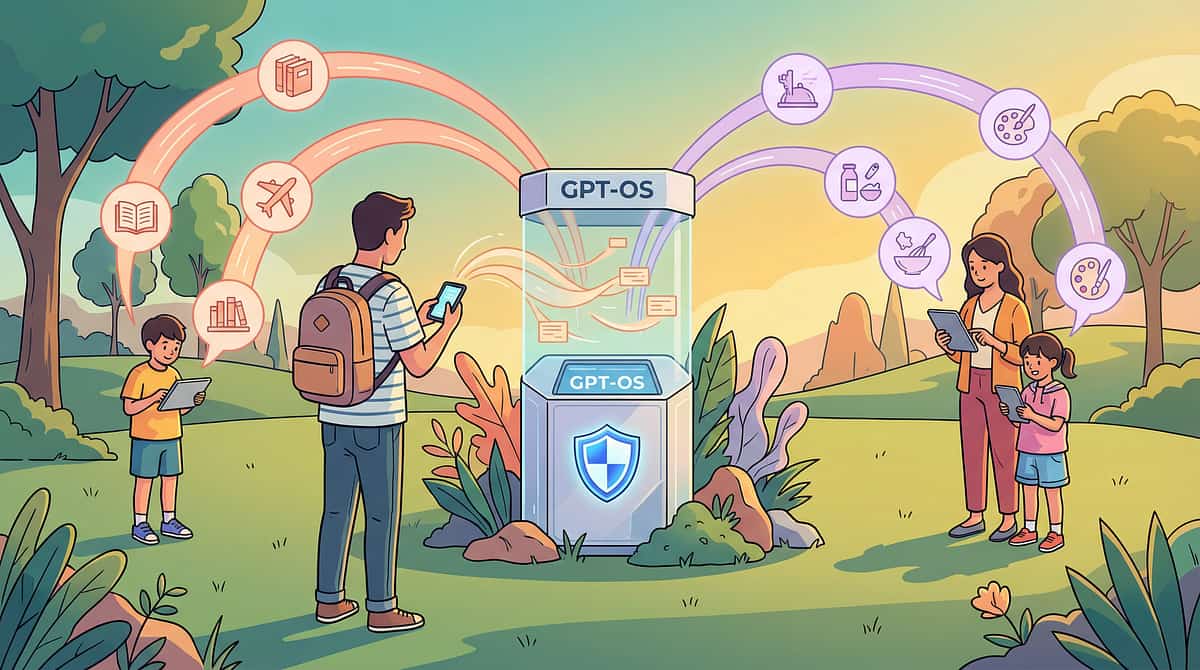
How GPT-OS® Uses Your Data
"Your Temple Visit Data → Better Recommendations for Every Child"
What GPT-OS® Learns
- Which triggers dominate for different child profiles
- Optimal progression speed by age and sensory profile
- Which material combinations are most effective
- How timing strategies impact tolerance outcomes
- When to recommend professional escalation
Privacy Protection
- All data anonymized for population-level analysis
- Individual child data visible only to family and authorized clinicians
- Compliant with Indian data protection standards
- No data sold or shared outside the clinical system
"Your data helps every child like yours." Each family's temple visit data contributes to a growing evidence base that makes the next family's protocol more precise, more personalized, and more effective.
ACT V — REEL
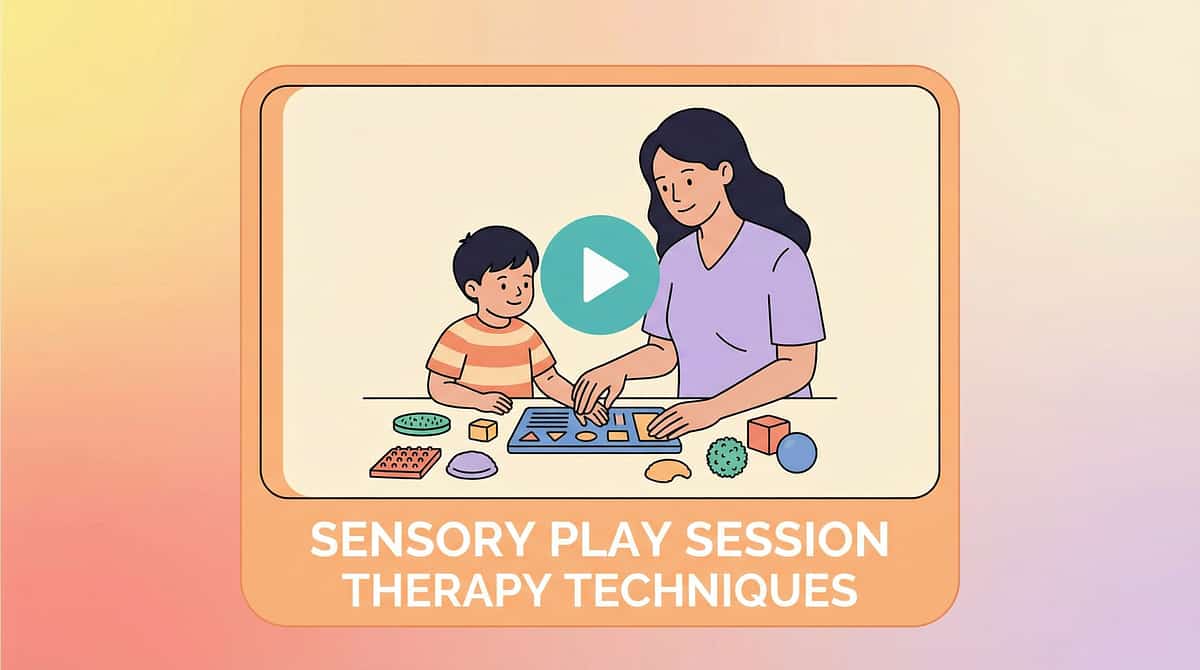
Watch the Reel: A-051
Series
Sensory Solutions
Episode
A-051
Duration
75–85 seconds
Format
Therapist-presented with temple B-roll
Watch a Pinnacle therapist walk through each of the 9 materials in context — with real temple footage showing the sensory environment and practical demonstrations of each tool. This reel is the visual companion to this page.
Therapist: Pinnacle Blooms Network® Consortium — Occupational Therapy Division
ACT V — SHARE
Share This With Your Family
"Consistency across caregivers multiplies impact."
If only one parent knows the Temple Comfort Protocol, its effectiveness is limited. Share this page with every caregiver who accompanies your child to the temple.
1
📲 Share This Page
WhatsApp | Email | Copy Link | Facebook | Instagram
2
📄 Downloadable Family Guide
"Understanding Temple Distress — A Quick Guide for Grandparents and Extended Family." Simple language. No jargon. Explains what sensory processing differences mean and how family members can support rather than criticize.
3
👩🏫 Teacher/School Template
For school staff who may encounter similar multi-sensory challenges during assemblies, field trips, or festivals.
"His brain processes sound differently. The bells cause him physical pain — like how bright light hurts your eyes after being in darkness. We're not spoiling him. We're not making excuses. We're working step by step, with clinical guidance, to help him participate in temple. With your support — not your criticism — he'll get there faster."
ACT VI — FAQ
Frequently Asked Questions
Will my child ever attend temple without ear protection?
Many children develop enough tolerance over 6–12 months to attend with discreet in-ear plugs or, eventually, without protection during quieter visits. Some children always prefer some level of auditory accommodation — and that is completely appropriate. The goal is participation, not elimination of all accommodations.
My mother-in-law says we're "spoiling" him. What do I say?
"His brain processes sound differently. The bells cause him physical pain. The ear covers make temple possible for him. Would you rather he never comes to temple, or he comes with ear covers? We're working toward full participation — step by step, with clinical guidance."
Does this apply to church, mosque, or gurudwara?
Absolutely. The sensory principles are identical. Churches with loud organs, mosques during crowded prayer, gurudwaras with kirtan and langar crowds — all present similar challenges. Adjust the social story and environmental mapping, but the 9 materials and graduated approach apply universally.
How long does the full progression take?
Most families see meaningful improvement in 2–3 months and achieve modified full participation in 4–6 months. Some children progress faster; some need longer. The pace is dictated by your child's responses, not a calendar.
Should I stop home pooja too?
No — home pooja is your training ground. You can control the sensory elements at home (softer bells, less incense, shorter duration). Use home pooja to build familiarity with ritual elements before temple exposure.
My child is non-verbal. How do I know when they're overwhelmed?
Observe behavioral cues: increased stimming, rigidity, attempts to escape, covering ears/eyes, facial expression changes (grimacing, furrowing brow), posture changes (stiffening, curling inward). Track these behavioral indicators as your data points.
Can I use this protocol without a therapist?
The 9 materials and strategies here are designed for parent implementation. However, professional guidance maximizes effectiveness and addresses complications. A Pinnacle OT can accelerate your progress with precise sensory profiling and customized protocols.
My child was fine during quiet visits but that's not when we go to temple.
This is exactly the progression pathway. Quiet visits → moderate visits → partial aarti → full aarti. The quiet visits are building the foundation. Share your progression plan with family so they understand this is strategic, not avoidance.
Didn't find your answer? → Book a Teleconsultation at pinnacleblooms.org | FREE Helpline: 9100 181 181

ACT VI — YOUR NEXT STEP
Your Next Step: Start Now
The parent who arrived on Card 1 scared and isolated now has 9 materials, a graduated protocol, data tracking tools, family education resources, professional support pathways, and a community of families on the same journey.
"The only thing left is to begin."
🟢 Start the Temple Comfort Protocol Today
Download the Temple Kit Checklist + Social Story Template + Tracking Sheet. Launch your GPT-OS® guided session.
📞 Book a Consultation
Connect with a Pinnacle OT specializing in sensory processing.
FREE National Autism Helpline: 9100 181 181
FREE National Autism Helpline: 9100 181 181
➡️ Explore Next Technique
A-052: 9 Materials That Help When Child Can't Localize Sound
Browse all Sensory Processing techniques at techniques.pinnacleblooms.org/sensory-processing
Browse all Sensory Processing techniques at techniques.pinnacleblooms.org/sensory-processing
✅ Validated by Pinnacle Blooms Network® Consortium
OT • SLP • ABA • SpEd • NeuroDev
Preview of 9 materials that help with temple and aarti distress Therapy Material
Below is a visual preview of 9 materials that help with temple and aarti distress therapy material. The pages shown help educators, therapists, and caregivers understand the structure and content of the resource before use. Materials should be used under appropriate professional guidance.


Link copied!
PINNACLE BLOOMS NETWORK®
The Pinnacle Promise
OT
SLP
ABA
SpEd
NeuroDev
CRO
Pediatrics
"From fear to mastery. One technique at a time."
A parent arrived on this page scared, confused, and grieving the loss of religious connection. By this card, they understand the neuroscience, have 9 evidence-based materials, possess a graduated protocol, know how to track progress, have resources for family education, and are connected to a community and professional network.
Temple is possible. Different than for other children, perhaps. But meaningful, participatory, and increasingly comfortable — with the right supports and the right pace.
20M+
1:1 Sessions
Delivered across the Pinnacle Blooms Network®
97%+
Measured Improvement
Across aggregate child outcomes in the network
70+
Centers Across India
Plus teleconsultation in 16+ languages
Medical Disclaimer: This content is educational. It does not replace assessment by a licensed occupational therapist, developmental pediatrician, or healthcare provider. Persistent multi-sensory processing difficulties may require comprehensive evaluation and professional-guided intervention. Individual results may vary. Statistics represent aggregate outcomes across the Pinnacle Blooms Network.
Copyright & Attribution: © 2025 Pinnacle Blooms Network®, unit of Bharath Healthcare Laboratories Pvt. Ltd. All rights reserved. CIN: U74999TG2016PTC113063 | DPIIT: DIPP8651 | MSME: TS20F0009606 | GSTIN: 36AAGCB9722P1Z2
techniques.pinnacleblooms.org — Powered by GPT-OS® — Global Pediatric Therapeutic Operating System