
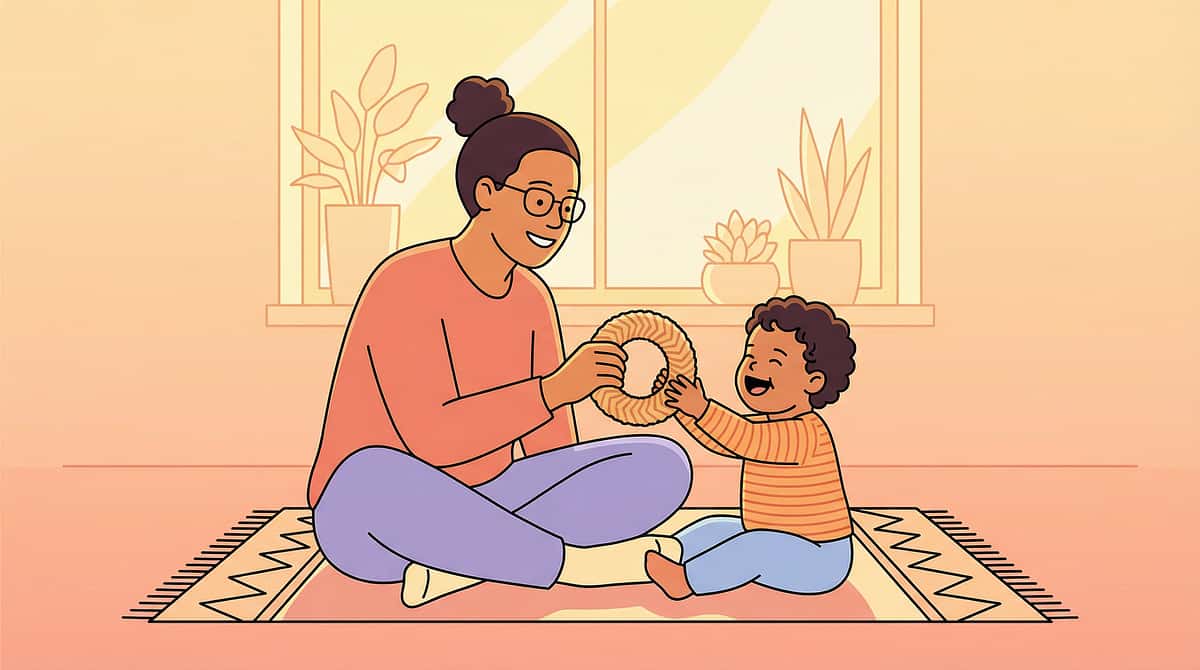
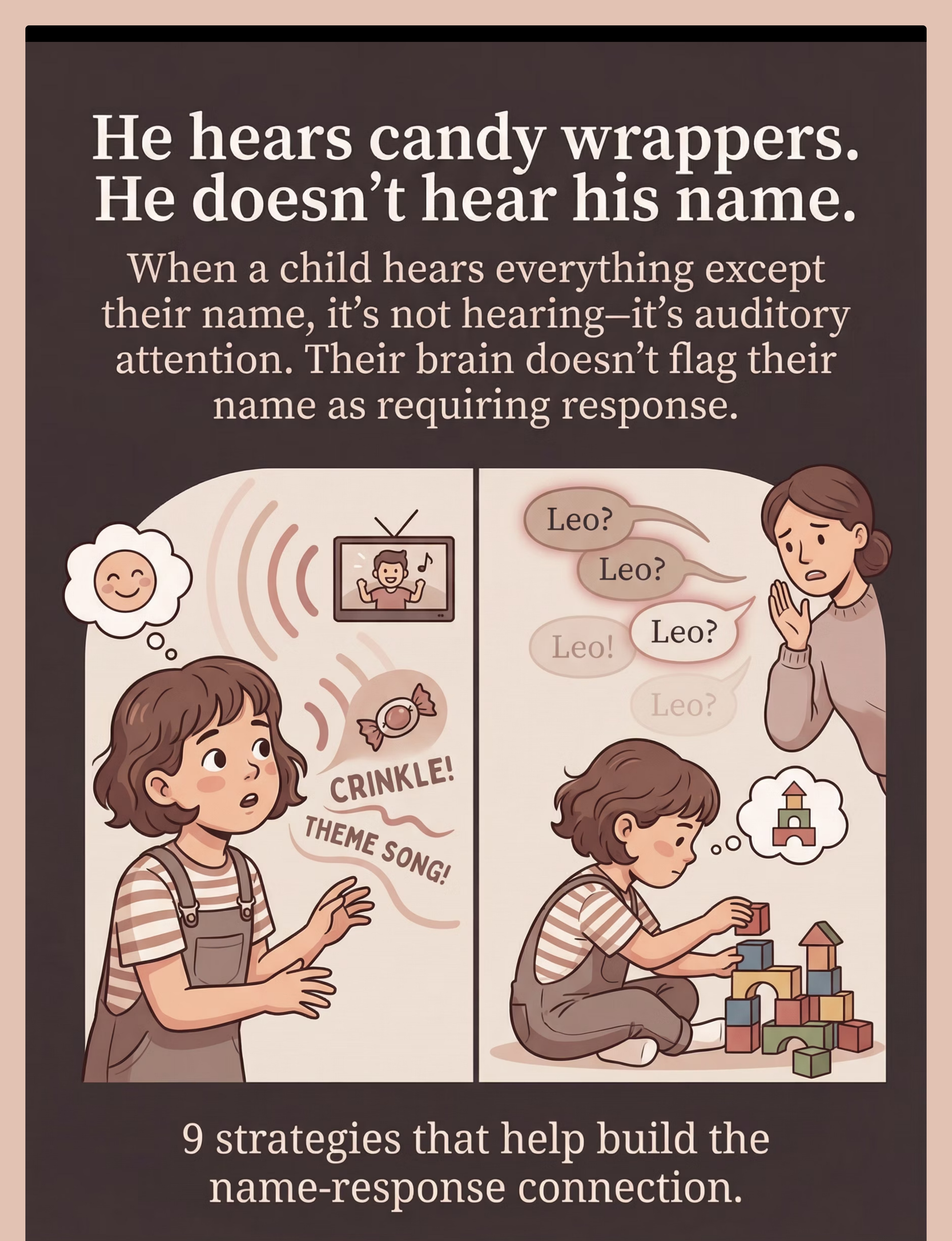
He Hears Candy Wrappers From Across the House.
He Doesn't Hear His Name.
He Doesn't Hear His Name.
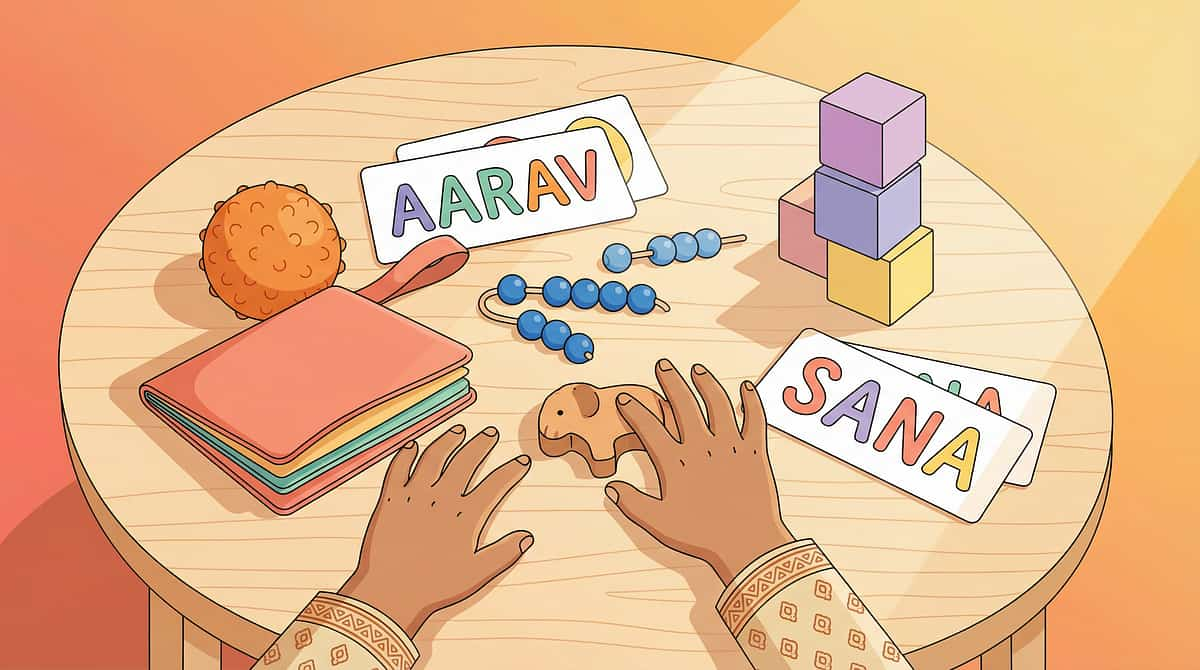
You've had his hearing tested. Maybe twice. Maybe three times. Every test comes back normal — better than normal, actually. He hears the ice cream truck before you do. He notices his favorite show's theme music from another room and comes running. He can repeat dialogue from movies he watched months ago, word for word.
But say his name? Nothing. Five times. Ten times. Standing right beside him. Nothing. No turn. No look. Not even a flicker of recognition that a sound was made.
You are not failing. Your child's brain is processing his name differently than other sounds — and that's something we can change.
Sensory Solutions Series — Episode A-045
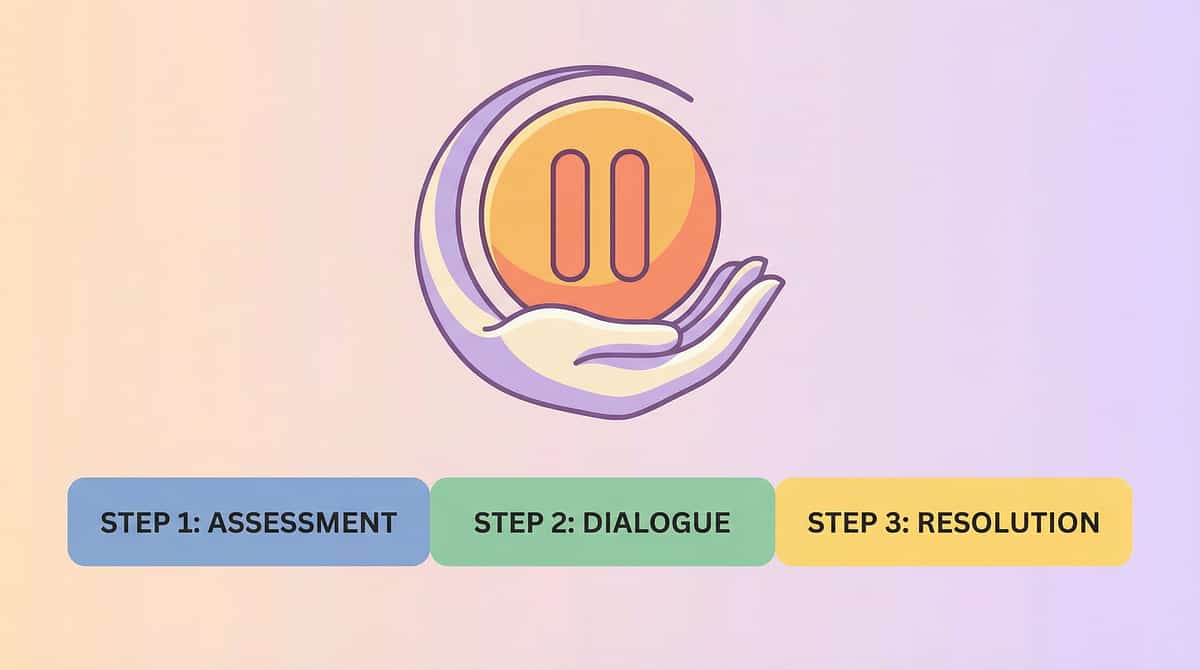
Auditory Attention · Name Response · Social Orienting · Ages 2–10
Pinnacle Blooms Network® Consortium — SLP • ABA • OT • Special Education • NeuroDevelopmental Pediatrics
ACT I — THE EMOTIONAL ENTRY
You Are Not Alone: The Numbers
This isn't rare. This is one of the most common early indicators families report — and millions of parents around the world are navigating exactly this challenge right now.
93%
Early Indicator
of children later diagnosed with autism show reduced name response before age 2 (Nadig et al., Journal of Autism and Developmental Disorders)
1 in 36
Global Prevalence
children are diagnosed with autism spectrum disorder globally — CDC, 2024 prevalence data
80%+
Sensory Differences
of children with ASD display sensory processing differences that affect how their brain filters and prioritizes auditory input
18M
In India Alone
estimated children are on the autism spectrum — millions of families navigate the exact challenge you are facing today
You are among millions of families worldwide working on exactly this. The fact that you're reading this means you've already taken the most important step: understanding that this isn't a behavior problem — it's a brain processing difference with proven solutions.
Research: PRISMA systematic review (2024): PMC11506176 | Meta-analysis: PMC10955541 | CDC Prevalence: MMWR 2024 | Nadig et al., JADD, 2007
ACT I — THE EMOTIONAL ENTRY
What's Happening in Your Child's Brain
The Auditory Attention Paradox: Why They Hear Everything Except Their Name
The Salience Filter — Two Pathways
Sound enters ear → auditory nerve → auditory cortex → Salience Filter
🍬Candy wrapper sound → Salience Filter → FLAGGED: Associated with reward → RESPOND ✓
📢Name being called → Salience Filter → NOT FLAGGED: No strong association → FILTERED OUT ✗
The brain hears both sounds — but only acts on one. This is not a hearing problem. It is a prioritization problem.
The Neuroscience, Simply Explained
Your child's hearing apparatus works perfectly. Sound enters the ear, travels the auditory nerve, and arrives at the brain's auditory cortex without any issue. The challenge begins at what neuroscientists call the salience network — the brain's filter that decides which sounds deserve attention and which get ignored.
In typically developing children, their own name becomes one of the most salient sounds in their environment by around 5–7 months of age. In your child, this salience assignment hasn't happened — or hasn't happened strongly enough to compete with other inputs.
The science calls this reduced auditory orienting or impaired social orienting response. It involves challenges in auditory figure-ground processing, attention shifting, and social understanding.
This is a wiring difference in how the brain prioritizes sounds — not a behavior choice, not defiance, and not a hearing problem.
Research: Frontiers in Integrative Neuroscience (2020): DOI: 10.3389/fnint.2020.556660 | Auditory orienting in ASD: Jones & Klin, Nature, 2013
ACT I — THE EMOTIONAL ENTRY
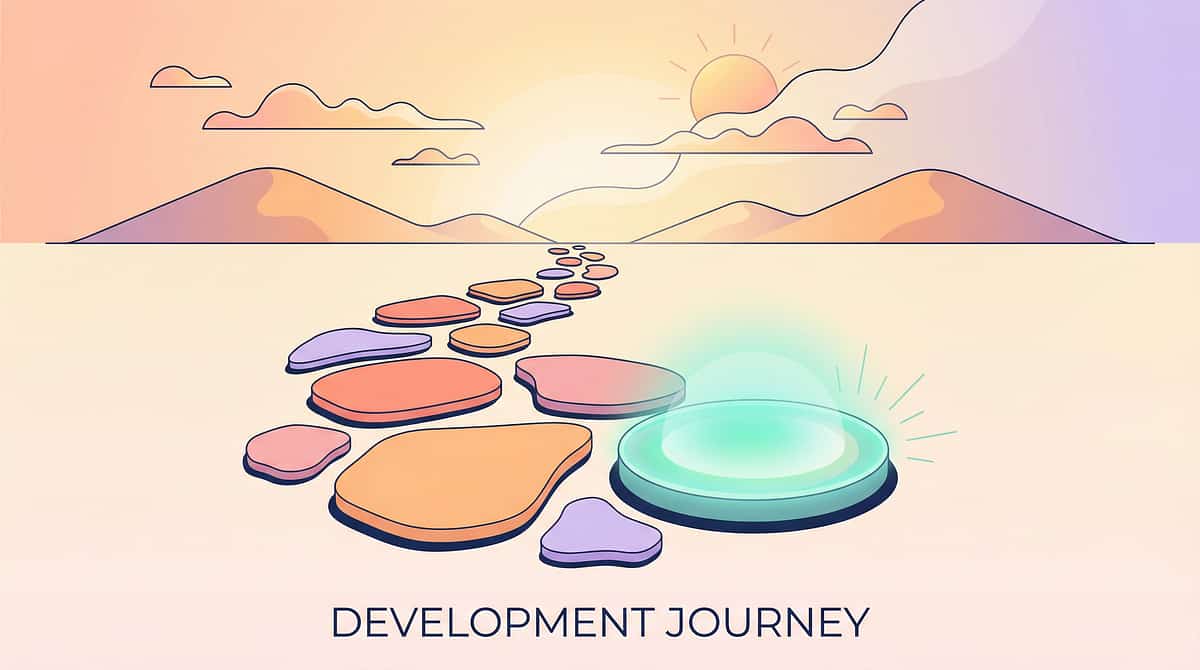
Where This Sits in Development
Developmental Milestones for Name Response — WHO/UNICEF Framework
4–5 Months
Begins turning toward familiar voices — Foundation
5–7 Months
Responds to own name consistently — ⚠️ Expected emergence
9–12 Months
Reliably orients to name across settings — ⚠️ Consolidation window
12–18 Months
Responds to name even with distractions — Key indicator if absent
18–24 Months
Name response is automatic and reliable — Screening flag if absent
2–5 Years
Responds from another room, in groups — Functional & academic readiness
Your child is in the intervention zone. If your child is 2–10 years old and not consistently responding to their name despite intact hearing, systematic work now produces the strongest results. Persistent lack of name response after age 18 months is one of the earliest and most reliable screening indicators for autism.
Reduced name response frequently appears alongside delayed language development, difficulty following verbal instructions, sensory processing differences, and social communication challenges. It may be associated with autism spectrum disorder, ADHD, auditory processing disorder, or developmental language disorder.
Research: WHO Care for Child Development Package (2023): PMC9978394 | UNICEF MICS developmental indicators | WHO Developmental Milestones Framework

ACT I — THE EMOTIONAL ENTRY
The Evidence Behind These Strategies
Evidence Grade: Level II — Supported by Multiple Controlled Studies and Systematic Reviews
🛡️ Systematic Review (2024)
16 articles from 2013–2023 confirm that sensory integration and behavioral interventions meet criteria for evidence-based practice in children with ASD. Name response training using pairing protocols and systematic reinforcement is a core component.
PMC11506176 — Children (Basel), 2024
🛡️ Indian RCT (2019)
Home-based sensory and behavioral interventions administered by parents under professional guidance demonstrated significant improvements in attention, communication, and social orienting — including name response.
DOI: 10.1007/s12098-018-2747-4 — Padmanabha et al., Indian Journal of Pediatrics, 2019
🛡️ Meta-Analysis (2024)
Across 24 studies, sensory integration therapy combined with ABA-based response training effectively promoted social skills, adaptive behavior, and auditory attention — with name response as a primary measurable outcome.
PMC10955541 — World Journal of Clinical Cases, 2024
🛡️ ASHA Clinical Guideline
The American Speech-Language-Hearing Association identifies reduced name response as a core intervention target, recommending multi-modal cueing, systematic pairing, and environmental modification as evidence-based strategies.
ASHA Practice Portal — Autism Spectrum Disorder
Across 20M+ exclusive 1:1 therapy sessions, 97%+ of children showed measured improvement across one or more readiness indexes, with Auditory Attention Index and Social Orienting Index showing significant gains when name response training was implemented systematically.
ACT II — THE KNOWLEDGE TRANSFER
The Technique: What It Is
Multi-Modal Name Response Training Protocol
Parent-Friendly Name: "Teaching Your Child to Tune In When You Call"
This is a systematic, multi-sensory intervention that transforms your child's name from a sound the brain ignores into a signal the brain prioritizes. It uses nine complementary strategies — from classical conditioning (pairing the name with motivators) to environmental engineering (reducing competing sounds) to multi-modal cueing (adding visual and tactile signals alongside auditory) — to build reliable, automatic name response across all natural settings.
Domain
Auditory Attention • Name Response • Social Orienting
Age Range
2–10 years
Session Duration
5–15 minutes per practice session
Frequency
10–20 structured trials daily + naturalistic opportunities throughout the day
Setting
Home + School + Community (progressive generalization)
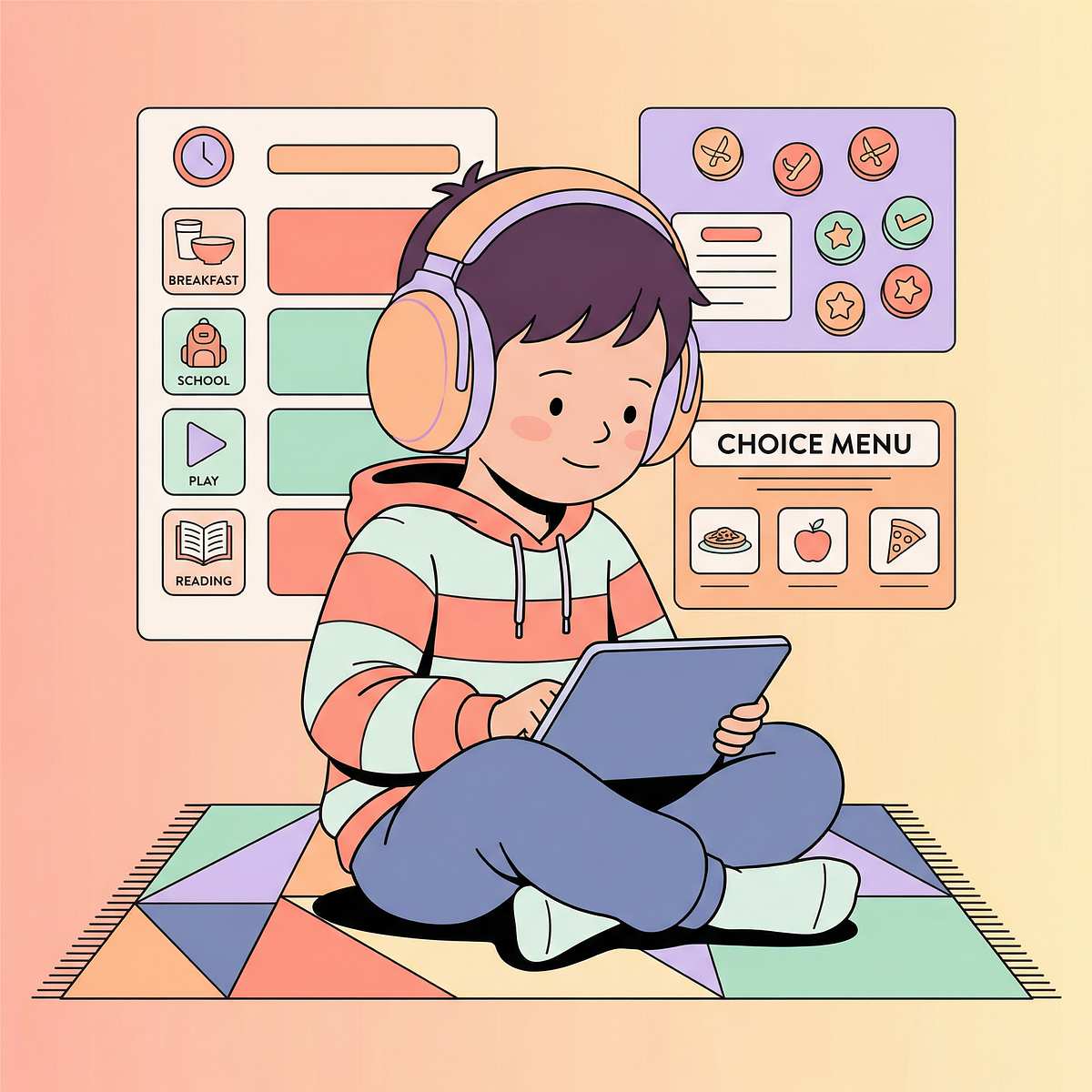
This is not one technique. It is a toolkit of nine interlocking strategies that work together, applied systematically based on your child's specific profile. Canon Materials: Reinforcement Menus • Noise-Reducing Headphones • Social Stories • Video Modeling • Visual Timer • Attention/Focus Games • Visual Rules Cards
ACT II — THE KNOWLEDGE TRANSFER
Who Uses These Strategies
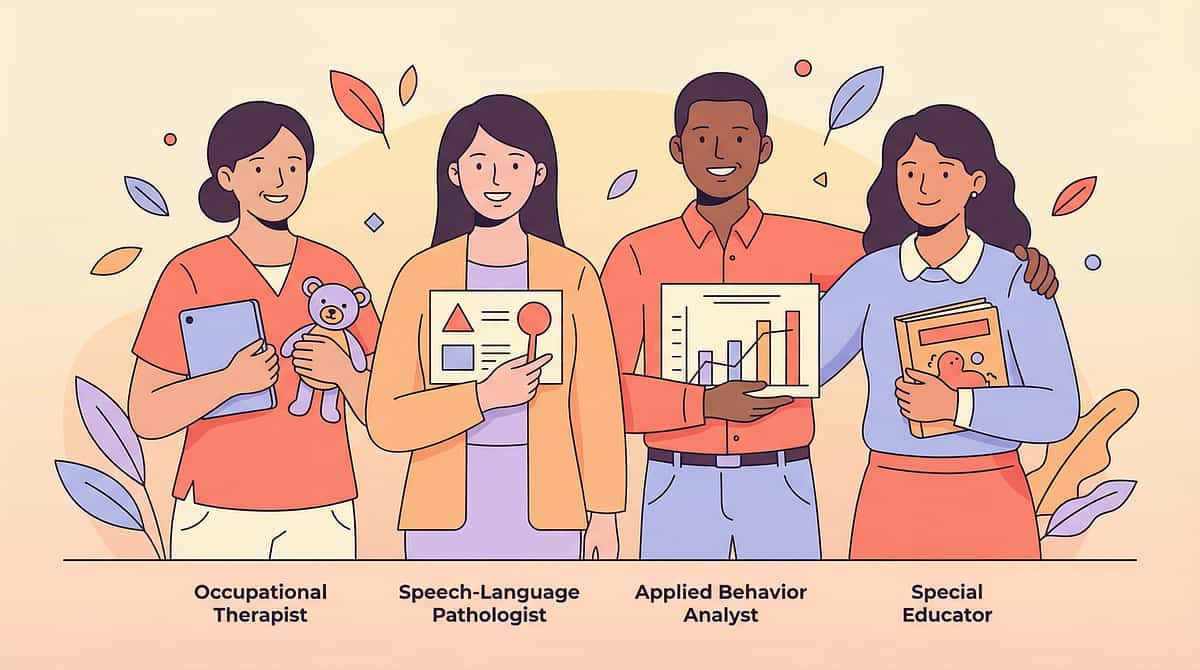
This technique crosses therapy boundaries because the brain doesn't organize by therapy type.
Speech-Language Pathologist (SLP) — PRIMARY LEAD
Drives the auditory attention and social communication protocol. Assesses auditory processing, designs the pairing hierarchy, implements high-affect calling strategies, and tracks auditory orienting response. Creates social stories for name response. Coordinates with audiologist to rule out auditory processing disorder.
Board Certified Behavior Analyst (BCBA) — PRIMARY LEAD
Designs the systematic reinforcement protocol — the pairing schedule, token economy, response shaping, prompt hierarchy and fading plan. Conducts functional assessment of non-response. Builds the name response game structures. Manages data collection and decision-making.
Occupational Therapist (OT) — SUPPORTING
Addresses the sensory processing foundation — environmental modification, noise reduction, sensory regulation before practice sessions. Manages tactile cueing for touch-sensitive children. Ensures the child is in an optimal arousal state for learning.
Special Educator — SUPPORTING
Generalizes name response to classroom and group settings. Creates structured practice opportunities in educational contexts. Adapts classroom environment to support name response. Coordinates with teachers on high-affect calling techniques.
NeuroDevelopmental Pediatrician — OVERSIGHT
Provides differential diagnosis (autism vs. ADHD vs. APD vs. language disorder). Rules out neurological contributors. Monitors overall developmental trajectory. Adjusts intervention intensity based on progress.
Adapted UNICEF/WHO Nurturing Care Framework for SLPs (2022): Multiple disciplines contribute to nurturing care components including responsive caregiving and early learning. DOI: 10.1080/17549507.2022.2141327
ACT II — THE KNOWLEDGE TRANSFER
What This Technique Targets
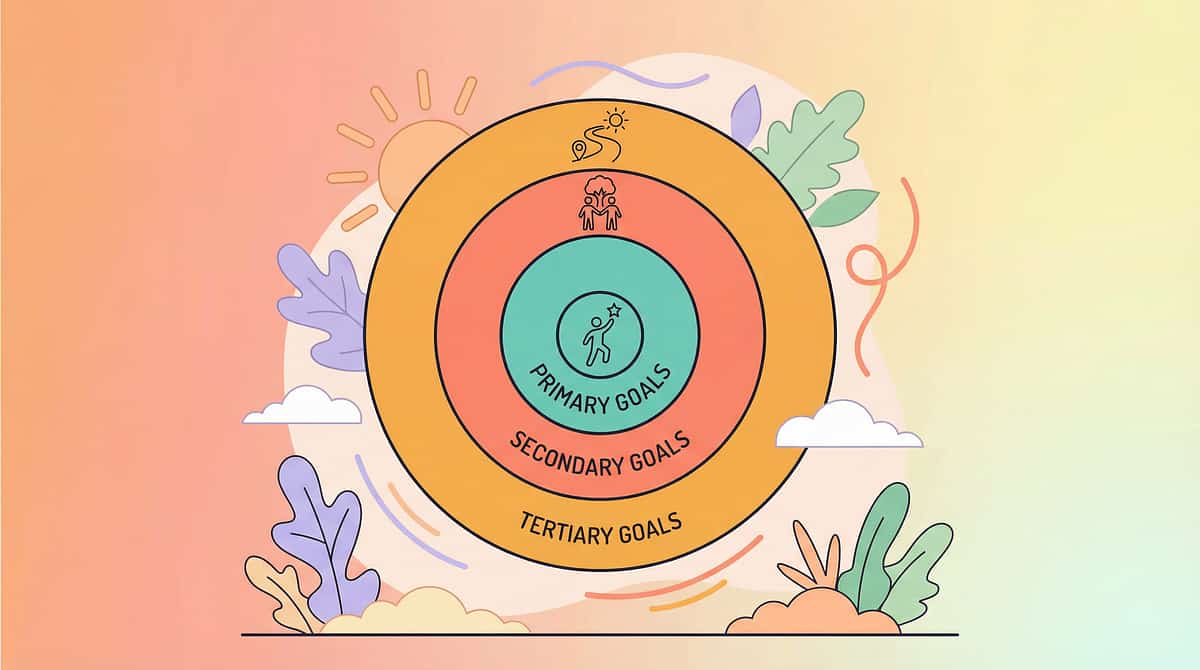
Precision Targeting: What Exactly Are We Building?
🎯 Primary Target
Auditory Orienting Response: When the child hears their name, their brain flags it as important and generates an orienting response. Observable indicators: turns head toward caller, makes eye contact, says "yes" or "what?", approaches caller.
📈 Observable Milestone Sequence
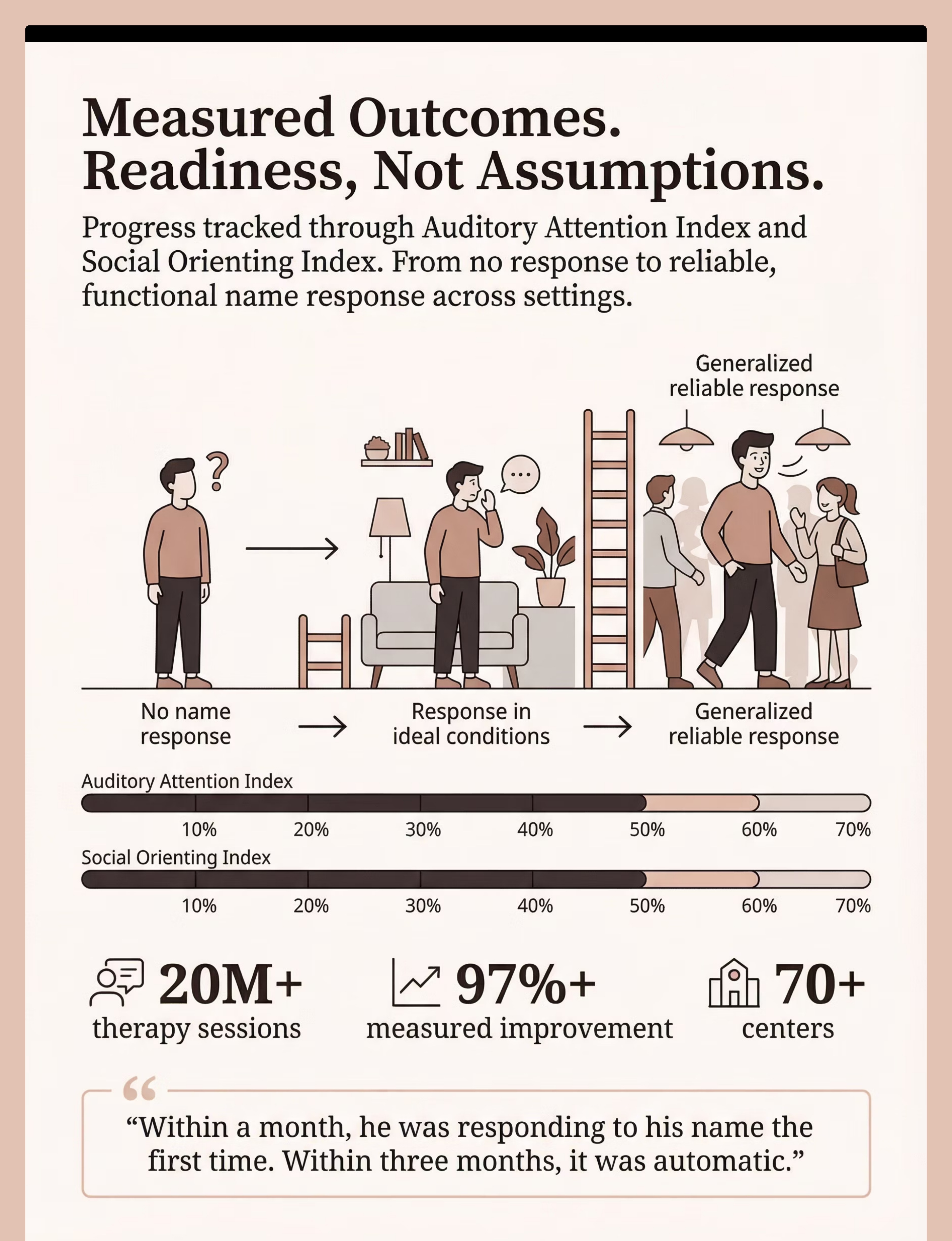
No response → Response with maximum support → Response in ideal conditions → Response with moderate support → Generalized response → Automatic, reliable response
Research: Meta-analysis (World J Clin Cases, 2024): PMC10955541
ACT II — THE KNOWLEDGE TRANSFER
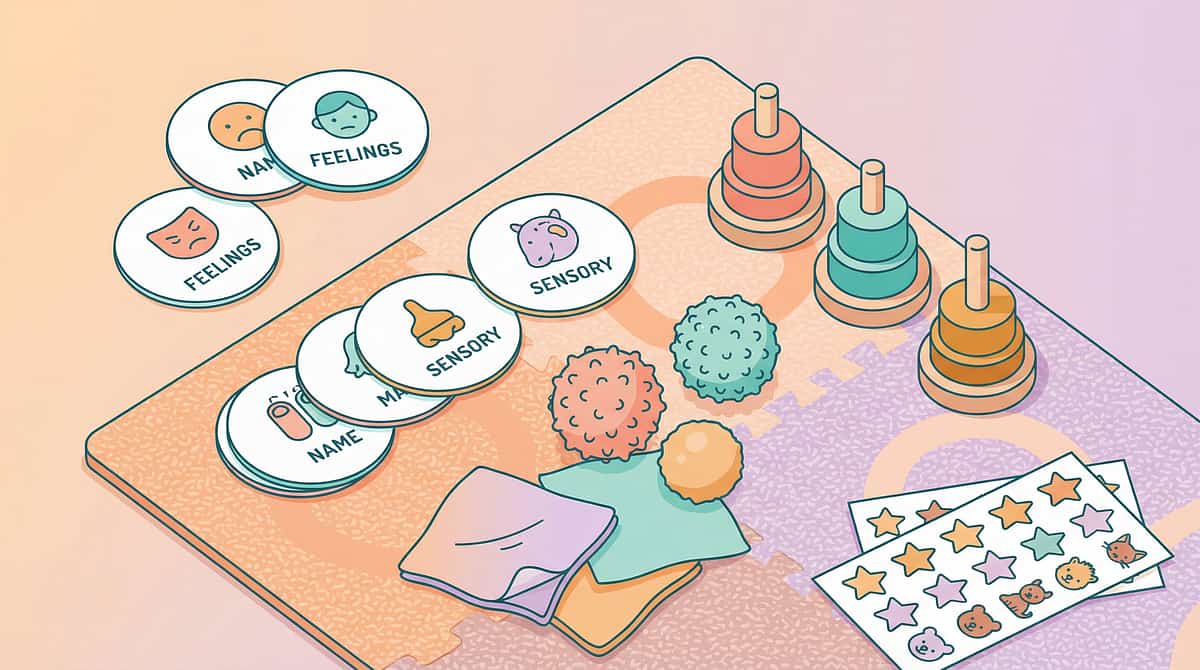
What You Need: The 9 Materials & Strategies
Your Complete Name Response Toolkit — Mapped to the Pinnacle 128 Canon
1
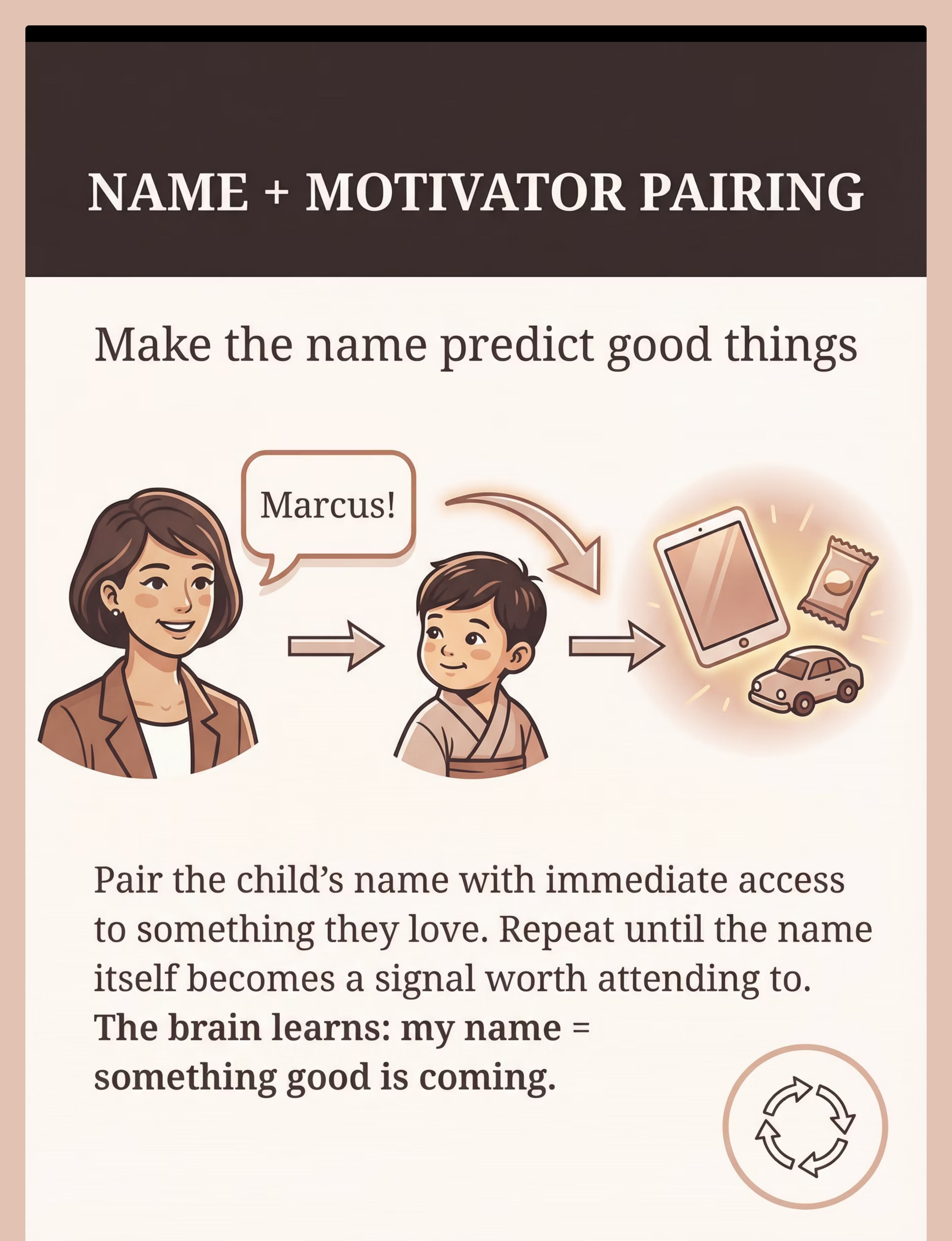
Name + Motivator Pairing Protocol
Canon: Reinforcement Menus | Price: ₹0 (uses existing motivators)
The brain learns: my name = something good is coming. The single most foundational strategy.
2
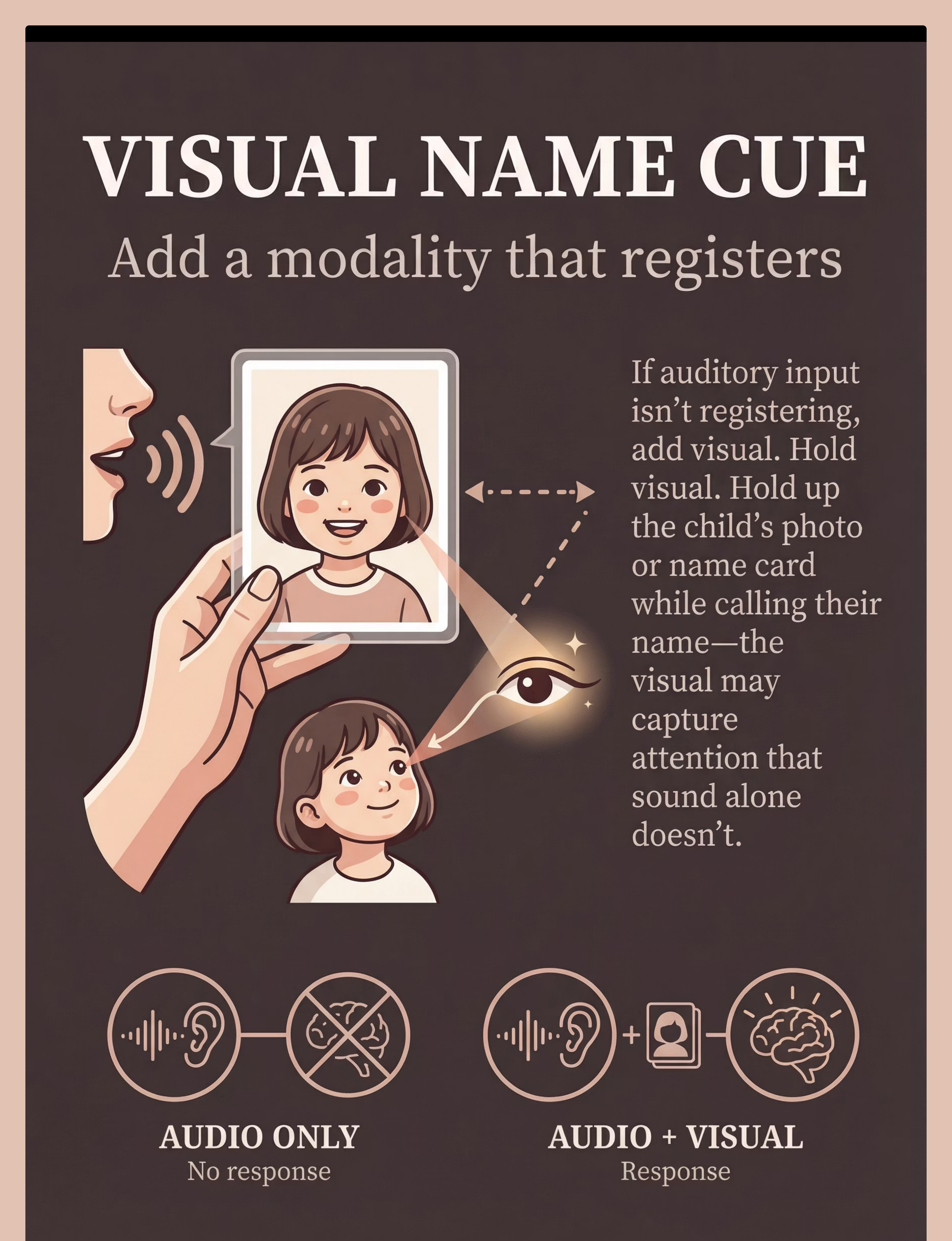
Visual Name Card / Photo Cue
Canon: Visual Rules / Expectations Cards | Price: ₹0–200
If auditory isn't registering, add visual — use their strength to build their challenge.
3
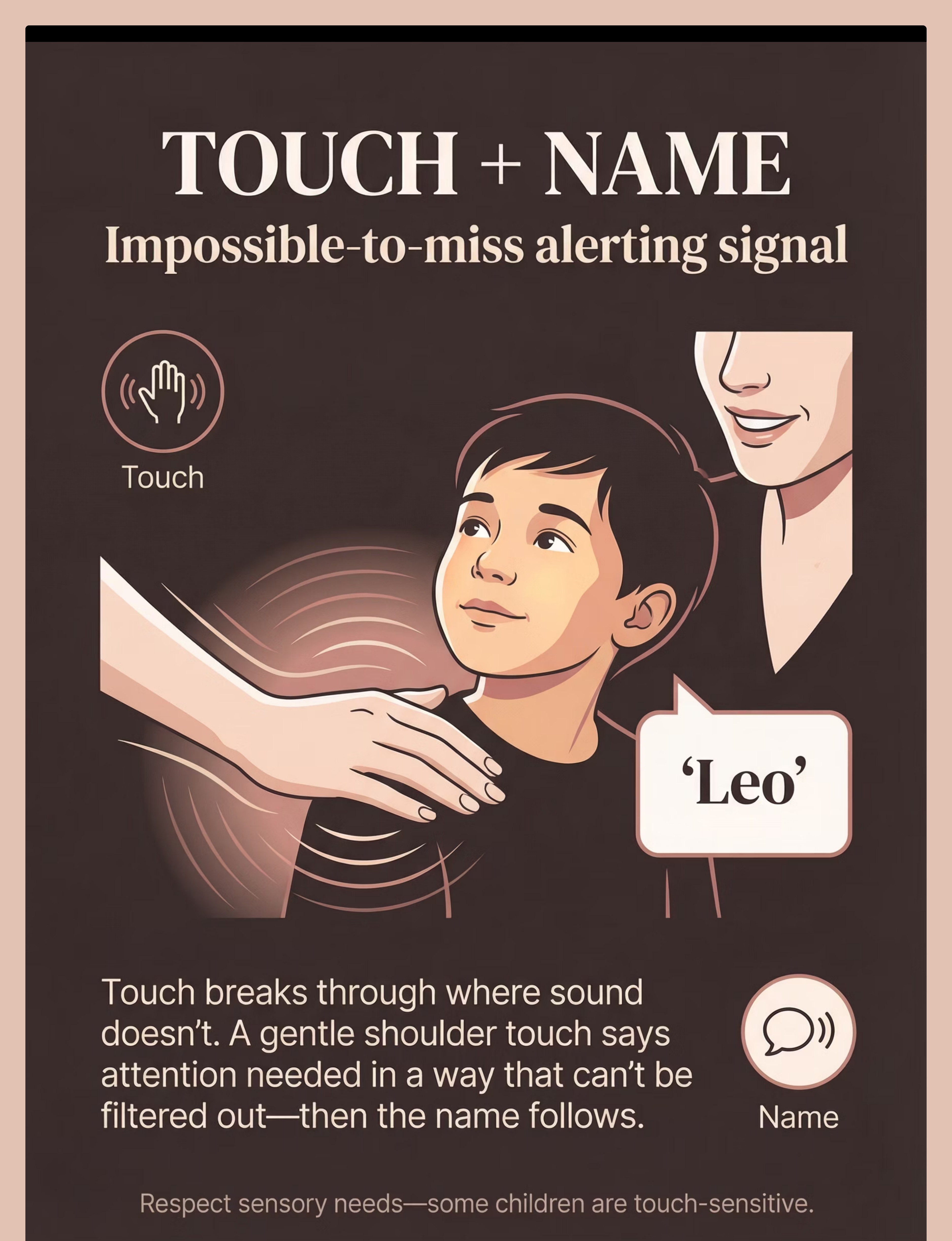
Touch-to-Cue Before Name Call
Canon: Technique only | Price: ₹0
Touch is the pattern interrupt that creates the attention window before the name is spoken.
4
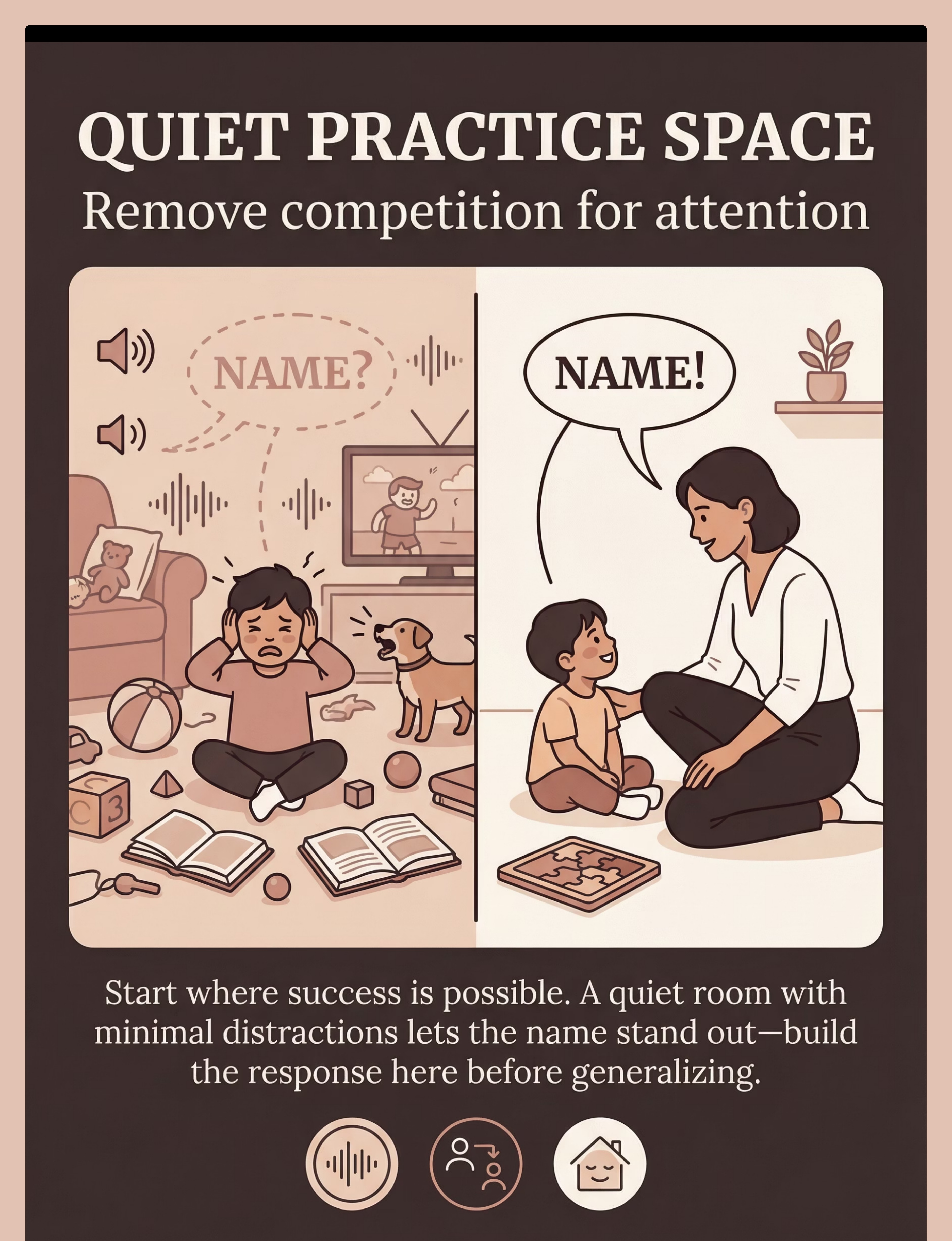
Reduced-Distraction Practice Environment
Canon: Environmental setup | Price: ₹0
A child who can't respond in a busy room may respond perfectly in a quiet room — always start there.
5
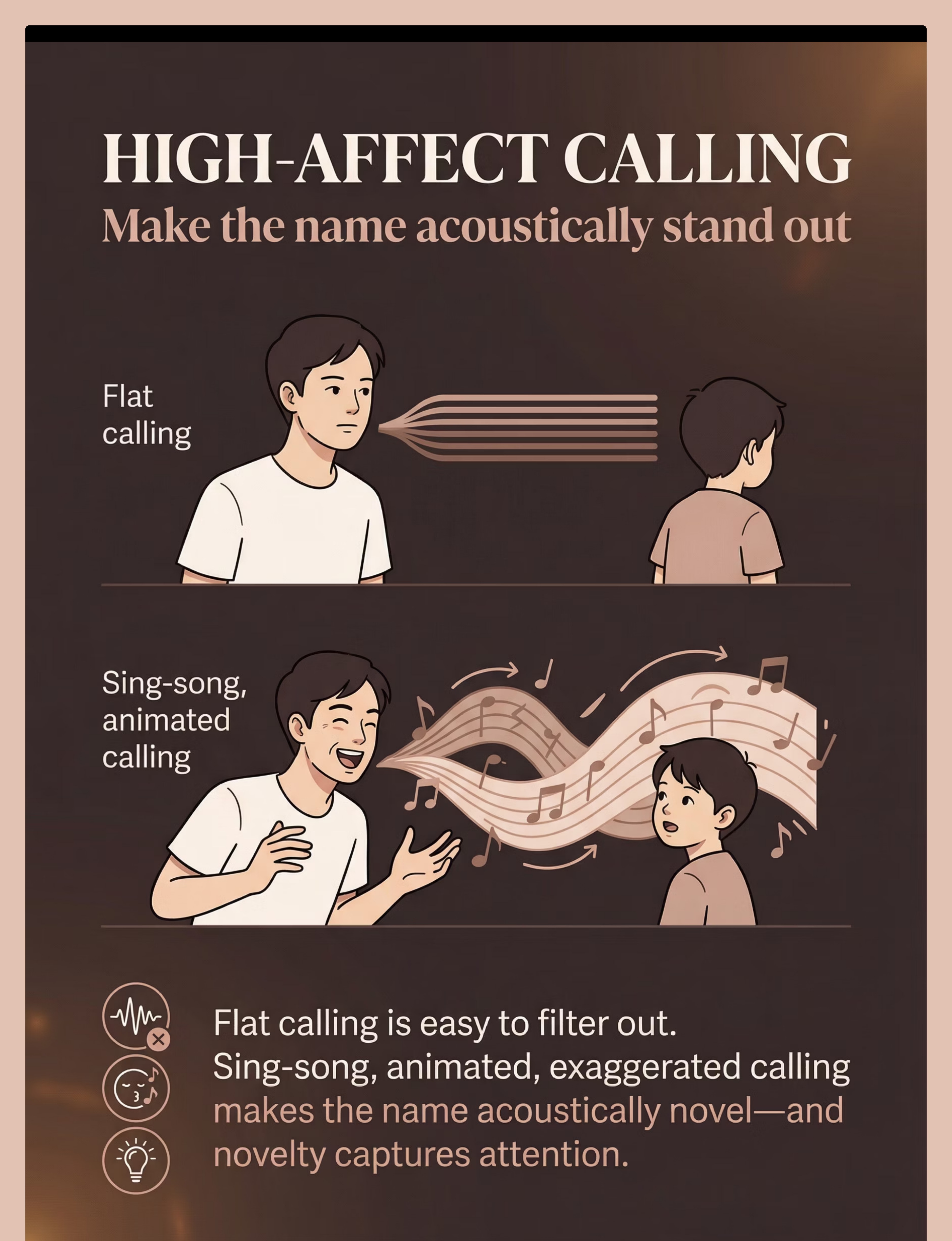
High-Affect Name Calling (Sing-Song)
Canon: Vocal technique | Price: ₹0
The brain notices novelty — a sing-song name is neurologically harder to ignore than a flat one.
6
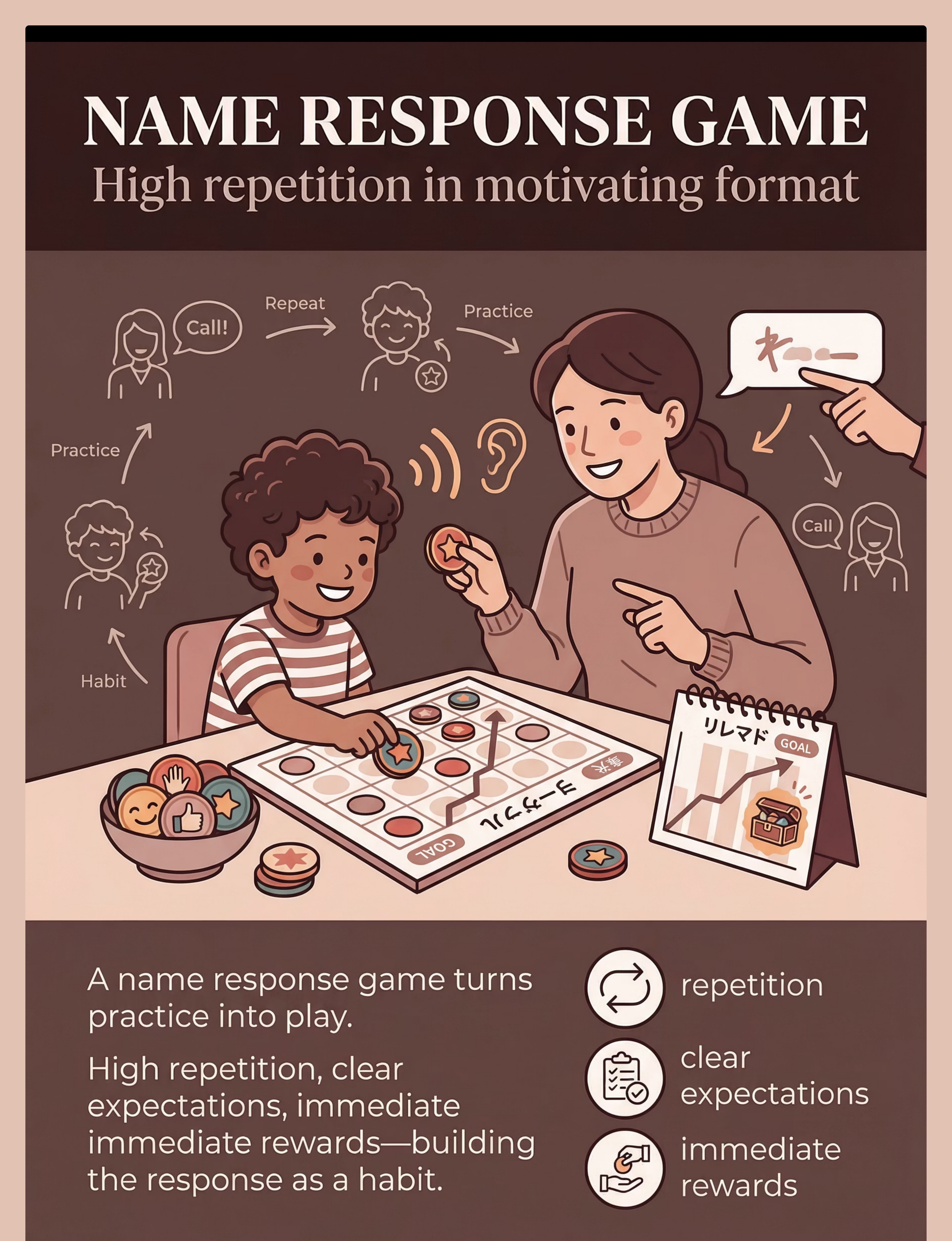
Name Response Game
Canon: Attention/Focus Games • Reinforcement Menus | Price: ₹0–500
Practice disguised as play — high repetition without tedium.
7
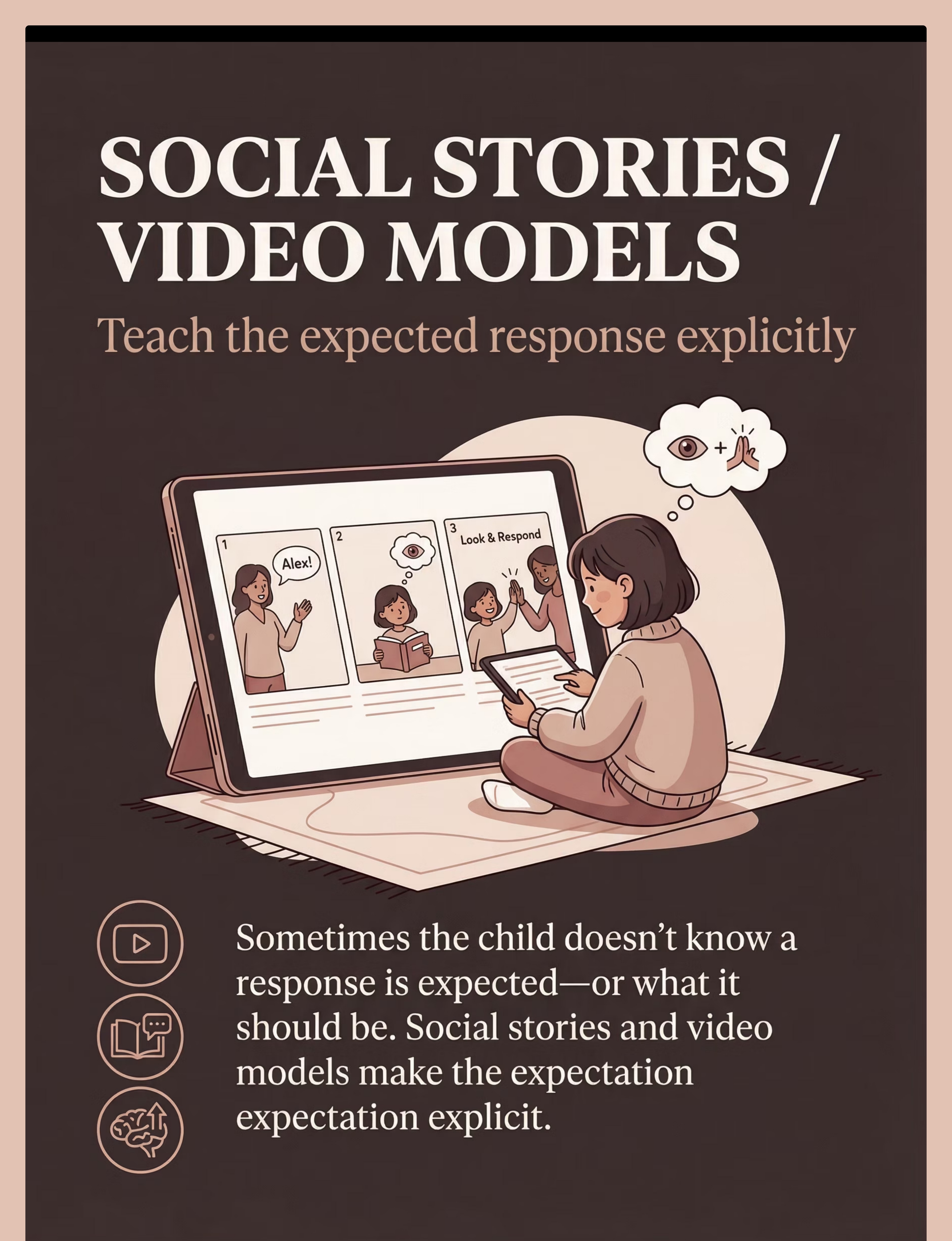
Social Stories / Video Models
Canon: Social Stories / Narrative Supports • Video Modeling Resources | Price: ₹0–1,000
The child may not know a response is expected — make the implicit explicit.
8
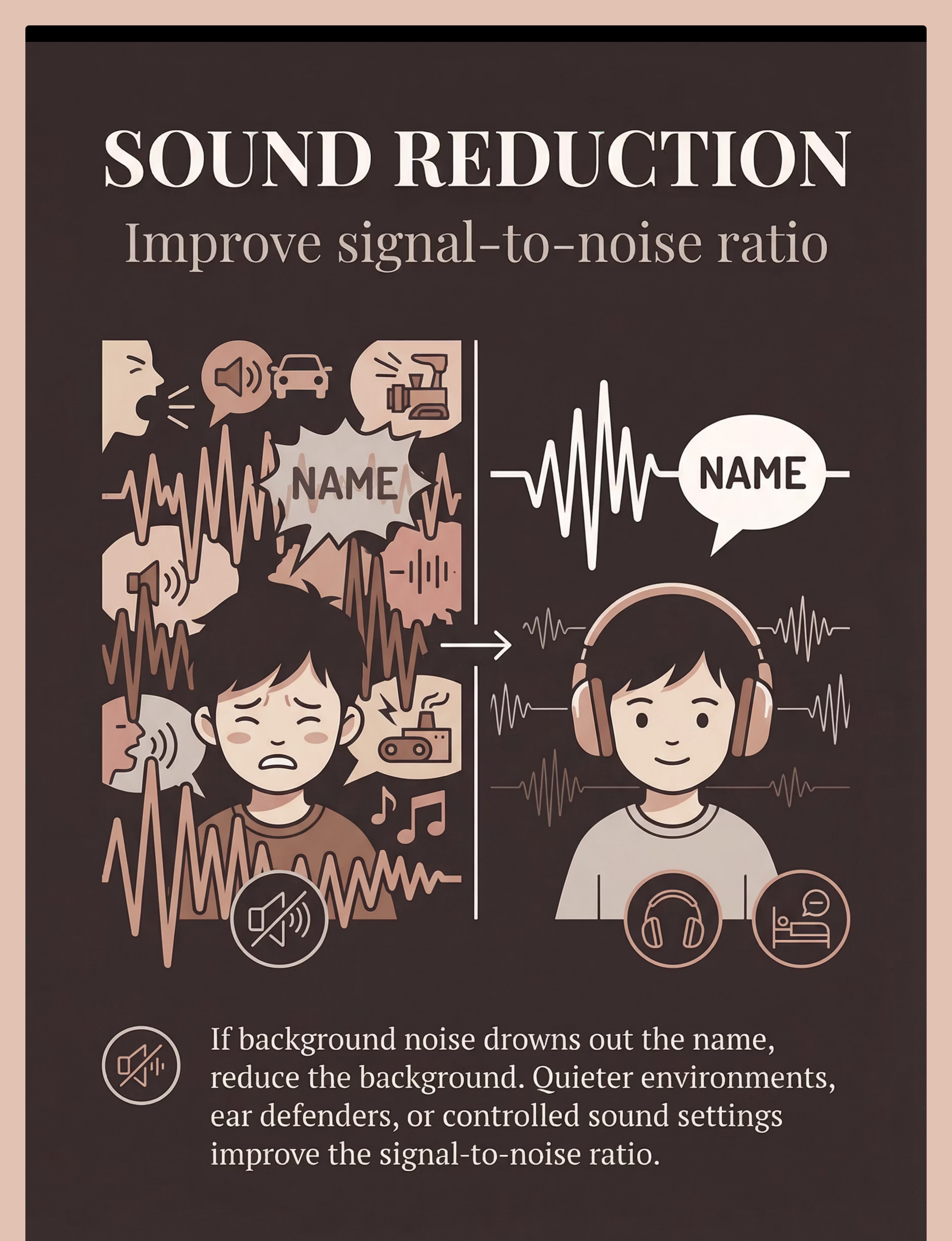
Environmental Sound Reduction
Canon: Noise-Reducing Headphones / Ear Defenders | Price: ₹0–5,000
Some children genuinely can't separate their name from background noise — improve the signal-to-noise ratio.
9
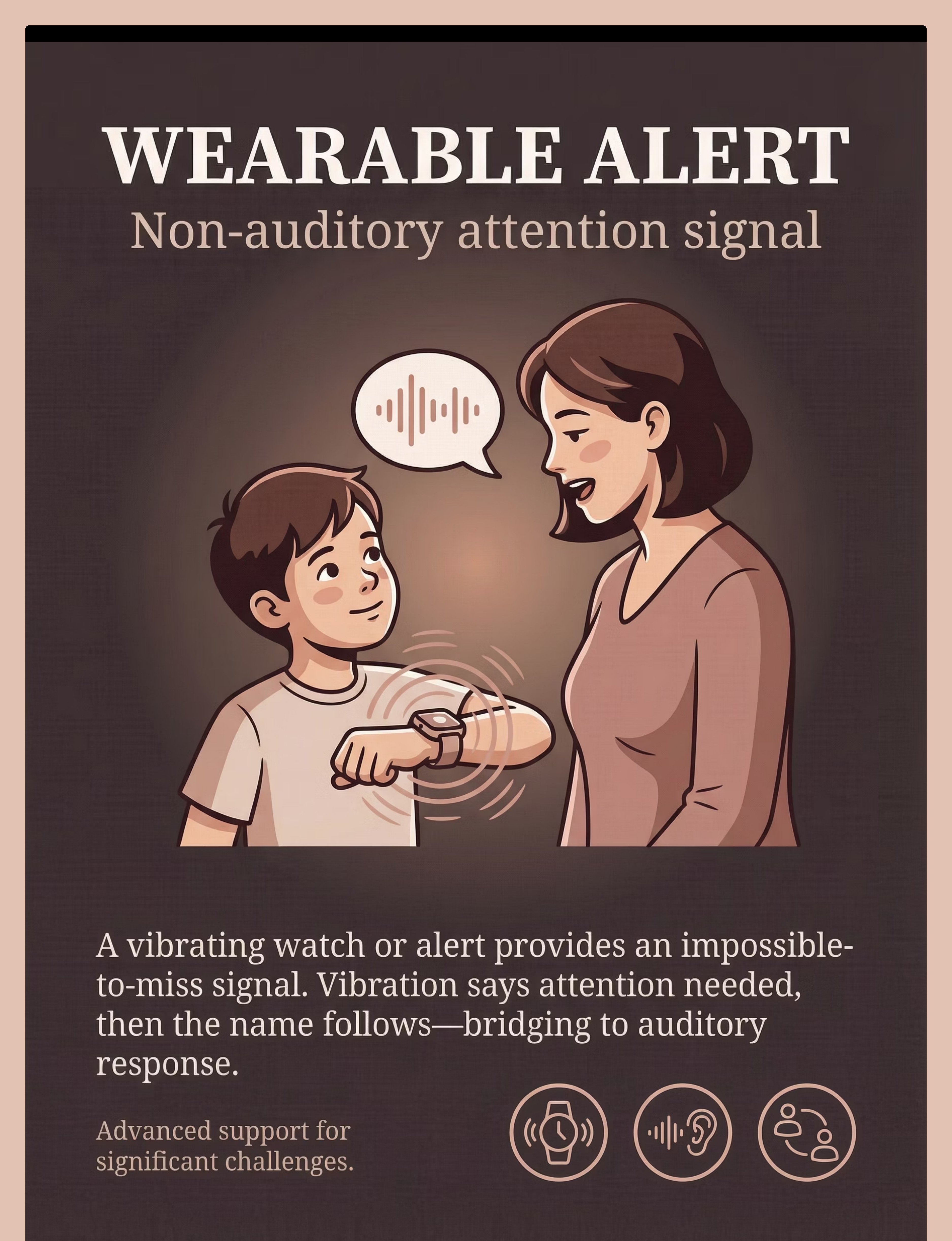
Wearable Vibration Alert
Canon: Safety Alarms / Alert Systems | Price: ₹1,500–10,000
For significant challenges: a non-auditory signal creates the attention window voice alone can't achieve.
Total investment range: ₹0–₹10,000. Essential starters (₹0): Name + Motivator Pairing + Reduced-Distraction Environment + High-Affect Calling. These three free strategies alone produce significant results when applied consistently.
ACT II — THE KNOWLEDGE TRANSFER
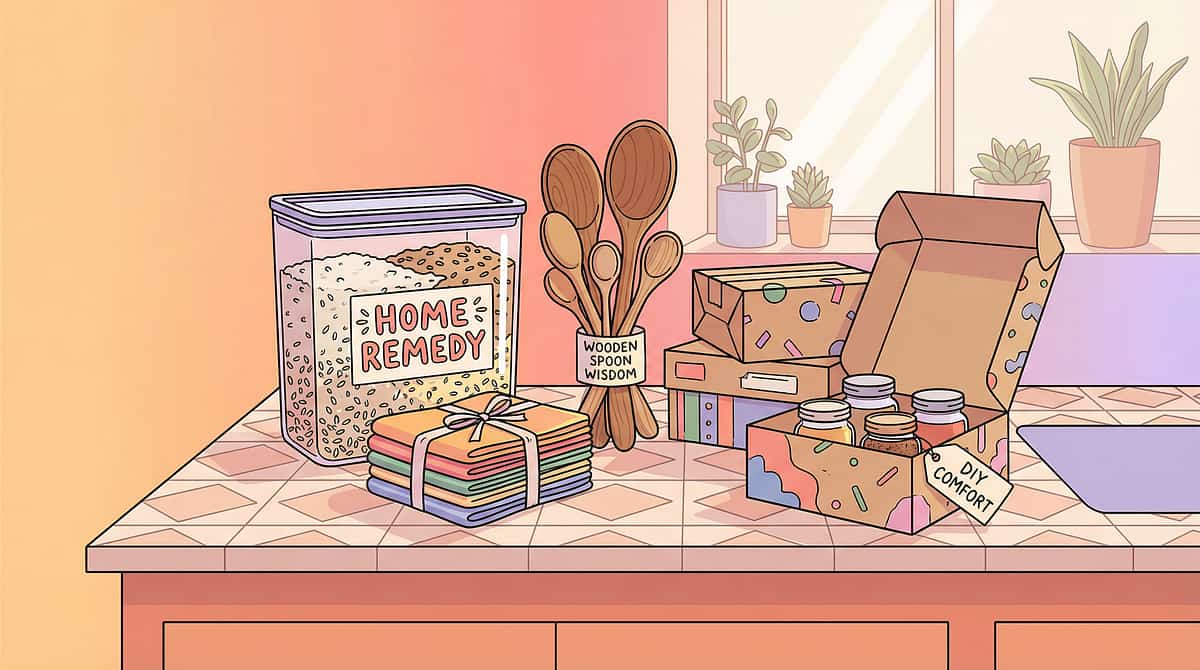
Pinnacle Recommended Products & DIY Alternatives
Zero-Cost Versions: Start Today With What You Have at Home
Every family deserves access to evidence-based intervention regardless of economic resources. The WHO/UNICEF Nurturing Care Framework emphasizes context-specific, equity-focused intervention. Here' s how to execute every strategy with zero additional purchases.
Strategy | Buy This | Make This (Free) | |
Motivator Pairing | Token economy kit | Child's existing favorite snacks, iPad time, or any highly preferred item | |
Visual Name Card | Laminated photo card | Print child's photo (₹10) or write name in large letters on paper | |
Touch Cue | No purchase needed | Your hand on their shoulder — gentle, consistent, same spot every time | |
Quiet Practice Space | Acoustic panels | Any room with TV off, door closed, toys removed. A bathroom works. | |
High-Affect Calling | No purchase needed | Your voice — sing-song, chanting, elongated syllables. Record yourself to find what works. | |
Name Response Game | Board game kit | Draw a grid on paper, use dal/rice/buttons as tokens. Fill grid = earn prize. | |
Social Stories | Printed social story book | Draw 4–5 stick figure pages: "Someone says my name → I look → I say 'yes' → They tell me something good." | |
Sound Reduction | Ear defenders ₹500–2000 | Practice during quietest home time, close windows, stuff towels under doors | |
Vibration Alert | Smartwatch ₹1,500–10,000 | Gentle wrist squeeze in same location a watch would vibrate → name → reward |
Why the substitute works: The therapeutic principle is identical regardless of budget. Classical conditioning, multi-modal cueing, and environmental modification don't require commercial products — they require systematic application. Caveat: For children with diagnosed auditory processing disorder, clinical-grade ear defenders are recommended. Consult your audiologist.
ACT II — THE KNOWLEDGE TRANSFER
⚠️ Safety Protocol
Safety First: Before You Begin
Pre-Session Safety Gate — Read Before Executing Any Strategy
🟢 GREEN — Proceed When:
- Child has had hearing formally evaluated by an audiologist (this must be done first)
- Child is fed, rested, and in a generally regulated state
- Environment is safe and you can give full attention
- You have identified the child's motivators
- You have read the specific strategy instructions fully
🟡 AMBER — Modify When:
- Child is mildly tired → Shorten to 2–3 trials only
- Child is recovering from illness → Pairing only, no expectations
- Environment can't be fully controlled → Accept partial practice
- Child shows mild resistance → Shift to play-based, lower demands
🔴 RED — DO NOT PROCEED When:
- Child has NOT had a formal hearing evaluation — get this done first
- Child is in acute distress, meltdown, or shutdown
- Child shows signs of ear infection or ear pain
- You are feeling frustrated, rushed, or angry
⛔ STOP IF YOU SEE: Child covering ears with distress during high-affect calling (may indicate hyperacusis) → reduce volume. Child becoming distressed by touch cue (may be tactile defensive) → switch to visual-only. Child escalating into meltdown → end session immediately. Session abandonment is not failure — it's data. No progress after 4 weeks of daily practice → seek professional evaluation. FREE National Autism Helpline: 9100 181 181 | Reference: Indian Journal of Pediatrics RCT (2019): DOI: 10.1007/s12098-018-2747-4
ACT II — THE KNOWLEDGE TRANSFER
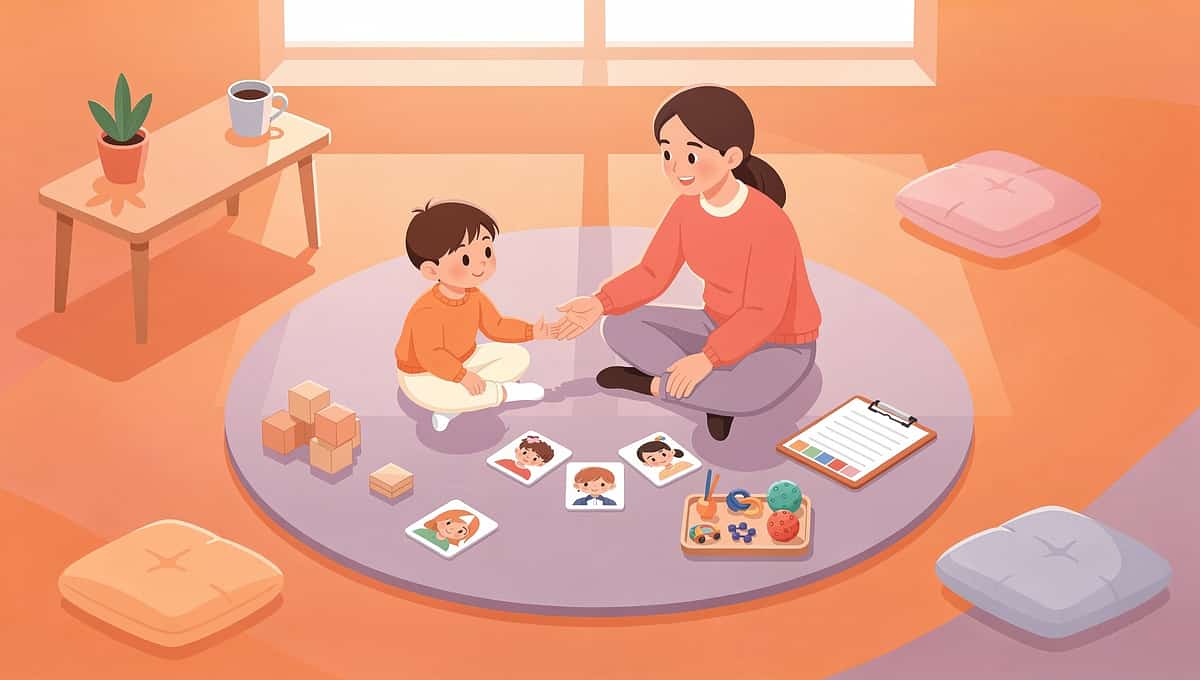
Set Up Your Practice Space
Your Name Response Practice Environment — Set Up in 3 Minutes
The Ideal Setup at a Glance
📺TV Off — Music off. Devices silenced. Close windows.
🧸Toys Removed — Clear high-interest items from child's line of sight.
📏2–3 Feet Apart — Start at arm's length. Increase distance as skill builds.
👀Eye Level — If child is on floor, you are on floor. Always.
🎁Motivators Ready — Within your reach, out of child's direct view.
🚪Door Closed — No interruptions for the next 10 minutes.
⏱️Timer Nearby — 5–10 minutes maximum for initial sessions.
Setup Checklist — Run Every Session
✅ Sound: TV off. Music off. Devices silenced. Coordinate with family — no interruptions.
✅ Visual: Remove high-interest toys and screens from the child's line of sight. A calm visual field helps the name stand out.
✅ Proximity: Start at 2–3 feet (arm's length). Never start across the room. Distance increases as skill builds.
✅ Motivators: 2–3 high-value items within your reach but hidden from child's direct view. Deliver within 1–2 seconds of response.
✅ Timing: When the child is alert, fed, and regulated. Best window: 30–60 minutes after a meal, after a brief preferred activity. Never immediately before meals or at bedtime.
✅ Duration: 5–10 minutes maximum. 10–20 trials. Always end on a success.
Environmental setup is a core principle of Sensory Integration Theory (Ayres). Structured environment maximizes intervention effectiveness. PMC10955541
ACT III — THE EXECUTION
Is Your Child Ready? The Pre-Session Readiness Check
60-Second Pre-Session Assessment — Run This Every Time
The best session is one that starts right. Three successful trials in a good state are worth more than fifteen forced trials in a bad state.
Fed
Last meal/snack within 1 hour. Not hungry.
Rested
Slept adequately. Not yawning or rubbing eyes.
Regulated
No recent meltdown (within past 30 minutes). Body is calm.
Healthy
No fever, ear pain, or active illness.
Willing
Not actively distressed. Neutral or positive mood.
Alert
Eyes open, responsive to environment, not zoning out.
🟢 GO (5–6 checks)
Full session. All strategies available. Target 10–20 trials.
🟡 MODIFY (3–4 checks)
Abbreviated session. Pairing-only, no demands. 3–5 trials. Use highest-value motivator. Accept any response.
🔴 POSTPONE (0–2 checks)
No session today. Do a calming activity together. Try again later. Postponement is not failure — it prevents negative associations.

ACT III — THE EXECUTION
Step 1 of 6
Step 1: The Invitation
Every Session Begins with an Invitation, Not a Command — 30–60 Seconds
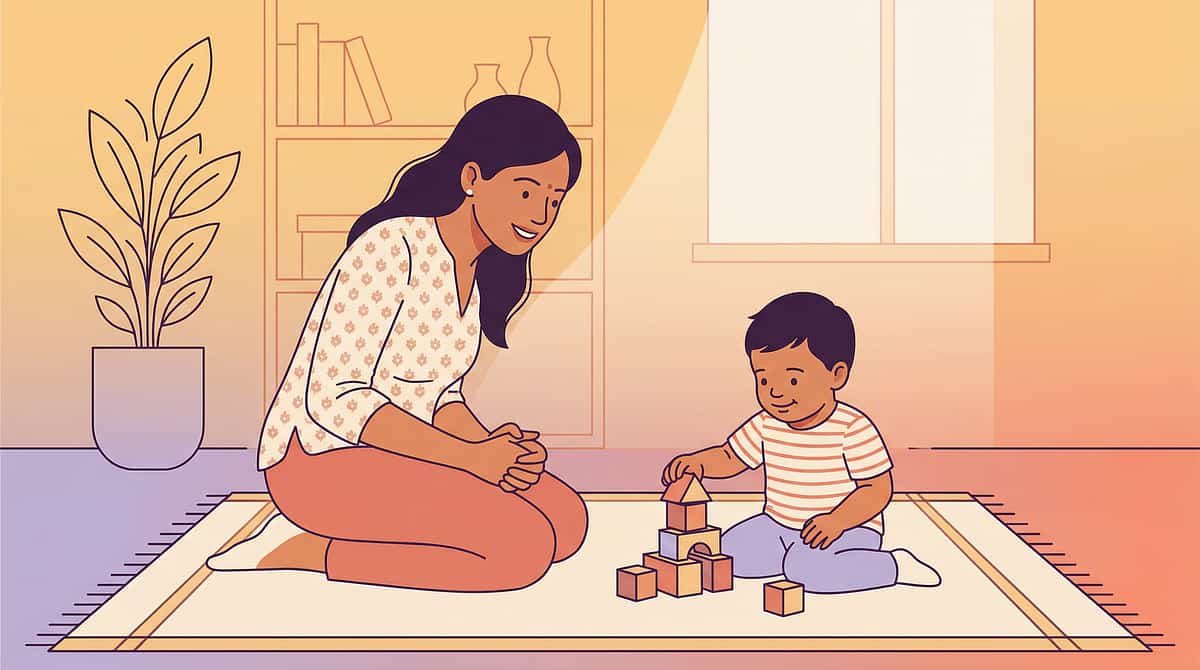
You are pairing yourself with good things before making any demands. Sit at the child's level. Smile. Have a motivator ready. Offer a brief, low-demand interaction — perhaps rolling a ball, stacking a block, or showing them something interesting. Do NOT call their name yet.
Simply be present, warm, and engaging for 30–60 seconds. If the child looks at you at any point during this warm-up, quietly note it — this is your baseline orienting behavior.
What Acceptance Looks Like ✅
- Child tolerates your proximity
- Child engages with the material you've offered
- Body language is relaxed — not tense, not turning away
- Child may make incidental eye contact
What Resistance Looks Like ⚠️
- Child actively moves away
- Child covers face or turns body away
- Vocalization of distress (crying, whining)
- Body tension, rigidity
If you see resistance: Do not push. Move the motivator closer. Reduce your proximity slightly. Wait. If resistance continues for more than 60 seconds, postpone.
ABA Principle: Pairing — establishing yourself as a source of positive outcomes before placing any demand. OT Principle: "Just-right challenge" — matching task demand to the child's current capacity.

ACT III — THE EXECUTION
Step 2 of 6
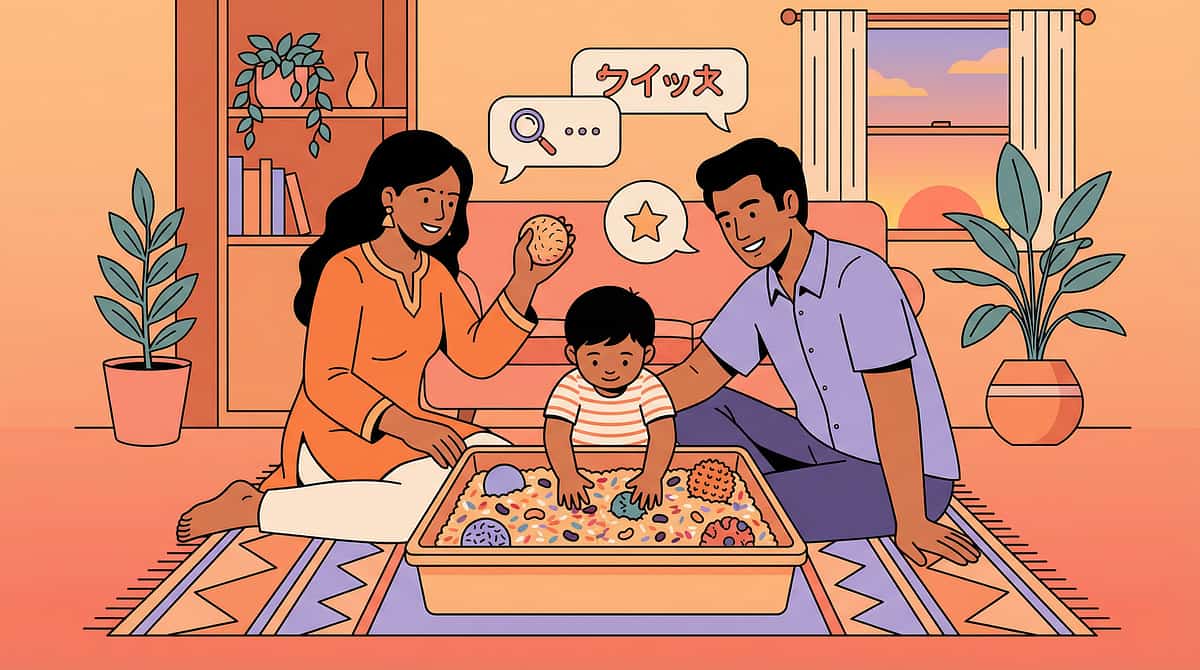
Step 2: The Engagement — Your First Name Call
1–3 Minutes | The Brain Begins to Learn: Name = Something Good
You've warmed up. The child is comfortable. Now: the first structured name call of the session.
Have the motivator in hand, ready for instant delivery
Before calling, not after. Delivery must happen within 1–2 seconds of any response.
Use high-affect calling — sing-song, animated, exaggerated
"Mar-CUS!" (not flat "marcus."). The brain notices novelty. Animated calling is harder to ignore.
If auditory alone doesn't work, add visual
Hold up the child's photo card while saying name. Vision is often a stronger channel.
If visual + auditory doesn't work, add touch
Gentle shoulder touch → then say name. Touch creates the attention window first.
Wait 1–2 seconds for ANY response
A head turn, eye flicker, body shift, vocalization — anything counts. Don't rush past this window.
IMMEDIATELY deliver the motivator with enthusiasm
"YES! You heard me! Here's your [motivator]!" Enthusiasm matters — celebrate the response.
Critical rule for early sessions: In the first 1–2 weeks, reward generously. The goal is classical conditioning — name predicts good things — not demanding a specific response. Accept everything. Shape later. If no response after 3 seconds with all supports → gently move motivator into child's visual field.
ACT III — THE EXECUTION
Step 3 of 6
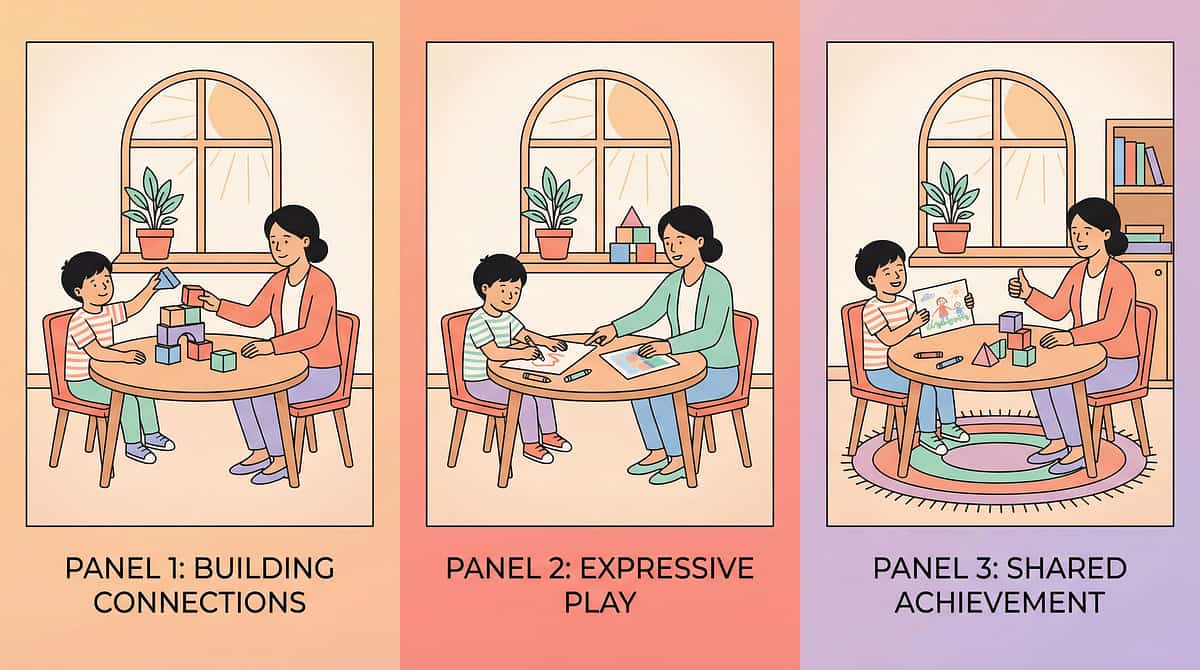
Step 3: The Core Practice Trials
3–5 Minutes | 5–10 Trials | This Is Where the Neural Pathway Forms
Each trial takes 15–30 seconds. Run 5–10 trials per session, 2–3 sessions per day. This is where the brain builds the neural pathway: Name → Important → Respond.
Common Execution Errors — And How to Fix Them
Error | Why It Happens | Fix | |
Calling name too many times in a row | Desperation habit | ONE call per trial. Multiple repetitions teach the brain that the name is ignorable. | |
Delivering motivator too late | Distracted, fumbling | Have it IN YOUR HAND before calling. Delivery must be within 1–2 seconds. | |
Demanding eye contact for reward | Over-reaching | Accept ANY orienting response in early sessions. Shape eye contact later. | |
Flat, monotone calling | Self-consciousness | Sing-song. Animated. Your discomfort is temporary. Your child's progress is permanent. | |
Too many trials | Ambition | 5–10 trials per session. End on success. The child should WANT to do this again tomorrow. |
ACT III — THE EXECUTION
Step 4 of 6
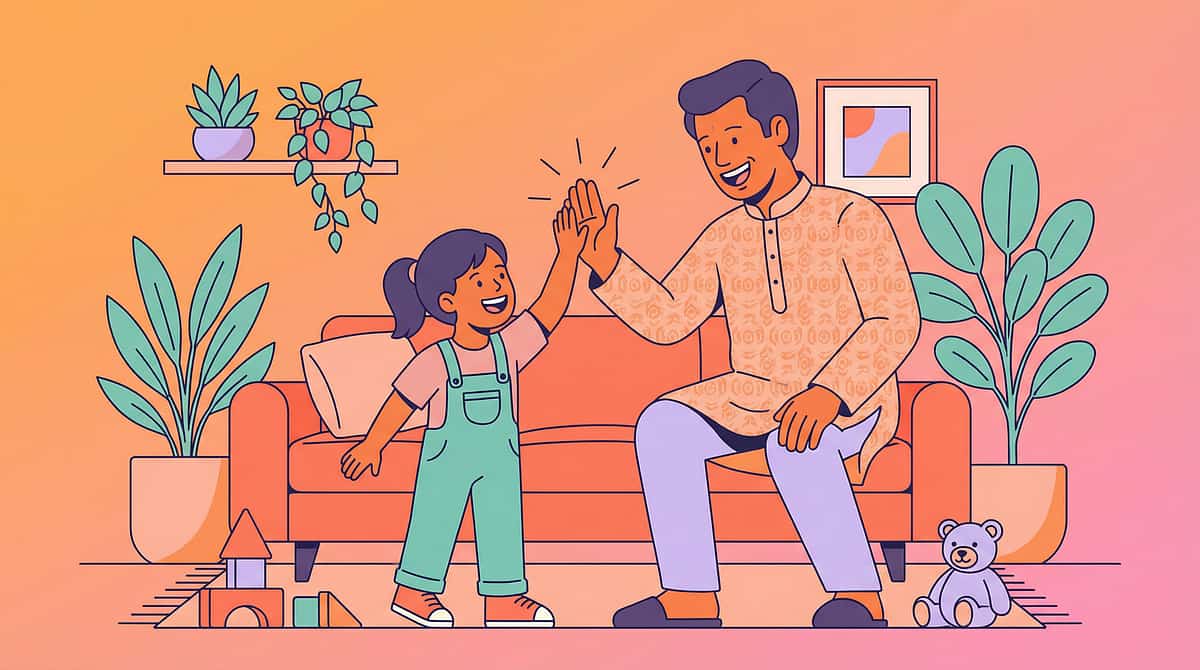
Step 4: Repeat & Vary
Maintaining Engagement Across Trials | Target: 10–30 Trials Daily
Variation keeps the brain engaged. Sameness breeds habituation.
What to Vary
Motivator across trials: iPad → Snack → Tickles → Surprise
Calling style across trials: Sing-song → Whisper → Rhythmic chant → Elongated ("Maaaaarcus!")
Position/distance across weeks:
- Week 1: 2–3 feet, directly in front
- Week 2: 3–5 feet, slightly to the side
- Week 3: 5–8 feet, behind the child
- Week 4: Across the room
Never increase more than one variable at a time.
Satiation Indicators — When to Stop
Watch for these signals that the child has had enough:
- Response quality dropping — was turning fully, now barely glancing
- Increased latency — took 1 second, now takes 4–5 seconds
- Body turning away
- Vocalization of protest
- Pushing motivator away
"3 good reps > 10 forced reps."
When you see satiation: END ON THE LAST SUCCESSFUL TRIAL. Never push past satiation. The child should always finish the session wanting more.
ACT III — THE EXECUTION
Step 5 of 6
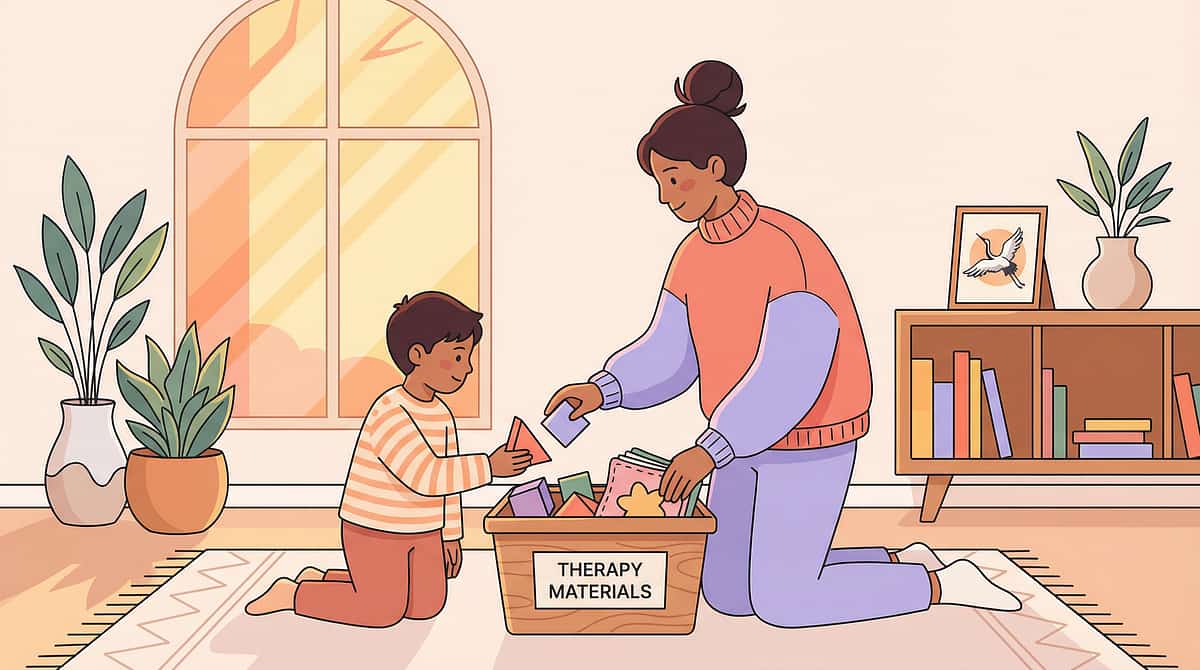
Step 5: Reinforce & Celebrate
Timing Is Everything — Deliver Within 1–2 Seconds of Any Response
"[Child's name], YES! You looked! That was amazing listening! You turned when I said your name!"
Be specific — name the exact behavior, not just "good job." Enthusiasm in your voice signals to the child that what they just did matters greatly.
Reinforcement Menu — Customize for Your Child
Primary (Biological)
Preferred snack, drink — use in early pairing phase when building initial association
Activity
iPad time, favorite game, TV clip — once initial response is established
Social
Tickles, high-five, spinning, chase — when child is socially motivated
Token
Sticker on chart, token in jar — when response is more consistent (3–4 week mark)
Natural
Access to what they were doing — maintenance phase, name response gives back their activity
Fade Schedule
Weeks 1–2
Continuous — every single response rewarded
Weeks 3–4
Intermittent — 4 out of 5 responses rewarded
Weeks 5–6
Variable ratio — approximately every 2–3 responses
Weeks 7–8
Social reinforcement primarily + occasional tangible
Weeks 9+
Natural reinforcement — the conversation that follows is the reward
ACT III — THE EXECUTION
Step 6 of 6
Step 6: The Cool-Down
1–2 Minutes | No Session Ends Abruptly
The cool-down transitions your child from structured practice back to their baseline. An abrupt ending can create negative associations. The ending is just as important as the beginning.
The Transition Script
"Two more, then all done." (Hold up 2 fingers)
After the final trial:
"All done with name practice! You did such great work. Let's [calming activity]."
Material Put-Away Ritual
Involve the child in putting materials away: "Let's put the name card back in its special spot." This creates a clear boundary between "practice time" and "free time."
Cool-Down Activities (Choose One)
- Quiet play with a preferred toy (2 minutes)
- Deep pressure — firm hugs if the child enjoys them
- Blowing bubbles (oral motor calming)
- Looking at a book together
- Simply sitting together without demands
If the Child Resists Ending
This is actually a good sign — it means the session was reinforcing. Use a visual timer (Canon: Sand Timers) to show remaining time. Offer a "bonus trial" as transition: "One more, then we play!" Always transition TO a preferred activity, not FROM practice INTO nothing.

ACT III — THE EXECUTION
Capture the Data: Right Now
60 Seconds of Data Now Saves Hours of Guessing Later
Within 60 seconds of session end, record these 3 data points. You can't manage what you don't measure — and this is the difference between hoping and knowing.
📊 Total Trials
Simply count. Example: "10 trials today."
✅ Successful Responses
Count any level of orienting. Example: "7 out of 10 — 70% response rate."
🔧 Support Level Needed
Record highest support used. Example: "Touch + Name for 3 trials; Name only for 4 trials; No response for 3 trials."
What This Data Tells You Over Time
If response rate is… | It means… | Do this… | |
Increasing week over week | The pairing is working — the brain is learning | Continue; begin reducing support level | |
Stable (not increasing) | Current motivator/method may have plateaued | Change motivator, vary calling style, check for satiation | |
Decreasing | Something has changed — illness, stress, environmental shift | Return to easier conditions, check all variables | |
Above 80% in ideal conditions | Ready for generalization | Increase distance, add mild distractions, vary caller |
Your Tracking Options:📋 Pinnacle Name Response Tracker PDF (download at techniques.pinnacleblooms.org/resources/trackers/name-response) | 📱 GPT-OS® in-app tracker — data feeds into Auditory Attention Index automatically | 📝 Simple notebook — date, trials, responses, support level

ACT III — THE EXECUTION
What If It Didn't Go as Planned?
The 7 Most Common Issues — And Exactly What to Do
Problem 1: "I've been pairing for 2 weeks and there's no change"
Is the motivator truly the child's HIGHEST value item — not what you think they like, but what they would choose over everything else? Also check: Are you delivering within 1–2 seconds? Are you accepting ANY response? Are you in a quiet, close environment?
Problem 2: "He responds in practice but not in real life"
This is expected in early stages. Practice conditions are artificially ideal. Generalization is a separate skill that must be systematically built — increase distance, add distractions, change rooms, vary callers ONE variable at a time.
Problem 3: "She responds for me but not for her teacher"
Generalization across people is the hardest. The teacher needs to use the same calling style (high-affect), same reinforcement timing, and initially call from close proximity. Share this page with the teacher (see Card 37).
Problem 4: "He responds only when he can see the motivator"
The motivator is controlling the behavior, not the name. Hide the motivator behind your back. Call name. Wait for response. THEN reveal. The name must come before the motivator becomes visible.
Problem 5: "She cries or gets upset during practice"
Demands are too high or sessions too long. Return to pure pairing: name → motivator delivery regardless of response. Shorten to 3 trials. If distress continues, pause for 2–3 days and restart gently.
Problem 6: "He was responding well and now he's regressed"
Is reinforcement still happening? Don't fade too quickly. Has something changed — illness, schedule, new sibling, household stress? Return to easier conditions, increase motivator value, rebuild from the last successful level.
Problem 7: "I feel like I'm failing — nothing is working"
You are not failing. If 4 weeks of daily, consistent practice shows no progress, this is clinical information indicating your child needs professional support. Call the FREE National Autism Helpline: 9100 181 181.
ACT III — THE EXECUTION
Adapt & Personalize for Your Child
No Two Children Are Identical — Adjust the Protocol to Your Child's Profile
🏃 Sensory Seeker (craves input)
- Use proprioceptive motivators: jumping, swinging, spinning
- Call name during movement activities — they attend better while moving
- High-affect calling with animated body language works especially well
🌿 Sensory Avoider (easily overwhelmed)
- Quietest possible environment — prioritize this above all else
- Gentle, warm vocal tone — not too loud or animated
- Motivators should be calming: preferred video, soft toy, quiet activity
- Sessions shorter: 3–5 trials maximum
⚡ ADHD Co-occurrence
- Brevity is key: fast-paced trials, 30 seconds apart
- High novelty: change motivator every 2–3 trials
- Incorporate movement: "When you hear your name, jump!" — then shape to head turn
Age-Based Modifications
Ages 2–3
Pure pairing only. No expectations. Name → motivator, repeat.
Ages 4–5
Introduce structured games. Begin expecting consistent response.
Ages 6–8
Social stories and video modeling become powerful. Peer involvement.
Ages 9–10
Self-monitoring. Child tracks their own response data. Metacognition about attention patterns.

ACT IV — THE PROGRESS ARC
Weeks 1–2: What to Expect
Building the Foundation | Progress: ▓▓░░░░░░░░ 15%
What You Will Likely See ✅
- Response rate may go from 0% to 10–20% in ideal conditions
- Child begins pausing when you call their name (even without turning)
- Response is inconsistent — some trials yes, many trials no
- Response requires maximum support: touch + visual + high-affect + close proximity
- Child may start anticipating the motivator when you approach for a trial
What You Will NOT See Yet ❌
- Consistent, reliable name response
- Response from across the room
- Response without added cues (touch, visual)
- Response in noisy or distracting environments
- Response from unfamiliar callers
Data Benchmark
10–20% response rate in ideal conditions by end of Week 2 = on track.
"If your child pauses for half a second when you call their name — even once, even with full support — that's the first neural pathway connecting name to attention. That pause didn't exist before you started. That pause is real progress."
Parent emotional preparation: This is the patience phase. You are conditioning a brain. Conditioning takes repetition over time. The research timeline for name response training is 2–8 weeks for significant change. Stay the course. Reference: PMC11506176 — Sensory integration intervention outcomes emerge across 8–12 week timelines

ACT IV — THE PROGRESS ARC
Weeks 3–4: Consolidation Signs
The Neural Pathway Is Forming | Progress: ▓▓▓▓░░░░░░ 40%
Measurable Progress You Will Likely See
- Response rate climbing to 40–60% in ideal conditions
- Child begins responding to name WITHOUT touch cue (just voice + visual, or voice alone)
- Response latency decreasing — faster turn after name is called
- Child may start looking at you expectantly during practice (anticipation)
- Some spontaneous name responses OUTSIDE of structured sessions
- Beginning to respond to high-affect calling from 5–6 feet distance
Behavioral Changes Signaling Neural Pathway Formation
- Child turns toward you when you enter a room (not just during practice)
- Child looks at you before reaching for something they want (emerging joint attention)
- Response quality improving — body shift → head turn → head turn + eye contact
- Child may start saying "what?" or "yes" after turning — verbal response emerging
When to Increase Difficulty
If responding at 50%+ in ideal conditions → introduce ONE harder variable: increase distance from 3 to 5 feet, OR add a mild distraction, OR have a different family member call the name. Never increase more than one variable at a time.
"You may notice something surprising: you're more confident. You've learned to read your child's attention states, you know which calling style works, and you've developed an intuition about when to push and when to pause. This parent skill — this clinical observation ability — is a permanent upgrade."

ACT IV — THE PROGRESS ARC
Weeks 5–8: Mastery Indicators
Approaching Mastery | Progress: ▓▓▓▓▓▓▓░░░ 75%
Mastery Criteria — Observable, Measurable, Specific
Indicator | Threshold | |
Responds to name first time in quiet environment | 80%+ of trials | |
Responds without visual or touch cues | 70%+ of trials | |
Responds from 8+ feet distance | 60%+ of trials | |
Responds with mild background distraction | 50%+ of trials | |
Multiple family members can get a response | 3+ callers | |
Response includes head turn + eye contact | 60%+ of trials | |
Some verbal response ("yes", "what?", "coming") | Emerging |
Generalization Indicators — The Real Test
✅ Responds in kitchen, bedroom, garden (not just practice room)
✅ Responds to name from teacher at school (with training support)
✅ Responds from grandparents, siblings, other familiar people
✅ Responds during moderately engaging activities
✅ Beginning response in moderately noisy environments
🏆 Mastery Badge Criteria: 80%+ response rate in natural conditions, across 3+ callers, in 3+ settings, without added cues, maintained for 2 consecutive weeks = Name Response Mastery Achieved.

ACT IV — THE PROGRESS ARC
Celebrate This Win
You Did This. Your Child Grew Because of Your Commitment.
Take a moment. Think about where you started. A child who seemed deaf to their own name. Who could hear candy wrappers and TV shows but not the one sound that mattered most — you calling for them. Teachers thought defiance. Family said rudeness. You knew it was something else.
You learned the neuroscience. You set up the practice space. You called their name in sing-song, in whispers, in animated excitement — dozens of times a day, for weeks. You celebrated head tilts. You honored body shifts. You never punished non-response. You made their name the signal for every good thing in their world.
And it worked. The neural pathway formed. The salience filter updated. Your child's brain now flags their name as: important — respond.
"This is what 97% measured improvement looks like. One parent. One technique. One child. Systematically transformed."
📹 Capture It
Take a video of your child responding to their name from across the room. Save it. You'll watch it on hard days.
👨👩👧 Share the Moment
Show family: "Watch what [child's name] can do now." Let others witness this growth.
📓 Write It Down
"On [date], [child] started responding to their name. We did this together." One line. Permanent record.
From the Consortium: Your clinical observation skills, your patience, your data — you've operated at a level that many graduate students struggle with. You are a therapeutic partner in the truest sense.
ACT IV — THE PROGRESS ARC
⚠️ Clinical Guardrail
Red Flags: When to Pause
Even in Success, Stay Aware — Clinical Safety Guardrails
🔴 Red Flag 1: Sudden Regression After Established Response
Child was responding at 70%+ and suddenly drops to 20% or below. May indicate ear infection, illness, significant stress event, or emerging seizure activity. Action: Pause practice. Check for illness. If no obvious cause and regression persists 5+ days → consult developmental pediatrician.
🔴 Red Flag 2: Response Only to One Specific Caller
Responds to mother but no one else after 8+ weeks of training. May indicate the response is to the specific voice/person, not to the name as a concept. Action: Systematic generalization protocol with professional guidance needed.
🔴 Red Flag 3: Child Becomes Distressed When Name Is Called
Crying, covering ears, running away when name is used. Name may have become associated with demands rather than positive outcomes. Action: Stop all practice. Rebuild from pure pairing (name → positive only, zero demands). May need professional behavior assessment.
🔴 Red Flag 4: No Progress After 6 Weeks of Daily Practice
Response rate remains below 10% despite correct execution of protocol. May indicate additional neurological, auditory, or developmental factors. Action: Professional evaluation needed — SLP, audiologist, developmental pediatrician.
🔴 Red Flag 5: Loss of Previously Acquired Skills Beyond Name Response
Child loses words, social engagement, or motor skills simultaneously. Developmental regression requires immediate medical evaluation. Action: URGENT — consult developmental pediatrician immediately.
Escalation Pathway: Self-resolve (adjust protocol) → Teleconsult (Pinnacle 9100 181 181) → Center visit → Comprehensive evaluation. Trust your instincts. If something feels wrong, pause and ask.
ACT IV — THE PROGRESS ARC
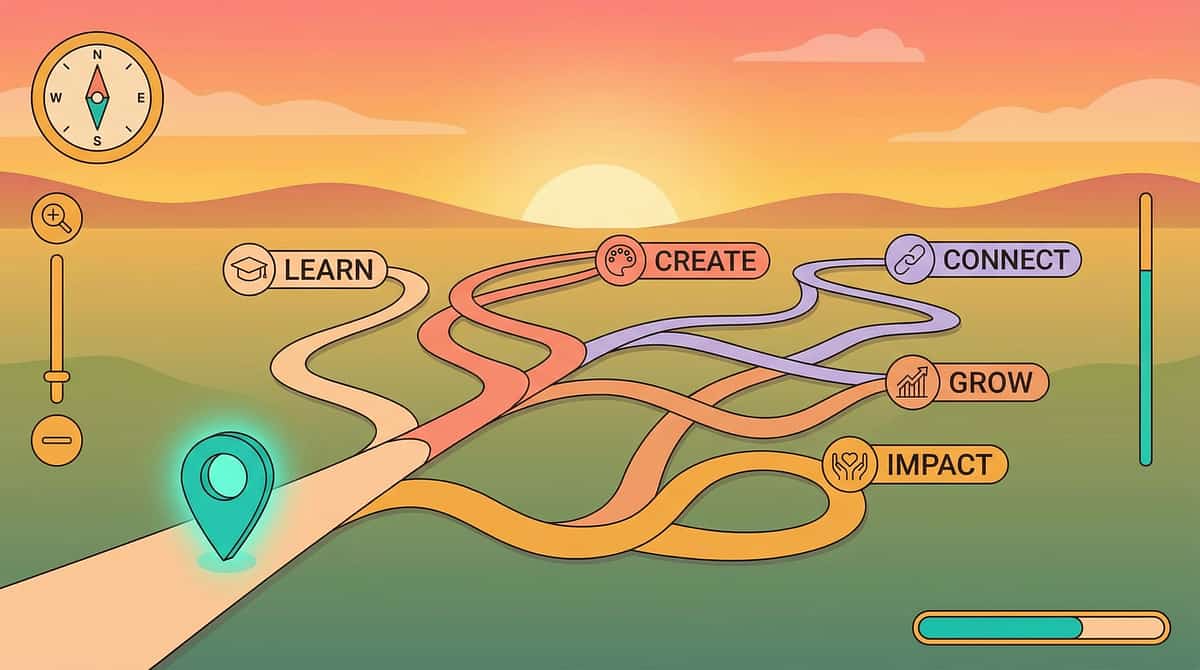
The Progression Pathway
Your Developmental GPS — Where You've Been, Where You're Going
If Name Response Is Established → Branch Options
- A-046: Following Multi-Step Directions — Name response is the prerequisite. Now the child can attend to instructions that follow the name call.
- A-052: Responding to Social Bids — Broader social orienting: responding to all forms of social attention bids, not just name calls.
- A-060: Attention in Learning — Classroom-specific attention skills building on the auditory orienting foundation.
Prerequisite Techniques You May Need
- A-043: Hums to Block Sound — Auditory sensitivity management, via Canon: Noise-Reducing Headphones
- A-044: Sensitivity to Sounds — Sound tolerance building, via Canon: Ear Defenders, Sound Machines
Long-Term Developmental Goal
Automatic, reliable name response across all natural contexts — functional for safety, social connection, and academic engagement.
ACT IV — THE PROGRESS ARC
Related Techniques in This Domain
Auditory Attention & Processing — The Full Domain Map
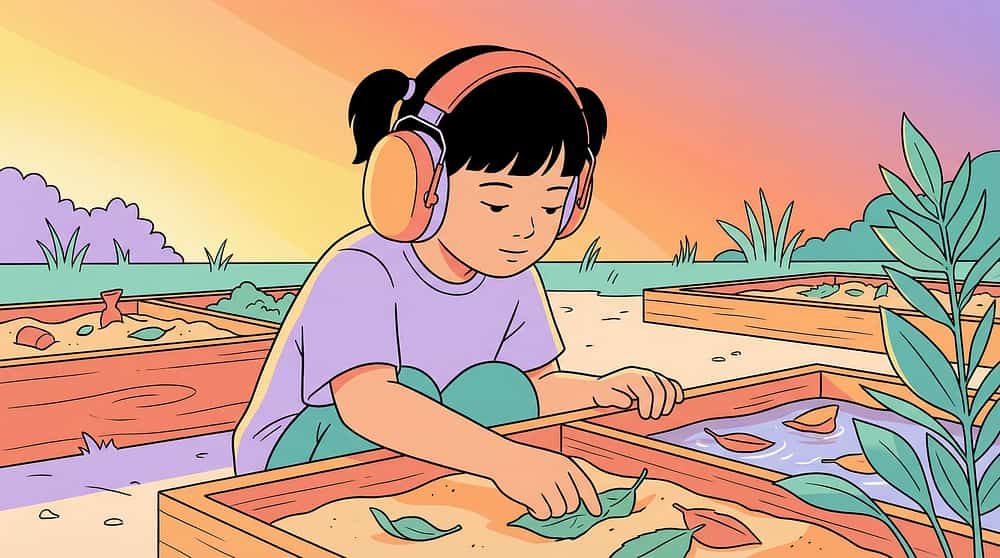
A-043: Humming to Block Sound
Difficulty: Core | Canon: Noise-Reducing Headphones, Calming Apps

A-044: Sound Sensitivity
Difficulty: Core | Canon: Noise-Reducing Headphones, Ear Defenders, Sound Machines
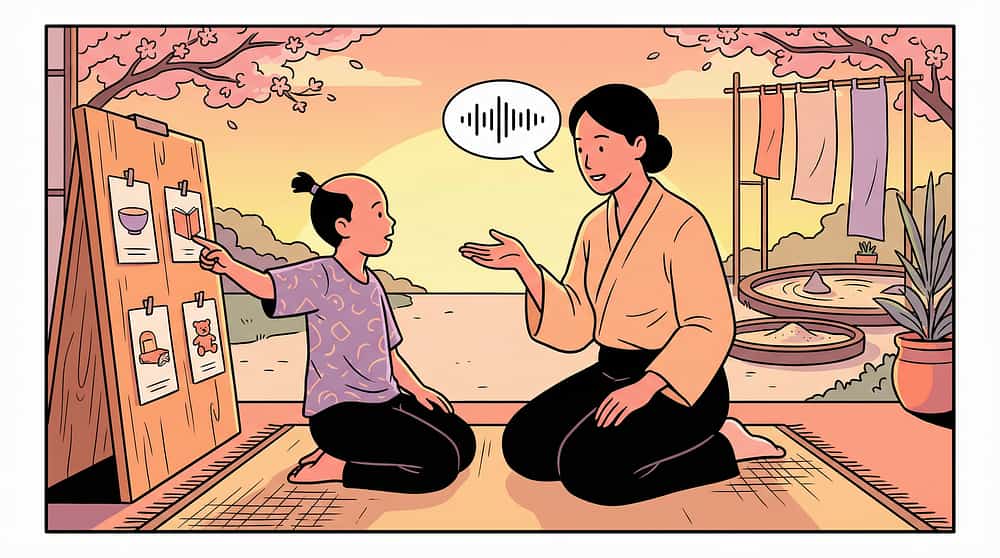
A-046: Following Verbal Instructions
Difficulty: Advanced | Canon: Visual Schedule, First-Then Board, Reinforcement Menus
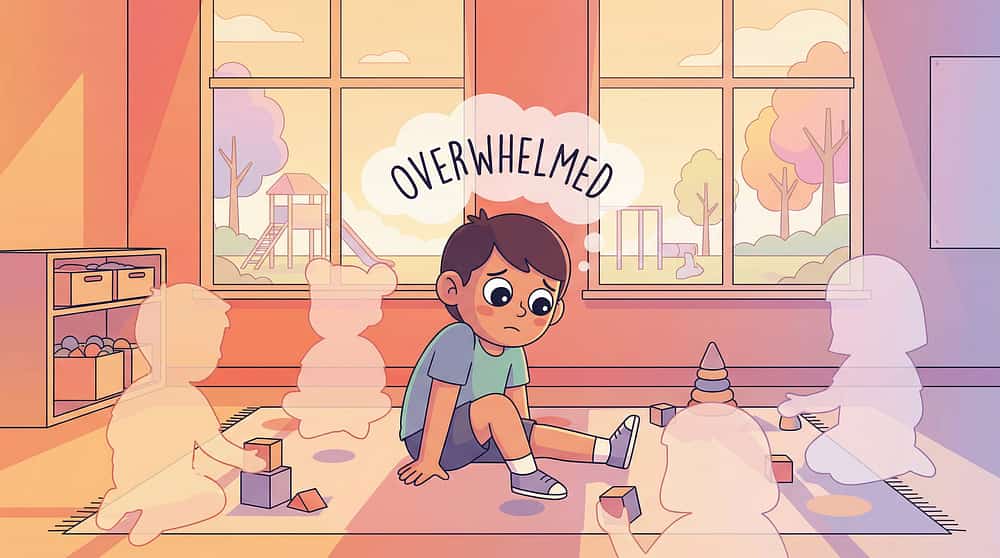
A-047: Overwhelmed by Multiple Speakers
Difficulty: Advanced | Canon: Noise-Reducing Headphones, Visual Supports
You already own materials for these: If you purchased Noise-Reducing Headphones / Ear Defenders or Reinforcement Menus for A-045, those same Canon Materials are used in A-043, A-044, and A-046.
ACT IV — THE PROGRESS ARC
Your Child's Full Developmental Map
This Technique Is One Piece of a Larger Plan
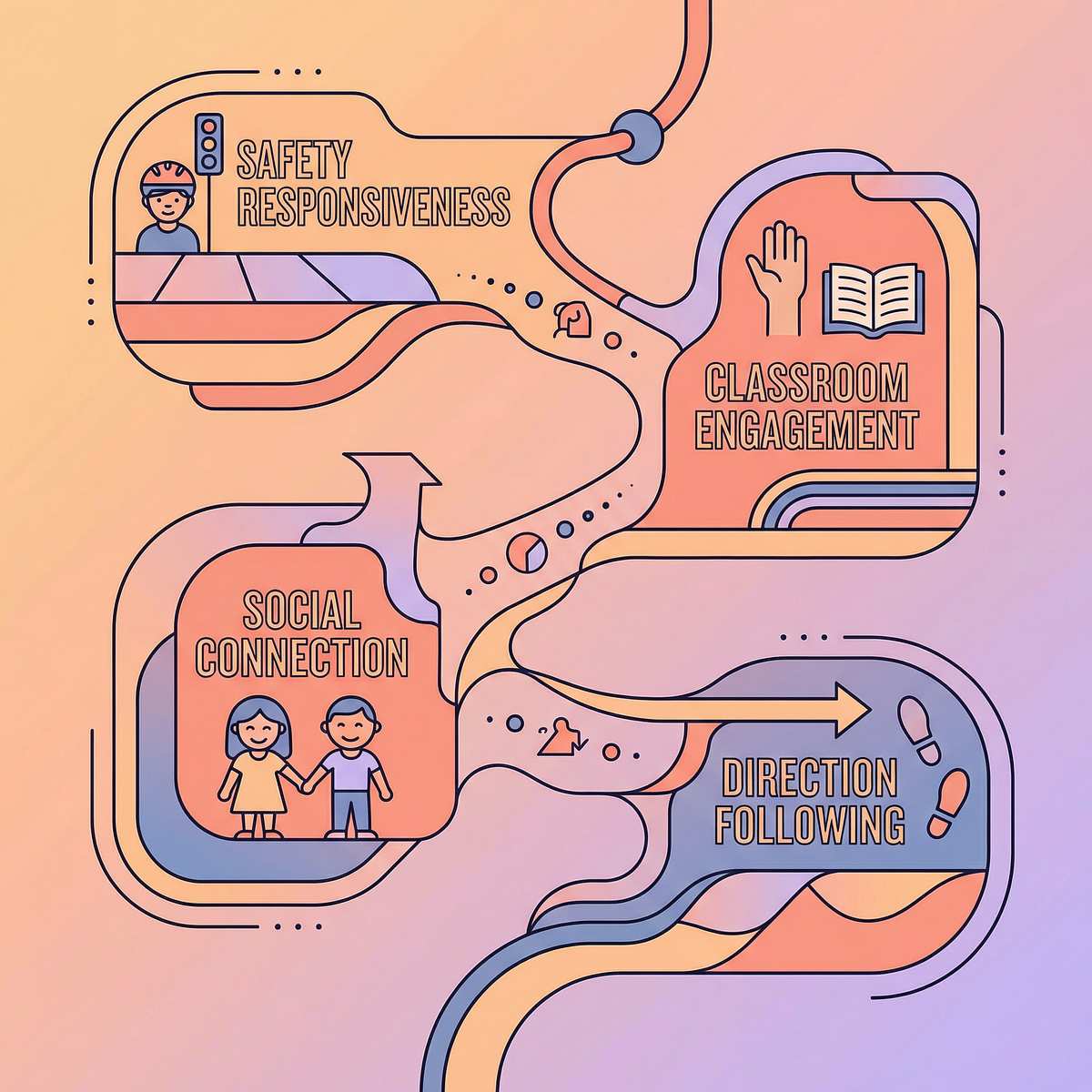
Name response training (A-045) sits within one of 12 developmental domains. Understanding how it connects to the larger picture helps you see where you're going — and gives you a roadmap for everything that comes next.
→ Safety Responsiveness
Domain H: Name response is the foundation of calling a child in danger situations.
→ Classroom Engagement
Domain K: A child who responds to their name is ready for teacher-directed learning.
→ Social Connection
Domain C: Name response opens the door to reciprocal social exchanges.
→ Direction Following
Domain E: The first step in following verbal instructions begins with responding to name.
GPT-OS® Integration: Connect your child's progress data to GPT-OS® for a personalized developmental map showing all active domains, recommended techniques, and predicted progression timeline. pinnacleblooms.org/gpt-os/my-child

ACT V — THE COMMUNITY & ECOSYSTEM
Families Who've Been Here
Real Outcomes. Real Families. Real Timelines.
Family A — Age 3, Diagnosed ASD Level 1, India
Before: No name response in any condition. Hearing tested twice — normal. Called name 15–20 times daily with zero response. Teachers assumed willful ignoring.
Intervention: Name + Motivator Pairing (motivator: iPad, 30 seconds/trial). High-Affect Calling from Day 1. Quiet practice room. 15 trials/day.
Week 2: First consistent pause when name was called. 15% response rate. Week 4: Head turn emerging. Sing-song without touch cue. 45%. Week 8: Responding from across the room. Multiple callers. 75% in ideal conditions.
"Within a month, he was responding to his name the first time. Within three months, it was automatic. He wasn't ignoring us — his brain wasn't registering the name as important. Now it does." — Parent, Pinnacle Network
Family B — Age 6, ADHD + Sensory Processing Differences, India
Before: Inconsistent name response — present when hyperfocused on nothing, completely absent during preferred activities. School reports described "selective hearing."
Intervention: Name Response Game approach — "Ready, Set, [Name]!" game with token board. 10 tokens = 5 minutes of preferred activity. Ear defenders for school.
Week 3: Response rate from 20% to 55% during game. Beginning to generalize to non-game contexts. Week 6: Teacher reported first consistent classroom name response using modified high-affect calling.
Note: Illustrative cases. Individual outcomes vary by child profile. Statistics represent aggregate outcomes across Pinnacle Blooms Network.
ACT V — THE COMMUNITY & ECOSYSTEM
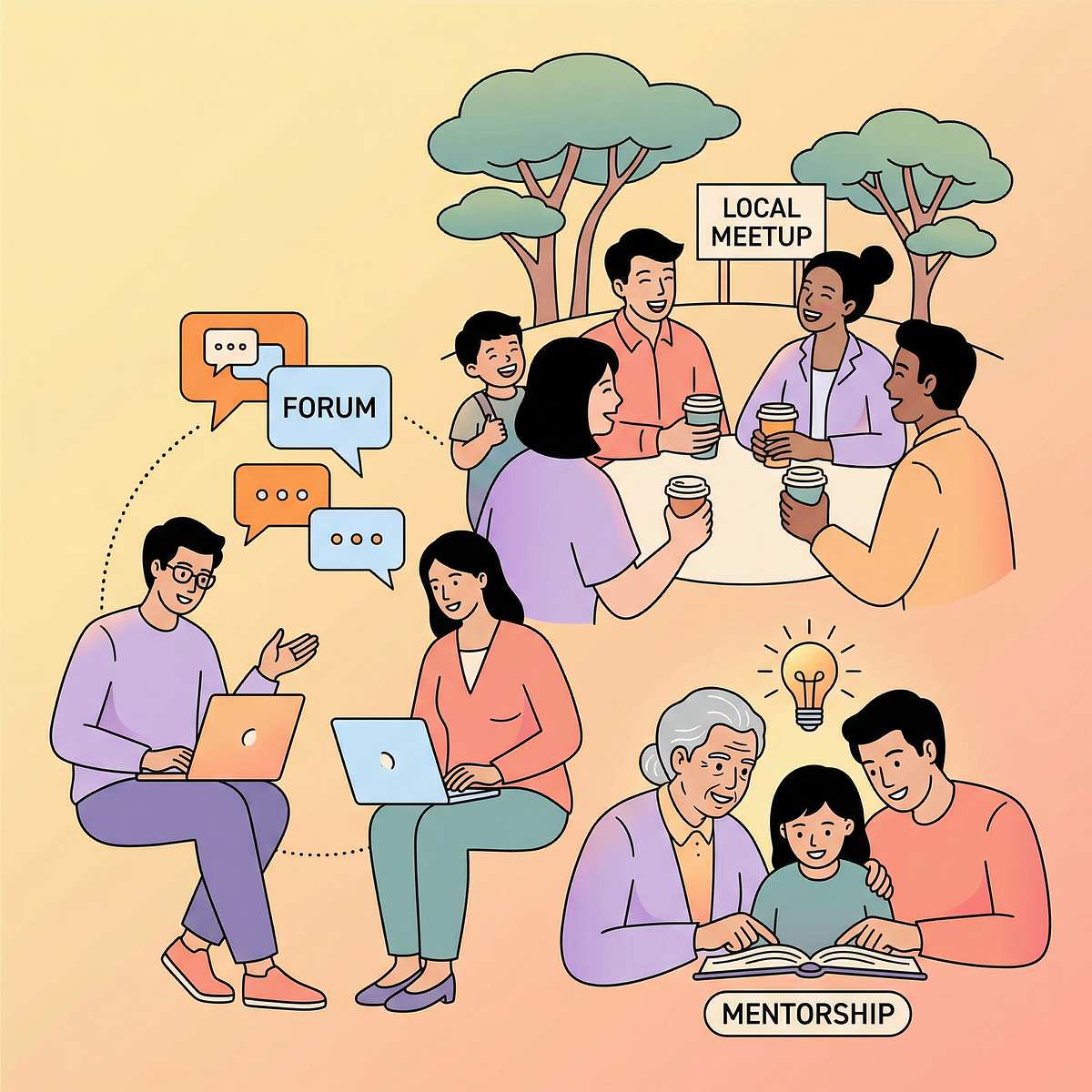
Connect With Other Parents
You're Not Alone in This — Join Families Working on the Same Challenge
Online Communities
- 🟢Pinnacle Auditory Attention Parent Group — WhatsApp community for parents working on name response and auditory processing challenges
- 🟢Pinnacle Parent Forum — pinnacleblooms.org/community — discussion boards organized by challenge type
- 🟢Weekly Parent Support Calls — live Q&A with Pinnacle therapists focused on auditory attention strategies
Local Connections
- 🏥 70+ Pinnacle centers host monthly parent meetups organized by challenge domain
- 🤝 Peer mentoring program — connect with an experienced parent who has successfully built name response in their child
- 📍 Find your nearest center: pinnacleblooms.org/centers
Share Your Journey
Your experience — the wins, the setbacks, the strategies that worked for YOUR child — is invaluable to another parent who is on Day 1. Consider sharing:
- What motivator worked best for your child
- Which calling style got the first response
- How long it took to see real change
- What you wish you'd known from the start
"Your experience helps others. Consider sharing your journey."
Canon Material: Parent Support Groups & Networks — Pinnacle 128 Canon
ACT V — THE COMMUNITY & ECOSYSTEM
Your Professional Support Team
Home + Clinic = Maximum Impact
Home practice produces results. Professional guidance accelerates and deepens them. The strategies on this page work best when supported by clinical oversight — and professional therapy works best when reinforced at home.
Speech-Language Pathologist
Auditory attention assessment and systematic intervention. The primary clinical driver of name response programming.
BCBA
Intensive behavior-analytic name response programming. Reinforcement system design and data-driven decision-making.
Occupational Therapist
Sensory processing evaluation and environmental modification. Ensures optimal regulation for learning.
NeuroDevelopmental Pediatrician
Differential diagnosis and medical oversight. Distinguishes autism, ADHD, APD, and language disorder.
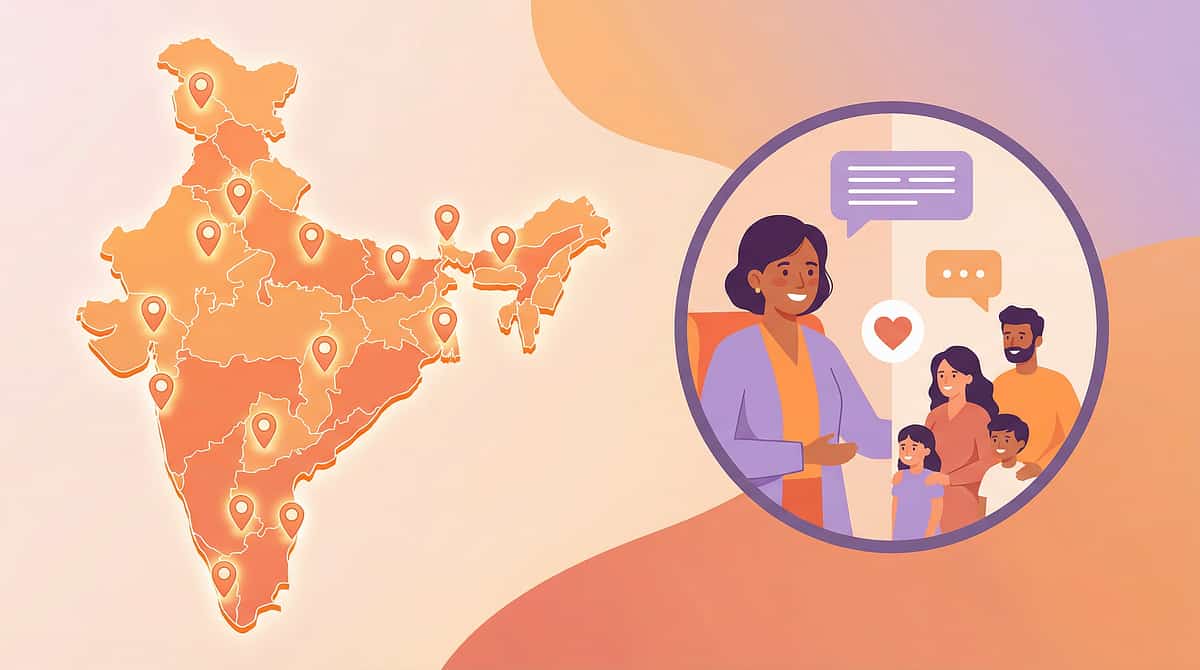
📍 Find Your Nearest Center
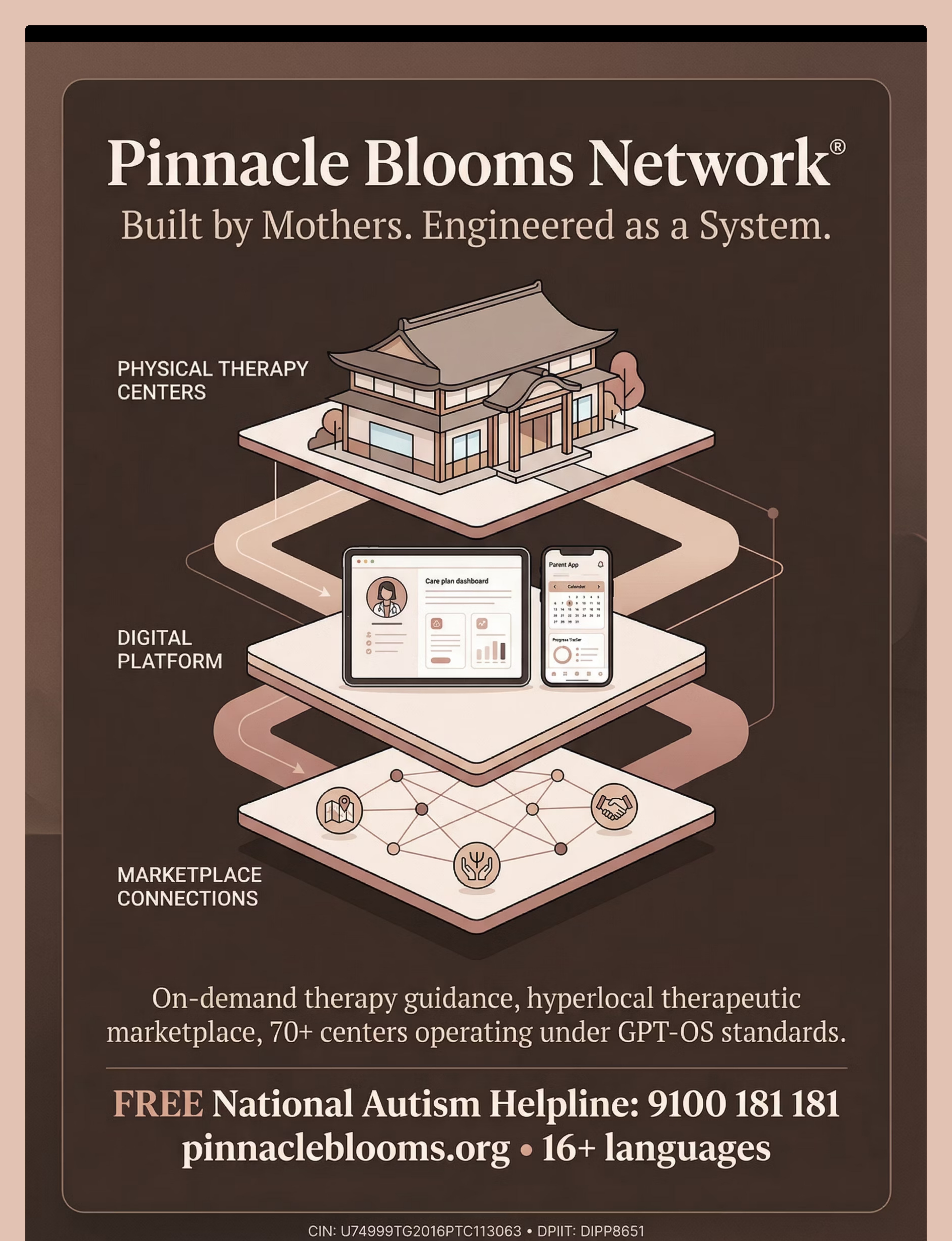
70+ centers across India | GPT-OS® clinical standards
pinnacleblooms.org/centers
pinnacleblooms.org/centers
💻 Teleconsultation
Video consultation with domain-matched therapists for families not near a center.
pinnacleblooms.org/teleconsult
pinnacleblooms.org/teleconsult
📞 FREE Helpline
9100 181 181 — Available 24×7 | 16+ languages | No charge | Trained clinical staff
ACT V — THE COMMUNITY & ECOSYSTEM
The Research Library
Every Claim on This Page Is Traceable to Published Evidence
# | Study | Finding | Source | |
1 | PRISMA Systematic Review (2024) | 16 articles confirm sensory integration meets evidence-based practice criteria for ASD | PMC11506176 — Children (Basel) | |
2 | Meta-Analysis (2024) | Across 24 studies: sensory integration therapy effectively promotes social skills, adaptive behavior, sensory processing, and motor skills | PMC10955541 — World J Clin Cases | |
3 | Indian RCT (2019) | Home-based sensory interventions by parents showed significant outcomes | DOI: 10.1007/s12098-018-2747-4 — Indian J Pediatrics | |
4 | WHO Nurturing Care Framework (2018/2023) | Context-specific, equity-focused interventions for early childhood development | ||
5 | ASHA Practice Portal | Reduced name response as core intervention target with multi-modal cueing protocol | ||
6 | NCAEP Evidence-Based Practices (2020) | Visual supports and video modeling classified as evidence-based practice for autism | NCAEP Report | |
7 | Nadig et al. (2007) | Reduced name response as early marker for autism — the foundational study | J Autism Dev Disord | |
8 | Jones & Klin (2013) | Attention to social stimuli and orienting in autism | Nature |
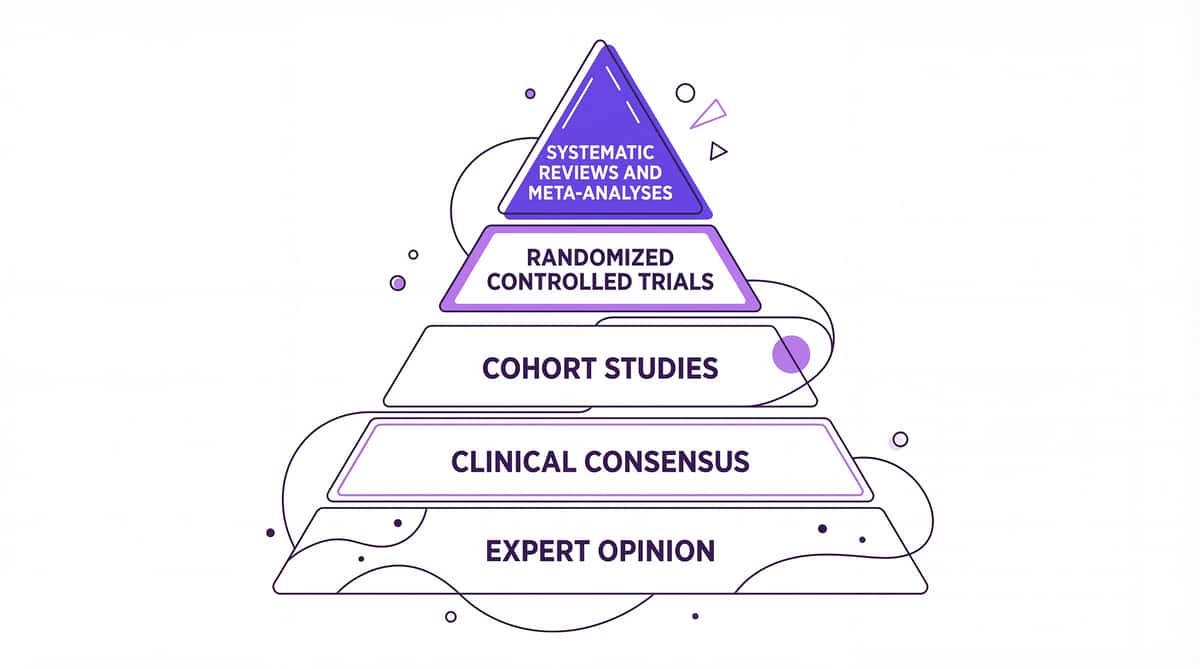
WHO/UNICEF References: WHO Nurturing Care Framework — nurturing-care.org/ncf-for-ecd/ | WHO Care for Child Development Package (2023) | UNICEF MICS developmental indicators (197 countries). Oxford Centre for Evidence-Based Medicine levels applied.
ACT V — THE COMMUNITY & ECOSYSTEM
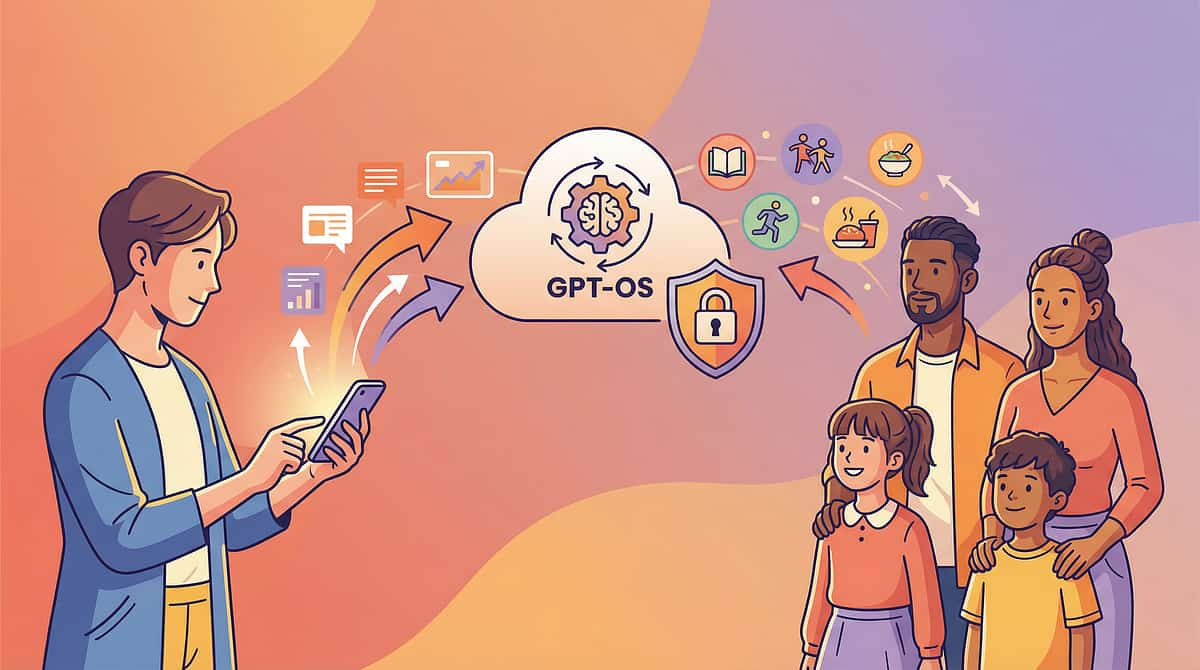
How GPT-OS® Uses Your Data
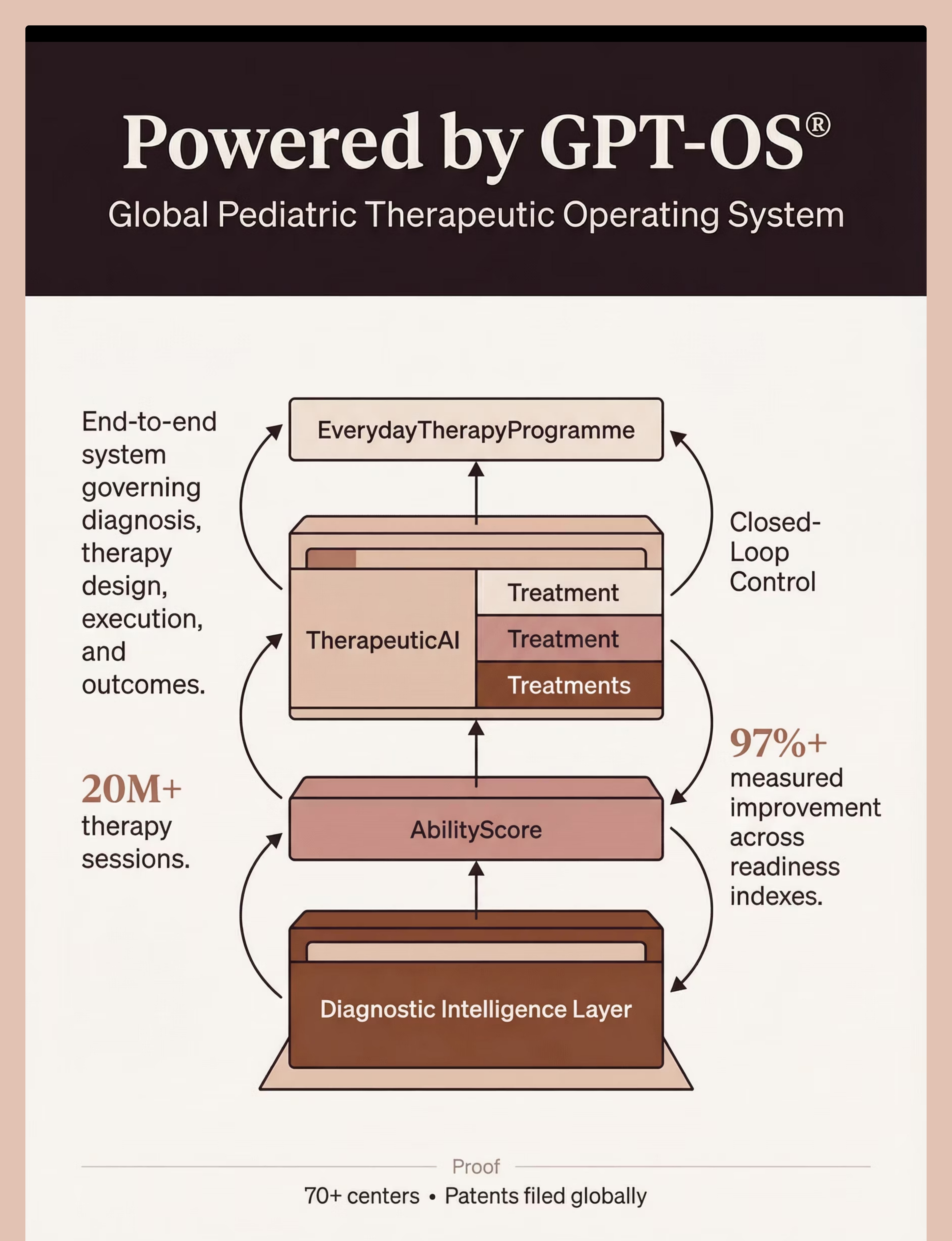
GPT-OS® — Global Pediatric Therapeutic Operating System
What GPT-OS® Learns From Your Child's Data
- Which calling style produces the fastest orienting
- Optimal session length before satiation
- Most effective motivator categories for this child
- Predicted timeline to generalization based on early-phase response rates
- Risk indicators for plateau or regression
Privacy & Data Protection
- All data encrypted in transit and at rest
- Your child's individual data is never shared
- Aggregate, de-identified data improves recommendations for ALL families
- Full compliance with Indian IT Act, GDPR principles, and HIPAA-equivalent standards
Population-Level Impact
Your data helps every child like yours. Every session you log improves the algorithm that helps millions of families worldwide.
20M+
Therapy Sessions
Real-world evidence base powering the GPT-OS® intelligence layer
97%+
Measured Improvement
Children showing gains across one or more readiness indexes
70+
Pinnacle Centers
Across India, all operating under unified GPT-OS® clinical standards
160+
Countries
Patents filed globally for the GPT-OS® architecture and methodology
ACT V — THE COMMUNITY & ECOSYSTEM
Watch the Reel: A-04 5
9 Materials That Help When Child Seems Deaf to Name — 60-Second Video
Reel Details
Reel ID: A-045
Series: Sensory Solutions — Episode 45
Domain: Auditory Attention + Name Response + Orienting
Duration: 60 seconds
Presenter: Pinnacle Blooms Network — Licensed SLP, specializing in auditory attention and social orienting interventions
What You'll See
- The paradox: child hearing candy wrappers but not their name
- All 9 strategies demonstrated visually
- Before/after: non-response to reliable response
- GPT-OS® framework explained in 7 seconds
- Pinnacle outcomes data
From the 999 Reels Master
This Reel is part of the Pinnacle Blooms 999 Reels library — 999 evidence-based, parent-focused video interventions mapped to the Pinnacle 128 Canon and 20 Category system.
Related Reels
- A-043: 9 Materials for Humming to Block Sound
- A-044: 9 Materials for Sound Sensitivity
- A-046: 9 Materials for Following Verbal Instructions

ACT V — THE COMMUNITY & ECOSYSTEM
Share This With Your Family
Consistency Across Caregivers Multiplies Impact
If only one parent executes this protocol, the child learns: "I respond to name when THIS person calls." If all caregivers use the same approach, the child learns: "I respond to name when ANYONE calls." Generalization is the goal.
Share This Page
📱WhatsApp: Share pre-filled message with page link
📧Email: Send email with summary + link
🔗Copy Link: techniques.pinnacleblooms.org/sensory-auditory/child-doesnt-respond-to-name
Download Family Guide
📄1-Page PDF Summary — Simplified core protocol designed for:
- Spouse/partner who hasn't read the full page
- Grandparents who need a quick explanation
- Teachers who need classroom-adapted version
- Babysitters/nannies who need the basics
Teacher Communication Template
Dear [Teacher], [Child's name] is currently working on building name response with our support team. They respond best when: (1) their name is called in a sing-song, animated tone, (2) from close proximity, and (3) with a brief pause to allow response time. They are not ignoring you — their brain processes their name differently. We'd appreciate your support in using these strategies during school. Here is a link to the full evidence-based protocol: techniques.pinnacleblooms.org/sensory-auditory/child-doesnt-respond-to-name
Research: WHO CCD Package: Multi-caregiver training is critical for intervention generalization and maintenance. PMC9978394. When ALL caregivers use the same protocol, outcomes improve significantly because the brain encounters consistent name-response pairing across all contexts.

ACT VI — THE CLOSE & LOOP
Frequently Asked Questions
Q1: Could this be a hearing problem even if the hearing test was normal?
Standard hearing tests measure peripheral hearing — whether the ear can detect sound. They don't measure central auditory processing — how the brain interprets and prioritizes sound. Your child may have intact peripheral hearing but impaired auditory processing. If you suspect this, request a central auditory processing evaluation from an audiologist (available for children 7+; behavioral indicators can be assessed earlier).
Q2: Should I stop calling my child's name outside of practice sessions?
No. Continue using their name naturally throughout the day. But during the active training phase, don't repeatedly call the name in frustration — this teaches the brain that the name is ignorable. One natural call, then use another strategy to get their attention (touch, approach, visual).
Q3: My child responds on video calls but not in person. Why?
The screen is a powerful visual attractor. In person, the name requires an attention SHIFT — disengaging from current focus. This is the harder skill. Use it as evidence that the response is possible — and work on building it in person.
Q4: We've been told "he'll grow out of it." Should we wait?
No. Research is clear: early, systematic intervention produces significantly better outcomes than waiting. Children who receive name response training between ages 2–4 show the fastest and most durable gains. Waiting costs time during the most neuroplastic developmental window.
Q5: Can I use these strategies if my child doesn't have a diagnosis?
Yes. These strategies are evidence-based for ALL children with auditory attention challenges, regardless of diagnostic status. You don't need a diagnosis to pair your child's name with good things.
Q6: How many trials per day is enough?
The research suggests 10–30 structured trials per day (across 2–3 short sessions) plus naturalistic opportunities. More important than quantity is consistency — daily practice without gaps produces faster results than intensive sporadic sessions.
Q7: My child says "what?" in an annoyed tone. Is this progress?
Yes! An annoyed "what?" is a response. It means the brain is processing the name, generating an attention shift, and producing a verbal reply. The tone will normalize as the response becomes automatic and less effortful. Don't correct the tone — reinforce the response.
Q8: Should I be concerned if my child responds but doesn't make eye contact?
In early training phases, accept any orienting response — head turn, body shift, verbal reply — without requiring eye contact. Eye contact involves a separate neural pathway (social gaze) and can be shaped later. For some children, eye contact is uncomfortable and shouldn't be forced.
Didn't find your answer? Call the FREE National Autism Helpline: 9100 181 181 — 24×7, 16+ languages, no charge.
ACT VI — THE CLOSE & LOOP
Your Next Step: Start Now
You've Read the Science. You've Seen the Protocol. You Have the Tools. The Next Step Is Yours.
🟢 Start This Technique Today
Launch a GPT-OS® guided name response session. Personalized to your child's profile. Step-by-step, trial-by-trial, with real-time data capture.
🔵 Book a Consultation
Connect with a Pinnacle therapist specializing in auditory attention and name response. Video or in-person. Insurance guidance available.
Or call FREE: 9100 181 181 — National Autism Helpline, 24×7, 16+ languages
➡️ Explore Next Technique: A-046
"9 Materials That Help With Following Multi-Step Directions" — the natural next step after name response is established.
Clinically validated. Home-applicable. Parent-proven. Built by Mothers. Engineered as a System.
🗣️ Speech-Language Pathology
Auditory attention assessment and systematic intervention protocol
🧩 Applied Behavior Analysis
Reinforcement design, data collection, and response shaping
🤲 Occupational Therapy
Sensory processing and environmental modification
📚 Special Education
Classroom generalization and educational context adaptation
👨⚕️ NeuroDevelopmental Pediatrics
Differential diagnosis and medical oversight
Preview of 9 materials that help when child seems deaf to name Therapy Material
Below is a visual preview of 9 materials that help when child seems deaf to name therapy material. The pages shown help educators, therapists, and caregivers understand the structure and content of the resource before use. Materials should be used under appropriate professional guidance.


Link copied!
ACT VI — THE CLOSE & LOOP
The Pinnacle Promise
Pinnacle Blooms Network® | Built by Mothers. Engineered as a System.
From fear to mastery. One technique at a time. Every claim traceable. Every strategy validated. Every parent supported.
This page is one of 70,000+ evidence-linked, parent-empowering, mobile-first intervention technique pages published at techniques.pinnacleblooms.org — the largest structured pediatric intervention knowledge base on Earth.
Medical Disclaimer: This content is educational and does not replace assessment by a licensed speech-language pathologist, audiologist, developmental pediatrician, or healthcare provider. Persistent lack of response to name may indicate autism spectrum disorder, auditory processing disorder, attention disorders, or other conditions requiring comprehensive evaluation. Always consult a qualified professional before beginning any intervention program. Individual results may vary. Statistics represent aggregate outcomes across the Pinnacle Blooms Network. Progress timelines are population-level estimates and may differ for individual children based on profile, severity, comorbidities, and intervention intensity.
Legal & Statutory: © 2025 Pinnacle Blooms Network®, a unit of Bharath Healthcare Laboratories Pvt. Ltd. All rights reserved.
CIN: U74999TG2016PTC113063 | DPIIT: DIPP8651 (Government of India) | MSME Udyog Aadhaar: TS20F0009606 | GSTIN: 36AAGCB9722P1Z2 | Patents filed across 160+ countries
Powered by GPT-OS® — Global Pediatric Therapeutic Operating System
Generated by the Pinnacle GPT-OS® Content Engine | Consortium Specification v2.0 | February 2026 | 40 cards × 70,000+ techniques = 2,800,000 evidence-linked, parent-empowering knowledge units | The largest structured pediatric intervention knowledge base on Earth.