
"He Won't Go Outside Anymore. There Might Be Dogs."
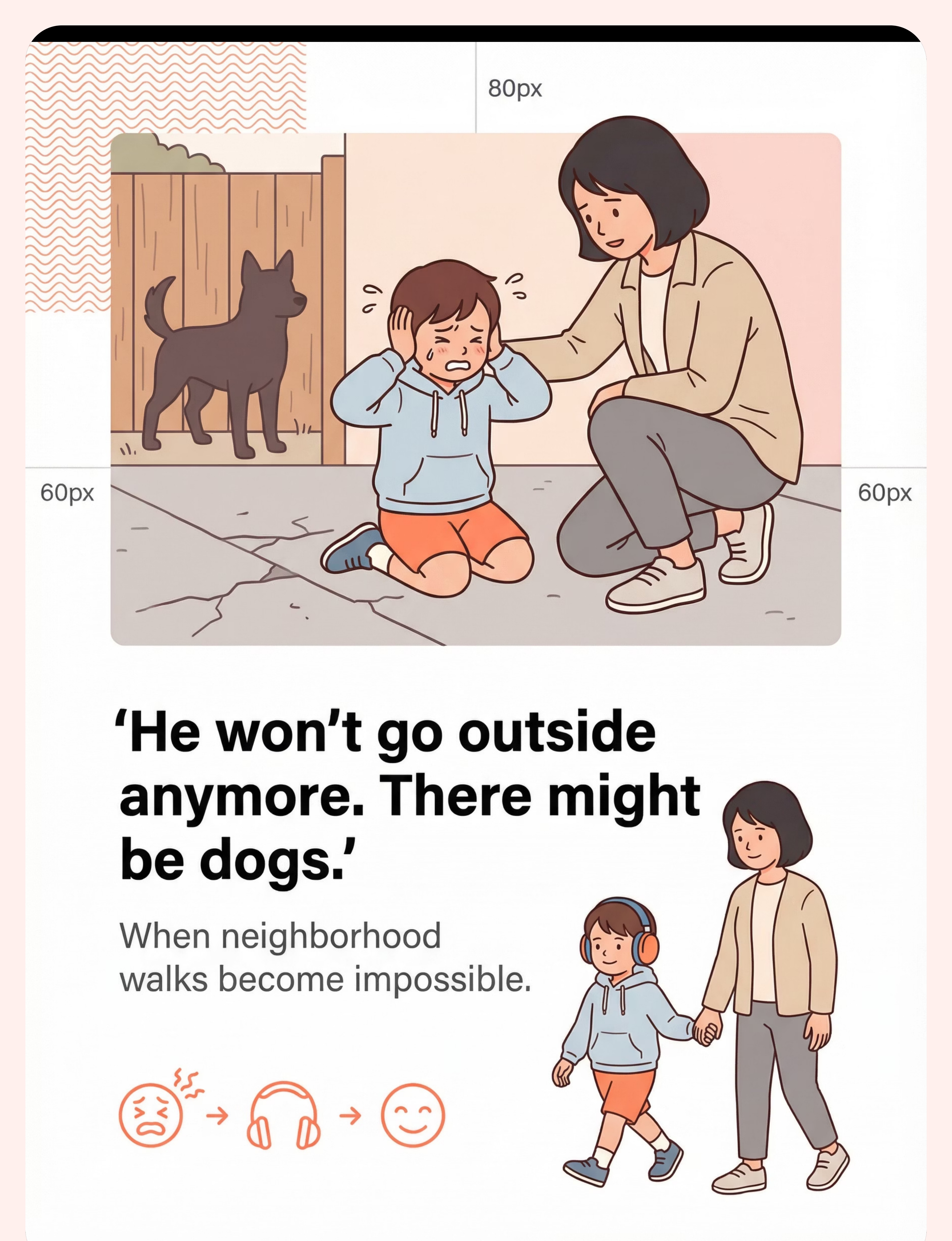
It starts with one bark. One sound that cuts through your child's nervous system like glass. Then it's every walk. Every park. Every trip to the mailbox. Your neighbor's dog barks when you open the front door — so some days, your child won't leave the house.
You've walked at 5am when it's quiet. You've mapped routes that avoid houses with dogs. You've driven to quieter neighborhoods. But dogs are everywhere — behind fences, in windows, in passing cars, at the park. There's no escaping the sound.
Last week, a dog barked from a car on the street and your child dropped to the ground screaming. People stared. You didn't know how to explain that he's not afraid of dogs — he's in pain from the sound. His world is shrinking. He used to love the park. Now he prefers to stay inside where it's "safe."
You are not failing. Your child's nervous system is speaking. And there is a validated, step-by-step protocol to expand his world again.
Pinnacle Blooms Consortium® | OT • SLP • ABA • SpEd • NeuroDev
Series 38 | Auditory Processing | Age 2–12
You Are Not Alone — The Numbers
Dog barking is among the most commonly reported auditory triggers in children with sensory processing differences. The acoustic profile is uniquely challenging: sudden onset with zero warning, variable intensity reaching 80–90+ dB, completely unpredictable timing, and sharp harmonic structures that activate threat-detection systems in the mammalian brain. Your child's response is not a choice — it is neurological.
80%
Auditory Over-Responsivity
Of children diagnosed with autism display sensory processing difficulties, with auditory over-responsivity among the most functionally limiting (PRISMA Systematic Review, 2024)
1 in 6
Children Globally
Experience developmental challenges requiring early intervention support (WHO/UNICEF, 2023)
21M+
Families Navigating This
Auditory sensitivity challenges like this one — across India and 70+ countries served by the Pinnacle Blooms knowledge ecosystem
"You are among millions of families navigating this exact challenge. The science exists. The materials exist. The protocol exists."
Research Evidence: PRISMA Systematic Review (2024): 16 articles, 2013–2023, confirm sensory integration intervention as evidence-based practice for children with ASD (PMC11506176). Meta-analysis (World J Clin Cases, 2024): Sensory integration therapy effectively promotes social skills, adaptive behavior, sensory processing, and motor skills (PMC10955541). SPD Foundation: Auditory over-responsivity classification and intervention frameworks.
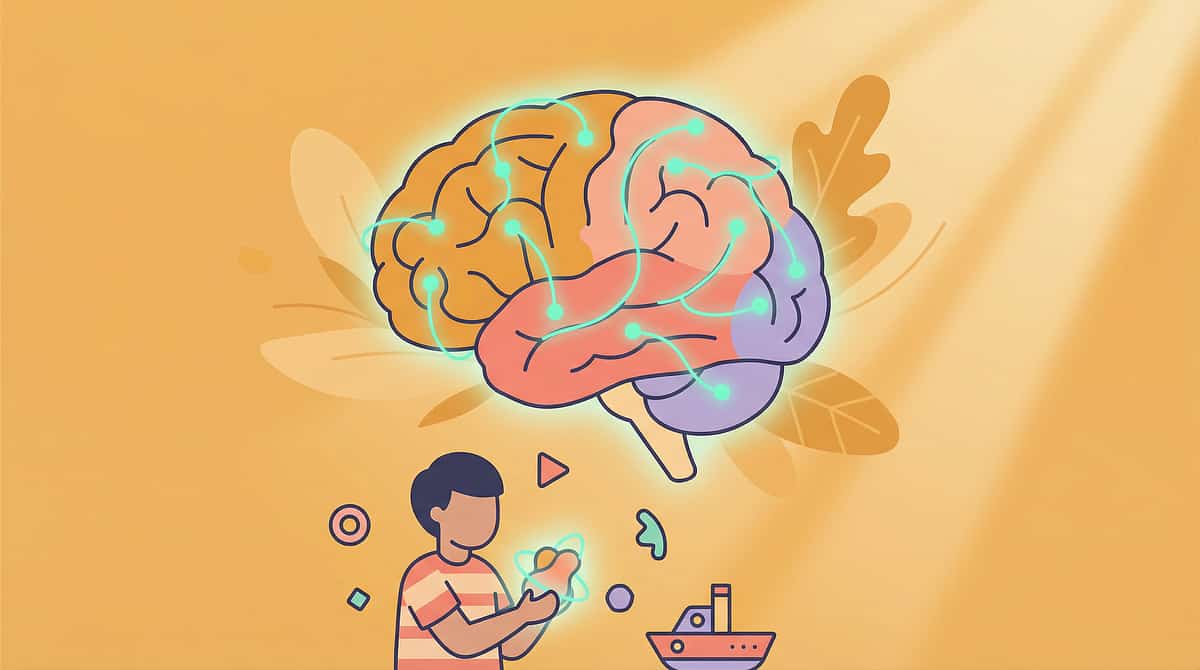
What's Happening in Your Child's Brain
When your child hears a dog bark, something fundamentally different happens compared to what occurs in a typically-processing brain. The auditory pathway — from ear to conscious awareness — is amplified in ways that transform an ordinary neighborhood sound into a full neurological emergency. Understanding this rewires how you respond as a caregiver.
Sound Entry
A dog barks. The sound wave enters your child's ear at 80–90 decibels — the same volume you hear.
Thalamic Amplification
In the thalamus — the brain's sensory relay station — the signal is amplified. A typical brain registers "loud sound, possible alert." Your child's brain registers "DANGER — MAXIMUM ALERT."
Amygdala Hijack
The amplified signal hits the amygdala before the prefrontal cortex can evaluate it. Fight-or-flight activates instantly. Heart rate spikes. Cortisol floods the system. Hands go to ears. Crying begins.
Anticipatory Loop
Because the experience was so aversive, the brain creates a prediction model: "outdoors = possible dog bark = pain." Now anxiety precedes any actual bark. The mere possibility of a dog creates distress.
This is a wiring difference, not a behavior choice. You cannot reason a child out of a neurological response. But you can rewire it — gradually, safely, with the right materials and protocol.
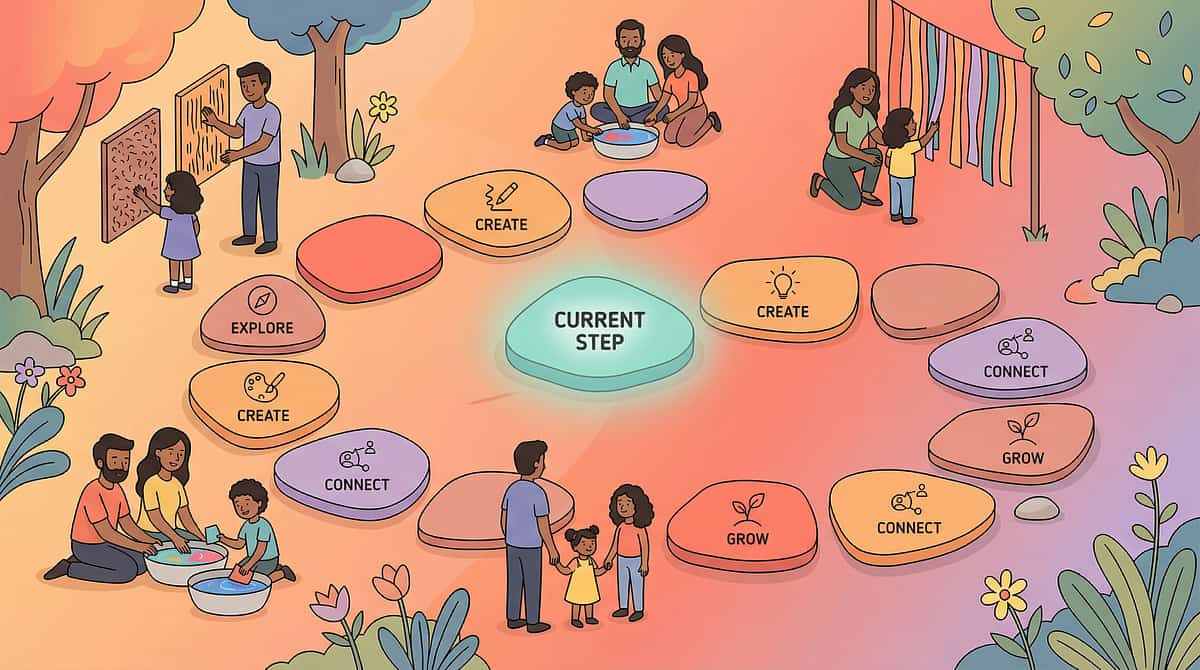
Where Dog Barking Distress Sits in Development
Auditory over-responsivity to specific environmental sounds like dog barking typically becomes functionally limiting between ages 2–5, when the child's world expands beyond the home into neighborhoods, parks, schools, and community settings where dogs are present. The developmental window for intervention is wide — neuroplasticity remains highly active through childhood.
6–12 Months
Sound localization develops; early auditory sensitivity patterns may emerge
12–24 Months
Environmental sound awareness; first fear responses to loud sounds may appear
2–4 Years ★
Peak period for auditory over-responsivity to become functionally limiting; avoidance behaviors solidify; anticipatory anxiety develops
4–7 Years
Pattern consolidation; sensory preferences/aversions become entrenched OR begin resolving with intervention
7–12 Years
Intervention can still reshape auditory processing; neuroplasticity remains high; peer awareness adds social dimension
What Commonly Co-occurs
- Sensitivity to other sudden sounds (hand dryers, vacuum cleaners, alarms, thunder)
- General auditory defensiveness in noisy environments
- Anxiety related to unpredictable environments
- Avoidance of outdoor activities and community settings
Your Child's Journey
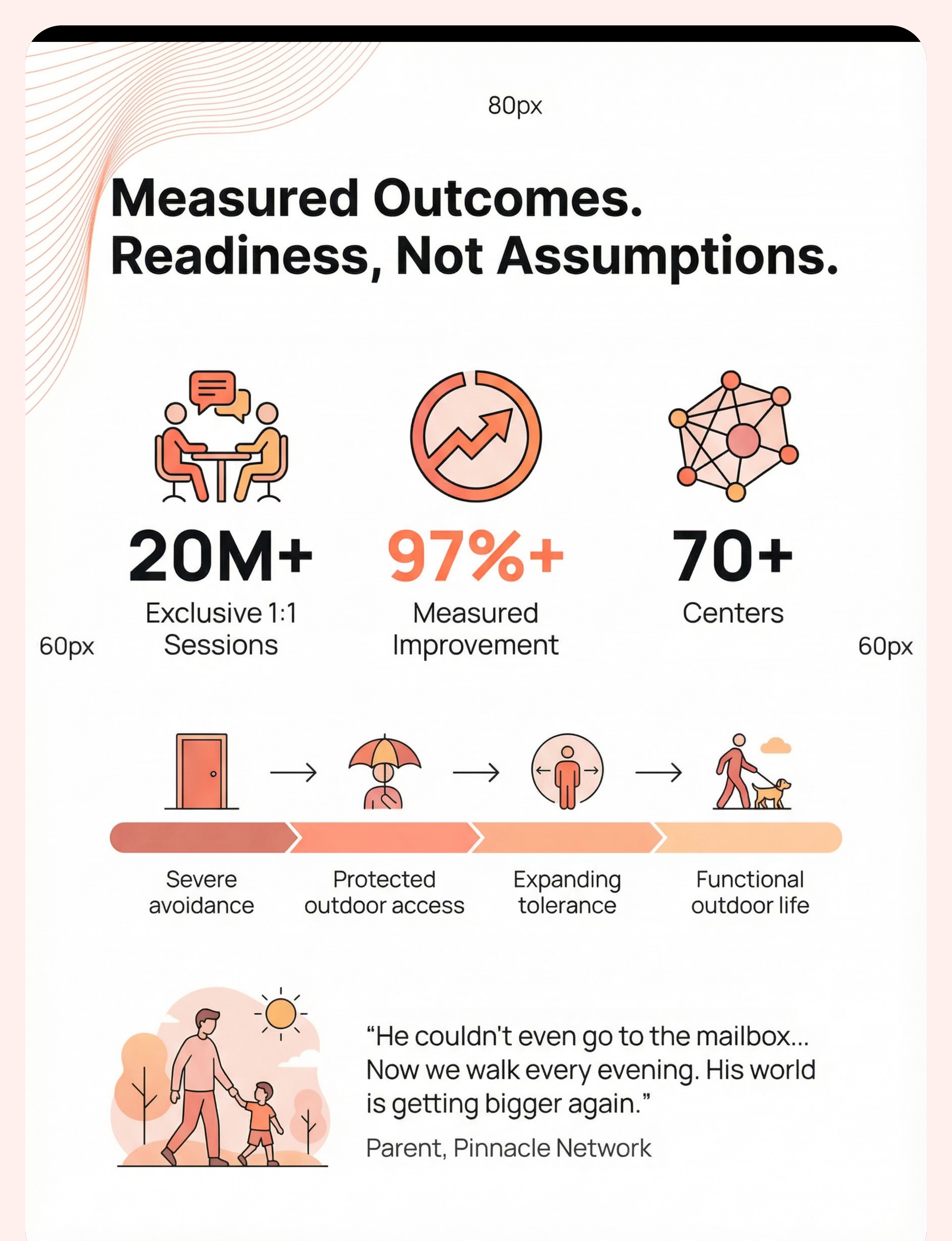
From severe avoidance → protected outdoor access → expanding tolerance → functional outdoor life.
Research evidence: WHO Care for Child Development (CCD) Package — PMC9978394. UNICEF MICS indicators for developmental monitoring across 197 countries.

The Evidence Behind This Technique
LEVEL I–II Evidence
Systematic Reviews + Meta-Analyses + RCTs
"Sensory integration intervention meets criteria to be considered evidence-based practice for children with ASD, with significant improvements in sensory processing, social skills, adaptive behavior, and motor skills across 24 studies."
Study Type | Scale | Key Finding | Source | |
PRISMA Systematic Review (2024) | 16 articles, 2013–2023 | Sensory integration intervention confirmed as evidence-based practice for children with ASD | PMC11506176 | |
Meta-analysis, World J Clin Cases (2024) | 24 studies | SI therapy effectively promotes social skills, adaptive behavior, sensory processing, and motor skills | PMC10955541 | |
Padmanabha et al., Indian J Pediatrics (2019) | RCT, India | Home-based sensory interventions demonstrated significant outcomes in Indian pediatric population | DOI: 10.1007/s12098-018-2747-4 | |
SPD Foundation Clinical Framework | Clinical | Auditory over-responsivity: protection, predictability enhancement, gradual tolerance building | spdfoundation.net | |
AOTA Clinical Guidelines | Guidelines | Sensory processing intervention and auditory defensiveness management guidelines | aota.org |
Clinically validated. Home-applicable. Parent-proven. This technique integrates principles from occupational therapy (sensory integration), applied behavior analysis (systematic desensitization, reinforcement), speech-language pathology (auditory processing), and developmental pediatrics. The multi-disciplinary convergence is not optional — it is what makes it work.
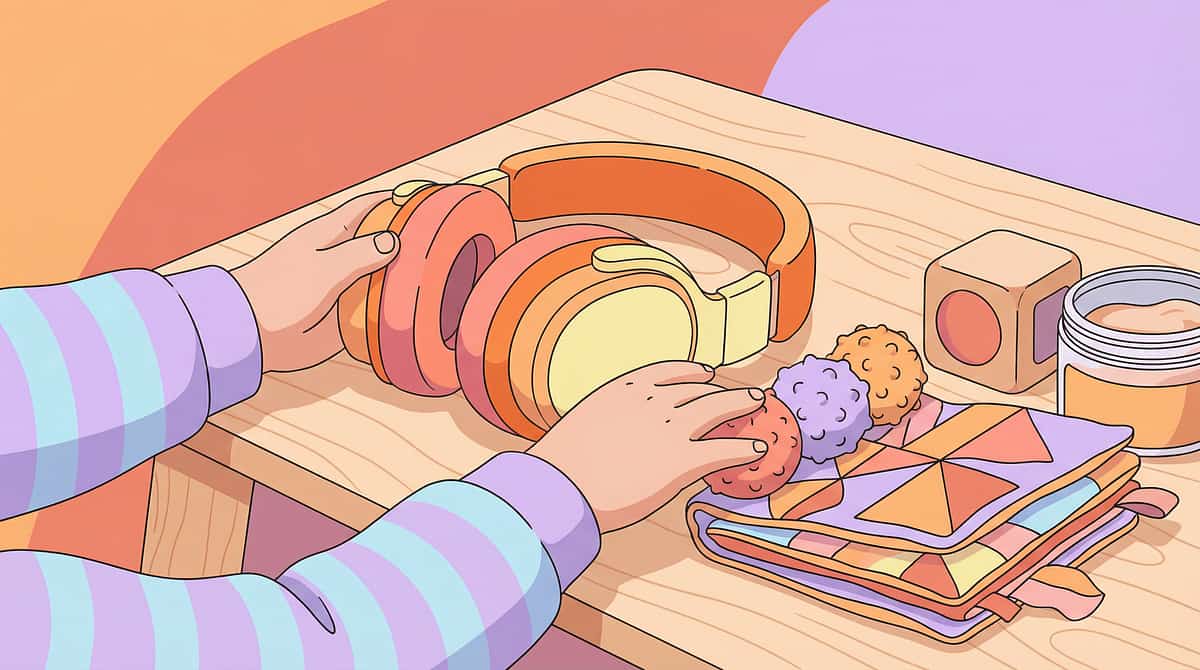
Auditory Desensitization Protocol for Dog Barking Distress
Technique A-038 | "The Dog Walk Protocol — From Avoidance to Outdoor Freedom"
A structured, multi-material intervention that combines immediate auditory protection (noise-reducing headphones), cognitive preparation (social stories, route planning), systematic desensitization (recorded barking exposure at graduated volumes), active coping tools (sensory kit, calming tools), and optional auditory processing intervention (therapeutic listening) to transition a child from severe outdoor avoidance to functional outdoor participation.
Domain
Sensory Processing → Auditory Processing → Sound Sensitivity → Auditory Defensiveness (SEN-AUD-DEF)
Age Range
2–12 years
Setting
Home + Community (Neighborhoods, Parks, Outdoor Environments)
Duration
8–16 weeks minimum for measurable tolerance shift
Frequency
Daily environmental practice + 3–5x/week home-based sound exposure
Complexity
Moderate — parent-executable with professional guidance recommended for significant fears
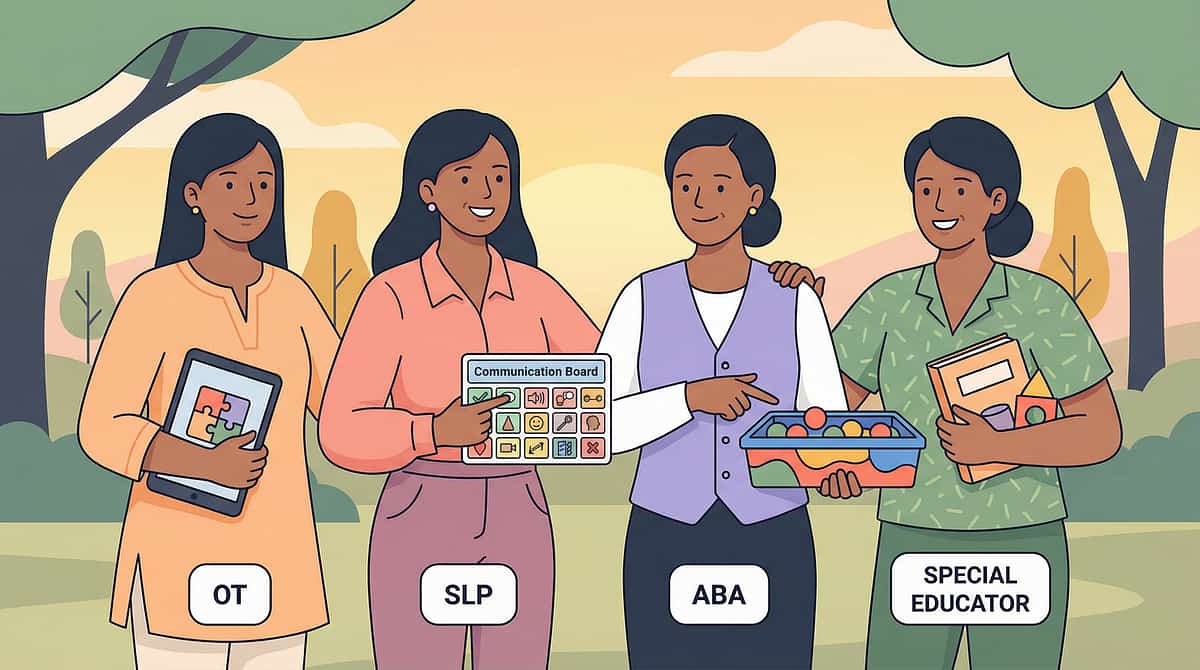
Who Uses This Technique — The Consortium Disciplines
This technique crosses therapy boundaries because the brain doesn't organize by therapy type. Auditory over-responsivity is simultaneously a sensory issue (OT), a communication barrier (SLP), a behavioral pattern (ABA), an educational challenge (SpEd), and a neurological reality (NeuroDev).
Occupational Therapist (OT) — Primary Lead
Evaluates sensory processing profile, designs desensitization hierarchy, selects appropriate headphones and sensory tools, administers therapeutic listening programs, monitors auditory processing progression.
Speech-Language Pathologist (SLP)
Assesses auditory processing capacity, evaluates impact on communication in community settings, supports expressive language around feelings and coping, adapts social stories for the child's communication level.
Board Certified Behavior Analyst (BCBA)
Designs systematic desensitization protocol, structures reinforcement schedules for exposure hierarchy, develops behavioral coping strategies, creates data collection systems for tracking tolerance progress.
Special Educator (SpEd)
Integrates accommodations into school setting, creates classroom sensory supports, coordinates with school team on auditory sensitivity management, adapts curriculum activities accordingly.
With Oversight From: NeuroDevelopmental Pediatrician — evaluates underlying neurological contributions, rules out medical auditory conditions (hyperacusis, misophonia), coordinates with audiologist when indicated.
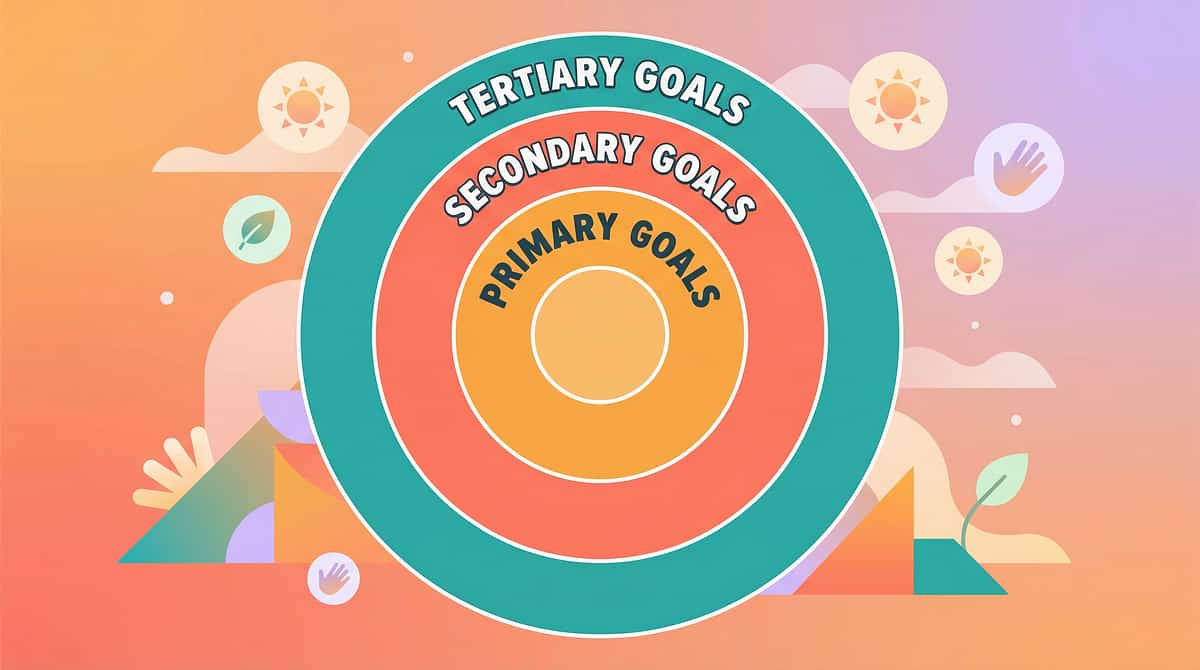
What This Technique Targets
This protocol works on three concentric levels — from the immediate sensory experience to long-term developmental gains. Understanding what you are building toward helps sustain the effort through the weeks ahead.
Primary Target
Auditory tolerance to dog barking. Observable indicator: Child can walk past a barking dog with manageable coping — headphones, fidget, parent support — without meltdown.
Secondary Targets
- Reduction in anticipatory anxiety about outdoor environments
- Active coping skill deployment (using tools instead of freezing)
- Expanded outdoor participation — walks, parks, community outings
- Generalization to other sudden/loud environmental sounds
Tertiary Targets
- Community participation and social integration
- Self-advocacy ("the sound is too loud — I need my headphones")
- Family quality of life and outing capacity
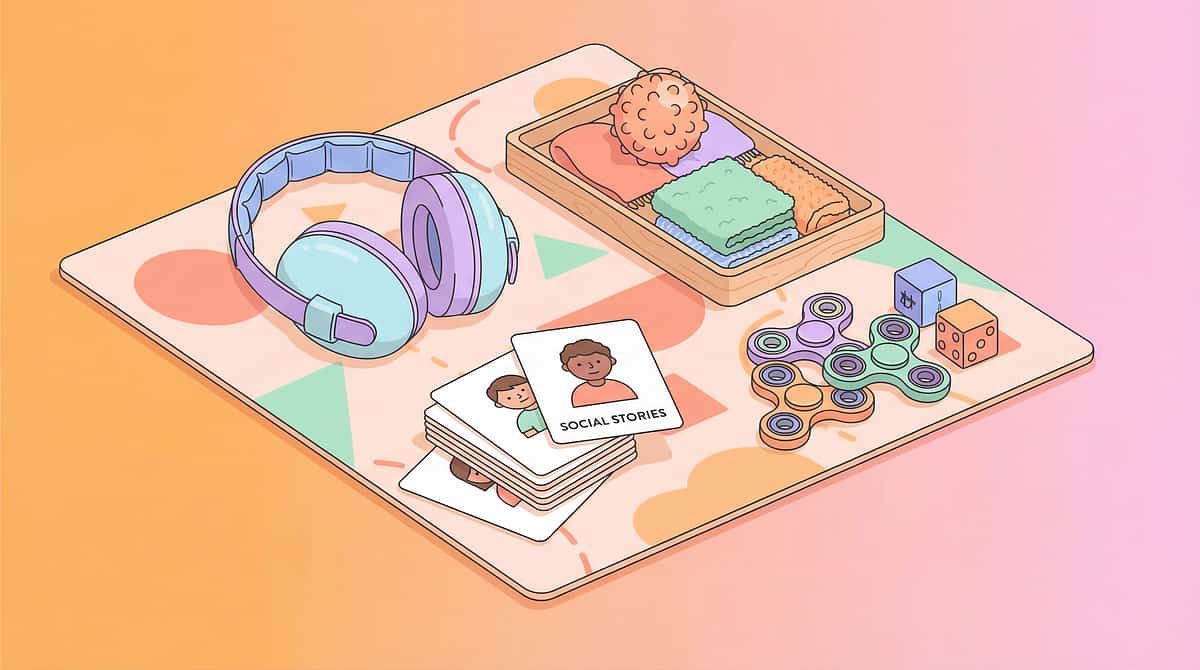
What You Need — 9 Evidence-Based Materials
These nine materials form the complete therapeutic toolkit for this protocol. You don't need all nine to start — the essential starters (₹1,500–4,000) are Materials 1, 3, 5, and 6. Material 9 requires professional guidance and is introduced later in the protocol.
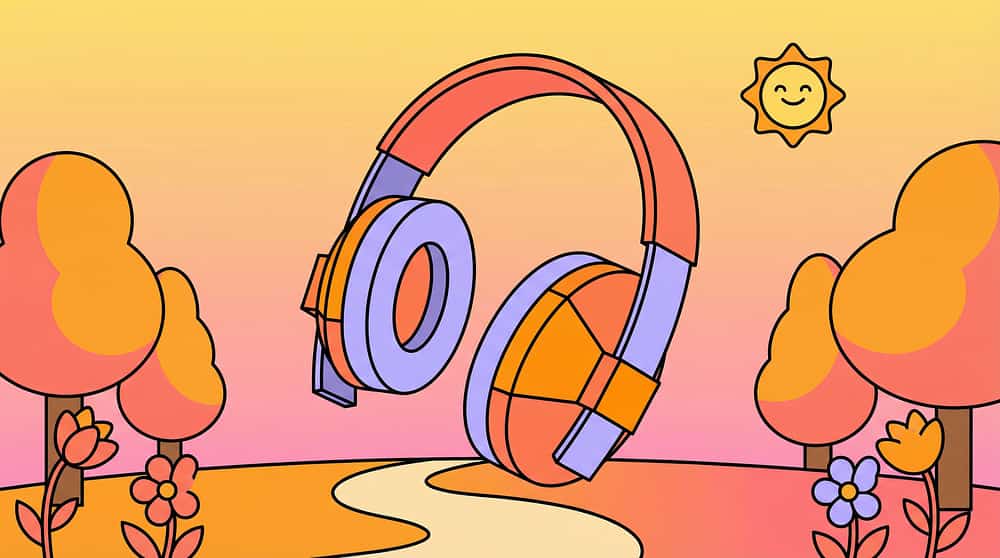
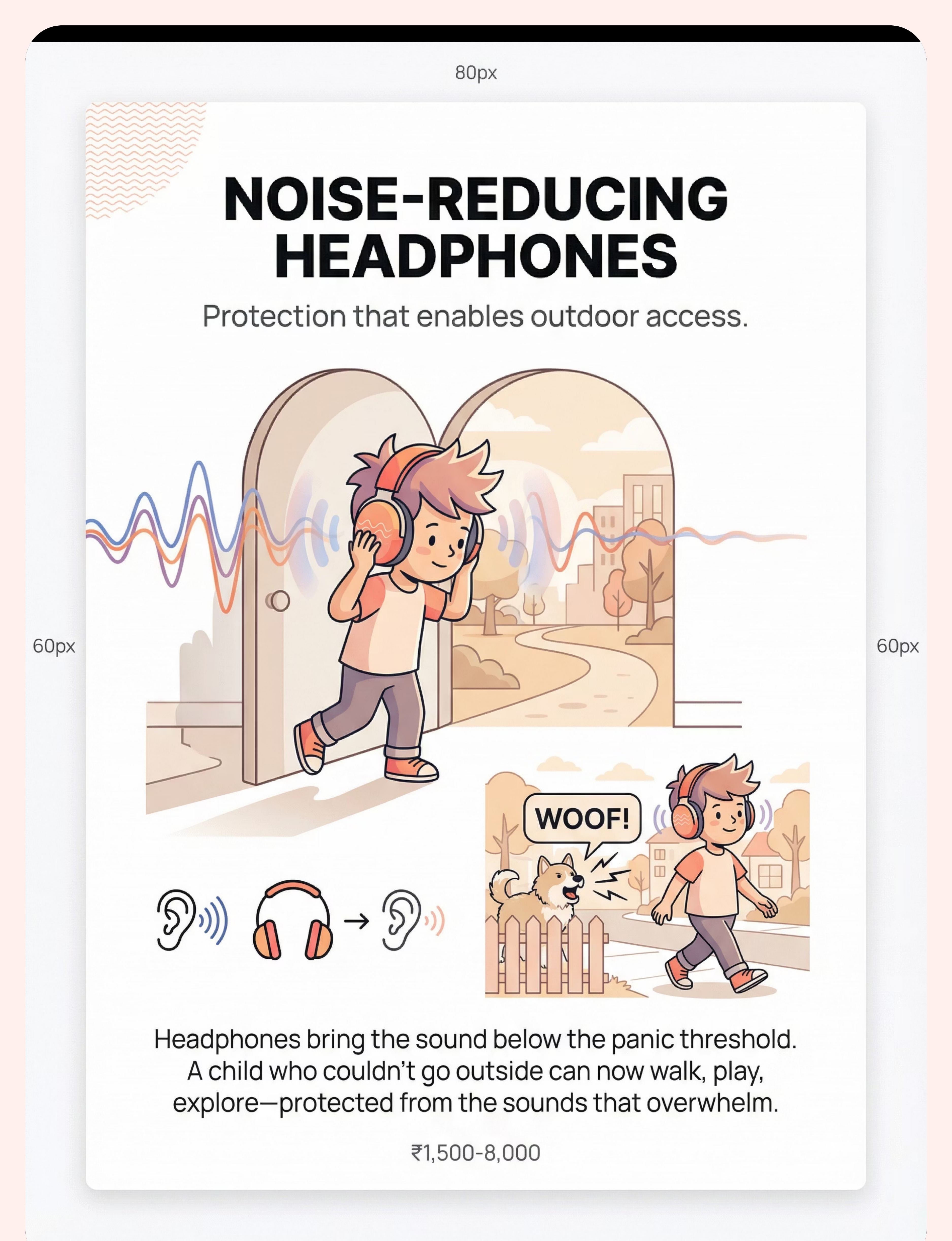
1. Noise-Reducing Headphones / Ear Defenders
Canon #003 | ₹1,500–8,000 | Physically reduces decibel level below panic threshold — enables immediate outdoor access. Pinnacle Recommends ✓

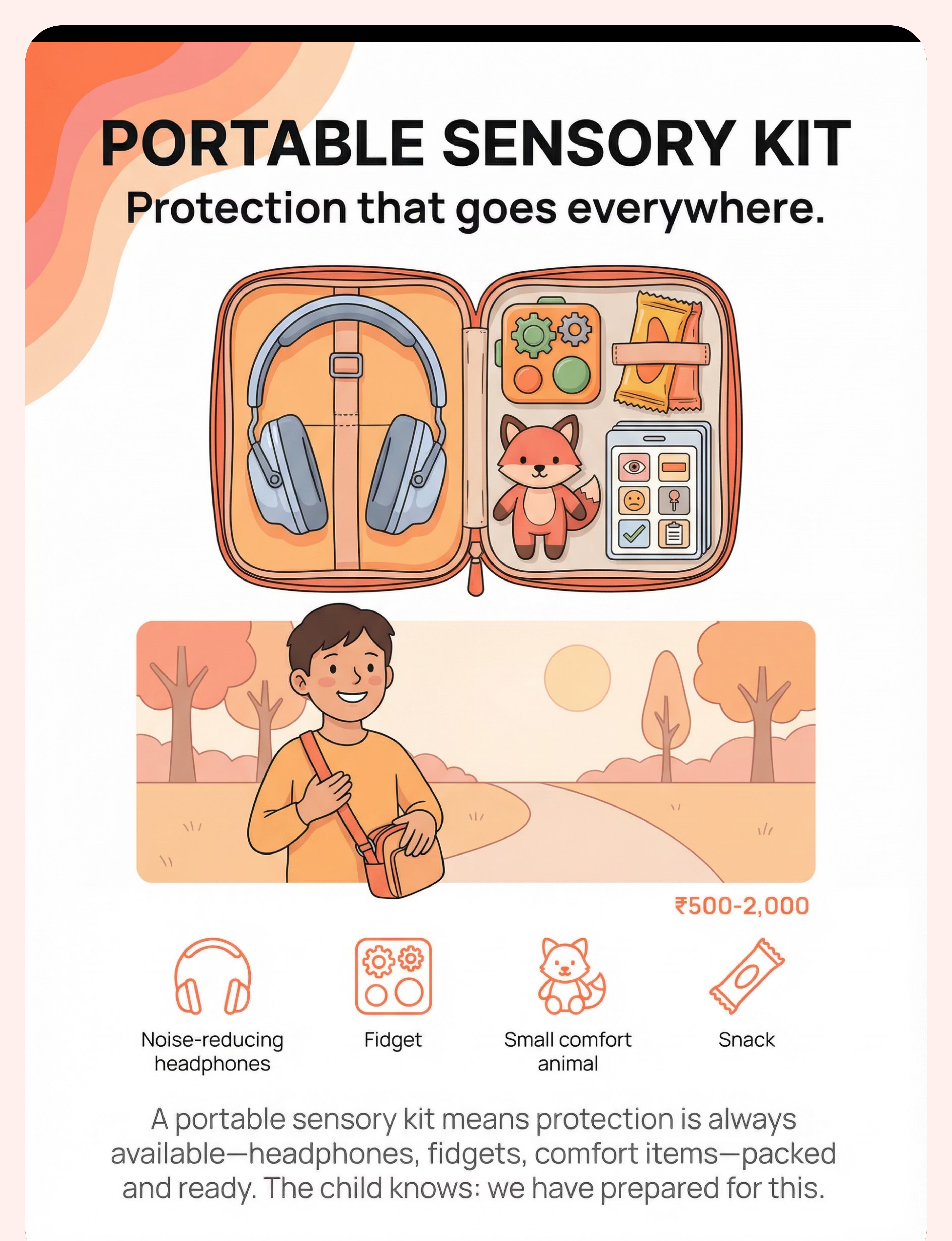
2. Portable Sensory Kit for Outings
Canon #048 | ₹500–2,000 | Consolidates all protective tools — headphones, fidget, comfort object, snack, visual cards — in one portable bag for every outing.
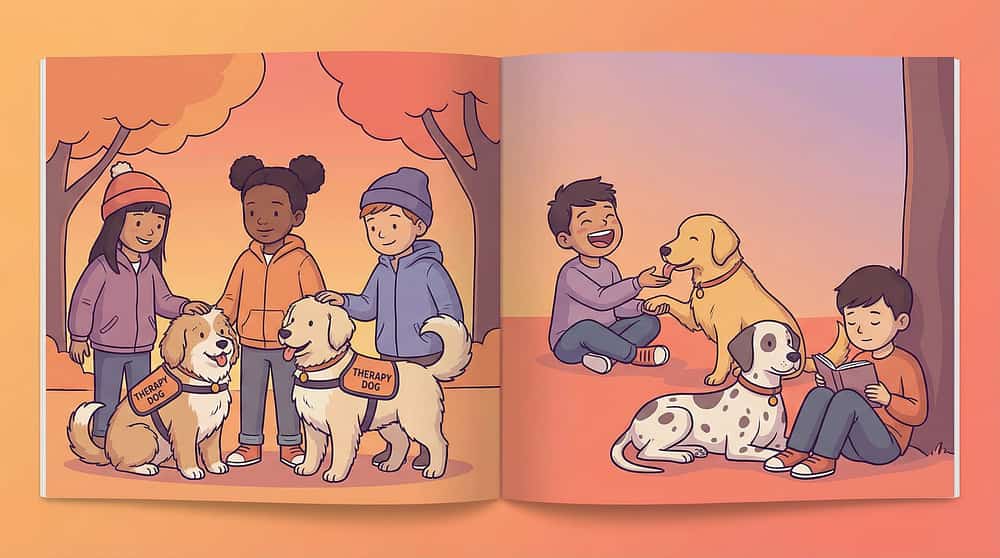
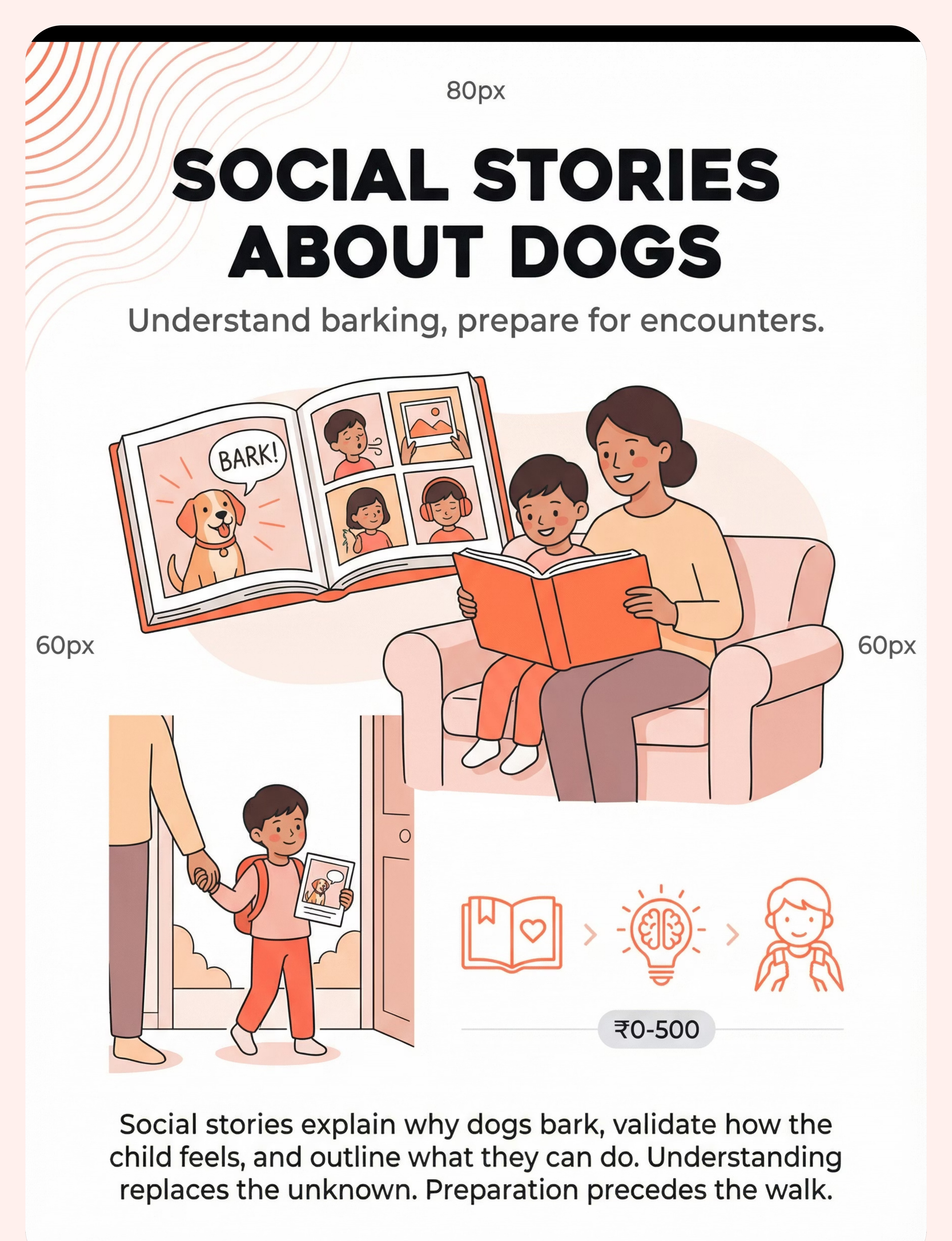
3. Social Stories About Dogs and Barking
Canon #046 | ₹0–500 | Cognitive preparation — explains why dogs bark, validates feelings, outlines coping strategies. Review daily before outdoor sessions.
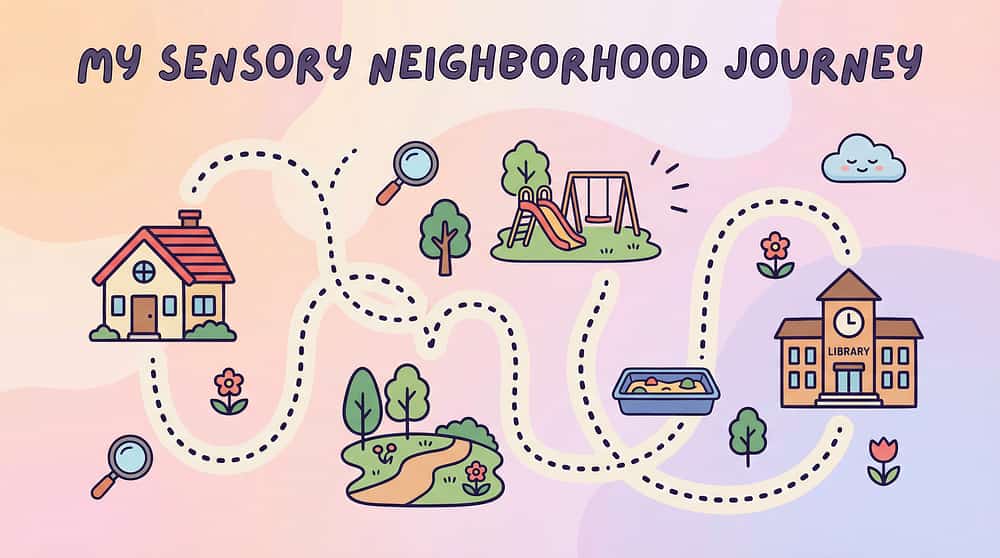
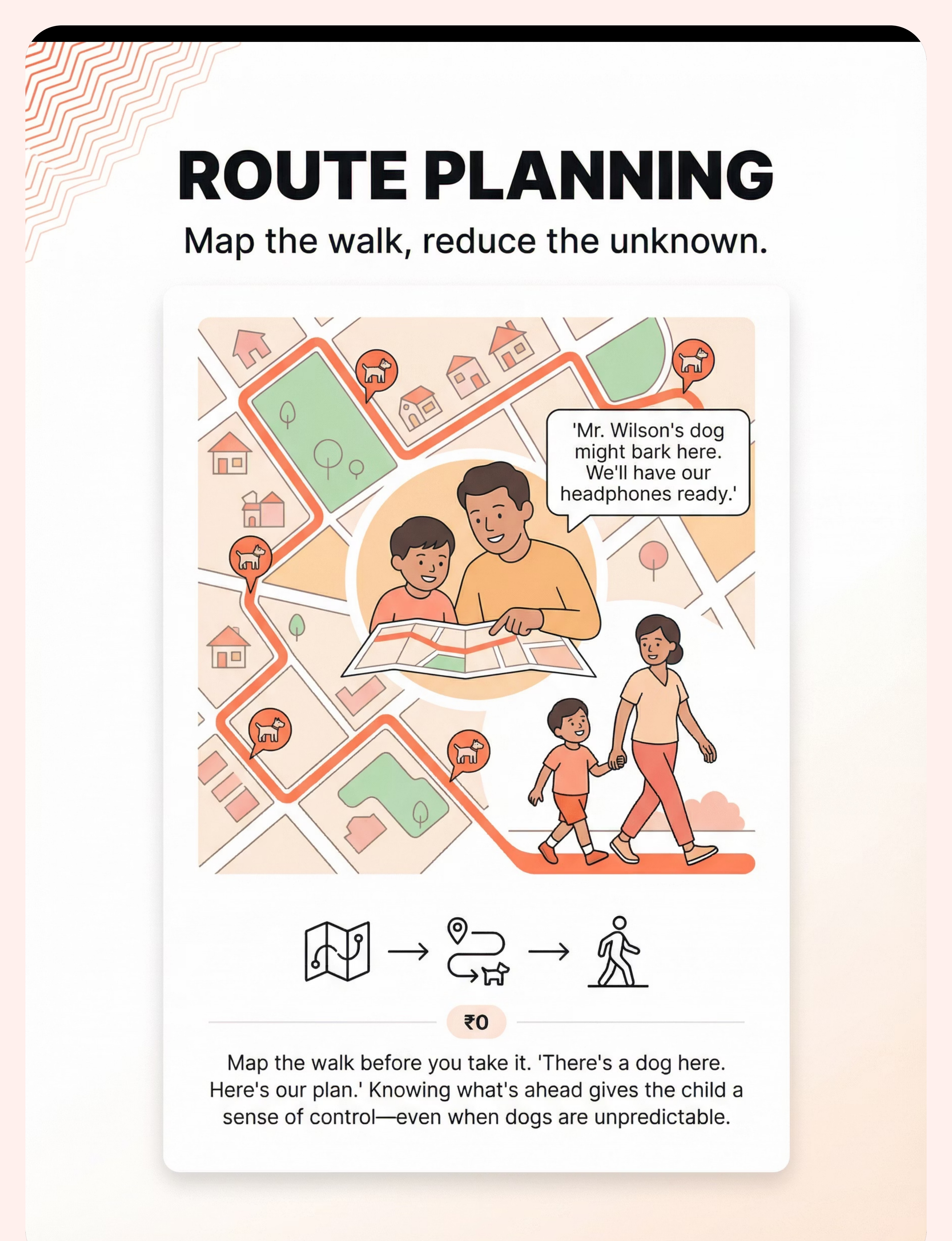
4. Pre-Walk Route Planning Materials
Canon #055 | ₹0 | Predictability reduces anxiety. Map routes, identify dog locations, plan encounters. Hand-drawn works perfectly — see DIY options in Card 10.
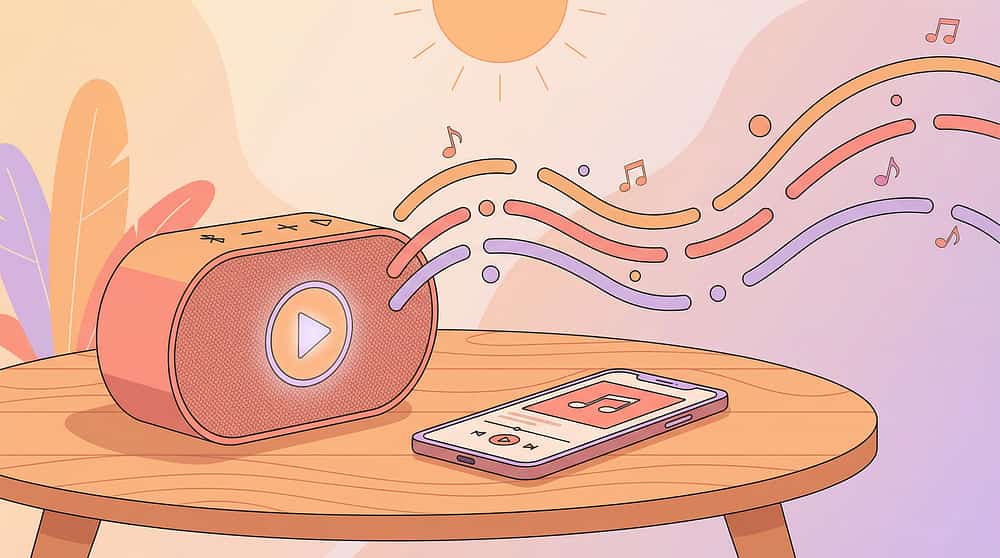
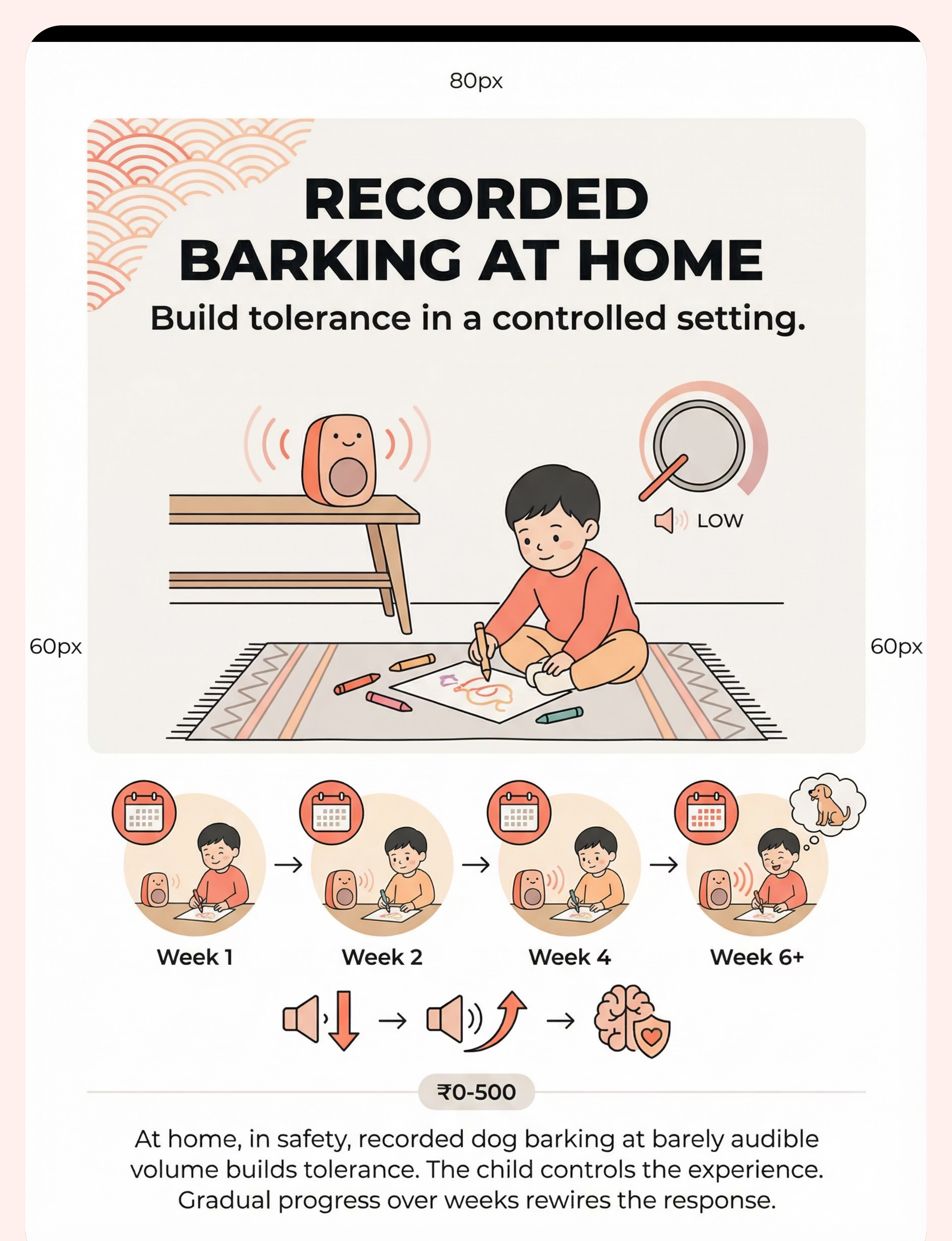
5. Recorded Dog Barking for Home Exposure
Digital Resource | ₹0–500 | Controlled exposure at home. YouTube recordings + Bluetooth speaker with fine volume control. Start at barely audible during preferred activities.

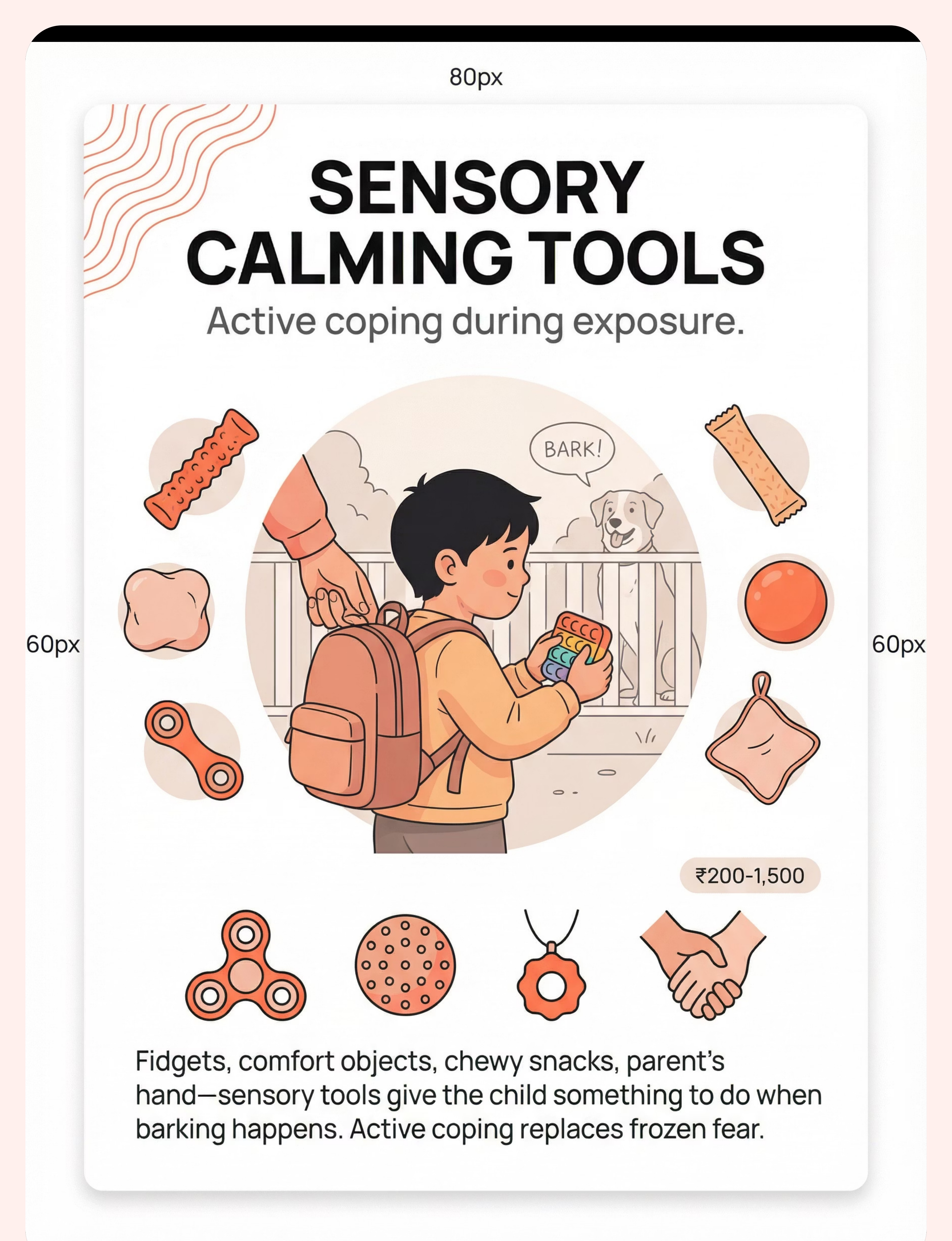
6. Calming Sensory Tools (Fidgets, Comfort Objects, Chewy Snacks)
Canon #004/#008 | ₹200–1,500 | Active coping during real-world exposure — gives the child something to DO when barking happens rather than freezing.
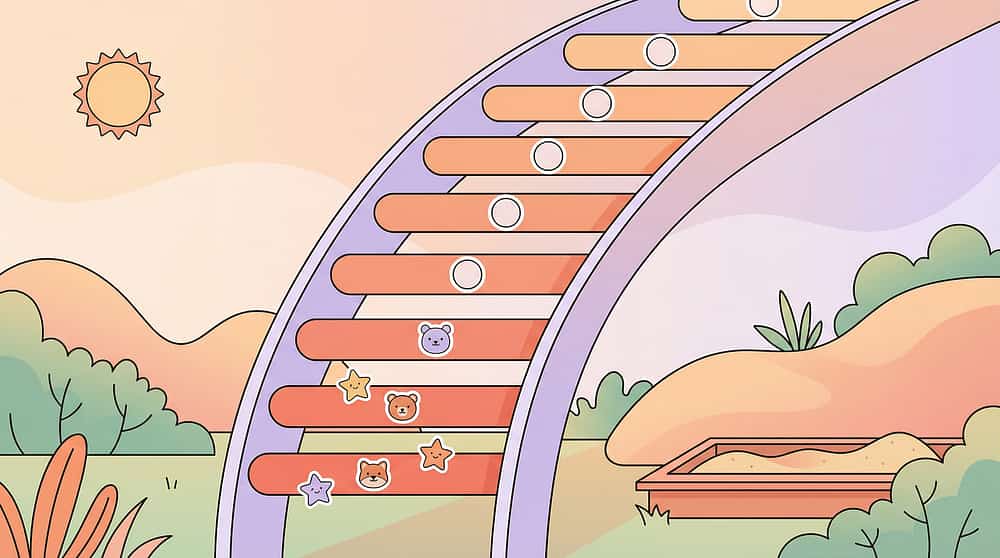
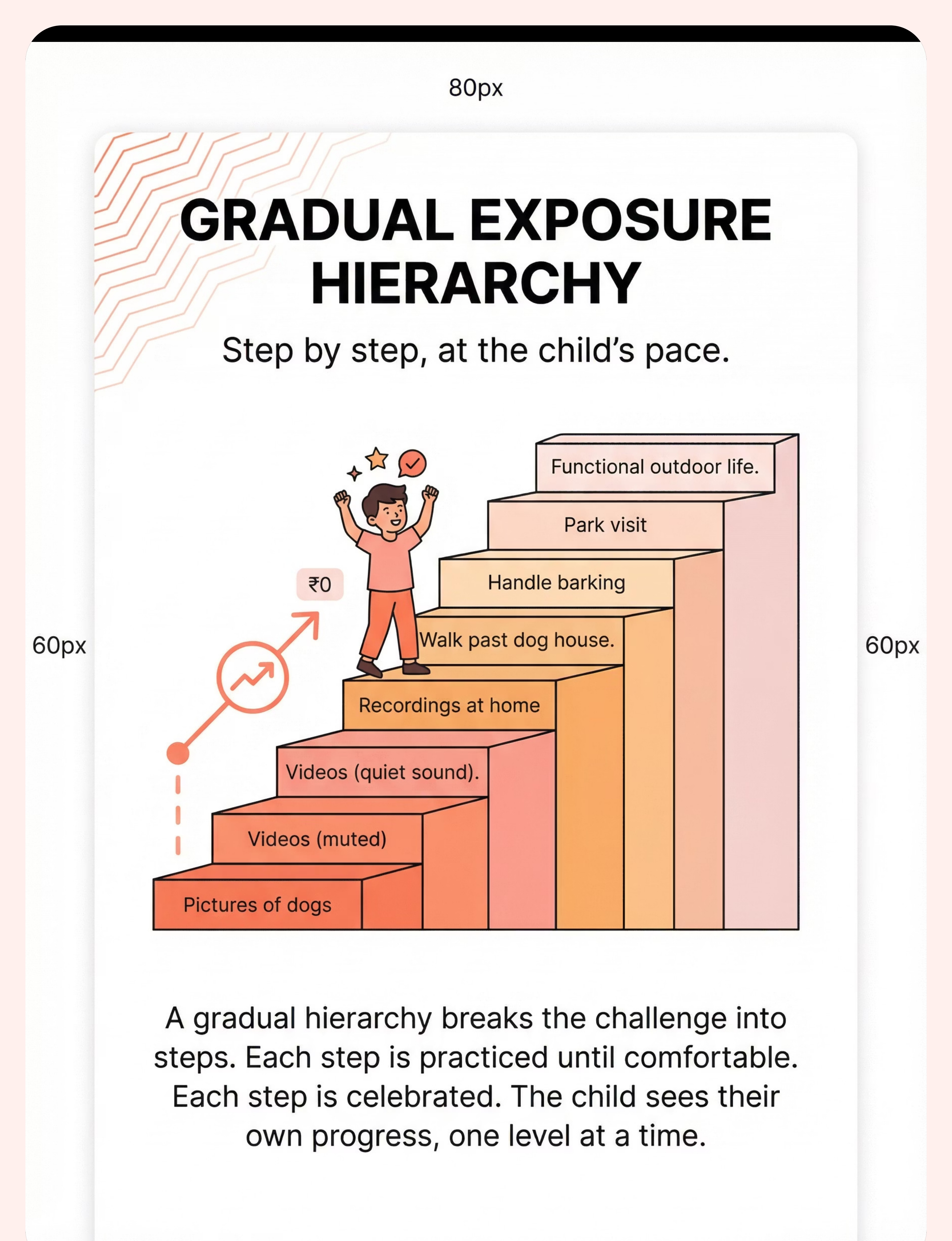
7. Gradual Exposure Hierarchy (Visual Ladder)
Canon #052 | ₹0 | Systematic desensitization — breaks challenge into steps from pictures of dogs to functional outdoor life. Child marks each step completed.
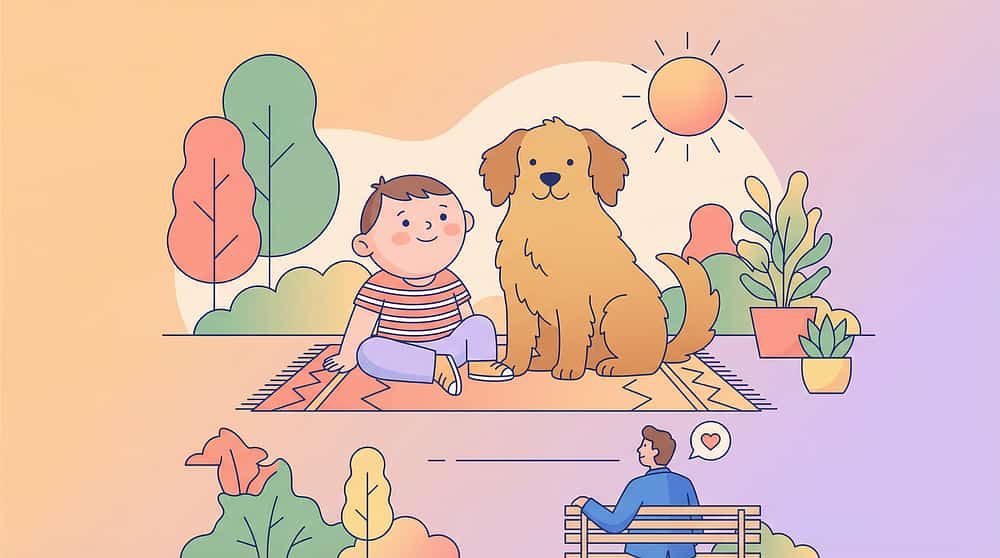
8. Access to Calm, Quiet Dog (Controlled Positive Experience)
Environmental Resource | ₹0–2,000 | Builds new associations if fear is specifically auditory. Only appropriate if child is willing and dog is reliably calm. Professional guidance recommended.
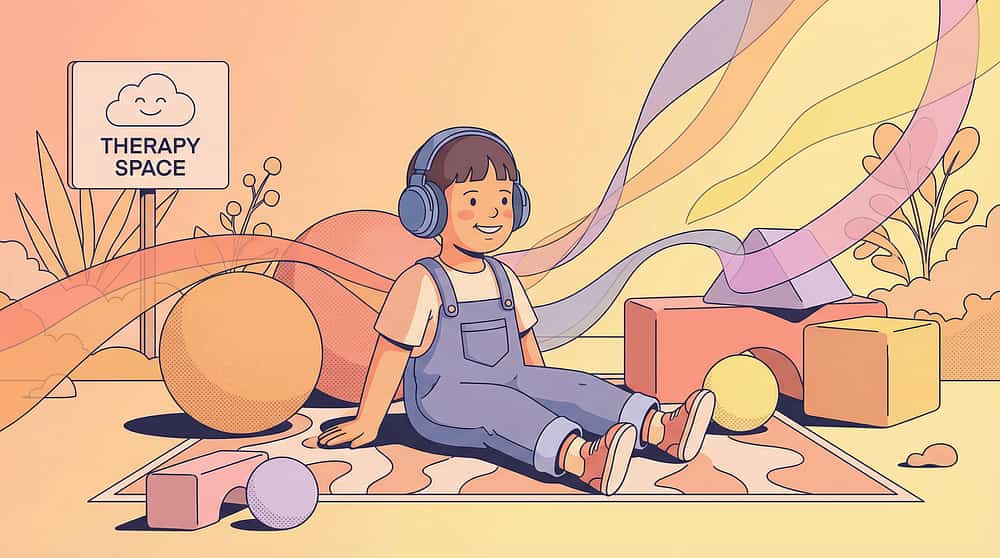
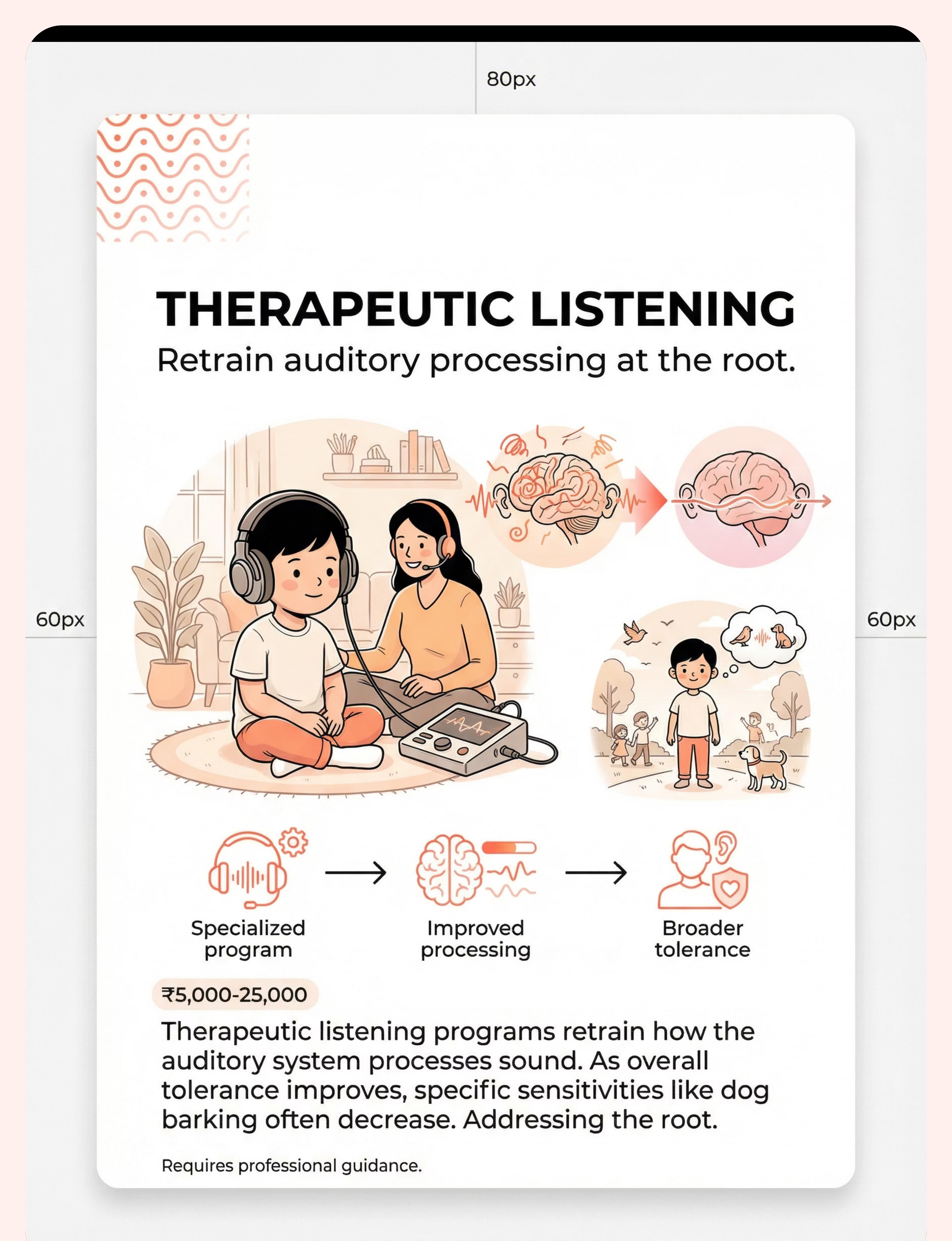
9. Therapeutic Listening Program
Specialized | ₹5,000–25,000 | Addresses root cause — retrains auditory processing through specially modified music. Programs: Therapeutic Listening®, The Listening Program®, Safe and Sound Protocol®. ⚠️ REQUIRES PROFESSIONAL GUIDANCE — OT or trained provider must supervise.
Total Price Range: ₹0–25,000 | Essential starters: ₹1,500–4,000
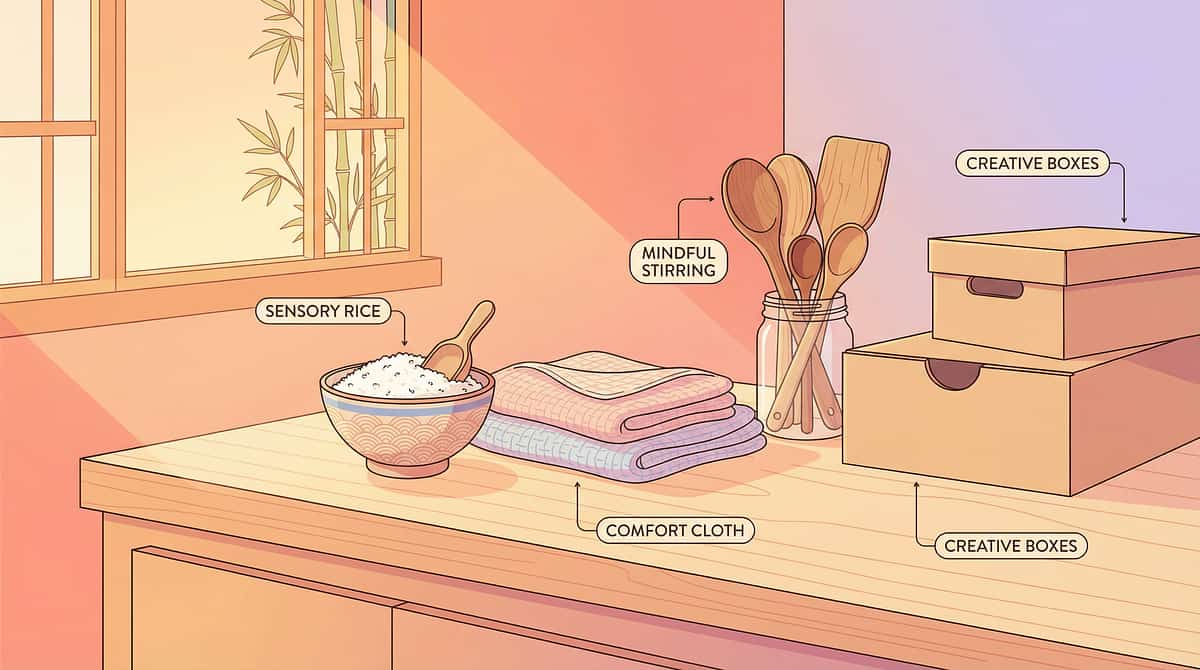
DIY & Substitute Options — Start Today With What You Have
The WHO Nurturing Care Framework emphasizes context-specific, equity-focused interventions. Every parent, regardless of economic status, can execute this protocol with household items. Here is how to substitute each material at zero or minimal cost.
Buy This | Make This (₹0) | |
Active noise-canceling kids headphones (₹3,000–8,000) | Industrial ear muffs from hardware store (₹300–800) — excellent passive noise reduction at a fraction of the cost. Keep them by the front door. Practice wearing at home first. | |
Commercial sensory kit bag (₹1,000–2,000) | Any small bag from home — pack with ear defenders, favorite fidget, small comfort object, calming snack, laminated visual cue cards. A ziplock bag works as a starter. | |
Published social story books about dogs (₹300–500) | Personalized social story: Laminated pages — "Sometimes dogs bark. Dogs bark to say hello or because they're excited. The barking might sound very loud to me, and that's okay. When I hear barking, I can put on my headphones, squeeze my fidget, take deep breaths, hold my parent's hand, keep walking. I am safe." | |
Printed route maps (₹0–100) | Hand-drawn maps on paper. Before walks, discuss: "We're walking to the park. Mr. Sharma's dog sometimes barks when we pass. We'll have headphones ready." | |
Bluetooth speaker (₹500–2,000) | Phone speaker at minimum volume. YouTube has extensive dog barking recordings — single barks, multiple dogs, different breeds. Start at barely audible. Never increase to distress. | |
Commercial fidget set (₹500–1,500) | Homemade: rice-filled balloon stress ball, rubber band on wrist, smooth stone in pocket, DIY putty (flour + water + oil). Chewy snack provides oral sensory input. Parent's hand squeeze is always free. | |
Visual hierarchy chart (₹200–500) | Hand-drawn ladder on paper. Bottom step: "Look at pictures of dogs." Top step: "Walk past barking dog." Child places sticker on each step completed. |
Zero-Cost Version: Hardware store ear muffs (₹300) + homemade social story + hand-drawn route map + phone speaker at low volume + homemade fidget + hand-drawn hierarchy. Total: Under ₹500 to start.
Non-Negotiable: Therapeutic listening programs (Material 9) CANNOT be substituted with DIY alternatives. Incorrectly implemented listening protocols can worsen auditory sensitivity. Professional guidance is mandatory.
Non-Negotiable: Therapeutic listening programs (Material 9) CANNOT be substituted with DIY alternatives. Incorrectly implemented listening protocols can worsen auditory sensitivity. Professional guidance is mandatory.
⚠️ Safety First — Before You Begin
Before beginning any component of this protocol, review the following traffic-light safety system carefully. These guidelines exist to protect your child and ensure the protocol builds tolerance rather than deepening distress.
🔴 DO NOT PROCEED IF:
- Child has a diagnosed hearing disorder (consult audiologist first)
- Child has a history of trauma related to dogs or dog attacks (consult trauma specialist)
- Child is currently in acute crisis or severe dysregulation
- Child has a seizure disorder triggered by certain sounds (consult neurologist)
- You are attempting therapeutic listening programs without trained professional guidance
- Child shows signs of illness, extreme fatigue, or recent meltdown
🟡 MODIFY AND PROCEED WITH CAUTION:
- Child's fear has generalized to dogs themselves (not just the sound) — skip Material 8; focus on sound tolerance only
- Child is under 3 years — simplify social stories, shorter sessions, more parental comfort
- Child has multiple co-occurring sensory sensitivities — progress may be slower; celebrate smaller steps
- Recorded sound exposure triggers anxiety even at barely audible levels — begin with pictures of dogs only
🟢 PROCEED WITH:
- Properly fitted headphones practiced at home
- Sensory kit packed and checked before every outing
- Social story reviewed before first outdoor session
- Route mapped and discussed with child
- Parent emotionally prepared for slow progress (weeks–months)
- Data tracking ready
STOP SESSION IMMEDIATELY IF: Child shows signs of genuine panic (hyperventilation, dissociation, extreme distress) | Child removes headphones and cannot be calmed within 5 minutes | Child physically attempts to flee into an unsafe area | Any sign of self-harm in response to distress.
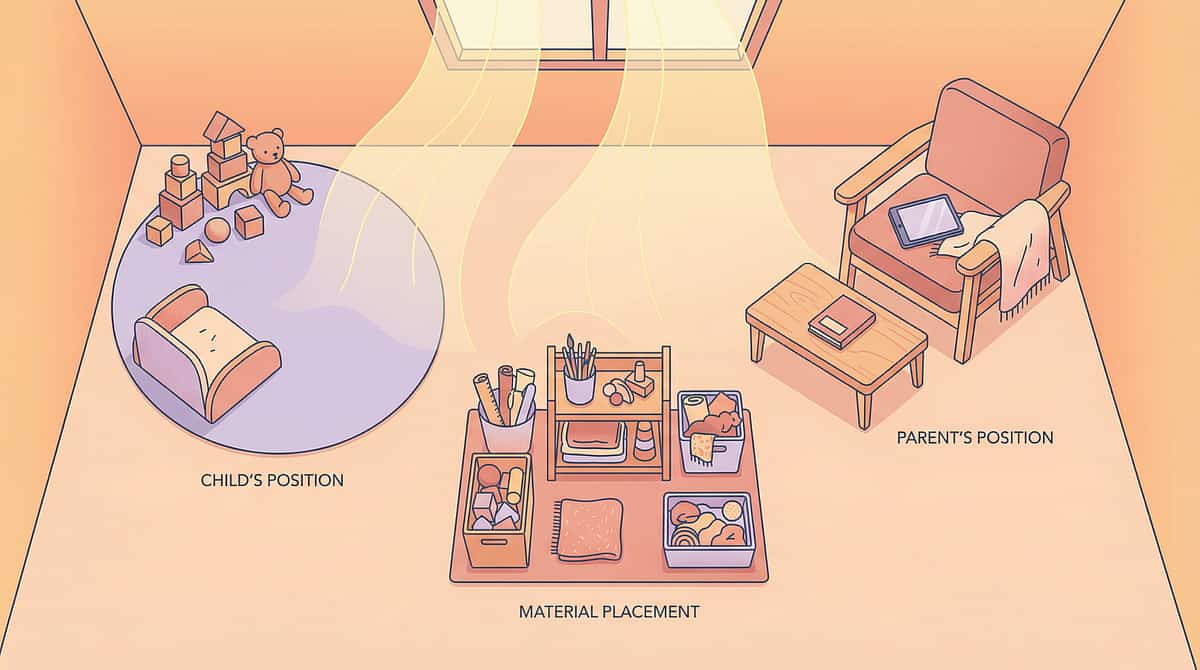
Set Up Your Space — Two Environments
The right environment setup is the invisible architecture of a successful session. Two spaces matter: the home practice space for sound exposure, and the outdoor environment for real-world walks. Each has distinct requirements.
🏠 Environment A: HOME
For Sound Exposure Practice — Materials 5 & 7
- Child position: Seated comfortably, engaged in preferred activity (drawing, playing)
- Speaker position: Across the room (3–5 meters), at floor level, volume dial accessible to parent
- Parent position: Near child (within arm's reach), clear view of child's face
- Remove: TV off or very low, competing sounds minimized, bright/harsh lighting reduced
- Have within reach: Volume control, stop button, fidget, preferred snack, tracking sheet
- Lighting: Warm, soft, natural where possible
🌳 Environment B: OUTDOORS
For Real-World Practice — Materials 1–4, 6, 8
- Pre-departure: Sensory kit packed and checked, headphones on or around neck, social story reviewed, route discussed
- Walking formation: Parent on traffic side, child on building/fence side, parent's hand available for squeeze
- Planned rest points: Identify spots on route where family can pause — bench, quiet alcove
- Retreat plan: Know in advance where the nearest calm/quiet space is
- Start simple: First sessions SHORT (5–10 minutes), quietest available route, quietest time of day
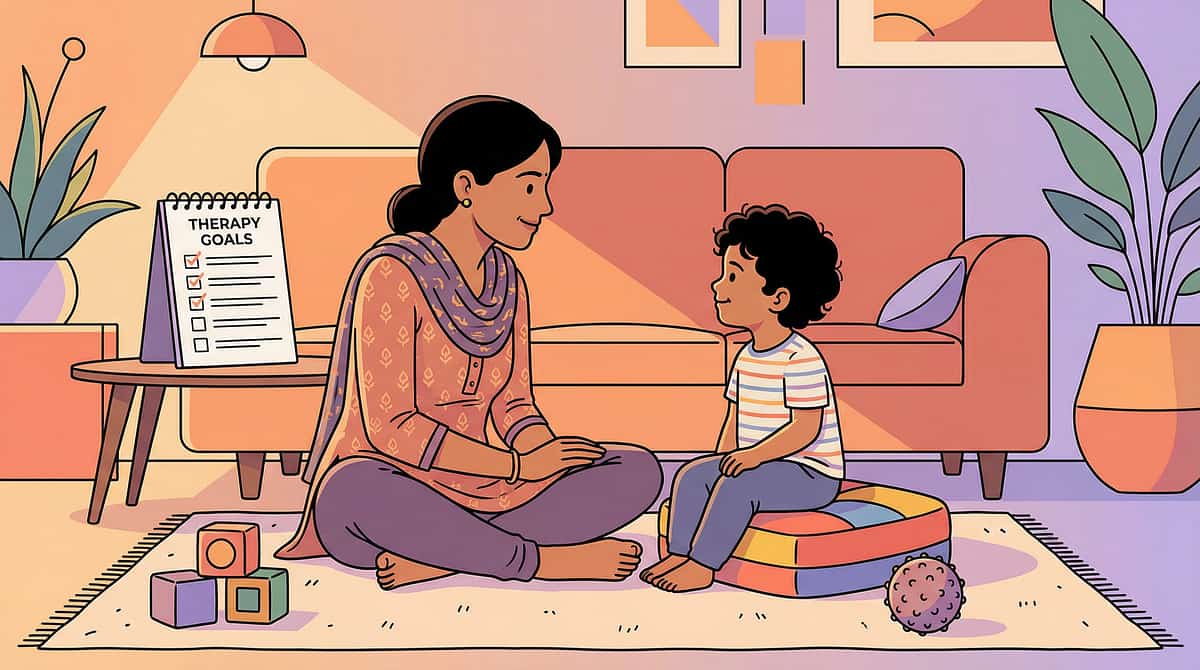
Is Your Child Ready? — Pre-Session Readiness Check
Run this checklist before EVERY session — both home sound exposure and outdoor practice. The best session is one that starts right. No guilt for postponing; a forced session can set back weeks of progress.
✅ Child has been fed within the last 2 hours (not hungry)
✅ Child has slept adequately (not overtired)
✅ Child is in a generally calm/regulated state (not post-meltdown)
✅ No illness signs — fever or ear infection worsens auditory sensitivity
✅ Headphones available and functional
✅ Sensory kit packed (for outdoor sessions)
✅ Social story reviewed in last 24 hours (for outdoor sessions)
✅ Parent is emotionally available and patient — not stressed, rushed, or distracted
🟢 All ✅ — GO
Proceed with full session as planned.
🟡 3–4 Missing — MODIFY
Shortened session, lower expectations, extra comfort available. Shorter walks, lower sound volume.
🔴 5+ Missing — POSTPONE
Alternative calming activity instead. Read the social story together. Try again tomorrow. No guilt.

Step 1 of 6
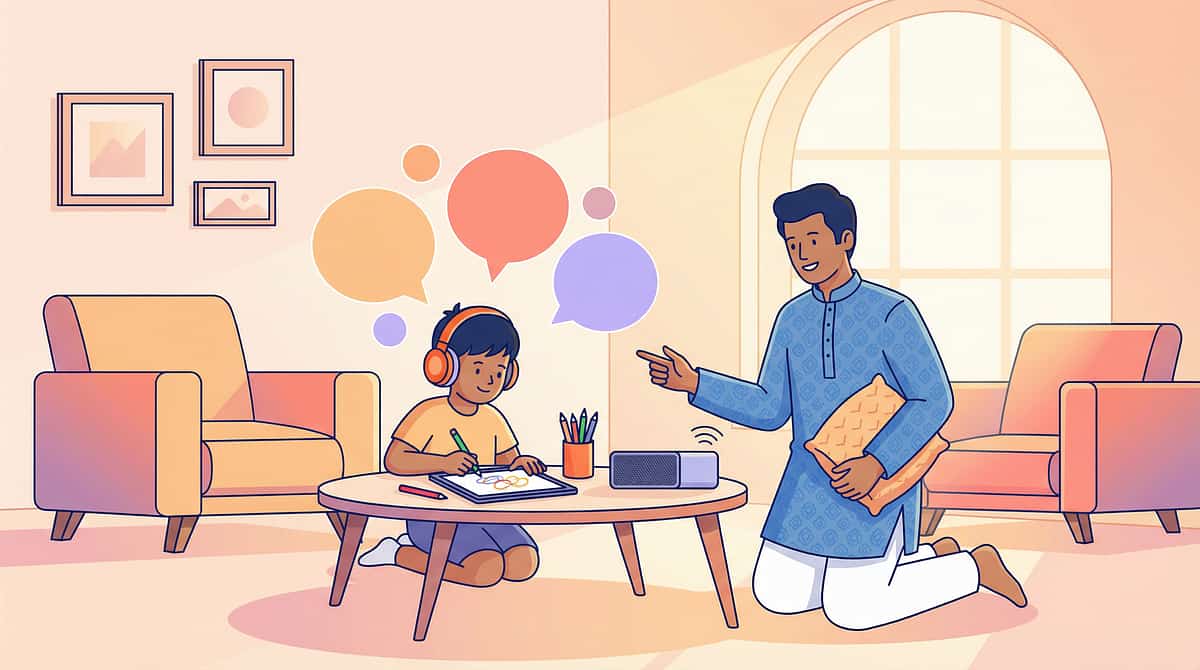
Step 1 — The Invitation
🏠 Script: Home Sound Exposure
"Let's do some drawing/playing together! [Start preferred activity first.] I'm going to play some very quiet sounds in the background. You might not even hear them. If you want me to turn them off, just tell me or show me. You're in charge."
Body language: Relaxed, casual. This is NOT a "therapy session" — it's a preferred activity with background sound. No tension in your voice.
Acceptance looks like: Child engages with preferred activity, doesn't fixate on speaker, body remains relaxed.
Resistance looks like: Child asks about the speaker, body tenses, requests you don't play sounds.
If resistance: "That's okay. We'll just play today. Maybe next time." No pressure. End the exposure component and continue the preferred activity.
🌳 Script: Outdoor Practice
"Let's go for a walk to [destination]. We have your headphones, your fidget, and your bag. We've looked at our route. Ready? Let's go. You're brave and prepared."
Timing: 30–60 seconds for the invitation before moving. Brief, warm, confident.
ABA Principle — Pairing: The preferred activity must stay positive. You are pairing the presence of sounds with a good experience. If the child associates the invitation with discomfort, reduce your demand and rebuild the positive association first.
OT Principle — Just-Right Challenge: Match task demand to the child's current capacity. Never reach for the next level when the current one hasn't consolidated.
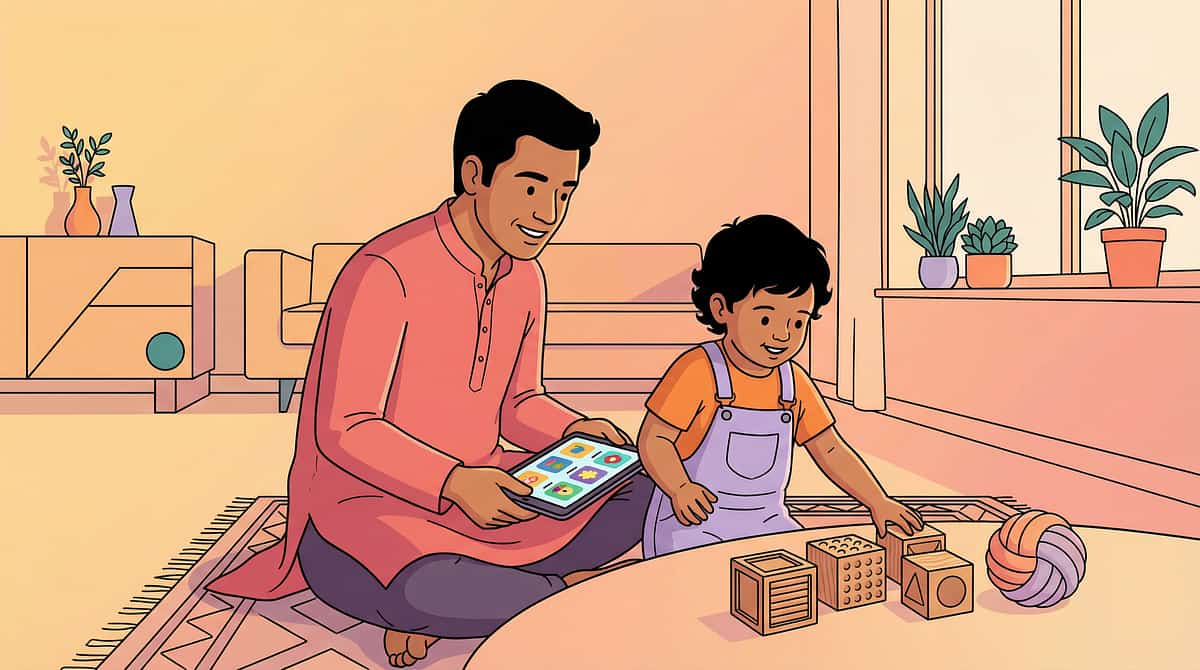
Step 2 of 6
Step 2 — The Engagement
🏠 Home Sound Exposure — Sequence
- Child is engaged in preferred activity — minimum 2–3 minutes of engagement before introducing sound
- Start recording at BARELY AUDIBLE volume — the lowest setting where sound is technically playing
- Do NOT draw attention to it. Continue the activity naturally.
- Observe child's face and body for 30 seconds: Any tension? Ear covering? Scanning for source?
🌳 Outdoor Practice — Sequence
- Begin walking on planned route. Child wearing headphones or headphones around neck.
- Engage child in conversation: "Can you see the red flowers? How many cars are parked?"
- As you approach a known dog location, calmly say: "We're coming up to the house with the dog. Headphones on? Fidget ready? Let's keep walking."
- Observe: Does child tense? Slow down? Reach for your hand?
✅ Ideal
No reaction at all. Child continues activity. Body relaxed.
🟡 Acceptable
Brief glance toward speaker, returns to activity. Slight body shift but continues.
🔴 Concerning
Stops activity. Covers ears. Says "turn it off." Body tenses. Distress begins.
If Ideal or Acceptable: Maintain this volume for the ENTIRE session. This volume level will be repeated for DAYS until zero reaction is consistent. Never rush to increase. If Concerning: Turn off immediately. Comfort child. "That's okay. You told me and I turned it off. You're in control."
Step 3 of 6
Step 3 — The Therapeutic Action (The Active Ingredient)
The therapeutic action is sustained exposure to recorded dog barking at sub-threshold volume while engaged in a preferred activity (home), and walking past environments where dogs may bark with full protective support (outdoors). Success means completing the session — not zero reaction.
Volume Progression Protocol — Home Sound Exposure
Week | Volume Level | Child State | Duration | |||||
Week 1–2 | Barely audible (you can barely hear it yourself) | Engaged in preferred activity, no distress | 5 minutes | |||||
Week 3–4 | Very quiet (audible if room is silent) | Aware but not bothered, continues activity | 5–7 minutes | |||||
Week 5–6 | Quiet (clearly audible) | May notice, returns to activity, no distress | 7–10 minutes | |||||
Week 7–8 | Moderate (typical conversation volume) | Can hear clearly, may comment but continues | 10 minutes | |||||
Week 9+ | Moderate-loud (approaching real-world volume) | Tolerates with coping strategies available | 10 minutes |
CRITICAL: This timeline is ILLUSTRATIVE. Your child may take 2 weeks at one level or 6 weeks. Never rush. The child's response dictates the pace. When the brain repeatedly processes a sound at a non-threatening volume while the body is relaxed, the neural pathway for that sound gradually recalibrates — from "dangerous" to "non-threatening." This is classical desensitization.
Step 4 of 6
Step 4 — Repeat & Vary
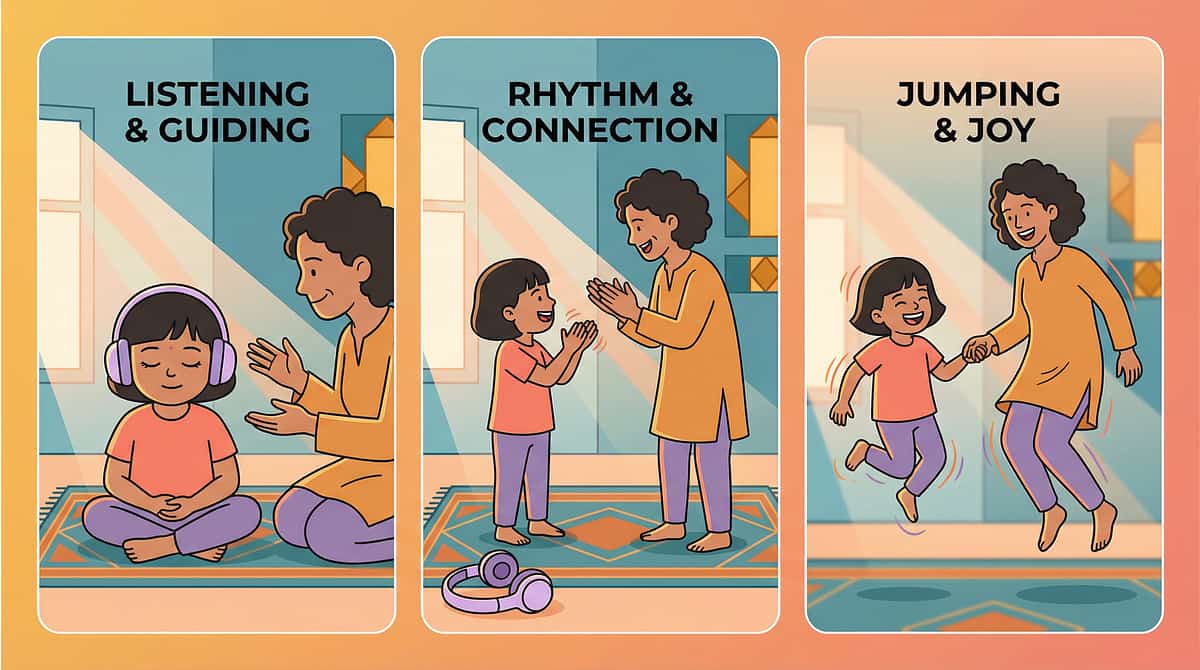
The brain habituates to specific sounds — variety is essential to ensure tolerance generalizes beyond one recording. Introduce different bark types in order from least to most triggering. For outdoor practice, vary routes, times, and destinations progressively.
🏠 Home Sound Exposure Variety
Introduce in this order — least to most triggering:
- Single bark (one sharp bark, then silence)
- Small dog bark (higher pitch, yappy)
- Distant barking (muffled, far away)
- Large dog bark (deep, booming)
- Continuous barking (multiple barks in succession)
- Nearby barking (clear, close)
- Multiple dogs barking simultaneously
🌳 Outdoor Practice Variety
- Different routes with different dog encounter probabilities
- Different times of day (quieter mornings → busier afternoons)
- Different destinations (mailbox → end of street → park → friend's house)
- Different headphone conditions (wearing → around neck → in bag)
Frequency
Home sound exposure: 3–5x per week. Outdoor practice: daily if possible, minimum 3x per week.
Satiation Principle
"3 good sessions > 10 forced sessions." End on a positive note. Don't push to fatigue.

Step 5 of 6
Step 5 — Reinforce & Celebrate
Specific, immediate, enthusiastic reinforcement within 3 seconds of desired behavior is the fuel that drives this protocol. Celebrate the ATTEMPT, not just the success. A child who tried and needed to retreat — but didn't melt down — has made measurable progress.
After Home Sound Exposure
"You played while the dog sounds were on! That was SO brave. Your brain is learning that dog sounds are okay. You drew three pictures while the sounds played!"
After Outdoor Walk Past a Dog
"You heard that dog bark and you KEPT WALKING! You used your headphones and your fidget. That took courage. I'm proud of you."
After Coping Tool Use
"I saw you squeeze your fidget when you heard the bark. That's exactly what to do. You have a plan and you used it."
Verbal Praise
Specific, enthusiastic, immediate. Name the EXACT behavior: "You walked past Mr. Sharma's house!"
Token Economy
Sticker on exposure hierarchy ladder for each step completed. 5 stickers = special reward.
Natural Reward
The walk itself leads to the destination. The reward IS the expanded world — the park, the ice cream, the friend's house.
Tangible
Small treat, extra screen time, choice of dinner. Use sparingly — verbal praise is primary.
Step 6 of 6
Step 6 — The Cool-Down
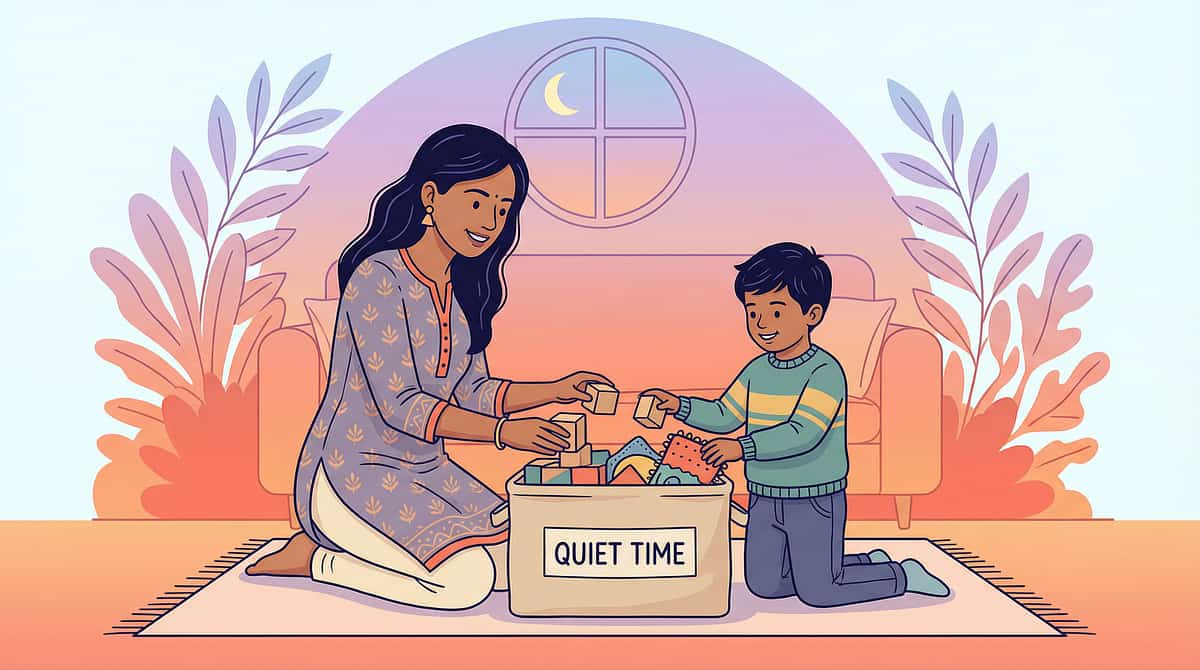
A deliberate cool-down signals to the nervous system that the challenge is complete and safety has been restored. Skipping this step leaves the child's arousal system partially activated — which can make the next session harder to start.
🏠 Home Sound Exposure Cool-Down
- 1-minute warning: "One more minute of sounds, then we'll turn them off and keep playing."
- Fade sound: Gradually reduce volume to zero over 30 seconds. Don't click off abruptly.
- Calming transition: 2–3 minutes of preferred activity in silence. Body returns to fully relaxed baseline.
- Verbal close: "All done with sounds for today. You did great."
🌳 Outdoor Practice Cool-Down
- Destination arrival or route completion: "We made it! Well done."
- Decompression time: 5–10 minutes at a calm location — sit on a bench, have a snack, quiet play.
- Headphones can come off in the calm space if child chooses.
- Reflection (age-appropriate): "How was our walk today? Was any part hard? What helped?"
- Positive close: "We went outside. We heard dogs. We handled it. Good job."
Post-session parent self-care: These sessions can be emotionally draining for caregivers too. Acknowledge your own effort. You are rewiring your child's brain, one session at a time.
Capture the Data — Within 60 Seconds of Session End
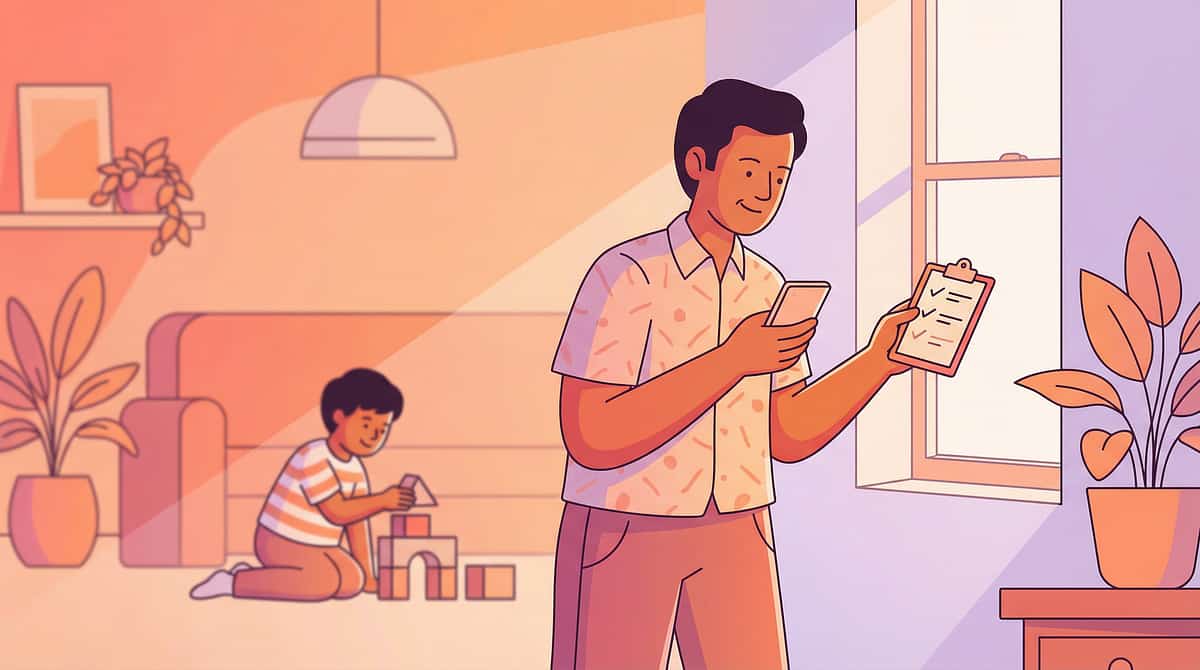
60 seconds of data now saves hours of guessing later. Your tracking is the evidence that drives your child's personalized progression. Over 4–8 weeks, this data reveals the trajectory — volume increasing, distress decreasing, walks getting longer, coping tools being used effectively. This is YOUR real-world evidence.
🏠 Home Sound Exposure — 4 Data Points
Date | Volume Level (1–10) | Duration (min) | Distress (0–5) | |
___ | ___ | ___ | ___ | |
___ | ___ | ___ | ___ | |
___ | ___ | ___ | ___ |
🌳 Outdoor Practice — 5 Data Points
Date | Route | Dogs Heard/Seen | Coping Used | Outcome | |
___ | Q/M/C | ___ | H/F/Hand | ✓/Retreat/M | |
___ | Q/M/C | ___ | H/F/Hand | ✓/Retreat/M |
"Session abandonment is not failure — it is data. Every outcome teaches you something about your child's current capacity."
What If It Didn't Go As Planned?
Every challenge you encounter is documented below, along with a clinically-grounded solution. Read through all seven scenarios — many families face several of these, often in sequence.
Problem 1: "My child won't let me turn on the speaker at ANY volume."
Solution: Skip sound exposure for now. Start with PICTURES of dogs. Then silent VIDEOS of dogs. Then videos with barely audible sound. The hierarchy starts before the speaker.
Problem 2: "An unexpected dog barked and my child had a meltdown."
Solution: This is normal and expected. The fact that your child managed until that point IS progress. Next time, ensure headphones are ON (not just around neck) when in areas where dogs might be. The meltdown is data, not failure.
Problem 3: "My child refuses to put on headphones."
Solution: Try different styles (over-ear, headband, in-ear for older children). Practice wearing at home during preferred activities with NO sound exposure — just wearing them. Some children need weeks of headphone habituation before outdoor use.
Problem 4: "Progress was good for 2 weeks and now we've gone backward."
Solution: Regression is normal. Often triggered by: a bad barking encounter, illness, other stressors, or developmental shifts. Return to the previously successful level and rebuild. The neural pathways are still there — they need reinforcement.
Problem 5: "My child handles recordings at home but panics at real dogs."
Solution: Real dogs are different — unpredictable, visible, multi-sensory. The gap between home tolerance and real-world tolerance is expected. Bridge it: play recordings in the yard (outdoor setting, home safety), then short walks in quiet areas, then gradually expand.
Problem 6: "My spouse thinks I'm coddling and should just 'expose' the child."
Solution: Share Card 3 (the neuroscience) and Card 5 (the evidence). Forced exposure without support does NOT build tolerance — it creates trauma and worsens the fear. This is documented in the clinical literature.
Problem 7: "We tried the calm dog experience and the dog barked. Now my child is worse."
Solution: This is why we emphasize ONLY reliably calm dogs. Return to home-based sound exposure. Skip calm dog experiences until tolerance is much stronger. The child needs to rebuild trust that they won't be surprised.
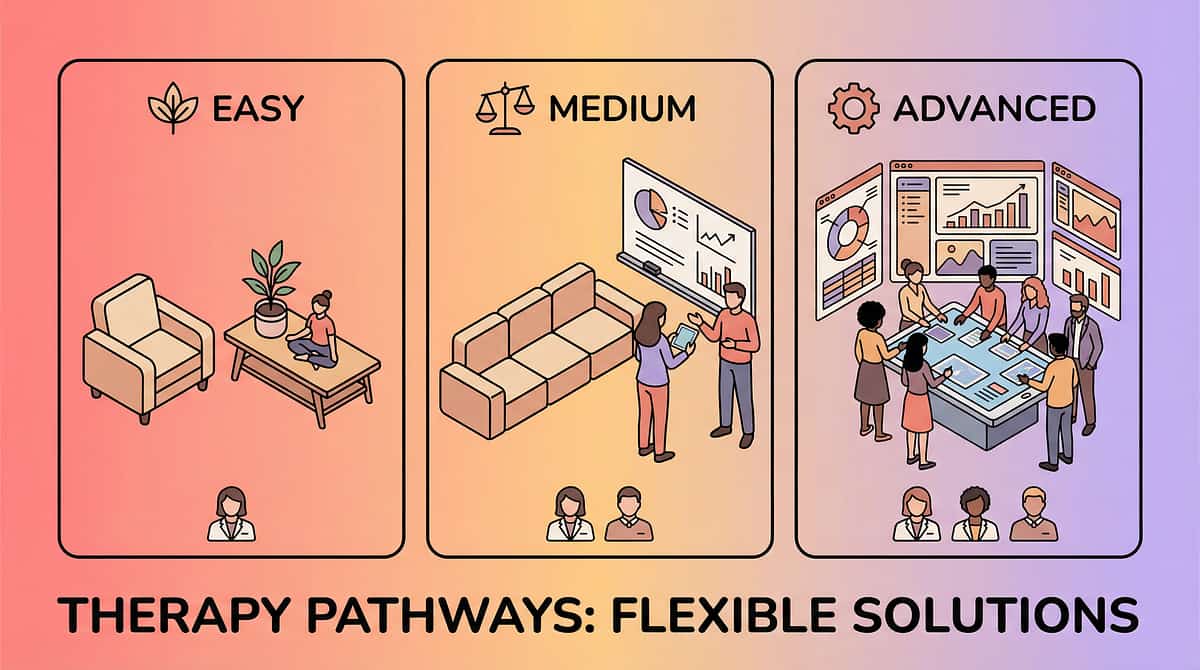
Adapt & Personalize — No Two Children Are Identical
This protocol is a framework, not a fixed script. Adjust the difficulty, content, and approach based on your child's age, sensory profile, and current tolerance. When in doubt, go easier — a gentle session that succeeds is worth more than a challenging one that fails.
⬇️ Easier Version
Pictures of dogs only (no sound). Indoor only. Maximum headphone protection. Parent carries child past dog houses. Shortest possible outdoor time.
✅ Standard Version
Recorded sounds at home + outdoor walks with headphones + sensory kit. Social story reviewed daily. Planned routes only.
⬆️ Advanced Version
Higher-volume recordings. Outdoor walks without headphones (available in bag). Unplanned routes. Park visits during busy times.
Age Group | 2–4 Years | 5–8 Years | 9–12 Years | |
Social Story | Simple picture book, 3–4 pages | Narrative with child's name and photos | Discussion-based with child's input | |
Exposure Sessions | 3–5 min max | 5–10 min | 10+ min | |
Sensory Kit | Parent carries | Child carries own bag | Child fully manages own tools | |
Coping Language | Heavy reliance on physical comfort (holding) | Introduce verbal coping: "I hear the dog. I'm okay." | Self-advocacy: "I need my headphones." Route planning includes child's input. |
Progress Arc — Week 1–2
Week 1–2: What to Expect
Progress Bar: ████░░░░░░░░░░░░░░░░ 15%
✅ What Progress Looks Like at This Stage
- Child tolerates headphones without resistance
- Child completes short walks (5–10 min) on quiet routes with support
- Home sound exposure possible at barely audible volume without distress
- Social story is familiar — child may reference it spontaneously
- Sensory kit is established — child knows it comes on walks
⏳ What Is NOT Progress Yet — And That's Okay
- Child does NOT yet tolerate barking without headphones
- Child does NOT yet walk past known dog locations calmly
- Child still asks "are there dogs there?" before every outing
- Anticipatory anxiety is still present
- Regression episodes still occur
"If your child tolerates headphones today when last week they refused — that's real progress. If they walked to the end of the street when last month they wouldn't leave the house — that's real progress. You are building a foundation. The invisible neural rewiring is happening NOW."
Progress Arc — Week 3–4
Week 3–4: Consolidation Signs
Progress Bar: ████████░░░░░░░░░░░░ 40%
Consolidation means the nervous system is beginning to encode new responses. The child's automatic reaction to dog barking environments is shifting — not yet resolved, but measurably different. Watch for these indicators across the week, not just within sessions.
Child reaches for headphones independently before walks
"I need my headphones" — self-initiated protective behavior. This is significant. The child is self-advocating and using a coping tool proactively.
Home sound exposure volume has increased one or more levels
Without distress. This is the clearest objective measure of auditory tolerance building. Record every volume increase in your tracker.
Walks are becoming routine — less pre-walk anxiety
The ritual itself (packing kit, reviewing story) becomes regulating rather than activating. The predictability is working.
Child may begin commenting on dogs neutrally
"I hear a dog" (observation) rather than panic. Narrating rather than catastrophizing is a major neurological shift.
Recovery time after unexpected barking is shorter
Minutes instead of extended periods. The nervous system is de-escalating more efficiently — the threat-detection system is recalibrating.
Parent Milestone: You may notice you're more confident too — less anxious about planning outings, less hypervigilant scanning for dogs yourself. Your nervous system is co-regulating with your child's progress.
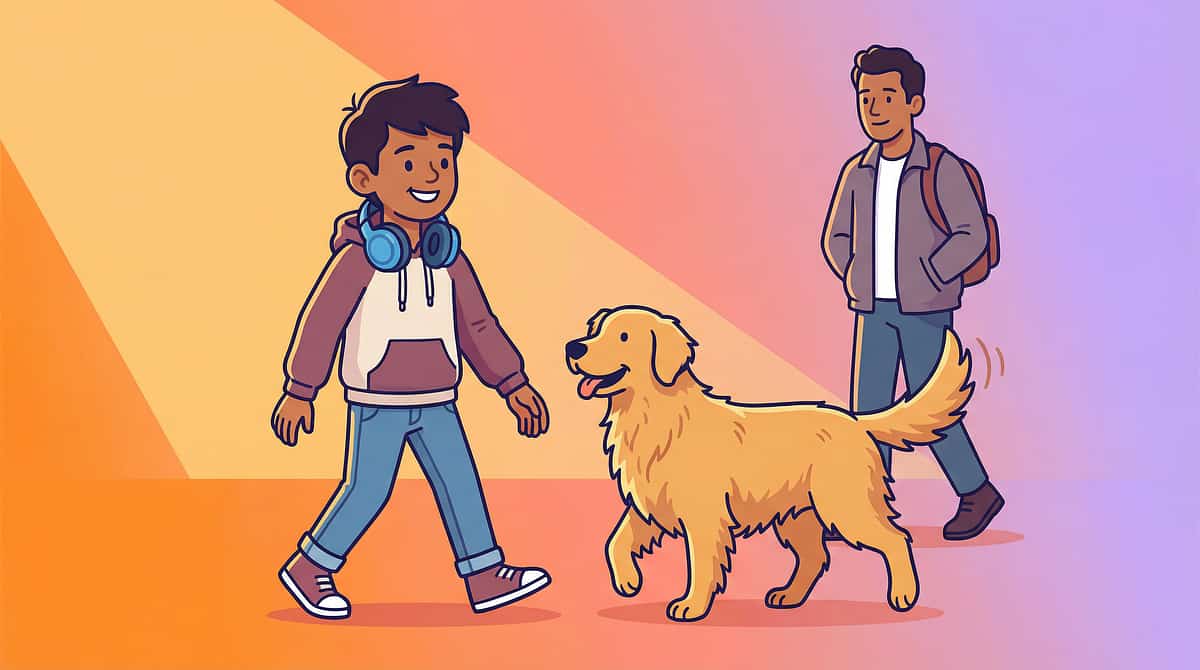
Progress Arc — Week 5–8
Week 5–8: Mastery Indicators
Progress Bar: ███████████████░░░░░ 75%
Mastery Criteria — Specific, Observable, Measurable
- Can tolerate moderate-volume recorded barking at home without distress
- Completes outdoor walks on medium-challenge routes with coping tools
- Handles unexpected barking with support (headphones + fidget + parent) without meltdown
- Recovery from barking exposure is measured in seconds-to-minutes, not extended periods
- Parks are accessible at quieter times with support
- May begin choosing to walk without headphones on some routes
Generalization Indicators
- Tolerance improvement extends to other loud/sudden sounds
- Coping strategies used in other challenging situations beyond dog-related
- Increased willingness to try new outdoor environments
❌ "Mastery" Does NOT Mean:
- Child loves dog barking (that's not the goal)
- Child needs zero support
- Child never flinches at a loud bark
- Headphones are permanently retired
✅ "Mastery" DOES Mean:
- Functional outdoor life is possible with manageable support
- The child's world has expanded from their home to their neighborhood, parks, and community
- Maintenance check: Does tolerance persist after 2–3 days without specific practice? If yes — neural pathways are consolidating.

🎉 Celebrate This Win
"You did this. Your child grew because of your commitment. Weeks of packing the sensory kit. Of reviewing the social story. Of walking routes you'd mapped. Of playing barely-audible recordings while they drew pictures. Of celebrating steps so small no one else would notice."
You didn't just teach your child to tolerate a sound. You gave them back the outdoors. The park. The neighborhood. The freedom to walk out the front door without fear. From a child who wouldn't leave the house — to a child who says "Let's go for a walk." That is mastery. That is what this protocol was designed to do.
Family Celebration Suggestion: Take a "victory walk" to your child's favorite destination — the park, ice cream shop, friend's house — a walk that was impossible before. Document it. Photo it. This is your family's milestone.
Photo/Journal Prompt: Take a photo of your child on this victory walk. Compare it to how things were 8 weeks ago. This is your evidence. This is your child's progress.
Photo/Journal Prompt: Take a photo of your child on this victory walk. Compare it to how things were 8 weeks ago. This is your evidence. This is your child's progress.
🔴 Red Flags — When to Pause and Seek Professional Guidance
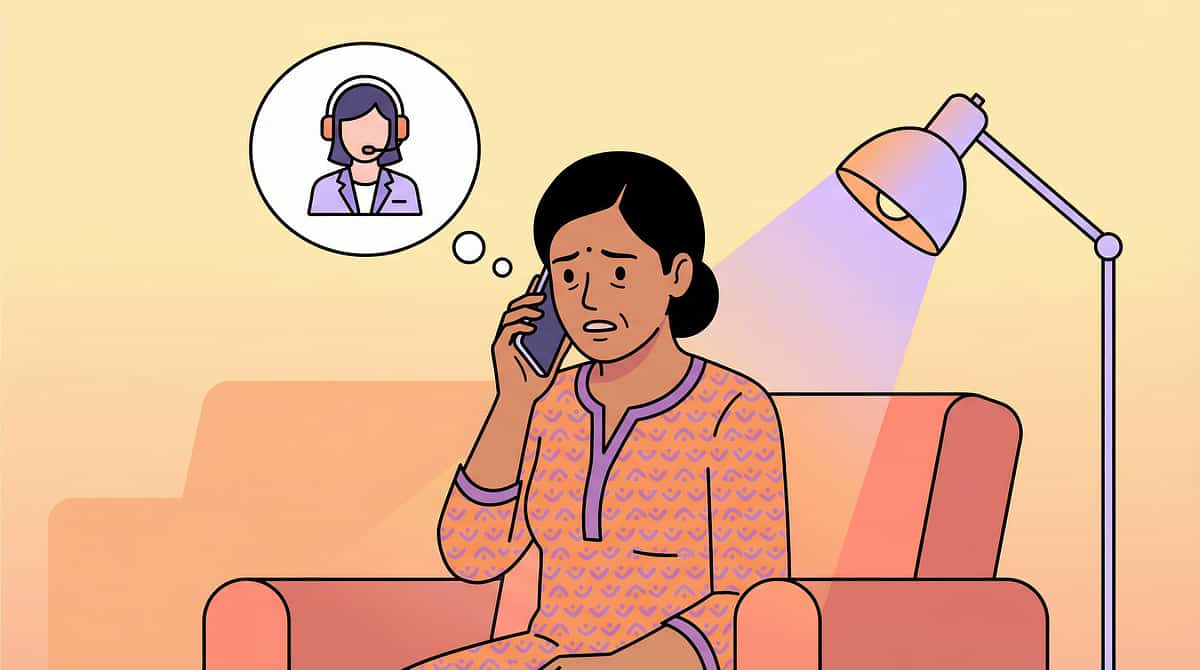
Trust your instincts — if something feels wrong, pause and ask. The following indicators mean the home-based protocol alone is not sufficient and professional assessment is warranted.
1. Sensitivity is WORSENING despite 4+ weeks of protocol
Some auditory sensitivities have underlying medical or neurological components that require professional evaluation — audiologist, neurologist.
2. Fear has generalized dramatically
Child now fears not just barking but all dogs, all animals, or increasingly broad categories of sounds. Generalization suggests anxiety is overriding the desensitization.
3. Self-harm or extreme self-regulation behaviors emerging
Any new concerning behaviors that appear as the child tries to cope with sound exposure require immediate professional assessment.
4. Significant regression in other developmental areas
Sleep disruption, eating changes, social withdrawal, loss of previously acquired skills — these may indicate the exposure protocol needs professional calibration.
5. Parent is experiencing significant emotional distress
Caregiver burnout is real. If this protocol is causing family conflict, parental anxiety, or avoidance of family activities, professional support for the parent is indicated.
6. Child is having panic attacks (not just meltdowns)
Hyperventilation, dissociative states, verbalized terror — these require psychological evaluation for anxiety disorder that may need intervention beyond sensory approaches.
Level 1
Self-resolve with protocol modifications — return to earlier step
Level 2
Teleconsultation with Pinnacle therapist — call 9100 181 181
Level 3
In-person clinic visit for comprehensive sensory processing evaluation
Level 4
Multi-disciplinary evaluation including audiology, psychology, developmental pediatrics

Your Child's Progression Pathway
A-038 sits within a larger sequence of techniques in the Auditory Processing domain. Understanding what came before and what comes next helps you see this as one meaningful step in a longer journey of expanding your child's world.
Prerequisites (What Came Before)
- A-036: Hand Dryer Fear Protocol
- A-037: Sensitivity to Sudden Sounds Protocol
★ A-038: Dog Barking Distress (YOU ARE HERE)
Lateral Alternatives
- A-045: Animal Sound Sensitivities (Cats, Birds, Other)
- K-900: Understanding Auditory Processing Differences
- K-908: Supporting Your Child's Outdoor Access
Long-Term Goal
Functional community participation — the child navigates neighborhoods, parks, schools, and social environments with manageable support, accessing outdoor life fully.
Related Techniques — Auditory Processing & Sound Sensitivity Domain
If you've acquired noise-reducing headphones, a sensory kit, and social stories for dog barking distress, you already own the core materials for most techniques in this domain. Your investment in this protocol builds a transferable toolkit.
A-036 — Hand Dryer Fear
Difficulty: Intro | Materials: Headphones, Visual Timer, Social Story
A-037 — Sensitivity to Sudden Sounds
Difficulty: Core | Materials: Headphones, Sensory Kit, Gradual Exposure
A-039 — Construction Noise Sensitivity
Difficulty: Core | Materials: Headphones, White Noise Machine, Route Planning
A-040 — Multiple Sensory Sensitivities Overview
Difficulty: Advanced | Materials: Comprehensive Sensory Kit, Therapeutic Listening
A-041 — Thunder and Storm Anxiety
Difficulty: Core | Materials: Weighted Blanket, Sound Machine, Social Story
A-045 — Animal Sound Sensitivities (Cats, Birds)
Difficulty: Core | Materials: Headphones, Recorded Sounds, Social Stories
Your Child's Full Developmental Map
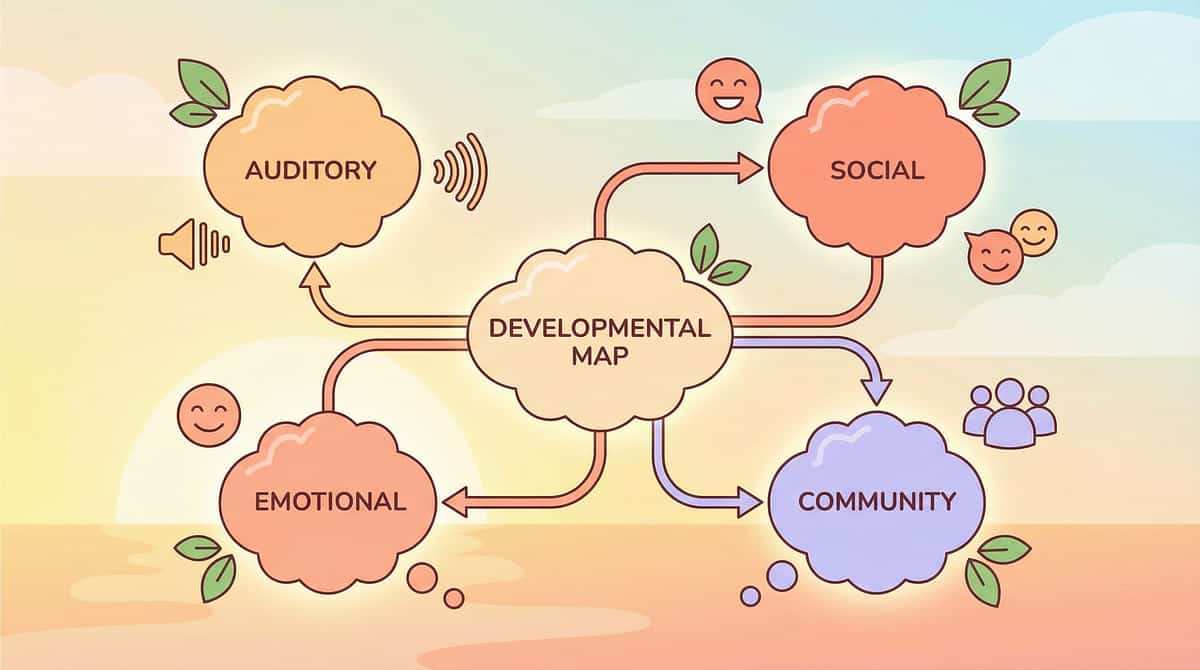
This technique is one piece of a larger plan. Every domain connects. Progress in auditory tolerance enables progress in community participation, which enables social development, which enables emotional growth. Here is where A-038 sits within the full 12-domain developmental system.
Domain A: Sensory Processing
Primary domain — auditory tolerance, sound sensitivity, self-regulation
Domain H: Self-Care & Daily Living
Outdoor activities, community access, independent outing management
Domain K: Community Participation
Neighborhood, parks, social gatherings, school environments
Domain L: Family Integration
Family outings, reduced restriction, shared community experiences
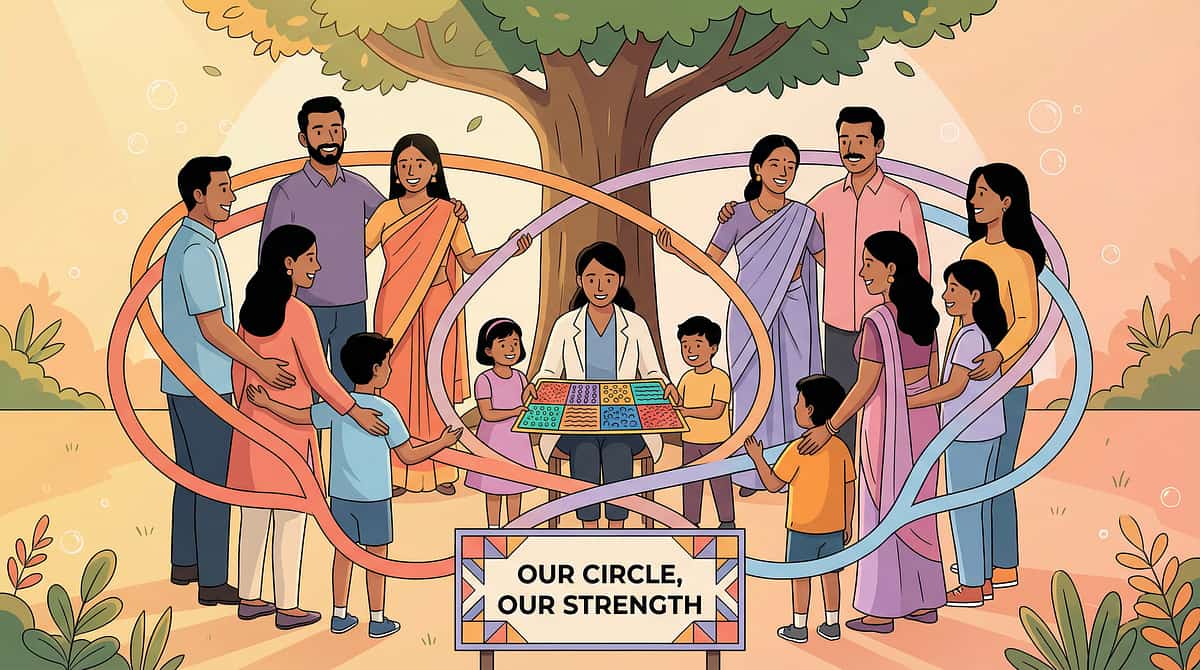
Families Who've Been Here
Family Story 1 — Hyderabad Center
Before: "Our 4-year-old hadn't been to the park in three months. Every walk ended at the front gate when a neighbor's dog barked. He would scream, cover his ears, and refuse to move. We carried him back inside, every single time. Our world was four walls."
After (Week 10): "He wears his headphones to the park now. Last Tuesday, a dog barked right at the fence and he said 'that was loud' and kept walking. That sentence — 'that was loud' instead of screaming — felt like a miracle. We go to the park now. His world is getting bigger again."
Family Story 2 — Bangalore Center
Before: "We couldn't visit my sister because she has a dog. Birthday parties were impossible — what if someone brings a dog? She was 6 and her life was smaller than most toddlers'."
After (Week 14): "We did the recorded sounds at home every day during her drawing time. She barely noticed at first. Slowly, slowly, the volume went up. Then the walks. Then the park. Last month she visited my sister's house. The dog barked once. She grabbed her fidget, took a breath, and said 'I'm okay.' She played in that house for two hours. Two hours in a house with a dog."
From the Therapist's Notes — OT, Pinnacle Blooms Consortium
"Dog barking distress responds well to the gradual exposure protocol because we can control the home-based component precisely. The transition to real-world encounters requires patience and protection, but the neural foundation built at home transfers. Most families see functional improvement within 8–16 weeks."
(Illustrative cases; outcomes vary by child profile.)
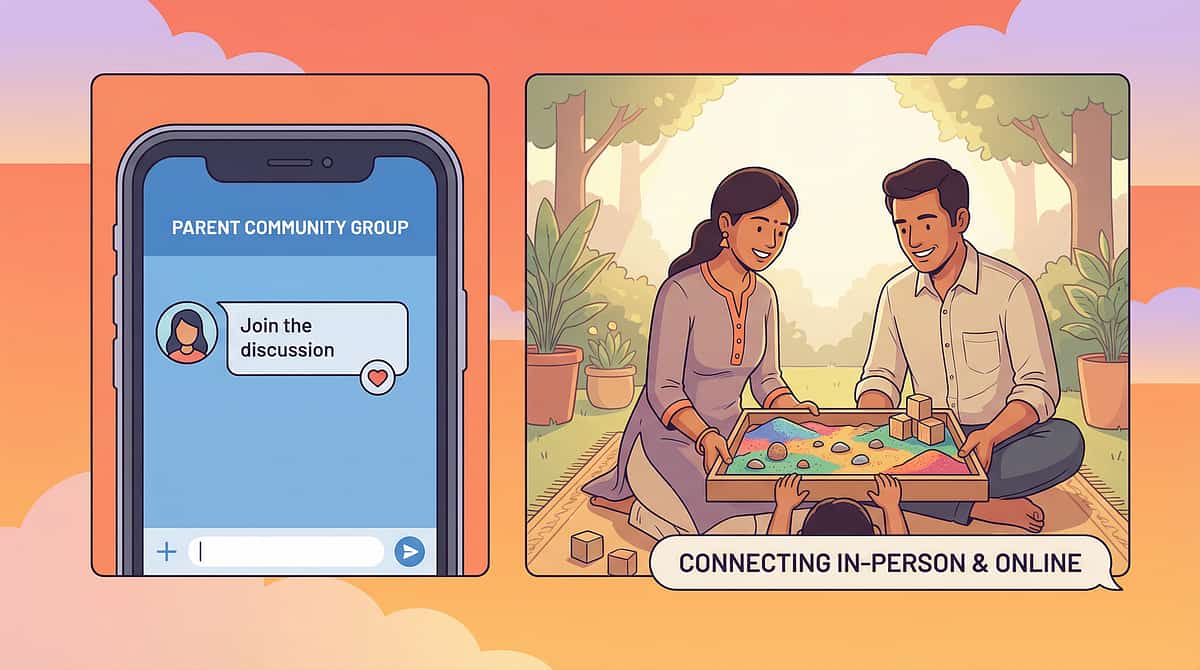
Connect With Other Parents
Your experience helps others. The parent who starts this protocol tomorrow will feel less alone because you shared your journey. Consider documenting your child's progress — it may be the story that gives another family hope.
Auditory Sensitivity Parent WhatsApp Group
Real-time peer support from families navigating the same protocol — share wins, ask questions, get encouragement from parents who've been exactly where you are.
Pinnacle Blooms Parent Community Forum
Searchable, archived discussions organized by technique, age, and challenge type. Find threads specific to dog barking distress from families across 70+ countries.
Local Parent Meetups
Find your nearest Pinnacle center's parent support group. In-person connection with other families in your neighborhood, city, and language.
Peer Mentoring
Connect with a parent who has already completed this protocol. Someone who has lived the experience — the setbacks, the breakthroughs, the victory walk — and can walk alongside you.
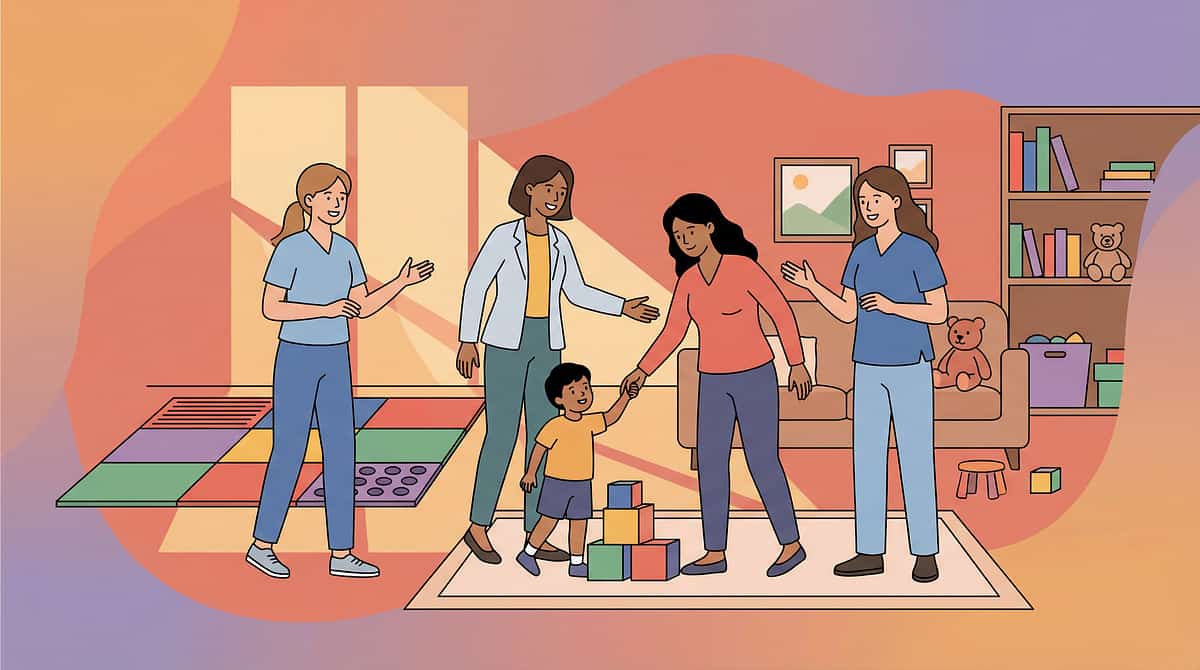
Your Professional Support Team
Home + clinic = maximum impact. This protocol works at home. With professional guidance, it works faster and safer. The Pinnacle Blooms Network operates 70+ centers and offers teleconsultation access within 24 hours for families anywhere in India.
Primary Therapist
Occupational Therapist — Sensory Integration specialty. Leads the desensitization hierarchy design and auditory processing monitoring.
Supporting: Psychologist
If the anxiety component is significant. Evaluates for anxiety disorder, provides cognitive-behavioral support alongside sensory approaches.
Supporting: Audiologist
If a hearing evaluation is needed. Rules out medical auditory conditions including hyperacusis and misophonia.
Oversight: NeuroDev Pediatrician
Evaluates underlying neurological contributions, coordinates with all disciplines, and oversees medical aspects of the intervention.
📞 FREE National Autism Helpline: 9100 181 181 | Available 24x7 in 16+ languages | pinnacleblooms.org

The Research Library — For the Curious Parent
Every recommendation on this page traces back to published evidence. Here is the complete evidence pyramid supporting this technique — from international systematic reviews to Indian RCTs to foundational neuroscience theory.
Level | Study | Key Finding | Source | |
Systematic Review | PRISMA 2024, Children journal, 16 articles | Sensory integration intervention confirmed as evidence-based practice for children with ASD | PMC11506176 | |
Meta-Analysis | World J Clin Cases 2024, 24 studies | SI therapy effectively promotes social skills, adaptive behavior, sensory processing, motor skills | PMC10955541 | |
RCT | Padmanabha et al., Indian J Pediatrics 2019 | Home-based sensory interventions significant outcomes in Indian pediatric population | DOI: 10.1007/s12098-018-2747-4 | |
Clinical Framework | SPD Foundation | Auditory over-responsivity: protection, predictability, gradual tolerance building | spdfoundation.net | |
Theory | Porges, S. — Polyvagal Theory | Safe and Sound Protocol® for auditory processing and nervous system regulation | Peer-reviewed publications | |
Guidelines | AOTA Clinical Guidelines | Sensory processing intervention and auditory defensiveness management | aota.org | |
Framework | WHO Nurturing Care Framework (2018) | Context-specific, equity-focused early childhood interventions | nurturing-care.org | |
International | WHO CCD Package (2023) | Caregiver-delivered interventions across 54 LMICs | PMC9978394 | |
Neuroscience | Frontiers in Integrative Neuroscience 2020 | Neurological basis for sensory-based interventions in ASD | DOI: 10.3389/fnint.2020.556660 |
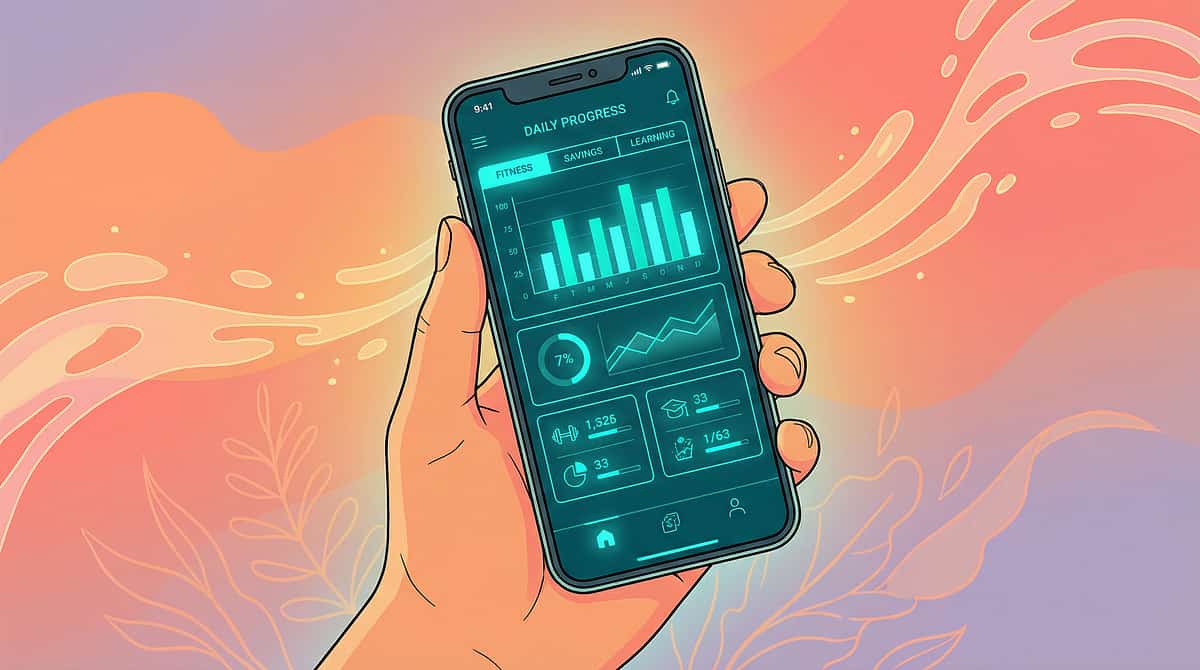
How GPT-OS® Uses Your Data
When you log session data (Card 20) into GPT-OS®, it becomes a learning engine for your child's personalized protocol. Over time, the system identifies patterns, predicts readiness, and alerts you to regression risks before they become setbacks.
Volume Tolerance Progression
Predicts when the child is ready for the next exposure level based on your data trend.
Outdoor Walk Analysis
Identifies optimal routes, times of day, and conditions specific to YOUR child's pattern.
Coping Tool Ranking
Recommends which tools — headphones, fidget, hand squeeze — are most effective for your child specifically.
Regression Alerts
Detects early warning signs before potential setback patterns become entrenched.
Privacy & Data Protection: All data is encrypted and stored under DPIIT/IT Act compliance. Data belongs to the family — downloadable anytime, deletable on request. No data shared with third parties without explicit consent. Anonymized aggregate data contributes to population-level outcome improvement for children like yours.

Watch the Reel — 9 Materials That Help With Dog Barking Distress
Reel A-038
Sensory Solutions Series — Episode 38
Auditory Processing + Sound Sensitivity
A therapist-presented 60-second reel introducing all 9 materials that help with dog barking distress: noise-reducing headphones, portable sensory kit, social stories about dogs, route planning materials, recorded barking for home exposure, calming sensory tools, gradual exposure hierarchy, controlled positive dog experience, and therapeutic listening programs. Each material is shown, explained, and linked to the full protocol detail on this page.
"This page is the deep dive. The Reel is the introduction. Share the Reel to introduce the challenge; share this page to share the solution."

Share This With Your Family
Consistency across caregivers multiplies impact. When everyone — both parents, grandparents, teachers, therapists — understands the protocol, the child's world expands everywhere. Here are resources designed for each audience in your child's life.
Share via WhatsApp
Pre-formatted message: "I found this evidence-based protocol for dog barking distress in children. It has the exact steps, materials, and timeline: [link]"
Share via Email
Subject line: "Dog Barking Distress Protocol — Evidence-Based Steps for [Child's Name]." Includes full page link and one-line summary.
Download Family Guide (1-Page PDF)
Simplified version with materials list, key steps, and safety notes. Print and put on the fridge. Review before every session.
Download "Explain to Grandparents" Version
Plain language, larger font, focused on "this is neurological, not behavioral." Helps extended family understand and support rather than dismiss.
Download Teacher Communication Template
Letter for school explaining auditory sensitivity and requesting accommodations. Pre-written, editable, professionally formatted for school use.
Frequently Asked Questions
Q1: Is my child afraid of dogs or afraid of the sound?
If your child is comfortable around quiet dogs but distressed when dogs bark, the issue is auditory — the sound, not the animal. This protocol focuses on sound tolerance. If your child fears dogs regardless of sound, additional psychological support for animal phobia may be needed alongside this protocol.
Q2: How long will this take?
Most families see functional improvement in 8–16 weeks of consistent practice. "Functional improvement" means the child can participate in outdoor activities with manageable support — not that all sensitivity disappears. The child's nervous system sets the pace.
Q3: Will my child ever be completely fine with dog barking?
The goal is functional tolerance, not elimination of all sensitivity. Many children reach a point where barking is mildly annoying but not distressing — similar to how adults find a car alarm irritating but not panic-inducing. Some residual sensitivity is normal and manageable.
Q4: Should I get a dog to "expose" my child?
No. Getting a dog as exposure therapy is not recommended unless specifically guided by a professional after significant baseline tolerance has been established. An uncontrolled, constant exposure to a barking pet can worsen sensitivity rather than improve it.
Q5: My child won't even look at pictures of dogs. Where do we start?
Start even earlier on the hierarchy — talk about dogs casually, point out dog-shaped objects (stuffed animals), draw dogs together. Build neutral associations before introducing any visual or auditory content about real dogs.
Q6: Is this the same as therapy for dog phobia?
Related but different. Dog phobia (cynophobia) is fear of the animal. Auditory over-responsivity is a sensory processing issue where the SOUND is the trigger. An OT addresses sensory processing; a psychologist addresses phobia. Both approaches use gradual exposure but target different things.
Q7: Can this protocol be done without professional help?
The home-based components (Materials 1–7) can be parent-led. Material 8 benefits from guidance, and Material 9 REQUIRES professional supervision. If your child's fear is severe or not responding after 4–6 weeks, professional assessment is strongly recommended.
Q8: What if there are dogs in our apartment building or immediately next door?
This is common in India. Start with headphones as the immediate solution for leaving the house. Simultaneously begin the home-based sound exposure protocol. Route planning may include timing exits when the neighboring dog is typically quiet. The protocol works even when the trigger is immediately present — it just requires more consistent headphone use initially.

Your Next Step — Start Now
Everything you need is here. The neuroscience, the materials, the step-by-step protocol, the troubleshooting, the progress arc. Your child's nervous system is ready to be rewired — gradually, safely, with the right tools and the right support. Start today.
Get a personalized daily schedule for this protocol, calibrated to your child's age and sensitivity level.
FREE initial assessment call. OT specializing in auditory processing and sensory integration.
Continue building your child's sound tolerance across environments.
📞 FREE National Autism Helpline: 9100 181 181 | 16+ languages | Available 24x7 | pinnacleblooms.org
Validated by Pinnacle Blooms Consortium
OT • SLP • ABA • SpEd • NeuroDev
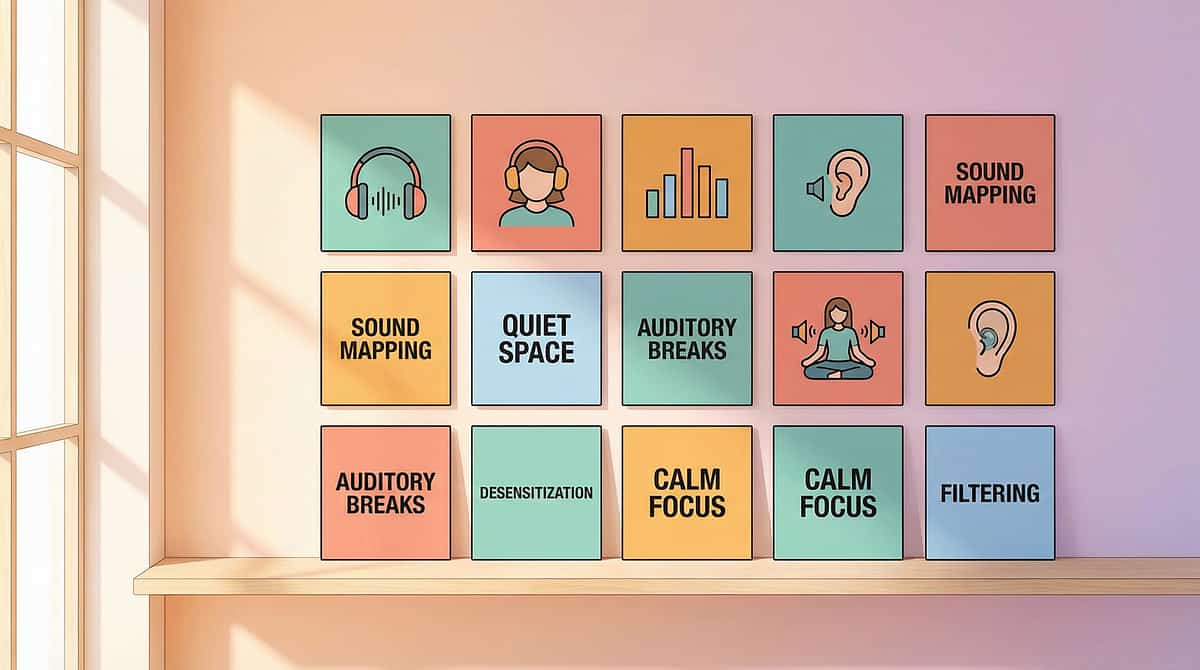
Preview of 9 materials that help with dog barking distress Therapy Material
Below is a visual preview of 9 materials that help with dog barking distress therapy material. The pages shown help educators, therapists, and caregivers understand the structure and content of the resource before use. Materials should be used under appropriate professional guidance.



Link copied!

The Pinnacle Promise
"From fear to mastery. One technique at a time."
Your child arrived at this page trapped in a shrinking world — unable to leave the house because dogs might bark. This protocol — built by mothers, engineered as a system, validated by research, and powered by GPT-OS® — exists to expand that world again. One walk. One park. One neighborhood. One life lived fully.
20M+
Therapy Sessions
Exclusive 1:1 sessions delivered across the Pinnacle Blooms Network
97%+
Measured Improvement
Across readiness indexes — aggregate outcomes across the Network
70+
Centers & Countries
Centers operating under a single clinical system, serving 70+ countries through the knowledge ecosystem
Medical Disclaimer: This content is educational and informational. It does not replace assessment by a licensed occupational therapist, audiologist, psychologist, or developmental pediatrician. Significant auditory sensitivity or phobia may require comprehensive sensory processing evaluation and professional-guided intervention. If your child's avoidance is severely restricting daily life, consult appropriate healthcare providers. Individual results vary. Statistics represent aggregate outcomes across the Pinnacle Blooms Network. Auditory sensitivity timelines vary significantly between children.
© 2025 Pinnacle Blooms Network®, unit of Bharath Healthcare Laboratories Pvt. Ltd. All rights reserved.
CIN: U74999TG2016PTC113063 | DPIIT: DIPP8651 (Govt. of India) | MSME: TS20F0009606 | GSTIN: 36AAGCB9722P1Z2
CIN: U74999TG2016PTC113063 | DPIIT: DIPP8651 (Govt. of India) | MSME: TS20F0009606 | GSTIN: 36AAGCB9722P1Z2
techniques.pinnacleblooms.org — The Largest Structured Pediatric Intervention Knowledge Base on Earth.