
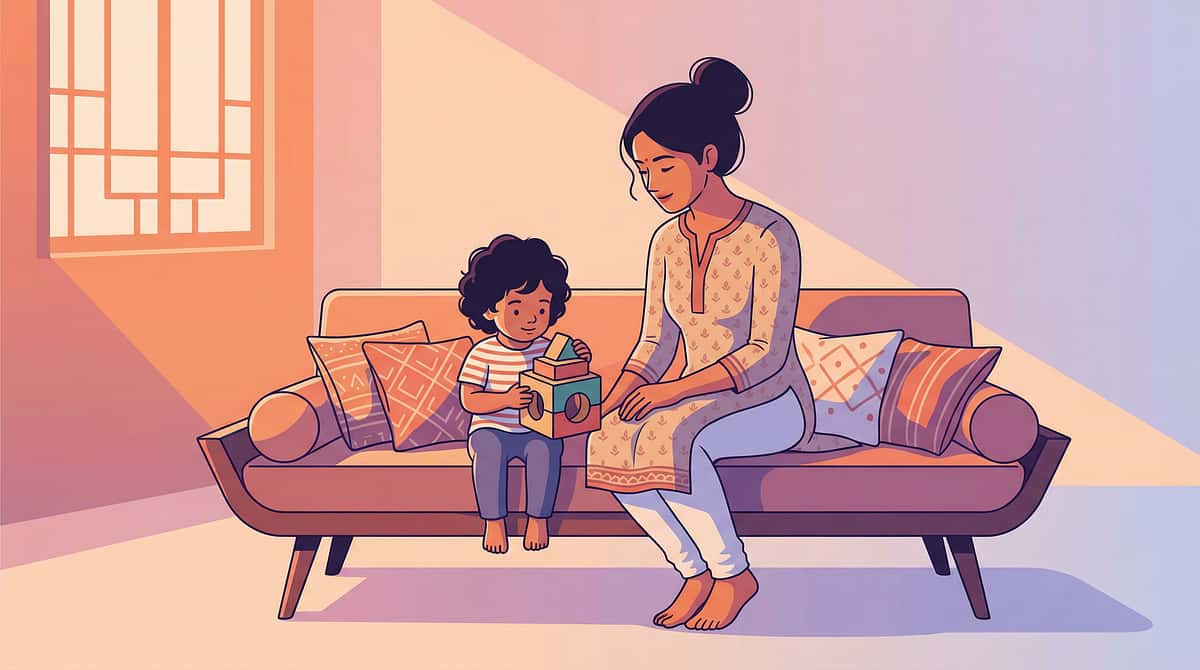
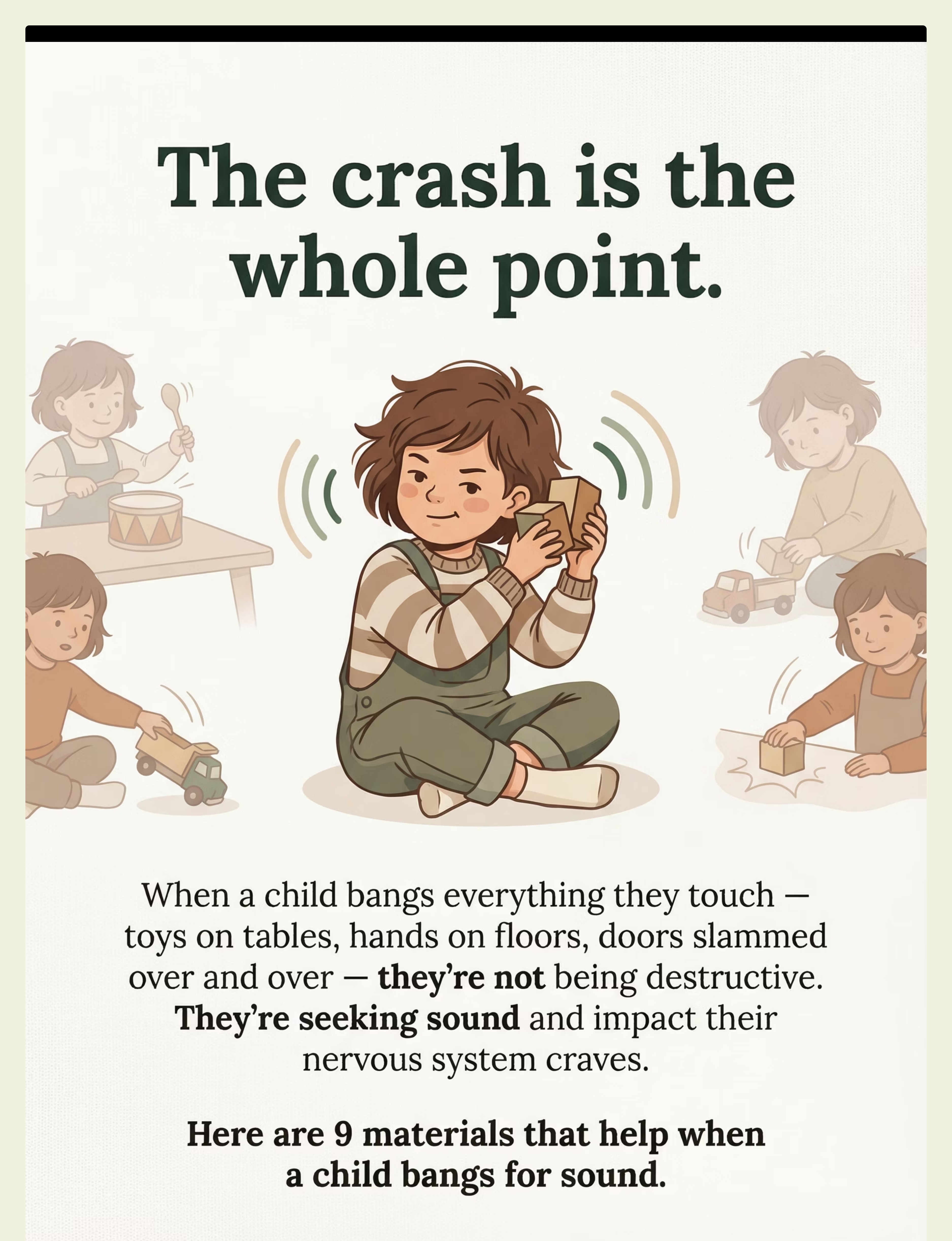
The Crash Is the Whole Point.
She bangs everything — not in anger, not to destroy. She needs to hear that sound. Her nervous system is speaking. This is not defiance. This is a neurological need with a name, a science, and a solution.
Pinnacle Blooms Consortium®
WHO/UNICEF-Aligned
GPT-OS® Powered
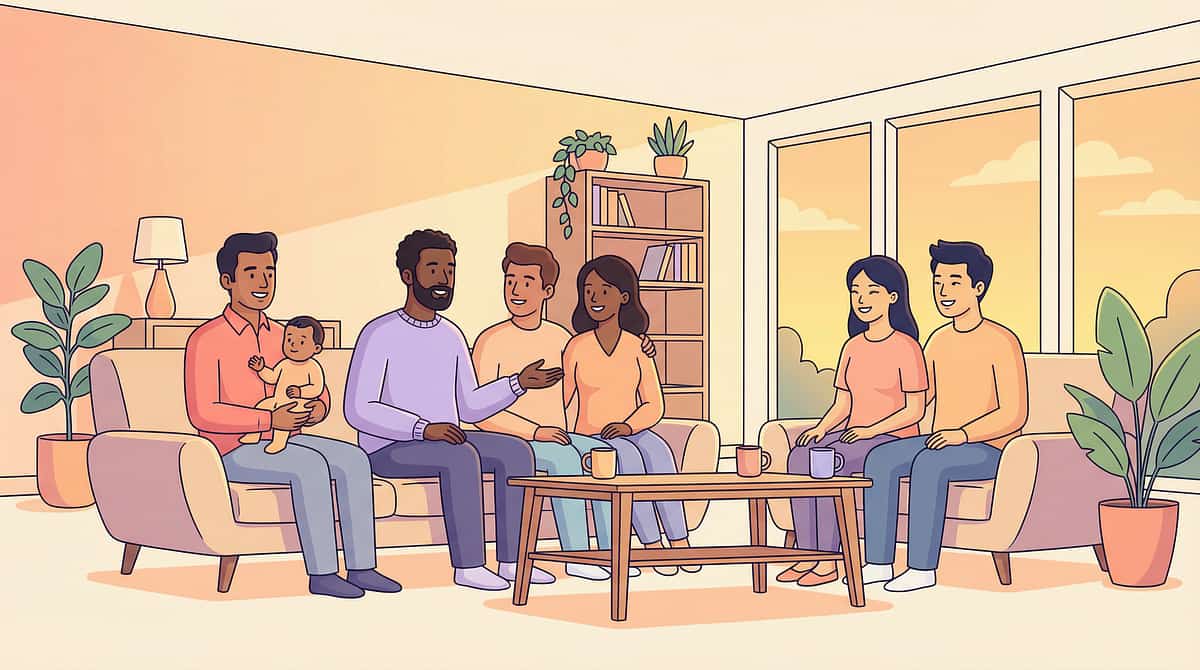
She bangs everything. Toys on the table, spoons on her plate, her hands on the floor. She picks up any object and immediately starts hitting it against something else — not to break it, not in anger — like she needs to hear that sound. The louder the crash, the more satisfied she seems. She drums on every surface constantly. She slams doors even when she's not upset. She drops toys from height just to hear them hit the floor. At restaurants, she bangs silverware until you have to leave. At home, the constant percussion is exhausting for everyone.
You've tried telling her to stop. You've tried redirecting her. You've tried taking things away. Nothing works for long. She always finds something else to bang.
You are not failing. Your child's nervous system is speaking. She is seeking auditory and proprioceptive input — the sound AND the impact — that her brain needs to regulate. This is not destruction. This is not defiance. This is a neurological need with a name, a science, and a solution.
Auditory-Proprioceptive Impact Sound Seeking Intervention: Structured Sensory Channeling Protocol — Drafted by Pediatric OT × ABA × SLP × NeuroDev × Special Education | WHO/UNICEF-Aligned | GPT-OS® Powered
You Are Among Millions.
The banging that exhausts you is a language your child's nervous system speaks fluently. The question is not "how do we silence it?" — the question is "how do we channel it?"
80%
Children with Autism
display sensory processing difficulties, including auditory and proprioceptive seeking behaviors like banging. Source: PRISMA Systematic Review, 2024 — PMC11506176
1 in 4
Sensory Seeking
Children with sensory processing differences show auditory seeking behaviors — seeking louder, more intense sounds to achieve nervous system regulation. Source: Meta-analysis, World Journal of Clinical Cases, 2024
18M+
Families in India Alone
navigate some form of developmental difference in their child. Millions worldwide manage impact sound seeking behaviors daily. Source: WHO Global Report on Children with Developmental Disabilities, 2023
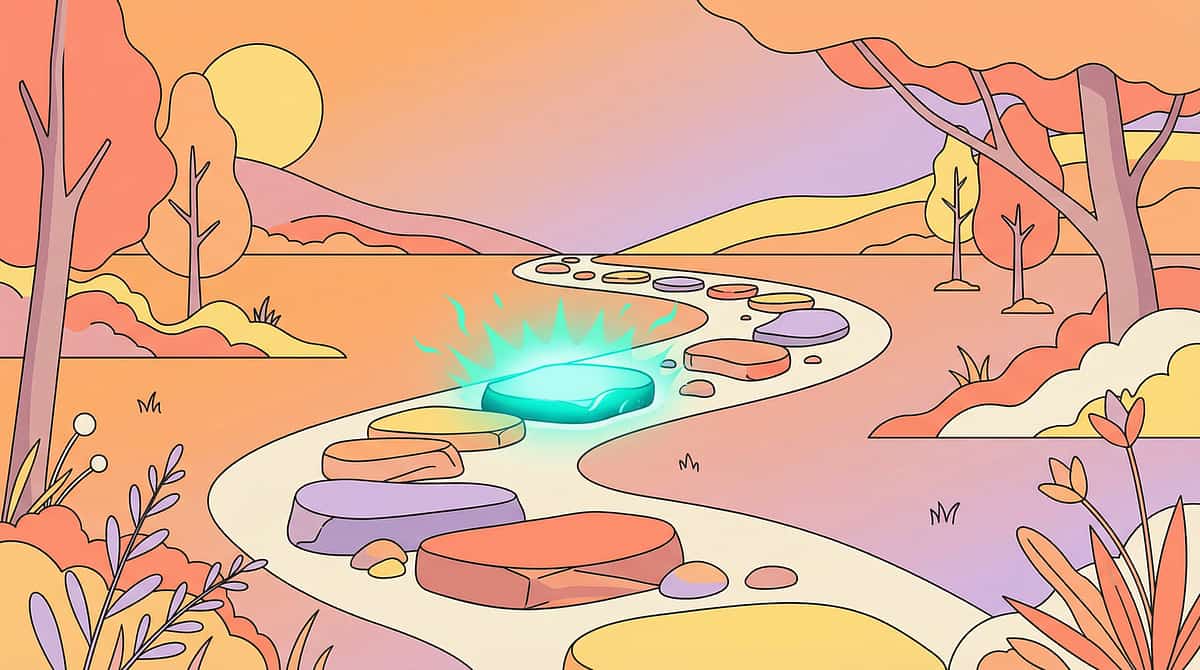
The Neuroscience of Impact Sound Seeking
What's Happening
Your child's auditory processing system requires more intense input to register and achieve regulation. Quieter sounds don't "land" the way they should. The somatosensory cortex — the brain region processing touch and body position — is simultaneously under-responsive, requiring deep pressure and joint feedback.
Why Banging Specifically
Banging delivers BOTH inputs simultaneously. The crash provides intense auditory input. The physical impact provides proprioceptive feedback through hands, arms, and joints. This dual-modality input is uniquely regulating — which is why your child escalates to harder, louder banging. They're not being destructive. They're tuning their nervous system with the most efficient tool available.
The wiring difference: This is a sensory processing pattern — a wiring difference in how the brain registers and organizes sensory information. It is not a behavior choice. It cannot be disciplined away. Punishment creates frustration and shame without addressing the neurological need. Reference: Frontiers in Integrative Neuroscience, 2020 — DOI: 10.3389/fnint.2020.556660

Developmental Context: When Impact Sound Seeking Emerges
Understanding where your child sits on the developmental arc — and where this journey leads — helps you act with confidence.
1
0–12 Months
Early sensory exploration — mouthing, shaking, batting. First cause-and-effect sound making (rattles, banging on highchair) is typical.
2
0–12 Months
Early sensory exploration — mouthing, shaking, batting. First cause-and-effect sound making (rattles, banging on highchair) is typical.
3
12–24 Months
Purposeful banging increases. Distinction begins between typical exploration and sensory-seeking intensity.
4
2–4 Years ← You May Be Here
Intense banging becomes a consistent pattern — drums on everything, slams doors, drops objects from height, bangs toys near their ears. Not correlated with anger.
5
4–7 Years
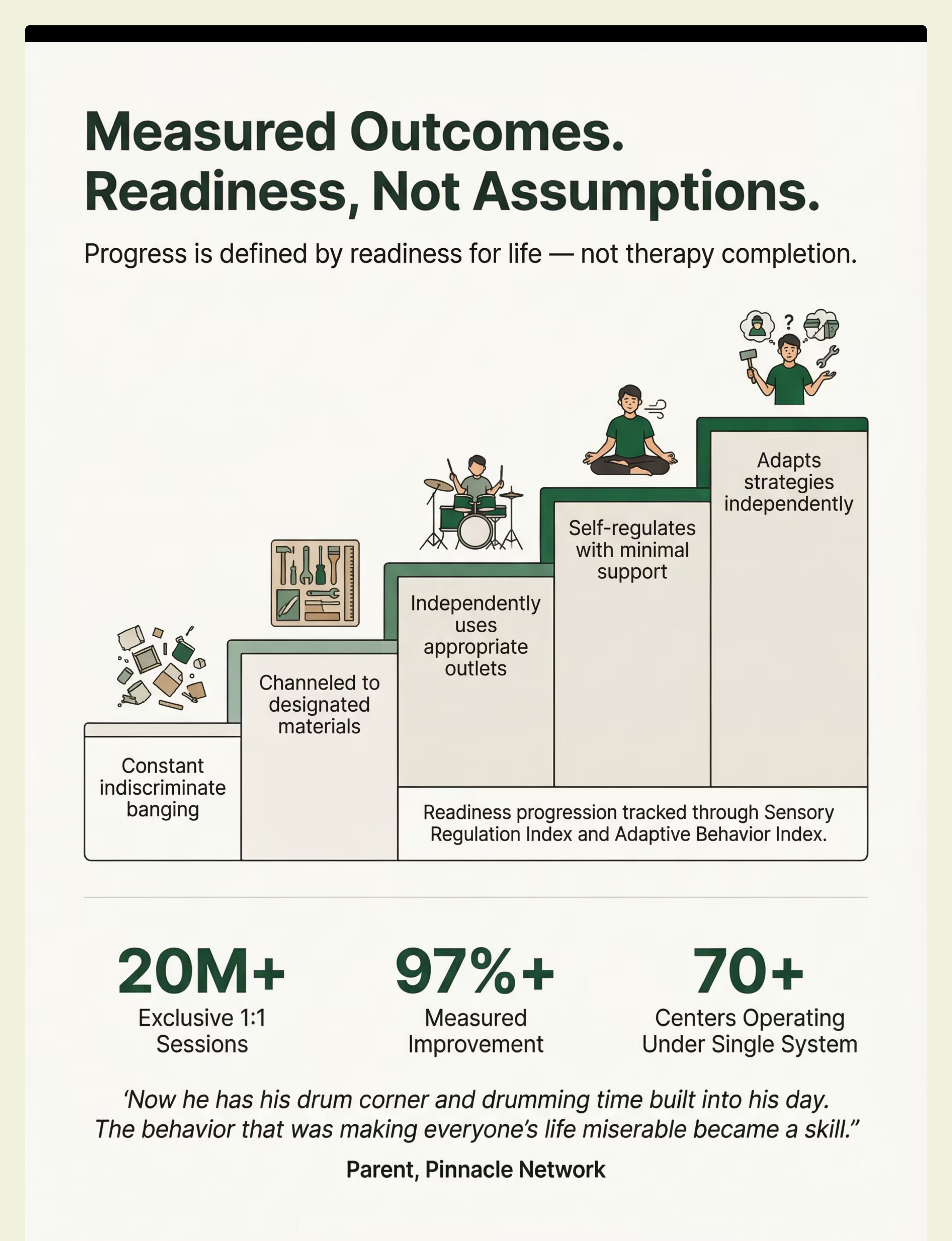
Without intervention, banging often intensifies. With intervention, banging is channeled into appropriate outlets — drums, percussion, heavy work.
6
7–10 Years
Successful intervention: the child has formal percussion skills, self-regulates through designated outlets, uses alternatives in quiet settings.
Comorbidity Note: Impact sound seeking commonly co-occurs with proprioceptive seeking (crashing, jumping, pushing), vestibular seeking (spinning, swinging), oral sensory seeking (mouthing, chewing), and in some cases, auditory hypersensitivity to OTHER sounds. References: WHO Care for Child Development Package, 2023 | PMC9978394
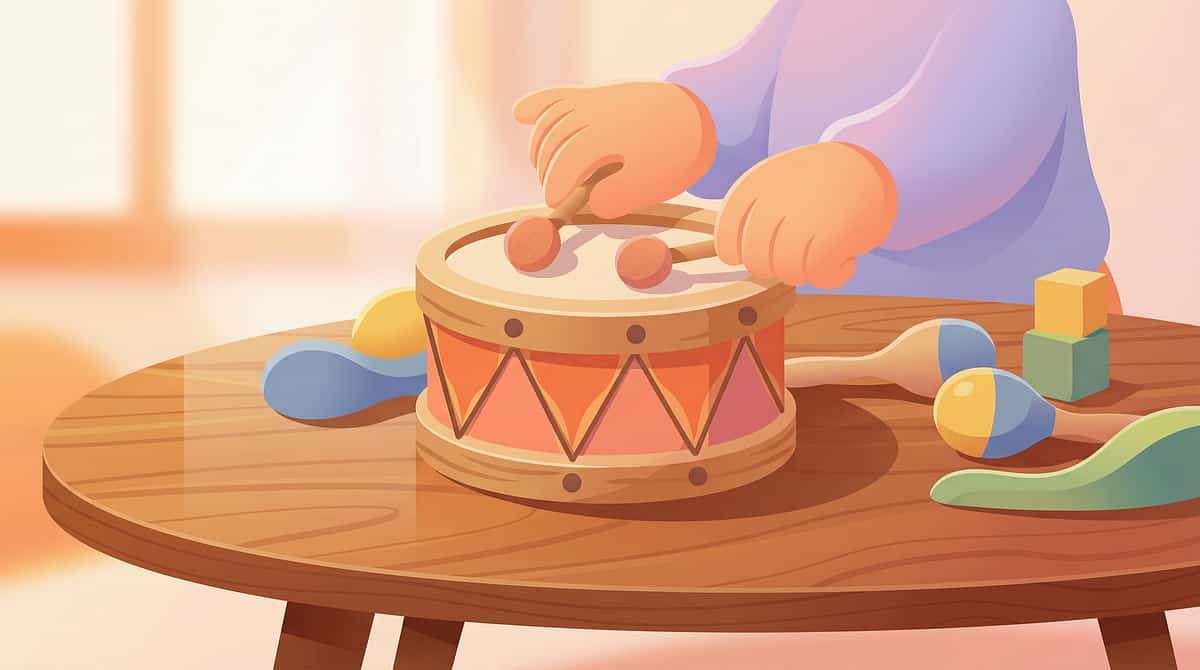
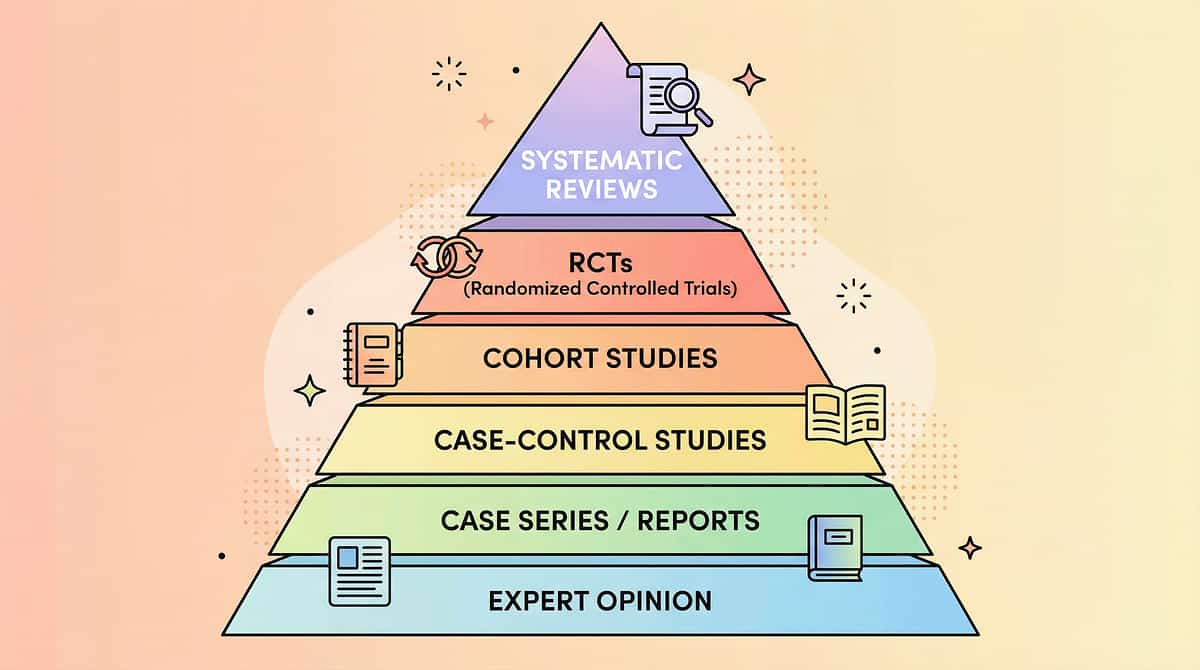
Clinically Validated. Home-Applicable. Parent-Proven.
Level I–II Evidence
Systematic Reviews + RCTs + Meta-Analyses
Finding 1 — PRISMA Systematic Review (2024)
Sensory integration intervention meets criteria to be considered an evidence-based practice for children with ASD. Review of 16 articles spanning 2013–2023 confirms effectiveness. Source: PMC11506176 — Children, 2024
Finding 2 — Meta-Analysis (2024)
24 studies confirm sensory integration therapy effectively promotes social skills, adaptive behavior, sensory processing, and gross/fine motor skills in children with autism. Source: PMC10955541 — World Journal of Clinical Cases, 2024
Finding 3 — Indian RCT (2019)
Home-based sensory interventions demonstrated significant outcomes in Indian pediatric populations. Parent-administered sensory protocols are effective when structured and monitored. Source: Padmanabha et al., Indian Journal of Pediatrics, 2019
Finding 4 — WHO/UNICEF CCD Package (2023)
The WHO Care for Child Development Package, implemented across 54 low- and middle-income countries, validates caregiver-delivered structured interventions for children with developmental differences. Source: PMC9978394
This protocol is built on Level I–II evidence from PRISMA-compliant systematic reviews, multi-site meta-analyses, and country-specific RCTs. The Pinnacle Blooms Consortium has validated this protocol across 20M+ 1:1 therapy sessions with 97%+ measured improvement.
The Technique
Auditory-Proprioceptive Impact Sound Seeking Intervention
Parent-Friendly Name: "Channeling the Bang" — Giving your child appropriate, structured outlets for the sound and impact their nervous system needs.
A multi-material, structured sensory intervention protocol that addresses auditory seeking (the need for intense impact sounds) and proprioceptive seeking (the need for deep pressure and joint feedback through impact) by providing clinically validated, appropriate outlets — drums, percussion, hammer toys, crash mats — combined with environmental structure, systematic input scheduling, and skill development pathways. The protocol channels the banging impulse rather than suppressing it, transforming a disruptive sensory-seeking behavior into constructive, regulated, purposeful activity.
🧠 Sensory Processing
👂 Auditory Regulation
💪 Proprioceptive Integration
🎵 Rhythmic Organization
🏠 Home-Executable
Age Range
2–10 years
Session Duration
10–20 min (home protocol)
Frequency
Daily diet + 2–3 structured sessions/week
Setting
Home + Classroom + Public Spaces
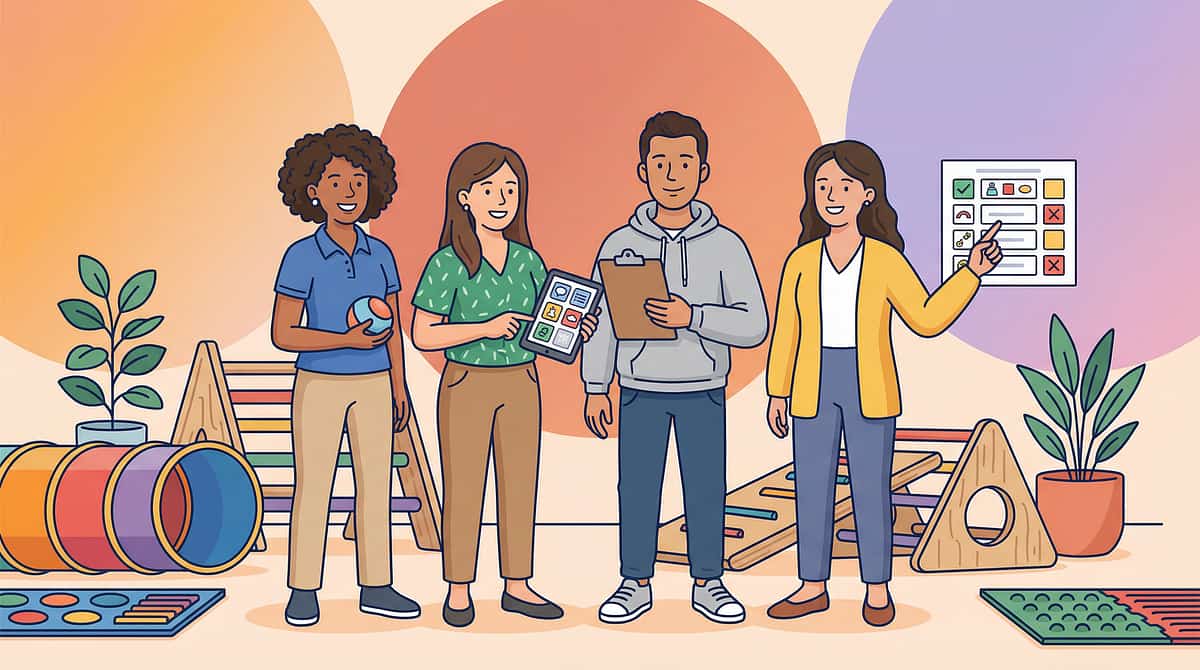
This Technique Crosses Therapy Boundaries
Because the brain doesn't organize by therapy type, this protocol is consortium-drafted across four disciplines — each playing a precise clinical role.
Occupational Therapy — Primary Lead
The OT leads this intervention because auditory-proprioceptive seeking is fundamentally a sensory processing challenge. The OT designs the sensory diet, selects appropriate materials, grades the sensory input intensity, and monitors regulation outcomes through the Sensory Regulation Index.
Applies: Sensory integration theory (Ayres), sensory diet design, material prescription, environmental modification
Applied Behavior Analysis (ABA)
The BCBA addresses the behavioral architecture: antecedent arrangement (when/where banging is appropriate), reinforcement schedules (rewarding appropriate outlet use), data collection systems (tracking banging frequency, location, intensity), and functional analysis.
Applies: Antecedent manipulation, differential reinforcement of alternative behavior (DRA), data collection protocols
Speech-Language Pathology (SLP)
The SLP addresses the communication dimension: teaching the child to request sensory input verbally ("I need drumming time"), express sensory states ("too quiet" / "need louder"), and use rhythm/music activities to develop oral-motor coordination and prosody.
Applies: Functional communication training, oral-motor integration, rhythm-language connection
Special Education + NeuroDev Pediatrics
The Special Educator creates classroom accommodation protocols and sensory break schedules. The NeuroDev Pediatrician provides diagnostic clarity, rules out medical causes (particularly for head-banging), and oversees the comprehensive developmental plan.
Applies: IEP/504 accommodation design, classroom sensory strategies, medical oversight, developmental monitoring

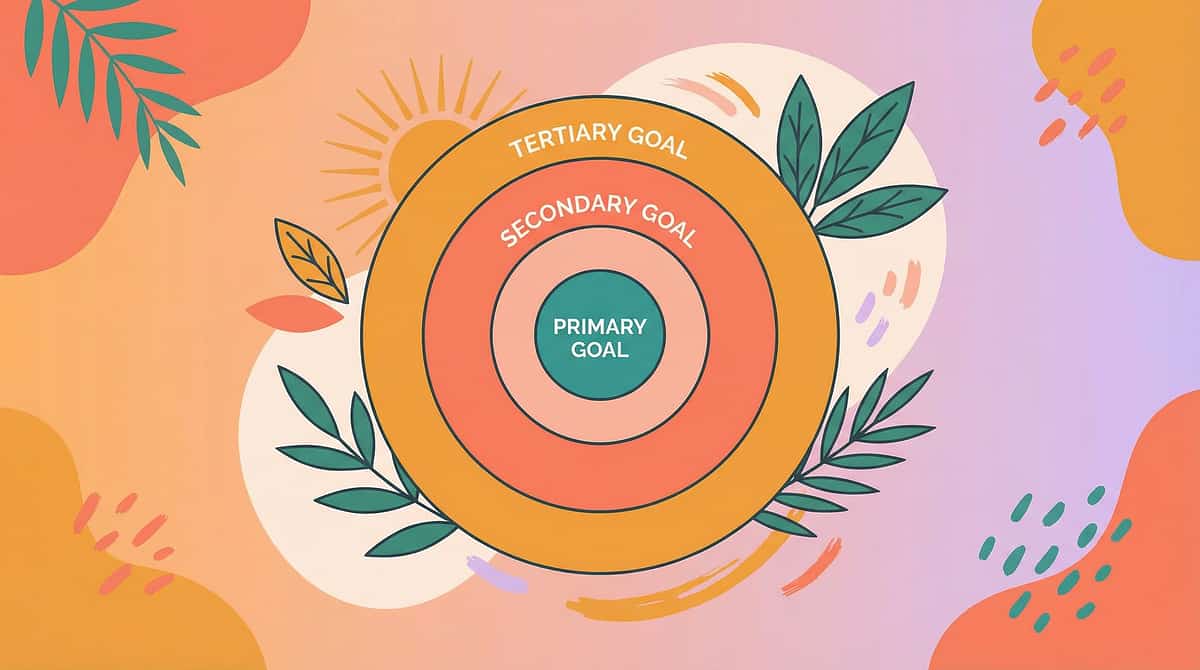
Precision Targets — This Is Not a Random Activity
Every aspect of this protocol points at specific, observable outcomes. Here is exactly what changes — and how you'll know it's working.
🎯 Primary
Auditory + proprioceptive regulation; behavioral channeling from "everywhere" to designated materials, spaces, and times.
Observable: Child uses drums/percussion INSTEAD OF random objects when seeking impact sound.
🎯 Secondary
Fine and gross motor development; self-regulation capacity; environmental tolerance in classrooms, restaurants, and public spaces.
Observable: Child requests "drumming time" or goes to designated space without prompting.
🎯 Tertiary
Musical skill and identity formation; social participation; generalized self-advocacy; family stress reduction and improved quality of life.
Observable: Child adapts sensory strategies independently across settings.
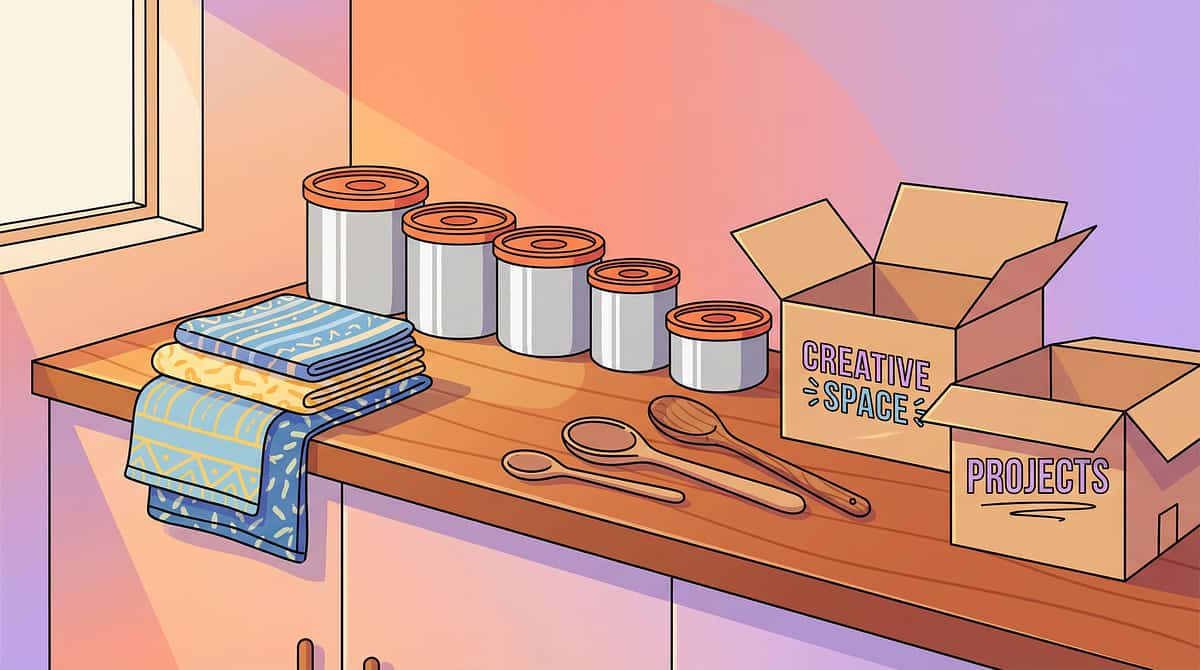
9 Materials That Help When a Child Bangs for Sound
🏅 Pinnacle Recommends
Clinically Validated
Each of the nine materials below has been validated by the Pinnacle Blooms Consortium. They are organized by Canon category with budget guidance, so every family — regardless of income — can act today.
Material 1 of 9
Musical/Percussion Instruments
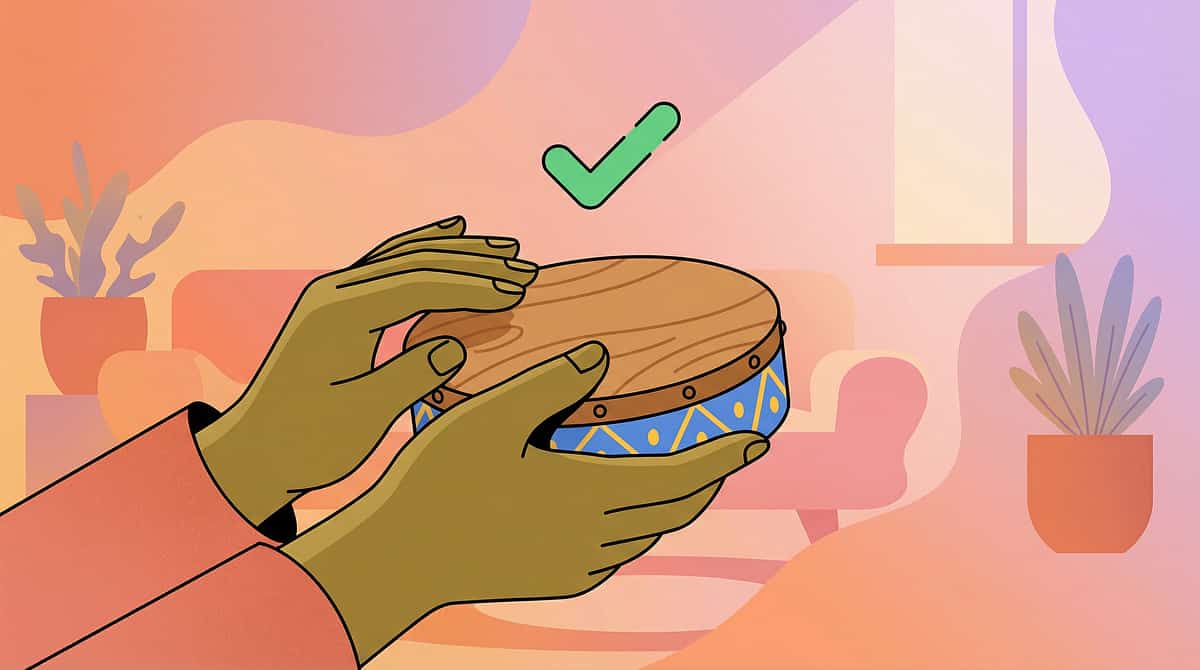
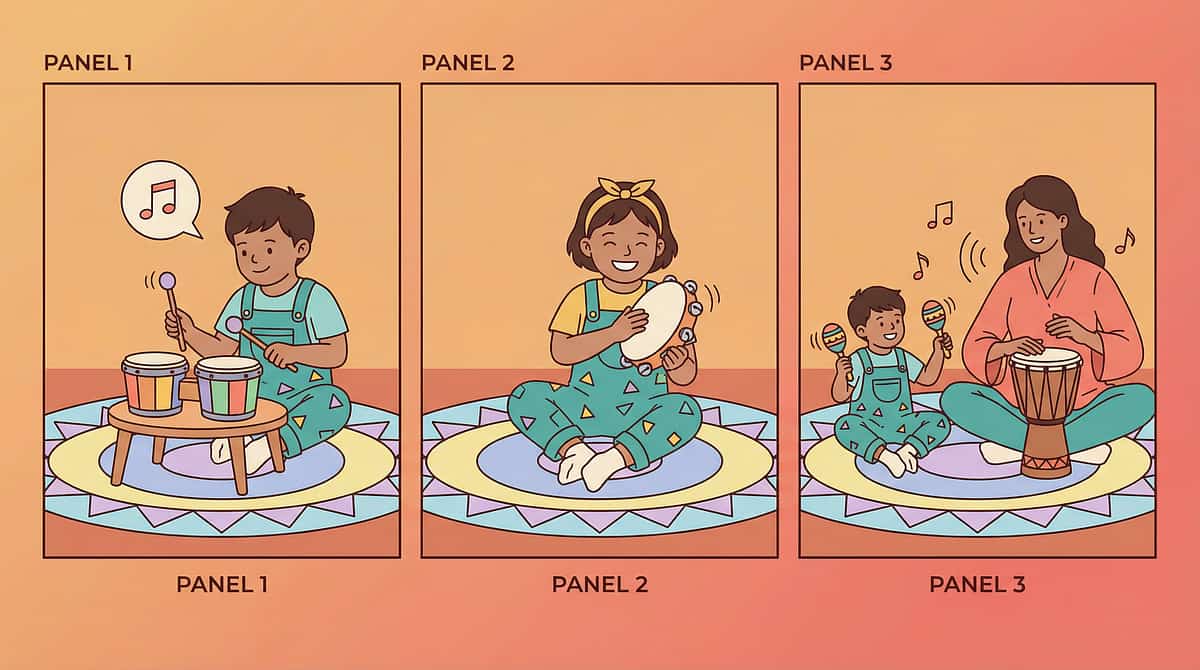
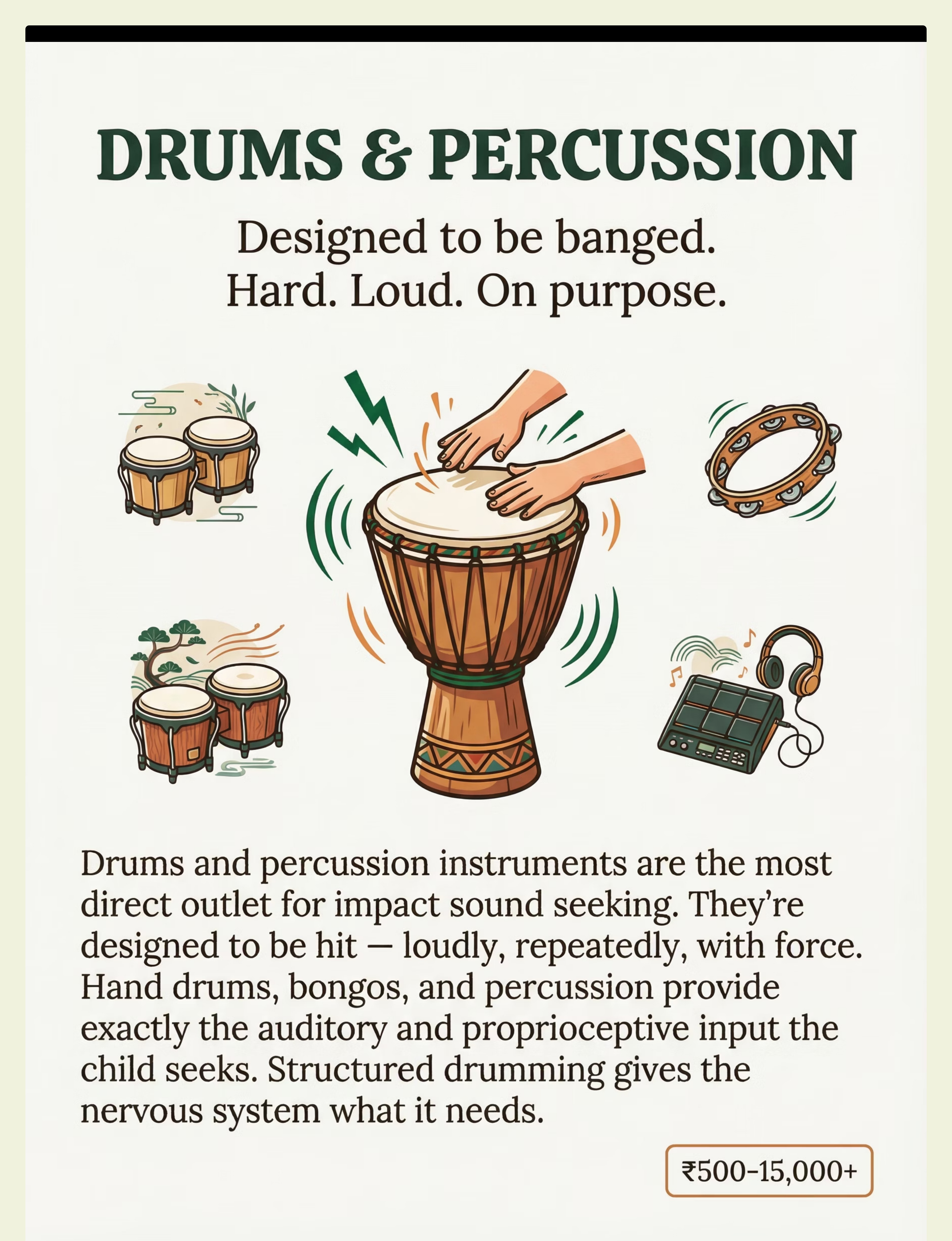
Drums & Percussion Instruments
What to Get
Hand drums (djembe, bongo, frame drum), electronic drum pad with headphones, tambourines, bucket drums, cajon.
₹500–15,000+
Why This Works
The most direct, appropriate outlet for impact sound seeking. Drums are designed to be hit — loudly, repeatedly, with force. The child drums with full intensity without breaking anything. Every crash is purposeful, acceptable, and satisfying to the nervous system.
The drum provides the exact dual input the brain craves: an intense auditory impact sound AND proprioceptive feedback through the hands, wrists, and arms. No other material delivers this combination as cleanly.
Material 2 of 9
Fine Motor / Sensory Regulation Tools
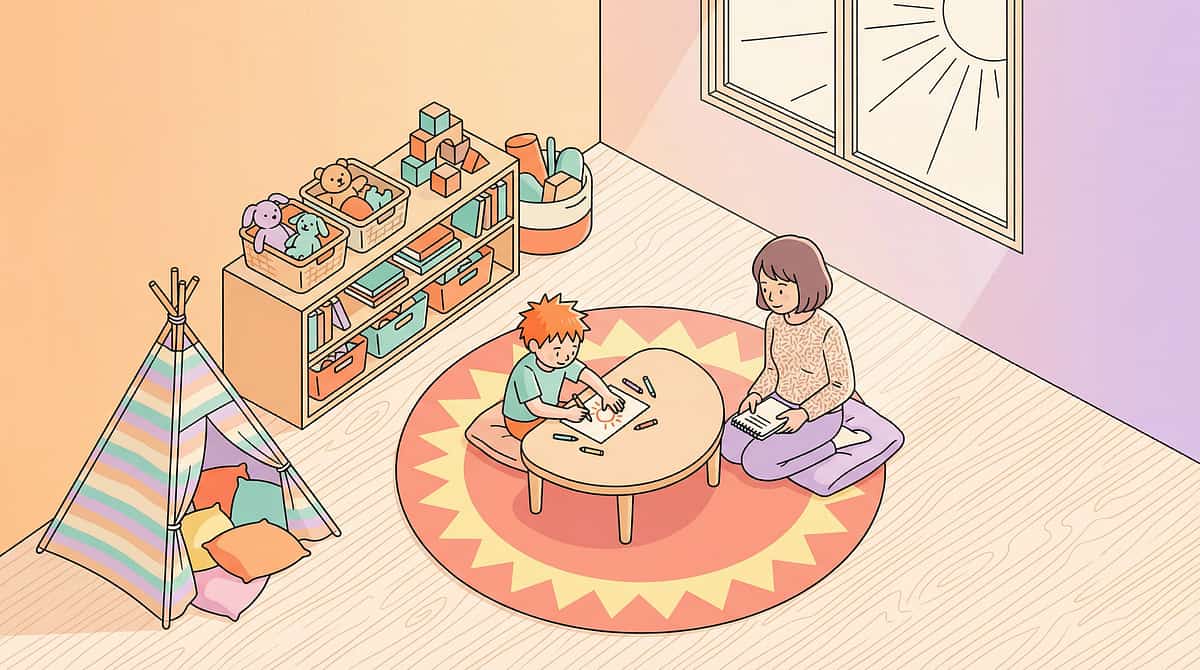
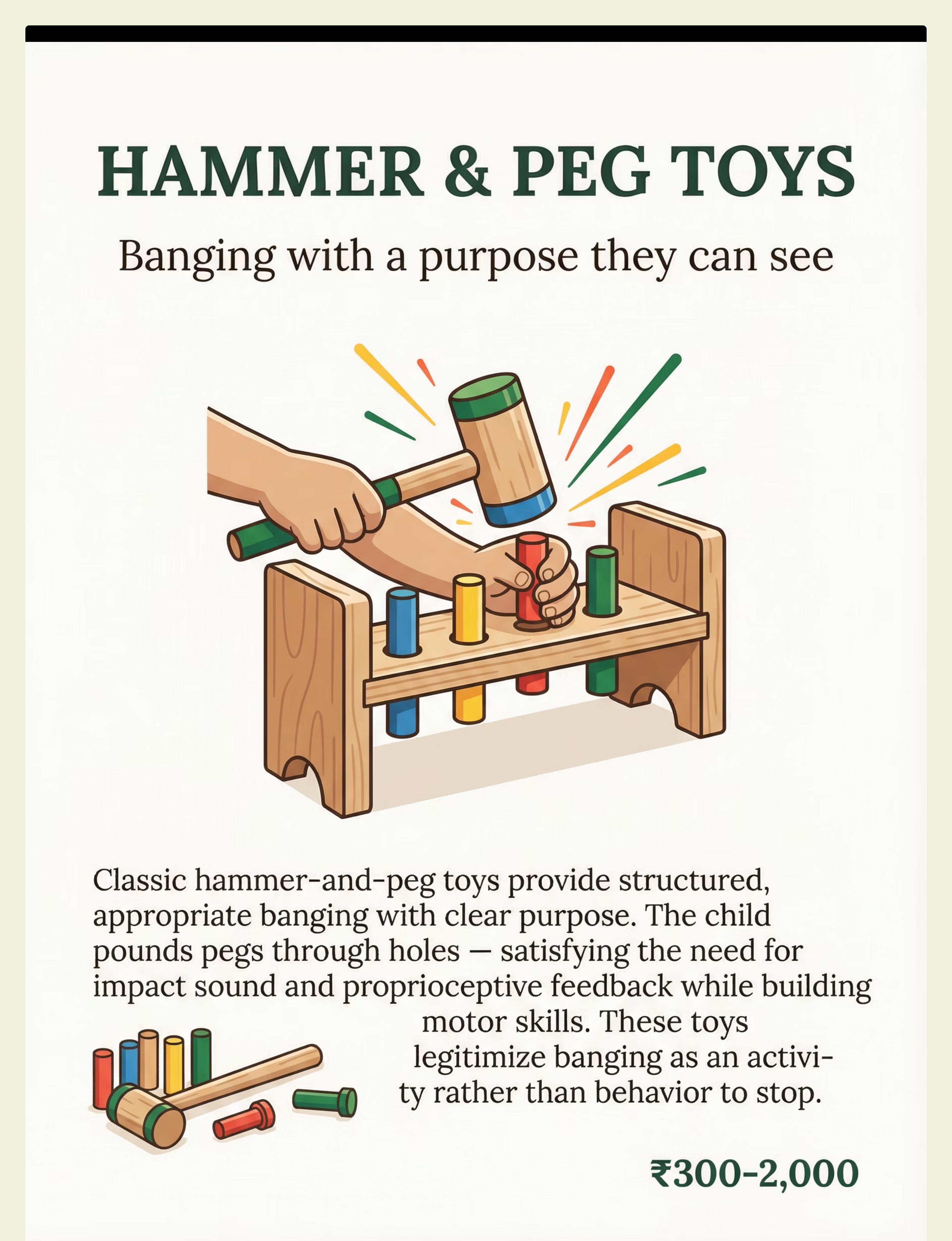
Hammer & Peg Toys / Pounding Benches
Why This Works
Structured, purposeful banging with a visible outcome the child can see and repeat. The pounding has a purpose — satisfying impact sound + proprioceptive feedback + fine motor skill building all in one activity.
Unlike random banging, the child can track their own progress: peg goes down, task is done, sense of completion is achieved. This builds self-regulation habits naturally.
What to Get
Wooden pound-a-peg bench, ball pounding toy with hammer, golf tees into styrofoam.
₹300–2,000

Material 3 of 9
Gross Motor Equipment
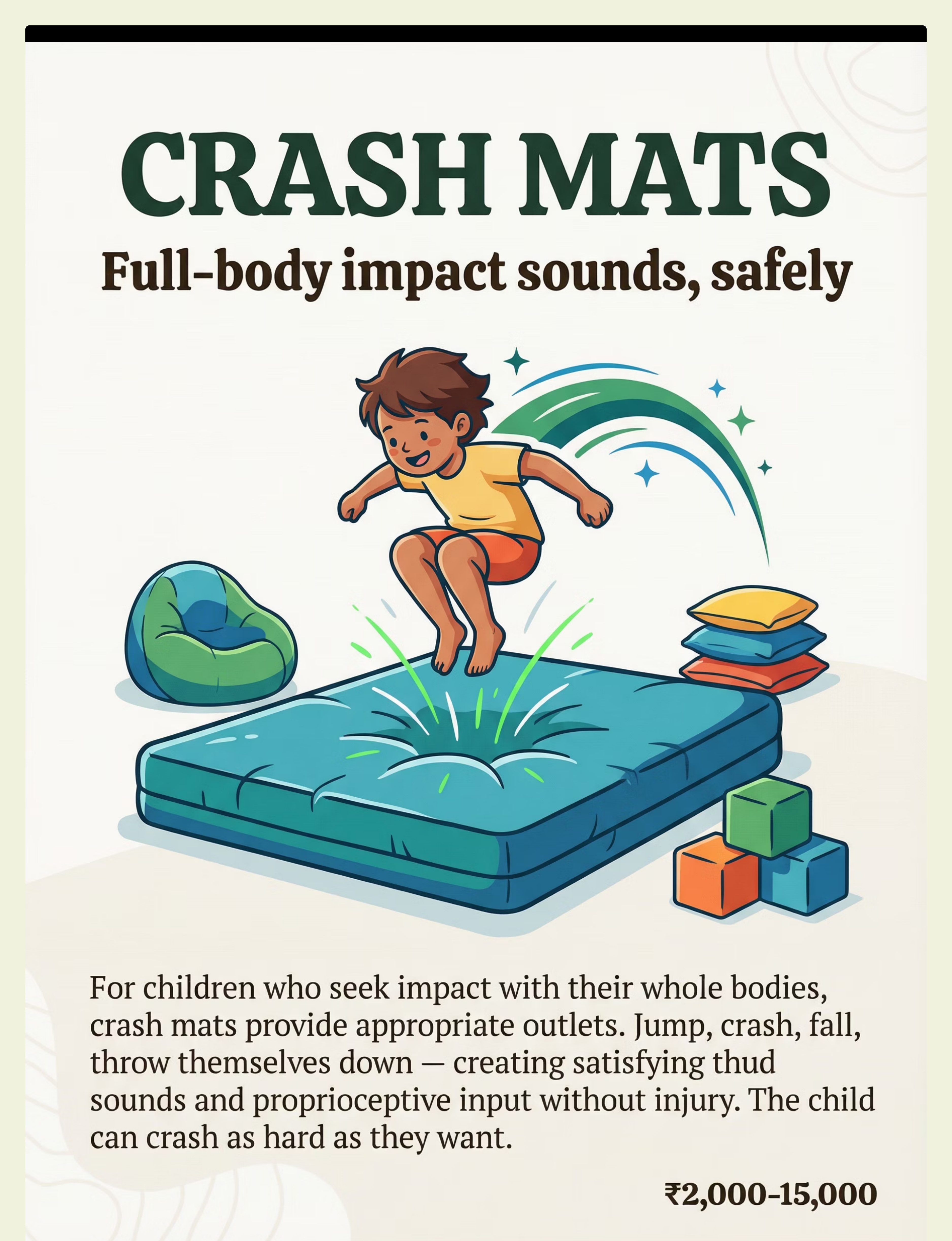
Crash Mats & Safe Impact Surfaces
What to Get
Therapy-grade crash mat, large bean bag chairs, foam blocks and wedges, thick gym mats.
₹2,000–15,000
Why This Works
Full-body impact sounds, safely. Jump, crash, fall — satisfying thuds and whole-body proprioceptive input without injury. For children who seek impact with their entire body, not just their hands, the crash mat is irreplaceable. The thud of landing is deeply regulating for the vestibular and proprioceptive systems simultaneously.
Material 4 of 9
Sensory Regulation Tools
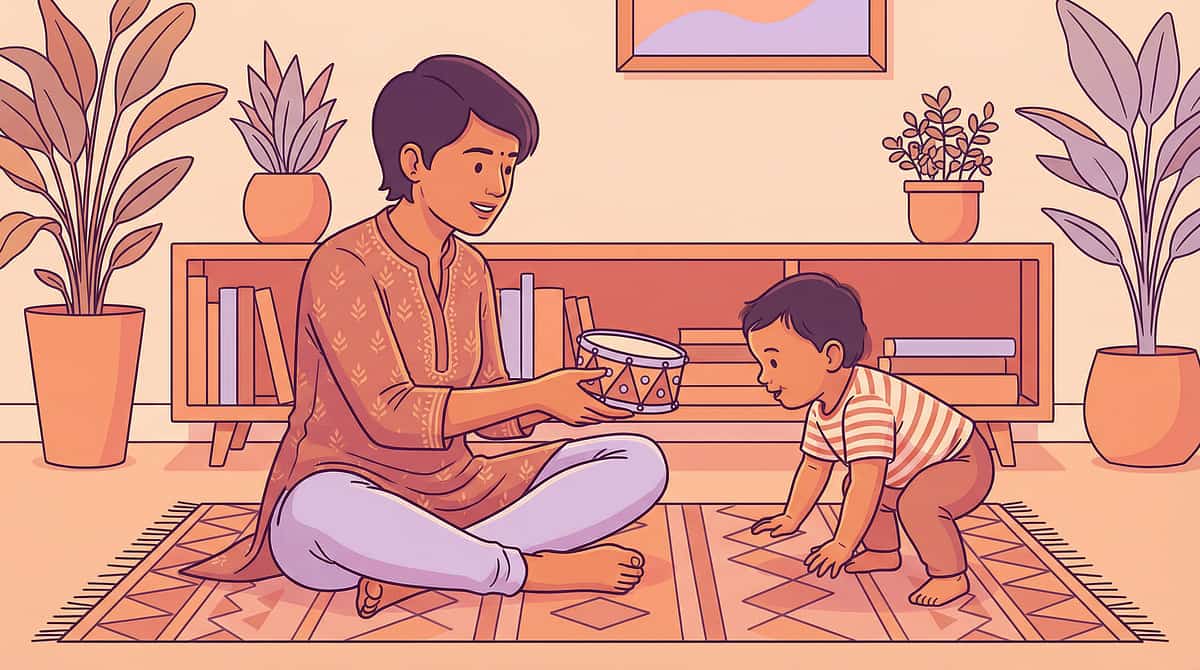
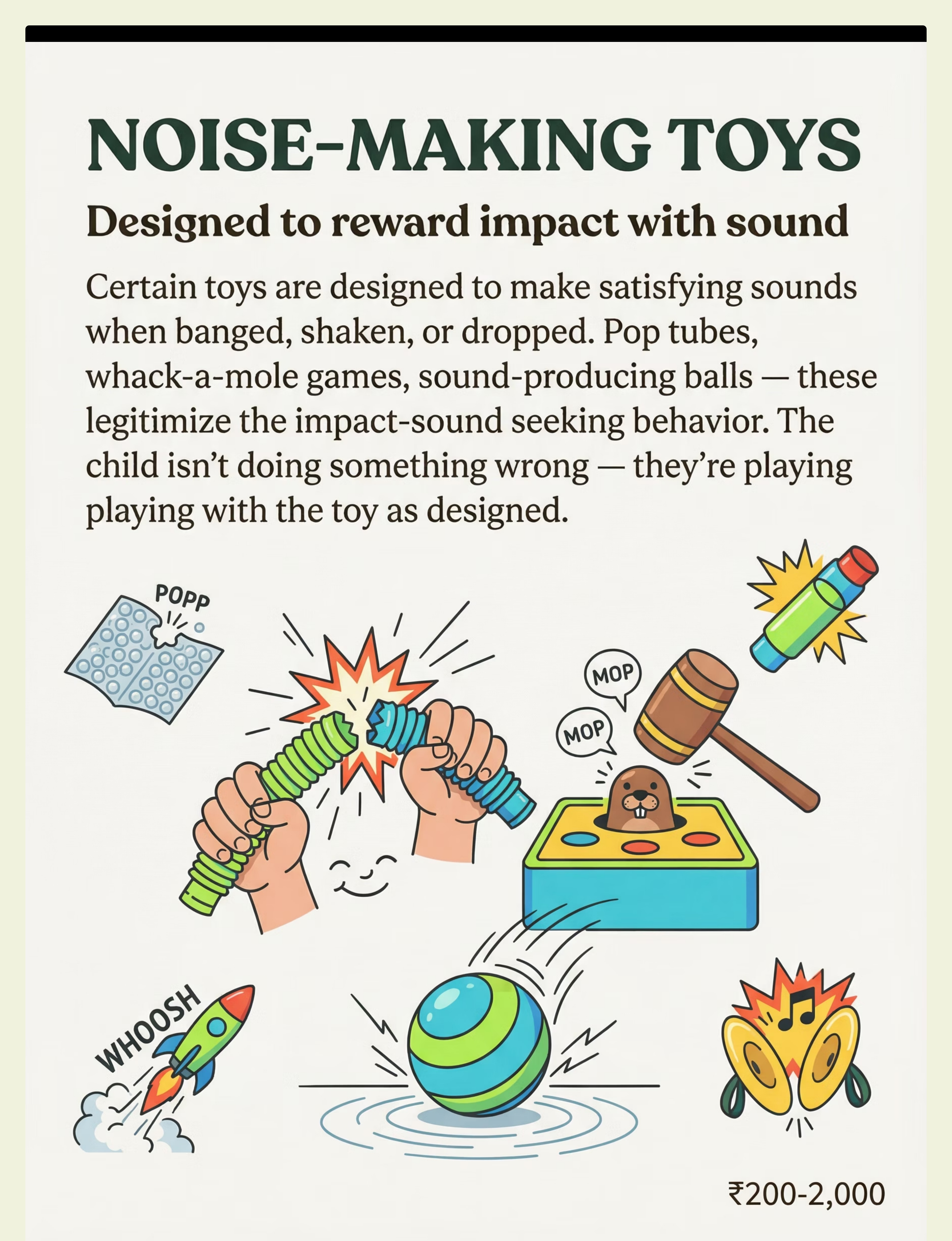
Noise-Making Impact Toys
What to Get
Pop tubes, whack-a-mole games, sound-producing balls, stomp rockets, large floor piano mat.
₹200–2,000
Why This Works
These toys are designed to reward impact with sound. When the child uses a stomp rocket or a floor piano mat, they aren't doing something wrong — they're playing with the toy exactly as intended. This reframes the experience from "stop hitting things" to "here is something made for hitting."
The social-emotional benefit is significant: the child receives positive feedback from their environment instead of constant redirection.
Material 5 of 9
Proprioceptive Input Materials
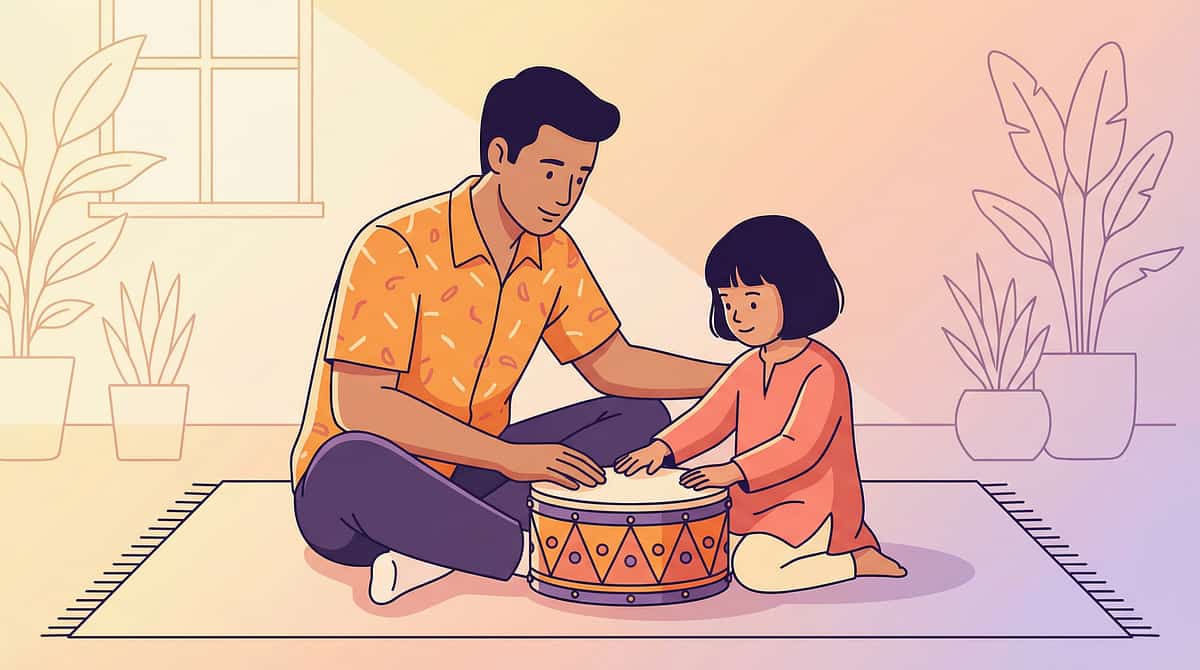
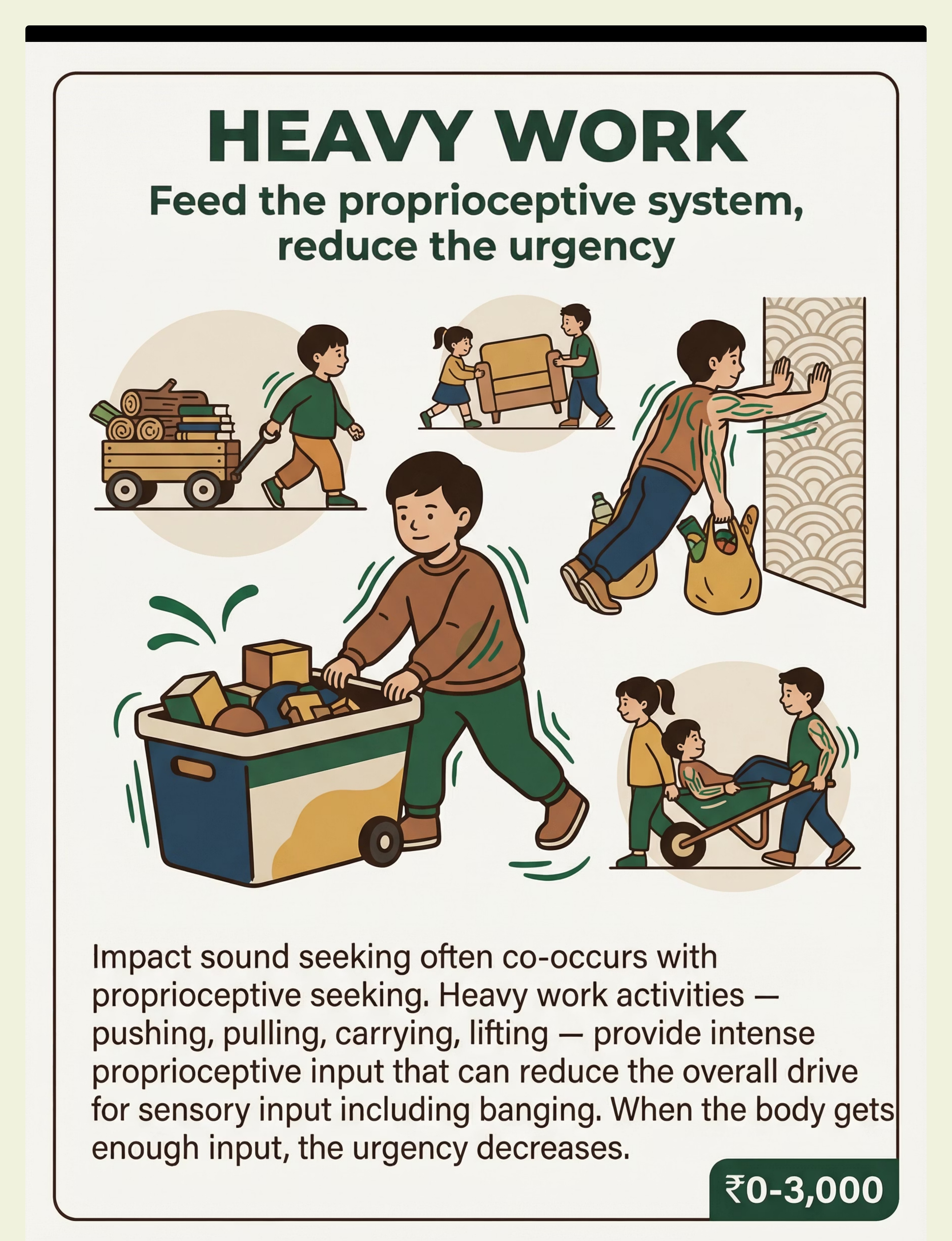
Heavy Work & Resistance Materials
Why This Works
Heavy work directly feeds the proprioceptive system that drives the banging impulse. When the body gets enough deep pressure input through carrying, pushing, and pulling, the urgency to bang decreases. Think of it as filling a tank — a full proprioceptive tank means a calmer child with less desperate sensory seeking.
Heavy work is also uniquely portable and silent — ideal for settings where drums aren't appropriate.
What to Get
Weighted vest, resistance bands, therapy putty, push/pull toys, trampoline.
₹0–3,000
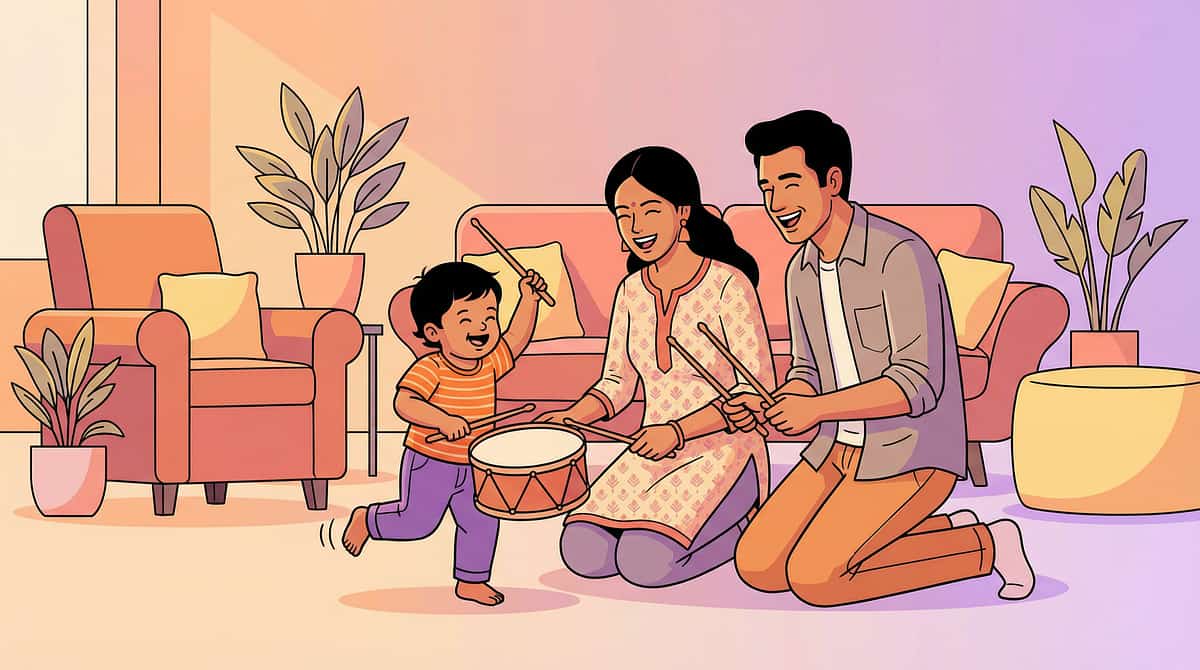
Material 6 of 9
Environmental Structure Tools
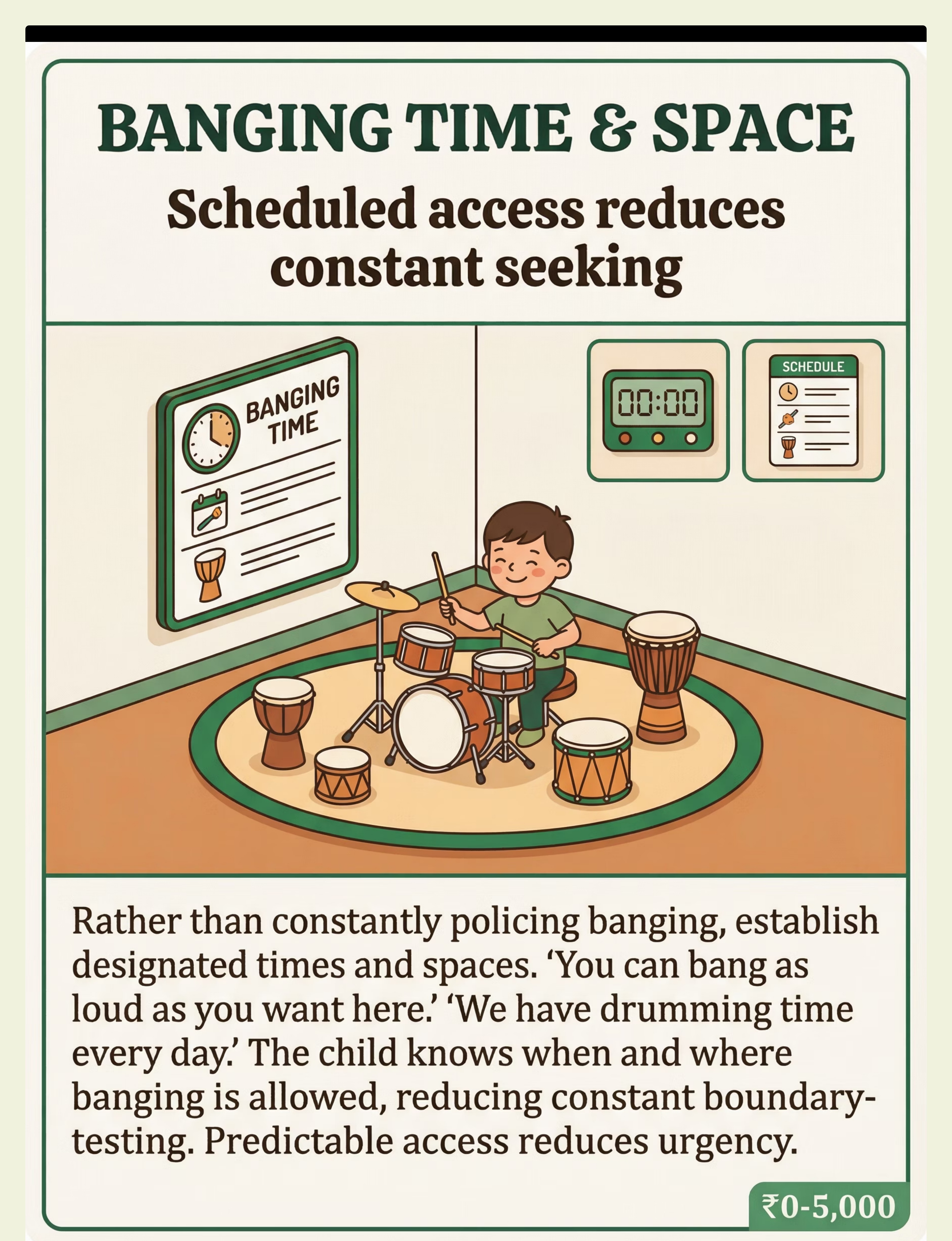
Designated Banging Space Setup
What to Get
Visual schedule, timer, sound-absorbing materials, percussion instruments for designated area.
₹0–5,000
Why This Works
Scheduled, guaranteed access to a banging space reduces the constant seeking that erupts everywhere else. The child learns: this is my place, this is my time, I will get this. The boundary and predictability are as therapeutic as the materials themselves.
"You can bang as loud as you want — HERE." That simple permission, backed by a consistent schedule, transforms the child's relationship with their own need. It stops being a source of shame and becomes a normal part of their day.
Material 7 of 9
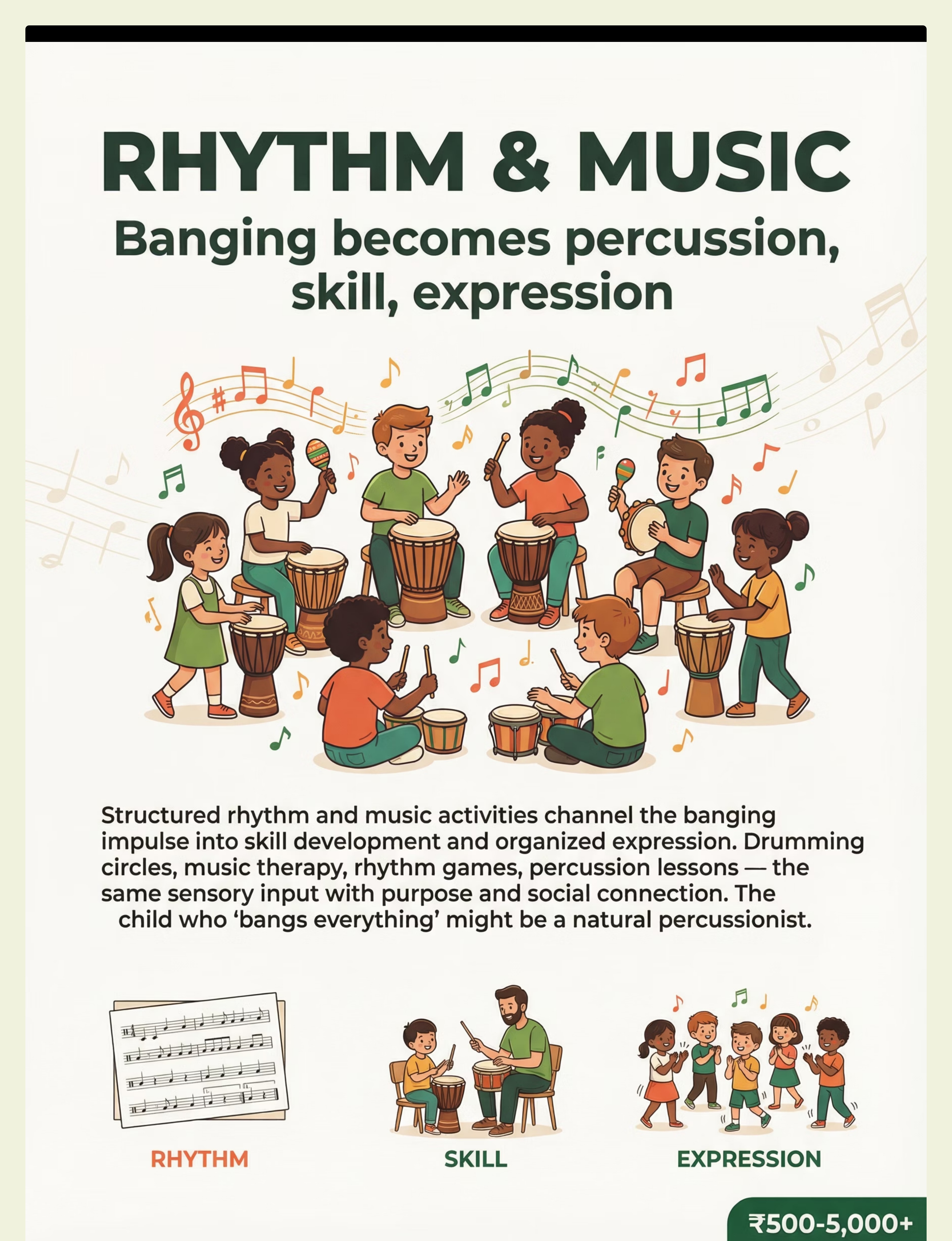
Musical/Percussion Instruments
Rhythm & Music Activity Materials
What to Get
Drum lessons, metronome, body percussion activities, rhythm game apps.
₹500–5,000+
Why This Works
Banging becomes percussion, skill, and expression. The child who "bangs everything" might be a natural percussionist. Rhythm activities provide the same auditory-proprioceptive input through a structured, socially valued medium — and open doors to music education, ensemble participation, and a new identity as a musician rather than "the one who breaks things."

Material 8 of 9
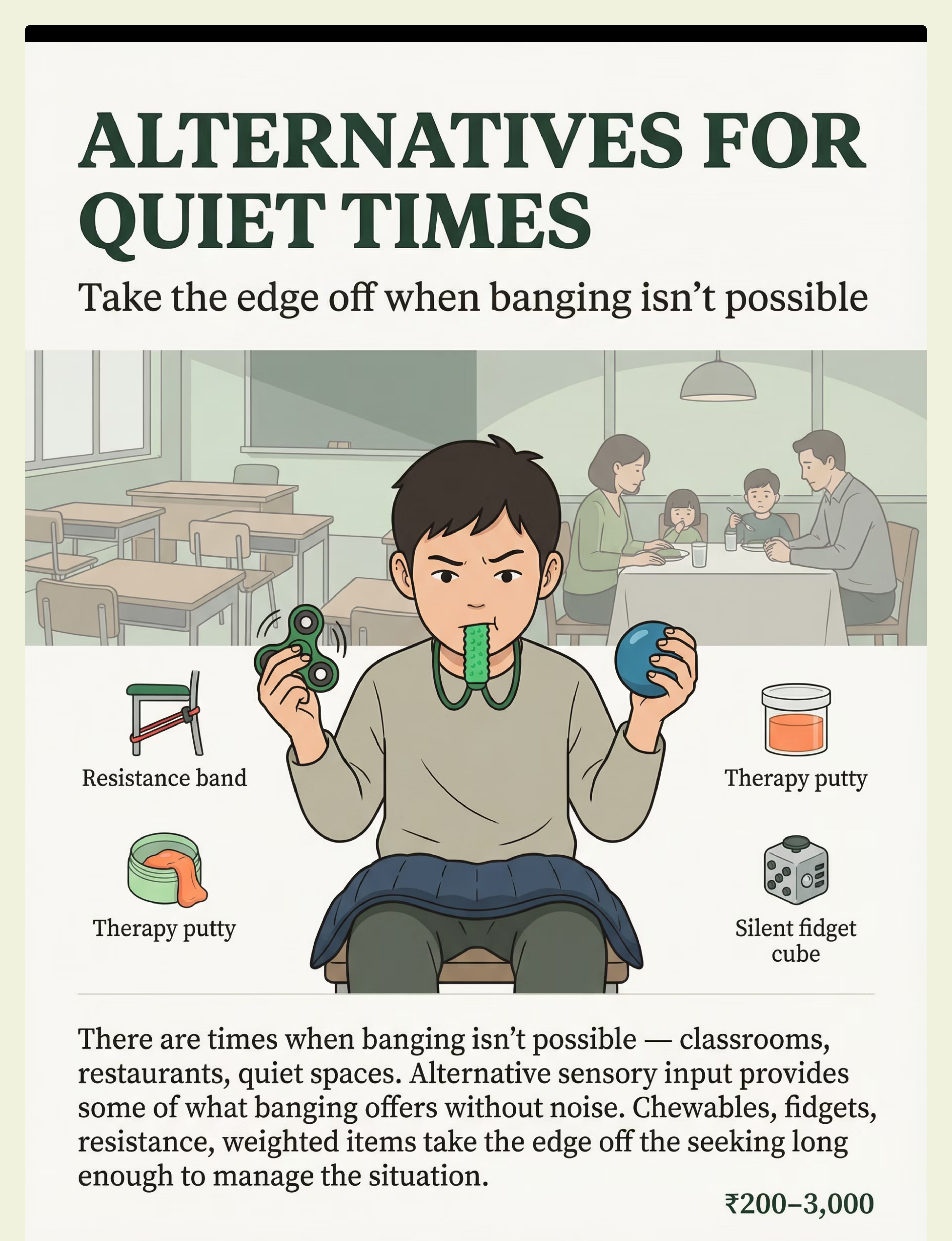
Sensory Regulation Tools
Quiet-Time Alternative Sensory Tools
Why This Works
Takes the edge off when banging isn't possible — classrooms, restaurants, quiet spaces. These tools provide a lower-intensity version of the same proprioceptive input the child is seeking, giving the nervous system something to work with when the drum isn't available.
Building a library of quiet alternatives gives the child — and caregivers — real options in the moments that are hardest to manage publicly.
What to Get
Fidgets, chewables, stress balls, resistance putty, weighted lap pad, silicone drumming pad.
₹200–3,000
Material 9 of 9
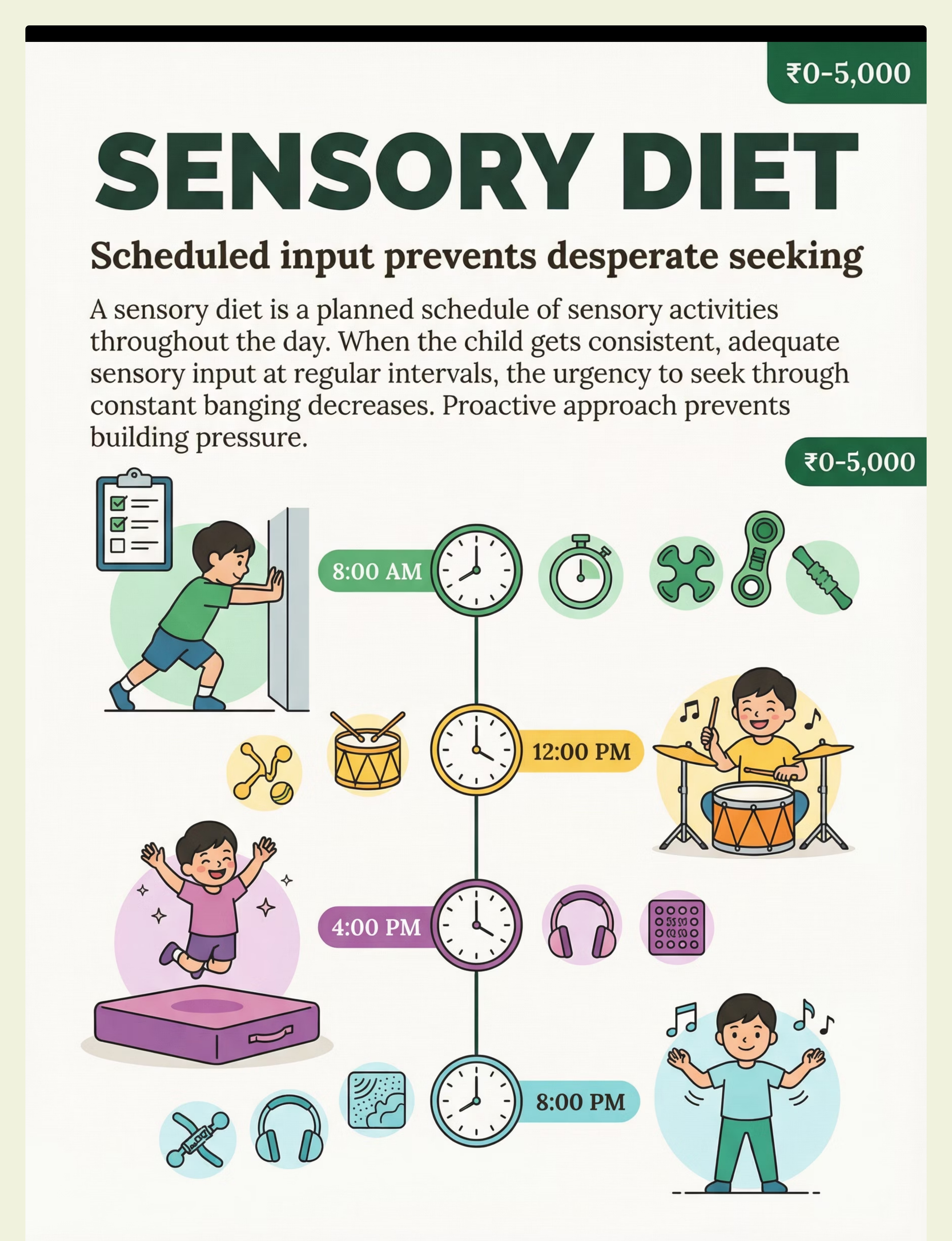
Behavioral Structure Tools
Sensory Diet Planning Materials
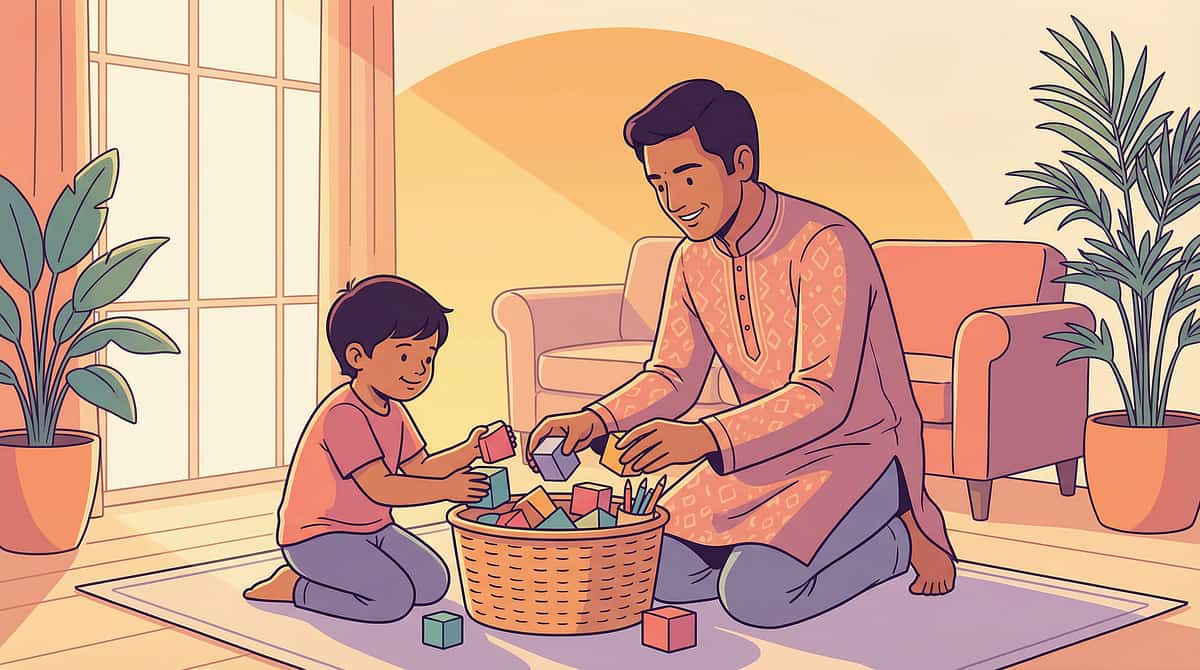
What to Get
Visual schedule for daily sensory input, timer, tracking sheet, portable sensory kit.
₹0–5,000
Why This Works
Scheduled input throughout the day prevents the desperate seeking that manifests as constant banging everywhere. The sensory diet is the architecture that holds all the other materials in place — it answers the question: when, how much, and in what order does this child receive their sensory input?
Without the diet schedule, even the best materials are reactive. With it, the protocol becomes proactive — filling the child's sensory tank before it runs empty and the seeking becomes desperate.
Total Investment Range: ₹0–15,000+. Start with essentials: hand drum + pound-a-peg + designated space = under ₹2,500. Every other material builds on this foundation.
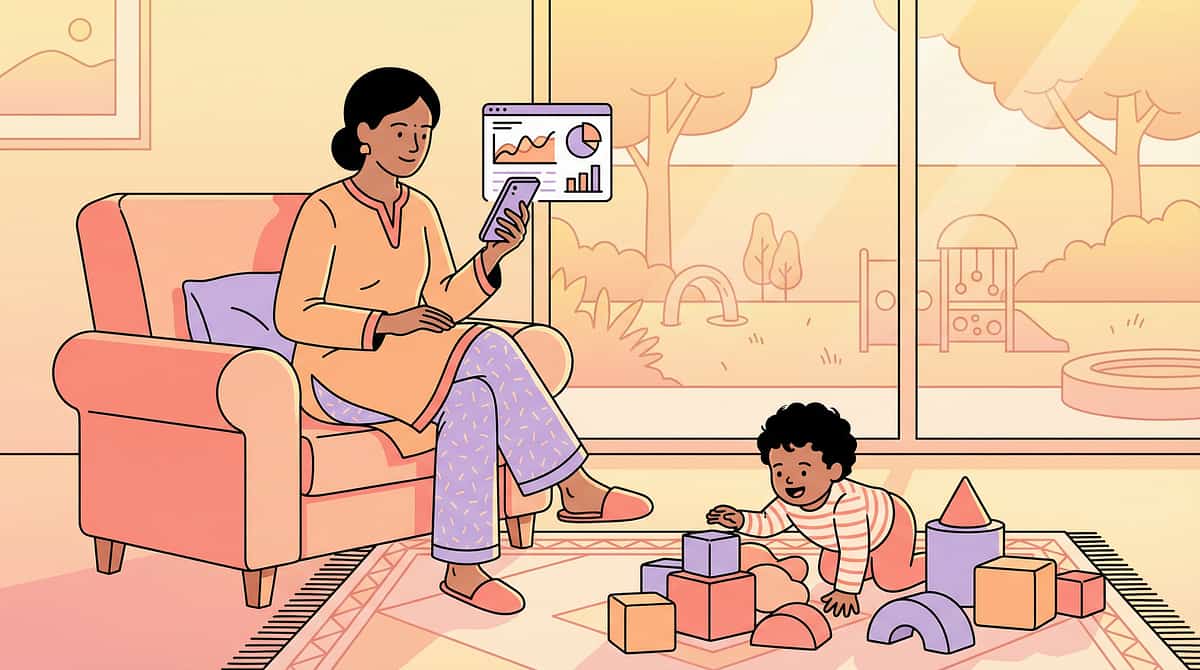
Every Family Can Execute This Today — Regardless of Budget
The WHO/UNICEF Inclusion Principle: effective intervention must be accessible regardless of economic status. The Pinnacle Consortium ensures every protocol has a zero-cost version. The science works regardless of the price tag. A bucket drum activates the same auditory-proprioceptive pathway as a professional djembe.
Clinical Material | Zero-Cost Household Substitute | |
Drums & Percussion | Upturned buckets, pots and pans with wooden spoons, sealed containers with rice, cardboard box drums | |
Hammer & Peg Toys | Wooden spoon hammering play-dough on a board, golf tees into styrofoam, stacking and knocking down block towers | |
Crash Mats | Piled couch cushions on the floor, old mattress in a safe corner, pillow mountain for jumping into | |
Noise-Making Toys | Bubble wrap (stomp/pop), sealed containers with rice/dal/coins, rubber bands stretched over a box | |
Heavy Work | Carrying groceries, pushing laundry basket, wall push-ups, kneading chapati dough, moving water jugs, sweeping/mopping | |
Designated Space | Any corner of a room or outdoor area, with a carpet or mat boundary marker — free | |
Rhythm Activities | Clapping games, body percussion (stomping, slapping knees), singing with drumming, YouTube rhythm tutorials — free | |
Quiet Alternatives | Rolled-up sock as stress ball, thick rubber band to stretch, cloth to squeeze, pressing palms together hard | |
Sensory Diet | Written schedule on paper, phone timer, consistent daily routine incorporating the free activities above — free |
Reference: WHO Nurturing Care Framework, 2018 — Context-specific, equity-focused interventions | PMC9978394
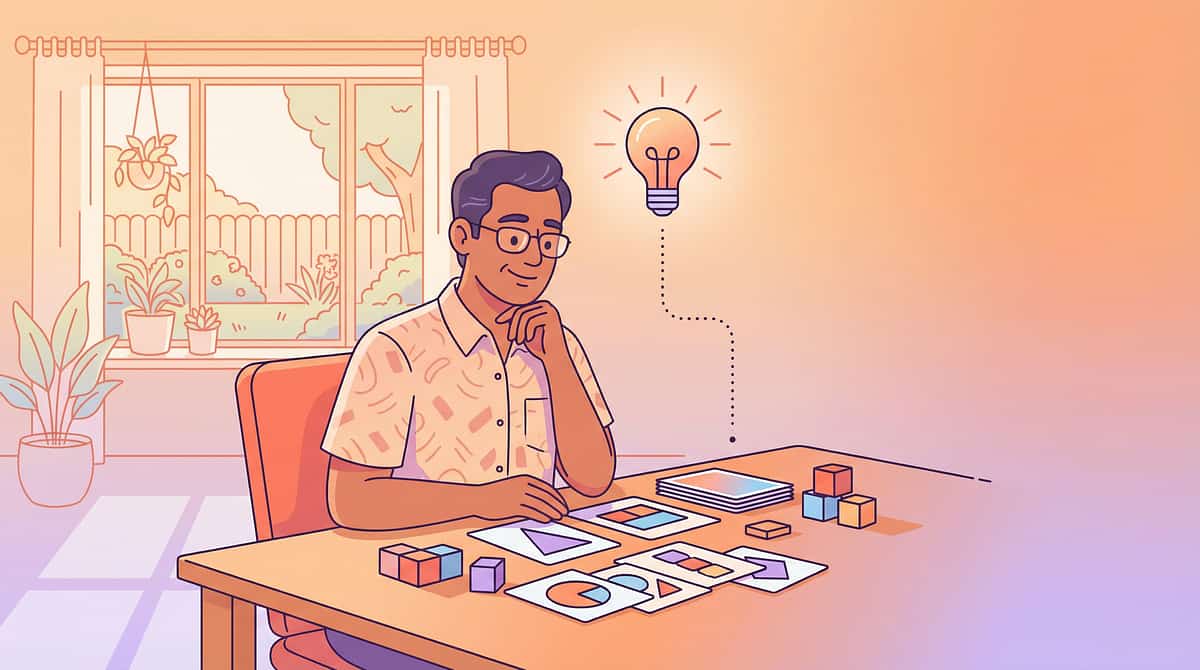
Safety Gate — Read This Before Your First Session
🔴 DO NOT PROCEED IF:
• Child is actively distressed, crying, or in a meltdown state
• Child has an undiagnosed head-banging pattern involving hard surfaces — seek evaluation FIRST
• There are visible injuries, bruises, or marks from banging behavior — seek medical clearance
• Child is ill, in pain, or has had a recent seizure
• Environment has unsecured heavy objects, sharp edges, or hard surfaces near the banging zone
• Child has an undiagnosed head-banging pattern involving hard surfaces — seek evaluation FIRST
• There are visible injuries, bruises, or marks from banging behavior — seek medical clearance
• Child is ill, in pain, or has had a recent seizure
• Environment has unsecured heavy objects, sharp edges, or hard surfaces near the banging zone
🟡 PROCEED WITH MODIFICATION IF:
• Child is slightly dysregulated but not in crisis → use calming input first
• Noise tolerance is an issue for others → schedule sessions during school hours or use outdoor space
• Child also mouths/chews materials → select non-toxic items only, supervise closely
• Child has hearing sensitivity to SOME sounds → start with softer impact materials and grade up
• Noise tolerance is an issue for others → schedule sessions during school hours or use outdoor space
• Child also mouths/chews materials → select non-toxic items only, supervise closely
• Child has hearing sensitivity to SOME sounds → start with softer impact materials and grade up
🟢 SAFE TO PROCEED WHEN:
• Child is calm, alert, and fed (not hungry or fatigued)
• Environment is clear of hazards and designated for the activity
• Materials are age-appropriate and inspected
• An adult is present and actively supervising
• Timer is set for session boundary
• You have read the protocol steps (Cards ahead)
• Environment is clear of hazards and designated for the activity
• Materials are age-appropriate and inspected
• An adult is present and actively supervising
• Timer is set for session boundary
• You have read the protocol steps (Cards ahead)
⚠️Head-Banging Specific: If your child bangs their HEAD against hard surfaces, this requires IMMEDIATE professional assessment even when it appears sensory-driven. Do NOT attempt to address head-banging solely through this home protocol. Contact your Pinnacle center or call the National Autism Helpline: 9100 181 181.
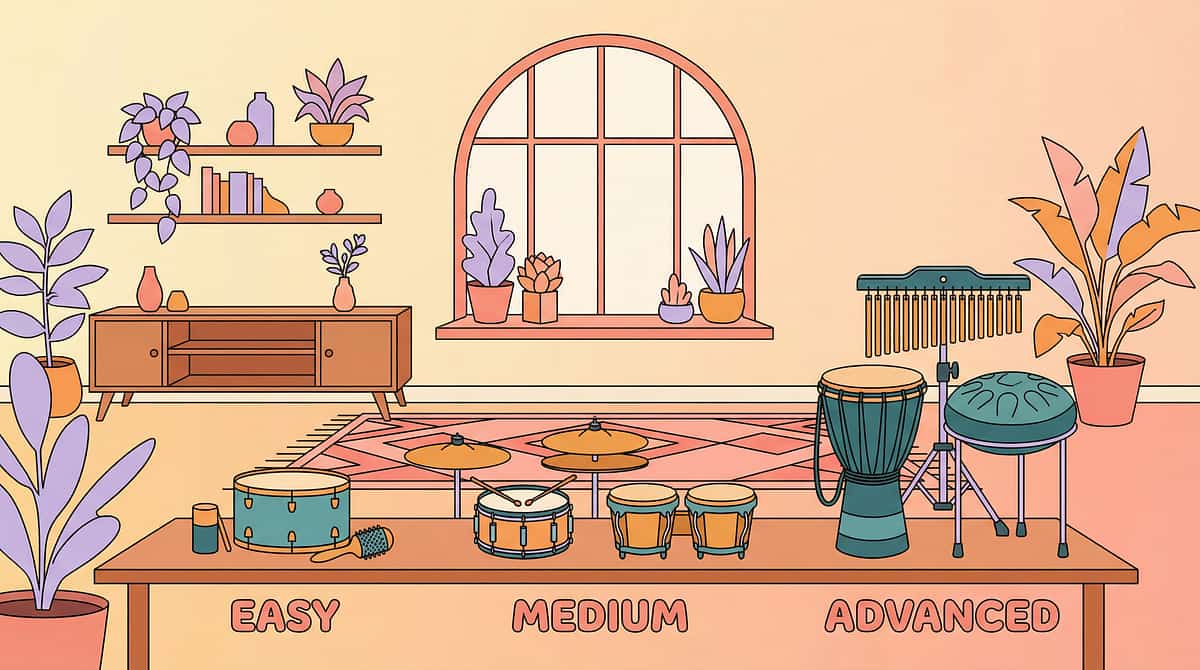
Before the Technique Begins: Prepare the Stage
Your Space Setup
1. Drum/Percussion Station — center of designated area, stable surface or floor placement
2. Parent Position — seated at same level as child, within arm's reach, angled 45°
3. Material Station — all 2–3 session materials within child's reach
4. Timer — visible to parent (NOT the child for first sessions)
5. Boundary Marker — carpet edge, tape line, or mat defining "banging zone"
6. Calm Corner Nearby — cushion or bean bag for cool-down transition
2. Parent Position — seated at same level as child, within arm's reach, angled 45°
3. Material Station — all 2–3 session materials within child's reach
4. Timer — visible to parent (NOT the child for first sessions)
5. Boundary Marker — carpet edge, tape line, or mat defining "banging zone"
6. Calm Corner Nearby — cushion or bean bag for cool-down transition
Remove From Space
- Breakable objects and glass surfaces within a 2-meter radius
- Other toys or materials not part of this session
- Screens and devices (unless using a rhythm app)
- Excessive visual clutter on walls
Environmental Settings
- Lighting: Natural light or warm, non-flickering. No fluorescents.
- Sound: Minimize background noise except the banging activity itself.
- Surface: Match to child's preference — carpet dampens, hard floor amplifies.

Pre-Session
60-Second Pre-Session Assessment
Before every session, run through this quick readiness check. Starting right makes everything that follows more effective.
Child has eaten within the last 2 hours (not hungry)
Child has had adequate sleep (not exhausted)
No meltdown or major dysregulation in the last 30 minutes
Child is not ill or in apparent discomfort
Environment is set up per the space preparation guide
Materials are present and inspected for safety
Adult supervisor is fully available (not multitasking)
✅ All 7 Green → GO
Proceed to Step 1: The Invitation
🟡 5–6 Green → MODIFY
Offer ONE material (hand drum or crash mat) in a low-demand, playful way for 5 minutes maximum. Skip the full protocol.
🔴 4 or Fewer → POSTPONE
This is not the right moment. Offer a calming activity instead. Try again when the child returns to baseline.
"The best session is one that starts right. A forced session teaches the child that this activity is a demand — not a gift."

60 Seconds of Data Now Saves Hours of Guessing Later
Within 60 seconds of session end, record these 3 data points. This is the feedback loop that makes the protocol smarter over time.
1
Duration of Engaged Banging/Drumming
How long did the child actively engage with the designated material? Record in minutes. Track this weekly to see growth trends.
2
Intensity Regulation
⬆️ Escalated / ➡️ Maintained / ⬇️ Self-regulated — Did the child escalate to harder banging, maintain consistent intensity, or naturally reduce intensity toward the end?
3
Outlet Use vs. Random Banging Ratio
Of the times your child banged today, how many were with appropriate materials vs. random objects? Rough percentage estimate is sufficient.
📥 PDF Tracking Sheet
📱 GPT-OS® In-App Tracker
📝 Paper Works Too
Any tracking is better than no tracking. A notebook is a perfectly valid data tool.
"This data is gold. It tells your therapist, your GPT-OS® profile, and YOU whether the protocol is working — and how to adjust." — Cooper, Heron & Heward, Applied Behavior Analysis, 8th ed. | BACB Data Collection Standards
Session Didn't Go Perfectly? That's Normal. Here's What to Adjust.
Every abandoned session is data. Every challenge has a clinical reason and a practical fix.
"My child refused the drum and kept banging the table instead."
Why: The table gives a MORE satisfying sound — harder surface = louder impact.
Fix: Place the drum ON the table. Grade: drum on table → drum on floor. Make the drum louder (bigger drum, harder sticks). Try crash mat instead.
Fix: Place the drum ON the table. Grade: drum on table → drum on floor. Make the drum louder (bigger drum, harder sticks). Try crash mat instead.
"My child got MORE hyper and agitated, not calmer."
Why: The child may have been dysregulated before the session, or input was excitatory rather than organizing for this child.
Fix: Add deep pressure/heavy work BEFORE drumming next time. Shorten sessions. Try crash mat instead.
Fix: Add deep pressure/heavy work BEFORE drumming next time. Shorten sessions. Try crash mat instead.
"The session was too short — my child lost interest in 2 minutes."
Why: Normal for early sessions. Interest builds over time. Or the material may not be the right match.
Fix: 2 minutes of engagement IS a session. Don't force more. Try a different material next time.
Fix: 2 minutes of engagement IS a session. Don't force more. Try a different material next time.
"My child only wants ONE material and won't try others."
Why: That material is meeting the need effectively. This is success, not failure.
Fix: Use it as the primary outlet. Gradually introduce new materials alongside — not instead of — the preferred one.
Fix: Use it as the primary outlet. Gradually introduce new materials alongside — not instead of — the preferred one.
"Other family members / neighbors are complaining about the noise."
Why: Impact sound seeking IS loud. That's the point.
Fix: Schedule sessions when others are out. Use outdoor space. Electronic drum pad with headphones. Communicate: "This is prescribed therapy — it reduces banging everywhere else."
Fix: Schedule sessions when others are out. Use outdoor space. Electronic drum pad with headphones. Communicate: "This is prescribed therapy — it reduces banging everywhere else."
"My child started banging their head during the session."
Why: Head-banging may indicate escalation beyond what this protocol addresses.
Fix: STOP the session immediately. Redirect to crash mat. Protect the child. Contact Pinnacle OT or NeuroDev Pediatrician. Call National Autism Helpline: 9100 181 181.
Fix: STOP the session immediately. Redirect to crash mat. Protect the child. Contact Pinnacle OT or NeuroDev Pediatrician. Call National Autism Helpline: 9100 181 181.
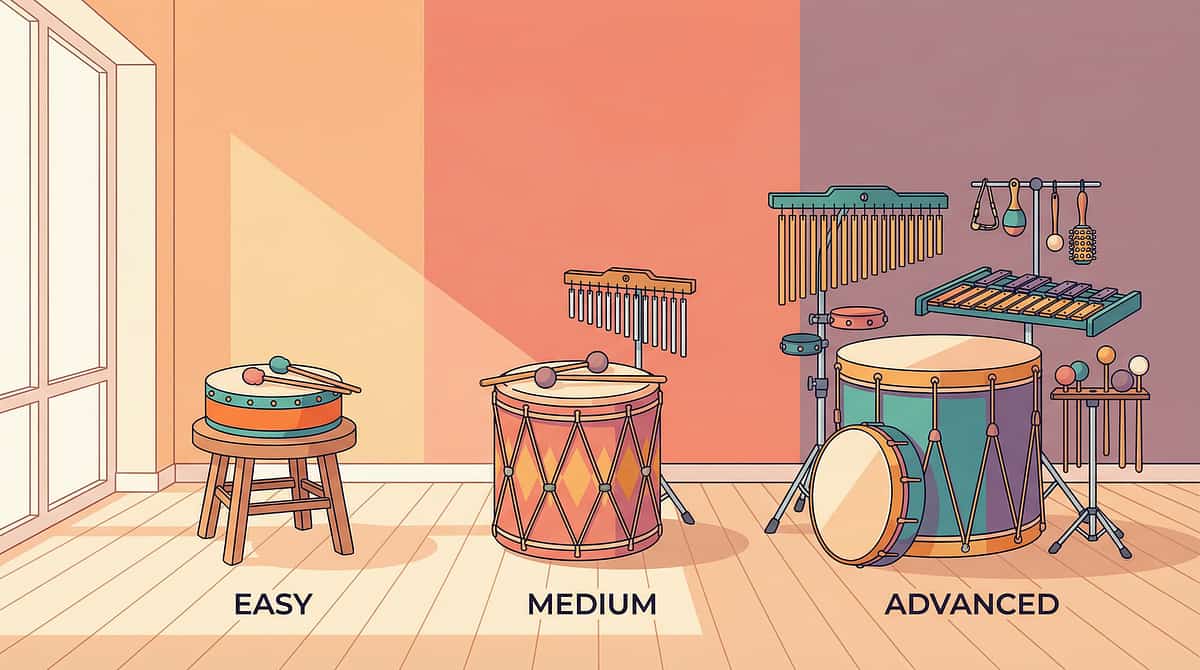
No Two Children Are Identical — Personalize the Protocol
The protocol adapts to your child — not the other way around. Use this difficulty guide to match the approach to your child's current capacity.
01
Easier Version
1 material only • 5-minute maximum • Pure free play • No turn-taking • Low-demand invitation • Heavy deep pressure cool-down. For challenging days, younger children, or early sessions.
02
Standard Version
2–3 materials per session • 10–15 minutes total • Full 6-step structure • Turn-taking and variation introduced • Data capture post-session.
03
Advanced Version
Multiple materials with switching • 15–20 minutes with structured rhythm patterns • Drumming along to music or metronome • Teaching a rhythm pattern to a sibling or peer • Self-initiated sessions.
Toddlers (2–3)
Pound-a-peg, bucket drums, cushion crashing. Keep it play-based. Short sessions.
Preschoolers (3–5)
Drum corner, scheduled time, crash mat. Begin rhythm games.
School-Age (5–8)
Drum lessons, structured classroom alternatives, self-monitoring begins.
Older (8–10)
Formal percussion training, exercise routines, self-advocacy for sensory needs.
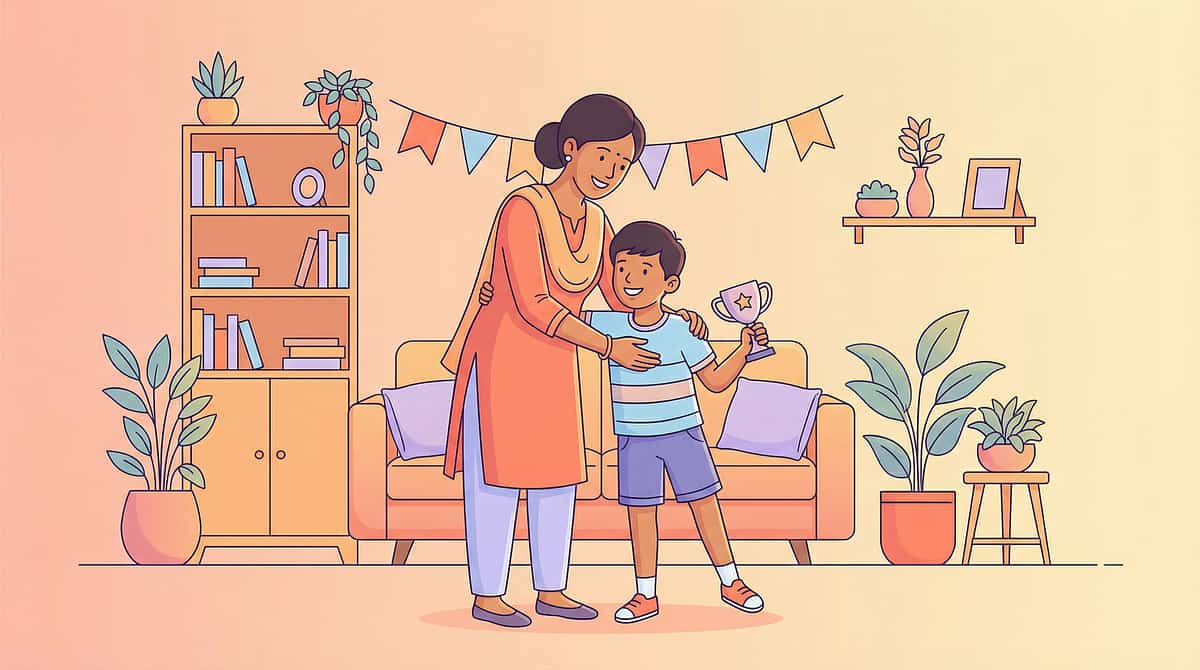
You Did This.
You arrived on this page exhausted by constant noise. You were told your child was "destructive" or "naughty" or "just seeking attention."
You learned the truth: your child's nervous system was speaking a language you hadn't been taught to hear. Impact sounds and proprioceptive feedback are how they regulate — and no amount of "stop banging" was going to change that.
You didn't stop the banging. You channeled it.
You set up a drumming corner. You scheduled banging time. You provided crash mats and heavy work. You tracked data. You adjusted. You celebrated attempts that looked tiny to everyone else but meant everything.
"The behavior that was making everyone's life miserable became a skill."
Your child is not "the one who bangs everything." They're the one who drums, who creates rhythm, who finds their regulation through impact and sound — in the right place, at the right time, with the right materials. You made that happen.
📸Capture this milestone: Take a photo or video of your child using their designated materials. Note the date. You'll want to remember this.
Clinical Guardrails — When to Pause and Seek Professional Support
Trust your instincts — if something feels wrong, pause and ask. You know your child better than any protocol does.
🚩 Red Flag 1
Banging intensity is INCREASING despite consistent protocol execution for 4+ weeks. Action: Schedule OT reassessment. The sensory diet may need recalibration.
🚩 Red Flag 2
Child is developing head-banging or self-injurious banging patterns. Action: IMMEDIATE professional consultation. Call Pinnacle: 9100 181 181.
🚩 Red Flag 3
Child becomes severely distressed during sessions — crying, screaming, aggression toward self or parent. Action: STOP all structured sessions. Return to observation mode. Consult OT.
🚩 Red Flag 4
Banging has spread to new contexts or new body parts not previously involved. Action: Functional behavior assessment recommended.
🚩 Red Flag 5
Other developmental concerns emerging alongside the banging — loss of previously acquired skills, regression in language, social withdrawal. Action: Comprehensive developmental evaluation by a NeuroDev Pediatrician. Request AbilityScore® assessment.
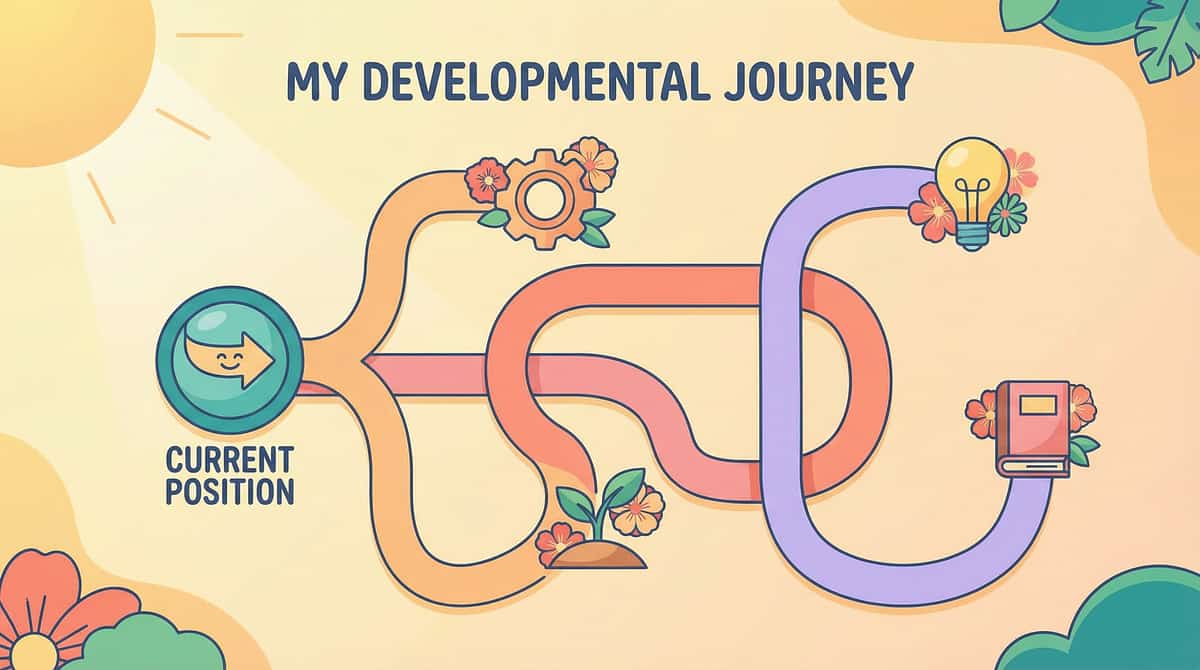
Your Developmental GPS — Where You've Been, Where You're Going
Long-Term Developmental Goal: Self-regulated sensory seeking across environments → Independent use of appropriate outlets → Sensory seeking as functional strength (percussionist, athlete, builder)
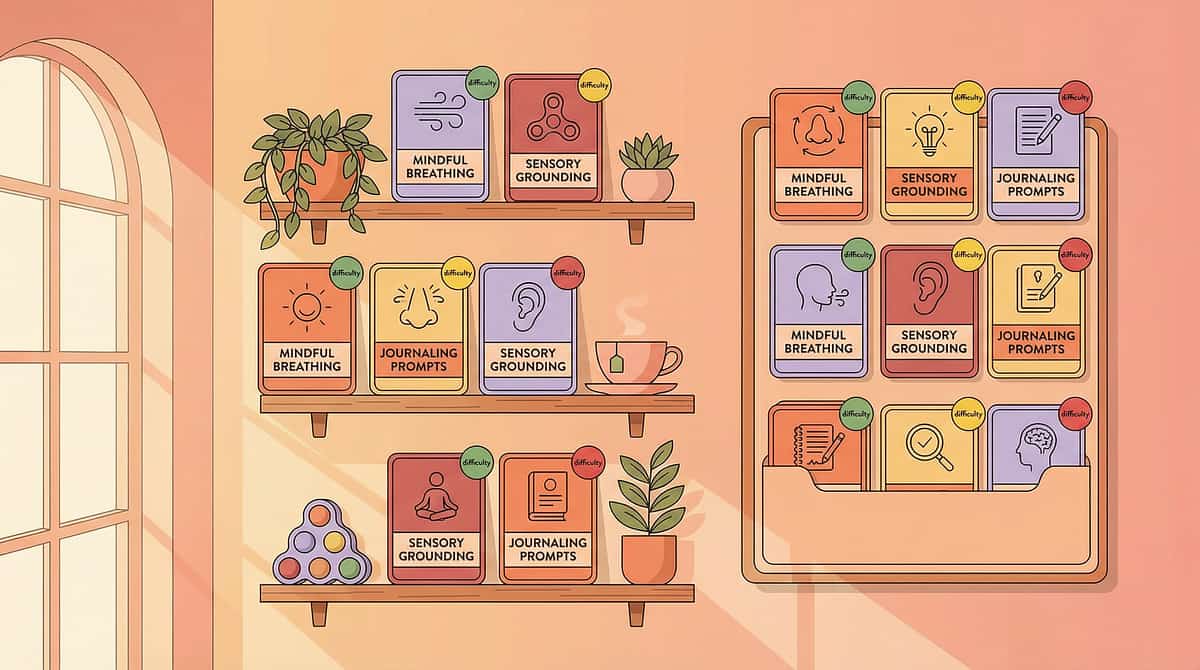
More Techniques in the Sensory Processing Domain
You already own materials that work across these techniques. Invest once, use across your child's entire sensory program.
A-053: Hums or Vocalizes Constantly
Auditory Seeking Regulation
Intro
Uses: Voice tools, music, sound toys
A-055: Seeks Spinning and Rotation
Vestibular Seeking Protocol
Core
Uses: Swings, spinning boards, rotational play
A-056: Proprioceptive Seeking Behaviors
Deep Pressure Protocol
Core
Uses: Weighted items, heavy work, compression
A-048: Covers Ears Constantly
Auditory Defensiveness Management
Core
Uses: Noise-reducing headphones, sound grading
A-060: Mouths and Chews Everything
Oral Sensory Protocol
Intro
Uses: Chewables, oral motor tools, texture kits
K-975: Creating a Home Sensory Diet
Comprehensive Scheduling
Advanced
Uses: All sensory materials, scheduling tools

You Are Not Doing This Alone
Isolation is the enemy of adherence. Community is the multiplier. Your experience helps others — consider sharing your journey.
Sensory Seeking Parent Community (WhatsApp)
Connect with families navigating the same challenge. Share strategies, celebrate wins, ask questions.
pinnacleblooms.org/community/sensory-seeking
pinnacleblooms.org/community/sensory-seeking
Pinnacle Parent Forum
Topic-specific discussion boards moderated by Pinnacle therapists.
pinnacleblooms.org/forum
pinnacleblooms.org/forum
Local Pinnacle Parent Meetups
Monthly in-person meetups at your nearest Pinnacle center. Network with families in your city.
pinnacleblooms.org/centers
pinnacleblooms.org/centers
Peer Mentoring
Connect with an experienced parent who has successfully navigated impact sound seeking. One parent who's been through it is worth a hundred articles.
pinnacleblooms.org/peer-mentoring
pinnacleblooms.org/peer-mentoring

Home + Clinic = Maximum Impact
Find Your Nearest Center
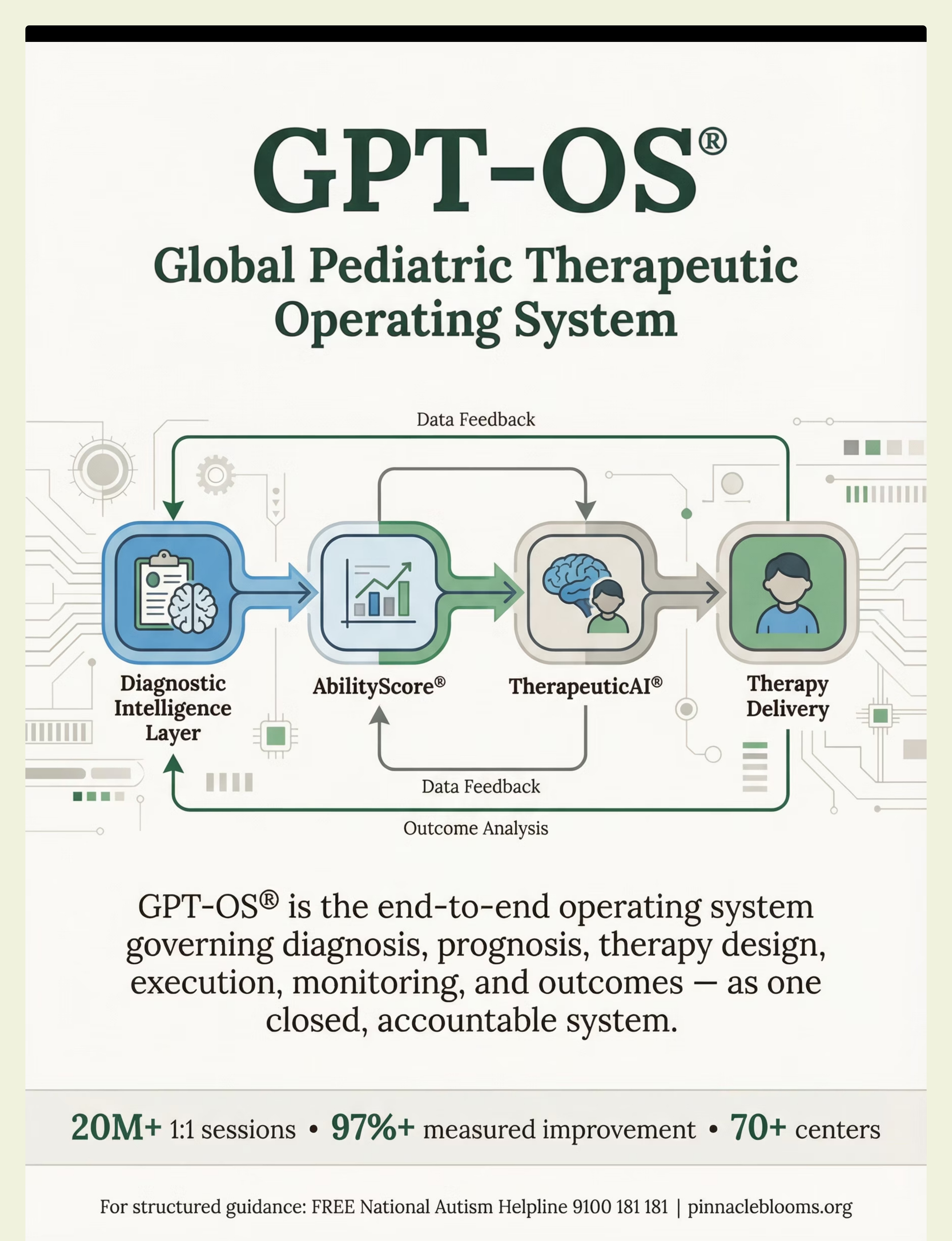
📍 70+ centers across India — operational under a single GPT-OS® clinical system.
Can't Visit a Center?
📱 Book a teleconsultation with a Pinnacle OT — available in 16+ languages.
Your Matched OT Will:
- Conduct a comprehensive Sensory Processing Evaluation
- Design your child's individualized Sensory Diet
- Monitor and adjust the protocol through GPT-OS® data
- Provide school consultation and accommodation support
Contact
📞FREE National Autism Helpline: 9100 181 181 (24/7, 16+ languages)
🌐pinnacleblooms.org
📧care@pinnacleblooms.org
🌐pinnacleblooms.org
📧care@pinnacleblooms.org
Deeper Reading for the Curious Parent
Study 1 — PRISMA Systematic Review (2024)
"Sensory Integration Intervention for Children with Autism: A Systematic Review Using the PRISMA Model." 16 articles (2013–2023) confirm sensory integration meets evidence-based practice criteria.
🔗 PMC11506176 | Children, 2024
🔗 PMC11506176 | Children, 2024
Study 2 — Meta-Analysis (2024)
"Efficacy of Sensory Integration Therapy in Children with Autism Spectrum Disorder: A Meta-Analysis." 24 studies showing effective promotion of social skills, adaptive behavior, sensory processing, and motor skills.
🔗 PMC10955541 | DOI: 10.12998/wjcc.v12.i7.1260
🔗 PMC10955541 | DOI: 10.12998/wjcc.v12.i7.1260
Study 3 — Indian RCT (2019)
Home-based sensory interventions in Indian pediatric populations. Parent-administered protocols effective when structured and monitored.
🔗 DOI: 10.1007/s12098-018-2747-4 | Indian Journal of Pediatrics
🔗 DOI: 10.1007/s12098-018-2747-4 | Indian Journal of Pediatrics
Study 4 — WHO/UNICEF CCD Package (2023)
Caregiver-delivered structured interventions validated across 54 low- and middle-income countries.
🔗 PMC9978394 | WHO Publication
🔗 PMC9978394 | WHO Publication
Study 5 — Nurturing Care Framework (2022)
Multi-disciplinary nurturing care contributions including responsive caregiving.
🔗 DOI: 10.1080/17549507.2022.2141327 | International Journal of Speech-Language Pathology
🔗 DOI: 10.1080/17549507.2022.2141327 | International Journal of Speech-Language Pathology
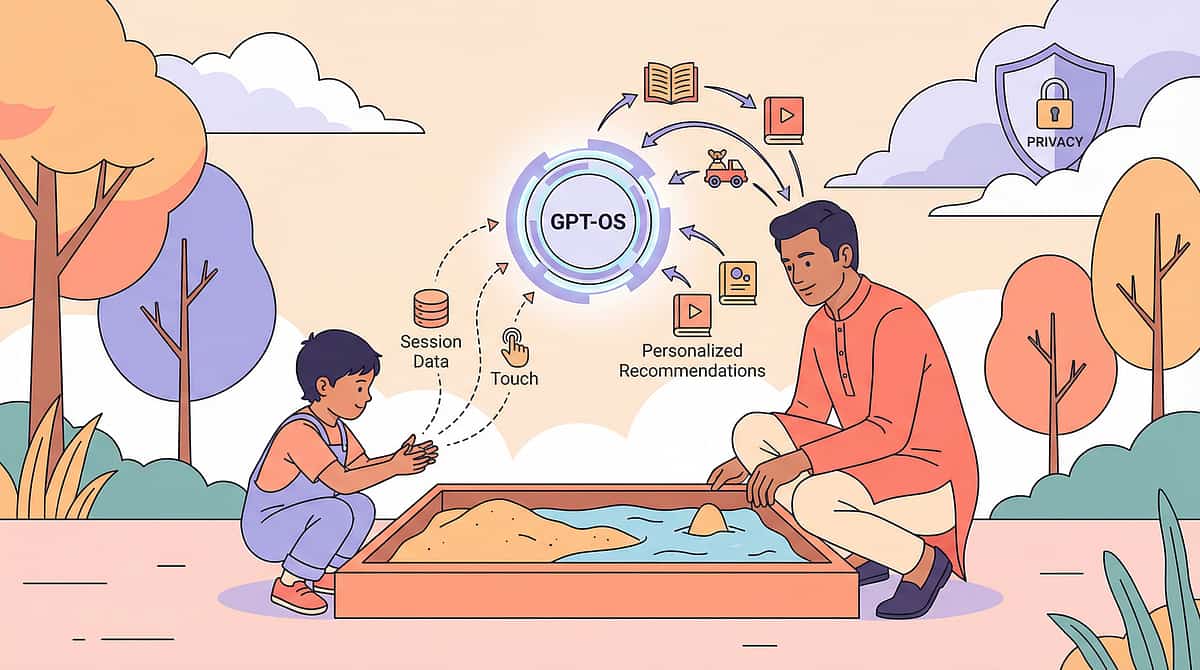
Powered by GPT-OS® — Global Pediatric Therapeutic Operating System
What GPT-OS® Learns from This Technique's Data
- Your child's auditory-proprioceptive seeking intensity profile
- Which materials produce the best regulation outcomes for YOUR child
- Optimal session duration, frequency, and timing patterns
- When to escalate or modify the protocol based on trend data
- How your child's sensory regulation connects to other developmental domains
GPT-OS® Core Stack
Diagnostic Intelligence Layer → AbilityScore® (0–1000) → Prognosis Engine → TherapeuticAI® → EverydayTherapyProgramme™ → FusionModule™ → Closed-Loop Control
Privacy: Your data is protected under Pinnacle's data governance framework. Your child's information is used solely for their therapeutic benefit.
20M+
Sessions Tracked
97%+
Measured Improvement
70+
Centers
160+
Countries (Patents Filed)
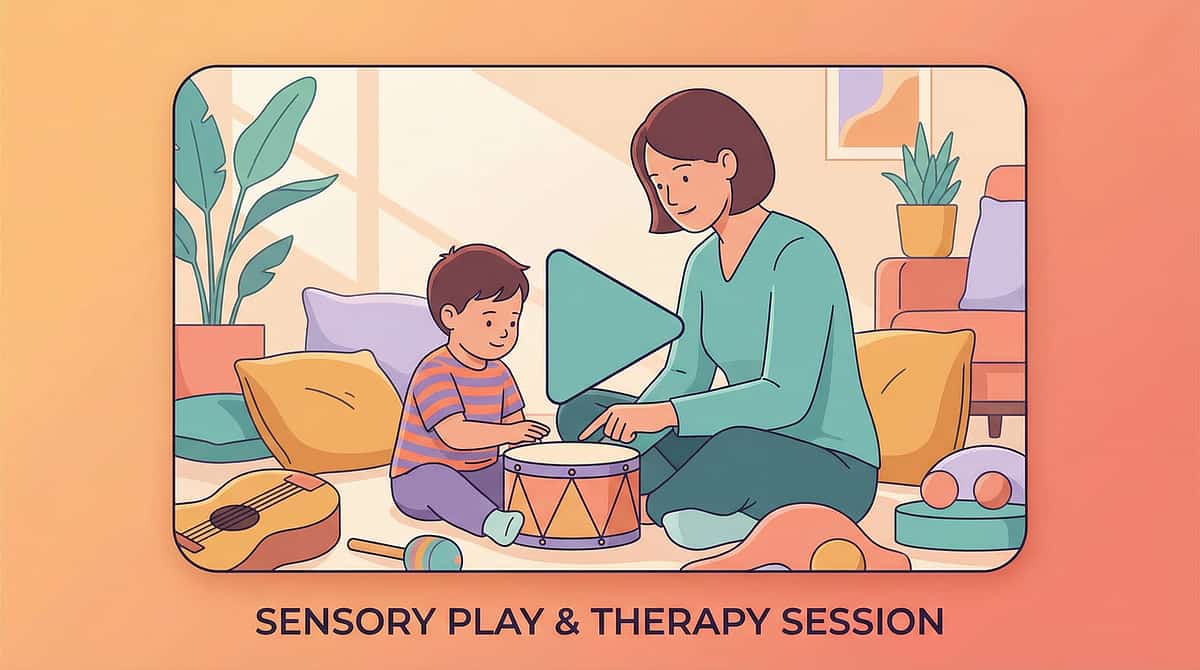
Watch: 9 Materials That Help When a Child Bangs for Sound
Reel A-054 — Sensory Solutions, Episode 54
Domain: Sensory Processing > Auditory Seeking + Proprioceptive Input
Duration: ~75 seconds
Duration: ~75 seconds
A Pinnacle therapist demonstrates all 9 materials in action — from drums and percussion to sensory diet planning. Watch a child engage with each material in real-time. See the regulation happen.
Why Video Matters
Video modeling is an evidence-based practice for autism (NCAEP, 2020). Seeing a therapist demonstrate the technique reinforces what you've read here and builds your confidence to execute at home.
Seeing is believing — especially for caregivers who are uncertain about "how loud is too loud" or "how hard should I let them hit." The video answers those questions in seconds.
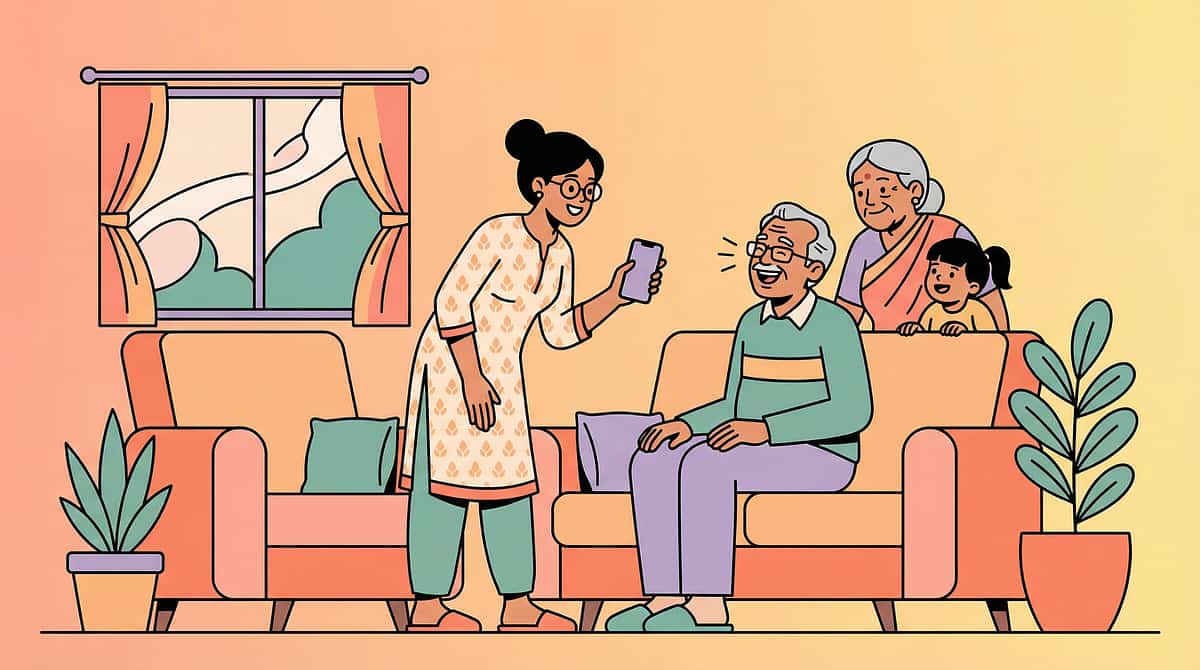
Consistency Across Caregivers Multiplies Impact
If only one parent executes this protocol, it works. If everyone in the child's life understands WHY they bang and WHAT to offer instead — it transforms.
1-Page Family Guide PDF
Simplified version for spouses, grandparents, and relatives who need the key points without the full protocol.
Download Family Guide
Download Family Guide
"Explain to Grandparents" Version
Even simpler. One page. Large text. "Your grandchild isn't being naughty. Their brain needs certain sounds. Here's what to offer instead of saying 'stop.'"
Download Grandparent Guide
Download Grandparent Guide
Teacher/School Communication Letter
Ready-to-send letter explaining the child's sensory need and the classroom accommodations that help (fidgets, sensory breaks, designated banging materials).
Download School Letter
Download School Letter
📱 Share via WhatsApp
✉️ Share via Email
🔗 Copy Link

Common Questions from Parents
FAQ
Q: My child bangs their head, not just objects. Is this the same thing?
Head-banging may have a sensory component, but it carries injury risk and requires professional evaluation before attempting home intervention. Contact Pinnacle immediately: 9100 181 181. The materials and strategies here can complement professional guidance but should NOT replace it for head-banging.
Q: Won't giving them drums make the banging WORSE? Won't I be rewarding the behavior?
You're not rewarding a choice — you're meeting a neurological need. The child bangs because their nervous system REQUIRES the input. Providing appropriate outlets doesn't increase the need; it channels it. Families consistently report that total banging across the day DECREASES when structured outlets are provided.
Q: How is this different from just letting my child bang everything?
Structure, location, timing, and materials. The child learns: this material = yes, random objects = we redirect. This space = yes, everywhere = we redirect. This time = yes, all day = the schedule provides. The need is met; the chaos is replaced with structure.
Q: How long before we see results?
Weeks 1–2: tolerance and acceptance of materials. Weeks 3–4: preference formation and partial redirection success. Weeks 5–8: measurable decrease in indiscriminate banging, independent use of outlets. This is a neural pathway change — it takes time.
FAQ Continued
More Questions Answered
Q: My child is non-verbal. How do I do the invitation step?
Model the action. Drum yourself. Make it fun and loud. Show excitement through facial expression and body language. Place the material within reach. Wait. Non-verbal children respond to environmental setup and modeling more than verbal instruction.
Q: We live in an apartment. The noise will disturb neighbors.
Options: Electronic drum pad with headphones. Outdoor/balcony drumming time. Crash mat on a rug (quieter thuds). Sound-absorbing panels in the banging corner. Schedule sessions when neighbors are typically out. Heavy work activities are silent and reduce the overall banging drive.
Q: Can this be done at school?
Yes, with modifications. Request sensory breaks with designated materials. Provide fidgets and quiet alternatives for desk time. Resistance band on chair legs for pressing. Heavy work "jobs" (carrying books, pushing chairs). Share the School Communication Letter (Card 47) with your child's teacher.
Q: What if my child doesn't respond to any of these materials?
If 4+ weeks of consistent protocol execution produce no change, request a comprehensive Sensory Processing Evaluation through Pinnacle. The child may need a different sensory profile assessment, or additional functions beyond sensory may be driving the behavior.
Book Teleconsult
Book Teleconsult

You've Read the Science. You Understand the Need. Now Act.
You have everything you need to start today. A protocol, materials, safety guidelines, a tracking system, and a professional support network behind you.
Validated by the Pinnacle Blooms Consortium®
OT • SLP • ABA • SpEd • NeuroDev • CRO
WHO/UNICEF-Aligned | PubMed-Referenced | GPT-OS® Powered
OT • SLP • ABA • SpEd • NeuroDev • CRO
WHO/UNICEF-Aligned | PubMed-Referenced | GPT-OS® Powered
Preview of 9 materials that help when child bangs for sound Therapy Material
Below is a visual preview of 9 materials that help when child bangs for sound therapy material. The pages shown help educators, therapists, and caregivers understand the structure and content of the resource before use. Materials should be used under appropriate professional guidance.


Link copied!
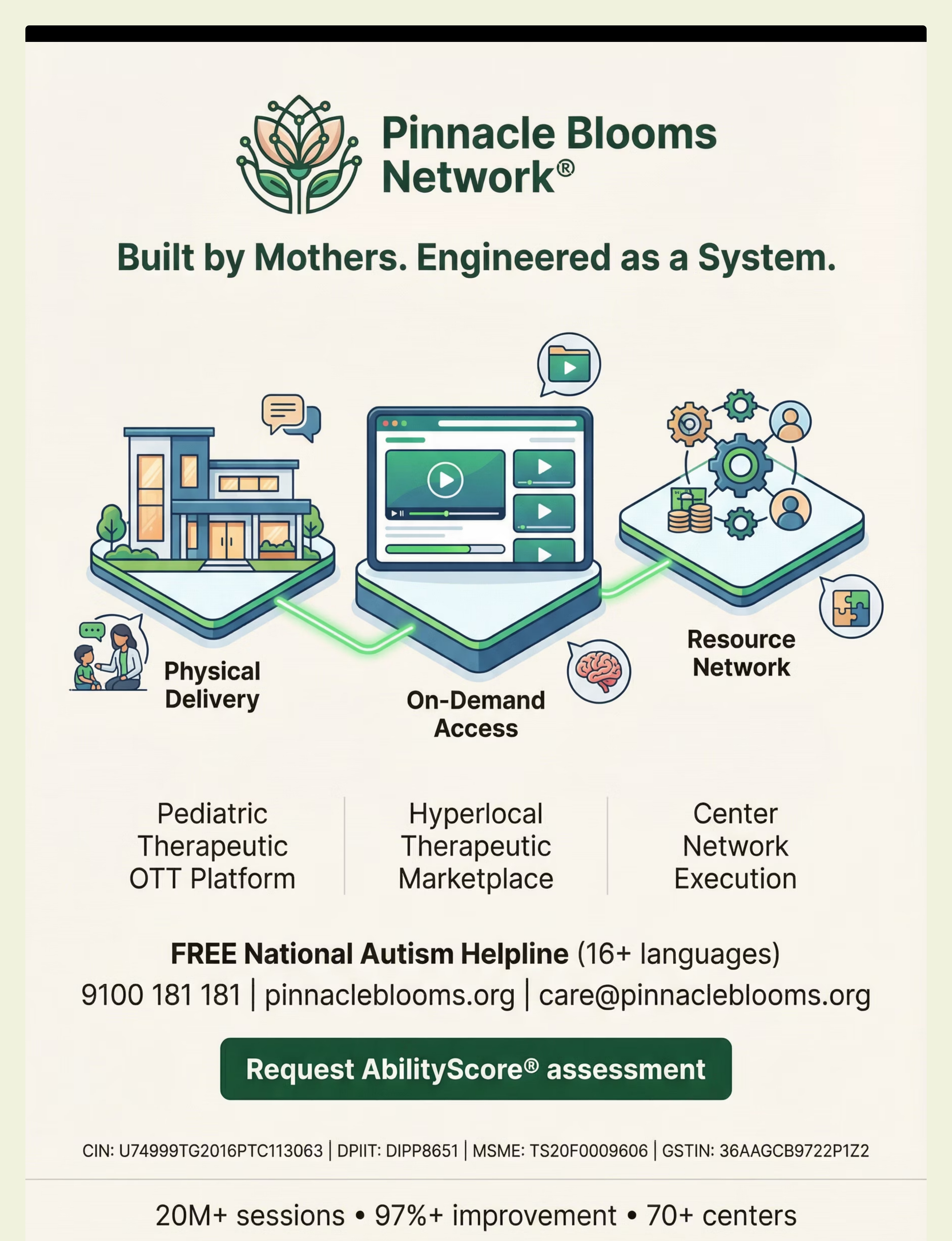
Pinnacle Blooms Network® | Built by Mothers. Engineered as a System.
"From fear to mastery. One technique at a time." — The Pinnacle Blooms Consortium
You arrived scared and exhausted by constant banging. You leave with a protocol, materials, data tracking, a community, and a professional support network.
Your child's nervous system was never the problem. The missing piece was understanding what it needed — and having the right materials to provide it.
20M+
1:1 Sessions
97%+
Measured Improvement
70+
Centers
500+
Therapists
16+
Languages
CIN: U74999TG2016PTC113063 | DPIIT: DIPP8651 | MSME: TS20F0009606 | GSTIN: 36AAGCB9722P1Z2
Medical Disclaimer: This content is educational. It does not replace assessment by a licensed occupational therapist or healthcare provider. Persistent sensory seeking behaviors or concerns about self-injurious behaviors (head banging) should be evaluated by qualified professionals. Individual sensory profiles require individualized intervention plans. Individual results may vary. Statistics represent aggregate outcomes across the Pinnacle Blooms Network.
© 2025 Pinnacle Blooms Network®, unit of Bharath Healthcare Laboratories Pvt. Ltd. All rights reserved. GPT-OS®, AbilityScore®, TherapeuticAI®, EverydayTherapyProgramme™, and FusionModule™ are registered trademarks.